The Future of Northwest Forests in a Changing Climate

 By BOB ATIYEH
The effects of atmospheric and oceanic warming have been relentless this year as concentrations of atmospheric CO2 hit a new record in May; with worldwide CO2 emissions continuing to rise. Record heat has scorched Asia, Europe, and North America; where more than 400 Canadian wildfires have burned over 8 million acres, with massive plumes of smoke drifting into the United States. The oceans have absorbed 90% of the excess heat generated by the burning of fossil fuels, and global ocean temperatures are now the highest ever recorded. The Arctic Ocean is expected to be virtually ice-free in late summer by the mid-2030’s, a decade earlier than predicted. El Nino, a warming of the equatorial regions of the Pacific Ocean, is predicted to strengthen later this year, disrupting global weather patterns while amplifying the effects of oceanic and atmospheric heating and likely pushing global temperatures to new record highs. With the average planetary temperature continuing to rise, “100year” or “1,000-year” storms, droughts, floods and wildfires are becoming much more frequent and severe with each incremental increase in global temperature. Major insurance companies have stopped writing new homeowners insurance policies in California due to the increased risk of catastrophic losses related to climate change. Our infrastructure, food production system and global civilization were not designed for the impacts of a rapidly warming planet. The global climate has been unusually stable and benign over the past 2,000 years, but the 8 billion human inhabitants on earth are now the unwilling participants in a massive experiment with the planet’s inherently unstable climate system. Fears are
increasing that the planet is rapidly approaching, or may already have crossed, several critical climate “tipping points”, where accelerating atmospheric and oceanic heating will become unstoppable, uncontrollable and irreversible. In the late 1990’s, after decades spent researching past changes in earth’s climate, paleo-climatologist Wallace Broecker said that “the earth’s climate is very volatile; it can do some weird things; sharp rapid warmings and coolings that can transform the global climate in a human lifetime or even a decade,” warning that “the climate system is an angry beast and we are poking it with sticks.”
With these recent climate events in mind, the Cannon Beach Gazette had the opportunity to talk with Jim Gersbach, a board member of the non-profit tree education and advocacy group


“Oregon Community Trees”, who works as a Public Affairs Specialist for the Oregon Department of Forestry. Before joining the Department of Forestry, Gersbach was an Urban Forestry Specialist for the City of Portland, and is a long-time volunteer for the tree-planting organization “Friends of Trees” and a founding member of “Trees for Life Oregon”, a Portland non-profit with a mission to protect and preserve Portland’s big trees. The in-depth discussion with Gersbach looked at the impacts of climate change on our local coastal temperate rainforest and threats to native trees throughout the Pacific Northwest. While the outlook is sobering, Gerbach sees a few rays of hope in a changing Pacific Northwest climate.
Discussing the impact of a rapidly warming and increasingly volatile climate on trees and plants, Gersbach explained that “the patterns we’ve relied on for generations are changing. Plants and trees are going to experi-
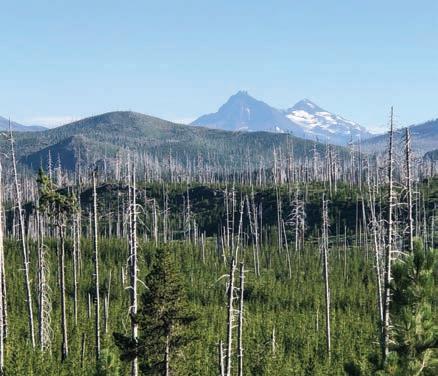
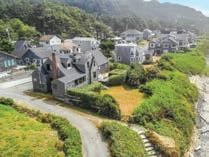
ABOVE: High-intensity wildfires are destroying all the trees in some Oregon forests and raising questions about whether these forests can regenerate to their former state in a warmer and drier climate.
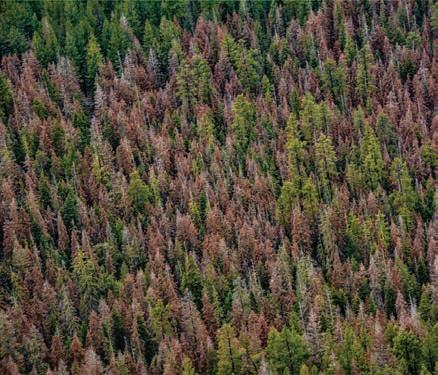
BELOW: This photo from the annual Forest Health Highlights in Oregon 2022 report by the Oregon Dept. of Forestry and USDA Forest Service shows the widespread death of true fir trees across large parts of Oregon.
spring weather, creates ideal conditions for some plant pathogens, such as Swiss Needle Cast disease, which dramatically slows the growth of trees. Affecting only
Douglas fir, private timber companies are suffering the consequences of this fungal disease which has affected hundreds of thousands of acres of their single-species, even-aged commercial tree plantations in the central and northern Oregon Coast Range. Some recently harvested areas have seen successive failures of recently-planted Douglas fir trees due to Swiss Needle Cast disease, and the failure of young western hemlock trees due to hotter and dryer summers. Up until the early 20th century, the coastal temperate rainforest of the northern and central Oregon Coast Range were a mix of Sitka spruce, western hemlock, western red-cedar, red alder and Oregon big-leaf maple, with Douglas fir making up about 20% of the forest. This original coastal temperate rainforest, now mostly destroyed, contained some of the highest “biomass per acre” of any forest on the planet. Along with shifting rainfall patterns, warmer temperatures, disease and insects, Pacific Northwest forests are facing an increasing threat of large, catastrophic wildfires. The ability of native forests to regenerate after a highintensity fire is being impaired by a warming climate. Studies in Colorado show that some lower-elevation forests impacted by high-severity wildfire are unable to regenerate due to the warmer and drier conditions, with shrubs and grass taking the place of the original forest cover.
a species well adapted to hot, dry conditions and widely distributed throughout the Willamette Valley and areas in the rain shadow of the coastal ranges of Washington, Oregon and California, might be expected to do well in a warmer and dryer climate, but the recent discovery in Oregon of the non-native, invasive Mediterranean Oak Borer Beatle threatens the future of these climate-resilient trees.
ence more extremes such as droughts, heat waves and torrential rain events” adding that “the new extremes are now exceeding the normal variations experienced in the past.” The typical summer dry season used to be 2-4 months, but has now extended into the



spring and fall months. With warmer winter temperatures, more precipitation falls as rain instead of snow at low and mid-elevations, with warmer spring weather causing the snowpack to melt earlier in the season. High elevation snowpack that used to release water well into July is now melting earlier, resulting in less water for trees during the hot, dry summer months. Drought years in the Pacific Northwest that used to occur once or twice a decade are now happening five or six times within a decade. It can take several years for some tree species to recover from an extremely dry year, and one or two wet years following a drought may not be enough for them to fully recover before the next dry spell hits. Climate change is a chronic stressor on trees, making them much more susceptible to large outbreaks of disease and insects.
The record-shattering “heat dome” in June 2021 hit trees at a vulnerable time, with new tree growth being susceptible to the several days of extreme temperatures and low humidity. Forests of the Oregon Coast Range are not adapted to this type of extreme heat event, with western hemlock in particular suffering significant damage. Research by Oregon State University, which tracked tree growth in the Coast Range and Cascades, showed that tree growth slows or stops in hot weather, and that growth has slowed in all four conifer species studied (western hemlock, western red-cedar, Douglas fir and ponderosa pine) due to higher temperatures and longer dry periods in the summer months. Conversely, the lack of hard winter freezes, along with wetter and warmer
Unless worldwide greenhouse gas emissions are drastically reduced within the next decade or two, the Oregon State University Climate Research Institute predicts a 2* F average increase in temperature for the Willamette Valley before the end of this century.
Predictions for Portland’s climate show that by 2080 it will be similar to the presentday climate in Sacramento or northern California. Trees and plants that require a cool, moist climate are going to be in trouble, but some tree species with “plasticity”, the ability to tolerate a broad climate range, could survive. Trees growing in the southern part of their climate range are extremely vulnerable and won’t do well as climate zones shift northward. Older trees might survive, but younger trees may not. Gersbach said that we are entering new territory, with a warmer and drier climate creating conditions beyond the ability of some trees to grow or reproduce. Trees species can survive by growing in areas farther north or at higher elevations, but unlike animals, trees and plants migrate slowly. Humans can help by planting trees north of their current range. Studies of current tree species in Oregon have demonstrated that western hemlock will do poorly in a warming climate, with ponderosa pine showing more resilience, and Douglas fir somewhere in-between. There have been recent studies documenting wide-spread diebacks and die-offs of native tree species such as western red cedar, Douglas fir and true firs such as grand fir, silver fir, noble fir, Shasta red fir and white fir throughout the Pacific Northwest and British Columbia. Oregon white oak,

Focusing on our local coastal temperate rain forest, Gersbach described the north Oregon coast as a “mild, wet paradise” due to the ocean moderating the extremes of temperature and climate. But even here, climate change will have an impact on native trees. Gersbach explained that Sitka spruce, which is the dominant tree species along the coast, is currently growing near the southern end of its range, which extends all the way to the south coast of Alaska, making the species vulnerable to a changing climate. Sitka spruce will likely experience a decline, especially on coastal headlands, but some will survive in microclimates such as cooler north-facing slopes. Gersbach added that western hemlock are showing signs of stress in many places along the coast and coast range, along with an observed die-back of Oregon big-leaf maple, which colonizes warm, sunny sites. Red alder might continue to do well, though alder is a short-lived species that grows in disturbed landscapes. Shore pine could also persist along the immediate coastline. The salt spray and high wind near the shoreline are difficult for many species, with Douglas fir intolerant of salt, and western hemlock and western red cedar, with their shallow root systems, unable to tolerate high winds. Oregon myrtle is an evergreen broadleaf species that might do well on the future north Oregon coast. Western white pine, a species that was widespread and abundant in the Pacific Northwest before largely being wiped out in this area by white pine blister rust in the early 20th century, could be a future candidate for the north Oregon coast. Its historic range was coastal British Columbia, Vancouver Island, the Olympic Peninsula, Coast Range and Cascades. Researchers are searching for forms of resilience and resistance in native species that could allow them to grow and thrive in a changing climate, while searching for native species growing in areas farther to the south that might do well in a warmer and drier Pacific Northwest.
Visitors to the north Oregon coast in the year 2080, well within the lifetime of anyone younger than 25 today, will see a forest undergoing significant change from the one currently growing here. There will likely be more disturbed areas where trees have been felled by high winds, burned in wildfires or killed by new or more aggressive pests or diseases. This will open up gaps that could be filled by weedier, opportunistic plants like Scotch broom and Himalayan blackberry. There may be more erosion due to heavier rain events, stripping some areas of topsoil that make it harder for new trees to establish themselves. Where trees can grow, the species are likely to shift to those that are most resilient to weather extremes. Highly adaptable invasive species, such as black locust, tree of heaven, English holly and English hawthorn may become even more prevalent. Gersbach warned that “atmospheric CO2 persists in the atmosphere for centuries, and we’ll have to live with the consequences of climate instability, so plan accordingly.”
Jim Gersbach was the featured speaker at the Hoffman Center for the Arts in Manzanita on June 17th, where he discussed “Coastal Trees for a Changing Climate” during a well-attended two-hour presentation. Jim Gersbach can be contacted at jim.gersbach@odf.oregon.gov


June 23, 2023 2 CANNONBEACHGAZETTE.COM | CANNON BEACH GAZETTE MULTI-USE CANNON BEACH COMMERCIAL PROPERTY $3,150,000 OCEANFRONT HOME ON (2) OCEANFRONT TAX LOTS $2,999,500 CANNON BEACH OCEAN VIEW HOME $1,750,000 PERFECT WEST GEARHART LOCATION NEAR GOLF COURSE $525,000 Michael HendersonManaging Principal Broker Introducing Reid Peterson to the Duane Johnson family Jeremy YoungquistBroker Duane Johnson - Founder H22236 ELEGANT, OCEAN VIEW BEACH HOME $2,795,000 SOLD BEAUTIFUL 4.1 ACRE PARCEL WITH STUNNING PANORAMIC OCEANVIEWS! $4,495,000 CANNON BEACH E PRESIDENTIAL 2 SEPARATE LIVING QUARTERS $949,000 1/12TH SHARE OWNERSHIP 3 BED 2 BATH CONDO $99,000 What is RMLS? As the Northwest’s largest REALTOR®-owned Multiple Listing Service(MLS), RMLS serves approximately 10,000 Real Estate Professionals in over 2,200 offices licensed in Oregon and Washington. All brokers listed with firm are licensed in the state of Oregon 296 N. Spruce St. • Cannon Beach • (503) 436-0451 www.duanejohnson.com Active Members of & A VALUED AND TRUSTED RESOURCE WITHIN OUR COMMUNITY AND THE #1 OFFICE SINCE 1990. BEAUTIFUL ARCH CAPE CUSTOM HOME ON OVERSIZED LOT $929,000 SALE PENDING VACANT CANNON BEACH LOT, ZONED R3 $389,500 SOLD SOLD 1/12TH SHARE OWNERSHIP OCEAN VIEW CONDO $85,000 SOLD NEW PRICE NEW LISTING H22202 Sat., Aug. 26 & Sun., Aug 27 Regular vendors $50 • Food vendors $150 Bay City Pearl & Oyster Music Festival Call for Vendors If interested contact Patty Watson 503-201-9912 or Beverly Anderson 503-300-9013 instagram.com/pearlandoystermusicfestival
Earthquake
earthquake percent in earthquake ago Of to 10,000 within three struck years. that strike
split new department principle nism June storm increases mer the meeting struction station separate Cache on Gower Cannon An
Council moves forward on funding package without property tax increase
WILL CHAPPELL



Gazette Reporter
Cannon Beach City Council approved a split configuration for the new city hall and police department and agreed in principle to a funding mechanism at a special meeting on June 13.
The council also approved storm and wastewater rate increases for the city, the former by $2.77 a month, and the later by $7.19 a month.
The council began the meeting by approving construction of the new police station and city hall on separate sites at the Tolovana Cache Site, south of town on Highway 101, and on Gower Street in downtown Cannon Beach, respectively. An update to state building
code in late 2022 requiring certain emergency services be located outside of the inundation zone of a maximum Cascadia subduction event tsunami had rendered the Gower Street location unsuitable for the police station.

Councilors had been discussing whether to locate both facilities at the Tolovana Cache Site, which sits outside of the inundation zone with a cost of $22 million, or to build separate facilities for $25 million.
Councilor Nancy McCarthy was the only councilor who favored building a combined facility at the Tolovana Cache Site, citing her concern for building city hall in such a vulnerable location. All other councilors favored having a centrally located city hall and voted in favor of dividing the
project, with McCarthy voting against.

Cannon Beach City Manager Bruce St. Denis told the council that since their last special meeting about the projects on May 30, he had come up with a new funding concept for the projects’ debt.
At the late May meeting, the council had tentatively agreed to increase the city’s transient lodging tax (TLT) by 1.5% to help fund the projects. That increase will yield a little more than $1 million in revenue for the city annually, 70% of which must be dedicated to tourism related projects, with the remainder available for any project. After accounting for debt service for the elementary school project, around $550,000 will remain from the roughly $720,000 gener-
When disaster strikes, do you know what to do? Where to go? Who needs help, and who can help you? These questions and their answers are the basis for the “Know Your Neighbor” program being kicked off on Saturday, June 24th by the Cannon Beach Community Emergency Response Team (CERT)
“Know Your Neighbor”
gathers neighbors together and builds local community so that neighbors know who can offer help. It also allows neighbors to contact out-oftown relatives to let them know you are okay, and to know which neighbors might need extra help, so they can be cared for.




A potluck or coffee will be coming to your neighborhood soon to discuss these



ideas. Watch for an invitation on your door. Even if you can’t attend, we can help you get connected with the program.

If you would like to host a gathering in your neighborhood, please contact Mary Beth Cottle at (503) 436-8099 or cannonbeachCERT@gmail.com.




ated by the TLT increase.
St. Denis suggested that the city use a portion of that $550,000 to cover tourism related expenses that were currently budgeted in the general fund, freeing those funds up for debt service for the city hall and police department projects. He iden-
4th of July Events in Cannon Beach and the North Coast




 By DEB ATIYEH
With the July 4th holiday approaching, the Cannon Beach Police Department and Cannon Beach Fire District would like to remind residents and visitors that all
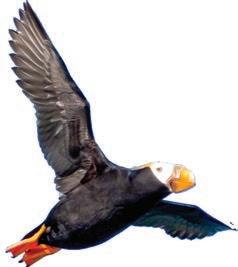
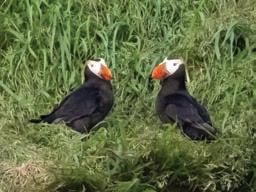
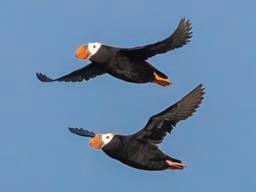
fireworks are banned within the city limits of Cannon Beach. The City Council voted unanimously in 2020 to ban fireworks, based on concerns about fire danger and the impact to sea birds, wildlife and domestic animals. Early July is nest-


Schedule of Events on the North Coast:



MANZANITA: July 4: 1:00 p.m. “Return to Glory” Parade. No fireworks show CANNON BEACH:






-July 1 through July 3, 10 a.m. to 5 p.m. and July 4, 10 a.m. to 4 p.m: Cannon Beach Library’s Annual 4th of July Book Sale. A fund-








ing season, and fireworks can cause endangered birds such as Tufted Puffins and Black Oystercatchers to abandon their nests. The North Coast has been experiencing a dry spring and early summer, with an elevated fire risk. CERT
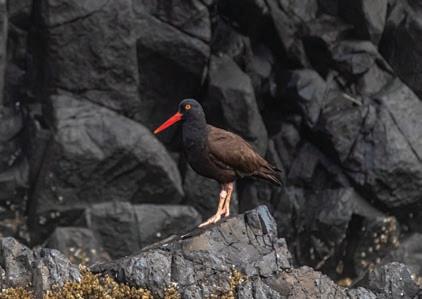
teams will work with the Police Department and Fire District to enforce the fireworks ban over the entire 4th of July holiday period. Thank you for honoring our fireworks ban in Cannon Beach. Have a happy and safe 4th of July.
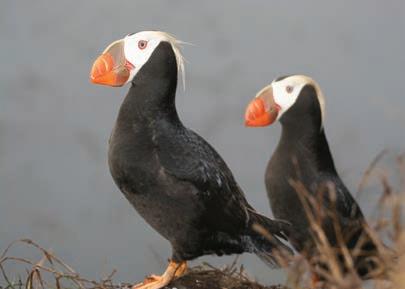
Fireworks Make Us Flee Our Nests!
June 23, 2023 CANNON BEACH GAZETTE | CANNONBEACHGAZETTE.COM 3
raiser for the Cannon Beach Library. 131 N Hemlock St., Downtown Cannon Beach -July 4: 10 a.m. to 4 p.m. $5 Fill-A-Bag Sale! Last Day, Cannon Beach Library’s Annual 4th of July Book Sale. 131 N Hemlock St., Downtown Cannon Beach -July 4: 4th of July Parade. Starts at noon. Online pre-registration through the Chamber of Commerce. Enjoy a peaceful bonfire on the beach in the evening (fireworks free) SEASIDE: -July 1: Starts at noon. Concert in the Parking Lot. Live bands include Doc Jones, Bikini Beach and more! All American Hotdogs and Hamburgers presented by Legends Public House. Seaside Outlets, Hwy. 101 & 12th Ave., Seaside -July 4: 10:00 a.m. Annual 4th of July Parade -10:00 p.m. Full fireworks show over the Pacific Ocean, one of the largest on the West Coast GEARHART: -July 3: 7:00 to 10:00 p.m. Gearhart Street Dance Party with DJ playing dance music -July 4: 11:00 a.m. Independence Day Parade WARRENTON: July 4: 3:00 p.m. Downtown Warrenton. Annual Old-Fashioned 4th of July parade-theme “Main Street USA” Held on Main Avenue ASTORIA: July 4: 10:00 p.m. Full Fireworks Show Over the Columbia River Check city websites for more information on 4th of July activities. Celebrate with your Favorite Treats Visit our online store and shop for Sweet Treats from Cannon Beach WE SHIP! Happy 4th of July Downtown Cannon Beach 256 N. Hemlock St • 503-436-2641 www.brucescandy.com H22237 CELEBRATING OVER 60 YEARS OF MAKING SWEET MEMORIES Cannon Beach H Oregon H EMPLOYEE OWNED. OREGON GROWN. EMPLOYEE OWNED. OREGON GROWN. Thank you for voting McKay’s! Best Produce Favorite Customer Service Favorite Food Store Like us on Facebook and Follow us on Instagram! www.mckaysmarket.com Serving our community for 74 years! EMPLOYEE OWNED. OREGON GROWN. EMPLOYEE OWNED. OREGON GROWN. Thank you for voting McKay’s! Best Produce Favorite Customer Service Favorite Food Store Like us on Facebook and Follow us on Instagram! www.mckaysmarket.com Serving our community for 74 years!
Research has shown that disturbances like fireworks cause nest abandonment and high stress in adult birds. Please join us in thisembracing new law. Cannon Beach Municipal Code Ordinance 9.16.010 and fines up to $5,000 see Ordinance 9.16.030 Violation – Penalty levels www.ci.cannon-beach.or.us/ordinances/ordinance-20-18 Photo: © Bob Kroll Photo: © Bob All fireworks are now illegal in Cannon Beach. Fireworks are a serious fire hazard. Cannon Beach is a "Safe Zone" for birds, pets and wildlife. UPTO$5000FINE
SEE FUNDING PAGE A5
Cannon Beach Elementary School Advisory Committee Meeting

 By DEB ATIYEH
The newly formed Cannon Beach Elementary School Rejuvenation Committee met for the first time on Monday, June 12th. Members explored what they envisioned for the future use of the Elementary School after it’s completion. They were in unison about it primarily being an historic cultural site with its location adjacent to the estuary, wetlands, and beach. They envision the use of the new facility as a cultural and ecological center that will provide an additional attraction to Cannon Beach visitors, telling the story of the historic site and the ecology of the surrounding
area. Park improvements would include an interpretive trail which will showcase the history of the site and the ecology of the region.
Other uses were discussed, which included classroom space for educational programs, presentations and meetings; emphasizing but not limited to arts, culture, history and ecology.
They also discussed that after-hours or on special occasions, the gymnasium, facility lobby and classrooms may be used for events with an emphasis on community events, festivals or meetings that could be arts, culture, history and ecology. The City Council should consider requiring a transportation plan for any events and limiting
larger events to the off-season. Parking was considered in the discussion.
After-hours or on special occasions, the gymnasium, facility lobby and classrooms may also host third-party private events including organizational retreats, meetings, classes or receptions at fees that will be determined and limiting larger events to the off-season.
They expressed a desire that the gymnasium will be open for recreation use when not being used for activities described above. Available hours will need to be determined based on limitations of budget and management.
It was a positive meeting and this is just a summary of what was discussed. Noth-
Laurelwood
ing has yet been approved by the committee as they are still exploring all options and possibilities.


Their next meeting will be at 5:15 PM on Tuesday, June 20th at City Hall, where they will be discussing management options. You are welcome to attend and listen in. A public comment period is available at the beginning of the meeting. There have been several public forum meetings over the last year with builders and architects, where people expressed their dreams for this facility. Please feel free to be involved and express your thoughts via email, letter or by attending a meeting. Councilor Hayes is the Chair of this committee.
Cannon Beach to Welcome Visitors From Costa Rice This Fall
 By JEANIE MCLAUGHLIN
On Wednesday, September 6th, Cannon Beach will welcome 13 Costa Rican visitors who are here to enjoy the beautiful scenery, art galleries, shops and hospitality of our town. This group is participating in an adult exchange program organized by the OregonCosta Rica Partners of the Americas. Costa Ricans (“Ticos”) visit Oregon in September and Oregonians
AT THE LIBRARY
By PHYLLIS BERNT Library Board President
Volunteers are still needed for the library’s annual Fourth of July Book Sale fundraiser from Saturday, July 1, through Tuesday, July 4, at the library, 131 N. Hemlock in downtown Cannon Beach. Sale hours will be 10 a.m. to 5 p.m. on Saturday, Sunday and Monday; and 10 a.m. to 4 p.m. on Tuesday, the day of the infamous $5 bag sale.
are hosted in Costa Rica in February. The Ticos will be visiting four areas in Oregon: the North Coast, Eugene, Central Oregon and Portland. They are welcomed into our homes and participate in activities unique to each area.
Partners of the Americas is an international nonprofit entity headquartered in Washington D. C. in which states are matched with countries in Latin America. The mission of Partners is to “connect people and organizations across and within


A Cannon Beach tradition, the sale offers book lovers thousands of used books of all genres, topics and prices. It takes many hands to make the sale a success. Residents and visitors can help by organizing books and working as cashiers, baggers and stockers; volunteers can sign up on the library website (www.cannonbeachlibrary.org), or by calling 503-436-1391, or emailing info@cannonbeachlibrary.org.
The library’s Summer Reading Program is in full swing. The theme this summer is “Find Your Voice.”
Residents and visitors, from babies to young adults, are encouraged to find their voices through art, music and reading.

The program includes prizes, speakers and story times. Participants can sign up at the library or on the library website.
The members of the Cannon Beach Reads book club will meet at 7 p.m.,


borders to serve and change lives.” We are currently offering the opportunity for people on the North Oregon Coast to host either an individual or a couple from September 5th through 10th. Hosts are invited to participate in as many of the planned activities as possible, but day hosts can be arranged when this isn’t possible. Hosting has resulted in lasting friendships across borders and reciprocal visits. Ticos are a friendly group
from a beautiful country that continually ranks as one of the happiest in the world. We invite you to learn more about our program and consider hosting. If sharing your home is not possible, please consider joining us for a day or more of activities. For more information, contact Jeanie McLaughlin at 503-436-2412, Jeaniemclaughlin139@gmail.com or Ned Heavenrich at 503 298 0620, nednlulu@yahoo.com
as a “highly talented illiterate.”
Wednesday, July 19, to discuss “Sometimes a Great Notion,” by Ken Kesey. This will be a hybrid meeting; participants can come to the library or Zoom in to the discussion.
Ken Kesey, an iconic figure of the counterculture 1960s, saw himself as a link between the Beat Generation of the 1950’s and the hippies of the 1960s. Born in California and raised in Oregon, Kesey graduated from the University of Oregon and then enrolled in Stanford University’s Creative Writing Center, though the Center’s director regarded him
To make extra money, Kesey participated in government-funded experiments with psychedelic drugs, notably LSD. Drugs continued to play an outsized role in his personal and creative life, landing him in jail for drug possession, and fueling the creativity of his friends the Merry Pranksters, who made LSD a centerpiece of their cross-country bus trips and “Acid Test” parties.
Kesey continued to tour periodically with the Pranksters in the 1990s, though he lived a quiet life during his later years, suffering from illness and the loss of his son. His later books did not enjoy the instant commercial and critical success of his first two novels, “One Flew Over the Cuckoo’s Nest” and “Sometimes a Great Notion.”
Regarded by many critics, and by Kesey himself, as his magnum opus,“Sometimes a Great Notion” tells the story of the Stamper clan, a family of almost pathologically stubborn loggers in an Oregon coastal community.
The Stampers’ creed is to “never give an inch,” an attitude that explains their relationship with both man and nature. They are at odds with the union loggers in town who have gone on strike for higher wages. The Stampers, who own their own logging business, undercut the union loggers when they continue to supply lumber to the regionally owned mill, thus angering the whole town.
The Stampers also don’t give an inch to the local river, which, as it widens, is eroding the land around the Stamper home.
Meet Banjo! Banjo is a happy and well behaved boy. He sits and waits patiently when being leashed to go outside. Once he’s outside he loves to run zoomies around the play yard at the shelter. Banjo is very much a gentleman at the young age of one-and-ahalf years old. He walks well on leash and doesn’t pull like some other dogs his age. Banjo is a big sweetheart and has become a favorite of many of the shelter volunteers. This good boy will make an excellent companion for one lucky person or family. http://clatsopcounty.animalshelternet.com/adoption_animal_details. cfm?AnimalUID=284979

Scroll to the bottom of the page for the fillable application and email it to ac@ClatsopCounty.gov or drop it by the shelter.


Arthur Broten will lead the discussion, which will start at 7 p.m., Wednesday, July 19. The Zoom link for the meeting is available by emailing Joe Bernt at berntj@ohio.edu. Coffee and cookies will be provided at the library. New members, whether in-person or online, are always welcome.

The library recently added a book about another iconic figure of the 1950s and 1960s.
In “Camera Girl: The Coming of Age of Jackie Bouvier Kennedy,” historian Carl Sferrazza Anthony examines four critical years in Jackie Kennedy’s life.
With her beauty, youth and elegance, Jackie helped define the Kennedy Era as a period of excitement and new directions after the stodgy 1950s. Anthony draws on previously unseen archives of her writings; extensive interviews with her friends, colleagues and family; and the 600 “Inquiring Camera Girl” columns she wrote for the Washington Times-Herald in 1952 and 1953, to describe the experiences and forces that
June 23, 2023 4 CANNONBEACHGAZETTE.COM | CANNON BEACH GAZETTE CONTINUED
SEE LIBRARY PAGE A5 BUSINESS DIRECTORY ADVERTISE YOUR BUSINESS HERE TO CREATE TOP OF-MIND-AWARENESS CALL 503-842-7535 OR EMAIL HEADLIGHTADS@COUNTRYMEDIA.NET TODAY! ARBORIST - TREE CARE ISA Certified Arborists ISA Board-Certified Master Arborist ISA Tree Risk Assessment Qualified Comprehensive Service, Pruning/Removal, Stump Grinding/Hazard Evaluations (503)791-0853 www.arborcarenw.com Care for Your Trees H20157 CCB#171855 WA#ARBORCI909RW BoB McEwan construction, inc. Excavation • undErground utiitiEs road work • Fill MatErial sitE PrEParation • rock owned and operated by Mike and Celine MCewan Serving the paCifiC northweSt SinCe 1956 • CC48302 503-738-3569 34154 Hwy 26, Seaside, OR P.O. Box 2845, Gearhart, OR CONSTRUCTION
Laurelwood Compost • Mulch • Planting MacMix Soil Amendments 34154 HIGHWAY 26 SEASIDE, OR 503-717-1454 YARD DEBRIS DROP-OFF (no Scotch Broom) H49573 LANDSCAPING
Farm
H22238
meet and greets are by appointment, so if you’d like to meet Banjo,
or stop by the lobby to set up a time. The shelter is open 9:30 to 4:00 Tuesday through Saturday, closed 12:30 to 1:30 for lunch. You can also fill out an application at the shelter’s Adopting a Pet page: https://www.co.clatsop.or.us/animalcontrol/page/Adoptingpet
Pet
call the shelter at 503-861-7387
Banjo
Did you know the Cannon Beach Gazette is FREE to read online? Keep up on Cannon Beach news at cannonbeachgazette.com
LIBRARY
CONTINUED FROM PAGE A4 helped shape one of our most consequential First Ladies.
Anthony begins his narrative in 1949, as Jackie, having finished her sophomore year at Vassar, sails to Paris to study at the Sorbonne, after relentlessly lobbying Smith College to admit her into their Paris program and shrewdly manipulating her feuding, divorced parents into picking up the tab.
He ends his narrative in September of 1953, as Jackie marries John F. Kennedy (JFK) in a political spectacle complete with a reception for 1200, a tent full of reporters and a romantic story of a fairy tale courtship, all choreographed by JFK’s ambitious father.
In the intervening four years, Anthony presents Jackie’s life as filled with internal conflicts and contradictions. She was torn between her own aspirations for a meaningful career and her mother’s insistence that she marry well.
A brilliant student, she was easily bored and impatient with school.
A reserved person for whom approaching strangers was a nightmare, as the “Inquiring Camera Girl” she interviewed thousands of strangers. Her financial resources were tightly controlled by her dysfunctional parents, yet she managed to surround herself with people of great wealth, political power and intellectual influence.
Perhaps most startling is Anthony’s portrayal of JFK as emotionally immature, inconsiderate and unromantic, and his assertion that Jackie and JFK’s relationship was based on their shared idealistic aspirations to make the world a better place–and to get France out of Indochina.
Anthony may be a bit too positive in his view of Jackie, heavily emphasizing her intellect and resourcefulness and ascribing the purest of motives to all her actions, but he does offer a compelling portrait of a complex woman during a formative time in her life.
In addition to “Camera Girl,” three more nonfiction titles were recently added to the collection: “King: A Life” by Jonathan Eig, “Cracked: The Future of Dams in a Hot Chaotic World” by Steven Hawley and “Homegrown: Timothy McVeigh and the Rise of Right-Wing Extremism” by Jeffrey Toobin.
The ten fiction titles that were added in May include “Deep as the Sky, Red as the Sea” by Rita ChangEppy, “Hula” by Jasmin Iolani Hakes, “The Golden Doves” by Martha Hall Kelly, “Yellowface” by R.F. Kuang, “The Time Has Come” by Will Leitch, “The Tiffany Girls” by Shelly Noble, “The Celebrants” by Steven Rowley, “After Anne: A Novel of Lucy Maud Montgomery” by Lohan Steiner, “The Covenant of Water” by Abraham Verghese and “Good Night, Irene” by Luis Alberto Urrea.





And finally, eight new mysteries were added: “Rogue Justice” by Stacey Abrams, “The Lost Americans” by Christopher Bollen, “Central Park West: A Crime Novel” by James Comey, “The Late Mrs. Willoughby” by Claudia Gray, “The 23rd Midnight: A Women’s Murder Club Thriller #23” by James Patterson, “Identity” by Nora Roberts, “Standing in the Shadows” by Peter Robinson and “Independence Square” by Martin Cruz Smith.
Bilingual Certified Peer Support/Recovery Mentor (English/Spanish)








F.T. 40-Hours/week Position
Tillamook Family Counseling Center is currently looking to add a bilingual peer specialist to our Prime+ program. The mission of the Prime+ program is to prevent acute life-threatening outcomes of substance use which include reducing overdose morbidity and mortality by providing harm reduction centered overdose prevention education and facilitating access to Naloxone. We also strive to reduce injection-related infections by providing harm reduction centered infection prevention education and facilitating access to safer use supplies. The Prime+ program supports linkage to care, diagnosis and treatment of substance use related conditions and substance us related infections.
This position includes training that leads to state certification according to OAR 410-180-0305 (12) and (13). As a certified Peer Specialist, you will be a living example and role model of recovery life. As a peer you will be a provider of the life wisdom gained through your own lived experience of recovery as well as a change agent for hope.
Benefits:
Dental Vision and Medical-prescription coverage. HSA and FSA plans. 9 paid holidays a year, paid sick leave and vacation time. Vacation starts out at 8 hours a month with increases over time. Generous retirement program: non-contributory 403(b), we put in 9% of your salary and you are vested after 6 months.
To see our complete job description and to apply go to http://tfcc.bamboohr.com/jobs. Be sure to submit an online application and upload your resume. Any questions, please visit us online at http://tfcc.org or contact us at jobs@tfcc.org
Licensed Practical Nurse [LPN]

Part time position (24 hours weekly) w/excellent benefits.


Compensation: $29 - $39 Hourly, DOE



Tillamook Family Counseling Center (TFCC) seeks a Licensed Practical Nurse [Part Time 24 Hours per Week] as a health provider for its Assertive Community Treatment Team (ACT). The LPN provides health care coordination, client support, and triage in home and community settings to adults presenting with severe and persistent mental illness.





Tillamook Family Counseling Center is a drug free workplace and equal opportunity employer.

If you are interested in this position, please apply online at http://tfcc.bamboohr.com/jobs. Be sure to submit an online application and upload your resume. Any questions, please visit us online at http://tfcc.org.
Church Services by the Sea Cannon Beach to Nehalem
Nehalem Nehalem Bay

United Methodist Church 36050 10th Street, Nehalem, OR
(503) 368-5612
Pastor Celeste Deveney + Sunday service 11 a.m.


Food Pantry Open Friday, Saturday & Monday 10 a.m. to 2 p.m.
Wednesday

PUZZLES
H22117


ANNOUNCEMENTS

March - October 2 p.m. to 6 p.m.

November - February noon to 4 p.m.
Nehalem Senior Lunches

Tuesday & Thursday served at noon email: nbumcnsl2020@gmail.com
To feature your spiritual organization on this panel: Contact Katherine at (503) 842-7535, headlightads@countrymedia.net



FUNDING CONTINUED FROM PAGE A3
tified three items that could be eligible for that funding: bathroom maintenance, the Haystack Rock Awareness Program (HRAP) and the city’s lifeguard program.
City Counsel Ashley Driscoll said that she was sure the bathroom maintenance would be eligible for TLT funding, but that she was unsure whether HRAP and the lifeguard program would.
The plan to construct the city hall and police station at separate locations carries
The Seaside Elks Lodge Kicks Off the 4th of July Dance
TheSeaside Elks Lodge, 324 Ave A, is pleased to announce a Kick Off the 4th of July Dance to be held Monday, July 3rd at our lodge. The public is invited to celebrate with us. Admission is only $15 per person or $25 per couple

a budget of around $25 million. That will require annual debt service of $1.5 million, $900,000 of which will come from the prepared food tax approved by Cannon Beach voters. A further $310,000 will be available from the 1.5% TLT increase, leaving $345,000 to be financed.
Figures presented by St. Denis showed that covering 75% of the cost of maintaining the restrooms alone would amount to $245,000 annually. When general fund contributions to HRAP are

also factored in, that number rises to $308,000.

Previously, at their special meeting in late May, councilors had signaled support for decreasing contributions to the city’s general fund reserve and putting a property tax increase on the November ballot.
However, Councilor Gary Hayes, who had supported asking voters to contribute financially to the projects, said that he had changed his mind after learning that the fire district would be seeking
and includes a free bbq dinner. Adult refreshments will be available for purchase. Doors will open at 5pm.
The big news is Chelsea LaFey & the Salt Shakers will perform for your listening and dancing pleasure from 7 to
a levy on the same ballot.
Councilors agreed that St. Denis’s proposal would be an appropriate solution to bridge the final funding gap, while also noting that there would need to be some portion of the TLT funds left available for maintaining and operating the rejuvenated elementary school. They noted that if $245,000 was redirected for restroom maintenance, more than $300,000 would be left annually for that purpose.
The council unanimously directed St. Denis to begin

10pm. Come ready to party like it’s 1949. This will be one great night of music!
If you have questions, please contact: John Huismann, 503-717-2524, oneblessedman@q.com
the process for them to pass a 1.5% increase in the city’s TLT and authorized his use of TLT funding for restroom maintenance, HRAP and lifeguards, as allowed by law. An ordinance for the TLT should come before the council by the end of the summer. St. Denis said that construction was expected to start on the elementary project next spring and the city hall and police stations next fall at coffee with councilors on June 19.
June 23, 2023 CANNON BEACH GAZETTE | CANNONBEACHGAZETTE.COM 5
CANNON BEACH GAZETTE The Cannon Beach Gazette is published biweekly by Country Media, Inc. Publisher, David Thornberry 1906 Second Street, P.O. Box 444, Tillamook OR 97141 PHONE 503-842-7535 • FAX 503-842-8842 cannonbeachgazette.com Member Oregon Newspaper Publishers Association (ONPA) © 2023 by the Cannon Beach Gazette. No portion of this newspaper may be reproduced in any manner without prior written permission from the publisher. All rights reserved. Katherine Mace Advertising Account Executive 503-842-7535 headlightads@countrymedia.net The Cannon Beach Gazette is part of the Country Media family of newspapers. LETTER POLICY The Cannon Beach Gazette welcomes letters that express readers’ opinions on current topics. Letters may be submitted by email only, no longer than 300 words, and must be signed and include the writer’s full name, address (including city) and telephone number for verification of the writer’s identity. We will print the writer’s name and town of residence only. Letters without the requisite identifying information will not be published. Letters are published in the order received and may be edited for length, grammar, spelling, punctuation or clarity. We do not publish group emails, open letters, form letters, third-party letters, letters attacking private individuals or businesses, or letters containing advertising. OBITUARIES Email obituaries to: classifieds@orcoastnews.com The Cannon Beach Gazette has several options for submitting obituaries. • Basic Obituary: Includes the person’s name, age, town of residency, and information about any funeral services. No cost. • Custom Obituary: You choose the length and wording of the announcement. The cost is $75 for the first 200 words, $50 for each additional 200 words. Includes a small photo at no additional cost. • Premium Obituary: Often used by families who wish to include multiple photos with a longer announcement, or who wish to run a thank-you. Cost varies based on the length of the announcement. All obituary announcements are placed on the Cannon Beach Gazette website at no cost. Advertising
Noon
press
Noon
Siah J. Kennedy Office Manager/ Classifieds & Legals H21629
ABOUT US
Deadline:
Mondays week of publication Deadline for letters,
releases and other submissions:
Mondays week of publication, will depend on space. Email to headlighteditor@countrymedia.net classifieds@orcoastnews.com
CLASSIFIEDS
PUZZLES
Cannon Beach Library Annual Fourth of July Book Sale - A Cherished Tradition
The Cannon Beach Library’s Fourth of July
Used Book Sale, a cherished and time-honored tradition, returns July 1st to July 4th! Close to the hearts of both local and visiting book enthusiasts, this event is a fundraiser for our community library, one of the few private non-profit libraries left in the country. The sale takes place at 131 N Hemlock Street, in downtown Cannon Beach, OR.
Experience the thrill of uncovering literary gems, including timeless classics, contemporary bestsellers, mass-market paperbacks, nonfiction, cookbooks, gardening books, travel guides, holiday books, audio books, DVDs, music CDs, and books for children and young adults. Amazing bargains, affordable finds, and THOUSANDS of books await, whether you’re a seasoned bookworm or simply seeking a memorable adven-
Cannon Beach Library Summer Reading Helps Find Your Voice!

ture. Don’t miss our Bonus Sale – buy 3 items, get the fourth item FREE!
Mark your calendars - the four-day sale runs from Saturday, July 1st to Tuesday, July 4th. Sale hours are Saturday, Sunday, and Monday from 10 a.m. to 5 p.m.; the famous 5-dollar fill-a-bag sale is Tuesday from 10 a.m. to 4 p.m. (bags provided). The library will be closed for all regular services June 29th through July 4th, though books may still be returned in the drop box.
The library’s largest book sale of the year brings volunteers, friends, and families together to support the library. Not only do volunteers meet every week to process donations in preparation for the sale, but over 120 volunteer slots also need to be filled during the sale. To find out how to help, or for more information, visit www.cannonbeachlibrary.org
Summer Reading, prizes, fun events, and story times are happening at the Cannon Beach Library this summer. From June 17th through August 19th, we’re inviting Summer Readers from babies to young adults to “Find Your Voice!” and explore how to wield the power of their voice using words, writing, art, music, and actions. The library will host a range of free activities during the 9-week program.
The program launches Saturday, June 17th with a Kick-Off Celebration and Find Your Art! Program from 10 a.m. – 12 p.m. There will be refreshments, door prizes, and crafting tambourines and kazoos. Come pick up summer reading bags and a FREE BOOK.
“Our program is designed to encourage a daily reading habit for kids based on their own interests, no matter how much or how little they
Cannon Beach Academy Learning and Running – Cannon Beach Academy Engages the North Coast Community
choose to read everyday. The idea is to build positive connections between young people, libraries, and reading,” said Jen Dixon, Office Manager. “We hope families will come see what our library has to offer.”
Readers can earn prizes for every 7 days they read by filling out a game board, while also earning tickets for the grand prize drawing. Other themed events include a music program, author program, and story times. Readers can register online or at the library throughout the program, can begin to play anytime, and don’t have to live locally to participate.
The library is committed to supporting reading for all families. To learn more about the Summer Reading Program, please visit the library’s website www.cannonbeachlibrary.org or call 503-4361391.
The tuition-free K-5 Cannon Beach Academy rounded out the school year with a number of activities in our North Coast community.
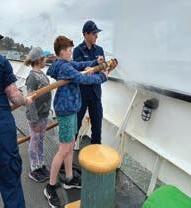
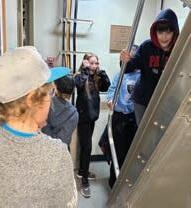
In April the 3rd, 4th and 5th grade classes of the Cannon Beach Academy Charter School had an action-packed day in Astoria learning all things maritime, starting at the Columbia River Maritime Museum they touched old cannons, watched giant worldwide video maps of the ocean currents and flashed morse code from the display bridge of Navy vessel. Then


 By DEB ATIYEH



 By BOB ATIYEH





 By HORNING GEOSCIENCES Seaside, Oregon