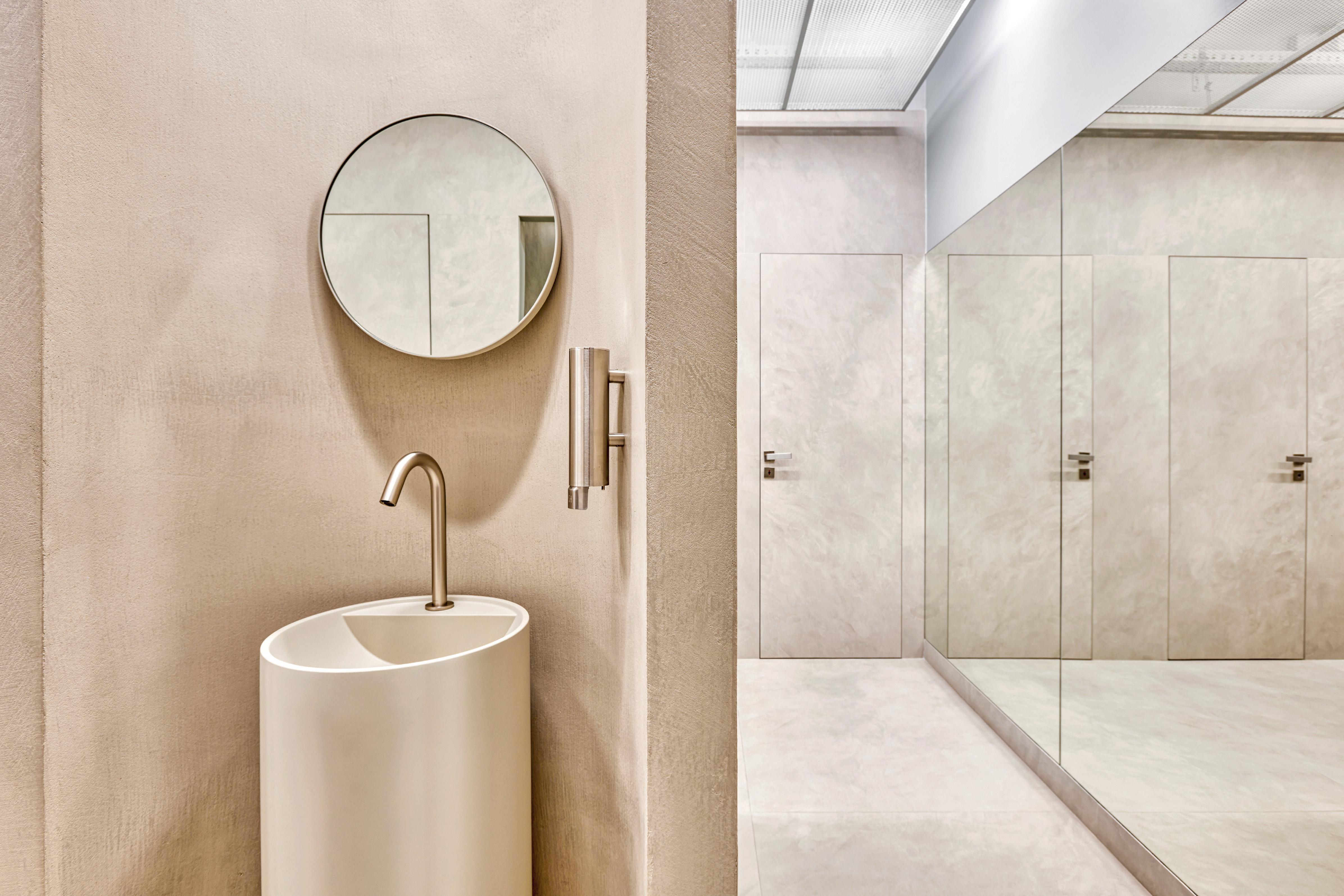
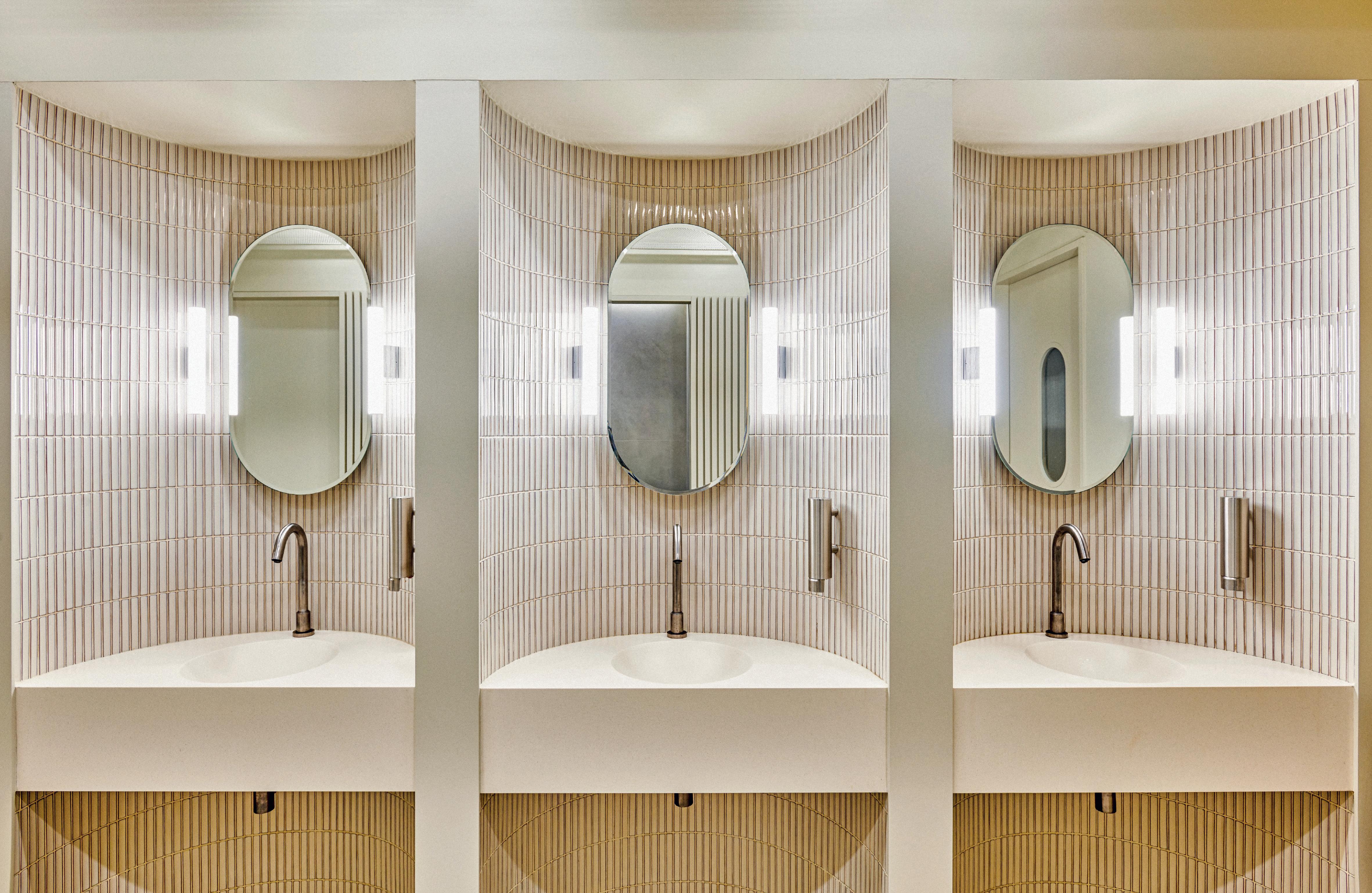
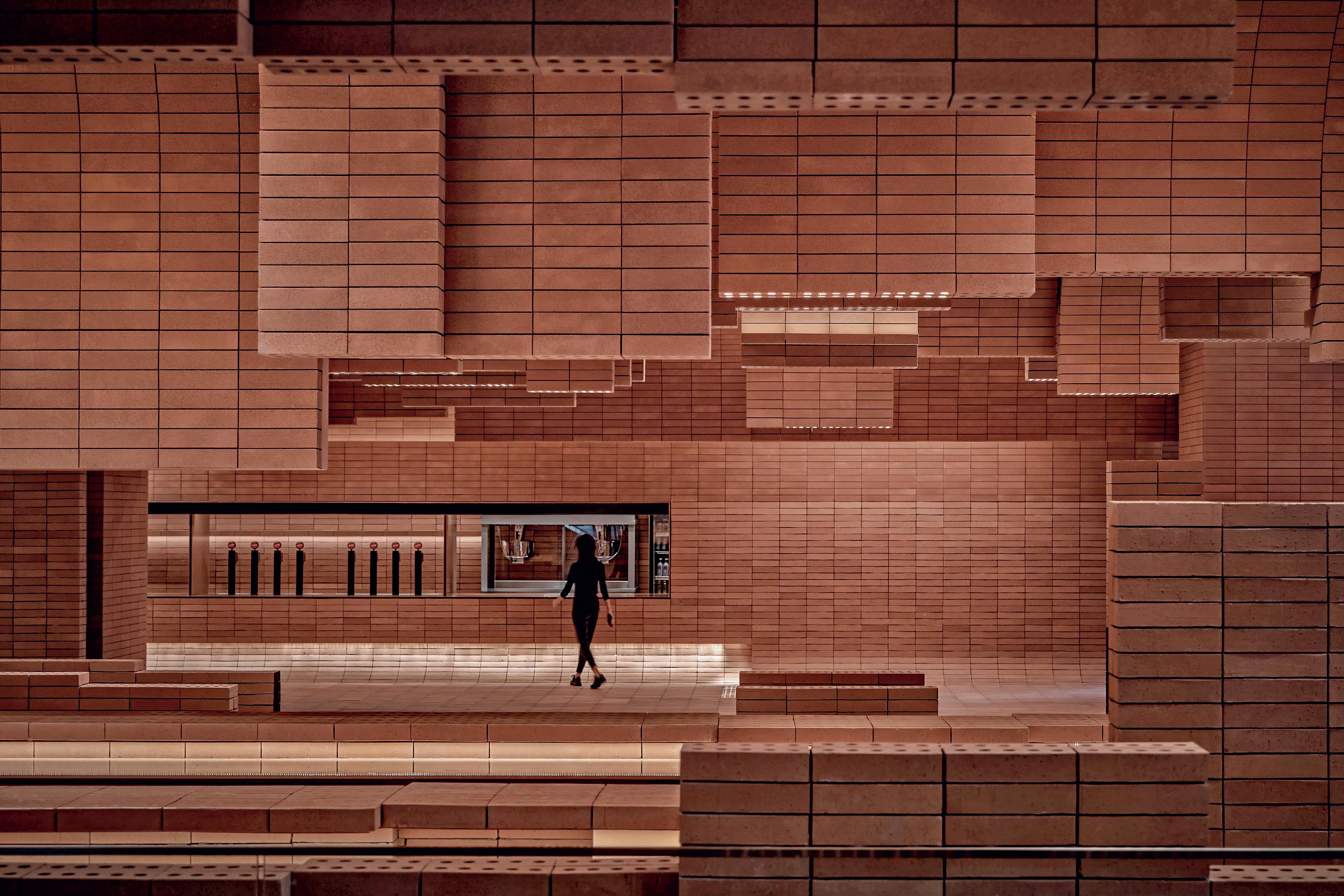
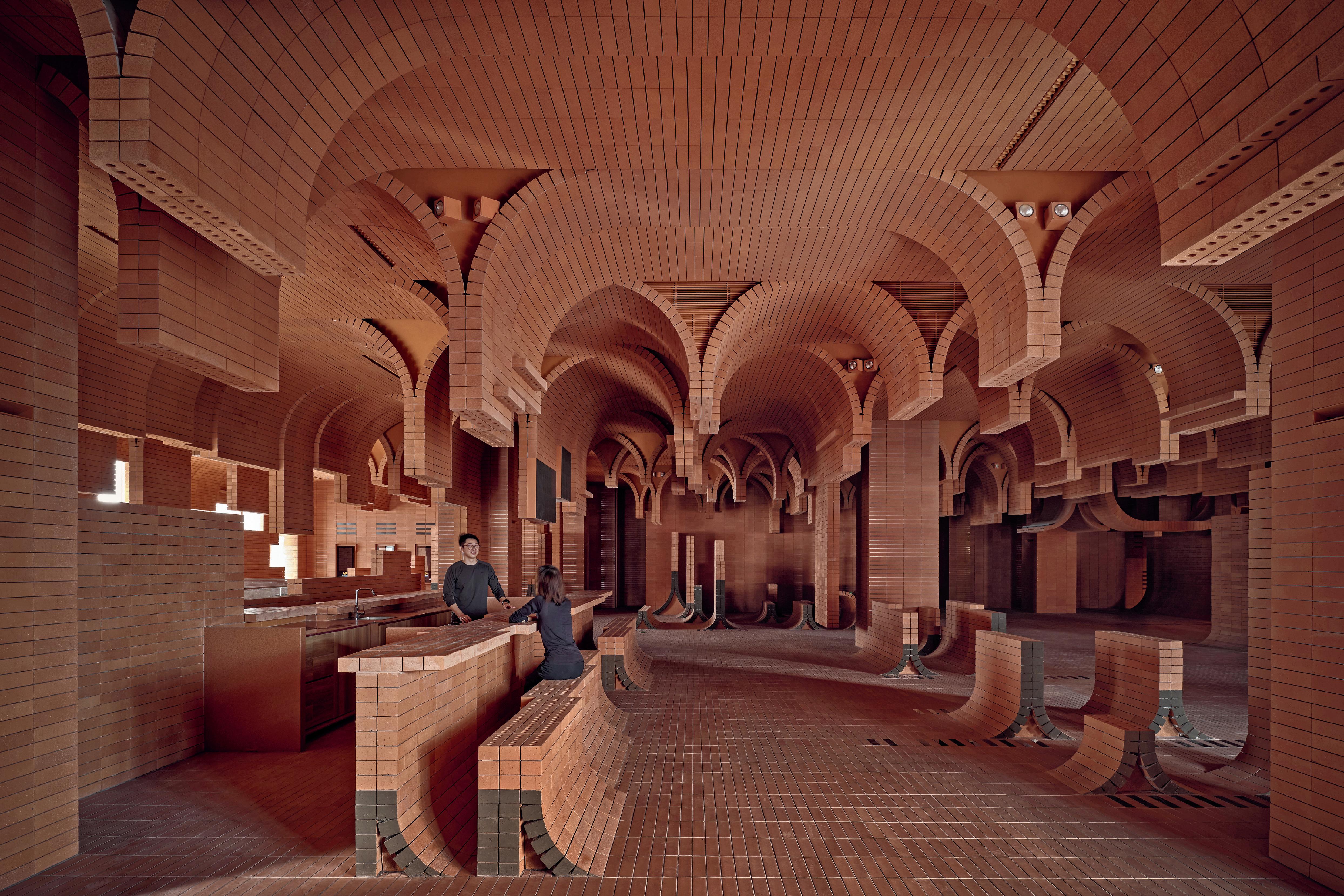
Esta revista está elaborada con papel libre de cloro
This magazine is printed on chlorine-free paper
LA FAMILIA Martínez Cosentino ha tenido siempre la vocación de superar los desafíos más ambiciosos. A partir de 2014, con la revista C, Cosentino se propuso hacer una nueva aportación al ámbito de la arquitectura, en esta ocasión desde el campo de la comunicación, con la difusión de las mejores innovaciones, diseños y proyectos que contribuyen a hacer el mundo más sostenible y bello.
THE MARTÍNEZ COSENTINO family has always applied itself to meeting the most ambitious challenges. From 2014, with C magazine, Cosentino set out to contribute anew to the world of architecture but from a different field, that of communications, through information on the best and latest innovations, designs, and projects that make for a more sustainable and more beautiful world.
Un planeta más frágil
AMoreFragilePlanet
El año 2025 deja un sabor agridulce. Por un lado, el vigor económico y los avances tecnológicos están mejorando la vida de millones de personas; por otro, el cambio climático y los conflictos bélicos arrojan sombras e incertidumbre sobre el panorama del planeta. La política ha visto el ascenso del populismo y la debilitación de las democracias, pero los mercados han sobrevivido a los aranceles, a las guerras comerciales y a la ruptura de las cadenas logísticas sufrida durante la pandemia. Los frutos de la prosperidad tienen sin embargo como reverso el gran volumen de la deuda global y, por su parte, el desarrollo de la inteligencia artificial se basa en la multiplicación de centros de datos consumidores de recursos hídricos y energéticos; mientras tanto, los fenómenos meteorológicos extremos proliferan por doquier, y las pugnas geopolíticas fracturan el mundo.
En el ámbito internacional, el segundo mandato de Donald Trump ha desconcertado a muchos con sus estrategias disruptivas, pero ha hecho también esfuerzos de pacificación y ha obligado a Europa a enfrentarse con sus insuficiencias; al mismo tiempo, su imprevisibilidad ha dejado a la China en ascenso de Xi Jinping como principal garante de estabilidad en un entorno frágil y cambiante. Y en una España que sigue procurando reparar las heridas materiales y morales de la dana valenciana, el ejercicio registró dos sucesos catastróficos: el gran apagón de abril, que paralizó, desconectó y sumió en la oscuridad al país, subrayando la dependencia de las redes eléctricas, y poniendo de manifiesto la dimensión del riesgo que asumimos; y los devastadores incendios de agosto, que mostraron las consecuencias del éxodo rural y la falta de previsión en la gestión del territorio.
Pero frente al cúmulo de desgracias que abren los telediarios y llenan las portadas de la prensa, de la guerra de Ucrania o la cruel devastación de Gaza a la creciente polarización ideológica o la extensión de la corrupción económica y la degradación ética, más de cien mil personas salieron de la pobreza extrema cada día del año, y ningún día fueron noticia; los marginados por su condición étnica ode género lo fueron cada vez menos; y la producción cultural floreció impetuosamente, extendiendo los beneficios del conocimiento y la belleza a un número cada vez mayor de ciudadanos. Aunque el panorama siga siendo vertiginosamente cambiante, y aunque en el mundo haya ahora más dudas que certezas, en este momento de tránsito solo podemos esforzarnos en hallar luz entre las sombras, para no permitir que el desánimo y la resignación sigan avanzando en la cabeza y en el corazón de los pasajeros de la nave espacial Tierra.
The year 2025 leaves a bittersweet taste. On the one hand, economic vigor and technological advances are improving the lives of millions of people; on the other, climate change and armed conflicts cast shadows and uncertainty over the state of the planet. Politics has seen the rise of populism and the weakening of democracies, but markets have survived tariffs, trade wars, and the breaking of logistics chains during the pandemic. However, the fruits of prosperity have a downside in the form of high global debt, while the development of artificial intelligence is based on the spreading of data centers that consume water and energy resources. Meanwhile, extreme weather events are proliferating everywhere, and geopolitical struggles are fracturing the world.
On the international stage, Donald Trump’s second term has baffled many with its disruptive strategies, but it has also made efforts towards peace and forced Europe to confront its shortcomings. At the same time, his unpredictability has left Xi Jinping’s rising China as the main guarantor of stability in a fragile and changing environment. And in Spain, which continues to try to repair the material and moral wounds of the floods in Valencia, the year saw two catastrophic events: the total blackout in April, which paralyzed, disconnected, and plunged the country into darkness, highlighting its dependence on the electricity grid and revealing the extent of the risk we collectively take; and the devastating fires of August, which showed the consequences of rural exodus and lack of foresight in land management.
But despite the accumulation of misfortunes that open the news programs and fill the front pages of the press, from the war in Ukraine or the cruel devastation of Gaza to growing ideological polarization or the spread of economic corruption and ethical degradation, more than 100,000 people left extreme poverty behind every day of the year, and not a single day did they make the news; those marginalized because of their ethnicity or gender became less and less so; and cultural production flourished impetuously, extending the benefits of knowledge and beauty to an ever-increasing number of citizens. Although the landscape remains rapidly changing, and though there are now more doubts than certainties in the world, at this moment of transition we can only strive to find light among the shadows, so as not to allow discouragement and resignation to continue advancing in the minds and hearts of the passengers aboard spaceship Earth.
XinY (estructura structure); Environmentfriendly Solution to Building Services Engineering (ingeniería mecánica e iluminación MEP services and lighting); Beijing Yihuida Architectural Concrete Engineering Co. (estructura hormigón concrete structure)
Fotos Photos
Arch-Exist Photography
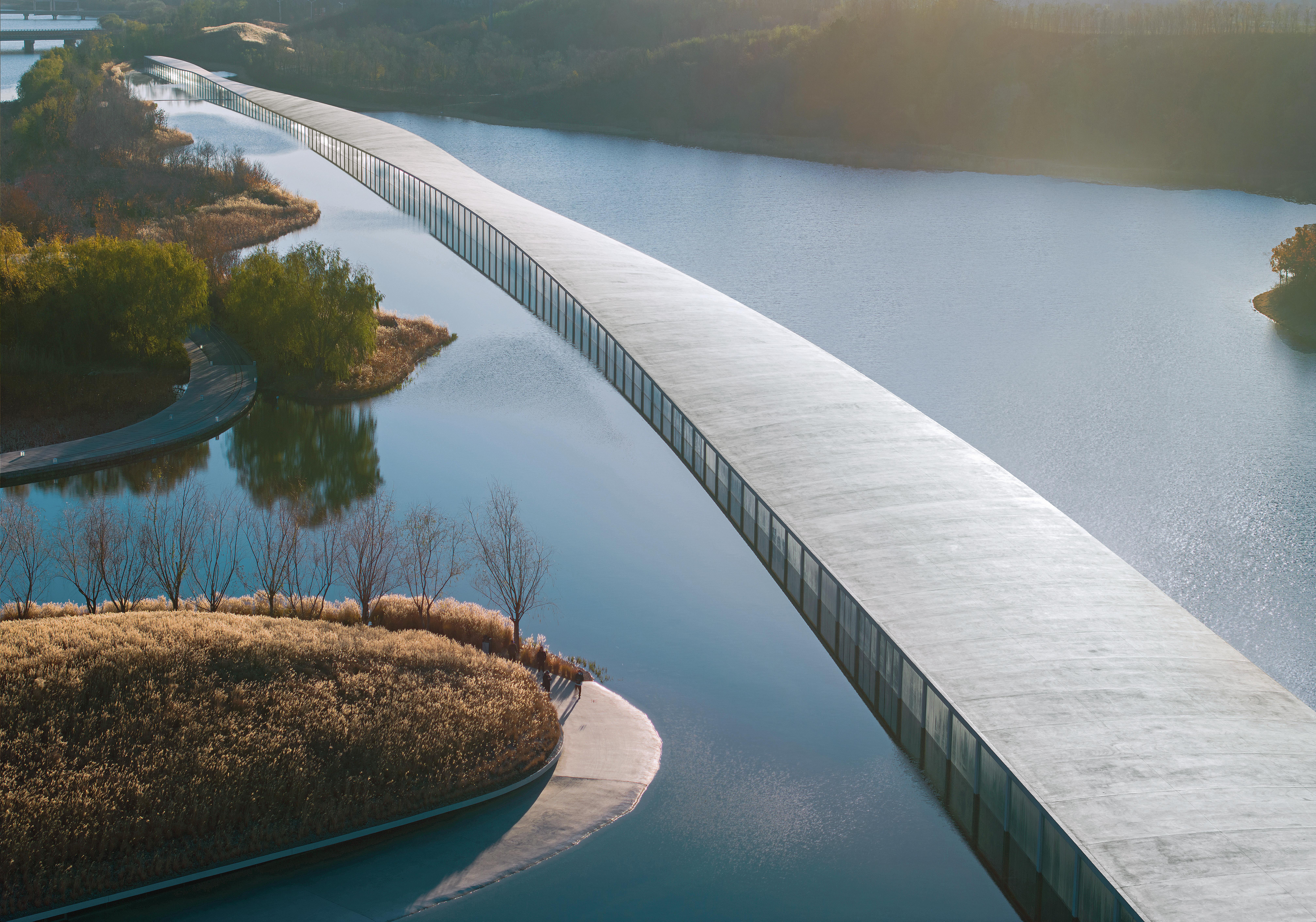
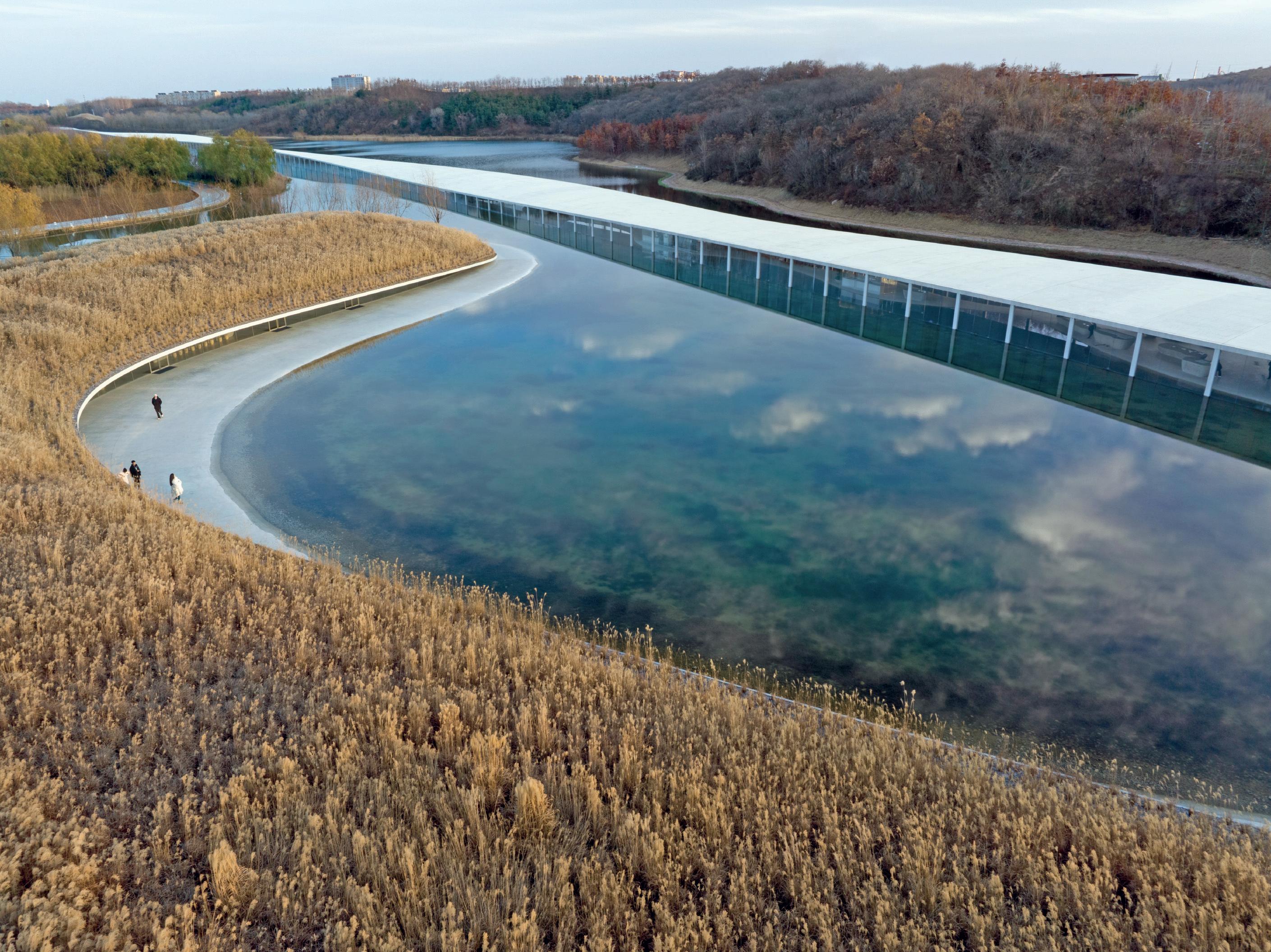
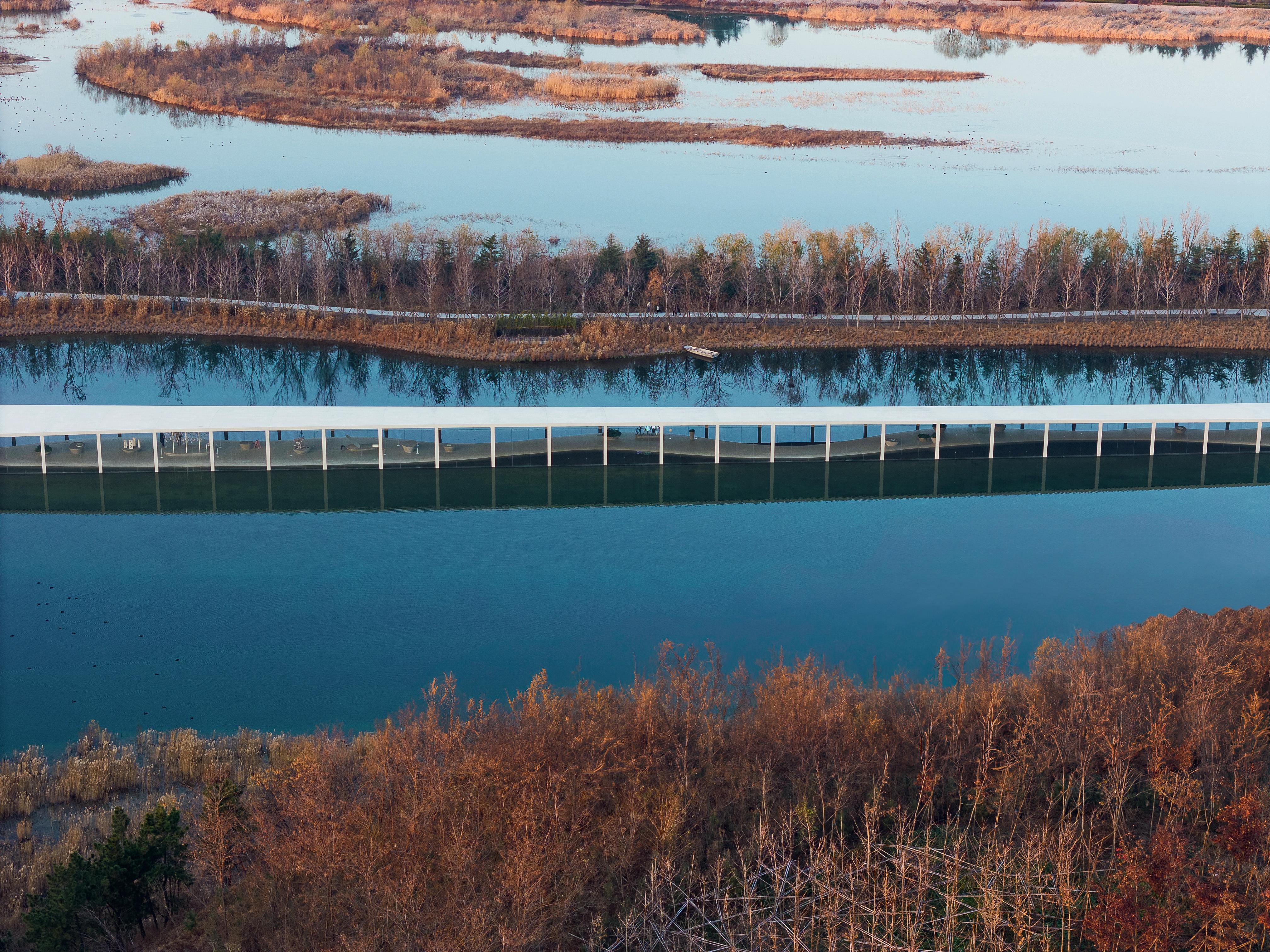
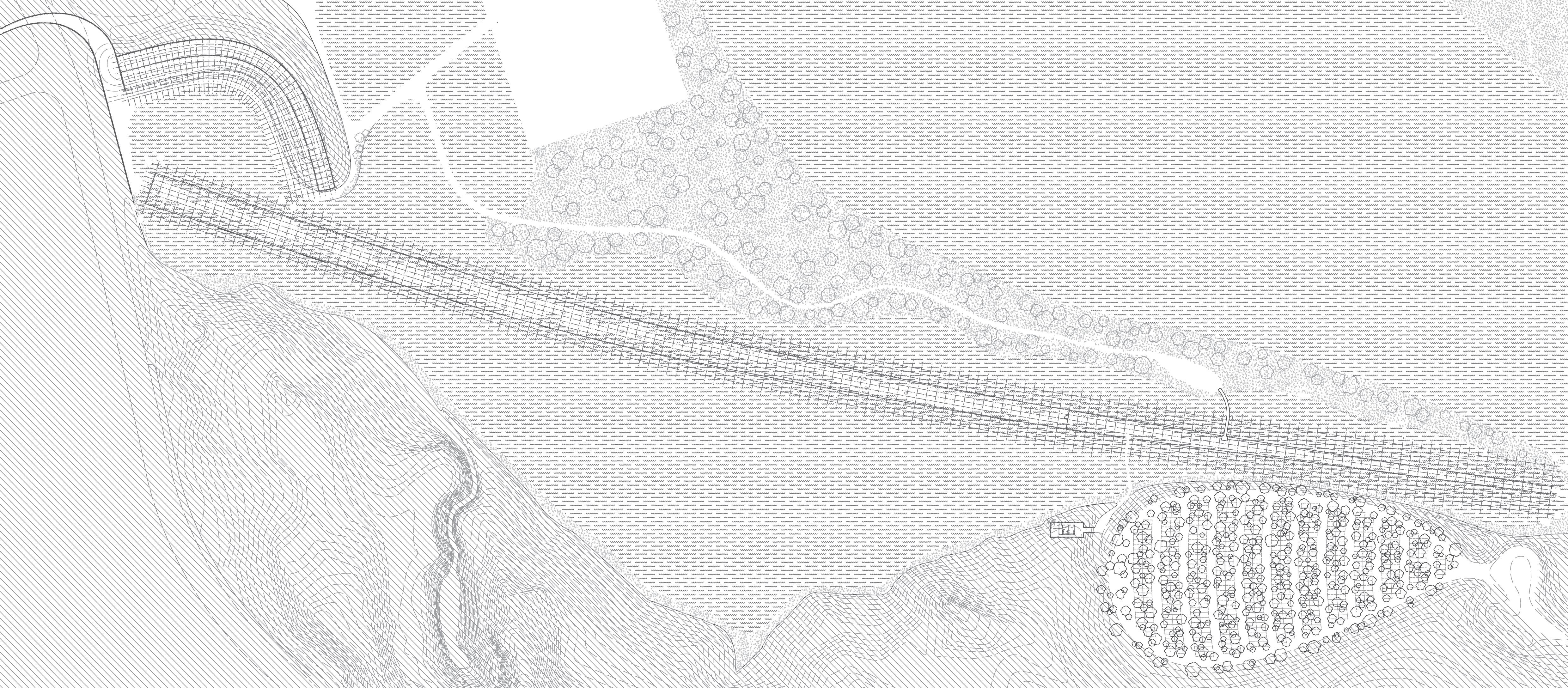
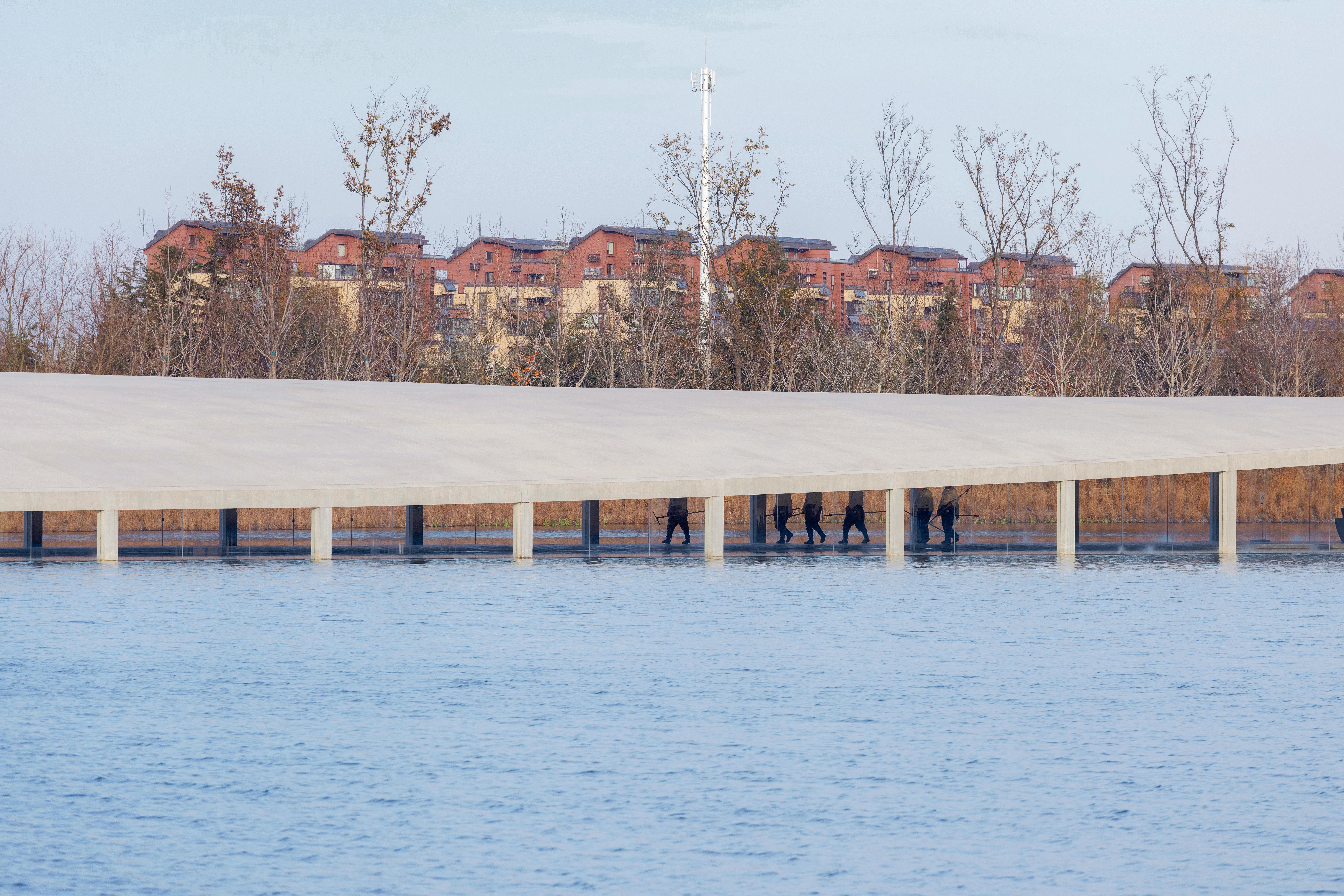
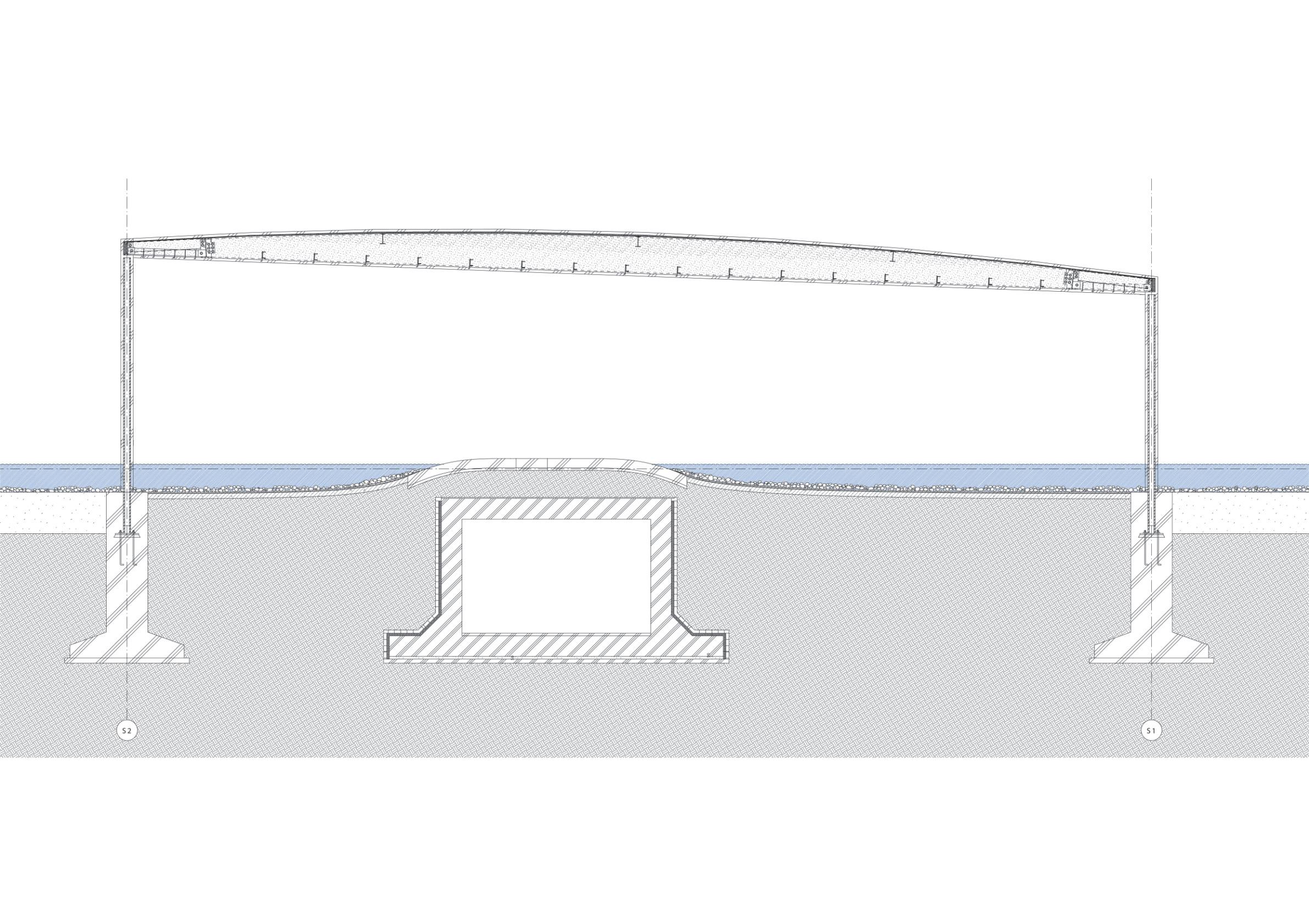
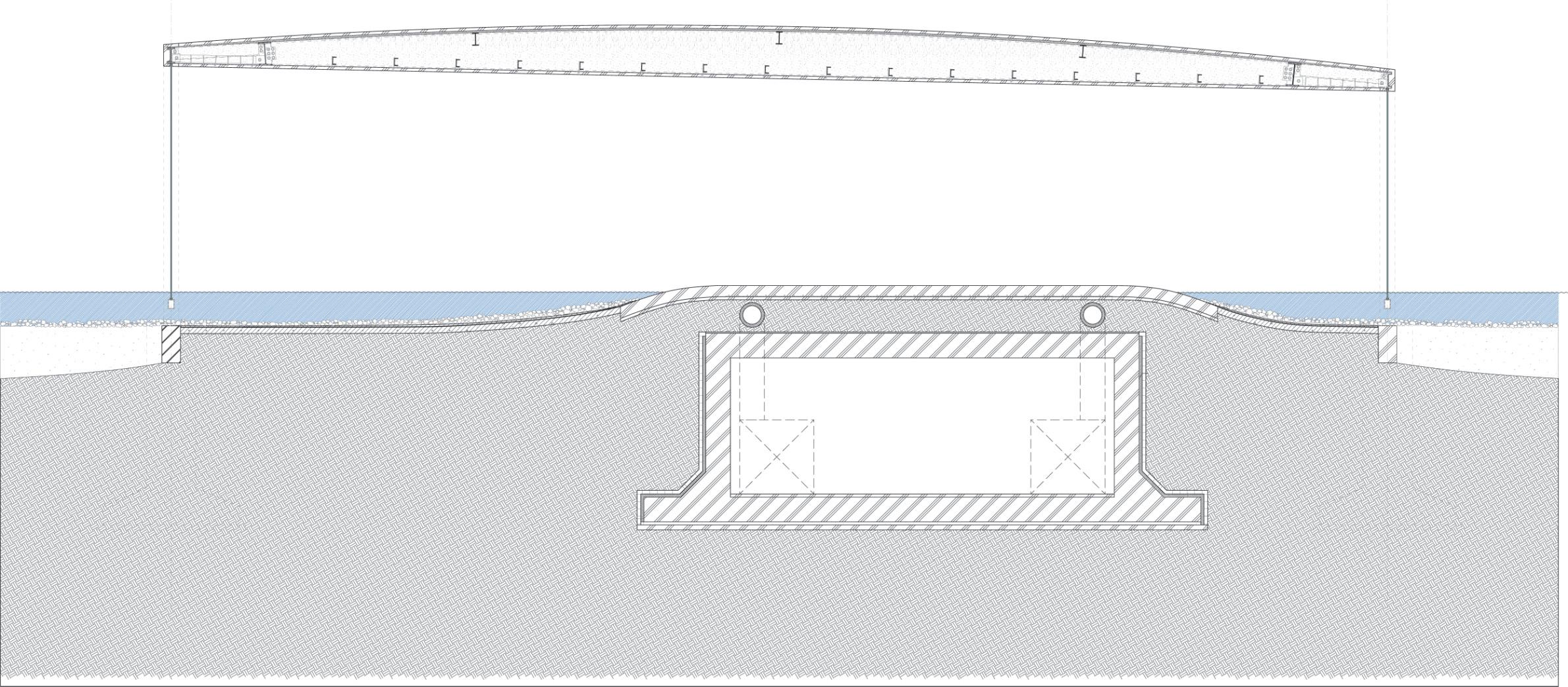
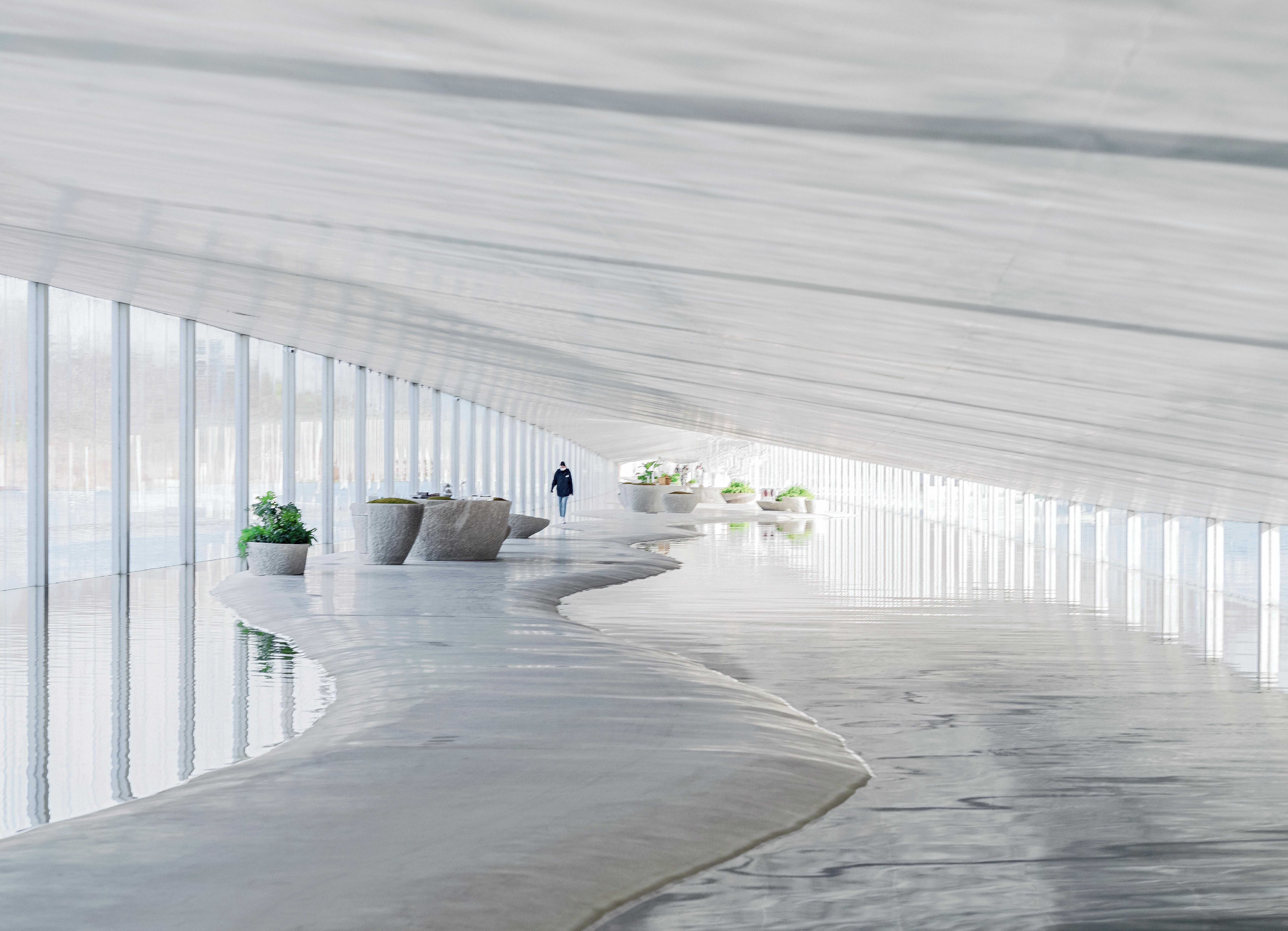
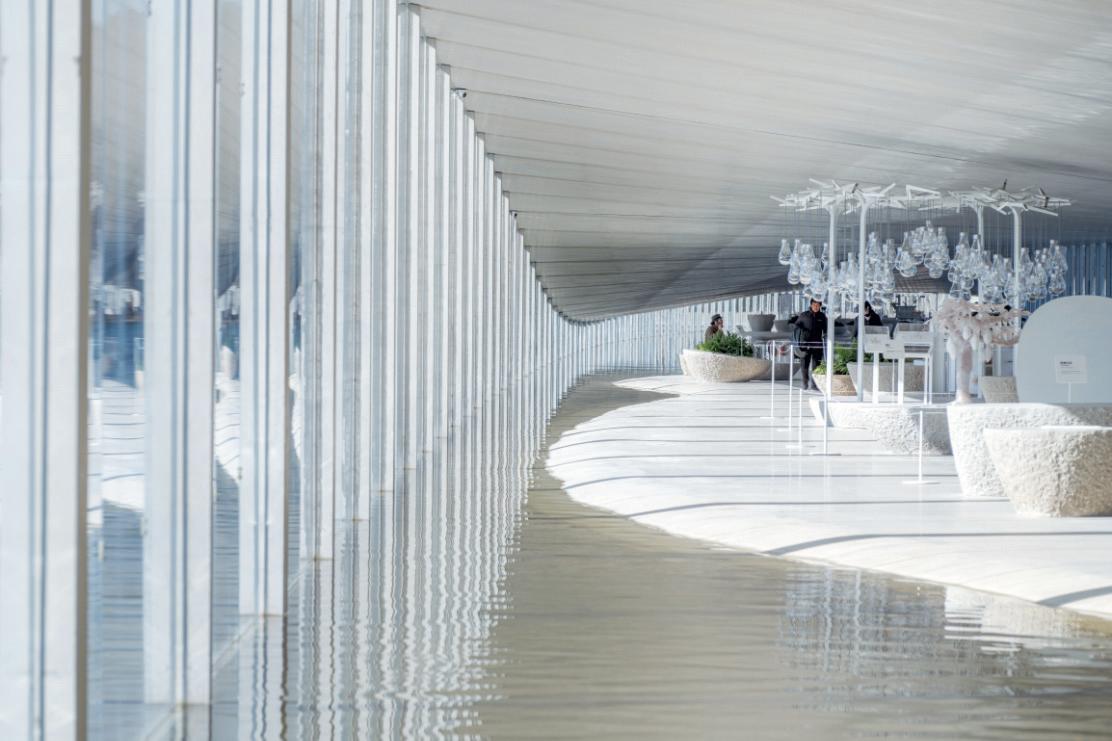
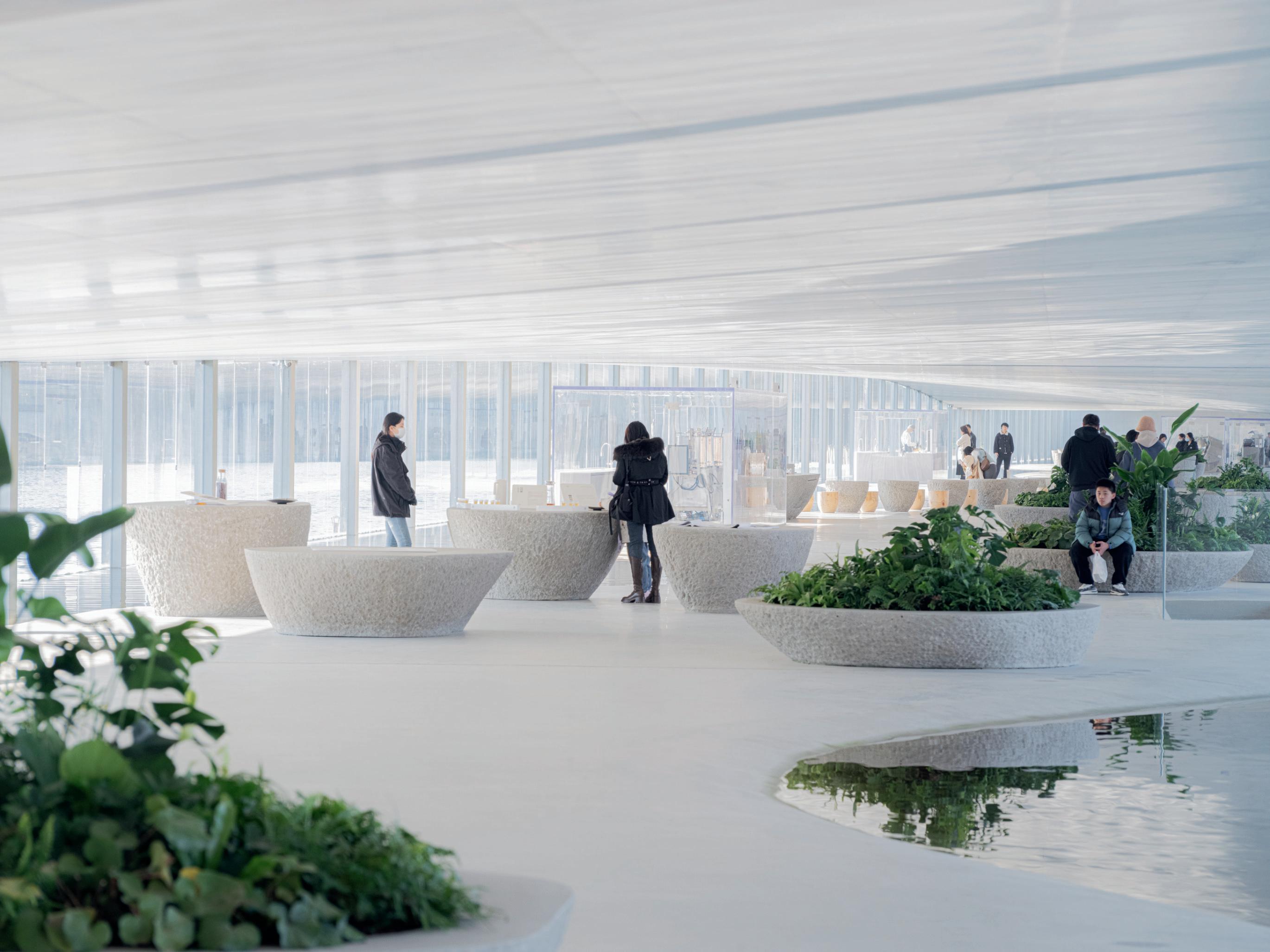
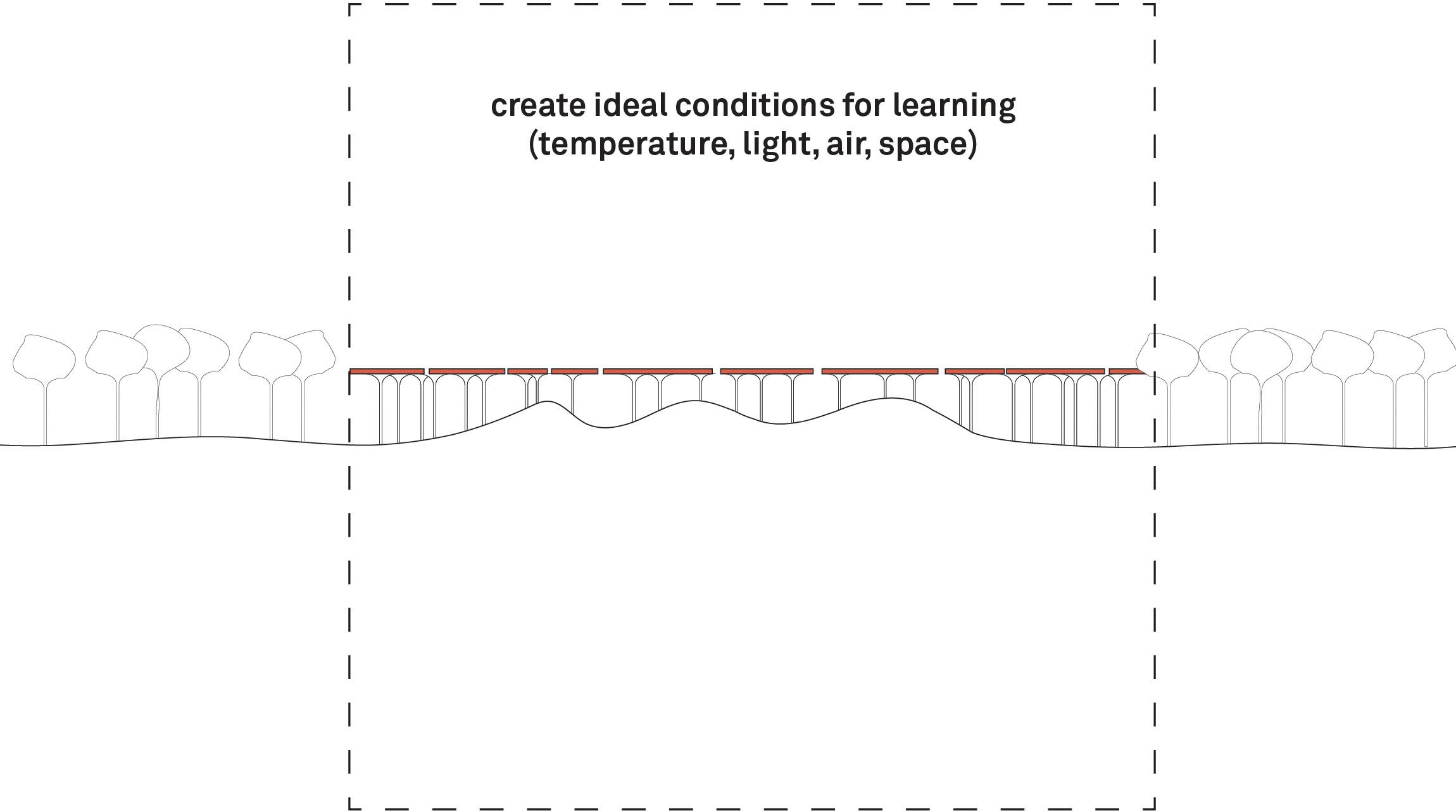
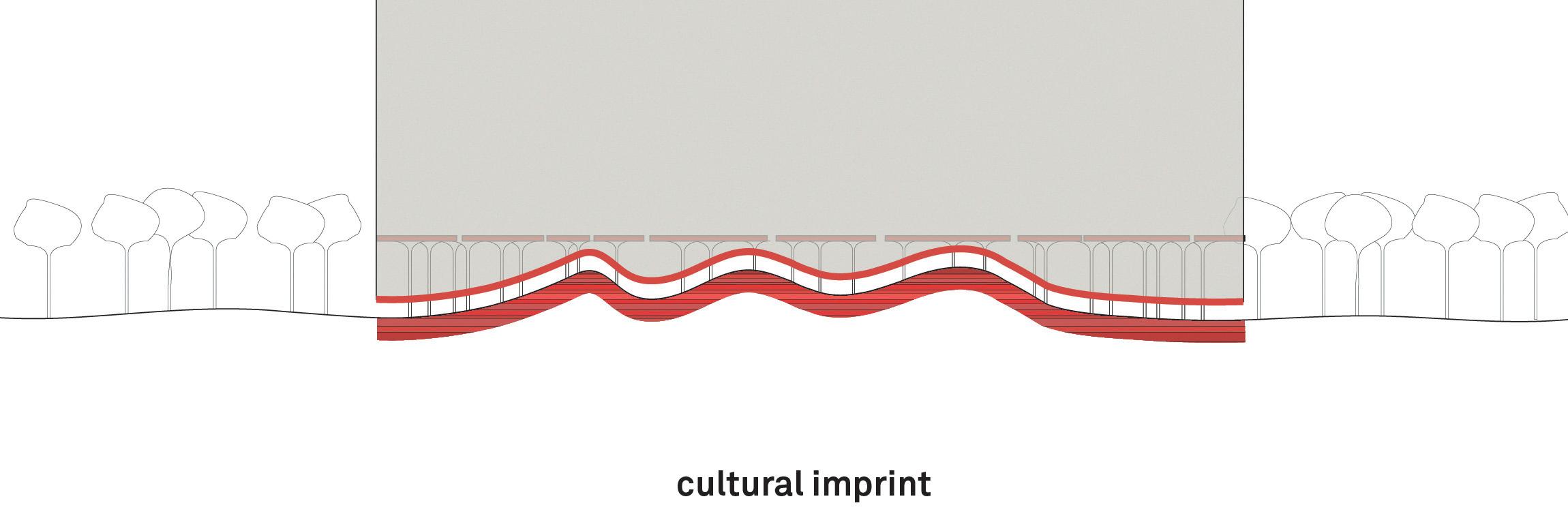
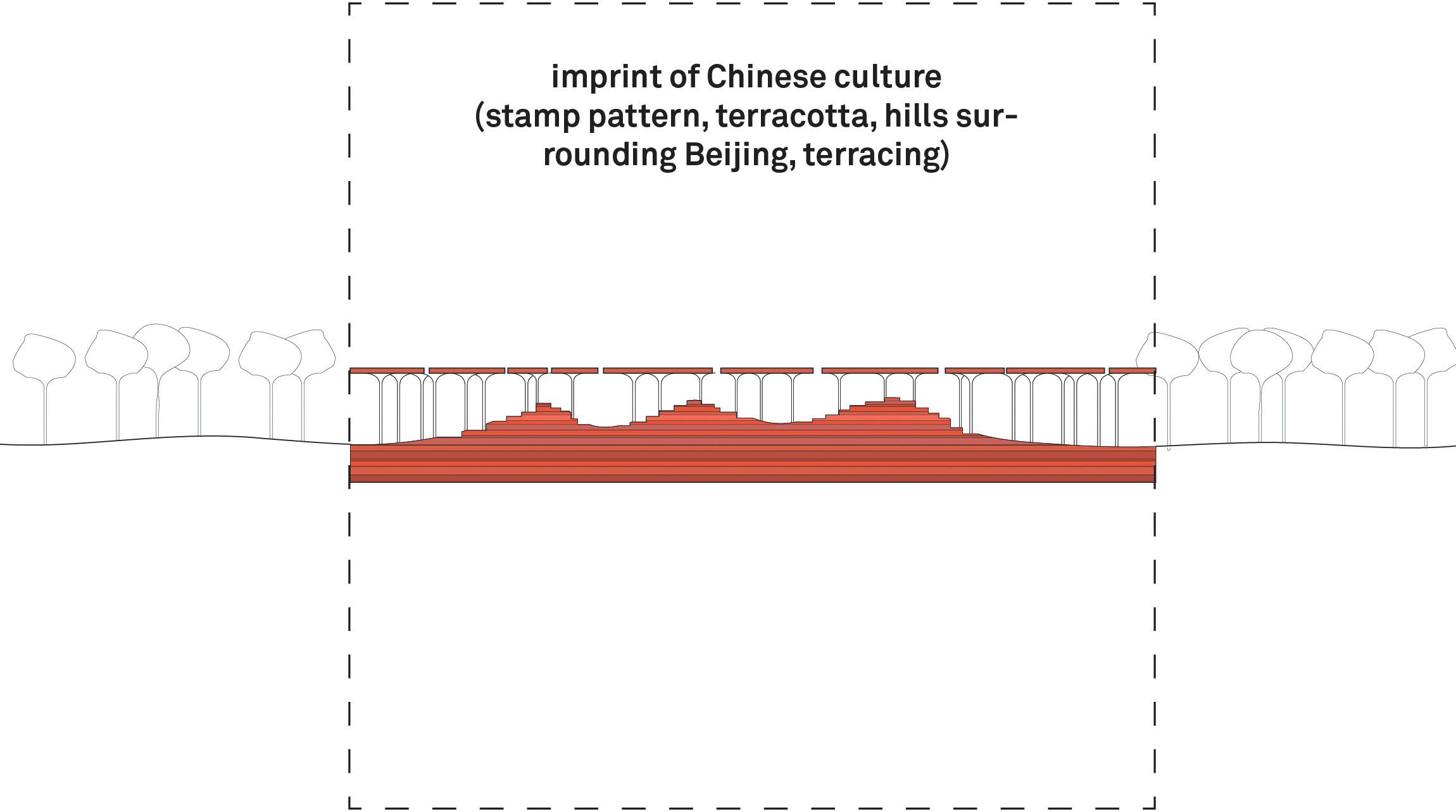
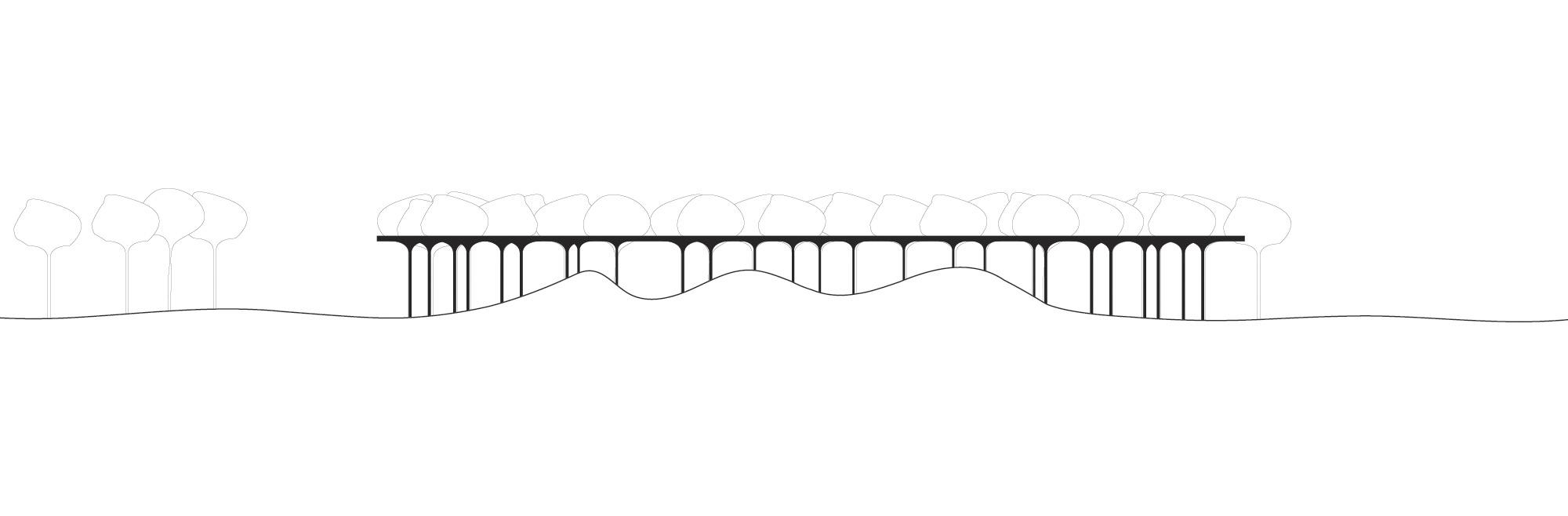
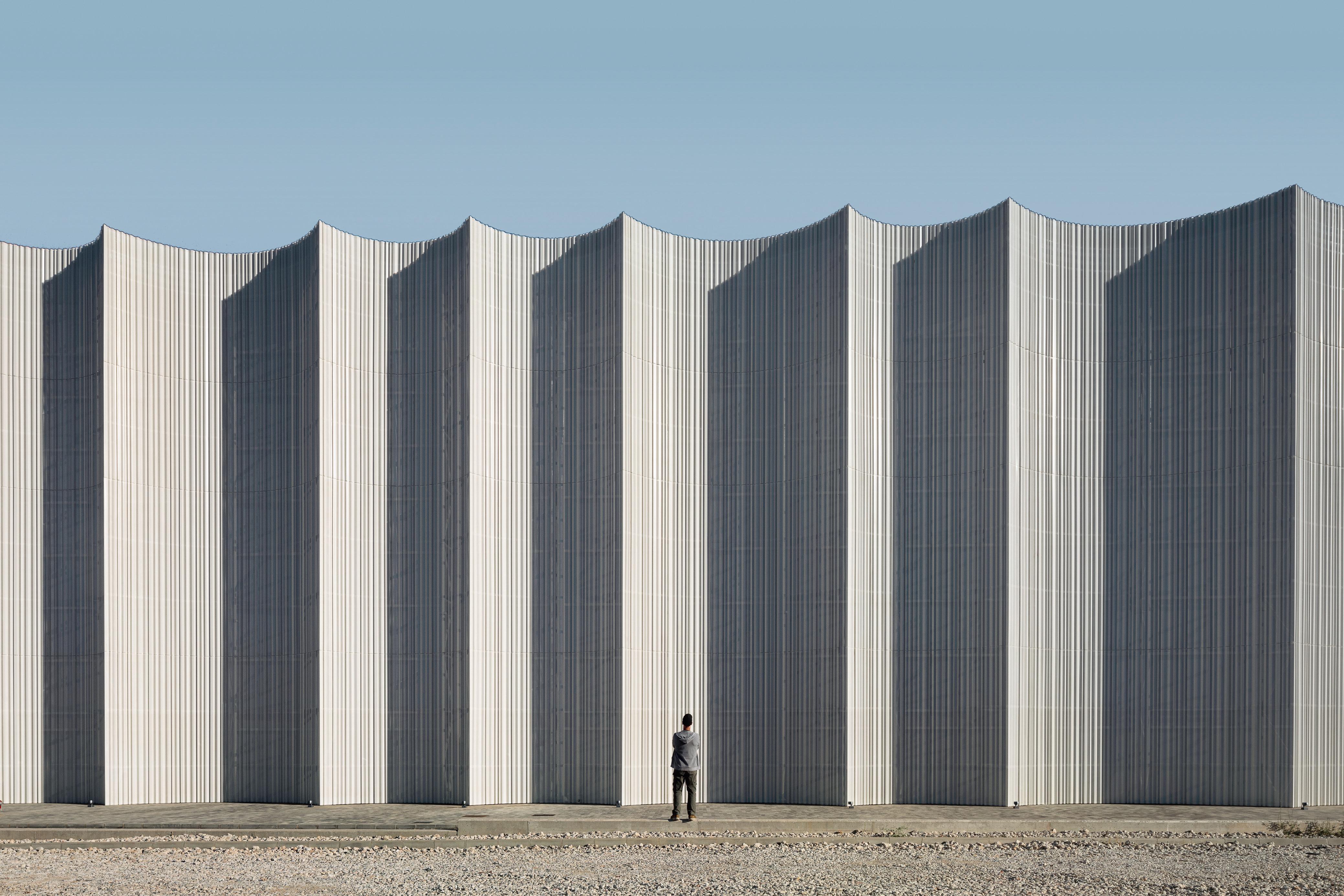
De la superficie de una laguna artificial, a la entrada de un nuevo barrio de la ciudad de Rizhao, en la provincia de Shandong, emerge ingrávida una colosal estructura —de casi un kilómetro de longitud y más de quince mil metros cuadrados de superficie— que busca diluir los límites entre construcción y paisaje, y definir una identidad fuerte frente a la imagen abstracta y anónima que caracteriza este tipo de desarrollos urbanos. Aunque inicialmente el conjunto se concibe como espacio de exhibición, centro de recepción de visitantes y espacios comerciales, la claridad de la planta permite que el uso pueda cambiar fácilmente en el futuro. Sustentada por delgados pilares metálicos, que se asientan regularmente sobre el terreno a poca profundidad y parecen flotar en el agua, la delgada cubierta de hormigón se comba para adaptar su curvatura a los cambios de sección del desarrollo horizontal, sin perder por ello la continuidad de la superficie. Entre estos soportes verticales, y a ras del nivel del agua, se colocan los muros cortina laterales, que dejan paños abiertos por los que esta penetra naturalmente en el espacio de exposiciones, inundándolo y reduciéndolo a un serpenteante sendero. Así se crea un paisaje artificial interior, a la vez que se redefine la relación con el natural del exterior. Frente al museo se encuentra un centro de visitantes, oculto bajo una amplia cubierta vegetal, también proyectado por la oficina de Junya Ishigami.
Out of an artificial lake, at the entrance to a new area of the city of Rizhao, in China’s Shandong province, rises a lightweight-looking but colossal structure – stretching almost a kilometer long and counting a total area exceeding 15,000 square meters – that seeks to dilute the boundaries between construction and landscape, and to stamp a strong identity on the abstract and anonymous image that tends to characterize developments of this kind. Although initially the complex was expressly thought out to serve as an exhibition space with a visitor center and commercial spaces to go with it, the clarity of the floor plan is bound to allow easy change of uses in the future.
Held up by slender metal pillars – which are anchored into the shallow lakebed in a regular formation, and seem to be floating upon the water – the thin concrete roof bulges here and there to adapt its curvature to the modifications in the section of the horizontal volume, with no loss of continuity on its surface. Between these vertical supports and at the level of the water, lateral curtain walls leave apertures for the latter to ever so naturally flow into the gallery halls, flooding them and reducing them to a snaking path. This creates an artificial indoor scape and a redefined relationship with the natural scenery outside. Facing the museum is the visitor center, hidden under an expansive green roof and also designed by the office of Junya Ishigami.
Sobre pilares metálicos que arrancan del lecho a poca profundidad, una delgada cubierta de hormigón va combándose para adaptarse a los cambios de sección del desarrollo horizontal sin perder la continuidad.
Held up by metal pillars that shoot up from the shallow lakebed, a slender concrete roof bulges and sags as it adapts to changes in the section of the horizontal volume, with no loss of continuity on its surface.
Los muros cortina laterales caen a ras del agua, dejando aberturas por donde esta puede penetrar en el interior, inundándolo y reduciéndolo a un sendero que emerge como un banco de arena.
The side curtain walls drop to the actual waterline, leaving apertures for the latter to flow into the exhibition space, flooding it and reducing it to a snaking path that surfaces like a sandbar for wading.
Wisdom Forest Snøhetta in Beijing
Arquitectos Architects
Snøhetta
Colaboradores Collaborators
East China Architecture Design and Research Institute (dirección de ejecución executive architect, ingeniería civil civil engineering, consultor de costes cost consultant, sostenibilidad sustainability, iluminación lighting); Eckersley O’Callaghan (fachada facade); China Railway Construction Engineering Group (contratista contractor)
Fotos Photos
Yumeng Zhu
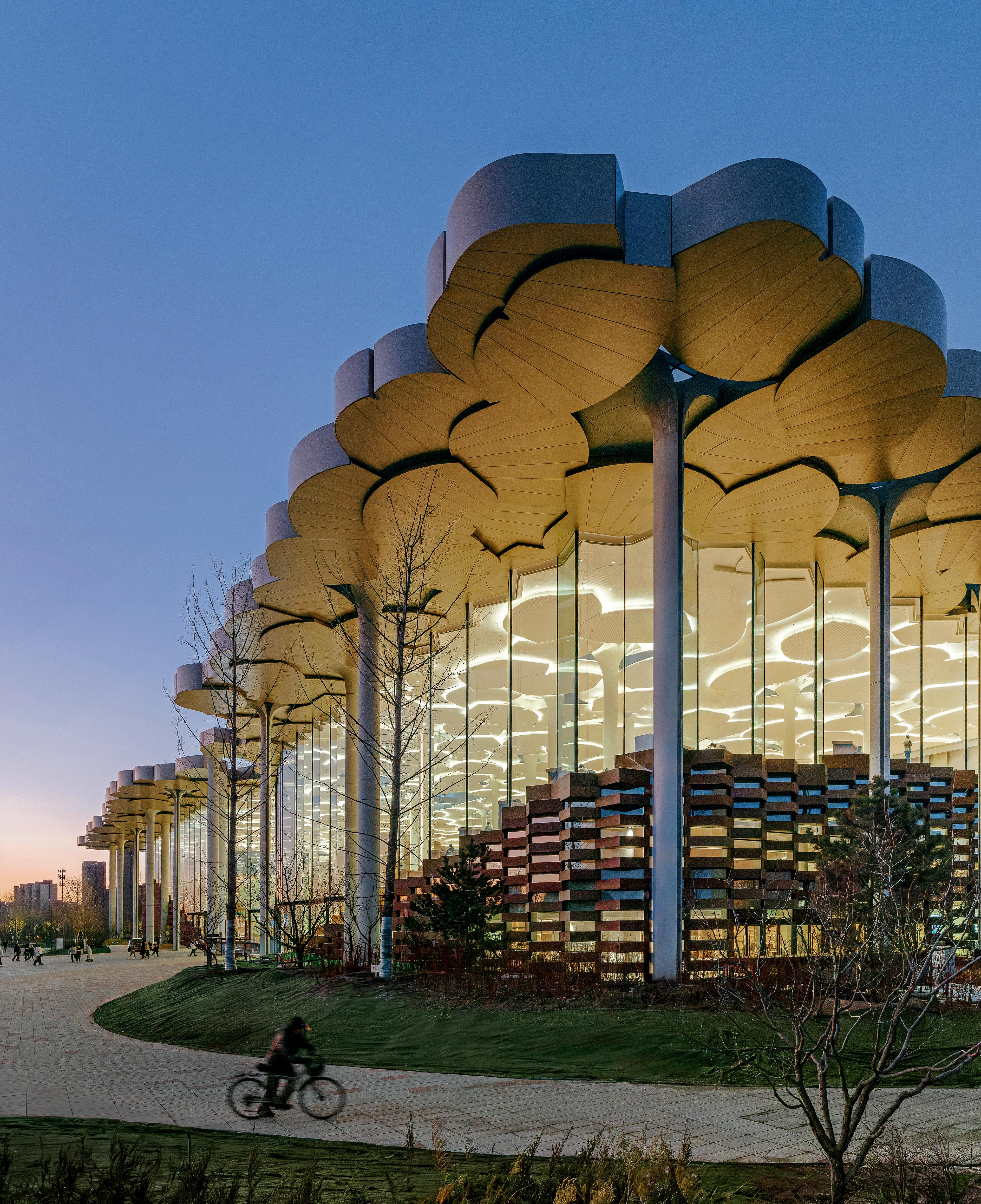
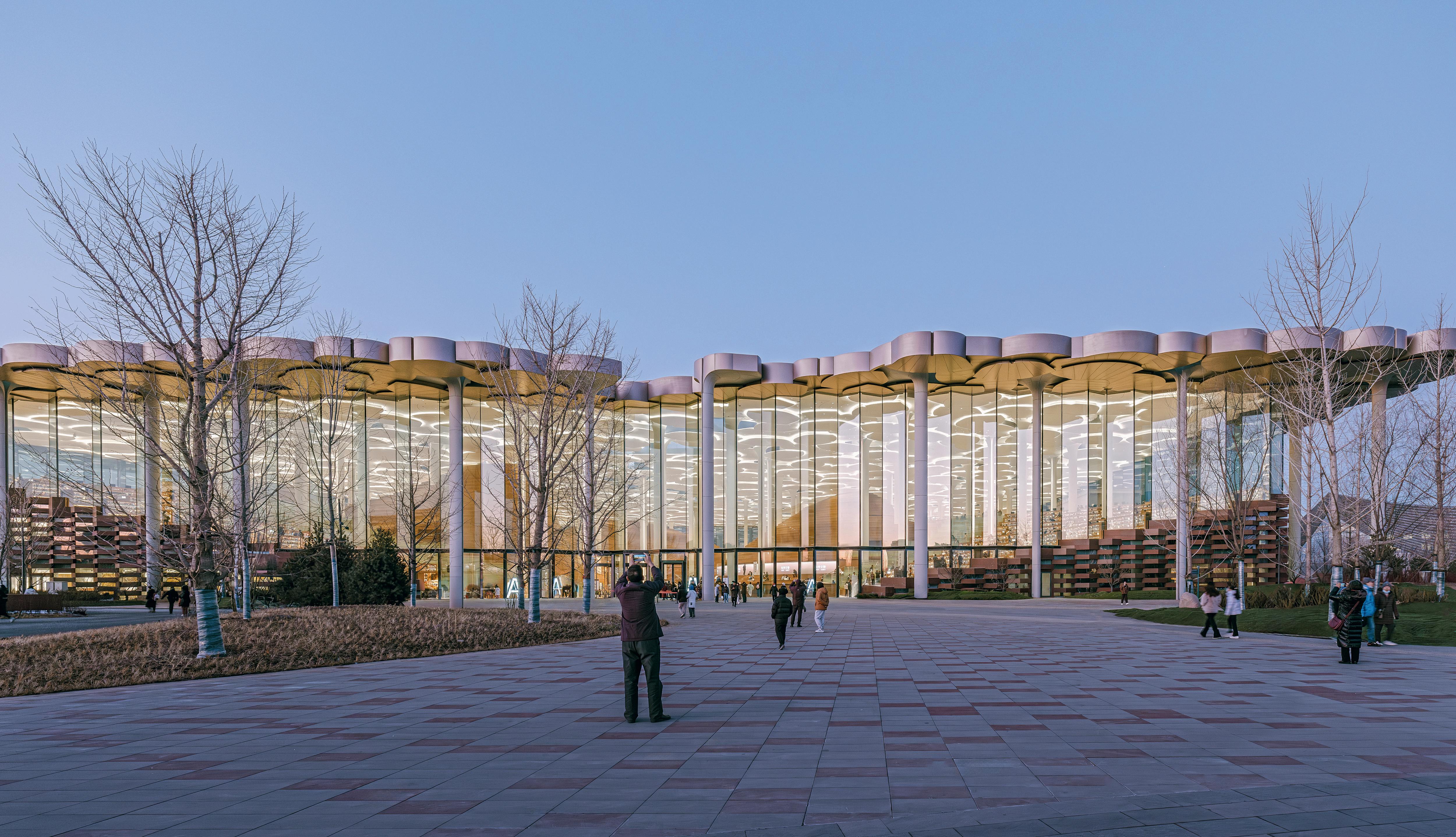
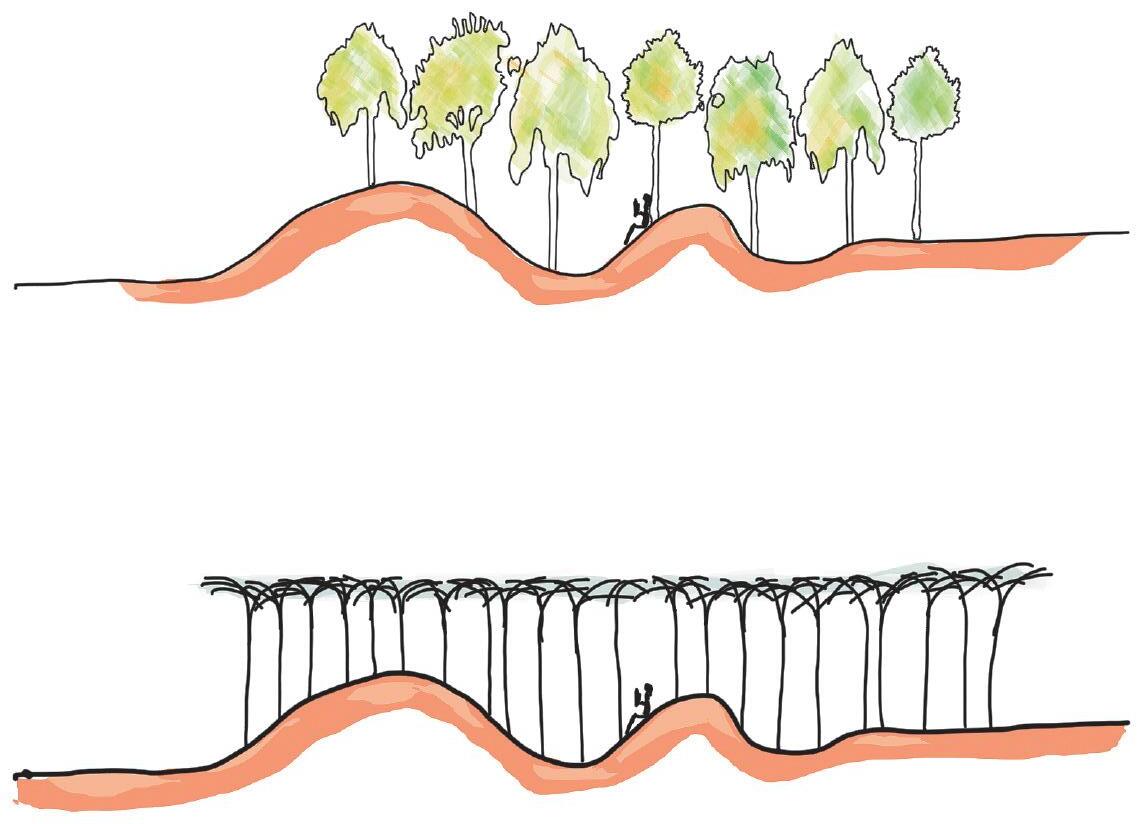
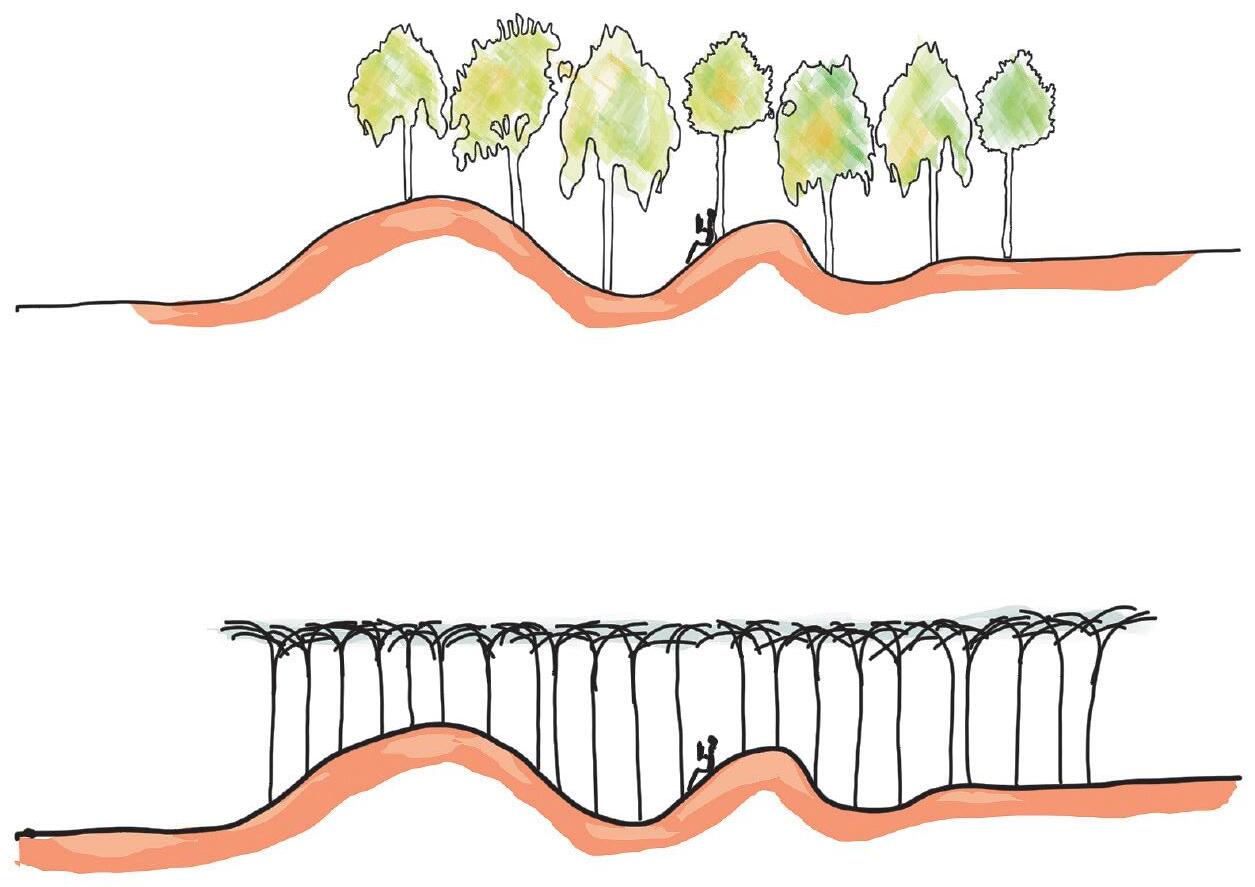
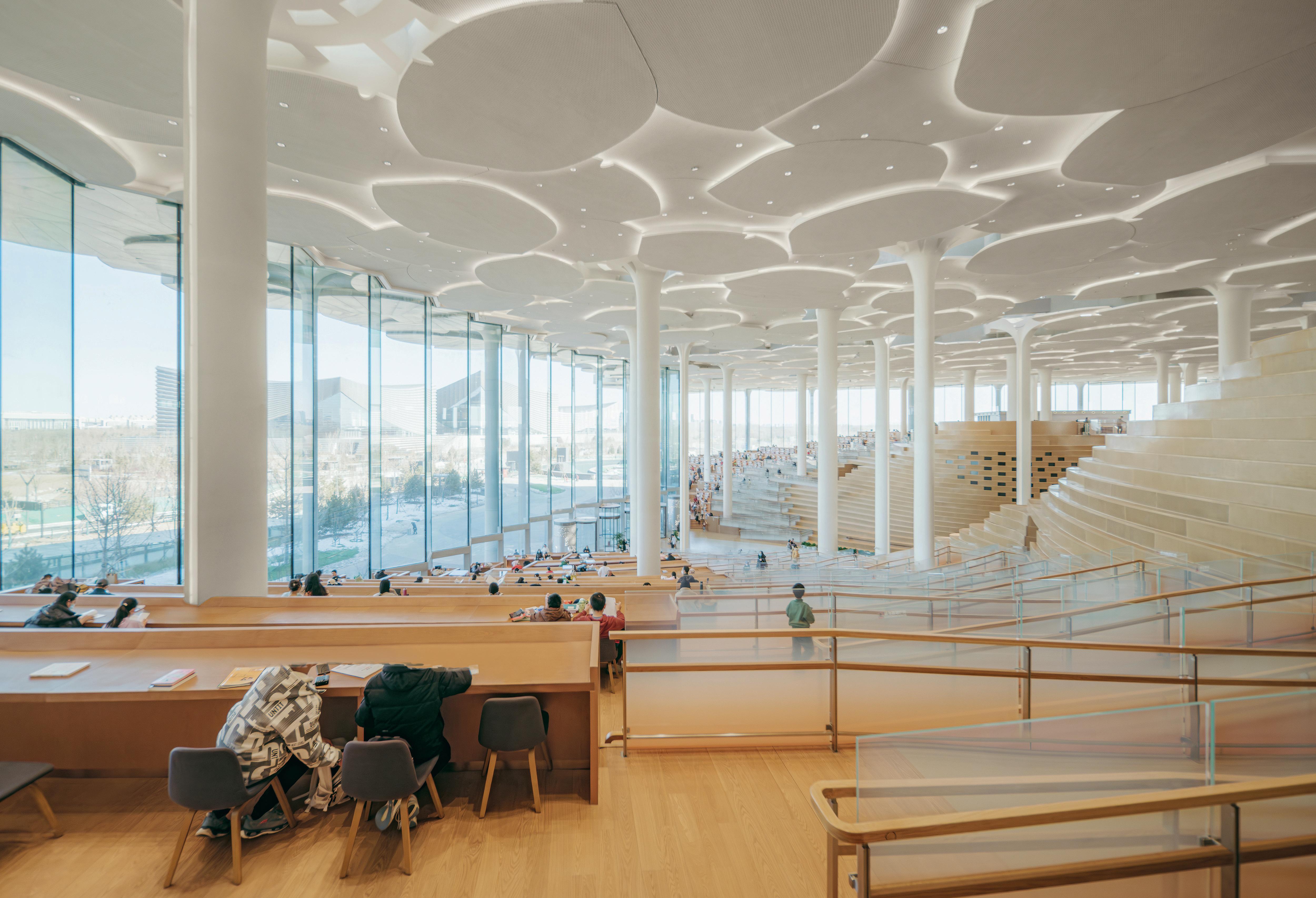
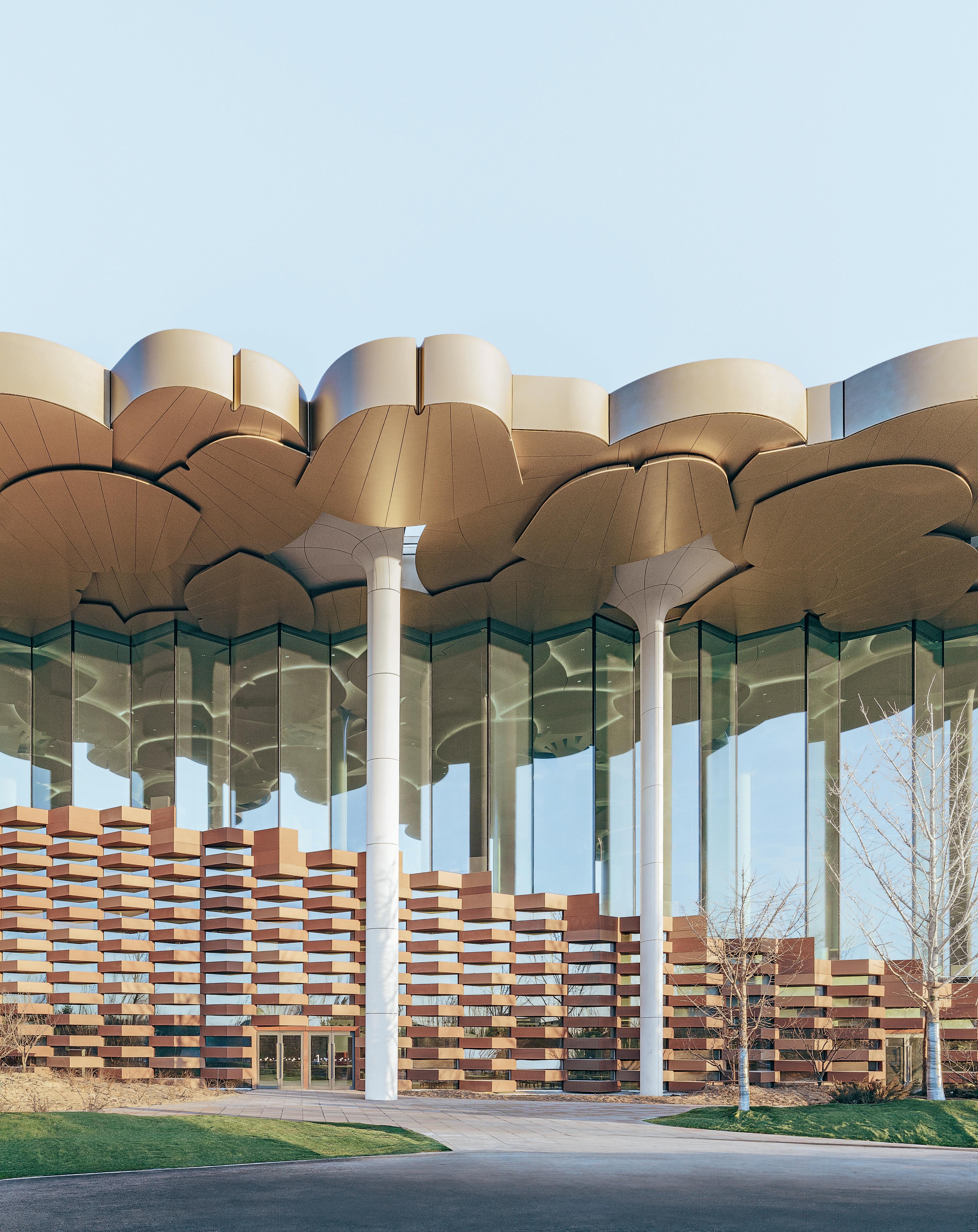
Considerado la puerta oriental de Pekín, el distrito de Tongzhou busca consolidarse como una extensión del tejido urbano de la capital china y transformarse en un atractivo polo cultural. Con este fin, se ha desarrollado un ambicioso plan director que mejora los enlaces y convierte el barrio en un ‘subcentro’ de la ciudad. Además, para contrarrestar el peso que han tomado los edificios de las administraciones locales, se han levantado tres grandes infraestructuras culturales. Entre ellas, destaca la nueva biblioteca, concebida por la firma noruega Snøhetta, en colaboración con el estudio local ECADI, para reafirmar la importancia de los espacios de conocimiento en el mundo contemporáneo con un diseño que busca conectar libros, personas y naturaleza. Para ello, se ha creado un espacio de encuentro, inspirado por el patrimonio de la ciudad, y que introduce el paisaje por grandes ventanales. Estos principios se traducen en una suerte de topografía artificial, cuyas laderas ocultan el resto del programa funcional y crean estantes, mesas o gradas; y un bosque hipóstilo de pilares, que imita a las hojas en abanico del ginkgo. En el centro, un camino serpenteante sirve como arteria de circulación, en referencia al curso del cercano río Tonghui. La otra máxima para su diseño fue alcanzar altos estándares de sostenibilidad, gracias a un entramado estructural racionalizado y al uso de elementos modulares, además de estrategias como el sistema de recuperación de agua de lluvia o la cubierta de placas fotovoltaicas.
Considered the eastern gateway to Beijing, the district of Tongzhou seeks to consolidate itself as an extension of the Chinese capital’s urban fabric and become an attractive cultural pole. Hence an ambitious masterplan scheme that improves connections and transforms the zone into a ‘subcenter’ of the city. In addition, to counteract the weight that the buildings of local administrative agencies have taken on, three large cultural infrastructures have gone up. Standing out among them is the library, conceived by the Norwegian firm Snøhetta – in collaboration with the local office ECADI – for the purpose of reaffirming the importance, in the contemporary world, of facilities devoted to knowledge, and with a design that endeavors to interconnect books, people, and nature. The facility created for such a crossroads draws inspiration from the city’s heritage and brings the landscape in by means of large windows. All this results in something like an artificial topography whose slopes conceal the rest of the functional program while forming shelves, tables, and tiers; and a hypostyle forest of pillars, modeled on the fan-shaped leaf of the ginkgo tree. At the center, a winding path acts as a circulation artery, following the course of the nearby Tonghui River. The other aim was to meet high sustainability standards, through a rationalized structural framework and the use of modular elements, besides strategies like the rainwater collector or the rooftop photovoltaic panels.
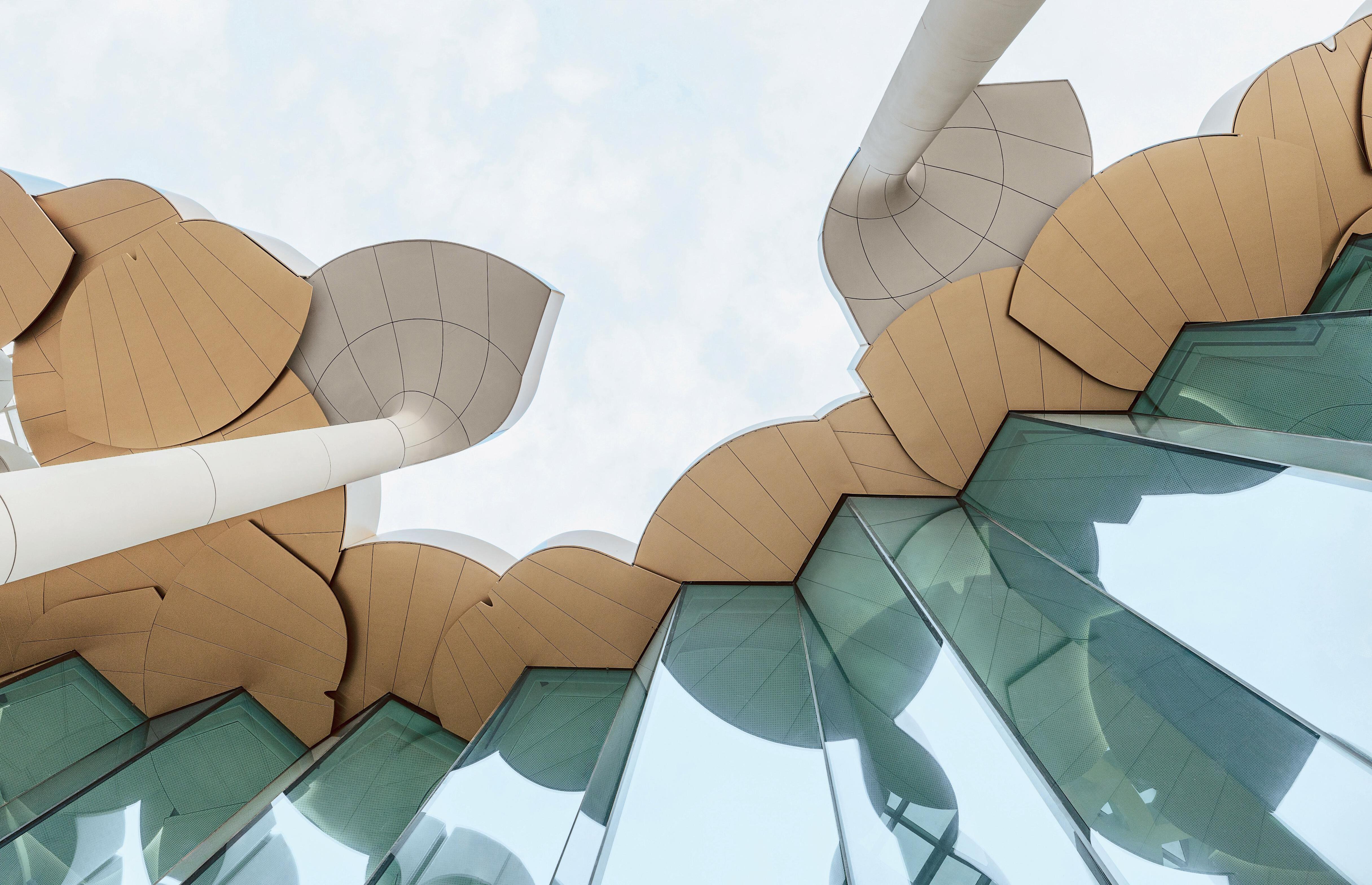
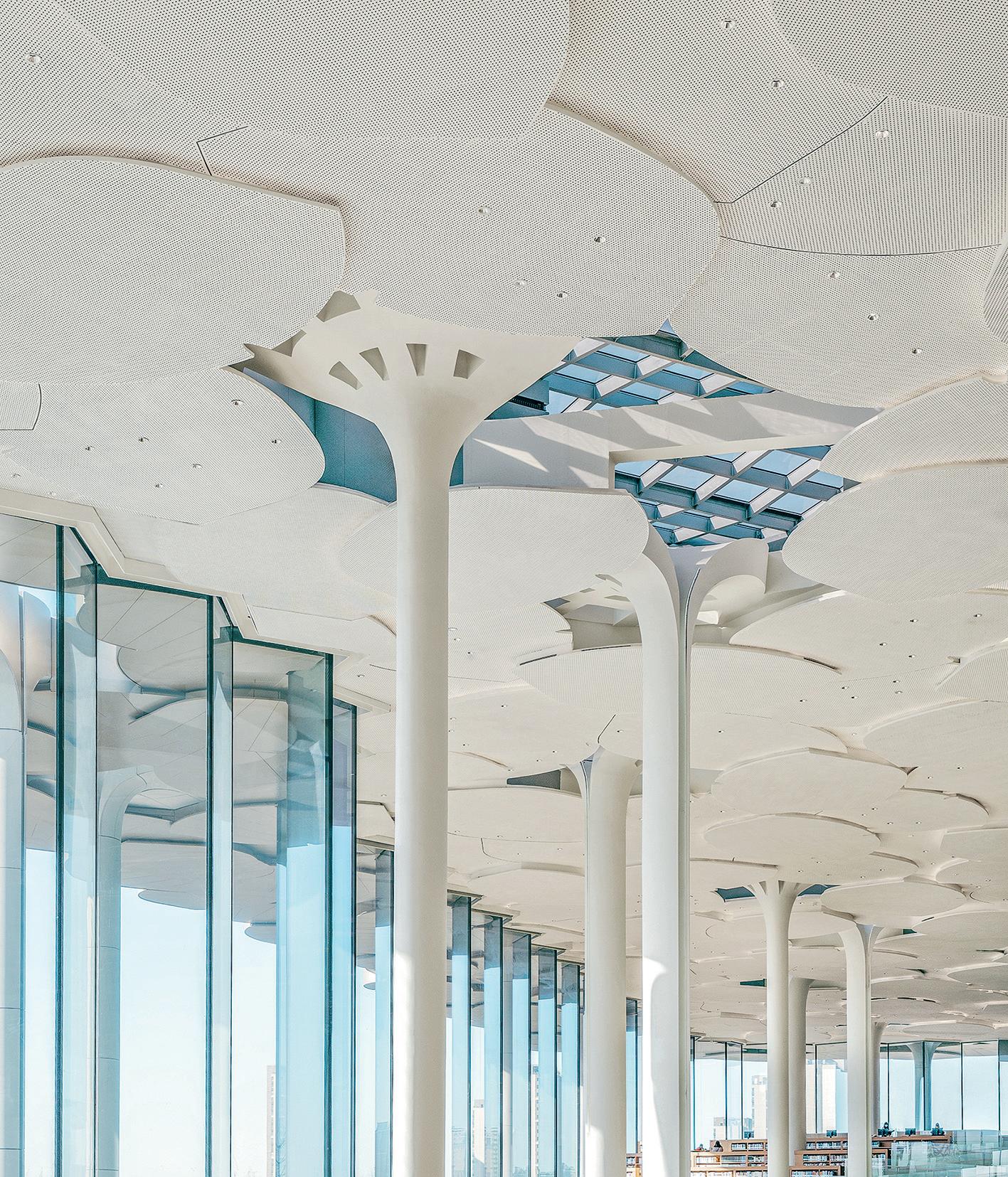
Con formas inspiradas en las hojas del ginkgo, un dosel de paneles superpuestos se extiende
With forms inspired by the fan-shaped leaves of the ginkgo tree, a canopy of overlapping panels
El bosque hipóstilo se alza sobre una topografía
The hypostyle forest rises on an artificial
Integration into the environment
Art in the Garden
H&dM in Philadelphia
Arquitectos Architects Herzog & de Meuron
Cliente Client
CP 2023, c/o Neubauer Family Foundation Equipo Team
Jacques Herzog, Pierre de Meuron (socios partners); Jason Frantzen (socio responsable partner in charge); Aurélien Caetano, Mehmet Noyan (asociado, director de proyecto associate, project director); Ninoslav Krgovic (gestor de proyecto project manager); Antoine Foehrenbacher, Julia Hejmanowska, Josh Helin, Neda Mostafavi, Daria Nikolaeva, Martin Jonathan Raub, Camilla Vespa, Rio Weber, Xin Yue Wang, Benjamin Muller
Fotos Photos
Iwan Baan
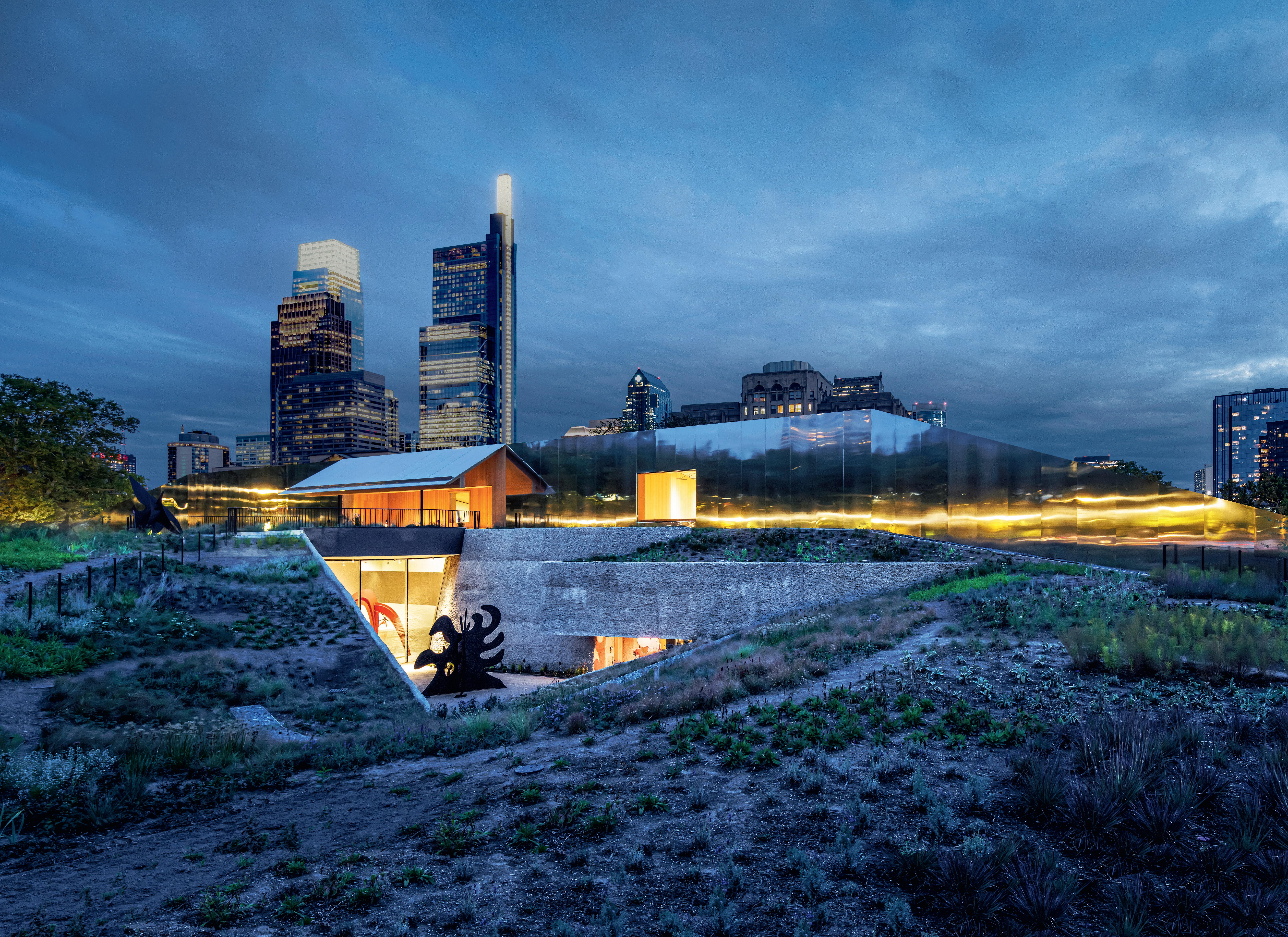
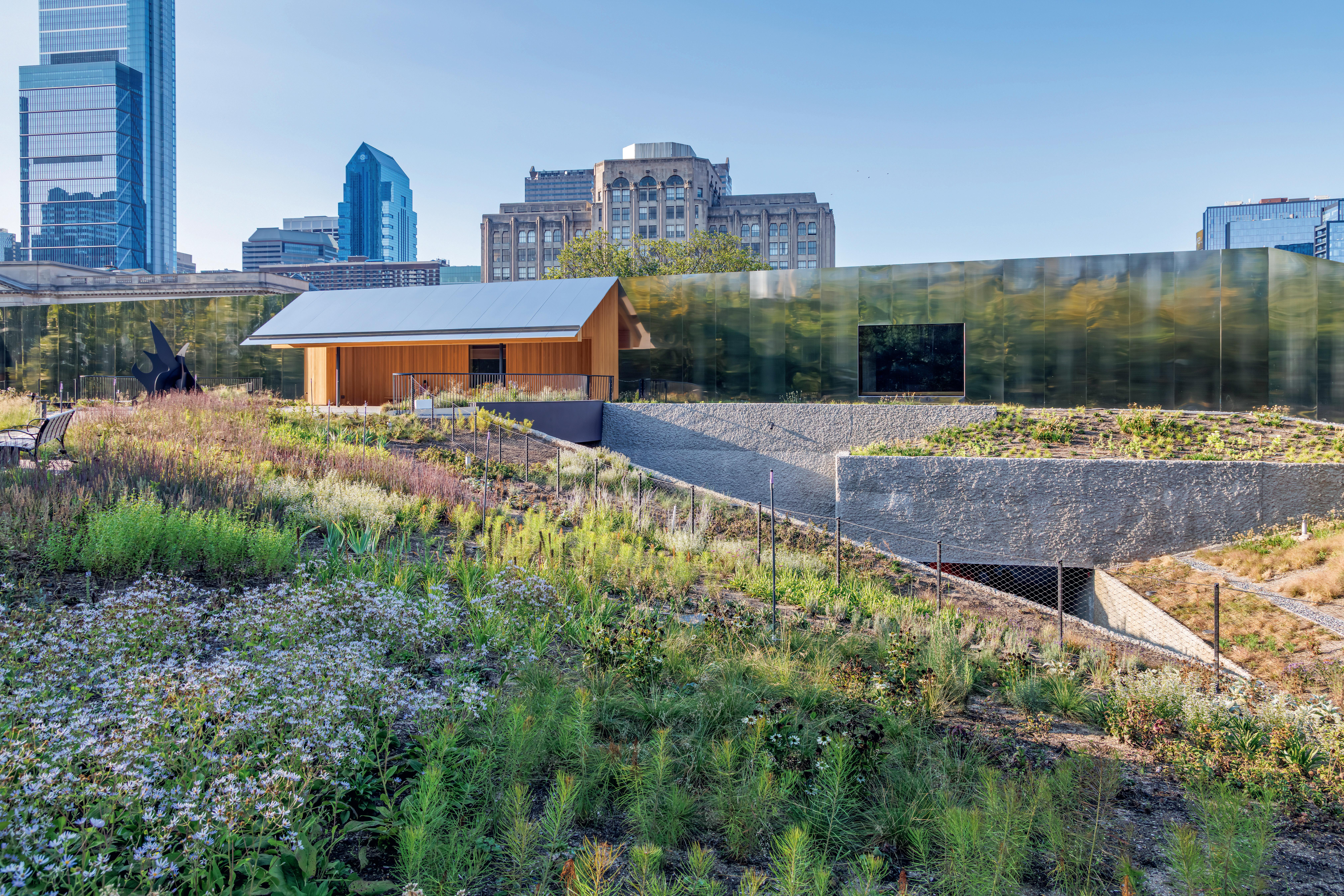
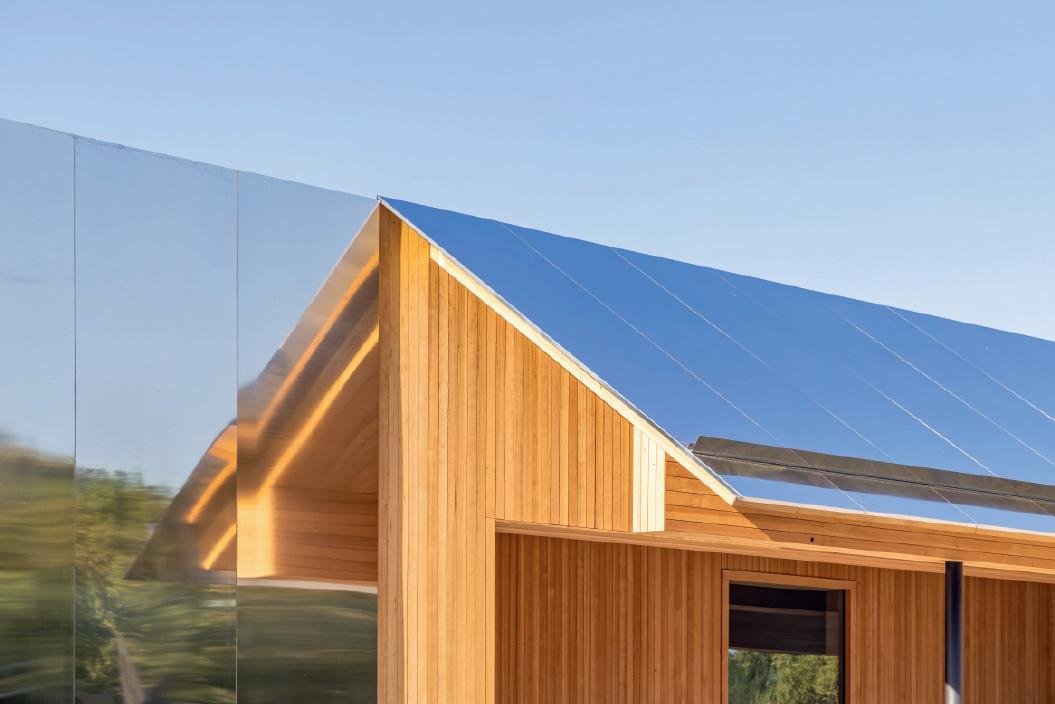
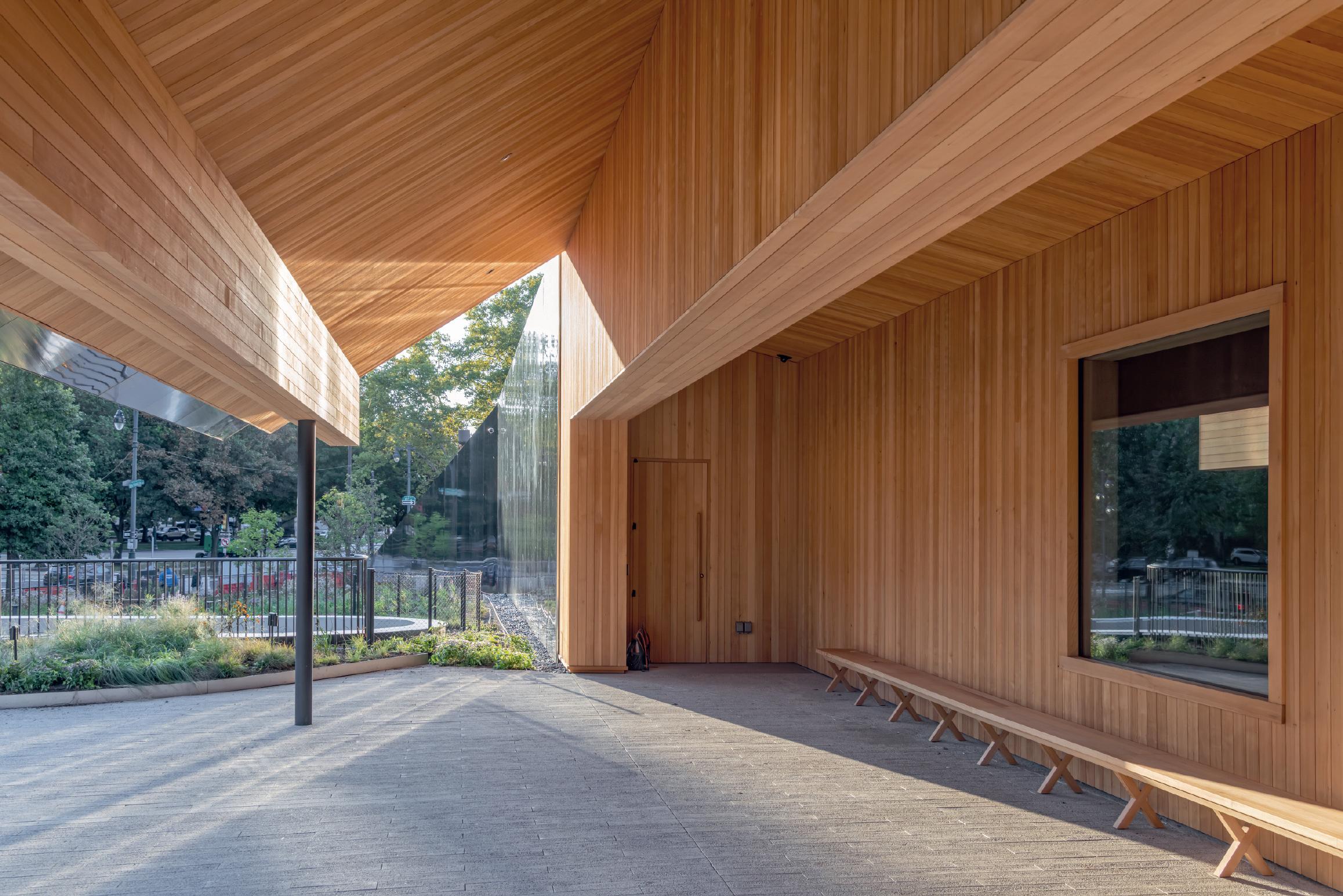
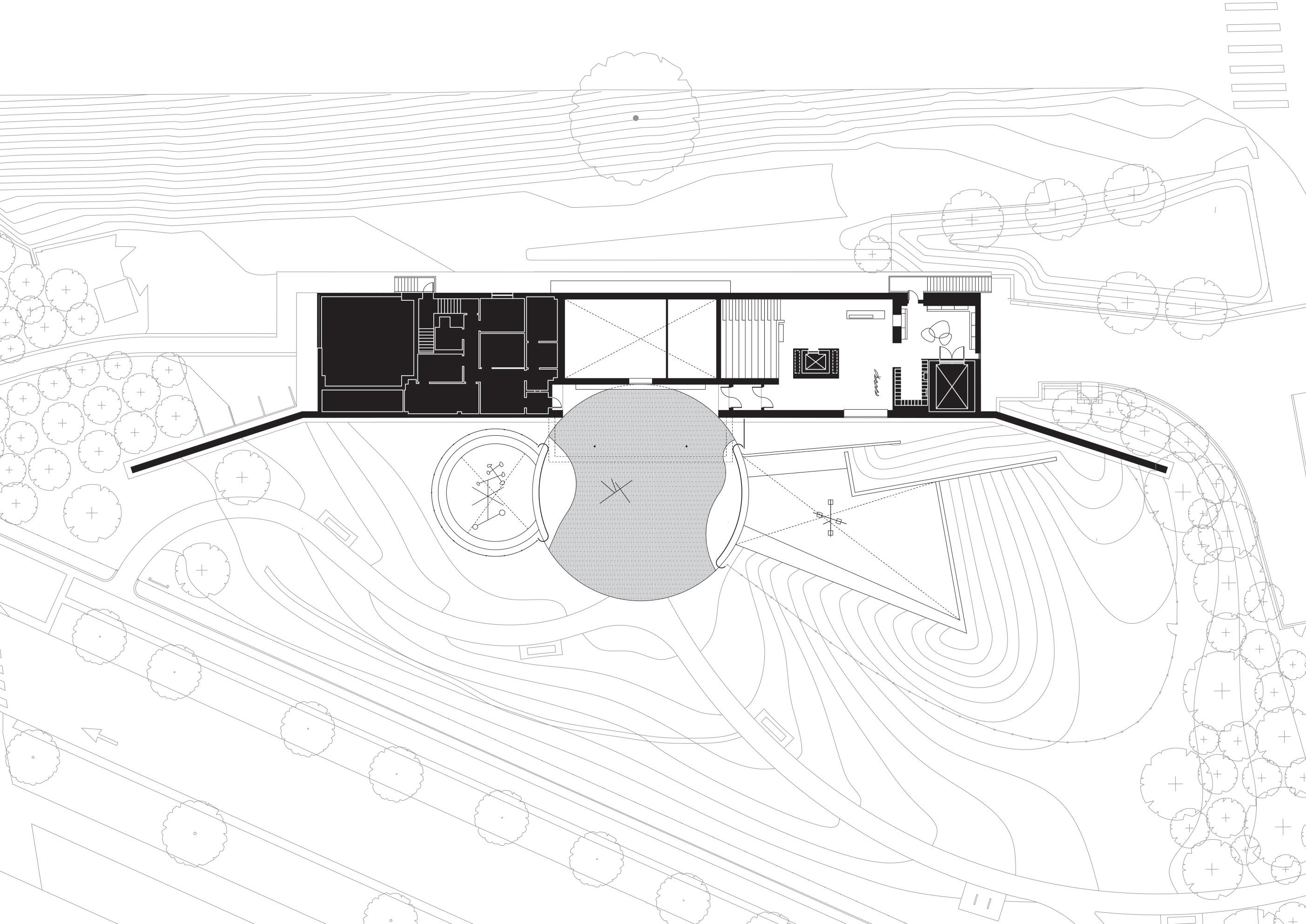
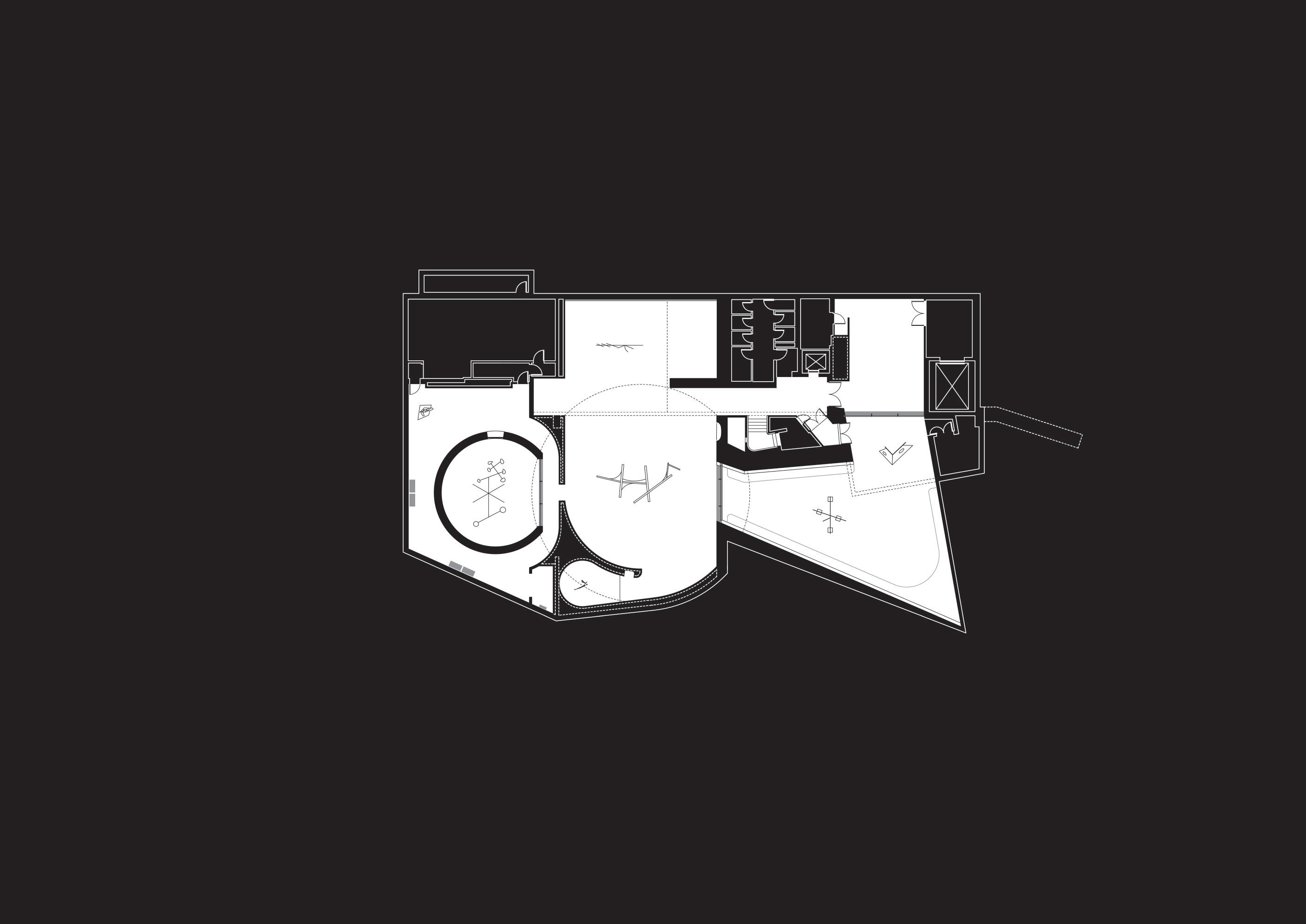
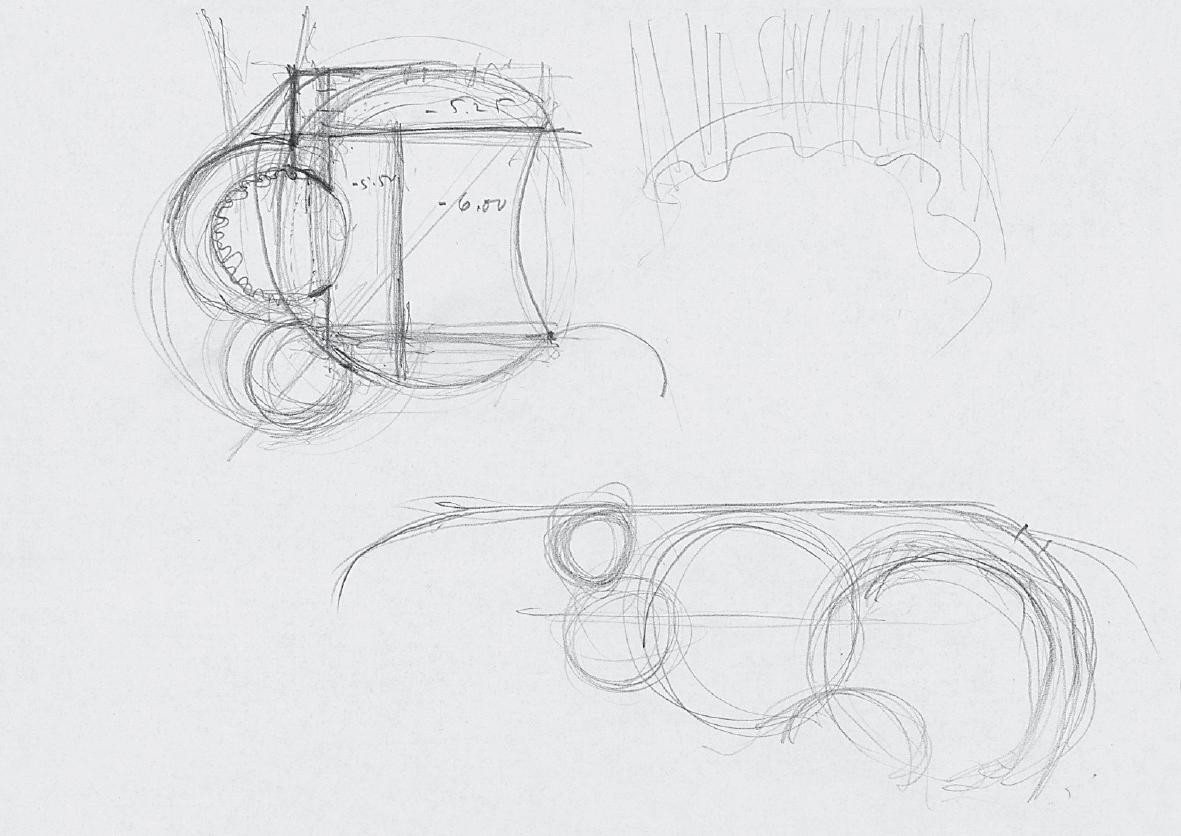
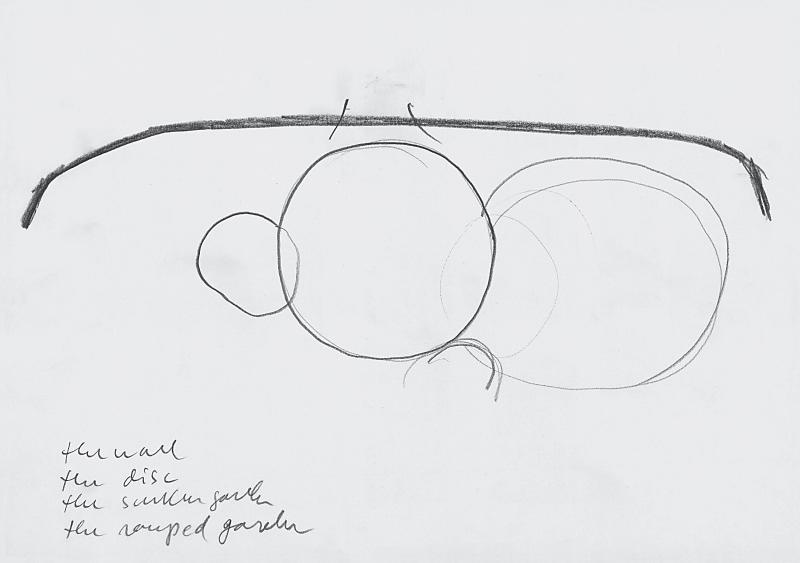
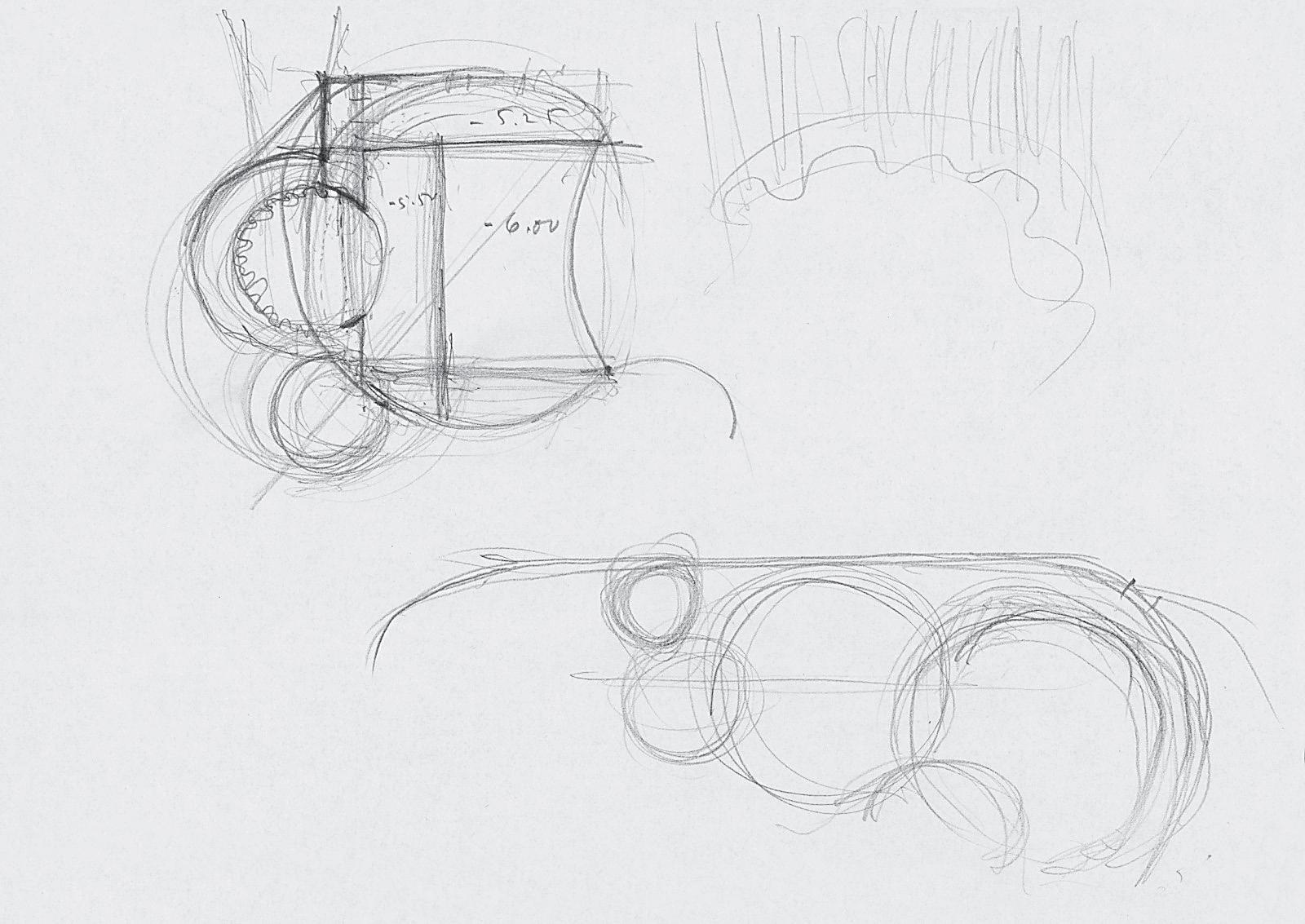
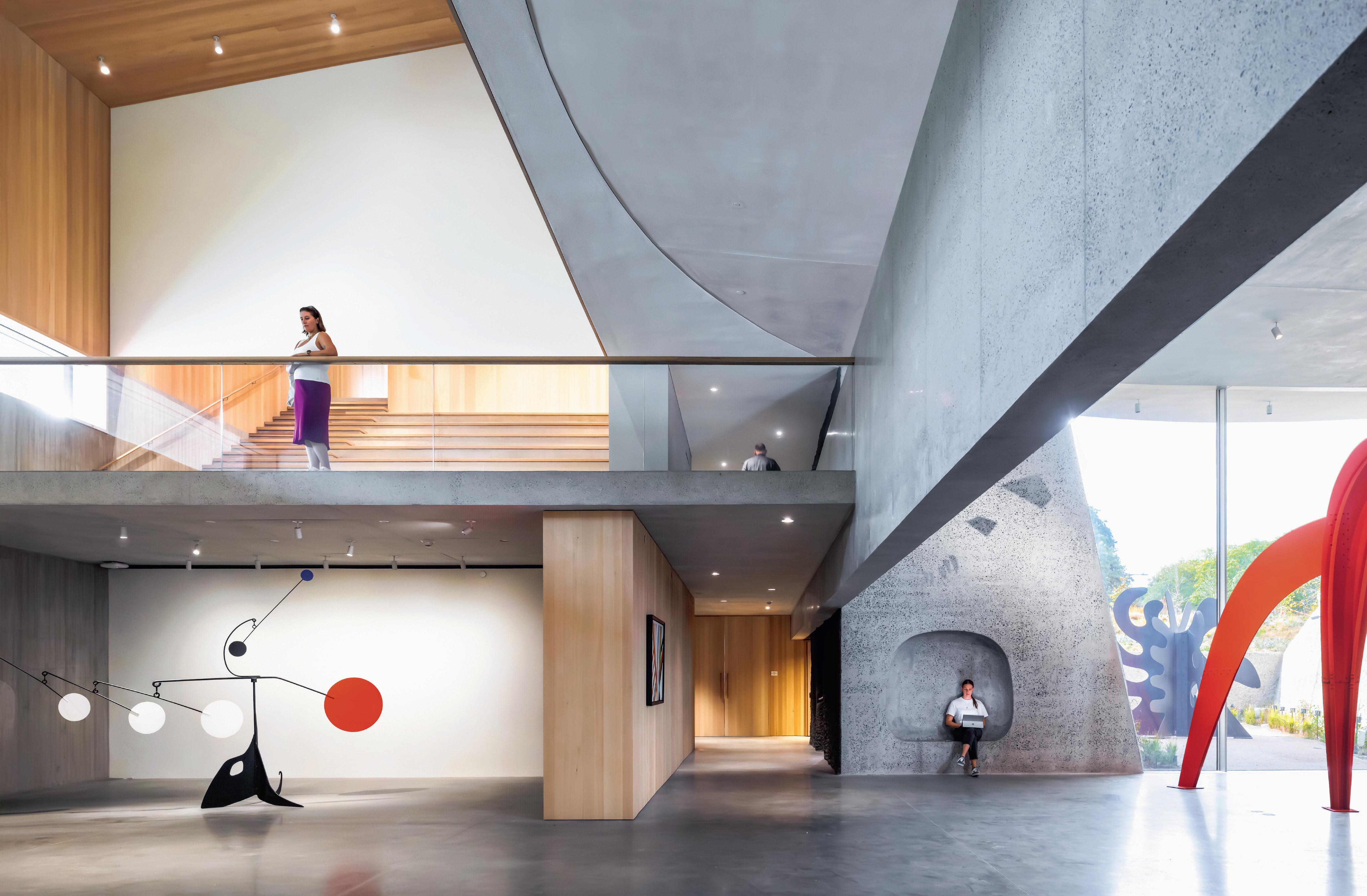
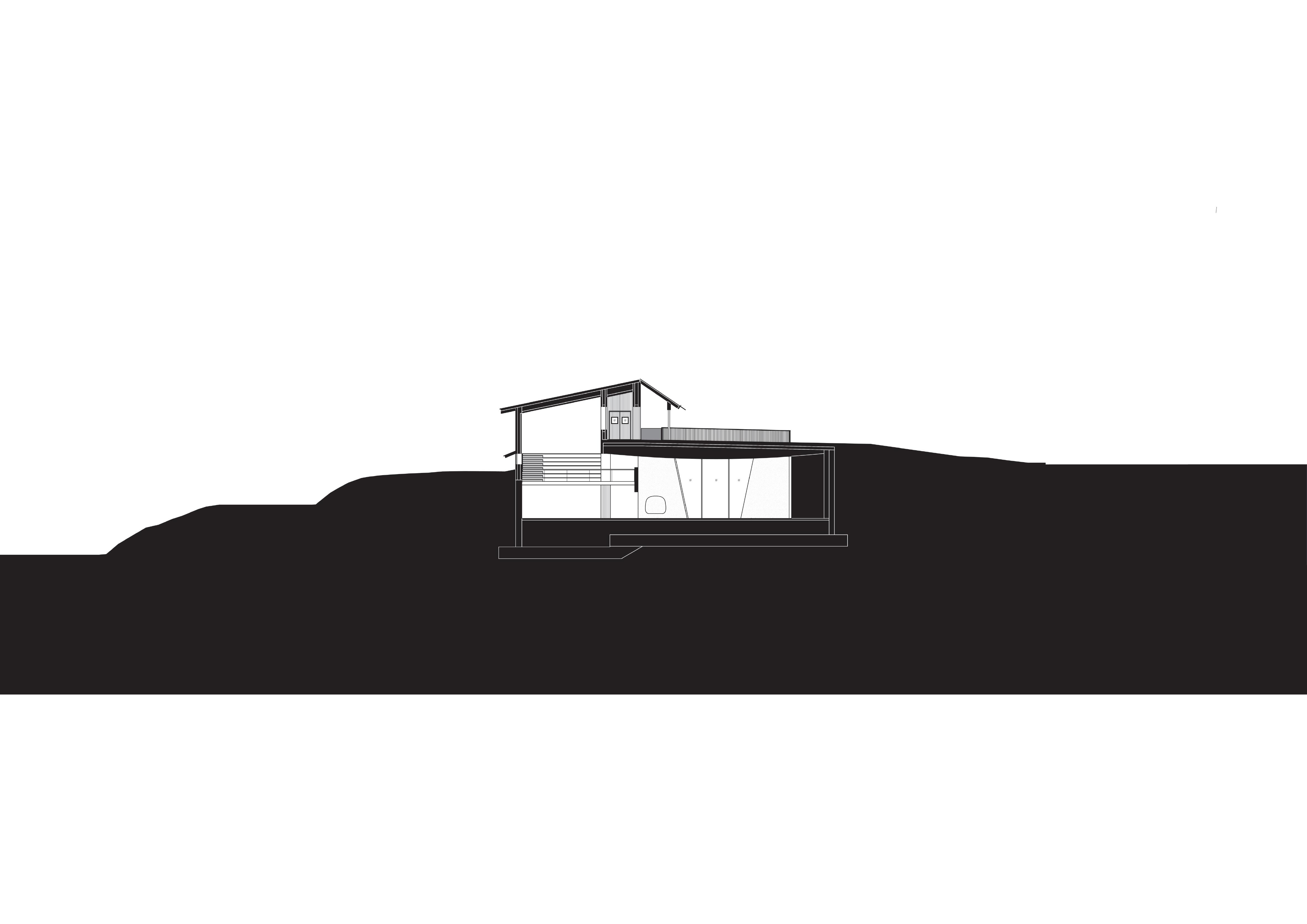
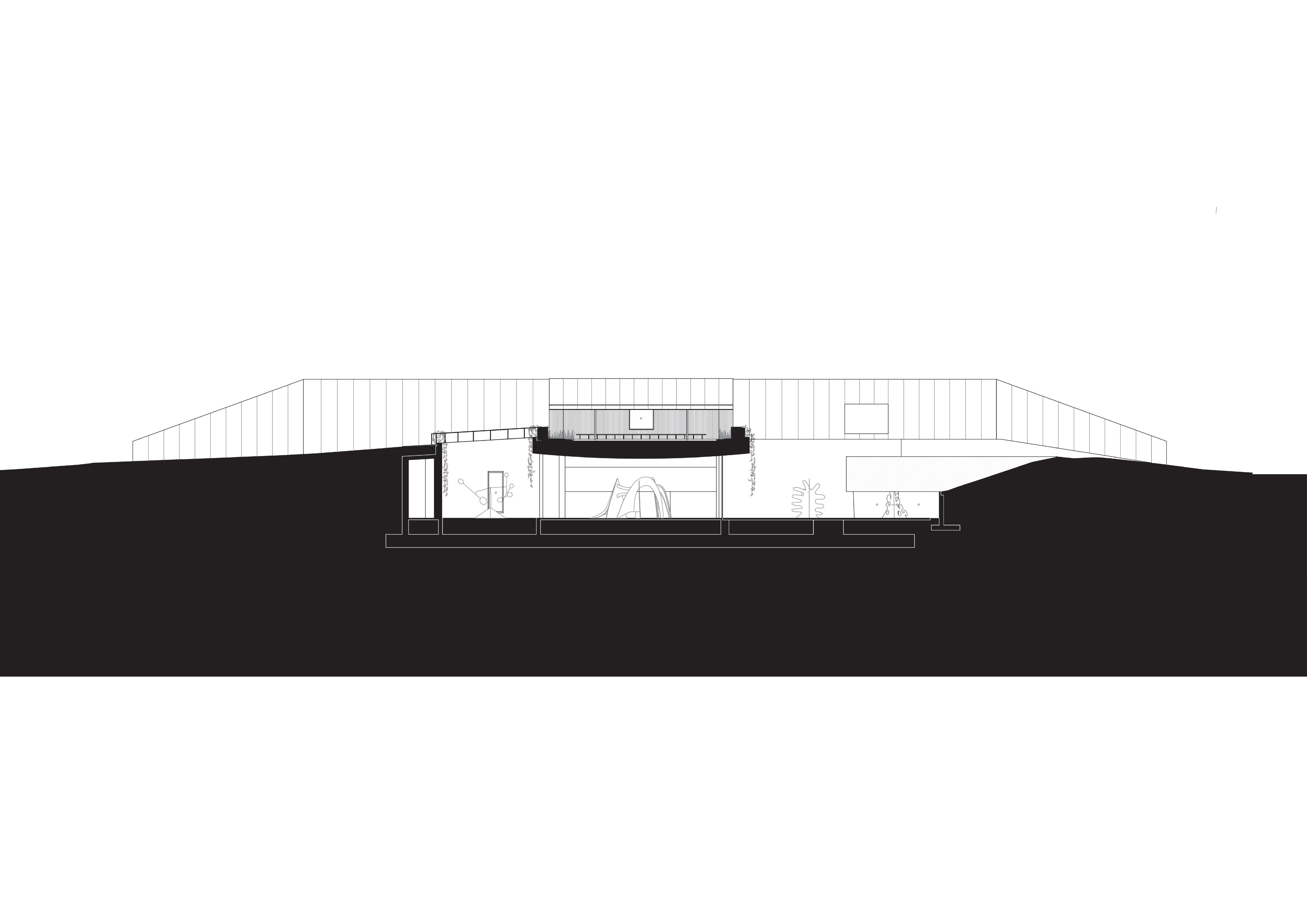
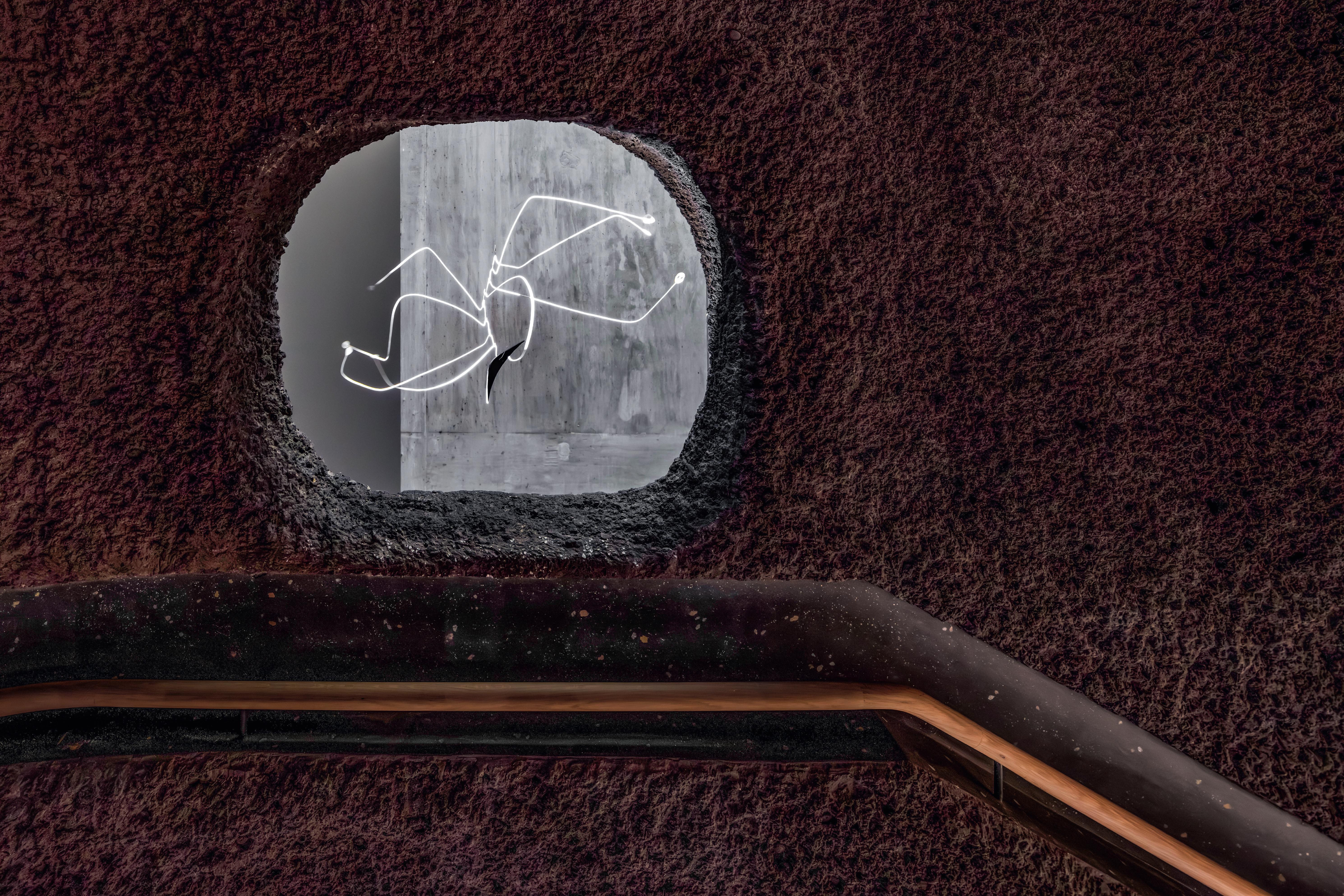
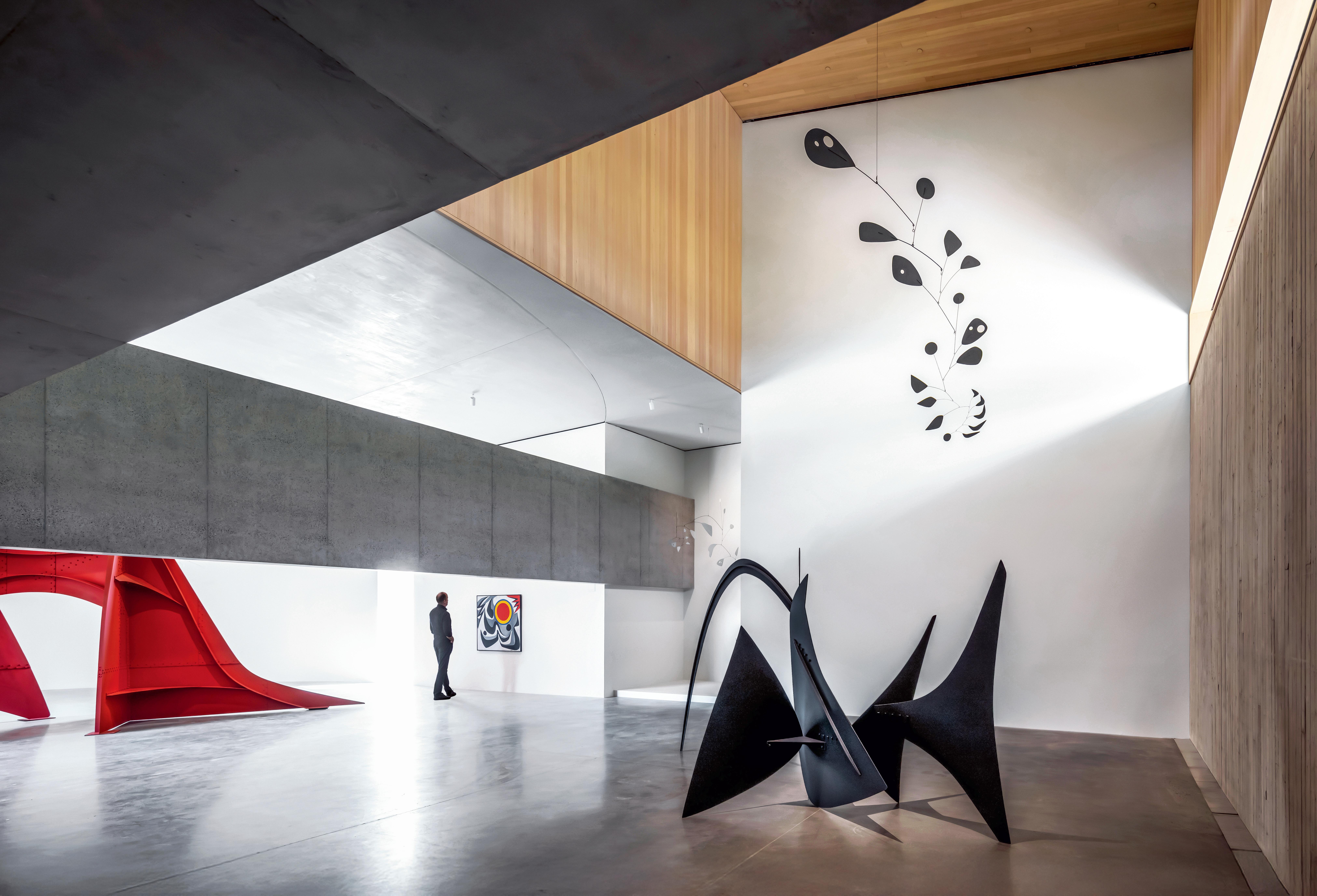
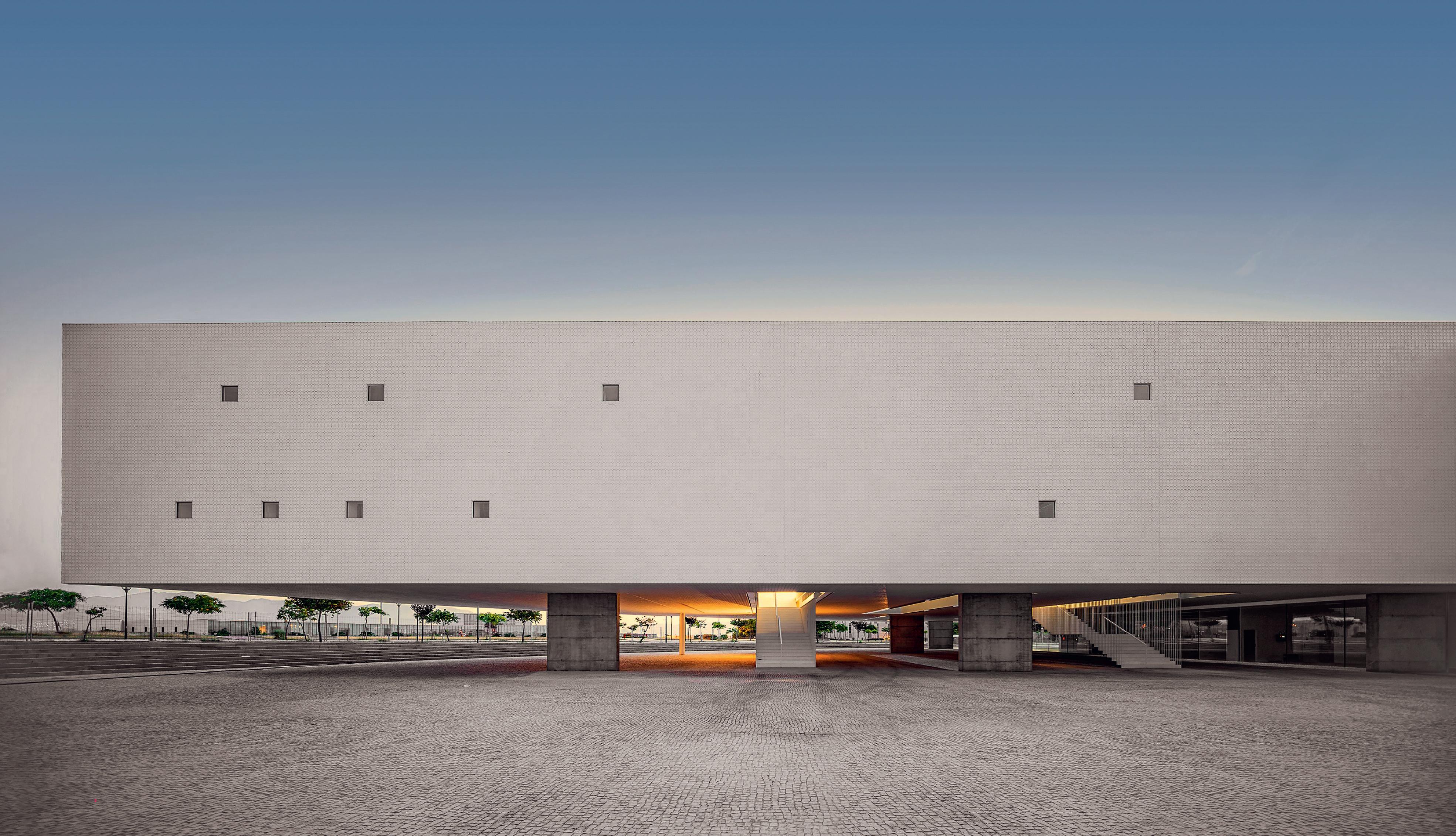
La forma, el color y el movimiento son aspectos esenciales en la obra de Alexander Calder. Pero, frente a la opción evidente de adaptar estos principios a la arquitectura, la propuesta para el nuevo emplazamiento destinado a albergar sus obras plantea un método más sugerente de acercarse a ellas: una suerte de camino conceptual que, en lugar de configurar formas y volúmenes, esculpe el terreno. Además de resolver las dificultades del emplazamiento, un solar triangular entre bulliciosas avenidas, el diseño busca alejarse de la monumentalidad de los museos aledaños, materializándose en un gran jardín en el que el edificio se diluye gracias a un acabado metálico y ligeramente reflectante. De este modo, la construcción enmarca el paisaje y hace de barrera frente al ruido del tráfico. Los visitantes se acercan por senderos que atraviesan el jardín y llegan a una gran plaza circular donde la entrada se define por una cubierta de madera. A ambos lados de este patio central se excavan el ‘Sunken Garden’, con una forma geométrica pura, y el ‘Vestige Garden’, que contrasta con una morfología irregular. Estos patios crean espacios exteriores pero a resguardo para las esculturas más delicadas y aportan luz a las galerías circundantes. La experiencia culmina en el jardín, diseñado por el paisajista Piet Oudolf, concebido como una sucesión de galerías al aire libre. Así, los elementos construidos están en sintonía con los naturales, y conforman un lugar tranquilo en el que detenerse, caminar y reflexionar sobre la figura y el legado de Alexander Calder.
Form, color, and movement are the most obvious aspects in the art of Alexander Calder. But when beginning to conceive an architecture for the presentation of his work, the project for a new place in the sculptor’s home city avoids the use of these principles and proposes an unprecedented way of approaching the works: a kind of conceptual path that carves out the ground rather than build forms and volumes above. In addition to resolving the difficulties of the site, a triangular plot between a busy boulevard and a highway, the design avoids the monumentality of museums nearby. Instead, it is a garden with a building that reveals itself step by step as a series of distinct spaces. Nestled into the landscape, a softly reflective metal wall reduces the sound of the highway and frames the garden towards the boulevard. Visitors approach the building along paths through the garden, arriving at a large central disc, which forms a plaza at the center. A single opening with a folded metal canopy covers the wood-lined entry. The central disc provides a roof to the galleries below. A geometrically pure circular ‘Sunken Garden’ towards the east and an elongated irregular ‘Vestige Garden’ to the west are carved into the ground on either side of the disc. They create protected outdoor spaces for Calder’s sculptures and bring light into the surrounding galleries. The experience culminates in the garden, envisioned by Piet Oudolf as a sequence of outdoor galleries. In this way, the constructed elements are in harmony with the natural ones, creating a peaceful place to reflect on the legacy of Alexander Calder.
Tras dejar atrás el bullicio del nudo de carreteras circundante, los visitantes se adentran en el edificio por una red de senderos que atraviesan el frondoso paisaje hasta llegar a la entrada principal frente a la avenida.
After leaving behind the busy junction, visitors approach the building along paths that wind through a perennial garden, arriving at the main entrance facing the boulevard.
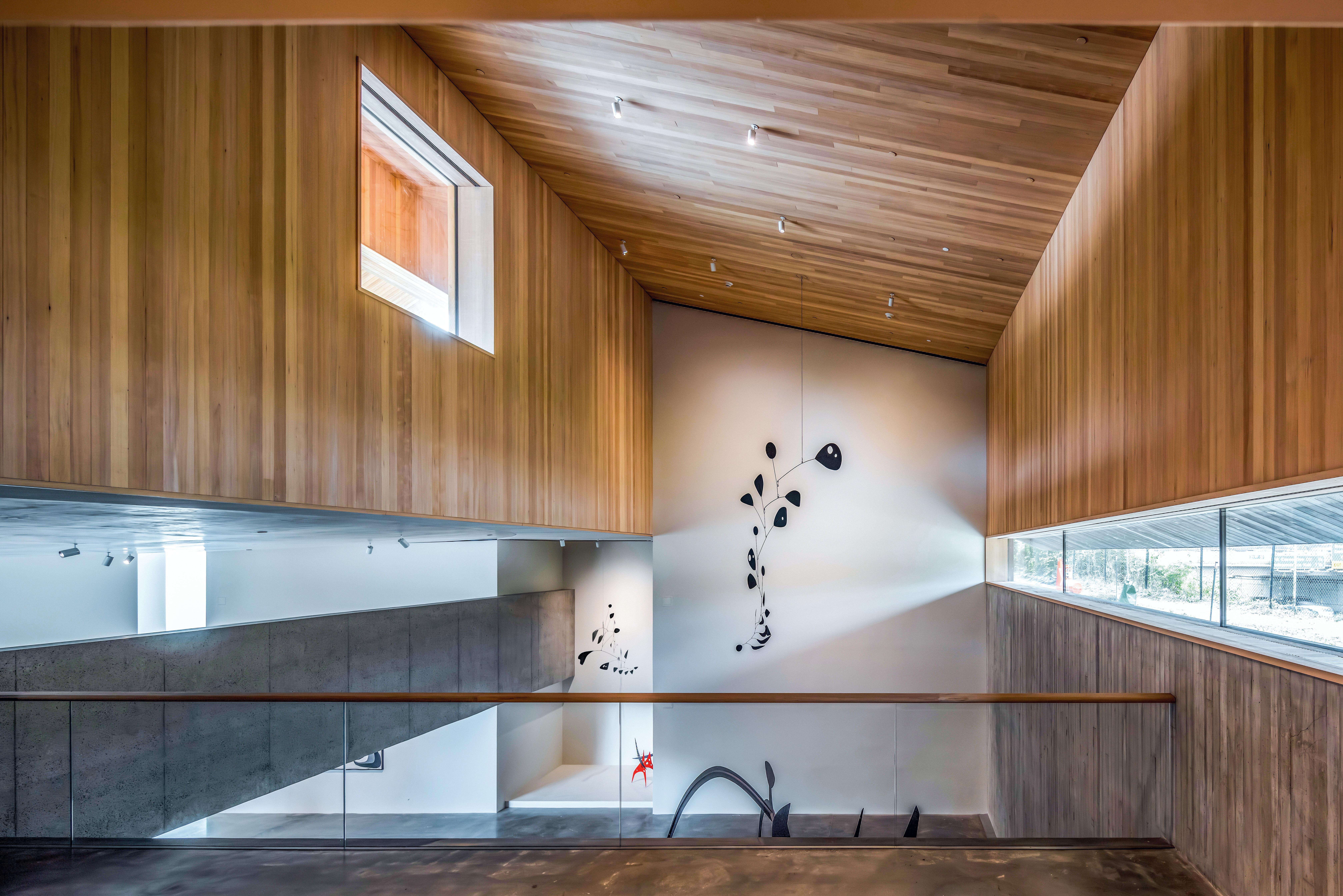
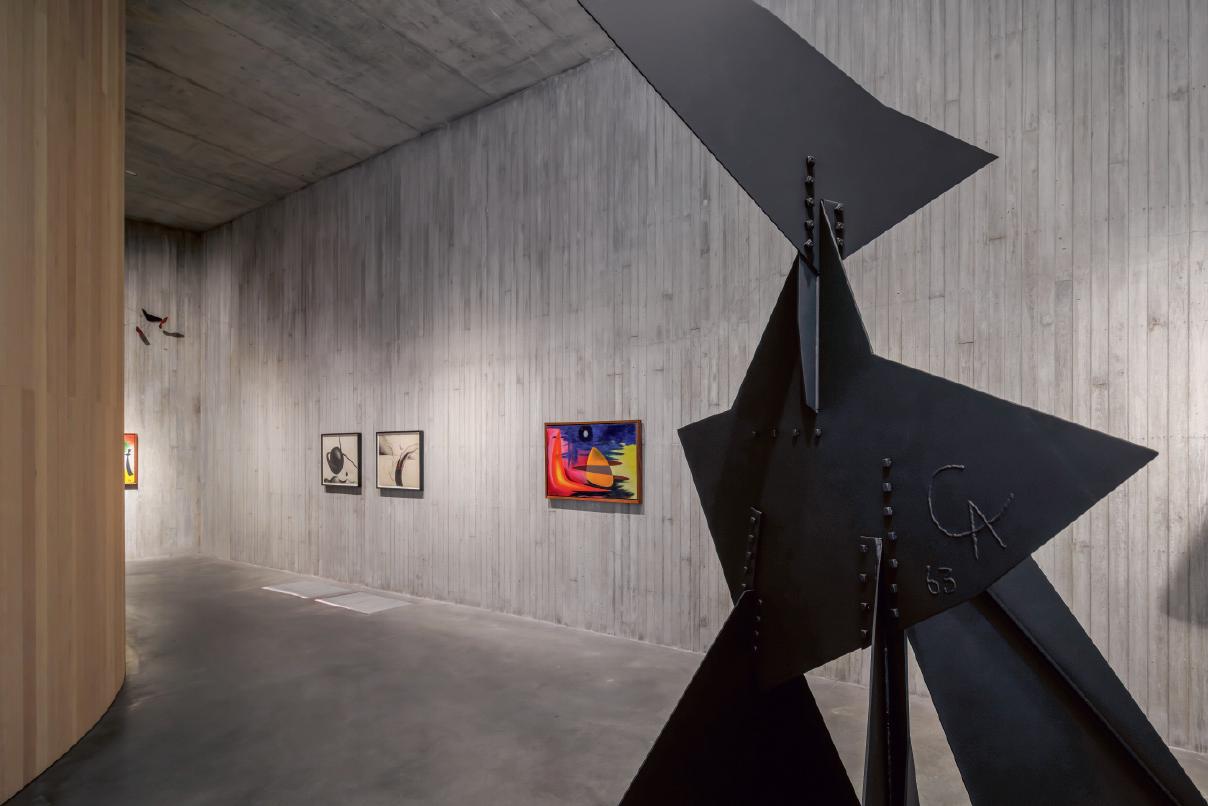
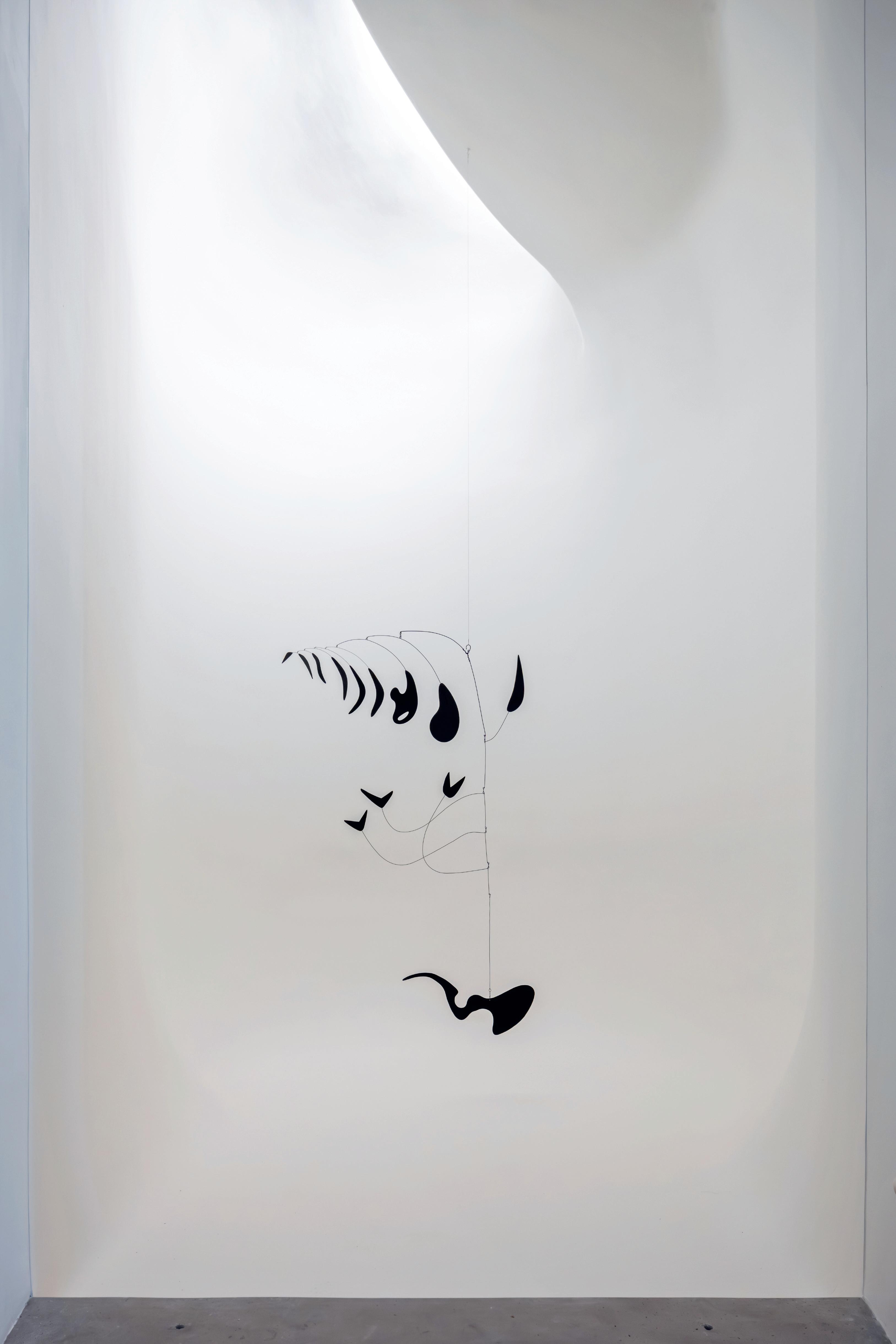
Los espacios expositivos se diseñan para amplificar el impacto que generan las obras de arte en los espectadores, fomentando la interacción con sus particulares propiedades cinéticas y creando una experiencia íntima y viva.
The galleries are designed to amplify the impact of the artworks, encouraging engagement with their kinetic properties by offering visitors different vantage points to create new and unexpected experiences.
Along the River
Michel Mossessian and Yassir Khalil in Fez
Arquitectos Architects
Mossessian Architecture+Yassir Khalil Studio Colaboradores Collaborators
Michael Pinsky (musivario zellige artist);
Atelier Ten (instalaciones y diseño ambiental MEP services and environmental design); AKT II (estructura structure); Groupe Betom (ingeniería engineering); Roche (ingeniería hidráulica hydraulic engineering); Millennium Challenge Corporation (microeconomía microeconomics); HTECH (contratista obra nueva new constructions contractor); Locatom’s, EMCC & BADR BETON (contratista rehabilitación renovation contractor) Fotos Photos
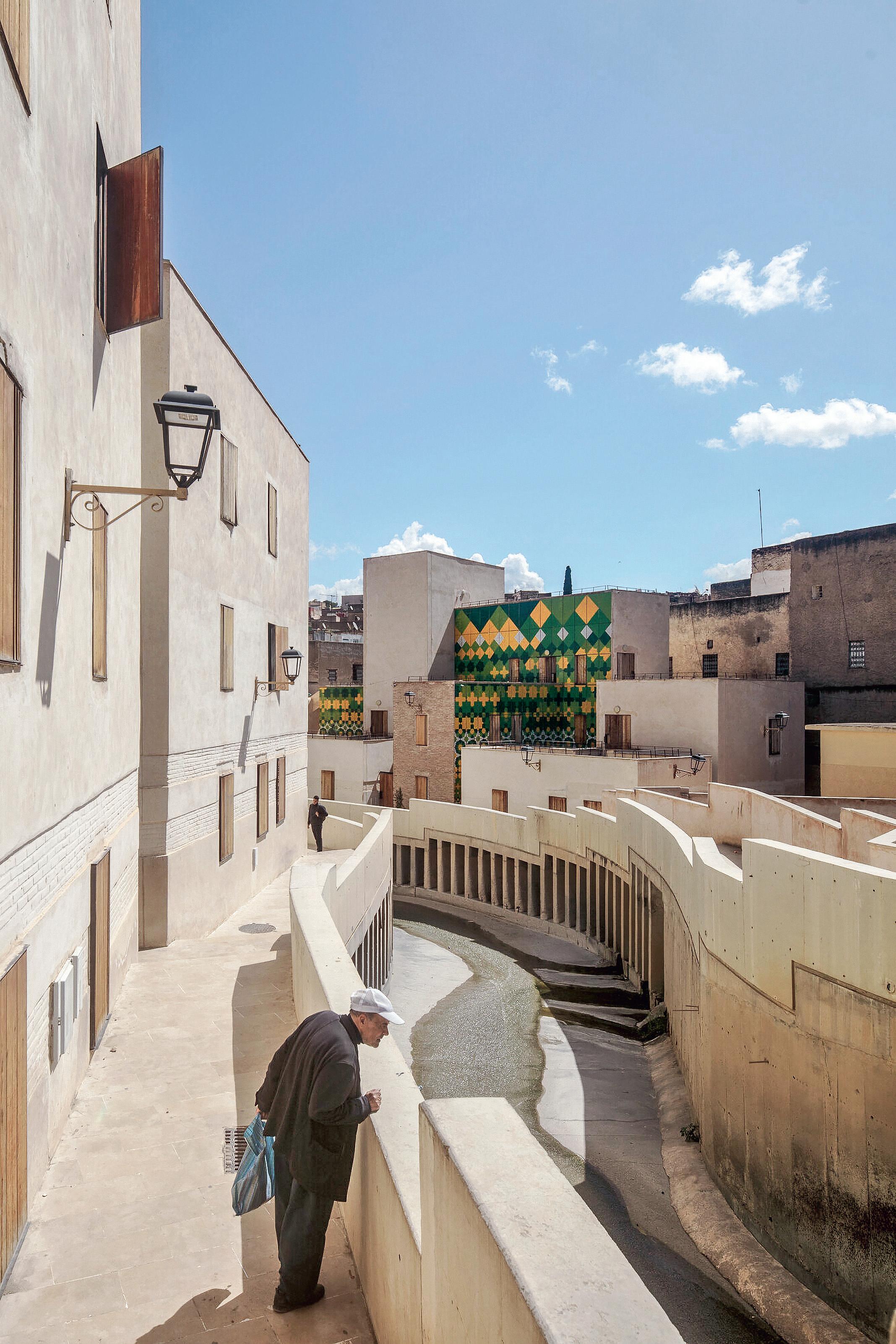
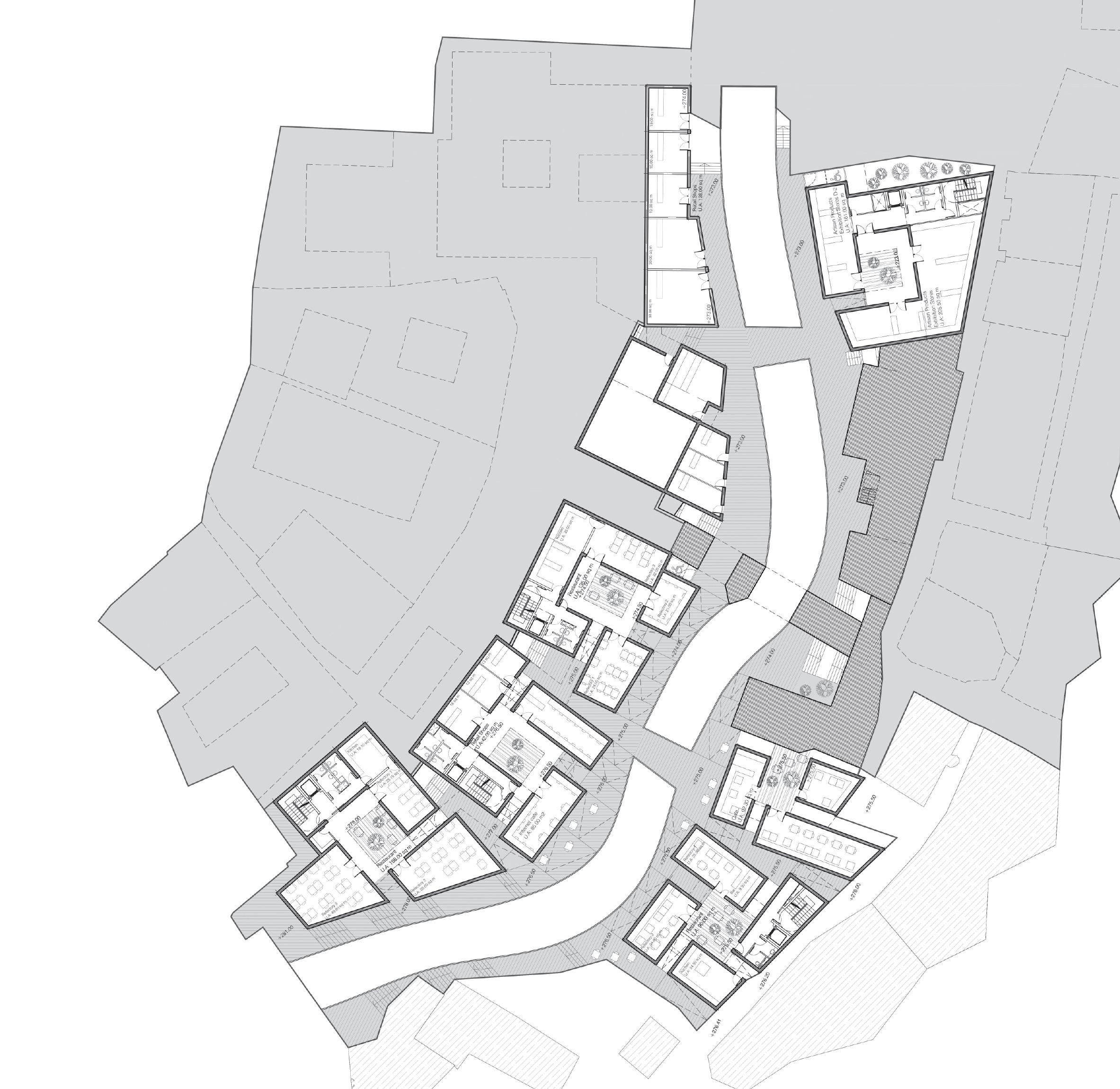
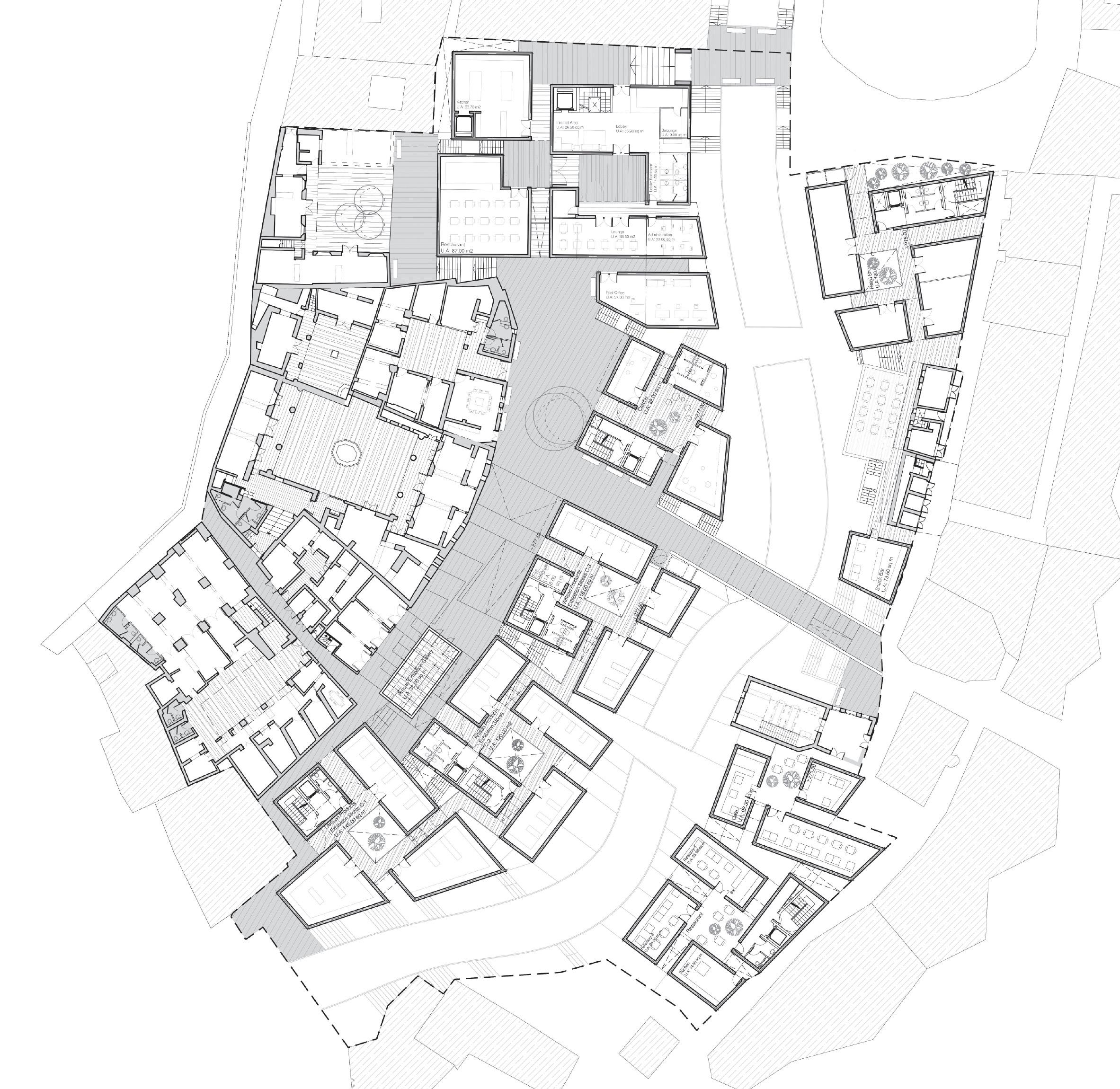
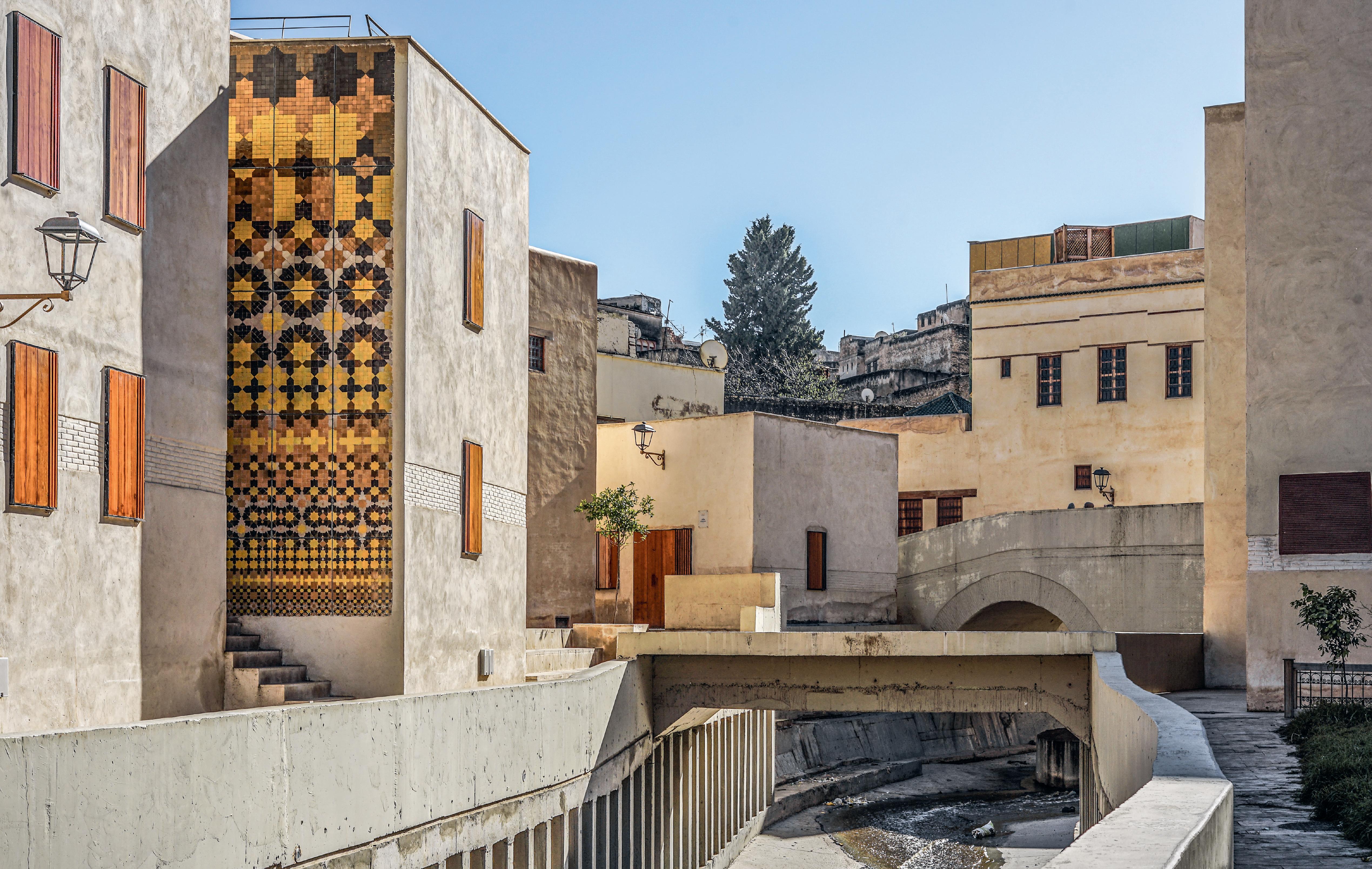
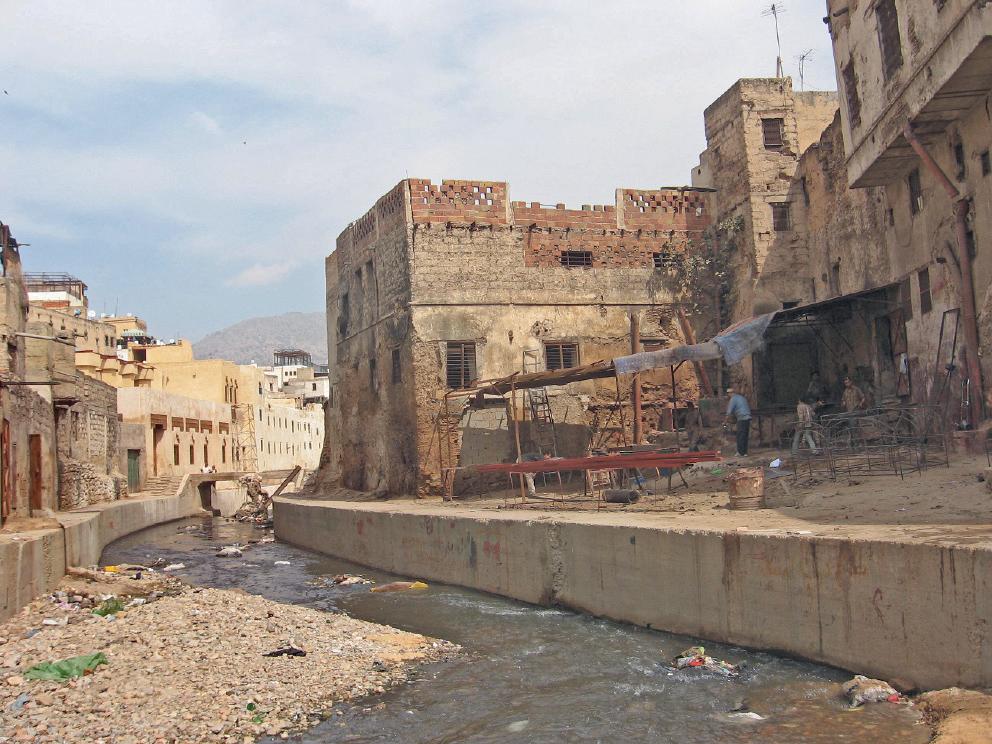
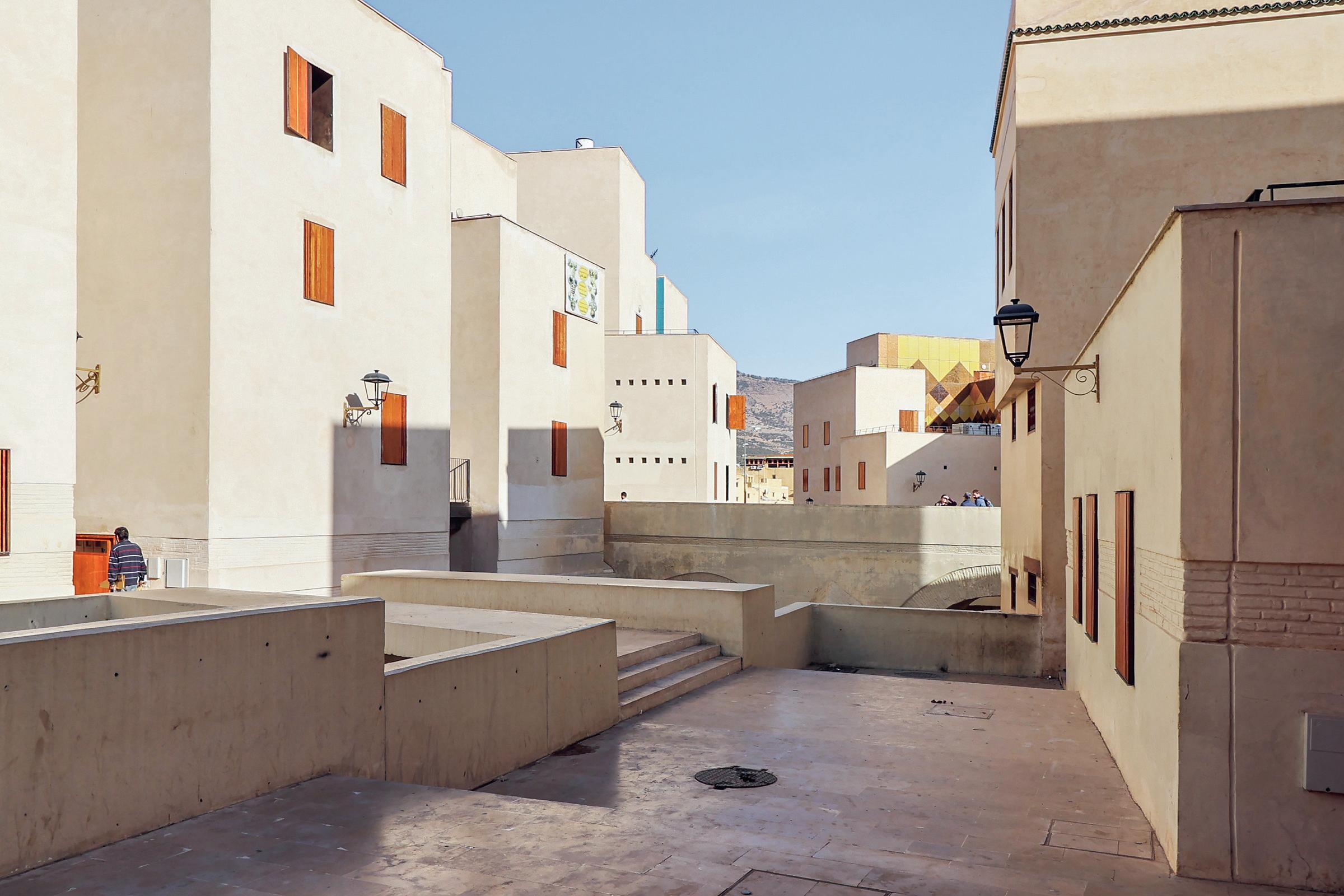
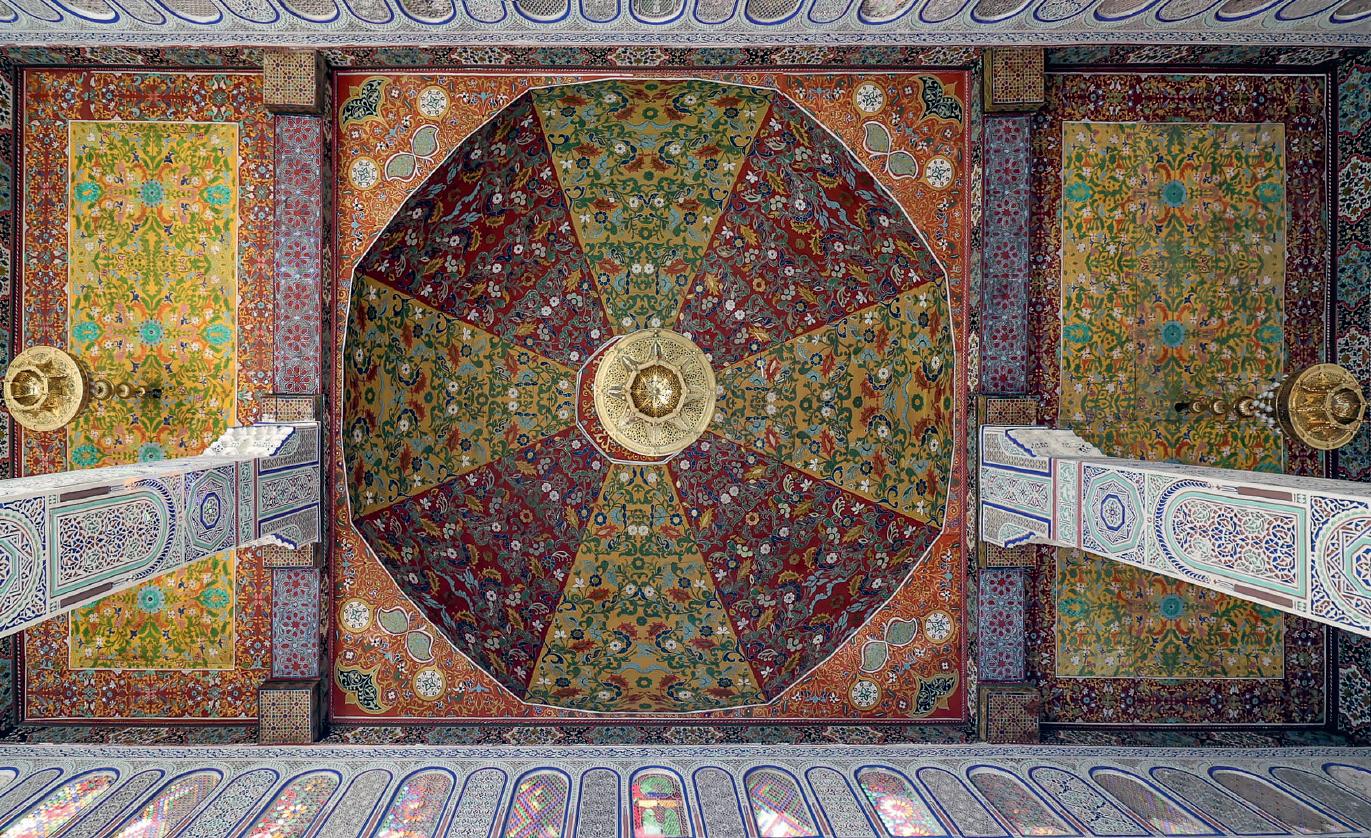
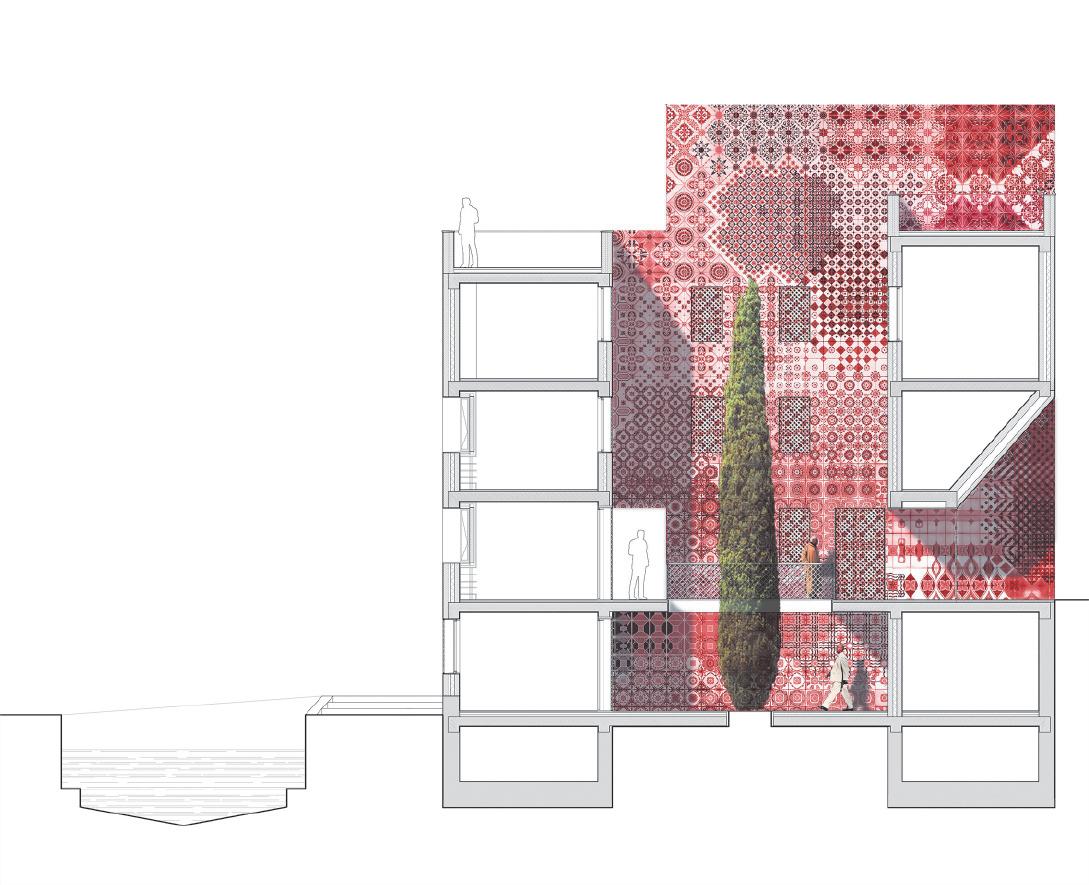
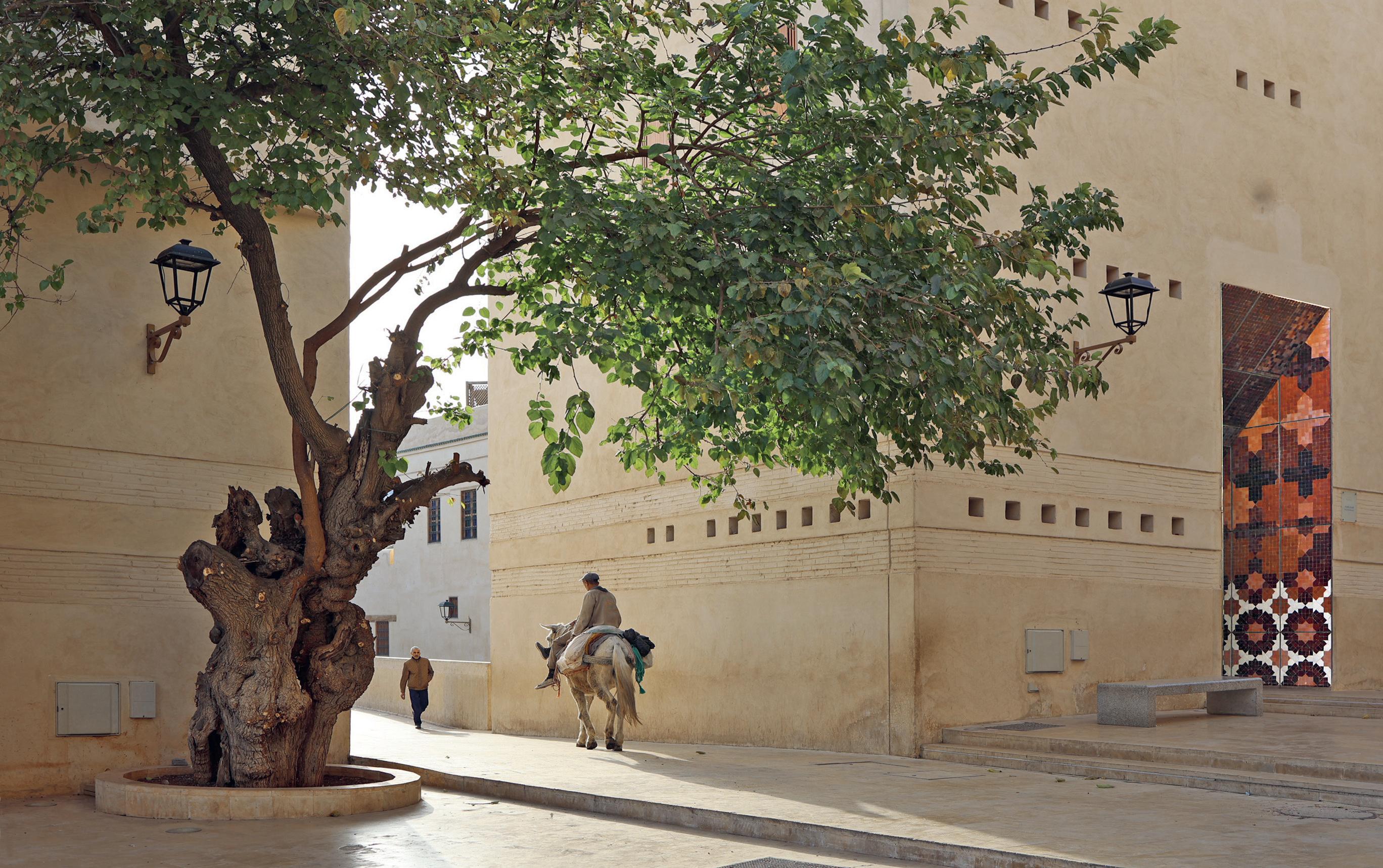
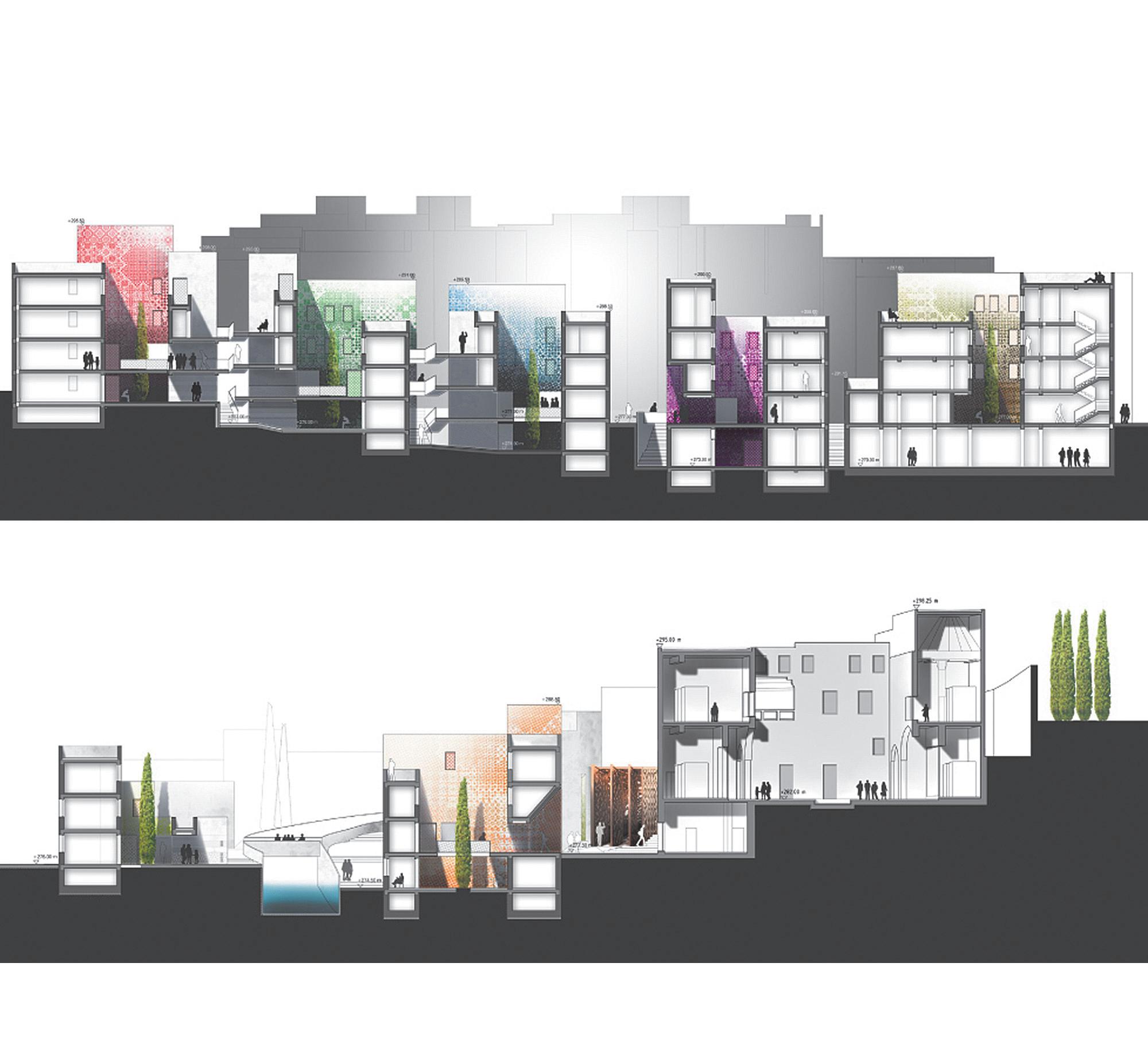
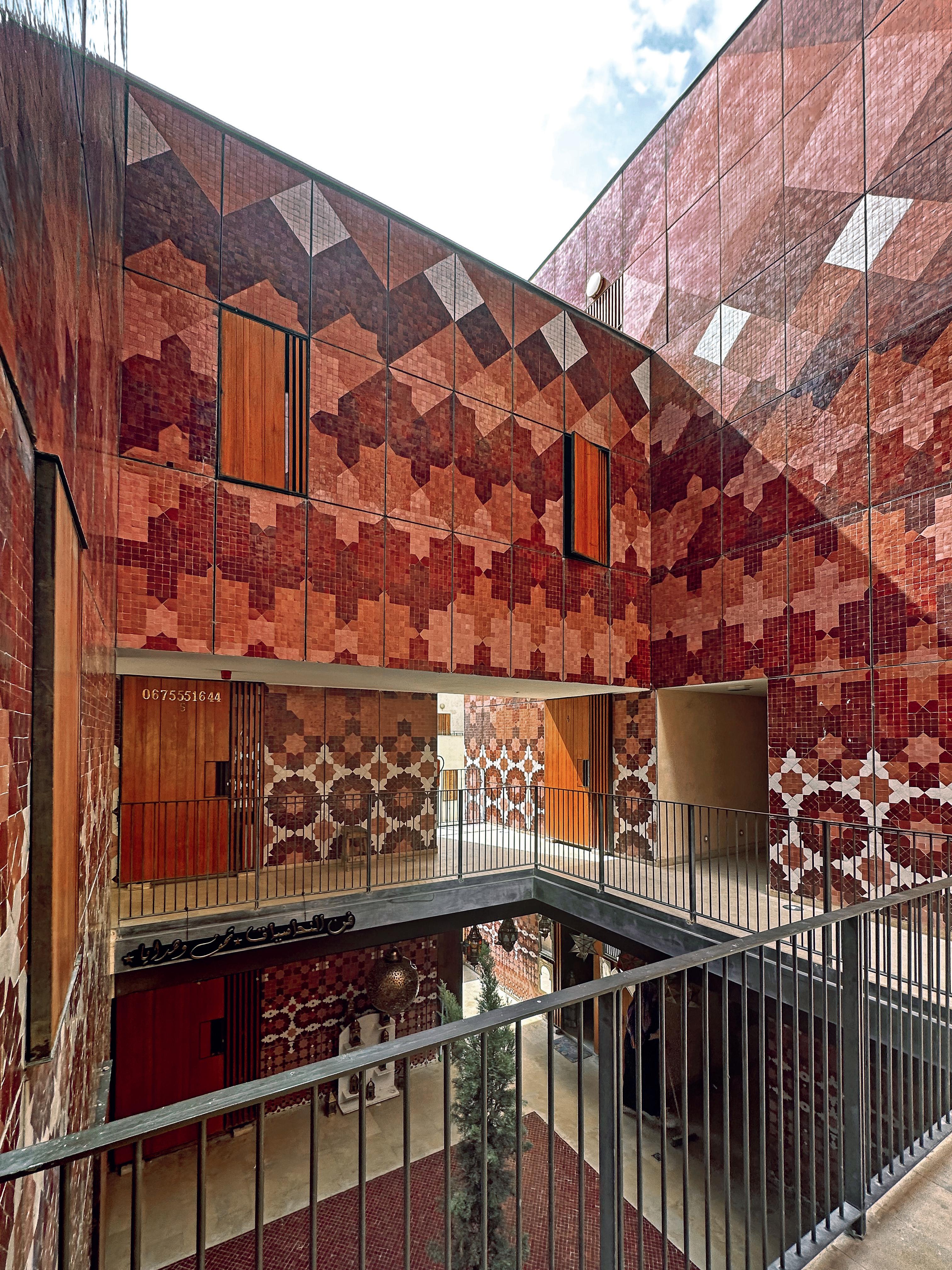
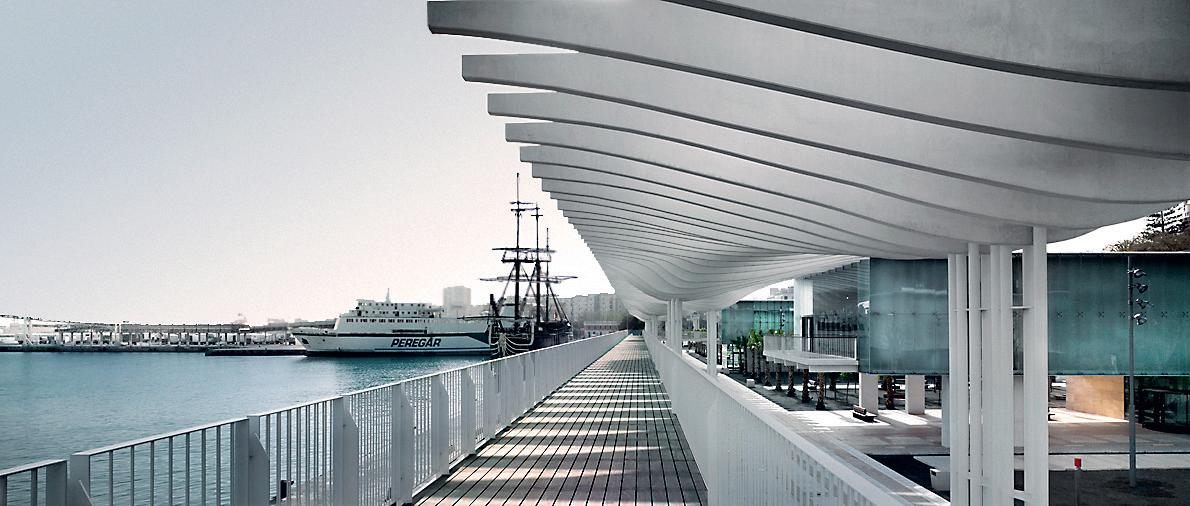
La medina de Fez, una de las ciudades más antiguas de Marruecos, fue declarada Patrimonio de la Humanidad por la UNESCO en 1981. Tras años de abandono, y con zonas muy deterioradas, en 2011 se inició un ambicioso proyecto de regeneración que transformó la plaza Lalla Yeddouna y sus alrededores, reconectándola con el río y generando una red peatonal que articula los distintos usos urbanos. La intervención no solo respetó la complejidad del trazado histórico, sino que también fortaleció los vínculos sociales y culturales de la comunidad mediante acciones como la recuperación de la ribera, la rehabilitación del puente y de edificios existentes, y la construcción de nuevas estructuras. Para ello, se combinaron técnicas vernáculas con estrategias actuales, aplicando sistemas de control pasivo del clima, ventilación cruzada y sombreado natural. En el conjunto destaca el uso de los azulejos, que reinterpretan los patrones tradicionales marroquíes en formas más abstractas y contemporáneas. Estos revestimientos aportan identidad visual al proyecto y funcionan como hitos de orientación y referencia para el visitante. En conjunto, el proyecto busca convertirse en un modelo de regeneración sostenible y respetuosa con el patrimonio, basada en la participación comunitaria y en la integración del saber local. Así, gracias a la combinación de materiales autóctonos, técnicas tradicionales y un diseño sensible al entorno, este espacio histórico recupera su vitalidad y se reafirma como un lugar profundamente arraigado en su identidad cultural.
The Medina of Fez, one of Morocco’s oldest cities, often called its cultural capital, was named a UNESCO World Heritage site in 1981. After years of neglect, and with very deteriorated areas, an ambitious urban-regeneration project has revitalized Place Lalla Yeddouna and its surroundings, reconnecting the square to the river that flows through the medina by creating a pedestrian route along different city services. The process was carried out with respect for the complexity of the urban fabric and with the aim of strengthening the community’s social and cultural ties. It also sought to improve the area’s environmental quality by recalibrating the riverbed, revamping the old bridge and existing buildings, and completing new structures, always combining traditional construction techniques with contemporary sustainability strategies such as passive climate control through thermal mass, cross ventilation, and natural shading. Also distinctive is the use of ceramic tiles, which reinterpret traditional Moroccan patterns and add contemporary abstract shapes, serving as well as visual markers to visitors making their way through the premises. Overall, the project provides a model for urban regeneration based on respect for heritage, sustainability, and community involvement. Through a combination of local materials, traditional building techniques, and environment-sensitive design, a historical spot has been revived as a place profoundly rooted in its cultural identity.
La actuación reconecta la plaza con el río que atraviesa la medina, creando una nueva ruta peatonal que articula talleres, tiendas, restaurantes, programas educativos, una guardería y un centro para mujeres.
The project reconnects the square with the river that traverses the medina, now livened up by a footpath lined with urban services such as workshops, educational programs, a nursery, and a women’s center.
La decoración a base de azulejos, desarrollada por el artista Michael Pinsky y artesanos locales, se basa en la técnica zellige, que utiliza piezas de terracota vidriada, cortadas y pulidas a mano para crear motivos geométricos.
The tile decoration, developed by artist Michael Pinsky and local artisans, is based on the zellige technique, which uses pieces of glazed terracotta, cut and polished by hand to create geometric patterns.
Arts
The Return of Realism
Evoking Egypt
Gallery of the Kings
Marble Captures Time
A Royal Sample
MuReC in Almería
The Return of Realism MuReC in Almería
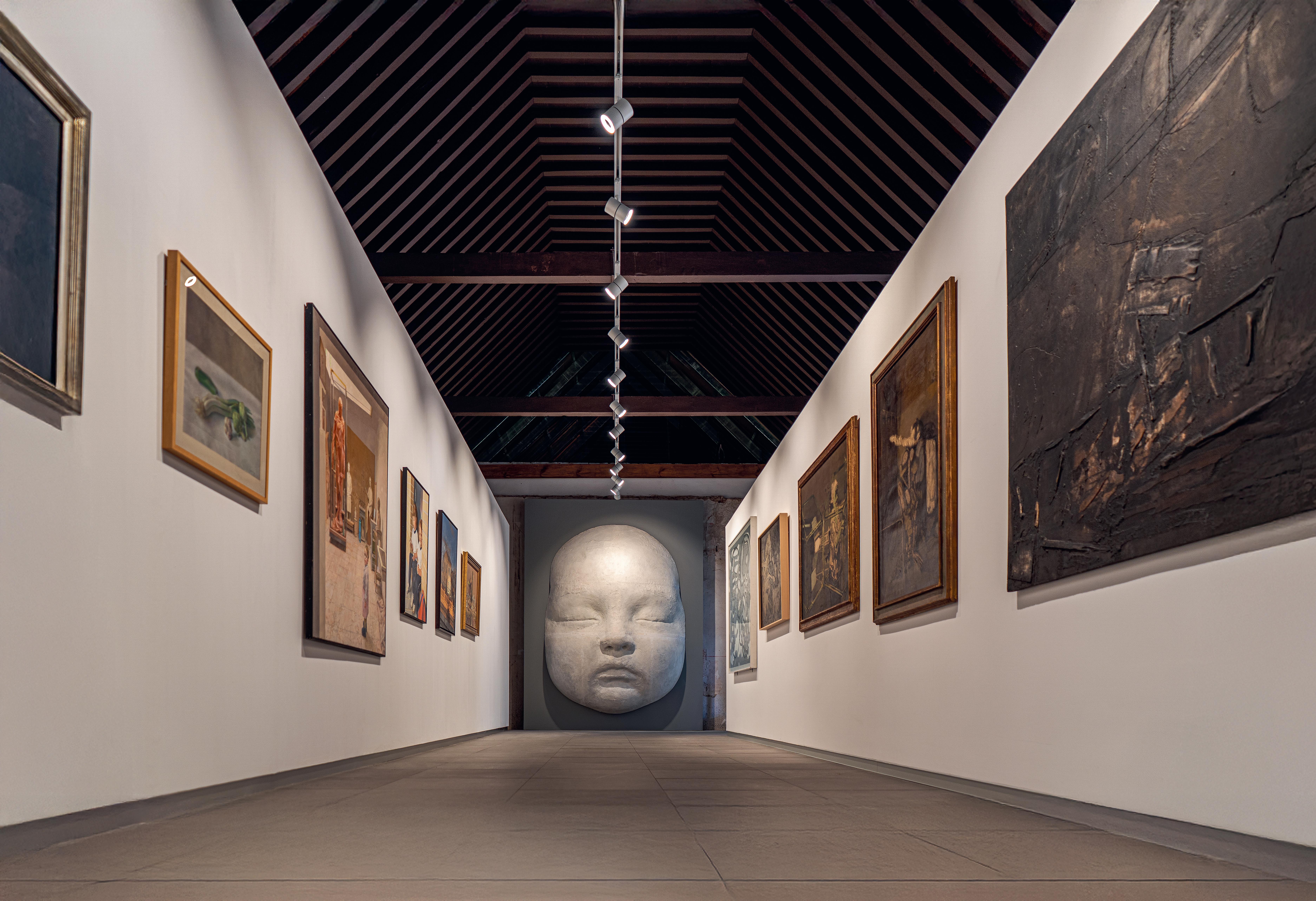
El primer museo dedicado en exclusiva a la pintura realista española ha abierto sus puertas en Almería impulsado por la Fundación de Arte Ibáñez Cosentino y la Diputación Provincial.
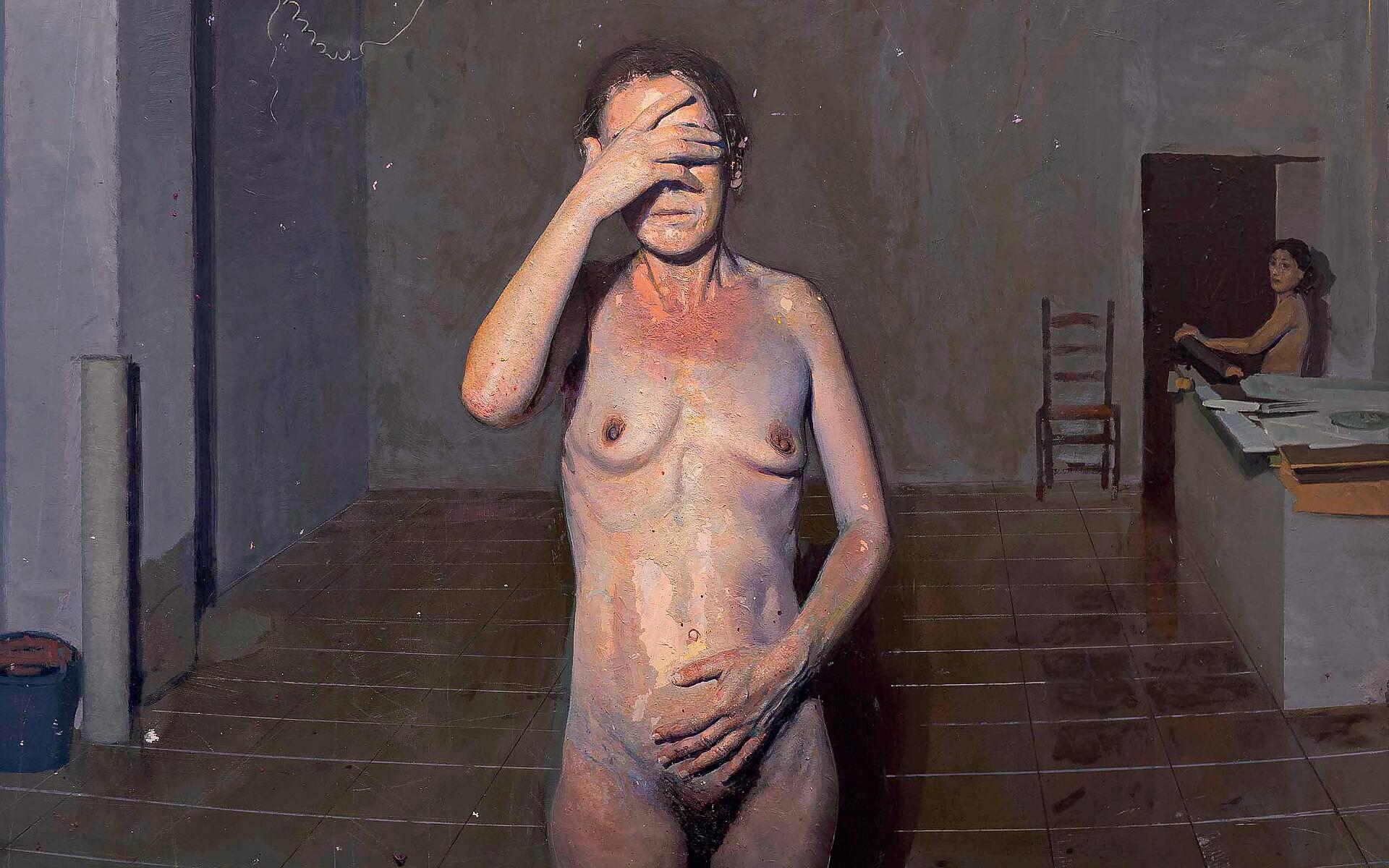
De la amistad entre Andrés García Ibáñez —arquitecto, artista y gestor cultural— y Antonio López —uno de los mayores exponentes del grupo de realistas madrileños— y de sus conversaciones veraniegas en la localidad urcitana de Olula del Río, donde imparten juntos cada verano cursos de pintura, surge la idea de crear un museo dedicado en exclusiva al realismo y de reivindicar así a un gran grupo de creadores españoles que, aunque gozaron del reconocimiento de su época, fueron desmerecidos y postergados de los discursos oficiales tras el auge de las vanguardias. Tras muchos años de aventuras, sus andanzas encontraron finalmente el apoyo de la Fundación de Arte Ibáñez Cosentino y la Diputación de Almería para constituir el primer museo dedicado en exclusiva a esta corriente en el antiguo Hospital de Santa María Magdalena, un privilegiado conjunto arquitectónico del siglo XVII rehabilitado para la ocasión. El resultado es una extensa colección con más de doscientas cincuenta obras, en la que dialogan figuras históricas de la talla de Julio Romero de Torres, Joaquín Sorolla, Ignacio Zuloaga o Gutiérrez-Solana, con seguidores y coetáneos del pintor madrileño, como Félix Alonso, Amalia Avia o Golucho. Este museo afianza el compromiso de la fundación con la difusión del arte en esta región del sur de la península y complementa las otras iniciativas, el Museo Ibáñez, el Centro Pérez Siquier, la Colección de Arte Almeriense y el Museo de Arte Doña Pakyta.
The first museum devoted solely to Spanish realist painting has opened to the public in Almería, thanks to an initiative of the Ibáñez Cosentino Art Foundation and the Provincial Council.
The friendship between Andrés García Ibáñez – architect, artist, and cultural operator – and Antonio López – one of the leaders of the group of Madrid realists – and their conversations in the Andalusian municipality of Olula del Río, where they together gave painting classes every summer, led to the idea of founding a museum devoted exclusively to realism, and thus to honoring a large collective of Spanish creators who, though recognized in their day, were with the rise of the avant-gardes dismissed and excluded from official discourses. After many years, their pursuits finally obtained the support of the Ibáñez Cosentino Art Foundation and the Almería Provincial Council, and definitive efforts commenced to establish the first museum entirely dedicated to this current in the building that was the Hospital de Santa María Magdalena, a privileged architectural complex built in the 17th century that has been fitted out for its new purpose. The result is an extensive collection of over 250 works, in which historic figures the likes of Julio Romero de Torres, Joaquín Sorolla, Ignacio Zuloaga, and Gutiérrez-Solana engage in dialogue with followers and contemporaries of the Madrid painter, including Félix Alonso, Amalia Avia, and Golucho. This museum consolidates the foundation’s commitment to disseminate art in Spain’s southern region, and complements other initiatives, such as the Ibáñez Museum, the Pérez Siquier Center, the Almerian Arts Collection, and the Doña Pakyta Art Museum.
Museo del Realismo Español Contemporáneo Paseo san Luis, Almeria. web: murecalmeria.es Photos:
Además de la colección permanente con obras de autores tan destacados como Romero de Torres, Zuloaga o Sorolla, el museo también acoge muestras temporales como la reciente ‘Espacio de Habitabilidad’.
Besides the permanent collection – with works by the likes of Romero de Torres, Zuloaga, and Sorolla – the museum presents temporary exhibitions, such as the recent ‘Espacio de Habitabilidad.’
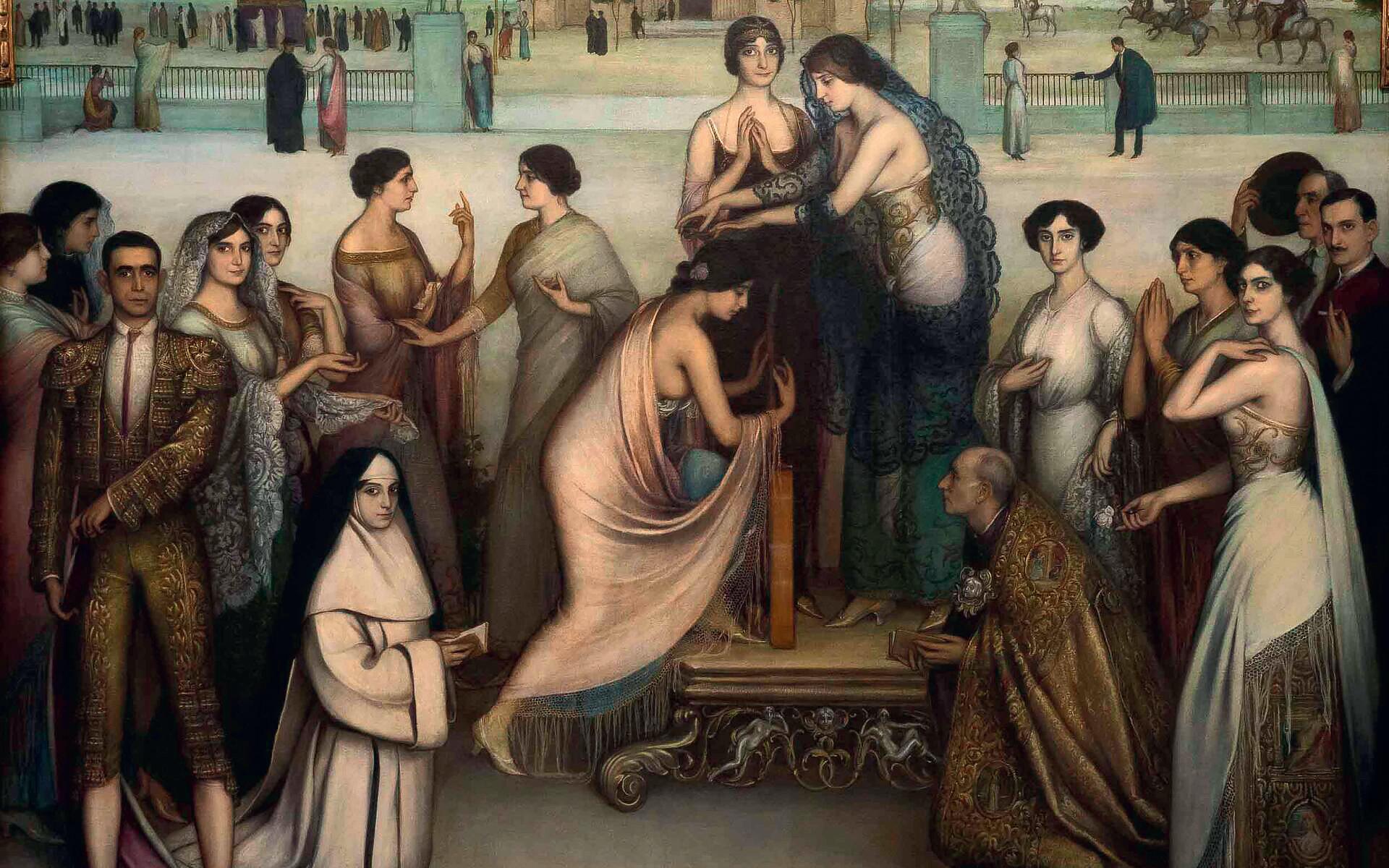
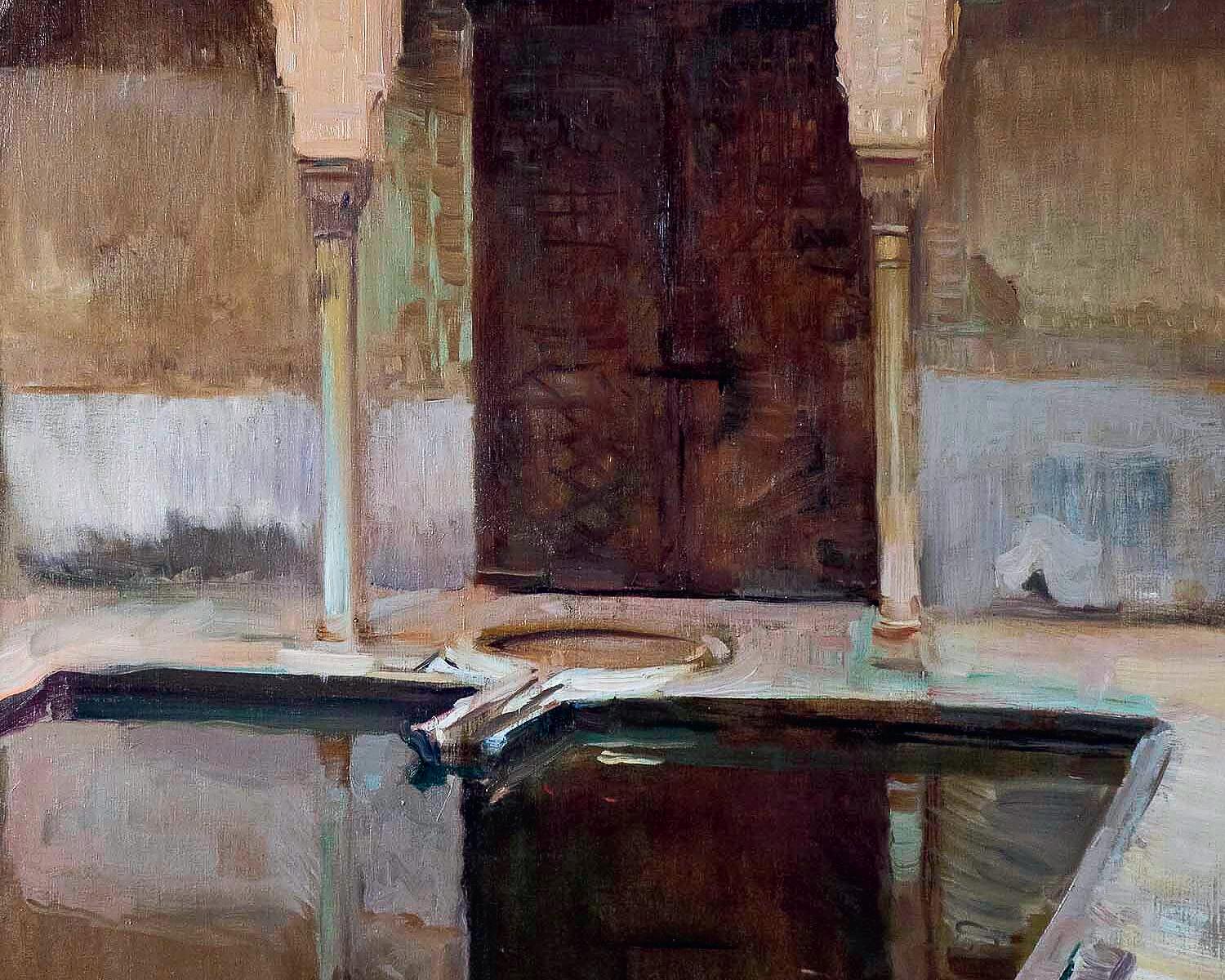
Top: Julio Romero de Torres, La consagración de la copla, 1912. Right: Joaquín Sorolla, Patio de los Arrayanes, 1910
Golucho, Un lugar inacabado, 2002
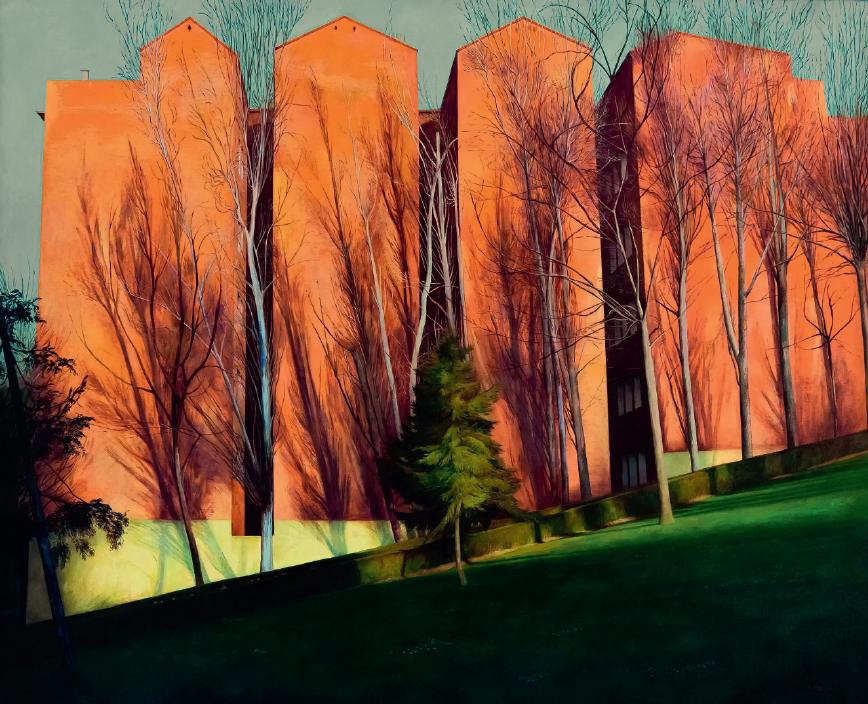
Jesus Ibáñez, Chopo de las Vistillas, 2009
Ignacio Zuloaga, Retrato de su prima Cándida, 1898
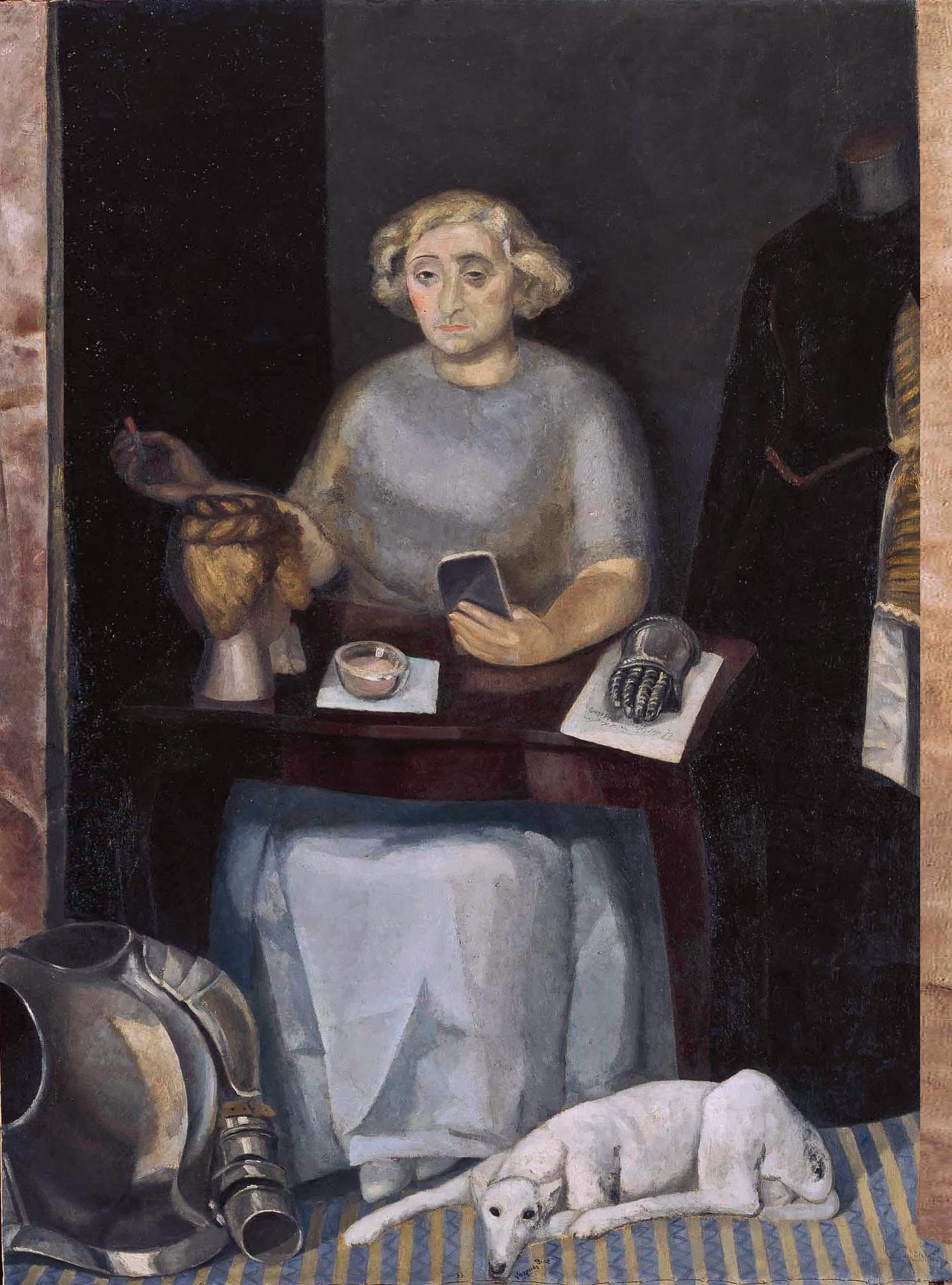
Daniel Vázquez Díaz, Retrato de María Guerrero, 1933
Evoking Egypt Gallery of the Kings
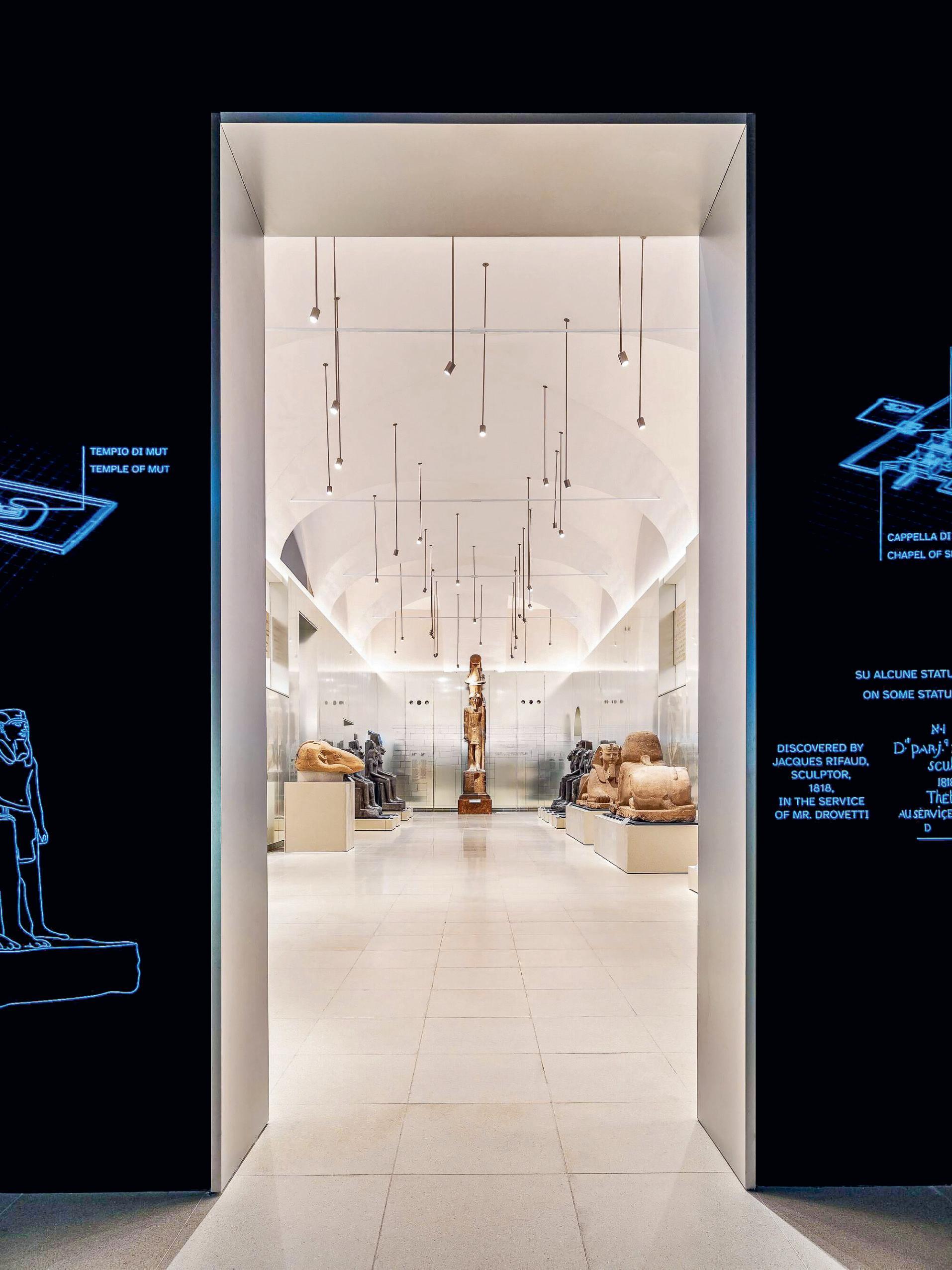
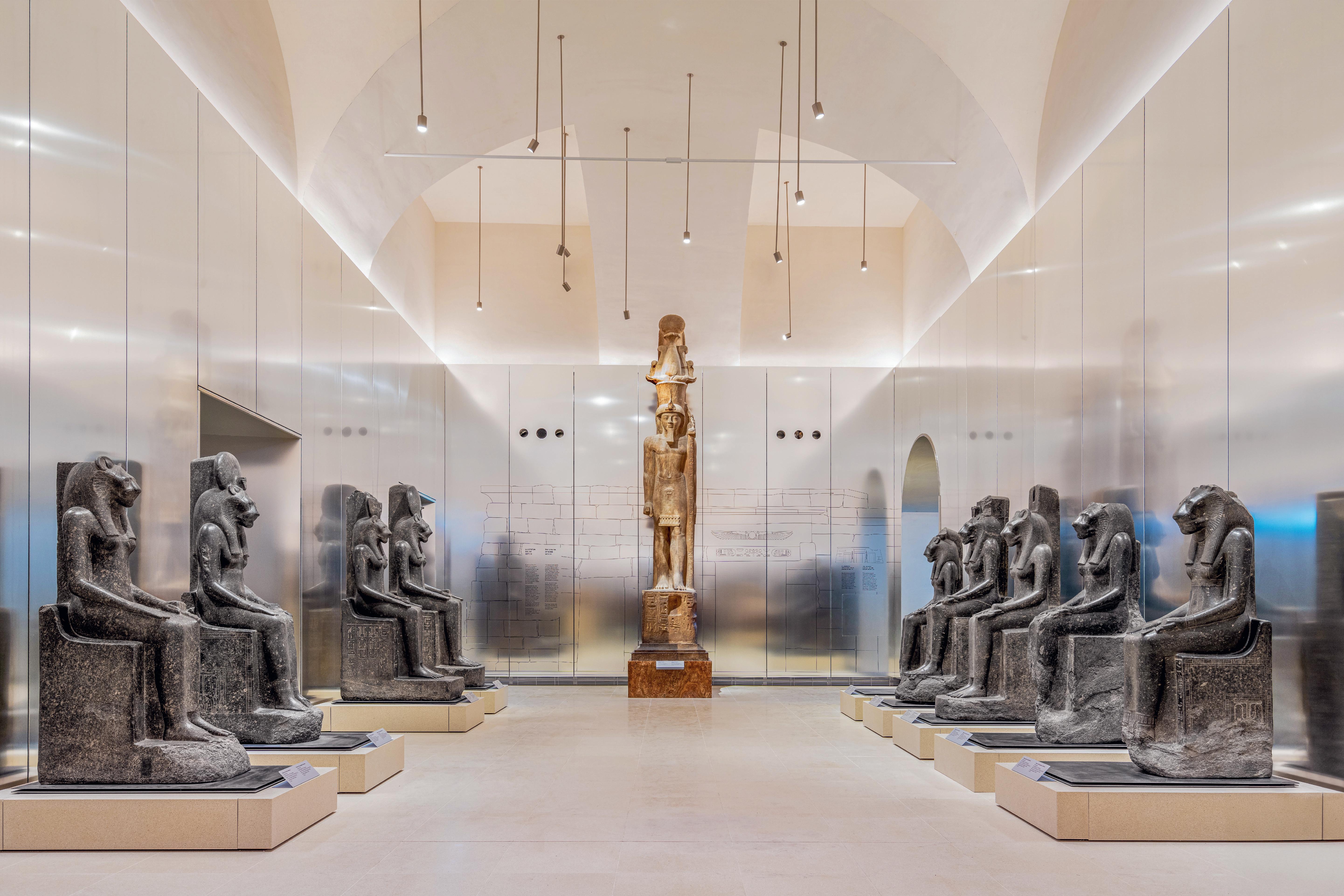
La oficina holandesa OMA, encabezada aquí por David Gianotten y Andreas Karavanas, presenta junto con Andrea Tabocchini la renovación de la Galería de los Reyes en el Museo Egipcio de Turín.
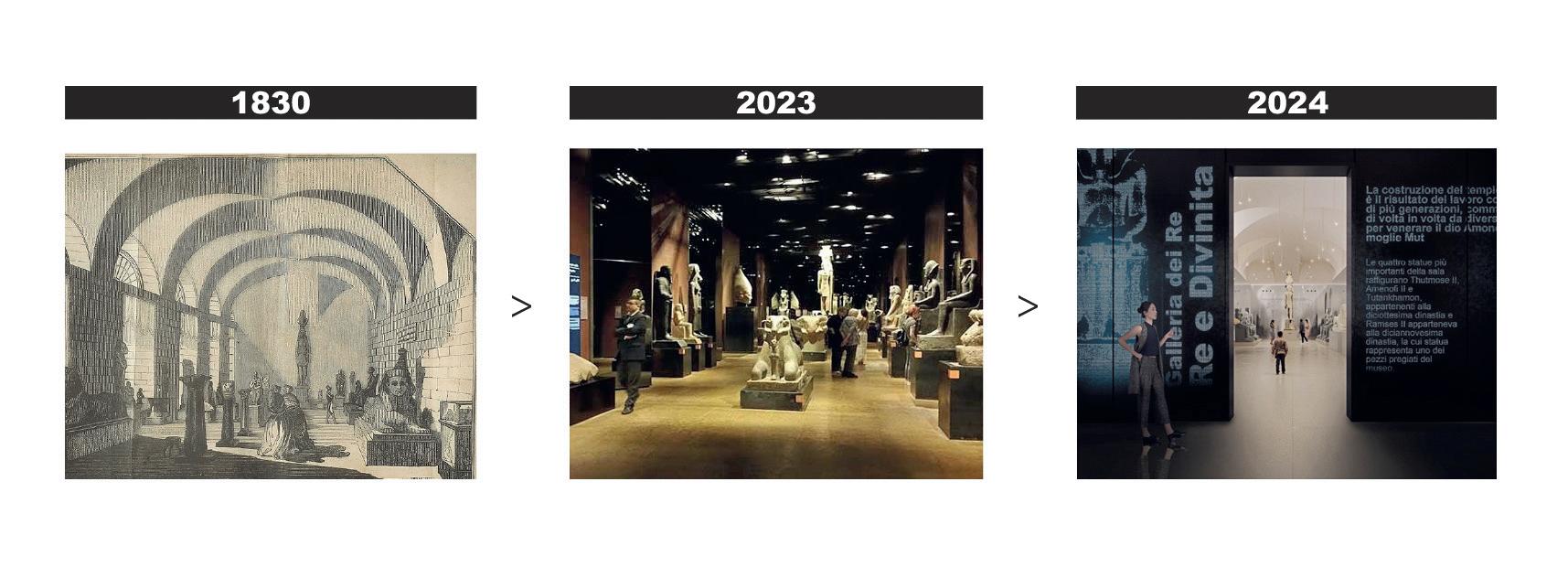
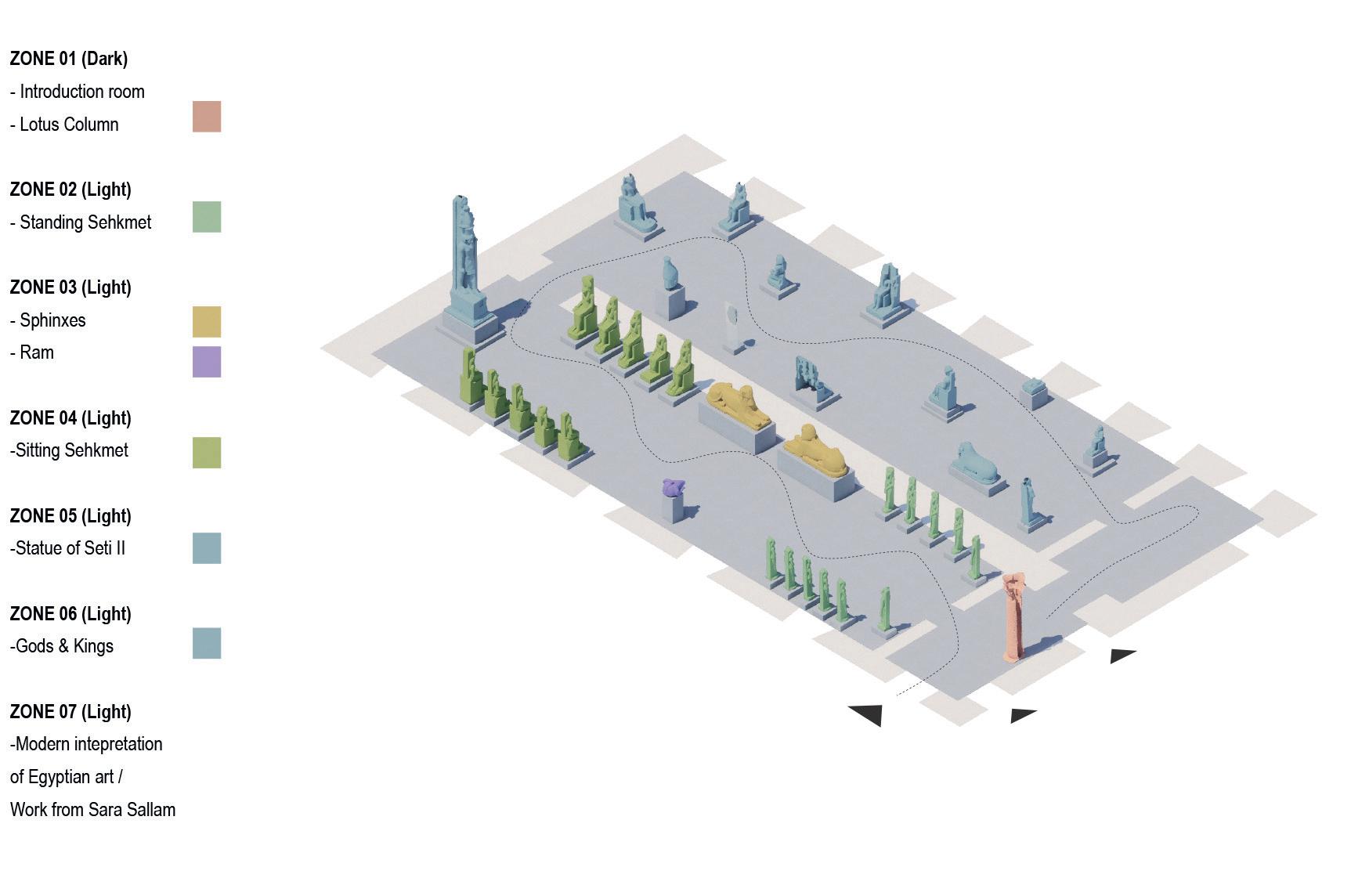
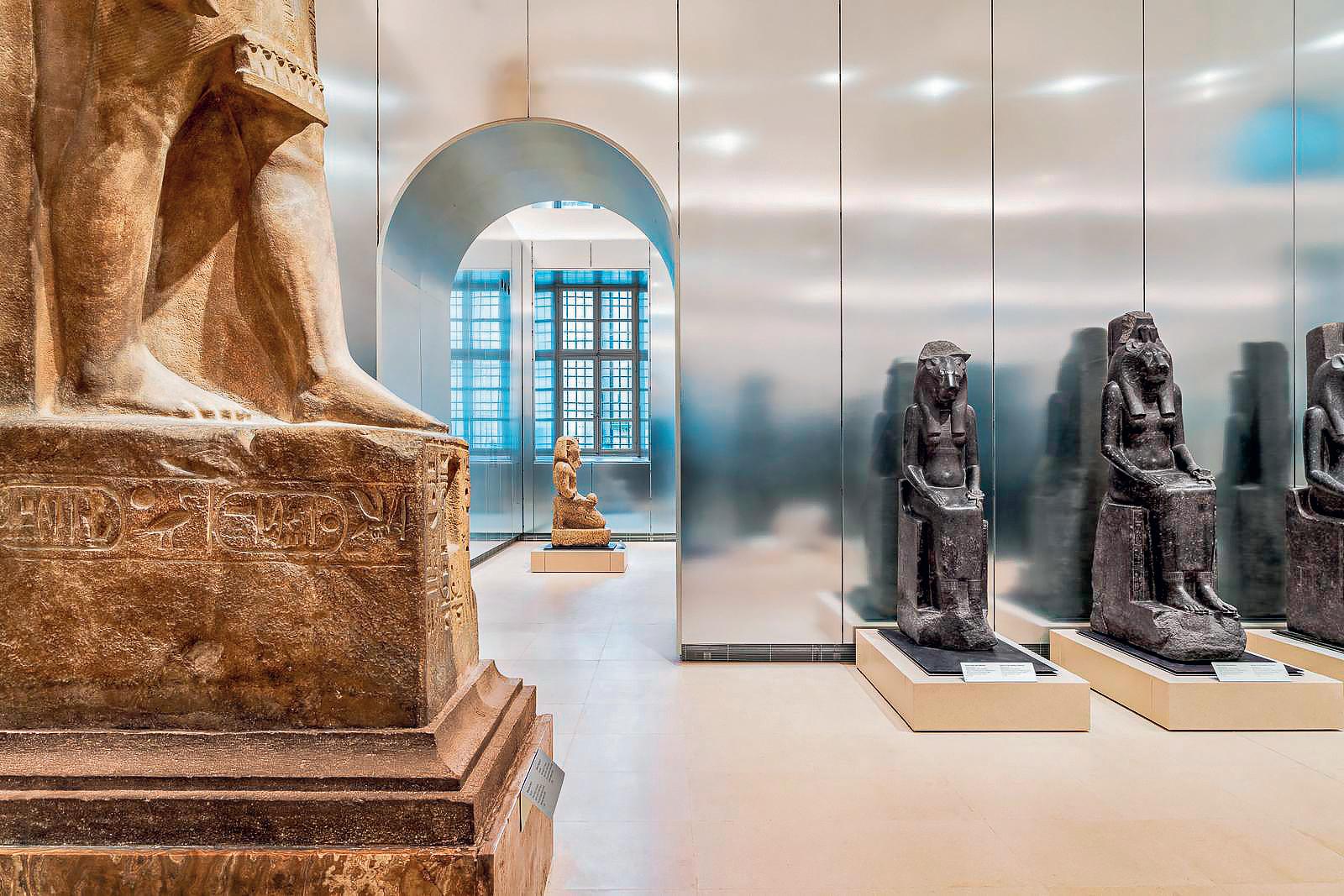
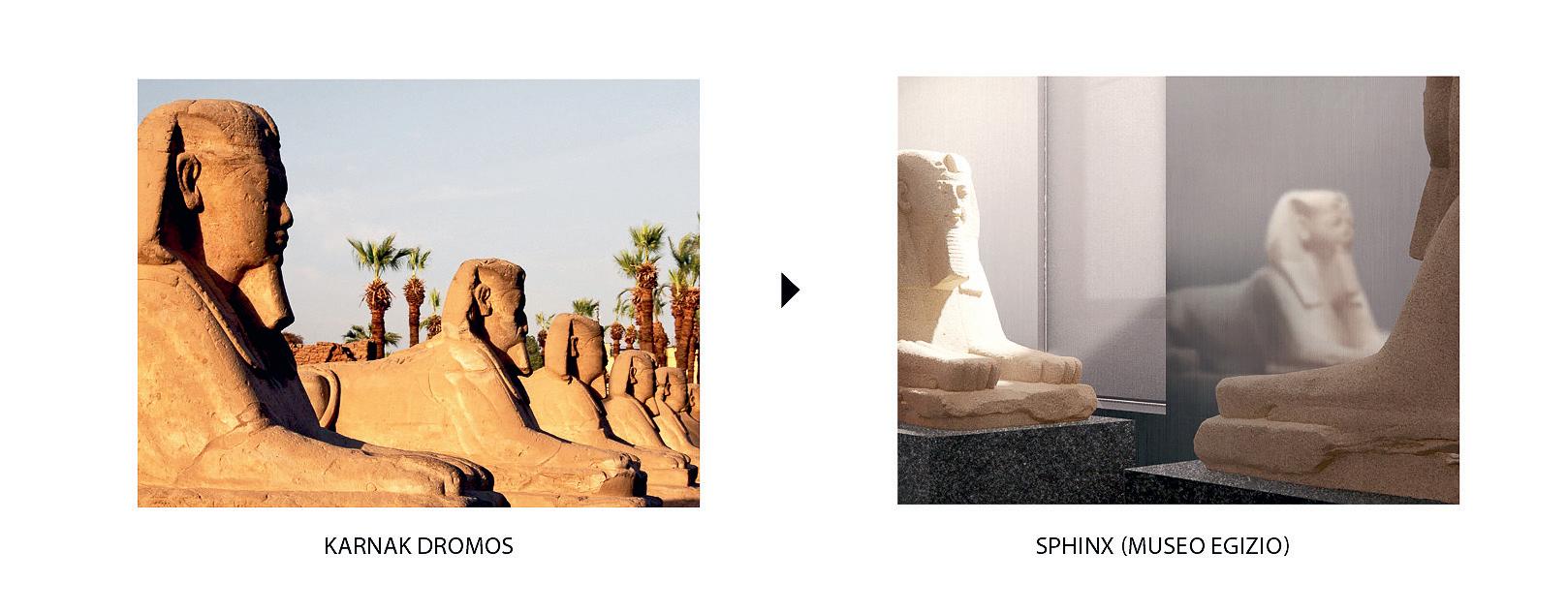
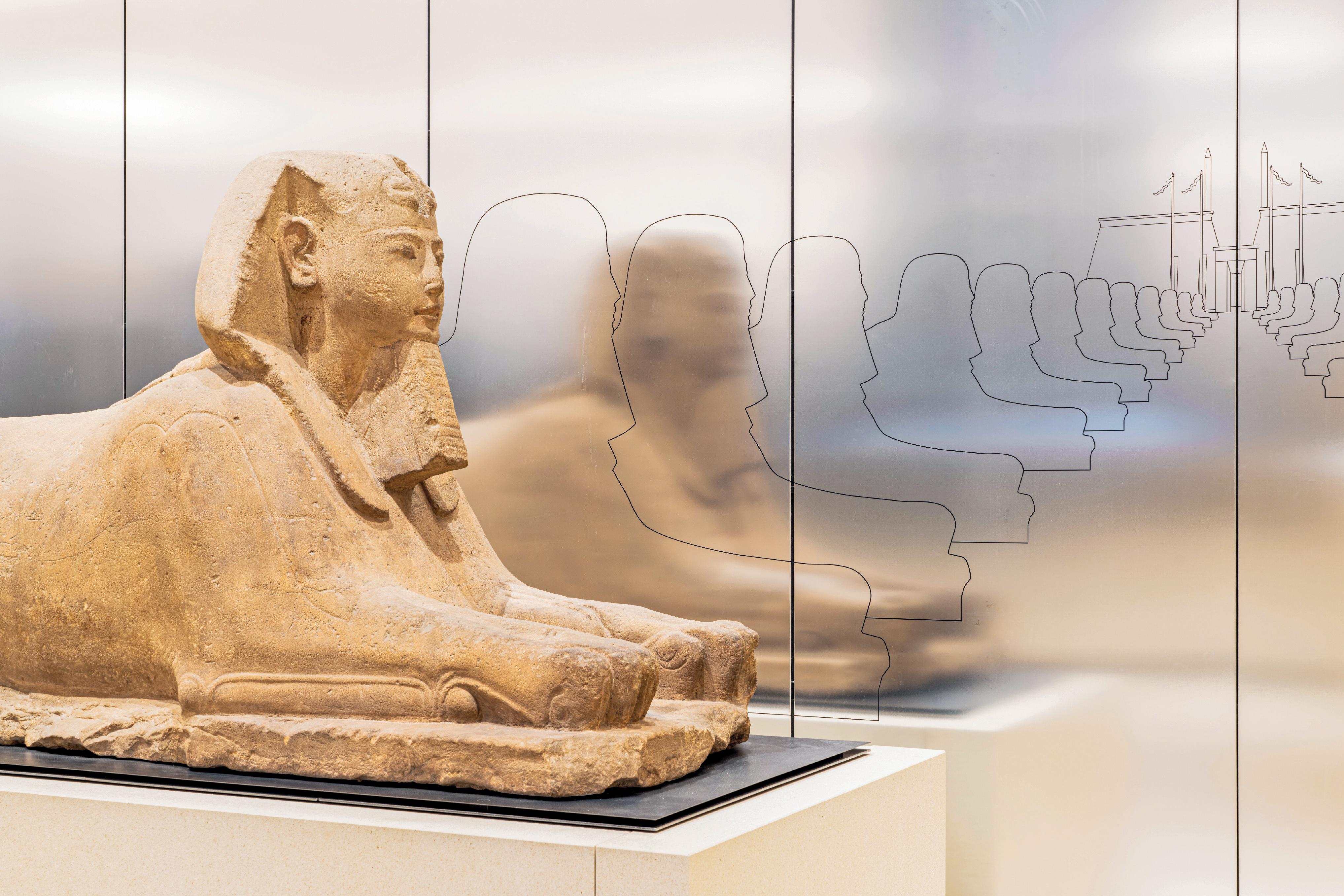
Para ver uno de los mayores conjuntos de arte egipcio no hace falta visitar El Cairo, sino que puede disfrutarse en Turín. Allí el Palazzo dell’Accademia delle Scienze exhibe desde 1824 la colección adquirida por el rey Carlos Félix a Bernardino Drovetti. Así surgió la primera galería especializada en antigüedades de esta civilización, una institución que siguió creciendo gracias a las excavaciones arqueológicas promovidas en el albor del siglo XX Las continuas adquisiciones obligaron a transformar y adaptar el edificio en numerosas ocasiones hasta convertirlo en un espacio abstruso y aislado. Por ello, y con motivo de su bicentenario, el museo convocó un concurso que permitiese recuperar el esplendor del edificio barroco obra de Guarini y lo abriese de nuevo a la ciudad. Como parte de este ambicioso proyecto de renovación —a cargo de OMA y que incluye también la creación de un nuevo patio cubierto, la mejora de las circulaciones o la renovación de las salas de exposiciones— se presenta la nueva Galería de los Reyes, un espacio inmersivo que ofrece una experiencia más contextualizada y que vincula las obras con su entorno original a orillas del Nilo en Karnak, la actual ciudad de Luxor. Además, la intervención recupera la arquitectura primigenia de las salas, rescatando los techos abovedados y las ventanas ocultas. Con todo, tras una primera estancia oscura con proyecciones, el visitante descubre una atmósfera etérea que, gracias a las paredes de aluminio con recreaciones históricas y la estudiada colocación de las piezas, lo trasladarán a Egipto estando en Italia.
The Dutch firm OMA – here led by David Gianotten and Andreas Karavanas, and in collaboration with Andrea Tabocchini –has renovated the Gallery of Kings in the Museo Egizio of Turin.
To see one of the largest gatherings of Egyptian art, it is not necessary to travel to Cairo. One can go to Turin, where the Palazzo dell’Accademia dell Scienze has since 1824 showcased the collection that King Charles Felix acquired from Bernardino Drovetti. So arose the first gallery specialized in antiquities of that civilization, an institution that continued to grow thanks to archaeological excavations carried out at the dawn of the 20th century. Steady acquisitions required transforming and adapting the building many times, to the point of making its spaces abstruse and isolated. With the bicentenary as cue, the museum thus announced a competition of designs that would restore the splendor of Guarini’s Baroque work and open it anew to the Italian city. Part of this ambitious renovation project – commissioned to OMA and including the creation of a new covered courtyard, improvement of circulations, revamp of exhibition halls, and more – is the new Gallery of Kings, an immersive space offering a more contextualized experience and linking the pieces on display to their original locations along the banks of the Nile in Karnak, the current city of Luxor. In addition, the intervention reinstates the past architecture of the rooms, bringing vaulted ceilings and hidden windows to light. After a dark space that projects films on screen, visitors find themselves in an ethereal atmosphere which, thanks to aluminum walls showing recreations of history and the exhibits placed in context, transports them – in Turin – to Ancient Egypt.
Photos: Marco Cappelletti
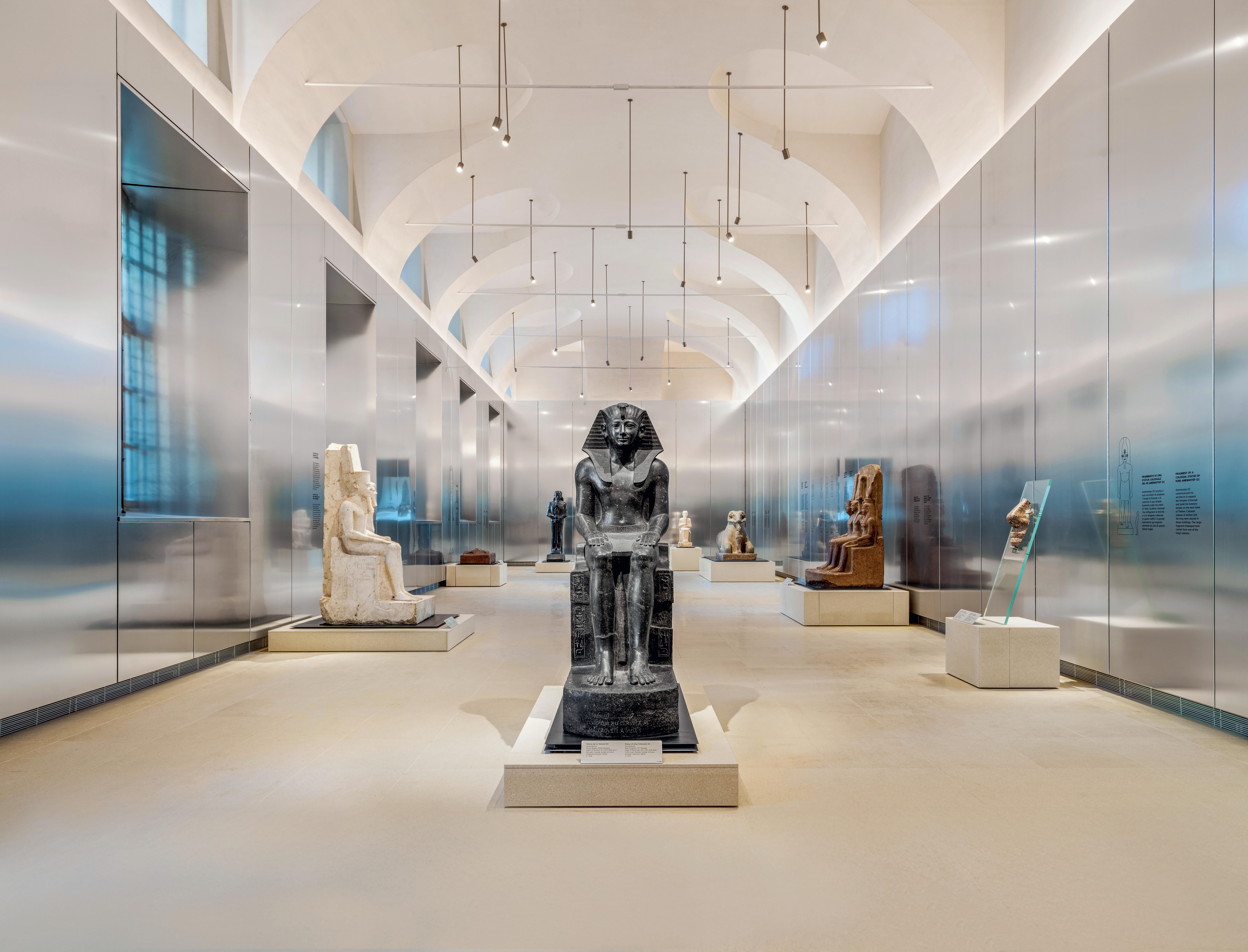
La transformación de la galería rescata la arquitectura original del palacio barroco y propone una museografía inmersiva que imita la disposición y el contexto original de cada pieza en la ciudad de Karnak.
The transformation of the gallery restores the Baroque palace’s original architecture and creates an immersive museum experience that imitates each item’s original location and context in the city of Karnak.
Marble Captures Time A Royal Sample
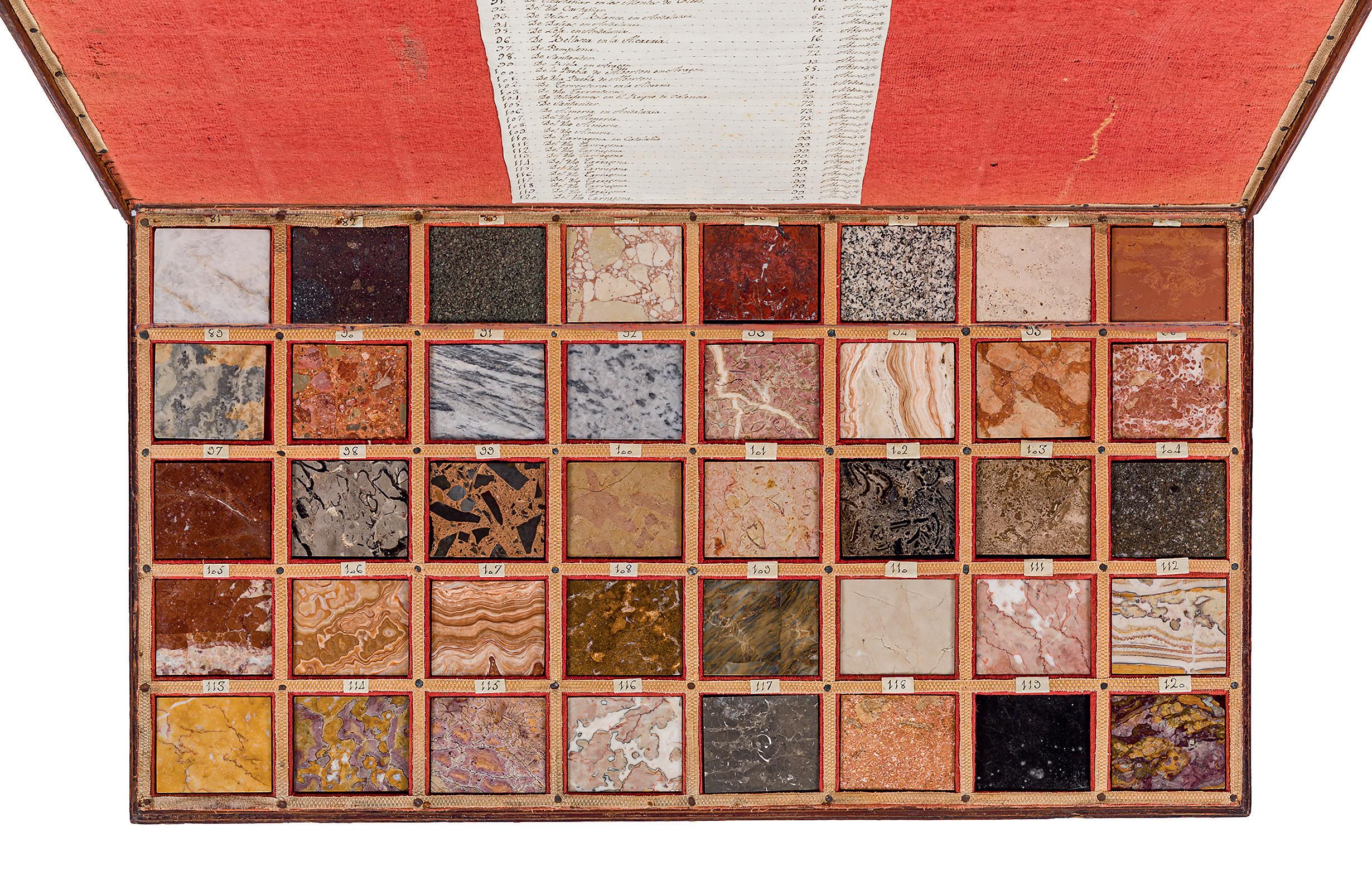
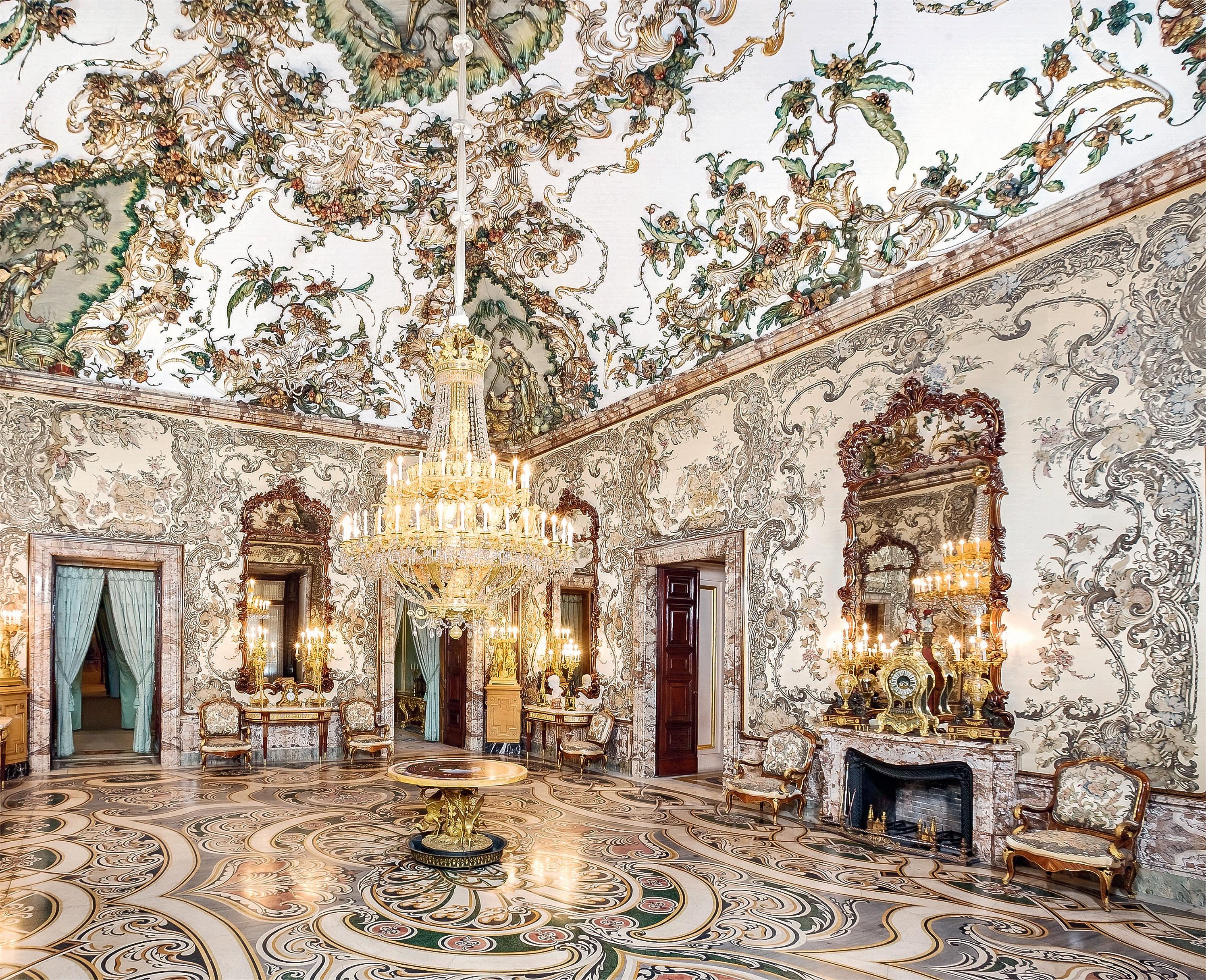
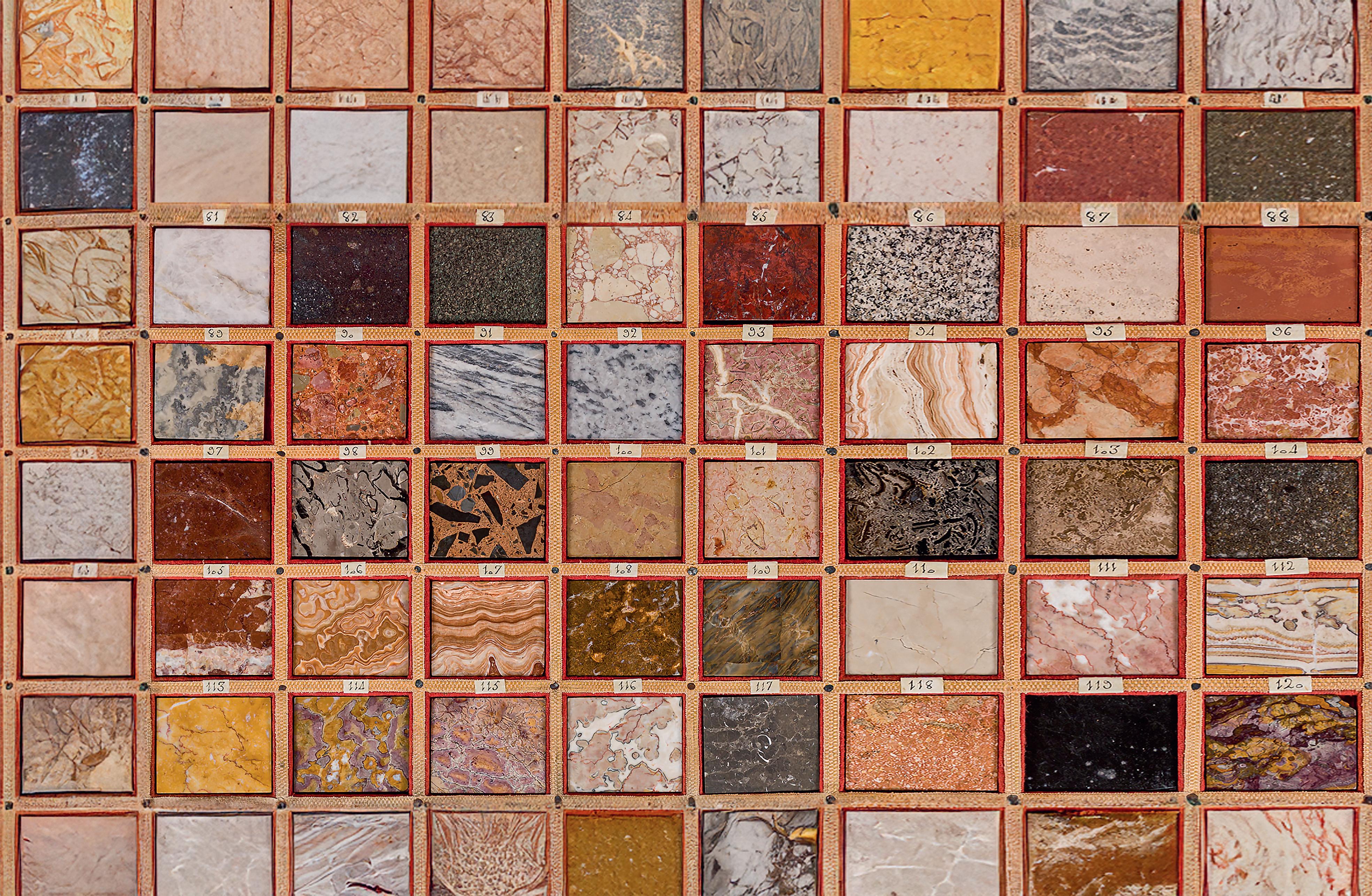
La muestra, realizada con la colaboración de Cosentino, recupera las arcas con piedras ornamentales que sirvieron para que reyes y arquitectos eligieran los revestimientos del Palacio Real de Madrid.
La exposición dispuesta en la Galería de las Colecciones Reales ha presentado por primera vez de forma íntegra el histórico conjunto de trescientas piezas de mármol, contenidas en ocho arcas de madera del siglo XVIII, las cuales sirvieron como catálogo para seleccionar los materiales decorativos del Palacio Real de Madrid y otros Reales Sitios, como El Escorial, El Pardo o Aranjuez. El muestrario, elaborado entre 1740 y 1790 bajo la dirección de los arquitectos Giovanni Battista Sacchetti y Francesco Sabatini, fue concebido como una herramienta para que monarcas y arquitectos eligieran qué tipo de piedra emplear en suelos, paredes, chimeneas y demás elementos arquitectónicos. Así, tanto el gusto del momento como las particulares preferencias reales influyeron en estas decisiones. Un hecho que pone el foco tanto en la belleza y diversidad geológica de las rocas —conocidas entonces como ‘piedras de pulimento’—, como en su valor patrimonial, pues son piezas que forman parte de la Colección de Ciencias Naturales de Patrimonio Nacional, vinculada a la tradición renacentista de los gabinetes de curiosidades. La muestra ha sido posible gracias a un meticuloso proceso de restauración, llevado a cabo por diversos talleres y laboratorios de Patrimonio Nacional, y que ha permitido recuperar la integridad estructural y estética del conjunto, así como restituir su función original como documento de consulta, estudio e investigación sobre las canteras y rocas decorativas utilizadas en los Reales Sitios.
The exhibition, organized in collaboration with Cosentino, recovers the chests containing ornamental stones that served for kings and their architects to choose the claddings for the Royal Palace of Madrid.
The exhibition at the Royal Collections Gallery has presented for the first time the complete historical collection of 300 marble pieces, contained in eight 18th-century wooden chests, which served as a catalog for selecting decorative materials for the Royal Palace of Madrid and other Royal Sites, such as El Escorial, El Pardo, and Aranjuez. The sample collection, compiled between 1740 and 1790 under the direction of architects Giovanni Battista Sacchetti and Francesco Sabatini, was conceived as a tool for monarchs and architects to choose what type of stone to use for floors, walls, fireplaces, and other architectural elements. Thus, both the tastes of the moment and the particular preferences of the royal family influenced these decisions. This fact highlights both the beauty and geological diversity of the rocks — known at the time as ‘polishing stones’ — and their heritage value, as they are part of the national Natural Sciences Collection, linked to the Renaissance tradition of cabinets of curiosities. The exhibition has been made possible thanks to a meticulous restoration process carried out by several workshops and laboratories of Patrimonio Nacional (public body responsible for national heritage property proceeding from the Spanish Crown), which has restored the structural and aesthetic integrity of the collection and returned it to its original function as a document for consultation, study, and research on the quarries and decorative stones used in the Royal Sites.
Cámara de Carlos III en el Palacio Real de Madrid, diseño de Mattia Gasparini
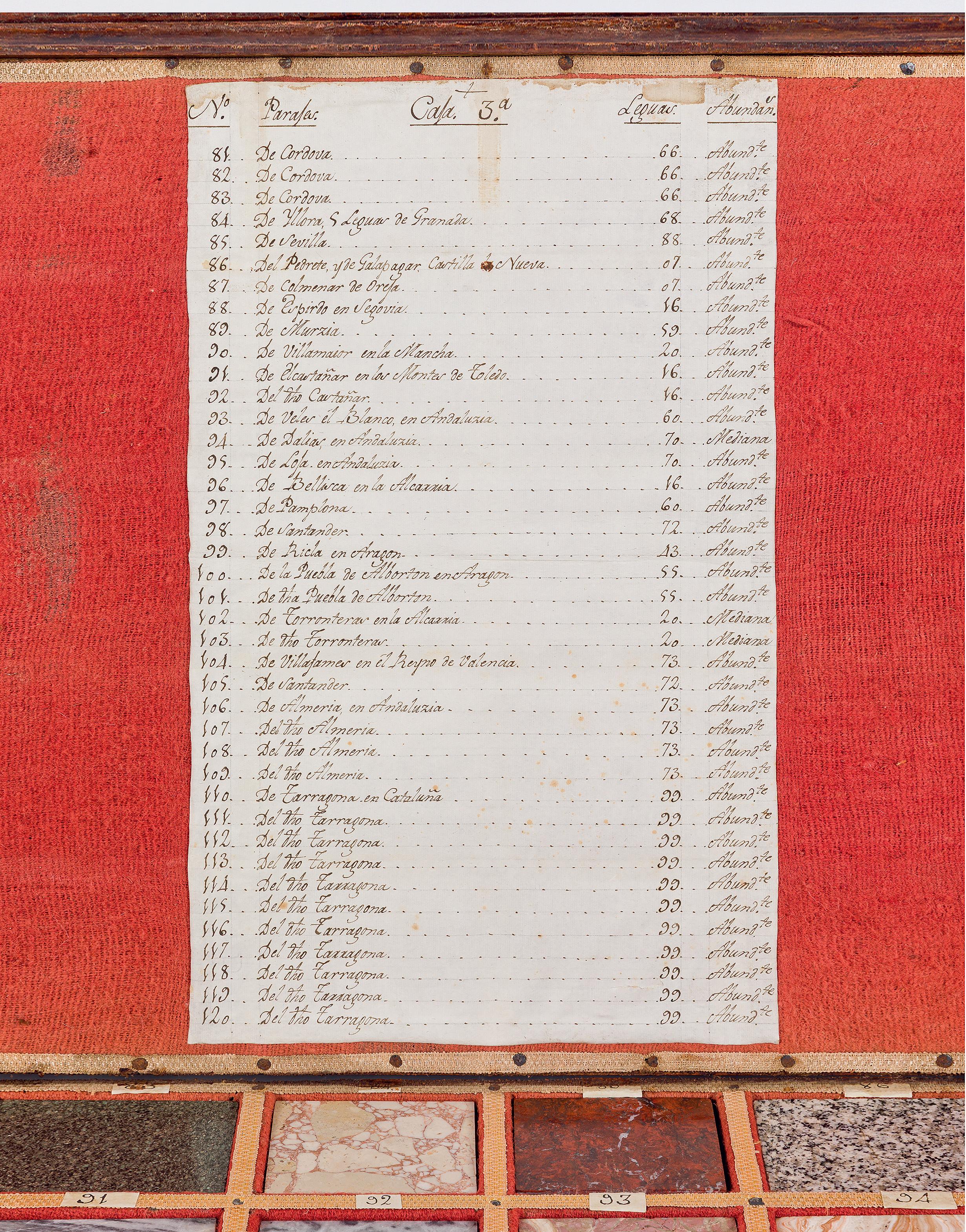
El conjunto está formado por ocho grandes cajas, en cuya tapa se marca la información de cada una de las trescientas piezas, reflejando de qué cantera procede, la distancia hasta el Palacio Real o la cantidad disponible.
The set consists of eight large boxes, each with a label on the lid providing information about each of the three hundred pieces, including the quarry of origin, the distance to the Royal Palace, and quantity available.
Style
Capsule of Color
Louis Vuitton by Murakami
Bright Geometries
The World of Muller Van Severen
Bright Geometries
The World of Muller Van Severen
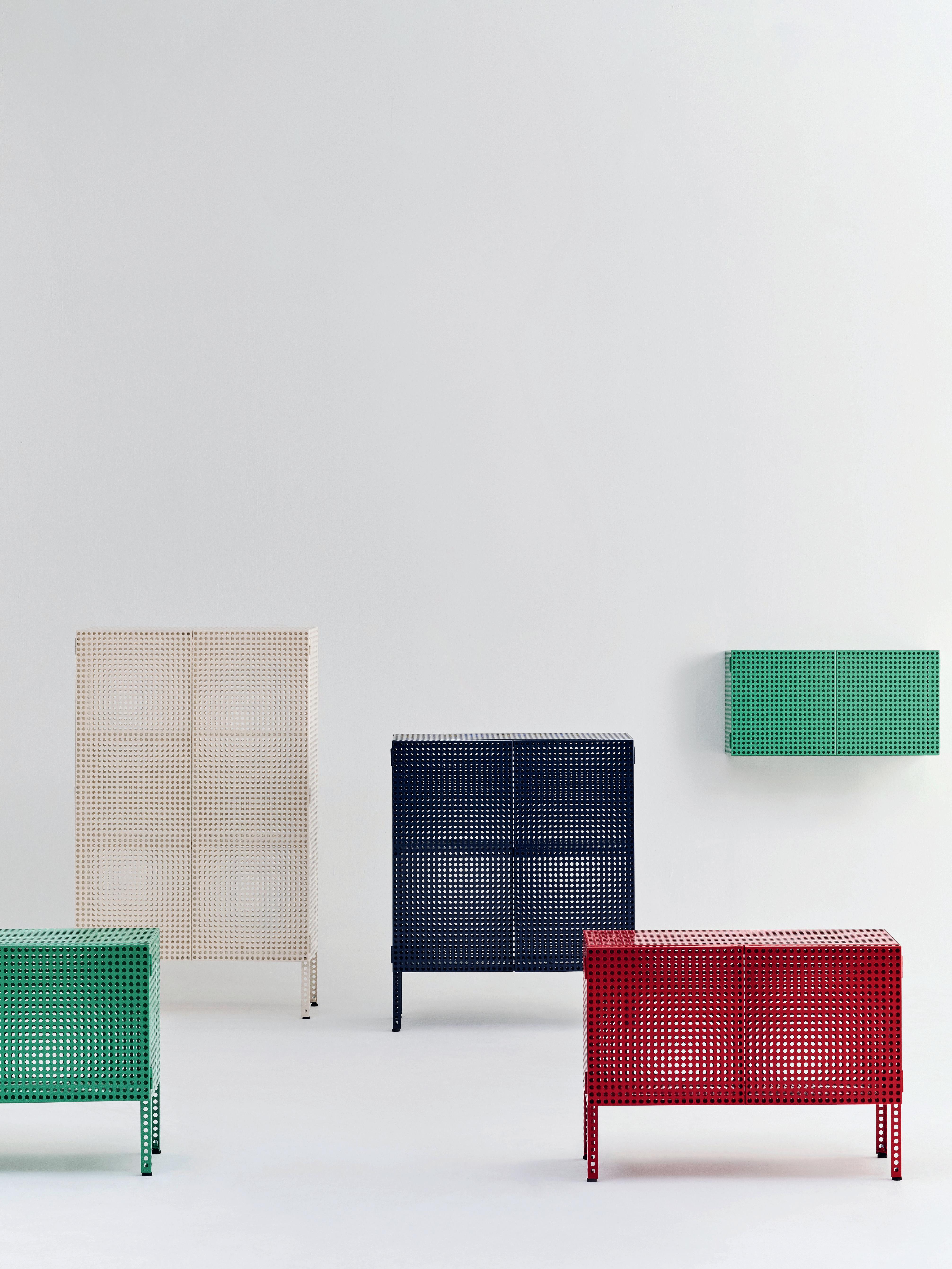
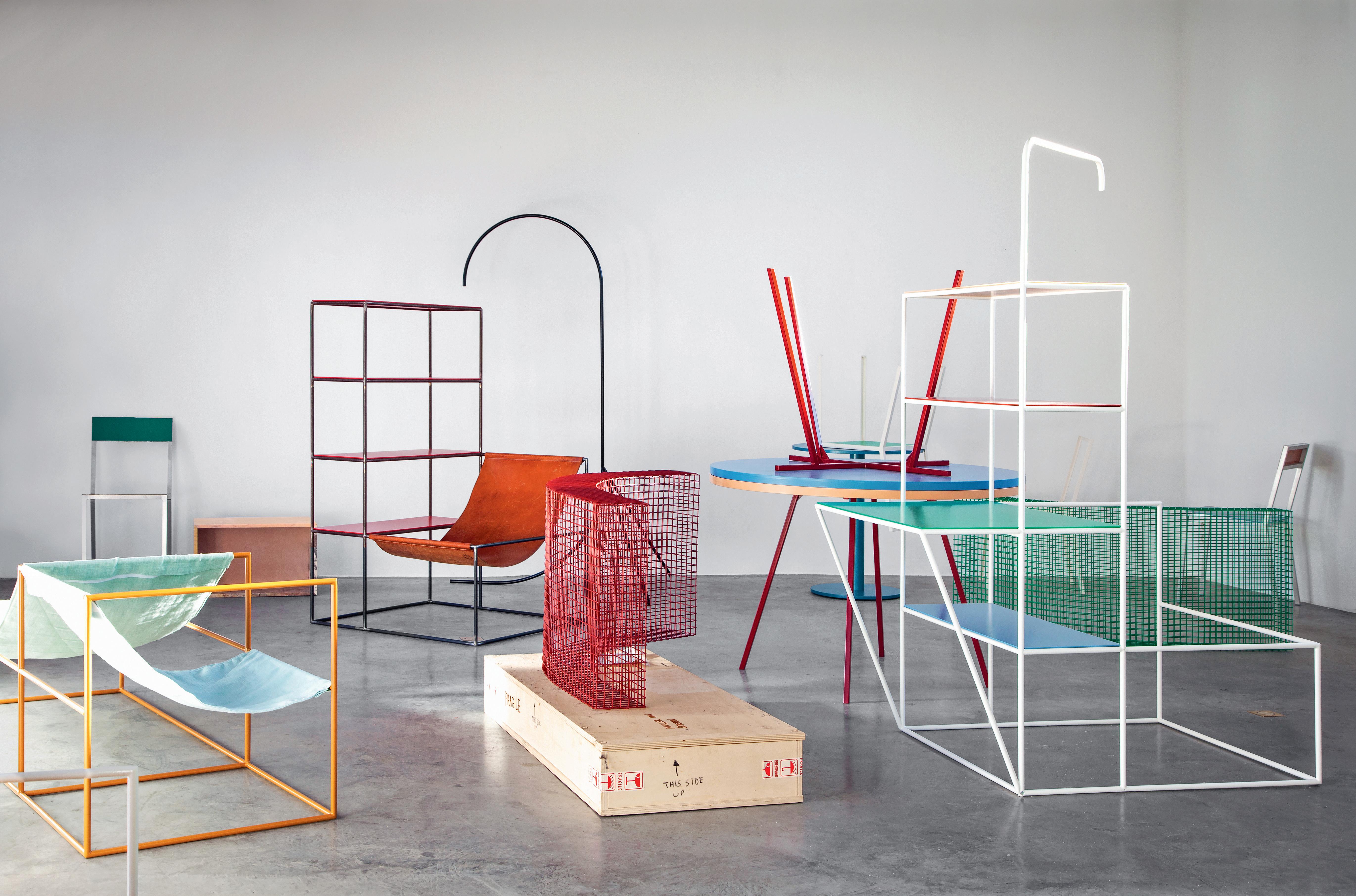
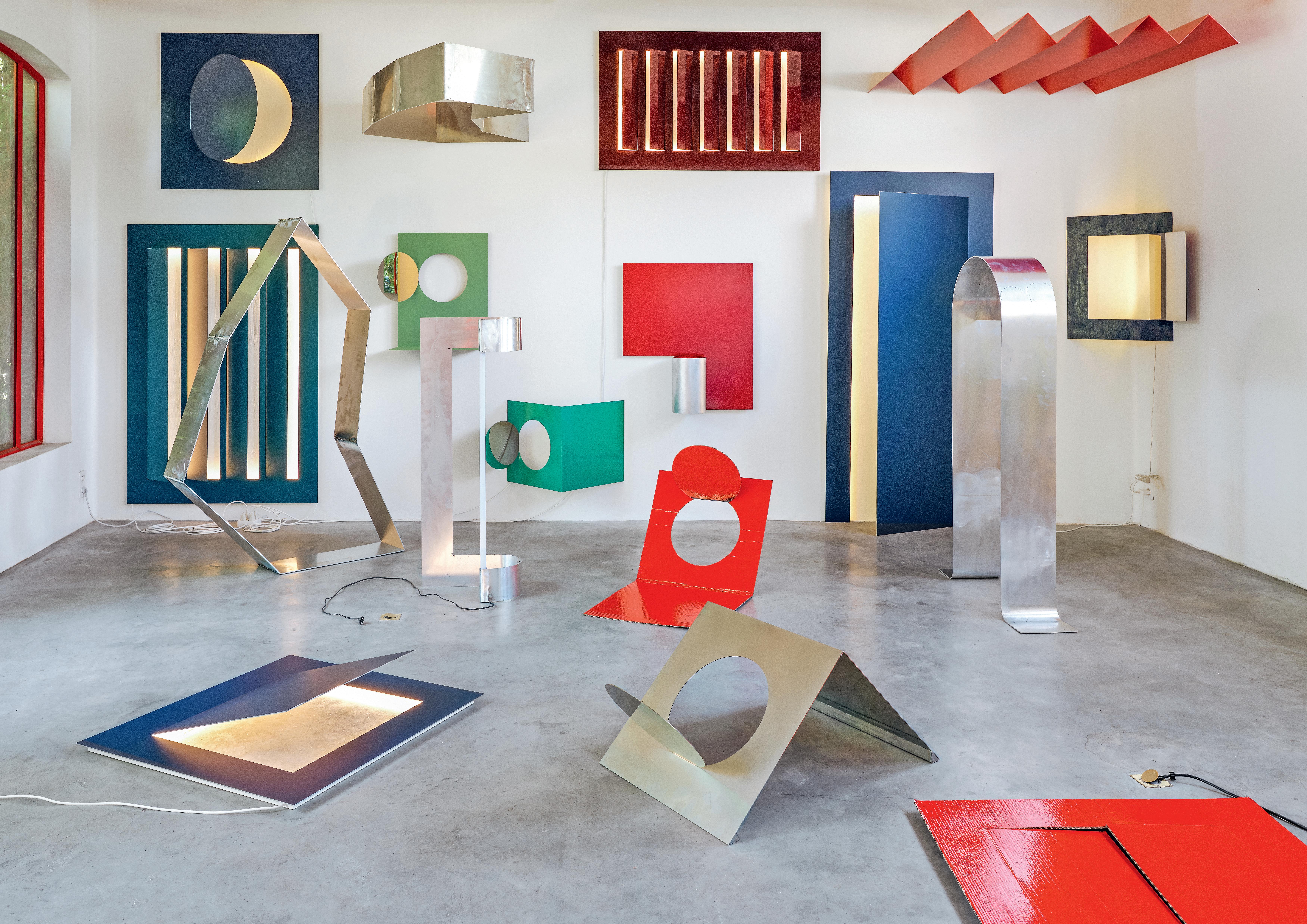
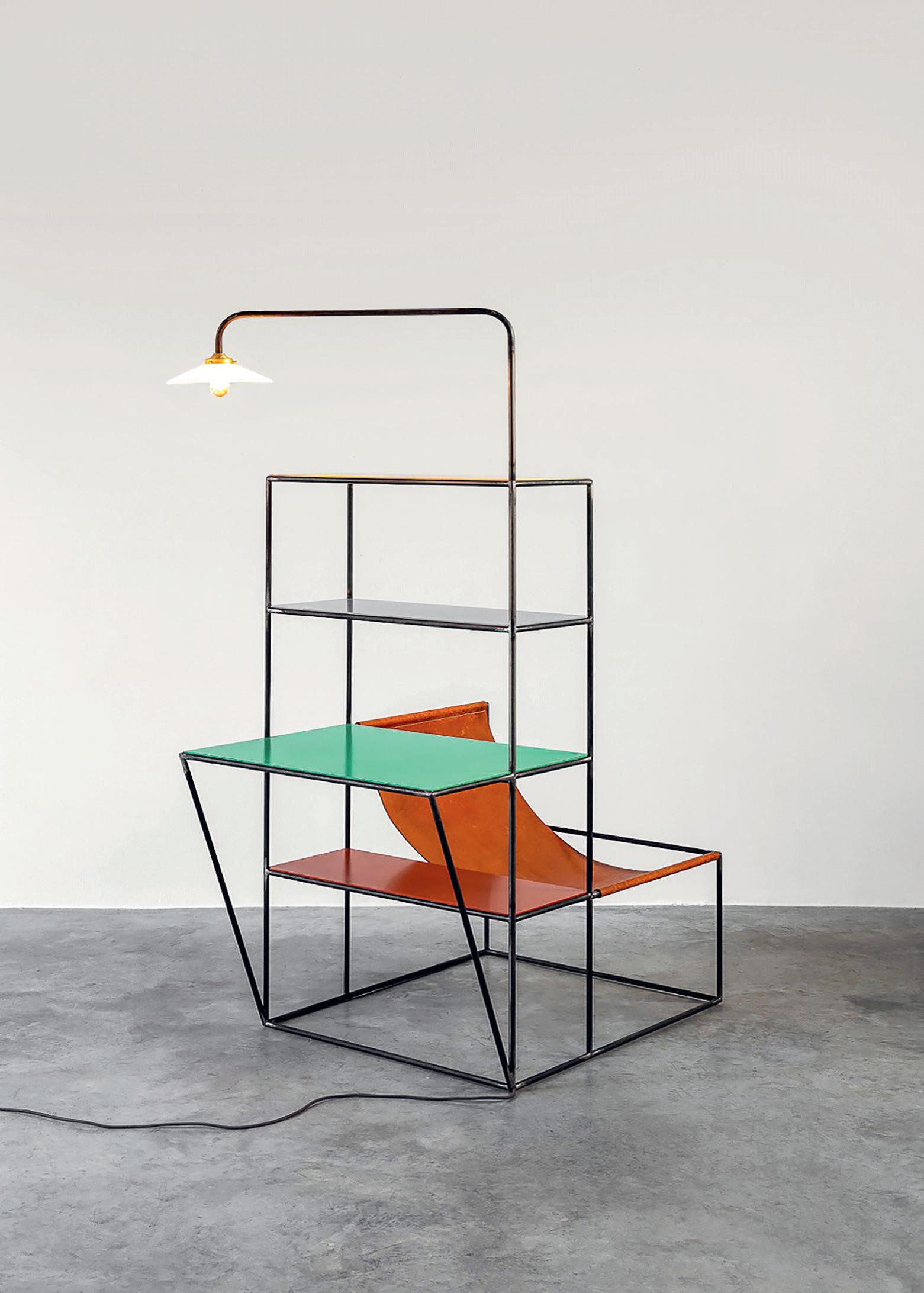
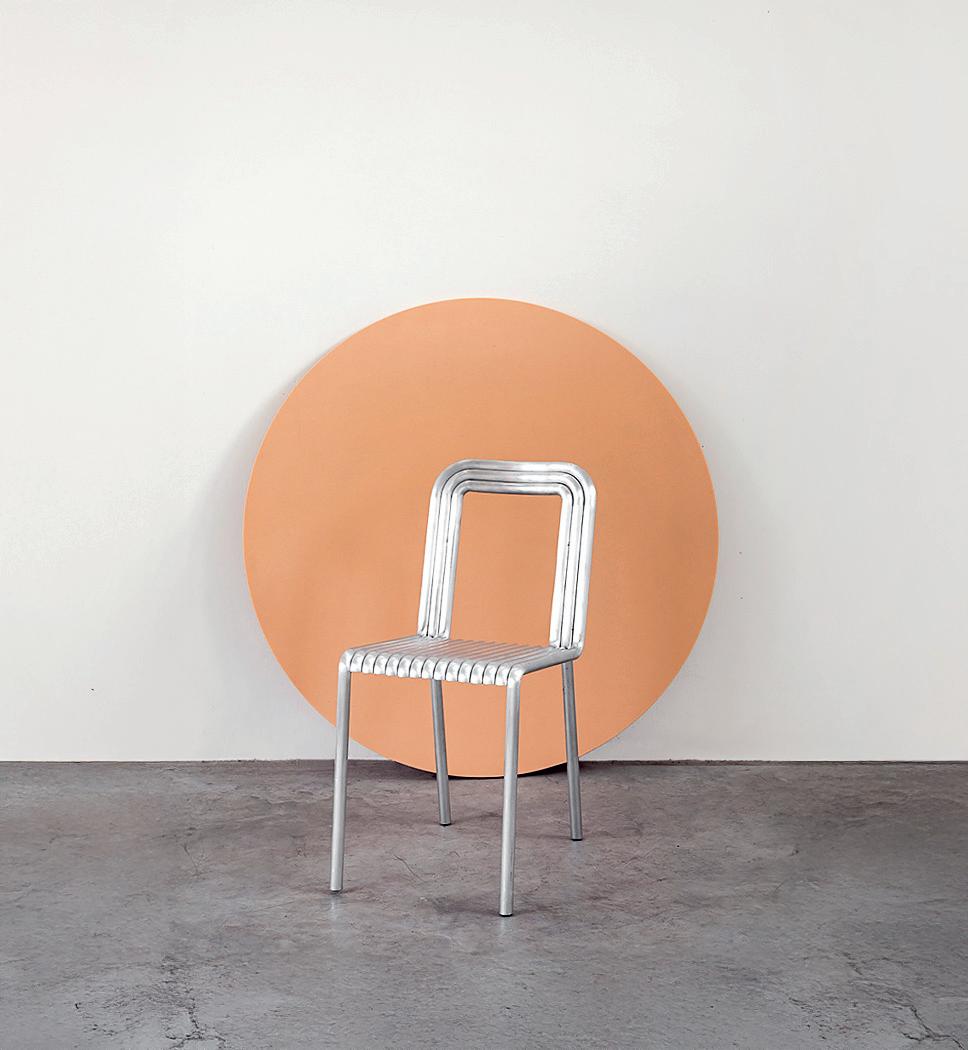
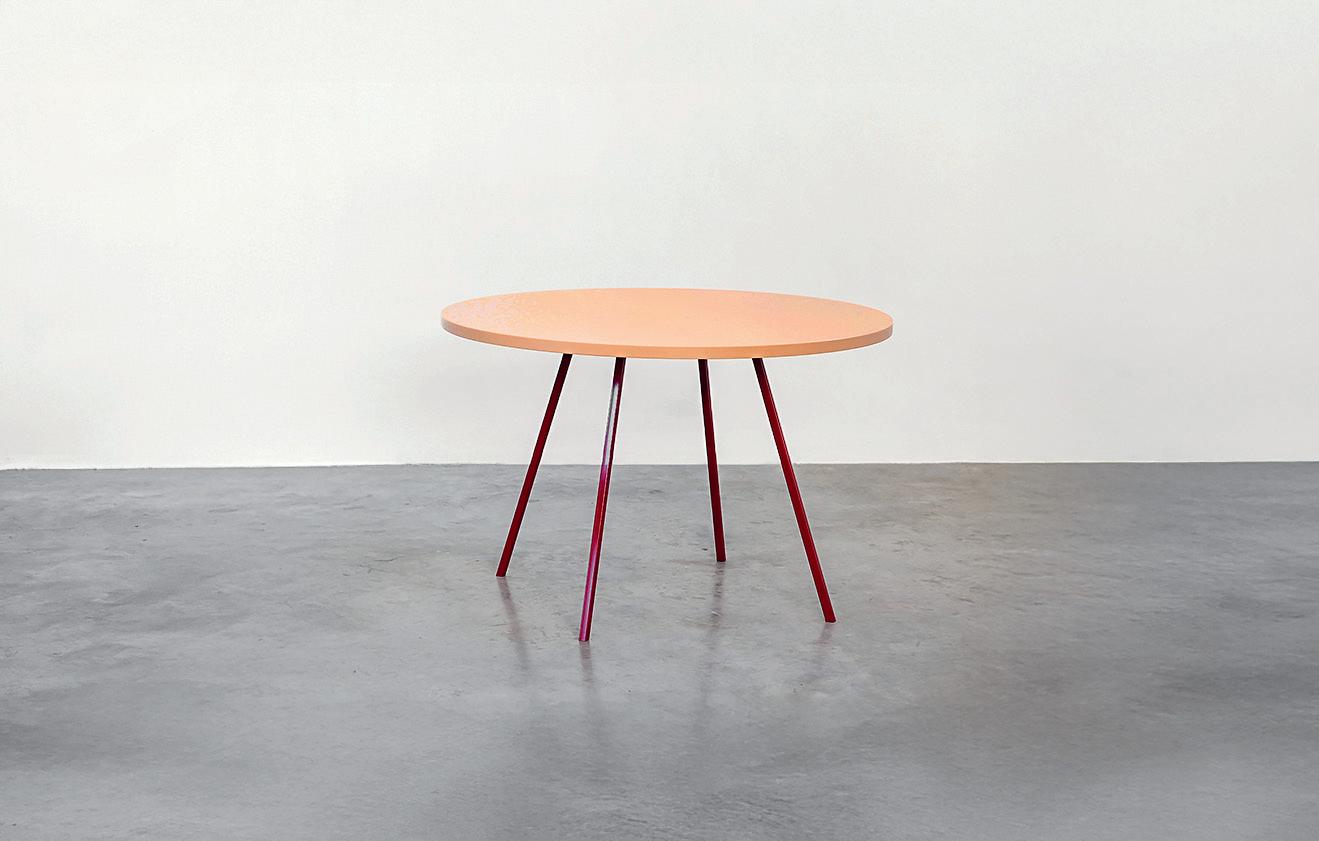
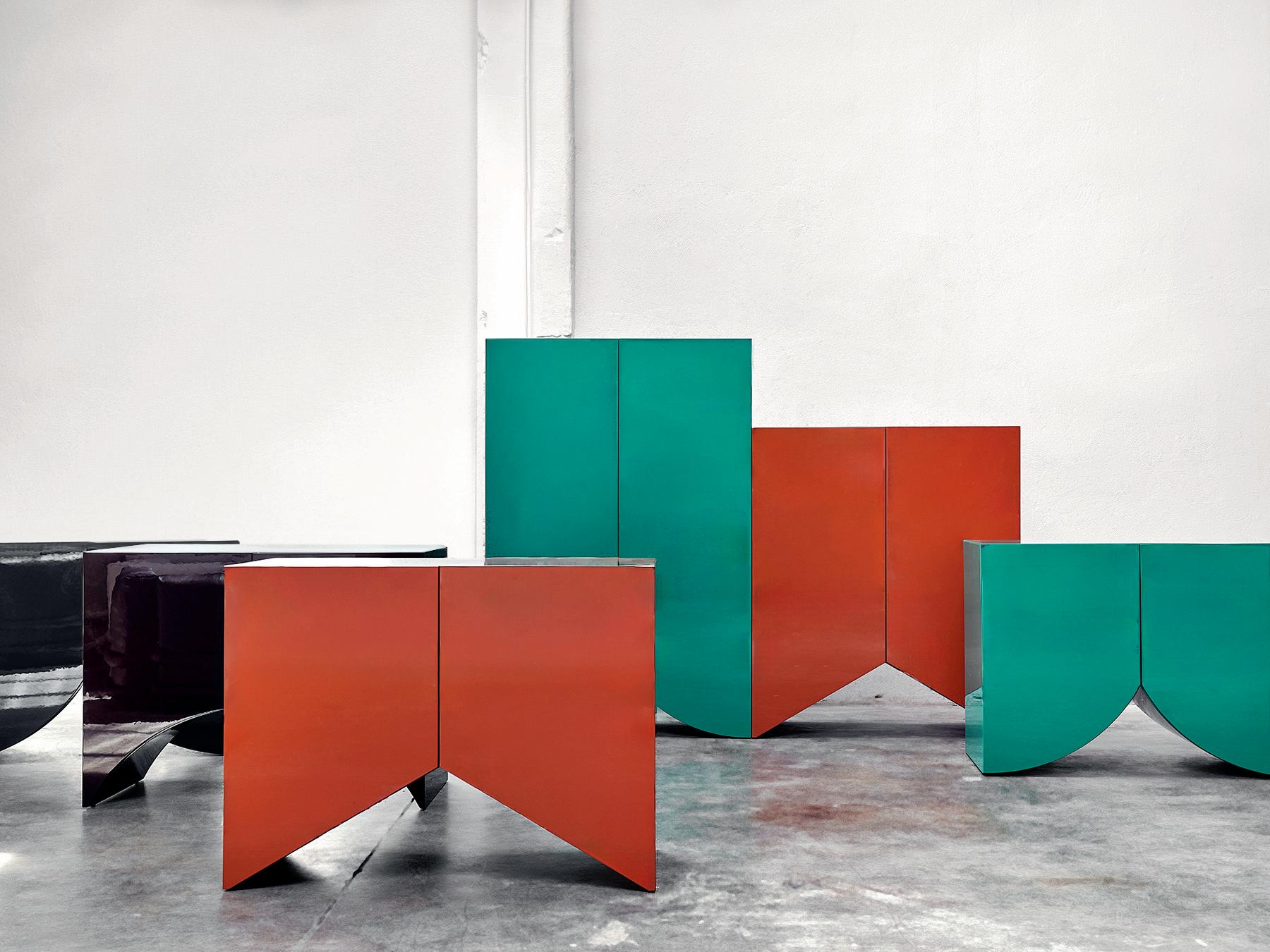
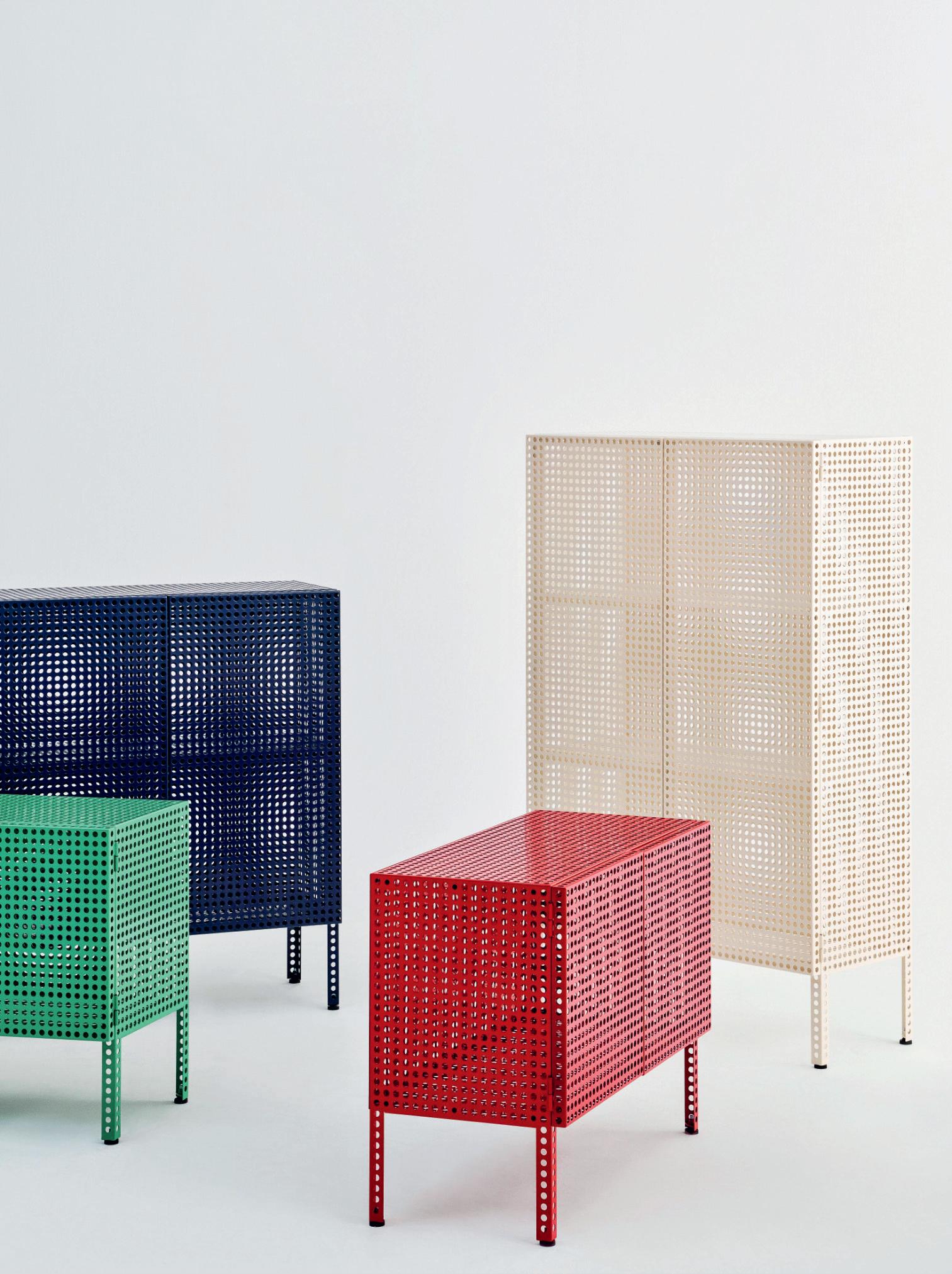
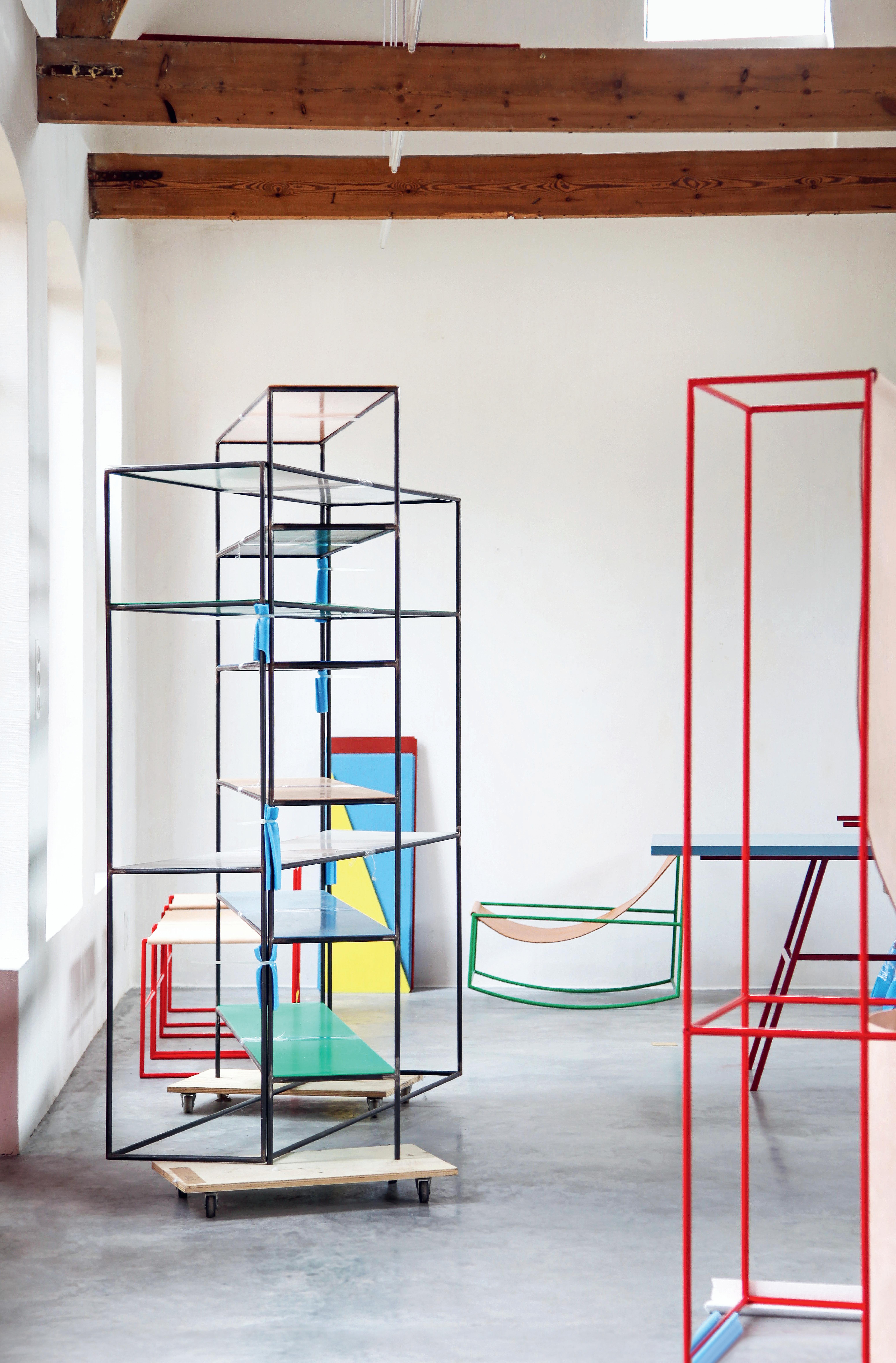
El dúo belga trata el color como un material más, con piezas que operan como pequeñas arquitecturas, marcadas por geometrías claras y límpias, y desde una ética de la materia que asume la pátina y el desgaste.
The Belgian duo approaches color as yet another material, with pieces that act as small architectures, defined by clear and clean geometry, and from an ethic of matter that embraces patina and wear.
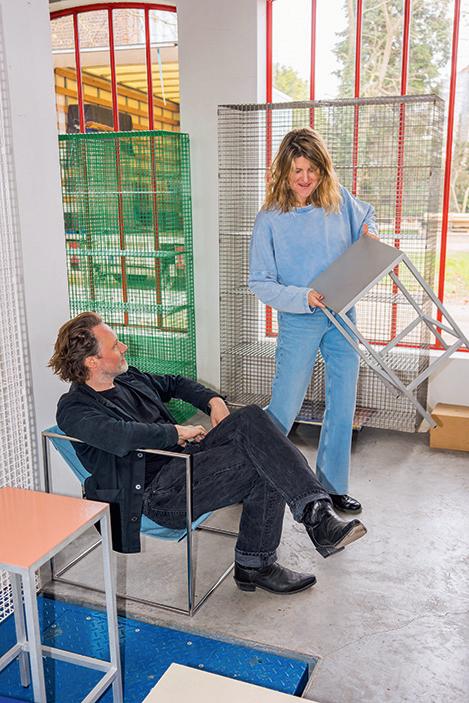
La escultora y fotógrafa
Fien Muller y el artista Hannes Van Severen han convertido su propia casa en un particular campo de muestras, en el que exploran la coexistencia de estilos o la intersección entre el arte y la función.
Sculptor and photographer Fien Muller and artist Hannes Van Severen have turned their own home into a peculiar collection of samples, in which they explore the coexistence of styles and the intersection of art and function.
Con más de una década y media de bagaje, su estudio ha moldeado un lenguaje que replantea el diseño de mobiliario, alejándose de formas conocidas, sin añadir distracciones innecesarias y con acabados sinceros.
With over fifteen years of experience, their studio has given shape to a language that reassesses furniture design, departing from known forms, without adding unnecessary distractions and with sincere finishes.
En las últimas colecciones, las formas se definen por unidades que admiten la repetición, el giro o el
In their latest collections, forms are based on units that admit repetition, rotation, and coupling: a each piece into a module
Capsule of Color
Louis Vuitton
byMurakami
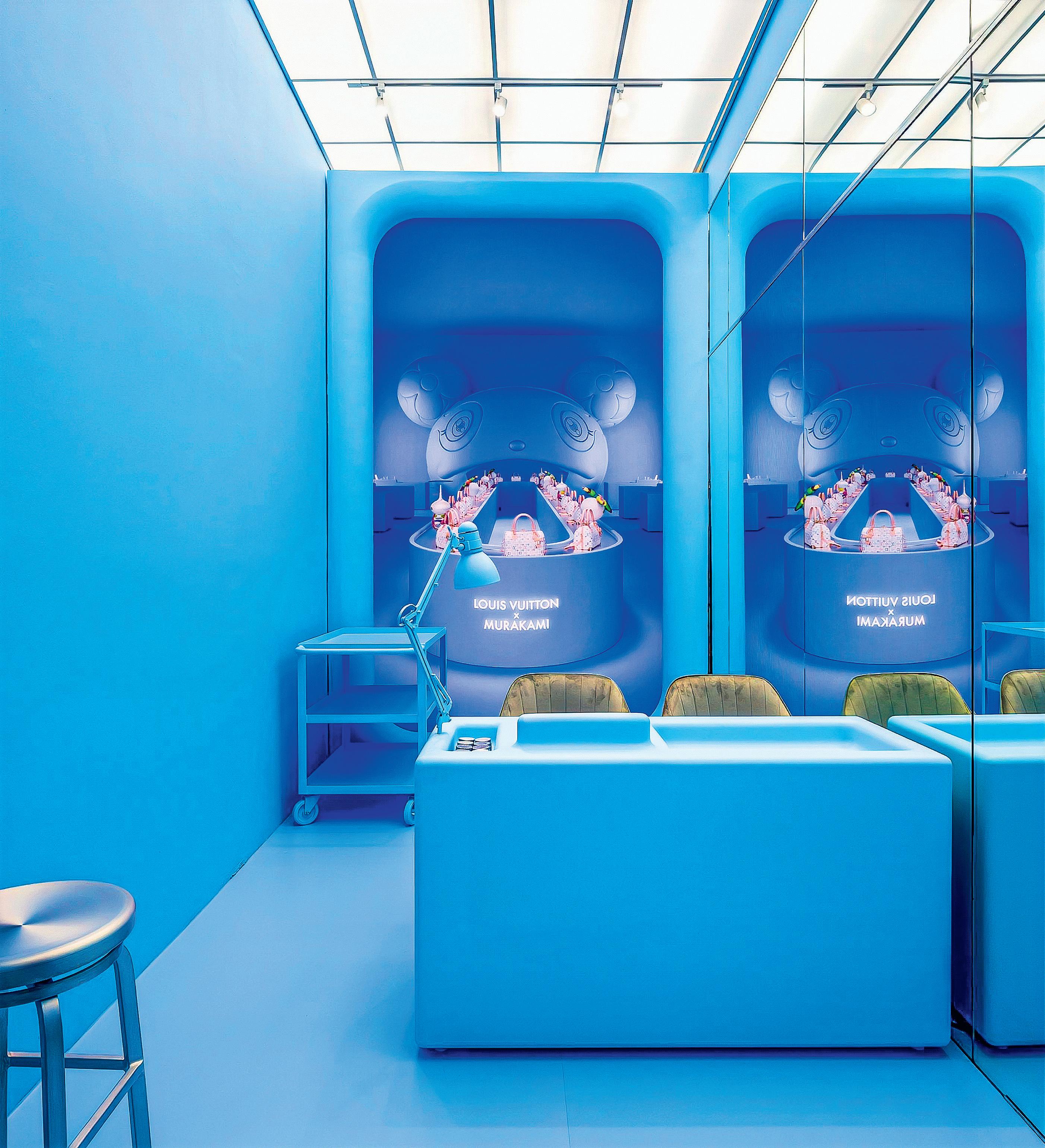
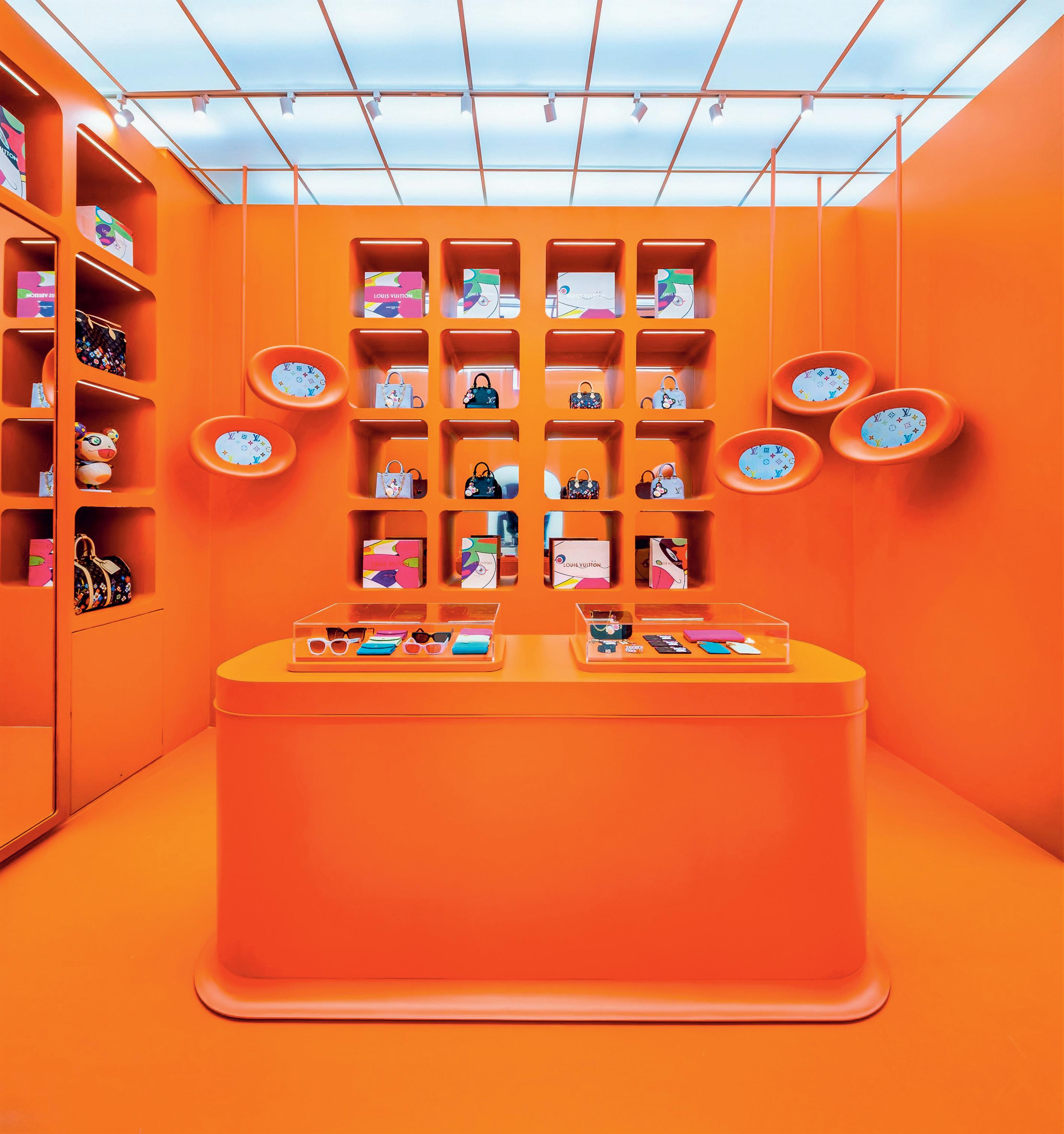
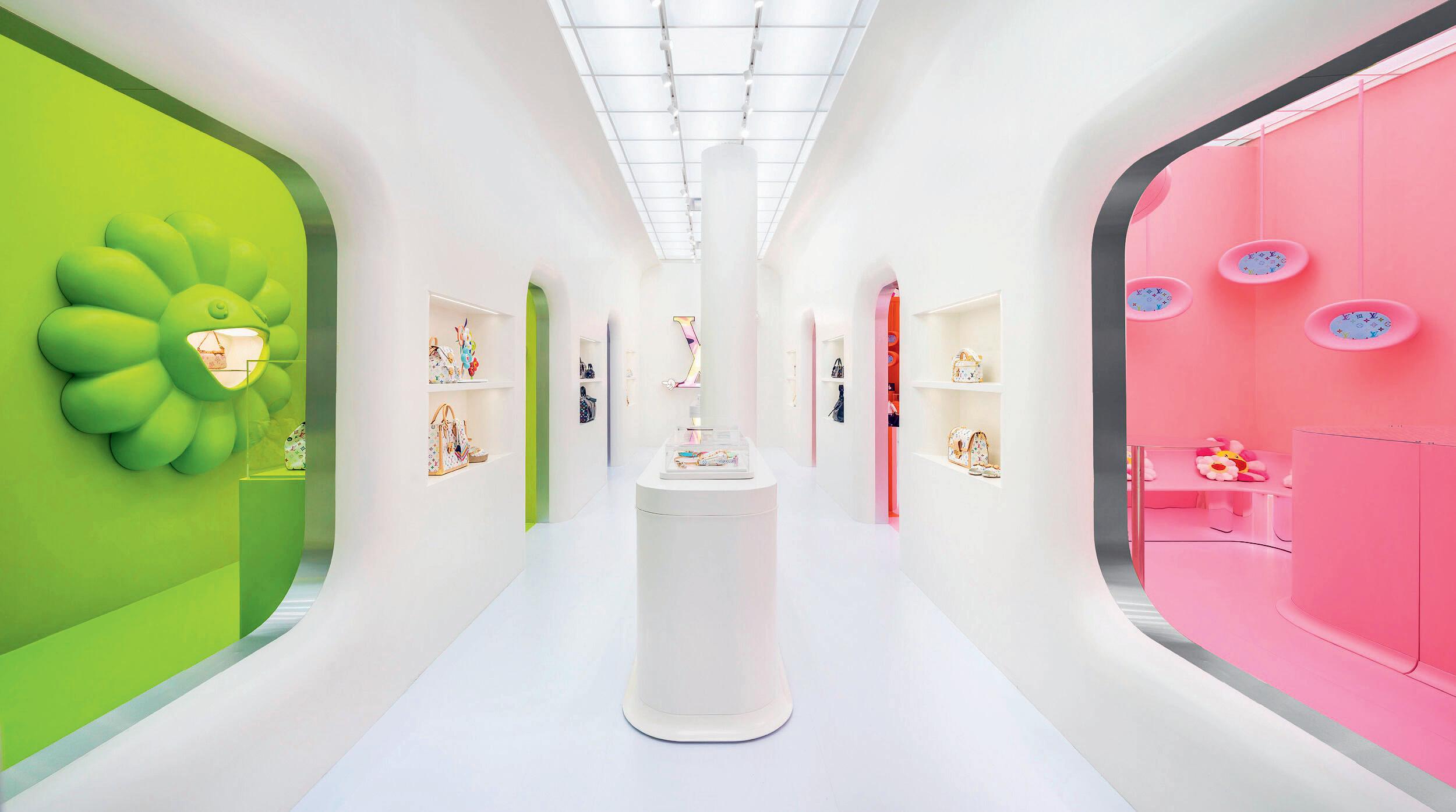
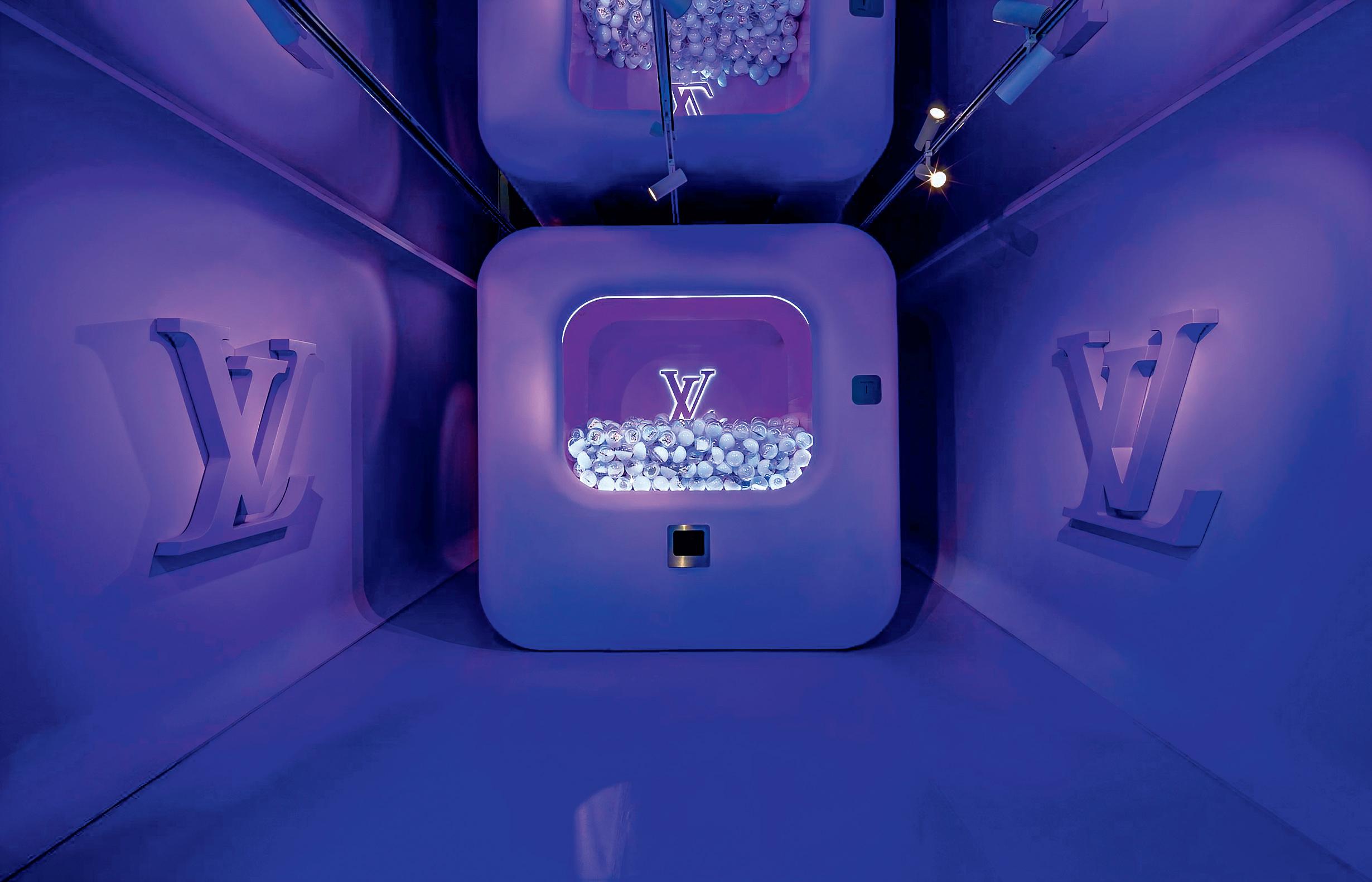
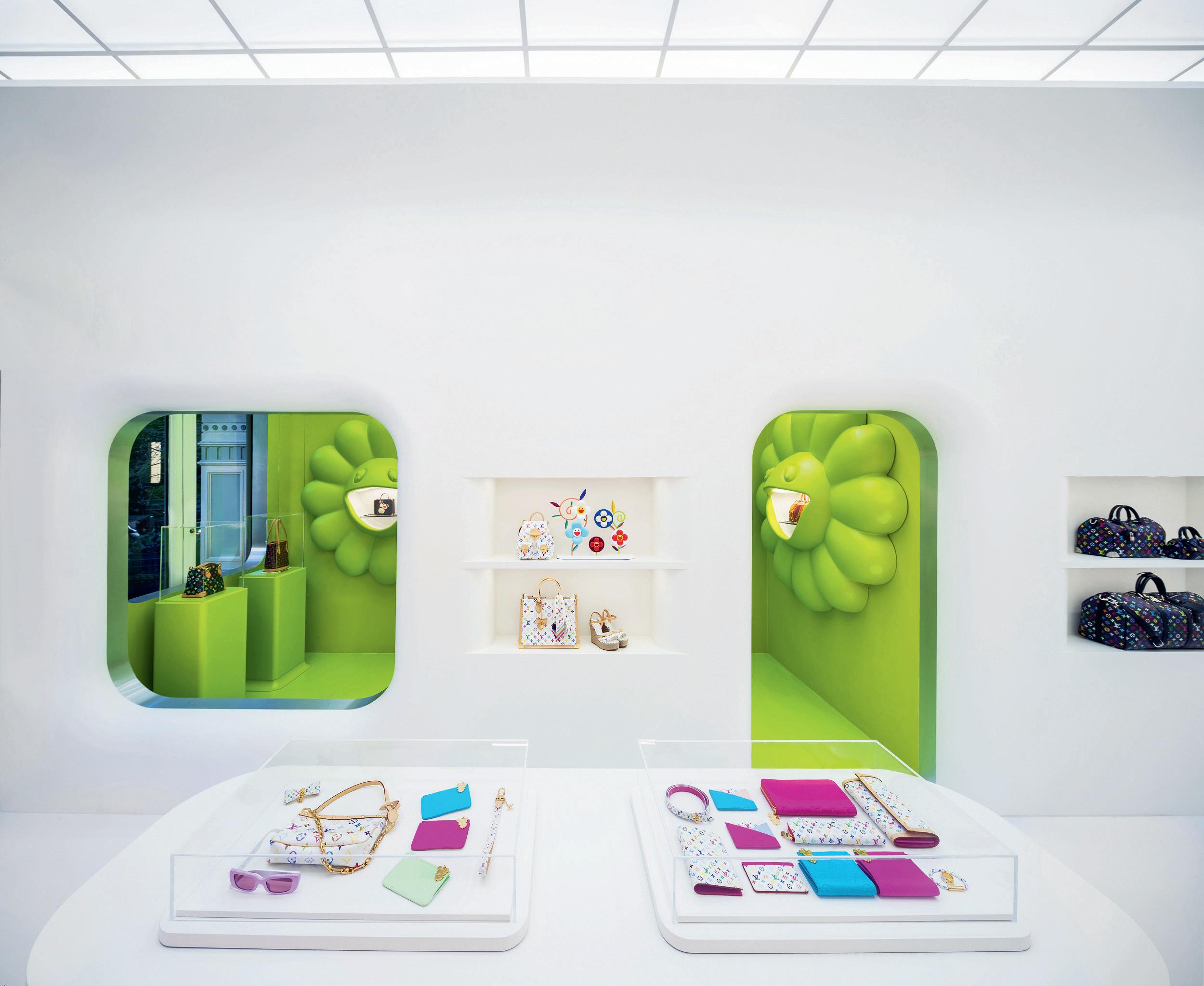
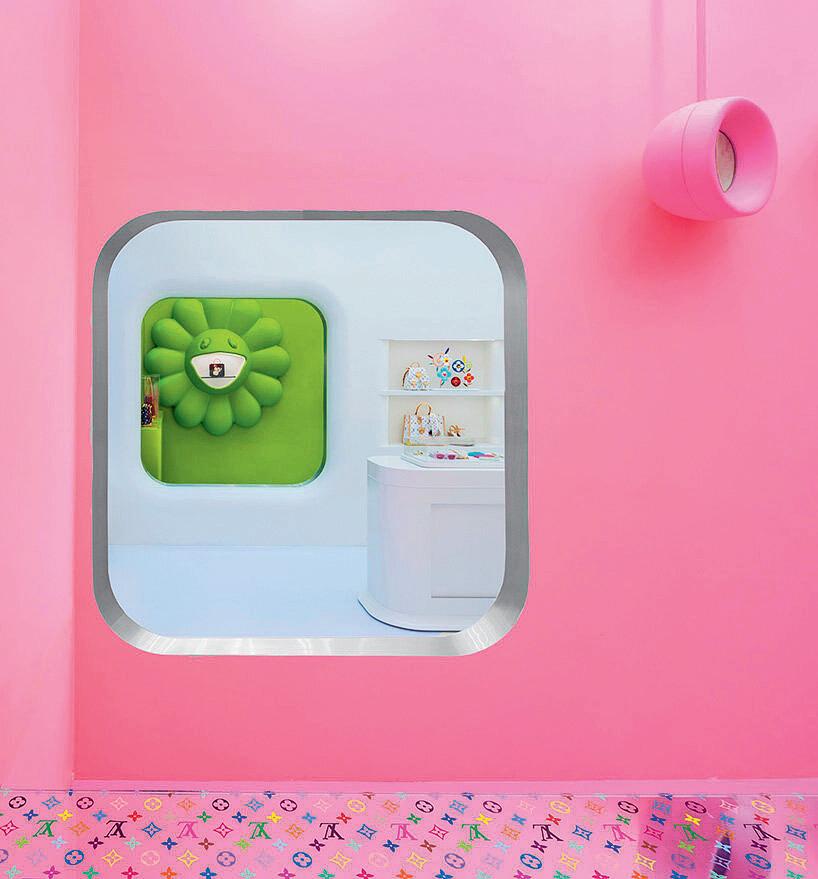
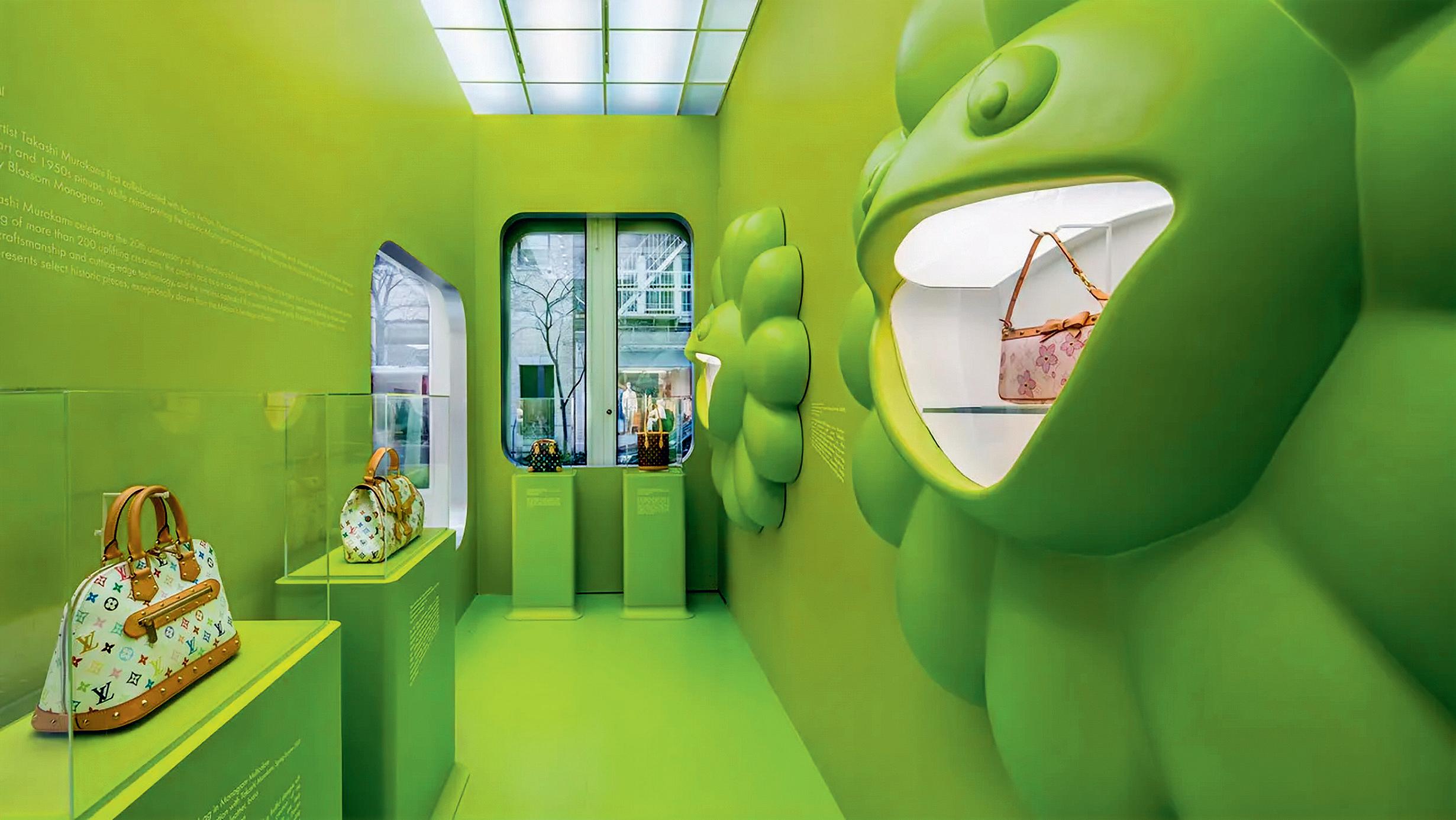
Dos décadas después de su primera colaboración, Louis Vuitton y Takashi Murakami se han unido de nuevo para lanzar una reedición de la icónica colección, ocasión que han celebrado con pop-ups como la de Nueva York.
Two decades after their first collaboration, Louis Vuitton and Takashi Murakami have joined hands anew for a reedition of the iconic collection, with a series of pop-up stores like the one in New York’s SoHo.
El interior de la tienda estaba inspirado por los característicos hoteles cápsula de Tokio para formar una sucesión de cubículos de vibrantes colores al estilo del japonés, cosidos por un cándido pasillo central.
Inspiration for the store interior came from Tokyo’s characteristic capsule hotels, resulting in a succession of vibrantly colored Japanese-style cubicles connected by a simple central corridor.
Cosentino
Eclos Surfaces
Technology at the Service of Architecture
Dekton Facade
Curves by the Sea in Middelkerke
Dekton Dwellings
A Second Life in the Heart of San Donato
ECLOS SURFACES
Technology at the Service of Architecture
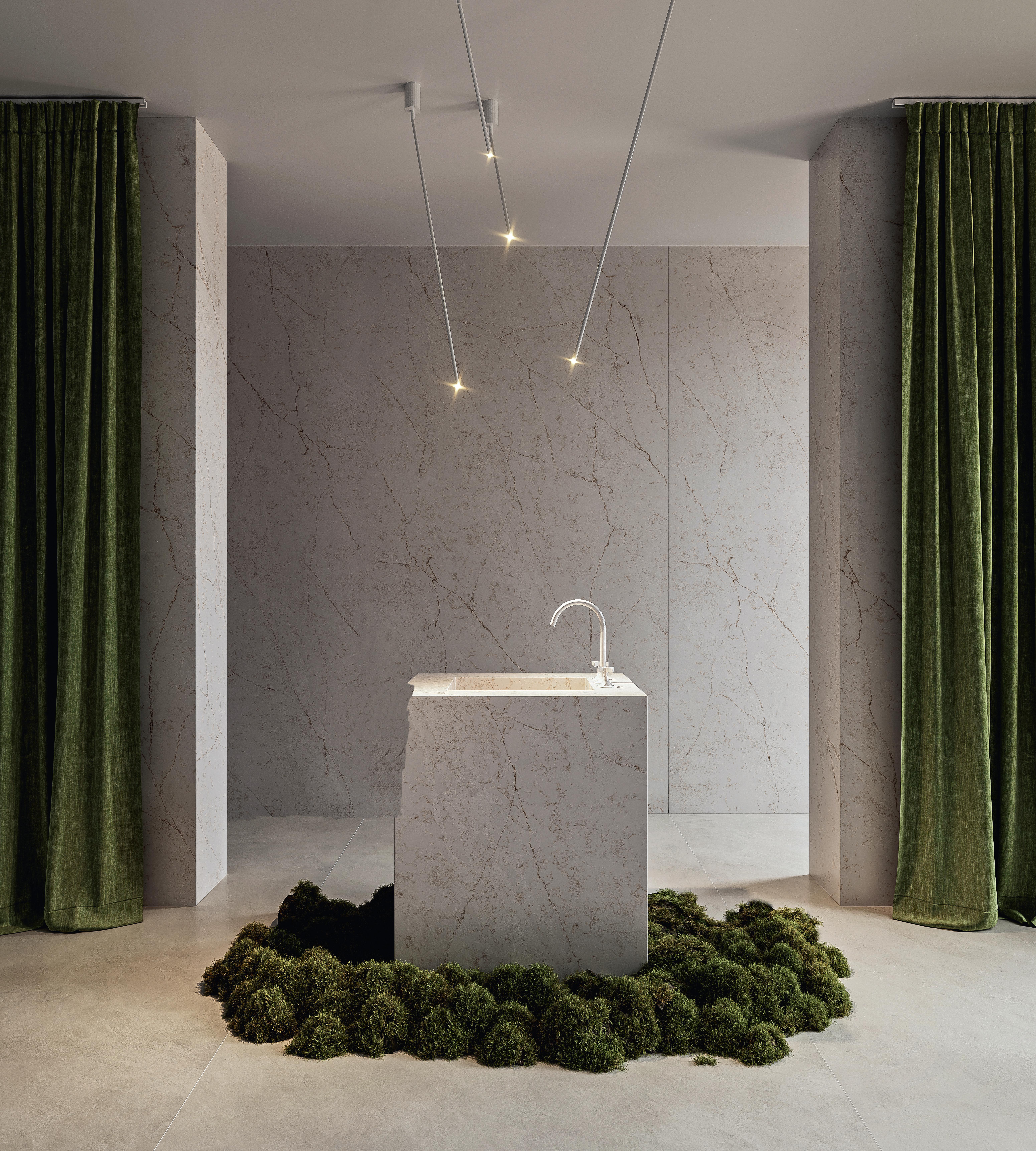
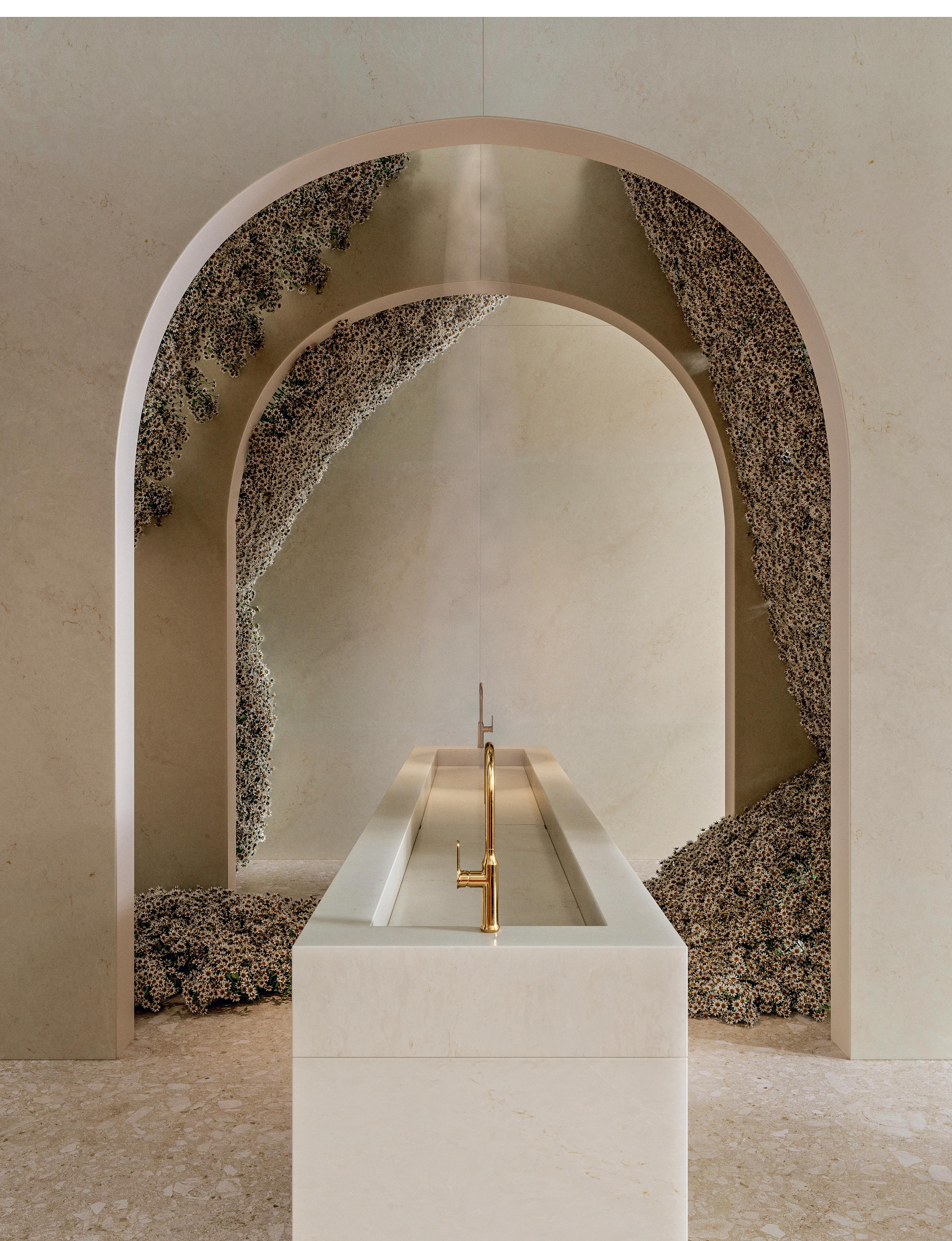
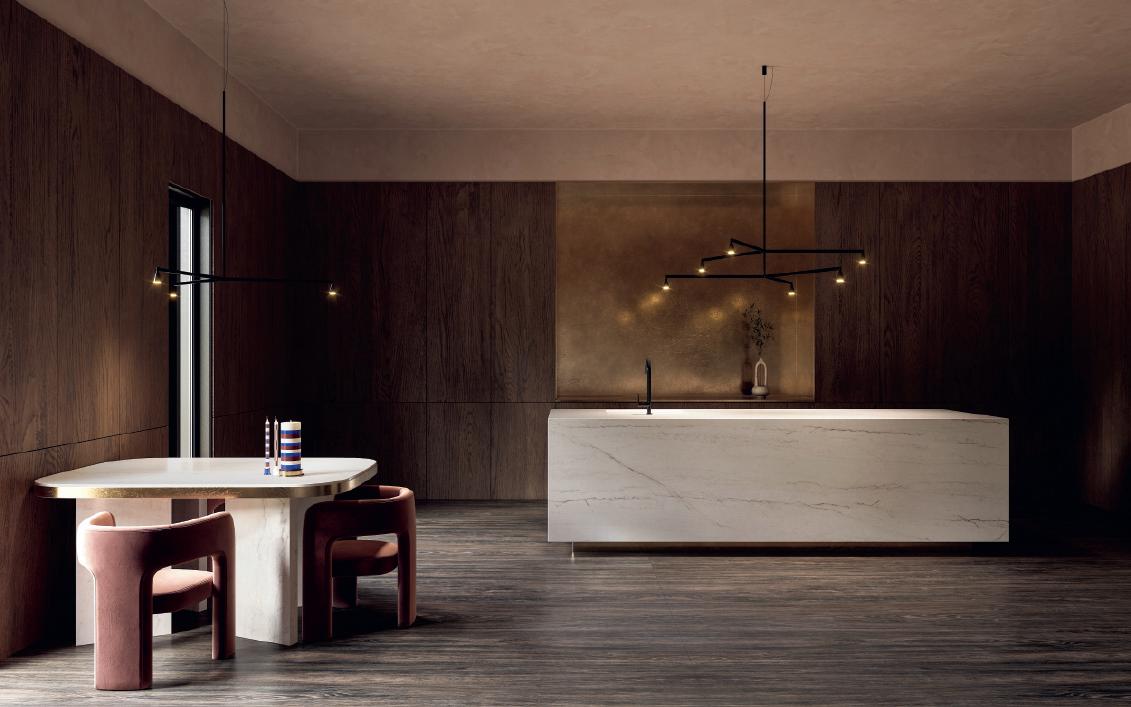
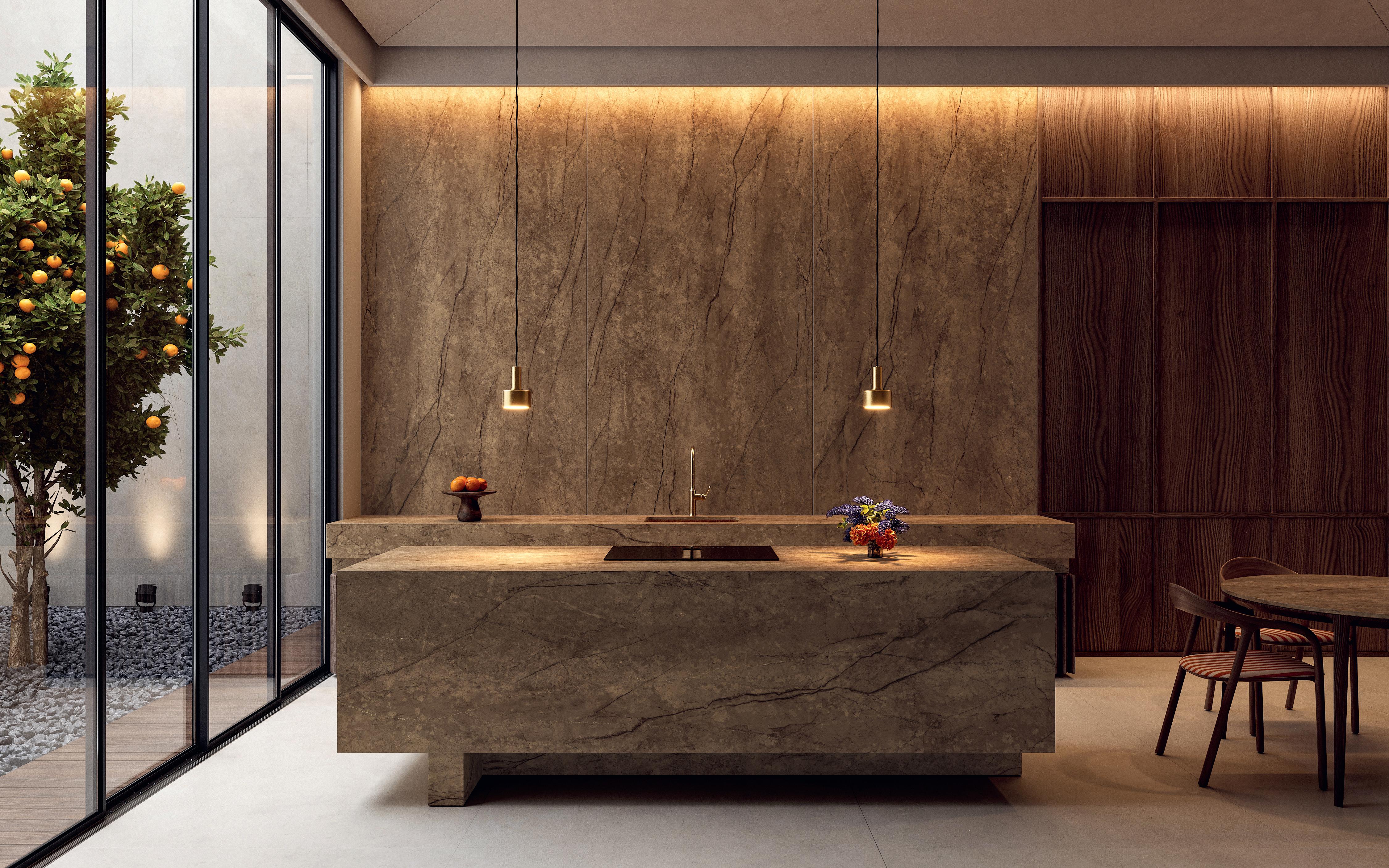
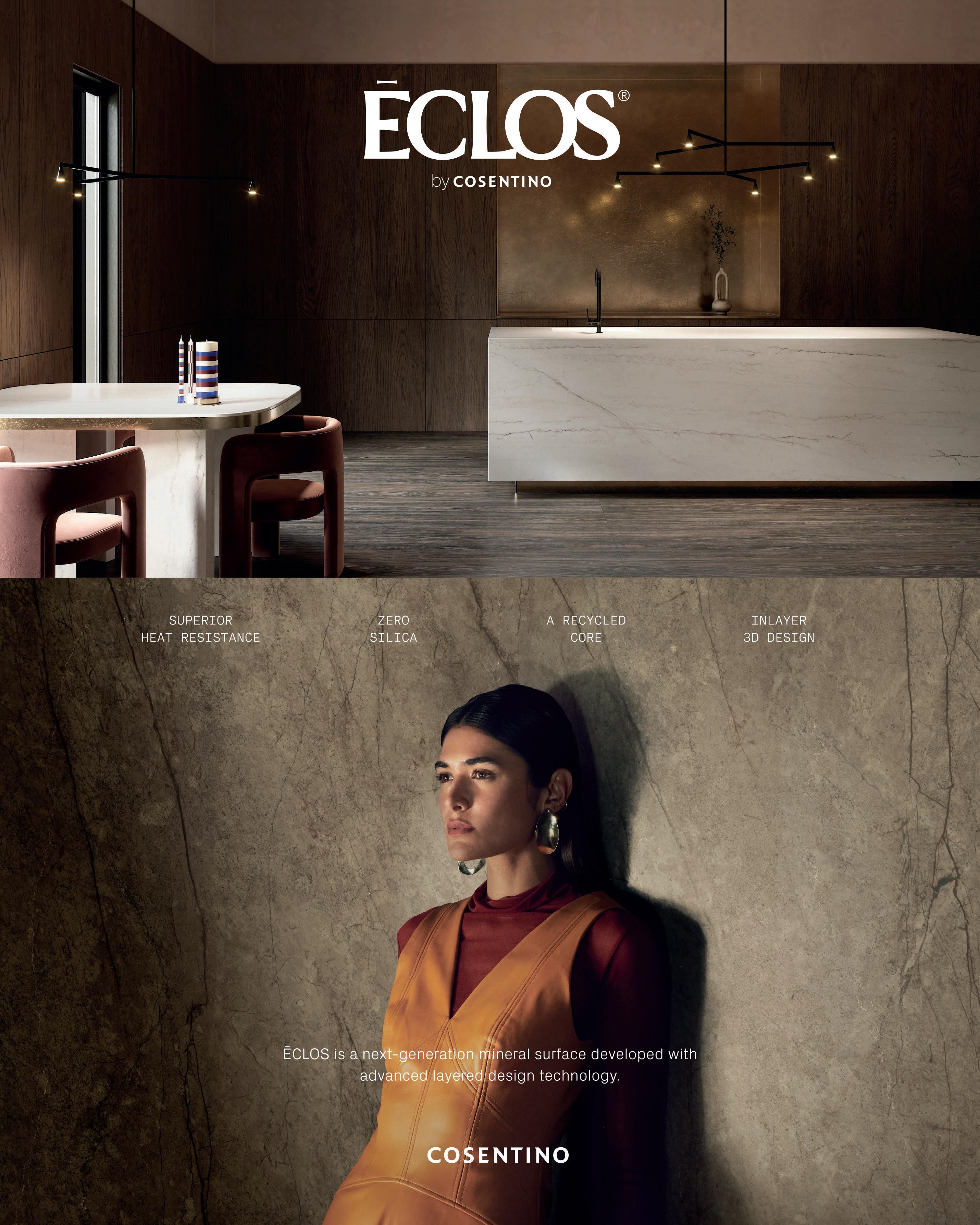
Tras más de 28.000 horas de investigación y 1.500 de pruebas, Cosentino amplía su catálogo con Eclos, una nueva superficie mineral desarrollada con tecnología Inlayr, que permite un acabado libre de sílice cristalina, con alto contenido de material reciclado y un sistema de diseño por capas de carácter innovador. Al igual que sucedió con Silestone (1990) y Dekton (2013), la nueva marca establece un punto de inflexión en la evolución de las superficies para la arquitectura y el diseño, y refuerza el compromiso del grupo almeriense con la seguridad laboral y la sostenibilidad ambiental. La primera colección, que se lanzará a nivel global en los próximos meses, presenta una composición totalmente libre de sílice y con un mínimo del 50% de materiales reciclados, alcanzando hasta el 90% en algunos acabados. Las innovaciones en su proceso de fabricación aportan a Eclos mayor flexibilidad, ductilidad y resistencia al impacto, cualidades que facilitan su manipulación e instalación para marmolistas y profesionales del sector. Gracias a la tecnología Inlayr, la superficie ofrece una resistencia térmica de hasta 220°C, convirtiéndose en una solución idónea para encimeras de cocina y otras aplicaciones de alto rendimiento. Con Eclos, Cosentino consolida su apuesta por un cambio de paradigma en un mercado global en transformación —marcado por políticas proteccionistas, guerras arancelarias y una creciente preocupación por la seguridad laboral en el trabajo del cuarzo—, ofreciendo una alternativa segura, sostenible y de alto valor añadido, capaz de redefinir el vínculo entre innovación y responsabilidad.
After more than 28,000 hours of research and 1,500 hours of testing, Cosentino expands its catalog with Eclos, a new mineral surface developed with Inlayr technology, which allows for a crystalline silica-free finish, with a high recycled content and an innovative layered design system. As with Silestone (1990) and Dekton (2013), the new brand marks a turning point in the evolution of surfaces for architecture and design, and reinforces the Almería-based group’s commitment to occupational safety and environmental sustainability. The first collection, which will be launched globally in the coming months, is completely silica-free and contains a minimum of 50% recycled materials, reaching up to 90% in some finishes. Innovations in the manufacturing process give Eclos greater flexibility, ductility, and impact resistance, qualities that make it easier for marble workers and professionals in the sector to handle and install. Thanks to Inlayr technology, the surface offers thermal resistance of up to 220°C, making it an ideal solution for kitchen countertops and other high-performance applications. With Eclos, Cosentino consolidates its commitment to a paradigm shift in a global market undergoing transformation – marked by protectionist policies, tariff wars, and growing concern for occupational safety in quartz work – by offering a safe, sustainable alternative with a high added value, with the capacity to redefine the connection between innovation and responsibility.
La tecnología Inlayr permite fabricar Eclos con un sistema de diseño por capas que otorga a toda la superficie un acabado tridimensional con vetas y patrones únicos, tacto natural y una profundidad estética sin precedentes.
Inlayr technology allows manufacturing Eclos with a design system based on layers that gives each surface a three-dimensional finish with unique patterns and veins, a natural touch, and an unprecedented aesthetic depth.
DEKTON FACADE
Curves by the Sea in Middelkerke
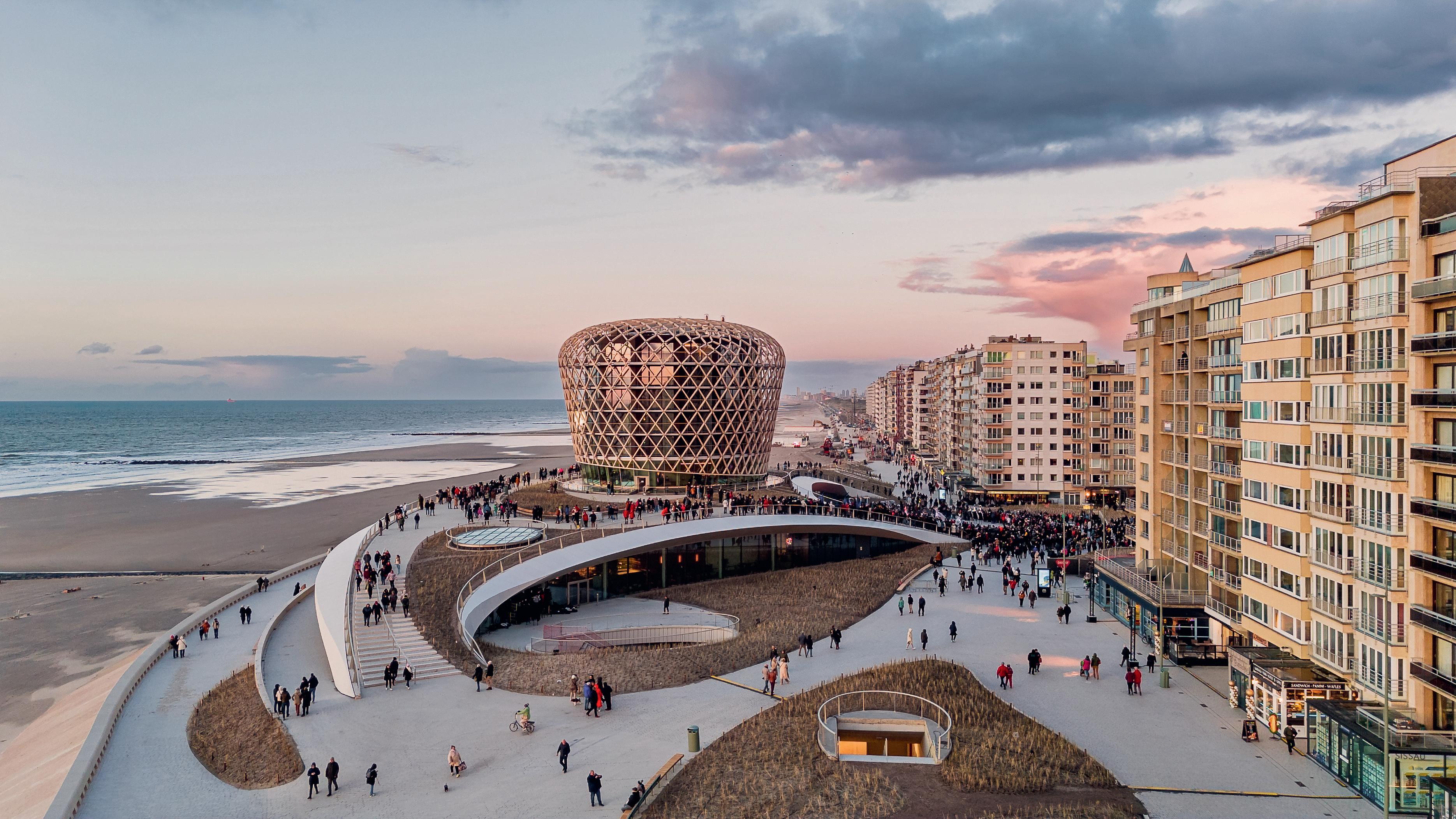
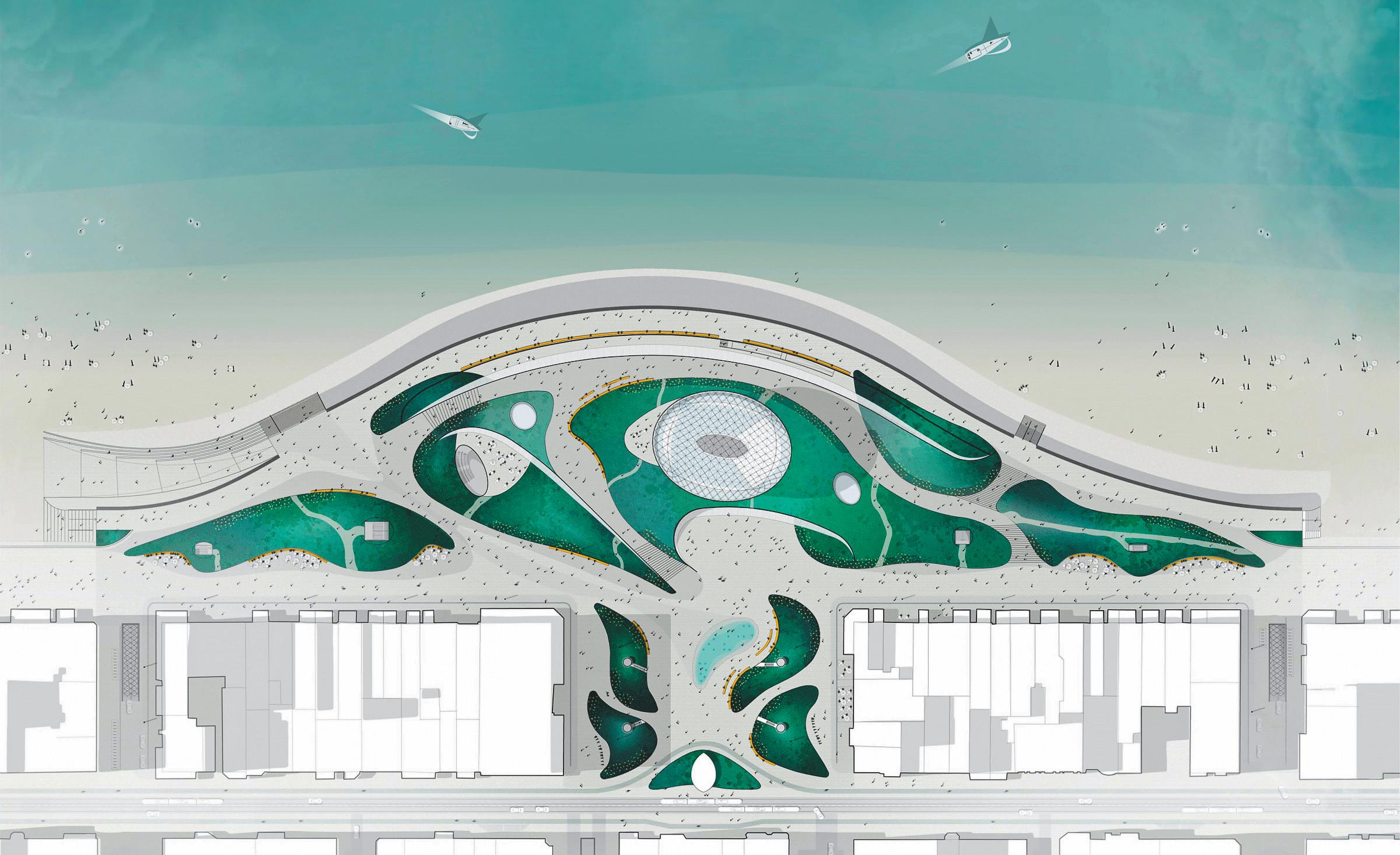
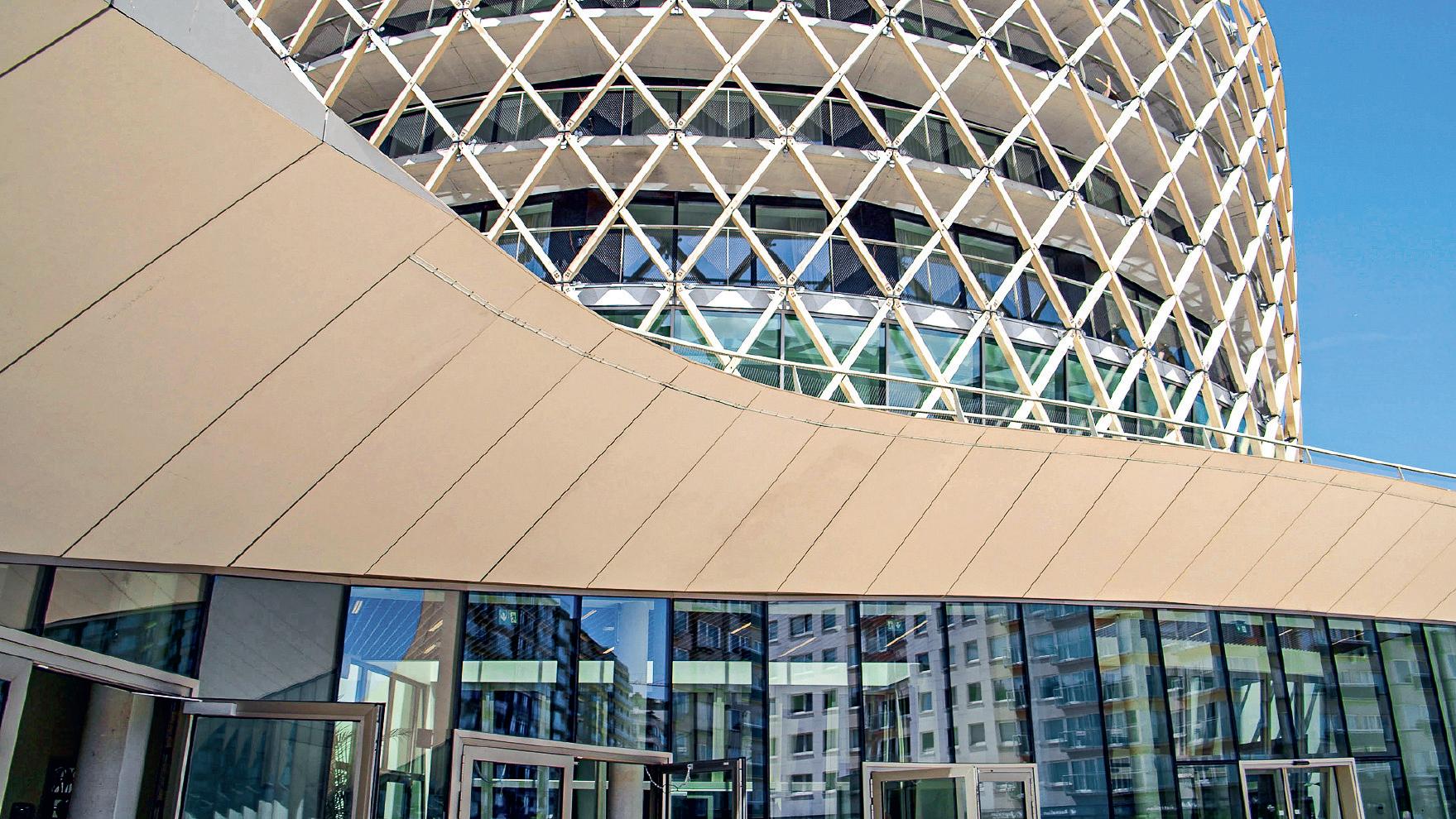
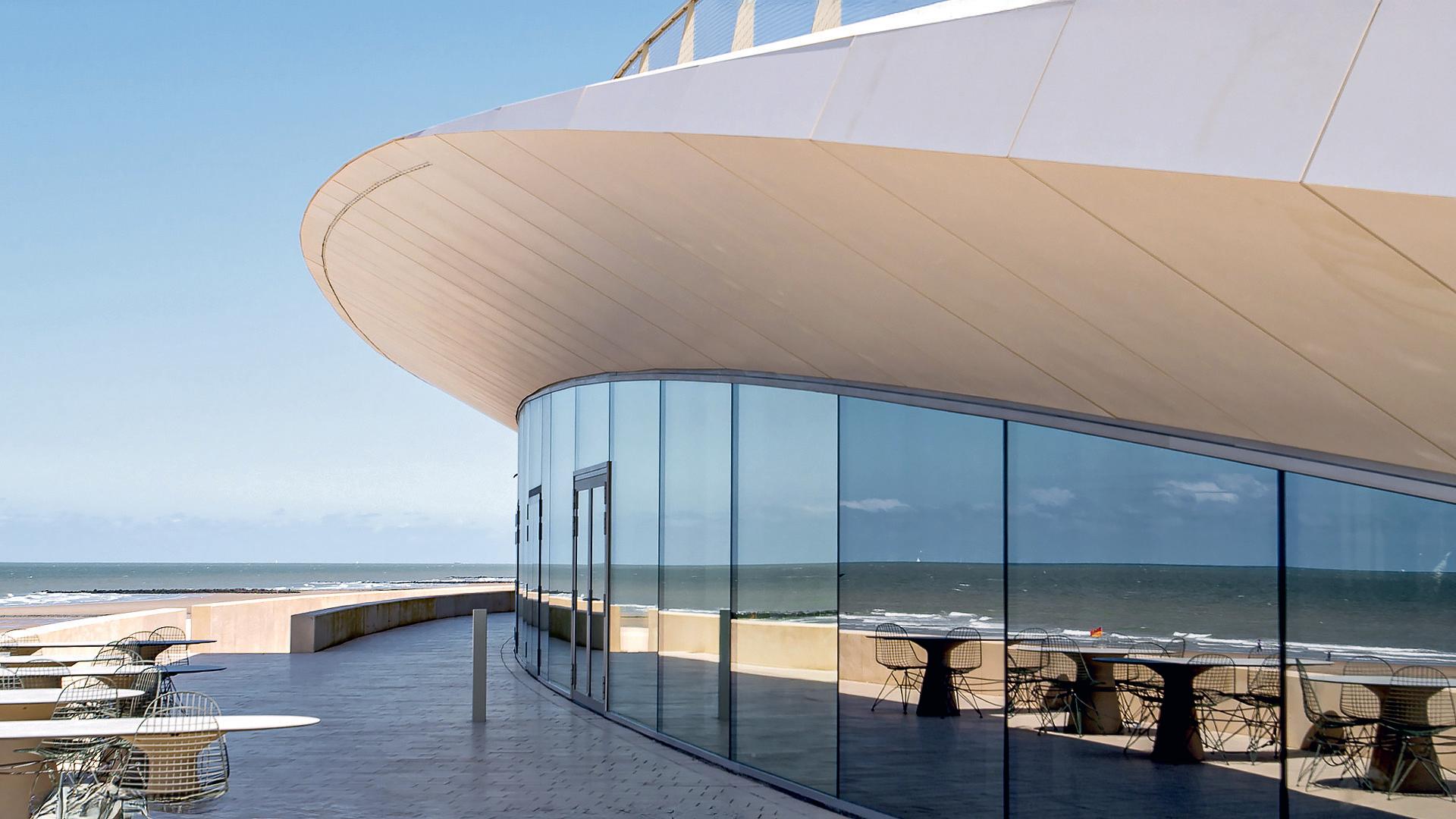
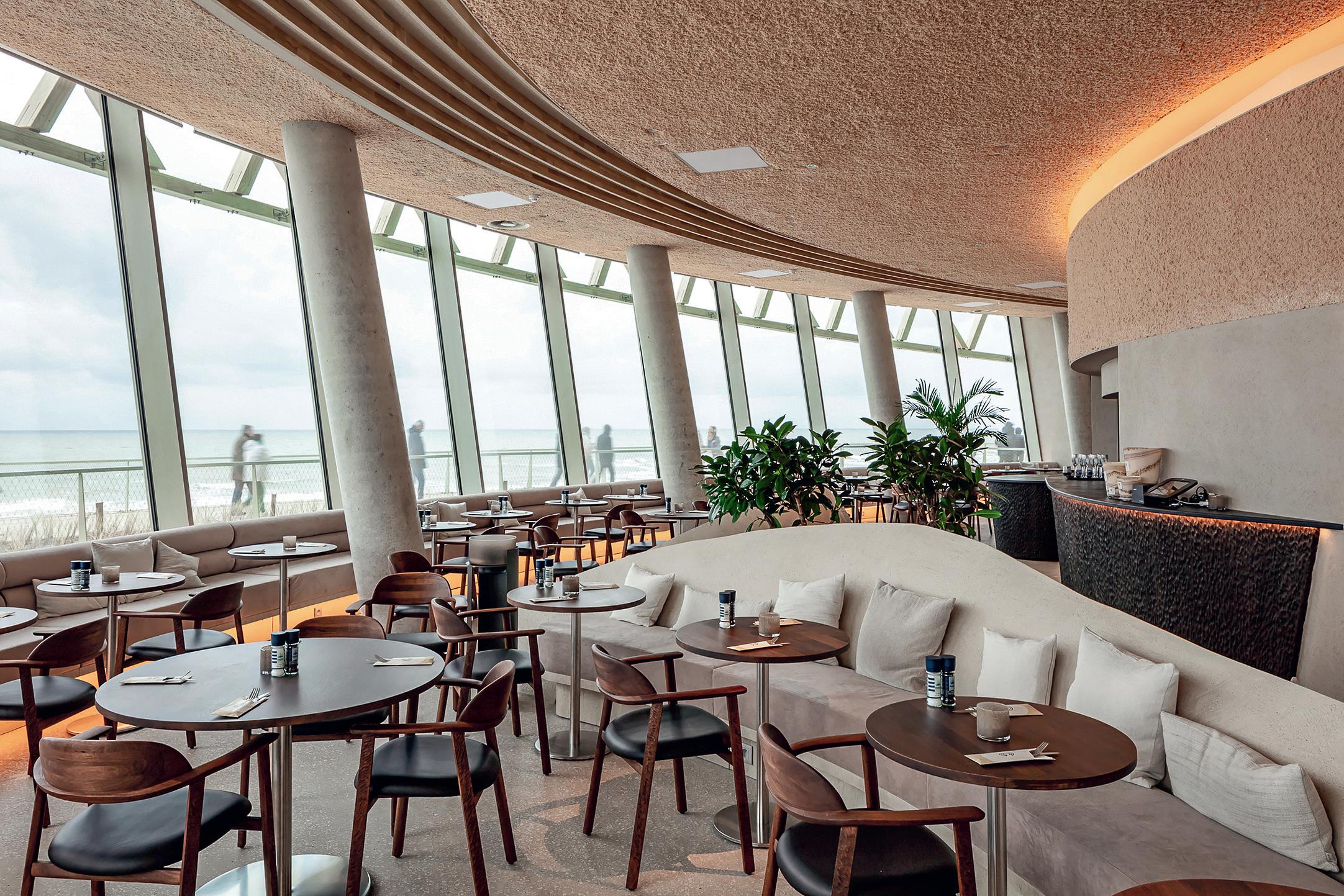
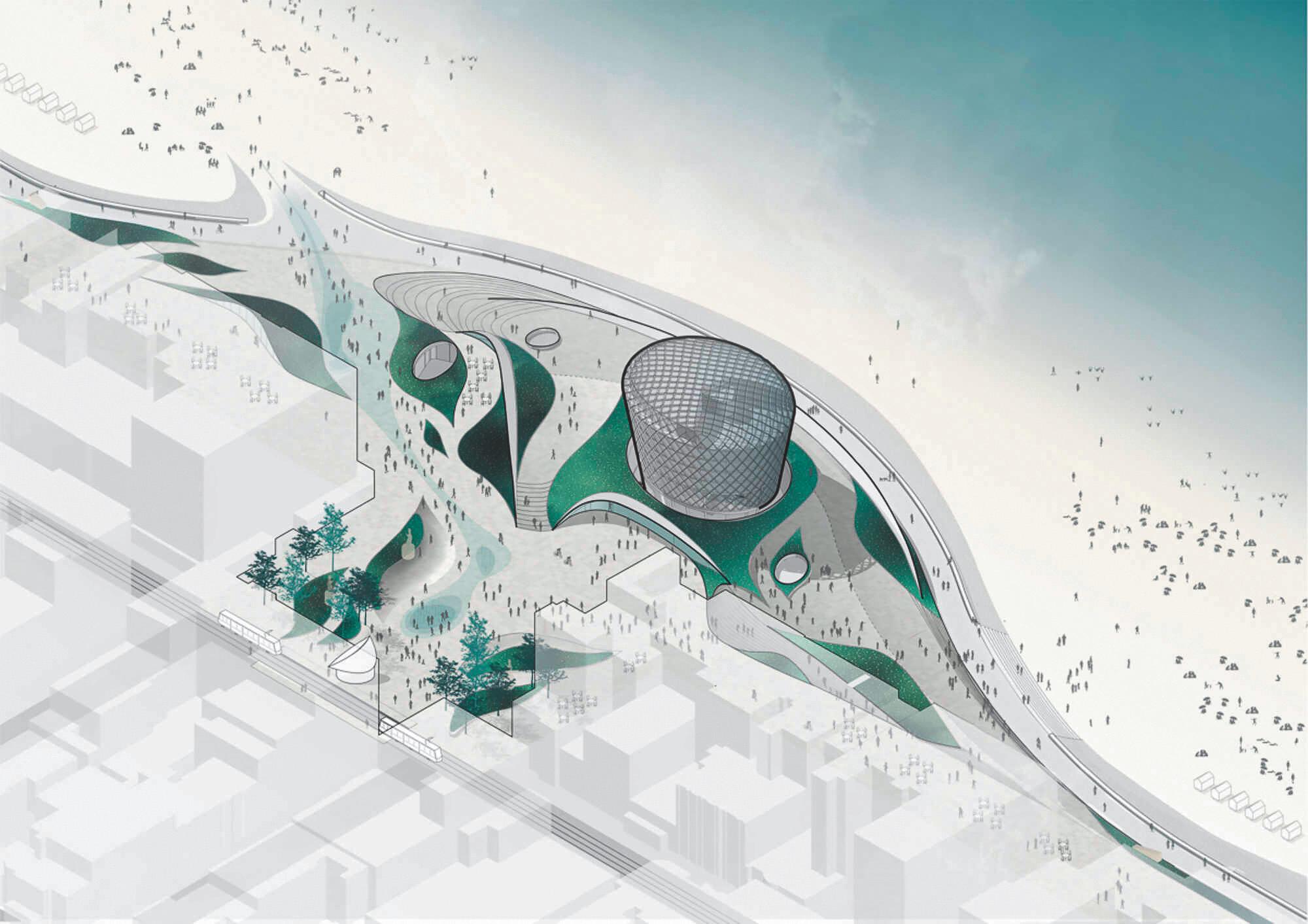
Este singular edificio surge como un nuevo faro en la costa de Middelkerke y evoca la histórica relación de la población con la isla medieval de Testerep, al oeste de Bélgica y a medio camino entre Westende y Oostende. De este modo, el punto de partida fue integrar el conjunto en el paisaje costero. Para ello, el equipo de diseño —compuesto por architectural studio ZJA, OZ architect y DELVA Landscape Architecture, con el apoyo técnico de Bureau Bouwtechniek y Bouwteam Nautilus— buscó reflejar el especial vínculo que sienten los habitantes con el litoral, reinterpretando las dunas, canales y morfología de la desaparecida isla flamenca. Además, la propuesta debía hacer las veces de malecón, protegiendo a la ciudad del severo clima del Mar del Norte, y convertirse en un elemento revitalizador del paseo marítimo, reforzando la identidad urbana. El resultado es una estructura compuesta por un sinuoso podio y una representativa torre. El cuerpo inferior resuelve la diferencia de cota entre el paseo y el mar e integra en un mismo edificio el centro de convenciones, la zona de exposiciones y la sala de conciertos. Además, amplía una cercana plaza generando un nuevo espacio público, con vistas al mar y acceso directo a la playa, propiciando la interacción social y el disfrute colectivo. Para conseguir una imagen uniforme de atalaya y resistir los factores atmosféricos adversos, esta parte se recubre de Dekton Aeris, mientras que el volumen elevado se envuelve en una celosía de madera que matiza la luz y acentúa la verticalidad.
This unique building rises like a lighthouse on the shore of Middelkerke and evokes the municipality’s historical relationship with the medieval island of Testerep, in western Belgium and halfway between Ostend and Westende. First the matter of integrating the complex with the coastscape had to be figured out. The design team – architectural studio ZJA, OZ architect, and DELVA Landscape Architecture, with the technical assistance of Bureau Bouwtechniek and Bouwteam Nautilus – sought to reflect the special bond that exists between the area’s inhabitants and the coastline, through a reinterpretation of the dunes, canals, and morphology of the vanished Flemish island. Also, the construction was to double as a seawall, protecting the city against the severe climate of the North Sea, and have a revitalizing effect on the waterfront promenade.
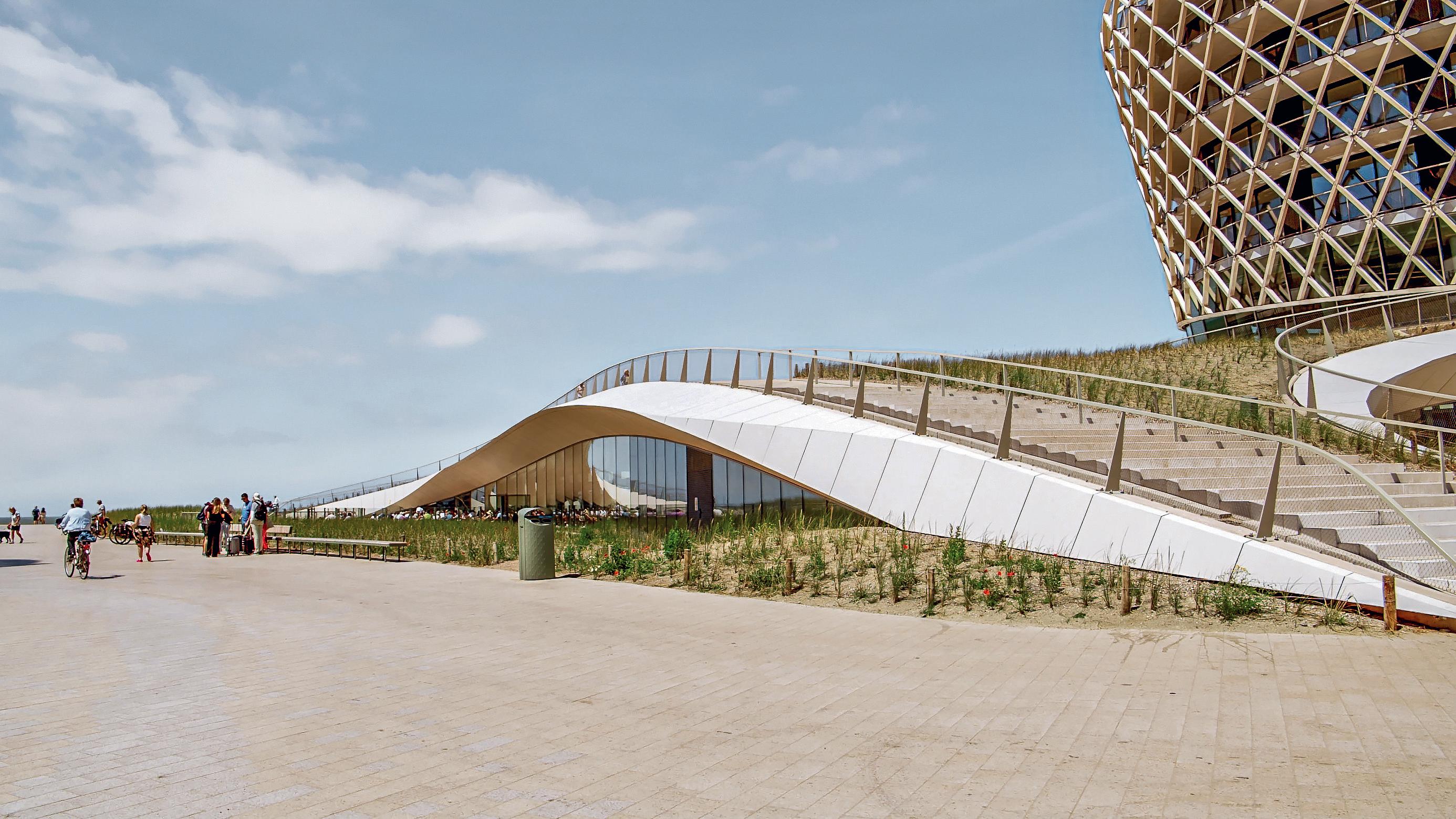
The result is a structure composed of a sinuous podium and an iconic tower. The lower volume resolves the grade difference between the promenade and the sea, and puts the convention center, the exhibition zone, and the concert hall in a single building. It also enlarges a nearby plaza, forming a new public space with views of the sea and direct access to the beach, encouraging social interaction and collective enjoyment. To obtain a uniform image of the watchtower and resist adverse atmospheric factors, this part is coated with Dekton Aeris, while the higher volume is wrapped with a wooden lattice that makes for nuanced light and accentuates the building’s verticality.
fachada del edificio, creando un efecto visual que complementa a la perfección la estética general del edificio.
Thanks to Dekton Aeris, the marquees are impeccably integrated with the building’s facade, resulting in a visual effect that perfectly complements the overall aesthetic of the premises.
El podio aprovecha el desnivel natural de la costa para generar un espacio público representativo que rompe la monotonía rectilínea del paseo y crea un nuevo punto de encuentro en la ciudad.
The podium takes advantage of the natural slope of the coastline to create a public space, breaking the rectilinear monotony of the promenade and providing the city with a new spot for socializing.
DEKTON DWELLINGS
A Second Life in the Heart of San Donato
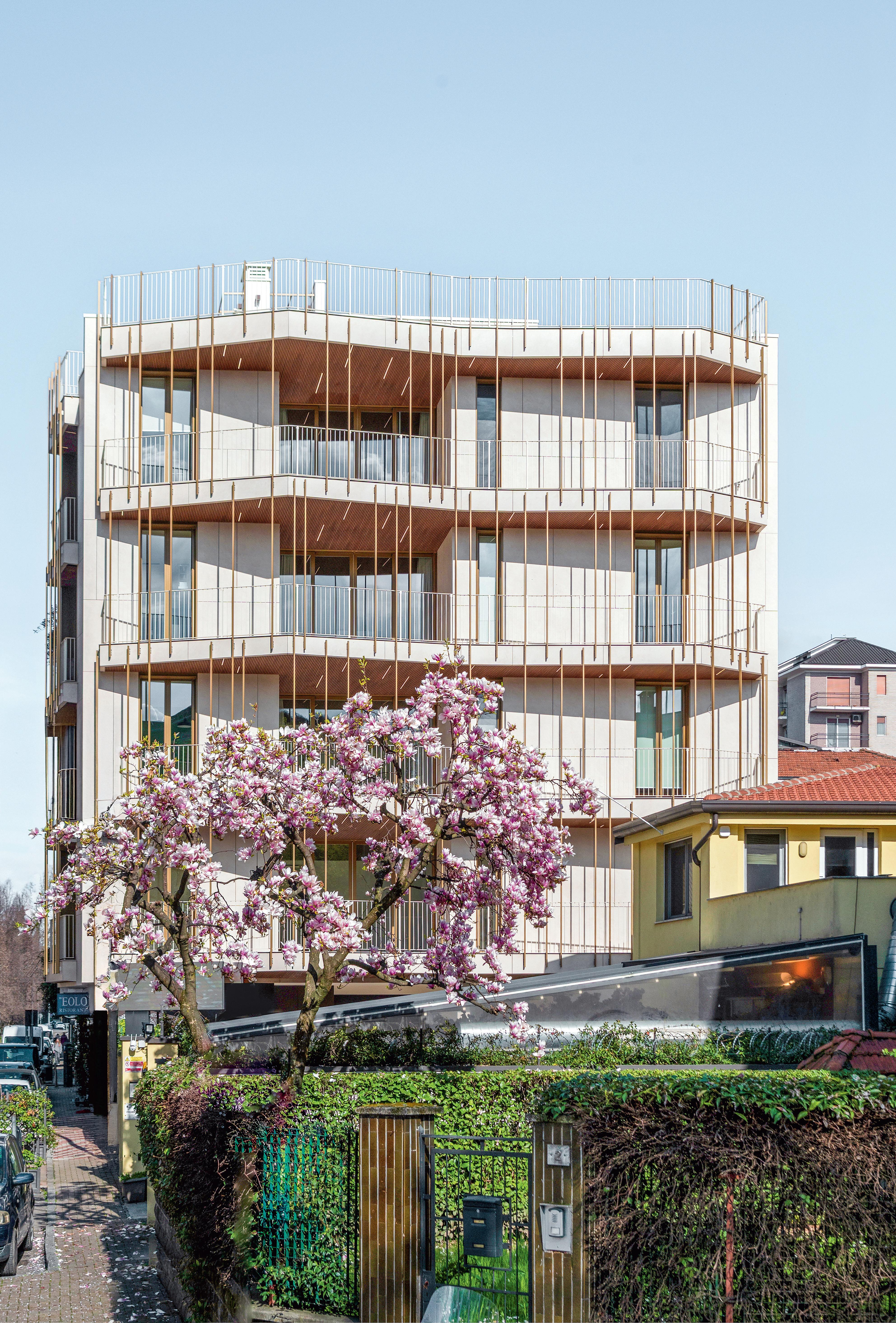
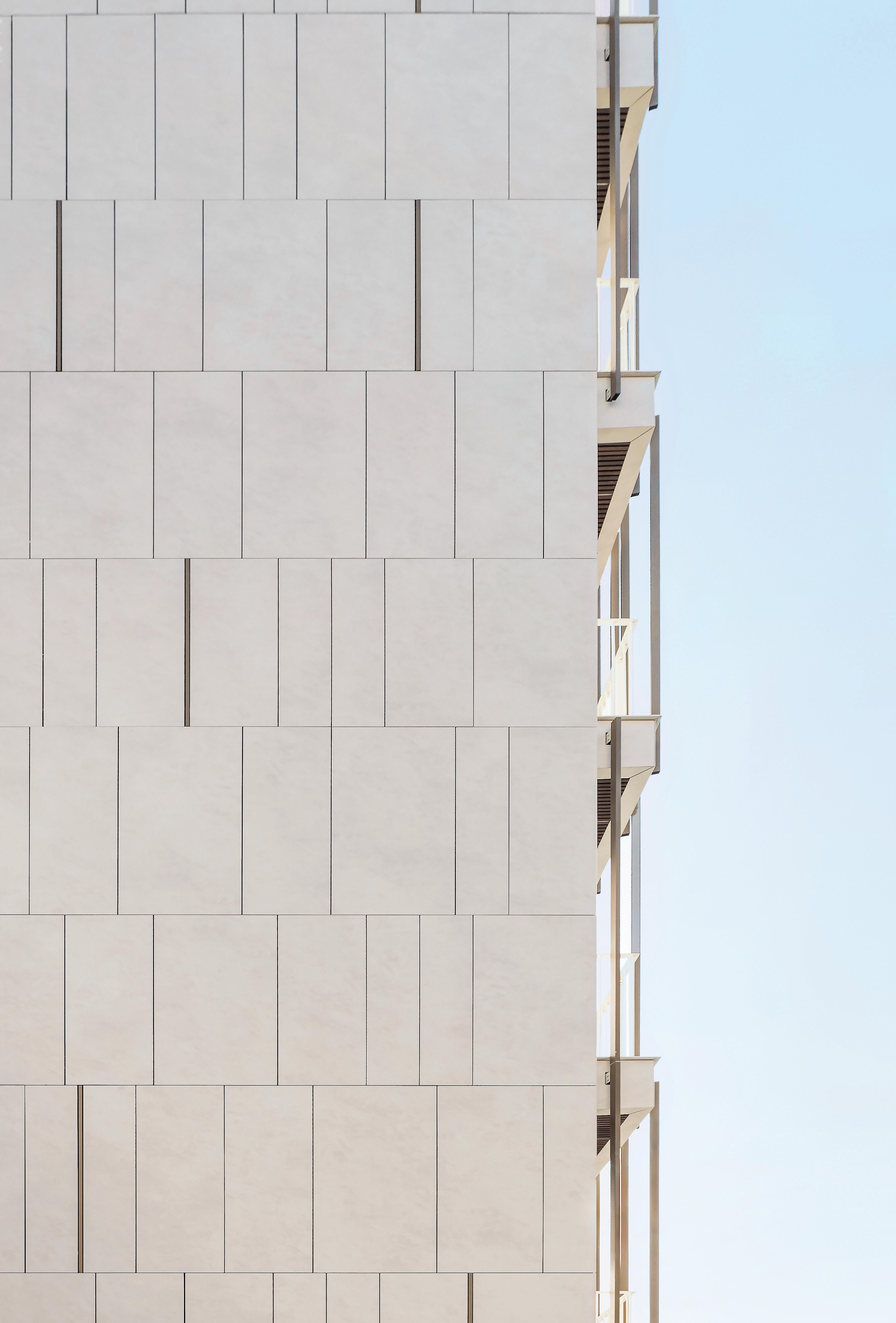
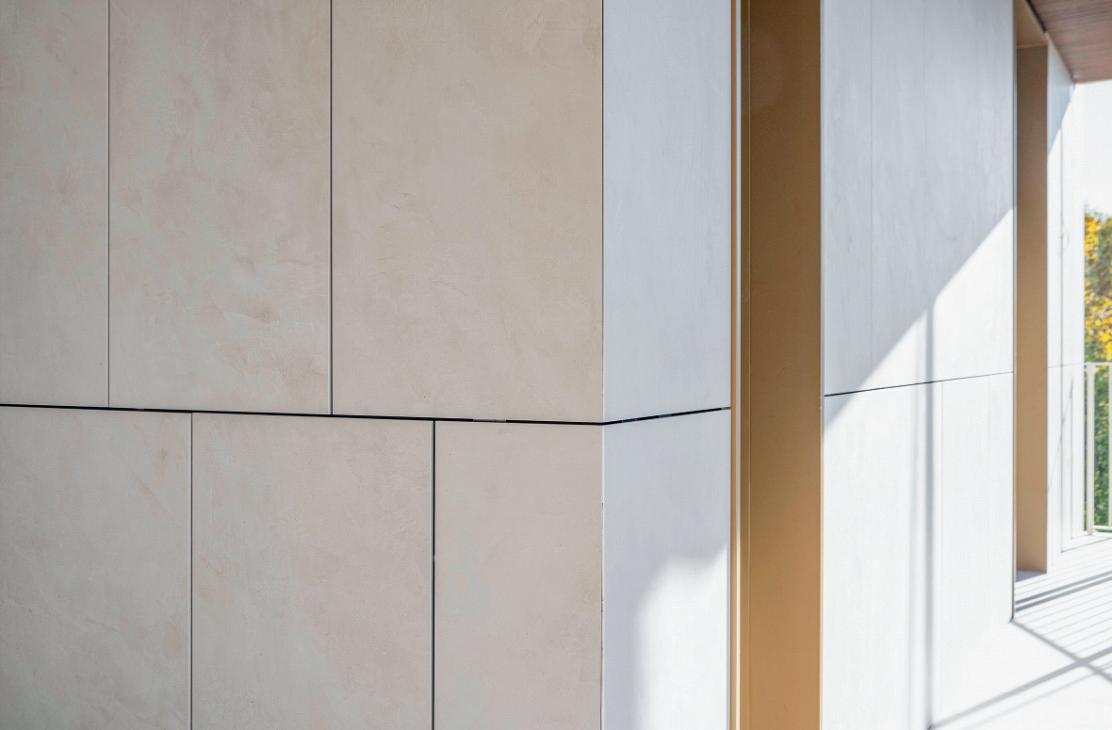
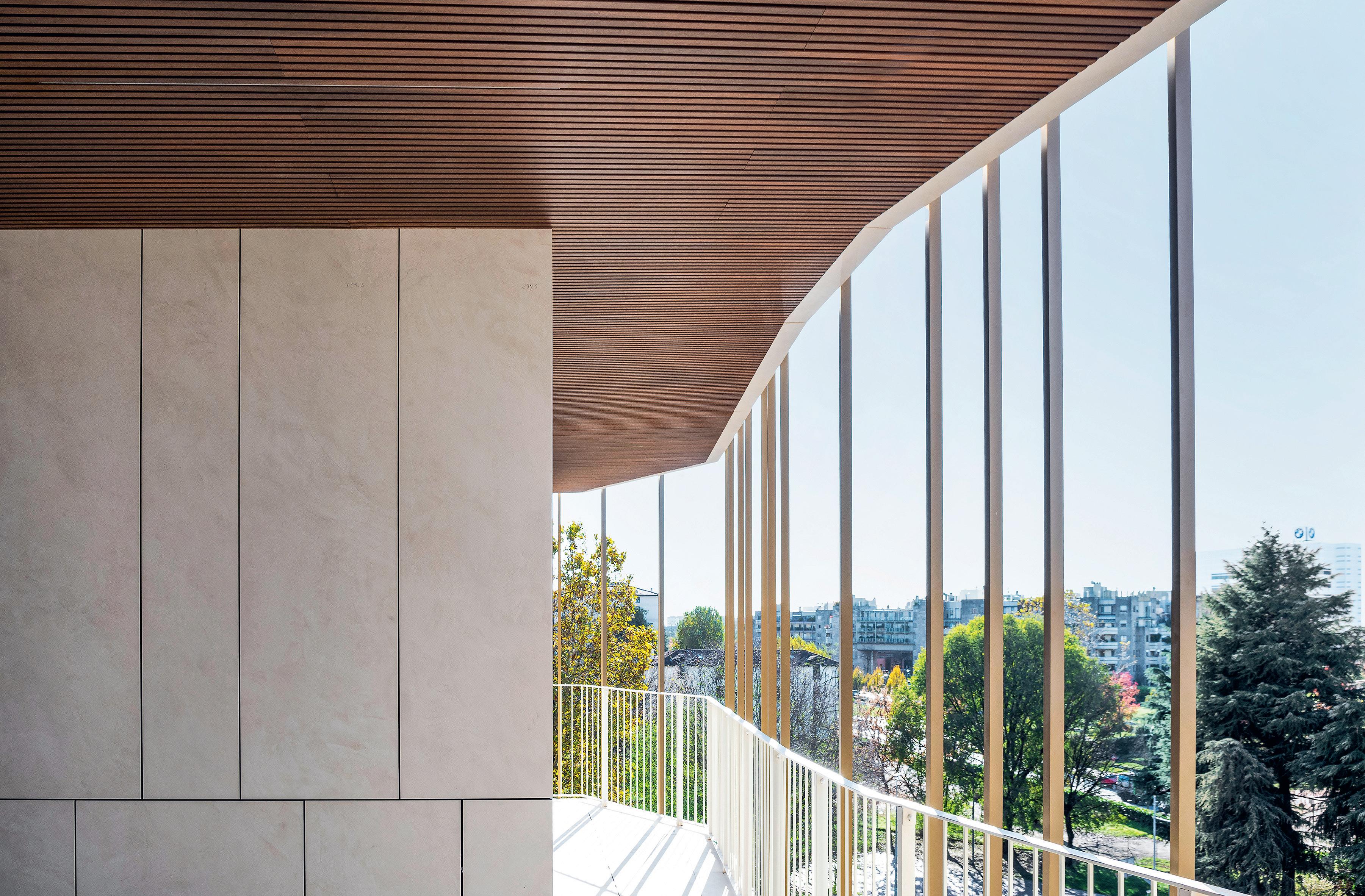
Al sureste de la capital lombarda, en el corazón de San Donato Milanese, los arquitectos Alice Baccolo y Giovanni Bua se enfrentaron al reto de sustituir una residencia de la década de 1940, situada en un angosto solar del casco histórico, por un nuevo edificio de viviendas. Frente a las dificultades que planteaba el contexto, los fundadores del estudio A-Side vieron una oportunidad única de intervenir en un tejido ya consolidado y propusieron un volumen en diálogo con su entorno, aunque con un lenguaje propio, definido por geometrías fragmentadas y aristas claras que le confieren una marcada identidad. En la construcción de estos rasgos fue fundamental la utilización de los materiales de Cosentino, que, más allá de los revestimientos exteriores, se incorporan también en pavimentos y en umbrales de puertas y terrazas. En el caso de la fachada, se optó por los acabados de Dekton, que ofrecen excelentes propiedades mecánicas y una elevada resistencia a la flexión, a los rayos UV y a los agentes atmosféricos. Para su colocación, los paneles se fijaron mecánicamente a la estructura de la fachada ventilada mediante anclajes ocultos KEIL, un sistema que permite gran versatilidad en la disposición de las piezas, además de una instalación ajustable y de alta precisión. Gracias a estos anclajes, combinados con los delgados paneles, se consiguió una fachada ligera que mantiene todas sus prestaciones y refleja la voluntad de los arquitectos de satisfacer las exigencias técnicas sin renunciar a la expresividad formal.
Southeast of the Lombard capital, in the heart of San Donato Milanese, architects Alice Baccolo and Giovanni Bua faced the challenge of replacing a 1940s residence, located on a narrow plot in the historic center, with a new apartment building. Faced with the difficulties posed by the context, the founders of Studio A-Side saw a unique opportunity to intervene in a built-up fabric and proposed a volume in dialogue with its surroundings, though with a language of its own, defined by fragmented geometries and clear edges that give it a distinctive identity. The use of Cosentino materials was fundamental in the construction of these features, which, beyond the exterior cladding, are also used in the flooring and thresholds of doors and balconies. The facade is completed with Dekton finishes, chosen for their excellent mechanical properties and high resistance to bending, UV rays, atmospheric and chemical agents, and abrasion, among others. The panels were mechanically fixed to the ventilated facade framework using KEIL undercut anchors, a system that allows for great versatility in panel layout and joint positioning, as well as an adjustable and highly precise installation. Thanks to this anchoring system, combined with the thin panels, the lightweight facade achieved maintains all its performance characteristics and reflects the architects’ determination to meet the technical requirements without relinquishing formal expressiveness.
Photos: David Zanardi / Alice Baccolo and Giovanni Bua
Dekton Nacre
Dekton Keranium
La paleta cromática combina el tono oscuro del Dekton Keranium, aplicado en la base para crear un basamento visual sólido, con el color crema del Dekton Nacre, que recubre el resto del volumen.
The chromatic palette combines the dark tone of Dekton Keranium, applied at the base to create a solid visual plinth, with the cream hues of Dekton Nacre, which wraps the rest of the volume.
Los paneles de Dekton se fijaron mecánicamente a la estructura de la fachada ventilada con anclajes ocultos, permitiendo una gran versatilidad en la disposición de las juntas, así como una instalación de alta precisión.
Dekton panels were mechanically fixed to the ventilated facade framework using undercut anchors, a system that allows for great versatility in joint positioning, and a highly precise installation.
Interior
Born of New Light
Simon Revitalizes its Barcelona Home
Ceramic Contours
One Plus Partnership in Haikou
Traces and Layers
Can Gabriel by TEd’A arquitectes
Born of New Light
Simon Revitalizes its Barcelona Home
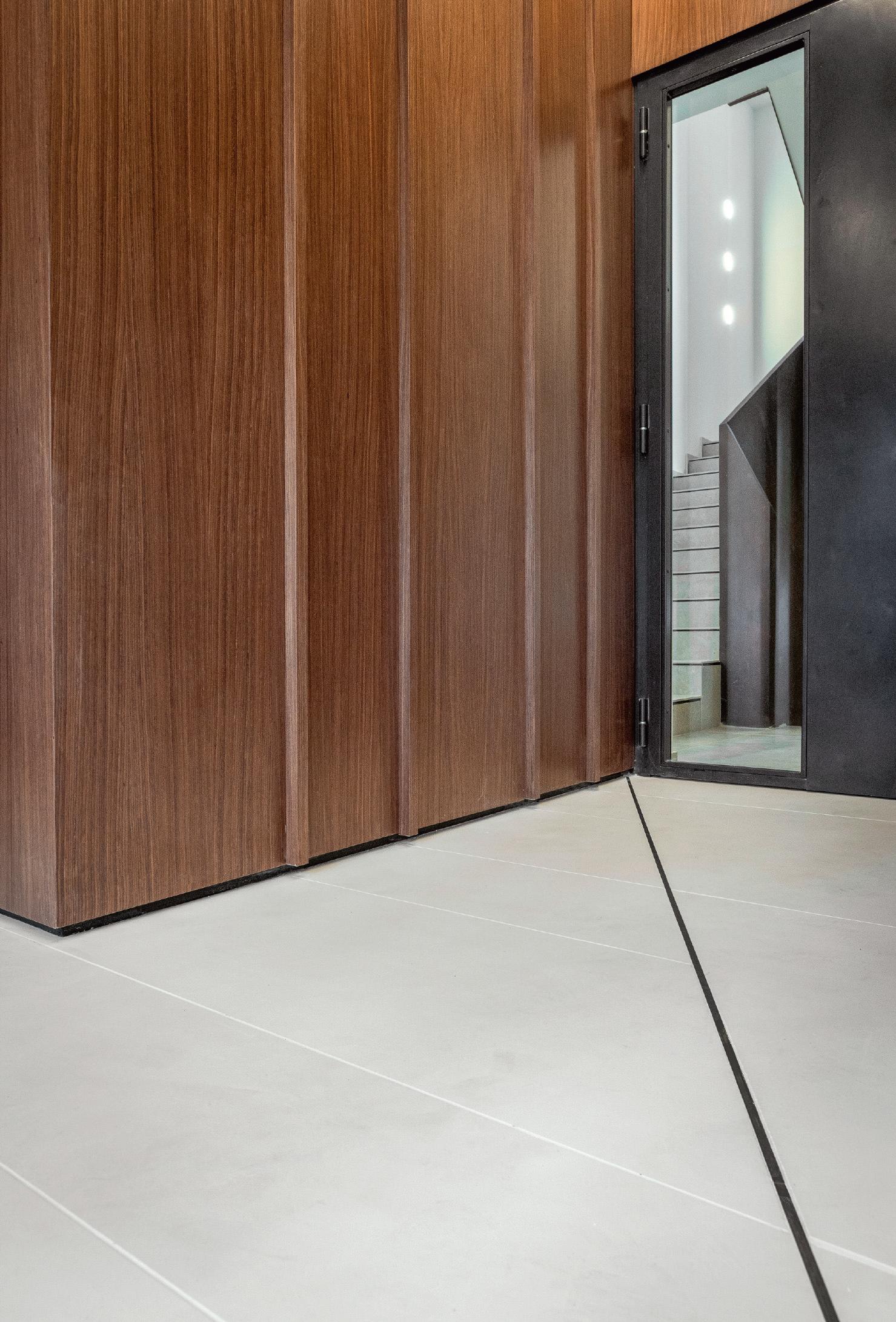
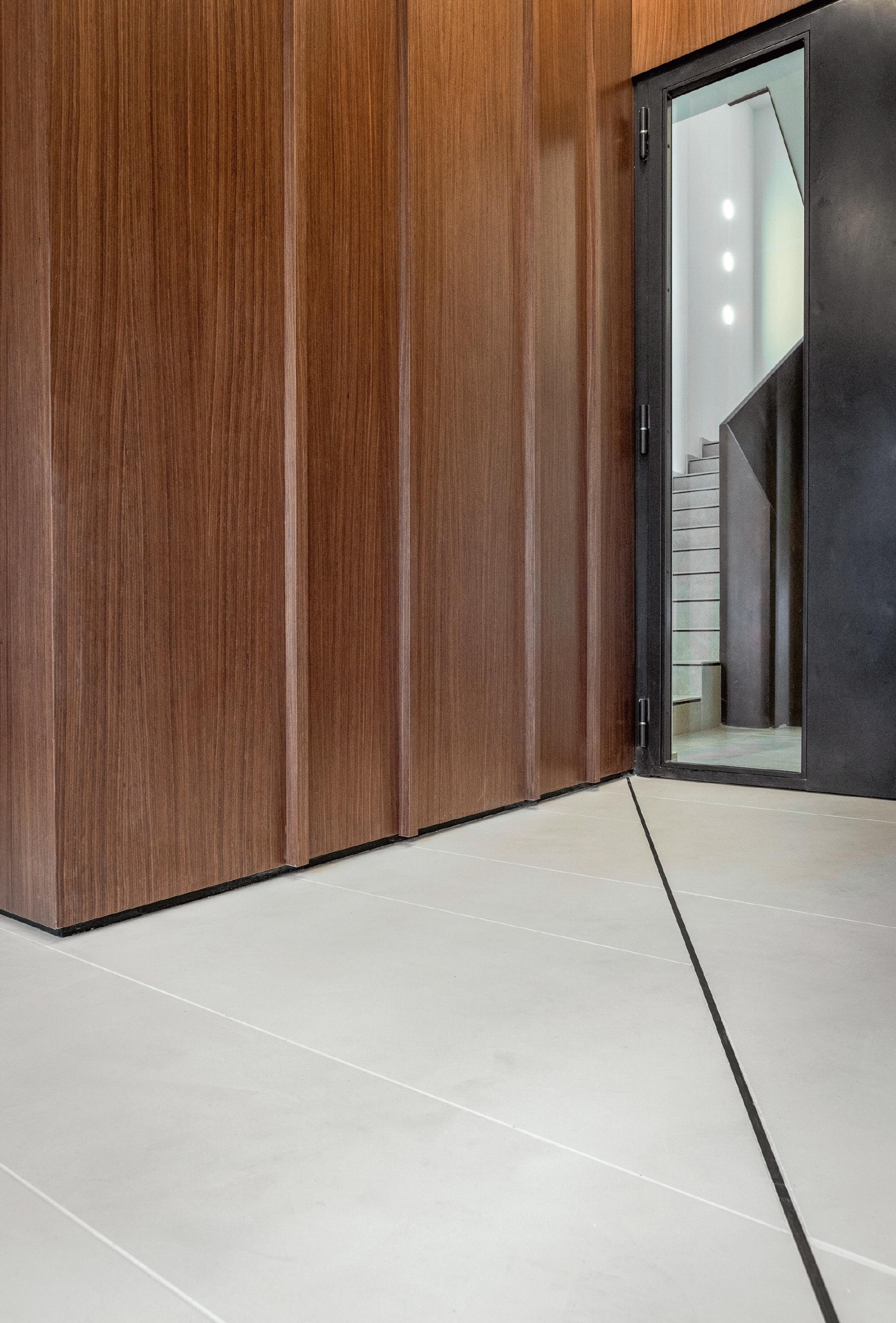
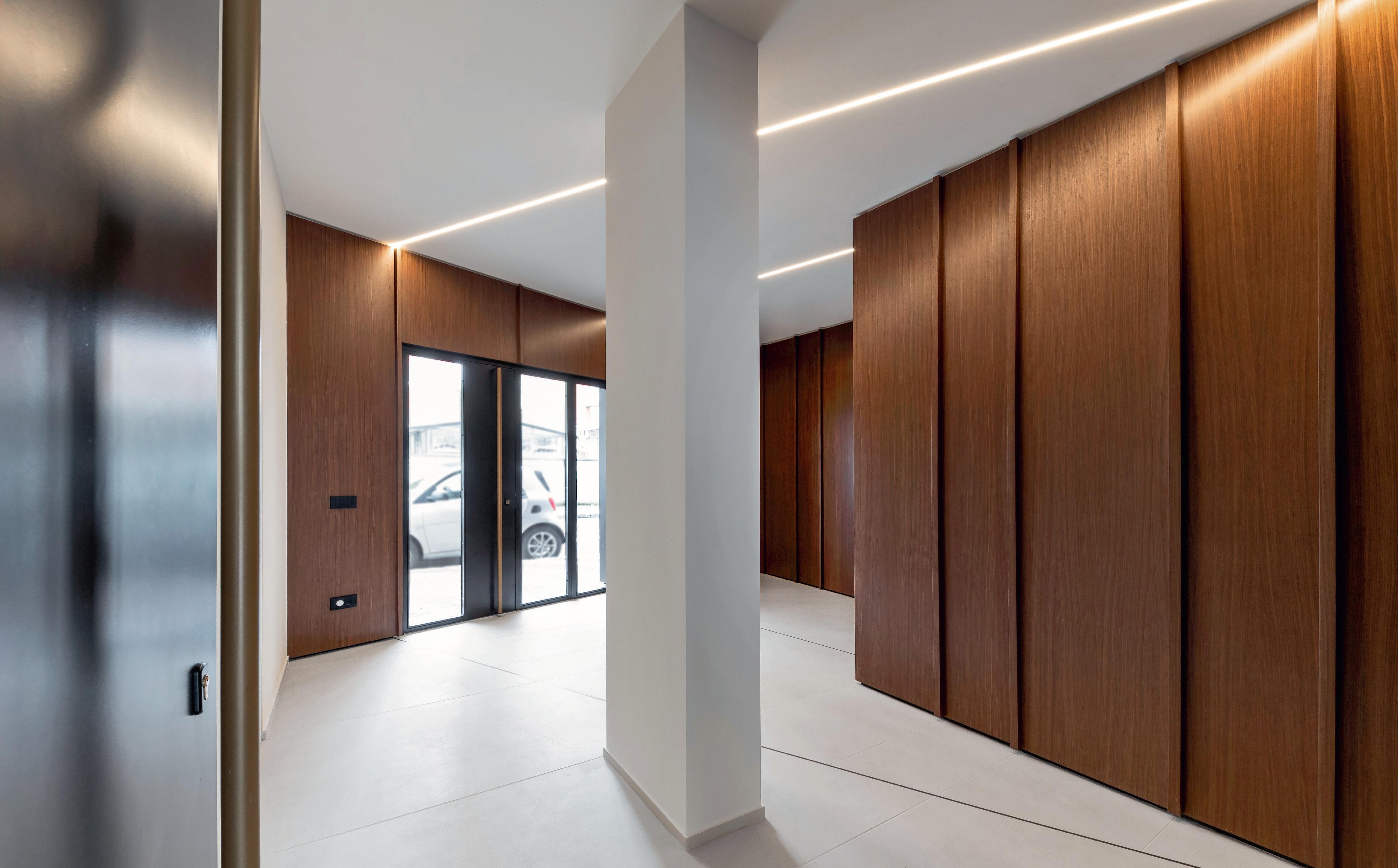
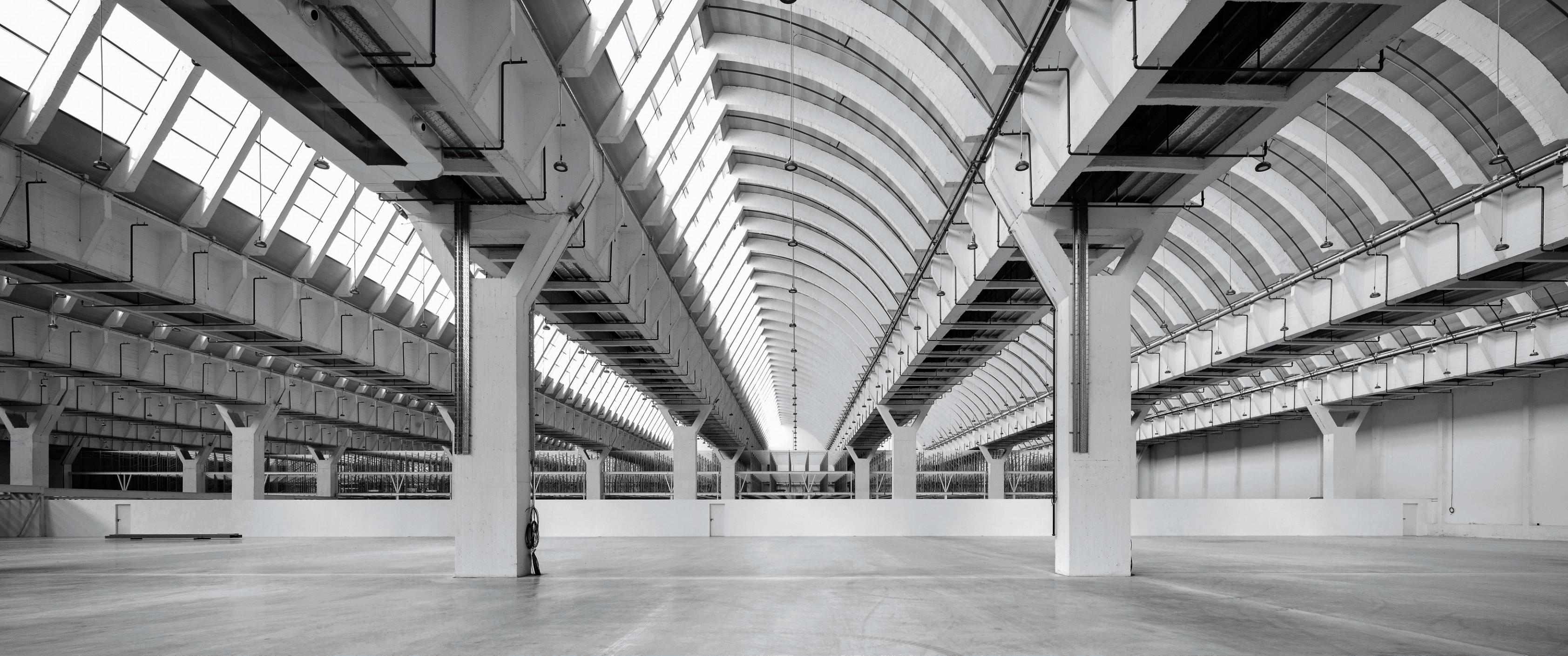
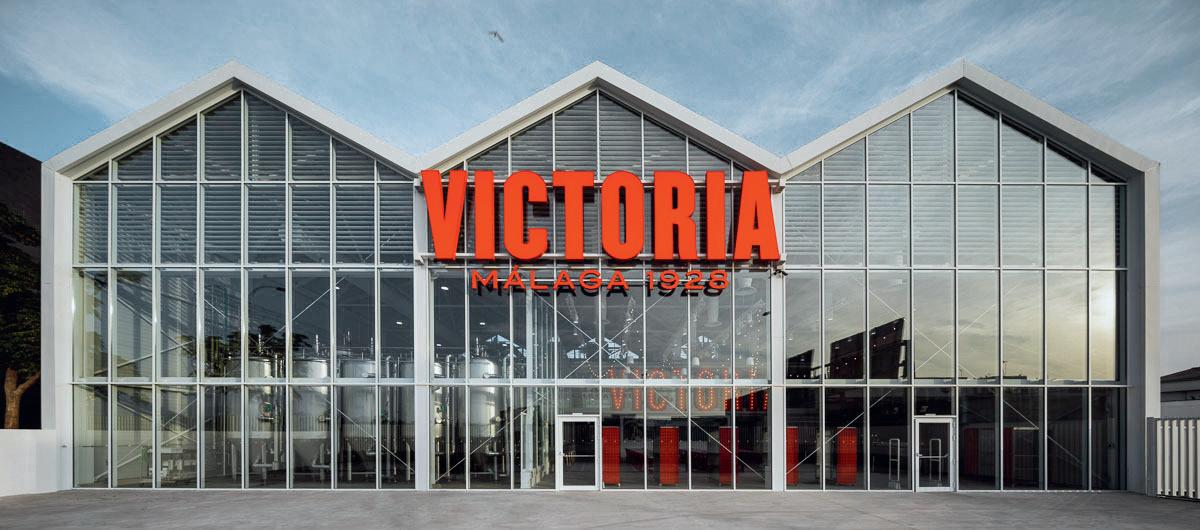
En 1916 Arturo Simon abrió un pequeño taller en el municipio catalán de Olot para hacer frente a la escasez de material eléctrico durante la Gran Guerra. Hoy, más de cien años después, ese pequeño negocio familiar se ha tornado una gran multinacional con presencia en más de dieciséis países. A pesar de este crecimiento, la empresa conserva los valores de sus orígenes, con una fuerte apuesta por la innovación y el diseño que se refleja también en la rehabilitación de su fábrica original en Poble Nou, un barrio de Barcelona en plena transformación. La adaptación del conjunto, obra del estudio b720/Fermín Vázquez Arquitectos, se ha complementado con un showroom a cargo de Estudi Jordi Tamayo/Estudi Antoni Arola y los interiores de Katty Schiebeck. Y es precisamente en los espacios concebidos por la diseñadora de origen uruguayo donde más se marca el diálogo con el pasado fabril del edificio, enfatizando la sobriedad y rigor de la estructura de hormigón con los acabados cálidos de la madera de nogal. Una dualidad que también se traslada en el resto de revestimientos gracias a la utilización del Dekton Nacre, con sus características tonalidades crema y marcas de agua, y Dekton Argentium, de color gris y una textura visual que confiere movimiento y profundidad a la composición.
In 1916 Arturo Simon opened a small workshop in the Catalonian municipality of Olot to address the scarcity of electrical material during the Great War. Today, over a hundred years later, this small family business is a multinational corporation boasting a presence in more than sixteen countries. Despite this growth, the company stays true to the values of its origins, maintaining a firm commitment to innovation and design that is also reflected in the revamp of its old factory in Poble Nou, a Barcelona neighborhood currently immersed in a transformation process. Complementing the complex’s refurbishment, a work of the studio b720/Fermín Vázquez Arquitectos, are a showroom designed by Estudi Jordi Tamayo/Estudi Antoni Arola and interiors by Katty Schiebeck. Precisely in the spaces created by the Barcelona-based Uruguayan designer, the dialogue with the building’s industrial past is clearest, combining the sobriety and rigor of the concrete structure with the warm finishes of walnut wood. The duality is also seen in the rest of the claddings thanks to Dekton Nacre, with its characteristic cream tones and water marks, and Dekton Argentium, gray and with a visual texture that gives movement and depth to the composition.
La paleta de materiales escogidos busca dialogar con la imagen industrial del antiguo edificio, reforzada con el uso de Dekton Argentium y Dekton Nacre en suelos, paredes y encimeras de distintos espacios.
The materials strike up a dialogue with the old building’s industrial image, reinforced through the use of Dekton Argentium and Dekton Nacre in the floors, walls, and countertops of different spaces.
Dekton Argentium
Dekton Nacre
Ceramic Contours
OPP in Haikou
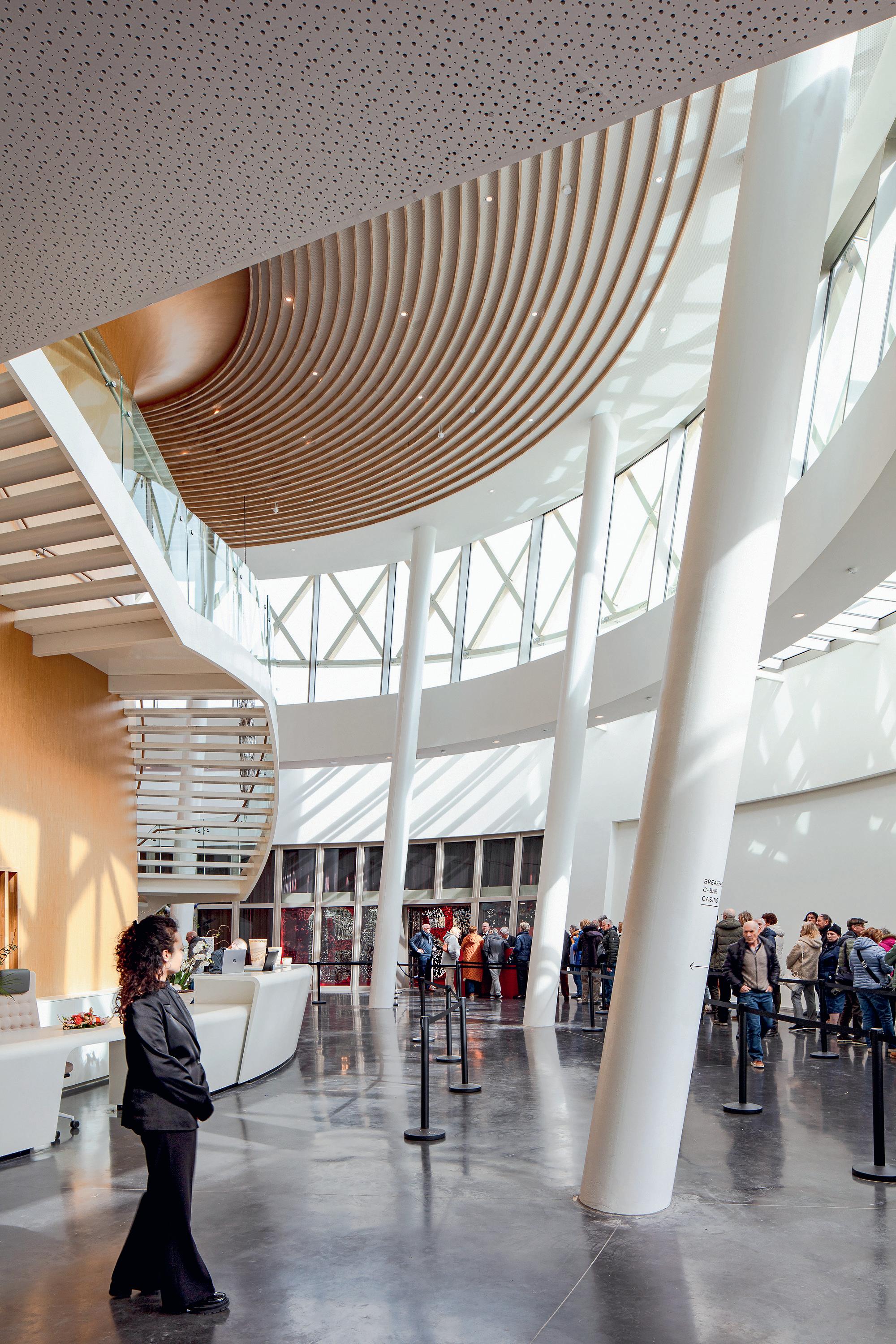
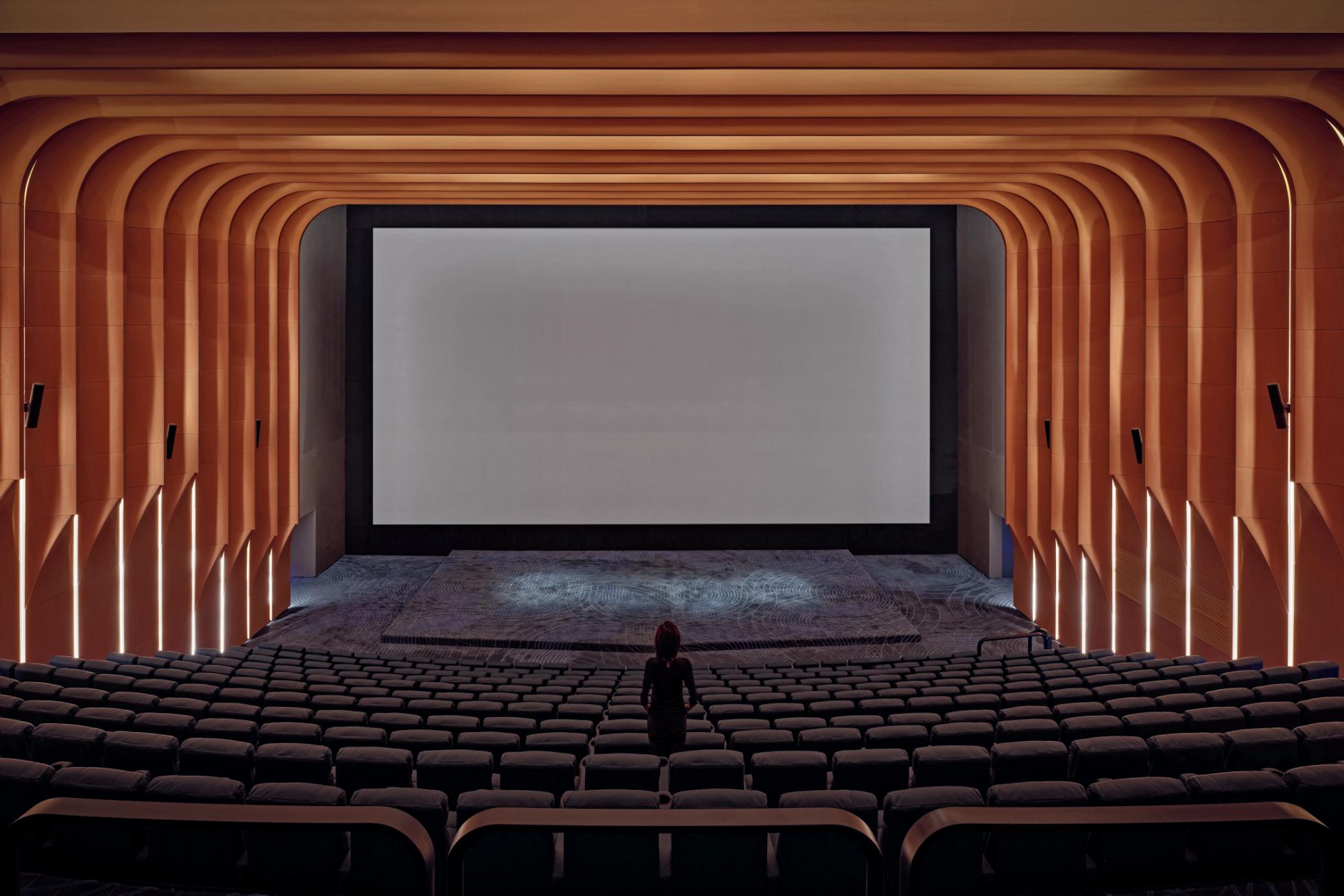
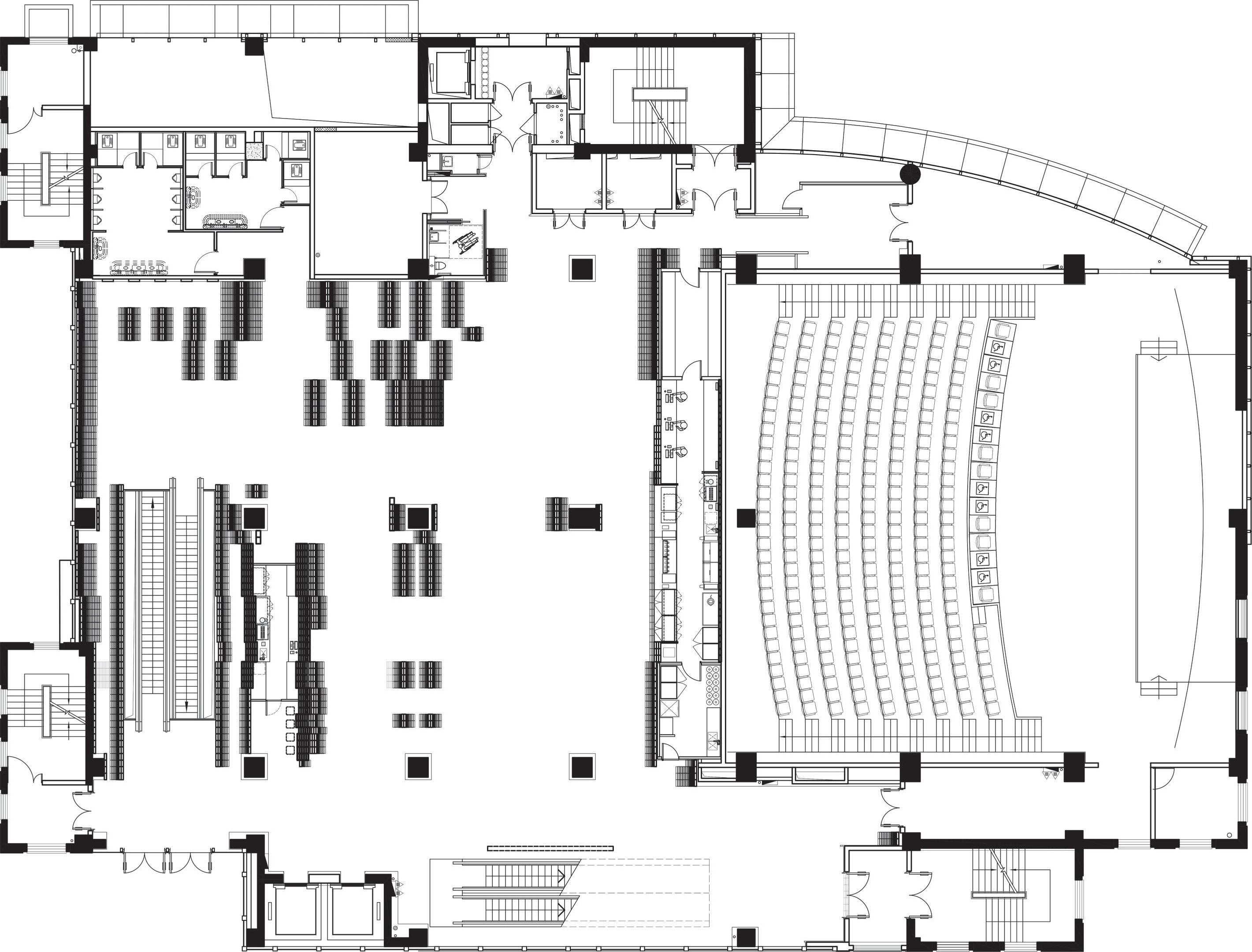
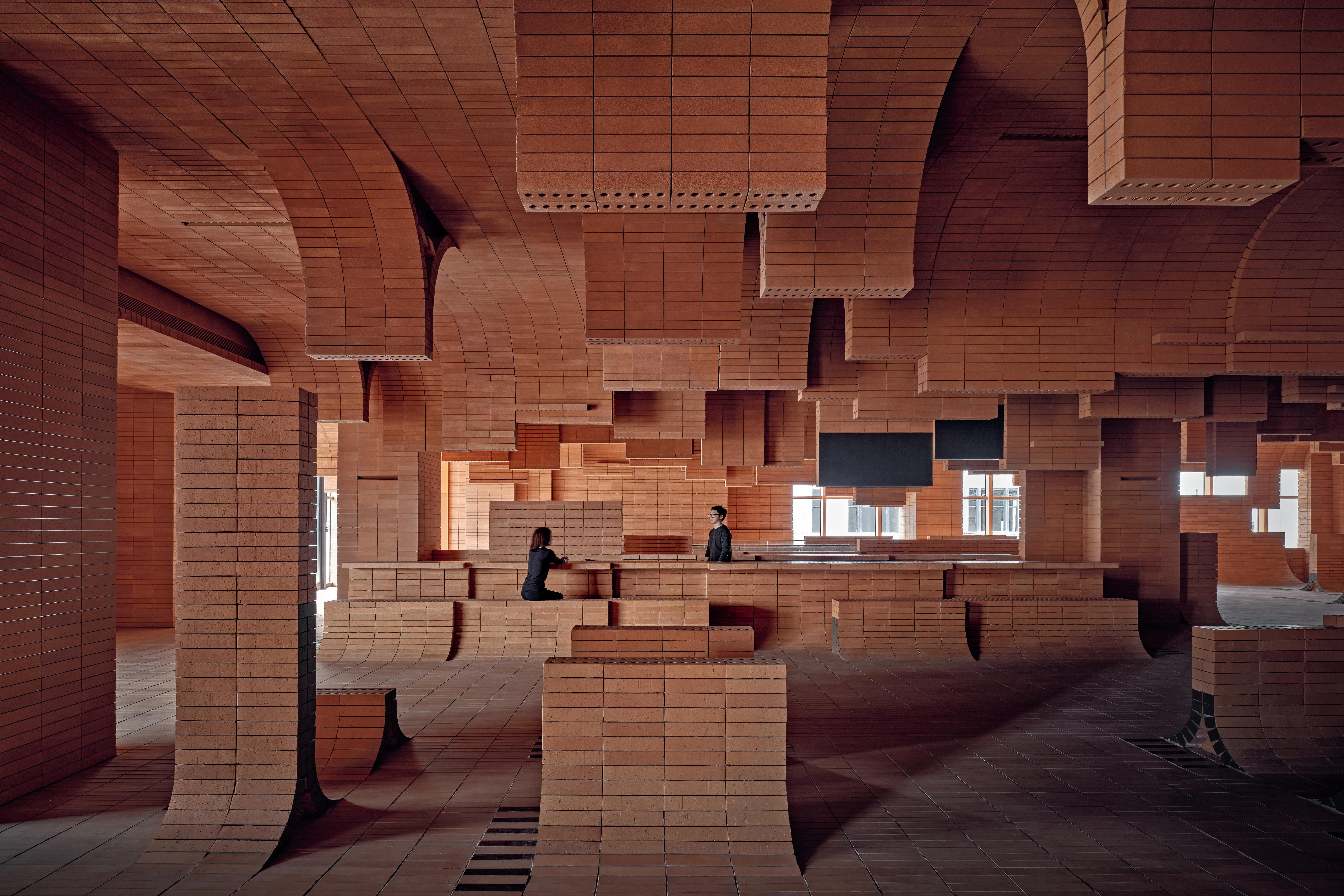
Vivimos un momento en el que el consumo de productos audiovisuales no para de crecer y el número de salas de cines solo sabe disminuir. Esta paradoja tiene fácil explicación: el auge de las plataformas hace que el espectador prefiera ver los contenidos desde casa. Sin embargo, la crisis de los cines comenzó un poco antes, cuando las majestuosas salas que ocupaban las principales calles de las ciudades fueron sustituidas por gigantescas tiendas y trasladadas a anónimos espacios dentro de un mall. Pero todavía hay esperanza para ellas, y de vez en cuando surgen voces críticas que recuerdan su encanto, iniciativas que protegen las existentes o proyectos que las tratan con la atención de antaño. Un poco de todas estas intenciones tiene el Cine Gaoxingli Insun en Haikou, que el estudio One Plus Partnership ha recuperado y añadido un nuevo foyer. El proyecto se inspira en la condición marinera de la isla y crea una ondulada topografía cerámica que resuelve con los mismos gestos y materialidad tanto suelos y bóvedas como bancos, estantes y mostradores. Así se genera un espacio continuo con una identidad única y se devuelve el esplendor merecido a una tipología cada vez más olvidada.
We are living a moment in time in which audiovisual products are consumed non-stop, yet movie theaters just keep diminishing in number. The paradox has an explanation: the boom in media platforms makes viewers prefer to watch contents at home. In truth, the crisis of cinemas began shortly before, when the wonderful film theaters on the main streets of cities were replaced by enormous stores and transferred to anonymous spaces within malls. Nevertheless, there is still hope for these places, and every now and then we hear critical voices reminiscing on their charm, or learn of initiatives to protect remaining ones or projects to build new theaters that treat them with the attention of yore. A bit of all the above is discernible in the Gaoxingli Insun Cinema in Haikou, which the firm One Plus Partnership has restored and added a new foyer to. The project drew inspiration from the island’s marine context and created an undulating topography that, with the same gestures and materiality, resolves floors and vaults but also benches, shelves, and counters. The result is a continuous space with a unique identity, one that makes an ever more forgotten typology regain the magnificence it deserves.
Photos: Jonathan Leijonhufvud
El nuevo vestíbulo se resuelve con una suerte de oleaje cerámico que conforma el mobiliario y disimula las instalaciones, en las salas estas ondas se convierten en pórticos concéntricos continuando con la metáfora marítima.
The new foyer is designed with a ceramic swell of waves that form furniture and conceal MEP services, and in the audiovisual rooms they become concentric portal frames, continuing the marine metaphor.
Traces and Layers
Can Gabriel by TEd’A arquitectes
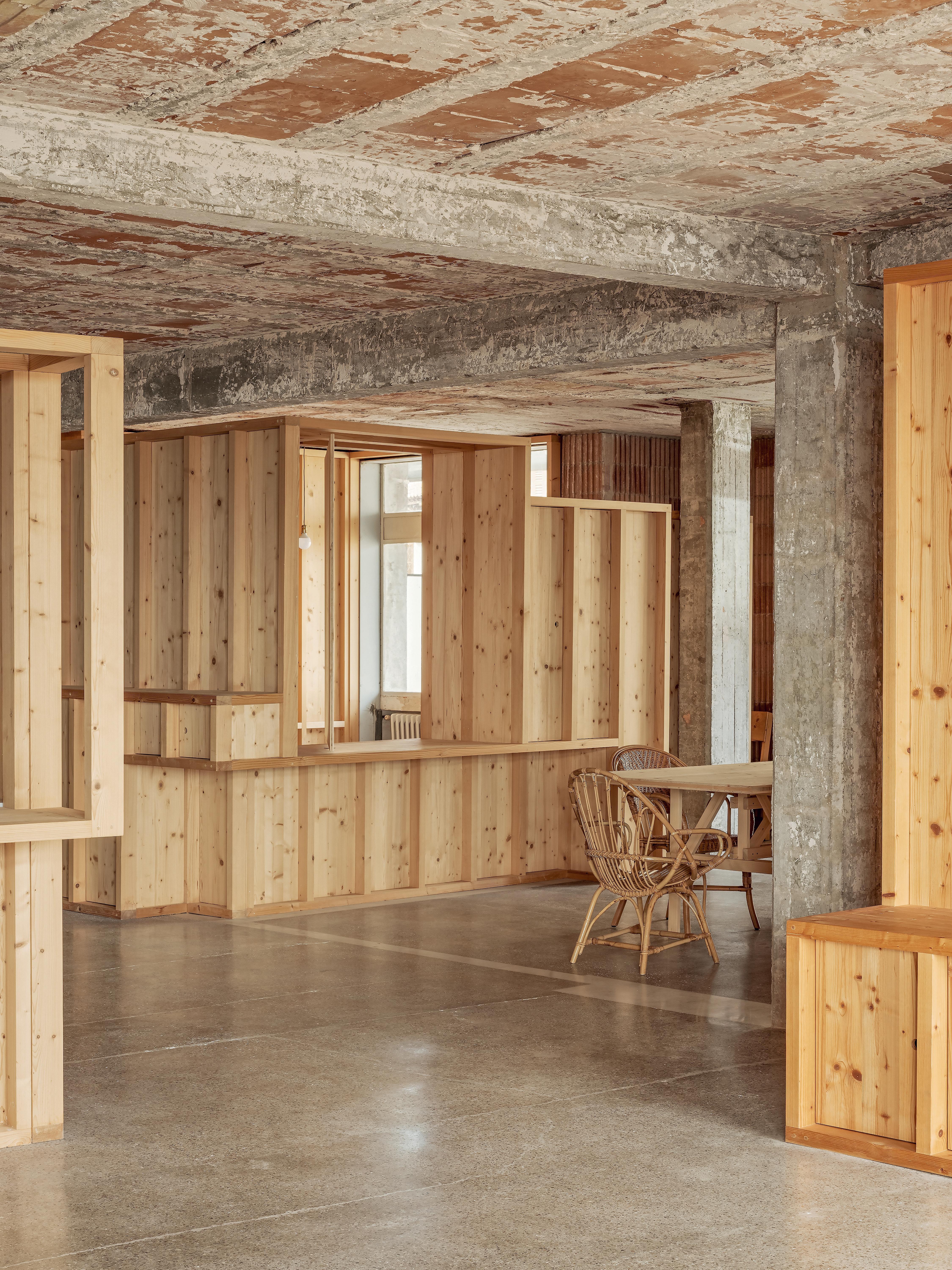
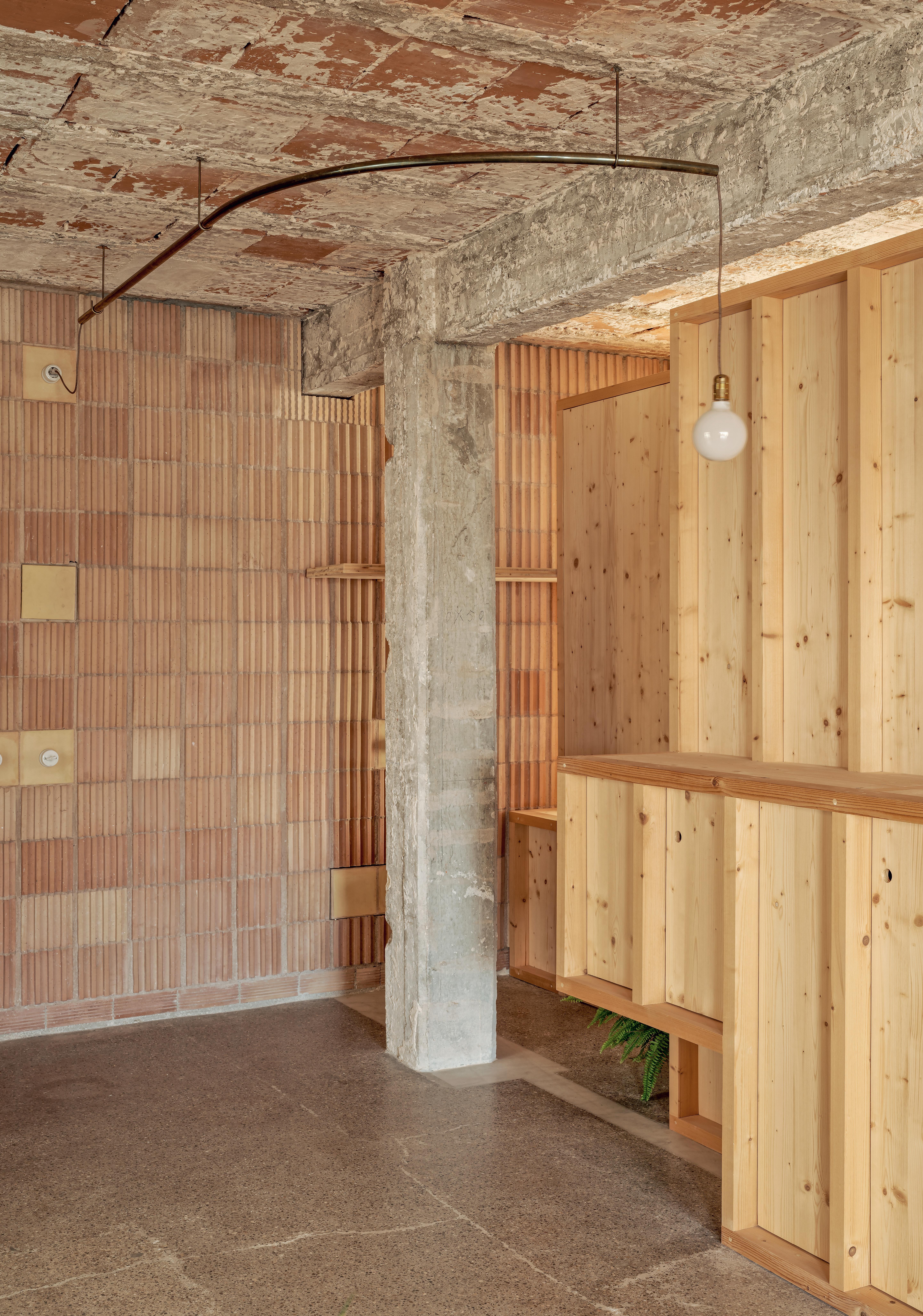
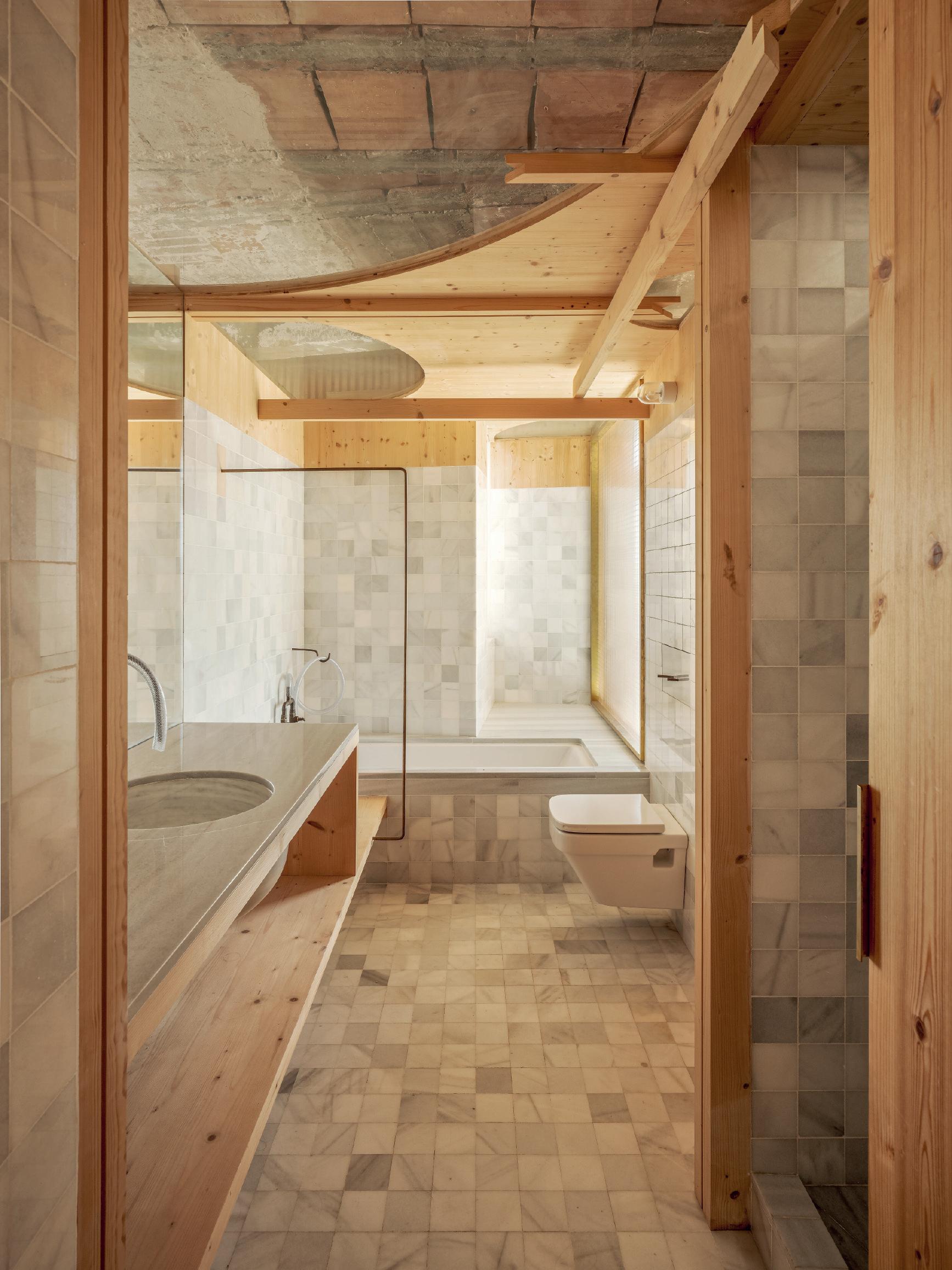
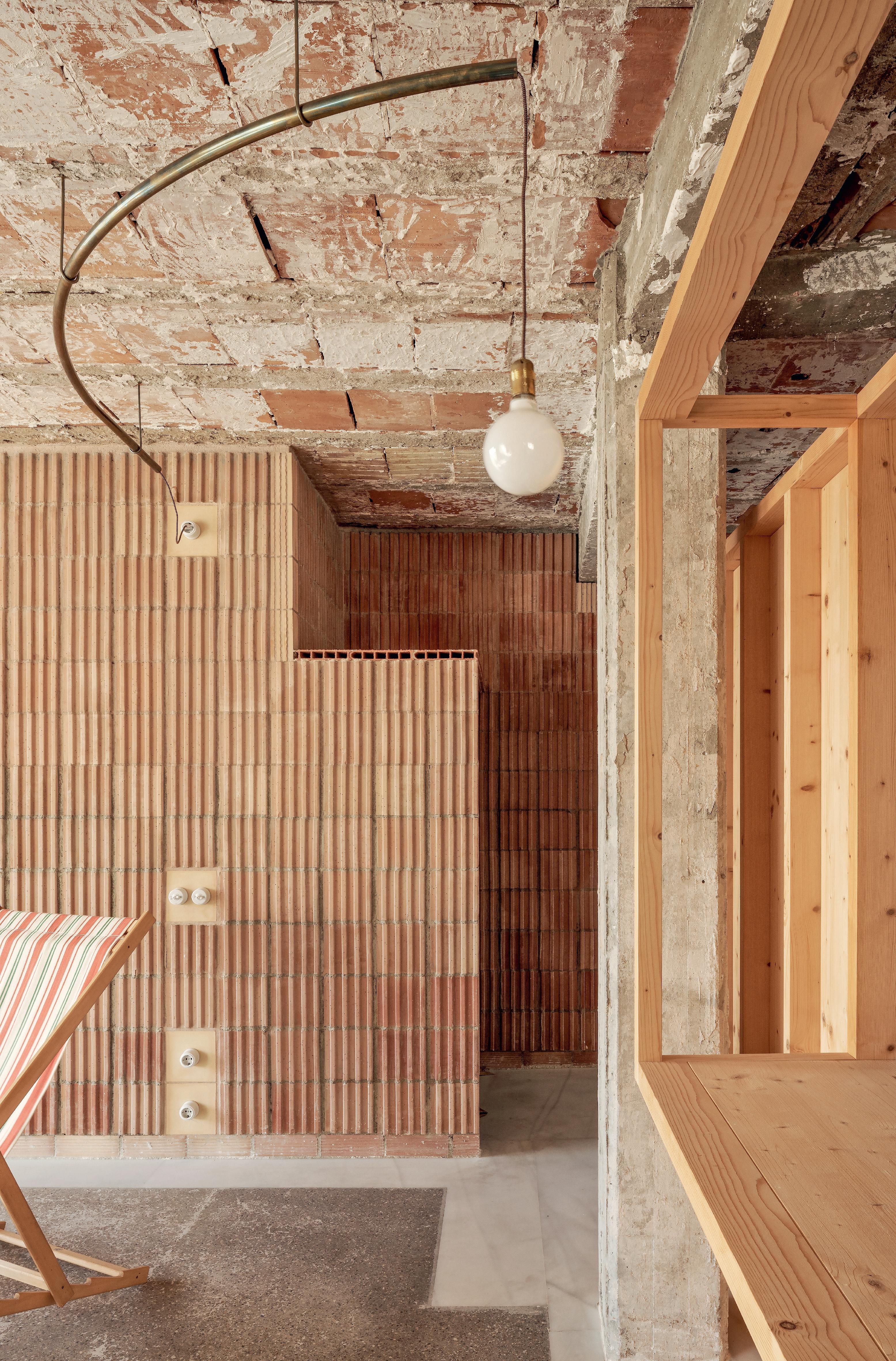
Ubicada en el casco antiguo de Palma, la vivienda se construye sobre las huellas del pasado, pero sin pretender borrarlas. La intervención parte de un piso levantado en la década de 1960, cuya única herencia vigente era meramente constructiva: una estructura de hormigón armado y sus cerramientos perimetrales. A partir de estas preexistencias, la propuesta se concibe como un palimpsesto, en el que cada elemento se inscribe en un plano distinto, componiendo una superposición de capas materiales claramente diferenciadas. El resultado es una vivienda que no disimula sus procesos, sino que los expone con crudeza y honestidad, dejando a la vista texturas, relieves, juntas y costuras. La estructura original de hormigón se deja completamente desnuda y, sobre este esqueleto, el perímetro se reviste con corcho como aislamiento térmico, oculto tras un trasdosado de piezas cerámicas de termoarcilla. Ese modus operandi continúa en el resto de la vivienda: desde el pavimento —donde se pule el original de hormigón y se completa, cuando es necesario, con fragmentos de mármol— hasta las instalaciones eléctricas o las cajas de madera que configuran las estancias. Cada gesto se convierte así en una declaración material, en una arquitectura de capas, tiempos y sentidos superpuestos.
Located in Palma’s old town quarter, the house is built on traces of the past with no attempts to erase them. The project starts from an apartment built in the 1960s, whose only remaining legacy was purely constructional: a reinforced concrete structure and its perimeter walls. With these existing elements as starting point, the scheme is conceived as a palimpsest, with each element inscribed on a different plane, composing a superimposition of clearly differentiated material layers. The result is a house that does not conceal its processes, but rather exposes them with raw honesty, leaving textures, reliefs, joints, and seams for the eye to see. The original concrete structure is left completely exposed and, on top of this skeleton, the perimeter is clad with cork for thermal insulation, hidden behind a facing of thermo-clay ceramic tiles. This modus operandi continues throughout the rest of the house: from the flooring – where the original concrete is polished and, where necessary, completed with marble fragments – to the electrical installations and the wooden boxes that define the rooms. Every constructive gesture becomes a material statement, in an architecture of overlapping layers, time periods, and meanings.
Photos: Luis Díaz Díaz
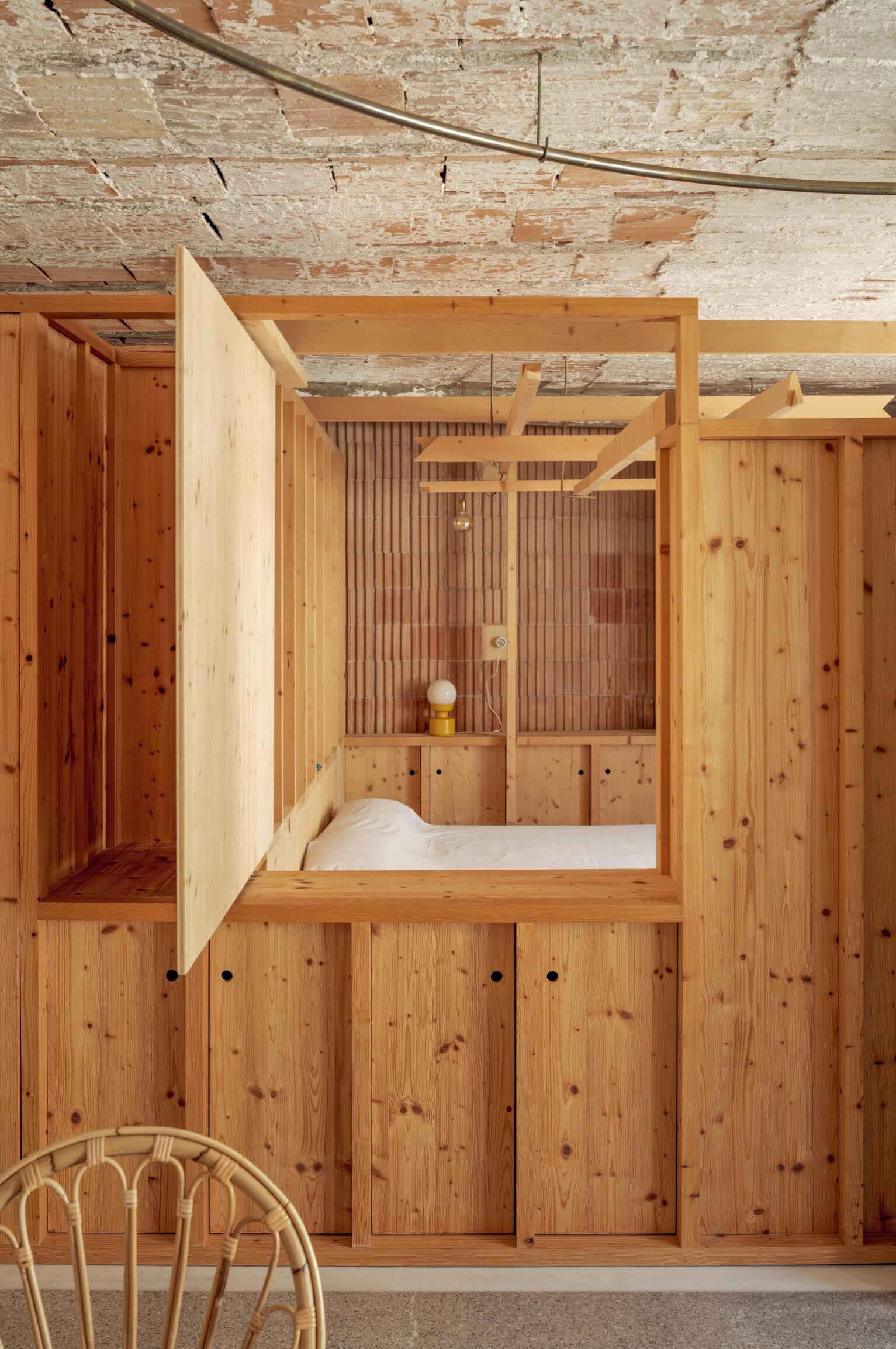
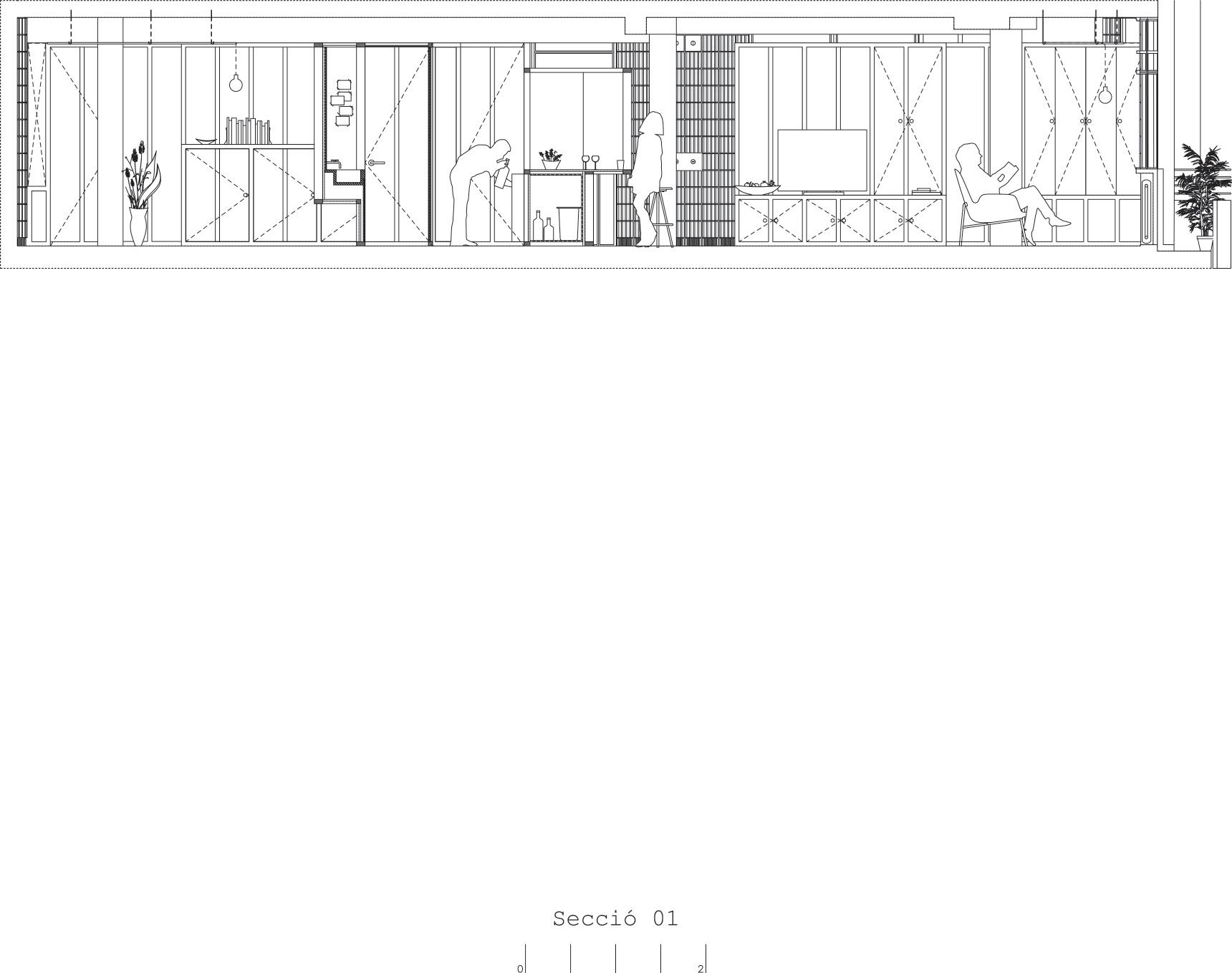
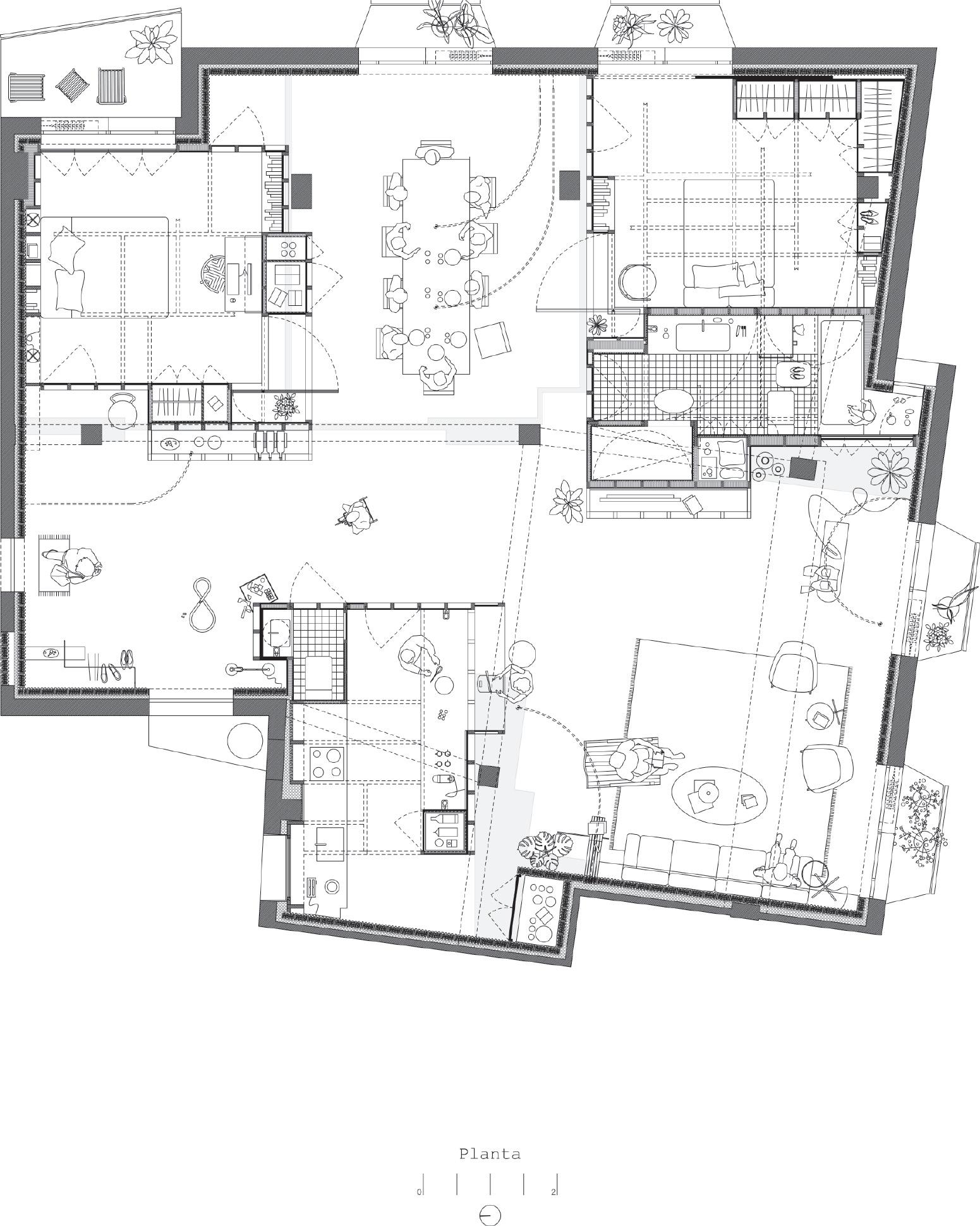
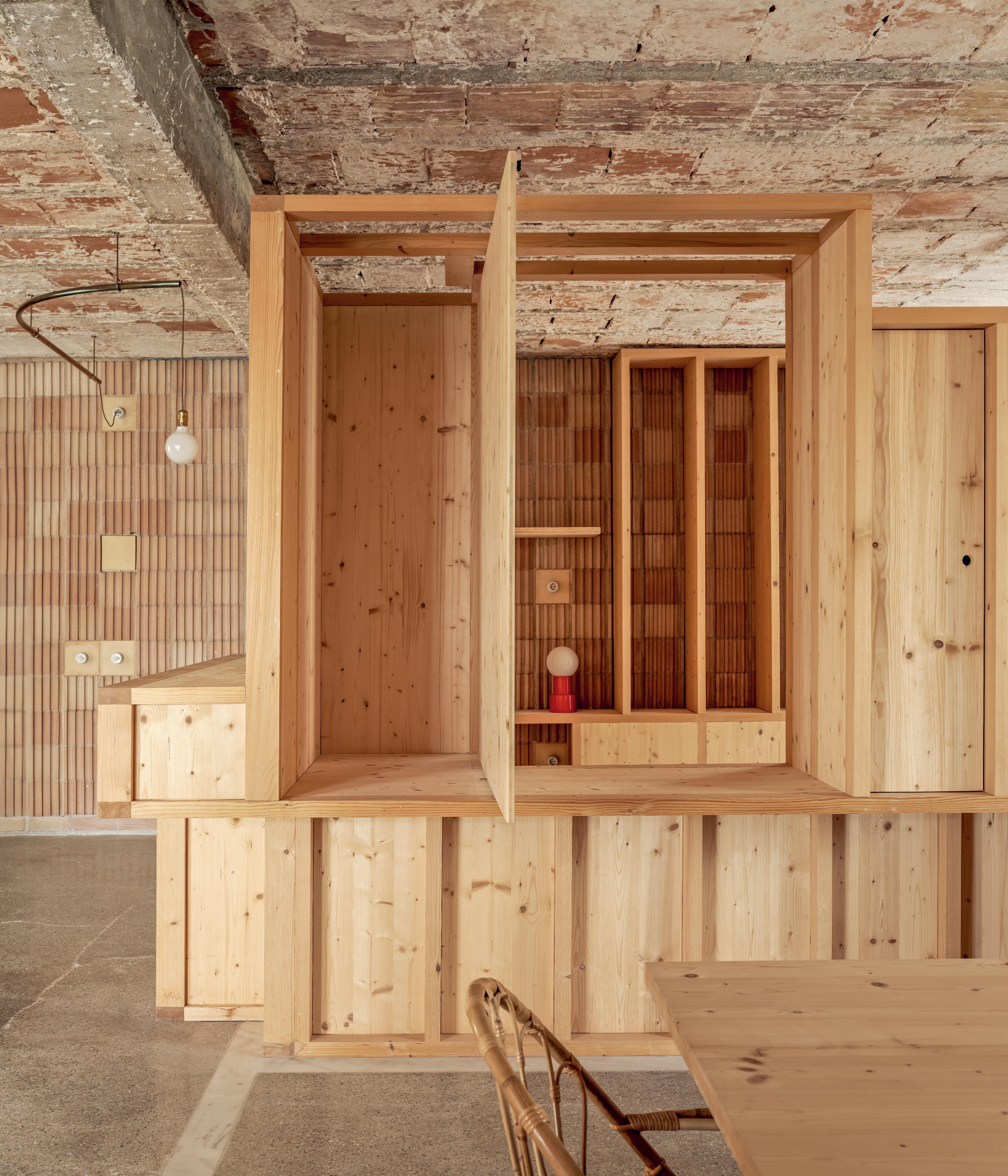
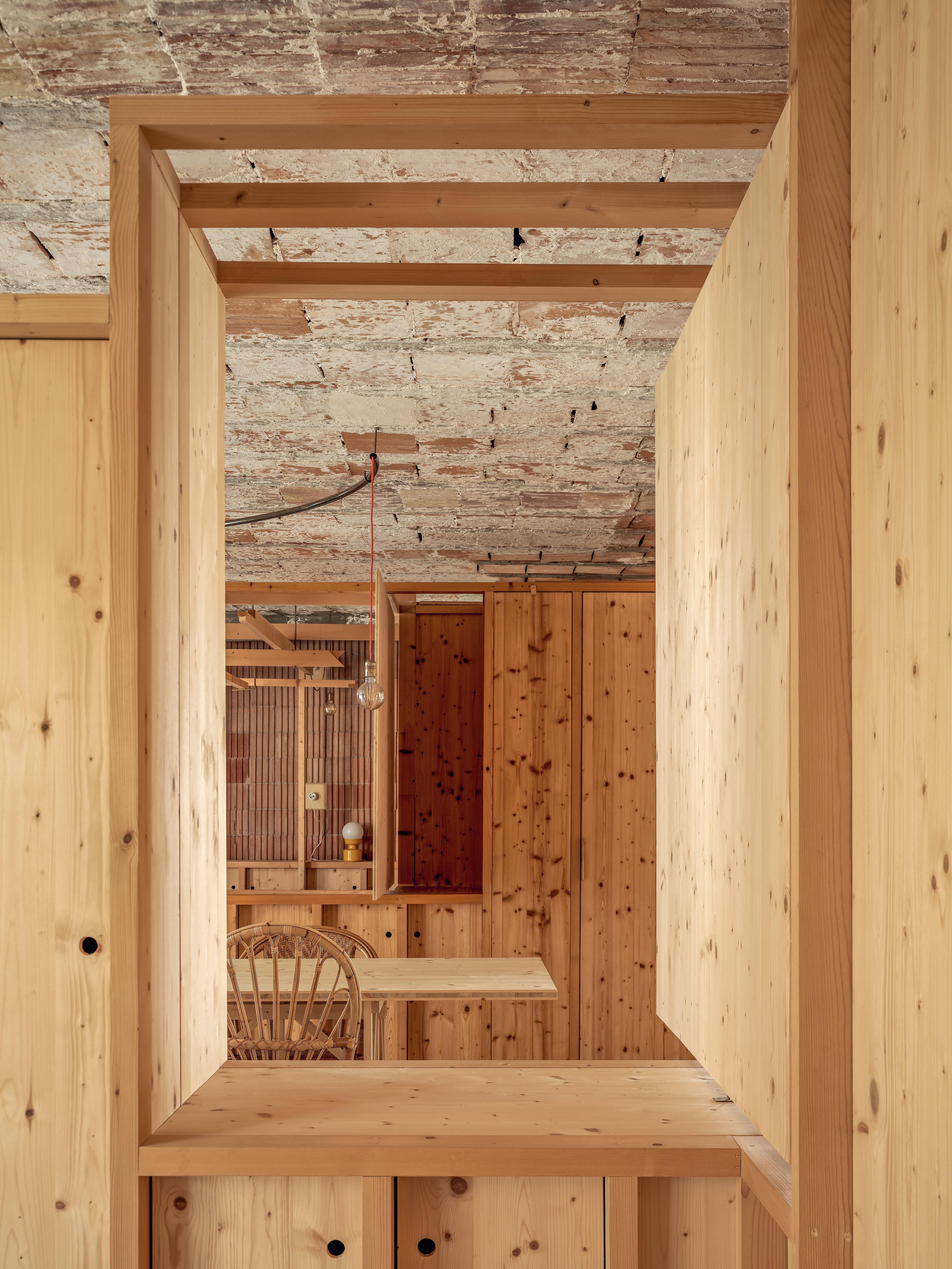
La distribución gira en torno a tres habitaciones cerradas, construidas íntegramente en madera de abeto, que se erigen como volúmenes autónomos y entre los cuales se configuran los espacios comunes.
The layout is arranged around three enclosed bedrooms, built entirely with firwood, and which form autonomous volumes, separate from the existing structure, that harbor a series of living spaces in between.
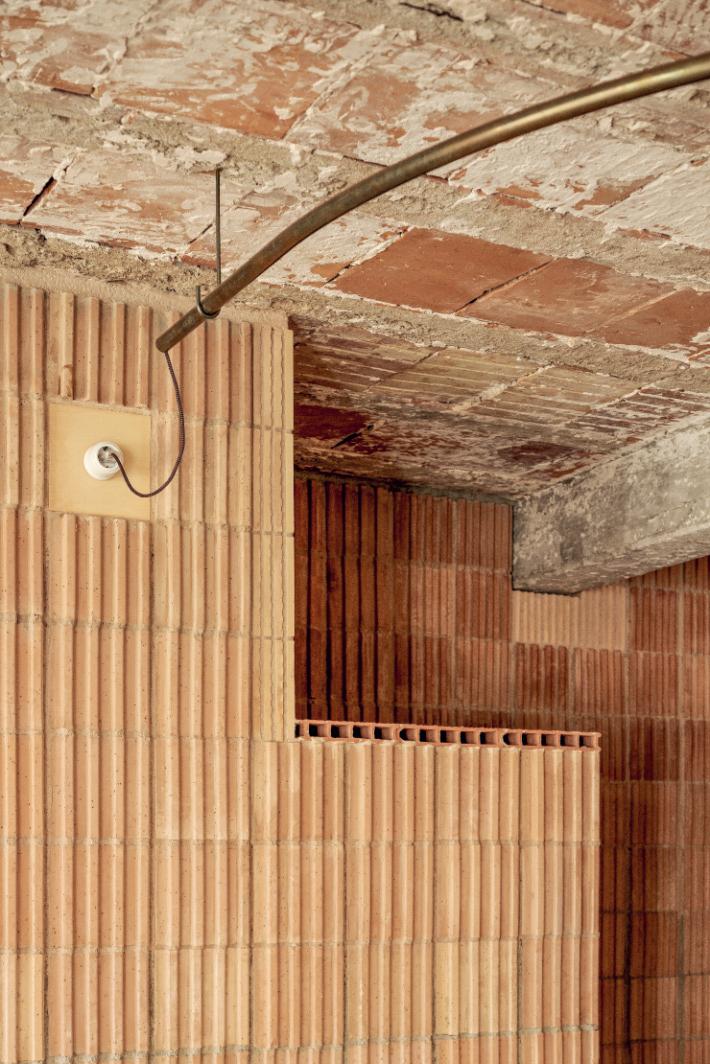
Todas las instalaciones son independientes, así los mecanismos se colocan directamente sobre las paredes, en baldosas de barro que sustituyen a las piezas cerámicas, y los cables se distribuyen por tubos de latón vistos.
All the installations are independent, so fixtures are placed directly on the walls, on clay tiles that replace the ceramic pieces, and the wiring system runs through exposed brass pipes.
Interview
Cucinella & Linazasoro In Dialogue
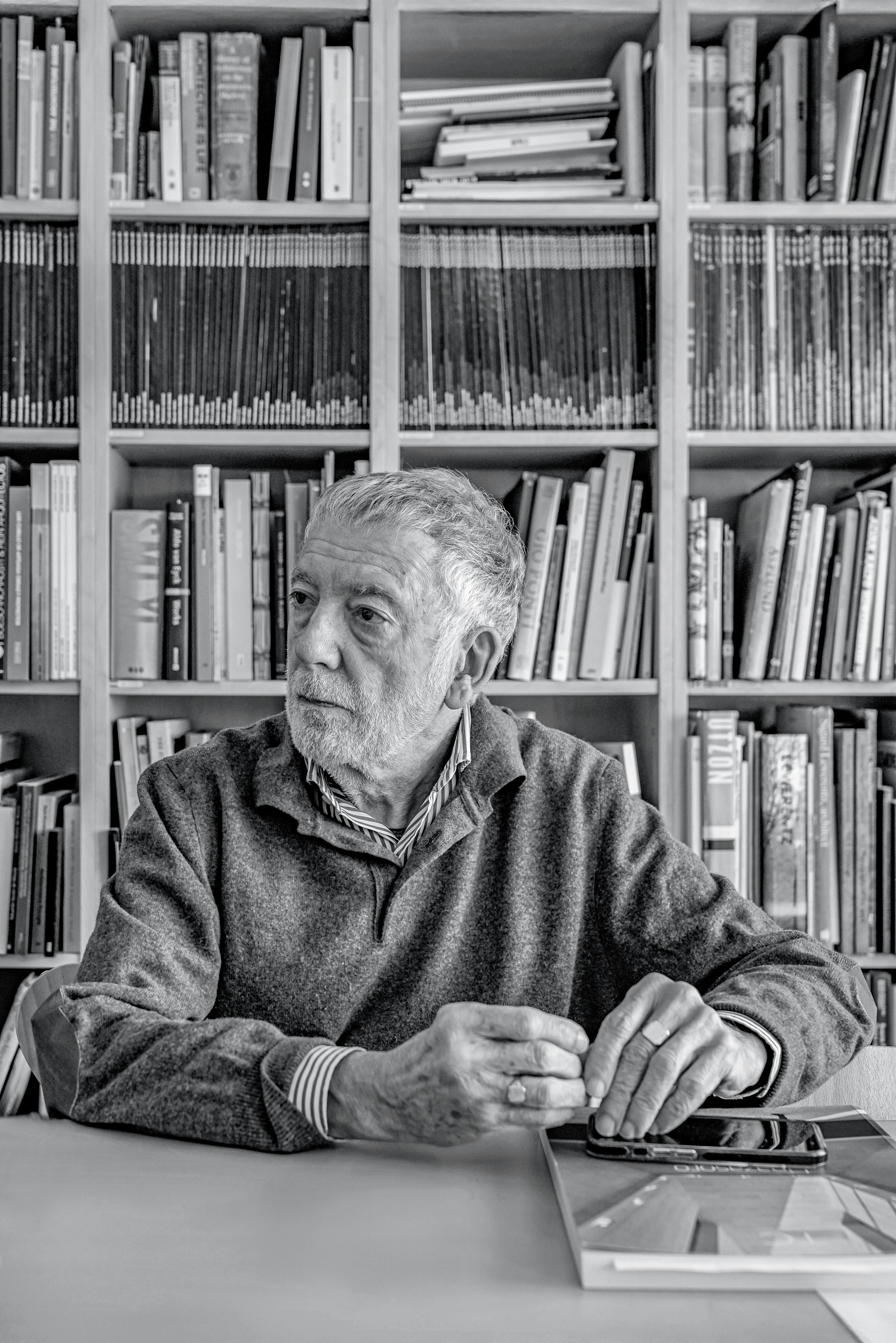
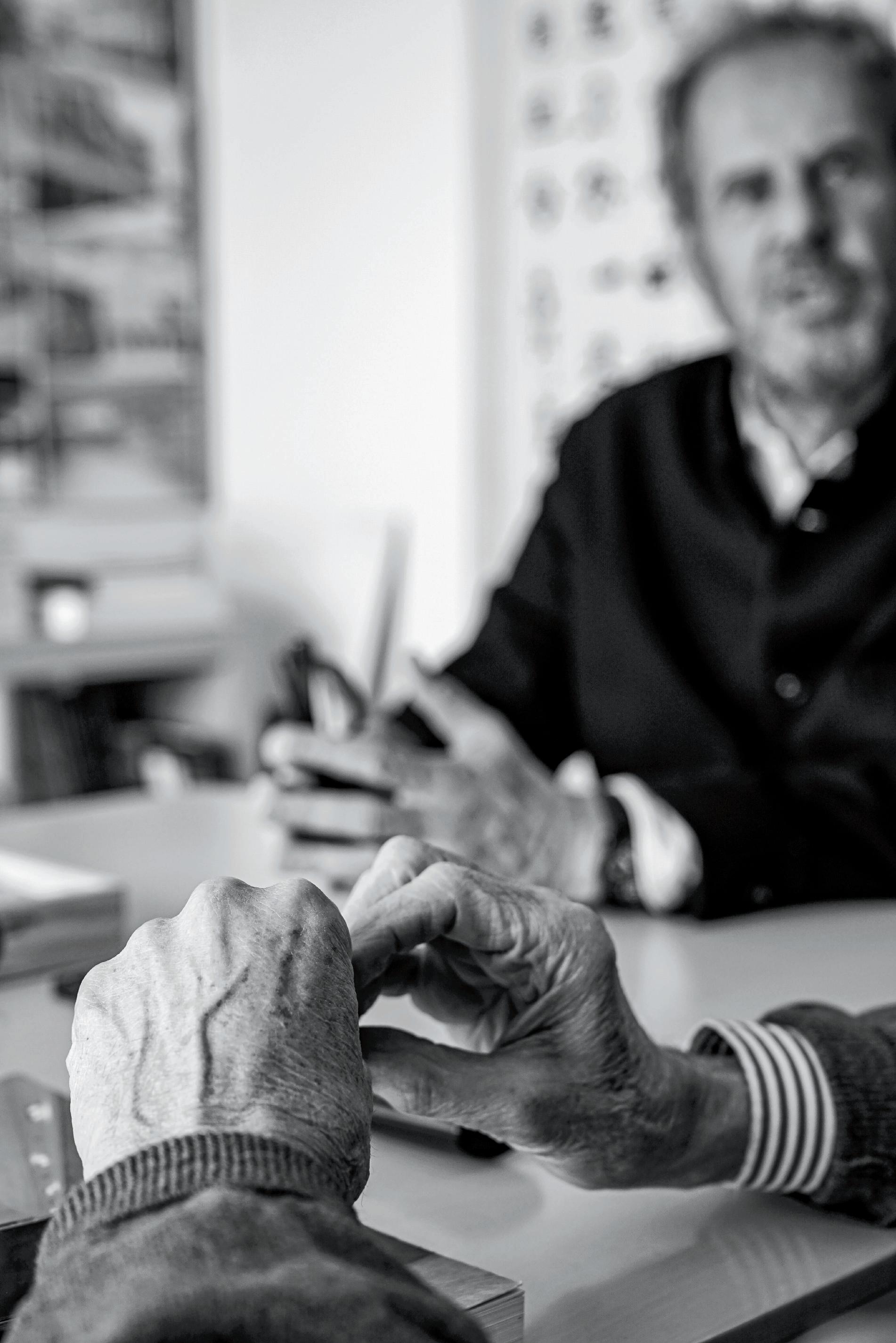
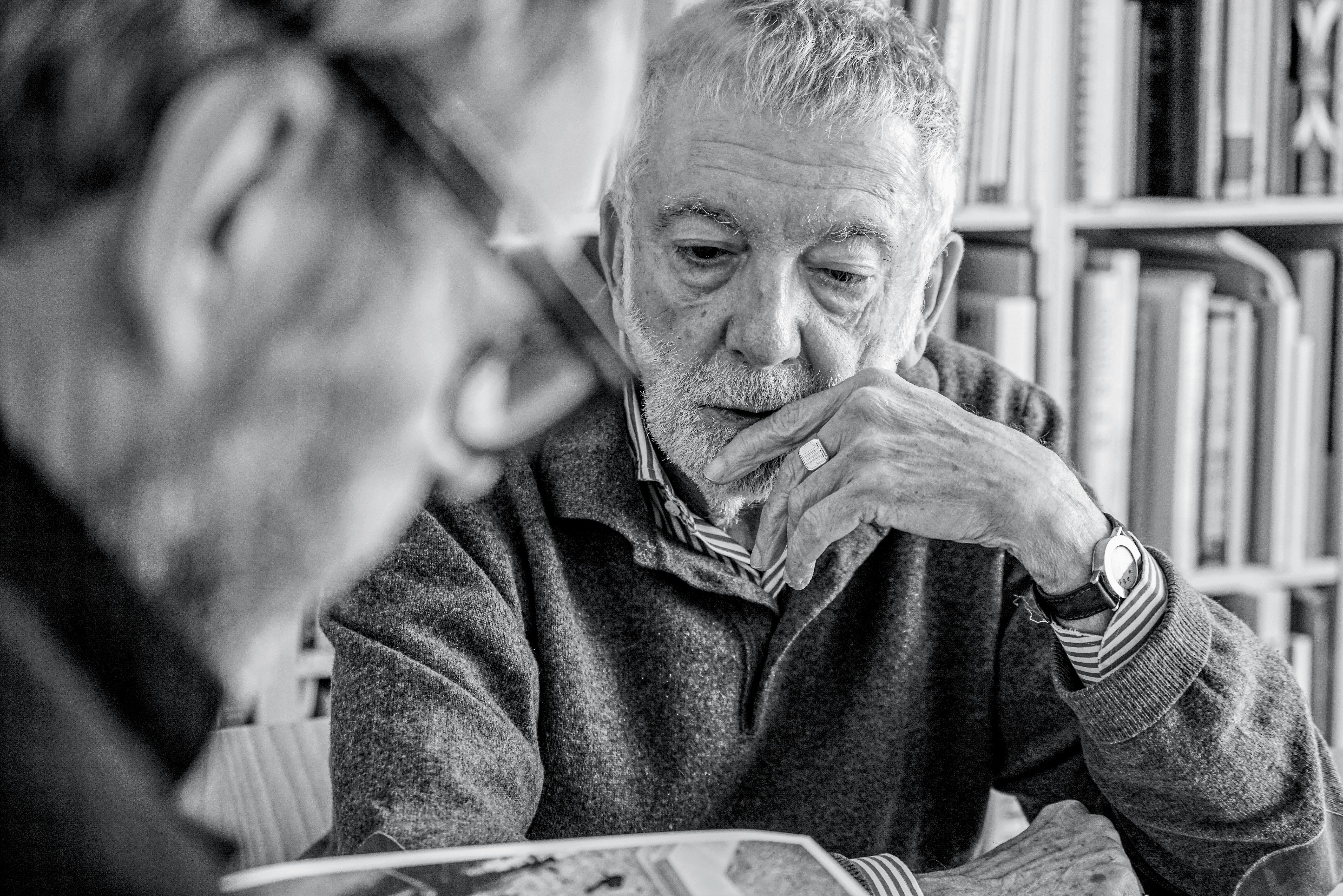
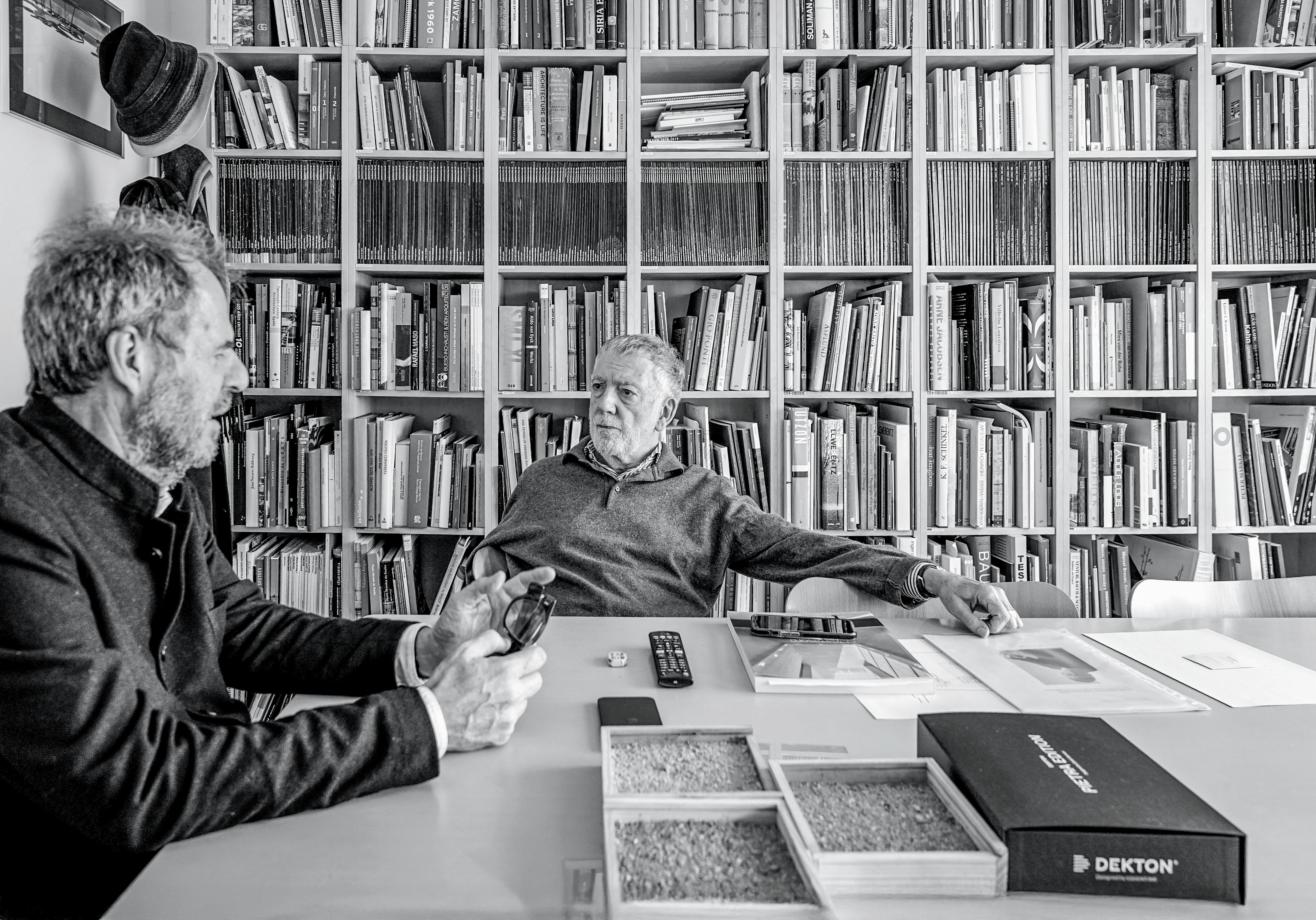
Antonio López & Tusquets In Dialogue
Cucinella & Linazasoro in dialogue
Mario Cucinella (Palermo, 1960) y José Ignacio Linazasoro (San Sebastián, 1947) comparten inquietudes sobre los cambios que sobrevienen las escuelas de arquitectura tanto en Italia como en España.
Mario Cucinella (Palermo, 1960) and José Ignacio Linazasoro (San Sebastián, 1947) share their thoughts on the transformations taking place in the schools of architecture in Italy and in Spain.
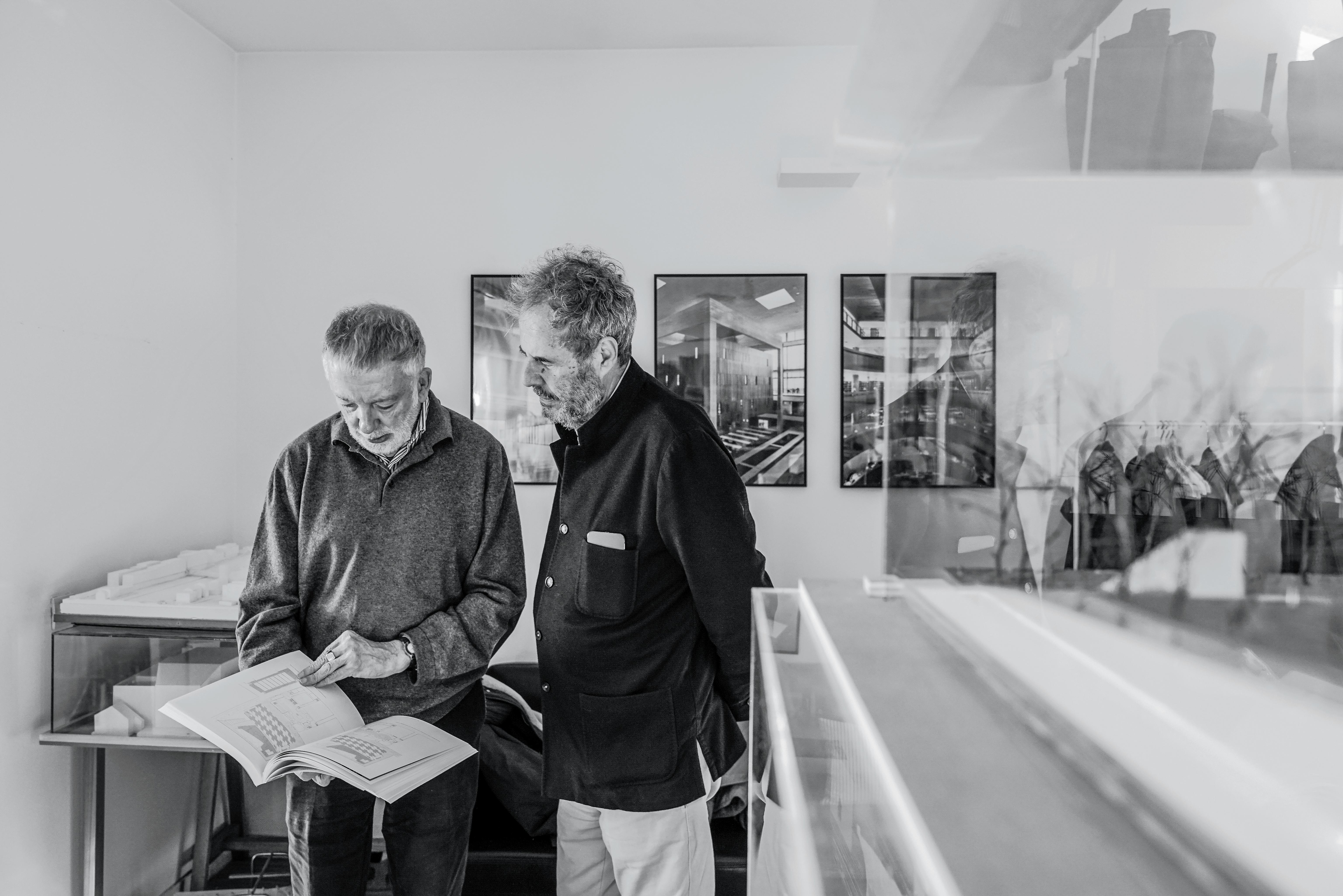
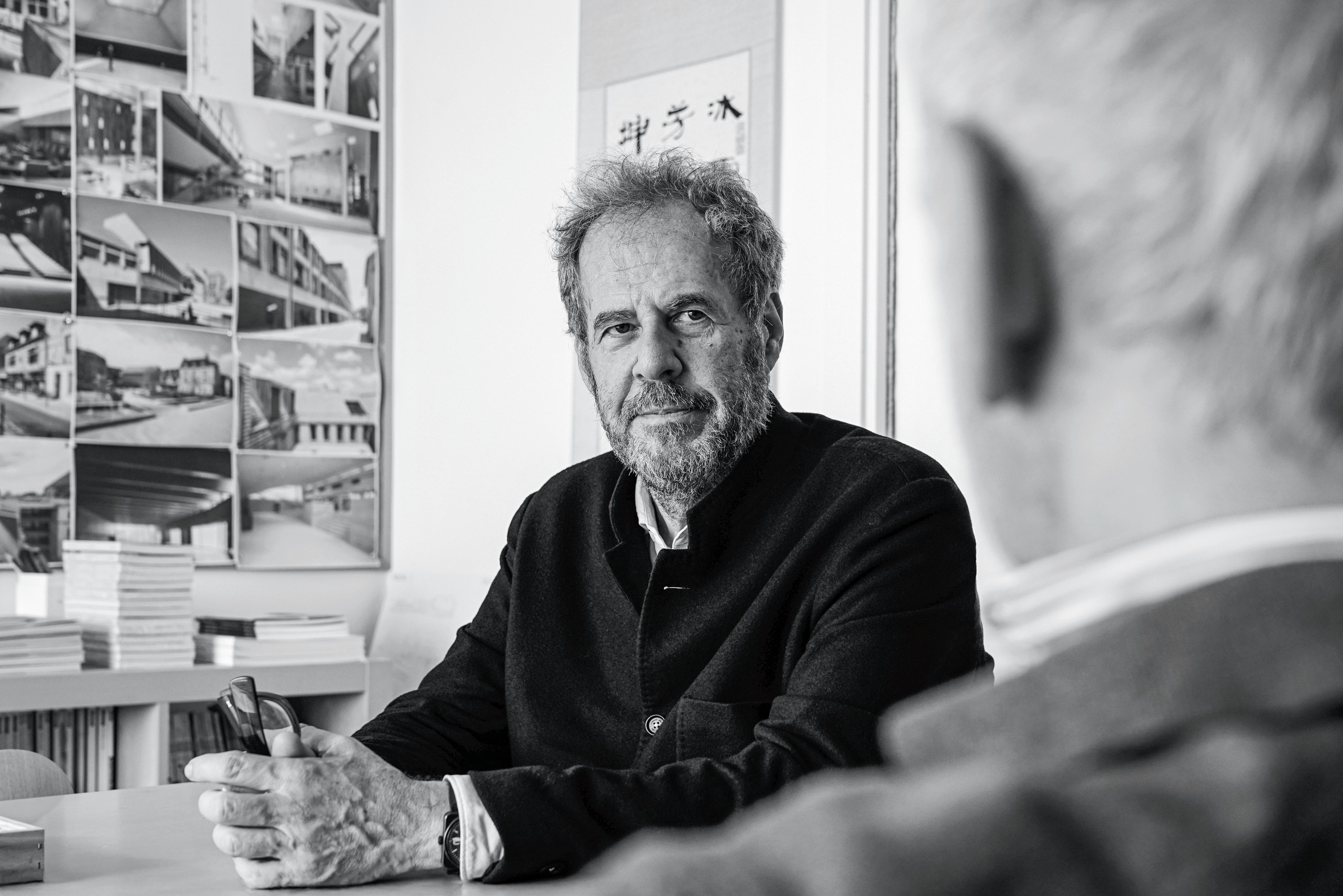
El arquitecto italiano Mario Cucinella aprovecha un breve paso por la capital española para visitar el estudio de José Ignacio Linazasoro. El encuentro sirve para conversar sobre sus experiencias como docentes, compartir sus inquietudes en torno a los cambios en los modelos formativos y profundizar en la trayectoria de sus oficinas.
Mario Cucinella: ¿De dónde proviene tu relación con Italia? ¿Visitas mucho el país? Porque hablas la lengua muy bien.
José Ignacio Linazasoro: Bueno, me desenvuelvo. Lo primero porque siempre he leído mucho en italiano y después porque me han invitado a dar clases en muchas universidades de allí, como Florencia, Bari, Cesena, Milán e incluso Venecia.
MC: O sea que estás ligado con nuestro mundo académico. A mí la universidad me preocupa mucho porque se está transformando, siempre habíamos tenido una amplia tradición politécnica, y todas las grandes figuras impartían clases en sus escuelas. Pero ahora, quizás a excepción de Milán, se está perdiendo el contacto con el mundo profesional. ¿Cómo ha sido tu experiencia?¿Has notado estos cambios en tus estancias?
JIL: ¡Desde luego! Por ejemplo conocí bien Venecia durante la década de los ochenta, una época muy fértil allí. En ese momento pude coincidir con personajes como Carlo Aymonino, Aldo Rossi o Giancarlo De Carlo. MC: Desde luego esos fueron unos años dorados, aunque también había cierta lucha entre ellos. De hecho, tuve la suerte de asistir a las clases de Giancarlo De Carlo porque había tenido que irse de la Universidad de Venecia y exiliarse en la de Génova. Pero ese tiempo de los grandes maestros parece que ya pasó.
«La relación entre la profesión y la universidad hoy es diferente, es muy complicado compaginar»
JIL: En mi opinión, este problema de las escuelas italianas proviene de que han limitado la compatibilidad de construir y enseñar. Y de hecho, en España, a diferencia de países como Suiza o Alemania, también está pasando.
MC: Desde luego, es uno de los problemas. Si das clase, la normativa solo te permite ejercer como arquitecto a media jornada. Entonces, a diferencia de esos años
en los que todos los profesores tenían además su estudio, ahora solo se dedican a dar clase. Así, la relación entre la profesión y la universidad es muy diferente, porque es muy complicado compaginar las dos cosas.
JIL: Y esto va a acabar generando una desconexión total con el mundo real.
MC: Además, esto no significa que se lleve a cabo una aproximación teórica a la práctica profesional, sino que se cae en un mero ensimismamiento académico.
JIL: Quizás, tanto en España como en Italia, deberíamos tender hacia un modelo más cercano al de Suiza. Allí, todos los alumnos están obligados a hacer un año de prácticas en una oficina. Y los profesores deben mantener un estudio abierto para poder ser contratados. Tenemos que fomentar esta relación.
MC: Hay que acabar con la rigidez y la desconfianza que tienen las universidades hacia la profesión. En Italia se ha comenzado con un periodo obligatorio de prácticas, pero son muy cortas y, además, los estudiantes tienen muchos problemas para encontrar dónde desarrollarlas. Y en cuanto a los profesores, hay que ser más flexibles. ¿Cómo vas a enseñar a construir si no has construido nada?
Photos: Miguel Galiano
The Italian architect Mario Cucinella visited the studio of José Ignacio Linazasoro during a short stop in Madrid. The meeting offered the opportunity to talk about their experience as professors, to share their concerns about the changing academic models, and to discuss the trajectory of their studios.
Mario Cucinella: Where does your relationship with Italy come from? Do you visit the country often? Because you speak the language very well...
José Ignacio Linazasoro: Well, I get around. I have done a lot of reading in Italian to start, and then I have also been invited to teach at several universities there, such as those of Florence, Bari, Cesena, Milan, and even Venice.
MC: So you are connected to our academic world. The situation of the university worries me a lot because it is going through a transformation. We have always had a long polytechnic tradition, and all the great figures have taught at the country’s schools. But now, with the exception of Milan, it is losing contact with the professional world. What was your experience? Have you noticed these changes during your stays?
JIL: Certainly! For instance, I knew Venice well during the 1980s, a very fertile period there. At that time I coincided with figures like Carlo Aymonino, Aldo Rossi, and Giancarlo De Carlo.
MC: Those indeed were golden years, but there was also a sort of competition between them. In fact, I was lucky to attend the lessons of Giancarlo De Carlo because he had had to leave the University of Venice and exile in Genoa’s. But that time of the great masters seems to be over.
“The relation between practice and university has changed, it is hard to combine both activities“
JIL: In my opinion, the problems of Italian schools come from limiting the compatibility between building and teaching. And in fact in Spain, unlike countries like Switzerland or Germany, this is also happening now.
MC: That is definitely one of the issues. If you teach at university, regulations only allow you to practice architecture part-
time. So, in contrast with those years in which all the professors had their studio as well, now they only teach. The relationship between practicing architects and the university is different now, because it is very complicated to combine both activities.
JIL: And this will end up creating a total disconnect with the real world.
MC: Besides, this does not lead to a theoretical approach to professional practice, but rather to mere academic self-absorption.
JIL: Maybe, as much in Spain as in Italy, we should lean towards a model closer to the Swiss one. In Switzerland, all the students need to complete at least one year of practicum at an architectural office. And professors must have an open studio in order to be hired. We should encourage that relationship.
MC: We must put an end to the stringency and mistrust of universities towards professional practice. In Italy they have begun implementing an obligatory period of internship, but it is very brief and, furthermore, students have many problems finding where to carry it out. And as for the professors, they really need to be more
flexible. How will you teach how to build if you have never built anything?
JIL: Indeed. In other fields, like medicine, it would be unthinkable. And in Spain it was not like that before either. I have also reconciled teaching with my studio, until I retired from university seven years ago. But now the new generations entering university only focus on completing their theses and on achieving academic merits. To teach you must have an academic career. I always think that, if I were young today, I would not be able to become a professor. Have you taught?
MC: I tried. I taught several courses in Ferrara, in Naples, and even one semester in Munich, but both teaching and practicing require a lot of time. And besides all the difficulties we have mentioned, the schedules are impossible to combine with the daily work of the office. As the studio grew, it became incompatible.
JIL: Maybe it also happens that the profession is changing a lot. Young architects have a hard time getting projects because there are neither competitions nor commissions. For this reason, many of them end up dedicating their career to teaching. But they join the faculty directly, right after completing their studies and without any experience. They start teaching and researching without ever having built anything. In the end, this creates a highly endogamic academic world, disconnected from the reality of professional practice.
MC: The same thing happens in Italy. Many young architects must choose between teaching or moving abroad. The university becomes a sort of refuge. But this is not good for anyone.
JIL: It is hard to find a solution. Meanwhile, let us hope they can obtain this training in their first work experiences. You started out in the profession under the tutelage of Renzo Piano. I think there are some reminiscences of his work in yours. How did this experience influence you?
MC:Starting out with him was fundamental to my training. At that time the predominant current in Italy was very theoretical, but the office of Renzo Piano was different and focused on solving problems from a technical standpoint though always with a poetic content in mind. Besides, it gave me the opportunity to face my first projects. I worked in Aosta and in Pisa, in both cases with a very habitual premise in my country: building on the built. In your work there is also a lot of dialogue with the existing. Do you have any works in Italy?
tobacco company from the 19th century. Unfortunately, only one phase was carried out. Later we have done many competitions. I remember fondly that of the extension of Palazzo Massari in Ferrara or Piazza Augusto Imperatore in Rome. But unfortunately we did not make it.
“Young architects have a hard time getting commissions and end up teaching at universities“
MC: In Italy competitions are very complicated, we barely enter any… In fact, this problem is in a certain sense related to what we were saying before about universities. Lately, due to political issues and to expe-
petitions. The worst part of it all is that these projects are developed by the professors themselves, who have no experience in the professional world, with the work of students. Only terrible projects can come out of this. Besides, they compete with architecture studios, because they work with very low honorariums, hard to equal. So it is quite a tortuous and complicated path.
JIL: I have practically given up. Have you worked in Spain?
MC: For now I have not been lucky here, but I am looking forward to it, so I will keep on trying. However, it is always more complicated abroad.
JIL: Absolutely, we had a very good period in France, where we built a plaza across from Reims Cathedral and a confer-
JIL: Desde luego. En otros campos, como la medicina, sería impensable. Y en España antes tampoco era así. Yo he compaginado siempre dar clase con mi estudio, hasta que me jubilé de la universidad hace siete años. Pero ahora las nuevas generaciones que entran en la universidad solo se centran en hacer la tesis y en conseguir méritos docentes. Para enseñar, tienes que hacer sí o sí carrera académica. Siempre pienso que, si fuera joven hoy, no podría volver a ser profesor. ¿Tú has dado clase?
MC: Lo intenté. Impartí varios cursos en Ferrara, en Nápoles e incluso un semestre en Múnich, pero tanto la docencia como la profesión requieren mucho tiempo. Y, además de todas las dificultades que hemos comentado, los horarios son imposibles de compaginar con el día a día de la oficina. Cuando el estudio creció, me fue incompatible.
JIL: Quizás, también influye que la profesión está cambiando mucho. A los arquitectos jóvenes les cuesta conseguir trabajos porque no hay concursos, ni encargos. Por este motivo, muchos acaban dedicándose a la docencia. Pero entran a la universidad directamente, tras acabar sus estudios, sin experiencia, y empiezan a enseñar e investigar cosas sin haber construido nunca nada. Al final, esto crea un mundo académico muy endogámico, sin conexión con la realidad de la profesión.
MC: En Italia pasa parecido, muchos jóvenes tienen que elegir entre enseñar o irse al extranjero. Y de este modo, la universidad se convierte en una suerte de refugio. Pero esto, sin duda, no es bueno para nadie.
JIL: Es difícil llegar a una solución. Mientras tanto, confiemos en que puedan encontrar este aprendizaje en las primeras experiencias laborales, tú te iniciaste en la profesión bajo la tutela de Renzo Piano. En mi opinión se pueden ver ciertas reminiscencias suyas en tu trabajo. ¿Te influyó esta experiencia?
«A los arquitectos jóvenes les cuesta conseguir trabajos y se acaban dedicando a la docencia»
MC: Empezar con él fue fundamental en mi formación, por aquel entonces en Italia la corriente predominante era muy teórica, pero la oficina de Renzo Piano era distinta y se centraba en resolver los problemas desde la técnica aunque siempre con contenidos poéticos en la cabeza. Además, me dio la oportunidad de enfrentarme a mis primeros proyectos. Trabajé en Aosta y en Pisa, ambos casos con una premisa muy habitual en mi país: construir sobre lo construido. En tu trabajo también hay mucho diálogo con lo existente. ¿Tienes alguna obra en Italia?
JIL: Sí, en la periferia de Rovereto, un poco alejado del centro. Era una gran operación para transformar un edificio de una antigua empresa de tabaco del siglo XIX Pero, lamentablemente, solo se realizó una fase. Luego hemos hecho muchos concursos. Recuerdo con especial cariño el de la ampliación del Palazzo Massari en Ferrara o de la Piazza Augusto Imperatore en Roma. Aunque en estos no tuvimos suerte.
MC: Es que en Italia los concursos son tan complicados... Nosotros ya casi no hacemos. De hecho, este problema, en cierta medida, está relacionado con lo que comentábamos antes sobre las universidades. Últimamente, por cuestiones políticas y para agilizar trámites, casi todos los trabajos públicos se encargan directamente a los departamentos de las universidades, y así evitan hacer concursos. Lo peor de todo es que esos proyectos los desarrollan los profesores que mencionábamos, sin ninguna experiencia en el mundo profesional, con el trabajo de estudiantes. De ahí solo pueden salir proyectos terribles. Además, hacen competencia a los estudios de arquitectura, porque trabajan con honorarios muy bajos, difíciles de igualar. Entonces es un camino bastante tortuoso y complicado.
JIL: Yo también prácticamente he renunciado. ¿Tú has trabajado en España?
ence center in Troyes. But the two projects we were commissioned to develop later, one in Clermont-Ferrand and another in Mauriac, were never completed. Ancient remains were found in both and finally they were cancelled, only because it was impossible to reach a solution that archaeologists would approve of.
MC: It is getting more and more complicated to build! Everyone looks for security and nobody wants to take on the responsibilities it involves.
JIL: Indeed, now everything goes through legal teams. They even check the drawings! It is impossible to take risks like this.
MC: This happens too because the type of client has changed. It is more difficult to collaborate with public entities. Almost
all commissions are private, needing banks and investment funds. And these agents very often do not value architecture. They only care about the square meters and the profit that can be obtained from them.
“Perhaps our main unfinished task is to regain society’s interest in our profession”
JIL: Clearly the level of exigency is increasing. So much is changing in the world of architecture…
MC: Not to mention the new tools and the fast pace they impose on the practice. For instance, the use of technologies like artificial intelligence is becoming increasingly
widespread. You make a simple sketch, look for a reference number, and the program develops the images right there and then. There is no thinking behind the result, and many young architects work only with this. And it cannot be that these tools end up determining the final projects. Later, when you look through magazines, all the projects featured begin to resemble one another. And then we are surprised that architects are in danger of extinction…
JIL: People think that everything is more effective when it is an engineer that does it. We need to carry out a pedagogical task in that sense, because many issues cannot be solved without an architect. Perhaps our main unfinished task is to regain society’s interest in our profession.
MC: Por ahora no he tenido la oportunidad aquí, pero tengo muchas ganas, así que creo que lo seguiré intentando. Aunque siempre es más complicado en el extranjero.
JIL: Absolutamente. Nosotros tuvimos una muy buena época en Francia, donde construimos una plaza frente a la catedral de Reims y un centro de congresos en Troyes. Pero los dos proyectos que conseguimos después, uno en Clermont-Ferrand y otro en Mauriac, no llegaron nunca a completarse. En ambos se encontraron restos antiguos y, finalmente, fueron cancelados, únicamente porque fue imposible llegar a una solución que los arqueólogos aprobasen.
MC: ¡Cada vez es más complicado construir! Todo el mundo busca seguridad y nadie quiere asumir las responsabilidades.
JIL: Desde luego, ahora todo pasa por equipos legales. ¡Te revisan los dibujos! Así es imposible arriesgarse a nada.
MC: También es fruto de que ha cambiado el tipo de clientes. Hoy en día es más difícil colaborar con entidades públicas. Casi todos son encargos privados, que necesitan de bancos o fondos de inversión. Y muchas veces estos agentes no valoran la arquitectura; solo les importan los metros cuadrados y las rentabilidades que pueden obtener de ellos.
«Nuestra mayor asignatura pendiente es recuperar el interés de la sociedad por el oficio»
JIL: No hay duda de que el nivel de exigencia va en aumento. Está cambiando tanto el mundo de la arquitectura...
MC: Por no hablar de las nuevas herramientas y los ritmos que imponen. Por ejemplo, ahora está muy extendida la utilización de instrumentos como la inteligencia artificial. Entonces preparas un simple boceto, buscas una imagen de referencia y el programa elabora las imágenes en el acto. No hay reflexión sobre el resultado y muchos jóvenes trabajan únicamente con eso. No puede ser que las herramientas definan los proyectos, luego cuando miras las revistas todos los proyectos se parecen. Y nos sorprendemos de que los arquitectos estemos en peligro de extinción...
JIL: La gente piensa que todo es más eficaz si lo resuelve un ingeniero. Hay que hacer una labor pedagógica en ese sentido, porque hay muchos temas que son imposibles de resolver sin un arquitecto. Quizás nuestra mayor asignatura pendiente es recuperar el interés de la sociedad por nuestro oficio.
Antonio López & Tusquets in dialogue
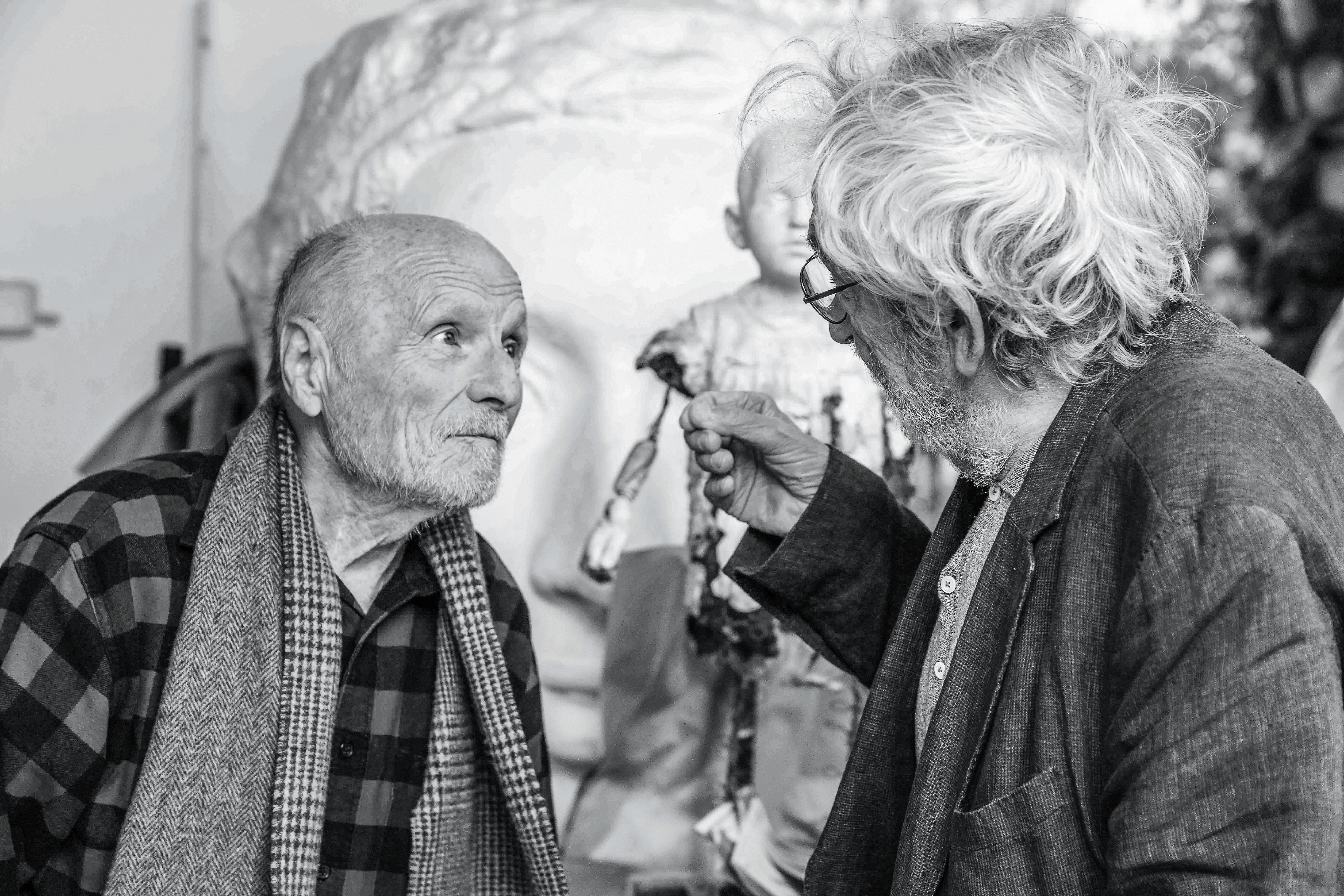
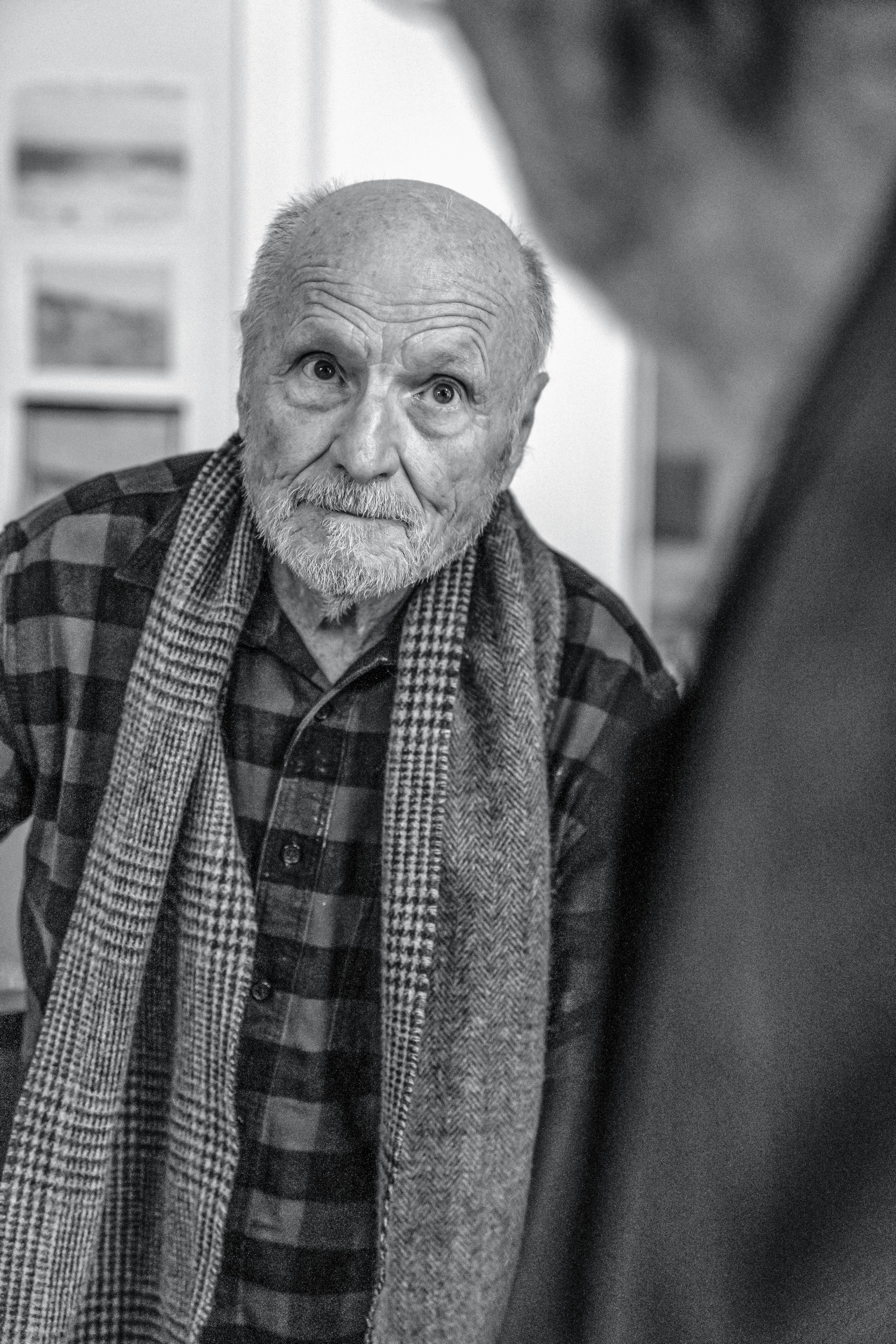
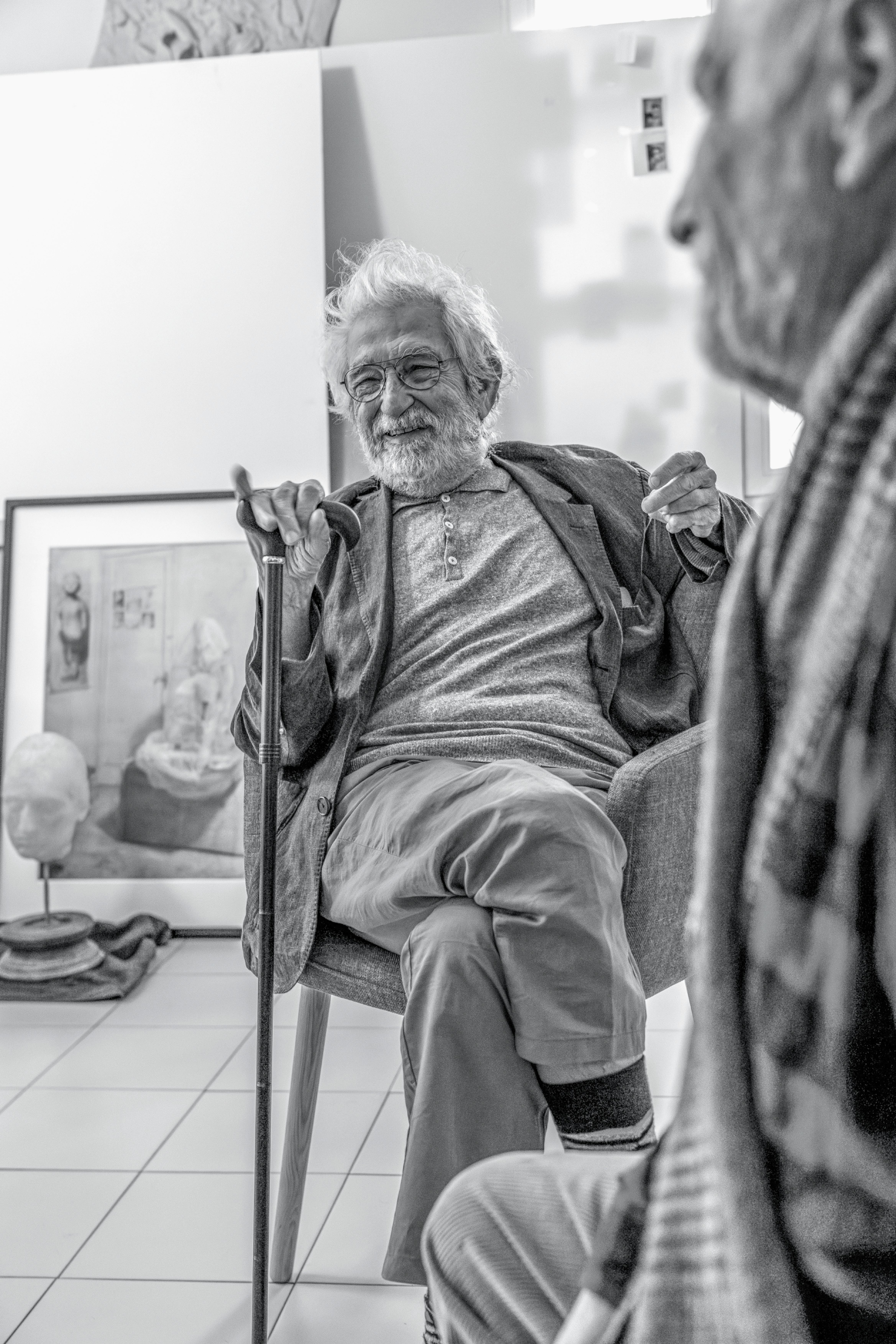
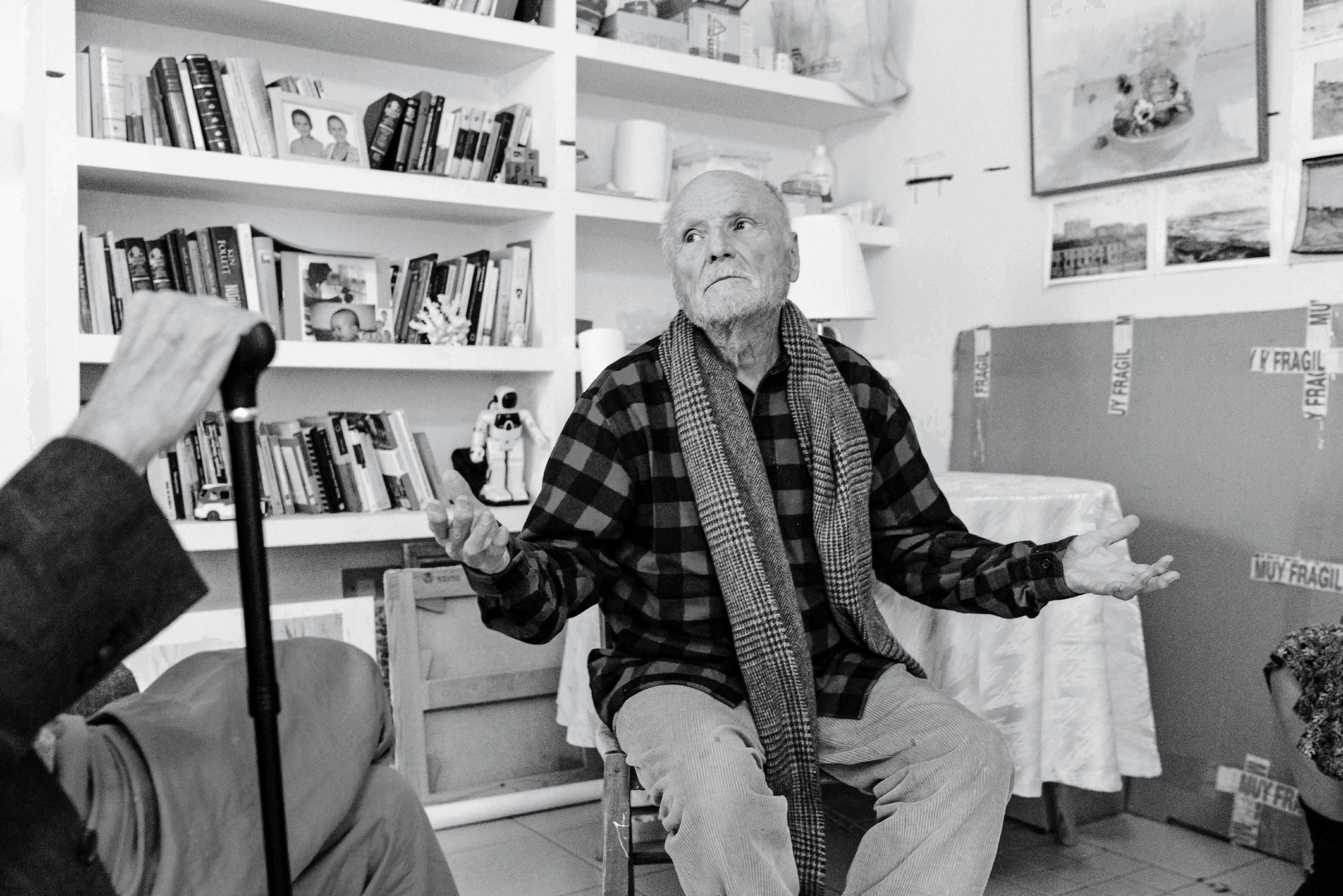
desde el paso del tiempo hasta la desaparición de la ventana con la modernidad.
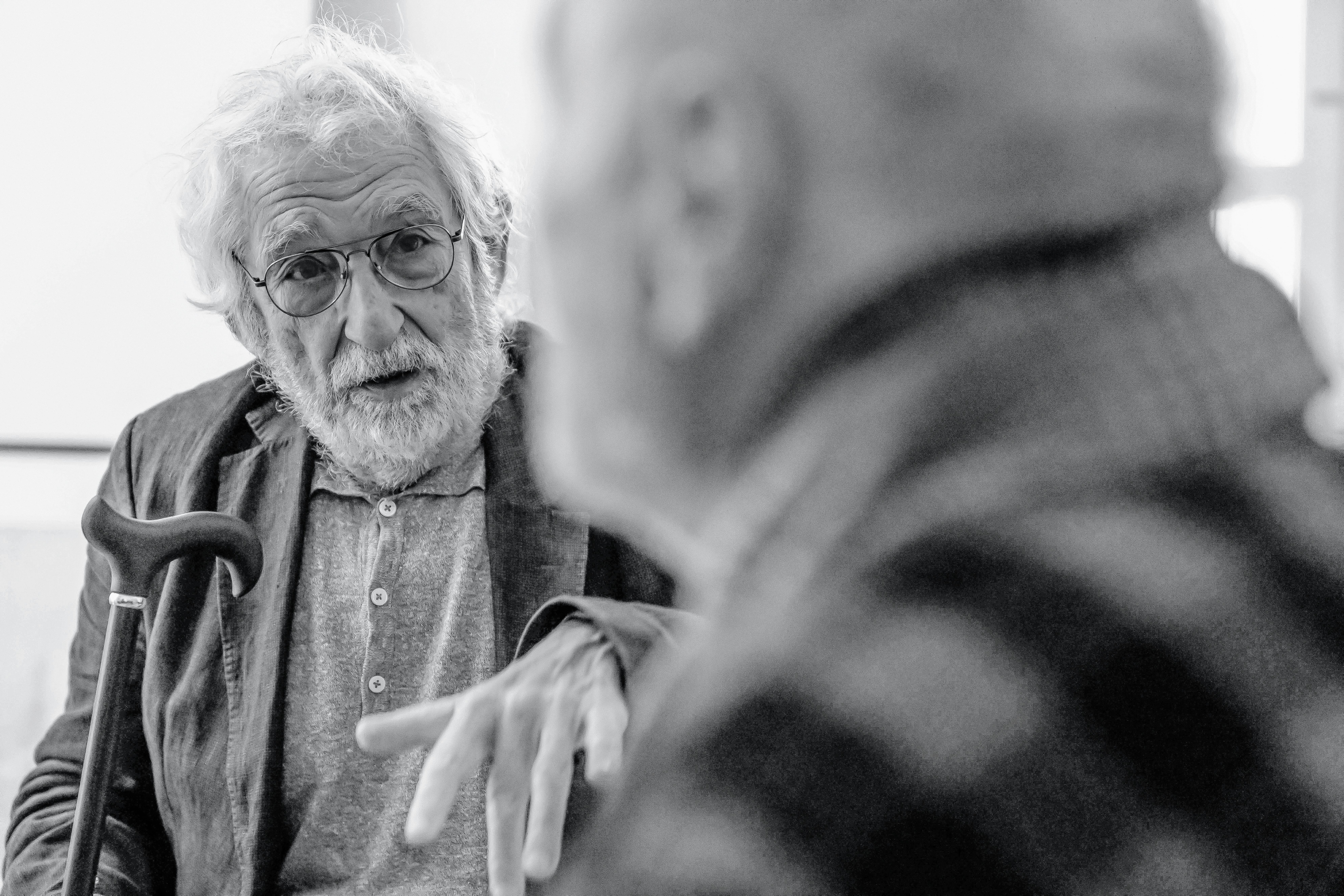
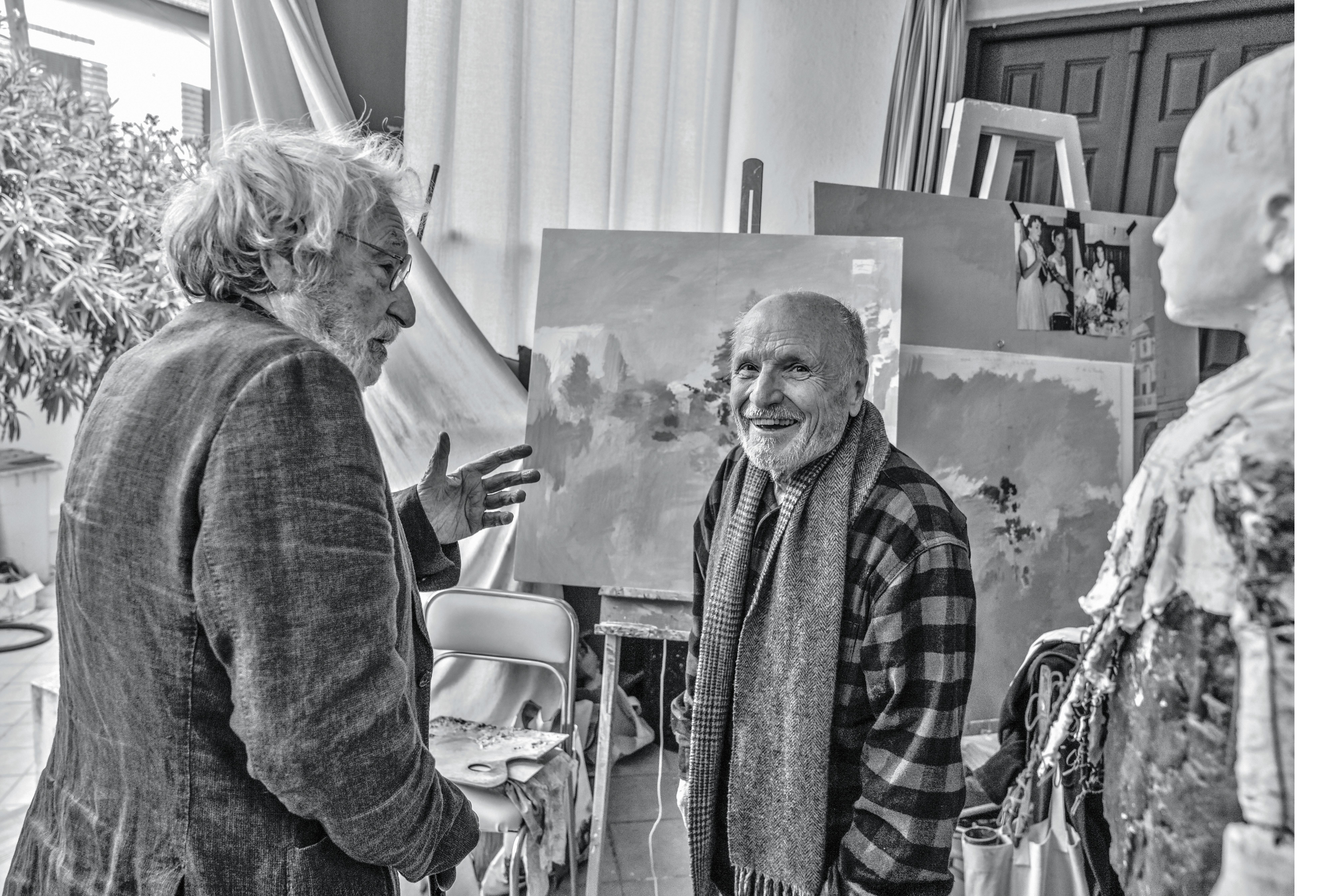
Oscar Tusquets Blanca: Hace muy poco tu hija ha colgado un vaso con unas rosas blancas que pone ‘del 25’. O sea, que tiene que ser muy reciente. Da rabia, Antonio, lo bueno que eres. Rosas blancas sobre fondo blanco. Y además ya veo que te interesa más lo que pasa dentro del vaso, lo que hay abajo con el agua medio teñida.
Antonio López García: No siempre las flores pueden llegar hasta donde quieres, porque depende de la duración de la vida de las flores.
OTB: Estás pintando flores decadentes o marchitas.
ALG: Dibujando y pintando. Sobre todo pinto el proceso de la flor desde su belleza inicial, olorosa y fresca, hasta su aniquilación. Sí, a mí eso me gusta. La belleza de la destrucción.
OTB: Te admiro mucho y me gusta discutir contigo. La última vez fue sobre la última época de Tiziano, que a mí me gusta: se está
yo. No es el proceso de Velázquez consciente. Velázquez no pinta Las hilanderas como las pinta porque ha perdido vista, sino porque quiere ir por ahí. En Tiziano se nota que ha perdido facultades visuales. Eso se nota. A veces queda muy chapucero, pero le salva su talento, su maestría, su destreza, tantos años de trabajo. Pero se nota.
«El muro cortina saca al arquitecto de una de las cosas más difíciles, que es proporcionar una fachada»
OTB: Pero antes de lo de Tiziano discutimos sobre el italiano Morandi, que a los dos nos gusta muchísimo. Yo me atreví a decir que una monográfica no le hacía favor, porque ya había dos botellas azules con una blanca, y después las mismas botellas en una disposición un poco diferente. Te enfadaste y me dijiste: «Un héroe. Morandi es un héroe.» ¿Te acuerdas?
El metódico pintor Antonio López (Tomelloso, 1936) y el polifacético arquitecto Oscar Tusquets (Barcelona, 1941) demuestran una admiración mutua que con los años ha dado pie a una larga amistad.
The methodical painter Antonio López (Tomelloso, 1936) and the multifaceted architect Oscar Tusquets (Barcelona, 1941) reflect mutual admiration that over the years has led to a long friendship.
ALG: A mí esa insistencia, ese estar en su espacio, en su patria, me parece grande.
OTB: Yo lo que quería hablar contigo, porque creía que tocaba un tema de arquitectura, es la ventana. Tú dijiste en algún momento de tus entrevistas que echabas en falta la ventana en la arquitectura moderna. El muro cortina, que es un invento nórdico, saca al arquitecto de una de las cosas más difíciles, que es proporcionar una fachada. Saber abrir los huecos. Si es toda de vidrio, te has ahorrado el problema. Pero pierde todo el misterio que encierra la ventana… Sobre todo si el muro es grueso. Todos los cuadros que se han hecho desde Caspar David Friedrich de una mujer mirando por una ventana…
ALG: La ventana tiene mucha presencia, pero veremos a ver qué presencia va a tener el muro cortina en el arte. Hay que esperar: primero se hace la casa y después llega el pintor y vive en la casa, a ver qué sale de esa relación.
OTB: La ventana ofrece dos posibilidades: la de estar mirando desde dentro hacia afuera, cosa que tienes en tus cuadros —yo recuerdo un paisaje nocturno de Madrid desde un cuarto de baño, que esto es muy tuyo—.
Antonio López welcomes his friend Oscar Tusquets to his home in Madrid, a visit during which they talked about concerns common to painting and architecture, from the passage of time to the disappearance of the window in modern architecture.
OscarTusquetsBlanca: Very recently, your daughter posted a vase with white roses that read ‘from 25,’ so it must be very recent. It’s infuriating, Antonio, how good you are. White roses on a white background. And I can see that you’re more interested in what’s inside the vase, what’s at the bottom with the slightly stained water.
Antonio López García: Flowers can’t always reach where you want them to, because it depends on how long they last.
OTB: You’re painting decaying flowers.
ALG: Drawing and painting. Above all, I paint the process of the flower from its initial beauty, fragrant and fresh, to its extinction. Yes, I like that. The beauty of destruction.
OTB: I admire you very much and I like to argue with you. Last time it was about Titian’s late period, which I like: he is going blind and paints with his hands. You told me I was completely wrong.
ALG: Not wrong, but he reached his nineties. And I imagine he lost sight. This is not Velázquez’s conscious process. Velázquez doesn’t paint The Spinners the way he paints it because he has lost his sight, but because he wants to go in that direction. With Titian, you can tell that he had lost his sight. You notice that. Sometimes it looks very sloppy, but his talent, his mastery, his skill, and so many years of work, save him. But you can tell.
OTB: But before we talked about Titian, we discussed the Italian artist Morandi, whom
“The curtain wall relieves the architect of one of the hardest tasks: to provide a facade“
we both like very much. I dared to say that a monographic didn’t do him justice, because there were already two blue bottles with a white one, and then the same bottles in a slightly different arrangement. You got mad and said to me: “A hero. Morandi is a hero.”
Do you remember?
ALG: I think that insistence, that being in his space, in his homeland, is great.
OTB: What I wanted to talk to you about, because I thought it touched on an architectural topic, is the window. You said at some point in your interviews that you missed the window in modern architecture. The curtain wall, which is a Nordic invention, relieves the architect of one of the hardest tasks, which is to provide a facade. Knowing how to open the gaps. If it’s all glass, you avoid the problem. But you lose all the mystery that the window holds... Especially if the wall is thick. All the paintings that have been done since Caspar David Friedrich of a woman looking out of a window...
ALG: The window has a strong presence, but we’ll see what presence the curtain wall will have in art. We’ll have to wait and see: first the house is built, then the painter arrives and lives in the house, and we’ll see what comes out of that relationship.
OTB: The window offers two possibilities: looking out from the inside, which you have in your paintings – I remember a nighttime landscape of Madrid from a bathroom, which is very typical of you.
ALG: That window really fascinated me. It was the bathroom window in our house on
Plaza de la Infancia. It was a new house; we were the first to live there. I was impressed by how new it was, and the window wasn’t new, but everything else was. I painted it during the daytime, at night, at sunset... That hole to the outside inspired me greatly. Paco (López) has painted windows. Maribel (Quintanilla) has painted windows. The window has been an important theme because it condenses the outside with the inside. Dalí already had that.
OTB: Exactly, and this is a loss. An irreparable loss. Le Corbusier’s nonsense with the horizontal window... it was a law: the window had to be horizontal because it was structurally possible. Well, so what? Let it be impossible.
ALG: But, Oscar, architecture isn’t made for painters to paint. It’s made for living. For living in accordance with certain aesthetics. The painter has to see that and decide if it is interesting and how. I think anything can be done. I don’t think Madrid is a beautiful city, but it’s very interesting to paint.
OTB: But architects intend for it not to be seen. The window has disappeared. Before, it had exterior blinds, glass, interior shutters, sheer curtains, and opaque curtains: five filters. Now we want to go from five filters to none. Modern architecture is really bad.
ALG: I’ve never painted the window you describe. I’ve painted the window with the bare opening, without shutters, without curtains, without anything. Because that’s what was in the house.
OTB: There are several very beautiful paintings by Dalí, with his sister looking out the window. And then there’s Hopper, who looks in from the outside, spying through the window. And Hitchcock?
ALG: Exactly. What’s going on inside? There’s a woman working in an office with her boss. If you see the woman’s rear, for example, fantastic. But the credit doesn’t go to the architect, it goes to the painter. When there’s no window, the painter will see something.
OTB: A building without windows is an impoverishment.
ALG: Don’t tell me that. Maybe I wouldn’t live there, but I would paint it. The window is the summary of life. We have reached the era of the non-window. But I think that everything is paintable, poeticizable, worthy of everything.
OTB: You started painting things that people didn’t consider beautiful. That’s to your credit.
ALG: But things have never been painted because they are beautiful. Vermeer painted Delft not because it was beautiful, but because he was there. There are no maps in my
la estrenamos nosotros. Me impresionaba lo nuevo del lugar, y la ventana no era nueva, pero todo lo demás sí. La pinté de día, de noche, al atardecer… Ese agujero al exterior me sugestionaba muchísimo. Paco (López) ha pintado ventanas. Maribel (Quintanilla) ha pintado ventanas. La ventana ha sido un tema importante porque condensa el exterior con el interior. Eso ya Dalí lo tiene.
OTB: Exacto, y esto es una pérdida. Una pérdida irreparable. La tontería de Le Corbusier con la ventana horizontal… era una ley: había que hacer la ventana horizontal porque estructuralmente era posible. Bueno, ¿y qué? Que sea imposible.
ALG: Pero, Oscar, la arquitectura no se hace para que la pinten los pintores, se hace para vivir. Para vivir de acuerdo con unas estéticas. El pintor tiene que ver eso y decidir si le interesa y cómo. Yo pienso que todo se puede hacer. A mí Madrid no me parece una ciudad hermosa, pero para pintarla es interesantísima.
OTB: Pero lo que los arquitectos pretenden es que no se vea. La ventana ha desaparecido. Antes tenía persianas exteriores, vidrios, postigos interiores, visillos y cortina opaca: cinco filtros. Ahora pretendemos pasar de cinco filtros a ninguno. La arquitectura moderna es muy mala.
ALG: Esa ventana que describes yo no la he pintado nunca. Yo he pintado la ventana con el hueco pelado, sin contraventanas, sin visillos, sin nada. Porque era lo que había en casa.
OTB: Hay varios cuadros muy bonitos de Dalí, con su hermana mirando por la
ALG: Exacto. ¿Qué pasa dentro? Hay una señora trabajando en una oficina con su jefe. Si ves el culo de la señora, por ejemplo, fantástico. Pero el mérito no es del arquitecto, es del pintor. Cuando no hay ventana, el pintor ya verá algo.
OTB: Un edificio sin ventanas es un empobrecimiento.
ALG: A mí eso no me lo digas. A lo mejor yo no viviría ahí, pero lo pintaría. La ventana es el resumen de la vida. Hemos alcanzado la época de la no ventana. Pero pienso que todo es pintable, poetizable, digno de todo.
OTB: Tú empezaste a pintar cosas que la gente no consideraba bonitas. Es tu mérito.
«La arquitectura no se hace para que la pinten los pintores, se hace para vivir»
ALG: Pero nunca se han pintado las cosas porque son bonitas. Vermeer pintó Delft no porque fuera bonita, sino porque él estaba allí. En mi casa no hay mapas. No he visto mapas en las casas de mis amigos. Pero en la época de Vermeer hay mapas, y hablan de viajes.
OTB: No me fastidies, hombre. Está compuesto. Bueno, esto es lo que tú y yo hablamos desde hace muchísimos años. Yo digo: si estoy pintando una ciudad y hay una ventana mal puesta, la corrijo.
ALG: Yo no la corrijo. ¿Tú crees que Velázquez iba a corregir la barbilla de Felipe IV?
OTB: Está demostrado que la puerta del
fondo de Las Meninas no podía estar donde está. Entonces Velázquez compone, y por eso la hoja de la puerta está mal pintada.
ALG: ¿Y qué más da? Una cosa es componer y otra inventarse las cosas. Velázquez trabaja con la materia que tiene. Por eso es Velázquez y no Ingres. El arte español es una maravilla. Cómo nace paralelo a la vida: único.
OTB: Yo a ti te critico en una cosa: en la perspectiva te equivocas. Tengo un capítulo en mi último libro dedicado a demostrarlo.
ALG: Una cosa es cómo es esta barra de hierro roja y otra cómo la vemos. Es recta, pero el ojo la ve curva porque abarca tanto espacio.
OTB: Pero cuando tú ves el cuadro y te mueves, ves la barra curva cuando es recta. Y esto es un error. En el lateral de La escuela de Atenas hay una esfera. Según tu teoría sería un esferoide, no una esfera.
ALG: Pero no es igual la mirada de una persona de ahora que la de la época de Rafael. Rafael conocía solo una perspectiva: la de un punto. Velázquez tampoco pasó de ahí. Incorporó cosas, pero no en relación con la perspectiva.
OTB: Pero tus cuadros también tienen un solo punto de fuga.
ALG: Tienen más de uno. Si te hago un retrato, hay el que va al horizonte y el que va al suelo. Y ya son dos.
OTB: Pero tú marcas el punto de vista. No te mueves.
ALG: No lo cambio. Una vez decidido el sitio, siempre en el mismo lugar. Pongo señales. Dalí, cuando hace asomar a la ventana, no emplea la perspectiva moderna. Yo quiero simplificar y pinto como lo veo. Que se curva, lo pinto curvo. No me importa que lo discutan. Cuando empecé a curvar
tion and says it is a preliminary study. That it was a prototype for the large painting.
ALG:No, it’s a terrible painting. It was done after Las Meninas. He has no idea. He doesn’t know anything about painting. It’s so poorly painted that it’s impossible.
OTB: It was painted using a camera obscura. I’m absolutely sure.
ALG:Oh, that’s crazy. I think it was painted on site, with the real people. From an Itali-
OTB:It’s been proven beyond doubt. There’s an edge that’s lost beneath the dog, which is in the small painting but not in the large one. Vermeer also worked with a camera obscura, as Hockney proves. Canaletto worked with it too. I’m not saying this as a criticism.
ALG:But Hockney is very cheeky. He painted from photographs and wanted Vermeer to paint like him. So what if he used a camera obscura? Paint a Vermeer. All the painters
that about Vermeer because it belittles him.
OTB: No, he used a resource to outline.
ALG:Maybe, but not to outline: that is easy. A fine arts student with some skill can outline. It might be useful to cut the scenes, to see what the real world is like there and say, “I have to repeat this by painting it.” I think it was an inspiration, but not something he used to paint because, hey, look, is the camera obscura going to draw the picture for you? Take Pope
las cosas me resultaba escandaloso, tardé en aceptarlo, pero coincidieron todas las formas. Las curvas se crean cuando abarcas mucho espacio. Vermeer abarca poco. Pero en Las Meninas, el ojo no lo podía ver así sin deformación. Es casi imposible.
OTB: Te enviaré ese artículo, en el que se argumenta cómo se pintaron Las Meninas. Miguel Usandizaga, un catedrático de arquitectura ha escaneado el cuadro pequeño que está en una colección británica y dice que es un previo. Que era un prototipo para hacer el cuadro grande.
ALG: No, es un cuadro malísimo. Eso está hecho posterior a Las Meninas. No tiene ni idea. No sabe de pintura. Está tan mal pintado que es imposible.
OTB: Está pintado con cámara oscura. Segurísimo.
ALG: Ay, qué locura. Yo creo que está pintado dentro del sitio, con las personas reales. Desde una concepción italianizante, no moderna. Si mandases a un fotógrafo a hacer esa escena sería una locura abarcar todo eso sin deformación. Ya bastante hizo Velázquez. Pero ese cuadro no es el boceto de Las Meninas.
OTB: Está demostradísimo. Tiene una arista que se pierde por debajo del perro y que está en el cuadro pequeño y no en el grande. Vermeer también trabajaba con cámara oscura, lo demuestra Hockney. También Canaletto pintaba con cámara oscura. No lo digo como crítica.
ALG: Pero Hockney tiene mucha cara. Pintaba de fotografía y quería que Vermeer pintara como él. ¿Y qué si usara cámara oscura? Pinta un Vermeer. Todos los pintores de su generación pintan lo mismo, pero Vermeer es único. Hay una diferencia enorme entre Canaletto y Vermeer. De qué le valía la cámara oscura a Canaletto si vivía allí. Me da coraje que digan eso de Vermeer porque es rebajarle.
OTB: No, utilizaba un recurso para encajar.
ALG: Podría ser, pero no para encajar: encajar es fácil. Encajar lo hace un estudiante de Bellas Artes, un poco hábil. Lo encaja. Le valdría a lo mejor para cortar las escenas, para verlo, para ver cómo es el mundo real allí y decir esto lo tengo que repetir pintándolo. Yo pienso que fue una inspiración, pero no que le sirviera para pintar porque oye, mira, ¿el cuadro te lo va a dibujar la cámara oscura? Tú coge al Papa Inocencio X y pon la cámara oscura y píntalo. A ver si te sale ese cuadro. Ahora mismo la fotografía está fantástica, pero la pintura actual sigue siendo superior. Lo maravilloso es lo que dejas de ti. Eso es el arte.
Bañada por el Mediterráneo, la capital de la Costa del Sol une su legado histórico con museos de vanguardia y una animada escena urbana.
The southern capital, bathed by the Mediterranean, links its historical legacy with avant-garde museums and a lively urban scene.
Seafront Promenade Malagueta Beach
Ubicado entre el puerto de la ciudad y la popular playa de La Caleta, este pintoresco paseo marítimo se presenta como el lugar idóneo para descubrir los emblemáticos chiringuitos y degustar los tradicionales espetos de sardinas.
Located between the port and the popular La Caleta Beach, this scenic seaside promenade is presented as an ideal location for discovering emblematic bars and trying traditional roasted sardines.
La emblemática calle peatonal, que se extiende desde la Plaza de la Constitución hasta el Parque de la Alameda Principal, es el mayor eje comercial de la ciudad y uno de los puntos de encuentro más populares.
The iconic pedestrian street that stretches from Constitution Square all the way to Alameda Park is the city’s principal commercial axis and one of its busiest gathering places.
Riverwalk
Calle Larios
Religious Catedral de Málaga
Situado frente a la plaza del Obispo, el templo se edificó sobre la antigua mezquita mayor tras la toma de la ciudad por los Reyes Católicos, y se caracteriza por su composición renacentista y su portada barroca.
Facing Plaza del Obispo, the church was built over the old main mosque after the city was taken by the Catholic Monarchs, and is characterized by its Renaissance composition and Baroque portal.
La que fue Fábrica de Tabacos alberga ahora el Museo Ruso y el del Automóvil y la Moda.
The former Tobacco Factory houses the Russian and the Automobile and Fashion museums.
Frente a la plaza del Obispo, el palacio barroco fue construido por Antonio Ramos.
Baroque Architecture Episcopal Palace
Standing at Plaza del Obispo, the Baroque edifice was erected by Antonio Ramos.
Situada estratégicamente a los pies del monte Gibralfaro para controlar la ciudad y el puerto, el carácter defensivo de esta construcción musulmana contrasta con la riqueza ornamental del interior de sus patios y jardines.
Rising at the foot of Mount Gibralfaro to keep the city and the port under control, the defensive character of this Muslim construction contrasts with the ornamentation of the courtyards and gardens.
La antigua finca de una familia aristocrática es hoy un jardín con más de cien especies.
Landscape Garden La Concepción
Museum Complex La Tabacalera Lighthouse La Farola
The old estate of an aristocratic family is now a garden where over a hundred species grow.
Levantado a principios del siglo XIX, el faro se ha convertido en un hito en el paseo marítimo.
Built at the start of the 19th century, this tower is a beacon along the sea promenade.
El edificio racionalista, obra de Luis Gutiérrez Soto, está situado en el margen izquierdo de la desembocadura del río Guadalmedina, tras su función de mercado acoge desde 2003 el Centro de
Luis Gutiérrez Soto’s rationalist work on the left bank of the Guadalmedina River’s mouth was first a marketplace, but since 2003 it has been home to the Andalusian city’s
Housing Melilla 31 Building
En los años sesenta varias torres residenciales definieron la imagen moderna de La Malagueta, entre ellas destaca la de Antonio Lamela convertida hoy en uno de los mayores exponentes del ‘Estilo del relax’.
In the 1960s, several apartment high-rises gave the district of La Malagueta a modern image, among them the one that Antonio Lamela designed, which today is a major example of the ‘relax style.’
Vázquez Molezún ideó una innovadora estructura de hormigón prefabricado con pilares en Y y vigas dobles en las que se asienta la cubierta de lucernarios. El conjunto ha sido recuperado sin sufrir grandes alteraciones.
Vázquez Molezún created an innovative structure of prefabricated concrete with Y-shaped pillars and double beams upon which to lay the roof abounding in skylights. The building has been restored, largely unaltered.
Religious
El conjunto proyectado por García de Paredes se define por el contraste entre los austeros revestimientos cerámicos y la complejidad espacial de su sección, donde se superponen los espacios de la iglesia y el convento.
The complex built by García de Paredes is characterized by the contrast between austere brick claddings and the spatial complexity of its section, where spaces of the church and the convent overlap.
Textile Industries Mayoral Campus
Stella Maris Convent
University of Málaga Lecture Hall 13
El nuevo Pabellón de Gobierno, diseñado por Roberto Ercilla y la oficina de alcolea+tárrago, se define por dos rotundos volúmenes, de geometrías esenciales y se caracteriza por sus abstractas fachadas de mármol blanco Macael.
The new Government Pavilion, a design of
City Courts City of Justice 14 15
University of Málaga Faculty of Social Studies
El malagueño estudio Seguí, en colaboración con Frechilla y López Peláez, construyó un podio de travertino rojo sobre el que se asientan los cuatro prismas de hormigón de la nueva Ciudad de la Justicia.
Luis Machuca buscó crear un lugar de encuentro dentro de la ordenación del campus, con un centro planteado como un proyecto urbano y marcado por la continuidad de distintos espacios públicos.
Luis Machuca inserted a meeting place into the set scheme of the campus, through a building planned in the manner of an urban project, with its continuum of different public spaces.
The local studio Seguí, in collaboration with Frechilla and López Peláez, built a podium of red travertine to serve as base for the four concrete prisms that make up Málaga’s new City of Justice.
Brewery Cervezas Victoria
La marca de cerveza Victoria, fundada en Málaga en 1928, cuenta con nueva sede obra de la firma local Gana.
Málaga’s own beer brand, Victoria, produced since 1928, has new facilities to show for, built by the local practice Gana.
El centro logístico de la compañía de moda infantil Mayoral ha sido proyectado por System Arquitectura partiendo del diálogo con la contigua nave de Vázquez Molezún, recuperada por el mismo estudio en el año 2018.
La nueva Facultad de Psicología y Logopedia de LLPS Arquitectos destaca por su fachada cerámica.
LLPS’s new Faculty of Psychology and Speech Therapy presents a stunning ceramic facade.
La propuesta de Junquera arquitectos, inspirada en la tradición mediterránea, busca recuperar para la ciudad la franja de costa antes dedicada a usos portuarios con una regular trama de palmeras y una sinuosa pérgola.
Drawing inspiration from Mediterranean tradition, through a regular grid of palm trees and a sinuous pergola, Junquera arquitectos reclaimed for the city a strip of coast that used to serve the port.
Urban Park
El Palmeral
The new logistics hub of
Art Museum Centre Pompidou
Desde 2015 en el puerto se puede disfrutar de parte de la colección del famoso museo francés.
Since 2015, at the port, an outpost of the French museum has shown part of its collection.
Con más de cien años de historia, la actual construcción sustituyó unos baños públicos para crear un nuevo balneario destinado a las clases altas de la época, hoy es uno de los símbolos del litoral este de la ciudad.
With a history of over a century, the current construction replaced some public baths to build a spa for the upper classes of the period, and nowadays it is one of the icons of Málaga’s east coast.
Strachan, fue concebido como el Hotel Príncipe de Asturias, y tras un breve periodo de tiempo con usos administrativos ha sido transformado para recuperar su uso original.
was originally the Hotel Príncipe de Asturias. After a short interim of use for administrative functions, it has been fitted out to serve its original purpose.
Concebido en 1788 para controlar el tráfico del puerto, el edificio neoclásico ha sido recientemente rehabilitado para reunir en una misma sede las colecciones de arte y arqueología de la ciudad.
Art Museum Museo Picasso
Ubicado en el antiguo Palacio de los Condes de Buenavista, el museo reúne mas de doscientos cincuenta obras del pintor malagueño, que incluyen sus primeros estudios académicos hasta las últimas pinturas.
Occupying Buenavista Palace, home to counts of that name, the museum gathers more than two hundred works by the Málaga-born painter, ranging from early school drawings to some of his last paintings.
Built in the year 1788 as a base from which to regulate port traffic, the neoclassical edifice was recently refurbished to bring the city’s art and archaeology collections together in a single place.
29
Traditional Bar Bodega El Pimpi
La castiza bodega es uno de los mejores sitios para degustar la comida y los vinos de la tierra.
The folkloric winery is one of the finest spots for trying foods and wines of the region.
28
Restaurant Balausta
El restaurante, situado en el interior de un patio porticado, reformula recetas tradicionales.
Taking up the interior of an arcaded courtyard, the restaurant reformulates traditional recipes.
Con sede en el Palacio de Villalón, la institución acoge una importante colección de pintura.
Art Museum Carmen Thyssen Málaga
Housed in Villalón Palace, the institution showcases a major collection of paintings.
Palacio de Buenavista museopicassomalaga.org 10:00-19:00 Tue-Sun
C. Granada, 57-59 web: restaurantebalausta.com
C. Granada, 62 web: elpimpi.com
Plaza Carmen Thyssen carmenthyssenmalaga.org 10:00-20:00 Tue-Sun
del Teatro, 2
Stella Maris Convent
UMA Lecture Hall
Faculty Social Studies
Faculty of Fine Arts
Centre Pompidou
Baños del Carmen
Hotel Miramar
Palacio de la Aduana
Museo Picasso
Balausta
Bodega El Pimpi
Carmen Thyssen
Beach
Boston
La capital de Massachusetts, una de las más antiguas de Estados Unidos, orienta su oferta lúdica a ensalzar su papel en la historia del país.
Massachusetts’ capital, one of the oldest in the US, focuses its recreational program on explaining its role in the country’s history.
Estuary
Boston Harbor Public Park Boston Common
El parque está bordeado por las calles Tremont, Park, Beacon, Charles y Boylston, y forma parte del conjunto de zonas verdes conocido como Emerald Necklace, que se extiende hacia el sur hasta el parque Franklin.
The park is bordered by Tremont, Park, Beacon, Charles, and Boylston streets, and is part of a network of green spaces known as the Emerald Necklace, which spreads south towards Franklin Park.
Además de la vía Harborwalk, que recorre varios puntos singulares de la zona, el puerto cuenta con más de treinta islas que conforman el Parque Nacional, un oasis natural a pocos minutos del centro de la ciudad.
Aside from Boston Harborwalk, which connects several landmarks in the area, the port has more than thirty islands that make up the National Park, a natural oasis just a few minutes from the city.
Neighborhood Downtown
En este animado barrio se encuentra la Freedom Trail, una ruta por lugares históricos como la antigua casa del Estado (Old State House), el mercado de Faneuil Hall, la zona financiera o el ayuntamiento brutalista.
This lively neighborhood is home to the Freedom Trail, a route through historic sites like the Old State House, Faneuil Hall, the financial district, and Boston City Hall, an example of brutalist architecture.
Public Library Central Library
Fue la primera biblioteca abierta al público del país, y cuenta con un fondo de más de 15 millones de libros, situándose como la tercera más grande de EEUU solo por detrás de la del Congreso y la de la Universidad de Harvard.
It was the first library open to the public in the country and has a collection of over 15 million books, making it the third largest in the US, only behind those of the Library of Congress and Harvard University.
Historic Building Old State House
State Capitol New State House
La Casa del Estado de Massachusetts es la sede de la Corte General y de la oficina del Gobernador. Se erige en Beacon Hill con vistas al Boston Common, y es considerada obra maestra de la arquitectura federal.
The New State House of Massachusetts is the seat of government and the Governor’s office. It is located on Beacon Street with views of Boston Common, and is considered a masterpiece of federal architecture.
Historic Commerce Old Corner Bookstore
El edificio fue construido en 1719 por un doctor como su hogar y botica. Años más tarde albergó varias librerías, siendo la más antigua de Boston. En 1960 intentaron demolerlo, pero los vecinos lo evitaron.
The building was raised in 1719 by a doctor as his home and apothecary. Years later, it housed several bookstores, being the oldest in Boston. In 1960, an attempt to demolish it was thwarted by neighbors.
Claro ejemplo de la arquitectura georgiana, la antigua casa del Estado se construyó en 1713. Fue la sede del Gobierno colonial británico y el sitio de la masacre de Boston que hizo saltar la Revolución.
A clear example of Georgian architecture, the Old State House was built in 1713. It was the seat of the British colonial government and the site of the Boston Massacre that sparked the Revolution.
Historic Building Old City Hall
El edificio, que albergó el Ayuntamiento de Boston desde 1865 hasta 1969, fue una de las primeras casas consistoriales de estilo Segundo Imperio francés que se construyeron en Estados Unidos.
The building, home to the city’s first public school, housed Boston City Hall from 1865 to 1969. It was one of the first French Second Empire-style town halls to be built in the United States.
Historic Building Trinity Church
El conjunto diseñado por H. H. Richardson es el arquetipo del estilo románico richardsoniano, caracterizado por el uso de arcilla en la cubierta, la policromía y la piedra tosca en los pesados arcos y la torre maciza.
The complex designed by H. H. Richardson is the archetype of the Richardsonian Romanesque style, defined by the use of clay on the roof, polychromy, and rough stone in the heavy arches and massive tower.
University Harvard
Nombrada como su primer benefactor, es la institución de educación superior más antigua del país.
Named after its first benefactor, it is the oldest institution of higher education in the country.
University MIT
Se fundó en 1861 como respuesta a la creciente industrialización que vivía Estados Unidos.
The MIT was founded in 1961 in response to the growing industrialization of the United States.
Art Museum
Isabella Stewart Gardner
Since 1903, the Fenway Court mansion custodies the private collection of its former owner.
Desde 1903 la mansión Fenway Court alberga la colección privada de su antigua residente.
Campus Harvard Carpenter Center 13
Este centro es el único edificio de Le Corbusier en Estados Unidos y uno de los últimos que construyó durante su vida. Aquí recuperó elementos de sus primeras obras, como los brise-soleil o los ‘5 puntos’ que definieron su estilo.
This center is Le Corbusier’s only building in the US and one of the last he built during his lifetime. Here he revisited elements from his early works, such as the brisesoleil or the ‘five points’ that defined his style.
16
Modern Architecture Madison Park High School
Este vasto complejo de hormigón prefabricado es obra de Marcel Breuer y Tician Papachristou.
The vast complex of prefabricated concrete is a work of Marcel Breuer and Tician Papachristou.
Brutalist Architecture Government Service Cntr.
El edificio, diseñado por Paul Rudolph e inaugurado en 1971, ha sido el sujeto de varias propuestas de protección y transformación, tanto en oficinas y espacios comerciales como en espacios de vivienda.
The building, designed by Paul Rudolph and inaugurated in 1971, has been the subject of several proposals for protection and transformation, both into offices and commercial spaces and into housing.
14
Campus Harvard Holyoke Center
José Luis Sert, antiguo decano de la Escuela de Diseño, completó en 1966 este edificio universitario.
Josep Lluís Sert, former dean of the School of Design, completed this building in 1966.
Ejemplo de arquitectura moderna de los años 60, y diseñado por Walter Gropius y The Architects Collaborative, el conjunto consta de dos torres de 118m y un edificio bajo que las conecta a través de un pasillo acristalado.
An example of 1960s modern architecture and designed by Walter Gropius and The Architects Collaborative, the complex consists of two 118-meter towers and a low-rise building linking them via a glass-enclosed walkway.
Steven Holl diseñó esta residencia de 350 camas como una extensión porosa del tejido urbano.
Steven Holl planned this residence for 250 students as a porous extension of the urban fabric.
Frank Gehry built the center on the former site of Building 20, temporarily erected during World War II to house the Radiation Laboratory. From the fourth floor on, the new building is divided into two structures.
MIT Campus Music Building
Este edificio de SANAA cuenta con tres volúmenes revestidos de ladrillo: un salón de actos, talleres de música y el hall cultural, todos conectados por un vestíbulo acristalado que ofrece distintos accesos. 21
This SANAA-designed building has three volumes, all clad in brick: an auditorium, music workshops, and the cultural hall. The volumes are connected by a glass-enclosed lobby that provides various accesses.
18
Campus Harvard Harvard Art Museum
En 2006, la Universidad de Harvard le encargó al equipo de Renzo Piano la rehabilitación y ampliación del museo. La propuesta conservó las fachadas históricas de 1927 y añadió un ala en Prescott Street.
In 2006, Harvard University commissioned Renzo Piano with the refurbishment and extension of the museum. The proposal preserved the historic facades of 1927 and added a wing on Prescott Street.
Este espacio íntimo, de ladrillo y sin ventanas, fue proyectado por Eero Saarinen entre 1955 y 1956.
This intimate space, of brick and windowless, was designed by Eero Saarinen between 1955 and 1956.
Contemporary Art IAC Musem
En 2006, Diller Scofidio + Renfro proyectaron el primer nuevo museo construido en Boston en los últimos cien años. El edificio limita con el Harborwalk y cobija un amplio programa en un espacio fluido y dinámico
In 2006, Diller Scofidio + Renfro designed the first museum to go up in Boston over the last one hundred years. The building borders on Harborwalk and houses an extensive program in a fluid and dynamic space.
En Foster+Partners trabajaron durante diez años en la ampliación de esta pinacoteca de 1870.
Foster+Partners worked during ten years on the extension of this art museum from 1870.
El estudio español de Luis Vidal ha renovado y ampliado la terminal existente a todo color.
The Spanish firm of Luis Vidal has carried out a full color renovation and extension of the terminal.
Art Museum Museum of Fine Arts
Este mercado ocupa uno de los muchos edificios que GJF Bryant diseñó en Boston en el siglo XIX.
This market takes up one of the many buildings designed by GJF Bryant in Boston in the 19th century.
Cyclorama
Inicialmente, el espacio se diseñó para exponer La Batalla de Gettysburg de Paul Philippoteaux.
The space was initially designed to display The Battle of Gettysburg by Paul Philippoteaux.
New England Aquarium
El edificio de 1969, de Cambridge Seven, sentó cátedra en el diseño de esta tipología. En 1996, Schwartz/Silver Architects proyectaron un nuevo ala oeste en acero y vidrio para alejarse visualmente del edificio de hormigón.
The 1969 building by Cambridge Seven set the standard for the design of this type of building. In 1996, Schwartz/Silver Architects planned a new west wing in steel and glass to visually distance it from the concrete building.
La casa de los Red Sox es uno de los estadios de béisbol más antiguos del país. El gran muro verde del jardín izquierdo fue apodado Green Monster: su dimensión condiciona el juego al propiciar dobles y extraños rebotes.
The Red Sox’s home is one of the country’s oldest baseball stadiums. The large green wall in the left field was nicknamed the Green Monster: its size influences the game by encouraging doubles and strange rebounds.
El edificio que en el siglo XIX fue conocido como la cárcel de Charles Street renació como hotel de lujo. Tras su restauración, se conservó la gran cúpula y se construyó una torre que conectaba el río y Beacon Hill.
The building that was known as Charles Street Jail in the 19th century was reborn as a luxury hotel. After its restoration, the large dome was preserved and a tower connecting the river and Beacon Hill was built.
Garden
El TD Garden es el pabellón local de los Celtics en la NBA y de los Bruins en la NHL.
The TD Garden is home arena for the Celtics in the NBA and for the Bruins in the NHL.