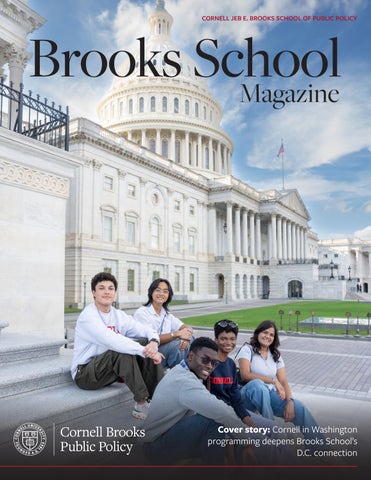
Cover story: Cornell in Washington programming deepens Brooks School’s D.C. connection
CORNELL JEB E. BROOKS SCHOOL OF
2
STUDENTS MAKING A DIFFERENCE
- New Cornell in Washington programming deepens Brooks School’s D.C. connection
- Brooks student combines love of birds and climate policy research
- Brooks Global Policy Exchange adds new partner as model thrives
10
BROOKS IMPACT
- Connecting Cornell to Congress
- Policy in Practice
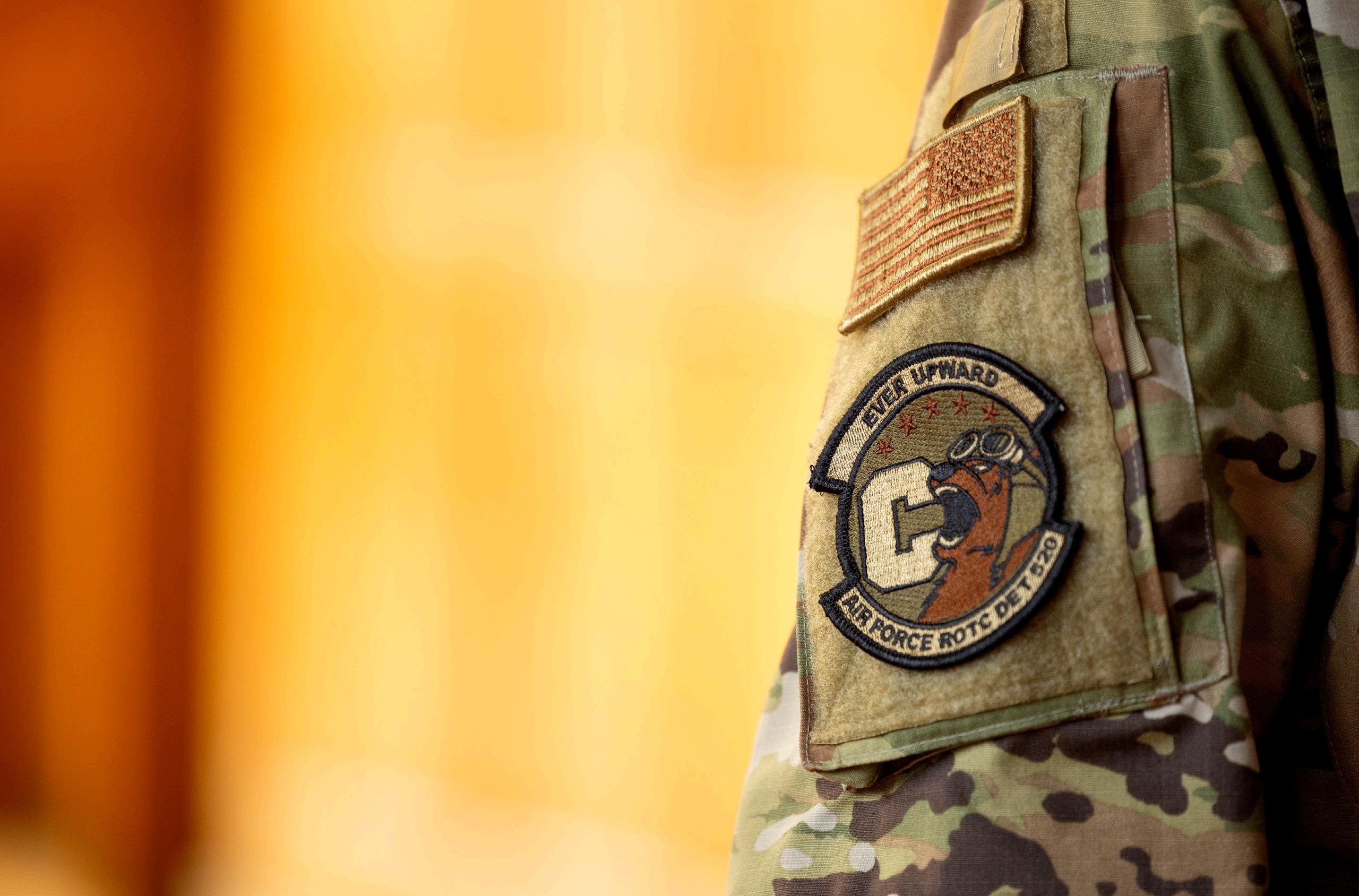
- Veterans at Brooks
- Cornell Health Policy Center leverages collaborations to improve health policy
18
ADVANCING KNOWLEDGE
- Empower adolescents to change their own behavior in school
- Highly skilled émigrés offer surprising ‘brain gains’ for their home countries
- Americans want stronger safety net for older adults
- As class gaps grow, Goldman pursues more effective interventions
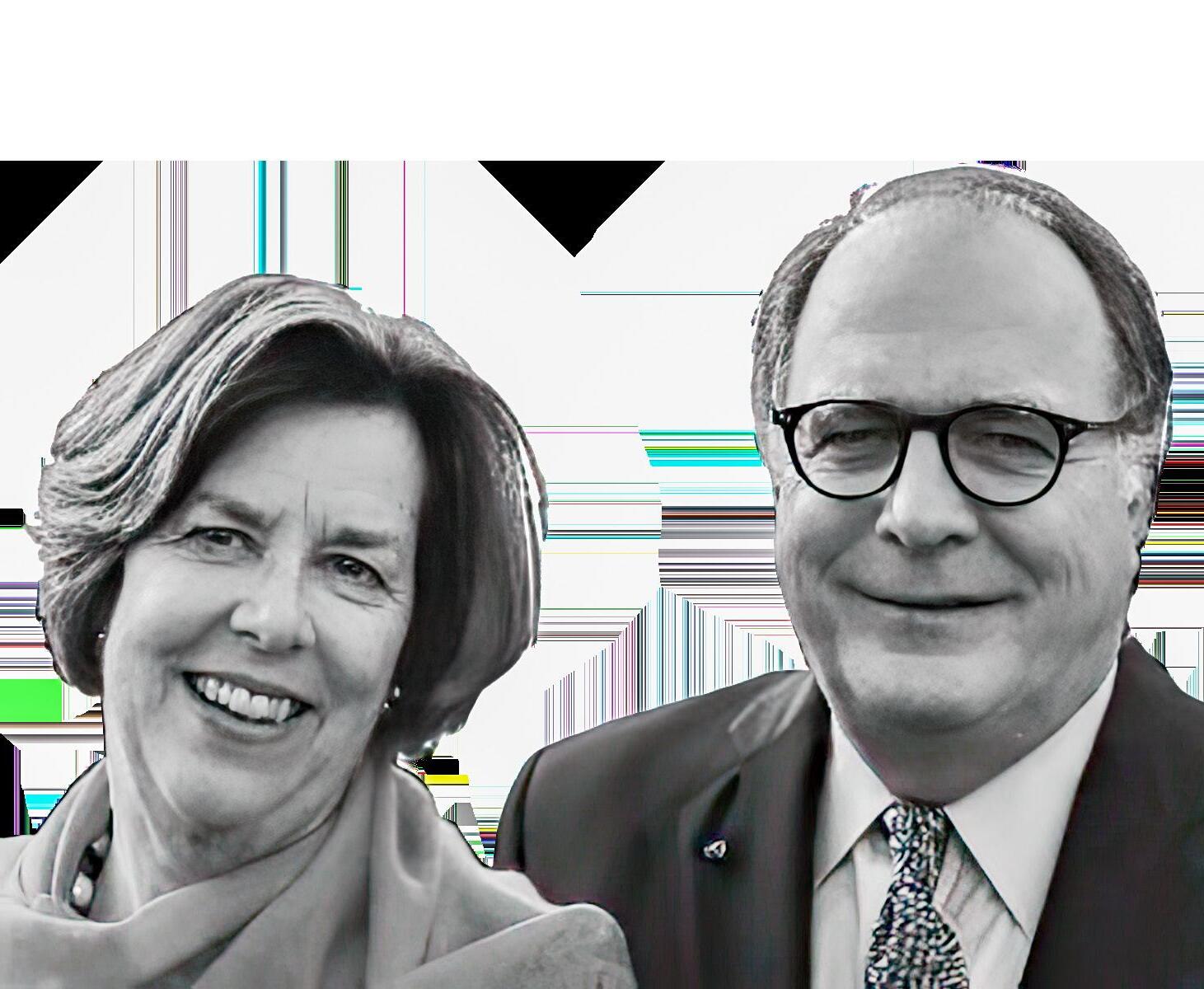
Jeb E. Brooks, MBA ’70, his wife, Cherie Wendelken, and the Brooks Family Foundation provided the generous support to name the Cornell Jeb E. Brooks School of Public Policy. Jeb was an early advocate for socially responsible investment whose late father taught at Cornell and whose Cornell roots span three generations. Cherie holds a PhD in architectural history from the Massachusetts Institute of Technology and was a Harvard University professor. In 1999, Jeb and Cherie established the Brooks Family Foundation, which focuses on health care, underserved children, and the environment.
CONNECTING CORNELL TO D.C.
For generations of Cornellians, Cornell in Washington has been a life-changing experience—a gateway to careers in policy for some and, for others, a semester of unforgettable memories working and enjoying life in our nation’s capital. Alumni of the program have gone on to successful roles as journalists, policymakers, judges, business leaders, and elected officials. Nearly everyone who has experienced Cornell in Washington remarks on the close-knit community and, of course, the location.
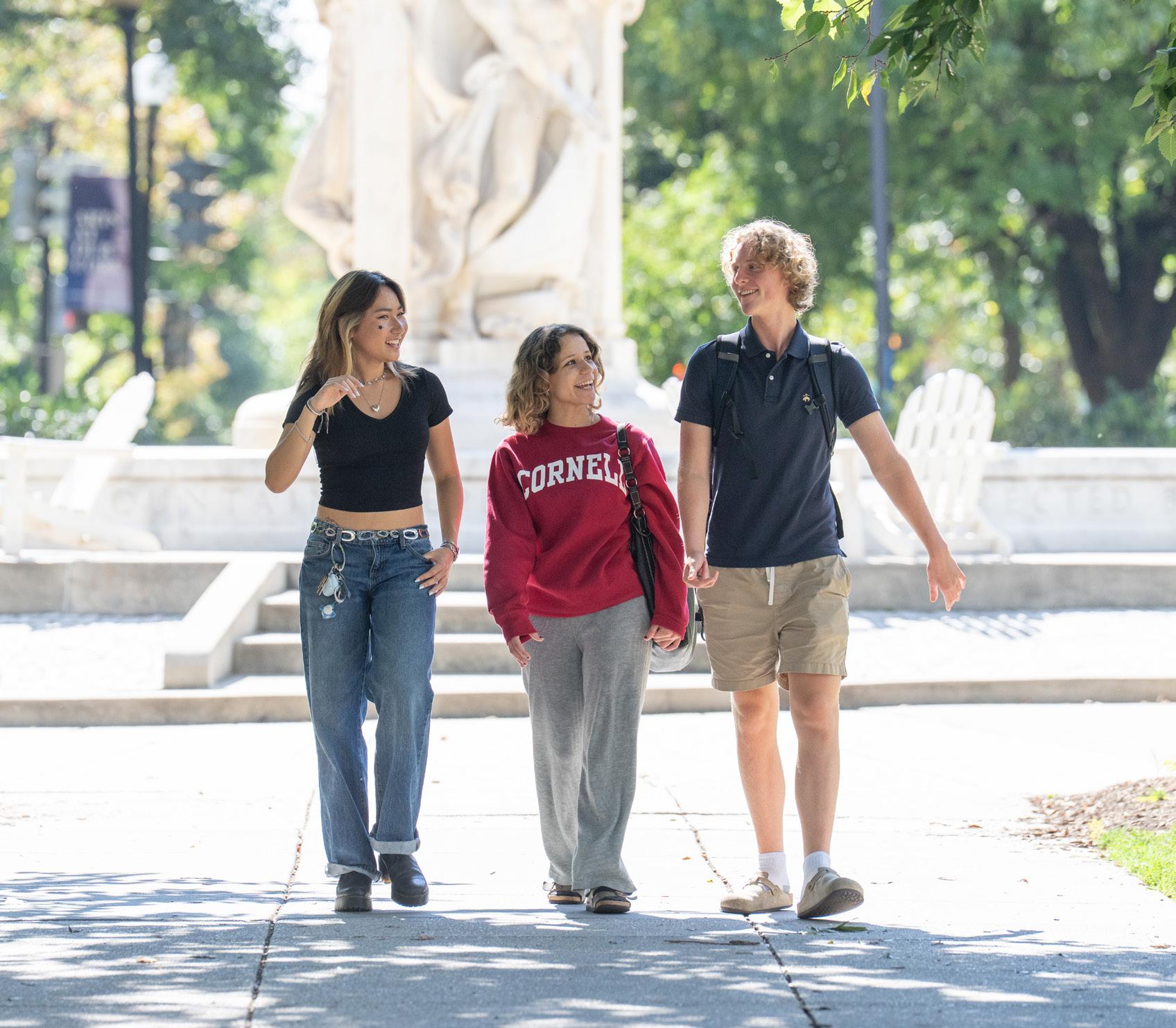
This fall, with the launch of DC Start, a jump start for first semester first year policy students who want to pursue careers in national and international public affairs, the Brooks School has added another dimension to Cornell in Washington. Together with the traditional semester-long internship program that has been Cornell in Washington’s flagship, which we have renamed DC Connect, Cornell in Washington now offers Brooks students the chance to begin as a Cornell student in Washington, D.C. Housed at the Brooks School’s Wolpe Building in close walking distance to Dupont Circle and Embassy Row, the DC Start program offers an inspiring, immersive public policy learning experience to an inaugural cohort of students entering the public policy and health care policy majors this fall 2025.
In my role as dean, I have thought long and hard about how the Brooks School can help to tighten the connection between Cornell and D.C. We want our students to understand the professional landscape in D.C. and the way government works alongside the private sector. Ithaca is our home, a lab for interdisciplinary ideas boasting a world-class faculty, but D.C. can also be a home, a launching pad for careers and a front door to Cornell’s public policy expertise.
In the coming months, Brooks will also launch Connecting Cornell to Congress, a program that welcomes Cornell alumni members of Congress and members of the New York congressional delegation to Ithaca and D.C. to share their expertise and knowledge with students, faculty, and university leadership.
At Brooks, we know that policy is personal and that it affects every aspect of our daily lives. We know that policy is made at the local, state, federal, and global levels, and through the career pathways our talented graduates pursue in the private, public, and nonprofit sectors. By connecting Ithaca to D.C., by building these engaged learning experiences into our curriculum, and by empowering our students to explore varied career pathways in public policy, we are laying the foundation for a deeper connection between Cornell and Washington. We hope you will follow our progress, reach out to us with ideas, and connect with us in D.C.
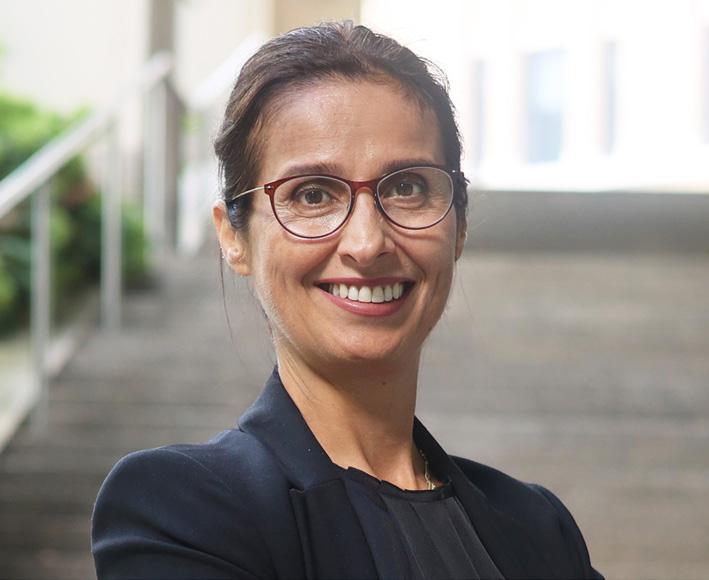
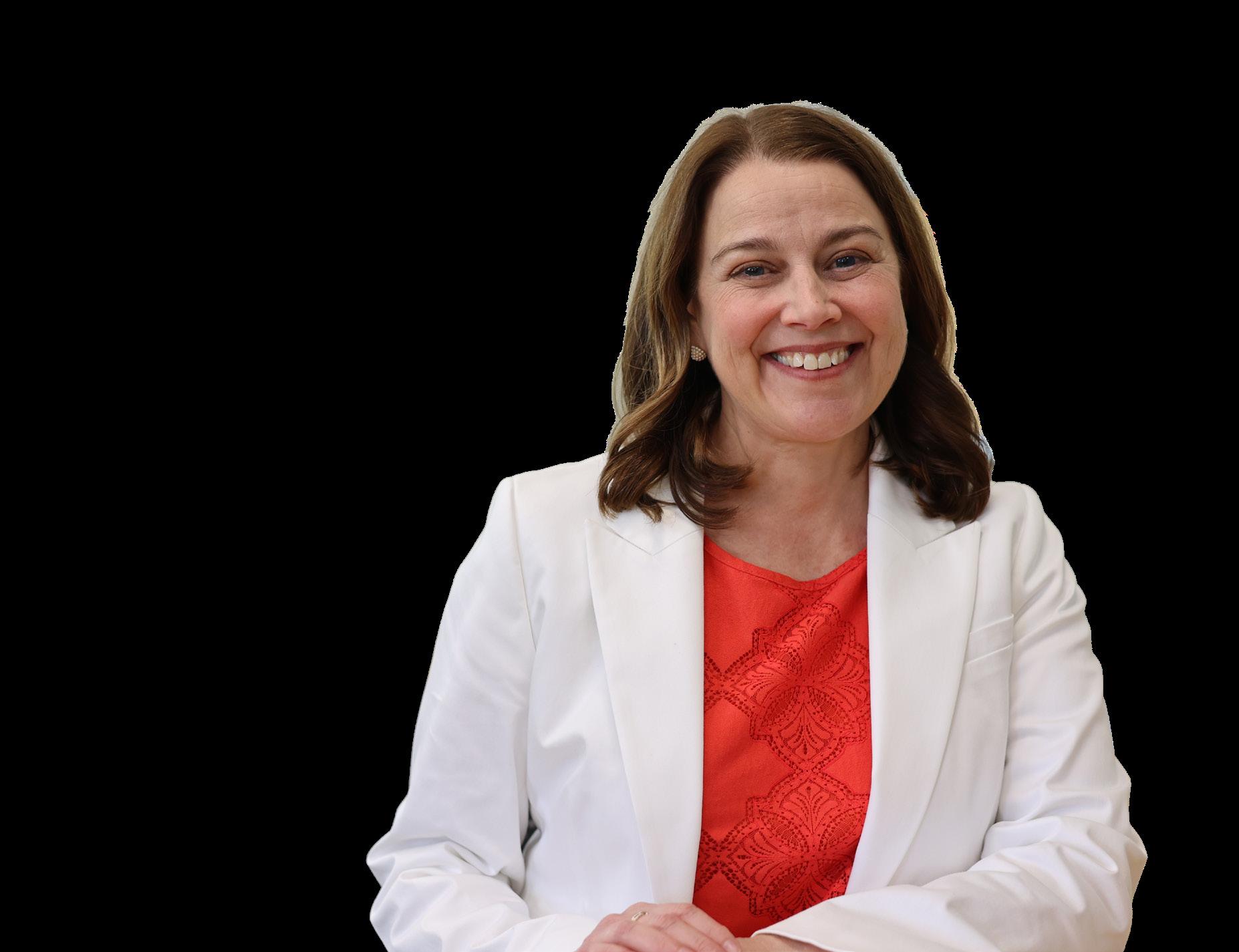
Colleen Barry Dean
Cornell Jeb E. Brooks School of Public Policy
Natalie Kimbrough
Designer: Rachel Philipson
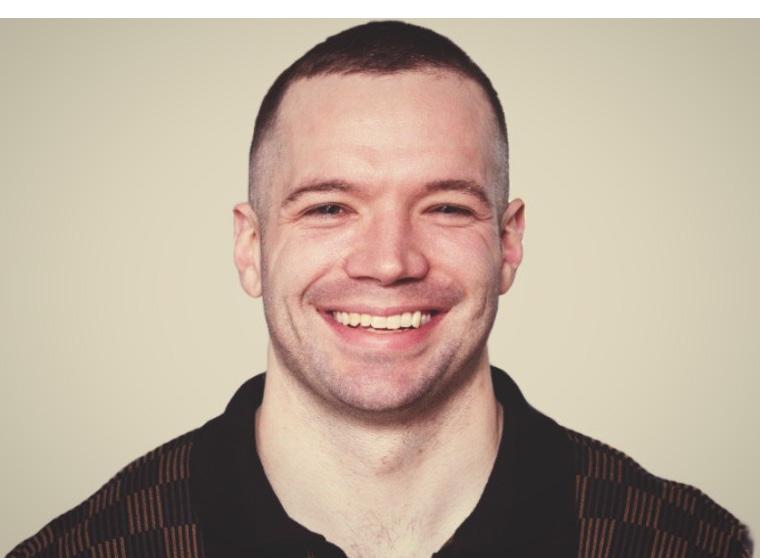
Cover Photo: James Kegley
STUDENTS MAKING A DIFFERENCE
CORNELL JEB E. BROOKS SCHOOL OF PUBLIC POLICY
photo credit: James Kegley
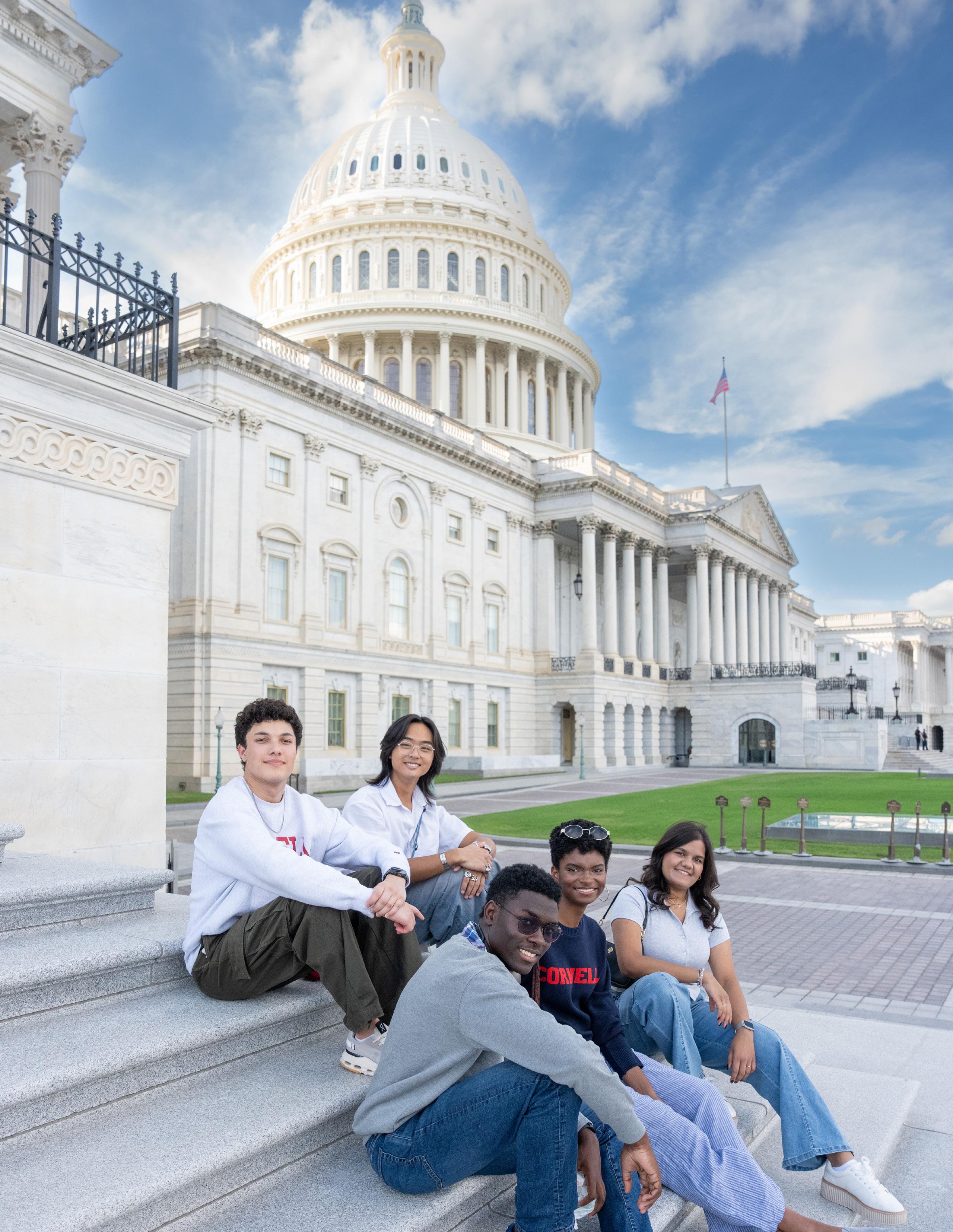
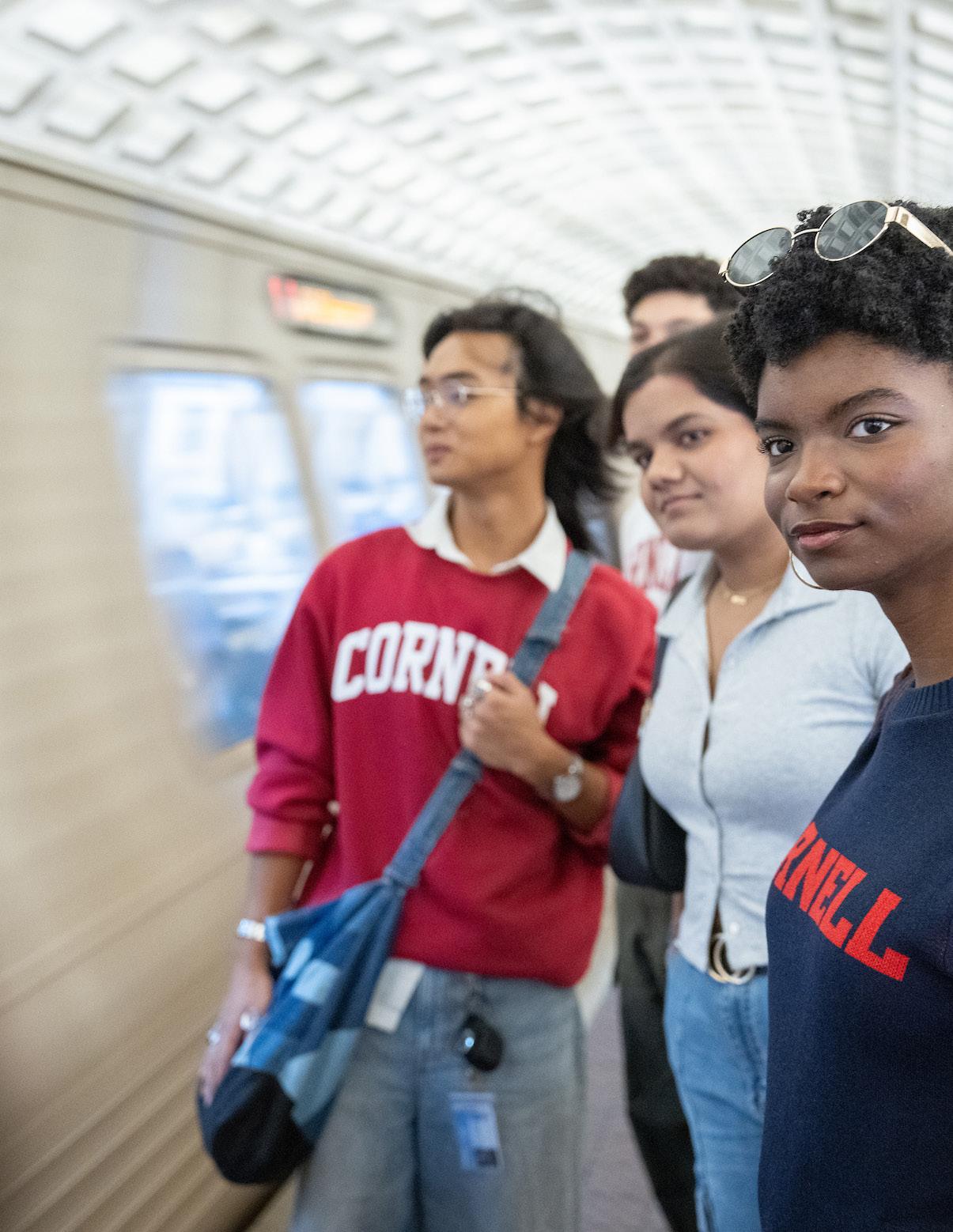
DC Start scholars Jalyse Rodgers, Gargi Singh, Jackson De Guzman, Silas Washington, and Matthew Jordan wait for the metro in Dupont Circle.
New Cornell in Washington programming deepens Brooks School’s D.C. connection
By Giles Morris
Zach Montague was 20 years old when he first came to Cornell in Washington (CIW) in 2011. Now a reporter for the New York Times who covers the federal courts, Montague has returned for the fall semester as a faculty lecturer teaching Political Journalism to the first cohort of DC Start scholars.
“As a Cornell student, CIW gave me a real feel for the interplay between different institutions and interest groups in D.C. in a way that helped me navigate it after graduation. Having these career public servants and think tank fellows come teach and affirm a lot of the themes we were learning in the more academic courses had a reinforcing effect that I still remember more than a decade on,” Montague said. “Being on the other side now, I'm watching those mental connections happen when we talk about objectivity or fairness in the press or another theme that comes up in one of their ethics or policy courses, and it's just gratifying to see in real time.”
During his time at CIW, Montague completed internships at the Brookings Institution and the Environmental Protection Agency, taking courses alongside in related subject areas.
Until this year, the experience of a self-directed internship combined with elective coursework has defined the CIW experience. With the launch of DC Start this fall semester, the Brooks School has added a new program to Cornell in
Washington for the first time since its inception, creating a deeper connection between the Brooks School’s public policy curriculum and the public policy landscape of the nation’s capital.
During their first semester as Cornell undergraduates, 43 DC Start scholars from the Brooks School are taking a signature immersive learning course in applied public policy–DC Up Close: Policy, Politics, and Power that offers a close-up examination of policymaking and the political process in the nation’s capital alongside first-semester coursework required for the Brooks School public policy and health care policy majors. This curriculum will allow DC Start scholars to seamlessly advance in their majors when they when they arrive at the Ithaca campus for their spring semester at Cornell.
“I would tell any prospective student to take this opportunity over anything. The unique experience of living in D.C. and engaging in classes that allow for real-life application is a once-in-a-lifetime opportunity that I will forever look back on as a highlight of my college experience,” said Jane Wang, DC Start scholar. “My favorite part of living here is the access to so many D.C. live events, restaurants, and shops, as well as opportunities to engage in political events.”
Cornell in Washington will continue to offer its signature internship program for Cornell upper-level students from academic units
campus-wide during the spring and summer terms. Now called DC Connect, upper-level students from across the university will engage in the same policy internships, coursework, and immersive experiences in D.C., while also benefiting from more robust student support, academic advising, and career counseling.
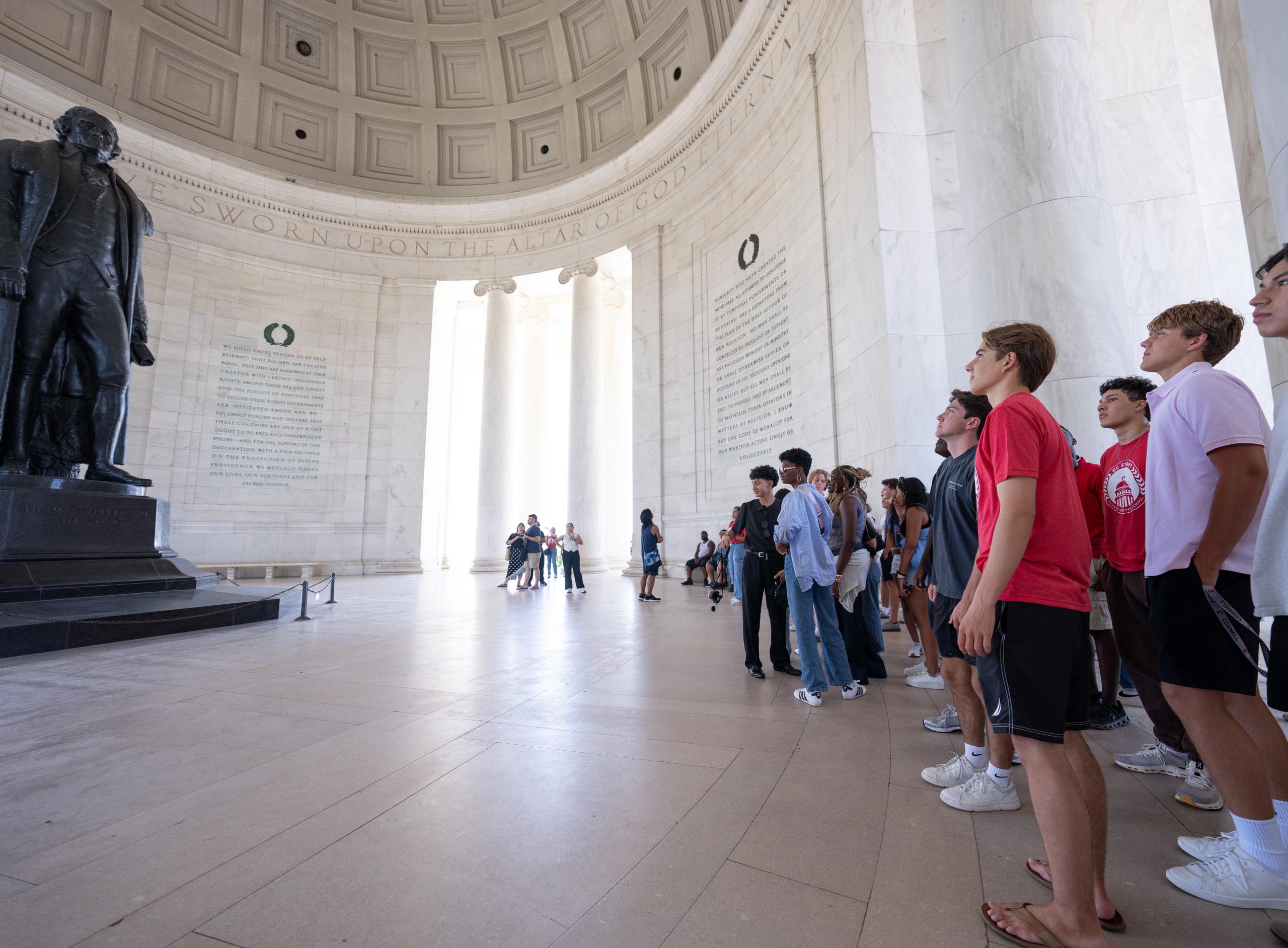
Located at the corner of 22nd and O streets in the Dupont Circle neighborhood, Cornell in Washington sits in a tree-lined historic section of Washington, D.C., within walking distance of nearly all the main attractions of the city’s cultural and civic life. Housed in apartment-style single and double residences, CIW students, whether they are DC Start scholars or DC Connect students, pursue their coursework in the Wolpe Center’s dedicated classrooms and participate in a tailored slate of cultural activities, small group conversations with policy leaders, behind-the-scenes visits to major D.C. landmarks and historic sites, and social events on Capitol Hill.
“Working with and teaching Cornell students at different stages in their college careers is an amazing chance to see them engage with policy and policymakers directly and up close,” said Cornell in Washington Director of Teaching and Learning David Silbey.
CIW alumnae Valisha Graves ’85, who serves on the Cornell University’s Board of Trustees and the Brooks School’s Dean’s Advisory Council, sees the addition of DC Start as an extension of CIW’s long track record of training young Cornellians for a life in public affairs careers.
"My CIW experience as an intern at the Carnegie Endowment for International Peace was transformative for me,” said Graves, who participated in Cornell in Washington during her senior year at Cornell. “I'm very excited that DC Start gives first-year students that same Washington immersion right from the start. Building on the decades of success of the Brooks School's Cornell in Washington program, DC Start is going to create a whole generation of Cornell students who understand policy from day one."
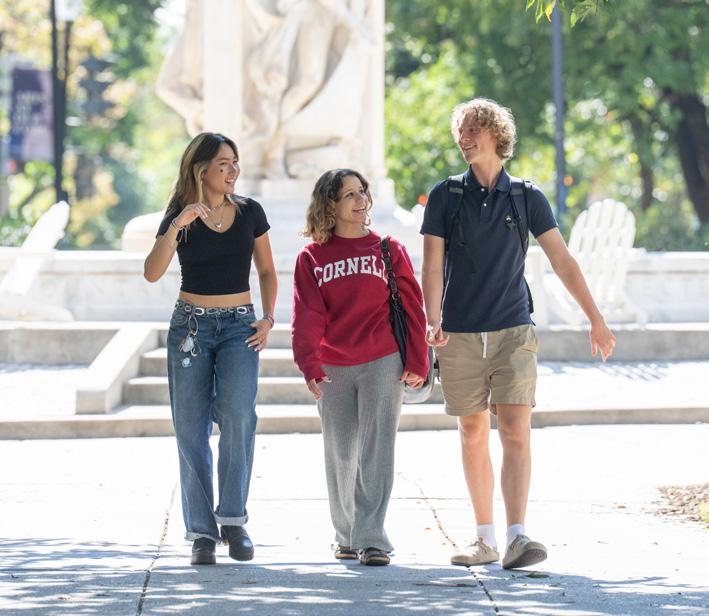
Jane Wang, Marianna Wineinger, and Dallan Reimels walk near the Dupont Circle fountain.
Student Spotlight
Charlotte Holubar
Hometown: Lanesborough, Massachusetts
Major: Public policy
Why did you choose to study public policy at the Brooks School, and why did you decide to participate in DC Start?
From the start of my undergraduate career, I wanted to be fully immersed in the epicenter of policy and government. I chose to study public policy at the Brooks School because it combines interdisciplinary learning (pairing statistics and economics with more traditional government-related classes) with tangible, real-world impact—something I’ve always valued. For as long as I can remember, I’ve been drawn to understanding how policy decisions shape people’s daily lives and how thoughtful governance can advance equity and opportunity.
I decided to participate in DC Start because I loved the idea of beginning my Cornell experience within a small, close-knit cohort equally passionate about public service. Building those early relationships and shared experiences in Washington, D.C., felt like the perfect foundation for both my academic and professional journey.
How would you describe the atmosphere in the Wolpe Building?
What’s your favorite part about living there?
The location! You walk outside and are met with one of the best metro stops in the city, parks and running space, fabulous restaurants, and shops. You get to step up to another level of independence that is just so rewarding to experience.
DC Start is going to create a whole generation of Cornell students who understand policy from day one. ”
– VALISHA GRAVES ’85
What’s your favorite part of the DC Start curriculum?
I think many of my peers would, of course, say our DC Up Close program (a very close second), but I have thoroughly loved my Ethics and Public Policy class. Professor Damianos is beyond committed to our growth, not only as students but as thinkers who engage with the policies shaping our world. His thoughtful readings and insightful discussions make the class dynamic, challenging, and genuinely exciting to be part of.
DC Start scholars enjoy an up-close trolley tour of Washington, D.C., during orientation.
Brooks student combines love of birds and climate policy research during summer internship
By Giles Morris
Everett Smith ’27 started birding when he was just 7 years old. Growing up in the Netherlands, his family would travel to the U.S. during the summers to stay with relatives by the Chesapeake Bay. Back then, the ospreys captured his imagination.
This summer, Smith turned his lifelong passion into purpose through a new internship program jointly offered by the Cornell Brooks School of Public Policy and the Cornell Lab of Ornithology. Under the guidance of Brooks School professor Sheila Olmstead, Smith explored how wetlands policies affect not only avian populations and migration patterns but also the human communities that depend on those ecosystems.
“I’ve always known how important bird populations are for healthy ecosystems,” Smith said. “But I didn’t realize how interconnected we as humans are to them, how healthy bird populations are really indicators of healthy human environments.”
As part of his research, Smith worked with
faculty across disciplines, including Amanda Rodewald, the Garvin Professor and Faculty Director of the Center for Avian Population Studies at the Cornell Lab of Ornithology; and Cathy Kling, a Tisch University Professor in the Charles H. Dyson School of Applied Economics and Management and the Brooks School who is an expert on the social costs of water pollution.
“The idea of the program was for Everett to work within a couple of teams of researchers working on different projects related to public policy and birds. He has looked at how different states are protecting wetlands that provide important avian habitat, explored city-level policies that expand urban greenspace and affect avian species’ abundance in cities, and even had a chance to dig into some data from the Lab’s amazing eBird database to support statistical analysis,” Olmstead said. “It was exciting to see his growth through the program and what this type of faculty collaboration could look like for our students.”
“With so many threats to birds and other species being linked to social, economic, and political issues, conservation can be successful only if we understand and engage in those arenas. These kinds of internships are essential to training future leaders who can navigate those complexities,” Rodewald said.
Kristen Rupert and John Foote are members of the Class of 1974 and active Cornell volunteers. Through John’s involvement in the Brooks MPA program as a lecturer in infrastructure policy, he and Kristen have watched firsthand the formation and growth of the Brooks School. “We understand that as a new college, Brooks needs the support of alumni across the university and are happy to support the ambitious agenda of the school,” Foote said.
John and Kristen have a history of providing support for the student experience, including scholarships and
Why We Give
a student research fund at the Lab of Ornithology. Their latest gift, designated for the Brooks School of Public Policy, provides support for undergraduates to work during the summer at the Lab of Ornithology on policy-related projects. Kristen and John are past recipients of the Frank H.T. Rhodes Exemplary Alumni Service Award.
The internship was funded through a gift by John Foote ’74 (see above), longtime resident of Ithaca’s Forest Home neighborhood, lecturer in the Brooks School, and board member of the Cornell Lab of Ornithology. John is also a member of the Brooks School Dean’s Advisory Council.
“I’m enormously grateful to John Foote for his vision in making this internship possible,” said Ian Owens, executive director of the Cornell Lab of Ornithology. “John’s commitment to both the Brooks School and the Lab has created a unique opportunity for students to connect cutting-edge science with real-world policy. That combination is exactly what’s needed to train the next generation of leaders who will protect birds, people, and the environments we share.” For Smith, the highlight wasn’t just the research, it was the environment.
“Working with bird data in policy research at one of the world’s leading ornithological research centers was an extraordinary experience,” he said. “The Lab of O’s resources and global datasets show how studying bird populations provides vital insights into environmental change. It gave me new ways to think about how we can use this knowledge to inform policy decisions.”
Smith still loves raptors, including the osprey and the Eurasian eagleowl, but his appreciation for the tricolored heron has deepened through his research. As he puts it, learning about wetlands policy isn’t just academic, it’s about protecting the habitats we all depend on.
Everett Smith (PubPol ’27) participates in a summer internship program at the Cornell Lab of Ornithology, where he analyzes federal and local wetland policies and their impacts on migratory bird patterns.
Brooks Global Policy Exchange adds new partner as model thrives
By Giles Morris
In April, Brooks junior Ariela Aslani ’26 helped to host 10 of her peers from the Universidad San Francisco de Quito (USFQ) in Ecuador, who arrived in Ithaca, New York, as part of the Brooks Global Policy Exchange, a reciprocal global learning experience that pairs teams of students from across universities and cultures to examine policy solutions over a 15-week course collaboration.
“This program challenged my assumptions about what cultural understanding really looks like. It’s not about mastering facts or frameworks, but about being present, listening deeply, and staying curious,” said Aslani. “It reaffirmed my interest in continuing with international work, and I’ll carry forward a stronger sense of empathy, adaptability, and cross-cultural communication into whatever academic, professional, or personal path I pursue.”
The program pairs Brooks’ course Sustainability Education Policy in the U.S. and Ecuador with a similar one taught at USFQ. Both courses meet in person for weekly seminars that explore education and sustainability policy challenges in the domestic context. Then online, students work in cross-institutional, bilingual teams to conduct comparative research identifying innovative policy solutions to address challenges in both contexts.
After getting to know each other as research collaborators and virtual classroom peers, the students take turns visiting each other in person and engaging with community-based organizations, policymakers, and stakeholders in Quito
and upstate New York to learn how
students online. Cornell and NUS students Vice Provost for International Affairs Wendy Wolford. “We are thrilled to see the university’s Global Hubs fostering long-term, multidirectional programs that prepare our students for global careers and instigate real collaboration at every level between the participating institutions.”
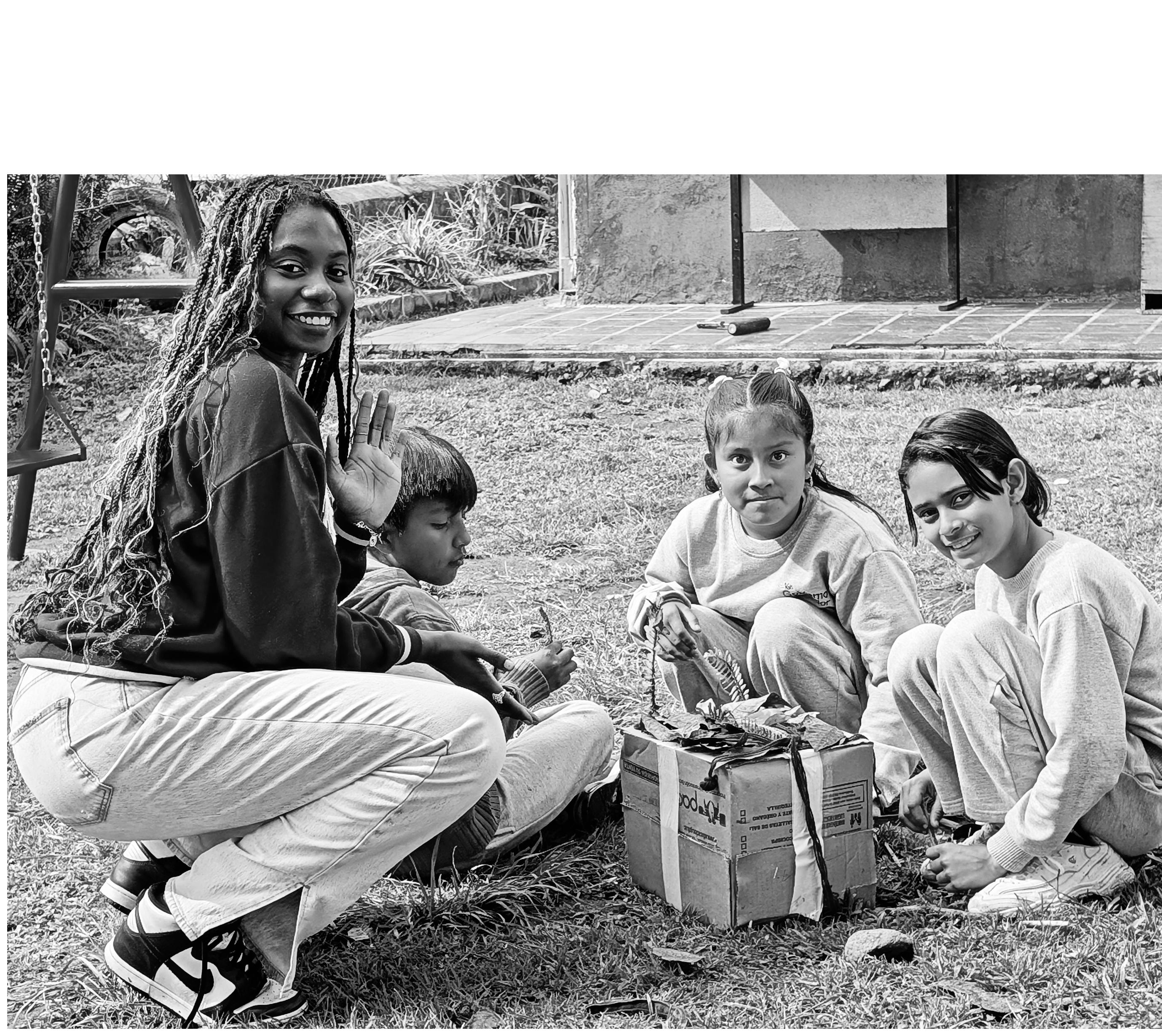
Cherie Animashaun (PubPol ’27) leads an interactive STEM workshop with local elementary school students in Quito, Ecuador.
Connecting Cornell to Congress
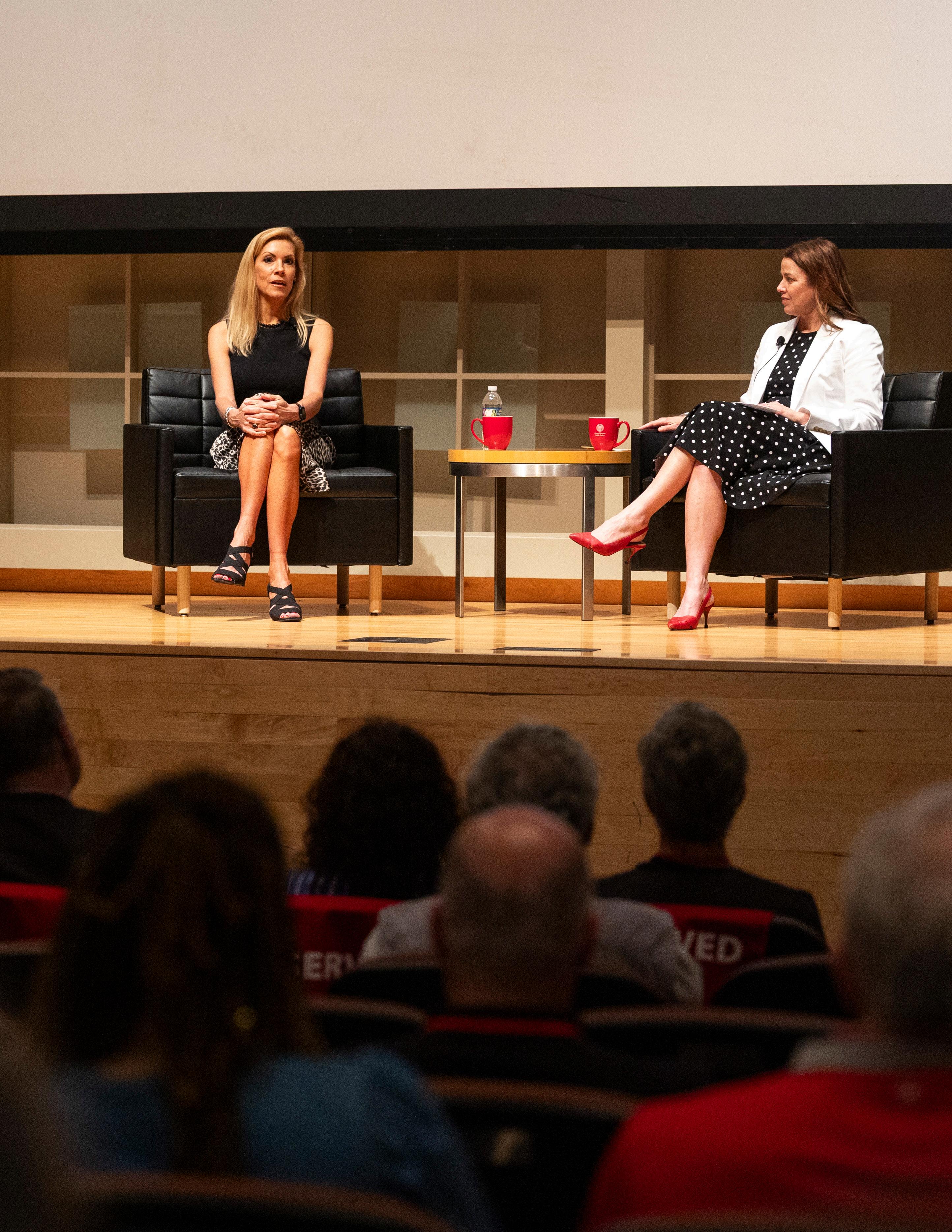
U.S. Rep. Beth Van Duyne ’95, serving the 24th congressional district in Texas, joins Colleen Barry, dean of the Cornell Jeb E. Brooks School of Public Policy, for a conversation on public policy, politics, and civic engagement.
Engaging alumni and New York state elected officials in public service dialogue
The Brooks School’s Connecting Cornell to Congress initiative strengthens Cornell’s connection to the nation’s policymakers, bringing alumni serving in the U.S. Congress and members of New York’s congressional delegation into conversation with the university community.
Through flexible, one- to two-day programs held in Ithaca and Washington, D.C., these visits are designed to match each participant’s interests and expertise while enriching the learning experience for Brooks School students. Members of Congress engage with the Cornell community through guest lectures, symposium discussions, student dialogues, and meetings with university leaders, sharing firsthand insights from Capitol Hill and deepening understanding of how policy takes shape.
By linking Cornell’s academic community with current and former lawmakers, the initiative bridges scholarship and service, offering students a rare opportunity to learn directly from those shaping public policy at the state and national levels.
Policy in Practice
Visiting leaders, policy experts, community leaders, and alumni bring real-world perspectives directly to students, sparking discussions, sharing career insights, and connecting theory to practice in ways that make learning immediate and personal.
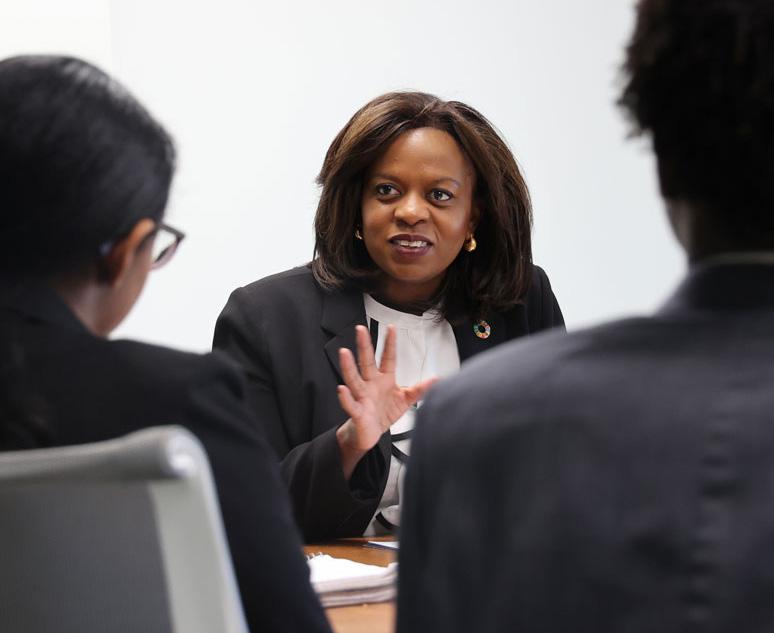
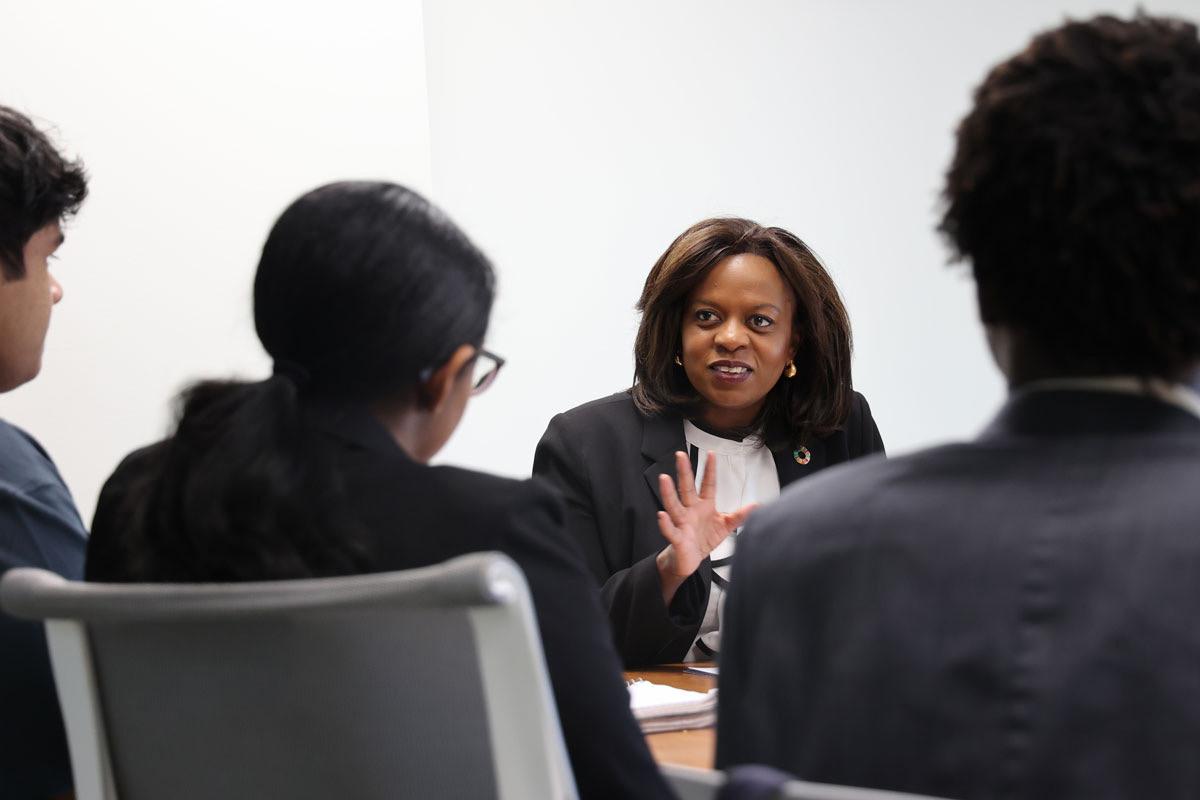
Sanda Ojiambo, the assistant secretary-general and CEO of the UN Global Compact, engages with Brooks School students during career drop-in sessions and in Associate Teaching Professor Rebecca Morgenstern Brenner’s Comparative Environmental Policy course.
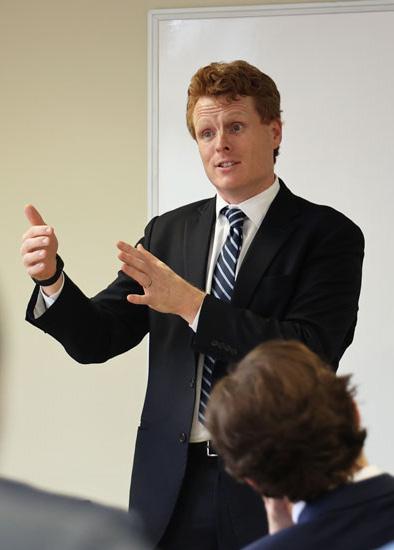
Former U.S. Rep. and U.S. Special Envoy to Northern Ireland Joe Kennedy III speaks with students about public policy, drawing on his experience in Congress and the U.S. Department of State.
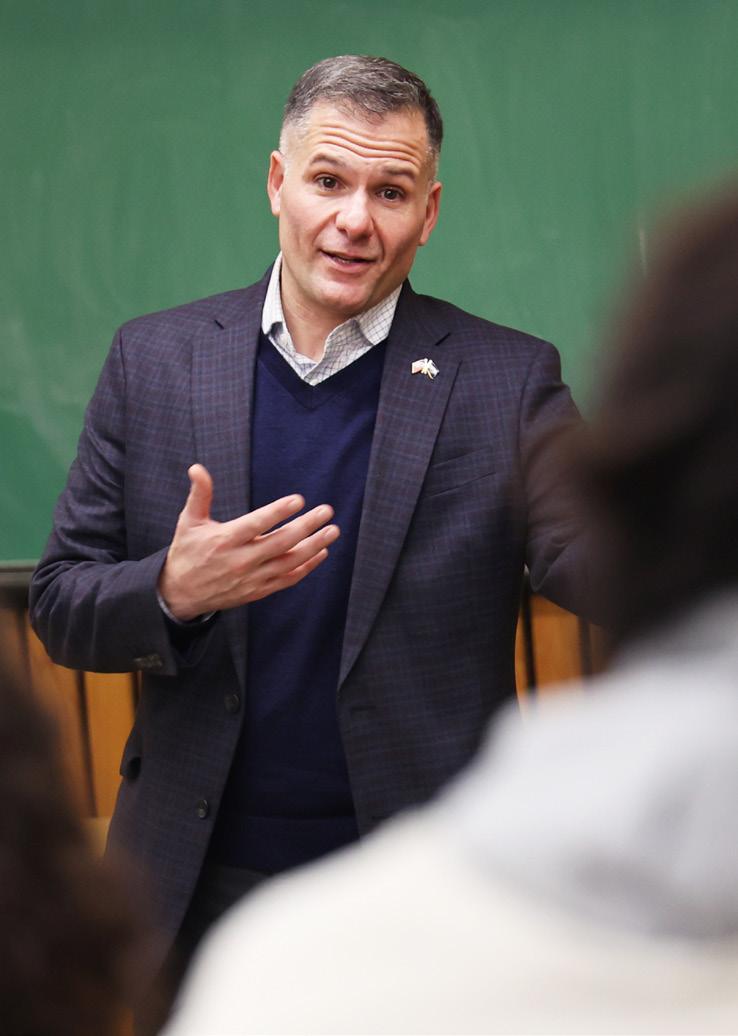
Administrator of the Federal Transit Administration and former U.S. Rep. Marc Molinaro addresses students at a forum at the Brooks School.
Chinchilla and Mulvaney named 2025-26 Brooks School Nixon Fellows
By Giles Morris
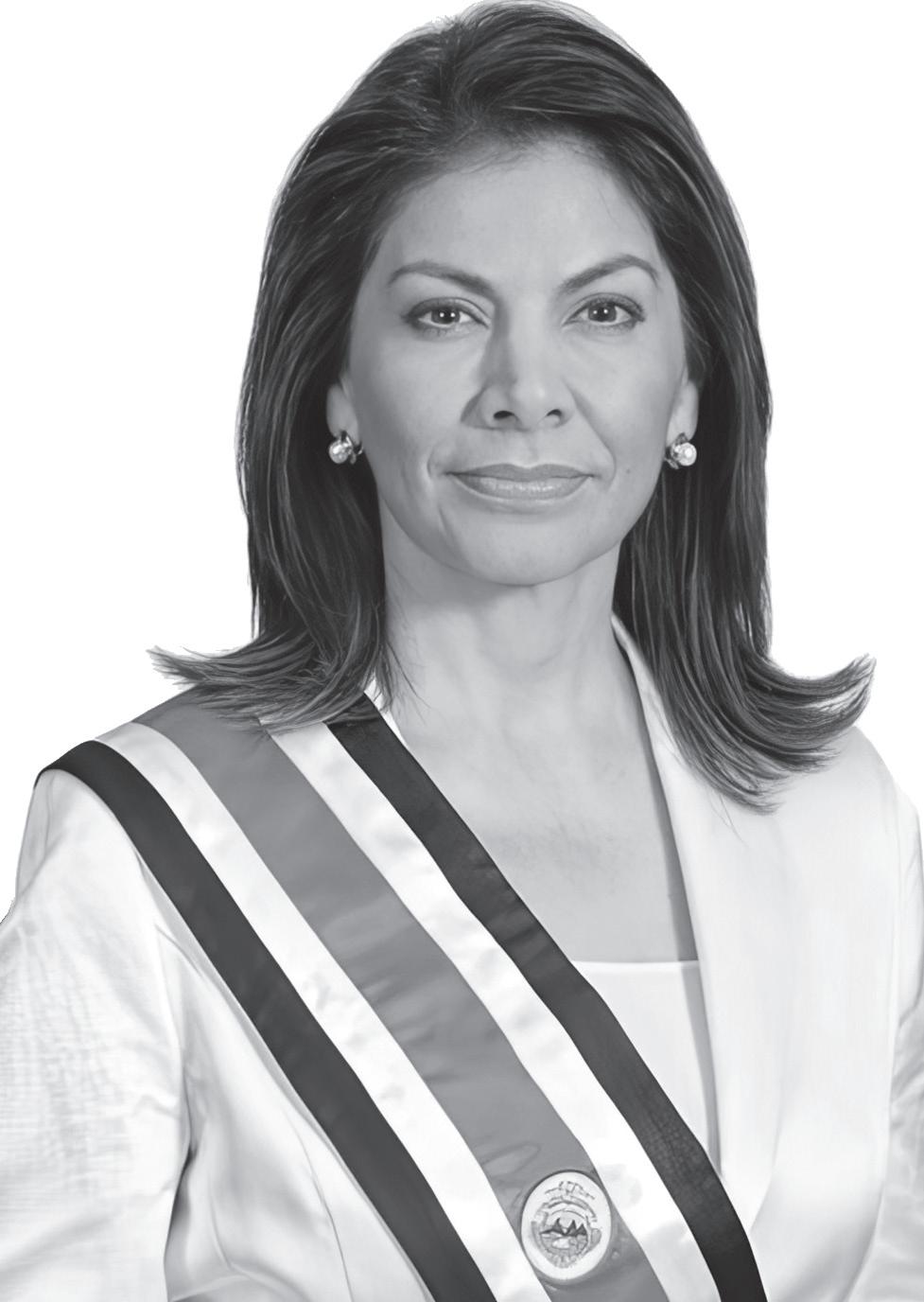
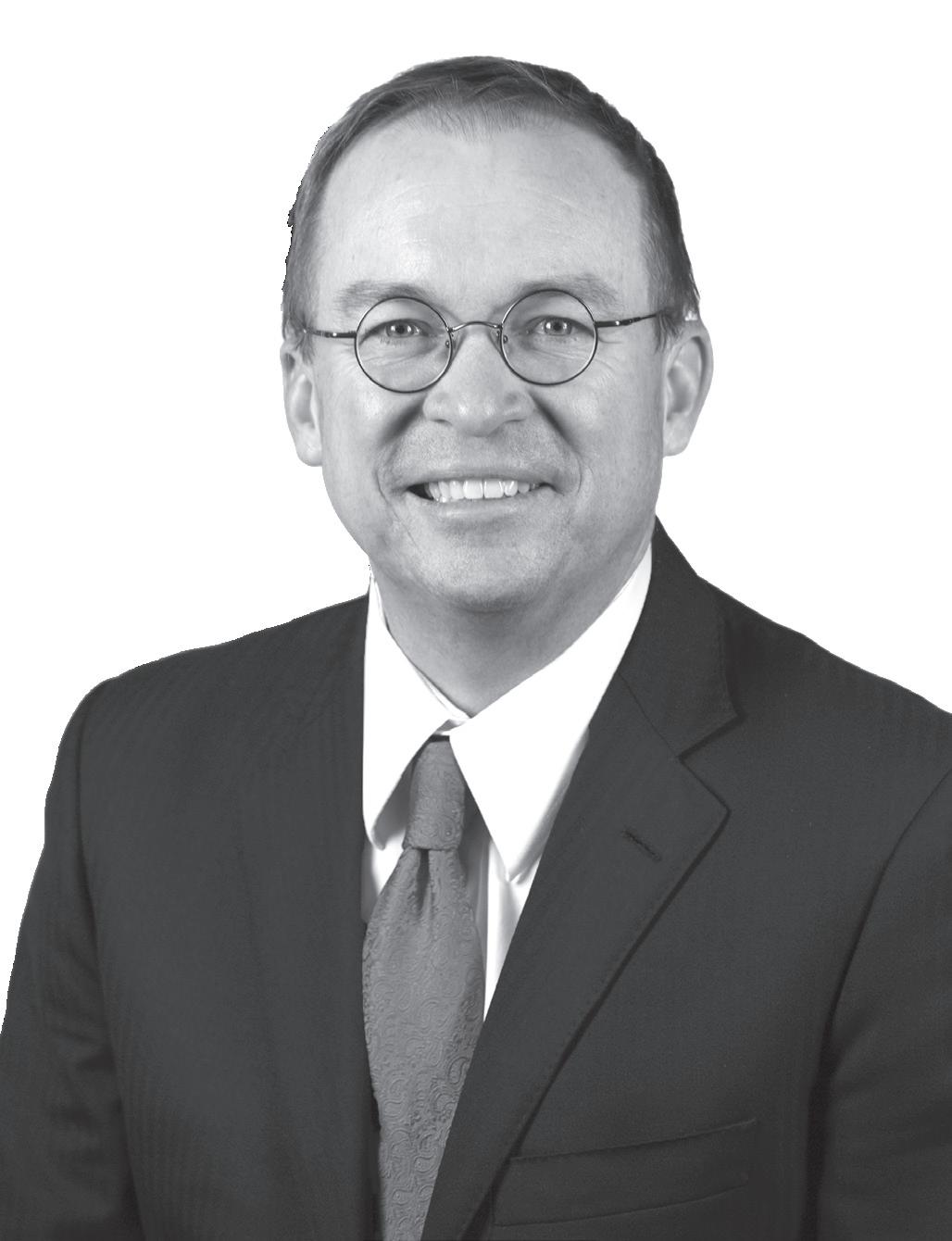
Laura Chinchilla Miranda, former president of the Republic of Costa Rica, and Mick Mulvaney, a former U.S. congressman and White House chief of staff, have been named the 2025-26 John W. Nixon ’53 Distinguished Policy Fellows at the Cornell Jeb E. Brooks School of Public Policy.
As Brooks School Nixon Fellows, Chinchilla and Mulvaney will visit the Cornell campus in Ithaca over the course of the academic year to guest lecture, host student office hours on careers in public policy and contemporary policy issues, and connect with faculty on research aligned with their expertise.
“We are thrilled to welcome President Chinchilla and Ambassador Mulvaney as this year’s Brooks Nixon Policy Fellows,” said Brooks School Dean Colleen Barry. “As distinguished leaders with experience at the highest level of national and global political affairs, they will bring distinctive viewpoints to our classroom and campus conversations and engage our community with new ways to foster dialogue about public policy and civil discourse.”
The Nixon Fellows program contributes to the Brooks School of Public Policy’s Learning and Leading Through Difference Initiative, which aims to advance civil discourse and develop students’ capacity to be thoughtful, purpose-driven leaders.
Veterans at Brooks
By Sarah Louise Schupp
The Brooks School continues to strengthen its commitment to supporting veterans through partnerships with Service to School (S2S) and Service to Service. Service to School offers free college and graduate school application counseling to veterans and service members, helping them take the next step in their education. Service to Service, an initiative of the Volcker Alliance, connects veterans and military families with public service education opportunities and pathways to careers in government and public policy.
Veterans—students, staff, and faculty alike—bring perspectives that enrich our classrooms, strengthen our community, and continue to serve at the Brooks School and beyond. ”
– COLLEEN BARRY
For some students, the impact of Service to School has already shaped their Cornell experience. Will LaRose, MPA ’20, an Army veteran who completed the residential MPA program and now works as a business development and regulatory affairs lead in the defense technology sector, drew on S2S resources for support during his application journey.
“I utilized Service to School—an organization I cannot say enough great things about—throughout the application cycle,” LaRose said. “They connected me with mentors who helped me showcase my military experience in a way that strengthened my application. That guidance was instrumental in my path to Cornell, where I found a program that allowed me to continue serving, just in a different way.”
The Brooks School not only recruits veteran students but also values the contributions of its veteran faculty and staff. They foster a service-minded culture that helps students develop valuable skills and pursue meaningful careers in public affairs, said Colleen Barry, dean of the Brooks School of Public Policy.
"Veterans—students, staff, and faculty alike—bring perspectives that enrich our classrooms, strengthen our community, and continue to serve at the Brooks School and beyond,” Barry said.
Quson G. Brown EMPA ’25
United States Navy
“As an online executive MPA student and veteran, I find strength in combining military discipline with academic rigor. Brooks has created a supportive network: professors who understand service, peers who share ambition, and coursework that challenges me to bring my leadership experience from active duty into my public policy studies.”
Jessica Hsu
Executive Assistant to the Dean United States Air Force
“As a veteran and staff member at the Cornell Brooks School, I feel deeply supported and valued. The school’s commitment to public service mirrors the purpose I experienced in the military. It’s rewarding to continue serving, this time through a school that prioritizes public engagement.”
Will LaRose
MPA ’20
United States Army
“[Service to School] connected me with mentors who helped me showcase my military experience in a way that strengthened my application. That guidance was instrumental in my path to Cornell, where I found a program that allowed me to continue serving, just in a different way.”
Lisa Escobar Jones
Career Management Coordinator
United
States Marine Corps
“Serving in the Marine Corps taught me the power of diversity and shared purpose. Working alongside people from different cultures and backgrounds showed me how lived experiences shape our perspectives and strengthen our capacity to lead with empathy and understanding. At the Brooks School, I carry those lessons forward, encouraging students to honor their stories and use them to guide their professional journeys.”
Sarah Kreps
John L. Wetherill Professor Director, Cornell Brooks School Tech Policy Institute
United
States Air Force
“Serving as a veteran faculty member at the Cornell Brooks School allows me to bridge my military service with my passion for tech. Mentoring student veterans and shaping tech and national security discourse is a meaningful extension of my service career.”
Cornell Health Policy Center leverages collaborations to improve health policy
By Giles Morris
Weill Cornell Medicine and the Cornell Jeb E. Brooks School of Public Policy established the Cornell Health Policy Center (CHPC) in 2024 to serve as the locus for health policy impact, research, and training across Cornell, and the center is already making headlines and forging high-impact partnerships.
CHPC—led by Beth McGinty, chief of the Division of Health Policy and Economics in the Department of Population Health Sciences and the Livingston Farrand Professor of Population Health Sciences at Weill Cornell Medicine, and Colleen Barry, an internationally recognized scholar, educator, and leader in health policy and policy communication, and founding dean of the Brooks School— connects health policy researchers across Cornell’s campuses to help shape effective health policy at the federal, state, and local levels. CHPC has grown quickly with a network of 80 faculty fellows from 11 schools and colleges across Cornell’s campuses.
“From what medical procedures public and private insurers cover to how they reimburse physicians, health policy establishes the framework by which doctors and patients experience health care,” said Dr. Robert A. Harrington, the Stephen and Suzanne Weiss Dean of Weill Cornell Medicine and provost for medical affairs of Cornell University. “Leveraging the tremendous talent across the university, the Cornell Health Policy Center will develop effective, evidence-based health policies to ensure that all patients can access quality, comprehensive, and affordable care – a task more important now than ever.”
In September, CHPC released the findings from its newly launched Cornell Health Policy Insight Panel, a survey of over 60 of the nation’s top health care policy researchers intended to provide timely analysis and perspective on the most pressing issues facing the U.S. health care system, via a partnership with Health Affairs Forefront.
The first Insight Panel polled national health care policy experts on Medicaid work requirements introduced in the One Big Beautiful Bill Act, which was signed into law in July and included some of the largest reforms to Medicaid since the program’s inception more than half a century ago.
The survey polled panelists on the potential impact of the new requirements on employment among Medicaid-enrolled working-age adults and included questions about the potential for Medicaid coverage losses resulting from the new policies.
In addition to the Health Policy Insight Panel, CHPC launched a slate of new engagement initiatives this fall aiming to connect with researchers, policymakers, and health care journalists on a variety of evidence-based health policy issues.
The CHPC Policy Analysis Lab supports collaborative health policy analysis work with teams across Cornell. The lab’s inaugural project featured a collaboration between CHPC and the WCM Department of Pediatrics and led to a collaboration with Ariadne Labs at Brigham and Women’s Hospital and the Harvard T. Chan School of Public Health. The collaborators plan to launch an initiative to advance policy recommendations to reform children’s health care insurance coverage and benefits, and improve how pediatric providers are paid, with the goal of improving U.S. children’s health and well-being.
The CHPC Data-Driven Journalism Series engages U.S. health policy reporters using data to inform and enhance their reporting. In each session, CHPC experts walk through key data resources for reporting on timely policy topics. Sessions to date have focused on prescription drug policy, nursing home policy, and Medicaid policy in the wake of the One Big Beautiful Bill Act, and the series has supported reporters from national outlets like Axios and Politico, as well as state and local outlets like The Oregonian.
In November, the center will hold its inaugural CHPC Business Roundtable, which will engage a small group of business leaders and policymakers with research that Cornell faculty are conducting on Medicare Advantage.
“We believe that Cornell can make a difference in the way health policy is developed,” Barry said. “By creating a multi-campus nexus that combines the resources of our world-class medical school and our innovative, impact-focused school of public policy, we can develop new ways to advance team science, share data, innovate, and improve health policy in New York state and beyond.”
… we can develop new ways to advance team science, share data, innovate, and improve health policy”
– COLLEEN BARRY
Empower adolescents to change their own behavior in school
By James Dean
A large-scale program that enlisted students in disadvantaged middle schools to teach younger peers reduced disciplinary problems and improved academic achievement, reports new research led by a Cornell Brooks School economist
Key to the program’s success: buy-in from challenging adolescents who crave status and don’t want to be lectured—an approach informed by the science of adolescent behavior and brain development, the researchers said.
The program already has been scaled up in Turkey, where the two-year study collected data from roughly 18,000 students in 65 schools, starting in 2020-21. And the researchers are in discussions with educators from several countries, including in U.S. schools, interested in applying the relatively low-cost intervention to a variety of contexts.
“We show that you can change behavior on a massive scale, including for the kids whose behavior you want to change and also for their friends, because of the social linkages in middle schools,” said Sule Alan, professor in the Cornell Jeb E. Brooks School of Public Policy and in the Department of Economics. “You have to allow them to change their own behavior willingly. You have to give them what they actually need, and that is social status, that is autonomy, and that is respect.”
Alan is a co-author of “Empowering Adolescents to Transform Schools: Lessons From a Behavioral Targeting,” published in the February issue of the American Economic Review, with Elif Kubilay, a senior lecturer in the Department of Economics at the University of Essex in England.
Alan investigates how school environments shape malleable character traits—such as grit, patience, self-control, and belonging— that may contribute to diverging outcomes for similar students. Boosting those social and emotional attributes could benefit learning and lead to better labor market outcomes, particularly in lowerincome communities.
Alan spent a year meeting with “problem” students in disadvantaged middle schools to understand their needs. They made clear, she said, that they weren’t interested in another adult telling them how to behave.
Listening to their feedback and reviewing the psychology literature about adolescents, Alan adopted a new approach. Instead of training
teachers to target certain behaviors, as she had with younger children, she would ask selected seventh and eighth graders to deliver an empowerment curriculum to fifth- and sixth-grade peers.
“I said, ‘OK, I’m not going to teach you any lessons, but can you help teach the little ones in your school how to behave, how to be responsible, how to make the school better?’” Alan said. “Eventually, through self-persuasion, I thought they would start believing the messages they were teaching.”
The researchers identified senior students who scored high in emotional intelligence and were socially influential, based on friend networks the students shared. From that group, they recruited roughly 630 each in the seventh and eighth grades to be studentteachers. Including their friends, the study’s target sample totaled about 5,000 students.
In 32 randomly assigned schools, the student-teachers taught a weekly curriculum, “Our Future, Our Dream,” designed by Alan’s team. Among its nine topics were envisioning the ideal school;
recognizing one’s power to shape their social environment; and understanding the perils of violence and antisocial behavior. In the remaining control group, about half of the schools did nothing differently, while the other student-teachers led basic activities such as mazes and coloring.
Results showed the program was effective in improving social, emotional, and academic outcomes, the researchers said. Student-teachers and their friend networks were about 70% less likely to be flagged for disciplinary violations in the first year and 55% less likely in the second year. Antisocial attitudes decreased. Junior students participating in the curriculum were more likely to nominate senior students as supportive peers, suggesting an improved school climate.
Most importantly, Alan said, eighth-grade student-teachers engaged in the curriculum were significantly more likely to win admission to selective high schools, potentially imparting long-term economic benefits. In 2022, 18.4% of student-teachers were admitted to selective schools – twice as many as eighth graders overall. In 2023,
You need to understand how the adolescent brain works and design programs that would work for them. ”
– SULE ALAN
21.2% of student-teachers advanced to selective schools, compared to 13% overall.
The researchers believe processes of cognitive dissonance and self-persuasion underlie the transformation.
“If I am a bully and I’m supposed to teach about the profile of a bully,” Alan said, “that creates discomfort that has to be resolved.”
Alan said the proof of concept can now be scaled up and applied to a range of behaviors, from drug use to smartphone use to sexual activity. And it can be done anywhere in the world, since adolescent development and behavior is similar across cultures.
“You need to understand how the adolescent brain works and design programs that would work for them,” Alan said. “Adolescents should embrace the program that you’re offering them to change their behavior.”
The research was supported by a European Research Council Advanced Grant.
Johannes
Haushofer
Migration Education Research
Highly skilled émigrés offer surprising ‘brain gains’ for their home countries
By Laura Reiley
Highly educated citizens of low-income countries tend to decamp to higher-income countries in a quest for better pay. It’s called “human capital flight” or, maybe catchier, brain drain.
But according to a review paper published in Science, there may also be indirect “brain gain” effects. The research was co-authored by Johannes Haushofer, a development and behavioral economist and professor of economics and public policy in the Cornell Jeb E. Brooks School of Public Policy.
The researchers found that migration opportunities often increase the stock of human capital in the countries of origin and produce other beneficial effects, like money sent “home” or foreign direct investment and trade linkages. They found that émigrés may also transfer knowledge, technology, and norms, and that return migration, which is common, can also impart benefits to the home country.
“A lot of focus has been on, ‘Let’s get people back in their country of origin. These people are no use to us if they are gone,’” Haushofer said. “Yes, let’s make the barriers to return as low as we can, but just focusing on getting people back might not be the right approach.”
Migration opportunities can also create new human capital in origin countries as well as downstream beneficial effects.”
—JOHANNES HAUSHOFER
via higher wages that are in part sent home to family members, or by foreign direct investment and establishing business relationships and networks that operate by personal connections.
“These can be facilitated through migrants,” Haushofer said. “And remittances are an obvious potential benefit—in many less developed countries this money can make up a large part of household income.”
He says another potential benefit of highly educated workers emigrating to more remunerative countries is the role-model effect. As motivational speakers say, if you see it, you can be it. If young people see successful pathways to upward mobility, they are more likely to set goals, dig in, and work hard.
One-third of doctors trained in Ghana have emigrated, 91% of Ethiopian-born Ph.D. holders are abroad, and two-thirds of software engineering graduates from top Canadian universities work in other countries. It’s a natural concern that such high rates represent a substantial loss of human capital in the countries sending their workers abroad.
But Haushofer and co-authors argue that by examining modern empirical evidence on the full range of direct and indirect effects of emigration, it is clear that migration opportunities can increase human capital in origin economies and improve the well-being of the population overall.
Among academics, inventors, scientists, engineers, and medical professionals from smaller and low-income countries, emigration rates are high. But the study shows that simply observing out-migration does not necessarily imply a net loss in human capital in origin countries; migration opportunities can also create new human capital in origin countries as well as downstream beneficial effects, Haushofer said.
This story has been edited and shortened for Brooks School Magazine. The original version ran in the Cornell Chronicle on May 22, 2025.
Adriana Reyes Aging Population Research
Americans want stronger safety net for older adults
By James Dean
Social Security remains broadly popular, and as the U.S. population ages, more Americans think the government should do more to help families care for older adults, according to Cornell-led research investigating shifting attitudes about aging policy.
Between 1984 and 2022, support for increased spending on Social Security grew to nearly 58%, up more than 8 percentage points, according to the researchers’ analysis of nationally representative surveys. The increase reflects a narrowing of the gap between Democrats and Republicans to a nearly negligible level, even as the electorate overall has become more polarized, the researchers said.
Meanwhile, half of Americans now favor the government helping older adults to pay for everyday household tasks—such as grocery shopping, cleaning, and laundry—up from roughly 38% since 2012, the analysis shows.
“There is strong support for Social Security, as well as the idea that the government should help provide or pay for care for older adults with care needs,” said Adriana Reyes, assistant professor in the Cornell Jeb E. Brooks School of Public Policy and in the Department of Sociology. “There’s a pretty large consensus that we need to do more, and that’s an interesting and important shift in thinking.”
Reyes is the first author of “Attitudes Toward Government Supports for Older Adults in the U.S. (1984-2022),” published June 29 in the Journal of Aging & Social Policy. Her co-author is Sarah Patterson, research investigator at the Survey Research Center within the University of Michigan’s Institute for Social Research.
Each day, roughly 10,000 U.S. adults turn 65, an age when many start to rely more on government support to meet basic needs. Nearly 90% of adults 65 and older receive Social Security, which is projected to reach insolvency within a decade, resulting in benefit cuts. More than half will need some form of caregiving assistance during their lifetime, but government support for caregiving is limited.
“The increasing number of older adults is putting pressure on the Social Security trust fund, but also on programs like Medicare and Medicaid,” Reyes said. “We need to think about what we need to do to either strengthen these programs or create new ones to assist older adults.”
To explore how attitudes toward these issues have evolved over time and assess their policy implications amid ongoing calls to reduce government spending, Reyes and Patterson tapped the
General Social Survey, a long-running, nationally representative survey. They focused on questions about government financial assistance for older adults related to Social Security, retirement, and their standard of living; and eldercare assistance, including whether the government should help provide, or pay for, household tasks. The number of respondents ranged from roughly 2,300 to nearly 53,000 for questions asked since the 1980s about Social Security. The researchers’ analysis controlled for factors including age, gender, race, and party affiliation.
“The popularity of these programs suggests policymakers should seek to sustain them and introduce new programs to help offset the costs of care,” the authors write. “As the population ages, concerns about how the government will afford these programs do not seem to be filtering down to any less support for older adults, and if anything, more support is found.”
The research was supported by the National Institute on Aging and Cornell Center for Social Sciences.
This story has been edited and shortened for Brooks School Magazine. The original version ran in the Cornell Chronicle on July 21, 2025.
As class gaps grow, Goldman pursues more effective interventions
By Giles Morris
Benny Goldman was still an undergraduate at Macalester College when he joined Raj Chetty’s team at Opportunity Insights nearly a decade ago as a predoctoral fellow, working to help organize the infrastructure required for the lab's big data approach to examining social inequality. Now in his first full year as an assistant professor at the Brooks School and the economics department, Goldman is paying it forward by mentoring his own predoctoral fellow, Mahmoud Majdi. Together, they are working to expand Goldman’s research on how to improve access to the American Dream and how marriage patterns shape inequality within and across generations.
“I was lucky enough to get in on the ground floor at Opportunity Insights in the early days of the lab, so I am excited that my work has come full circle and I have the chance to bring in fresh perspectives here at Brooks,” Goldman said. “At this stage, our focus has shifted from identifying barriers to economic mobility— and how they vary across groups and places—to finding costeffective interventions with meaningful, long-term impact.”
Goldman’s early work at Opportunity Insights focused on developing the big data tools needed to study intergenerational economic mobility, particularly by leveraging data from the U.S. Census Bureau and the IRS. When linked with other sources—such as school graduation or marriage records—these individual-level datasets provide a powerful framework for analyzing how socioeconomic mobility changes over time.
Goldman received his Ph.D. in economics from Harvard in 2024 under the supervision of Chetty, and they worked together on his paper “Changing Opportunity: Sociological Mechanisms Underlying Growing Class Gaps and Shrinking Race Gaps in Economic Mobility,” which was invited for revision at the Quarterly Journal of Economics.
That research found that intergenerational mobility changed rapidly by race and class in recent decades: Class gaps have widened, while race gaps have narrowed across a range of outcomes, including earnings, educational attainment, and mortality. Perhaps most striking was the finding that these changes were fully explained by changes in the quality of the environments where children were raised—driven largely by differences in their social communities.
“With new big data tools, we can measure the long-term impact of interventions aimed at improving outcomes for low-income children that were implemented decades ago,” Goldman said. “This allows us to identify which factors matter most and what kinds of interventions are most effective. At the end of the day, it still comes down to where you live and who you grow up with. While racial gaps have narrowed, class-based divides have deepened. But these patterns aren’t fixed—opportunity can change, and it can change quickly.”
Goldman’s latest research focuses on the role marriage plays in social mobility. His paper, “Who Marries Whom? The Role of Segregation by Race and Class,” was invited for revision at the American Economic Review and has already become something of a media darling, influential in recent reports in The Atlantic and WSJ.
“Why is marriage across race and class lines so rare? One possibility is that individuals have a preference for partners from their own race or class group. Alternatively, people may be open to marrying across group lines, but a lack of exposure to other groups prevents such marriages from forming,” the paper posits in its introduction. It’s these types of far-reaching insights into the most stubborn factors limiting social mobility that are the focus of Goldman’s work.
Looking ahead, Goldman is pursuing several projects that build on his broader interest in economic mobility and place-based inequality. One study investigates whether students in high-poverty schools who received individualized support from a navigator ended up on stronger life trajectories. Another explores how growing up in high-crime neighborhoods affects long-term outcomes—and whether efforts to reduce crime can meaningfully improve children’s life chances. He’s also examining how key childhood resources, such as parental income and neighborhood quality, have become more unequally distributed across different parts of the country.
“Social mobility is a foundational promise of the American Dream, and my work and the work of Opportunity Insights has been about using big data to understand how it actually plays out,” said Goldman. “The next step is to find solutions, and I think this field is really on the cusp of making important discoveries. It takes a long time to find out whether an intervention improves a child’s outcomes later in life, and our job as researchers is to make those efforts more effective and more efficient.”
Social mobility is a foundational promise of the American Dream, and my work and the work of Opportunity Insights has been about using big data to understand how it actually plays out."
– BENNY GOLDMAN
YOUNG ALUMNI
Members of the Cornell Brooks School’s recent alumni are stepping into their fields and beginning to make a difference across the globe. Earning bachelor’s and master’s degrees, these graduates are entering careers in public policy, health care, and international development, ready to influence programs, shape policies, and take on leadership roles. At Brooks, they gained hands-on experience, analytical skills, and cross-disciplinary insights. Alumni describe their time as “transformative,” “immersive,” and “community-driven,” reflecting a culture of collaboration, critical thinking, and meaningful engagement. Let’s meet a few of these inspiring young alumni from the class of ’25.
Samantha Domingues Lambourne ’25 Degree: B.S. in public policy
Samantha Domingues Lambourne, the first student to graduate from the Brooks School with a B.S. in public policy, came to Cornell from Orlando, Florida, eager to study how data-driven solutions and hands-on learning could address some of the world’s most pressing challenges.
At Brooks, her curiosity and drive to gain professional experience led her to pursue a wide range of opportunities: studying abroad, completing a two-year internship at the U.S. Department of State in Washington, D.C., engaging in multiple policy-focused learning projects, and working as a teaching assistant. “I loved being able to dive deep into different policy areas—from international law and democracy promotion to emerging technologies and housing insecurity,” Lambourne said. “Even if a topic was new or challenging, dedicating time to it helped me ask better questions and invite more voices into the conversation.”
One of her most memorable experiences came during her senior fall, when she joined a class focused on environmental issues. “I had no prior background in this area,” she said. Through conversations with farmers and Indigenous leaders in North and South Dakota, she learned how corporations, environmental challenges, and federal policies shaped daily life in the region. Drawing on those insights, her group crafted a proposal aimed at reducing waste, incentivizing clean energy, and strengthening regional circular economies. They presented their recommendations directly to congressional staffers in Washington, D.C.
For Lambourne, the Brooks School community was equally transformative. “Everyone—from peers to faculty to staff—was incredibly supportive. It feels like a small family within the larger Cornell community, one that genuinely cares about students’ goals and works to open doors.”
Andrew Juan ’25 Degree: B.S. in health care policy
Andrew Juan first visited Cornell in February 2020, just before the COVID-19 shutdown. While touring Martha Van Rensselaer Hall with Professor Sharon Sassler, he found himself immersed in a conversation that would shape his future. By the end of their walk, he knew he wanted to pursue a degree in health care policy at the Brooks School, one that would allow him to explore the intersection of politics and medicine.
That chance encounter set the tone for his Brooks experience, which has been defined by close relationships with faculty, peers, and student support staff. “I was able to feel connected with others in my major through shared classes, while also having the flexibility to take upper-level and graduate-level courses that pushed me outside of my comfort zone,” Juan said.
As part of the first undergraduate cohort to enter the Brooks School after its founding, Juan watched the community grow around him. “I saw it develop from its earliest beginnings to having its own student services center, being recognized across Cornell, and even having our own merchandise,” he said. “I am proud to be a Brooks student, and I’ll continue following its growth well into the future.”
His coursework provided both breadth and depth, from economics and psychology to sociology and the natural sciences required for his pre-med track. “I discovered a passion for the sociological perspective on public policy, but I wouldn’t have found it without the diverse disciplinary requirements,” Juan said. “That multidisciplinary perspective has been invaluable—it allows me to think critically across fields and see patterns others might miss.”
Since graduating, Juan has been supporting youth in temporary housing programs in Ithaca as a case manager at the Learning Web, while preparing for combined M.D./Ph.D. program applications.
Moving forward, Lambourne plans to pursue
Keshaav Krishnaa
Pothapur ’25 Degree: Master of Health Administration
For Keshaav Krishnaa Pothapur, the journey to the Sloan Master of Health Administration program at the Brooks School began in Chennai, India, where he worked as a dentist. In his clinical practice, he witnessed stark disparities in affordability and access to care, experiences that motivated him to seek out the skills and leadership training needed to address these systemic challenges.
“The Sloan Program has equipped me not only with the tools to tackle these issues but also with the leadership competencies to lead by influence and think with empathy,” Pothapur said. “I developed these skills not just in the classroom, but also through opportunities like Colloquium, Healthcare Students Association, and Sloan Student Association.”
When considering graduate programs, Pothapur prioritized strong academic foundations paired with a robust alumni network. Cornell’s Sloan Program stood out for its emphasis on meaningful connections and early career support. “The alumni engagement here is extraordinary,” he said. “It felt like the right place to grow.”
Coursework in process improvement and change management sharpened his problem-solving abilities, while his summer internship gave him a chance to apply those lessons directly. “My internship was pivotal in shaping my interests and laying a strong foundation for my career,” Pothapur said. “The in-class experiences were invaluable in helping me carve a clear path toward success.”
Community was also a defining aspect of Pothapur’s experience. “From day one, I felt a sense of belonging,” he said. “Peers, faculty, and staff were always there to support me. That feeling of inclusion has been a constant throughout my two years, and it’s something I aspire to carry forward into my career.”
Pothapur is now working at Boston Medical Center as an administrative fellow.
Barbara Batycka ’25 Degree: Master of Public Administration
Growing up in Poland, political participation was always a part of daily life for Barbara Batycka, who came to the Brooks School to pursue a Master of Public Administration. Her interest in traveling and exploring new cultures fueled her desire to work in a diverse and international environment.
“The most rewarding aspect of public administration is the tangible impact on citizens,” she said. “Being able to champion causes, draft policies, and represent those whose voices are overlooked drives me in this field.”
At the Brooks School, Batycka’s coursework was grounded in practice. From analyzing economic policies in public finance to working on client-based projects in her capstone course, every class provided hands-on opportunities to apply the skills she acquired in the classroom. A semester in Washington, D.C., as part of the Brooks School’s Cornell in Washington program proved particularly formative. While completing a public policy fellowship at Google, Batycka took courses with former U.S. Rep. Steve Israel and Pulitzer Prize winner Sam Fullwood III.
“That experience gave me the professional grounding and network I needed to address real-world challenges,” Batycka said.
During her time at Cornell in Washington, Batycka became deeply engaged in technology policy with a focus on the regulation of artificial intelligence.
“With the emergence of AI, it’s vital that policymakers keep up with technological advancements while protecting data privacy,” she explained.
Batycka has returned to Poland, intending to contribute to the drafting of equitable AI policies at the national level.
Photo finish
First-year
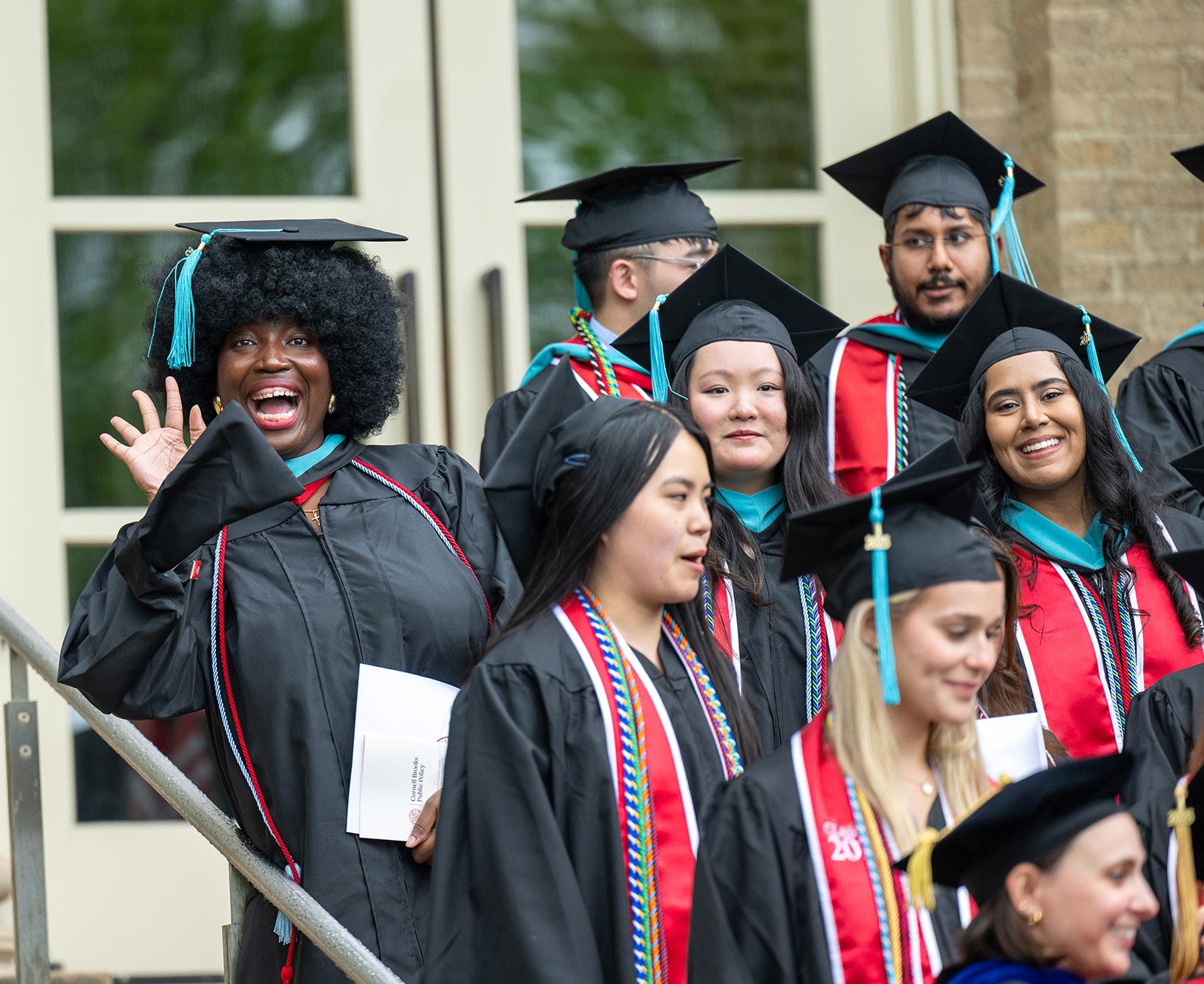
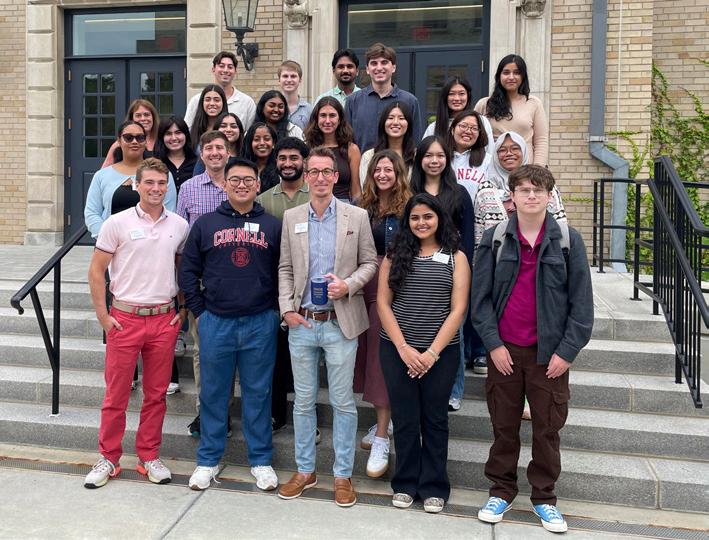
Francia Togba, MHA ’25, waves during the Brooks School Class of 2025 photo.
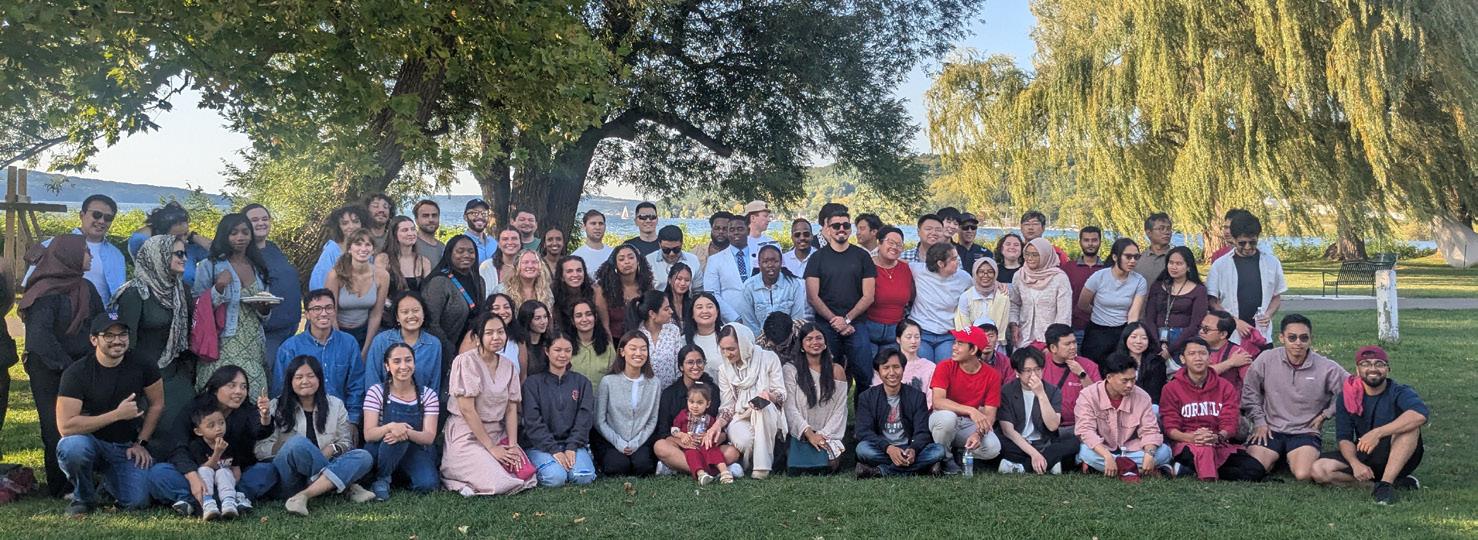
Brooks MPA students gather during an orientation picnic at Stewart Park.
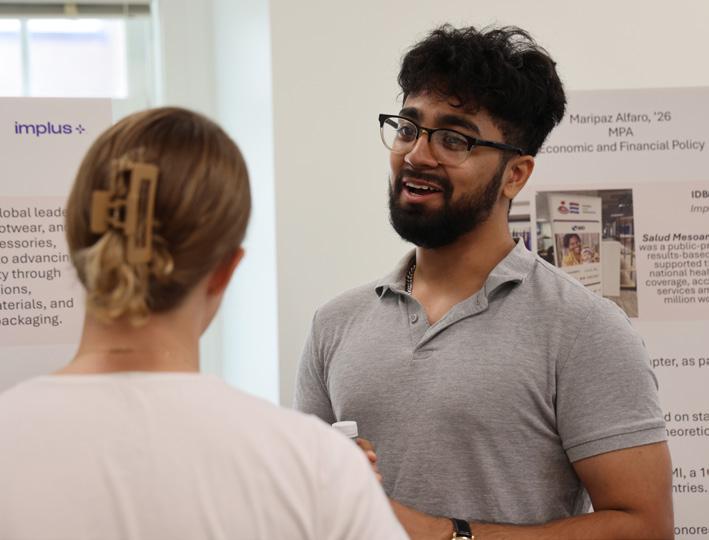
Yusuf Khaled, MPA ’26, presents at the Brooks School Experiential Learning Showcase.
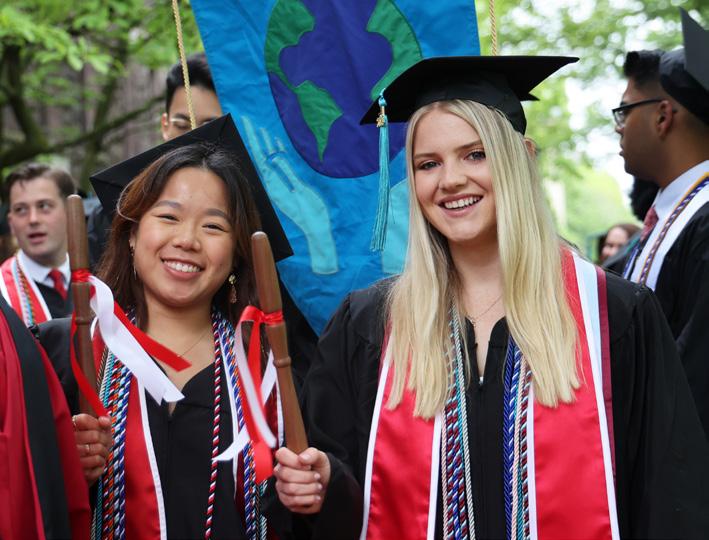
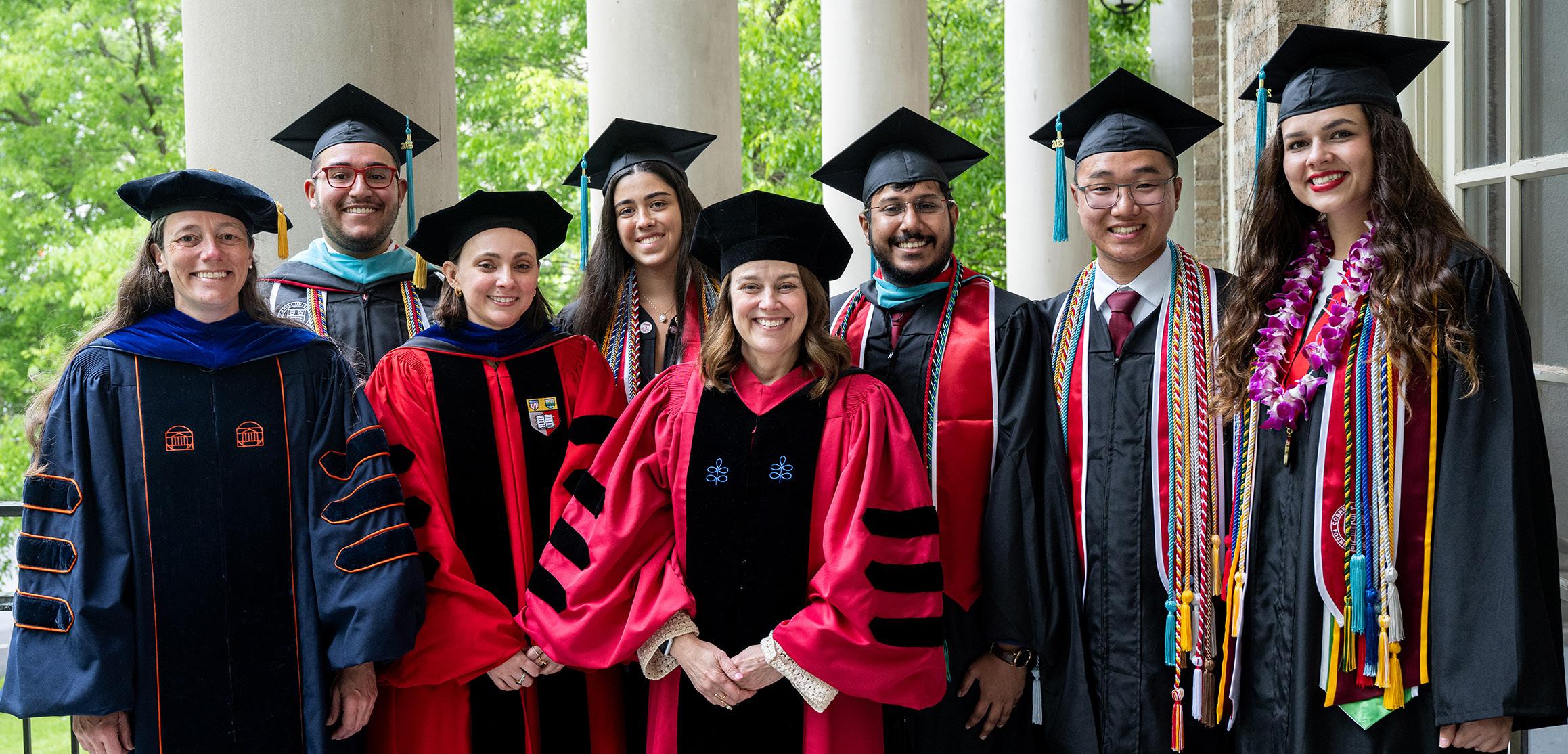
Grace Chen ’25 and Summer Ford ’25 help lead the commencement procession.
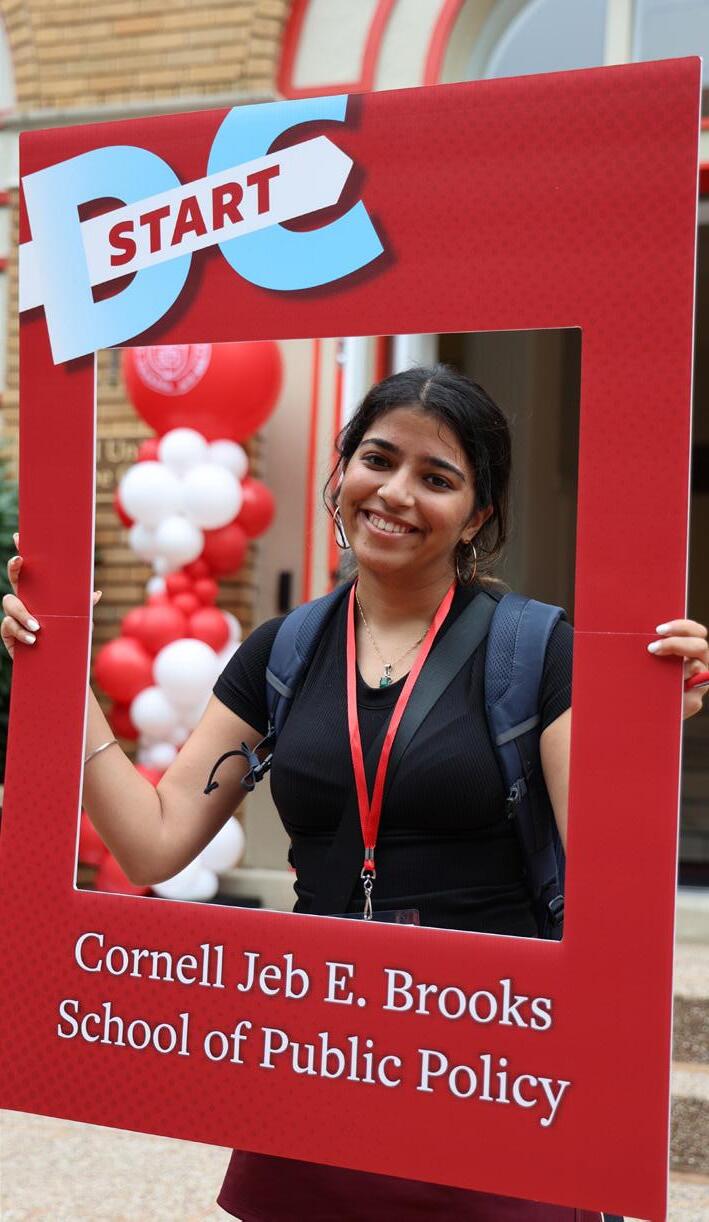
DC Start scholar Saanvi Puri ’29 marks the start of the semester during move-in at the Wolpe Center in Washington, D.C.
First-year Sloan MHA students attend orientation.
students celebrate the Brooks School’s fourth anniversary.
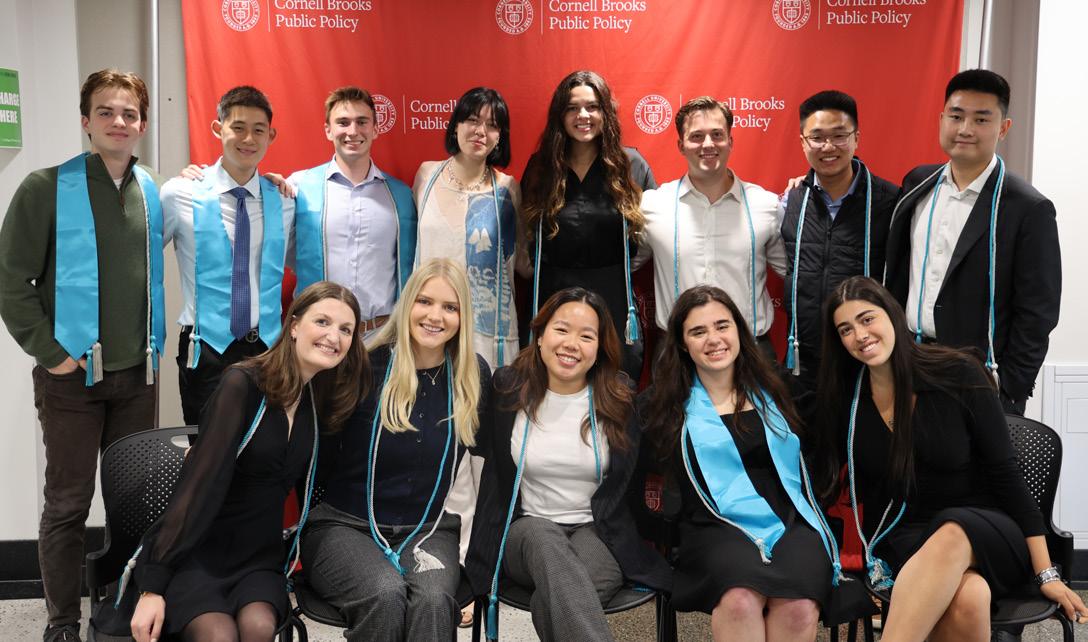
2025 Outstanding Senior award recipients.
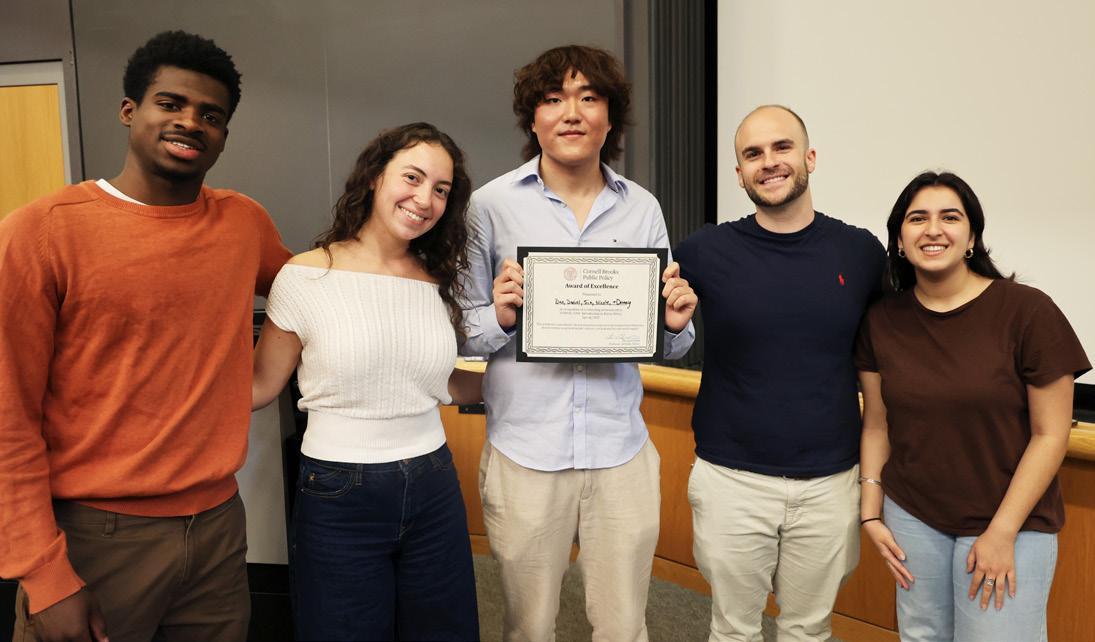
The winning student team from the Intro to Public Policy course’s Congressional Showcase final.
The winners of the 2025 John Siliciano Student Leadership Awards pose with Brooks Dean Colleen Barry, front, and Senior Associate Dean for Academic Affairs Maria Fitzpatrick, left.
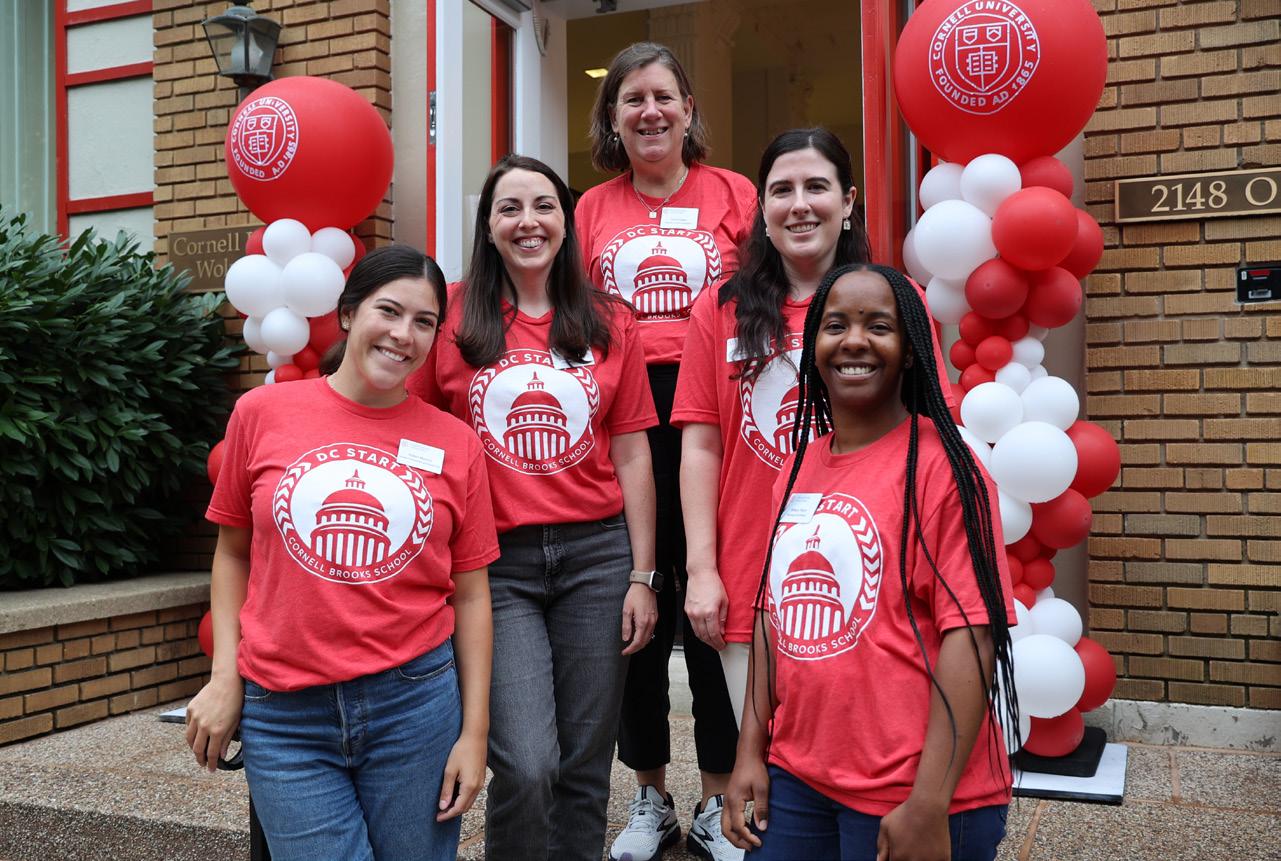
Brooks School Cornell in Washington staff during DC Start move-in.
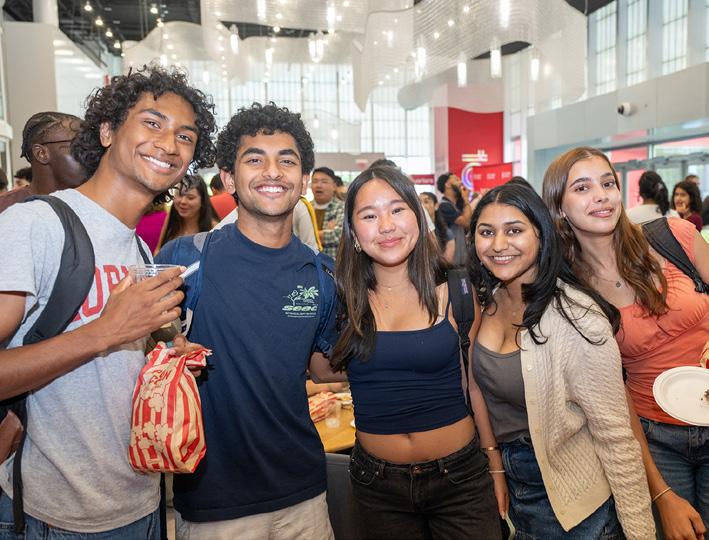
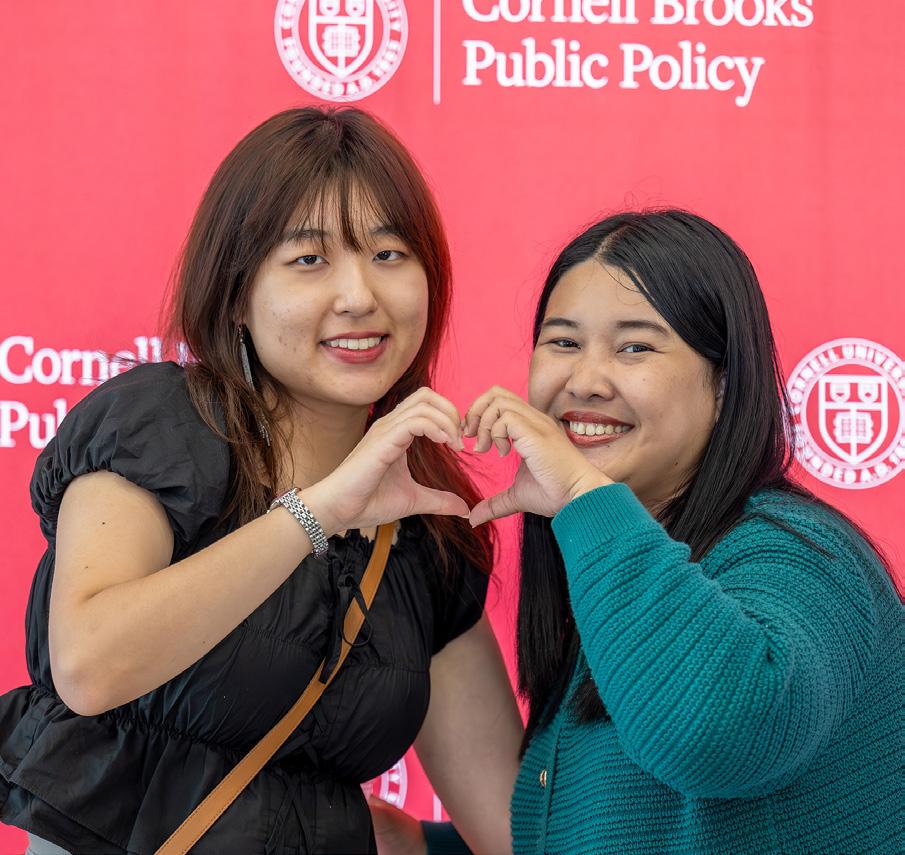
Students pose for a photo during the Brooks School’s fourth anniversary party.
2301 Martha Van Rensselaer Hall
Ithaca, New York 14853
Established in September of 2021, the Cornell Jeb E. Brooks School of Public Policy is quickly becoming one of the nation’s leading schools of public policy. Through its teaching, research, and global engagement, the Brooks School aims to improve the lives of people worldwide by advancing knowledge and informing policy solutions.