All rights reserved alliance international media 2025
COMMENT
The Legacy of Dayton
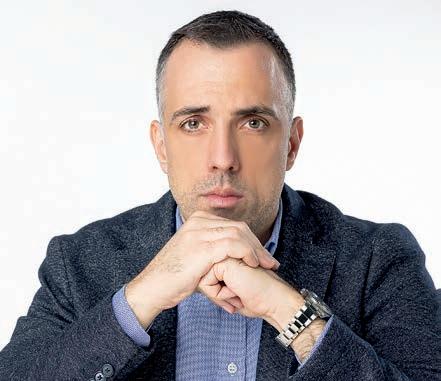
By Boško Jakšić
Bosnia and Herzegovina remains far from the vision shaped after WWII — a country that is not exclusively Serbian, Croatian or Bosniak, but equally Serbian, Croatian and Bosniak. Yet Dayton succeeded in one essential point: the war did not return
t has been three decades since the signing of the Dayton Peace Agreement, which ended the three-and-a-half-year conflict in Bosnia and Herzegovina — the bloodiest in Europe since the Second World War. Reached at an air base in Ohio, the agreement came too late for the 100,000 lives lost, but in time to secure peace for survivors and establish BiH as a sovereign, independent and multi-ethnic state.
ISince then, the country has struggled to answer the same question: how to function with Dayton — or how to survive without it?
Bosnia and Herzegovina is divided into the Federation of BiH, comprising Bosniaks and Croats, the Republika Srpska, and the Brčko District. The Office of the High Representative has long contributed to the impression of a quasi-protectorate with an over-
grown administrative system that has hindered efficiency from the outset.
BiH remains distant from the postWWII ideal of a shared state, yet Dayton delivered the most important outcome: lasting peace. The creation of de facto ethnic territories, veto powers and institutions tied to constituent peoples made war improbable — but have obstructed democratic consolidation and the agility needed to face contemporary challenges.
Wartime political patterns were built directly into the Dayton structure. Ethnic identity dominated during the war, and the peace agreement embedded that dominance into a constitution that treats citizens primarily as members of three constituent groups. Leading parties are national, not political in the civic sense.
The country is facing its most serious crisis since the war, while political elites profit from the status quo. Em-
The creation of de facto ethnic territories, veto powers and institutions tied to constituent peoples made war improbable — but have obstructed democratic consolidation and the agility needed to face contemporary challenges
powered by the Dayton system, leaders can block reforms, trigger constitutional crises and raise the spectre of renewed tensions — distracting citizens from poor governance and systemic corruption.
Dayton is not responsible for these failures, nor for secessionist rhetoric
from Banja Luka that seeks to build parallel institutions in the RS or promote a “peaceful dissolution”. Outgoing RS President Milorad Dodik has even claimed that Dayton has “outlived its purpose”. Croatian aspirations for a separate entity likewise remain present.
Dayton was never meant to be the final architecture of BiH, but the foundation for rebuilding it. It is neither scripture nor an immutable document. The need for reform — particularly of the Dayton Constitution — is clear if the country aims to secure its place within Euro-Atlantic structures.
The agreement cannot be blamed for the failure to overcome ethnic divisions, entrenched corruption, the absence of the rule of law, or underdeveloped public services. Ethno-nationalist politics have significantly slowed BiH’s European integration and fuelled mass emigration. Constitutional changes, if they come, will likely unfold gradually, shaped by the EU accession process.
One symbolic detail from last year’s NATO Parliamentary Assembly in Dayton captured the current reality: the three members of the BiH Presidency arrived in three separate planes.
Perhaps the darkest symbol of all is the fact that the original Dayton Agreement is missing. Alija Izetbegović — one of the three signatories — personally brought it from the U.S., but it was later lost in Sarajevo and has never been found.
Much work remains if the people of Bosnia and Herzegovina are to achieve lasting peace and prosperity.
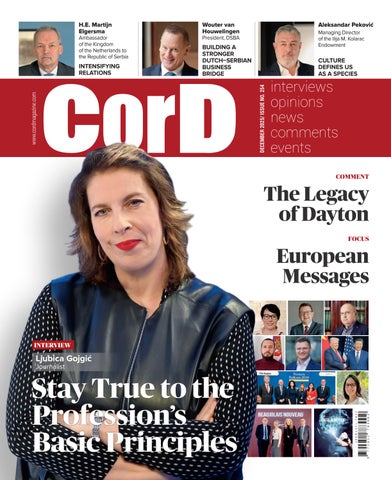
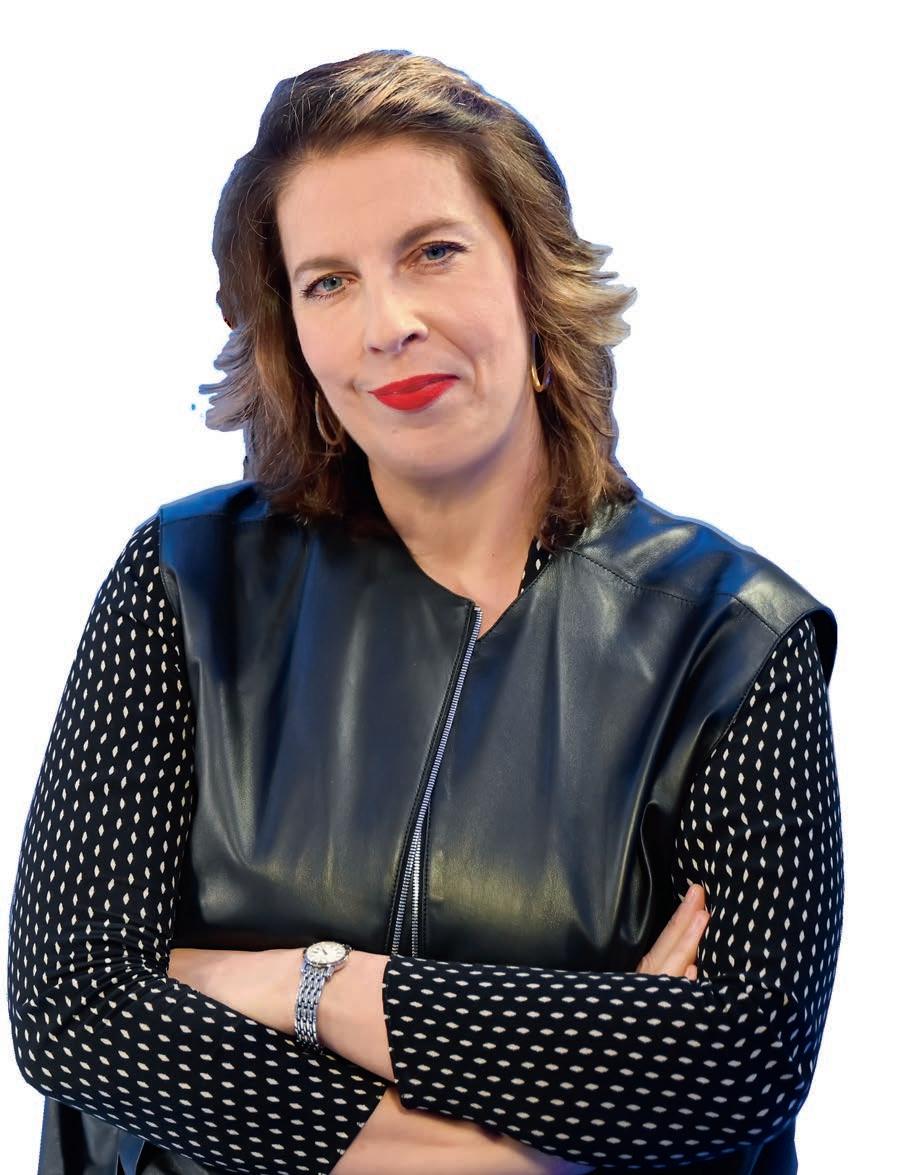
Stay True to the Profession’s Basic Principles
We should remain faithful to the basic principles that compelled us to fall in love with journalism: knowledge, courage and compassion. We should combat the relativisation of truth and again convince the audience that truth can’t merely be what we like, and nor can “cancellation” replace discussion. The media sector should fix this situation, as it has contributed to it significantly ~ Ljubica Gojgić
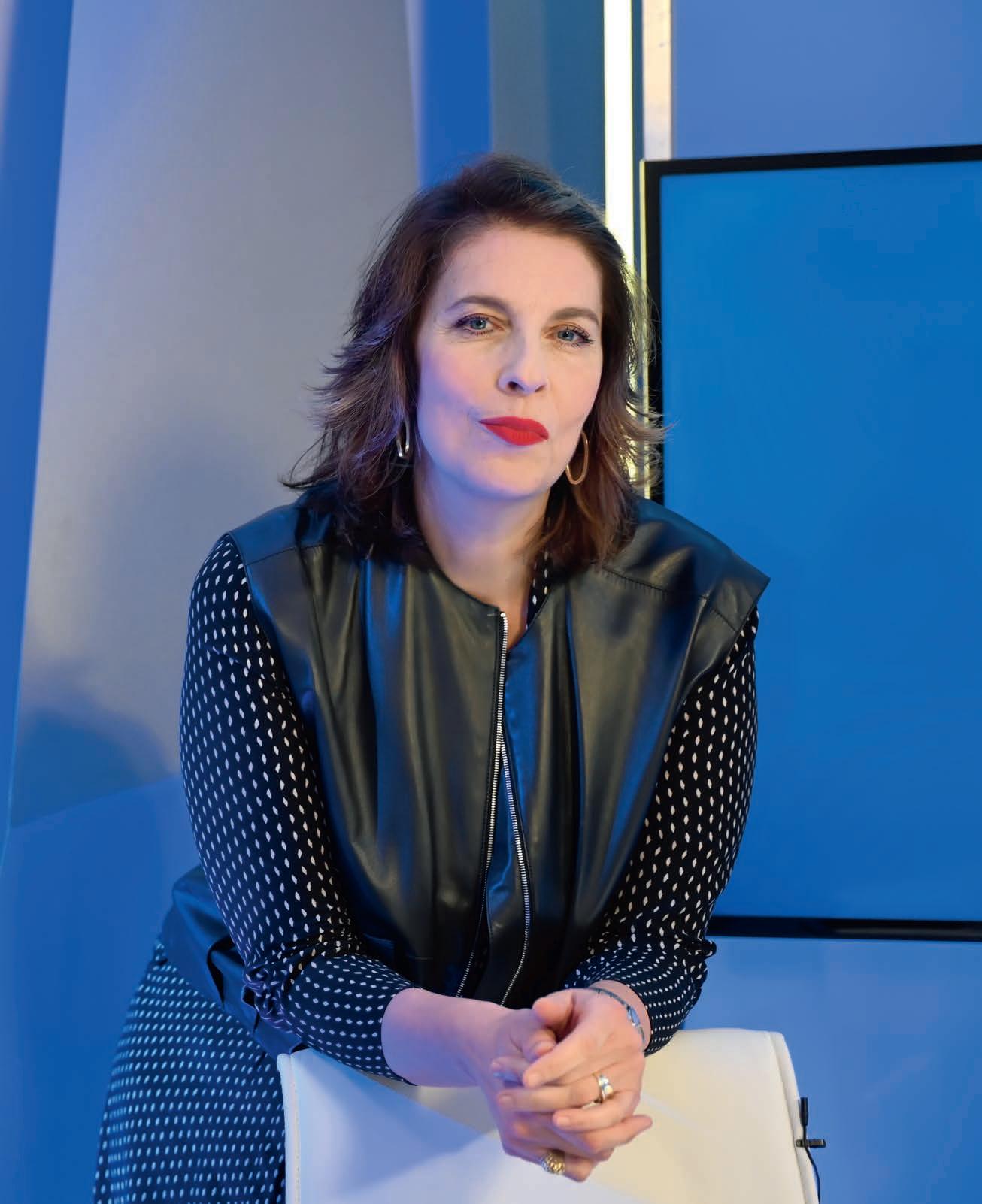
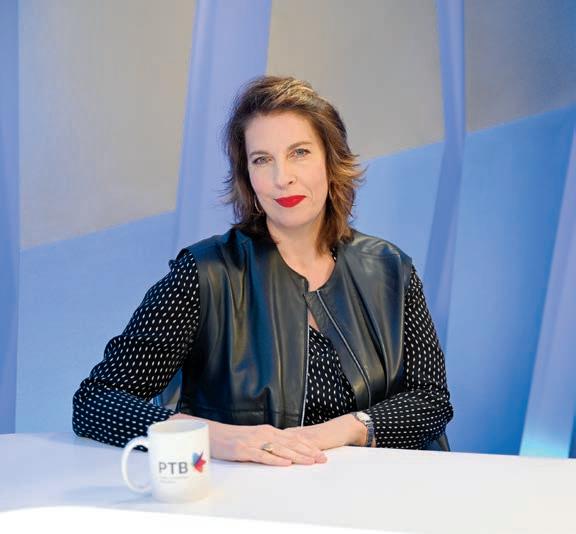
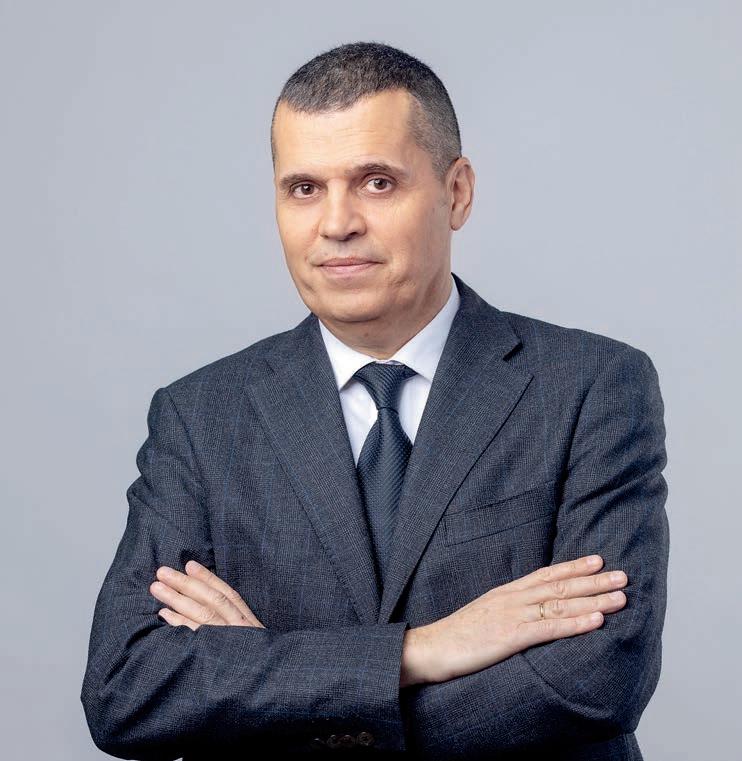
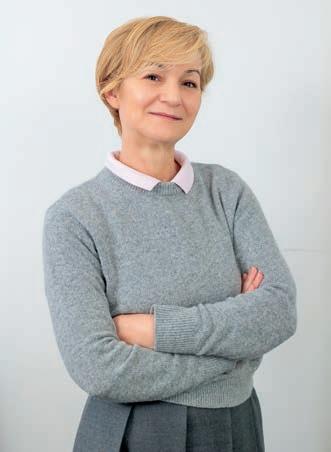
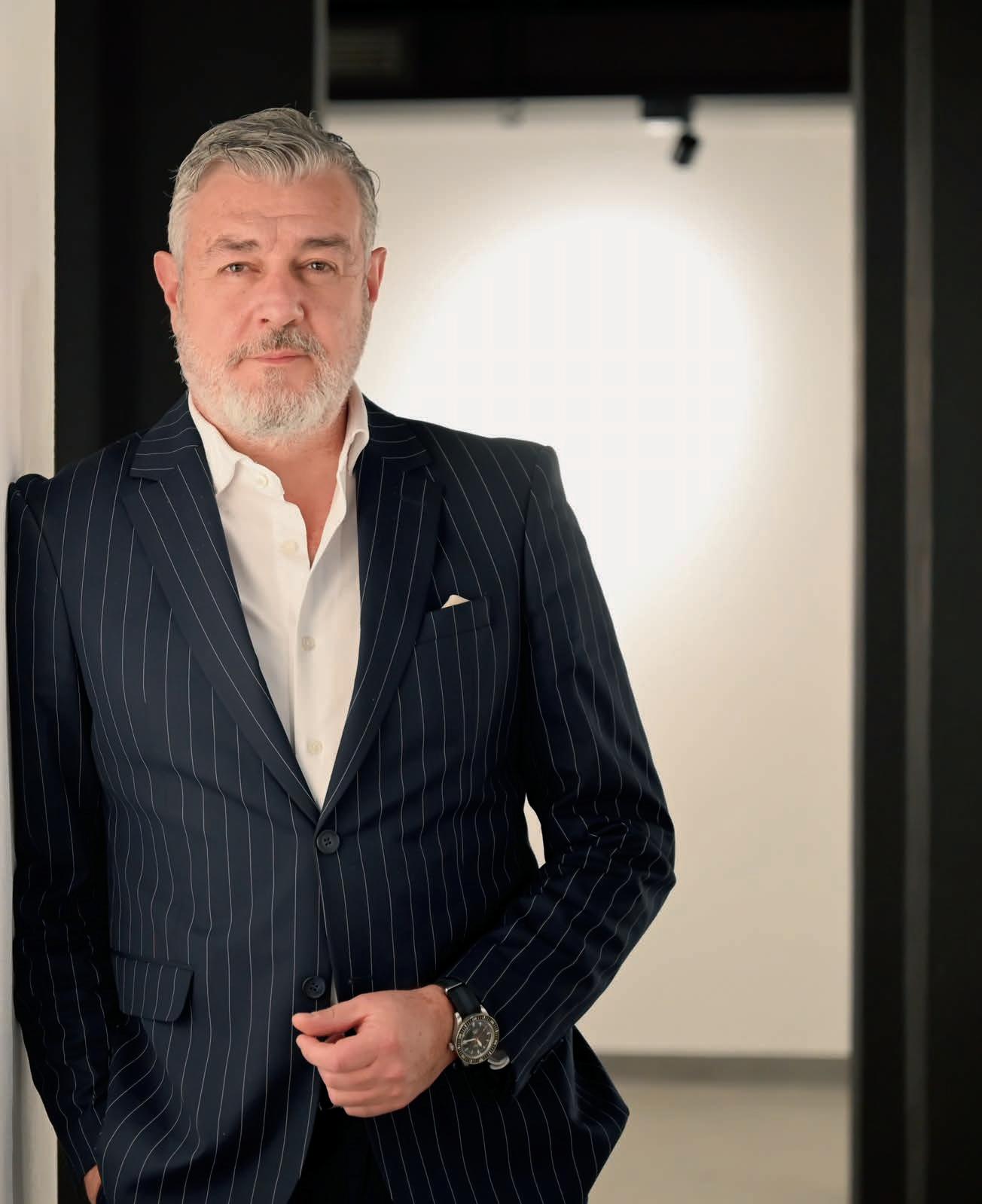
Ljubica Gojgić journalist
Ljubica Gojgić is this year commemorating 30 years in journalism and the 10th anniversary of Radio-Television Vojvodina’s Pravi Ugao [The Right Angle], one of the most trusted and respected talk shows on the domestic media scene. She began her career at RTV B92 and reported from the ICTY in The Hague and from Brussels. Having witnessed key political, social and international events in Serbia’s recent history, she continues to be recognised as one of the few journalists whose work is based on foundations of knowledge, responsibility and unwavering professional standards.
A recipient of numerous significant awards – ranging from the awards of Status Magazine for journalist of the year and best political TV show, via the Dimitrije Davidović and Aleksandar Tijanić awards of the Journalists’ Association of Serbia (UNS), to the Stanislav Marinković Award of daily newspaper Danas and even
a Woman of the Year award, France also bestowed one of its highest state honours on her, by proclaiming her a Knight of the National Order of the Legion of Honour.
In this exclusive CorD Magazine interview, Ljubica discusses the role of public service broadcasters, the limits of journalistic responsibility, pressures applied to the profession and the state of dialogue in media, but also the young generations who could influence the future significantly.
The talk show Pravi Ugao recently celebrated ten years on Radio-Television Vojvodina. Looking back, what does that continuity mean to you personally – in a profession where enduring is perhaps the greatest proof of significance?
— In the year commemorating half a century of RTV Vojvodina, the minor anniversary of Pravi Ugao might not seem particularly significant, but I’m grateful to my colleagues who suggest-
ed that we celebrate it and everyone who congratulated me. Those comments mostly related to the fact that the show has survived and that we’ve succeeded in creating space for discussion almost 1,500 times. I’d like to believe that, apart from merely enduring, the show has also maintained the concept that was conceived ten years ago – in terms of enabling discussions of important issues among all interlocutors with something significant to say or who need to be asked relevant questions. The concerning impression in the show’s 11th season is that, despite Pravi Ugao’s survival, the space for dialogue is narrowing, while society is becoming even more deeply divided and media outlets are being drawn into that division – some willingly, and others because it has been imposed on them. I’m afraid that we’ll gauge Pravi Ugao’s future success on the basis of the length of the list of guests who choose not to respond to our invitation to converse.
You’ve persisted in the dialogue format at a time when, as you yourself say, “dialogue has died”. Do shows like Pravi Ugao today serve as a kind of “sophisticated anaesthesia” with which the semblance of media freedom is maintained, or do they still represent rare spaces for authentic conversation?
— I’ve actually heard both arguments. Under the conditions of an extremely serious media situation, I understand the view that Pravi Ugao’s existence represents a “sophisticated anaesthesia that provides the illusion of media freedom”, particularly in public service media. Over the past ten years, I’ve often been asked how the show endures, and there’ve also been suspicions about what’s really hidden behind it. Without undermining the seriousness of media reality, as I’ve experienced it myself, I believe the show continues to be aired because it has an audience on RTV Vojvodina and relevant interlocutors who believe that those conversations make sense, but also that there’s an element of professional luck. That doesn’t mean the show has lasting protection and its survival is assured, but it does mean that, at this juncture, it represents a daily space in the media for relevant interlocutors and discussions in accordance with the standards and principles I’ve learnt over my previous 30 years in journalism – and that I haven’t had to abandon even once in the ten years that Pravi Ugao has existed.
As a journalist with vast experience in public service media, how do you see its current role and the limits of its responsibility?
— My arrival at RTV Vojvodina was my first encounter with public service media, at a time when I had only superficial knowledge of its functioning. What I’ve seen and been able to learn in the meantime – in getting acquainted with our two public service broadcasters, but also several other European public service broadcasters –has convinced me that the concept of public service broadcasting can function even during times of great change
in the ways people get informed. The abundance of sources of information can’t hide the deep division of society, in which many media companies have taken deeply entrenched positions, adhering to the notion that picking a side is obligatory.
A public service media company that manages to preserve the highest professional standards, and to prioritise the public interest – particularly when being attacked by various interest groups – not only has a chance to survive, but also an opportunity to be among the most relevant media players, which is the case in many European countries. Of course, that theoretical possibility only becomes reality with understanding for the interests of the citizens who finance the company and their comments regarding the quality of programming and their views on how it should look.
The abundance of sources of information can’t hide deep social divisions in which many media companies have taken deeply entrenched positions, adhering to the notion that picking a side is obligatory
Following multiple awards from your colleagues in Serbia, and high ratings for your work on RTV B92 and subsequently on RTV Vojvodina, France decorated you with a knighthood of the National Order of the Legion of Honour – that country’s highest honour for professional excellence and contributions to public dialogue. How much significance does that recognition hold for you, given that it comes from a country that considers freedom of expression as the foundation of its identity?
— I accepted each of those accolades with great appreciation and considered them as precious support and encouragement. The fact that France has repeatedly presented its highest award
to our country’s journalists (Zoran Sekulić, Olja Bećković, Veran Matić) doesn’t only testify to their achievements, but also to the fact that France recognises the seriousness of the media situation in Serbia and the importance of the struggle for media freedom. And that struggle is universal. I was in France this summer and had an opportunity to hear about big business’s great interest in owning television companies, radio stations and newspapers. In such situations, it isn’t only citizens, but also fellow journalists who talk about media impartiality being under threat and about the need to defend freedom of speech and opinion as foundations of democracy. I also heard that, in that context, the French public service broadcaster receives much higher ratings than private media companies.
You’ve spoken several times with students and youth activists who’ve participated in the protests, showing understanding for their need to have their voices heard. How do you see these younger generations: as sincere drivers of change or as only just learning how to transform their discontent into lasting social impact? How do today’s students differ from those who previously changed society?
— I see them as a generation that’s been underestimated by many and that’s had their lifestyle and interests criticised, and that’s been accused of lacking knowledge and interest in reality. They refuted all those claims in the most original way: by becoming an inspiration not only to those who support them, but also to those who oppose them. They’ve cast a light on a different kind of society in which intergenerational love and interethnic respect exist, and public opinion surveys have seen these young people go from being deemed disinterested to being seen as a group that could influence the future significantly. Compared to the students who led the protests of the ‘90s, today’s generations are less burdened by leadership and are particularly immune to the need to court anyone.
As a journalist who’s built a career during the most sensitive phases of modern Serbian history, how would you describe the government’s attitude towards the media? Has anything fundamentally changed in a country where political power continues to be concentrated in the hands of a single man – though today, thanks to social media, pressure and propaganda spread in a different way? — I often quote a dear colleague of mine who once said: “It’s theirs to apply pressure, and ours to oppose it”. That’s been the reality throughout the previous 30 years, during which the types of pressure applied to the media have alternated – with entire newsroom staff sometimes expelled and media companies shut down; while at other times prominent or dissident individuals have been targeted and even murdered. New methods rely on the financial sector, while so-called SLAPP lawsuits are an attempt to involve the judiciary in pressuring the media. There’s no government that’s thrilled about being criticised, everyone prefers praise. Attitudes towards the media, or the weight of pressure applied, essentially depend on the (un) restricted power of the current elite, and to a lesser extent on the degree to
which political parties adhere to democratic principles, but significantly also on citizen support for the media and their willingness to protect those they consider the best.
You once worked as B92’s special reporter from the ICTY. How do you see that experience today –not only professionally, but also personally? What did that period teach you about the limits of journalistic objectivity and responsibility towards the truth when reporting on crimes and justice?
— I consider the ten or so years that I spent reporting from The Hague, and then from Brussels, as a great opportunity in my career. Under conditions in which newsrooms have strained finances, few journalists ever get the opportunity to report on important events happening outside of Serbia. Getting acquainted with international organisations and journalists from other countries is precious experience. The Hague Tribunal meant encountering incredible stories of human cruelty and the punishing of people who committed heinous crimes against their neighbours. Unfortunately, that tribunal didn’t maintain the image of an impartial court that was supposed to try those most responsible for crimes in the former Yugoslavia. Those efforts were contaminated by politics that too often interfered in the work of the court, which – apart from journalists – was also spoken about by its most prominent figures. If it had been different, perhaps there would be more international support and respect for the functioning of today’s ICC, the jurisdiction of which isn’t recognised by the world’s greatest powers. When it comes to reporters from The Hague, there were great examples of good understanding of things, as well as investigative journalism that also helped uncover some crimes. Unfortunately, there were also examples of courtroom reporting based on templates that were prepared in advance and brought to court only to serve the aforementioned politics.
You’ve always defended journalism as a profession, and not as an ideology. What does it mean to remain professional and independent today, in a society in which truth is increasingly treated as a matter of perception as opposed to fact?
— There’s no great mystery there. You have to remain faithful to the basic principles of the profession that made us fall in love with journalism: knowledge, courage and compassion. You are correct that we should also fight the relativisation of truth and again convince audiences that truth can’t only be what we like, while “cancellation” can’t replace discussion. The media should attempt to fix that situation, because media companies themselves have contributed significantly to this new perception of the truth.
How important do you think it is to maintain distance professionally (from both domestic and foreign centres of power) and to preserve journalistic integrity while remaining truly engaged in the public interest?
— Until AI replaces us, which I hope will never happen, the statement that “journalists are also people” will remain valid as a reminder that absolute objectivity doesn’t exist. But we should still strive towards it. Maintaining professional distance from centres of power – political, economic and others – is essential for engaging in journalism and goes hand-in-hand with recognising the public interest that’s often attacked. On the flip side, journalism is a job that’s done with passion, but not the same passion as social activism, though there are many opportunities when they intertwine and give a voice to the vulnerable and oppressed. The distance we’re talking about, which is sometimes unpopular but always important, actually represents the space that provides the journalist with the opportunity (and obligation) to observe things from all angles and to check all facts before presenting them to the public.
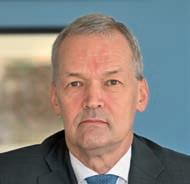
Intensifying Relations
There are reasons to be concerned at the moment, especially in the field of freedom of expression. We are particularly worried about the threats and attacks against journalists and the deterioration of media freedom in Serbia, as noted in several media indexes and the EU Country Report ~ Martijn Elgersma
H.E.
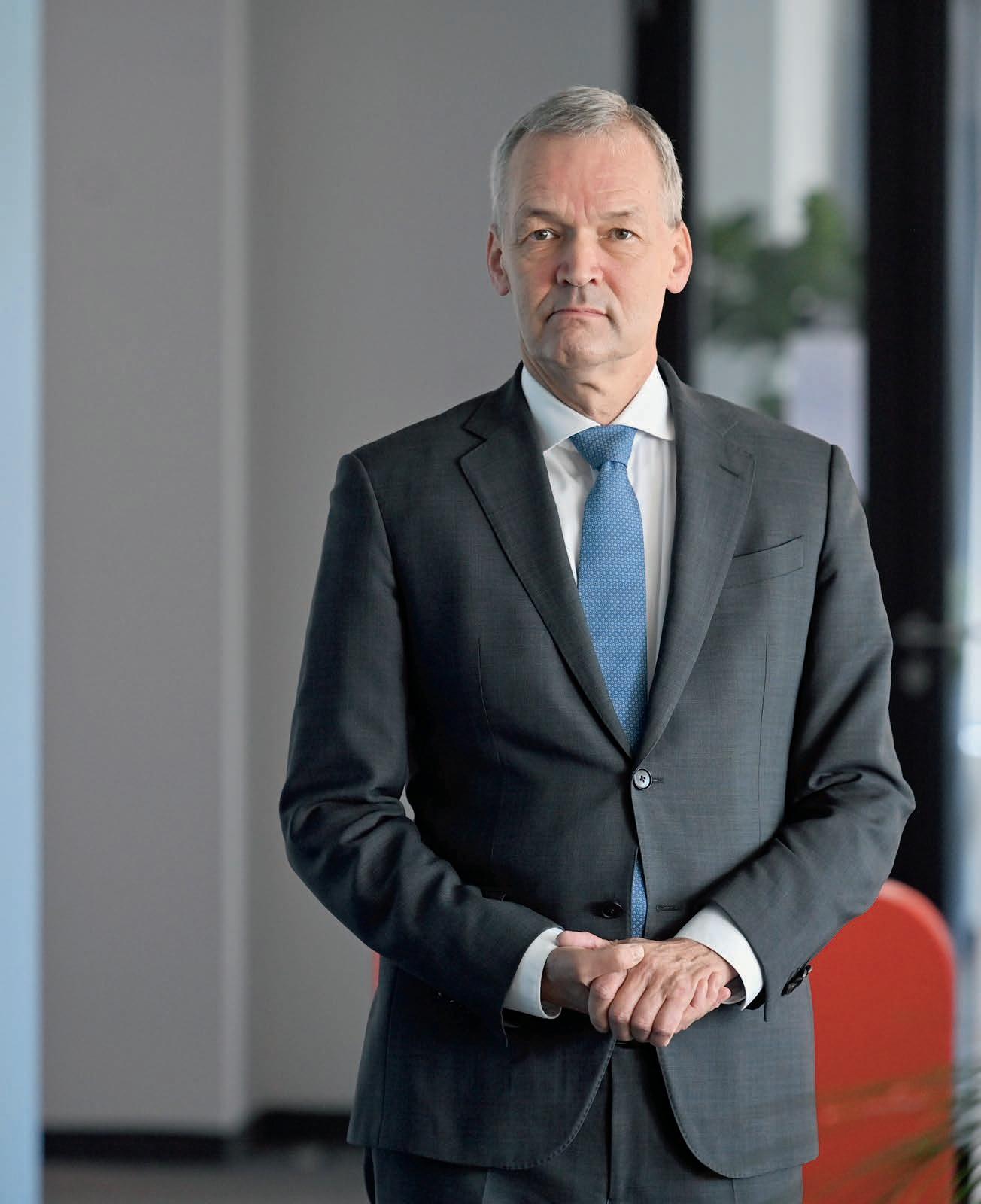
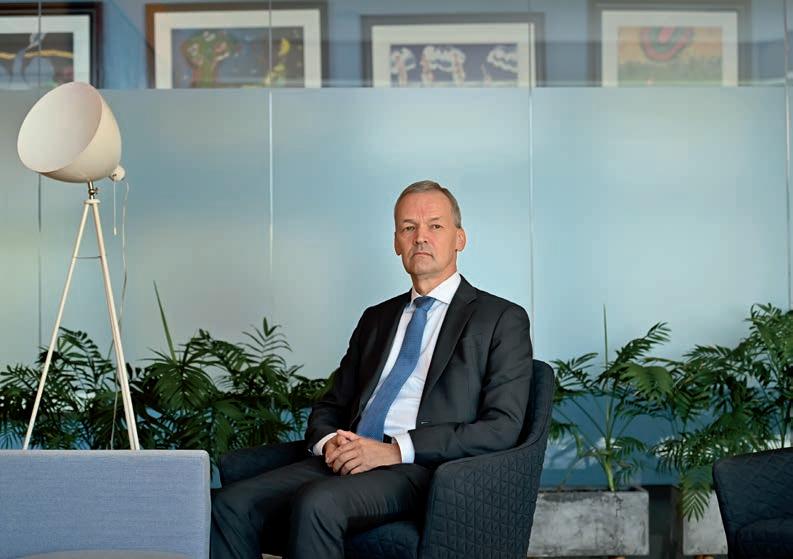
Martijn Elgersma
Ambassador of the Kingdom of the Netherlands to the Republic of Serbia
By Ljubica Gojgić
Serbia’s EU accession process is a central part of our bilateral relations,” says Ambassador Martijn Elgersma, speaking in this interview for CorD Magazine. These relations unfold at multiple levels, ranging from agriculture and business to the state administration. Ambassador Elgersma notes that “the rule of law and democracy, as core values of the European Union”, lie at the heart of this process, adding that Serbia is expected to make “substantial further progress” in these areas, “…which also includes the strengthening of democratic processes”. The ambassador considers that it is in this context that a decision will be brought in December regarding whether to open another chapter with Serbia, specifically in Cluster 3 of the EU accession negotiation process.
Your Excellency, a year has passed since your arrival in Serbia. What are your impressions and how would you evaluate the current level of bilateral cooperation between our two countries?
— It is a cliché, but this year really has passed so quickly. I have met many
government officials, businessmen and people from the fields of media and culture, and they all have their own personal experiences and connections with the Netherlands.
O n the political front, we are intensifying our relations. Serbia’s EU accession process is a central part of
Serbia’s EU accession process is a central part of our bilateral relations, but there is co operation in many areas around it, such as in the field of migration and police cooperation
our bilateral relations, but there is cooperation in many areas around it, such as in the field of migration and police cooperation. We try to structure our cooperation through annual political consultations, which are an important part of our bilateral dialogue that helps us understand each other’s points of view and identify areas for further cooperation.
Our EU engagement in Serbia is marked by support for efforts to strengthen the rule of law and democracy, which are core values of the European Union. This is why we fund projects through our MATRA fund and provide training for civil servants.
Economi c ties between our two countries are strong. The Netherlands is the second biggest foreign investor in Serbia. There are numerous Dutch companies that employ more than 15,000 people in a variety of sectors in Serbia. These companies and their products include household names that almost every Serbian knows and uses, such as Philips, Heineken, Ahold-Delhaize and KLM. And let’s not forget small and medium-sized enterprises in both countries that form the engine of the economy. Ranging from IT to shipbuilding and from sun protection equipment to tree nurseries, to name just a few examples, Dutch firms have a strong foothold in Serbia. Our bilateral trade has been growing at an average of around 20 per cent annually and we will hopefully hit the milestone of €1 billion soon.
Finally, I would like to mention some of the many initiatives in the field of culture. We cooperate on many projects with the Group for Dutch Studies of the Faculty of Philology, such as Europe Language Day. Many Dutch books have been translated to Serbian, the latest one on the history of painting. Only this year we had several art and photo exhibitions, a curator from the Netherlands and an expert on history teaching. The list is long and we are happy that it will continue to grow.
During your initial meetings with Serbian government officials, you discussed potential cooperation in the fields of agriculture, environmental protection and energy efficiency. What priorities have you set for your mandate in Serbia? — We’ve had an agricultural office for the Western Balkans within the embassy since last summer, allowing
us to expand our efforts in the field of agri-business. The focus of this office will be on assessing the progress of, and support for, the EU Accession process related to agriculture and the natural environment in the different countries, while on the other hand it will promote business and governmental relations be-
Our bilateral trade has been growing at an average of around 20 per cent annually and we will hopefully hit the milestone of €1 billion soon
tween the Netherlands and the countries of this region.
As an agriculture powerhouse, the Netherlands shares its knowledge and technology in agriculture in an effort to improve sustainability in the sector, for example by supporting projects to introduce regenerative agriculture practices. I think it is important to connect different fields,
as we did a few years ago when we looked into the possibilities of enhancing the value of agricultural bio-waste to bio-energy in Serbia. Another example is our support for the introduction of high-tech greenhouses, which represent a very strong sector in the Netherlands that can be combined with thermal power. Such activities can support Serbia’s future EU accession, but will also help fight climate change and improve soil conditions and biodiversity.
The Netherlands is an important investor in the Serbian economy, with around 15,000 local people employed by Dutch companies. To what extent does the current economic instability, both within the E urozone and in Serbia, impact on interest in the Serbian market among Dutch investors?
— Almost a third of all foreign direct investment in Serbia in 2020 came from the Netherlands. Now is the time to ensure that a clear track-record on reforms in the area of the rule of law and increased transparency amplify that impression still further. The potential to increase our cooperation
is great and ranges from agriculture, waste water management and medical equipment, to urban greening and IT. The Embassy helps identify business opportunities for Dutch companies and advises regarding potential risks. The Dutch-Serbian Business Association is a testament to this mutual interest and I’m very proud that the Dutch business community has been growing so rapidly. But there are always ways to cooperate even under more challenging circumstances. We initiated public-private cooperation in support of greening the cities, where Dutch and Serbian parties – both businesses and (local) governments – found each other. This relationship continues even after our involvement has formally concluded. That boosted the awareness of city developers when it comes to investing in the green side of their projects, like IKEA and the Sava Centre etc.
Media reported recently that the Dutch retail chain operating Maxi stores in Serbia plans to close 25 outlets. Is there justification for the claims that the Dutch inves-
tor is dissatisfied with the Serbian Government’s decision to cap retail margins?
— I cannot speak here on behalf of a Dutch investor, but I have discussed with the government my concerns over the consequences of such a significant market intervention for both current (not only Dutch) investors and for the business climate for foreign investments in general. I would like to support and encourage a dialogue between the government and the business community, in this case the retail sector.
It seems that officials in Belgrade are counting on the Netherlands’ support for Serbia’s EU integration. What is your country’s current position regarding the opening of Cluster 3 in the accession negotiations, as proposed by the European Commission in its recent report on Serbia’s progress?
— The EU accession of the entire Western Balkans remains the strongest guarantee of regional stability, and this is why the Netherlands sees the future of Serbia, and the other West-
ern Balkan countries, as being in the European Union.
Having said this, for the Netherlands the accession process is merit-based and next steps are determined individually for each country, based on reform progress. When we speak about next steps for Serbia, the Council’s conclusions on Enlargement from December 2024 were clear regarding the opening of Cluster 3 and statedas summarised here briefly – that substantial further progress is needed on the rule of law, which also includes strengthening democratic processes. The recently published EU enlargement report for Serbia will play an important role in the discussion on whether such progress has been achieved.
To what extent does the current sociopolitical crisis in Serbia impact the country’s image in the Netherlands?
— There is increased interest in the Dutch media regarding developments in Serbia. I think this is a good thing in general, because not everyone in the Netherlands is familiar with Serbia and its people. As an embassy, we have been closely monitoring what has been happening in Serbia over the past year. I think it is fair to say that this is both a societal and political crisis that needs to be solved by the Serbian people and authorities. As I mentioned before, there are reasons to be concerned at the moment, especially in the field of freedom of expression. We are particularly worried about the threats and attacks against journalists and the deterioration of media freedoms in Serbia, as recorded in several media indexes and the EU Report. I would like to highlight the importance of a healthy media landscape for democracy, rule of law and the EU accession progress. The Netherlands attaches great importance to this, both in the Netherlands and in its foreign policy. We have been providing support for an independent and pluriform media landscape in Serbia since the ‘90s and continue to do so.
Global Diary
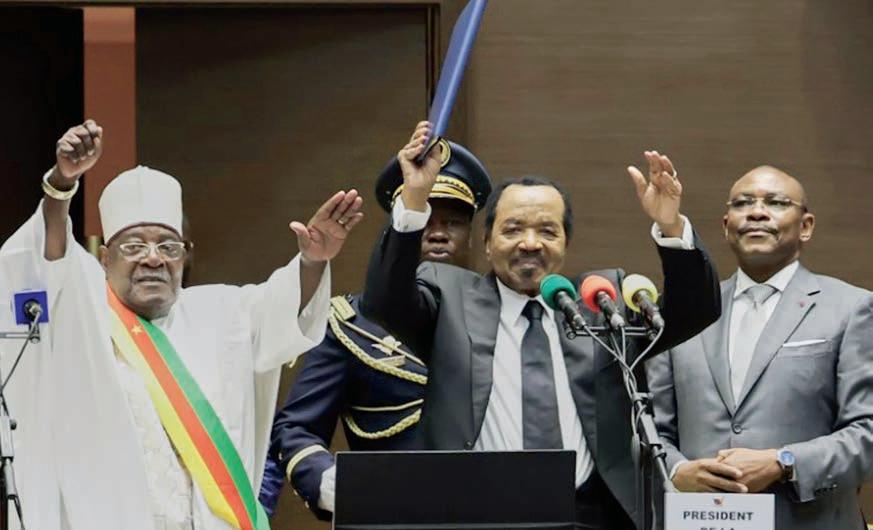
Biya Sworn In Again at 92
Cameroon’s Paul Biya took the presidential oath for yet another term, cementing more than four decades in power. The disputed vote triggered protests and renewed criticism from the opposition, who allege widespread irregularities. His re-election deepens the country’s generational divide, with a youthful population governed by the world’s oldest sitting president.
“When leaders fail to lead, the people will eventually make their own future”
Kofi Annan Former UN Secretary-General
Bolivia Elects Rodrigo Paz
Rodrigo Paz was sworn in as Bolivia’s new president, ending nearly twenty years of left-leaning rule. Paz campaigned on opening the economy, increasing private investment, and reducing the state’s heavy footprint. His victory marks a political reset that could reshape Bolivia’s economic trajectory.
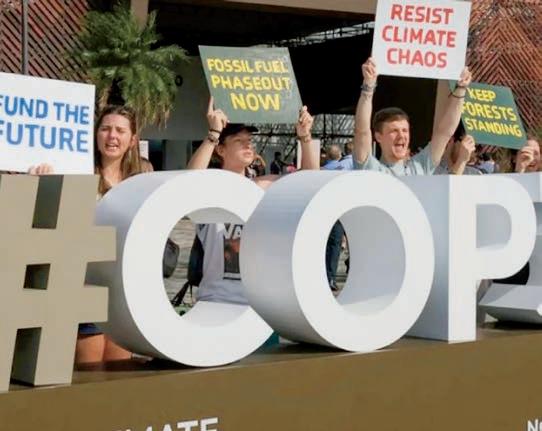
COP30 Ends Without Fossil Fuel Phase-Out
World leaders wrapped up COP30 in Belém with strong language on climate action but no agreement to phase out fossil fuels. Pressure from developing nations clashed with resistance from major emitters, resulting in a compromise viewed as progress—but not the breakthrough activists demanded. The summit underscored how climate diplomacy is accelerating yet still constrained by political realities.
“The arc of history bends only when people push it”
Barack Obama Former U.S. President
G20 Pushes Through a Divisive Declaration
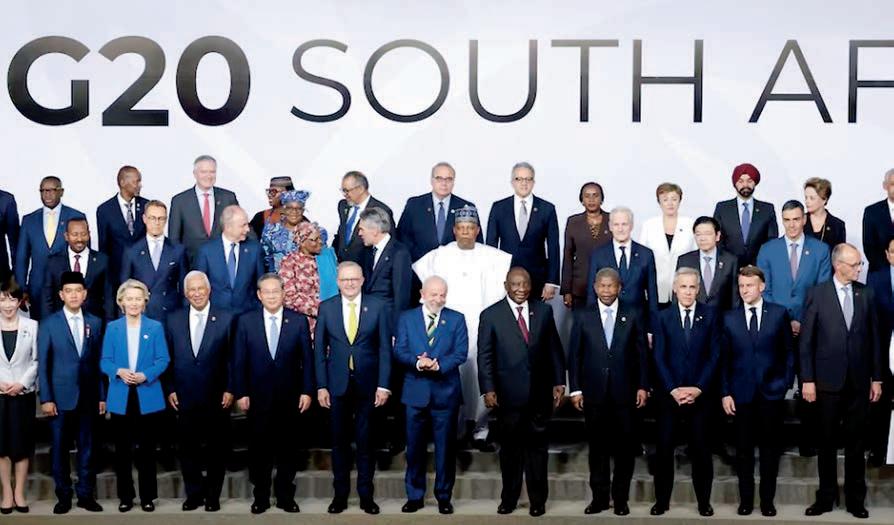
The G20 summit in Johannesburg closed with a leaders’ declaration pushed through despite U.S. and Argentine objections. Climate commitments, debt relief and development financing dominated the final text, signalling a rare moment of multilateral resolve. The outcome highlights the rising influence of Global South priorities.
Xi and Trump Hold High-Stakes Call
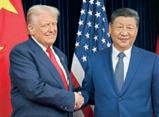
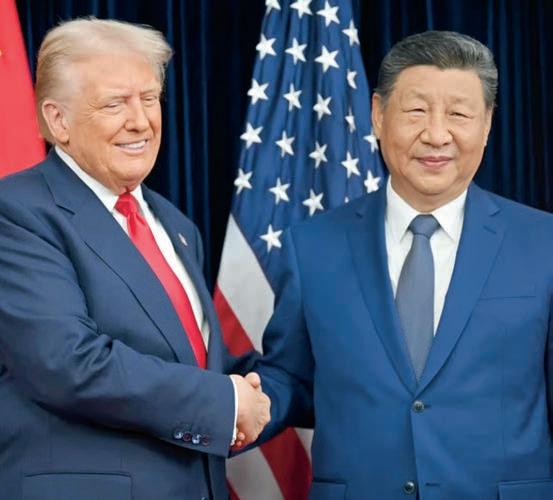
China’s Xi Jinping held an extended phone call with U.S. President Donald Trump, covering trade, Taiwan and global security. The outreach signals Beijing’s intent to shape the tone of a new geopolitical phase. Analysts see the call as an early test of how both leaders plan to navigate competing ambitions.
Tanzania’s Vote Sparks Alarm
Tanzania’s election handed President Samia Suluhu Hassan an overwhelming victory with 97.66% of the vote—but opposition parties had been barred from running. Reports of violence and intimidation cast a shadow over the results. The outcome raises fresh concerns about democratic backsliding in East Africa.
Warnings that are Diplomatic, Yet Clear
There is seemingly no doubt that the EU expects Serbia to make two important decisions: to resolve the existing political crisis through elections; and for the country’s leadership to clearly decide which foreign policy option it is committed to, in a package with resolving the fate of oil and gas company NIS
As this edition of CorD Magazine heads to print, the EU might be sending the Serbian leadership some even more telling messages than those offered by German Federal Foreign Minister Johann Wadephul during his tour of the Western Balkans. Speaking in Belgrade, he said that Serbia should make a decision on what it wants
through elections. This statement came at a moment when the most recent European Commission report had noted serious setbacks regarding the rule of law in Serbia, with students and citizens facing brutality on the streets, while a REM Council has yet to be elected. We asked our interlocutors whether Wandephul’s message represents an expres-
sion of confidence that conditions exist in Serbia to hold free and fair elections, or a subtle signal that the Union is losing patience with the existing model of governance in Belgrade and that Serbia will no longer be able to reliably count on its prospects of European accession without fundamentally harmonising with European standards.
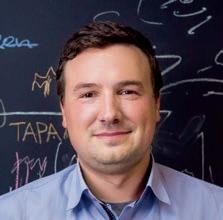
Dejan Bursać Senior Research Fellow at the University of Belgrade’s Institute for Philosophy and Social Theory
No Longer Willing to Turn a Blind Eye
In contrast to during some previous electoral processes, when external powers were willing to turn a blind eye to various manipulations and violations of citizens’ electoral will, Serbia’s next parliamentary elections will be heavily scrutinised
The message can be interpreted as a kind of expectation of foreign actors who are invested in our region that crises like the current one in Serbia are resolved in an institutionalised way, which is something that has been rejected by the regime in Serbia over recent months, with the irrational hope that the protest movement will simply disappear and Serbian citizens will somehow forget everything that’s happened in our country since 1st November last year.
It seems to be crystal clear to all other actors, but also Serbia’s citizens, that the current crisis will ultimately be resolved through elections, in one way or another – either with the victory of the current regime or the triumph of its opponents. In this latter possibility, we can also actually find the reason why extraordinary parliamentary elections haven’t been called, despite having been held four times since SNS came to power (in 2014, 2016, 2022 and 2023, each time for no particular reason): and that’s their uncertainty over whether they can win elections, despite all the advantages enjoyed by the ruling party in the electoral arena, to which the second part of your question refers. Typically for a hybrid regime that merely maintains the façade of democracy, in the electoral arena SNS has on its side all institutions, almost all media and unlimited material resources, and yet the party’s election victory is no longer a given.
This is an additional complication for the party: in contrast to during some previous electoral
processes, when external powers were willing to turn a blind eye to various manipulations and violations of citizens’ electoral will, Serbia’s next parliamentary elections will be heavily scrutinised, and any attempt at manipulation will be noticed and probably sanctioned – which causes an even bigger problem for SNS, because, for the first time since 2012, in these elections it will have a credible competitor and will probably be compelled to utilise the entire spectrum of machinations at its disposal in order to overcome that opponent. In oth -
We are awaited by a horrible election process, and at the end of the day, however it ends won’t be good for the ruling party
er words, we are awaited by a horrible election process (as we have been able to see, among other things, in preparations for voting locally in Sečanj, Mionica and Negotin) and however it ends, at the end of the day it won’t be good for the ruling party: they will either lose those elections, or they will “win” them through serious manipulation, which then creates a problem for them when it comes to the ire of voters in Serbia, but also with the international factor, which seems to be losing patience with this regime.
Maja Stojanović
Executive Director of Građanske inicijative (Civic Initiatives); Chair of the Board of Human Rights and Democracy House from Belgrade; Member of Europe Team – an expert group for the promotion of European integration in Serbia
Supporting Citizens and Students
I believe that the various messages sent recently by the European Union as a whole are saying that the time for political procrastination is running out
Iinterpret the message of German Federal Minister for Foreign Affairs Johann Wadephul, first and foremost, as a direct repetition of what students have been saying for months: Serbia finds itself in an enduring political crisis without a clear institutional solution, and elections are the democratic mechanism through which this crisis can be resolved. That’s why this statement isn’t a criticism, but rather represents support – for both citizens and students who insist that the political process be brought back within the framework of democratic rules.
This message also simultaneously establishes the clear responsibility of the authorities. If the way out of this crisis lies in elections, then it is up to the political actors – particularly those who control the institutions – to ensure that those elections are fair and free. The European Commission’s most recent report notes regression in terms of the rule of law, while the brutal treatment of students and protesting citizens testifies to an atmosphere in which political tensions are resolved by force, as opposed to institutions.
It is particularly important to mention REM [the Regulatory Authority for Electronic Media], the work of which is today blocked completely. The election of the entire REM Council has been ongoing for more than a year, and exclusively due to the fact that the ruling parties refuse to elect members who would work independently of the government and in the interests of citizens. The latest decision not to elect a ninth member of this body prompted four members to announce their resignations – which means that REM has no prospect of becoming functional without a repeat of the parliamentary vote in the ninth category of nominators. This isn’t a technical problem, but rather a funda-
mental issue of political will: there can be no equality of campaigning without an independent media regulator, and the lack of equality of campaigning causes elections to lose their meaning as a mechanism for exiting the crisis.
In this context, Wadephul’s message is actually a clear signal that Germany recognises the depth of the political crisis and expects it to be resolved in a democratic way. This isn’t an expression of a belief that everything’s fine – on the contrary, it is a message that the existing situation cannot be maintained indefinitely.
I believe that, with the various messages sent recently, the European Union as a whole is saying that
The time of mimicking democracy is passing – and the focus of European officials is shifting back towards an insistence on European standards
the time for political procrastination is over. If Serbia really wants a European perspective, that can’t be built on suppression of the media and freedom of assembly, nor on the blockading of institutions and arrests, but rather on restoring trust, functional institutions and elections that can really bring a solution. The government can claim that these kinds of statements mean support for the existing governance model, but that would mean misreading both the message and the current situation. This could actually be a clear sign that the time of mimicking democracy is passing – and that focus is shifting back towards an insistence on European standards.
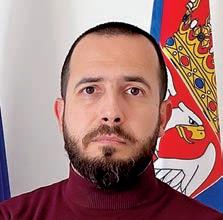
Nemanja Todorović Štiplija Editor-in-Chief of European Western Balkans
Germany’s Messages are Clear
EU representatives might not raise their voices, but they are raising their eyebrows over the persistent attempts of Serbia’s authorities to ignore European values. That could provide insight into the mounting pressure on the government to call elections that will be free and fair
German Minister Wadephul’s message can be interpreted as a very polite diplomatic reminder that political crises in Europe are nonetheless resolved through elections – elections that have at least minimum integrity.
At a juncture when the European Commission’s latest report has noted, for the first time, a serious regression in the area of the rule of law in Serbia, while protesting students and citizens on the streets are being treated in a way that bears little resemblance to the European way, and REM continues not to function, with no end to its saga in sight, it would be hard to believe that Berlin considers the situation idyllic. It is more likely that Germany, as the EU’s most influential member, is sending a signal that elections are desirable – and not just any election, but rather elections that can be said to resemble a democratic process by both domestic actors and European partners.
With a little luck, this is an introduction to Europe’s push for a broader conversation about minimum standards that would ensure elections don’t boil down to an administrative voting exercise, but rather represent a real decision of the citizenry.
This message sounds less like an expression of confidence and more like an elegantly formulated warning. The EU and its member states might not raise their voices, but they are very clearly raising
their eyebrows: without fundamental harmonisation with European standards – ranging from media freedoms and the freedom of assembly, via the depoliticization of institutions, to the fight against corruption and organised crime – Serbia can no longer reliably count on its European integration prospects. Even if the country fulfilled all demands regarding
While the neighbours are advancing with decisive steps, Serbia persistently ignores the oft repeated warning that no one will enter the EU without following the rules
Russia or the normalisation of relations with Kosovo tomorrow, the dramatic decline in democratic practices would remain as a key obstacle.
While the neighbours are advancing with decisive steps, Serbia persistently ignores the fact that countries don’t join the EU on the basis of momentum, but rather standards. As such, the message from Berlin is most likely: the time for “business as usual” is over, while the time for real reforms should start as soon as possible.
Raša
Nedeljkov Programme Director of the Centre for Research, Transparency and Accountability (CRTA)
Pink Elephant in the Room
No one believes any longer that the longstanding sociopolitical crisis can be resolved in any way other than through elections, and not just any elections, but rather free and democratic ones
One gets the impression that it’s become impossible to avoid seeing the pink elephant in the room, regardless of whether you’re looking from Strasbourg, Brussels, Berlin or elsewhere... As obvious as it is that there’s no acceptable explanation as to why an exit from this deep and lasting sociopolitical crisis isn’t being sought through elections – particularly in a country where extraordinary elections are announced on a whim – it is just as clear that Serbia’s state policy isn’t appropriate for the supposed European accession path.
The German media emphasised another message from Minister Wadephul even more strongly – regarding some other choices that Serbia, and primarily its government, has to make as a country. Speaking in an interview with public service broadcaster ARD, Wadephul said that Serbia “must fundamentally decide whether it wants to join Europe or stick with Russia”.
Nor did he disregard another Eastern partner that stands as an obstacle on the route to the EU, and not only for Serbia. That’s why he remarked regarding the Western Balkan region: “We see that Russia and China want to get involved here. That cannot be in our interests”. Naturally, “want to get involved here” is euphemistic wording.
It is good that Germany’s foreign minister said that Serbia is obliged to provide for the freedom of assembly and expression. It is also good that he noted the need for elections. That testifies to him recognising and respecting reality.
I’m afraid that, unfortunately, it isn’t realistic to expect these elections to be free and fair. It’s been a long time since we had such elections. It is only now,
The Serbian government isn’t only obliged to schedule elections, but also to finally declare with clarity whether it wants Serbia to join Europe or stick with Russia
when the government that was unchallengeable until recently finds itself confronted by a serious challenger, that the fight for democratic changes will have to be conducted on extremely unconditional ground. Only exceptionally strong mobilisation and preparedness to control each polling station will give the opposition a chance to win – thanks not to better election conditions, but despite even worse ones.
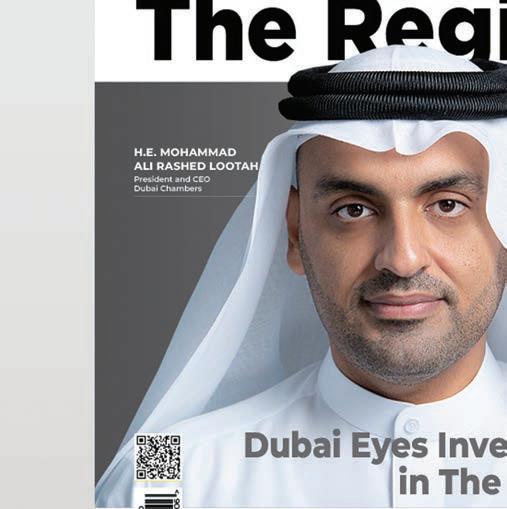
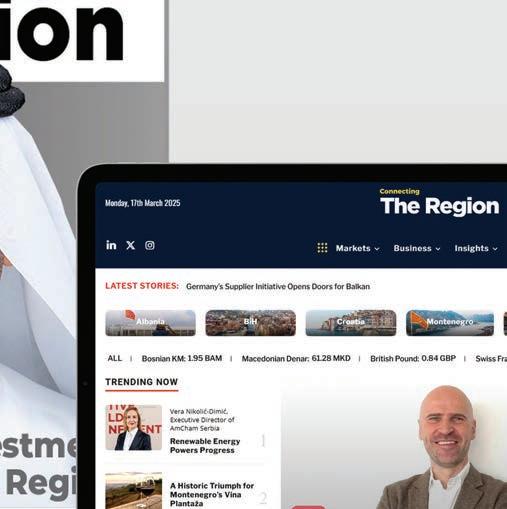
To The Region Stay Ahead in Adria
The Region is where ideas, perspectives, and ambitions from across the Adria region come together. From industry leaders to bold innovators, we bring you the stories that drive change and shape the future. Stay connected to the pulse of business, progress, and the people making an impact.
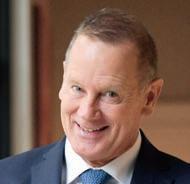
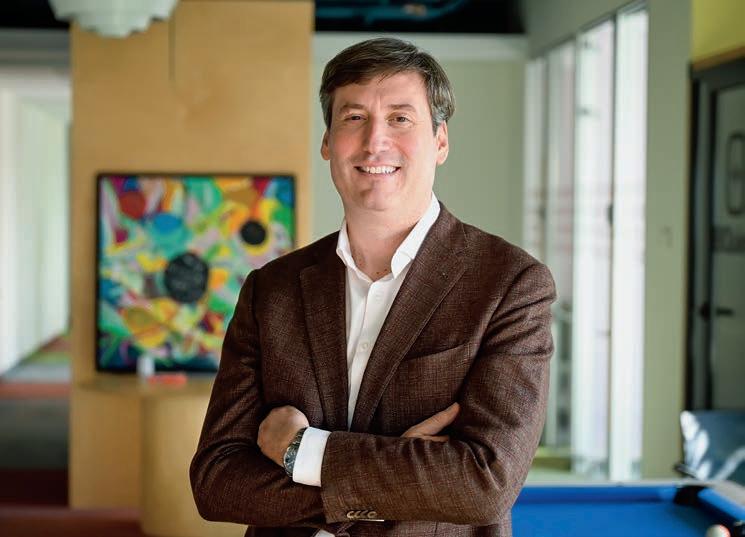
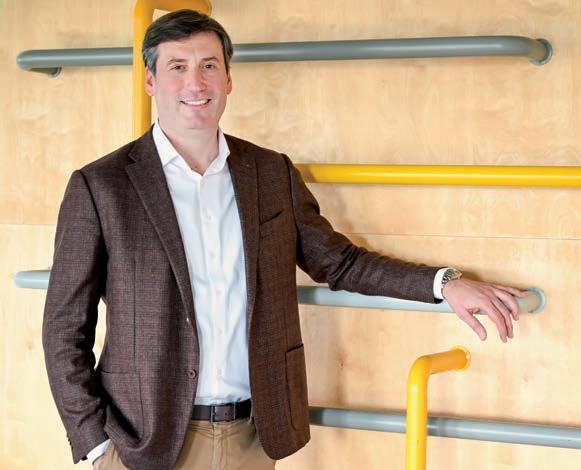
Building a Stronger Dutch–Serbian Business Bridge
Wouter van Houwelingen President, Dutch-Serbian Business Association
by
Photos
Goran Stankovic
The
Dutch-Serbian Business Association is entering a new phase defined by deeper cooperation, greater member engagement and a more strategic approach to growth. Its work in 2026 will focus on innovation, sustainability and practical partnerships that deliver tangible impact
In this interview, Wouter van Houwelingen, President of the Dutch-Serbian Business Association, outlines the evolving landscape of Dutch–Serbian economic cooperation and the growing opportunities across technology, sustainability, green transition, digital innovation and smart urban development. He explains how the Association aims to strengthen its role as a solution-oriented platform that supports companies, connects stakeholders and helps navigate Serbia’s dynamic business environment.
The Dutch-Serbian Business Association has established itself as an active platform for cooperation between Dutch and Serbian companies. How would you describe today’s level of membership and engagement within the Association, and which sectors would you like to attract in 2025?
— Our membership is not only growing, but maturing. The Dutch business community in Serbia has become more visible and increasingly confident – in a characteristically Dutch way that prioritises practicality over noise. Participation at events continues to rise, more members are initiating their own activities, and our cooperation with the Dutch Embassy has reached an exceptional level.
The Board embodies the same dynamic. It brings together Dutch and Serbian professionals whose backgrounds range from legal practice and business leadership to consultancy and event management. That blend gives us both strategic depth and operational agility, enabling us to anticipate issues early, spot opportunities
quickly and provide meaningful support to our members.
In the year ahead, we want to expand this base further. Agriculture, manufacturing and fast-moving consumer goods remain important pillars, yet the real future of Dutch–Serbian cooperation lies in areas where Dutch expertise is globally recognised and where Serbia shows genuine promise – technology, sustainable design, renewable energy, circular-economy solutions, water management and smart urban development. We are building on the strong foundation created in previous years. My predecessor, Bojan Leković, introduced structure and long-term vision; our focus
Known for its pragmatic mindset and long-term approach, the Dutch business community in Serbia has built a reputation for steady growth, reliable partnerships and a strong commitment to sustainability
now is on depth, member-driven activity and greater strategic impact.
What are the DSBA’s main priorities for the coming year? Are there initiatives aimed at strengthening innovation, supporting the green transition or advancing digital transformation among your member companies?
— Our overarching priority is to position the DSBA as one of the most relevant and solution-oriented EU business chambers in Serbia. Relevance, for us, means offering content that matters – not simply large confer -
ences, but cooperation that produces tangible outcomes.
Innovation is at the heart of that approach. Dutch companies excel in digitalisation and practical problem-solving, and we plan to bring more knowledge, more experts and more partnership opportunities from the Netherlands to Serbia. A major project here is the Dutch-Serbian Venture Bridge, a platform designed to connect Serbian talent with Dutch investors interested in fresh ideas and technical excellence. Over time, we envision this evolving into “Lion’s Den”-style pitching events that bring founders and investors together in a direct, meaningful way.
Sustainability remains another defining priority. Dutch companies consider environmental responsibility a standard part of doing business. Our recent tree-planting initiative with the City of Belgrade was a simple but symbolic example of how we prefer to work – fewer discussions about obstacles and more concrete action. This year we intend to scale similar activities, particularly those that link Dutch green technologies with Serbia’s urban and industrial needs.
We are also investing in a stronger bilateral business ecosystem. That means more sector-focused gatherings, more exchanges of innovative practice, and more matchmaking that helps companies on both sides find the right partners quickly. When the right people meet at the right moment, progress begins immediately.
In today’s dynamic and sometimes unpredictable economic environment, what are the main challenges Dutch companies face when operating in Serbia? How does the
DSBA help them maintain longterm stability?
— The challenges are broadly familiar to international companies everywhere: administrative inconsistencies, occasional regulatory surprises, and procedures that are not always as clear as they should be. None of these are specific to Serbia, but they can complicate long-term planning.
This is precisely where the DSBA proves most valuable. We maintain a strong line of communication with Serbian institutions and regulatory authorities, and we work in close partnership with the Dutch Embassy, which is an exceptionally constructive ally. Companies have a direct channel through us to raise concerns and receive guidance, while peerto-peer exchange often provides the fastest, most practical route to resolving an issue.
As a marathon swimmer, I often compare the Serbian business environment to an open-water race. The
finish line isn’t always visible, currents can push you off course, but persistence and a steady rhythm ultimately prevail. Dutch companies in Serbia demonstrate exactly that mindset.
The DSBA serves as a bridge not only between companies and institutions, but also between the private and public sectors. What are the most tangible benefits that members gain, and how would you assess the Association’s overall impact?
— Members repeatedly highlight three advantages. They gain direct access to institutions, to the Embassy and to
The DSBA’s rising visibility within the wider European business community reflects its shift from a networking platform to a driver of concrete initiatives and policy dialogue
decision-makers able to address practical challenges. They become part of a trusted community of peers with real experience in the Serbian market. And they enjoy a stronger collective voice, reinforced by both Serbian and Dutch stakeholders.
Our influence extends beyond the immediate membership. Through our leading role in the Council of European Business Associations and Chambers, we help represent more than 2,000 companies and maintain direct communication with the EU Delegation in Belgrade. The DSBA is not a ceremonial chamber; we work to facilitate dialogue, drive initiatives and promote Dutch solutions that genuinely fit Serbia’s needs. Our impact is measured in the problems we help resolve and the connections we enable.
How do you see Dutch-Serbian economic cooperation developing over the next five years? Which areas of partnership hold the greatest untapped potential?
— I am optimistic about the direction of our economic ties. The scope for advancement in green technologies, digital innovation and smart urban development is significant.
There is tremendous potential in sustainable energy, in the modernisation of agriculture and high-value food production, and in the creative and digital sectors, which are increasingly recognised internationally. Urban development, mobility and water management also present promising opportunities, as do circular-economy models in which Dutch companies lead globally.
Marathon swimmers know that once you have passed the halfway point, turning back is no longer an option – the return is harder than the path forward. Even when the finish line is out of sight, steady progress, a sense of direction and a little humour can make even the toughest goals not only achievable, but enjoyable. In business, as in the water, the key is simple: keep going.
Flights That Connect Continents
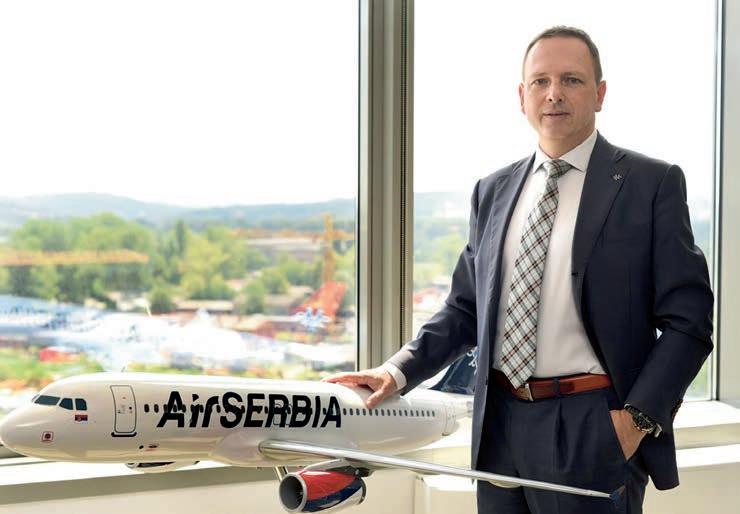
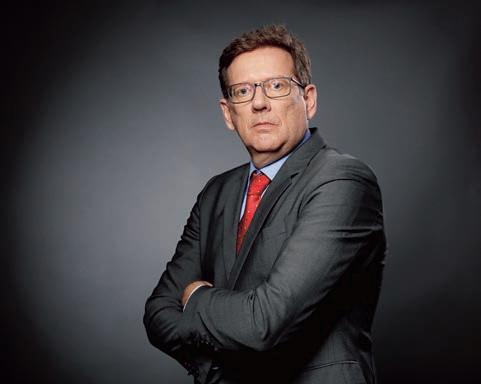
Jiri Marek CEO, Air Serbia
The national carrier is setting new standards of connectivity, comfort and technological sophistication across the Southeast European market
With the introduction of direct Belgrade–Toronto flights, following those to New York and Chicago, Air Serbia is opening its third destination in North America and further strengthening its position as the regional leader in long-haul operations. Discussing the company’s future route development, fleet expansion and digital transformation aligned with the needs of today’s travellers, Jiri Marek, CEO of Air Serbia, outlines the carrier’s strategic direction.
Following the announcement of direct flights between Belgrade and Toronto –Air Serbia’s third destination in North America after New York and Chicago –what does the map of long-haul priorities for 2026/2027 look like? What are the key criteria for selecting the next destination?
— With the introduction of direct flights to Toronto in 2026, Air Serbia will be operating its fifth long-haul destination. In the upcoming summer season, we plan to operate seven weekly flights to New York, three to Chicago, and two each to Toronto, Shanghai and Guangzhou. Every new route opens additional business opportunities, supports tourism growth and strengthens the links between markets, people and knowledge. The expansion of our long-haul network further consolidates our position on the global aviation map. Connecting Serbia and Canada after more than three decades is a historic milestone – the result of strategic
route development and a direct response to market demand. Toronto is one of the world’s major hubs, home to a large diaspora from across the region, and we are one of the few airlines in Southeast Europe to offer direct services to Canada, which will also host the FIFA World Cup next year. I believe we have chosen the right time and the right direction for development, as this decision goes beyond business considerations alone – it is driven by both emotional and economic synergy.
Long-haul development depends on a number of interrelated factors – from market potential to available resources. Market positioning and passenger trust are equal-
ly important in that process. Growth in operations must stem from thorough analysis and realistic assessments that allow longterm planning and sustainable network expansion. Miami is the next point in North America where we see potential to expand our operations in the near future.
Air Serbia’s current fleet includes four Airbus A330-200 wide-body aircraft, twelve narrow-body Airbus A320-family aircraft, ten ATR turboprops for regional services, and two Embraer E195 jets. Given the opening of new markets and increasing frequency on existing routes, are you considering further fleet expansion?
— As part of our strategic vision, we continuously modernise the fleet to ensure the highest level of service for our passengers. Since early 2022, our fleet has been strengthened with 18 new aircraft – a significant step towards greater operational efficiency and capacity. New, modern aircraft allow us to expand operations and further enhance Belgrade’s connectivity with destinations across Europe. In the coming period, Air Serbia’s fleet will be joined by two new Embraer E195s and three additional Airbus A320s, bringing the total number of aircraft to 31. We will continue optimising our capacities to provide passengers with even greater comfort and convenience throughout their journeys.
Air Serbia recently announced the expansion of its partnership with airBaltic amid highly dynamic developments in the European aviation market. What is the strategic significance of this cooperation for the company’s network development and passenger experience?
— We are delighted to continue building our cooperation with airBaltic, one of Europe’s most innovative carriers and our long-standing codeshare partner. This partnership is of particular importance to Air Serbia, as it will allow our passengers to enjoy comfortable and efficient travel aboard the state-ofthe-art Airbus A220-300 aircraft. We remain
Over the past four years, Air Serbia has introduced almost 50 new destinations, all of which remain active – a testament to our adaptability to market changes and global challenges
committed to innovation and technological progress, all with the aim of strengthening our competitiveness on the European market. This aircraft type will serve as an important benchmark for future decisions regarding Air Serbia’s fleet composition, fully aligned with the company’s long-term strategic plans. We are enhancing Air Serbia’s oper-
ational capabilities alongside the ongoing expansion of our growing network, maintaining both flexibility and continuity in operations across seasonal and newly established routes.
The company you lead has set ambitious targets for 2025 in terms of passenger numbers and flight operations. Which KPIs define a successful year, and what would you highlight as the greatest challenge of rapid network expansion in recent seasons?
— Changes and challenges in the aviation industry are closely linked to geopolitical developments, making agility and strategic planning essential to success. Business performance is measured through several KPIs – profitability, revenue per passenger, cabin load factor and total passenger numbers. Cost control remains one of the key indicators that directly influence the company’s profitability. At the same time, air transport serves as a catalyst for tourism development and a major driver of inbound travel growth. For us, success is not defined solely by financial results, but also by our contribution to tourism growth and the resulting increase in foreign currency inflows. Over the past four years, Air Serbia has introduced almost 50 new destinations, all of which remain active – a clear de monstration of our ability to adapt to shifting markets and global challenges. The key to success lies in a combination of strategic planning, fleet flexibility and careful monitoring of passenger needs, enabling sustainable growth and the strengthening of our international presence.
In today’s aviation industry, digitalisation often determines the difference between stagnation and success. Which digital initiatives and new services do you see as most critical to boosting competitiveness and company growth?
— We are committed to personalising the travel experience and transforming traditional services through digital and logistical innovation, creating a modern, customer-oriented approach. Recently, Air Serbia introduced a new inflight duty-free service on flights longer than two and a half hours, allowing passengers to purchase a carefully selected range of domestic and international products even at 10,000 metres. We
believe it is essential to create added value through enhanced comfort, refined aesthetics and premium-quality service. At Belgrade Airport, we have opened a new Premium Check-in counter and will soon unveil a redesigned Premium Lounge – twice the size of the previous one – featuring a dedicated VIP area and business meeting rooms.
Since the beginning of 2022, our fleet has been strengthened with 18 new aircraft, representing a major step towards improved operational efficiency and capacity
A significant step forward in digitalisation is the introduction of self-service checkin kiosks and automated baggage drop-off stations, implemented in partnership with Belgrade Nikola Tesla Airport. These solutions simplify and speed up the check-in process, reduce queues and waiting times, and make travel more flexible. By investing in technology, comfort and personalised services, we are following global trends while actively shaping the future of air travel –one defined by speed, simplicity and superior service quality.
Bringing together tradition, innovation and technology, we are launching our first-ever loyalty programme, offering members enhanced benefits and the ability to earn points even when they are not flying. Together with Visa, we will introduce the first co-branded card designed to complement the upcoming loyalty scheme. We are committed to continuously improving our premium services and delivering added value to our customers – both in the air and on the ground. Recently, we also signed a five-year strategic partnership with Loyalty Juggernaut Inc., marking a pivotal step in transforming the way we engage with our passengers. We are building a modern loyalty ecosystem that rewards customers for every interaction with Air Serbia. These partnerships underline our dedication to digital transformation and our constant focus on enhancing the passenger experience through the fusion of tradition and innovation.
The Strength of Innovation
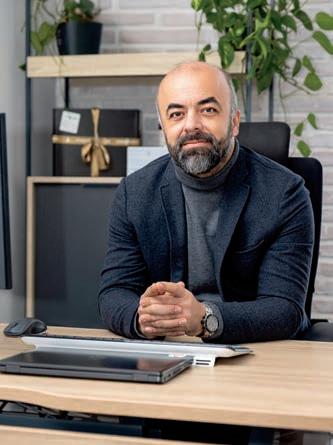
Vojislav Nikolić General Manager, Desing d.o.o.
Innovation at Desing is not a project but a mindset — an identity that shapes people, products and global partnerships
Founded in 1992 by the Tomić family, Desing is today one of the most recognisable regional creators of innovative solutions in the B2B food industry, present in more than 30 markets worldwide. Its philosophy has remained unchanged from the very beginning: investing in people, fostering continuous learning and building a culture in which innovation is assumed rather than commissioned.
Under the leadership of General Manager Vojislav Nikolić, Desing is rapidly expanding its development capacities, increasing investments in research and development, strengthening cooperation with universities and technology centres, and preparing for a strategic leap — entering the category of companies with medium-high R&D intensity.
Desing has long moved beyond its beginnings as a family business to become an international partner to the food industry. How would you define the company’s DNA today?
— Desing grew out of the energy and vision of the Tomić family — their willingness to build, and to share knowledge. That philosophy remains at the core of our identity. Innovation is not a project, but a natural way of thinking embedded in every part of the business. In practice, that means developing 25 to 30 new products each year, continuously researching, linking science and industry, and creating an environment where people have the freedom to innovate.
To what extent do innovation efforts shape your growth and your strategy for the coming years?
— Innovation is our long-term strategy. It allows us to differentiate ourselves, open new markets, respond quickly and contribute to the sector’s sustainability. From 2026, we plan to increase R&D investment by 80%,
Knowledge and collaboration ecosystems are becoming the foundation for faster market development. Companies that understand this will be the leaders
placing us in the category of companies allocating 2–5% of revenue to research and development — comparable to industries such as electronics, automotive and chemicals. This is the clearest signal that we see innovation as the driving force of our development.
Which global trends currently have the greatest impact on the B2B food sector?
— Three directions are shaping the sector: personalisation, sustainability and partner-
ships. Demand for flexible and tailored solutions has never been greater. Sustainability has become a mandatory standard rather than a recommendation. And knowledge and collaboration ecosystems are now the foundation for faster market development. Companies that recognise this will be the leaders. These are precisely the directions in which we are building our strategy.
Your employee-ownership model has attracted considerable public attention. Why did you introduce it, and what results are you seeing?
— The vesting programme is not a reward — it is a confirmation of shared creation. We are proud to be among the first two companies in Serbia to introduce this model. It demonstrates that a company grows through its people, and that people grow through the company. This philosophy creates loyalty, responsibility and a culture of innovation.
Digitalisation and artificial intelligence are rapidly transforming the food industry. How is Desing positioning itself in this process?
— Digitalisation is now a cornerstone of our operations. We are implementing advanced ERP and analytics systems, automating production and introducing AI into product development and process optimisation. AI will be one of the main tools of our R&D sector in the coming decade — not to replace creativity, but to accelerate it.
What is your vision for Desing over the next decade?
— We see Desing as a global innovation partner to the food industry: digitalised, sustainable, open to new talent and ideas, and with a strong international presence. It is a lasting vision built on a simple truth — innovation is not a goal, but a way of life.
The Coffee Break That Shapes Better Decisions
In a world defined by speed and constant demand, a well-chosen pause becomes a quiet strategy. Moments of calm often bring the clarity that busy schedules cannot
In today’s business environment, where priorities shift by the hour and decisions must be made with precision, the simplest rituals often carry the greatest value. A brief pause with a cup of coffee creates a rare moment of stillness — a space in which thoughts settle, ideas align and the next step becomes clearer.
For many executives, entrepreneurs and professionals, this moment is not an interruption but an anchor: a way to regain perspective before moving into the next discussion, negotiation or creative task. It is the quiet reset that brings energy back into the day and sharpens focus when it matters most.
Good coffee elevates that ritual. Its warmth encourages reflection, its aroma awakens concentration, and its familiar comfort helps restore balance amid fast-paced routines. In an age when everything around us accelerates, taking a mindful pause is less a luxury and more a simple, effective business tool — a way to think better, decide better and lead with clarity.
“JAF stands out for quality, consistency and trust”
Melanija Pavlović General Manager, JAF Serbia
A1 to Launch 5G in Early December
A1 Srbija welcomed RATEL’s completion of the spectrum auction, calling it a key step for Serbia’s digital progress as the operator prepares to launch 5G in early December. The company enters this phase backed by A1 Group’s long-standing 5G expertise and its own track record as Serbia’s fastest mobile network for five consecutive years, according to Ookla®. General Director Judit Albers said A1 is fully ready to deliver true 5G speeds and stability, combining 4G, optical and 5G technologies for a seamless user experience.
Imlek Changes Ownership
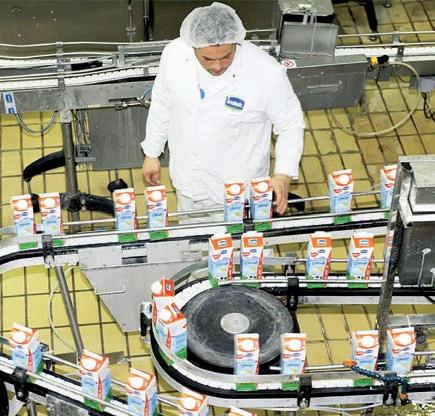
Serbia’s largest dairy producer Imlek is set for new ownership, as entrepreneur Andrej Jovanović and CEO Bojan Radun agreed to jointly acquire the company from private-equity fund MidEuropa. The domestic investment group AJFH will serve as the lead buyer. Imlek operates modern facilities in North Macedonia and Bosnia and Herzegovina, sourcing milk from over 3,500 farmers and processing nearly 400 million liters annually.
Cash Loans Drive Serbia’s October Borrowing Rise
Household borrowing in Serbia rose 2% in October to 1.873 trillion dinars, with cash loans posting the strongest jump at 2.5%. Total lending to businesses, citizens and entrepreneurs reached 4.214 trillion dinars, up 1.2% from September. Overdue repayments held steady, with 2% of all loans in arrears.
“We are also exploring AI-enabled early detection approaches”
Aleksandar Tripković Governmental Affairs & Market Access Manager, Astra Zeneca
EIB Global and Erste Bank Boost Social Inclusion
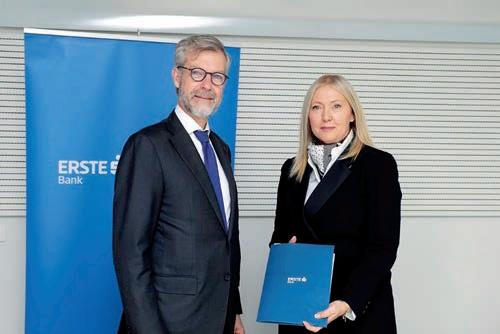
EIB Global and Erste Bank Serbia have signed agreements in Belgrade for a €10 million loan and €1.3 million in grants to support inclusive growth and employment, with a focus on training vulnerable groups. Through this model, Erste will finance SMEs and mid-caps that commit to hiring, training and promoting women, young people and persons with disabilities, who often face barriers to employment. Companies that meet these social targets can receive financial incentives, while EIB Global will also provide technical assistance to help small businesses implement impactful, long-term inclusion projects.
Coca-Cola HBC Launches Digital Coke Academy
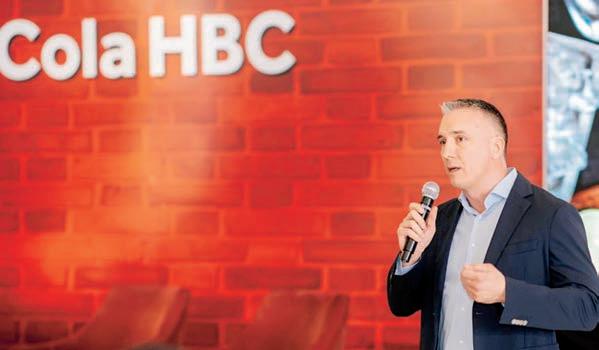
Coca-Cola HBC Srbija is expanding its Coke Academy project by launching a digital version of its training program for hospitality businesses. The company presented the new online platform during its latest two-day workshop for retailers and HoReCa partners, announcing 24/7 access to educational content for hotels, restaurants and cafés. While live workshops will continue, the digital Academy offers always-available, needsbased training designed directly from feedback gathered in the sector.
Ambassador Marcel Peško New Head of the OSCE Mission to Serbia
Ambassador Peško brings extensive experience within the OSCE and international diplomacy. He previously served as Director of the OSCE Conflict Prevention Centre, where he led efforts to strengthen the Organisation’s conflict prevention, crisis management and post-conflict rehabilitation activities.
Yettel Bank Wins Gold and Silver in London
Yettel Bank won gold for “Best Employee Engagement/ Best Place to Work” and silver for “Best Innovation in Customer Experience” at the 2025 International Customer Experience Awards in London. CEO Aleksandar Bogdanović said the awards confirm the bank’s people-first culture and its goal to build a bank customers choose, not one they simply need. The bank, a pioneer of digital banking in Serbia with over 320,000 users and nearly 600 employees, says the awards celebrate its holistic approach to employee satisfaction and customer experience.
Prior to his appointment to Belgrade, Ambassador Peško served as the Special Representative of the OSCE Chairperson-in-Office / Project Coordinator in Ukraine.
He has also held a number of senior positions within the Slovak Ministry of Foreign and European Affairs and represented Slovakia in various international fora.
He holds an M.A. in International Economic Relations from Kyiv State University and the University of Economics in Bratislava, as well as an M.B.A. in Business Management from Dublin City University Business School. He is fluent in Slovak, English and Russian.
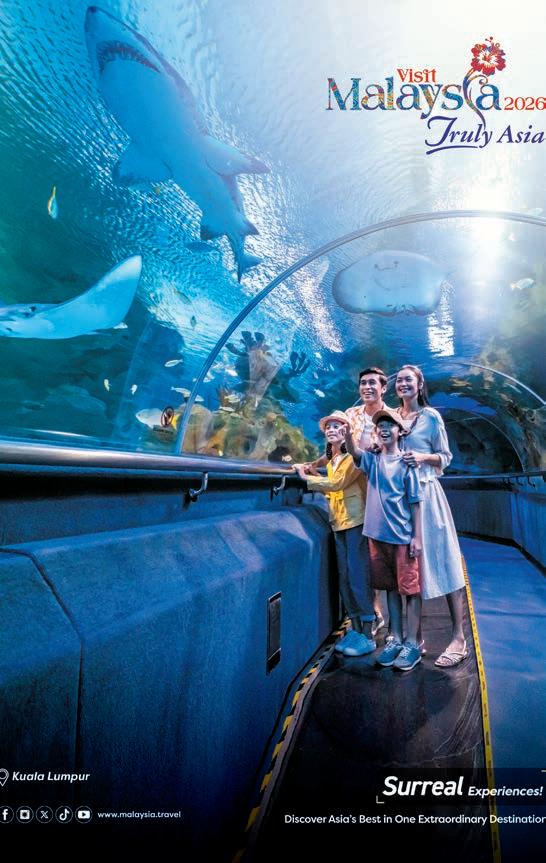
Malaysia remains one of the world’s most inviting and accessible exotic destinations — a place where natural beauty, cultural diversity and genuine hospitality come together effortlessly
Malaysia Welcomes the World
A nation shaped by cultural harmony, natural splendour and warm hospitality, Malaysia invites travellers to experience its diverse landscapes, rich traditions and distinctive culinary heritage. As one of Southeast Asia’s most dynamic destinations, it continues to position itself as a safe, accessible and unforgettable place to explore
Malaysia stands today as one of the region’s most attractive travel destinations — a country of 13 states and three federal territories, defined by the warmth of its multi-ethnic society and a cultural landscape shaped by Malay, Chinese, Indian and European influences. Its natural beauty is equally compelling, from ancient rainforests and mountain ranges to thousands of endemic plant and animal species found only in this part of the world.
The country’s coastline, stretching over 4,800 kilometres, is dotted with some of Asia’s most enchanting islands. Langkawi, Penang, Redang, Tioman, the Perhentian Islands, Sipadan and many others offer pristine beaches, turquoise waters and breathtaking marine life. Whether one seeks a peaceful retreat or a lively coastal escape, Malaysia’s islands are designed to inspire and delight.
Food is at the heart of Malaysian life — a joyful reflection of its multicultural identity. Visitors quickly discover that gastronomy is one of the country’s strongest attractions, with tourists consistently ranking food among the top three categories of spending, alongside shopping and accommodation. From nasi lemak and roti canai to cendol and mee goreng mamak, Malaysian cuisine blends flavour, tradition and creativity in a way few destinations can match.
This spirit of harmony extends to everyday life through muhibbah, a uniquely Malaysian expression of goodwill and cultural coexistence. Throughout the year, the
country celebrates an impressive calendar of festivals — Chinese New Year, Eid al-Fitr, Eid al-Adha and Deepavali — each marked by open homes, vibrant gatherings and invitations to visitors to join in the celebrations.
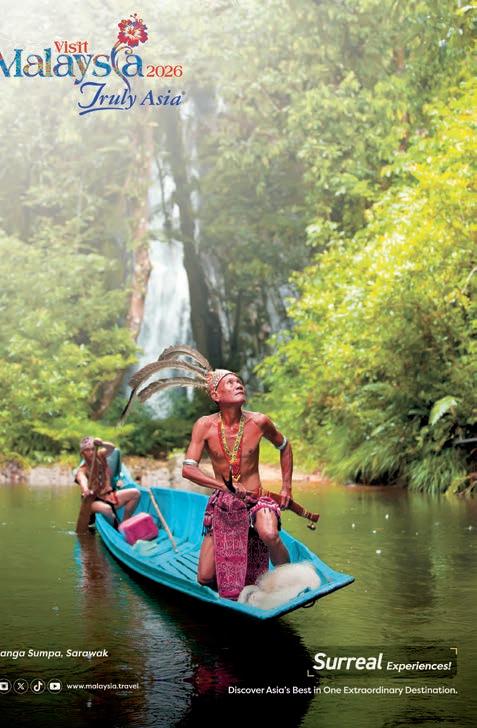
Malaysia offers far more than beaches and gastronomy. Kuala Lumpur’s iconic Petronas Twin Towers provide a panoramic view of the capital’s skyline, while Penang’s George Town — a UNESCO World Heritage Site — remains one of Asia’s most compelling cultural enclaves, celebrated for its architecture, arts and famous street food. Beyond the peninsula lie Sarawak and Sabah on the island of Borneo, home to some of the world’s oldest rainforests, impressive cave systems and extraordinary biodiversity. National parks, river journeys, longhouse stays, wildlife sanctuaries and community-based tourism initiatives offer visitors an authentic encounter with nature and local heritage.
Whether exploring Penang’s cultural quarter, diving along the shores of Sipadan, hiking through ancient forests in Sarawak or experiencing community life in Sabah’s highlands, travellers encounter a country that seamlessly blends tradition and modernity. This combination — natural wonders, cultural richness, welcoming people and excellent value — continues to strengthen Malaysia’s position as one of Asia’s most rewarding destinations.
Now is the perfect time to rediscover everything Malaysia has to offer.
Resilient Business for a Uncertain World
How companies are strengthening supply chains, managing geopolitical shifts and preparing for new market pressures
Global business is moving through one of its most turbulent periods in recent history. Geopolitical tensions, tariff changes, disrupted supply chains and rising operational costs are forcing companies to rethink how they function and how they protect their long-term competitiveness. The OECD’s 2025 Supply Chain Resilience Review warns that global trade could contract by as much as 18% if countries rely solely on re-shoring and localisation — a reminder that old models of efficiency can no longer keep pace with new realities.
For Serbia’s export-oriented economy, these shifts are far from abstract. Local manufacturers and service providers are tightly linked to European and global value chains, meaning that every international shock — from raw-material shortages to tariff changes — sooner or later lands on the desks of Serbian executives. The most progressive companies have already moved from reactive to strategic thinking, recognising resilience as an investment rather than a cost.
A 2025 Oliver Wyman survey shows that although 80% of executives believe their supply chains are “highly resilient,” fewer than 5% have a fully developed resilience strategy. This gap between confidence and preparedness is becoming a defining risk for companies that operate in complex international markets.
NEW PRIORITIES FOR MODERN BUSINESS
1. End-to-end visibility
Companies are increasingly building digital tools that allow them to monitor suppliers, track bottlenecks and model disruptions in real time. For Serbian firms, this means moving beyond ad-hoc spreadsheets toward structured dashboards and scenario planning. Supply chain visibility is becoming a board-level requirement.
2. Diversification instead of over-correction
The OECD cautions that full re-shoring may weaken rather than strengthen resilience. Instead, the best results come from balanced diversification — adding new suppliers in different geographies, creating backup routes and developing flexible procurement frameworks. For Serbian manufacturers, this often means establishing additional partnerships in the region and EU neighbourhood.
3. Organisational readiness
Technology alone does not create resilience. Companies worldwide now invest equally in people — cross-functional teams, risk training and clearer governance. The most successful firms integrate resilience KPIs into management goals, linking executive performance with supply chain stability and time-to-recovery metrics.
WHAT BOARDS SHOULD CONSIDER IN 2025–2026
Several global research reports highlight structural risks companies must actively address:
Cost pressure is rising, but resilience spending is not — one in three companies expects to reduce resilience budgets despite increasing uncertainty.
Cyber-risks now rank among top disruption factors, joining tariffs and logistics failures as primary sources of instability.
Countries with weaker institutional frameworks face deeper resilience losses, according to recent academic research.
For Serbian companies, an effective response combines three practical steps:
1. Targeted resilience budgeting
Even modest budgets (0.5–1% of annual spending) can strengthen supply chains
if directed toward supplier audits, logistics diversification or digital monitoring tools.
2. Shared intelligence
Industry associations and export groups should establish regular risk-monitoring forums to exchange insights on tariffs, transport, customs and regional shortages — reducing blind spots for local exporters.
3. Resilience as part of growth strategy
Entering new markets, expanding product lines or negotiating supply contracts must now include a resilience assessment. If a business cannot continue operations after two weeks of disruption, the strategy needs revision.
OPPORTUNITIES FOR SERBIAN BUSINESS
Despite challenges, Serbia holds several advantages in the new resilience era:
• Near-shoring potential: European companies seek reliable regional partners.
• Digital leapfrog: Without heavy legacy systems, Serbian firms can adopt modern platforms faster.
• Flexible talent: Regional labour markets allow companies to build hybrid teams able to respond quickly to market changes.
THE PATH AHEAD
The companies that succeed in the coming years will not be those that operate at the lowest cost, but those that can adapt quickly, secure their supply chains and anticipate disruptions before they escalate. In an increasingly unpredictable world, resilience has become both a competitive asset and a precondition for sustainable growth.
Resilience has become a strategic investment, not a cost — and the strongest companies today are those that can anticipate disruption before it arrives
Business Dialogue
“In business, the only constant is change — and the winners are those who adapt faster than the market”
Emil Tedeschi CEO, Atlantic Grupa
Croatia Moves to Tighten Housing Rules for Foreign Workers
Croatia has proposed stricter accommodation standards for third-country workers, including limits on how many can share a single apartment. The draft caps occupancy at eight people per flat and requires landlords to ensure proper space, ventilation and basic facilities. The rules would apply to all foreign workers, not just seasonal staff.
South Korea Tops Montenegro Airport Bid
South Korea’s Incheon International Airport Corporation has taken first place in Montenegro’s airport-concession tender, scoring 96.18 points. The L uxembourg–US consortium Corporación América Airports followed with 65.15 points. Bidders now have up to 15 days to appeal under Montenegro’s Concessions Law.
North Macedonia Ends VAT Exemption on Small Parcels
North Macedonia plans to scrap the VAT exemption on parcels worth under €22, meaning all goods ordered from abroad will now be taxed. Only personal gifts between individuals under €22 will remain exempt, excluding items like alcohol, perfumes and tobacco. The proposal, now before the Finance and Budget Committee, could heavily affect shoppers using low-cost platforms such as Temu and AliExpress.
“Success comes when you stop waiting for perfect conditions and start creating them”
Mike Michel CEO, Yettel Serbia
Albania Sees Job Growth and Rising Wages
Private-sector employment in Albania grew 3.4% and unemployment fell to 8.5%, while wages jumped 9.5%. The Bank of Albania says this strong labor market is keeping consumption steady and supporting investment. Growth is expected to remain driven by private-sector demand, though youth and female unemployment remain persistent challenges.
Slovenia, Uzbekistan Boost Economic Ties
Slovenia and Uzbekistan have signed a new cooperation protocol covering logistics, pharmaceuticals, ICT, agriculture and critical raw materials after a high-level visit to Ljubljana. Bilateral trade hit USD 176 million in 2024, rising 60%, with both sides aiming to double it. A key focus is rare-earth collaboration, including joint research with Slovenia’s Jožef Stefan Institute to strengthen supply chains and reduce reliance on China.
One Montenegro Wins Big at KOMference 2025
One Montenegro took home two awards at KOMference 2025 in Split, winning gold for its “Girls in ICT” CSR campaign and silver for “One Changes the World.” The accolades highlight the company’s ability to deliver impactful, agency-free projects with social and educational reach. CEO Branko Mitrović said the wins show how focused communication can drive real change across communities and the industry.
Leasing Financing Progress
How Leasing Is Becoming a Strategic Instrument for Modernisation, Liquidity and Competitiveness
The leasing sector in Serbia has undergone a remarkable transformation, evolving from a document-heavy administrative service into a modern financial instrument that directly supports business growth. Once viewed as a practical alternative to bank lending, leasing today plays a far broader role: it accelerates investment, enables faster equipment procurement, safeguards liquidity and helps companies remain competitive in an increasingly demand-
ing market. This shift has been driven by two parallel forces. On one side is rapid digitalisation, which has redefined client expectations and industry standards. Intesa Leasing’s introduction of automated approval processes and, more recently, a fully paperless, cloud-based digital-signature system, has set a new benchmark in operational efficiency and user experience.
Financing decisions can now be issued in under a minute, and contracts completed with-
out a single sheet of paper—demonstrating how technology can radically simplify client interaction while reducing environmental impact.
On the other side is the growing strategic relevance of leasing as a development tool. Companies across Serbia increasingly rely on leasing to acquire vehicles, machinery and production equipment without major upfront costs, preserving capital for dayto-day operations and new opportunities. As Alta Leasing emphasises, the ability to tailor
repayment terms, speed up approval procedures and structure agreements around real business needs makes leasing an essential mechanism for modernisation, especially in sectors where equipment determines productivity—construction, transport, logistics, agriculture, healthcare and manufacturing.
The combination of digital innovation and financial flexibility has positioned leasing as a catalyst of economic progress. It enables micro-businesses to react quickly
Leasing has evolved from a transactional service into a catalyst of modernisation, combining digital innovation with flexible financing to strengthen the competitiveness of Serbian companies
when opportunities arise, supports SMEs in maintaining healthy financial structures and provides large companies with sophisticated, scalable solutions, including fleet management and complex frameworks aligned with long-term investment plans.
At a time when companies are under pressure to adapt, invest and grow sustainably, leasing is no longer just a financing option—it is a strategic partner in keeping Serbia’s real economy moving.
Digitalisation as a Standard in the leasing industry
Nebojša Janićijević President of the Executive Board, Intesa Leasing
From accelerated approval to a complete transition to paperless leasing financing
The term digitalisation covers a broad spectrum of changes – from technical improvements to deep transformations that shape the way companies operate and grow in the market. What is clear, however, is that its implementation influences not only corporate efficiency, but also the development of in-
dividual industries and the economy as a whole.
The leasing industry in Serbia illustrates this convincingly. In recent years, the sector has moved from an administratively demanding operating model to a more modern, agile and sustainable approach to service delivery. As a result, clients can now obtain
approval and conclude leasing financing not only in branches and directly at vehicle dealerships, but also wherever they are, entirely online.
Although one might assume that the acceleration of the digital transformation of the leasing business was driven by the uncertainty of the market and macroeconom-
ic conditions that have characterised the past few years, the shift in our market has in fact been the outcome of a long-term strategic development – a process proudly led by Intesa Leasing.
We began modernising our processes more than a decade ago, guided by the strategic directions of our parent company, the Intesa Sanpaolo Group. Our focus was on improving automation and optimising internal procedures, as well as enhancing the user experience of our services. This resulted in our first major milestone in 2021: the launch of a unique internal solution for the automatic approval of leasing financing applications – the Intesa Leasing Portal.
With its introduction, decisions on financing applications could be made in less than one minute, whether on our premises, in the bank’s branches or directly with our partners, the vehicle dealerships. This provided clients with a simpler and faster way to secure financing. However, the process could not yet be fully digital, as the final step still required physical presence to sign the contractual documentation which, believe it or not, is nearly 100 pages long.
We were aware even then that coming to a branch requires additional time and energy that clients could otherwise spend on people and activities that matter to them.
After several months of development and regulatory alignment, a little over a year ago we launched a fully digital service for signing financing agreements – paperless, using the ConsentID qualified electronic signature in the cloud
Moreover, as part of the international Intesa Sanpaolo banking group, we are committed to sustainability, particularly in reducing resource consumption, which is why we immediately focused on the next phase – launching project for introducing the option to digitally sign leasing financing agreements.
The goal was to create a simple and secure solution that would equally benefit customers, vehicle dealerships and our team. To achieve this, it was necessary to modernise our IT infrastructure and build a complete system for processing electronic documen-
tation, which we implemented successfully with our technology partners, EIM and Gemikro. After several months of development and regulatory alignment, a little over a year ago we launched a fully digital service for signing financing agreements – paperless, using the ConsentID qualified electronic signature in the cloud.
By doing so, we created the first completely paperless financing process on the domestic market, whose wider adoption is still to come. The initial results, however, show that clients and partners have already recognised its advantages. In the first 15 months alone,
almost 1,500 digital contracts were signed, accounting for about 30 per cent of all our financing, while at the same time we saved nearly 170,000 sheets of paper.
Beyond the visible business benefits, this strategic project has also changed the way clients perceive our service – they themselves highlight the convenience of a paperless process and are increasingly opting for digital communication and contracting.
I believe that, with their continued trust, we will successfully implement our further development plans based on robotics and artificial intelligence, aimed at creating an even better user experience.
Finally, it is important to emphasise that, although crucial, digitalisation is not the only driver of change strengthening the leasing market in Serbia. Real transformation is driven by people – employees whose expertise, dedication and willingness to push boundaries enable us to turn technical improvements into genuine progress.
2.3
Leasing as a Driver of Growth and Modernisation
Ratko Petrović President of the Executive Board, Alta Leasing
How leasing is becoming a key instrument for more efficient equipment procurement, a healthier financial structure and stronger competitiveness among Serbian companies
Fast equipment procurement preserved liquidity and flexible repayment terms make leasing one of today’s most practical financing tools. Ratko Petrović, President of the Executive Board of Alta Leasing, discusses the role leasing plays in supporting the growth and competitiveness of domestic companies.
What are the key differences between leasing and traditional bank loans, and what should entrepreneurs and companies consider before choosing their financing model?
— The essential difference lies in the object of financing. Leasing enables the acquisition of a vehicle or equipment, whereas a loan provides cash. In leasing arrangements, the financed asset also serves as the primary collateral, while banks typically require additional security. For clients seeking swift procurement, a lower initial outlay and flexible repayment terms of up to 60 months, leasing is often the more natural choice. Loans, on the other hand, are more suitable for broader investment projects and liquidity needs. Beyond cost, companies should also consider factors such as the required down payment, repayment period and additional collateral, which is more common in bank loans.
How does the leasing approval process compare with bank lending, and what advantages in speed and flexibility does Alta Leasing highlight?
— In today’s business environment, speed is crucial — and this is one of leasing’s greatest advantages, as well as a core principle at Alta Leasing. In most cases, financing is approved within 24 to 72 hours, with the option to ad-
Leasing enables companies to access modern equipment without large upfront costs or tying up their own capital
just the down payment, repayment period and residual value. This is particularly important for businesses that must react quickly — when discounted equipment appears on the market, when seasonal peaks occur or when competition simply does not wait. Leasing decisions focus primarily on the asset being financed, which also serves as the main security. Bank loans, by contrast, usually pass through several internal control levels and involve more complex documen-
tation and additional collateral assessments. Another advantage is the ability to tailor the offer. Micro clients require simplicity and speed; SMEs priorities cost-efficiency and flexibility; large corporations demand complex structures, fleet solutions and framework agreements aligned with their investment plans. Each segment has distinct expectations, and our task is to meet them.
How can leasing contribute to company growth, modernization and liquidity? Are there sectors that particularly benefit from this approach?
— Leasing is, by its nature, an investment — and therefore a mechanism for growth. It enables companies to obtain new vehicles and equipment without large upfront payments and without tying up their own capital, thereby preserving liquidity for core business operations. A particularly useful model for liquidity preservation is Sale and Lease Back, where a company sells its equipment to the leasing company and then leases it back over a longer period, typically up to 60 months. By acquiring newer vehicles and more advanced equipment, efficiency increases, operating costs decline and competitiveness rises. This is especially evident in production sectors where the effects of modern equipment are immediately measurable — lower production costs, higher efficiency and improved product quality. Sectors that benefit most are those in which equipment directly determines productivity: construction, transport and logistics, agriculture, healthcare and industrial manufacturing. In these areas, leasing is often not an alternative but a primary development tool.
Global Leasing Outlook 2026
Emerging Markets, Digital Acceleration and New Usage Models Are Redefining the Future of Leasing
he global leasing industry is set for another year of expansion, supported by rising capital investment, demand for flexible financing and deeper digital integration. Market projections indicate that the global leasing market could reach USD 2.4 trillion by 2026, driven by an estimated annual growth rate of around 12%, reflecting the sector’s resilience and
Tlarly in Southern Europe, where large-scale public and private investment is fuelling equipment renewal. Countries such as Spain, Portugal and Greece are projected to record annual leasing growth of 7–9% as infrastructure programmes expand and rental penetration increases (source: Oak Lease).
Second, the global shift from ownership to usage-based and service-based models
With emerging-market growth, service-based usage models and rising digitalisation, leasing in 2026 is evolving into a strategic engine of business modernisation
strong international appetite for asset-based financing (source: Leasing Life).
Three defining trends are expected to shape leasing markets in 2026.
First, leasing demand is rising in emerging and infrastructure-driven markets, particu-
continues to gain momentum. Equipmentas-a-Service, Mobility-as-a-Service and other subscription structures are allowing companies to access high-value assets without tying up capital or assuming long-term balance-sheet exposure. This model is advanc-
ing rapidly across logistics, manufacturing, healthcare and green mobility.
Third, digital transformation is becoming a decisive factor of competitiveness. Leasing companies are investing in AI-supported underwriting, automated approval systems, telematics and IoT-enabled asset monitoring. These technologies make it possible to accelerate credit decisions, improve risk management and optimise the performance of leased assets throughout their lifecycle — all while delivering a fully digital, paper-free client experience. Taken together, these forces are pushing the global industry into a new strategic phase. Leasing is no longer merely an alternative to traditional lending. It is emerging as a central instrument of modernisation — enabling companies to invest faster, preserve liquidity and strengthen competitiveness in markets defined by rapid technological and structural change.
Business Dialogue
“The
pace of business today is no longer dictated by size, but by speed - of learning, of adapting, of innovating”
Satya Nadella CEO of Microsoft
Unilever Sells Non-Core Brands
Unilever has accelerated its portfolio reshaping by divesting several non-core brands across multiple regions. The company is shifting focus toward higher-margin categories like beauty, wellness and premium food. The strategy mirrors a broader industry trend of prioritizing profitability over volume.
The World Goes Solar
Renewables officially overtook coal in global electricity generation for the first time in early 2025, and the milestone dominated sustainability conversations in October. Solar and wind capacity surged across Asia, while coal output slipped for a second consecutive year. Energy analysts called it “a tipping point with no way back.” Even oil-heavy economies quietly acknowledged the shift.
ADNOC Eyes Santos
ADNOC is leading an $18.7 billion proposal to acquire Australia’s Santos, boosting its position in global LNG mark ets. The move is part of ADNOC’s longterm strategy to expand internationally and secure energy assets. If completed, it would be one of the sector’s largest deals of 2025.
“If you’re not constantly transforming your company, you’re preparing it for decline. Standing still is the fastest way to fall behind”
Indra Nooyi former CEO of PepsiCo
Tech Giants Raise Billions
Major tech firms have raised nearly $100 billion through corporate debt to build new AI and cloud infrastructure. The capital will fund massive data-center expansion and next-generation chip clusters. This reflects a decisive shift toward long-term investment in AI capacity
Schwab Buys Forge
Charles Schwab is nearing a $600 million acquisition of Forge Global, the private-markets trading platform. The move gives Schwab a direct entry into the fast-growing secondary-shares market for pre-IPO companies. It also signals the brokerage giant’s intention to expand into alternative asset infrastructure.
Sharp Refreshes Brand
Sharp introduced a new global slogan, “In step with your future,” as part of a wider brand repositioning. The refresh aims to modernize product perception and strengthen B2B expansion. It marks a strategic attempt to rebuild Sharp’s global relevance.
Ben Horowitz
Businessman and Investor
The Architect of Startup Survival
The Strategist Who Turned Brutal Honesty Into a Silicon Valley Operating System
Ben Horowitz built his career on a paradox: in a world addicted to optimism, he became famous for telling the truth. Not the polished, motivational variety beloved by conference stages, but the raw, unfiltered truth that founders whisper only behind closed doors – the truth about terror, sleepless nights, layoffs, spiralling cash burn, and the sickening uncertainty that defines startup life. It is precisely this refusal to embellish reality that has made Horowitz one of the most trusted – and influential –voices in modern technology.
Before he became one half of Andreessen Horowitz, the venture powerhouse known globally as a16z, Horowitz lived a founder’s nightmare in real time. In the late 1990s he helped launch Loudcloud, one of the earliest cloud-infrastructure companies, years before the cloud even had a name. The idea was bold, the technology sophisticated, and the timing catastrophic. As the dot-com bubble burst, Loudcloud found itself fighting for survival in an industry collapsing faster than anyone could comprehend. Competitors went bankrupt overnight. Venture funding evaporated. Every positive forecast turned negative.
While most leaders sugar-coated reality to keep morale afloat, Horowitz made a different bet: that people can handle almost anything except being lied to. He stood in front of his employees and told them precisely
how bad things were. He shared the painful numbers. He explained what was in his control, what wasn’t, and how little room for error remained.
Part of what sets Horowitz apart is his eclectic intellectual diet
What could have sparked panic instead forged unity. Employees followed him not because he promised comfort, but because he gave them clarity.
Loudcloud did not survive in its original form – but the company didn’t die either. Under Horowitz’s direction, it executed one of the most dramatic pivots in Silicon Valley history. Loudcloud transformed into Opsware, shifting from a managed-services provider to a software company focused on automation for data centers. The transformation involved layoffs, strategy shifts, public humiliation, and relentless pressure. Yet against every rational prediction, Opsware expanded its customer base, rebuilt its product line, and matured into a profitable enterprise. In 2007, HP acquired the company for $1.6 billion.
This was not a glamorous success. It was a survival story – and that experience shaped everything Horowitz did next.
In 2009, he and Marc Andreessen launched Andreessen Horowitz, a venture firm built on the belief that founders, not financiers, should sit at the center of the innovation universe. Where traditional venture capitalists kept distance, a16z embedded itself in operational reality: recruiting, PR, go-to-market strategy, customer introductions. They reframed the role of the investor from gatekeeper to service provider. The model worked. Within a decade, a16z had backed many of the defining companies of a generation – Airbnb, GitHub, Slack, Coinbase, Instagram, Stripe –shaping the architecture of the digital economy.
Horowitz’s contribution was not just capital allocation. It was doctrine. His book The Hard Thing About Hard Things became a bible for founders not because it offered tidy “10 steps to success,” but because it acknowledged the misery and absurdity of leadership. He wrote about firing friends, managing panic, confronting impossible decisions, and waking up every morning convinced your company might die. His most famous line – “There are no silver bullets, only lead bullets” – captured the essence of his worldview: victory comes not from tricks, but from discipline and endurance.
Part of what sets Horowitz apart is his eclectic intellectual diet. His essays move seamlessly from hip-hop to military strategy, from classical philosophy to American corporate culture. He has quoted Nas and Andy Grove in the same breath, arguing that leadership requires emotional resonance as much as analytical precision. In his writing about culture – explored deeply in his book What You Do Is Who You Are –Horowitz challenges the performa-
tive values plastered on office walls. To him, culture is not what a company claims; it is what a company tolerates. Values are only real when they force uncomfortable action.
Though now one of the most powerful venture capitalists in the world, Horowitz still approaches leadership with the humility of someone who has been burned. He openly rejects the myth of the genius-founder, in -
He tells young CEOs to expect loneliness, to embrace unglamorous work
sisting that companies thrive not on brilliance but on execution and moral courage. He tells young CEOs to expect loneliness, to embrace unglamorous work, and to accept that no amount of vision protects them from waking up to existential threats.
As AI, crypto, biotech, and gaming reshape the technology landscape, Horowitz continues to serve as the
philosophical backbone of a16z’s expansion. He is deeply optimistic about technological progress but unsentimental about the difficulty of building real companies. In private meetings, he is known for asking founders the questions they least want to confront – the questions that reveal weakness long before the market does.
In an era where the tech industry often elevates speed over substance and narrative over reality, Ben Horowitz remains a counterweight. His guidance is rooted not in theory but in experience – in the harsh winters of early 2000s Silicon Valley, in the painful decisions that saved Opsware, and in the unshakeable belief that honesty is a founder’s most underrated strategic weapon.
He is not the industry’s loudest voice. But he is among its most enduring. Because while trends shift, valuations inflate and deflate, and technologies fall in and out of fashion, the fundamentals he teaches –resilience, clarity, discipline – do not expire. They are the hard things that outlast everything else.
DIGITAL MOMENTUM
Saša
Miloš
Dubravka
Dejan
DIGITAL SERBIA 2025
Jovana Đinović Marketing Director, Oktacron
DIGITAL TRANSFORMATION AS A NEW PUBLIC INFRASTRUCTURE
As Europe reshapes its digital architecture – defining rules for data, artificial intelligence and the industries of the future – Serbia is entering a moment that will determine whether digitalisation becomes a technical upgrade or a genuine development strategy.
Over the past decade, digitalisation in Serbia has evolved from a forward-looking ambition into a new layer of national infrastructure. With the EU’s Data Act now in force, fair access to data and digital sovereignty have become central to Europe’s competitiveness, and the value
of the continent’s data economy is projected to approach €900 billion by 2030. For Serbia and the Western Balkans, this shifts the debate towards where data are generated, stored and governed – and how alignment with EU rules can accelerate growth and innovation.
Artificial intelligence is becoming the defining element of this transformation. Serbia has established a national AI strategy and platform, developed research capacity through its Institute for Artificial Intelligence, and even chaired the Global Partnership on Artificial Intelligence in 2024. Yet the real chal-
lenge lies ahead: moving from pilots and showcases to genuine change in manufacturing, logistics, finance, healthcare and public services.
Industry 5.0, promoted by the European Commission as the next stage of industrial policy, reinforces this shift. It calls for production that is smart, resilient, sustainable and human-centric – a model that aligns closely with Serbia’s ambitions for reindustrialisation and participation in reshaped global supply chains.
The momentum is strengthened by new financial support: in April 2025,
the European Bank for Reconstruction and Development, backed by the EU, launched a €377 million programme to accelerate digital, automated and green technologies in Western Balkan SMEs. This signals an expectation that businesses embrace digitalisation as an opportunity, not merely a regulatory requirement.
Yet a profound skills gap threatens to slow progress. Serbia performs strongly in the human-capital dimension of the Western Balkans DESI, but only a third of the region’s citizens possess basic digital skills – far below the EU average. Un-
less education, reskilling and corporate training expand rapidly, societies risk a divide between those fluent in the language of data and those excluded from its opportunities.
Meanwhile, the European Commission is seeking a more effective balance between innovation and protection by simplifying parts of its digital regulatory framework and delaying certain AI Act provisions. For Serbia, steadily aligning with EU standards, this underscores the need for a predictable and intelligent regulatory environment to accompany technologi-
cal investment. The central questions are therefore clear: will digital sovereignty become a strategic asset or remain a narrow technical matter? Will AI and Industry 5.0 drive real transformation or stay confined to promotional rhetoric? And will digital skills be treated as an essential social infrastructure – as vital as transport, education and healthcare – or as a luxury of the tech sector?
The answers will shape whether digitalisation becomes a missed opportunity or the foundation of Serbia’s next development chapter.
INTERVIEW
AI MUST SERVE PEOPLE
The Institute for Artificial Intelligence of Serbia today stands as a key driver of the national AI ecosystem and a vital partner to industry, government and international institutions. Its priorities, challenges and strategic direction will shape its role in the years ahead
DR VLADIMIR UDOVIČIĆ Director of the The Institute for Artificial Intelligence Research and Development of Serbia (IVI)
The Institute for Artificial Intelligence of Serbia (IVI) has, in a remarkably short period of time, positioned itself as a central research institution supporting the country’s accelerated technological development—from applying advanced AI solutions in healthcare, energy and agriculture to engaging with international partners and major European research projects. Our interlocutor, Dr Vladimir Udovičić, the Institute’s Director,
speaks about IVI’s strategic direction, strengthening the links between science and industry, supporting talent development and building an ethical framework to ensure the responsible and competitive use of artificial intelligence in Serbia.
The Institute for Artificial Intelligence of Serbia has played a pivotal role in the development of the national innovation ecosystem since its establishment.
Which areas will you prioritise in the period ahead—from research and development to cooperation with industry and international partners?
— The Institute for Artificial Intelligence of Serbia has, within a relatively short period, positioned itself as a leading scientific research organisation in the application of artificial intelligence, primarily within technical and technological sciences. This has enabled the rapid transfer of knowledge towards innova-
tion and smart solutions aimed at improving people’s lives and advancing the sustainable development of our society. In the coming period, we will continue to work with other state institutions within the AI ecosystem—such as the Office for IT and eGovernment—to further enhance access to applications and innovations that contribute to more efficient public administration and better quality of life for our citizens. It is also essential to strengthen cooperation with industry through joint projects.
Artificial intelligence is transforming almost every sector of the economy. How does the Institute contribute to its application in areas of strategic importance for Serbia, such as healthcare, energy, agriculture and education?
— As I have already mentioned, in all of these fields the Institute has developed a range of smart solutions that are already being applied in practice. It is important to emphasise the need to further strengthen the commercialisation of scientific research results through the establishment and development of spin-off companies, which can reinforce and complete the process of transferring technologies—from research, through patenting, to market application.
Cooperation between science, industry and the public sector is increasingly cited as a prerequisite for accelerated digital transformation. How does the Institute contribute to strengthening this cooperation, and which specific models do you intend to develop further in the coming years?
– This is perhaps one of the greatest challenges facing the Institute in the near future: the strengthening of cooperation with the private sector. Significant work lies ahead to deepen existing partnerships and connect with companies across various industrial branches. I believe
this represents a major opportunity for the Institute to offer smart solutions in technological processes, in service markets and in improving the interaction between public administration and Serbian citizens.
Developing specialised talent and retaining experts are among the greatest challenges of the modern digital economy. How does the Institute connect young researchers and engineers with international knowledge centres and domestic companies developing innovative technologies?
— Our Institute has well-developed cooperation with leading technical faculties at the universities of Novi Sad, Belgrade and Niš, which form our core talent base. Fortunately, artificial intelligence as a field is highly attractive to young researchers and engineers, and with the support of the Ministry of Science, Technological Development and Innovation, students are able to begin their professional careers at the Institute with relative ease. At the same time, more experienced researchers and engineers are increasingly choosing IVI as the place to continue their careers, as reflected in the growing number of returnees from abroad and experts joining us from major domestic and international compa-
KNOWLEDGE TRANSFER HAS VALUE ONLY WHEN IT LEADS TO SMART SOLUTIONS THAT GENUINELY IMPROVE PEOPLE’S LIVES
nies. The Institute also participates in numerous EU research projects under the Horizon programme, including the most prominent current European AI initiative—the Artificial Intelligence Factory—which further attracts young researchers to join our team.
Trust in the development and use of artificial intelligence increasingly depends on ethical standards and the responsible application of technology. How does the Institute help build that trust and strengthen Serbia’s reputation as a reliable partner in international AI projects?
— The Institute bases its work on European regulation and national legislation, with strict adherence to the ethical framework we promote through the seven pillars of ethical AI in the public sector: transparency, inclusiveness, fairness, privacy, accountability, security and sustainability.
TCEO, Data Cloud Technology
he Government Data Center in Kragujevac has become a cornerstone of Serbia’s digital sovereignty — a Tier 4 facility that simultaneously supports national systems, a large portfolio of commercial clients and the National AI Platform. With the expansion of its capacity, the development of the Innovation District and the implementation of ESG standards, Data Cloud Technology, alongside the Office for IT and eGovernment, plays a pivotal role in strengthen-
NEW STRENGTH IN DIGITAL SOVEREIGNTY
The Government Data Center and the national AI platform are becoming key pillars of Serbia’s technological autonomy and innovation-driven development. The focus lies on the projects, capacities and strategic vision shaping the country’s emerging digital landscape
try’s position on Europe’s technological map.
The State Data Centre in Kragujevac is a key infrastructural resource for digital sovereignty, together with the national AI platform. What are the main potentials and development plans? — The State Data Centre in Kragujevac is a geopolitically significant project and the most advanced piece of national digital sovereignty infrastructure. With a capacity of 14 MW and 1,080 rack cabinets, certi-
LEADING GLOBAL IT GIANTS CHOOSE SERBIA AND THE STATE DATA CENTRE BECAUSE STRATEGIC INVESTMENT
HAS CREATED AN ENVIRONMENT THAT ATTRACTS THE MOST DEMANDING PARTNERS
ing digital infrastructure, developing talent and enhancing national cyber security, while providing the highest level of service to its commercial users. In this interview for CorD, Danilo Savić, CEO of Data Cloud Technology, discusses development plans, Serbia’s AI ecosystem, human capital and the coun-
fied to the highest EN 50600 Class 4 (Tier 4) standard, it is the first such facility in Eastern and Southeastern Europe.
In addition to government institutions, the State Data Centre also serves a large number of commercial clients, supported by Data Cloud Technology — a state-owned
company operating freely on the market. The quality of our services and infrastructure is reflected in clients such as Oracle, Huawei, Cetin, Telekom Srbija and others.
The National Artificial Intelligence Platform, located within the SDC, is already producing tangible results. The supercomputer is used for various research, analyses and experiments by the academic community. The Office for IT and eGovernment has signed 40 agreements on the free use of the supercomputer with faculties, institutes and universities, while 40 domestic startups are using it primarily for training AI models.
Development plans for the infrastructure of both the data centre and the AI platform are ambitious: expansion of the State Data Centre is under way through the construction and equipping of Modules 3 and 4, with an increase in power capacity to 40 MW. At the same time, the National AI Platform is being upgraded; in its second phase it will be seven times more powerful than it is today, while the third phase will introduce a new supercomputer with twenty times more superchips and almost thirty times more data storage capacity.
DANILO SAVIĆ
The Innovation District in Kragujevac is currently under construction. What is the significance of this project for Serbia’s digital development?
— The Innovation District is the first complex of its kind in Southeastern Europe and part of the “Leap into the Future – Serbia 2027” programme. Spread across 4.5 hectares, it will include 85,000 square metres of business and innovation infrastructure. The first building is expected to be operational in the first half of 2026. The District will become a unique digital and innovation ecosystem in the Western Balkans. This entirely new concept in Serbia will create an open and inclusive environment connecting the country’s growing digital infrastructure with innovation, education and business. Situated next to the State Data Centre as its third phase, it will host the National Cyber Security Centre and Serbia’s fifth science and technology park. Alongside major IT companies and their R&D centres, it will feature laboratories for bioengineering, a smart city centre for developing intelligent energy systems and networked infrastructure, as well as a robotics and AI development centre.
DCT is the first company in Serbia to publish an ESG report for 2024, despite not being required to do so. How do you apply ESG principles?
— We are proud that DCT is the first state-owned company to publish an ESG report for 2024 without any legal obligation to do so. Our agility was recognised by PwC, and we received the “ESG Leader 2025” award in the category of Responsible Governance and Internal Training for SMEs. We continue to advance our practices and business operations in line with ESG principles — we have just adopted a strategy that defines our approach to integrating ESG across all business segments.
In a time of digital revolution and AI development, how do you as-
sess the strength of human capital and the need for new talent?
— Human capital lies at the heart of every technological shift. People are the ones who design, develop and direct technology towards solutions that deliver real value. That is why DCT responsibly identifies key competencies and provides employees with access to the highest-quality training and education. We participate in and support leading professional conferences to continually deepen knowledge, follow trends and promote our values. Recognising that education is the foundation of development, we proudly reward top students and, through partnerships with universities, provide opportunities for internships.
Beyond operating on the market, DCT is also involved in projects that enhance Serbia’s innovation capacity, such as CIPS.
As an official entity within Serbia’s innovation system, DCT is one of the key partners in the CIPS (Capital Innovation Point Serbia) project — a European digital innovation hub and part of the pan-European EDIH network. The project is co-financed by the European Union through the Digital Europe Programme and led by the Belgrade Science and Technology Park, together with NALED, NTP Novi Sad, DCT and the Faculty of Technical Sciences in Novi Sad.
Cyber security is a central focus following the adoption of the new Law on Information Security.
The new Law on Information Security represents one of the most significant steps in strengthening national digital resilience. In the context of this law and the NIS2 Directive, we are further enhancing our own capacities. We have formed an agile SOC team of young experts capable of responding effectively to threats faced by our clients. In this area, we also use advanced AI tools to improve anomaly detection, accelerate incident response and provide a higher level of protection. The estimate that global cybercrime damage will
reach 10.5 trillion dollars in 2025 shows clearly that prevention pays off many times over.
The arrival of global IT companies is changing Serbia’s position on Europe’s technological map. Together with Expo 2027, how does this influence investment and partnerships?
— Leading global IT companies, as well as clients from the banking and telecom sectors, are choosing Serbia and the State Data Centre as a technological destination — this is not a coincidence but a result of strategic investment and the creation of an environment that attracts the most demanding players.
Expo 2027 will be a catalyst accelerating the development of smart infrastructure and attracting inves-
tors. Serbia’s competitive advantages are clear: a highly educated IT workforce, a strategic location, alignment with EU standards, modern digital infrastructure and major investments in the Innovation District and the AI Platform.
DCT is not merely an infrastructure provider — we are ambassadors of the technological and innovation excellence that Serbia offers. Expo 2027 will further demonstrate to the world that Serbia has become a regional technology hub — a place where innovation meets a vision of the future. DCT is proud to be part of this story and at the forefront of a transformation shaping our digital future.
DIGITAL ENERGY AS A PILLAR OF A SUSTAINABLE FUTURE
Digital transformation is accelerating the green transition and reshaping Serbia’s energy infrastructure, with domestic companies increasingly driving innovation. ENEL PS shows how technology, expertise and strong partnerships can enhance energy stability and support sustainable growth
MILJANA STOJANOVIĆ
Director of the Digital Transformation Division, ENEL PS
Miljana Stojanović outlines how digital tools are transforming Serbia’s energy sector — from battery storage and nextgeneration UPS systems to data centre optimisation and the integration of renewable sources.
How does digital transformation affect the efficiency and resilience of energy infrastructure, particularly in relation to sustainability and the reduction of carbon emissions?
— Digital technologies bring new efficiency and resilience by enabling real-time monitoring and optimisation. With IoT devices, sensors and advanced analytics, faults can be predicted and both consumption and emissions reduced. In data centres, digital con-
trol of power and cooling delivers substantial energy savings. When design, installation, servicing and monitoring are integrated into a single data flow, digital transformation becomes a genuine driver of sustainability and a foundation of the green transition.
Which technologies and innovations is ENEL PS developing or applying to advance the green transition and strengthen digital connectivity in Serbia’s energy sector?
— ENEL PS focuses on battery energy storage systems that support renewable integration and grid stability. Next-generation UPS systems, precision cooling for data centres and chillers with adiabatic pre-cooling raise energy efficiency and cut CO₂ emissions. Digital connectivity is enhanced by integrating ERP, DMS and monitoring platforms. In partnership with Schneider Electric, ENEL PS is helping to modernise Serbia’s data centre infrastructure and make it more reliable and environmentally responsible.
How essential is cooperation with state institutions and private partners for faster implementation of digital solutions, and where are the main obstacles and opportunities?
— State–private cooperation is key to accelerating digital trans-
formation in the energy sector. The state provides the regulatory framework, while companies such as ENEL PS deliver innovations that make digitalisation tangible. Greater progress depends on regulation that encourages investment in renewables and battery storage for grid balancing. Serbia has a solid strategic base, but faster implementation and better coordination are still needed. ENEL PS sees opportunities in linking its technical expertise with market needs through partnerships with global equipment manufacturers.
How do you see Serbia’s role in regional digital infrastructure and energy projects, and can domestic companies become leaders in smart and sustainable solutions?
— Serbia can become a regional centre for digital infrastructure and sustainable energy. With a strong IT sector, skilled professionals and a favourable location, it can connect the region’s energy and digital flows. As an active member of the Data Centre Association of Serbia, ENEL PS contributes to industry standards and the development of digital energy solutions. The application of advanced technologies in storage, data centres and digital optimisation shows that domestic companies can indeed lead in smart and sustainable solutions.
ICT AS THE NEW FOUNDATION OF MODERN BUSINESS
Companies increasingly expect simple, reliable and secure digital solutions that support their growth while reducing operational risk. Through its integrated ICT services, Yettel positions itself as a true technology partner, ensuring stability, efficiency and the seamless management of business systems
Today, companies expect more than mere connectivity — they want complete, straightforward and dependable digital solutions. Small and medium-sized businesses often lack in-house IT teams, while large enterprises require stability, security and support in managing complex technical environments. This is precisely why the importance of ICT services continues to grow: these are services that encompass the entire IT infrastructure of a company — from networks, equipment and servers to cloud environments, security, applications and IT system management.
We spoke with Saša Miljatović, B2B ICT Services Director at Yettel, about how the needs of business customers are evolving and what role a telecommunications company plays in this process.
What benefits do business customers gain from introducing ICT services?
— With the right partner, the advantages are considerable. It is important for businesses to understand that ICT solutions are not complicated, nor do they represent a risk. On the contrary — when implemented properly, they create a more stable, secure and flexible working environment. At Yettel, we provide not only technology, but also expert support, per-
B2B ICT Services Director, Yettel
sonalised services and solutions that adapt to a company’s growth. Our aim is to act as a technology partner that accompanies the development of their business, not merely as a service provider.
How do you plan to fulfil this role of technology partner, and what does it mean for new and existing business customers?
— The integration of Yettel and SBB has opened new opportunities for us. We have combined our knowledge, resources and expertise to create a unified ICT services portfolio for business customers. This includes everything from cloud solutions
OUR GOAL IS TO ACT AS A TECHNOLOGY PARTNER THAT SUPPORTS BUSINESS GROWTH, NOT MERELY AS A SERVICE PROVIDER
and business applications to advanced security services. The entire process is now simpler and more secure, as companies no longer need to engage multiple providers. Take a small business as an example: it can now rely on managed IT services and receive devices with full protection and support, without investing in its own network or IT staff. Everything it needs is de-
livered within a single service — and from a single partner.
How do managed ICT services support companies in their day-to-day work?
— When we take over the management of an IT environment, we assume responsibility for every device, workstation and application. This includes continuous monitoring, secure back-ups and protection against cyber threats. Our team consists of highly experienced engineers who provide personalised support and are available to customers at any time. This allows companies to focus solely on their core business, while we handle their IT challenges. It reduces costs, increases efficiency and enables faster business growth.
Which technologies are shaping the future of ICT services in Serbia?
— Cloud technology is the leading force. It offers flexibility and cost optimisation, but it also introduces new security risks — which is why robust and continually evolving security systems are essential. In parallel, we expect significant growth in artificial intelligence, enabling process automation, more advanced analytics and faster, better-informed business decision-making. I believe that the combination of cloud services, security technologies and AI-driven solutions will define the ICT market in the years ahead.
MIROSLAV ANIČIĆ
General Manager Serbia and North Macedonia, Crayon
CORPORATE
NEW STRENGTH FOR DIGITAL TRANSFORMATION
The merger of SoftwareOne and Crayon creates a global leader in cloud, AI and security solutions, bringing companies in Serbia stronger support, greater innovation and a more stable environment for growth
— SoftwareOne and Crayon, once competitors and leaders in software asset management, now operate as a single company that unifies knowledge, experience and innovation. Together, we bring together more than 13,000 experts in over 70 countries, with long-standing partnerships with Microsoft, AWS and Google, and a turnover exceeding 17 billion dollars.
For clients in Serbia, this means stronger cloud competencies, access to advanced AI solutions, enhanced FinOps models for cost optimisation, and sophisticated technologies for cyber security, data and digital workplace solutions. Importantly, existing contracts and teams remain unchanged, while the service portfolio expands — including proactive optimisation, advanced consulting and data and AI governance models.
We continue to improve our support platforms and introduce new services while maintaining a strong focus on green technologies and sustainable business development. In practice, clients gain more options, greater stability and faster innovation — through a single organisation that combines global capacity with local market understanding.
In a world where AI is becoming an integral part of every process, how does Crayon view the role of artificial intelligence in improving clients’ security and business operations?
We speak with Miroslav Aničić, General Manager of Crayon Serbia, about how the integration of SoftwareOne and Crayon is forming a unified global organisation, what this means for clients in Serbia and the region, how artificial
intelligence is reshaping the approach to IT security, and why mindset remains the biggest barrier to digital transformation in domestic companies.
The merger of SoftwareOne and Crayon has been described as a new era for the IT industry. What does this integration bring to clients in Serbia and the region?
— Artificial intelligence is no longer merely a tool for automation — it is transforming how companies operate as a whole. AI is becoming integrated into productivity platforms, infrastructure and security services provided by leading hyperscalers. Today, it enables large-scale data analysis, faster decision-making, predictive insights, anomaly detection and personalised user experiences.
Crayon has long been one of the leading global Data & AI consultancies, while SoftwareOne has developed its own Security Operations
Centre. With the merger, this service is being further strengthened through the implementation of advanced AI models for IT security, identity and access management.
Our company holds the highest partnership levels with key AI organisations and certifications in machine learning and security technologies, ensuring the application of globally recognised methodologies and best practices. This directly reduces cyber risk and helps build more resilient infrastructures.
an end-to-end protection model: improved configurations, proactive vulnerability detection, rapid remediation, advanced threat detection and 24/7 monitoring. This ensures a cost-optimised yet highly effective solution.
Education is equally important. We organise workshops, training programmes and certifications tailored to different knowledge levels — from basic cyber hygiene to advanced expert programmes. This helps organisations build
Many domestic clients still perceive IT security as a cost. How do you educate the market and help organisations understand the real value of security solutions?
— The cost of remediating cyber incidents — even for mid-sized companies — far exceeds any preventive investment, clearly demonstrating that security is an investment in business continuity. Today’s users expect uninterrupted access to digital tools, pushing IT teams to maintain consistently high levels of protection.
Many security tools are already integrated into business systems, but are often underutilised. That is why we analyse the client’s environment, existing licences and implemented systems, and then build
source optimisation and continuous upgrades. The use of hyperscaler marketplaces further simplifies procurement, consolidates costs and accelerates the implementation of new solutions.
This allows clients clearer budget control, faster digital initiatives and a stable foundation for long-term development.
What, in your experience, most hinders domestic companies on their digital transformation journey — technology, budget or mindset?
— The biggest obstacle is not technology — it is more accessible than
TOGETHER, WE BRING TOGETHER MORE THAN 13,000 EXPERTS IN OVER 70 COUNTRIES, WITH LONG-STANDING PARTNERSHIPS WITH MICROSOFT, AWS AND GOOGLE, AND A TURNOVER EXCEEDING 17 BILLION DOLLARS
a sustainable and secure digital ecosystem.
How important are hyperscaler partnerships today, and how does Crayon use them to ensure flexibility and security for clients?
— Partnerships with Microsoft, AWS and Google are crucial for accessing global cloud platforms that provide scalability, availability and security. Increasingly, clients are adopting a multi-cloud approach, which requires a clear strategy to avoid cost accumulation and the complexity of managing diverse environments. Through our cloud framework, we provide a detailed analysis of the existing environment, a migration plan, governance models, re-
ever. The key challenges are mindset, lack of strategy and resistance to change. Many companies still see digitalisation as a risk or something that can be postponed, rather than a necessary process that determines their competitiveness.
The shortage of experts, fragmented initiatives and insufficient coordination further slow progress. Digital transformation is far more than the introduction of tools — it requires a cultural shift, redefined processes and continuous employee education.
The unified SoftwareOne–Crayon organisation approaches transformation holistically: by analysing the current state, defining a clear migration path, gradually transitioning from outdated systems, continuously improving teams and ensuring full alignment with regulations and global best practices.
rtificial intelligence is no longer perceived as a distant possibility, but as an everyday reality reshaping work, technology and the role of the individual in the digital environment. This conversation opens key questions about what we lose, what we gain and how we prepare for the next phase of technological transformation.
AHow do you see artificial intelligence –as a threat, an opportunity, or a combination of both?
— In both expert and general circles, artificial intelligence has become a subject about which everyone holds an opinion. The less people understand it, the more they perceive it as something mystical, metaphysical and invisible, almost religious and hence apocalyptical, as uncontrollable force that threatens humanity. Given that imagined apocalypses have so far failed to materialise, I would not see AI as the beginning of the end of civilisation, but rather interpret it as one of the tools and components of the industrial revolution that inevitably awaits us. Like every industrial revolution, it will have its casualties, but I believe the vast majority will survive it and emerge as winners.
What changes do you expect to see in teams and in the key skills employees will need in the AI era?
— We mentioned casualties, and among them will be those companies and individuals unwilling to change, who rely on skills acquired long ago. Now that even robots learn and advance, what can peo-
WHAT DOES AI ACTUALLY BRING US?
Artificial intelligence is the defining topic of our era. Milan Jevtić, Executive Director for Technology at AIGO, shares his insights into its impact on people, work and technology
MILAN JEVTIĆ
Executive Director for Technology, AIGO
ple expect? I believe software engineers will be freed from the tasks they have always disliked: repetition, slowness and determinism. They will be able to elevate their abstract thinking, focus on design and architecture, rather than be constrained by pure coding. Software engineering will deal more with concepts and behaviours, and less with simple outcomes.
How do we measure success in the age of AI, and in what ways can AI enhance projects and business results?
— I believe we will not need to measure success at all – AI will do that for us. I hope our measure of success will be the ease with which we devote ourselves to creating and solving life-related rather than purely technical problems. We will delegate the technical ones, merely supervise and relearn them as needed, enabling us to focus on essence
IT IS AN URGENT TASK TO MASTER NEW TOOLS AND PRINCIPLES. THE SOONER WE BECOME COMFORTABLE WITH THEM, THE SOONER WE WILL FREE OUR TIME AND MIND TO FOCUS ON ABSTRACTION, IMAGINATION AND CONCEPTUAL MODELLING
rather than on work that keeps our heads down and our gaze fixed too low.
Which strategies do we apply to remain relevant and competitive, and can you mention an example where we have already overcome the challenge of a new technology?
— For fifty years we have been hearing that fossil fuels will last only another fifty years. That would indeed have been true had we remained at the same level of development as before. Fortunately, in many fields something similar happened: through knowledge, continuous study, dedication and research, most areas of human work have been significantly improved. If we wish to remain relevant and competitive, it is enough to follow our human nature. Without our fundamental drive for survival, progress and an easier life, we cannot be what we ought to be – and therefore neither relevant nor competitive.
What would you say to colleagues in the IT industry who feel concerned about AI?
— It is an urgent task to master new tools and principles. The sooner we become comfortable with them, the sooner we will free our time and mind to focus on abstraction, imagination and conceptual modelling. We will have more time to focus on what the client is willing to pay for: seamless software use, integrated processes, unified information and unobtrusive management with minimal oversight. Our products will then command higher value and higher prices. And so it will continue – until the next industrial revolution and the next subject of concern.
CORPORATE
LOGISTICS SHAPING THE FUTURE OF E-COMMERCE
Technological innovation, rising customer expectations and new delivery models are redefining standards across Serbia’s courier industry
Our interlocutor, Vladimir Vidaković, is the newly appointed Chief Operating Officer (COO) of the courier company Daily Express. He assumes this position after serving as Regional Director of Operations at the e-commerce company Shoppster, bringing with him more than two decades of experience in the e-commerce and retail industries, as well as expertise in developing complex logistics systems. His professional path, driven by technological innovation and a deep understanding of the modern consumer, positions him as an important contributor to the ongoing transformation of courier services in Serbia.
Based on your professional experience, how do you assess the importance and impact of logistics and courier services on the development of modern e-commerce?
— Logistics and courier companies today play a pivotal role in e-commerce, as they directly influence delivery speed, reliability and the overall customer experience. In the case of D Express, two advantages stand out in particular: a network of more than 300 pick-up/drop-off locations offering customers flexible parcel collection, often available 24/7, and the robotisation of parcel-sorting processes, ensuring faster, more precise and more efficient handling of large shipment volumes. Together, these innovations raise market standards and ena -
ble scalable, sustainable growth of online retail in Serbia.
VLADIMIR VIDAKOVIĆ CEO, D Express, Serbia CEO
If you had to highlight only one development that has most transformed your operations in recent years, what would it be — and why?
— If I had to single out just one development, it would be the complete technological transformation of our logistics processes, as it has had the greatest impact on how we operate and how customers perceive us. Global e-commerce
TECHNOLOGY MAY ACCELERATE PROCESSES, BUT HUMAN EXPERTISE REMAINS ESSENTIAL TO THE QUALITY OF EVERY DELIVERY
players such as Temu have raised expectations significantly, prompting us to accelerate and enhance every step of the delivery journey. Implementing robotics, intelligent route planning and automated customer communication has enabled us to achieve faster, more accurate and more transparent operations. Technology has become the foundation of our model — the key to meeting the increasingly demanding habits of today’s online shopper.
How does technology affect the work of couriers and employees in distribution centres?
— These technological innovations significantly ease the work of couriers and distribution-centre staff by reducing manual labour and minimising the risk of error. Still, their role remains essential: human expertise, adaptability and interaction with customers ensure service quality and swift resolution of unexpected situations. Technology is not a replacement, but a tool that enables employees to be more efficient and to focus on critical tasks.
What are your expectations and plans for the further development of courier services in 2026?
— In 2026 our focus will be on further automation and digitalisation to accelerate and strengthen delivery reliability. We will place particular emphasis on developing solutions for our business clients — e-commerce platforms, large sports retailers, brick-and-mortar chains and hundreds of small businesses that rely on our network daily, handling more than 60,000 parcels per day. We will continue expanding our parcel-locker infrastructure and improving the customer experience through more transparent tracking and more flexible delivery options. Our goal is to build a logistics system capable of supporting the growth of the entire market and providing stable, long-term support to all segments we serve.
FINANCE DRIVING DIGITAL TRANSFORMATION
NITES Group is building a financial strategy that accelerates the adoption of digital solutions and supports stable growth across regional markets. Today, the role of finance goes far beyond cost control — it has become a key driver of modernisation, resilience and long-term competitiveness in large systems
MGeneral Manager of NITES d.o.o.
Belgrade / CFO, NITES Group
iloš Mavrić, CFO of NITES Group and General Manager of NITES d.o.o. Belgrade, leads the financial strategy of one of the region’s most advanced technology groups. With more than two decades of experience in finance and corporate structures, he oversees digital transformation, investment decisions and risk planning across the energy, public and high-tech sectors. In this interview for CorD, he explains why finance has become a central engine of innovation and sustainable growth.
How do you view the role of financial strategy in accelerating NITES Group’s digital transformation, especially in the context of regional expansion and a growing service portfolio?
— Digital transformation requires a clearly structured management approach that ensures long-term bal-
ance, allocates sufficient resources and creates an environment capable of fully leveraging the benefits of technology-driven change. When entering new markets or expanding the service portfolio, Nites Group relies on financing models that support rapid implementation of digital solutions and provide operational stability in energy, public and technology systems. Regional expansion also demands a platform-based financing strategy — investing in solutions with strong multi-market applicability. This approach enables the Group to modernise internal processes while simultaneously delivering capital-intensive projects.
What changes do advanced analytics and artificial intelligence bring to financial management, and where do you see the greatest benefits of AI tools for decision-making in large systems?
— Advanced analytics and AI introduce clear advantages by revealing patterns previously hidden within complex datasets. These tools automate data collection and processing, improv-
A COMPANY’S TRUE STRENGTH IS REVEALED IN UNPREDICTABLE MARKETS, WHERE ONLY THOSE WITH A CLEAR STRATEGY STAND OUT
ing the quality and speed of information and leaving more space for core strategic analyses. AI also enables more dynamic cash-flow management and sophisticated risk simulations. By modelling different market scenarios, companies can identify potential impacts before they affect profitability, increasing the reliability of major investment decisions. However, these technologies do not replace human judgement. At NITES Group, significant importance is placed on the human factor, which remains essential for timely and accurate assessments.
How does global uncertainty in the energy and technology markets influence your approach to risk planning and investment decisions within the Group? — Energy and technology are among the sectors most exposed to global disruption. With this in mind, NITES Group builds stability on three pillars: diversification across markets and industries to reduce exposure; modular technological solutions that adapt quickly to regulatory change; and scenario-based financial modelling to support optimal investment outcomes. Every investment is evaluated through multiple macroeconomic scenarios. A company’s strength is most visible in volatile conditions, when clear strategy becomes decisive. Nites Group continues to invest, expand and take on complex projects because it recognises potential shifts early and manages risk in a disciplined way.
MILOŠ MAVRIĆ
BUILDING SYSTEMS THAT CANNOT FAIL
NITES develops and integrates digital solutions for energy, healthcare and smart-city environments, where reliability and precision are non-negotiable. In such systems, operational leadership determines the speed, sustainability and long-term stability of every technological platform
As COO of NITES Group, Miloš Živanović oversees complex digital projects across sectors that depend on uninterrupted operation — from national energy infrastruc ture to healthcare platforms and urban services. With extensive experience in system design and technology integration, he leads teams through the challenges of planning, scaling and adjusting solutions to real operational needs. In this interview for CorD, he discusses the pressures of modern operational management, the impact of predictive analytics and IoT, and the future of resilient digital systems.
What are the biggest operational challenges in managing complex digital projects in energy, healthcare and smart city systems — and how does NITES optimise processes to shorten implementation time?
— Large-scale digital projects inevitably face numerous adjustments along the way, especially in sectors like energy and healthcare where requirements evolve continuously. One of the most persistent challenges is keeping the scope within planned scope of project so that delivery stays aligned with contractual deadlines. In practice, users often identify ad-
OPERATIONAL EXCELLENCE IS BECOMING THE DEFINING DIFFERENCE
BETWEEN
TECHNOLOGY THAT MERELY WORKS – AND SYSTEMS THAT CAN WITHSTAND REAL PRESSURE
ditional possibilities during business analysis and conceptual design — capabilities our solutions can offer, even when not initially planned. The real challenge for us is to strike the right balance: to support clients in making the most of digital transformation, while ensuring that expanded expectations do not compromise deadlines or the quality of the final product.
How do new technologies such as predictive analytics and IoT solutions change the standards of quality and efficiency in the projects you deliver in Serbia and the region?
— Since its founding more than 18 years ago, NITES has recognised
that long-term sustainability in system development is only possible through continuous integration — both of new technologies and with solutions provided by other actors in automation and digitalisation. Technologies that became available in recent years, including AI and machine learning, have enabled faster development of advanced functionalities. At the same time, they reinforced the need to strengthen our quality standards, ensuring that our solutions retain their reputation for reliability and durability despite the faster pace of technological change.
How do you balance clients’ need for rapid results with the requirement for scalable, long-term solutions that support entire systems rather than individual services?
— To put it lightly, clients often want everything immediately — but our expertise allows us to identify what truly needs to be prioritised. The experience of our engineers and solution architects is a major advantage: they know how to recognise the optimal development path while meeting urgent client requirements within a project.
Simply put, the key is to maintain a stable and sustainable product roadmap that can still support fast-tracked or high-priority client needs when necessary.
MILOŠ ŽIVANOVIĆ
General Manager, NITES d.o.o. Belgrade / COO, NITES Group
CORPORATE
THE STRENGTH OF FINTECH GROWTH
Awards and international recognition have strengthened PaySpot’s position as one of the region’s most innovative fintech actors. The development of digital services, expansion into new markets and the enhancement of security remain the company’s key directions for future growth
digitalisation changing the way trust is built between users and providers of financial services?
In this interview for CorD, Dubravka Bjekić Vasović discusses the accelerated digitalisation of financial services and the technological solutions that are transforming the way users conduct their transactions. She also explains how innovation and operational flexibility are being transferred to new regional markets, while maintaining security, reliability and stable growth.
How has the “EY Fast-Growing Entrepreneur of the Year” award influenced PaySpot’s visibility and opened new avenues for the development of digital solutions?
— Recognition from a globally respected institution such as Ernst & Young was an important moment for the entire PaySpot team. It strengthened our credibility within the domestic and regional fintech community and increased visibility among partners, investors and clients, who began to see us not only as a financial institution, but also as a technological innovator. Soon afterwards, we also received the award for Online Payment Integrator of the Year, further confirming our positioning in the field of e-commerce solutions.
PaySpot operates in a highly regulated and sensitive environment. How is
— Trust is the foundation of our business, particularly because we provide payment services, money transfers and work with electronic money. Digitalisation brings greater transparency, speed and security. Users can now monitor their transactions in real time, and we ensure they have accurate and accessible information at every step.
Digital tools have enabled many services, once available only at physical counters, to be used online, increasing accessibility and reducing barriers to trust. At the same time, we continue to invest significantly in security mechanisms and strictly adhere to all data protection and information security standards. Through a combination of transparency, speed and reliability, digitalisation strengthens users’ trust in financial services.
PaySpot has developed its own IT solutions — from applications to systems for detecting risky transactions. What new functionalities are you planning to introduce?
— Our technological development is continuous. We are focused on further personalising the user experience and enhancing security protocols. Planned functionalities include remote digital signing, video identification, a digital wallet and other features that will make financial services even more accessible to users.
Our e-commerce payment solutions, as well as support for Google & Apple Pay and IPS payments, already position us among
CEO and Founder of PaySpot
the key innovative actors that simplify and accelerate payment processes.
Following expansion into Montenegro and preparations for entering the North Macedonian market, what are the main digital challenges when scaling a fintech model across different markets?
— Entering new markets brings regulatory, technical and operational challenges. Payment systems and standards often differ, making it essential for our platform to integrate flexibly with local solutions and to offer functionalities tailored to the specific needs of each market.
Thanks to digitalisation and technological adaptability, the PaySpot model is highly scalable. By combining experience, expertise and the development of an operational network, we are confident that we can build a sustainable fintech system and improve local markets, while safeguarding user trust and the credibility of the PaySpot brand.
DUBRAVKA BJEKIĆ VASOVIĆ
CORPORATE
ADVANCING THE NEXT STAGE OF DIGITAL GROWTH
Atos Serbia is entering a new stage of development by strengthening expertise, modernising large systems and meeting the growing demand for S/4HANA — positioning itself as a key partner for companies advancing their digital transformation
iness for advanced AI. Companies across the region now view secure digital infrastructure as essential for competitiveness.
Since becoming General Manager, Dejan Djurović has focused on firmer project delivery, higher technical standards and clearer priorities when working with major organisations. In this interview, he outlines how the company responds to rising digitalisation demands, approaches complex SAP projects and ensures that modernisation delivers measurable, long-term value.
Since your appointment as head of Atos Serbia, what strategic priorities have you set, and where do you see the main opportunities for growth in the regional digitalisation market?
— My first goal was to define a clear direction and immediately raise the standards by which clients recognise us.
We strengthened delivery discipline, as trust is built through consistent execution, realistic deadlines and teams able to deliver even in difficult conditions.
We refined our portfolio focus to match real client investment areas, and prioritised expertise and talent, which remain our strongest competitive advantage.
Growth comes from the digitalisation of large systems, the need to modernise applications and increasing interest in S/4HANA, which in cloud environments brings efficiency, cyber security and read-
Our ambition is to be the reliable partner for organisations moving into a higher stage of digital maturity and to position Atos Serbia as a leading contributor to the region’s digital development. This reflects our core approach: shaping the
OUR AIM IS TO BE THE ESSENTIAL PARTNER FOR ORGANISATIONS ADVANCING THEIR DIGITAL MATURITY AND TO STRENGTHEN
ATOS SERBIA’S ROLE IN THE REGION’S DIGITAL ECOSYSTEM
future together through tangible results and long-term partnerships.
SAP transformation has become one of the most critical processes for large organisations. How does Atos approach migration and modernisation projects, especially with growing demand for S/4HANA in Serbia?
— SAP transformation is a crucial step for organisations preparing to move to S/4HANA. Atos combines strong technical
DEJAN ĐUROVIĆ
General Manager, Atos Serbia
expertise, proven methodology and clear alignment with clients’ business goals.
Migration should be a strategic modernisation, not only a technical task, a chance to streamline processes, retire legacy systems and introduce digital capabilities that enhance agility and efficiency.
The Atos SAP team has contributed to almost all major SAP implementations in Serbia, including Dunav Osiguranje, NIS, where we developed SAP payroll localisation recognised by SAP, as well as EPS, Telekom Srbija and many more.
As demand for S/4HANA increases, our focus is to accelerate outcomes and ensure modernisation brings faster workflows, better control, improved reporting and a solid basis for further digitalisation.
How will changes in digital sovereignty, cyber security and EU regulation affect companies in Serbia — and what role will Atos play in helping the market adapt?
—These shifts will influence companies in Serbia sooner than many expect. They introduce clearer rules for data handling, stricter access governance, quicker incident response and the need to demonstrate real operational compliance. Atos helps organisations adapt confidently. Alongside SAP, we support clients in implementing infrastructure solutions that combine cloud and local systems to meet all digital-sovereignty requirements.
CONTINUOUS PROTECTION IN THE DIGITAL AGE
Cyber security is an ongoing process that requires constant adaptation to real risks and the shifting dynamics of the digital environment
In this interview for our annual Digitalisation edition, Jovana Đinović, Marketing Director at Oktacron, discusses the central challenges of modern cyber security — from responding to rapidly evolving threats to applying artificial intelligence in the protection of business systems. She explains how Oktacron shapes security standards in Serbia and
TOGETHER WITH PARTNERS, WE DEVELOP NEW AI TOOLS THAT IMPROVE INCIDENT DETECTION, ENABLE FASTER DECISION-MAKING AND EASE THE BURDEN ON OPERATIONAL SECURITY TEAMS
the region, how it helps companies build effective and sustainable protection models, and why cyber security must be understood not as a tool, but as a strategic, continuous process aligned with real-world risks.
JOVANA ĐINOVIĆ
Marketing Director, Oktacron
Oktacron is now in a position to influence information-security standards in Serbia and the region. Through technology and market education, how do you help companies establish proper cyber protection?
— When it comes to technology, we closely follow the market — the evolution of threats, current security challenges and the needs of companies. One example is SmartFish, our response to one of today’s most widespread risks: phishing.
This platform blocks the entry of credentials and the download of files from unverified domains.
Although we actively develop new solutions with partners, our focus is not on individual tools. Modern cyber security requires a real risk matrix, a clear protection strategy and principles that guide its implementation. Technology is only a means to achieve security goals. That’s why we prioritise educating customers about risks, common vulnerabilities and the foundations of a strong security model.
Companies face a paradox: AI strengthens business, yet also allows attackers to use more aggressive techniques. How do you see AI’s impact on traditional cyber security?
— Management understands that AI transforms business processes while simultaneously accelerating the evolution of cyber-attack methods. When a technology advances as quickly as AI, traditional, static security approaches can no longer keep pace or open new opportunities for development.
AI-driven threats evolve rapidly. This means companies — and their cyber-security partners — must think ahead, innovate and introduce new protection techniques. AI has enormous potential to improve security: faster anomaly detection, shorter response times and more efficient allocation of security resources. To harness that potential, security must be treated as a continual process.
If AI is changing the rules of cyber security, how is Oktacron contributing to that shift?
The New Law on Information Security brings stricter obligations and expands compliance requirements to a wider range of companies. What are its key changes and how does Oktacron support organisations on their compliance journey?
The new Law introduces clearer obligations, stricter standards and higher accountability for all ICT systems that support critical or digital services. It emphasises risk management, continuous system monitoring, faster incident reporting and the mandatory application of defined technical and organisational measures.
It significantly raises expectations for proactivity. Organisations must have a realistic picture of their risk exposure, the ability to detect internal and external threats early and the operational readiness to respond to incidents.
As an MSSP with its own SOC, advanced technologies and extensive insight into different types of incidents — gained through long-term work with numerous clients — we help companies meet all legal obligations through continuous monitoring, risk assessment, threat detection and response, and by strengthening their overall security architecture.
— Our long-standing work through the Security Operations Centre (SOC) has given us deep insight into the scope and complexity of AI-powered threats. This experience has made it clear that existing technologies are not enough. That’s why we are developing new AI tools with partners — to enhance incident detection, support faster decision-making and reduce the workload on operational teams.
This combination of practical experience and active technology development is, in my view, exactly what the market needs — and what will make the greatest difference in the years ahead.
Cyber threats are evolving quickly. How does Oktacron help clients maintain the highest level of protection in such unpredictable conditions?
— As I mentioned at the start — security and technology are not synonyms. For us, cyber security is the synergy of knowledge, experience and technology. Oktacron has spent years building this synergy under one roof, with the goal of being a comprehensive cyber-security partner.
Our team consists of experts with a broad range of competencies, certifications and understanding of specific security processes and challenges. The Oktacron SOC, operating 24/7, gives us detailed insight into real incidents and emerging attack techniques. By combining this expertise with continuously improved technology, we deliver holistic protection — tailored, proven and aligned with the pace of modern threats.
SmartFish Platform
Proactive Protection Against Phishing Attacks and Malicious Files
DIGITAL HORIZONS 2026
Five Transformations That Will Shape the Next Digital Decade
As Serbia accelerates its digital transformation, the wider global context is shifting just as rapidly. Artificial intelligence, data governance, cyber security, industrial automation and digital talent development are no longer isolated themes, but interconnected forces shaping the competitiveness of nations. In 2026, this convergence will define the next phase of Europe’s digital evolution — and determine how countries, including Serbia, position themselves in the emerging technological landscape.
The past decade has already brought structural change: the rise of national AI ecosystems, the creation of sovereign data centres, the emergence of pan-European digital regulations and a long-overdue recognition that digital skills are a
DIGITAL PROGRESS IN 2026 WILL BE MEASURED NOT BY THE TECHNOLOGY A COUNTRY ADOPTS, BUT BY THE STRATEGIES IT BUILDS AROUND IT
form of modern public infrastructure. But the next decade will demand something more ambitious — a deeper integration of technology, industry, governance and human capital. The following five transformations outline what 2026 will bring and why they matter.
1. AI-Enabled Industries
Become the New Standard
AI is entering a phase in which its impact is no longer limited to isolated
use-cases or pilot projects. In 2026, industrial automation, logistics, financial services, energy systems and healthcare will increasingly rely on AI-driven solutions that operate continuously, autonomously and at scale. Generative AI will mature into an operational tool: writing code, optimising production lines, adjusting supply chains in real time and supporting clinical diagnostics.
For Serbia, which is strengthening its AI institutions and launching ambitious national platforms, the transition from experimentation to adoption will be essential. The challenge will be to ensure that AI systems serve society — improving public services, fostering innovation and supporting sustainable industry — while building public trust through ethical, transparent and human-centred deployment.
2. Data Sovereignty Becomes a Strategic Priority
With the EU Data Act entering full implementation and global debates on digital sovereignty gaining momentum, 2026 will mark a turning point in how countries handle data — where it is stored, how it is governed and who controls its value. Europe’s data economy is projected to grow rapidly, and alignment with its rules will become a prerequisite for competitiveness.
This shift will redefine national infrastructure. Sovereign data centres, secure cloud environments and AI computing platforms will no longer be technical assets but strategic tools that enable states to safeguard economic continuity, attract investment and ensure citizens’ trust. For Serbia, continued development of its na-
4. The Global Competition for Digital Talent Escalates
The skills gap is already one of the greatest constraints on digital progress. Despite strong results in certain indicators, the Western Balkans remains below the EU average in basic and advanced digital competencies. By 2026, global competition for talent is expected to intensify as industries embrace automation, AI and new digital business models.
Countries that invest in education reform, reskilling, STEM pathways, inter-
SUSTAINABLE DIGITAL TRANSFORMATION REQUIRES THE INTEGRATION OF INFRASTRUCTURE, INNOVATION, SKILLS AND SMART GOVERNANCE –NOT MERELY FASTER SYSTEMS OR MORE DATA
tional AI platform, data centre capacity and cyber-resilience will determine its place on Europe’s technological map.
3. The Cyber Security Imperative Intensifies
Global cybercrime damage is forecast to reach unprecedented levels, turning cyber security into one of the most urgent policy and business priorities of 2026. With critical infrastructure increasingly digitalised, AI-enabled attacks growing in sophistication and geopolitical tensions affecting cyber stability, resilience will become a central measure of national readiness.
Companies and public institutions will need to shift from reactive protection to proactive resilience — embedding security by design, investing in modern SOC capabilities, deploying AI-driven anomaly detection and integrating cyber preparedness into all digital operations. For countries undergoing rapid technological expansion, the challenge will be to match infrastructure growth with equally ambitious investments in protection and governance.
advanced technologies will be designed to augment human capabilities, improve well-being, support safer and more efficient workplaces and enable sustainable growth. In practice, this means integrating robotics, AI and data into production while maintaining a strong focus on human oversight, ethical principles and environmental responsibility. For Serbia, the shift towards Industry 5.0 aligns closely with its aims of reindustrialisation, modern infrastructure and participation in reshaped European supply chains.
national collaboration and talent retention will shape the future of their digital economies. The creation of innovation districts, strong university partnerships, incubators and national AI research institutions will play a decisive role. Serbia’s ongoing development of talent ecosystems is a critical foundation — but scaling them will determine whether its digital momentum can be sustained.
5. Human-Centric Digitalisation and Industry 5.0 Take Shape
The European Commission’s Industry 5.0 model — smart, resilient, sustainable and human-centric — is set to become a guiding framework for the next digital decade. Rather than replacing workers,
Looking Ahead
Digital transformation in 2026 will no longer be defined by technology alone, but by the ability of states and companies to combine infrastructure, innovation, regulation and human capital into a coherent strategy. The countries that succeed will be those that treat digitalisation not as a technical upgrade, but as a national development mission. Serbia’s progress in AI research, data governance, infrastructure modernisation and talent development shows that the foundations are already in place. The task ahead is to scale, connect and sustain these advances — ensuring that digital transformation becomes a catalyst of long-term competitiveness and a pillar of national economic resilience.
The Joy of Cooking
How the Joy of Cooking Sustains a Space-Mission Team in an Age of Artificial Intelligence
In today’s technology-driven world, where artificial intelligence is omnipresent and machines increasingly replace the human component across an ever-expanding range of tasks, the most complex problems still demand the judgement, intuition and cohesion of a human team.
Day after day, I find myself confronting a new puzzle, an unexpected challenge that appears seemingly out of nowhere. As I write, the 50-member team I lead is deeply immersed in an anomaly investigation. We are trying to determine whether we are dealing with a design issue or merely an unfortunate stroke of bad luck. A design flaw would deliver a costly blow to the team, requiring significant time – and funding – to resolve, and would almost certainly push our GRACE-C (Gravity Recovery and Climate Experiment – Continuity) space mission to a later launch date. That would be a nightmare scenario for the Jet Propulsion Laboratory (JPL) team managing this NASA mission. GRACE-C continues the long-standing scientific effort to monitor a changing Earth and contributes to a decades-old data record that enables scientists worldwide to study the only planet known to sustain life.
In the world of space research, challenges are plentiful and solutions rarely come quickly. The GRACE-C team must work in synchrony to maintain momentum, while remaining agile enough to adapt to new complications. Our collective motivation cannot waver, yet as individuals we routinely face personal pressures. The intensity of our work follows us home; our minds rarely switch off, continually attempting to solve the
Amid the pressures of space research, a shared slice of cake can restore the human spirit more effectively than any algorithm
port us. In addition, I have access to world-renowned experts across multiple scientific and engineering fields, whom we consult to strengthen our capabilities. These expert panels vary widely in experience, background and skill, yet we manage to communicate seamlessly.
To keep the team moving, I must be decisive, prioritise effectively, remove obstacles and, above all, manage and motivate a diverse group of people. People management is an ever-changing challenge; solutions rarely repeat themselves, even when working with the same team for years. For me, food has long been a surprising but invaluable part of that leadership equation. Engineers of all ages appreciate good food — and being appreciated — because, after all, they are human.
I have been baking for many years, not only because I enjoy experimenting with flavours and mastering intricate delicacies, but also because sharing food allows me to reveal a part of who I am beyond the workplace. I bake to relieve stress, to express gratitude for a job well done, and as an example to my daughter. With my colleagues, I share laughter and plan next steps over apple pies, cakes and delicate pastries inspired by recipes passed down from Balkan grandmothers. In a world of machine-produced, heavily processed foods, we savour the simple pleasure of freshly baked walnut strudels or jam-filled rolls. We exchange recipes and organise potlucks to showcase our cooking skills. The warmth of food and fellowship gives us renewed energy, helping us push forward through long days, late nights and missed weekends and holidays. These moments become cherished memories when the challenges ahead seem overwhelming.
puzzle while we strive to maintain some semblance of personal or family life. Our tight-knit group of 50 is, in reality, much larger — it includes all the people in our lives who sup-
Food is the thread that connects me to my colleagues, my family and my Serbian heritage — a source of boundless joy amid the intricate complexities of space technology and machine design.
HIERONYMUS BOSCH (1450-1516)
Echoes of a Visionary
The fantastical world of Hieronymus Bosch remains one of the Netherlands’ most enduring cultural legacies. His paintings, rich in symbolism and imagination, continue to reshape how we understand human nature and visual storytelling
ew artists in European art history possess the magnetic, almost unsettling power of Hieronymus Bosch. Born around 1450 in ’s-Hertogenbosch — a small Dutch town that still bears his name with pride — Bosch created a visual universe unlike anything seen before or after him. His paintings are populated by hybrid creatures, moral allegories, dreamscapes and scenes that seem to hover between revelation and delirium. Yet beneath all that strangeness lies an unmistakably Dutch sensibility: a fascination with detail, a precise observation of human behav-
Fiour and a deep engagement with the moral questions of his time.
Bosch’s most celebrated masterpiece, The Garden of Earthly Delights, remains a defining icon of Dutch cultural heritage. A triptych of extraordinary complexity, it unfolds like a meditation on innocence, pleasure, temptation and ruin — a complete vision of the human condition compressed into one vast, unfolding tableau. What continues to intrigue scholars is not only the imaginative abundance of the work, but Bosch’s ability to weave narrative precision into every micro-scene, creating a
composition that rewards both close inspection and broad contemplation. The Netherlands continues to safeguard and reinterpret Bosch’s legacy. One of the most significant cultural events to honour him was the landmark exhibition Jheronimus Bosch –
Visions of Genius, held in 2016 at the Noordbrabants Museum in ’s-Hertogenbosch. Marking the 500th anniversary of the artist’s death, the exhibition brought together the largest collection of Bosch’s works ever assembled — masterpieces from Madrid,
Lisbon, Vienna and Washington reunited, some for the first time in centuries. It was a moment of national celebration and international recognition, reaffirming Bosch’s place as one of the Netherlands’ greatest cultural ambassadors. The exhibition attract-
ed more than 420,000 visitors, underscoring the enduring global fascination with his imagination.
Bosch’s influence extends far beyond the museums that preserve him. The Surrealists famously embraced him as a precursor to the subconscious; film-
The Haywain Triptych
The Garden of Earthly Delights
The Last Judgement
makers reference him in their visual language; contemporary Dutch artists still engage with his themes of morality, metamorphosis and human folly. His legacy is not static. It continues to evolve, reminding us that the Netherlands has long been a cradle of artistic innovation — from the iconoclasm of the Northern Renaissance to today’s digital and conceptual practices.
What makes Bosch eternally relevant is the honesty of his gaze. He offered a portrait of humanity that is neither solemn nor idealised, but profoundly inquisitive. In his canvases, the world is fragile, imperfect and sometimes chaotic — yet always
Bosch’s legacy continues to shape the Dutch cultural landscape, not only through the preservation of his masterpieces but through the development of museums, research centres and curatorial practices that embrace innovation as deeply as they honour tradition
illuminated by imagination. In an age overwhelmed by rapid imagery and fleeting digital impressions, Bosch
compels us to slow down, to look deliberately and to consider the deeper layers beneath the surface.
In the Dutch cultural landscape, Bosch’s legacy carries not only historical weight but also strategic relevance. His oeuvre has inspired the development of specialised museums, research centres and interdisciplinary programmes that link art history with technology and contemporary interpretation. The Jheronimus Bosch Art Center in ’s-Hertogenbosch, for example, has become a distinctive model for preserving artistic heritage: digital reconstructions, interactive installations and educational initiatives
are designed for audiences that experience visual culture in new and increasingly immersive ways. Dutch museum policy also recognises Bosch as a cultural symbol — his work is frequently used to promote the country’s artistic tradition and to inspire curatorial approaches that emphasise experimentation, interdisciplinarity and
open dialogue with the public. Through this blend of heritage and innovation, Bosch remains a vital bridge between the Netherlands’ artistic past and its contemporary cultural identity.
His work invites contemplation rather than conclusion. Beauty and unease coexist, storytelling expands beyond its frames, and every figure
— no matter how strange — carries a whisper of truth. For a magazine issue dedicated to the Netherlands, Bosch serves as a reminder of the country’s long tradition of artistic boldness: a legacy built not merely on technical mastery, but on the courage to ask difficult questions and to imagine the world anew.
LEFT: Saint Jerome at Prayer RIGHT: Triptych_ of_the_ Temptation_ of_St_Anthony
Visions of the Hereafter
as a Defines Us Species Culture
Without culture, there can be no community, no identity, and no reason to call ourselves a society — only a collection of individuals without a shared story ~ Aleksandar Peković
Aleksandar Peković Managing Director of the Ilija M. Kolarac Endowment
Photo Nebojša Babić
From a childhood spent in Belgrade during the 1970s and ‘80s — a time when the city’s cultural life was an inseparable part of everyday existence — to his current role as the head of the country’s most important music institution, Aleksandar Peković’s professional and personal journey stands as a testament to how profoundly culture shapes our choices, ambitions and identities. During the years when the New Wave movement, domestic cinema and a vibrant artistic scene defined the spirit of Belgrade, Peković gradually built a life anchored in the arts — giving him a foundation which, as he says, shaped him both as a person and as a professional.
He remembers his childhood as a period of stability, togetherness and cultural belonging. Growing up in a middle-class home that valued books, records and long conversations as much as schoolwork, he formed his first impressions of the world. Reflecting on those early years today, he says: “If there are no great traumas, the past is usually beautiful. And my childhood was beautiful — for many reasons, but above all because Belgrade at that time was a city where culture naturally belonged to everyone.”
His elder brother, Goran — who was then already deeply immersed in film, theatre and music — was his first major role model and his gateway into the world that would shape him. Through his brother and a circle of young artists, Aleksandar learned early on that “you don’t enter good company uneducated.” That’s why he read, listened to music, played instruments and spent countless hours in cinemas. He spent years performing in his school orchestra, travelling and winning awards, even receiving - as the orchestra’s leader –the City of Belgrade Award in 1987, representing an experience that gave him a sense of belonging and a work rhythm that would later define his professional approach to culture.
Which school years shaped you the most?
1. With Argentine pianist Martha Argerich
2. With Latvian accordionist Ksenija Sidorova
3. With English composer Roger Eno
4. With Israeli mandolinist Avi Avital
5. With opera singer Mrs. Kiri Te Kanawa
6. With opera singer Placido Domingo
7. With mezzosoprano Elīna Garanča
8. With EU Commissioner for Culture Androulla Vassiliou
9. With his high school classmates for the play Deda mraz (Santa Claus)
— “The 12th Belgrade Grammar School, which at that time was an important institution for cultural education, was where I graduated as an organiser of cultural and artistic activities, with a fairly clear idea that my life would connect culture, the arts and diplomacy. I enrolled in Film and Television Production at the Faculty of Dramatic Arts and in International Relations at the Faculty of Political Science.”
Do you remember your first professional steps in media and production? What was the most important thing you learnt at that time?
— “When my parents retired and I began living on my own, I quickly realised that I had to work. My professional career began at the end of the first year of my studies, at the then newly established Politika Television. I knew nothing, but I was a decent kid who wanted to learn, and nothing felt too difficult. Although I couldn’t articulate it then, I was actually confronting my fears — and I had many of them. I had a kind of determination to jump into projects that frightened me, and stepping out of my comfort zone gave me strength and experience.
“I quickly became the producer of the station’s first documentary series, Belgrade Stories, written by Dušan Prelević and presented by Dragomir “Gaga” Nikolić — two iconic figures. I subsequently moved to RTS, where – under the guidance of Production Director Feti Dautović – I continued to “learn the craft” on major projects.
“Learning to enjoy life, to appreciate the opportunity that appeared at the height of my fear, became my most important life lesson. I today see that as an elegant dance — like a tango.”
After leaving RTS, he spent two years working as a freelance producer of documentary films for the series Through the World with a Camera, travelling across continents with the task of delivering quality programming. This period brought him new knowledge and invaluable experience — a sense of freedom and creative autonomy.
The next step was the RTS Music Production Department, a particularly important chapter in his life. It was there that he fell in love with music from within — through the working tempo of professional musicians, concerts, recordings and tours. From that period came his book, a tribute to friendship, art and a time which,
Learning to enjoy life, to value the opportunity that appeared at the height of my fear, became my most important life lesson. I today see that as an elegant dance — like a tango
despite sanctions and the erosion of social values, represented a kind of “spiritual refuge” for him.
Working in the City Administration, where he served as Deputy Secretary for Culture of Belgrade, he learned what it means to operate within a system defined by politics. Although he quickly realised this environment was not for him, he remains proud of the city’s cultural development strategy drafted at that time — even though it was never implemented.
Photo Nebojša Babić
Photos personal archive
How did projects such as “Belgrade 2020” and “Herceg Novi 2021” prepare you for working with different teams and major cultural initiatives?
—
“I’ve never said this publicly before, but here is the moment. My team — Marko Maršićević and a group of enthusiasts and top professionals who love and understand Belgrade — achieved something crucial: we ensured that our country and region became legitimate participants in the European Capital of Culture project. The decision was signed by Martin Schulz in 2013, opening the door to everyone.
“What came before that was a strong idea, a clear concept and a project which, during consultations at the European Commission, was assessed as being the best by far — to the credit of the Belgrade 2020 team. Herceg Novi was a completely different challenge: a project of a small community that found itself in the final round of a major European programme. Various circumstances beyond the projects themselves influenced how things subsequently unfolded. We learned a great deal, but we were also burned in the process. Still, living and working in Montenegro, and later in Slovenia, opened new perspectives for me.
Taking over the Kolarac Endowment was, as he says, “probably the bravest step of my life.”
— “I remember that I carried out my last project at Kolarac three weeks before taking office. I brought Martha Argerich — the greatest pianist of our time. We were sitting alone on the Kolarac stage when I told her that I’d been invited to take over the endowment. I asked her: ‘What should I do?’ After a long silence, while looking at the empty hall, she said: ‘You must accept it.’”
They met again recently in Ljubljana and spoke about that very moment. “She gave me strength, among many others,” he says. “I hope she will be the one to open the concert hall after the first phase of renovation, which is scheduled to be completed on 10th October 2026.”
He is today proud that Kolarac has returned to the centre of cultural life. New partners, donors and friends have joined the renewal of the spirit of endowment — a value that shaped Serbia in the late 19th and early 20th centuries.
reach. Even so, Kolarac concluded 2024 with 320 concerts and continuous programmes across all departments — music, lectures, languages, gallery exhibitions and film.
I hope it will be Martha Argerich who opens the concert hall after the first phase of renovation, which is scheduled to be completed on 10th October 2026
“Kolarac is a place that’s meant to bring us together and unite us; a place where our culture is defended, preserved and elevated. It is also the most accurate measure of the state of our society when it comes to education, science and culture.”
From your perspective, what does today’s audience in Serbia look like — what motivates it, what does it seek and what does it lack the most?
— “Kolarac has become a kind of Noah’s Ark in which values are preserved. In a country with modest cultural budgets and a significant outflow of young people, it is difficult to speak about
“Particular attention is devoted to the youngest audiences — from preschool children to university students. Programmes such as Little Kolarac, How to Listen to a Concert, Kolarac Promenades, competitions for young composers, cooperation with schools and foundations, and support for young artists — all of this confirms the mission of the Endowment.
“Young people crave cultural content, but they also want new forms and experimentation. That is natural — we once wanted the same things. That spirit gave rise to Bitef, Bemus and the International Competition of Musical Youth.”
How can Kolarac, as an institution with a deep tradition, respond to the needs of the digital generation?
— “Tradition gives us credibility — Kolarac is older than any state in the region, having been founded in 1877 — yet it has always evolved with the times. The renovation and modernisation that we began, the first in 63 years, is a monumental undertaking, but once
Photo Nemanja Boškov
completed, Kolarac will be the most technically and technologically advanced institution of its kind. And when it comes to creative content, the sky’s the limit. “Its three pillars — education, science and culture — remain the foundation of the Endowment’s mission. UNESCO was built on the same principles, albeit 68 years later!”
Do you believe culture still has the power to transform a community? — “Culture still holds the greatest pow-
Young people crave cultural content, but they also seek new forms and experimentation — just as we once did. That spirit gave rise to Bitef, Bemus and the International Competition of Musical Youth
er — it is a natural human need, older than anything else. Culture defines us as a species. It is enough to look at great nations: Italy, France, the Scandinavian countries, Japan, China after the Cultural Revolution, South Korea after the war. What our society needs most today is precisely what Kolarac’s founder wrote into his testament and founding statute: education, science and culture.
“Kolarac remains open to the world and the region, maintaining direct connections with artists, festivals and experts from around the globe, as well as through two European projects in which it participates.”
In his private life, Peković nurtures quiet rituals — morning coffee, sunshine and gratitude. “And if there is no sun, everything is still fine, as long as there is fresh morning air. Morning gratitude is my small ritual — gratitude for being alive and for having the chance to do something good. Without gratitude, nothing exists.”
He finds inspiration in people: writers, musicians, architects — especially those who have recently been part of the Kolarac programme. “There are countless role models across all fields of art. At the moment, I am under the influence of Alessandro Baricco, Avi Avital and Pacho Flores. Still, I would single out two architects: Professor Emeritus and academic Branislav Mitrović, and Professor and academic Dejan Miljković, both of whom joined the efforts to renew and advance Kolarac. Their knowledge and dedication are an inexhaustible source of inspiration.”
What brings him the greatest joy today are works that are underway on the new jazz club, chamber stage, foyer and restrooms — as well as the first phase of the concert hall renovation, planned to run from 1st June to 10th October 2026.
“I am grateful to our benefactors for the 600 square metres of space renovated so far and for the reconstruction of the roof with solar panels. That gives me the strength to continue.”
Chill Out
DUBAI THROWS A 70,000-PERSON PARTY
Dubai’s “Emirates Loves India” mega-celebration on 26 October turned Zabeel Park into a cultural super-show. More than 70,000 visitors joined concerts, food stalls and a larger-than-life parade honouring India’s diaspora. The event u nderlined how soft power now lives in festivals as much as in diplomacy. The atmosphere was described as “Carnival meets Diwali — in Dubai.”
NEW YORK DECLARES THE ‘YEAR OF THE SANDWICH’
New York City announced an official culinary theme for 2025: The Year of the Sandwich. Pop-ups, chef battles, and global fusions — from Korean bulgogi subs to Serbian pljeskavica panini — have taken over borough menus since October. Tourism agencies are already calling it a “snack-based diplomacy success.” Apparently, carbs really do unite people.
TOKYO HOTEL OFFERS ROOMS DESIGNED BY AI
A Tokyo boutique hotel launched fully AI-designed rooms in late October, each layout generated based on guest mood profiles. Some suites feature calming colour gradients, others play subtle soundscapes matched to your sleep cycle. Guests are calling it the future of hospitality. Traditionalists insist they still prefer keys and light switches.
COPENHAGEN HOSTS ‘HAPPINESS MARATHON’
Copenhagen held its first “Happiness Marathon” in November — not a race, but a citywide festival dedicated to mood-lifting experiences. Activities included laughter yoga, free bike tours, and chocolate-making workshops. Organisers said the idea was to “run towards joy, not kilometres.” The event sold out within hours.
ANTARCTICA WELCOMES A POP-UP ART MUSEUM
A temporary pavilion opened near an Antarctic research station in October, exhibiting climate-themed sculptures encased in ice. Built by an international group of artists and scientists, the project is designed to melt by January — intentionally. Its message: beauty is fleeting, and so is stable climate. Visitors described it as “haunting and unforgettable.”
ITALY LAUNCHES WORLD’S FIRST PASTA VENDING MACHINE 2.0
In November, Bologna introduced a next-generation pasta vending machine capable of cooking fresh tortellini in under 90 seconds. The machine uses robotic precision and local ingredients, creating what the mayor called “the future of fast food — finally Italian.” Crowds lined up around the block to test it. Food critics admit, reluctantly, that it’s delicious.
The Watch That Owns Winter Omega Seamaster Aqua Terra “Blue Dial”
Crisp, versatile, and built like it’s ready to outlast an economic cycle.
Cold season, cool precision.
The Gadget for Dark Mornings Lumie Bodyclock Luxe 750D
A wake-up light that helps your brain remember sunshine exists. Sunrise, on demand.
OF THE SEASON OBJECTS
Smart picks for a sharper, colder, faster
Winter-Edition Headphones
Sony WH-1000XM5
Noise-canceling so strong it counts as self-care in Q4.
end of year
Silence: the ultimate luxury.
The Laptop That Doesn’t Flinch
MacBook Pro M3, 14-inch
Built for heavy lifting—presentations, editing, crises—you name it. Performance that warms up faster than your hands.
T
he Business Scarf
Acne Studios Narrow Wool Scarf
Understated, soft, and made for people who dislike fuss but like warmth.
Minimalism, maximised.
The
Candle That
Says ‘I Work From Home, But Elegantly’
Diptyque “Feu de Bois”
Smells like a chic fireplace in a mountain house you probably don’t own. Comfort without clichés.
The Power Coat Herno Cashmere-Wool Overcoat
Structured, warm, impossibly refined. The instant “I’ve got this” layer for winter meetings. Authority, tailored.
The Travel Backpack That Means Business
TUMI Alpha Bravo Navigation Backpack Sleek, durable, and engineered for year-end travel chaos.
Your office, now carry-on compatible.
EXHIBITION: 34 TH INTERNATIONAL FESTIVAL OF ETHNOLOGICAL FILM
4–7 December – Ethnographic Museum & Yugoslav Film Archive
Under the slogan “From Generation to Generation,” the 34th International Festival of Ethnological Film will take place from 4 to 7 December, hosted by the cinema hall of the Ethnographic Museum and the Yugoslav Film Archive. This year’s edition will gather filmmakers and researchers from across the world, presenting a rich and diverse programme dedicated to cultural heritage, the complexity of human communities and the places where tradition meets contemporary life. The audience will have the opportunity to see films from 17 countries: Italy, the United Kingdom, the Netherlands, Poland, Belgium, France, Qatar, Germany, Greece, Iran, Indonesia, India, Brazil, Morocco, Croatia, Montenegro and Serbia.
CONCERT: DARKO RUNDEK & EKIPA (CRO)
5–6 December – Novi Sad Fair, Novi Sad
Legendary musician Darko Rundek and his ensemble
CONCERT: BUDAPEST ROMA SYMPHONY ORCHESTRA – 100 VIOLINS
9 December – Sava Centar, Belgrade
The Budapest Roma Symphony Orchestra, internationally known as “The 100 Gypsy Violins,” will perform at Sava Centar. For more than 30 years, this unique musical formation has operated as a full classical symphony orchestra. With 138 members, the ensemble has received prestigious recognitions such as the Hungarian Heritage Award and the designation Hungaricum, and in 2000 it was entered into the Guinness World Records. Their repertoire includes classical works by Liszt, Bartók, Kodály, Hubay, Erkel, Brahms, Tchaikovsky, Sarasate and Strauss, as well as traditional Hungarian Roma music, folk melodies and songs. The orchestra has performed at more than a thousand concerts, from small cultural centres to major international concert halls.
BALLET: THE NUTCRACKER
24–25 December – Mts Dvorana, Belgrade
Ekipa will hold two concerts on 5 and 6 December 2025 in Hall 2 of the Novi Sad Fair, organised by Long Play. Rundek, together with long-time collaborators Ana Kovačić, Igor Pavlica, Miro Manojlović, Silvio Bočić and Roko Crnić, will offer the Novi Sad audience two evenings of musical delight, performing a carefully selected repertoire from all phases of his decades-long artistic career. Fans can expect to once again enjoy timeless songs spanning both the Haustor era and Rundek’s prolific solo work.
The Nutcracker, the most beloved Christmas ballet and a tradition cherished by Belgrade audiences year after year, returns once again with two performances on 24 and 25 December at Mts Dvorana, in a spectacular staging by the Ukrainian Classical Ballet. Ballet lovers will be transported into the magical world of Clara, a young girl who discovers an extraordinary gift beneath the Christmas tree — a wooden Nutcracker doll that leads her into enchanting adventures, accompanied by the timeless music of Pyotr Ilyich Tchaikovsky.
THE POWER OF A POWERLESS MOTHER
Lighter than Me, translated by Jelica Novaković Lopušina and published by Clio, is based on the life of the author’s great-great-grandmother, a Javanese woman who defied the strictures of her caste. Fleeing an imposed marriage and driven by curiosity, she entered into a relationship with a Dutch officer while still very young, hoping for a more equal bond. Like many njai—Indonesian housekeepers and concubines—she was ultimately cast aside when he chose to marry a Dutch woman, despite their children. The brief coexistence and painful clash of two cultures is portrayed vividly, grounded in careful historical research without diminishing the novel’s literary force.
For centuries, accounts of Dutch colonial presence in Indonesia were written almost exclusively by Dutch authors, resulting in a one-sided, often idealised narrative. The value of this book lies in its interwoven perspectives: the author, of mixed heritage, captures the discomfort of living between cultures, making the story all the more affecting. The protagonist, though vulnerable, is far from passive — she resists within the limits of her circumstances, and the novel stands as a tribute to the resilience of indigenous women.
Dido Michielsen (1957), an experienced journalist and writer, has worked for numerous Dutch newspapers and magazines. Her debut novel Lighter than Me (2019) was shortlisted for the Libris Prize and won the Dutch Booksellers’ Award. Through her writing, she has given voice to women who challenged prejudice and overturned narrow interpretations of Dutch–Indonesian history.
FORGOTTEN HISTORY, UNFORGETTABLE TRUTH
‘The abuse endured by our fathers lives more faithfully in our hearts than in the textbooks of white men,’ writes Anton de Kom in We Slaves of Suriname.
This landmark work of anti-colonial thought, translated by Jelica Novaković Lopušina and published by Clio, offers a stark and precisely documented account of Dutch colonial rule in Suriname. Written in 1934 and banned upon publication, it exposes the realities of colonialism, the slave trade and racism, carried by De Kom’s moral clarity, poetic restraint and unwavering belief in human dignity.
Its renewed relevance is reflected in its growing presence in academic programmes worldwide. The Serbian edition enables its inclusion in local curricula across postcolonial studies, political philosophy and cultural anthropology. De Kom’s life – the son of an enslaved man, a political exile and a member of the Resistance – deepens his insight into the mechanics of power, the erasure of identity and the forms of dehumanisation that accompanied colonial rule.
Anton de Kom (1898–1945) worked in Suriname, Haiti and the Netherlands, where he became active in anti-colonial movements. After returning to Suriname to care for his mother, he opened an office advising workers on their rights, which led to his arrest and expulsion. Following the German occupation, he joined the Dutch Resistance, was arrested in 1944 and died in the Neuengamme concentration camp.
Faces & Places
Matilde Mordt Ambassador Luca Gori
Aleksandar Andrija Pejović, Tim Lardner, Biljana Braithwaite, Damien Sorrell and Mauro Di Veroli
Branislava Jovičić, Ambassador Edward Ferguson, Arslan Umut Ergezer, Maja Vukadinović and Dušan Živković
Aleksandar Mastilović, Ivan Stoilković, Ambassador Niklas Lindqvist, Jelena Bojović, Zoran Milovanović, Aleksandar Goračinov and Dražen Višnjić
Western Balkans 2030 Sets a Faster Course
12/11/2025
Belgrade hosted one of the year’s most diverse regional policy gatherings at the Western Balkans 2030 – Connecting Today’s Efforts to Tomorrow’s Europe conference, organised by The Region magazine with the support of EIB and UNOPS, and sponsored by MTEL, EPS and SME HUB. The event brought together decision-makers from all Western Balkan economies, EU institutions, diplomatic missions and leading companies.
Opening the conference, The Region’s Editor-in-Chief Ana Novčić set the tone for an annual platform for concrete regional progress. Italy’s Ambassador Luca Gori and UN Resident Coordinator Matilde Mordt emphasised the need for flexible EU approaches, stronger infrastructure, and investment in human capital.
The EU Accession Panel, moderated by Aleksandar Andrija Pejović , featured Tim Lardner (UNOPS), Damien Sorrell (EIB), Biljana Braithwaite (Sustineri Partners) and Mauro Di Veroli (EU Delegation). Speakers highlighted economic modernisation, ESG standards, green transition priorities and the urgent need for faster implementation.
A Fireside Chat with Japan’s Ambassador Akira Imamura, moderated by Oliver Lepori (JBAS), underscored Japan’s long-term commitment to regional stability and new avenues for investment.
The Green Transition Panel, moderated by Branislava Jovičić, brought together H.E. Edward Ferguson (UK Embassy), Arslan Umut Ergezer (RCC), Maja Vukadinović (Ministry of Mining & Energy), and Dušan Živković (EPS). The discussion centred on realistic decarbonisation, regulatory simplification and the need for private capital in adaptation financing.
The final Digitalisation Panel, moderated by Aleksandar Mastilović, included Ivan Stoilković (North Macedonia’s Deputy PM), H.E. Niklas Lindqvist (Finland), Jelena Bojović (NALED), Zoran Milovanović (MTEL Montenegro), Aleksandar Goračinov (Swiss-Serbian SME HUB) and Dražen Višnjić (Agency for ICT of Republika Srpska). Panelists called for inclusive digital services, regional collaboration and a mindset shift to create truly competitive economies.
Across all sessions, one conclusion dominated: the Western Balkans can move faster — with stronger institutions, deeper cooperation and sustained investment in people. The conference delivered a clear message: the region is ready to shape its future together.
VIEW MORE
Ambassador Akira Imamura and Oliver Lepori
Faces & Places
Italy Marks Armed Forces Day
6/11/2025
The Embassy of Italy in Serbia marked Italian Armed Forces Day with a reception hosted by Ambassador Luca Gori , bringing together diplomats, Serbian officials and representatives of international organisations. Ambassador Gori highlighted the strong partnership between Italy and Serbia, emphasising defence cooperation, regional stability and shared European values. The event celebrated Italy’s national tradition and reaffirmed Italy’s ongoing support for Serbia’s European path.
Algeria Marks Revolution Day in Belgrade
30/10/2025
The Embassy of Algeria in Serbia celebrated Revolution Day with a reception hosted by Ambassador Fatah Mahraz, gathering diplomats, officials and members of the community. In his remarks, the ambassador highlighted the day’s importance as a symbol of Algeria’s struggle for independence and its enduring values of unity and resilience. The event also underscored the strong and friendly ties between Algeria and Serbia.
Azerbaijan Marks Victory Day with Reception
4/11/2025
The Embassy of Azerbaijan marked Victory Day with a reception at the Hyatt Regency Belgrade, hosted by Ambassador Kamil Khasiyev. The ambassador highlighted the day as a symbol of restored territorial integrity, ongoing reconstruction efforts and Azerbaijan’s commitment to peace and regional cooperation. The event showcased Azerbaijani culture and reaffirmed the strong ties between Serbia and Azerbaijan.
Switzerland Backs Innovate Forward Project
11/11/2025
Switzerland and the Belgrade Science and Technology Park signed the Innovate Forward project agreement, represented by Ambassador Anne Lugon-Moulin and Dr Marija Milić, with Serbian institutions also in attendance. The project will boost Serbia’s startup ecosystem, expand the Raising Starts programme and strengthen entrepreneurial capacity. The Swiss delegation also visited several innovative companies and startups, highlighting strong bilateral support for Serbia’s tech growth.
French Week Opens with Beaujolais Celebration
20/11/2025
The 13th French Week opened in Belgrade with a festive Beaujolais reception at the Konak Kneginje Ljubice, gathering more than 400 diplomats, business leaders and public figures. Chamber President Alexis Brier and France’s Ambassador H.E. Florence Ferrari highlighted the strong cultural and economic ties linking France and Serbia. The
Belgrade Unveils New Mexican Street
21/11/2025
Belgrade inaugurated Mexican Street at Belgrade Waterfront, with City Assembly President Nikola Nikodijević, Mexico’s Ambassador Carlos Félix, and Interior Minister Ivica Dačić unveiling the new street sign. Ambassador Félix called the moment historic for Serbian-Mexican relations, noting Mexico’s long-standing solidarity with Serbia and the deep ties built over more than eight decades. The ceremony marked a new chapter in the friendship between the two countries.
celebration continued Serbia’s tradition of welcoming Beaujolais Nouveau, supported by leading French and Serbian companies.
Faces & Places
Romania Celebrates National Day at Beli Dvor
27/11/2025
The Embassy of Romania marked Romania’s National Day with a formal reception at Beli Dvor, hosted by Ambassador Silvia Davidoiu. The event gathered diplomats, government officials, business representatives and members of the Romanian community to celebrate the country’s unity, heritage and strong ties with Serbia. In her address, Ambassador Davidoiu highlighted the long-standing friendship between the two nations and underlined Romania’s continued support for regional cooperation and European integration. Guests enjoyed a warm, festive evening in one of Belgrade’s most elegant venues, reflecting the shared cultural and historical bonds between Romania and Serbia.
UAE Embassy Marks 54th Kurban-Bayram
28/11/2025
The Embassy of the United Arab Emirates hosted a reception in Belgrade to mark the 54 th Kurban-Bayram, led by Ambassador Ahmed Hatem Barghash AlMenhali. The event gathered diplomats, government officials, business representatives and members of the local community to celebrate one of the most important Islamic holidays. In his remarks, Ambassador AlMenhali emphasised the values of solidarity, peace and mutual respect that Kurban-Bayram represents, highlighting the strong and growing ties between the UAE and Serbia. The reception underscored the embassy’s commitment to deepening bilateral cooperation across all fields.