All rights reserved alliance international media 2026
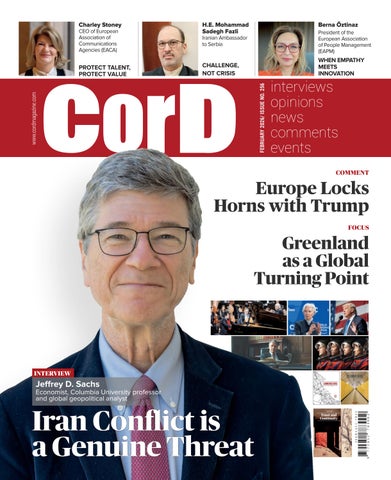
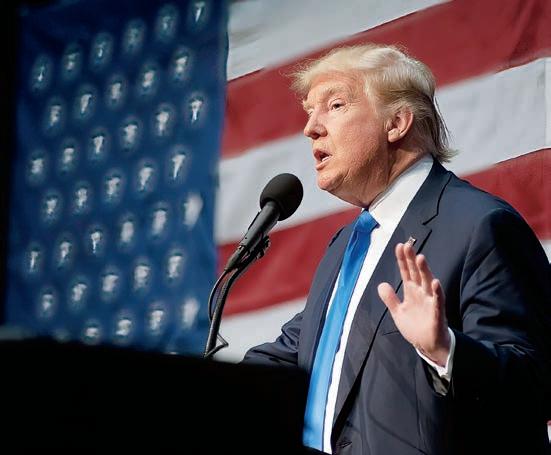
Europe Locks Horns with Trump
By Boško Jakšić
It was clear in Davos that the Europeans and Canadians were ready to lock horns with Washington. “If you’re not at the table, you’re on the menu,” warned Canadian
e are living in times of global economic stagnation, growing inequality, right-wing penetration and the erosion of public trust in democratic institutions, and Donald Trump is more of a symptom than a cause.
WA proven opponent of multilateral cooperation, Trump doesn’t hide his hatred for the UN. While describing himself proudly as a great peacemaker, his policies of violent lawlessness have led to military interventions in Asia, Africa and Latin America in just the first year of his second term.
With his threats to annex Canada and use his military to snatch Greenland from Denmark, Trump’s ambitions have now extended to North America and Europe.
Many interpret his “America first” slogan as promoting isolationism, but it’s more likely to be about an active policy aimed at ensuring America’s leadership, interests and profits globally.
As a power addict, Trump respects only China and its economic and trade
PM Mark Carney in his brilliant speech
might, and Russia for its nuclear arsenal. He has no such respect for his European partners in NATO and the EU.
It has been shown that he and Vladimir Putin are similar megalomaniacs, in that they both want land belonging to other countries. Indeed, rather than the Nobel Peace Prize that Trump covets, it would be more apt for him to receive the Order of Lenin.
Trump has shown that he treats America’s enemies better than its allies, and in so doing has dangerously rocked the Western alliance that was created after World War II by, paradoxically, America, among others.
Europe now faces pressure from both America and Russia. Not only is NATO’s future under threat, but also that of the broader alliance representing the foundations of the defence of democracy.
Trump wants to maintain control over Europe, and to pay as little as possible
Europe has endured a major geopolitical shock and is facing its own crises, but it has shown that there are those who will oppose Trump
to do so. He has forced his NATO partners to increase their military spending and thereby reduce their social budgets. He is calculated in capitalising on the fact that the U.S. security umbrella protects Europe and the EU is lagging behind the States when it comes to cutting-edge tech.
The U.S. president has concluded that Europe is weak, so why shouldn’t
he take part of its territory, in the form of the icy Greenland? Does Europe have instruments to oppose him?
The West was rocked by his threats to use the U.S. Army to seize the world’s largest island and to impose tariffs on the eight European countries supporting Denmark the most. Until then, the Western allies had tried at every opportunity, and especially during negotiations on ending the war in Ukraine, to avoid offending the vanity of the narcissistic leader.
It was clear in Davos that the Europeans and Canadians were ready to lock horns with Washington. “If you’re not at the table, you’re on the menu,” warned Canadian PM Mark Carney in his brilliant speech.
Another Carney message was that “compliance will not buy safety”, hinting that Western allies aren’t ready to give in easily to Trump’s dictates.
“Don’t indulge Trump, Europe will be the loser,” warned former European Commission president Jean-Claude Juncker.
Trump then publicly abandoned his idea of military intervention and imposing tariffs on the “disobedient”. So, what can we expect now? Trump’s penchant to pursue revenge? Diplomatic agreements to avoid the collapse of the Western alliance, which he has no interest in pursuing? Intervention in Iran to prove his might?
Europe has endured a major geopolitical shock and is facing its own crises, but it has shown that there are those who will oppose Trump. Europe is stronger than some of its leaders seem to think.
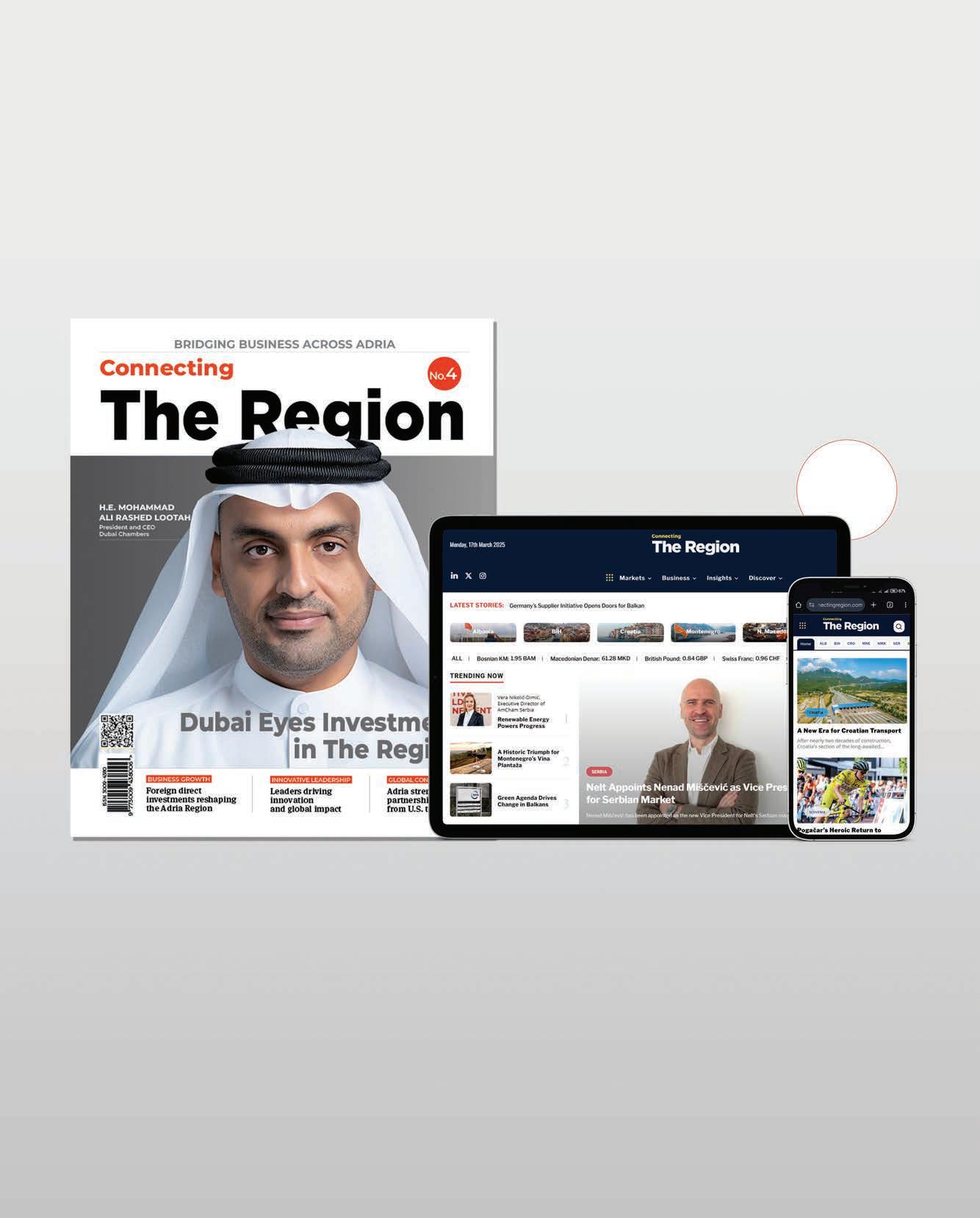
SUBSCRIBE To The Region Stay Ahead in Adria
The Region is where ideas, perspectives, and ambitions from across the Adria region come together. From industry leaders to bold innovators, we bring you the stories that drive change and shape the future. Stay connected to the pulse of business, progress, and the people making an impact. 75€
Iran Conflict is a Genuine Threat
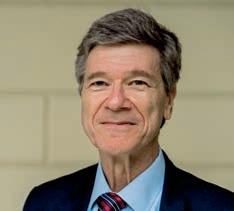
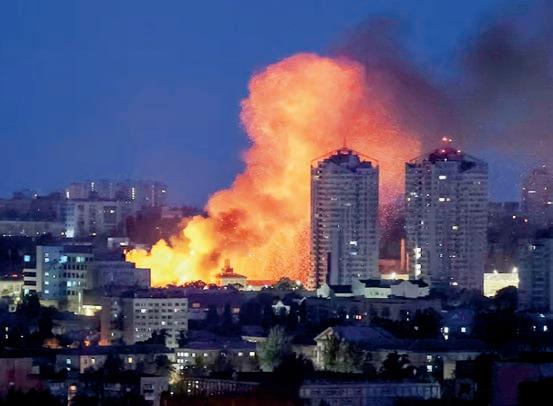
The U.S. and Israel are likely to attack Iran soon, which could set off a global catastrophe. The U.S. is also making threats against many other countries. We have a lawless situation that can easily spill over into one or more wars ~ Jeffrey Sachs
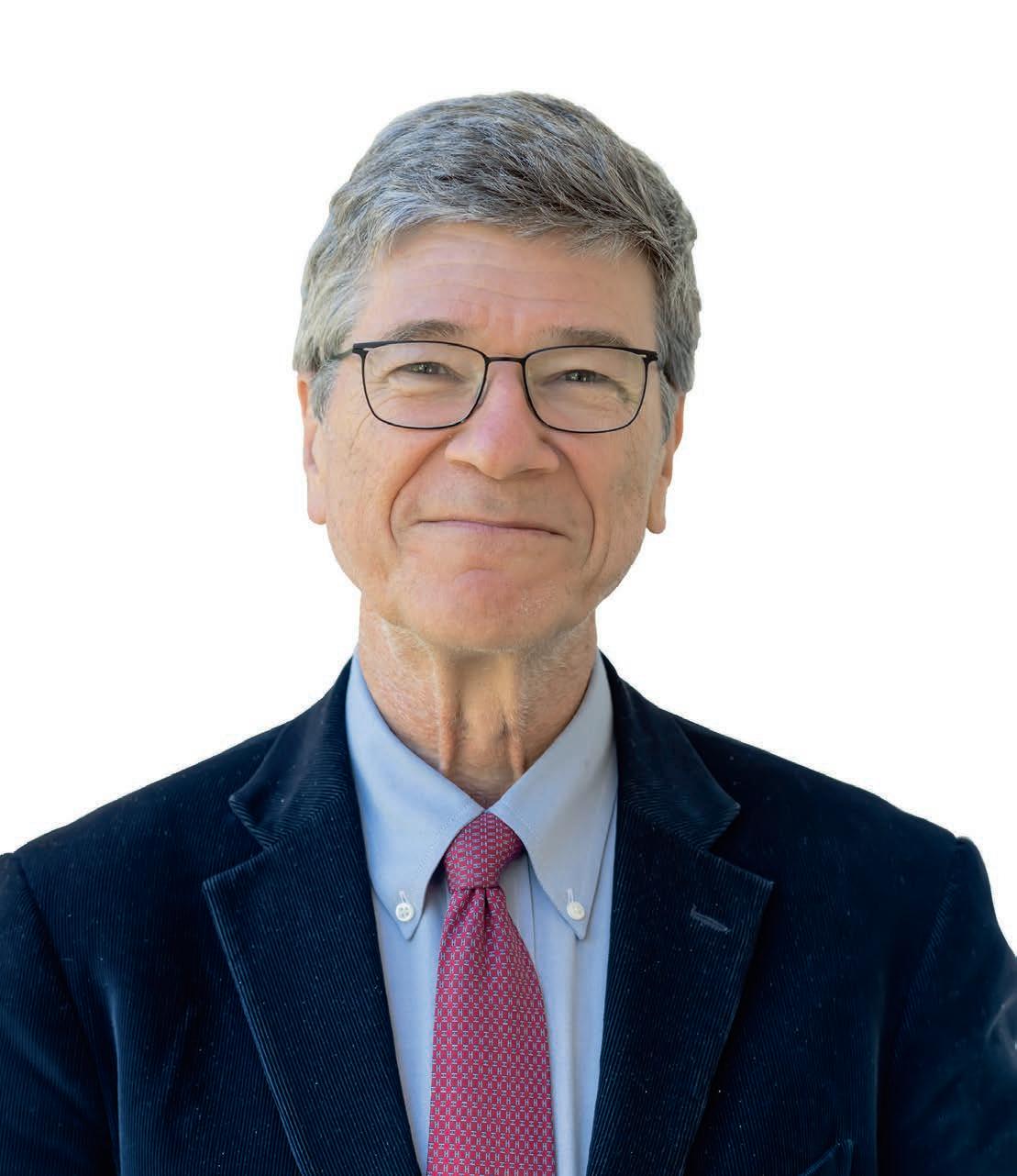
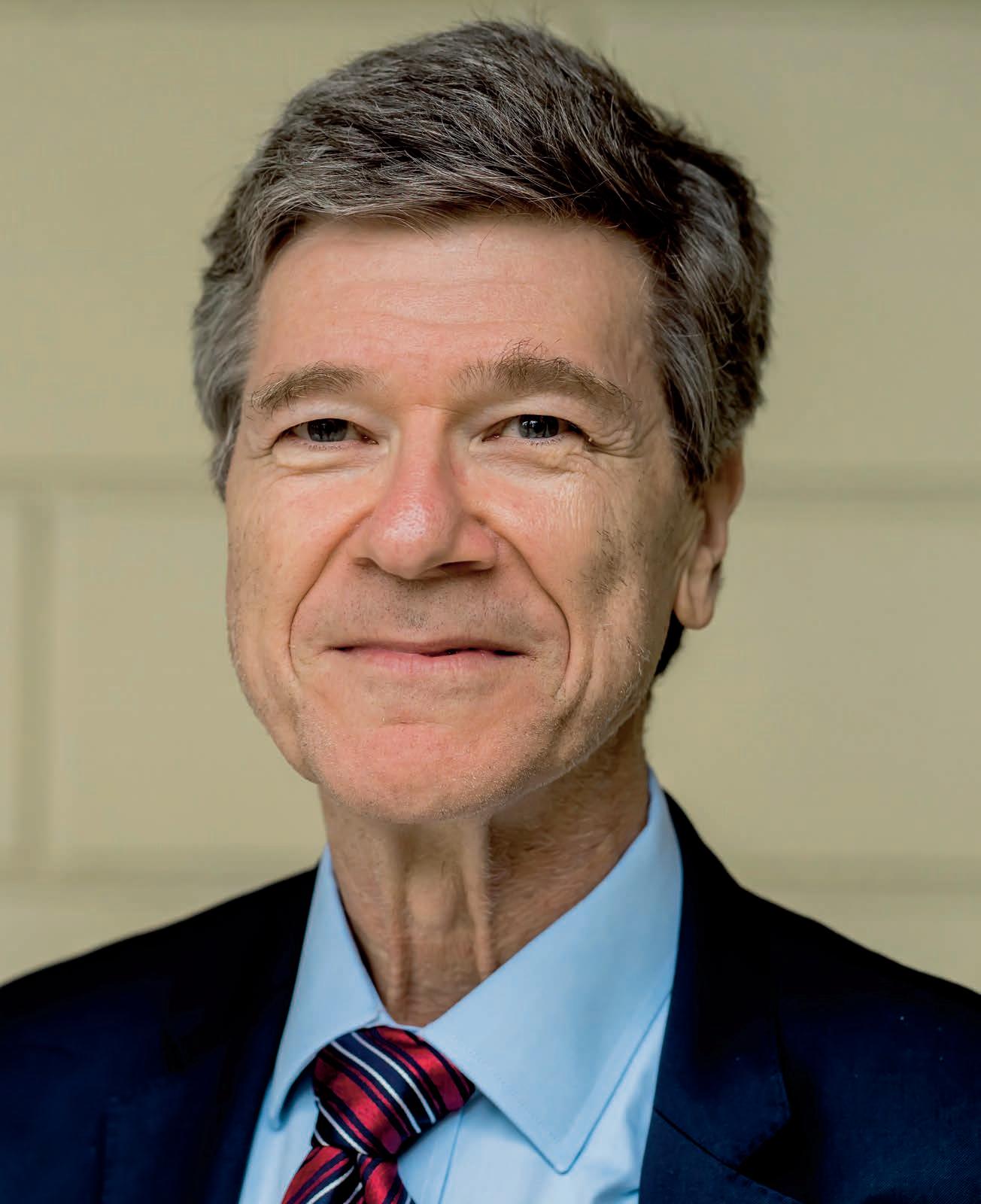
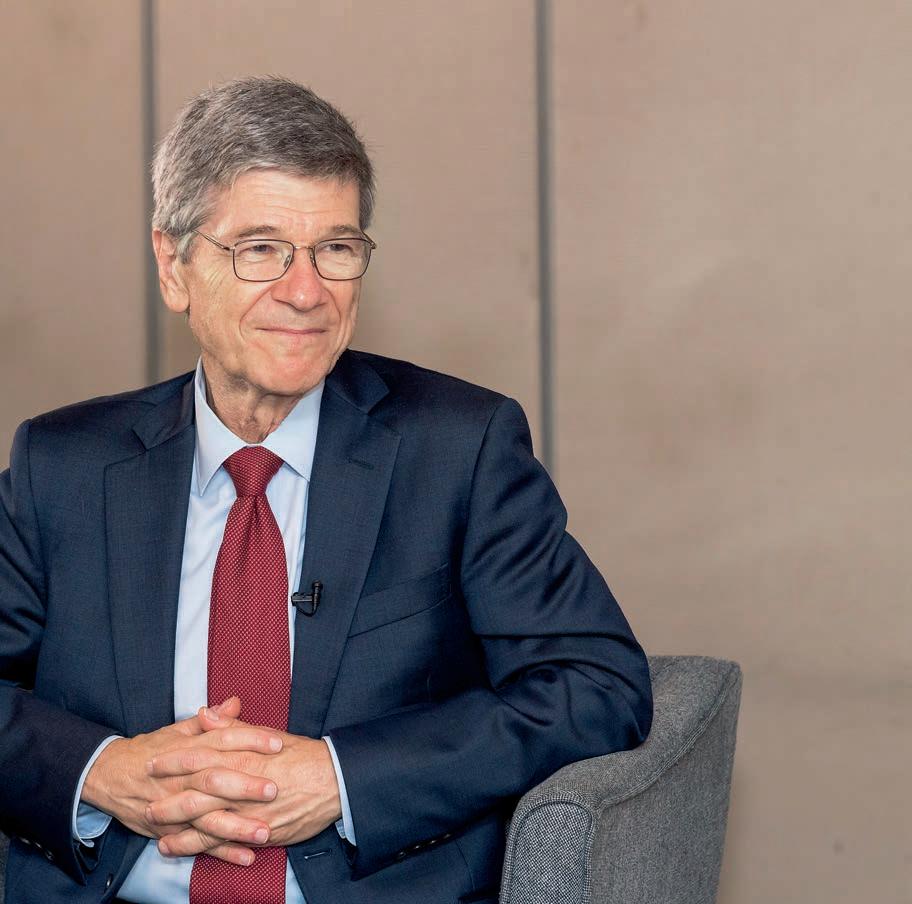
Jeffrey D. Sachs economist, Columbia University professor and global geopolitical analyst
By Ljubica Gojgić
Gabriella C. Marino
Photos
American Jeffrey Sachs, a professor of economics at Columbia University and a world-renowned geopolitical analyst, believes that humanity has entered a new era that will be marked by the rise of China. He says that, although the U.S. for now remains the world’s dominant power, its current administration represents “the greatest source of global instability”. According to professor Sachs, Europe will face its greatest challenge in keeping pace with geopolitical events. He also believes that Serbia should continue its practice of building good relations with all relevant global players. As he explains in this interview for CorD Magazine, “if Canada can form a “strategic partnership” with China, as PM Carney has done, then Serbia too can remain neutral and on good terms with China”. Speaking to interlocutors in Serbia, he explained how education is the key to the future, creating “a sophisticated society that knows the most modern technologies”.
Professor Sachs, which global challenge do you expect to be most decisive in 2026; and why do you consider this particular issue as being crucial to international stability?
— The Trump Administration is, by far, the greatest source of global instability. The U.S. and Israel are likely to attack Iran soon, which could set off a global catastrophe. The U.S. is also making threats against many other countries. We have a lawless situation that could easily spill over into one or more wars. We also have troops on the ground killing and terrifying American citizens in Minneapolis and other U.S. cities.
Do you believe there is a real possibility of a more serious conflict between the United States a and Iran? — Yes, within days or weeks, such a conflict is likely.
How would you assess the increasingly divergent positions of the U.S. and the European Union regarding
the war in Ukraine? Could such differences in approach undermine efforts to bring about an end to the conflict, which will soon enter its fourth year?
— European leaders lack any kind of strategy other than a continuation of the suffering. There will most likely be no end to the conflict as long as Zelensky continues to rule Ukraine. The situation is pitiful, another example of the utter collapse of European diplomacy.
In your view, does the recently published National Security Strategy represent a substantive departure
The situation with NATO therefore remains unstable and murky. If Trump seizes Greenland, which he might well do, that would be the end of NATO
from post-Cold War security doctrines — “a fundamental break with all strategies written after the Cold War”, as some commentators suggest? Is it realistic to expect the U.S. to remain both “the most powerful military” and “the most advanced economy”, while Europe faces the risk of “civilisational erasure”, as the document implies?
— The NSS lacks any kind of strategic insight or depth. It is an incoherent document. It is mainly the U.S. declaring its control over the Western hemisphere. This is delusional.
Does the U.S.’s shift towards its own strategic priorities – as the Donald Trump administration’s new NSS is most commonly interpreted – signal a profound transformation of NATO? Could we speak of the possible end of the Alliance as we know it today and, if so, what consequences would such a shift entail?
— Trump would be happy to end NATO, though other U.S. politicians would not. The situation with NATO therefore re-
mains unstable and murky. If Trump seizes Greenland, which he might well do, that would be the end of NATO.
How do you envisage the trajectory of relations between the U.S. and China during the Trump administration? Do you expect stabilisation, continued confrontation, or a redefinition of their respective roles within the global order?
— The U.S. continues to try to undermine China, but to avoid war. I don’t believe the relationship can really be stable, but it can remain peaceful yet tense. That’s the best outcome that’s possible with Trump.
You stated in February 2025 that Serbia would not be forced to choose sides and that it should continue its policy of cooperation with China. Today, however, alignment appears to have become almost unavoida ble. In your assessment, has the geopolitical space for such a policy narrowed, and why?
— If Canada can form a “strategic partnership” with China, as PM Carney has done, then Serbia too can remain neutral and on good terms with China. I hope that neither the EU nor the U.S. try to press Serbia into breaking relations with China.
If Canada can form a “strategic partnership” with China, as PM Carney has done, then Serbia too can remain neutral and on good terms with China
That would be a huge strategic mistake for Serbia.
During your recent visit to Belgrade, you delivered a public lecture and were subsequently interviewed by a government minister.
At this time when relations between Washington and Belgrade are facing certain challenges, do you have any formal or informal advisory role, or other form of engagement with the Government of Serbia, that you would consider relevant to mention?
— No arrangements, other than my hope to contribute in any small way to Serbia’s success! I’m always delighted to meet with the leadership and to exchange views and ideas!
How do you interpret the domestic reverberations of global tensions in Serbia, particularly in light of the fact that the country’s most successful company, NIS, has come under U.S. sanctions due to its majority Russian ownership? Is it coherent to advocate peace with Russia in Ukraine while imposing sanctions on Russian capital in other states— or do you view this as a consistent policy?
— There is nothing coherent about U.S. policy. The Trump administration is without any strategic rudder. It is a lawless, short-sighted, and violent enterprise.
Do you see a risk that tensions between the U.S. and Venezuela may escalate to the point of armed conflict—and what would such a development mean for the broader security architecture of the Western Hemisphere?
— Venezuelans are playing along with Trump for the moment, trying to appease him without sacrificing real sovereignty. This attempt will fail. I suppose that Venezuela will likely become more violent.
Was Venezuela merely an episode, or does it signal the re-emergence of an old–new course in U.S. foreign policy, one based on dominance over Latin America?
— The U.S. is addicted to regime change. This is true not only of Trump, but of all U.S. administrations, as this is a deep state policy pushed by the CIA.
Global Diary
World Economy Shows Resilience Despite Geopolitical Tensions
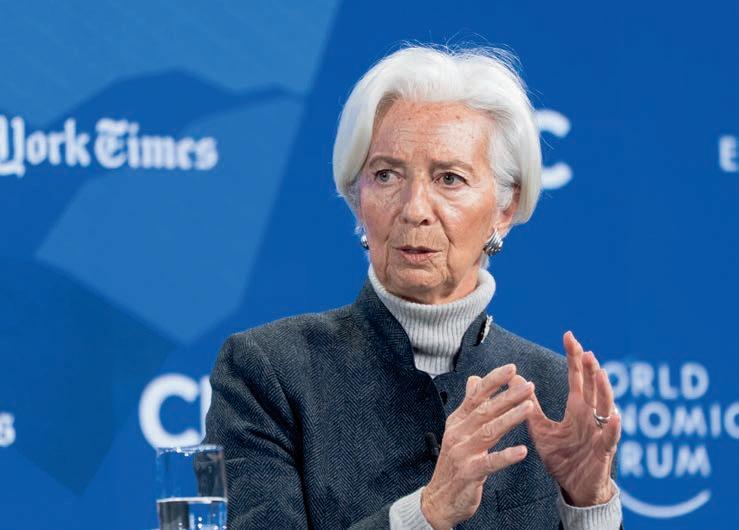
At the 2026 World Economic Forum in Davos, leaders from institutions such as the IMF, ECB and WTO stressed that the global economy has shown resilience despite persistent geopolitical strains — including trade policy shifts under the U.S. administration and conflict risks. Concerns remain around high national debt, inequality and the economic fallout from ongoing tensions. The forum spotlighted both confidence in adaptability and fear of deeper fractures in global growth.
“The world is in the midst of a rupture, not a transition”
Mark Carney Prime Minister of Canada
U.S. to Withdraw from Dozens of International Bodies
In early January, the United States announced plans to exit dozens of United Nations and other international organisations, withdrawing from major forums on climate, peace and global cooperation. The move reflects a broader pivot toward unilateral policy under the current administration and is already drawing international concern about fracturing multilateral systems.
Historic UN Declaration on Noncommunicable Diseases and Mental Health
World leaders at the United Nations adopted a groundbreaking political declaration integrating noncommunicable diseases and mental health into a unified global health agenda with targets toward 2030. The near-unanimous vote reflects broad global commitment — despite some objections — to tackling long-term health challenges beyond traditional infectious disease frameworks.
“We do prefer respect to bullies … and we do prefer rule of law to brutality”
Emmanuel Macron President of France
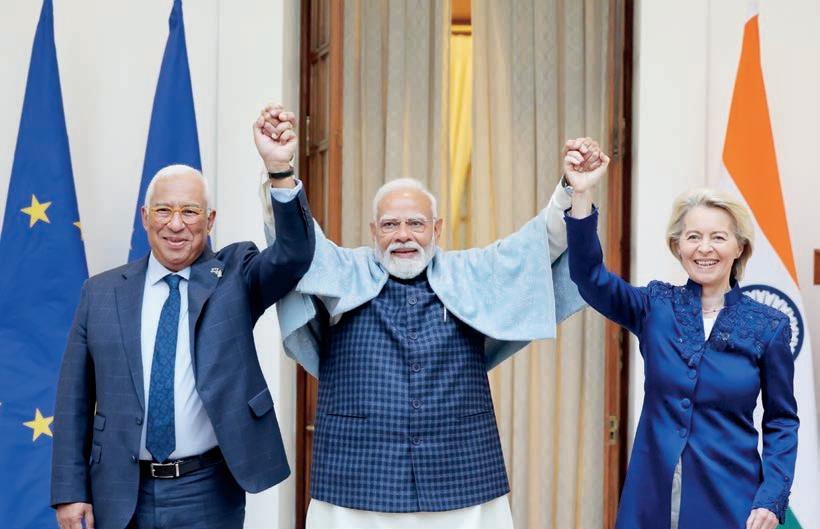
Breakthrough EU-India Trade Deal Accelerated
After nearly two decades of negotiation, the European Union and India finalised a major free-trade agreement, dramatically cutting tariffs and deepening economic ties. The deal, accelerated by global tariff pressures and strategic recalibrations, is expected to reshape trade flows between Europe’s single market and one of the world’s fastest-growing economies. Diplomats described it as one of the most significant trade pacts of the decade.
Doomsday Clock Moves to Closest Point Ever
On 27 January, the Bulletin of the Atomic Scientists moved the symbolic Doomsday Clock to 85 seconds before midnight — the closest it’s ever been. The decision reflects rising nuclear tensions, deteriorating arms-control frameworks, the wars in Ukraine and the Middle East, and emerging “existential risks” from unregulated technologies. Scientists warned that fading international cooperation and heightened geopolitical rivalries have pushed the world closer to catastrophic danger than at any point in history.
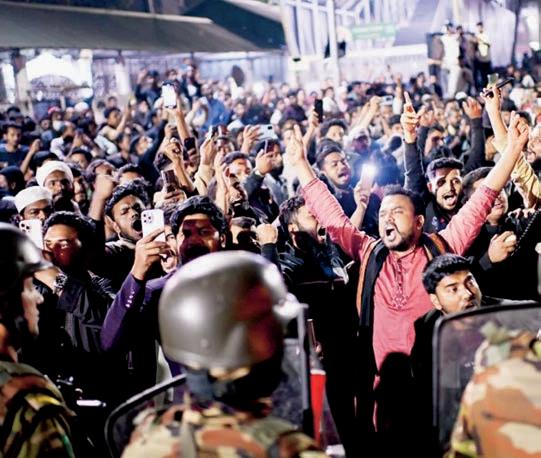
Bangladesh Rocked by Unrest After Activist’s Death
Violent protests erupted across Bangladesh following the shooting and death of youth leader Sharif Osman Hadi amid the run-up to the country’s pivotal election schedule. Demonstrations spread rapidly, including attacks on major newspaper offices, raising serious questions about political stability, press freedom and the interim government’s control.
Challenge, Not Crisis
Although the scenario behind the recent developments, which were devised by Iran’s enemies, was to lay the groundwork for foreign intervention, that scenario failed. And, thanks to the awareness and wisdom of the Iranian people, such a scenario will never be realised – Mohammad Sadegh Fazli
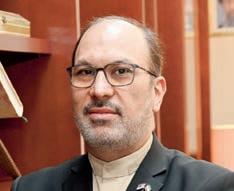
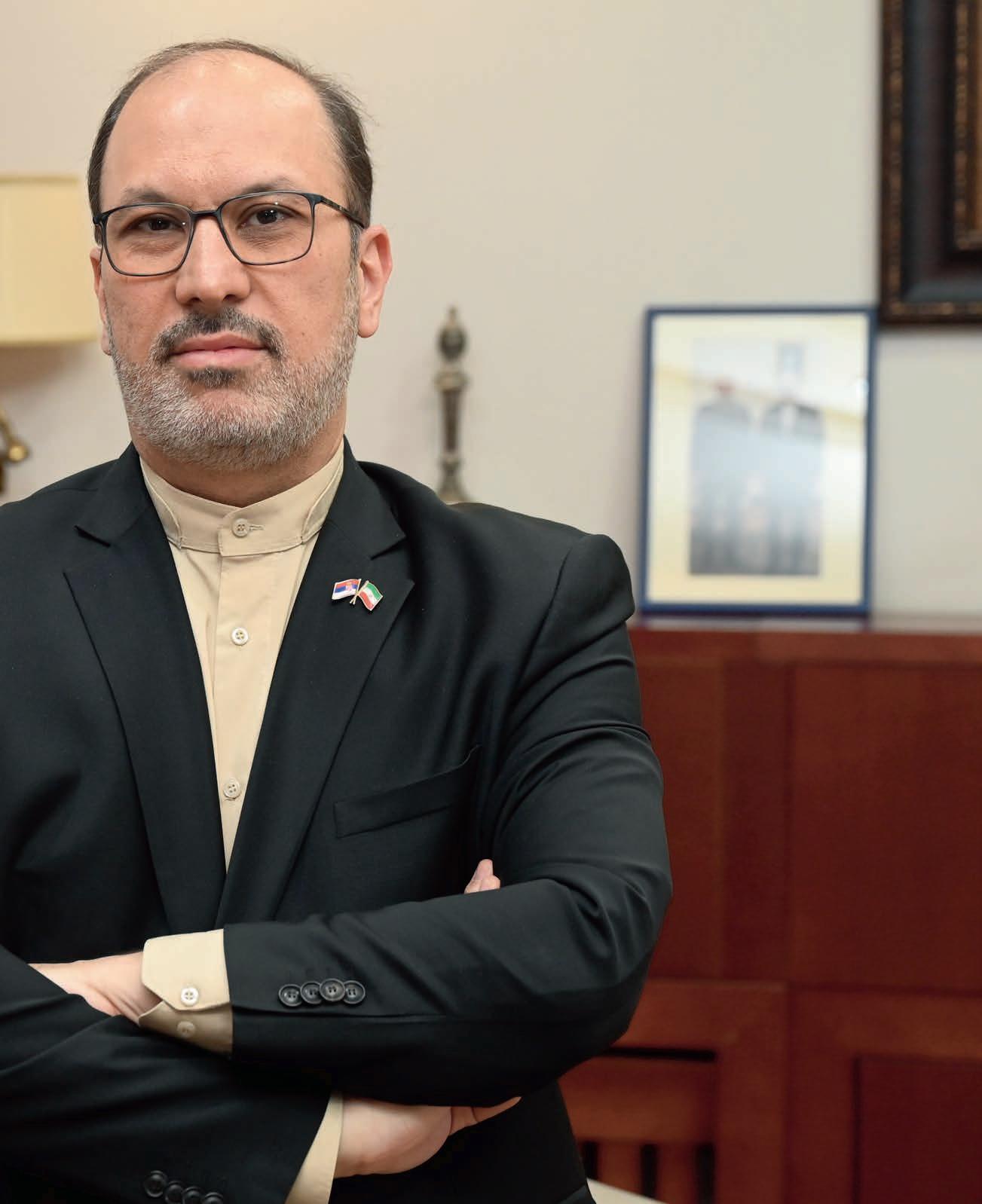
H.E. Mohammad Sadegh Fazli
By Ljubica Gojgić
Iranian Ambassador to Serbia
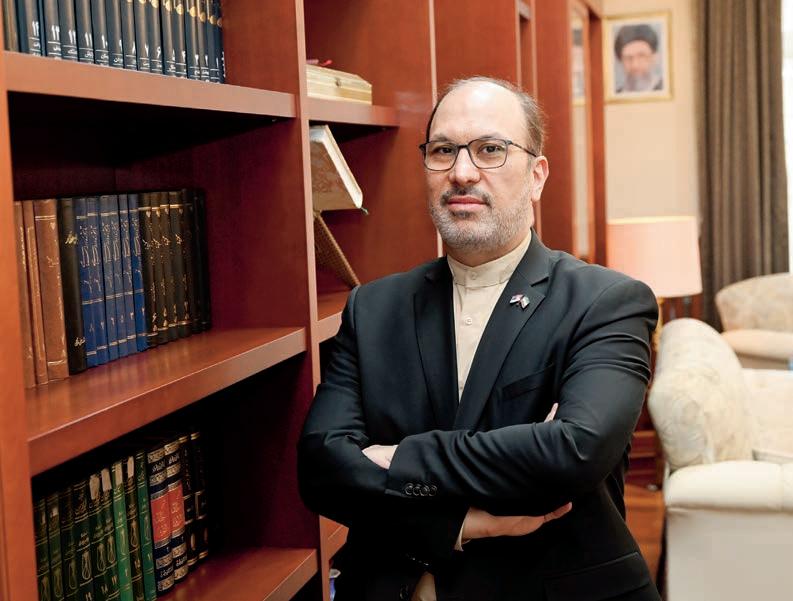
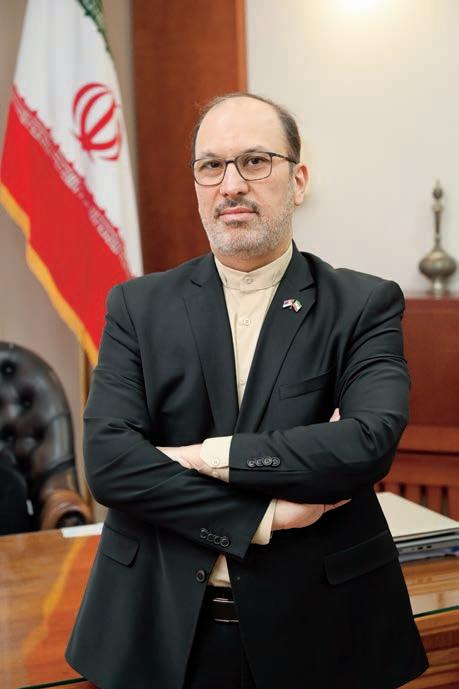
The latest happenings in Iran represent a continuation of last year’s short-lived military assault on the country, claims the Iranian ambassador to Serbia, before adding that there were also attempts to utilise the recent citizens’ protest to provoke a new conflict over the economic situation in the country. In response to CorD’s question of whether there’s any truth to media announcements that participants in the protest will be sentenced to death, H.E. Mohammad Sadegh Fazli says that the trials are underway but that “no verdicts have yet been issued”. He reiterates that Iran is ready for dialogue, but isn’t ready for “coercion and dictation, instead of negotiation”.
Your Excellency, current developments in Iran are being assessed by
observers as the country’s most serious crisis since the Islamic Revolution of 1979. What is actually happening in Iran today?
— Firstly, I should say that using the word “crisis” is not accurate; the term “challenge” is more appropriate. Moreover, this isn’t the greatest challenge facing the Islamic Republic of Iran since the 1979 victory of the Islamic Revolution. We have faced far greater challenges. The fact that Iran rose out of the Revolution as an independent and powerful country didn’t suit the equations of the hegemonic system or the global order promoted by the United States. By introducing a new discourse and availing its great civilisational and Islamic heritage, both domestically and internationally, Iran presented a new identity.
Consequently, the hegemonic system has consistently sought, through various plots and conspiracies—such as the sowing of division, creating internal discord and unrest, the eightyear imposed war by Saddam’s regime against Iran, economic sanctions, assassinations of noted figures and scientists, and support for terrorist and separatist movements, among others—to either bring the Islamic Republic into alignment with itself or to eliminate it. Although they inflicted damage, they ultimately failed to achieve their objectives.
Media reports speak of several thousand fatalities during the protests, with casualties confirmed both among protesters and members of the security forces. The United Nations and the international public have expressed concern over reports of a harsh state response to the protests, as well as announcements that detained demonstrators could face the death penalty. Should this occur, would Iran’s international image be further damaged during this time when the political situation is already highly complex?
— In a continuation of this same pattern, last June we witnessed a blatant act of aggression by the Israeli apartheid regime against Iran. Although Iran sustained some damage, the Israelis didn’t succeed in achieving all of their goals. As a result, they attempted to exploit the recent protests—which had emerged due to livelihood issues caused by unjust economic sanctions— in order to achieve what they failed to achieve during the 12-day war. In fact, recent developments should be considered as the 13th day of June’s 12-day war. In other words, peaceful protests that lasted for ten days were – through pre-planned engineering – turned into violence, disorder and armed terrorist riots. Through the prudent measures of officials and cooperation with the people, this conspiracy was also thwarted, and the country’s situation is currently calm and under control.
At a time when the protests were moving towards calm, infiltrating elements directed from abroad engaged in ISIS-like violent behaviour. In accordance with their agenda, they carried out killings of civilians and members of the security forces, the destruction of public and private property, damage to infrastructure and the burning of mosques and holy sites, medical centres, ambulances, fire engines, public transportation etc. These terrorist elements had been instructed to manufacture casualties in order to create the conditions for foreign intervention, as Trump had stated that the U.S. would intervene if protesters were killed. It was at this point that terrorist elements began killing innocent people.
Following demands from the public that officials ensure security and deal decisively with rioters and terrorist
The resilience and resistance of the Islamic Republic of Iran in the face of various pressures and challenges has been proven repeatedly over the past 47 years
elements – demands that manifested through millions of demonstrators taking to the streets in support of the government and the system on 12th January – security forces took firm action and stabilised the situation. The legal process regarding those involved in the recent conspiracy is now underway, and no verdicts have been issued yet. In our view, the main culprits are the U.S. and Israel, and we do not overlook their responsibility in the killing of innocent people, which is why we are pursuing this matter through international fora.
Based on existing evidence, the CIA and Mossad – through their internal and ground operatives – smuggled weapons for street warfare into Iran and, starting on 8th January, attempted to carry out acts of sabotage and attacks on security forces and the police through terror agents. By producing and disseminating fabricated videos and images, these elements sought to portray the Islamic Republic as violently suppressing defenceless protesters. Some of the arrested terrorists have confessed that they received orders from the CIA and Mos-
DIALOGUE
The Islamic Republic of Iran has always been ready for negotiations
DEFENCE
We don’t welcome war or conflict, but our readiness and defensive capabilities are greater than ever
STABILITY
The country’s situation is currently calm and under control
sad to commit these crimes. As noted, they have been handed over to judicial authorities, and the legal process will undoubtedly proceed in accordance with the law. Unfortunately, by announcing misleading statistics and making baseless claims about executions, Western and Western-affiliated media outlets have sought to enrage global public opinion and exert pressure on the Islamic Republic of Iran.
Could an internal conflict escalate into a confrontation with the U.S., with President Trump having announced the possibility of intervention in Iran, allegedly to protect demonstrators?
— The resilience and resistance of the Islamic Republic of Iran in the face of various pressures and challenges has been proven repeatedly over the past 47 years. The remarkable progress achieved during these years in various fields—including defence, nuclear energy, science, technology and industry—has drawn global attention. While the negative effects of sanctions is undeniable, the Iranian people have turned these threats into major opportunities that have enabled the country to overcome challenges and crises.
Although the scenario behind recent developments, designed by Iran’s enemies, was to lay the groundwork for foreign intervention, this scenario failed and, with the awareness and wisdom of the Iranian people, will never be realised. At the same time, the Islamic Republic of Iran is prepared to confront any potential scenario. We don’t welcome war or conflict, but our readiness and defensive capabilities are greater than ever, as we have proven before. Let me also note that the Islamic Republic of Iran has always been ready for negotiations.
Iran is today fully aware of American interference and possesses the capability to prevent history from repeating itself
However, the country was attacked in the midst of negotiations and the Americans demonstrated that they do not truly believe in negotiation, but rather seek coercion and dictation instead.
There have also been reminders in recent days that Iran experienced a regime change sponsored by the U.S. some 70 years ago. The key motives at that time were control
over oil and geopolitics. Is history repeating itself?
— The U.S. of today is the same country that designed and conducted the 1953 coup against Iran’s democratically elected government—something they themselves have acknowledged. They have done the same in other countries and continue to do so. U.S. government policy hasn’t changed, but Iran is today fully aware of American interference and possesses the capability to prevent history from repeating itself at the hands of its enemies.
Russia and the Gulf countries — particularly Saudi Arabia, Oman and Qatar — have spoken out against potential U.S. intervention in Iran, warning of risks to regional stability. China has stated that it “consistently opposes interference in the internal affairs of other states”. Does this create the basis to resolve this crisis through dialogue, for which Tehran has reportedly expressed readiness?
— We believe that the presence of external powers in the Persian Gulf region, and their interference in the internal affairs of countries, culminates in instability and insecurity. On the other hand, the United States makes use of economic sanctions, political interference and the creation of insecurity in other countries in order to generate economic, political and security problems that then justify its presence in those countries.
What do you see as a possible solution to the crisis?
— In light of the aforementioned, the U.S. should reconsider its hegemonic policies and approaches and allow the countries of the region to take responsibility for their own security and stability.
WHY IS GREENLAND BECOMING ONE OF THE WORLD’S KEY GEOPOLITICAL FLASHPOINTS TODAY, AND WHAT DOES ITS FATE REVEAL ABOUT THE NEW GLOBAL ORDER?
Greenland as a Global Turning Point
Why the struggle for the world’s largest island is exposing the limits of power, the fragility of alliances and the future of the international order
For a long time, Greenland was a geographical periphery and a strategic constant for the great powers. Today’s circumstances — climate change, competition for resources and the increasingly open questioning of international rules — have turned it into a symbol of far deeper global fractures. At a time when power is ever more frequently placed above law, and alliances are being tested without guarantees, the fate of this remote island has become a litmus test of the emerging world order.
In this Focus section, leading diplomats, analysts and experts consider what Greenland truly represents today: a strategic pivot, a line of defence for the rules-based order, or a warning that the world is entering a phase in which rules can no longer be taken for granted.
Duško Lopandić
diplomat,
President of the Forum for International Relations of the European Movement in Serbia
Major Changes in International Relations
In a relatively short period of time, Trump has almost turned US foreign policy on its head, particularly when it comes to relations with European and Latin American allies, as well as with Russia — a shift that is partly the result of broader trends shaping international relations in this century.
The Far North — a vast expanse of snow and ice — once confused even the ancient Vikings, who named the land of eternal ice Greenland, while designating the much greener Iceland as a land of ice.
This paradox is resurfacing today, in the era of global warming and climate change, in various forms, including the almost puzzling focus of US President Donald Trump on Greenland. The world’s largest island — an enormous territory with a very small population — has thus become, if perhaps only temporarily, a priority in US policy and one of the critical points of contention between the United States and its European NATO allies.
Greenland, an autonomous territory of Denmark, is fifty times larger in area than its metropole, yet has a population one hundred times smaller, numbering just 57,000. This sparsely populated icy wilderness has been undergoing visible change in recent decades due to the melting of its ice sheet. Increased navigability of sea routes around Greenland, the discovery of oil, gas and rare mineral deposits, and its proximity to the Arctic have all contributed to its growing importance as a strategic location — and potentially the shortest maritime and air link between Europe, Asia and North America.
It has become clear that President Trump’s idea of “buying” Greenland and incorporating it into the United States was not merely a witty remark. According to Trump himself, Greenland is strategically indispensable for the US — as a space that would form part of a future missile defence shield (“Golden Dome”), as a source of resources, and as a territory that must not fall into the hands of other powers such as China or Russia. What remains unclear, however, is why Trump has chosen to fo-
cus so intensely on this issue at this particular moment, and why a region belonging to a NATO member state — where the US already maintains a military base — should formally become US territory. In doing so, Trump appears to pay little attention to the views of the Danish authorities or the people of Greenland themselves.
The case of Greenland serves as a telling illustration of the profound changes currently unfolding in international relations — particularly during Donald Trump’s second presidential term. In a short span of time, Trump has dramatically reshaped US foreign policy, especially in its approach to European and Latin American allies and to Russia, a development that also reflects wider structural trends
Since his re-election, Trump has sought ever more openly and forcefully to impose the principle that power overrides law, placing US interests above established norms of international relations and international law
in global affairs. Since his re-election, Trump has pursued an increasingly open and forceful approach, seeking to impose the principle that “might makes right”, and that US interests should take precedence over established norms of international relations and international law. US policy towards Greenland will therefore only contribute to further disorder in the international system.
Dr
Milan Igrutinović Associate, Institute of European Studies
Greenland as a Strategic Fault Line
Trump’s renewed focus on Greenland is testing the resilience of transatlantic relations
The year 2026 began with a US special forces operation targeting the premises of President Nicolás Maduro on 3 January. He was captured, extracted from Venezuela and transported to a prison in Brooklyn to await trial under US jurisdiction. The Trump administration has been quite open about its ambition to rule at will — or, as Donald Trump recently stated in an interview with The New York Times, to be bound only by his “own morality”.
Riding the wave of this perceived “success” in Venezuela, Trump has now set his sights on Greenland. After briefly mentioning his ambition to acquire the island from Denmark at the start of his second term a year ago, the issue largely faded from public attention, only to resurface with renewed vigour.
Greenland does not feature prominently in key US strategic documents, nor is it articulated as a core national interest. Trump has nevertheless offered several justifications for his push: that only the United States can guarantee Greenland’s security from a supposed Russian or Chinese attack — a scenario that is not only unlikely, but practically impossible. He has also pointed to Greenland’s natural riches, to be exploited for the benefit of US companies, even though such activities could easily be managed within the existing framework of relations with Denmark and NATO. There is, however, another — and arguably the most essential — reason: Trump’s highly personal views and ambitions to extend US borders, in the manner of a new-age imperialist.
While keeping the door open to a diplomatic “solution” — which, in Trump’s mind, amounts to a transactional purchase of Greenland from Copenhagen —
he has simultaneously threatened new tariffs against a group of European countries that support Denmark’s sovereignty. This has prompted efforts to forge a common European response involving the EU, the UK and Norway.
Europe now finds itself on the brink of a trade war with the United States, with potentially significant global spillover effects. The European Parliament has already postponed the ratification of the 2024 Trade Agreement with the US. The possible deployment of the EU’s Anti-Coercion Instrument — which would restrict the operations of certain US companies on the European market — as well as the dumping of US Treasury bonds by European banks and funds, are now being openly discussed and planned in Brus -
Escalating tensions over Greenland are increasingly spilling over into trade and security relations between Europe and the United States
sels. Military personnel from a number of EU states are also travelling to and from Greenland as a symbolic show of resolve, even though there are no serious concepts of waging war with the United States in the North Atlantic. For now.
Trump is turning Greenland into a lynchpin of his relations with Europe — and possibly of his entire presidency. If he pulls it out, he risks damaging both beyond repair and shaking the rest of the world to its core.
Mirko Dautović international relations analyst
Europe Between Major Powers
The Greenland debate is exposing Europe’s increasingly fragile position in a rapidly changing global balance of power
Avast frozen island was of little importance until the mid-20th century. This is why no other power sought to claim it from Denmark during the age of imperialism — until now. Its significance grew during the Second World War and the Cold War, owing to the need to control and monitor Arctic air and sea routes. Missiles launched from the USSR would have flown over Greenland before reaching their targets in North America, which is why the US military established 17 bases there, and why they were later dismantled once they outlived their usefulness with the end of the Cold War.
History is on the move once again, this time in the form of global warming, which is melting the ice, turning the Arctic into a navigable sea and making Greenland’s soil exploitable. Yet it is not these structural forces that have suddenly turned Greenland into a burning issue, but rather the covetous will of a single man: US President Donald Trump.
His motives for seeking to acquire Greenland by any means necessary remain opaque. The purported security concerns or access to minerals are unconvincing, given that both Denmark and Greenland would welcome the presence of the US military and American companies. Instead, the driving force appears to be violence for violence’s sake — a spectacle designed to attract an audience and cement Trump’s legacy.
That legacy, however, is more likely to be remembered as the greatest act of self-immolation undertaken by any empire since Ming China burned its own fleet. US allies are deeply unsettled, and it will take time before transatlantic elites in Germany, the Netherlands, Poland and oth-
er NATO countries fully grasp that Europe now finds itself between two predatory powers, one of which is behaving in an increasingly unhinged manner.
Hopes that Trump can simply be waited out until the midterm elections in November are misplaced. He has 280 days to inflict further damage on his own country — and on the world. A new axis must be formed: an axis of rationality. Its pivot cannot be Europe, weakened by the pettiness of its member states, but it can — and will — be China. Astute statesmen are already acting on this perceived inevitability.
The Greenland issue highlights weakening transatlantic ties and raises questions about Europe’s long-term strategic orientation
Canadian Prime Minister Mark Carney, for instance, formed a new strategic partnership with Xi Jinping in mid-January, a path that appears to be the only remaining option. Europeans, meanwhile, will be forced either to deepen their union — a process that has historically occurred only in the face of major external geopolitical threats — or to allow it to unravel if member states choose instead to appease Trump.
As for Greenland, an American invasion could occur at any moment — or it might never materialise. Each morning, the US President’s whim appears to toss a coin to decide whom or what to disrupt next. That, however, is no way to run the world.
TNikola Lunić geopolitics and security consultant
Greenland as a New Focal Point of Global Rivalry
Strategic location, rare minerals and emerging Arctic routes are turning Greenland into one of the world’s key security and economic spaces
oday, Greenland represents a critical geopolitical flashpoint due to its strategic Arctic location, rare mineral resources and climate change, which is opening new maritime routes and creating opportunities for the profitable exploitation of resources.
From a security perspective, Greenland is of vital strategic importance to the United States and NATO, particularly for monitoring Russian surface and submarine fleets, as well as for early warning of ballistic missile attacks and space surveillance. There is little doubt that control of this area will also be crucial for the US “Golden Dome” project, which effectively reinforces efforts to exclude any Russian or Chinese influence. For now, the United States maintains only one military base in Greenland — Pituffik (Thule) — which nonetheless holds significant strategic value.
As the ice melts, Greenland is becoming increasingly attractive for the exploitation of rare earth elements and strategic minerals. Deposits of 25 of the 34 minerals that the EU considers critical to its industrial base have been identified on the island, with proven reserves estimated at 1.5 million tonnes and potential reserves reaching up to 40 million tonnes. Sites such as Kvanefjeld and Tanbreez rank among the largest in the world, with confirmed resources covering the full spectrum of strategic elements. Control over these resources in Greenland is not merely a profitable venture, but a means of securing long-term technological dominance — both economic and military.
The opening of new Arctic shipping corridors — the Northwest Passage and the Transpolar Route — is shortening distances between Europe and Asia, transforming what was once an isolated island into a hub of trade routes and geopolitical interests. As the ice continues to recede, logistics companies are increasingly considering these corridors, po-
sitioning Greenland as a potential strategic port in future trans-Arctic trade.
Greenland symbolises the end of a unipolar world that was often brutal, yet largely predictable. Climate change has triggered a new race for the Arctic, where resources are becoming instruments in the competition among major powers. At the same time, a romanticised vision of multipolarity without strong international institutions offers only an illusion of security, weakens collective cohesion and prioritises economic security over sovereignty.
The fate of Greenland reflects a transition towards a new geopolitical reality in which resources and national security dictate power, while shared security legacies and the protec-
International organisations are facing the need for reform, while the most significant geopolitical adjustments are increasingly taking place at the personal level
tion of allies become secondary concerns. In such a world, weakness will not be forgiven, indecision will be punished, and illusions will become an unaffordable luxury. International organisations are facing an unavoidable need for reform, yet the most consequential geopolitical adjustments are increasingly personal. It is time to recognise — much like family interests — that national interests also require daily commitment, grounded in a clear understanding of where we are heading, why, and with whom. Only in this way can survival be ensured, even at the cost of shedding a tear or two for collective fantasies left behind.
WDr Srećko Djukić ambassador, Forum for International Relations, Belgrade
Greenland as a Line of Defence for the International Order
Attempts to place power above rules, as illustrated by Greenland, raise the question of the survival of a norms-based international system
hen Donald Trump won the 2024 US presidential election on the platform of “America First” and “MAGA”, it was clear that he would seek to impose profound changes at home and abroad. However, the demands he has since articulated are extreme and fundamentally at odds with American values and achievements — and with a world order shaped largely thanks to the United States after 1945. Aware that his time is limited and that the opposition was caught off guard, Trump has shown little hesitation.
Trump wants Canada, Mexico — why not Panama, Venezuela, even the territory of Greenland — as new US federal states, new stars on the American flag. Trump the emperor, Trump the collector of lands. If America’s neighbours once slept peacefully, they now feel threatened — much like those living next to Russia — by their most powerful ally, by the world’s leading democracy.
Trump’s intention to “swallow” Greenland — an autonomous territory of Denmark — by one means or another, peacefully or by force, represents a breaking point in the dismantling of the old liberal order and the construction of a new global “order without order”: a world of chaos, domination and the rule of brute power. Yet the world’s largest island, with its symbolic population size, does not wish to become an American “star”; it is not for sale. This, in turn, marks the beginning of a broader global resistance to a world without rules. The history of resistance has always begun with the small. A world without rules is a world in which rules are written only by the strong. There is no place for the rest. It is clear that, should the doctrine of “Trumpism” prevail, the world would be pushed back by an entire century. Yet the wheel of history cannot be turned backwards; it always
moves forward. The euphoria of Trump’s political spectacle cannot last indefinitely. Global change is under way, new alliances are being sought, and everything is subject to reassessment and realignment.
When it comes to Greenland, the United States could satisfy all of its interests there — and in the wider region — in “countless ways” through peaceful means, whether within NATO, bilaterally with Denmark, or in cooperation with the EU, without trampling on the civilisational achievements of international relations. This would include US security and strategy, military presence, access to rare metals, the “containment” of China and Russia, Arctic interests and shipping routes, among others.
The dispute over Greenland goes beyond a territorial issue, evolving into a broader test of whether the future world will be shaped by rules or by the dominance of power
Europe opposes war, stands by Greenland and Denmark, resists Trump’s heavy-handed approach, deploys forces to the island and accelerates its responses.
A “great America” might wish to take Greenland — and other Greenlands — but the existing world and its achievements cannot be erased at their core. For Trump, this is an impossible mission. America is powerful, but it is not omnipotent. History offers many examples of its limits.
That is why Greenland has become a battleground for the world’s future: between a “world without rules” and a world governed by rules for all.
THE ARTEMIS PROGRAM
The Strategic Return to the Moon
By Dušan Marčeta, PhD.
Assistant professor. Department of Astronomy Faculty of Mathematics University of Belgrade
While the mid-20th-century space race was driven primarily by ideological prestige, the 21st-century return to the Moon reflects a clear shift from the symbolic to the strategic. Today, two major international efforts are shaping this new era: the American-led Artemis programme and the Chinese-Russian International Lunar Research Station (ILRS). This dual-track competition suggests that the world may be on the verge of a new space race, yet the stakes have evolved far beyond flag-planting, towards the establishment of a sustainable and enduring lunar presence shaped by technological capability, diplomatic alignment and long-term economic ambition.
WHY THE MOON MATTERS: STRATEGIC SCARCITY IN VAST SPACE
With a total surface area slightly exceeding that of Africa, the Moon may at first glance appear to offer equal opportunity to all, particularly given that the technological fr ameworks and business models for resource exploitation remain at a pioneering stage. Considering the immense technological hurdles and capital investment required for even a single lunar landing, the urgency of this renewed competition may seem questionable. Furthermore, the 1967 UN Outer Space Treaty explicitly defines the Moon as the “province of all mankind”, legally preventing any nation, enterprise or individual from claiming sovereignty or national appropriation.
However, the realities of lunar geography impose a very different logic. Despite its vast surface, only a handful of regions—primarily around the South Pole-Aitken Basin—are truly suitable for long-term habitation and sustained operations. This creates a condition of strategic scarcity centred on two critical lunar features: the Peaks of Eternal Light, rare elevated areas that receive near-continuous sunlight and are essential for reliable solar power generation; and the Permanently Shadowed Regions, deep craters that function as cold traps, preserving substantial deposits of water ice. In the emerging space economy, these locations are the lunar equivalents of strategic maritime chokepoints or oil-rich territories on Earth, serving as key nodes that will shape the next wave of technological development and global economic influence.
THE ARTEMIS CAMPAIGN: DRIVING LUNAR EXPLORATION THROUGH PUBLIC-PRIVATE COOPERATION
The Artemis programme is a complex, multi-mission campaign designed to establish the first long-term human presence on the Moon. Named after the Greek goddess of the Moon and twin sister of Apollo, the programme is built upon unprecedented public-private partnerships and extensive international cooperation.
A historic shift in lunar landings is taking place through the Human Landing System (HLS) programme, which integrates commercial partners at its core. SpaceX, led by Elon Musk, has been selected to develop the initial Starship HLS vehicles for the first crewed landings, serving as the primary lander for Artemis III (currently targeted for mid-2027 or later, with the potential for further delays), as well as an upgraded version for Artemis IV. At the same time, Blue Origin, founded by Jeff Bezos, is advancing its Blue Moon lander under a separate HLS contract with NASA, with crewed operations planned to begin with Artemis V (around 2029–2030 or later). These efforts are complemented by the Lunar Gateway, an international space station in lunar orbit, which will serve as a staging point for surface missions from Artemis IV onward and as a “deepspace port” for future journeys to Mars.
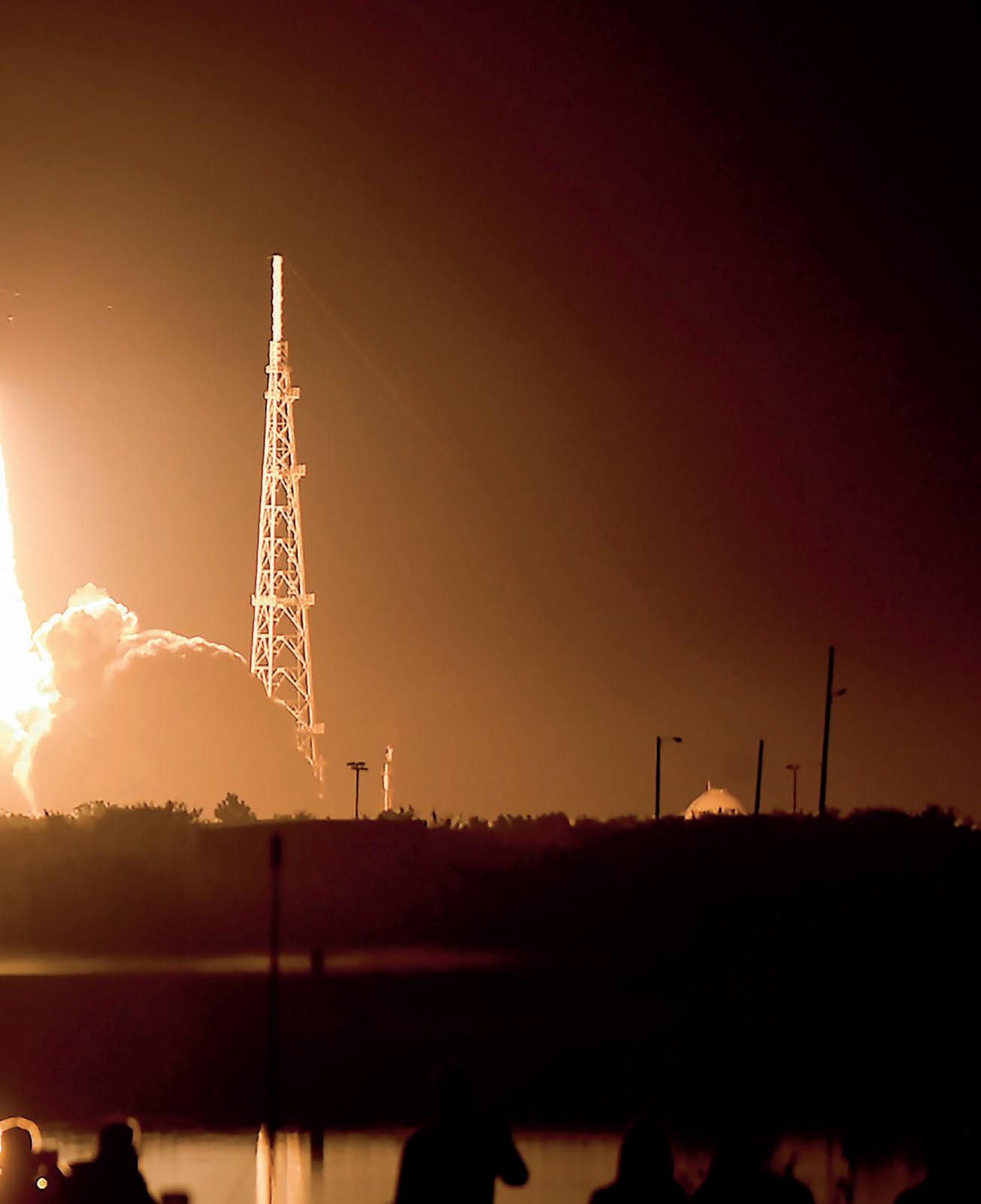
Following the success of the uncrewed Artemis I mission, global attention has shifted to Artemis II, currently scheduled for early 2026. This ten-day flight around the Moon will mark the first time humans leave low Earth orbit in more than 50 years. Its four-person crew will include the first woman, the first person of colour, and the first international astronaut from Canada to travel beyond Earth orbit.
THE ARTEMIS ACCORDS: THE NEW DIPLOMACY OF SPACE
Alongside the Artemis programme, a parallel diplomatic initiative has
emerged in the form of the Artemis Accords, which provide an international framework for this new phase of lunar exploration. Introduced in 2020, the Accords are a set of non-binding agreements designed to establish common principles for peaceful, transparent and sustainable civil space activities beyond Earth orbit. Their membership has expanded rapidly and now includes around 60 countries from across the globe.
In parallel, the International Lunar Research Station has attracted cooperation agreements with approximately 17 countries and international organ-
The Artemis programme represents far more than a nostalgic return to the Moon—it is a race for strategic influence, technological sovereignty and the markets of the future
isations focused on joint research and infrastructure development. Some overlap exists between the two initiatives, with countries such as Thailand and Senegal participating in both the Artemis Accords and the ILRS framework. Together, these initiatives illustrate contrasting approaches to international engagement in lunar exploration. Both the Artemis Accords and the ILRS function as instruments of soft power, shaping norms, practices and patterns of cooperation within the emerging space economy. While the Accords emphasise shared principles, transparency and responsible behaviour, the ILRS
places greater focus on coordinated research and operational collaboration.
THE SPACE ECONOMY: A FRONTIER OF OPPORTUNITY FOR SERBIA
Beyond the grand narratives of technology and geopolitics, the Artemis programme is also a powerful engine of an emerging space economy. The involvement of companies such as SpaceX and Blue Origin has demonstrated that lunar transport, infrastructure development and in situ resource utilisation are no longer purely speculative concepts, but increasingly viable commercial realities. This transformation creates a distinct opening for countries with strong scientific and academic foundations, including Serbia.
For smaller nations, entry points lie in specialisation. Through advanced software development, telecommunications or materials science, countries like Serbia can integrate into the global supply chains of lunar exploration. A useful reference point is Bulgaria, which has shown that even smaller economies can derive significant technological and financial value from space-related activities. Companies such as EnduroSat now employ more than 200 people and generate tens of millions of euros in annual revenue through satellite production and international partnerships, demonstrating how niche expertise can drive rapid growth and position a country as a regional player in the New Space era.
Ultimately, the Artemis programme represents far more than a nostalgic return to the Moon. It is a contest for strategic influence, technological sovereignty and future market share. It has also given rise to what is increasingly referred to as the “Artemis Generation”: a new cohort of astronauts, engineers, scientists, students and innovators inspired to pursue careers in deep-space exploration. For this generation, the Moon is no longer a distant celestial object to be observed from afar, but a practical frontier offering tangible opportunities.
Trust and Continuity
Contents Japan 2026
Trust and Continuity
Japan and Serbia are moving beyond symbolic cooperation towards a structured partnership built on long-term investment, technological exchange and institutional trust
t a moment when global business and politics are increasingly shaped by short-term pressures, strategic uncertainty and rapid technological disruption, Japan continues to stand apart for its emphasis on continuity, reliability and long-term vision. It is precisely these values that frame the current phase of Japan–Serbia relations, which have moved beyond symbolic partnership into a more mature, structured and future-oriented dialogue.
AOver the past year, cooperation between the two countries has gained new depth, driven by a combination of political engagement, sustained corporate presence and intensified economic dialogue. Japanese companies operating in Serbia increasingly see the country not merely as a point of entry into Europe, but as a platform for longterm production, innovation and regional integration. This shift reflects a broader reassessment of global supply chains and investment strategies, in which stability, predictability and institutional credibility matter as much as cost efficiency.
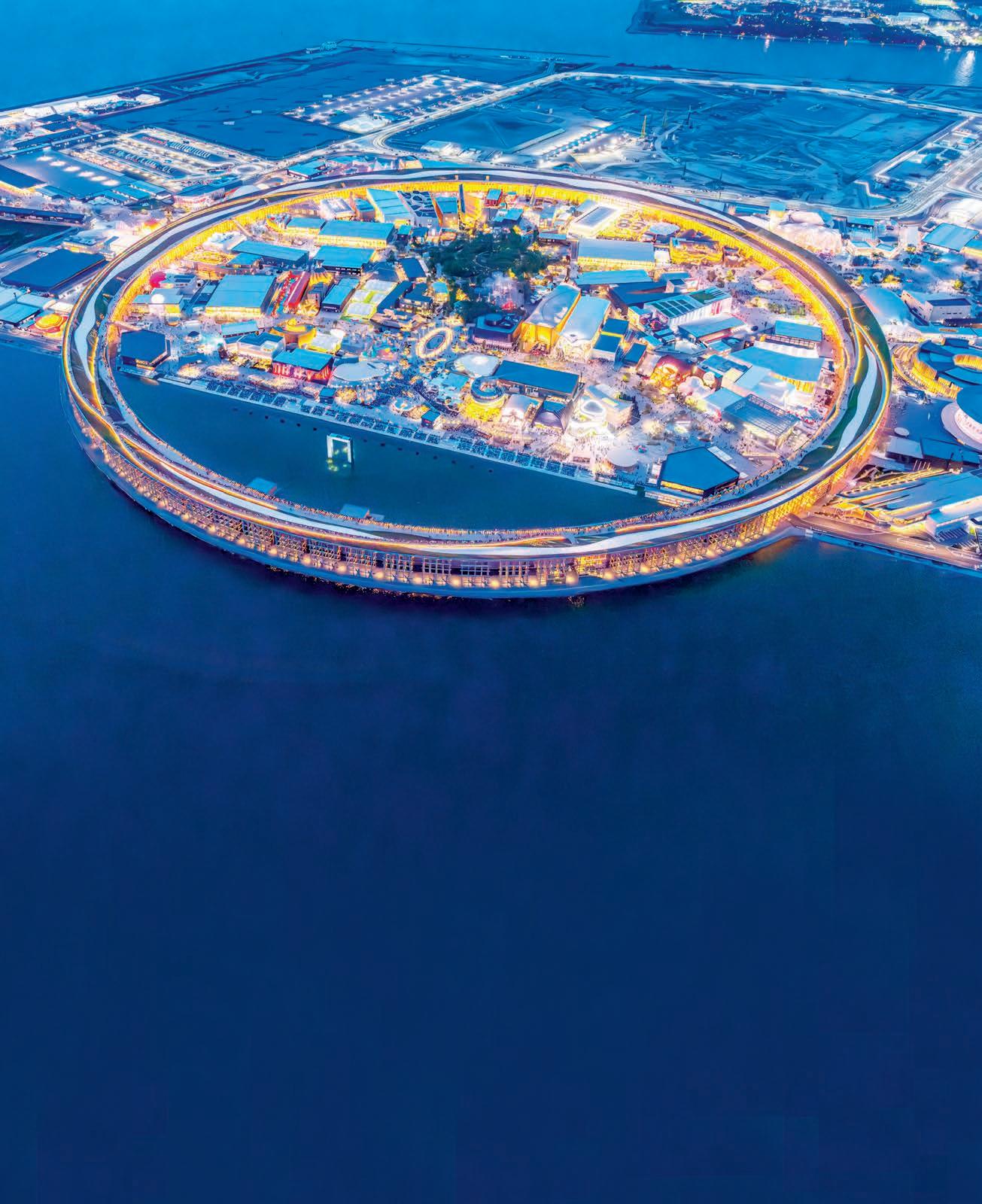
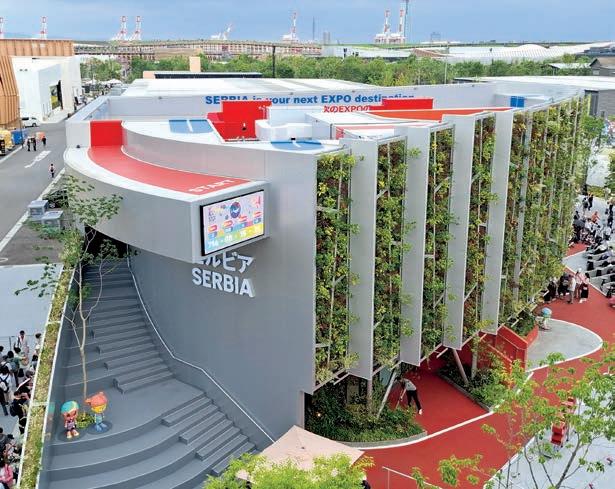
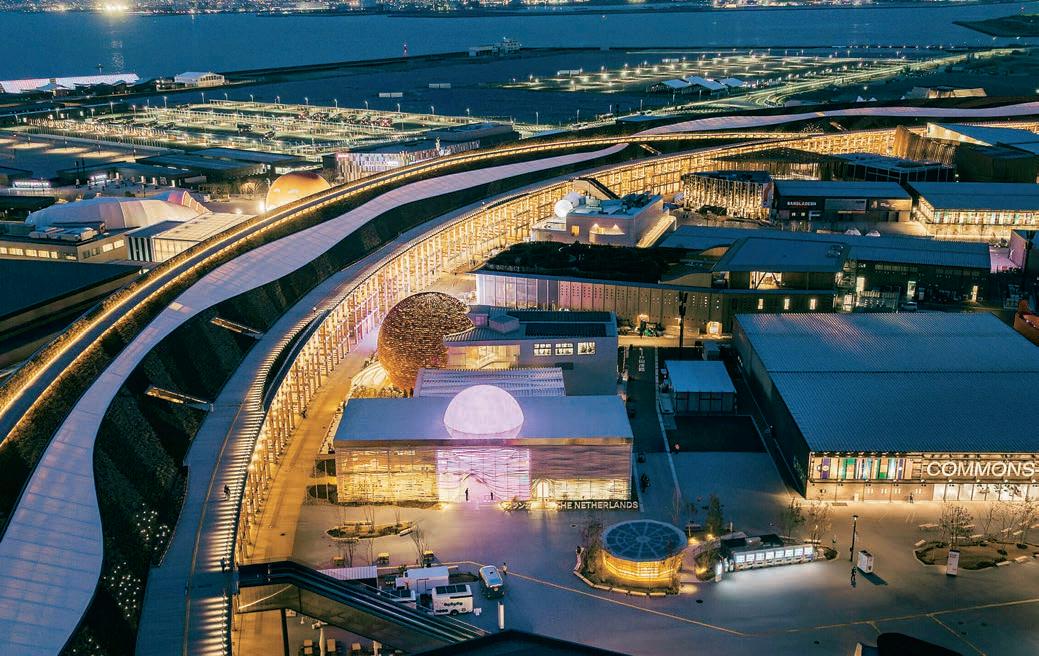
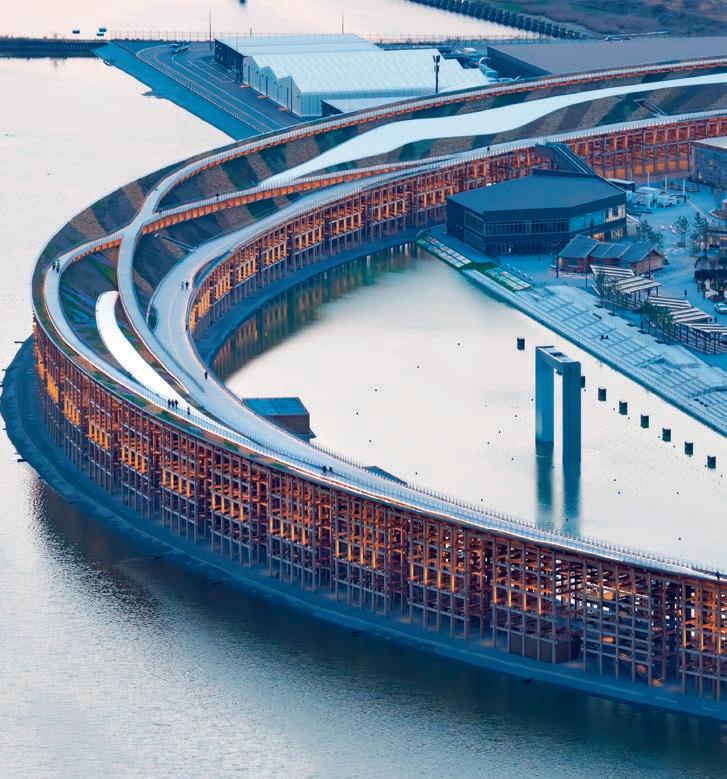
World Expos have played a distinctive role in this process. EXPO Osaka 2025 offered Serbia valuable visibility in one of the world’s most demanding business environments, while simultaneously reinforcing Japan’s preference for partnerships built on trust, consistency and mutual understanding. Rather than transactional encounters, the Expo created a space for dialogue that linked culture, technology and investment potential—an approach deeply aligned with Japanese business philosophy.
This special section brings together different perspectives on that evolving relationship. From
Japan–Serbia relations are increasingly defined by predictability, institutional dialogue and long-term economic planning, reflecting a shared commitment to sustainable cooperation
official diplomatic views and institutional frameworks to the experiences of Japanese companies operating in Serbia, the common thread is a shared focus on long-term commitment. Automotive manufacturing, pharmaceuticals, advanced technologies, sustainability and digital transformation emerge not as isolated sectors, but as interconnected fields where Japanese expertise and Serbian ambitions increasingly converge.
Equally important is the role of people-to-people ties, education and cultural exchange. Japan’s approach to international cooperation places strong emphasis on sincerity and personal trust, values that resonate strongly in Serbia and continue to shape bilateral relations beyond formal agreements. In an era marked by volatility, such foundations offer rare stability.
Looking ahead to EXPO Belgrade 2027, the challenge will be to translate visibility into durable outcomes—projects, investments and partnerships that extend beyond exhibition halls and promotional narratives. The experience gained in Osaka suggests that success will depend less on spectacle and more on substance: on creating platforms for meaningful engagement, transparent dialogue and realistic long-term planning.
In that sense, Japan–Serbia cooperation today is less about momentum and more about direction. It reflects a shared understanding that sustainable growth, technological progress and economic resilience are built gradually, through patience, trust and continuity—principles that define not only Japan’s global outlook, but increasingly, its partnership with Serbia.
Trust is Built on Sincerity
Japan and Serbia have steadily strengthened political dialogue and economic cooperation, guided by mutual respect and long-term commitment. From strategic investments to EXPO cooperation, bilateral relations are entering a new phase of depth and continuity
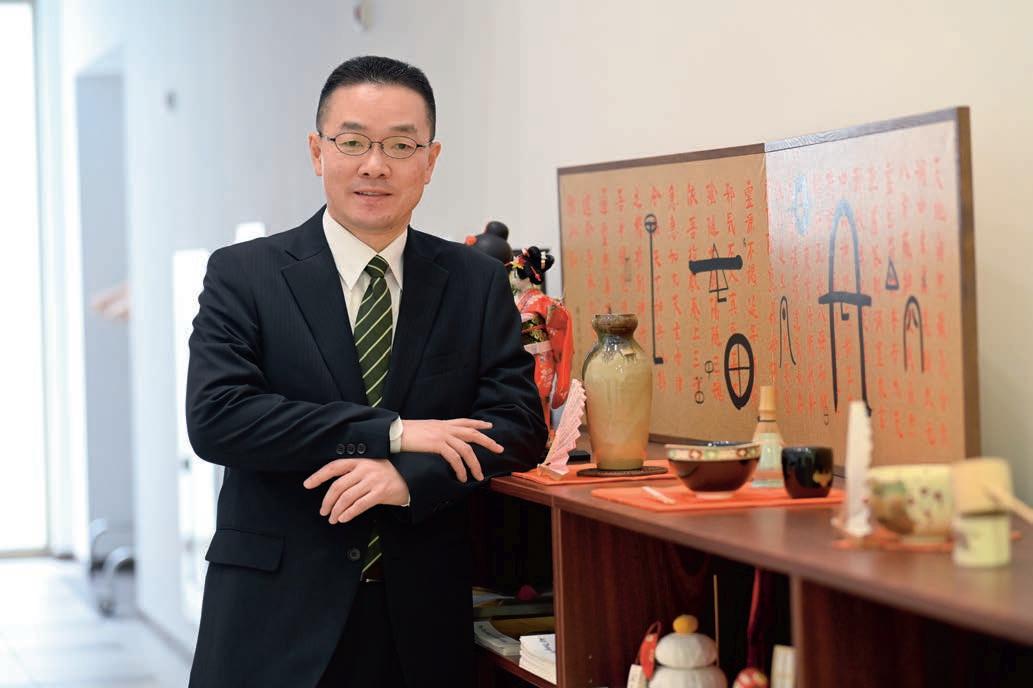
In an interview for CorD, Atsushi Saito, Chargé d’Affaires of Japan in Serbia, speaks about the current state of bilateral relations, economic cooperation and Japanese investments, Serbia’s green transition, the legacy of EXPO Osaka 2025 and expectations from EXPO Belgrade 2027, as well as
Serbia achieved great success at EXPO 2025 Osaka. Although I was not able to attend personally, I understand that the Serbian Pavilion attracted more than one million visitors
the role of education, culture and people-to-people ties in strengthening mutual understanding.
A career diplomat of Japan’s Ministry of Foreign Affairs and a specialist in Serbian, Croatian and Bosnian languages, Mr Saito has spent nearly two decades in the Western Balkans, including long postings in Croatia and Bosnia and Herzegovina. He took up his current post in Belgrade in February 2025, following his assignment in the United States.
How would you assess the current state of bilateral relations between Japan and Serbia, particularly in light of intensified political dialogue over the past year and the recent farewell visit of Ambassador Imamura?
— I can say that the current state of our bilateral relations is excellent, and I believe this positive trend will continue in the coming years. President Vučić’s visit to Japan last September represented our most substantial high-level political dialogue since 2018. During the summit, then Prime Minister Ishiba reaffirmed Japan’s strong support for Serbia’s role in regional stability and its EU accession, while President Vučić highlighted Japan’s sincere and responsible approach to global challenges.
Following the summit, our two governments signed a joint declaration confirming the completion of negotiations on the bilateral investment agreement. Former Ambassador Imamura, who has recently returned to Japan, made a significant contribution both to the success of President Vučić’s visit and to the overall strengthening of bilateral relations.
When it comes to the foundations of trust and stability between our countries, I would single out heartiness, sincerity and seriousness. Former Prime Minister Abe, who visited Serbia in 2018, often recalled that Serbia was the only country where the head of state personally came to the airport to see him off. This gesture left a lasting impression and illustrates how important genuine warmth is in Japan–Serbia relations.
Economic cooperation has been gaining momentum. Where do you see the greatest potential for further strengthening trade and industrial ties?
— The greatest potential lies in the automotive industry, which is one of Japan’s flagship sectors. Japanese companies in this field have been among the main investors in Serbia in recent years, and I expect this trend to continue. At the same time, we are closely following developments such as the EU’s recent easing of the 2035 petrol ban, given that some Japanese companies came to Serbia as part of the EU electric vehicle supply chain.
We are also monitoring Serbia’s tariff negotiations with the United States, particularly as Toyo Tire’s plant in Serbia exports primarily to the US market. Following the conclusion of the bilateral investment agreement last December, I am confident that Japanese companies will show increased interest in innovation, digitalisation and the green economy.
During President Vučić’s visit to Japan, a memorandum of understanding was signed between NTT Data and Serbia’s eGovernment, focusing
POTENTIALS
The greatest potential lies in the automotive industry, one of Japan’s flagship sectors
DIALOGUE
I see 2026 as a year of follow-up to the intensive political dialogue of 2025
ENVIRONMENT
Through projects aligned with EU environmental standards, Japan will continue to support Serbia on its EU path
on advanced networks, data security and AI infrastructure. In addition, a broad memorandum of cooperation was concluded between Japan’s Ministry of Education, Culture, Sports, Science and Technology and Serbia’s Ministry of Science, Technological Development and Innovation. These agreements send a strong and positive signal to Japanese companies considering investment in Serbia.
The Vinča project has been described as a milestone in Serbia’s green transition. What lessons can be drawn from this partnership?
— The Vinča project is a public-private partnership between the City of Belgrade and the company Beo Čista Energija, co-founded by the Japanese company Itochu, France’s Veolia and the Marguerite Fund. It addresses several challenges simultaneously: preventing environmental pollution, generating electricity and heat from waste as an alternative to fossil fuels, reducing greenhouse gas emissions and facilitating the exchange of expertise between the public and private sectors. There is clear potential to expand similar energy-from-waste projects in Serbia, provided that strong government support ensures their smooth implementation. In addition, Japan is involved in other environmental initiatives, including JICA’s feasibility study and potential financing for the reversible hydropower plant “Bistrica”. Through projects aligned with EU environmental standards, Japan will continue to support Serbia on its EU path.
How do you view Serbia’s participation at EXPO 2025 Osaka?
— Serbia achieved great success at EXPO 2025 Osaka. Although I was not able to attend personally, I understand that the Serbian Pavilion attracted more than one million visitors. Its concept, “Floating Forest”, inspired by Belgrade’s Lido Island, together with Serbian cuisine, played a major role in this success.
Japanese visitors were particularly impressed by Serbian meat pie, pita sa mesom, which received significant media attention in Japan. This kind of cultural connection is extremely valuable.
What expectations does Japan have regarding EXPO 2027 Belgrade?
— The Government of Japan officially confirmed its participation in EXPO 2027 Belgrade last August, and an expert exhibition committee has already finalised the basic concept of the Japanese
Pavilion under the theme “Play and Connect, Together – Playful Spirit of Japan”. This theme aligns well with the overall concept of EXPO 2027 Belgrade, “Play for Humanity: Sport and Music for All”. We hope to showcase elements such as anime, e-sports, music and martial arts. Japan will also host GREENxEXPO 2027 in Yokohama, and I am confident there will be meaningful interaction between the two events, particularly in environmental protection and innovation. Some Japanese companies operating in Serbia have been invited to participate, and I sincerely hope they will consider this opportunity positively.
Can we expect continued high-level political dialogue in the period ahead?
— I see 2026 as a year of follow-up to the intensive political dialogue of 2025, as well as preparation for renewed momentum during EXPO 2027 in Belgrade. We can expect further substantial meetings, including political consultations between our Ministries of Foreign Affairs.
As 2026 falls between EXPO Osaka and EXPO Belgrade, business-related events linked to these processes are also likely to be particularly active.
Strengthening ties in higher education and science will be essential for maintaining and deepening long-term cooperation between our two countries
How do you assess the role of education, culture and youth exchange in bilateral relations?
— In these areas, I believe grassroots initiatives are often more important than government-led programmes. The role of government should be to support and encourage successful local initiatives. In 2025, two Serbian–Japanese friendship associations received the Japanese Foreign Minister’s Commendation, and Serbia hosted the Nippon Martial Art Festival for the first time.
Looking ahead, my realistic assessment is that higher education and scientific exchange should be prioritised. Japan’s shrinking population has led to the closure of some universities, making international academic cooperation increasingly important. Strengthening ties in higher education and science will be essential for maintaining and deepening long-term cooperation between our two countries.
From Interest to Commitment
Experiences from EXPO Osaka 2025 have accelerated the shift of Japanese companies from initial talks towards concrete investment planning and long-term partnerships with Serbia
As interest from Japanese companies in Serbia moves beyond the exploratory phase towards serious investment consideration, the experience gained during EXPO Osaka 2025 has further strengthened trust and opened space for more concrete cooperation. Goran Pekez, President of the Managing Board of the Japan–Serbia Business Association (JBAS), speaks about the maturing perception of Serbia among Japanese inves-
tors, sectors with the greatest potential, and the role of business associations in the phase of implementation.
How would you assess the development of interest among Japanese companies in Serbia over the past year? Do you see a shift from initial discussions towards concrete projects and investment decisions?
— Thanks in part to EXPO Osaka, Serbia has recorded a visible increase in interest
from Japanese companies over the past year. There is a growing understanding that a strong and sustainable presence on the European market requires production within Europe, and Serbia stands out through a combination of geographic position, a network of free trade agreements and a competitive business environment. Additional credibility comes from positive examples of investors successfully exporting from Serbia to European and other markets. In that sense,
interest has become more mature and tangible, even though the full effects of current initiatives will become clearer in the period ahead.
Based on communication with JBAS members and partners, are there specific sectors or types of projects where you expect new Japanese investments in Serbia in the near future?
— The strongest interest is directed towards energy, infrastructure and advanced technologies, as well as the further expansion of production capacities of Japanese companies already operating in Serbia. Continuous, multi-year investment cycles by existing investors are a particularly important signal, confirming that Serbia is not merely an entry point, but a market where long-term expansion, modernisation and deeper integration into regional and global supply chains are being planned.
Compared to last year, how do Japanese companies today perceive the business environment in Serbia?
Have reforms, agreements or institutional developments contributed to greater predictability and investor confidence?
— Serbia is now perceived as a market with greater visibility and a clearer framework for cooperation, although investment decisions remain influenced by global uncertainties. Positive developments stem from increased international exposure during EXPO Osaka, more intensive business contacts with Japanese companies, and the signing of three bilateral documents, including a joint statement on a framework agreement for the promotion and protection of investments. Such institutional steps contribute to predictability and strengthen investor confidence by signalling stable conditions and a serious approach to longterm partnership.
With some distance, how do you assess the concrete business effects of Serbia’s participation at EXPO Osaka 2025? Have contacts from that period evolved into new forms of cooperation or investment discussions?
— EXPO Osaka 2025 was among the most significant global events of the previous year and provided Serbia with what matters most in such formats: visibility and credibility before Japanese and international audiences. With the direct support of our members, Toyotires and JTI, the Serbian pavilion became a space where culture, technology and investment potential were presented in parallel.
Contacts established in Osaka did not remain at the level of protocol exchanges. For some companies, discussions have entered a more advanced phase, including due diligence, planned site visits and feasibility studies. While global geopolitical and trade conditions continue to influence the pace, EXPO provided a strong initial impulse and opened the door for continued investment dialogue.
Visibility and continuity of dialogue have proven decisive in turning interest into sustainable investment and longterm partnerships
How can experiences from EXPO Osaka 2025 be applied in preparations for EXPO Belgrade 2027, particularly in attracting Japanese companies and building long-term partnerships?
— EXPO Osaka served as a reminder that trust in business is built through experience. For many visitors and companies, the Serbian pavilion was their first direct point of contact with Serbia through culture and innovation, as well as through discussions on its potential as a production and investment destination in the Western Balkans. This combination of visibility and direct dialogue is the key lesson to be transferred to EXPO 2027: designing participation and programming as a platform for networking and concrete business meetings, shortening the path from initial interest to serious investment consideration. Experiences from Osaka will also be applied to Belgrade EXPO 2027, includ -
ing preparations for the arrival of several large Japanese delegations and positioning the Japanese pavilion as a hub for new business opportunities during the exhibition.
How do you define the role of JBAS today in the further development of economic cooperation between Serbia and Japan? Which activities are crucial in a phase increasingly focused on implementation rather than promotion?
— Since its establishment, JBAS has served as a platform connecting Japanese companies, local partners and institutions, bringing together on-theground investor experience and building trust through continuity. Today, alongside promotion, JBAS increasingly plays a practical role in translating interest into operational outcomes. A key element is the systematic sharing of experience by companies that have already invested—particularly in modernisation and process improvement—with those still considering entry, supported by thematic discussions and meetings with relevant institutions to accelerate understanding of frameworks, opportunities and next steps.
When looking at long-term relations between Serbia and Japan, where do you see the greatest untapped potential for cooperation in the coming years, and what role can business associations such as JBAS play?
— The greatest potential lies in areas where Japan’s tradition of quality and discipline naturally aligns with Serbia’s development priorities: advanced manufacturing, energy and efficiency, as well as technologies and innovations that enhance productivity and competitiveness. These areas offer mutual benefits, including long-term partnerships, new jobs and a stronger industrial base, supported by Serbia’s skilled and adaptable workforce. In this phase, business associations such as JBAS can act as drivers of implementation—directing interest towards priority topics, bringing companies and institutions together around concrete discussions, and ensuring continuity through follow-up and dialogue that makes the process more predictable.
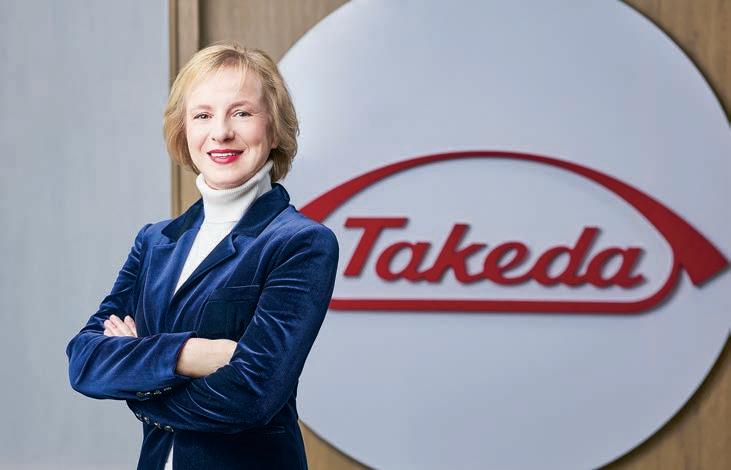
MILENA ARGIROVIC
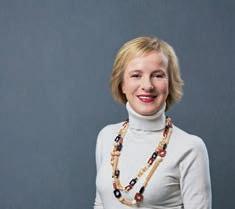
TAKEDA COUNTRY HEAD
Bridging Continents, Building Innovation
The Strategic Role of Japanese Pharma in Serbia’s Biotech Future
In a time when our region is accelerating its transformation—economically, socially, and in its alignment with broader European standards—the strength of international partnerships matters more than ever. Japan’s collaboration with the region has been steadily deepening, particularly through long-term investments and knowledge transfer. In healthcare, this collaboration is not only about medicines, but also about systems, predictability, transparency, and innovation that measurably improve patient outcomes.
This issue focuses on Serbia–Japan collaboration and how Japanese companies contribute to Serbia’s development. How does Takeda fit into that broader narrative?
— Takeda fits naturally into this story because we represent a combination that is increasingly important for Serbia: long-term commitment and high-value contribution. Japan is globally recognised for reliability, quality, and advanced technology.
In healthcare, our collaboration with local partners becomes especially meaningful. Takeda is already recognised for bringing high-tech innovation, including life-transforming medicines and digital solutions. Now is the time to go further and contribute more broadly to building a stronger healthcare ecosystem: more predictable pathways, transparent processes, sustainable investment in innovation, and tech-forward solutions that improve patient journeys.
For readers who may not know Takeda well, can you briefly introduce the company globally?
Takeda, founded in Japan more than two centuries ago and today one of the world’s leading value-based biopharmaceutical companies, offers a compelling example of how Japanese companies contribute to local ecosystems while preserving a consistent, values-driven global identity.
In this interview, Milena Argirovic, Takeda Country Head, reflects on Takeda’s mission, local commitments, the evolving diplomatic and economic relationship, and personal leadership lessons—particularly the role of female leadership in shaping culture and performance.
— Takeda is one of the leading global value-based biopharmaceutical companies, committed to discovering and delivering life-transforming treatments. We have a 245-year history, and what is remarkable is not only our longevity, but also the continuity of our values—integrity, fairness, honesty, and perseverance.
Over the years, the world has changed dramatically—science, society, geopolitics, and patient expectations. Takeda is also continuously evolving and transforming. Yet our values have remained constant: we innovate, adapt, and disrupt where necessary, but we do so with a stable ethical compass.
We are also committed to unlocking the power of data, digital solutions, and technology to create greater value for patients, our people, and society as a whole. The future of healthcare is not only about molecules; it is about smarter sys-
tems and better decisions enabled by technology.
You cover five Balkan markets. What are your priorities across them?
— My priorities are consistent across the cluster, even though each market has its own specific context.
First, we are committed to providing timely, broad, and sustainable access to life-transforming medicines for patients across all five markets. Access is not merely a technical term; it is a moral commitment. Patients should not have to wait years for what science already makes possible.
Second, we nurture innovation and leverage technology to deliver effectively. This includes digital approaches that improve education, patient support, and stakeholder cooperation, with the aim of achieving better patient outcomes.
Third, we build an organisation that embraces change and continuously generates ideas on how to “win for our patients”. This is cultural work: encouraging constructive debate, promoting curiosity, and fostering collaboration across functions and markets to deliver greater value for patients.
The Serbia–Japan relationship has been strengthening. How does Takeda contribute?
— The strengthening of Serbia–Japan relations is visible in increasingly confident and structured cooperation, including investment frameworks and broader economic collaboration. This matters because healthcare innovation depends heavily on a country’s overall investment and governance climate.
There are several recent activities in which Takeda has taken an active role:
1. EXPO Osaka 2025: At the EXPO Osaka Investment Conference, I
had the opportunity to present Takeda's local experience about the potential of Serbian healthcare system, as well as opportunities for collaboration, to Japanese investors. This was a global stage on which Serbia was able to showcase its ambitions, while Japanese stakeholders could gain a clearer view of Serbia’s potential.
2. Agreement on the Mutual Promotion and Protection of Investments: This agreement was signed in December 2025 between Serbia and Japan, creating a strong legal framework to strengthen economic ties. When Serbia and Japan enhance legal and policy frameworks that protect investment, the entire ecosystem benefits— confidence increases, partnerships become easier, and longterm planning becomes possible. In healthcare, long-term planning is essential: innovation adoption and digital modernisation cannot be effectively achieved in an environment of short-term uncertainty. Takeda consistently invests in the region—not only financially, but also intellectually: through partnerships, innovation, and capability building. When governments recognise this contribution, collaboration on future projects will become more effective, particularly in terms of recognising the value of innovation in a transparent and predictable manner.
Your organisation is known for strong female leadership. How does that shape culture and effectiveness? It shapes our culture profoundly. In our organisation, women hold 80% of leadership roles. Our performance speaks for itself: we are among the highest-performing clusters in Europe.
Now is the time to go further and contribute more broadly to building a stronger healthcare ecosystem: more predictable pathways, transparent processes, sustainable investment in innovation, and tech-forward solutions that improve patient journeys
This is not about gender stereotypes. We are building a culture in which excellence is expected and development is continuous. Our results are therefore not accidental. Why does it work? Female leadership often brings a strong collaborative approach and the ability to manage multiple priorities without losing strategic focus. It creates an environment in which people feel both accountable and supported. There is also another important dimension: as a female leader, visible self-care gives others permission to lead without burning out silently. That, too, is cultural change.
Innovations Redefining Sustainability in Children’s Fashion
How textile waste has become a global challenge — and why innovation can help reshape the industry’s future
hildren’s clothing is, by nature, temporary. Children grow quickly, garments are often worn for a short time, and frequent consumption is widely accepted. Yet the environmental footprint of children’s fashion is anything but fleeting. New research by Epson reveals the scale of a problem that too often remains outside the public spotlight: Europeans discard as many as 812.6 million items of children’s clothing every year — a volume that, if stacked into a single pile, would reach 918 times the height of Mount Everest.
CThe data further highlights prevailing consumption patterns. While 52% of parents actively consider more sustainable choices when purchasing clothing for themselves, more than a third (35%) admit to disposing of children’s clothing in the quickest and easiest way possible. On average, European children are bought 64 items of clothing per year up to the age of sixteen, representing a market worth €4.3 billion. At the same time, 42% of parents report that their children own unworn items still bearing their original labels, while 54% say they have discarded or repurposed clothing that was never worn at all.
The scale of the problem extends well beyond Europe. The consequences of overproduction and overconsumption are particularly visible in countries of the Global South, where a significant share of textile waste from Western markets ultimately ends up. This global dimension was a key motivation behind Epson’s collaboration with fashion de-
signer and sustainability pioneer Priya Ahluwalia.
To demonstrate how innovation can form part of the solution, Epson and Ahluwalia introduced Fashion Play — a dollsized fashion collection created from textile waste. The collection was produced using Epson’s Dry Fibre Technology, which transforms used textiles into new fibres without the use of water or harsh chemicals, alongside Epson’s Mona Lisa digital textile printing technology.
Ana Bajagić, Marketing Manager at Epson, emphasises that fashion represents both creative expression and responsibility from an early age:
“While there are simple steps consumers can take — from reducing the
amount of clothing they buy to prioritising pieces they already own — we wanted to show how technological innovations, such as Dry Fibre Technology, can play a vital role in reducing the volume of textile waste that ends up in landfill.”
Fashion Play symbolically builds on Ahluwalia’s Autumn/Winter 2025 collection, yet its message goes far beyond fashion. In addition to Dry Fibre Technology, the production process also employed Epson’s latest Mona Lisa digital textile printer, which can reduce water consumption during the colour-printing stage by up to 97% compared to conventional methods.
Reflecting on the collaboration, Priya Ahluwalia points to the personal experience that has shaped her work:
“Travelling in India and Nigeria allowed me to witness first-hand the scale of textile waste generated by the Western second-hand clothing industry. That experience stayed with me and continues to drive my commitment to creating in ways that are more responsible towards people and the planet, particularly in the context of the Global South. This collaboration with Epson goes beyond fashion — it opens a broader conversation about sustainability, from the way we dress to the choices we make for those we love.”
Through this miniature collection, Epson and Ahluwalia deliver a clear message: innovation and imagination can work together to redefine the future of the fashion industry — positioning sustainability not as an exception, but as an integral part of how fashion is conceived and produced.
Stability Through Continuous Improvement
Toyota is strengthening its market position in Serbia by relying on a multipath approach to mobility, long-term reliability and a clear vision of sustainable development
As one of the leading automotive brands in Serbia, Toyota has recorded steady growth through the consistent application of its global philosophy of quality, reliability and technological diversity. Robert Lukić, Managing Director of Toyota Serbia and Toyota Adria, speaks about the multipath electrification strategy, customer value, and the potential for Japanese companies to further deepen industrial and development cooperation with Serbia.
How would you describe Toyota’s current position in Serbia? What are the key drivers of growth, and how do you seek to differentiate yourselves most clearly from the competition?
— For the third consecutive year, Toyota ranks second in sales in Serbia, both across the total market and in the passenger vehicle segment. In simple terms, our position can be described as building stability through the continuous improvement of our offer. Toyota is recognised for its QDR (Quality, Durability and Reliability) philosophy, and we strive to transfer that kaizen mindset and uncompromising commitment to quality across all segments of our operations in Serbia and the region.
Toyota globally promotes a “multi-path” approach to electrification. How is this reflected in the real needs of customers in Serbia, and what could mark the next turning point in the market?
— The multipath approach offers appropriate solutions for different types of use
A potential turning point lies in the next generation of batteries on which Toyota is already working, addressing range, charging speed and safety
and goes beyond electrification alone. The automotive industry has always relied on multiple technological paths, although today there is a tendency to impose a single direction. Through its multipath approach and the Mobility for All strategy, Toyota demonstrates that modern mobility requires efficient, tailored
solutions, alongside a strong commitment to environmental protection. Hybrids already meet a large share of current needs, but not all of them, which is why a variety of powertrains remains necessary. A major turning point could come with the next generation of batteries on which Toyota is already working, addressing key challenges such as range, charging speed and safety.
In terms of your model range, what best reflects Toyota’s value proposition for customers in Serbia?
— Regardless of the product, value for money is always decisive. When combined with the multipath strategy, a broad model range and an uncompromising approach to safety and environmental responsibility, this creates a clear formula for success. Toyota’s global leadership reflects its focus on continuous improvement. Awards confirm professional recognition of our quality, but we see them primarily as validation that we are offering optimal mobility solutions tailored to individual customer needs.
As a member of the JBAS Board, how do you see the role of Japanese companies in Serbia in the coming years?
— The presence of Japanese companies in Serbia continues to grow, along with investments. Future development will depend on several factors, particularly in the automotive sector, including market dynamics and the ability of local suppliers to deliver consistent quality. Toyota closely follows global developments, with a focus on industrial cooperation and sustainable mobility, where I see clear potential for Serbia and the wider region.
EXPO OSAKA 2025 OVERVIEW
Designing the Future Together
A global platform for rethinking sustainability, technology and human well-being, Expo Osaka 2025 brings nations together to explore shared solutions for the future—through dialogue, innovation and long-term vision
World Expos have always been more than grand showcases of architecture, technology and national branding. At their best, they are mirrors of global ambition and laboratories for ideas that attempt to answer the defining questions of their time. Expo 2025 Osaka, Kansai, held under the overarching theme Designing Future Society for Our Lives, stands firmly in that tradition, offering a carefully structured vision of how humanity might navigate the intertwined challenges of sustainability, technological acceleration and social cohesion.
Set on the artificial island of Yumeshima in Osaka Bay, Expo Osaka 2025 is both symbol and experiment. Japan, a country long associated with precision, long-term thinking and technological refinement, has deliberately framed this Expo not as a spectacle of national power, but as a platform for collective problem-solving. The emphasis is less on competition and more on cooperation — less on displaying finished answers, more on exploring shared pathways.
At the heart of the Expo lies the concept of People’s Living Lab. Rather than presenting innovation as something distant or abstract, Osaka 2025 places the individual at the centre of its narrative. Health, longevity, mobility, digital transformation and environmental responsibility are approached not as isolated sectors, but as interdependent systems shaping everyday life. In doing so, the Expo reflects a broader shift in global thinking: progress is no longer measured solely by economic growth or technological breakthroughs, but by the quality, inclusiveness and resilience of human experience.
Architecturally and spatially, the Expo reinforces this philosophy. Pavilions are organised around thematic zones dedicated to Saving Lives, Empowering Lives and Connecting Lives. This tripartite structure allows participating countries and organisations to address glob-
By bringing nations, cities, companies and individuals into a shared space of experimentation and exchange, the Expo reaffirms a simple yet powerful idea: that progress, to be meaningful, must be collective
al challenges from different perspectives, while remaining anchored in a common conceptual framework. The result is a coherent narrative that encourages dialogue between science, policy, business and culture.
Technology, unsurprisingly, plays a prominent role — but not as an end in itself. Artificial intelligence, robotics, digital health solutions and smart infrastructure are presented as tools in service of human well-being. Japan’s own contributions, drawing on its leadership in robotics, healthcare innovation and sustainable urban planning, underscore a distinctly Japanese approach: innovation guided by responsibility, continuity and social trust.
Equally important is the Expo’s emphasis on sustainability. From construction methods and energy systems to mobility solutions and waste management, Osaka 2025 has been designed as a testbed for circular economy principles. The goal is not merely to host a sustainable event, but to generate models that can be adapted and replicated long after the Expo closes its gates. In that sense, Osaka is positioning itself not only as a host city, but as a contributor to global policy and practice.
Within this global context, the participation of smaller and emerging economies carries particular significance. Serbia’s presence at Expo Osaka 2025, while modest in scale, is symbolically and strategically important. Positioned within the broader European and regional narrative, Serbia presents itself as a country open to innovation, partnerships and long-term investment, particularly in areas such as healthcare, digitalisation, creative industries and sustainable development.
Serbia’s participation also reflects the steady strengthening of relations with Japan, marked by growing economic cooperation, investment dialogue and mutual interest in innovation-driven growth. For Serbia, Expo Osaka represents not only an opportunity for visibility, but a platform
drop, the Expo’s insistence on dialogue, inclusiveness and shared responsibility feels both timely and necessary. It does not promise easy solutions, but it does offer a framework for thinking — and acting — together.
For Serbia, Expo Osaka represents not only an opportunity for visibility, but a platform to engage with Japanese and global stakeholders on equal footing — to listen, to learn and to position itself within future-oriented value chains
to engage with Japanese and global stakeholders on equal footing — to listen, to learn and to position itself within future-oriented value chains.
More broadly, Expo Osaka 2025 arrives at a moment of global uncertainty. Geopolitical tensions, climate pressures and rapid technological change have eroded traditional certainties and exposed systemic vulnerabilities. Against this back-
In that sense, Osaka 2025 is less about predicting the future than about shaping the conditions in which better futures become possible. By bringing nations, cities, companies and individuals into a shared space of experimentation and exchange, the Expo reaffirms a simple yet powerful idea: that progress, to be meaningful, must be collective.
For Japan, hosting Expo 2025 is an expression of quiet leadership — a reaffirmation of its belief in long-term vision, social balance and innovation with purpose. For participants such as Serbia, it is an invitation to be part of a global conversation that extends well beyond six months on an island in Osaka Bay. And for visitors, it is a reminder that the future is not something that happens to us, but something we design — together.
Business Dialogue
Growth That Endures
Petar Radišić Founder, Modera
Speed without systems often leads to short-term results and long-term problems. Responsibility, reliable processes and strong partnerships remain the foundation of sustainable development in complex industrial projects
In a business environment where success is often measured by the speed of growth and market visibility, attention is increasingly drawn to companies and leaders who choose a different, more considered path. Modera, a relatively young engineering company, is developing with a clear focus on responsibility, dependable processes and a longterm approach. Founder Petar Radišić reflects on his professional experience, the creation of the company and the principles shaping its development.
Responsibility as a starting point
Working on complex industrial and energy projects quickly teaches you that responsibility cannot be passed on to someone else when matters become serious. In practice, it becomes clear that projects succeed only when decisions are supported by a system and when obligations are assumed with full awareness of their consequences. When such a system is absent, neither experience nor technology can compensate for the damage caused by poor decisions.
The idea behind the development of Modera emerged precisely from this need – to bring knowledge, experience and responsi-
bility together in one place. From the very beginning, there was no ambition for rapid expansion at any cost, but rather a desire to build an organisation capable of withstanding the complexity of projects and the pressures of growth.
The company was built gradually, with clear processes and a long-term perspective. The first years of operation were dedicated to developing the team, procedures and partnerships, based on the belief that sustainable results can only be achieved if the foundations are solid.
Professional path and lessons from practice
Before founding Modera, my professional path led me through work in large contracting systems, where I had the opportunity to participate in the delivery of complex projects and to assume responsibility in managerial roles. Working on projects of broader, often capital importance taught me that decisions have long-term consequences and that system stability must be built in advance, not retroactively.
Over the years, it became clear to me that many things in practice repeat themselves, regardless of the industry or environment. People, deadlines and responsibility are always present, and if these three elements are not properly aligned, a project inevitably suffers.
These experiences taught me the value of a grounded approach, listening to the people I work with and avoiding unnecessary complexity. Over time, I came to un-
Projects succeed only when decisions are supported by a system and when obligations are assumed with full awareness of their consequences
tial idea and design through to implementation and installation. In this process, it is crucial to have a partner who understands technology, the market and real onsite conditions.
When all these elements are aligned, risks are identified in a timely manner and decisions are made based on experience rather than speculation. Such an approach direct-
We believe in consistent work, long-term relationships and trust built over time, because only such an approach enables sustainable and stable development
derstand that loyalty and mutual trust are just as important as professional expertise. Without them, it is difficult to build a sustainable future, both for projects and for the company itself.
Projects as an integrated whole
Today’s projects require a comprehensive view of the entire cycle – from the ini-
ly affects project flow, cost control and adherence to deadlines, as well as the quality of relationships among all stakeholders involved.
Partnerships and knowledge
transfer
Cooperation with major international companies such as Siemens, Schneider Elec-
tric, ABB and Koch Solutions has provided us with experience that is difficult to acquire in any other way. Working within such systems implies high standards, clearly defined procedures and a responsible approach, but also openness to the exchange of knowledge and experience.
For domestic engineering companies, these partnerships have a broader significance, as they enable familiarity with working methods applied on major international projects. This knowledge is then directly transferred to the quality of work on the local market, raising standards across the entire industry in the long term.
Investments, digitalisation and artificial intelligence
Energy, mining and renewable energy sources continue to play an important role in the development of Serbia and the region, particularly in the context of the energy transition. Alongside infrastructure investments, digitalisation and the application of artificial intelligence are gaining increasing importance.
The investment potential in these areas does not stem from short-term trends, but from the real need for systems to become more reliable, efficient and resilient to long-term challenges. In practice, artificial intelligence is not seen as a replacement for people, but as a tool that helps decisions to be made more calmly and in a timely manner, especially in large and complex systems.
What sets
Modera apart
If I had to single out one thing, it would be the way we approach projects and cooperation with clients. We strive to understand the broader picture – not only the technical aspects, but also the goals, constraints and realistic expectations of all parties involved. Clients working with us gain a partner who is present throughout the entire project cycle, with clear communication and a realistic approach. We do not believe in an aggressive market presence. Instead, we believe in consistent work, long-term relationships and trust built over time, because only such an approach enables sustainable and stable development.
LOCAL NEWS
AIK Bank First Bank in Serbia to Introduce SEPA Payments
“A key factor in investment success lies in embracing the philosophy of partnership”
Jelena Tadić
MOL and ADNOC to Form JV for NIS Assets
AIK Bank has become the first bank in Serbia to receive official approval from the European Payments Council (EPC) to join the Single Euro Payments Area (SEPA), marking a significant development for the country’s financial sector. From around May 2026, clients of AIK Bank will be able to send and receive euro payments to and from any of the 41 SEPA member countries in just a few seconds and with much lower fees than current cross-border transfers.
Hungary’s MOL and Abu Dhabi–based ADNOC are setting up a joint venture to take over strategically important upstream oil and gas assets from Serbia’s Naftna Industrija Srbije (NIS). The assets will be transferred into a newly created corporate vehicle, rather than remaining within NIS itself. Under the plan, MOL will keep a controlling role, while ADNOC joins as a minority partner, expanding Middle Eastern presence in Serbia’s energy sector.
Serbia to Upgrade 540 km of Roads with €150m EIB Loan
Serbia will upgrade around 540 km of national and local roads under a €150 million loan from the European Investment Bank, aiming to improve safety, climate resilience and connectivity with EU transport corridors. The project includes EU-standard road modernisation, safer pedestrian crossings, school-zone protections, and new cycling and walking infrastructure. According to Damien Sorrell, the investment will remove bottlenecks and strengthen Serbia’s integration into regional and European transport networks.
“In a competitive market, new ideas create the greatest added value”
Bogdan Gecić
Serbia and Hungary Launch Tender for New Oil Pipeline
Flying Tiger Copenhagen Enters Serbian Market
The Danish retail chain Flying Tiger Copenhagen is set to open its first stores in Serbia, marking the brand’s official entry into the country’s retail market. The announcement was confirmed by company representatives, with store openings expected in the coming period, while exact locations will be disclosed closer to launch. Flying Tiger Copenhagen is known for its distinctive concept focused on affordable design, offering a wide range of products including gifts, toys, stationery, home accessories, kitchen items and seasonal collections.
Hungary and Serbia have launched a tender for the construction of a new oil pipeline linking the two countries, marking a significant step in their efforts to diversify supply routes and enhance regional energy security. The project is designed to connect Serbia to Hungary’s pipeline network, enabling access to alternative crude oil sources and reducing reliance on existing transit routes. According to officials, the pipeline will have a capacity sufficient to meet Serbia’s annual oil demand and is seen as a strategically important infrastructure project for both sides.
Proleter Sock Factory In Ivanjica Headed For Auction
The Proleter sock factory in Ivanjica, a long-standing regional textile producer, has been put up for auction after entering bankruptcy proceedings in April 2025 due to insolvency. The court in Čačak has divided the assets into two lots, with the main industrial complex—including production halls, office buildings, warehouses, equipment, and over 17,000 m² of land—priced at around 881 million dinars.
Statehood Day
Sretenje and the Foundations of Modern Statehood
Statehood Day links the uprising of 1804 with the constitutional breakthrough of 1835, reflecting Serbia’s enduring commitment to freedom, the rule of law and European political values
tatehood Day of Serbia is marked on 15 February, commemorating two pivotal moments that laid the foundations of the modern Serbian state. Known as Sretenje, the holiday intertwines political awakening and constitutional tradition, anchoring Serbia’s statehood in both struggle for autonomy and the rule of law.
SThe first event dates back to 1804, when the First Serbian Uprising began in the village of Orašac. Led by
Marked on 15 February, Statehood
Day of Serbia commemorates the outbreak of the First Serbian Uprising in 1804 and the adoption of the Sretenje Constitution in 1835, one of the most liberal constitutions of its time in Europe
Đorđe Petrović Karađorđe, the uprising signalled the start of an organised resistance against Ottoman rule and initiated a prolonged process of national liberation. Although independence was not immediately achieved, 1804 marked the birth of modern Serbian statehood, rooted in the idea of self-governance and national sovereignty.
The second milestone followed three decades later, in 1835, with the adoption of the Sretenje Constitution.
Proclaimed in Kragujevac, it was one of the most liberal constitutions in Europe at the time, introducing the separation of powers, civil liberties and limitations on absolutist rule. Although it remained in force only briefly, due to pressure from the great powers of the era, its symbolic and political significance endures. The document articulated Serbia’s aspiration to align its governance with European constitutional standards and modern political thought.
Veljko Stanojević, The Assembly in Orašac Depiction of collective political decision-making that marked the beginning of Serbia’s modern state-building process and laid the groundwork for later institutional and democratic development
Today, Statehood Day is observed as a public holiday, accompanied by official ceremonies, state awards and cultural programmes. It is a moment of reflection on Serbia’s historical trajectory, as well as on the values embedded in its state-building tradition: freedom, institutional responsibility and legal order. Beyond commemoration, Sretenje serves as a reminder that Serbian statehood emerged not solely through revolt, but through a conscious effort to frame power with-
in laws and institutions. In contemporary Serbia, Statehood Day also resonates with ongoing debates about democratic development, institutional strength and Serbia’s place within the broader European political and cultural space. By linking the revolutionary impulse of 1804 with the constitutional vision of 1835, Sretenje encapsulates a dual legacy—of resistance and reform—that continues to shape Serbia’s understanding of statehood today.
Statehood Day
Tourism as Vision, Development as Responsibility
Boban Đurović President of the Municipality of Vrnjačka Banja
From healing springs to modern high-category hotels, from landscaped parks to sports and recreational facilities, Vrnjačka Banja has spent years building its position as a leading tourist destination. Today, it is recognised as one of Serbia’s strongest tourism brands
In an interview for CorD, Boban Đurović, President of the Municipality of Vrnjačka Banja, speaks about the town’s position in 2026, investments in tourism and infrastructure, sustainable development, the long-term vision of the destination, and the role of local government in building a competitive Serbia.
From the perspective of local government, how do you see the position of Vrnjačka Banja in 2026?
— Today, Vrnjačka Banja is not merely a place for rest, but a carefully built system that brings together tradition, health, nature, contemporary amenities and quality of life. Our aim was never to be the loudest, but the most stable and consistent. Tour-
ism here is the result of a long-term vision and continuous investment, which is why I can say with confidence that Vrnjačka Banja is the leading tourist destination in Serbia and the region, setting standards for others to follow.
What is it particularly recognised for today?
— Vrnjačka Banja today represents a complete destination. Visitors do not come here solely
for rest, but for a full experience. In the very centre of the spa, there are more than 60 hectares of landscaped park areas, themed pedestrian zones, restored springs, a panoramic wheel, the largest aqua park in the Balkans, a glass viewpoint, the Japanese Garden, the Labyrinth Park, an adrenaline park, a sculpture park and modern sports complexes. This diversity is our greatest strength and the reason why Vrnjačka Banja remains vibrant throughout all twelve months of the year.
We offer a substantial number of fourand five-star hotels, modern wellness and spa centres, as well as congress facilities that rank among the largest and highest quality in Serbia
Photo
Sava
Tufegčić
Vrnjačka Banja is increasingly positioning itself as a higher-standard destination. What does that segment of the offer look like?
— Over the past decade, Vrnjačka Banja has made a significant leap forward in both the quality and structure of its accommodation capacities. Today, we offer a substantial number of four- and five-star hotels, modern wellness and spa centres, as well as congress facilities that rank among the largest and highest quality in Serbia. Hotels such as Park, Fontana, Tonanti, Pegaz, Bambus, Villa Emilija, as well as Kocka and Zepterme, have already introduced a new level of luxury, comfort and exclusive services, significantly enriching the overall tourist offer of Vrnjačka Banja. In the coming period, the opening of the Merkur Palas hotel is expected, alongside plans for additional five-star hotels, which will further enhance both accommodation quality and the destination’s overall tourism offer.
To what extent is the municipal budget for 2026 aligned with tourism development?
— The 2026 municipal budget, amounting to just over RSD 2.4 billion, has been designed to support precisely those elements that make Vrnjačka Banja competitive. Capital investments account for RSD 421 million, representing more than 16 per cent of the total budget. These funds are directed towards the development of public spaces, parks, tourism and sports infrastructure, as well as new facilities that extend visitors’ stays and increase the overall value of the destination.
Which concrete projects are planned for 2026?
— In 2026, we are completing and implementing several projects that directly enhance the tourism offer: the construction of a multifunctional children’s playground in the Central Park, the third phase of revitalising Vrnjačka Banja’s parks, the construction of a viewpoint on Mount Goč, the development of lakes and sports complexes, completion of the inflatable sports hall, upgrades to the football complex in Vrnjci, and the restoration of part of the Castle of Culture, one of the most representative buildings in Vrnjačka Banja.
How important is sustainable development for the future of Vrnjačka Banja?
— It is extremely important. Vrnjačka Banja is a green oasis, and that identity must not be compromised. This is why we continuously invest in public amenities and events, but also in the people who deliver these services, as they are the bearers of quality and experience. Special attention is also given to sustainable development through investments in solar power plants, renewable energy sources, and the preservation and enhancement of parks, green areas, promenades and public spaces.
Today’s tourists seek authenticity, well-maintained surroundings, high-quality service and a complete experience. Only such an approach can ensure that tourism is sustaina-
Boban Đurović, President of the Municipality of Vrnjačka Banja
ble and brings long-term benefits to the entire community.
The Municipality of Vrnjačka Banja, as well as you personally, have received numerous national and international awards. What do these recognitions mean to you?
— Each award is, above all, a reflection of collective effort and dedication, as well as confirmation that we are on the right path. They do not belong to an individual, but to the entire local community and the team that works every day to make Vrnjačka Banja a place of equal opportunities, efficient governance and sustainable development.
It is particularly important to me that achievements in equality, accessibility and inclusion have been recognised, as this shows that development is not measured solely by
infrastructure and figures, but by the quality of life of every individual. At the same time, awards in the fields of energy efficiency and tourism confirm that economic growth can go hand in hand with responsibility towards future generations.
Serbia marks Statehood Day. What message does Sretenje carry today?
— Every year, 15 February reminds us that freedom, statehood and dignity are not granted once and for all, but must be continuously reaffirmed through individual responsibility. It reminds us that unity does not mean uniformity of opinion, but shared responsibility for the future of our generations and of Serbia.
What is the long-term vision for the development of Vrnjačka Banja?
— Our vision is for the centre of Vrnjačka Banja, where the healing springs are located, to remain authentic, recognisable and preserved as a symbol of spa tourism, while development is planned gradually towards the wider municipal area. In this way, we protect the identity of the centre while simultaneously creating space for new amenities and investments.
We place particular emphasis on the development of rural tourism, offering stays in unspoilt nature, as well as sports, recreational and family-oriented facilities in surrounding settlements.
What kind of Vrnjačka Banja do you envisage in the years ahead?
— I see a Vrnjačka Banja that continues to grow and develop while remaining true to its unique identity. A destination that offers peace and relaxation, but also rich content — health and rehabilitation, entertainment, preservation of tradition and contemporary luxury. It is precisely this balance that represents its greatest strength.
And finally, your message to our readers at the beginning of 2026?
— At the beginning of 2026, I would like to remind everyone how important it is to slow down and take time for themselves. Let this year be an opportunity to visit Vrnjačka Banja, enjoy its atmosphere and experience the facilities that restore energy and balance.
Business Dialogue
“Montenegro’s
accession to SEPA represents a historic step towards full integration with the EU”
Dr Irena Radović
Slovenia to Lead €57 Million EU Defence Project
Slovenia has assumed a central role in European defence innovation by coordinating SENTINEL, a €57 million project dedicated to advancing sustainable energy solutions for military camps. Officially approved under the European Defence Fund (EDF), the project aims to reduce dependence on fossil fuels while increasing the operational autonomy, resilience and efficiency of military bases throughout the European Union.
Končar and Siemens Energy to Build New Factory in Croatia
Croatian engineering group Končar and Germany’s Siemens Energy have announced plans to build a new transformer manufacturing facility in Croatia, marking a significant boost for the country’s industrial and energy sectors. The factory will focus on the production of large power transformers, a critical component for electricity transmission and energy infrastructure across Europe.
Wizz Air Starts Budapest–Dubrovnik Seasonal Flights
The service is set to operate from 8 June to 18 September 2026, with three weekly flights on Mondays, Wednesdays and Fridays. Flights will be operated using Airbus A321neo aircraft, offering higher capacity and improved fuel efficiency. Departure from Budapest is scheduled for early morning, arriving in Dubrovnik roughly 1 hour and 15 minutes later, with return flights from Dubrovnik following a similar schedule.
“For many women in the Western Balkans, leading in complexity is not new”
Biljana Braithwaite
EU Urges BIH to Implement Reforms
The European Union has called on Bosnia and Herzegovina to urgently accelerate key reforms in order to avoid being placed on the Financial Action Task Force (FATF) grey list, warning that further delays could have serious consequences for the country’s financial system and international credibility. Failure to meet FATF standards could lead to increased scrutiny of financial transactions and make access to international finance more difficult.
Intersport
Austria
to Acquire Intersport ISI
Intersport ISI, the company operating the Intersport sporting goods chain in Slovenia and across the wider former Yugoslav region, is set to change hands once again. Intersport Austria will acquire the business from its current owner, Polish private equity fund Enterprise Investors, the fund announced on January 15. The value of the transaction was not disclosed and remains subject to approval by competition authorities.
UAE Investor Expands Into Slovenia’s Fuel Retail Market
The Slovenian fuel retail market has gained a new international player after UAE-based Sunqar Resources acquired the Maxen chain of fully automated service stations from Mercator, a member of the Fortenova Group. The transaction was completed on 5 January through the transfer of ownership of M Energija, the company managing the Maxen network.
“The best case for the future of AI is human in the lead, not human in the loop”
Julie Sweet CEO of Accenture
Big Tech Debt Issuance to Fuel AI and M&A in 2026
Executives at the Reuters NEXT conference said major tech companies will likely issue up to $100 billion of corporate debt in 2026 to fund AI infrastructure and a heavy pipeline of M&A deals. This marks a significant shift from reliance on cash reserves to strategic use of debt markets. The outlook suggests that both AI investment and corporate consolidation will be key themes next year.
Business Confidence Rises in Japan
Japan’s big manufacturers reported business sentiment at a four-year high, according to a key quarterly survey. Despite seeing conditions soften ahead, companies continue to show resilience amid global tariff headwinds and slower consumption. The uptick supports expectations for potential Bank of Japan policy adjustments.
China’s Anta Buys $1.8bn Puma Stake
China’s Anta Sports has agreed to acquire a 29% stake in German sportswear group Puma from the Pinault family for around $1.8 billion, becoming the company’s largest shareholder. Anta said it has no intention of launching a full takeover and will remain a strategic investor. The move strengthens Anta’s global footprint while giving Puma a powerful partner as it works through a strategic turnaround.
“The future of work is about augmenting human capabilities with technology”
Marc Benioff CEO of Salesforce
ByteDance Makes Major Move To Avoid U.S. TikTok Ban
ByteDance signed binding agreements with a U.S. investor group — including Oracle — to transfer control of TikTok’s American operations, a strategic step to avert a government-mandated ban. This deal would stabilize TikTok’s future in the U.S. after years of regulatory uncertainty. It represents one of the most consequential corporate restructurings in tech this cycle.
Morgan Stanley Sees Strong 2026 Deal Pipeline
Morgan Stanley’s investment banking leadership reports a robust pipeline for mergers, acquisitions and IPOs across tech, healthcare, industrials and financial sectors. The bank expects healthy corporate deal activity despite broader macro uncertainties. Industry executives see capital market conditions as supportive for strategic transactions.
Hedge Funds Deliver Strong Returns in 2025
Top multi-manager hedge funds including D.E. Shaw, Balyasny Asset Management and Bridgewater Associates posted double-digit gains in 2025, with some funds outperforming major benchmarks. The performance reflects buoyant markets and volatility traders seizing AI-driven equity trends. D.E. Shaw’s flagship funds and others benefited from broad mark et momentum.
It Existed The Man Who Bet on the Future Before
A portrait of the SoftBank founder whose long-term vision reshaped global technology investing
Masayoshi Son Japanese Entrepreneur
Masayoshi Son has never fit comfortably into the archetype of the cautious Japanese executive. Where tradition values incremental progress, Son has built a career on audacity. Where consensus is prized, he has trusted instinct. And where others waited for proof, he placed bets on ideas that barely had names. Over four decades, this approach has turned him into one of the most consequential—and controversial—entrepreneurs of the modern era.
Born in Japan to Korean parents, Son’s early life was shaped by outsider status. That sense of distance would later fuel his global outlook. At 16, he moved alone to California, enrolling at the University of California, Berkeley. There, he encountered two forces that would define his trajectory: the raw ambition of Silicon Valley and the exponential logic of technology. While still a student, Son sold an electronic translation device to Sharp for more than a million dollars—seed capital for a much larger vision.
In 1981, at just 24, Son founded SoftBank. The company began modestly as a software distributor, but Son’s ambitions were anything but modest. He envisioned a future where information would flow freely across borders and devices, transforming every industry it touched. SoftBank, in his mind, was not a company but a platform—a mechanism to accelerate that future.
Son’s genius lies less in operational detail than in pattern recognition. In the 1990s, he invested early in internet companies when Japan remained sceptical of the web’s commercial value. In 2000, he famously invested $20 million in Alibaba after a single meeting with Jack Ma—a decision that would later be worth more than
$100 billion at its peak. It was not due diligence in the traditional sense; it was conviction. Son has often said he looks not for perfect plans, but for founders with “eyes that shine.”
This philosophy reached its most dramatic expression with the creation of the SoftBank Vision Fund. Launched in 2017 with nearly $100 billion in capital, it was the largest technology investment fund ever assembled. Son’s premise was rad-
For a time, Son looked unstoppable. SoftBank-backed companies seemed to define the next generation of tech giants. Then came the reckoning. High-profile failures and overvaluations—most notably the collapse of WeWork’s IPO—triggered massive losses and public scrutiny. Son took responsibility, calling the period a “wake-up call.” SoftBank’s valuation swung violently. Critics declared his era over. Yet Son’s response revealed something essential about his leadership.
ical: artificial intelligence would reshape the global economy faster than markets could comprehend, and the winners would be those
What distinguishes Masayoshi Son from many global investors is the scale of his time horizon
who scaled first and asked questions later. The Vision Fund poured billions into ride-hailing, logistics, fintech, robotics, and AI platforms across the globe.
Rather than retreat, he recalibrated. Investment pace slowed. Governance tightened. Focus returned to profitability and core technologies, particularly AI and semiconductors. The lesson was not that bold vision was wrong, Son argued, but that vision without discipline is fragile. His belief in AI, however, remained absolute.
Central to that belief is Arm, the British semiconductor company SoftBank acquired in 2016. Arm’s chip architecture now powers the majority of the world’s smartphones and is increasingly critical to data centres and
AI workloads. Son has described Arm as the “centre of the AI universe,” positioning it as the technological backbone of the intelligence-driven economy he has long predicted.
What distinguishes Masayoshi Son from many global investors is the scale of his time horizon. He routinely speaks in decades, even centuries. In shareholder meetings, he has outlined 300year visions for SoftBank, arguing that companies should think like civilisations rather than balance sheets. To some, this borders on myth-making. To others, it is precisely what allows him to see opportunities invisible to quarterly-minded peers.
Son’s leadership style reflects Japanese cultural roots filtered through Silicon Valley boldness. He is intensely private yet theatrically visionary. He speaks softly but sets targets that seem absurd until, suddenly, they are not. Employees describe him as demanding but inspirational, capable of pivoting instantly when intuition shifts.
For regions watching the global technology race from the sidelines, Son’s story offers both inspiration and
warning. Vision can compress time and leapfrog stages of development. But unchecked ambition amplifies risk just as quickly. Son has lived both extremes, often simultaneously.
Today, as artificial intelligence moves from promise to infrastructure, Masayoshi Son once again positions himself at the centre of the storm. He insists the coming decades will belong to “artificial super-intelligence” and that humanity stands at a turning point comparable to the Industrial Revolution. Whether history ultimately crowns him a prophet or a gambler may depend on how that future unfolds.
SoftBank-backed companies seemed to define the next generation of tech giants
What is already clear is that few entrepreneurs have dared to think as far, move as fast, or risk as much. Masayoshi Son did not merely invest in companies. He invested in the idea that the future could be engineered— and that waiting for certainty was the biggest risk of all.
THE HUMAN FACTOR
62 When Empathy Meets Innovation
Berna Öztinaz President of the European Association of People Management (EAPM), CHRO at Genel Energy PLC, and Board Member of the World Federation of People Management Associations (WFPMA) 65 When Corporate
Neda Lang HR Director for the Western Balkans, Schneider Electric
Ksenija Radosavljević HR Lead for Southeast Europe, Barry Callebaut
Tamara Stojić Novartis People Partner Serbia and Montenegro
COMMENT
BETWEEN STRATEGY AND REALITY
How HR leadership is being reshaped by technological change, organisational responsibility and the shifting conditions of work
In an environment shaped by accelerating technological change, shifting workforce expectations and growing pressure on organisations to remain both competitive and humane, the role of HR has moved decisively into the strategic core of business. People management is no longer a supporting function, but a space where leadership, ethics and long-term sustainability are tested every day.
This HR edition opens with a European perspective on the challenges redefin-
HR TODAY IS LESS ABOUT DESIGNING PERFECT SYSTEMS, AND MORE ABOUT NAVIGATING IMPERFECT REALITIES — WHERE LEADERSHIP IS
MEASURED BY THE ABILITY TO BALANCE AMBITION WITH TRUST, AND INNOVATION WITH ACCOUNTABILITY
ing the profession — from artificial intelligence and trust, to leadership accountability and organisational culture. That strategic framework is followed by voices from global companies operating in Serbia, offering insight into how people strategy is shaped in practice, across different industries and organisational models.
Yet beyond strategy and corporate experience, HR leaders today operate within a broader labour context that is often less visible, but no less influential. Demographic pressures, skills mismatches and new forms of work continue to reshape the realities in which HR decisions are made. Understanding these signals is essential for bridging ambition with feasibility, and values with execution.
Taken together, the contributions in this issue reflect the complexity of modern HR leadership — a space where innovation must coexist with trust, systems with people, and global standards with local realities.
BERNA ÖZTINAZ
President of the European Association of People Management (EAPM), CHRO at Genel Energy PLC, and Board Member of the World Federation of People Management Associations (WFPMA)
WHEN EMPATHY MEETS INNOVATION
Sometimes HR feels like it’s being tugged from both sides: ‘move faster with tech’ on one hand, ‘don’t lose the human bit’ on the other. And honestly, both sides have a point
In a period marked by rapid technological change, workforce uncertainty and growing pressure on HR to reconcile innovation with trust, the role of people leaders has rarely been more complex — or more consequential. As President of the European Association of People Management (EAPM) and a senior HR executive with extensive international experience, Berna Öztinaz opens this year’s HR edition by reflecting on the tensions and choices shaping the profession today. At a moment when questions of automation, authorship and authenticity increasingly frame professional dialogue, this conversation sets the tone for the discussions that follow — exploring how empathy, ethics and human judgement remain central as technology reshapes the workplace.
Across Europe, HR is increasingly expected to balance technological transformation with human-centred leadership. Which HR trends do you see as most defining for 2026, and how transferable are these trends to emerging markets such as Serbia?
— The headline trend for 2026 is this: organisations want the gains of technology, but they can’t afford the cost of mistrust. Not now. AI and automation are reshaping jobs at pace. Fine. But if the ‘new, clever’ HR process feels like a black box, people will resist it, quietly or loudly.
So ethics and transparency aren’t nice-to-haves. They’re the whole game. An AI-enabled HR process only works when employees believe it’s fair, and when they understand what it’s doing (and what it is not doing).
The second big trend is the reskilling scramble. Some skills that look rock-solid today will be stale sooner than people think. That changes HR’s role. Less ‘policy police’, more ‘transition architect’—helping employees move, learn, re-learn, and sometimes start again without losing their footing. Communication matters here. A lot. It’s change with people, not change done to them.
Are these trends transferable to Serbia and similar markets? Yes, largely. Different context, same human wiring. Trust is trust. Skills are skills. HR leaders can adopt tech to speed up the basics, but keep a human in the loop and explain the ‘why’ plainly. And if you invest seriously in people’s future careers, you’ll usually get loyalty and resilience back. Not always perfectly. But more often than not.
The European labour market is facing skills shortages, demographic shifts and rising expectations around purpose, flexibility and career development. How should organisations respond to these pressures in order to remain attractive and resilient employers?
— Europe’s labour market is under pressure from both ends: an ageing workforce, and employees
asking for more than a payslip. With fewer young people coming in—and higher expectations around purpose, flexibility, and development—quick fixes won’t cut it. You need a long view. One immediate priority is protecting critical know-how before it walks out the door. Too many companies treat experienced employees like a cost line, then act surprised when capability disappears overnight. I’d flip that thinking. Older employees are assets. Invite them to mentor, coach, and transfer judgement, not just tasks.
THE
HEADLINE
TREND FOR 2026 IS THIS: ORGANISATIONS WANT THE GAINS OF TECHNOLOGY, BUT THEY CAN’T AFFORD THE COST OF MISTRUST. NOT NOW
Phased retirement is a practical example. Instead of a hard stop, you move seasoned professionals into coaching roles as they approach retirement, so expertise stays inside the organisation. No dramatic skill cliff. No panicked ‘we didn’t realise she knew all that’ moment.
To attract and keep newer talent, organisations also have to walk the talk on purpose and growth. People can spot corporate slogans a mile off. They want real flexibility—hybrid work where it fits, sane boundaries, genuine work-life balance—and they want visible pathways to
progress. Not vague promises. Clear routes.
AI and data-driven decisionmaking are becoming integral to HR functions, from recruitment to workforce planning. Where do you see the biggest opportunities—and the main risks—of this shift for organisations in smaller or developing markets?
— AI brings a lot of upside, especially for smaller organisations that don’t have big HR teams. Tools can scan CVs, spot workforce trends, and support planning—work that used to take weeks. Done well, it speeds things up. It can even improve consistency and reduce some forms of bias. But ‘done well’ is doing a lot of work in that sentence.
and legal together. It’s not glamorous. It’s essential. That’s how smaller organisations get the benefits without gambling with fairness.
Well-being, inclusion and mental health are now central to HR agendas across Europe. How can organisations ensure these priorities are embedded in everyday practice, rather than treated as temporary initiatives or corporate slogans? — The aim is to stitch well-being and inclusion into the fabric of daily work, not paste them on as a poster campaign. Too often, organisations launch mental health or DEI initiatives and—meanwhile—employees still feel nervous about speaking up, or being themselves. That silence is risky.
DON’T SILO TALENT, WELL-BEING, AND INNOVATION AS SEPARATE PROGRAMMES. THEY FEED EACH OTHER
The risks are real. Algorithms can smuggle in bias. Decisions can become opaque. Trust can evaporate fast if people feel judged by a machine they can’t question. HR can’t stand on the sidelines here; we have to be the conscience of the process.
Before rolling out any people analytics or AI tool, I think we should ask blunt questions: What exactly is it deciding? On what data? Who checks it? Could it discriminate without anyone noticing? Could it cross privacy lines? If the answers are fuzzy, stop. Or slow down.
In practice, the safeguard is governance: define what technology can recommend versus what must remain a human judgement, double-check major AI outputs, and audit regularly with HR, IT,
It drains morale. It dents performance. It also hides problems until they become expensive. What works? Cultures that are kind and demanding. Warmth without standards doesn’t last. Standards without warmth doesn’t scale. People should feel safe to raise concerns and offer ideas, and also be clear that disrespect, exclusion, or ‘banter’ that harms others won’t be tolerated. Full stop.
Managers often need help here. Listening sounds simple, but it’s a skill. So is disagreeing constructively. Small routines make a difference too: a short weekly check-in, for instance, where teams can flag pressures, blockers, or ideas. Nothing fancy. Just consistent. Over time it normalises candour—so people
learn that speaking up isn’t punished, it’s valued.
When well-being and inclusion become ‘how we do work’, they stop being initiatives. They become culture.
Looking ahead, what advice would you give to HR leaders in Serbia and the wider region who want to align local business realities with European standards, while still preserving organisational culture and human connection?
— Don’t treat European standards like a compliance scavenger hunt. Use them as principles—then reinterpret them locally. The best approach isn’t copying a model from somewhere else. It’s understanding the values underneath: fairness, transparency, ‘decent work’. Then applying those values in a way that actually fits your people and your reality.
Yes, European trends will keep pushing digitalisation and data-driven policy. But you know your workforce best. If an initiative risks dehumanising the workplace, have the courage to slow it down, reshape it, or say ‘this doesn’t land well here’. For example, if a one-size-fits-all tech mandate from HQ doesn’t suit your teams, speak up and adapt it. Quiet compliance can be the most expensive option. Finally, take a joined-up view. Don’t silo talent, well-being, and innovation as separate programmes. They feed each other. Any tech upgrade should support people’s growth and health, not erode it. HR leaders who weave those threads together can meet global benchmarks while protecting what makes their culture human—and that blend is where competitiveness really comes from.
WHEN CORPORATE CULTURE CARRIES THE COMPANY
Schneider Electric’s HR approach connects business, people and long-term organisational development
NEDA LANG
HR Director for the Western Balkans, Schneider Electric
n an industry where knowledge evolves rapidly and innovation sets the pace of business, people remain Schneider Electric’s most important pillar. As HR Director for the Western Balkans, I navigate on a daily basis the balance between global standards and the specific dynamics of local markets that are fast-moving, demanding, and highly diverse. Across the region, Schneider Electric operates through two fundamentally different organisations – the Western Balkans sales teams and the NS Hub – making local adaptation a key prerequisite for success.
IThe sales teams operate in an environment of constant change, requiring ongoing development of both sales and technical competencies. At the same time, the NS Hub has grown into one of the company’s strategic global software centres, bringing new requirements: different career models, flexible working arrangements, strong employer branding within the tech community, and HR practices designed to support innovation and deep expertise. The Hub's growth has clearly demonstrated how essential it is for HR processes to be aligned with the real needs of the community.
In recent years, we have placed a strong focus on communication, leadership development, wellbeing and a high-quality employee experience. Employees satisfaction indices confirm that we are on the right path. A comprehensive benefits package and flexible working models clearly
differentiate Schneider Electric in the local talent market.
When it comes to talent development, we are guided by the principle of shared responsibility: managers, HR and employees all participate equally in the process. Investment in talent begins well before employment – through the Centre for Young Talents Foundation, established in 2012, which has supported more than 12,500 students to date. During 2024 alone, we organised training programmes for 2,317 participants, delivering more than 500 hours of education. The Foundation is currently undergoing rebranding and methodological improvements, enabling it to continue its work in a modernised format and respond to the needs of new generations. This founda-
WE ARE BUILDING A SUSTAINABLE, LONG-TERM STABLE SYSTEM IN WHICH TALENT IS RECOGNISED, NURTURED AND DEVELOPED, AND WHERE PEOPLE ARE GIVEN THE SPACE TO GROW AT THE SAME PACE AS SCHNEIDER ELECTRIC
tion is further complemented by scholarships, internships and cooperation with universities.
We devote equal attention to the development of our employees – through internal learning programmes, certifications, leadership training and clear talent management processes. At Schneider Electric, we believe that true leaders learn from one another, which is why the Elevate Excellence series was created as a platform where managers share experiences, learn from mistakes and strengthen the community.
It is precisely this culture of continuous learning and knowledge exchange that naturally aligns with the use of digital tools and artificial intelligence in HR processes. Today, these tools have a clearly defined role in our environment: to accelerate administrative steps, provide deeper insights and enable personalised learning. Our AI platform, Career Hub, offers employees an overview of potential career paths that are no longer linear, but multidirectional –horizontal, vertical and diagonal – across different teams and geographies. Nevertheless, everything that requires empathy, trust and an understanding of nuance remains firmly in human hands. HR is here to build relationships, not to automate them.
Our ambition is simple and long-term: to create a sustainable and stable system where talent is recognized, nurtured, and empowered to grow at the same pace as Schneider Electric itself - locally, globally, and across generations.
CONSISTENCY AS A FOUNDATION OF HR EXCELLENCE
The Top Employer 2026 recognition confirms that Novartis in Serbia and Montenegro is systematically developing a working environment in which people, performance and trust are closely aligned
TAMARA STOJIĆ
Novartis People Partner Serbia and Montenegro
In conversation with Tamara Stojić, People Partner at Novartis Serbia and Montenegro, we explore how HR values translate into measurable outcomes, what stands behind the Top Employer 2026 recognition, and how HR is evolving into a strategic pillar of growth, trust and long-term organisational stability.
Novartis Serbia and Montenegro has been awarded the Top Employer 2026 certificate, recognising its outstanding approach to employees. In your view, which elements of HR culture contributed most to this recognition, and what sets Novartis apart from other employers on the market?
— This prestigious Top Employer status for Novartis in Serbia and Montenegro is a source of great pride for me, confirming our consistent commitment to building a people-centred working environment. In my view, this recognition stems from actively involving employees in initiatives and programmes, ensuring that change is driven bottom-up rather than through the mere cascading of processes and expectations. We practise genuine two-way communication, ensuring that people are truly heard.
Since the organisational transformation implemented in 2023, our progress has been clearly reflected in measurable results. We have learned to speak openly about them, as data offers a more objective view of where we stand. Continuous double-digit growth, significant organisational expansion and exceptionally low level of employee turnover confirm business stability, cultural strength and the sustainability of our direction.
These results are underpinned by a strong culture of care for associates, clearly defined development and career opportunities, and open, transparent communication. Supported by effective leadership and ways of working that encourage accountability, agility and courage in decision-making, we create a positive and sustainable employee experience that drives motivation and longterm success.
Values are often discussed, but professionalism, as you emphasise, lies in living them within the organisation. How do you ensure in practice that inclusivity, talent development and employee wellbeing are part of everyday work?
— I will answer this question in an unconventional way: we focus on what truly matters and work in an agile, focused manner, with clear priorities. Everyone in the company understands our shared
journey – to be the best in the therapeutic areas in which we operate. This common goal serves as a filter for everyday decisions: how we lead teams, collaborate, recruit and invest.
To ensure that values go beyond paper, we rely on clear expectations and accountability, open and regular communication, development plans and learning through experience, as well as a culture that encourages diversity of thought and supports sustainable performance.
Finally, there is an often intangible but essential element – the feeling with which people come to work. A positive atmosphere, built on trust and respect, becomes part of our external reputation. While values may or may not be written on the walls, what remains clearly visible is the authentic experience of people.
In today’s working environment, HR has an increasingly strategic role. How do you see the evolution of HR at Novartis?
— At Novartis, HR has evolved from a predominantly operational function into one of the organisation’s key strategic roles. Today, HR is expected to deeply understand the business context, market challenges and long-term ambitions, and to support strategy execution through people, culture and organisational design. By leveraging technology and relevant data, HR directly contributes to sustainable growth and strong business performance.
HR today is no longer about hiring. It is about readiness — the readiness of people to grow alongside the business, of leaders to navigate uncertainty, and of organisations to connect different worlds into one coherent whole. In an industry where quality is measured in nuances, HR is what turns those nuances into a sustainable competitive advantage.
A few years ago, during a conversation with a production manager, I asked a question I often pose to leaders: what is your biggest HR challenge today? His answer caught me off guard: “I have great people, but I don’t know how to prepare them for what’s coming.” That moment was an eye-opener. I realised that HR is not just about policies or processes; it is about preparing people for the future. Much like well-crafted chocolate, where each ingredient has its role, but only together do they create the right taste.
In my role as HR Lead for Southeast Europe at Barry Callebaut, I experience this complexity every day. I connect the worlds of manufacturing, R&D and sales — different functions with different perspectives. Manufacturing focuses on continuity and quality, R&D develops new products and technologies, while sales engages with customers and markets in real time. The role of HR is to ensure that these experiences do not run in parallel, but are aligned around a shared vision and direction.
This is why HR questions are changing. We ask less often who should we hire? and far more often how do we develop the people we already have? Across manufac-
PEOPLE AS THE SWEETEST RESOURCE
How HR connects people, leadership and business functions into a sustainable competitive advantage
KSENIJA RADOSAVLJEVIĆ
HR Lead for Southeast Europe, Barry Callebaut
turing, development and sales, critical capabilities are not bought — they are built. Investing in people becomes the foundation of engagement, resilience and longterm talent retention.
The most rewarding moments in my work are when these investments truly come to life. When teams naturally exchange knowledge, HR stops being a function and becomes an experience. In those moments, the power of shared purpose becomes visible, confirming that the organisation is moving in the right direction.
BARRY CALLEBAUT IS THE WORLD’S LEADING MANUFACTURER OF HIGHQUALITY COCOA AND CHOCOLATE PRODUCTS, SERVING INDUSTRIAL FOOD PRODUCERS, ARTISANS AND PROFESSIONAL USERS GLOBALLY. THE COMPANY EMPLOYS OVER 13,000 PEOPLE AND OPERATES
At the heart of it all is leadership. At Barry Callebaut, leaders are not only accountable for results — they are builders of culture. Stable yet agile. Willing to listen, to learn and to lead through change. The best leaders manage to combine discipline with humanity, and it is precisely this combination that makes a difference in challenging times.
The same applies to wellbeing. It is no longer an add-on or a side initiative. In manufacturing, it is inseparably linked to safety, health and quality; in sales, to market pressures, targets and constant change. HR can set the framework, but wellbeing is not managed — it is lived every day, primarily through the behaviour of leaders.
Data is another important part of this picture. On its own, it does not provide answers, but it helps us ask the right questions: why do people stay, why do they leave, and what can we do differently? When used thoughtfully, analytics becomes a shared language between HR and the business.
Looking ahead to 2026, one thing is clear: strategies can be copied. People — and the way they are connected to goals, teams and culture — cannot. This is where HR leaves its deepest mark.
Just like in chocolate making, attention to detail and the right combination of skills ultimately create the perfect result. And when everything flows smoothly, that small “aha moment” of joy appears — like tasting the first piece of chocolate with a perfectly balanced cocoa note.
WHEN WORK STOPS WORKING
Why exhaustion has become a structural feature of modern organisations rather than an individual failure
Exhaustion has quietly become one of the defining conditions of contemporary work. It is no longer limited to crisis periods, peak seasons or moments of organisational stress. Instead, it has settled in as a permanent background state — normalised, rationalised and, in many cases, silently accepted as the cost of performance.
What makes this shift difficult to address is precisely its familiarity. Long working hours, constant availability and overlapping responsibilities are no longer perceived as warning signs, but as indicators of commitment and ambition. In high-performing environments, fatigue is often reframed as resilience, while sustained pressure is mistaken for momentum. Work continues, results are delivered, and yet something fundamental begins to erode.
This is not a story about individual weakness. Nor is it primarily a mental health narrative. The growing prevalence of burnout points to a deeper, structural issue: the way work itself is organised, measured and rewarded. As organisations undergo continuous transformation — digitalisation, restructuring, ex-
pansion, cost optimisation — the cumulative strain of constant change is rarely acknowledged as a systemic risk.
One of the defining characteristics of modern organisations is the compression of time. Strategic cycles have shortened, decision-making has accelerated, and expectations of responsiveness have intensified. Technology, while enabling flexibility, has also dissolved boundaries between work and non-work. The result is a working environment in which urgency becomes permanent and recovery is postponed indefinitely.
At the same time, roles have become increasingly ambiguous. Employees are expected to be autonomous, proactive and adaptable, while still operating within tightly controlled frameworks of performance metrics and reporting lines. Responsibility expands, authority does not always follow, and accountability is often distributed without being clearly anchored. Over time, this misalignment generates frustration, disengagement and fatigue.
Many organisations respond to these signals with individualised solutions. Wellbeing programmes, resilience training and mindfulness initiatives have be-
come standard components of HR strategies. While such measures may offer short-term relief, they often fail to address the underlying causes of exhaustion. When the design of work remains unchanged, individual coping mechanisms can only go so far.
This is where exhaustion reveals itself as an organisational design problem. Incentive systems that reward constant availability, leadership cultures that equate speed with effectiveness, and performance models that prioritise shortterm output over long-term sustainability all contribute to a working environment that systematically depletes energy. In such systems, recovery is treated as an exception rather than a requirement.
The challenge is further compounded by demographic and labour market pressures. Ageing workforces, skills shortages and intensified competition for talent increase the load on existing employees, who are often asked to compensate for gaps in capacity. At the same time, expectations of meaningful work, flexibility and balance continue to rise, creating a widening gap between organisational promises and everyday experience.
For HR leaders, this moment marks a
WHEN EXHAUSTION BECOMES A PERMANENT CONDITION RATHER THAN AN EXCEPTION, THE PROBLEM LIES NOT IN INDIVIDUAL RESILIENCE, BUT IN THE WAY WORK ITSELF IS ORGANISED
critical turning point. The function is increasingly positioned as a strategic partner, yet its influence over core organisational choices — workload allocation, job design, leadership behaviour — remains uneven. Addressing exhaustion at a systemic level requires moving beyond programmes and policies towards more fundamental questions: how work is structured, how performance is defined, and what trade-offs organisations are willing to accept.
This does not imply abandoning ambition or lowering standards. Rather, it calls for a reassessment of what sustainable performance actually means. Organisations that continue to rely on prolonged pressure as a default operating mode may
achieve short-term results, but risk undermining trust, engagement and longterm capability.
Exhaustion, in this sense, is not merely a symptom to be managed. It is a signal — one that reflects the growing tension between strategic aspirations and operational realities. How organisations choose to interpret and respond to that signal will shape not only their productivity, but their credibility as employers.
As labour market data increasingly confirms, the question is no longer whether burnout exists, but whether organisations are prepared to confront its structural roots. Because when work stops working, the issue is not effort — it is design.
LABOUR MARKET SIGNALS
How shifting patterns of work, skills and security are reshaping the labour market beneath today’s HR strategies, revealing pressures that increasingly influence leadership decisions across organisations
The language of HR strategy today is confident and future-oriented. Organisations speak of agility, reskilling, flexibility and purpose with growing fluency. Yet beneath this vocabulary, the labour market itself is sending more ambivalent signals — ones that complicate even the most well-intentioned people strategies.
Across Europe and its periphery, work is becoming simultaneously more flexible and more fragile. New forms of employment have expanded opportunity, but also diluted stability. While digital platforms and remote models promise autonomy, many workers experience declining bargaining power, uneven income and limited long-term security. Flexibility, once framed as empowerment, in-
creasingly feels like a condition rather than a choice.
One of the clearest signals lies in the accelerating pace at which skills lose relevance. Roles that appear secure today are often reshaped within a few years, sometimes within months. This has turned reskilling from a development initiative into a survival mechanism — for individuals and organisations alike. Continuous learning is no longer aspirational; it is structural. For HR leaders, this raises difficult questions about responsibility: how much reskilling can realistically be expected from employees themselves, and where must organisations step in with meaningful investment?
The rise of artificial intelligence adds another layer of complexity. Automation
THE LABOUR MARKET IS NO LONGER SHAPED ONLY BY STRATEGY OR TECHNOLOGY, BUT BY A GROWING GAP BETWEEN FLEXIBILITY AND SECURITY — A TENSION THAT HR LEADERS CAN NEITHER IGNORE NOR FULLY CONTROL
is not only redefining jobs at the margins, but quietly reshaping the middle of the workforce — administrative, analytical and professional roles once considered insulated from disruption. While technology can increase efficiency and consistency, it also compresses timelines for adaptation. Workers are expected to learn faster, pivot sooner and accept greater uncertainty, often without clear signals about what skills will remain valuable in the long term.
Demographic pressures further strain the system. Ageing populations, declining workforce participation and regional imbalances are shrinking the available talent pool, even as expectations around work continue to rise. Younger generations seek meaning, flexibility and development, while experienced employ-
ees hold critical institutional knowledge that organisations can ill afford to lose. Managing this tension requires more than employer branding; it demands thoughtful workforce design and a longer view of capability retention.
Taken together, these signals suggest that HR leadership today operates within narrowing margins. Strategic ambition must contend with labour realities that are increasingly volatile, uneven and externally driven. The challenge is not simply to adopt new tools or frameworks, but to interpret these signals honestly — and to design people strategies that acknowledge limits as well as possibilities.
In this context, effective HR leadership is less about predicting the future with certainty and more about building organisational resilience: investing in transferable skills, maintaining trust through transparency, and recognising that stability, however redefined, remains a core human expectation of work.
Another important signal is the growing divide between visibility and vulnerability. High-skill professionals with scarce expertise often enjoy choice and mobility, while others — including many independent and platform-based workers — face declining rates and reduced leverage. This divergence risks creating a two-speed labour market, where opportunity concentrates at the top and insecurity spreads below. For HR leaders, understanding these dynamics is essential, particularly in markets where informal work and non-standard employment play a growing role.
THE HR DILEMMA
Why the growing pressure to move faster with technology is colliding with the slower, more fragile work of building trust — and what this tension reveals about the true role of HR leadership today
Modern HR leadership is often described in the language of acceleration. Organisations are urged to adopt new technologies, streamline processes, automate decisions and respond faster to market pressures. At the same time, HR is expected to safeguard trust, culture and human connection — elements that evolve slow-
ly and resist optimisation. This tension is not a temporary challenge. It is the central dilemma of the profession today.
Speed has become an organisational imperative. Competitive pressure, digital transformation and the growing availability of data-driven tools promise efficiency, consistency and scale. In many organisations, HR is now meas-
ured by how quickly it can deliver — faster recruitment cycles, automated assessments, real-time an-
IN AN AGE OF ACCELERATION, HR LEADERSHIP IS TESTED NOT BY HOW FAST SYSTEMS MOVE, BUT BY HOW MUCH TRUST THEY PRESERVE ALONG THE WAY
alytics, instant feedback. From this perspective, hesitation looks like resistance, and caution like inefficiency.
Yet trust operates on a different timeline. It cannot be accelerated without being compromised. Trust is built through transparency, predictability and human judgement — through processes that people understand and believe to be fair. When decisions affecting careers, pay or performance are perceived as opaque or overly automated, confidence erodes quickly. Once lost, it is difficult to restore.
This is where HR finds itself positioned between two legitimate demands. On one side, lead-
THE REAL CHALLENGE FOR HR TODAY IS NOT CHOOSING BETWEEN EFFICIENCY AND EMPATHY, BUT ENSURING THAT PROGRESS DOES NOT OUTPACE UNDERSTANDING
ership teams push for speed, innovation and measurable outcomes. On the other, employees expect fairness, voice and meaningful engagement. Both expectations are reasonable. Neither can simply be dismissed. The dilemma lies in the fact that satisfying one too aggressively often undermines the other.
Technology has intensified this tension. AI-enabled tools promise objectivity and efficiency, but they also introduce distance between decision-makers and those affected by decisions. When algorithms influence hiring, promotion or workforce planning, HR becomes the interpreter — and sometimes the shield — between systems and people. Explaining not only how a decision was made, but why it is legitimate, has become a core leadership task.
The pressure is compounded by broader labour market realities. Skills are becoming obsolete faster, career paths less linear, and employment arrangements more fluid. In such conditions, employees seek reassurance as much as opportunity. They want to know that adaptation will not come at the cost of dignity or security. HR is expected to manage this anxiety while still delivering transformation.
What distinguishes serious HR leadership in this environment is not the ability to resolve the dilemma, but the willingness to acknowledge it openly. Pretending that speed and trust are always aligned weakens credibility. So does positioning HR as a purely humanistic counterweight to business imperatives. The role is more demanding: to slow down
when necessary, to question tools that move too fast, and to insist on clarity when complexity threatens fairness.
This often requires courage. Saying “not yet” or “not this way” in the face of technological enthusiasm is uncomfortable. So is challenging systems that promise efficiency but obscure accountability. Yet these interventions are precisely where HR adds strategic value — not by blocking progress, but by shaping it responsibly.
Ultimately, the HR dilemma is not a problem to be solved, but a condition to be managed. Speed will remain essential. So will trust. The organisations that navigate this tension well will not be those that choose one over the other, but those that recognise that leadership today is exercised in the space between them.
COMMUNICATIONS
SPECIAL EDITION 2026
COMMUNICATIONS AT A POINT OF RESET
Why trust, talent and responsibility are becoming the true currencies of an industry under pressure and a measure of its long-term credibility
The communications industry is entering a phase that can no longer be described as simple transformation. What we are witnessing today is a structural reset — a moment in which long-standing assumptions about value, creativity, technology and responsibility are being fundamentally questioned. Artificial intelligence has not initiated this shift, but it has accelerated it to the point where unresolved contradictions have become impossible to ignore.
This year’s Communications edition of CorD brings together voices that approach this moment from different angles, yet converge on the same conclusion: the future of communications will be defined less by tools and platforms, and far more by standards, judgement and the way the industry chooses to value its people and its work.
We open the issue with an in-depth conversation with Charley Stoney, CEO of the European Association of Communications Agencies, who reflects on a European industry under unprecedented pressure. Her perspective places talent and intellectual property at the centre of the debate, not as abstract concepts, but as the industry’s most exposed and undervalued assets. At a time when technology is reshaping business models at speed, Stoney reminds us that agility alone is not enough — without trust, shared standards and responsibility, innovation quickly loses its meaning.
That European and regional context is further grounded through corporate perspectives that demonstrate how these challenges are being addressed in practice. In her interview, Maja Antić, CEO of AMA Group, speaks about integration as a strategic choice rather than a structural convenience. Her emphasis on people, collaboration and ethics highlights a model in which technology enhances, rather than replaces, human judgement — and where creativity remains inseparable from responsibility.
A complementary view comes from Marina Grihović, Founder and Director of the Headline and DKIT agencies, who reflects on the maturation of Serbia’s communications and PR market. Drawing on expe-
rience across journalism and strategic communications, she addresses the increasingly fragile boundary between speed and professionalism, reminding us that responsibility for the written word — and for public meaning — has never been greater.
The editorial sections that follow, Local Market Realities and Communications in Transition, step back to examine the broader implications of these shifts. Smaller markets such as Serbia are often praised for their agility, yet agility without governance risks sliding into short-termism and vulnerability. At the same time, AI has exposed the fragility of business models built on volume and time-based re-
AS THE COMMUNICATIONS INDUSTRY RESETS, TECHNOLOGY MAY ACCELERATE CHANGE — BUT TRUST, STANDARDS AND HUMAN JUDGEMENT WILL ULTIMATELY DETERMINE ITS DIRECTION
muneration, forcing a long-overdue reassessment of value, intellectual property and professional standards across Europe.
Taken together, the contributions in this issue point to a shared understanding: communications can no longer be measured solely by reach, speed or efficiency. In an era of sceptical audiences, regulatory expansion and technological acceleration, credibility is built through consistency, ethical clarity and longterm commitment — not through shortcuts.
This edition of Communications does not offer simple answers. Instead, it maps the contours of an industry at a crossroads, where the choices made today — about talent, technology and responsibility — will determine not only commercial success, but the legitimacy of communication itself in the years ahead.
PROTECT TALENT, PROTECT VALUE
Artificial intelligence is accelerating change across the communications industry, exposing outdated business models and forcing a revaluation of talent and intellectual property. Smaller markets are proving more adaptable, but trust, standards and responsibility remain the decisive battlegrounds for Europe’s future
IEACA CEO
n an exclusive interview for CorD Communications, Charley Stoney, CEO of the European Association of Communications Agencies, reflects on her first year at the helm of a sector under unprecedented pressure. We discuss how artificial intelligence is reshaping creativity, business models and professional standards,
why talent and intellectual property have become the industry’s most vulnerable assets, and how smaller markets such as Serbia can turn agility into strategic advantage. The conversation also addresses the crisis of trust in public communication, the limits of regulation and self-regulation, generational shifts in values, and the importance of shared European standards at a
time of growing political, economic and cultural fragmentation.
You have now completed your first year as CEO of European Association of Communications Agencies. Looking back, what have been the most important insights you have gained about the state of the European communications industry today?
CHARLEY STONEY
— Reflecting on my first year as CEO of the European Association of Communications Agencies, I see an industry facing profound disruption, but also unprecedented opportunity. Agencies are actively adopting new models in response to the AI challenge, demonstrating resilience, creativity and a willingness to rethink established practices. At the same time, it is clear that traditional advertising agency models risk becoming obsolete if they fail to adapt quickly enough.
Two assets stand out as decisive for the industry’s future: talent and intellectual property Talent fuels strategic innovation and long-term economic growth, while IP underpins brand value and competitive advantage. Yet both are still widely undervalued, particularly intellectual property, which agencies too often give away. This must change.
The sector needs to remain open to new business models and show real readiness to adapt. Protecting and properly valuing talent and IP will be essential if the industry is to remain dynamic, competitive and innovative in the years ahead.
From a European perspective, how do you assess the position of smaller markets such as Serbia within the wider communications industry? Are they more vulnerable to disruption — or potentially more adaptable — than larger, more mature markets?
— Smaller European markets such as Serbia play a far more significant role in the communications landscape than is often assumed. Their greatest strength lies in agility: they can respond quickly to emerging trends and experiment with new ideas more easily than larger, more established markets. Close connections with local consumers often make these markets effective testing grounds for new products, campaigns and approaches.
Talent migration to larger markets such as the UK or Germany remains a challenge, but it also highlights the value of strong local expertise and regional insight. Smaller markets have the capacity to challenge conventional ways of working and inject fresh energy into the industry. Their speed, adaptability and sensitivity to local context make them increasingly influential in shaping wider European industry trends.
Public trust in institutions, media and corporate actors remains fragile across Europe. What responsibility does the communications industry carry in rebuilding trust, and where are the limits of what commu-
Although they are taking steps to address this, the sheer volume of content makes it impossible to remove harmful material quickly enough to prevent consumer impact.
Looking ahead, artificial intelligence has the potential to significantly improve content moderation and remove non-genuine advertising more effectively — provided platform algorithms are transparent and designed responsibly. Still, communication has its limits. Trust cannot be manufactured or restored overnight. While the industry can influence perceptions, it cannot act alone. Rebuilding confidence requires coordinated action from agencies, platforms and regulators alike.
TALENT AND INTELLECTUAL PROPERTY ARE THE INDUSTRY’S MOST VALUABLE ASSETS, YET THEY REMAIN PERSISTENTLY UNDERVALUED – PARTICULARLY IP, WHICH AGENCIES TOO OFTEN GIVE AWAY. THIS NEEDS TO CHANGE
nication alone can realistically achieve?
— The communications industry plays a significant role in building trust between brands, corporations and the public. At the same time, it carries a responsibility to ensure that self-regulation remains central, particularly as online practices become increasingly opaque and, in some cases, unethical.
Rebuilding trust is especially difficult in an environment where many consumers struggle to distinguish between responsible and irresponsible advertising online. While agencies operating in regulated markets adhere to clear codes and standards, unethical digital practices are often perceived as a failure of the advertising industry as a whole. In reality, platforms bear a major responsibility, particularly when it comes to fraudulent advertising.
Over the past few years, the regulatory framework governing advertising and digital communications has expanded significantly across Europe. How do you assess the balance between regulation and self-regulation today, particularly from the perspective of protecting the public interest?
— Europe has seen a substantial expansion of regulation in advertising and digital communications, driven by the legitimate goal of protecting the public. However, the balance is delicate: excessive or poorly designed regulation risks stifling innovation and restricting free expression.
Self-regulation remains a critical counterweight. Industry-led frameworks have proven effective in maintaining standards and public trust without unnecessary overreach. That said, there is often a gap between policymak-
SMALLER
ers’ intentions and what works in practice. Recent political advertising rules, for example, are highly restrictive and difficult to implement consistently across markets. As a result, some major platforms have withdrawn from political advertising altogether, limiting democratic engagement and disproportionately affecting younger audiences.
As Europe approaches major electoral cycles, this raises serious concerns. Engaging younger generations in democratic processes is essential, yet overly complex regulation may unintentionally silence important voices. Continued dialogue between policymakers, regulators and industry practitioners is therefore crucial to finding workable solutions that protect the public interest while preserving open and accessible communication.
MARKETS
THRIVE ON AGILITY. THEIR ABILITY TO ADAPT QUICKLY, EXPERIMENT FREELY AND STAY CLOSE
TO LOCAL AUDIENCES
IS INCREASINGLY SHAPING TRENDS ACROSS THE EUROPEAN COMMUNICATIONS INDUSTRY
Artificial intelligence is no longer a future promise but an everyday reality in communications. Beyond efficiency gains, how do you see AI affecting creativity, professional standards and the production of meaning in public communication?
— Artificial intelligence will affect every industry, and communications is no exception. I see AI primarily as an opportunity for a long-overdue reset, particularly when it comes to how agencies value and monetise both talent and intellectual property.
For years, the industry has relied on time-and-materials busi-
ness models that no longer reflect the value agencies deliver. These models are increasingly unsustainable and often unprofitable, failing to account for the role communications plays in driving brand growth and wider economic impact. AI gives us a chance to rethink this approach — to move towards remuneration models based on outputs and outcomes, rather than hours worked.
Beyond business models, AI is also reshaping creativity and professional standards. While it enables rapid content generation, the real challenge lies in preserving originality, authenticity and meaning. Human judgement, context and ethical responsibility remain essential. The most successful professionals will be those who can combine AI tools with human insight to create work that is both responsible and genuinely resonant.
Younger professionals entering the communications industry often bring different expectations regarding purpose, ethics and work culture. What do these generational shifts reveal about deeper changes in how communication, work and social responsibility are understood today?
— Younger professionals are entering the industry with a strong sense of purpose. They expect their work to have meaning beyond commercial success and see ethics and social responsibility as integral, not optional. This reflects a broader shift in how communication itself is understood — from persuasion and visibility towards trust-building and longterm impact.
Working closely with the EACA’s Young Board has reinforced this perspective for me. These professionals value transparency, honesty and alignment between stated values and real practice. They are also pragmatic: they understand that businesses must
operate efficiently and sustainably. What they are challenging is complacency.
This generational mindset signals a deeper transformation of work culture, where social impact and responsibility are increasingly seen as measures of professional success alongside financial performance.
Europe is becoming increasingly fragmented — politically, economically and culturally. In such a context, how important are shared professional standards and values in communications, and what risks arise when those common reference points begin to erode?
— Although Europe often appears fragmented, the communications industry shows a surprising degree of cohesion. In many ways, current political and economic pressures have encouraged closer collaboration across markets rather than division.
Shared professional standards and values are more important than ever in such an environment. They provide a common language for trust, credibility and quality, particularly in an industry that operates across borders and cultures. When those reference points weaken, inconsistencies emerge, misunderstandings grow and public confidence is undermined.
Europe has a unique opportunity to shape its own model — distinct from larger markets such as the United States — by building brands and communication practices that resonate locally while remaining globally relevant. This requires collaboration, mutual understanding and a strong commitment to shared standards. Without them, the risk is fragmentation that diminishes both the credibility and the impact of our work. With them, Europe can remain a powerful and distinctive voice in the global communications landscape.
INTERVIEW
ICEO, AMA Group
n conversation with Maja Antić, CEO of AMA Group, we discuss the strategic advantages of an integrated agency model, the role of technology and artificial intelligence in contemporary communications, and why people, collaboration and ethics remain decisive factors of competitiveness in an industry undergoing rapid change.
AMA Group today brings together creative, media and production agencies under one roof, while preserving their individual identities. From your perspective, what is the greatest strategic advantage of such a model?
— The greatest advantage of bringing together all our agencies — McCann, UM, Initiative, Adventure,
SYNERGY AS A COMPETITIVE ADVANTAGE
AMA Group’s operating model demonstrates how the synergy of people, technology and ethical principles becomes a key driver of sustainable communication and longterm brand success
DRV, Media Jobs and Media POOL — and the expertise these teams carry lies in our ability to respond simultaneously to the need for deep specialist knowledge and for fully integrated solutions.
In today’s environment, where speed is just as important as quality, real advantage comes from a model in which experts of different profiles work side by side. Creatives think broadly and boldly, media teams operate with precision and analytical rigour, while production delivers excellence in execution. This approach avoids unnecessary fragmentation and provides clients with solutions that are both specialised and consistent.
At the same time, the true strength of this model lies in the way our teams function as a living ecosystem, in which knowledge,
insights and experience naturally flow from one discipline to another.
In its communication, AMA Group places the emphasis on people, emotions and team synergy, rather than on individual results. Why was this message a priority?
— In a world where tools and data are very similar, the real differentiators are emotion, intuition and the way teams collaborate. This is a reality, not a marketing narrative. We focus on consistency — project by project, year by year — delivering solutions that are creative and effective, rather than relying on isolated successes.
More than 400 people across eight markets are united by shared standards, while bringing different experiences and cultural contexts.
MAJA ANTIĆ
That orchestrated diversity is our strength. At the same time, a system built on methodologies, processes and technology provides a framework in which knowledge is shared and emotion becomes effective. In other words, we build a strong system that supports the individual, rather than suppressing them.
Which change do you believe will most strongly shape the communications industry in the region over the next three to five years?
— The greatest impact will come from the way companies integrate artificial intelligence and advanced technologies into their operational mindset — from strategy to the everyday work of teams. We do not use technology occasionally or tactically; we integrate it into processes, methodologies and decision-making.
In practice, this means that AI takes over repetitive and operational tasks, while people remain focused on what truly adds value: vision, meaning, context and ethical judgement. These elements are systematically connected through shared standards and interdisciplinary teamwork.
Agencies that recognise artificial intelligence as a means of empowering human potential, and that invest equally in technology and in people — their skills and understanding — will be at an advantage. This is the path we are already following. The future is not “either/or”, but the synergy of technology and creativity, global and local perspectives, expertise and collaboration — the very principles on which AMA Group has been built.
How do you ensure that the integration of data and technology does not undermine creative integrity and ethical principles?
— The speed and complexity of today’s business environment often encourage reliance on fast, automated solutions. The drive towards automation based on technology
and great amount of data is a transformation underway across the industry and one that brings significant value. However, it is essential to establish a decision-making support architecture that clearly defines where the human role is indispensable — human experience and expertise, a unique understanding of the situation or the brand, as well as social context and personal values. These are aspects that artificial intelligence cannot adequately analyse or apply.
The creative and extensive use of data is an integral part of our processes, helping us understand audience behaviour, identify market opportunities, optimise performance and measure effectiveness. Data shows us what is happening and when, while our expertise explains why — and which actions genuinely resolve the challenge. This is why our approach is data-informed, not data-driven. The difference is substantial. Human expertise, the ability to understand broader context, creative vision and emotional intelligence remain essential.
Beyond being measurable, communication effectiveness must also be responsible. We are very active in professional and business associations, with ethics in communication as one of the key topics we address. We are members — and among the founders — of the national association for ethical standards in advertising. Ethical principles therefore form an integral part of every step in our processes.
How do you build a culture of collaboration within such a complex system and retain talent?
— This may be the most important question of all, because without culture, everything else is just structure.
The key lies in continuous development. Talented professionals rarely leave because of conditions; they leave when they stop growing. Here, they have access to expertise across disciplines, work on region-
al projects and learn from the best. It is a development ecosystem that few can offer.
For collaboration to be truly effective, shared values are essential: the client’s success is our success, integration is imperative, and quality is non-negotiable. Structures and processes then enable teams to work together in practice.
In which areas do you feel AMA Group is increasingly able to contribute to stronger client performance, while successfully addressing their needs and expectations?
Today, clients genuinely need agencies as strategic partners — partners who fully understand their business context.
THE FUTURE OF COMMUNICATION DOES NOT LIE IN CHOOSING BETWEEN TECHNOLOGY AND CREATIVITY, BUT IN THEIR THOUGHTFUL INTEGRATION, WITH A CLEARLY DEFINED HUMAN ROLE AND RESPONSIBILITY TOWARDS SOCIETY
This goes beyond products and services to include business challenges, competitive environments, regulatory pressures and the social trends shaping their industries. Proactively identifying opportunities is just as important, at a time when social impact spreads rapidly and directly affects brands, and when trends have become near-daily phenomena that must be recognised and leveraged.
In such partnerships, it is essential to take responsibility, develop awareness of complex ethical and social issues, and manage activities and situations with skill. Measurability and creativity that delivers business results — and their thoughtful integration — are becoming indispensable elements of successful collaboration.
MARINA GRIHOVIĆ
Founder and Director of PR and Media Consulting Agency Headline and Digital Communications Agency DKIT
COMMUNICATION BETWEEN PROFESSION AND RESPONSIBILITY
The development of Serbia’s PR market over the past two decades illustrates how communications have evolved under the influence of media change, technology and shifting public expectations
ith a professional background spanning journalism, strategic communications and agency leadership, Marina Grihović, Founder and Director of the Headline PR and Media Consulting Agency and Digital Communications Agency DKIT, reflects on the maturation of Serbia’s communications market, the changing relationship between media and PR, and the role of agencies in a digital ecosystem where speed increasingly tests professional and ethical boundaries.
WHeadline Agency is marking its 18th anniversary this year. Looking back on that period, what would you identify as the key turning points in the development of communications in Serbia – and how have they shaped the transformation of PR as a profession?
— Much like our agency Headline & DKIT has come of age, it is fair to say that the communications market in Serbia has matured as well. On the one hand, the quality of marketing and communications services has become more consistent, driven by
experience and increasingly close cooperation with the region and international markets, which has resulted in a larger pool of seasoned professionals. On the other hand, we are no longer significantly lagging behind when it comes to adopting global trends and technological innovations, while a new generation of professionals has brought fresh energy to the field.
As a result, PR – like other segments of marketing – has advanced considerably and, in a positive sense, has become part of a broader process of globalisation.
To put this into more concrete terms, a decade or fifteen years ago we largely relied on marketing festivals or individual lectures by international experts to inspire change, innovation or what was then commonly referred to as “out-of-thebox” thinking. Today, this mindset has become part of everyday practice. With every new event or pitch, we challenge established boundaries and continuously rethink how communication is approached. What I would add at the end of this answer is the importance of not becoming complacent and of not surrendering everything to artificial intelligence. It is equally important to remind clients that the market remains eager for innovation and genuinely different ideas.
Having spent a significant part of your career in journalism before moving into strategic communications, how do you view the relationship between media and PR today? What has fundamentally changed over the past twenty years, and what has remained the same?
— Change is visible everywhere, but perhaps most clearly within the media sector itself. I do not want to sound like someone criticising a profession or colleagues I grew alongside, nor someone who fails to recognise that change is inevitable. It is entirely understandable that the media landscape has evolved, that daily print is declin-
ing, and that clicks play an important role in financial sustainability – I am a business owner myself. What I do find problematic, however, is a growing lack of awareness of responsibility. Responsibility for the written word, and for understanding how crucial it is not to publish false information – often deliberately and in someone’s interest. I believe many media outlets justify unethical approaches to social issues and public events by invoking market pressures and commercialisation.
A positive development, however, is that I am far from alone in recognising this problem. Those who work in communications in a professional and responsible manner are increasingly distancing themselves from such practices of propaganda and manipulative information placement.
The line between traditional and digital communications is now almost invisible. How do you see the role of PR agencies in this new ecosystem – are they primarily strategic advisers, con-
tent creators, or real-time reputation managers?
— There are no longer any clear boundaries, because everything that is communicated in a traditional way will soon become viral. This is one of the rules no one working in communications can afford to forget. While we continue to distribute
out the process, well-conceived and well-executed content, and constant monitoring of both sector-specific and broader societal developments, effective communication is simply not possible. I am not attempting to embellish our role or overstate its importance, but the responsibility carried by
Headline Agency was founded 18 years ago in Belgrade as a PR and strategic communications agency. Over the years, it has grown, evolved and adapted its services to market trends, while remaining firmly committed to quality and strong professional relationships with colleagues and partners. In partnership with DKIT Agency, it now provides services in traditional and digital communications, strategic planning and event organisation, operating both in Serbia and across the region.
information, the rise of digital media requires us to be more thoughtful and more responsible advisers than ever before – mistakes are harder to correct, and news travels faster. If asked what PR agencies are today, my short answer would be: all of the above.
Without sound strategic positioning, an advisory role through-
communication professionals today is greater than ever. Linking back to the previous question about media, I would emphasise that our most important task is to convey truthful information, in the right way and to the right audiences. And that, as experience shows, is not always easy to achieve.
SMALL MARKET, REAL STAKES
Agility is often cited as the key advantage of smaller markets like Serbia, but without clear standards and long-term strategy, flexibility alone is not enough to secure sustainable growth
Smaller markets are frequently described as agile, adaptable and close to their audiences. In theory, this should position them well in an era of rapid technological and structural change. In practice, agility is a double-edged concept. Without a clear framework for valuing talent, intellectual property and professional responsibility, flexibility can easily slide into informality, short-termism and vulnerability.
Serbia’s communications market reflects this tension. On one hand, agencies and professionals often adapt quickly to new tools, platforms and client demands. Artificial intelligence has been adopted with speed and curiosity, frequently without the layers of bureaucracy seen in larger markets. On the other hand, this very speed exposes structural weaknesses: unclear remuneration models, limited protection of intellectu-
al property and a persistent undervaluation of strategic work.
Talent remains the market’s most valuable and most fragile asset. Skilled professionals are internationally mobile, and global demand continues to pull them towards larger hubs. This is often framed as a loss. Yet it also forces a necessary question: what conditions does the local market offer for talent to stay, develop and be recognised as a long-term investment rather than a replaceable cost?
The answer lies not in slogans about creativity or resilience, but in governance. Smaller markets cannot compete on scale, but they can compete on clarity. Clear standards, transparent contracts and serious treatment of intellectual property are not obstacles to growth; they are prerequisites for credibility. Without them, agility becomes a liability, leaving agencies exposed to reputational and financial risk.
AI sharpens this dilemma. Used responsibly, it can enhance productivity, free up time for strategic thinking and level the playing field with larger competitors. Used carelessly, it accelerates commodification, reinforcing the perception that communication is cheap, fast and interchangeable. The difference lies in leadership choices — and in the willingness of the industry to draw boundaries.
There is also a broader reputational dimension. As Serbia positions itself more visibly on international stages, including through major events and investment initiatives, the quality of its communication ecosystem matters. Credibility is not built through visibility alone, but through consistency, standards and trust.
CREDIBILITY IS NOT BUILT THROUGH VISIBILITY ALONE, BUT THROUGH CONSISTENCY, STANDARDS AND TRUST
Small markets do have an advantage: proximity. Close relationships between agencies, clients and institutions make dialogue easier and reform more achievable. The challenge is to use that proximity to build a more mature professional culture, rather than to normalise compromises.
Agility remains a strength — but only when anchored in responsibility. Without that anchor, small markets risk moving fast in the wrong direction.
INDUSTRY ON RESET
Artificial intelligence has exposed the fragility of existing business models in communications, forcing a long-overdue reassessment of value, responsibility and professional standards across Europe
The European communications industry is undergoing a structural reset. Artificial intelligence did not initiate this transformation, but it has accelerated it to a point where long-standing contradictions can no longer be ignored. Business models built on volume, speed and time-based remuneration are colliding with technologies that deliver efficiency at unprecedented scale, raising a fundamental question: what, exactly, is the real value that communications creates?
For decades, agencies have struggled to articulate and defend the worth of their work beyond hours billed and outputs delivered. Intellectual property — ideas, strategies, creative concepts — has too often been treated as a disposable by-product rather than a core asset. AI has made this imbalance impossible to sustain. When machines can generate content instantly, the value shifts decisively towards judgement, originality, ethics and responsibility — areas that cannot be automated without consequence.
SELF-REGULATION ONLY WORKS WHEN THE INDUSTRY IS WILLING TO DEFEND IT SERIOUSLY – NOT AS A SHIELD AGAINST OVERSIGHT, BUT AS A COMMITMENT TO CREDIBILITY
This shift comes at a time when public trust in institutions, media and corporate actors remains fragile. The communications industry occupies an increasingly uncomfortable position between platforms driven by scale and algorithms, regulators struggling to keep pace, and audiences sceptical of intent.
While regulation across Europe has expanded rapidly, it has also revealed its limits. Rules alone cannot rebuild trust, nor can they substitute for professional standards rooted in accountability and self-restraint.
Self-regulation, long dismissed by critics as insufficient, is regaining relevance precisely because of this complexity. In a fragmented digital environment, shared standards offer something regulation often cannot: flexibility, contextual understanding and ethical nuance. Yet self-regulation only works when the industry is willing to defend it seriously — not as a shield against oversight, but as a commitment to credibility.
Europe faces a distinctive challenge. Unlike larger global markets, it must reconcile diversity of languages, cultures and political systems with the need for common professional reference points. The risk is not only fragmentation, but the erosion of meaning itself, as communication becomes faster, louder and less accountable. The opportunity lies in defining a European model that prioritises trust, long-term value and societal impact over short-term reach.
AI, in this sense, is not the enemy of creativity or integrity. It is a stress test. It reveals where the industry has underinvested in talent, underprotected intellectual property and over-relied on outdated commercial logic. Those who treat AI as a shortcut risk accelerating their own irrelevance. Those who treat it as a catalyst for reform may yet help redefine the role of communications in a complex, contested public sphere.
A Century Painted with a Microphone
How listening to people and their voices became my way of preserving the experience of a century and turning radio into a document of its time
Dragoslav Simić
Radio author and documentarian
Vuk Stefanović Karadžić listened and wrote with a pen. In our own century, I listened with a microphone. Through my professional work at Radio Belgrade 2, and above all through the programme Speak So That I May See You, I recorded the voices of people whose stories, memories and experiences rarely found a place in official historical narratives, yet carried the essence of the time in which they were lived. Today, these recordings are brought together on the digital platform Audio and Photo Archive Simić, as testimony to an era and a resource for researchers of oral history.
The idea of using radio as a space for unembellished life testimonies emerged as early as the 1980s. From the very beginning, my professional path was shaped by documentary expression and by people whose voices were seldom heard. In that process, the microphone became a tool of immediacy — a moment in which the speaker cannot revise, soften or withdraw what has been said. It is precisely this irreversibility that gives the spoken word its power.
Over the decades, I have preserved around 1,000 documentary radio programmes. Writer Goran Babić described
mat. Most of the people I spoke with are no longer alive, which gives their voices the weight of historical documents. Historian Ljubodrag Dimić, writing about my work, noted that without traces left by participants and witnesses, it is impossible to reconstruct the past or to form rational judgments about it. In this sense, the human voice becomes an equal bearer of historical memory.
Art historian Dr Irina Subotić has pointed out that these preserved testimonies encompass not only our immediate environment, but also a wide diaspora — from Europe to the United States, South America and Australia. They allow today’s reader and listener to return to an era through the personal experiences of those who lived it, rather than through official records alone.
My authorial approach has always been grounded in listening. The speaker remains at the centre, without interruption or direction, almost as in a monodrama. Dramaturge Jovan Ćirilov once described this relationship as a kind of psychoanalytic session: I would sit, observe and listen, while the guest spoke continuously. This principle of restraint is best captured in a thought by Ivo Andrić, which has become my
A radio recording captures not only words, but the moment in which they are spoken — and it is precisely this immediacy that gives it documentary value
this body of work with the phrase “children of speed” — statements spoken spontaneously, without calculation, yet marked by authenticity. A selection from this wide sound panorama is now available through my books History Written by Voice and A Century Painted with a Microphone, as well as through the digital archive, where each text is accompanied by the original audio recording of the speaker.
With time, it became clear to me that these recordings carry a significance that goes beyond the radio for-
professional credo — a story should not be interrupted, especially when it speaks of suffering.
In an age of rapid interpretations and shortened narratives, I believe that the archive I have created serves as a reminder of the value of patience, attention and responsibility towards memory. The recordings I have preserved are not reconstructions of the past, but its immediate trace — voices that still speak of people, society and destinies that would otherwise have faded into silence.
Recognition Symphony of A
From a historic debut in Mumbai to standing ovations alongside the greatest names of contemporary classical music, the Belgrade Philharmonic has marked its Indian tour as a defining moment in its international trajectory. Performing under the baton of one of the world’s most revered conductors, Zubin Mehta, on the occasion of his 90th birthday, the orchestra not only celebrated a milestone in its own history, but also affirmed its place among the leading symphonic ensembles of our time.
Photos: Marko Djoković
The appearance in Mumbai was the Belgrade Philharmonic’s first-ever performance in India and, as such, carried both symbolic and artistic weight. Invited to take part in a concert that brought together some of the most distinguished figures on the global classical scene, the orchestra shared the stage with legendary violinist Pinchas Zukerman and piano virtuoso Lang Lang—a constellation of artists that few orchestras worldwide are called upon to join.
For the Belgrade Philharmonic, this was not merely a prestigious engagement, but a powerful statement of artistic maturity. Performing alongside musicians of such stature placed the orchestra shoulder to shoulder with the world’s finest, underscoring a level of excellence achieved through decades of dedicated work, artistic consistency and an unmistakable sound rooted in tradition.
Zubin Mehta, whose long-standing relationship with the Belgrade Philharmonic is marked by mutual respect and deep artistic understanding, spoke with particular warmth about the orchestra. “The Belgrade Philharmonic is always first in my thoughts,” he noted. “It is a wonderful group of musicians who truly love making music, and with whom I share a special bond.” Beyond praise for their artistry, Mehta also pointed to a challenge that transcends music itself: the need for a new concert hall in Belgrade. Expressing hope that the long-awaited project would finally be realised, he emphasised that the city and its musicians deserve a venue worthy of their artistic achievements.
Such words, coming from a conductor of Mehta’s stature, resonate far beyond the concert hall. They reflect not only recognition of artistic quality, but also an implicit call for institutional and societal support—an acknowledgement that world-class artistry requires world-class conditions.
Equally telling was the response of Lang Lang, one of the most recognisable figures in contemporary classi-
ZUBIN MEHTA ON THE BELGRADE PHILHARMONIC
The Belgrade Philharmonic is always first in my thoughts. It is a wonderful group of musicians who truly love making music and with whom I share a special bond. What I am now waiting for is a new concert hall in Belgrade. I hope this will be realised, because the city and its musicians truly deserve it — Zubin Mehta
LANG LANG ON TRADITION AND IDENTITY
I feel wonderful with this orchestra. They are true musicians with a strong sense of tradition. Today, we have many excellent orchestras, but often you cannot recognise their origins because of a uniform international sound. With the Belgrade Philharmonic, you can clearly hear the tradition — and that is what makes the difference. It is deeply moving — Lang Lang
cal music. While noting that he had long heard about the Belgrade Philharmonic, he admitted that this collaboration marked their first performance together. “I feel wonderful with this orchestra,” he said, praising its strong sense of tradition and distinctive sound. In an era when many orchestras share a polished yet increasingly uniform international tone, Lang Lang highlighted what sets the Belgrade Philharmonic apart: a clearly recognisable musical identity. “With the Belgrade Philharmonic, you can hear the tradition—and that is what makes the difference. It is deeply moving.”
These remarks speak to a broader truth about the orchestra’s artistic profile. At a time when globalisation often smooths out cultural specificity, the Belgrade Philharmonic has managed to preserve and cultivate a sound that reflects its heritage, while meeting the highest international standards. It is precisely this balance—between authenticity and excellence—that has enabled the orchestra to engage so convincingly with audiences far beyond its home stage.
The Indian tour has thus become one of the brightest chapters in the Belgrade Philharmonic’s international biography. For the generation of musicians who had the honour of introducing the orchestra to South Asia for the first time, it represented both a professional pinnacle and a moment of collective pride. As the Philharmonic itself noted, this was not only a celebration of an institution, but also of the country it represents.
The significance of the Mumbai concerts was further underscored by Lang Lang’s immediate interest in continuing the collaboration. Following the joint performance, the celebrated pianist offered potential dates for a future appearance in Belgrade— an invitation that would be an honour for any orchestra and a long-held dream for local audiences. Such gestures reflect a level of artistic trust that cannot be manufactured; it is earned through performance, integrity and mutual respect.
For the Belgrade Philharmonic, the success in India signals more than international acclaim. It points towards a new phase in which the orchestra’s global presence is matched by growing expectations at home. Recognition from the world’s leading artists strength ens the argument that the Philharmonic’s artistic reach now demands infrastructure capable of supporting it—a concert hall that can host the very musicians who now seek to perform in Belgrade.
In this sense, the Mumbai triumph is both a culmination and a beginning. It confirms that the Belgrade Philharmonic has secured its place on the world stage, while also reminding us that cultural excellence is a shared responsibility. When an orchestra from Belgrade stands alongside the greatest names of global classical music, it does so not only as a bearer of artistic achievement, but as an ambassador of cultural confidence and continuity.
“DA CAPO”: A DOCUMENTARY TRIBUTE
Ahead of the concert at the National Centre for the Performing Arts in Mumbai, the audience attended a ceremonial premiere of the documentary film Da Capo, dedicated to Zubin Mehta and the Belgrade Philharmonic. Directed by Boris Miljković, the film traces the very beginnings of Mehta’s career in connection with Belgrade and explores his deep, enduring bond with the orchestra.
The film was introduced by Jelena Milašinović, PR Manager of the Belgrade Philharmonic and producer of the documentary. The Mumbai audience responded with visible emotion, particularly to the fact that the film’s international premiere was held in Mehta’s birthplace—a gesture received with profound respect and appreciation.
A PARALLEL CRISIS AT HOME
While the Belgrade Philharmonic was achieving exceptional international success during its tour of India, the Government of Serbia appointed Bojan Suđić as Acting Director of the institution. The decision came amid an ongoing institutional crisis that has affected the Philharmonic since February 2024 and led to a strike by the orchestra in March 2025. One of the core demands of the musicians has been the announcement of a public competition and a transparent, lawful selection process for the position of director of the Belgrade Philharmonic. In meetings with representatives of the Government, the Ministry of Culture and the former Supervisory Board of the Philharmonic, employees repeatedly stated that Bojan Suđić did not have their support and were given assurances that he would not be appointed.
The opposition of the orchestra is rooted in concerns related to professional ethics, past management practices and the concentration of multiple senior roles previously held simultaneously by Suđić within Serbia’s music institutions. For the musicians of the Belgrade Philharmonic, the appointment is seen as contrary to the principles of transparency and long-term institutional development, raising further questions about governance at one of the country’s most prominent cultural institutions.
MY LIFE
Dragan Mićanović actor
S pace F reedom Theatre is my of
He didn’t seek freedom beyond the stage, but actually on it. Dragan Mićanović has spent more than three decades building an acting career through top film, television and theatre productions, ranging from the Yugoslav Drama Theatre to London’s Globe Theatre, where he performed works of Shakespeare
His role as Zoran Đinđić in TV series Operation Sabre (Sablja) brought him significant acclaim both domestically and internationally, including the Best Actor Award at the inaugural AFA Awards in Tivat, Montenegro. The series itself picked up the Best Acting Ensemble Award at the CANNESERIES Festival and secured awards at Czechia’s Serial Killer Festival, China’s Magnolia Awards and Poland’s Heart of Europe Festival, as well as being declared the Best Feature Television Series of 2025 at the Prix Europa Festival. The film The Man Who Could Not Remain Silent, in which he por-
trayed Tomo Buzov, won the Cannes’ short film Palme d’Or and was nominated for an Oscar in the same category.
Dragan Mićanović has never viewed acting as merely a profession, but rather as a way of understanding the world and personal responsibility within that world. Speaking in this interview, he discusses the theatre as a space of truth, departures and returns, roles that change a person and the need to not remain silent when art becomes society’s final mirror.
He is the father of two daughters, Iva and Lena, from his marriage with actress Ana Sofrenović.
Looking back on your upbringing in Loznica and Belgrade, what first comes to mind and how much did those early experiences influence your need to act? What values were instilled in your family?
— I had a really tranquil childhood in Loznica – tranquil in the true sense of the word, filled with harmony, joy and, first and foremost, friendship. I was constantly outside playing with friends, going to music school and playing the violin. I was interested in various fields; I was a child with broad interests. When I think of that period, what first crosses my mind is the camaraderie and serene atmosphere of my childhood.
I grew up in a stable family. My father was a doctor, a surgeon at the hospital, and mother was a teacher of the Serbo-Croatian language. That was a safe and sound house, free of major turmoil or drama. That peace was, in a way, compensated for later. As soon as I moved to Belgrade and enrolled in the Academy, in the late 1980s, turmoil erupted on all sides – on the eve of the disintegration of Yugoslavia.
I remember the ‘80s as an extremely beautiful period, a time of unity and the Yugoslav spirit that marked my upbringing. People travelled, took summer and winter holidays, discovered places that were part of the cultural and historical recollections of the time. We were lucky to spend our childhood in a country that was then a nice place to live.
The Yugoslav Drama Theatre is today your home theatre. What does the JDP mean to you today — as an artistic home, but also as a place of continuity?
— The Yugoslav Drama Theatre is my artistic home, my second home. It isn’t a platitude when actors say that. Anyone who’s ever been “infected” by the theatre bug, by that almost contagious love for the stage
and the boards that give life meaning, really experiences that space in such a way.
My decades of experience have taught me that theatre is primarily a huge field of freedom. If I had to describe it in one word, that would be the one: freedom. It is no longer merely a space for play, but an endless field of fantasy and personal liberation; a space where one thinks about self and one’s own place in society, through the words of great playwrights. That’s why I always return to it as my home.
You recently performed in the play
The Member of Parliament (Narodni Poslanik) at the JDP. How do you interpret Branislav Nušić today and why does he constantly return to us?
1 THE MEMBER OF PARLIAMENT
Photo: Jovo Marjanović
2 THE MERCHANT OF VENICE
Photo: Nenad Petrović
— Nušić recognised who we are – and did so very early on. He wrote Narodni Poslanik at the age of just 19. We simply can’t break free of certain patterns: from our upbringing, the environment around us and the culture to which we belong. Whatever we’re like as individuals, we’re all shaped in some moulds.
He perfectly understood those moulds and utilised them as a mirror for us. We still have people like that in society today - Jevrem Prokić, Spira and Spirinica, Pavka. And that’s why it remains a painful truth about us, one that’s been relevant for over 150 years.
London was my personal and
professional turning point. My first audition and the role at
Shakespeare’s Globe Theatre opened me up to a new space of expression, in which I rediscovered the essence of the acting call, despite the language barrier
Great writers endure because they are recognised in different times. The universal value of the classics is in their ability to precisely call out the essential problems of their age, as if they were aware that they would persist. It is often said that Shakespeare “wrote it all” – and, for me, he is the greatest. But we also have our own great writers: Jovan Sterija Popović, Branislav Nušić – people who recognised who we are and left us texts to use not only to perform on stage, but also to question ourselves.
Your career has spanned more than three decades to date. To what ex-
tent have the characters you’ve interpreted changed you as a person? — I signed my first professional contract in 1989 with the then Television Belgrade, for the TV film Forces in the Air (Sile u vazduhu). My first theatrical premiere at the National Theatre followed a year later. When you add it all up, it’s about 34 or 35 years of my professional career.
I often say, completely candidly: I think I’m the kind of person I am today solely because of the many characters who’ve passed through me while playing them - from Romeo, via The Misanthrope, to Hamlet. When you perform in great classical works, you have to experience through yourself everything that the character says, thinks and does. That process inevitably changes you.
The Misanthrope premiered in 1997, during a time of sanctions and impoverishment. I played Alceste, a man who feels profound disdain for the society in which he lives. Alceste is first and foremost honest – and when you lay bare your truth, that is often perceived as unkind. The play was directed by the great Dejan Mijač. At the end of the piece, Alceste says he cannot live in such a society, packs his bags and leaves. I spent years saying that on stage, and in the end I really did leave.
“If I’m certain of an ything, I’m certain that I’ve never been com -
pletely certain”. That Alceste undoubtedly contributed to me stepping away from this society and becoming something of a refugee in an internal sense. I spent three years living in London.
It was during that period that you had your Globe Theatre experience. — Yes. That was the first audition of my life. I didn’t know what was awaiting me. My feeling at the time was very simple: thank you for allowing me to play again, after so many months, to once again feel like an actor.
I remember their faces – they objectively didn’t know exactly what I was talking about, but they felt the passion and energy. Anything related to the Globe still brings a smile to my face today. That’s a pure, beautiful story.
We performed two shows. One was Hamlet, in which the titular character was portrayed by Mark Rylance. I was cast as Fortinbras, which made sense because Fortinbras is a foreigner in Denmark, so my accent made sense. The second play was Richard Brome’s The Antipodes.
When it comes to anecdotes of my time there, I remember coffee and cigarettes on the balcony of the Globe Theatre, over conversations with Vanessa Redgrave – a sunny day, a terrace and the sense of being at the centre of a great theatre story.
You’ve acted in both UK and international productions, including films directed by Guy Ritchie. How did you experience that different system of working?
— Our work here doesn’t essentially differ. Wherever you happen to film, the job of an actor is the same: to give the best possible performance for the camera, with your partners and the director. The differences are in everything revolving around the set: logistics, organisation and working conditions.
Wh en it comes to Guy Ritchie, I best remember shooting at Wembley Stadium, which had been renovated and was closed to the public. We were shooting RocknRolla. I then spent one day at a shoot in London, and the very next day I boarded a plane and flew to a Belgrade, where we were shooting without basic requirements. I then thought to myself how simultaneously strange and wonderful this job is.
How do you view the experience of working abroad, in an acting sense?
— As a huge and precious experience, particularly when you consider that speech, or language, represents one of the basic resources of our business. When the language you use isn’t your mother tongue, but rather has been learnt, and you have to be natural and convincing speaking it, that isn’t easy in the slightest. It’s a huge obstacle to overcome if you don’t think in that language.
What was precious to me in that kind of “shortcoming” of mine was that I was forced to seek other forms of expression. And I found that in the body, in body language. That’s something I link specifically to the period of my work at the Globe Theatre: when you know you’re lacking something,
you look to express yourself through something else, and for the audience to nonetheless recognise the truth in you. It was then that I realised that sometimes even one’s little finger can convey a huge amount of meaning. Everything is important. Everything.
There were also, of course, encounters that will stay with me forever: conversations with Vanessa Redgrave, working and sharing scenes with Anthony Hopkins, meetings with Ralph Fiennes and collaborating with Mark Rylance.
However, regardless of how precious it is to have experienced working on foreign productions, those roles can’t be compared to the acting freedom and demands of working in your own language. It was in my mother tongue that I achieved true freedom as an actor.
You returned to the country in 2003, during a very specific political and social juncture. How was that repatriation?
— I saw hope again. To explain my return, I need to rewind slightly. My decision to leave was a result of me not seeing any prospects in the society in which I was living at the time. I was a young father during the bombing of 1999 — when my daughter was just a baby — and I almost vowed to myself that, if everything passed and nothing fundamentally changed, I could no longer live in this country.
And, unfortunately, that was exactly what happened. The bombing passed, and in politics and propaganda they celebrated “victory”, and I was psychologically drained. As a young and rebellious man, I couldn’t take it anymore and so I left.
My return to the country followed a political turnaround and the shortlived period of hope that was 5th October. The first democratically elected government had come to power and I once again felt hope and a desire to return and perform in my native language. And I did return. Unfortunately, the assassination of Prime Minister Zoran Đinđić soon followed and it again felt as though history had taken a wrong turn.
5
5 THE MISANTHROPE
Photo: JDP Archives
You portrayed Zoran Đinđić just a few years later, in the TV series Operation Sabre. How demanding is it to play a contemporary historical figure?
— Portraying Zoran Đinđić is a massive responsibility. I had great confidence in the authors, Vladimir Tagić and Goran Stanković, who were serious and responsible in approaching the period.
The problem with contemporary historical figures is the lack of historical distance. People still remember how he spoke and how he behaved, so everyone already has a formed
opinion. And that restricts the actor’s freedom significantly. In contrast, the imagination has a lot more room to manoeuvre when you portray Prince Mihailo, as we don’t have any records about his diction.
The dilemma was clear with Đinđić: how to present him without mimicking him. I didn’t want to disregard his speed of thought and energy, but I also didn’t want to overlook the fact that we don’t know what he was like off camera. I ultimately decided to free myself of my fears and to put my heart and soul into the project.
It was extremely difficult to shoot the murder scene, as we shot in the place where it actually happened. I was laying where he fell. That was a harrowing and deeply private experience. That rifle shot undoubtedly changed our lives and marked the decades that followed.
You portrayed Tomo Buzov in The Man Who Could Not Remain Silent. How important is it to nurture a culture of remembrance?
— For me, it’s crucial. We need to discuss crimes, but also silent heroes. I remember receiving the script for that film – I knew that I would play any role, just to be part of that story.
In order for us to heal, we need to talk about the trauma. People remained silent about the crime in Štrpci for years, despite our own citizens having perished. That can’t go on. People often ask why we keep coming back to the same topics, but how can we move on if we don’t heal the wounds? When we get sick, we have to recuperate in order to get well.
I also remember Boris Dežulović’s article about Tomo Buzov — a man
When I received the script for the film The Man Who Could Not Remain Silent, I knew that I would play any role, just to be part of that story. I believe that art must address traumas and that we can’t heal without a culture of remembrance
who didn’t belong to any party, but who couldn’t be silent. The fact that such a fate was possible, and that we don’t want to discuss it, is our problem.
Do you think today’s actors have an obligation to society?
— I think that’s inevitable. We have no choice. Culture and art are being seriously attacked in Serbia today — and by those who should protect them. When we’re attacked by those who should defend us, then there’s something deeply rotten in the country.
I genuinely fear for the theatre and cinematography. It seems that culture is being extinguished consciously and intentionally. And art isn’t the enemy — it doesn’t highlight mistakes out of hatred, but out of a need to correct those mistakes. When a great work tells you to “look at yourself in the mirror”, that’s not an attack, but a warning.
I don’t have anything against light entertainment, but it’s a problem when it becomes the standard and younger generations are sent the message that it’s the only value. That leads to a serious social disaster.
Is there any role you haven’t yet had that you’d like to play?
— Back when I was a student, I fantasised about roles that I later played. All that remains is King Lear, but it’s ques-
I’ve spent more than 30 years performing in works of Shakespeare, Moliere, Chekhov, Nušić and other great playwrights. Classics endure because they recognise our patterns, flaws and virtues, regardless of the times in which they’re staged
6 TV SERIES OPERATION
SABRE
Photo: This and That Production 7 HAMLET
(character of Laertes, 1992)
Photo: JDP Archives
tionable whether I have the strength and need for that. I have fulfilled all the acting wishes of my youth and have no right to grumble.
I’ve collaborated with some of the most important names of domestic and international theatre. I had the good fortune to perform alongside Ljuba Tadić, Mira Stupic, Olivera Marković, Bata Stojković, Rade Marković, to receive positive comments from Marija Crnobori. It was from them that I inherited the acting baton and theatre ethics. Nothing starts with us — the theatre has its own tradition that we inherit and then pass on.
The same goes for acquaintances made abroad — talking with Vanessa Redgrave and working with Anthony Hopkins, Ralph Fiennes and Mark Rylance. Those are all encounters that shape you – not only professionally, but also in human terms.
If you had to single out one guiding thought in your life and work, what would that be?
— Nothing starts with us. If we leave behind something good — that’s success. And perhaps the most important is the simplest: don’t do to others what you wouldn’t want someone to do to you. We hear it often, but live it rarely.
EMMY AWARDS HIGHLIGHT GLOBAL TV EXCELLENCE
The International Emmy Awards recognised standout television productions from across Europe, Asia and Latin America, with top honours going to series in drama, documentary and entertainment categories. British productions led the drama wins, while Asian broadcasters were strongly represented across factual and scripted formats. Special awards highlighted executives and creators credited with reshaping international television markets. The night underlined one clear message: the most compelling TV stories are no longer coming from one place.
2025’S STAND-UP HIGHLIGHTS GET A YEAR-END SPOTLIGHT
Comedians like Andrew Schulz, Leanne Morgan, Sebastian Maniscalco and Bill Burr topped lists of this year’s best stand-up specials as 2025 winds down. Critics noted that the year’s comedy offerings were both honest and hilarious, tackling personal struggles and shared cultural moments with wit. From arena acts to streaming hits, comedy became one of the year’s most talkedabout entertainment trends.
BBC SPORTS PERSONALITY CROWN GOES TO DUPLANTIS
Swedish pole vault superstar Armand Duplantis was recognised as the BBC Sports Personality World Sport Star of the Year after an extraordinary run of records and undefeated performances. The award reflects his dominance and widespread admiration across track and field fans. Duplantis’s mix of athletic excellence and charisma continues to expand global interest in athletics.
‘THE LATE LATE TOY SHOW’ CELEBRATES 50TH YEAR
Ireland’s beloved holiday tradition, The Late Late Toy Show, marked its 50th anniversary with a star-studded broadcast this December. The show blended festive cheer, music and surprises — including personal messages and performances from guest artists. It became one of the most-watched television events in Ireland, and its reach extended internationally through simulcasts. It’s still a unique cultural moment that kicks off the season.
GAME AWARDS 2025 HONORS BREAKTHROUGHS
The 2025 Game Awards lit up Los Angeles, celebrating the year’s top video games with record fan engagement. Clair Obscur: Expedition 33 dominated the night, winning nine awards including Game of the Year — a first for a debut title. The show blended celebrity performances with major game announcements and a musical set by Evanescence. It underscored how interactive storytelling is now a global pop-culture force.
TORONTO’S SEASONAL ‘FAN ACCESS’ POP-UP SCORES BIG
Sports fans in Toronto are enjoying a new holiday pop-up experience that connects them with their favourite teams yeare nd. The “Fan Access” space features memorabilia, special guest appearances by athletes, and game day experiences alongside gift ideas. It’s become a go-to winter attraction for Raptors, Maple Leafs and Argonauts supporters. The concept blends fandom with festive celebration.
A Winter Scent That Isn’t a Candle
Aesop Istros Room Spray
Warm, intellectual, and subtle — atmosphere without the cliché of candles.
A World Map That Sparks Thought Maps International Executive World Map (Muted Palette)
A physical reminder of scale, geopolitics, and perspective — especially useful in January.
OBJECTS FOR A STRONG START
New tools, quiet design, and smart objects for January thinking
A Desk Clock That Resets Time
Mid-century precision that brings rhythm back to the workday. Zero screens, maximum presence.
A Watch with Architectural Discipline
Junghans Max Bill Automatic Bauhaus clarity, no ornament, no noise. A watch that feels analytical rather than decorative.
Vitra George Nelson Desk Clock
The Headphones Nobody Else Is Running
Bowers & Wilkins Px7 S2e
Refined sound, less mainstream visibility, and a more “grown-up” design language.
A Coffee Object with Cultural Weight
HAY
Brew Coffee Maker
Minimal, reusable, and refreshingly anti-machine. Coffee as ritual, not gadgetry.
The Winter Glove That Isn’t Fashion Noise
Dents Heritage Collection
Leather Gloves
British craftsmanship, cashmere-lined, discreet elegance. Serious winter gear for serious people.
The Notebook System for Strategic Thinking Leuchtturm1917 120G Edition
Heavier paper, cleaner ink, designed for long-form thinking and planning.
The Work Tote That Isn’t a Briefcase
Troubadour Apex Tote
Modern, sustainable, and structured without shouting. A smart alternative to overused business bags.
A Desk Lamp with Nordic Authority
Louis Poulsen AJ Table Lamp
Soft light, iconic shape, and perfect for long winter evenings at the desk.
CONCERT: NINA STRNAD JAZZ BAND – BETWEEN SLOVENIAN CHANSON AND JAZZ
4 February – Madlenianum Opera & Theatre, Belgrade
One of Slovenia’s most respected vocal artists, Nina Strnad, brings her Jazz Band to Belgrade with a programme that bridges the tradition of Slovenian chanson and the expressive freedom of jazz. The concert is organised on the occasion of Prešeren Day – the Slovenian Cultural Holiday – by Madlenianum Opera & Theatre and the Embassy of the Republic of Slovenia in Belgrade, with the support of Triglav Insurance. Renowned for her refined musicality, emotional depth and distinctive vocal warmth, Strnad presents a repertoire that unites tradition and contemporary expression.
BELGRADE FILM FESTIVAL (BFF)
30 January — 6 February 2026, Belgrade, Serbia
Belgrade Film Festival returns this winter with a curated showcase of contemporary world cinema, bringing to Serbian audiences a diverse selection of feature films, special programmes and international premieres. The 2026 edition highlights include works by acclaimed global directors alongside fresh voices from the emerging film scene, presented across multiple venues including mts Dvorana, Dvorana Kulturnog centra, Dom kulture Studentski grad and Cine Grand BIG Rakovica. Founded to broaden access to mainstream and art-house cinema, the festival complements Belgrade’s rich cinematic culture and offers a platform for film appreciation, discussion and cultural exchange.
KONSTANTIN EMELYANOV PIANO RECITAL
7 February 2026 | Kolarac Concert Hall, Belgrade
Award-winning pianist Konstantin Emelyanov, laureate of the International Tchaikovsky Competition, returns to Belgrade with a solo recital at Kolarac. The programme spans Baroque elegance and 20th-century expressiveness, featuring works by J. S. Bach, Manuel de Falla, Jean-Philippe Rameau and Sergei Prokofiev, including selections from Romeo and Juliet. Known for his refined musical judgement and imaginative programming, Emelyanov brings together stylistic contrast and narrative clarity in a concert that highlights both historical depth and modern virtuosity.
BALLET GALA CONCERT – AN EVENING OF RUSSIAN BALLET
14 February 2026, 19:00 | Cultural Centre Vlada Divljan, Belgrade
This Ballet Gala Concert brings together leading dancers of the Russian ballet tradition for an evening devoted to the enduring masterpieces of classical choreography. The programme features renowned pas de deux, solo variations and excerpts from iconic ballets such as Swan Lake, The Sleeping Beauty, Don Quixote and The Nutcracker. Combining technical brilliance with expressive storytelling, the evening offers audiences a refined journey through grace, harmony and dramatic intensity. Conceived both for devoted ballet enthusiasts and those discovering the art form for the first time, the Gala presents a rare opportunity to experience the richness and diversity of classical ballet in a single, elegantly curated performance.
EXHIBITION: MILAN RAKIĆ
4–20 February 2026 | Library of the Serbian Academy of Sciences and Arts, Belgrade
Marking the 150th anniversary of the birth of one of Serbia’s most significant modern poets and diplomats, this chamber exhibition at the SANU Library presents selected materials illuminating Milan Rakić’s literary legacy and cultural importance. Through manuscripts, publications and archival documents, the exhibition offers a concise insight into the work of an author whose poetry shaped Serbian modernism and intellectual life at the turn of the 20th century.
EXHIBITION: 125 YEARS OF POWER ELECTRONICS WORLDWIDE
5–26 February 2026 | Gallery of SANU Branch in Novi Sad
Organised by the Department of Technical Sciences SANU, the SANU Branch in Novi Sad and the Power Electronics Society Novi Sad, the exhibition marks 125 years of global development in power electronics. Authored by Slobodan N. Vukosavić and Vladimir A. Katić, it presents key technological milestones and their impact on modern energy systems and industrial progress.
EXHIBITION OPENING: DRAGONFLIES OF SERBIA
11–28 February 2026 | Gallery of Science and Technology SANU, Belgrade
Organised by the Institute for Nature Conservation of Serbia, the exhibition explores the diversity and ecological importance of dragonflies found in Serbia. Drawing on historical records, early scientific studies and field research dating back to the mid-19th century, the exhibition offers insight into the development of dragonfly research and its relevance for contemporary nature conservation.
INTERNATIONAL CONFERENCE POPE PIUS XII AND TOTALITARIANISM IN YUGOSLAVIA NEW PERSPECTIVES
20 February 2026, 9:30 | Serbian Academy of Sciences and Arts (SANU), Hall 3, Belgrade
Organised by the Institute for Balkan Studies SANU, this international conference presents new scholarly perspectives on the relationship between Pope Pius XII, the Holy See and totalitarian regimes in Yugoslavia between 1941 and 1958. The event builds on the results of the research project Pope Pius XII and the Challenge of Totalitarianism in Yugoslavia, 1941–1958, carried out from 2022 to 2024 with the support of the Science Fund of the Republic of Serbia under the IDEAS programme.
Findings from the project have been published in two academic volumes issued by the Institute: Catholic Church and Totalitarianism in Yugoslavia, 1941–1958 and Pope Pius XII and the Challenge of Totalitarianism in Yugoslavia, 1941–1958. The conference provides a platform for dialogue with renowned scholars from Italy, offering an opportunity to reassess existing interpretations and explore future directions of research into relations between the Holy See and Yugoslavia.
Why Serbia Welcomes New Year Twice the
January 13 is not an alternative New Year in Serbia, nor a curiosity that needs explaining to those who live it. It is part of a long-standing tradition rooted in the Orthodox calendar and observed without spectacle or announcement. While December 31 brings public celebrations and noise, the Serbian New Year arrives more quietly—marked by family gatherings, church services and personal reflection, in a rhythm that has remained unchanged for generations.
For outsiders, it can seem puzzling. Why celebrate twice? Why hold on to a second New Year when the first has already come and gone? Yet for many in Serbia, the Serbian—or Orthodox—New Year is not a relic of the past. It is a parallel clock, ticking at its own pace, offering something the modern calendar rarely does: time to arrive more honestly.
TWO CALENDARS, ONE COUNTRY
The Serbian New Year is observed on January 13 because the Serbian Orthodox Church follows the Julian calendar, which currently lags 13 days behind the Gregorian calendar used by most of the world. When December 31 passes in Rome, Paris or Berlin, January 13 still waits patiently in Belgrade, Novi Sad, Niš.
This isn’t simply a technicality. Calendars shape how societies experience time—what they rush through, what they linger over, what they choose to remember. By keeping the Julian rhythm alive, Serbia lives in two temporal systems at once: one aligned with global modernity, the other rooted in Orthodox tradition.
The result is not confusion, but layering. The country enters the year once with fireworks and spectacle, and again with restraint and reflection.
FAITH WITHOUT PAGEANTRY
Unlike December 31, the Serbian New Year has no fixed script. It is not a public holiday, nor is it universally observed. For some, it passes unnoticed. For others, it is deeply personal.
Churches mark the evening with services that feel closer to prayer than celebration. Families gather around tables heavy with familiar dishes. Friends meet not to impress, but to reconnect. There may be music, laughter and even fireworks, but the emphasis is inward rather than outward.
What stands out is the absence of obligation. No one is required to be joyful.
No one expects transformation to happen at midnight. The Serbian New Year d oes not promise reinvention—it allows continuation.
THE NEW YEAR THAT FEELS MORE REAL
Ask people which New Year feels more authentic and you’ll often hear the same an-
swer: January 13. Not because it is more sacred, but because it is more human.
By then, the performative optimism of December has worn thin. Resolutions have already been tested. The year has shown its first contours. The Serbian New Year arrives stripped of illusion, and that is precisely its appeal.
It acknowledges that beginnings are rarely clean. That hope doesn’t always announce
itself with fireworks. That sometimes the most honest way to enter a new year is quietly, without pretending everything has changed overnight.
PUBLIC SILENCE, PRIVATE MEANING
In recent years, this contrast has grown sharper. Large-scale celebrations have increasingly given way to smaller, more
contained observances. In some winters, public concerts were cancelled or scaled down, and attention shifted from spectacle to symbolism.
Against that backdrop, the Serbian New Year feels less like a backup plan and more like a counterpoint. It thrives without stages. It does not depend on crowd size. It survives because it is practiced, not promoted.
This resilience is telling. Traditions that rely on noise fade quickly when conditions change. Those rooted in everyday life endure.
A BRIDGE BETWEEN EAST AND WEST
The Serbian New Year also reflects Serbia’s broader identity—one that has long balanced between worlds. East and West. Old and new. Faith and pragmatism. Belonging to Europe while keeping its own tempo.
Celebrating two New Years is not indecision. It is fluency. The ability to operate in global time while preserving a local rhythm.
For international readers, this duality offers insight into a society often reduced to headlines. Serbia is not frozen in tradition, nor is it rushing to erase it. It moves forward while keeping a hand on the past, measuring progress not only by speed, but by continuity.
ENTERING THE YEAR—TWICE
By the time January 13 passes, Serbia has already lived a few weeks of the new year. The calendar pages are no longer blank. And yet, something settles.
The Serbian New Year doesn’t reset the clock. It aligns it. It allows people to step into the year a second time—more calmly, more consciously.
In a world obsessed with acceleration, that pause matters.
Serbia doesn’t rush into the future. It enters it twice—once with fireworks, and once with understanding.
Serbian Orthodox Christmas
Serbian Orthodox Christmas, celebrated on January 7 in accordance with the Julian calendar, is the most intimate and family-oriented holiday in Serbia. Unlike the highly commercialised celebrations that mark Christmas elsewhere in Europe, Orthodox Christmas is observed with restraint, shaped by tradition, faith and a strong sense of continuity rather than spectacle.
The celebration begins on Christmas Eve (Badnje veče), when families gather after a day of fasting. In many homes, a piece of oak branch — badnjak — is brought inside, symbolising warmth, renewal and the light of Christ’s birth. The evening meal is simple and meatless, reflecting both religious practice and the spirit of preparation. Churches across the country
hold midnight and early-morning services, attended by worshippers marking one of the most important dates in the Orthodox calendar.
Christmas Day itself is devoted to family. Homes are visited by a položajnik, traditionally the first guest to enter the house, whose arrival is believed to bring good fortune for the year ahead. A festive meal follows, centred around ritual foods such as česnica, a special bread containing a hid-
den coin, shared among family members. Whoever finds the coin is said to be blessed with luck in the coming year — a custom that reinforces the holiday’s focus on togetherness rather than individual celebration. What distinguishes Serbian Orthodox Christmas is its atmosphere. There is little urgency, no countdowns, and no public pressure to celebrate in a particular way. The holiday unfolds slowly, in homes rather than public spaces, guided by customs passed down through generations. Even in urban settings, the tone remains quiet and reflective.
In a society balancing tradition and modern life, Orthodox Christmas continues to serve as an anchor. It affirms values of family, hospitality and faith, offering a pause at the beginning of the year — not to reset, but to reconnect.
FEEL CAREFREE WE PROMISE TOYOTA RELAX WARRANTY whenever you service with us up to 10 years vehicle age.*