AT COOPER
FALL 2025 THE COOPER UNION FOR THE ADVANCEMENT OF SCIENCE AND ART
STEVE M C LAUGHLIN
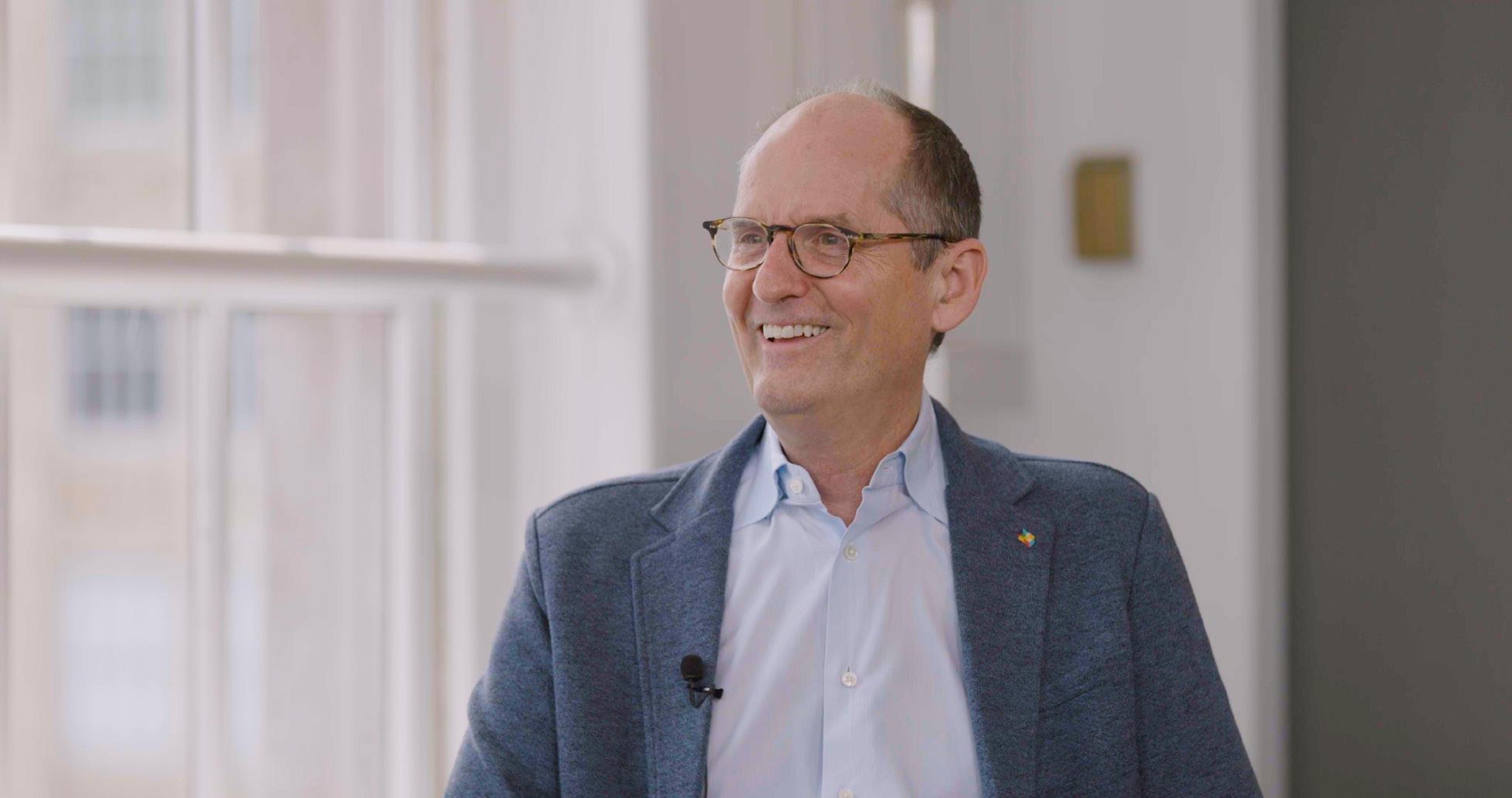
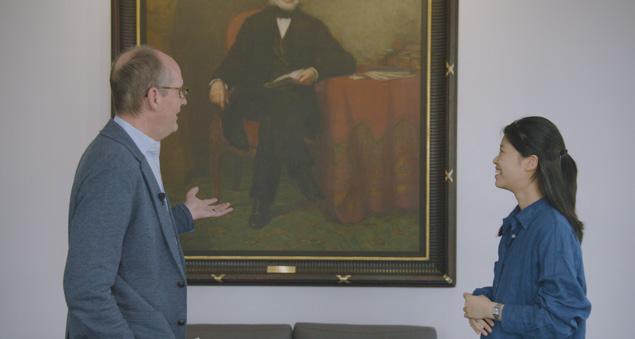
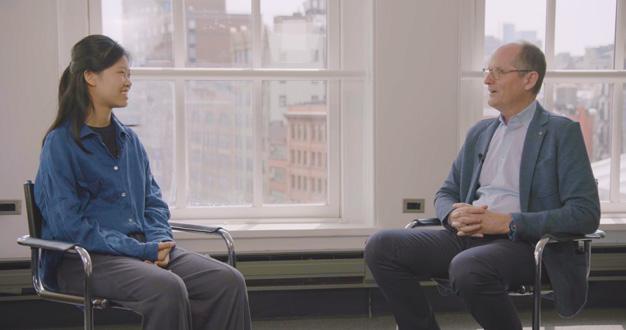
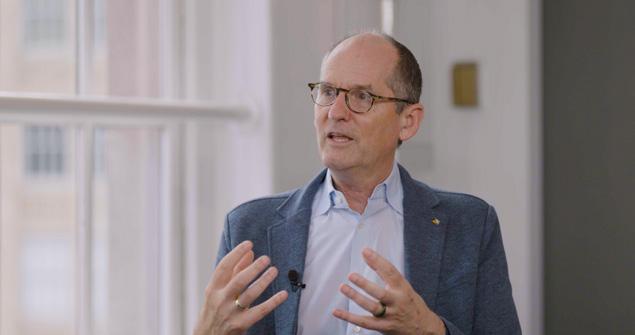
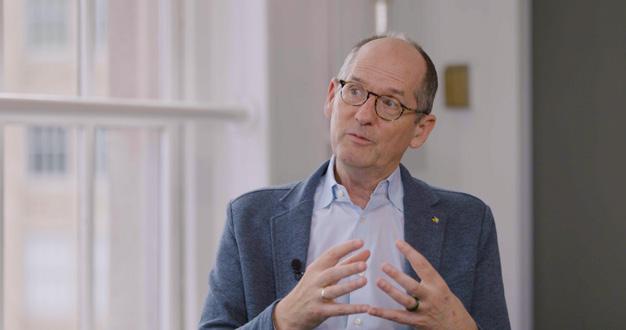
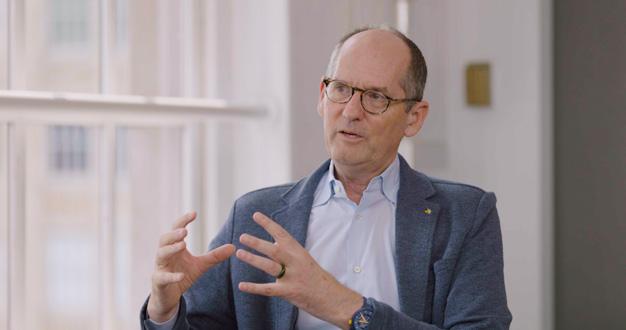
Steve McLaughlin joined The Cooper Union in July as the institution’s 14th president. For this inaugural digital issue of At Cooper, President McLaughlin sat down with Student Trustee Angie Zuo AR’29 for a conversation on first impressions, his student-first focus, Cooper’s culture and mission, and why Cooper is the “exact right institution” for today.
on Steve, see his president’s page and his 2025–26 welcome message to students, faculty, and staff.

At Cooper | Vol. LV, No. 2, Fall 2025 | Published by the Office of Communications | Cooper Square, New York, NY 10003 Matthew Bower, managing editor, matthew.bower@cooper.edu; Mindy Lang, creative director, mindy.lang@cooper.edu
Angela Starita, senior writer, angela.starita@cooper.edu; Kim Newman, media relations manager, kim.newman@cooper.edu
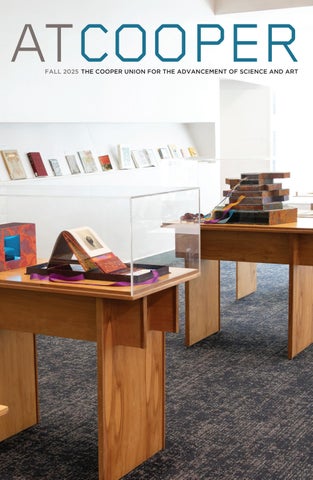
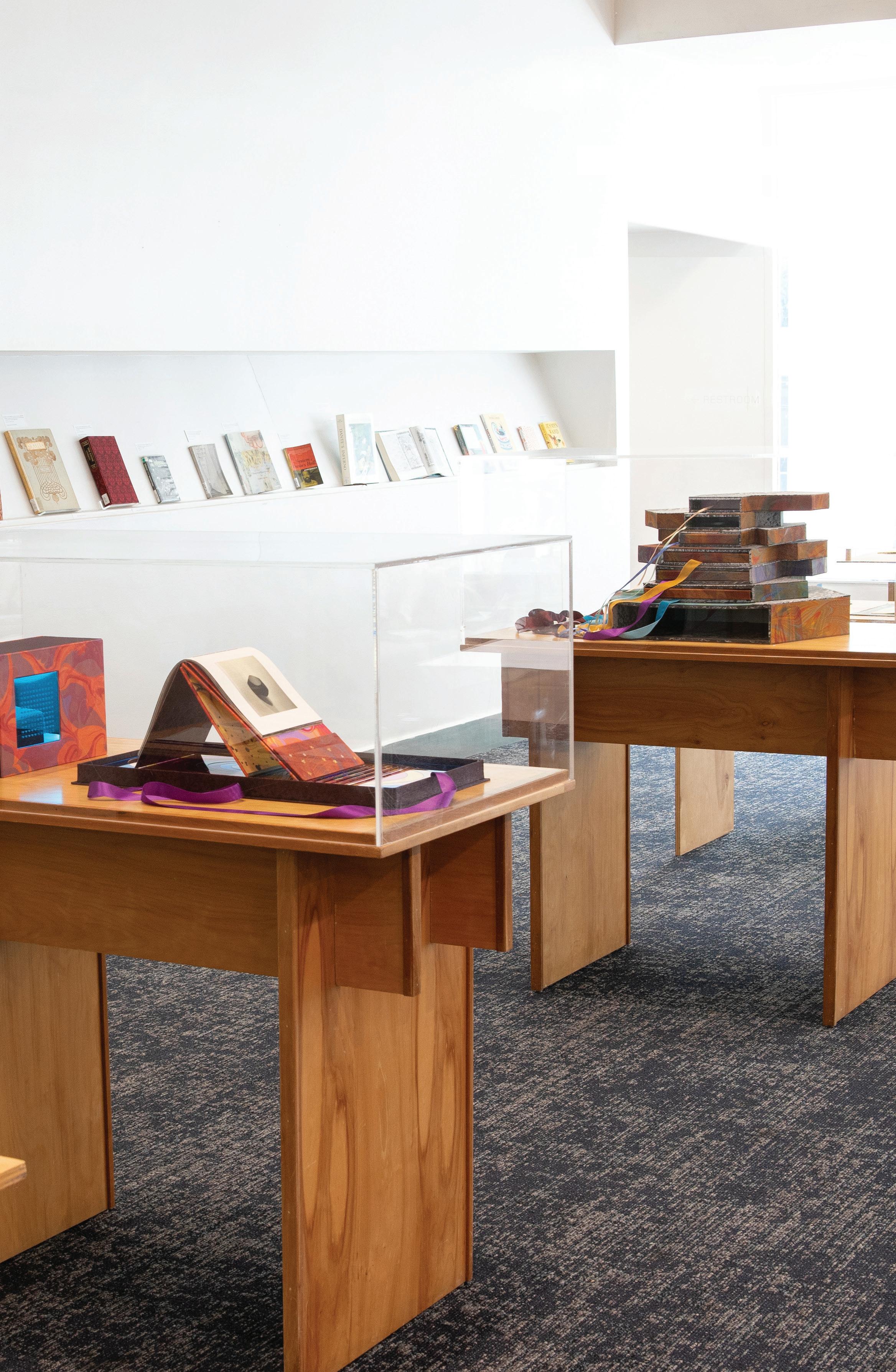
Cover: A Comedy for Mortals, an exhibition by Tammy Nguyen A’07 in The Cooper Union Library, on view through October 10, 2025. Photo: Michelle Biagi A’24 For more
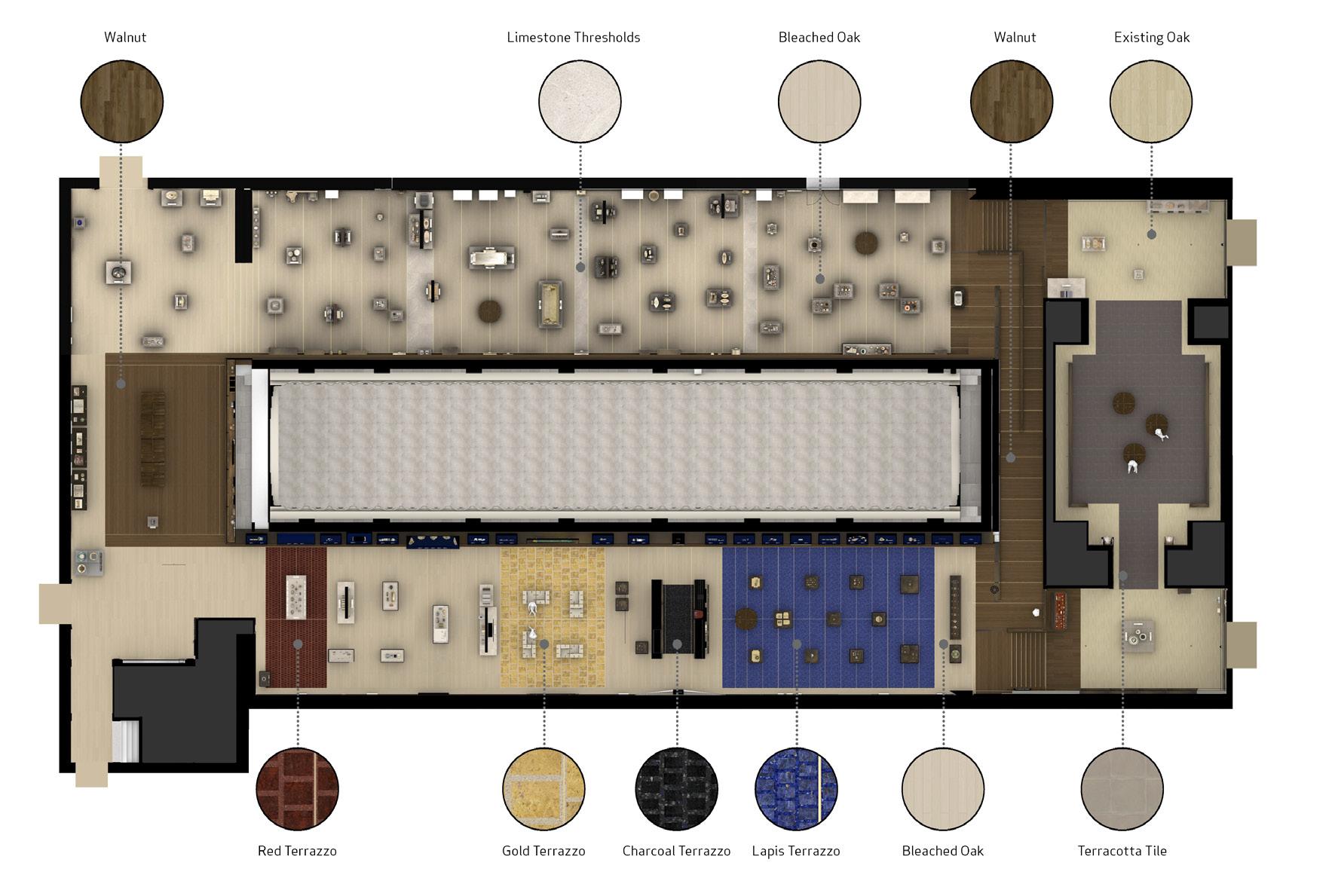
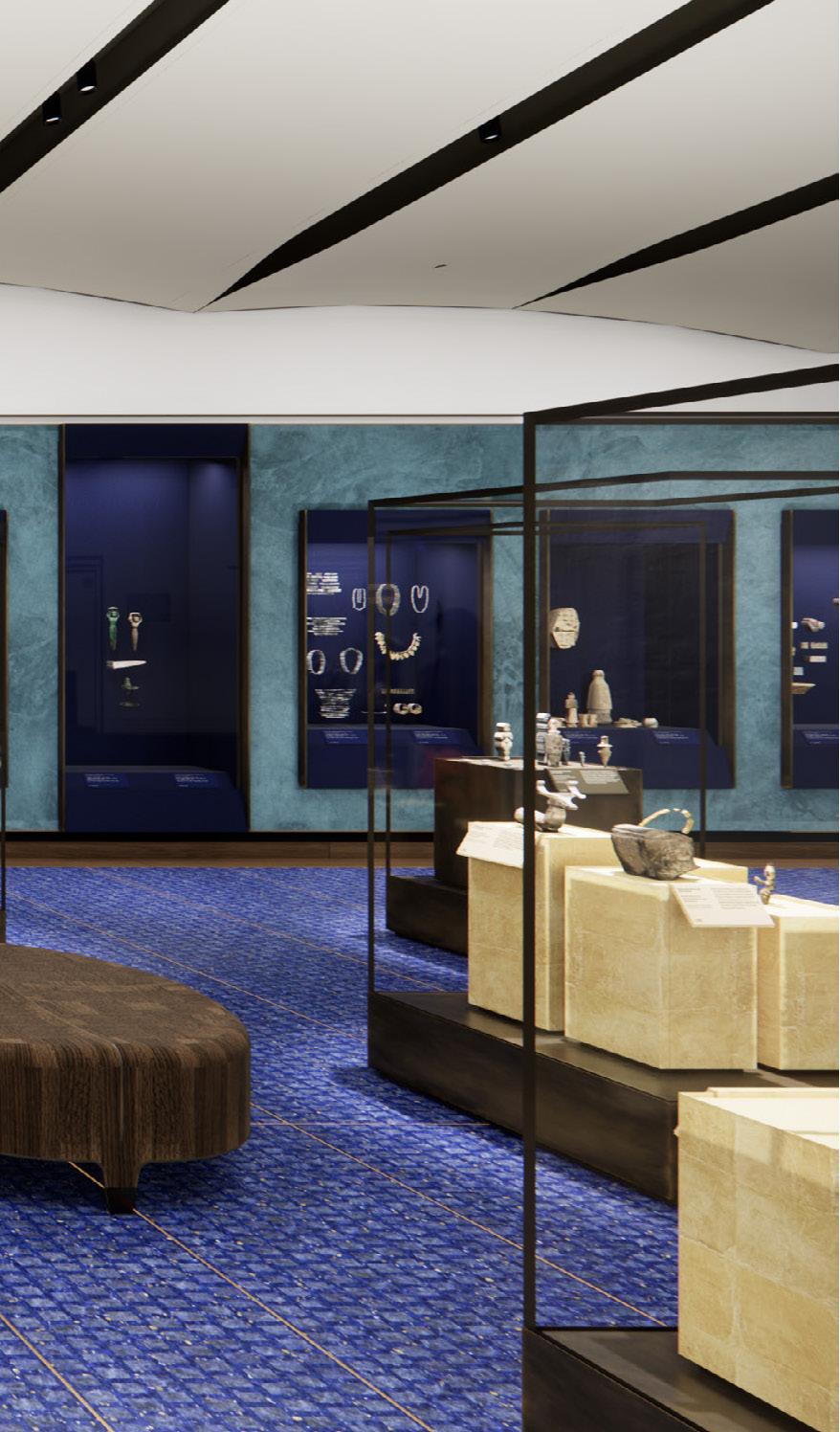
NADAAA’s redesign of the galleries of Art of Ancient West Asia and Ancient Cyprus adopts the materials essential to these ancient cultures: clay, copper, bronze, gold, silver, limestone, and lapis lazuli. The discovery of these materials is presented with corresponding inventions of new tools and the crafting of quotidian artifacts.
ROOMS WITHOUT WALLS
COOPER PROFESSOR LEADS MET REDESIGN
While the cool detachment of white box galleries defined much of 20th century exhibition practices, today’s museums are reassessing the alleged neutrality of white walls and ceilings. New York’s Metropolitan Museum of Art (Met) has embarked on several major projects to better contextualize its astounding collections of art and cultural objects, one of them led by a Cooper faculty member, Professor Nader Tehrani.
In 2022, the Met chose Tehrani’s firm NADAAA to reimagine its galleries of Art of Ancient West Asia and Ancient Cyprus, formerly known as Ancient Near Eastern and Cypriot Art. The redesign, like the name change, addresses the past curatorial practices of the museum, which framed the objects and history of the region from a European perspective.
“The Met isn’t just a building,” Tehrani said in a presentation about the redesign, a 15,000-square-foot project. Comparing it to Diocletian’s Palace in the contemporary city of Split, he described the museum as “a piece of urbanism.” continues
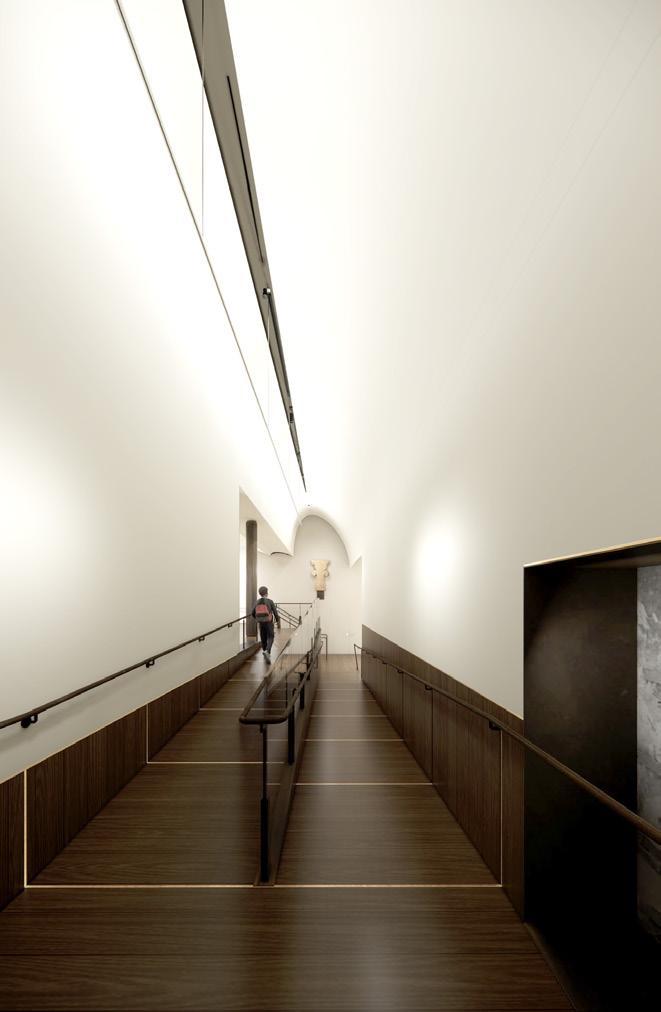
A vaulted space serves as a threshold into both galleries, connecting the two sides with accessible ramps.
That vision of the Met as essential city infrastructure animated Tehrani’s design. It connects the galleries to the Great Hall Balcony while drawing both spatial and metaphoric associations with the Department of Asian Art to the north, the Galleries for Art of the Arab Lands, Turkey, Iran, Central Asia, and Later South Asia to the south, and the 19th/20th Century European Painting & Sculpture Galleries to the west.
The $40 million project, currently under construction, is part of a larger set of renovations being undertaken by the museum, including the newly reopened Michael C. Rockefeller Wing by Kulapat Yantrasast of WHY Architecture and a new wing for modern and contemporary art by Frida Escobedo Studio. The museum is aiming to create galleries that are in step with current scholarship and provide far greater context for the history and provenance of the objects on display.
At the launch of a set of talks about the museum’s proposed new galleries, Max Hollein, the Met’s director, said “[The new galleries] will present art in a better way: They will tell new stories, new narratives. They will also create new spatial surroundings for our visitors and for our experience with art.”
Tehrani, who has taught at The Irwin S. Chanin School of Architecture since 2015 and served as dean up until 2022, sees the redesigned galleries as a response to what he calls “the rescripting of the narratives of ancient culture.” He has been closely collaborating with Met curators Kim Benzel and Sean Hemingway, who have set out to eschew a top-down perspective in favor of those that highlight cross-cultural influences and the objects of everyday life. NADAAA’s redesign of
the space, the first since the early 1980s, reflects that curatorial approach, framing the region’s history as a response to geography, natural resources, and long-term cultural shifts and influences. When discussing the Met galleries redesign, Tehrani has referred to the writings of Fernand Braudel, a historian whose 1949 study, The Mediterranean, analyzed daily practices of work, religion, trade, and community. Braudel’s method, akin to that of the Met curators, garnered a fuller, more nuanced history of the region than traditional accounts that focused solely on the impact of rulers and other powerful figures.
The museum’s collection of Ancient West Asian art includes work made between 8,000 BCE to the seventh century CE made in the vast region that extends from the Eastern Mediterranean through the Fertile Crescent (current-day Palestine, Israel, Lebanon, Syria, Iraq, and parts of Iran) to the Zagros Mountains and beyond to Central Asia. Of the varied narratives, the new exhibitions will bring focus to the materials of the approximate 7,000 works on display including clay, copper, bronze, gold, silver, limestone, and lapis lazuli while considering the cultural changes provoked by their discovery, extraction, and use. New means and methods of fabrication were born out of these very materials, bearing witness to emerging crafts and trades and giving rise to objects of daily use and religious devotion. For example, in the Cyprus galleries, a 70-kilogram ingot of copper will be displayed next to a bronze tripod to represent the island’s fame as a copper exporter during antiquity. (Its ancient Greek name, Kupros, means copper.)
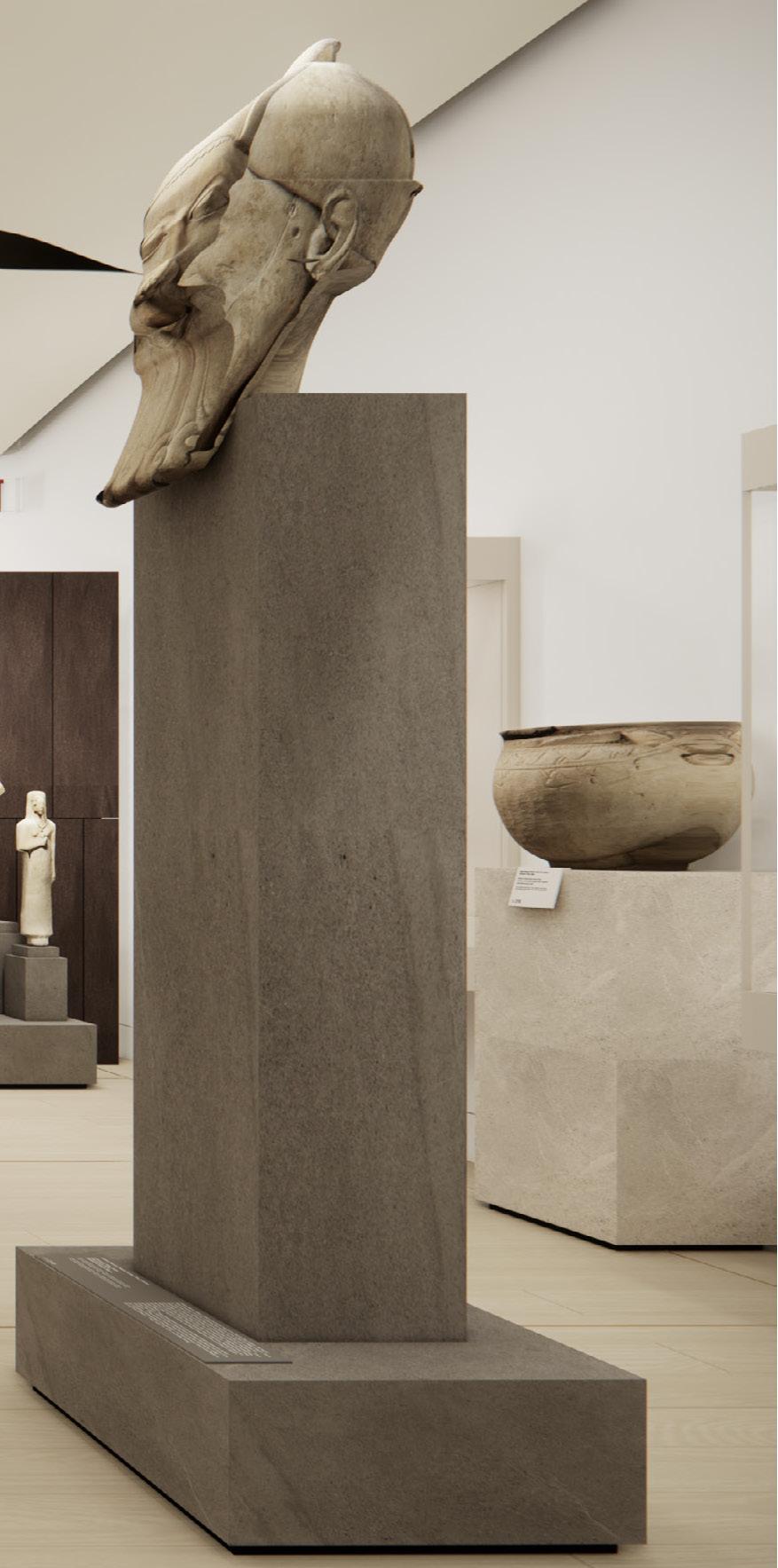
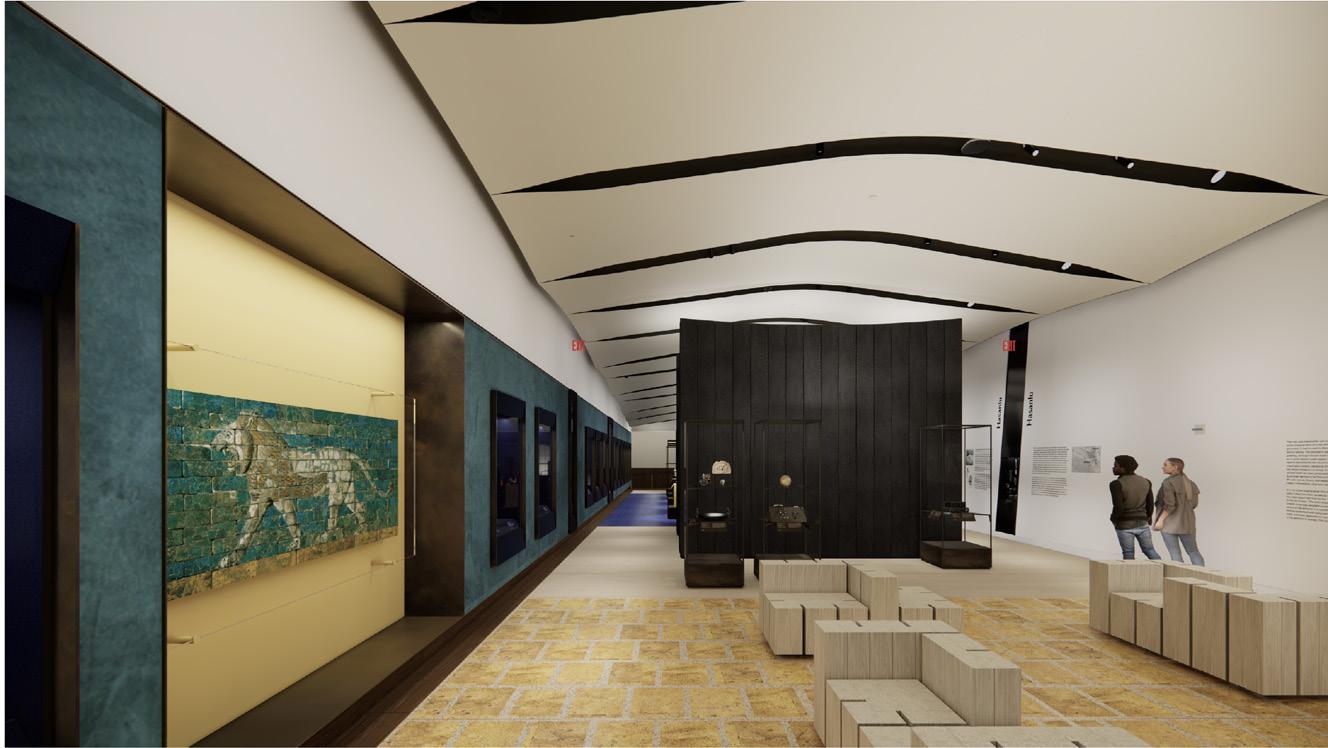
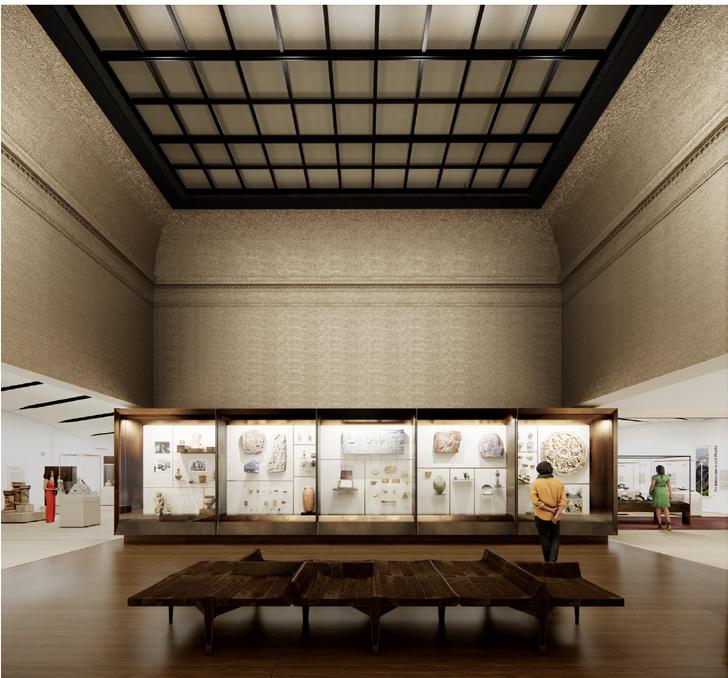
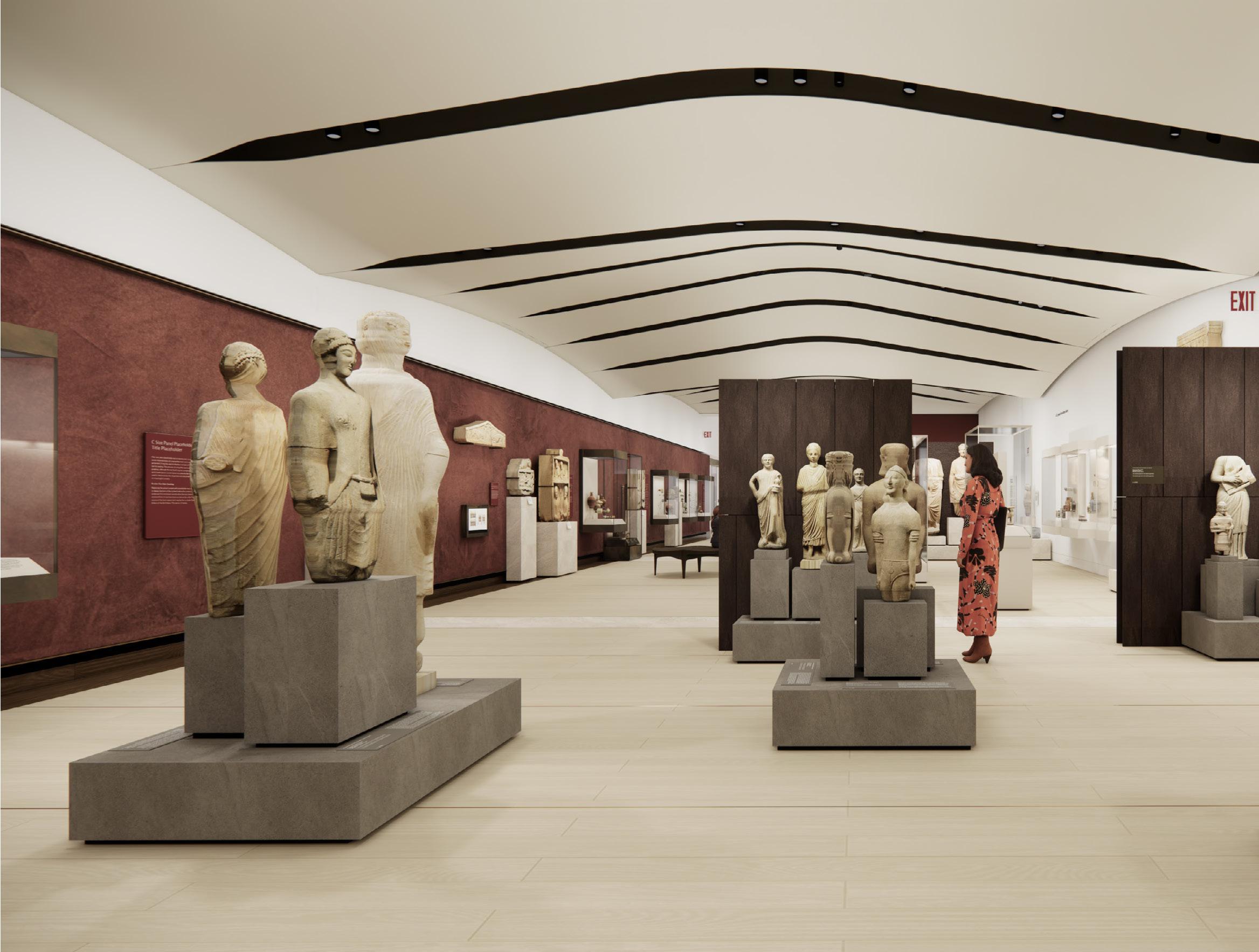
Opposite page: NADAAA’S exhibition design considers sightlines and viewers’ bodies in relation to the sculptures on display.
Above: The galleries’ vaulting system incorporates reveals, within which critical functional elements of the spaces (lighting, HVAC, security, and fire systems) are masked; the cadence of the vaults aligns with epochs and narratives along a curated timeline.
Left: Rendering of the “legacies and connections” gallery, dedicated to contextualizing provenance, curatorial strategies, and the museum as an institution.
“History is never closed. There are fluid connections from one space and one history to another.” —NADER TEHRANI
Benzel, curator in charge of the Ancient Near Eastern Art, said of the redesign: “By expanding conversations to be more trans-cultural, and by engaging with heritage communities and diaspora groups, we will be able to highlight alternative narratives and contextualize ancient objects within contemporary discourse.”
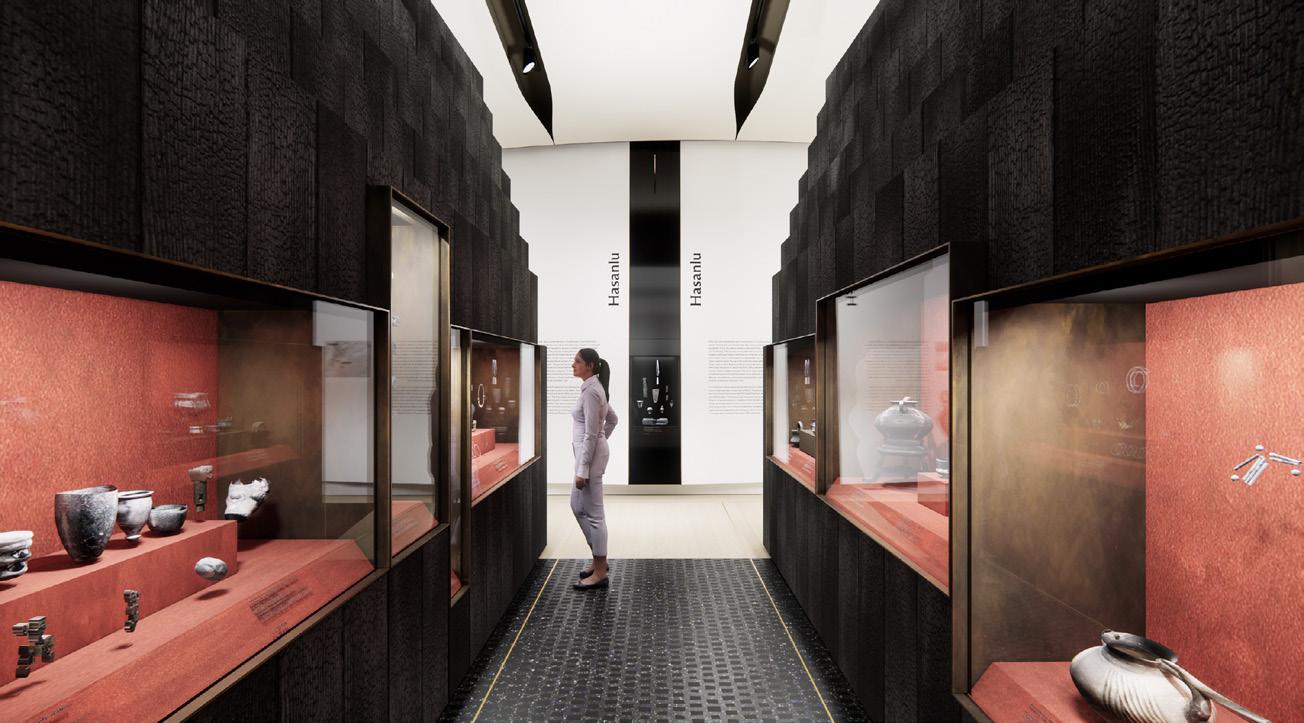
Tehrani underscores the galleries’ central location by focusing on circulation, with four entry points for moving through the gallery following what NADAAA calls the torus wall, denoted by red and deep lapis, colors chosen to reflect the mineral resources of the area. At the same time, the marked use of color works to counter the vision of the white-box gallery as a neutral, objective space. In fact, in many ways the redesign by Tehrani’s firm asks visitors to think about the act of collecting and the colonial history that brought these collections into being.
The torus wall acts as a fluid connection through the open-plan galleries, yet along this promenade Tehrani has created what he calls carpets or ribbons that, through their use of materials, evoke rooms without walls: wood floors for the Cypriot galleries and terrazzo for the Ancient West Asia, with limestone as the connective tissue for both. These spatial subdivisions maintain the open floor plan while punctuating the curatorial narrative.
Below: The Hasanlu exhibit with a view of the torus wall, what NADAAA calls “a chromatic belt” that connects the open-plan galleries.
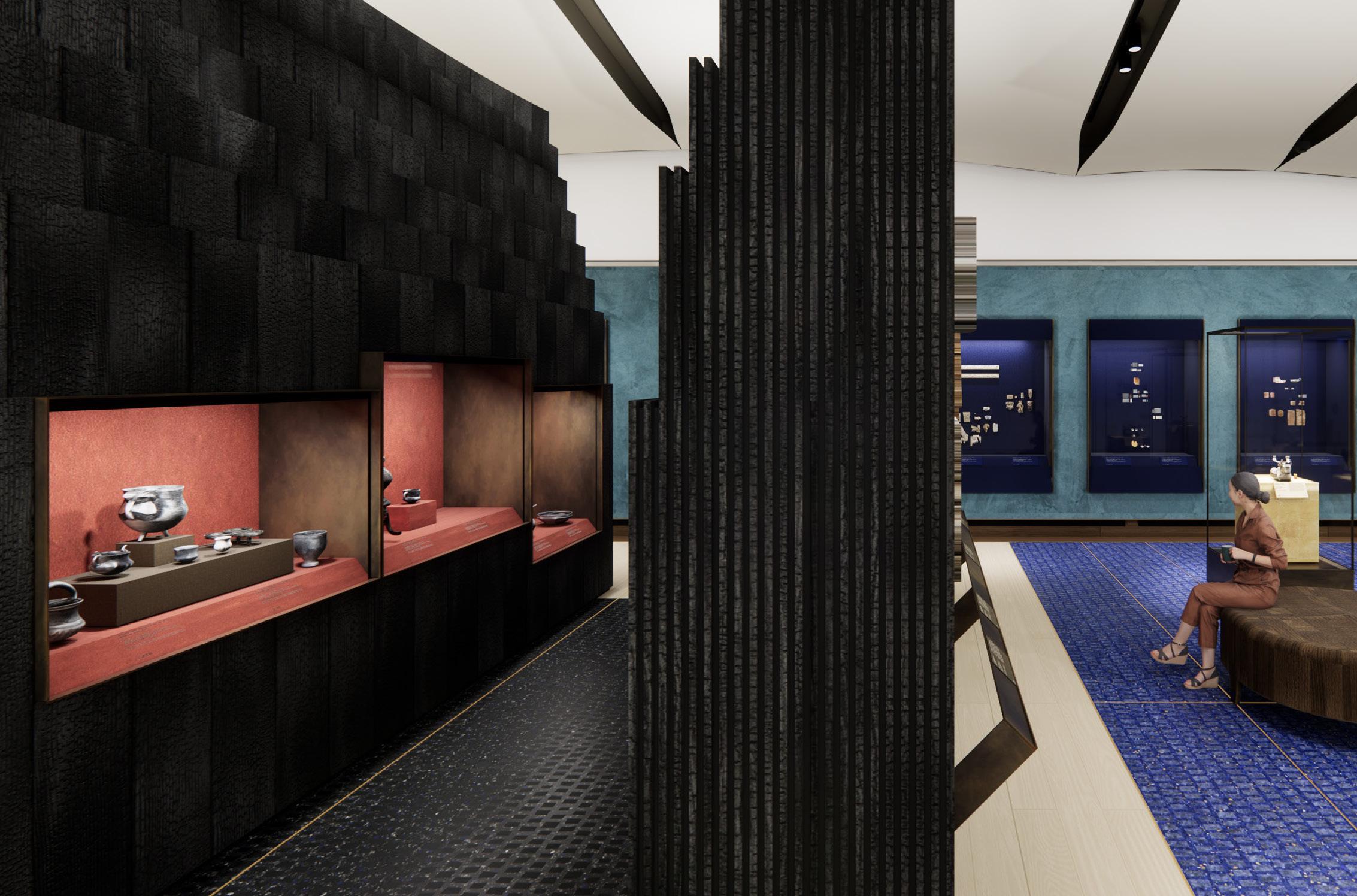
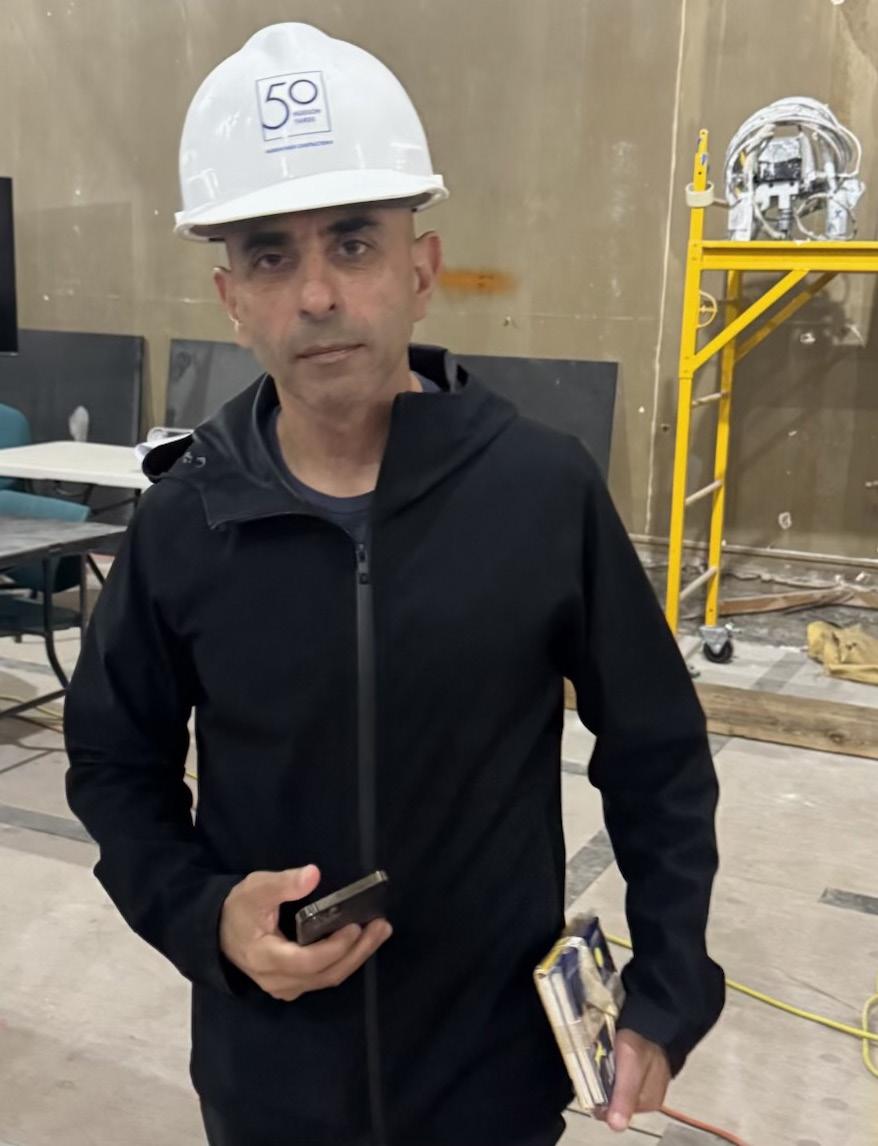
Opposite page, top: Nader Tehrani on site as the galleries undergo renovation. Below: A rendering of the Hasanlu exhibit, documenting artifacts from an ancient West Asian city of the late second to first millennium BCE in northwest Iran. Attacked and burned to the ground, the city’s charred remains ensured the physical preservation of the artifacts.
The Art of Ancient Cyprus galleries, following the period from 2,500 BCE to 300 CE, feature an exceptional collection of funerary monuments and votive sculptures, as well as stone sarcophagi, four of which will be on permanent display. Made up of the museum’s Cesnola Collection (acquired in 1872 and amounting to more than 6,000 objects), these new galleries will create narratives related to the region’s materials, funerary rituals, religion, and identities. The redesign focuses on Cyprus as a crossroads with influences from the ancient Assyrians, Egyptians, Persians, Greeks, and Romans. Visitors will follow the ways the island’s cultural output altered over time.
Essential to Tehrani’s design is the galleries’ ceiling plan. Undulating and slotted, their vaults serve two functions: to mask critical functional elements of the spaces related to lighting, HVAC, security, and fire systems; and to mark shifts in the exhibition narrative. “The 19th century wanted to taxonomize everything,” Tehrani explains, but that approach negates the complexity of the rich and varied influences across cultures and time. “History is never closed. There are fluid connections from one space and one history to another.”
Noting that the Met’s curators have a deep sense of responsibility in how they tell the stories of a culture and its objects, Tehrani has designed these galleries, set to open in 2027, to provoke discussion about traditions of collecting, and as he puts it, to explore “how objects are transformed when they enter the museum space as well as their roles in shaping and constructing knowledge.”
Professor Nader Tehrani will be leading a limited number of tours of the galleries of Ancient West Asia and Cyprus Art for Cooper alumni and friends. Stay tuned for details to be announced.
Images courtesy of NADAAA
CONGRATULATING THE
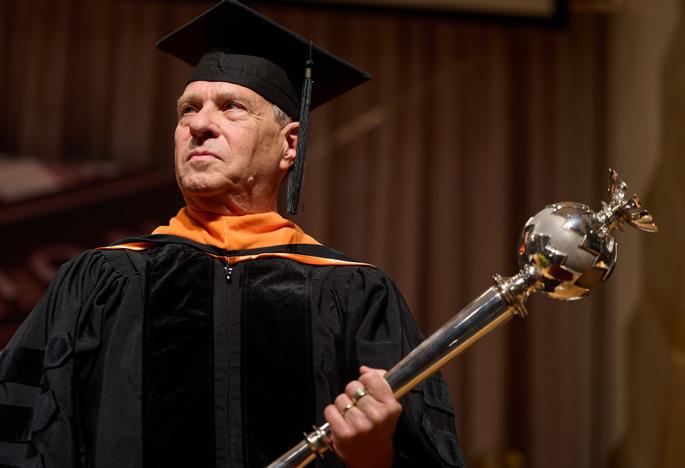
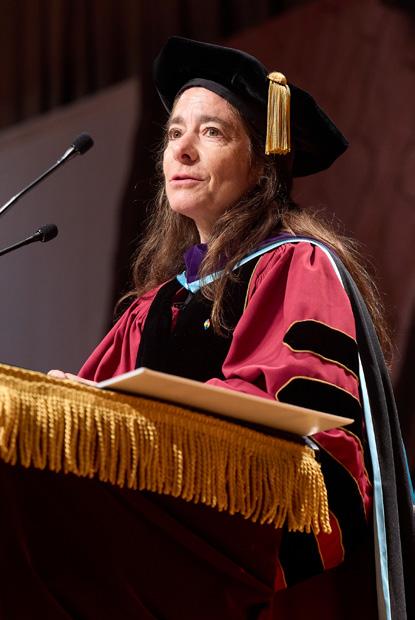
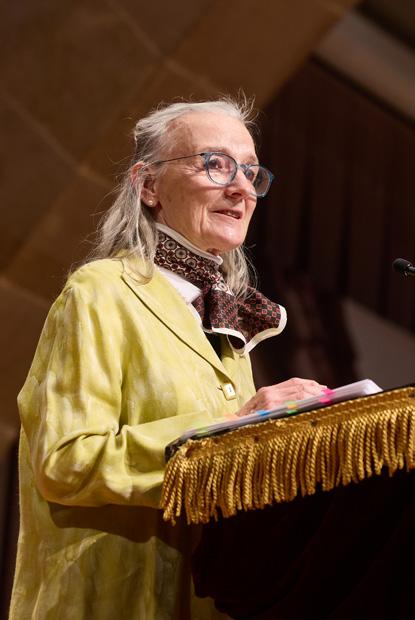
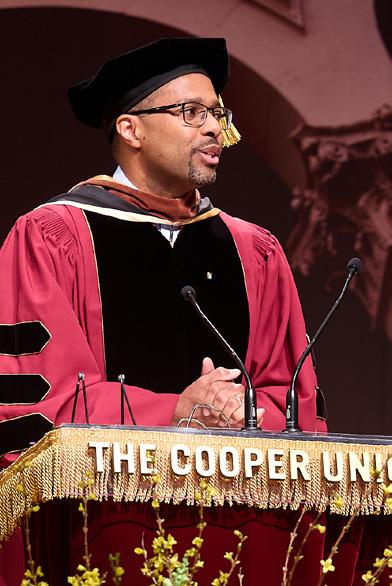
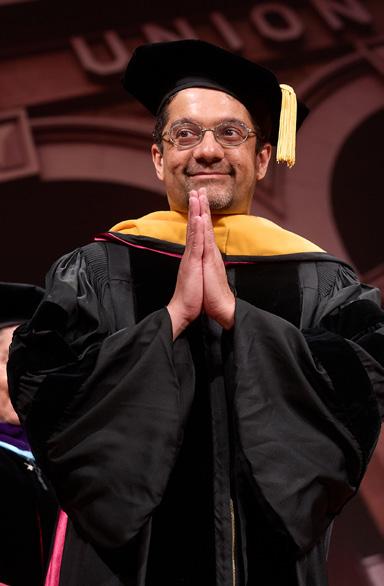
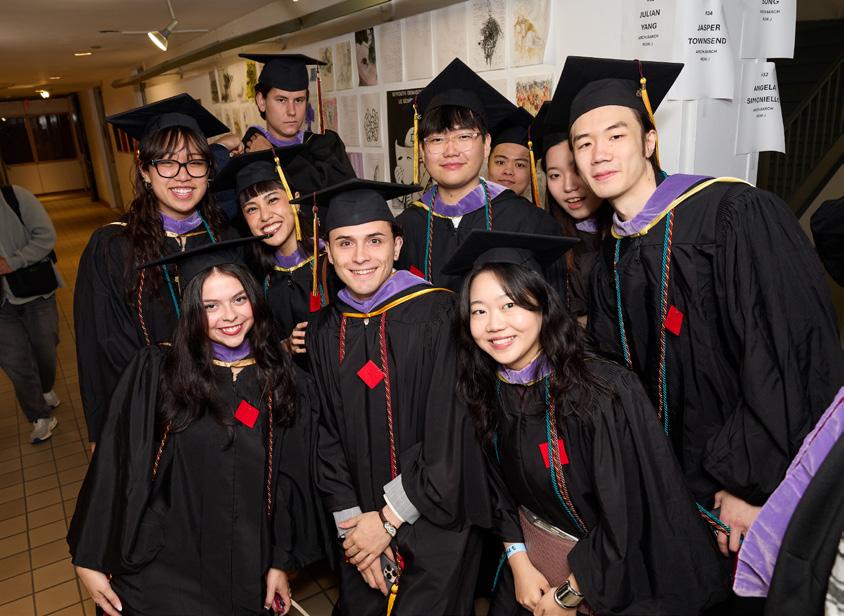
The Cooper Union’s 165th Commencement was held on Thursday, May 29, 2025, in the Great Hall. Interim President Malcolm King EE’97 presided over the ceremony, welcoming attendees and commending the graduating Class of 2025 on their achievements. Ross Wisnewski, a longtime supporter of Cooper with her husband George Reeves ME’64, delivered the invocation.
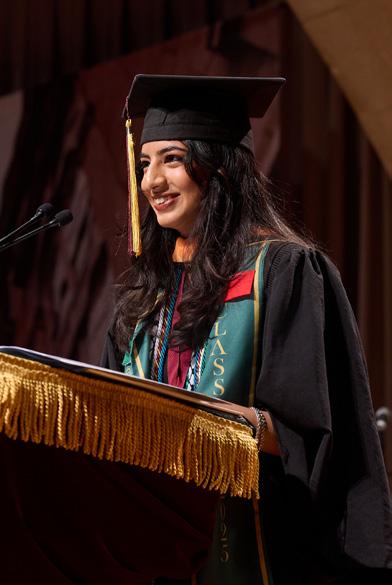
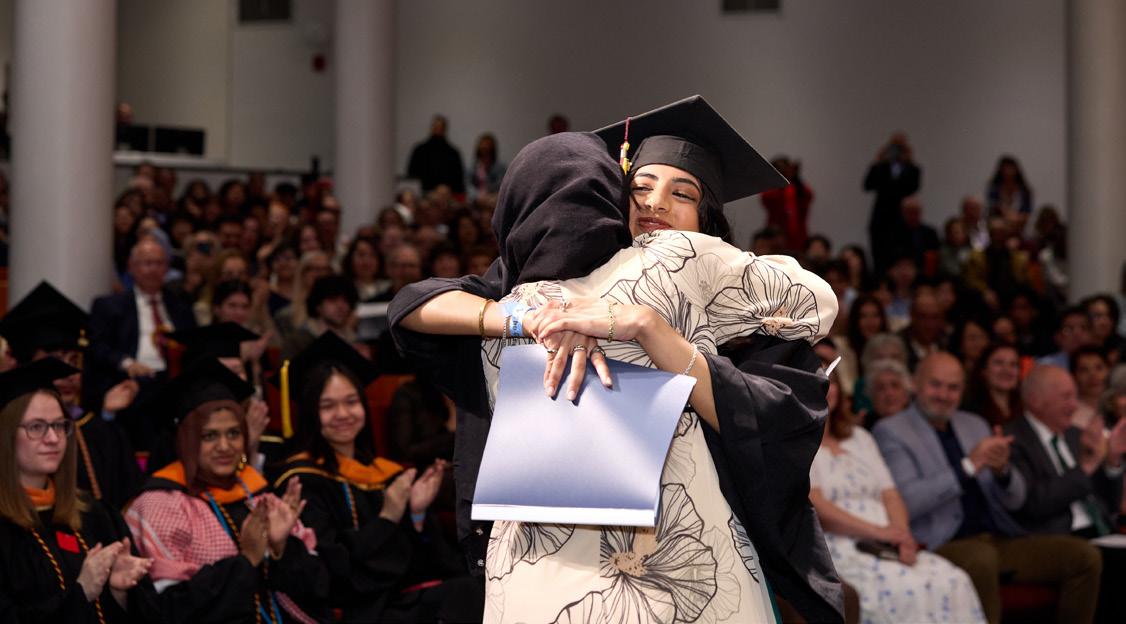
Zareena Al-Shehab ChE’25 was selected to deliver the class’s student commencement address. Remarking on the “unprecedented times” in which her generation grew up, Al-Shehab said, “‘Unprecedented’ isn’t just a word that describes the world we inherited. It is a word that describes us. The Class of 2025 is unprecedented as hell.” She expressed gratitude to her parents and the Cooper community, offering encouragement to her classmates in the face of pressing global challenges: “What we build, whether with our hands, our minds, or our hearts, has the power to strengthen communities and leave a lasting legacy. It is not just about what we create, but about the impact we leave behind. It is now our turn to be the giants whose shoulders’ future generations will stand on.”
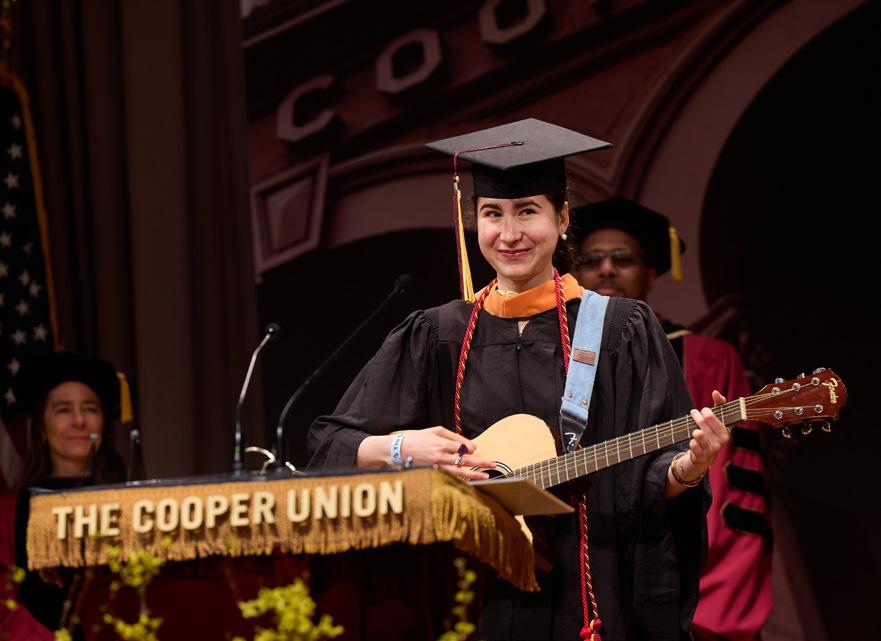
Left: Camille Rotemberg BSE’25 performed the national anthem.
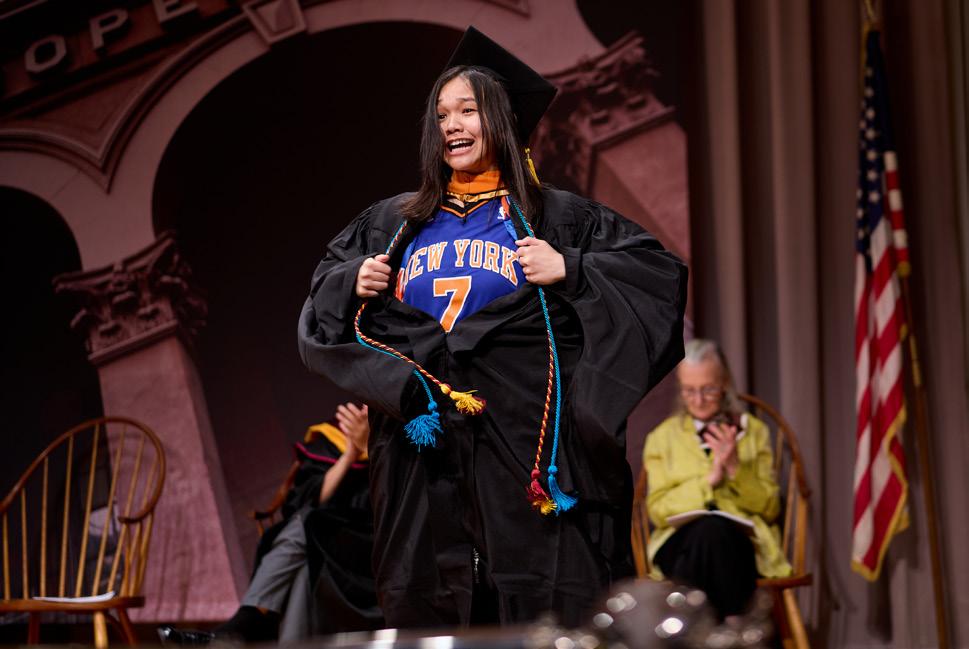
Right: Crystal Woo CE’25 celebrated getting her master’s degree and the Knicks advancing in the playoffs.
CLASS OF 2025
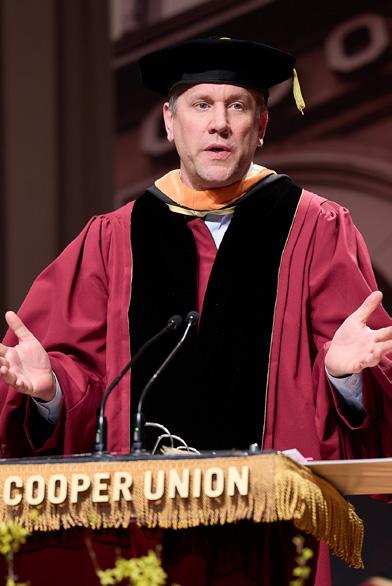
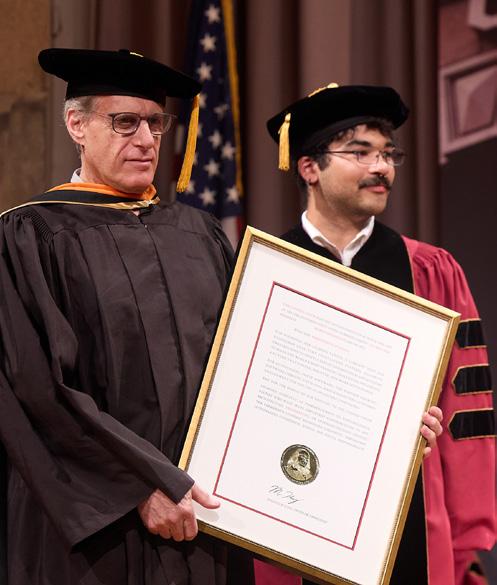
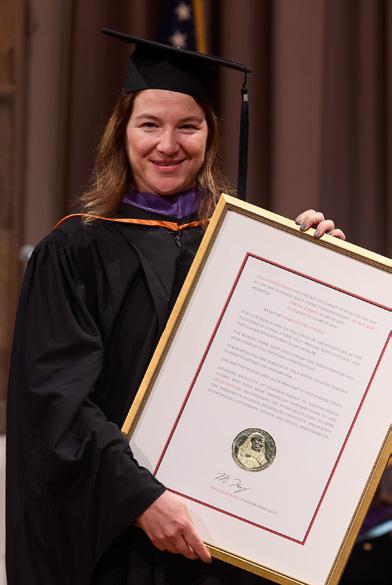
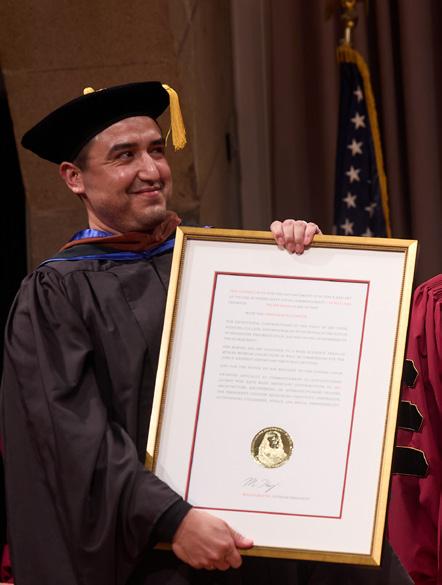
Above, l to r: George Sidebotham, retiring professor of mechanical engineering, mace bearer; Jamie Levitt, chair of the Board of Trustees; Ross Wisnewski gives invocation; Malcolm King EE’97, interim president; Shankar Vedantam, host of NPR’s Hidden Brain, was awarded an honorary doctorate and gave the commencement address; Zareena Al-Shehab ChE’25, student speaker; Ron Vogel ChE’01, president of the CUAA; Marty Sprinzen EE’70, Presidential Citation awardee, with Student Trustee Tre Brown ME’26; Acting Dean Hayley Eber AR’01 accepted the Presidential Citation on behalf of Jemuel Joseph AR’16 and Alexis Rivas AR’16; Felipe Baeza A’09, Presidential Citation awardee.
The commencement speaker was Shankar Vedantam, host and executive editor of the popular Hidden Brain podcast and radio show. Vedantam, who is known for exploring neuroscience and social psychology to uncover how self-deception influences human success, offered the graduating class a thought experiment: “If you take a moment, once a week or once a month, and ask yourself what you would do if this was the last year of your life, you would be less afraid to say and do the right thing. You will see how much wonder there is in ordinary things.”
Drawing the ceremony to a close was Ron Vogel ChE’01, president of The Cooper Union Alumni Association, who welcomed the Class of 2025 as members of the CUAA.
Read interviews with members of the Class of ’25 here.
from top-left:
Photos: Argenis
Clockwise
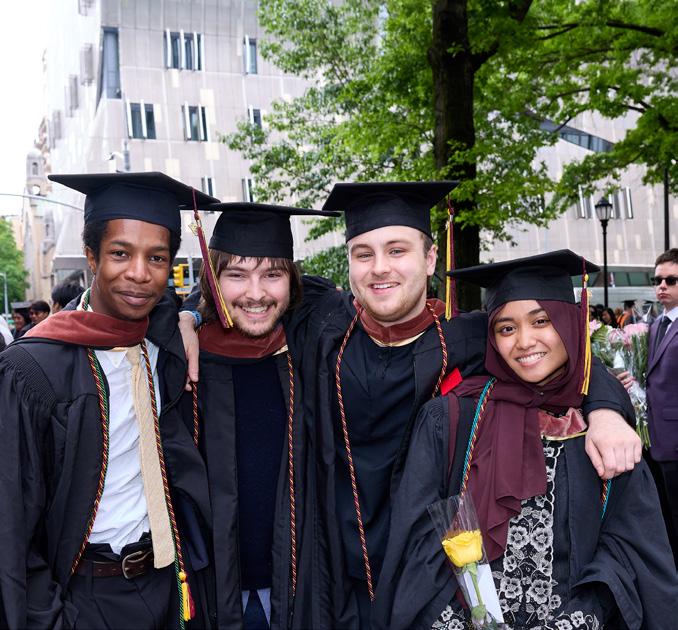
Zareena Al-Shehab ChE’25 hugs her mother after delivering the student address; Members of the school of architecture Class of 2025; School of Art grads (l to r) Zaid Arshad, Conrad Moore, Dylan Clark, and Alya Ardianto.
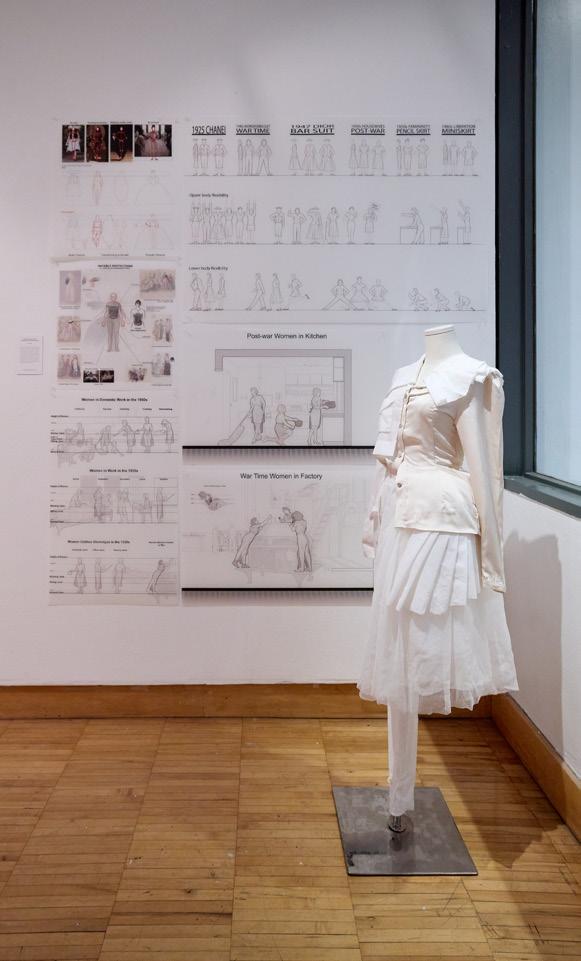
Design IV, Spring
Graduate Research Design Studio II
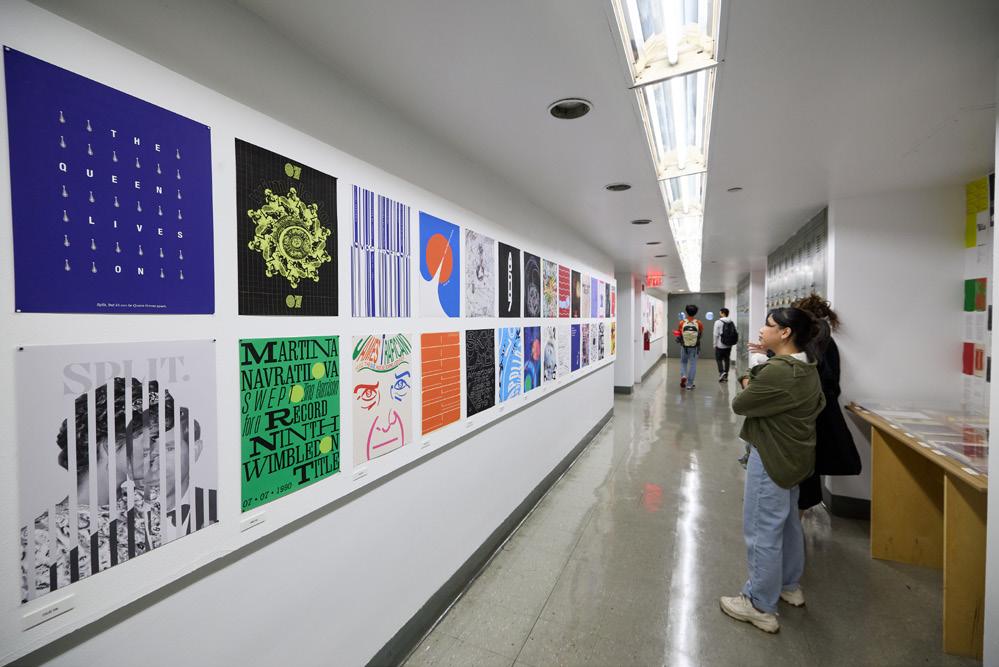
Above: Erhan Bao Left: Installation view of graphic design work
END OF YEAR SHOW ’25
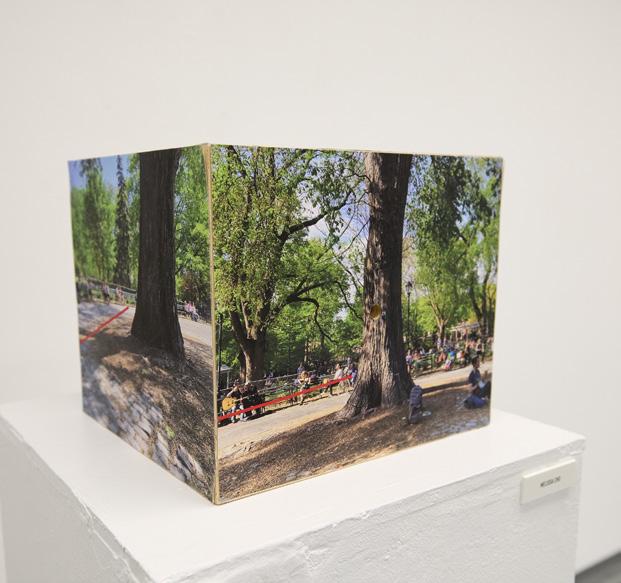

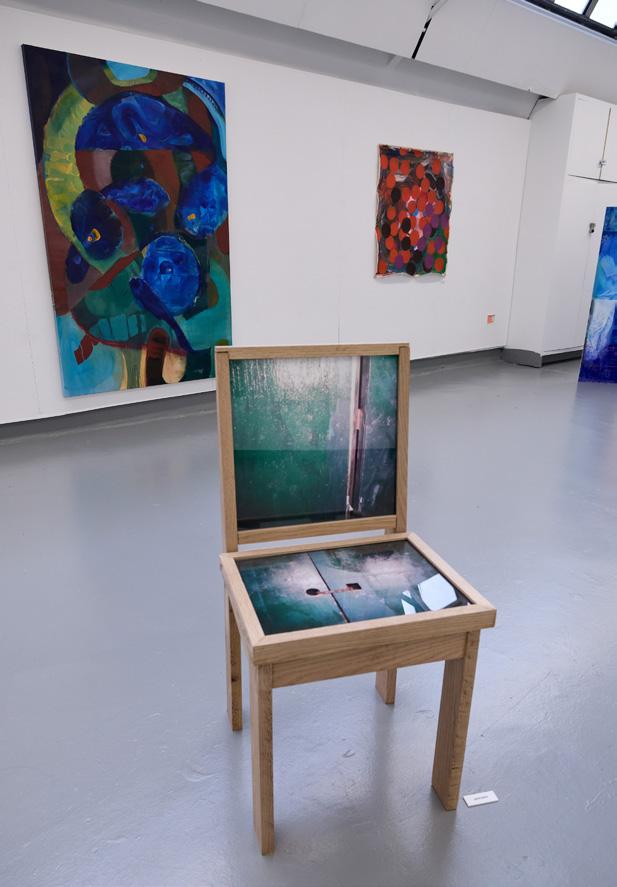
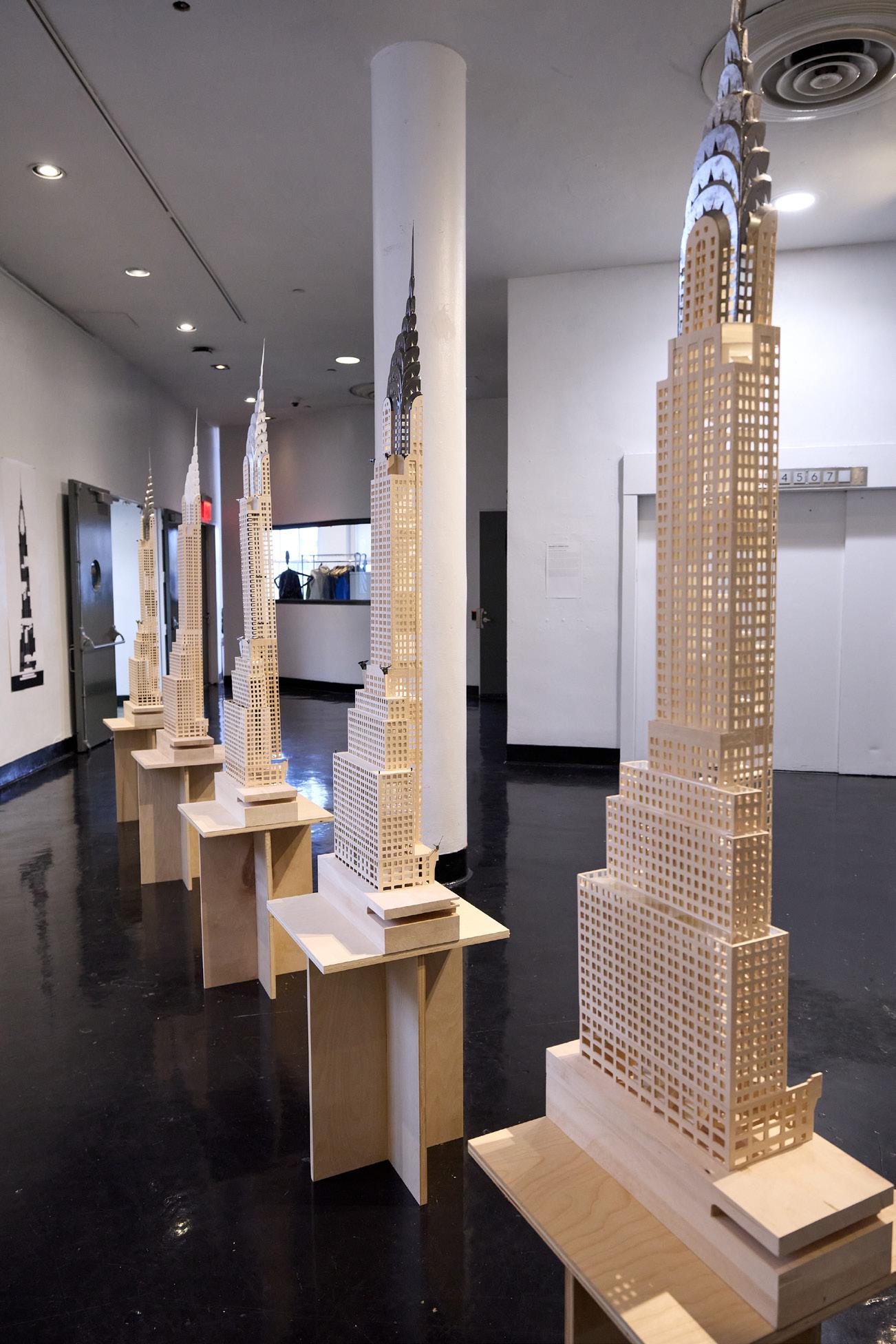
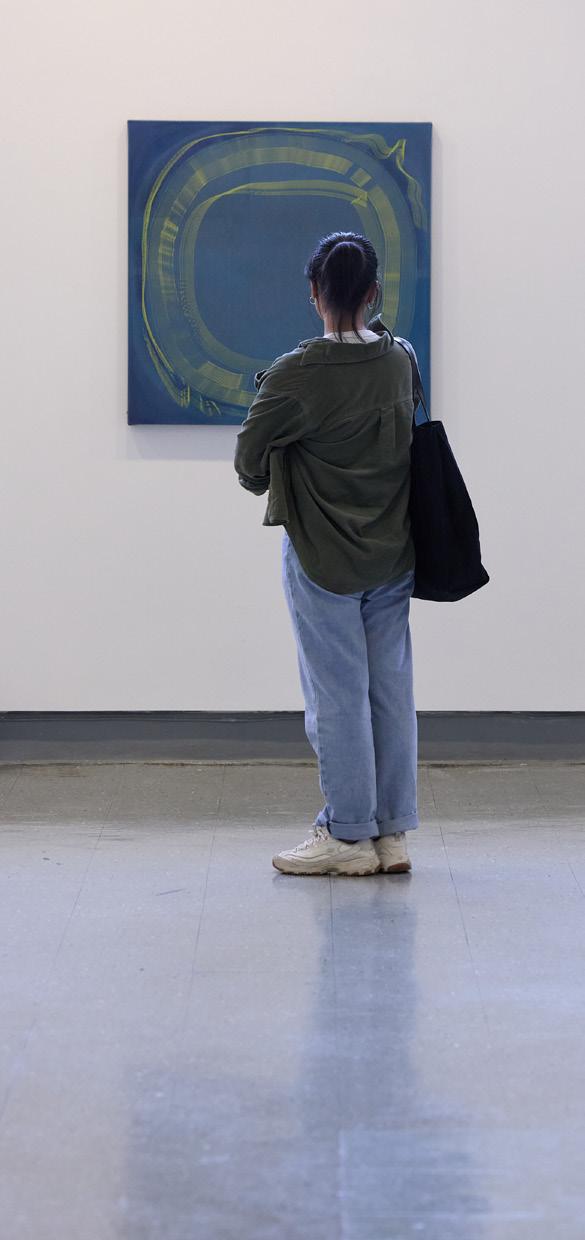
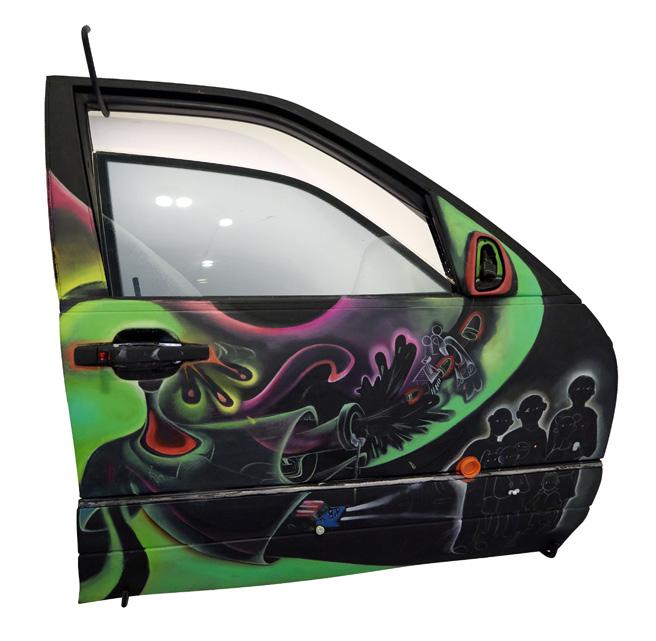
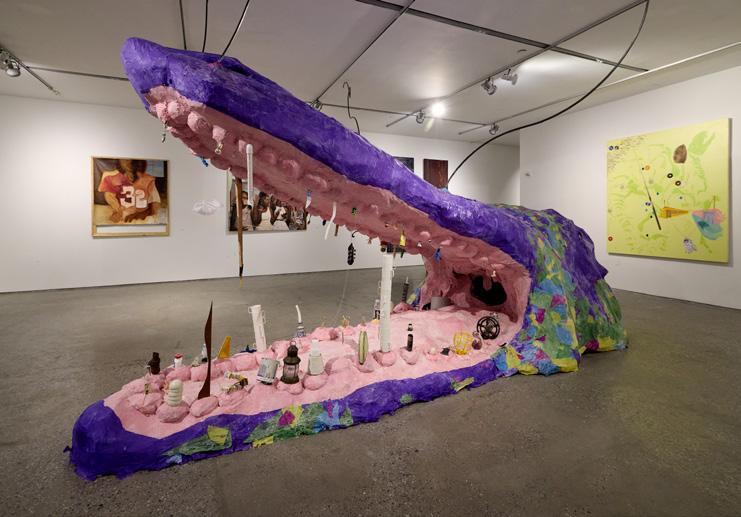
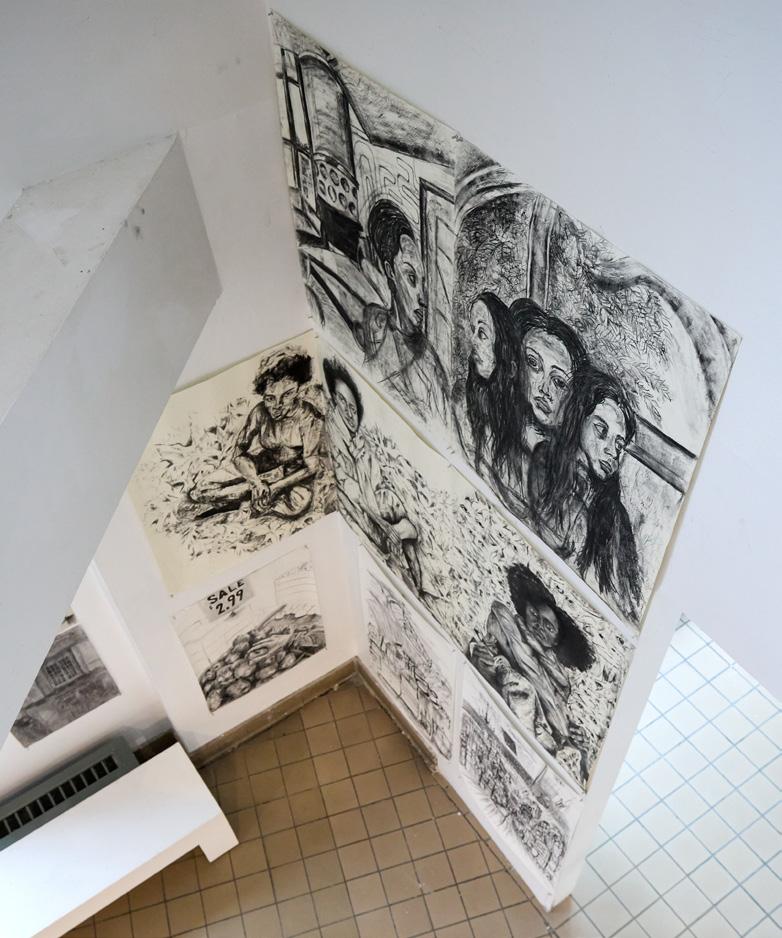
In May, The Cooper Union continued its annual tradition of transforming hallways, studios, and galleries into a public exhibition of student work across its schools of architecture, art, and engineering. The 2025 End of Year Show opened on May 28, the eve of the institution’s 165th Commencement, and welcomed visitors to see the culmination of students’ practices, creative explorations, and research from the past academic year.
Note: Works by students of the School of Art are identified only by the artist, per tradition. Works from The Irwin S. Chanin School of Architecture are attributed to the studio in which they were created, with no specific author.
Above left: Melissa Cho
Left: Saira Billah ME’25 shares her joint senior project that redesigns the typical garden shear to help those with limited hand mobility. Billah with fellow ME’25 graduates Taaseen Jahan, Jade Lombardo, and Sonam Okuda altered the cutting motion to shift the load away from sensitive hand muscles.
Joel Martinez
Right:
Jasper Krents
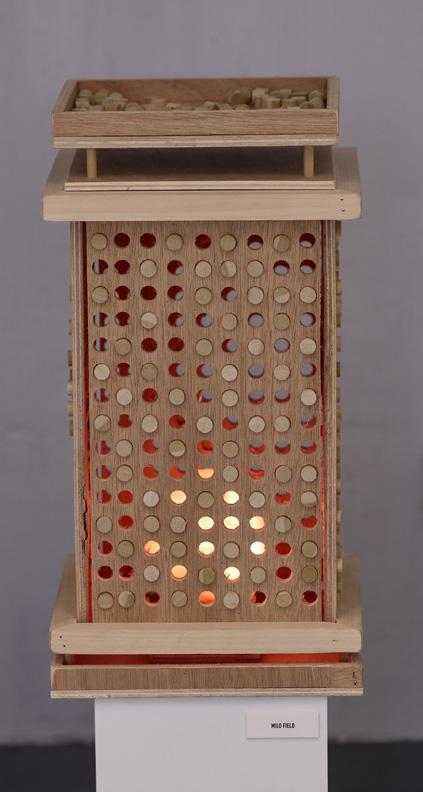
Right: Representation I Far right: Milo Field
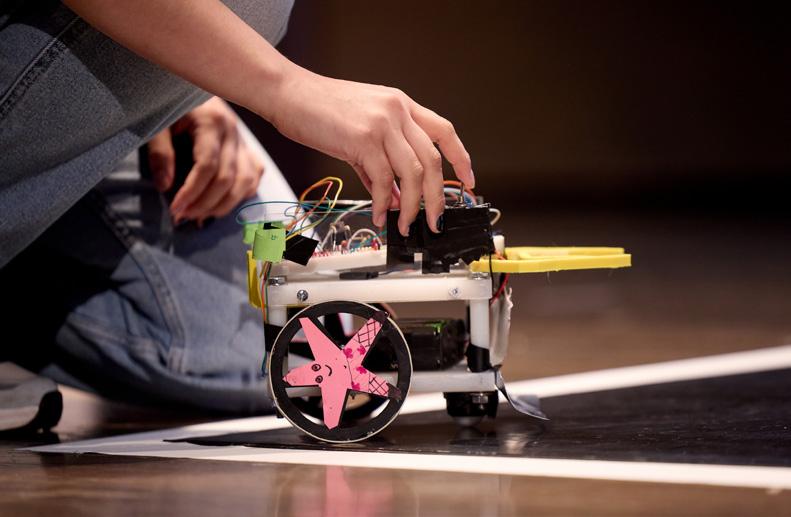
Mr. Krabs, a robot by Asmi Shirsat, Maria Alvarado, and Arav Sharma
Collaborative sculpture by students in Dean Adriana Farmiga’s A’96 sculpture class
Photos: Argenis Apolinario A’03
REWEAVING LOST HISTORIES
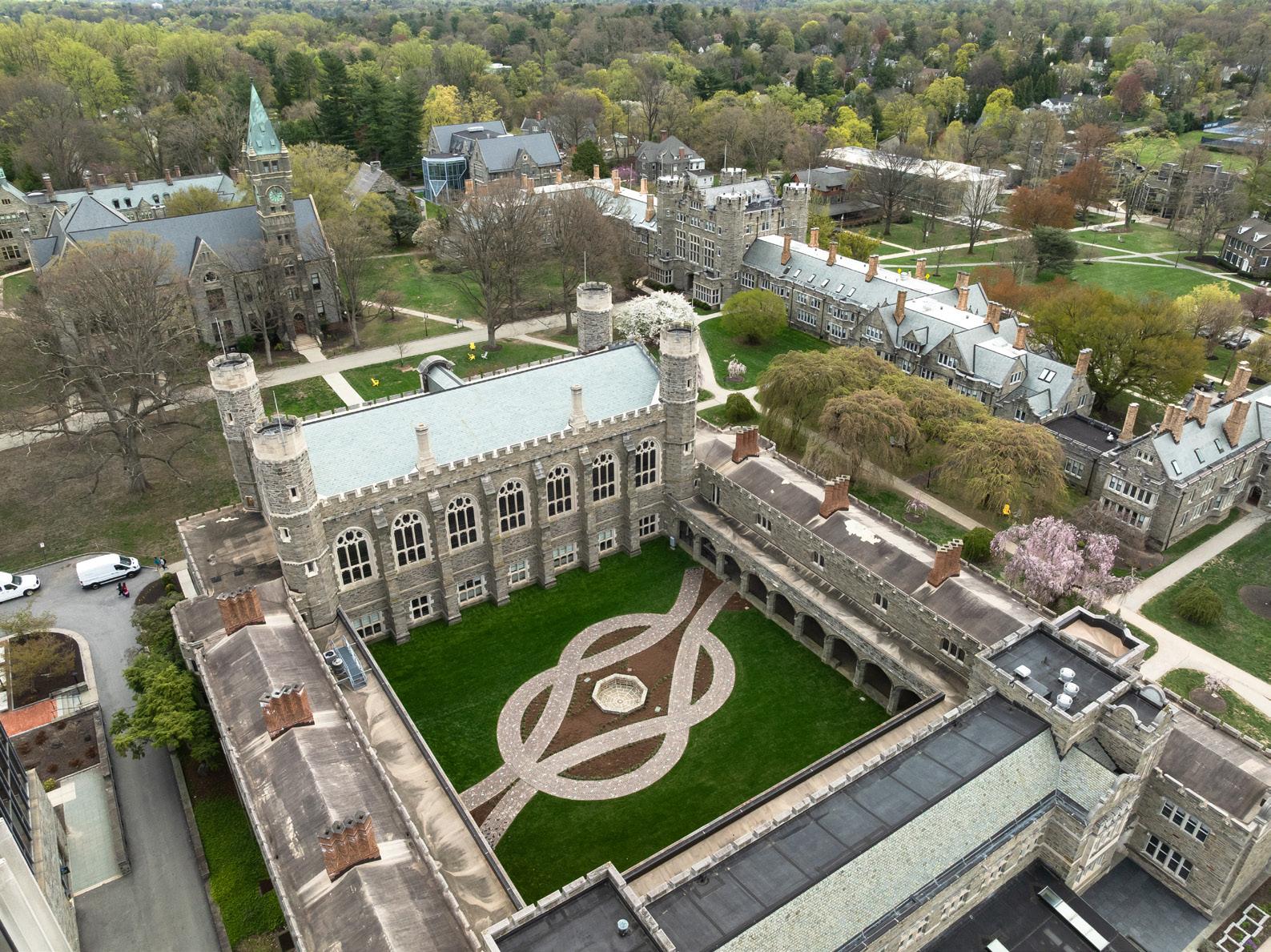
In April, a monument designed by Nekisha Durrett, a 1998 School of Art graduate, was unveiled as a striking and expansive memorial to the hundreds of Black workers whose labor had gone unacknowledged by the liberal arts college where they worked. Entitled Don’t Forget to Remember (Me), the work emerged from years of collaboration and research. As architecture writer Kriston Capps at City Lab put it, Durrett’s work “is a reminder of the gravity that public art can hold—despite a government backlash against social justice narratives.”
The memorial was built for Bryn Mawr College, a women’s college near Philadelphia, and grew out of student-led research that uncovered the racism endemic to the school’s history in the early 20th century, where Black labor went unacknowledged at the same time that Black students weren’t allowed admission. Students challenged the administration to confront its legacy of discriminatory practices. The result was The ARCH Project (Art Remediating Campus Histories), a collaboration between the college and Monument Lab, a Philadelphia-based nonprofit whose aim is to advance social justice by reimagining memorials to tell more inclusive and complete stories. Students, faculty, staff, and alumnae were invited to ask: “What stories are missing from Bryn Mawr College?
Several years earlier, student researchers had discovered that, between 1900 and 1940, scores of women and men, most of them Black, had served as maids, porters, laborers, and groundskeepers for a student body drawn from the white American elite, and yet the stories of these Black workers were not acknowledged. At that point, members of The ARCH Project worked with Monument Lab to send out a request for proposals to create a memorial to those workers. Almost immediately, Durrett, whose work is in the permanent collections of the National Museum of African American History and Culture and the Phillips Collection, began receiving messages from people in the arts community who knew that the project was closely aligned with her practice. As a mixed-media artist, she has largely dedicated her work to excavating hidden histories by weaving storytelling and material narratives together.
Durrett’s memorial at Bryn Mawr consists of interwoven clay paver paths installed in the Cloisters—the courtyard of the college’s Old Library—and shaped as a square knot, symbolizing connection and permanence. Underneath, a network of tunnels had once served as underground passageways used by
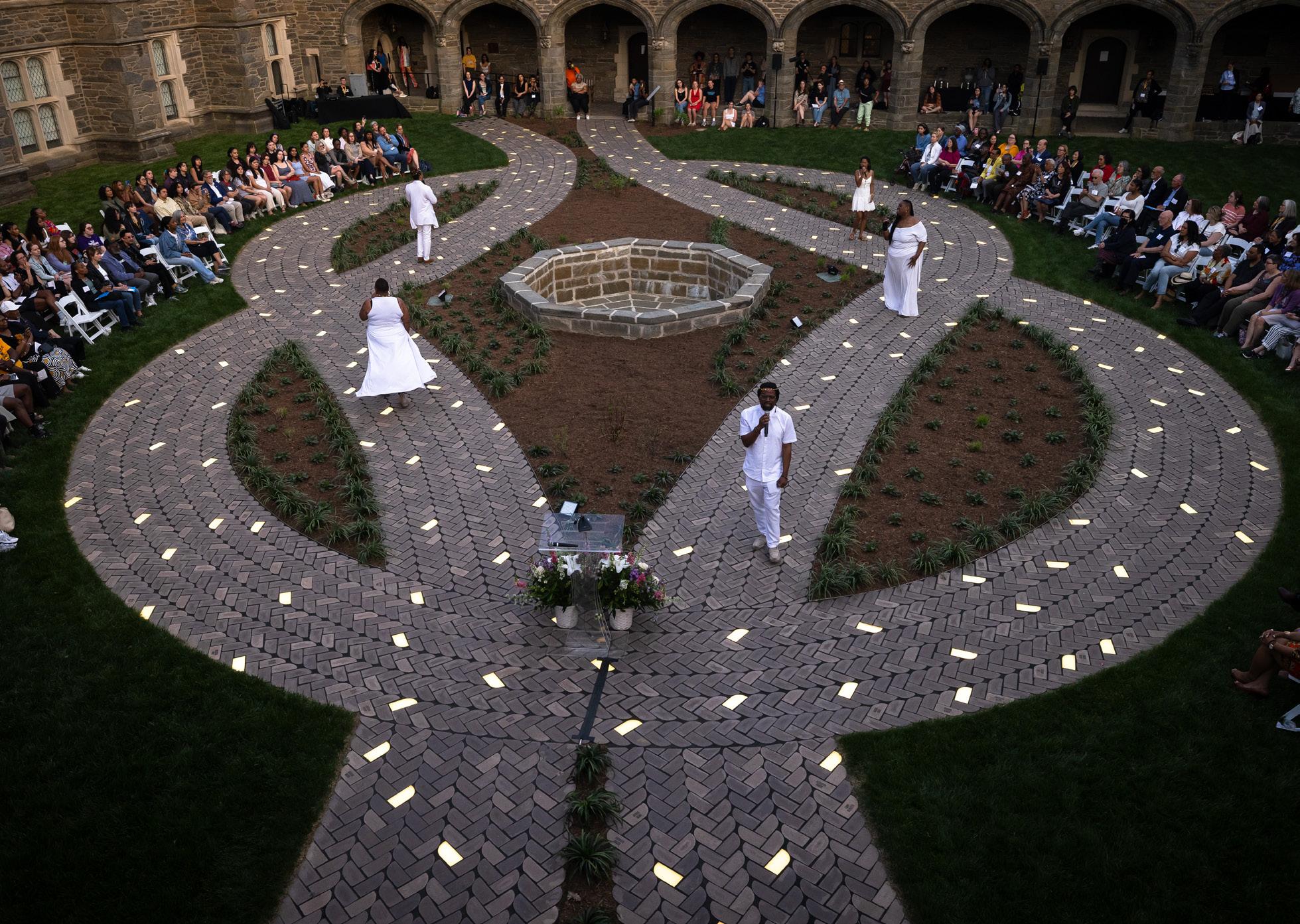
Above: Dedication event for Don’t Forget to Remember (Me) at Bryn Mawr College in Pennsylvania, 2024.
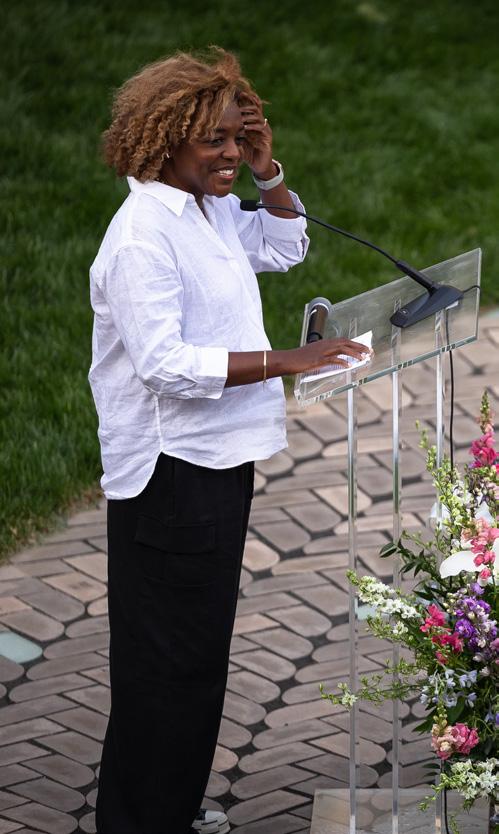
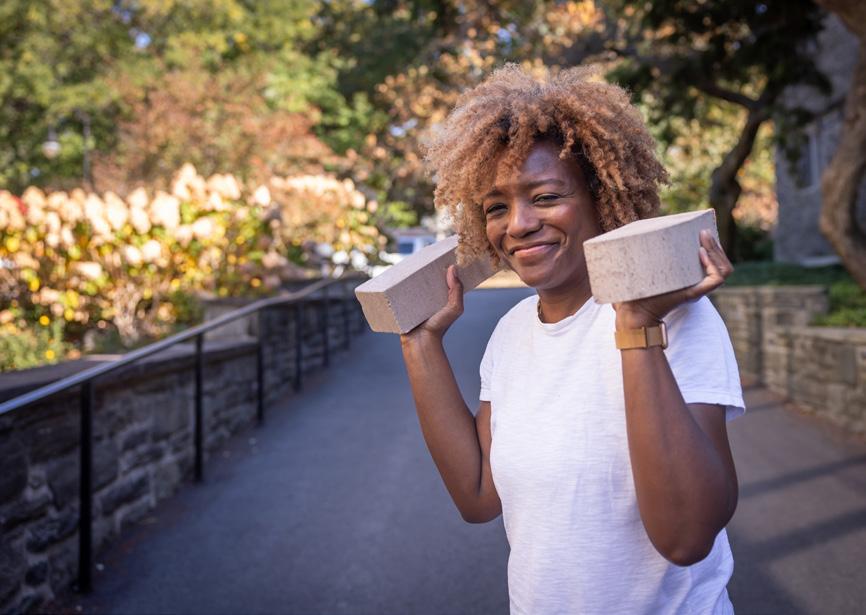
Right: Artist Nekisha Durrett A’98
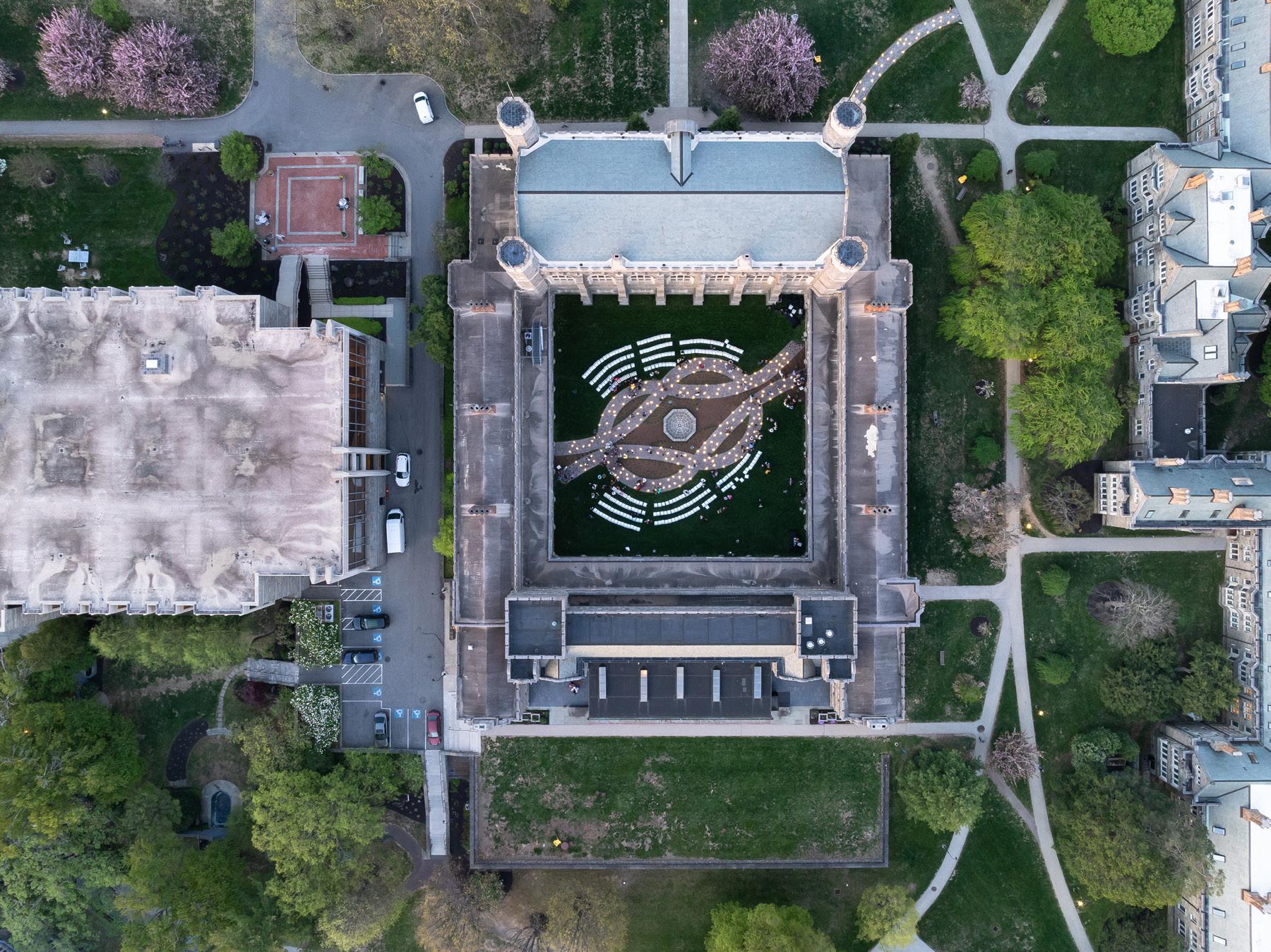
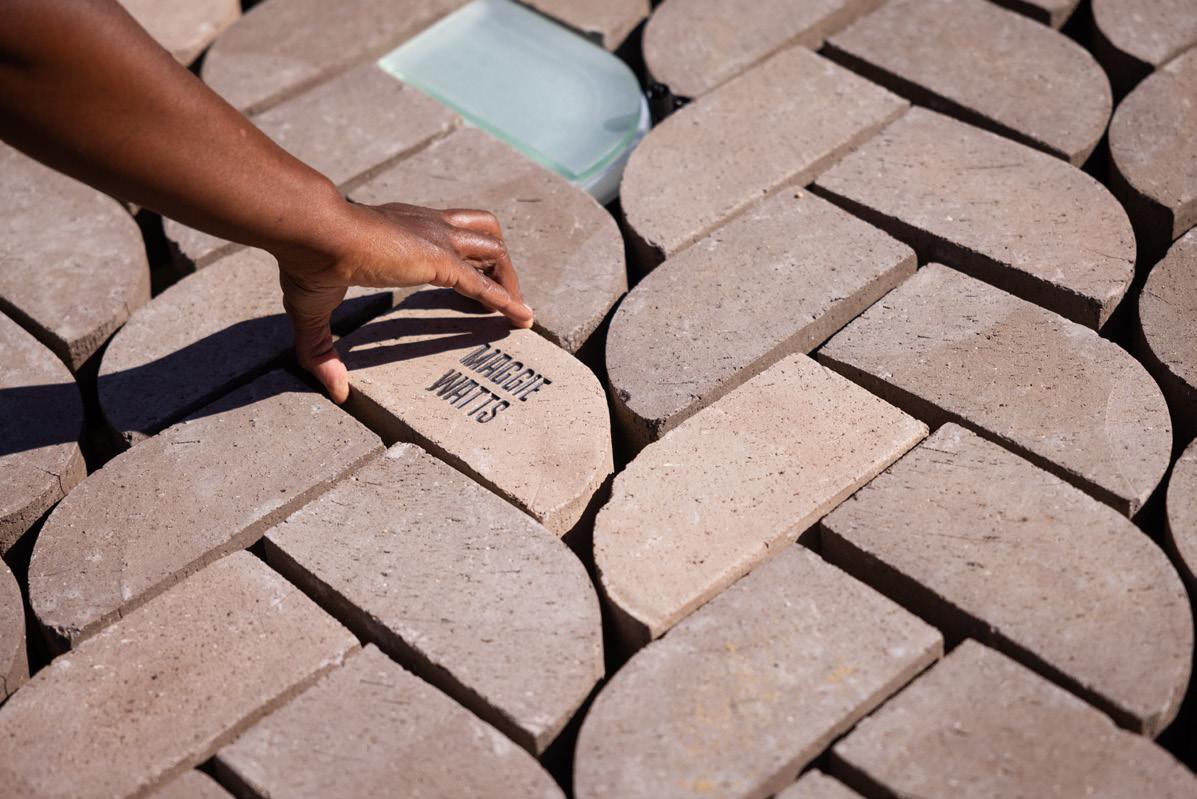
servants, keeping these essential workers largely hidden from view. Twelve thousand custom-poured clay bricks form the structure, among which 248 are engraved with the names of Black staff.
Their names emerged from archival research including census data, timecards salvaged from a fire, and investigations by Special Collections staff and student researchers: tangible acknowledgements of lives omitted from campus history. By night, select pavers glow—translucent bricks filled with LED lights that represent individuals whose names have been lost to history.
Connecting those years to more recent events, Durrett incorporated soil from the site of a Black cultural center established by the college after 1972 student protests and then abruptly razed in 2013 because of the building’s structural problems stemming from years of neglect. The artist used the soil to glaze the clay pavers.
In a recent interview, Durrett recalled taking a “Black at Bryn Mawr” tour as part of her research for the project. She noticed the braids worn by the young woman leading the tour and wondered what environment would help a Black student feel seen and safe in a school that had long lionized one of its early 20th century presidents, M. Carey Thomas, who was a feminist with white supremacist views. Thomas’s ashes are buried under the Cloisters.
Durrett, who once served as the Howard University Social Justice Consortium Fellow, also reflected on a Black student named Enid Cook, who like Durrett, attended public school in Washington, D.C. Over Thomas’s objection, Cook was admitted to Bryn Mawr and became its first Black student to graduate. Still, Thomas succeeded in barring Cook from living on campus. Durrett surmised the
route Cook would’ve taken from her residence to campus—just under a mile— and imagined her making that journey daily up until her 1931 graduation. That, too, became an inspiration for the winding, braided clay pathway.
In an interview on WHYY, Philadelphia’s public radio station, Durrett said she could identify with Cook’s alienation. “I, too, have been in a predominantly white academic environment. I can remember being only one of six Black people who were admitted my year.”
Durrett, who earned an M.F.A. from the University of Michigan after graduating from Cooper, describes the square-knot path as showing that Bryn Mawr’s untold stories are firmly “braided into the landscape.” Not coincidentally, the memorial’s location in the Cloisters is the site of an important annual ritual for undergraduates called Lantern Night, in which current students pass “the light of knowledge” to the incoming class and each new student is given a lantern to mark this rite of passage. When next year’s students hoist their lanterns and sing in Ancient Greek, the path, light, and above all, the names will remind them of the buried histories now being woven into the college’s collective memory.
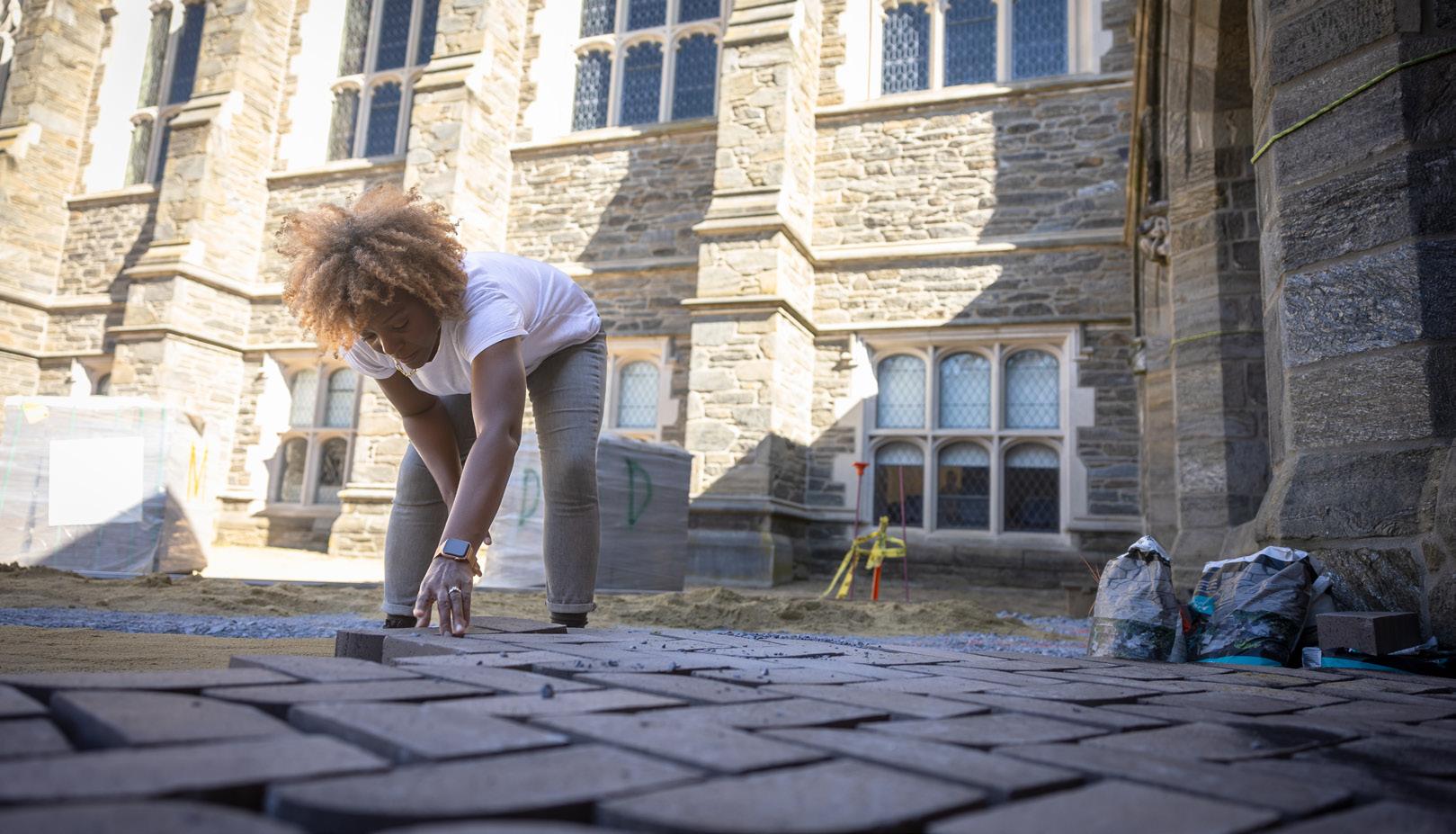
Installation of twelve thousand custom-poured clay bricks comprising the monument’s braided pathway.
Photos: Steve Weinik
ON COOPER
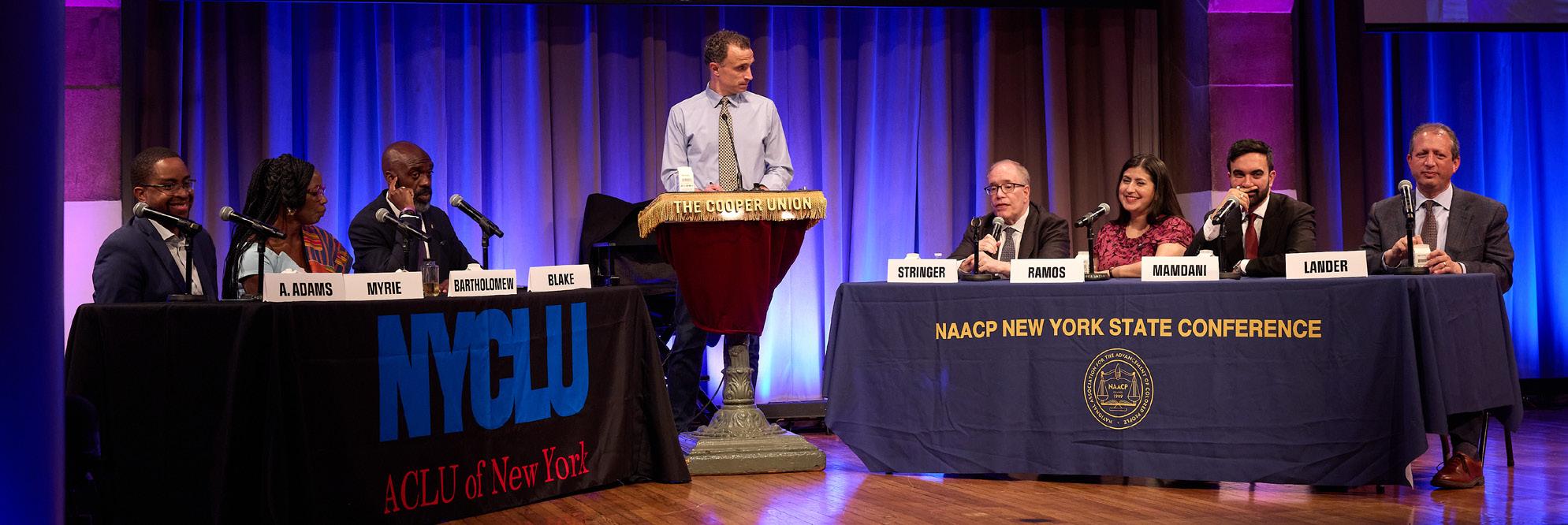
NYC MAYORAL FORUM
AHEAD OF JUNE’S PRIMARY ELECTION, EIGHT CANDIDATES FOR MAYOR CONVENED IN THE GREAT HALL FOR A DISCUSSION MODERATED BY BEN MAX

STUDENT AWARD FOR DISABILITIES INVENTION
ENGINEERING STUDENTS WON $10,000 AT A NEW YORK STATE SYMPOSIUM FOR ASSISTIVE TECHNOLOGIES IN THE WORKPLACE
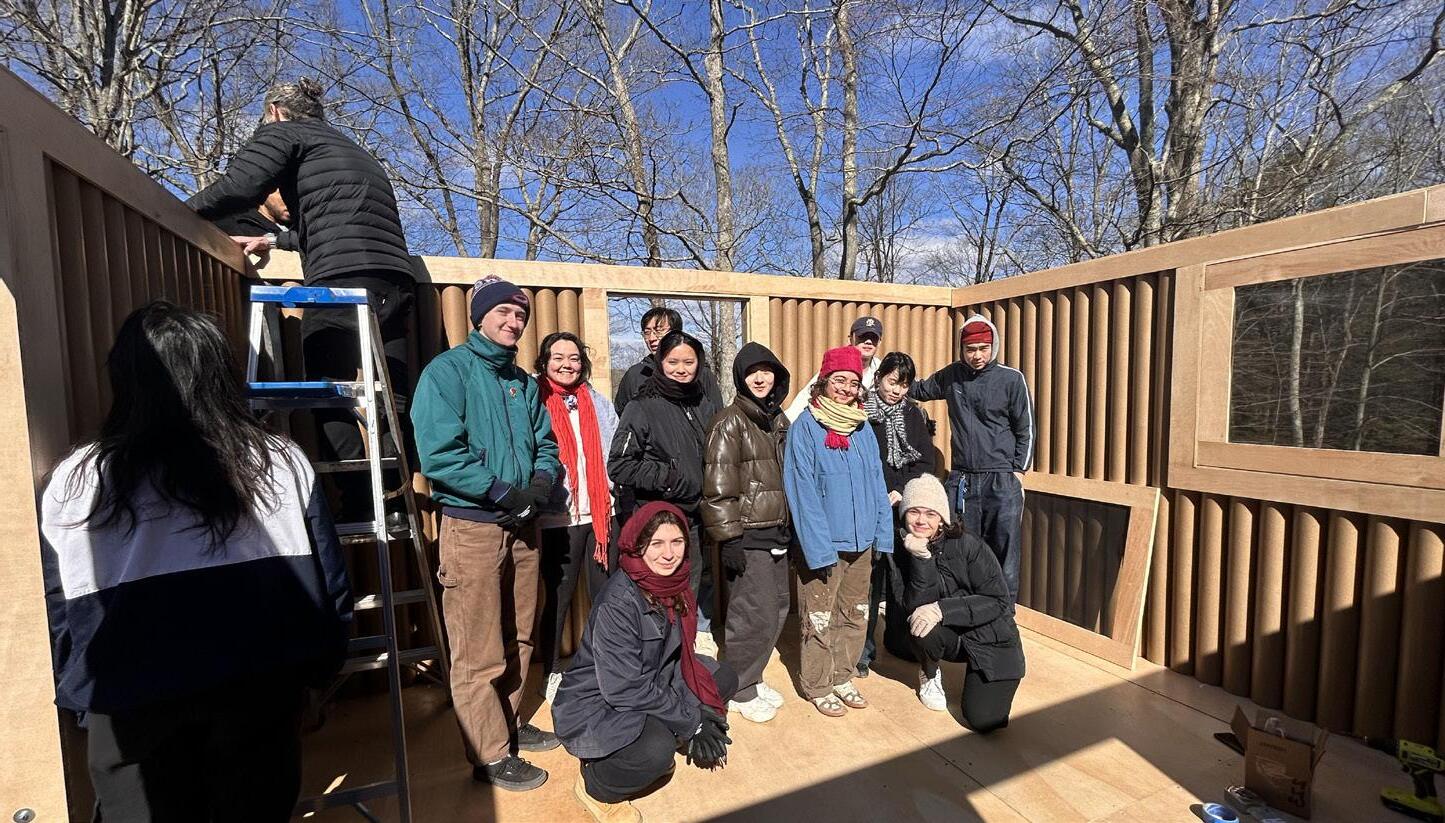
SFMOMA ACQUIRES STUDENT-BUILT STRUCTURE
THE PAPER LOG HOUSE, DESIGNED BY SHIGERU BAN AR’84 AND FABRICATED BY COOPER STUDENTS, WAS ADDED TO THE MUSEUM’S COLLECTION
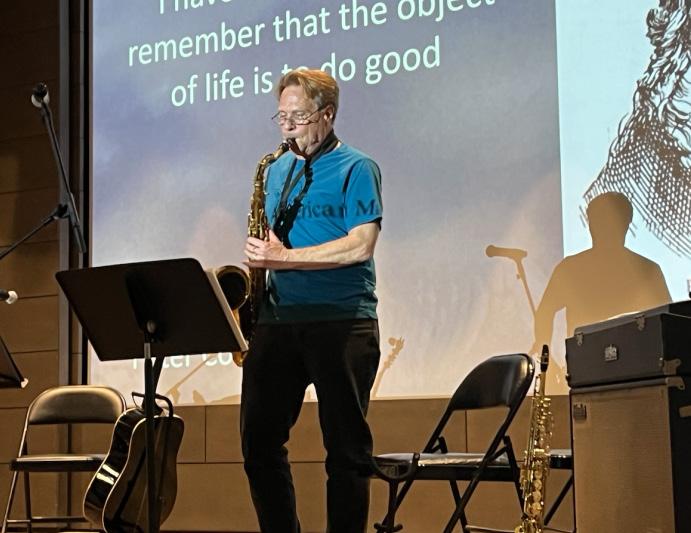
SIDEBO’S FAREWELL CONCERT
TO MARK HIS RETIREMENT, PROFESSOR GEORGE SIDEBOTHAM PERFORMED SONGS INSPIRED BY HIS 36 YEARS OF TEACHING
FACULTY SHARE
BIOMEDICAL RESEARCH
ENGINEERING FACULTY IN SWITZERLAND FOR THE EUROPEAN ORTHOPAEDIC RESEARCH SOCIETY
COOPER DOT EDU
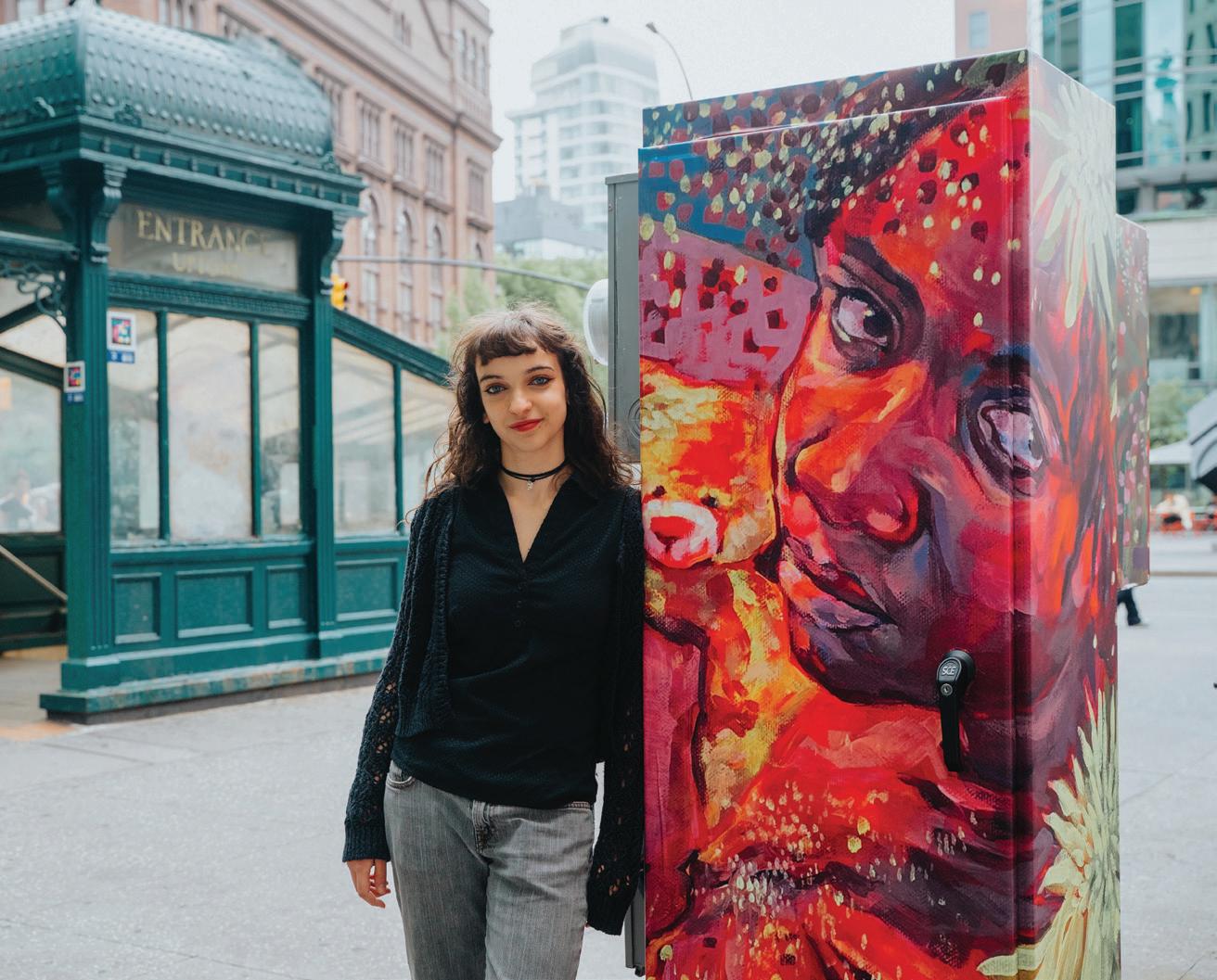
STUDENT WORK IN ASTOR PLACE
JULIANA WOODS WON THE VILLAGE ALLIANCE’S INAUGURAL STUDENT ART COMPETITION
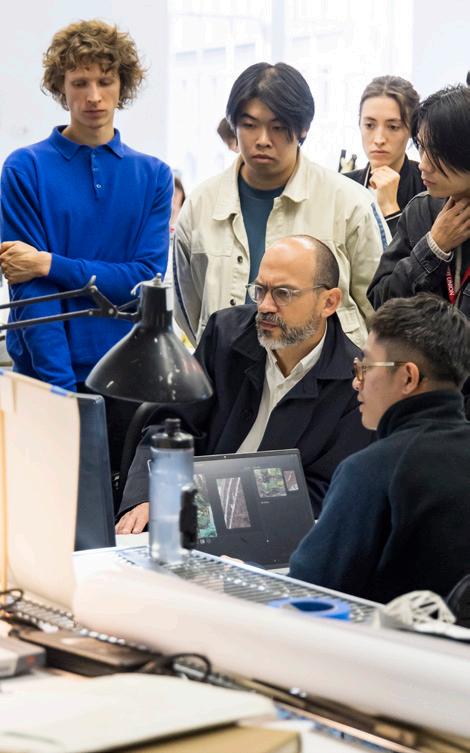
NEW APPOINTMENTS IN ARCHITECTURE
BENJAMIN ARANDA NAMED ACTING DEAN OF THE IRWIN S. CHANIN SCHOOL OF ARCHITECTURE, WITH MERSIHA VELEDAR AR’03 SERVING AS ACTING ASSOCIATE DEAN.
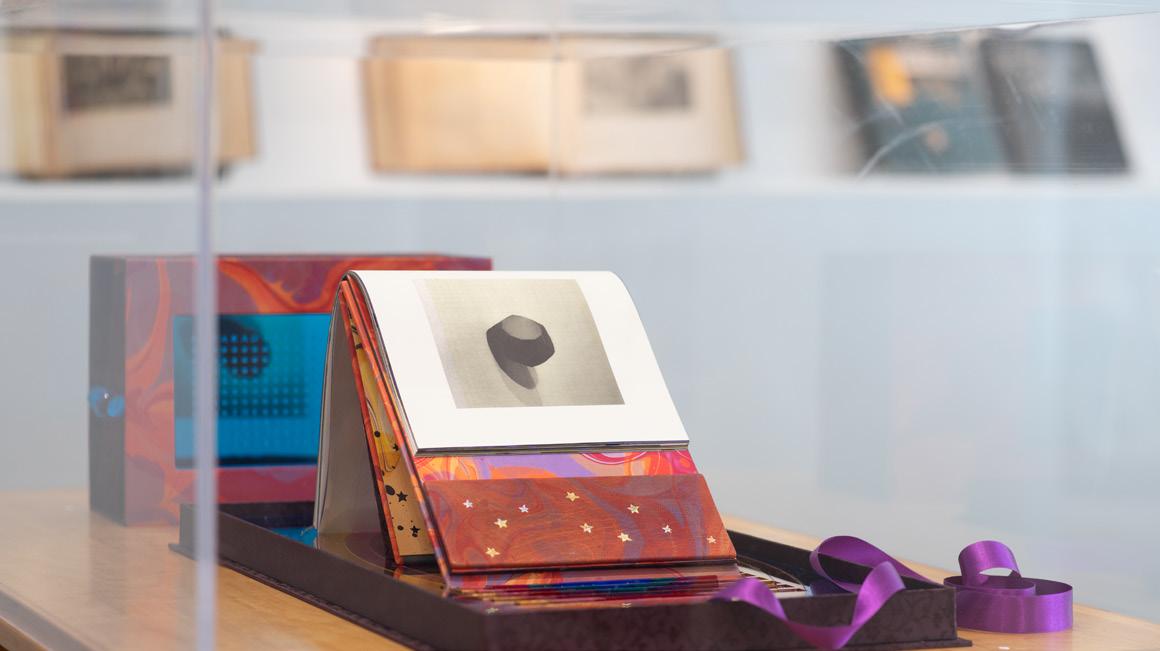
A COMEDY FOR MORTALS
AN EXHIBITION OF ARTIST’S BOOKS BY TAMMY NGUYEN A’07 IS ON VIEW IN THE COOPER UNION LIBRARY THROUGH OCTOBER 10, 2025
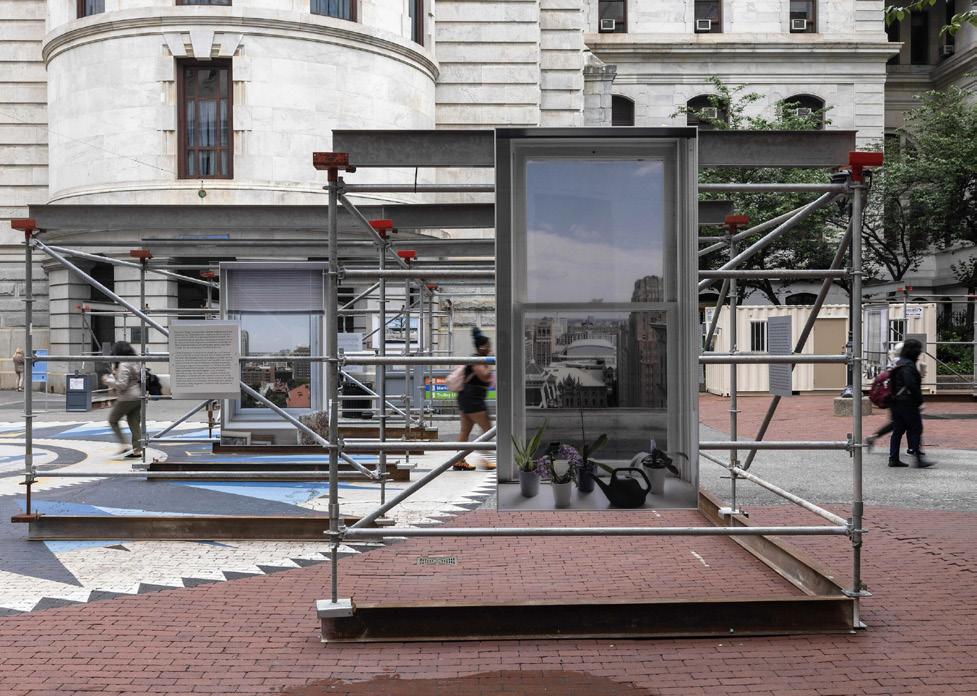
CITY VIEWS
A PUBLIC ART INSTALLATION BY EMILIO MARTÍNEZ POPPE A’16 CAPTURES PHILADELPHIA THROUGH THE WINDOWS OF MUNICIPAL WORKERS
IN MEMORIAM
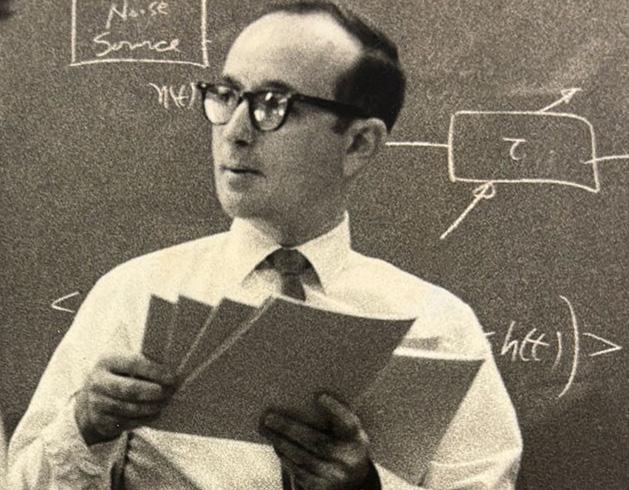
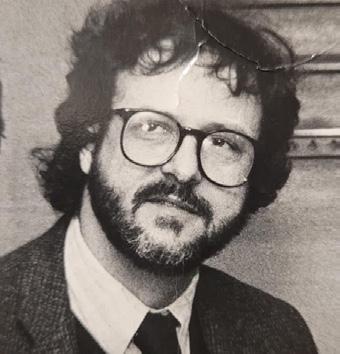
MELVIN SANDLER, EE PROFESSOR AND FOUNDER OF RPIE, AND ANSON RABINBACH, HSS PROFESSOR AND INFLUENTIAL HISTORIAN
TONY AWARD NOMINATION
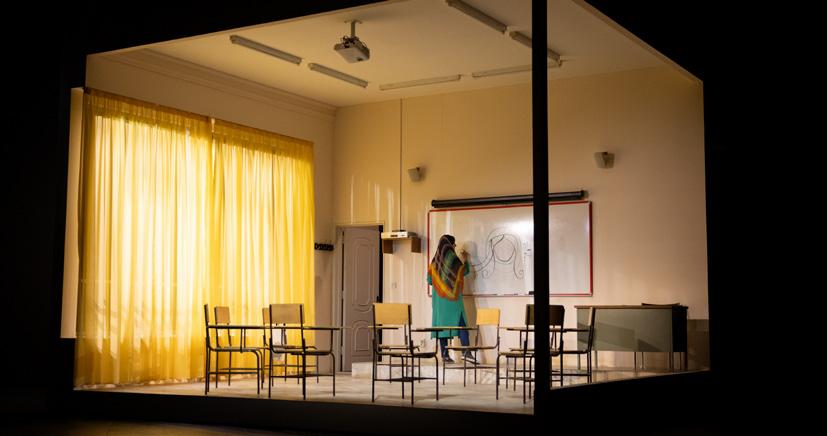
2025 FELTMAN CHAIR MARSHA GINSBERG A’83 WAS NOMINATED FOR BEST SCENIC DESIGN OF A PLAY
Photos: Argenis Apolinario, Maria Baranova, Michelle Biagi, Kathryn Gamble
AN INTERVIEW WITH MAX G. WOLF CE’05 M.ENG’25
HOW TO BUILD ON A WARMING PLANET
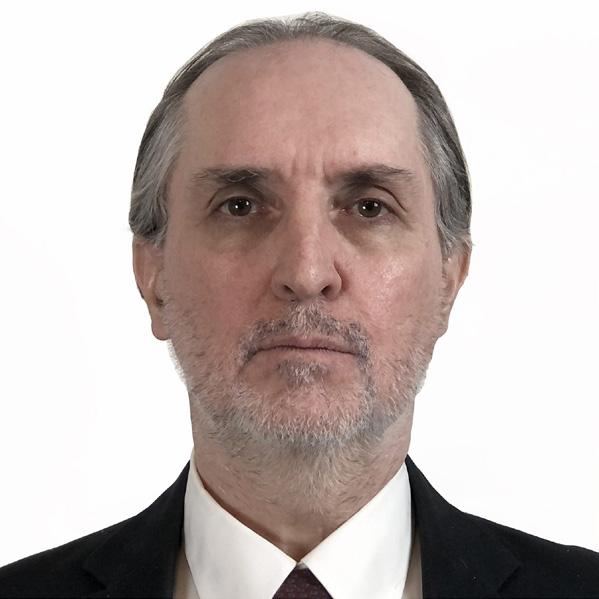
In 2005, Max Wolf walked across the Great Hall stage as class valedictorian, earning his bachelor’s in civil engineering, but he left The Cooper Union with one goal unfinished: a master’s thesis aimed at protecting Arctic habitat against rapidly rising temperatures. Nearly two decades after starting his research, Wolf returned last fall to Cooper with an ambitious new approach to slowing the collapse of polar sea ice, completing his master’s degree in May.
During those intervening years, Wolf established an impressive career dedicated to reducing the environmental impacts of building design, operations, and materials. He earned a master’s in architecture from Pratt Institute in 2008, gained professional licensure as both a structural engineer and an architect in New York State, and became a Certified Passive House Designer with the Passive House Institute. Wolf also advised on a recent landmark piece of climate legislation that sets limits on greenhouse gas emissions for New York City’s largest buildings.
What first sparked your interest in researching the built environment from an ecological perspective?
“It happened in stages, but the first significant one occurred when I was happily engaged as a structural engineer at Werner Sobek in 2007. A colleague mentioned the Buckminster Fuller Challenge, and though I dismissed it from my mind as far-fetched, a few weeks later I came across a Planet Earth episode of a polar bear gracefully swimming far out into the open water of the Arctic Ocean alone, driven by hunger. The episode ends with the bear exhausted and wounded by a walrus and possibly dying. I couldn’t forget that bear, so I quickly developed a proposal for an array of artificial ice floes that progressed to the semi-finals.
“As my research into climate change, site ecology, and allied topics continued, either on projects at work, like the Dubai Expo 2020 Sustainability Pavilion while I was with Grimshaw Architects, or on my own, I realized that sea ice is far too complex from micro to global scales to replace with the submersible platforms I proposed.”
“I needed to find some solution for that swimming polar bear, and all the other animals of the Arctic pack ice that it symbolizes, even if it is merely a stopgap solution to possibly buy them a few more decades of time.”
Why return to Cooper after accomplishing so much professionally?
“I rejected finishing my thesis based on the Buckminster Fuller proposal when I realized it was insufficient. I didn’t need the degree for my work, so I decided to continue researching on the side until I came up with a solution that was as ecologically compatible and thorough as I could make it, while avoiding geoengineering methods due to their inherent risk.
“I proceeded to earn an M.Arch while practicing structural engineering with the intention of transitioning into architecture, which eventually materialized with roles at Grimshaw and Skidmore, Owings & Merrill (SOM). My long-term plan was to intertwine both professions in myself since they are so intertwined in nature. Around 2016, I conceived of a method to thicken and accelerate the production of natural sea ice using artificially induced rafting (layering and freeze-bonding the ice), which also maintains snow and pack ice topography, such as that found in and around pressure ridges, zones of elevated biodiversity that are declining in size and frequency. Once I was able to test the concept in a small ice towing tank, which took me about three years to design, build, and use, I approached Professor Cosmas Tzavelis, my original advisor at Cooper Union, about completing the thesis.
“As eccentric as it may sound considering the conservative Western culture I was born into, I needed to find some solution for that swimming polar bear, and all the other animals of the Arctic pack ice that it symbolizes, even if it is merely a stopgap solution to possibly buy them a few more decades of time. It may be enough to get them to a long-term solution such as a combination of reduced emissions and solar radiation management like stratospheric aerosol injection. Writing the thesis helped me consolidate that effort and prepare it for the next step, if there is one.”

Two-thirds of New York City’s emissions come from its buildings. As a member of AIA’s Committee on the Environment (COTE), you reviewed the bill that became Local Law 97 (LL97), which targets an 80 percent reduction in emissions from buildings over 25,000 square feet by 2050. Can you explain that process and what its implications are?
“That bill was Introduction 2153 of 2018, sponsored by Costa Constantinides, who is unfortunately no longer a member of the City Council. So, the original champion of the bill is gone, which I believe is contributing to mounting challenges to its implementation.
“As far as considerations that went into AIA COTE Policy Committee’s review of the bill, one of the biggest that puzzled us for weeks was that it was based on emissions limits defined in terms of tCO2e /sf-yr (metric tonnes of CO2 equivalent per sq. ft. per year) rather than energy use intensity (EUI) that architects are accustomed to (kbtu/sf-yr).
“There was also no explanation for the values stated, for example a limit of 0.00846 tCO2e /sf-yr for occupancy group B (The entire business use group, which encompasses a huge range of EUIs). As I recall, neither Costa nor his staff would tell us how they were derived. It was strange. Eventually I was able to derive the bill’s 2050 target of 0.0014 tCO2e /sf-yr for all of NYC based on first principles and assuming an 80 percent emissions reduction based on a 2005 baseline, and then the particular values for individual occupancy groups became credible but were obviously Procrustean.
“With that first hurdle mostly resolved, the other aspect that led the majority of COTE Policy members to eventually support the bill was that we were afraid it might be
another ten years before a comparable bill came up for vote. I considered that given the rate of climate damage and that much of it is irreversible on the scale of human civilizations (hundreds to thousands of years), we didn’t have another ten years.
“Regarding significance for the city, there should be many deep retrofit projects underway right now to meet the timeline of LL97, but the pace of retrofitting today is not significantly different than it has been in the last 25 years. Yes, it’s expensive to retrofit, but even a child can understand that the alternative is eventually far more costly, and there will be no undoing much of the damage.
As Churchill observed, ‘You can always count on Americans to do the right thing—after they've tried everything else.’ We are in the ‘try everything else’ phase of LL97.”
How do you think LL97 will reshape the way architects and engineers approach their work in the coming years?
“I’m not sure. Thus far, I’ve seen one sidestep LL97 by designing a large new building to current code, even though they knew the day it is granted its Certificate of Occupancy, it will be in violation of LL97. Politics, architecture, and engineering in NYC are typically dominated by short-term real estate interests. The Real Estate Board of New York (REBNY) strongly opposed Intro. 2153.
“Architects and engineers have essentially failed to significantly change their practices regarding emissions due to the extremely competitive market they operate in, and due to a lack of courage to speak the truth about the situation. I include my own efforts as a designer and environmental advocate in this failure. Without laws like LL97 to level the playing field of carbon performance for buildings and infrastructure, the
“[T]here should be many deep retrofit projects underway right now to meet the timeline of LL97, but the pace of retrofitting today is not significantly different than it has been in the last 25 years.”
pressure to realize projects with the least upfront financial cost to maximize short-term profit will always prevail. If you unilaterally decided to design only buildings that do their part to reduce emissions in conformance to LL97 and the Paris Agreement, you would quickly go out of business due to pushback from your clients and the current premium on low-emissions construction. Low-emissions buildings are not inherently more costly, as they achieve most of their reductions with cheap materials like insulation, sealant, air vapor barriers, and windows, and cities like Brussels that have implemented passive house as the code minimum have demonstrated this. However, since they are not yet the norm in NYC, they are still bid with premiums, which are to some extent ‘fear factors’ that tend to price them out of existence.”
Is there any advice you’d give to a Cooper student who wants to work in building design, research, or engineering with the goal of creating a better climate future?
“Be aware that your ability to contribute to designs that are truly sustainable will be extremely unlikely without laws like LL97 being enacted and enforced. Look for regions of the world that enforce such laws. A building is truly sustainable with respect to the carbon cycle at the heart of climate change if it doesn’t make climate change worse—that is, when it cuts its projected whole-life emissions by 80 percent or more with respect to a circa 2005 baseline. Population growth, which is often not accounted for, must also be factored in. This makes it difficult but not impossible. With fully green grids, it will be much easier but will still require careful design and just as careful construction administration to strictly limit whole-life carbon.”
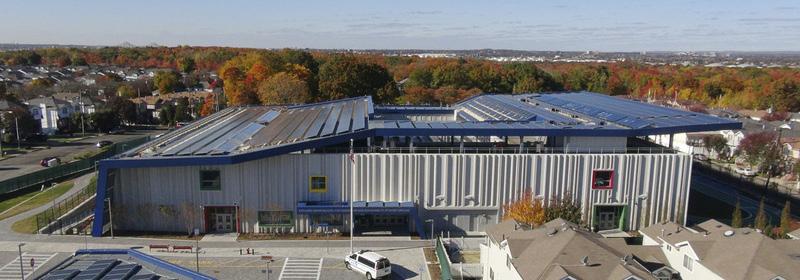
Wolf points to Staten Island’s Kathleen Grimm School for Leadership and Sustainability (P.S. 62), designed by SOM, as a model for retrofitting.
As New York City’s first net-zero-energy school, the facilities include interactive, real-time building performance tools that enable students to learn about energy efficiency.
SOM/James Ewing/OTTO
FRANKIE SAYS FAREWELL
Frank Wibowo—or Frankie, as he’s best known—has helped sustain countless studio hours and study sessions with his signature baked ziti, salmon teriyaki, and spicy chicken sandwiches. After nearly five decades of food service at The Cooper Union, he announced his retirement this year.
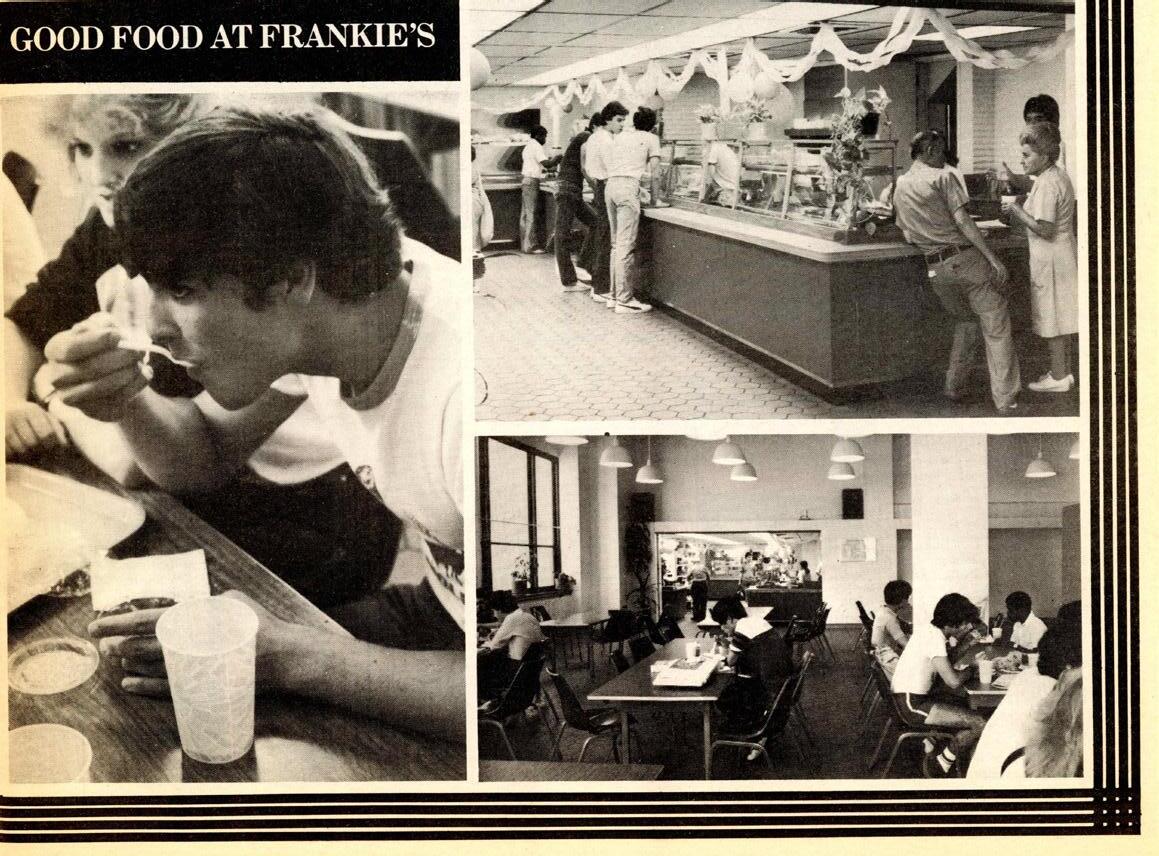
Frankie’s Kitchen began in 1983 on the first floor of the former Hewitt Building, though Frankie himself joined Cooper several years earlier. In its current incarnation, atop the grand staircase of 41 Cooper Square, the kitchen remains a dependable refuge for students, offering fast, affordable eats and space to socialize. For Frankie, it’s always been about the sense of community and, in Cooper spirit, ensuring students are well-fed even when they can’t afford to pay upfront. As he told The Cooper Pioneer in 2011, “I cook more to make students and Cooper people happy than to make money for myself.”
Originally from Indonesia, Frankie got his start in New York in the early 1970s, working as a dishwasher and learning to cook at an Italian restaurant. He joined Cooper in 1976 as an employee of Peter’s Pantry, the institution’s first full-service cafeteria, which opened that same year. Though not yet fluent in English, he quickly endeared himself to the students. They taught him the words for different deli meats and stood up for Frankie when he was scolded by his boss.
“The students were always on my side,” he says. When the company that operated Peter’s Pantry pulled out of its contract in 1982, students organized a boycott of the vendor that was brought in as a replacement and petitioned then-President Bill Lacy to arrange for Frankie to return to Cooper. With support from Leslie Ng ChE’80, Armando Jimenez ME’85, and Larry Curtis AR’81, Frankie’s Kitchen was born, taking over the cafeteria space the following year.
It quickly became more than a place to eat. In the Hewitt Building of the 1980s, Frankie’s Kitchen doubled as a party venue, often with Frankie at the DJ table.
“Girls always requested Michael Jackson, guys requested Madonna,” he says. Rosa, a long-serving member of his team, would work the coat check. He’d lend his record collection to student groups, host holiday meals for staff and faculty, and pack lunches for the annual ski trip. Faculty members were supportive of Frankie from the beginning as well. Eleanor Baum, dean of engineering, arranged for him to set

up a satellite commissary in the old Engineering Building at 51 Astor Place. Frankie even recalls John Hejduk climbing a ladder to hang lights over the dining area.
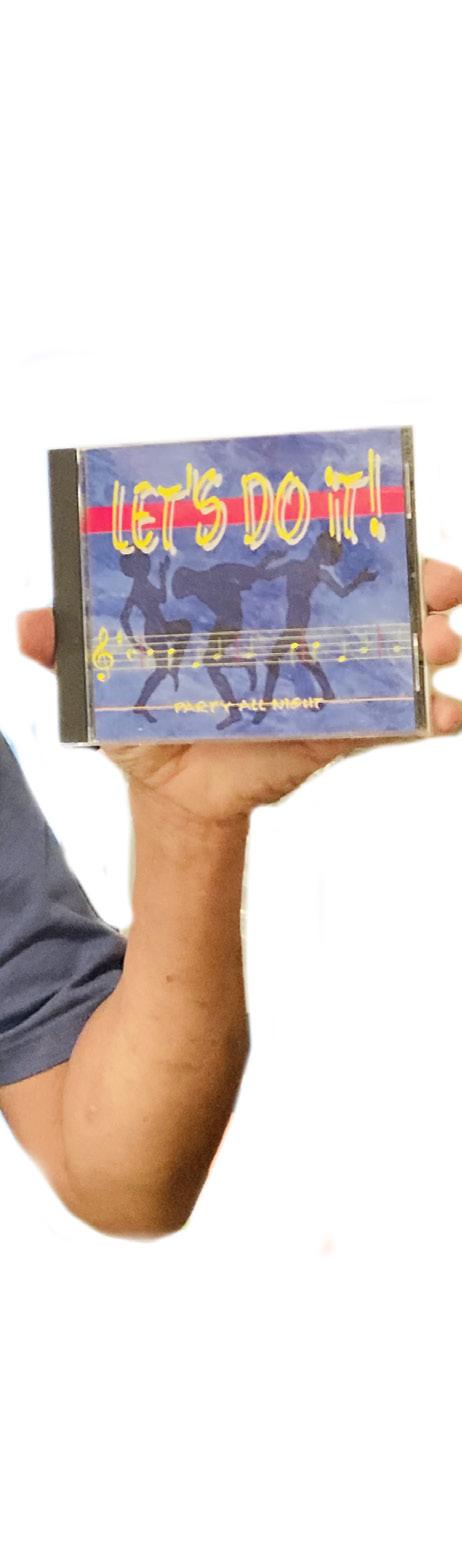
Today, as he prepares for a happy retirement, Frankie’s legacy at Cooper continues. Some of his favorite party music is in rotation via live digital streaming from the student-run Cooper Radio Collective (radio.cooper.edu), to whom he donated two bags of CDs from his collection. As for Frankie’s Kitchen, management will change hands at the end of the fall semester, but the food and service aren’t going anywhere.
Frankie will also be attending Reunion Weekend on September 27, during which alumni will have the chance to congratulate him on his retirement and share memories over a special menu he’s planned for the event.
Frank Wibowo’s many years at Cooper have been preserved as part of The Cooper Union Oral History Collection, which includes an interview with Frankie conducted last spring by Archives Librarian Mary Mann. Listen to the stories here.
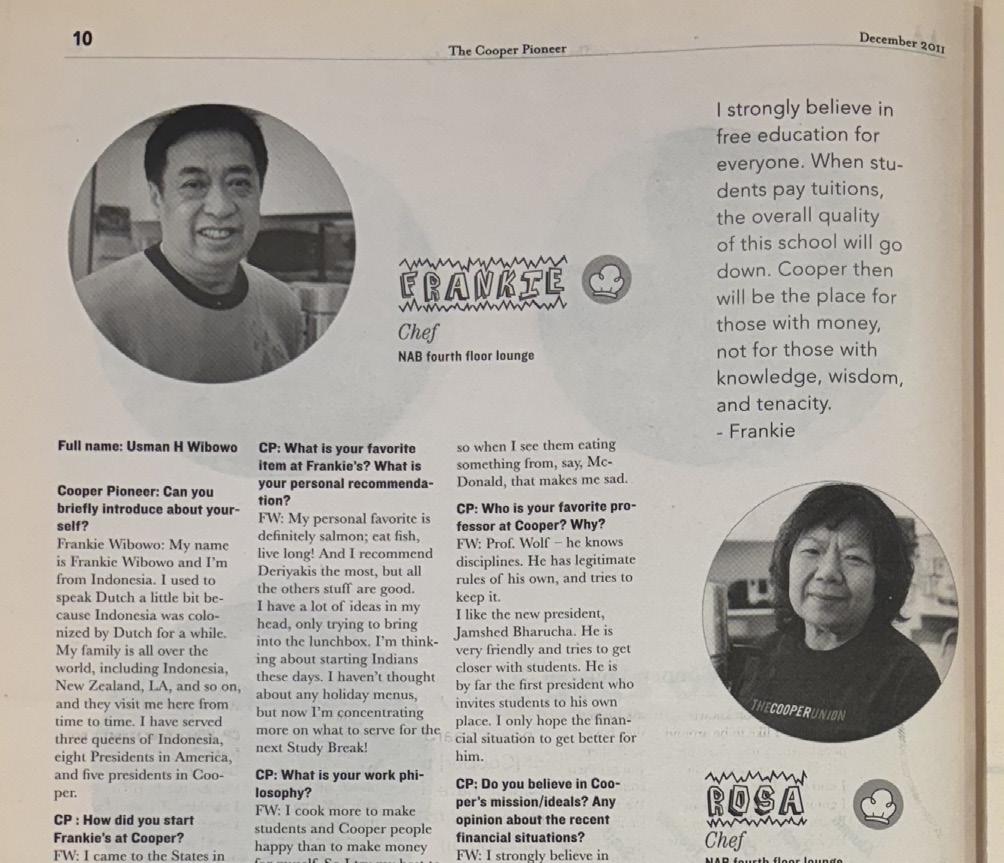
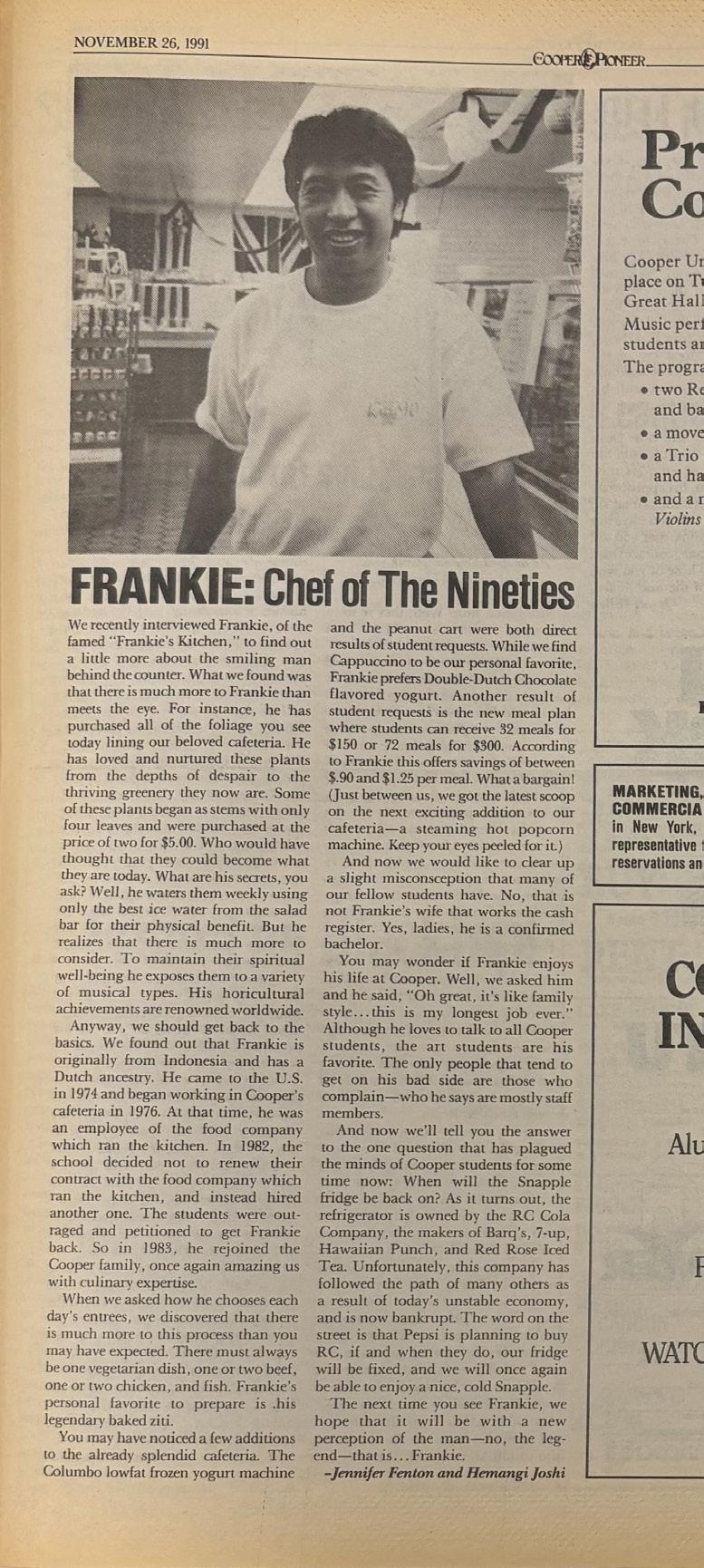
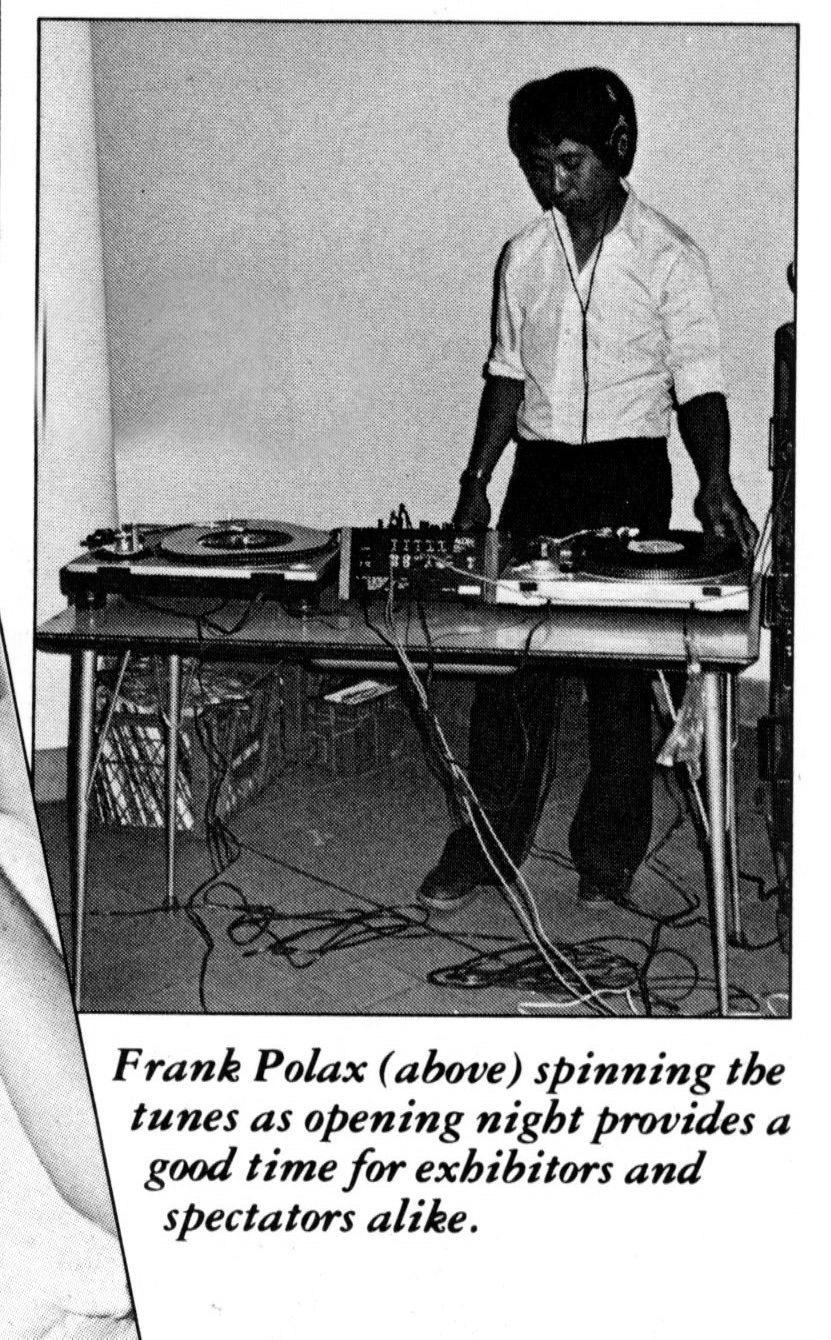
Photos
courtesy of The Cooper Union Archives and Special Collections
TO EVERY DONOR, FRIEND, AND SUPPORTER—
FOR HELPING TO MAKE THIS A TRULY EXTRAORDINARY YEAR FOR THE COOPER UNION.
Because of your generosity, Cooper was able to offer more scholarships, support more students, and take bold steps toward our shared goal: the full restoration of tuition-free education for all undergraduates.
Last September, we proudly announced that every student in the Class of 2025 would receive a scholarship to cover 100% of tuition in their senior year, and that seniors for the next three years will receive the same. This milestone is a direct result of your support—and a powerful affirmation of Peter Cooper’s founding vision.
In this last year, we also saw the strength and momentum of Cooper’s academic reputation. Applications rose 43% over the prior year, and we welcomed one of our most promising entering classes in recent memory. For the seventh consecutive year, there was no tuition increase, and on average, 89% of undergraduate tuition will be covered for the coming academic year.
And there’s even more to look forward to. With the appointment of Steve McLaughlin as our 14th president, Cooper is stepping into its next exciting chapter. Steve brings a powerful blend of scholarly rigor, academic leadership, and a deep appreciation for Cooper’s mission.
All of this progress is possible because of the Cooper community. Thank you for standing with us and for contributing to our shared vision of providing future generations with access to an education that, in Peter Cooper’s words, is “second to none.”
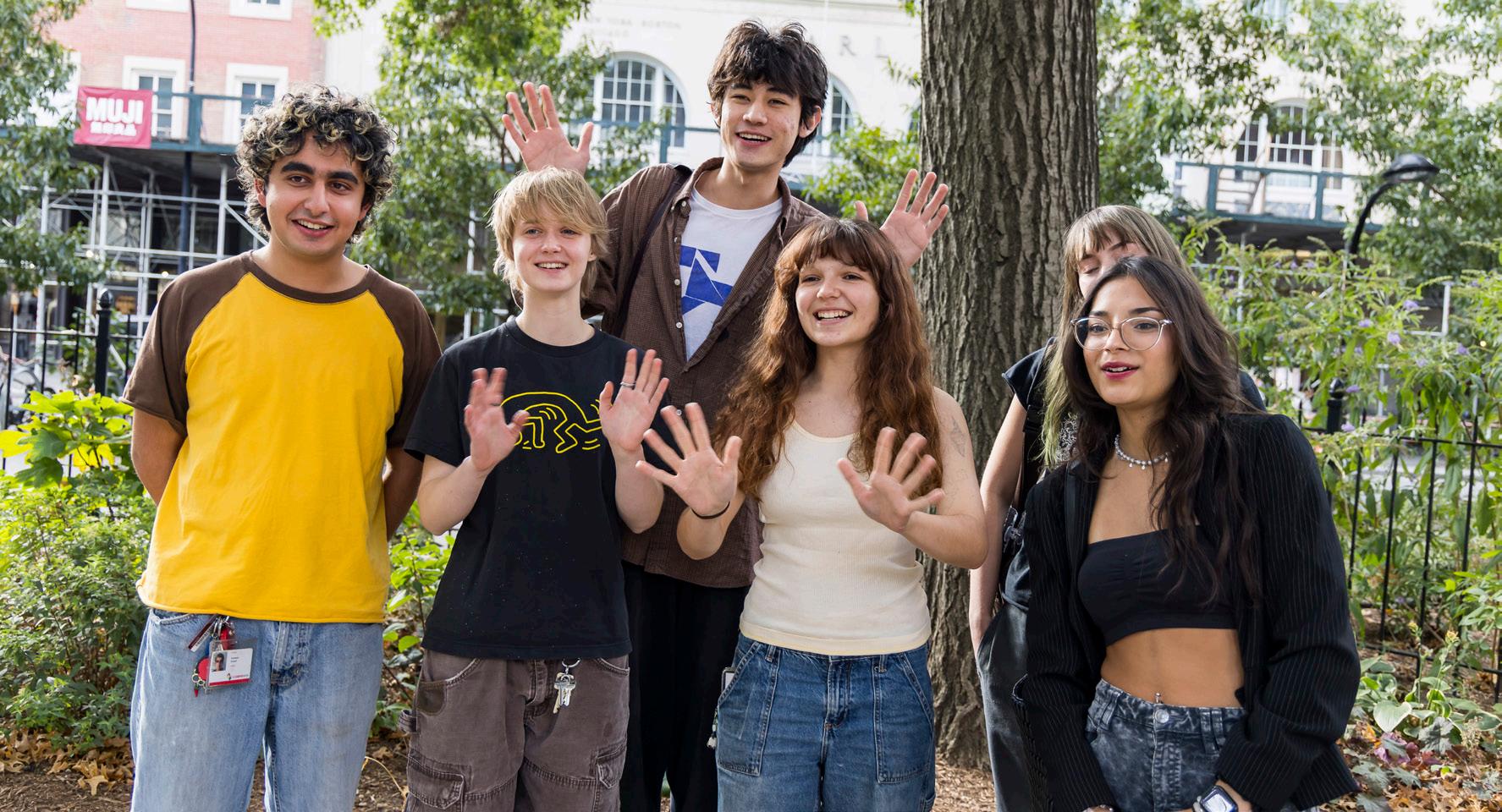
Please make a gift to The Cooper Union here.
Kathryn Gamble
LEADING BY GIVING
DALE ZAND EE’45
Celebrating his 80th reunion, Dale Zand, a 1945 Cooper graduate, spoke to us about his experience at Cooper and how it launched his success as an expert in business management and leadership.
“When I graduated from Cooper, I thought if I was a good engineer my knowledge would be readily accepted and implemented,” he says. But gradually he discovered that the transfer of ideas depended upon many social, psychological, and political factors, a notion that became central to his research as a professor of management. That insight is at the center of Zand’s career as a distinguished leadership scholar and organizational behavior expert who continues to write about the factors that cause information to be set aside or accepted and acted upon.
Brooklyn born and raised, he arrived at The Cooper Union as a 16-year-old in 1942. In a short two-and-a-half years, he earned his degree in electrical engineering because, in the months after the bombing of Pearl Harbor, the school adopted a “wartime footing.” Classes were held every day, 12 months a year, with no summer vacations or holidays other than for Christmas and New Year’s. As Zand, a longtime donor to Cooper, puts it, “The word I would use to summarize what it was like to go to Cooper at that time was ‘intense.’”
Despite the compressed schedule, the curriculum was not abridged in any way, so attrition was high. Zand estimates that he entered with 100 other engineering students and fewer than 20 graduated. He credits Cooper with launching his career, and as part of his generous donations to the college, he has established four endowments over the years that support scholarships, a commencement prize, and general operations.
At 6 am the day after graduation in January 1945, Zand was inducted into the Navy while World War II was raging in the Pacific and Europe. He attended the Naval Advanced Electronics School in Washington, D.C., to be trained in radar, sonar, and radio communication. After getting through Cooper, the course “was elementary for me.” When he finished, instead of sending him out on a warship,
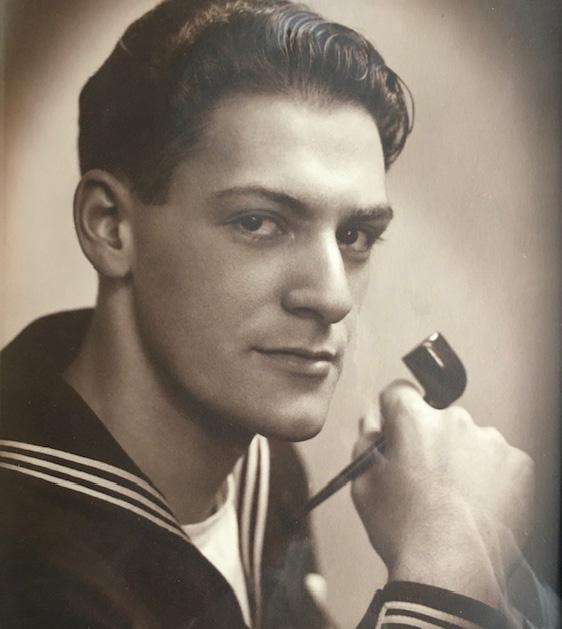
the Navy decided he had greater value as an instructor at the school, where he would train additional, desperately needed, electronic specialists.
After his discharge in August 1946 at the end of World War II, he worked as a system planning engineer for the Potomac Electric Power Company, projecting the D.C. area’s growth and simulating future power equipment and network demands.
“I gradually became interested in how a business transforms engineering information into capital investment decisions.” He decided to earn an M.B.A. and later a Ph.D. at New York University’s Stern School of Business, with postdoctoral studies in group behavior and experimental social psychology. He wrote his dissertation on strategic analysis as an organization’s critical impetus for capital investment decisions. The dissertation departed from prevailing economic theory, which said to rank order capital projects by rate of return and implement all those that exceed the cost of capital. Economic theory, at that time, avoided the difficult details of management and strategic analysis by using a catchall concept called opportunity cost. As he’s done throughout his career, Zand’s dissertation introduced elements of psychology, sociology, and strategy portending the wider acceptance of managerial economics and behavioral economics in economic thinking.
In the early 1970s, Zand, by then a professor of management at Stern (he eventually became chair of the
Management–Organizational Behavior Department), pioneered research in trust dynamics and managerial problemsolving. His groundbreaking book The Leadership Triad: Knowledge, Trust, and Power (Oxford Univ. Press, 1997) considers the three-part framework essential to effective leadership in organizations. He argues that power, trust, and knowledge are interdependent— if one factor is diminished, misused, or absent, the flow of accurate information, appropriate goal setting, and implementation activities are disrupted and lead to poor decisions that weaken an organization.
“I discovered that even after trust is built, you needed people who accepted the knowledge and had the power to implement it. Every increment in knowledge goes through this process.”
Zand has been a consultant and coach to executives in leading firms across finance, energy, chemical, and food industries. He’s served on boards, including Newfield Exploration and the National Training Laboratories, working on practical organizational challenges. He evaluated research proposals in his fields for the National Science Foundation and Ford Foundation, was chair of the Organization Development Division of the Academy of Management, and was a Ford Foundation fellow in a Harvard program on the application of mathematics to business problems. He is currently at work on a book about decision behavior.
Zand, who will be inducted into the Sarah Bedell Cooper Lifetime Giving Society for donors who have given between $500,000 to $999,999, says his decision to support Cooper for more than 50 years was informed by gratitude for his education coupled with a hope that he can impact the lives of other bright students lacking the financial means to get a top-flight education. “Learning is a lifelong pursuit. I hope that what I’ve given helps others reap the benefits of learning at Cooper and encourages them to support Cooper and following generations after leaving.”
THE 2025 REUNION
SATURDAY, SEPTEMBER 27
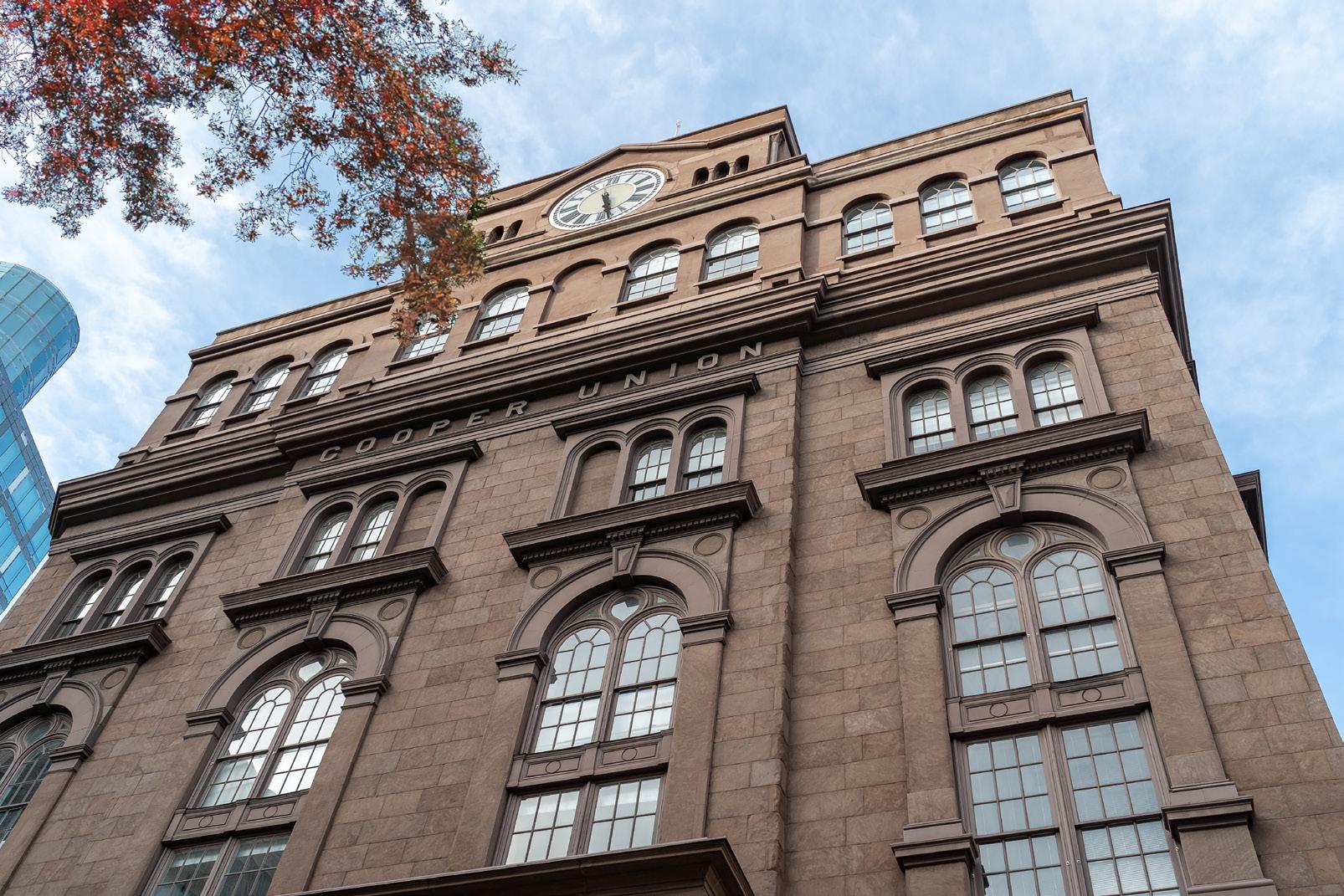
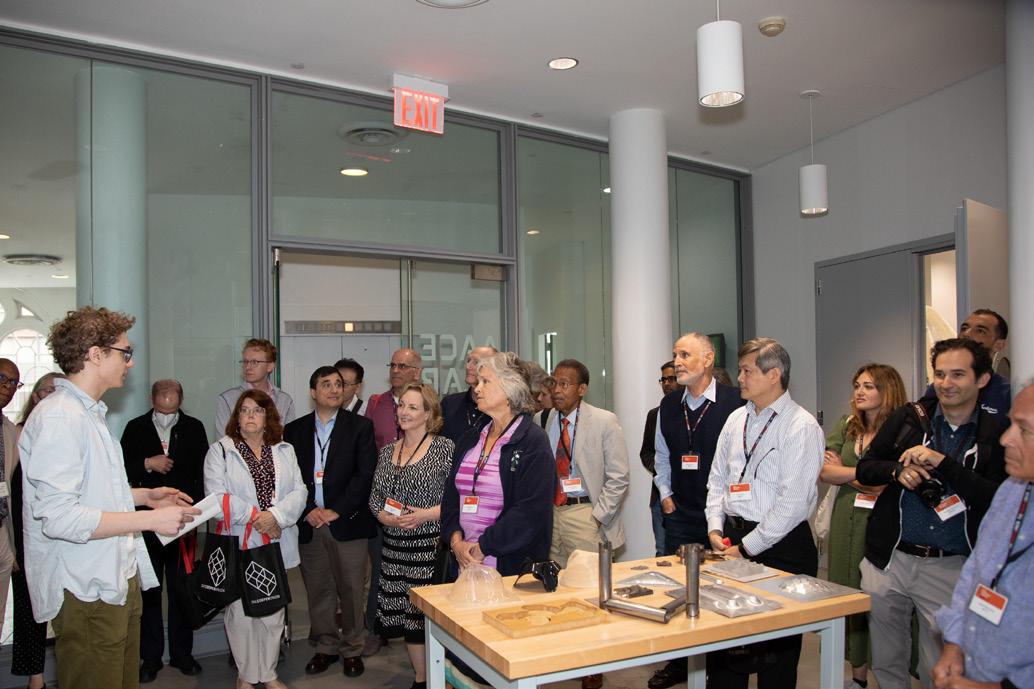
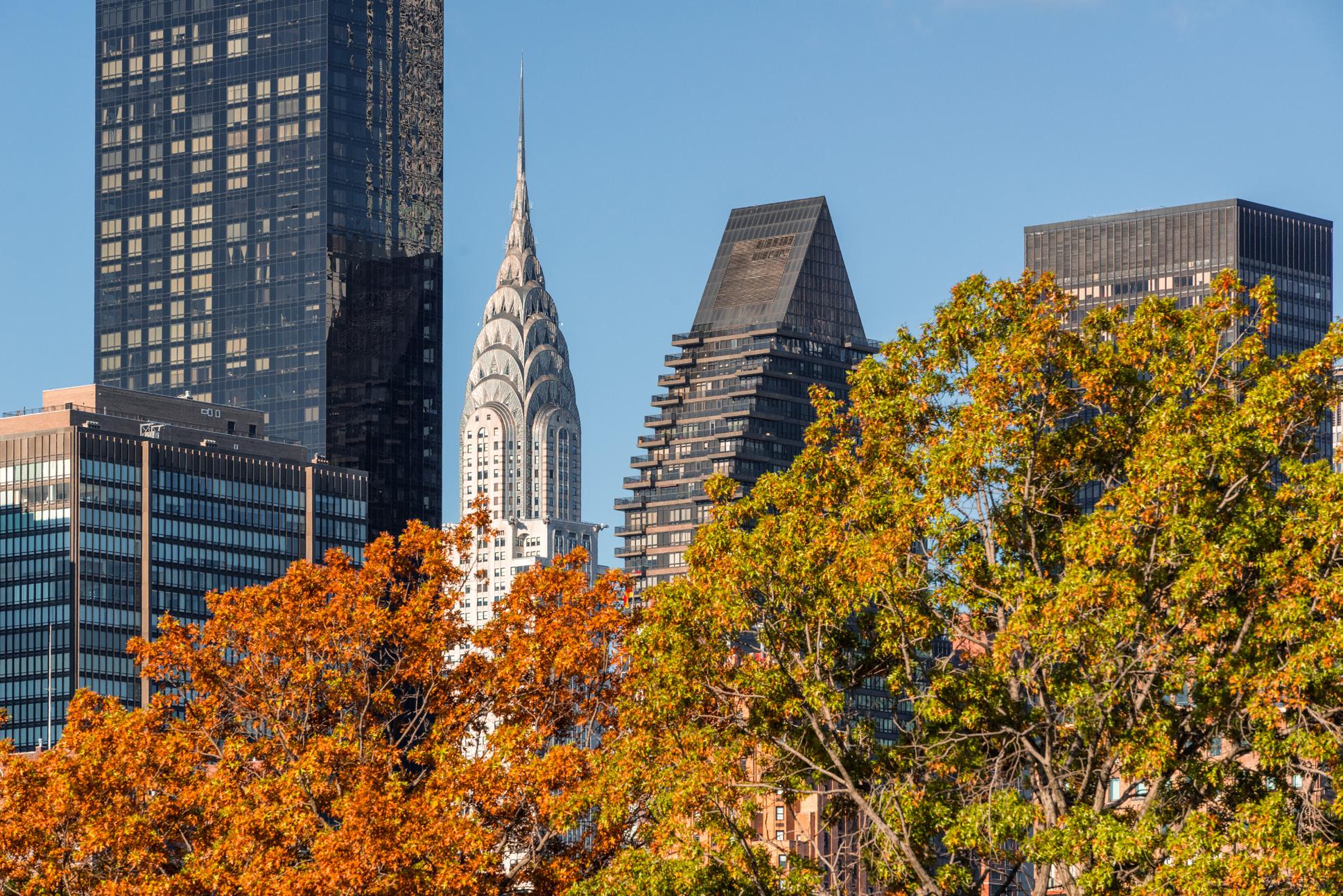
We invite alumni, family, and friends back to campus to network, relive memories, share stories with generations of fellow alums, and commemorate their time at their beloved alma mater. Join us for the annual State of the Cooper Union, where President Steve McLaughlin and other campus leaders will share exciting updates about the future of Cooper. There will be campus tours, lunch, and other programming. The day will conclude in style with an all-class party at the iconic Chrysler Building! Reunion is open to all alumni, families, and their guests.
in New York City on Friday evening, please


ALL COOPER
REUNION
JOIN
THE COOPER LOYALTY SOCIETY BY GIVING ANNUALLY
WSATURDAY, SEPTEMBER 27

e’re pleased to introduce the Cooper Loyalty Society, celebrating alumni and friends who give to The Cooper Union in consecutive years. This new society honors the steadfast commitment of donors whose continued generosity strengthens Cooper year after year and ensures its mission endures for generations to come. Each year, members will receive a small token of our appreciation that can be collected as a symbol of their ongoing support. Help carry Cooper’s mission forward. Give today at cooper.edu/ACgive.
If
join us in the Great Hall for the 2025 Benjamin Menschel Distinguished Lecture by Annabelle Selldorf, principal, Selldorf Architects. Register here.