LIBERDADE in loco
alentejo in lisbon The Casa do Alentejo is home to a little of everything that characterises the country’s southern region. Tastes, wisdom and folk songs. And the palace that houses the association founded in 1923 is a mixture of architectural styles of pure fascination for the eyes and soul.
I
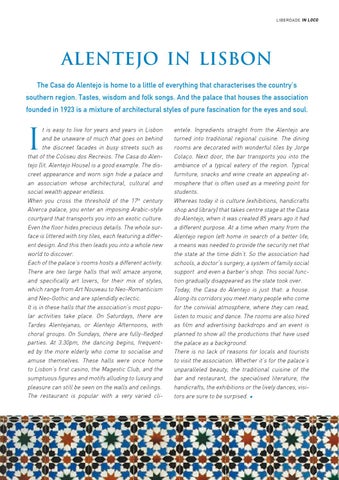
t is easy to live for years and years in Lisbon and be unaware of much that goes on behind the discreet facades in busy streets such as that of the Coliseu dos Recreios. The Casa do Alentejo (lit. Alentejo House) is a good example. The discreet appearance and worn sign hide a palace and an association whose architectural, cultural and social wealth appear endless. When you cross the threshold of the 17th century Alverca palace, you enter an imposing Arabic-style courtyard that transports you into an exotic culture. Even the floor hides precious details. The whole surface is littered with tiny tiles, each featuring a different design. And this then leads you into a whole new world to discover. Each of the palace’s rooms hosts a different activity. There are two large halls that will amaze anyone, and specifically art lovers, for their mix of styles, which range from Art Nouveau to Neo-Romanticism and Neo-Gothic and are splendidly eclectic. It is in these halls that the association’s most popular activities take place. On Saturdays, there are Tardes Alentejanas, or Alentejo Afternoons, with choral groups. On Sundays, there are fully-fledged parties. At 3.30pm, the dancing begins, frequented by the more elderly who come to socialise and amuse themselves. These halls were once home to Lisbon’s first casino, the Magestic Club, and the sumptuous figures and motifs alluding to luxury and pleasure can still be seen on the walls and ceilings. The restaurant is popular with a very varied cli-
entele. Ingredients straight from the Alentejo are turned into traditional regional cuisine. The dining rooms are decorated with wonderful tiles by Jorge Colaço. Next door, the bar transports you into the ambiance of a typical eatery of the region. Typical furniture, snacks and wine create an appealing atmosphere that is often used as a meeting point for students. Whereas today it is culture (exhibitions, handicrafts shop and library) that takes centre stage at the Casa do Alentejo, when it was created 85 years ago it had a different purpose. At a time when many from the Alentejo region left home in search of a better life, a means was needed to provide the security net that the state at the time didn’t. So the association had schools, a doctor’s surgery, a system of family social support and even a barber’s shop. This social function gradually disappeared as the state took over. Today, the Casa do Alentejo is just that: a house. Along its corridors you meet many people who come for the convivial atmosphere, where they can read, listen to music and dance. The rooms are also hired as film and advertising backdrops and an event is planned to show all the productions that have used the palace as a background. There is no lack of reasons for locals and tourists to visit the association. Whether it’s for the palace’s unparalleled beauty, the traditional cuisine of the bar and restaurant, the specialised literature, the handicrafts, the exhibitions or the lively dances, visitors are sure to be surpised. •
LIBERDADE con vida · 19