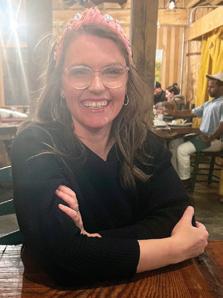
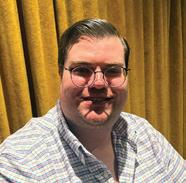
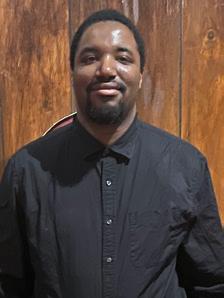
JANICE GRISSOM ELLISON, KAREN MILAM, DON MYNATT, TAMMY NASH, RANDY ROTZ, LEWIS TAYLOR, WILLIAM WIDEMAN Distribution
KENNETH NEILL Founding Publisher
THE MEMPHIS FLYER is published weekly by Contemporary Media, Inc., P.O. Box 1738, Memphis, TN 38101 Phone: (901) 521-9000 Fax: (901) 521-0129 memphisflyer.com
CONTEMPORARY MEDIA, INC.
ANNA TRAVERSE Chief Executive Officer
LYNN SPARAGOWSKI Controller/Circulation Manager
JEFFREY GOLDBERG Chief Revenue Officer
MARGIE NEAL Chief Operating Officer
KRISTIN PAWLOWSKI Digital Services Director
“Have you had a chance to call detectives?”
The message came through Monday afternoon from Mrs. Susan, mother of my friend Jessica Lewis. This week marks the 15th anniversary of Jessica’s murder, and I know without responding that Susan is in agony, stays in agony, over the loss of her only daughter. As we creep closer to February 20th, the pain hits as if the wound were fresh. I don’t have the heart to text her back and tell her that calling detectives hasn’t done much good.
You may recall that last year in this space, I invited the Memphis Police Department to a conversation about Jessica’s unsolved case. Some time passed, but I did get an email offer to meet the cold case team and public information officers in person at their Downtown office. My colleague Toby Sells and I sat down at a long table in a room with a dozen uniformed, suited officers, and I was nervous. My voice cracked and my throat closed, all eyes were on me, and to be honest, I still think back on how I fumbled that meeting.
What I should have done was talk about Jessica. Who she was before she got addicted to hard drugs. Before, I believe, she was pushed into sex work. The person she was before someone shot her in the back of the head and left her nearly naked body in the deteriorated Mt. Carmel Cemetery in South Memphis. She was more than what they saw in crime scene photos, more than a folder of paperwork. In hindsight, I should have brought Mrs. Susan with me, so they could see the despair better than I could ever put into writing. And I have written about this many times. Instead, I stumbled over words, scrawled meaningless notes while I talked, and the only update I got from them was that they were working on ballistic testing. I didn’t ask many questions. It felt more like a plea from me to them to do their jobs. Because it was.
Just after we received news of Jessica’s death in 2011, Rhonda Wells, a sex worker by news and police accounts, was shot to death in the same cemetery, on February 24th. On the 26th, the day we laid Jessica to rest, the killer struck again in the same area, shooting another sex worker in the face and leaving her for dead. That victim survived. We later learned another death from January 27th was linked to these cases. There may be more. I’ve spent hundreds of hours researching these murders. I’ve sent dozens of emails to various members of the police department with leads and questions. In 2019, I found the survivor was in Jail East and went to meet her. I visited her weekly, we exchanged letters, and she called me when she could, just to talk. I got as far as finding help for her to enter a rehab and safe house in lieu of her jail sentence for arson. That unfortunately failed when she fled the rehabilitation center. I met many times with the late MPD Detective W.D. Merritt, who gave me hope that this case was in good hands and would be solved. Unfortunately, Merritt, who was on the force when the crimes took place and was deeply involved in investigating these cold cases, passed away in 2020. Deflated after losing all the progress we’d made, I only ever reached out to the MPD here and there in the years since. Mrs. Susan never stopped reaching out to me.
I want to make this clear. These were acts of a serial killer. He needs to be found. And here we are, seemingly starting over. In recent months, the email exchanges I had with Merritt were again forwarded to another person in the MPD, and were supposed to be sent to the appropriate lieutenant (new info suggests they have not been reviewed). Upon request, I shared with them a contact from a genetic genealogy investigative group interested in helping with this case at no cost. That contact confirms they never heard from the MPD at all. In an email follow-up from our September meeting, on December 1st, an MPD official said, “Homicide is working with our federal partners on this case. We are still awaiting test results from the TBI and additional testing has been requested.”
Had testing not already been done? There is DNA evidence. There are several confirmed victims and a surviving eyewitness. It has been 15 years
We learn more every day how easily our leaders lie, divert, deflect. How we trust in systems that don’t work, at least not for us. The people who run the world, from the streets to international waters, do so for their own benefits. We are all casualties. Some of us just happen to still be alive to fight.
I’m aware of the caseload MPD must be under. I also know that if this were teachers, attorneys, or someone “important,” we wouldn’t still be waiting. It’s time for accountability, and for justice. Evil can not prevail, abroad or here at home. It’s time for Mrs. Susan’s phone to ring with the call she’s been desperately waiting for: “We caught the man who did this. He can’t hurt anyone else.” May all our phones ring with peaceful news.
A community cleanup hosted by nonprofit Mt. Carmel Ally will be held at the historic Mt. Carmel Cemetery (2093 Elvis Presley Blvd.) on Saturday, February 21st, from 10 a.m. to 1 p.m. The site is the final resting place of hero Tom Lee.
Shara Clark shara@memphisflyer.com
THE fly-by
Questions, Answers + Attitude
Edited by Toby Sells
MEM ernet
Memphis on the internet.
POSTED TO FACEBOOK BY TOWN OF CORDOVA, TN
e MEMernet bummed out with familiar hilarity as IKEA announced the May closing of its Memphis store.
“We can’t have nothing,” Shawnya Glynne posted to Facebook, summing up the general bum-out-tery.
Some predicted the building was fated to be a Spirit Halloween. “Y’all can’t take anything serious ... Now who made this!?,” the Town of Cordova posted.
SIDE STREET DRAMA
Side Street Grill was ground zero for the best, most delicious MEMernet drama last week. We won’t name names to pile on or anything (but I guess we’re OK publishing that photo? OK, Flyer.) But a woman Facebook-Lived her confrontation with her cheating husband and a woman the couple met at a casino. It was the hottest re on the Memphis internet last week. Period.
A NICE ONE
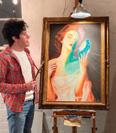
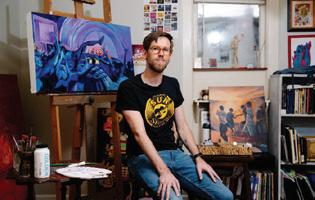
Alec Ogg found an easel on the sidewalk. en, he found a piece of blue-green glass. en, he found some old magazines. He decided to use the easel for his rst oil painting — a woman from one of the magazines, holding the glass he found.
{WEEK THAT WAS
By Flyer staff
IKEA, Task Force, & xAI
Swedish furniture store to close, a group demands action, and co-founders walk away from Grok.
IKEA
IKEA will close its Memphis location on May 3rd, the company announced last week.
Company o cials made the decision a er a comprehensive review of market share, business performance, cost structure, and overall optimization of physical assets.
“As customers’ needs change, IKEA continues to evolve to better re ect how and where people want to meet the brand today,” the company said in a statement. “ is includes opening new stores, transforming existing ones, and, when needed, closing locations.”
e Memphis store closing comes a er IKEA opened 14 new stores last year, with plans to open more new stores this year. ese and other ongoing IKEA investments in the U.S. total $2.2 billion.
MICAH: END TASK FORCE
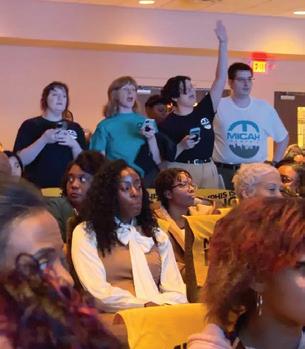
Community advocates demanded Memphis Mayor Paul Young to end the city’s collaboration with the Memphis Safe Task Force and acknowledge its impact on the community.
He’s now selling the piece for $5,000 to raise money to cover some vet bills of animals that need help.
Memphis Interfaith Coalition for Action and Hope (MICAH) sent the demand in a letter to Young in the wake of his 2026 State of the City Address last week. e group said the operations are “terrorizing and deporting immigrants based on arbitrary, politically driven quotas, and hate- lled rhetoric, which has led to the targeting, kidnapping, and abuse of our neighbors.”
MICAH requested the end to pretextual tra c stops and searches without warrants and increased investments in public transportation, a ordable housing, livable-wage jobs, and community opportunities
AI CO-FOUNDERS LEAVE
x
Elon Musk lost two xAI co-founders in two days last week in what news agencies called an “exodus” from the company. Musk founded the company with 11 others in 2023. Six of them have le in recent months, according to Silicon Republic. News of the most recent departures came last week with announcements on X.
Yuhuai (Tony) Wu said, simply, “I resigned from xAI today,” in an early-Tuesday-morning tweet. He said it was
“time for my next chapter.”
Jimmy Ba tweeted, “last day at xAI,” Tuesday evening. “It’s time to recalibrate my gradient on the big picture.”
Other co-founders Igor Babuschkin, Kyle Kosic, and Christian Szegedy have departed the company in recent years.
e two latest departures come right a er Musk’s SpaceX merged with xAI. e deal valued xAI at $250 billion and SpaceX at $1 trillion in what CBNC called the largest merger of all time. e merger deal precedes what many expect to be a record-setting IPO for the company.
OGLES V. BAD BUNNY
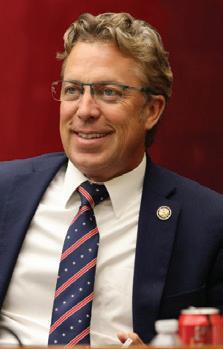
U.S. Rep. Andy Ogles (R-TN5) urged a formal investigation of the NFL and NBC for Bad Bunny’s Super Bowl performance, one he said was “smut” and that “glori ed sodomy.”
e Nashville Republican requested the investigation in a letter last week to the House Committee on Energy and Commerce. at committee oversees the Federal Communications Commission (FCC), and Ogles believes the NFL and NBC knowingly approved an “explicit and indecent” performance.
Ogles remains under formal investigation on campaign nance transactions. He remains under public criticism for a litany of public controversies, including in ating his job skills, using an image of his stillborn child on a GoFundMe for a children’s memorial garden, and more. Visit the News Blog at memphis yer.com for fuller versions of these stories and more local news.
IKEA
PHOTOS: (LEFT) MICAH; (RIGHT) ANDY OGLES | FACEBOOK
(le ) Memphis Interfaith Coalition for Action and Hope (MICAH) decries Task Force’s “targeting, kidnapping, and abuse of our neighbors”; (right) Rep. Andy Ogles
‘Crisis’ on Capitol Hill {
LGBTQ+
By Kailynn Johnson
GOP lawmakers take aim — once again — at the state’s lawful, taxpaying LGBTQ residents.
LGBTQ advocates called the current 2026 Legislative Session an “emergency situation” with a number of discriminatory bills scheduled to be heard in committees.
Last Tuesday, the Tennessee Equality Project (TEP) held a press conference to mark a day of advocacy at the Tennessee Legislature. Advocates from across the state joined to meet with legislators and protest harmful proposed legislation.
Chris Sanders, executive director for TEP, called the current climate a “crisis” as the legislature passed an anti-LGBTQ bill on the rst day of the session. He added that six more discriminatory bills were expected to be heard last week alone.
Proposed bills target drag performances, healthcare for trans people, marriage, employment discrimination, pride celebrations, and more.
“ ese bills are o en described as policy debates, but let’s be honest — they do not target policy, they target people,” Brenda Gadd, vice chair of the
Metropolitan Council LGBTQ caucus, said. “ ere is no disguise for bigotry, and when legislation tries to erase people, silence is not an option.”
Gadd and other speakers encouraged the community to stand together and ght the bills. ey stressed the importance of putting a face with the legislation, so lawmakers know who is a ected by their votes.
Ginger Leonard represented Memphis during the day of advocacy, and also serves as chair of the board for TEP. She said putting a face in front of legislators makes the issues personal and shows the potential impact of passing the bills.
“Sometimes I think they forget that,” Leonard said. “ ey travel in these little spheres and their microcosm, and they think they don’t know any queer folks. I would argue that’s not true; they just don’t know who they are.”
She said this level of thinking o en causes lawmakers to think they aren’t hurting anyone with their votes.
Leonard’s advocacy work dates back to the AIDS epidemic, where she recalled handing out condoms. She
said it was an “ugly” period, but felt that she experienced a phase where “life was OK” for queer people.
However, she said the passage of the Marriage Equality Act, which manifested in attacks against the LGBTQ community in policy and other ways, “scared a lot of people.”
Advocates call the new session an “emergency situation.”
She said in recent years, more speci cally, since President Donald Trump’s rst term, that the attacks have gotten “uglier and uglier.” e advocate said she believed lawmakers are acting out of fear and manufacturing problems.
“ ey fear what they don’t understand,” Leonard said. “ ey also don’t know how to x real problems. ey don’t know how to feed hungry children, make housing, childcare, [and] healthcare a ordable.”
Leonard said it can be easy to feel hopeless in this climate, but encouraged people to keep ghting. She noted that they’ve celebrated small victories in the past, such as getting anti-LGBTQ bills pushed and tabled to where they don’t come back up.
She urged people to speak up, to play an active role, and push back.
“Everybody has a voice — make it heard,” Leonard said. “Don’t be afraid. Get out there and do it — make baby steps.”
SATURDAYS IN FEBRUARY 6PM-10PM
ONE FREE ENTRY DAILY
500 POINTS = 1 ENTRY (MAX 10 PER DAY)
Earn entries now – February 28
Weekly Drawings: 100 hourly winners share in over $400,000 Free Play and prizes
GRAND PRIZE DRAWINGS 10PM
SATURDAY, FEBRUARY 14 & 28
10 winners will be drawn to win a share
$20,000 Free Play or a 2026 Mercedes.
PHOTO: BRUNO AGUIRRE | UNSPLASH
By
Bruce VanWyngarden
In a Pickle
Can’t we all just get along?
You got trouble, folks, Right here in River City, Trouble with a capital “T” And that rhymes with “P” and that stands for Pool …
A er reading a news report about a troubling incident in Florida last weekend, it seems to me that that bit of doggerel from e Music Man may need to be updated. Sure, “T” still stands for trouble, but “P”? Well, in 2026 that apparently stands for “pickleball.”
In the original musical, set in a small Iowa town in 1912, an itinerant con-man sings to parents about the dangers of letting their teens play billiards in the local pool hall:
“One ne night, they leave the pool hall, Heading for the dance at the Armory, Libertine men and scarlet women, and ragtime, shameless music …”
e horror! But in a remake, it’s more likely that that con-man would be warning middle-aged children about letting their Boomer parents play bigboy table tennis with those giant plastic balls and cumbrous paddles. ey’re liable to get beaten up, or worse.
e article I saw in e New York Times — “Florida Couple Arrested A er Pickleball Match Turns Into a Brawl” — was meticulously detailed and one of the most entertaining things I read last week. (And of course it happened in Florida.)
e ght started in a match at Spruce Creek Country Club in Port Orange between husband-and-wife teams, when one of the men — Anthony “Tony Paddles” Sapienza (Yeah, I made up the nickname, sorry) — accused his opponent of playing a shot from a restricted rectangle near the net known as the “kitchen.” I guess he couldn’t stand the heat? I dunno.
Anyway, shortly therea er, Sapienza called his opponent’s wife a vulgar misogynistic name, and from there it got ugly fast. When the man objected to the name-calling, Sapienza came around the net and began whacking his opponent with his paddle. When the victim’s wife tried to intervene, Sapienza shoved her to the ground. Another man, age 70, who tried to stop the ght, was punched in the nose by Sapienza. en Mrs. Sapienza got in on the action, also punching her husband’s second victim, whose nose by this time was bleeding spectacularly.
More than 20 others were soon involved. Pawpaws were pummeled, Nanas were knocked to the ground,
ancient knees were scraped, wrinkled faces bled from fresh cuts. Finally, an ambulance was called for three of the geezers, who literally got carried away. All this over a country club pickleball match between people on Medicare. I hope their Plan B covers rando sticu s and assault with a clunky paddle.
It makes you think: At a time when Memphis Grizzlies players in their 20s get injured li ing a water bottle, these testy geezers are still having st ghts. Can they make a free throw? Might be worth considering. But I digress.
According to the police report, a er the brawl the Sapienzas “ ed the club for their gated condominium on the beach.” Because, of course they did. ey were later arrested and Mr. Sapienza was charged with two counts of felony battery on a person 65 years or older, and one count of aggravated battery causing bodily harm, which, if convicted, carry maximum sentences of ve years in prison on the rst charge and 15 years for aggravated battery. He is pleading not guilty by reason of the fact “the guy was in the f—king kitchen!”
To make matters worse, Sapienza was banned from Spruce Creek Country Club for life. But in a brilliant legal maneuver, he hurriedly joined Mara-Lago, whereupon President Trump immediately ordered Attorney General Pam “How Dare You!” Bondi to launch an investigation into Sapienza’s elderly victim for attacking Sapienza’s paddle with his face. HHS Secretary Kristi Noem called the injured man a “dangerous domestic terrorist” and pledged to send masked ICE agents to question him in the hospital. Sapienza was named ambassador to Norway. All in all, it was quite the time down in Florida last week. And most of it’s true. I leave it to you to gure out what parts are fake — which we all have to do every day, anyway.
PHOTO: JOESCARNICI | ADOBE STOCK A man peacefully enjoys pickleball.
SATURDAY
FEBRUARY 28TH
11AM-2PM
Discover the best camps, classes, and summer experiences for kids of all ages. Meet camp directors, ask questions, and get inspired for your family’s best summer yet — all at this FREE, family-friendly event!
family’s best summer yet — all at this
SCAN HERE FOR INFO
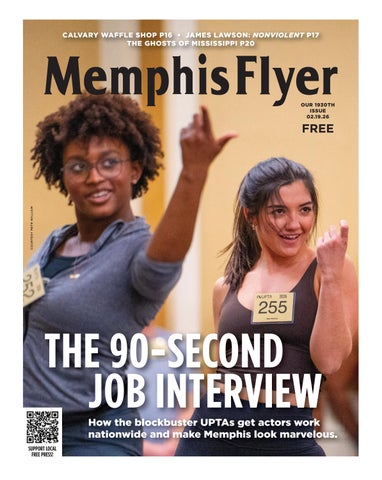
THE 90-SECOND JOB INTERVIEW
How the blockbuster UPTAs get actors work nationwide and make Memphis look marvelous.
It’s not your typical job interview. For more than 30 years, the Uni ed Professional eatre Auditions have brought actors and production companies from around the country to Memphis with the aim of nding the right t.
Actors who are available to work throughout the year can come and give it their best shot at landing a job with an organization looking for talent. e scope of production out ts is wide, with more than 80 companies ranging from Playhouse on the Square to cruise lines to Disney to children’s theaters to Shakespearean presenters to touring shows.
Playhouse on the Square (POTS) is always part of it, since it hosts this annual event that’s held at the theater, the Sheraton Memphis Downtown Hotel, and the Renasant Convention Center. Buses shuttle actors and production reps back and forth for four days as they run through the process that might seem chaotic, but is in fact a well-oiled gig machine.
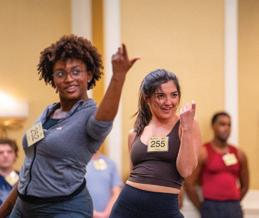
e producers get to see something like a thousand actors who are ready to go to work. And each actor has exactly 90 seconds to make their case. Not at all your typical job interview. But for many of those actors, the minute-and-
a-half is just the rst step. Callbacks, interviews, and some song and dance o en follow in a whirlwind of activity.
Michael Detroit is the impresario who organized the event when it rst happened at Playhouse in 1995. He’d joined the organization in 1989 as a resident company actor and brought with him considerable administrative skills. He would become executive producer in 2018, succeeding Jackie Nichols, who founded the company.
Before that, however, it was Nichols who had been going to combined auditions around the country looking for talent to bring to POTS, and in the mid-1990s, realized that there needed to be a somewhat di erent approach.
He was looking for actors who would be available year-round, not just in the summer and not going to school. Nichols enlisted Detroit to cobble together what they called the Uni ed Professional eatre Auditions — everyone calls them the UPTAs — and the rst one got underway.
It was held at the old Playhouse on the Square, which now is the Circuit Playhouse. e nearby French Quarter Inn was where people stayed and where callbacks and noti cations were done. Some 200 actors and 25 companies attended. is year, there were 850
actors in person over four days, plus another 600 who registered but couldn’t get in. ey still got to submit headshots and resumes, but didn’t get that moment-and-a-half to be on stage all by themselves, hoping to knock it out.
ere were 83 companies registered, most of which were in attendance, some remotely. ey’d typically send several representatives sharing the duties of watching the auditions, deciding on callbacks, checking out which dancers had the right moves, holding interviews — for four days straight.
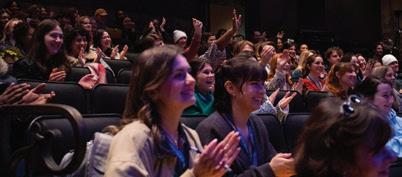
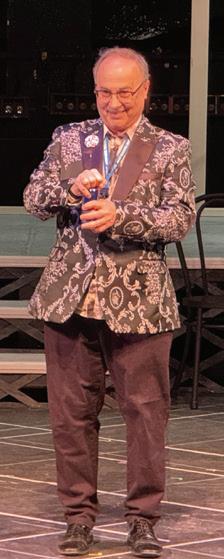
When the UPTAs started on Friday morning, February 6th, the rst group of actors were in the audience at POTS. Detroit came to the stage to give them the rundown on how things would go.
While many of the actors throughout the four-day event had been to the UPTAs before, this group was all new, mostly students who were about to graduate and looking to get a professional engagement right out of college.
Detroit has given this presentation dozens of times before and he kept
PHOTO: HALO; INSET: PETR WILLIAM
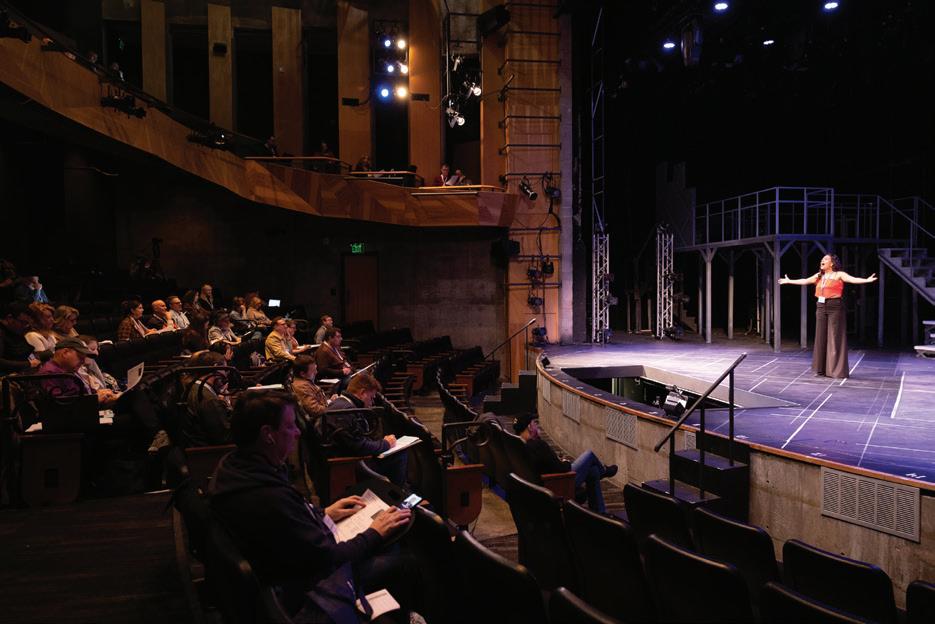
An actor gives it her all onstage, while company reps evaluate.
PHOTO: JON W. SPARKS Michael Detroit briefs the actors.
it light. It helped when Elvis came on stage to welcome the attendees. He was portrayed by Michael J. Vails, who handles facilities work at POTS and was the region’s Ronald McDonald back in the day.
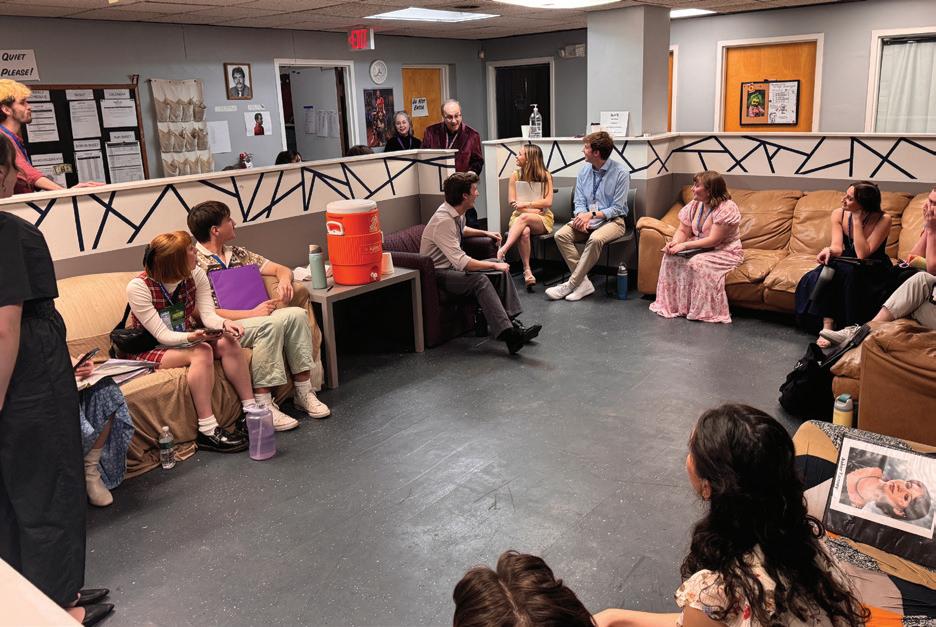
But then the information came at a rapid pace. Volunteers and POTS sta members were everywhere, available to answer questions and calm the nerves of actors who were about to lay it all on the line. Actors would have time to warm up, check their wardrobes, and take deep breaths. ey gathered in the green room, some calm, some twitchy, all listening for when they were called. When the time came, they’d go to the stage and sit by accompanist Jose
Simbulan while the actor who was on before them walked to center stage to begin their 90 seconds. If the actor on deck planned to sing, they’d give Simbulan the music and discuss where they wanted to start and stop. e accompanist has been doing the UPTAs for years and probably knows every piece of music ever written. Nothing fazes him. Earlier, he’d also spoken to the crowd, telling them what to expect and assuring them that everyone wanted them to succeed.
As an actor nishes his or her audition and heads back o stage, the next one strides to the center, mustering up all possible courage to deliver 90 electrifying seconds to 80-
plus potential employers. No pressure, none at all.
ey announce their name, the number they’re wearing around their neck, and any changes in availability. And then it’s showtime. ere’s a volunteer with a timer in the front row and a camera operator videotaping at the back. e actor might start out with a dramatic monologue, segue to a witty Shakespearean bit, and end with a tune. Most of the time, the song has a razzledazzle ending, something memorable for those companies who need a performer that can razzle and dazzle. And then the 90 seconds are up, the actor says thank you, repeats their name and number, and walks o stage.
To no applause. It’s OK, nobody gets applause. e next actor is already making their move to center stage. Meanwhile, the company reps are spread around the Playhouse auditorium with laptops aglow, power cords snaking everywhere. ey’re looking at resumes and headshots, making notes. ere are usually several people from each company, most of them there for the four-day duration. ey take shi s and compare notes. ey also have rooms at either the Sheraton or the Renasant Center, where they’ll see actors they like for callbacks or interviews.
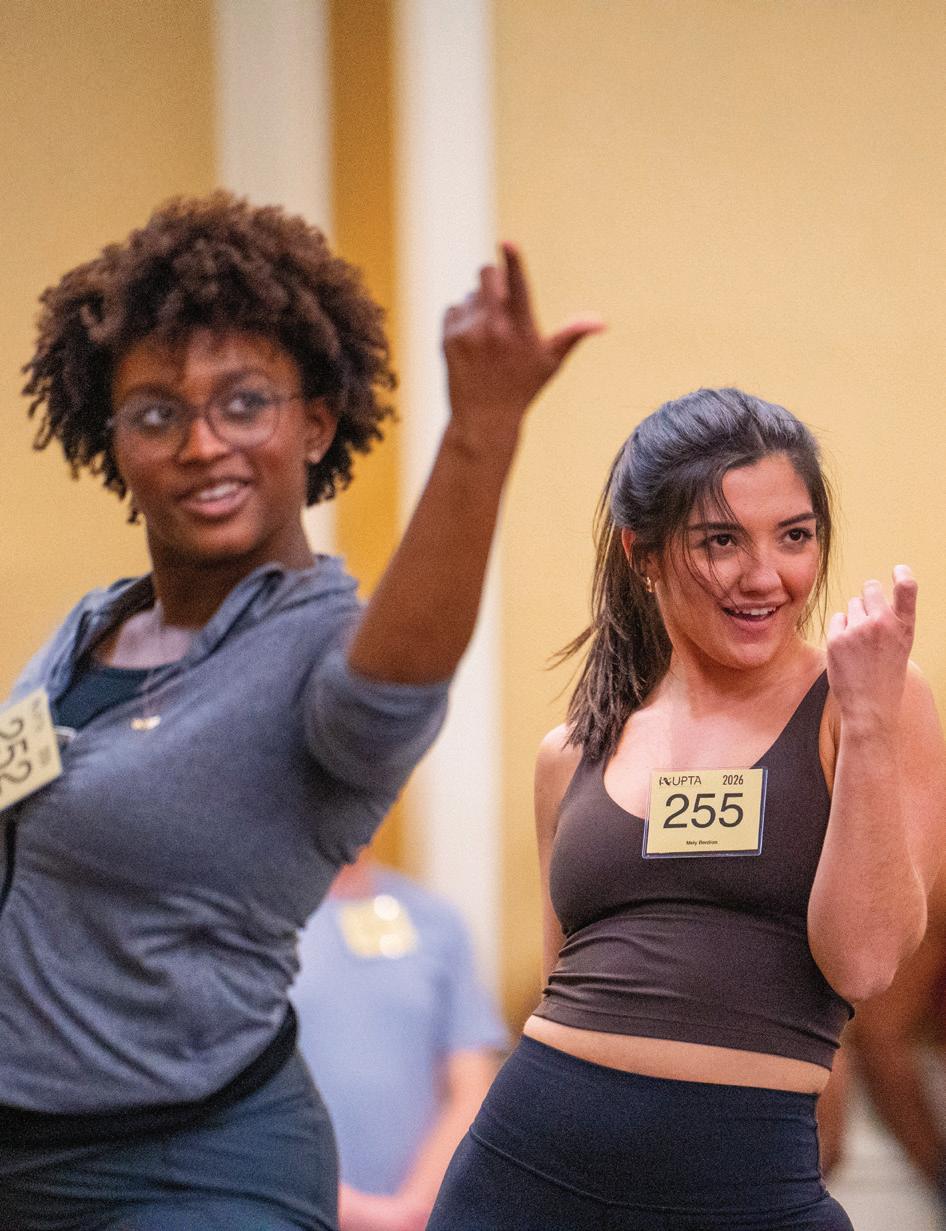
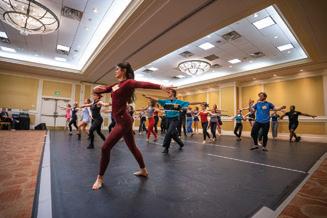
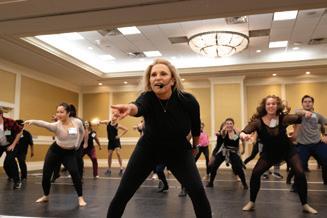
PHOTOS: (LEFT, CENTER) PETR WILLIAM; (RIGHT) HALO Dancers learn ensemble routines beforehand, including ballet, jazz, and tap combinations.
PHOTO: JON W. SPARKS
Michael Detroit in the Green Room
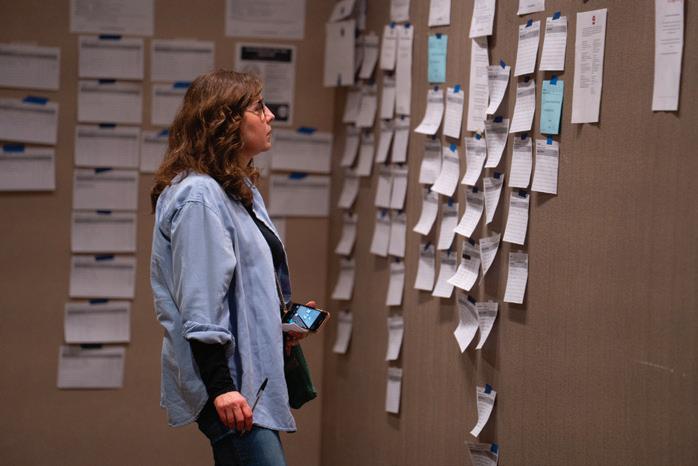
It’s happening on a rolling basis throughout. When a cluster of 25 actors nishes their auditions, company reps ll out forms saying who they want to see again. It is, of course, di erent for all of them. People from children’s theater organizations are looking for talent who will be animated with kids. Cruise line reps want a lot of energy. A company that’s got some musicals lined up for the coming season will be listening for great singing voices. e lists of callbacks are shuttled back to the Sheraton along with the actors. UPTA volunteers sort through the paperwork and post notices in a large room on the ground oor of the Sheraton. e actors swarm in, checking to see if any of the company reps have been wowed enough to want to see them again.
And there’s more — because it’s not just about delivering great lines and singing big music. As Detroit puts it, “Can you walk and chew gum at the same time, plus one? ere’s a ballet and jazz combination, and then there’s a tap combination.” at’s the dance component. It used to be that actors could get that call and come in and take a quick 20-minute class in how to do all that. But now, “we’ve sent all of those routines out to all the talent already, so they’ve already had a chance to learn it,” Detroit says.
They announce their name, the number they’re wearing around their neck, and any changes in availability. And then it’s showtime.
So now, if the reps want to see if you can move, you have to gure that into the lineup of callbacks and interviews and all you can do is hope you have so many that you have to do some worldclass schedule-juggling.
And if you get there, it’s only because your 90-second audition had enough gumption to make it happen.
PLAYHOUSE LOOKS FOR THE WINNER
Playhouse on the Square always has someone at the UPTAs looking for new talent. is year, Dave Landis, Claire D. Kolheim, and Drew Sinnard were taking turns in the Playhouse auditorium, watching and evaluating as hundreds
of actors marched across the stage and gave their all in 90-second segments.
Playhouse has a resident company as well as associate company members. Landis says they look for talent that will complement and t with who already is on board. Every year, though, is di erent. “Sometimes we don’t know what we’re looking for,” he says, “but it all comes down to casting the season.”
e upcoming season will have some big musicals, so POTS will need talent that can sing, dance, and act. “We’re always looking for strong singers. And we’ve been speci c this season, this year with looking for people with dance experience. It can modify from season to season.”
Landis has been part of the UPTAs since the rst one, and he’s seen some actors more than once. “ at’s the beauty of it every year,” he says. “I’ve seen people this year on the stage that I’ve called back multiple times before when the season was right for them and they wound up not coming here, but that’s okay. It’s nice to see some of these people keep coming back because they keep getting work.”
Each company does callbacks and interviews their own way, whatever works best for them. Not every actor will necessarily come to the callback. Maybe they don’t want to go to a particular location. Possibly they don’t want to do a cruise ship. Perhaps they only want to do Shakespeare.
But most will respond, if for nothing else than to grow their network and lay some groundwork for future years. Landis says that when Playhouse calls
someone back, “they sign up for a time to meet with one of the Playhouse sta members who then give them about a 10-minute talk on what it’s like to work at Playhouse. What we tend to look for is how the casting might work and if they’re interested, we ask them to submit more than what we saw in their 90-second audition.”
He says that since Covid, actors have gotten good at putting together media packages. Landis says he’ll tell them, “Well, you sang a ballad in your audition and you did a serious monologue, so I would like to see something more comedic and see something a little bit more upbeat.”
And that setup is usually ready to go.
Landis says that Playhouse has probably called back just under a hundred actors over the course of the four days. “Some of those people we never see,” he says. “ ey read about Playhouse or they come and get the little chat with us and then we never see them again. But at least we reached out to say, this is who we are. I think we’ve interviewed quite a few people over the course of the weekend. And then, like I said, we encourage them to touch base with us via email, and then I will respond back to them individually with answers to their speci c questions because it’s a whirlwind for them too. ey come here, go to these callbacks, and then go back home or go back to college and start thinking about the end of their college career. So, they don’t always ask all of the questions while they’re here because it just can be so overwhelming.”
But over time, the younger actors become more seasoned and their networks grow. “ ere are some people who have come to the UPTAs year a er year a er year. Now they’re at that point that they don’t need to because the network is so tight for them that they can get on the phone or reach out to somebody and say, ‘Hey, what are you doing this season? Can I send in a tape?’ As opposed to coming to here.”
e UPTAs are good for actors and good for production companies and that’s why it’s an ongoing success. Over the years, it’s gotten support from sponsors and companies such as Red Bull (which explains the ongoing energy), Hershey, Memphis Travel, Princess Cruise Lines, and Suncoast Broadway Dinner eatre.
But Memphis gets a solid bene t from the economic impact of people, most of whom come in from out of town and for four days use hotels, restaurants, transportation, and more. Plus it’s in February, which is typically a slower month for the hospitality and convention sectors.
Detroit says that the economic impact each year is between $600,000 and $1 million. “We’re very much aware of what we at Playhouse on the Square are doing as a small business, a nonpro t organization infusing money into the local economy,” he says. “It’s not always just about putting on plays, although that’s certainly the biggest part for us. It’s about being good stewards of our city, showing it in a better light.”
PHOTO: PETR WILLIAM e moment of truth: checking for callbacks
steppin’ out
We Recommend: Culture, News + Reviews
Pinned Between Glory and Grit
By Kimberly Ham
PHOTO: DANIEL DENT
Alison Lyn Miller
Professional wrestling has long been one of America’s most misunderstood art forms — equal parts spectacle, sport, and storytelling. Author and journalist Alison Lyn Miller brings that complexity to Novel in conversation with Rhodes College professor Charles L. Hughes to celebrate the release of her debut book, Rough House: A Father, a Son, and the Pursuit of Pro Wrestling Glory.
Miller’s deeply reported narrative centers on Hunter James, a Georgia teenager determined to make it to World Wrestling Entertainment (WWE) and nish what his father, Billy Ray, started decades earlier. What unfolds is more than a backstage look at indie wrestling’s bruising circuits — it’s an intimate portrait of inheritance, masculinity, and the complicated love between a father who knows the ring’s grip and a son who can’t resist it.
e project began in 2019 with a single interview. A third-generation wrestling fan told Miller that as a child he found comfort in knowing that every Saturday night, wrestling would be there — a world where “the lines are very clear: you know who the bad guy is.” at clarity, Miller realized, o ered something deeper than escapism. It was community, catharsis, and connection.
Embedding herself in Georgia’s independent wrestling scene — in Boys & Girls Clubs, VFW halls, and pop-up venues — Miller found a culture built on trust. Wrestlers trade blows in the ring and share meals at Wa e House a erward. Families ll the bleachers. Kids scream for heroes and heckle villains. “It’s like church fellowship meets little league,” she says. Far from the highproduction polish of WWE, indie wrestling feels like immersive theater: you might have to move if a body tumbles your way.
In Memphis, of course, wrestling isn’t niche — it’s legacy. From Sputnik Monroe’s role in desegregating arenas in the 1950s to Jerry Lawler’s legendary feud with Andy Kaufman, the city is sacred ground. Hughes, author of Country Soul and at work on a history of professional wrestling and racial politics, will bring historical depth to a conversation that promises to explore how wrestling mirrors America — its pageantry, its inequities, and its ongoing evolution.
For readers who think wrestling is “fake,” Rough House o ers a corrective. e outcomes may be scripted, but the sweat, soreness, and sacri ce are real. Miller’s ringside reporting captures young men chasing glory, pushing their bodies, and using the ring to say what words can’t.
Whether you’re a lifelong fan or a skeptic, this event will propel you to read Miller’s book and search for the nearest indie wrestling show — all while cheering a little louder.
VARIOUS DAYS & TIMES February 19th - 25th
Art and Apéritifs: Justin Williams Discusses the Memphis Creative Community
Memphis Brooks Museum of Art, 1934 Poplar Avenue, Sunday, February 22, 2-4 p.m.
Memphis painter and singersongwriter Justin Williams takes the mic ( guratively) for a laid-back but lively dive into the city’s DIY creative scene — the late nights, the shared stages, the makeshi studios, and the magic that happens when artists show up for each other.
Drawing from his recent solo exhibit, “STAGE,” Williams re ects on his shi from music obsessive to visual storyteller, capturing performers not just in the spotlight, but in the in-between moments that make this city hum. is special edition of Art & Apéritifs pairs thoughtful conversation with a signature
cocktail, inviting you to slow down, sip, and consider why right now feels electric for local creatives — and who’s helping spark it. Sponsored by Art Now Collective.
Harlem Nights: Remembering the Harlem Renaissance Cossit Library, 33 S. Front Street, Wednesday, February 25, 6-7:30 p.m.
Step back into the swing and swagger of the 1920s at Cossitt Library’s Harlem Nights, an evening celebrating the art, intellect, and undeniable cool of the Harlem Renaissance. e program tips its hat to the writers, musicians, thinkers, and tastemakers who transformed Harlem into the epicenter of American culture.
Expect live performances, lively discussion, and plenty of vintage air. Guests are encouraged to dress the part — think sharp suits, apper
Local Free Press
We’re always independent. We’re always free — we won’t ever charge you for a copy of the Flyer, or for access to our website. And we strive to keep you informed about and connected to our city.
Whether you can help in the form of a few dollars a month or a larger one-time contribution, you’ll be making a di erence. ink of this as an investment in our shared future.
fringe, and all the elegance and sophistication of uptown New York in its heyday. Light refreshments will be served.
e Sound of Music
Orpheum eatre, 203 South Main Street, February 17-22 is critically acclaimed North American tour brings the cherished musical to stages across the country to teach a new generation to sing. For 65 years, e Sound of Music has been one of our favorite things — and this acclaimed tour brings the von Trapps’ hills to life for a new generation. Directed by three-time Tony winner Jack O’Brien (Hairspray), this lush revival celebrates love, courage, and unforgettable songs like “Do-ReMi” and “Edelweiss.” Perfect for longtime fans or rst-timers (ages 4+), it’s a story that soars.
If you are not in a position to give nancially, there are other ways you can support the Flyer — such as by patronizing and supporting our advertisers, by reading and sharing our work, and by passing along this message to others.
Above all, thank you for being part of our community. We’re in this together.
ALISON LYN MILLER WITH CHARLES L. HUGHES: ROUGH HOUSE, NOVEL, 387 PERKINS EXT., MEMPHIS, THURSDAY, FEBRUARY 19, 6 P.M.
HOLLYWOOD HEIST
Saturday, February 28
6PM-10PM
Win a set of his & her watches!
MUSIC By Alex Greene
Eunbi Kim’s Journey
e renowned classical pianist embraces new forms to create deeply personal music.
IEarn X entries on Thursday, and X entries on Friday and Saturday.
myself a composer, although I work with composers,” Kim says, and the album features works written for her by Angélica Negrón, Pauchi Sasaki, Sophia Jani, and Daniel Bernard Roumain, who all took cues from Kim’s life story.
G I V EAWA Y
6PM-10PM
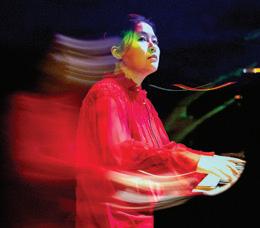
t’s a trajectory seen over and over again in the arts: as a committed performer doggedly works to hone their skills, meeting the highest standards of speed, expressiveness, and complexity, they ultimately cross a threshold and come to embrace … sheer simplicity. at’s one way to look at the evolution of Eunbi Kim, a celebrated pianist being hosted by the Iris Collective and e Green Room at Crosstown Arts this Saturday, February 21st. Along with compositions created speci cally for her by some of the contemporary classical world’s nest composers, she’ll also be playing works in a genre you don’t o en associate with the classical world: lullabies.
“I come from a pretty rigorous and traditional classical training background, steeped in the classical canon from a really young age,” Kim says. “By the time I reached college I was pretty burned out. And from then on, I was always searching for a way to pursue music in a way that was more aligned with how I wanted to express myself.”
at’s most apparent in the opening track, “It Feels Like a Mountain, Chasing Me,” composed by Roumain. “ e initial plan was to record sort of ambient sounds in my apartment,” says Kim, “but we ended up recording a conversation about our parents and so forth, and then [Roumain] incorporated that into the piece, with these pre-recorded voices and electronics. en I used that piece as the foundation for the rest of the music.”
Saturday, February 28
us, by the time she reached the height of her education at the Manhattan School of Music, she’d passed through a crucible of sorts and landed in an unexpected new world. “When I went to grad school, I discovered contemporary music,” she explains, “and that evolved into learning more experimental music and working directly with composers who write music for me. en I started working with new media artists who create visuals and projections and soundscapes that create more of an immersive experience for the listener, rather than like a traditional recital.”
So did the other composers she worked with, all of them responding to Roumain’s initial work. What emerges is a powerful meditation on Kim’s heritage in South Korea, where she was born but remembers nothing about, having been raised in Maryland from the age of three.
at will certainly be apparent this Saturday, with her performance enhanced with visuals by the new media artist and lmmaker Xuan. “For much of it, she used old archives of my family — so old photographs, old home videos — and treated them like a collage,” Kim says of Xuan. “And the visuals, I think, add sort of an ambient layer to the program, where they help create a mood and ask questions, but don’t really show a narrative.”
e very personal element of such imagery is quite in keeping with Kim’s 2022 album, It Feels Like, which debuted at #2 on the Billboard classical charts and o en forms the core of her performances. It’s her most personal work to date, dealing with themes of childhood, family, and memory. And yet, such elements are presented through the eyes and ears of others. “I don’t consider
Another aspect of Saturday’s show will also focus on family, but not Kim’s own. Rather, it grew out of the Iris Collective’s collaboration with the Memphis Oral School for the Deaf. “We’re an o cial partner organization with Carnegie Hall’s Lullaby Project,” says Rebecca Arendt, executive director of Iris. “So we’re working with ve families to help them write lullabies for their children to express love, help with family bonding, but also as a tool to encourage speaking and listening at home with their kids every night.
Marcin Arendt, our lead Lullaby Project teaching artist, has worked with Mahir Cetiz, who’s arranged the lullabies into a song cycle for a piano trio and singer.”
Kim, for her part, is delighted by this one-of-a-kind Memphis performance. “I just received the music for the lullabies the parents wrote for their children,” she says. “Just seeing the lyrics made me so teary.”
PHOTO: MARIA BARANOVA Eunbi Kim
We Saw You.
with MICHAEL DONAHUE
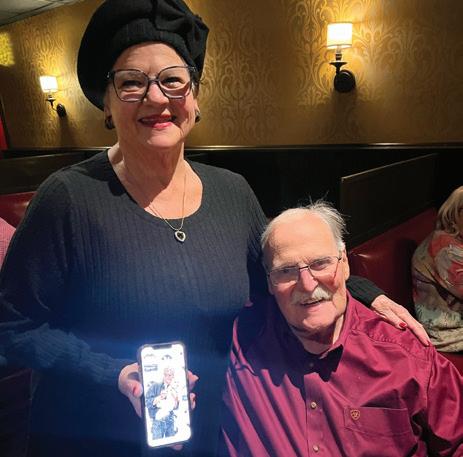
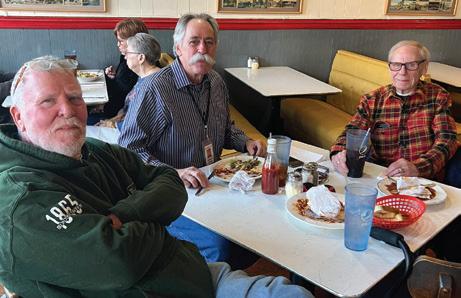
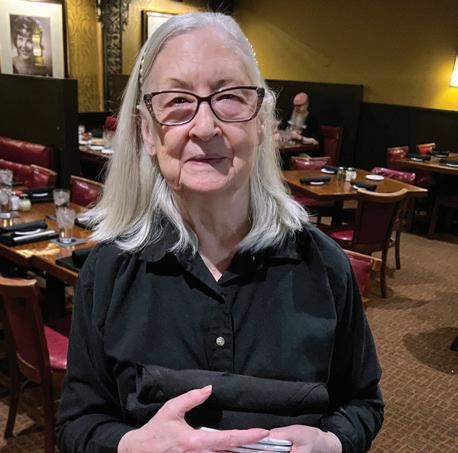
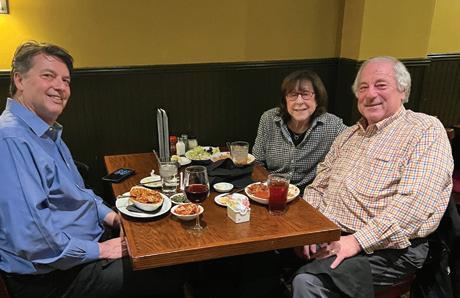
“Eating out” is the theme of this week’s People on the Street edition of We Saw You.
Since that’s a favorite hobby for a lot of people, foodies were captured at multiple hot spots, including Pete & Sam’s, Dino’s Grill, and Marshall Steakhouse in Holly Springs, Mississippi.
MICHAEL DONAHUE above: Tommie Anderson circle: John David Sloyan below: (le to right) Deborah Sharp, Ed Sharp; Anna May; Chris Yard bottom row: (le to right) Dennis Flanagan, Clarence Connery, Joe Gurley; Joel Baze, and Judy and Larry Moss
PHOTOS:
CALENDAR of EVENTS: February 19 - 25, 2026
ART AND SPECIAL EXHIBITS
“A Memphis of Hope” Art Show
An exhibit showcasing what is “right” about where we live. Free. rough Feb. 26.
WKNO DIGITAL MEDIA CENTER
Anna Gregor, Chris Peckham, Bobby Smith
Works by these three artists share a certain harmony. rough March 28.
TOPS GALLERY
Ann Brown Thomason Art Exhibition
omason is a retired physician and an artist. rough Feb. 27.
MEMPHIS BOTANIC GARDEN
“Bettye’s Bin: The Personal Archives of Stax Songwriter Bettye Crutcher”
e story of a woman who wrote platinum hits and whose rediscovered archives now return home. Free. rough March 31.
STAX MUSEUM OF AMERICAN SOUL MUSIC
Black Artists in America: “From the Bicentennial to September 11”
Showcasing artistic styles and viewpoints within African American art during the last quarter of the 20th century. rough March 25.
THE DIXON GALLERY & GARDENS
“Food: Science, Culture, and Cuisine”
A multi-sensory feast of an exhibition. $21/general admission. rough May 24.
PINK PALACE MUSEUM & MANSION
“From 200 to 250: America’s Bicentennial Bash of 1976” Memorabilia, local re ections, and the sights and sounds of 1976 in Collierville. Free. rough April 18.
MORTON MUSEUM OF COLLIERVILLE HISTORY
Keiko Gonzalez and Leanna Hicks Carey
Gonzalez’s “Indoor Games” and Carey’s “ e Dark Country” in a dual exhibition. rough Feb. 28.
SHEET CAKE
“Last Whistle:
Steamboat Stories of Memphis”
Featuring detailed model boats and original steamboat artifacts. rough June 26.
PINK PALACE MUSEUM & MANSION
“Meet the Dixons”
Learn how Margaret and Hugo Dixon’s vision of a place to celebrate art, nature, and beauty became a reality in 1976. rough May 31.
THE DIXON GALLERY & GARDENS
Melody Weintraub Art Exhibition
Weintraub’s beautiful paint-
ings are larger than life. rough Feb. 27.
MEMPHIS BOTANIC GARDEN
MGAL 2026 Winter Juried Exhibition
Memphis/Germantown
Art League’s juried exhibit. rough Feb. 27.
ST. GEORGE’S EPISCOPAL CHURCH
“Navigating Knowledge” is exhibition explores vessels and navigation as metaphors for the containment and transmission of knowledge. rough Oct. 31.
MEMPHIS BROOKS MUSEUM OF ART
“Painting and Her Woman: A Feminist Palette Show” ese artists engage materiality as a method of inquiry. rough Feb. 21.
DAVID LUSK GALLERY
Pinkney Herbert: “In Between”
Known for his expressive abstraction in oil and acrylic, Herbert translates energy, place, and sound into gesture, color, and form. rough March 14.
DAVID LUSK GALLERY
“Redemption of a Delta Bluesman: Robert Johnson”
A series of 29 paintings reimagining the story of the mythical crossroads where the bluesman purportedly made a deal. rough June 30.
GALLERY ALBERTINE
“River Coral”: New Works by Anthony Lee Depictions of fantastic, uid gures and shapes. rough March 30.
BUCKMAN PERFORMING ARTS CENTER
Roger Allan Cleaves: “A World on Fire” Cleaves’ Forget Me Nots Land series is a complex Afrofuturist fantasy resisting easy explanations. rough April 12.
THE DIXON GALLERY & GARDENS
“Speaking Truth to Power: The Life of Bayard Rustin”
Exploring Rustin’s innovative use of the “medium” to communicate powerful messages of non-violence, activism, and authenticity. rough Feb. 28.
NATIONAL CIVIL RIGHTS MUSEUM
“The Emmett” - Works by Emmett Award Recipients Installation of art works by past Emmett Award recipients. Free. ursday, Feb. 19-Feb. 26.
ARTSMEMPHIS
“Through Tyré’s Eyes” Experience the photography of Tyré Nichols, some of which has never been made public. Free. rough Feb. 28.
BENJAMIN L. HOOKS CENTRAL LIBRARY
Send the date, time, place, cost, info, phone number, a brief description, and photos — two weeks in advance — to calendar@memphisflyer.com.
DUE TO SPACE LIMITATIONS, ONGOING WEEKLY EVENTS WILL APPEAR IN THE FLYER’S ONLINE CALENDAR ONLY. FOR COMPREHENSIVE EVENTS LISTING, VISIT EVENTS.MEMPHISFLYER.COM/CAL.
e whimsical creatures of Lunar New Year come alive at the Memphis Brooks Museum of Art.
Town Beautiful Commission’s “Unofficial Town Flower”
Residents and students imagine and depict which ower they would nominate as Collierville’s uno cial town ower. rough March 14.
MORTON MUSEUM OF COLLIERVILLE HISTORY
Tributaries: Kat Cole’s “Meditations”
Cole captures ephemeral gestures in glass, enamel and steel, resulting in gleaming puddles of light and color. rough March 8.
METAL MUSEUM
“What We Surround Ourselves With”
A love letter to the cra , work, and stories shared through the museum’s community. Sunday, Feb. 22-July 31.
METAL MUSEUM
PHOTO: COURTESY MEMPHIS BROOKS MUSEUM OF ART
Justin Williams discusses the Memphis creative community at Art and Apéritifs.
ART HAPPENINGS
Art and Apéritifs
Justin Williams discusses the Memphis creative community.
Sunday, Feb. 22, 2-4 p.m.
MEMPHIS BROOKS MUSEUM OF ART
Like Really Creative Collage Party with Havi Green
Come collage with a creative community. Materials, scissors, glue, water, soda, and light snacks provided. Wednesday, Feb. 25, 6-9 p.m.
THE UGLY ART COMPANY
BOOK EVENTS
Alison Lyn Miller with Charles L. Hughes: Rough House Miller introduces Hunter James, an aspiring star born into a family of wrestlers in Georgia. ursday, Feb. 19, 6 p.m. NOVEL
Dr. Logan H.
Westbrooks: For the Love of Lauderdale Sub Westbrooks presents a historic discussion, book signing, and music inspired by a dozen families in South Memphis.
Saturday, Feb. 21, 1-3 p.m.
MEMPHIS LISTENING LAB
Friends of the Morton Museum Book Club: Journey Down Main Street
e club will discuss this work by Tommy Hart. Wednesday,
Feb. 25, 1 p.m.
MORTON MUSEUM OF COLLIERVILLE HISTORY
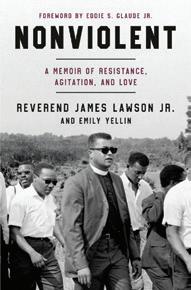
John Lawson and Emily Yellin: Nonviolent: A Memoir of Resistance, Agitation, and Love
Carol Jenkins moderates this discussion of the late Rev. James Lawson Jr.’s autobiography with his son, John, and co-writer Emily Yellin. Children of Memphis sanitation workers who went on strike in 1968 will be present, as will the Memphis Jazz Workshop. Free. Friday, Feb. 20, 6 p.m. NATIONAL CIVIL RIGHTS MUSEUM
Margaret Renkl & Billy Renkl: The Weedy Garden
e debut picture book from Renkl, with collage illustrations by her brother. Sunday, Feb. 22, 3 p.m.
THE DIXON GALLERY & GARDENS
Mark Greaney: The Hard Line
Gray Man, the world’s deadliest assassin, discovers he’s really the prey. Saturday, Feb. 21, 2 p.m.
NOVEL
CLASS / WORKSHOP
Adult Tap Class
No experience needed, just bring your tap shoes and a smile! $20/general admission. Tuesday, Feb. 24, 10-11 a.m.
GERMANTOWN PERFORMING ARTS
CENTER
Beaded Polymer Clay Earrings with Shameka Carter
Learn to create a pair of mixed media earrings. For ages 16+. $15/member.
ursday, Feb. 19, 6-8 p.m.
THE DIXON GALLERY & GARDENS
Botanica After Dark Terrarium Planting Party
Friday, Feb. 20, 6-8 p.m.
MEMPHIS BOTANIC GARDEN
Ceramic Silly Pots with Becky Ziemer
Create some crazy creatures in this ceramics class. $58/ members, $65/non-members.
Sunday, Feb. 22, 1-4 p.m.
MEMPHIS BOTANIC GARDEN
Teen Workshop: The Art of Shadows
Step into the world of shadow stories. For ages 14-18. $10/ member, $15/non-member.
Friday, Feb. 20, 5-7 p.m.
THE DIXON GALLERY & GARDENS
The Fool’s Journey: The Major Arcana is tarot series, created and led by Rev. Omma, is designed to demystify tarot for beginners. Saturday, Feb. 21, 2 p.m.
THE BROOM CLOSET
Voices: Free and Equal Writing Workshop
For students in 4th through 12th grades, this workshop explores poetry and poetic themes of the Civil Rights Movement. Saturday, Feb. 21, 1-4 p.m.
PINK PALACE MUSEUM & MANSION
Wine Series: Wines of France
Journey through France’s iconic wine regions in this engaging tasting class. For ages 21+. $65. Wednesday, Feb. 25, 6 p.m.
GREYS FINE CHEESE AND ENTERTAINING
COMEDY
Brad Williams: The Tall Tales Tour
Known for his high-energy stand-up, razor-sharp crowd work, and fearless storytelling drawn from his real life, Williams delivers a fresh hour of hilarious material. Sunday, Feb. 22, 7 p.m.
MINGLEWOOD HALL
Love, Laughter & Leon
A night of unforgettable comedy with acclaimed actor Leon and some hilarious comics.
Saturday, Feb. 21, 8 p.m.
FITZ CASINO TUNICA
Next Top Comic Angela Garrone, the current champion, goes against ve contenders. Saturday, Feb. 21, 9 p.m.
HI TONE
Open Mic Comedy Night
Open mic hilarity in the small room downstairs. Free. Tuesday, Feb. 24, 8 p.m.
HI TONE
Trevor Wallace
Wallace brings “ e Alpha Beta Male” comedy tour to Memphis. Saturday, Feb. 21, 7 p.m.
MINGLEWOOD HALL
An elevated, a er-hours plant workshop featuring cocktails, hands-on terrarium planting, and exclusive shopping in a re ned, adults-only setting. 21+. $75/general admission.
PHOTO: COURTESY MEMPHIS BROOKS MUSEUM OF ART
Two Hearts, One Hand, Can’t Lose
An evening of improv and special guests like Benny Elbows and Zach Williams. Sunday, Feb. 22, 7 p.m.
LAMPLIGHTER LOUNGE
COMMUNITY
Afro Latino Week 2026
A week-long celebration honoring AfroLatino voices, history, and culture through storytelling, music, dance, and community connection. Monday, Feb. 23, 5:30 p.m. | Wednesday, Feb. 25, 6 p.m.
NATIONAL CIVIL RIGHTS MUSEUM
Afro Latino Week 2026
More of the celebration honoring Afro-Latino history and culture. Tuesday, Feb. 24, 5 p.m.
WITHERS COLLECTION
Celebrate What’s Right: Educating Memphis’ Future Memphis’ colleges and universities are shaping our region’s talent pipeline, stabilizing neighborhoods, driving research, and influencing the economic vitality of the city. $10/individual ticket. Tuesday, Feb. 24, 3:30-5 p.m.
NATIONAL CIVIL RIGHTS MUSEUM
Happy Hour: Stitch and Sip
A cozy evening of crafting paired with specialty cocktails, live music, and a world-class art collection. Thursday, Feb. 19, 6 p.m.
MEMPHIS BROOKS MUSEUM OF ART
Lunar New Year Community Day
This family-friendly celebration features dynamic lion dancers, elegant fan dance performances, live music, and interactive artmaking activities inspired by Lunar New Year traditions. Saturday, Feb. 21, 10 a.m.-1 p.m.
MEMPHIS BROOKS MUSEUM OF ART
Mardi Paws with Streetdog Foundation
Grab your pup and let the good times roll. Music, drinks, costumes, and raffles. $20/ advance, $25/at the door. Saturday, Feb. 21, noon-4 p.m.
GHOST RIVER BREWING COMPANY
Young Adult Career and College Resource Fair
Explore local employers, colleges, trade schools, training programs, and opportunities. Saturday, Feb. 21, 10 a.m.-2 p.m.
RALEIGH LIBRARY
DANCE
Collage Dance Collective: Rise
A powerful program that honors resilience and collective strength, featuring world premieres and Memphis debuts that speak to the richness of Black identity and more. Saturday, Feb. 21, 2:30 p.m. | Sunday, Feb. 22, 2:30 p.m.
CANNON CENTER FOR THE PERFORMING ARTS
Wonders in the Night
Performed by dancers with Down syndrome, an original story ballet, an awe-inspiring performance, featuring choreography created by Memphis’ finest professional artists. $20/ general admission. Saturday, Feb. 21, 7-8 p.m.
SCHEIDT FAMILY PERFORMING ARTS CENTER
FILM
Crosstown Arts Film Series: Natchez
A quiet, observant film that peers beneath the surface of a Southern town shaped by history, ritual, and contradiction. $10. Thursday, Feb. 19, 7-10 p.m. | Friday, Feb. 20, 7-10 p.m.
CROSSTOWN THEATER
The Morris and Mollye Fogelman
International Jewish Film Festival
Eight films in a diverse mix of genres. $10/ community ticket, $8/MJCC ticket, $56/community series pass, $45/MJCC series pass. Thursday, Feb. 19, 7 p.m.
MEMPHIS JEWISH COMMUNITY CENTER
The Godfather
Part of the series, Watch What You Eat: Ominous Dinners on the Giant Screen. Thursday, Feb. 19, 6-9 p.m.
PINK PALACE MUSEUM & MANSION
LECTURE
Chopin in the Salons: A Roundtable & Guest Artist Recital
A roundtable with musicologist Dr. Ewelina Boczkowska, French scholar Dr. Melanie Conroy, and art historian Dr. William McKeown, followed by a voice & piano recital. Monday, Feb. 23, 6-8 p.m.
RUDI E. SCHEIDT SCHOOL OF MUSIC
Munch and Learn: Margaret and Hugo Dixon
Jane Ward Faquin, an independent curator and art historian, discusses the gallery’s founders. Free. Wednesday, Feb. 25, noon-1 p.m.
THE DIXON GALLERY & GARDENS
PERFORMING ARTS
Harlem Nights: Remembering the Harlem Renaissance
Celebrating cultural heritage and enjoy an evening of performance and discussion of the Harlem Renaissance and it’s timeless legacy. Free. Wednesday, Feb. 25, 6-7:30 p.m.
COSSITT LIBRARY
Memphis Magic Night
Joe M. Turner presents an evening of magic, mentalism, and comedy. $20/advance, $25/ door. Monday, Feb. 23, 7:30-9 p.m.
FLYWAY BREWING COMPANY
ACROSS
1 Tech’s character set
6 City on a gulf of the same name
10 Blow
14 Tip, say
15 ___ war (conflict unlikely to hurt anyone)
16 Letters on a crucifix
17 Oxymoronic break
20 Love lines?
21 Passes (out)
22 It’s a gas
23 Had more than one could handle
25 Sleepy still?
26 Brief flashes
27 Slacker’s opposite
29 Stick in the dugout
Memphis Matters: Stories of Love
Enjoy a night of spontaneous stories that spark instant impact. $23.18/ticket, $44.52/pay it forward ticket. Saturday, Feb. 21, 7 p.m.
THEATRESOUTH
Peanut Butter & Jam: Rachel Rodriguez
This bilingual show offers children an opportunity to explore the richness of Mexican culture through captivating stories, music, and movement. Saturday, February 21, 10:30 a.m.
GERMANTOWN PERFORMING ARTS CENTER
THEATER
Dreamgirls
Dreamgirls follows an all-girl Motown singing group on the path from obscurity to superstardom in the 1960s and ’70s. Saturday, Feb. 21, 2 p.m. | Sunday, Feb. 22, 2 p.m.
HATTILOO THEATRE
Jagged Little Pill
Some shows you see - this show you feel. A musical inspired by Alanis Morisette’s 1995 album of the same name, this show navigates the difficulties establishing one’s identity. Thursday, Feb. 19, 8 p.m. | Friday, Feb. 20, 8 p.m. | Saturday, Feb. 21, 8 p.m. | Sunday, Feb. 22, 2 p.m.
PLAYHOUSE ON THE SQUARE
Crossword
31 Abbr. after U.S.M.C., maybe
32 Was patronizing, in a way
36 Room backstage at a playhouse
37 Step-by-step instructions?
38 Bit of fudge?
39 Pleasant forecast
40 Palynologists study them
44 Bit of fishing equipment
47 Part of Michelangelo’s “David” once maliciously broken with a hammer
49 Send a revealing image, say
50 Stock holding
51 Green film character
53 Chance to take stock, for short
54 Coinage of 2000
57 Risk territory bordering Ukraine and Afghanistan
58 Quash
59 Star of “North Dallas Forty,” 1979
60 Public firing?
61 Having the resources
62 Wide gap
1 “The Handmaid’s Tale” novelist
2 Poorly crafted
3 Proceed wildly
4 Newspaper coverage
5 “Just playing”
6 Cinematographer’s consideration
7 Long gestation for a film, informally
8 They often start with elections
Rams home, for short
One of the Wayans brothers
Nursery bagful
Foreign language dictionary abbr.
___ Sea, body of water between Borneo and the Philippines
List from an etiquette expert
Job
A psychological thriller that delves into mental health, social media, and generational divides. Thursday, Feb. 19, 8 p.m. | Friday, Feb. 20, 8 p.m. | Saturday, Feb. 21, 8 p.m. | Sunday, Feb. 22, 2 p.m.
CIRCUIT PLAYHOUSE
Live Rich Die Poor
A soul-stirring theatrical journey through the life, wit, and wisdom of Zora Neale Hurston. $59.80. Friday, Feb. 20, 7:30-9 p.m.
HALLORAN CENTRE FOR PERFORMING ARTS & EDUCATION
The Revolutionists
Playwright Olympe de Gouges, assassin Charlotte Corday, former queen Marie Antoinette, and Haitian rebel Marianne Angelle hang out, murder Marat, and try to beat back the insanity. $25/adult, $20/senior and student. Friday, Feb. 20, 8 p.m. | Saturday, Feb. 21, 8 p.m. | Sunday, Feb. 22, 2 p.m.
THEATREWORKS
The Sound of Music
The critically acclaimed North American tour brings the cherished musical to stages across the country to teach a new generation to sing. $46.70, $163.25. Thursday, Feb. 19, 7:30-10:15 p.m. | Friday, Feb. 20, 7:30-10:15 p.m. | Saturday, Feb. 21, 2-4:45 p.m. | Saturday, Feb. 21, 7:30-10:15 p.m. | Sunday, Feb. 22, 1-3:45 p.m. | Sunday, Feb. 22, 6:30-9:15 p.m.
ORPHEUM THEATRE
Symbol of San Francisco
Like some laws
Finally admit, say
Ignatius J. ___, protagonist
PUZZLE BY ANDREW J.. RIES
FOOD By Michael Donahue
Time for Waffle Shop
A Calvary Episcopal Church tradition continues.
Isaw a cluster of da odils in my yard this morning. at’s spring harbinger number one. And I’ve already bought a king cake. at’s spring harbinger number two.
But spring harbinger number three begins February 19th. at’s when the Calvary Wa e Shop opens.
I can’t wait. is is the annual Lenten luncheon and speaker series, which is celebrating its 98th anniversary at Calvary Episcopal Church. Except for Ash Wednesday and Holy Week, Wa e Shop is open from 11 a.m. to 1 p.m., Wednesday through Friday in the basement of the church at 102 North Second Street.
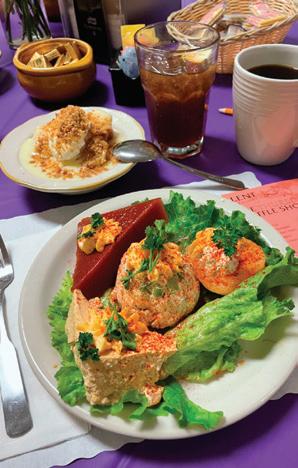
Visiting Wa e Shop — with its tomato aspic, sh pudding, shrimp mousse, Boston cream pie, and other delights — has been a tradition of mine for decades. I thought I knew almost everything about the beloved little place until I recently talked to Wa e Shop committee chairperson Connie Marshall. She shared a lot of its history, some of which she uncovered during our interviews.
More than one story exists about how Wa e Shop began. Marshall heard that it “started as noon day Lenten services in a downtown theater.”
According to e Great Book, Calvary Protestant Episcopal Church Memphis, Tennessee 1832-1972, by Ellen Davies Rodgers, “Prior to 1927 Mrs. Eugene (Mamie Walworth) Tate of Calvary visited friends, Mr. and Mrs. Louis E. Bauer who resided in Spring eld, Ohio.
During the visit, Mrs. Tate was a guest at a Shrove Tuesday Pancake Supper at Christ Episcopal Church in Spring eld. She was greatly impressed by the church ladies’ successful food serving project that had continued since 1918.”
So, the Calvary Circle “under the able leadership of Mrs. Ellis, president, launched the project of serving lunches during Lent, 1928. e name ‘Wa e Shop’ was chosen and plans were made for the cooperative endeavor.”
ere was no space for Wa e Shop at the church, so they began in a building at 10 North Front Street. “A er two years, they moved Wa e Shop to 109 Court Street,” Marshall says. “And in 1933, they moved to the basement of the church.”
In 1950, the basement was dubbed “ e Mural Room.” In “ e History of the Mural” in the Rodgers’ book, “ e Calvary mural was painted in 1952 from a ‘cartoon’ done by then rector Donald Henning, using input from parish children and their ideas of what the church and community looked like.”
Much of the mural couldn’t be saved
during the 2024 restoration of the basement, Marshall says. “It was in one continual piece and it was starting to disintegrate. And it was plaster.”
Wa e Shop menu items go back to the beginning, Marshall says. Going through old Wa e Shop menus, she says, “A lot do date back to 1928.” And in the 1925 Calvary Church Circle Cook Book, sh pudding is included. “It appears that the sh pudding has always been served. I think most people think it’s like a bowl of mushed-up pudding!” It’s actually a casserole-type dish made with cat sh llets.
en there are the wa es, which are made in the dining room. “ ey have the batters all made. ey bring them to us. You have to be patient with your wa e iron. You can’t open it too soon. People open it and check on it. It starts to stick. Once it sticks, it’s over. It’s a disaster. You have to cool the iron down and clean it out. You get the waitresses backing up and they get testy.”
Becoming a wa e maker is a coveted position. “You used to have to inherit a wa e iron,” Marshall says, explaining that only when a wa e-maker quit or retired did someone else get to make wa es at the luncheon. “Space opened up and you became a wa e cook.”
Marshall, who began working at Wa e Shop in 2000, was one of those novices. A wa e maker got sick, so Marshall was asked to ll in. Her rst day didn’t go so well. “I came home and cried because they were so mean to me. I’d never cooked a wa e before.” e woman she trained with “just criticized everything I did.”
But Marshall decided to go back the next day. “And I’ve been there ever since. I took a couple of years o when my kids were little. And then I took them down there with me. ey’d come down on spring break and cook wa es.”
I experienced the Wa e Shop hierarchy years ago. I asked one of the women in an apron near my table for some more iced tea. She said with indignation, “I’m a hostess.” She summoned another woman in an apron to ll my request.
ose hostess jobs used to be such a big deal that they were listed in the Commercial Appeal. In a 1931 article
under the title “Hostesses Announced for Calvary Wa e Shop,” a paragraph begins, “Hostesses for tomorrow will be Mrs. E. G. Tate, chairman; Mrs. Gordon Erskine, Mrs. George Phillips,” and on down it continues. “Tuesday’s hostesses will be …”
Another article reads, “Mrs. Leslie ornton, president of the circle, is general chairman of arrangements, assisted by a di erent community each day. e menus will include wa es and sausage, spaghetti, salads, and on Wednesdays and Friday’s, the circle’s famous sh pudding.”
Hostesses and servers were from the “elite in Memphis,” Marshall says, “ ey wore high heels and pearls and waited tables with little hats on.”
One long-time volunteer began as a teenager in the Wa e Shop, but older volunteers made her toe the line, Marshall says. “ ey would thump her on the head if she wasn’t standing up straight. She did sausage and hash for years.”
Mainly women lled the jobs as servers and wa e cooks, Marshall says. “But at one time, there was a group of judges that came down and cooked.” e Wa e Shop’s cookbook, e Shrimp Mousse and Other Wa e Shop Recipes, came out in the 1970s, Marshall believes. Two years ago, they printed a new cookbook, Fish Pudding & More Most of the recipes in the old one were for large amounts, Marshall says, “We tried to cut it down to size.”
Menu items are rarely dropped. However, Marshall says, “ is year there will be no peanut butter pie. Because the person who did that retired this year.” But, she says “It’s only been on a few years. It was one of the newer desserts.”
PHOTO: MICHAEL DONAHUE
Calvary Wa e Shop salad plate and Boston cream pie
BOOKS By Alex Greene
Nonviolent
The late James Lawson’s memoir shows how to translate personal integrity into action.
R
ev. James Lawson Jr. was a maverick of the Civil Rights movement, honored and mourned internationally when he passed in June of 2024. Recognized as a moral firebrand from an earlier generation, and only a year older than Martin Luther King Jr., Lawson had — fortuitously — already been collaborating on an autobiography in his final years, working closely with Memphis author Emily Yellin. Together, they crafted a fascinating narrative that takes readers from Lawson’s earliest childhood memories through the travails and triumphs of his decades as an activist of the cloth, when he translated his personal philosophy into actions that forever altered the course history. And, appropriately enough, it’s from that philosophy that the book takes its title: Nonviolent
The book’s subtitle, A Memoir of Resistance, Agitation, and Love, perfectly sums up the key pillars of that philosophy. What’s striking is how early Lawson began pondering such matters. The vivid portrait of his childhood in Ohio reads like a bildungsroman not unlike classics of Black American autobiographical literature like Gordon Parks’ The Learning Tree or Claude Brown’s Manchild in the Promised Land And from the beginning he finds himself caught between two opposing principles concerning violence, epitomized by his punching of another kid for calling him a racial slur — at the age of four.
that trapped its perpetrators in an endless cycle. Lawson embraced this as he grew into his teens. An exceptionally thoughtful young man, devoted to his parents, his studies, and his faith, he had already become a local pastor at the age of 19.
That put him squarely on a path of leadership that he would pursue all his life. And it was in his teen years that he embraced nonviolence as a philosophy that generated results, experimenting with confronting casual racism not with punches, but with disarming conversation or sheer stubbornness. He refused to register for the draft, seeing even conscientious objector status as bowing to a morally bankrupt system, and went to jail for it. He journeyed to India to study the methods of Gandhi, and later, while a graduate student at Oberlin College, he met Dr. Martin Luther King Jr. and shared his insights into nonviolent activism with him. After Lawson told King he might move South to preach after graduate school, King’s reply would change his life: “Come now. Don’t wait.”
“The memory of that moment has never left me,” Lawson writes, and it’s the perfect introduction to his youthful inner anguish over following the counsel of his father, who approved of fighting back against racist provocations, and his mother, who absolutely disapproved of it. For a time, he saw the efficacy of his father’s approach: “I believed I had taught [the racist kid] a lesson. And no one in our group of playmates ever called me those names again, including him. My punching worked. Or so I thought.”
Yet he began to see the wisdom of his mother’s counsel to avoid violence, expressed in her exhortation that he “be natural.” To her, violence was a perversion of human nature, a mask or a script
The Renasant Convention Center features flexible meeting spaces, modern technology, riverfront views, and exceptional service — all in the heart of Downtown Memphis.
That set the stage for all that followed. Dropping out of Oberlin and relocating to Nashville, Lawson became the southern director for the Congress of Racial Equality (CORE) and helped found the Student Nonviolent Coordinating Committee, from there helping to launch some of the most groundbreaking demonstrations of the early ’60s, often working closely with King. Named pastor of Centenary Methodist Church in Memphis in 1962, he went on to organize the sanitation workers’ strike of 1968. And in 1974, he moved to Los Angeles, where he lived and supported civil rights activism until his death. Anyone who cares about forging a more just America will know those historical events, from the Freedom Rides to the sit-ins, but to read the details of such moments knowing the backstory of one of their chief strategists makes them more real than ever, and somehow more achievable — today and in the future.
Emily Yellin, John Lawson (Rev. James Lawson’s son), and Carol Jenkins will speak about Lawson’s memoir at the National Civil Rights Museum this Friday, February 20th, at 6 p.m.
From staff meetings and strategy sessions to board meetings and corporate retreats, our team delivers seamless support to make every event feel effortless, successful, and memorable.
Start Planning
Explore the intimate Songs of a Wayfarer, the triumphant Symphony No 1, and the heavenly vision of Symphony No 4 Music Director Robert Moody guides you through the mind of a composer who poured his soul into ever y note This performance will feature a special guest collaboration with Opera Memphis and a post-show coda of cocktails at the cash bar with Maestro Moody and the performers
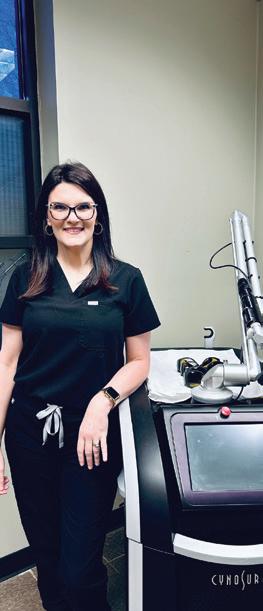
At Dermatology East, led by Dr. Michael Schneider and Dr. Luella Churchwell, we are pleased to welcome Kayla Spidle, a certified laser technician and certified surgical technologist with years of advanced experience in medical laser treatments, dedicated to delivering safe, e ective, and personalized care to our patients.
Using advanced PicoSure, KTP, Diolux lasers, we help patients say goodbye to unwanted pigment, acne scars, and dull skin, often with little to no downtime. Treatments address sun damage and brown spots, melasma, fine lines and wrinkles, redness, rosacea, cherry angiomas, tattoo removal, spider veins, laser hair removal, and overall skin rejuvenation.
• Fast treatments
• Minimal discomfort
• Little to no downtime
Germantown | 901-753-2794
Call for your free consultation — where precision meets confidence.
The ‘Big Three’
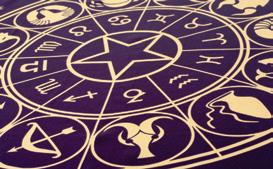
Your natal chart is essentially a snapshot of the heavens.
Astrology gives us another lens for understanding who we are and how we move through the world. At its heart, it’s the practice of reading the sky — tracking the planets and constellations in relation to Earth — and interpreting how those celestial patterns echo through our personalities, our growth cycles, and the collective energy around us.
Your natal chart (also called a birth chart) is essentially a snapshot of the heavens at the exact moment you arrived. From Earth’s perspective, the planets sit against the backdrop of the zodiac, forming a cosmic map divided into four key components: the planets themselves, the aspects they form with one another, the zodiac signs, and the 12 houses.
Each planet represents a core drive or instinct. Venus speaks to how we love and connect, Mercury to how we think and communicate, Mars to how we pursue what we want. Traditional astrology focuses on the planets visible to the naked eye — from the sun and moon out to Saturn — while modern astrology also incorporates Uranus, Neptune, Pluto, and even smaller bodies like Chiron.
Aspects describe the dynamic between planets. Just like people, some planetary energies collaborate beautifully, some challenge each other, and some merge so tightly that they amplify one another. ese relationships shape how the di erent parts of your chart interact and express themselves.
e zodiac signs function like the “homes” of the planets. In classical astrology, each of the seven visible planets has signs where it feels strong and signs where its energy is a bit more complicated. Understanding these placements helps us see not just what a planet represents, but how it expresses itself in your chart.
Why do astrologers feel that these three placements are the most important?
e sun is the most prominent body in our sky. In astrological terms, the sun represents our will; it is who we are. e sign it is in describes how we express our personality as a whole. We are a complex mix of many energies but we express our sun sign energies more fully than we do other aspects. Our sun sign is not only our will in this world but also our life force and everything we do is motivated by it. Our personality may be tempered by the positions of other planets, but we are, rst and foremost, our sun signs. e moon is our emotional response to people and situations. e sign that your moon is in shows how you feel about things, as well as what brings you comfort and nurtures you.
Your rising sign is not a planet, but the astrological sign that is rising on the eastern horizon at the moment of your birth. We use our rising signs as a mask or lter when meeting new people. Hiding behind our rising sign gives us time to decide if we want to allow a new person to get to know us better. Your rising sign can be any of the 12 zodiac signs because our planet is constantly turning. e rising sign changes every two hours which is why it is important to know your exact time of birth.
Learning about and understanding your birth chart can be helpful and eye-opening, but birth charts can also be overwhelming. If you are new to natal charts, starting with your big three can be a fun and easy way to get into reading charts. One of the more popular aspects of a birth chart is learning about your big three signs. Typically, if someone talks about ‘the big three,’ they are referring to your sun astrological sign, your moon astrological sign, and your rising astrological sign.
Astrology o ers a rich, compassionate framework for understanding the many layers of who we are. By exploring your natal chart — starting with your sun, moon, and rising signs — you begin to see how your inner drives, emotions, and outward expression weave together. ese insights can be both grounding and empowering. If this glimpse into your chart sparks curiosity, consider diving deeper into your own celestial blueprint and discovering what the stars have been re ecting about you all along.
Emily Guenther is a co-owner of e Broom Closet metaphysical shop. She is a Memphis native, professional tarot reader, ordained Pagan clergy, and dog mom.
ARIES (March 21-April 19): Saturn has entered Aries. I see this landmark shift as being potentially very good news for you. Between now and April 2028, you will have enhanced powers to channel your restless heart in constructive directions. I predict you will narrow down your multiple interests and devote yourself to a few resonant paths rather than scattering your intense energy. More than ever before, you can summon the determination to follow through on what you initiate. My Saturn-in-Aries prayer: May you be bold, even brazen, in identifying where you truly belong, and never settle for a half-certain fit.
TAURUS (April 20-May 20): I am issuing a Wow Advisory. Consider this your high-voltage wonder alert. Your future may offer you thrilling quests and epic exploits that could be unnerving to people who want you to remain the same as you have been. You will have a knack for stirring up liberating encounters with lavish pleasures and rich feelings that transform your brain chemistry. The rousing mysteries you attract into your sphere may send provocative ripples through your own imagination as well as your web of allies. Expect juicy plot twists. Be alert for portals opening in the middle of nowhere.
GEMINI (May 21-June 20): In Leonardo da Vinci’s notebooks, you find anatomical drawings next to flying machine designs, mathematical calculations alongside water flow observations, and philosophical musings interrupted by grocery lists. He moved from painting to engineering to scientific observation as curiosity led him. Let’s make him your inspirational role model for now, Gemini. Disobey categories! Merge categories! Mix and match categories! Let’s assume that your eager mind will create expanded knowledge networks that prove valuable in unexpected ways. Let’s hypothesize that your cheerful rebellion against conventional ways of organizing reality will spawn energizing innovations in your beautiful, mysterious life.
CANCER (June 21-July 22): In falconry, there’s a practice called “weathering.” It involves regularly exposing trained birds to the wild elements so they don’t become too domesticated and lose their wildness. The falconer needs a partner, not a pet. Does that theme resonate, Cancerian? Is it possible that you have been too sheltered lately? Either by your own caution or by well-meaning people who think they’re protecting you? Let’s make sure you stay in touch with the fervent, untamed sides of your nature. How? You could expose yourself to an experience that scares you a little. Take a fun risk you’ve been rationalizing away. Invite touches of rowdiness into your life.
By Rob Brezsny
LEO (July 23-Aug. 22): The loudest noise in history? It was the 1883 volcanic eruption of Krakatoa in Indonesia, heard thousands of miles away. The pressure wave circled the Earth multiple times. I am predicting a benevolent version of a Krakatoa event for you in the coming months. Not literal loudness, but a shiny bright expression of such magnitude that it redefines your world and what people thought was possible from you. Can you be prepared for it? A little. You’ll be wise to cultivate visionary equanimity: a calm willingness to stay focused on the big picture. I predict your big boom will be challenging but ultimately magnificent and empowering.
VIRGO (Aug. 23-Sept. 22): Buddhism teaches about “near enemies”: qualities that may appear to be virtues but aren’t. For example, pity masquerades as compassion. Clingy attachment pretends to be love. Apathy and indifference pose as equanimity. In the coming weeks, Virgo, I hope you won’t get distracted by near enemies. Your assignment: Investigate whether any of your supposed virtues are actually near enemies. After you’ve done that, find out if any of your so-called negative emotions might harbor interesting powers you could tap into.
LIBRA (Sept. 23-Oct. 22): Many intelligent people think astrology is dangerous nonsense perpetrated by quacks. For any horoscope writer with an ego, this affront tends to be deflating. Like everyone else, we want to be appreciated. On the other hand, I have found that practicing an art that gets so much disdain has been mostly liberating. It’s impossible for me to get bloated with excess pride. I practice astrology for the joy it affords me, not to garner recognition. So in a backhanded way, a seemingly disheartening drawback serves as an energizing boon. My prediction is that you, Libra, will soon harvest an analogous turnabout. You will draw strength, even inspiration, from what may ostensibly appear to be a liability.
SCORPIO (Oct. 23-Nov. 21): Mycologist Paul Stamets claims mushrooms taught him to think in networks rather than hierarchies. He sees how everything feeds everything else through vast webs of underground filaments. This is Scorpio wisdom at its most scintillating: homing in on the hidden circuitry working below the surface; gauging the way nourishment is distributed incrementally through many collaborative interconnections; seeing the synergy between seemingly separate sources. I hope you will accentuate this mode of understanding in the coming weeks. The key to your soulful success and happiness will be in how well you map the mycelial-like networks, both in the world around you and in your inner depths. PS: For extra credit, study the invisible threads
PISCES (Feb. 19-March 20):
Big bright transitions are at hand: from thrashing around in the edu cational mire to celebrating your sweet escape; from wrangling with shadows and ghosts to greeting new allies; from messing around with interesting but confounding chaos to seizing fresh opportunities to shine and thrive. Hallelujah! What explains this exhilarating shift? The Season of Dazzling Self-Adoration is dawning for you, Pisceans. In the weeks ahead, you will be inspired to embark on bold experiments in loving yourself with extra fervor and ingenuity.
that link your obsessions to each other, your wounds to your gifts, and your rage to your tenderness.
SAGITTARIUS (Nov. 22-Dec. 21): The peregrine falcon dives at speeds exceeding 240 miles per hour, making it the fastest animal on Earth. But before the dive, there’s often a period of circling, scanning, and waiting. The spectacular descent is set up by the patient reconnaissance that precedes it. I believe you’re now in a phase similar to the falcon’s preparatory reconnaissance, Sagittarius. The quality of your eventual plunge will depend on how well you’re tracking your target now. Use this time to gather intelligence, not to secondguess your readiness. You’ll know when your aim is true.
CAPRICORN (Dec. 22-Jan. 19): There’s a certain miracle you could really use right now, Capricorn. But to attract it into your life would require a subtle and simple shift. In a related development, the revelation you need most is concealed in plain sight. To get these two goodies into your life, you shouldn’t make the error of seeking them in exotic locales. Ordinary events in the daily routine will bring you what you need: the miracle and the revelation that will change everything for the better.
AQUARIUS (Jan. 20-Feb. 18): Over the last 4,000 years, a host of things have been used as money in addition to precious metals and paper currency. Among them have been cows, seashells, cheese, tobacco, velvet, tulips, elephant tusks, and huge stone wheels. I hope this poetic fact will inspire your imagination about financial matters. In the coming weeks, I expect you’ll be extra creative in drumming up new approaches to getting the cash you need. Here are questions to guide you. Which of your underused talents might be ready to boost your income? What undervalued gifts could you be more aggressive about giving? What neglected treasures or underutilized assets could you use to generate money?
PERSONAL PROPERTY
PUBLIC NOTICE
As required by Tennessee Code Annotated Section 67-5-903, the Shelby County Assessor will be mailing Tangible Personal Property Schedules to all active businesses Within Shelby County by Friday, January 9, 2026. The filing Deadline is March 2, 2026. Please call the Shelby County Assessor’s office at 901-222-7002, if you needassistance.
The Ghosts of Mississippi
Memphis-born lmmaker Suzannah Herbert’s documentary Natchez goes back to the plantation.
Filmmaker Suzannah Herbert’s worldview was shaped by growing up in Memphis. e daughter of prominent artist Pinkney Herbert, she went to Snowden and Central High School. “I’m very passionate about telling Southern stories,” she says. “ at’s where my heart is.
“I had nished my rst lm, Wrestle, when I was invited to a wedding on a plantation. I was taken aback by it, and started to question how people use sites of such trauma today for their own enjoyment, their own pleasure and pro t, and what that means to our society, and how it a ects people on an individual level. I wanted to understand it, but also interrogate that practice and what we do with history in this country today.”
A research road trip through Mississippi led her to Natchez, a Delta city where sprawling antebellum mansions have become the city’s major tourist attraction and economic lifeline. But those mansions were built there because Natchez was a major slave market, where imported African workers were sold to plantation own-
ers a er being marched across the South. “It was the rst time I’d ever been there, and I was just so struck by how beautiful it was. But there was also this underlying tension and pain. It was very visceral. I realized that a community grappling with their history was actually kind of the perfect place to explore the themes I wanted to explore, in terms of how we remember our past and how it a ects us today.”
Before she started lming, Herbert immersed herself in the town of 15,000.
“I spent probably a total of a month and a half there. I got to meet people. I went to cocktail parties. I walked on the blu and just started introducing myself. People would say, ‘Oh, you should talk to this person. Come and have brunch tomorrow, we’re having people over.’”
One of the people she met was Tracy “Rev” Collins, a Black pastor and guide whose van tours emphasize the hidden history of slavery in Mississippi. “I met him at the visitor center. He recruited me into his van, just like he recruits the Southern Belles in the movie,” Herbert recalls. I was really blown away by his tour
and the history that he was telling. It was so di erent than what I was experiencing in the antebellum homes. I knew immediately that, if he was willing, he would be
PHOTO: NOAH COLLIER
(top) Tracey McCartney greets visitors; (above) Rev. Collins leads a tour of the former slave market.
FILM By Chris McCoy
an incredible collaborator and participant in the film.”
Financed through ITVS, Herbert and her crew spent 75 days filming in Natchez. Her film is a stirring, complex portrait of a city where, as Faulkner put it, the past is not even past.
Immersive, fly-on-the-wall documentaries like Herbert’s are increasingly rare in the age of the generic Netflix true-crime documentary. “The terrifying thing that’s happened in the last year is that Congress and the Trump administration have completely defunded PBS and public media,” Herbert says. “The funds that made this one possible are no longer in existence at ITVS.”
After a successful festival run, Natchez is being distributed by Oscilloscope Laboratories. Herbert will bring Natchez back
to her hometown with two screenings at Crosstown Theater. On Thursday, Feb. 19th, filmmaker Craig Brewer will moderate a Q&A with Herbert and Bridges CEO Sam O’Bryant. On Feb. 20th, Herbert and Brewer will be joined at Crosstown by National Civil Rights Museum President Dr. Russ Wigginton. Natchez is also opening at Malco Ridgeway on Feb. 20th for a week-long run. The Feb. 21st screening will be a benefit for the newly revived Indie Memphis Film Festival.
“We’ve opened in Atlanta, New York and L.A., and we’ve done extremely well,” says Herbert. “So many sold out shows, not to mention all the festivals we’ve played in. Our shows were packed. They were turning people away. People are hungry for this type of art, this type of film, and the conversations that it inspires.”
SHARED HOUSING
ROOM FOR RENT
Midtown/Medical District. Furnished rooms, great area, wifi, and utilities included. $160 - $185 per week. 901-699-6962.
EMPLOYMENT
ALSAC/ST. JUDE CHILDREN’S RESEARCH HOSPITAL is currently looking for a Systems Integration Engineer IV in Memphis, TN. Position based in Memphis, TN and requires in office presence. Serve as senior technical expert and key contributor within IT to design and implement scalable enterprise data modeling, guide engineering best practices, and mentor peers while collaborating across teams to deliver quality data transformation and adoption of Data cloud and Digital Marketing technologies. Requires MS degree in Comp Sci, Info Sys, Elec Engr, or a related field and 4 years of technical, analytical, systems and programming experience - or - BS degree in Comp Sci, Info Sys, Elec Engr, or a related field followed by 6 years of technical, analytical, systems and programming experience. To review the full job description and apply, go to https://www. stjude.org/jobs/alsac.html (Job ID R0010536).
ST. JUDE CHILDREN’S RESEARCH HOSPITAL
(Memphis, TN) seeks a Program Manager (JobID SJ014GAB): Guide, design, implement, and manage programs within Dept Global Pediatric Medicine (GPM) and St. Jude Global (SJG) to enhance systems aimed at increasing survival rates worldwide for children with central nervous system tumors. Bach or equiv in Medical Science, Healthcare Admin. or rel. plus 4 yrs exp. in Healthcare Mgmnt, Global Health or rel. Telecommuting permissible, must live within commuting distance.
Send resume w/job# to Grace Anne Boyd, St. Jude Children’s Research Hospital, 262 Danny Thomas Pl, MS 507, Memphis, TN 38105 or email Recruiting@stjude.org. St. Jude is an EEO/AA/Vet/Disability Employer.
BUY, SELL, TRADE
WANTED: OLD WINDUP
Victrolas & old 45 & 78 records. Call Paul 901-734-6111.
AUTO
AUTO AUCTION
Wanda C’s Towing, 3614 Jackson Ave., Memphis, TN 38108 on February 20, 2026 at 2pm.
2015 Chevy Equinox
VIN 2GNALBEK0F1127059
NOTICE OF SALE
THESE ABANDONED VEHICLES WILL BE SOLD ON 2/19/2026. Null’s Towing, 992 Stage Ave, Memphis, TN 38127.
2004 Ford F-150
VIN: 1FTPW14504KB95794
2011 Toyota Camry
VIN: 4T4BF3EKXBR159513
2013 Nissan Altima
VIN: 1N4AL3AP4DN494838
2012 INFINITI M37
VIN: JN1BY1AR3CM395375
2009 NISSAN ALTIMA
VIN: 1N4AL21E39N491347
2015 BMW X1
VIN: WBAVL1C58FVY38229
1998 FORD F150
VIN: 1FTZF17W5WNC12233
THE LAST WORD By
Jesse Davis
Somebody’s Compensating
e Heisenberg Compensator helps cut through mental red tape and imagine a better future.
“Beam me up, Scotty.” Of all the technology on Star Trek, more than phasers, communicators, or the tricorder, the transporters are the most well-known. So much so that some a cionados of the sciencection show have voiced concerns that the Heisenberg Uncertainty Principle, which states that one cannot know both the momentum and position of a particle simultaneously, meant that transporters never would, and indeed never could work.
Star Trek developed a workaround by inventing the “Heisenberg Compensator,” a ctional component of the ctional transporter machinery that compensates for the very real Heisenberg Uncertainty Principle. ere’s real science behind it, of course, because nerds gonna nerd, but at its core (“warp core reactor” pun intended), the Heisenberg Compensator is little more than a way for the show’s writers to say, “Listen up, nerds. It’s 2371 and we’re drinking Earl Grey tea in space. ey know about the Uncertainty Principle. We already gured that out. Assume we have already solved that problem so we can get on with the more entertaining and enlightening task of imagining another scene in Gene Roddenberry’s futurist utopia.” Point well made.
I was introduced to the concept of the compensator by some family members who work in the eld of the science of creativity. ey use the Heisenberg Compensator in workshops to help participants get unstuck when they’re mired in all the reasons an idea couldn’t be implemented or won’t possibly work.
“Divergent thinking comes rst,” the creativity experts say. “If you want a great idea, you need to generate a lot of ideas. Don’t worry if they’re good or bad or too expensive to implement right now.”
Science nerds love the Heisenberg Compensator. It’s a wonderfully simple tool for circumventing the devil’s advocates, the familiar refrains of “that will never work” and “that’s not how we did this before” or “but how will we pay for it?” As at least the bare bones of Trekkie culture have entered the mainstream, so too should this useful, if ctional, invention. I propose we all adopt a Heisenberg Compensator-fueled way of thinking, not as a way to wave away the details — a er all, I’m an editor; I love details — but as an antidote to stale thinking and entrenched attitudes.
“You can’t tax unrealized gains.” In a potential future in which a clever accountant has Heisenberg compensated their way to a solution, can you imagine what infrastructure we could build at no additional cost to you if we could?
“We can’t a ord a nationalized healthcare system. Do you have any idea what the average American spends on healthcare?” I see your profoundly unconvincing argument and raise you one Heisenberg Compensator. I’m too busy imagining a grant for former insurance agents to go to nursing school to even dignify your tired nay-saying with additional consideration.
“You have to be realistic about these things.” My Heisenberg Compensator sunk your battleship, doom-crow. We’re imagining a future in which, secure in the knowledge that their basic needs are met and they’re not forced to compete for resources, humanity’s potential opens like a spring blossom.
e Heisenberg Compensator presents a ne solution to the problem of Schroedinger’s nation, or the paradoxical notion that the United States is simultaneously the greatest country in the history of the world and also incapable of enacting any number of widely popular programs to better the lives of its general populace. To put it even more plainly, the Heisenberg Compensator can be useful during table talk if you know someone who persists in arguing against their own best interests.
I would rather live in a country that funds the National Institutes of Health (a victim of DOGE cuts) than in one that lavishes billions on ICE. Since my favored future is so weirdly incongruous with our present moment, the Heisenberg Compensator helps cut through a snarl of mental red tape and at least consider a better tomorrow.
ere is, understandably, no lack of worry, doubt, and fear in the air right now. We should meet this moment with determination. If we won’t allow ourselves to imagine a healthier, more equitable tomorrow, how will we begin to draw up the blueprints of the future we want to build?
Jesse Davis is a former Flyer sta er; he writes a monthly books feature for Memphis Magazine. His opinions, such as they are, have watched an awful lot of Star Trek
PHOTO: WONDERLANE | UNSPLASH Transport much? “Assume we have already solved that problem.”