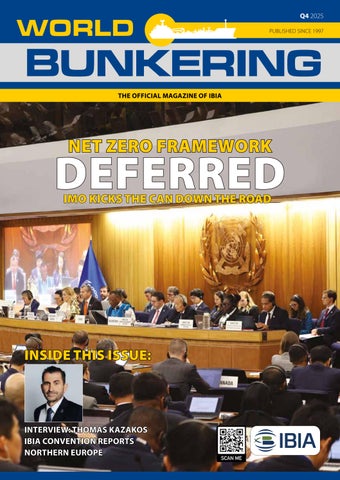
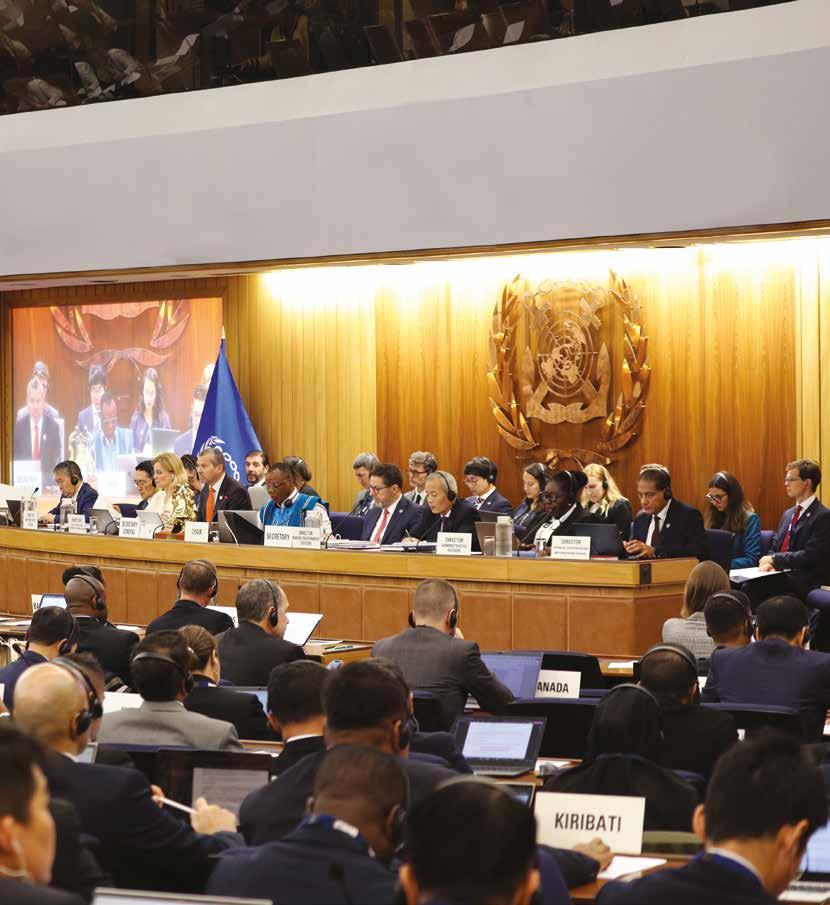
Well, that was a surprise! It had been widely expected that the Extraordinary Session of IMO's Marine Environment Protection Committee (MEPC) would approve the UN Agency's Net Zero Framework (NZF), but that implementation would be problematic. However, as IBIA's representative at IMO, Edmund Hughes, notes in his report in this issue “the norms we have come to expect both for globalisation and multilateralism cannot necessarily be taken for granted any more”. He lays out what happened at MEPC and what the prospects are for NZF.
The disappointment, anger in the case of the environmental lobby, was almost palpable and is reported in our Environmental News. But perhaps the writing had been on the wall well before the October meeting, and that is also noted in the same pages. Columbia Group CEO and President Mark O’Neil, cautioned during London International Shipping Week in September that “the reality of alternative fuels being widely adopted is a lot further away than originally anticipated”.
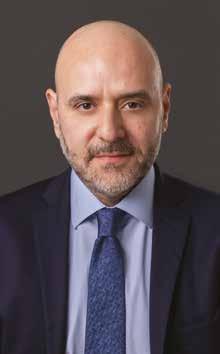
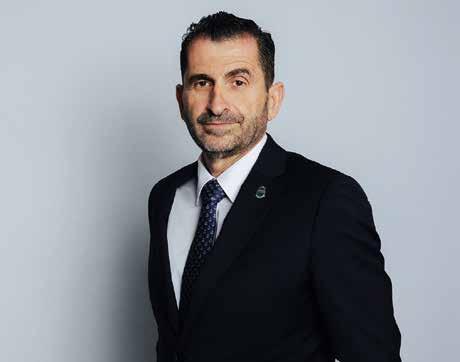
One person who is understandably disappointed by the turn of events at MEPC is the Secretary General of the International Chamber of Shipping (ICS) Thomas A Kazakos, the subject of this issue's interview. The ICS has been a major driving force behind the proposed NZF and expended a lot of time and effort on moving the industry towards the acceptance of market-based measures to achieve decarbonisation. So of course, the implications of MEPC's decision features prominently in our Q&A exchange but what is also clear is the very wide range of activities ICS undertakes.
These include working on bunkering issues and Kazakos stresses: “The ICS and IBIA partnership is one of the most influential pairings at IMO.
Together, we have moved policy from “discussion” to concrete proposals including our various joint proposals on the IMO’s Net Zero Framework.”
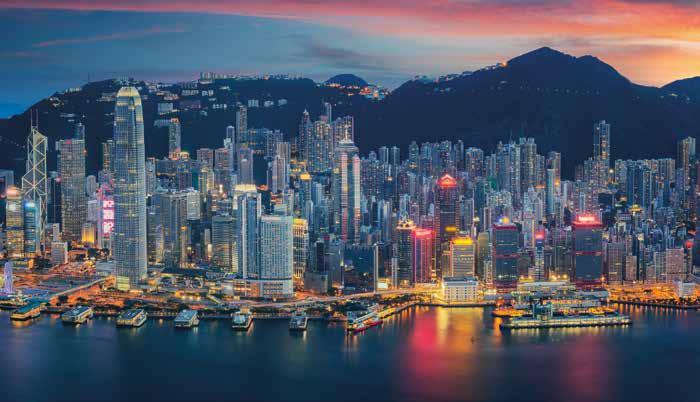
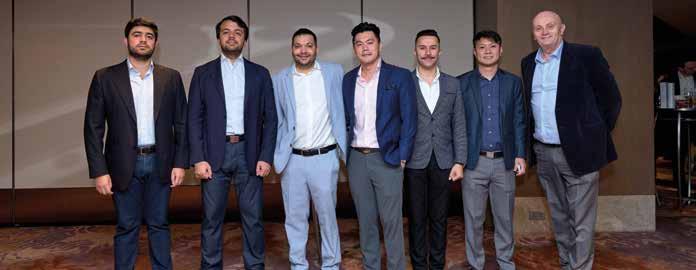
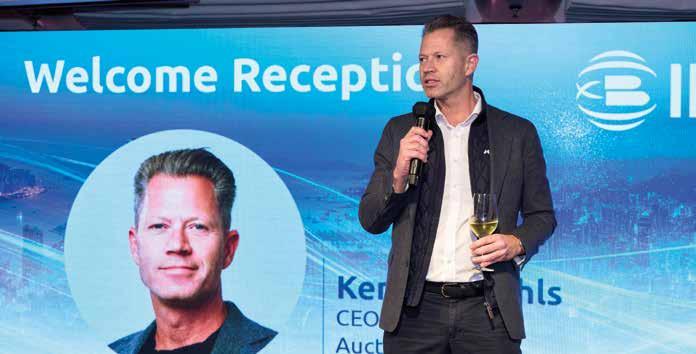
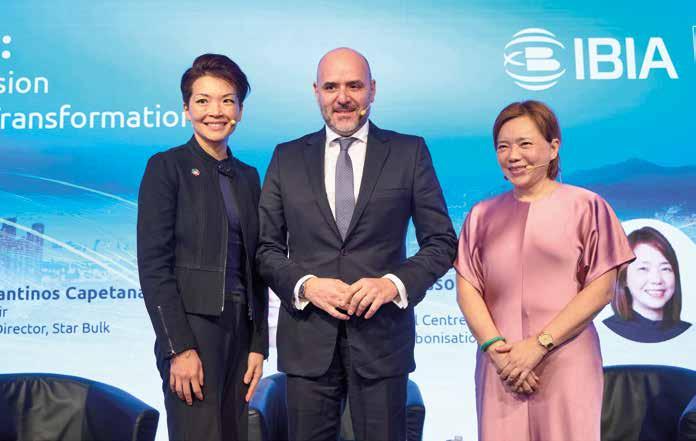
Unsurprisingly the unexpected development at IMO in October was a major discussion topic at IBIA's Convention in Hong Kong in November. As our special report on the event notes, IBIA Chair Constantinos Capetanakis made it clear the industry body intended to continue to push for decarbonisation at the global IMO level.
With the omission from the closing statement at COP 30 in Brazil, also in November, of any mention of phasing out fossil fuels it could be argued that at least some of the impetus towards decarbonisation is starting to flag. That certainly appears to have happened in Australia, as John Rickards observes. However, in his other geographical reports, he notes decarbonisation projects continue in Northern Europe despite challenges and, in the Middle East, in the midst of geopolitical challenges, future fuels bunkering is still on the agenda in Oman and on Egypt’s Red Sea coast.
While NZF and the MEPC vote and the implications are covered extensively in this issue we also report numerous other topics of importance to the bunkering sector. Among them is the increasing acceptance of mass flow meters (MFM). As reported in Industry News, IBIA, with support from BIMCO, has announced the launch of a follow-up survey designed to assess the impact of bunker licensing schemes (BL) and MFM technology on transparency, fuel quality, and regulatory alignment across the maritime sector. This is also an area raised by Kazakos, indicating that there is now a high level consensus in the shipping industry on the need for BL and mandatory MFM.
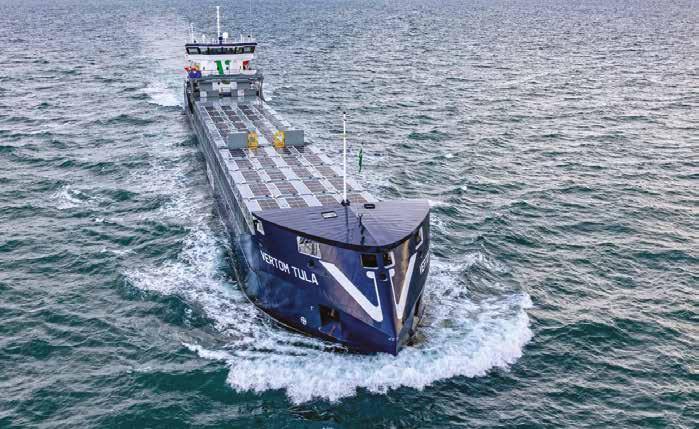
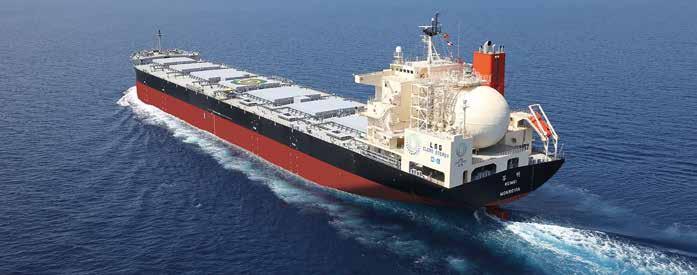
Despite the MEPC setback many in the industry believe that the transition to zero or low greenhouse gas emissions is unstoppable. Certainly, our Alternative Fuels & Technologies pages are full of new developments. One is about the potential of solar panels. That is being put to the test this winter as a 7,280 dwt diesel-electric multi-purpose cargo vessel goes to sea with solar panels fitted to her hatch covers. It is difficult to think of a more severe way of testing the robustness and durability of these pieces of kit.
Without doubt 2025 has been a challenging year. As it draws to a close and the festive season looms many will want a break to take stock and prepare for 2026 which will bring its own challenges.
However, looking on the bright side into the New Year, it appears that the IBIA Dinner in London in February is as popular as ever, judging by the rush of bookings.
The third quarter of 2025 has been a period filled with IBIA activity worldwide.
I was honoured to represent our Association at APPEC in Singapore, where a one-on-one discussion with S&P Global Insights allowed me to set out IBIA’s core aspirations, principles, and activities. My further participation in a leadership panel also highlighted our realistic impact on knowledge sharing and informed decision-making.
Immediately after Singapore, I attended London International Shipping Week, where I contributed to discussions on fuel uptake and production prospects during a World Maritime Forum round table, and spoke about our association at City Hall, in a wellattended event organised by LISW, focused on mapping the challenges of the marine energy industry. The week culminated in the IMO’s main forum, where we were all hopeful that the Net Zero Framework measures would pass in October.
These expectations proved timely but ultimately did not materialise. As described in detail in this issue, the extraordinary session of MEPC prompted many — and sometimes conflicting — reflections. A pause button was pressed. As we emphasised soon thereafter and discussed during a dedicated Members’ Meeting, this is not the end of the road but the beginning of a diverse one — one calling for even more rigorous work, attention to detail, and engagement with the concerns raised by several IMO member states. The unprecedented nature of both the session and the surrounding lobbying should not distract us from what is at stake and the steps that must follow.
In November, during our highly successful Annual Convention in Hong Kong as part of Hong Kong Maritime Week, we set out clearly where we stand, what IBIA can do, and how firmly our Association is now positioned at the centre of marine-energy developments. The Secretariat’s organisation was impeccable, the attendance of the highest level, and our panel discussions covered the widest range of issues that now call for action on our part.
Transformation is rarely linear. With its IMO consultative status, IBIA continues to help regulatory authorities, administrations, fuel stakeholders, and shipowners overcome formidable challenges. Work progresses at the IMO, where we actively participate in the intersessional meetings of the Working Group on Reduction of GHG Emissions and in preparing guidelines for the recognition of sustainable-fuel certification schemes, while sponsoring and co-sponsoring submissions that aim to lay out, clearly and scientifically, the roadmaps needed.
Hong Kong Maritime Week also provided a unique platform for in-depth discussions with government officials on their decarbonisation ambitions. I felt the energy of the city’s maritime tradition, contributed to their forum, participated in a Capital Link panel, and engaged with dignitaries from several countries — all reflecting IBIA’s traction and momentum, reinforced by the launch of our new brand and striking new logo.
Over the past two years, IBIA has evolved considerably. We have consolidated our global voice, broadened our membership, empowered our Regional Boards, and deepened our presence at the IMO and across key industry partnerships with ICS, Intercargo, Intertanko, GCMD, and BIMCO.
As I have said since being elected Chair, progress is built collectively but also requires leadership, clarity of purpose, and the willingness to confront complexity. My background in law and shipping has taught me that durable change depends on sound governance, commercial insight, and the courage to question precedent. These principles guide our work at IBIA — where the legal, commercial, technical, and operational dimensions of marine energy converge.
Decarbonisation is an active transition that tests our creativity, our resilience, and our capacity for synthesis. The journey is irreversible. And Hong Kong — as a bridge between East and West, a living experiment in transition where ambition meets reality — proved an ideal setting to reaffirm that diversity of perspectives. This is what we showcased during our Annual Convention.
This is our strength. Within IBIA, all voices are present and vocal: energy producers, bunker suppliers, shipowners, classification societies, surveyors, port authorities, lawyers like me, and regulators — each offering a different perspective yet united by the same objective: making our industry more transparent, efficient, and sustainable.
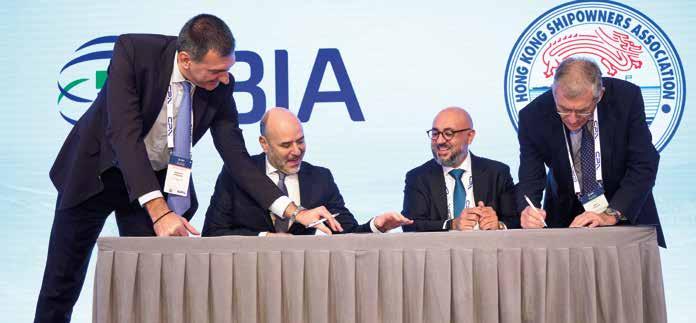
Hong Kong Maritime Week sought to translate knowledge into progress, and ideas into projects. That is the leadership spirit IBIA embodies — and it was the purpose of our Convention, which also marked the beginning of a mutually beneficial cooperation with the Hong Kong Shipowners Association through the signing of an MoU. More will follow, always built on a sound, holistic expansion plan.
Dear friends, IBIA has continuity, strategy, and — above all — focus: knowledge, impact, and influence across all matters relating to the future of bunkering and a realistic path toward a sustainable shipping industry. Global regulations and relevant roadmaps may not yet be carved in stone, but our steadfastness and commitment are.
With warm regards,
Constantinos Capetanakis IBIA Chair
Marine Fuels in the UAE and now in Salalah Oman
REFLECTING ON A YEAR OF GROWTH, IMPACT, AND MARITIME ENGAGEMENT
As we close another busy year at IBIA, holding this World Bunkering edition in your hands is a tangible reflection of what we have been emphasising over the past couple of years: bunkers are more relevant to shipping than ever.
This issue, released after the IBIA Annual Convention that coincided with Hong Kong Maritime Week, marks a first for IBIA, aligning our flagship annual gathering with a broader maritime event. It is a fitting testament to a year in which our association has grown in both influence and relevance.
2025 has been a year of milestones for IBIA. Our membership has continued to expand at record levels, reflecting the increasing recognition of our work and the role we play in connecting the bunkering/ marine energy and shipping sectors. Our impact within the industry has grown accordingly, as our members benefit from a platform that combines insight, advocacy, and networking opportunities. While the year presented challenges, most notably the stagnation of the IMO’s netzero framework, these, like any challenges, also offer opportunities. The need for pragmatic solutions and industry-led discussion has never been clearer, and IBIA is at the forefront of these conversations.
Visually, IBIA has also evolved. This year, we introduced a new logo, which now features two vessels in a globe. An image that embodies the essence of what we do: bunkering. This is more than a cosmetic change. It signals a broader evolution in our tone of voice, reflecting our mission to represent our members with clarity, authority, and impact. The visual identity now fully communicates our active role in the industry, reinforcing the message that IBIA is not only a network but a dynamic, essential partner to bunkering/marine energy and shipping professionals alike.
In parallel with our visual rebranding, we have invested in the tools and platforms that make our association
more effective. The launch of our CRM and of a new networking platform this year has already enhanced how members connect, collaborate, and share insights. In addition, a dedicated application is on the way, designed to make engagement easier and more meaningful across our growing membership. These initiatives underline our commitment to leveraging technology in service of stronger member interaction and industry engagement.
Looking forward, IBIA remains focused on delivering value and relevance in 2026. Following the Annual Convention, we will host our premier IBIA Annual Dinner, an important gathering that follows our inperson Board Meeting and AGM. In parallel, we are actively discussing membership and governance restructuring. Since IBIA’s inception over 30 years ago, there has been no formal revision of our Articles of Association or membership structures. With our expanded relevance and growing membership, now is the ideal time to consider adjustments that will make IBIA stronger financially, organisationally, and in terms of representation, ensuring we remain a leading voice for the bunker/ marine energy industry in the years ahead.
In many ways, 2025 has been about setting foundations for the future. Every initiative, from our alignment with Hong Kong Maritime Week to the expansion of our digital and networking offerings, reflects a broader vision: to position IBIA as a forward-looking, influential, and indispensable partner in the global maritime landscape.
As members, you are part of this journey. The discussions we have, the networks we strengthen, and the knowledge we share collectively build the credibility and influence that define IBIA today. We leave 2025 with pride in what has been achieved, energy for the work ahead, and confidence that the coming year will bring even greater opportunities for engagement, innovation, and impact.
Holding this magazine, reading these words, and being part of the IBIA community is a reminder that we are moving in the right direction together. It has been a busy, impactful year, and yet, it is only the beginning. We look forward to another great year ahead, with ambitious goals, continued growth, and meaningful contributions to the industry we serve.
Safe travels and fair winds.
Best wishes for a happy and restful holiday season.
Alexander Prokopakis
IBIA Executive Director alexander.prokopakis@ibia.net
RAISING THE BAR: IBIA’S GLOBAL EVENTS MOMENTUM CONTINUES
How a landmark Convention in Hong Kong set the tone for a dynamic year ahead
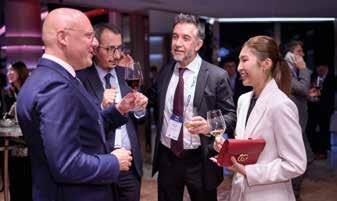
From the moment we touched down in Hong Kong it was clear that this year’s IBIA Annual Convention would be something truly special. As our first fully co-located event during Hong Kong Maritime Week and held with the full support of the Hong Kong Government, through the Hong Kong Maritime and Port Development Board, the week represented not only a return to a city that has proudly hosted us in both 2005 and 2013 but a genuine step forward in how we bring our global community together.
I am delighted to say that it was one of our strongest Conventions yet. You will find a full Convention report in the pages that follow but allow me to share a few reflections. The success of the week was made possible by the commitment and collaboration of so many. Our gratitude goes to every speaker who generously shared their knowledge, every sponsor who placed their trust in us, every media partner who supported our work and every delegate who contributed to such a vibrant and forward-looking dialogue. My sincere and heartfelt thanks also go to the entire IBIA Secretariat whose expertise commitment and
tireless behind the scenes work were instrumental to the quality and seamless delivery of the Convention. Their efforts, often invisible to many, are the backbone of every IBIA event.
We were also privileged to receive the backing of several key supporting associations whose partnership enhanced the depth and credibility of the programme. Our thanks go to BIMCO, the International Chamber of Shipping and The Hong Kong Shipowners Association. Their collaboration was invaluable and helped strengthen the impact and reach of our discussions throughout the week.
Deep appreciation is extended to the IBIA Asia Board who formed the regional steering committee and to our Events Working Group of IBIA Board Members. Their contribution to the agenda, development speaker engagement and thematic direction ensured a programme that was both relevant and resonant across the marine energy sector. One comment from an attendee perfectly captured the spirit of the event. They noted that IBIA’s conferences offer something rare, a genuine space for knowledge, sharing and openness.
They spoke of the willingness of speakers and delegates alike to collaborate and advance the industry together and said that this sense of shared purpose was the reason they would continue to attend. For me that encapsulates exactly what we seek to create at IBIA. Our events are not just gatherings they are platforms for collective progress.
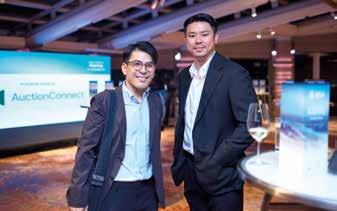
Our sponsors were central to making all this possible. Chimbusco Pan Nation served as our Diamond sponsor with outstanding commitment supported by Auction Connect in the platinum category. We were also very grateful to Helmsman Supply Sohar Port and Freezone and Island Oil for their generous support as gold sponsors. Flex Commodities Lloyd’s Register and TFG Marine joined us as silver sponsors and Star Bulk and Seven Seas Oil Hong Kong Limited as bronze sponsors. Their contributions helped shape an event that truly stood out for both quality and impact.
With such momentum behind us there is little time to pause. Our final Members Meeting of the year takes place on 10 December and remains a vital touch point for our international community.
This session offers members from all regions the opportunity to hear directly from our leadership including IBIA Chair Constantinos Capetanakis Executive Director, Alexander Prokopakis; IBIA Representative to the IMO, Dr Edmund Hughes, and our Board Members. It promises to be a meaningful moment of reflection and forward thinking as we prepare for 2026.
Looking ahead our premier event, the IBIA Annual Dinner 2026, will take place on Monday 9 February at Grosvenor House London. Recognised as the highlight of the global bunkering calendar and held alongside the opening of International Energy Week, the Dinner draws senior leaders from across the marine fuels sector. With more than 80% of tables already reserved early booking is strongly recommended. We are deeply grateful to all our confirmed supporters including The Hawks PVT Arte Bunkering Island Oil Limited, PEMA Corporation, Sea Crown Marine Services, DMCC Sohar Port and Freezone, ExxonMobil, Gulf Petrol Supplies, the Port Authority of Santa Cruz de Tenerife, Asmira Petrol, StormGeo and the Turkish Chamber of Shipping. Their continued support strengthens IBIA’s ability to deliver events that matter.
We are equally excited at the return of the IBIA Asia Gala Dinner on 22 April 2026 at The Fullerton Hotel Singapore, a beautiful highlight of Singapore Maritime Week bringing together more than three hundred senior leaders from across the bunkering marine energy and maritime communities. Sponsorship opportunities are already open with table bookings from 1 December 2025. Across the Atlantic we look forward to welcoming members to the IBIA Americas Networking Drinks Reception on 11 March 2026 in Stamford Connecticut alongside CMA Shipping 2026 an evening designed for genuine connection and thoughtful exchange.
As we move into 2026, we will continue to create meaningful opportunities for engagement both online and in person, including a reception during Posidonia
and our participation in many industry gatherings across our regions. We will also be announcing the venue for the IBIA Annual Convention 2026 in February at the Annual Dinner and we look forward to sharing that moment with many of you.
As we close another inspiring and successful year my heartfelt thanks go to all our members for your trust, energy and continued support. You remain at the centre of everything we do, and we look forward to welcoming you at our many engagements around the world in the coming year.
Warmest regards,
Tahra Sergeant Regional Manager (Africa) & Global Head, Events
tahra.sergeant@ibia.net
Follow our social media: https://linkedin.com/ company/ibia.net
IBIA CONVENTION 2025: UNITY AND CLARITY IN A CHANGING MARITIME LANDSCAPE
More than 250 delegates met in Hong Kong as IBIA explored how collaboration, practical solutions and shared purpose can drive progress amid global uncertainty
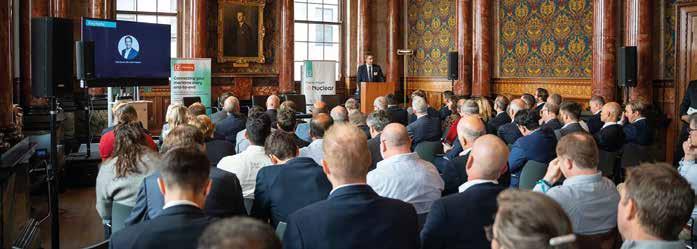
With geopolitical divisions putting the brakes on the global decarbonisation agenda and tensions threatening the security of shipping in various regions, IBIA’s most recent annual convention emphasised a united front from maritime industries as key to securing its aims.
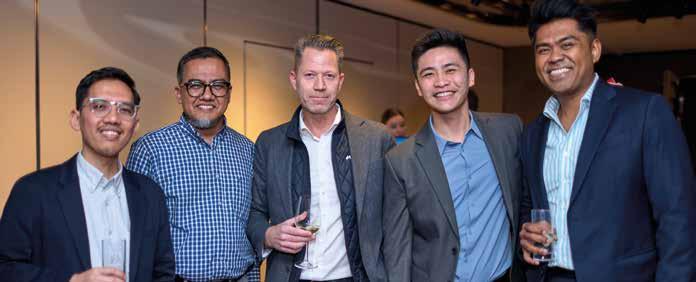
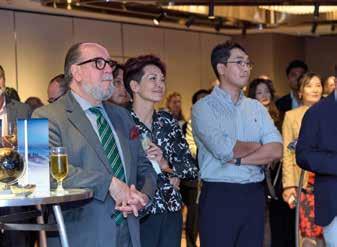
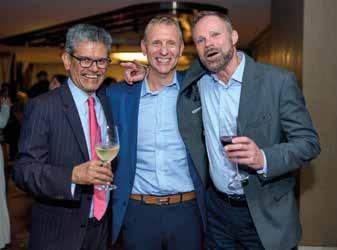
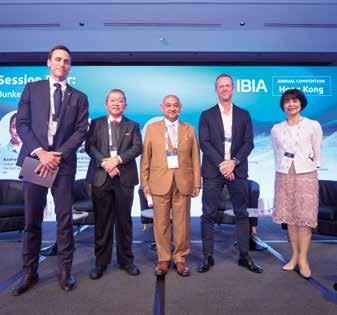
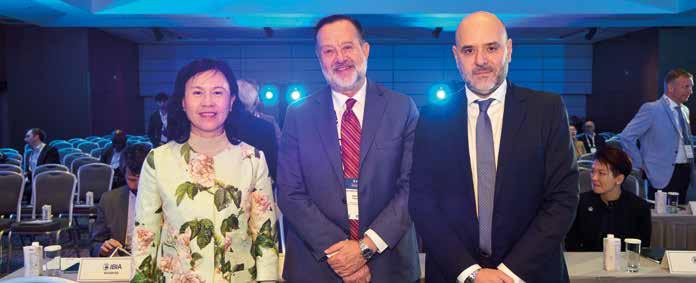
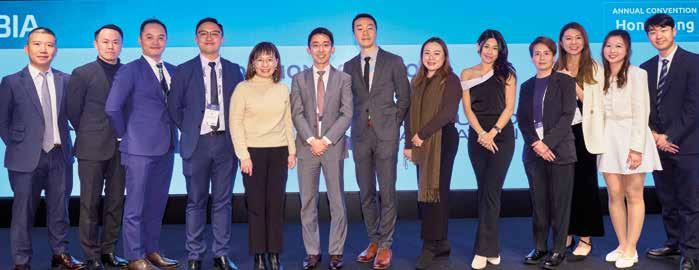
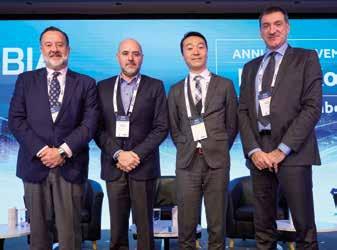
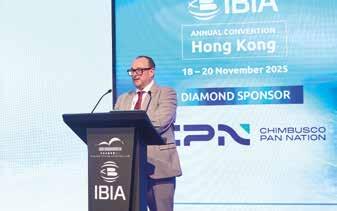
Over 250 delegates registered to join IBIA for its Annual Convention in Hong Kong in November, with the event coming to Hong Kong in this instance for the event’s first return to Asia since 2017.
Decarbonisation and digitalisation remained key topics touched upon in almost every panel, but the overarching theme was of the need for stakeholders across the maritime supply chain to work together to face increasing complexity and division in the world.
The rollout of mass flow meters at ports around the world was also a frequent theme, with a couple of ports in Asia now reported to be making plans to introduce the measurement systems.
The event came just a month after the IMO’s surprise decision to delay a vote on its NetZero Fframework by at least a year, throwing into confusion the state of global efforts to decarbonise shipping.
IBIA Chair Constantinos Capetanakis said the industry body would continue to push for decarbonisation at the global IMO level.
“This delay, this pause button, should be seen as the starting signal for recalibration and renewed results,” Capetanakis said.
“It reminds us all that transformation is rarely linear.”
In a recorded address, IMO Secretary General Arsenio Dominguez said the UN body would use the coming months to work with member states to build consensus on decarbonisation and called the work of non-governmental organisations like IBIA vital to delivering a multi-fuel future for shipping.
In the keynote address on the first day Mable Chan, Hong Kong’s Secretary for Transport and Logistics, said her government was committed to doing its part to decarbonise shipping. Hong Kong plans to pursue a multi-fuel strategy, including LNG, biodiesel, methanol, ammonia and hydrogen in the fuels it intends to make available to ships in its waters.
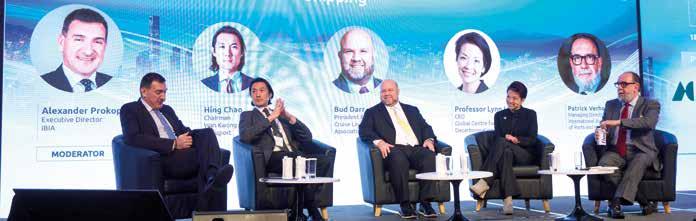
The event’s first panel session focused on the role of leadership in driving maritime transformation.
Much of the discussion was spent on the delay to the IMO NZF, with panellists expressing surprise at the successful push to put off the measure’s adoption, but also a degree of understanding of the concerns from the framework’s opponents.
Panellists also made the case for focusing on short-term decarbonisation strategies while the longer-term picture remains unclear and discussed the role of carbon capture and energy-efficiency measures.
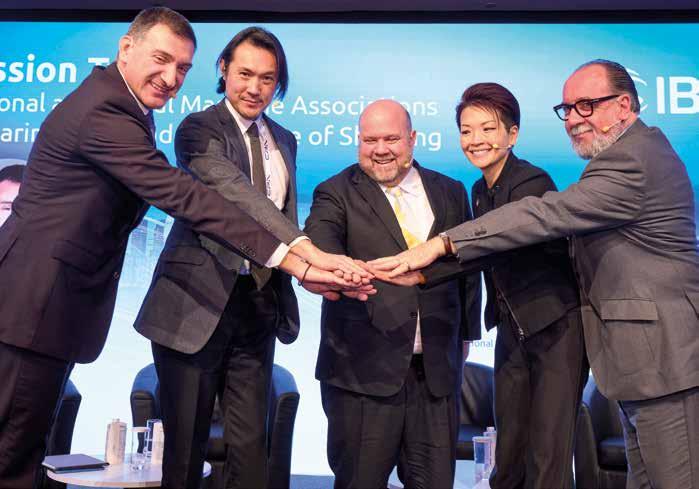
The second session turned to the role of regional and global maritime associations in determining the future of shipping.
Decarbonisation was a central theme here as well, with some discussion focusing on what changes would be needed to the NZF for it to be adopted in 2026. The need for the development of ports, particularly in the global south, was one focus, as well as the need for training seafarers for the decarbonised future of their roles.
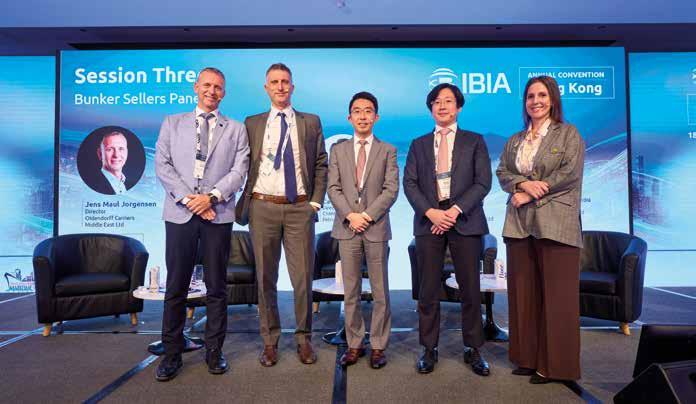
A session later on the first day brought together a group of bunker sellers to discuss the industry’s challenges. Key points included the impact of sanctions on Russian fuel supplies, the need for clarity on the IMO framework and the importance of mass flow meters. Panellists also addressed credit challenges for the bunker industry, and the need for long-term agreements and reliable supply chains to deliver the emergence of mature bunker markets for LNG and biofuel blends.
A session with a group of bunker buyers took on strategies in bunker procurement, focusing on regulatory compliance, financial risks, and new fuel standards. The panel examined the shift from price-based tendering to energyand carbon-based sourcing, with new skills and tools needed to manage the new reality for buyers. The panel also suggested more training was needed for procurement teams in sustainability and data analytics.
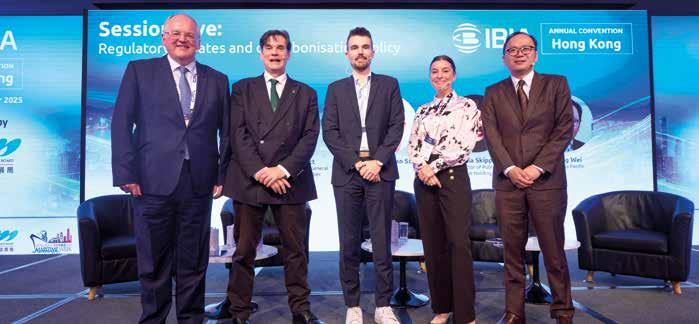
At the end of the first day Dr Edmund Hughes, IBIA’s IMO representative, led a session on the regulatory environment for shipping and bunkering.
Hughes discussed whether powers beyond the IMO would need to take up the cause of global maritime decarbonisation regulation.
"I'm a great believer in the IMO, but maybe it's beyond its abilities, and we have to accept that,” Hughes said.
The panel emphasized the need to understand the voting reasons for IMO member states opposed to the NZF, as well as discussing the challenges in implementing the CII regime and the role of digitalisation in compliance.
The second day was launched by Klaus Chan, principal assistant secretary for Hong Kong’s Transport and Logistics Bureau, setting out his government’s plans for green bunker fuels.
Those plans include the rollout of mass flow meters, which Hong Kong plans to require for all barges delivering methanol as a marine fuel.
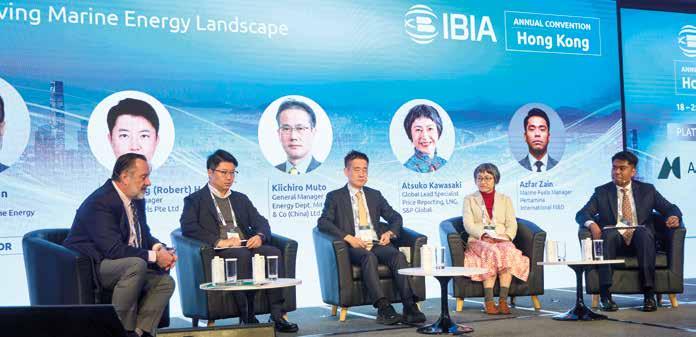
The first panel session of the day then looked at regional challenges in Asia. The discussion focused on the evolving maritime energy landscape in Asia, particularly Singapore and China, noting significant investment in the shift to alternative fuels.
The next panel then analysed the transition to sustainable maritime fuels, emphasising collaboration and digitalisation. The discussion also touched on the importance of training and education in future fuels, with Singapore's strong ecosystem and public-private partnerships praised for their role in fostering innovation and knowledge sharing.
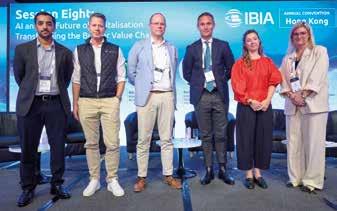
Finally, a group of digitalisation experts held a lively conversation on the digitalisation of the bunker value chain. The wider adoption of mass flow meters, e-BDNs, and the impact of AI services all came under discussion, with the panel pointing to a need for roles within the bunker industry to change as its buyers increased in digital maturity. The need for data security and transparency was also emphasised as a means of ensuring customers’ faith in the newly digitalised services.
As the Convention drew to a close, the message was unmistakable. Despite geopolitical headwinds and regulatory uncertainty, the maritime community remains determined to move forward together. IBIA will continue to champion collaboration, clarity and practical action, ensuring our industry is equipped to navigate complexity with confidence and purpose.
20 - 22 Maritime Week Africa Cape Town, South Africa 29 Saudi Maritime Awards Night 2026 Jeddah, Saudi Arabia
FEBRUARY 2026
3 - 4 Middle East Bunkering Convention 2026 Dubai, United Arab Emitates
9 IBIA Annual Dinner 2026 London, United Kingdom MARCH 2026
10 - 12 CMA Stamford, United States 11 IBIA Americas Drinks Reception Stamford, United States APRIL 2026
15 - 16 Argus Green Marine Fuels Asia Conference | Argus Media Singapore, Asia
20 - 24 Singapore Maritime Week Singapore, Asia
IBIA Asia Gala Dinner Singapore, Asia
21 - 23 IBC - The International Bunker Conference Oslo, Norway
28 - 30 Argus Green Marine Fuels Conference Antwerp, Belgium MAY 2026
5 - 7 Global Maritime Decarbonisation Summit 2026 Amsterdam, Netherlands
18 - 21 Maritime Week Americas Panama JUNE 2026
1 - 5 Posidonia 2026 Exhibition Athens, Greece
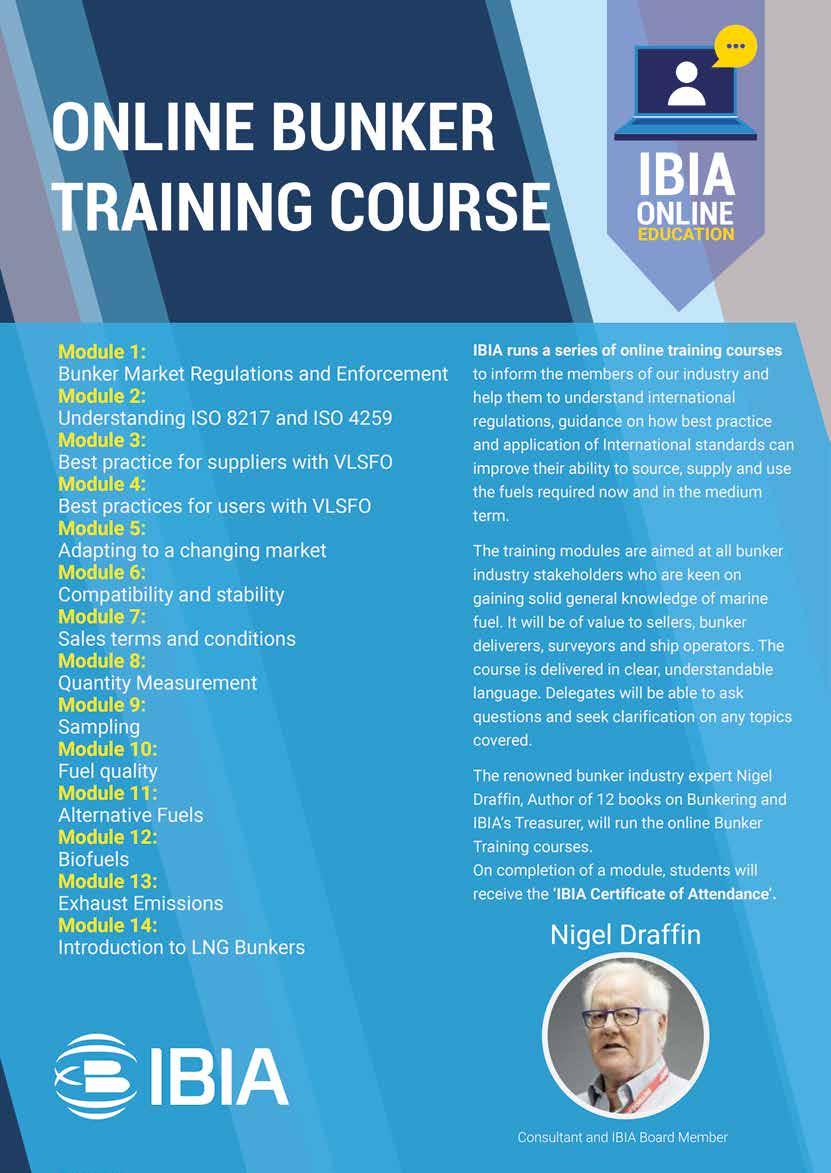
IBIA ONLINE TRAINING COURSES
ONLINE BUNKER TRAINING COURSE
MODULE 1 TO PURCHASE Bunker Market Regulations and Enforcement Online at www.ibia.net
MODULE 2 TO PURCHASE Understanding ISO 8217 and ISO 4259 Online at www.ibia.net
MODULE
MODULE
MODULE
MODULE 6 TO PURCHASE Compatibility and stability – Issues with VLSFO fuels and the measurement of Stability Online at www.ibia.net
MODULE 7 TO PURCHASE Sales terms and conditions – The purpose, structure and application of Sales terms Online at www.ibia.net
MODULE 8 TO PURCHASE Quantity measurement – The principles of quantity measurement including Mass Flow Metering Online at www.ibia.net
MODULE
MODULE
MODULE 11 TO PURCHASE Alternative Fuels Online at www.ibia.net
MODULE 12 TO PURCHASE Bio Fuels Online at www.ibia.net
Authorised Distributor of Castrol
DRIVING PROGRESS THROUGH PARTNERSHIP: AFRICA’S MARITIME MOMENTUM IN 2025
2025 marked a milestone year for Africa’s maritime and bunkering community, as it strengthened its regional presence through new leadership, collaboration, and dynamic events
Africa’s maritime and bunkering landscape continues to evolve with energy, resilience, and purpose. This year, IBIA’s activities across the region reflected not only growth but also a shared determination to drive progress through partnership. From new appointments to powerful industry gatherings, 2025 underscored Africa’s voice as one of innovation, inclusion, and collaboration.
In October, our IBIA Africa Chair, Jon Hughes (Managing Director, DanBunkering Africa Ltd), warmly welcomed two outstanding new Board Members whose experience and vision will help guide our regional priorities. Abdelrahman Tharwat, Regional Supply Manager for Africa, the Middle East, and the Indian Subcontinent at Sing Fuels, brings over 20 years of expertise in bunkering and vessel operations. Based in Dubai, his career has spanned leadership roles across the region, earning recognition for performance excellence – including Sing Fuels’ “Olympian of the Year” in 2024. Momoh–Jimah Oyarekhua, Chairman of OPAC Refineries and Founder of OMSA Integrated Services in Nigeria, joins with more than three decades of experience in refining, petroleum products trading, and marine transport. A respected leader and advocate for local capacity building, he continues to play an instrumental role in strengthening Nigeria’s oil and gas landscape through his leadership within BTAN and CORAN. Their appointments mark a significant step forward in strengthening IBIA Africa’s representation and diversity of expertise across the continent.
The year also saw IBIA Africa’s continued engagement in thought leadership and advocacy. During London International Shipping Week, I joined the Africa Maritime and Shipping Assembly (AfMASA) session at the International Maritime Organization (IMO), where industry and policy leaders gathered to discuss unlocking Africa’s maritime potential. The session, supported by Lloyd’s Register Foundation, explored practical pathways for developing African maritime capacity from expanding seatime and training for cadets to improving transparency through mass flow metering
and electronic bunker delivery notes. The discussions reinforced the importance of collaboration between shipowners, educators, and regulators to ensure Africa benefits fully from the growth in intraAfrican trade under the AfCFTA framework. IBIA remains committed to contributing to these initiatives by strengthening curricula, supporting capacity building, and connecting finance with opportunity.
In August, the spirit of collaboration and inclusion came vividly to life at the WISTA South Africa Women’s Month Gathering at the Mount Nelson Hotel in Cape Town. As Programme Director and MC, I was honoured to guide an afternoon celebrating women’s leadership in maritime – and the progress still to be made. The event, supported by Tshwani Automotive Special Economic Zone, brought together industry, academia, and associations including WOMESA, MaritimeEMpowerher, and IBIA, alongside the IMO. Inspiring addresses by Amsha Gengan, Chair of WISTA South Africa, and Mariana Noceti of the IMO’s Women in Maritime Programme, highlighted how empowerment drives innovation and sustainability. What stood out most was the shared purpose – a recognition that true transformation requires everyone’s participation, and that South Africa is leading by example in building an inclusive industry.
IBIA is delighted to support key initiatives shaping Africa’s maritime future.
The Bunker Africa Conference, taking place from 17–18 November 2025 in Gqeberha, which coincides with the IBIA Annual Convention in Hong Kong and will be supported by our dedicated IBIA members in South Africa. The event will focus on youth empowerment and entrepreneurial development across the maritime and renewable energy sectors, further strengthening the region’s commitment to inclusive and sustainable growth. Early in the new year, Maritime Week Africa 2026 in Cape Town will spotlight regional regulatory frameworks and the opportunities emerging from Africa’s rapidly diversifying bunker markets, with IBIA planning to participate through
focused panel discussions and collaborative roundtables on compliance, policy alignment, and regional advancement.
At the time you are reading this, we are gathered in Hong Kong for the IBIA Annual Convention 2025, our flagship global event and an official part of Hong Kong Maritime Week. It’s inspiring to see so many of our Africa members joining us here, a testament to the strength and engagement of our regional community. The Convention brings together hundreds of delegates from across the world for a three-day programme of insight, dialogue, and collaboration on critical themes such as market outlooks, regulation, alternative fuels, and digital transformation. It is a global forum that reflects IBIA’s unique ability to connect regional perspectives with international strategy and Africa’s growing participation is a source of great pride.
To our members and partners across Africa, thank you for the incredible support and engagement throughout 2025. Your participation, ideas, and commitment continue to shape the strength of our community. I encourage every member to make full use of your IBIA membership benefits: access to global events, working groups, and training opportunities that connect you directly with industry developments and decision-makers.
As we close another successful year, the sense of momentum across Africa is undeniable. The conversations we began in 2025 are paving the way for action in 2026 – a year that promises to be defined by continued collaboration, innovation, and growth. Together, we are building not just participation in the maritime sector, but leadership that truly reflects Africa’s place in the global industry.
Tahra Sergeant Regional Manager (Africa) & Global Head, Events tahra.sergeant@ibia.net
AFRICA
IBIA’S EVOLUTION
A new identity for a transforming marine energy landscape
The marine fuels industry is undergoing one of the most significant transformations in its history. Decarbonisation, alternative fuels and technologies, evolving regulations from the International Maritime Organization (IMO), and rapidly advancing digitalisation are reshaping how the sector operates. In the midst of this evolution, IBIA recognised that while its mission remains steadfast, the way it presents itself to the world must evolve. Our rebrand is not about changing who we are, it is about better reflecting the influence, values and ambition of IBIA today.
Brand evolution
For over thirty years, IBIA has brought together every part of the marine fuels value chain — shipowners, charterers, fuel suppliers, traders, brokers, surveyors, ports, equipment providers, insurers and legal experts. With consultative status at the IMO, IBIA has ensured that the voice of the industry is heard when and where it matters most, influencing decisions that affect global maritime operations. Yet, as the world around us changed, our visual identity and communications no longer reflected the dynamism, innovation and leadership that our members and stakeholders expect.
Our previous branding served us well in the past, but it began to show its limitations. The use of a gradient, along with two different colours in the word ‘IBIA’, had originally been designed to emphasise the word ‘Bunker’, but over time it felt outdated and inconsistent.
The full name, ‘International Bunker Industry Association’, while accurate, is long and often too small to read when applied within the logo. Most people across the industry refer to us simply as IBIA, and it became unnecessary to embed the full wording within the logo itself. The logo was also vertically designed for a particular reason: when the globe symbol was first added, its shape unintentionally resembled the letter ‘C’, and when placed alongside the word IBIA, this created a negative association in some regions of the world. In addition to this, the globe itself was not recognisable without the name IBIA next to it, and the lines of the logo were too thin, meaning that it often disappeared against different backgrounds. It became evident that our visual identity no longer represented the strength, confidence and modernity of the association or the industry it serves.
IBIA redefined
Recognising this, we understood the need to redefine our brand positioning and develop a new identity that aligned with the evolution of IBIA, while better embodying our aims, strategy and values.
The logo needed to retain a strong corporate presence and convey trust and authority, but it also had to embrace innovation and modern design. At the heart of the new identity are elements that symbolise who we are and what we represent: the globe signifies our international reach and our role in uniting all players within the marine energy sector; the two vessels represent the core of our
industry and the fact that bunkering is essential to its operations and last but not least, the green element acknowledges the transition towards alternative fuels and environmental sustainability.
To ensure this evolution was thoughtful and inclusive, we began by briefing different branding agencies. After careful review, one was selected to guide us through the rebranding journey. Together, we conducted a perception audit to better understand how IBIA is seen by external stakeholders. We asked questions such as when they first engaged with IBIA and why, how they would describe the association, what personality they would attribute to IBIA if it were a person, and how they rate our communications compared to other organisations. We also undertook a SWOT analysis to assess our strengths, weaknesses, opportunities and threats.
The feedback was candid and valuable.
IBIA was described as professional, credible and technically strong, but also seen by some as traditional, quiet in communication and less outward-facing than it should be.
A new narrative for IBIA
Based on this insight, the agency proposed a new narrative for IBIA.
The recommendation was to retain the name IBIA, as it carries recognition and trust, but to refresh the story we tell.
The purpose needed to be articulated more clearly and directly: to address the global challenge of ensuring a safe, sustainable and reliable marine energy supply. The narrative acknowledges the changing fuels
landscape, from conventional fuels to alternative fuels such as biofuels, liquefied natural gas, methanol, ammonia and future energy sources, while reinforcing IBIA’s commitment to fuel quality, safety and infrastructure. It also highlights IBIA’s unique position as the only organisation representing the entire marine energy supply chain.
The new narrative encourages more active, confident language, moving away from passive communication. It focuses on bunkering as the essential link between energy production and global shipping, calling for clearer communication of IBIA’s achievements and contributions, particularly at the IMO.
With the narrative in place, the new visual identity was developed. Modern, bold and versatile, created to work across digital and physical formats, from event signage to mobile screens. The colours draw inspiration from the ocean and sustainable energy, deep blues and modern greens, reflecting both our maritime roots and our commitment to the future of cleaner fuels. The logo is designed to be strong, recognisable and scalable, ensuring clarity whether it appears on a business card, a conference backdrop or a digital application.
IBIA evolved – the rebrand Alongside the logo, a complete visual system has been created, including typography, layout guidelines, templates for documents and presentations, stationery, email signatures, certificates and event materials. A new corporate video has also been produced to introduce the updated identity and communicate the story of IBIA’s evolution.
The rebrand extends beyond visuals. It is about how we communicate, how we lead and how we connect with our members and the wider maritime community. IBIA will enhance the way it shares insights, achievements and regulatory developments, ensuring our communications are more engaging, impactful and aligned with our purpose. We will make our expertise more accessible through thought leadership content, digital platforms, training and events that encourage discussion and collaboration. Our upcoming Annual Convention will be the first major event where the new identity is fully brought to life, not only through design, but through tone, content and interaction.
This evolution is a declaration of intent. It reflects our belief that progress in marine fuels must be responsible, collaborative and driven by knowledge.
IBIA will continue to support its members through advocacy, technical guidance and education, while becoming more visible, more modern and more connected than ever before. As the bunkering landscape is changing, IBIA will stand at the heart of the conversation, bridging traditional and future fuels, ensuring safety and quality, and connecting the global community that keeps world trade moving.
Elena Wilson Marketing & Business Development Lead elena.wilson@ibia.net
IBIA TRAINING
BUILDING KNOWLEDGE FOR A CHANGING INDUSTRY: IBIA’S EXPANDING TRAINING PORTFOLIO
IBIA’s latest training initiatives in Hong Kong and Europe highlight its ongoing commitment to developing skills and advancing transparency in the global bunkering sector
As this edition of World Bunkering arrives on your desk, IBIA is in Hong Kong, delivering two cornerstone courses as part of our continued investment in industry training and skills development: the Alternative Fuels Training Course and The Role of Mass Flow Meter System – Strengthening Accountability and Transparency in the Future of Bunkering.
The timing could not be more fitting. Held during Hong Kong Maritime Week, these courses reflect the global industry’s growing focus on transparency, innovation, and readiness for regulatory and environmental change.
The Alternative Fuels Training Course, led by renowned industry educator Nigel Draffin, attracted strong engagement from across the marine fuels value chain. As one of the industry’s foremost voices on education, Nigel provided participants with clear, practical insights into the evolving alternative fuels landscape, from biofuels and methanol to LNG, ammonia, and hydrogen. The course unpacked fuel characteristics, safety, compatibility, and handling, while exploring commercial and operational implications for suppliers, traders, and shipowners alike. Highly interactive and rooted in practical examples, it remains one of IBIA’s most sought-after programmes. IBIA will continue to deliver this course worldwide through 2026, ensuring professionals remain well equipped for the energy transition ahead.
Running alongside this, IBIA, in collaboration with Metcore International, is hosting a focused half-day workshop on 18 November: The Role of Mass Flow Meter System – Strengthening Accountability and Transparency in the Future of Bunkering.
sThis session delves into how Mass Flow Meter (MFM) technology is redefining accuracy and trust in bunkering, with participants exploring system integrity, calibration, verification standards, and best practices for multi-fuel operations in an evolving market.
These Hong Kong courses build upon the success of Mastering MFM for Bunkering: Comprehensive Technical & Practical Training for Surveyors, held earlier this month on 5 November in partnership with C4 fuel, led by Claudia Beumer, IBIA Board Member and Owner at C4 and endorsed by the Ports of Rotterdam and Antwerp-Bruges. That course marked a major step in preparing surveyors for the incoming MFM mandates across the ARA region, blending theory with hands-on technical learning. IBIA will continue offering this essential training throughout 2026 to coincide with the formal adoption of MFM requirements in European ports.
IBIA’s regional training activity also continues to grow in Asia, with in-person courses in Singapore approved by the Maritime and Port Authority of Singapore (MPA). The two-day Basic and Advanced Bunkering Courses remain among IBIA’s longest running and most respected programmes, providing foundational and in-depth knowledge of bunker operations, procedures, documentation, and regulatory compliance. Delivered by IBIA-approved trainers, these sessions support the professional accreditation of Singapore’s bunkering workforce and reinforce the city-state’s global leadership in bunkering standards.
In addition to these in-person sessions, IBIA’s online learning platform continues to grow, offering accessible, self-paced
courses covering bunker operations, claims, compliance, and fuel quality management. These courses are available on demand to anyone seeking to expand their understanding of the bunkering and marine energy sector, as well as serving as valuable refreshers for active industry stakeholders. This flexible, digital approach enables professionals worldwide to upskill and stay current without time or travel constraints.
IBIA extends its sincere thanks to all members, partners, and training participants for their continued support throughout 2025. The success of these programmes is testament to the collective commitment across our industry to raising standards and sharing knowledge.
We are always open to hearing from members and the wider industry about evolving training needs, and we welcome open dialogue on how best to serve the sector’s professional development. To stay informed, keep an eye on the IBIA Training Bulletin, our monthly update highlighting new courses, insights, and learning opportunities.
As 2025 draws to a close, IBIA wishes all our members and colleagues across the industry a strong finish to the year and a prosperous 2026 - defined by collaboration, innovation, and continuous learning.
For more information and to register, visit our website:
As 2025 draws to a close, Asia’s marine fuels landscape continues to evolve at pace—driven by tightening regulations, the regional uptake of low-carbon fuels, and renewed focus on operational accountability. Against this backdrop, IBIA Asia remains steadfast in its role as a bridge between policy, practice, and people— strengthening industry capabilities through training, engagement, and collaboration.
Driving Readiness through Training and Standards
IBIA Asia continues to prioritise industry readiness through sustained engagement and collaboration with stakeholders across the region. The focus remains on strengthening technical competencies, aligning operational practices with evolving standards, and fostering a shared culture of safety, integrity, and transparency.
Throughout the quarter, discussions and preparatory work have centred on enhancing future training frameworks and expanding regional cooperation. These efforts aim to ensure that the industry remains well-positioned to meet new regulatory expectations and to manage the operational complexities of a multi-fuel future across Asia’s key bunkering hubs.
A Unified Brand for a Global Community
2025 marked a new chapter for IBIA with the launch of its refreshed brand identity, symbolising unity, transparency, and progress across the global bunkering community. The rebranding reflects IBIA’s evolution from a representative body into a proactive, solutions-driven association that connects industry, policy and innovation.
This refreshed identity embodies the values that define IBIA today; inspiring, warm, precise and helpful. It reinforces our role as the voice of the global marine fuels supply chain: one that listens, informs, and acts with integrity. Our language is confident yet conversational, professional yet inclusive — reflecting the association’s long-standing commitment to clarity, collaboration, and credibility.
For IBIA Asia, this renewed identity strengthens our mission to connect people, purpose, and progress — building a more informed, engaged, and forward-
looking bunkering community that thrives on trust, dialogue and shared vision.
Charting Asia’s Alternative-Fuels Transition
Across Asia, conversations on future fuels continue to gather pace as ports and industry players prepare for the next phase of maritime decarbonisation. IBIA Asia remains actively engaged in dialogues on the safe adoption of alternative fuels such as methanol, LNG, ammonia, and biofuels, alongside the supporting frameworks needed to safeguard operational and environmental integrity.
The IMO Marine Environment Protection Committee’s (MEPC) Extraordinary Session 2, held in mid-October 2025, highlighted both the complexity and differing national positions surrounding the proposed NetZero Framework under MARPOL Annex VI. The vote to adopt was deferred to 2026, underscoring the challenges of reconciling timelines, carbon-pricing mechanisms and global fuel standards.
While the outcome introduced uncertainty, it also strengthened the case for proactive preparation. IBIA continues its work at the IMO, in technical committees and regional dialogues to advance pragmatic, globally aligned decarbonisation pathways without compromising safety, operational integrity or supply stability.
In parallel, IBIA Asia collaborates with partners and stakeholders to ensure that guidance on alternative-fuel bunkering remains practical and implementable. These efforts contribute to a more harmonised and resilient ecosystem—one ready to support scalable, safe and transparent bunkering in a multi-fuel future.
Looking Ahead to 2026
As the industry enters 2026, IBIA Asia’s focus will remain on capacity-building, collaboration and policy engagement to support an increasingly complex fuel landscape. Continued efforts will strengthen technical competencies, align operational standards and ensure readiness for new regulatory and fuel developments across the region.
Preparations are now in their final stages for the IBIA Annual Convention 2025 in Hong Kong, held during Hong Kong Maritime
Week (18–20 November 2025). The event will bring together global and regional leaders to exchange perspectives on fuel transition strategies, compliance readiness and digitalisation in marine energy. With a strong regional lens, the Convention will serve as a bridge between international frameworks and global best practices shaping the future of marine fuels.
We’re pleased to share that the IBIA Asia Dinner 2026 will be held on 22 April 2026, in conjunction with Singapore Maritime Week. The dinner will once again bring together members, partners and friends from across the industry to celebrate collaboration, recognise contributions and strengthen connections within the bunkering and marine energy community. Keep an eye out for early bird table sales launching this December!
Beyond these milestones, IBIA Asia will continue to work closely with regulators, industry partners and stakeholders to ensure that training and policy development advance hand in hand. Whether through contributions at the IMO, regional consultations or technical working groups, IBIA’s mission remains constant: to champion a safe, standardised and sustainable future for marine fuels.
I look forward to catching up with familiar faces and meeting new ones at the Convention in Hong Kong!
Siti Noraini Zaini Regional Manager, IBIA Asia siti.zaini@ibia.net www.ibia.net
CODE OF CONDUCT
Abiding by this Code of Conduct shows that members support our common goal: to promote the widespread adoption of a common set of ethical values within our industry. We believe that when the entire industry acts with the highest ethical standards that this will be to the benefit of us all.
FAIR BUSINESS
3 We conduct our business in a fair and transparent manner
3 We will always act in the best interest of each business partner and are honest with the stakeholders involved in our business
3 We only engage in business using compliant products, and deliver the quality and quantity agreed with our business partners
3 We always act in good faith
BEST PRACTICE
3 We always act in accordance with applicable legislation, including sanctions
3 We always meet contractual obligations in a timely manner
3 We always do our best to avoid disputes and seek resolution promptly if disputes occur
3 We comply with all applicable competition and anti-corruption laws
3 We respect confidential information and do not unlawfully use any intellectual property
SOCIAL RESPONSIBILITY
3 We seek to minimise our environmental impact and the risk of environmental damage
3 We will always ensure employees’ health, safety and security
3 We offer equal opportunities, prohibit unlawful discrimination and respect human rights
3 We offer the same opportunities for professional development to all our employees
TRANSPARENCY
3 Our accounts and records are kept accurately and reflect the true state of the company and its operations
3 During audits or investigations, we fully cooperate with the authorities
3 We will not receive or give any gift or entertainment of disproportionate value
3 We are fully committed to preventing both money laundering and terrorist financing
This Code of Conduct is endorsed by the IBIA – The International Bunker Industry Association. IBIA encourages members to abide by this Code of Conduct and to endorse it.
NEW IBIA MEMBERS
CORPORATE
Broker, Bunker Trader, Digital Solutions Supplier, Trader
ACT Commodities Group BV
Ginevra Lapi Europe
Trader
Alkagesta Ltd
Mithat Ciftcioglu Europe, Global
Digital Solutions Supplier
AuctionConnect
Kenneth Juhls Europe
Digital Solutions Supplier, Marine Consultancy, Technology and Software, FuelEU Pooling & Compliance Platform
By joining IBIA, you will become part of a global network of bunker industry experts who collectively form one of the world’s leading authorities on bunkers.
Not only will you have access to a wealth of information and insight (we publish newsletters and industry updates on current issues), which offer pragmatic advice for managing the industry’s challenges; members also have the potential to shape and influence both international and local legislation. This happens through IBIA’s Working Groups, which are responsible for developing industry guidance, participating in IMO correspondence groups, solving long-term industry issues, and addressing both commercial and technical aspects.
IMO REPORT
The eightieth anniversary of the United Nations was celebrated on the 24th October 2025 and for most of that period the IMO, according to its founding convention, has had the purpose: “To encourage the removal of discriminatory action and unnecessary restrictions by Governments affecting shipping engaged in international trade so as to promote the availability of shipping services to the commerce of the world without discrimination”.
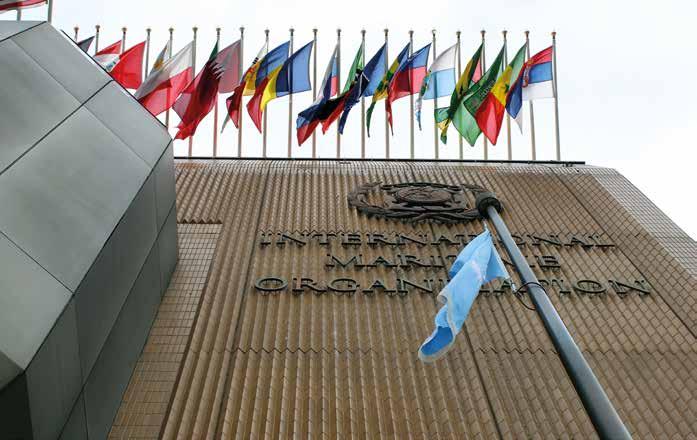
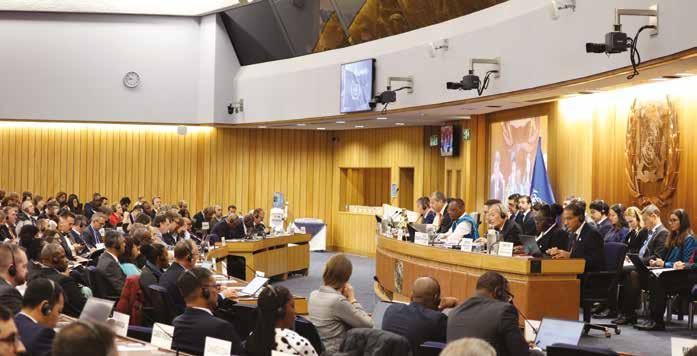
The adjournment of the Extraordinary session of the Marine Environment Protection Committee (MEPC/ES.2) and so not to take a decision as to whether to adopt or not the IMO Net-Zero Framework was unexpected in so many ways. As someone who has been attending IMO meetings for over 20 years the meeting was simply unprecedented.
I had been optimistic, rather than confident, that the amendments would be adopted as I could not foresee a scenario where so many Member States would not sustain the position they had taken at MEPC 83 last April. I was wrong. It was apparent that not only did several find themselves unable to proclaim support some of the leading advocates at IMO for
many years for action to be taken on GHG emissions from shipping reversed their positions!
Clearly, we live in turbulent times, geopolitically - such that the norms we have come to expect both for globalisation and multilateralism cannot necessarily be taken for granted anymore. This turbulence found itself into the Main Hall at IMO and manifested itself in ways I have never seen play out before at IMO.
Having circulated the amendments following MEPC 83 in April it demonstrated that Member States were not in a position to make a decision on the adoption of the IMO Net-Zero Framework at this stage. To a degree this reflects the complexity of issues requiring additional clarification and confirms the importance of obtaining a consensus going forward. IBIA’s membership can play an active part in building that consensus.
The meeting proved to be very challenging for participants to navigate with the effect that significant uncertainty in the outcome growing to a point that Member States, through further deliberations, could not mitigate the risk of an unwanted outcome.
The week actually started reasonably positively as the submissions proposing some “fine tuning” to the draft IMO Net-Zero Framework were considered and mainly accepted. These were then forwarded to a Drafting Group for finalisation with a view to being presented to the Committee later in the week.
However, there were three key issues that became points of contention and significant uncertainty. These key issues were:
1. as proposed by some Member States, once adopted the procedure for legal acceptance of the regulations should be by "explicit acceptance" rather than the usual "tacit acceptance" procedure.
2. confirmation that the IMO Net-Zero Framework, once it came into effect, would supersede any regional or national measures for controlling GHG emissions from international shipping e.g., EU-ETS.
3. based on interventions made, would there be a sufficient majority of Parties to MARPOL Annex VI to adopt the IMO Net-Zero Framework as it required a two-thirds majority.
Development of global rules to price GHG emissions from international shipping in limbo
On the first point, if it was agreed, by a simple majority of the Member States, to use the "explicit acceptance" procedure then the requirements, rather than coming into force 16 months following adoption, so providing certainty to the industry on when the new rules become applicable, the rules would probably not come into effect until the next decade, if at all? As the IMO itself observes on its website: “This process is very time consuming and most of the amendments adopted this way never entered into force”! The second point concerning regional/national carbon pricing was addressed, in part, with a draft clause included in the draft resolution for adopting the IMO Net-Zero Framework.
All three key issues amplified the uncertainty for Member States when considering their position and how to move the meeting to a point where a decision or decisions could be made. The result led to a position where a majority of Member States attending the meeting considered it would be better to adjourn the meeting rather than continue to make those decisions, especially in a situation where they found they could not clearly judge the outcome of those decisions.
Whilst the decision on adoption of the mandatory requirements has been delayed, work on the important nonmandatory instruments to support implementation was progressed during the intersessional meeting of the working group on reduction of GHG emissions from ships (ISWG-GHG 20) that took place in the week following MEPC/ES.2.
It was evident that many delegates attending ISWG-GHG 20 were initially stunned not only by the previous week’s outcome but also the manner of what transpired, and whilst some struggled to appreciate the significance of the adjournment, it did provide an important early opportunity for “diplomatic scars” to be healed.
Indeed, the IMO spirit of cooperation was in evidence during ISWG-GHG 20 to the extent that many important technical issues were considered with some progression despite uncertainty remaining over the whole framework. These issues included preparation of guidelines
for the recognition of sustainable fuels certification schemes and the operationalisation of the Fuel Life-Cycle Label, that being the tool for transmitting upstream GHG fuel intensity information to the ship, which may accompany the BDN. But two key questions prevailed: “what happens next?” and “what will be different in twelve months?” when MEPC/ ES.2, in theory, is due to resume?
Commentators now see three pathways forward: the draft text is re-tabled next year and adopted, the second a delay with amendments made to the current draft to satisfy concerns to the extent it provides a clear supporting majority, and the third, collapse of the negotiations and the end of the near prospect of GHG pricing for international shipping.
I consider the first pathway option to be unlikely as the positions of enough Member States will have not changed by next October. Certainly, I cannot envisage the IMO itself wanting to be in a position of going into another “Extraordinary Session” not confident that an outcome will prevail. It is difficult to think of anything more damaging to the credibility of the Organization than another adjournment!?
So it may be that rather than another meeting dedicated to “adoption” of a single item, the matter will be deferred to MEPC 85 scheduled in November 2026 i.e., less than a month’s delay in the decision. Importantly, this would enable the second option of a pathway to be realised as additional amendments to the current draft could be proposed at MEPC 84 and the ‘package’ re-circulated for adoption at MEPC 85 or later. This approach would also mitigate the risk of any Member State calling again for an adjournment because whilst the item might be suspended, as the meeting would have several other agenda items that need to be considered and decisions made, adjournment would not be supported, the feeling being that other work should not stop because of GHG.
The final pathway, i.e., collapse, will see the end of a global carbon pricing measure and is what many in industry have feared as it would no doubt lead to a proliferation of regional/national carbon pricing, which
would be ironic as this outcome is exactly what some pressing for a delay in adoption of the IMO rules were criticising.
The adjournment of MEPC/ES.2 also meant that the North-East Atlantic Emission Control Area, and some other amendments to MARPOL Annex VI, were not adopted. These would have come into force on 1 March 2027, and for the control of sulphur oxide (SOx) emissions in the new ECA, into effect on 1 March 2028. However, as expected, Norway and the UK have asked the Secretary-General to recirculate these amendments, which were supported by a consensus at MEPC 83, with a view to their adoption at MEPC 84 in April 2026.
The IMO Secretary-General began MEPC/ ES.2 stating that the draft requirements were “not perfect but provides a basis for further work”. Arguably, further work will in fact now be something altogether different if global climate action for international shipping is to progress, that is, a solution that is not technically perfect but politically acceptable.
Wishing you all a fair wind and safe seas.
Edmund Hughes
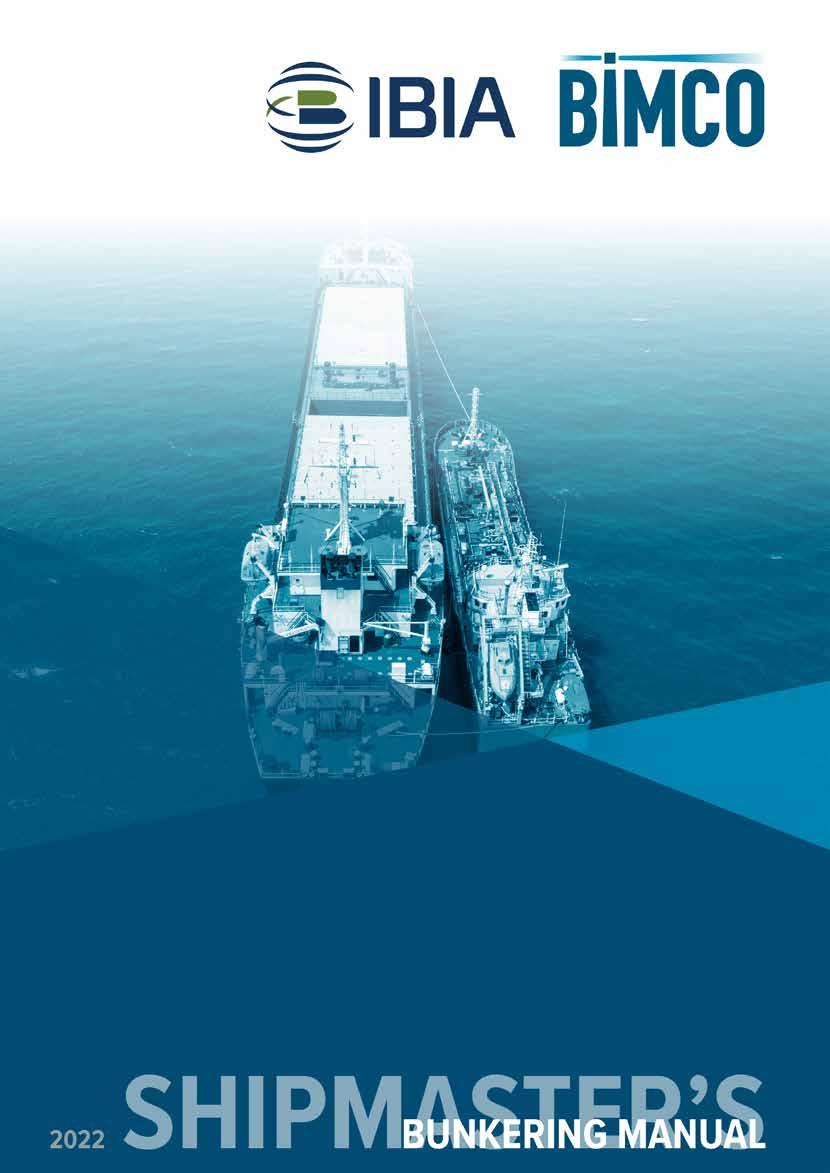
THE BIMCO & IBIA SHIPMASTER’S
BUNKERING MANUAL 2022
The Shipmaster’s Bunkering Manual 2022 is the first practical industry guide for both owners and suppliers, seeking to create a common understanding of best practices when bunkering to facilitate a smoother process and safe bunkering globally
The manual is a unique result of cooperation between IBIA and BIMCO to create insight and practical understanding of bunkering across the shipping sectors.
Bunkering operations are routine, critical and high-risk operations which require accurate planning from both the owner and supplier to ensure a safe and successful operation. The publication consists of background information as well as checklists and key notes for the entire process for shipowners, masters and crew on how to prepare, execute and follow up on bunkering, including what to do when it goes wrong.
Totalling 4 chapters and phases of the bunkering process, the manual covers the following topics:
Chapter 1: Background insight on fuel types and key regulation
Everything you need know from fuel oil types, safety, and environmental regulations to ISO standards and contractual issues related to bunkering.
Chapter 3: Bunkering procedures
Bunker sampling is one of the most important aspects of bunkering. This chapter covers preparations, practical issues and what to do if something goes wrong. Details of the role each stakeholder ashore and on board undertakes during the process including actions required before, during and after the bunkering.
Chapter 2: Origin and supply chain of marinebunkers
An overview of bunker blends before the ship arrives for bunkering followed by a detailed description of the ship’s preparation and planning prior to bunkering. Advice is also given on how to handle a situation if compliant fuel is unavailable in a specific port. Paperwork including the bunker delivery note and certificates of quality are described and recommendations are given that aim to help to use them correctly.
Chapter 4: Calculation of bunker quantity and after completion procedures
Details on how to create a solid background for calculating the bunker quantity and determine if the ordered bunker stem has been delivered. For ships carrying equipment to undertake onboard testing of marine fuels, testing procedures are referred to and detailed description of how to interpret test results provided. Keeping an accurate and up to date oil record book is, together with the bunker delivery note, important as records for internal and external use for example during port state control.
The book is available to buy from Witherbys on this link: https://shop.witherbys.com/shipmaster-s-bunkering-manual-2022/ IBIA members receive a 20% discount on all publications. Please enter “IBIA” in the “Coupon/Gift Certificate” box to receive your 20% IBIA member discount.
VIEW FROM THE TOP: ICS
DH: Before becoming Secretary General of the International Chamber of Shipping (ICS), you had served as Director General of the Cyprus Shipping Chamber (CSC) since 1995. The CSC is of course an ICS member and working with successive CSC Board Members at the ICS Board you already had considerable experience of how ICS works and its role in the global shipping industry.
On being appointed you said: “I feel honoured to be a part of the ICS ‘Family’ and look forward to working closely with the ICS Board of Directors, the Members and the Secretariat, in navigating together the future of international shipping, through its strong voice on technical, legal, employment, and trade policy matters. I am keen to work diligently with the ICS Team in supporting our Members and the wider shipping community, in the growing challenges of a constantly evolving global landscape.”
Now, several months into your new post have there been any real surprises or is the role turning out to be much as you expected?
TAK: Having been Director General of the Cyprus Shipping Chamber, I thought I was well versed in the work of the International Chamber of Shipping and the great work that is done here. However, what I found when I joined was a team
that did so much more that I realised. We, of course, engage at the IMO and the ILO but we also engage with the UNHCR, energy ministers through the Clean Energy Ministerial, our legal team work to free seafarers held unjustly all over the world, our labour affairs team are working to address the number of abandonment cases and support those who have been abandoned, we have initiatives on training and recruitment and so much more. We work closely with organisations such as IBIA to support the industry, we host closed door meetings with ministers and CEOs from our membership as well as other industries to advance dialogue. Our comms team are active briefing media all over the world on all aspects of our industry and the publications team are busy producing guidelines that advance safety and ensure the industry is fully up to speed with the ever-changing regulatory environment. I am proud of our work on recycling and getting the Hong Kong Convention ratified and this year we represented our industry at the USTR hearings in Washington to help explain the proposals to the US administration.
What I have most enjoyed since taking position of Secretary General at ICS is getting to know our Members and the ICS Secretariat more, as well as moving forward on the key ICS priorities.
DH: The ICS represents Associations comprised of all types of companies operating in the many sub-sectors of the shipping industry, including bunkering. Given that that means a multitude of sometimes contradictory views and competing interests, how do you achieve consensus on contentious issues? You talked about the ICS 'Family'. How strong a family is it?
TAK: The ICS ‘Family’ is strong. Yes, we have differing opinions at times as we represent a truly international membership, encompassing shipowners from all regions and political backgrounds. This is a benefit because through this diversity we are able to maintain a balanced, practical view on global issues impacting our industry without bias and for the good of all. This is what makes the organisation so effective, and, through the collaborative spirit of the organisation, we are able to reach consensus.
DH: ICS and IBIA havie worked together closely on various IMO issues. How important is this collaboration and what has it achieved? Are IBIA on the same page regarding a need for bunker supplier licensing and the mandatory use of mass flow meters?
At a time of great uncertainty World Bunkering's editor David Hughes put key question to ICS's Secretary General Thomas A Kazakos
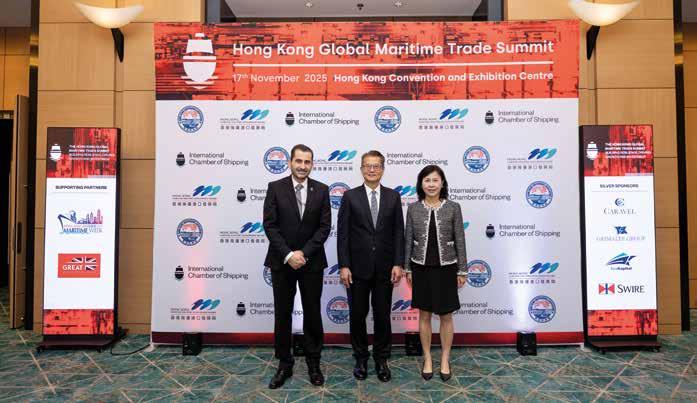
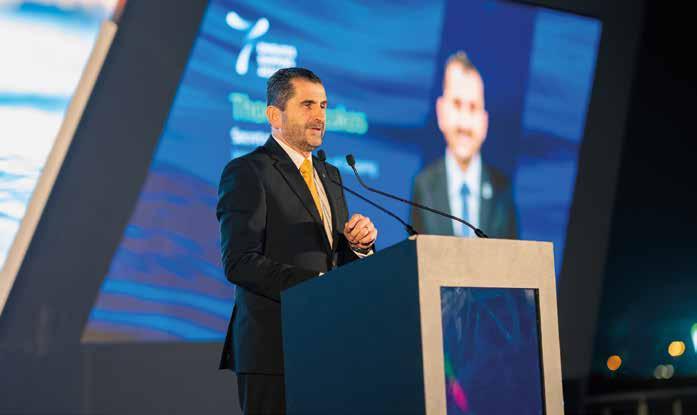
Thomas with the Honourable Paul Chan Mo-po, GBM, GBS, MH, JP, Financial Secretary, Hong Kong SAR and the Honourable Mable Chan JP, Secretary for Transport and Logistics, Hong Kong SAR, at the ICS Global Maritime Trade Summit
TAK: The ICS and IBIA partnership is one of the most influential pairings at IMO. Together, we have moved policy from “discussion” to concrete proposals including our various joint proposals on the IMO’s Net Zero Framework.
Recognising that fuel represents one of the largest operational costs and a critical compliance factor under MARPOL, ICS has long been a strong advocate for the establishment of transparent, consistent, and enforceable regulations that govern both the quantity and quality of marine fuel oil delivered to ships. The implementation of mandatory bunker supplier licensing schemes, successfully demonstrated in ports such as Singapore, has proven effective in ensuring that only qualified and accountable suppliers participate in the market. Such licensing frameworks enhance oversight, uphold fuel quality standards, and help prevent contamination or non-compliant blends from entering the supply chain. ICS has also continuously promoted the use of mass flow meters (MFMs) as the most reliable and tamper-resistant method to verify the quantity of fuel supplied. The adoption of MFMs has proven effective in eliminating quantity disputes, improving efficiency, and reinforcing industry confidence.
We appreciate IBIA’s broad support for bunker licensing schemes and the wider adoption of mass flow meters. IBIA’s support has been key towards the development of an “indicative example of licence for fuel oil supply (bunkering)” which has been included as an appendix to the IMO Guidance for best practice for Member State/coastal State (MEPC.1/ Circ.884/Rev.1).
Although IBIA and ICS may differ in certain aspects of how bunker supplier licensing schemes and mass flow meter requirements should be implemented, both organisations are firmly aligned in their commitment to a common goal: ensuring the development of a global bunker supply framework that delivers the highest standards of quality, quantity accuracy, and safety in marine fuel supply.
DH: You have a Bachelor’s Degree in Law and a Master‘s Degree in European and International Trade Law. Do you believe that shipping has become over-regulated or still needs further international regulation. Is the latter the only way to counter the proliferation of national and regional regulations affecting global shipping?
TAK: International shipping is key to the global economy, transporting 90% of global trade volumes with a value of 14 trillion dollars each year and it operates across borders. Our industry is lucky to have a global regulator, the UN International Maritime Organization (IMO), and we need all nations to support the work of the IMO. Unilateral actions have unintended consequences.
The vital importance of the global regulatory framework for ensuring the safe and efficient operation of maritime trade is something which we know that some governments understand very well, especially if they have a significant maritime sector in proportion to the size of the rest of the economy.
It is of the utmost importance that governments continue to co-operate and communicate with each other on shipping policy issues. One of the great strengths of the IMO process is that, regardless of political differences between individual IMO Member States, regulatory decisions affecting ship operations have, for the most part, been taken on the basis of their technical merits.
Thomas speaking at an event recently in Dubai
DH: To say that there is a lot going on at present that impacts shipping would be a massive understatement. What are ICS's current priorities?
TAK: First and foremost, one of the ICS’ main priorities is our seafarers, they are the very heart of our industry, so we ensure that our work continues to support them during these uncertain and turbulent times. For example, ICS is playing a key role in the ongoing STCW review, to make sure it remains fit for purpose in the context of new technological advances. Since the Manila Amendments came into force in 2012, there have been several technological and social advancements, and at a much faster pace than ever before.
ICS is the leading NGO that is driving the process of the STCW review. ICS’ proposals have shaped the methodology of the entire process and guided IMO Secretariat and member States regarding the specification of submissions and the conduct of meetings. Additionally, ICS’ proposals have led to the training of seafarers in new alternative fuels and technologies being ‘fast-tracked’ in a process separate from the comprehensive review.
Another key priority for ICS is the decarbonisation of our industry. Last month was a significant moment for our industry when IMO member states voted to postpone the vote on the ‘IMO Net-Zero Framework’ agreement for GHG emissions reduction regulations at the MEPC Extraordinary Session for one year. This was disappointing to say the least. Currently there are big gaps between ambition and capability, and this fundamentally comes down to the lack of availability of alternative fuels and the need to decarbonise. There are little to none ZNZ fuels available and what is available is very expensive, but there are parallel roads that we can take to move forward - no single actor within the shipping ecosystem can deliver the energy transition alone.
Strategic partnerships - bringing together shipowners, fuel producers, port authorities, governments, and financial institutions, enable the pooling of expertise, risk-sharing, and the alignment of regulatory decisions.
These collaborations are key to ensuring the development of scalable and costeffective green fuel supply chains, as well as the necessary infrastructure to support their uptake.
One important initiative of ICS in partnership with the International Association of Ports and Harbors and the Clean Energy Ministerial, that exemplifies this collaborative approach is the Clean Energy Marine Hubs (CEM-Hubs). The aim of the Clean Energy Marine Hubs (CEM Hubs) initiative is to accelerate the deployment of infrastructure, and to de-risk the investment needed to ensure that the whole world can have access to low-carbon fuels close to the ports for the maritime sector to transport and use. The CEM Hubs is a cross-sectoral partnership between the private sector and governments across the energymaritime value chain ensuring that the new fuels that the world is going to use can get to market.
We will also continue to focus our attention on the increasing trend of protectionism and advocate for free trade. Global trade should not be hindered by unilateral measures, whilst they may be well meaning, they have significant unintended consequences. Tariffs and other unilateral measures do not simply disrupt supply chains they threaten the very architecture of global commerce. They erode competitiveness, inject regulatory inconsistency, and alter trade flows in unpredictable ways. Protectionism, in all its forms, brings costs to all. It adds layers of complexity where clarity is needed. This will not only effect shipping it will impact national GDP and company profits. All at a time when we need capital to decarbonise and address new threats like cyber-attacks. Countries and the energy industry also need funds to build the infrastructure at scale that we are going to rely upon to ensure we can maintain trade flows in a sustainable way.
The suspension of certain port fees recently agreed between the United States and China is, therefore, a welcome step in the right direction. It demonstrates that dialogue and cooperation remain possible, even in challenging times.
These are just three of the priorities at the moment, but we are also focusing on technological advancements, digitalisation, cyber risk, piracy, plus much more. The role of the International Chamber of Shipping going forward is to continue serving as the collective voice for shipowners across the world, supporting shipping and advocating for high operational standards and regulations that are both ambitious and workable.
DH: Middle Eastern geopolitics have profoundly affected shipping over the past two years. What has ICS been doing in terms of lobbying for the protection of seafarers on ships in the Red Sea?
TAK: The Houthi militants’ Red Sea campaign has been a continued shock to the system through longer transit times, increased fuel emissions, and most importantly the unfortunate and sometimes devastating effects on the seafarers whose ships have been attacked since the beginning of the campaign in 2023. What is key is that the main priority must be that our seafarers’ lives are not impacted by any conflict. Our seafarers are innocent bystanders, and we call on all parties to ensure their safety.
Throughout the crisis ICS, along with Industry Partners, engaged closely to ensure shipping companies and ships were fully aware of the threat, and could take mitigation measures against the threat presented by the Houthis. Industry guidance, including the revised Best Management Practices Guidelines, was crucial to protecting the lives of seafarers in the region.
DH: More generally, do shipowners care enough about their workforce, seafarers? Is there more that needs to be done?
TAK: Shipowners do care for their workforce but there is always more work to be done. I was pleased when earlier this year, governments, shipowners, and unions met in Geneva at the International Labour Organization’s Special Tripartite Committee on the Maritime Labour Convention, to review and adopt crucial updates that reflect the evolving needs of seafarers and the maritime industry.
Key amendments to the MLC aim to improve the conditions for seafarers on board ships and the MLC updates are set to enter into effect in 2027. Some of the key outcomes agreed were new provisions for seafarers to be designated as key workers; strengthened requirements for seafarer repatriation; ensuring visa-free shore leave; and enhanced protections against bullying and harassment. These are groundbreaking and show the importance of seafarer welfare.
Additionally, the International Labour Organization (ILO) concluded the latest round of minimum wage negotiations for able seafarers at a meeting of the Subcommittee on Wages of Seafarers of the Joint Maritime Commission (JMC), in Geneva in April.
This dialogue is critical as maritime transport remains the only industry with a formally recognised global minimum wage and has been in place for seafarers since 1958. The bipartite meeting brought together shipowners and seafarers’ unions from around the world, coordinated by the International Chamber of Shipping (ICS) and the International Transport Workers’ Federation (ITF).
Positively, following the negotiations, a Resolution was adopted setting out the updated minimum wage levels, to be submitted for approval by the 355th session of ILO’s Governing Body.
Another area of work that ICS has been involved in is with regard to the unfair criminalisation of seafarers. It is vital that seafarers detained in connection with their professional duties must be treated fairly and with dignity, with full respect for their human rights.
DH: ICS played a key role in developing the industry's response to piracy. Is this issue still a major concern for ICS? West Africa has become a more important bunkering region following the diversion of many ships from the Red Sea to Cape routes.
TAK: Piracy is definitely a key concern for ICS, and a persistent threat to the shipping industry. Seafarers operating ships around the world encounter a range of maritime security threats, which often
involve aggressive state and non-state actors. Although these threats vary across regions and in their severity, they can have a traumatic effect on seafarers who face unwarranted physical and mental harm. In some cases, being held as hostages and subjected to violence and ill-treatment for extended periods.
In response to this, in March of this year, ICS with industry associations BIMCO, IMCA, INTERCARGO, INTERTANKO & OCIMF and supported by over forty maritime stakeholders, released a consolidated and enhanced Best Management Practices (BMP) for Maritime Security (MS) publication. This new publication focuses on providing a threat and risk management process and, recognising the dynamic nature of regional security situations, provides signposts to direct users to the most up-to-date security intelligence and risk assessment information.
In addition, ICS is publishing a new guide - Piracy, Armed Robbery and Conflict at Sea - to support the industry in the fight against piracy. The Guide provides a comprehensive overview of the measures seafarers should take to protect against, prevent, respond to and recover from an incident of piracy, armed robbery or conflict at sea.
It was concerning to see the recent increase in pirate activity off Somalia. ICS’ foremost concern is for the wellbeing of the seafarers affected by the incidents, and we are monitoring the situation in close liaison with military deployers in
the region. In line with military guidance, it is strongly advised that voyages in the Western Indian Ocean are thoroughly threat- and risk assessed in accordance with BMP MS, and that ships register with a report to MSCIO and UKMTO.
DH: Over the past decade ICS has gradually moved its member associations towards accepting Market-Based Measures to facilitate the decarbonisation of shipping, to the point where ICS has been a principal proponent of the proposals that have formed the IMO Framework.
Following the outcome of October's Extraordinary Session of IMO's Marine Environment Protection Committee (MEPC) how you see the prospects for implementation of the Net Zero Framework and what will IMO's role be? What will be the main challenges?
TAK: We indeed worked hard with our members to find the right proposals to ensure that a regulatory framework and market-based measure was right for all sections of our industry. This began in 2019 with our proposals for a research and development fund paid for by a $2 levy. This was a precursor to our proposals on market-based measures. As mentioned earlier we were disappointed by the decision of Member States at the IMO to delay the meeting for adoption of the IMO Net Zero Framework at the MEPC Extraordinary Session last month.
Understandably, this will have profound implications for the entire structure of the
global industry. Industry needs clarity to be able to make the investments needed to decarbonise the maritime sector, in line with the goals set out in the IMO GHG strategy. With the postponement governments have not provided the clear signals necessary to create the zero/near zero fuels that are needed.
Shipowners and energy producers need a workable, transparent, and simple-toadminister regulatory framework that will create the necessary incentives to accelerate the energy transition at the pace required. This is why ICS had proposed in 2022 a ‘fund and reward’ system to catalyse the adoption of alternative fuels. This did not move forward but offered a solution of a flat rate contribution system.
Without a global mechanism, we face a patchwork of unilateral greenhouse gas charges imposed around the world. Unilateral and regional regulations such as the EU ETS, as well as potential new measures coming in from Africa and China, create a fragmented regulatory environment for what is fundamentally a global industry.
But the reality is that after the MEPC ES there is no change to the industry – we continue to move global trade and remain committed to achieving the IMO goal of net zero GHG emissions from international shipping by or close to 2050. With the support of ICS, IMO Member States now have an opportunity to revisit the draft IMO agreement so that we can get it right and ensure, so far as possible, that it’s acceptable to everyone. What companies can do now is focus on energy efficiency which is good for business.
At ICS, we strongly support the International Maritime Organization and will continue to work with the IMO, which is the best organisation to deliver the global regulations needed for a global industry. We need to think on a global scale.
DH: Going forward the use of AI at sea and development of autonomous merchant vessels are set to trigger yet more change in global shipping. Is ICS ready to shape the industry's response?
TAK: Yes, we are ready to support the industry on this digitalisation journey, there is after all enormous potential here to transform how ships operate as well as ports. Digitalisation should benefit everyone, and any advancements should not come at a cost to seafarers. As technology advances, seafarers will need new skills for remote operations and data-driven decision-making. The STCW Convention Review remains central to ensuring training is relevant and consistent, and a key focus area for ICS.
There has been significant progress since COVID, with wider adoption of onboard digital technologies, real-time monitoring, and improved shore connectivity. Work at IMO on a digitalisation strategy and the MASS Code are positive steps, but more needs to be done, particularly in harmonising data standards and ensuring smaller players are not left behind.
To unlock the huge potential with digitalisation investment is key but as we digitise, we must also protect. Cyberattacks are becoming more frequent and sophisticated making the industry more vulnerable, and attacks on these systems can have serious consequences for national security and economic stability. The industry must therefore build resilience at every level. That means adopting robust risk management
frameworks and updating them regularly. Governments and industry must also collaborate on security standards, threat intelligence sharing, and response protocols.
DH: A recently reported survey appeared to show the majority of clients of a particular trader did not want the IMO Framework process to proceed. Do you think this is a true reflection of views among shipowners? If so, does it mean ICS and its member bodies will have to drop their support for the NZF?
TAK: There are currently many reports being published and surveys being undertaken. We tend to focus on what we hear from our members who represent the leaders of our industry. We also undertake an annual survey of our members to produce the Maritime Barometer which all goes to ensure we understand what is on the minds of the leaders of our industry. Our Board also reflects all parts of our industry and 80% of the sector, and it is clear that the industry fully supports achieving the IMO goal of net zero GHG emissions by or around 2050. At ICS, we remain fully committed to working with IMO to deliver a solution that works for member states, works for our industry and works for our planet.
Thomas A Kazakos - ICS's Secretary General
ADDITIVES “BETTER THAN LNG”
Manufacturer makes controversial case for using additives and putting off transition to alternative fuels such as LNG
The global shipping industry is being misled by the promise of LNG, according to Fuelre4m CEO Rob Mortimer, who warns: “It’s not a transition fuel, it’s a transition business model.”
“Too many players are profiting from LNG’s green image while ignoring the science,” says Mr Mortimer. “Methane slip has risen 180% since 2016 and methane is over 80 times more potent than CO₂. You can’t rebrand physics. LNG ultimately fails the climate test.”
Mortimer argues that the LNG boom is being driven by commercial, not environmental, motives, from shipyards chasing newbuild orders to energy companies offloading gas reserves.
“Rather than asking whether LNG reduces emissions, shipowners and regulators should ask who benefits when LNG is promoted as the solution?” Mortimer added. “Until scalable, proven zero-carbon alternatives exist, the responsible path is optimisation: measure what you burn, remove waste and emissions from existing systems, and only then transition to alternative fuels based on independent evidence, which we still don’t have.”
He warns the industry is on course for stranded assets and wasted capital, with owners facing the risk of expensive retrofits and declining vessel values. “We’re locking ourselves into another false promise while the IMO looks the other way,” said Mr Mortimer. “It’s time for honesty, not hype.”
Instead of betting on unproven fuels, Fuelre4m is calling for rigorous lifecycle measurement, accountability, and optimisation of existing fuel. “Measure what you burn, cut waste, and demand proof before you call it progress,” Mr Mortimer said. “The responsible path starts with real data — not marketing slogans.”
Fuelre4m describes itself is an independent provider of fuel optimisation, emissions measurement and advisory services for the maritime sector. The company helps shipowners, managers and charterers “understand the true climate and commercial performance of fuel choices and implement practical steps to reduce emissions across operations”.
Fuelre4m’s product range, Re4mx (Reform Mix) is described by the company as “a powerful, completely organic, fossil fuel reforming nano-biotechnology that enhances the combustion process in engines”. It adds: “By breaking down impurities and complex hydrocarbons in liquid fossil fuels, the technology ensures a more efficient and cleaner burn, resulting in increased power output, lower fuel consumption, and a significant reduction in harmful emissions.”
World Bunkering approached LNGpromoting body SEA-LNG for a response to Fuelre4m’s assertions, but a spokesperson declined to comment. However, its very clear views on the benefits of LNG as a pathway fuel to net zero can be seen on Page 72.
There are, of course, a range of other manufacturers including Innospec, one of the world's largest suppliers of marine fuel additives. It says: “Our focus is on improving fleet performance whatever type of residual fuel is being used.
Through continual innovation we strive to improve operational efficiency and reduce fleet costs. The benefits of a stable fuel with a better combustion profile and combustion efficiency are proven to impact fuel economy directly. Perhaps more importantly, efficient combustion reduces the emissions of substances harmful to human health and the environment.”
It notes: “The performance of our Octamar™ range of combustion catalysts, which includes Octamar™ Ultra HF, Octamar™ Complete, and Octamar™ F35C, has been recognised by the leading ship classification society ClassNK.
The range has been awarded an Innovation Endorsement for Products & Solutions. After decades of fleet trials, test bed data and laboratory analysis, it is clear the potential benefits of this technology extend beyond fuel economy.
Octamar™ not only optimises engine reliability and boosts engine performance, but it also reduces maintenance requirements and harmful emissions.”
KEEPING STEADY
Rotterdam has endured a somewhat patchy but broadly even year so far on the bunker front. With the port’s Q3 sales figures published not long before the time of writing, year-to-date conventional fuels are up a couple of percent on the first nine months of 2024 to 6.89 million tonnes on the back of something of a switch from lower-sulphur fuels to HSFO and an 8% rise in LNG sales to 735,959 cbm. At the same time, bio-blended fuel sales have dropped around 25% year-on-year to 482,163 tonnes - albeit with a significant individual quarterly rise in Q3 compared to both Q2 this year and Q3 last as the last half of 2024 and first half of 2025 saw sales halve. Overall, the total of both conventional and bio fuels combined is a shade down on 2024.
However, while a comparatively stagnant market might not seem significant, it does at least suggest Rotterdam’s fuel sector is outperforming overall port cargo traffic. Q3 figures were not available at the time of writing, but in the first half of 2025, Rotterdam’s throughput was down 4.1% to 211 million tonnes, with dry (-8.9%) and liquid (-5.3%) bulk leading the fall, countered by a 2.7% rise in container throughput despite tonnage dropping 1% as more empty export containers were shipped out.
The port was quite blunt as to the causes. “The lack of investment in the industry by the market is a cause for concern for the Port Authority. Although the government
has taken positive steps recently to bring the playing field for Dutch industry more in line with that of neighbouring countries, additional measures are necessary. The announced closure of a number of chemical companies, and with it the loss of hundreds of jobs in the first half of 2025, confirms these concerns.”
The first half of the year saw the first spate of scattershot US tariffs, some of which have stuck and some of which have gone, with mixed impacts, but European steel production remains weakened, with Rotterdam the main gateway port in either direction.
Port of Rotterdam Authority CEO Boudewijn Siemons said: “In recent months, we as a port have been confronted with economic uncertainties, lagging investments, and disruptions in supply chains. In these turbulent times, as a port, we must ensure that the security of supply of energy, food, and other essential materials in Europe remains guaranteed. It is also very important that industry in the port remains competitive so as not to weaken Europe’s strategic autonomy.”
The port added: “The highly integrated industrial cluster of the Port of Rotterdam makes an important contribution to the security of supply of energy, raw materials, and goods. However, the current investment climate in the Netherlands means that companies are increasingly postponing or cancelling their investments,
including those in sustainability, despite the Rotterdam port’s good starting position. At the same time, production is increasing in countries outside Europe, where conditions are more favourable.” It cited changes/scrapping of government levies - principally environmental in nature - as measures to improve the investment climate.
However, there do continue to be positive developments. The pipe-laying step of the Porthos CCS project, which will take CO2 from the port’s industrial sector, compress it, pump it 20km across the North Sea to a platform over a depleted gas field where it will be stored permanently. Porthos is on schedule to become operational in 2026 and while CCS is not an ideal decarbonisation solution and Porthos won’t directly serve ships, having large-scale storage in operation portside is likely to make it easier to deal with carbon captured on ships as systems become more commonplace.
French liquid bulk storage operator Tepsa has acquired GES Rotterdam’s 212,000 cbm tank farm and terminal in the Europoort area, boosting the company’s storage capacity in the port by 70%. Tepsa said in a statement that the purchase “strengthened its position in the ARA (Amsterdam-Rotterdam-Antwerp) region, expanding its presence in the chemicals and biofuels sectors, and advancing its
Despite tricky economic conditions, Northern Europe’s bunker sector is holding its own for now, John Rickards reports
Rotterdam is holding steady despite challenging conditions
diversification into new energy markets.”
At the same time, green hydrogen firm HyCC, a joint venture of Macquarie and Dutch-German chemical firm Nobian, announced plans for a large-scale electrolyser on the Maasvlakte. The plant, if it goes ahead - a final investment decision is expected in 2028 and comes with all the usual caveats about market conditions and the regulatory environment - would produce 25,000 tonnes of green hydrogen per year from 2030 “supporting the decarbonization of refineries, the chemical industry, and mobility in the Rotterdam port area. Thanks to the planned national hydrogen network and the Delta Rhine Corridor, the project will also be able to supply green hydrogen to other industrial clusters across Northwest Europe.”
Traffic figures in the northern French HAROPA (Le Havre, Rouen, Paris) port collective have so far largely mirrored Rotterdam’s. The first half of 2025 saw overall throughput down nearly 5% yearon-year to 39.9 million tonnes on the back of a slide in bulk cargo, while container traffic rose 4% to 1.5 million TEU - though the port did note that while liquid bulk was down 5.9% to 18.38 million tonnes, crude imports were up 7% to 9.48 million tonnes and the overall decline was partly due to a maintenance shutdown at the Esso refineries in Port-Jérôme-sur-Seine and Gonfreville l’Orcher.
August also marked the port’s first LNG bunkering operation at the Le Havre
ro-ro terminal, a few weeks after getting certified to carry out LNG fuelling by the Le Havre harbour master’s office on June 18. TotalEnergies supplied 2,400 cbm of LNG to the Lake Travis
The port of Amsterdam has also had a string of bunkering firsts over the summer. At the end of May, it carried out the Netherlands’ first ever bunkering of liquid hydrogen, to the superyacht Breakthrough, which is powered by a 3.2MW fuel cell system. Earlier in the month, the port carried out its first ship-to-ship methanol bunkering, with 500 tonnes of green methanol produced by German firm Hyfuels delivered ex-barge to the offshore installation vessel Boreas, the largest vessel of its type, built to service offshore wind farms. July then saw the first LNG bunkering at the port’s cruise terminal - though LNG bunkering obviously isn’t anything new to Amsterdam.
The port’s clean shipping advisor Henri van der Weide said that becoming a multi-fuel port covering the panoply of alternative fuels was something “we do in collaboration with the Clean Marine Fuels Working Group, a working group within the International Association of Ports and Harbors (IAPH), which focuses on the preconditions ports need to support the energy transition in shipping. Together with this group, we have developed a safety checklist for bunkering operations.”
Bracketing the far side of the ARA hub, the Port of Hamburg announced in late August that approval has now been granted for container ships to bunker with methanol and LNG at the Waltershofer Hafen’s Burchardkai and Predöhlkai terminals, ship-to-ship. The port’s Steinwerder Cruise Centre has already been equipped for LNG bunkering since 2019 and, since 2024, for methanol as well, in partnership with MB Energy and Cruise Gate Hamburg, but only for cruise vessels.
“With this step, the Hamburg Port Authority (HPA) is taking another important step towards more climatefriendly shipping and the implementation of energy and climate targets in the Port of Hamburg,” the port authority said in a statement. “[The new generation of methanol and ammonia-fuelled vessels] require the necessary fuelling infrastructure (so-called ‘bunker-ready terminals’) to ensure availability of alternative fuels and safeguard the port’s future competitiveness.”
“The expansion of bunkering options for LNG and methanol at Waltershof’s container terminals marks an important step in strengthening the attractiveness of the Port of Hamburg. By enabling methanol bunkering, the port is consolidating its role as a sustainable energy hub and contributing to the implementation of agreed green corridor initiatives.”
While things haven’t been easy for a number of reasons, future fuels bunkering in both Oman and Egypt’s Red Sea coast are still on the agenda, John Rickards writes
This has been an interesting year for the Middle East and its fuel markets, with geopolitics again casting a shadow over the shape of things. With Red Sea attacks largely waning over the year, Israel’s brief conflict with Iran caused only the briefest of wobbles, and the aftershocks of US tariff wars so far have had little material effect on the main east-west trades. Fujairah’s bunker sales have been broadly steady over the year, bar a couple of weak months, which is a positive development all things considered.
The region may start to see more local competition in the coming years, though. While some investments and expansions elsewhere may have stalled in the choppy waters of 2025, Oman is ploughing ahead with its ambitions to turn the country into a bunker destination to rival Fujairah - including the start of construction work on what it says will be the Middle East’s first ever LNG bunkering hub. The final investment decision was made on the 1 million tonne per year Marsa LNG plant in the port of Sohar in 2024, with production slated to begin in early 2028, primarily to serve the Gulf’s LNG bunkering market.
TotalEnergies, which owns 80% of the US$1.6bn joint venture with OQEP, says that the fully-electrified plan will have a 300 MWp solar farm to power it, cutting its own scope 1 and 2 carbon emissions by 90% compared to the average LNG facility. Marsa LNG has already signed a charter
contract for a bunker vessel under construction to supply ships from the facility.
Salim bin Nasser Al Aufi, Minister of Energy and Minerals, said: “This project marks a significant step in advancing low-emission energy solutions, reinforcing Oman’s position as a reliable regional hub for clean maritime fuel. It aligns with the objectives of Oman Vision 2040, particularly in sustainability and industrial innovation. Additionally, it underscores our dedication to providing responsible energy solutions for the global shipping sector while actively reducing its carbon footprint."
TotalEnergies CEO Patrick Pouyanné added: “This flagship project demonstrates that LNG production can be very low carbon, contributing to making gas a long-term transition fuel. With an ambitious technical design, we intend to set the standard and pave the way for the next generation of low-emissions LNG plants across the world. We also offer an effective way to support the shipping sector’s energy transition, by providing lower-emissions marine fuel in a key location at the entrance of the Gulf.”
On the conventional fuel side, the country’s bunker offerings have continued to expand as well. Asyad Ports and Free Zones inked a deal at the end of April with O Bunkering to supply fuel at Port Sultan Qaboos. Asyad has spent the last few years trying to broaden the port’s focus away from
purely cruise traffic (itself a switch made by the Omani government only in 2014) and adding bunker services to cargo calls is a logical step.
In June, TFG Marine’s joint venture with state-run OOMCO became fully operational, offering bunkering at Sohar, Port Sultan Qaboos again, and Duqm. TFG’s global bunkering head Kenneth Dam said: “We’re proud to launch this new joint venture with OOMCO and begin operations in Oman. The Arabian Gulf is a vital region for global shipping and by combining TFG Marine’s and OOMCO’s respective commercial strengths, we’re bringing a new level of efficiency and customer service to marine fuel supply in the area.”
In October, the Port of Salalah announced it had signed a deal with Horizon Energy Salalah to establish a “bio-fuel storage hub” which it said would “advance renewable energy storage and distribution across the region”. The port already handles ammonia and methanol and is due to be one of the key export ports for green hydrogen fuels from two production blocks awarded in the last couple of years in Dhofar.
While it seems very unlikely that closing the Strait of Hormuz is a sabre that Iran will rattle again anytime soon, Oman’s position, geographically and figuratively, is certainly stronger in that respect for the events of the past year or so.
Suez Canal traffic still hasn’t recovered from diversions away from the Red Sea due to Houthi attacks. Tonnage for the first nine months of the year in both directions was down 7.5% on 2024, and down nearly 70% on 2023, before the attacks began, with container ships in particular continuing to steer clear.
Given the scale of its plans for fuel and energy production and port expansion at the southern end of the canal before the war in Gaza and the slump in passing traffic, it’s not especially surprising that the Suez Canal Economic Zone has been working hard to promote Suez’s value to likely foreign trade partners, especially in fuel.
The summer saw the SCZone on tour in Japan and the consequent expected raft of handshaking and agreement-signing. At the 9th Tokyo International Conference on African Development, Prime Minister Mostafa Madbouly witnessed SCZone chairman Waleid Gamal El-Dien ink an MoU with the Tokyo Metropolitan Government on green hydrogen for bunkering. In a statement, the Prime Minister emphasised that “this cooperation with Japan as a development partner is of great importance to the Egyptian state, given the top priority it accords to the new and renewable energy sector. Egypt aims to be a regional and global leader in green hydrogen production and export, in line with relevant international trends.”
The MOU is intended to enhance cooperation between the two sides on green hydrogen from both an environmental and economic perspective, through the exchange of relevant expertise, knowledge and information, and working to stimulate market demand and support “various applications”.
Speaking at the event itself, El-Dien made the broader pitch for port usage and investment: “We are making continuous efforts to develop our six ports on the Red Sea and Mediterranean Sea. These ports ensure full access to various global markets, supported by a number of Free Trade Agreements (FTAs). Our development work includes deepening and expanding port basins to accommodate the latest generations of vessels, as well as constructing multi-purpose berths and yards to serve various industrial and logistical activities, including silos and refrigerated storage for food and medicine.”
The next of these developments could be in conjunction with Japanese partners too. SCZone also signed a deal the day before at the 12th session of the EgyptianJapanese Business Council and the Egyptian-Japanese Investment Forum, this time with Itochu Corporation and Orascom Construction to design, develop, and operate integrated facilities for supplying ships with ammonia as marine fuel at either end of the Canal, in Sokhna
as well as East Port Said. Itochu has an existing interest in ammonia bunkering, announcing plans for a demonstration ship-to-ship bunkering with the fuel in Singapore for 2027, and has an ammonia bunkering vessel on order. The company would certainly seem to have the relevant expertise to make Red Sea ammonia bunkering a possibility.
Further to that, on the sidelines of the forum, El-Dien and the accompanying delegation held a meeting with Sumitomo Corporation. The meeting included discussions on establishing a new industrial zone under the developer model within SCZone to serve as a platform for attracting Asian investments. The talks further explored cooperation in ship bunkering with various fuel types, as well as collaboration in the production of green hydrogen for export, ship bunkering, or use in green industries such as green steel. The meeting also addressed the possibility of Sumitomo’s participation in infrastructure projects within SCZone, including water desalination plants, a hydrogen service corridor, and other related projects. Again, Sumitomo has more than enough experience of such projects - and again, the practicalities and timescale probably depend on the attacks in the Red Sea stopping and traffic returning to normal, and it’s anyone’s guess how long that might take.
What a difference a year can make. Back in the heady days of 2024, the Pilbara region of Western Australia seemed on course to become the hub for a new wave of green hydrogen-derived bunker fuels. Mining corporations looking to decarbonise their operations, including shipping, helped by massive subsidies from the government, would use e-fuels generated via the centrepiece 26 GW Australian Renewable Energy Hub (AREH), while exports to Asian and European markets would go a long way to clearing early availability hurdles and help uptake across the shipping industry in Australia and internationally.
And then 2025 rolled around and a lot of feet started getting very cold. With initial costs of the technology higher than expected, practical barriers still needing overcoming, and uptake uncertain, the political winds shifted.
First the West Australian government dropped plans to introduce hard emissions limits which would have helped drive hydrogen’s uptake; the mining-heavy state was the only one in Australia without 2050 legislation. The state’s Liberal Party then went further and joined its counterparts elsewhere in Australia, by rejecting net-zero policies altogether. Then the Queensland government pulled financial support for its own mooted hydrogen export hub. Meanwhile the federal opposition has turned against previously bipartisan government hydrogen tax credits while
the government refocused its hydrogen programs to projects that will bring down costs and overcome hurdles in demand as well as supply.
BP, which owned a 63.7% stake in AREH, then announced in July 2025 that it was out. This followed a company-wide “strategy reset” to head off a revolt by shareholders opposed to long-term investments in post-fossil energy, reducing green energy spending to less than 5% of BP’s outlay.
The lack of state political incentives that would make it easier to bring hydrogen costs in line with conventional fuels was in turn a factor that led even iron and green energy company Fortescue, which in 2024 participated in the first demonstration of ammonia bunkering in Australia, to scale back or shift plans to develop hydrogen fuel production and bunkering. The company was similarly deeply disappointed by the failure to move forward with net-zero rules at the IMO in October.
“Fortescue is disappointed by the delay in adopting the International Maritime Organization’s Net Zero Framework — a landmark proposal that would have set global shipping on a clear course toward decarbonisation,” the company said.
“After years of negotiation and broad international support, today’s outcome represents a lost opportunity for the world to take collective, decisive action on one of
the hardest-to-abate sectors. While some countries chose to defer progress, the direction of travel for shipping is already clear. The transition to zero-emission fuels is inevitable — and the technologies to enable it already exist.”
However, it’s not all been bad news. MOL, which was also a partner in the first Australian ammonia bunkering in 2024, announced that it has signed an MOU with NH3 Clean Energy and Oceania Marine Energy to develop ammonia bunkering at Port Dampier in the Pilbara.
The Pilbara Clean Fuels Bunkering Hub initiative which is Australia’s first ammonia bunkering concept, and was announced by the Pilbara Ports Authority in June 2025.
Ports Minister Stephen Dawson said:
“The launch of Pilbara Ports ‘Pilbara Clean Fuel Bunkering Hub Strategy’ is a pivotal step forward for Western Australia’s clean energy future. By enabling clean fuel bunkering in the Pilbara, we are helping global shipping reduce emissions while unlocking new economic and industrial opportunities for the State. If we are to reach net zero targets by 2050 all sectors of the economy have a role to play.”
The only fly in the ointment is that NH3’s ammonia is currently blue rather than green, but - future availability of the latter in the Pilbara allowing - it should be a step on the road. If it can survive another year.
Australia might yet become a key producer for future fuels, but things are looking much less rosy right now, John Rickards writes
Successful trial could see fuel samples air lifted from bunker barges
Singapore-based marine fuels supply and procurement joint venture
TFG Marine, in partnership with Skyports Drone Services, has successfully completed Singapore’s first drone-based bunker fuel sample collection trial, involving the bunker tanker MT Diligence
Following comprehensive safety assessments, the trial demonstrated that drone technology can be used to safely collect fuel samples from bunker tankers and transport them to shore under strict no-fly criteria and operational protocols. Equipped with winch systems, the drones are able to retrieve samples without the need to land on the vessel.
Skyports claims that the innovation marks a significant step forward in maritime operations, reducing ship-to-shore sample transit times from up to four hours using conventional launch boats to under 30 minutes by drone. The result is a faster, safer and more sustainable alternative to traditional vessel-to-vessel sample transfers.
“TFG Marine is pleased to support innovative technology that transforms traditional maritime activities. This trial is a prime example of how we can modernise long-established processes - improving efficiency while enhancing safety and sustainability. We’re constantly looking to improve operational performance with a focus on transparency and reliability through digital solutions,” said Kenneth Dam, Global Head of Bunkering at TFG Marine.
TFG Marine is a joint venture between physical commodity trading company Trafigura Group Pte and shipowning companies Frontline Ltd and Golden Ocean Group Ltd.
The joint venture brings together three companies that are market-leaders in their respective fields, each with solid credentials and complementary strengths in global commodity trading and shipping.
ClassNK endorses cybersecurity support solution
ClassNK has granted its Innovation Endorsement for Products & Solutions to the maritime cybersecurity support solution, CYTUR-MCTI, developed by CYTUR and its partner company Rakuten Symphony.
The solution delivers real-time cybersecurity insights based on advanced maritime cyber threat intelligence. Its software collects and analyses data on various cyber threats that may occur in the maritime industry, monitors them in realtime, manages security vulnerabilities, and provides customised information to customers.
The solution's maritime infrastructure and environment identification maps all maritime assets and their connections for security oversight while its vulnerable vessel network identification finds ships with internet-exposed systems that present security risks.
It also has a maritime product vulnerability identification facility that tracks security weaknesses in maritime equipment across the supply chain. A Dark Web exposure monitoring capability tracks leaked maritime credentials and sensitive data on underground forums. Cyber incident visualisation displays global maritime cyberattacks on an interactive map with detailed analytics.
Innovative bulk carrier design
Lloyd’s Register (LR) has awarded Approval in Principle (AiP) to HD Korea Shipbuilding & Offshore Engineering (KSOE) for its nextgeneration 210,000 DWT Newcastlemax bulk carrier design.
The innovative design features flexibility for multiple fuel types, including conventional fuels, LNG, ammonia, and methanol, enabling shipowners to adapt to current and emerging environmental regulations and future fuel availability.
The vessel design incorporates advanced smart navigation systems and optimised hull form to enhance fuel efficiency and operational safety while reducing CO₂ emissions.
Nikos Kakalis, Global Bulk Carrier Segment Director, LR, commented: “This collaboration demonstrates Lloyd’s Register’s strategic approach to supporting innovation in the maritime industry. The AiP represents a new milestone in the development of next-generation bulk carrier technology, positioning both LR and KSOE as leaders in the industry's transition towards sustainable and technologically advanced maritime solutions.”
Bong-geo Kim, Head of Global Shipyard Technical Sales Team, KSOE, said: “Our partnership with Lloyd's Register enables us to use our combined expertise in developing bulk carrier designs that meet the industry's evolving requirements. This collaboration provides enhanced understanding of Newcastlemax bulk carrier applications for future shipbuilding projects while maximising commercial potential in this advancing field of technology.”
COMPLEX FUEL LANDSCAPE
Classification Society Lloyd's Register’s (LR) latest FOBAS Fuel Insight report highlights broadly steady fuel quality with particular issues around high sediments and chemical contamination, and an increased use of biofuel blends with developments in energy-content measurement.
LR says the findings highlight how improved testing, data sharing and operational practices are supporting shipowners as they adapt to cleaner blends and stricter sulphur limits.
Analysis of fuels tested by LR’s Fuel Oil Bunkering Analysis and Advisory Service (FOBAS) shows that the vast majority met specification and were fit for purpose –3.5% of very low sulphur fuel oil (VLSFO) fuel samples were off-spec, but only a small fraction of these were unusable. For example, 0.6% of VLSFO samples exceeded the 0.53% 95% confidence range of the 0.50%m.m MARPOL Annex VI limit. Sediment stability also showed varied performance at major ports, with certain ports facing continued problems while others providing much more stable fuel. Distillate fuels continued to demonstrate predictable behaviour, remaining the premium choice for operations requiring tighter quality control.
Sustainability and fuel diversity are key trends in the H1 2025 findings. Uptake of FAME-based biofuel blends, notably B30 RF, is increasing across ports including Singapore, Algeciras and Antwerp. This is being driven by regulatory clarity from MEPC 83 and ISO 8217:2024, which confirmed that blends up to 30% are treated as conventional fuels, simplifying NOx compliance.
FOBAS testing to date has found no systemic operational issues with these blends, with most quality considerations linked to the conventional fuel components.
The report also notes a growing shift to direct calorific value measurement, using ASTM D240 Bomb Calorimetry, to more accurately account for the lower energy content of biofuel blends. Early adopters report more precise consumption forecasting, improved voyage planning and reduced cost variability.
Regulatory change has also continued to shape fuel decisions. From 1 May 2025, the Mediterranean’s designation as a Sulphur Emission Control Area (SECA) brought a 0.10% sulphur limit into force, prompting operators to fine-tune fuel management strategies alongside preparations for EU and FuelEU Maritime requirements.
Usman Muhammad, FOBAS Product Manager, said: “Shipowners today face a more complex fuel landscape than ever before. Our latest findings show that quality remains high and compliance strong, but also that success increasingly depends on proactive testing, data-driven decision-making and close cooperation between suppliers and operators.
This approach will be essential as the industry accelerates its transition to lowand zero-carbon fuels.”
However, a more cautious view comes from David Fuhlbrügge, Managing Director, CM Technologies (CMT) who says: “Bunkering with off-spec fuel continues to be a real issue.
The transition from traditional fuel oils to VLSFO has created ongoing problems for ship operators, with fuel quality issues becoming a persistent concern across major bunkering hubs since the introduction of the fuel more than ten years ago.”
CMT provides test kits, sensors and laboratory services for monitoring and evaluating fuel quality.
The company notes that reports from Bureau Veritas VeriFuel, VPS, FOBAS have indicated that very low sulphur fuel oil (VLSFO) supplied in AmsterdamRotterdam-Antwerp (ARA), Skagen and Piraeus contained higher than expected levels of catalytic fines, sediment and/or viscosity.
It adds that independent data showed, in the ARA region alone, more than half of all VLSFO samples tested in 2Q 2025 were offspec due to excessive sediment, up sharply from 43% in the first quarter. Skagen recorded 84% of samples testing offspec, while in Piraeus one in eight VLSFO deliveries failed to meet specification.
Global analyses also point to persistent problems in other hubs, with off-spec fuels reported in Houston and Antwerp and compliance concerns linked to poor blending and barge contamination.
One market analyst reported in January 2025 that more than 45% of the global VLSFO supply does not meet the RM380 grade ISO standards introduced in 2024.
A ROUND-UP OF BUNKERING NEWS
Disappointment as IMO defers decision on Net-Zero Framework
Follow-up survey from IBIA and BIMCO IBIA, with support from BIMCO, has announced the launch of a follow-up survey designed to assess the impact of bunker licensing schemes (BL) and Mass Flow Meter (MFM) technology on transparency, fuel quality, and regulatory alignment across the maritime sector. This initiative builds on the comprehensive survey conducted in 2022, which provided valuable insights into industry challenges related to fuel quality, quantity discrepancies, and the operational impacts of adopting MFM technology.
The findings of the 2022 survey highlighted that while MFM adoption, particularly in Singapore, has significantly reduced disputes over fuel quantity, concerns regarding fuel quality and its effect on machinery remain prevalent. The survey also revealed strong industry support for the wider implementation of MFM and licensing schemes as a means of improving transparency, reliability, and trust at ports, globally.
The follow-up survey, led by the IBIA Bunker Licensing & MFM Working Group (BL MFM), seeks to build on these findings by examining progress made since 2022, identifying ongoing challenges, and gathering industry perspectives on the potential adoption of mandatory MFM technology, the expansion of licensing schemes to additional ports, and the benefits of global standardisation and digitalisation of bunkering practices.
Alexander Prokopakis, Executive Director of IBIA, said: “The feedback from our 2022 survey showed a clear industry desire for greater transparency and confidence in the bunkering process. This follow-up survey will allow us to better understand the current state of the industry and identify the steps needed to ensure safe, reliable, and future-ready bunkering practices worldwide.”
David Loosley, Secretary General & CEO of BIMCO, added: “As biofuels and other expensive alternative fuels are gradually and increasingly introduced, it reinforces the need to ensure accuracy and transparency in the quantity and quality of the fuels being delivered. The Port of Singapore, as well as the
ports of Rotterdam and Antwerp, are demonstrating their commitment to the mandatory and enforceable use of Mass Flow Meters; we believe this, supported by industry initiatives, is a very positive step forward for the future supply of bunkers to the shipping industry.”
The online survey will take approximately 10 minutes to complete, and all responses will stay strictly confidential.
IBIA stresses: “Your input is valuable. Please complete the survey and feel free to share it with colleagues and industry partners. Make your voice heard in the industry!”
Lower bunker prices help Maersk Container carrier Maersk reports that in Q3 2025 higher volumes led to higher operating costs, which were partly mitigated by the lower bunker price and improved bunker consumption with the unit cost at fixed bunker decreasing by 0.8%
The carrier notes: “Ocean solid performance, driven by increased loaded volumes both year-on-year and sequentially, operational savings from the Gemini cooperation and high utilisation of 94%.
Loaded freight rates declined 31% compared to Q3 2024, but they remained relatively stable versus Q2 2025, as elevated levels in July 2025 were offset by a softening toward the end of the quarter. Consequently, EBIT landed at US$567m (US$2.8bn) and EBIT margin at 6.2% (25.5%).”
ATH Trading expands Angola bunkering
ATH Trading expanded its Luanda supply operation with the arrival of the bunker tanker ATH Catamba. The company says that the 5,000 dwt vessel, is fully equipped to support offshore bunkering, fuel supply, and maritime logistics services along the Angolan coast. She joins the ATH Lemba, expanding ATH Trading’s operational capacity and supporting the growing demand for secure and efficient fuel delivery solutions in the region.
“The arrival of the ATH Catamba represents a key step in our long-term strategy to further develop Angola’s marine fuel infrastructure and enhance supply reliability for our partners,” said the company’s management in a statement. “As a local physical supplier, we remain committed to contributing to Angola’s maritime industry growth through investment, operational excellence, and strong compliance standards.”
Vitol supplies in Pakistan
Vitol-owned 8,722 dwt Singapore flag barge, Marine Ista, recently became the first bunker barge to load directly from Karachi Port Trust Oil Pier, rather than by trucks, and supply the largest VLSFO stem to date in Pakistan, to a vessel owned and operated by MSC at DP World Port Qasim Authority.
The fuel was part of the first large-scale production of IMO-compliant low sulphur fuel oil in Pakistan. It was produced at Pakistan’s largest refinery, Cnergyico, from the first US crude oil, delivered by Vitol, to be refined in Pakistan.
According to a statement: “As part of an ongoing collaboration, Cnergyico will supply Vitol with VLSFO on a continuous basis.”
New pooling price index Germany-based OceanScore has launched the OceanScore Pool-Price Index (OPX), which it claims to be “the maritime industry's most comprehensive benchmark for tracking FuelEU pooling prices”. Published monthly, the OPX reflects the average cost of compliance surplus in euros per tonne of CO2 emitted and serves as a benchmark for comparing individual surplus offers, assessing biofuelbased compliance and for negotiating compensations in charter party and SHIPMAN agreements.
OceanScore says the index addresses market transparency gaps by providing volume-weighted pricing data, backed by the largest FuelEU management client base in the industry, reflecting real offers, actual deal sizes, and the market dynamics taking place each day.
Furetank launches emission reductions trading company Swedish tanker shipping company, Furetank says that as well as reducing its own emissions to a fraction of former levels through biogas operations it is launching a subsidiary that will help more shipping companies trade emission reductions transferable within the new system. The goal is to accelerate the transition to fossilfree shipping.
“Furetank has a tradition of creating its own functions demanded by the market. For example, we have our in-house chartering department, which also serves other shipping companies.
Now we are taking the same step into this new market created by the EU. We have the entire chain of expertise required to conduct the transactions and administration, in line with the new regulation and the specific conditions of shipping,” said Viktoria Höglund CEO of Furetank's new company CO2mpliance.
Molgas buys Titan Spanish oil and gas company Molgas Energy Group, backed by infrastructure investor InfraVia, has finalised the full acquisition of Titan Energy Holding, parent company of Titan Clean Fuels.
Titan is a major independent supplier of liquefied bio-methane (LBM/bio-LNG) and LNG, serving both maritime and industrial customers. Its fleet of smallscale bunkering vessels operates across key global markets, with a strong base in the Northwest European region. Titan’s
LNG bunkering operations will merge with Molgas’ existing operations in Norway and all truck-to-ship supply across Norway and continental Europe will now be combined.
With the integration of Titan, the Molgas Energy Group now operates a fleet of seven LNG bunkering vessels and manages a proprietary network of over 70 roadfuelling stations, with more than 200 points of sale including associated partner stations.
OUR REGULAR ROUND-UP OF ENVIRONMENTAL NEWS
Shipping industry bodies expressed their disappointment at the decision of October's Extraordinary Session of IMO's Marine Environment Protection Committee (MEPC) meeting in October to push back taking a decision of the UN Agency's proposed Net-Zero Framework (NZF) for a year.
International Chamber of Shipping (ICS) Secretary General Thomas A. Kazakos, ICS, said: “We are disappointed that member states have not been able to agree a way forward at this meeting. Industry needs clarity to be able to make the investments needed to decarbonise the maritime sector, in line with the goals set out in the IMO GHG strategy. As an industry we will continue to work with the IMO, which is the best organisation to deliver the global regulations needed for a global industry.”
In a statement IBIA noted: “The MEPC Special Session this week demonstrated that the issue of reducing GHG emissions from ships, and in particular, the pricing of emissions, is politically contentious for many countries to the point that achieving a consensus at this stage is not possible and means the draft amendments for consideration will now have to be revised before being tabled again and pausing it for one year.
IBIA had expected, together with a significant number of international associations, a different outcome of the extraordinary MEPC. IBIA supported the adoption of the ZNF and were already engaged in crucial work on the detailed guidelines. Meanwhile, a majority of IMO’s Member States weren’t prepared to move ahead [to make] shipping the first sector with a global regulatory framework to decarbonise.”
Environmental campaign groups were scathing in their responses. US-based environmental group Ocean Conservancy's shipping programme director, Delaine McCullough, said in a statement: “The failure of IMO member states to clinch this agreement is a major setback for people and the planet. It’s disgraceful that climate action has been delayed when we see the devastating impacts every day, and when shipping fuels have been tied to 250,000 premature deaths and 6 million cases of childhood asthma every year.”
She asserted: “The agreement would have slashed carbon emissions and saved lives. A world without this agreement is dirtier and more dangerous for people, wildlife and the ocean. While the agreement was not perfect, it was an important step to deliver on the IMO’s commitment and
send clear signals to an industry that was not only asking for a global framework but actively supported this deal. While this delay is a serious setback, there is still a major opportunity to put the sector on a zero-emission pathway. In April 2026, the IMO will continue the revision of its main energy efficiency measure, the Carbon Intensity Indicator (CII), which would reduce fuel burn through technical and operational measures like simply slowing ships down. Strengthening the CII is absolutely critical to immediate emission reductions, necessary to meet the IMO’s 2030 goals.”
However, responses were mixed. Marine fuel brokerage NSI is reported as saying that a majority of its clients in a survey opposed the adoption of the IMO's netzero framework.
Prior to the IMO meeting, at London International Shipping Week, there had been a number of calls for IMO to slow its moves toward NZF.
CEO and President of diverse maritime services provider Columbia Group, Mark O’Neil, suggested that the “runway for widespread adoption of alternative fuels is much longer and much narrower than anyone anticipated” and he urged the
Disappointment as IMO defers decision on Net-Zero Framework
industry “to slow down in its urgency in ensuring all crew members are fully trained.”
According to Columbia, it is wholly “committed to realistic and achievable decarbonisation of marine fuels” but Mr O'Neil echoed sentiments expressed earlier in the week by other prominent speakers that “the reality of alternative fuels being widely adopted is a lot further away than originally anticipated!”
He said: “At an earlier event this week I was perhaps a lone voice in calling for a reality check in relation to the adoption of alternative fuels. When I got back to the hotel, I saw that ABS had said the runway for the widespread adoption of alternative fuels would be much longer than anticipated, I would warrant that not only will it be much longer but also far narrower than we all thought a few months or years ago.”
O'Neil elaborated: “The reason I called for a reality check was that it was quite rightly pointed out that the number of vessels that are alternative fuel-capable in itself is quite a large number. But that doesn’t mean those vessels are ready to burn alternative fuels. The other aspect of this reality check is do we believe the world is ready to invest considerable sums of money in the scalability needed to provide shipping, and other industries, with alternative fuels? There are huge geopolitical tensions at the moment and there are huge financial constraints throughout Europe.
With those financial constraints come different priorities on money - there is a toss-up in setting up the infrastructure surrounding alternative fuels or focusing on the social policies. Those governments must decide what is more important and I would warrant it would be social policies.”
Emission reductions “to continue, with five year delay in US”
The global shift towards cleaner energy remains robust even though the pace of the energy transition in the US has slowed sharply due to recent policy reversals. According to the ninth edition of classification society DNV’s Energy Transition Outlook, the US slowdown will have only a marginal effect on worldwide progress, as momentum continues to build elsewhere – most notably in China.
Published just before the October MEPC meeting the paper says that, in the US, policy reversals and renewed support for fossil fuels are expected to delay emission reductions by about five years, with annual carbon dioxide emissions projected to be 500 to 1,000 million tonnes higher than previously forecast. However, it also notes: “Meanwhile, China is setting new records for renewable energy deployment, accounting for 56% of global solar PV installations and 60% of new wind power additions this year alone. Its clean technology exports also continue to drive the energy transition worldwide.”
DNV forecasts a slightly slower transition with the energy mix to be split 51%-49% between fossil and non-fossil fuels in 2050. Likewise, 2050 global carbon dioxide emissions are now forecast to be 4% higher compared to last year’s Outlook
“It is more important than ever to evaluate the energy transition from a global perspective. The global energy transition is not stalling – it is evolving, with momentum shifting to regions that are doubling down on clean technologies,” said Remi Eriksen, Group President and CEO of DNV. “Security has become the dominant driver of energy policy, and as our forecast shows, this is in sum accelerating the shift to renewables.”
EU shipping emissions at recent high EU shipping emissions reached their highest levels last year since the EU introduced mandatory reporting in 2018, according to an analysis of official EU data by environmental campaign group Transport & Environment (T&E). It notes that a jump of 13% came despite a down tick in EU-related seaborne trade, with disruption of trade through the Red Sea likely leading to longer routes.
T&E which calls for an expansion of emissions pricing to smaller vessels, says: “Last year’s record emissions levels show how important it is that emissions are priced by the EU.”
Maersk retrofits time-chartered ships
In a large-scale programme involving 50 different shipowners, A.P. Mellor - Maersk (Maersk) is, “in close collaboration with the owners”, retrofitting around 200 vessels in its time-chartered fleet. The main aim of the programme is to reduce the slot cost by improving fuel efficiency and cargocarrying capacity leading to a decrease in both cost and greenhouse gas emissions.
“Our medium- and long-term chartered fleet makes up a significant proportion of our operations as well as of our total fuel consumption. By working closely with our partners, we aim to implement solutions that not only reduce emissions but also enhance the overall competitiveness of our fleet,” says Ahmed Hassan, Head of Asset Strategy and Strategic Partnerships at Maersk.
Columbia's Mark O'Neil talking at London International Shipping Week
SUPPORTING DECARBONISATION
Equipment manufacturer Alfa Laval says its FCM LPG fuel supply system has been selected for four new LPG carrier projects by two leading shipyards in Asia. Alfa Laval says that, with lower carbon emissions compared to conventional fuels, significantly reduced SOx, and a wellestablished global supply infrastructure, LPG presents shipowners with a viable path to compliance and decarbonisation, particularly in segments such as gas carriers.
Alfa Laval will provide two FCM LPG for newbuild 50,000 cubic metre mediumsized gas carriers to be built at Jiangnan Shipyard in China for a leading Vietnamese shipowner with operations in marine transport across dry cargo, liquid and gas. The other two FCM LPG will be installed on 87,000 CBM large-sized LPG gas carriers at Namura Shipbuilding in Japan for a Japanese owner having a strong presence in global shipping. The FCM LPGs will be delivered in 2026.
“With mature solutions already in place for alternative fuels like methanol and frontrunning developments in ammonia, we remain committed to supporting the full spectrum of fuel choices the maritime industry is exploring,” says Peter Sahlen, Head of Marine Separation, Fuel Supply System & Heat Transfer, Alfa Laval. “LPG is a valuable alternative fuel solution for LPG carriers, and we are proud to enable that transition.
The strong interest in our LFSS technology reflects its efficiency and flexibility. The system can be tailored to suit the specific requirements of each vessel and project.”
Shaft generators pass sales milestone Permanent magnet shaft generator supplier, The Switch, has obtained its 500th shaft generator order.
“Reaching 500 orders is a milestone not just for The Switch, but for the shipping industry as a whole,” said Jussi Puranen, Product Line Director for Electric Machines. “Every shaft generator we deliver directly reduces CO₂ emissions, helping shipowners cut fuel consumption and comply with tightening environmental regulations. This number reflects both our customers’ commitment to sustainability and our team’s dedication to cost-effective, tailormade engineering. Considering that we delivered our first shaft generator only ten years ago, it also shows how fast the green transition in shipping is taking place.”
Shaft generators harness the main engine’s power to produce electricity for a vessel’s onboard systems, significantly reducing reliance on auxiliary diesel generators that run with lower fuel efficiency. Permanent magnet shaft generators improve fuel efficiency and cut greenhouse gas emissions, making them a key technology toward meeting the ISO's target of achieving net-zero emissions by around 2050.
Permanent magnet shaft generators are estimated to cut carbon emissions compared to conventional shaft generators by over 100,000 metric tonnes per year –equivalent to the emissions of over 22,000 passenger cars with internal combustion engines. The savings are even greater compared to conventional genset-based
systems – over 600,000 metric tonnes of CO2 annually, equal to the carbon emissions of about 140,000 passenger cars.
'Stethoscope' for cylinders
Advanced condition monitoring solutions company CM Technologies (CMT) is calling on shipowners and managers to join collaborative trials designed to capture vital data on one of the shipping industry's most costly problems: cylinder liner scuffing in two-stroke engines. Germany-based CMT says its system is a “stethoscope for cylinder liners”.
Scuffing, a form of sudden severe wear, can result in catastrophic engine damage and vessel downtime. And while it’s a well-known issue, typically affecting large two-stroke diesel engines found on bulkers, tankers, and large container ships, the root causes are difficult to pin down. Operators, OEMs, and service providers have long struggled to predict or prevent the phenomena.
CMT says it has developed a system that can alert operators to early onset cylinder damage but see seeks trial partners for critical data gathering aimed at validating the sensor’s predictive capabilities and to prevent engine damage before it occurs.
“Scuffing is a silent killer. It can occur suddenly, and the damage can be extensive,” said Uwe Krüger, Managing Director at CM Technologies. “Despite the prevalence of this issue, even engine manufacturers don’t fully understand why it happens. What we do know is that
Our round-up of new products supporting moves to new fuels and technologies
Alfa Laval FCM LPG
it’s linked to a combination of factors, like lubrication failure, drastic load changes, recent overhauls, amongst other things. Our goal is to better understand the acoustic fingerprint of scuffing so we can prevent failures before they happen.”
Fuel-saving propeller boss cap
EcoNavis Solutions has secured its first commercial contract for the novel Eco Boss Cap, a proprietary energy-saving propeller hub cap introduced to the market last year. The Scotland, UK-headquartered company has secured over £550,000 in grants and private funding to bring the technology to market.
The fuel-saving, emissions-reducing hub will be retrofitted to a general cargo carrier operated by a Thailand-based ship manager. EcoNavis has received two POs from the company, which is evaluating further installations across five more vessels.
Developed following extensive computational fluid dynamics (CFD) analysis and validation in one of Europe’s leading cavitation tunnel test facilities and towing tank tests, the company says the Eco Boss Cap has demonstrated efficiency gains of up to 5% across all speed ranges.
With no blades, no fins, no rotating appendages, the Eco Boss Cap is said to be easier to manufacture and install than most other energy-saving propeller hub caps currently on the market.
Cast as a single piece and free of complex geometries, it can be installed during a standard drydock in under six hours.
It is claimed to have payback time of less than a year for a 180 metre handy-size bulk carrier burning about 25t of fuel per day.
Emissions reporting
Vessel optimisation platform Smart Ship Hub says it has entered into a partnership with AL Group – comprising Asiatic Lloyd in Singapore and Atlantic Lloyd in Hamburg.
Smart Ship Hub's platform has been deployed across the entire fleet of AL Group leveraging high frequency data with historical ad legacy data to streamline automated digital live emission reporting with the American Bureau of Shipping,
Smart Ship Hub CEO Joy Basu said: “The all-in-one Smart Ship Hub digital platform addressing high frequency sensor data as well as automating noon reports, ensuring auto data quality checks, provides a broad spectrum of modular capabilities for our esteemed customers.”
EQUIPMENT & SERVICES
CMT has developed a system that can alert operators to early onset cylinder damage
EcoNavis Solutions has secured its first commercial contract for the novel Eco Boss Cap
RETROFITTING TO CUT FUEL USE
Technology group, Wärtsilä says its retrofit package for the Corsica Linea ferry Pascal Paoli has resulted in fuel savings of up to 22%. This significant gain in energy efficiency on each trip has been made possible by the installation of a new twin screw controllable pitch propeller (CPP) system with blades optimised for the ship’s operating profile, the Wärtsilä EnergoProFin energy saving propeller cap, a controls retrofit, and combinator curves for the ship’s various operating modes.
These upgrades, which were completed at the end of 2024, were validated through CFD (computational fluid dynamics) open water simulations, and confirmed during sea trials with the chief engineer. In monetary terms, the fuel savings equate to an estimated US$7,700 per trip. The related reduction in emissions represents a massive step in Corsica Linea’s decarbonisation journey, allowing the company to remain compliant with the stricter requirements on carbon emissions.
Xavier Esnault, energy transition project manager at Corsica Linea: “The fuel savings are important, both from a cost perspective, as well as supporting our decarbonisation strategy to reach a reduction of 40% of our CO2 emissions by 2030.”
The Pascal Paoli is a 174-metre long RoPax ferry operating between Marseille and Bastia. She has two Wärtsilä 46 engines per shaft line and a number of operating modes, including sailing and manoeuvring with one or two engines per shaft line. The changes resulting from the retrofit project did not impact the vessel’s manoeuvrability.
Shipping faces pressure to prove emissions cuts as new data highlights gap between predictions and reality
Optimising energy
Oceanly, a provider of digital solutions for the maritime industry, has reported a 60% success rate from its ECOPAC energy optimisation system.
As the industry moves towards decarbonisation, precise and accurate data-driven proof of performance is essential, says Frederick Lerche-Tornoe, CEO at Oceanly.
Latest findings from Oceanly, which analysed outcomes from its ECOPAC energy optimisation system, are that in more than 60% of recent cases, its predictive figures aligned closely to real-world implementation. The purpose was to demonstrate how predictive modelling and real-time monitoring can deliver the transparency increasingly required by regulators and charterers.
Launched earlier this year, ECOPAC optimises the speed of seawater pumps and engine room ventilation fans using intelligent variable frequency drives (VFDs). Unlike conventional systems that operate at constant speeds regardless of cooling demand, ECOPAC dynamically adjusts performance based on each vessel’s operating conditions. This approach delivers substantial fuel savings that can be accurately forecast in advance.
“Seawater pumps, fresh water pumps and engine room ventilation systems are among
the most overlooked consumers of energy onboard,” said Allan Nielsen, CEO at Danavis Engineering “Our approach is grounded in evidence. For example, when vessels operate in colder waters—below 22°C to 22°C—savings can exceed 60% as pumps can run at significantly reduced speeds.”
Before each installation, the ECOPAC team conducts a comprehensive assessment of a vessel’s operational profile. Owners provide detailed records of trading areas, daily sea temperatures, time at sea, and port stays—data that is critical to modelling energy-saving potential accurately. Where temperature records are unavailable, historic global datasets are used to establish a reliable baseline.
In a recent installation on a vessel operating in average seawater temperatures of 22°C, ECOPAC projected annual fuel savings of approximately US$89,000 looking only at the sea water pumps on board based on prevailing fuel prices alone. Additional compliance-related savings, such as avoiding EU emissions penalties, would further increase the financial benefits.
Oceanly asserts that a key differentiator is ECOPAC’s ability to validate results in real time. Once installed, onboard control units continuously record pump and fan performance, frequency, runtime, and energy consumption. Through Oceanly’s cloud-based performance monitoring platform, Oceanly Performance, this data is transmitted seamlessly and transformed into intuitive dashboards and reports accessible to shipowners and operators anywhere in the world.
Corsica Linea ferry gains significant fuel savings with Wärtsilä package
SOLAR GOES TO SEA
Seagoing commercial vessel installs solar panels
Dutch maritime solar company, Wattlab reports it has delivered a seaworthy solar energy system for globally operating shipping, trading, and maritime services company Vertom.
It has been installed on the recentlydelivered, 7,280 dwt diesel-electric multi-purpose cargo vessel Vertom Tula The solar system represents a major technical milestone and a step forward for sustainable shipping. Wattlab has delivered and installed 44 Solar Flatracks that will provide power to onboard systems, reducing 20% of the hotel load.
Dutch-based Vertom operates a fleet of over 100 vessels, ranging from 1,500 dwt to 12,000 dwt. It carried out two pilot projects with Wattlab before deciding to fully outfit this newbuild.
After production and assembly in September in Wattlab’s brand new production facility in Rotterdam, the 44 Solar Flatracks were installed onboard within a day in the Port of Harlingen. Bo Salet, co-founder and CEO of Wattlab, explains that the Solar Flatracks can be installed in a minimum amount of time using container twist lock fittings:
“For shipowners, time is money, so speed and ease of use are important. Furthermore, we know that ‘space is money’ too. Hence, should the panels need to be removed to make way for a special type of cargo, the crew can easily stack and store them all on the footprint of one 20ft container.”
“During the pilots, the test results showed that the Solar Flatrack system performs well in the tough coastal shipping environment,” says Thomas van Meerkerk, Business Development Manager at Vertom. “Based on the results of our own and TNO’s research in the past months, we consider Wattlab’s Solar Flatrack an effective option for reducing GHG and pollutant emissions. Of course, these things also depend on the conditions our vessels operate in, but it’s clear that the system can provide both a positive ROI and contribute to CO₂ reduction in shipping.”
Bo adds: “Another benefit is that the panels can stay on the hatch covers during loading and discharging operations. The crew was sceptical at first, fearing a lot of extra work. However, they soon learned that in practice, Solar Flatracks are easy to use and require minimal maintenance.
For example, there’s no salt crust formation, because the water can drain freely from the panels.”
Dutch independent, globally recognised research organisation TNO has validated the CO2 emission reduction and ROI time of the system. Their report will be published shortly.
Wattlab says: “Having a first full-scale system operational on a coaster marks an important step in the evolution of maritime decarbonisation strategies. With rising regulatory pressure (e.g. FuelEU Maritime, EU ETS) and volatile fuel prices, shipowners and operators are seeking ways to diversify their onboard energy mix. Wattlab’s scalable solar solution now offers a practical and proven solution for coastal and short sea vessels.
This project sets the stage for wider adoption across the sector, delivering emission reductions, fuel savings, and energy resilience without compromising deck space or cargo flexibility.
As wind assist projects proliferate Lloyd’s Register brings in new wind propulsion rules
Lloyd’s Register (LR) has updated its Rules and Regulations for the Classification of Ships by introducing new technical notations that formalise standards for wind propulsion systems.
The new rules come into effect on 1 January 2026 and introduce two new notations for wind-assisted propulsion systems, WAPS and WAPS* and the EASE notation for ergonomic access and humancentric design. The existing RIGGING notation definition is also modified.
The new WAPS and WAPS* notations have been established for systems such as wingsails, Flettner rotors, suction wings and kites and will be issued at owners' request. They enable shipowners to classify retrofitted or hybrid installations, including those not originally classed by LR. By providing a structured framework for assessing the safety and integrity of these systems, WAPS and WAPS* support investment decisions and operational assurance across a wide range of vessel types.
Meanwhile, wind-assisted propulsion technology firm, Anemoi Marine Technologies and LR have published a paper to advance standardisation of wind propulsion performance methodology.
Anemoi says it has developed an in-service performance verification process that reduces cost and complexity for operators while improving accuracy compared to existing practices. The new methodology aims to enable greater uptake of the climate-neutral, energy-saving advantages of wind-assisted propulsion.
The methodology published in the new paper, Performance Verification Of WindAssisted Ship Propulsion Systems By On-Off Testing, can be used for all wind-assisted propulsion solutions, not just Anemoi’s Rotor Sails. Anemoi claims it overcomes the challenges of applying traditional methodologies, such as ISO 19030, to WAPS assessment and eliminates costly operational changes, such as taking vessels off-hire to perform dedicated WAPS sea trials, which are proposed by some standards. Lloyd’s Register Advisory confirmed that these benefits are accrued while improving the accuracy of overall fuel saving predictions.
The process involves measuring vessel data when the wind-assisted propulsion system is turned on and off while encountering various conditions during regular operation. The data is used to calibrate predictions on forces generated by the rotor sail system and their impact on the vessel, which can be used to predict voyage fuel savings with high levels of confidence.
In a similar but separate development, LR has validated wind assist company bound4blue’s “wind propulsion system force matrix” methodology for calculating Pwind in line with IMO guidance.
bound4blue says the validation gives shipowners a “robust, credible and compliant means to calculate the Pwind value of installations, ensuring they unlock full regulatory (and cost) benefits under frameworks such as FuelEU Maritime, and EEDI/EEXI”.
The LR-validated approach utilises advanced CFD-based (Computational Fluid Dynamics) calculations, validated with wind tunnel test results. The installation earlier this year of four bound4blue eSAILs® onboard juice carrier Atlantic Orchard, chartered by Louis Dreyfus Company (LDC) and owned by Wisby Tankers, was the first to benefit from this methodology validation.
In another development, LR has awarded approval in principle (AiP) to HD Hyundai Heavy Industries (HHI) for a new very large gas carrier (VLGC) design that features a forward accommodation block and integration of wind assisted propulsion systems (WAPS).
By relocating the bridge and accommodation block to the bow, the vessel’s aerodynamic profile is dramatically improved, reducing headwind resistance and improving overall propulsion efficiency.
The fore-deckhouse configuration also provides clear, unobstructed space from midship to the stern, allowing for optimised sail spacing and placement of WAPS technologies.
This flexibility also supports integration of other sustainable technologies such as onboard carbon capture systems (OCCS), alternative fuel modules for ammonia or hydrogen, and battery energy storage systems.
BURNING BIOFUELS : A HOT TOPIC
Many ship operators are looking to use biofuels to reduce their carbon footprints and class societies and regulators are moving to support this, but it is a controversial option
Lloyd’s Register (LR) launched its new Biofuel Advisory service at the London International Shipping Week in September “to help shipowners, fuel suppliers and producers adopt biofuels safely and at scale”.
LR says “Biofuels are emerging as one of the most proven and reliable alternative fuel options for reducing greenhouse gas emissions from shipping.” It adds: “LR’s new service is designed to remove uncertainty for the industry by providing end-to-end support across the biofuel supply chain, from production and certification through to delivery and onboard use.”
However, the use of biofuels is controversial. A new report from climate change consultancy Cerulogy, commissioned by environmental campaign group Transport & Environment (T&E), asserts global biofuel production emits 16% more CO2 than the fossil fuels it replaces. It argues that the same land could feed 1.3 billion people, while using just 3% of that land for solar panels would produce the same amount of energy.
With demand set to rise by at least 40% by 2030, T&E called for global leaders meeting in Brazil for COP30 to agree to limit the expansion of a climate solution that it
says, “is doing more harm than good”. T&E says that growing crops to be burned as fuel uses up 32 million hectares of landroughly the size of Italy - to meet just 4% of global transport energy demand. By 2030 this is set to grow by 60% to 52 million hectares - the size of France.
Cian Delaney, biofuels campaigner at T&E: “Biofuels are a terrible climate solution and a staggering waste of land, food and millions in subsidies. Ensuring a sustainable balance between agriculture and nature is essential to tackling the climate crisis. Burning crops for fuel only pushes us further in the wrong direction. Using just 3% of the land we currently use for biofuels for solar panels would produce the same amount of energy. That would leave a lot more land for food and nature restoration. Governments around the world must prioritise renewables over crop biofuels.”
Nevertheless, work on developing biofuels for shipping continues. LR's initiative builds on two years of groundwork and combines its energy transition advisory with the technical expertise of its Fuel Oil Bunker Analysis and Advisory Service (FOBAS). FOBAS’ experience with biofuels spans over 20 years, during which it has collaborated with shipowners, suppliers and producers to advance safe and scalable adoption of
alternative fuels. This expertise has been applied to several industry firsts, including supporting United European Car Carriers (UECC) in spearheading the use of cashew nutshell liquid (CNSL) as a sustainable marine fuel1, and guiding Whitaker Tankers’ Whitchampion to achieve the first FAME B100 certification2. This integrated approach gives clients clarity on regulatory compliance, fuel performance and operational risk, helping them make faster, more informed decisions.
LR says it has already worked with leading biofuel producers to assess the impact of regulation on market demand, supported major bunker suppliers in producing transparent documentation for buyers, and guided shipowners through the testing and operational steps needed to start using biofuels across their fleets.
James Frew, Director of Lloyd’s Register Advisory, said: “Biofuels represent an immediate and practical solution, but owners need confidence on performance, safety and compliance. Our new Biofuel Advisory service brings together technical expertise and regulatory insight to provide the industry with confidence and clarity at every stage of the biofuel supply and adoption process.”
Major classification societies show their commitment to using nuclear energy to power merchant ships
US-based classification society, ABS believes that nuclear energy’s potential can be viewed as two stories: nuclear for ships and nuclear for future fuels, according to ABS Director of Technology, Jin Wang.
He argues: “Nuclear power has the potential to make a transformational impact on carbon emissions reduction across the electricity, industrial and transportation sectors. Its ability to optimise power generation in shipping has already attracted attention and the journey to cleaner maritime energy is gaining momentum. From the perspective of achieving IMO’s 2050 net zero ambitions, it would be a mistake to ignore nuclear as a part of the fuel mix. However, progress will not happen without regulations that provide a foundational basis to how nuclear powered systems in maritime could look.”
Wang continues: “Nuclear energy has the potential to be a disruptor for the maritime sector. Enabling it to be successfully and safely integrated into the shipping industry requires a new kind of collaboration. Nuclear power for ships holds out the prospect of using advanced small modular nuclear reactors as propulsion, while nuclear for future fuels includes scenarios where small modular nuclear reactors are positioned near shore to produce power for ports and support the production of alternative fuels. Developing the systems that could power merchant vessels, provide shore power and generate clean fuels, means bringing together players in marine and offshore design with builders of nuclear systems to fill knowledge gaps and exchange ideas.”
Meanwhile, London-based Lloyd’s Register (LR) has published Navigating Nuclear Energy in Maritime, a new guidance document providing the first roadmap for the safe and responsible use of nuclear technology in commercial shipping and offshore industries. The guidance, developed in partnership with Global Nuclear Security Partners (GNSP) and marine insurer NorthStandard, sets out the practical steps project teams must take –outlining regulatory, technical, operational and financial requirements for integrating nuclear technology, such as small modular reactors (SMRs), into maritime assets.
With no international regulatory framework yet in place, the document discusses the roles of key bodies, including the IMO and the International Atomic Energy Agency (IAEA), highlighting the importance of harmonising maritime and nuclear standards.
Topics covered include safety classification, environmental impact assessments, structural integrity, and the development of a robust nuclear safety case. Security measures are also addressed, with emphasis on physical and cyber protection systems, as well as insider threat mitigation. Operational and financial aspects are thoroughly explored, including personnel qualifications, emergency response planning, and quality assurance throughout the project lifecycle. The document also examines insurance and reinsurance challenges, advocating for a predictable liability framework to support commercial viability.
In a similar vein, a new paper by DNV asserts that shifting environmental requirements are reigniting interest
in nuclear propulsion as a long-term solution for maritime decarbonisation. It notes that renewed attention comes despite the absence of any civilian commercial nuclear-powered vessel commissions in more than four decades.
Norwegian classification society DNV’s latest report, Maritime nuclear propulsion: Technologies, commercial viability, and regulatory challenges for nuclear-powered vessels, highlights how maritime nuclear technologies differ from land-based reactors, and emphasises the need to address technological, regulatory, and commercial factors in the effort to understand the potential role of nuclear propulsion.
The paper addresses the main elements of the future maritime fuel cycle –including fuel management, waste handling, vessel construction and operation, and oversight of nuclear supply chains – and presents the reactor technologies most likely to be adopted by shipowners. Advances in automation, digitalisation, and modular design are identified as critical enablers of safety, security, and non-proliferation of future nuclear fuels and reactors, thereby paving the way for public acceptance.
The white paper stresses the need for a predictable and harmonised regulatory framework at both national and international levels to enable safe nuclear propulsion at sea. Regulators such as the IMO and IAEA, along with flag states, national authorities, and classification societies, must play a coordinated role and the report outlines likely regulatory roadmaps for all relevant actors, as the industry develops.
TRAINING FOR TRANSITION
New IMO guidelines for training seafarers to work safely on ships using zero or near-zero emission fuels
IMO has issued generic interim guidelines, STCW 7/ Circ. 25, which set out an international framework for the development and approval of training of seafarers serving on all ships using alternative fuels and new technologies.
Fuel- and technology-specific interim training guidelines - including for methyl/ ethyl alcohol, ammonia, hydrogen, LPG, battery-powered ships and fuel cellsare also being developed. They will be considered by the IMO’s Sub-Committee on Human Element, Training and Watchkeeping in February 2026.
These guidelines are expected to form the basis for mandatory requirements for seafarer training under the revised 1978 STCW Convention Code, currently under review to support decarbonisation, digitalisation and other developments.
Along with regulations, IMO is expanding its support to countries including a three-year project funded by Japan to train instructors from Asian countries in operating LNG-fuelled ships.
Working in parallel with IMO, the Maritime Just Transition Task Force (MJTTF) has launched its first interim seafarer training frameworks for the use of ammonia, methanol and hydrogen as fuel. These provide essential guidance to support harmonised training standards for alternative fuels.
The training frameworks address the needs of seafarers in entry-level or operational roles and senior officers. They are accompanied by comprehensive instructor handbooks. The MJTTF will also release guidelines for general familiarisation programmes, aimed at seafarers and key shore-based personnel who are not specifically covered by the International Convention on Standards of Training, Certification and Watchkeeping for Seafarers, 1978 (1978 STCW Convention). The publicly available MJTTF training frameworks are intended to help regulators and maritime administrations set the criteria for the development of training programmes and the establishment of certification schemes and competency validation mechanisms for seafarers,
including classroom education, simulationbased performance assessments and sea-time training.
Maritime education and training institutions will be able to adapt curricula and upgrade delivery models. Shipping companies will also receive support in personnel onboarding and safety management system updates to address the unique risks associated with the new molecules.
Methanol bunkering simulator
Bernhard Schulte Shipmanagement (BSM) has launched its first methanol bunkering simulator at its Maritime Training Centre in Kochi, India, in partnership with maritime technology leader Wärtsilä. This state-ofthe-art training platform equips seafarers with essential knowledge and hands-on skills to safely handle methanol as fuel, with an ammonia bunkering simulation module to follow in early 2026.
BSM says this initiative is part of its broader strategy to future-proof its training capabilities and ensure operational readiness and safety for the new generation of low- and zero-carbon vessels. “The maritime decarbonisation depends not just on new technologies, but also
on the people who operate them. Their capabilities are the foundation for safe and efficient vessel operations and a successful energy transition,” emphasised Sebastian von Hardenberg, CEO of BSM.
The Wärtsilä TechSim 5000, built on the TechSim 9 platform and certified by ClassNK for both basic and advanced IGF Code training features a comprehensive simulation of methanol fuel systems, including: dual bunkering stations with liquid and vapour return lines, real-time monitoring of multiple storage and service tanks, low-pressure pump skids, nitrogen systems, and fuel valve trains, integrated Automation System (IAS) with interactive controls, 3D visualisation of bunkering stations and prep rooms, emergency shutdown (ESD) systems and alarm management and a suite of e-Tutor scenarios covering bunkering, troubleshooting, and emergency response.
By the end of 2025, two additional methanol bunkering simulators will have been commissioned at BSM’s Maritime Training Centres in Poland and the Philippines, significantly expanding the company’s ability to deliver high-impact alternative fuel training worldwide.
BSM Methanol Bunkering Simulator
LNG “MOST VIABLE OPTION”
LNG-capable dual-fuel vessels are set to shape the next decade of shipping, says Columbia Group
Major Cyprus-based ship manager and services provider Columbia Group predicts that dual-fuel ships will define the next decade of shipping, as the absence of a scalable zero-carbon alternative leaves LNG-powered vessels as the industry’s most viable solution.
A company statement notes: “As we near the end of 2025, dual-fuel ships will have accounted for around half of global new-build orders, with LNG propulsion powering nearly 70% of those vessels. Columbia Group believes this surge reflects the industry’s pragmatic response to tightening regulations and uncertainty over future fuels.”
“Owners and operators face increasing legislation, and LNG in particular has emerged as a bridging technology that allows compliance with today’s standards while providing confidence for the next decade,” says Duncan McLennan, Group Director, Technical at Columbia Shipmanagement. “Dual-fuel designs also give operators flexibility, reducing exposure to regulatory and commercial risks as markets evolve.”
Meanwhile, responding to the decision by IMO to delay discussion of the Net Zero Framework, SEA-LNG, stated that it would use the extra time “to work with our members and other industry organisations to continue to develop meaningful, scientific studies to support the IMO’s critical work”.
It added: “The industry will continue on the road to decarbonisation. The methane pathway is currently the only practical, realistic and scalable solution
to the decarbonisation of the global maritime industry, as demonstrated by the rapid growth in the LNG dual-fuel fleet and new build order book. With industry initiatives dramatically reducing levels of methane emissions onboard and in fuel supply chains, the growing availability of biomethane and gradual introduction of e-methane in the coming years, the pathway will continue to deliver meaningful reductions of greenhouse gases and local emissions to the citizens of the world.”
In November the pro-LNG lobby group responded to the EU Commission’s new Sustainable Transport Investment Plan (STIP), as representing “a major milestone for the methane decarbonisation pathway.” The Plan explicitly recognises LNG, biomethane and e-methane within the cleanfuel mix, noting that ‘LNG, with effective methane-slip mitigation technologies, can also reduce GHG emissions,’ and the trend of ‘ocean-going ships moving towards methane (LNG, bio-methane and in future e-methane).’“In clearly recognising the methane decarbonisation pathway, the STIP reflects long-standing calls for fuel and technology neutrality, ensuring methane, biomethane and e-methane compete on equal terms with other clean fuels.”
While the use of LNG as marine fuel is growing rapidly environmental groups highlight opposes this trend. Campaign body Transport & Environment (T&E) has long criticised the move to LNG-powered shipping.
Last year it reaffirmed its position in a statement that asserted: Shipowners that use LNG instead of traditional marine
fuels want the public and policymakers to believe that gas is the “best option available today”, because of lower air pollutants and CO2 emissions. “But,” T&E argues, “using LNG brings new – and often worse – climate problem”s, making it a terrible choice for the future. LNG is primarily made up of methane, a greenhouse gas 80 times more potent than CO2 in the short term and 30 times worse in the long term. Methane leaks into the atmosphere throughout the LNG production and supply chain and slips directly from the ship’s funnels, contributing to climate warming at a significant pace.
The number of LNG-powered ships is increasing at an unprecedented scale and by 2030, a quarter of the energy used by European ships could come from fossil gas. Choosing LNG as a marine fuel goes against the Global Methane Pledge that aims to reduce methane emissions by 30% by 2030 (compared to methane emissions level in 2020) and is against advice from institutions such as the World Bank.”
However engine makers and the shipping industry are very aware of the methane slip issue and working to mitigate it. Japan's Kanadevia Corporation, Mitsui O.S.K. Lines and Yanmar Power Solutions been progressing their Development of Methane Slip Reduction Technology for LNG-Fuelled Vessels through Catalyst and Engine Improvements project.
Full-scale demonstration trials began in May 2025 on routes including between Japan and Australia, achieving a methane slip reduction rate of 98%, far exceeding a project target of 70%.
PROGRESS BEING MADE
Moving from concept to earlystage implementation in just five years, ammonia has a path to becoming a low-GHG fuel alternative for deep-sea shipping, according to a new paper from DNV.
DNV’s new report, Ammonia in Shipping: Tracing the Emergence of a New Fuel, addresses the key barriers to the uptake of ammonia and outlines a two-phase pathway for its widespread adoption in shipping. DNV notes: “The first phase would see the building, fuelling, and operation of a pioneering ammoniapowered fleet consisting of a few dozen vessels, crewed by a few hundred competent personnel, and bunkering a few million tonnes of ammonia from a dozen ports. The second phase would include scale up with global infrastructure, production and IMO regulations.”
Knut Ørbeck-Nilssen, CEO of DNV Maritime says: “The groundwork for ammonia as a fuel is being laid, and the order book proves it’s no longer just a theoretical fuel. Ammonia’s toxicity and high cost remain a challenge. With targeted financial support mechanisms for a pioneering fleet, supply and infrastructure developments and robust safety regulations, we can progress. While we have seen great progress recently, the next years will determine the role of blue and green ammonia in the future fuel mix.”
According to the report, ammonia as ship fuel has made measurable progress
since 2020 across regulation, technology, and infrastructure. Safety frameworks have evolved from risk-based approvals to interim guidelines by the International Maritime Organization (IMO) and annually updated class rules. Technical readiness is advancing with 39 ammonia-fuelled vessels on order, commercial engines available, and the first use of the fuel demonstrated. Production of blue and green ammonia is currently low, but confirmed plans in place will see it rise to 14 million tonnes per annum (MTPA) by 2030. Bunkering infrastructure is also emerging, with trials completed in key ports including Singapore and Rotterdam.
Scaling up use of ammonia as ship fuel requires a framework of standardised solutions that can be easily adopted across the industry,” said Linda Hammer, Principal Consultant at DNV and lead author. “The current risk-based approval framework must be replaced by prescriptive regulations mandated by the IGF Code, production needs to be increased, and more ports must be able to supply green and blue ammonia - requiring harmonisation of port safety standards and dissemination of lessons learned. Standardised training is also essential to ensure sufficient competent crew.”
Singapore project
The Energy Market Authority of Singapore (EMA) and the Maritime and Port Authority of Singapore (MPA) have appointed consortium led by Keppel Ltd to conduct the next phase of the project to provide a
low- or zero-carbon ammonia solution on Jurong Island for power generation and bunkering.
In the next phase of the project, Keppel and partners will conduct a FrontEnd Engineering Design (FEED) study to advance the power generation proposal. Sumitomo Corporation, Keppel bunkering partner, will also conduct a FEED study to advance the bunkering proposal.
According to MPA, the project has yet to reach Final Investment Decision to formally proceed. Subject to the findings of the FEED studies, the project seeks to develop the end-to-end ammonia solution to generate 55 to 65 MW of electricity from imported low- or zero-carbon ammonia via direct combustion in a Combined Cycle Gas Turbine and also facilitate ammonia bunkering at a capacity of at least 0.1 million tonnes a year.
In a statement MPA says: “Given the early development and evolving applications of ammonia for power generation and bunkering, the Government will work closely with Keppel Ltd to ensure that the potential project is designed for safe and effective operation. The consortium was selected from a total of six consortia shortlisted in 2023 to participate in a multi-phase restricted Request for Proposal process, following an Expression of Interest called in 2022.
DNV report finds ammonia has made notable progress as a marine fuel, but barriers remain
The Maritime Technologies Forum (MTF) has released what it describes as a “comprehensive report providing guidelines for the safe inspection of methanol dual-fuel ships”. The project was led by the Maritime and Port Authority of Singapore (MPA) with the participation of various MTF members.
The MTF comments in a statement: “As the maritime industry accelerates its transition to alternative fuels under increasingly stringent IMO emission regulations, methanol as fuel has emerged as a particularly attractive option, as documented by the increasing number of orders. However, methanol’s unique properties, including its flammability, toxicity, and corrosivity,present distinct challenges for ship inspectors.”
Guidelines for the Safe Inspection of Methanol Dual-Fuel Ships identifies 41 safety recommendations across all inspection phases. These cover the key areas of attention to ensure safe inspection including: Pre-Inspection Preparations: competency requirements, specialised training, thorough ship familiarisation, emergency preparedness, and proper PPE selection and use.
During Inspection Protocols: Dynamic Risk Assessment (DRA), CMES system testing, hazardous area management, methanol fuel system inspection procedures, and incident response readiness. PostInspection Considerations:
Decontamination procedures, health monitoring (accounting for delayed symptom onset), and PPE maintenance and disposal.
According to MTF:
“These recommendations serve as a robust foundation for organisations to establish new safety protocols or strengthen existing Standard Operating Procedures (SOP), which is critical to building users confidence and supporting the development of methanol as a marine fuel. The guidelines are designed to complement rather than replace existing inspection requirements, addressing the specific risks associated with methanol as a marine fuel. They aim to safeguard inspectors’ health and safety while ensuring effective inspections for this rapidly growing segment of the fleet.
Capt. M Segar, Chief Marine Officer / Senior Advisor, MPA, said, “As a major flag Administration and port State, Singapore welcomes the publication of the report, which addresses the health and safety risks associated with the inspection process of methanol-fuelled ships. The guidelines may also be applicable to other professionals who visit or board these vessels, such as for cargo handling, maintenance and repairs, deliveries, and pilotage. MPA’s participation in developing these guidelines reflects our commitment to supporting the maritime industry’s multi-fuel transition towards a cleaner, greener and safer future.”
ClassNK grants AiP for Methanol Superstorage
Japanese classification society ClassNK has granted approval in principle (AiP) to UKbased marine and offshore solutions provider SRC Group for its innovative tank design concept, Methanol Superstorage, that uses a Sandwich Plate System (SPS) technology to almost double shipboard storage capacity for both methanol and ethanol.
The ClassNK AiP confirms that Methanol Superstorage is feasible for the intended application in accordance with the Society’s 'Guidelines for Ships Using Alternative Fuels, Part A: Guidelines for Ships Using Methyl/ Ethyl Alcohol as Fuels (Edition 3.0.0)'.
In contrast to traditional fuel tanks, where internal and external walls are separated by a cofferdam of at least 600mm, Methanol Superstorage features SPS technology - a solid elastomer core ‘sandwiched’ between two steel plates that is 25mm thick. The solution delivers 85% more storage capacity than a conventional tank.
Methanol-fuelled vessels must follow the alternative design process, in which the final approval rests with the flag state.
To reflect this, Panama’s expertise was brought into the review, with Panama also granting AiP to Methanol Superstorage. For final approval of an actual fuel tank design applied to a specified ship, a complete set of documentation covering design details would need full approval in accordance with relevant Regulations, Rules and Guidelines.
New guidelines as use of methanol as marine fuel accelerates
Battery-delivered electric power is gaining traction among operators of coastal vessels including tugs and ferries
Zero-emission solutions provider Corvus Energy is to supply the battery systems for an electric tug to be built by Japanese shipyard Keihin Dock Nippon NYK Line. The “environmentally-friendly” harbour tug will be powered by Corvus Energy’s Orca Energy battery systems, with a total capacity of 2,712 kWh. The concept design is led by the NYK Line, Project Engineering Team with further detail design finalised by Keihin Dock.
The new electric tugboat is said to represent a major advancement in Japan’s efforts to achieve carbon-neutral ports. Equipped with batteries and Japan’s first domestically manufactured largecapacity motor drive system supplied by TMEIC Corporation, as well as a Dynamic Positioning System (DPS), the vessel will combine powerful zero-emission propulsion with enhanced crew comfort and safety.
“This vessel is the result of our collective innovation—a ‘Tugboat of the Future’ that cares for both people and the planet. It will lead the way in Japan’s next-generation maritime industry,” said Satohiko Kodama, Manager of Project Engineering Team at NYK Line, and continues: “By integrating advanced electric propulsion from our domestic partners and state-of-the-art energy storage technology from Corvus Energy, we are taking an important step toward realizing zero-emission ports.”
Ole Jacob Irgens, EVP and Head of Regional Sales for Europe and Asia at Corvus Energy, asserted: “Batteries are ideally suited for tugboats because they enable zeroemission operations during idling and lowpower manoeuvres, with diesel engines only needed when maximum thrust is required. This hybrid approach significantly reduces fuel consumption, emissions, noise, and maintenance—while enhancing efficiency and responsiveness. We strongly believe energy storage will become the standard for all tugs going forward.”
Electric ferries
Technology company ABB is to supply power distribution and propulsion systems featuring ABB’s Compact Onboard DC Grid™ for seven all-electric double-ended ferries for Scottish-owner Caledonian Maritime Assets Ltd (CMAL). The vessels will be built at Poland-based Remontowa Shipbuilding S.A. The vessels are scheduled for delivery between late 2027 and early 2029. ABB has also been selected as the sole supplier responsible for delivering shore power solutions across multiple CMAL ferry terminals, beginning with Kennacraig and Port Askaig.
As part of the shipowner’s Small Vessel Replacement Programme aiming to achieve a substantial renewal of the small vessel fleet and associated port upgrades, the 50-metre ferries will bring enhanced resilience and sustainability to the CMAL fleet. They will serve nine routes in the
Clyde and Hebrides region on Scotland’s west coast, each transporting up to 200 passengers and 24 cars at a time – with the exception of one vessel, which has capacity for 250 passengers and 16 cars.
Designed for vessels with significant space limitations, ABB’s Compact Onboard DC Grid™ solution offers a distributed configuration that simplifies system integration and enhances efficiency. The system comprises a robust, short circuit-tested marine DC switchboard and wall-mounted HES880 mobile inverters. Flexible and highly efficient operations are secured through a seamlessly integrated power and energy management, alarm and monitoring system. Integrated with ABB’s new AXME Marine Motors, the comprehensive solution combines high power density and light weight in a small footprint. Developed specifically for small to mid-sized electric and hybrid vessels, the Compact Onboard DC Grid™ blends proven durability, high performance, and installation flexibility in one compact solution.
Once operational, ABB’s shore connection system will allow berthed vessels to turn off their engines and connect to the local electrical grid, thereby significantly reducing CO₂ emissions and decreasing noise pollution in port areas. As a result, air quality in the area will improve, and the emission reductions will support CMAL’s long-term environmental goals.
While not universally seen as a preferred path to Net Zero preparations for the routine operation of onboard carbon capture and for storing CO2 ashore continue
Japanese classification society ClassNK has released its Guidelines for Onboard CO2 Capture and Storage Systems (Edition 2.0), anticipating that onboard CO2 capture systems (OCCS) using the membrane separation method are likely to be installed in a wide variety of vessel types. The guidelines are intended to support the safe development, manufacture and installation of OCCS.
ClassNK notes that, as well as switching to alternative fuels, interest in capturing CO2 from ships' exhaust gas is growing as a way to reduce GHG emissions, and the development of onboard systems for capturing and storing CO2 is now ongoing. In 2023, ClassNK published the first edition of the Guidelines which outlined requirements for OCCS using the amine absorption method.
In the second edition the guidelines have been expanded to include requirements for OCCS using the membrane separation method which has lower energy requirements compared to amine absorption and does not require a permanent supply of amine solution.
In addition, ClassNK says it has reorganised the basic functional requirements for OCCS, extracted the common requirements across different capture methods and compiled them into a set of generic requirements that should apply regardless of the specific capture method.
CCS storage onshore
Italian engineering consultancy, inspection and certification group, RINA has been awarded the Front-End Engineering Design (FEED) contract by PETRONAS CCS Ventures (PCCSV), a wholly-owned subsidiary of Petroliam Nasional Berhad (PETRONAS), for the Southern Onshore Facilities of Malaysia’s Carbon Capture and Storage (CCS) development. RINA asserts: “This step marks a critical acceleration in delivering one of Southeast Asia’s most advanced low-carbon infrastructure projects –strengthening Malaysia’s position as a CCS leader in the region.”
Awarded following the successful execution of pre-FEED services in 2024, the FEED contract tasks RINA with
advancing engineering for the Southern onshore CO2 receiving terminal in Peninsular Malaysia.
The terminal is designed to receive CO2 from multiple domestic and international industrial emitters, which will subsequently be transported and injected into offshore geological storage.
“Securing the FEED phase underscores the trust placed in RINA’s engineering depth and execution capability,” said Michele Budetta, Chief Executive Officer of RINA Consulting. “We are proud to continue our collaboration with PETRONAS in advancing this strategic carbon management project.
This phase introduces greater complexity and higher expectations, and we are committed to supporting the delivery of Malaysia’s most strategic CCS infrastructure to date.”
Research project finds using offshore-produced hydrogen as fuel could be economically viable
Aconsortium led by the UK’s largest port, the Port of London Authority (PLA), says that a three-year programme investigating the Maritime Hydrogen Highway, “proves clean hydrogen can power the maritime sector safely, affordably, and at scale”.
Funded by Maritime Research and Innovation UK (MaRI-UK), supported by the country's Department for Transport (DfT), the £1.2 million (US$1.6 million) project explored the entire hydrogen supply chain, from offshore production and shipping to safe port-side handling and refuelling, with the goal of accelerating the UK’s transition to Net Zero.
Reaching Net Zero by 2040 is part of the PLA’s long-term strategy, Thames Vision, and the transition to low and zero carbon fuels on the river is key to achieving this ambition.
The study found that green hydrogen produced from UK-owned floating wind farms can be delivered by autonomous vessels to ports like London’s and used to power everything from port equipment and vessels to HGVs and local logistics fleets. It also concluded offshore production would only cost about half that of other sources of hydrogen at £6 (US$7.9) to £7 (US$9.2) per kilogramme compared to £14 (US$18.4) from other sources.
The Hydrogen Highway was led by PLA with contributions from: OS Energy, University of Strathclyde, University of Kent, University of Birmingham, Newcastle Marine Services, and ORE Catapult, plus the
Health and Safety Executive (HSE), which advised on safety and regulation.
Together, they tackled seven interconnected work packages, from developing autonomous vessels and port integration frameworks, to mapping demand across the Thames and building economic models for UK-wide hydrogen rollout.
While the technology is ready, the project also identified urgent regulatory and investment gaps. The PLA and partners are now calling for: a clear UK regulatory framework for hydrogen maritime operations; investment support for earlystage hydrogen port infrastructure and continued cross-sector collaboration to build a commercially viable hydrogen economy
Hydrogen fuel-cell superyacht Technology company ABB says it has integrated a comprehensive range of technologies onboard the superyacht Breakthrough. The vessel was constructed by Dutch yacht builder, Feadship.
Launched in May 2025, the privatelyowned 118.8-metre yacht will be among the first vessels in the world to feature multi-megawatt fuel cell technology.
ABB’s scope of supply comprises the Onboard DC Grid™ power system platform and two 3.2MW Azipod® electric propulsion units, which minimise noise and vibrations on board. ABB’s Power and Energy Management System PEMS™ optimises energy use on board, while the ABB Ability Marine PilotControl digital
solution enables seamless transition between joystick operations and dynamic positioning, simplifying docking. As part of the integrated scope, ABB has also provided shipside shore connection technology and Remote Diagnostic Services.
The 3MW hydrogen fuel cell system onboard Breakthrough can generate sufficient energy to operate the yacht’s hotel load and amenities with emissionfree power from hydrogen. Moreover, it can provide enough power for up to a week of silent operations at anchor or emissionfree navigation at 10 knots while leaving harbours or cruising in protected marine zones.
Hydrogen fuelled tug
ClassNK has added Japan's first hydrogenfuelled tugboat TEN-OH to its register. Built by Tsuneishi Shipbuilding Co., this vessel was developed and built under the Nippon Foundation Zero Emission Ships Project, a Nippon Foundation grant programme aimed at developing ships with zero CO 2 emissions.
Based on discussions among the parties involved during the planning stage of the vessel, ClassNK reviewed the safety requirements and mitigating measures for hydrogen-fuelled ships by applying Part GF of its Rules and Guidance for the Survey and Construction of Steel Ships. These reviews focused on issues including preventing explosions caused by the highly flammable nature of hydrogen and mitigating the potential impacts of hydrogen fuel leakage on crew members and the environment.
RISING: A NEW ERA OF LEADERSHIP, INNOVATION AND GLOBAL REACH
Global Marine Supplies
Reseaworld (RSW) is a global provider of essential marine services, operating with extensive geographic coverage and a strong focus on compliance and efficiency. The company excels in the supply of ISO-certified bunker products, ensuring reliability and regulatory compliance in key markets such as the Mediterranean, Northern Europe, and the ARA Ranges. Through strategic partnerships, RSW ensures global, cost-effective, and transparent supplies, with real-time updates.
RSW also offers a full range of lubricants and specialized chemicals. The company is a key supplier of Marine Urea (AUS-32/AUS40), helping the maritime industry reduce NOx emissions and comply with the most stringent environmental regulations.
New Projects
Reseaworld is broadening its presence throughout Europe, leveraging longestablished partnerships and deep market understanding to deliver highquality services. Our strong foothold in key regions continues to grow, supported by customized solutions and niche capabilities that position us as a trusted provider. These ongoing initiatives reflect our dedication to building confidence and offering exceptional value.
Management Transition
Reseaworld is also undergoing an important evolution in its leadership structure. As part of our continued growth, we have introduced a refreshed management framework designed to better support our expanding operations and strategic objectives. This transition
brings clearer roles, strengthened coordination among departments, and a renewed focus on long-term planning. The updated leadership team blends seasoned experience with forwardthinking perspectives, ensuring that ReSeaWorld remains agile, resilient, and fully aligned with the needs of our clients and partners. This refined structure will guide us confidently through the next phase of development, reinforcing our commitment to excellence and sustainable growth. Implementation of New Digital Systems ReSeaWorld is integrating stateof-the-art digital solutions to streamline workflows and elevate the customer experience. Real-time monitoring, enhanced data analytics, automated reporting, and predictive capabilities allow us to refine operations and reinforce our leadership in a rapidly transforming sector. These systems strengthen decision-making and further boost client satisfaction.
Looking Ahead
“This transition represents an important step forward for ReSeaWorld,” said Valeria Sessa, Founder, who recently put in charge of the daily management of the company in the capable hands of her team; however she maintains her leadership role. “This strengthening of leadership is a signal to the market that ReSeaWorld believes in the bright young professionals, whom the shipping sector necessarily needs”. Furthermore, our Founder recognizes the importance of aiming for excellence in the maritime industry, as well as her leadership in expanding ReSeaWorld’s international footprint. It stands as a tribute to the commitment to building meaningful partnerships and delivering superior service to the shipping and energy sectors.
Last but not least, Valeria Sessa is proud to have been re-elected as a member of the IBIA Board of Directors. She firmly and confidently affirms the immense value of the Association, finding its Aim and Mission perfectly aligned with her professional principles.
The undoubted and enduring success of the Association is the result of the constant and collective commitment of all those who have contributed to its prestige throughout its 30-year history as the global voice for the bunkering industry.
This period of expansion reaffirms our dedication to improving service quality and exceeding expectations. Your trust motivates us to remain focused on innovation, reliability, and customer care in everything we do.
Stay connected as we explore new horizons.
For information or assistance, please contact: www.reseaworld.com reseaworld@reseaworld.com
Phone: +39 081 183 773 88
BUNKEROIL.
PHYSICAL
SUPPLIER AND BUNKER TRADER IN ITALY
Passionately engaged in the bunkering and supply of marine lubricants for over 40 years
Bunkeroil is a trusted physical supplier of marine fuels and lubricants in Italy, with over 40 years of experience. Operating directly in key ports across the Tyrrhenian Sea in Italy, the company ensures reliable supply, full operational support, and seamless coordination on every delivery.
In addition to its physical presence, Bunkeroil offers a dedicated international trading desk designed to support foreign shipowners and fuel buyers. With fast responses, competitive pricing, and a single point of contact for all bunker enquiries in Italy, the team provides efficient and transparent handling from enquiry to completion.
Bunkeroil manages the entire process on behalf of its customers, coordinating with ship agencies, terminals, and service providers to guarantee timely, safe, and compliant bunkering.
This combination of strong local operations and responsive international trading support makes Bunkeroil a dependable partner for any vessel operating in the region.
For reliable bunker supply across Italy, and support throughout the wider Mediterranean, choose Bunkeroil as your partner.
BUNKEROIL CONTACTS:
For bunker enquiries please send an e-mail to: bunker@bunkeroil.it
For lubricant enquiries please send an e-mail to: lubricant@bunkeroil.it
Phone: +39 0586 219214
Address: Via Pietro Paleocapa 11, 57123, Livorno, ITALY.
CERTIFIED GLOBAL SERVICE FOR ALL BRANDS OF SCRUBBERS
As shipping companies face tightening environmental regulations and rising fuel costs, the efficiency and reliability of Exhaust Gas Cleaning Systems (EGCS) have never been more important.
Scrubber systems ensure MARPOL compliance—but only when properly maintained and calibrated. That’s where PureServ, the certified global service organization of PureteQ, delivers unmatched support.
PureServ provides worldwide service and maintenance for all scrubber and sensor brands. Its expert team of certified marine engineers and naval architects has serviced thousands of systems across every major technology, combining deep technical know-how with practical onboard experience.
With service hubs in Europe and Asia, PureServ dispatches engineers anywhere in the world—or connects directly to ships via its secure digital platform, Internet for Remote Assistance Services (IRAS), for remote troubleshooting and guidance.
Training and Knowledge Sharing Competent crews are key to scrubber reliability. PureServ offers practical training covering the full system—from sea chest to overboard discharge. With IRAS enabling Wi-Fi connectivity in engine rooms, crews can receive live video support from PureteQ engineers. This hands-on, digitally supported training strengthens crew confidence and ensures consistent operational quality across fleets.
PureteQ service engineer checking gas dampers
PureteQ service engineer abord a vessel
“No matter the brand or location, PureServ ensures your scrubber system stays compliant and operational 24/7.”
Tailored Service Agreements
Every vessel operates differently. That’s why PureteQ Service Agreements are custombuilt to fit the shipowner’s operational pattern and crew proficiency. Agreements typically include:
• Certified calibration and maintenance of CEMS and WMS
• Crew training, online or onboard
• Spare parts management with 24hour dispatch
• Remote monitoring and operational guidance
• Performance reporting and optimization
• Expert hotline support 24/7/365
Working with the PureteQ team makes scrubbing simple and provides peace of mind for owners, managers, and operators. It also helps reduce costly breakdowns, enables predictive maintenance, and lowers overall OPEX.
Certified Calibration & Sensor Management
Some type-approved components, such as gas analyzers and PAH sensors, require calibration by certified engineers to maintain MARPOL approval.
PureServ’s sensor maintenance and replacement program ensures full compliance and zero disruption. Clients receive reminders in advance, and newly calibrated sensors are shipped before the old ones are returned, eliminating operational gaps. Refurbished sensors are recalibrated and stocked for reuse, cutting lifecycle costs and environmental footprint.
Digital Fleet Optimization
PureServ’s web-based platform Pure-SPOT takes scrubber management into the digital era. It provides fleet-wide visibility of performance and compliance, measuring fuel efficiency, and approximate carbon footprint.
By assessing the scrubber’s impact on Specific Fuel Oil Consumption (SFOC) and comparing Heavy Fuel Oil (HFO) versus compliant-fuel scenarios, Pure-SPOT
helps owners optimize performance and document savings—all while aligning with IMO EEXI and CII requirements.
“Pure-SPOT transforms scrubber data into actionable insights for compliance and cost efficiency.”
Drydocking – A Strategic Opportunity
IMO regulations require regular drydocking to ensure vessel safety, structural integrity, and certification. PureServ supports shipowners with pre-drydocking inspections covering pumps, fans, internal structures, and compliance equipment. The reports define clear drydocking work scopes to reduce risks, delays, and extra costs.
Drydocking is also an ideal opportunity to implement retrofitting upgrades that align vessels with future environmental standards. PureteQ engineers assess system performance and advise on potential improvements to enhance energy efficiency, automation, and digital integration, helping shipowners futureproof their fleet and extend the lifecycle of installed scrubber systems.
One Stop for Compliance and Confidence
With certified engineers, rapid spareparts logistics, and advanced digital tools, PureServ offers a true onestop solution for scrubber service, calibration, and optimization. Whether through remote assistance, onboard service, or predictive maintenance, PureServ provides the operational security and environmental integrity shipowners need in a decarbonizing industry.
24/7 Hotlines: Denmark +45 3699 0222 USA +1 (832) 460 1019 Hong Kong +852 8192 5114
Japan +81 50 5532 6875
PureServ — PureteQ’s Certified Global Scrubber Service
Your trusted partner in reliability and compliance.
THE SERVICE PROVIDER
CAVITATION TECHNOLOGY FOR A SUSTAINABLE FUEL FUTURE
Reduce emissions – maintain systems. RAPTECH’s CaviFlow® inline-units support the blending of cleaner, homogenized fuels with lower costs plus a gain up in efficiency.
The marine bunkering industry faces stricter environmental rules, fuel diversification, and cost pressures.
RAPTECH´s innovative cavitation technology addresses these challenges by combining intense mixing with chemical reactivity, enabling stable emulsions, effective blending, desulfurization, and emission reduction.
RAPTECH has developed with CaviFlow® modular cavitation units that can be integrated (plug and play) into shorebased bunkering terminals, refineries, or onboard units – without high investment costs. The compact design and adjustable operating conditions allow flexible treatment of different marine fuels, aligning with both regulatory and economic requirements.
Cleaner, smarter bunkering with RAPTECH
IBIA is advancing guidelines and initiatives that accelerate the uptake of alternative fuels such as methanol, ethanol, biodiesel, and other renewable options. This alignment between technological enablers and industry frameworks highlights the need for solutions that ensure stability, compatibility, and efficiency across a broad spectrum of marine fuels.
Against this backdrop, RAPTECH’s patented approach not only supports cleaner, homogenized fuels and lower costs, but also contributes to the industry’s transition toward sustainable and IBIA-oriented fuel strategies for shipping.
Challenges in the Bunkering Sector
Bunkering is in rapid transition. Since the IMO’s 2020 sulfur cap, new rules such as ISO 8217:2024, carbon intensity indicators (CII/EEXI), and safety guidelines for alternative fuels have reshaped the sector. IBIA has influenced updates like expanded biofuel blend allowances. Operators now face three key challenges:
• Fuel diversification: Handling VLSFO, MGO, biofuels, pyrolysis oils, and synthetics in one chain
• Stability risks: Avoiding incompatibility, stratification, and storage issues
• Compliance pressures: Meeting SOx, NOx, and carbon limits while controlling costs.
These shifts make bunkering both a logistical and technical task. Cavitation provides a solution by stabilizing blends, supporting desulfurization, and enhancing combustion performance.
A gain of up to 4 % in fuel efficiency has been observed in heavy fuel oil engine tests, corresponding to potential savings of about € 150–200 per ton of bunker fuel.
Homogenization and stable emulsions
Cavitation is the controlled formation and collapse of microbubbles in liquids. Implosion releases localized heat, shear, and intense mixing. RAPTECH’s CaviFlow® modular cavitation units are based on these effects, enabling:
• Homogenization of multi-component fuels
• Enhanced chemical reactions (oxidation, desulfurization, stabilization)
• Formation of fine, stable emulsions
Applications in Bunkering Fuel Blending and Stability
The shift toward mixed fuels has raised concerns about compatibility and stability during storage. Cavitation ensures uniform dispersion of asphaltenes and heavy fractions, including sludge, thereby preventing phase separation. It also enables blending of conventional fuels with biofuels or pyrolysis oils, producing stable mixtures with improved combustion quality.
Fuel Desulfurization and Upgrading
Cavitation-assisted oxidation processes can facilitate the desulfurization of heavy fuels, reducing sulfur content before bunkering. This contributes to compliance with IMO sulfur limits and reduces the need for expensive post-combustion cleaning systems.
Catalyst Activation and Process Efficiency
In fuel treatment plants, cavitation can act as a catalyst activation method by dispersing and energizing catalytic particles. This shortens residence times and increases throughput, offering advantages for large-scale bunkering hubs.
Reduce emissions – maintain systems
Cavitation technology provides the bunkering industry with a versatile and powerful tool to address its most pressing challenges: fuel diversity, regulatory compliance, cost control, and environmental sustainability
RAPTECH’s innovative CaviFlow® units show that cavitation is not only a mixing enhancer but a full-fledged reactor, capable of delivering cleaner fuels, better stability, and improved combustion performance
As the shipping industry transitions toward low-carbon and alternative fuels, cavitation stands out as a bridge technology, supporting both current heavy fuels and tomorrow’s sustainable, IBIA-aligned marine energy solutions.
We look forward to your requirements.
RAPTECH Eberswalde GmbH | Germany Managing Director Jürgen Gärtner j.gaertner@raptech-technologie.de
CaviFlow® inline-units offer an uncomplicated plug & play solution to benefit from cavitation technology for dispersing and homogenizing fuels.
Advantages:
• individually scalable from 6 m3/h to 100 m3/h
• quick integration into existing process systems
• without high investment costs
• threaded or flanged connections
• immediately ready for use
• space-saving compared to conventional agitators
• made of (stainless) steel
• no moving parts inside – durable and low maintenance
(Images Credit: Collage with Adobe Stocks)
DELIVERING UNPARALLELED SERVICE
For over two decades, OMTI has stood as a distinguished and privately-owned enterprise, demonstrating unwavering dedication to its customers
Operating Uninterrupted for 22 years within the esteemed bunker hub of Fujairah, ranked among the world's top three, OMTI has consistently delivered unparalleled service to discerning clients. The company's commitment to being a dependable and adaptable partner in the Gulf region has solidified its reputation as a premier choice for those seeking superior service. Over 2000 vessels put their trust in OMTI in 2022 for their legacy of reliability and flexibility in an important hub of the global maritime industry.
Boasting a collective experience exceeding 150 years, OMTI's operations team expertly manages a dynamic fleet of SIRE approved and Oil Majors recognized vessels as well as a barge with a mass flow metre capable for quantity determination. Charterers can take pride in selecting OMTI's services, confident in the team's seasoned proficiency. To complement the operations team, strategically positioned offices in Fujairah, Dubai, Singapore, and Greece provide a 360° perspective and seamless contact with the majority of the world's ports and clients.
Experience unparalleled connectivity without delays or disruptions, as OMTI brings a global reach to clients' fingertips. Trust OMTI for a comprehensive maritime solution that seamlessly integrates operational excellence and strategic trading acumen.
OMTI ensures each interaction is marked by punctuality, personalization, and seamless execution. The company adopts a ONESTOP shop approach, providing tailored fuel procurement, risk management, and bunkering solutions that meet the
specific needs of each partner, reflecting OMTI's commitment to elevating clients' businesses.
In addition to its supplying operations, OMTI maintains a floating storage of 75,000MTs with a mass flow metre fitted for accuracy in quantity and enabling uninterrupted loading – supplying –loading cycles independent of terminal congestions and shortages. This strategic approach offers flexibility and assurance to both OMTI and its clients, aligning with the practical needs of shipping companies.
The proximity of neighbouring ports, Kalba and Khorfakkan, further expands supply options, accommodating the schedules and routes of OMTI's clientele. The company delivers a comprehensive and adaptable approach to fuelling success in the maritime industry, grounded in operational efficiency and strategic foresight.
OMTI specializes in the supply of all distillate and residual grades of bunkers, deploying experienced barge crews and officers for seamless operations. The company pioneered the provision of highquality Very Low Sulphur Fuel Oil (VLSFO) following the enforcement of the IMO 2020 regulation, maintaining this commitment across all bunker grades.
Integral to OMTI's operational success is a robust supply chain management system that ensures the quality of its products. With meticulous oversight from sourcing to delivery, OMTI adheres to stringent quality standards at every stage. This dedication to a meticulous supply chain empowers the company to consistently deliver bunkering solutions that meet or exceed industry regulations. OMTI stands as a reliable and quality-focused leader in the Fujairah fuel sector.
Since April 2022, OMTI has strategically aligned with Fujairah Engineering Company (FECO), the exclusive fuel supplier in Salalah, Oman. As the operator of the port's bunker terminal and the sole bunker barge in the region, FECO has been providing fuel and Marine Gas Oil (MGO) at the anchorage and berths of the bustling port since April 2022.
Remaining forward-focused, OMTI and FECO are well-prepared to address and fulfill the biofuel requirements of their clients.
With established facilities and enduring relationships cultivated over two decades, the forthcoming milestone in bunkering comes with the assurance of OMTI's steadfast commitment and guarantees.
Axiom Global, founded in 2019, is a multi-vertical energy solutions provider delivering high-performance marine fuels, aviation fuel supply, renewable energy solutions, and chartering services across the Middle East, Indian Subcontinent, and Southeast Asia.
Operating across high-traffic maritime corridors—from the Arabian Gulf to India’s west and east coasts—Axiom Global has built a reputation for integrity, operational agility, and commitment to sustainability. With a growing portfolio that includes Axiom Marine, Axiom Aviation, and Axiom Renewables, the company is redefining fuel supply and logistics through a blend of deep expertise and bold innovation.
Guided by the motto “Our word is our bond,” Axiom’s service promise is underpinned by compliance, responsiveness, and data-driven operations. The brand has emerged as a trusted partner to global fleets navigating today’s volatile and environmentally conscious shipping landscape.
Achievements & Impact
Since its inception, Axiom Global has delivered consistent value to clients and stakeholders through strong operational metrics and quality benchmarks:
• 3.5+ Million Metric Tonnes Handled
• 7,000+ Ship-to-Ship Transfers
• 50+ Global Team Members
100+ Satisfied B2B Customers
• ISO 9001:2015 Certified by DNV
In 2023, Axiom was recognised as a UAE Superbrand and earned Great Place to Work® certification. The company has also received volume-based performance awards from Indian Oil Corporation Ltd. for its marine fuel operations.
Strategic Market Footprint
Axiom operates from offices in Dubai and Fujairah (UAE), Kochi, Singapore, and multiple key ports in India, including Kochi, Mumbai, Visakhapatnam, and Kandla. Its physical supply and chartering network spans bunkering hubs across South Asia, the Gulf, and West of Suez.
This cross-regional structure enables Axiom to deliver real-time pricing, route flexibility, and custom blending solutions, anchored by strong relationships with terminals, ports, and vessel owners.
Marine Fuel Supply & Blending
Axiom delivers a wide range of bunker fuels, including VLSFO, HSFO, MGO, gas oil, petrochemicals, and base oil, all of which are compliant with ISO 8217 and MARPOL Annex VI. These are sourced from tier-one refiners and delivered both in-port and offshore.
The company also operates barge fleets and floating storage units that enable multi-port blending, bunkering, and direct delivery to oil and gas vessels across the Indian Ocean, the Arabian Sea, the Bay of Bengal, the Gulf of Oman, and the Persian Gulf.
Risk Management & Pricing Transparency Axiom’s integrated trading desk offers risk mitigation strategies, including fixed-price contracts, indexed spot deals, and real-time market insights based on Platts, Argus, and Bunker Wire benchmarks. This helps clients manage margin exposure and navigate oil price volatility with confidence.
Vessel Chartering & Route Optimization
With decades of experience in vessel operations, Axiom facilitates seamless chartering through an extensive partner network. Its operations team assists clients with voyage planning to minimize fuel consumption, optimize costs, and reduce port wait times.
Digital Bunkering Technology
The company’s eBunkering infrastructure— featuring Electronic Bunker Delivery Notes (eBDNs), live cargo tracking, and digital invoicing—streamlines operations while lowering paperwork, improving compliance visibility, and supporting environmental performance audits.
Expanding Into Renewables
Through Axiom Renewables, the company is taking bold steps to support cleaner fuel alternatives in the maritime sector. It has begun supplying marine biofuels derived from waste-based feedstocks such as used
cooking oil and organic residues. These alternative fuels are designed to reduce carbon intensity and comply with evolving environmental standards, including MARPOL Annex VI and IMO 2030 targets.
Axiom is also collaborating with strategic partners to trial low-emission fuel blends and explore the integration of solar and wind-assisted propulsion solutions in select vessel classes. These initiatives are part of its long-term vision to align marine energy supply with global decarbonization goals.
Scaling Aviation Fuel Supply
With the launch of Axiom Aviation, the company has entered the aviation fuel supply market to bring its hallmark reliability and service quality to airports and charter operators. It provides certified aviation fuels such as Jet A-1, with operations currently focused on India and the UAE, and expansion plans underway across the Gulf and Southeast Asia.
Axiom Aviation is built on the same operational pillars as its marine division— transparent pricing, timely delivery, and strict adherence to safety and compliance protocols. The division is also investing in digital tracking and refueling coordination tools to enhance service reliability for airport partners and ground handling agencies.
Sustainability Commitment
Axiom Global is committed to building cleaner, more efficient energy pathways. It partners with refiners and regulators to test LNG, LPG, and hybrid solutions, while also investing in internal emission-tracking systems that enable clients to track CO₂ savings on blended fuel deliveries.
INSPIRED BY ENERGY
A comprehensive range of marine fuels and premium-quality lubricants
Calling at Lisbon represents only a short deviation and offers the advantage of a sheltered port with protected anchorage all year-round, ensuring safe bunkering by barge within port limits.
Our clients can carry out various operations at no extra cost, such as crew changes, loading of spare parts, provisions, fresh water, lubricants, and even minor repairs — all supported by the full infrastructure of an European capital.
Just a few miles to the south, the deepwater Port of Sines is an ideal location for bunkers-only calls, offering the benefit of berthing without additional fees.
We supply a comprehensive range of marine fuels and premium-quality lubricants.
In line with our commitment to sustainability, we have also begun offering biofuels.
Galp operates three bunker barges serving the ports of Lisbon, Setúbal, and Sines, with a combined delivery capacity of 15.5 KTon.
For more information please visit: www.galp.com
ENACOL, CONNECTING CONTINENTS
ENACOL, offers high quality fuels and lubricants and ensures efficient delivery service to all types of vessels:
Guaranteed Marine fuels quality according with ISO 8217: 2017 standards:
• LS MGO Max 0,1%S (constant availability)
• IMO 2020 Compliant Fuel Oil with max 0.5% Sulphur Content
• Competitive prices in the region
• Safe and efficient supply service
• Fleet compliant with international standards: MARPOL, SOLAS, ISPS and ISM
• High quality lubricants in partnership with GALP-LUBMARINE
Enacol can deliver bunker fuels to international fleets in Cape Verdian main ports of Mindelo (alongside berth and anchorage) and Praia (service alongside berth only) by barge, truck or pipeline.
Mindelo have been reinforcing its position as a recognized and specialized “bunkeronly” port due to its perfect anchorage conditions for a safe and efficient quick turnaround bunker operation without congestion, bad weather or security risks.
The port, supported by an international airport nearby and quality hotels for accommodations, offers a wide range of
maritime services, such as crew changes, spare parts supply, ship chandling, sludge disposal, fresh water, among others.
We look forward for your enquiries! Phone: (+238) 5346065; Mobile: (+238) 9968405; (+238) 991 5964
E-mail: bunker@enacol.cv I energia@enacol.cv www.enacol.cv
20 – 22 JANUARY 2026
CAPE TOWN, SOUTH AFRICA
MARITIME WEEK AFRICA
Maritime Week Africa 2026 will unite government, port and industry leaders to address the environmental, geopolitical and fiscal issues shaping Africa’s bunkering landscape. Building on the 2025 discussions in Mauritius, this edition will take a focused look at South Africa’s opportunities and challenges as a future marine fuels’ hub. Hosted at the Radisson Collection Hotel, Waterfront Cape Town, MWAF26 offers a content rich programme, specialist training and exceptional networking against Cape Town’s iconic backdrop.
For more information: https://ship.energy/conference/maritime-week-africa-2026/
29 JANUARY 2026
JEDDAH, SAUDI ARABIA
SAUDI MARITIME AWARDS NIGHT
The inaugural Saudi Maritime Awards Night will be held at The Ritz Carlton Jeddah on 29 January 2026, under the patronage of H.E. Saleh bin Nasser Al Jasser and in strategic partnership with the Transport General Authority. Organised by Robban Assafina, the event will honour excellence across ports, shipping, offshore and marine services through twenty four independently judged awards. Bringing together senior government and industry leaders, it will spotlight Saudi Arabia’s rising influence as a regional maritime hub and celebrate the achievements shaping the Kingdom’s maritime future.
For more information: https://saudimaritimeawards.com/
3 – 4 FEBRUARY 2026
JUMEIRAH, UNITED ARAB EMIRATES MIDDLE EAST BUNKERING CONVENTION 2026
MEBC26 will examine how the marine fuels sector is adapting as regulatory demands rise, margins tighten and geopolitical uncertainty reshapes global trade. With the Middle East bunker market in flux, the conference will explore how traders, suppliers and shipowners are responding to shifting dynamics, new compliance costs and the impact of frameworks such as the IMO’s Net Zero ambitions and the EU’s FuelEU Maritime and ETS. Discussions will also focus on improving industry practice through digitalisation, transparency, stronger risk management and realistic alternative fuel strategies.
For more information: https://ship.energy/conference/mebc26/
9 FEBRUARY 2026
LONDON, UNITED KINGDOM
IBIA ANNUAL DINNER 2026
The IBIA Annual Dinner 2026 will take place on Monday, 9 February 2026 at the iconic Grosvenor House Hotel, Mayfair, London. A highlight of the bunker industry calendar, this prestigious black-tie evening brings together key decisionmakers, industry leaders, and stakeholders from around the globe for a night of celebration, networking, and exceptional hospitality. Whether you’re looking to reconnect with peers, build new relationships, or simply enjoy a distinguished evening in the heart of London, the IBIA Annual Dinner promises to deliver.
For more information: https://ibia.net/event/ibia-annual-dinner-2026/
10 – 12 MARCH 2026
STAMFORD, UNITED STATES OF AMERICA CMA SHIPPING
Taking place from 10 to 12 March 2026 at the DoubleTree by Hilton Stamford in Connecticut, CMA Shipping brings together North America’s key maritime decision-makers, traders, shipowners, logisticians and regulators to explore the trends, challenges and innovations shaping global shipping. With more than a thousand industry leaders expected, the conference and expo floor will offer prime opportunities for learning, networking and showcasing new technologies across shipping and logistics. Registration and exhibitor details are now open, inviting the maritime community to be part of this essential annual gathering.
For more information: https://www.cmashippingevent.com/en/home.html
11 MARCH 2026
STAMFORD, UNITED STATES OF AMERICA
IBIA AMERICAS DRINKS RECEPTION
IBIA is delighted to announce the IBIA Americas Networking Drinks Reception, taking place on Wednesday, 11 March 2026, in Stamford, Connecticut, in conjunction with CMA Shipping 2026. This exclusive evening will bring together IBIA members, partners, and invited industry colleagues for a relaxed yet professional networking experience. It’s an ideal occasion to reconnect with peers, share insights, and strengthen relationships across the Americas and the wider global marine fuels community. For more information: email ibia@ibia.net
15 – 16 APRIL 2026
SINGAPORE, ASIA
THE ARGUS GREEN MARINE FUELS
ASIA CONFERENCE 2026
The Argus Green Marine Fuels Asia Conference 2026 will be held in Singapore on 15 and 16 April, uniting shipowners, ports, fuel suppliers, regulators and technology leaders to examine Asia’s expanding role in low emission marine fuels. As Singapore positions itself at the forefront of biofuels, methanol, ammonia, hydrogen and LNG, the event will offer clear insight into market developments and the practical pathways needed to meet the IMO’s 2030 and 2050 goals. It provides a focused platform for collaboration, strategy and investment across the region’s evolving marine fuels landscape.
For more information: https://www.argusmedia.com/en/events/conferences/green-marine-fuels-asia
20 – 24 APRIL 2026
SINGAPORE, ASIA
SINGAPORE MARITIME WEEK 2026
Singapore Maritime Week 2026 will take place from 20–24 April at Suntec Singapore, bringing together global maritime leaders, innovators and stakeholders to tackle the most pressing developments in the sector. Organised by the Maritime and Port Authority of Singapore, the week-long programme features high-level conferences, EXPO@SMW showcasing next-generation technologies, talent-focussed sessions and insightful site tours. With its emphasis on digitalisation, decarbonisation and collaboration across the value chain, SMW 2026 provides a timely and dynamic platform to shape the future of maritime in Asia and beyond.
For more information: https://www.smw.sg/
22 APRIL 2026
SINGAPORE, ASIA
IBIA ASIA DINNER
The IBIA Asia Gala Dinner is IBIA’s flagship dinner in Asia and a highlight of Singapore Maritime Week, gathering more than 340 senior leaders from the bunkering, marine energy and wider maritime community. This prestigious evening offers exceptional opportunities to connect, share perspectives and celebrate the achievements shaping our industry, all within an elegant setting that reflects the strength and vibrancy of our regional network.
For more information: https://ibia.net/event/ibia-asia-gala-dinner/
5 – 7 MAY 2026
AMSTERDAM, NETHERLANDS
GLOBAL MARITIME DECARBONISATION SUMMIT 2026
Marking its thirteenth edition, the Global Maritime Decarbonisation Summit returns to Amsterdam from 5 to 7 May 2026, uniting the LNG Bunkering Summit and the Alternative Marine Fuels Summit in one major gathering for the full maritime value chain. With the IMO’s Net Zero Framework postponed, the event arrives at a crucial time, offering a platform for collaboration and clarity as the industry continues to invest in future fuels amid regulatory uncertainty. IBIA members receive a twenty percent discount by contacting ibia@ibia.net
For more information: https://www.oilandgasiq.com/events-lngbunkering
18 MAY – 21 MAY 2026
PANAMA
MARITIME WEEK AMERICAS
Maritime Week Americas 2026 returns to Panama with a full week of standout maritime activities, anchored by the MWA Conference, the region’s most influential bunkering gathering. The programme features specialist training, a dynamic maritime services exhibition and vibrant Latin American networking throughout. Delegates can also enjoy two receptions, two networking lunches, an expert bunker course and the rare opportunity to experience the iconic Panama Canal as part of this exceptional industry event.
For more information: https://ship.energy/conference/maritime-week-americas-2026/
All dates were correct at time of going to print but may be subject to change, please review the related websites
WORLD BUNKERING
Q1 2026... NOW OPEN FOR BOOKINGS
Q1 2026
SPECIAL FEATURES:
IT, AI & Bunkering
From electronic bunker delivery notes to vessel management platforms, electronic systems are becoming the norm in the bunker industry. But will AI soon have an even more profound impact.
Lubricants
The wide range of fuels now coming into use poses a problem for lubricant manufacturers. One size doesn't fit all. We look at what is on offer.
GEOGRAPHICAL FOCUS:
Eastern Mediterranean
Adjacent to some of the world's most troubled spots, this region's suppliers have had to deal with multiple challenges, including much reduced traffic through the Suez Canal and the implementation of the Mediterranean Emissions Control Area.
Far East
How are the region's bunker suppliers faring as geopolitics threatens to disrupt trade flows between the US and China. Meanwhile Singapore continues to develop a range of alternative fuels.