The editor accepts letters and manuscripts for publication from readers all over the world. Include your name and address as a sign of good faith although you may request your name to be withheld from publication. We reserve the right to edit any material submitted .
Send your letters to: info@constructionreviewonline.com
Construction Review is published eleven times a year and is circulated to members of relevant associations, governmental bodies and other personnel in the building and construction industry as well as suppliers of equipment, materials and services in Africa, the Middle and Far East. The editor welcomes articles and photographs for consideration. Material may not be reproduced without prior permission from the publisher. The publisher does not accept responsibility for the accuracy or authenticity of advertisements or contributions contained in the journal. Views expressed by contributors are not necessarily those of the publisher.
Download free QR Readers from the web and Scan this code with your smart phone to access more stories on the CR website
Published by Group Africa Publishing Ltd
Uganda Agent Projects Unusual Uganda
TENTS
2016 SAPOA awards were held in style as the organisation celebrated its 50 years of bringing together all role players in the commercial property industry as well as creating a powerful platform for property investors in South Africa.
Editor's Comment
Reducing Africa’s housing deficit
An acute shortage of housing has been a major problem for many of Africa’s fast urbanizing population and the shortage of both affordable land and houses for first time home owners has made owning a home an elusive dream for many.
Enter prefabricated housing systems and there is a light at the end of the tunnel that could help reverse the gap between existing housing stock and demand. Prefabricated buildings manufacturers have begun to take note of the opportunities that exist in Africa and have begun to set up manufacturing units in Kenya, Nigeria, South Africa and elsewhere.
Banking
on Women The KWH Hub
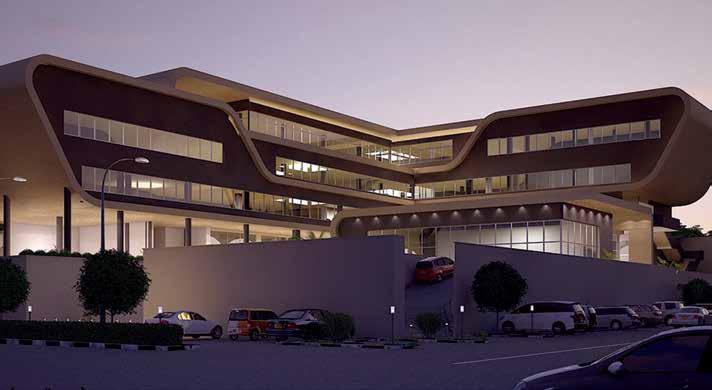
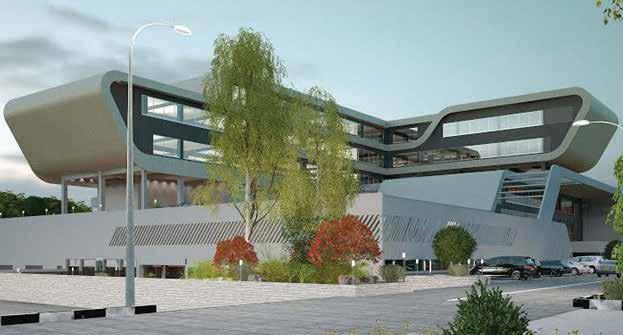
According to Morphosis Architects, the KWH Hub embodies femininity in its gentle, curvy design yet it still reflects a woman’s strong character and will.
The attraction posed by this new technology includes speed of construction and the associated simplicity that negates the need for skilled masons. In addition, the use of recycled materials makes them more environmentally friendly.
These manufacturing plants will no doubt lower the cost of the houses and begin to erode the age old love of brick and mortar as the only construction material worth using. The future should therefore look less daunting for the housing market.
Ethiopia Office
Haymi Advertising Services
22 Mazoria, Genet Bldg 4th Flr
P.O. Box 1316 - 1110 Addis Ababa
Tel: +251 118 955 855, Cell: +251 930 099 152
Email: ethiopia@groupafricapublishing.com
Ghana Office
Image Consortium
1st Floor, The Ecobank Building, Tesano.
Tel: 233(0)30 223 2728 I 233(0)274807127 I +233(0)206299159
B23/24, Aishetu Emoewa Plaza, 196, Iju Water Works Road, Ifako Ijaye Lga,Agege, Lagos.
Tel: 234-1-7347860
Email: nigeria@groupafricapublishing.com
Rwanda Office
Kolline & Hemed Inc., B.P. 3328,
Kigali, Rwanda
Tel: +250 03 748106
E-mail: rwanda@groupafricapublishing.com
Website: www.kollinehemed.org
Zambia Office
Dayflex Limited, 4th. Floor Tazara House
Dedan Kimathi Road, Lusaka, Zambia.
Tel: +260 211 230 529 / +260 977 756 663
Email: makukasue@mail.com, dayflex06@gmail. com
Robert Barnes
Mega power line to be ready by 2018
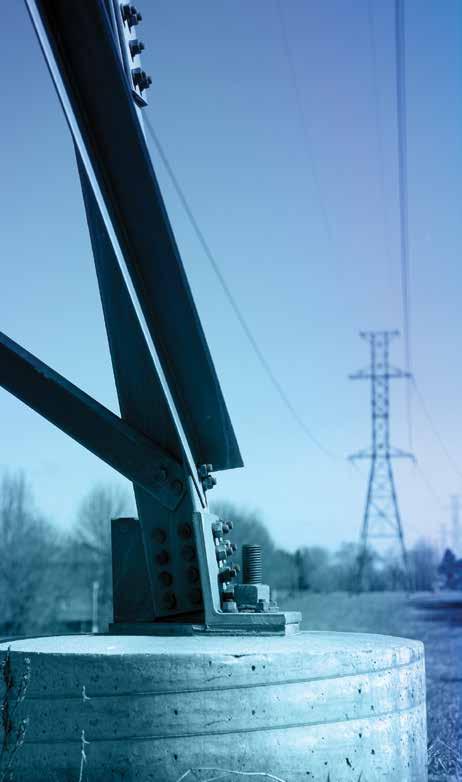
A Mega Tanzanian power line will be completed in the next two years paving way for the country to sign power trade agreements with member states of the East African Community after completion of the 400 kilovolt Mega Tanzanian power line. Sospeter Muhongo, the Minister for Minerals and Energy said last week that the first phase $453.7 Mega Tanzanian power line project that is 670 kilometres long from Iringa in the southern highlands of the country to Shinyanga on the outskirts of Lake Victoria, will be complete by 2018. The minister said the government intends to export the electricity to other regional countries in East Africa and Southern Africa.
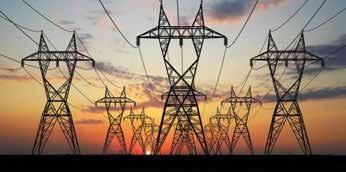
The double traffic channel electricity transmission line is a stretch of the 1,600km backbone electricity transmission line.
Tanzania Ethiopia Nigeria South Africa
When fully completed, the power line will supply a total of 2,000MW to neighbouring regional countries. This project, dubbed the Backbone Transmission Investment Project has been funded by the Africa Development Bank, the European Investment bank ($134.7 million),the World Bank ($ 150 million), Japan ($169 million) and Tanzania exports 1MW of power through crossborder connection to Lungalunga town located in Kenya, but imports 5MW from both Zambia and Kenya plus 9MW from Uganda. In 2014, Tanzania, Zambia and Kenya signed an MoU to finance a $1.2 billion power inter-connector project that will connect the Southern African Power Pool to the East African Power Pool.
Construction of Ethiopia-Kenya power transmission line begins
A Chinese firm has began the construction of a major power transmission line project within Ethiopia. China Electric Power Equipment and Technology (CET) announced on Monday that it had officially commenced the construction of the Ethiopia-Kenya power transmission line. The power line will be financed by the African Development Bank to a tune of USD1.26 billion. It is 1,045km long with 445km lying in Ethiopia’s territory and the rest in Kenya. The 500 KV transmission line will have the transmitting capacity of 2,000 MW. The Ethiopia-Kenya power project is expected to be completed within a year and aims at achieving regional power grids interconnection in the East Africa sub-region. Speaking during the project’s commencement ceremony, Rong Hulin, senior representative of CET, said the project would lead to huge economic benefits for Ethiopia in terms of generating foreign currency and new jobs for locals. He also expressed the company’s commitment to completing the project with high quality as per the contract schedule.
Plans to construct 300MW solar plant to begin in earnest
The Federal Government of Nigeria has finalized signing a Memorandum of Understanding (MoU) with a consortium of independent power producers (IPPs) for the construction of a 300MW solar plant in Nigeria. South Africa’s Volt Renewables and Nigeria’s Nigus Greenergy have formed the consortium and concluded the signing of a US$600m agreement towards the construction of the solar plant. The signed agreement has been facilitated by the Nigerian Investment Promotion Commission. LTi ReEnergy, a German based company will be responsible for supplying to the projects its central inverters which are already under development and are expected to be completed by next year. The 300MW solar project will include three 100MW solar plants constructed in different States. One of the solar plant will be located at Kano in Kano State, Birnin in Kebbi State, and the other plant will be developed in the northern region of Nigeria in Yola located in Andamawa State. On completion the plant is expected to contribute 10% of the country’s current generation capacity.
South Africa’s largest IPP Avon Peaking Power goes online
Avon Peaking Power has commissioned its gas turbine open cycle power plant near Durban in South Africa. The power plant operation project commissioning and operation has been announced by its developers DistribuTECH Africa and POWER-GEN. Avon is the second Independent Power Producer (IPP) project in South Africa developed by a joint venture between the Peaker Trust, Japan’s Mitsui & Co, France’s Engie and the South Africa’s Legend Power Solutions. The group first local project is the 342 MW gas-fired Dedisa Peaking Power plant in Port Elizabeth. The plant commenced its operations in 2015. Under a 15 year power purchase agreement the plant sells power to Eskom, given that the plant is recognised as the first large-scale independent thermal plants to be constructed in South Africa outside of Eskom.
The commissioning was conducted by the power island supply, Ansaldo managing civil works, Fata managing engineering, and procurement, construction and commissioning of the BOP and electromechanical installation works which included Demi Sys, firefighting, HVAC, Substation, piping, and cabling. The two plants have the potential for future IPP projects given that their accomplishment have portrayed a great strategic relevance for power generation as well as improving the South African grid stability despite the encountered challenges during the construction and commissioning of the Dedisa plant.
Rwanda
US firm Marriott International opens new hotel
Marriott International, Inc. which is an American multinational company has opened a new hotel in Rwanda-this is their first property in the East African country. The new hotel in Rwanda dubbed Kigali Marriott Hotel is the newest property under their signature name and it is located in the CBD of Kigali. Its design is a unique one as it is stirred by the lush hillsides, flowering trees, winding boulevards and busy streets of one of the cleanest and friendliest cities in Africa. President and Managing Director, Marriott International Middle East and Africa, Mr. Alex Kyriakidis, confirmed the news and said that they were very excited to open a new property under their name outside Southern Africa where they have most of their properties.
He further pointed out that their growth will also support the creation of job opportunities for locals and hence add to Rwanda’s economic vision for developing as a travel destination. The new development is a 254-room hotel which comprises of deluxe guest rooms and 25 Suites that are designed with a spacious and modern look with tailored solutions for the guest, the rooms further have large 48 inch LCD TVs, high-speed internet and spacious work surfaces that provide flexibility to freely move and use technology wherever the guest desires. It boasts a beautiful view of Mt. Kigali which is only 20 minutes from Kigali International Airport. Marriott International has more than 4,087 properties in over 80 countries and territories around the world.
Tanzania
Mega gas plant to be constructed
Tanzania’s Minister for Energy and Minerals, Professor Sospeter Muhongo has revealed that the government intends to invest at least 30 billion USD towards the construction of a mega gas plant in Tanzania in Lindi area. The minister said the government has already embarked on the Mega gas plant in Tanzania and that residents of Lindi and the entire Tanzania fraternity should expect an economic change in the next few years. The minister was speaking when he officially launched the Nanenane exhibitions at Ngongo grounds in Lindi municipality. “I would like to ensure Lindi residents and Tanzanians in general that our economy is going to grow at a high speed, we are going to invest at least 30bn USD in the construction of gas processing plant,” he said However, Professor Muhongo appealed to the public to remain calm as the government continues to set plans in place for the mega project in Tanzania. He added that the project is likely to take several years to complete because it requires large amount of money, highly skilled and experienced labor and good supervision.
Kenya
Chinese firm China Wu Yi to construct mega factory
A whopping US$ 38m is set to be spent on the construction of a massive factory in Nairobi , Kenya by the giant Chinese firm- China Wu Yi as it seeks to enhance its exposure in the real estate in Kenya. “The investment has already been signed out to the Kenya subsidiary China Wu Yi (Kenya) Ltd in Nairobi for the construction and building of the project,” the company said in a statement. The mega factory which will sit on 177 acres of land will be funded by Chinese lenders and will encompass the construction of an industrial base for research purposes, production, marketing and display of prefabricated materials. The expandable polystyrene system (EPS) is one example of alternative building material that has been appreciated by many contractors; it provides durability, strength faster and cheaper construction unlike brick and motor methods. They also do not rot and have no nutritional value hence do not attract termites and other kind of pets making the building more durable. The technology is popular in somecountries and ins produced in Kenya by the National Housing Corporation (NHC) among some other private firms. China Wu Yi Co., Ltd. is a construction and engineering company carrying out international projects as the overseas arm of the Fujian Construction Engineering Group Company.
South Africa
Developers shift focus to smaller shopping malls
A number of developers in South Africa have now decided to shift focus from big, expensive shopping malls to small and convenient ones. This is according to a few retails experts who argue that in the rural and semi-rural areas of Gauteng, much of the area is over shopped and that it would be very unsafe to construct new huge mall developments while consumers come under pressure in a kind of slowing economy. The Managing Director of Finlay & Associates, Marianka Victor concurred with the reports and said that developers in South Africa now prefer smaller malls.
“We are finding opportunities involving smaller malls and I am putting most of my effort in areas which have not had quality shopping centres before, I have found shoppers with higher living standards have started to use these new centres,” Marianka said. She further said the company’s largest project was a new 20,000m² centre in Botshabelo in the Free State. “The Botshabelo mall is the largest mall in that rural area and it’s already 85% let,” she pointed out. The Head of Development company Flanagan & Gerard, Mr. Patrick Flanagan, explained that there were large rural communities in the region whose shopping wants needed to be met. “The result is likely to be that more centres will be developed to cater for these large rural communities and this will put further pressure on the more established urban areas as the rural folk will no longer need to be catered for.
Ghana Uganda Nigeria
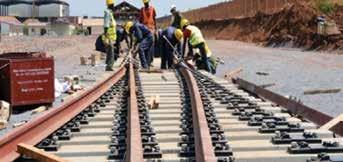
Exim Bank boosts construction of TemaAkosombo railway line
The constriction of Ghana’s Tema-Akosombo railway line is now set to kick off after the country secured financial support from the Indian Exim Bank. According to transport officials, Tema-Akosombo railway line will link northern parts of Ghana through the Volta Lake transport service. The Minister of Transport, Fifi Kwetey said that the financial support will see the transport sector of Ghana advance. The minister said that the government is committed to ensuring more road and railway projects are going on well by pumping more funds to the sector. The minister also said that the Tema-Akosombo railway line will also connect West African countries surrounded by land such as Burkina Faso and Mali to the Tema port.
The minister mentioned the Sekondi-Takoradi project saying that it is almost complete. He said, “The project seeks to improve commuter services between the twin cities and reduce congestion on the road, it will also provide a link from the Takoradi port to a container depot at Sekondi.” Mr. Kwetey revealed that the ministry is looking for other sources of capital to rebuild the rest of the Western Rail Line. The ministry has requested the collaboration of Ghana Ports and Harbours Authority with GRDA to implement the project. Infrastructure in Africa is seen as a key catalyst of economic development on the continent. Already massive infrastructure projects are going on in the continent like the standard gauge railway line in Kenya.
Uganda to sign financing agreement for SGR by October
The Ugandan Government has confirmed that by October this year it will have signed the financing agreement for the construction of the first phase of the Standard Gauge Railway (SGR) project. Eng. Kasingye Kyamugambi, the SGR project coordinator confirmed the news and said that the first phase which is expected to run from Malaba to Kampala will cost a whooping US$ 2.3bn and will be funded by the China EXIM Bank. The Ugandan government also signed China Habour Engineering Company as a contractor tasked to ensure local content and companies are included in the project. The Malaba-Kampala railway line will measure an estimated 273km. The Standard Gauge Railway was launched on October 2014 when President Museveni, President of Rwanda, Mr. Paul Kagame, Mr. Salva Kiir, South Sudan President and representatives from Kenya and Burundi met in Uganda. The mega development project is part of the Northern Corridor Integration Projects regional initiative that came about in order to build up and operate a new, state-of-the-art high capacity railway system jointly among Kenya, Rwanda, Uganda and South Sudan. The proposed regional modern railway line will run from Mombasa through Nairobi, Kampala and Kigali to Juba.
Kenya
Construction
Nairobi's Southern Bypass nears Completion
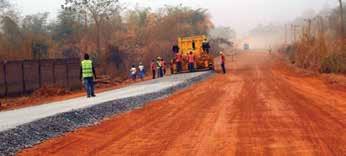
The Nairobi southern bypass in Kenya that has been under construction for a year is nearing completion with the road accessible from the junction of Mombasa road interchange at Ole Sereni all the way to Kabete-Limuru road at Kikuyu town. According to Kenya National Highways Authority (KeNHA) officials currently the contractor is finalizing the project with the erection of all the wall barriers along the bypass adjacent to Kibera area. Other final touches undertaken in finalising work on the road is landscaping to beautify the entire section before it can be launched formally – although it is already in use. The superhighway has three main interchanges at Mombasa, Lang’ata and Ngong Roads to ensure smooth and safe passage of traffic with fly-overs (partial interchanges) at Dagoretti and Thogoto roads being included. KeNHA says the bypass was designed to ease congestion on several adjacent roads such as Lang’ata road and Ngong. The officials added that most of the projects being carried currently by various contractors in the country are going on well and will be delivered on time.
Africa’s first Chinaassisted railway project launched
Nigeria has launched Africa’s first China-assisted railway modernization project. The standard gauge railway project, measuring 186.5km, was officially inaugurated by President Mr Muhammadu Buhari. Also at the event were Nigeria’s transport Minister Mr Rotimi Amaechi and Mr Freeborn Edetanlaen Okhiria, acting managing director of Nigerian Railways Corporation (NRC). According to Buhari the completion of the project is a clear indication that the country is in the right direction in terms of infrastructure and called upon Great Corporation between China and Nigeria to deliver more and more projects.
The line that was launched starts at Idu; around 20km west of Abuja city centre, and roughly follows the route of the Abuja – Kaduna – Zaria Expressway, serving 10 intermediate stations. The project saw a construction of Services that will operate at up to 100km/h with a journey time of around two hours for the fastest trains between Idu and Kaduna. The trains that will be used in the rail are modern compared to the one that was constructed in Nigeria during the colonial periods. Currently the rail is under the management of Nigeria Railway Corporation and operates a mixture of stopping and express services and each train is made up of four air-conditioned coaches, including a bar/cafe car. The line was built by China Civil Engineering Construction Corporation under a $US 870m contract awarded in 2009.
Nigerian Institute of Quantity Surveyors raises alarm over abandoned Projects
The Nigerian Institute of Quantity Surveyors (NIQS) have expressed worries over 19, 000 abandoned public projects scattered across the country. President of NIQS, Mrs Mercy Iyortyer said this in Makurdi during a two-day workshop organised by the institute and titled, “Budgeting and Capital Project Monitoring and Evaluation in an Era of Change.” “There are up to 19,000 abandoned projects scattered all over the country. This is not only worrying but a monumental waste of public funds which presents a wake up call for proper planning and monitoring of projects. “she added.
Iyortyer stressed the need for Quantity Surveyors to play crucial roles in prudent costing of projects, budgetary planning, cost monitoring as well as evaluation among others in order to ensure value for money of capital projects in the construction industry. Benue State deputy governor, Engr. Benson Abounu while addressing the workshop noted that the quantity surveyors are the bedrock of infrastructural development of any nation, adding that the institute has enormous task in ridding the country of failed projects occasioned by malpractice.
NSE inaugurate Nigerian Institution of Highways and Transportation Engineering
The Nigerian Society of Engineers (NSE) recently inaugurated the Nigerian Institution of Highways and the Transportation Engineering (NIHTE) at an event that took place at the University of Lagos, Nigeria. NSE specifically formed the body to address the road transport infrastructure challenges in the country.
The Highways and Transportation body was initially initiated in 2013 and is responsible for spearheading reforms in the country’s highway sector. According to the Managing Director Delran Nigerian Company Adenuga Opanuga, to achieve effective highway reform, policy formulation has to be implemented by including all stakeholders at all levels so as to positively transform the sector. The government’s inconsistency on highway and transportation policy, inadequate manpower and resources, the ever growing traffic haul without corresponding road networks are the main factors affecting the highway management. The Nigerian government has been urged to conduct regular assessment on the country’s highway aimed at planning, designing as well as analysing construction departments to determine their roles in achieving the common goal of good and safe highway for the nation.
Zimbabwe Public Private Partnerships workshop to kick off in August
The Zimbabwe Public Private Partnership in Partnership with the International Road Federation (IRF) will host a workshop from 24th to 26th of August at the Elephant Hills Hotel in Victoria Falls. With dwindling funds for infrastructure development, governments and infrastructure providers are considering the prospect of taking up Public Private Partnerships (PPPs). The workshop will seek to demystify some of the theories associated with PPPs by examining the whole concept and identifying the roles of different stakeholders to ensure the success of PPP initiatives in general. Ultimately the workshop will inform participants on how to obtain maximum return on investment from successful PPP strategies that will satisfy government, private sector partners and most importantly the public once implemented. Managing Director of Podilla Ventures Stieve Nyazorwe says the forum will address a range of issues including the principles, concepts, techniques and benefits of efficient PPPs as well as creating an interactive platform for African road authorities with potential international investors affiliated to the IRF.
CEO of Green Building Council
S. Africa announces early retirement
After five years at the helm of the Green Building Council South Africa (GBCSA), CEO Brian Wilkinson has announced his early retirement and will be stepping down in August 2016. According to the World Green Building Trends 2016: Developing Markets Accelerate Global Green Growth –SmartMarket Report report, South Africa is the country with the highest share of green building projects out of a global sample of 69 countries and it also has the highest share of expected green building projects leading up to 2018.
Commenting on the significant progress of green building in South Africa, Wilkinson said the property industry has been swift to recognise the simultaneous opportunity to ‘do well by doing good’, referring to the wellestablished and proven business case for green buildings. He added: “Our purpose is to inspire property owners to design, build and operate better, greener buildings. Formal Green Star SA certifications are rapidly approaching 200 projects, up from only six certifications five years ago. I believe we are on the cusp of green buildings becoming standard, rather than limited to leading practice.” The GBCSA is also focusing on the performance of existing buildings in the commercial property sector, at portfolio level.
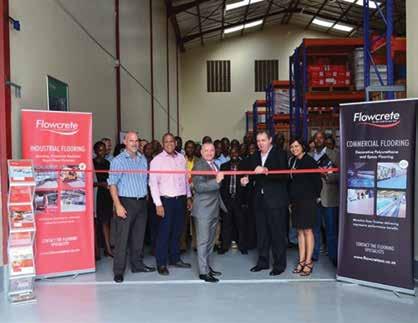
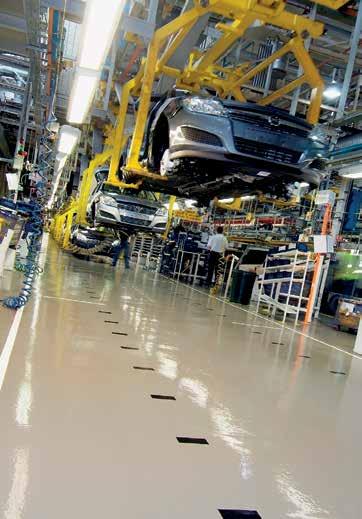
Flowcrete Africa Launches East African Office
Flowcrete East Africa, a new resin flooring business based in Nairobi, Kenya, was officially launched recently at an event attended by Flowcrete South Africa’s management team as well as prominent members of Kenya’s construction industry and key clients. Flowcrete South Africa has been trading in Kenya since 2009; however the East African office will supply and service the entire East African Community (EAC) namely, Uganda, Rwanda, Ethiopia, South Sudan, Somalia, Tanzania and Burundi. This new office location will mean shorter lead times for customers while providing the resin flooring manufacturer with a platform to grow its business within the region’s burgeoning construction sector.
A new warehouse, located at Unit 13 Norda Industries, Plot 12715/609, Mombasa Road, Nairobi, Kenya, will enable Flowcrete East Africa to rapidly supply large-scale construction projects with high quality resin flooring materials. The 1,000m2 warehouse has been serving as Flowcrete’s distribution centre for the whole East African area since it officially began operations on the 1st January 2016. The warehouse stocks large quantities of finished goods imported from Flowcrete South Africa’s manufacturing plants to ensure prompt delivery of the required materials.
The Managing Director of Flowcrete Africa, Craig Blitenthall, said: “Unveiling Flowcrete East Africa and its state-of-the-art warehouse is an important milestone for the company. Not only does this investment exemplify our commitment to meeting the East African construction industry’s flooring needs, but it is also a significant step in our ambitious growth plan – which will see the Flowcrete East Africa warehouse combined with a production plant in the near future.” The introduction of Flowcrete’s East African office positions the company as a leading coatings specialist within one of Africa’s most significant construction markets, with the capacity to provide innovative flooring solutions tailored to the aesthetic and functional demands of both commercial and industrial developments.
Sonnedix
finalises 86MW solar project in South Africa
US independent power producer (IPP) Sonnedix has reached commercial operation on an 86MW solar PV plant in South Africa, after only 17 months of construction. The 125 hectare Prieska Solar Plant is located in the Northern Cape and is part of the Renwable Energy Independent Power Producers Procurement Programme (REIPPPP). The plant was developed in collaboration with Mulilo Renewable Energy and Ixowave Women in Power. Construction was done by juwi Renewable Energies, the South African subsidiary of the juwi group. The plant is comprised of 275,000 PV modules and is expected to perform for 20 years. Sonnedix is a solar Independent Power Producer (“IPP”) with a proven track record in delivering high performance and cost competitive solar photovoltaic plants to the market.
Mobisol installs 50,000 solar systems in E. Africa
Mobisol, a Berlin-based company has installed 50,000 solar systems in East Africa, benefiting over 250,000 off-grid energy users. The company is one of the leading providers of smart rent-to-own solar solutions. According to Mobisol founder and CEO, Thomas Gottschalk, clean, reliable and affordable energy empowers the entire population to live up to their potential as well as improving the daily economic well-being and at the same time improving quality of life. Mobisol combines solar energy with an affordable payment plan via innovative remote monitoring technology and comprehensive customer service as well as through the mobile phone. The company offers low-income customers in developing nations quality solar home systems that are a clean alternative to and expensive fossil fuels, unhealthy and environmentally harmful.
Nova Scotia secures 80 MW solar project in Nigeria
Canadian Energy Company Nova Scotia Power Development Limited (NSPDL) has partnered with CDIL, a fellow Canadian renewable energy company with projects focused in Africa, for an 80MW ground-mount solar project in Nigeria. NSPDL signed a 20-year PPA with the Nigerian Bulk Electricity Trading company (NBET) who recently signed the country’s first solar PPA with a number of other developers for 975MW of utility-scale solar projects. The 80MW project is to be situated 3.5km from the Dutse substation, in Jigawa State capital at an investment of US$150 million.
The project assets are held by special purpose vehicle NSPDL, who are owned by CDIL. According to the latter, the project is in midstage development and is expected to reach financial close in 2017. Once completed, the plant will divert its power into the country’s national grid; providing enough clean and reliable electricity to power more than 200,000 homes. The announcement of this project closely follows Pan Africa’s 75MW solar plant in Katsina state. As NBET has signed PPAs totalling just under 1GW of solar, this is thought to be the start of a long overdue clean energy revolution in Nigeria.
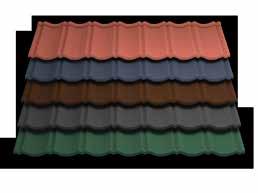
Debut for two new premium roofing
Being the world’s oldest synthetic roofing membrane, Rhepanol® has reached important milestones in the history of flat roof waterproofing. 75 years of experience and over 95 millions of square metres installed worldwide speaks for the long-term proven and standardised roofing membrane. Based on this exceptionally successful synthetic roofing membrane, FDT specialists have ushered in a new era for premium PIB roofing membranes by presenting the advanced membranes Rhepanol® hfk and Rhepanol® hfk-sk. The premium roofing membranes according to DIN EN 13656 are resistant to flying sparks and radiant heat. For homogeneous welding with hot air, the homogeneous and fleece-backed synthetic roofing membranes are equipped with an unbacked welding edge.
Furthermore, Rhepanol® hfk and Rhepanol® hfk-sk have an outstanding ecological profile. They are free of plasticizers, chlorine, PVC and halogen fire proofing agents and are permanently resistant to UV radiation. Rhepanol® hfk is the roofing membrane for all application methods, except for green roofs. For bonded layer build-ups, the new Rhepanol® hfk-sk is the membrane of choice. It has a glass/polyester fleece backing, a self-adhesive coating and an unbacked edge for hot air welding. Additionally, it serves as an integrated fire retarding layer, allowing for direct adhesive bonding on unbacked EPS.
Ditch Witch Launches FXT Series Vacuum Excavators
American based company Ditch witch has lunched the FXT Series vacuum excavators which include the FXT30 Air, FXT50 Air, and FXT65 Air. The line has air and water excavation capabilities. The units use a PTO-driven air compressor with a filtration system that utilizes a cyclonic separator to remove fine particles before reaching sensitive components in the vacuum system. The new system positions many of the air excavation components under the truck deck, giving operators extra room and easy access. Operators can easily monitor and command all components using an electronic controller that displays system parameters. Located in Perry, Oklahoma, Ditch Witch is a family-owned and -operated company where employees are treated like members of one big family. In fact, it is not uncommon to find multiple generations of families working together to produce the industry’s most advanced line of underground construction equipment. This family-style feeling of pride and connections extends beyond Perry through the equipment dealerships around the globe.
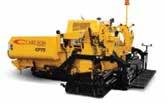
Carlson CP75 II Paver Upgraded to T4-Final
The Carlson CP75 II paver has a Tier 4-Final Deutz 2.9 L4 engine that produces 192 lb.-ft. of torque at 1,600 rpm, 10 percent more than its predecessor. Fuel economy is upped by 10 percent and horsepower by 20 percent at the low end. The operator station has screen-mounted controls kept relative at all times to the operator and directly connect to the cable steering. The hood has been lowered by 4 inches, providing more operator visibility and overall safety around the machine.
Komatsu have launched the 264-horsepower D85i-18 crawler dozer available in EX and PX configurations and includes the company’s intelligent machine control system. Once engaged, the system automatically cuts and lowers the blade to grade in a typical dozing pass. If the load increases to a maximum, the blade automatically raises to minimize track slip to keep dozing productively. Komatsu America Corp. is a U.S. subsidiary of Komatsu Ltd., the world’s second largest manufacturer and supplier of construction, mining and compact construction equipment. Komatsu America also serves forklift and forestry markets. Through its distributor network, Komatsu offers state-of-the-art parts and service program to support the equipment. Komatsu has proudly been providing high-quality reliable products for nearly a century.
Hopper capacity is 8 tons, and the paver has horizontal sliding damper doors, a design that keeps obstructions such as utility boxes from damaging them while open. Ground clearance is 10 inches below the auger box while allowing for narrow width paving from zero to 4 feet by closing the damper doors. The High Flow Material Conveyor has dual 35-1/2-inch heat and oil resistant rubberized belts fixed to chain driven slats that effectively transfers material to the augers without segregating the mix. The CP75 II comes standard with the Carlson EZC813 single slide screed with a standard paving width of 8 to 13 feet.
Komatsu launches new D85i-18 Crawler Dozermembranes
AFRICAN REAL ESTATE SUMMIT
The African Real Estate Summit will host an investor-led conference where international investors will be able to review a showcase of existing assets, new commercial real estate and planned city developments whilst comparing projected capital returns and rental yields. This will be supported by a deal making exhibition hub with a 3D showcase of the African cities of tomorrow by Town Planners, City Officials &developers from across the continent. This transactional deal making hub is aimed at providing an opportunity for investors, developers, landowners and the cities themselves to conduct business, sign contracts and develop the future cities of Africa. Africa’s premier showcase of master plans and infrastructure developments invites you to be a part of this summit and network with key-decision makers.
Kenya
- Architectural Association of Kenya
First ever solar for development conference in Namibia
Electricity Africa, a subsidiary of RDJ Consulting Services will host Namibia’s first ever Solar for Development International Exhibition and Conference on October 13 and 14, 2016 at the Windhoek Country Club & Resort. The event will showcase existing practical solar projects in Namibia that show how the country is utilizing solar power to achieve national development and effective service delivery. The main relevance of this event is anchored in the fact that it is an opportunity to raise awareness so as to demonstrate and showcase current achievements of the country. According to Lahja Amaambo Senior Advisor at Renewable Energy at RDJ Consulting Services the event will offer an opportunity to showcase the capacity and potential that solar energy can bring in terms of development. Electricity Africa is confident that the event will offer a networking opportunity to debate and deliberate on technical, policy and financing issues. Running concurrently with the conference, the exhibition will display and demonstrate the latest technology applications.
Botswana
- Institute of Botswana Quantity Surveyors
Association Partners
- Institute of Quantity Surveyors of Kenya
- Institute of Engineers of Kenya
- Association of Consulting Engineers of - Kenya
- Association of Professional Societies of East Africa APSEA)
- Kenya Property developers Association
- Institution of Surveyors of Kenya
South Africa - ASAQS - SAICE
- South African Council for the Quantity Surveying Profession
- Khuthaza ( Women for Housing)
- Concrete Manufacturers Association
- Green Building council of SA
- South African Property Owners Association
- Master Builders South Africa
Uganda
Institute of Surveyors of Uganda
Ethiopia
- Association of Ethiopian Architects
- Ethiopian Association of Civil Engineers
Ethiopia
- Construction Contractors Association of Ethiopia
Zimbabwe
- Zimbabwe Institute of Quantity Surveyors
- Zimbabwe Institute of Engineers
- The Construction Industry Federation of Zimbabwe (Cifoz)
Ghana
- Ghana Institute of Engineers
- Architects Registration Council
- Ghana Institute of Surveyors
- Ghana Green Builders Association
- Ghana Institute of Planners
- Association of Building and Civil Engineering Contractors of Ghana
Namibia
Institute of Namibian Quantity Surveyors Association of Consulting Engineers of Namibia Tanzania
7th annual East Africa regional exhibition
7th annual East Africa regional exhibition and workshop 2016
The University of Nairobi Department of Architecture and Building Science will host the 7th East Africa Regional Exhibition and Workshop from 15th – 20th August, 2016 at ADD Studio1. The theme for this year’s conference is “ARCHITECTURE, CITY + SUSTAINABLE DESIGN”. This event coincides with the Department’s Diamond JubileeCelebrations (1956 – 2016). Those interested in presenting papers at the Workshop are invited to prepare their papers in line with the theme. The papers will be published in a special edition of the Habitat Review Journal which will publish the Workshop’s Proceedings.
- Tanzania Institute of Quantity Surveyors
- Construction Regulation Board (CRB)
- Tanzania’s Registration Board of Architects and Quantity Surveyors (AQSRB)
Nigeria
- Association of Consulting Engineers Nigeria
- Association of Professional Women Engineers Of Nigeria
- Council of Registered Builders of Nigeria
- The Nigerian Institute of Architects
- American Association of Petroleum Geologists Africa Region
- Nigeria Society of Engineers
- Nigeria Institute of Architects
- Building and Construction Skilled Artisans Association of Nigeria (BACSAAN)
Zambia
- Zambia Institute of Architects (ZIA)
- Association of Building and Civil Engineering Contractors (ABCEC).
Dr. Álvaro Sobrinho chairman of the Planet Earth Institute
Businesses must help electrify Africa
Early this year the US President Barack Obama signed the Electrify Africa act into law, committing his government to supporting his landmark development initiative, Power Africa.
While Power Africa is certainly not novel, it deserves credit for marshaling private investments and encouraging host governments to strengthen investments in their power sectors. Even assuming that the programme achieves its headline goal of providing access to electricity for 50 million people in sub-Saharan Africa, 500m people will remain without electricity.
What’s more, most Africans use wood and kerosene for fuel, causing deforestation and thousands of fatal accidents each year. These persistent power supply issues are not only affecting the citizens’ quality of life but also pushing up the high cost of doing business on the continent. To ensure the future competitiveness of Africa and its sustainable development, there is need to redouble efforts to tackle the energy deficit problem. As a recognised engine of growth, private sector companies can and should help African countries provide access to clean and affordable electricity.
Africa has incredible renewable energy resources, as it can source an additional 10 terawatts of solar energy, 1,300 GW of wind power, and 15 GW of geothermal potential. Private companies have the financial resources and clout to significantly scale up investment in renewable energy.
African governments get the help they need to stabilise their energy supplies and reduce reliance on fossil fuels.
Furthermore, for-profit businesses can enhance energy access over the long term by accelerating the deployment of affordable and localised tech innovations.
For example, M-Kopa, a Kenyan-born Company, is using solar technology to provide affordable electricity to East African homes. M-KOPA Solar brings together solar and mobile technology to provide affordable, clean and bright energy to off-grid villages in East Africa. M-KOPA provides smart credit to enable low-income consumers to access energy products and pay for them in instalments using mobile money platforms such as M-PESA.
Africa has incredible renewable energy resources, as it can source an additional 10 terawatts of solar energy, 1,300 GW of wind power, and 15 GW of geothermal potential.
Last year, Google announced that it is investing in the Lake Turkana Wind Power Project in Northern Africa, the continent’s largest wind project. Once complete, Lake Turkana will bring 310 MW of clean energy onto Kenya’s grid – enough to power more than 2m households across the country. These investments are beneficial to all stakeholders: companies are helping to strengthen the infrastructure that they need to operate on the continent. At the same time,
After paying a deposit of 3,500 KES (approx. $35), M-Kopa users are given a solar system to install at their homes. Using a mobile payment system on their mobile phone, they can then top it up every day for a paltry sum in order to get energy. The system is meant for an off-grid household that use kerosene (paraffin) lamps to light their home, and paying for batteries and phone charging. In this way, M-Kopa is harnessing hugely from popular mobile money technologies and the latest solar systems to save its customers money on polluting energy, and fuel its own expansion. Given their expertise and resources, I would encourage other private sector companies to explore similarly impactful activities that can generate a competitive financial return.
Ultimately, expanding access to nonpolluting and cost-effective electricity in Sub-Saharan Africa is a developmental and business imperative. I call on private sector companies operating across the continent to join forces with African governments and the broader civil society to help address this challenge.
EUROPA INFRASTRUCTURE TECHNOLOGIES
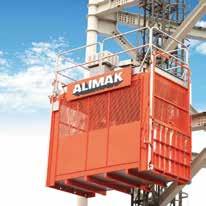
Europa Infrastructure has grown in leaps and bounds in the last 5 years.... and today we welcome AlimakHek to our family...AlimakHek is the worlds best brand in passenger and material hoists for building and industrial applications. The hoists are built on a very simple and effective design that aims to maximise the benefits to their clients. The hoisting system is based on a rack & pinion system that allows our hoists to carry more capacity but also minimises power consumption on site. AlimakHek are the pioneers in this system and with constant investment in R&D, they are always ahead of the market. Their market manager Piet Theunis visited us a few months ago and was very impressed in our approach to the construction and aftersales business model. He also sees a very bright future for the East & Central Africa region and believes AlimakHek will play a very big role in shaping the skyline of Kenya.
$2,000,000 of hoists in India and Dubai....and even in a competitive market with so many Chinese and Indian suppliers they remain
the market leader for the past 50 years. wMr Thenis was also very happy to visit their old customers and even found a major contractor in Nairobi who is still using their AlimakHek machine for over 32 years...
This, he was very quick to point out, is the difference between AlimakHek and the competition...if you invest in a machine it should be for the long term. AlimakHek recently opened a fully automated factory in China to cope with the demand from Asia and Africa and as result have become even more competitive in their pricing. We still offer a 5 year warranty on the product to show you our confidence in the brand. All AlimakHek machines are built with safety and quality in mind. Europa Infrastructure Technogies Ltd "built on a very simple business model.... Be exclusive distributors for one product range and become the masters of aftersales
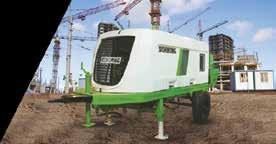
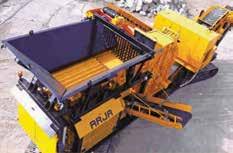
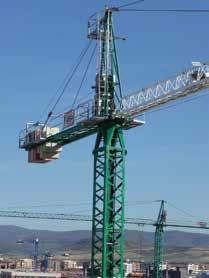
over the agency we have managed to sell 9 machines in 3 months (and have almost another 5 signed off). We thank AlimakHek for their support and hope for a continuous success together in this fast growing East African market. Europa Infrastructure Technologies Ltd has also sold over 12 tower cranes, 8 concrete pumps, 6 batching plants, 1 asphalt plants, 6 stone crushers, over 300 small machineries from cutting and bending to poker vibrators, screeders and so on. We are also one of the first few companies to be offering equipment for construction on rent.
Our aftersales service team is soo strong we can also help you diagnose problems with equipments you have bought from other brands. As MD of Europa Infrastructure Technologies, I have become very knowledgeable on helping clients plan their project requirements. Please feel free to call me and set up a meeting and see what I have to say....You dont need to buy anything from me, just take our free advise and decide on
Concrete Pumps
Tower Cranes
JUST A BUTTON TO PRESS
„From
Volker Höh
Installation Expert
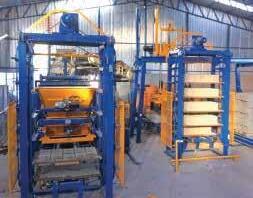
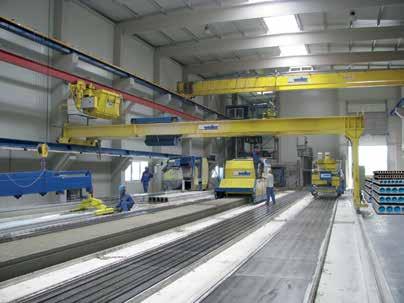
TURN-KEY CONCRETE PRECAST PLANTS
THE
machines & installations
modern technology individual solutions
after-sales-service over 60 years of experience global references
Africa’s solution to housing
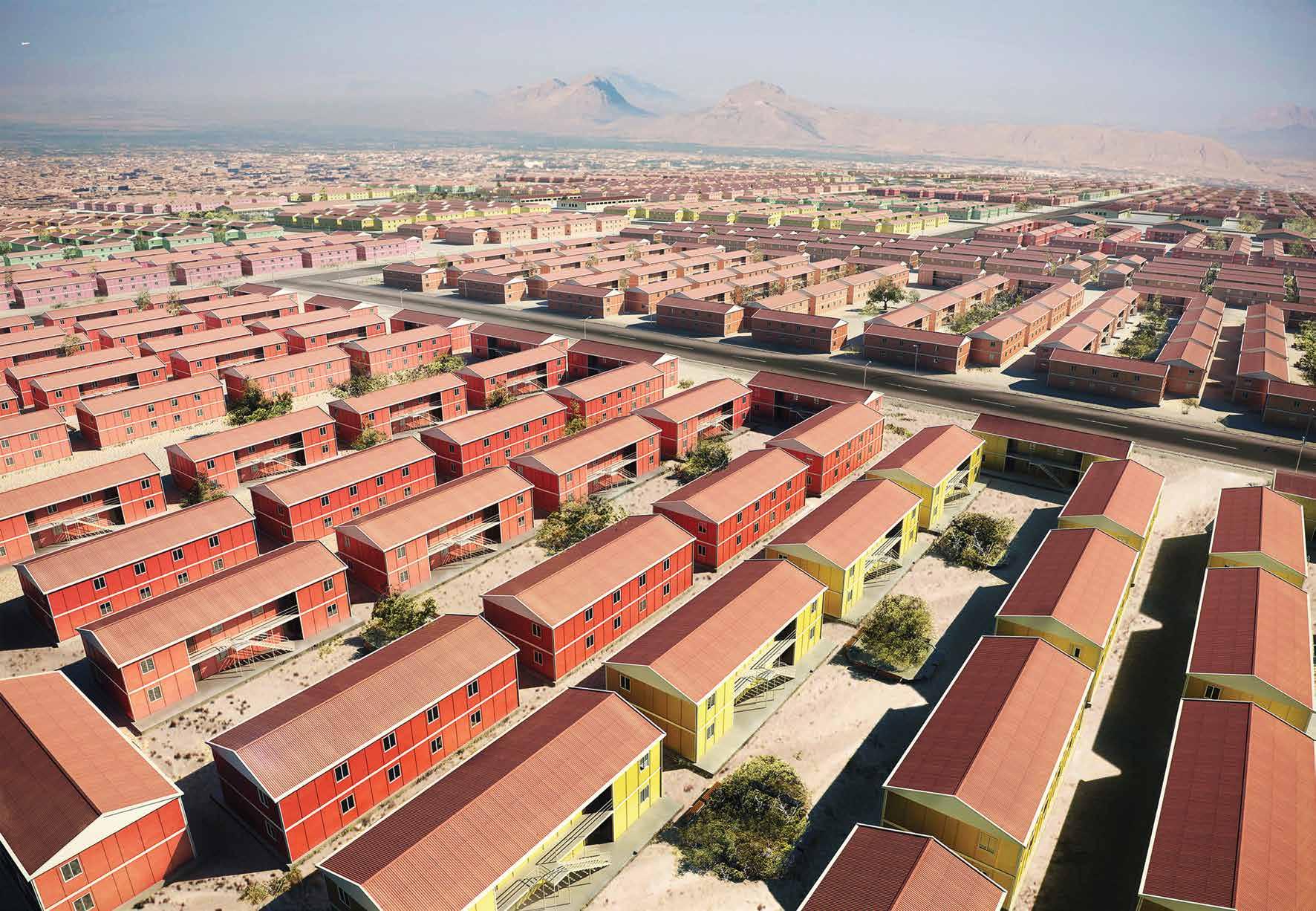
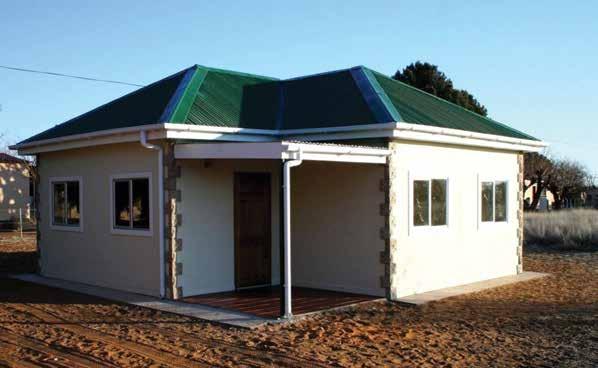
Considered to be the best way of meeting housing demand, prefabricated houses continue to gain currency in Africa
By Anthony Kiganda
The call for a quick and sustainable solution to the current housing shortage facing Africa has created an opportunity for prefabricated housing technology to become a key building method to meet the demand in the housing sector. According to a 2015 World Bank report dabbed Stocktaking of the housing sector in Sub-Saharan Africa, African is quickly urbanizing and will overtake Asia by 2025 as the most urbanized continent. Worryingly, urbanization in Africa has not been accompanied with percapita economic growth or investment in housing. Under this environment few Africans can buy or construct their own homes. The cost of obtaining land has gone through the roof. This coupled with high costs associated with building means that the dream for owning a house will continue to remain elusive for many people.
Ray of hope
But there is a ray of hope says Richard China president and founder of International Green Structures a firm that specializes in prefabs. China whose firm has established a mega factory in Kenya to help enhance affordable housing in the country says that prefabricated houses are not only sustainable but a timely solution to the housing problem in Africa. With a rapidly growing population, China believes that prefabricated houses can be an answer to meeting the housing shortage in Africa.“It is a perfect solution to
the housing problem in Africa. A typical one bedroom prefabricated house can be built in 30 days using this method of construction. This is nearly a quarter of the time taken using traditional building methods,” he explains. “This makes Prefabrication as an affordable housing technology is the most viable option when working to meet such a huge deficit,” China shares.
Housing backlog
Though traditional forms of construction involving brick and mortar have been long ingrained into peoples minds as the most suitable form of construction, the pressing needs for housing is slowly producing a paradym shift. Building Systems Manager of South African firm Kwickspace David van Zyl says that this trend has been fuelled by the fact that there is a massive housing backlog in both the private and public sector in the country and indeed the continent that traditional building methods cannot cope with in the required timeframes.
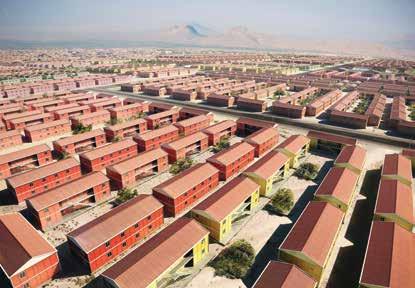
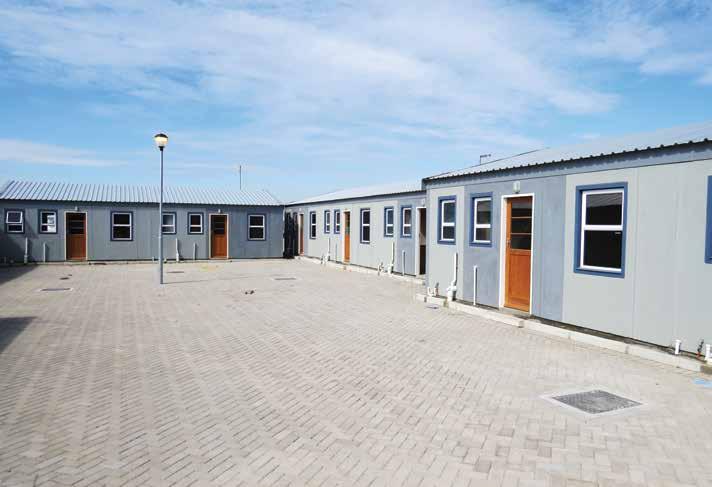
Kwikspace recently unveiled 1200 prefabricated housing units in Delft - Cape Town. This move further instilled confidence among the people that prefabs are the better option. Speed, cost and environmental friendliness in construction methods are driving the new theme in housing.“Increased demand for rapid, cost effective and energy efficient solutions to the housing crisis in the country has led to an increased demand for modular solutions,” says
Zyl. “Prefabricated houses will continue to penetrate the housing market albeit at a slow pace,” he adds. In Nigeria, firms dealing in prefabricated housing are making inroads into the country. Companies focusing on this method of construction are leveraging on statistics from the National Bureau of Statistics of Nigeria which reports a housing deficit of 17 million.United Nations (UN) estimates that about 7000 houses are required per day to counter the housing deficit in Nigeria.
An Irish firm specializing in modular houses is already building a mega factory that will be producing panels for house construction purposes. The firm, Affordable Housing Concept, has already built 5000 housing units for civil servants in Nigeria. Desmond Cullinane Chairman of Affordable Housing Concept says that traditional building methods cannot produce the much needed housing units needed to check the rising housing deficit.
Panel System
Differnet forms of panels for the houses are available in the market to day. For instance, Affordable building Concept has two distinct systems to produce affordable houses namely factory built panel system and onsite poured concrete system. In panel system, building panels, already manufactured in a factory are combined with cement and polymers to produce easily manageable panels delivered to a site and joined together to form a building of any shape or size. On the other hand, in the poured concrete system onsite batching plants are used to produce concrete mixes that are then poured into pre-positioned aluminium formwork systems and allowed to set.
When fully cured the formwork is removed and the complete unit including the roof [ A line or flat ] is revealed.
The use of concrete produces an albedo effect where more light is reflected and less heat absorbed resulting in cooler temperatures inside. This reduces energy that is used in air conditioning. Cullinane says their technology has several advantages over conventional building methods due to its Low thermal conductivity, light materials, excellent sound insulation and a certain level of fireproofing. Panels can also be made from straw, a byproduct of wheat and rice crops. The straw is then upcycled in a factory into a Compressed Fiberboard, producing a strong, natural fiber alternative.
“Not only are CAF Boards durable, they have excellent thermal and sound attenuating properties,” says China whose company spearheads this technique in Kenya.
Challenges
Though the technology continues to face universal acceptance challenges in Africa James Mugerwa who is managing director of Shelter Afrique says cultural preferences is to blame. For example he says, Africans still believe in more permanent structures. It is a similar challenge facing alternative building materials.
“There is a low adoption of prefabs on the continent because Africans do not trust material that isn’t brick and mortar,” explains Mugerwa. He reckons that the acceptance rate of prefabs and indeed other forms of modern building methods will continue to remain low unless Africans begin a cultural shift away from traditional methods of building.
FC #7996 [Africa] Construction Review AW.indd 2
Apex Steel: More than just steel
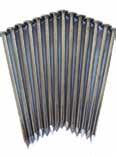
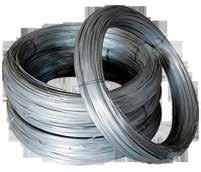
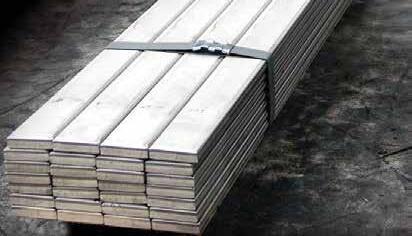
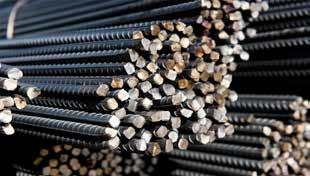
Apex Steel is the pioneer in the manufacture of Deformed Bars in East and Central Africa. BS:4449 is the British Standard for Grade 500 steel. Apex Steel manufactures this steel at its stateof-the-art plant at Athi River.
The company began manufacturing this in 2007. Apex Steel is the first company to be awarded the KEBS approval for conformity; and subsequently the ‘Diamond mark of Quality’ for year-on-year compliance; it’s also the only company to be awarded the ‘Superbrands’ status for three consecutive years. It’s a matter of pride and prestige that Apex Steel is the only company in East and Central Africa that now has the LEED Certification that is awarded for its ‘environmentally friendly’ steel manufacturing processes. So if it has to be ‘Green Steel’, there is Apex TMX.
Apex Steel also offers ‘cut and bend’ solutions to contractors. This cutting and bending is done as per the BBS (Bar Bending Schedule) as provided by the Contractor. Apex Steel has invested in an automated plant for ‘cutting and bending’ for speed of execution and ensuring precision is maintained. This unique facility saves time and resources for the contractors. The benefits are: no wastage of the ‘off-cut’ steel on site; no inventory management at site; reduction of pilferage; and most importantly, it ensures the steel can be immediately used for the structure. In addition to offering a savings of 12% on the overall cost of the project, it also facilitates a faster execution.
Apex Steel now has another ‘first’ to add to its portfolio. Couplers are the efficient way to replace the ‘overlap’ in joining steel. This technology is widely used the world over and is now available in Kenya and East Africa too through Apex Steel. Depending on the sizes used, this technology ensures a savings potential of 10% - 15% in the overall consumption of the steel in larger projects. Recently it has commenced manufacture of PVC Pipes under licence from Wavin who are the global leaders in Piping and Plumbing. These pipes are made at its new facilities at Athi River. The quality and precision of the pipes are helping them make inroads into the industry. Apart from the quality of the manufacturing process, Apex Steel also has the most modern testing equipment and process to ensure that every pipe that leaves the factory is made to international standards.
With constant investments being made into ‘raising the bar on quality and innovation’ it’s the destination for leading contractors, developers, engineers and other consultants. Apex Steel stands on the pillars of Leadership in Innovation, Quality and Consistency, and most importantly in its superior customer relations making it the preferred choice of a partner for projects; be it in steel or plastics for Infrastructure, Commercial or Residential developments.
Staying Powered
By Lubwa Leonard
More than a century after the light bulb was invented most of the African continent is still in the dark after nightfall. School children often cannot read after dusk, businesses cannot grow, and clinics cannot refrigerate medicine or vaccines, and industries are idled hampering economic growth, jobs, and livelihoods. Currently, there are about two dozen countries in Africa with an average power capacity of 200 megawatts each leaving some 620 million people without electricity. Another 25 countries in subSaharan Africa are facing a crisis evidenced by rolling blackouts. Although the African continent is well endowed both with fossil fuels and renewable resources, these are not evenly distributed, creating windfall profits for some countries and exacerbating the crisis in others.
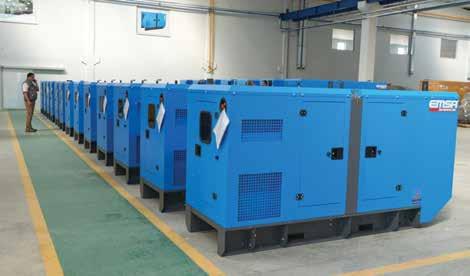
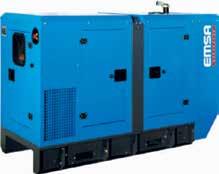
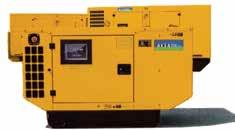
To dodge these shortcomings associated with on-grid power sources, many people and businesses opt for generators as mainly as back-up power options and in a few cases main power supplies for small installations. Whether the motive is meeting business needs or conforming to code requirements, most large organizations make generators part of the facility designs. But planning for back-up power is not so easy, and the sizeable investment that is involved makes it paramount that facility executives understand the key decision-making points in a generator project.
Documenting the load
The first step is to identify what the generator will power. Every building that has a generator will have two types of loads: loads whose codes require emergency power and those for business-critical systems. Each of the loads must be documented appropriately. Life safety code requires its branch of the emergency power system to be picked up by the generator within 10 seconds of utility failure. The critical branch in medical facilities also has the same 10-second requirement. Upon completion of documentation, an engineer can size the generator and transfer switches. This sizing will indicate the physical and electrical requirements, which in turn affect the location of the generator.
Picking the right location
A second crucial step for facility executives is deciding the appropriate location for the generator. Generators are more often located outside than inside the building, but both locations have pros and cons. A third option is placing a generator in a penthouse or on the roof. The decision to locate a generator outdoors raises issues specific to each facility. If visibility is an issue, for example, a generator can be located behind a screen wall or landscaping. However, this can cause security problems in some areas.
Taking the hassle out of specifying
Smart products comply to specifications, standards and all requirements. Specify Vaal Sanitaryware.
Water Treatment
By Lubwa Leonard
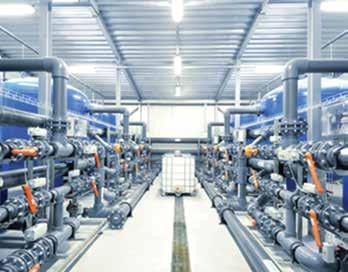
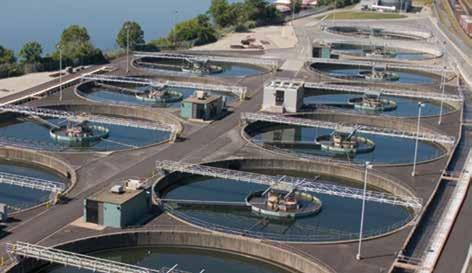
Water in Africa is a scarce resource and clean drinking water even more so. According to the World Health Organization fact sheet, contaminated water causes over half a million diarrhea deaths every year and 38% of health facilities in low and middle-income countries lack any water source. Africa bears the biggest burden as far as accessing clean water is concerned. Although access to clean water and sanitation in Sub-Saharan Africa has steadily improved over the past two decades, the region measures far below other developing regions.
Access to piped water in Africa remains the preserve of the few and treated water which is vital for the preservation of life is a key component for development. This is according to a poll carried out by this publication. Out of over 700 readers polled a third felt that water is the most essential ingredient for Africa’s development a figure matched only by the need for energy.
Increased demand
Africa has witnessed high influx of people into urban centres and subsequent mushrooming of informal settlements. With this, come the challenge of waste disposal and accessibility to clean water. Due to the rapid urbanization of African cities, the existing infrastructures are highly stressed and pushing the authorities to go for high capacity water treatment plants and undertake large scale expansions in shortest possible time and finding the right and adequate funding is a big challenge. Urban authorities should in times of rapid expansion focus on getting the right and cost effective technologies that are sustainable into the future.
Surprisingly due to limited financing, several urban authorities in Africa tend to show unwillingness to invest in water treatment hence there is a low priority placement in regards to water treatment in many urban centres in Africa. This problem is compounded by lack of proper understanding of the importance of waste water management by the relevant stakeholders in many African countries.
Competence
In many parts of Africa, skills are a limited resource when it comes to water treatement and this can be an obstacle. Competence and experience are key aspect in selecting water and waste treatment service providers. while planning to install water treatment plant either for personal or commercial purposes, one should look for service providers that not only offer services but can also transfer know-how and support to the client for longterm engagement. It is advisable not only to look at the price but also the quality of services provided, as well as dealing with companies that have a strong track record of execution and demonstrated the performance over the years and across the globe.
Hayley Thompson, the Communication and Marketing Manager at Biwater says due to high competition among the service providers, it is hard to identify companies that can deliver on project requirements on time and within the budgetary allocations. He advises that governments and clients should ensure that the quality of the workmanship across the facilities is of the correct standard, whilst avoiding the potential pitfalls of employing lower quality products and equipment, usually sold alongside cheap finance, which at first, can seem attractive. Support.
Of course just as in any other product or service, after sales support ranks up there as an essential aspect hen it come to water treatment. Repairs must be done quickly and efficiently. This is because Sustainability means regular preventative and proactive maintenance. clients should therefore use a
specialized supplier because it is a specialist industry that require focused and specialist knowledge and support.
Quality Material use
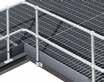
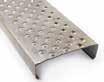
Dodds Pringle, MD of Vital Engineering advises that due to the operational nature of water treatment plants, it is essential that non-corrosive and non-slip products are used to maximise safety in wet and potentially dangerous environments. Vital Engineering’s products are widely used in wet and corrosive environments around Africa and beyond in desalination plants, water purification plants, municipal sewerage plants, and in the pulp and paper industry’s water treatment plants.
They are also utilised in mine washing plants, power station cooling towers, and in dams and pumping stations. The company has been supplying its products to the South African and international market for the past 70 years. While the majority of the products sold have been steel demand-based - such as the Vitagrid multi-dimensional, non-slip grating and stair tread range - over the last 9 years there has been an increased demand for Vital Engineering’s Vitaglass UV resistant, non-slip fibreglass gratings, stair treads and handrails.
Vital Engineering is a forerunner when it comes to the provision of precision-made, quality steel and fibreglass gratings and hand railing products to many sectors, including the water and waste-water treatment industry.
To read more and to comment on this story visit http://www.constructionreviewonline.com
Security Scanners
By Lubwa Leonard
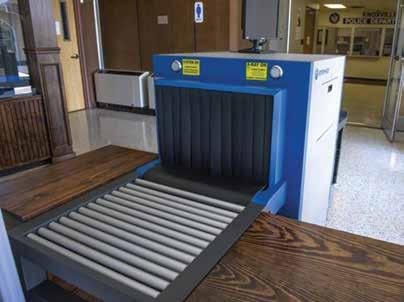
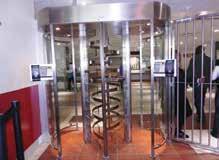
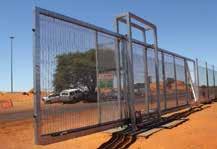
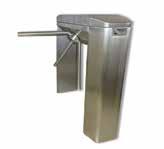
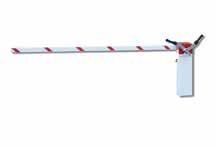
Africa has in the recent years witnessed increasing cases of terrorism heightening the need to enhance security at all entry points. This has meant staying at par with the latest trends in security and scanners play a key role at checkpoints which need safe and effective personnel screening systems, whether they are used for airports, malls, asset protection, courthouses, correctional institutions, border crossings, commercial offices or manufacturing facilities.
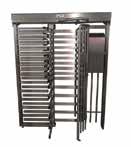
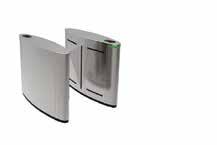
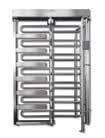
Scanners come in all shapes and sizes to meet the needs of a client ranign from handheld scanners to mantrap cubicles, we take a few of some of these options that are becoming essential aspects of any buildings fittings.
Hand-Held metal detectors
Handheld metal detectors are portable light weight devices and can be carried in the hand comfortably. They are mainly used at checkpoints to detect metal targets in items that people may be carrying such as handbags or even pockets of various clothing. They are readily available and highly used in many of the buildings in commerical centeres by security personnel as the first line of defence
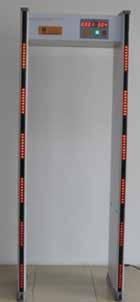
Walk-through metal detectors
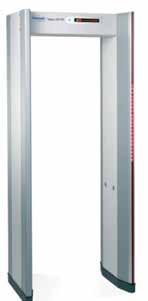
Walk-through or portal detectors are common in public buildings, airports and military
installations in most African countries. Their portals are bracketed with two large coils or loop-type antennae, one a source and the other a detector. Electromagnetic waves are emitted by the source coil into the detection space. When the electromagnetic field of the transmitted wave impinges on a conducting object, it induces transient currents on the surface of the object; these currents, in turn, radiate electromagnetic waves. These secondary waves are sensed by the detector coil.
Magnetic imaging portals
The magnetic imaging portal is a relatively new technology in Africa. Like walk-through metal detectors, it illuminates its detection space with radio-frequency electromagnetic waves. However, it does so using a number of small antennas arranged ring-like around its portal, pointing inward. Each of these antennas transmits in turn to the antennas on the far side of the array; each antenna acts as a receiver whenever it is not transmitting.
A complete scan of the detection space can take place in the time it takes a person to walk through the portal. Using computational techniques adapted from computed axial tomography (CAT) scanning, a crude image of the person (or other object) inside the portal is calculated and displayed. The magnetic imaging portal may for some purposes be classed as a metal detector rather than as an imaging system because it does not produce
a detailed image of the metal object detected, but only reveals its location and approximate size.
Man-trap cubicles
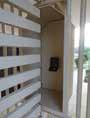
A man trap, or a security booth, is a security device that monitors and controls two interlocking doors. Many banks are fitted with these devices. Interlocking doors are doors that can never be open simultaneously. Either one of the doors can be unlocked and opened, as long as the other door is locked and closed. Between these interlocking doors is a small, secure space, which only admits one person at a time.
These access control booths effectively separate a non-secured area from a secured area. Man traps are ideal in high value or critical security areas, like cash handling depots, sensitive data processing areas, security control rooms, critical research labs, jewelry stores and vaults.
Full Body Scanner
A full body scanner is used to reveal objects, including explosives and weapons that could be hidden under clothing. The technology, widely used in airports around Africa, is safe and effective and provides an alternative between full body scanning and a physical search in case selected for additional screening.
SAPOA
Celebrating
The 2016 SAPOA awards were held in style as the organisation celebrated its 50 years of bringing together all role players in the commercial property industry as well as creating a powerful platform for property investors. The awards were part of the three day annual convention held on the 21-23 June 2016 at the Sandton Convention Centre, South Africa. The major highlight of the three day convention and part of the property focus was the presentation of the two much-anticipated awards, the SAPOA Property Journalism Awards for Excellence and the SAPOA Property Development Awards for Innovative Excellence.
for Innovative Excellence showcased the outstanding contributions from world-class owners, developers and built environment professionals who create more smarter and beautiful buildings every year that significantly enhance the industry. The winners for Property Development Awards for Excellence for 2016 included the following:
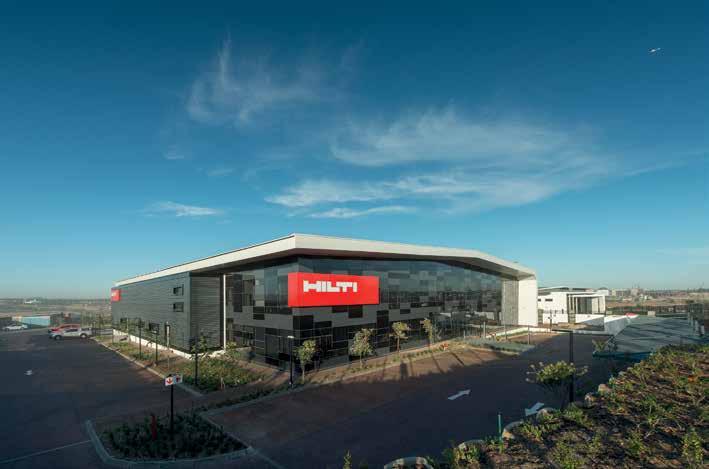
Ridgeview Office Development- Office developments: Commercial; Multichoice City- Office development: Corporate; Mall of the South- Retail developments; Franks Place- Residential developments; Four Seasons The Westcliff and Lion Match Office Park, joint winner for refurbishment developments; The Mirage- mixed use developments; Mitchells Plain Hospital- other developments; New Development for Hilti –innovative developments; The Growthpoint Greenovate Awards Programme; Matola Raid Monument and Interpretive Centre; and
developments in the country. The waterfall precinct features an extensive variety of retail, including the iconic Mall of Africa, City Lodge as well as leading commercial and industrial companies. Empowered Spaces Architects’ design for Hilti, consists of a 1 700m2 warehouse and a 2 000m2 office building. The entrance is a mirage of high-performance, environmentally friendly tinted glazing, fringed by spandrel panels.
The design allows for comfortable working environment, because the glass façade allows for maximum natural sunlight to illuminate the lobby and office space, while the spandrel panels limit the harsh western sunlight. In addition, energy-efficient fittings and air-conditioning systems are apparent throughout, with sufficient insulation in the walls and roof allowing for optimum
Thika Towers
Chani Lall puts clients at the centre of what he does
Anew ultra-modern office block in Thika town is nearing completion. The commercial complex dubbed Thika tower is set to be completed in November 2016. However, letting has already started with several offices already taken. Construction was undertaken by Bajrang Construction at a cost of approximately US$7 million. The developer of the building is Thika Medical School. Located along Thika’s Kenyatta Avenue, the commercial complex has a lettable area of 98,000 square feet. With 14 floors and 3 basements, the imposing structure offers modern office space to its clients. The basements will be used for parking.
The building has wheelchair ramps installed in it to cater for the disabled. A wheelchair ramp is an inclined plane installed in addition to or instead of stairs. Ramps permit wheelchair users, as well as people pushing strollers, carts, or other wheeled objects, to more easily access a building. Every floor of the building has toilets for the disable as well. The commercial complex is serviced by two main lifts and an additional lift for goods. A fire escape has also been
provided in case of a fire breakout. Chani Lall, the architect behind Thika tower says that all due considerations were taken to ensure that the building is self sufficient. Although simple in its design, its functionality still remains paramount. The building has a power backup generator to serve the building incase power outages. It has been designed in such a way that it allows natural light during the day thus reducing on lighting bills. All light fittings are LED.
In addition to water from Thika Water and Sewerage Company, the building has three storage tanks to ensure availability of water at all times. Two tanks are installed at the basement while one is at the top of the building.The ground and first floor will best suit a supermarket or restaurant. The rest will be office spaces.
The building relies on Thika Water and Sewerage Company for drainage services. Although meant to be a medical school, the client-Thika Medical School changed their mind after construction had kicked off and opted for a commercial building. The design was then altered to suit a commercial complex especially on the upper floors.
“Thika tower is a simple design but serves its purpose and that is all about architecture,” says Chani.
Hospital designs and challenges
Chani Lall is an architect who has over the years specialized in hospitality designs. With a masters degree from the University of Berlin, Chani has extensive knowledge in the designs of hospitals, residential projects, recreational facilities and religious facilities. He has been involved in various projects across the country including MP Shah Hospital, Lions Eye hospital Loresho, Mathare Hospital among others.
“Designing hospitals presents a unique challenge to me. I keep on learning every day,” says the accomplished architect. While a century ago diseases like cancer were rare, they are rampant today and require special buildings. This is specifically because of the machines that are used in their treatment. Cancer treatment machine for example produces radioactive rays that could be affected by iron material. It then requires that the door leading to the area be made of lead which blocks the ray. Additionally, the room is normally a bunker to avoid the rays from escaping outside.
This was the challenge that Chani faced when he was designing The MP Shah Hospital Cancer Unit. “Designing a hospital is the most challenging work in architecture. You have to contend with several factors especially in this day and age when technological advancements are an everyday phenomena,” he shares. When the Magnetic resonance imaging (MRI) machines were introduced in hospitals another challenged emerged. Designing of an MRI unit requires one to be conscious of the fact that the machine is magnetic and so anything metallic would attract the equipment.
Chani has also participated in various projects apart from his core business of hospital designs. He was involved in the design of Leopard Beach Hotel in Mombasa, Ngara Sports Club in Nairobi and Lamu Coffee House. He has also extensive knowledge designing educational facilities.
To read more and to comment on this story visit http://www.constructionreviewonline.com
THIKA TOWERS as the
Moi University plaza
Providing much needed office space in Eldoret
The landmark building project dabbed Moi University Pension Scheme plaza seeks to boost members upon retiring besides offering a solution to the dire need for office space in Eldoret.
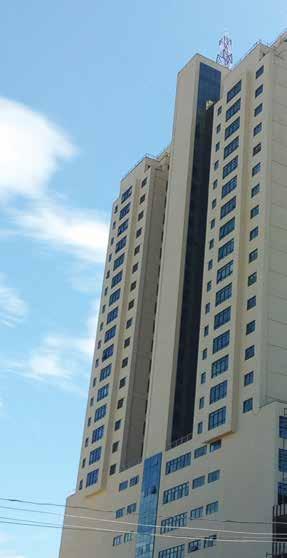
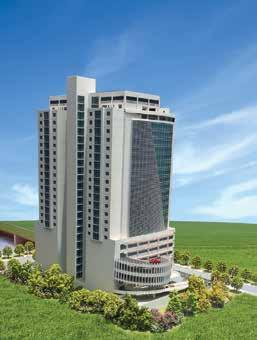
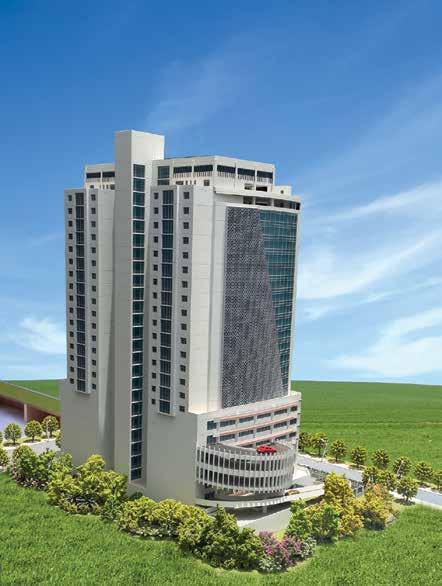
In Eldoret town, an iconic building towers above the rest of the town’s buildings. The project-Moi University Pension Scheme Plaza-has been described as the tallest building West of Nairobi. The magnificent twin-tower building is located along Uganda Road. The landmark project which gives Eldoret town a new skyline is a 27-storey skyscrapper. The construction of the building was undertaken by EPCO Builders Limited under Eng Mayur R. Varsan and is estimated to have cost over US$24 million. The building dwarfs the 14-storey Kerio Valley Development Authority tower that has been the tallest building situated in the heart of Eldoret town. Owned by Moi University staff, the complex will be sold and the money given to members of the scheme upon retirement. The impressive structure was designed by leading architectural firm Kenchuan Architects.
David Situma the director at Kenchuan Architects says that the design of the
complex was inspired by the need for pension schemes to focus into the future. The building was then designed to mimic two speed boats facing one direction.“Pension schemes are about tomorrow we wanted to give an impression of the future in the design of the iconic building,” says Situma.
The design
The Moi University Pension Scheme plaza depicts fluid architecture that stands the test of time. “I am confident that in ten years to come people will still want to look at the building and discover a new feature incorporated into it." Care has been taken to ensure that the building does not get hot considering that the North Rift is a tropical region. The side of the building facing the sun during the day contains washrooms and stair case. Additionally, the building will also have a perforated aluminum skin wall for solar shading. In addition, the design of the building allows ample natural light into
the building to avoid use of electric lights during the day thus reducing the building energy bill. The twin tower building has been designed in a way that one tower can be used separately from the other yet they are in the same compound. With 50,000sqm of space, the building has 5 dedicated floors for parking, alleviating Eldoret parking problem.
Parking
The building will have a parking space for more than 400 cars in its three basement and two mezzanine parking levels. The entire podium consists of retail space. The entrance is painted with red a strong primary colour to attract attention. The windows of the building are green to reflect the environment and to resemble Moi University logo. There will also be a main staircase from ground to top floor, fire escape staircase from mezzanine Level 1 to top floor, staircase from basement level 1 to mezzanine level 4.Each tower has 6 lifts and a staircase and two access ramps with one from the ground floor to mezzanine level 4and the other ramp that will enable physically challenged persons to access the building. The ramp also enhances the appearance of the building. The 17th floor consists of a swimming pool and a gym with a penthouse on the 25th floor and communication mast on the 27th Floor. At the roof of the building, solar panels have been installed to provide green electricity. Automatic generators have been installed in the building to ensure constant power supply in case of a power blackout. Clients will access the building either using access cards or finger biometric readings, besides screening at the main gate, and every floor will have CCTV cameras for enhanced security.
In case of fire, water storage tank in the building can be used to extinguish it. Water in the swimming pool can also help fight fire incidences. Care has been taken to ensure there are fire extinguishers in every floor of the building.
There are also smoke detectors in the building, fire escapes and a staircase. Fans have been installed in the staircase to keep away smoke. The building has ground and
elevated water reservoirs supplemented by an onsite borehole to add to the water supplied by Eldoret Water and Sewerage (ELDOWAS). The Moi University Pension Scheme Plaza is expected to help provide modern office space in Eldoret in the wake of devolution and would help mitigate shortage of modern offices in the town which is a major town in the North Rift region. It is expected that most county governments in the area will now get office space in the complex.
Real estate boom
Eldoret town in Uasin Gishu County is experiencing a major real estate growth in part because of its growing population of elite athletes and proximity to the food basket regions that provide ready resources for expanding companies. Consequently land values have risen by huge margins as speculators seek to ride on the town’s economic success. A 50m-by-100m plot within Eldoret’s central business district whose asking price was Sh15m million five years ago is now selling at about Sh100 million.
About Kechuan
Kenchuan Architects the firm behind the design of Moi University Pension Scheme towers was registered in 1992 by David Situma and a Chinese associate. The firm is a member of the Architectural Association of Kenya. Its first task was to design the Kasarani sports complex. Since then the firm has successfully carried out projects including the Mtwapa lab for Kenya Agricultural Institute, Bungoma Teachers College, Kibabi College, Trans Nzoia Sacco among others. The architectural firm won the bid to design the Moi University Pension Scheme plaza in 2010 after coming up with the winning design that best expressed the clients brief.
Komarock Heights
A modern housing estate
By Maurice Momanyi
HF Group, one of Kenya’s oldest mortgage firms, was formerly known as the Housing Finance Company of Kenya (HFCK) before rebranding in 2015. It consists of four subsidiaries: HFC Limited, which offers mortgage and commercial banking solutions; HF Development and Investment (HFDI), which deals with property development and investment; HF Insurance Agency (HFIA); and HF Foundation (HFF), which aims at addressing the shortage of unskilled artisans in the country and creating skilled artisans for the growing housing market.
Affordable housing remains one of the
biggest challenges for Kenya’s national and county governments. The problem is particularly acute in Nairobi, where construction of affordable homes has not matched the rapid population growth and home-owning aspirations of the growing middle and lower middle classes. To address this shortage, HF Group, is developing Komarock Heights, a modern housing estate specifically targeted prospective low-income home owners. Situated off Kangundo Road on the edge of Komarock estate, the project is being overseen by HF Development and Investment (HFDI), formerly Kenya Building Society Ltd, the social development arm of the HF Group.
1,272 housing units
President Uhuru Kenyatta presided over the groundbreaking ceremony on the site and construction commenced in August 2015. The entire project sits on approximately 33 acres of land, and will consist of 1,272 housing units once completed. Construction of the apartments will be in 3 phases, with the first batch of 480 apartments scheduled for completion in June 2017. Buyers will have a choice of two or three bedroom apartments. In addition, approximately 4.5 acres of the land has been reserved for the construction of a public kindergarten and primary school slated for construction as the fourth phase of the project.
The project has allocated ample car parking spaces—one per house—and specially designated entry and exit gates to ensure security for residents. There is a generator house and there are plans to sink four boreholes to augment water supply. Solar water heating provisions will be available in all the units. In addition, each apartment block will be served by a 10 passenger mechanical lift.
The houses will be priced according to number of bedrooms and size with 3-bedroom type A measuring 112sqm and 3-bedroom type B measuring 113sqm both going for Ksh 6.85M. 2-bedroom type A measuring 93.54sqm and 2-bedroom type B measuring 91.86sqm both selling at Ksh5.85. Macharia Thendeu, the project manager, says all the units will be selling for less than Ksh8 million each. He observed that other developers are driven by profit which drives up the sale costs, resulting in exorbitant rates for units at the expense of safety, comfort and
luxury. Describing the rooms as incomparable, Thendeu said all finishes are done with imported non-slip ceramic tiles, and feature in-built kitchen cabinets, granite counter tops and wardrobes in all bedrooms. Doors, windows, cabinets, and wardrobes are sourced locally, while the main doors are made of Chinese mahogany.
“We have considered people with disability in this project, and so instead of staircases at the entrances to each apartment block, we will have ramps leading to the lifts on
the ground floor,” he says. “The lifts are designed to carry ten people at a speed of 1 m/s.” Disability is not inability. To ensure efficient workmanship and perfect finishes, Thendeu says HFDI has sourced reliable, experienced and recommendable professionals and contractors.
Training
In addition to this, HF Foundation (HFF), one of the subsidiary companies of HF Group, through its target to train and equip a million artisans by the year 2020, works closely with HFDI and other authorities to make this dream come true. Trainees are taught and also exposed to practical work on site where they can put into practice their theory lessons. The trainees are certified by relevant government authorities and are attached to the contractor for hands-on exposure and experience. These trainees could be approved or absorbed by the contractor after impressive training experience. The 100-plus trainees undergo on-site training under the guidance of professional trainers and artisans experienced in masonry, electrical engineering, plumbing and painting, just to name a few.
Joint venture
HFDI also enters into joint venture partnerships with private land owners who wish to engage developers to put up structures on private land to bridge the niche and demand for affordable housing. Examples of such joint venture projects undertaken by HFDI are Kahawa Downs, a 236 two and three bedroom apartments, an 8-shop commercial centre and nursery school project in Kahawa Sukari, Precious Gardens which consists of a 167 two and three bedroom apartment project in Riruta estate, Richland Pointe, a 248 two and three bedroom apartment project and Clay City, both along Thika Road, just to mention a few.
Word of advice
Thendeu singles out three key factors that he says are intertwined and which define the construction enterprise— time, cost and quality. He regrets what he terms “an influx of book-smart professionals, but whose ground work results are wanting”.
“Today we have well educated people who boast impressive papers and CVs, but bringing out good work in the field is difficult,” he said, adding that building professionals have to stick to professional ethics and support of each other for a robust industry. ''Successful construction is not a competition; rather, it is a team sport.''
Simba Corp’s Power Systems Division (PSD) represents AKSA Power Generators in Kenya, providing generator sets ranging from 3.5 KVA up to 2500 KVA (pre-orders above 550KVA). AKSA Gensets are powered by Cummins/ Perkins and Doosan Engines with Stanford Alternators. PSD has a fully equipped Cummins PT pump room, ASNU petrol injector test and calibration unit and emission test equipment that includes a Hartridge Smoketester and a Kane4 Gas Analyzer.
We offer Rapid response countrywide to:
• Respond to your call within 24 hours
• Call you back with a service plan within the hour
• Dispatch our truck and technician to your site
• Provide a complete diagnosis within one hour of arrival to site
• Complete most minor repairs within 24 hours.
Contacts
POWER TO YOU
Only premium generator with Active Power diesel
Widest range of power outputs: from 3.5kVA – 550kVA
Backed by Simba Corp’s Powers Systems Division
Strong after sale support
Wide network of industry contacts
Large branch network
Free professional technical advice
Available Ex-stock
The Heron Nest
Providing Quality and Affordable Living
TopSel Building 3rd floor Suite 306 off Ngong Rd. P.O. Box 104175 Nairobi 00101 Kenya. Tel: +254 720256710 Email: info@samalex.co.ke
We are proud to be associated with Sato Properties on The Heron Nest as the CIVIL & STRUCTURAL ENGINEERS
Sato Properties is one of the fastest growing real estate developers in Kenya. Established 12 years ago, the company first ventured into refurbishment of existing residential properties. They would secure run-down or old villas and apartments and then embark on a vigorous renovation program. The end result would be spectacular buildings which they would then sell.
Some of the refurbished developments include Kifaru Villas, Ndovu Apartments, Zebra Apartments and Golf Villas.
After sufficient experience in this market, the company felt it was sufficiently prepared to undertake its own developments. And since then, it has not looked back.
Says the management: “Our full time commitment to property development ensures that our designs, construction and finishing are of the highest calibre, and our cost control ensures that we are able to pass our savings on to our customers, ensuring they get your value for money.”
The result has been some of the most sought-after residential dwellings in Nairobi. Some of the developments associated with the company, a few of which Construction Review has covered, are Falcon Towers, Kingfisher Nest, Eagle Tower, Spoonbill Nest and Hornbill Nest.
Sato Properties’ latest development is the Heron Nest, a modern three-bedroom apartment complex that is intended to provide high quality living at an affordable price, just as with other Sato developments. The apartments are located on 1st Avenue Parklands, in one of Nairobi’s; most coveted residential suburbs and have been designed by Sycum Soutions, a well-known practice in Nairobi that is also associated with such high-end developments as Le’ Mac. The firm is led by Sylvia Kasanga.
The entire development comprises 48 apartments set on 12 floors with three floors dedicated to parking. The apartments are typical, with a gross size of approximately 180m2 and featuring 60x60 porcelain floor tiles, imported kitchens and wardrobes. They have large windows to allow natural light. The floor design is such that it allows maximum privacy to all the units. The development offers two separate parking slots for each apartment (not back to back), two high speed elevators, a borehole to supplement main city water supply and a backup generator.
The compound will be landscaped to modern standards. Construction works commenced early last year and expects that the project will be complete towards the end of 2017.
We are proud to be associated with Sato Properties on the Heron Nest Project
Main Contractor: Canton Steel Fabricators
Plumbers: Rabadia Plumbers
Electrical works: Sohani Electro Services
Enterprise Road, Industrial Area, P.O. Box: 64537-00620-Nairobi, Kenya.
Tel: +254 780 226 866, +254 790 309 933
E-mail: info@canton.co.ke
We are proud to be associated with Sato Properties on the Heron Nest Project
We are proud to be associated with the Heron Nest project as the Electrical Contractors P.O. Box 11035-00400 Nairobi, Kenya.
Tel: 0721390365/716 689571
Email: info@sohani.co.ke/ssohani@hotmail.com
Mwalimu Sacco Tower
Mwalimu National Sacco is building a commercial complex to augment its earnings and boost office space
Increasing demand for office space and commercial buildings has seen investors in Nairobi rush to cash in on the trend, triggering a surge in the value of construction plan approvals. The developers who comprise of local and international developers target areas outside Nairobi Central Business District (CBD) like Upper Hill, Mombasa Road, Ngong Road, Gigiri, Westlands, Lavington, Parklands, Ridgeways, Runda and Thika Road. The Upper Hill area has become a preferred choice for multinationals and blue chip financial services firms seeking to expand their operations away from the congested CBD.
Mwalimu Sacco Tower
Mwalimu National Sacco for instance, is about to complete the construction of its headquarter in Upper hill. The 17-storied office and commercial development boasts of 12,145 sqm, ample office spaces and a 3-level basement parking that will accommodate around 200 cars. The Sh1.5 billion commercial building will see the current teachers Sacco offices situated along Tom Mboya Street in the CBD relocated to the new building. Dubbed Mwalimu Sacco tower, the building will house the Society`s Head Office while 60 per cent of the
floors will be let out to boost the Society’s income. The building is fully funded by the sacco with the management saying it has already financed more than 60 per cent of the project.
But even as Upper Hill continues to grow at an unprecedented pace, it has to contend with a few challenges that cause jitters among investors. Key among these is the slow pace of infrastructure development. For a long time, most of the roads that connect Upper Hill with the city centre via Ngong Road or Uhuru Highway have either been in a poor state of repair or too narrow to accommodate the high traffic volume.
However, the county government in conjunction with the Kenya Urban Roads Authority (Kura) has embarked on a drive to rehabilitate most of the roads in the area. A number of the roads have been turned into dual carriageways to accommodate increased traffic. But in a move that is set to see the society dive headlong into the real estate sector, the teachers sacco has already launched a housing scheme aimed at ensuring that members own houses.
The houses to be constructed in an eighth of an acre plots will range from Sh2.8 million to Sh4.5 million. However, according to Mwalimu National Sacco, the closer the house is to Nairobi the more expensive it becomes. All its over 60,000 members are set to benefit. The housing project will be piloted in Nairobi before being rolled out countrywide. It is banking on its large membership and friendly pricing to sell the project.
Lucrative venture for investors
The real-estate sector has proved to be a good hunting ground for investors, including saccos, given the huge housing deficit in the country. Stima Sacco for example is set to build 1,500 housing units at an estimated cost of Sh4 billion (US$40 million) on its 100-acre piece of land in Kasarani, near Kiriri University. Several other institutions are setting up residential estates in Kitengela area, including listed insurer CIC Insurance and micro-financier Jamii Bora Bank.
The Safaricom Sacco has announced plans to raise Sh1 billion (US$10 million) to build 300 units on a five-acre piece of land in Mlolongo. Mwalimu National Sacco currently has an asset base of slightly over US$330 million and with reserves in excess of US$40.3 million which puts it in a favorable position to compete with other mainstream lenders. It recently acquired Spire Bank formally Equatorial Commercial Bank by buying a majority stake in the Bank. The sacco says that the move aims to enhance the society’s asset portfolio and benefit the Sacco members’ wealth.
Mwalimu joins other co-operatives such as Stima, Safaricom and Chai saccos that are developing houses for their members. The co-operatives are taking advantage of the low uptake of mortgage financing in the country due to high-interest rates charged by banks. Values in Kenya's residential property market continue to rise, amidst robust economic growth and a sharp increase in the population of middle-class and expats.
Saccos have been known to offer better lending rates than banks as they have to get members’ approval in the pricing unlike banks which are after profits.
Banking on Women: The KWH Hub
Residents of Nakuru, a large town in Central Rift Valley in Kenya, will soon experience fresh shopping, leisure and business experience when a new multi-purpose complex by the Kenya Women Holding is complete.
Kenya Women Holding (KWH) is a Kenyan development organization that seeks to empower women by providing services directed at improving their economic wellbeing and that of their families. The organization believes that women are the engines of change and are pivotal in the creation of opportunities for the youth and the society at large through innovation and entrepreneurship. KWH currently boasts over 400,000 members across the country.
The brainchild of distinguished award-winning microfinance banker, researcher and gender advocate Dr Jennifer Riria, the non-profit organization provides services in five broad areas: Capacity Building; Livelihoods, Education and Mentorship; Peace Building and Health and Awareness.The idea of a shopping mall in Nakuru was therefore consistent with KWH’s goals of investing in order to increase its capacity to support women in various regions of the country.
KWH settled on Morphosis, a leading architectural and interior design studio based in Nairobi, to lead the project team. The firm is known for its spectacular designs which include The Mihrab, The Boma Hotel and many other projects whose hallmark is out-of-the-ordinary designs. Seated on a 1.02 acre plot in the heart of Nakuru, the mall
to be known as KWH Hub, consists of 12,760.02 Sq M of lettable space and is estimated to cost Ksh 700,000,000 (approximately US$ 7 million). Among the businesses envisaged in the shopping complex are a supermarket and other retail outlets, banks, restaurants, offices, gaming, institutions and others.
Design Considerations
According to Morphosis, the KWH Hub embodies femininity in its gentle, curvy design yet it still reflects a woman’s strong character and will. The woman’s warm and open nature is also captured in the flexibility of space utilization. The building is an attempt to represent the modern woman in a built form. The architects also wanted to achieve efficiency in design and construction and create a building that presented low maintenance costs.
There is a deliberate effort to achieve efficiency in energy consumption. The building’s orientation is such that it will capture daylight while keeping off the heat. Use of solar for public space lighting, LED Lights and efficient sanitary systems make KWH Hub a green development. The mall is made up of user friendly spaces (both lettable and public) that can be used by all including the disabled.
HEAD OFFICE: Union House, Gor Mahia Street, P.O Box 898 40100 KISUMU, KENYA. Phone: (057) 2026188/9, Fax: (057) 2026187 Email: res@raicha.com NAIROBI OFFICE: Engineering House, 13 Dunga Close, off Dunga Road, Industrial Area, P.O. Box 62256, 00100 NAIROBI, KENYA. Phone: (020) 554261 Fax: 020) 554261 Email: res@raicha.com
Lumen Square
Setting the Standards for Green Buildings
The quest for green building is gaining momentum all over the world. In Kenya, Atelier International Architects are behind the country’s first precertified LEED office building – Lumen Square.
Lumen Square is Kenya's first pre-certified LEED office building. Leadership in Energy and Environmental Design (LEED) is a green building certification program developed by the U.S. Green Building Council (USGBC) that recognizes bestin-class building strategies and practices. It is a point based rating system for the design, construction, operation and maintenance of green buildings, homes and neighbourhoods. Going green does not mean higher construction cost to the client, actually the opposite, especially in a city like Nairobi where the weather is favourable and does half of the work for us.
This means that if we design correctly and cleverly for the climate, we don't need air conditioning, for example; neither do we need specialized building materials like glass curtain walling. This is a huge cost saving to the client.
The six-storey Lumen Square is designed with a large airy central atrium to allow in enough natural light and enhance ventilation. The atrium roof in particular controls lighting and glare down the atrium and facilitates natural ventilation through the Chimney Effect. There are temperature sensors at the atrium roof which allow occupants to either keep the ventilation at the top open or closed depending on the outside temperature. Additionally, the building is fitted with light sensors in the office spaces for Daylight Savings which indicate to users that they can turn on or off their artificial office lighting. A 2kW solar panel situated on the roof of the building will supply power
to the common area lighting of the building during sunny days. The building has two roof top terraces. This is in addition to LED lighting at under 7W/m2 and low flow sanitary fixtures which will save a tremendous amount of water.
Sustainable design goes hand in hand with socially conscious design. The building is built with high grade building materials as well as high grade finishes so as to reduce the carbon footprint as well as support local businesses. Most of the steel reinforcement used on site is LEED certified. There will also be a provision for cyclists to encourage building users to cycle rather than use a vehicle, again in an effort to reduce the carbon footprint.
Lumen Square has been built in total observance to all LEED accreditation requirements for green building certification. The building has already achieved a Silver LEED rating and chances are that by the time it is complete, it will have reached Gold LEED rating
PROJECT TEAM
Architects:
Atelier International Architects
Structural Engineer: Kitololo Consultants
M&E Engineer: Kentoplan Ltd
Sustainability Consultant:
...Continued from page 41.
The lettable spaces are designed in a manner that allows for various retail spaces; the ground floor consists of a supermarket space, restaurant and smaller retail spaces. The upper floors consist of additional retail spaces that can either be expanded or collapsed as per the end user requirements. Office spaces that can accommodate any office fit out are also available in the upper most floors.
State of the art lifts, borehole, back-up generators, fire detection and suppression systems, security equipment and ample parking provide extra layers of convenience and reassurance for tenants and visitors. Landscaping will feature grass and potted plantation and terraces.
Access
The development is located between Tom Mboya Street and Kipchoge Keino Avenue in the heart of the town’s
Project Team
Client – Kenya Women Holding
Project Managers – Jamia Valuers
Architects – Morphosis Limited
Main contractor- N.K Brothers
Quantity Surveyors – Northwind Consulting Ltd
Electrical subcontractor- Raicha Electro Services
Despite being a modern building, it is constructed at average costs and designed cleverly and optimally for its climate to use less energy and have very minimal carbon footprint. The building will use 50% less energy compared to the average building in Nairobi thus saving the owner a proportional amount of bills every month.
It is anticipated that Lumen Square will inspire and encourage local architects and developers to design and build buildings the same way. It's a win win situation. The use of glass curtain walling is not appropriate for Nairobi's climate, especially if the facade faces east or west. This undoubtedly heats up the building thus requiring expensive air conditioning to offset the internal temperature. Not to mention the premium cost of curtain walling.. Lumen Square uses local building techniques cleverly in a fun, modern and innovative way, without curtain walling.
Urban Green Consultants
Main Contractor: Maxhari Construction
Electrical Contractor: Mirage Lite
Plumbing: Plumbuild and Engineering
Central Business District. Due to traffic flow, two vehicular accesses were provided as entry and exit. Two additional pedestrian accesses for the institutional and commercial/shopping outlets were also incorporated.
Challenges
Nakuru features volcanic ash type of soil. In order to guarantee the structural integrity of the structure, the team had to employ a raft foundation (a large concrete slab which can support a number of columns and walls).
Another challenge faced by the team is the erratic supply of water within the town.
Mechanical - Raerex E.A Ltd
Structural cabling - X-treme Electronics Ltd
Lifts – KONE
Plumbing - Allied Plumbers Ltd
Security & CCTV- Dace Solutions Ltd
•
•
•
ADVERTISERS’ INDEX
Häfele representation
Swaziland | Tanzania | Tunisia | Uganda | Zambia
www.hafele.com
Häfele supports the design and construction area in planning and realizing complex requirements. Hardware consultancy, installation advice and scheduling service from local and international experts. Offers Electronic access control planning, confi guration and training supports. With Häfele one can achieve optimal functionality throughout buildings, rooms and furnishings.
Botswana | Cameroon | DR Congo | Egypt | Ghana | Ivory Coast | Kenya | Lesotho | Libya | Mauritius Morocco | Mozambique | Namibia | Nigeria | Réunion | Madagascar | Rwanda | Seychelles | South Africa