Africa’s leading construction journal



Africa’s leading construction journal
Features: Security systems
Tanzania: South Africa:
Water treatment
Tanzania construction marks 50 years
SAPOA honors SA property development







MANAGING EDITOR
Robert Barnes
COUNTRY
Kenya - Francis Makari
Uganda - Samuel Bujingo
Nigeria - Boladale Ademiju
WRITERS
Elaine Young, Newton Mthethwa, Lindsay Wagner
WEB & GRAPHIC DESIGN
Augustine Ombwa
Frankline May
ADVERTISING
Kenya
William Mutama, Fred Okoth, Frances Lagoussis (Mombasa), Trizah Njoroge, Faustine Salleh
South Africa: Manoko Thosago, Shepherd Mthethwa, Winnie Sentabire, Angeline Ntobeng,
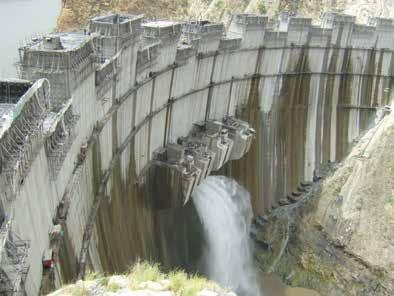
Construction of large dams has come under intense criticism recently with proponents labeling them as uneconomical and a burden to governments when cheaper and far appropriate options exist.
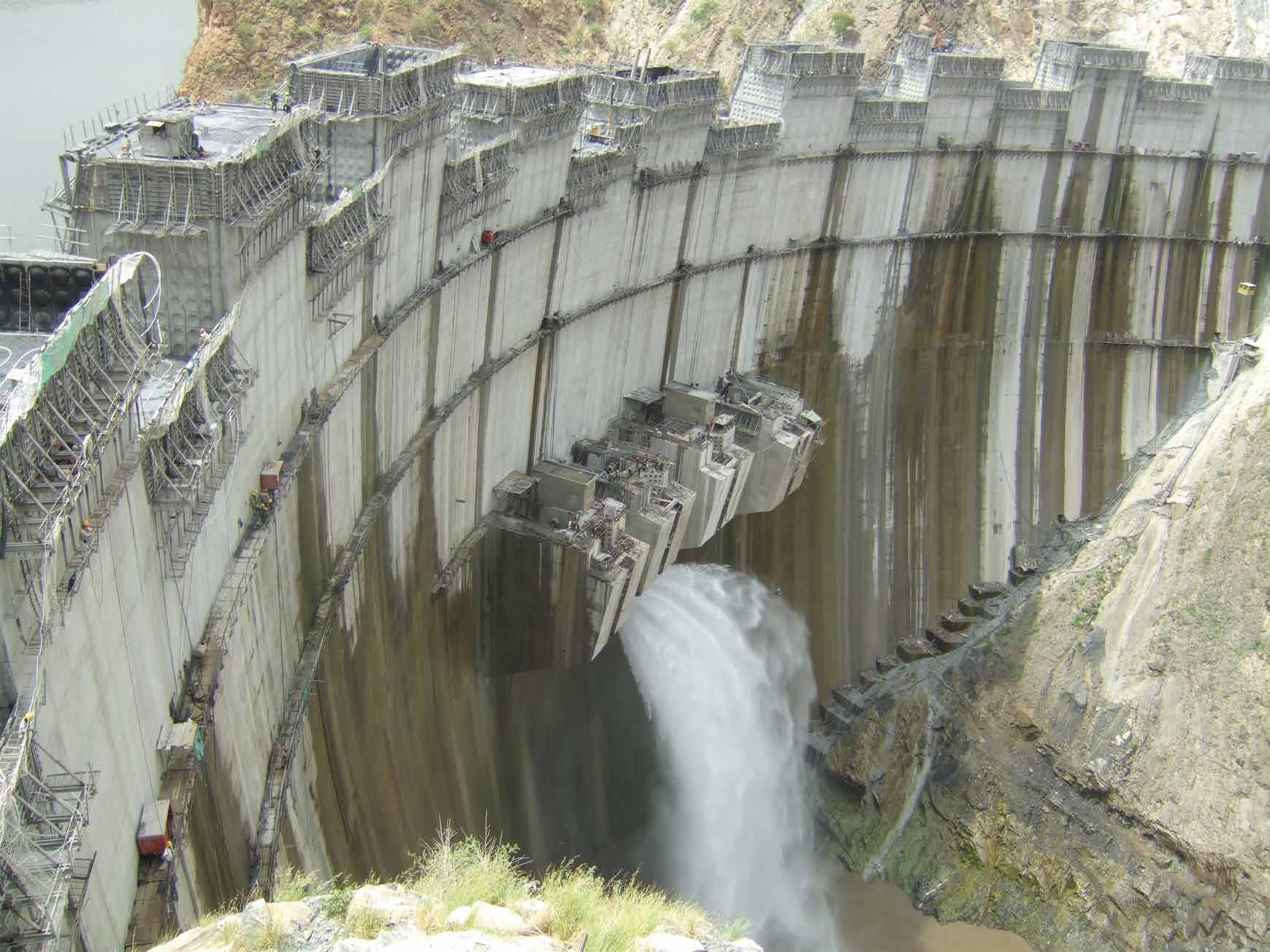
The Tekeze Dam located in Ethiopia is the tallest in Africa at 188m and will generate 300 MW of hydrelectric power.
The editor accepts letters and manuscripts for publication from readers all over the world. Include your name and address as a sign of good faith although you may request your name to be withheld from publication. We reserve the right to edit any material submitted .
Send your letters to: info@constructionreviewonline.com
Construction Review is published eleven times a year and is circulated to members of relevant associations, governmental bodies and other personnel in the building and construction industry as well as suppliers of equipment, materials and services in Africa, the Middle and Far East. The editor welcomes articles and photographs for consideration. Material may not be reproduced without prior permission from the publisher. The publisher does not accept responsibility for the accuracy or authenticity of advertisements or contributions contained in the journal. Views expressed by contributors are not necessarily those of the publisher.
© All rights reserved.

Download
Uganda Office
SMG Uganda Limited
Kamukamu Plaza, Entebbe Road Kampala-Uganda, TEL: +256 774 079 804, Email: uganda@groupafricapublishing.com
China Office
Hangzhou Oversea Advertising Ltd
55-3-703 Guan Lane, Hangzhou, Zhejiang 310003, China
Tel: +86-571- 87063843
Fax: +1-928-752-6886 (retrievable worldwide) Email: china@groupafricapublishing.com
Malawi Office
Centre for Media Advocacy
P.O. Box 1732, Blantyre, Malawi Tel: 2659954854
E-mail: malawi@groupafricapublishing.com
South Africa Office
College Publishers CC
1st Floor, 267 Oak Avenue, Oakfields, Randburg, Johannesburg
Tel: +27 11 781 4253 I Fax: +27 11 781 4287
Email: southafrica@groupafricapublishing.com
Waste water management has become one of the major challenges that most countries face due to the scarcity of water resources
A look at the winners at the prestigious South African Property Owners Association (SAPOA) Awards 2014
Otto Mruttu + Partners 24
We take a look at this architectural firm based in Nairobi, Kenya and their path to success
The Construction industry Marks 50 Years of the Tanzania Union 30
We look at the developments in Tanzania's construction industry over the past 50 years
Ethiopia Office
Haymi Advertising Services
22 Mazoria, Genet Bldg 4th Flr
P.O. Box 1316 - 1110 Addis Ababa
Tel: +251 118 955 855 I Cell: +251 930 099 152
Email: ethiopia@groupafricapublishing.com
Botswana Office
Cadline (Pty) Ltd.
P/Bag 494 Gaborone, Botswana.
Tel: +267 318 7101 I Fax: +267 318 102
E-mail: botswana@groupafricapublishing.com
Kenya Office
Northwest Ventures Ltd
P.O. Box 16414 Nairobi 00100
Tel: +254 20 2679809 I 2679808, 2091305
Email: kenya@groupafricapublishing.com
Do massive HEP projects really deliver on their promise?
The massive size and imposing nature of hydro electric power stations have for a long time been viewed as a mark of development in Africa with the belief being that they offer not only a sustainable source of energy but also control flooding of rivers and provide water all year for irrigation, who can argue with that?
I recall this from my own high school geography class and the field trips we made on at least one occasion to view with awe this feat of engineering. Recent research suggests that the extended time lines and cost overruns are just a few of the negative economic repercussions of these massive projects that in some cases have put their overall benefits into question. This is even before considering the social and environmental aspects that have been advanced in the past.
In this issue we examine this controversial topic that seeks to separate fact from fallacy. It also looks at what the alternatives are since the need to meet an ever increasing appetite for energy still needs to be addressed.
Tanzania Office
Daas Agencies Ltd
P. O. Box 96061
Dar es Salaam
Tel: (022) 2124328
Fax: (022) 2124328
E-mail: tanzania@groupafricapublishing.com
Zimbabwe Office
CMC Media Publications (Pvt) Ltd, P.O. Box 4828, Harare, Zimbabwe
E-mail: zimbabwe@groupafricapublishing.com
Ghana Office
Image Consortium
1st Floor, TheEcobank Building, Tesano.
Tel: 233(0)30 223 2728 I Fax: 233(0)24 882 8286
Email: ghana@groupafricapublishing.com
Nigeria Office
Rahma Associates
B23/24, Aishetu Emoewa Plaza
196, Iju Water Works Road, Ifako Ijaye Lga,Agege, Lagos.
Tel: 234-1-7347860
Email: nigeria@groupafricapublishing.com
Rwanda Office
Kolline & Hemed Inc., B.P. 3328, Kigali, Rwanda
Tel: +250 03 748106
E-mail: rwanda@groupafricapublishing.com
Website: www.kollinehemed.org
Electrical engineering and electronics company Siemens is joining partners in the inauguration of the Jeffreys Bay Wind Farm. The launch of the wind farm is a re-markable milestone for South Africa as it is one of the largest wind farms in the country. The site spans a 3700ha site and comprises 60 Wind Turbine Generators with a capacity of 2.3MW each supplied by Siemens. The wind farm, which has been developed by a consortium which is majority owned by Globeleq and its consortium partners that include Mainstream Renewable Power South Africa entered into a 20 year power purchasing agreement with Eskom, governed by the Renewable Energy Independent Power Producer Procurement Programme (REIPPPP).
International companies are invited by Metro Company (EMA) to bid on a project for the construction of mass transit electrified railway. However, a number of specifications must be met for participation. One is the requirement that they must have a 10 year’s experience in implementation of at least one light rail or tram project. The line will entail a total of 25 stations and will run 15 kilometers from urban pole of Haley 3 to the Cité Bouzourane, passing through the University
Hadj Lakhdar. Batna is the main city in the province of Batna. The whole country has a total of a total of 3,973 km railway, some being partly electrified. Companies wishing to be considered must separate financial and technical offers in their submissions and submit in two different closed envelopes. According to EMA, the submissions are expected 3 months after the first publication of the tender on the national press. This, according to calculations, is expected to be about 20th September 2014.
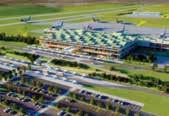
New Bugesera International Airport Project
“Siemens delivered and installed SWT-2.3-101 turbines with 80 meter hub height. Through various milestones, today we have connected all 60 to Eskom’s grid. This bodes very well for diversifying our energy mix. Renewable energy is arguably one of the key pillars of sustainable growth," says Pedersen, Head of Wind Power Division at Siemens. The model of the turbines installed in the farm has firmly established itself as the tried and tested workhorse for reliability and set a new standard for productivity.
“It has been a tremendous journey for our partners and all stakeholders involved. We have formed a solid ground for wind energy in the country from which valuable expertise and experience can benefit future projects in the continent." Pedersen concludes.
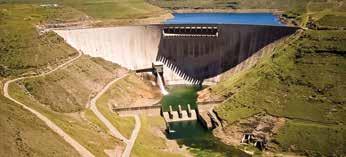
The second phase of the Lesotho Highlands Water Project which is a bi-national project between the governments of Lesotho and South Africa was launched recently and is expected to cost US$1.3bn. The treaty signed between the two governments will set relevant structures that will help implement the whole project. The first phase of the project was split into 1A and 1B. The main physical features of Phase 1A are the Katse dam, the transfer tunnel from Katse to Muela Hydropower station, The Muela Hydropower station and appurtenances and the delivery tunnel to the border with South Africa. Phase 1B involved the construction of the Mohale dams, the diversion tunnel to the Katse dam.
The second phase of Lesotho Highlands Water Project will comprise the construction of 155metre-high Polihali Dam and tunnels. According to the president of South Africa Jacob Zuma, the whole project is a good opportunity for both countries since it will create a good relationship between the states and also create employment. The president also noted that through the project, South Africa will be able to get water given that it has scarce water resources. On the other side, Lesotho will be able to earn sufficient revenue to cater for its population.
The Government of Rwanda is planning to borrow US$1bn to fund various infrastructure projects in the country next year. The most pressing of the development projects on line is the construction of a new Bugesera International Airport and power plants. The government was forced to borrow from the international community after foreign investors failed to fund key projects in the country. The airport will be located in southeastern Rwanda, Bugesera District and will be Rwanda’s largest International Airport when complete, serving commercial flights destined to and from the greater Kigali metropolitan area.
It will also be Rwanda’s third international airport and the country’s eighth. The new airport to be constructed in Bugesera district is aimed at addressing the rise in the number of passengers at the Kigali International Airport. The airport is currently operating beyond its capacity of 300,000 passengers per year. The airport is operating 10 times its capacity and has been expanded as a short term measure. The total cost of the construction of the airport is US$600m and the project includes construction of a 4.2 kilometer-runway, and cargo and passenger terminals capable of handling 1.8 million passengers annually.
New US$45.5m multistorey car park at Nairobi
City Hall Nairobi has announced a tender notice for the construction of a 3000 multistorey car park in Nairobi’s Central Business District. The project involves developing an AT Sunken Car Park building at a cost of US$45.5m. The project will be undertaken through a public private partnership where the Government of Nairobi County is expected to provide the land for the project, while investors will provide the funds needed. Parking slots in Nairobi’s CBD is not adequate to cater for the number of cars in the city centre. The move to construct the building was made in anticipation of the large commuter buses for the planned metro transportation system that are to start operating in the capital soon.
Kenya
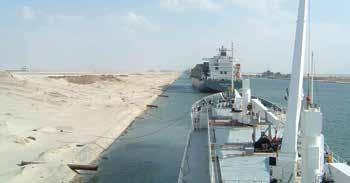
Construction of an extra 45-mile lane to be added to the existing Suez Canal has begun, to allow more ships to be using the canal each day. The announcement was made by the President of Egypt Abdel Fatah al-Sisi. This is expected to boost trade in one of the most important canals for global trade. Through the canal, ships from Europe to Asia and vice versa do not have to pass through the Southern Africa. However, the current state at the canal is that ships have occasional room to pass each other since it is a one-way traffic canal. Addition of the lane will see ship travel at both directions for less than the 101 miles long canal. The current canal is an artificial sea-level waterway creation. The addition will cut down hours spent travelling along the canal from 11 to about 3 hours.
Ethiopia
- Architectural Association of Kenya
- Institute of Quantity Surveyors of Kenya
- Institute of Engineers of Kenya
- Association of Consulting Engineers ofKenya
- Association of Professional Societies of East Africa APSEA)
- Kenya Property developers Association
- Institution of Surveyors of Kenya
South Africa
- ASAQS
- SAICE
- South African Council for the Quantity Surveying Profession
- Khuthaza ( Women for Housing)
- Concrete Manufacturers Association
- Green Building council of SA
- South African Property Owners Association
- Master Builders South Africa
Uganda
Institute of Surveyors of Uganda
- Association of Ethiopian Architects
- Ethiopian Association of Civil Engineers
Botswana
Institute of Botswana Quantity Surveyors
Ethiopia
Construction Contractors Association of Ethiopia
Zimbabwe
- Zimbabwe Institute of Quantity Surveyors
- Zimbabwe Institute of Engineers
- The Construction Industry Federation of Zimbabwe (Cifoz)
Ghana
- Ghana Institute of Engineers
- Architects Registration Council
- Ghana Institute of Surveyors
- Ghana Green Builders Association
- Ghana Institute of Planners
- Association of Building and Civil Engineering Contractors of Ghana
GS Inima to set up a desalination plant
GS Inima announced that it had won a deal to set up a desalination plant in Tunisia. The Djerba plant construction deal involves a 50-50 consortium between GS, a South Korean firm and Aqualia S.A, a water management company. The plant will see conversion of 50,000 tons of sea water into fresh water. The project is based at Djerba, a resort in southern Tunisia. This is the first time a Korean company will be entering a North African country construction market and GS will own a share of 34.7 million Euros. The news of winning the contract should be better news after the company was charged with setting up of two desalination plants in Algeria, a neighboring country.
Institute of Namibian Quantity Surveyors Association of Consulting Engineers of Namibia
Tanzania
- Tanzania Institute of Quantity Surveyors
- Construction Regulation Board (CRB)
- Tanzania’s Registration Board of Architects and Quantity Surveyors (AQSRB)
Nigeria
- Association of Consulting Engineers Nigeria
- Association of Professional Women Engineers Of Nigeria
- Council of Registered Builders of Nigeria
- The Nigerian Institute of Architects
- American Association of Petroleum Geologists Africa Region
- Nigeria Society of Engineers
- Nigeria Institute of Architects
- Building and Construction
Skilled Artisans Association of Nigeria(BACSAAN)
Alstom Grid has unveiled its latest innovations at CIGRE 2014, the biennial worldwide forum of the electrical power industry, held in Paris, France. Alstom’s experience and expertise are, once again, the creative springboard towards technological developments, which combine invention and innovation for today and tomorrow’s electrical challenges.
Technological launches this year include - g3: Alstom is the first in the world to launch a clean alternative to SF6, a gas commonly used in high-voltage equipment. The revolutionary SF6-free solution, g3 – green gas for grid – was jointly developed with 3MTM, a leader in environmentally sustainable solutions. g3 has 98 per cent less impact on global warming than SF6. With performances comparable to SF6, it is a suitable technology for the development of today’s new generation of clean highand ultrahigh voltage equipment. Alstom and RTE have already initiated a partnership to put in operation pilot equipment.
- Direct Current (DC) Breaker: In the framework of the Twenties European programme,1 Alstom has developed an ultra-fast DC Circuit Breaker, taking a major step towards creating the Supergrid, which effectively integrates large amounts of renewables and enables intercontinental energy trade. Alstom’s prototype successfully interrupted a 5200-ampere current at 160 kV with full extinction of DC in less than 5.5 milliseconds – under the real operational constraints of a highvoltage DC transmission grid.
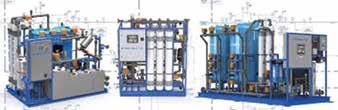
Pure Aqua Inc, has designed and manufactured 6 solar powered reverse osmosis water purifiers commissioned for Cameroon, Africa to purify their river water into potable, drinkable water. Each one of these 6 purifiers is not only self-supported electrically through their own solar panel but can produce 8 gallons per minute a piece. Each of the six systems start by dropping a submersible pump into the river which delivers the water to a reservoir that pressurizes and sends it through a media filter for turbidity and particulate reduction. The system then sends the water through an activated carbon chamber followed by a cartridge filter which purifies the water down to 1 micron. Lastly the system pushes the water through a UV filter for any final viral disinfection resulting in completely pure, drinkable water. Pure Aqua Inc, is a Santa Ana, CA based company who, for the last 14 years, has designed and manufactured high-end industrial water treatment systems and facilities for corporate clients and municipalities around the world.
Savannah Cement, a company selling cement products in East Africa is targeting specific entry into the road sector and has started manufacturing Hydraulic Road Binder (HRB) cement. This cement will be used to stabilize road surfaces. The technology is built with the request from the Kenyan Ministry of Transport and Infrastructure. It has already been approved by the Kenya Bureau of Standards, which is a quality checking bureau of the government. The product is however being tested by the government ministry.
Denver, CO—Nokero International, LLC has announced the launch of an ultra-efficient solar light bulb, the N182, which maximizes brightness and minimizes retail cost. At twice the brightness of the previous N180 model, Nokero’s latest design utilizes the highest efficacy LED, a radically redesigned circuit board, and a cost-effective solar panel. Nokero’s launch of the N182 solar light bulb coincides with the four-year anniversary of the company, a celebration of Colorado Companies to Watch, and the Colorado Energy Expo. The product is now available to the public, after being showcased this month by LED partner Seoul Semiconductor at the world’s largest commercial lighting tradeshow, and by emerging thought leaders at the Sustainable Brands Conference. Together, Nokero and Seoul Semiconductor demonstrate that LEDs do not just provide light, but will actually change the world through an ultra-affordable product that can provide light for the 1.3 billion people without electricity.
Stabilization of roads involves the appropriate combination of water, cement and soil, with the result being a hard, durable, paving material that forms the foundation of road and airport pavements. The impact is huge for country government and public ministries using the cement for road construction, because they will save too. For instance, Kenya could save over $227 million on road construction budget, according to Ronald Ndegwa the Managing Director at Savannah. Earlier in 2014, Savannah stated that it would build a clinker plant worth over $200 million at Athi River in order to boost production. The company also has manufacturing units across sub-Saharan Africa and its production capacity is 1.5 million tonnes.
iPAD Rwanda Forum to provide investment platform
Date: 3rd-4th November , 2014
Venue: Kigali, Rwanda
Contact: Yolanda Dos Santos
Email: yolanda.dossantos@ spintelligent.com
Website: www.ipad-rwanda.com
“Rwanda is open for business: there are enormous investment opportunities in the country’s power and infrastructure sectors and the Kigali government has proven that it can provide a stable and investor-friendly business climate”, says Emmanuelle Nicholls, event director of the upcoming iPAD Rwanda Power & Infrastructure Investment Forum. The event is taking place from 3rd to 4th November in Kigali and enjoys the official support of the Rwandan government, the

Rwanda Development Board and the country’s electricity utility, the Rwanda Energy Group (REG) is the host utility of the event.
The iPAD Rwanda Forum will gather investors, finance houses, construction and planning companies, project developers, technology providers from Rwanda, the region and from the rest of the world as well as high-level government representatives.“Now is the time to invest in Rwanda,” says Emmanuelle Nicholls: “and the forum will play an important role in the transformation of Rwanda into a dynamic global hub for business, investment and innovation.”

The Independent Petroleum Marketers Association of Nigeria (IPMAN) and core investors from Peru and South America are to construct two modern petrochemical refineries in Kogi and Bayelsa States in Nigeria. The two refineries will be constructed in collaboration with Panama-based Water Carbornfield Energy Ltd. (CEL). The projects are targeted to cost about US$3bn shillings, although the CEO has said that the company will rely on economic analysis that will take place in two to four months to establish actual project cost. The Chairman of IPMAN, Bestman Inekwe, in Lokoja, also revealed this as he visited the state governor Captain Idris Wada in July this year. The refineries when completed are expected to serve Nigeria, the West and Southern parts of Africa. He further explained that, as businessmen, IPMAN are partnering with the federal government to industrialize the nation in the upstream and downstream sectors of the economy; which will also open the state to several opportunities. According to Mr. Joseph Arosemena the CEO of Water Carbon Field Limited, the refineries are expected to be completed in two years time. The company will be referred to as ‘Creek’ Refinery Company and will produce 200,000 barrel of oil per day. He also urged the state government to grant them the licence to start the project immediately to meet up with the two years expectation.
Date: 2rd-4th May, 2015
Venue: KICC, Kenya Website: buildexpo.expogr.com

The largest international trade exhibition in Africa for multi-sector products, equipment and machinery, will take place in Nairobi, Kenya at the KICC from 2nd – 4th of May 2015 with record breaking numbers. Exhibitors and trade visitors are said to increase by 27% and 24% respectively at the 18th edition of the Kenya International Trade Exhibition (KITE). The exhibition has grown in stature from its inception 16 years ago, as the key networking and sourcing platform for the industries. As the largest event of its kind, it ensures direct access to over 150 exhibitors from 30 countries and more than 12,000 trade visitors.
Middle East Electricity: world’s largest power event
Date: 2nd - 4th March, 2015
Venue: Dubai International Convention Centre, UAE
Email: info@ middleeastelectricity.com www.middleeastelectricity.com
Middle East Electricity, the world’s largest power exhibition, returns in 2015 for the 40th edition. For this special anniversary celebration, the show aims to build on the monumental 40% growth of the last two years. The record breaking 2014 edition welcomed 1,250 exhibitors from 57 countries and over 19,500 unique visitors from 126 countries. Based on the popular destination of Dubai in the UAE, the exhibition provides a gateway for international companies to promote their business to the lucrative Middle Eastern market and the surrounding African and Asian regions.
The exhibition provides a platform for networking, business development and education for the power, lighting, nuclear, new and renewable sectors. To facilitate training and education, Middle East Electricity offers a comprehensive programme of technical seminars presented by exhibitors. These free to attend technical seminars give visitors the opportunity to learn about new products and services in the market and keep up-to-date with the latest trends. Additionally the exhibition plays host to the Green Energy Conference which gathers industry experts on one stage to discuss key topics in the Green Energy industry.
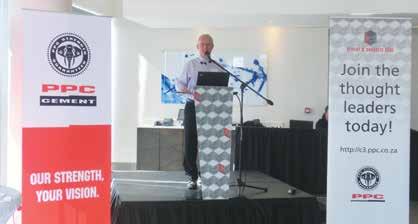
PPC takes informations sharing and concrete innovation to next level
The leading supplier of cement in southern Africa, PPC Ltd has launched the Cement & Concrete Cube (C3), a dynamic information sharing and collaboration platform. The C3 will facilitate collaboration, interaction and information sharing between cement and concrete users, designers, academics, industry experts and enthusiasts. Participants will connect to find information and contribute to interest groups through blogs, wikis, documents, graphics and comments in private or public groups on this platform.
“This is certainly a first of its kind in the cement and concrete industry. C3 is more than a professional directory, pin-board or social chat page - the facility to upload and share information in all formats makes C3 so unique,” said Hanlie Turner, PPC’s Specialist of Technical Information Services. The C3 will make information more easily accessible for improve defficiency and productivity. The streamlined interaction with experts will also ensure flow of information and knowledge transfer. The site is powered by an intelligent search engine that allows searching for information, and will suggest content and connections with people with similar interests.
Ethiopian Airports Enterprise seeks bidders to construct Hawassa Airport
The Ethiopian Airports Enterprise (EAE) is looking for bidders who will construct the Hawassa airport. The design work was carried out by two firms and comprised of an airfield; designed by the Transport Construction Design Enterprise (TCDE), and a terminal designed by private consulting firm, Bereket Tesfaye Consulting Architects and Engineering. The design work is already complete. The designed terminal will be a five-story building that will comprise a VIP lounge, security check points and baggage handling, restaurant, kitchen and a roof terrace. Hawassa is the capital city of the Southern Nations, Nationalities and People’s Region (SNNPR). The region, in 2005, received a total of 631 thousand tourists, both local and international. The area is accessible by roads and the government seeks to capitalize on the revenue to be received, since most of the tourists visiting the area are able to afford air transport. This number is expected to double once the airport is completed. The enterprise recently awarded AfroTsion a US$29m contract for the construction of the Jinka Airport.The design of the airport was done at a cost of US$52,000.
Kariba South Hydro Power Station Expansion
Chinese firm Sino Hydro has been given a contract to expand Kariba South Hydro Power Station by 300MW at the cost of US$319m. Work on the power station is expected to begin next month and the ground breaking ceremony for beginning construction works will be in September 4. Some of the conditions originally set before start of the construction work on the hydro power station included the formation of a vehicle responsible for the project, Government contribution of US $17.2m, transfer of the power stations assets, and the signing of power purchase agreement. The power purchase agreement was signed between Sino Hydro and the Zimbabwean Electricity transmission and Distribution Company. This was so that a market for power from the power plant would be guaranteed.
Egypt scouts for funds for metro line 3, Phase IV
The government of Egypt is looking for US$26bn to finance the fourth phase of expansion of Cairo Metro Third Line. Egypt’s government is keen to invest in the Cairo Metro Third Line so that it can boost its already wounded economy, which is recovering from the political turmoil that started in 2011.
Chairman of National Authority for Tunnels (NAT) Ismail ElNagdy revealed, last week, that the government is in its final stages of scouting for funding of the project, and it is expected to make a major announcement on its final decision to finance the fourth phase.
Santerre to build a combined-cycle power plant in Ghana
Santerre Limited will help Ghana government develop a 200MW combined-cycle thermal power plant, and the company will operate as an independent power producer. The project is expected to commence in 2015. The proposed plant will be located at the coastal town of Prampram. The latter is close to the industrial hub of Tema, which is a major port city in West Africa. The plant is also located near the new 330kV Ghana Grid Company transmission line, the West African Gas Pipeline and the Tema Oil Refinery. The project will be developed in two phases. Each of the two phases will involve generation of 100MW, and to be involved in the construction is the Santerre’s Ghanaian subsidiary, Santerre Electric Power Co. Ltd (Sepco).
Acorn Group Kenya injects US$455m into a Real Estate
Acorn Group Africa, a real estate firm in Kenya is going to inject US$455m into a real estate project that will see the firm construct shopping malls, commercial offices, residential properties and commercial hotels in Nairobi, Lukenya and Kitengela. The project is expected to commence in October this year with funds sourced through equity and bank loans. The firm aims to meet the growing demand for retail and residential property by both the low and middle income segment driven by sound economic, demographic and social trends. Some of the properties will be sold and the rest packaged into Real Estate Investment Trusts (REITs).

Cupples - Managing Director of Industrial Purification Systems Limited
Generating power can mean the use of a diverse range of technology, from a simple coal fired facility to the latest in nuclear plants. But all have one thing in common: the need to control heat and produce steam, and this generally necessitates using large volumes of process water.
Traditionally, water is supplied to a power station from a nearby river or from the sea. However, both of these sources have issues relating to water quality. Ideally, water should be cool, clean and free from contamination, but this is seldom the case. Contamination from sea water can include Zebra Mussels, small fish and seaweed, combined with sand and high chlorine levels. River water can contain sand algae and diatom contamination. In order to condition the water to be suitable for use, traditional methods involving chemical treatment in combination with filtration plants and softeners are all employed.
In many operations, the use of water is often an accepted process cost. There is scant attention paid to ways in which better water quality can significantly improve overall plant performance and reduce operating costs. By employing modern filtration technology to some areas not normally examined as a primary application, power plants can improve both heat transfer efficiencies and sophisticated plant protection which will impact on the total generating cost and environmental impact.
There is scant attention paid to ways in which better water quality can significantly improve overall plant performance and reduce operating costs.
When evaporative cooling towers or high efficiency tube heat exchangers are used for cooling, the drop in efficiency is normally put down to the pumps or fans consuming more power and accepted as ‘the norm’. As a matter of fact, efficiency is also dropping due to the reduction of heat transfer efficiency through contaminants collected in the water and deposited onto the heat transfer surfaces. Tests on typical cooling water would show that the majority of particle contamination is significantly higher below the 10 micron size than above it. It is true that the larger particles can be the primary cause of premature blockage, but the removal of the finer debris minimises the possibility of bio fouling whilst at the same time removing the larger
contamination. These elements can lead to premature tube blockage, bio fouling and or silting, all of which results in significant plant performance losses.
Effective removal of these particles can actually boost efficiency and reduce the risk of biological contamination. Side stream filtration, correctly applied to handle a rate of between 1-5% of the total volume or flow on cooling systems (the higher the side stream flow the quicker the clean-up is achieved), can be installed to remove contamination down to 0.5 micron or 2.0 micron. This approach has been shown to improve plant performance, reduce chemical costs and improve biological control.
Many power plants take river water for both steam generation and cooling water make up. However the quality of water drawn from a river will vary depending on location, climatic considerations and up stream inputs (such as effluent plant and other industrial users). The use of high efficiency media filtration technology when used as a prefilter can remove contamination to less than 1.0 micron, thereby reducing the load on the conventional RO plants. This can significantly improve the feed water quality to the membrane plant often reducing the fouling factor. This leads to extended operation cycles with lower operational cleaning thereby reducing costs and increasing membrane life.
Traditional coal fired power plants carry huge stocks of coal on site. During periods of heavy rain especially, the environment has to be protected from the waste run off from these coal fields as coal laden water cannot be returned to the river without the removal of the coal.
Date: 25th - 26th July 2014 Venue: Sheraton Addis, Ethiopia
Outgoing
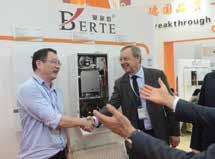
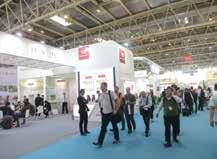
China & CIHE 2014
Date: 13th - 15th May, 2014 Venue: Beijing’s New China International Exhibition Center
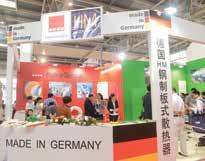
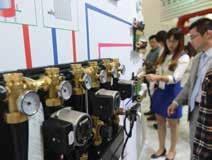
Energy efficiency is one of the main development goals of
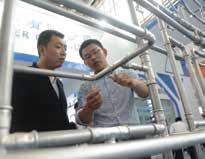
The fair serves as an annual meeting point for the
industry in Asia, encouraging business opportunities

Africa is in dire need for power to meet growing demand, with 2 out of three sub-Saharan Africans lacking access to electricity. Africa which is currently managing 1,000 MW of additional power generation annually, will need 7000 MW of additional generation capacity each year to meet economic expansion according to the World Bank. With over 1,600 large dams around the world under construction amidst economic viability criticisms, sustainability issues, attached economic, social and environmental costs and availability of cheaper and better options such as solar and wind power, it is argued that pursuing large hydropower dam projects must be reconsidered, according to some researchers.
Researchers and scholars have found that the actual cost of large hydropower dams exceeds the budgeted amount almost always
After continued criticisms of large dam projects, Presidents of the International Commission on Large Dams (ICLD) and International Commission on Irrigation and
Drainage (ICID) in May this year wrote to the President of World Bank Group expressing concerns on criticisms related to hydropower and water storage projects related to construction and development of large and small dams. The two presidents explained that the 50, 000 large dams and 1 million small dams around the globe played a vital role in generating 15% of cheap electricity and 80% of renewable energy, controlling floods, providing 40% of food from irrigated activities, as well as providing water to masses. Pointing out the particular case of the Inga 3 dam and that only 8% of African hydropower is exploited and 10% of land under irrigation, they argued that discontinuation of the World Bank’s initiatives to fund projects related to construction and development of large and small dams could cause “a global disaster in the near future.”
They particularly supported the World Bank’s re-engagement in developing water resources, including construction of dams as
shown in one of the World Bank’s 2013 policy document, but stated that they supported “well-run projects, to manage world water for the benefit of people, the prosperity of nations and the world.” Exactly how wellrun large dam projects are from the day of inception determines whether they become economically viable or not and whether they exacerbate related social, environmental and other costs.
Researchers and scholars have found that the actual cost of large hydropower dams exceeds the budgeted amount almost always, without regard to environmental, social and debt servicing costs, as well as costs related to inflation. According to a recent Oxford research in 2014 that considered cases of 245 large dams (of walls exceeding 15m high) built in 65 different countries around the world, the actual cost even run to averages of +90% higher than the budgeted amount at the time of project approvals. Considering data from across countries that have, are building, or are considering building large dams, researchers conclude that these projects take too long to complete and cannot deliver any positive risk-adjusted return unless some measures are taken. Besides, the megaprojects have a longer lead time and cannot be relied to solve urgent power problems even if they carry some benefits.
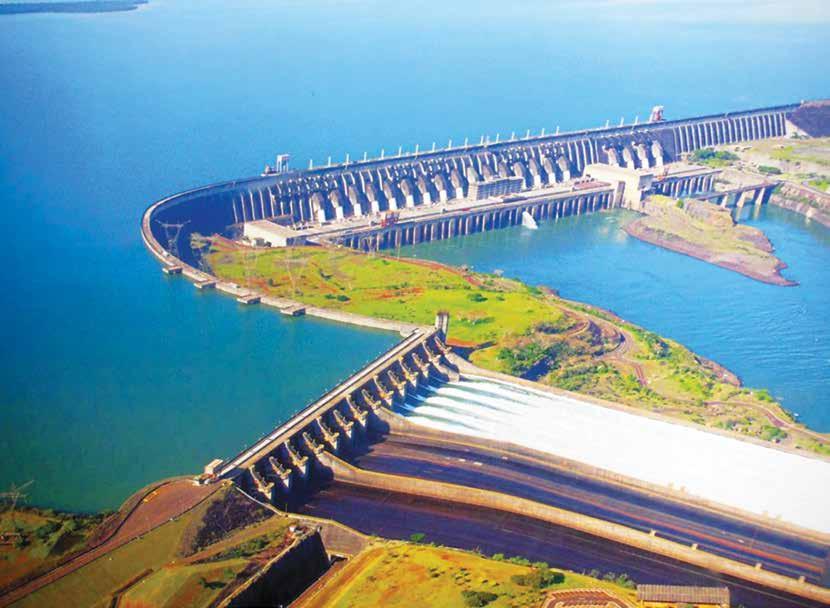
Apart from the related environmental costs associated with large dams proved by the World Commission on Dams, researchers explain that risks associated with these projects are too large to an extent of having negative ramifications on a country’s economy. The outcomes also affect the exchequer for a long time since governments must manage the negative outcomes of these projects. A well documented case is that of Brazil’s Itaipu dam whose actual costs overrun the budget by a crazy +240%, and which placed an unnecessary burden on the country’s public finances for three decades. The researchers put it very well: Itaipu dam will never pay back the money used to construct it even though it has given the much needed electricity. Considering the arguments from proponents and opponents
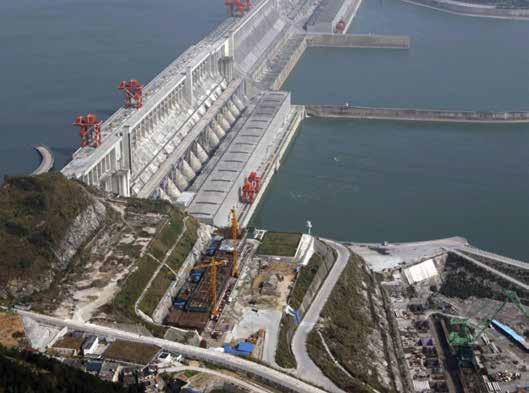
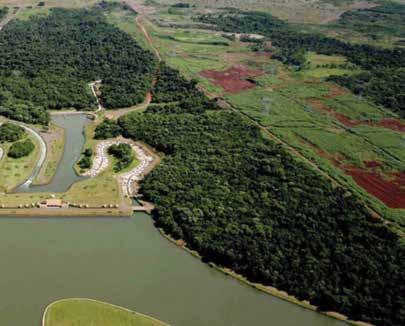
Grand Inga, the world’s largest hydropower scheme, is proposed for the Congo River in the Democratic Republic of Congo (DRC). It could produce up to 40,000 MW of electricity, over twice the power generation of Three Gorges Dam in China shown above.
of large dam projects, the question, therefore, is not whether large dam power projects have any benefits as many would point out, but that the overall return could be negative in nature if care is not taken.
Experts, researchers and academicians who oppose construction of large hydropower dams say that the projects are surrounded by delusion and deception in the planning phase, also called the “planning fallacy”. In this case, project promoters, including engineers, economists and statisticians, focus on the internal constituents of the specific project they are undertaking – so called the “inside view” – without considering the outcome of the previous similar projects undertaken – so called the “outside view”.
This explains why mistakes continue to be replicated across Africa and other continents in regard to building large nonprofitable hydropower dams: planners cannot care to learn from previous mistakes and lessons of related projects. Indeed, the Oxford researchers warned in April this year that the mistakes being made in relation to construction of large dams today are as worse as they were 70 years ago. A case in point is the Brazil’s effort to proceed with the Belo Monte hydroelectric dam project even after
Experts who oppose construction of large hydropower dams say that the projects are surrounded by delusion and deception in the planning phase, also called the “planning fallacy”.
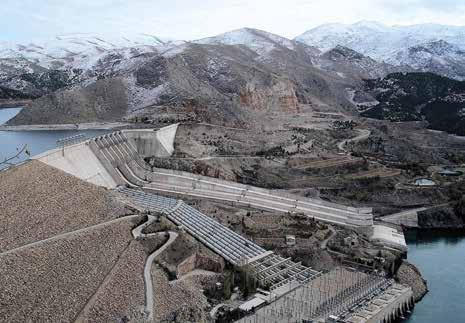
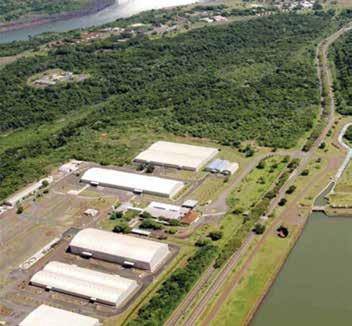
Itaipu Dam in Brazil, the world's largest dam in generation capacity: can no longer be repaired after dynamiting of the submerged rock face.
documentation of mistakes related to the Itaipu dam project. These errors have been blamed by researchers on overreliance on heuristics and overconfidence. Optimistic proponents cite the few successful cases so they can push the projects for approval by authorities, only to
fall to the mistake. Although there have been success cases in regard to construction of large hydropower dams such as the case of Hoover dam in the USA commonly cited by proponents, of all the dams built across the globe, most of them are not economically viable.
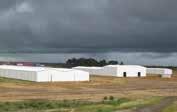
Despite lessons learned from construction of Inga 1 and 2 dams along Congo River in a country where only about 10% have access to electricity and many continue to fight for their rights after related displacement and 85% of the electricity is used by high-voltage consumers, Africa continues optimistically buildinglarge hydropower dam projects such as the proposed Africa’s largest Grand Ethiopian Renaissance Dam (GERD) along the River Nile. Already International Rivers has termed the planning process as poor and protests have been raised by Egypt relating to the project’s possible negative impacts includingdepleting its water resources downstream. The situation for wildlife and natural habitats has not been spared. World Wildlife Fund (WWF) reveals that 60% of the 227 world’s largest rivers have been severely fragmented by dams, diversions and canals, which has led to ecosystems degradation. It adds that 40-80 million people have been displaced from their homes in dam construction-related projects.
Decision-makers, including politicians have a part to share in the blame: delusion and deception lead them to making misplaced political incentives and to misinterpret agency issues and allowing these projects. The ambition, extent of deception and lack of knowledge of non-viability of large hydropower dams is clear in the African continent considering the number of dams launched.
Simply put, those targeting to benefit from implementation of these projects deceive the unknowing government policy makers and politicians, especially so in developing countries where many leaders do not know the side effects or underestimate situations. Professor Flyvbjerg Bent of the Saïd Business School adopts a harder language to explain the mess up by planners and decision-makers;
that the experts who forecast on hydro dam megaprojects are either optimists who ignore hard facts of project uncertainties and go ahead, or misleaders of the public seeking private, political or fiscal gain.
Considering the arguments from proponents and opponents of large dam projects, the question, therefore, is not whether large hydropower projects have any benefits as many would point out, but that the overall return could be negative in nature if care is not taken. How decision makers and policy makers approach the issue is important for Africa and the world as a whole.
The situation is promising considering the extent with which alternative power sources are being sought across the globe. Power Africa programme was launched by Obama last year, in an initiative that could see sub-Africa region alone add up to 10,000 megawatts into its electricity grid in the next five years. President Obama announced in the last month’s U.S. – Africa Leaders’ Summit that more $12 billion had been channeled into the project. Those projects largely dwell on setting up mega solar and wind projects, but include setting of new and expanding of existing mini-dams.
Already, the World Bank has funded an initiative to evaluate the Inga-3 dam project although it has not concluded on whether to support construction. However, China, which has applied to get involved in the construction of the Inga Dam 3 project in Democratic Republic of Congo and is currently constructing 25 dams and has proposed 26 dam projects, has approached U.S for collaboration in the construction of the Inga 3 dam. To


By Christine Achieng
Buildings around the world are built taking into consideration the safety of the people constructing them, those that will occupy them once completed and the items inside. Security in a building is paramount since an average human being spends most of their lives inside some form of construction. There are different types of buildings that require a different level of security and different systems and equipment to ensure the buildings are safe and therefore the type of security issues that must have to be considered will always depend on the kind of building being designed.
An architect must incorporate security measures while constructing the building and not install them afterwards to avoid unnecessary costs and rush to counter an identified threat after construction. This means that the contractor has to do a thorough study of the area to identify all the threats that are likely if they are to construct a building at that location. These threats vary. They may be external;
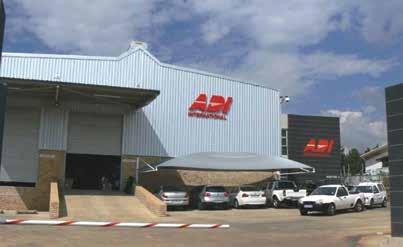
such as wild animals, thieves and vandalism, internal; such as gas leaks, radiation, fire, electrocution etc, and those that are caused by nature like floods, tsunamis, volcanic eruptions, landslides and lightning. The buildings should be made in a way that they are able to withstand any eventuality that seems to threaten the security of the building.
ADI Global Distribution is a well-known brand in the global security distribution market operating in Africa, North America, Europe, Australia and Asia. ADI’s strategy is to collaborate with its customers by offering them a widest range of security products and solutions from leading security manufacturers, positioned at the best possible price and providing the best service and customer support to meet customer needs. The company’s portfolio offers an unparalleled product choice for intrusion, fire, CCTV, networking solutions, access control, building management, as well as a comprehensive complementary range of accessories.
With branches and affiliates spread across South Africa in Johannesburg, Pretoria, Cape Town, Durban, Port Elizabeth, East London as well as George, ADI South Africa offers local stock holding and trained security workforce at a local level. ADI has a dedicated export department to service all other parts of sub-Saharan Africa and the Indian Ocean Islands. ADI’s nationwide team of trained security professionals is dedicated to its channel partners and caters for multinationals, national installers, regional installers, electrical installers, system builders and system integrators. A central sales team is just an email or phone call away to handle all customer security

Honeywell Security is committed to being the partner that will give clients the best success in their business.
requirements. Products can be picked up from any of the ADI branches or delivered to site. ADI provides customers internationally with a highly competitively priced ‘onestop-shop’ for all their security needs.
It works closely with major manufacturers to ensure they are introduced to the latest and greatest technology in the market. What differentiates ADI is its Accredited Training Facilities, which cover all its major brands. ADI’s in-house Repair Centre has highly skilled technicians with years of experience in their field of expertise. What’s more, the company’s testing and repair service is state of the art. Looking ahead, ADI South Africa sees itself as its customers’ and vendors’ first choice for the supply of security and low voltage products and services. Whatever your needs, ADI allows you to grow with the products you need, providing you with the necessary support and allowing for maximum success for all of your installation projects.
Magal security system and cyber seal Company has developed Critical Infrastructure Protection (CIP) to be used in perimeter and the access points as the last line of defense and last chance to deny intruders into areas such as industries, airports, ports, factories e.t.c. Magal security system says that every technology must be tailored to each site and therefore every solution begins with a comprehensive assessment of the costumer’s needs, existing infrastructure and operational environment.
The first basic option is Fences Only (dumb fence). This may be excellent for very low security sites; however any hostile intruder may choose the best time and cut or climb the fence un-noticed. For higher security, critical sites need a smart fence that can detect and automatically alert the guards. The range of possible technology is wide: some companies offer simple cameras, others offer smart cameras with VMD or IVA; some companies offer embedded fences like taut wire, other offer microphonic sensors as an add-on to existing fences. Magal S3 that

Magal security system critical infrastructure protection Mombasa port - gate control room Critical Infrastructure Protection (CIP).
has developed and can deliver any of these technologies because it offers the broadest portfolio of homegrown durable and robust PIDS (Perimeter Intrusion Detection Systems) products. All products are designed to perform in the most challenging environmental conditions. Perimeter security is only part of an integrated solution. There are always more layers: access control, gates control, management system. Magal S3 is your best choice for that part as well. Magal has 45 year experience in delivering tailor-made projects and solutions to hundreds of sites worldwide.
Magal’s solutions for critical sites are managed by Fortis a cutting edge Physical Security Information Management system (PSIM). The solutions leverage the company’s PIDS portfolio, advanced outdoors CCTV / IVA technology and Cyber Security solutions. Magal’s latest projects included securing the Mombasa seaport and the Africa Cup of Nation games in Gabon.
To read more and to comment on this story visit http://www.constructionreviewonline.com
ADI Global Distribution
+27 (0)11 574 2500, sales.za@adiglobal.com, www.adiglobal.com/za
Magal security system and cyber seal Company
Vered Maizner-Gani sales@magal-s3.com www.magal-S3.com
Honeywell Security
Joshua Purdy
Joshua.Purdy@Honeywell.com www.security.honeywell.com/za
Melissa Chausse mchausse@atisystem.com www.atisystem.com CoNtRIBUtoRS
BriefCam
Dror Irani - CEO & President asaf.bar@briefcam.com +972 72 220 2064 www.briefcam.com
MEC Security Supplies Dr Crimes bernard@mecsecurity.co.za http://www.mecsecurity.co.za
ATI Systems
East Africa has in recent years seen exceptional growth in the construction sector, particularly around the development of new houses, multistory buildings, roads and bridges. This trend has contributed to a surging demand for building materials in particular cement and concrete.
In parts of the region cement capacity, cannot keep up with the demand whilst in other parts there is an over-supply. Whilst the under-supply may provide opportunities for a number of local cement players to increase their capacity and geographic reach, a number of new players are prospecting the market to plug the deficit whilst imported cement is still being considered as viable by the industry. (At present, the region imports about 50% of its cement).
A myriad of opportunities and challenges awaits the region ranging from quality control issues, cost
effective supply chain management and production to new technologies and techniques in the use of cement and concrete. Hypenica will be hosting the inaugural Totally Concrete East Africa conference in Dar es Salaam from 28 – 30 October 2014. The event is sponsored by Twiga Cement, Laticrete, Touchwork, Concrete Trends and Concrete.TV.
Advancing cement and concrete technology: Enhancing East Africa’s built environment
Totally Concrete East Africa will showcase how new and existing players can capitalise on the demand for increased cement production in the region, while giving users practical insight on how to increase sustainability in construction projects with techniques for service life extension, quality control enforcement in both domestic and imported cement, and reducing maintenance and repair costs over time.
With such a diverse attendee demographic, Totally Concrete East Africa makes it even easier to share your passion for cement and concrete with the construction industry and ignite enthusiasm for the next generation of concrete technologists, architects and engineers.
Attendees will also get to hear first-hand updates from East African government (such as Ministries of housing and public works) to find out what projects are in the pipeline and how to prepare for their respective engineering requirements and building codes.
Content highlights from the programme include:
• Totally Concrete road seminar
• East African concrete and cement leaders panel
• Maximising profit and minimising costs of the cement supply chain
• Durability, assessment and repair of concrete structures
• Preparing for urbanisation in East Africa –opportunities for concrete in modern architecture in East Africa
• Admixtures and cement extenders for high performing concrete
Over 40 visionary and international expert speakers from 10 countries will present in a 3 day programme of cement and concrete in East Africa



Tel: +27 11 674 4441 • Fax: +27 11 674 4450

Email: boomgate@global.co.za • www.boomgatesystems.co.za
18 Minerva Avenue, Leaglen, Florida, Roodepoort, SOUTH AFRICA
NEW BRANCH OPENED IN CAPE TOWN!
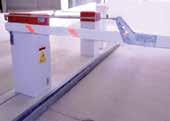
BOOMGATE SYSTEMS CAPE TOWN
Tel: +27 21 551 0849
Unit 2 Crest Park, 12B Longclaw Drive, Montague Gardens, Cape Town, 7441
7 YEAR WARRANTY TURNSTILES
2 YEAR WARRANTY TRAFFIC BARRIERS

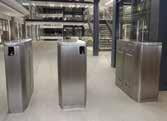
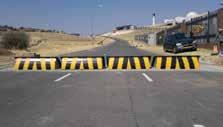

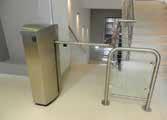

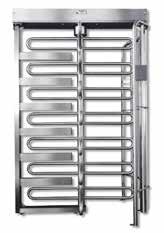


VEHICLE ACCESS CONTROL
Automated Traffic Barriers – GeniusTM Range
Manual Barriers – MasterTM
Reusable Rubber Traffic Islands
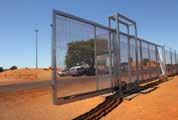
Canti-lever Gates – Glide MasterTM (up to 10m)
Bi-Folding Speed Gates
HIGH SECURITY - VEHICLES
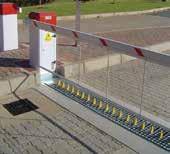
Spike Barriers - ScorpionTM
Single Directional Spike Barrier - ScorpionTM
ANTI-TERROR PRODUCTS - VEHICLES
Road Blockers (Rising Curb) – WarriorTM
Hydraulic Bollards – WarriorTM Anti Ramp Posts
PEDESTRIAN ACCESS CONTROL
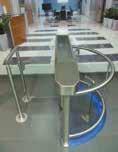
Turnstiles - TornadoTM Industrial
Full Height
Turnstiles - HurricaneTM Industrial Mantrap
Turnstile - TwisterTM Waist Height
Turnstile - CycloneTM Full Height Glass
Turnstile - CycloneTM Waist Height Glass
Revolving Glass Doors - CompassTM
Drop Arm Pedestrian Barriers – Euro’s & Square shape
Special Needs Swing Gates (90º and 180º)
Speedstile – Pro WingTM
Security Booths / Mantraps
Walk Through Metal Detectors
ACCESSORIES
Goosenecks (custom made)
Bollards – static & removable
Reserve Parking Posts
Ballustrades
Camera Poles (up to 9m)
Magnetic Locks
Enclosures (metal) – custom made


By Hope Simuli
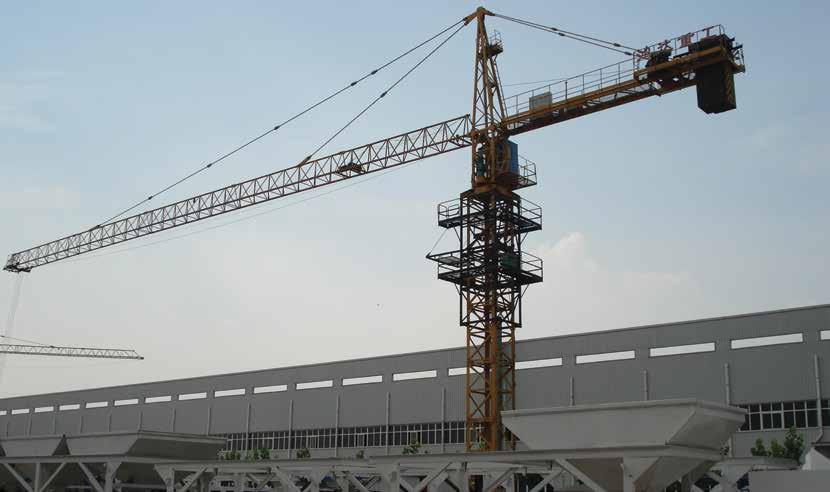
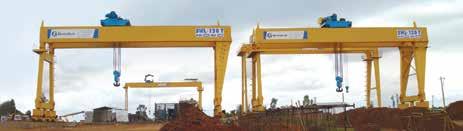
Increase in infrastructure development in the market especially high rise buildings has led to an increase in universal demand for cranes. Many developing economies have gone ahead to create markets for cranes over the last 10 years. Since cranes have become an integral part of the material lifting industry, you will find different types of cranes just to ensure that clients are able to get what will be comfortable when they are working. Cranes have been classified into three types: marine cranes, mobile cranes and fixed cranes. All these types of cranes vary depending with the lifting capacity, height and outreach with focus being mainly on higher lifting capability. Other aspects that are being put into consideration as the crane market develops and more people look for these lifting equipments include use of advanced technology in cranes, fuel efficiency cranes and greener fleets.According to research report on cranes
ElectroMech suhail@emech.in www.emech.in
Multi-Crane International BV
Ralph Breijer
info@multi-crane.com www.multi-crane.com
Böcker Maschinenwerke GmbH
Sendermann, Michael sendermann@boecker-group.com
www.boecker-group.com
Becker Mining South Africa
George McMaster, info@za.becker-mining.com www.za-becker-mining.com
Linden Comansa Mariano Echavarri export@comansa.com www.lindencomansa.com
released by BBC Research (www.bccresearch.com), the global market for cranes is expected to grow to US $41bn by 2018. USA and Europe are markets for cranes and when it comes to Asian markets, china and India are at the forefront.
Since the market for cranes is growing rapidly, manufacturers have to look for better ways to ensure that they keep their cranes updated with all the proper functionality aspects. Some of the things that manufacturers have to look out for include:
• Segments
Construction companies are constantly looking for cranes hence one of the things that manufacturers have to look into is the introduction of more mobile cranes which can be moved easily during construction. Mobile cranes will also allow incorporation of wind power energy thus saving on fuel consumption.
• Lifting Capacity
Countries are going for the more advanced high-rise building hence require proper gadgets which will help in construction of such buildings. Tower cranes are becoming popular for this function not forgetting Goliath / Gantry Cranes used where bay lengths are excessive.These types of cranes are mostly used in the aviation industry, metro rail and power firms not forgetting other construction sites. The trend in lifting capacity is moving to the automated forms.
•
Increase in demand for cranes has prompted manufacturers to come up with gadgets that save on time without
consuming so much fuel. At the same time these gadgets have to be safe to use because of the regulatory demands put in place by various governing bodies in different countries. Manufacturers are also offering training services to various individuals on how to use their lifting equipments just to ensure that the proper application is made. Experts from companies such as Electromech, advice potential clients to look out for the scope of work that the crane will be doing, spare parts for the type of crane that they choose to use and support after the sale. All this will ensure that there is customer satisfaction and efficiency when using cranes in construction work.
ElectroMech is India’s largest volume manufacturer of industrial cranes and related material handling equipment. ElectroMech has been involved in the design, manufacture, erection and commissioning of cranes and hoists since 1979 and has over 5000 installations globally. Their manufacturing plant has received the 'Approval of Welding' certificate from the leading classification society, Germanischer Lloyd (GL), Hamburg, Germany and is certified for ISO 9001:2008 standard with UKAS accreditation. Their subsidiary ElectroMech FZE based in Dubai is a renowned name in material handling systems worldwide and is efficiently serving the markets in the Middle East and North Africa from its headquarter based in Jebel Ali Free Zone, Dubai, UAE and through a network of dealers. The team at the helm of ElectroMech consists of qualified technocrats with collective experience of more than one hundred years in the industry.
More than 500 motivated experts are engaged in manufacturing nearly 1000 cranes, hoists and other similar lifting equipments every year.Products from the company include single and double girder cranes, semi-
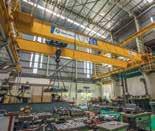
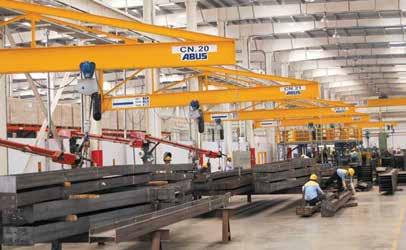
gantry cranes, gantry/goliath cranes, jib cranes, wall travelling cranes and electric wire rope hoists and its components.
In addition to the entire Gamut of product offerings, ElectroMech believes in providing 'well-engineered' turnkey hoisting solutions. Beyond our products and services, ElectroMech is a responsible corporate citizen that cares for the environment. Our plant uses state of the art facilities for shot blasting and painting of cranes, with adequate care taken for extraction of paint fumes and circulation of fresh air to ensure well being of the workers. ElectroMech has networks in Kenya, South Africa, Bahrain, Qatar, Oman and Saudi Arabia. According to Tushar Mehendale, Managing Director of ElectroMech, Potential buyers of industrial cranes should ensure that the crane they are buying is suitable for their handling requirement – in terms of capacity and area covered. Finally, it is important to have a trained operator handle the crane and your precious load.
To read more and to comment on this story visit http://www.constructionreviewonline.com

By Hope Simuli
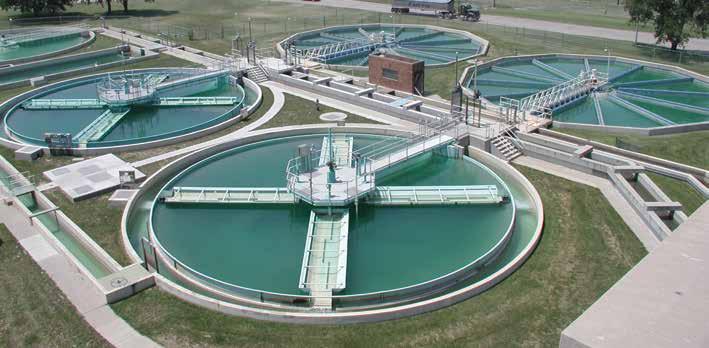
Waste water management has become one of the major challenges that most countries face due to the scarcity of water resources. However, the few countries that manage to deal with this issue give priority to urban centers leaving the smaller communities to look for other ways in which they can get clean water. According to statistics from the UN world water day in the year 3013, 783 million people do not have access to clean water and almost 2.5 billion do not have access to adequate sanitation Waste water treatment can only be effective if the key processes of involved in the process are taken into consideration. These involve a primary waste water treatment process where screening is done to remove any object that is present in the water.
Genesis Water Technologies, Inc
Nick Nicholas nick@genesiswatertech.com www.genesiswatertech.com
Envirowater Solutions
Graham Kluk Graham@chemfreeaqua.com
Pure Aqua, Inc.
Nick Eberhardt nick@pureaqua.com www.pureaqua.com
Krones
Silvia Puckl
silvia.puckl@krones.com www.krones.com
IPS www.crossflowmf.com www.industrial-purification.co.uk
Boydel
Randy DeLuca deluca@boydel.ca www.boydel.ca
This can be the small particles or large objects. The next level to undertake is the secondary treatment where activated sludge, filters and lagoons are used. Activated sludge’s contain bacteria which will help in the breaking down of organic substances while filters will be very effective when it comes to separation of the substances that remain in the water. Each of the process requires special equipments such as generators, different types of water pumps, water neutralizing and oxidizing filters, separators in case there is oil in the water and sludge treatment equipment.
With the scarcity of water becoming a worldwide issue waste water treatment has come into sharp focus as key to proper use of this resource. This has driven the emergence of new trends in treatment as the traditional modes are slowly fading. Technological advancement has been of great aid when it comes to new forms of treatment.
Genesis Water Technologies Inc. is a USA based manufacturer of innovative sustainable standard and custom designed, engineered and built potable water, process water and waste water treatment solutions and filtration components. They are also wholesale supplier of complimentary water treatment system components including reverse osmosis membranes, reverse osmosis chemicals, specific filtration medias, chlorination systems and toxic and combustible gas detection systems that are supplied to both private sector, municipal , and OEM clients. Their company is dedicated to providing superior customer service, technical support and high quality
treatment solutions to our clients. They take pleasure in managing their business to provide the treatment solutions that meet their clients simple or complex water treatment challenges. Genesis Water Technologies, Inc. has its corporate office in Maitland, Florida, USA with additional office, manufacturing and distribution capability from their Charlotte, NC USA location. They have distribution warehouses across the USA and affiliate offices in Asia (Philippines) and Africa.Their company has present projects with their local construction and distribution partners in West Africa and South Africa. They are looking to partner with qualified construction & civil engineering partners with distribution and after sales service capability across Africa to serve the potable water, process water, and waste water treatment needs of both private sector commercial/industrial clients and municipal/governmental clients
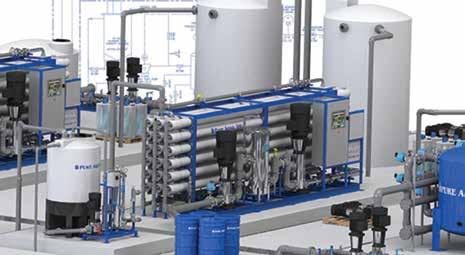
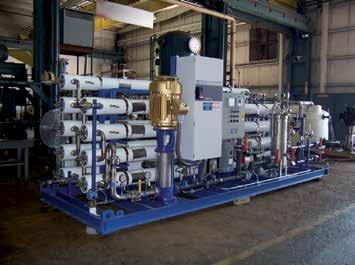
Pure Aqua, Inc. is a water treatment systems company based in Santa Ana, California, and for the last 14 years they have designed and manufactured high-end industrial water treatment systems and facilities for corporate clients and municipalities around the world. They specialize in industrial and commercial sized systems. Most popularly, reverse osmosis systems. The systems are designed and built in their California based plant, and shipped to their customers around the world, fully assembled and maintained by qualified professionals. Their systems are durable and designed for heavy use and are built specifically to purify the water. Their systems are suitable for mining water purification, salt water purification, military bases, brackish water, water treatment plants and agricultural purposes, to name a few.
The systems are capable of transforming anywhere from 500 to 900,000 gallons per day in to pure, potable water for everyday use and are custom designed for restaurants all the way up to municipal sized treatment plants. In Africa there systems are found in Ghana, Nigeria, Egypt, Algeria, Tunisia, Libya, Cameron, Kenya, Djibouti, Angola, Tanzania, Zimbabwe, Mozambique, Equatorial Guinea and Senegal. They were recently involved in a Water Relief project where 6 of their solar powered treatment systems were sent to Cameroon to purify their river water into potable, drinkable water.
Also they have participated in the WQA, Algeria water and Power, and the 5 big shows in Dubai Aquatec Amsterdam. They have acquired a sterling reputation for building fully customizable water treatment systems for any use, in any weather and for any type of water. They have built thousands of systems over more than a decade, and have sent them to hundreds of countries. They are also a member of the Water Quality Association and an ISO 9001:2008 Certified. Nick Eberhardt, Media
relations advices potential buyer to provide correct details for the water analysis for them to be supplied with the most effective system that fulfill their water requirement. Eberhardt also commented on the emerging trends regarding the systems that, “Solar powered systems will become most popular, containerized and portable systems with their own climate control.”

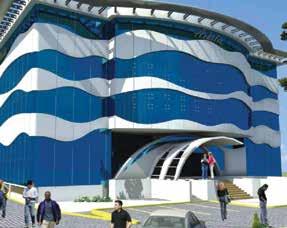
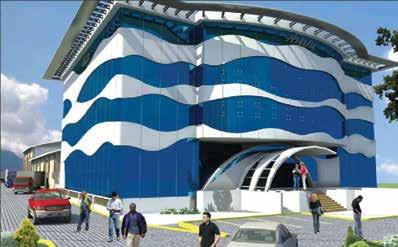
Nothing exists in isolation. Physical, cultural, historical, and behavioral facts must be reflected in the finished work. Ultimately a positive human response completes the collaborative intentions of the designer and client. This is the guiding spirit at Otto Mruttu + Partners, an architectural firm based in Nairobi, Kenya. Otto Mruttu + Partners Architects was established in February 2008 to provide bespoke consultancy services in the construction industry. The managing director, Otto Mruttu, is a chartered architect and has over 15 years architectural experience in Kenya and the UK. Otto Mruttu joined Mruttu Salmann & Associates in 2002. Prior to that, he was a practicing architect in
London, having completed his architectural studies in Kent, UK in 1998. Otto Mruttu + Partners Architects is adequately staffed to handle projects of any complexity. Under the directorship of Arch. Otto Mruttu are three other architects, two architectural assistants and support staff. More information about this architect may be obtained at http://www. ottomruttu.com
Otto then formerly registered Otto Mruttu + Partners in 2008 so as to provide bespoke architectural services. The firm has grown since 2008 and was converted to a limited company in 2012. The firm has provided services to the Government of Kenya, several banks, universities and private developers.
While in London, Otto worked for NBF Partnership, a London based architectural firm where he worked on the following projects:
• Alterations & Refurbishment for the College of North East London.
• Additions & Alterations to the Queen Elizabeth Park Barracks, Surrey, UK.
• Additions & alterations to City & Islington College, London, UK.
• Alterations & Refurbishment to over 75no. residential dwellings for the London Borough of Ealing, London, UK
• Additions & Alterations to Deep Cut Barracks, Surrey, UK
• Several barracks andshooting ranges for the Ministry of Defense, UK, location and type of ranges remain confidential.
On joining Mruttu Salmann & Associates, Otto worked on the following projects:
• Cooperative Bank of Kenya Ltd.’s new branches in Githurai, Kakamega, Ukunda and Mtwapa.
• Barclays Bank of Kenya Ltd’s branches in River Road, Nairobi, Kabarnet, Webuye and Kapsabet.
Some of the key projects undertaken by the company include:
• Top Plaza Office Building on Kindaruma Road, Nairobi.
• Karatina, Nkubu and Busia Market.
• Pwani University Sports Center.
• Achelis Office Building on Mombasa Road, Nairobi.
• Expansion and Modernization of JKIA

We are proud to be associated with Otto
Mruttu & Partners Architects
Clasico Builders (K) Ltd. 61 Westlands Road P.O. Box 38637-00623 Nairobi, Kenya.Tel.+254-722-791314 E-mail: info@clasico.co.ke
Airport with Queens Quay Architects of Canada.
• Additions and Alterations to Consolidated Bank of Kenya Ltd.’s branches in Mombasa, Nairobi, Thika, Muranga, Meru, Isiolo, Maua & Laare.
• Bank of Africa branches in Westlands and Uhuru Highway Nairobi.
• Additions and Alterations to Kenya Commercial Bank, Kisumu branch.
• Additions, Alterations and Refurbishment of the main parliamentary library, Nairobi.
• Garland House for Mr. & Mrs. Wallace Garland at No. 38, Rehill Drive, Nyari, Nairobi.
• Twiga Hill Court on Twiga Hill Road, Hardy Estate, Karen for the Board of Trustees, CBK Pension Fund.
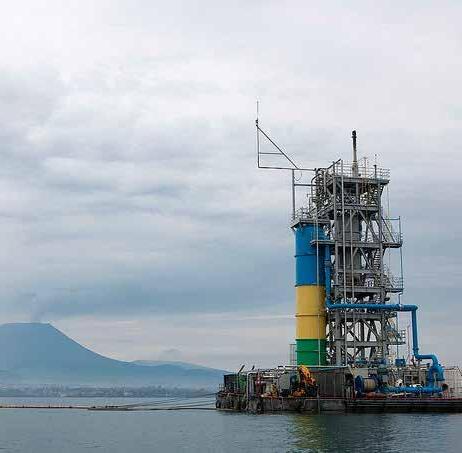
– 4 November 2014
Rwanda’s power sector is transforming into a hub of dynamic infrastructure ventures with a projected growth of nearly 400% within the next 3-years.
Meet Rwanda’s primary decision makers over just two days.
As a Construction Review subscriber you benefit from a 15% discount on your delegate registration
Redeem code: CR01
Host utility: Host regulator: With the official support of:


For delegate enquiries please contact Phillip Mostert Phone: +27 21 700 3548 Email: phillip.mostert@spintelligent.com For sponsorship enquiries please contact Jean-Pierre de Carvalho Phone: +27 21 700 3512 Email: jean.pierre@spintelligent.com www.ipad-rwanda.com

of Rwanda
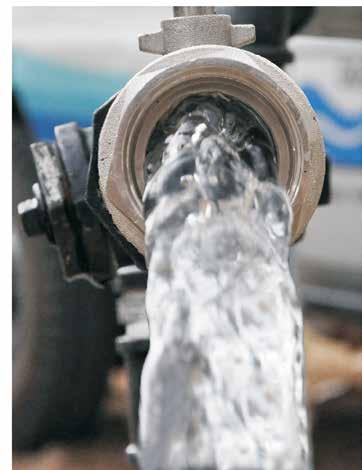





NSE listed paint maker, Crown Paints Kenya Limited is investing Sh40million, which will be used to train and equip painters with advanced modern painting skills. Announcing the investment, Crown Paints Kenya Chief Executive Officer (CEO) Rakesh Rao said, “We are investing Sh40million to train painters across East Africa. Recruitment will be done in all major cities nationwide. By doing this we shall be able to reach many customers, since we want to work with zero queues.”
By setting these funds aside, Mr Rao said, Crown Paints will be able to train at
least 200 painters, by the end of 2014. “We want to take paint to the masses that why we are training painters. Our aim is to train 3000 painters in the next three years,” he added. Since the opening of Crown Paints Showrooms in three major towns, Mr Rao revealed that the demand for designers paints and coating has enormously grown; hence the need to equip painters with relevant skills in the market. “Demand has grown and we are unable to satisfy our customers’ needs due to painter’s shortage. The demand is being catapulted by choice, since most customers are well travelled.
Before, we were selling a lot of basic paints. Currently, designers coating contributes at least 10 percent of our paints sale. Designers coating generates value, satisfaction and delight,” Mr Rao explained. Some of the designer’s coatings are armourcoat and flowcrete.
He further added, “We are laying a foundation and in the next three years, we will be looking at volumes on designers coatings. By doing this our Crown Paints brand will be growing stronger.”



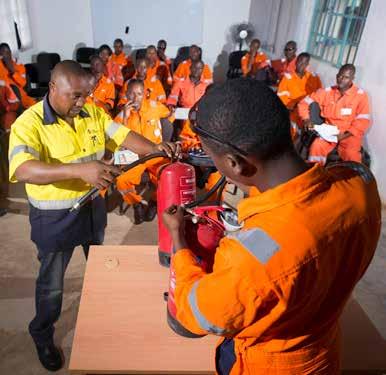
Since the start of operations in October 2013, we continue to maintain an admirable safety record, however, we never allow ourselves to become complacent. All levels of management and employees must continue to work as a team to identify, report and eliminate hazards. Our employees are empowered to stop work in a dangerous environment until the hazardous situation has been rectified and to stop others working in a dangerous manner.
A huge amount of work has been completed by the Project Teams in many areas of the Project since commissioning. Modifications and de-bottlenecking are a common feature during ramp-up. Significant improvements in the performance of the Pretorius Concentrator Plant (PCP) and Mineral Separation Plant (MSP) have been achieved and structural and electrical modifications on the conveyor system and ship loader at the Likoni Shiploading Facility were completed.
The Dozer Mining Unit and the PCP are now both fully operational and performing to expectations. While ilmenite production is on track, work continues within the MSP to achieve target recoveries of high value commodities, rutile and zircon. This is the highest priority at present and the metallurgists and production personnel are fully focused in this area.
In the 2013/14 financial year 134,500t of ilmenite, 19,200t of rutile and 3,100t of zircon were produced. However, commodity prices are very depressed at present, but we hope for improved market conditions in the next few months.


92% of employees are from Kenya
Our learning and development strategy is firmly aligned to our company goal to be “a creative resource company that enriches our people, our communities and our shareholders as we strive to be the pre-eminent African-focused mining company by 2021”.
Our focus is on building capability, both internally and in the external market to ensure local skills are available for the life of the mine and for the mining sector in Kenya in general. Our aim is to move to a higher level of skilled national staff with less dependence on expatriate skills.
In the external space we have programmes focused on up-skilling high school students, currently enrolled university students, trades students and graduates. Internally we have a robust plan to address technical skill gaps and programmes to facilitate the transfer of knowledge from expatriates to locals in the shortest time possible. To date, over 9,500 individual training programmes have been conducted.
basetitanium.com
+254 (0)20 513 0100 • info@basetitanium.com

Base Titanium is a subsidiary of ASX and AIM Listed Base Resources (BSE)




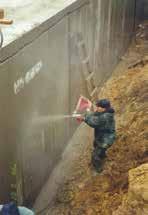
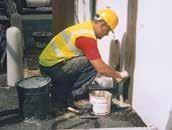
Xypex forms a non-soluble crystalline structure deep within concrete to block pores and seal microcracks against water and aggressive chemicals –even under extreme hydrostatic pressure. Available as a coating, dry-shake and admix, Xypex is ideal for new construction, rehabilitation, and precast applications.
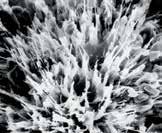


5000x magnification of mature Xypex crystallization
















Matthew Fidler (Regional Manager – Africa)
Tel: +44 (0) 1684 577756
E-Mail: matthew.fidler@xypexuk.com
Web: www.xypex.com
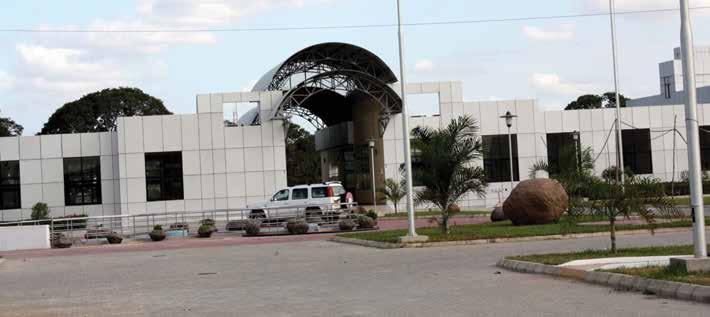
The current Ministry of Works was instituted in November, 2010 by the President of The United Republic of Tanzania Hon. Dr. Jakaya Mrisho Kikwete. It prides itself with overseeing a total road network length of 85,517 km including trunk and regional roads (28,892 km) which are under MoW while the urban, district and feeder roads with a total of 56,625 km are under Local Government Authorities. Its vision is to have a quality, efficient, cost-effective construction industry that is capable of meeting the adverse needs for safe and environmentally friendly construction, rehabilitation and maintenance of roads, buildings, as well as electrical and mechanical works and other works that
The Ministry of Works is mandated to cater for the following areas:
• Construction Policies and their implementation
• Roads.
• Bridges.
• Ferries.
• Mechanical Matters.
• Government Buildings.
• Public Works.
• Engineering and Design Works.
• Materials Laboratory.
• Performance Improvement and Development of Human Resources under this Ministry.
• Safety and Environment.
• Extra-Ministerial Departments, Parastatal Organisations, Agencies, Programmes and Projects under this Ministry.
facilitates social economic development of the country. In order to achieve this, its mission is geared to facilitate provision of economic, safe, environmentally friendly and reliable construction industry, electrical and mechanical services, government buildings that meet the needs of the public through the development and implementation of appropriate sector policies, strategies and standards.
The Ministry also sources internal and external funds for financing of various projects under it as well as supervision of axle load control and transport safety. Among its objectives, it also has HIV/AIDS infections reduction and related services improvement, as well as commitment to enhance and sustain effective implementation of the National Anti-corruption strategy.
The Government’s ambitious objective is to ensure that all the main towns and cities are linked by tarmac roads by the end of 2017/2018. The government also aims at attracting private sector to invest into construction industry. At independence the construction scenario was indeed different with fewer roads and structures. The population at the time, according the government figures stood at 9,540,000. Today’s 40 million plus justifies construction of more roads, houses, stadia, bridges and other related facilities. The road network at the time stood at 33,600 km including 16,000 km that were called territorial and local main roads and 17,600 km district roads.
Over the last fifty years, the government has succeeded in construction of 86,472 km from a mere 33,600. At independence, the tarmac road network covered a
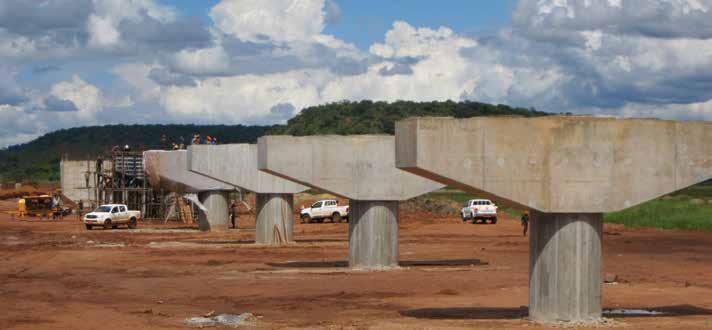
paltry 1,360. Currently, tarmac road network covers 6,500km and additional 11,154km are at different stages of completion. To achieve developmental goals, the government prepared its first five-year plan to develop road networks in 1964. The aim of the First Road Development plan was to build trunk and major links with the number and weights of vehicles in consideration. Major feeder roads were built while others were developed in agriculture productive areas. The first three years had two salient characteristics; development budget was increased by 75 percent and emphasis was laid on the feeder roads. The Second Road Development Plan (1969 - 1974) envisaged shortterm plans (up to 1974), medium-term (1980 to 1985) and long term (1990). The objective was to link all the regions by 1990 with all-weather roads.
The Roads Fund and Roads Fund Board were established by Statutory Instrument No.11 of 1998 under the Roads Tolls (Amendment) (No.2) Act of 1998. The Road Fund receives funding from the following sources: fuel levies on diesel and petrol, transit fees, vehicle overloading fees, and monies from any other source at the rate to be decided by parliament from time to time. Revenue from the fuel the fuel levies accounts for more than 90 percent of the total revenue.
The Roads Fund Board disburses funds to three implementing agencies, namely, TANROADS, local authorities under Prime Minister’s office for Regional Administration and Local Government, and Ministry of Works. TANROADS currently receives 63 percent of the distributable amount after the Roads Fund Board has deducted its own administration costs, PMORALG receives 30 percent and the MOW receives 7 percent. The Road and Fuel Tolls Act instructs the RFB to collect disburse and monitor the roads fund.
There are 4880 bridges completed by 2011 in the whole country. Among them are Kirumi, Kagera (1992), Rusumo (1974), Wami (1959), Ruvu (2008), Benjamin Mkapa (2003), Unity Bridge (2008). Included are 11 other bridges on TANZAM road, 7 on Tanga – Horohoro road 4 on Tunduma Sumbawanga roads. Bridges that are at the early stages of assessments and
Suppliers and applicators of specialised construction materials.
- Construction chemicals
- Waste water treatment
- Asphalt additives
- Polyurethane insulation
- Polyurea coatings
- Geogrids
- Waterproo�ing systems
- Roo�ing tiles
- Sports �looring

construction are Kilombero, Mwatisi, Malagarasi under the support of the Republic of South Korea, Kigamboni under NSSF. The government is undertaking an ambitious plan to ease the traffic jams in the city of Dar es Salaam through construction of flyovers starting with TAZARA under JICA and constructing ring roads. Under DART, the government is in advanced stages of development funded by the World Bank.
Like other developed and developing countries Tanzania has recently opened the doors for the private sectors to participate and invest in the Roads sector under the BOT program. Several projects have been identified for BOT and some private investors have expressed interests in the same. One example is Kigamboni Bridge. This is a bridge to be located across the Indian Ocean at Kurasini area in the city of Dar es Salaam. The bridge spanning over a length of about 560 meters will connect the city centre with Kigamboni area currently accessible by ferry operations and about 56-kilometre ring road.
This project costing USD143.5 Million is on- going and is expected to be completed in June 2015 and is financed by NSSF 60 percent and Government of Tanzania 40 percent. An Egyptian Consultancy called ACE is leading this project, whose contractors are the Chinese duo of China Railway Construction Engineering Group and China Major Bridge Engineering Co. Ltd.
In another such project, Tanzania Roads Agency (TANROADS) has signed a contract with a South Korean M/S Hanil Engineering and Construction Company Limited for construction of Malagarasi Bridge in Kigoma region. Speaking at a brief signing ceremony, the Chief Executive Officer of Tanroads, Mr Ephraim Mrema,
said the 275-metre long bridge construction project will be completed in the next three years. He said the project will be financed jointly by the Republic of Korea which will contribute USD 23 million and the government of Tanzania, which will also contribute USD 33 million, totalling USD 56 million .
“The project will be implemented in two lots, which include construction of the Malagarasi Bridge and construction of 11 kilometres of two-lane Asphalt paved road” Mrema said
There were 5 hand-pulled ferries. Today, there are more than 23 ferries, clearly demonstrating the government’s effort to provide this, all-important service.
The Engineers Registration Board (ERB) is a statutory body established by an Act of Parliament (Engineers Registration Act No. 15 of 1997). The Board has been given the responsibility and mandate for regulating engineering activities and conduct of engineers and engineering consulting firms in Tanzania.
As stipulated under sections 4(e) and 4(f) of the Act, among the main functions of the Board is to monitor the conduct and activities of engineers, including consulting engineers or engineering consulting firms and to promote and maintain professional conduct and integrity of the profession. In order for the Board to achieve its strategic objectives under these functions the Board has employed Monitoring activities.
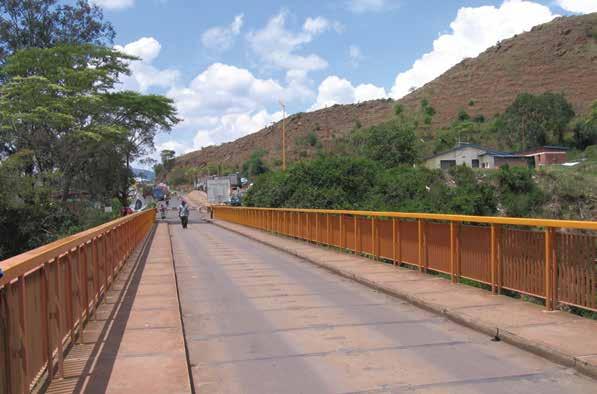
Registration Board (CRB)
The Contractors Registration Board (CRB) was established by the act of Parliament No.17 of 1997 as ammended in 2008 The Board is a Regulatory body charged with responsibility for registration, regulation and development of Contractors. The Board has its head office located at 3rd floor, Tetex House , Pamba Road, Dar-es-salaam and zonal offices at Dar-es-salaam, Mwanza,Mbeya and Arusha region.
Tanzania Buildings Agency (TBA)
Tanzania Buildings Agency (TBA) was established under section 3 (1) of the Executive Agencies Act No 30 of 1997 and became operational on 17th May, 2002. Tanzania Buildings Agency operates as semi autonomous Executive Agency under the Ministry of Works. The Public expects considerable improvement in construction and rehabilitation of Government buildings with respect to quality efficiency and cost effectiveness.The main objective of this transformation is to provide quality and affordable accommodation to the government and the public servants through efficient and effective Real Estate, consultancy and Business Services.
The Tanzania National Roads Agency (TANROADS) is an Executive Agency under the Ministry of Works, established under section 3(1) of the Executive Agencies Act (Cap 245) and came into operation in July, 2000. The Agency is responsible for the maintenance and development of the trunk and regional road network in Tanzania Mainland.
The National Construction Council (NCC)
The National Construction Council (NCC) is a government institution established through Act of Parliament No. 20 of 1979 and became operational in 1981. Its establishment was prompted by the need to promote the development of the local construction industry whose performance was poor.
Tanzania Electrical, Mechanical and services Agency (TEMESA)
Following increased need for electrical and mechanical works along with policies, the government had to stop dealing directly with that particular subsector. TEMESA was therefore started under Agencies Act 30 (1997) in 2005. The role of the agency was to render engineering services to the government, public institutions and private individuals in the line of electrical and mechanical.
The agency has workshops in all regions. The agency undertakes the role of repair and maintenance of VIP and other government vehicles, maintenance of electrical systems, refrigeration, and other electronic systems for the government. Other roles include plant rentals, maintenance of ferries, rental of ballast crashers and consultancy services in relation to commissioning and maintenance.
Architects and Quantity Surveyors Board
Architects and Quantity Surveyors Registration Board was established by the Architects and Quantity Surveyors (Registration) Act No 16 of 1997, which was repealed and replaced by Act No 4 of 2010.
The functions of the Board - As Provided in Section 5(1) of the Act No. 4 of 2010
1. Register and maintain registers and sub-registers of architects, quantity surveyors and their firm, graduate architects, graduate quantity surveyors, architectural technicians, architectural draughtsmen, both local and foreign ,and to make decisions on applications for their registration, annually;
2. Prescribe fees for application, registration, annual subscription and other fees as may be required.
3. Regulate the activities and conducts of architects ,quantity surveyors and their firms ,graduate architects, graduate quantity surveyor architectural technicians ,and architectural draughtsmen;
4. Enter building sites and inspect building or construction works for the purpose of verifying and ensuring that the works are being undertaken by a registered architectural or quantity surveying firms and that the works complying with all governing regulations and laws of the country including requirement
for safety, an erection of signboard which shows the title of the project, names addresses, phones and e-mails of the client ,architect, quantity surveyor, project registration stickers and to take legal action against defaulter thereof;
5. Promote, monitor and provide continuing professional development opportunities and facilities for the study and training in architecture, quantity surveying and allied subjects;.
6. Conduct examinations or professional interviews for purpose of verifying the competence to practice as professionally qualified architects or quantity surveyors or as to the adequacy of practical training in architecture or quantity surveying as may be approved by the board ;
7. Arrange for publication and general dissemination of materials produced in connection with the work and activities of the board;
8. Liaise with other institutions involved in architecture ,quantity surveying and allied matters ;
9. Grant professional certificate and other awards of the board for examinations
conducted by the board;
10. Take disciplinary action against architects, quantity surveyors and other semi professional registered by board ;
11. Register construction works or projects;
12. Offer advisory services to the public and the construction industry;
13. Liaise with both local and international profession boards and associations involved in the construction industry for the purpose of consultations exchange of ideas ,and experiences;
14. Promote and enforce professional conduct, ethics and integrity of architect, quantity surveyor and firms practising or operating in Tanzania;
15. Administer and regulate architectural competition.
16. Promote awareness and educate the public on the public professionals of the architecture and quantity surveying as well as the duties and responsibilities of architect and quantity surveyors.
17. Carry out any other functions which are for the public interest and which the Minister may in writing, direct.
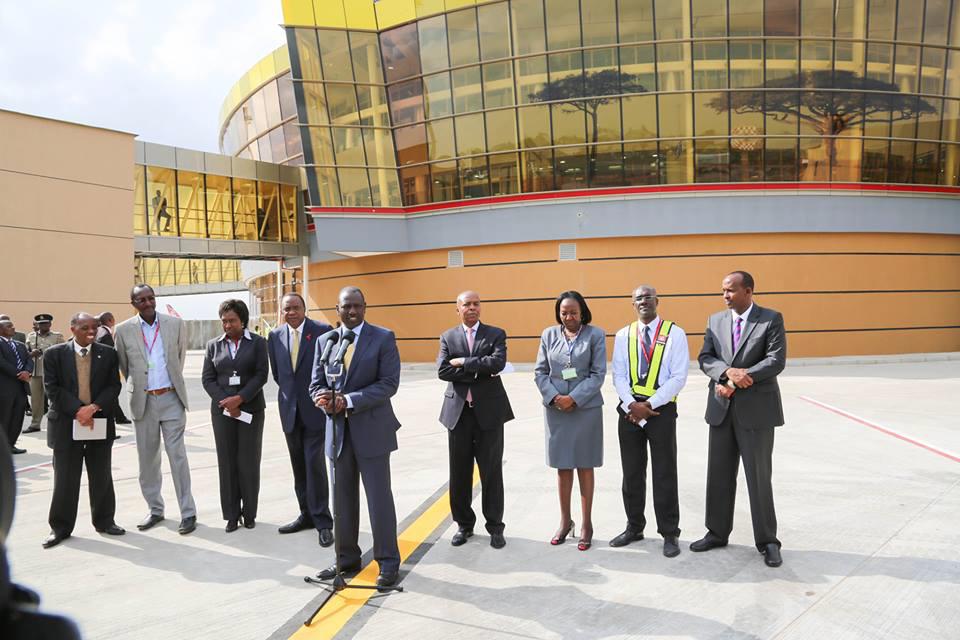


TANZANIA ELECTRICAL, MECHANICAL AND ELECTRONICS SERVICES AGENCY (TEMESA)
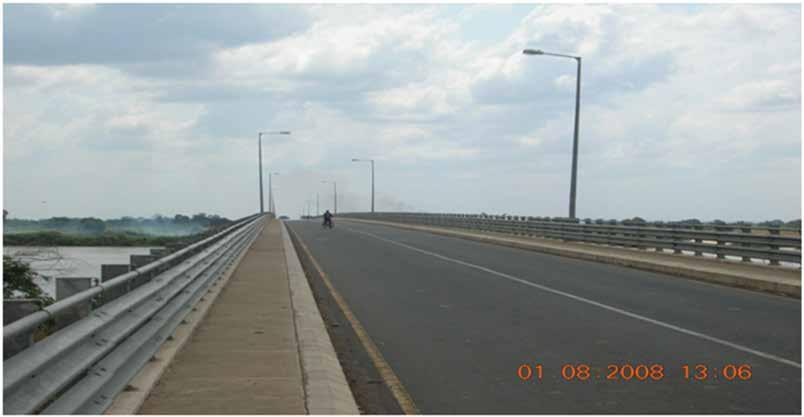
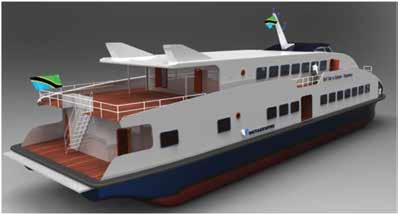
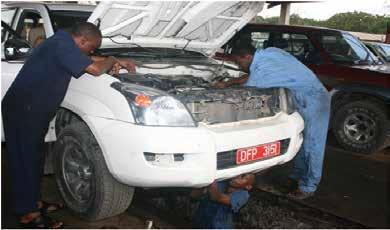
The Tanzania Electrical, Mechanical and Electronics Services Agency (TEMESA) was established under the authority of the Executive Agencies Act No 30 of 1997 by an Establishment Order by the Minister for Works through Government Notice No. 254 of 26th August 2005.
TEMESA took over from the Electrical and Mechanical Division (E&M) of the Ministry of Works which had existed since 1925 when it was part of a wider Public Works Department responsible for repairs of buildings, roads and vehicles.
TEMESA general responsibilities are as follows:-
a) To provide plant and motor vehicle maintenance services in all Tanzania mainland regions;
b) To provide electrical and electronics services
c) To provide safe and e cient ferry transport services; TEMESA runs 25 ferries at 17 crossings throughout the country.
d) To provide refrigeration and air conditioning services; e) To provide plant and equipment hire services; and f) To provide technical advice and engineering consultancy services in mechanical, electrical and electronics engineering elds.
For more information: Chief Executive, TEMESA, P. O. Box 70704, DSM. Tel: +255-22-2862796/97 Fax: +255-22-2865835
Mansfield Street, P.O. Box 70039, Dar es Salaam, Tanzania
Tel: +255-22-2131321, +255-22-2135553, +255-22-2110869
Fax: + 255-22-2118887
E-mail: ncc@ncc.or.tz, Website: www.ncc.or.tz
(Currently temporary relocated to 9th Floor of Office Accommodation Scheme Building Azikiwe Street – Dar es Salaam)
The National Construction Council (NCC) is a government institution established through Act of Parliament No. 20 of 1979 (National Construction Council Act CAP 162 R.E. 2008) and became operational in 1981. Its establishment was prompted by the need to have an institution for promoting the development of the construction industry in Tanzania.
To promote and provide strategic leadership for the development of the construction industry in Tanzania with emphasis on the development of the local capacity.
To be an outstanding provider of strategic leadership for the development of a competitive Tanzanian Construction Industry.
The National Construction Council is governed by a Council which consists of 15 members inclusive of the Chairman. The members of the Council are drawn from both the public sector and private sector and are appointed by the Minister responsible for works. Public sector representation is from Ministries responsible for Infrastructure development; local government; lands, housing and human settlement development; water; finance; science and technology; and institutions of higher learning; Private sector representation is from the constituencies of contractors, architects, engineers, quantity surveyors, manufacturers and suppliers of construction equipment and materials and the Tanzania Private Sector Foundation. The Chairman is appointed by the President of the United Republic of Tanzania. The Secretariat is headed by the Chief Executive Officer who is also the Secretary to the Council.
The functions of the Council are:
• To promote and provide strategic leadership for the growth, development and expansion of the construction industry in Tanzania with emphasis on the development of the local capacity for socio-economic development and competitiveness in the changing global environment;
• To advise the government on all matters relating to the development of the construction industry and to formulate proposals and recommendations for their implementation;
• To provide advisory services and technical assistance to construction industry stakeholders on all matters related to the construction industry;
• To promote and co-ordinate quality training for persons engaged, or to be engaged in the construction industry;
• To promote, conduct and co-ordinate research on all matters related to the construction industry;
• To promote the documentation and dissemination of information related to construction industry and to compile and maintain list of projects and directory of construction materials and equipment.
• To promote and monitor the development and implementation of standards, regulations and codes of practices on all related to the construction industry;
• To promote the use of innovative technologies and the application of best practices in the construction industry;
• To promote and establish forums for enhancing industrywide co-ordination, collaboration and discussion on matters related to the construction industry;
• To benchmark, monitor and evaluate the performance of the construction industry;
• To solicit and manage the fund for training of personnel in the construction industry;
• To promote quality management including provision of technical auditing services in the construction industry;
• To promote environmentally sustainable construction practices including health and safety aspects;
• To promote the export of goods and services related to the construction industry;
• To facilitate efficient resolution of disputes in the construction industry;
The major services provided by the Council include sector coordination, advisory services, settlement of disputes, training, technical auditing, research, publications and information support.
Over the years, NCC has been progressively establishing a central reservoir of information for the construction industry. Currently, NCC has published technical guidelines, maintains data banks, and manages a reference library. Current publications include: price fluctuation formula and indices, arbitration rules, directory of construction materials, site protection, site control and management, materials and specifications, site meetings, setting out works, record keeping, basic statistical data for the construction industry and standard contract agreements for building works. A “Construction Business” Journal has continued to be published since 1997.
All stakeholders in the construction industry who include government, government institutions, multilateral and bilateral funding agencies, local and foreign development agencies, promotional and regulatory bodies, contractors, consultants, private sector enterprises and individuals.
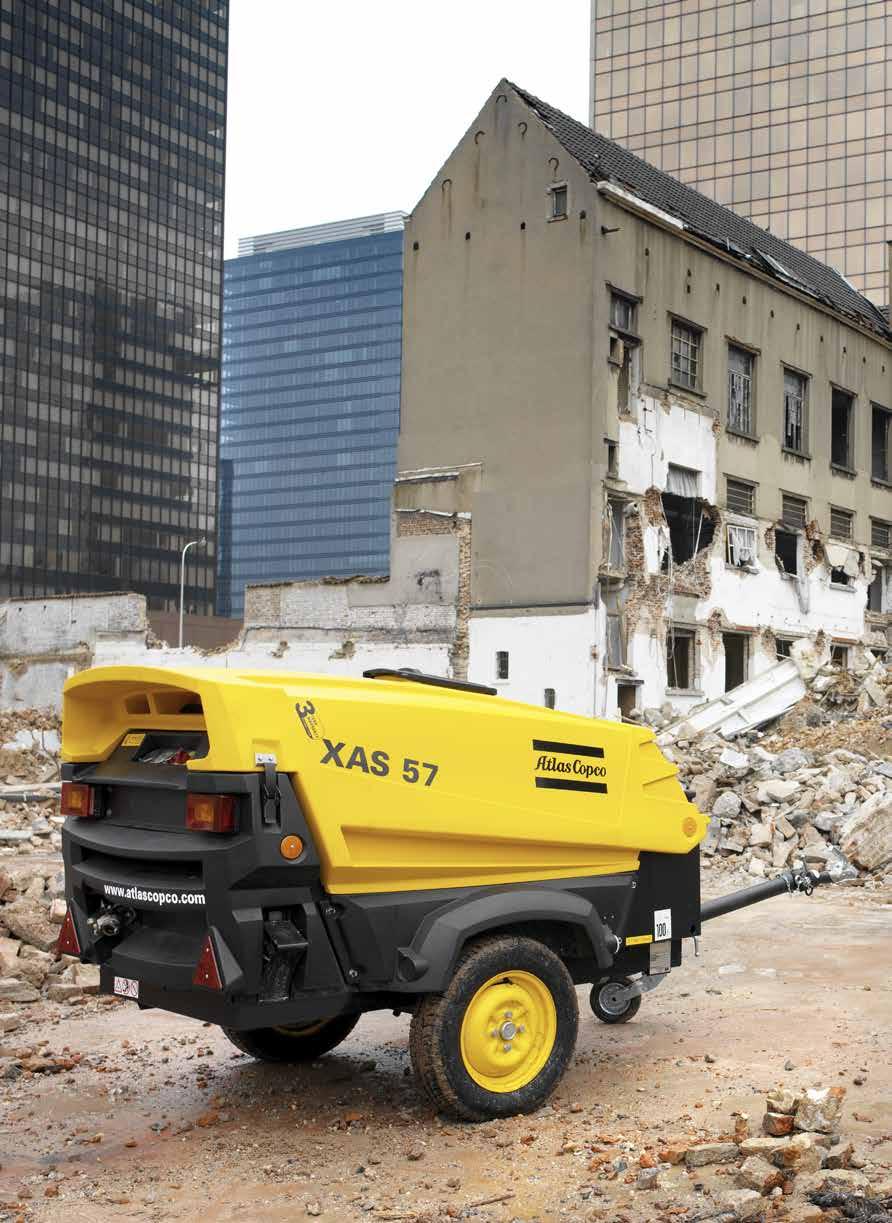
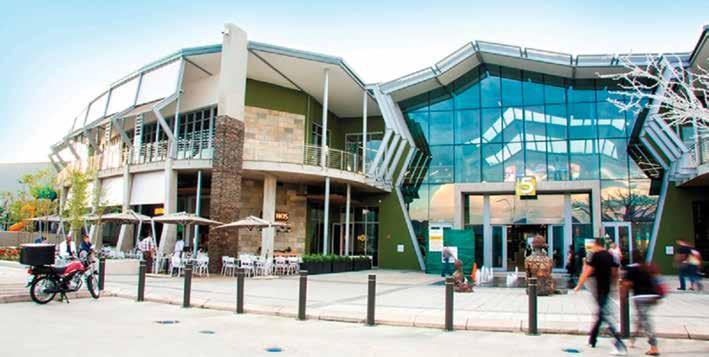
No. 1 Silo at the V&A Waterfront was the overall winner at the prestigious South African Property Owners Association (SAPOA) Innovative Excellence in Property Development Awards 2014, held at the Cape Town International Convention Centre. In an exceptional showcase of extraordinary property development, SAPOA announced the top performers in 10 categories and four overall awards at its annual award ceremony, as well as the top overall award clinched by No. 1 Silo. It revealed the winners at the 46th annual SAPOA International Property Convention and Exhibition.
“The winners highlight excellence in design and innovation. They meet today’s challenges and tomorrow’s needs, and reflect the cutting-edge of design in South Africa and globally,” says Neil Gopal, CEO of SAPOA. “The awards recognised exceptional quality in buildings
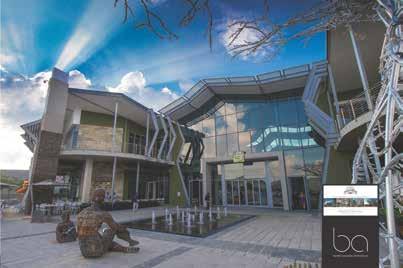
and reward excellence in building design. It is also a litmus test for the health of our industry and, based on the excellent entries this year, our sector is in thriving health.”
Entries have rocketed 65% in the past two years, demonstrating the esteem in which the industry holds these accolades. The award winners were decided by a multidisciplinary expert panel of judges comprising leaders in their fields. SAPOA Awards Committee Chairman, Pieter Engelbrecht notes: “2014 was a fantastic year in terms of recognising talented property innovators in South Africa. This year we received a very positive response, which shows the esteem in which the awards are held.”
Engelbrecht adds: “We have the privilege of showcasing world-class owners and built environment professionals’ outstanding contributions that have significantly enhanced the industry, economy and skylines of South Africa.”
Besides being the overall winner, No. 1 Silo at V&A Waterfront also won the corporate office development category and the overall green award – scooping up a total of three top awards. Developed by the V&A Waterfront, owned in equal parts by Growthpoint Properties and the Government Employees Pension Fund represented by the Public Investment Corporation (SOC) Limited, and designed by Rick Brown Architects, VDMMA, No. 1 Silo is the 18,500sqm corporate head office of blue-chip tenant Allan Gray.No. 1 Silo is part of the first phase in the Silo Precinct of V&A Waterfront, which will soon see the redevelopment of the historical Grain Silo.
The building has been awarded the region’s first GBCSA Six-Star Green Star SA rating, and is seeking “As Built” rating too. With sustainability features in abundance, No.
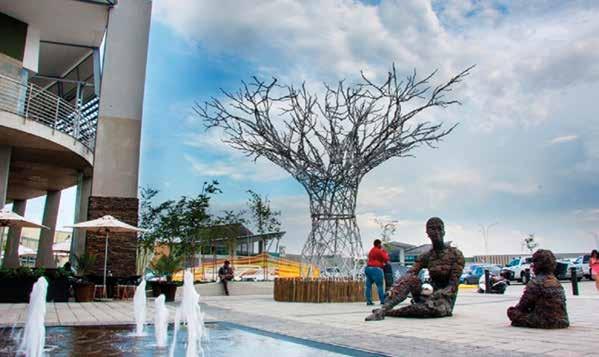
1 Silo is designed to reflect its tenant’s company values and encourage greater communication between its staff members.
And, No. 2 Silo at V&A Waterfront triumphed in the residential developments group. Owned, developed and designed by the same team as No. 1 Silo, the building is the V&A Waterfront’s first residential development in more than five years and the first residential development to be assess using the GBCSA Multi-Unit Residential Design rating tool and to receive a 4-star rating. It comprises 31 one- and two-bedroomed apartments over seven stories with a solar heated rooftop pool and water-wise garden.
Cradlestone Mall wins coveted SAPOA award for retail development excellence Taking pole position in the retail developments category is Cradlestone Mall in Krugersdorp, developed by Sasol Pension Fund and designed by Bentel Associates International. Inspired by its setting, the landmark Cradle of Humankind was the starting point for the philosophy that underpins its design concept. Cradlestone Mall in
Krugersdorp has won the esteemed South African Property Owners Association (SAPOA) Innovative Excellence in Retail Property Development Award 2014.
The awards were announced at the 46th Annual SAPOA International Convention and Exhibition, held at the Cape Town International Convention Centre last week. Cradlestone Mall, which opened its doors in November 2013, is owned and developed by Sasol Pension Fund, Pivotal Property Fund and Retail Africa. It was designed by Bentel Associates International. The 76,000sqm super-regional mall is in the heart of Mogale City in Johannesburg’s West Rand, with a fresh retail mix and wide choice in nearly 200 shops, restaurants and services.
AndriesSchaap, General Manager Investment from Sasol Pension Fund, says: “We are delighted that Cradlestone Mall has earned such a prestigious tribute. So much has gone in to making Cradlestone Mall a success, starting with a real need for quality retail and the vision to develop a world-class mall inspired by the World Heritage Site of the Cradle of Humankind. Thousands of people have


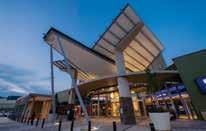


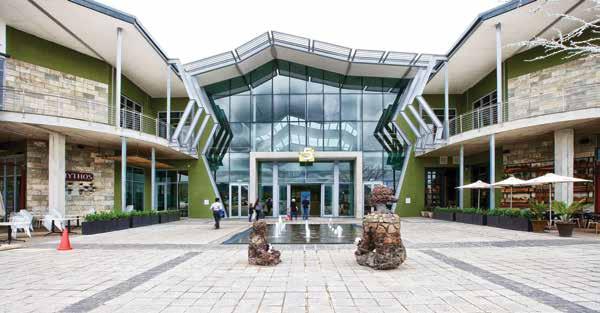
played a role in conceiving, developing and building Cradlestone Mall. They can all be immensely proud of their contribution to the mall and winning this sought-after award.”
Inspired by its setting, the landmark Cradle of Humankind was the starting point for the philosophy that underpins its design concept while, at the same time, adhering to proven retail flow and layout. But, it isn’t only the architectural appeal that is considered in these awards. SAPOA notes recognition is based on a holistic approach which expects developments to be economically viable, to satisfy the needs of the investor and users, to be aesthetically appealing and enhance the locality in which they are situated. Schaap adds: “Cradlestone Mall’s alluring shopping, unique fresh design, easy access, entertainment, leisure and total experience all come together to create a complete leading mall package.”
The shopper appeal of this award-winning mall lies not only in its design, but in a power-house line up of retailers led by of anchor tenants including Woolworths, Pick n Pay, Checkers, Game with FoodCo, Dion Wired and the Edcon Group, as well as Food Lovers Market, which will open this year. Its positive reception has also attracted a selection of new stores which have opened in the mall since it was launched, including latest additions Lego, Baby Boom, Isabella’s Food and Cake shop, John Craig and Sunglass Hut. Plus, Dis-Chem and Virgin Active is also set to open at Cradlestone Mall before year-end.
Cara Grobler, General Manager of Cradlestone Mall, comments: “This SAPOA accolade is a meaningful and respected honour for the mall. Cradlestone Mall has enjoyed a positive and exciting beginning. We look forward to what the future holds, it promises to be very exciting indeed.”

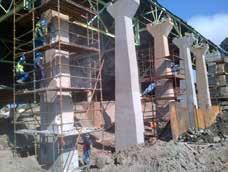


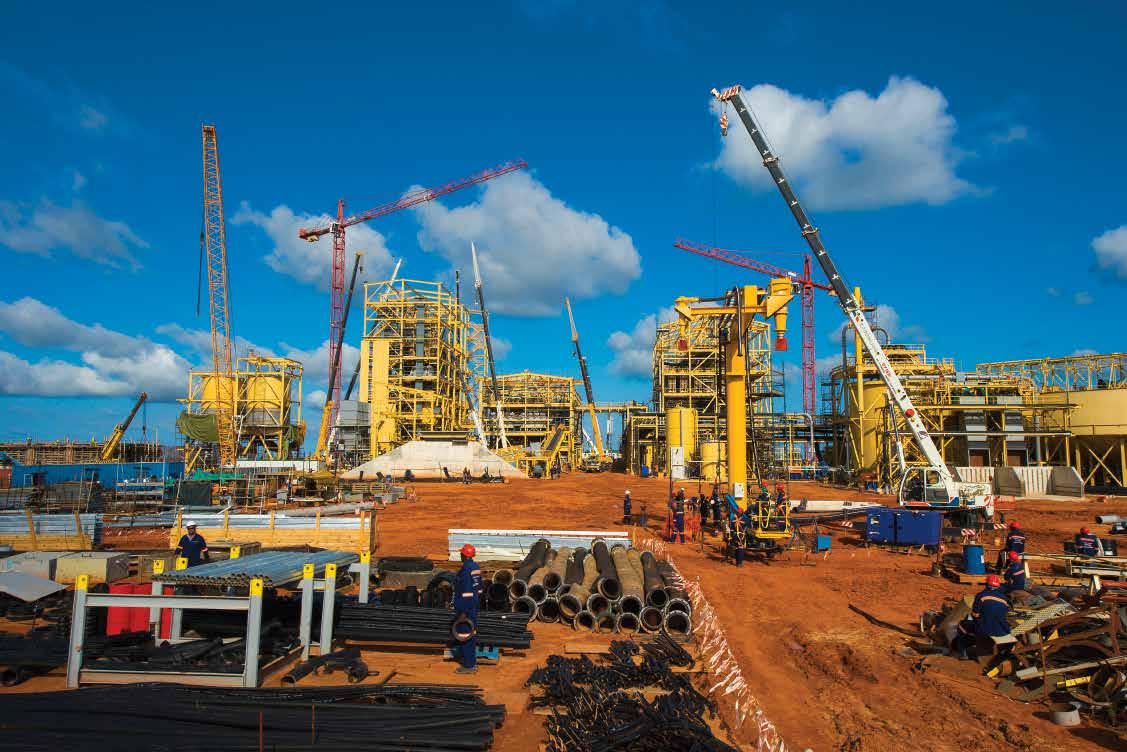


Development
The Superlite Void Former has been developed to provide the South African construction industry with a low cost, lightweight and robust cell former. They are designed to meet the stringent performance requirements imposed by local design and on-site conditions. They are spirally locked, seamed and swaged for maximum strength and resist the full hydrostatic pressure of concrete and all loads associated with the compaction or vibration of concrete during placing.
Product Characteristics
Superlite cell formers are available in uncoated or galvanised mild steel. Standard material thicknesses are 0,6; 0,8; 1,0 and 1,2 mm but other thicknesses can be catered for if the need arises. The standard maximum length of the cell former is 6 m, but special longer lengths are available on request. Where extra long lengths are required, the cell formers may be supplied in split lengths and fitted with a system of spigot and socket joining collars to enable the contractor to achieve any length that may be required.
Stop ends can be provided if required to prevent the ingress of concrete, if the cell is to be used as a void former. Timber braces can be provided to minimise the risk of distortion during transport action especially where long distances are involved.
Note:
Address. 131 Anvil Road, Isando, South Africa
Tel. +27 11 974 8511 | Fax. +27 11 974 8510
E-mail. areddy@armco.co.za | mail@armco.co.za
Web. www.armco.co.za

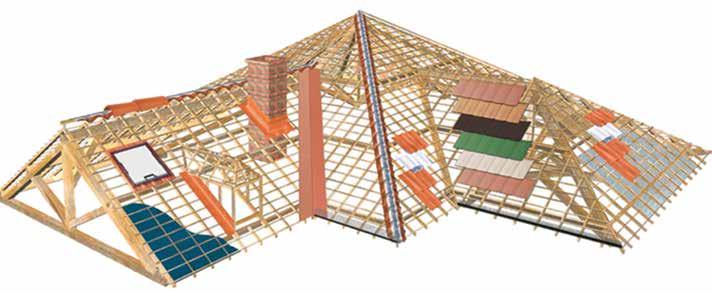
There are many reasons not to neglect your roof. Obvious or unforeseen roof problems are a pain and undoubtedly a significant expense. One of the most common is roof leaks that can cause untimely failure of the roof systems.
If you have water stains that extend across ceilings or run down walls, the cause is likely a roof leak. Roofs commonly leak due to flashing (waterproofing) details that weren’t fastened properly during installation, or underperforming flashing material. Often, wind-driven rain comes in, especially around roof windows, dormer walls and through cracks. Flashing around chimneys can rust through if it’s galvanized steel. Water penetrates these areas and works its way behind the flashing into the house.
Over a short time, small leaks can lead to big problems, such as mold, rotted battens, spoiled insulation and damaged ceilings. It is suggested to fix leaks immediately to prevent major damage to the roof structure. Being wise to the products used on your roof and the problems that may arise, is key to prevent their escalation.
Traditionally metal or lead flashing is used to seal junctions on the roof. These methods take time to install, the material is inflexible and requires an expert roofer to install it, not to mention regular maintenance thereafter. Coverland provide a high performing lead-free alternative to traditional solutions, EasyFlash abutment seal.
EasyFlash rolls are easy and quick to install made of a self-adhesive, high stretch (up to 60%) material with performance CH butyl glue for extreme adhesion to the application surface.
Applicable to all tile profiles, galvanised sheeting or metal surfaces, EasyFlash provides a solution for additional application areas, such as an apron for skylights, solar panels, walls, chimneys and other rising structures. Even under extreme weather conditions, like long-term high temperatures, heavy rain and high winds, EasyFlash increases the durability of a roof, thanks to its outstanding weather resistance. EasyFlash application includes Coverland Connection Strip, fastened securely to the upper edge of the EasyFlash to provide additional sealing against water ingress.
• All weather durability for 15 years used in conjunction with Connection Strip
• Maintenance-free
• Over 50% quicker installation time
• Save more than 50% of costs over lifespan
• Can be painted with any PVA paint to match surface Available at leading hardware stores nationwide or contact
Coverland: info.sa@monier.com or contact one of our branches nationwide www.coverland.co.za.