The editor accepts letters and manuscripts for publication from readers all over the world. Include your name and address as a sign of good faith although you may request your name to be withheld from publication. We reserve the right to edit any material submitted .
Send your letters to: info@constructionreviewonline.com
Construction Review is published eleven times a year and is circulated to members of relevant associations, governmental bodies and other personnel in the building and construction industry as well as suppliers of equipment, materials and services in Africa, the Middle and Far East. The editor welcomes articles and photographs for consideration. Material may not be reproduced without prior permission from the publisher. The publisher does not accept responsibility for the accuracy or authenticity of advertisements or contributions contained in the journal. Views expressed by contributors are not necessarily those of the publisher.
CON
China:Weng Jie Published by Group Africa Publishing Ltd
Download free QR Readers from the web and Scan this code with your smart phone to access more stories on
Uganda Agent Projects Unusual Uganda Ltd. Jemba Plaza, Luwum St.
TENTS
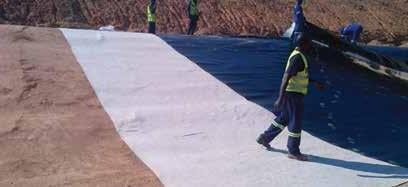
Geosynthetics in Africa
Geosynthetics has emerged as a recognized technology in Africa because it is slowly reducing and replacing the burden on natural resources
22
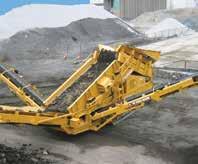
Purchasing crushing and screening equipment
In Africa where the use of concrete has continued to expand due to infrastructure development a good quality crusher and screener is very handy for a busy contractor.
Editor's Comment
Renewable energy can electrify Africa
Energy deficit has continuously impeded on Africa’s development, with approximately 70 percent of people living in sub-Saharan Africa without reliable access to electricity. In Gabon and Nigeria for instance, manufacturers struggle as electricity remains costly and inconsistent. According to the African Development Bank (AfDB), manufacturers in sub-Saharan Africa experience an average of 56 days of shutdown time per year due to power outages.
However, Africa has a huge potential in renewable energy, that is: 11 terrawatts of solar power, 350 gigawatts (GW) of hydropower, 110 GW of wind power, and 15 GW of geothermal power. It is forecast that renewables could provide more than 40% of all power generation capacity by 2040.
Furthermore, the importance of renewable energy for Africa is reflected by the fact that the AU’s Agenda 2063 has also identified renewable energy as a priority area for the first 10 years.
Coal and gas power plants will continue to grab headlines in Africa but gas discoveries in Tanzania and Mozambique as well as oil booms in Angola and Ghana should not overshadow Africa’s enthusiastic efforts to develop renewable energy.
Ethiopia Agent
Haymi Advertising Services
22 Mazoria, Genet Bldg 4th Flr
P.O. Box 1316 - 1110 Addis Ababa
Tel: +251 118 955 855, Cell: +251 930 099 152
Email: ethiopia@groupafricapublishing.com
Ghana Agent
Image Consortium
1st Floor, The Ecobank Building, Tesano.
Tel: 233(0)30 223 2728 I 233(0)274807127 I +233(0)206299159
B23/24, Aishetu Emoewa Plaza, 196, Iju Water Works Road, Ifako Ijaye Lga,Agege, Lagos.
Tel: 234-1-7347860
Email: nigeria@groupafricapublishing.com
Rwanda Agent
Kolline & Hemed Inc., B.P. 3328, Kigali, Rwanda
Tel: +250 03 748106
E-mail: rwanda@groupafricapublishing.com
Website: www.kollinehemed.org
Zambia Agent
Dayflex Limited, 4th. Floor Tazara House
Dedan Kimathi Road, Lusaka, Zambia.
Tel: +260 211 230 529 / +260 977 756 663
Email: makukasue@mail.com, dayflex06@gmail. com
Robert Barnes
x
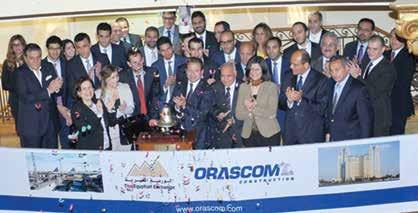
Orascom Construction signs US$320m contract
Orascom Construction Limited has signed a US$320mn engineering, procurement and construction (EPC) contract to build Abu Rawash Wastewater Treatment Plant in Egypt. The construction company has formed a 50:50 joint venture with FCC Aqualia, a subsidiary of FCC, to deliver the project. The facility will have a capacity of 1.6 million cubic meters per day, comprised of primary and secondary treatment units. The joint venture is however, planning to execute the project over phases in 37 months. Once complete, the facility will serve 6 million people. In addition to the EPC scope, the joint venture will operate and maintain the facility for three years. This operation and maintenance scope highlights Orascom Construction’s strategy to grow a recurring income portfolio in the infrastructure sector. A 50:50 joint venture between Orascom Construction and Aqualia New Europe is currently the co-owner and co-developer of New Cairo Wastewater Treatment Plant, Egypt’s first public private partnership.
Fossilcote Expands its Factory and Market Shares
Fossilcote Limited, a respected manufacturer of Resinous flooring and Niche Cementitious coatings, has expanded its Market share therefore increased its factory operations in South Africa. Fossilcote is ever increasing in popularity for its resinous flooring systems and cementitious coatings.The company has its footprints in many parts of Africa, but boasts operations is SA, Kenya, EAC. Furthermore, Fossilcote have extended their major operations to the great South Africa, SADC, West Africa, North Africa and East African countries. Recently, Fossilcote South Africa operations was nominated for major tenders with construction contractors and their accredited application A-team have already embarked on these projects.
Karmod Nigeria to solve Housing Deficit Challenge in launched campaign
Karmod Nigeria recently launched a campaign to solve the housing deficit challenge in the country. This campaign involves making prefabricated housing a viable alternative to the brick houses . General Manager of the company, Mr Fehim Ozkanca, explained that this move is necessary at this time. This is due to the fact that Nigeria is just getting out of recession. He also explained the suitability of the move, since prefab houses are cheaper to construct. They also take less time and are more eco-friendly when compared to brick houses. Karmod has built hundreds of classrooms and mass camp houses for internally displaced persons over the last five years. It has also built over 114 of police transit camp structures in over seven states for the Nigerian Police Force.
Fibertex Geosynthetic Clay Liners for use as sealing barriers in landfill applications
Bentofix GCLs are needlepunched, reinforced composites that combine two durable geotextile outer layers and a uniform core of high swelling powder sodium bentonite clay. This forms a uniform, multi-directional, shear resistant hydraulic barrier, with self-sealing and re-healing
characteristics. Bentofix GCLs are used as a replacement for conventional compacted clay layers and when hydrated with water, the bentonite swells and forms a low permeability gel layer, with improved hydraulic performance over traditional, thick compacted clay liners. The needle-punched process and
‘Thermal Lock’ manufacturing technology increases the internal and external shear strength of GCLs, creating a single, engineered barrier that utilizes the best of both synthetic and natural materials and expands the range of applications in which GCLs can be used. “The Bentofix GCL product is particularly well suited for use in the composite liner and capping systems of landfills, as well as in cut-off trenches and other installations where a reliable barrier system is required,” says Darryn Meisel, national sales manager, Fibertex South Africa. “Bentofix X GCLs represent the latest advancements in GCL products, where the woven geotextile is
coated with an additional, low permeability polyethylene (PE) layer to achieve an immediate barrier prior to hydration. With the additional bonding of a PE coating, the fibre reinforcement is also more permanently locked and further increases the pullout resistance, as well as the internal shear strength of the GCL. “Bentofix X also enhances the available factor of safety and confidence in products and their applications for design engineers. The addition of the PE layer exemplifies how modifications to geosynthetic product design can be made to anticipate exactly what the design engineer requires in effectively dealing with the specific challenges of every site.
SAICE to launch South Africa’s third Infrastructure report
The South African Institution of Civil Engineering (SAICE) is a voluntary association of civil engineering professionals and practitioners, and carries no commercial vested interest. As such, the Institution is positioned uniquely to prepare IRCs, drawing on the experience of its diverse network of practitioners across a number of sectors. According to past SAICE President (2006), Sam Amod PrEng, “Report cards that attempt to greet the condition of infrastructure, or comment on the trends in their condition, have been published in the developed world since the late 1990s. They are now gaining traction in the developing world, starting with South Africa in 2006. This year, on 26 September, SAICE will publish and launch its third IRC, which will provide an overall grade for the country’s infrastructure. The report will cover 11 sectors, including roads and rail, water supply, electricity, schools and universities, sanitation and waste management, and health facilities. These sectors are subdivided into 29 subsectors, each being given a grade and a brief description of the infrastructure involved – all in a way that will be accessible to the public.
NHBRC launches newly improved certificates
The National Home Builders Registration Council (NHBRC) has introduced new builder registration and enrolment certificates with stringent security features in its effort to limit fraud and keep up with evolving security technologies. The new security measures include an embedded watermark during paper manufacturing; a chemically sensitive paper; micro printed text; background image printed with fine line security and control numbers done with an ink that cannot be rubbed off. “We have enhanced the security features of the new certificates based on industry standards following a number of reported fraudulent activities that posed a risk to the warranty fund and these needed to be managed effectively,” said NHBRC Business Services Executive, Ms Thitinti Moshoeu.NHBRC encourages homeowners, potential home buyers and financial institutions to familiarise themselves with these enhanced certificates and continue to exercise caution when dealing with contractors /developers / builders by ensuring that they verify builder registration and home enrolment with the NHBRC.
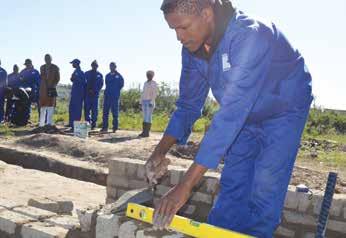
NHBRC Training in East London
Architects call for sanctions to curb building collapse
The Nigerian Institute of Architects has called for tough sanctions against those found wanting in any cases of building collapse. The institute stated this at a press briefing ahead of its 28th edition of the Archibuilt. Speaking at the briefing, Director, Archibuilt Development Services Limited, Umaru Karaye said poor building designs, unqualified contractors as well as use of substandard building materials are major causes of building collapse. Karaye also said that as a measure to curb building collapse, the institute has decided to deny producers of substandard building materials access to exhibit their products during the 2017 Archibuilt exhibition. Furthermore, he condemned situations where reports of investigations conducted on collapsed building are not made public.
NCA commences contractor training for year 2017/2018
NCA’s Contractor Training Programme for the financial year 2017/2018 has officially begun. This year’s training covers fourteen regions across the country. This is in a bid to ensure every registered contractor gets a chance to attend the training. The theme of the training is “Effective legal and Institutional Frameworks for Sustainable Construction Growth.” The first training will take place on the 31st of August to the 1st of September at the Jumuia Conference and Country Home in Limuru. The topic covered will be “GIS Approaches for Construction Quality Management”. In order to promote efficiency in service delivery, all attendees will require to register in advance for the training. The registration deadline is at least three days before each training. For example, For the Kiambu training that will take place from Thursday, 31st August, the registration deadline is strictly Monday, 28th August. This will allow sufficient time for payment verification as well as for planning and logistic purposes to ensure all attendees have access to quality service delivery. Those who will not have registered will not be allowed into the training halls. Payment, however, can be made at any time. If the registration deadline has passed, the fee paid will be valid for any other training on the schedule.
7th Annual Windaba Conference and Exhibition
The 7th Annual Windaba Conference and Exhibition will take place from 1516 November 2017 at the Cape Town International Convention Centre (CTICC), South Africa. A flagship SA Wind Energy Association (SAWEA) event, Windaba has established itself as Africa’s leading wind energy conference bringing together some 600 international and domestic decision makers and stakeholders that are active in the contemporary wind industry. This ‘mustattend’ event provides a solution-focused platform for consideration of the challenges and opportunities for the established Wind power market. his year, under the theme, ‘Wind Power: Building Futures’ SAWEA in proud partnership with the Global Wind Energy Council (GWEC) will host its most dynamic conference yet.
Date: 15th - 16th November 2017
Venue: Cape Town International Convention Centre (CTICC), South Africa.
Kenya
- Architectural Association of Kenya
- Institute of Quantity Surveyors of Kenya
- Institute of Engineers of Kenya
- Association of Consulting Engineers of - Kenya
- Association of Professional Societies of East Africa APSEA)
- Kenya Property developers Association
Association Partners
- Institution of Surveyors of Kenya
South Africa - ASAQS - SAICE
- South African Council for the Quantity Surveying Profession
- Khuthaza ( Women for Housing)
- Concrete Manufacturers Association
- Green Building council of SA
- South African Property Owners Association
- Master Builders South Africa
Uganda
Institute of Surveyors of Uganda
Uganda Institute of Professional Engineers (UIPE) & Uganda society of Architects
Botswana
Gas Options: North & West Africa 2017 Nigeria Buildexpo 2017
Gas Options: North & West Africa will be taking place from 29 -30 November 2017. The inaugural meeting will come to Casablanca in response to the growing gas opportunity in the North & West Africa region and to meet the needs of the LNG regional development plans. The ‘Gas Options – North & West Africa’ meeting will co-locate with the annual ‘Africa Renewable Energy Forum’, gathering some of the biggest investors on the globe active in the gas and renewable markets, in the shared exhibition and networking space.
Event: Gas Options: North & West Africa
Date: 29- 30 November 2017
Venue: Casablanca
- Institute of Botswana Quantity Surveyors
Ethiopia
- Association of Ethiopian Architects
- Ethiopian Association of Civil Engineers
- Construction Contractors Association of Ethiopia
Zimbabwe
- Zimbabwe Institute of Quantity Surveyors
- Zimbabwe Institute of Engineers
- The Construction Industry Federation of Zimbabwe (Cifoz)
Ghana
- Ghana Institute of Engineers
- Architects Registration Council
- Ghana Institute of Surveyors
- Ghana Green Builders Association
- Ghana Institute of Planners
- Association of Building and Civil Engineering Contractors of Ghana
Namibia
Institute of Namibian Quantity Surveyors
Association of Consulting Engineers of Namibia
Nigeria buildexpo has showcased its place on the market and importance for the industry in Nigeria and the entire African region as well as its international value. Attracting almost 3200 professional visitors, presenting up to 72 companies from 12 countries and concentrating on creating fruitful working environment for all participants and attendees, it has proved its significance and ability to grow and develop further. BUILD EXPO has managed to attract the highest quality of visitors, and become the best instrument for entering or expanding on the market in the region. Nigeria Buildexpo is going to be held again between 09-11 November 2017 at Landmark Centre.
Tanzania
- Tanzania Institute of Quantity Surveyors
- Construction Regulation Board (CRB)
- Tanzania’s Registration Board of Architects and Quantity Surveyors (AQSRB)
Nigeria
- Association of Consulting Engineers Nigeria
- Association of Professional Women
Engineers Of Nigeria
- Council of Registered Builders of Nigeria
- The Nigerian Institute of Architects
- American Association of Petroleum
Geologists Africa Region
- Nigeria Society of Engineers
- Nigeria Institute of Architects
- Building and Construction Skilled Artisans Association of Nigeria (BACSAAN)
Zambia
- Zambia Institute of Architects (ZIA)
- Association of Building and Civil Engineering Contractors (ABCEC).
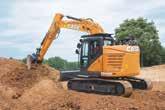
Case has expanded its D Series lineup of full-size excavators with the introduction of an updated minimum-swing model, the CX145D SR excavator.
A 102 horsepower Tier 4 Final (T4F) engine powers the machine. The CX145D SR has an operating weight of 32,100 pounds and delivers forces of up to 21,400 lb.-ft. It also lifts capacities of up to 21,350 pounds. Case says the machine’s engine is a maintenance-free T4F solution. This means that no diesel particulate filter (DPF) or regeneration is required. Instead, the engine implements a combination of selective technologies to meet emission regulations. Case says the machine has faster cycle times thanks to improved breakout forces and more lifting strength. A new electronically controlled pump, larger control as well as several sensors make these features possible. These upgrades combine with Case’s Intelligent Hydraulic System (IHS). Plus, the CD145D SR re-uses hydraulic fluid whenever possible. This feature further increases to cycle times. The machine’s machines’ Speed Priority, Heavy Duty and Automatic modes further improves efficiency. The machine’s cab features a Bluetooth radio, adjustable operator station with a heated air-ride seat. It is also fitted with standard rear and side view cameras.
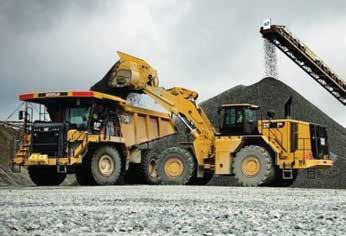
CAT unveils 988K inert gas electrical drive wheel loader
CAT’s 988K electrical drive wheel loader is intended for job sites where fuel potency makes a distinction within the machine’s total price of operation. The fuel savings area unit due to the new loader’s electrical drive system. The Cat C18 ACERT engine, mechanical drop box, drive line and axles from the non-XE 988K area unit a number of the maintained options. Cat says the inert gas model delivers 100 percent additional productivity in load-and-carry applications than the quality 988K. In addition, the electrical drive system cuts down on overall maintenance prices. This is while increasing engine life by three, 500 hours. Operators acquainted with the 988K can feel right reception within the new inert gas model. The foremost noticeable distinction throughout operation include the improved handling and smoothness of operation the inert gas offers. The 988K inert gas boasts a single speed vary. This eliminates the requirement for gear shifting. Instead, Cat says virtual gears facilitate the management of machine ground speed and deliver sleek direction shifts. The cab additionally options isolation mounts and air-suspension seats. This is to make the ride easier for operators, whereas the controlled structure reduces sound levels.
Liebherr is expanding its series of Generation 6 crawler loaders with the addition of the new LR 626 Litronic crawler loader. The new LR 626 has an operating weight of between 16,130 and 18,600 kg. In addition, the standard bucket has a capacity of 1.8 m³. Its four-cylinder diesel engine also produces an output of 105 kW / 143 HP and complies with Tier 4f emission standards. The LR 626 crawler loader has electronic drive control with integrated ECO function. This mode allows the driver to lower use of fuel through the reduction of the engine speed. In this way, the ECO control ensures more efficient operation with light to moderately heavy use. The power adjustment involves constant monitoring of the engine and all other machine aspects. As a result the engine power is automatically temporarily increased according to the current requirements.
KOHLER-SDMO Unveils New Large Diesel Industrial Generator Line
KOHLER-SDMO proudly unveiled an all-new range of large diesel industrial generators at a global launch event in last October, in Strasbourg, France. The company’s new KD Series includes generator sets in nodes between 800 kVA and 4200 kVA, which are powered by an entirely new line of Kohler G-Drive engines, also introduced at the event. The generators will be available globally under the KOHLER and KOHLER/SDMO brands and are designed to deliver extreme durability and ultimate reliability in a variety of stand by and prime applications. Targeted industries include: data centers, healthcare, water treatment, oil and gas, telecommunications, mining, and more. “This is an exciting and transformational product launch,” said Hervé Prigent, General Manager of SDMO Industries. “After a very collaborative and thorough worldwide development process, we’re very pleased to be rolling out this new line of generators. We expect strong response to these advanced new gensets that will offer beneficial cost savings and unrivaled performance to our customers around the globe.” Users of the KD Series generators will find cost savings in part through the product line’s superior fuel efficiency, extended service intervals, and space-saving footprint. The new generators are designed to meet global emissions regulations and are highly customizable.
Liebherr expands series of crawler loaders
Impact of technology on communication at construction sites
Technology has since brought the need for efficiency at the construction sites. Consequently, project managers have since adopted applications which enable them to work not only remotely, but also control the work tasks and workers. As such, the conventional punch lists, Excel spreadsheets and email are slowly phasing out of use.
Transparent Reporting
Tracking work and reporting on progress helps keep job site communication transparent. Project managers are able to compile a running list of data analyzed and formatted into reports through the application.
"Construction apps can also let managers know immediately when employees arrive on-site. That same technology comes in handy in the monitoring of building materials. The project manager is able to approve construction schedules, take down any issues and indicate when work is complete. The data input, aside from tabulating the project progress will give a projection of the completion of the same.
Project Meetings
With multiple parties invested in the success of construction projects, meetings are inevitable. Organizing a meeting used to be easier, simply because most
Project managers can update the punch list in real time and assign work to the correct subcontractor immediately.
projects were local endeavors. Now it is common practice for a project’s owner, construction manager, GC, and subcontractors to all be located in different cities, across the country. Thankfully, technology makes these projects possible by getting all the necessary parties in the same room, virtually.
Real-Time Updates
Project managers can update the punch list in real time and assign work to the correct subcontractor immediately. When workers are able to access and edit information on-site, they have the most up-to-date information available. The information is always there and always upto-date. In situations where procrastination is necessitated probably due to a back log of materials, the project manager shall be aware. This prevents
wastage as well as ensuring time management.
Efficient Task Lists
The allocation of tasks and sharing status updates between subcontractors and project managers is important at a job site. This is because it means the difference between a property being finished on time and a project delayed and filled with unresolved problems. The technology also allows project managers to sift through various projects. Through it they are able to manage task lists and create reports by specific task types.
Time Tracking
In the old days, workers clocked in and clocked out with their time cards, so supervisors knew when they got there and how many hours they worked. But they didn’t get any information about what the workers were doing during those hours, which caused nightmares for the accountants trying to determine phase codes and regular vs. overtime pay. With the introduction of technology, it is easy for workers to record real-time details of when they are working and what they are doing, by using mobile apps, phone calls, text messages, and even Twitter. And there are bilingual options to avoid errors due to language barriers. Some of the available apps take the ‘when and what’ aspect further by using GPS to record ‘where’ as well. While location-tracking can improve accountability, compliance reporting, and resource allocation.
Power to the people
Electrify Africa now
Africa’s energy needs are both huge and urgent. Government and nongovernment organizations must work together to electrify the continent using on-grid, off-grid and mini-grid networks. In Côte d’Ivoire, children carry backpacks to school with built-in solar panels. When they get home, they plug the panels into lamps so they can do their homework. On the other side of the continent, rural households pay as little as 50 cents a day for solar electricity systems that power three lights, five phonecharging connections and a radio.
Across Africa, these and many other ingenious solutions are helping to meet the continent’s huge energy needs much faster than conventional means.That speed is critical. Africa’s energy needs are not only huge, but they are also urgent. Day after day, the continent’s lack of modern energy is holding back economic growth, job creation, sustainable agriculture, health and education.
The challenge for governments, their development partners and the private sector is how to electrify millions of African households, remote communities and smallscale entrepreneurs as quickly as possible. To meet that challenge, countries need to consider every available option, including off-grid household systems and mini-grids, as well as the expansion of national grids.
It’s a huge task. But we know it can be done because it’s happening already, as we show in Lights, Power, Action: Electrifying Africa, a new report released this month by the Africa Progress Panel, which I chair.
Many countries have set ambitious targets for increasing energy access or for advancing other elements of the energy transition. Governments are amending electricity laws and improving regulatory frameworks, clearing a path for investors. Independent power producers are increasing the involvement of the private sector and showing how to scale up renewable power
Kofi
Annan, Chair of the Africa Progress Panel. He served as the seventh Secretary-General of the United Nations
generation capacity. On-grid solutions — as in energy generated in large power plants and carried to homes via power lines — will always form the base of the energy supply in Africa. But African countries grappling with limited financial resources, weak energy planning and rapid economic growth each need to choose the mix of energy technologies that will increase access fastest while offering the best value for money.
New technologies
New technologies offer promising ways to close Africa’s energy gap more quickly than would be possible by relying on grid connections alone. Off-grid solar power and mini-grids, as standalone sources of energy generating power where it’s needed, have vast potential to advance access to electricity in sub-Saharan Africa. Off-grid solar products can act as rungs on an “energy ladder,” providing a range of energy services to households and enterprises with different energy needs and incomes.
and small companies. Technological innovation means that mini-grids can also offer sustainable permanent alternatives, especially as reliable and affordable products come on-stream that are attractive to small and medium-sized enterprises operating far from the national grid.
In short, off-grid and mini-grid power has a crucial role to play in meeting the three great energy challenges that African governments face: providing all their citizens with access to secure and affordable energy; building the energy infrastructure needed to drive inclusive growth and create jobs; and limiting carbon emissions.
To make that happen, African governments need to support the development of an enabling environment through which companies can enter energy generation, transmission and distribution markets, climb the value chain and build the investment partnerships that can drive growth and create jobs.To tap the potential of new energy technologies, African governments need all the support they can get. Bilateral and multilateral donors have pledged billions of dollars to Africa’s energy transition, but little of that money is moving yet. Donors need to realize that Africa’s energy imperative is urgent.
"Opportunities to make a difference, fostering and supporting a green economy, exist within every project or business initiative.
Families can take advantage of innovative pay-as-you-go schemes, often using mobile phone payment to move from solar lighting onto systems that are a step-up and able to generate enough power for several household appliances. Community services such as schools and health clinics can also be powered using off-grid solar energy, which can also improve the productivity of farms
As well as opening up the continent to the radical possibilities of off-grid and mini-grid technology, African governments have a vital task to undertake, one that goes to the heart of the continent’s energy problems: fixing national energy grids that are unreliable and financially fragile. Many energy utilities suffer from mismanagement and inefficiency. A lack of accountability and transparency nurtures corruption. These are serious and persistent problems, yet they are solvable, as many countries are demonstrating. Governments are showing leadership. But they need support to put in place the integrated plans and policies that can scale up Africa’s energy transition. Ongrid and off-grid, we have the technologies that Africa needs to bring energy to everyone. Let’s get to work.
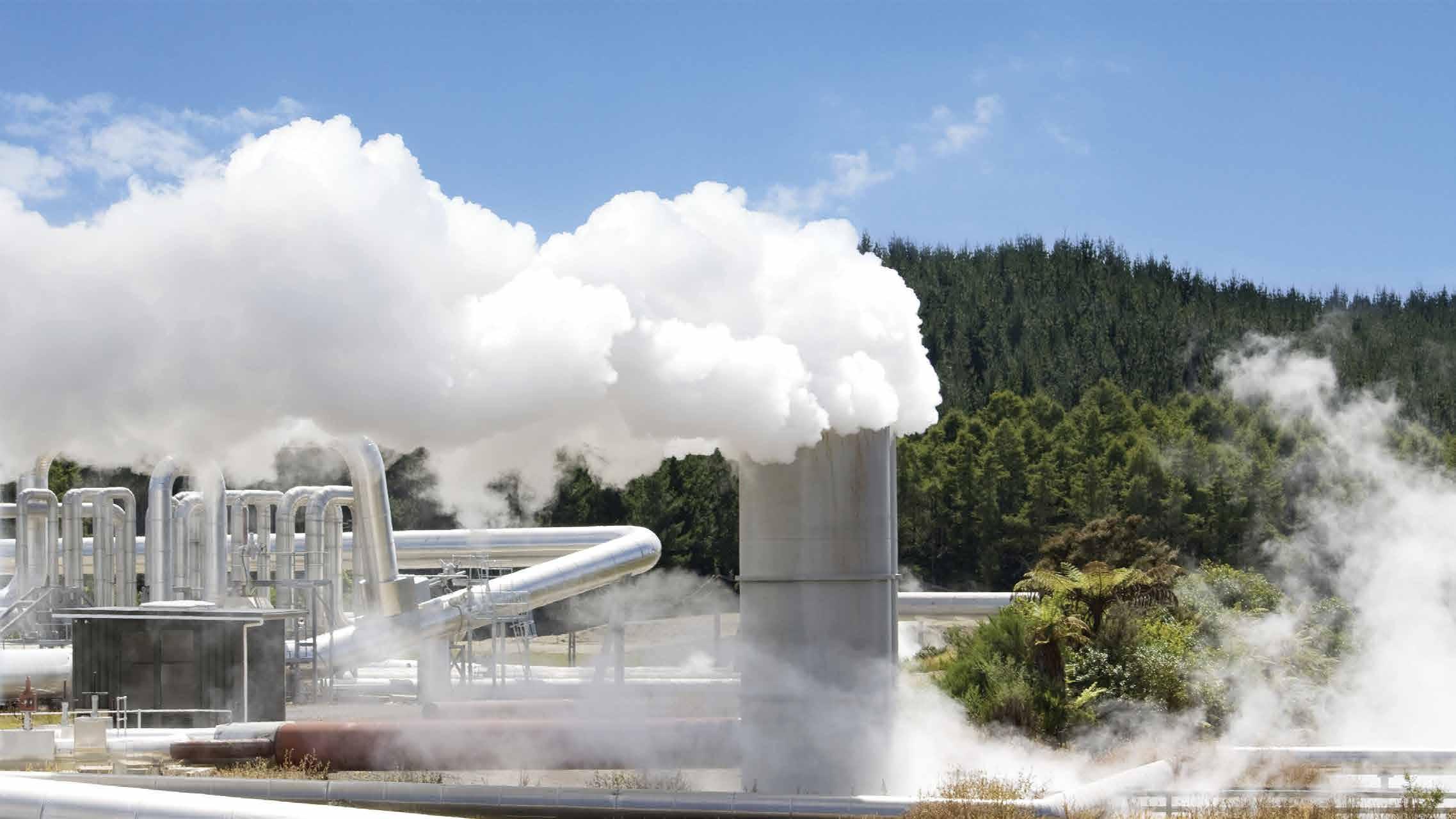
Africa’s geothermal potential
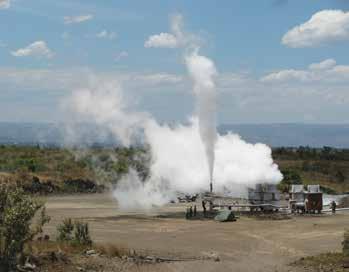
The contribution of geothermal to Africa's electricity generation is currently modest, with around 637 MW of installed capacity. An estimated 0.4 GW of new geothermal power generating capacity came online in 2016, bringing the global total to an estimated 13.5 GW. Indonesia and Turkey were in the lead for new installations with 205MW and 197MW respectively. However, excellent geothermal resources exist in the East African Rift Valley system and
the potential is large, particularly in Kenya and Ethiopia. Most Africa has limited geothermal potential except for East Africa where the existence of the Rift Valley offers huge potential. It is estimated that the East African Rift Valley has between 7 GW to 15 GW, but could possibly be more. The Great Rift Valley is a 6,000km terrain stretching from northern Syria to central Mozambique in South Eastern Africa has vast geothermal reserves. If tapped, this can considerably
reverse Africa’s chronic energy shortages in a sustainable and less environmentally disruptive manner.
African steam
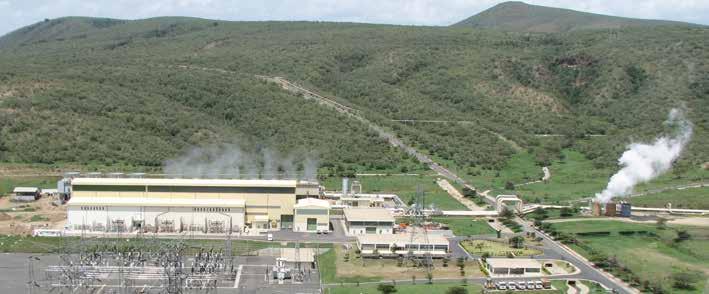
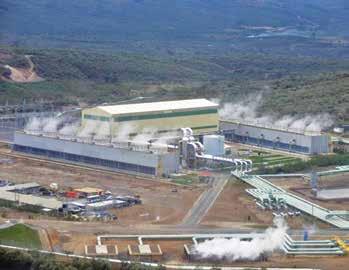
The potential offered by the Rift Valley has not been lost on one particular country, Kenya. The country recently completed; a 29 MW geothermal plant at the Olkaria III complex, increasing the facility’s capacity to 139 MW at year’s end, bringing the country’s total potential to a total operating capacity of about 630 MW. In the pipeline is Olkaira 4 that is underway and set to add an additional 158MW. Other projects are underway along the Rift Valley and the country plans to have over 5000MW of geothermal power by 2030.
Ethiopia shares the geothermal riches of the Great Rift Valley with Kenya, but limited development has occurred to date, with about 7 MW in place. This marks the entirety of Africa’s participation
in geothermal energy. The geothermal industry continued to face challenges in 2016, burdened by the inherent high risk of geothermal exploration and project development, the associated lack of risk mitigation, and the constraints of financing and competitive disadvantage relative to low-cost natural gas. Yet the industry made progress with new project development in key markets, and industry leaders cemented partnerships to tackle new opportunities
Corbetti Project
In 2015, Ethiopia pushed the agenda by signing a 500 MW PPA for the first phase of the Corbetti project, which is expected to be built in two stages within 8 to 10 years. The International Finance Corporation has worked with Ethiopia to enact regulations to facilitate private investor engagement in geothermal projects. Ethiopia has gone further and reclassified
geothermal resources as renewable energy, making geothermal energy use exempt from royalty payments that are exacted from extractive mineral resources under the country’s mining laws.
According to Edward Njorge of Corbetti Geothermal Project, Ethiopia, like other African nations, suffers from a lack of energy and its lack stunts development. Its 7,000MW plus geothermal potential can help in bridging the energy gap. “Ethiopia’s Growth and Transformation Plan (GTP II) 2015 to 2020 plans to boost the country’s total generation from the current 4,200MW to 17,300MW by 2020. The long
term goal is to reach a generation capacity of 37,000MW by 2037,” he added.
Kenya
According to Pavel Oimeke, head of renewable energy at the Electricity Regulatory Commission (ERC), Kenya’s industry regulator, the country is on course to making sure that 90 percent of its energy comes from renewable sources. With its huge potential for geothermal, the country is making good progress to achieving production of 5,000 MWs of power, over 70 percent from renewable sources by 2030, when it hopes to move to a full middle income status.
“Kenya’s potential for
geothermal is huge, and Kenya is proudly now one of the largest steam power producers in the world and the leader in Africa; we will to continue exploiting this stable and reliable green resource to power our development needs,” said Oimeke.
Kenya is now ranked 3rd globally in geothermal energy capacity, having improved one position from the 2016 rankings when it added 20MW to the grid in 2015; this is according to the Renewables Global Status report 2017. Based on preliminary exploration, current estimates indicate a geothermal potential of 4000 MW in Tanzania. The government of
Tanzania is interested in the use of small-scale geothermal plants for rural electricity minigrid systems, although this has not yet started. The geothermal field in the vicinity of Lake Natron in Tanzania would allow base-load power to be fed into the main grid system of the Tanzania Electricity Supply Company. Tanzania is also working on a geothermal component that would catalyze the development of more than 100 MW of geothermal power, while also establishing an enabling environment for largescale geothermal development. Building on the Kenyan experience with the Menengai geothermal project, the African
Development Bank is working on an ambitious geothermal development program for Africa. The ADB is focused on developing the Tanzania geothermal potential by replicating Kenya’s model.
Djibouti
Djibouti also plans to supply nearly all of its electricity needs through geothermal energy. It has so far identified four fullsized geothermal production wells. In January 2014, Djibouti's cabinet approved funding for several projects to be carried out by development partners for the first phase of the geothermal energy development at Lake Assal. The financing arrangements took the form of a loan worth more than US$6.1m and a grant worth more than US$14.4m for six proposed projects. The overall budget for the project is US$30m and it will be supplemented with funding from the French Development Agency and the Organization of the Petroleum Exporting Countries Fund for Development.
The country has recently advertised a tender to supply the geothermal project with equipment after receiving funds from the French Development Agency towards the cost of the project. It is intended that part of the proceeds will be applied to eligible payments under the contract for steel materials for drilling operations.
South Africa is also relatively well-endowed with approximately 87 thermal springs documented of temperatures ranging from 25 degrees Celsius to 67.5 degrees Celsius. Of the 87 thermal springs, 29 have been developed for direct use, mainly as family leisure and recreational resorts, using the water for health or spa
purposes. A recently launched research project in South Africa is aimed at investigating the feasibility of generating power using a thermal spring binary system as well as from hot granites.
Progress on the development of geothermal energy in Africa has been constrained, in part, by a lack of clear resource assessment standards. To help address this challenge, in 2016 new geothermal specifications were completed under the UN Framework for Fossil Energy and Mineral Reserves and Resources. The framework’s objective is to harmonize standards for reporting geothermal resources in a manner similar to other extractive industries worldwide, for the benefit of investors, regulators and the general public.
The industry is sensitive to trends in oil and natural gas prices. Low oil and gas prices tend to reduce global demand for drilling rigs for oil and gas exploration, which can have a positive effect on the geothermal industry by reducing the associated costs of geothermal exploration and the development of new fields. Conversely, low fossil fuel prices in general, and natural gas prices in particular, tend to reduce the competitiveness of geothermal heat and power.
Though the story of geothermal energy seems to be largely about Kenya, the country’s experience and success will undoubtedly spur other countries astride the Rift Valley to take greater measures to take up this inexhaustible low carbon emission source of energy as an alternative to fossil fuels and environmentally disruptive hydro power projects.
Mwale Medical & Technology City to Transform Kenya
Amulti-billion shilling project is taking shape right in the heart of Kakamega County in Western Kenya.
Mwale Medical and Technology City (MMTC) is set to be a massive metropolis located in the Lunza area of Butere, a sub county of Kakamega. Once complete in 2020 as envisioned, it will easily be the largest single private development in the country. The project has stirred the hitherto sleepy rural community and generated excitement across the county.
The brainchild of Mr Julius Mwale, a Kenyan investor based in New York, MMTC consists of a shopping mall, a 5000-bed hospital, a technology hub, an airport, thousands of homes and leisure facilities including a 36hole golf course. The development is backed by an extensive road network, street lighting and an independent power plant. There will also be cable car transport within the city.
But why Butere? This has been the question on the minds of many. Ordinarily, such massive developments take place within or near major cities in order to attract the middle to high income population with substantial disposable income.
“The main issue was land”, says Mr Mwale. “Most large projects are mired in land controversies but given our location, it was easy for us. And because of the market that we are targeting, that is East Africans, it was a much better location than Nairobi.” He reveals that an elaborate feasibility study was conducted between 2007 and 2012 to assess the viability of the project. It emerged that approximately 180,000 East Africans travel to India and South Africa annually to seek specialized medical services. “We decided to offer those services here and possibly capture at least a third of that market”, says Mr Mwale, who is also the lead investor.
The project, set on 5,000 acres, consists of three phases. Phase 1 comprises the mall, supermarket, bed and breakfast accommodation and 90,000 square feet of private residences. Work commenced in 2014 and was completed in July 2016.
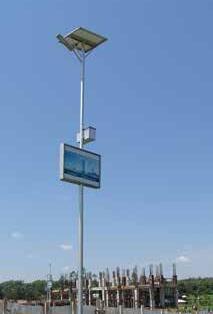
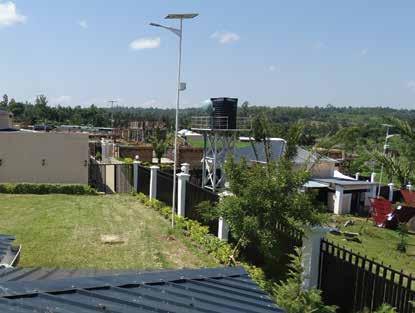
Phase 2, currently nearing completion, consists of the first section of the hospital and over 70km of roads built to all-weather standards. Sections of these roads are already tarmacked. This phase also comprises more than 300 solar street lights that will light up the entire complex.
According to Mr Mwale, the first section of the hospital will be the cancer unit while other departments such as renal, heart and infectious diseases will be built in Phase 3.
Phase 3 itself, which runs from September 2017 to 2020, comprises 4,800 homes for doctors, nurses and other health workers built around
a 36-hole golf course and a power plant that will utilize waste from the hospital. The power plant is expected to generate 144MW, out of which MMTC expects to consume about a fifth while the surplus will be fed into the national grid. It is also in Phase 3 that the technology park for mobile and medical technology will be completed. “Over 10,000 engineers are expected to be based here”, says Mr Mwale.
Other major components of the last phase are the airport, convention centre and a water park for recreation. The airport, convention centre and hospital will be connected by cable car.
MMTC’s total cost of construction is a whopping $2 billion partly funded by US investors and supplemented by the anticipated power purchase agreement and sale of homes. According to Mr Mwale, 1,600 homes have already been grabbed by investors.
One of the reasons projects of this
1.
magnitude fail is opposition from the local community. But MMTC has been careful to avoid this pitfall by heavily involving the community around the project. “When we came in, land here was going for Ksh 150,000 an acre”, says Mr Mwale. “Today, the same is going for Ksh 3,000,000.” The local farmers are also the ones supplying the land in an arrangement where the developer gets their homes upgraded and builds them rental units. “No one is being displaced”.
This is one of the major reasons the community is fully supportive of the project. Some families who were previously earning Ksh 18,000 from their sugarcane farms over a period of more than a year are now set to earn Ksh 40,000 per month.
In addition, the project has created many jobs for the community and will continue to do so as the metropolis comes together.
The project’s success is also clearly attributable to Mr Mwale’s extensive business networks in the United
States where he has resided for nearly 20 years and has been able to convince many to buy into his dream of MMTC. Currently a host of US companies, some of which he is a shareholder, are heavily involved in the project.
“If you are building something for the community, it is easy to get support; it is as simple as that”, says Mr Mwale. “If it is just about you, then things will be very different and you might not go far enough. I have lived in this area (Kakamega) and therefore know what the people need. By building a big hospital, we are helping the people live their lives to the fullest.”
Mr Mwale is upbeat about the future of MMTC. “In 15 years, this is going to be one of the largest cities in Africa.”
Mwale Medical & Technology City is modeled on Phoenix City in Arizona, in the United States, which was built in a desert amid skepticism but is today famous for its high-end spa resorts, designer golf courses and vibrant nightclubs.
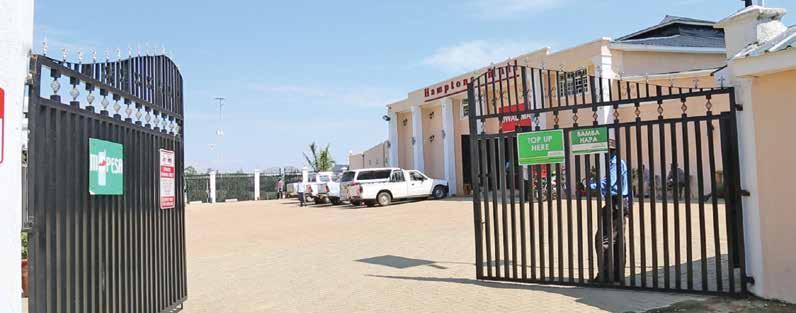
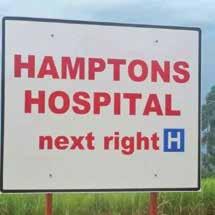
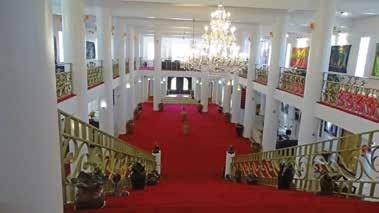
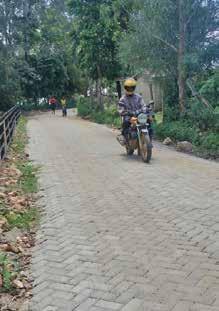
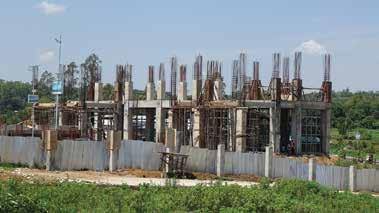
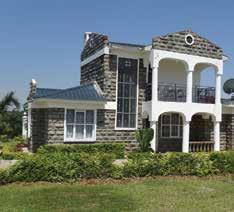
Hamptons Mall, home to Mwal-Mart Supermarket. 2. More than 300 of 3,000 planned solar street lights have been installed. 3. Part of the planned 36-Km cabro roads connecting all golf holes. 4. Bird’s eye view of MMTC. 5. Signpost directing traffic to Hamptons Hospital. 6. Entrance to Hamptons Golf Resort & Residences lit by solar lights. 7. Tarmacked road within the complex. 8. Private residence within the complex. 9. Part of the 5,000-bed Hamptons Hospital. 10. One of 4,800 Doctor’s residences already purchased.
Apex Steel Takes the LEED in Going Green
Earlier this month, Kenya joined China, France, Rwanda and more than 40 other countries worldwide that have banned, partly banned or taxed single use plastic bags in an attempt to reduce plastic pollution that ends up destroying entire ecosystems in oceans, rivers and lakes. According to the UN Environment Programme in Kenya, plastic bags take between 500 and 1,000 years to break down and can enter the human food chain through fish and other animals. With the new ban, any Kenyan who is caught producing, selling, or even using plastic bags will risk imprisonment of up to four years or fines of more than Sh4 million.
The push to be more environmentally friendly as a country is somewhat new to most Kenyan’s, but since 2015, Apex Steel has been at the forefront of the green movement, becoming the first and only steel company in the region to be awarded a Leadership in Energy and Environmental Design (LEED) certificate. LEED is a popular green building certification programs used worldwide that includes a set of rating systems for the design, construction, operation, and maintenance of green buildings, homes, and neighbourhoods. The aim is to help building owners and operators be environmentally responsible and use resources efficiently.
Apex Steel’s manufacturing process and products help create a healthier indoor environment for occupants through better indoor air quality, less harmful products and more natural daylight. They also reduce waste, conserve energy, decrease water consumption, and drive innovation. All of this can positively affect your bottom line and boost productivity.
Often, when a LEED rating is pursued, the cost of initial design and construction rises, however, these higher initial costs can be effectively mitigated by the savings incurred over time due to the lower-than-industry-standard operational costs typical of a LEED certified building. Additional economic payback may come in the form of employee productivity gains incurred as a result of working in a healthier environment. Studies suggest that an initial upfront investment of 2% extra yields over ten times that initial investment over the life cycle of the building.
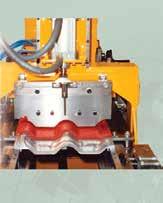
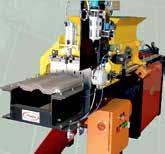
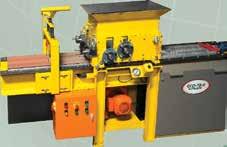
MACHINES C APABLE OF MULTI-PROFILE PRODUCTION
Geosynthetics Adding value to infrastructure
Geosynthetics comprise of more than 100 different products available in the market and these can be categorized as Geotextiles, Geogrids, Geonets, Geomembrane, Geosynthetics Clay Liner and Geocomposite. The products differ as well from the raw materials, such as polyolefin (Polypropylene and Polyethylene) or polyester, changing the mechanical and chemical behaviour of such products.
Usually in the overall project, geosynthetics are categorized through their role or function in the design or project such as any other engineering materials. There are 7 functions recognized for geosynthetics and they include the following: filtration, separation, reinforcement, drainage, barrier; surface erosion control, and protection. At the beginning, geosynthetics were not used in critical applications; they were mainly used as
‘buffer’ for safety, usually to cater for incorrect installation or poor quality workmanships. Almost 100 years later, geosynthetics are now widely used in many civil and mining sectors as a keyrole player in the overall project, which can be the reinforcement of roads, lining of a heap leach pads, or just a simple erosion control on the shoreline.
Geosynthetics in the African Market
The geosynthetics market in Africa is growing steadily. While a large portion of the market is limited to mining and allied sectors, geosynthetics has been adopted by various applications in the infrastructure sector. Early adoption of geosynthetics in this market was in mining but has proven its benefits in various construction applications which include: rail construction, roadways, reinforced soil walls among others. Geosynthetics has emerged as a
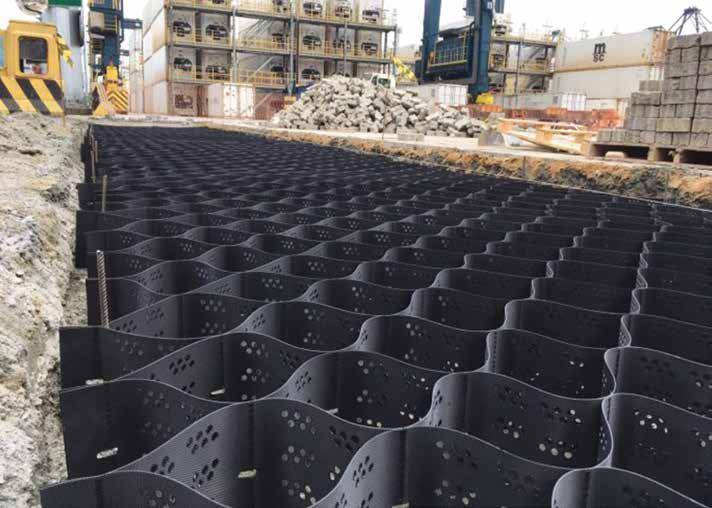
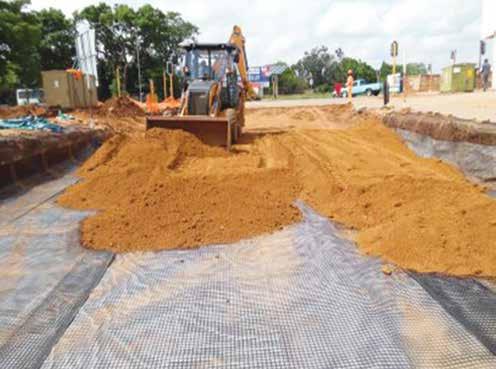
recognized technology in Africa because it is slowly reducing and replacing the burden on natural resources. As Africa’s infrastructure develops and urbanizes, the load on natural resources will increase. Geosynthetics can be used in a wide variety of infrastructure challenges, right from mining applications to ground stabilization in pavements, container yards, and many more.For instance, geotextiles can be placed as a separator creating a stable platform for the contractor to work. Geogrids can improve the quality of the pavement layers in order to avoid the use of crushed stone, while geocomposite for drainage can intercept seeping water and geomembranes helps in avoiding any moisture getting into the pavement. According to Mr. Victor Ibrahim of ACE Geosynthetics a manufacturer of geosynthetics in Taiwan, the geosynthetics market in Africa is growing. South Africa is still the
StrataWeb used for container yard
leading user of geosynthetics, with most of the applications focused in the mining sectors. Non-woven geotextiles, woven geotextiles and geomembranes are the most widely used and requested geosynthetic materials in Africa.
“We do expect to see an increased growth in geosynthetics usage in line with massive amount of infrastructure projects on-going in other parts of Africa, especially in East Africa. With these infrastructure projects, we expect to see further usage of geosynthetic materials such as geotextiles and geogrids for soil/slope stabilization, reinforcement of roads, highways, railways and pavement application,” adds Chang.
Market trends
Globally, there is a huge emphasis on sustainability and the impact of urbanization on the environment. In the geosynthetics market, the research and development funding and innovation is driven towards more products and technologies that minimize the impact on the environment and allow re-use of different types of material; this is according to Richika Bhawnani of Strata a leading provider of soil reinforcement technology and many geotechnical solutions in India.
“For example, various geosynthetics enable re-use of waste materials and sitewon materials (such as ash, slag, poor quality soil etc.). Essentially, it allows for use of locally (possibly marginal) soils and material. This minimizes the effort, costs, and environmental impact produced by importing material from elsewhere,” he adds.
Furthermore, according to Michelle Neermal of Maccaferri a designer and developer of complex solutions in the civil engineering, geotechnical and environmental construction markets, the variability of geosynthetics materials is huge, making very difficult for nonexpert in the field to make the right choice in design and implementation.
“Manufacturers are more and more coming closer to engineers and project manager to assist them with design recommendations, guidelines and even
trial testing in order to support the right choice for the project,” she says.
Dam liners
Dam liners are essential for preventing water loss from reservoirs and ponds; however it is essential that high quality dam liners are purchased if a long term waterproof solution is required. Predominantly manufactured from Polyethylene and Polypropylene, these geomembranes are used extensively for the containment of liquids, solids and gases in a variety of applications, including Attenuation Tanks, Flood Alleviation, Dam Liners, Gas Barriers, Landfill baseliners & Capping and process water ponds.
These liners will normally be provided in rolls which have to be welded together. This requires an experienced welding technician using the correcting welding machinery; so as to ensure a proper bond is attained at the seam. Low quality brands offer poor adhesion properties, resulting in leaks from the seams over time. Replacing or repairing leaking linings can be very expensive, in addition to being time consuming and inconvenient. A little extra investment in a high quality liner should keep repair costs to a minimal level.
Challenges in the Market
The biggest challenge faced in this market is awareness. Like many new technologies, enablement and adoption becomes a challenge. Especially in developing countries where exposure to these products are minimal, it is important to study and understand the use of geosynthetics.
According to Jaqueline Sterrenberg of Engineered Linings a supplier and installer of geosynthetics products in Africa, challenges in the market include: Inexperienced Purchasers who purchase the cheapest lining option and do not consider the quality of the lining required for their specific application, transport of containers of lining from Port to remote sites; meeting deadlines and time-frames for inaccessible, remote locations and also Problems with Customs clearances relating to consumables and returnable tools.
As one of the experts in this industry, Strata takes several steps to ensure prospective and existing clients are technically sound with the material. This includes installation guidelines, product guidelines, exhaustive test reports, informative case studies, technical in-person workshops, and several informational videos.
Kanaal Street Grobersdal.
Best flooring options for an office
Nothing will have an impact on the look and feel of an office space like the choice of flooring. A commercial office space requires a certain look and feel that reflects what goes on inside the building. Not only does flooring contribute to a room’s aesthetic, but also its functionality and level of comfort.
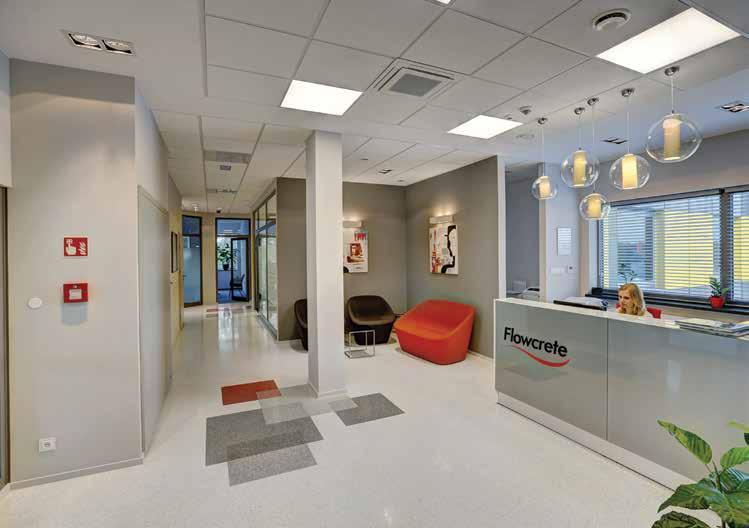
According to Verity Hunter the marketing manager at Flowcrete SA a specialist flooring company in South Africa, the African market especially in East Africa tend to use a lot of tiles in offices due to them being fairly cheap. Especially ceramic tiles coming from China. Most companies are very price sensitive. However more and more companies are turning to resin flooring as an option for their offices. “At the
moment Flowcrete is receiving quite a few enquiries for a polished concrete finish or a stained concrete finish. The increased demand for stained concrete with an epoxy thin film coating on top is due to companies looking for a more decorative and hard wearing floor finish,” she adds.
Construction Review Online looks at the Best flooring options for an office.
Warm up your office with carpets and carpet tiles
This type of flooring is ideal for businesses that need some kind of noise insulation, such as an office environment. It is, however, important to put into consideration that carpet can easily get stained and may require close
attention over time. Carpet tiles provide more flexibility because each tile can be replaced individually without any mess and noise. Carpet tiles also come in different styles and patterns, giving the managers a range of choices that reflect the brand and aesthetic of an office. According to Zandile Gumede of VAN DYCK FLOORS the oldest carpet manufacturer in South Africa, presently the market for carpet tiles in the commercial sector continues to grow. In general, carpet tiles are becoming more environmentally friendly. For instance, new developments in yarn and fibres with increased use of recycled content are becoming a perfect match for increased stringent green building regulations.
“This is why Van Dyck Floors is focusing largely on using high portions of recycled
content. Nowadays, customers are looking for more sustainable flooring,” she adds.
She further mentions that, it is imperative that carpet tiles not only maintain their aesthetic appearance over time, but that they have the ability to maintain their shape and to remain flat on the floor surface without doming or buckling. They must have the ability to remain in place undisturbed after installation and stay looking good, even under the most testing traffic conditions.
To do this, they must possess five fundamental characteristics:
• Dimensional stability
• Balance between flexibility and rigidity
• Sufficient weight and mass
• Strength of construction
• Colour fastness
• Cleanability
These factors determine the lifespan of the carpet tiles and are very important when choosing the right office flooring that will last long and keep looking great.
Vinyl flooring; a touch of style and durability
Vinyl flooring is popular for commercial flooring because it offers long-lasting performance. It is ideal for a wide range of applications in offices, commercial, healthcare and retail spaces that need to withstand high traffic. This type of flooring is resilient and resistant to damage, such as indentation and scratches. It is available in many different colours and designs bringing a stylish touch to an office. It is easy to clean and with minimal maintenance.
According to Wendy Mitrovich of Polyflor South Africa one of the leading suppliers of Vinyl flooring in South Africa, it is important to fully understand what the area is going to be used for, the intended traffic in that area and the clients’ expectations; when choosing a floor covering.
“Vinyl is fast becoming the preferred floor covering choice due to its comfort, durability and longevity, hygienic and acoustic properties, design possibilities, ease of maintenance and environmental consideration,” she adds.
Rubber Flooring; for resilience and ease of maintenance
Rubber flooring is ideal for hightraffic commercial interior spaces such as airports, healthcare facilities and restaurants. Rubber flooring is durable and is resistant to water and heat and is easy to maintain. Besides being comfortable to walk on, it is slip-resistant and sound absorbent. It comes in a variety of textures and colours.
Hardwood flooring: A classic and timeless look
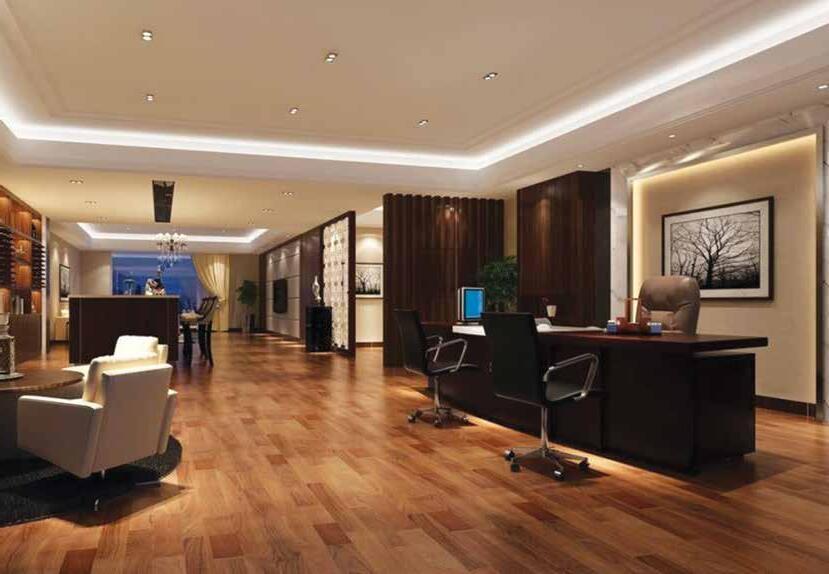
Hardwood flooring has been the stylish look in most offices from time immemorial and has never gone out of style. It elevates the look and feel of the interior design of an office besides being durable and easy to clean. It is a great office flooring office option for areas that have a lot of activity. Even though it faces damage from moisture, choosing a pre-finished floor can help maintain its appearance.
Laminate
This is a more inexpensive alternative to wood flooring, tiles or stone. The lamination process involves fusing of two or more types of materials and sealing them. It is simple to install and does not scratch or dent easily. This flooring type is durable, easy to clean
and maintain. It also comes with various options to choose from; smooth laminate, embossed laminate, patina laminate and wood grain laminate. Mukesh Kumar of India’s flooring experts observes that for a market that is bursting forth like Africa, laminate flooring is a product with huge potential because of its cost effectiveness.
Tiles
Other best flooring options includes tiles. This is because they last for a really long time and do not wear out. Some tiles are stronger than others leaving the buyer to choose. Glass tiles are water resistant and also stain resistant. Tiles also improve the beauty of an office as long as it is cleaned regularly.
According to Greg Barry of Belgotex a leading soft flooring manufacturer in Africa, colour and design are very critical factors. They must always be looked at when choosing the right tile for the right area. It is no use going for a plain light colour in a heavy traffic environment for example. “Tufted tiles in plank sizes are becoming very popular in 1.2 m x .30 m, and also Luxury Vinyl Tiles in wood looks are still right up there. New Colorpoint technology in tufted patterned broadloom is also coming through very well in the Hospitality and executive area sectors. There are also new vibrant designs in needlepunch,” he adds.
Moreover, Mr. Edu Mas Rafels of Ape Grupo in Spain adds that, the market of ceramic floor tiles is almost infinite, there are many requirements and tastes to attend in offering a floor tile or another.
“In general, the African market is on the rise and the need for floor tile is quite diverse, from intense to technical uses including flooring with intense brightness and / or polished for new in style establishments. There is no regular flooring nor a concrete flooring requirement that can be extended to the African market in terms of public works or the project market,” he affirms.
Trends
As flooring technology changes and improves, the African market is responding to the changes by being quick adopters to the changes and improvements made available. According to Sasha Kozinsky a Director at Finfloor an importer and distributor of flooring materials in South Africa, there are certain developments to vinyl flooring
available, namely the introduction of Diamond SPC rigid core flooring, a stone plastic composite that is the most stable flooring available on the market.
“There are more technological advancements and stylings in the industry than ever. Products, construction, styling and installation technologies are changing so fast that it is nearly impossible for maintenance and engineering managers to keep up with the changes.
Of all building materials, floor coverings of all kinds are changing most, and attitudes about floor coverings are changing, as well. The green movement has many managers reconsidering floor coverings as they look for alternatives to carpets and current vinyl available,” adds Kozinsky.
Epoxy
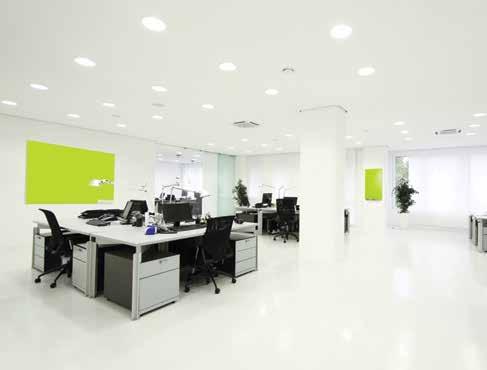
There is increased demand for stained concrete with an epoxy thin film coating on top in the market. This due to companies looking for a more decorative and hard wearing floor finish.
According to Ms. Hunter one of the trends that Flowcrete are receiving a lot more inquiries about is epoxy terrazzo screeds. This type of floor is very similar to a polished concrete however it can be installed with a variety of colours and different aggregates to create a bespoke floor finish. Another trend that is becoming very popular is the epoxy metallic coating. “One of the beauties of the product is that each installation is unique,” she adds.
Mr. Akis Apostolopoulos of KTISIS a flooring specialist in Greece further adds that, epoxy flooring is becoming a preferred choice for most commercial areas. This is due to its low cost and can be applied faster than tiles. There seems to be enormous interest in designer floors like 3d epoxy flooring and metallic flooring. However it is still unclear if this will be just a fad that will go away in a few years, or if there is long term potential for growth.
HVAC Distributors Limited
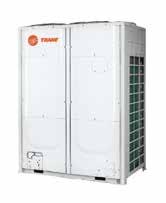
HVAC Distributors Limited are the only Authorized Distributors and Exclusive Representatives of TRANE HVAC Equipment in Kenya. TRANE is all about Air, cool air, warm air and clean air. As a world leader in Air conditioning system, service and solutions, TRANE control the comfort of the air for people at homes and many of the world largest and most famous, commercial, industrial and institutional buildings. Furthermore, TRANE manufactures, manages and services HVAC-R equipment, systems and controls for buildings and industrial processes all over the world. Through their global research and development facilities, they dedicate extensive resources in innovation for HVAC-R systems. Whether it concerns a system upgrade, renovation or new construction; their projects focus on:
• Reliability
• Energy efficiency
• Environmental responsibility
• Technological expertise
• State-of-the-art design
• Operational efficiency
• Fulfilling specific business needs, no matter how simple or complex
For more than a century, the TRANE name has identified products and technology that stretched the world’s idea of what was possible; a tradition that is still very much with us. In that case, HVAC being their sole distributors, they strive to have the best talent so as to provide the customers with safe, reasonable and quality Heating, Ventilation and Air Conditioning Equipment followed by similar Installation and Servicing. They have set up a strong technical field team with senior management staff. Their prime objective is to have fully satisfied customers by delivering quality Installation and maintenance services for HVAC Equipment at competitive pricing. Their Range of Equipment Include but not Limited to:
Chillers
• Water cooled centrifugal
• Air and water cooled Screw
• Air and water cooled Scroll
Airside
• Air Handling Units
• Fan coils
• Cassettes
• Variable Air Volume
Unitary
• Rooftop units
• Ducted and ductless split systems
• Precision air conditioners
Building Controls
• Chiller plant controls
• Building Controls
• Equipment/system factory or fieldinstalled Tracer™ controllers
• Mobile App
The Basics and Benefits of Airless Spraying
Airless sprayers are a fast and cost-effective way to apply high-quality coatings
Selecting an airless sprayer
There are many factors to take into consideration when choosing the correct airless sprayer for an application:
Material and surface to be sprayed
The types of materials you spray will determine the size of the tips you use. If you plan to spray a variety of materials you have to consider buying a sprayer with greater versatility. Will you be spraying on dry wall, exteriors or concrete? You have to consider the tip sizes needed as well as the quality of finish required in order to choose the best sprayer for the job.
Each job has its own requirements. New construction, residential work, and commercial jobs vary in terms of coatings used, crew size needed, and power source available.
Liters per week to be sprayed
Purchasing a part-time sprayer to do a fulltime job has disappointed many contractors. In the long run, saving money on a sprayer that is inadequate for the job, or not durable enough, will cost a lot in lost labor. Number of spray guns to be used at one time. If you plan to use more than one gun at the same time, then you have to purchase a unit that has the ability to handle multiple guns.
Hose lengths necessary
Hose length depends on the job site, material being sprayed, tip size, and hose diameter. Your sprayer must be able to support the length of the hose. Most Graco sprayers use DC motors, which are able to support longer hose lengths than either AC or universal motors.
Available budget
Buying a sprayer is an investment. You don’t want to over-buy or under-buy. Keep in mind the cliché, “You can pay now or later”. Downtime resulting from an undersized, overworked sprayer or poor quality equipment can quickly wipe out any
savings from the initial low purchase cost of the sprayer.
Airless spray techniques
A good spray pattern indicates that the paint or coating is completely atomized and distributed evenly onto the surface. Several techniques help determine the quality of the spray pattern and the quality of the finish. Techniques include everything from adjusting the pressure to the aiming of the spray pattern and movement of the spray gun. The following techniques ensure a longlasting quality finish:
Aiming the spray pattern
The spray gun should be held approximately 30 cm from the surface, and aimed straight (both horizontally and vertically) at the surface. Extremely large tips will require you to move further away to achieve a good spray pattern. The spray gun should move across the surface with the wrist flexed to keep the gun pointed straight at the surface. “Fanning” the gun to direct the spray at an angle will cause an uneven finish.
Triggering technique
The spray gun should be triggered after beginning the stroke (also call the lead stroke) and released before ending the stroke (also called the lag stroke). The gun should move during both the trigger squeeze and
trigger release. This technique prevents blotches of thick coating at the beginning and end of each stroke.
Overlapping technique
This technique ensures that an even amount of coating has been sprayed onto the surface. The spray gun should be aimed so that the tip points at the edge of the previous stroke, overlapping each stroke by half. To maximize efficiency when spraying on broad, open surfaces (e.g. ceilings and bare walls), the outside edges of walls should be sprayed first. The middle can then be sprayed quickly, requiring less precise strokes.
Painting inside corners
When spraying corners the gun should be aimed into the corner, spraying along the corner, rather than spraying back and forth across the corner.
Controlling the thickness of the coating
The key to proper coverage is controlling the coat thickness. To ensure proper coverage and a quality finish, do not adjust the pressure to make the coat thicker or thinner. The pressure should be adjusted to the lowest pressure with a good spray pattern. If the coating is running down the surface, then the coat is too thick. One or more of the following will help:
• Move the spray gun faster.
• Choose a smaller tip: be sure the sprayer is rated to handle the size tip being used.
• Choose a tip with wider fan.
• Make sure the spray gun is far enough away from the surface (30 cm).
If the finish is not covering the surface, then the coat is too thin. One or more of the following will help:
• Move the spray gun slower.
• Choose a larger tip.
• Choose a tip with a narrower fan.
• Make sure the spray gun is close enough to the surface.
The Essential Paiting Tool for Professionals
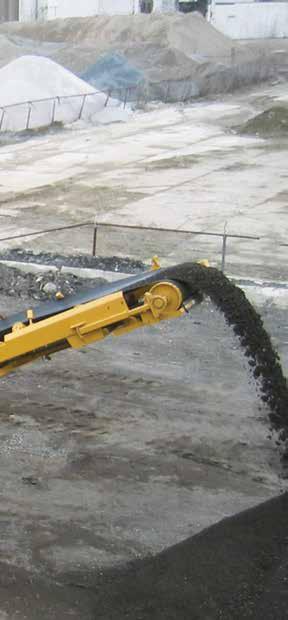
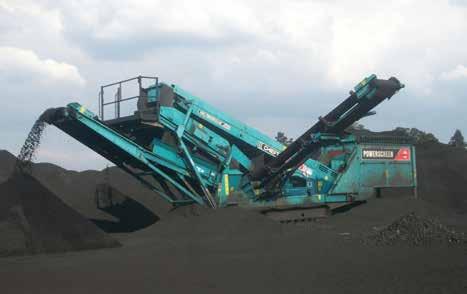
Purchasing crushing and screening equipment
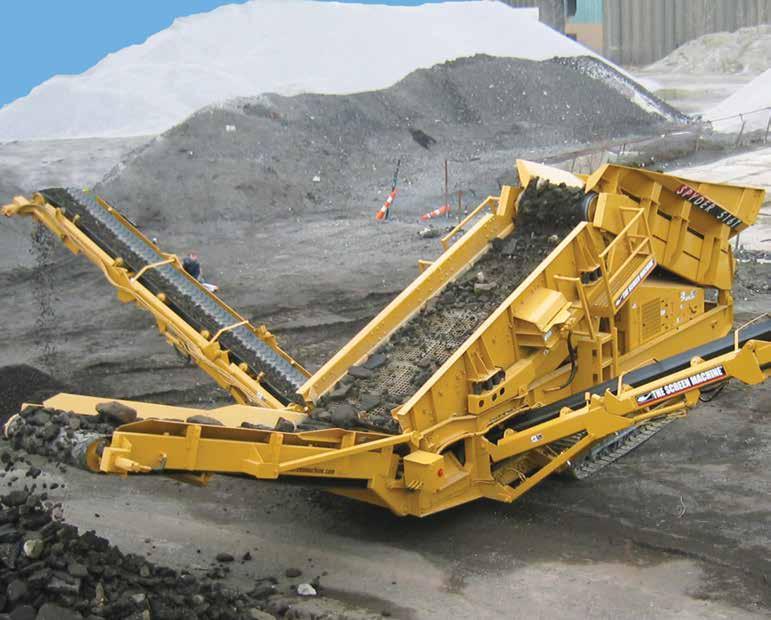
Stone crushing and screening equipment play a vital role in the construction industry. This is because they provide the vital aggregates required for concrete production as well as for road construction. In Africa where the use of concrete and road aggregate has continued to expand due to the development of needed infrastructure. The use of good quality equipment is very handy for a busy contractor with tight deadlines to meet.
However, with mineral prices down in South Africa, government spending on infrastructure is also down. This is due to less revenue generation, resulting in less investment in crushing equipment. Similarly there is some political uncertainty and changes to mining codes. This is affecting the implementation of projects as investors wait to get clarification.
In East Africa, the past few years have seen a growth in infrastructural development
projects. This has accelerated the demand for road base and aggregate materials; particularly in Ethiopia.
According to Seamus Doyle of McCloskey International in the United States one of the leaders in the crushing and screening industry, this has fueled a huge demand for all types of crushers.
Other countries in Africa have also seen healthy demand for crushers and screens although on a smaller scale. The South
African economy is still struggling to recover due to the levels previously seen in recent years. But other Southern African countries like Zambia are now showing good increases in demand.
Technological trends
The technological trend of mobile equipment is definitely on the rise. Many mines and contractors alike opt for mobile plant instead of traditional fixed plant. The operating cost may be more expensive. But the versatility of having a mobile crushing and screening operation is a huge advantage in a sometimes turbulent African market. This is according to Mr. Zack Beukman a Director at BG Holdings a mobile crushing and screening service provider in South Africa in South Africa. Mines and large construction jobs can
come to an abrupt end. But having mobile plant means that you can move equipment to future jobs within a few days.
“Furthermore, some recent trends which BG Holdings has seen benefit from is technology that allows the access of information on plant remotely. Important information like fuel consumption, idle time, crushing time and even projected tonnages per hour can all be viewed from a smart phone or similar device,” adds Mr. Beukman.
Reception of new technologies
The African market has shown a positive response towards the new technologies being introduced in the market. Mr. Doyle mentions that, initially, the reception to mobile crushers and screens has been limited in Eastern / Western and North African countries over the last three years. But since McCloskey sold over 20 units into Ethiopia in the last 2 years demand there has increased dramatically. Other contractors begin to see the benefits of mobility and flexibility of mobile plants over stationary and wheel mounted.
Choosing the right crushing equipment
Many people focus too much on the capital cost of equipment, and not on the value of the equipment. Cap-ex is a once off investment, while your operating expenses are recurring. The equipment should be easy and safe to maintain. It is also critical that you have technical and spares back up for your equipment. Your final cost per
tonne is directly relevant to the availability of your equipment. Therefore, ensure your supplier has well stocked stores, properly and regularly trained technicians to assist with technical back-up. Also ensure that all your plant equipment is permanently generating profits rather than sitting on stand-by.
Another common mistake when looking at cap-ex is trying to save money but cutting back on the initial investment. Crushing is similar to driving a car, in that you need to go through a number of gears (read crushing stages) to get to your final product. Often end-users will sacrifice a gear/crushing stage to minimize on Cap-ex expenditure. This only leads to more down time, higher operating costs, and less money in the bank.
Reliability
Moreover Mr. Martin Botha the Export Sales Director at Osborn a dealer in mining and quarry equipment in South Africa adds that, a good brand name is also very important. When purchasing a crushing and screening plant, a good brand name is an indication of reliability.
The African market is not so big right now with regards to crushing and screening equipment but it is developing very fast. This is according to Mr. Riyadcan Aziz the export manager at Ugur Makina a manufacturer of crushing and screening equipment in Turkey. “Mostly, the existing crushers are equipped with old technologies and have low capacities. More has to be done to ensure the market is at par with other markets in the developed continents,” he adds.
The equipment should be easy and safe to maintain.
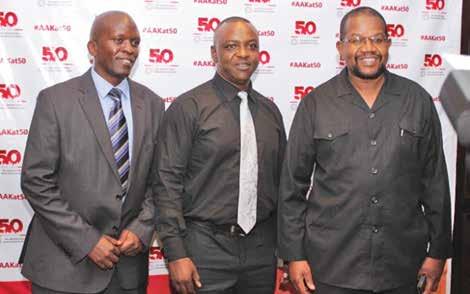
Architectural Association of Kenya (AAK) at 50
On the 31st of May 2017, the Architectural Association of Kenya celebrated 50 years since its formation, as Kenya continues to forge its own solutions to contemporary national and regional challenges, the AAK and Built Environment as a whole continues to be an integral part of this Kenyan journey. Our theme for the 50th year is “Looking back, moving forward.” Looking back, The AAK has grown by leaps and bounds over the last 50 years, from just about 40 members and 4 Chapters to about 2000 registered members, 7 Chapters and a Branch in Mombasa. 50 years on, we continue to forge the path for built environment professionals and for the construction industry as a whole. Looking forward and in line with our objectives as AAK, we challenge our leadership to ensure that public interest is upheld as far as matters built environment are concerned. No. 11 of the UN’s 2016-2030 Sustainable Development Goals (SDGs) aptly captures AAK’s vision for Kenya,
Emma Miloyo, current President of AAK
KICC Designed by the Norwegian architect Karl Henrik Nostvik and Kenya's David Mutiso
Sustainable
Cities and Communities - Make cities and human settlements inclusive, safe, resilient and sustainable
Looking forward: The Kenya We Want: Affordable Housing for All
The AAK acknowledges the severe shortage of affordable and appropriate housing options available to households on very low to moderate incomes in Kenya. The right to accessible and adequate housing; and reasonable standards of sanitation is a right enshrined in the Kenyan Constitution. This therefore is a fundamental role to be played by government and not left to private sector, which is primarily driven by profits and return on investment. It is unfortunate that in the recent past, we have witnessed tragic incidences of buildings collapsing and leading to loss of lives, this is in a way a manifestation of Government stepping back from provision of social housing. It is time Government took provision of shelter, which is a basic need, as a priority.
1. Accessible, Clean Public Space and for All
AAK challenges National and County Governments ensure provision of public space in the heart of Kenya’s thriving urban areas is on top of their agendas. Its UN’s 2016-2030 Sustainable Development Goals include making cities “provide universal access to safe, inclusive and accessible, green and public spaces, in particular for women and children, older persons and persons with disabilities.”
This goal will have a significant impact in Kenya where our urban population is about 25% and we are urbanizing at a rate of 4.34 %. Our towns and cities are slowly turning to concrete jungles with inadequate recreational space for inhabitants, the most vulnerable being children who have no space to play.
2. Mass Public Transit and Non-Motorised Transport
The AAK is pleased to learn that the Government has set the wheels in motion for a Commuter Rail Master Plan for the City of Nairobi. We retaliate that the only sustainable
way to ease the traffic snarl ups that Kenya is now famous for is not to add more lanes on our highways, but to put in place sustainable Mass/Public Transit that is clean, affordable and reliable. Government has to be at the centre of delivering this. Improvement of Public Transport will directly translate to improvement of Nairobi’s influence as
We congratulate the Architectural Association of Kenya (AAK) as they mark their Golden Jubilee
Times Tower designed by Triad Architects
an Economic hub and save innumerable man hours spent in traffic jams. This will also help to moderate the cost of land which is in many instances is a direct factor of accessibility to amenities.
Further to this sustainable, comfortable, attractive Non-Motorised Transport systems
must be designed and constructed to further ease the pressure off our roads. Working together with our members, Government can transform sidewalks into sociable biking and walking spaces that foster dignity and encourage people to walk and cycle short distances.
3. Ease of Doing Business
The AAK congratulates the Government for scraping fees previously charged to Developers by NEMA and NCA, this has contributed to reduction of cost of development and impacted positively on the construction industry; an industry that contributes 7 % of the gross domestic product (GDP). However, the AAK notes that Plan Approval Fees at County level remain significantly high, especially in Nairobi. These high fees negatively impact the building industry and Kenya’s investment climate. The AAK looks forward to a reduction of this to promote business.
4. Effective Development Control
It very important that all building projects, regardless of their scale, are designed and constructed under the supervision of properly qualified and registered professionals. This has been a primary challenge in this country and has led to the loss of hundreds of lives and investment worth millions of shillings. Counties Governments are the
From left: AAK CEO Jacob Mwangi with former chairmen of AAK Waweru Gathecha and Lee Karuri.
enforcing agency to ensure the law regarding development control is fully implemented. We hope that lessons will be learned from various incidents of building collapsing so that we do not keep witnessing this kind of avoidable tragedy and loss of lives. County Governments should also ensure that qualified personnel are hired to oversee development control and building inspections. We need to see more built environment professionals with the necessary skillset hire.
5. Integrated Development Plans
We challenge all county governments to implement their Integrated Development Plans. This will stem ad hoc development and provide more clarity for citizens on zoning and land use. The importance of planning of our cities and towns cannot be overemphasized; thriving cities have a vision and follow it through with a framework to develop in an orderly manner.
A framework is not about centralized command and control but a way to anticipate needs, coordinate efforts, and draw a path to
a horizon that is collectively held. There is a lot we have achieved as a premier association for built environment professionals over the past 50 years:
1. The AAK initiated of the automation of the Development Approval Processes in Kenya- a first in Africa.
2. AAK has been at the forefront of the fight against imposition of single business permits on its members.
3. AAK spearheaded the signing of an MRA (Mutual Recognition Agreement) for architectural services in East Africa under the East Africa Institute of Architects.
4. The AAK has also published numerous documents and policy position papers based on research, including one on development control framework. The association has also published books including most recently the CAA @ 50 commemorative books. The AAK is part of the Joint Building Council, which published the Agreement and Conditions of Contract for Building Works (1999 Ed.), a standard form of
Association of Professional Societies in East Africa (APSEA)
Parliament Road, The Professional Centre, P.O. BOX 72643-00200, GPO, Nairobi Tel: 0726-610498/0733-610948 Fax: 341883 Email: apsea@apsea.or.ke Website: www.apsea.or.ke
The Association of Professional Societies in East Africa (APSEA) wishes to congratulate the Architectural Association of Kenya on her 50 years of excellence in professional service delivery within the built and natural environments in Kenya, East Africa and Beyond.
APSEA, being the joint forum and umbrella body of Professional societies in East Africa founded in 1961 and is now the Epitome of Professionalism, is very proud to have within its corporate membership, such a vibrant association, dedicated towards the promotion of high standards of professionalism for all its members. We applaud the tremendous growth of the Architectural Association of Kenya to such heights.
On behalf of the Council of APSEA and all our 27 Corporate Members, we heartily congratulate this great Association for the successful 50 year journey and assure you of our continued and unwavering support as we move together to build a better future for our professionals in East Africa.
Mrs. Irene Wanyoike Chairman, APSEA
contract used widely by industry.
5. AAK continues to grow and improve its internal systems. We now have a fully electronic voting system and financial and membership management system.
6. AAK has been at the forefront of conservation of building heritage not the least being advocating for the pulling down of the Advertisement around KICC, one of the most iconic buildings in Kenya.
7. “The AAK Excellence in Architecture Awards” have now become a highlight of the building industry and continue to promote and celebrate best practice in the built environment.
8. We maintain a healthy financial position with properties on Mucai Drive and the newly acquired Suite 605 at Blue Violets Plaza.
The AAK collectively celebrates this golden anniversary, and we renew our commitment to working to advance these and all our shared values as Kenyans.
Engineers Board of Kenya joins the Architectural
KENYA URBAN ROADS AUTHORITY (KURA)
Improving Urban Connectivity
Kenya Urban Roads Authority has embarked on a program to decongest traffic and improve mobility in major urban centers in the country, some of the projects under this plan include the Construction of Ngong Road, Construction of Meru Bypass in Meru County, Construction of Annex loop roads in Eldoret Uasingishu County, ongoing construction of Nakuru Town CBD Roads, Construction of Waiyaki way redhill in Nairobi and The Construction of Outering Road amongst other projects spread throughout the Country.
The construction of Outering Road has been hailed as both an Engineering and architectural masterpiece turning
around the Eastern part of Nairobi and significantly reducing travel time.
The 13 km project constructed through financing from the African Development Bank (AfDB), features 11 footbridges, service roads, grade separated intersections and non-motorized traffic (walkways and cycle tracks). To supplement this infrastructural milestone, plans are already underway to dual the Eastern and Northern bypass to blend with the rising demand for improved infrastructure and growth in the eastern suburbs of Nairobi.
Another transformational project is the construction of Ngong Road. The project, which is divided into three phases, is financed by the Japan
Kenya Urban Roads Authority congratulates the Architectural Association of Kenya (AAK) on its Golden Jubilee. We celebrate you as you mark the AAK @ 50 celebrations and applaud you for your spectacular contribution to the built and natural environment….HEKO AAK.
We look forward to even more stronger and strategic partnerships even as we continue to discharge our mandate.
Ongoing construction of
Ongoing works: Dualling of
Transport Cabinet Secretary James Macharia (middle) speaks to the press after inspecting progress on Ngong Road. With him is Eng. Silas Kinoti, Director General KURA (left) and a representative of the contractor.
International Cooperation Agency (JICA). Phase One starts at the National Library snaking down to Prestige Plaza constructed at a total cost of 1.3 Billion. The project is currently about 70% complete. Phase Two starts at Prestige Plaza extending all the way to Dagoreti Corner and will cover 3.3 Km at a cost of Ksh 2.54 billion. The project is set to start in January 2018. Phase Three starts at Dagoreti Corner and ends at Karen roundabout with slight extensions to Karen and Langata roads.
In the recent past, the Authority has also partnered with Architectural Association of Kenya (AAK) to redesign modern urban footbridges. This program has been rolled out through a competition by architectural students and the best design will be adopted for use by the Authority. It is this kind of partnerships bringing stakeholders together that will move us closer to attaining the goals envisioned in the Vision 2030 blueprint.
Meru Bypass
Ngong Road
An elevated section of the new look Outer Ring Road: Efficient & safe urban roads
Tilisi to Raise the Bar in Property Development
Limuru, a section of Kenya’s vibrant Kiambu County, will soon host a mini-city and a world-class residential and commercial community. The project, named Tilisi, involves the development of exceptionally high quality infrastructure to pave the way for modern residential, commercial, logistics and social amenities’ developments with the goal of
making it the ultimate address for today’s needs. It was conceived by the reality of lack of adequate infrastructure in Nairobi and its environs that has tended to slow down business and social life in the capital city.
“Tilisi is the first of its kind, designed as a work, live and play suburb and will be one of Kenya’s ten largest private developments,” says Ranee
Nanji, Tilisi Developments Limited’s Co -Chief Executive Officer. The idea of Tilisi was mooted by ten investment groups in 2012 and its implementation kicked off after they acquired a 400 acre parcel of land from a cooperative dairy. The expansive land was unique given that most of the land in this area is fragmented following demarcation. Tilisi’s
business model is to provide and build all the infrastructure and sell fully serviced plots to developers / investors to do their own schemes within Tilisi’s development guidelines. Once fully built up, Tilisi, will have been implemented at a cost of Sh50 billion over a 10year period. Tilisi is uniquely different from other gated communities in many aspects.
It is the only development that integrates a logistics park with residential houses and other facilities like a hotel, a convention and exhibition centre, an office park and retail centre, a medical centre, an international school and a few parks. The infrastructure will include paved roads with street lighting, sewer lines, storm water drains, pedestrian paved paths and cycle lanes.
“In our Phase 1, we are selling fully serviced five-acre plots for developers to put up residential apartments, town houses and maisonettes or warehousing facilities,” explains Kavit Shah, Tilisi Developments’ Co-CEO.
Developers are expected to adhere to development guidelines and controls with regards to building heights, open space ratios, landscaping among other considerations. Apart from the parks and recreational areas allocated at Tilisi, there are several natural green spaces which demarcate the residential areas. The project is strategically located along Nairobi-Nakuru highway. It can be accessed from three entry points - the Highway, Ngecha-Chunga Mali Road and Limuru Road. It is in close proximity to both the southern and northern by-passes.
A total of 178 acres have been reserved for residential use where up to 3,200 homes will be put up. These include 2,000 apartments and 1,200 town houses or maisonettes.
Tilisi is providing facilities such as a recreation centre with swimming pools and tennis courts among other sports and games facilities, parks with children’s playing facilities with amenities such as swings and slides. Tilisi will have a shopping mall, a school and medical centre and a hotel, convention and exhibition centre.
The industrial park targeting light industries in sectors like ICT, SMEs warehousing and repackaging have been allocated 85 acres. Tilisi Logistics Park will also accommodate localized shops, park and canteen where workers can relax, filling stations, car parks and public service vehicles lay-bys.
Space has also been allocated for a police station. Tilisi is to provide CCTV on the spine roads and perimeter fencing to ensure a safe community. The Kiambu County government is highly supportive of Tilisi as the project will generate jobs and high quality living standards in addition to generating demand for goods and services within the area eventually leading to economic growth and
development. Since the project’s vision is to contribute to the landscape and environment, the developers have taken special care in ensuring that local indigenous trees are preserved and others planted to ensure that bio-diversity is maintained. The light industries will also be required to produce minimal noise and no emissions.
Five sewerage treatment plants shall be provided. Waste water will flow by gravity and then treated. The treated effluent will be used for water features in the development.
All storm water in the area will also drain into these water features. A waste management strategy has also been put in place involving separation of garbage into different bins for ease in recycling. Moreover, all major road reserves shall be at least 25 metres to leave
enough room for landscaping and services including drainage, footpaths and cycle lanes.
A perimeter fence and CCTV surveillance on all major roads will ensure protection of the entire site while individual developers will be advised to ensure safety and security in their respective developments. CCTV Surveillance with adequate control and monitor rooms and guards with patrol vehicles will also be provided on the main roads. “The government also appreciates the fact that there are very few efficient logistics parks in the country and Tilisi Logistics Park provides an opportunity for investors to put up their warehouses away from the congested industrial area in Nairobi where traffic snarl ups delay movement and translates to loss of man hours and economic returns,” observes Kavit.
Tilisi is sourcing its own water from boreholes given that the Limuru sub-county lacks adequate and reliable water and sewerage supply services. At least eight boreholes will be sunk to serve the Tilisi community. Two are already complete.
“This is an extremely exciting
project that will become one of Kenya’s newest concepts of gated communities,” concludes Kavit, adding it has taken over two and half years of planning with an experienced team of predominantly Kenyan consultants.
Tilisi Developments Ltd’s Co-CEOs Ranee Nanji (seated) and Kavit Shah
Safety first
The safety of workers should be the main priority in telecommunications tower construction and maintenance projects taking place throughout Africa.
It has not been easy for Construction Review to gather statistics of avoidable injuries and fatalities from telecommunication tower worksites in Africa during tower construction and maintenance from contractors and EPCM firms. The inference is that perhaps many contractors or their clients dismiss the probability of accidents occurring as remote, or, if they have already experienced accidents, are disinclined to disclose them for fear of
reputational damage. While one cannot gauge the extent of accidents in telecommunications tower projects, for one thing: the risk of accidents at work sites is higher than has ever been, as there is increase in projects to cater for the ever growing usage of wireless communication devices.
And fall hazards are likely to be the primary danger. The question is: Do organisations have the wherewithal, or are they adequately equipped to manage increasing safety risks?
QTadvert_180x65mm_final.pdf 1 2017/09/07 10:33 AM
Common thread
A common thread in accidents that have been documented in construction projects globally indicate that, typically, accidents involve a gin pole, lifting devices with a series of blocks, shackles, pulleys and cables that are used to raise and lower towers. The fatalities arise from fall hazards, telecommunication tower col¬lapses, and electrocutions. Noticeably, from facts gathered, fall accidents, which are caused by lack of fall protection, dominate.
Employer negligence
What emerges is that, in most cases, the buck stops with employers. Mainly, two main factors would contribute to accidents: employers not sufficiently providing appropriate fall protection (poor quality or wrong equipment) to employees, and failing to ensure that their employees use fall protection appropriately.
In particular, with respect to poor fall protection, it has been observed that many accidents occur when workers wearing harnesses are not properly anchored or tied off. Bizarrely, sometimes, workers would be told to free climb instead of using appropriate safety gear to attend to expedite a task.
Employers, in this context companies owning telecommunication towers, can also be culpable by approving or sanctioning the design of telecommunication towers without enough platforms on them designated for workers to tie off to. This can be a potential cause of accidents.
Safety measures a prerequisite
Given the escalation of accident risks in telecommunication tower and maintenance projects in Africa, it is imperative that, at the onset of a project, the professional team involved should urgently institute effective fall protection measures. Cutting corners in fall protection, while it might be appealing in the short term in terms of cost cutting,
Kencoat –a textured color plaster coating.
Kencoat® is applied externally to give a long lasting and most durable protection to any structure and internally give you an appealing finish which doesn’t wear off. Application does not require any sort of priming or elaborate surface preparation nor does it require any curing after application. Kencoat® is premixed and supplied in ready to apply packs thus no site mixing is needed except stirring. The product is available in various colors, is water resistant and can be washed with soap and water to restore its original color even after many years.
can have costly consequences. As a result, the employer can face a lawsuit obliging them to pay employees millions of dollars in compensation. In addition, the damage done to a company’s reputation can be too ghastly to contemplate. So, it is important that employees assigned with tasks in projects should have insurance, the right certification and relevant training.
Kencoat – Wall Coating
Formulated for:
Waterproof esthetic color coating
Can be used for both Interior and Exterior
Resin based product with mineral quartz
Environmentally friendly
Supplied as a premix – purchase, stir and apply
Available in variety of colors
Color match to any existing surface
Color customization available
Telecommunication tower constructiion - Accident risks to employees in tower construction projects are high
Kencoat is a resin based aesthetic wall coating applied on walls for durable protection and for a stylish finish.
Space optimisation is key in a refrigerated warehouse.
High demand for cold storage convenience
There are immense opportunities for discerning logistics and supply chain facility management companies to invest in cold storage warehousing facilities in Africa.
As more countries in Sub-Saharan African embrace the concept of the modern shopping mall, there has been increase in the demand for chilled, frozen and super frozen storage space to cater for businesses which are amongst the anchor tenants at the malls. This has compelled logistics companies that own refrigerated warehouse facilities that provide services to raise their game. Noticeably, logistics companies are undertaking greenfield projects to service the increasing niche market, as well as brownfield projects to extend and retrofit existing ambient warehouse facilities in order to increase capacity.
Bulk and secondary storage
Typically, refrigerated warehouse facilities are needed for both bulk (long-term) and
secondary (short-term) storage of chilled, frozen and super frozen products, depending on clients’ requirements.
This enables businesses to supply their products that are of the right quality and quantity as and when needed to clients. To meet the finicky demands of the growing clientele, facilities should have high-density storage areas, standard racking chambers and receiving and dispatch areas as the minimum standard.
What makes an efficient refrigerated warehouse
Refrigerated warehouses need to be wellequipped to adequately serve customers requirements. The following are essential: reliable power supply, space optimisation, food safety audit, sustainability and security.
1. Reliable power supply
One of the main problems which businesses in face in most Sub-Saharan African countries are the high cost of power and reliability of power supply. Thus, there is a necessity for logistics and supply chain companies to invest in back up power. Backup power is essential as any interruption can result in the food items going bad, costing clients in millions of dollars in loss of potential earnings.
2. Space optimisation
Mobile and static racking systems result in excellent space usage and high pallet density. Due to the high cost of refrigeration storage, the optimisation of space is crucial, as it enables to store bulk goods in a small space.
3. Food Safety Audit
With growing concern about the falling food safety standards, high standards of hygiene have become prerequisite. One of the challenges that has emerged is poor compliance with food hygiene standards.
4. Sustainability
Sustainability has become a standard in a refrigerated warehouse facility. Preferred green initiatives include water harvesting from condensation, rainwater harvesting and a water treatment plant. Another feature that is becoming popular is the use of ammonia, which is regarded as a natural, green refrigerant gas.
5. Security
Security of the goods is a prerequisite in a cold storage facility. And to increase security, high-tech security system, which includes full closed-circuit television camera surveillance is used.
Patience is key
There are immense opportunities for discerning logistics and supply chain facility management companies to invest in cold storage warehousing facilities. However, what emerged from the 2016 Global Cold Chain Alliance Conference last year was that that getting the necessary
paperwork approved from the relevant authorities in most African countries can be forbiddingly frustrating and offputting to an investor.
In some African countries, it is not uncommon for a project proposal to take two years before it is approved. It was observed that the urgency which authorities approve documents varies from country to country. Indeed, patient is a virtue for investors aiming to make the most of the lucrative sub-Saharan African market.
Meticulous layout is key to the efficiency of a refrigerated warehouse.
Mt Edgecombe Interchange Upgrade
The concrete proof of excellence and innovation
The Fulton Awards celebrate excellence and innovation in the design and use of concrete. And the 2017 Awards were no exception.
The Concrete Society of Southern Africa’s Fulton Awards, often dubbed the “Oscars” of the concrete industry, recognises and honours excellence and innovation in the design and use of concrete, a core component of the Society's mission. The winners and receivers of commendations for the 2017 awards were announced and honoured at a special gala weekend held recently at the Champagne Sports Resort in the Drakensberg, which was attended by more than 300 guests.
Sponsors
PPC were the Anchor Sponsor for the 2017 Fulton Awards which are a tribute to the
late Dr. 'Sandy' Fulton, a recognised world authority in concrete technology.
Addressing the guests at the gala dinner, CEO of the PPC, Darryll Castle said, “It is against the backdrop of the need to build for sustainability that PPC has once again chosen to be the Anchor Sponsor of this year’s Fulton Awards, celebrating the significant contributions made by key players across our industry value chain.
We’re proud to have contributed to many of the flagship projects that have been entered this year – having partnered with architects, construction companies and clients to enable the development of everything from infrastructure to office parks, each with their
own unique role and purpose. As always, our partners have been able to leverage our technical expertise and quality testing facilities throughout, ensuring that these become legacy projects in their own right.”
Other sponsors of the Fulton weekend were AfriSam, Ash resources, BASF, Chryso Southern Africa, Go-Consult, Lafarge, Sika, Ulula Ash and Xypex.
Form, function and finish
Concrete Society President, Hanlie Turner, in presenting the awards, stated: “The Fulton entries this year once again showcase a fine regard for form, function and finish as expressed in concrete. Inspired architectural
HIGH PERFORMANCE ALUMINIUM FOIL INSULATION FOR USE UNDER TILE AND METAL ROOFS
Reflects 97% of heat coming from the roof covering Keeps your house cooler by up to 10°C in summer
Wind driven rain runs down the foil and out the eves
and engineering design is supported by innovative construction practices, advances in material properties and an emphasis on meticulous finishing. This is all due to the vision, commitment and proficiency of the project teams; the owners and clients, the designers, material suppliers and contractors”.
The judging criteria
The number of finalists this year reached 30, and each project was visited on-site by the judges over a 4-week period. The three judges for the awards in 2017 are:
• Bryan Perrie – Managing Director, The Concrete Institute and a Non-Executive Director of the Concrete Society
• Stephen Humphries – Executive Director, Nyeleti Consulting
• Daniel van der Merwe, Professional Architect, PPC
Categories
The categories in 2017 were:
• Buildings up to 3-Storey
• Buildings more than 3-Storey
• Infrastructure
• Architectural Concrete
• Innovation in Concrete
Glen Crescent House
An excellent showcase of concrete
Glen Crescent House is an excellent showcase of concrete. Not only is concrete the principal structural element in this project, but it is the primary finish for walls, floors, roofs, ceilings, columns and elements such as staircases, fireplaces and water features. The wide range of architectural concrete finishes and formwork-induced textures demonstrate the versatility of concrete as a construction material and as a superior finish of choice. Textures imprinted with lime residue from formwork contrasts with highly polished and pigmented concrete surfaces and precast staircase elements to create a sophisticated concrete palette. Set against the landscape this meticulously executed house not only blends in, but it is a celebration of the poetic surface qualities which only concrete can achieve.
Winners
CATEGORY: BUILDINGS UP TO THREE STOREYS
Commendation Rupert and Rothschild New Classique Winery
Winner Glen Crescent House
CATEGORY BUILDINGS GREATER THAN 3 STOREYS
Commendation Zeitz Museum of Contemporary Art Africa, PWC Tower Including Slide
Winner Sol Plaatje University Library
CATEGORY ARCHITECTURAL CONCRETE
Commendation Sol Plaatje University Library
Winner Zeitz Museum of Contemporary Art Africa
CATEGORY INNOVATION IN CONCRETE
Commendation Pacaltsdorp Pedestrian Bridge
Commendation PY Track Slab
Joint Winner Innovative Integral Van Zyl Spruit Bridge
This project is a deserved joint winner of the Fulton Award in the “Innovation in Concrete” Category.
Joint Winner Zeitz Museum of Contemporary Art Africa
CATEGORY INFRASTRUCTURE
Commendation Concrete for Maputo Bridge
Commendation Kusile Power Station Main Civil and Completion Works
Commendation Mndwaka Dam – Rubble Masonry MultipleArch Buttress Dam
Winner Mt Edgecombe Interchange Upgrade
Congratulations to all involved on Glen Crescent House.
A great combined effort and a tremendous achievement.
www.berrisfordconstruction.com
Glen Crescent House was the Winner in the categories of Buildings up to 3 storeys.
Raising the bar A
On evidence of architectural masterpieces that were recognised by the South African Property Owners Association (SAPOA) 2017 Awards, the South African built environment is breaking boundaries to meet the demand for quality facilities for various purposes.
2017 Award Winners
Category
Office developments - Commercial
Office developments: Corporate
Industrial Developments
Innovative Developments
Interiors
International Developments
Mixed Use Developments
Other Developments
Refurbishment Developments
Residential Developments
Retail Developments
Overall Transformation Award
Overall Heritage Award
Name of Winner
No 5 Silo
Sasol Place
New Head Office Amrod
GE Africa (Winner)
Growthpoint App (Commendation)
Sasol Place
Torres Rani
Century City
City of Johannesburg Council Chambers
Stonehill Place
Sol Plaatjie
Mall of Africa
Lord's View Industrial Park
The Transformation of the Delville
Wood War Memorial and Museum
Overall Green Award
Overall Winner
No 5 Silo
Sasol Place
s has been the tradition in the past years, the South African Property Owners Association (SAPOA) held its annual convention in Cape Town on 21 and 22 June 2017. The annual SAPOA Awards recognise professionals who are involved globally competitive property developments. The awards celebrate exceptional design quality, green building, originality and efficiency in the commercial, industrial, residential and other property spaces, and showcase some of the country’s most prestigious property developments and refurbishments.
Themed ‘Disruption’, the 2017 SAPOA Awards were aimed at challenging the industry’s knowledge base, giving the opportunity to explore the innovation inherent in disruptive technology in real estate.
Dora Modise, Green Building Council of South Africa (GBCSA) CEO Dorah Modise, eloquently encapsulated the significance of the awards: “The projects illustrate how sustainability and innovation go hand in hand. These Green Star certified, awardwinning projects are shining examples of the best that ‘green’ building has to offer. They are world-class examples in a South African setting.”
Breaking boundaries
On evidence of architectural masterpieces that were recognised by the South African Property Owners Association (SAPOA) 2017 Awards, the South African built environment is breaking boundaries to meet the demand for quality facilities for various purposes. Every year the standards are a notch ahead.
Ostensibly, judging from the caliber of the entries adjudicators were faced with a pleasant dilemma too many good projects, yet being obligated select the cream of the crop. The star of the show in terms of entries was the Johannesburg-based Paragon Group, which includes Paragon Architects and Paragon Interface, walked away with four awards including: Corporate Award for the iconic Sasol Place in Sandton, Interiors (Sasol Place), Innovation Developments (GE Africa Innovation Centre), and the prestigious Overall Winner (Sasol Place).
No 5 Silo - Winner of the Overal Green Award
Innovative Excellence
The Sol Plaatjie University precinct in Kimberley won the Residential Development category at the SAPOA Innovative Excellence in Property Development Awards 2017. This project reflects our expertise as a fully integrated infrastructure firm delivering innovative project and construction management services in Africa.
Top-notch Afrocentric industrial innovation
The GE Africa Innovation Centre (GE AIC) was awarded the SAPOA Award for Best Innovative Development 2017 at the annual South African Property Owners Association Awards (SAPOA) ceremony on 22 June 2017. Few would dispute that this was a richly deserved accolade.
GE African Innovation Centre is strategically located on Green on Glenhove office park in Rosebank, Johannesburg, alongside the Killarney Country Club golf course to the south, in close proximity to the Gautrain station and easily accessible from the M1.
The 2454m² east-facing threestorey glazed structure boasts an Experience and Exploration Centre, coffee shop and catering facilities, agile workspaces, Learning and Development Centre, Innovation Ideation and
Collaboration Centre, as well as a GE Prototyping Laboratory and sustainable Healthcare Customer Experience Centre.
GE African Innovation Centre is home to GE’s innovation across Africa within key business sectors spanning aviation, energy, healthcare, oil and gas, power and transportation, and serves as the new headquarters for GE Healthcare. It aims at drawing on the African solutions to facilitate creativity and enterprise development on the continent. Noteworthy, over ninety percent of the building
robust and sustainable environment. The design is a dynamic and versatile, multifloor space, with mobile structural elements and furniture. The flexible environment facilitates collaboration, interaction and innovation for all users.
Sustainability
Most outstanding about the building is that the design process, the use of green materials, advanced acoustics, flexibility, ergonomics, visual comfort, in addition to sound management of waste, water and electricity. As a result of these attributes, the Innovation Centre is the first GE building in SubSaharan Africa to earn both the GREEN and LEED certified GE building. Paragon collaborated with AECOM SA (Pty) Ltd, appointed Green Star and LEED accredited professionals for the interior fit-out, to lead the process and outline parameters for the ratings.
African design ethos
was built, designed, and executed by local businesses.
Meticulous planning and execution
One of a network of eight GE Innovation Centres, and 32 GE Research, Digital Foundries and Garages globally, the GE Africa Innovation Centre’s core principles are industrial innovation and African collaboration. And meticulous planning and execution were central to ensuring that these were incorporated in developing a mixed-use, flexible, functional,
African design ethos is prominent in the design. The building leverages local African innovation in industrial design. For instance, the interior has more than 300 pieces of furniture handmade by over 30 African artisans. Most conspicuous is a three-storey high mural by Peter Mabeo of Mabeo Furniture in Botswana, made from over 1500 individual pieces of indigenous and would that had been sustainably sourced.
Indeed, corporating the ethos of the GE Africa Innovation Centre into a building was a stroke of genius. And, few would dispute that the 2017 SAPOA Innovation Award was richly deserved for the dedicated team involved.
The African design theme is prominent in the General Electric African Innovation Centre .
Franki Africa provides dedicated expertise in:
• Piled Foundations
• Lateral Support
• Ground Improvement
• Near Shore Marine Works
• Trenchless Technology
• Design – Build
• Foundation Repair & Underpinning
• Liquefaction Mitigation
As part of the connected companies of Keller, Franki Africa offers a comprehensive range of geotechnical and marine engineering services including both design and construction for the General Construction, Civil Engineering and Mining Industries. Call Franki today about your next project.
global strength and local focus
A treble for the iconic Sasol Place
Based in Sandton, the financial hub of South Africa, the iconic Sasol Place, the new head office of petrochemical giant, Sasol, scored three awards – the prestigious Overall Winner, Corporate Award and for the iconic Sasol Place in Sandton.
TSasol Place, the new 11-storey, 67 000 m2 head office for the South African petrochemical giant, was developed by Alchemy Properties and the Sasol Pension Fund for Sasol. The building is a freestanding single office building with a complex "star" shape, arranged around two atriums. The structure is completely new concrete framed system with glazed facades. Ground floor is mostly non-office space (auditoriums, art gallery, gym, and canteen) with ten floors of office space above. Below the ground floor is apodium basement parking level and 6 additional parking levels (7 parking levels in total). The facades are fully glazed with spandrel panels below and above the vision glazing.
Sustainable features
The most prominent sustainable features that have been incorporated in the building include:
• There are four air cooled chillers in the basement and three reversible heatpumps on the roof. The HVAC control system is designed to optimise efficiency based on time of the year and building occupancy. The atriums have underfloor heating in the floor slabs. Fan coil units in the ceilings provide heating and cooling to the spaces.
• Rainwater is harvested from the roof
and podium and greywater is collected from showers for irrigation and flushing toilets and urinals.
• Efficient office and parking lighting operate on occupancy
• sensors.
• Domestic hot water is provided by two heat pumps.
• Fresh air provided at a rate of 12ℓ/s/p
• High level of thermal comfort for 95% of the usable area
• Energy uses of 100kVA or greater and all major wateruses are sub-metered & controlled via BMS
• 70% of usable area has direct line of sight to the outdoors
• Paints, adhesives & sealants and carpets with low or no VOC
• Automatic blinds are programmed to block glare from the office spaces.
Reducing footprint
Through the abovementioned initiatives, the new head office reduces Sasol’s office footprint by as much as 40%, by consolidating 17 Sasol offices across Johannesburg in a single building.
While accommodating 2 500 employees at present, in addition to 300 auxiliary staff, the ‘future-proof’ design means the head office is flexible enough for future expansion up to 7000 staff members.
5 Star Green Star Design V1 rating
The super-modern head office incorporates a range of sustainable practices, from water recycling to LED lighting, and has been awarded a 5 Star Green Star Design V1 rating from the GBCSA. ‘As Built’ certification will take a year further. There are even indigenous biomes for local wildlife, insects, and birds within the grounds and on the rooftop.
Project team
Client:
Alchemy Property Developments and Projects Developments and Projects
Architects: Paragon Architects
Electrical engineer: QUAD Africa
Fire engineers: Trevor Williams Consulting Engineers