


Africa’s airports expansion Getting Value with Decorative Concrete
Water Borehole Services
Laser Distance Meters




MANAGING EDITOR
Robert Barnes
DEPUTY MANAGING EDITOR
Francis Makari
FEATURES EDITOR
Dennis Ayemba
COUNTRY EDITORS
Kenya - Anthony Kiganda
Uganda - Betty Nabakooza
Nigeria - Boladale Ademiju
South Africa - Jimmy Swira
WRITERS
Yvonne Andiva, Dorcas Kang'ereha, Pascal Musungu, Nita Karume, Moreen Gakii
WEB & GRAPHIC DESIGN
Margaret Atieno
Sales and Marketing Manager
Ken Okore
ADVERTISING
Kenya: William Mutama, Trizah Njoroge, Lilian Khavosa, Fredrick Otieno
South Africa: Thuli Nkosi, Winnie Sentabire, Angeline Ntobeng,
Uganda: Nobert Turiyo, Selina Salumah Namuli
Botswana: Dickson Manyudza, Gerald Mazikana
Ethiopia: Haimanot Tesfaye, Ruth Girma
Tanzania: Tom Kiage
Malawi: Anderson Fumulani
Ghana: Samuel Hinneh, Caleb Donne Hadjah
Zambia: Susan Kandeke
Zimbabwe: Chiedza Chimombe
Rwanda: Collison Lore
Nigeria: Seni Bello
The editor accepts letters and manuscripts for publication from readers all over the world. Include your name and address as a sign of good faith although you may request your name to be withheld from publication. We reserve the right to edit any material submitted .
Send your letters to: info@constructionreviewonline.com
Construction Review is published eleven times a year and is circulated to members of relevant associations, governmental bodies and other personnel in the building and construction industry as well as suppliers of equipment, materials and services in Africa, the Middle and Far East. The editor welcomes articles and photographs for consideration. Material may not be reproduced without prior permission from the publisher. The publisher does not accept responsibility for the accuracy or authenticity of advertisements or contributions contained in the journal. Views expressed by contributors are not necessarily those of the publisher.


China:Weng Jie Published by Group Africa Publishing Ltd
© All rights reserved.

Uganda Agent Projects Unusual Uganda Ltd. Jemba Plaza, Luwum St. Kampala, Uganda Tel: +256 776 883181 bettykatongole@yahoo.com
Botswana Agent Cadline
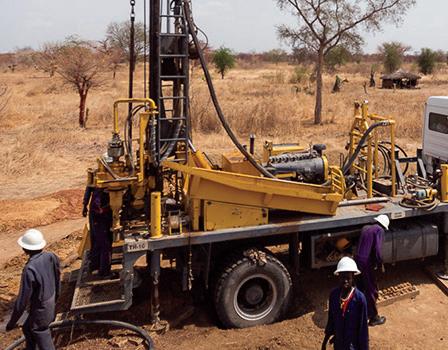
Although borehole drilling is seen by some as complex and expensive, players in the sector paint a different picture.
African airports should be autonomous to facilitate expansion
Africa is experiencing an upsurge of airports expansions but countries are finding it difficult to sustain the different projects due to financial constraints. The airports are making money, but most of it is spent on other things. Airport revenues are collected by the revenue authorities and taken straight to the Treasury, a clear case of not feeding the goose that is laying the egg. The airport gets back a little from what it collects. Therefore, failure to get financing for the expansion of airports can be attributed to not having control over the revenues they collect. The pressure to modernize and expand airports in Africa is unrelenting given the increase in air travel across the continent. According to a report by ForwardKeys, a company that predicts travel patterns and records bookings, in 2016, Ethiopia’s travel sector grew by 9.6%, and Tanzania by 10.6%. The report also showed that Mauritius grew by 11.6%, and Kenya by 14.9%. But, while the traffic numbers look good, governments are still cash strapped to expand or even build new airports to match increased traffic.Case in point isKenya where plans to begin construction of a new greenfield airport have been shelveddue to financial pressures.
Not all African governments have the capacity and resources to maintainand, improve airports and one solution to the problem is to consider making them autonomous to facilitate the necessary expansions.
Email: ethiopia@groupafricapublishing.com
Ghana Agent
Image Consortium
1st Floor, The Ecobank Building, Tesano.
Tel: 233(0)30 223 2728 I 233(0)274807127 I +233(0)206299159
Fax: 233(0)24 882 8286
Email: ghana@groupafricapublishing.com, Calebhadjah@gmail.com
Kenya Agent
Northwest Ventures Ltd
P.O. Box 16414 - 00100
G.P.O
Nairobi, Kenya
Tel: +254 20 2679809 I 2679808, 2091305
Email: kenya@groupafricapublishing.com
Nigeria Agent
Rahma Associates
B23/24, Aishetu Emoewa Plaza, 196, Iju Water Works Road, Ifako Ijaye Lga,Agege, Lagos. Tel: 234-1-7347860
Email: nigeria@groupafricapublishing.com
Rwanda Agent
Kolline & Hemed Inc., B.P. 3328, Kigali, Rwanda
Tel: +250 03 748106
E-mail: rwanda@groupafricapublishing.com Website: www.kollinehemed.org
Zambia Agent
Dayflex Limited, 4th. Floor Tazara House Dedan Kimathi Road, Lusaka, Zambia. Tel: +260 211 230 529 / +260 977 756 663
Email: makukasue@mail.com, dayflex06@gmail.com
Tanzania
P.

VINCI to build a pumped storage hydroelectric plant in Morocco
French-based VINCI Construction Company has been awarded a US $346m contract to build a pumped storage hydroelectric plant (PSP) in Morocco near Agadir.
The project, which consists of storing energy in hydraulic form, is part of the development and integration plan for renewable energies in the country. It includes execution studies, construction of civil engineering, supply of equipment and transfer equipment, assembly, testing and commissioning of the station.
The civil engineering works
The civil engineering works carried out by the construction company will also include the excavation of two basins, the digging of the production plant installed on the hillside and buried, the installation of the transfer pipe over 3km, of which 1km is buried.
Access to the facilities for the site and for the future operation of the site also requires the creation of new roads and the rehabilitation of several others.
RIEGL has became the proud recipient of the 2017 MAPPS Geospatial Products and Services Excellence Award. This prestigious award was bestowed upon the RIEGL miniVUX-1UAV miniaturized LiDAR sensor for unmanned laser scanning in the Technology Innovation category at the 2018 MAPPS Winter Conference.
The RIEGL miniVUX-1UAV is a user-friendly and cost-efficient device to acquire survey-grade measurement data by use of remotely piloted multi-rotor, rotary-wing, or fixed-wing UAVs for a variety of applications.
The RIEGL miniVUX-1UAV provides high speed data acquisition using echo signal digitization and online waveform processing, based on RIEGL’s sophisticated Waveform-LiDAR technology. Its excellent multiple target capability achieves superior measurement results, the 360° field of view allows complete acquisition of the environment, and its well-designed housing supports mounting, even with restricted weight and space requirements.
The Stabila Measuring app allows construction-industry professionals to use their smartphones for quick and easy documentation and processing of measurements. The app is compatible with Stabila’s LD 520 and LD 250 BT laser distance measurers, using integrated Bluetooth Smart
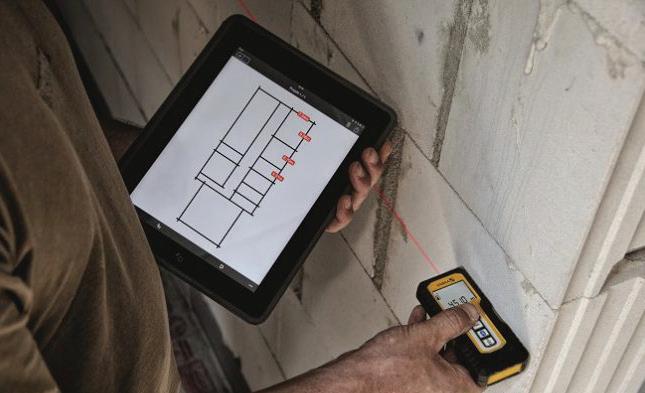
The new Stabila Measures app provides for improved design, functionality, and intuitive operation
Leading supplier of specialized equipment to the natural gas industries in Southern Africa, Energas Technologies, has entered into a distribution agreement with R Schmitt Enertec, a German manufacturer of gas engines, generator sets and co-generation sets, to offer Enertec’s highly efficient power generators to the local market. R Schmitt Enertec’s range of highly efficient and innovative power generators is now available in South Africa and the neighboring countries through local supplier Energas Technologies. Depending on customer requirements, Energas will offer Enertec’s wide range of generator sets with or without heat recovery and co-generation; the ENERGIN, ENERGIN GEN+ and ENERGIN CHP units, ranging from 115 to 500 kW.
ENERGIN generator sets are designed for power production in island or parallel mode with other generators and/or the utility.
technology. Stabila is one of the premium brands distributed locally by Upat SA (Pty) Ltd. Available free of charge from the Apple App Store and Android Play Store, not only does the app make it possible to create drawings of spaces and objects, it also allows users to import images from a gallery, and add dimensions directly to these items.
Before measuring an object or surface area with a smart device, the user takes a picture, and then applies the Stabila distance-measuring units. These measurements are transferred onto the picture captured on the smart device, and can be moved where required. Using the app, the user can even draw lines and rejig measurements accordingly. The picture is assigned
a job name and number, and can be emailed directly to the customer, or shared with the project office, in addition to being stored digitally for reference purposes.
“The new Stabila Measuring app provides for improved design, functionality, and intuitive operation,” Upat National Product Specialist Charl Weber comments. Measurements can be transferred wirelessly from the lasers to a smartphone or tablet, making it possible to document projects on-site, and to communicate this critical information directly to the project team.
The Uganda Solar Energy Association (Usea), hosted the 2018 Africa Energy Forum, in Kampala; with support from USAid through its Power Africa initiative.
More than 40 local and international solar companies gathered to showcase off-grid solutions, which, according to Usea chairman Emmy Kimbowa, will catalyze economic growth. Only 5% of Uganda’s population is connected to the national grid. This means that, to meet their energy needs, many of those who do have access to electricity are employing off-grid technologies such as distributed power and solar home systems.
Energy minister Irene Muloni and US ambassador to Uganda Deborah Malac checked out the exhibition booths and delivered addresses. UK High Commissioner Peter West and Power Africa officials were also there.
Uganda’s per capita electricity consumption of 157 kilowatt hours (kWh) is considerably lower than the sub-Saharan Africa per capita average of 552 kWh and the global per capita average of 2,472 kWh. By 2020, the government aims to achieve a national electrification rate of 30% through new onand off-grid connections, and to increase per capita consumption to 578 kWh.

The Nigerian Society of Engineers (NSE) has lauded Nigeria’s president Muhammadu Buhari’s executive order on local content as a move in the right direction which would drastically reduce capital flight in the country.
According NSE President Mr.KunleMakuolu the order will boost the capacity of local engineers to contribute their quota to the development of Nigeria.
The order, labeled “Executive Order 5’’, is meant to improve local content in public procurement with science, engineering and technology components. Moreover, it also prohibits the ministry of interior from giving visas to foreign workers whose skills are readily available in Nigeria.
However, it also notes that where expertise is lacking, procuring entities will give preference to foreign companies and firms with a demonstrable and verifiable plan for indigenous development, prior to the award of such contracts.
Mr. Makuolu further urged the president to ensure that the order is obeyed to prevent Nigerians from continuously developing other economies and neglecting their own.

The Nigerian Institute of Building (NIOB) has urged the Federal Government to evolve a definite policy to engage local professionals and indigenous contractors for involvement in the capacity development of industry practitioners.
According to the NIOB President, Mr Kenneth Nduka, this has become imperative because of the ever-changing socio-economic and technological environment. “The Federal Government should show greater faith in exploring how best to add good value to societal expectations for policy making undertakings to be advantageously harvested,” he said.
He further added that professional institutions like the NIOB have to be rightly situated as lighthouses guiding the members, the industry and general public from bad practice, corruption, indiscipline and bad governance.
The president also pledged that the management and administration will be subjected to periodic audit and scrutiny to sustain administrative effectiveness and improve operational governance.
The consulting Engineers of South Africa is set to focus on effective ethical leadership with the theme of ‘Our Future is Now’ as a theme for this year. According to the newly appointed president Neresh Pather, the world of the future can only be changed and facilitated through the leadership of today embracing the true purpose of service to humanity.
“Change can be effected if we believe in it and work hard enough to achieve it and that with great leadership we can succeed. We need to ensure that all South Africans and Africans are given a fair chance to further their contribution to our continent. We need to allow for practices to address the imbalance of the past for this will take many, many years to address”. Planned programs of employment creation, skills development and encouraging trade relations with our neighbor’s, developed and emerging countries should be accelerated,” he said during the presentation of his presidential message and theme for the year.
Mr. Nduka also expressed his disappointment at the lack of political will on the part of all levels of government to effectively situate and enforce a statutory provision that would professionally drive activities in the built environment sector.

Future Energy Nigeria has evolved from the West African Power Industry Convention (WAPIC). This energy conference and expo addresses the Nigerian power crisis through industry connectivity and creative solutions.
After 15 years of successfully driving new and existing industry relationships across the region, WAPIC has established its base in Nigeria to support the privatisation of the Nigerian power space. Nigeria is a country going through a tough economic cycle, compounded by a struggling energy sector and it is now that the platform of a meeting place to engage industry stakeholders keen to represent the sector is more important than ever.
This refreshed project will continue to drive collaboration, networking, solutions and positive results for a sector that is beginning to emerge from crisis. The only industry meeting point that discusses, debates and provides answers to the future development of the sector.
13 – 14 November 2018
Eko Hotel & Suites, Lagos, Nigeria
- Architectural Association of Kenya
- Institute of Quantity Surveyors of Kenya
- Institute of Engineers of Kenya
- Association of Consulting Engineers of - Kenya
- Association of Professional Societies of East Africa APSEA)
- Kenya Property developers Association
- Institution of Surveyors of Kenya
East Africa BUILD 2018 is the ideal platform which provides participants unique insights on the entry strategies to the East African market and helps them assess the potential growth of their products and services in the region, as well as showcase their latest products, equipment and technology to the East African Building & Construction Industry.
Delegates will have the opportunity to meet and network with a variety of people that matter to their business; from existing clients, suppliers, investors and to new customers Government officials, Trade officials, importers & exporters and the business community at large. The event will bring together industry experts from across the globe and within the region to exchange ideas, knowledge and share their expertise, as they connect with one another.

- Association of Ethiopian Architects
- Ethiopian Association of Civil Engineers
- Construction Contractors Association of Ethiopia
Zimbabwe
- Zimbabwe Institute of Quantity Surveyors
- Zimbabwe Institute of Engineers
- The Construction Industry Federation of Zimbabwe (Cifoz)
South Africa - ASAQS - SAICE
- South African Council for the Quantity Surveying Profession
- Khuthaza ( Women for Housing)
- Concrete Manufacturers Association
- Green Building council of SA
- South African Property Owners Association
- Master Builders South Africa
Uganda
Institute of Surveyors of Uganda
Uganda Institute of Professional Engineers (UIPE) & Uganda society of Architects
Botswana
- Institute of Botswana Quantity Surveyors
Ghana
- Ghana Institute of Engineers
- Architects Registration Council
- Ghana Institute of Surveyors
- Ghana Green Builders Association
- Ghana Institute of Planners
- Association of Building and Civil Engineering Contractors of Ghana
Namibia
Institute of Namibian Quantity Surveyors
Association of Consulting Engineers of Namibia
Tanzania
- Tanzania Institute of Quantity Surveyors
- Construction Regulation Board (CRB)
Stone & Surface Saudi is the only event in the Kingdom dedicated to connecting suppliers of interior and exterior surface design materials and machinery with industry professionals, like you, who are responsible for specifying and procuring these products for the commercial, residential, hospitality, and other real estate development projects.
Discover the latest designs in natural stones, covering, flooring and other surface design products and innovative solutions – from marble, granite, tiles, ceramics, wall covering, flooring products, paints, carpets and other surface design materials at the show. Meet new suppliers from 18 countries and learn from over 30 hours of CPD accredited sessions at the conference and network with your industry peers.
- Tanzania’s Registration Board of Architects and Quantity Surveyors (AQSRB)
- Association of Consulting Engineers Nigeria
- Association of Professional Women Engineers Of Nigeria
- Council of Registered Builders of Nigeria
- The Nigerian Institute of Architects
- American Association of Petroleum Geologists Africa Region
- Nigeria Society of Engineers
- Nigeria Institute of Architects
- Building and Construction Skilled Artisans Association of Nigeria (BACSAAN)
- Zambia Institute of Architects (ZIA)
- Association of Building and Civil Engineering Contractors (ABCEC).
John Deere has announced the new 204L and 304L compact wheel loaders, which are specifically designed to increase uptime and deliver higher productivity to customers. These models are built for professionals who frequently work in small spaces and on rough terrain.
The 204L packs 62 horsepower, while the 304L delivers 67 horsepower while in use. Both models are equipped with Final Tier 4 Yanmar engines, and they have hydrostatic transmissions that keep noise to a minimum.
Operators can also opt for ride control, which can reduce material spillage and create a smoother ride over uneven terrain.
“We’re packing more productivity and efficiency into the wheel loader with the release of our L-Series models,” said Drew Miller, product marketing manager of compact wheel loaders with John Deere Construction & Forestry.
“Perfect for year-round use, these workhorses were designed to take on tough jobs from warmer summer months to snowy winter conditions, while enabling the use of a versatile attachments portfolio when you need them.”
The wheel loaders also have self-adjusting park and service brakes, as well as ground-level maintenance points for easy access. They include extended service intervals for engine oil/filter, final drives oil and hydraulic oil as well. Operators can opt for an enclosed cab or an open station with these loaders, both of which provide 360-degree visibility.

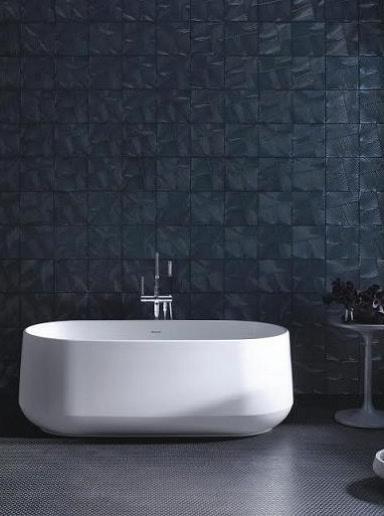
These new showstopper baths from Kohler are bound to impress. The simple, clean curves of the Ceric convey a minimal craft shape with ceramic detailing, expressing contemporary warmth and a soft appeal. The linear lines and symmetry are also appealing whilst the sloped lumbar support lets you indulge in a deep relaxing soak.
Veil’s organic, flowing and immaculately balanced curves evoke a sculpted simplicity in tune with contemporary style. This freestanding bath offers a luxuriously deep bathing experience with supportive contours that cocoon your body.
Kohler launches these hand-crafted baths from a new solid cast resin material, KOHLER Lithocast ®; a gloss cast resin that is lightweight and easy to clean. This technologically advanced material allows for new geometries, textures and designs to emerge. Each bath is carefully shaped from one, solid piece, ensuring structural integrity, and the lightweight material allows for easier transport and on-site installation.

Volvo has added a variety of technological advancements to its new DD110C double drum asphalt compactor.
The 10-ton-class compactor, which will be formally introduced at the World of Asphalt show in March, features an optional Compact Assist with Density Direct, which provides real-time density data displayed on a 10-inch touchscreen. The system prevents operators from overor under-compaction and allows them to react quickly to the density results, rather than waiting for a nuclear gauge or core sample.
With the onboard display’s Impact Spacing Meter, the operator can control the compactor’s speed and maintain the correct impact spacing, even when following a paver traveling at 60 feet per minute. The DD110C runs on a 148-horsepower Volvo D4 Tier 4 Final engine and delivers 3,800 vibrations per minute.
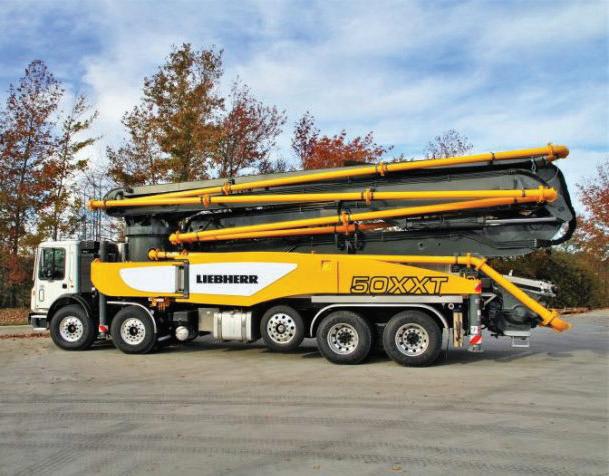
Liebherr debuts 50 M5 XXT concrete pump truck
Liebherr has unveiled its new 50-meter truck-mounted concrete pump, the 50 M5 XXT. The pump truck’s five section boom reaches to 161 feet vertically and 146 feet horizontally.
For moving the material, the M5 XXT offers four pump unit options with outputs from 138 to 167 square meters per hour. The four pivoting outriggers are secured directly to the distributor boom pedal which directs the weight from the boom directly into the outriggers with no flexing of the body of the truck. Liebherr kept the weight down and increased stability with a newly designed boom pedestal. The slewing ring and drive are proprietary Liebherr components. The front and rear outriggers on the M5 XXT pivot on the same point. “This gives you a ton of flexibility as you set up,” says Liebherr’s Clinton Nichols. “Setting up on tight jobsites is very easy to do. You gain more than 180 degrees working range on the boom,” he says.
The market wants a heavy machine that they know will last 20 years and be structurally sound and safe on the jobsite, says Nichols. For this reason the allGerman made Liebherr M5 XXT is built with rugged components and simplified electronics.
1

3
The nature of a construction project manager’s work largely vary from site to site much less company to company. However, what is vastly clear is that a construction PM has a lot of responsibilities compared to most PMs in different industries. This can be attributed to the fact that construction is a demanding and unique industry. Extensive knowledge about the industry can often be the difference between a successful project completion and delays.
The following are a few tips that can be highly useful to a construction PM to ensure project management success.
Communication is a very important tool for the success of practically every project out there regardless of the industry. Nevertheless, effective communication is one of the most critical elements to the success of a construction projects in particular.
The PM needs to make sure that there is constant and consistent flow of information not only on the ground but also with the stakeholders and supplier; in every single phase of the implementation of the project. With everyone on board, the implementation process will be much smoother and this will make it easier for the PM to solve any problems if or when they arise.
The implementation of a construction project can be surprising at times because things may not go as initially planned. The PM is likely to encounter situations that may force him to make changes on the initial plan. Therefore, he is expected to be as flexible as possible so as to make changes on the fly as aspects of the project unfold.
As a matter of fact, he may need to refine, revise and keep developing new plans through the implementation process to ensure the project is successful; keeping in mind that even the slightest of changes can have a significant impact on the overall outcome of the product.
Pay attention to complaints from stakeholders or colleagues, and other warning signs, like a missed deadline or cost overrun, that there may be a problem. Preventing a crisis will keep your project running smoothly, save you a lot of time, and keep you, your team, and your stakeholders confident in progressing with the project.
2
The PM as the head of the project has to be actively involved in every aspect of the project. He must literally work alongside his workers, leading by example. With the construction industry being so demanding, the PM has to understand his workers as well as familiarize himself with the construction site thoroughly. This would came in handy in case of a human resource issue that needs to be resolved. You have to become an integral part of the implementation process
4
Too many projects are doomed to fail from the beginning because of unrealistic expectations. Setting impossible deadlines and assigning too much work to your colleagues will surely result in sloppy work and often missed deadlines; which will in turn throw your project off course, necessitating patch-up work, timeline extensions, eroded stakeholder trust, and a frustrated team.
Understanding your workers will help you know their strengths and weaknesses. This can assist you in assigning tasks based on each colleague’s skillset. Delegating tasks to the right person is very important because success relies on how well team members can execute their tasks.

Africa is rich in resources and opportunities. However, poor governance is the cause of Africa’s energy crisis. In so many fields, however, the continent is yet to hit its stride, often because there is not enough political will to manage resources better and create necessary incentives. Africa’s energy crisis is a prime example.
Two-thirds of Africans – 620 million people – still do not have access to “affordable, reliable, sustainable and modern electricity”, one of the key global development goals. Decades of neglect and mismanagement have left Africa with some of the world’s worst-functioning grid systems.
Africa’s energy deficit continues to stifle economic growth, job creation, agricultural transformation, and improvements in health and education. To achieve the Sustainable Development Goals in Africa and globally, it is essential that the continent’s leaders face squarely the global energy “trilemma”: how to power the socio-economic transformation of their countries by providing electricity that is reliable, clean and affordable for all.
“Most electricity theft in Africa is carried out not by people too poor to afford electricity, but by people and organizations that consume large amounts of electricity and could pay for it.
Several countries are showing what can be done to bridge the energy gap, fast. However, there is a need for greater action, across the board. That’s why the latest report from the Africa Progress Panel, Lights Power Action: Electrifying Africa, calls for a massive increase in investments – in on-grid, mini-grid and off-grid solutions – to solve Africa’s energy crisis more quickly. Lights Power Action underlines that the 620 million Africans without access to electricity cannot wait for grid expansion. Grid-connected megaprojects such as large dams and power pools are essential to scale up national and regional energy generation
and transmission, but they are slow and expensive. Governments must also increase investment in off-grid and mini-grid solutions, which are cheaper and quicker to install.
More needs to be done
Alongside greater investment, much more must also be done to better manage and prevent the loss of Africa’s existing resources, as the APP has emphasized in previous reports. That challenge is not only financial and technical, it is also deeply political. There is a pressing need for continued improvements in governance in the energy sector.
As the chair of the Africa Progress Panel, Kofi Annan, has said: “African governments have a vital task to undertake, one that goes to the heart of the continent’s energy problems: fixing national energy grids that are unreliable and financially fragile. Many energy utilities suffer from mismanagement and inefficiency. A lack of accountability and transparency nurtures corruption. These are serious and persistent problems, yet they are solvable, as many countries are demonstrating”.
Unreliable power supply is the main hurdle for businesses in Africa, as Lights Power Action notes. Thirty countries in Africa experience regular power shortages and blackouts, costing their economies on average 2% of their GDP, and up to 5% in some cases.
Power shortages are often a result of electricity transmission and distribution (T & D) losses incurred because of physical and technological deficiencies. Africa’s high T&D losses, well above the world’s average of 7%, represent a major challenge for the power sector. Their severe impacts on the quantity and quality of energy supply, as well as the attendant economic costs, are felt throughout the power chain.
It’s refreshing to see how strong political commitment, backed by financial support from multilateral banks and the private sector, has led to the implementation of T&D network development plans in countries such as Ethiopia, Ghana, Kenya, Mozambique and Nigeria. However, most of these investments are not specifically intended to connect the underserved. To accelerate the pace of energy access for all, the APP urges leaders to ensure that all urban and rural areas within the
power grid’s reach are included in the planning and development of T&D networks.
Theft and the role of governments
The problematic power situation is exacerbated by corruption and mismanagement, as well as theft and vandalism. In our report, no finding shows the paucity of governance in the energy sector more starkly than the fact that in several countries a proportion of electricity theft – a problem across the continent –is carried out by organizations that are nominally part of the government, including the armed forces in some countries.
The analysis in Lights Power Action: Electrifying Africa shows that most electricity theft in Africa is carried out not by people too poor to afford electricity, but by people and organizations that consume large amounts of electricity and could pay for it, including government, corporate, industrial and commercial groups.
This reality emphasizes why power provision is a highly political issue and an essential governance challenge in many African countries. According to Kofi Annan, “poor energy governance reflects the wider governance deficit that threatens to derail development efforts in a number of countries [but] where there is good leadership, there are excellent prospects for energy transition”.
The APP calls on Africa’s leaders to tackle the vested interests and networks of political patronage that are preventing many public energy utilities from providing optimal service in the national interest. The Panel also urges all governments to put in place integrated plans and policies to scale up Africa’s energy transition. In addition to enhancing and rolling out the grid, within countries and across borders, these plans should include incentives to invest in off-grid and mini-grid systems, protect consumers, and facilitate demand among disadvantaged groups.
“Traditional approaches to extending the grid are no longer viable as the main option for African countries”, Mr. Annan has said. “They will take too long and will not meet the needs of our growing economies and societies. Instead, governments and their partners need to seize the opportunity to re-imagine their energy futures”.
As Lights Power Action highlights, the recent rapid progress of countries such as Côte d’Ivoire, Ethiopia, Morocco and Rwanda in improving electricity provision shows just what can be achieved. It’s time for Africa as a whole step up the pace today to create a bright new energy environment tomorrow.



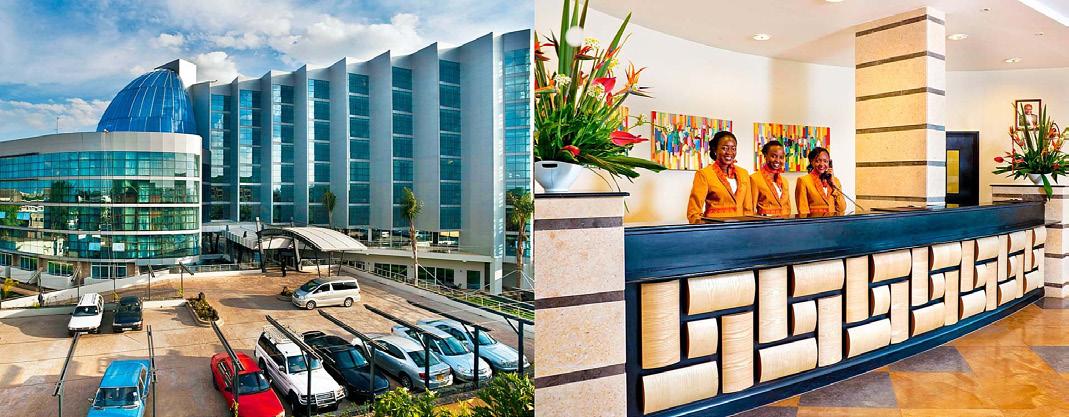
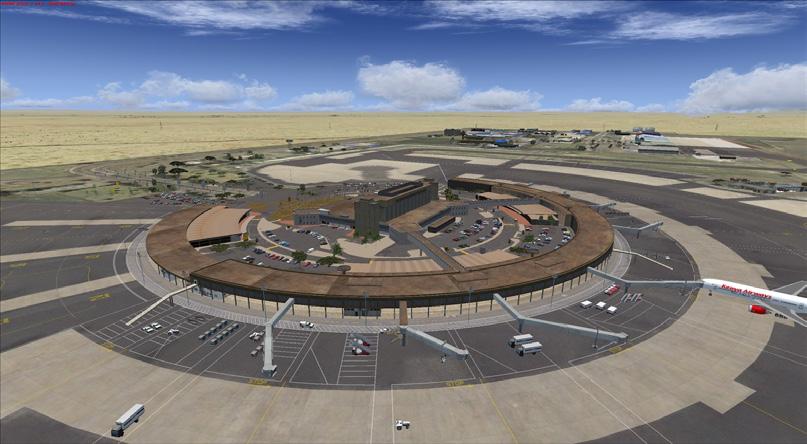
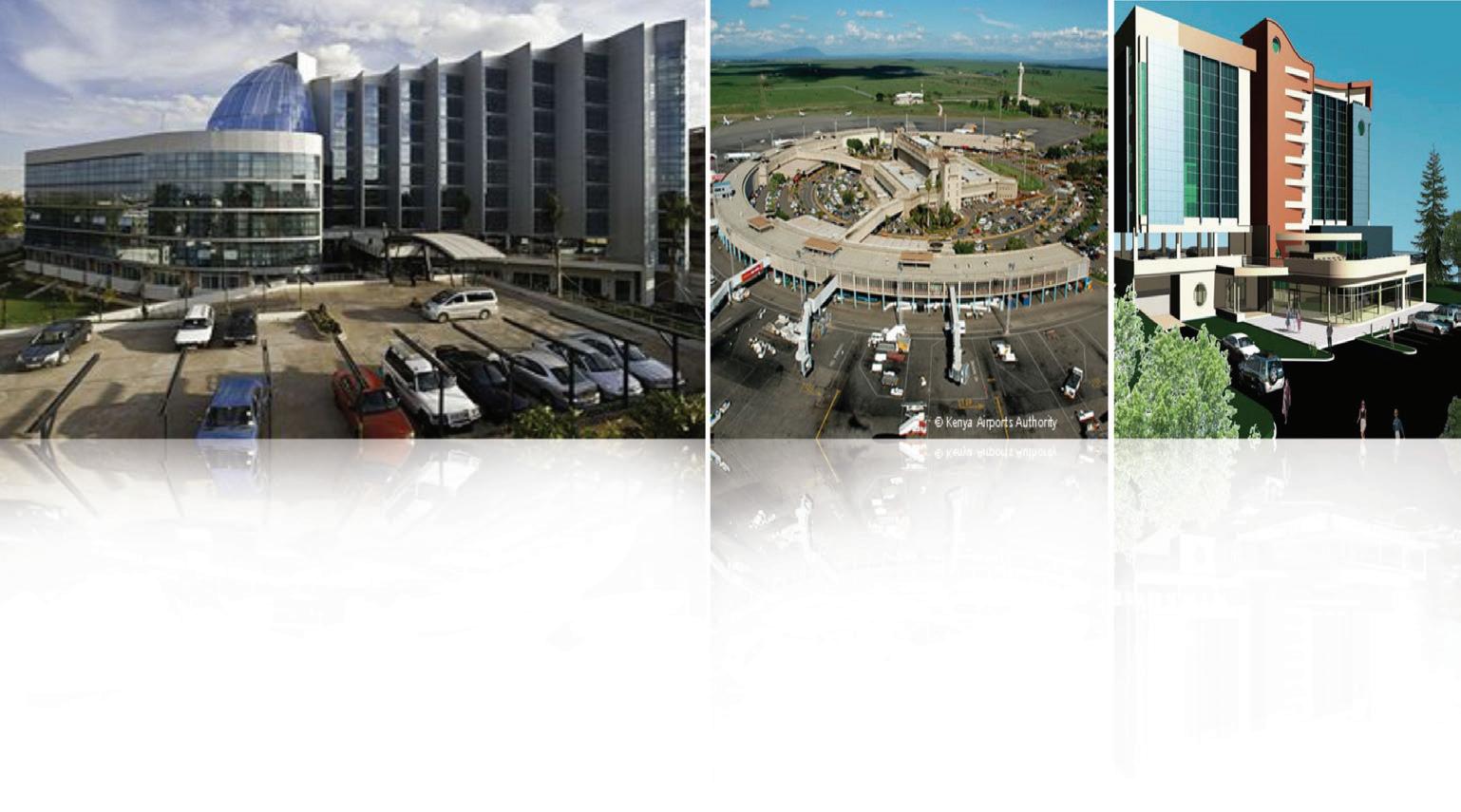
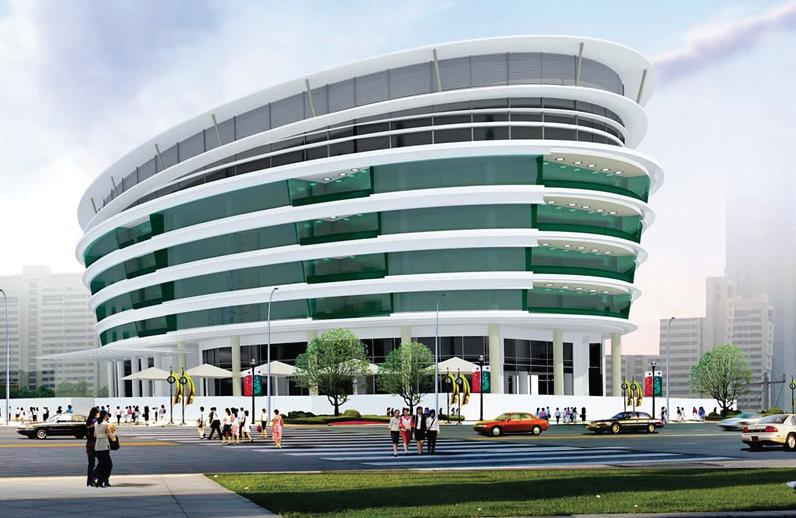
As Africa’s population grows and air travel becomes more affordable, together with increased foreign direct investment on the continent, construction of new airports and expansion of existing facilities has to accelerate.
For instance, between 2011 and 2012 business activities at African airports rose from 45% to 80%. This trajectory has largely been attributed to the growth

of the continents GDP of 6.1% contrary to the global estimation of 5.8%.
According to Nick Fadugba, the chief executive of African Aviation Services Limited, the African airports should restructure to facilitate commerce and tourism within and out of the continent. “This will foster sustainable development,” he notes.
Therefore, in 2012, airport construction and

The African passenger’s aviation industry has faced a number of changes in recent years. Firstly, the domestic, intra-and intercontinental traffic increased from 41.2 million passengers in 2002 to 127 million passengers in 2014 at an average growth rate of 16%; this is according to the International Civil Aviation Organization (ICAO) report of 2013. The Africa-Europe route, with approximately 1.2 million weekly nonstop return seats in July 2016, had by far the highest passenger share in the total international traffic to and from Africa. The second largest intercontinental market is the Africa-Middle East route 800,000, followed by Asia 90,000, North America 50,000and Latin America 12,000. This growth has been driven by sustained economic growth rates and increased urbanization in Africa and a paradigm shift, albeit a slow one, towards a market-oriented system that emphasized the liberalization of air transport services on the continent. Moreover, the Yamoussoukro Decision entered into force in 2002 creating a comprehensive policy framework with the stated aim of liberalizing air transport across Africa.
Air traffic growth in the African hub airports can also be attributed to liberalization policies that their respective countries have pursued in recent years. In fact, Egypt, Kenya, Nigeria and South Africa, like an increasing number of African countries, have in recent years adopted a more liberalized approach to bilateral air services agreement, allowing for multiple designations of airlines and an unlimited number of frequencies.
Moreover, the International Air Transport Association (IATA) projects a 5.1% growth in passenger numbers across the region by 2035 where nearly 300 million passengers will travel to and from African destinations and as a result, airport development projects today are mushrooming across the continent. Majority of airports in Africa are undergoing expansion in a bid to cater for rapidly growing passenger and cargo traffic volumes.
expansion plans were announced by several governments hosting regional hubs. In North Africa, Algeria budgeted US $952 million and Egypt US $18.5 billion on airport work. Nigeria budgeted US $1.07 billion in West Africa, and Rwanda US $650 million. In Southern Africa, Angola set aside US $2.1 billion for airport expansion, and Zambia committed US $500 million.
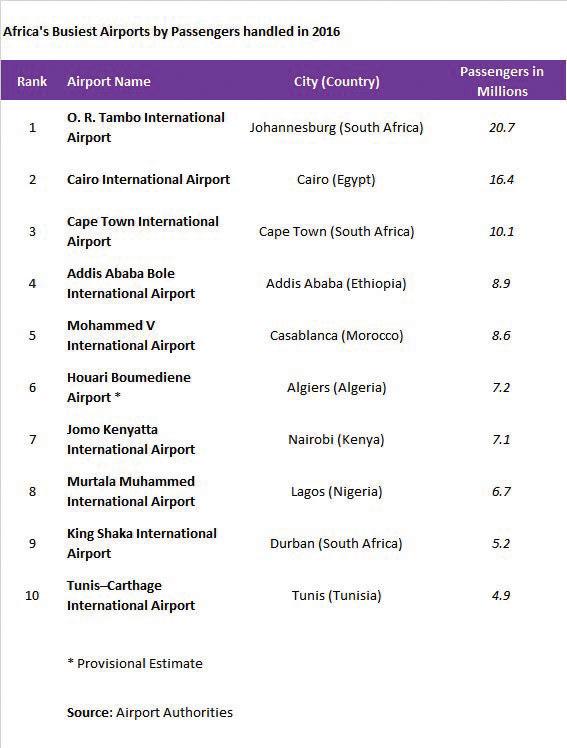
Ethiopia’s showcase Bole Airport in Addis Ababa, opened in the early 2000s, is already seeing a US$ 250 million expansion. When completed, the facility will be one of Africa’s largest airports, handling 120 million travelers annually, the same capacity as Dubai and Heathrow airports. Bole International Airport is truly a regional facility, and 70% of passengers are transit travelers who never leave the airport but change planes for other destinations.

Additionally, Ethiopia’s Gambella Airport has recently installed a US$1.3m advanced Air Traffic Control (ATC) tower that directs aircrafts during takeoff and landing.The Ethiopian Civil Aviation Authority (ECAA) constructed the tower with the aim of expediting the movement of the increasing traffic jams at the Airport.
“The project experienced delay for some times due to security issues of the Airlines hindering easy and flexible access to the construction site,” said Habtamu Ashine, Aerodrome Engineering Section Supervisor, during the handover ceremony of the project, held on September 20, 2017.
Along with Gambella, the construction of six more towers are underway, and eight towers Gode, Bale Robe, Assosa, Kombolcha, Semera, Shire Endasillassie, Jinka, and Hawassa to commence in the future.
East Africa’s primary tourism destination, Kenya, is set to spend US $358m on construction of a new runway at the Jomo Kenyatta International Airport (JKIA) in Nairobi. Johny Andersen, of the Kenya Airports Authority (KAA) says that, on completion, the project will reduce mishaps on the path as it will nearly double the aircraft movement from 25 to 45 aircrafts per hour.
“The runway will be an upgrade of the existing one (which was built in the 1970s).

This will be a category two runway that conforms to international standards,” said Mr. Andersen.The current JKIA’s traffic capacity stands at 89%, thus it is necessary to expand its capacity as soon as possible.
According to KAA, the technology of the proposed facility will meet the International Civil Aviation Organization’s (ICAO) category II specifications. The technology will also enable operations in bad weather thus avoiding diversion of aircraft.The project is an ICAO code F runway which can handle the new generation extra wide bodied aircrafts such as Airbus A380 and Boeing B747-800.
Additionally, in 2020 JKIA expects to handle slightly over 17million passengers annually. The growth is also expected to accelerate to 35million by 2030.
Zambia is currently renovating and expanding the Kenneth Kaunda International Airport. The project which will cost US $360m is progressing well with construction of the new rescue and fire services expected to be completed within the course of this year.
The country is also set to undertake the construction of Copperbelt international airport in Ndola at a cost of US $400. The airport is projected to handle 2 million passengers and will consist of plane hangars,


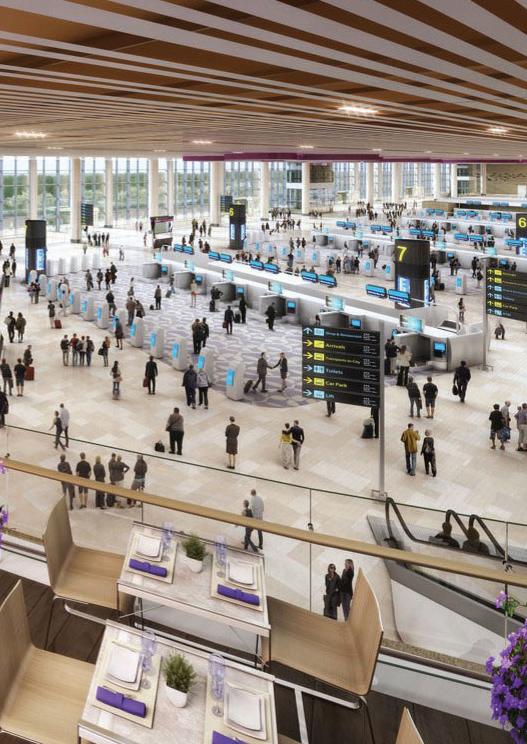
rest rooms, fire station, office blocks, kitchen, restaurants, waiting rooms, laundry facilities, service shops, kiosks and car park, among others. It will service the Copperbelt and North-Western parts of the country in tune with the region’s economic growth and travel needs.
According to Zambia’s president Edgar Lungu, the government has prioritized the expansion of transport infrastructure as it is critically essential for sustained growth and socio economic transformation.
“For us to achieve diversified and resilient economy as espoused in the seventh National Development Plan, we have to build a well function transport system, the project is a fulfillment of the patriotic front’s commitment to infrastructure development as one of the key priorities and strategy for accelerating our country’s socio economic development,” he noted during the commissioning of the CIA project.
In North Africa, Egypt has recently unveiled the newly refurbished Cairo International Airport Terminal 2 at a cost of US$436m by the Turkey-based Limak Holding. The renovation, which was launched in response to the rapidly increasing passenger traffic at the airport, will increase the terminal’s capacity to 7.5m passengers per year from the previous 3.5m per year.

Partly funded by the World Bank, the renovation was aimed at further enhancing Egypt’s air transport sector, which is crucial to the country’s economic development. It will improve the quality of services, and reiterate the airport’s role as a regional hub. It will also allow the airport to handle large-body aircraft such as Airbus A380, Super Jumbo and Boeing 747.
According to Olivier Le Ber, the World Bank’s Lead Transport Specialist, the refurbishment aims to support Egypt to improve the quality of airport services and strengthen its air transport capacity. “Having a good and reliable airport is very important for tourism which is an important sector for job creation and for bring foreign exchange revenues,” he said.
All African countries have agreed to ‘open skies’ aviation treaties that will bring uniformity to pricing, routes and air space use fees. When these commitments are actually put into practice, African air travel will expand exponentially, driven this time by African travelers flying within the continent and not just international travelers on longdistance flights.
With cut throat competition between countries in a bid to become the hub of choice for airline traffic it remains to be seen if the ambitious expansion of African airport will match those of developed countries. For now, it is clear that the continent is set to benefit greatly with the current quest for expansion.
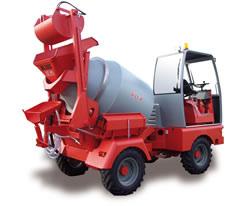
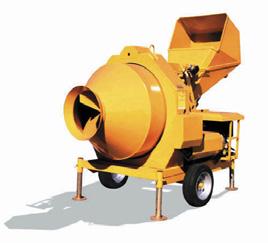













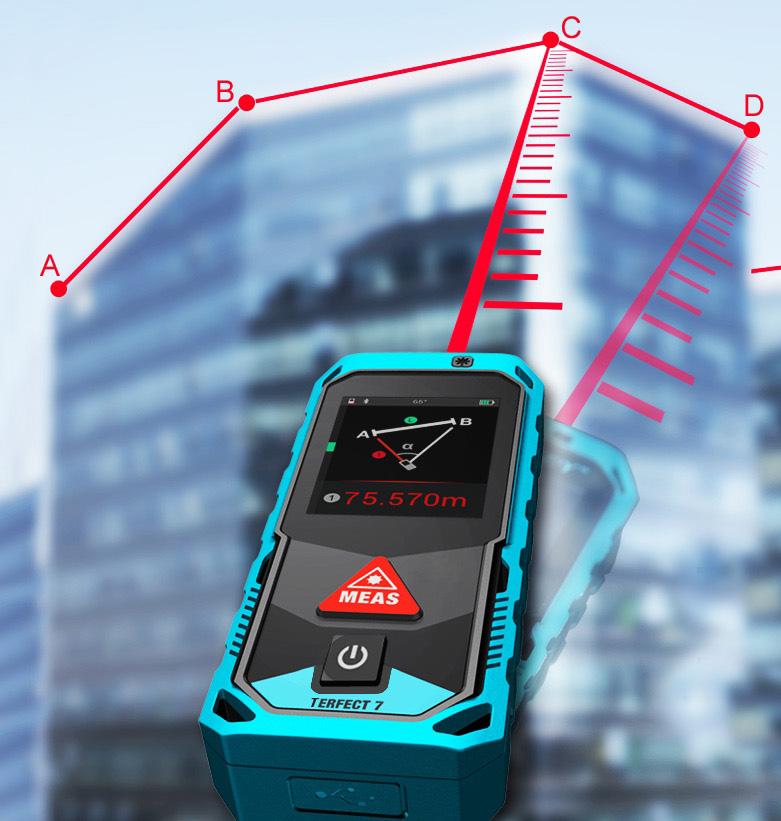
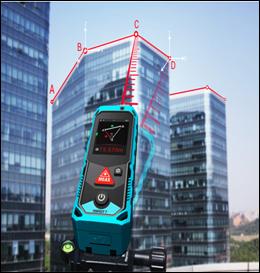
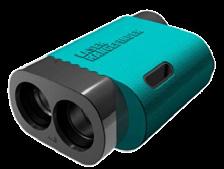
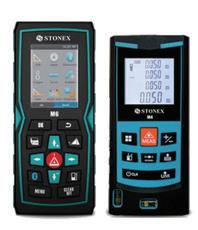
Laser distance meters (LDM) provides you with various measuring techniques for the precise measurement of distances of up to three kilometers.
A Laser Distance Meter sends a pulse of laser light to the target and measures the time it takes for the reflection to return. For distances up to 30m, the accuracy is 3mm. Onboard processing allows the device to add, subtract, and calculate areas and volumes and to triangulate. You can measure distances at a distance. Compared with a good, old-fashioned tape there’s no contest. A Laser Distance Meter wins on every count: speed, accuracy, safety, versatility, convenience and functionality.
Basic Principles
A Laser Distance Meter sends out a finely focused pulse of light to the target and detects the reflection. The meter measures the time between
those two events, and converts this to a distance. The formula is simple: Distance = Ä (Speed x Time). However the speed of light is 300,000 km per second, so to resolve differences of (say) 1 cm, the meter must measure time intervals of the order of billionths of a second. But don’t worry – the technology is well established and reliable. A laser distance meter can measure distances of up to 30m with an accuracy of É3mm. An Ultrasonic Distance Meter works on a similar principle, but instead of light it uses sound with a pitch too high for the human ear to hear. The speed of sound is only about ⅓ of a km per second, so the time measurement is easier, but there are other issues, as we shall see below.
These laser sensors use laser light (pulsed or continuously modulated) to measure geometric distances, heights, lengths, levels and positions in a non-contact process. To
achieve this, all the components work together in a perfectly coordinated overall system. This system is made up of a laser, the transmitter and receiver optics, the sensitive photo diodes and sophisticated electronics and algorithms for time or phase measurement.
Drawingon various optoelectronic principlesfor measuring devices,

such as time-of-flight, phase comparison and the pulse back-mixing method. These individual methods allow measurements accuracy to the millimeter, and measuring ranges up to several hundred meters.
Natural and manmade surfaces/objects
Using laser distance sensors or laser distance meter, you can measure on natural surfaces or reflectors and obtain fast and precise results. The laser distance meters operate using visible or invisible laser radiation and are rated as eye safe in compliance with laser class 1 or 2.
The devices arecompact and locust allowing for various applications including construction, industrial both indoor and outdoor. All of the devices offer common standard interfaces, analog or digital data output, and parameterizable switching outputs.
Besides laser distance meters for industrial applications, there are also extremely compact and high-performance laser distance meters (“laser rangefinder” based on diode- or solid-state lasers) for deployment in defense and security technology.
A Laser Distance Meter is accurate to within a few millimeters, certainly equaling a tape for larger distances, and the line is always dead straight; no bending or sagging. You have a choice of units, and there is no risk of misreading, as with the intermediate marks on a tape. The Laser Distance Meter is much faster; point, click, and you have the result in front of you on the display. The job is done in just a fraction of the time it would take to use a tape. You donot need to walk to and fro, or have a helper at the other end. What is more, you can use it with one hand, leaving the other free to hold your notebook. With a backlit display and the laser dot itself, you can use your Laser Distance Meter in relatively poor lighting conditions.
There is no need to wait until morning or to rig up lights. You donot have to access the far end of the measurement range or poke anything where it shouldnot be poked;only the laser light has to do that.You do not have to worry about obstacles on the ground, or even large features such as pipes or cables. If there is a line of sight to your target, and it is within range, you can very quickly find out exactly how far away it is. For the same reason, you can measure upwards without climbing to a ceiling or to the top of a building. So, the Laser Distance Meter brings safety benefits as well.
No more scrambling up ladders or over steep or wet surfaces to get a measurement. These safety and versatility benefits are particularly valuable in hazardous environments, and there will be occasions when you would not be able to do the job at all with a tape. Only a Laser Distance Meter will do.
Distance measurement with tilt sensors
With LDM, Measuring a distance is easy, just power on your LDM and aim at your target and press measure. The inclination angle
of the line of sight of the LDM from the horizontal line is always displayed on screen in real time as one changes position of LDM. So one can easily measure inclined distances at various vertical angles including precise horizontal lines (0o), vertical lines (90o) and at 45o inclinations. You can use this function also to check horizontality and verticality of the surfaces and lines.
Indirect distance measuring
Indirect distance measure can easily be achieved. You are only required tomeasure at least two distance measurements, one precisely horizontal and other to the top of the object byselecting Pythagoras measurement function of the LDM.
The height of a billboard can easily be measured with a simple 3 measurements, the first shot establishes the horizontal distance, while the 2nd and 3rd measurements establish the top and base angle of the billboard. Height is then calculated and instantly displayed on the screen.
Suppose you have to measure up for a cable run underneath a building. There is no line of sight between the start and end of the run; you have to walk around the corner. Obviously a complicated task

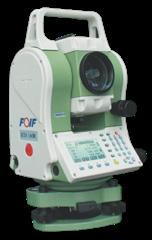
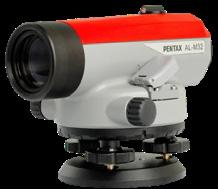
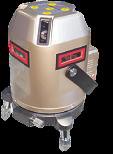
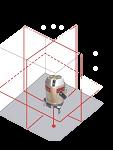
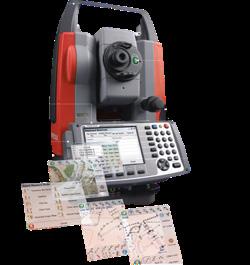
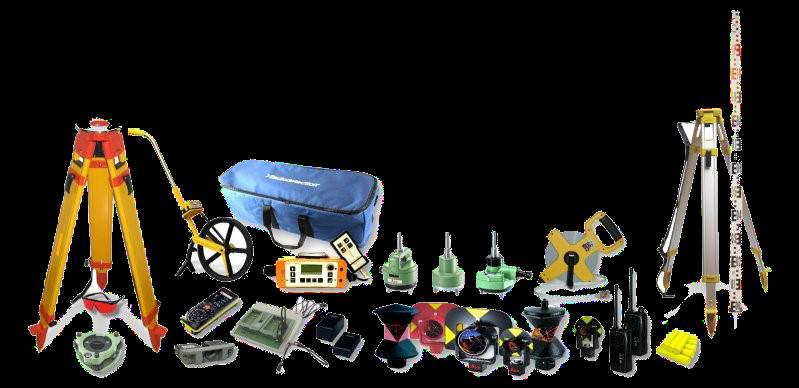
&rentalsof surveyingandmappinginstruments

with a tape, followed by some work on a calculator. However with your Laser Distance Meter you can measure two sides of a right-angled triangle, and it will work out the third with its built-in Pythagoras functionality.
Similarly, you can get the height of a structure without even being next to it, just by measuring your distance from the base and from the top, and you can measure the width of a building by standing some distance away and taking measurements from there.
Something else that a tape simply cannot do is to work out an area from two length measurements, or a volume from three measurements. Answers in seconds without a notebook and calculator. Another feature intrinsic to a Laser Distance Meter is that it can measure continuously in situations where you would have to reposition a tape repeatedly. You can walk along, marking out a path that is (say) a certain minimum distance from a building. This is another bonus that has great value in hazardous environments.
There are many applications, such as to measure the width of a billboard, or to between one point with another point, which are separated by a river, or two inaccessible points, but you ask for a quick, accurate, and safe solution of measurement. So simply take two distance measurements to one point and then move the LDM to take the measurement to the second point, the distance between these two points will automatically be calculated and instantly displayed on the screen.
Area and volume measurements
Area calculations, measure width and length, then area enclosed is automatically calculated. Volume calculations, measure length, width and height. The volume enclosed by the three measurements is then automatically calculated
Finally a good old tape measure may be simple and reliable, but it is limited. You will need to find someone to hold the other end and also need to raise hot-work permits, make risk assessments and method statements. A Laser Distance Meter is accurate and quick and requires only one person and one hand. It is easy to use and versatile. Laser Distance Meters have on-board processing enabling the device to triangulate and calculate; it knows Pythagoras. You can measure distances at a distance, add, subtract and calculate areas and volumes.
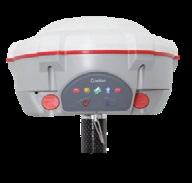
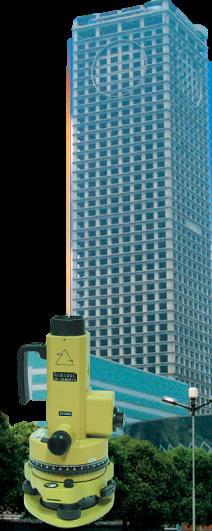
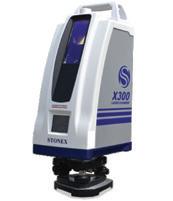
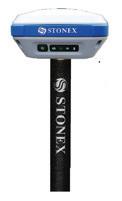
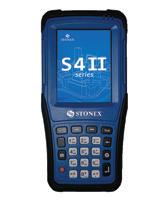
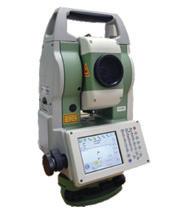
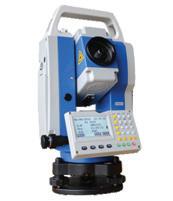
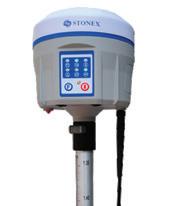
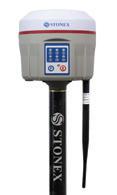
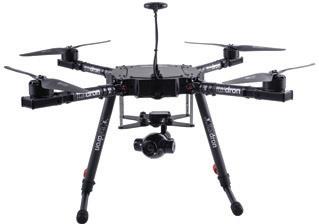
According to Mr. Felix Orina of Orbital Africa Limited, technology is changing at unprecedented rate. As well, the survey equipment and their associated technology keep on changing each and every day. “To be at pace with modern technological dynamics, we often try as much as possible to sell latest equipment to our clients. To augment equipment sales, we offer technical support and advise our clients to invest in new equipment such Drones, RTK/GNSS, digital levels, robotic total stations in order to optimize their returns on investment,” he adds.
Orbital Qpfc advert.pdf 1 3/1/2018 5:43:29 PM

Camera and point Finder: When you are taking measurements up to 30m or further, the laser spots can hardly be visible and it is impossible to measure distance accurately. But some LDMs including Mileseey P7 which are equipped with high resolution camera and zooming capabilities (4X zoom in P7) can easily locate the right target on the screen and then simply pressing measure button to record the distance. Some LDM can measure up to 100m just as conveniently as measuring 10m.
The measurement taken can be exported to your smart mobile device or laptop via Bluetooth. The drawing or plans can be prepared thereafter.



African corporates have made great strides in the adoption of electronic based physical security systems. Residential developments are now joining the train with a storm, as the world heads to Smart homes. Mobility has also enabled accessing, monitoring and controlling spaces from anywhere in the globe.
Traditionally, premise access was based on lock and key. Access control systems are an electronic evolution of the traditional padlock, these systems dictate who when and how entry into any space will be made. With the evolution of the internet protocol (IP) and developments in software, computing and storage system, Access control is now a converged IP system, operating in the realm of information technology. This revolutionaries’ access control easing the way we manage entry into our spaces.
Making access control smooth, convenient while heightening security levels has been the main drivers to growth of this industry. Individuals
with authorization to enter a space should do so with ease but at the same time the systems must ensure to unauthorized person gains access. Ease on management and monitoring is another major factor that is driving change in access control, with owners, users and property managers seeking systems that centralize managements and provide a lower total cost of ownership.
Effective security basics are based on three core elements
• Identity of Authorized personnel
• Authentication
• Authorization of Authenticated individuals to access the premise
The major areas of new developments are in Authentication systems, Central control and management, Contactless access, power conservation and, integration with other systems



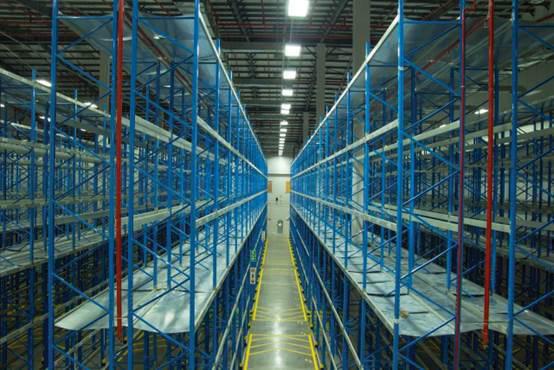
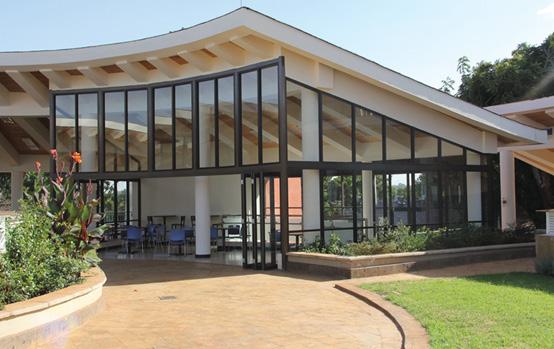

Everyone regardless of the industry is looking for a solution that will not only be reliable but also as cost effective as possible. It does not matter which continent or country you come from, the construction solution you settle for has to project some level of value. Those in the decorative concrete industry have known for years that on a construction project, the value of decorative concrete presents itself over and over again, a simple concept called “value engineering.”
A primary tenet of value engineering is that basic functions be preserved and not reduced as a consequence of pursuing value improvements, such as reduced costs, an improved final product, and easier maintenance. Decorative concrete has become the logical choice for many construction projects because it delivers great value. Consider these popular applications where decorative concrete offers real benefits in terms of performance, cost savings, and aesthetics:
More big-box retailers are choosing decorative concrete as a finished floor as opposed to high-maintenance floor coverings or coverings that can fail due to moisture exposure. Many smaller retailers find that stained concrete floors are not only attractive but also very cost effective. Polished concrete is another popular choice for interior floors, especially in educational and medical facilities, because they create an attractive, lightreflective, easy-to-maintain durable surface.
The decorative concrete advantage:
• Cost savings by eliminating traditional floor coverings and using the slab on grade as the finished floor.
• Reduced maintenance and longer service life.
• Better resistance to moisture and heavy foot traffic.
• Good light reflectivity.
Instead of traditional masonry pavers for flatwork and pedestrian areas, more theme parks are using stamped
concrete because of reduced long-term maintenance and care. Over time, pavers often become loose or they settle, resulting in tripping hazards. Replacing existing pavers with new ones can create undesirable aesthetics because the colors rarely match.
The decorative concrete advantage:
• No more loose or settled pavers that require resetting or replacement.
• The elimination of tripping hazards that increase liability for parks and resorts.
• Stamped concrete is safe, easy to maintain, and has a long service life.
Another area where decorative concrete has proven to be a value to builders and developers is in the implementation of sustainable building practices. Traditional floor coverings often require adhesives that emit VOCs into the atmosphere over
time, reducing the indoor air quality. Green building with concrete can contribute to sustainability in other areas as well by providing thermal mass and improving light reflectivity. Light-colored concrete pavements have also been proven to reduce the urban heat island effect by improving solarreflectivity values.
The decorative concrete advantage:
• Reduced energy requirements.
• Conservation of resources. Concrete itself is made primarily from recycled materials and contributes to sustainable building.
• Better indoor air quality.
On your next construction project, try applying a value-engineering approach to your design process and the selection of materials. You will often discover that decorative concrete is the best choice.
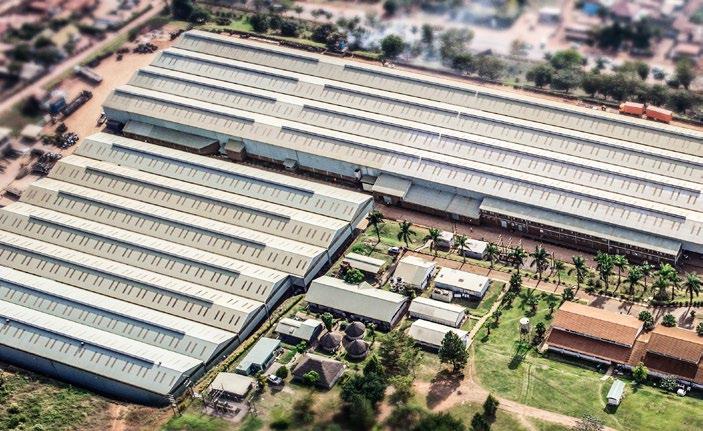
Having completed impressive projects in over 80 countries world-wide, Ideal Work is a European leader in the production and development of decorative cementitious finishes. With an extensive range of high quality and technologically innovative systems, Ideal Work offers the possibility to create luxurious wall and floor finishes for both interiors and exteriors: residential, tourist, hospitality, commercial, public, private, institutional or cultural.
Through passion and know-how, Ideal Work has been able to transform cement into a versatile, adaptable and attractive option for creating very aesthetically pleasing yet durable finishes. Ideal Work also offers certified application skills training and has a full technical and sales support structure for its clients.


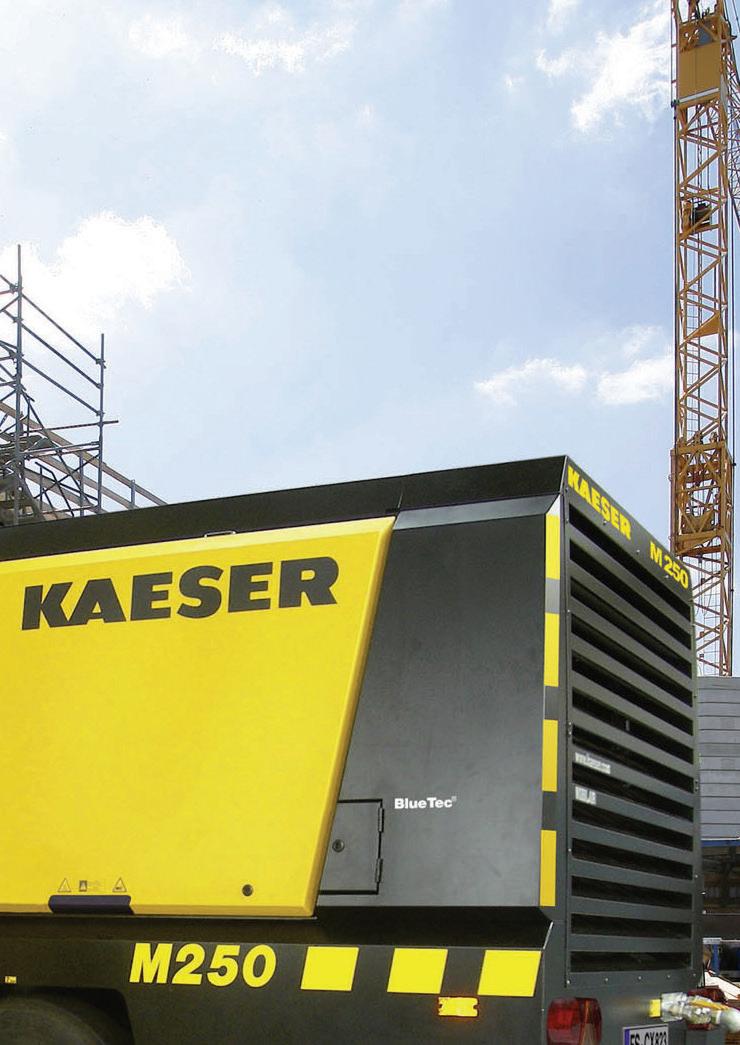
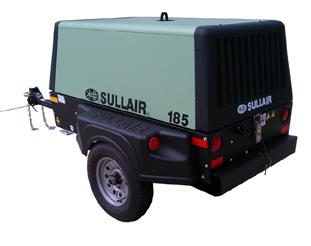
With recent advances in construction-specific rotary screw portable compressors, contractors are guaranteed of a steady supply of compressed air onsite for various uses in construction projects.
The oil-injected portable single-stage rotary screw compressorhas become an indispensable tool on construction sites in Africa, wherever and whenever contractors need compressed airto power heavy tools, as an alternative to stationary compressors. Though, it is also often misunderstood equipment.Unsurprisingly, it is not uncommon for wrong equipment to be used for applications, with very costly results. Concisely,Construction Reviewunderlines topical information about portable compressors sourced from OEMs that target the Sub-Sahara African market.
• User-friendly control
Firstly, functionally, there is not much difference between the electric-powered rotary screw compressors and oil-injected portable rotary screw compressors. However, in comparison with a stationary electrical screw compressor, a portable compressor has a pneumatic control system, with minimum amount of electronics. On the other hand, modern stationary compressors are manufactured with feature control panels with sophisticated microcontrollers and lots of settings and options.
• Safety devices
Safety is one of the most important features of portable compressors, bearing in mind that they are engineered to work in explosive or flammable environments. As a bare safety minimum, the portable compressor has safety devices for low oil pressure and/or oil level and too high temperature. Safety features like safety shut off valvesto and spark arrestor to prevent the diesel fumes from causing fire explosionare standard.
• Endurance and reliability
Robustness, strength and reliability are essential features in portable air compressors that are used in tough industrial environments.In particular, citing one area, the compressor has to be made of strong components like high-quality air filters.
• Capacity range
Portable air compressors come in all shapes and sizes. Typically driven by diesel engines, the size of the engine and the compressor depends on the air flow that is required and the air pressure. Usually, portable air compressors can deliver compressed air ranging from 7 to 12 bars.
• Common Options
Portable air compressors are available with many different options and extras. Basic options for portable air compressors include:
• After cooler (to cool down the compressed air)
• Moisture traps, filters.
• Reheated (to heat-up the cooled-down air, to prevent moisture problems)
The long and short of it, contractors have to seek conclusive answers to the following questions, before making the crucial decision of purchasing or hiring a compressor:
• Specifically,what do I need a compressor for?
• What kind of compressor do I need?
• What is the right capacity of the compressor to serve my needs?
• Does the manufacturer offer back up services and sufficient replacement parts?

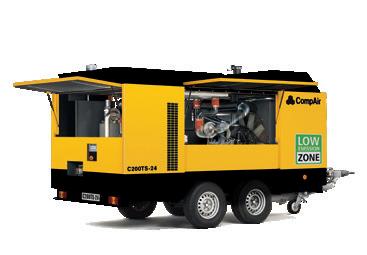
overall weight that is up to 2,000kg lighter than comparable compressors
with its reputa�on for high quality ”and ability to meet the requirements of numerous applica�ons the Turboscrew offers first class performance and fuel efficiency
Join us at Emperors Palace for the MASTERS of Air 2018
Compressed Air Exhibition 23-24 May 2018
Reserve your seat – RSVP: tumi mohlala@compairsa.com Why it ’s a must have…
• Large capacity machine to tow
• Portable
• No al�tude capacity loss and same output on al�tude in any condi�on
• Fuel Efficient
• German made

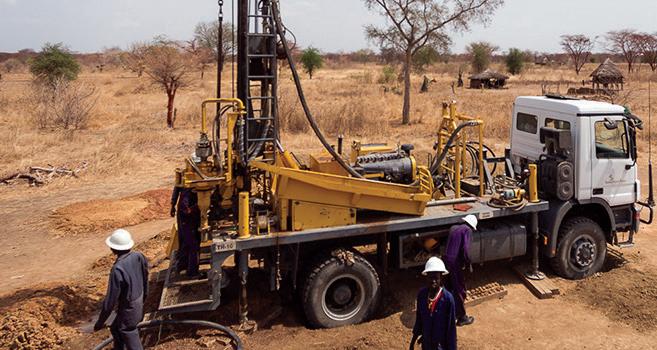
Boreholes are necessary in areas where a steady supply of clean water is unavailable. Boreholes are drilled for many uses including industrial, irrigation and domestic consumption.
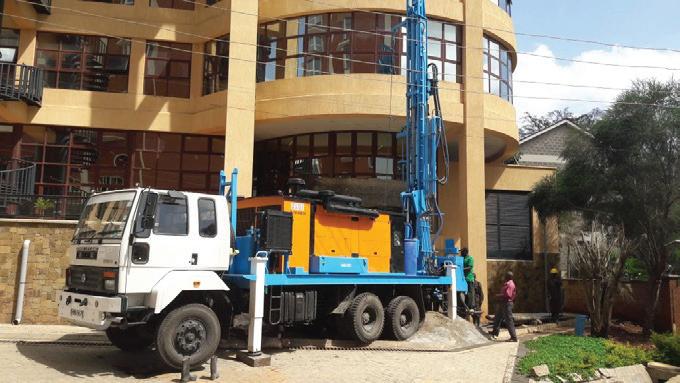
Most Kenyan developers have opted for ground water exploitation to attract tenants or buyers to their property due to unreliable or even non-existent supply of water by local authorities.
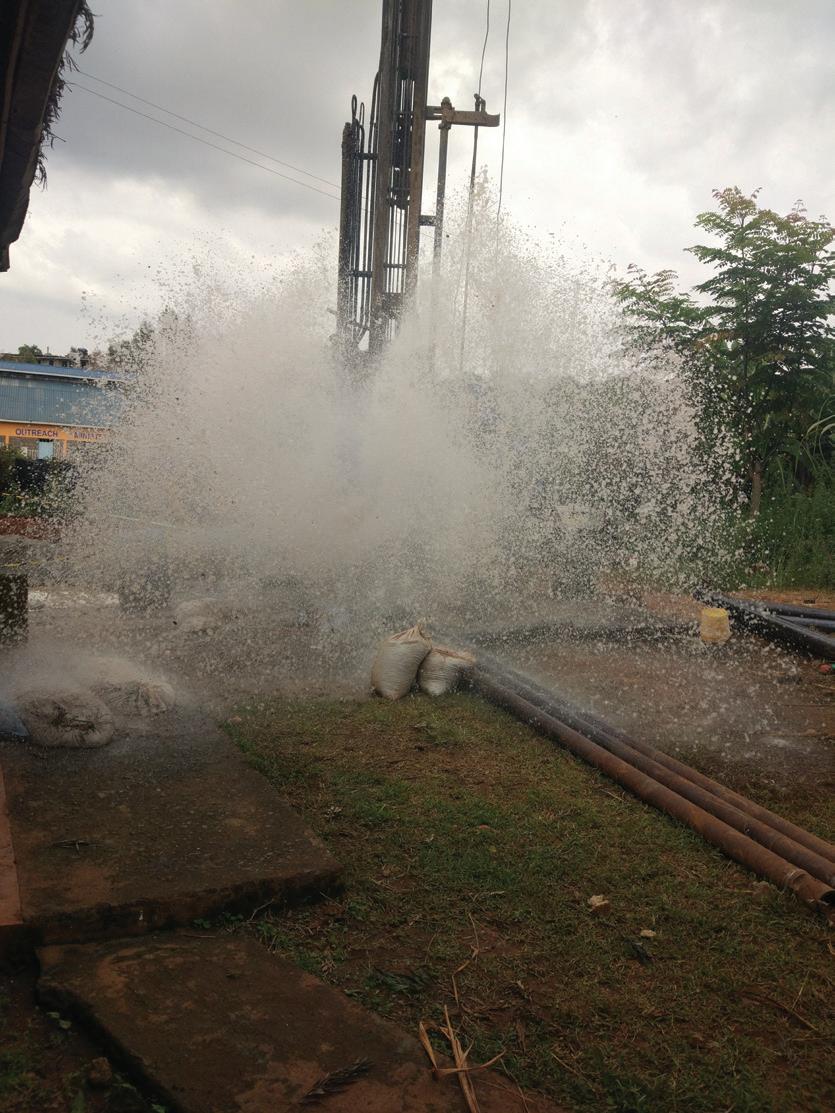
Although borehole drilling is seen by some as complex and expensive, players in the sector paint a different picture. The entire process including surveys, actual drilling and installation of pump may cost anything from Ksh 1.2 m to 3 million. Factors affecting cost include physical distance from where the drilling company is located, their pricing policies, geological characteristics of the site, extent of the hole and pump used. There are also several licensing requirements that cost money.
The process of drilling a borehole begins with a hydrogeological survey. This survey is carried out to determine such factors as groundwater levels and hydraulic characteristics. It should be done by a qualified and registered geologist.
Once the geologist is satisfied with the ground water potential, authorization to proceed is obtained from the Water Resource Management Authority (WRMA). This is followed by an Environmental Impact Assessment (EIA). If the National Environmental Management Authority (NEMA) is satisfied that the proposed drilling will not have undesirable impact on the immediate environment, the organization then issues a licence. The drilling may then commence although in some cases one may require a no-objection letter from the local water services provider.
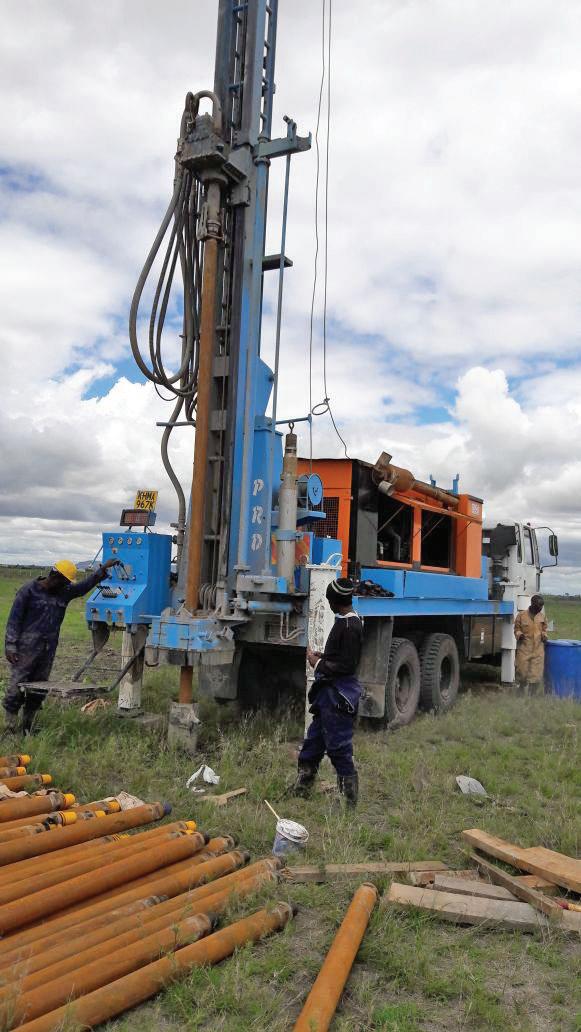
Mobilization of equipment then follows and the actual drilling gets underway.
Generally, the following steps are followed. They may however differ slightly from service provider to service provider. The client may also influence some elements. 1. Drilling of 11”until loose top formation and installing 9” temporary casing, then drilling 8” up to recommended depth.
2. Casing: Installation of 6” casing pipe – Class – B ( 4.5mm thickness ) up to bottom. Generally ratio of plain casing and screen casing is 70:30 but depends on the hole drilled.
3. Gravel Pack: Inserting 2-4mm natural gravel outside the casing and inside the open hole for artificial filtration.
4. Development: This is done by air jetting until clean water emerges. Generally, this can take up to 3 hours but may vary with the hole.
5. Well head Slab: This is done using cement, sand and gravel in proper ratios to prevent contamination of the hole.
6. Capping: A cap is fitted over the hole until installation of pump.
7. Test pumping: This is done to measure the exact yield of the borehole. The water needs to be pumped out continuously for 24 hours. It is then possible to tell the yield of the well, rest level and pumping water level. This is important in determining the size of pump to be installed. On the basis of test pump report, one can decide the pump installation depth, size of pump, motor, delivery pipe, cable, control panel, water meter and other sundries.
8. Water chemical and bacteriological analysis is then done by government chemist to assess if the water is suitable for domestic/industrial use or not.
9. Completion Report: A completion report is then filed with WRMA and a copy availed to the client.
Apex Boreholes & Engineering Company
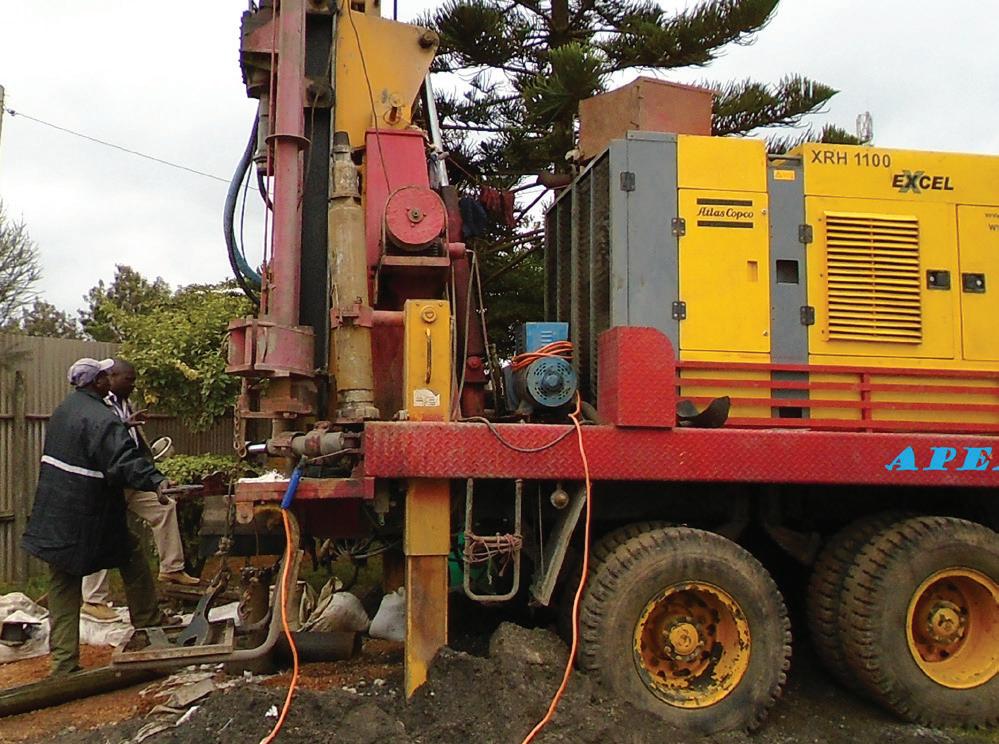
Apex Borehole & Engineering Company is one of the companies involved in borehole business. The Nairobibased company that operates not only in Kenya but also the larger East Africa region undertakes hydrological surveys, Environmental Impact Assessment (EIA), borehole drilling and equipping (installation of pumps). The company is well equipped and staffed to carry out these services. It boasts four rigs, three pump testing units, five terameters for survey, four engineers, five geologists and over 10 support staff.
Technical Manager Harrison Mackenzie dispels the misconception that borehole drilling is an expensive undertaking for the client. He reckons that it really depends on the purpose of the borehole. “If it’s water for irrigation, that is an income generating business; if it’s real estate, that is a multi-million shilling investment”, he says. He adds that the average cost of a borehole (Ksh 2 million) is reasonable.
The Davis & Shirtliff Group is the leading supplier of water related equipment in the East African region. Founded in 1946, business activities are focused on six principal product sectors - Water Pumps, Boreholes, Swimming Pools, Water Treatment, Generators and Solar Equipment. The group is Kenyan based and operates through a network of Kenyan branches as well as regional subsidiaries in Uganda, Tanzania, Zambia, Rwanda, South Sudan and a partnership in Ethiopia. Based in Nairobi, the company stocks a comprehensive range of borehole equipment sourced from leading manufacturers around the world.
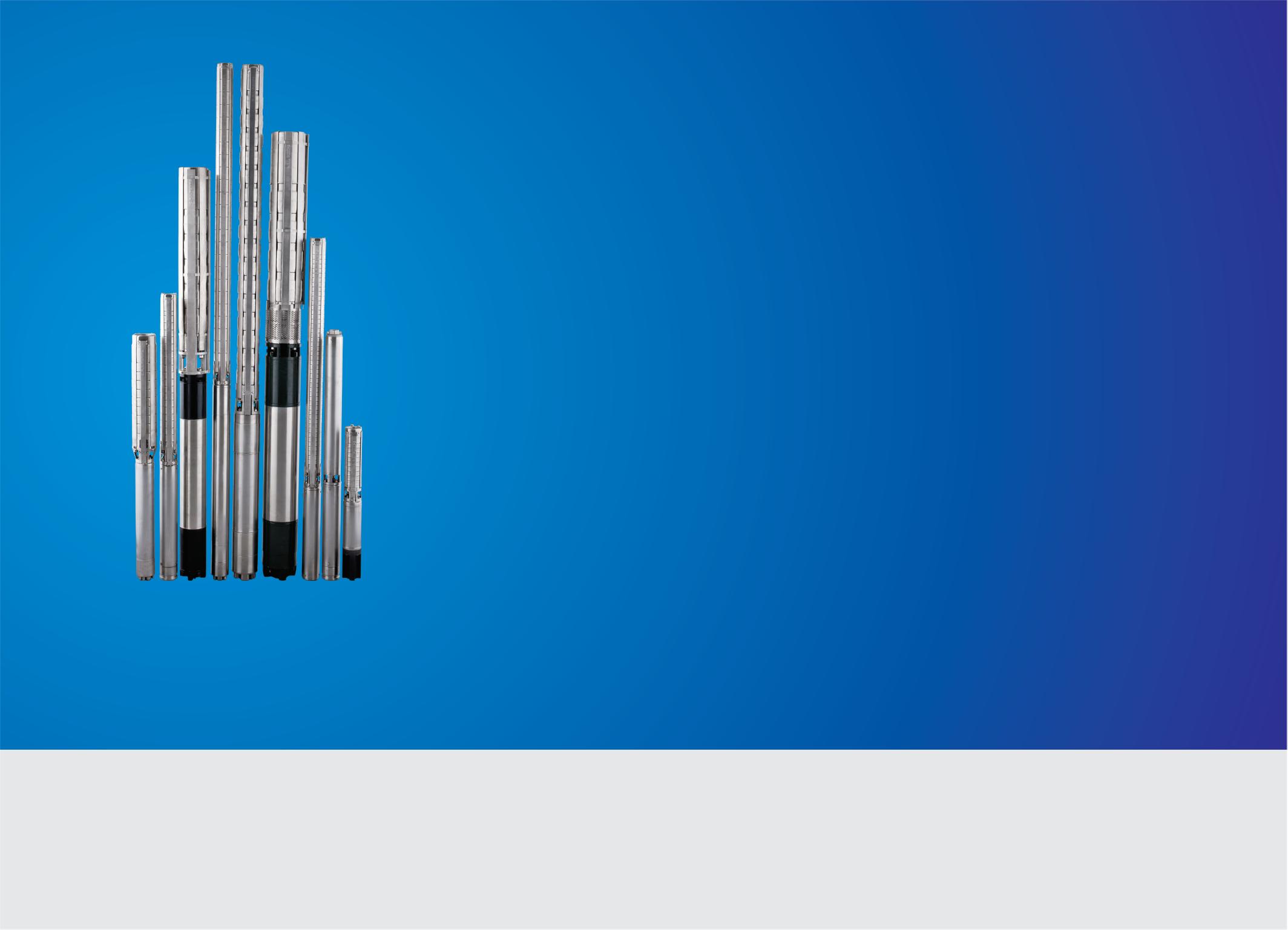
This company offers borehole equipment and service. It is not engaged in actual drilling. Products supplied include a wide range of pumps including surface pumps, dewatering pumps, sewage pumps, irrigation and borehole pumps. Others are motors and electrical switch gears, pressure vessels and break tanks, horse reel pump sets as well as firefighting and sprinkler sets. The company also stocks pressure switches and gauges, uPVC submersible ipes, submersible cables, switch and control gears and accessories.
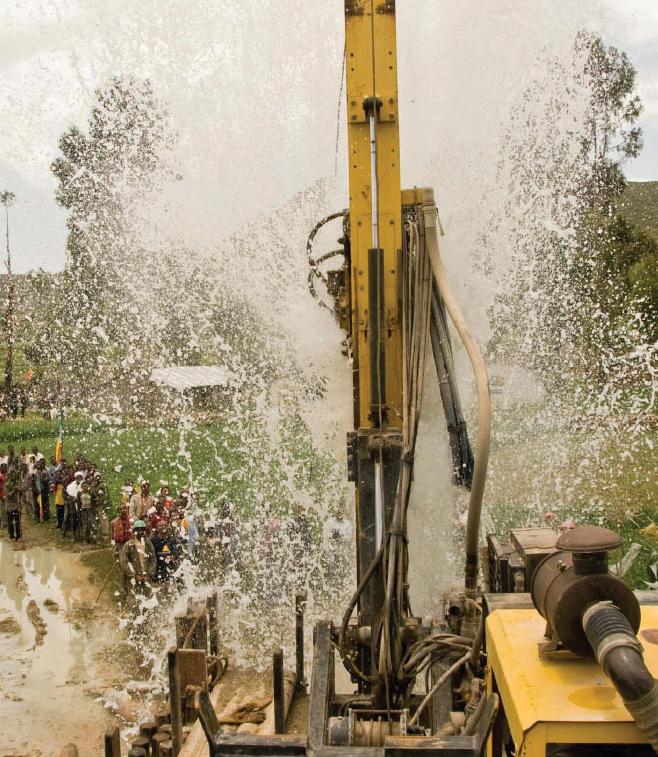
Boreholes are drilled for many uses including industrial, irrigation and domestic consumption.
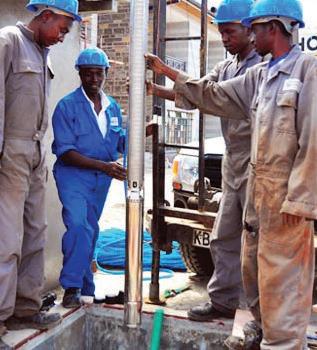
The entire process including surveys, actual drilling and installation of pump may cost quite a substancial amount.
From its offices and workshop at G.F. Corvin premises in Ruaraka Nairobi, the company is able to support its clients countrywide. Majitec’s clients include plumbers, construction sites, building services, agricultural irrigation and sewage treatment among others. The company boasts a well trained service team to offer technical support and support to its clients before and after sales.
Aquadeep Drilling Solutions Limited
Aquadeep Drilling Solutions Limited not only designs and constructs boreholes but also offers a complete range

Registered Professional Borehole Contractors and Water Experts
P.O. Box 60028-00200, Nairobi Kenya.ABC Bank Building, Dar es Salaam Road, Nairobi Email: info@apexboreholes.co.ke Tel: +254 725 267 083, +254 726 679 886
of ancillary services like Borehole refurbishment or Decommissioning, Borehole Surveying, Pump & Control Systems and their supply, Installation and Management Contract. The Nairobi-based company is sufficiently equipped both in terms of physical equipment and human resources.
Geofarthom Drilling Company Limited
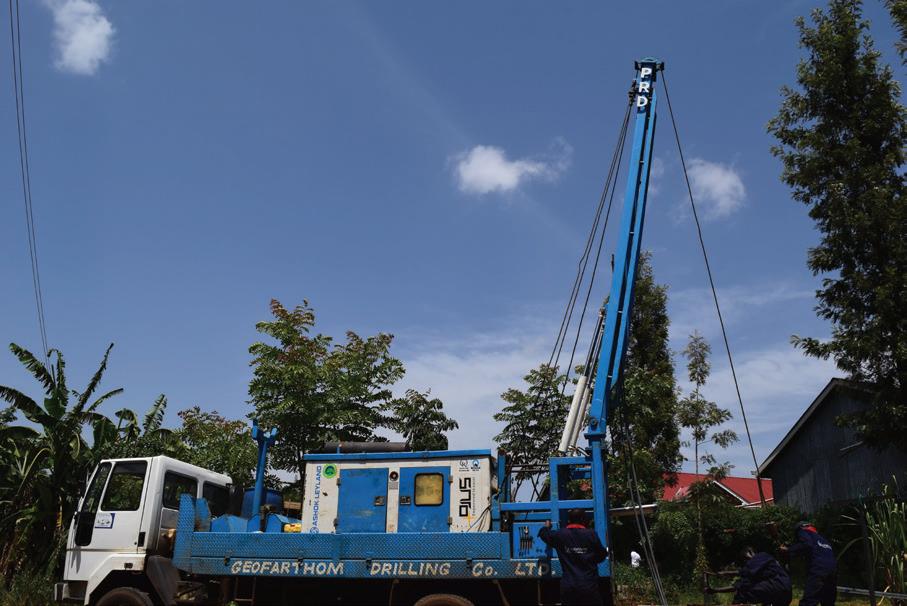
Geofarthom is a Kenyan company that undertakes borehole drilling, equipment supply, dams and piping works. It serves a wide range of customers including parastatals, churches, institutions and individuals among others.
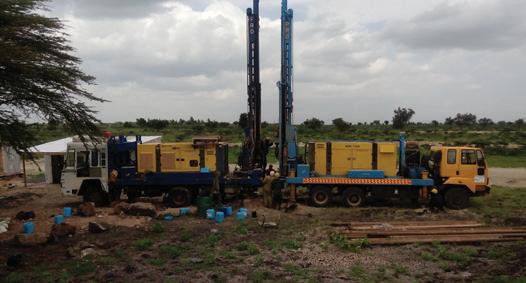
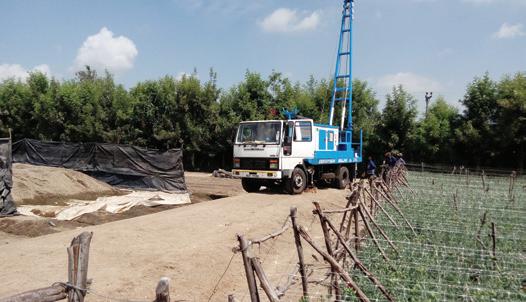
The company operates four drilling rigs with capability to drill up to 380 metres.
Drilling (EA) Ltd
Kisima Drilling (EA) Ltd provides borehole drilling and associated services in the whole of Kenya with the exception of North Eastern and Coastal regions. Their clients range from individual to organizations. The company owns three drilling rigs and has a human capital of 40. According to P.R. Patel who is a director, the main challenges facing his company are delays in obtaining approval from government agencies as well as unhealthy competition.
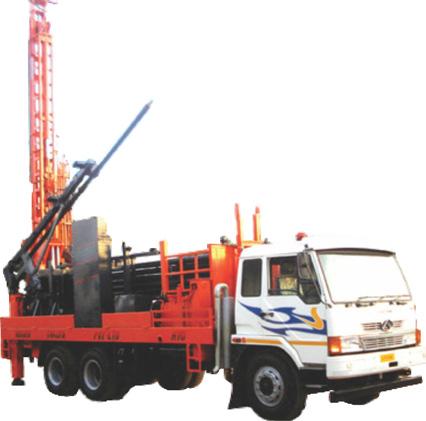
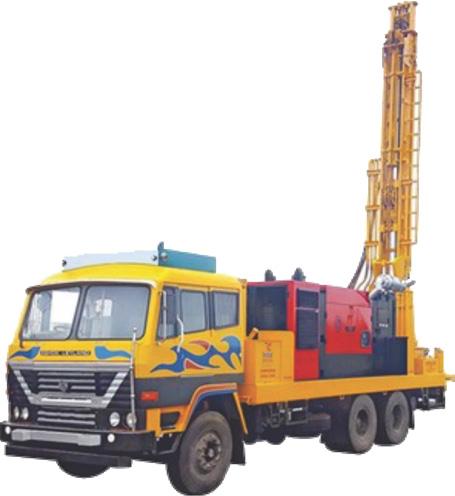
PRD Rigs Kenya Limited is a leading manufacturer of drilling and exploration rigs. The company serves water well contractors, mining companies, geotechnical and water services companies across East Africa. PRD Rigs has a fully equipped assembly section and workshops manned by qualified technical personnel.
To read more and to comment on this story visit: http://www.constructionreviewonline.com
• Groundwater Hydro-Geological Survey
• Environmental Impact Assessment (EIA)
• Borehole Drilling Services
• Submersible and Booster Pumps
• Elevated Tank Installation
• Borehole/Well Rehabilitation
• Geo-Membrane Ponds SERVICES OFFERED








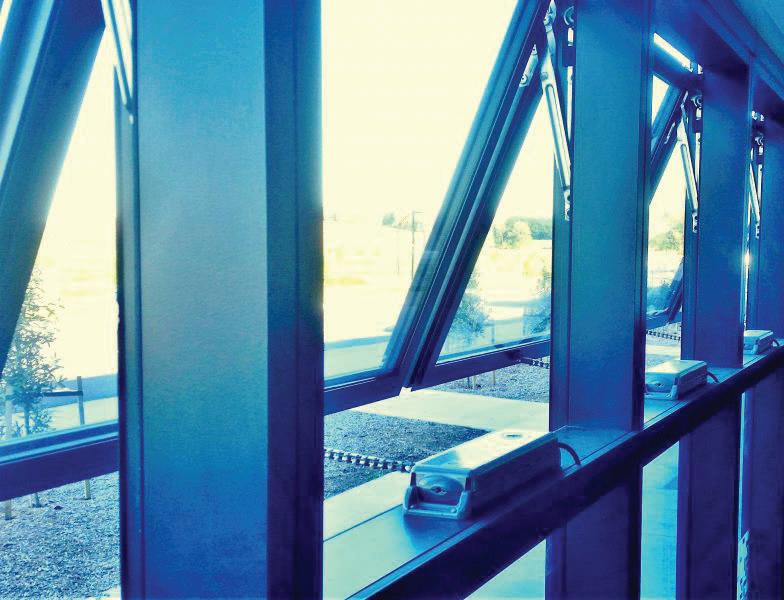
One of the main reasons to automate windows is that of convenience. Not all windows are located at reachable height and may need a pole to operate, in some larger rooms and corridors many windows may need to be opened, so clearly an automated solution is preferable. On securing premises in the evening, automated systems can ensure all windows are closed prior to setting alarm systems.
Other benefits can include ‘night time cooling’ strategies, when premises may not be occupied, and an automated solution can operate above ground windows on a time switch basis.
The integration of automated windows into a complete building management system can ensure the most efficient use of energy.
It is crucial that the ventilation strategy is decided at the outset of the design process. By adopting either a completely natural ventilated solution or a hybrid mixed Mode solution with mechanical cooling for in only the harshest of weather conditions, can significantly reduce a buildings running costs.
How do we achieve the ‘automation’?
A window ‘actuator’ is usually an electrical device which is placed on the leading edge of a window to open and close a window to various degrees as required. These come in Three basic types, a ‘chain’ actuator, a ‘rack and pinion’actuator and a ‘linear’ actuator.
Chain actuators are the most compact and operate by pushing a one wayfolding chain out from a flush motorised housing fitted to the frame or opening light. In areas where windows are much larger, linear and rack pinion actuators, based on fixed ‘screw’ and motor principle may be used.
Whilst These Devices May Seem To Be Simple, Window Actuators Do Come In A Very Wide Range Of Sizes And Typical Offer The Following Choice Specification:
Voltage:
Either in 24V DC or mains 230V AC ratings. Where smoke control is required 24V DC actuators are used so that these can be operated from an independent battery back-up in case of fire and power outage in the building.
Usually indicated in amperage and is very important to consider when specifying a complete system. Often cheaper units are less efficient and require greater loads which results in an increase of control panels to operate at the higher amerage, not to mention the increased energy requirements.
Indicated in Newtons (9.81 N = 1Kg) and required to open and close the window safely in all weather conditions. Referring back to efficiency, the available force within the unit should be as efficient as possible to reduce the amperage required. Some larger windows may need two actuators to perform correctly.
This is the distance the actuator travels creating the safe opening of the window normally indicated in millimetres.
Indicated in millimetres per second. This is an important consideration in smoke ventilation situations where smoke vents must fully open with a 60 second time limit.
Units vary in size depending on their specification but housings are very important to be considered when looking at the space available within the reveal, the size of the vent and the stroke required. Intelligence:
Some basic actuators rely on simple switches to limit and run the actuator motor, where occupant intervention is required. Some more sophisticated devices offer resistance feedback and information on where the actuator is within its cycle by the use of incremental volt measurement.
The most important aspect of all these variables is getting the right actuator in the right place to do the job most effectively with the minimum of maintenance.
As mentioned earlier it is crucial to get a specialist involved at the very early design stages to determine the most efficient product and designs available. Leaving the choice of actuator to the lowest common denominator – cost, can have a serious detrimental impact on an installations performance and on-going maintenance requirements.


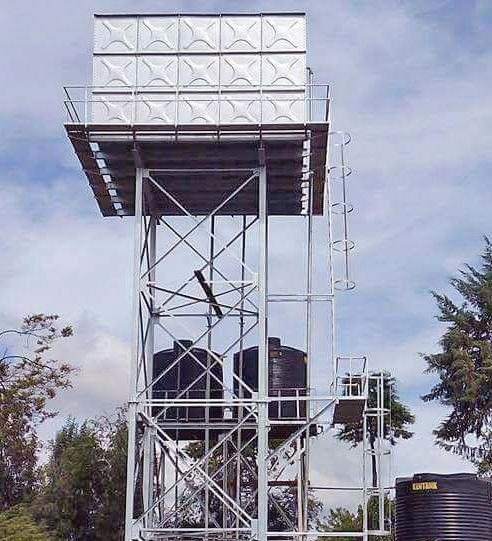
Water is a heavenly gift, which is unfortunately not always available. Cape Town is experiencing its worst drought in 100 years and has only 60 day’s water left. Two consecutive years of water crisis has left almost 40 million people at risk in 17 African countries. The Horn of Africa is facing its third consecutive year of devastating drought, decimating crops and livestock, causing famine and disease. Everyone should now realize their responsibility to conserve this scarce and valuable resource. In 2002 UNESCO declared access to clean water a basic human right, indispensable for a healthy and dignified life. Sophisticated infrastructure is required for managing, storing and reticulation of water to best serve communities. People can no longer be expected to collect water from dams and rivers.
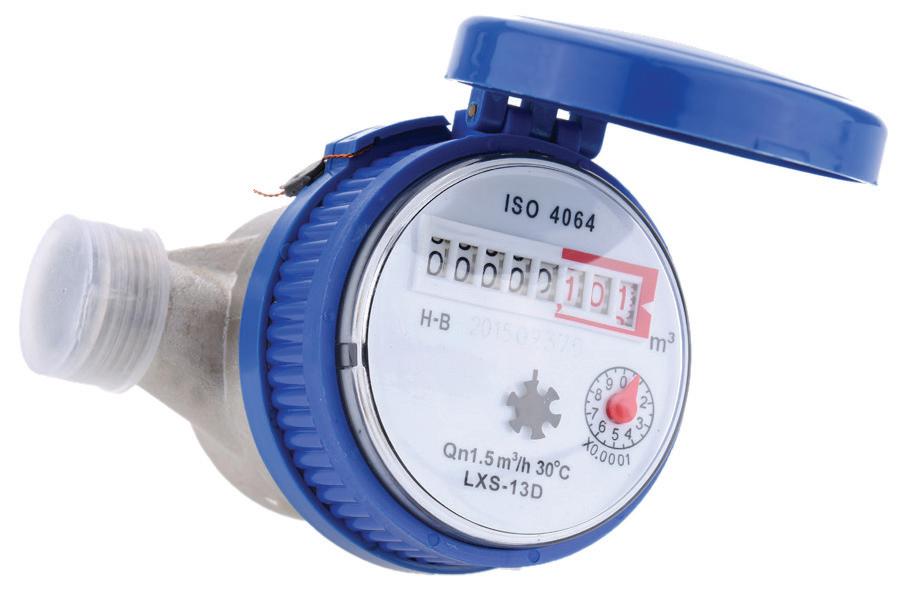
social and economic impact. Poverty is one of the root challenges in the water sector, manifesting itself in the inability to pay for water services. The adverse effect on poor or jobless households has to be considered, because if one cannot pay upfront, one is unable to access water.
Rapid urbanization and population growth, coupled with climate change, is escalating competition for water allocation and is creating conflict between the value of water (tariffs) and the rights of different consumer groups. Most water supply systems are public investments for social improvement. It is invariably subsidized, as consumer’s contributions are not able to cover the cost of maintenance and operation of the system.
Prepaid meters were installed in some low income areas in the UK since 1990, but were subsequently outlawed due to the negative
There are advantages, though. After initial push-back from civic organizations, prepaid metering is gaining acceptance. The benefit is that the consumer can budget and plan ahead to avoid unexpected bills or penalties for over-consumption. Payment can now be made electronically. Utilities do not have to maintain expensive billing systems and related staff costs and bad debts are eliminated.
However, this solution has a high cost of equipment and infrastructure and requires higher qualified staff instead of lower paid meter readers. Prepaid vendors require expensive infrastructure to operate their systems, which is recovered through added vending fees.
It is essential to monitor meters constantly to ensure the integrity of the system. Unmonitored meters can easily be bypassed and taken off the grid without being noticed. Another risk is vandalism. Due to the inability to pay for water, users may damage meters to get free water.
Conventional meters require very little maintenance and initial installation cost is much lower than pre-paid meters. However, the infrastructure required for reading and billing is labour intensive and costly. Meters are only read once a month and unequal reading periods makes it difficult to apply statistical analysis. Most leaks are only detected or reported when disputes arise. Authorities lose approximately 40% of potable water due to leaks and other losses (non-revenue water) so timely reporting is essential to curb losses. The risk for both parties is over-consumption which may lead to the inability of the consumer to pay, resulting in bad debts, penalties and fines.
A compromise has to be found as there are pros and cons for conventional and pre-paid systems. Effective water management has to consider the social needs, requirements and convenience of communities. A combination of conventional pre-paid and restrictions may be a solution, incorporating a tariff system with subsidies for poorer areas.

Sanlam Tower, a state of the art eighteen storey office tower designed by GAPP Architects & Urban Designers, is setting new standards for high rise building construction in Kenya.
According to Peter J. Muller, who oversaw the construction on behalf of GAPP Architects & Urban Designers, the building draws upon lessons learned on previous projects to create a timeless design that will appeal to many generations while remaining appropriate to its life cycle. “It was designed to be constructed quickly and within the allocated budget, but keeping in mind its functionality and durability after completion.”
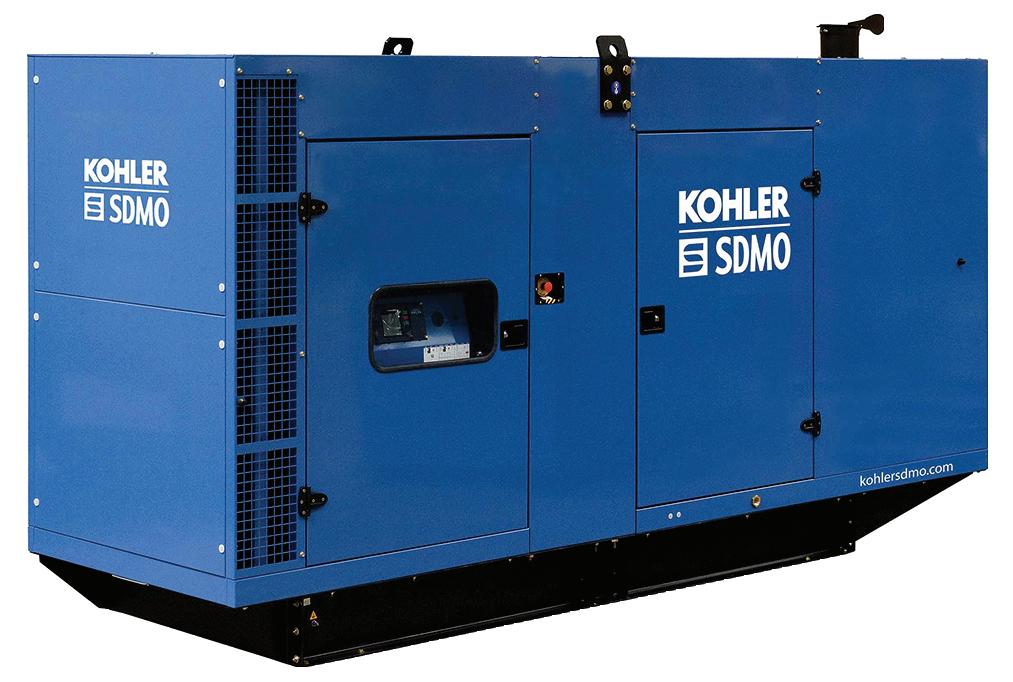
Located along Waiyaki Way in Nairobi, the tower is envisaged to grow Sanlam’s global brand presence within Kenya. “The building hosts an eighteen storey office tower with a lettable area of 15,000 square meters, a four storey basement parking,as well as a three storey above-ground parking silo. The building is designed to have standby generators for backup power supply and a bore hole to supplement water supply,” said Muller.
A number of energy efficient and green architecture systems were central to the tower design:
With environment conservation in mind, the design uses a 13mm thick clear laminated double tempered performance glass instead of traditional air conditioning. “The thermal performance glass reflects heat while allowing light into the building, reducing glare in the process. Moreover, the glass allows heat to build up and absorbs heat from the roof,” explained Mr. Muller. The choice of the ideal combination of solar factor and U-value is essential in cutting down the building’s energy requirements, as well as saving on investments in cooling systems and maintenance.
A number of innovative sanitary ware fittings were incorporated into the building. The design initially proposed the use of waterless urinals. Unlike regular urinals that utilize fresh water to flush the system, this waterless system uses gravity to flush the waste instead. “The outflow pipes connect to the building’s conventional plumbing system. In other words, unlike a composting
toilet which leaves you to deal with your waste, the urinals send the waste directly to a water treatment plant,” says Muller.“This type of urinal system is cost-effective since no fresh water pipes are needed, with no mechanical or electric parts and no additional water required. It is also more hygienic, considering there is no flushing mechanism and is odourless, saving on the need for air fresheners and perfumed tablets,” he added.
Due to cost constraints, the waterless urinal system was not implemented. An automated flush urinal, linked to a user sensor was however installed instead. While still incorporating fresh water flush pipes, the system uses less water than regular urinals and can be adjusted to optimize water usage. In addition, the building is also the firstin Kenya to utilise a Hygizone system.Accordingly to Muller, “The system involves extracting the foul air directly from the toilet, removingodour and bacteria from the sourcebefore itcontaminatesthe washroom. This extraction from thetoilet bowl provides a reduction in the airflow required, and is more efficient than conventional systems. When you utilize the Hygizone, you eliminate the age old problem of toilet odours and airborne bacteria.”
“Unlike the common extraction systems that draw odours out of the toilet bowl and into the air we breathe, the Hygizone does the opposite. It draws odours inwards, preventing it from leaving the toilet bowl altogether.The system connects to the duct in the ceiling, and expels it outside.” explains Muller.
Natural cross ventilation, Muller explains, involvessupplying and removing air from an indoor space without the use of mechanical systems. This type of passive design attempts to use the natural air pressure and forces to pull air through the building, and is the least expensive form of cooling and ventilation from both a financial and environmental point of view. Successful cross ventilation is determined by having high levels of thermal comfort and adequate fresh air for the habitable spaces, while having limited or no energy being supplied for active HVAC cooling and ventilation. According to Muller, the building hasa dual window systemthat will aid in influencing air flow.“In order to maximize wind ventilation, you want the pressure difference between the inlet and outlet to be maximized. In most cases, high pressures occur on the inlet side of a building and low



pressures occur on the outlet side. The approach is more convenient since it helps prevent excess moisture and heat from building up in the ceiling. If you want cooler air, opening the bottom window will allow the warmer air will rise and ventilate the room,” demonstrates Muller.
The design for Sanlam Tower placed a strong emphasis on the use on natural lighting which is supplemented by artificial lighting when required. According to Muller, “The building uses occupation sensors during the day to enhance natural lighting. This goes a long way in energy conservation.”
The eastern and western façade, which are more vulnerable to peak morning and afternoon sun, are protected with aluminium fins to reduce solar glare and heat gain, as well as serving to enhance the aesthetics of the building. The design also incorporates a “light tower” on top of the building, which Muller explains will form a visible landmark and signage structure that will be visible from a distance. The tower also hides the water storage tanks on the roof.
With the ongoing threat of global terrorism in Kenya, the security design had a significant impact on shaping the building. According to Muller, these concerns were carefully considered and taken in account, particularly
in terms of accessibility and the physical nature of the building.
The Sanlam Tower has placed significant emphasis on fire detection and suppression mechanisms to ensure the highest level of fire safety when the building is in use. “We contracted one of the best Engineering firms to evaluate the fire requirements and make recommendations on the best possible approach to fire detection and suppression within the building.These mechanisms are to meet the highest of international standards,” said Muller. “This includes fire lobbies, fail safe sprinkler systems and fire breaks within windows, which ensures the vision glazing system breaks in the event of a fire,” he added.
Water has been a major challenge in the city over the years. With this in mind, the building is designed to harvest and store rain water collect from the roof.“Considering the small size of the roof,we decided to do piping in order to have enough water,” says Muller. “In addition, we have included other systemsfor water conservation, such as the use of infrared sensor sanitary fittings which are designed to operate directly from a main water supply. The sensor operates on detection of a user by infrared beam,” he added.

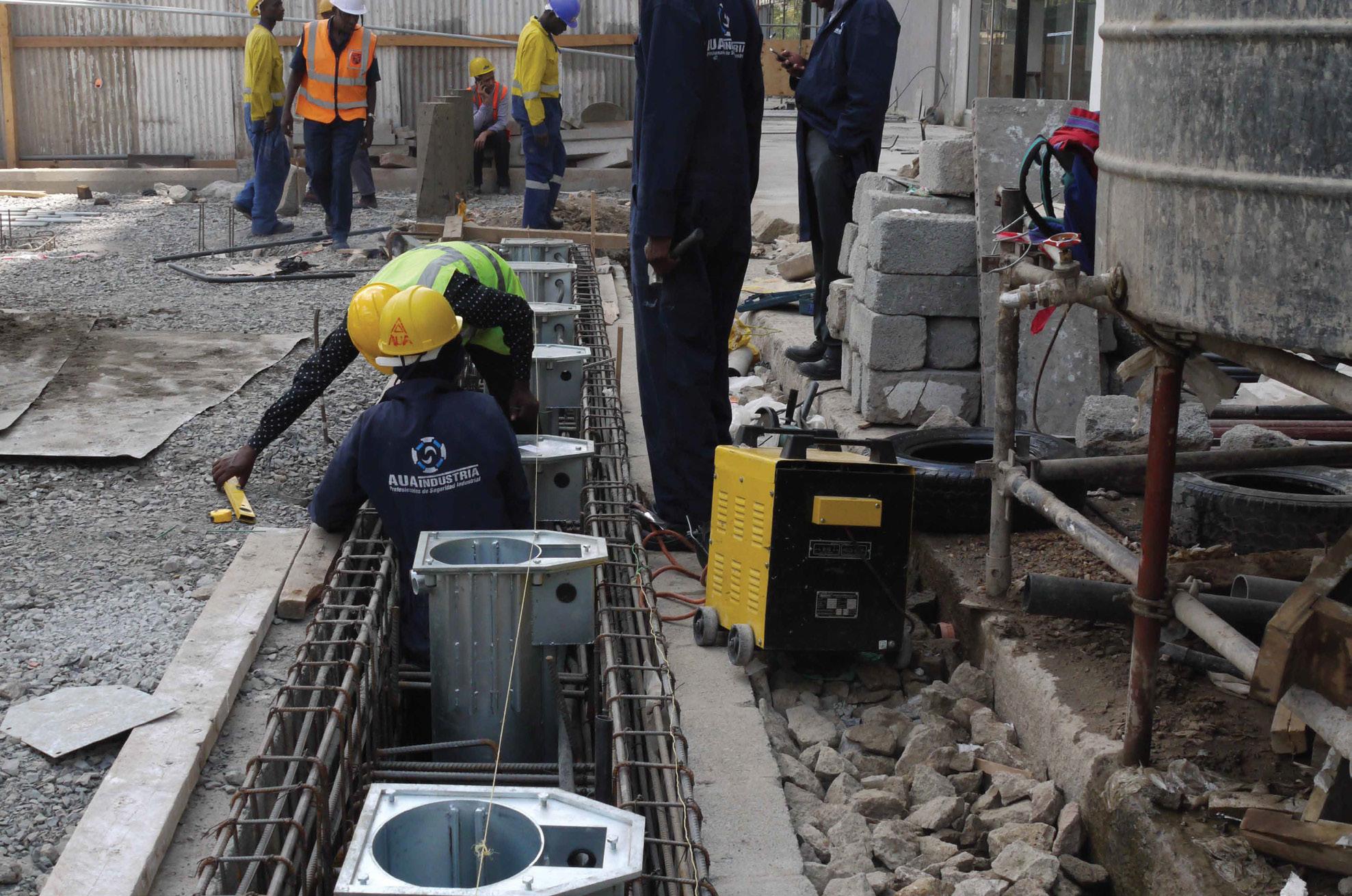


Multiple elements within the design are subtly used to create a unique synergy between classical proportions and modern forms within the tower façade. The aluminium shading fins, while reducing solar glare and heat gain, enhance the vertical proportions and aesthetics of the building. At night, these fins along the eastern and western façades will be illuminated to create a glowing effect, emphasizing the vertical lines and patterns, while the light tower on top of the structure forms a glowing crown that can be seen from a distance.
The main entrance to the building is accessed via a large roundabout with a unique water feature at its centre, characterised by a series of large granite cubes. A central atrium around the reception area stretches four storeys high, creating a grand entrance and sense of generous space within the building.
The building includes a series of landscaped and terraced spaces, providing break areas for users. The rooftop will include a multipurpose terrace and function venue that can be used for corporate events, and is divided into an indoor area with air conditioning facilities, as well as an external area for public functions. Additionally, artificial plants are used on the terraces to minimise water consumption.
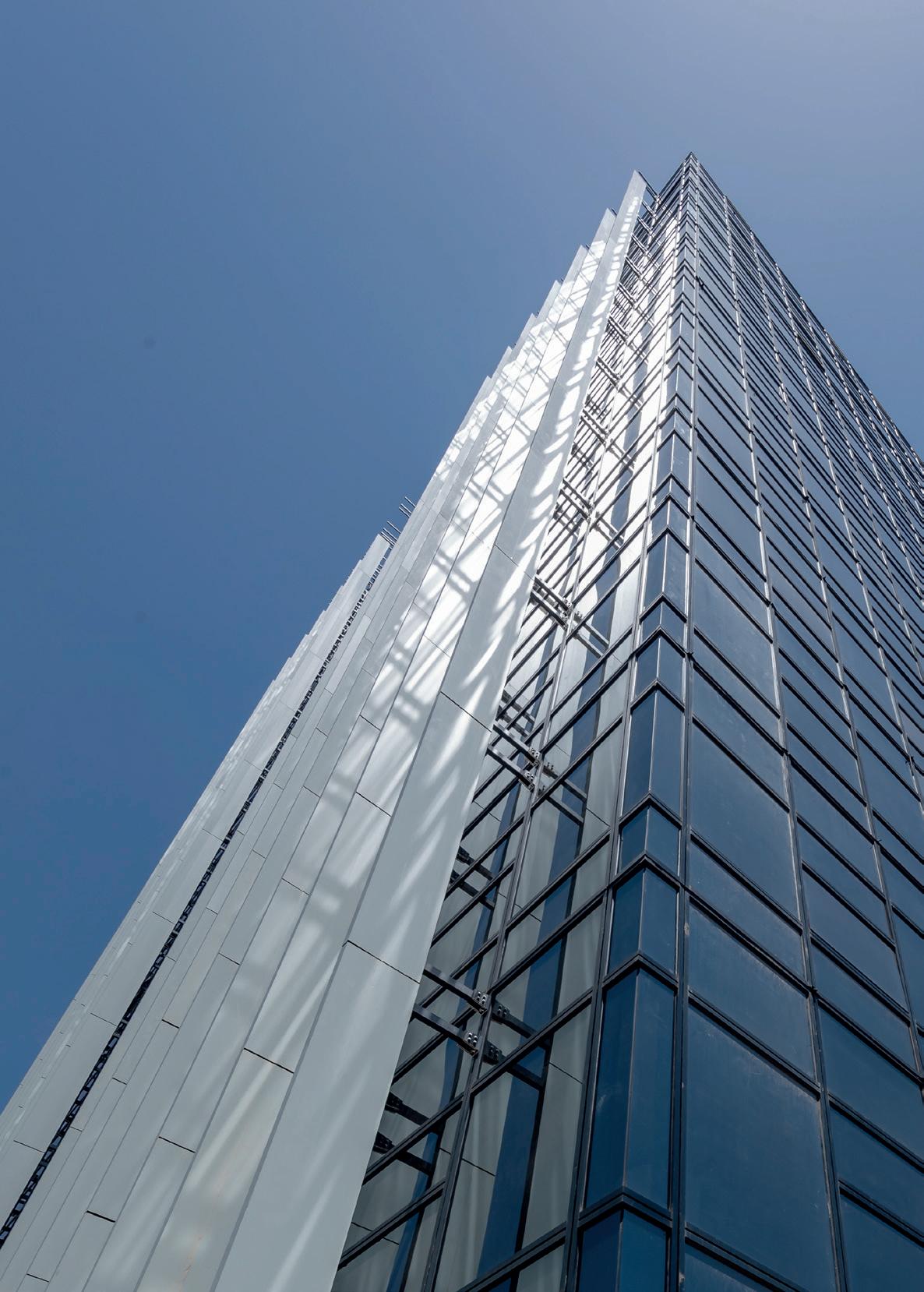
www.macegroup.com/ymr
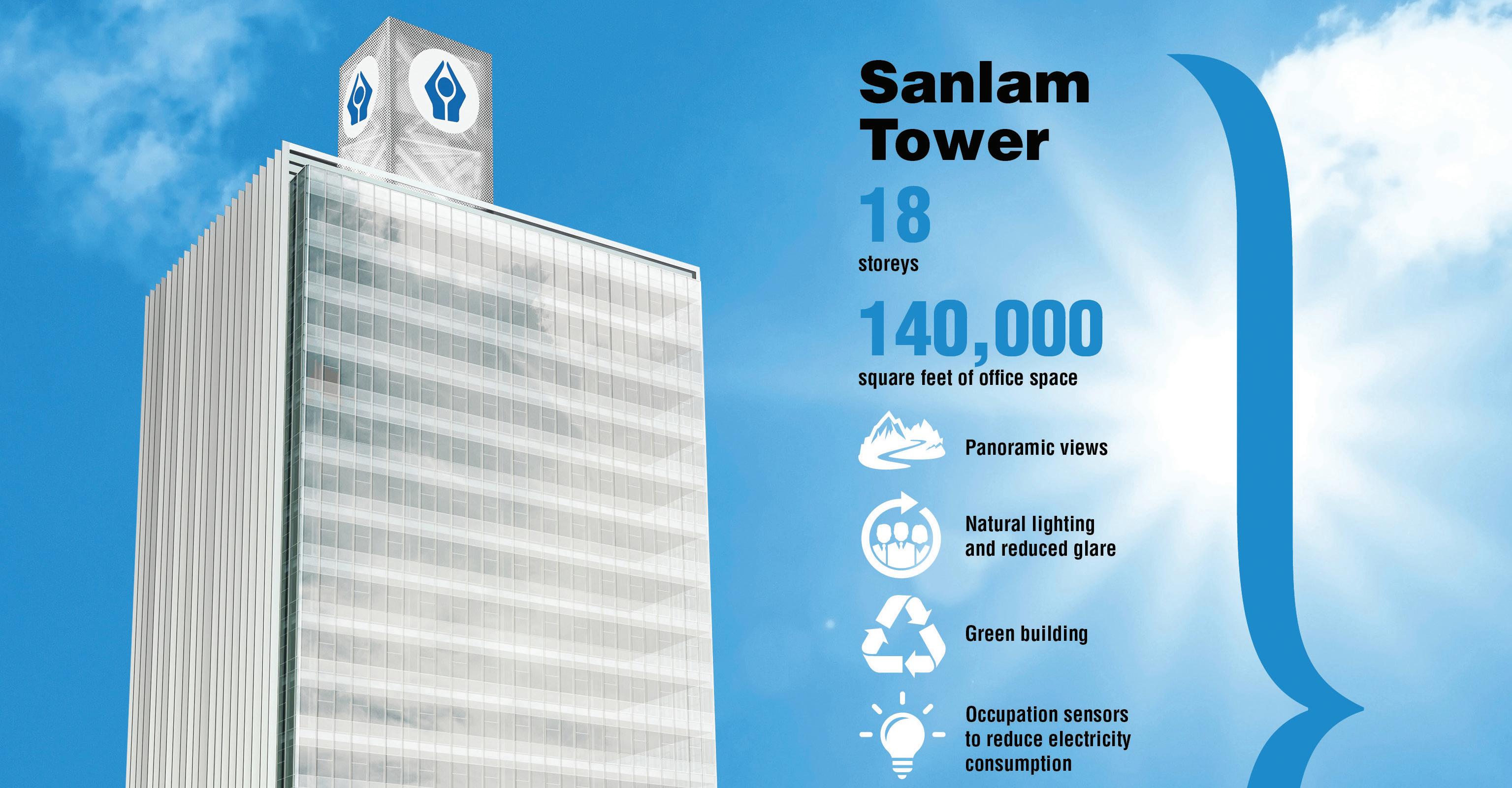

Ngong Road has always been considered a prime area to live or work in. Its proximity to amenities, major health facilities, educational institutions and other services has seen many upwardly mobile individuals flock the area in search of property to buy or rent. Businesses have also not been left out; there are dozens of major NGOs and SMEs that operate from the relatively quiet area of Nairobi.
It therefore came as no surprise that Eris Property Developers chose Ngong Road as the location of their prime property.
Enkang Apartments comprises 370 residential units of various configurations. The development consists of studio apartments as well as 1, 2 and 3-bedoom apartments spread out on 6 blocks each having 11 floors. The 1-bedroom and studio apartments are tailored for young professional while the 2 and 3-bedroom units are ideal for growing families. The studios occupy 31square meters while the 1, 2 and 3-bedroom units measure 50, 85 and 110 square meters respectively.
All the units are designed with vast open spaces allowing owners to customize their interiors to suit their tastes.




Besides the residential units, Enkang features a 4-storey commercial centre at the entrance from Ngong Road (the development can also be accessed from Wahu Road at the rear).The commercial centre will house a spa and salon, restaurants, a mini-mart, gym and health clinic.
Estimated to cost at least Ksh1.2 billion (approximately US120 million), the development is being undertaken in two phases with the first phase commencing in August last year and expected to be complete in April 2019 while the second phase is scheduled for completion in May 2020.
According to the developers, Enkang was conceived as a modern and affordable property, a haven of peace within 15-20 minutes of the Central Business District. With growing infrastructure expansion in the area (Ngong Road is being converted into a dual carriageway with the first section already complete), property owners in the area are enjoying capital appreciation.
Each block features an open roof terrace where residents may congregate for parties of gettogethers. Each unit has a kitchen yard and a balcony. There is a high window to wall ratio.
There is a jogging track around the complex and ample children’s play area.
The entire development will enjoy solar water heating and a pressurized water system. A borehole with ensure that water is available throughout the development. The developer has also provided a back-up generator to run essential services and common areas whenever is outage from the utility provider. Security has not been taken for granted: an electric fence with CCTV motion sensor cameras will be installed. In addition, all entries and exits within the development shall be manned.
Each block shall have a high speed lift controlled by a card. Parking is available in the ratio of 1:1.5.

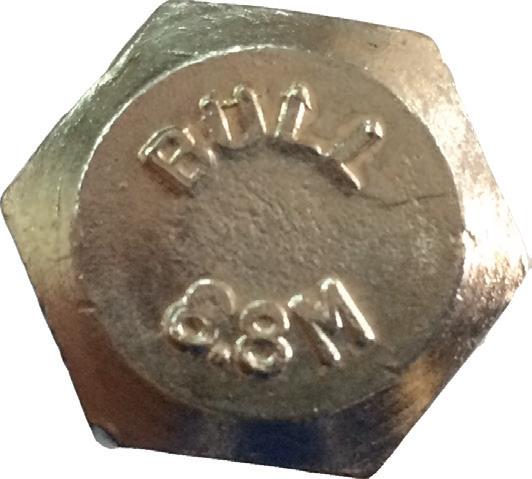
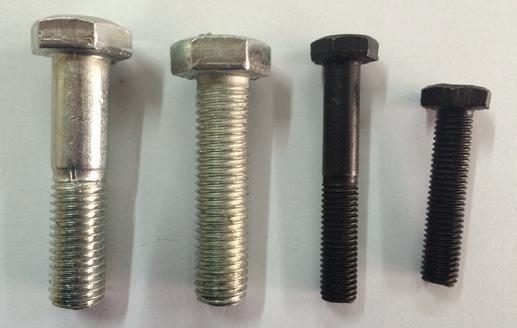
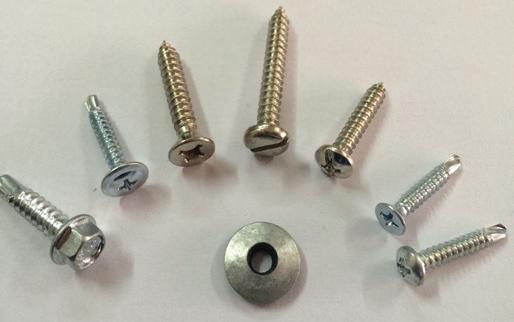
Affordability is one of the underlying pillars of Enkang. Studio apartments start from Ksh 3.2m while the 1, 2 and 3-bedroom apartments start from 4.5m, 7.5m and 8.5m respectively.
Developer – Eris Property Developers
Architect – AIA Architects
Project Manager – Sterling project management
Structural Engineer – Edcons (K) Ltd
Quantity surveyor – Zimaki Consult
Services Engineer – Corporate Facilities
Consulting Engineers
Main Contractor – China Jiangsu International
Electrical Subcontractor – Speedmark electrical services
Mechanical Subcontractor – Waterwise Services
Lifts – Sumacer Kenya























































HIGH PERFORMANCE







ALUMINIUM FOIL INSULATION FOR USE UNDER TILE AND METAL ROOFS
Reflects 97% of heat coming from the roof covering Keeps your house cooler by up to 10°C in summer
Wind driven rain runs down the foil and out the eves
For more information: www.coverland.co.za | info.sa@monier.com