East Africa's largest HEP project is well underway
Also in this issue:
Bathroom acccessories
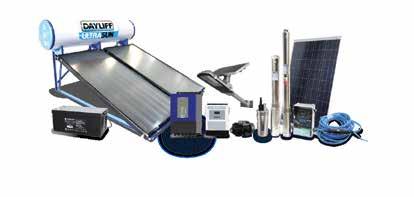
Renewable energy trends
Projects:
ICRC Regional Office
Kempinski Hotel Brazzavile
Expertise makes it possible.
Behind every modern marvel is a team of experts who take innovation to the next level. In insurance, having a risk solutions partner that understands your business the way you do is crucial to protect it. With over 101 years of experience and being the leaders in specialist underwriting across a broad range of industries, you can be sure we’ll use our technical expertise to offer you quality insurance solutions to protect your business. Santam. Insurance good and proper.
Santam is an authorised financial services provider (licence number 3416).
Experience the Progress.
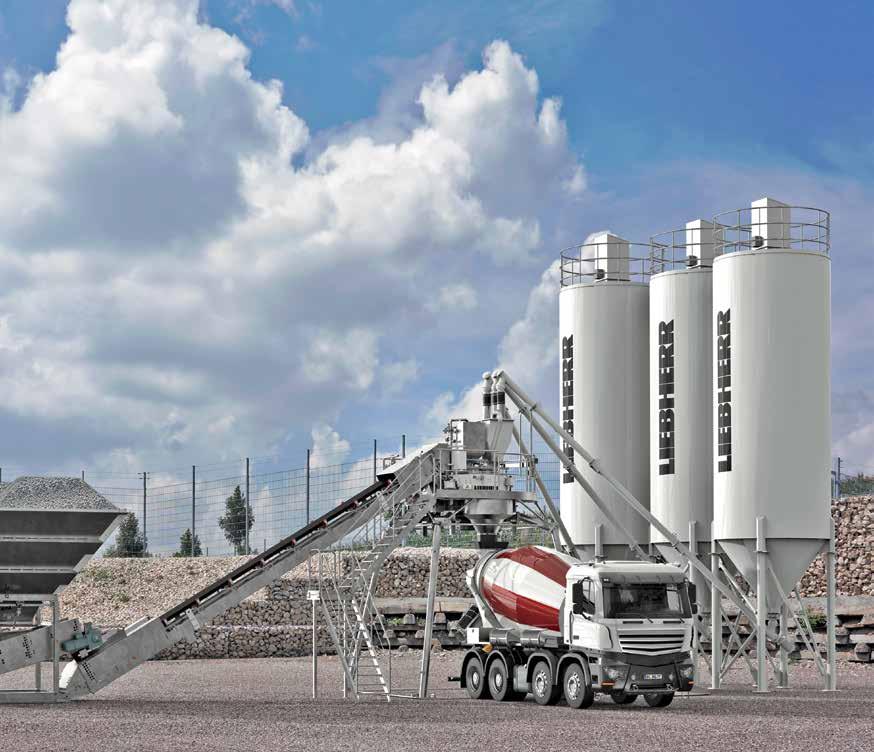
LCM 1.0 – an economic mixing plant with unique advantages
Efficient concrete production with high reliability
Easy and intuitive control system via laptop
Cost-efficient transport in 2 x 40ft. HC containers
Quick and easy assembly leads to minimal foundation work
MANAGING EDITOR
Robert Barnes
DEPUTY MANAGING EDITOR
Francis Makari
Francis Makari
EDITOR - in - CHIEF
Dennis Ayemba
Dennis Ayemba
COUNTRY EDITORS
COUNTRY EDITORS
Uganda - Betty Nabakooza
CON
Uganda - Betty Nabakooza
Nigeria - Boladale Ademiju
Nigeria - Boladale Ademiju
South Africa - Jimmy Swira
South Africa - Jimmy Swira
WRITERS
Pascal Musungu, Anita Anyango, Patrick Mulyungi
WRITERS, Pascal Musungu, Anita Anyango, Patrick Mulyungi
WEB & GRAPHIC DESIGN
WEB & GRAPHIC DESIGN
Gerald Oswald
Arnold Oduor
Sales and Marketing Manager
Sales and Marketing Manager Ken Okore
Faith Mburu
ADVERTISING
ADVERTISING
Kenya: William Mutama, Lilian
Kenya: William Mutama, Lilian Khavosa, Joyce Ndamaiyu, Wendy Kinya
South Africa: Thuli Nkosi, Winnie Sentabire, Angeline Ntobeng,
Uganda: Nobert Turiyo, Selina Salumah Namuli
Botswana: Dickson Manyudza, Gerald Mazikana
Ethiopia: Haimanot Tesfaye, Ruth Girma
Tanzania: Tom Kiage
Malawi: Anderson Fumulani
Ghana: Samuel Hinneh, Caleb Donne Hadjah
Zambia: Susan Kandeke
Zimbabwe: Chiedza Chimombe
Rwanda: Collison Lore
Nigeria: Seni Bello
China:Weng Jie
The editor accepts letters and manuscripts for publication from readers all over the world. Include your name and address as a sign of good faith although you may request your name to be withheld from publication. We reserve the right to edit any material submitted .
Send your letters to: info@constructionreviewonline.com
Construction Review is published eleven times a year and is circulated to members of relevant associations, governmental bodies and other personnel in the building and construction industry as well as suppliers of equipment, materials and services in Africa, the Middle and Far East. The editor welcomes articles and photographs for consideration. Material may not be reproduced without prior permission from the publisher. The publisher does not accept responsibility for the accuracy or authenticity of advertisements or contributions contained in the journal. Views expressed by contributors are not necessarily those of the publisher.
South Africa Agent Mining and Constriction News Network 14 Ballyclare Drive, Bryanston, Sandton +27 (0)011 875 4328, info@mcnnetwork.co.za
Ethiopia Agent Haymi Advertising Services
TENT
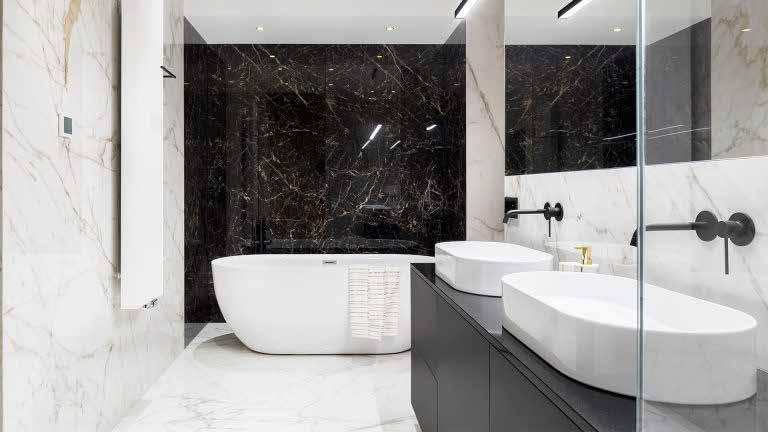
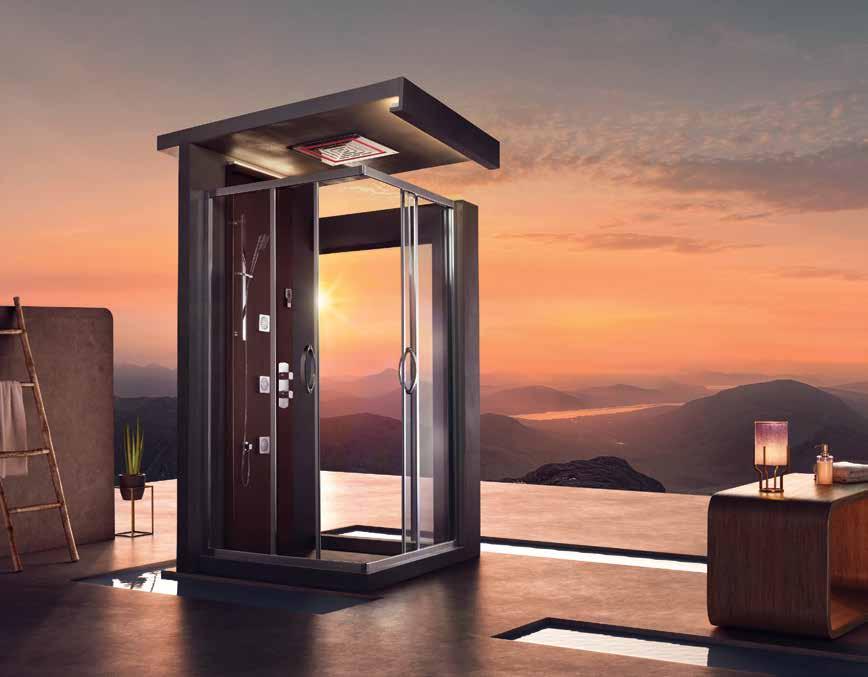
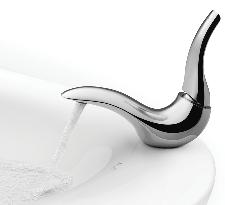
Bathroom accessories
Most of them are already available in your bathroom arena but you might find it difficult to arrange it. Here are the 5 bathroom accessories your need
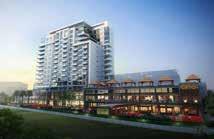
Kempinski Hotel Brazzaville
The project encompasses 225 elegant guestrooms and suites with warm contemporary interiors and floor-to-ceiling glass doors opening out onto overhanging balconies
Editor's Comment
. The continent of Africa in the last decade has seen a resurgence in construction of massive dams in order to supply more regulated water and to generate hydroelectricity.
Most of these dams have been located along the Nile and more specifically in Ethiopia. The choice of Ethiopia becomes all too obvious when you examine the countries mountainous region and abundance of rivers that offer ideal locations for dam construction. The country is not called Africa’s water tower for no reason.
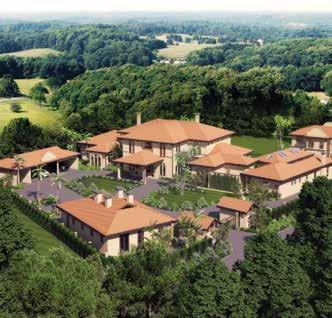
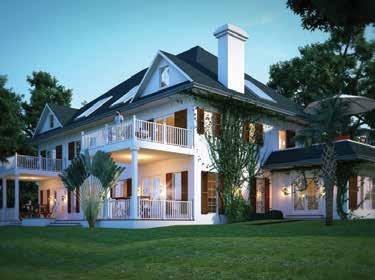
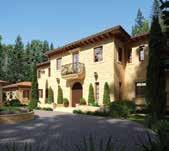
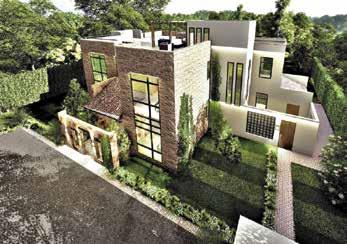
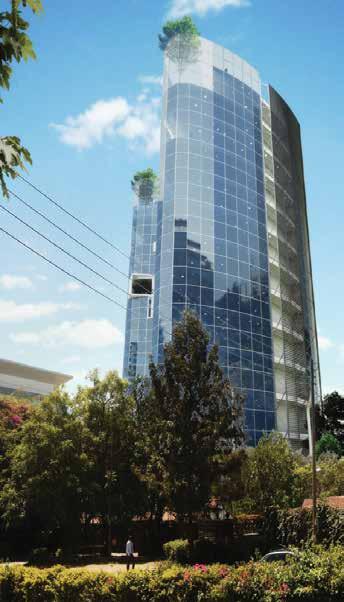
Edenville is a plush, gated community development, situated in the midst of coffee plantations off Kiambu Road
Edenville Phase II 31
Cell: +251 930 099 152
Email: ethiopia@groupafricapublishing.com
Ghana Agent
Image Consortium
1st Floor, The Ecobank Building, Tesano.
Tel: 233(0)30 223 2728 I 233(0)274807127 I +233(0)206299159
Fax: 233(0)24 882 8286
In this issue we look at the Julius Nyerere HEP project coming up on the Rufiji river in Tanzania. When completed it will help meet Tanzania's demand for power and alleviate the perennial load shedding that has been a hindrance to industiral development.
Tanzania Agent: Group Africa Publishing Ltd tz@constructionreviewonline.com Dar-es-salaam
Robert Barnes
With the final signature the last formalities have been successfully completed. Starting from November, African Generator Company has been appointed as the exclusive BBA Pumps distributor for the entire African continent.
The company with its roots in South Africa has great ambitions and is now responsible for the deliveries and after sales of the BBA Pumps mobile centrifugal pumps, piping systems and spare parts.
In the coming months, a large stock of mobile pumps and piping will be made available at strategic locations around Africa. In addition, a service team is being trained and the sales organization is being further developed.
“Our ultimate goal is to appoint a local dealer in every African country, with a particular focus on mobile pumps for emergency response and mining. The environmental climate has changed dramatically in recent years, many countries are now facing flooding due to heavy rainfall, with all the negative consequences which result from this.” Says CEO Elbert Timmerman.
“With the constant growth of the BBA Pumps brand, this is an important step for our company.” Says Martijn Kleine Head of International Sales.
Energy-saving Riventa ready to prolong the lifetime of pumps in Egypt
Riventa, the energy-saving optimization experts for assets such as blowers, turbines and pumps, have secured an important new strategic partnership in Egypt.
Cairo-based Flowtech for Maintenance and Services, who provide key water technology and environmental solutions, will be introducing Riventa’s proprietary monitoring systems and software to its fast-growing customer base.
Mohamed Yehia, Managing Partner for Flowtech for Maintenance and Services, said: “After looking at Riventa success stories from around the world, and the demand here for maximizing equipment performance, this is a very timely opportunity”.
Steve Barrett, Managing Director of Riventa, added: “In Egypt and across Africa, operators are keener than ever to enhance the performance and prolong the lifetime of their water and wastewater equipment through the best and most cost-effective means. Flowtech for Maintenance and Services are ideally placed with their knowledge and experience to help us deliver far-reaching, environmentally sound solutions to their customers”.
Eastern Cape road gets stabilized by Afrisam Cement
AfriSam’s specialized Roadstab cement is helping pave the way for a safer R67/5 road between Queenstown and Whittlesea in the Eastern Cape.
The contractor – the Raubex Construction and Roadmac Surfacing Cape Joint Venture (RBX / RMSC JV) project – will consume around 180,000 bags of AfriSam’s Roadstab cement for the stabilization of the road’s G4 sub-base layer. The contract covers 18 km of roadway on the R67/5 route, from the Swart Kei River bridge in the south to Queenstown in the north.
A complete rehabilitation is underway which will see the road upgraded and widened. The road’s existing three meter per lane will be widened to 3,7 meter per lane, plus a 3 meter surfaced shoulder and rounding off on each side. Some vertical realignment is taking place, such as at those areas where drainage problems are addressed, where livestock crossings are required and at the new Swart Kei River bridge. This realignment will improve line of sight for motorists, allowing the authorities to raise the current 80 km/ hr speed limit to 100 km/hr.
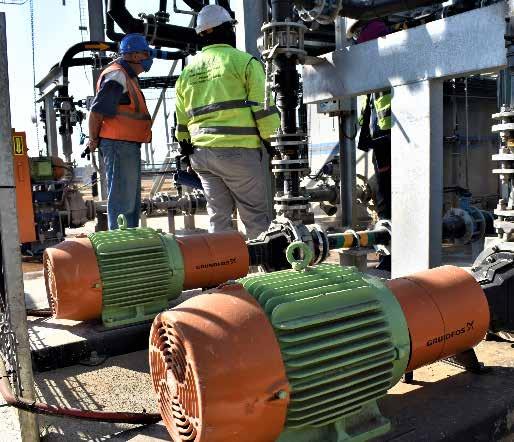
Nafasi Water installs Grundfos pump in new lime slaker
A stainless steel Grundfos booster pump is at work in Nafasi Water’s recently commissioned lime-slaking facility in the Mpumalanga coal mining region.
According to Nafasi Water chief strategy officer Ashton Drummond, the new facility serves an important mine water treatment plant in the area and will help the plant cut its operating costs.
“Instead of transporting lime to site in its heavier form – as calcium hydroxide – we can now reduce delivery volumes by transporting calcium oxide and slaking it on site,” says Drummond. “The cost savings make for an attractive payback period for the investment in the lime-
slaking reactor.”
“The stainless steel is an important requirement due to the corrosive nature of the permeate being pumped into the lime slaker,” says Makgoga. “Our Grundfos NB/NK stainless steel end-suction pumps are excellent solutions for industrial applications, including where pumping of aggressive media is required.”
The installed pump delivers 50 m3 per hour at a pressure of about 4.5 bar. He notes that the pump’s efficiency has been enhanced by an IE3 WEG motor rated at 15 kW. The WEG motor was also able to accommodate the plant’s requirement for 525 V input.
BBA Pumps expands its activities in Africa
Nominate now! BIM Africa Innovation Awards 2021
BIM Africa recognizes the talents and efforts of leading industry professionals and organizations in the construction sector going above and beyond to deploy innovative solutions towards Africa’s development. BIM Africa is a civil society organization that identifies itself with the most innovative and cutting-edge ideas in the African AEC Industry. The community has become a network of bright minds within Africa and the diaspora, pioneering innovations cross various spheres of the industry.
Here’s a chance to shine the lights on exceptional individuals, firms, or projects in the Architecture, Engineering, Construction and Operations (AECO) sector across Africa. Some categories of the awards include:
• Innovation in the Built Environment
• Research Excellence Award
• Best Woman in African construction
• Outstanding Start-up Award
• Institutional Award
Renewable Energy Tanzania
Registration is open for Renewable Energy Tanzania conference which will be held on 3 August 2021 at the Regency Hyatt in Dar es Salaam
The conference will bring together the various role players and stakeholders in the industry to discuss and brainstorm the latest developments, strategies, legislation, challenges and opportunities facing this expanding industry. For more details, please visit: https://www.africaninfex.com/allevents/renewable-energy-tanzania.
Agenda at a glance:
Industry overview
Unbundling the Electricity Act
Access to funding and project finance
Government grants and subsidies
Licence distribution, tariffs and distributor registration
Mitigating and Managing Operational and Technical Risks
Technology advances in the industry
Kenya
- Architectural Association of Kenya
- Institute of Quantity Surveyors of Kenya
- Institute of Engineers of Kenya
- Association of Consulting Engineers of - Kenya
- Association of Professional Societies of East Africa APSEA)
- Kenya Property developers Association
- Institution of Surveyors of Kenya
-Town and County Planners Association of Kenya (TCPAK)
South Africa - ASAQS - SAICE
- South African Council for the Quantity Surveying Profession
- Khuthaza ( Women for Housing)
- Concrete Manufacturers Association
- Green Building council of SA
- South African Property Owners Association
- Master Builders South Africa
Uganda
Institute of Surveyors of Uganda
Uganda Institute of Professional Engineers (UIPE) & Uganda society of Architects
Botswana
- Institute of Botswana Quantity Surveyors
Ethiopia
- Association of Ethiopian Architects
- Ethiopian Association of Civil Engineers
- Construction Contractors Association of Ethiopia
Zimbabwe
- Zimbabwe Institute of Quantity Surveyors
- Zimbabwe Institute of Engineers
- The Construction Industry Federation of Zimbabwe (Cifoz)
Ghana
- Ghana Institute of Engineers
- Architects Registration Council
- Ghana Institute of Surveyors
- Ghana Green Builders Association
- Ghana Institute of Planners
- Association of Building and Civil Engineering Contractors of Ghana
Namibia
- Institute of Namibian Quantity Surveyors
SACAP Stakeholder Convention 26th August 2021
The South African Council for the Architects Profession (SACAP), and leading event company, dmg events, have finalised their partnership for the inaugural SACAP Stakeholder Convention taking place on 26 August 2021.
The Convention forms a part of dmg events’ 8th annual African Construction and Totally Concrete Expo, which offers 360-degree solutions for the Southern Africa’s built environment and acts as a hub for industry experts, buyers and manufacturers of services and products, from all over the world who have an interest in Southern Africa’s construction sector.
The hybrid format of the event will bring together 250 in-person attendees to the Sandton Convention Centre, Johannesburg and a further 500-participants will join through the digital platform. The theme will be , ‘rebooting and repositioning the architectural profession’.
- Association of Consulting Engineers of Namibia
Tanzania
- Tanzania Institute of Quantity Surveyors
- Construction Regulation Board (CRB)
- Tanzania’s Registration Board of Architects and Quantity Surveyors (AQSRB)
Nigeria
- Association of Consulting Engineers Nigeria
- Association of Professional Women Engineers Of Nigeria
- Council of Registered Builders of Nigeria
- The Nigerian Institute of Architects
- American Association of Petroleum Geologists Africa Region
- Nigeria Society of Engineers
- Nigeria Institute of Architects
- Building and Construction Skilled Artisans Association of Nigeria (BACSAAN)
Zambia
- Zambia Institute of Architects (ZIA)
- Association of Building and Civil Engineering Contractors (ABCEC).
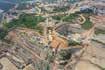
Julius Nyerere Hydropower Station
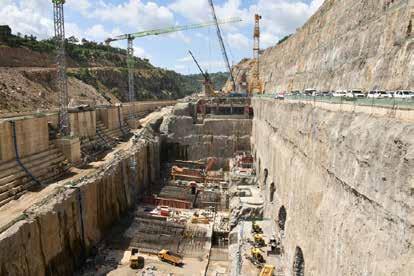
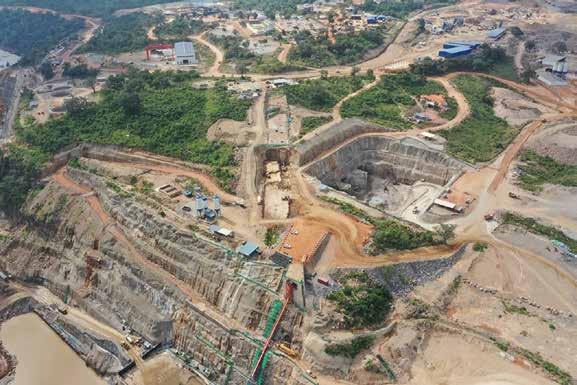
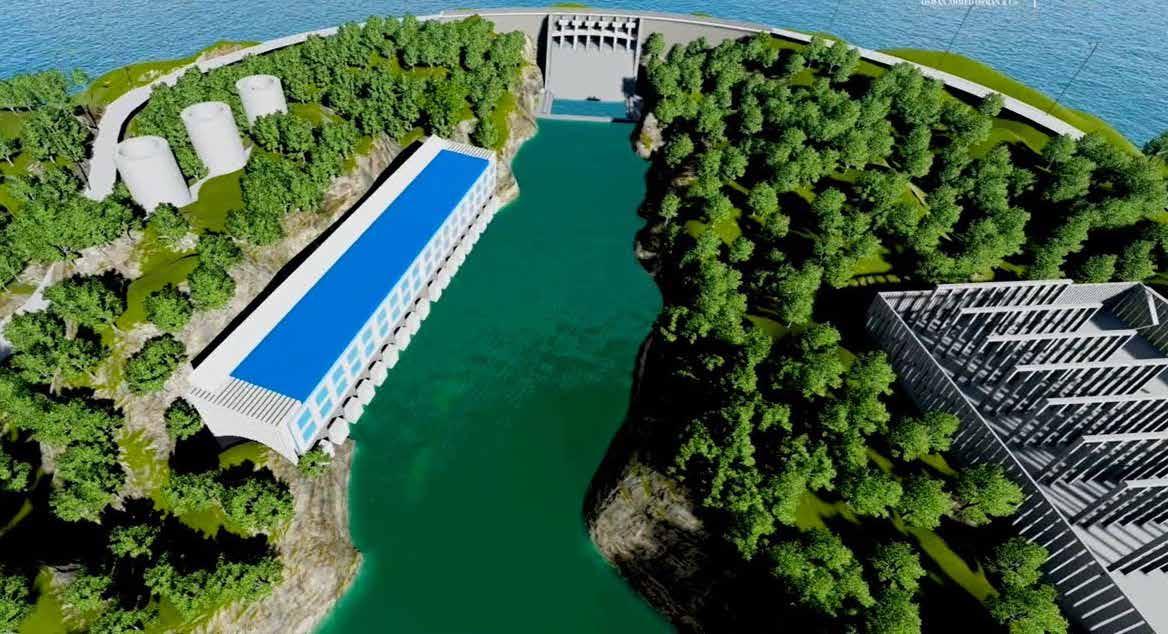
Julius Nyerere Hydropower Station; the largest in the East African Community (EAC) is a US $2.9bn project being constructed across the Rufiji River in eastern Tanzania. The station is expected to have an installed capacity of 2,115MW and will produce 5,920GWh of power annually. The power generated will be evacuated via a new 400kV high voltage power line to a substation where the power will be integrated into the national electricity grid.
The 134 metres (440 ft) arched, concrete dam is expected to create a reservoir lake, 100 kilometres (62 mi), in length, measuring 1,200 square kilometres (460 sq mi), with 34,000,000,000 cubic metres (1.2×10¹² cu ft) of water.
The project is owned and will be managed by the government owned Tanzania Electric Supply Company (TANESCO). It is expected to enhance access to affordable electricity which will propel economic growth as well as attract investment in the country. It will also transform the country
through generation and supply of reliable electricity for both domestic and industrial use.
Scope of Work:
-Main dam for storage of water to generate hydropower using RCC concrete for main dam with total length 1025m at crest level and 130m dam level
-Construction of 4 saddle dams for reservoir impounding of water with length of 1.4km, 7.9km, 4.6km and 2.6km with a maximum height 21.3m, 14m, 12.4m and 5.5m respectively, with a capacity to impound approximately 33 billion m3 of water
-Construction of a hydropower plant with a capacity of 2115mw and a substation of 400kv; in addition to 400kv transmission lines to the nearest point of the public network The civil works includes the following:
-Permanent access roads connecting the site with the existing roads network and length about 21km
-Temporary access roads that connect all permanent facilities with length of 59km
-Main dam of RCC on Rufiji River Power plant with administration building, control building, workshops and stores
-Connecting power station 400kv including transmission lines 4 variable height and length dams for water impounding of reservoir Diversion tunnel 660m length (15*17m) and 2 cofferdams
-The main spillway is located on the center of the main dam with 7 radial gates and an emergency spillway is located in the first saddle -Permanent concrete bridge on Rufiji River
-Integrated residential complex on an area of 19000m including housing and playground, permanent furnished offices; in addition to temporary residential complex, utilities, lighting, drinking water and water treatment
How does Julius Neyere Dam compare with others in Africa?
The continent of Africa in the last decade has seen a resurgence in construction of massive dams in order to supply more regulated water and to generate hydroelectricity. Most of these dams have been located along the Nile and more specifically in Ethiopia. The choice of Ethiopia becomes all too obvious when you examine the countries mountainous region and abundance of rivers that offer ideal locations for dam construction. The country is not called Africa’s water tower for no reason.
Africa’s largest dam
The Grand Ethiopian Renaissance Dam (GERD) is Ethiopians most massive project to date and at a cost of US $6.4bn have the distinction of being Africa’s largest dam generating a whopping 6000MW of electrical energy.
The dams generating capacity will be from 16 Francis turbines located in 2 power stations positioned one on either bank of the river producing 15000GWh per year.
Gibe III Dam
Another noteworthy dam project recently completed is the Gilgel Gibe III Dam located across the Omo Rivver also in Ethiopia. At a height of 243m, the high RCC dam with an associated hydroelectric power plant once fully commissioned will be the third largest hydroelectric plant in Africa with a power output of about 1870MW. The Gibe III dam as the name implies is part of the Gibe cascade and there is also on the drawing board the planned Gibe IV (1472 MW) and Gibe V (560MW) dams.
Africa’s tallest arch dam
Still in Ethiopia the Tekezé Dam is a double-curvature arch dam located on the border of Amhara and Tigray region of Ethiopia. Situated on the Tekezé River, a tributary of the Nile that flows through one of the deepest canyons in the world the 188m Tekezé Dam is Africa’s largest double-curvature arch dam. The powerhouse contains four 75 MW turbines generating 300MW of electricity
Merowe Dam
Downstream on the Nile less than a decade ago Sudan completed the Merowe Dam. The dam has a length of about 9km and a crest height of upto 67m. It consists of concrete-faced rockfill dams on each river bank. The planned generating capacity for the dam is 1250MW from 10 Francis turbines each having a capacity of 125MW.
Katse Dam
In Southern Africa the need to alleviate South Africa’s water crisis led to the
construction of the Katse Dam, a concrete arch dam on the Malibamat’so River in Lesotho. The dam is Africa’s second largest double-curvature arch dam, second only to the Tekezé Dam and is part of the Lesotho Highlands Water Project, which will eventually include five large dams in remote rural areas.
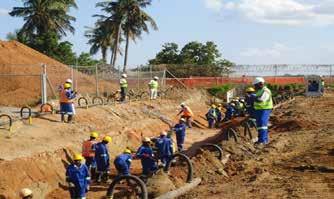
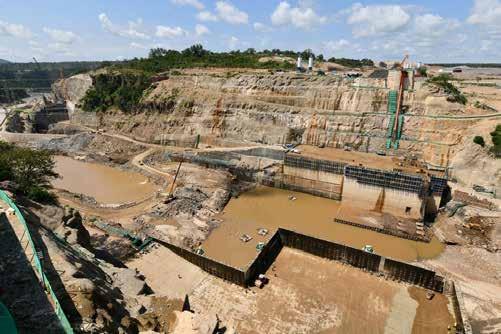
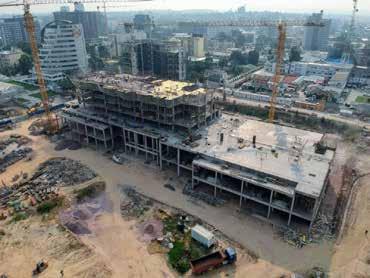
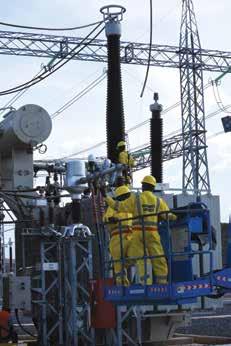
Ongoing works on the Julius Nyerere Dam
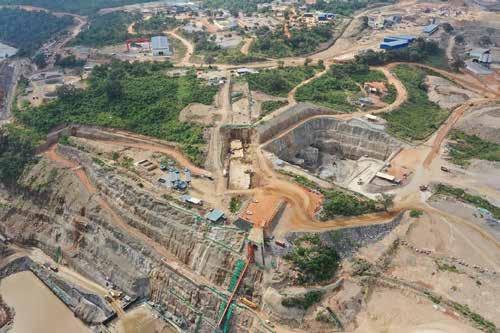
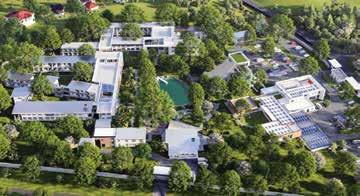
A birds-eye view of the construction site
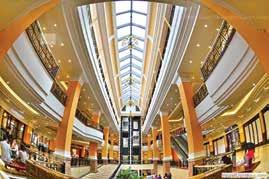
Kempinski Hotel Brazzaville
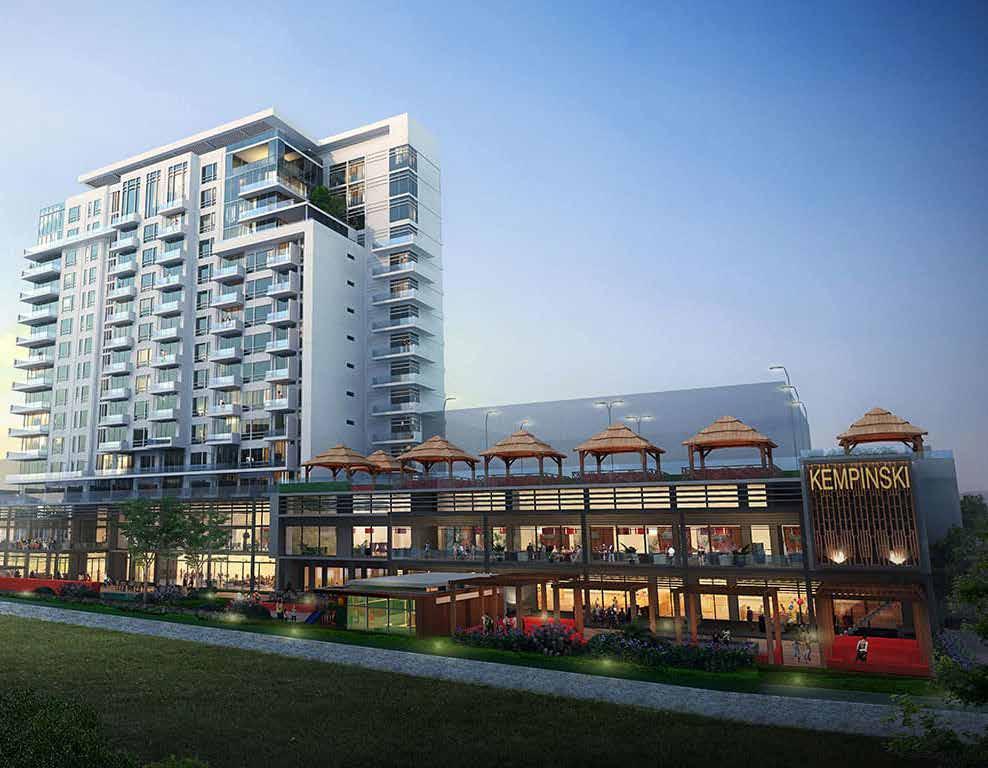
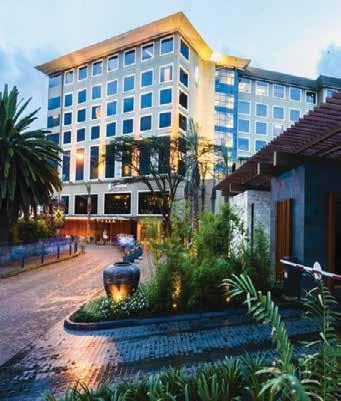
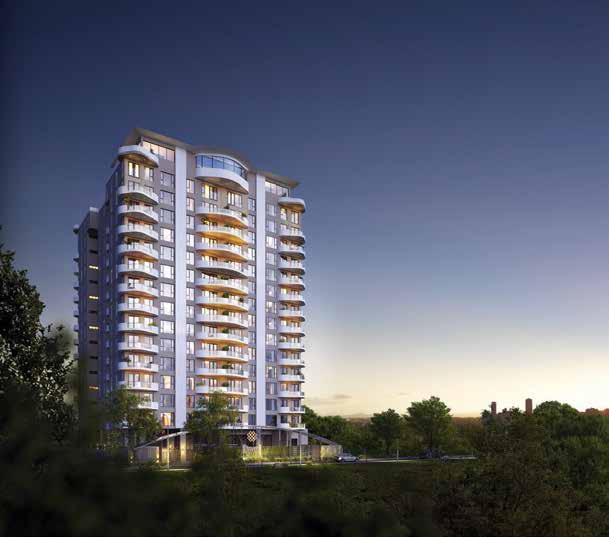
The Kempinski Hotel Project is a 5-Star hotel being developed on a total area of 38,000 square meters along Amilcar Cabral Avenue in Brazzaville, the capital city of the Republic of the Congo, in central Africa.
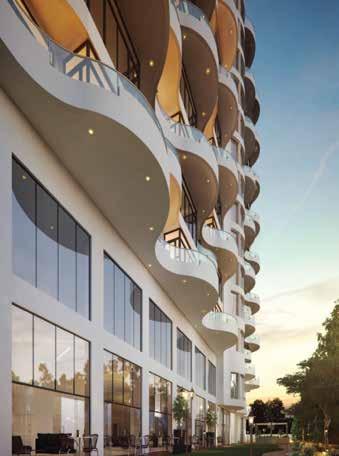
The project encompasses 225 elegant guestrooms and suites with warm contemporary interiors and floor-to-ceiling glass doors opening out onto overhanging balconies that provide stunning views of the Congo River. Overall, the layout of this building is specifically meant to maximize the full waterfront experience. The lower podium, which houses leisure facilities such as a health club with a gym,
a spa, outdoor swimming pools, and tennis courts, overlooks the marina as well as the hotel’s main building.
The hotel’s food and beverage outlets and kids club are set on the riverfront surrounded by beautifully landscaped gardens with simple compact geometry that fully utilizes the floor area and enables adaptive expansion. The structure personifies just the right balance of vertical and horizontal elements that break any potential monotony.
A casino and nightclub are also a part of the development along with staff accommodation and other amenities.
The Kempinski Hotel Project in Brazzaville is expected to be completed in the second quarter of 2022.
Project Team
The project is developed by OREG Real Estate Group with the help of Dewan Architects + Engineers (Dewan), UAE as the project’s main architect, and HCC as the main contractor.
Also Locke Carey-a fire safety consultancy firm is part of the project team as well as B&A, and Intercon– interior architecture and design firm-designing the plush interiors for the project.
ACCURATE STEEL MILLS LTD YOUR PARTNER, WHATEVER THE SITUATION
We had hoped to write to you in a period where the market was coming back to normality. We know that the effects of the Covid-19 pandemic will not stop any time soon, and we will continue to feel the effects well into the future. Yet the market has other ideas, as prices continue to remain astronomically high, with no immediate sign of reducing either in the long or short products market. What is really causing raw material prices to continue to remain steady at such elevated levels? Surely prices should come down because prices in our local market are so high. We thought so too but have continued to see otherwise. Explaining this market and its pricing is simple when you think about the following:
1.The freight rates remain at almost double of what they were exactly one year ago. For example, shipments from the Black Sea (Russia/Ukraine) to Kenya used to cost around $45-50 per MT, but quotes have been seen stable at $90 per MT, with some shipping lines quoting as high as $120 per MT.
2.Countries are increasingly coming under scrutiny to continue to cut their carbon emissions and footprint. In our last write up, we mentioned that China has removed a 13% export rebate on steel products around the wall. Following the trend, China have now decided to impose an export tax on steel products from 1st September 2021, ensuring that the current price in the market remains high. Other countries then benchmark their own prices against what China decides to do.
3.Whilst African countries see a decreasing demand for raw material at these price levels, Europe and the US continue to pose very strong demand. This means that most of the markets that traditionally do spare tonnage for the African market are diverting more vessels to the higher prices and greater demand that is achieved within Europe/USA. This pressure further forces the African continent to struggle to maintain demand at these price levels.
4.A continually high exchange rate – a past point, but the exchange hovering at KES 108.3 / USD vs a year ago, when the rate was around KES 103 / USD is another pressure on the local market and increased costing. Imports have become more expensive from exchange rate changes, and this cost has then added to the already difficult costing manufacturers have to contend with.
As was the case last month, we still believe that you should position yourselves with steel purchase for whatever purpose; we believe that the costs will continue to rise with each passing month. We have noticed a lot of projects trying to forward book their project materials to save costs, and we believe this to be a smarter idea, especially with raw material shortages we see in the coming months ahead.
Accurate Steel Mills continues to remain at your service, whatever the market situation. We are proud to announce that we are providing FREE MEDICAL GRADE OXYGEN to hospitals within the country, as approved by KEBS from our internal facilities. All we require is requisition orders and serial numbers of cylinders, drop off and pick up of the cylinders once they are filled.
We will continue to support the economy and do our part, whilst you do yours and stay safe during this time!
Avraj Bhachu
How renewable energy has changed over the last 10 years
Pastyears have witnessed a vast change in the mindset where people are advocating and endorsing the renewable means of energy. This change is strongly linked to a plethora of scientific evidence that points towards the fact that mankind will run out of energy resources in the future.
Therefore, depending less upon coal and other non-renewable energy resources was made a priority. Advancements in nonhydro resources of energy production spiked, including devising ways in which energy can be produced by solar and geothermal resources.
However, recently the looming threat of depleting energy sources led to a wave of energy conservation initiatives. Out of these, switching to solar energy was at the top.
Solar energy usage spread rapidly in the industrial sector initially. Use of solar panels for producing electricity in the household sector took a toll. This is when the easy to
install, and commendable photovoltaic panels were produced by trustworthy companies.
Changes in renewable energy
1. Organic photovoltaic cells
Using silicon to make energy efficient solar panels became history. This happened when a team of Chinese researchers changed the outlook of renewable energy resources by creating organic solar cells using carbonbased materials.
The organic photovoltaic cells are produced by materials that are dissolvable in ink so that they are easy to print out on the sheets. Once developed efficiently and with increased output, these organic photovoltaic cells have a wider range of applicability than the solar photovoltaic cells.
Due to their flexibility, the organic cells can be incorporated in windows. These are also lighter in weight and can be easily installed and maintained.
Solar power is more affordable, accessible, and prevalent in the world today than ever before offering clean renewable energy for all
2. Energy storage
The means to store the energy produced by renewable sources is the key behind its vast use. Storing clean energy was a major hurdle in switching to such energy solutions, as energy supply should be uninterrupted and seamless.
Major sources of renewable energy, namely geothermal and solar produce varying amounts of energy outputs. This is why it was quintessential to make clean energy reliable and efficient.
Development of solar batteries helped in resolving this major issue faced by solar energy solutions. The batteries save excess energy for later use when there is less energy available to produce the desired output.
3. Technological innovation
Past years have seen tremendous development in how renewable energy has transformed. Solar panels have become more domestic friendly,
while biomass is underway to become the most powerful heat generating system of the world.
Solar technology took a leap with high powered solar batteries coming to the rescue. Geothermal power plants are also developed technologically to leverage energy costs and usage in developed countries.
4. Freedom of designing
This particular change occurring in the renewable energy sector is mostly related to the advancements made in solar energy solutions. Solar panels are no more only rooftop panels, they are also incorporated into windows as sheets, thanks to the organic solar cells.
Also, the solar tiles are prime examples of freedom in designing of the solar panels. They allow retaining the natural look of the building. This freedom of designing has helped in increasing the penetration of solar energy solutions into remote
areas. These are the places that were once very far from the electric grid stations.
5. Easy costs
Previously there were fewer loans available for solar energy solutions. But today, the upfront costs of installing solar panels have decreased vastly. The decrease in these costs has contributed greatly to the increase in installation and easy switch to the clean energy.
Also, the terms of solar energy loans have become lenient; thus, marking a huge change in the industry. Now you can start saving from day one with flexible terms on your solar energy solutions.
6. Going off the grid
Renewable Energy Sources were initially incorporated in the commercial sector. Now their usage has increased drastically for domestic purposes. More and more houses are opting for solar panels to fulfill their power generation demands.
However, over a couple of years, the world has witnessed that the renewable sources of energy are increasingly utilized for providing power to the remote areas. These were previously inaccessible by the electric grid. This has solved one of the major problems of underdeveloped countries, such as Africa, to go entirely off the grid.
Going off the grid means that these areas no more need to rely on extensive transmission lines, to provide the power. Thus, this eliminates the need for installing power plants for these areas. They solely rely on solar panel fields and strong batteries that capture and store excess energy to provide power at night as well.
7. Development in the usage of biomass energy
Development in biomass energy to replace the traditional sources of fuels such as fuel wood and animal dung has taken an impressive leap in the previous years. Most developed countries are progressing toward developing and utilizing the Earth’s heat to make up for the energy requirements. By 2050, it is estimated that up to 50% of the energy requirements will be fulfilled by biomass energy production.
Final word
The world is becoming aware of how fast we are running out of nonrenewable energy resources. Thanks to tons of campaigns aimed at saving the environment and making people aware of what we can do about it. These campaigns and awareness programs are backed by a plethora of noteworthy environmental studies. They are being carried out throughout the world for more than a decade now.
More and more people are now informed about how they can reduce their carbon footprints and why is it important. The fast growth of renewable energy solutions has made it possible for people to be more considerate towards the environment. Clean energy is the way to an environment that is not depleting its resources, rather it is using them in the most sensible way.
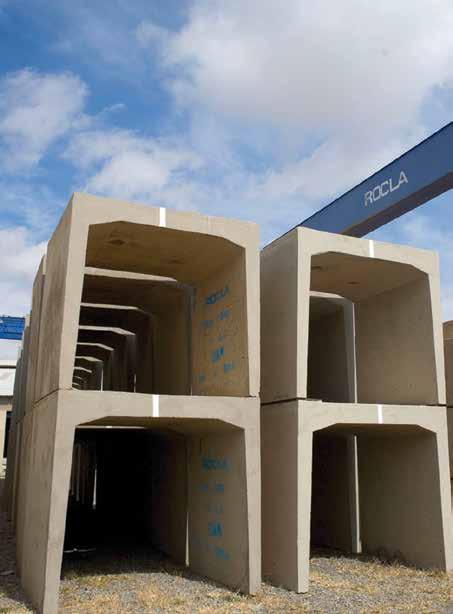
ROCLA is South Africa’s leading manufacturer of pre-cast concrete products.
Surpassing 100 years of product excellence.
• Pipes
• Culverts
• Manholes
• Poles
• Retaining walls
Including other related products within infrastructure development and related
5 Bathroom Accessories Every Bath Space Needs
Are you aware of the newest trends?
Possibilities are that you might know but you have no idea what to do about it and how to acquire it. Well, we will guide you through 5 essential bathroom accessories to fulfill all your needs. These essentials will help you enhance the aesthetics of your decor.
These bathroom essentials are your regular use accessories. Most of them are already available in your bathroom arena but you might find it difficult to arrange it. Here are the 5 bathroom accessories your need:-
1. Soap basket
Well, we all are aware of what soap baskets are and these accessories are available in every bath space. Choosing the right soap basket is important as it may change the way your bathroom looks. Always try to place your soap basket near your shower area (try avoiding right under it). This will help you access your soap easily and also isolate it from other accessories. Grouping your shower products is also a good way to arrange your shower essentials.
2. Towel hanger/ shelf
Towel hangers are useful in so many ways. There are multiple designs available in the market to choose from. If you are thinking about creating a subtle and clean look for your bathroom, choose a wider towel shelf with a pole. If you aim to go for a more casual look, a towel ring is suitable for such ideas. Although towel rings are mostly used for hand towels near the basin area, a bigger towel ring can be used for holding a regular towel.
3. Robe Hook
Robe hook is a new trend in bathroom accessories. In modern-day bathrooms, bathrobes are used in regular households. The positioning of a robe needs to be done in a manner so that the accessibility of your robe is good but far enough from the shower area.
4. Paper holder
Modern bathrooms are now smarter and provide a better sense of hygiene. The paper holder is another bath accessory that enhances the asthetics of your lavatory. This accessory is highly recommended
near the commode and basin area.
5. Baskets
Bathroom baskets are a great choice for a highly equipped bathroom. We surely don’t want our bathroom area to be filled with products all over. Bathroom baskets help you keep all your products in one place and arrange your bathroom to look cleaner and classic.
Of all the latest trends in bathroom design, bath accessories appear to have the greatest appeal. Gone are the days when you needed a massive bathroom and a trust fund to own one. The undeniable beauty and charm they bring to your bathroom are explicit, but when it comes to buying one, you want to make sure you know your stuff.
In the sanitaryware industry, there are a few bathroom accessories manufacturers in India who are determined to provide luxury and quality products.
Choosing the right manufacturer is what you need to do to end your hunt for quality and service assurance.
Having the option of not touching certain objects has always been important, especially when we talk about public spaces. As we live, the existence of this option has gained new relevance.
When exists the necessity to use a public bathroom, it is normal that we want to avoid touching when unloading the toilet.
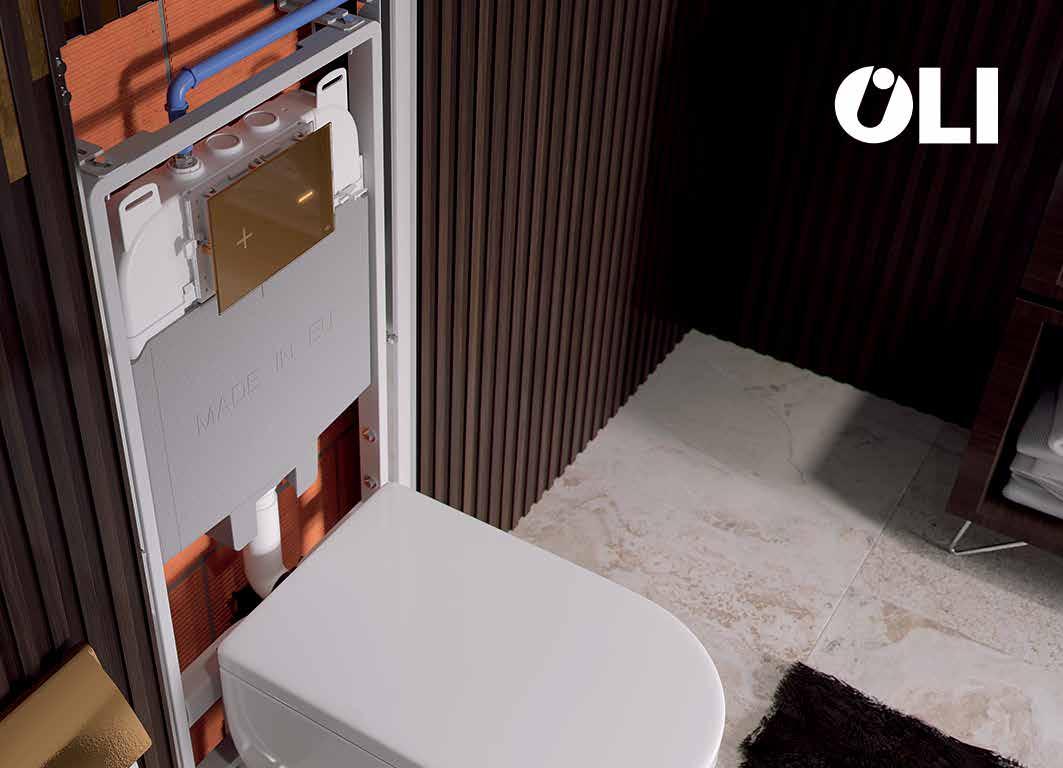
With this need in mind, OLI develops toilets that allow the discharge to be carried out only with the approach of the hand, avoiding contact and transmission of bacteria. We talk about Hydroboost, a sustainable technology that allows you to generate energy through the entry of water into the flush.
Electronic flush plates, such as the Electra III model, also have the advantage of having a system that makes it resistant to eventual acts of vandalism, which is also ideal for bathrooms in public spaces such as shopping centres or airports.
TOUCH? NOT ANYMORE
Ultra-thin thick glass flush plates are another of the options available in various colours and follow the latest trend because they have LED light to activate the discharge.
The first porcelain flush plate winning 4 world prizes, Moon, completes the wide range of OLI products where unloading into the toilet can also be activated without resorting to touch.
Thinking about who wants to renovate the bathroom without having to resort to deeper works, maintaining the No-Touch feature to activate the unloading, OLI has developed a solution with the most demanding quality standards on the market - QR-INOX. The best option for rapid remodelling of the bathroom. It doesn't require intervention on the walls and you can use the existing water inlet and outlet connections.
About OLI
OLI is the largest cistern manufacturer in Southern Europe. Its brand is present in 80 countries on five continents. Over the years, OLI has created products that have, on a global scale changed the daily experience in the bathroom. Their “Inspired by water” signature concept embodies the company’s mission to place innovation at the service of water conservation, aiming to make the world a better place, thus protecting the planet and all life. OLI is recognized for constantly studying new and better solutions that increase water efficiency and accessibility for people with reduced mobility. Committed to sustainable development, the brand develops versatile solutions with a contemporary design for application in new construction, rehabilitation and renovation projects. OLI believes in a water-efficient bathroom that is comfortable, accessible and safe for all to use. OLI will continue to be defined by innovation.
OLI is looking for business partners and projects to join their portfolio in Africa.
Put simply, a data centre is a physical facility that houses information technology hardware for the following purposes:
1. Collecting Data
2. Storing Data
3. Processing Data
4. Distributing Data
5. Accessing Data
To support the Information technology hardware, the facility also houses electrical, mechanical, security and fire protection infrastructure which are critical to the operations of a data centre.
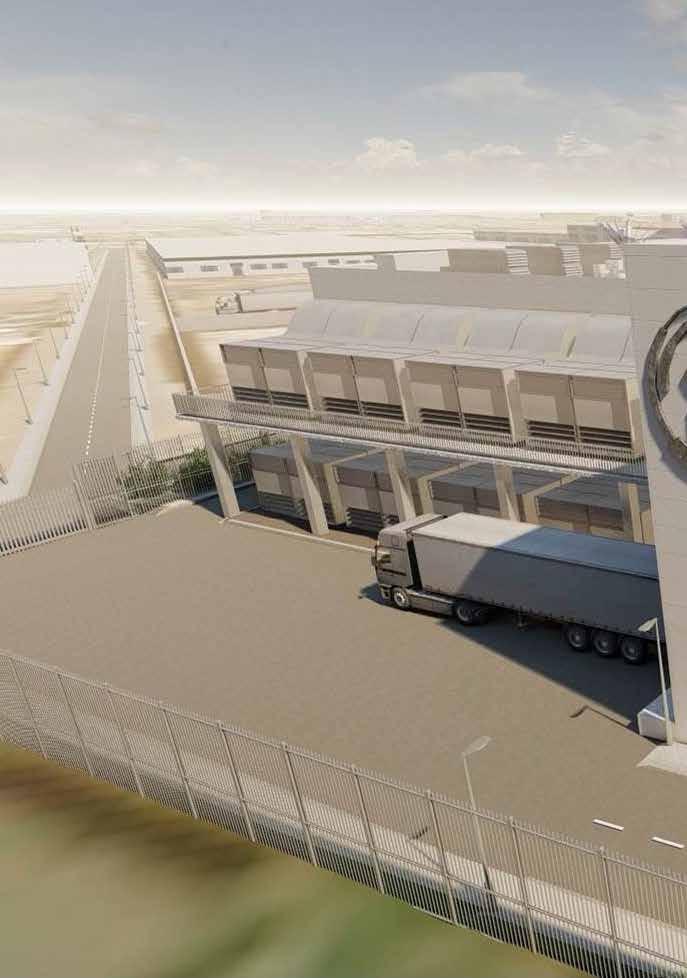
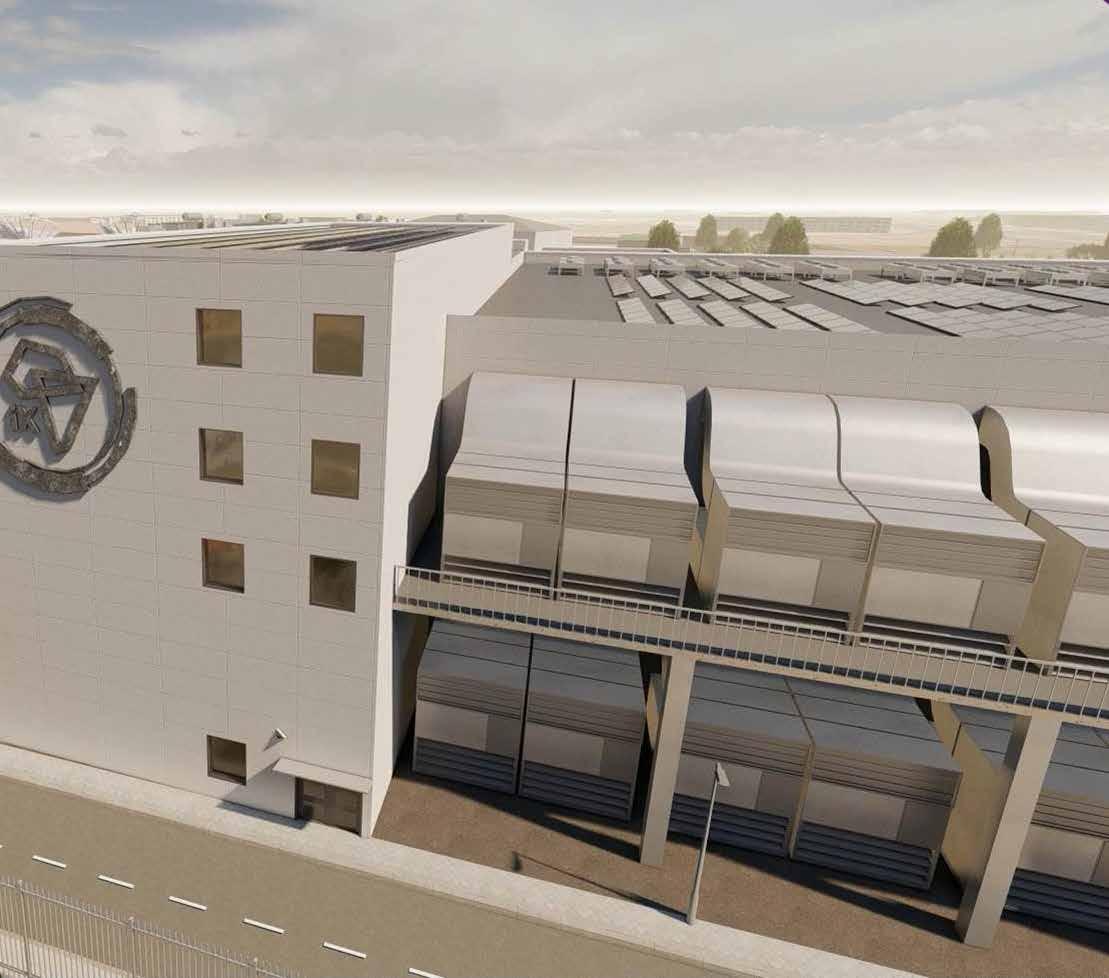
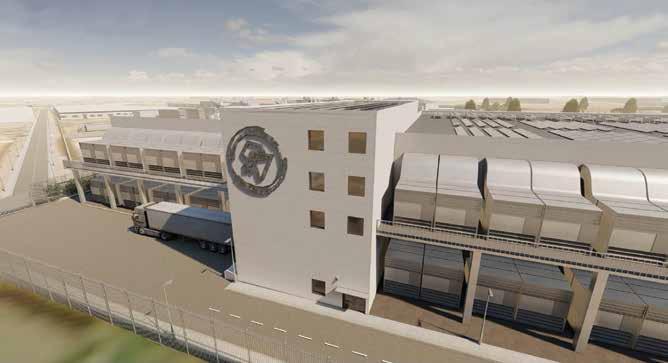
IX Africa is building one of the largest data centres in Africa. The facility, situated in Nairobi, Kenya, will target both target both local and global clients.
The organization reckons that data centres globally and Africa in particular, will continue to see tremendous IP traffic growth based on such factors as cloud computing, data residency laws, mobile data and compliance.
One of the leading architectural firms in Kenya, Triad Architects Ltd., was selected to spearhead the project.
According to Triad Architects, they received the client’s brief which outlined the size and shape of the structure.
“Unlike traditional buildings, a data center design is driven by function rather than form”, says Triad Architects. “The layout of equipment and their spatial requirements developed by the data centre engineers to meet specific performance parameters dictate the envelope design.” It took about nine months from the concept to developed design.
Although data centres are not new to Triad Architects having designed a few, Triad Architects says IX Africa Data Centre is the largest the firm has ever been involved with. They say that each data centre is unique with its own special requirements necessitating tailor-made considerations.
“As is with anything to do with technology, data centres are constantly evolving and newer technology is being adopted to meet spatial and performance requirements for the IT infrastructure”, they note. “However IX Africa has design similarities with the most recent and modern data centres in the world as dedicated to Hypercloud clients.”
IX Africa Data Centre will be developed in phases
IX Africa Builds
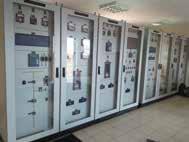
with Phase 1 occupying approximately 10,000.00sqm on 4.3 acres. In addition to offices, the development will have white spaces that will host the IT infrastructure such as servers, storage, network gear, racks, air-conditioning units and power distribution system. The grey spaces will host the back-end infrastructure that consists of switch-gear, UPS, transformers, chillers and generators.
The building has been designed with due consideration for users with physical impairment and has also adopted green concepts for sustainability. Solar water heating, photovoltaic and smart lighting, rain water harvesting and water conservation using low-flow sanitary fittings are some of the elements to this end.
The project broke ground in February, 2021 and is expected to be completed by December, 2021.
“During construction, our primary focus is to make sure the setting out, space sizes and established tolerances are met”, says Triad Architects. “The quality of construction is controlled and assured by selection of material, testing and regular inspection during construction.”
PROJECT TEAM
Client: IX Africa
Architects: Triad Architects Ltd.
Project Manager: Turner and Townsend
Quantity Surveyors: Turner and Townsend
Civil and Structural Engineers: Metrix Integrated Consultancy
Mechanical and Electrical Engineers: Prisma Technics Ltd
Data Center Engineers: Future-Tech
NEMA consultants: Green by Choice
Main Contractor: Solitaire Construction Ltd
Major Data Centre in Kenya
We are proud to be associated with IX Africa and Triad Architects on the Data Centre Project as Main Contractors
Both Simon Woods and David Beglin had worked as Architects in Kenya for 15 years before the formation of Beglin Woods in 1992
"Within a week of forming the practice, we were awarded the refurbishment and extensions of both the Mayfair Hotel Nairobi and Hemingways Hotel Watamu. These Projects led us into work for Hospitality clients and the Projects included:"
• Flame Tree Restaurant at the Panaf ric Samburu Intrepids Lodge
• Mara Simba Lodge
Buffallo Springs Lodge
• Tortilis Camp in Ambosli Hemingways Watamu
Work on these projects sought to develop a strong design and construction language for Hotels and Lodges in Kenya and allowed us to explore and use techniques to develop the use of local crafts, and building methods of sustainability, including energy reduction and waste recycling.
We are still working on Hotels and Lodges, having most recently completed.
• Crowne Plaza Hotel, JKIA
Dusit Princess, Westlands Sankara, Westlands
• Avani Hotel at Capital M Westlands. OUR FIRST 30 YEARS.
From 2000 onwards, we undertook a series of Residential Projects. These projects included Rosslyn Ridge Housing Developments for the US Government, Miotoni Woods and Miotoni West Road Karen for First Assurance, Lower Kabete Mews for Cannon Assurance, Marula Gardens, Karen, Lone Tree Estate Rosslyn....... and many others.
HEMINGWAYS WATAMU
SANKARA HOTEL
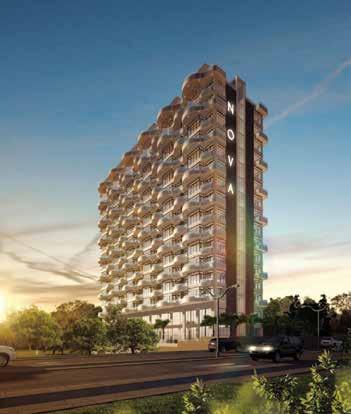
NOVA APARTMENTS DUSIT HOTEL & RESIDENCES
In recent years, there has been a move away f rom this style of building design towards a more modern streamlined aesthetic. The new Projects include: Housing at Chalbi Drive, Applecross Road, Miotoni Road and Loresho. There has also been a big increase in high rise high density Residential Development in the form of Apartments for sale or rent as service apartments.
These projects continued established forms of traditional, domestic design which had been common in Kenya for many years and which featured the use of pitched tiled roofs, dormer windows, stone walls, steel windows, hardwood floors and large landscaped gardens. These projects were highly profitable investments for both developers and current owners and are still highly sought-after residential locations.
This corresponds to an increase in the middle-class and more afluent population. These developments ust be built at an extremely high density to justify the extremely high cost of urban land which now exceeds 3 million dollars an acre over most of Nairobi’s high end residential areas.
These developments now offer a complete on-site community with entertainment, retail and social facilities including cinemas, gyms, restaurants, shops, spas and pools. They offer good profit returns to developers.
These high end Apartments offer alternative and attractive Residential options to city dwellers seeking comfort and security in urban locations. We have recently completed Nova apartments on Waiyaki Way (sold out), Dusit Princess in Westlands, and Capital M Apartments on Muthithi Road (now converted to Dusit and Avani Hotels).
HEMINGWAYS WATAMU
LEWA GOLF RESORT
SCANAD OFFICES
Office buildings fall into several categories. Offices for sale or rental by developers and offices for their own use by Corporations. Office accommodation now requires social facilities, informal meeting areas, daycare centers, recreational areas, shops, restaurants, medical facilities, and transport back up areas. Our recently completed building at UNON, Gigiri is fully supplied with PV generated electricity. Our office designs at Watermark, Karen and AWF Karen now recycle all waste for irrigation.
AWF OFFICES
UNON OFFICE COMPLEX
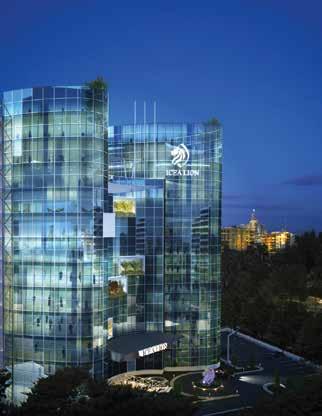
ICEA LION
Industrial buildings also give us an opportunity to develop alternative solar energy systems on the large roofs, togeather with wastewater recycling and disposal systems.
Since we started Beglin Woods in 1992, we have been fortunate to be asked by generations of clients to assist with their building development projects. This has given us the opportunity to work with the country’s premier consultants, contractors, subcontractors, and suppliers.
Through computers and more recently through internet and social media, we have seen our business and associated industries grow into a true global marketplace where virtually anything can come f rom anywhere in an instant. This has increased quality and economy greatly and many of the small businesses we worked with 30 years ago, have now grown into major international players.
AVOCADO OIL FACTORY
NAKURU
USIU SCHOOL OF HUMANITIES & SOCIAL STUDIES
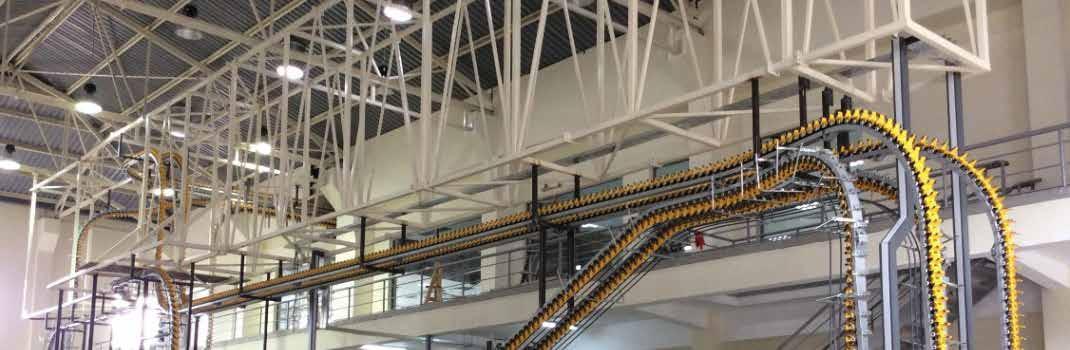
We have completed 2 press hall buildings for Nation Newspapers in Mavoko, a Feed mill building for Bidco Nakuru and are working on an Avocado Oil processing building in Athi EPZ
Industrial Buildings f requently have relatively simple structures but have sophisticated and complex plant installations often supplied by overseas specialists.
We are completing the School of Humanities building, our 8th Project at USIU. The Library Building, completed in 2005 is still the Hub of the USIU complex.
USIU LIBRARY
PRIVATE RESIDENCE, KAREN
Private houses are all the time becoming more sophisticated and f requently involve state of the art security, home automation, cinemas, pools, gymnasiums, barbeques, and guest accommodation. We have several such houses, built and under construction in Nairobi and in towns outside Nairobi.
Individual residences are now being commissioned more f requently by high earning individuals, who have land in the inner suburbs. Houses also take a long time to construct and do not offer contractors an attractive profit margin. For this reason, we need to come to design decisions quickly, and must select contractors and subcontractors carefully
PRIVATE HOUSE
ICEA LION
Our clients and ourselves are influenced on a daily basis by innovation in design and building components. Computer software now assists in making building shapes and configurations that were unthinkable even 20 years ago We grow with the evolution of the profession and the market
We gratefully applaud and congratulate every individual, firm and contractor who has kindly assisted us on our privileged journey We look forward to many more and better projects with everybody in future years.
Asanteni f rom David Beglin, Simon Woods, Katherine Mung’au, Kunal Patel, Kimani Muchene, Benson Odoyo, Xan Woods, John Hangalla, Aaron Ogutu, William Shisia, Maurice Ogutu, Emma Moraa, Justus Gichuhi, James Mwangi, Nelly Wanjiru, Samson Thiong’o, Samwell Mburu and all at Beglin Woods Architects.
NOVA APARTMENTS
APARTMENTS FOR US EMBASSY
Ambrosial Interior Solutions Innovative Solutions
Ambrosial Interiors Solutions Limited rose from a furniture dealer to a robust interior fitout contractor that now competes in the big league.
American interior designer and decorator Albert Hadley once opined that the essence of interior design will always be about people and how they live. It is about the realities of what makes for an attractive, civilized, meaningful environment, not about fashion or what's in or what's out.
By all accounts, the face of interior design has been in constant evolution. While aesthetics remains critical, the need to put human emotions and feelings at the heart of the final product is today paramount. Indeed for Ambrosial Interior Solutions Limited, a leading interior design firm in Kenya, understanding the brief of the client and offering holistic interior designs has been the hallmark of the firm for four decades.
“Our firm prides itself on 40 years of experience in this industry and is able to provide services of the highest caliber along with respecting the client’s schedule with their project,” says Jasprit Sagoo, a Director. He adds that despite operating in an industry that is highly competitive due to the many interior design firms, Ambrosial has managed to build a strong and trusted name, the result of which has been steady growth due to the guidance and expertise of Narinder Sagoo.
and Cutting-edge Services
Unlike many interior design firms, Ambrosial prides in a strong foundation dating back over four decades ago when Jasprit’s grandfather established the firm in Mombasa. Back then it was known as Sagoo Furniture Mart and used to deal exclusively with furniture. In 1985, the firm ventured into interior fittings and was soon enough building a name in Mombasa and getting a few inquiries in Nairobi.
Due to the rising inquires coming from Nairobi, Narinder Sagoo decided to establish a sister firm in Nairobi. Though the Nairobi firm started as Sagoo Interior Decorators Ltd, in January 2014
it rebranded to Ambrosial, a name that means exceptionally pleasing, worthy of the Gods. “The words 'unique, special’ and ‘classic’ are adjectives that are a perfect fit to describe what we do here at Ambrosial. The name Ambrosial isn’t for us, it’s for our clients as they deserve nothing but exceptional solutions worthy of the Gods.” explains Jasprit.
As one of the directors, Jasprit oversees the operations of Ambrosial. A quantity surveying graduate from the United Kingdom, Jasprit had long decided that he wanted to work with his father upon graduation. “I always had the idea of coming back to work with my dad,” he says,
adding that Narinder Sagoo is a strong pillar in the growth of Ambrosial.
This is evident. For Ambrosial to have a footing in Nairobi, among the first clients were the inquiries that Mr. Narinder used to get while in Mombasa. These inquiries enabled him to build a base of trusted clients in Nairobi who fuelled the firm’s clientele growth through referrals. Though some of the jobs were small in scale, ranging from 500 square meters to 1000 square meters, they were instrumental in enabling Ambrosial to build a name by the quality of the final product.
As an interior design firm, they are highly attentive to clients and carefully analyze their needs and expectations, and always provide an honest analysis. When it comes to execution, its creative styles range from contemporary
to traditional and are always driven by client inspiration and professional opinions.
In essence, Ambrosial provides the full spectrum of interior works. “We make interior spaces functional, safe, and beautiful for almost every type of building. We work with you to develop professional interior plans and visualizations,” avers Jasprit.
He explains that with materials like gypsum, Ambrosial is able to do more in the same space ranging from innovative solutions such as gypsum ceiling designs, simple wall décor, portioning, ceilings, and aesthetic installations. The firm is also able to develop steel and aluminum fabrication to suit interior planning and design requirements including bespoke lighting to custom millwork and metal fabrication.
Other areas of specialization include glazing, which is the installation of glass in windows, doors, or any other fixed opening, tiling which is the use of tiles to create the desired ambiance and used of timber to bring out different structures, colors, qualities, and numerous ways to construct shapes and varnish wood.
“We deal with everything interior and one good thing about the job is that there is no site that is ever the same. Everything is always different. New technologies are always coming up, also new materials. We have to keep ourselves constantly updated on what is happening in the industry,” observes Jas.
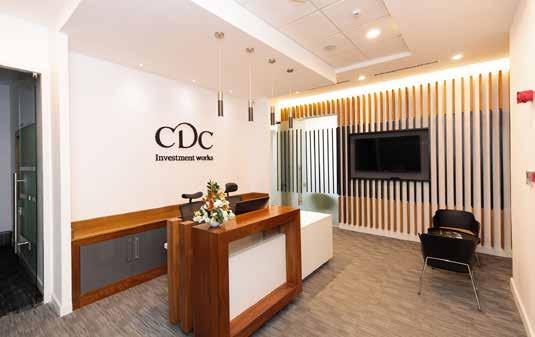
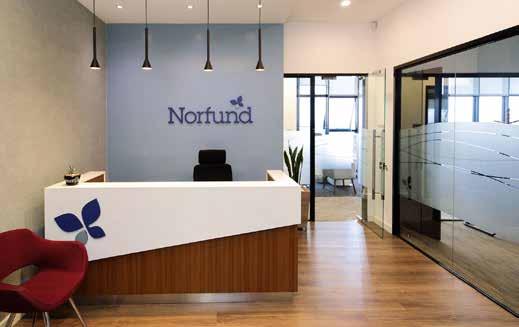
Ambrosial has managed to build a name that is evident from its rich clientele base cutting across residential, commercial buildings, and international development organizations. Among its notable clients are NCBA Bank, Credit Bank, Equatorial, I&M Bank, Britam, Philips East Africa, United Kingdom’s CDC Group, Norwegian investment fund Norfund, Africa Guarantee Fund, Japan International Cooperation Agency (JICA) among others.
“We have engaged in projects that have pushed us and taken us to another level. This is because we believe in ensuring that we are nothing but honest with our clients as they are our top priority,” notes Jasprit. He adds that offering clients quality has resulted in a growing list of repeat clients and referrals.
Narinder Sagoo
Jasprit Sagoo
Classic Ironmongers Ltd
is proud to be associated with AMBROSIAL INTERIOR SOLUTIONS LTD on their various projects
Classic Ironmongers Ltd
P.O Box 17915-00500 Nairobi, Kenya
Importers and Suppliers of Architectural Ironmongery, Furniture Fittings and Accessories, Gypsum Boards, MDF Boards, HDF Flooring & Related Products
P.O. Box 2900-00621 Nairobi
Tel: +254 733 631370
+254 720 631370
Email: insure@ksembiinsurance.com
Licenced insurance brokers that offer bespoke insurance coverage for your personal and business needs, and provide expert assistance in resolving and settling your claims. Our portfolio includes general, health, travel, life, and special risks insurance. Our engineering insurance products include: • Contractors All Risk • Work Injury Benefits Act (WIBA) and Employers Liability • Bonds – Bid; Performance; Advance Payment.
We are proud to be affiliated with Ambrosial Interior Solutions Ltd.
The result has been steady growth for the firm in all aspects. One notable area is the size of projects. Today Ambrosial is doing interior jobs for as many as eight floors, 3,000 square meters. “A few years ago we hadn’t imagined doing these kinds of projects and now we are diversifying our clientele reach from renovations or full building projects” states Jasprit, adding that even the firm’s office and ground staff have gradually increased.
As part of its growth strategy, Ambrosial is planning to delve into small office blocks and residential projects. The firm is optimistic that as the building and construction industry recover from the impacts of the Covid-19 pandemic, vast opportunities are bound to emerge.
Though operating in a very competitive industry, Ambrosial has given fidelity to honesty. “We offer competitive pricing because we are known in the market and we give clients quality, satisfactory projects,” says Jasprit.
Unlike other firms that believe in importing materials, Ambrosial has adopted a strategy
Electrical Contractors
Distribution
of supporting local suppliers since 90 to 95 percent of the materials the firm uses are locally purchased. The firm is also keen on sustainability considering the building industry is at the forefront of adopting a green future to reduce greenhouse gas emissions. “Sustainability is a strong policy for us because clients are always keen on what green measures are taken on-site,” states Jasprit.
Today, a well-established Ambrosial is looking into the future with confidence. The firm is upbeat of continuous growth particularly in terms of taking up much bigger projects. In fact, the numerous projects coming up means that interior firms that have managed to build unshakable reputations like Ambrosial are bound to be extremely busy.
Cabling
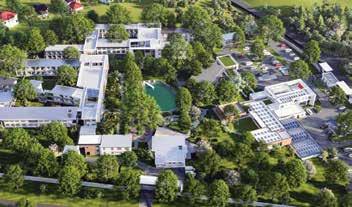
ICRC Builds Regional Office in Nairobi
Construction projects have a tendency to be hazardous to the environment. Yet for some developers, protecting the environment is often elevated to the centre stage of project implementation. This emanates from the understanding that the built environment can catalyze opportunities for addressing a wide array of local and global challenges including climate change, land use, demographic shifts, water and other resource scarcities.
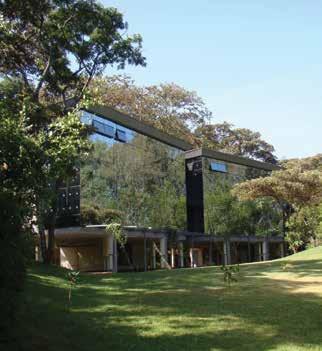
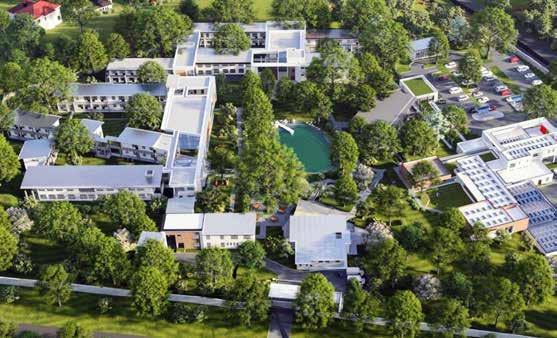
In fact, for the International Committee of the Red Cross (ICRC), protecting the environment has been an underlying theme in the construction of the Nairobi office building of the ICRC Regional Delegation. Notably, it started from the basics – preserving as many indigenous trees as possible.
When the ICRC purchased the 8.2 acres in Spring Valley on the outskirts of Nairobi, the notable attribute of the land was its green aspect with many trees and a quiet, serene environment that is largely residential with near-zero high-rise buildings. Immediately a decision was made that the architecture of the building must take into account maintaining the green aspect of the land by saving as many trees as possible. With the basics right, even the building itself had to adhere to the concept of sustainability in all aspects ranging from energy use, greenhouse gases emissions and water use to waste management and noise pollution, among others.
“As ICRC we believe in sustainability and this building brings out the best in green projects,” says Alexandra Vangelius, the Construction Project Manager.
The Nairobi office is important for ICRC. It is a regional hub overseeing the operations of the humanitarian organization in three African countries namely Kenya, Djibouti and Tanzania and providing support to other countries in Africa and worldwide. It will also host some of the workforce of the Somalia operations.
According to Olivier Dubois, ICRC Head of Regional Delegation, the need for the Nairobi office was informed by the fact that ICRC wanted to have its own permanent facility to reinforce the strategic anchoring of Nairobi in its wider Africa regional strategic framework. This will be critical in terms of Nairobi becoming the repository of appropriate resources both for thematic
engagement, institutional learning and also for operational responses. It will also see ICRC delocalize training considering the Nairobi office will have the largest training centre outside of the organization’s headquarters in Geneva, Switzerland.
“We want to delocalize some of our functions and we felt Nairobi is ideal as a regional hub,” he explains. He adds the office is strategic for ICRC in responding to the needs of migrants and refugees as well as supporting the enhancement of regional peace and security. It will also serve to enhance close collaboration with its counterparts at the Kenya Red Cross to promote humanitarian activities and response in the areas along the Kenyan coastline and in Carissa.
Kenya is host to numerous international bodies owing to the country’s strategic importance in the wider eastern Africa region. Apart from the global organizations, the
country hosts one of the largest logistics centres for the ICRC. The centre is responsible for coordinating relief support to several countries in Africa and beyond by sending out supplies like medical, food and non-food items, and machinery by road, sea, air or rail to other ICRC operations. More importantly, the country is host to a great pool of human resource expertise ranging from water and habitat engineers, medical, learning and development, IT and data, experts in protection work and others.
For ICRC, having a regional hub is critical in the effective undertaking of its mandates of protecting the lives and dignity of victims of armed conflicts and other situations of violence by providing them with assistance. The organization works in over 100 countries around the world. The largest operations are in Syria, Yemen, South Sudan, Iraq and Nigeria.
The countries that are directly
served by the Nairobi regional office are majorly peaceful. However, they are surrounded by neighbours facing protracted conflict from the Great Lakes in the form of Burundi, the Democratic Republic of Congo and South Sudan or emerging humanitarian crises in Ethiopia and Mozambique which have the effect of spilling over into these countries. “It is therefore strategic for the ICRC in responding to the needs of migrants and refugees as well as supporting the enhancement of regional peace and security,” Dubois.
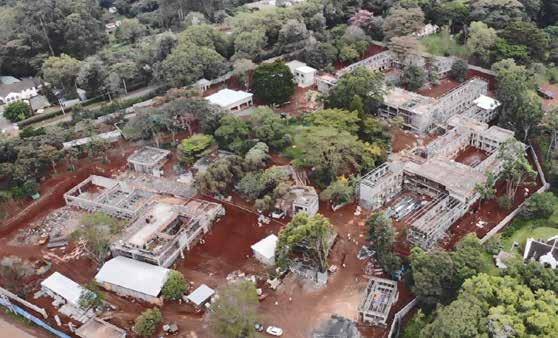
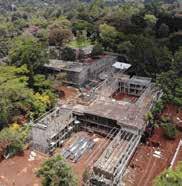
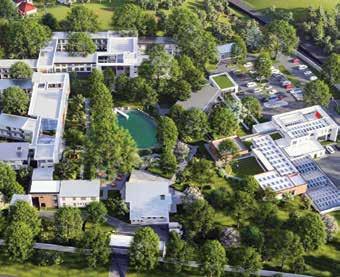
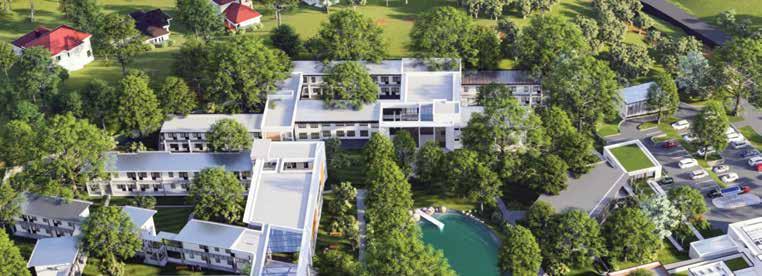
As an organization spearheading the wellbeing of people, ICRC had to project its benevolent face in the Nairobi building whose construction started in August last year and is expected to be completed in the first quarter of next year. This was evident from the design stage of the project that encompasses offices, meeting rooms, conference room, canteen, gate houses, power house, recycling building,
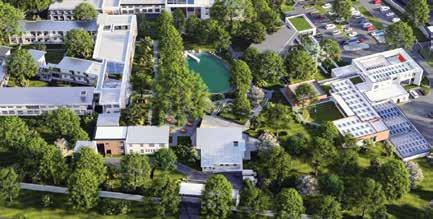
maintenance warehouses, parking lot including charging ports for electrical cars and parking for bicycles, water treatment plant and solar panels. Cumulatively, the building’s footprint is 5,890 m2; the floor area including parking and external circulation is 15,970 m2. Additional areas have also been reserved for future expansion.
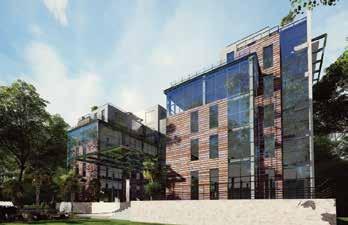
In the design stage, the consortium of architects led by Pharos Architects Kenya Ltd had to ensure the building adhered to the principles of sustainability. This involved saving as many indigenous trees as possible, enhancing energy efficiency, water reuse, renewable energy and use of local materials among others. Other features of the building included a clean, practical noncommercial look; conducive environment of shared offices and common workspaces; flexible workspace design; accessibility to people with disabilities, watertight security and safety features. These features were crucial
renewable energy in the form of solar power and solar water heaters.
considering the building’s occupancy population is approximately 500.
Sustainability is an important component of the project. This is because one of the institutional priorities for ICRC in the coming years is the incorporation of sustainable and environmental aspects in all its operations and activities. Indeed ICRC is determined to ensure the building attains the Leadership in Energy and Environmental Design certification (LEED).
For this to happen, several sustainable elements have been integrated into the design. They include traditional and eco-friendly construction materials; flora conservation; water management (reuse of treated water and rainwater collection); temperature management by orientation of the buildings; natural cross ventilation and insulation. Others include minimum energy performance by investing in energy efficient devices and LED lights,
Putting sustainability at the heart of the project has had remarkable ripple effects particularly in the area of aesthetics. When completed, the entire ICRC Regional Delegation office will radiate a natural and modest look, open internal and external spaces, circulation space, garden and courtyards. Also conspicuous will be the big window openings for natural light and ventilation as well as green areas integrated with nature and the neighborhood. “The design of the new building reflects our current and future needs,” avers Lucia Rodriguez, the Delegation’s Head of Support.
To ensure that every objective of the new office building was met, the ICRC was deliberate in putting in place a project team that was selected through a competitive tender process. This led to the appointment of Pharos Architects who were responsible for design and site supervision and also selection of the main contractor responsible for the execution of the works, Ark Construction Ltd.
According to Vangelius, ICRC has developed institutional guidelines for the management of complex construction projects. The guidelines are contained in the Protocol for the Management of Construction Projects whose objective is to enhance management of the projects by outlining and explaining each stage of project development and by clarifying the roles and responsibilities of each stakeholder. It also aims to reduce the potential for confrontation and adversarial
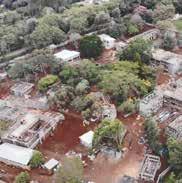
Construction work is proceeding at a fast pace
ICRC PROJECT MANAGEMENT TEAM:
Head of Regional Delegation: Olivier Dubois
Head of Support: Lucia Rodriguez
Finance & Administration Manager: Amare Getachew
Belachew
Construction Project Manager: Alexandra Vangelius
Technical Manager of the Project: Vicente Cabrera Brito
relationships during the project construction stage and to ensure that projects are carried out in a spirit of joint endeavor, partnership and accomplishment.
“This project is being implemented adhering to very high standards,” she explains. She adds that key decisions were made under the supervision of the ICRC Water and Habitat Unit that provides engineering and architectural support to the field set-up and operations. The unit has broad expertise in many technical areas including civil and structural engineering, hydraulics, electro mechanics, electrical and energy as well as other relevant fields such as architecture, hydrogeology, public health engineering and environment.
Adherence to high standards has been critical in ensuring that apart from externally instigated challenges, implementation of the
project has largely been seamless. The main challenges were obtaining the building permit and the Covid-19 pandemic. In Kenya, ICRC came face to face with the bureaucratic processes that developers must endure in getting building and construction approvals and permits. “We encountered challenges in obtaining the building permit which has caused some delays in the project,” notes Dubois.
The project has also endured Covid-19 related challenges considering the pandemic hit during the tendering process and has also had to contend with weather related challenges. Despite these challenges, the team is determined to complete the project on time and within budget. With the Kenyan hub, ICRC will be more equipped to respond to humanitarian crises considering conflicts are on the rise in the region.
CONSTRUCTION SITE SETUP:
ICRC / Client representative on site:
ICRC Construction Management Team:
Construction Project Manager (Senior Civil Engineer & Architect): Alexandra Vangelius
Technical Manager of the Project (Senior Civil Engineer): Vicente Cabrera Brito
Site supervisor (Architect): Collins Omollo Obare
PHAROS ARCHITECTS CONSORTIUM:
Director Senior Architect: Jasraj Sehmi
Architect/Project Manager: Consolata Mueni
Quantity Surveyor: Quantimax Consultants
Civil Structural Engineer: Abba & Wandu Engineers
Structural Engineer: Abba & Wandu Engineers
Electrical Engineer: Elemech Consultants
MEP Engineer: Elemech Consultants
ICT Engineer: Elemech Consultants
Construction Project Manager/Senior Civil Engineer & Architect
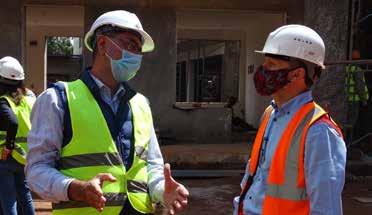
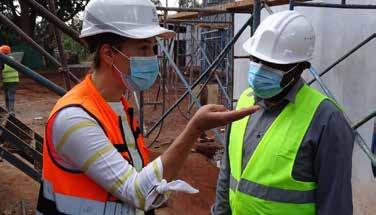
Alexandra Vangelius (left) explains a point to our writer
Pharos Architects’ Director and Senior Architect Jasraj Sehmi (left) with ICRC Head of Regional Delegation Olivier Dubois at the site
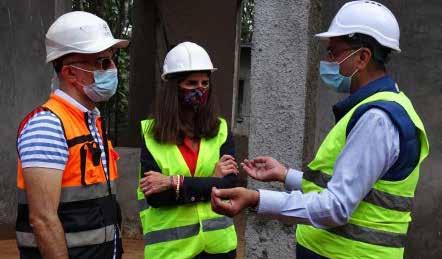
Technical Manager of the Project/Senior Civil Engineer Vicente Cabrera Brito (left), Head of Support Lucia Rodriguez with Pharos Architects’ Director and Senior Architect Jasraj Sehmi
Main Contractor: Ark Construction Ltd
Ark Construction / Director: Kurji Kerai
Ark Construction / Project Manager: Alphonce Oluoko
Gated communities have gained preference among middle and high income market segments. They not only provide security and safety to the residents but also tend to have much higher standards of living with maintained roads, good lighting, and organized common services such as solid waste management. They also have minimal traffic as the vehicles using estate roads are mainly those of residents and their visitors. There is also a sense of community.
Edenville is a plush, gated community development, situated in the midst of coffee plantations off Kiambu Road. It is a short drive from Windsor Golf and Country Club and two of Nairobi’s biggest malls - Two Rivers and Village Market. It is also close to the popular Karura Forest. New developments, road infrastructure, retail and commercial developments have all served to make this location an ideal residence within the Nairobi metropolitan zone. Edenville is a fifteen minute drive from Muthaiga roundabout with easy access to the Runda and Gigiri suburbs as well as Thika Road and the Northern bypass.
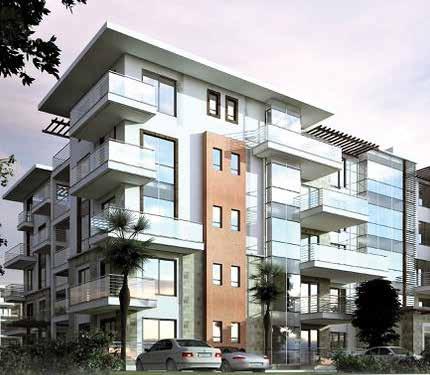
Developed by Paramount Chief Estate Limited, the development offers a beautiful, leafy outlook for its residents. The semi-detached maisonettes come with a garden and two parking spaces. Carefully thought-out landscaping for each
sense of privacy.
The homes at Edenville have witnessed significant capital appreciation both during construction and post completion.
The second phase of Edenville comprising of 404 maisonettes came after the highly successful Phase I that consisted of 345 villas. Set on a total of 42 acres, Edenville Phase Two is designed to appeal to both investors and home buyers with highly competitive pricing in an area with strong growth potential.
Edenville homes offer 3, 4 and 5 bedroom accommodation for on individual plots, with sizeable gardens that are perfect for both young executives and families.
External and Common Area Finishes
Main Boundary: 2.1m high stone walling with electric fencing
Court boundary: 1.8m high chain link fence with planting
House boundary 1.2m high chain link fence with planting:
Entrance: Gates Double entry and single exit steel gates with double height viewing point
Driveways: Interlocking concrete paving blocks with intermittent landscape points
Maisonette finishes: Roof Zinc-Aluminium
sheeting on timber structure
Walls: Stone-effect cladding alternated with plaster & paint
Windows: Small pane steel casement
Floor: Ceramic tiles in living and wet areas
Doors: Solid hardwood main door and mahogany flush internal doors
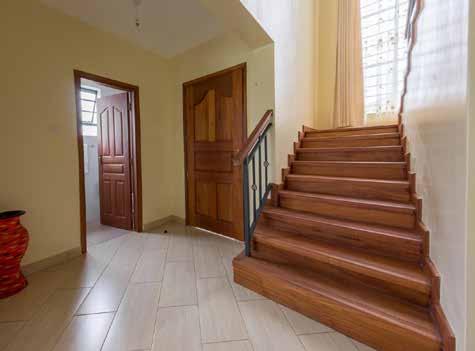
Staircase: Hardwood timber treads and risers with steel balustrades
Wardrobes: Veneered MDF Cabinetry
Kitchens: Veneered MDF Cabinets with granite worktops
Bathrooms: Full height wall tiling and white quality sanitary ware
Curtain rods: Wrought iron with decorative ends
Utilities: Solar hot water heating
Effective planning and the use of space are key components that have been factored into the design of these homes. The development has a secure water and power supply, including onsite solar power heating and boreholes. Solar power and reverse osmosis machine in the kitchen to provide drinking water from the tap are key attractions.
The developer has partnered with leading banks KCB, NCBA, ABSA, STANBIC and STANDARD CHARTERED for mortgage financing. Three bedroom houses start at Kes 20.295m, 4 bedroom start at Kes 21.945m while 5 bedroom units start at Kes 27. 445m.
home not only adds to the picturesque backdrop, but also creates a strong
Construction began in October 2015. Edenville Phase II is now complete and ready for occupation with some residents already moving in.
Challenges
According to the developer, several challenges came in the way of executing the project. The first was depreciation of local currency during the project life. However, the construction contract was prepared to cushion the company from various financial shocks such as the price of imported material.
The construction contract did not cover all project costs as a few items could not be quantified at project commencement. To address this, a provision was made for unforeseen costs through the setting aside of contingency funds.
Another challenge was the economic slowdown due to factors such as a general election which has previously caused fear in the past due to political unrest. But the development location was sold as a safe region that was open to everyone.
Lastly, the economic slowdown due to the COVID-19 pandemic threatened the uptake of units. To counter this, the sales team is focusing
on the rise in demand for detached / semidetached housing which has peaked because of the pandemic.
Lessons Learnt
• The value of a good brand name cannot be underestimated; it produces repeat sales through word of mouth.
• Most purchasers are reasonable, therefore excellent customer service is of importance. When service is great it moves the sale transaction further and more swiftly at every stage.
• Building strong relationships whether with service providers, employees, purchasers, financial institutions, sales agents, etc. is critical as it strongly contributes to the overall cohesion of the project.
Supervising
Project
Project Team
Rome was not built in a day...
…But it may have been, had the Romans purchased insurance from Hollard Guarantees. Our Construction Guarantees ensure that building projects – no matter how complex – are completed on schedule.
Just as all roads lead to Rome, our Trade Guarantees provide the freight forwarding, clearing and logistics industries with the peace of mind that their businesses are covered, no matter which route their cargo takes.
Major benefits of insurance-backed guarantees include:
• Comfort from non-performance of contractual obligations
• Increased cash flow and working capital
• Protection against non-payment of retained funds
Hollard Guarantees: we help you get it done – guaranteed.