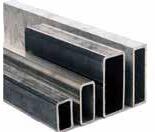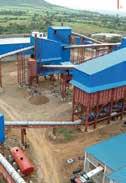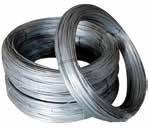

















APEX STEEL IS PROUD TO BE THE CHOSEN SUPPLIER FOR THE SGR
























































MANAGING EDITOR
Robert Barnes
DEPUTY MANAGING EDITOR
Francis Makari
FEATURES EDITOR
Dennis Ayemba
COUNTRY EDITORS
Kenya - Anthony Kiganda
Uganda - Betty Nabakooza
Nigeria - Boladale Ademiju
South Africa - Jimmy Swira
WRITERS
Yvonne Andiva, Christine Siamanta, Erick Mongare, Dorcas Kang'ereha, Pascal Musungu, Grace Makumi, Nita Karume
WEB & GRAPHIC DESIGN
Augustine Ombwa, Bonface Kimunyi, Caleb Larum
Sales and Marketing Manager
Ken Okore
ADVERTISING
Kenya: William Mutama, Fred Okoth, Trizah Njoroge
South Africa: Thuli Nkosi, Winnie Sentabire, Angeline Ntobeng,
Uganda: Nobert Turiyo, Selina Salumah Namuli
Botswana: Dickson Manyudza, Gerald Mazikana
Ethiopia: Haimanot Tesfaye, Ruth Girma
Tanzania: Tom Kiage
Malawi: Anderson Fumulani
Ghana: Samuel Hinneh, Caleb Donne Hadjah
Zambia: Susan Kandeke
Zimbabwe: Chiedza Chimombe
Rwanda: Collison Lore
Nigeria: Seni Bello
China:Weng Jie
The editor accepts letters and manuscripts for publication from readers all over the world. Include your name and address as a sign of good faith although you may request your name to be withheld from publication. We reserve the right to edit any material submitted .
Send your letters to: info@constructionreviewonline.com
Construction Review is published eleven times a year and is circulated to members of relevant associations, governmental bodies and other personnel in the building and construction industry as well as suppliers of equipment, materials and services in Africa, the Middle and Far East. The editor welcomes articles and photographs for consideration. Material may not be reproduced without prior permission from the publisher. The publisher does not accept responsibility for the accuracy or authenticity of advertisements or contributions contained in the journal. Views expressed by contributors are not necessarily those of the publisher.
© All rights reserved.

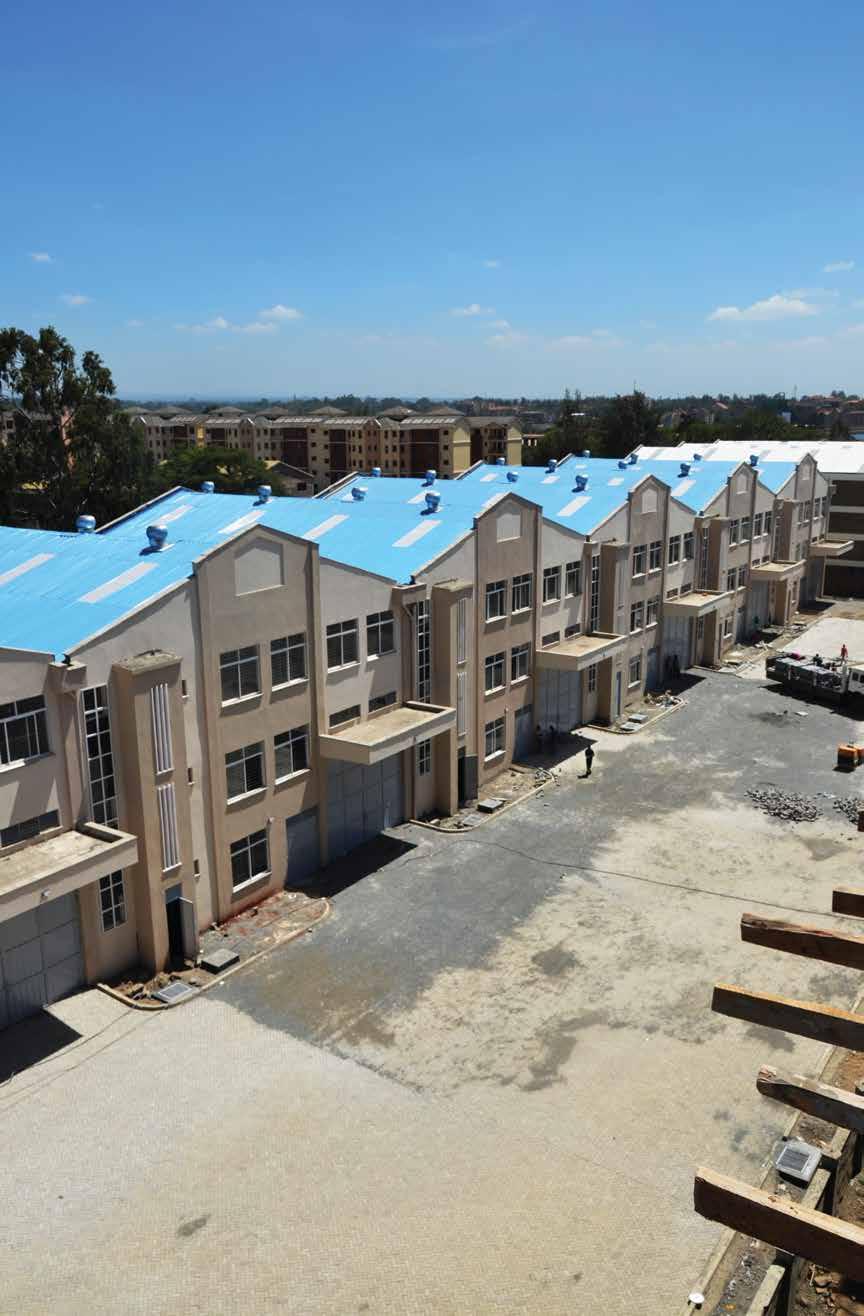
Industrial Parks are centres of industrial development based on the principles of excellence and a quality work environment. They are built in an industrial zone for the purpose of industrial development.




Published by Group Africa Publishing Ltd

Download free QR Readers from the web and Scan this code with your smart phone to access more stories on the CR website
Uganda Agent Projects Unusual Uganda Ltd. Jemba Plaza,
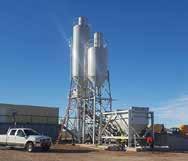
The significant environmental impacts of the operation of a concrete batching plant are a concern thus, thorough environmental assessment is necessary to identify and address such impacts

Kitchen Fitting
Choosing a Modern Kitchen Sink
The material the modern kitchen sink is made of has a big impact on not only how it functions, but its aesthetics and cost effectiveness as well.
Industrial development can be Africa’s answer to economic sustainability
Industrial growth is an indisputable pre-requisite of sustainable development. Most development forums looking at economic transformation, environmental sustainability and poverty reduction in Africa have endorsed this; with a general consensus for the need for rapid industrialization in Africa.
Despite the importance of industrialization in the context of sustainable development in Africa, the continent lags behind other developing regions in industrial performance; this is according to a report by the United Nations (UN) on the Review of African Sustainable Industrial Development. Within Africa, the distribution of manufacturing activity is highly skewed with just one country, South Africa, accounting for 27.3% of total (Manufacturing Value Added) MVA in sub-Saharan Africa and registering significant growth over the past two decades. Thus for most countries of Africa there has been a loss in their share of global manufacturing output.
It is, however, to be noted that while the general growth in the industry has been slow, positive performance in a few countries like Kenya, Nigeria, Zambia and Ethiopia; and an increase interest in foreign direct investment in African industry indicates a potential for industrial take-off. The challenge is to ensure that environmental best practices are incorporated at these early stages of industrialization whenever manufacturing investments are being considered.
Safeguarding buried infrastructure through accurate detection
The Basics of Building Automation: Luxury or Necessity?
Ethiopia Agent
Haymi Advertising Services
22 Mazoria, Genet Bldg 4th Flr
P.O. Box 1316 - 1110 Addis Ababa
Tel: +251 118 955 855, Cell: +251 930 099 152
Email: ethiopia@groupafricapublishing.com
Ghana Agent
Image Consortium
1st Floor, The Ecobank Building, Tesano.
Tel: 233(0)30 223 2728 I 233(0)274807127 I +233(0)206299159
Fax: 233(0)24 882 8286
Email: ghana@groupafricapublishing.com, Calebhadjah@gmail.com
Kenya Agent Northwest Ventures Ltd
P.O. Box 16414 - 00100
G.P.O
Nairobi, Kenya
Tel: +254 20 2679809 I 2679808, 2091305
Email: kenya@groupafricapublishing.com
Nigeria Agent
Rahma Associates
B23/24, Aishetu Emoewa Plaza, 196, Iju Water Works Road, Ifako Ijaye Lga,Agege, Lagos.
Tel: 234-1-7347860
Email: nigeria@groupafricapublishing.com
Rwanda Agent
Kolline & Hemed Inc., B.P. 3328, Kigali, Rwanda
Tel: +250 03 748106
E-mail: rwanda@groupafricapublishing.com
Website: www.kollinehemed.org
Zambia Agent
Dayflex Limited, 4th. Floor Tazara House
Dedan Kimathi Road, Lusaka, Zambia.
Tel: +260 211 230 529 / +260 977 756 663
Email: makukasue@mail.com, dayflex06@gmail. com
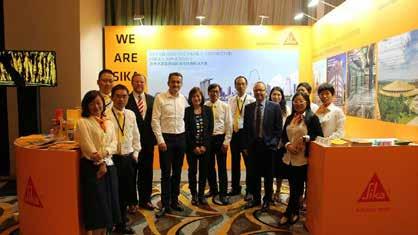
Construction chemicals manufacturer Sika is setting up a production facility in Tanzania for concrete admixtures manufacturing. The company will be the first manufacturer to manufacture these products locally. Plans are already being made to add a mortar products manufacturing line. Sika’s aim in establishing a local supply chain in the East African country is to benefit from planned investments in infrastructure. According to Mr. Paul Schuler, the Regional Manager EMEA and designated CEO, by establishing a new concrete admixtures and mortar production plant in the metropolis of Dar es Salaam, they are gaining an early foothold as a local producer in the growing market. “In Tanzania, as in other African countries, major infrastructure projects are either in progress or at the planning stage, and we intend to supply our products to these projects. With 19 national subsidiaries and 17 factories currently, we have established a comprehensive presence in Africa,” he added.
AfriSam commissions new cement plant in Lesotho
Leading cement supplier
AfriSam recently commissioned a new cement plant in Lesotho to help in blending and packing, a first in the country. Speaking at the official opening of the plant, Lesotho’s Prime Minister Dr. Pakalitha Mosisili, hailed the plant as a ‘significant milestone’ for the region and a boost for local socio-economic development. The capacity of the plant (over 200,000 tons a year of bagged cement) will meet the current local cement demand, while also being capable of producing specialised products for large infrastructure projects like the Lesotho Highlands Water scheme. The main raw material for the cement plant (milled clinker) is railed to Maseru in bulk from AfriSam’s Ulco facility near Kimberley.
VA Tech Wabag Limited (Wabag), one of the leading players in wastewater treatment sector, has bagged its second order, worth US$105m from Dangote Oil Refining Company for construction of effluent treatment plant in Nigeria. Earlier, Wabag had won another order from Dangote for the raw water treatment plant for
Dangote Fertilizers which is in an advanced stage of execution. Wabag’s scope of work includes design, engineering, procurement, supervision of installation and commissioning and testing of an effluent treatment plant with reverse osmosis, demineralisation and condensate polishing and raw water treatment package. Rajiv
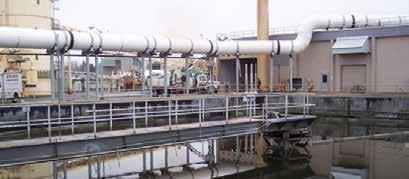
FLSmidth signs large cement plant contract in North Africa
FLSmidth has signed a contract for a state-of-the-art cement plant in North Africa valued at more than $111.35m. The contract includes engineering, equipment supply, construction supervision, commissioning, and training. The plant will mainly supply cement to its local market. Once completed, the cement plant will have a capacity of 12,000 tonnes per day. In a released statement, Per Mejnert Kristensen, the Group Executive Vice President, Cement Division expressed their enthusiasm as a firm for being selected as the preferred supplier of the cement plant, saying it would mark the beginning of a close working relationship between the client and them. The contract will also enable them to deliver a state-of-the-art cement plant in North Africa based on experience and competencies from the cement industry.
Mittal, Managing Director and group CEO, Wabag, said, “We are very happy to win this prestigious contract, a repeat order for us, amidst competition from international players. Winning of this order goes to prove our technological superiority and engineering capabilities in executing world class large and complex industrial projects both at home and abroad.” Dangote Oil Refining Company is the largest single train petroleum refinery in the world while WABAG is one of the world’s leading companies in the water treatment field. WABAG’s key competences, which are based on over 90 years
of plant building experience, lie in the design, completion and operation of drinking water and wastewater treatment plants for both the municipal and industrial sectors. WABAG offers sustained solutions for special customer needs through a comprehensive range of services and innovative technologies. Their plants facilitate environmentally compatible wastewater disposal and secure access to clean drinking water for an increasing number of people. This allows them to make an important contribution to environmental protection and enhanced quality of life.
Manufactures Association of Nigeria signs deal on power generation
The Manufacturers Development Company LTD (MPDC), a subsidiary of the Manufactures Association of Nigeria (MAN) yesterday signed a bulk purchase agreement with Tower Aluminium Nigeria Plc for an independent power plant to be located at Henry Carr industrial cluster in Ikeja, Lagos State. MAN, at the signing ceremony in Lagos, said the plant will be completed in six months because it has secured the full support of the Nigerian Electricity Commission and the endorsement of the Minister for Power, Works and Housing, Babatunde Raji Fashola. Tower Power Nigeria is a power solutions company that has been operating Independent Power Provider (IPP) projects in Nigeria since 2009. The Chairman of the Board of Directors of MPDC, Engineer Ibrahim Usman said, “What we experience currently is constant interruption, costly supplies which have made planning difficult and production expensive. What we have under this pilot arrangement is a 24-hour supply. It is a happy occasion for us, and we are glad that towers have agreed to partner with us, first with six megawatts, which we hope to upgrade to 10 megawatts in the shortest possible time.”

The Association of Building and Civil Engineering Contractors of Ghana (ABCECG) has launched its maiden five-year Strategic Plan at its 2017 Annual General Meeting (AGM). The annual meeting which took place at the Accra International Conference Centre was complemented with an exhibition, which aimed at demonstrating the commitment of the Association towards facilitating partnerships and economic growth in the construction industry. These were contained in a statement, issued by the Association. In a statement issued by the Association, Mr. Martins Kwasi Nnuro, the National President of the Association, said the Meeting would create “a perfect avenue for various industry experts to share ideas to enhance their capacity so that they can handle and deliver on complex demanding projects excellently.” The Meeting, themed ‘Promoting an Effective Construction Industry for Sustainable Development (the need for a Regulator)’ provided a platform for stakeholders to discuss issues concerning the development of Africa. The Association recognizes that construction and building of roads/infrastructure are essential to Ghana’s development and growth into a first world country.

The Master Builders Association of the Western Cape (MBAWC) has granted cash prizes and awards to three students studying towards qualifications in the built environment at the University of Cape Town. The awards and prizes were given to the top students in the second and third years of the Bachelor of Science (BSc) Construction Studies course, as well as to the highest achieving honours student. “We believe it is important to acknowledge outstanding achievement amongst young people and hope that they will go on to carve out successful careers in the industry,” said MBAWC Executive Director, Allen Bodill. Founded in 1891, MBAWC is the oldest organisation of its kind in South Africa. It is affiliated to M.B.S.A. the Master Builders South Africa, but is totally autonomous. The MBA’s primary objective is to ensure that the reputation of members in this area remain high and that investment in building is therefore attracted to it. It does this by insisting that members work to the highest possible standards, aesthetically, technically and ethically; in short, they conduct their business in a thoroughly professional manner at all times.
ACMK seeks bill to help end malpractices in the construction industry in Kenya
The Association of Construction Managers of Kenya (ACMK) is seeking to get a bill passed that will require all players in the building and construction industry in Kenya to register with a new professional body before they can practice; this will help end malpractices in the industry. The Construction Project Managers and Construction Managers Bill 2017 which is being fronted by the association is set to be applied to all construction professionals in the country. The bill states that, all construction professionals, project managers included are required to register with ACMK before they can be declared free to undertake any construction work. ACMK chairman, Mr. Nashon Okowa confirmed the reports and said that there has never been any legal framework in Kenya that guides construction and project managers. “There has never been any legal framework to guide construction and project managers,” said Mr. Okowa.The Bill will establish a format that tests and scrutinizes construction and project managers before being registered with the association.

The 3rd Annual Edition of the Urban and Infrastructure Development Conference (UIDC 2017), to be held at the Imperial Royal Hotel Kampala on the 30th and 31st of October, provides a powerful platform to unlock the immense growth potential of the African Smart Cities ecosystem and address Africa’s urban and infrastructure; challenges and opportunities by facilitating dialogue on the best practices to-Accelerate Innovative Finance, Development and Renewable Solutions for Smart Cities in Africa. Addressing best practices, UIDC 2017 brings a whole new way of engaging and interacting with the best and brightest of the industry, shaping future directions and key priorities in a unique and dynamic onsite environment.
Kenya
- Architectural Association of Kenya
- Institute of Quantity Surveyors of Kenya
- Institute of Engineers of Kenya
- Association of Consulting Engineers of - Kenya
- Association of Professional Societies of East Africa APSEA)
- Kenya Property developers Association
- Institution of Surveyors of Kenya
South Africa - ASAQS - SAICE
- South African Council for the Quantity Surveying Profession
- Khuthaza ( Women for Housing)
- Concrete Manufacturers Association
- Green Building council of SA
- South African Property Owners Association
- Master Builders South Africa
Uganda
Institute of Surveyors of Uganda
Uganda Institute of Professional Engineers (UIPE) & Uganda society of Architects
Botswana
Join key stakeholders from Kenya Electricity Generating Company, Kenya Electricity Transmission Company, NEPAD Kenya, Kenya Power and Lighting Company, METKA, Strathmore University, China Gezhouba Group of Companies and more this August to learn about different EPC models, patterns and project delivery strategies and solutions, so you can adapt them to your business in order to increase profit and reduce risk.
Africa EPC Energy Projects Conference
28-30 August 2017
Nairobi, Kenya

- Institute of Botswana Quantity Surveyors
Ethiopia
- Association of Ethiopian Architects
- Ethiopian Association of Civil Engineers
- Construction Contractors Association of Ethiopia
Zimbabwe
- Zimbabwe Institute of Quantity Surveyors
- Zimbabwe Institute of Engineers
- The Construction Industry Federation of Zimbabwe (Cifoz)
Ghana
- Ghana Institute of Engineers
- Architects Registration Council
- Ghana Institute of Surveyors
- Ghana Green Builders Association
- Ghana Institute of Planners
- Association of Building and Civil Engineering Contractors of Ghana
Namibia
Institute of Namibian Quantity Surveyors
Association of Consulting Engineers of Namibia
The Federal Government of Nigeria has launched a National Economic and Growth Plan for the next 4 years, with emphasis on the local gas sector. With this in mind the NNPC (Nigerian National Petroleum Corporation) has strategically aligned with the Nigeria gas Summit 2017, taking place on 26th - 28th of September in Lagos. The NNPC has listed 7 Critical Gas Projects for Fast-track Execution in order to boost domestic gas supply by 285%. The Nigeria Gas Summit will be a one stop shop for companies looking to develop long term relationships with the Nigerian gas sector.
The Nigeria gas Summit 2017 26th - 28th September 2017 Lagos, Nigeria
Tanzania
- Tanzania Institute of Quantity Surveyors
- Construction Regulation Board (CRB)
- Tanzania’s Registration Board of Architects and Quantity Surveyors (AQSRB)
Nigeria
- Association of Consulting Engineers Nigeria
- Association of Professional Women
Engineers Of Nigeria
- Council of Registered Builders of Nigeria
- The Nigerian Institute of Architects
- American Association of Petroleum Geologists Africa Region
- Nigeria Society of Engineers
- Nigeria Institute of Architects
- Building and Construction Skilled Artisans Association of Nigeria (BACSAAN)
Zambia
- Zambia Institute of Architects (ZIA)
- Association of Building and Civil Engineering Contractors (ABCEC).
Hyundai Construction Equipment America recently announced enhancements and an addition to its compaction-roller product line. A new tandemdrum model, the HR26T-9, joins two previously available models, and Hyundai’s four single-drum rollers — the HR70C, HR110C, HR120C and HR140C — now feature Tier IV Final-compliant engines. Hyundai’s compact, tandem-drum roller models are designed for asphalt paving and maintenance, while the singledrum roller models are well suited for soil and aggregate compaction. All Hyundai compaction roller models offer 360-degree visibility for the operator. “The Hyundai compaction roller product line combines the most up-todate compaction technologies with quiet, fuel-efficient engines, a safe and convenient operator environment and easily accessible maintenance points for outstanding overall performance and value,” said Juston Thompson, product specialist, Hyundai Construction Equipment America. “This product lineup gives solid options to users across the compaction market’s highestvolume segments.” he added.
Compact Tandem-Drum Models
Designed for Paving. The new Hyundai HR26T-9 model has an operating weight of 6,400 lb. (2,900 kg) and drum width of 47 in. (120 cm), with a working width of 49 in. (125 cm).

Caterpillar has launched its new “D2” Series models – the M315D2 and M317D2 – building on the reputation of the predecessor models, the M315 and M317 wheeled excavators said to have earned a solid reputation worldwide for reliable performance, long-term durability, versatility, fuel efficiency, low operating costs and easy maintenance. The new Cat C4.4 ACERT engine meets China Nonroad Stage III emission standards, equivalent to US EPA Tier 3/EU Stage IIIA standards, while delivering the same power and fuel economy as predecessor engines in both working and traveling modes. The C4.4 ACERT also contributes to reliability with a fuel system designed to manage worldwide fuel quality. A primary fuel filter/water separator features a water-in-fuel switch that indicates when draining is required, thus reducing the risk of fuel-system contamination. An additional secondary fuel filter has been added to further enhance filtration capability. These excavators can travel independently between job sites at speeds of up to 37 kph, reducing travel time transportation costs. The new models also serve as utility machines for moving material on site. Two stick options are available for each model, and a one-piece boom provides easy operation in all applications, whether loading trucks, working close to the machine against the blade, or in situations requiring maximum digging depth and reach.

Engcon, a 26-year-old $90 million Swedish firm, is currently updating its fully hydraulic EC-Oil solution, which makes the safe automatic connection of hydraulic tools possible from the operator’s seat. The latest EC-Oil is a newly developed blade-type electrical connector with increased contact surfaces. It’s been moved to the top of the hitch to protect it better from oil and dirt. EC-Oil’s new electrical connector has 12 sturdy pins (6 + 6) that make it even more durable than its predecessor. What’s more, the improved EC-Oil was rigorously tested during the winter of 2016-2017 with approximately 100,000 couplings in varied environments including dirt, saltwater and snow. The tests have made sure the improved EC-Oil can handle really tough working environments. “The test results have been nothing but positive,” says John Lundqvist, test manager at Engcon’s R&D department in Strömsund. Sweden. The pins in the connector are wedge-shaped and, when connected, are inserted about 20 mm into the spring-loaded female half. This provides a cleaning effect with maximum contact in every position, which reduces the risk of the machine losing electrical contact with the tool.
Lorusso has added two more Mecalac equipment models to its lineup — the AX Series articulated wheel loader and the AF Series 4 wheel steered loader.
Lorusso is offering the AX850. Bucket volumes range from .9 to 1.9 cu. yds. (0.7 to 1.5 cu m) and are available in widths of 5.2 to 6 ft. (1.60 to 1.85 m). With a height of less than 8.2 ft. (2.5 m), transporting the loader at an overall height of 13.1 (4 m) ensures easy and cost efficient transportation for most contractors. The machine’s temperature-dependent fan control ensures the lowest noise emission and minimal fuel consumption and the AX series boasts durability, low running costs, ease of operation, simplified maintenance and an attractive design.
The rigid monoboom of the AX series features high tearout forces. Cables and hoses are protected and out of the operator’s field of vision. The protected internal Z-kinematics allows perfect parallel guidance for attachments, which translates to a high degree of safety, particularly when loading pallets. Fast cycles and high visibility of the attachments make daily work even more efficient.


Aconstruction project for a business can be very exciting. Unfortunately, without proper and thorough planning, it can also be a nightmare. The key to avoiding that nightmare is to create a realistic construction timeline. A proper construction timeline is one that allows adequate time for the delivery of supplies as well as time for unfortunate and unforeseen hassles like order mix-ups, construction snags or inclement weather. If you are getting ready for an upcoming construction project for your business, follow the tips as you move through construction planning.
1.
Successful projects often start with a great commercial contractor. An experienced contractor who has expertise in completing commercial projects brings so much to the table when it comes to thorough construction management. Even though hiring an expert contractor can be an investment, the connections and resources they bring with them will profit you and your
project in the long run. They also have experience working with teams of skilled construction workers and are able to choose the most talented and reliable personnel to work with. Given that commercial contractors help make construction management plans on a standard basis, you, as a business owner, can count on their help as you nail down a schedule for your project.
2.
Whether you’re working with a general contractor or a design build specialist, you’ll want to consult with your team before drawing up your construction timeline. Discover when they wait for materials to arrive, if any special orders are necessary, when they can perform their everyday jobs and how long they believe their portion of the construction project will take. You’ll need responses to these questions as you summarize your building schedule. Remember to build extra time into your schedule for unforeseen problems or delays. By being matter-of-fact honest, you can save yourself from a potential
headache. When you work with an experienced construction partner, they will be able to help with many of these questions and make sure the necessary information is laid out.
Pricing and ordering the necessary materials to complete your building project is essential to success. As you go through construction planning, ensure all the necessary budget items have been ordered. It’s far too easy for a mistake to be made during ordering, which can derail even the most thorough construction management plan — not to mention costing you more money. Have your supplier submit shop drawings for review prior to product shipment. This will help ensure you receive the correct materials in the right quantity.
4. Balance need vs. want
Although construction timelines can seem tight, the longer these projects are drawn out, the higher the expenses grow. They can also negatively impact a business. For example, some construction projects must be done prior to a particular season or to meet a contingent demand. It’s significant to keep these considerations in mind all through construction planning. You may have to forgo some special features for the sake of time management. The best way to meet your time limit is to summarize your schedule backwards from the preferred completion date. This will help you recognize if the time limit is sensible or ideal.
Every business owner is different. Some run their lives with technology. Others are “old school” and won’t enter any meeting without their notepad. As soon as you and your building team create your construction management plan, you’ll need to choose a format for tracking it. One option is the bar chart, which can easily incorporate dates, materials needed and other essential components. There are also smart sheets, online templates and Smartphone apps that can help you in construction planning. Do what is most comfortable and efficient for you, and be open with your team about how you prefer to receive reports and updates.
Once you create your construction timeline, share it with your team. Present every trade contractor and team member the opportunity to view the schedule. Be flexible with any adjustments that need to be made. The best way to treat your schedule in order to keep your project on track is by maintaining a three-week lookahead schedule that details the expectations for each trade on the project. That way each team and team member knows where they need to be and when they need to be there. This should be updated and presented to each trade contractor on a weekly basis. With a realistic construction management plan in place, you and your team will have the framework you need for success.
Skim coat is a Special blend of dry powder chemicals of fine Quartz sand, and Portland cement, which has a fine free flowing consistency. It is off white in color and its density is 1.28kg/liter. Packaging packed in 25Kg bag, coverage is approximately 1.3M2 per kg depending on the surface and application. The dry powder is mixed with clean water and applied like ordinary plaster. Preferably with a power mixer Skim coat dries fully in 24 hrs. Paint can be applied to the skim coat after that. Skim Coats are normally skimmed on walls and facades to give a smooth and silky finish. Painting on skimmed surfaces results in better coverage for the paint, that is less paint is required to cover a large area. As the Skim coat is lighter in color it does not require many layers of coatings to get that necessary paint sheen to the surface applied on. As the Skim Coat is in powder form it has a long shelf life of 6months. Cleaning Working tools should be cleaned with water when still wet. Protective clothing, goggles, dust masks, gloves, should be worn whilst mixing the powder and



A special blend of dry powder chemical which is mixed with water to be applied on rough plastered walls to give a smooth silky surface.
Formulated for:
The highest quality aesthetic finish
More coverage for paint
Durable base for the application of decorative finishes
Can be applied up to 5mm thickness
Efficient setting time of approximately 3-4 hours
Can be used for internal walls and ceiling.



of developing new business for all of the HVS offices and divisions throughout the world.
The term “modular construction” once conjured images of small construction trailers or antiquated mobile home clusters just off the highway— not the most alluring draw for high-end developers and top-tier hotel companies, nor for their gentried clientele.
Today, however, the concept of modular construction has evolved, with developers across the U.S. adopting a modular approach to building 2- to 4-star select-service, fullservice, and even boutique hotels. This article gives a brief overview of the evolution of modular construction, as well as the potential benefits and challenges in terms of cost, timelines, and financing when harnessing this method to build hotels.
Modular construction involves a process in which individual “modules” or “pods” are constructed or pre-fabricated off site within a controlled plant environment. The modules are then fitted together in ways that allow the unit to function as a unified structure.
laying the foundation, and performing grading operations at the building site. When the modules are complete with all fixtures and fittings, they arrive at a fully prepared site for installation and final finishes.
The method’s many benefits include:
Quality Control. Their assembly within these standardized facilities allows each module to achieve exact design specifications while meeting the same codes and standards as conventionally built structures.
Efficiency. According to Palomar Modular Building, a full-service modular building contractor, modular construction can reduce build time by up to 50% versus the time it would take to complete a project with traditional construction methods.
Given the higher quality control, faster built times, environmental benefits, and cost savings, it is no surprise that modular construction is gaining prevalence in the hotel industry.
Sounds simple, but it’s important to understand how flexible modular construction is in practice. Developers can implement hotel bathroom pods or they can pre-fabricate an entire guestroom. Entire integrated, steel-framed hotel structures can be fabricated, transported, and stacked and sealed through the modular process on sites around the world.
While modules are being built at the factory, developers are busy breaking ground,
Reduced Costs. By reducing the construction timeframe, developers can significantly reduce the costs of a build. In the past, transporting the modules was far more expensive than it is today, with a growing number of factory locations and improved techniques in packaging driving down costs.
Stronger Structures. Structurally, today’s modular buildings are designed to be both strong and durable. Each module is engineered independently and built to withstand the rigors of transportation and craning onto foundations. No more worries about loosely fitted walls coming apart in high winds.
In addition to quality management and time savings, modular construction provides other benefits to the developers. By building most of the structural elements in a factory, developers avoid site disruption and vehicular traffic at the site. Safety and security are improved, as well. Modular construction also steers clear of issues such as scarcity of materials, problems securing skilled labor in certain areas, and weather conditions—all of which that can adversely affect the construction process.
Modular construction is even more popular overseas. A couple of years ago, Hilton teamed with modular provider CIMC to build a Hampton Inn at Bristol Airport in the United Kingdom. This was Hilton’s initial push to build multiple properties using a new, more comprehensive modular technique where entire guestrooms are factorybuilt then shipped globally.
In October 2016, Hilton announced plans to build Africa’s first modular hotel, the 280-room Hilton Garden Inn in the Ghanaian capital of Accra. Patrick Fitzgibbon, Senior Vice President of Development, EMEA, for Hilton Inc. recently spoke to the company’s efforts at “pioneering hotel growth on the African continent” over the past half century. Mr. Fitzgibbon called the new hotel in Ghana “…a fast-paced construction solution that we feel has huge potential in Africa, with quicker returns for investors and a world-class hospitality experience for guests.”
Similarly, InterContinental Hotels Group (IHG) recently launched its Innovation Hotel 2.0 concept, presenting ideas in sustainable tourism including the use of modular construction methods to reduce waste and energy consumption. Because these modules are factoryconstructed, IHG believes it can deliver a more consistent product and include the use of environmentally friendly building materials and energy-saving technologies. In the age of sustainability and consumer awareness, this move could raise the company’s profile among potential commercial and leisure guests.
The use of pre-fabricated modular construction in markets where construction is predominately controlled by unionized labor can pose certain challenges. However, even in New York City where construction workers are heavily unionized, modular manufacturers are beginning to employ trade union members and work closely with local unions to ensure everyone is educated in the modular process.
In cities like Boston and Chicago, other heavily unionized markets, developers need to find ways to include
union participation early on to avoid any opposition that can eat into the efficacy of the process. Again, this can prove tricky, with shortened construction times needing to be balanced by more projects to keep work volume consistent.
Developers of high-end residential and luxury hotels often find that highly detailed custom finishes are better left to skilled labor at the construction sites. Nevertheless, even high-end development projects have utilized combinations of pre-fabricated construction for the base building, with detailed finishes performed on site.
Measuring the cost of modular versus traditional construction is far from simple. The cost is based on a perunit basis, and the savings can run from minimal to many millions of dollars, depending on the hotel product type, design, location, presentation, and amenities.
Given the efficiency of modular construction described above, some of the greatest savings are seen in areas with high labor costs. Furthermore, improved technology and quality control, reduced construction nuisances, and less general disruption in the neighborhood of the site can all contribute to overall cost savings.
However, there is an element of give and take. A savvy developer must weigh these benefits against any potential risks such as cost of packing and shipping the modules to the construction site, unexpected delivery delays, and possible conflicts with permits and inspections.
Finally, is modular construction more difficult to finance or insure? Not necessarily, according to developers. Promise Buildings, a provider of modular structures, notes that as far as appraisal and financing institutions are concerned, these buildings are delivered as real properties. Accordingly, banks, lending agencies, and insurance agencies can treat modular hotel buildings the same as typical hotels that are constructed from the ground up.
More and more commercial contractors are adopting modular construction, and for good reasons. Given the higher quality control, faster built times, environmental benefits, and cost savings, it is no surprise that modular construction is gaining prevalence in the hotel industry. As major hotel companies like Marriott and IHG sign on for high-end luxury and boutique modular hotels, the industry should see these products come into even greater prominence in the near future.
By Susan Furbay, Vice President Business Development
at HVS, Republished from https://www.hospitalitynet.org/ opinion/4082768.html
AEconomic growth in Africa is progressing at an impressive rate, with projections for 2015 placing African countries among the world's ten fastest growing economies and forecasting strong growth for most of the continent's countries for years to come. Despite this strong economic growth, job creation and poverty reduction remain major challenges for governments across Africa. Many countries are looking to China, which has proven over the last three decades that industrialization can create jobs and allow unprecedented numbers of people to move out of poverty. An important vehicle for
China's economic growth has been the successful use of industrial zones since the early 1980s. In the 1970s African countries had already started to embrace industrial zones as a means of attracting foreign direct investment, transfer of technology and knowhow and as a way to create employment. Although overall African industrial zones have not yet lead to significant job creation or poverty reduction; the current cooperation between African countries and China, has led to a renaissance in a number of African countries. Promising developments can

be found in Ethiopia, Nigeria, Zambia and Kenya, where some industrial zones have unleashed broad interest of international investors in the respective country's economy.
Ethiopia
Ethiopia's development is guided by its Growth and Transformation Plan 2010/112014/15 (GTP) with the overall goal of poverty eradication through building an economy with modern and productive agricultural and industrial sectors. The GTP identifies industrial zones as one of the means for
industrialization and includes provisions on their establishment for the following medium and large scale manufacturing industries: textile and garment, leather and leather products, sugar, cement, metal and engineering, chemicals, pharmaceutics and agro-processing products. Specific targets spelled out in the GTP's accompanying policy matrix (GTP/PM) regarding the number of companies that are setting up business in industrial zones each year are beginning to be met through Ethiopia's two operational industrial zones, the Eastern Industrial Zone and the Bole Lemi Industrial Zone.
With a population of 178.5 million and a GDP of USD 565 billion, Nigeria is the biggest economy as well as the biggest oil exporter with the largest oil and natural gas reserves in Africa. To absorb its growing workforce, Nigeria is accelerating its industrialization
markets. In addition to the Nigerian Federal Government, state and local authorities use their policy autonomy to initiate industrialization processes in their respective jurisdictions. The two most conspicuous zones in Nigeria include: the Lekki Free Zone and the Lagos Free Trade Zone which are both located within the jurisdiction of the Lagos State Government and are controlled by Lagos State Ministry of Commerce and Industry.
Zambia's National Long Term Vision 2030 sets out its goal to become a ‘prosperous middle-income country by 2030’ (RoZ 2006a). Zambia aims to achieve its vision through implementing a five-year national development plan. The ‘Revised Sixth National Development Plan’ (RoZ 2014), which will run from 2013 to 2016, aims to improve the country's investment climate

the Zambia-China Economic and Trade Cooperation Zone and the Chambishi MultiFacility Economic Zone.
According to a report by the Foreign Investment Advisory Service (FIAS), nearly half of the industrial zones in Africa are in Kenya, but most of these Kenyan ‘zones’ are in fact, single factory units licensed as industrial zone developers. While they may have the potential under their licenses to develop land and facilities for other industrial zone users, the vast majority house only their own operations and are not industrial parks. However, Kenya is making strides to ensure there is a steady growth in the industrial sector by developing industrial zones; with the construction of industrial parks. One fast developing industrial zone worth mentioning is located in Kenya’s Ruaraka area.
tremendously and therefore Ruaraka is experiencing an increasing number of retail and commercial office developments.
Being centrally positioned the rise of Ruaraka as an industrial zone can also be attributed to the excellent road networks to Westlands, the Nairobi Central Business District (CBD) and Mombasa road. As a result, it has rapidly become a very attractive area for trade, distributions and logistics companies in Kenya.
According to Mohamed Jivanjee a Director at iJenga a Nairobi based real estate developer and financier focused on medium
to large real estate developments in primary and secondary cities in East Africa, the Baba Dogo area in Ruaraka has changed in these last 4 years from what was a purely industrial area to a mixed use area with developments in middle income residential like Golden Mile Park and retail like Qwetu Mall.
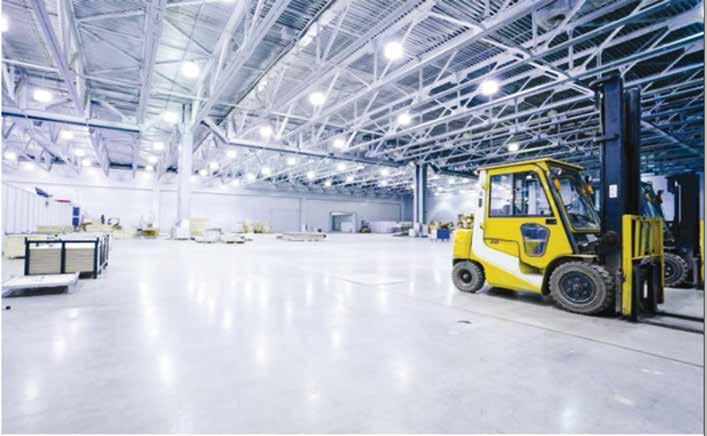
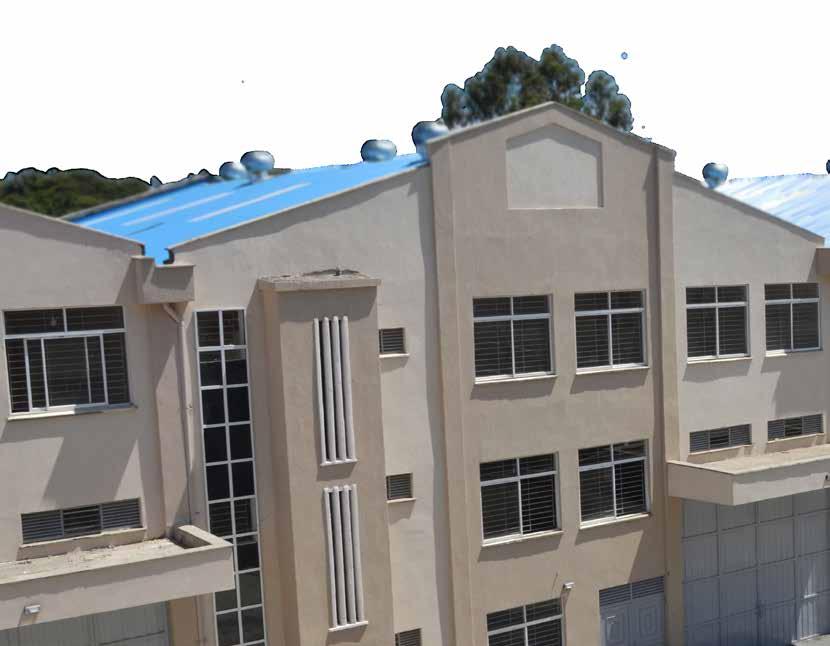
But firstly what is an Industrial park? They are centres of industrial development based on the principles of excellence and a quality work environment. They are built in an industrial zone for the purpose of industrial development. These parks entail warehouses that can be used as storage facilities, manufacturing go-downs, showrooms; for trade and distribution, and logistics.
While historically a warehouse has been a large box used to store surplus inventory for long periods of time, today’s warehouse facilities are becoming ‘distribution activity hubs’ that add value by processing goods, not storing them. Such value-added services are, by definition, very labor-intensive. This change speaks volumes for the need to focus attention on productivity and operational efficiency.
While a warehouse in fact is a large box, the input of experienced operational people, like managers, supervisors and operations managers, can drastically improve the productivity and efficiency of the material handling as well as the use of storage space.
Architectural design, construction techniques and warehouse operational know-how are easily compatible if they work together through the initial planning stages.
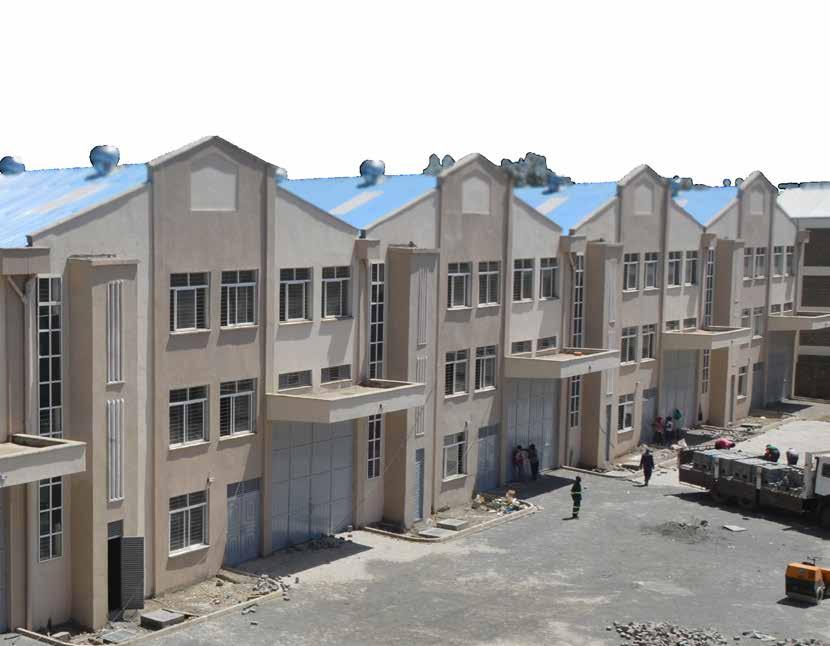
Therefore, the success of an industrial park and eventually an industrial zone highly depends on the calibre of warehouses it has to offer for particular industrial activities. Consequently, Ruaraka has seen the emergence of an industrial park which promises to be the pillar of growth of Ruaraka as an industrial zone in the continent. iJenga has recently launched phase one of an industrial park in Ruaraka.
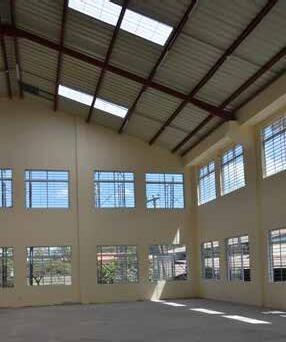
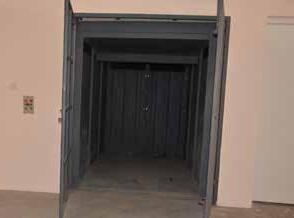
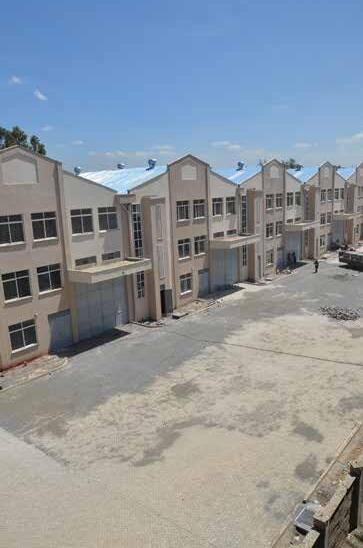
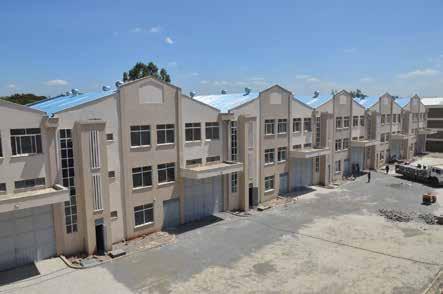
Prabhaki Industrial Park is an industrial development in Ruaraka located 5mins off the Thika Superhighway Exit 6 along the outer ring road in Nairobi City. The development has two typologies of warehouses: type A which is 11,500 square feet and type B which is 17,650 square feet. The two warehouses are uniquely designed in such a way that, each warehouse will have 3 parking spaces, with additional parking spaces for visitors; plus the site has wide roads (18-16m) turning radius for all vehicle types. All warehouses come installed with a 3 tonne capacity goods hoist and Aluminium windows with burglar proofing and provisions for intruder alarms. The park is an architectural masterpiece with good quality finishing and internal features that include: class 25 concrete floors with


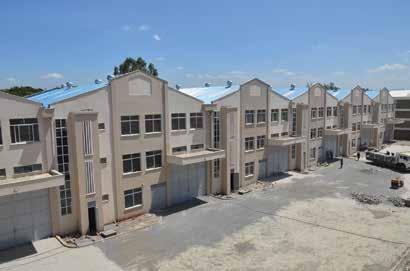
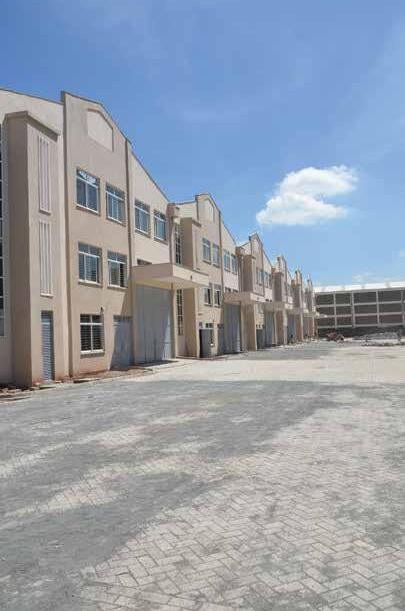



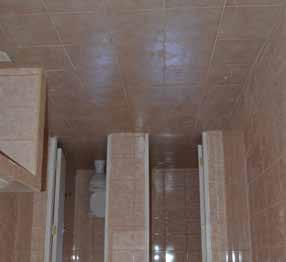
Power float finish, male and female toilets on all floors and a Kitchenette on ground floor.
Every investor is looking to minimize operational costs so as to maximize returns; and with the high level of energy costs in the continent, saving energy is on the top of the ‘cut costs’ list. Therefore, the development has excellent natural lighting for the day time and LED light fittings for night time to save on operational costs for the users; plus plenty of power sockets with provisions for further expansion. In addition, the Park have the following interior features: cross
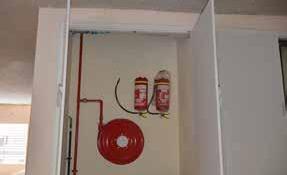
ventilation that will reduce the requirements for air conditioners and day time lighting; excellent security features such as electric fencing throughout the boundary wall, 24 hours CCTV surveillance, 24 hours armed police patrol and security check points at all entry & exit points.
Furthermore, the development is a well-lit estate with plenty of street lighting, full backup generator for the common areas and a borehole with number two overhead tanks for higher water pressures. There are also green spaces in front of each warehouse and around the estate making it one of the few industrial parks with green features in the city.
Demand is very crucial for the success of any development. “There is definitely a strong demand for warehouses in Ruaraka. At Prabhaki we have delivered 500k sqft of warehousing, of which to date we have sold 67%. However, key advice to any future developers is to build smaller sized warehousing in the range of (5000-7500sqft) where there is a higher demand. Additionally getting to know your local MP/MCA will help you when dealing with any issues with the neighbors,” asserted Mr. Jivanjee of iJenga.
In Kenya’s Industrial Transformation Programme, the Cabinet Secretary of the Ministry of Industrialization and Enterprise Development Adan Mohamed, EBS mentioned that, as global production costs continue to rise in the traditional markets of Asia and Europe, we expect manufacturing to move to Africa. “As a country, we are preparing to be at the forefront to capture this opportunity for growth. We are positioning our industrial sector to attract investments through the advantages of our welltrained labor force, low cost of operations, integrated industrial parks and our improving transportation and power infrastructure. Kenya has extraordinary momentum today,” he added.
“Industrialization has been the modernizing force in every developed and emerging
economy and this will continue to be the case for Kenya. Industries will be the bedrock upon which we grow jobs, GDP and incomes. We are confident we can also transform the wealth, employment and inclusiveness of our country over the next five to ten years through a targeted approach in sectors in which we have a competitive advantage. We believe that the industrial sector for Kenya is at a turning point. While there is significant domestic and foreign interest, a growing market and existing skills, there has not been a comprehensive effort to create an industrial hub,” affirmed the CS.
In a nut shell, the rapid industrial growth in Ruaraka is tipped to drive growth in other asset classes. The area is already experiencing other new developments including: Roshin and the Khetia Drapers project; which further cements its status as one of Kenya’s biggest industrial zones. The Baba Dogo area demands circa 60%, higher rentals than Industrial Area (Mombasa road); which is mainly driven by its prime location, good roads, good security, good water supply, good electricity supply, and even better sewerage and drainage system. Furthermore, Ruaraka has an active Industrial association (RUBICOM) with a strong membership base. RUBICOM works closely with the industries in the area to ensure the area remains conducive for investment and business.
Baba Dogo in Ruaraka has the highest warehouses occupancy at 93.57% compared to other industrial locations such as Mombasa Road and Industrial Area, according to the Cytonn Industrial report 2016. This translates into relatively higher yields at 7.13% placing; making warehouses an attractive investment opportunity.
Most African zones are in the very early stages of their development and in most cases there is some evidence of progress: growth rates since 2000; although from a low base, they are fairly strong across most zones; this is according to a report by The World Bank on Special Economic Zones in Africa. It is true that even highly successful industrial zone programs have usually taken 5 to10 years to settle in before beginning to achieve rapid growth. Nevertheless, African zones may already be starting to experience some significant level of growth.








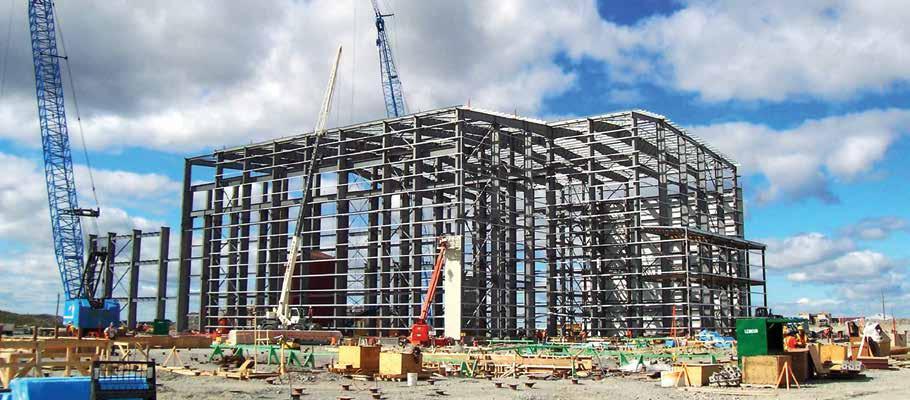





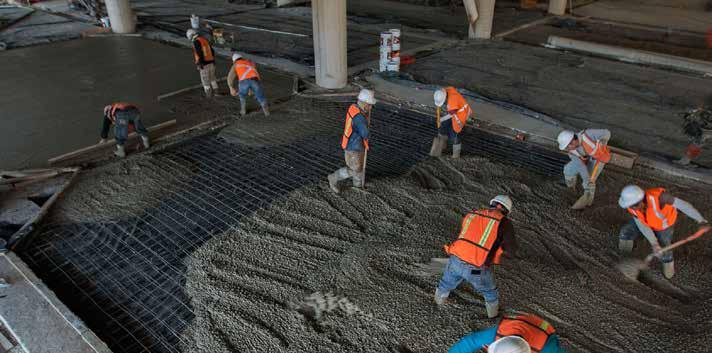
Concrete is known to be strong, durable and perfect for both utilitarian and decorative purposes worldwide. However, concrete is also porous, permeable and prone to cracking, therefore there is needs to have waterproof concrete. Water while essential in concrete production, placement, and curing is at the same time corrosive to the material, because once it fulfills its role in the production and other processes, it becomes an enemy to concrete. Although rated by its function and the nature of its exposure, concrete can as well perform well in wet environments. As Africa emerges as a key global player in the construction industry with its numerous infrastructural development opportunities, there is need for general awareness on waterproofing products. Therefore, modern technology and revamping of the construction industry with regards to waterproof concrete will be key to ensuring that the infrastructural development is sustainable.
Exposure of concrete to water slowly reduces the permanence/durability of concrete structures, thus raising the cost of maintenance of bridges, buildings and other facilities. Water’s toxic effects on concrete structures can be avoided through the use of waterproof concrete technology, which efficiently improves the durability and lifespan of concrete structures, hence reducing long-term maintenance costs. Water proofing technologies such as PRAs (Permeability-Reducing) can save projects a lot. For example when power generation from hydrodams sometimes may need to be stopped to carry membrane waterproofing and expoxy-coated reinforcement, this comes at great cost. A good example is the rehabilitation of Kariba hydrodam in Zimbabwe and Zambia, whose
walls had been deteriorating as a result of corrosion and blockage. According to studies done on the facility, the two governments were set to receive US$294m from World Bank, European Union (EU), the Government of Sweden and the African Development Bank for the repair; and the project was to be undertaken over six years to achieve minimal disruptions. Waterproof concrete reduces permeability, and the admixture acts as a mild retarder, so it helps to control the heat of hydration and consequently reduces shrinkage cracking. It does not drastically change the properties of fresh concrete, but it can somewhat improve workability.
According to John Gichohi, the Operations Director at Kenya Water Proofing Company Limited, correctly done; waterproofing especially using products with crystalline compounds, lasts the lifetime of a building.
“Basement waterproofing is quite essential. When doing waterproofing of a building, we start from the
"Waterproofing admixtures reduce permeability of concrete, thus are known as permeability-reducing admixtures."

The contractor should need just a roll or a brush, no need of fire and big bituminous membranes.
base upwards. This is to prevent the underground water from penetrating into the building and making it inhabitable. For very deep buildings, we do double waterproofing: at the bottom and at the top of the concrete slab,” he explains.
“Also, depending on the design of the building, waterproofing the walls is necessary to protect the reinforcement steel from rusting, which ultimately weakens the structure. It is advisable to do waterproofing of walls from the outside. However, in the big buildings, they do beacon to beacon design of construction which makes it difficult to waterproof from the outside and so we do it from the inside,” he adds.
Waterproofing admixtures
reduce permeability of concrete, thus are known as permeabilityreducing admixtures.
Additionally, these are classified in two: those used in non-hydrostatic conditions (PRAN) and those used under hydrostatic conditions (PRAH).
According to American Concrete Institute, PRAHs are better than the PRANs. The best choice for waterproofing under hydrostatic pressure would be (water attracting) hydrophilic crystalline admixtures since they offer greatest resistance to water infiltration and best seal pores, cracks and offer long-term benefits. The reaction between the active ingredients contained in these admixtures and the water and cements particles, produce calcium silicate crystals. These crystals bond with cement paste and effectively seal the pores and micro-cracks, and









therefore preventing infiltration of water through the structure. Cracks will be sealed over the lifetime of the structure as these reactions continue. Concrete admixtures produced from water-repellent chemicals (hydrophobic) materials such as soaps, vegetable oils, petroleum must be avoided since they do not uniformly seal all pores on concrete – concrete has larger voids – although they resist water infiltration by forming a water-repellent layer.
Use of waterproof concrete admixtures depends on what conditions the structure will be exposed to; permeability is not a big issue with interior columns, beams, and floor slabs in highrise construction, but use of PRA is important when a structure is to be exposed to water under hydrostatic pressure, wicking, salt water, or moisture or salt itself. They can be trusted in keeping off leaking of water, water migration, carbonation, freezing/thaw damage and efflorescence. Dams, bridges, pools, water tanks, tunnels and subways that will experience more extreme and continuous exposure are better handled by use of PRAHs since they are effective in resisting permeability of water under pressure.
PRANs are avoided when water to be resisted is under pressure but mainly used to help structures or products repel rain and dampness as may be needful in pavers, blocks, brick, precast panels and architectural concrete. PRAs waterproofing admixtures can be added in ready-mix concrete at the mixing plant as recommended by an architect or engineer. They can also be added to any concrete mix. Experts can also recommend use of other types of waterproofing products on a building or structure that is complete.
Waterproofing membranes are available in sheet form or liquid form. Liquid membranes are sprayed, rolled or trolled onto the concrete surface and cure to form a rubbery waterproof coating. Sheet membranes come in sheet form and are stuck to the concrete surface to provide a waterproof barrier preventing water intrusion into the structural elements of a building or its finished spaces. The material consist of waterproof plastic, rubber, or coated-fabric materials that prevent the entrance of water into foundations, roofs, walls, basements, buildings, and structures when properly installed.
The material is a cement-based compound with additives that is mixed with other bonding agents to create slurry that can be applied to concrete surfaces for waterproofing. Materials such as fly ash, slag and silica can be mixed with concrete as fine particles to fill gaps and render it less permeable. Cementitious waterproofing membranes have been used successfully to shield a wide range of buildings and structural components that are exposed to either periodic or longterm wetting, low hydrostatic pressure or, in combination with appropriate engineering, even high hydrostatic pressure.
The major applications are the sealing and waterproofing of terraces, basement walls, water tanks, swimming pools, walls and floors in wet-rooms such as toilets and bathrooms. The slurry membranes are easy to use and non-toxic. The membranes can as well be applied to wet or damp mineral surfaces since their physical properties are
less temperature-dependent than bitumen based materials.
Exposure of concrete to water causes it to become a hard solid mass. The resulting by-products of the reaction reside at the capillary tracts of concrete. Crystalline waterproofing is applied in the form of coating or as a dry-shake application on the structure and acts when the chemical reacts with moisture and the by-products of reaction between concrete and water. This results in an insoluble product –in addition, this reaction occurs wherever water goes, whether in structure cracks or inside. It helps protect structures against effects of aggressive chemicals. It also improves the water proofness and durability of concrete by filling and plugging pores, capillaries, micro-cracks
among other voids which are non-soluble and highly resistant crystalline formation.
When it comes to choosing the right waterproofing material for a particular project, quite a number of factors are involved. According to Anthony Ajulo of Advanced Concrete Technologies (Act Nigeria), among these factors are the history of the area where construction is to be done, the water level, and environmental factors such as closeness.
“Specifying the wrong waterproofing admixtures or coatings can lead to failure of a project. According to ACI 212, crystalline admixtures are the recommended admixtures for building in areas subject to hydrostatic pressure,” he adds.
Act Nigeria offers a crystalline
Admixture from Aquafin INC USA a member of Schomburg building chemical group from Germany with branches in over 90 countries. Additionally, they offer high performance bitumen membranes and cementitious coatings for retaining wall waterproofing, basement waterproofing and all below grade applications.
“We also provide advanced polyurethane waterproofing systems, ARMORSEAL 250, from ARMORSIL USA; our polyurethane waterproofing systems offers 15 years and 25 years protection depending on the system chosen by the client,” he affirms. Mr. Francesco Marcelli of Diasen in Italy further advises that, the contractor needs to choose waterproofing materials that are fast and easy to apply. “You should need just a roll or a brush, no need of fire and big bituminous membranes just
some buckets; the materials should be ready to be applied, no need of special mixing. Very low consumption: this means that generally with one bucket of 20 kg it is possible to waterproof up to 10 m2. The materials should be water-based, so they are not dangerous for transport and are safe for the men who apply them,” he adds.
Diasen develops and produces innovative one-component waterproofing with very high fast drying time: just 20 minutes with 1°C and 98% of relative humidity. “We have developed an innovative product line that could be resistant to rain after just a few minutes called Smart Drying Technology; a brand new certified line totally made by Diasen,” he affirms.
CONMIX offers a comprehensive range of :
Building History
Pre Mix Plasters + Paints & Construction
Pre Mix Plaster
Cement Plasters
Gypsum Lime Plasters
Decorative Plasters
Acoustic and Insulation Plasters
Specialized Mortars


CONMIX Paints
ConDure - Primers and Fillers
PinTura - Emulsions
ConTxtra - Decorative Coatings
ConGuard - Polyurethane
Protective Coatings

P.O. Box 5936, Sharjah, United Arab Emirates
Tel: +971 6 5314155, Fax: +971 6 5314332
E-mail: conmix@conmix.com | Website: www.conmix.com

Construction Chemicals
Non Shrink Grouts
Concrete Repair Systems
Surface Treatment
Bonding Agents
Floorings and Coatings
Sealants
Waterproofing and Coatings
Tile Adhesives and Grouts
Admixtures




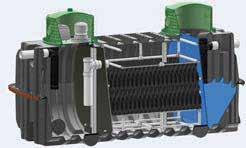











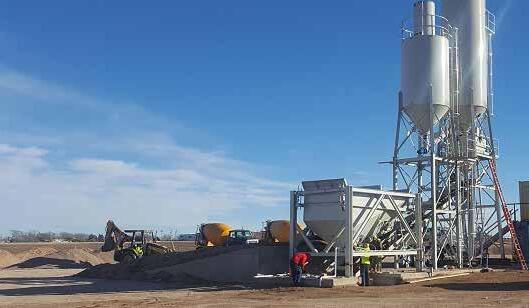
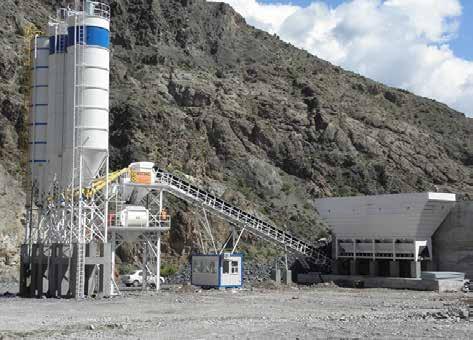
The rapid infrastructure development in Africa that brings a big boom to the construction industries has lead to the installation of numerous concrete batching plants which are now widespread. According to Murat Bozdag a Company Partner at Bozdag Engineering in Turkey, it is a fact that creating infrastructure like housing, road, energy and water that help boost development in developing countries need one very important raw material which is concrete. Therefore, the African market has a huge potential for different types of concrete batching plants; stationary and mobile.
He further explains that, dry type batching plants which do not have a concrete mixer hence increases homogenity of the concrete have been preferred in the African readymix concrete sector until recently. However, because of improving the mix and the strength of the concrete, wet type batching plants have also picked up pace.
“Wet type batching plants have different capacity of concrete mixers. Concrete mixer capacity gives
"The African market has a huge potential for different types of concrete batching plants; stationary and mobile."
the batching plant capacity as well. Concrete mixer is produced as 1 m3 – 2 m3 – 3 m3- 4 m3 – 4, 5 m3 – 5 m3 – 6 m3 compacted concrete capacity. How concrete producers select batching plant capacity depends on the project. For example, one concrete producer chose 100 m3/h capacitated mobile batching plant with a twinshaft mixer 2 m3 compacted concrete for a temporal work that involved housing infrastructure in Morocco; 180 m3/h capacitated stationary batching plant with a twinshaft mixer 4,5 m3 compacted concrete was preferred a highway project in Algeria,” he adds.
The significant environmental impacts of the operation of a concrete batching plant are a concern thus, thorough environmental assessment is necessary to identify and address such impacts prior to the construction and operation of the batching plant’s facilities.
Proponent of permanent concrete batching plant will determine the plant’s primary impact zone and will establish a safe buffer zone around the plant’s facilities. The use of buffer zones around batching plant facilities is one of the approaches in minimizing its immediate and adverse environmental impacts to sensitive areas
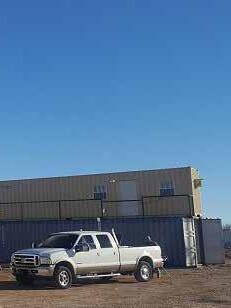
such as residential, institutional and public areas due to dust emission and noise pollution.
The required buffer zone for temporary concrete batching plant should not be less than 500 meters from sensitive areas such as nearest residential areas, institutional zones and inhabited areas. However, it should be noted that the buffer distance is based on the assumption that good pollution control technologies are also being used and with best practices being implemented. A concrete batching plant with inefficient air pollution control facilities would require a larger buffer distance subject to evaluation of the EIA report for the project.
Buffer zones should not be considered as a primary means of control, but as a means of providing an additional safeguard in the case of unintentional or accidental emissions.
Dust deposits on paved surfaces can be thrown into the air by wind or by vehicle movements. Dust emissions from paved surfaces can be minimized through the use of the following measures:
• The movement and handling of fine materials should be controlled to prevent spillages onto paved surfaces.
• Minimize mud and dust track-out from unpaved areas by cleaning the trucks before leaving the plant’s yard specially its wheels by the use of wheel wash facilities. Wheel wash facilities shall be installed at the main gate.
• Regular cleaning of paved surfaces, using a mobile vacuum sweeper or a water flushing system.
• Observing speed controls on vehicle movements at plant yard at 10-15 km/hr.
Dust emissions from unpaved surfaces are caused by the same factors as for paved surfaces, but the potential emissions are usually much greater. Dust emissions can be controlled using the following procedures:
• Wet suppression of unpaved areas should be applied during dry windy periods, using a water cart and/or fixed sprinklers. As a general guide, the typical water requirement is at least up to 1 liter per square meter per hour. It is important to check that available water supplies and the application equipment are able to meet this requirement. Untreated wastewater generated from the plant’s activities should not be used for wet suppressions. Likewise, treated waste water intended for dust suppression should be used only after taking permit from Environment Department.
• Surface improvements. These include paving with concrete or asphalt, or the addition of gravel to the surface. Paving can be highly effective but is expensive and unsuitable for surfaces used by very heavy vehicles or subject to spillages of material
in transport. In addition, dust control measures will usually still be required on the paved surfaces. The use of gravel can be moderately effective, but repeated additions will usually be required.
• Speed controls. Observe speed limits vehicle movements at plant yard at 10-15 km/hr
Loading /unloading activities and transferring of fine materials from one place to another in a concrete batching plant are a major source of uncontrolled dusts emission. Fine materials taken by shovel from stockpiles and transferred to loading bays are potential sources of dust, either through wind entrainment or spillages. Dust emissions due to such activities can be minimized with the following controls:
• Limiting load size to avoid spillages.
• Minimizing travel distances through appropriate site layout and design.
• Minimizing drop heights at transfer points.
• Minimize dust dispersion by providing special (covered) area for loading /unloading process.
Fine material stored in stockpiles can be subject to dust pick-up at winds in excess of about 5 m/sec (10 knots). Aggregates with 5mm or smaller in size shall be stored in a totally enclosed areas. Dust emissions can also occur as material is dropped onto the stockpile from a conveyor. The options for dust control can include the following:
• Wet suppression using sprinklers.
• Covered storage of fine materials, enclose stockpiles on at least the top and 3-sides and install a flexible
curtain to cover stockpile entrance sides.
• Limiting the height and slope of the stockpiles can reduce wind entrainment. A flat shallow
• Stockpile will be subject to less wind turbulence than one with a tall conical shape. Angle of stockpile shall not exceed 40 maximum at any conditions.
• Limiting drop heights from conveyors.
• Use of wind breaks. Wind speed near the pile surface is the primary factor affecting particle uptake from stockpiles. Although a large, solid windbreak is the most effective configuration, aesthetic and economic considerations may preclude that from being appropriate.
A 50% porous windbreak is almost as effective as a solid wall in reducing wind speeds over much of the pile, when constructed to the following specifications:
• Height equal to the pile height;
• Length equal to the pile length at the base; and
• Located at a distance of one pile height from the base of the pile.
The potential for concrete batching plants in Africa has given rise to the introduction of new technologies in the market which look to improve the concrete production process plus the quality of the concrete itself.
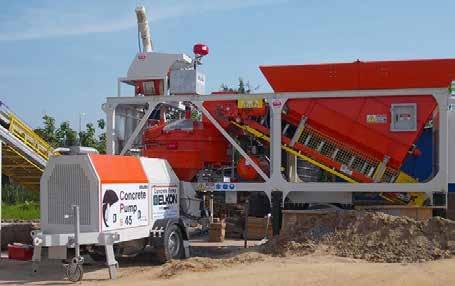
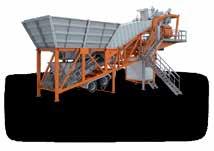
According to Serkan Ozkan the Mechanical Engineer at Elkon Concrete Batching Plants in Turkey, the African market has been quite positive with regards to reception of new technologies. “We recently introduced ELKON Mix Master-30 on Site Concrete Plant to the market. These are ultra mobile concrete batching plants; all components of the on-site concrete Batching Plant, including aggregate storage bins, pan / planetary mixer, cement, water and additive weighing hoppers, water pump, control panel and power board are installed on a single trailer chassis equipped with axle and tires,” says Mr. Ozkan.
“The technology has received great interest since its launch. Many units have been sold to Ivory Coast, Mali, Nigeria, Ethiopia, Mauritania, Ghana, Kenya,” he asserts.
ELKON produces and sells around 300 batching plants annually in Africa. Companies including Dangote, Lafarge, Group 5, and WBHO all use ELKON equipment.
Mr. Jason Jacobs of Jel Manufacturing in Milwaukee Wisconsin USA reiterates this point by adding that, the African market has been very open to new trends and technologies and is not limited by arbitrary technical restraints common in mature economies. This is evidenced by the use of roller-compacted concrete (RCC) in some major African markets.
“The high growth in the telecommunications sector within Africa is a positive sign. With the continued focus on the development of infrastructure to move the African market forward, there is a positive outlook for concrete related equipment manufacturers and producers,” he adds.




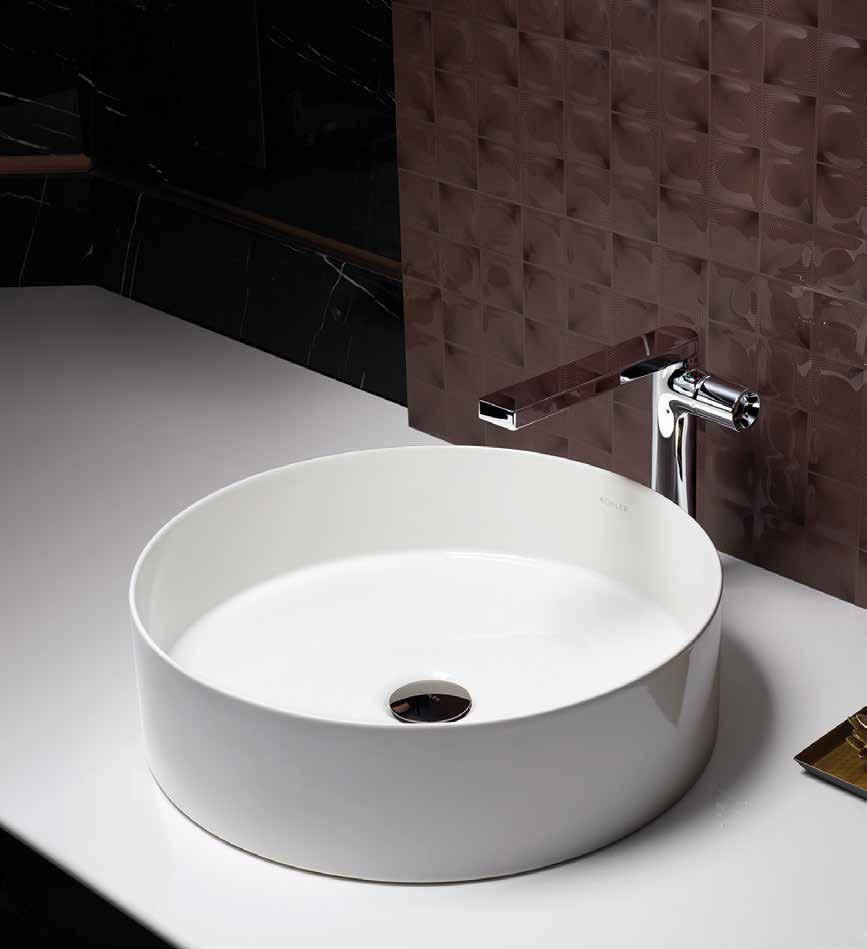
KOHLER, one of the world’s largest bathroom specialists, seamlessly fuses innovation and technology with their latest Mica Vessel range which is slim, sleek, and ultra-contemporary. Deemed as an absolute showstopper, the Mica Round or Square Vessel has the thinnest edge Kohler has ever produced in a basin.
The elegant Mica Vessels emphasize the firm’s refined sense of innovation and embodies true minimalism, becoming a quintessential centerpiece of modern and contemporary style. This piece draws its popularity thanks to its durability, made of Supramic® material for a longer lifespan and which is 1.5 times harder than standard basins, plus the DFI stain-resistant surface coating makes it easier to clean.
The Kohler Mica Vessel Features:
Kohler’s thinnest edge in design, at only 6mm, demonstrating true innovation in bathroom product development. Crafted
with Supramic® material for durability and extended lifespan.
• Round with a diameter of 410 mm
• Square with a diameter of 393 mm
Designs specifically created for leading edge contemporary bathrooms. “Mica embodies minimalism in design – obsessive reduction and refinement, absolute attention to detail to achieve a delicate precision with the fine edge and feel of bone china. This demanded innovation in materials, manufacturing and design.
The result: a ceramic that is not just thin but also 1.5 times harder than normal. Mica is beautifully simple – which like all great minimalist design makes it timeless and universal” shares Mark Bickerstaffe, Director New Product Development – Kohler EMEA and Asia-Pacific.
Since 1873, Kohler has been leading the way in style, innovation and providing exceptional products and services. The
company has firmly established itself as a global leader in bathroom and kitchen products – providing total design solutions that strike a perfect balance between form and function.
Founded in 1873 and headquartered in Kohler, Wisconsin, The Company is one of America’s oldest and largest privately held companies comprised of more than 30,000 associates. With more than 50 manufacturing locations worldwide, Kohler is a global leader in the manufacture of kitchen and bath products; engines and power systems; premier furniture, cabinetry and tile; and owner/ operator of two of the world’s finest five-star hospitality and golf resort destinations in the company , and St Andrews, Scotland.



The kitchen sink, is a routine feature of our daily lives that we take for granted. This is until of course the water dries up or turns smelly, inconveniencing our schedules or threatening our health. It is also put into consideration when considering a house purchase or renovation. The tap turns on, the water obligingly pours out; the tap turns off, the water obligingly drains away.
But it was not always so. The advancement of kitchen sinks from dishpans filled with
buckets of water to today’s modern kitchen sink with carefully controlled municipal systems with its in/out pipes, hot water tanks, very attractive and lucrative materials and on/off taps; reflects developments in plumbing technology, society’s evolving concerns about civic and moral health, and major alterations in expectations around kitchen activities.
Whilst Africa is now at par with the rest of the world in terms of sink trends, Mr. Roger Westbrook of Larson Industries in
South Africa mentions that, the evolution thereof was never a fast one. “In fact, the majority of home renovators seeking a new kitchen sink will first consider what they are most used to: a standard stainless-steel sink. Only when they are educated on the trend do they consider switching over to coloured Silgranit derivative,” he affirms. He further adds that, the demand for classic stainlesssteel sinks remains high, and cheap imports are prevalent in market where budget will always be a primary concern. According to Mr. Westbrook, when compared to other kitchen accessories, the sink enjoys about 60% usage through a number of applications.
They are exposed to a lot of mucky activities and must endure the wear and tear of water, harsh chemicals and germs on a daily basis. However, a sink has a role to play as the kitchen’s fashion element. It has not only to function as a culinary pit stop but at the same time make the kitchen look good.
Before choosing a modern kitchen sink, consider its uses and compare the proportion of the size to that of your kitchen. Kitchens over 200 square feet in space with sinks used for light washing and a garbage disposal
should consider the popular double bowl, which allows the sink to handle multiple jobs at once. Large basins, which are on trend right now, and triple bowls, can be used for those who frequently cook or wash dishes in the sink, but their size might overpower a smaller kitchen for instance, one that is less than 150 square feet. In a kitchen this size, smaller single bowls will not only function well, but will also fit the room best.
When in a showroom, it is advisable to stand next to the sink at a counter and picture yourself scrubbing pots or peeling carrots. This will enable you to know if the sink is too deep to an extent of banging your elbows while you work, or too narrow that it chips your platters during washing.
Most importantly, Mr. Oguz Can of Asilkrom in Turkey, one of the leading sink manufacturers in the world insists that; cut-out dimensions and models to cover your specific kitchen design are very important factors to consider when sizing up a modern kitchen sink.
Consequently, the material the modern kitchen sink is made of has a big impact on not only how it functions, but its aesthetics and cost effectiveness as well. Moreover, as sinks are a notable design element in your kitchen; choose one that complements the other fixtures and decor of the space, plus check on the durability of the material with regards to its function and whether the material will hold its aesthetic properties over time; this is according to Errol Cronje the Brand Manager of Franke in South Africa.
For long house owners and real estate developers have had fondness for stainless steel kitchen sinks due to durability, price point and easy availability reasons. According to Devendra Mishra of Acrysil Limited in India, its neutral and clean look has been another crucial factor for popularity of Stainless Steel Kitchen Sinks globally and in Africa.
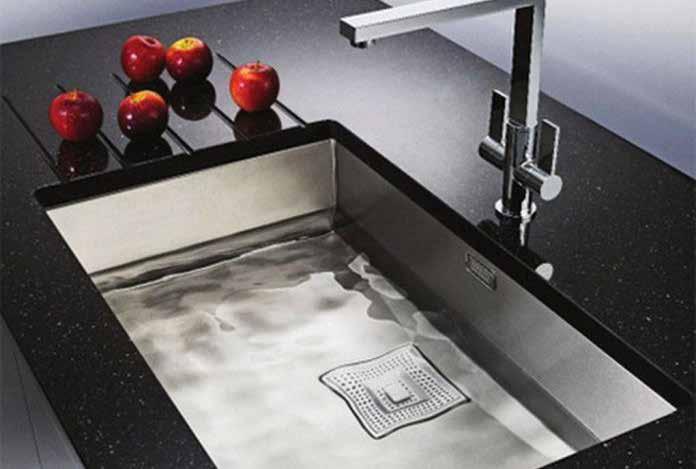
Stainless Steel: This material offers a good balance of cost, durability and ease of cleaning as well as availability in a variety of types, styles and sizes. Stainless-steel sinks are very budget friendly, but can easily scratch and show water marks.
Alternatively, a brushed satin finish will ensure that the water marks and scratches are less noticeable compared to the mirror finish. Lastly, sound-absorbing pads fitted at the bottom will help minimize the noise.
“Although, now with the popularity of modular kitchen and customization trend; Kitchen Sinks made of natural Quartz (also known as Granite Sinks) and Solid surface materials are gaining popularity in the continent,” adds Mr. Mishra
Composite Granite: These are the go-to sink for interior designers because of their attractive look and reliability. Unlike stainless steel, these sinks don’t show water marks or scratches. They come in a variety of neutral colors, but


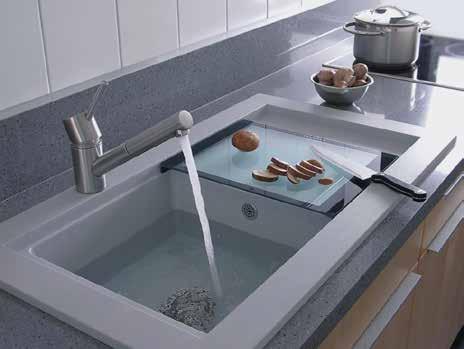



the darker hues best disguise grit and grime. Although durable, they can crack if mishandled, especially during shipping and handling.
“In recent years, we have seen a trend of Kitchen Sinks made using innovative materials such as ‘Composite Quartz’ and ‘Solid surface materials’ are gaining popularity, especially in mid to high-end projects where developers want to offer some unique experience to their home buyers. Earlier, these types of Sinks were mostly used in private houses and villa projects,” affirms Mr. Mishra.
Acrysil Limited have been manufacturing high quality Composite Granite and Quartz Sinks since 1987 and exporting them to more than 50 countries worldwide. “Acrysil is the only company in Asia and Africa to have this technology and capability. From countries like South Africa, Kenya, Nigeria, Ghana, Ethiopia, Rwanda, Morocco, Tunisia and Egypt, we have been experiencing good demand for our CARYSIL brand Quartz Kitchen sinks in recent years,” he adds.
Fireclay: This is the best choice for those looking to make over their kitchen in solid whites and neutrals. These are manufactured at extremely high temperatures and are resistant to scratches, staining and chipping. Clean up is simple; dish soap on a sponge; but for tougher marks, a mild abrasive cleanser and some elbow grease will get that sink back to white.
Natural Stone: This is best experienced when the countertops are matching the sink. This integral style makes the flow from the countertops seamless to the sink. However, some stones, like marble, are susceptible to stains, making it advisable to test a sample of the stone first and watch how it stands up to constant water splashes and colored liquids.
As much as you are choosing a particular type of material for your kitchen sink, it is also important to consider other aspects of the material for instance hygiene.
According to Marco Maccaroni Plados of Plados and Telma Group in Italy, while the client is choosing the material of a modern kitchen sink he should highly consider the hygienic nature of the kitchen sink material. “The client should ensure that the material is easy to clean and do not harbor any bacteria or support bacteria replication,” he adds.
In this regard, Plados Telma have developed different technologies to address the same. “Our UltraClean technology makes the surface of the sink ‘hydrophobic’, in other words, the drops of water in contact with the sink do not shatter but slip away giving the sink a ‘self-cleaning’ property (the lotus effect); and our Microstop technology is based on natural silver ions, and gives a constant protection against bacterial proliferation. The silver ions released from the composite material, can penetrate the membranes of bacteria, blocking the activity and bacterial replication,” affirms Mr. Plados.
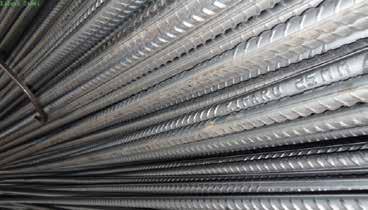


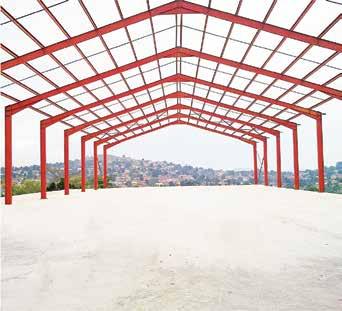





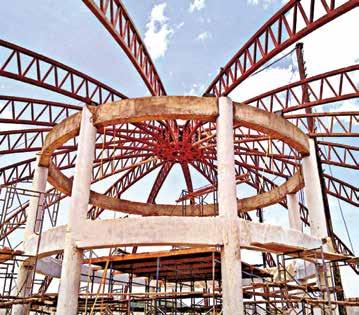


Taraji Heights is one of the signature developments by Cytonn Real Estate. The project sits on 2.8 acres and consists of 2, 3 and 3-bedroom with DSQ apartments, a retail facility, a private clubhouse with a swimming pool as well as a gym and spa. Like other Cytonn developments, Taraji Heights is located in a prime area in the outskirts of Nairobi, yet in close proximity to all the essential services and amenities such as shopping, leisure, education and health. It is situated along Limuru Road.
According to Cytonn, the motivation behind the project was to create institutional grade real estate to meet the housing demand driven by a growing middle class. It also aims to provide an investment opportunity based on the fact that real estate has consistently delivered stable returns compared to other investments vehicles. In total, there are 249 units housed in four blocks. The 3-bedroom apartments with DSQ have a plinth area of 130sqm, 3-bedroom apartments measure 117 sqm while 2-bedroom apartments have a plinth area of 84 sqm. Investors have the

ST HELLEN LANE, OFF LANGATA ROAD, KAREN
P. O. Box 53748-00200 Nairobi, KENYA
PHONES:+ 254 (20) 3873430/3808/3816, 3860026
OFFICE MOBILE: +254 (722) 207236
EMAIL: info@geomaxke.com
WEBSITE: www.geomaxke.com
option of buying the unit in cash, installments or through mortgage facilities. The cash option is for a period of ninety days while the installments can be spread over the construction period depending on the client’s preference. Other payment plans can be tailored to the client’s ability.
Taraji Heights will offer a quality and convenient lifestyle to the residents as they can live, play, unwind and shop under one roof. Its proximity to high-end malls

We are proud to be associated with Cytonn on the Taraji Heights Project as the Consulting Engineers
such as Rosslyn Riviera, and Two Rivers Mall – which is the largest mall in East and Central Africa – makes it an attractive residential address. The development will feature well-manicured gardens, high quality internal finishes including gypsum
Cytonn Investments Partners Ten LLP
Project Manager:
Cytonn Real Estate
Real Estate Services Manager:
Cytonn Real Estate
Project Architects:
Tectura International
Civil/Structural Engineers:
JM Kariuki Limited
ceilings and polished, fully vitrified granite tiles for corridors. There will be a back-up generator for communal areas, solar water heating, borehole and a perimeter electric fence with CCTV surveillance. Apartments will be accessed through high speed lifts. A
team of experienced consultants, contractors, subcontractors and suppliers have been assembled for the project. Groundbreaking took place in March this year and the project is expected to come to an end in the second quarter of 2019.


Mechanical/Electrical Engineers: Geomax Limited
Quantity Surveyor:
Aegis Development Solutions Limited
Physical Planner: Anchor Plans
EIA Consultant: Anchor Plans
Main Contractor: Landmark Holdings
Electrical Subcontractor:
Master Power Systems Ltd
Mechanical Subcontractor: Yogi Plumbers Ltd






Spartan Developers Limited was founded in 2010 to fill what the company’s founders felt was a void in the delivery of quality homes with extraordinary features that delivered high returns for investors in a hassle free environment. According to Project Manager Fahm Bekele, the main objective was to provide quality, unique and exceptionally designed homes for high end clients.
“The idea was to deliver buildings that met or surpassed the client’s expectations and in doing so, also provide sufficiently high returns on the rental side”, he says. “With that in mind, the end game was value for your money and satisfaction for the creativity and uniqueness of the building”. Mr Bekele
projects. He says the developer has sought to become distinct in the market in various ways.
“For every development we partake in, there is a unique idea, or design feature we try to achieve with each project’s goal being to better designed and finished than the last one. A lot of thought goes into each project to make them unique and because they do not only offer just shelter but a bold sense of design, which then translates to a sense of belonging and emotional attachment from the owners to the tenants that reside in them. This finally equals to a superior investment return for the investor long-term.” He cites
The Curve, one of Spartan’s
nature’s beauty with a totally luxurious yet contemporary lifestyle.” The development is set up to showcase Nairobi’s most distinguishable natural feature, the Nairobi National Park. The Curve combines the convenience and luxury of a hotel with the freedom and comfort of apartment living and is just a part of the unique property development concepts that Spartan Developers has introduced in the Kenyan capital.”
At Spartan Developers, great emphasis is laid on quality and workmanship. “It is always the small details that make a difference”, says Bekele. “We will traverse the world to find fixtures and fittings that we feel
one of their projects an award at the East Africa Property Awards in 2014. “The Courtyard at Vanga “won in the category of the Best Apartment Development. Other developments have also been nominated in their classes too.
The developer is keen to provide superior service to its clients before, during and after purchase of property. The company has trained its employees to adjust themselves to the personality of the clients in order to provide personalized service. Management ensures that everyone follows set standards so as to achieve uniformity across the organization.

One of our Spartan’s cornerstones is meeting and surpassing its clients’ expectations throughout their interaction with the company right from the purchase experience. “We are always looking for new and better ways to keep our clients satisfied with our development and management offerings. Without our clients we would not exist.”
Spartan Developers is currently engaged in high end residential homes and apartments. Mr Bekele however reveals that in future the company may venture into commercial developments in its own unique way. And while it is currently operating within Nairobi, the company plans to venture out in what he promises will be “market-shaking developments” in their respective locations.
The company has accomplished several projects since inception while others are ongoing or at planning stages.
The Lofts at Wood Avenue is premier place to live, play and rejuvenate. Situated along Wood Avenue off Argwings Kodhek in Kilimani, The Lofts at Wood Avenue offers a choice of only 23 sleek and contemporary twobedroom duplex lofts; a perfect blend of stone, wood and glass mixed with a splash of modern technology. Some of the features include a rooftop pool and gym with spectacular views.
The Courtyard at Vanga road offers a modern contemporary design complimented by the highest quality of finishes. This
extraordinary development of thirty-eight exquisitely designed apartments is made up of chic one-bedroom units, large unique two-bedroom duplexes and a few avant-garde three-bedroom apartments. The apartments consist of 5 different floor plans with large windows and balconies where it combines a mix of exotic wood and exquisite stone finishes and lots of large glass windows all overlooking a spectacular landscaped Courtyard with a heated swimming pool. This property was awarded ‘The Apartment Development of the year – 2014’ at the East African Property Awards.
The development is made up of eleven classy 320 square meter four-bedroom town houses. These triple level residences come complete with a stunning clubhouse, heated swimming pool and feature cutting edge high end finishes. Starting with stunning front facades, bold glass skylights, wide driveways and ending with generously spaced private gardens the unique designs and fantastic location of these townhomes offer unparalleled luxury. This property was nominated for ‘Gated Community of the Year – 2014’ at the East African Property Awards.

around land acquisition and property regulations which are often complex and timeconsuming and often drive up costs. Finance is another issue. According to Bekele, there are two elements of this: Construction Debt and Mortgage Finance. “Most developers are involved in major projects and therefore resort to Construction Financing”, he says. “The drastic change in interest rates and
cumbersome loan procurement procedures contribute to the challenges developers face in the construction industry. The financial environment plays a vital part in construction industry and its affordability from both the client and developer standpoint is the last cog required to create explosive growth for this industry.”
Another challenge is in infrastructure and urban planning.

Registered Plumbers, Sanitary Engineers, Fire Fighting & Solar Installations P.O. Box 10992-00400, Nairobi, Kenya. Tel +254 20 2644843/2 Email: info@yogiplumbers.com

Like other developers in Kenya, Spartan is faced with a myriad challenges as it seeks to achieve its objectives. Land is among them. As a resource whose supply is fixed in nature, land is always one of the key factors influencing property trends. Whereas land supply is fixed, demand is constantly on the rise. The challenges that Spartan and other developers face revolve




Cities are growing rapidly due to increased population. The need for modern infrastructure in urban areas cannot be overstated. The infrastructure will ease traffic congestion, fix sewer and storm drainage, and in general improve the environment in which the construction industry functions in general. According to Bekele, Government should invest in modern infrastructure and proper planning. “With
quality services developers will build more impressive buildings and maintain the existing ones better.”
Building regulations and laws as pertains to approvals, regulations and permits has also been cited as another area of concern. “The quality of construction activities should not be compromised”, says Bekele adding that in order to ensure minimum standards of structural

soundness, effective protection against fire, use of construction materials that do not cause diseases, proper accessibility and environmental protection, the government and stakeholders should regulate activities of building and construction industry.
Other factors that Bekele feels pose a challenge include political instability especially in the electioneering season as well as corruption in the awarding of tenders. On the status of the property market in Kenya, Bekele feels the sector is performing remarkably well but would like to see issues of land better managed. There should also be regular consultation between authorities and key players in the industry.
He however decries the housing deficit estimated at
200,000 units annually. He feels that new projects should target the middle class and provide premises that are affordable to the majority of those who have a need. “However, this can only be addressed when there is affordable credit that will allow this sector of the market to afford to have mortgages.”
So where does Spartan Developers see itself in the next few years? “We see Spartan Developers growing to be one of the most admired Real Estate Development Companies in Africa that will have developed unique, sustainable, and among the most extraordinary buildings in this part of the world”, says Bekele. “
“Our major aim is to build iconic buildings that will stand the test of time!” he concludes.





Poolshop EA Ltd. P.O. Box 13529-00100 Nairobi, Kenya
Tel: +254 20 2016838, +254 733 247415, +254 713 014032.
Email: info@poolshop-ea.com/Website: www.poolshop-ea.com
• Swimming Pool Construction
• Swimming Pool Equipment and Accessories
• Steam and Sauna Design & Construction
• Water Fountains



We are proud to be associated with Spartan Developers on The Curve and other projects



HEAD OFFICE
WORKSHOP
Kithimani Road, Off Kenyatta Highway, P.O. Box 867 01000 Thika, Kenya Cell: +254 707 526 111, Email: majiafricaltd@gmail.com or admin@majiafrica.co.ke. Website: http://www.majiafrica.co.ke
Imara Workshop Kithimani Road, Off Kenyatta Highway Thika (Adjacent to Thika Motor Vehicle Inspection Unit)
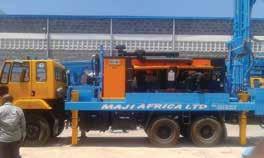

OUR SERVICES We are proud to be
Hydrogeological Surveys
Environmental Impact Assessments
Borehole Drilling and Test Pumping
Borehole Maintenance and Rehabilitation
Service and Installation of Water Pumps
Dams and Waterpans
Water Storage Solutions
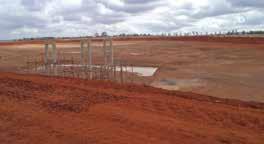




Radiodetection image and caption -RD7100 radiodetection underground cable locating device
Buried electrical cables can be very dangerous, and if a locator is used correctly, then there should be very little chance of cable strikes
Project developers may resort to guesswork, instead of proven tools, in the detection of pipes and cables buried underground to offset rising project implementation costs. Nevertheless, using guesswork in the detection of buried pipes and cables,




typically an elaborate task that needs efficient tools; might unwittingly backfire, cautions Brad King a specialist from D&B Equipment; a South Africanbased organisation that supplies RD 8100 and RD7100 radiodetection underground cable locating equipment to clients in the construction sector in South Africa and neighbouring countries.
“Guesswork can lead to two major problems. Firstly, it can result in damage to existing infrastructure, which the contracting company might have to bear the unnecessary costs, as well as downtime to the service provider that owns the now damaged cable or pipe. Secondly, while excavating, labourers can suffer from serious injury or death,” states King. Using drawings to locate the cables may not work, as they may not be up-to-date. So, the sure way is to use some sort of locator for verification.
The right tools
Definitely, there is no substitute for using the right tools. And one of the tools that have proved effective in locating elaborate cables and pipes which are buried underground is the radiodetection underground cable detection equipment. A commercial locator
that was released forty years ago, radio detection underground cable detection equipment is one of the tools at the forefront of underground location.
Range of applications
A wide range of applications for radiodetection underground cable location models include but are not isolated to construction, pipe laying, directional drilling - basically any type of ground excavation. Radio detection equipment is ideal for operators that require the need to trace single services in congested areas. Electricians can trace live or dead cables, including faulty cables, then, once exposed use an accessory (stethoscope) for cable identification should there be multiple services in the same trench.
Radio detection equipment definitely reduces time that is wasted in searching for infrastructure which either hasn’t been mapped out on drawings accurately, or its mapping is nonexistent. Eventually, this significantly contributes to containing project costs.
What would work best?
To handle the demands of the
contemporary construction industry, where cost containment and efficiency are the buzzwords, King recommends that the equipment should have up-todate technology, as well as be user friendly, as it is important to have a locator that is not complicated for the end-user.
“The biggest benefit besides functionality would be reliability, which should include warranty from the supplier,” he adds.
Amongst recent innovations in radio detection that are becoming popular universally, King singles out the onscreen compass on midrange and top locators, as developments that are handy. In particular, he says, the onscreen compass locators have definitely enhanced accuracy as it brings the internal aerial count to five.
Obviously, there are always going to be certain sites which might have major potential interference factors, for instance railway lines and high voltage substations. However, King points out that modern locators include many different software and hardware features which filter these interference factors and help the operator to get the best results possible.

“Online calibration checking has also been a big plus which has eliminated downtime and has greatly reduced costs involved. The end user is able to check the calibration in the comfort of his or her office and print out the certificate,” he adds.
As a final point, King reminds project developers about the importance of prioritising effective detection of buried pipes and wires in projects to minimise costs and improve efficiency.
Apex Steel continues to bring new innovations into the Kenyan construction industry, one such innovation is the Bartec rebar coupler system, manufactured by Dextra. Many engineers throughout the world are now specifying rebar couplers, with Kenyan engineers intending to use and specify rebar couplers. Here are some frequently asked questions, answered and explained.
Can rebar couplers be used for slab column connections and if so can couplers be positioned flush with the top of the slab?
Yes, rebar couplers are often used for slab column connections as an alternative to lapping rebar. They can if necessary be placed flush with the top of the slab.
Is the same amount of concrete cover required for rebar couplers?
Yes. However, rebar couplers are usually only used for the main longitudinal reinforcement, with the cover calculated for the stirrups. In this situation, as long as the stirrup is not positioned on the coupler itself, the minimum cover is usually still to the stirrup and not the coupler.
In the event of seismic loading should rebar couplers be staggered to ensure proper ductility of the structure?
“The best results are normally attained by using some sort of direct connection either via transmitter clamp or leads,” he adds.
“The advice that DB Equipment, as a service provider, gives is that, during service avoidance, induction would be best, as we are looking for services which are not visible and therefore direct connection is impossible until found,” affirms King.
Novel technology
“Buried electrical cables can be very dangerous, and if a locator is used correctly, then there should be very little chance of cable strikes,” he says.
“If a company is able to perform their duties with little to no incidents, it will boost its reputation in the market as having high safety standards and work ethics which will give it the edge in securing contracts over competitors,” asserts King.
Although there is no specific code of practice requirement to stagger rebar couplers, it is common practice to do so. However, it should be noted that Bartec rebar couplers offer guaranteed bar break performance, meaning that when loaded to destruction, it will ultimately be the rebar that fails away from the influence of the connection. This alone ensures the ductility of the reinforcement is maintained throughout the whole of the reinforcement system.
Can couplers be used to reduce rebar congestion?
Yes. Rebar couplers are often used to reduce rebar congestion, particularly with large structural elements heavily reinforced with large diameter rebar. If congestion still remains a problem when couplers are used, the couplers can be staggered.
A specialist from a South African-based company, iLed Holdings, IVAN POTTER, has the right answers.

Most businesses operate from a building and spend massive amounts of time on planning their business strategy, maximising productivity and conducting the business end of business. The building they occupy is the face of that business and the comfort conditions of that building are directly related to the well-being and productivity of their staff. So from a pure comfort point of view, Building Automation for the control of comfort conditions is important.
Control of the comfort conditions in a building is referred to as HVAC control (Heating Ventilation Airconditioning Cooling) – this is one aspect of Building Automation.
If we look behind the fabric of a building we will find a number of systems, each with a very specific function.A couple of examples are: Electrical system for plugs, another electrical system for lights, another for hot water geysers. Air conditioning systems for chilled and hot water
"The standard in Building Automation is BACnet –an open protocol defined by ASHRAE, the American Society for Heating, Refrigeration, Air-conditioning Engineers."
(different to the geysers) as well as supplying conditioned air into the building – this is called the air conditioning primary plant.
There is a secondary air system that provides preconditioned air from the primary plant to the floors and makes changes to the air temperature and air quantity in each room to ensure that the room temperature and air quality are maintained. This is a sample of the number of systems in a building – each with a specific function. For the building to operate efficiently, the various systems need to be controlled to achieve optimum comfort with minimal energy.
As the outside air changes, the primary and secondary air systems must match that change by using more or less cooling or heating. These changes are dynamic and affected by many factors such as occupancy levels, heat gain from the sun as it moves over the building, outside air temperature etc. The changing dynamics have an energy demand to compensate – more cooling or heating requires more energy (electricity).If there is a building automation system, these changes can be optimised to reduce the energy used.
All in all, if you are concerned with the running costs per square meter then the answer is “Building Automation

is a necessity”. If you are concerned with the indoor air quality and productivity of the tenants then the answer is “Building Automation is a necessity”.
If you have access to cheap energy and are not interested in the indoor air temperature and quality then automation might not be for you.
The scenario described above is an example of a few systems in a building. In real terms, Building Automation covers every electrical system in a building. Lights, Energy quality (Power factor), Emergency power (Generators), Solar Power and then on to Access Control, Life Safety, CCTV etc.
With a well-designed Building Automation system these disparate systems are able to interact with each other to provide a better, safer and more manageable environment with the added benefits of reduced energy costs, reduced carbon footprint and improved green star energy rating.
An example – Use the passive infrared from the intrusion system to automatically switch the lights off after 7pm if there is no movement. Sounds simple and it is-implement this in a building that has no automation and you will need to install another system to achieve this because the intrusion equipment cannot communicate.

Building Automation has a few major benefits –energy efficiency and responsiveness (the building is able to automatically correct changes without human intervention) along with this comes the ability to use data from different systems to achieve very simple yet effective cost savings.
The example given illustrates that a building automation system allows for each element that is connected to be measured, logged and controlled. This is all handled via a set of rules that are applied in the controllers. If a new set of rules is required, the controller programming need to be adjusted and the job is done. No need for rewiring and re-installation.
Just as the internet and Google has opened the world of data to allow everyone with access to a computer to know everything about everything, a Building Automation system allows you – the building owner – to know everything about your building.
If that knowledge allows for reduced energy consumption, maintenance intervention (preventative maintenance) before major capital plant and equipment fail then the cost of implementation is worth it.
Key factors for consideration
Building Automation or Building Management Systems (BMS) need to be carefully considered to ensure the system
5. Electrical Geysers – Yes – energy saving time schedule control to disable over weekends and holidays
6. Intrusion Detection- Yes – for lighting control
7. Life Safety (Fire Detection) – Yes -no energy savings but improves building response in case of emergency
8. IT (Computers,Servers) – IT room to be on BMS but no other requirements
9. CCTV – Yes – allow for control of lights based on specific incidents
Once the high level system matrix is complete, a framework for the system can be put together. It is very important that the system framework allows for integration of each sub-system at the early stages of design. Each sub system will have a number of suppliers for the equipment – the equipment will also have specific technical capabilities and these capabilities are price dependant. If the decision is taken to purchase equipment without considering its eventual integration into a BMS then, at implementation stage the
IT room environment monitoring and control)
Building Automation has become a mature industry and with this maturity the implementation of international standards. Standards are designed to improve the industry by implementing rules that are product agnostic. When BMS first appeared, each manufacturer designed and manufactured equipment that worked as an isolated system – could not communicate to other systems and only that manufacturer could be used on that system – effectively the equipment supplier locked the customer in for the life cycle of the equipment. Standards changed this by ensuring manufacturers designed equipment that could communicate using a common wiring standard and common protocol (language). Much the same as ethernet became the standard in the IT industry with IP (Internet Protocol) the standard language for the internet. These standards allow for multiple

open protocols. This will allow these new devices to be connected and interact via either directly or through cloud based services.
Building Automation Systems are great if they work, conversely, they are a problem for all concerned if they do not. So how do we ensure a working system when looking at a BMS. The starting point is design – design by professionals that know the industry and the applicable standards. With a welldefined scope of works, data points list and defined equipment specification, the process can begin to find a contractor or System Integrator (SI) to install the system. Selecting the SI is very important – theymust be able to provide the necessary certification showing they are trained industry professionals –as an example:
iLEDhave a certified training institute in South Africa for Distech and Niagara4. The candidates from iLED University are issued with an international certification on
or building owner. If the SI has a problem on site, iLED have engineers available to assist with additional support from our international suppliers in France. This multilevel support is important for the successful implementation of a BMS system.
With a well-defined specification and competent SI, the next item to consider for a successful system is the attention given at commissioning stage. Documenting that each Input and Output has been checked and tested and the location of the transducer is correct and installed to applicable standards is very important. This documentation also forms the basis of building certification by the green building council (GBCSA). With the above basic steps followed the client is assured of a system that will perform as expected.
While building Automation has always been seen as a luxury, the opposite is true.
Building Automation is a necessity if the building owner wants to manage the energy consumption per square meter. It is also important for reducing the carbon footprint of the building and achieving “Green Building” ratings. In South Africa, BMS systems are not regulated as for example in Europe where regulations enforce the installation of a BMS in new and existing buildings.
The BMS industry is evolving and moving away from traditional “Airconditioning Controls Contractors” to more of an integration role – where the systems Integrator (SI) provides the service to link equipment that is supplied complete with controls into an integrated framework. The SI is also integrating the other disciplines – Fire, Intrusion etc. to provide a single dashboard for all the systems in a building. Gone are the days of 10 monitors in a control room each with their own operator procedures and instructions – welcome to the new world of Integrated Building Management Systems.
Ivan Potter is the Managing Director





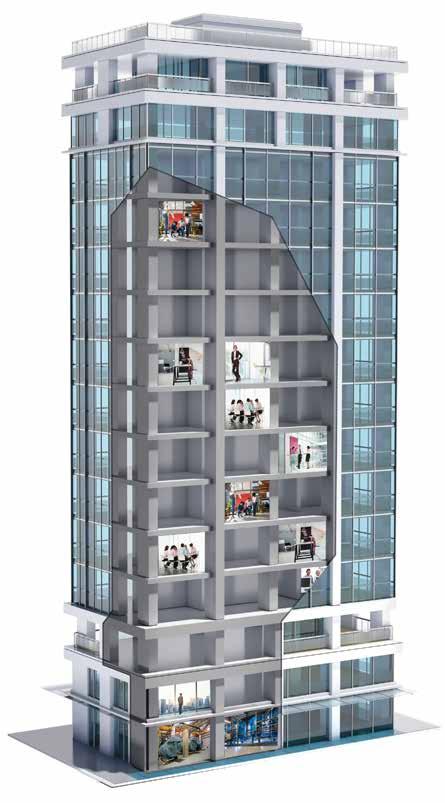














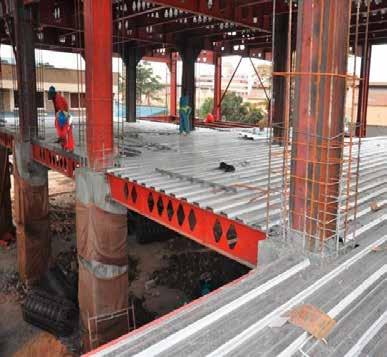
•
•
•
•