The editor accepts letters and manuscripts for publication from readers all over the world. Include your name and address as a sign of good faith although you may request your name to be withheld from publication. We reserve the right to edit any material submitted .
Send your letters to: info@constructionreviewonline.com
Construction Review is published eleven times a year and is circulated to members of relevant associations, governmental bodies and other personnel in the building and construction industry as well as suppliers of equipment, materials and services in Africa, the Middle and Far East. The editor welcomes articles and photographs for consideration. Material may not be reproduced without prior permission from the publisher. The publisher does not accept responsibility for the accuracy or authenticity of advertisements or contributions contained in the journal. Views expressed by contributors are not necessarily those of the publisher.
CON
CMA Awards for Excellence 2016
Advances in precast concrete technology were significant influencers in this year’s judging process in South Africa.
Cover Picture
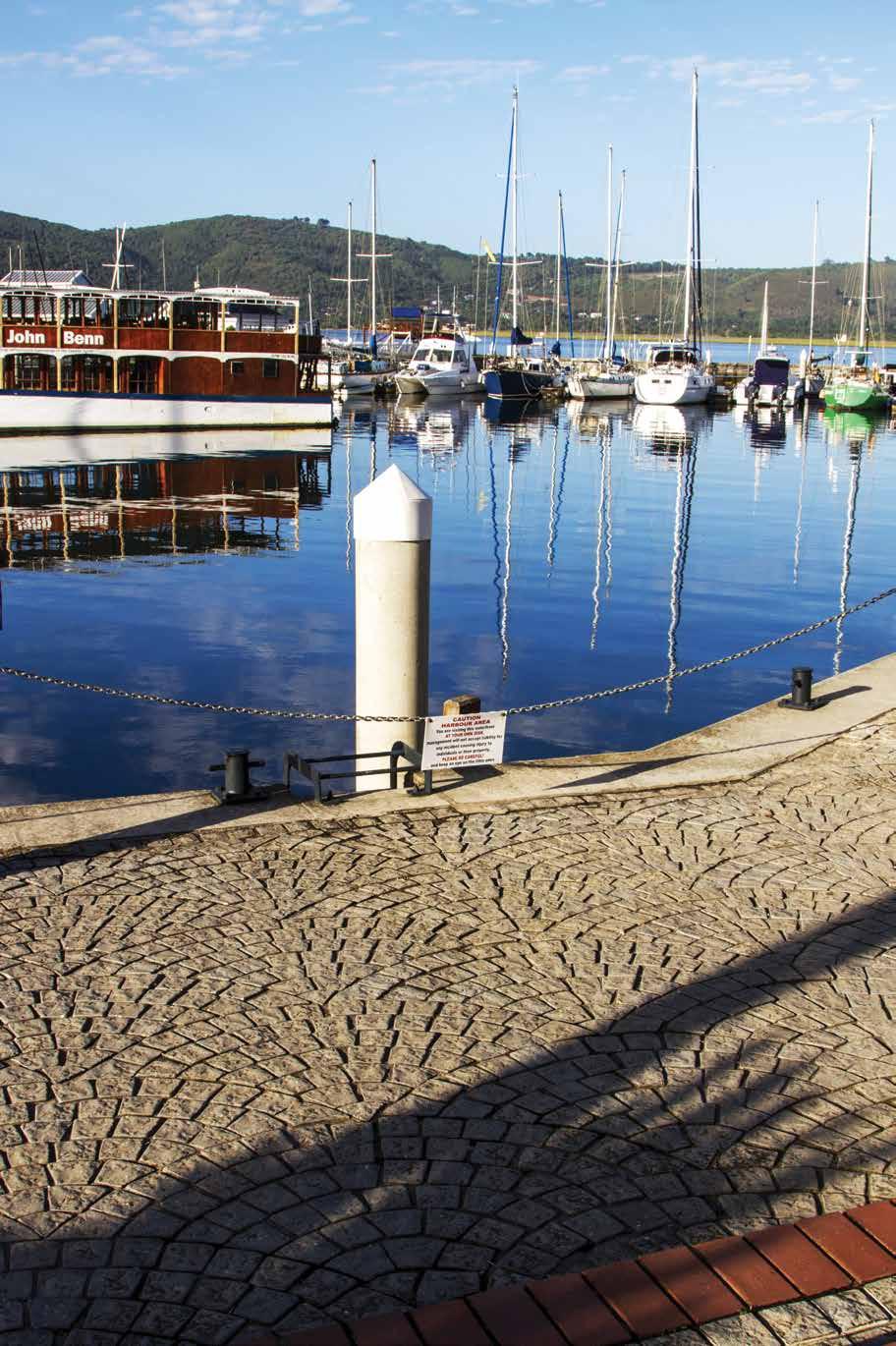
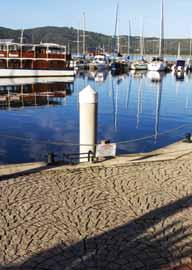
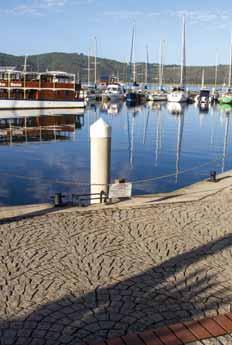
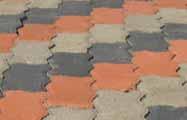
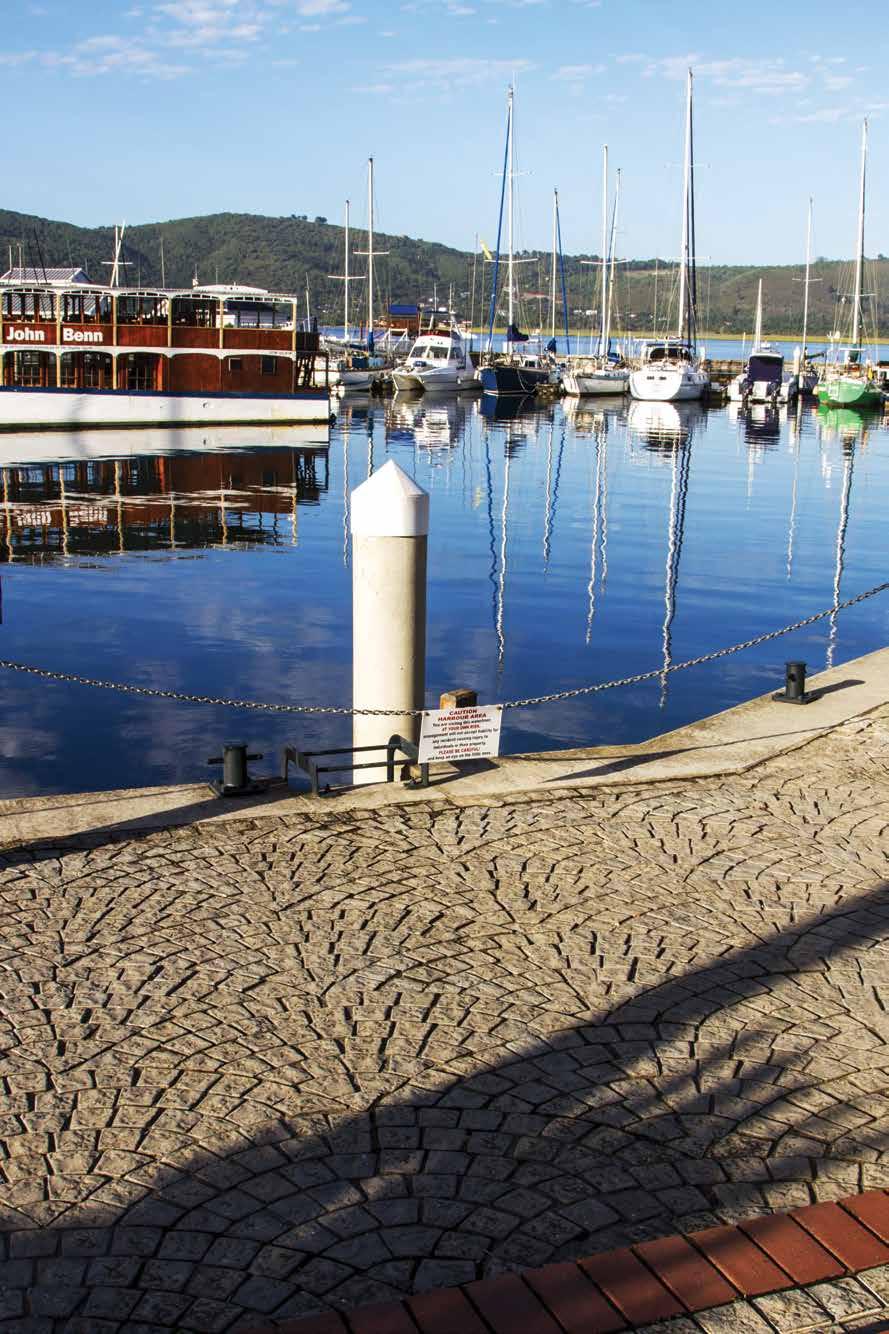
The Waterfront Knysna Quays, Western Cape, South Africa. The Signature Fan cobbles line the marina and were installed in 1988. After 17 years these cobbles are still beautiful and their installation pristine.
China:Weng Jie Published by Group Africa Publishing Ltd
Ugaandda A Ageent t Proojectts U Unussuaal Uggandda L Ltd
Jemmba a Plaaza, Luuwum m St t Kammpaala, Ugaandda
Tel: +2256 776 6 88831881 betttykaatonngolle@@yahhoo.com m
Tannzaania a Offficce The e Huub L Ltd No 4 O Oysterbaay S Shopppinng C Cenntre P O Boox 29972 2 Dssm Tel +2555 6 68 3 308 8 30000 moses@@huubafricca.coom
Bottswwanna O Office
Caddline (PPty) Ltdd.
P/BBag 494 4 Gaabooronne, B Botswwanna.
Tel: +2267 318 8 7101
Faxx:
TENTS
Le’ Mac
New residential tower seeks to give clients a whole
The tallest residential tower in the country has raised the bar for when it comes to the living standards for Kenya's upwardly mobile resident.
Editor's Comment
The aftermath of the Brexit vote
The construction industry across the EU has been vehemently opposed to the exit but now that the die is cast the construction industry in Africa is waiting to see what the implications for Africa will be. The news sent shockwaves around the world and everyone is waiting for the dust to settle in order to begin making sense of the implications that lie ahead.
DMJ Architects
For DMJ Architects’ Simon Johnson, “Irresistible Jobs” Keep Him Going
Arch. Simon Johnson shares his life and experiences as an architect in Kenya that spans several decades of valuable insights.
Perhaps one of the fundamental concerns is the loss of the British market in any EU trade agreements which is for some industries quite significant. There will be the need to begin charting out new trade agreements with Britain which could take months but more probably years. On the bright side however even the very exit of Britain from the EU still remains to be charted out and this could take some years though many in the EU would prefer a quick clean cut.
The perceived British protectionist stance could lead to reduced job opportunities for professionals in the construction industry while the fears of a British recession could reduce trade and investment in Africa.
On the whole however with the initial shock behind us, Africa remains optimistic that good business sense will prevail and business will return to normal albeit with two centers to deal with in Europe.
Robert Barnes
Zimtile Ramps
Ethhioppia a Offfice e Hayymi i Addverrtisiing S Servvicees
Emmail: maakukkasuue@@maail.ccomm, daayfleex06@@gmmail com m
AfricaMorocco
PwC report hails private sector for availing power in rural
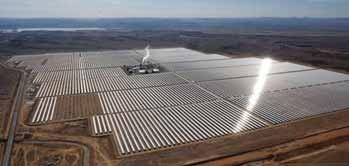
The construction of Morocco’s first ever Concentrating Solar power plant in Morocco is currently on good progress and is expected to end on time. According to the Enerray officials who are in charge of the project they expect it to end on the time set . The project which is located in Ben Guerir, Ville Vert Mohammed VI, Green Energy Park site, 70 km from Marrakech was started one year ago and is expected to be completed in few Months time. Enneray won the tender published by IRESEN (Institut de Recherche en Energie Solaire et en Energie Nouvelles) related to the realization of a 1 MW Plant with unique and innovative features for the Country.
The project is being financed by OCP (Office Chérifien des Phosphates), world’s leading producer of phosphate rock and derivatives, and is aimed at studying the productivity and reliability for a future application in its mines. Besides this Plant, Enerray has already installed a small PTC (Parabolic Trough Concentrator) with parabolic mirrors: this has been done for the solely purpose of analysis and research. CSPORC System is usually applied in industrial applications and processes in order to generate heat and electricity. CSPLFC technology coverts solar radiation into thermal energy thanks to a concentrator made of flat reflective surfaces (Fresnel Mirrors) which focus sun’s rays on a receiver (Receiver Tube), in which there’s a special fluid for heat storage (Thermovector Fluid – in this case Diathermic Oil).
Construction of first Concentrating Solar Power plant on track
The construction of Morocco’s first ever Concentrating Solar power plant in Morocco is currently making good progress and is expected to end on time. The project which is located in Ben Guerir, Ville Vert Mohammed VI, Green Energy Park site, 70 km from Marrakech was started one year ago and is expected to be completed in a few Months time. The project is being financed by OCP (Office Chérifien des Phosphates), world’s leading producer of phosphate rock and derivatives, and is aimed at studying the productivity and reliability for a future application in its mines. Besides this Plant, Enerray has already installed a small PTC (Parabolic Trough Concentrator) with parabolic mirrors: this has been done for the sole purpose of analysis and research. CSP-ORC System is usually applied in industrial applications and processes in order to generate heat and electricity. CSP-LFC technology coverts solar radiation into thermal energy thanks to a concentrator made of flat reflective surfaces (Fresnel Mirrors) which focus the sun’s rays on a receiver (Receiver Tube), in which there is a special fluid for heat storage (Thermovector Fluid –in this case Diathermic Oil).
Ethiopia Kenya
Major Italian firm wins bid to construct major power plant
A major Italian construction firm, Salini Impregilo has said that it has signed an agreement to construct a new hydroelectric power plant in Ethiopia worth US$3b. The mega development project which is dubbed the Koysha dam will have an installed capacity of 2,200 MW and will be constructed in the south of Ethiopia on the lower bank of the Gibe River. The project is composed of a 170 meter high rolled compacted concrete (RCC) dam and the reservoir which has a volume of 6000 million cubic meters will have an annual power generation capacity of 6,460GWh. This new contract agreement between Ethiopia and the Italian firm barely comes after the country secured a finance grant with an Italian credit, Servizi Assicuative del Commerce Estero (SACE) firm that is set to finance the hydroelectric power project. In a recent session in parliament, the Ethiopian Prime Minister, Hailemariam Desalegn, while addressing MPs said that the country’s desire to tap into several rivers for power generation is part of a plan to boost manufacturing and industrialization in the country and transform its agrarian economy.
Completion of Menengai Geothermal power plant in July
The Menengai Geothermal Power plant in Kenya which is a US$500m project currently under construction is anticipated to be complete by July this year; this is according to the African Development Bank (AfDB) Group. AfDB’s Environment and Climate Manager Kurt Lonsway confirmed the news and said that the ongoing project is expected to cover the needs of over 500,000 Kenyan households, 300,000 small businesses and 1000GW for other businesses and industries. “The mega project which is located within the Eastern Sector of the African Rift Valley about 180km North West of Nairobi has a potential of producing up to 1600MW,” Mr. Lonsway said during the AfDB Annual Meetings on Climate Change and Energy being held in Zambia.
He further pointed out that AfDB will assist in developing the steam field for generation capacity of up to 400MW in the first phase and that the development will allow a substantial increase in the provision of clean, reliable and affordable electricity to Kenyan citizens. This is a very good initiative as it will assist in the curbing of close to 540,000 tons of CO2 per annum. Easy access to modern energy will help improve health and education opportunities, mainly for women and girls. During the AfDB Annual Meeting, Kenya was highly commended as one of the few countries working hard to ensure renewable energy is applicable in its system.
Uganda
Wadi Degla begins construction of Neopolis housing
Degla Wadi Developments Company has kicked off the construction of Neopolis housing project in Egypt CEO Maged Helmy has announced. According to Helmy the project which is on a 545 acres of land in Future City, New Cairo is expected to be an investment worth US$1.6m. The executive added that the company began carrying out the project after receiving a ministerial decree so as to ensure construction of the housing units, according to the company’s plan and the schedule agreed upon with customers. He added that they are looking into ensuring the project continue smoothly and the first phase ends on time.
Helmy said that the Neopolis project is one of the company’s major projects, on which it will place a wager in the next phase, pointing out that the company is targeting to achieve sales of about US$3.7b. The construction project will consist of houses that will be able to accommodate about 14,000 family units with varied sizes in addition to commercial and entertainment services, green areas, and the Wadi Degla club. The project will be developed during four phases, and it is scheduled to deliver the first phase by 2020. Neopolis project snatched the prize of best real estate project under construction during 2015. Helmy noted that the company will focus in the next phase on the construction of housing units for middle-income and upper middle-income classes to cover the growing demand in the Egyptian market.
Nigeria
Dangote to construct petrochemical plant
Dangote Group has announced plans to construct a refinery and a petrochemical plant in Nigerian capital Lagos. The group will deliver what it termed as the solution to the country’s fuel crisis. However, the facilities are expected to be operational by late 2018. According to Mr Dangote, Africa’s richest man the proposed facilities will have the potential to satisfy the country’s daily requirement of 445,000 to 550,000 barrels of fuel, with spare capacity to export. Construction work is underway at the refinery’s planned oceanfront location whereby pipes have been laid and a massive dredging operation has as well commenced, though the outline of the refinery is yet to emerge. The refinery has been designed such that it will be capable to produce 650,000 barrel-per-day. The refinery production is expected to transform the nation’s crude oil into gasoline to meet Nigeria's demand.
Uganda
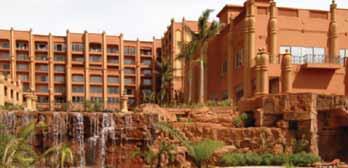
Kampala Serena hotel secures US$ 8m to expand
Kampala Serena hotel in Uganda previously known as Nile Hotel International and Conference Centre is yet to be expanded as Serena Hotels secured US$ 8m for the course.Tourism Promotion Services Uganda Ltd, currently trading as Serena Hotels announced that they secured US$ 8m funding from the French development agency Proparco for expansion purposes which has been brought about by the growing demand for the services offered by the facility. The hotel which has a capacity of 85 rooms was acquired by Serena Hotels in February this year. Mahmud Jan Mohamed, Managing Director of Serena Hotels confirmed the reports and said that the hotel distinguishes themselves from their competitors through their contributions, good governance and skilled manpower among others.
“Serena Hotels, safari lodges, camps and resorts differentiate themselves through their contribution to local economies, their good governance, through the training of skilled manpower and also through their involvement of craft industries and the sensitive conservation of the surrounding areas,” said Mr. Mohamed.
South Africa
Century City Square gets modern look
A brain-child of Rabie Property Group, Century City Square is part of the flagship project of the larger Century City development which is expanding the residential, commercial and retail industry of the area. Construction started in May 2014, with completion of the Square scheduled for June this year. The area will comprise among other things a 1200seat conference centre as well as 12 meeting rooms located around a business class lounge; a 125-bedroom hotel; The Annex made of 3 500sqm of offices occupying four floors above the conference centre; The Matrix, a mult-purpose building with three-storeys of offices, retail/ showrooms and 51 residential apartments occupying another three-storeys; The Apex which is eight storeys high is made up of 7 900sqm of offices, restaurants, bistros and coffee shops as well as a six-floor structured parking building and basement parking garage for 1 330 parking bays.
Paolo Viotti, director of VIVID Architects, said that the Century City Square would inject new energy and life to the entire Bridgeway precinct. In planning the development, Viotti and the team chose the Corobrik’s range of facebricks and pavers, because of their aesthetic qualities, as well as the economic benefits that are attached to them.The Cape Stormberg Travertine facebrick was used as an accent facebrick which exposed and recessed panels, to highlight the ‘floating’ lighter brick facades.
Kenneth Kaunda Airport Construction work nears completion
Kenneth Kaunda Airport in Zambia is set to have a new and modern terminal by October this year. This was announced by Zambian National Broadcasting Corporation recently. Zambia’s Works and Supply Minister, Yamfwa Mukanga told the Zambian National Broadcasting Corporation that the terminal is part of the expansion program being undertaken at the Airport. Among the developments that are being undertaken include runways and auxiliary facilities around the airport such as hotels, shopping malls, a fire station and the rehabilitation of the already existing terminal which would be dedicated to handling domestic flights only.
The minister said that the fire station was almost complete, stressing the government’s commitment to ensuring Zambians benefited from the infrastructure that is being put up. It was reported that the government is spending about $360-million on upgrades alone. Zambia has a total of four international airports, five airstrips and five secondary airfields that serve both domestic and international flights, and the main and biggest airport in Lusaka is the Kenneth Kaunda International Airport. Other smaller airports include Mfuwe and Livingstone, Ndola together with secondary airfields including Kitwe, Kasama, Chipata, Mongu, Mansa and Solwezi. Zambia has previously adopted the open sky policy together with the establishment of the current air cargo hub so as to connect with the Southern African region.
First seven flyovers in Dar es Salaam to be constructed
Plans are currently underway to construct the first seven flyovers in Tanzanian Capital Dar es Salaam so as to ease traffic that is normally experienced in the area, the country’s Minister for Works, Transport and Communication, Prof Makame Mbarawa has said. Prof Mbarawa pointed out that the government is in discussion with a company from England by the name Mabey Bridge Company who will build the flyovers and if all goes as planned then construction of the flyovers will commence in December this year. The selected contractor is set to construct four flyovers that are designed to be used by pedestrians and three others that are meant for motor vehicles. He further explained that the construction of the flyovers is estimated to take three to six months for them to be complete and will be financed by the government of Tanzania. “Four flyovers to be used by pedestrians and three others that are meant for motor vehicles will be constructed and they are estimated to take three to six months for them to be complete,” Prof Mbarawa said. Reports reveal that Mwenge area is one of the places that have already been identified to have the motor vehicle flyovers; locations for the other flyovers are yet to be selected.
Nigeria
State to construct three phase Diamond Split Underpass
Kwara State plans to construct a three phase Diamond Split Underpass in Nigeria at the Geri Alimi roundabout in Ilorin the state capital. The move comes after State Executive Council approval to commence the proposed underpass project. According to Alhaji Aro Yahaya, Commissioner for Works and Transport, the project is expected to be completed within an 18 month period. Yahaya further revealed that, phase I of the project is expected to cost US$14.5m. However, the state is currently sourcing US$50.1m financial boost from the Bond Market to finance the proposed underpass project. On completion, the project will not only ease the heavy traffic, but it will as well be an engineering masterpiece besides beautifying the area. The council has also approved the dualisation of other federal roads such as the Ita Alamu-Michael Imoudu-Ganmo-Afon junction road and the Kulende-Oyun-Kwara State Polytechnic-Oke-Ose-UITH road.Kwara State is one of the 36 states that make up the Federal Republic of Nigeria. The state shares her boundaries with the Niger River at her North and the Republic of Benin at her west.
France pledges cash for Kampala - Jinja expressway
The French government has pledged to contribute US$ 204m through its public bank and overseas development agency, Agence Française de Développement (AFD) for the development of Kampala-Jinja Expressway in Uganda which is set to be constructed in 2017. The AFD’s country representative, Ms Virgnie Leroy confirmed the reports and said that they will work with the Ministry of Finance to find allocation for the money since the project is one of the interesting and exciting initiatives by the Ugandan government. “The project is one of the exciting undertakings by the government of Uganda and we are ready to offer them any help they need,” Ms Leroy said. The development project is estimated to cost US$ 238m and the funds from AFD will fit in on the side of government through a Public-Private Partnership (PPP).The Kampala - Jinja Expressway which is projected to be 77km will start from Nakawa in Kampala and connect to Jinja Township and sections of the road will have four to eight lanes at various points. For instance, there will be six lanes between Bweyogerere and Lugazi and a dual carriage between Lugazi and Jinja. The construction of the Expressway will also go hand-in-hand with the building of the Kampala Southern Bypass which is an 18km road that will begin at Butabika on the eastern outskirts of Kampala and connect to the New KampalaJinja Expressway and finally end at Munyonyo the new EntebbeKampala Expressway which is under construction.
NIESV Nigeria introduces new regulations
Nigerian Institution of Estate Surveyors and Valuers (NIESV) together with the Association of Estate Agents in conjunction with the government has introduced a regulation that will govern the agency aspect of the profession through its pet project in Nigeria. The regulations are targeting the infiltration of estate agency practice by quacks. According to Dr. Bolarinde Patunola, NIESV President, the estate agency has been an all-come affair over the years, and the regulations have become necessary as the incursion of other professionals, such as lawyers and accountants including other persons who are not necessarily trained to practice estate agency is creating negative perception about genuine professionals.
Unqualified practitioners will be liable to arrest and prosecution by the state if they fail to comply with the regulations. “Estate agency is an important service, and should be practiced with full adherence to the code of conduct,” said Patunola. We have commenced the programme to control the estate agency in Nigeria with the establishment of the Association of Estate Agents in collaboration with Lagos State Government,” he added. The new programme will regulate estate agency and give room for practitioners in the new Association to acquire the training skills that will enable them to put them to practice.
Building contractors complete advanced training programme
The Department of Transport and Public Works Contractor Development Programme in South Africa has facilitated 15 emerging building contractors in South Africa to complete its 24-month Siyenyuka advanced accredited training and mentoring programme.A ceremony to award the certificate was held in Stellenbosch on 26 May 2016. The annual Siyenyuka programme is part of the Expanded Public Works Programme (EPWP), and is offered freely to participants. Each year, it adds value to the construction industry and plays a crucial role in the growth of emerging contractors in the Western Cape.
As a direct result of the Department’s mentoring and training, several contractors have advanced to higher levels on the Construction
MANAGEMENT TIPS
Top Tactics to solve Shortage of Skilled construction Workers in Africa
In Africa there have been reports of shortage of skilled construction workers to spearhead various construction projects that have been ongoing and no doubt managers have been having sleepless nights trying to counter the problem. The recent recession saw many construction workers leaving the industry, and now with the retirement of the baby boomers, finding quality, skilled workers is an up-hill battle for many human resources professionals in our industry. Social media being one the strongest tool that is growing communication around the world having passion for it and using it will see you get off the hook of worker shortage. Get to know the kind of person you want and describe him in a tweet, facebook post and what we can all see is a positive response. Even if you employ a staffing firm to help recruit contractors and employees, there are ways social media can support those efforts by differentiating your company from others who are bidding for the same skilled workers you are.
When considering replacing some of your workers in the construction industry you should highly ensure you get a better replacement than the current one you have. As an industry, best
Industry Development Board (CIDB) rating scale. A construction business with a higher CIDB rating can bid for larger and more complex contracts. Through Siyenyuka, businesses categorized as Grade 3, 4 or 5 General Building (GB)/ Civil Engineering (CE) enterprises have been mentored to identify their specific needs of development. Targeted training has then been offered to assist participants with legal and project-related processes, compliance and tendering processes (pre-tender phase).
practice we say if you are hiring 50 people or more per year then the recruiting process truly becomes a marketing process. So now, you must shift your focus to how to work with your marketing team on this joint recruiting effort that will solve your skilled worker shortage. This pretty much encompasses three things; As a manager you should ensure that you get tactical by utilizing the knowledge of the existing workers in improving the working force. I know many times there’s a hesitancy to be fully transparent because there’s a fear that the sheer number of candidates will drop. That may very well be true, but the quality of those candidates should increase, and the churn in the first three months should decrease, saving your organization thousands. Now that we all know the construction industry has the shortage of man power the best solution is trying to teach the existing workers to know what to do.
ZPC commissions Kariba South Expansion Cranes1
Aggreko publishes rental power e-Guide for construction sites
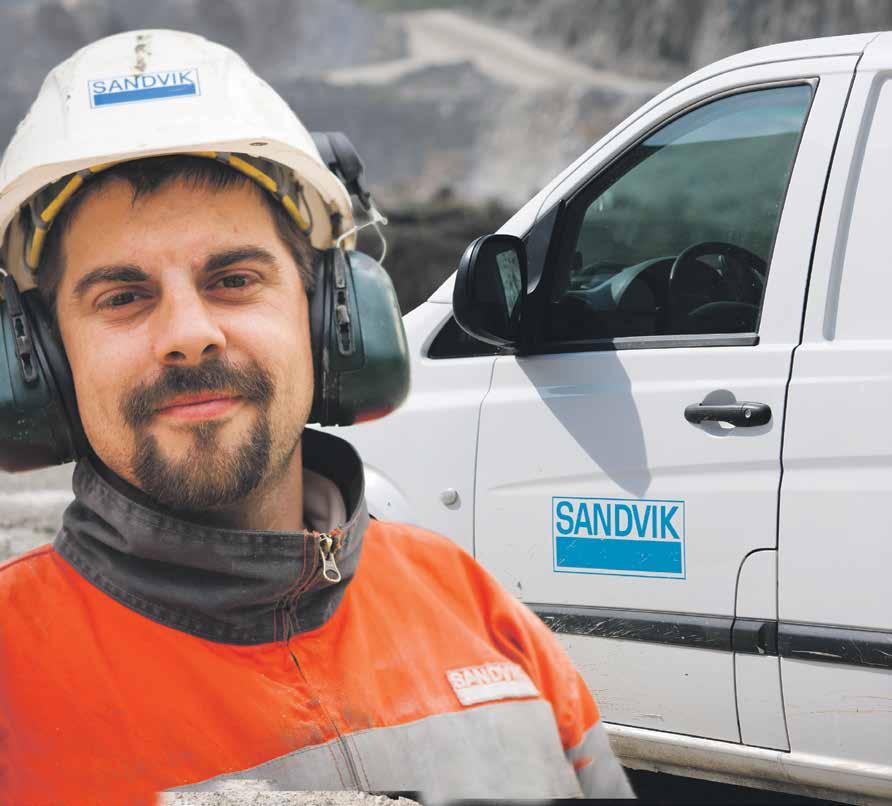
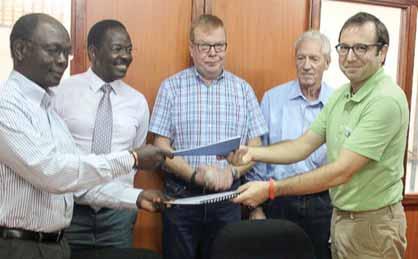
Sandvik Construction is proud to announce that Victoria Equipment is its new distributor in Uganda. Victoria Equipment will not only be supplying a comprehensive range of Sandvik equipment, but will also be providing full aftermarket care, spare parts and dedicated customer service. Sandvik’s world leading ranges of construction equipment needs no introduction; but now customers throughout Uganda will be able to benefit from even greater levels of support through its new distributor, Victoria Equipment. This further enhances commitment to locally focused customer support, whilst at the same time enabling customers to benefit from dealing with a truly global company. Part of the GMACH Group of companies which was formed in 1960, Victoria Equipment is an established name in Uganda, with offices, workshops, service engineers located throughout the country. Additionally, and when the situation requires it, the company will be able to call on round the clock support from Sandvik Construction’s regional offices in Africa. This will further enable customers to benefit from the specialized advice and assistance that has made Sandvik the world leading supplier of construction equipment.“The additional portfolio (of Sandvik equipment) will bring heavy duty equipment and technical expertise closer to our end user as opposed to flying in technicians from abroad.” Commented Mr. Sam Kibuuka the Financial Director of General Machinery Group concerning the dealership agreement with Sandvik. Mr. Sunday Sedrack, Sales Engineer at Victoria Equipment limited, added: “Victoria Equipment Ltd is now able to provide service and deliver genuine Sandvik tools, parts and equipment at a very competitive price.”Of the appointment of Victoria Equipment, Kauko Juuri, Global Distributor Manager Sandvik Construction states: “We are sure that the combination of Sandvik equipment and global aftermarket support, together with the local knowledge and industry expertise of Victoria Equipment will enable Sandvik customers throughout Uganda to benefit from a winning combination.”
The Zimbabwe Power Company (ZPC) recently commissioned overhead travelling cranes in the powerhouse of the new 300 megawatt (MW) Kariba South Expansion plant which is under construction 130 metres in the belly of the Kariba South bank. Upon completion of the expansion, the Kariba South Power Station will add 300MW into the national grid. The US$533 million expansion project, that is inclusive of development costs to be met by ZPC, is being done by a Chinese firm, Sino Hydro. The project is scheduled for completion by 2018. According to information from the ZPC, the cranes were commissioned earlier on May 1 2016 and will have a cumulative operation capacity totaling to 500 tonnes, making it the biggest crane to ever to be installed.
Dangote Group to construct cement plant in Ghana
Dangote Group a multi-billion dollar company has revealed plans of investing over US$100m towards the construction of a new cement plant in the Western regional of Ghana by the end of 2016. The facility will be located in Takoradi the region’s capital. The cement plant project will be the company’s second investment project since its entry in Ghana a few years back. The plant will be constructed with its own power generation plant. According to Tor Nygard, Dangote Ghana Managing Director, the plant will be capable of producing over 1.5million tonnes of cement in line with the company’s strategy to expand and meet the growing demand in Ghana and across West Africa.
Aggreko has published a new eGuide to The Challenges of Delivering Construction Site Power, which explores six factors for simplifying power rental and increasing efficiency of generation. The free eGuide from the rental power and temperature control specialist addresses key challenges facing construction specifiers, such as how to meet variable power demands, reduce noise and emissions, gain environmental compliance, manage generator security, and overcome space and access constraints. “With new environmental legislation and the complexities of working on sites in densely populated residential locations, towns and city centres, specifying site power is not straightforward,” said Ben Vincent, Aggreko’s Construction National Accounts Manager for Northern Europe.
“This guide details the many factors that should be considered to achieve a compliant, efficient and fail-safe power supply, so that contractors can get on with delivering the project, without any distractions or interruptions.” Scalable ‘load-on-demand’ fuel-saving power options are explained, along with techniques for overcoming space constraints on small footprint urban sites. The guide also introduces newer green technologies, such as silent hybrid power units, which minimise fuel consumption; and particulate filtration units, which dramatically reduce emissions from diesel generators. The use of gas and biodiesel generators is also explored, along with high voltage distribution for larger sites.
New distributor for Sandvik Construction in Uganda
Sandvik Construction and Victoria Equipment management seal the deal.
Alsina presents new modular hanging beam system
Alsina presented its new Modular Hanging Beam system “Friendly Beams” at the 31st edition of Bauma construction fair. Alsina Formwork has developed the recoverable VCM (Modular Hanging Beam) system, the only formwork beams system that is 100% recoverable at 72 hours after concreting, designed specifically for shuttering hanging beams. This is a metal system with easy assembly that solves the problems arising from the use of timber and non-recoverable formwork beams, composed of elements made of reinforced steel frame and phenolic surface. With this new system, Alsina helps to achieve an orderly, safe and costeffective process when shuttering beams, since it is designed to reduce the time and improve the quality of the formwork and stripping of the beams.
VCM is a light handling system (22 kg / m2) but also very strong considering the loading use it must support (25 kN / m2). On the other hand, it is a system that considers from the start the needed underpinning to make partial down-striking without affecting those props that accompany the structure until it reaches its resistance. This allows not only recovering the sides of the beams, but part of the funds, in addition to having consoles for emptying the structure, so the operator can work properly without bending or climbing, with proper ergonomics, comfortably and safely.
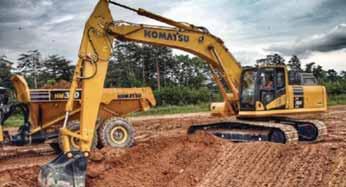
Komatsu America Corp a U.S. subsidiary of Komatsu Ltd has launched the PC360LCi-11 and PC490LCi-11 excavators which feature Intelligent Machine Control (IMC) technology. The excavators feature Intelligent Machine Control (IMC) technology that uses a “unique” sensor package, including stroke-sensing hydraulic cylinders, an Inertial Measurement Unit sensor, and GNSS antennas. The machines utilize 3D design data loaded into the in-cab monitor to accurately display machine position relative to target grade. When the bucket reaches the target surface, automation kicks in to limit over excavation.The automated system includes a number of features, says Komatsu: Auto Grade Assist—As the operator moves the arm, the boom adjusts the bucket height automatically, tracing the target surface and minimizing digging too deep. Auto Stop Control—During boom and bucket operation, the work equipment automatically stops when the bucket edge reaches the design surface, thus minimizing design surface damage. Minimum Distance Control—–The machine controls the bucket by automatically selecting the point on the bucket closest to the target surface. If the machine is not facing a sloped surface at a right angle, it will still follow the target surface and minimize digging below it.
Award-Winning DataMaster available for Android devices
Wagner Meters is proud to announce the DataMaster app is now available for Android users complementing the previously released iOS version. Contractors, flooring installers, and others who use relative humidity (RH) testing, either the Rapid RH® 4.0 EX (single use) or Rapid RH® 5.0 (reusable), can download the DataMaster™ app to help record and report the moisture condition of concrete floor slabs. Already recognized by industry leaders for innovation in the digital reporting of RH data, the original DataMaster™ was awarded Most Innovative Product, Industry Choice, at World of Concrete 2013 when first introduced three years ago. Wagner Meters transformed the DataMaster™ from wireless hardware to an Android application that provides an intuitive and easy-to-use interface for any Android-running device. The all-new DataMaster™ app is sure to be very popular for anyone testing moisture in concrete. It collects even more data than our earlier award-winning DataMaster™, and it does this with a smooth, clean interface. Now you’ll enjoy wireless, seamless flow of digital data from any Wagner Meters’ Rapid RH® sensor straight to your mobile device.
Badger Meter introduces new flow meter
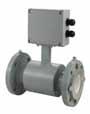
Badger Meter introduces new M7600 electromagnetic flow meter for concrete batching applications. Badger Meter has announced the new M7600 electromagnetic flow meter, an addition to its accurate, high-performance ModMAG family. The M7600 Flow Meter combines the most advanced electromagnetic flow metering technology, with a simple, yet robust output, providing an easy-to-use flow measurement solution for use in a wide range of concrete batching applications. Badger’s M7600 electromagnetic flow meter achieves an accuracy of ± 0.5% of rate for velocities greater than 1.64 ft/s and ± 0.008 ft/s for flow rates less than 1.64 ft/s with a repeatability of ± 0.1%. Its rugged design ensures exceptional reliability in demanding environments. The meter features a non-intrusive open flow tube that virtually eliminates pressure loss, and with no moving parts to impede the flow stream, maintenance is kept to a minimum — even in less than ideal fluid conditions. The new product is ideal for metering device used for cleaning or reclaiming water batching in ready mix, precast, prestress, and block plants, and requires minimal maintenance over a long operating period.
The Big 5 Construct East Africa 2016
Access the fast growing East African construction market by attending The Big 5 Construct East Africa at Kenyatta International Conference Centre, Nairobi, Kenya from 2 – 4 Novemeber,2016.Backed by government bodies in Kenya, such as the National Construction Authority and Kenya Investment Authority, The Big 5 Construct East Africa is the official exhibition of National Construction Week – a brand new initiative by the Kenyan Government to put the spotlight and develop the construction industry. The event will also be the central meeting place for global manufacturers to network and do businesses at one place, at one time.
Kenya
- Architectural Association of Kenya
Totally
Construction East Africa 2016Construction World Expo returns to Fort Wayne, US
Totally Construction East Africa brings you four events in one designed to provide you with methods to increase sustainability in East African construction projects with access to innovative building systems, quality control enforcement and testing techniques, and alternative technologies that can reduce construction costs by 30%.
In 2016 Totally Construction East Africa incorporates The African Cement and Concrete Summit presented by Totally Concrete East Africa, the Housing for East Africa Forum, Commercial Property Developers East Africa Briefing and Digital Construction East Africa. The event is designed to give you front row access to construction business opportunities of all sizes across East Africa’s high growth and high risk markets
Botswana
- Institute of Botswana Quantity Surveyors
Association Partners
- Institute of Quantity Surveyors of Kenya
- Institute of Engineers of Kenya
- Association of Consulting Engineers of - Kenya
- Association of Professional Societies of East Africa APSEA)
- Kenya Property developers Association
- Institution of Surveyors of Kenya
South Africa - ASAQS - SAICE
- South African Council for the Quantity Surveying Profession
- Khuthaza ( Women for Housing)
- Concrete Manufacturers Association
- Green Building council of SA
- South African Property Owners Association
- Master Builders South Africa
Uganda
Institute of Surveyors of Uganda
Ethiopia
- Association of Ethiopian Architects
- Ethiopian Association of Civil Engineers
Ethiopia
- Construction Contractors Association of Ethiopia
Zimbabwe
- Zimbabwe Institute of Quantity Surveyors
- Zimbabwe Institute of Engineers
- The Construction Industry Federation of Zimbabwe (Cifoz)
Ghana
- Ghana Institute of Engineers
- Architects Registration Council
- Ghana Institute of Surveyors
- Ghana Green Builders Association
- Ghana Institute of Planners
- Association of Building and Civil Engineering Contractors of Ghana
Namibia
Institute of Namibian Quantity Surveyors Association of Consulting Engineers of Namibia Tanzania
The Midwest’s Largest Construction World Expo is returning to Fort Wayne’s Allen County War Memorial Coliseum. The Building Contractor’s Association (BCA) has partnered with locally owned Coliseum Productions to revive this show in February 2017. The show expects to draw a crowd of 6,000 people over the 22-23 and will be the temporary home to 250+ vendors. In 2011, the BCA Board of Directors shifted away from show production after 34 years of producing the Expo to allow for more focus on internal programs. Now, thanks to the efforts of BCA and their Young Professionals Committee and David Marquart of Coliseum Productions, the show is set to return to Fort Wayne. The new efforts promise that it will be bigger and better than ever before.
- Tanzania Institute of Quantity Surveyors
- Construction Regulation Board (CRB)
- Tanzania’s Registration Board of Architects and Quantity Surveyors (AQSRB)
Nigeria
- Association of Consulting Engineers Nigeria
- Association of Professional Women Engineers Of Nigeria
- Council of Registered Builders of Nigeria
- The Nigerian Institute of Architects
- American Association of Petroleum Geologists Africa Region
- Nigeria Society of Engineers
- Nigeria Institute of Architects
- Building and Construction Skilled Artisans Association of Nigeria (BACSAAN)
Zambia
- Zambia Institute of Architects (ZIA)
- Association of Building and Civil Engineering Contractors (ABCEC).
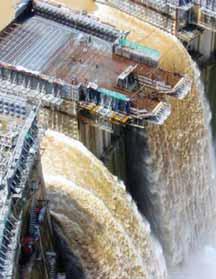
The Grand Renaissance Dam will be the largest hydroelectric power plant in Africa when completed with an estimated cost of US$4.8 billion
Why technical discussions are needed for the Grand Ethiopian Renaissance Dam
The Grand Ethiopian Renaissance Dam, or GERD, under construction on the Blue Nile near the EthiopianSudanese border, is now approximately 50% complete. Initial filling will start this year and will begin in earnest in 2017. The idea of a dam on the Nile in Ethiopia – and the threat this would pose for Egypt – has been on the minds of the people of the Nile basin for centuries. Ethiopia has long claimed a right to use Nile waters, but it was only in 2011 that Meles Zenawi, the Prime Minister of Ethiopia, announced that Ethiopia would begin construction of a large dam on the Blue Nile, near its border with Sudan.
The advantages of storing water in the Blue Nile gorge for hydropower generation and flood control have been recognised for decades. But until recently Ethiopia did not have the political or financial strength to pursue this economic development strategy. The GERD will have a height of 145m –compared with 110m for the Aswan High Dam in Egypt and 101m for the Three Gorges Dam in China. It will have nearly three times the installed hydropower generation capacity (6,000MW) of the Aswan High Dam (2,100MW), and will be the largest hydroelectric power facility in Africa.
When the GERD is finished, Egypt, Sudan and Ethiopia, as well as the other Nile riparian countries, will face a new situation in the management of a large international river. There will be two very large dams, the GERD and Egypt’s Aswan High Dam, on the same river, but in different countries. Both will be able to store a volume of water greater than the annual flow of the river at the site. And both will be in a river basin subject to severe droughts, and one in which future demands for water for irrigation far exceed the available water supply even in normal years.
there agreement on the coordination of the operations of the GERD, the Aswan High Dam and dams in Sudan. Agreements on both issues are needed to achieve the full benefits of the GERD and to prevent significant harm to Egypt during periods of prolonged drought. Most of the economic benefits from the GERD will be from hydropower generation, which is essentially a non-consumptive use of water. After the GERD’s filling period –which could be five to 15 years, depending on the sequence of high and low flows that occur and the amount of water Ethiopia releases –it should be possible for Ethiopia to operate the GERD in such a way that Egypt suffers relatively little harm.
Sudan will benefit because the GERD will smooth variations in the Nile flow. This will result in increased water availability during the low-flow summer months, more hydropower generation from Sudanese dams at Sennar, Roseires and Merowe, and reduced flood damages. But during a multiyear drought and during the filling of the GERD, Egypt and Sudan need confidence that water will be released from the GERD to meet their basic requirements and prevent significant harm.
The hard work is just beginning
On March 23 2015, the leaders of Ethiopia, Egypt and Sudan signed a Declaration of Principles in Khartoum. It moved their countries closer to cooperation on the sharing of Nile waters. Consensus was reached on ten general principles. This declaration was essentially a commitment to find common ground on what had become an increasingly acrimonious dispute over Ethiopia’s decision in 2011 to build the GERD.
Most of the economic benefits from the GERD will be from hydropower generation, which is essentially a non-consumptive use of water.
No agreement yet
To date there is no agreement between Ethiopia, Sudan and Egypt on the filling policy for the GERD reservoir. Nor is
Dale Whittington, Professor of Environmental Sciences & Engineering, City & Regional Planning - Chapel Hill
To read more and to comment on this story visit http://www.constructionreviewonline.com
Turnkey handiness
Considering demands of modern day warehousing, the benefits of utilising a one-stop storage solutions are immense. From information gathered from some of the most accomplished suppliers in Africa, Construction Review, outlines some of the critical elements of turnkey one-stop solutions.
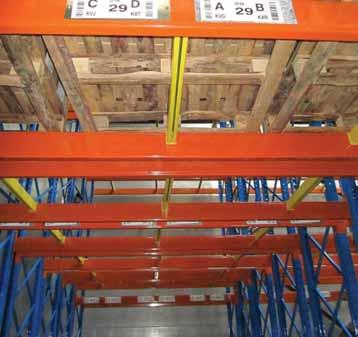
One Stop racking and shelving options enable organisations to expand their current storage capabilities cost effectively. This entails one supplier undertaking development, manufacturing and installation of world class warehouse storage systems seamlessly with the expected quality standards.
Standard solutions expected
The following are the requisite one-stop storage solutions that organisations require from service providers.
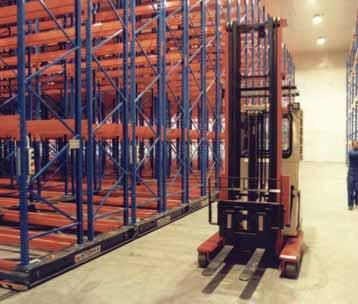
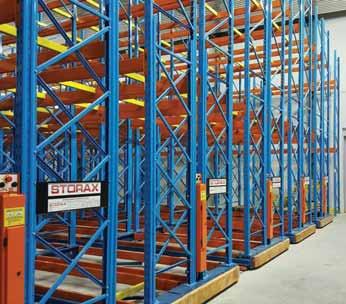
Pallet Racking
Whatever the product, whatever the capacity, the design should be tailored to meet an appropriate storage solution.
Shelving
Light or heavy duty, new or used, wide range of the right storage solutions to suit home or business needs are produced.
Cupboards, Lockers & Boxes
Storage Cupboards to store away valuable and personal items are suitable for all types of businesses.
Cantilever Racking
Cantilever Racking is an ideal storage solution for long or odd shaped items like timber, long steel bars or pipe, with a wide scope of more products.
Raised Storage
Raised storage enables organisations to optimise their capacity they need by utilising existing unused space with raised storage.
Storage Accessories
Inevitably, where there movement of good involved there is always the high risk of an accident. Hence, there is the need for storage accessories and safety products to protect business and staff with rack protection.
Three critical services
Sadly, it is not uncommon for organisations to be left to their devices, after a product has been delivered. The following additional services from service providers are critical.
i. Warehouse Safety
Regular maintenance of all racking systems is a must to ensure safety. All racking should be checked at regularly. Through regular inspection, faulty or damaged components which should be replaced are easily identified.
ii. Racking Inspections
Racking inspections ensure the safety of the team and the structural integrity. Specifically, assistance should be rendered in complianc with a range of Occupational Health Safety requirements.
iii. Design & Installation
Understanding and meeting a client’s storage needs is vital. It is important to maximise the potential of the workspace and provide detailed designs as part of every job.
Constant innovation
As customers are becoming more cost and safety conscious and at the same time demand storage solutions that are efficient, patently, manufacturers have to rise to the occasion by constantly innovating to ensure that they are abreast of developments in their niche markets.
JUST A BUTTON TO PRESS
„From installation to operation, competent and reliable“
Volker Höh
Installation Expert
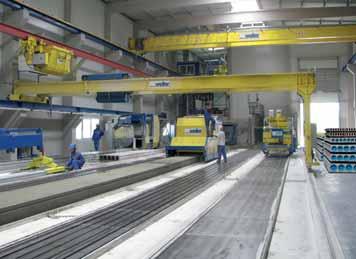
TURN-KEY CONCRETE PRECAST PLANTS
THE PREMIUM SUPPLIER OF THE PRECAST CONCRETE INDUSTRY
machines & installations modern technology individual solutions after-sales-service over 60 years of experience global references
CONSULTATION, ENGINEERING & MACHINERY FOR THE PRECAST CONCRETE INDUSTRY
www.weiler.net
Building materials should be available on a construction site when required to ensure that a project's key objectives are addressed
From sourcing to after-sale courtesy
Due to increasing demands in projects, contractors expect suppliers of building materials to offer more than delivering products after a transaction is concluded.
These days it’s all the rage for many a supplier of building materials to profess to provide “onestop solutions”. But with tales of some organisations failing to live up to their pledges becoming one too many, increasing scepticism from end-users can be somewhat exonerated.
While the term “one-stop solutions” is open to wide interpretation, if not abuse and misuse, in the findings of a recent survey of ten major suppliers of building products to medium-sized and large-scale construction projects in Sub-Saharan Africa, Construction Review has noticed similar patterns in the way services or products are structured. This fact is evident, despite wide differentiation in the brands of products that are supplied.
What one-stop entail
Whereas the entails building materials supply chain might constitute many moving parts, it is universally accepted that “one-stop” solutions should constitute the following: Sourcing, Delivery, Financial Services, Instore services and of course Sales Support.
i. Sourcing and delivery
Consistently, the supplier has to bend over backward to ensure that all products that the client has ordered are sourced on time, are of
expected quality and the expected volumes (quantity). This is of utmost importance as failure to address particular customer needs, could have a bearing in the delivery of a project, with the possibility of causing the client to miss the delivery deadline.
ii. Financial services
Some suppliers go a mile further by providing solutions to enable their most trusted clients to purchase products flexibly. These range from credit terms after ample trust has been built between with the client to facilitating access to a loan from an accredited financial services provider.
Doubtless, when the construction industry is feeling effects of a global economic recession, which has reduced operating capital of many clients, financial assistance, in whatever form from a service provider, proves handy.
iii. In-store services
As a standard, these days, clients expect a supplier to offer some add-on services inhouse. These could be product advisory services and processes like glass cutting and locksmith services, just to cite a few.
iv. Sales support
Clients highly value suppliers who are willing to forge a long lasting relationship with them.
They expect suppliers to offer support that goes beyond delivery of products. Thus, when a product is faulty or any other anomaly surfaces after sales support within the terms and conditions of the guarantee, they expect the supplier to offer assistance religiously.
Suppliers’ obligations
Given the current economic circumstances, it is not surprising that customers (endusers) are more circumspect in procurement decisions they make than before, pressing the burden on suppliers to provide products of top-drawer quality. With the overabundance of building products from all over the world readily available to them, customers are faced with the challenge of selecting products that address their specific requirements. How does one tell a competent supplier from the numerous who conceitedly claim to be the “best these has ever been”? What sets the imposter from the real deal?
There is no question that suppliers who have built a track record of being consistent should be preferred and trusted to handle “one-stop solutions” requirements consistently. Indeed, the quality of a project is determined by the quality of its building materials.
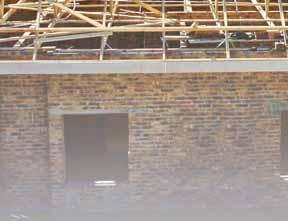
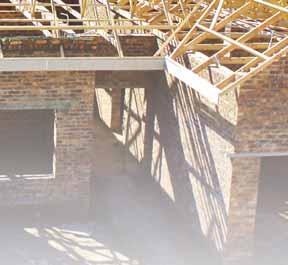
We design & manufacture roof trusses
At our Builders truss division we offer the following services:
Free roof truss quotations
Professional advice and friendly service
Supplier of all roof coverings at competitive prices
Member of the ITC (Institute for Timber Construction)
ITC certificate offered with all quotes
(Roof inspection A19 certificate)
Precision truss manufacturing
Installation of trusses and coverings
5-7 day turn-around from order to delivery*
* (order means that money has been deposited and reflects in the Builders account)
Contact your nearest store for roof truss design & manufacture. Customer care line: 0860 284 533 or visit us at: www.builders.co.za
Contact our Customer Contact Centre on 0860 284 533 or visit us at www.builders.co.za
Wastewater treatment solutions
A
new paradigm shift with sustainable wastewater treatment solutions for water resource management
Water is an integral part of our society today. This vital resource is used in the operations of many industrial processes, human consumption, and for food production to name just a few. The increasing demands for water for agricultural, drinking and industrial processes have put significant strain on global fresh water supplies as the world’s population continues to grow. In many parts of the world, the demand for water has exceeded the supplies of traditional water sources like ground water and surface water. In the United States, especially in the Southwest region including California, the high demands and short supply of water has forced water scarcity restrictions on both industry and residential water users.
This situation is forcing serious discussions by private and governmental level agencies to develop strategies to incorporate alternative water sources while implementing more efficient ways to use and reuse water. It is apparent, sustainable solutions will be required to mitigate the effects of climate change, reduce habitat degradation and provide for continued global population growth. Wastewater is becoming recognized as a significant water resource for
non potable applications worldwide.Large centralized waste water facilities often treat and discharge this valuable resource rather than recycling and reuse it due to the costs associated with transporting the treated water back to the originating source.
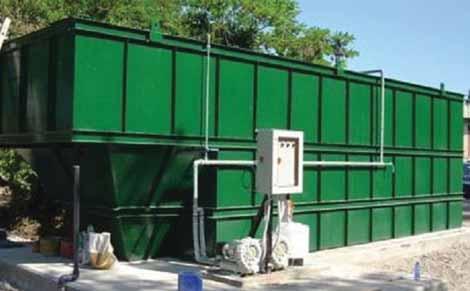
This paradigm shift has led to discussion of the utilization of a decentralized waste water solution approach that can be sustainably implemented on a community level as well as in a commercial/industrial facility setting to capture, treat and reuse this water resource optimally. Decentralized system solutions play a pivotal role in an emerging “green, clean, smart” paradigm for water resource design and management.
Genesis Water Technologies is on the leading edge of designing and providing these innovative solutions. Recycled water can satisfy many non potable water demands, as long as the water is adequately treated for the intended application.
To read more and to comment on this story visit http://www.constructionreviewonline.com
Apex Steel and Green Building
Steel
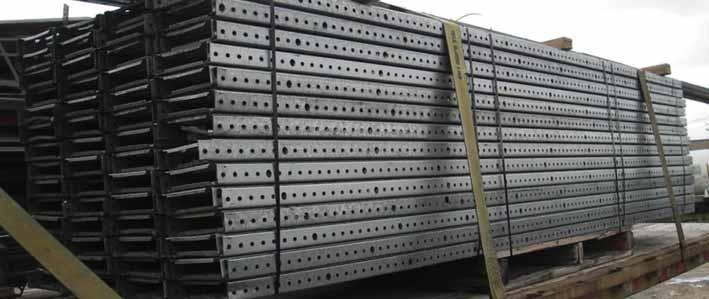
Apex Steel manufacturers and supplies steel to BS 4449:2005 Grade 500+. Briefly. In addition to steel, Apex Steel are also manufactures angles, flats, zeds sections, tee sections and hollow sections. It also trades in beams, channels, MS Plates amongst other products including over 4000 items in general hardware, plastics and PVC.
Piping & Plumbing
‘Hydroflo’ – is synonymous with quality and hence the preferred PPR choice for plumbing where quality is key. Also available is HDPE in an assortment of sizes. Apex Steel now represents the world’s largest pipe and piping solution manufacturer - Wavin (www.wavin.com). They offer a revolutionary change in the plumbing sector that has been in a dire need of one.
Green Building
1. Leed
The U.S. Green Building Council (USGBC) has set a standard for sustainable building performance known as the Leadership in Energy and Environmental Design (LEED®). LEED is a green building certification program that recognizes bestin-class building strategies and practices. To receive LEED certification, building projects and manufacturing processes must satisfy prerequisites and earn points to achieve different levels of certification through environmental categories:
2. Green Star
The GBCSA developed Green Star SA, based on the Green Building Council of Australia’s Green Star rating system; provide the commercial property industry with an objective measurement of green buildings, in addition to recognizing and rewarding environmental leadership in the property industry.Kenya in its effort to transform the construction industry has established KGBS that is the body mandated to implement the Kenyan rating system that shall be referred to as Green Star South Africa-Kenya. (It is
CMA Awards for Excellence 2016
The results of the CMA Awards for Excellence competition, announced at a gala dinner function in Johannesburg on April 23rd 2016 suggest that advances in precast concrete technology were significant influencers in this year’s judging process.
This year’s five trophy winners were as follows:
• Concrete Units - the Aesthetics Commercial trophy for casting the precast concrete panelling for No. 1 Silo at Cape Town’s V&A Waterfront.
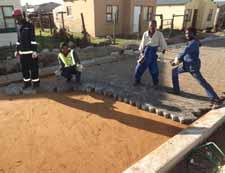
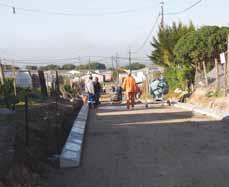
• Shukuma Bricks – the Community Upliftment trophy for providing concrete pavers for the paving of gravel roads in Walmer Township, Port Elizabeth.
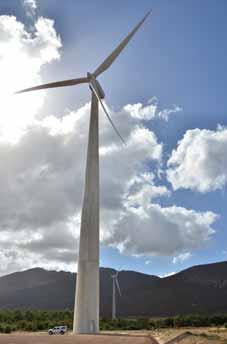
• Concrete Units – the Technical Excellence trophy for manufacturing 782 precast concrete wind tower
segments for the Gouda Wind Farm project in the Western Cape.
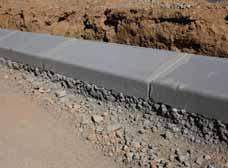
• Bosun – the Innovation trophy for introducing the Castle Bottom Kerb.
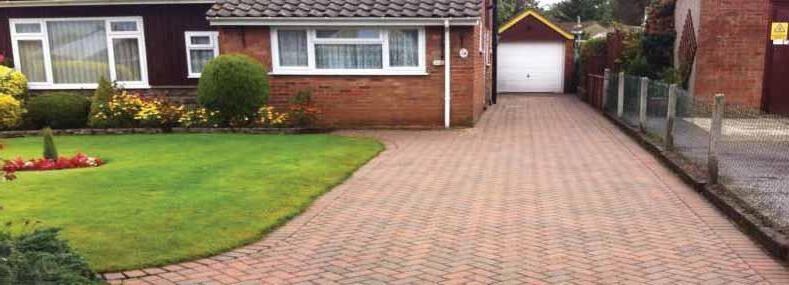
• SmartStone – the Precast for Life trophy for supplying Fan Cobble paving blocks for the Waterfront at Knysna Quays project in Knysna.
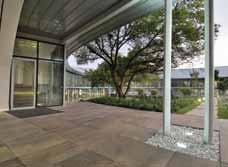
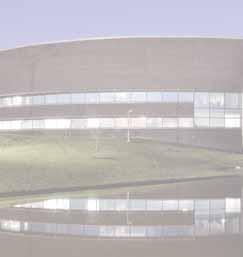
No. 1 Silo, V&A Waterfront, Cape Town
Over 1 000m² of precast concrete panelling were used to clad a section of the external façade of No.1 Silo, one of Africa’s most
advanced sustainable buildings. The panelling effectively demonstrates how, when correctly designed and applied, concrete facades can be extremely attractive. Concrete panelling, manufactured by Concrete Units, was specified to dress masonry cavity walls on the building’s two service cores and to distinguish them from the glazed façades of the building’s atrium and office sections. Both textured and flat panels were specified for aesthetic reasons and to give different functions distinct identities. Incorporating numerous greendesign attributes, recycled waste and heat,
Gouda Wind Farm is Africa’s first wind farm project in which concrete rather than steel was the primary construction material.
Over 1 000m² of precast concrete panelling were used to clad a section of the external façade of No.1 Silo.
Knysna Waterfront. Signature Fan cobbles line the marina. After 17 years these cobbles are still beautiful.
the use of seawater in the cooling plant, and a roof garden, to name a few, No.1 Silo was one of only two buildings to have been awarded a six-star design rating by the Green Building Council of South Africa when it was completed in 2013.
COMMUNITY UPLIFTMENT
TROPHY WINNER
Walmer Township, Port Elizabeth, Eastern Cape
This Nelson Mandela Bay Metropolitan Municipality project formed part of the Triennial Premix Tender Works Packages. It involved upgrading roads in Walmer Township, and in addition to creating jobs, simultaneously provided local community members with an opportunity of learning valuable skills.
In total 25 people were hired and they showed a tremendous willingness to learn the following skills:
• Laying pavers, kerbs and channels
• Pricing bill of quantities for future tenders
• Measurement
• Management of labour
• Invoicing
What were once dusty gravel roads were transformed into aesthetically pleasing and practical low-maintenance surfaces using 80mm interlock pavers manufactured by Shukuma Bricks.
Judges’ comments
The depth of involvement by the community beyond mere employment ensured that valuable skills filtered down.
TECHNICAL EXCELLENCE
TROPHY WINNER
Gouda Wind Farm, Gouda, Western Cape
Gouda Wind Farm is Africa’s first wind farm project in which concrete rather than steel was the primary construction material. Forty six 100m towers were erected, each tower supporting a three-bladed turbine which weighs 170 tonnes. Gouda’s tower segments, 782 in all, were designed according to European structural concrete codes as opposed to the SANS code.
The Gouda towers have a characteristic strength of 75MPa, which made for lighter concrete sections.
Each completed tower comprises five 20m high tapered concrete sections and each section was assembled using the precast concrete segments manufactured by Concrete Units. The segments were joined in a vertical plane by inserting reinforcing and grout into the hollow chambers formed by the segments’ two opposing channels. Once assembled, the tower sections were lifted into position by crane and joined in a horizontal plane using starter bars, ducting and grouting. The flawless execution of this process required extremely accurate casting and very tight tolerances.
A maximum of five segments was cast daily using five moulds. Mould sections were attached using laser technology and special jigs were used to ensure that the steel reinforcing was accurately positioned. Various inserts and sockets were cast into the concrete segments to facilitate the installation of mechanical and electrical equipment inside the towers.
Walmer Township Paving Project
Castle Bottom Kerb vs Conventional Kerbs BMW Offices
The tower segments were manufactured with self-compacting concrete. Without it, the project would have been much more complex, involving external vibration and more expensive moulds. The towers were designed to bend with the wind. This lateral movement is facilitated by the use of steel reinforcing inside the tower walls and additional strength was gained by linking six 90mm post- tensioned steel cables from the inner walls of the topmost tower sections to the concrete base of each tower.
INNOVATION TROPHY WINNER
Castle Bottom Kerb
The Castle Bottom Kerb is patented (SA2012/09544), clear evidence of innovation. Prerequisites for a patent are that an invention should be novel and hold clear advantages over existing and similar products.
Advantages of Castle Bottom Kerbs:
1. Cavities provide grip for installers making for much easier handling.
2. The cavities make the kerb much easier and quicker to install. In instances where unlevelled screed surfaces force installers to lift fill and relay conventional kerbs, Castle Bottom Kerbs are much easier to manoeuvre into place.
3. Because the Castle Bottom Kerb has more load points it sinks into the screed, providing much better adhesion in all directions.
4. The Castle Botton Kerb eliminates air pockets in the screed which could create weaknesses under the kerb after installation.
Judges’
comments
An effective and cost-effective alternative to satisfy extreme technical demands, made this an impressive solution.
PRECAST FOR LIFE TROPHY
WINNER
The Waterfront Knysna Quays, Western Cape
A trip along the Garden Route is not complete without a visit to the famous Knysna Waterfront. Arguably one of the most popular leisure and shopping destinations in the region, boasting a superior marina, the waterfront offer various restaurants, boutiques and other speciality shops. This project was completed in October 1998. Signature Fan cobbles line the marina and offer an overflow area for the restaurants. After 17 years these cobbles are still beautiful and their installation pristine.
Judges’ comments
Has withstood the harsh climatic conditions and heavy pedestrian traffic. Apart from the Aesthetic Residential category all other categories posted two commendation winners each. The Aesthetic Commercial commendation winners were: SmartStone Midrand and Bosun, the former for supplying pavers and coping for the Thaba Moshate Hotel Casino and Convention resort in Limpopo, and the latter for providing drycast paving blocks for the courtyard of BMW’s head office refurbishment project in Midrand. C.E.L. Paving Products and Hydraform each won a Community Upliftment commendation. C.E.L. produced 6 400m² of paving for surfacing gravel roads
in Kassiesbaai/Arniston in the Western Cape, and Hydraform supplied concrete block making machines for the Radway Green Housing project in the same province.
The two Technical Excellence commendation winners were Concrete Units and Aveng Infraset. Concrete Units won the award for manufacturing precast concrete rock print panels for the Mouille Point Sea wall Project in Cape Town and Aveng Infraset for providing non-standard portal culverts for the Tweefontein Optimisation project in Mphumalanga.Concrete Units’ precast concrete expertise was rewarded a fourth time, in this instance an Innovation commendation award for the Gouda Wind farm towers for which it also won the Technical Excellence trophy. The other Innovation commendation award was won by Rocla for casting 128 precast concrete cabins for housing photovoltaic equipment in the Free State and Northern Cape.
Walmer Township Paving Project
Le’ Mac
New residential tower seeks to give clients a whole new experience
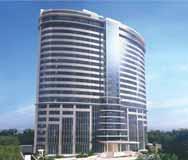
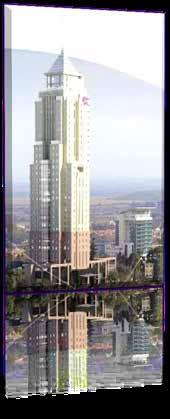
Le’ Mac is a major Mixed-use developments complex in the Kenyan capital Nairobi touted as the tallest residential tower in the country
Mixed-use developments are not new phenomenon in Kenya but a new trend is gaining traction in commercial real estate in Nairobi. In its 2015 report, real estate firm Knight Frank pointed out that firms are increasingly moving offices to edge-of-central business district (CBD) locations. The report named Global Cities Report shows that this tendency is creating new office hubs, with homes and shops following suit. Normally, one high-rise building would have a mix of retail space on the lower floors, office space on the upper floors, and occasionally, some penthouses on the top-most floors. However, what we are witnessing nowadays are properly integrated developments, which are delivering commercial, residential and retail space in far bigger magnitudes. Perfect examples include: Two Rivers Mall, The Hub mall in Karen, Garden City among others.
It is a concept that is commonplace in big cities like Dubai where a commercial complex has a mix of retail space, residential apartments, restaurants, offices and recreational space. This idea has been introduced in Nairobi, a market that is learning to embrace the opportunities that come with having offices in a largeformat retail environment. These mixed-use formats are designed as city hubs where people can live, work,
shop and play in the same location. A new mixed use commercial development that is nearing completion in Westlands neighbourhood of Kenyan capital Nairobi is a good example.
Le’ mac
Dabbed Le’ Mac, the Dubai styled piece de resistance project has been flaunted as the tallest residential tower in the country. Mavji Varsani the director of Mark Properties, the firm behind the project says that after hatching the plan to build Le’ mac, he flew his team to Dubai for inspiration. “We wanted to build something exceptional. The United Arab Emirates offers hundreds of brilliant architectural designs, which I wanted my team to tap into,” says Varsani who is currently based in the United Kingdom. Asked why he decided to build a mixed use development in Kenya, Varsani says,“We discovered a niche market in Kenya that was in need of luxury apartments, safe environment and a need to introduce into the Kenyan market top notch modern architectural designs.”
The Le’ Mac is an ultra modern commercial and residential address, offering the finest features and workplace facilities in the commercial hub of East Africa, Nairobi. Located in the calm environs of Westlands, it offers tranquility and accessibility to do business at your own pleasure without normal business and communication
challenges. Modern lifestyle challenges have been considered in designing this unique concept. The 24 storey building whose construction kicked off in 2014 is slated for completion in 2017. The skyscraper is located off Waiyaki way next to the new Toyota showroom. The mixed use development targets high end buyers, middle and upper class Kenyans. The building has 4 floors of parking space on its basement. On the Le’Mac’s ground floor, there is a banking hall and cafe while floor 1-6 is ultra modern open-plan office space ideal for banks,
restaurants, showrooms, other offices. It offers office and retail space on the lower floors and residential apartments in the upper floors. Le’ Mac’s one and two bedroom high end duplexes, of up to 400 square metres, will sit in a tower that is topped by a 5-star rooftop restaurant with 360 degree views and one of the regions highest and close to the largest residential swimming pools.
“The building is a new look for Nairobi, but echoes a future vision of the city. We hope that this trend will be emulated by young upcoming architects in the country, says Varsani adding that despite the high cost of constructing the building, prices for the apartments are affordable. Each apartment will have floor-to-ceiling windows, offering dramatic full glass views of the city, as well as a sense of space and light. Kitchens will come pre-installed with cookers, microwave oven, washing machine and tumble dryer, with tastefully decorated and furnished interiors and the latest trends in design and layouts, allowing optimum utilisation of space.
Varsani predicts that with land space shrinking in Nairobi, mixed developments will be the trend. The imposing structure has 8 high speed lifts imported from top notch manufacturers in Korea and also has ramps for easy accessibility for physically challenged people. It is one of the few buildings in Nairobi to have a separate fireman’s lift. There will be a fibre-optic internet connectivity and full telephone exchange service on all floors. “When it comes to security we have left nothing to chance.There is provision of a 24hr CCTV surveillance, biometric recognition entry system and guards to ensure maximum security in and out of the building,” reveals Varsani.
The design
This is echoed by Sylvia Kasanga lead architect at Sycum Solutions a firm behind the design of the building.
“The Le’Mac has 3 fire safety exits, fire fighting and protection system including sprinkler system,” she says. Additionally, the complex has standby backup generator and a front entrance water feature. Constructed on a small piece of land, Le’Mac offers the most efficient way of maximising land use in the densely populated Nairobi City. This trend is becoming common globally; since the developers are able to distribute land costs over a number of units thus bring down the cost per unit.
Care has been taken with the upper floors to ensure they are sound and water proof. This has been achieved by using double glazed windows. Mark Properties are the developers of the project that has 192 apartments. Strategically located with easy accessibility, the building has a bore hole on site to ensure constant availability of water. With Large open-plan office accommodation, ample, secure and automated parking at basement, the building offers unique opportunity for business people and residents. The complex also has full telephone exchange service to all floors.
“The mixed use development is aimed at giving clients the best experience ever. It is a modern concept that has been inspired from buildings of similar caliber in Dubai,” Sylvia asserts.To counter the problem of power outages, the developer has installed a stateof-the-art solar system in addition to standby generators. Power stabilizers have also been put in place. The development also incorporates green features in it.
For instance, after the basement, there is a green podium offering a serene environment for tenants and visitors. The project is being marketed by Hass Consult. While sales is ongoing, majority of the apartments have been sold. This is not the only project that Sycum Solutions is involved in. The architectural firm is involved in the design of low cost houses for low end buyers. They have been working in areas such as Thika, Syokimau and Athi River.
In Makueni County, Sycum solutions have been involved in the construction of a university using low cost building blocks. The Lukenya University has been built using hydraform blocks. “The blocks have excellent thermo properties. In hot weather, the building is cool inside and vice versa,” says Sylvia who adds that she is proud to be associated with the Lukenya University. Coined in 2004, Sycum Solutions has emerged as a force to reckon with in architectural field in Kenya. The firm has been involved with big projects and smaller projects in equal measure.
“We have already established a reputation for the large bespoke project like Le’ Mac so we will be securing more of these. But at the same time we will continue with smaller jobs as these are vital for continued growth of our business on a day to day basis. We intend to become leaders in what we do.”
Southfield Mall to Bring Fresh Shopping Experience to Nairobi
The demand for shopping malls in Africa appears insatiable (see CR Cover Story February 2016 issue). All over the continent, developers have realized that consumers are increasingly attracted to a lifestyle where all their shopping, leisure and entertainment needs can be met in one location. In Kenya, the situation is no different.
According to Knight Frank’s recent report entitled Shop Africa 2016, Nairobi is now sub-Saharan Africa’s largest mall development hotspot. The report analyses the growth markets of Sub-Saharan Africa and excludes South Africa, which has a large and mature shopping centre market, and the North Africa region.
Within the 47 countries covered in the study, Knight Frank Research estimated that there is currently about three million square metres of existing shopping centre space in sub-Saharan Africa. Nairobi alone has nearly 400,000 sq m of shopping centre space.
And there seems to be no let-up in the growth of malls. Southfield Mall is the latest entrant in the mall arena. Designed for flexibility, the development boasts
and
spaces
UGANDA
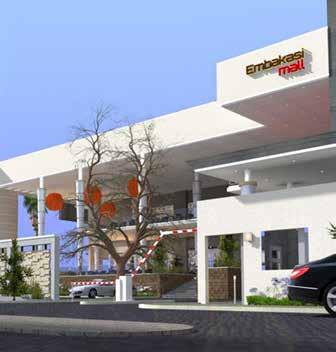
introducing a new level of luxury and design. Located at the heart of Embakasi near Jomo Kenyatta International Airport, the mall is intended to cater for the needs of the rising residential developments in and around the area and also for the business and entertainment requirements of the industrial hub, thus potentially making it a popular shopping destination.
The development, expected to be complete next year, entails 145,000 square feet of lettable space and ample basement and rooftop parking. According to the developer, beautiful landscaping, abundant lighting and distinctive signage are some of the features that will make the mall stand out among its competitors.
P.O. Box 54529 Nairobi 00200 Kenya Tel: +254 20 2694795
For DMJ Architects’ Simon Johnson, “Irresistible Jobs” Keep Him Going
Istarted drawing houses as a child and have remained fascinated by architecture ever since. Amya Cornwell was a family friend of my parents. He encouraged me to follow my interest that became a passion. After school, he gave me the chance to work as an intern at Triad Architects before going to the School of Architecture in Oxford. Whilst there, one of the tutors Pierce Fowell asked me to work for him at his practice in London for my year out. I continued with him when I completed my studies before joining Triad Architects in London to again work with Amya’s on a project in Oman.
At Triad, I joined Chris Carnell’s team to work in the Carrefour Hypermarket chain. Triad had already built the unit at Eastleigh Southampton. I worked on the new unit for Patchway outside Bristol. This involved negotiations with the planners, Fulton airport and the highways authorities. It was with a sense of achievement that we obtained permission to start building after sometimes frustrating discussions concerning colour, materials and access points. The French chain were more used to the accommodating environment that existed in continental Europe. They subsequently sold out to Iceland. Working
Esteel Construction Ltd
P.O. Box 3713-00506, Nairobi, Kenya. Tel: 020-2679822, 020-2316553 Email: info@esteelconstruction.com
We congratulate Architect Simon Johnson for his immense contribution to the construction industry
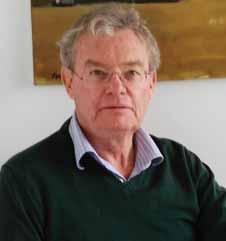
Arch. Simon Johnson.
with their planners taught me a great deal about their commercial thinking on how to sell their products.
England was in the throes of a depression so my wife and I decided to look for work elsewhere. Triad offered me a post in their office in Doha, Qatar, where I joined Triad Cico for two exciting years as project architect for the National Theatre, National Petroleum HQ and the Doha Club. Ahmed Cheika who ran the office also involved me with many of his Qatari clients including the Emir for whom we built a 400m2 extension to a villa for his new wife and son. After Doha, I moved back to Kenya to join Dalgliesh Marshall as the project architect working with Robert Marshall and Pat Hepple on the State Lodge Complex at Chamwino, Tanzania, for Mwalimu Julius Nyerere. The other project was the Benedictine Monastry, Ruaraka, where I worked with Kevin Craig McFeely who had been the City Planner for Nairobi before joining Dalgliesh Marshall.
These two jobs kept me busy most of the time for the next three years. They were fascinating in that they gave me a good understanding of how Robert and Kevin thought about architecture. Their styles were very different but complimentary. Amongst other projects, I was asked to take on Kenindia House which Robert had designed but now moved to being submitted for approvals, tender and these to site with Laxmanbhai as the main contractors.
It was at this time that I became a partner. We were then asked to design and oversee the construction of the Mombasa Intercontinental (hotel). This meant working with the Intercontinental team out of New York as well as the local team of consultants. In many ways this was perhaps the most complex job that I recall. It is a pity that the owners fell out and that Intercontinental gave up battling on how to run the place. Like a hospital, a hotel operates on many levels of technical and design requirements ensuring that guests feel truly pampered whilst the hotel runs efficiently.
As (retired Kenyan President) Moi’s regime began to politicize Kenya’s economy, it became necessary to look for work elsewhere (we were not favoured by his people for obvious reasons). It was also my sad experience to have to take over the firm when Robert Marshall suffered a stroke. Kevin had been brutally murdered in 1985; George Wilson retired and became secretary of the Commonwealth Architects Association; Pat Hepple left for the UK and Isaac Mruttu had moved on to set up, Mruttu Salmann & Associates with Hameed Salmann. I worked with APDF and IFC as a consultant on a variety of projects in Ghana and the Gambia. There was also a client in the Gambia for whom we designed what was to be the Sheraton hotel there. We worked closely with the Sheraton team but the coup stopped the job. Similarly a hotel in Kathmandu, Nepal was stopped by the coup.
The office had started offices in Botswana, Zambia and Qatar. Ian Marshall ran the Gaborone operation and I spent time helping him. I was instrumental in the closing of our Doha office. More recently my work has been back here
in Kenya and neighbouring Tanzania with projects ranging from Eden Square to a village for SOS in Mwanza. When I look at the variety of work we have handled, I am astounded by it all! Houses for the British Embassy in Addis Ababa; helping Lonrho to reopen their operations in Kampala; Finch Hatton Camp in Tsavo; three goes at the Aberdare County Club. All of it enjoyable and hopefully our clients have felt we gave them a professional service based on the dictates of the Royal Institute of British Architects guidelines.
The firm has continued to be a medium sized operation with people coming and going but at its core remaining a good working team. This has been my enjoyment. We have worked together to produce elegant economic buildings that clients have found satisfying. I was married to Karen who sadly died of cancer in 2009. We have two children, Jasper and Catherine who are both married with children of their own. I am lucky to have found a new partner, Carla, to share my life with.
I enjoy walking and swimming – having played polo when young I always found golf a bit of a bore. Traveling in Europe – Italy, France, and Denmark have given me great pleasure as I enjoy visiting historic buildings and towns. I also enjoy the food and wine! I don’t see myself retiring. It always seems that there is another job to do that is too exciting a challenge to say ‘no’ to.
Taking the hassle out of specifying
Taking the hassle out of specifying
Smart products comply to specifications, standards and all requirements. Specify Vaal Sanitaryware.
Birkenmayer’s Brick and Block making technology
Reduce operating costs and achieve exceptional consistency
Birkenmayer SA, founded in 1956 and located in the Johannesburg area, South Africa, is a member of the German Eirich Group, number one supplier of industrial mixing technology, based on over a century of innovative development work. This experience enables the company to guarantee that materials are always prepared to a consistently high quality in a wide range of industries. Birkenmayer produces not only the high standard of Eirich engineered mixers, but also a wide range of brick and block making machines – from entry level to high end. These machines are capable of producing high quality concrete products, including stock and maxi bricks, hollow blocks, a variety of pavers, floor blocks and slabs for splitting into rockface bricks.
Birkenmayer’s entry level Brick and Block making machines HB14 and HB20 offer considerable benefits and are ideally suited to Africa’s harsh working environments. These block machines, combined with the concrete mixers TM350 and TM500, enable start-up operations to produce large amounts of various bricks, blocks and pavers. These machines are designed for African needs, are simple to install and easy to use, with the lowest demand on maintenance and spares.
Brick and Block making Machine, Model HB14
The HB14 brick and block making machine is specially designed as an entry level production unit for the most commonly
Why use Birkenmayer brick and block making equipment?
used concrete products. Birkenmayer’s 60 years’ experience in building block making machines ensures a machine that is sturdy, long lasting and operator friendly. These unique functionalities are based on features such as:
1. Robust, sturdy and operator friendly construction which leads to consistent, high daily production outputs
2. A twin shaft counter rotating vibrator for better mould filling, which results in a high quality brick or block, and dramatically reduces scrap
3. Engineered design leads to fewer mechanical and hydraulic components, ensuring enhanced reliability and reduced downtime, compared to other machines
These three main features allow maintenance friendly production that only requires basic maintenance skills. The Birkenmayer HB14 brick and block making machine is the first choice, especially for production in remote areas. The compact layout of the HB14 block making machine offers the possibility of a modular extension, after a successful start of business. The compact HB14 block machine is capable of producing up to 11 000 full size stock bricks per eight-hour shift.
Brick and Block making Machine, Model HB20
The next size machine up from the HB14 is the HB20. This was specially designed as a small to mid-size production unit for the most commonly used bricks, blocks and pavers. This machine, with pneumatics for concrete feed, feed box and pallet pusher,
Brick and Block making Machine, Model HB20
The HB14 brick and block making machine.
produces up to 20000 full size stock bricks per eight-hour shift. The HB14 and HB20 employ the same sturdy, long-lasting and operator-friendly features as any of the larger machines in the Birkenmayer range, ensuring clients of quality products and a swift return on investment.
These main features lead to maintenance friendly production that only requires basic maintenance skills. The Birkenmayer HB20 brick and block making machine is also suited to operation in remote areas. The compact layout of the HB20 block making machine offers the possibility of a modular extension if a higher level of automation is required.
Birkenmayer Mixers – TM350 and TM500
Birkenmayer’s range of TM Mixers, the TM350 and TM500, are specifically designed to work with smaller-capacity brick and block making machines. These modern mixers are ideal for various mixing applications, while their versatile design makes them suitable for mixing various cement types, adding production flexibility to any brick and block making operation.The Birkenmayer TM Mixers incorporate elements that increase safety, facilitating enhanced production, reducing down time, as well as keeping you in control- ultimately giving a competitive edge.
Key attributes of Birkenmayer TM Mixers
• A robust design which reduces mixer downtime and increases longevity.
• A 4-tool mixing star assembly aids in intensive and thorough mixing action, resulting in high quality mixes.
• Easily replaceable wear plates lining the pan wall and floor result in minimised downtime when replacing plates.
• Simple mixer operation via the stop/ start push button facility incorporated into the design.
• A safety grid and emergency stop increase operator and surrounding personnel safety
• A manual discharge feature negates the possibility of mechanical discharge
failure, and keeps the operator in control.
The combination of the Birkenmayer TM mixer models and Birkenmayer brick and block making machines with the above mentioned benefits are the first choice for any client looking to produce high quality concrete products. Both the HB14 and HB20 machines can be enhanced with additional items such as chain conveyor and gantry for easy and operator friendly stacking of concrete products in the yard.
Additionally, Birkenmayer offers cement and aggregate scales and water measuring equipment, to elevate concrete production to higher levels of accuracy and to enable higher savings on production costs. Birkenmayer backs its machines with a range of client services, including spare parts, basic instruction on how to operate machines, as well as consulting and product advice from highly skilled staff.
H. Birkenmayer, member of Eirich Group offers:
Brick and Block making machines, as well as turnkey plants for high-grade concrete blocks, bricks and pavers. Batching plants for dry and wet concrete for precast elements, self-compacting concrete, facing concrete, for plaster, mortar and sand-lime brick materials. Most plants are fitted with the German engineered Eirich D-or R-type high intensive mixers. H.Birkenmayer provides pelletizing and granulating plants for waste material recovery. Full service facilities for new and existing plants including on-site maintenance and plant optimization advice can be offered.
For more information:
H Birkenmayer (Pty) Ltd, 56 Steel Rd, Spartan, Gauteng. PO Box 83, Isando, 1600, South Africa. Tel: +27-11 970 3880. Fax: +27-11 394 1681. E-mail: info@birkenmayer.co.za. www.birkenmayer.co.za
Model HB20 with enhancements
TM500 Mixer
Zimtile Ramps Up Production and Distribution Network
Asubsidiary of PG Industries Zimbabwe, Zimtile with over 60 years’ experience in the industry, is the leading manufacturers and distributors of quality concrete roof tiles, ridges and pavers. The company operates two factories in Harare and Bulawayo. The company has satellites in Mutare, Gweru and Masvingo. As part of the company’s growth and expansion strategy, the company commissioned a new state-of-the-art P70HD tile-making technology at its Harare Plant in 2011. The Harare Plant has a capacity of producing 40,000 tiles per day. The Bulawayo Tile Plant extruder was upgraded in 2010 with a capacity of producing 26,000 tiles a day.
Zimtile was accredited with ISO 9001:2000 certification in 2008. Its products fully comply with the strength requirements of the Concrete
Manufacturer’s Association (CMA) and the Standard Association of Zimbabwe (SAZ). Customers are assured of products that have the following attributes:
• Exceptional quality guaranteeing a lifelong product
• Affordable especially in these days of liquidity constraints
• Aesthetic appeal
• Thermal efficiency
• Easy installation
With such high levels of capacity customers are able to pay and collect their products on the same day. In order to ensure that its products are brought nearer to their customers, apart from its own satellite outlets in Gweru, Masvingo and Mutare, Zimtile also utilizes the PG Industries branch network
which has outlets all over Zimbabwe.
Apart from the local market, Zimtile exports to the regional market where its brand has become a household name. water. After the GERD’s filling period – which could be five to 15 years, depending on the sequence of high and low flows that occur and the amount of water Ethiopia releases –it should be possible for Ethiopia to operate the GERD in such a way that Egypt suffers relatively little harm.
Sudan will benefit because the GERD will smooth variations in the Nile flow. This will result in increased water availability
during the low-flow summer months, more hydropower generation from Sudanese dams at Sennar, Roseires and Merowe, and reduced flood damages. But during a multi-year drought and during the filling of the GERD, Egypt and Sudan need confidence that water will be released from the GERD to meet their basic requirements and prevent significant harm.
The hard work is just beginning On March 23 2015, the leaders of Ethiopia, Egypt and Sudan signed a Declaration of Principles in Khartoum. It moved their
countries closer to cooperation on the sharing of Nile waters. Consensus was reached on ten general principles. This declaration was essentially a commitment to find common ground on what had become an increasingly acrimonious dispute over Ethiopia’s decision in 2011 to build the GERD.
But the hard negotiations over the specifics of filling the GERD’s reservoir and coordinating the operations of the dam and the Aswan High Dam are only beginning.
“Suppliers of Gears and Gearboxes for Equipment”
C O N F E R E N C E R OO M S A F E D E P O S I T B OX
O F F I C E
E V ERY T H I N G I S P O S S I B L E. E V ERY T H I N G I S E ASY.
DIALOCK ACCESS CONTROL SYSTEM: WELL THOUGHT OUT FOR THE USER.
i
q u i r e m e n
E a s i l y s c a l a bl e a c c e s s po i n ts, a ny n um b e r of u s e r s a n d l oc k i n g pl a n s co o rd i n a te d w i t h i nd i v id u a l r e q u i r e m e n ts T
c omb i n a ti o n w i t h o u r c o m p r e h e n
i
o n -si
s
c
b r i n g
t u r e s i
l i f e yo u r p e r s on a l a n d r e l i a bl e a c c e s s c o n tro l m a n a g e m e n t s y s te m E ng i n e e r e d by H ä f e l e Fo r m o r e i n fo r m a ti o n ww w h a f e l e c o m /d i a l o c k
H ä f e l e r e p r e se n t at i o n
B ots wa n a | C a m e ro o n | D R C o n g o | Egy pt | G h a n a | I vo r y C o a s t | Ke nya | L e s ot h o
L i bya | M a u r i ti u s | M o ro cc o | M oz a mb iq u e | N a m i bi a | N i g e r i a | R é u ni o n | M a d a ga s c a r
R wa n d a | S eyc h e l l e s | S o u t h A fr i c a | S wa zi l a n d | Ta n za n i a | Tu n i si a | U g a n d a | Z a mbi a