Aerated and Foamed concrete Africa's leading construction journal Since 1989 1989 Dec 2017 -
Scaffolding and Formwork evolution
Distribution transformers efficiency








MANAGING EDITOR
Robert Barnes
DEPUTY MANAGING EDITOR
Francis Makari
FEATURES EDITOR
Dennis Ayemba
COUNTRY EDITORS
Kenya - Anthony Kiganda
Uganda - Betty Nabakooza
Nigeria - Boladale Ademiju
South Africa - Jimmy Swira
WRITERS
Yvonne Andiva, Dorcas Kang'ereha, Pascal Musungu, Nita Karume, Moreen Gakii
WEB & GRAPHIC DESIGN
Margaret Atieno
Sales and Marketing Manager
Ken Okore
ADVERTISING
Kenya: William Mutama, Trizah Njoroge, Lilian Khavosa
South Africa: Thuli Nkosi, Winnie Sentabire, Angeline Ntobeng,
Uganda: Nobert Turiyo, Selina Salumah Namuli
Botswana: Dickson Manyudza, Gerald Mazikana
Ethiopia: Haimanot Tesfaye, Ruth Girma
Tanzania: Tom Kiage
Malawi: Anderson Fumulani
Ghana: Samuel Hinneh, Caleb Donne Hadjah
Zambia: Susan Kandeke
Zimbabwe: Chiedza Chimombe
Rwanda: Collison Lore
Nigeria: Seni Bello
China:Weng Jie
The editor accepts letters and manuscripts for publication from readers all over the world. Include your name and address as a sign of good faith although you may request your name to be withheld from publication. We reserve the right to edit any material submitted .
Send your letters to: info@constructionreviewonline.com
Construction Review is published eleven times a year and is circulated to members of relevant associations, governmental bodies and other personnel in the building and construction industry as well as suppliers of equipment, materials and services in Africa, the Middle and Far East. The editor welcomes articles and photographs for consideration. Material may not be reproduced without prior permission from the publisher. The publisher does not accept responsibility for the accuracy or authenticity of advertisements or contributions contained in the journal. Views expressed by contributors are not necessarily those of the publisher.
© All rights reserved.






Uganda Agent Projects Unusual Uganda Ltd. Jemba Plaza, Luwum St. Kampala, Uganda Tel: +256 776 883181 bettykatongole@yahoo.com
Both aerated and foamed concrete materials have high flow ability, low self-weight, minimum consumption of aggregate, controlled low strength, and excellent thermal insulation properties.
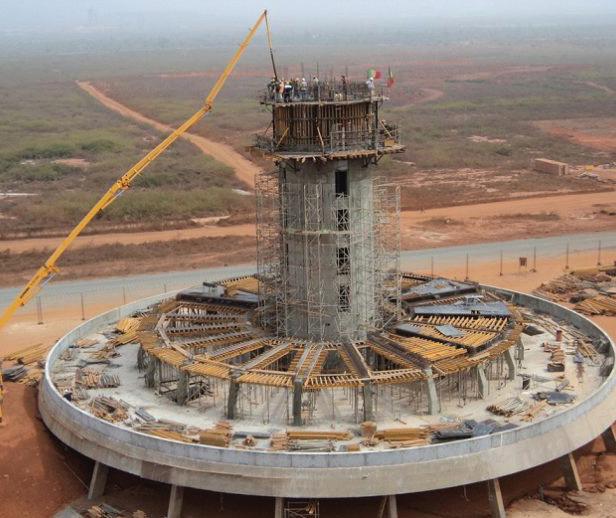
More than just Vertical Access
Africa is a region with enormous infrastructural, residential, and commercial building potential, which requires advanced construction techniques along with the scaffolding and form work systems
The discussion about Africa’s infrastructure development is shifting from “deficits” and “gaps” to opportunities, prospects and ventures. This is not news to investors that have paid close attention to the continent and invested expeditiously.
The fast growing population with most of them being the youth has led to exponential rural-urban migration; with urbanization expected to further drive over 50% of Africans to cities by 2050. These trends and other developments such as the continents vast natural resources have driven a half century or more of growth in Africa, and will continue to do so.
It is important to acknowledge that Africa tests an investor’s patience. Time horizons and return models that work in other markets do not always work in Africa. Even the most experienced, sophisticated investors can be forced to revise their strategy but the need for infrastructure in the area of roads, power, ICT, housing, water and sanitation can offer significant returns to investors and make it all worthwhile.
What is important nevertheless, is that investors should realize there is money to be made for those bold enough to help close the infrastructure gaps.
Robert Barnes
P.O. Box 1316 - 1110 Addis Ababa
Tel: +251 118 955 855,
Cell: +251 930 099 152
Email: ethiopia@groupafricapublishing.com
Ghana Agent
Image Consortium
1st Floor, The Ecobank Building, Tesano.
Tel: 233(0)30 223 2728 I 233(0)274807127 I +233(0)206299159
Fax: 233(0)24 882 8286
Email: ghana@groupafricapublishing.com, Calebhadjah@gmail.com
Kenya Agent Northwest Ventures Ltd P.O. Box 16414 - 00100
G.P.O
Nairobi, Kenya
Tel: +254 20 2679809 I 2679808, 2091305
Email: kenya@groupafricapublishing.com
Nigeria Agent
Rahma Associates
B23/24, Aishetu Emoewa Plaza, 196, Iju Water Works Road, Ifako Ijaye Lga,Agege, Lagos. Tel: 234-1-7347860
Email: nigeria@groupafricapublishing.com
Rwanda Agent
Kolline & Hemed Inc., B.P. 3328, Kigali, Rwanda
Tel: +250 03 748106
E-mail: rwanda@groupafricapublishing.com
Website: www.kollinehemed.org
Zambia Agent
Dayflex Limited, 4th. Floor Tazara House
Dedan Kimathi Road, Lusaka, Zambia.
Tel: +260 211 230 529 / +260 977 756 663
Email: makukasue@mail.com, dayflex06@gmail. com
Dubai-based building materials company, Danube Group, has announced its plans to search for franchise partners in Africa. The main countries the firm is targeting are Ethiopia, Kenya, and Nigeria.
Danube is already selling in those markets, but sees franchising as a viable expansion for the future, strengthening its presence on the continent.
Danube Managing Director, Anis Sajan confirmed the reports and said that they are targeting Africa to be one of their main markets.
“Though we already have a franchise partner in Tanzania, we are still targeting the African market and looking for similar partners in Africa,” he said.
The company has worked with numerous prestigious projects locally as well as other neighboring countries. The projects include: the BurjKhalifa, the Burj Al Arab, the Shangri-La Hotel, the Grand Hyatt, and the Dubai International Airport, among others.
Ritar Power to promote renewable energy in E. Africa
Chinese battery firm, Ritar Power and Kenya’s Chloride Exide recently signed a Memorandum of Understanding (MoU) to promote renewable energy in East Africa.
Karanja Njoroge, General Manager of Chloride Exide, told journalists in Nairobi that they have signed a five year agreement to be the exclusive distributor of Ritar Battery products in Kenya, Uganda and Tanzania.
“Under the agreement we hope to promote uptake of renewable energy solutions such as solar and wind by providing affordable batteries in the East Africa region,” Njoroge said during the first China-Africa Industrial Capacity Cooperation Exposition that ran from Dec. 13 to 16 last year.
The four-day event which showcased the latest Chinese industrial technology was aimed at promoting industrialization by encouraging Sino-Africa industrial cooperation.
Nocart signs agreement for a 10MW solar power plant in Kenya
Nocart has signed a purchase agreement for the delivery of a 10MW grid-feed solar plant to an independent power producing company (IPP) in Kenya. The project is scheduled to start immediately and first deliveries by Nocart are estimated at 6 months after down payment.
The value of the deal is estimated at US$ 14m to Nocart. Cleantech Invest (under name change to Loudspring) owns 19.3% of Nocart.
“Rural electrification in Africa continues to grow and with Nocart on the ground in several African countries they are now playing a critical role in making sure that this electrification is decoupled from carbon emission growth.,” says Alexander Lidgren, CEO of Cleantech Invest.
Fibertex non woven geotextile - an alternative to conventional earth retention
Fibertex Geo-synthetic sand containers (GSC-Bags) have been successfully used by WBB Builders, as an alternative to conventional earth retention systems, at recently completed landscaping projects in Umhlanga Ridge, KwaZulu-Natal.
FibertexFiberRock 30S GSC bags are made from a strong and highly porous fabric, which is mechanically needle-punched together. By filling these bags with a free draining medium
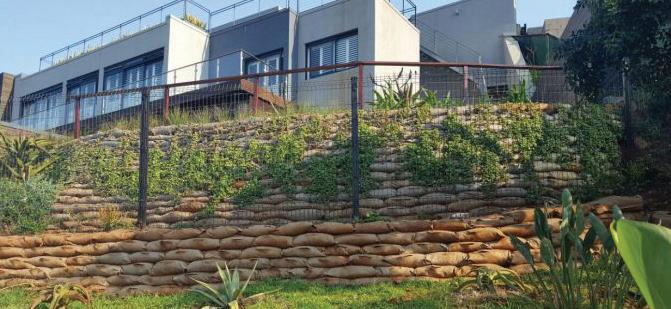
(in this case 40 -70 kg sand), a durable retaining structure can be built, whilst allowing the free passage of water through the structure.
“Fibertex non woven geotextiles, which are manufactured from highly UV stabilized virgin Polypropylene (PP) or recycled Polyester (R-PET) fibers, are gaining popularity in landscaping and building installations. These GSC-bags are an attractive and efficient protection for slopes and also aid in erosion control,” explains Gerard Dirks,
technical manager, Fibertex SA. “Fibertex UV stabilized virgin PP geotextiles are the only non woven geotextiles produced in Africa with certification for durability of over 100 years, in accordance with the latest EN standards.
“Lateral earth retention solutions, incorporating GSC bags, are highly recommended by builders and landscapers, in projects where land space is limited and a green facing is required. WBB Builders in Durban selected Fibertex GSC bags for these projects, as a lightweight, durable and cost effective substitute for traditional lateral earth retention systems.
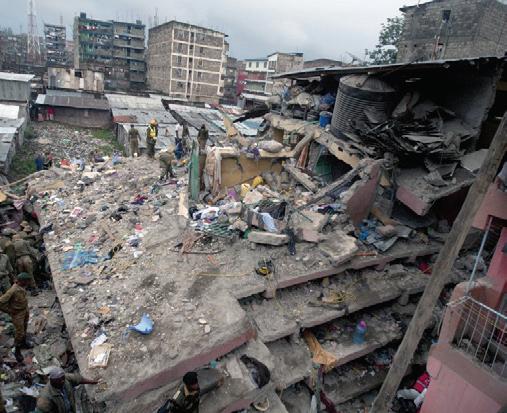
The National Construction Authority (NCA) intends to review its regulations so as to give it powers to prosecute construction offenders in Kenya. This is in the midst of growing number of cases of developers taking shortcuts in the key industry.
This initiative has been thought of after several warnings from the Lands Ministry that most buildings in Nairobi do not meet safety standards, exposing residents to potential disaster.
NCA chief executive, Mr. Daniel Manduku confirmed the news and said that the agency had already petitioned Parliament to oversee the process of amending the NCA Act. At present, NCA directly regulates the professional conduct of contractors and construction workers in Kenya.
“We have identified areas in law that need to be changed and give us enforcement powers,” Mr. Manduku.
“We have identified Huruma, Zimmerman, Pipeline and Umoja as potential disaster zones in the county due to the many buildings that fall below standards,” Moses Nyakiongera, Building Inspectorate secretary at the Lands Ministry said during an interview.
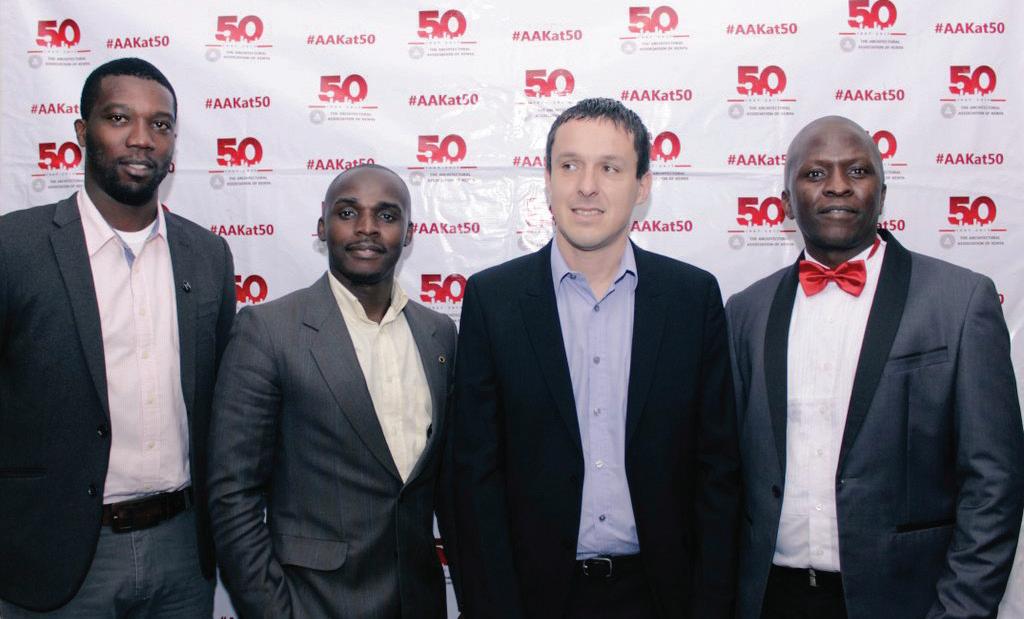
The Architectural Association of Kenya (AAK) held the President’s Dinner and the AAK-Duracoat Awards of Excellence in Architecture 2017 at Villa Rosa Kempinski, Nairobi.
The AAK President’s Dinner is an annual event hosted by the AAK President to celebrate and appreciate the members of the association.
The AAK-Duracoat Awards of Excellence event has been held biannually for the last 10 years. AAK have partnered with Basco Paints Limited over the years to host the Awards, aiming at recognizing excellence in Architecture for projects designed/completed in Kenya. This year’s Awards of Excellence is specially to mark the Association’s 50th year anniversary. The Awards focused on projects that have been designed or completed in Kenya over the last 50 years.
A competent and qualified jury comprising of Dr. Arch. Susan Kibue, Lecturer, Jomo Kenyatta University of Agriculture and Technology, Arch. Jonathan Manning, Managing Director of Osmond Lange
Architects and Planners and Arch. Christian Benimana, Director Rwanda Programs, MASS Design Group and Director, Africa Design Center.
The Best Residential Project award went to Urko Sanchez architects for their Swahili Gem while Bowman Associates scooped the top prize for Best Commercial Project for The Hub, Karen.
The Society of Real Estate Developers of Nigeria (SOREDON) has emerged to support the government in tackling Nigeria’s prevalent housing deficit. As such, the Society is to construct and deliver 10,000 housing units for each of the 37 states in Nigeria. This is contingent upon the federal government providing adequate land in each of the states. The lands must come with complete titled documents for the land provided. A guaranteed take off for the completed project is also a requirement.
The society shall build for each of the local governments a standard modern market. Additionally, a modern functional health centre in collaboration with the federal ministry of health is also in the works. This is courtesy of the local government.
Transparency and accountability
The SA Forum of Civil Engineering Contractors (SAFCEC) has called for the promulgation of the construction empowerment codes.
The association claims the delay in broadcasting the construction sector codes was making some companies non competitive for public sector contracts. SAFCEC executive director Webster Mfebe called on trade and industry minister Rob Davies to publicize the codes which were agreed by all stakeholders in May last year.
The delay, according to Mr. Mfebe, betray policy uncertainty. This, he added, has consequences for business continuity and employment. Consequently, some companies are even rendered non competitive for public sector contracts.
Mfebe stressed the relationship between politics and the performance of the economy. He explained that politics influenced the macroeconomic environment within which an economy can either thrive or dive.
The Executive Chairman, Soredon Limited, Dr. Michael Abiodun Adedeji, said the move will enable the society to perform its function as project executors and societal benefactors. He also explained this as the reason why the membership is restricted.

Attend the 2nd East Africa Port Expansion Conference to gain insights into East Africa’s port development plans and identify opportunities for your business. The event will host top officials from port authorities, port operators, consultants and contractors from the East African region and beyond to discuss the best possible ways to expedite and execute modernization plans for East Africa.
28-30 March 2018
Mombasa, Kenya
- Architectural Association of Kenya
- Institute of Quantity Surveyors of Kenya
- Institute of Engineers of Kenya
- Association of Consulting Engineers of - Kenya
- Association of Professional Societies of East Africa APSEA)
- Kenya Property developers Association
- Institution of Surveyors of Kenya
South Africa - ASAQS - SAICE
- South African Council for the Quantity Surveying Profession
- Khuthaza ( Women for Housing)
- Concrete Manufacturers Association
- Green Building council of SA
- South African Property Owners Association
- Master Builders South Africa
Institute of Surveyors of Uganda
Uganda Institute of Professional Engineers (UIPE) & Uganda society of Architects
Botswana
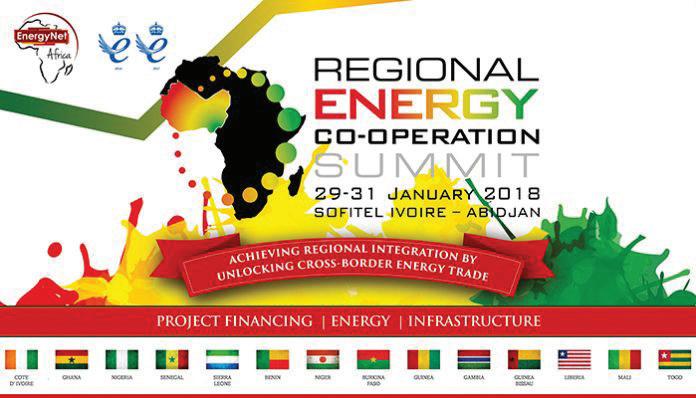
EnergyNet is excited to announce that the annual Regional Energy Co-operation Summit will take place from 24-25 January 2018 at the Sofitel Abidjan Hotel Ivoire, in Abidjan. The Regional Energy Co-operation Summit is an annual investors’ meeting focused on energy, infrastructure and the financing of projects in West Africa.
At the last meeting in Abidjan, the summit addressed opportunities for cross-border co-operation and regional integration, unlocking West Africa’s investments in energy and infrastructure to support industrialization. The 2018 summit will review outcomes from the last meeting, identify next steps and gather West Africa’s energy decision-makers to drive forward regional partnerships and projects.
- Institute of Botswana Quantity Surveyors
- Association of Ethiopian Architects
- Ethiopian Association of Civil Engineers
- Construction Contractors Association of Ethiopia
- Zimbabwe Institute of Quantity Surveyors
- Zimbabwe Institute of Engineers
- The Construction Industry Federation of Zimbabwe (Cifoz)
- Ghana Institute of Engineers
- Architects Registration Council
- Ghana Institute of Surveyors
- Ghana Green Builders Association
- Ghana Institute of Planners
- Association of Building and Civil Engineering Contractors of Ghana
Institute of Namibian Quantity Surveyors Association of Consulting Engineers of Namibia Tanzania
Join us at this event and hear from Suez Canal Authority, developers like Capital Group Properties, and leading geotechnical consultants from Hamza Associates, Arcadis, Parsons and more as they discuss Egypt’s mega projects in more detail. They will also be looking for solution providers who offer the latest technology in piling, TBM, geotextiles, soil improvement and dewatering, in order to execute these projects on time.
• 22nd February 2018
• Cairo, Egypt
- Tanzania Institute of Quantity Surveyors
- Construction Regulation Board (CRB)
- Tanzania’s Registration Board of Architects and Quantity Surveyors (AQSRB)
- Association of Consulting Engineers Nigeria
- Association of Professional Women
Engineers Of Nigeria
- Council of Registered Builders of Nigeria
- The Nigerian Institute of Architects
- American Association of Petroleum
Geologists Africa Region
- Nigeria Society of Engineers
- Nigeria Institute of Architects
- Building and Construction Skilled Artisans Association of Nigeria (BACSAAN)
- Zambia Institute of Architects (ZIA)
- Association of Building and Civil Engineering Contractors (ABCEC).
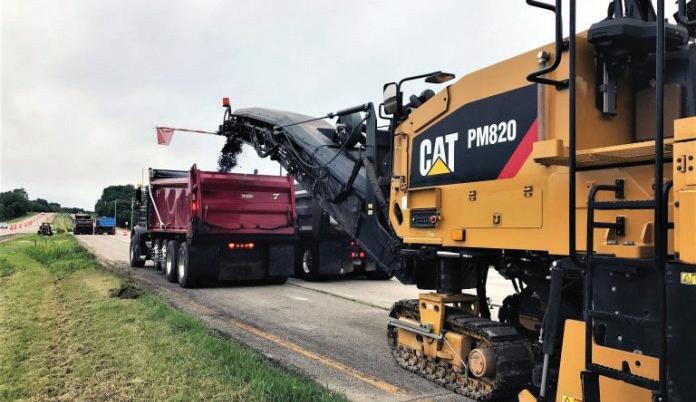
Caterpillar (Cat) has introduced three new cold planer models that the company says are capable of controlled, full-depth removal of asphalt and concrete pavements in a single pass.
The new PM820, PM 822 and PM825 are each powered by a Cat C18 engine producing 755 horsepower. The turbocharged C18 features an air-to-air aftercooling system with a variablespeed fan. Cat says the engine “responds quickly to operating demands while keeping exhaust temperatures low and maintaining needed airflow.”
The half-lane milling machines weigh between 79,630 to 82,650 pounds and offer cutting widths between 79 and 98.6 inches.
Each machine features three cutting settings controlled from a keypad. Cat says these settings match rotor speed/torque to the operating conditions at hand. The rotor meanwhile is equipped with three-piece quick-release tool holders and carbide-tipped cutting bits arranged in a chevron pattern. Other rotor systems are available options along with Cat Diamond Bits which the company says are sharper and last up to 80 times longer than conventional carbide bits.
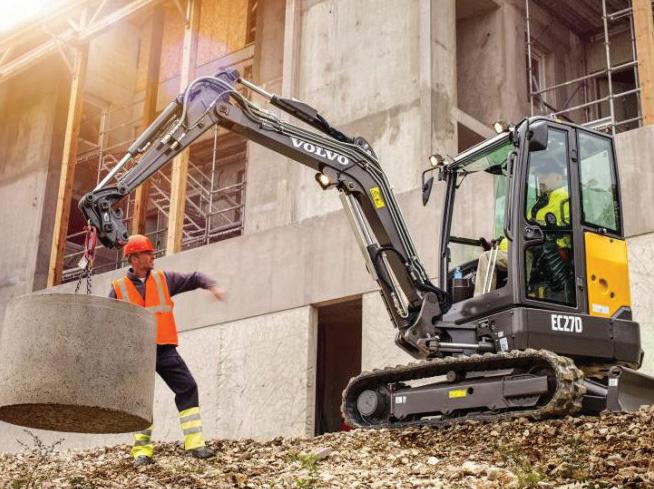
Volvo Construction Equipment has updated its 2.7-ton mini excavator model saying it represents a versatile and powerful combination of concepts.
Powered by a 20.9-horsepower Volvo D1.1A engine with passive regeneration, the Volvo EC27D boasts 9,600 pounds of digging force and “impressive” lifting capacity, the company says, adding that it is similar in size to the ECR25D short swing model, but offers greater power and stability than that machine.
Though this new machine uses 5 percent less fuel and has 30 percent less horsepower than its predecessor, the EC27D maintains the same breakout (5,528 lb.-ft.) and tear out (4,060 lb.-ft.) forces.
The machine comes standard with a 2.6 cubic-foot bucket but can be paired with a wide range of Volvo mini excavator attachments via a pin-grabber mechanical quick coupler.
Though a ROPS/FOPS canopy comes standard, Volvo’s Care Cab is an available option on the EC27D and offers 360 degrees of visibility, ample storage and “excellent” noise and vibration insulation.
JCB is packing big power into a small package
JCB has designed its new compact track loaders, the 210T and 215T, to be small enough for work in confined spaces, but packed it with enough power for lifting a pallet of sod or brick.
The machines weigh less than 10,000 pounds each and have 74-horsepower JCB Diesel by Kohler engines that require no diesel particulate filter or diesel exhaust fluid.
The radial-lift 210T has a rated operating capacity of 1,900 pounds at 35% of tipping load and 2,650 pounds at 50%. The vertical-lift 215T has a rated operating capacity of 2,100 pounds at 35% tipping load and 3,000 pounds at 50%. An optional bolt-on chassis counterweight allows additional capacity.
Both machines can operate high-flow of attachments of up to 30 gallons per minute, the company says. They have JCB’s single boom design, which gives operators 60% more visibility than conventional twin-arm skid steer designs, the company says.
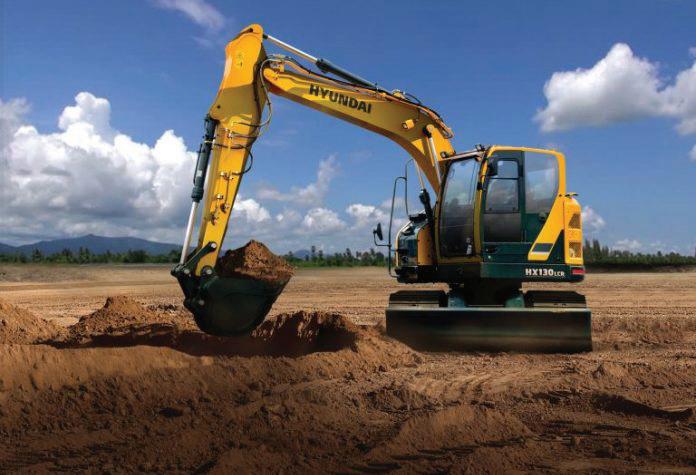
Hyundai has introduced its HX130LCR, a 13.5-ton compactradius excavator, and its companion, the HX130LCRD, which includes a dozer blade.
The machines made their official debut at the ICUEE show.
The cab features an 8-inch touchscreen monitor with an optional 360-degree virtual view of the job site environment around the machine. The system includes Intelligent Moving Object Detection, which warns the operator when objects come within 16.5 feet of the machine.
The hydraulic system offers Boom Float mode for better grading control and Fine Swing mode for improved load control when swinging.
Cycle speeds are up to 13 percent faster, and the Tier 4 Final 73.6-horsepower Perkins engine delivers 10 percent better fuel efficiency than previous models, the company says.
The LCR model has a standard operating weight of 29,750 pounds; the LCRD’s standard operating weight is 31,290 pounds. The LCR has a max digging depth of 18 feet 4 inches, digging reach of 27 feet and bucket digging force of 22,860 foot-pounds.

Although businesses in any industry affect their customers’ lives, construction firms have a unique role: contributing to the structures and spaces where people work, shop and live.
From small woodworking shops to major construction firms, builders and construction managers don’t forge run-ofthe-mill customer relationships. With so much physical activity and output involved in managing a construction firm, site or individual job, it can become easy to overlook the many other aspects involved with running a business in the industry. Simultaneously working with multiple clients and acquiring new leads can get hectic, and the fast pace of daily
details can divert construction managers’ attention away from the parts of the business that matter most: crafting quality work while maintaining solid customer relationships.
Customer relationship management (CRM) platforms can help with the latter goal. However, the CRM market is saturated with options. What priorities matter most to an industry like construction management? Here are the top four aspects of CRM every construction executive should evaluate.
When managers are working on multiple jobs, there’s one technology feature that can help
"Customer relationship management (CRM) platforms can help with the latter goal.
make or break their ability to pull it off: smart project management. Grouping tasks and timelines into pipelines or milestones can help track progress, new employee goals and new opportunities to increase productivity. Look for a CRM that not only focuses on project management, but does so visually–and allows customization functions, such as importing files, importing contacts and emails, and setting reminders for tasks.
At its core, a CRM is designed to manage contacts, prospects and a sales funnel. As prospects move from interested parties to loyal customers, construction managers can use CRM software to quickly monitor the employees responsible for each sale, as well as details about each customer.
Managers can use the information to better forecast close dates, using those insights to optimize sales and enhance client relations in the future.
3.
Nearly any CRM will offer the ability to report progress on opportunities and ongoing activities. However, some functionalities won’t extend beyond basic graphs. When shopping for a solution that proves its ROI for a business, managers should be sure they’re able to define the criteria included in their reports, and be able to filter results based on the categories that matter most to their organizations. A CRM also should have the capability to create graphs that communicate sales and set alerts or schedule automatic reports.
New solutions will only add complexity to business if they don’t play nice with the existing IT setup. Construction managers should take stock of the applications and solutions most important to their firms: Sales, calendaring, file sharing, email, accounting and productivity apps tend to rank high on this list. Ideally, they should choose a CRM that will integrate with those technologies. Importing app data helps provide a 360-degree view of a business, which improves the quality of insights, analytics and potential ROI for a manager. CRM systems help construction managers quickly access client information and maintain, or even raise, customer satisfaction, as their level of detail makes it easy to add a personal voice to every client interaction. However, managers should prioritize solutions that are simple, easily customized, rich in project management and integration capabilities, and can prove their value to the company’s bottom line.



Africa’s infrastructure backlog is well-documented, with the World Bank placing it at an annual value of approximately $93 billion a year, writes Gerald Gondo, RisCura.
Globally, infrastructure is increasingly being considered as an accepted asset class within a number of pension plans’ investment policy statements. While acceptance is slow, it is growing. The OECD Annual Survey of Large Pension Funds and Public Pension Reserve Funds (2015) surveyed large global pension plans from 2010 to 2014. The funds represented $7.8 trillion of global savings and a sub-set of these funds reported an increase in infrastructure asset allocation over this period, up from 2.8% to 3.5%.
Infrastructure is broad in categorization, but how do institutional investors decide where to invest? This question is best answered by the World Bank Group (WBG) Sustainable Infrastructure Action Plan FY 20122015 – a guideline on how the WBG will respond to infrastructure financing needs in developing countries. The plan provides guidance to African institutional investors on infrastructure investments. It identifies three priority infrastructure categories that African institutional investors can draw upon:
Ripple Effects: An example of this is a regional power project with ripple effects beyond the host country, or a rural infrastructure package that boosts agricultural productivity with ripple effects on rural income and development; Bottleneck: Investments that unlock the volume, cost, and quality of economic activity. An example is the development of an accessible source of clean water that provides rural women with more free time by reducing time (wasted) in sourcing clean water and

"Gerald Gondo,
He was instrumental in the establishment of RisCura Zimbabwe in 2014 after identifying the country’s need for an independent advisor with proven credentials in advising institutional investors.
increasing their time for other economic activities; and this warrants a bold like Ripple effects and Bottleneck: Infrastructure investments that interconnect two markets or areas such as a bridge within a region or a cross-border power interconnector, international road corridors, or fibre-optic links in a region.
The plan’s guidelines, Africa’s infrastructure backlog and the global dynamic of infrastructure now being included as part of pension fund asset allocation provide African pension funds with an opportunity to consider this as an asset class within their strategic asset allocation.
Infrastructure investments are long-term and its primary appeal is its potential to deliver a predictable cash flow stream over time.
In principle, this asset class presents a compelling natural ‘fit’ to the longer-term liability profiles of most pension funds that demand (ideally) predictable matching cash flows.
From a public policy perspective, African governments are providing clear direction on how to address the infrastructure deficit.
From a public policy perspective, African governments are providing clear direction on how to address the infrastructure deficit.
The New Partnership for Africa’s Development (NEPAD) supported the Programme for Infrastructure Development in Africa (PIDA) to identify key
cross-border infrastructure investments between 2012 and 2040.
African leaders also committed to prioritize eight regional infrastructure projects under the Presidential Infrastructure Champions Initiative (PICI) in 2012.
More recently, NEPAD established the Continental Business Network (CBN). The network aims to facilitate private sector engagement and leadership in important continent-wide infrastructure projects, particularly the regional infrastructure projects under PIDA.
While the supra-national policy environment appears progressive, the rules and restrictions faced by many pension funds and long-term savings pools (insurance) remain constrictive.
The International Organization of Pension Supervisors (IOPS) surveyed 32 countries in 2011, with the results highlighting regulatory restrictions primarily towards unlisted and alternative investments such as infrastructure.
The IOPS research provides remedial advice on the need for national regulators to review regulations for these investments.
The specialized nature of infrastructure as an asset class has also seen the emergence of specialist private equity funds and fund-offunds offering investors exposure to it. It therefore makes sense for institutional investors to consider developing a specific infrastructure investment policy to form part of their broader investment policy and investment governance policies.
The infrastructure investment policy should feature the same metrics applicable to their traditional assets, such as allocation factors, risk and return budgets, concentration limits and independent valuation parameters, to name a few.
African institutional investors may be lured by the high, stable and long-term cash flow and inflation protection potential of infrastructure investment, coupled with its low correlation to traditional asset classes.
To read more and to comment on this story visit: http://www.

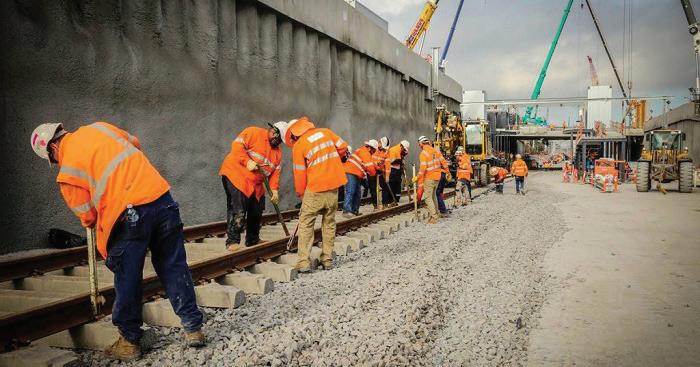
Africa today accounts for 12 percent of the world’s population but can only boast of generating one percent of the world’s GDP. Why is this? The answer lies in the wide gap that exists between its infrastructure needs and its actual present state. Adequate infrastructure is the most basic requirement in order to compete on the global economic stage. It is no wonder then that this infrastructure gap has meant that Africa only contributes two percent of global trade. In order to change this status and put Africa at par with its peers on the global scene investment would need to reach US$ 6tn by 2040 according to the Global Infrastructure Outlook Report 2017 but current projections fall short and put the estimated figure at 40 percent less at US$4tn making the target of being globally competitive a distant dream. Africa’s emerging middle class of 340 million has put additional pressure on the need for socio economic infrastructure. This middle class needs housing, piped water and a good
road infrastructure on which to drive their newly acquired vehicles. As a whole 329 million Africans live without access to potable water, while 695 million live without basic sanitation. Add to this the fact that 34 percent don’t have access to roads and 620 million don’t have access to electricity and you begin to see the dire situation that the continent faces.
According to the World Bank, the largest infrastructure deficits in Africa are to be found in two key areas: power and roads. To put it into perspective, sub-Saharan Africa’s total power generation is equivalent to Spain yet it has a population 20 times that of the tiny European country that is a fraction of the size of Africa by comparison. Africa’s population needs power and yet 620 million people still don’t have access to electricity that essentially drives economic development. When it comes to roads, two thirds of rural
Africa lives further than two kilometers to the nearest road while the global average is one third for developing countries.
Perhaps a most worrying statistic is that the quality of these two ingredients of economic development - that is power and roads - has actually dropped from 6 percent to 4 percent over the last 10 years given that the investment has not kept pace with the cost of maintenance and construction.
The result of Africa’s infrastructure deficit has been higher cost of goods and services in addition to reducing the quality of life for most Africans.
Goods are costlier because of the high power costs that translate to higher costs of manufacturing goods, poor roads also contribute by making the costs of transportation of the goods to market higher. It is no wonder that Africa contributes only two percent to global trade. Africa is just not
competitive enough.
On the other hand the quality of life is affected when there lacks water supply, sanitation and sewerage disposal putting at risk the very health of the population.
Economic growth has been hampered by the limited opportunities for cross border trade as a result of poor transportation and communication. Studies, such as that by the Infrastructure Consortium of Africa (ICA), have shown that poor road, rail and harbour infrastructure adds 30-40% to the costs of goods traded among African countries. This has affected Africa’s broader economic performance and regional integration.
A recent World Bank study on infrastructure confirmed the challenges with regards to Africa’s economic development. It found that the poor state of infrastructure in sub-Saharan Africa, that is electricity, water, roads and information and communications technology (ICT), reduced national economic growth by two percentage points every year and cut business productivity by as much as 40%.
It can now be appreciated why infrastructure services in Africa cost more than almost
any place in the world, according to the Infrastructure Consortium for Africa. For instance, African rural population pay around 60 to 80 times per unit more for energy than urban populations in the developed world.
But all is not doom and gloom for Africa. Despite everything Africa is in a unique position to leap frog in many areas and close the infrastructure gap in
innovative ways and it is thanks in no small measure to the ‘Fourth Industrial Revolution (4IR). It means Africa doesn’t need to follow the long arduous path that the developed world used to achieve their high level of development. Just look at the mobile phone and you see one clear way that technology has saved Africa thousands of miles of copper wire for telephone connectivity.
When it comes to providing power to remote areas far from the grid, solar power has meant that these areas can still obtain electricity and even have a bill payment system based on mobile phone money transfer. MKOPA is one such company in Africa and has reached over 140,000 households offering pay as you go solar power while solar kiosks offer battery charging services in these remote areas. These innovations are closing the power deficit needs for Africa ingeniously.
And who would have thought that drones would offer delivery services where road infrastructure was unavailable. This is the new reality being pioneered in several areas in Africa meeting the challenge of Africa’s low road and rail density which is the lowest in
1. Bagamoyo Port
2.
$11bn Expected to become Africa’s largest port, handling 20 million containers per year
$11.117bn
5. Ethio-Djibouti
6.
$6.8bn
Expected to link all sea ports and create business hubs meant for commercial activities.
Expected to provide 310MW of reliable, low cost energy to Kenya’s national grid
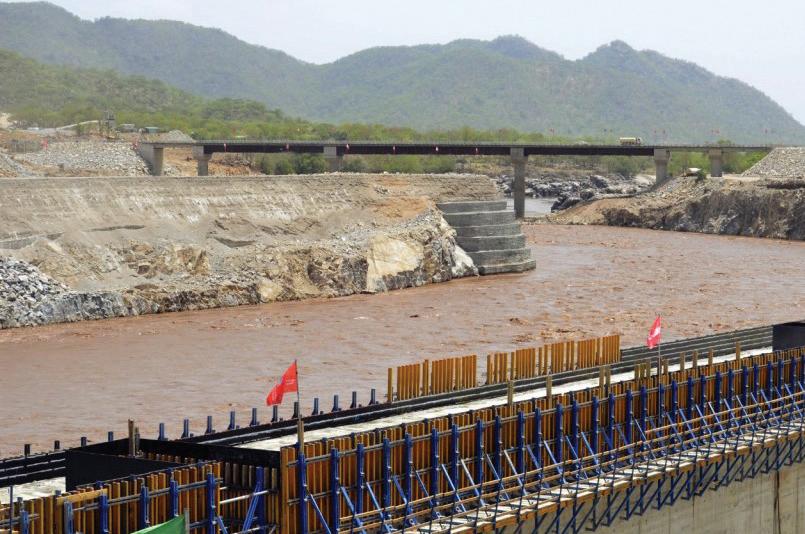
$5bn Expected to generate 6000MW of electricity once completed.
Expected to provide a link to the countries’ industrial parks and dry ports through a cost effective, reliable transport
Expected to deliver renewable energy to Egypt and support the diversification of its generation capacity at a highly competitive price
the world. An example is San Francisco startup Zipline which launched a for-profit drone delivery service late last year, transporting crucial medical supplies to remote regions in Rwanda
The emergence of ride-sharing and trafficmonitoring start-ups means that Africa can
make travel and traffic flows more efficient and optimized reducing congestion and time wasted on roads by reducing the number of cars on the road. Broad band connectivity also offers opportunities for work-at-home with the effect of also reducing traffic congestion on roads and could potentially save Africa from
building elaborate road networks in urban areas as efficiencies are achieved scaling up these innovations.
These opportunities are emerging road maps to prosperity for Africa and we are just seeing the tip of the ice-berg today.
But roads will still be needed to deliver manufactured goods and power to make the goods and according to some reports Africa will need to spend US $55bn every year until 2030 to achieve global levels of infrastructure. When it comes to water, the World Bank says sub-Saharan Africa has a combined infrastructure deficit for water and sanitation of an estimated US $93bn annually.
Six of the world’s ten most rapidly expanding economies which include: Ethiopia, Tanzania, Djibouti, Ivory Coast and Ghana according to the IMF’s World Economic Outlook of 2016; are now located in sub- Saharan Africa and the reason for this is Africa’s abundant resources. Africa is richly endowed with agricultural and extractive resources sorely needed in Asia and the rest of the developed world and this has stimulated investment in roads, rail and




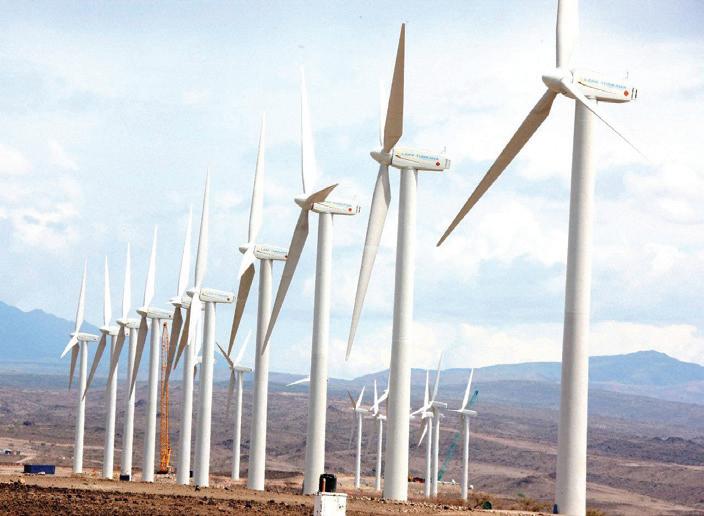
ports in the quest to feed Asia’s growing appetite for Africa’s resources. For instance, the US $3.4bn Ethio-Djibouti Standard Gauge Railway; of which once fully operational, the first SG electrified railroad on the continent is expected to provide a link to the countries’ industrial parks and dry ports through a cost effective, reliable transport. Private investors however need to be assured that government commitment is sustained to completion of projects and so they will only be involved in projects that are deemed high priority by governments. Policy stability, timelines and revenue certainty are key. For example in Kenya a project such as Lake Turkana Wind Power the largest wind farm in Africa has been completed but the government’s failure to connect power from the
project to the national grid has meant that it is unable to evacuate 300mw of power from the energy project.
Numerous financing options are on the table for Africa which include Africa’s foreign exchange reserves invested abroad, Pension funds and Sovereign wealth funds Effectively addressing Africa’s infrastructure gap is essential as it will strengthen the transport, power, health, education, water and sewage sectors, improve quality of access for all, significantly increase economic capacity and give countries wider access to their large natural resource deposits, enabling more efficient exports
That so much has been achieved in the face of these infrastructure problems emphasizes the huge potential that exists across the continent.
A special blend of powder chemicals, Quartz sand and Portland cement.
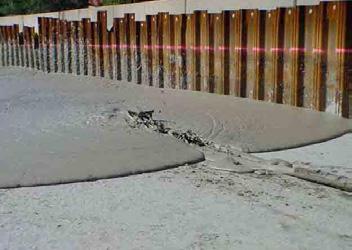
When mixed thoroughly with water it becomes a flowing consistency of cement slurry which when poured on a rough concrete surface, it finds its own level to give a smooth and level floor for subsequent finishes to be placed on it. The product should be spread evenly over the surface to be treated.

Formulated for:
Quick application - Fast drying – usable after 24hrs
Smooth and level floor achieved very easily
Subsequent surface finish can be applied immediately
Comes in 25kg packaging – add water and ready to use
Non-Labor intensive – cover large areas with ease
Up to 8mm Thickness can be attained


It is fast drying and not labor intensive, large areas can be covered very quickly.

A special blend of dry chemical which is mixed with water to achieve a flowing consistency that is self leveling when poured over a rough surface.
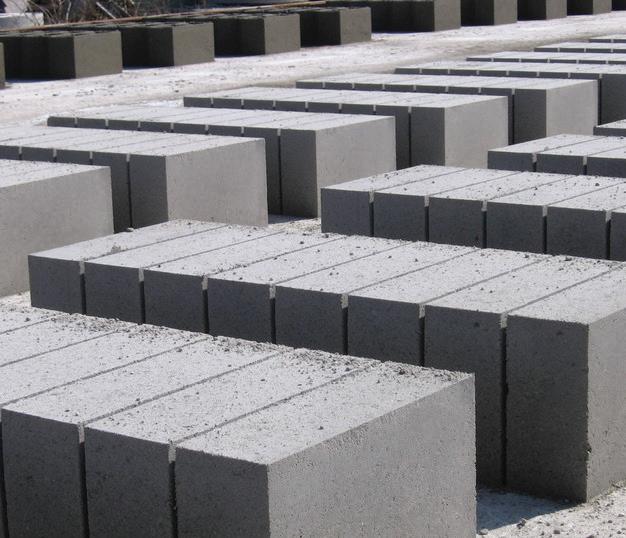
Starting any aerated and foamed concrete production, one has to take into consideration the demand for foamed concrete and aerated concrete, cost of equipment and technological complexity plus raw materials. This is according to Elizabeth of Inntechgroup a modern Russian enterprise that designs and manufactures the equipment for non-autoclaved aerated concrete.
Both materials have high flow ability, low selfweight, minimum consumption of aggregate, controlled low strength, and excellent thermal insulation properties. So there is no significant difference for customers between aerated and foamed concrete blocks.
Let us take a closer look at the equipment which is used for production of foamed and aerated concrete blocks.
Mixer designed for foamed concrete production is technically more complicated. Mixing process is going under the pressure by means of foam generators or in the open mixer by means of gerotor type pump. It is vital to maintain the same pressure level but that leads to excessive wear of fillers, gland seal etc. The gerotor type pump is more expensive and technically complicated. On the bright side is slow speed of mixing process and lesser load for bearing unit, you also are able to pour the mixture into the moulds by hoses from distance.
Mixers designed for aerated concrete have simpler construction and easier to use as they mix liquid mixture. All that you need is just to provide mixer with small vanes and high speed for proper mixing process. There is no pressure and special drain devices – mixture is discharged by gravity. There is disadvantage though – you have to arrange movement of moulds or mixer as there is no way to pour the mixture into the moulds from distance.
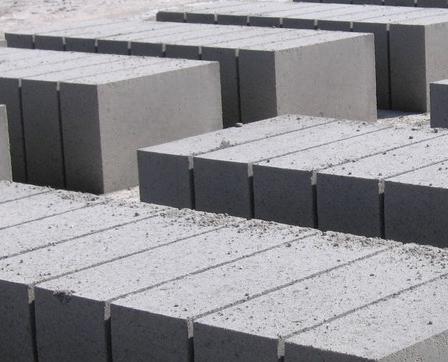
The main requirements for molds are size accuracy, quality locks, which prevent leaks, and smooth surface. The moulds are made of thin walled sheet metal with frame made of shaped tubes. These moulds are light, easy to use, move and its production doesn’t require a lot of investments.
Battery molds are popular among foamed concrete producers. These molds are constructed by workers before pouring process and that takes a lot of time. Strict requirements are applied for materials used for production of these molds as they directly influence geometry of blocks and the speed of its construction. That is why molds are made of thick – walled metal which makes it heavier and more expensive. More over at first these molds promote excellent geometry of blocks but later deformations are unpreventable.
There are various kinds of dosing systems for aerated concrete as well as for foamed
concrete. They have similar characteristics so there is no significant difference.
Using battery molds for foamed concrete you won’t need to cut the array. But some producers use cutting technology for foamed concrete as well as for aerated concrete. Foamed concrete need more time to develop enough strength before unmolding, it takes from 8 to 20 hours depending on usage of heating devices. As for aerated concrete – it can be cut just in 1.5 – 3 hours after pouring. There is another difference in cutting technology: aerated concrete is cut buy string saws manually or by automated cutting machine. To cut foamed concrete one need to use circular or belt saws. Surely string cutting device costs less than set of saws, besides saws have accelerated wear.
Surely the main difference between foamed concrete and aerated concrete is production technology. Foamed concrete is produced by

mixing sand, cement, water and foaming agent. Foam is supplied by foaming machine directly into mixer with targeted frequency and weight. During the mixing process particles of cement and sand envelop foam bubbles. The mixture is poured into assembled and lubricated mold. The array gain stripping strength during 1224 hours.
The main technological difficulties. Maintaining of the same quality of foam requires your continued attention. Unstable foam causes unstable density of product. But the main difficulty is slow development of strength. Production of foamed concrete requires usage of cold water as hot water destructs foam. But cold water doesn’t promote development of strength moreover foaming agent itself slows down cement setting. So that development of stripping strength will take 24 hours, further development of strength is also going on very slow. These factors directly influence consumption of cement.
Aerated concrete. The main components for aerated concrete production are also sand, cement, water. These components are mixed and last minute blowing agent – aluminum powder is added. The mixture is poured into mold and reaction starts. Air bubbles are created as a result of chemical reaction and they blow up the aerated concrete mixture. In 20-30 minutes reaction stops and the array starts to develop stripping strength. Hot water is used for production, its temperature is about 40-60 C. Heat is also generated during reaction so that the temperature of the array is about 50-60 C. That enables rapid development of strength. In 2-3 hours the
array should be cut per blocks. The main technological difficulties. The main difficulty is development of proper technological procedure and composition depending on your raw materials. There is no any unique composition for aerated concrete. The factors which influence the process are water, its quantity, alkalinity, quantity of Aluminium powder. As a rule suppliers of equipment provide full training services and technological regulations for each client individually.
There is no difference for your customers whether it is foamed block or aerated concrete block, they will compare quality and price. As the quality is the same

they will pick the cheaper one. Producers should keep in mind that equipment for foamed concrete is technically more complicated, battery molds are more expensive and because of slow circulation you will need bigger quantities. The aerated concrete production equipment will cost less because of less consumption of metal. Moreover aerated concrete equipment is cross functional – you can produce blocks of any sizes! You also will need less quantities of cement (20% of savings) so that prime cost of aerated concrete blocks is much more less that is why the product is more competitive! And competitiveness of the product is half the battle for any producer of construction material.








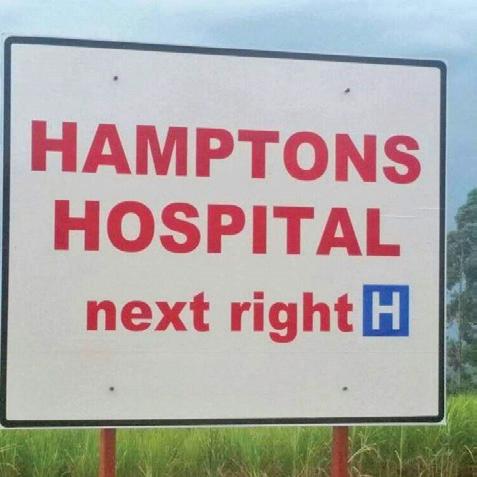

Amulti-billion shilling project is taking shape right in the heart of Kakamega County in Western Kenya.
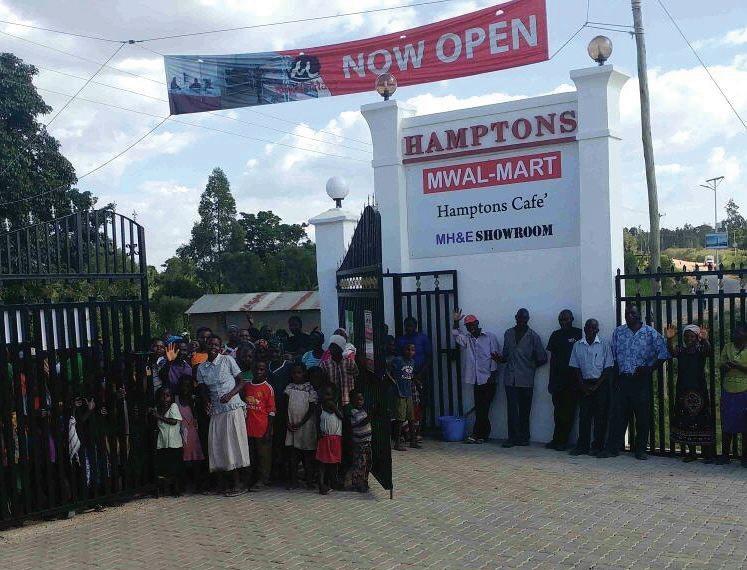
Mwale Medical and Technology City (MMTC) is a massive sustainable metropolis located in the Lunza area of Butere, a sub county of Kakamega. With full completion scheduled for 2020, MMTC has stirred the hitherto sleepy rural community into the largest single private development in the country and generated excitement across the county and abroad.
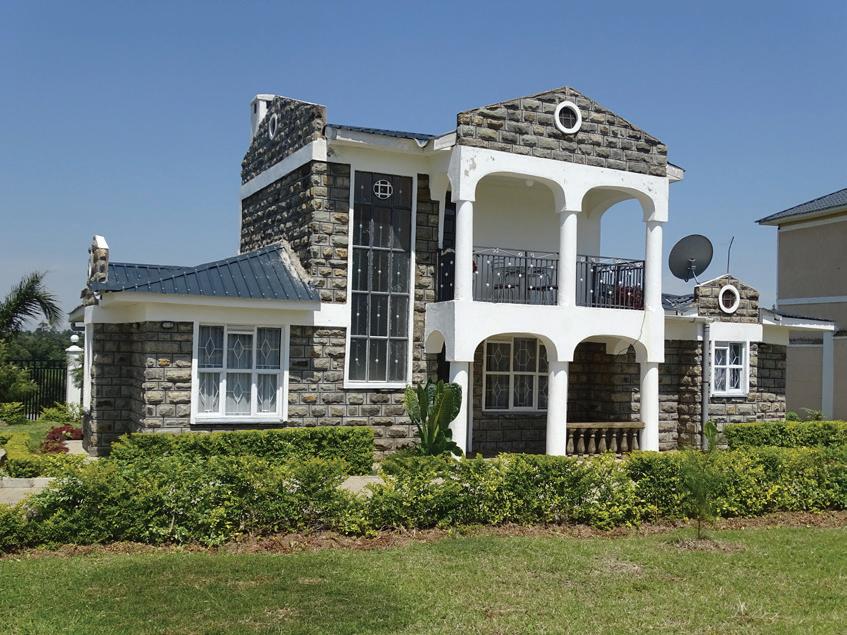
The brainchild of Mr. Julius Mwale, a Kenyan investor based in New York, MMTC consists of the world’s largest hospital, multiple shopping malls, a technology hub, an airport, thousands of homes and leisure facilities including a 36-hole golf course. The development is backed by an extensive road network, street lighting and an independent power plant. There will also be cable-car transport within the city. But why Butere? Ordinarily, such massive developments take place within or near major cities in order to attract the middle to high income population with substantial disposable income.
“The main issue was land”, says Mr. Mwale. “Most large projects are mired
in land controversies but given our location, it was easy for us. And because of the market that we are targeting, that is East Africans, it was a much better location than Nairobi.” He reveals that an elaborate feasibility study was conducted between 2007 and 2012 to assess the viability of the project. It emerged that approximately 180,000 East Africans travel to India and South Africa annually to seek specialized medical services. “We decided to offer those services here and possibly capture at least a third of that market”, says Mr. Mwale, who is also the lead investor.
The project, set on 5,000 acres, consists of three phases. Phase 1 comprised a shopping mall, supermarket, bed and breakfast accommodation and 90,000 square feet of private residences. Work commenced in 2014 and was completed in July 2016.
Phase 2, consisted of the first section of the hospital, over 70km of roads built to all-weather standards including large stretches of tarmac, and more than 320 solar street lights that light up the entire complex.
The first section of the hospital offers cancer treatment services while other departments such as renal, heart and
infectious diseases will be added in Phase 3.
Phase 3 itself, which began in September 2017 and will continue through 2020, comprises 4,800 homes for doctors, nurses and other health workers built around a 36-hole golf course and a power plant that utilizes waste from the hospital and city. The power plant is expected to generate 144MW, out of which the city will use about a fifth while the surplus will be fed into the national grid. It is also in Phase 3 that the technology park for mobile and medical technology will be completed. “Over 10,000 engineers are expected to be based here”, says Mr Mwale. Other major components of the last phase are the airport, convention centre and a water park for recreation, all connected by cable car.
MMTC cost of construction is $2 billion funded by US investors and supplemented by the power purchase agreement and sale of homes.
One of the reasons projects of this magnitude fail is opposition from the local community. But MMTC has been careful to avoid this pitfall by heavily involving the community around the project. “When we came in, land here was going for Kshs. 150,000 an acre”,
says Mr Mwale. “Today, the same is going for Kshs. 3,000,000.” The local farmers are also the ones supplying the land in an arrangement where the developer gets their homes upgraded and builds them rental units. “No one is being displaced”.
This is one of the major reasons the community is fully supportive of the project. Some families who were previously earning Ksh 20,000 from their sugarcane farms over a period of more than a year are now earning Kshs. 40,000 per month.
In addition, the project has created many jobs for the community and will continue to do so as the metropolis comes together.
The project’s success is also clearly attributable to Mr. Mwale’s extensive business networks in the United States where has resided for nearly 20 years and has been able to convince many to buy into his dream of MMTC. Currently a host of US companies, some of which he is a shareholder, are heavily involved in the project.
“If you are building something for the community, it is easy to get support; it is as simple as that”, says Mr Mwale. “If it is just about you, then things will be very different and you might not go far enough. I have lived in this area (Kakamega) and therefore know what the people need. By building a big hospital, we are helping the people to live their lives to the fullest.”
Mr. Mwale is upbeat about the future of MMTC. “In 15 years, this is going to be one of the largest cities in Africa.” The city is modeled on Phoenix City in Arizona, which was built in a desert amid skepticism but is today famous for its high-end spa resorts and designer golf courses.
For more information, please visit MMTC at Hamptons Mall, Hamptons Hospital Road off Road D260 at Lunza Primary School, Butere Sub-County, Kakamega County, Kenya. Contact them at: Email: info@mwalemedicalandtechnologycity.com Phone: +254 706 806615 For additional information, visit: www.mwalemedicalandtechnologycity.com www.facebook.com/mmtc2020 (updated daily)
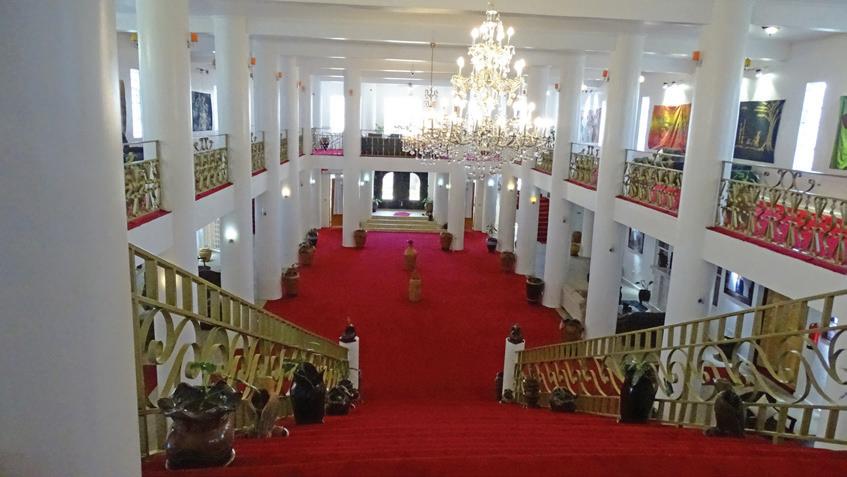
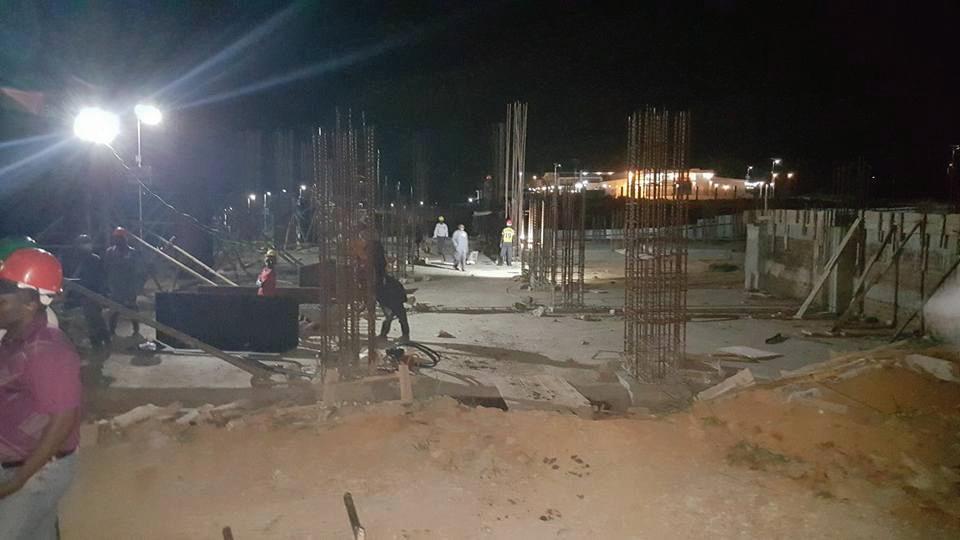
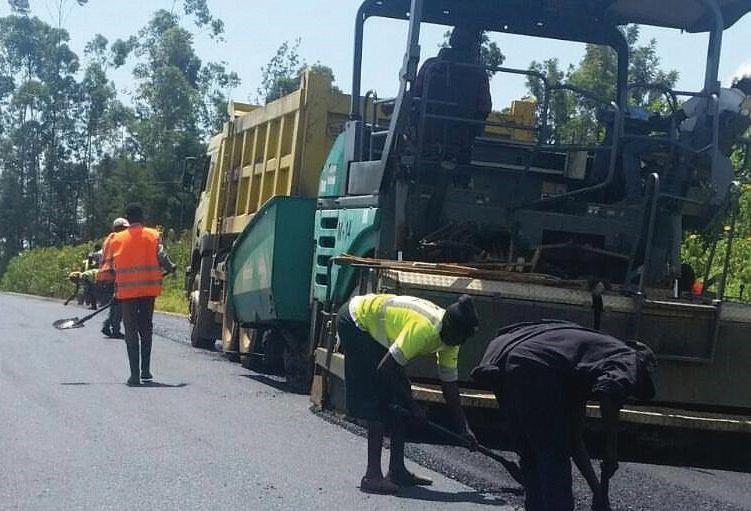
New roads within the city being tarmacked.
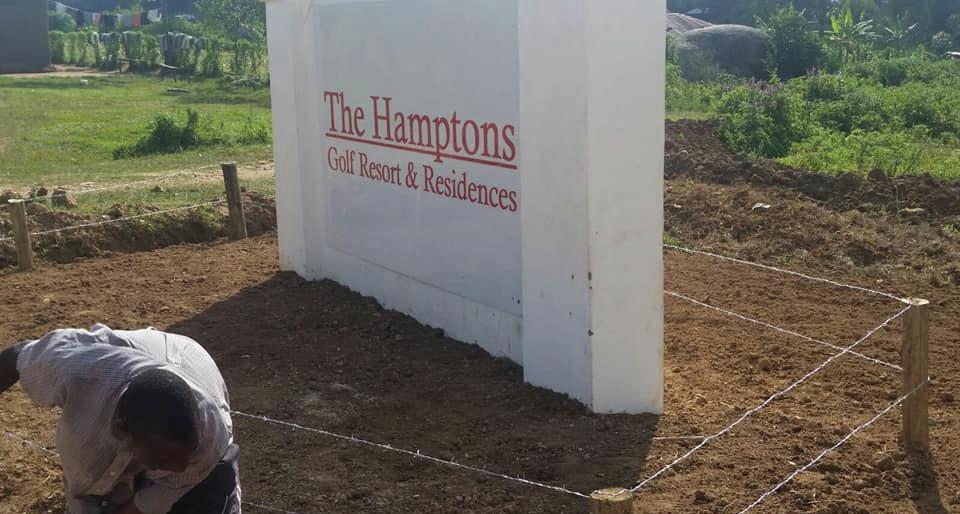
Golfing will be among the leisure facilities offered.
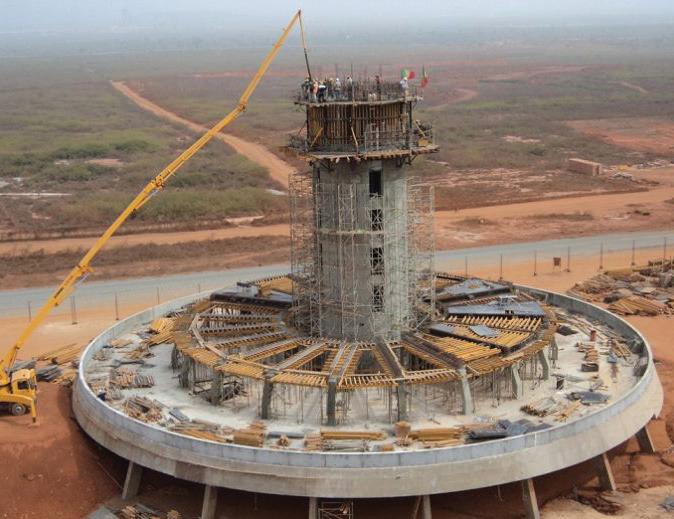
African contractors have normally utilized primitive bamboo and wood contraptions as a cheap but unsafe alternative to form work. Recently African construction authorities in their bid to increase construction safety have turned their focus towards starting to regulate and set standards for construction, equipment and building materials. Mr. Gavin Pinto, Senior Marketing Communications Professional from RS Group a UAE head quartered 360° form work engineering solutions provider covering major markets across Africa, Middle East and Asia mentions that, this regulatory interest in promoting site safety has resulted in an increasing number of contractors willing to adopt form work technology.
Africa is a region with enormous infrastructural, residential, and commercial building potential, which requires advanced construction techniques along with the scaffolding and form work systems that make such growth possible. According to XabierHarreguy the Africa Export Manager at ULMA Construction in Spain, economic and demographic growth, together with reforms in urbanization regulations, are strongly stimulating
growth in the construction industry in Africa. “This strong demand has had a direct effect on the gradual introduction of companies that, like ULMA, develop innovative and safe form work and scaffolding systems that guarantee productivity on-site,” he says.
The Formwork and Scaffolding trade is a very labour intense trade therefore the safety of labourer is most essential. New technologies try to minimize the labour intensity to make it more safe, this means reducing the labour element; this is according to Marvin of Vivaone of the market leaders in supplying and erecting Formwork and Scaffolding in South Africa. “With the unemployment rising in Africa, the continent prefers old systems which are almost redundant but effective which means less cost for material and enough for labour,” he adds.
In some North African markets, such as in Algeria, Morocco, or Tunisia, as well as in South Africa, the use of modular formwork systems is widespread and largely considered standard; the acceptance of innovative formwork and scaffolding systems
has slowed down and is proving to be more gradual than hoped. “We can say that there is a direct relationship between the nature of the construction company that operates in these markets and the degree of technological innovation applied, with European and American firms generally demanding a higher level of technological sophistication,” adds MrHarreguy.
The African market is receptive to technological innovation, and more so if it is accompanied by comprehensive services that include a study of the possibilities for each project, the technical design of the formwork and scaffolding solution, and provisioning of the best-suited material for the project.
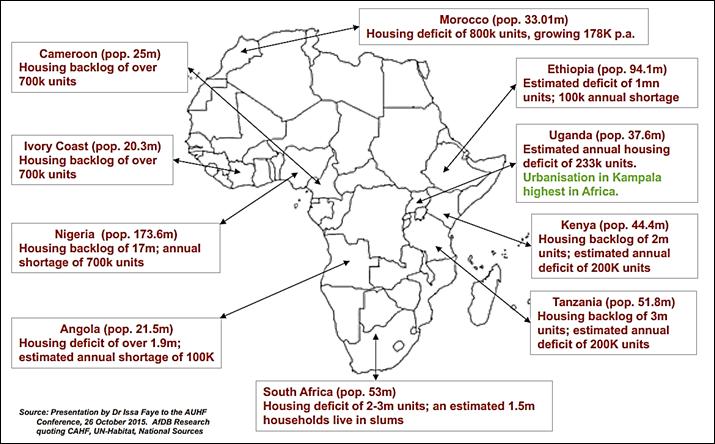
According to Mr Johan Vermaak of Peoscaff in South Africa, the market is getting exposed to a system called ring lock system which is imported and that is used mainly for light to medium duty construction. “At this stage ring lock system is a fairly new concept to the market and is not well known but steadily making a stance in the market,” he added. Therefore, the demand for quality is steadily rising across the continent, and in line with the ongoing demand for housing units, more governments are committing to creating large-scale housing projects, a recent example being the 800,000 units planned by the Moroccan government, as announced at the Al Omrane Expo 2017; this is according to HaraldBeutel of Doka a developer, manufacturer and distributor of formwork technology. “Large-scale housing projects require high performing, easy-to-use systems, which can be easily managed by local manpower, ideally without the use of cranes. Monolithic concrete construction is the ideal solution to meet the high demand of housing,” he adds.
It is absolutely essential that the assembly of scaffolding and formwork systems be simple, quick, and safe, using standard pieces that can be used in multiple applications. Formwork systems should be versatile, strong, and durable, permitting
the construction of any geometry required for residential, commercial, or infrastructure projects.
Mr. Harreguy from ULMA construction further adds that the demand is high in Africa for lightweight man-portable modular systems, such as COMAIN, LGW or LDR, ONADEK, and SP Props designed principally for the residential building market. These systems are extremely strong, versatile, and easy to assemble and use; polyvalent formwork systems composed of standard components that allow for a wide variety of configurations in slab, column, and wall formwork.
Most importantly, according to Ozren Stakic of Ferro-Met s.p.a a producer and distributor of construction equipment in Italy, installation has to be made according to regulations and instructions that have been provided by the producer. “As a producer we are always giving full technical support in terms of installation. Some scaffolders are very reckless, mostly because there are no safety regulations provided by governments so they do it their own way which sometimes can be fatal,” he asserts.
Uni-span Advert 180 x 130 11/9/17 4:48 PM Page 1
According to Robert Matzke of Geruestexperten in Germany, in Europe each scaffolding system has to comply with strict safety standards and is homologized for a standard assembly certified by national authorities. Although the installation of scaffolding is a technically demanding profession the assembly can be learned and trained in a relatively short period. As long as the height of the scaffolding is not exceeding 14 m
it can be installed by a team of three workers of whom one should be qualified or trained for the job.
“The costs of the purchase of an initial scaffolding package of approximately 600 sqm is often overestimated by potential buyers from Africa when on the other side the advantages in saving time and money with the new technology is underestimated. It offers a fast return on the investment made especially when rented out in times of not being used by the owner. and not to forget ‘Safety first’,” he adds.
Nevertheless, what makes customers successful, of course, is that scaffolding erectors can optimally meet the needs of their own customers; this is according to Layher the world’s biggest manufacturer of scaffolding systems. “However, profitability and safety are other crucial factors that help them stand out from competitors. Since assembly and logistics costs continue to account for 80 % of the cost of scaffolding services, reducing the weight of the components can significantly improve assembly and dismantling operations and help make better use of transport capacities,” the family-owned company based in Germany affirms.
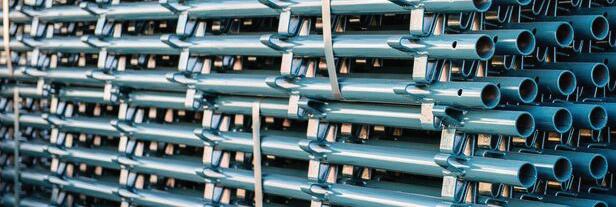

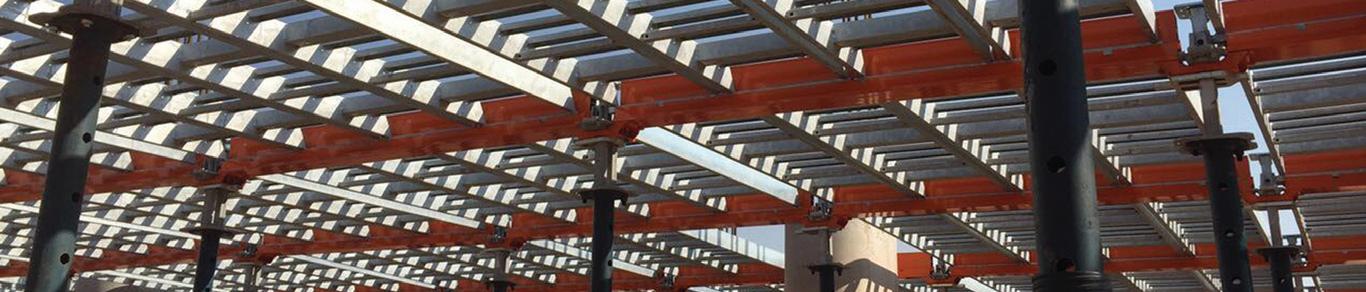
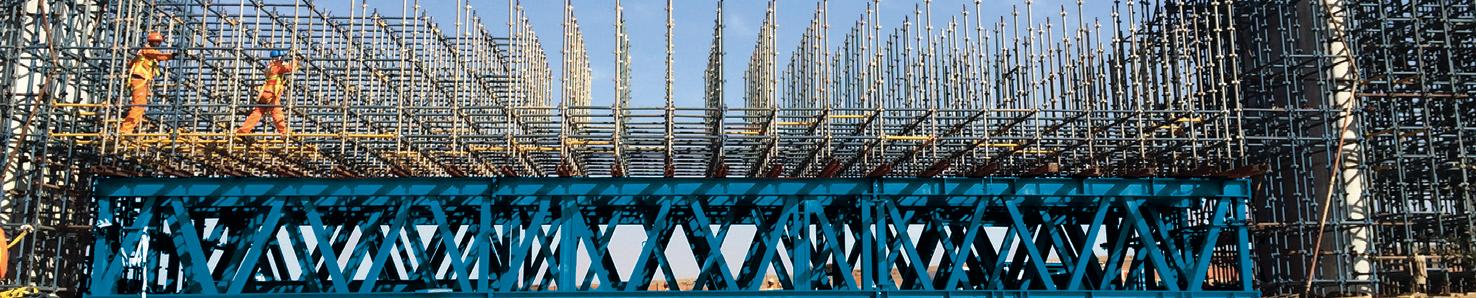
Kumkang Kind Co., Ltd. is a construction materials company established in 1979 in Seoul, South Korea. It is one of 20 companies under the Kumkang Kind Group, with presence in more than 30 countries and 7 branches across the world, namely:
Kumkang Kind Korea (Headquarters), Kumkang Kind America, Kumkang Kind India, Kumkang Kind Malaysia, Kumkang Kind Vietnam, Kumkang Kind Indonesia and Kumkang Kind East Africa. Furthermore, the company has established several agents and distributors such that wherever you are, you will always find their products nearby.
Kumkang Kind is a public listed company with over 500 employees worldwide, and US$600m in sales annually. Having seven factories in Korea and 1 factory in Malaysia, Kumkang Kind’s unrivaled manufacturing capacity produces over 1.9 million square meters of Aluminum formwork, 26,000 tons of aluminum billets, and 12,000 tons of scaffolding and special formwork every year. With over 38 years of experience in the manufacture and distribution of construction supplies, Kumkang Kind delivers a wide range of solutions. These are aluminum Formwork, Steel Formwork, Civil infrastructure Formwork, Scaffolding and Shoring, Modular Units, Steel Pipes, and Climbing Systems.
The aluminum Formwork System was developed by W. J. Malone, a Canadian Engineer in the late 1970s as a system for constructing low–cost housing units in developing countries. The units were to be of cast-inplace concrete, with load bearing walls using a formwork of aluminum panels. To be erected by the hundreds, based on a repetitive design, the system ensured a fast and economical method of construction.
The Kumkang Kind’s aluminum form work production facilities are equipped with state-of-the-art Friction Stir and Robotic Welding machines to guarantee the highest quality. Also, a highly experienced technical department ensures clients recieve unsurpassed support and strict supervision to enhance efficiency and safety. Meanwhile, the aluminum recycling and extrusion factory allows the company to be self-sufficient in diversifying
the aluminum supply base to avoid any delays.
Kumkang Kind East Africa was established in Nairobi, Kenya on 15 February 2017 to cater to the growing need for affordable housing in Africa. This is the first and currently the only form work company to have a branch in the east African region.
According to United Nations Habitat, in the next fifteen years Africa’s cities will have to accommodate an average
Addressing this will require rethinking how affordable units are delivered, given that the current construction methods used are failing to keep up with demand.
The outdated, time consuming and labor intensive use of brick or stone continue to be the most popular material for building structures. Other more recently adopted methods such as plywood form work significantly impact our environment negatively, and the weight of steel form work remains a great disadvantage to the speed of
of about an extra 40,000 people – every day. By the year 2050, the population will have increased by an estimated 1.3 billion people, and Africa will need to accommodate around 25% of the world’s population.
UNICEF’s David Anthony, in an interview with National Public Radio (NPR, America), said that the upswing in population presents both an opportunity and a challenge, depending on how the African governments handle it. Additionally, he warns that a lack of investment could result in mass poverty and mass inequality: “The worst thing would be if this transition was just allowed to happen because what you’re going to see is an unparalleled growth of the slum population.”
construction.
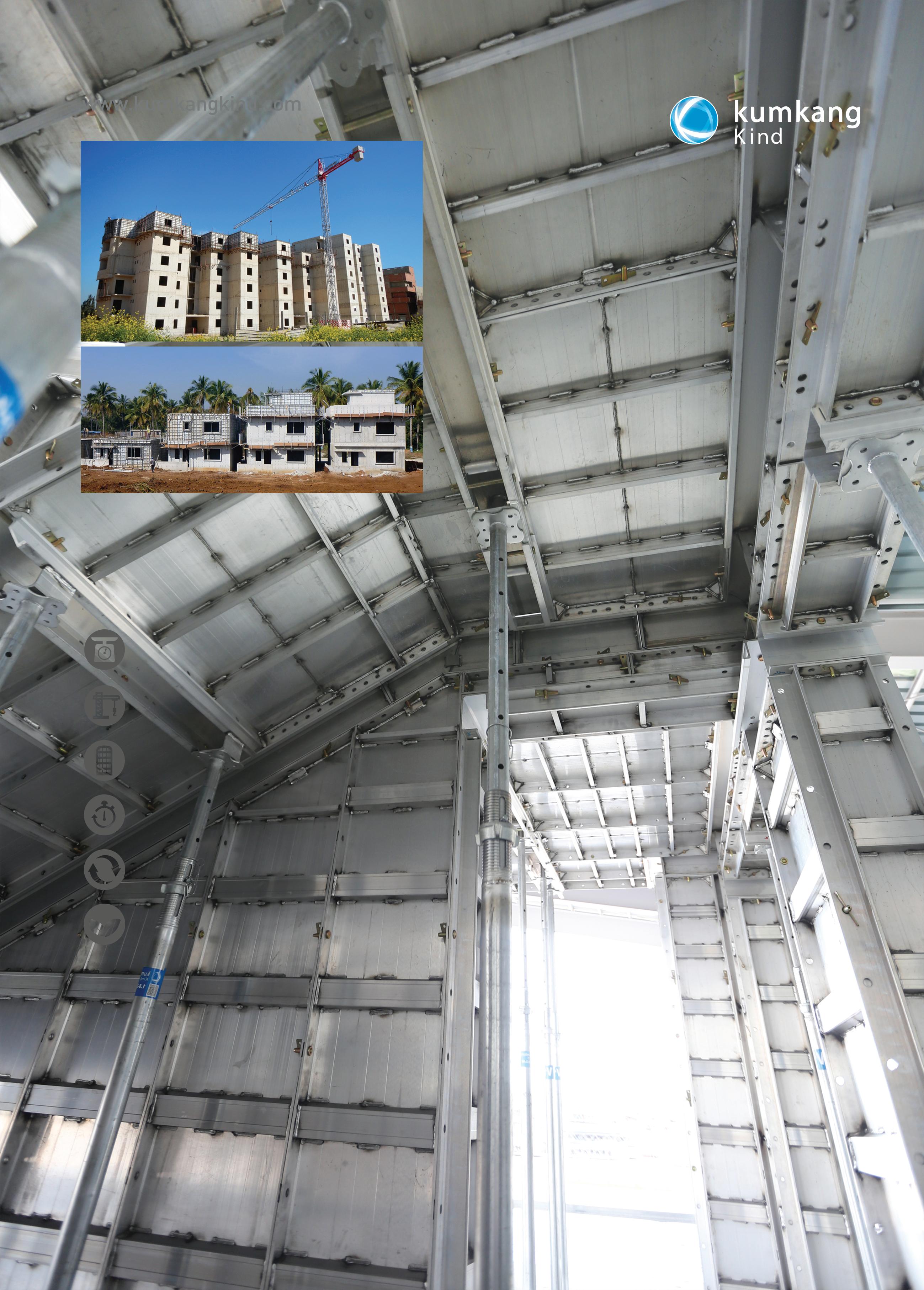
The solution? The adoption of lightweight form work that is reusable hundreds of times and allows for the rapid construction of mass housing projects. Kumkang Kind’s aluminum Formwork System has proven to decrease the construction period by 84% and the overall cost by 36% compared to traditional methods of construction.
Products’ suitability to the market needs
Given the current housing deficits across the continent, and the rapid pace of demographic and urban growth, Africa requires innovative interventions to meet affordable housing requirements. This means housing that is appropriate
for the needs of a range of very low to moderate-income households. The price to this end user is directly related to the cost of construction, which depends on the time the contractors will need to execute the work and the degree of specialization of the work to be done.
Focusing on these requirements and providing appropriate solutions have been the hallmark of Kumkang Kind’s business since day one. With the most advanced manufacturing technology and technical know-how from vast experience, Kumkang Kind always provides the most economical and productive systems to address these factors.
Kumkang Kind’s aluminum Formwork system uses a single pour of concrete for the walls, beams, columns, slab and staircases thus allowing for a 4 to 7-day cycle per floor. In relation to affordable housing, this means that projects can be delivered at least 4 times faster than conventional construction.
Generally, the longer a project takes, the greater the project costs will be. By substantially reducing the construction period, there is a similar reduction in the resources required and the overall construction cost. To the end user this means a more affordable house, to the client it allows for fast delivery and sales, the contractor receives payment in shorter periods and the financier benefits from a quick turnaround on investment.
With a smooth surface and accurate dimensions of panels, there are no requirements for plastering or remedial work after concrete casting. This is another substantial cost saving. Easy assembly of the formwork eliminates the need for skilled workers. The use of a hammer and minimal manual tools are all that is required when assembling the panels. There is no timber, brick or stone used in the construction of the building superstructure, therefore there is no requirement for carpenters or masons. Kumkang Kind formwork provides independence from scarcity of skilled tradesmen.
With vast experience and a global network,
Kumkang Kind works hand-in-hand with project professionals, contractors and developers in the use of their aluminum Formwork through training, knowledge transfer, the actual implementation and aftersales support. Kumkang Kind East Africa is the first base of operations in Africa, from which the global support team is coordinated to the various sites across the continent.
“The rationale for stimulating local housing markets is clear: for every house built in emerging markets, five jobs are created.”Centre for Affordable Housing Finance in Africa. This is more so with Kumkang Kind aluminum formwork.
The Youth and Under/Unemployed – the simplicity of the formwork reduces the need for skilled laborers yet it increases the opportunities to employ local and unskilled labor readily available anywhere on the continent. This not only increases acceptance of slum upgrading or urban renewal projects, but also provides a sense of ownership and pride to the local community.
Local and SME Contractors – Through repetition, one set of formwork can be used for hundreds of times. A single contractor is able to construct hundreds of floors of similar design every week. African Governments therefore are not dependent on large or international contractors, but can empower local resources on large-scale projects.
Knowledge Transfer – Kumkang Kind acknowledges the lack of exposure of this technology to the African market, despite its simplicity. With this in mind, a series of training sessions are provided to first-time users through on site training at available existing job sites, preliminary training at the client site, training and supervision during the course of the work, and most importantly, ongoing support through the Kumkang Kind East Africa office in Nairobi, Kenya.
Kumkang Aluminum Formwork System is modular, and as such engineered to any architectural or structural layout. Thus, the designers can be as creative as they like. Buildings cast using Kumkang Kind’s aluminum formwork allow for the construction of taller, stronger and more complex structures. The high cost of land in urban areas presents
the opportunity to build higher to maximize on land usage, and outward to provide housing to semi-urban or rural towns.
Kumkang Kind provides the formwork panels, shoring, external working platforms and accessories required for each project. Unlike other existing systems, the Kumkang Aluminum Formwork System is flexible, lightweight and suits all building types without the need to rely on heavy cranes and other heavy construction plant and equipment. Furthermore, all components are 100% recyclable and thus reduce the impact to the environment.
As is the trend with the adoption of other global innovations, the continent is leapfrogging into technological relevance. Since 2010, the Kumkang Kind’s aluminum formwork system has been adopted in several countries in the north, east and west of Africa.
A great example of the use of their formwork would be Dabladji Enterprise & Service. The owner, Mr. Abderrahmane Dabladji, was initially a painting sub-contractor who later invested in the aluminum formwork for a project of 80 residential units. Due to his impressive speed and quality, the company was engaged by the Algerian Government to construct thousands of social housing units. Dabladji Enterprise & Service has mastered the use of Kumkang Kind’s aluminum Formwork and is achieving an incredible cycle of two days per floor or more than 100 units per month.
Another success story is Homex Housing. The founder and CEO, Mr. Samuel Njoroge, began using lightweight reusable formwork in 2012 and the company has never looked back. Homex Housing has since incorporated Kumkang Kind’s aluminum formwork in five residential developments in Namanga, Nairobi and Kiambu, and continue to order more of Kumkang Kind’s formwork for new projects.
To read more and to comment on this story visit: http://www. constructionreviewonline.com


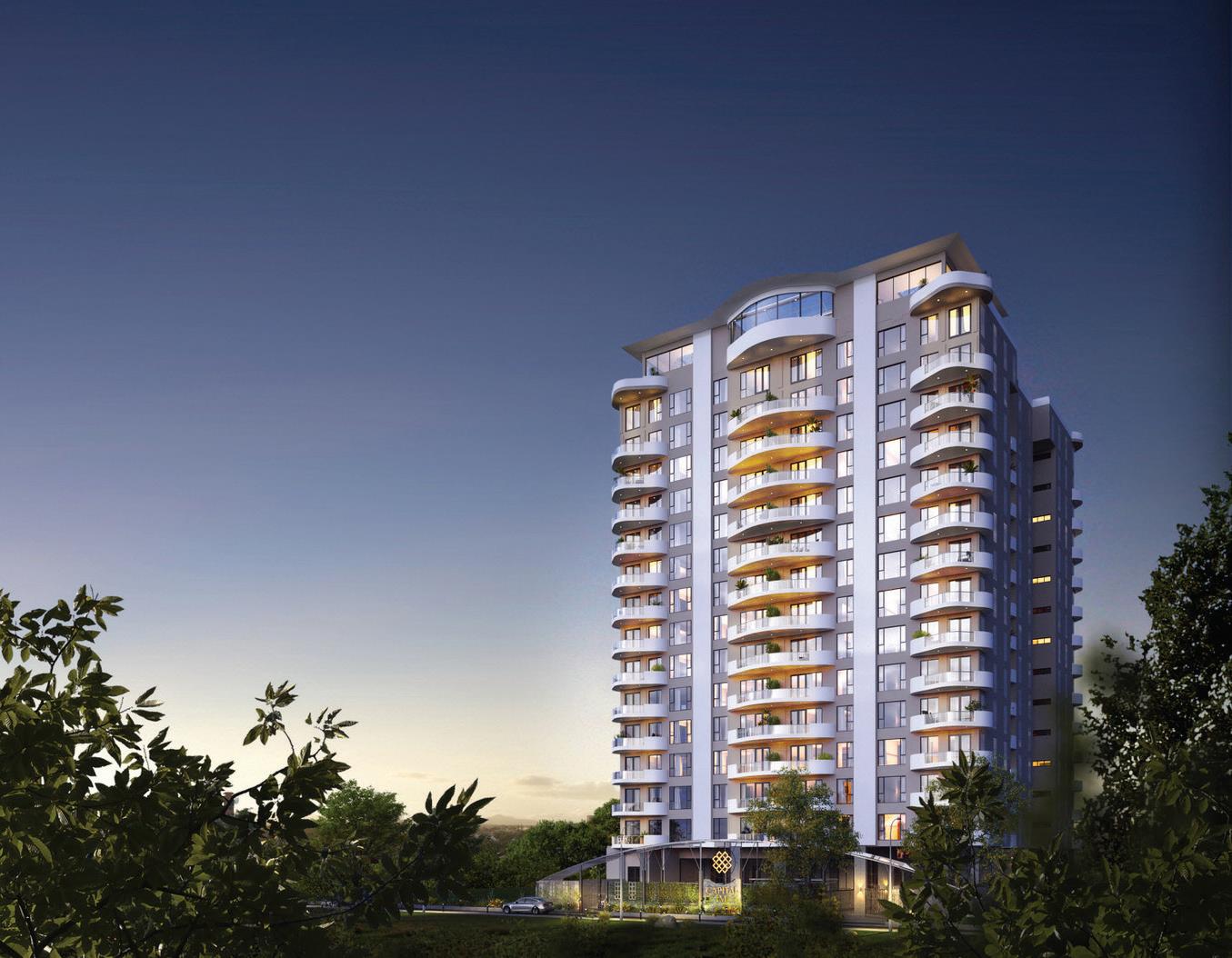
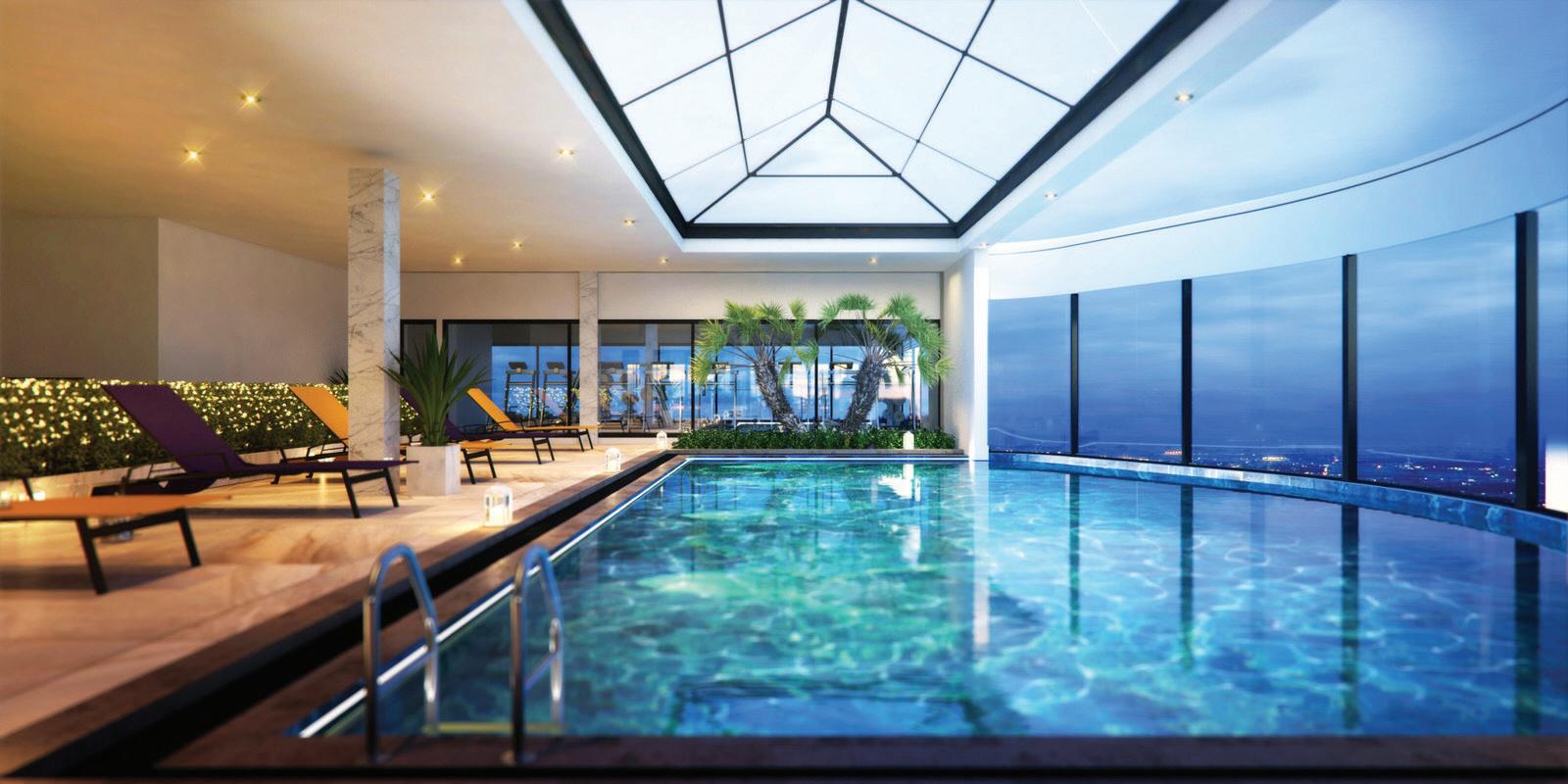
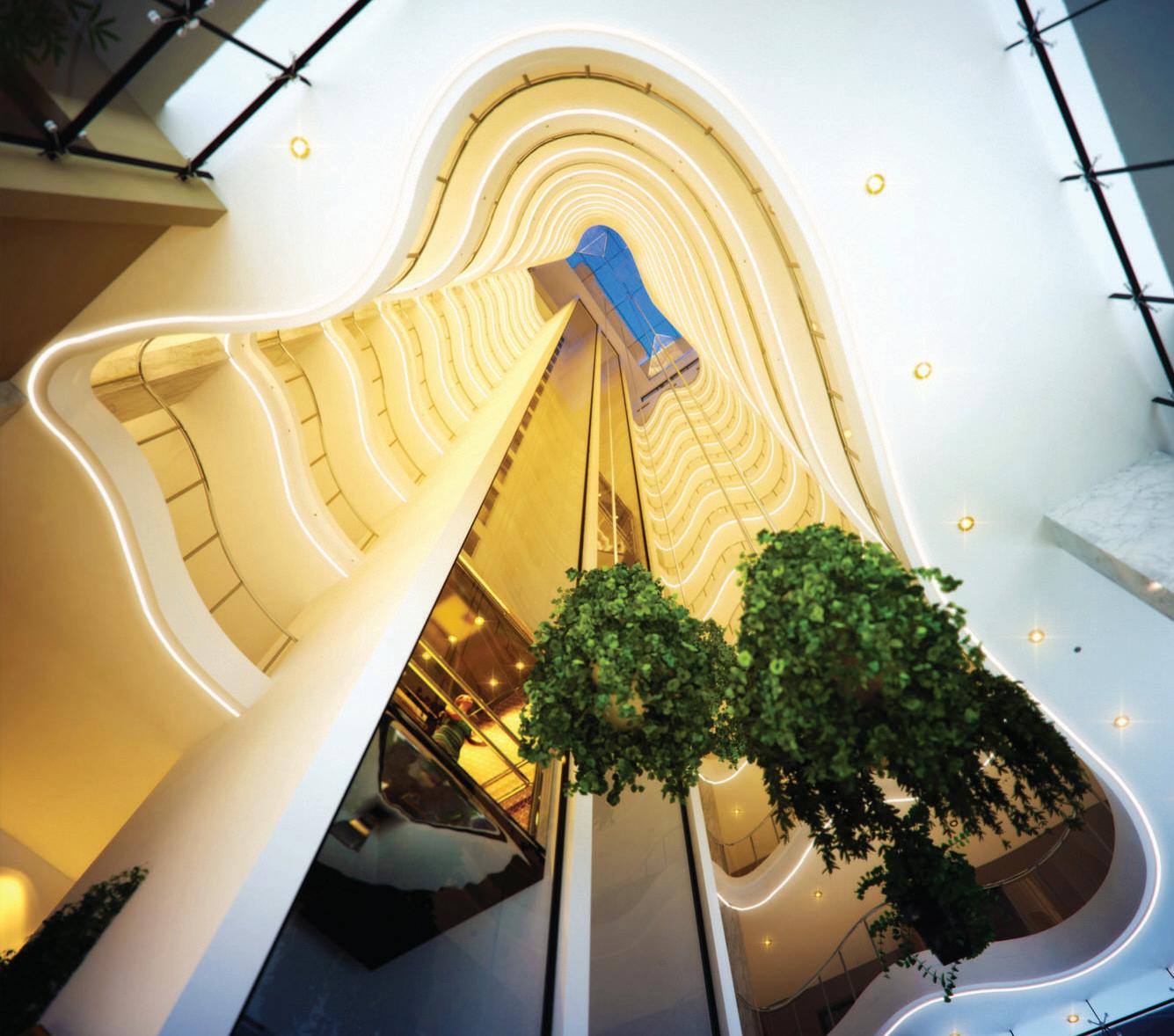
rooms which guarantee daily clean beddings, a bar or a gym and conference facilities. However, Capital M - which will have 110 apartments and penthouses - has set the bar high in the residential property market and will have a conference centre, concierge services and a cafe. Residents can also play indoor squash, swim or lounge at a rooftop pool or roof garden. The roof garden also insulates the building from heat and keeps it cool. It also has a business lounge.
The high-rise property is set to compete with hotels such as Crowne Plaza, Radisson Blu and Villa Rosa Kempinski for business.
Aram Laloui, the director at Zana Group, who are the marketers of the property, said
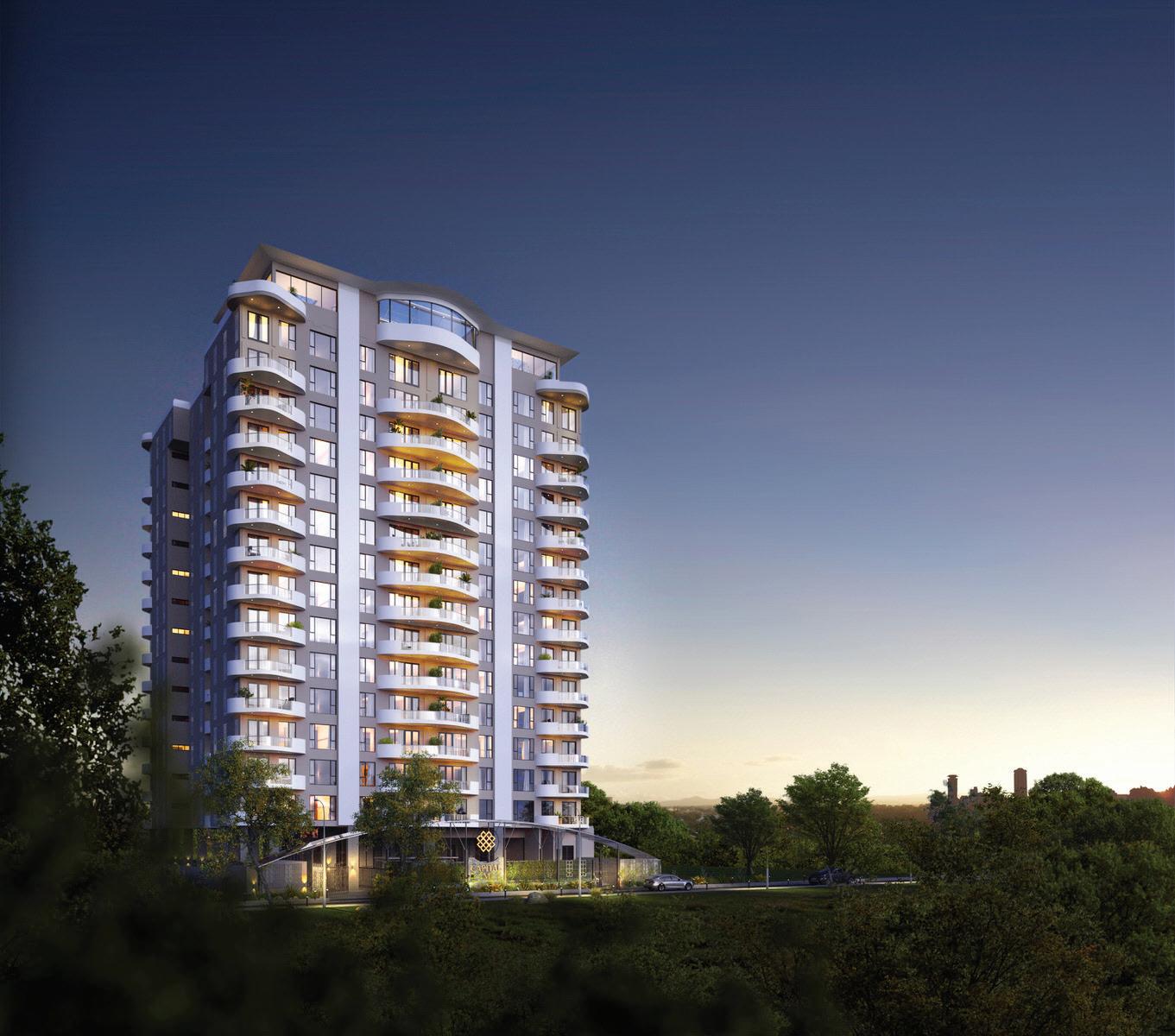
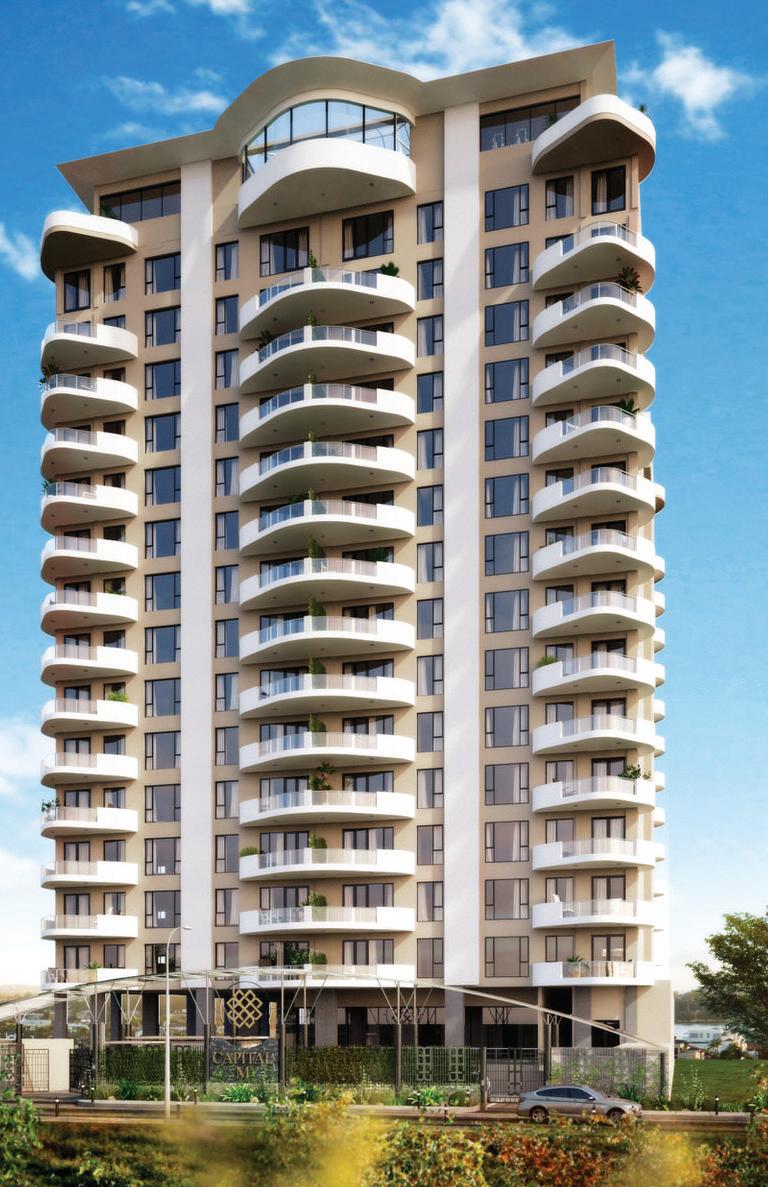
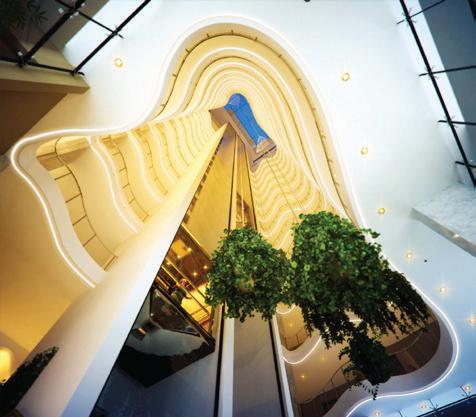
Amixture of retail, leisure and residential development within one building. All naturally lit and ventilated giving an interesting scheme of 10 residential floors over 2 retail floors with a top floor of communal facilities. That sums up Nairobi’s latest sensation – Capital M Apartments, located in Westlands.
Designed by prominent Nairobi architectural house Beglin Woods, Capital M plans to enter into the largely untapped Airbnb business travel market. Airbnb is a home-sharing service that is quietly taking root in Kenya especially at the coast as owners open up their homes to mostly tourists who want a home away from home kind of accommodation.
For business travellers, their uptake of Airbnb is still low as many still prefer the finest hotel

its location makes it attractive to business travellers.
“Airbnb has high numbers of users and Capital M wants to leverage these travellers to attract higher rental income for property owners,’’ said Mr. Laloui.
Their one-bedroom apartments are seen as the ultimate residences for the young and rich and will cost Sh14.25 million while a penthouse
goes for Sh40 million. Mr. Laloui said currently a traveller staying in an Airbnb listed house pays between Sh11,000 to Sh20,000 a night in Westlands for one and two bedroomed units respectively.
The property, set to be completed in 2018, will also target frequent travellers to Nairobi who want a permanent base.
The developers behind Capital M are Fedha Group which built Fedha Plaza and Executive
Residency by Best Western.
The developers, Fedha Group, are among Kenyan companies that won global accolades during the Africa & Arabia Property Awards in Dubai. The awards are a chapter of the larger International Property Awards that celebrate the highest levels of achievement by companies operating in all sectors of the property and real estate industry.
The International Property Awards are open to residential and commercial property professionals from around the globe.
According to the organizers, the awards are split into regions covering Africa, Asia Pacific, Arabia, Canada, Caribbean, Central & South America, Europe, UK and USA.
Participants enter at their relevant national level and are judged by a highly experienced team of professionals who cover the whole range of property disciplines. Companies selected as winners are then invited to attend a glittering awards dinner for each region and have the right to use the prestigious logo in their marketing.
C O N S U L T A N T S
The highest-scoring winners from each region are automatically entered into the overall International Awards, which ultimately determine the world’s finest property companies.
Sustainable Building Consultancy Services, Green Building Certifications (LEED, GREEN STAR, EDGE), Building Simulation Modeling (Energy, Daylight, Ventilation, Acoustic), Energy Auditing, EIAs.








Integrated YMR Partnership Lion Place, 4th Floor, Waiyaki Way, P.O. Box 2403-00606 Westlands, Nairobi, Kenya. Wireless: +254 020 3286000 Mobile. +254 707 963094, +254 786 425729
Email : info@ymr.co.ke Website: www.ymr.co.ke
We are proud to be associated with Beglin Woods Architects as the Quantity Surveyors on the award winning Capital M Apartments project

P.O. Box 21073-00100, Nairobi, Kenya.Tel: 0721/0734 720975
Email: info@arkconstruction.co.ke Website: www.arkconstruction.co.ke
Building construction and associated civil works Office and Shop fit out Metal and timber
We are proud to be associated with Beglin Woods Architects on the Capital M Project






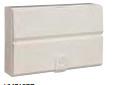
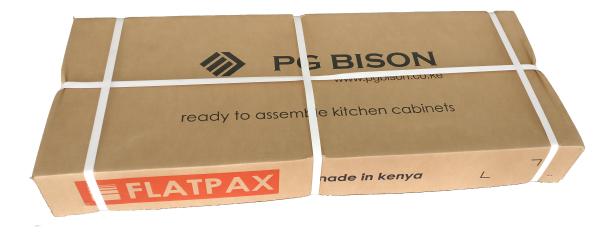
- All cabinets are made from the finest quality boards and fabricated on world class machinery. We guarantee consistent quality in all cabinets.
- Excellent packaging that makes it easy to transport and handle on site. Minimum tools are required to assemble the cabinets.
- Quick turn around time from the point of placing the order to installation of the cabinets
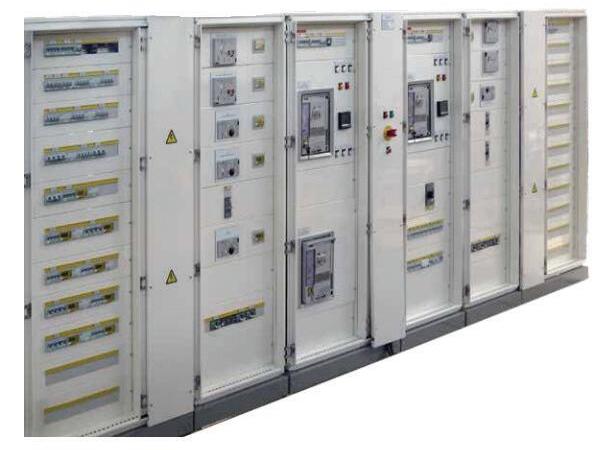
Transformers are complex yet they are the selected equipment used by most of the industries for smoother power supply. With the growing energy consumption and various mega infrastructure projects under construction, Africa needs to major its focus on expanding its power generation capacity. According to Andre Van Zyl CEO of Reliable Transformers a manufacturer of transformers in South Africa, the growing capacity and the ever rising power demands are consequently boosting demand for distribution transformers in Africa.
Africa’s existing power grid and the new power transmission line is highly expected to fuel distribution transformers market growth due
to the increasing number of foreign investment in the power sector. Presently, Africa depends majorly on hydropower projects for electricity generation. Therefore, distribution transformers are gaining significance due to the accelerated construction activities in the power expansion necessities for the transmission network to carry additional power.
Distribution transformers are considered to be the best as they offer high voltage rating with the highest level of power. The most efficient way to transport power, is by the use of the highest available voltage, given that higher voltage equates to lower currents for a constant amount of power. Power produced
at a utility power plant will alter voltage numerous times via transformers before reaching the end user; therefore, according to Abel Gilbert of Powertech transformers an expert in manufacturing, testing, installation and commissioning of a full range of power and distribution transformers from in Africa, a reliable and durable transformer is required at each point along the distribution path where a change in voltage is necessary.
Mr. SumeshanPadayachee of Revive Electrical Transformers one of the leading transformer manufacturers in South Africa affirms that, the distribution transformers market in Africa is worth around US$ 115m.
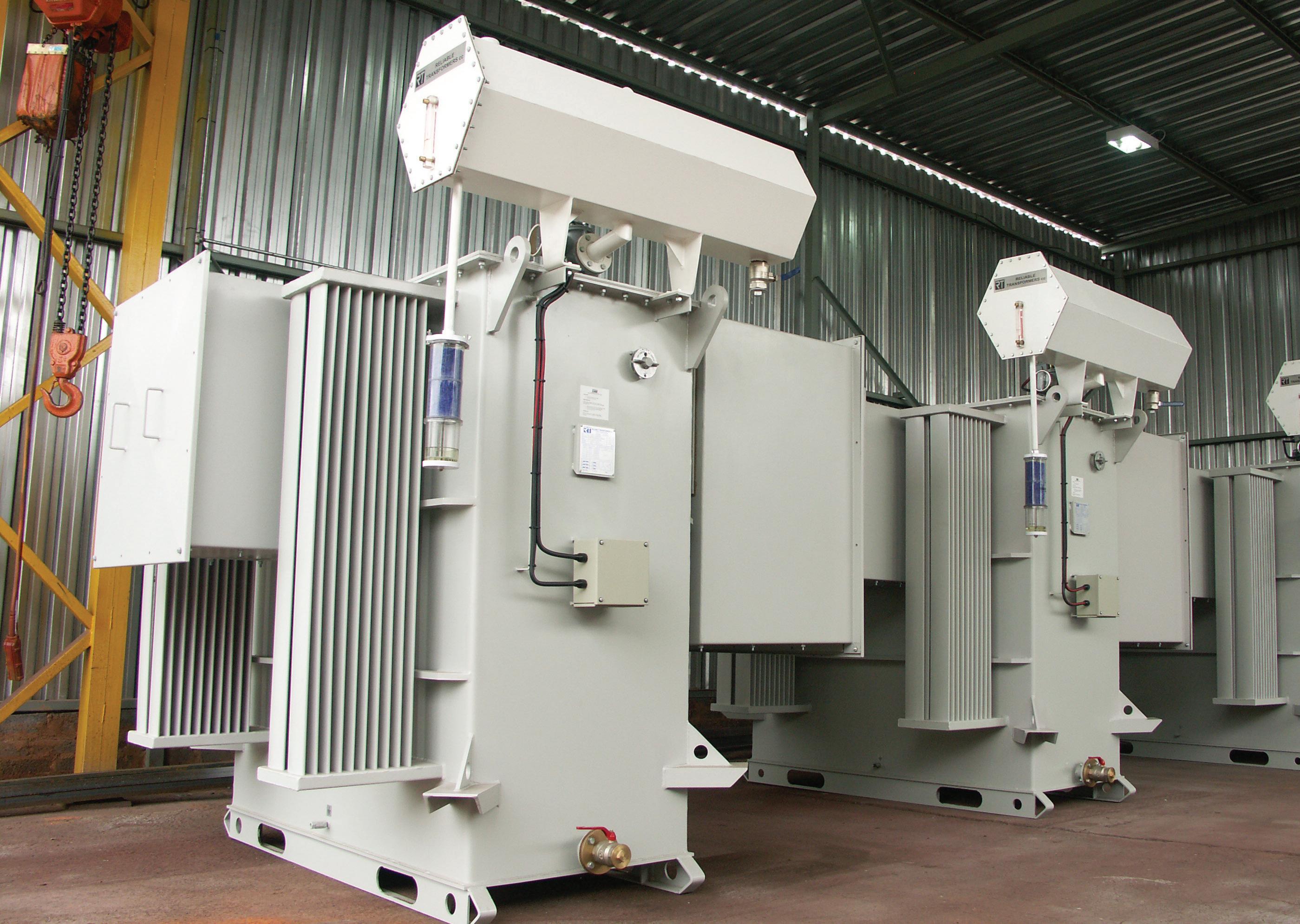
Buying a distribution transformer Transformers can be in service for decades, and with such a long life span the operating cost can greatly exceed the initial price. This is why one should be very keen when choosing the right transformer for economic performance. According to Saleem Muhammad of PEL Group a manufacturer of distribution transformers in Pakistan, apart from making sure the transformer is tailored to meet your needs, one has to look at the proper size (capacity) and efficiency of the transformer; and efficiency means looking at both the core steel and the winding material. At times there can be a tendency to oversize the transformer capacity relative to the load it will actually see. PEL Group has offices in South Africa, Botswana and Swaziland.
Distribution transformers play a key role in an electrical system’s efficiency and power quality, yet 95% of buying decisions are based solely on first cost. Buying based on life cycle cost would save literally hundreds of thousands of dollars in operating losses over the installed life for transformers. Therefore, users can lower energy rates and avoid high transformer losses by investing in energyefficient transformers.
Normally, transformers are wounded with copper wire, but they can as well be wounded with aluminium wire. The efficiency is almost the same and is cost-effective as well. Distribution transformers are widely used in electrical power supply and distribution
systems. However, the basic concepts of the best distribution transformer, one has to consider the machines used in building the transformer, material used to design the transformer and how skilled are the workmen before purchasing the power machine.
According to Aubrey Chabalala of Transformer Manufacturers a leading manufacturer of medium range electromagnetic distribution equipment in South Africa, transformers that minimize energy loss are quite expensive since they have a more complex design as compared to traditional transformers which are devoid of that function.
Today, many untapped technologies have been invented to save energy and encourage the use of renewable energy sources. However, energy losses of distribution transformers account for almost one third of overall transmission and distribution losses. Even though the electricity demand keeps going over the roof in several African countries with the electricity system developing towards ‘smart grids‘, the most worrying question still remains, how will the integrated distribution grid system loss be minimized?
Since a wide variety of transformers serve different purposes, actual losses incurred in the field will vary substantially from one installation to another. Load level varies widely, with some installations running very heavily loaded and others more lightly loaded. This difference substantially affects actual
NAIROBI:
losses incurred.
Unlike other parts of the world, Africa has no mandatory standard on energy efficiency for the distribution transformers which could foster the realization of these cost saving potentials. Compared to saving potentials in other areas, the electricity saving potentials of distribution transformers in power industry and commerce seem to be small. Nevertheless, every contribution to climate change mitigation and energy security is necessary, particularly if it is economical.
When energy savings are driving part or all of the justification for selecting a particular transformer, it is important that these savings are indeed present once the transformer is installed. This means commissioning the transformer for energy performance after installation. In fact, some rebate programs and other life cycle-oriented programs like Leadership in Efficiency and Environmental Design advocate for the ongoing product commissioning.
In a nutshell, according to William van Wyk of Free state transformers a manufacturer of distribution transformers in South Africa, the African market is quite huge so customers must make sure before they buy from just anybody, they are well informed. Most importantly cut out the middle man and buy directly from the manufacturer.
P.O. Box 14994-00800,1st Floor, Sri Sathya Sai Centre Waiyaki Way. Tel: (020) 2108281, 2621669, 0734 555412, 0722 204591, Email: fenwick@fenwick.co.ke
MOMBASA:
P.O. Box 82723-80100, 3rd Floor, Jubilee Arcade Moi Avenue. Tel. 041-2318722, Email: mombasa@fenwick.co.ke
Traditionally, plumbing was perceived as a trade that merely involved sanitary works in buildings to get bathrooms, kitchens and related facilities functioning properly.
Today, plumbing is a sophisticated and broad profession requiring highly trained manpower to undertake complex installations in large commercial and residential projects. The modern plumbing company will undertake traditional plumbing, install solar water heater systems, install Heating, Ventilation and Air conditioning, firefighting systems as well as actualize sewage disposal and waste recycling mechanisms. Whether one is undertaking a single private residential unit or a mega shopping mall, it is critical to engage qualified plumbers or plumbing company. Experience shows that the costs of working with unqualified personnel or companies can bring forth untold misery and losses when a property is eventually occupied.
In Kenya, although there is a general shortage of qualified plumbers as any mechanical engineer will attest, there are several companies that have put together qualified personnel and can therefore easily undertake projects of any complexity with ease.
Plumbing Systems Limited is among them. Now in its 14th year, the company was founded by Mr Abhijit Patel to “bring change in the building construction industry by offering the best services in general construction as well as in specialized mechanical service installation both locally and internationally”. Mr. Patel himself holds a degree in Mechanical Engineering, bringing the very much needed technical

These are modern luxury apartments located in the Westlands suburb of Nairobi.
background to the company that he runs with his fellow director, Mr. Nilesh Shah. Since inception, Plumbing Systems Limited has grown rapidly and now boasts a substantial workforce that includes 6 mechanical engineers, 3 civil engineers, 50 plumbers and more than 150 skilled labourers.
The company is guided by the mission statement “To revolutionize Building Construction industry, Plumbing and Drainage, Firefighting, Solar Water Heating and Waste Water treatment installations through a motivated workforce and high quality products at competitive prices”.
Plumbing Systems Limited is equipped with adequate manpower, tools and equipment to handle any kind of project. It does not have a bias for any genre of projects and can therefore execute all kinds of jobs be they in residential, commercial, health, hospitality or any other categories.
Geographically, the company operates in East Africa for now, particularly in Kenya and South Sudan. It has successfully completed numerous project including well known major ones.

This is a high end residential development set in the serenity of Karen suburb’s lush green environment
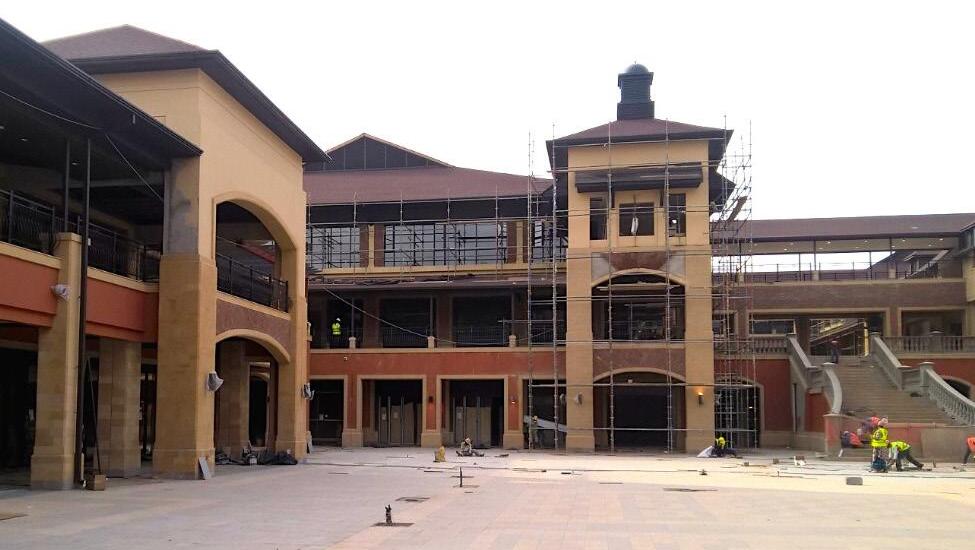
This is a recently opened tastefully designed shopping and leisure complex
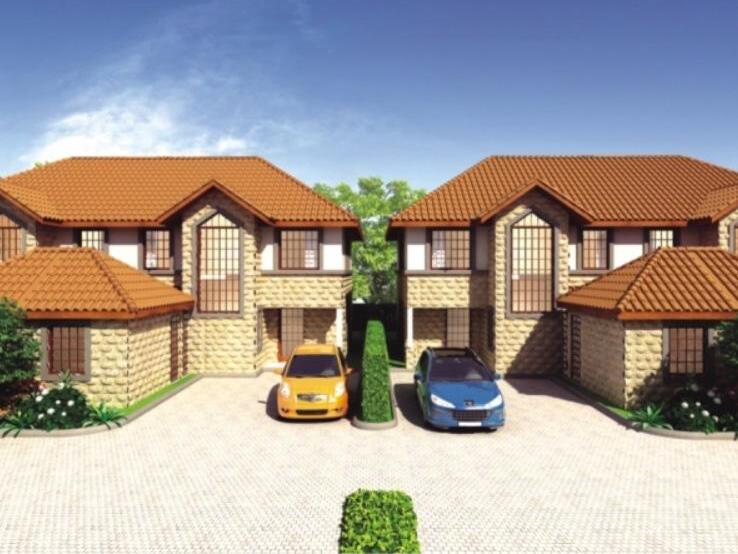
Edenville Two is a gated community consisting of ultramodern maisonettes located in Kiambu, a short distance from Nairobi.
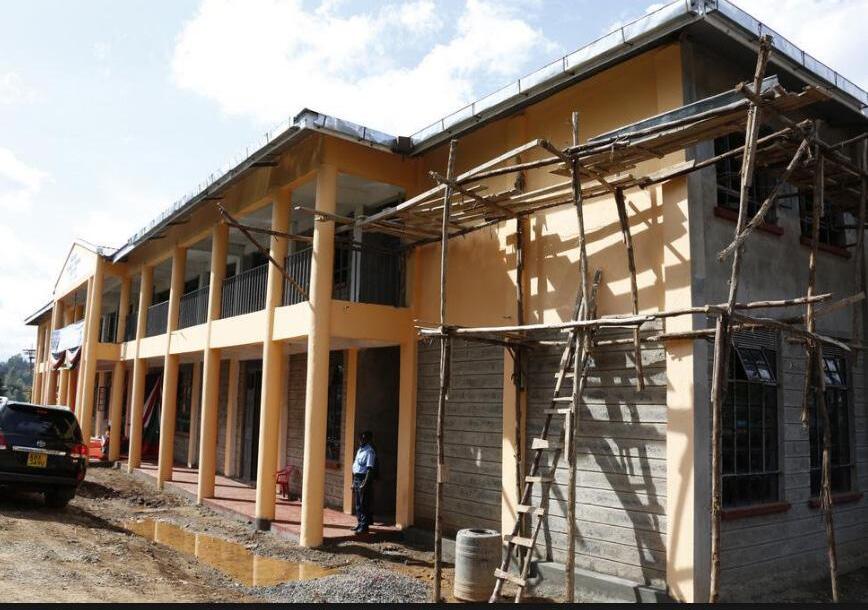
This is a college based in Central Kenya offering vocational training to the youth.
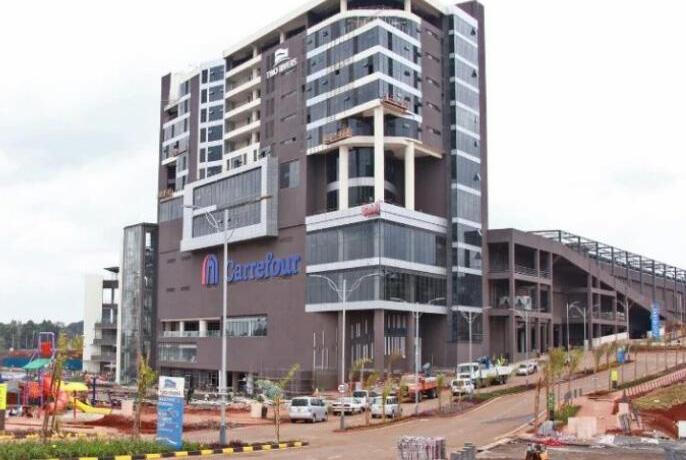
Carrefour is a major French retailer that is fast gaining foothold in Kenya, the latter of which is one of the largest malls in Africa.
These are just a few of the many projects that Plumbing Systems Limited has been involved with over the years. Looking into the future, the company intends to continue on its growth trajectory. “Plumbing Systems Limited hopes to have branches in major cities across the country within the next 10 years”, says Joshua K, an administrator with the firm.
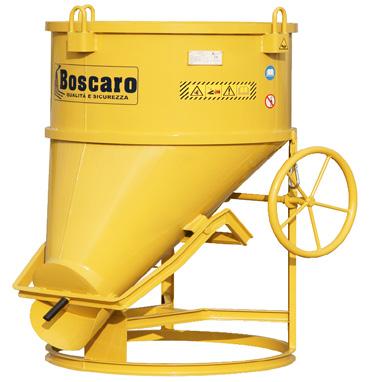
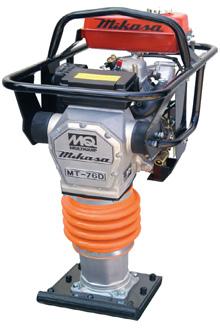

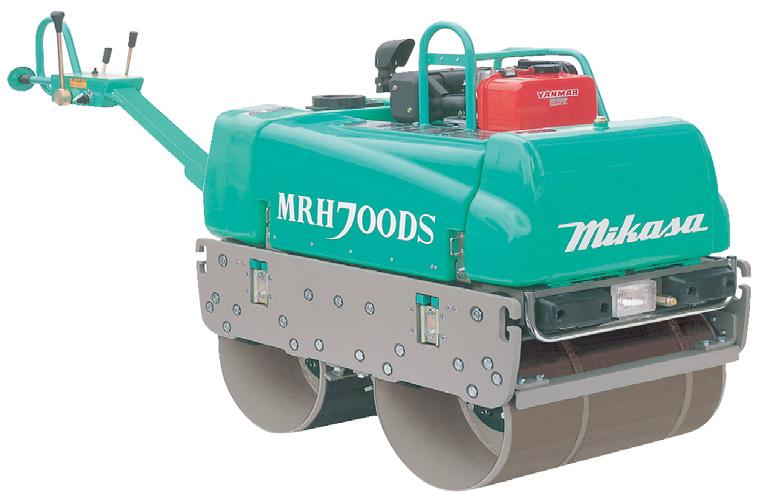
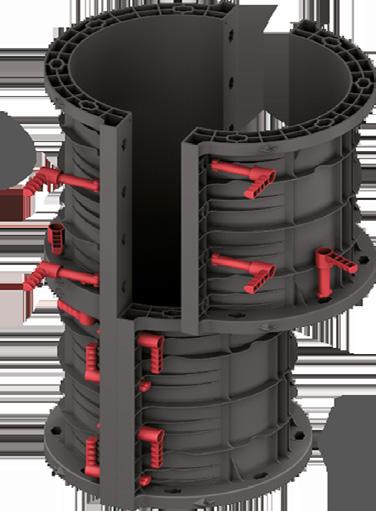
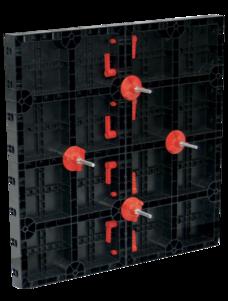



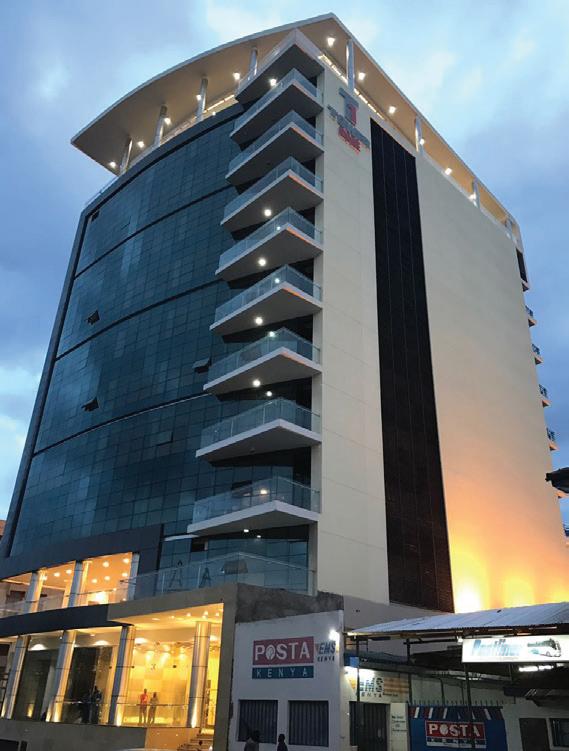
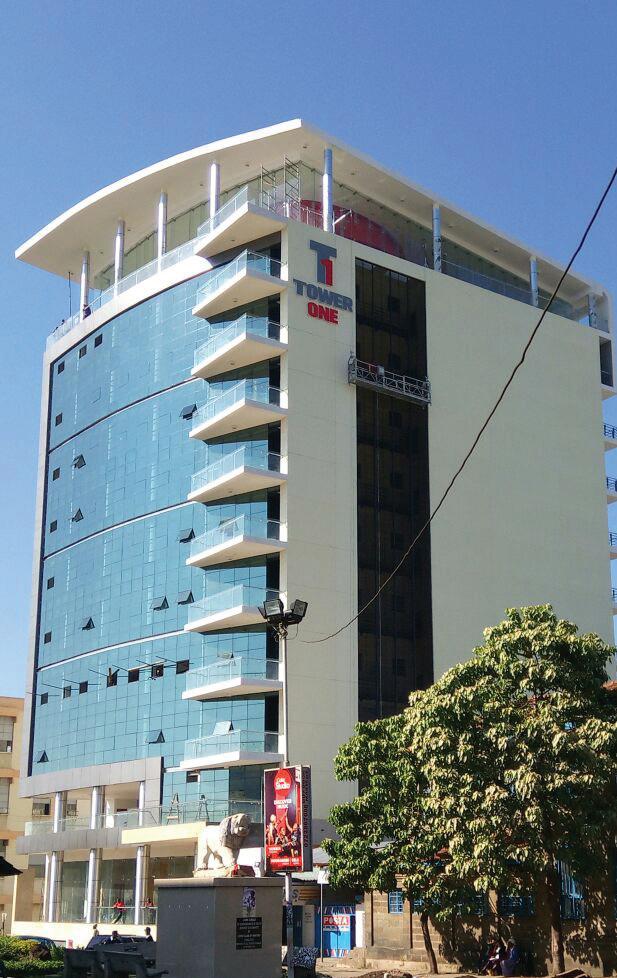
Grundfos


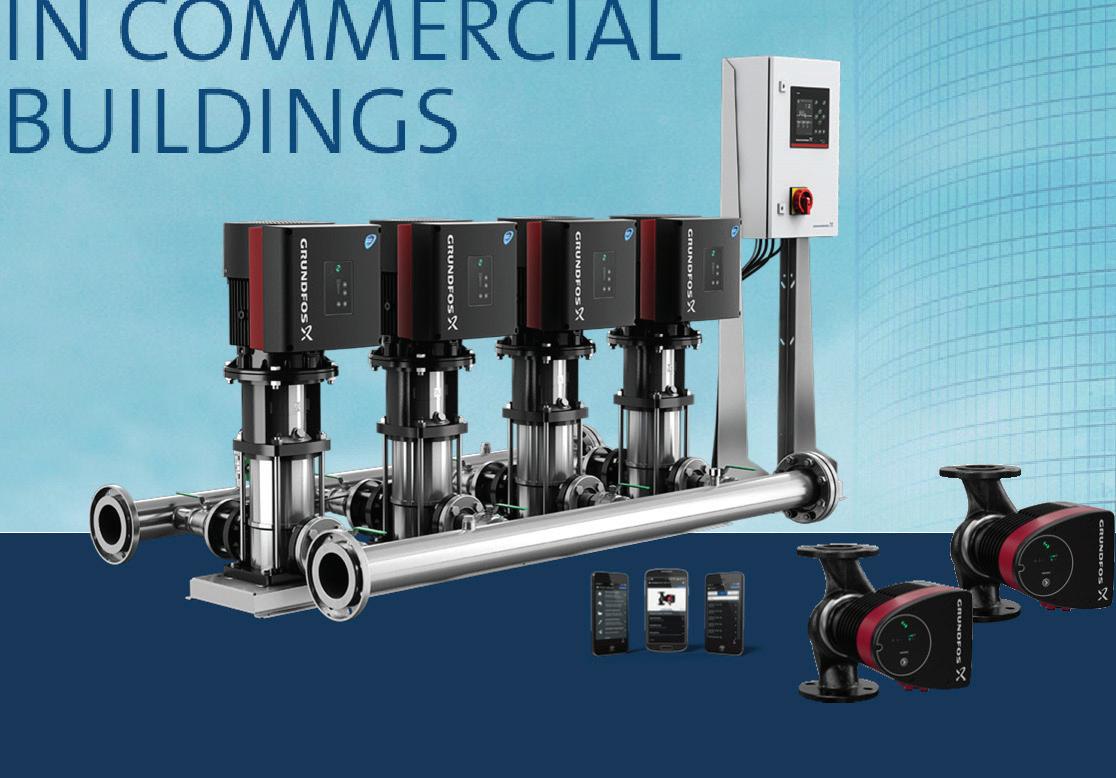


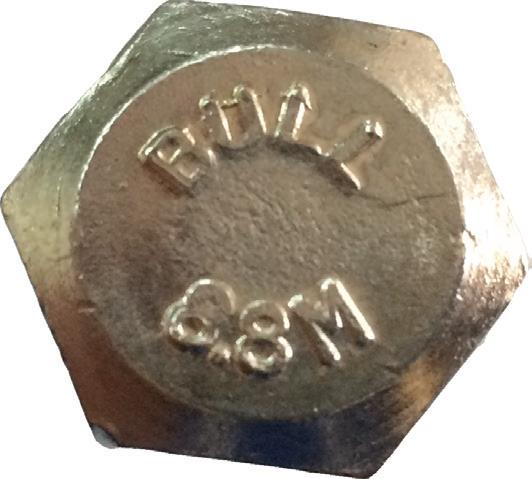

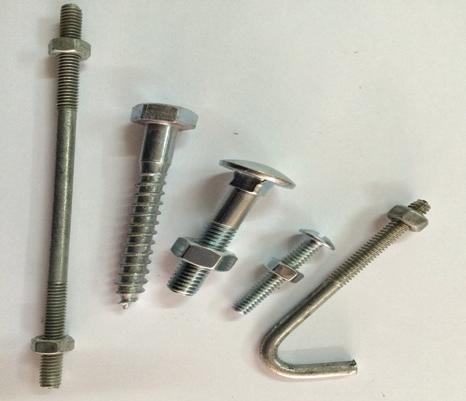
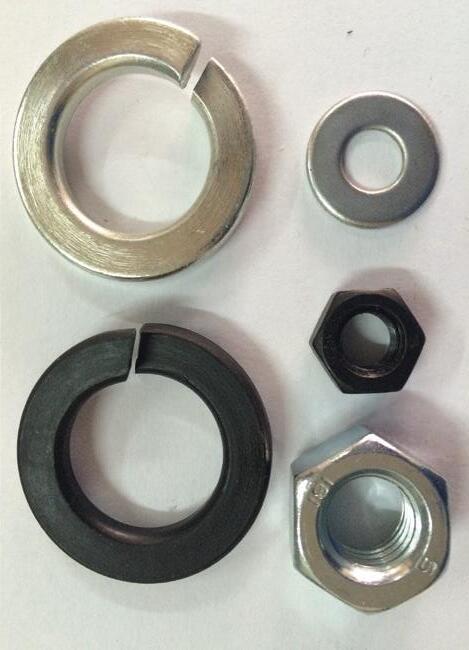
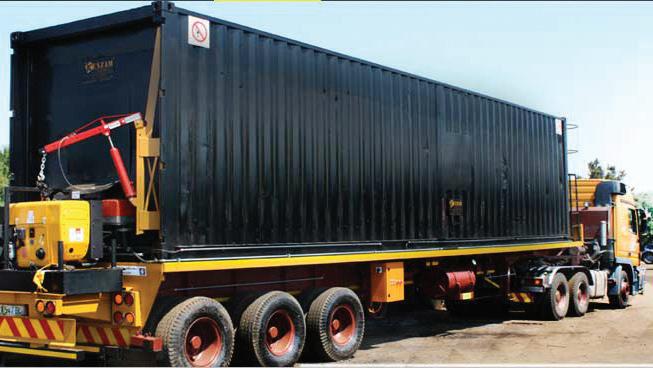
There are strong indications of rise in the demand for containerized bitumen storage equipment, as road construction projects in Southern Africa ramp up. Containerized bitumen storage is considered as the most convenient alternative to timeconsuming ‘conventional’ bitumen handling solutions, given the escalation in project implementation costs.
Recent trends paint a generally refreshing business outlook for suppliers of bitumen handling equipment to the SubSaharan African market. There are strong indications that
the demand for bitumen and asphalt from the infrastructure sector in Sub-Saharan Africa will rise in the coming years. This is based on the trajectory of economic developments, which are highlighted in a bitumen market review and during a recent infrastructure development conference.
Firstly, despite a global economic recession, the volumes of goods imported, exported and distributed across the continent are going to increase, as underlined in the publication, Downstream Insight July 2016: Sub-Saharan African Bitumen Market Developments.
Secondly, commentators at the Argus Roads 2017 highlighted two trends. A
sharp population growth in urban centres has led to increase in traffic levels, speeding wear and tear of existing road networks. Besides, there is need to extend road networks to reach other areas to facilitate economic integration.
Indeed, considering the aforementioned factors, it will be imperative for countries to develop strong infrastructure, mainly roads and highways. In addition, a 2017World Bank Report says that, if African countries aim to realize their respective economic potential, reliable infrastructure is key.
For certain, various greenfield and brownfield road construction projects that countries in Sub-Saharan Africa will
embark on will need a steady supply of bitumen. So, effective bitumen storage, transportation and heating is going to be central to the success of road construction projects. Construction companies will have to involve specialists in these areas if they are to deliver projects to the client’s requirements.
Speaking to Construction Review, TravisFreel, a specialist from Kenzam Equipment, underlines the significance of appropriate heating, storage and handling of bitumen. With a group experience of over 40 years, based in Brakpan, Johannesburg, Kenzam Equipment has been supplying and constantly, changing its containerized bitumen storage design to cope with new market needs.
Kenzam Hpfc advert.pdf 1 11/20/2017 3:07:57 PM
On the significance of bitumen handling, Travis stresses: “One of most used binding products in the asphalt market, bitumen is a bi-product of petroleum. With bitumen being a product that can only be used when heated to a temperature of 150 degrees, storing, transporting and heating this product is a specialized system.”
Considering that bitumen is used in roads, which are a vital asset in a country’s economy, careful handling is paramount. And the right quantity and quantity has to be available on site on time to avoid inconveniencing contractors who often operate under tight deadlines set by clients. For this reason, bitumen handling that can help reduce project costs has to be utilised.
Under the tight deadlines required in
government-funded road projects, time consuming “conventional” bitumen storage methods cannot just suffice. And the best option is containerized bitumen storage which offers more advantages in rugged African market conditions, more especially, heating to client specifications, ease of maintenance, easy to transport to construction site.
All in all, in consideration of the rise in project implementation costs, Containerized bitumen storage is the most convenient alternative to time-consuming ‘conventional’ bitumen handling solutions. It insures that the right quantity and quality of bitumen is delivered to a construction site as and when required, as road construction projects ramp up.
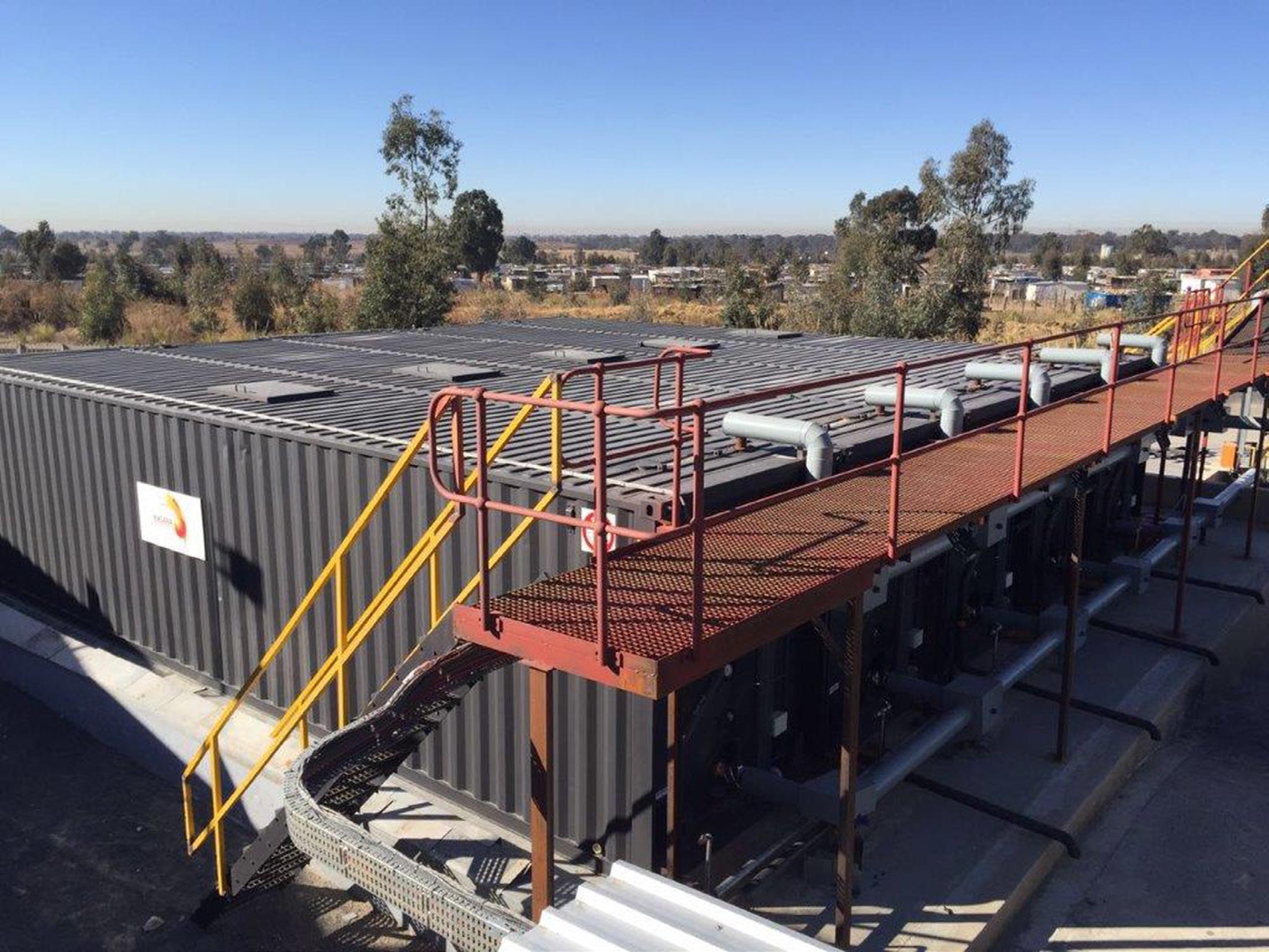
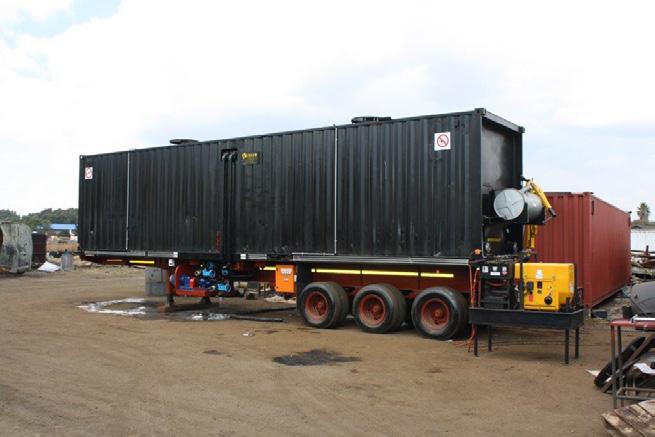
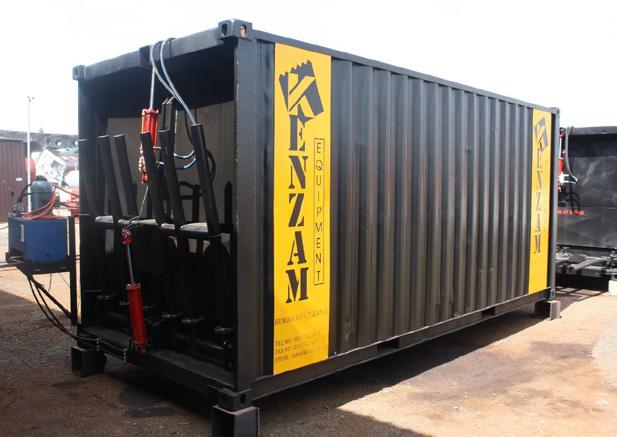
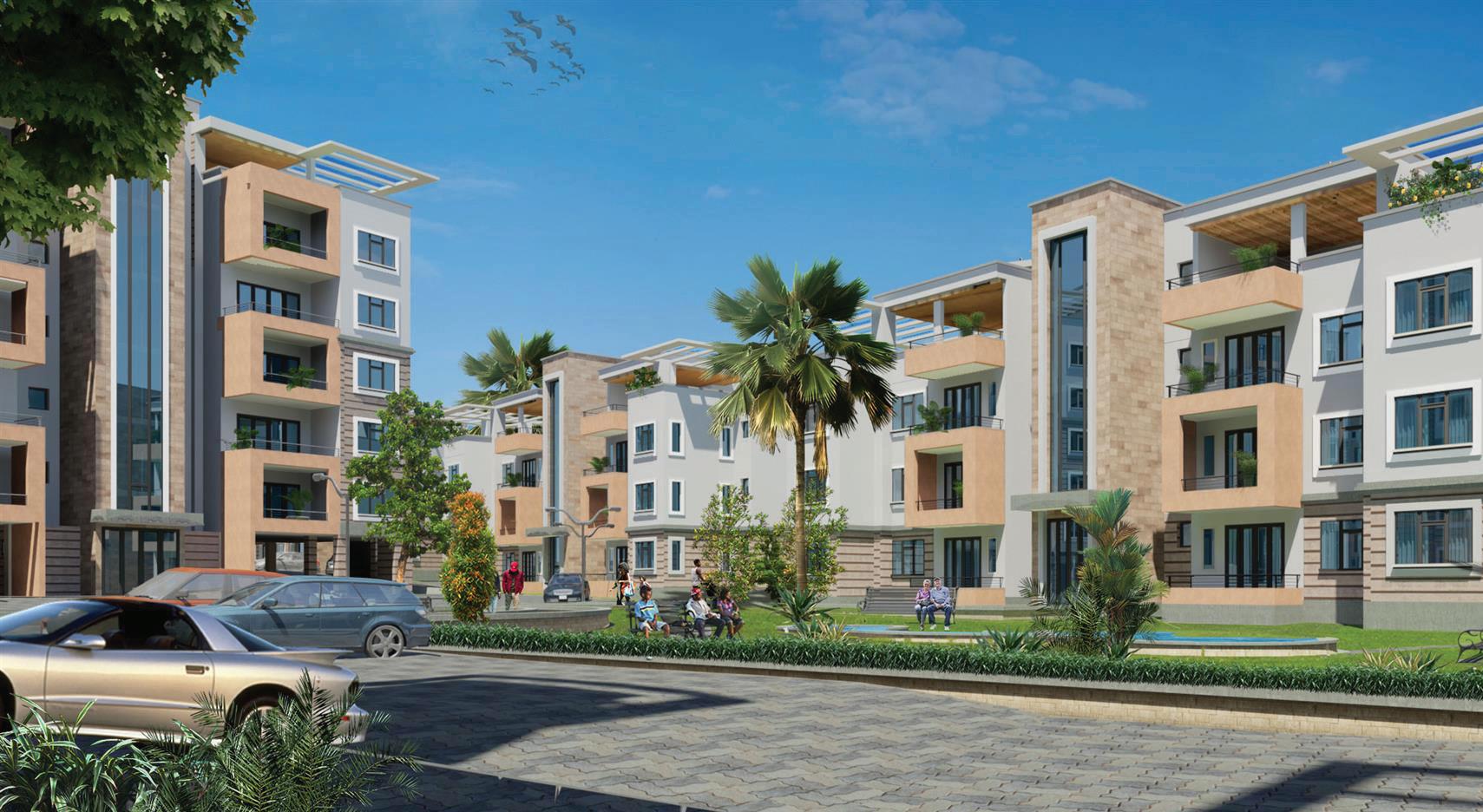
Lifestyle Heights is a unique signature development for middle-upper middle class income earners by Sycum solutions. The project which is located in Ruiru at Tatu city is a gated community housing divided into 3 phases, each phase sitting on 10 acres of land. The development is based on three different typologies which include: a three bedroom family unit plus a detachable SQ which is 150 square metres, a standard two bedroom unit which is 100 square metres and a standard 3 bedroom unit without Dsq which is 130 square metres.
Phase 1 has 450 units, a combination of 162 two bedroom units and 18 three bedroom with SQ units and the rest are for the three bedroom units.
The development has a well laid out masterplan, with landscaped gardens.Also included are lawn fountains and other water features meant to give the scheme a cooling effect in addition to enhancing the beauty of the entire scheme. It has a common commercial block with shared social amenities
including convenient stores, restaurants, and management offices and meeting rooms. There is also a very well landscaped jogging track and pocket of spaces and playgrounds for kids. Moreover, there is also a skating rink above the commercial space which shall be opened occasionally for the kids; the layout and design for the skating rink is well articulated to consider safety standards. The development salient features include; club-house, leisure pool, tennis and basketball court. These are carefully planned to allow maximum recreation and contact among the community
The entrance experience to the development will be quite phenomenon. 24 hour manned access and security controlled gate house which is designed to allow for a first class experience with a lovely encounter with bubbling water features and ponds.
According to Arch. Bob Oyugi, the project architect, the experience one will get from the development is not just about the planned utilities but also about the associated neighborhood concept. “Lifestyle Heights is designed to allow sharing of common utilities while maintaining aspects of privacy through unique concepts of circulation,” he adds.
The units will have spacious lounge and dining area with a balcony with flexible design
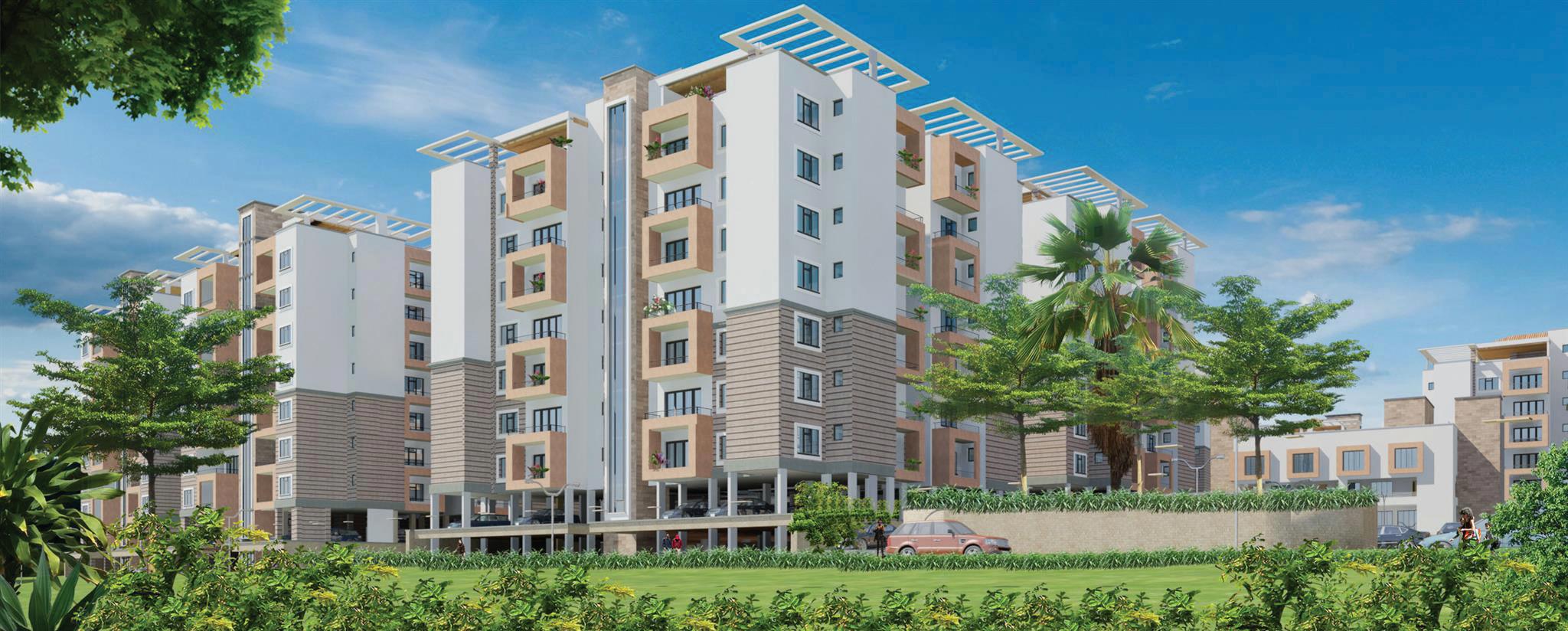
allowing the kitchens to be either closed or american according to the clients liking. There will also be Panoramic lifts, laminate floor finish to living areas with ceramic tiles to bathrooms and other wet areas. All units will have fire detectors, alarms, extinguishers and proper signage. Single loaded corridor with 1.5 m wide staircase will ensure easy movement and access.
The planning and distribution of the different unit typologies is carefully done to capture aspects of cost in terms of investment versus return. This has resulted in probable balance between the 2 and 3 bedroomed units. Driving and parking in the scheme
With regards to parking, the development is designed to allow easy access and reach to the different units. The three bedroom units have been allocated 2 parking slots and two bedroom units 1 parking slot. All the major drive-ways are two-way for ease of movement and convenience. The development has wellarticulated circulation paths to ensure that one does not get lost within the scheme with clear markings and signage. Moreover, landscaping will be done along all the drives and walkways to give the development a natural and green setting.
Everyone is talking; sustainability. “We are looking at solar lighting and water heating,
2 number boreholes and underground water tanks that are able to serve the entire population in the scheme to LED lighting and other SMART technologies. We are also looking at harvesting rain water for landscaping,” he says. “Additionally, the orientation of the units takes into consideration the solar path, this ensures not much is invested in mitigating the solar heat gain/loss,” adds Mr. Oyugi.
Security matters have also been well articulated in the design. The main entrance will have CCTV cameras that captures the entire streets. There will also be CCTV cameras within the common areas of individual blocks which will be monitored by a well-coordinated
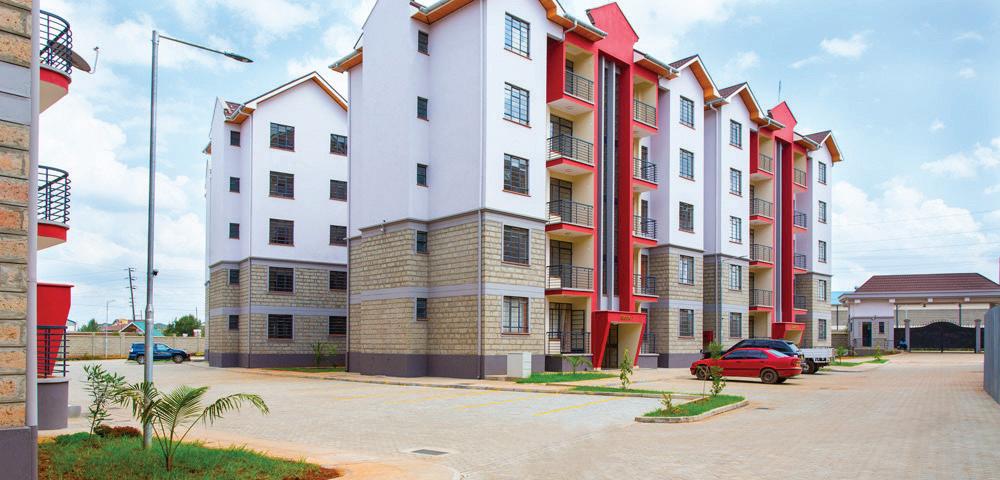
security team. In addition, there will also be controlled surveillance in the commercial and recreation areas which reduces the number of guards walking around.
The development will have two standby generators that are able to serve the common areas in case of power outages. The generators will be high tech with controlled emissions.
Arch. Oyugi reckons that, if all goes well they expect to have their first show house in November 2017 and eventually finish the entire scheme in the next two years.
He further recapitulates that, whether the developers chooses to develop more three or two bedroom units, the design is flexible and well-articulated to ensure that the buyer will always feel at home.