Kenya: William Mutama, Trizah Njoroge, Lilian Khavosa
South Africa: Thuli Nkosi, Winnie Sentabire, Angeline Ntobeng,
Uganda: Nobert Turiyo, Selina Salumah Namuli
Botswana: Dickson Manyudza, Gerald Mazikana
Ethiopia: Haimanot Tesfaye, Ruth Girma
Tanzania: Tom Kiage
Malawi: Anderson Fumulani
Ghana: Samuel Hinneh, Caleb Donne Hadjah
Zambia: Susan Kandeke
Zimbabwe: Chiedza Chimombe
Rwanda: Collison Lore
Nigeria: Seni Bello
China:Weng Jie
The editor accepts letters and manuscripts for publication from readers all over the world. Include your name and address as a sign of good faith although you may request your name to be withheld from publication. We reserve the right to edit any material submitted .
Send your letters to: info@constructionreviewonline.com
Construction Review is published eleven times a year and is circulated to members of relevant associations, governmental bodies and other personnel in the building and construction industry as well as suppliers of equipment, materials and services in Africa, the Middle and Far East. The editor welcomes articles and photographs for consideration. Material may not be reproduced without prior permission from the publisher. The publisher does not accept responsibility for the accuracy or authenticity of advertisements or contributions contained in the journal. Views expressed by contributors are not necessarily those of the publisher.
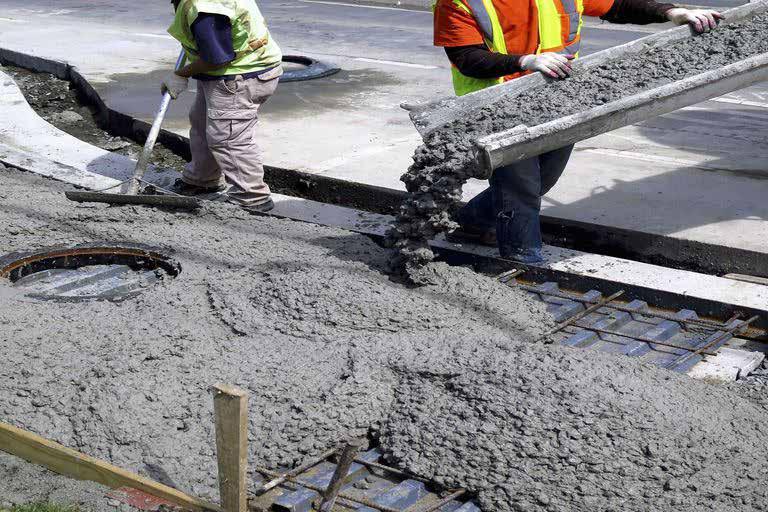
To exploit the potential of concrete, extra materials can be added during the mixing process to alter its characteristics, for use in various environments.
Keeping your air conditioner
Editor's Comment
Skyscrapers are more than just structural giants
High rise buildings have always fascinated the minds of people since the start of its construction in the ancient times. The construction of such buildings began in the ancient times for defensive purposes or religious purposes. However these architectural masterpieces have evolved to be more than just tall buildings.
Beyond city making, skyscrapers have created a relationship with the identity of a country as well. If you think about Dubai, the first building that really put Dubai on the map was the Burj Al-Arab. And that tower made an enormous impact on what Dubai is today. It gave the city an identity.
Skyscrapers, when done correctly, are the catalyst for the city or district around them. They give an area an identity. They increase the local economy and connect that local community to the global one. If done right, a super tall tower will put a city on the map for tourism, increased business ventures, and increased future development.
Robert Barnes
Ethiopia Agent
Haymi Advertising Services
22 Mazoria, Genet Bldg 4th Flr
P.O. Box 1316 - 1110 Addis Ababa
Tel: +251 118 955 855, Cell: +251 930 099 152
Email: ethiopia@groupafricapublishing.com
Ghana Agent
Image Consortium
1st Floor, The Ecobank Building, Tesano.
Tel: 233(0)30 223 2728 I 233(0)274807127 I +233(0)206299159
Fax: 233(0)24 882 8286
Kenya Agent Northwest Ventures Ltd
P.O. Box 16414 - 00100
G.P.O
Nairobi, Kenya
Tel: +254 20 2679809 I 2679808, 2091305
Email: kenya@groupafricapublishing.com
Nigeria Agent
Rahma Associates
B23/24, Aishetu Emoewa Plaza, 196, Iju Water Works Road, Ifako Ijaye Lga,Agege, Lagos.
Tel: 234-1-7347860
Rwanda Agent
Kolline & Hemed Inc., B.P. 3328, Kigali, Rwanda
Tel: +250 03 748106
E-mail: rwanda@groupafricapublishing.com
Website: www.kollinehemed.org
Zambia Agent
Dayflex Limited, 4th. Floor Tazara House
Dedan Kimathi Road, Lusaka, Zambia.
Tel: +260 211 230 529 / +260 977 756 663
Email: makukasue@mail.com, dayflex06@gmail. com 24
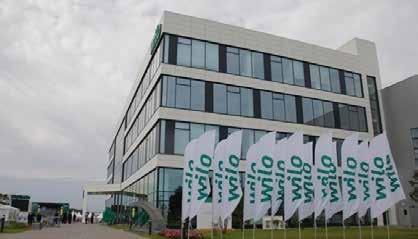
Germany’s water pumps and pump systems manufacturer, Wilo is set to open an assembly plant in Nairobi, Kenya. The plant will hopefully serve the entire East African region. The firm’s Country Manager, Belete Asnake, confirmed the reports and said that the assembly plant will be fully operational by 2020. “Currently, we have hired 20 people for the new regional office. We will however expand our production lines creating jobs for more people as we are targeting a market of 250 million,” he said. “The water sector requires investment from both public and private players to meet the high demand, mitigate effects of climate change and also prepare Kenya’s ability to meet future water needs for its people,” he said. Germany’s head of economic affairs Michael Derus said his government had signed a memorandum of understanding with their Kenyan counterparts to facilitate capital investments by German-based companies especially in the water and wastewater sub-sectors. They are targeting Ethiopia, Kenya, Uganda and Tanzania among other countries within the larger Eastern Africa.
Sterling & Wilson to open generating power showroom in Lagos
Sterling & Wilson, a reputable supplier of gensets in India is expanding its frontiers in the Nigeria energy market as it plans to unveil a new power solutions showroom in Lagos. The new office will offer electrical products and services that will further enhance business growth and sustainability. According to the company’s Head of Powergen Business for West Africa, Mr. Bipin Moye, the first real-time power solutions showroom in the country offers a full range of power and allied services including gen set sales and services, gas power project engineering, supply and turnkey execution along with a complete range of MEP (Mechanical Electrical and Plumbing) solutions useful for power consumers like manufacturers, schools, banks, and other services.
Kaytech affords massive savings to Hammanskraal project
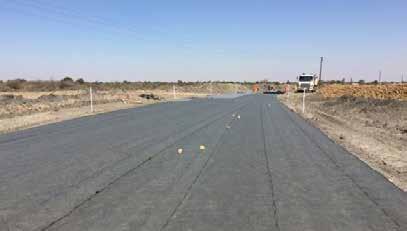
Thanks to Kaytech, South Africa’s leading manufacturer of nonwoven geotextiles, the rural Moretele Local Municipality in North West Province was afforded massive savings on a subgrade stabilization project. The municipality, lying to the north west of Hammanskraal, consists of 26 wards, each comprising 74 villages and plots that are connected by a low bearing road network. When a new road was under construction between the villages of Mathibestad and Makapanstad,
Davis & Shirtliff Recertified
Davis & Shirtliff (D&S) has recently been re-certified under the new ISO 9001:2015 Quality Management Standard by SGS Kenya. D&S was first certified in 2000 under ISO 9000. The new standard is a much improved version and demonstrates a robust quality management system that focuses on meeting and exceeding customer expectations. According to the company Chairman Mr. Alec Davis the whole certification process focuses on quality and quality management which have always been key issues at Davis & Shirtliff. “It is a way of structuring the quality focus in the business but most importantly raising the involvement of all our staff. The ISO process is broken down into departments and functions with each department required to describe its own quality processes. It is important to get everyone on board and make it a team building effort to push the commitment to quality .
CV Chabane & Associates concluded that it was not feasible to apply the conventional method of placing and compacting a depth of more than 1.5 metres of dump rock over the challenging clayey subgrade material. Seeking an alternative design, the engineer consulted with Kaytech’s Danie Herbst who, with the assistance of Tensar, recommended the installation of TriAx TX 160as a stabilization geogrid, and bidim A2 as the geotextile separation below. Performance trials have shown a mechanically stabilized layer (MSL) using TriAx reduces the thickness of the sub-base layers required and increases the design life of the road.
TriAx is produced from an extruded sheet of polypropylene that is punched with an array of holes and stretched to create its unique triangular structure. As a multi-axial geogrid, TriAx incorporates several characteristics which combine to create an optimized structure that out performs any bi-axial geogrid in trafficking applications. By providing near-uniform stiffness through 360 degrees, TriAx is a truly multi-directional product with near isotropic properties. When combined with a suitable aggregate, through aggregate confinement and interlockTriAx produces a mechanically stabilized layer with exceptional performance.
The National Construction Authority awarded 97% rating
The National Construction Authority has been awarded a score of 97% (very good) for the financial year 2016/2017 by the Commission on Administrative Justice, also known as Office of the Ombudsman. The score, based on the resolution of public complaints, is an average of the quarterly scores awarded for the entire year. Instituted as a performance measure, all government agencies are required to maintain complaints handling mechanisms and registers and to resolve public complaints within a stipulated time. The Authority receives an average of 150 official complaints per year, some lodged against the Authority directly, while others pertain to stakeholders in the industry. One can also lodge a complaint directly with the Ombudsman office as recourse. The Authority received 157 complaints during the year, a decrease of 20% from last year. 75% of the complaints are related to Authority processes, especially registration and training. With all processes now digitized, the uptake has not been smooth sailing for all customers. However, the resolution rate of all complaints was 100% within the stipulated time of 7 days. A further 10% of complaints logged are about irregular construction activities, especially when it comes to enforcement of site closures.
FAEO links Nigeria’s Low Economic Productivity
to Shortage of Women Engineers
This is according to former immediate president of the Federation of African Engineering Associations (FAEO) Mr. Balarabe Shehu. He is also a one-time president of the Nigerian Society of Engineers (NSE). Mustapha was speaking at a workshop in Abuja on the promotion of engineering among women in Nigeria and Africa. He noted that the percentage of women in engineering in Nigeria has remained very low. This is despite the huge population of women in the country. He explained that this development had a direct impact on the economic productivity, and technological advancement of the country. This is considering the number of women who could have taken up engineering science related professions and subsequently contribute to the country’s development. He further explained that despite having women population at approximately 50% there are few women in engineering science. This, according to him, is an indication that most of the women in the country are almost doing nothing and perhaps not into any profession.
SAWEA counting on National Regulator for
South African Wind Energy Association (SAWEA) and its legal counsel have welcomed clarity on National Regulator (NERSA) process, while strongly objecting to Eskom’s lack of engagement. SAWEA declared a power procurement dispute in October 2016, requesting NERSA to undertake an investigation into Eskom’s continued unwillingness to fulfill its mandate as purchaser of power duly procured by the Department of Energy. In March 2017, the National Regulator responded to this complaint by launching a formal investigation into Eskom’s conduct. A hearing for both parties to make submissions was scheduled 14 September 2017. SAWEA understands that a hearing of this nature has not been undertaken by NERSA before. Unfortunately, the hearing began on two disappointing notes: Firstly, Eskom arrived with a plea for postponement, citing ‘Communications challenges’ that had prevented the national Utility from adequately preparing its submissions, both written and verbal,
Zambian Green building association offers training in dry wall partitioning
In conjunction with Saint-Gobain and Thorn Park Construction Training Center, The Zambian Green building association jobs Program offered training in dry wall partitioning and ceiling installation in Lusaka. Together with its local partners and key stakeholders, the ZGJP, identified an opportunity to strengthen skills in dry wall partitioning and ceiling installation. This was in order to support job creation in environmentally friendly construction. The training focuses on how eco-friendly materials manufactured by Saint-Gobain should be handled, installed and maintained for customers. Mr Minestone Simfukwe is the Saint-Gobain Tertiary Manager for Zambia. According to him the market value for sustainable construction materials that:
• give thermo comfort and has a durable feeling
• improve aesthetic performance
• provide good air quality Will improve the way local artisans apply ceiling materials which will result into quality finished products. In addition, it has created global opportunities for the training institution. It has enhanced Thorn Park Construction Training Centre’s branding and further led to potential partnerships globally. The training enhanced the skill set of 19 individuals, representing seven construction companies.
Modern Airports North Africa
Join key stakeholders from Egyptian Aviation Services; Egyptian Holding Company for Airports and Air Navigation; Tunisia’s Ministry of Transport; African Development Bank; Egyptian Civil Aviation Authority; IATA; Cairo Airport Company and more to learn how North African governments are working with international experts, financial institutions and solution providers to expand and improve airport infrastructure on both aerodromes and airspace.
Modern Airports North Africa
Nile Ritz-Carlton, Cairo, Egypt
Kenya
- Architectural Association of Kenya
- Institute of Quantity Surveyors of Kenya
- Institute of Engineers of Kenya
- Association of Consulting Engineers of - Kenya
- Association of Professional Societies of East Africa APSEA)
- Kenya Property developers Association
- Institution of Surveyors of Kenya
South Africa - ASAQS - SAICE
- South African Council for the Quantity Surveying Profession
- Khuthaza ( Women for Housing)
- Concrete Manufacturers Association
- Green Building council of SA
- South African Property Owners Association
- Master Builders South Africa
Uganda
Institute of Surveyors of Uganda
Uganda Institute of Professional Engineers (UIPE) & Uganda society of Architects
Botswana
Future Energy East Africa
Future Energy East Africa has evolved from the East African Power Industry Convention (EAPIC). After years of close collaboration with utilities, governments, regulators, large power users, consultants and solution providers it has become the number one power conference and exhibition in East Africa and will take place from 29 – 30 November 2017 in Nairobi, Kenya. Over 45 suppliers from across the world will not only exhibit their latest technology and solutions but will be waiting to share their experience, case studies and best practices with you. There is no better place to be inspired by companies like Alstom-Grid, KPLC and Kengen, just to mention a few.
- Institute of Botswana Quantity Surveyors
Ethiopia
- Association of Ethiopian Architects
- Ethiopian Association of Civil Engineers
- Construction Contractors Association of Ethiopia
Zimbabwe
- Zimbabwe Institute of Quantity Surveyors
- Zimbabwe Institute of Engineers
- The Construction Industry Federation of Zimbabwe (Cifoz)
Ghana
- Ghana Institute of Engineers
- Architects Registration Council
- Ghana Institute of Surveyors
- Ghana Green Builders Association
- Ghana Institute of Planners
- Association of Building and Civil Engineering
Contractors of Ghana
Namibia
Institute of Namibian Quantity Surveyors
Association of Consulting Engineers of Namibia
The Big 5 Construct East Africa is now moving to 2018
The Big 5 Construct East Africa is now moving to 2018 due to venue availability linked to elections. You will definitely be updated once we have the new dates for the show. All collateral and dates will be amended accordingly. What to expect:
• 3 days of innovation to bring forward new technologies in products and services
• An additional workshop theatre increasing the CPD sessions to 25 new topics
• Witness products in real time being demonstrated by our exhibitors
• Pre- arranged meetings programme for exhibitors and pre-registered visitors
• Dedicated VIP Programme for Government officials and key buyers
Tanzania
- Tanzania Institute of Quantity Surveyors
- Construction Regulation Board (CRB)
- Tanzania’s Registration Board of Architects and Quantity Surveyors (AQSRB)
Nigeria
- Association of Consulting Engineers Nigeria
- Association of Professional Women Engineers Of Nigeria
- Council of Registered Builders of Nigeria
- The Nigerian Institute of Architects
- American Association of Petroleum Geologists Africa Region
- Nigeria Society of Engineers
- Nigeria Institute of Architects
- Building and Construction Skilled Artisans Association of Nigeria (BACSAAN)
Zambia
- Zambia Institute of Architects (ZIA)
- Association of Building and Civil Engineering Contractors (ABCEC).
New Ditchwitch MT9 microtrencher Komatsu launches PC210LCi-11 semi-auto excavator
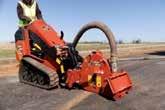
The powerful, compact Ditchwitch MT9 microtrencher offers a cost-effective solution for installing fiber-optic cable in residential areas. The machine is ideal for areas with limited spacing. The machine’s pull-push feature is a first in the industry. It also serves to keep the saw in the ground for minimal ground disturbance. The PDC Fiber blade whose patent is presently pending enables utility contractors get up to 20 times the lifespan on their blades. The Ditch Witch organization ensures all parts work together with unbeatable productivity. This helps have quick and efficient street crossings. According to Steve Seabolt Ditchwitch Product manager, the new MT9 minimizes the space required to operate. The machine comes as a relief from traditional fiber-installation methods which, according to him lack the speed and efficiency to be cost-effective for contractors. The MT9 creates clean, shallow trenches up to 9 inches deep and 0.375 to 1.5 inches wide. This serves to minimize ground disruption. Additionally, the micro-trencher works with the FX65 vacuum excavator to further create a clean trench in one pass by effectively removing spoils. The accuracy in turn helps save time while producing a better-looking finish. The MT9 works with the Ditch Witchexclusive PDC Fiber blade that contains diamond-embedded carbide.
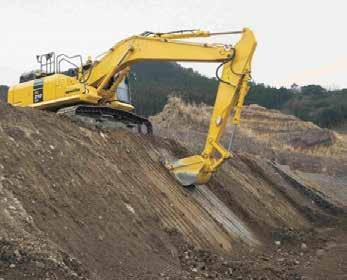
The PC210LCi-10 debuted as Komatsu’s first excavator to feature machine control integrated from the factory. This was back in 2014. In addition to updating its fleet of new dozers, Komatsu has added two new excavators to the fleet. This also sports the company’s intelligent machine control which comes with a radio-controlled model. The benefits are huge. In the fully automatic mode, it maintains the excavation levels as required. GPS controls guide the machine’s movements, making refilling unnecessary as the bucket and hydraulics work to precision. According to Komatsu the PC210LCi-can provide up to a 63% improvement in excavating efficiency. The process also eliminates the need and expense of using grade checkers or doing finish dozing. Operators are able to get a perfectly sloped, flat bottom trench at an exact depth. This goes even without putting a man with a survey pole in the trench. This feature helps save on survey costs. Furthermore, inexperienced operators can as well do the kind of work that used to take a highly skilled craftsman.
Innovation: this has always been the core business of Laurini Officine Meccaniche. The Italian company has succeeded in bringing the typical fine craftsmanship Made in Italy to the sector of pipelines and earth moving, where it has become a world leader. But Laurini’s world isn’t just limited to the creation of advanced machinery. Advertising is also handled by the company in a highly original manner. Through a new experience that is encompassing and immersive. That is how it came to launch its 360° stereoscopic 3D video that enables the viewer to visit the company from the inside and meet its team close up, examine the projects and observe the machines produced by Laurini Officine Meccaniche. Filmed with a multi-camera system that records every scene at 360°, the new 3D stereoscopic video of Laurini Officine Meccaniche gives the viewer a complete picture, showing every point and angle of observation possible.
Comansa CM adds new model to its luffer range
Linden Comansa’s sister brand, Comansa CM, launches the new luffing-jib crane CML165, with maximum load capacity of 12 tonnes and 50-metre reach. This new model is Comansa CM’s first addition to the CML Series, the factory’s luffing-jib family, which was created in late 2016 with the launch of the CML190 crane. The CML165 features a 45 kW standard hoist mechanism that achieves maximum speeds of up to 94 metres per minute and a drum with capacity for 545 metres of rope, allowing the crane to work in projects of up to 270 metres in height. With the optional 65 kW winch that features a larger wire rope drum, this new model can build towers of almost 400 metres in height, working with hoist speeds of up to 131 metres per minute. The new crane also features one of the shortest counterjibs in the market, only 6.5 metres long, and an out of service radius of 19 to 22 metres (depends on the jib length). These two characteristics make the CML165 a perfect solution in narrow sites or projects with space restrictions due to buildings and other cranes or due to regulations (E.g.: where overflying train tracks or roads is forbidden). “We expect this new crane to be very successful in Asia and the Middle East due to the increasing construction demand in large cities”, says Andy Huang, Sales Manager at Comansa CM.
Laurini Officine Meccaniche launches its new 3D stereoscopic video
Avoiding construction defect claims
Construction defect involves the premature failure of any building component or system. One of the more frequent types of construction defect claims is water disturbance. This is likely to occur from roof leaks, windows, cladding systems and balconies. Other claims could come as a result from deterioration of pipes, plumbing or other building materials.
Choosing the right subcontractors
Being highly selective about who you hire can be a safeguard
"against defect claims. Skilled and experienced workers produce quality work. Pre-qualify your subcontractors by checking their credentials and certifications against your own predefined requirements.
In addition to recruiting top subcontractors, you want keep the right subcontractors by providing continuous training and development opportunities to your employees.
Choosing the right materials
Contractors must make sure material, equipment and
services comply with design specifications, building code requirements and compatibility of products. Inspect material on delivery, and store it properly. As an example, several years after a contractor installed mechanical hangers in a corrosive environment, the hangers failed, causing the mechanical system it supported to collapse. The design called for a specific grade of steel due to the corrosive environment. It was determined that the contractor supplied and installed the wrong grade of steel, which lead to the failure.
Management responsibility
Contractors must make sure material, equipment and services comply with the recommended specifications. Building code
requirements and compatibility of products should take priority as well. Inspect material on delivery, and store it properly. Contractors have to undergo a qualification test to determine their mastery of the work. This also applies to the subcontractors brought in on the project. Review your contract after receipt. This is to verify the signature and date.
Documentation
When allegations of construction defect are made, documents may help investigators understand what happened and why. The said documents could thus come in handy in the exoneration of your company. However, lack of the necessary documentation can pose a serious risk to the construction company. Contractors must have access to important construction documents.
Inspection
All installations in the project should undergo inspection, according to the manufacturer’s standard. Employees should know to bring questionable installations or work that covers up defects to the attention of their supervisor. Forms that are used to address installation tasks should tailored for that specific task. These inspections should take place before the onset of the work, during installation and upon completion. The inspection also applies in case of any changes and when warranties expire.
Meeting Kenya’s steel demands
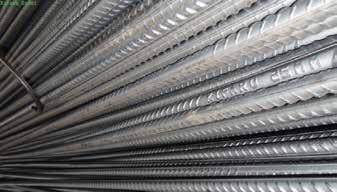
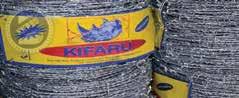
Blue Nile Group commenced production back in August 2006 as a first step towards introduction of their brand name Kifaru. Since then their product capacity has expanded from 1,000 tonnes per year - which for the steel industry is no size at all - to 150,000 tonnes.
The aforementioned take-over came after the Group split from one of the largest traders of building materials, forming its own manufacturing outfit in Kenya which now comprises two particularly diverse industries. Each of these divisions within the company is independently managed and run, while being governed by common policies and goals.
The company’s main operating lines are steel manufacturing and exports; and with the adoption of state-of-the-art technology, the company has managed to produce high quality steel while maintaining the relevant safety standards, with all of the products deemed fit for usage as per KEBS, the body responsible for maintaining standards within the country, BS (British Standards), JS (Japanese Standards) and ISO Standards.
Kifaru Steel has recently worked on creating products that are focused on longevity, with a guarantee to last at least 10-15 years. Customers currently want this longevity, instead of focusing purely on price and it is what they appear to be expecting from companies such as Kifaru Steel in the future.
According to Mr. Kotni Rao, the company President, they have already developed their offering into two divisions that are completely functional to answer to the customer’s needs, one of those being Blue Nile Wire Products and the other Blue Nile Rolling Mills. “Looking forward, we are currently in the process of introducing a wire galvanising plant which will be installed next year, enabling us to move into the galvanising industry in a more decisive way,” he said.
He further added that, it is a new and exciting investment for Kifaru Steel and leads them into what they see as the future for the steel industry. “No one else has achieved this in Kenya, so we see it as a breakthrough in our local and export market where we will be at a global standard,” he affirmed.
Already a force to reckon with, Kifaru Steel plans to go for its IPO in the next few years which will enable it to expand at double the current rate.
Solar power alone will not solve energy or climate needs
Recent reports that solar capacity will soon exceed nuclear capacity reveal an important fact. It also hides a crucial distinction needed to understand the context of energy production, and use and consequences of choices among supply options for the future.
As executive director of the Waterloo Institute for Sustainable Energy (WISE) and lead author of the Equinox Blueprint Energy 2030, a technological roadmap for a lowcarbon electrified future, I have investigated energy options, alternatives and their utility. I have also found that people get confused with terminology.
Capacity installed in kilowatts (kW) is not equal to energy produced in kilowatt hours (kWh)—and the energy services we demand and pay for (such as cooking, cooling, lighting, and entertainment) is measured in kilowatt hours. For large-scale, industrial purposes, output is measured in megawatt hours (MWh) or gigawatt hours (GWh).
The technical capacity of any energy technology to deliver useful energy is measured as energy output. Because of the efficiency of energy conversion, solar energy output tends to be low.
For example, the energy produced from a large number of solar arrays combined as 1,000 megawatts (MW) installed capacity will deliver, on average, an energy equivalent of 10 to 12 per cent of its capacity. In contrast, a nuclear plant delivers energy at 80 to 90 per cent of its rated capacity.
The current global installed capacity of 224,684 MW provides energy output of 253,593 GWh, equivalent to an annual capacity factor of 11 per cent. Similarly, Germany’s installed capacity of 39,784 MW results in energy output of 36,056 GWh at a capacity factor of 10.3 per cent.
So, for the same installed capacity, solar energy produced is eight to nine times less
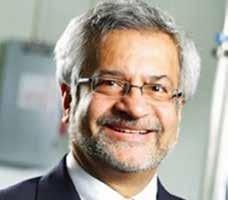
Nathwani is Professor and Ontario Research Chair in Public Policy for Sustainable Energy, Faculty of Engineering, and Faculty of Environment at University of Waterloo.
article was originally published on The Conversation.
than nuclear. If you want the same amount of energy, then you would need to install an equivalent solar capacity that is higher by as large a margin—eight to nine times the number of additional solar arrays.
Less hype, more fact
The point here is not to diminish the value and positive contribution that solar can make towards reducing our dependence on fossil fuels to help achieve a global energy transition towards a low carbon energy future. The hype needs to be tempered by a realistic assessment of the emerging energy demand at the global level and the effective capability of meeting growth in energy demand on a very large scale.
You don’t want to get conscripted to the view that one energy option—solar—is the sole answer, and it also happens to be an option that does not deliver large volumes of energy from the installed base.
Why is this relevant? The urgency for implementing effective low-carbon energy solutions is all but fully acknowledged and recognized by all the countries of the world (except the current US administration).
Future of energy is diverse and distributed
The scope and scale of change required to meet
climate change targets is anything but trivial. This suggests a complementary and reinforcing role for many different energy technologies with low-carbon attributes such as wind, solar, hydro, geothermal, nuclear and natural gas as an interim substitute for coal. The approach is complementary because each technology has characteristics that require attention to its limitations and ensure it can function as part of an integrated energy system that delivers best value to the end user. The emerging energy system of this century will not look anything like the energy system of the past century dominated by central power-generating stations transmitting energy over long distances to cities, towns and villages. Distributed energy resources—best exemplified by solar as Exhibit A—combined with the power of information and communication technologies (ICT) will increasingly become relevant in our lives.
Imagine a household becomes both an energy generator (solar on the roof) with an electric vehicle capable of storing energy (from wind and solar) and selling the energy back to the wires when it is profitable to do so. All of this could be managed seamlessly through a virtual power network enabled by ICT. Thus, a consumer has now become a producer and a consumer—a “prosumer.”
Technology entrepreneur Elon Musk’s company, Tesla Inc, is working to make that vision a reality today with its electric cars, solar-cell roof tiles, home energy storage, and networked, grid-connected battery systems currently being installed in Australia.
Decentralized power generation
Will distributed energy become truly disruptive and completely undermine both the business model of the existing utilities and the investments in the large centralized infrastructure?
Jatin
This
Race for the skies
Africa’s tallest sky scrapers
Not since the early seventies has Africa seen a scramble for the skies as is evident today. The Carlton Center in South Africa has for the last four decades held the pole position as the tallest building in Africa inspite of not being featured even amongst the top 100 skyscrapers in the world. This is soon to change as Africa is experiencing an upsurge in high-rise buildings with recent projects currently underway set to take wrest away the title of tallest building in Africa.
Not surprising, South Africa currently hosts five of the top ten tallest buildings in Africa which include Ponte City Apartments 173m,Marble Towers 152m, Pearl Dawn 152m and The South African Reserve Bank 150m and of course the Carlton which is the tallest.
The rest are spread across the continent. Morocco has the 210m Minaret Hassan II Mosque in Casablanca and Algeria’s 173m Bahia Centre. However, the minaret does not count in most ranking as part of the building’s height.
This year, Kenya entered the top 10 with the completion of the 31-storey Britam office tower that stands 200m tall and carries the distinction of being the second-tallest building in Africa. The building that starts at its foundation as a square rotates gracefully up to the 30th floor at 45 degrees, forming a prism with different floor sizes.
It is the regional headquarters of Britam East and Central Africa. It has an office space of approximately 32,000 square metres. It will additionally be able to accommodate 1,000 cars in its swanky 12-storey car park.
Egypt
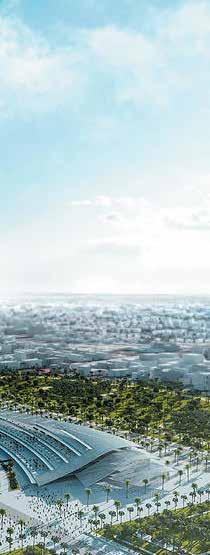
Egypt recently announced the construction of Africa’s tallest skyscraper as part of the country’s new administrative capital project. The new building will cost a whopping US$ 3bn. The project will be handled by State-owned China State Construction Engineering Corporation (CSCEC) and will ascend 345metres high; 45 metres higher than the ongoing Pinnacle in Nairobi. The development will also comprise of 12 business complexes, five residential buildings and two hotels over half a square kilometer. In total, the new capital will cover an area of 50 square kilometers.
Kenya
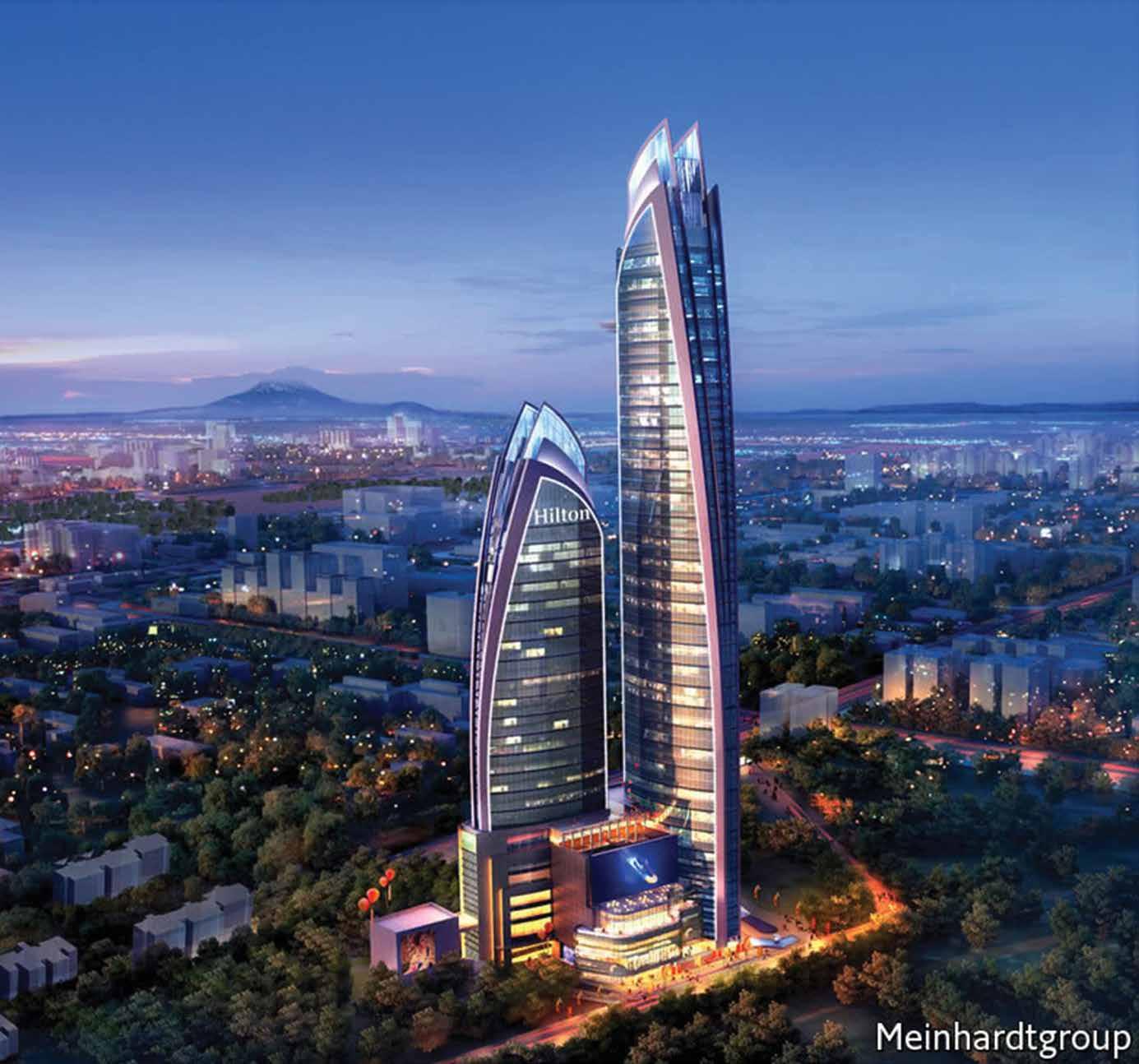
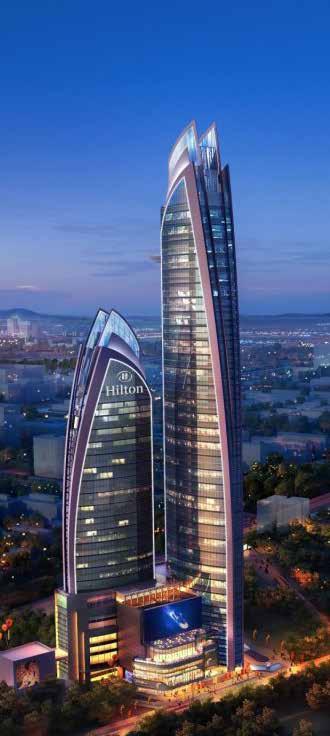
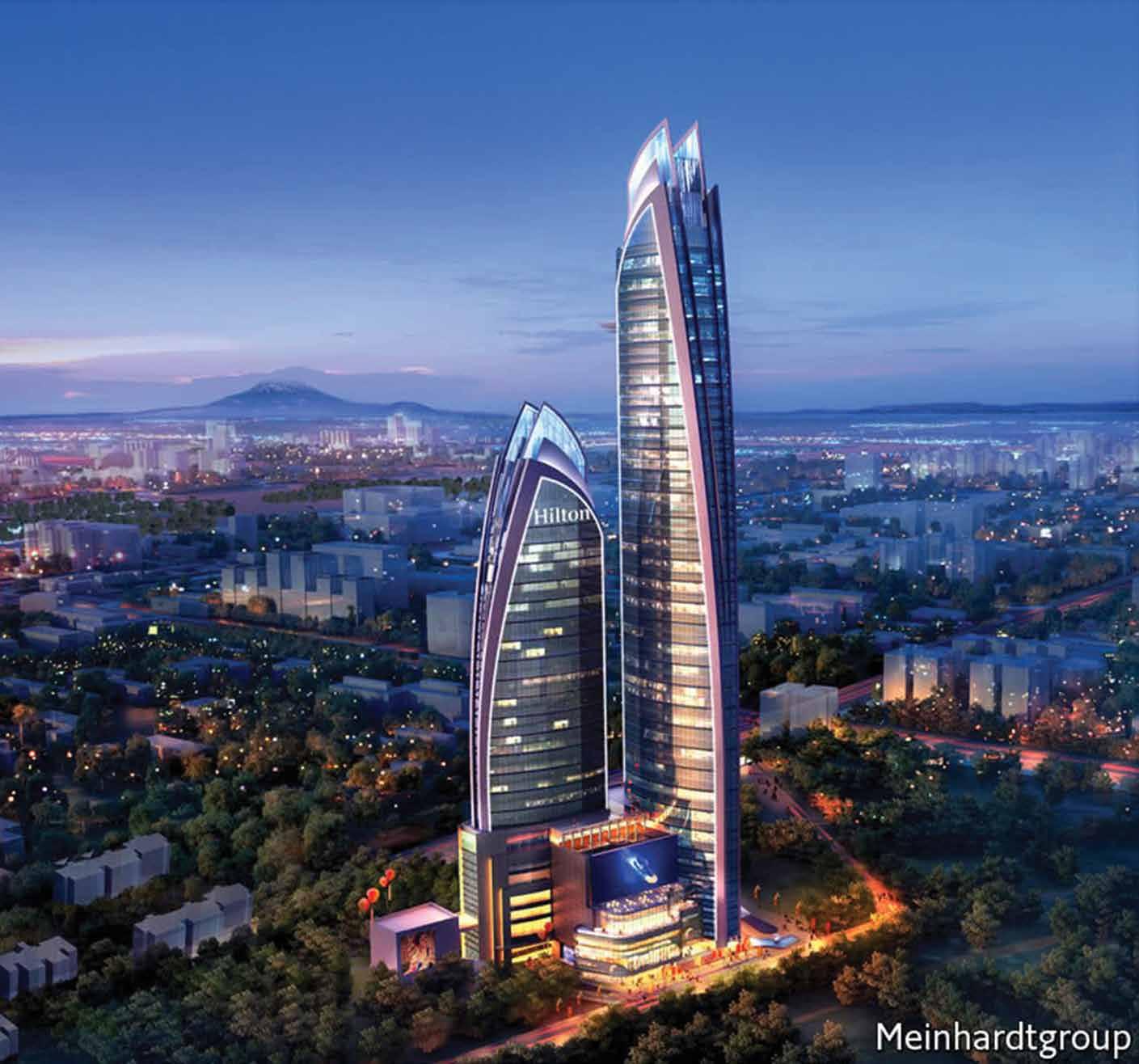
Kenya may gain the distinction of hosting the tallest building in Africa at least for a while, taking the position long held by the Carlton Centre, once ‘The Pinnacle’ whose construction started in May in Nairobi’s Upperhill business hub is complete. The building will bear testimony to the rise of Nairobi as a regional economic and business centre. The building is being constructed by Hass Petroleum and White Lotus- Dubaibased investors who have injected a whooping US$220m into the 70-floor highrise which will feature a 45-storey Hilton Hotel, a 5-Star Restaurant on the 42nd floor, a luxury spa & gym including an open-air infinity pool.
The building, upon completion, is set to rise 300m into the Nairobi skyline, host 150 posh apartments and come topped off with a helipad that will allow patrons to fly directly to the Hilton Hotel and beat the chaotic Nairobi traffic. It shall also house 42 floors of
high-end residential apartments, 20 Grade- A offices and 5 floors of shopping space among other luxuriant facilities.
Ethiopia
Elsewhere in Eastern Africa
The Commercial Bank of Ethiopia has launched the construction of a 46-floor 198m new headquarters in Addis Ababa that will be the tallest building in Ethiopia. The building whose construction started in 2016 and is currently ongoing is set to be complete by 2019. Other upcoming skyscrapers in Ethiopia are the 35-floor Nib Insurance and International Bank building, Midrock City Centre and the Mexico Square Towers in Addis Ababa, both at 35 floors. Once complete, these buildings will join the 23-storey Nani Building and unseat the 19-floor Grand hotel and Spa, Bahir Dar, currently the tallest in Ethiopia.
AL-Noor, Morocco
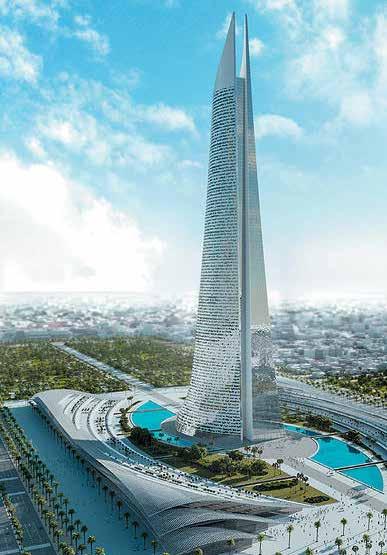
Even before the applause fades on the ‘The Pinnacle’ as the tallest building in Africaa Dubai-based construction firm, Middle East Development LLC, in conjunction with French architects Valode&Pistre, are planning a breath-taking skyscraper in Casablanca, Morocco which will stand at 540 metres in commemoration of the 54 African states. At such heights Al Noor, when complete will rank as the fifth tallest building in the world, coming between Taipei 101 (501 meters) and The World Trade Center (541 meters). The building will host a 7-star hotel with 200 luxury suites, spa, art gallery and a gastronomic restaurant with everything developed with perfection in mind.
Additionally, it shall also house a business centre, conference hall, luxury shopping area, safe storage area, luxury offices, restaurants and the African Billionaires club for Investment. (ABCI). The project manager, Amedee Santalo says Morocco was picked to host this mega project because “it is the door of Africa to Europe and a well-developed country in Africa as well as being politically very stable.
Sand Tower Morocco
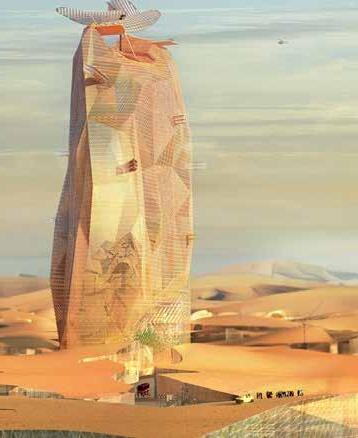
Another Morocco wonder will be the proposed Sand Tower in Morocco set to commence construction in 2025. The project is a vertical city that will rise to a height of 450
meters and occupy a total floor space of 78 hectares deep inside the Sahara Desert. Designed by the France-based Architecture firm, OXO Architects, the city is set to be energy-efficient, harness rain water for irrigation of a vertical farm inside the city, and also generate electricity from renewable energy forms such as solar and geothermal. The city will include a hotel, 600 housing units, shopping centres, conference rooms, sports area, a spa, a panoramic bar and a restaurant. It will also house a meteorological observatory, a desert museum and high-end offices.
South Africa
Still on the drawing board is the Centurion-Symbion City that
will become South Africa’s next tallest building at 447m, topping off at almost double the height of The Carlton Centre. Touted as the first ever truly green skyscraper in Africa, it will feature mega wind turbines and embark on major reuse, reduce and recycle practice; championing the cause for clean energy investment and declaring Africa’s commitment to the need for going green.
Ghana
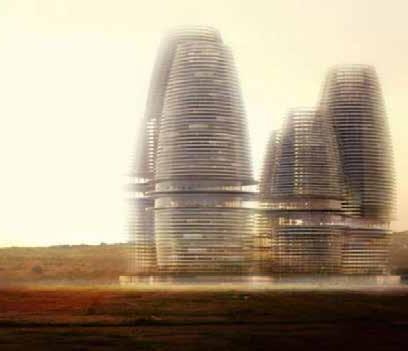
West Africa will also have its skyscrapers albeit at a modest level. Poised to make Ghana Africa’s ICT hub, Hope-City is an ambitious project by the Ghanaian government at a cost of US$10 Billion.
The city will consist of six close towers including a 270m
Al-noor, Morocco
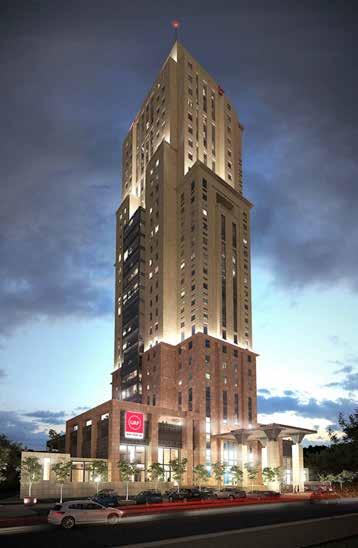
UAP Tower, Kenya
Hope city
tall building, hosting an IT University, an assembly plant for tech products, several restaurants, sports centres and a hospital. Designed by OBR Architects, Ghana’s Hope City seeks to place Ghana prominently on the African map as a major player in the digital arena. The technology parks will, upon completion, accomodate 25,000 people and create employment for another over 50,000 people. Africa, categorized as the fastest growing continent, presents a wide range of investment opportunities from agriculture, infrastructure, minerals, industry and even manpower. This potential has been the key motivation behind the billions of dollars injected into the continent either through bilateral trade or even through privatepublic partnership investments over the past decade.
This trend has seen heavy investment into real estate that has seen prices of land escalate due to demand and resulted in new buildings having to be taller to enable a justifiable rate of return for investors. Coupled to this is the prestige and magnetic attraction of hosting iconic structures which is seen as a pull to investors, You only need to look at Dubai which has transformed its image of a few decades ago where it was a desert town with little to offer to become a veritable business hub rivaling any in Europe or America.
Although the projects on the Africa continent are small compared to the likes Burji Khalifa and the Petronas Twin Towers buildings that soar well over 400m it will just be a matter of time before Africa enters the realm of these dizzying heights.
Sand tower, Morocco
Choosing High Performance Admixtures
Admixtures are those ingredients in concrete other than water, Portland cement and aggregates. Nonetheless, to exploit the potential of concrete and provide flexibility for its use in a various environments and circumstances, extra materials can be added to the concrete during the mixing process to alter its characteristics. These materials are known
"as chemical admixtures. There are different categories of high performance admixtures depending on their impact on concrete properties.
Choosing an Admixture
Alice Muthoni, the Technical Manager at Mau West Company Ltd; the agent for Penetron International in Kenya emphasizes
Research before purchasing an admixture is very important so as to ensure the client goes for the most efficient product that is easy to use; since lack of knowledge is the first step towards failure in utilizing admixtures properly.
that; buyers should choose concrete admixtures that have very low or no sulphates and chlorides which affect the strength of the concrete. “The manufactures instructions on the use of the admixture should be strictly adhered to. The buyer should also check the technical data to ensure the admixture is suitable for their project e.g. deep basements require admixtures that can withstand high hydrostatic pressure, while water tanks/ reservoirs require admixtures that are safe and approved for portable water,” explains Alice.
She also adds that, where the buyer is not sure about the characteristics of the admixture or wants to use it in a unique situation; they should request for a sample early enough and carry out tests.
“One has to understand concrete first before they understand how admixtures work/react with concrete. Most African countries have many Technical training institutions but they don’t offer a good course on concrete technology, thus the lack of certified concrete technologists. There are also very few certified concrete labs where
concrete materials and the concrete itself can be tested,” affirms Alice.
According to Mr. Igor Nikolajev of Gemite, apart from purchasing the admixture from a manufacturer with a track record one should also choose the correct admixture depending on the mix design among other sources.
Moreover, Mr. Patrick McKeown of Surecrete Design adds that research before purchasing an admixture is very important so as to ensure the client goes for the most efficient product that is easy to use; since lack of knowledge is the first step towards failure in utilizing admixtures properly.
Specific admixtures for specific markets
According to Dave Brand, the General Manager, Sika Kenya, admixtures play a very important function in concrete despite being the smallest dosage or additive that is put in a cube of concrete. Admixtures are mainly used to reduce the amount of water put in concrete, as too much water causes the concrete to shrink and leads to cracking. They also keep the concrete plastic and workable, and help to avoid slump problems by extending the workability of the concrete especially during transport to the site.
Sika applies different technologies when it comes to production of admixtures. They include lignosulphate technology, naphthalene based technology and the new and higher technology that uses polycarboxylate ether (PCE). The use of the different technologies depends on the country and the circumstances there. For example, PCE is mainly used in Europe mainly due to its narrow workability window.
However, in Kenya, Sika employs the naphthalenebased technology. Mr. Brand explains that the naphthalenebased superplasticizers are suited for this local market because they have a bigger workability window and are not affected by the differences in quality of cement, stones and river sand that contains clay. “We have developed now some products that are more robust, more tolerant of the aggregates, cements and the sands.” Brand says.
Mr. Green Geoffrey of Mapei in South Africa further adds that, the admixture market is very competitive, with mining and infrastructure projects still at a low. “However, with the commencement of larger investment projects, we can see a rise in innovative solutions that test the previous boundaries of operation. For instance, we see more and more that time is money, and we can offer added value if we can offer solutions that shorten the construction and finishing time,” he affirms.
EXTRUSION MACHINES C APABLE OF MULTI-PROFILE PRODUCTION
AFRIC A
KENSEAL
According to Mr. Varia, Director of Kenbro Industries Ltd, this product has been introduced in the market to succeed APP product. As it is joint less and therefore continues lining, flexible, UV resistant and can be colored to your choice. Kenseal® is water based elastomeric liquid coating specially formulated from various chemicals which enables it bond to all concrete surfaces. It establishes the complete water tightness of the roof and many other building elements. It can be applied to provide a water proof lining to gutters, parapet walls, water features as well. The product gives long lasting protection against water ingress, it is flexible i.e. it can be used in areas with very high or low temperatures without affecting performance, coating can be applied on any complex profile unlike others which can’t take shape of difficult profiles.
KENSEAL 550K
Kenseal 550K brings a hard wearing, seamless waterproof membrane for roofs and foundation protection thus providing effective barrier to waterborne salts and atmospheric gases. It is advisable for internal and external waterproofing.
KENSEAL 550
Formulated for:
Joint less bonding to all concrete surface
Continuous lining, flexible and UV resistant
Can waterproof parapet walls, water features and lining gutters
Works best when applied on positive side of the structure
Resistant to low and high temperatures
Easy to apply, mixing powder to the liquid and simply brushing it on
Used for internal and external waterproofing
Color customization available
Ready to use acrylic modified cement based waterproof slurry coat for most construction structures.
GPS Surveying and its advantages
Surveying and land surveying is the measurement and mapping of our surrounding environment using mathematics, specialized technology and equipment. Surveyors measure just about anything on the land, in the sky or on the ocean bed. They even measure polar icecaps.
Land surveyors work in the office and in the field. In the field, they use the latest technology such as high order GPS, Robotic Total Stations (Theodolites), and aerial and terrestrial scanners to map an area, making computations and taking photos as evidence. In the office, Surveyors then use sophisticated software, such as Auto-cad to draft plans and map the onsite measurements.
Surveyors work on a diverse variety of projects from land subdivision and mining exploration, to tunnel building and major construction, which means no two days are the same. They are experts in determining land size and measurement. They also give advice and provide information to guide the work of engineers, architects and developers.
GPS Surveying
The market for survey grade GNSS as well as for GIS handheld GPS is increasing in Africa. Survey grade GNSS is used by Land surveyors for new township layouts, and by construction companies for survey control points and for staking out roads etc. It is needed for drone surveys for
ground control points, and is increasingly used for precision agriculture.
According to Mr. Dave Beattie of Autobild Africa a distributor of a wide range of trusted surveying equipment from South Africa, some African countries already have CORS systems for getting accurate fixes from what is called NTrip Rovers, using cellphone networks to access the CORS bases via internet. Those that do not have such systems are looking to implement them soon.
“Because GNSS equipment is solid state electronics, and because accuracies of different makes is the same, there is very little to differentiate between makes of GNSS. Ease of Use, flexibility and Support are the most important things to look for.
Most makes now offer Windows controllers with universally used software such as Field Genius or Carlson Surv Ce. These programs are well established, used around the world and have built-in co-ordinate systems for all countries. They also work with all makes and models of GNSS as well as total stations,” he says.
“If I were considering purchasing I would be wary of buying a system that uses controllers and software built by the GNSS brand. This is their way of tying in customers for life. To expand ones system to several GNSS units, ones options become severely limited,” he adds.
Mr. Beattie further mentions that, to replace these controllers is
very expensive. With Windows controllers and universal software one has unlimited choices and flexibility. There are universal protocols used by all brands such as RTCM or CMR+. Some manufacturers program their GNSS antennas to communicate in Brand specific protocol. Once again, these brands should be avoided because it limits one to that brand only for future purchases and expanding ones system.
“For example you may have a base and rover set and need to expand by buying another rover. Keep your options open by sticking to windows systems as mentioned above. Then support is the next big issue, and of course price. Prices can vary significantly but, unlike Opto mechanical instruments, GNSS products are all generally robust, lightweight, and give the same accuracies,” he affirms.
Sino T300 GNSS by Comnav Technologies Robust, Lightweight, Fully featured GNSS Contact us for best prices, best support and training
The importance of concrete waterproofing
There are infinite ways of protecting concrete waterproofing: physical barriers (bitumen rolls, liquid membranes, HDPE, synthetic membranes), osmotic barriers (cementitious products added with polymers or acrylic components) and even additives for the mix. The most common waterproofing installation is the application of bituminous membranes in rolls; the application is easy and fast, nontoxic, shows high resistance to the most severe conditions, not expensive, easy to repair, long life expectancy and UV resistant for several years.
Polymer-modified bituminous membranes have been introduced in the market in the ’60 years and the experience is so long in the construction culture that everybody knows about the versatility of this product; today, with the most modern technology, APP
membranes have reached a high standard and has multiple applications.
When the flame cannot be used or in many other situations a good waterproofing applicator considers alternatives such as special waterproofing emulsions and cementitious products with different characteristics, depending on the problem. For example, UNOLASTIC from Index SpA is a waterproofing emulsion based on bituminous acrylic resins, water based, suitable for any application, easy to apply, multi-purpose, resistant to ponding water and UV rays.
It is a product capable of solving most problems.In case of underground infiltrations with negative pressure, the best and cheapest option is OSMOSEAL, a simple single component cementitious product with osmotic crystallization function on concrete. All the above installations require specialists
in volume due to the rusting process; eventually the re-bars could expand up to six times bigger than the original size and its expansion can break or crack the concrete. This is the beginning of a dangerous, noreturn process that threatens the safety and the very stability of the building. It is very important during construction to ensure the good quality of concrete and to waterproof the same if exposed to oxidation agents to avoid the deterioration caused by the humidity along in the years (rain, condensation, infiltrations, and so on).
as a wrong application will not perform well; no product is good enough if the applicator does not know it and understand it in full.
Importance of Waterproofing in Buildings
Concrete waterproofing in a building is vital for the long protection against humidity and negative agents like CO2 or SO2, gases present in the air due to cars pollution or fumes generated by burning hydrocarbons.
These agents along with the moisture in the air penetrate and modify the concrete alkalinity which has the function of preserving the metal reinforcements inside the concrete against the risk of oxidation.
These components in presence of concrete of a poor quality reduce the life of the same because of the “carbonation” that causes the steel bars to increase
In effect, the key of this quality starts in the mix of cement, sand, ballast and water in right proportions, possibly including some additives like fluidifying agents which help the workability of the concrete during the preparation using less water. As a result of this, you have a more compacted and harder concrete which already has some waterproofing characteristics.
Challenges in the Kenyan Market
In Kenya, waterproofing is often a challenge as in most cases it is not adequately considered at design level; in most cases buildings are being erected and the waterproofing specialists are not consulted on time. This is partially due to the low professionalism of many applicators that are willing to offer guarantees in very dubious situations, just to get business and regardless of the final performance of their installation. A good waterproofing approach should start with the co-operation of the waterproofing expert with the structural and civil engineers as the three professionals should work hand-in-hand for a perfect result. There is an extremely
wide range of available solutions and materials to waterproof a building today, from foundation to roof. Many of these products are new, sometimes valid and multi-purpose, they can be used for roofs, foundations, for wet areas and pools as well; however, many are badly failing as they are being used for the wrong purpose, or wrongly applied by incompetent staff.
In a traditional market like Kenya, it is always advisable to stick to traditional solutions until the new ones are tested and proved effective; the technical gap between Europe/US and the African continent is getting smaller by the day due to Internet and the specifications issued by foreign professionals for Kenyan projects.
So, naturally, the new, performing products that are used abroad will soon naturally
enter the market and become popular while the poorly performing ones will not stick around for long.
About Scala
Scala Enterprises Ltd is under the umbrella of Italbuild Group which was established in Kenya in July 1997 registered and certified as Building Works ContractorsNCA 1, Civil EngineeringWater Works-NCA 2, and Civil Engineering-Road WorksNCA 3. They are renowned Roofing and Waterproofing Specialists with; Polyglass (part of the Mapei Group), TEMA (technologies and Materials), Tegola Canadese Shingles, Mapei, and Index. They provide solutions for foundation slab waterproofing, retaining wall waterproofing and protection before backfill, floor slab humidity and wet areas, façade
OUTFITTING AND INTERIORS
info@italbuildimports.com info@scalaltd. com
waterproofing and cladding.
Scala is the first company in East Africa to introduce a multilayer waterproofing solution for the installation of GREEN ROOFING SYSTEMS, which allow flat roofs, balconies and ground floor slabs above basement parking’s to have the possibility of being landscaped and have natural greenery grown. Some completed projects are The Swiss Embassy Annex and The Haveli Towers in Parklands.
With TEMA, they also provide land erosion solutions for landscaping around buildings and waterproofing solutions for areas that require drainage in the case the client wishes to install AstroTurf. The high quality standards that Scala applies in the selection of the suppliers of their range of products and the strict co-operation that the company has with them for suggestions,
improvement, suitability with the local environment and the peculiarity of any single project is what makes their products unique in the market.
They work closely with the suppliers to improve the workmanship standards of their applications. The staff undergo constant training in Europe and their suppliers come to Kenya to familiarize with the Kenyan environment and the differences with Europe.
Scala is also a distributor and certified installer of Polyglass from Mapei Group which is the most advanced manufacturer of polymer modified bituminous membranes. The ones they import are tropicalized for best performance. Most of the products Scala sells and applies are adjusted and tested for best performance in tropical climates.
Office: Nyali Bridge opposite Best Western Hotel P.O Box 90189 - 80100, Mombasa Cell: 0720 953374/ 0733 603926
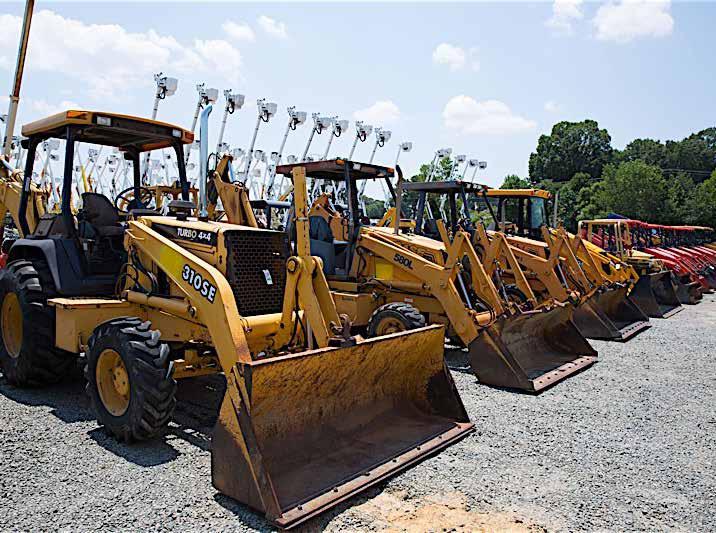
Buying used construction equipment
As the African construction industry continues to record tremendous growth, the demand for heavy construction equipment is also on the rise.
Buying a used construction equipment is a tricky process. One has to know exactly what components to look for before making the final decision. Here are seven tips to help you make the right decision.
1. Check the fluids
Fluids to look at comprise engine oil, transmission fluid, coolant, hydraulic fluid, and more. Looking at a used construction equipment fluids will give you insight into not merely the present condition of the machine, but also how well it has been maintained over time. Low or dirty fluids could be a caution flag that the earlier owner hasn’t kept up with a standard maintenance agenda while clues like water in the engine oil could be a sign of a much larger issue.
2. Operating hours
It is good to always ask how many hours the used construction equipment has operated for isn’t the sole factor you should consider when assessing a machine’s condition but, as with looking at miles when shopping for a car, it’s a good place to begin. A diesel-engine machine can last into the tens of thousands of operating hours. If you think it may be pushing the upper limits of hours then you may want to do a quick cost/benefit calculation. This will help you to determine if the money you’re saving on an older machine is going to be worth the
additional maintenance cost of taking care of something that may break down more often.
Always remember that regular maintenance is extremely essential. A machine with 1,000 operating hours that hasn’t been well maintained may be a worse buy than a machine with 15,000 hours.
3. Maintenance Record
The most sure-fire way to know if a machine has been maintained at regular intervals is by looking at its maintenance records. How often were fluids changed? How often were small repairs needed? Has something gone critically erroneous with the construction equipment in its operating life? Look for clues that could indicate how the construction equipment has been used as well as how it’s been taken care of.
Note: records do not always make their way from each owner to the next so an absence of records shouldn’t necessarily be taken to mean that maintenance hasn’t been done.
4. Signs of wear
Any used construction equipment is always going to have
rust, or damage that may lead to problems in the future or reveal an accident in the machine’s past. Any repairs you’ll need to do down the road will mean added costs and downtime where you can’t use your machine. Tires, or undercarriage on tracked vehicles, are another excellent place to check. Keep in mind that both are expensive to replace or repair and can give you a lot of insight into how construction equipment has been used.
5. Engine exhaust
There is no better way to evaluate an engine than to turn it on and run it. How the machine runs when the engine is cold will tell you a lot about how well it’s been maintained. Another tell-tale clue is the color of the exhaust smoke the engine produces. This can often reveal issues that you did not know existed. For instance, black smoke typically means the air/fuel mixture is too rich in fuel. This could be caused by a number of issues including faulty injectors or something as simple as a dirty air filter.
White smoke could signify that fuel is burning wrongly. The engine could have a faulty head gasket that lets water mix with the fuel, or there could be a compression issue. Blue smoke means the engine is burning oil. This is likely
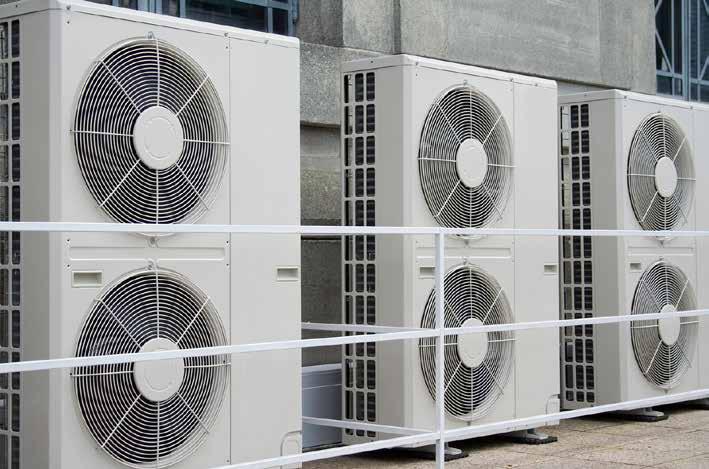
Keeping your air conditioner running
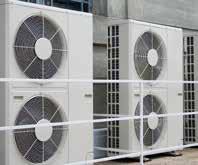
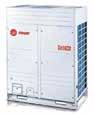
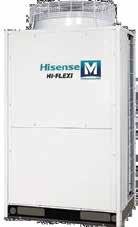
The African region is emerging as a key potential region for commercial air conditioners market. According to Hennie Traut of WP manufacturing one of South Africa’s leading manufacturers and suppliers of all types of heating, ventilation air-conditioning and refrigeration equipment, the African market is very lucrative. This is due to the increase in constructions coupled with global warming and urbanization, thus there is a growing need for energy efficient air conditioners for cooling as well as improving the quality of indoor air.
Mr. Charles Kimari, the Head of Department Consumer Electronics Division at Samsung mentions that, air conditioning technology continues to move toward an ideal home cooling solution; customers are now able to control the air conditioners and
other home appliances with their mobile phones.
According to Christo Vermeulen the Managing Director of Thermacold one of the leading suppliers of air conditioners in South Africa, more people are becoming aware of energy usage and running efficiency of the machines.
“This has pushed up the demand for 2 types of energy efficient and cost effective systems. The first is VRV systems and secondly the Ice storage system whereby energy is stored in Ice in off-peak hours, and then reused during peak hours. Cutting up to 30% in energy costs. Most definitely the biggest shift has been towards greater energy efficiency, reducing operational costs, and ensuring sustainability through quality products,” he adds.
Like all equipment air conditioners need good care and attention in order to last long and run efficiently. There are some basic things that you can do to ensure that you get the best from your air conditioner. Other than reducing the lifespan of your air-conditioner, lack of proper maintenance will result in a fall in performance and a rise in energy costs.
Filters fins and coils
For instance filters, fins and coils need regular maintenance. Ensure you routinely replace or clean filters. If the filters get clogged by dust or other debris airflow becomes restricted reducing efficiency and do not think of running the air-conditioner with a worn out filter either because air will carry dust which will settle on the evaporator coil and will cause it to loose its heat absorbing capacity. Replacing filters is probably the
most important maintenance task because done properly, this task alone can improve the efficiency of your air conditioner by about 10 percent.
Filters are located in the grill that faces into the room though for central air conditioners these can be located in walls or ceilings.
Evaporator coils
Evaporator coils also need to be cared for. Despite the best efforts of the filters, some dirt will deposit on the coils and form an insulating film which will impair the coils heat absorption properties. Checking these out is by simple visual inspection and depending on the environment should be done at least once a year.
Coil fins that are located on the coils as the name suggests act to improve the heat absorption qualities of the coil by increasing the surface area. They can get bent by accident and so should be checked and repaired as need be.
Condensate drain pipes
Lastly you can also check the condensate drain pipes which get clogged over time. If this happens it results in higher humidity in the room and discoloration of the walls and carpets. Simply stick a stiff wire in the drain to unclog.
There are other checks that are required but this may need the assistance of a trained technician. The obvious place to go for this is to the dealer who sold you the air conditioner so ensure you purchase from a credible supplier. The technician will check such things as the motors, belts and electrical connections. He will also test the thermostat, airflow and refrigerant.
If you maintain your air conditioner well you stand to have it for a longer time and save on both energy costs and repairs.
According to Mr. A. Joubert from Chabo & Joubert Air Conditioning a dealer of air conditioners in South Africa, there are far too much untrained and uncontrolled contractors
in the African market. It is all about need and supply. There is a huge need for this kind of service and there are also a vast amount of ‘chancers’ out there seeing that there is no proper regulation. The uncontrolled cheap imports from China are making matters worse. Customers easily fall victim to these ‘fly by night’ companies and ‘substandard products’. “Once the market is properly controlled and regulated the Air Conditioning Industry in Africa would take up its deserved place in the world market,” he adds.
Furthermore, Mr. S. Sivaraj the Director at Hall Equatorial an installer of air conditioners in Kenya reiterates that, competency in Heating, Ventilation and Air-Conditioning (HVAC) is very important. Courses in institutions of higher learning should be extensive enough so that they provide an excellent foundations to the fundamentals of heating, ventilation and air-conditioning.
Samsung Digital Air Solutions
For Ultimate Air Care
Samsung Electronics Co. Ltd has been manufacturing air conditioning systems for almost 40 years. This is while utilizing the latest technology and striving to produce the most outstanding, innovative, efficient and reliable systems in the market today. Increase in construction coupled with global warming and urbanization has propelled the African region to emerge as a key potential market for commercial air conditioners. This has been propelled by the necessitating a growing need for energy efficient air conditioners for cooling as well as improving the quality of indoor air.
Eco-friendly gas and smart management
Confirming this, Jung Hyun Park, Samsung Electronics East Africa Vice President and Managing Director, says, “Air conditioning technology continues to move toward an ideal home cooling solution. Customers are now able to control the air conditioners and other home appliances with their mobile phones. To remain relevant in this field, Samsung has also come up with eco-friendly gas as environmental awareness continues to grow in developing countries. This has prompted increase in sales for the units with low ozone depletion potential.”
To meet the demand, Samsung has expanded its horizons of business to smart management and controls. Clients or Contractors quickly determine system refrigerant measurements without disconnecting or attaching anything to the unit. “Our products have a knack of detecting any fault in the system and acting accordingly. For example, when there is a leakage in the system, the system automatically pumps down the gas to outdoor units and shuts itself down. This eliminates loss of refrigerant gas as well as prevents damage to the ecosystem. Additionally, the system is monitored effectively with convenient web-based data access and management from anywhere,” said Mr. Park. To deliver superior service in Air Conditioners, Samsung has introduced
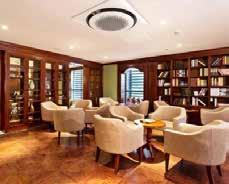
innovative products into the market. For instance, the World’s First True Circular Cassette with an innovative 360 degrees airflow that ensures optimal air conditioning and eliminates dead zones. The A/C’s circular design allows it to be placed beautifully on any setting since it blends with any décor. It comes in two distinct styles, that is a fully circle fascia panel and a square-round fascia panel. The 360 Cassette have both black and white fascia panels available.
Additionally, to successfully improve energy efficiency and good indoor environmental quality, the firm has commercial air conditioners that provide word class energy efficiency and the most powerful cooling and heating performance available in the market. The Samsung VRF has the world’s largest capacity of 30HP for the outdoor unit. This provides the ultimate heating and cooling capacities while optimizing space with efficient design.
Efficiency
According to Mr. Park, an essential factor in maintaining efficiency is regular maintenance. As he clarified, regular maintenance is important for the Air Conditioner to operate efficiently as required. During maintenance, filters and coils are washed and drain pipes flashed to remove any accumulated debris. For optimum results it is recommended to service air conditioners quarterly.
“Samsung as the major air conditioning manufacturer has a responsibility to take a lead in training. It is in everyone’s interests to improve skills and the level of professionalism and competence across the industry.” says Mr. Park. The firm has made training one of
the key strategic priorities for the company; for instance, it has ten global headquarters, with research centres and design centres in different regions in the world. It is not just lip service; the manufacturer has invested significant sums in training, infrastructure, research and development, and this continues with a number of fresh initiatives that put training and skills at the centre of its approach to the market. This aids engineers and technicians in improving their skills and also understanding our products,” he added.
Consequently, Mr. Park urges clients to work closely with distributors since Samsung coordinates with them not only in training but also by offering full package services. This aims to cut production lead times. “I encourage clients to seek services from our partners because it is easier to follow up and they are on the ground, thus they understand the market needs,” he advises.
Purchasing an air conditioner
“An air conditioner is a considerable investment that investors don’t make very often. Any investor should ensure that they spend their money wisely, and their system will serve them well for years to come. Every investor is different and they all have different needs when it comes to choosing an air conditioner. Thus if clients are about to buy an air conditioner, it behooves them to keep in mind energy efficiency, use, room size and the interior design of the rooms,” he added.
The company has a highly experienced team with a training center that is equipped with the latest technology. “We have a team of engineers who work closely with consulting engineers, architects, contractors and clients to design their air conditioning requirements free of charge. We are always there to support our customers in designing, during installation and commissioning,” he affirms. The Samsung Electronics East Africa regional offices are located in Nairobi, West End Towers, 3rd floor, Waiyaki Way, Westlands; with the headquarters in South Korea.
100,000 REASONS TO TOAST TO MRM!
Another year. Yet another milestone at Mabati Rolling Mills Ltd (MRM)!
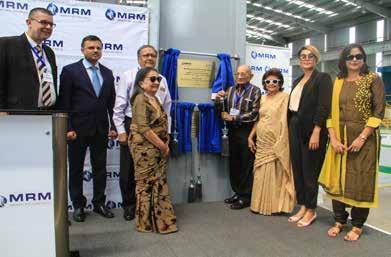
Dr Manu Chandaria, Mr D.P. Shah & Management commission the new CCL
“I will not let yesterday’s success to lull me into today’s complacency, for this is the greatest foundation of failure” –Augustine ‘Og’ Mandino, bestselling American inspirational & self-help Author.
Mabati Rolling Mills Ltd have done it again!
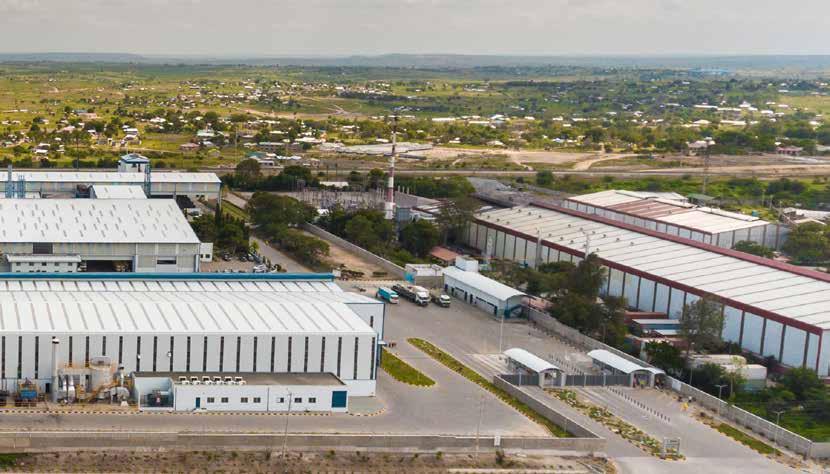
The weekend of Sunday 9th and Monday, 10th July 2017 were a proud moment for the entire MRM family and its erstwhile partners. In a double header celebration, MRM commissioned Africa’s largest capacity, state-of-theart colour-coating line. The new line utilizes new colour coating technology with unprecedented capabilities for its customers across the wider East African regional market and avails 100,000 metric tonnes of colour-coated steel per year capacity for this fast growing market, more than double the previous capacity!
The new colour-coating line was officially commissioned by the MRM Chairman and co-founder, Dr. Manu Chandaria, EBS who in the noonday light that 10th of July remarked, “This is a great milestone for Kenya. We started small over 55 years ago and are now in many markets in Africa as the Safal Group. This initiative will avail even greater value shelter in Kenya and other parts of Africa.
We must now stand in solidarity and assist each other to bring life to the saying, Buy Kenyan, Build Kenya”. Speaking at the same event, another of the co-founders, Mr. D.P. Shah noted that the factory is predominantly run by Kenyans in great alignment; “all the employees - from top management to the floor sweeper - are working every day to achieve a common purpose; to fulfil the needs of our valued customers.”
The MRM CEO, Mr. Andrew Heycott weighed in, “As the Kenyan and East African building & construction markets develop and mature, we have continued to see the consumer demanding greater product diversity. This is especially true of coloured steel roofing solutions and MRM as a market leader took the decision to expand our colour coating capacity.
This was both to provide greater diversity in our product solutions but also to encompass the latest technology with a state-of-the-art paint line”.
Trail-blazing on the African continent with world-class innovations has become second –nature to MRM and the Safal Group; its holding company. Over 16 years ago, MRM was the first supplier to introduce the continent to the best-steel coated product anywhere; Aluminium-Zinc coated steel which was produced for the first time across Africa, Middle-East and South Asia from the same location in Mariakani. Initially
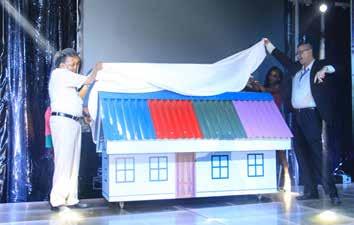
MRM Chairman, Dr Manu Chandaria & MRM CEO, Andrew Heycott unveil Dumurangi
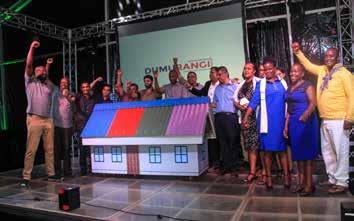
marketed under the DUMUZAS brand; later changing to ZINCAL to cater to a wider regional market, this is a product that has redefined roofing and shelter in this part of the world, a true revolution in only half a generation! Building on a successful and mature brand can be daunting. But overcoming challenges is the life blood of MRM. With a committed team that keeps asking “why not” and “what next”, it was only a matter of time before MRM outdid themselves. Coming at a period when the Kenyan economy has seen a slow-down of growth activity partly owing to lingering effects of a prolonged drought since 2016 that has been quite challenging for families across the nation, MRM’s innovation of DUMURANGI could not have been better timed. DUMURANGI is a new, affordable colour roofing product based on the classic corrugated profile that introduces the Kenyan consumer to 4 novel and exciting exclusive colours – Karura Green, Maasai Red, Bahari Blue and Jacaranda Purple. In the words of MRM Head of Marketing for Roofing, Mr. Harry Njagi, “There is a growing demand for coloured roofing solutions and hence the introduction of Dumurangi; an affordable
MRM Distributors & business partners celebrate the Dumurangi unveiling
solution at the same world-class quality that has become synonymous with MRM”. The product has already hit the shelves of MRM’s wide network of distributors across Kenya and the early signs are extremely positive and provide validation to MRM’s decision not to rest of its – successful – laurels but to stay at the crest of innovation and marketcenteredness.
The MRM family strides strong into the next 55 years of what promises to be a very dynamic era in the building and construction industry across the world, a time when the consumer is ever more knowledgeable, ever more demanding and greatly spoilt for choice in a world that has truly become flat in a cross-pollination of technologies, products and delivery processes. But even they know, like the great Og Mandino, that these toasting moments are to be celebrated with one eye firmly focused on the next big thing.
Continue to watch this space, Africa!
Team 2 Architects
Offering complete architectural, planning and interiors solutions
Team 2 Architects, an architectural, planning and interior design firm based in Nairobi, Kenya, was formed in 2008 as a husband and wife collaboration.
The two key principals of Team2 Architects are Deepak Krishna and Pari Saxena who are qualified and registered architects. Both Deepak and Pari hold Bachelors in
Architecture degrees from Manipal Institute of Technology, India. After qualifying as an architect, Deepak worked in Bangalore, India, for a year and then joined Triad Architects in Nairobi on his return to Kenya. During his tenure at Triad Architects that lasted 4 ½ years, Deepak worked on projects like The National Museum of Kenya, shopping center
in Kisumu, Proposed Assembly Chambers at the National Assembly of Kenya and the designs of seven transportation hubs at satellite towns near Kampala, Uganda.
Pari Saxena too worked in Bangalore for a year after completing her studies and acquiring registration. She then joined Triad Architects in Nairobi on her return to Kenya where she also worked for 4 ½ years. At Triad, Pari worked on projects such as the Silver Back Lodge in Ruwenzori, Rwanda and The British Army facilities and campuses at Karen and Embakasi in Nairobi, Kenya.
Deepak and Pari decided to set up Team 2 Architects in 2008.The firm currently employs four Architects in addition to the two principals.
Mission and Vision
“When setting up the firm in 2008, we decided that our main goal was to create a firm where the emphasis was laid on solution based design and detailing”, says Pari. “The other aim was to diversify our portfolio
to try to tackle all kind of designs from micro to macro and from all spheres of work available”. She says that this has resulted in the firm carrying out designs ranging from product designs to master plans and tackling many categories of works including renovations, interiors, commercial, residential, master plans, healthcare, hospitality and educational institutions.
“We have endeavoured to make Team 2 a one stop shop for all design based solutions. We have so far to an extent managed to keep our founding goal intact. We at Team 2 believe that as a designer one should be able to try hands at all types and sizes of design problems and offer relative solutions to the same.
Currently the firm is working on various projects ranging from housing, commercial, medical, banking, interiors and product design. According to Pari, the idea is to work at macro and micro level without losing touch with the basic elements of designs. “We try our best not to get monotonous with our designs. We also try to bring freshness in every new design we handle.”
She adds that Team 2 seeks to create buildings and spaces which reflect modern times, yet rooted in their clients’ needs. “We strive to apprise our clients of the latest developments in technology and design, presenting alternatives and suggestions, helping them arrive at an informed decision, about the spaces they will eventually occupy. We offer a complete range of Architecture, Planning and Interior design.”
Projects Handled
Team 2 Architects has handled numerous projects since inception. Some of these include:
• International School of Kenya (master plan, infrastructure block, the elementary school and the sports complex).
• Office block at Nakuru.
• Green Square Mall at Kericho.
• Southfield Mall at Embakasi, Nairobi.
• Proposed diagnostic centre for Columbia Africa.
•
•
Apart from Kenya, the firm has so far handled projects in Uganda, Rwanda and India. More information regarding the projects can be acquired from the firm’s websitewww.team2architects.com. Among the key projects Team 2 Architects has handled is the Southfield Mall, a large shopping complex currently still under construction in Embakasi, Nairobi. The proposed development is situated in a highly visible site located along Airport North Road which is a major corridor connecting Mombasa Road to the rest of Embakasi area. The Southfield mall is at the center of the industrial and residential hub and benefits
• Mixed development at Kisumu.
Residence at Nyari, Nairobi
Proposed master plan for Sarit Centre, Nairobi.
Building Services Group
from a wide catchment area including the high density Embakasi estate, Mombasa Road from the CBD and the traffic from Jomo Kenyatta International Airport and beyond.
In response to the location of the site in Nairobi city, it was necessary to provide a potential usage both in terms of urban entity and returns. The 4-storey shopping mall is designed to react and satisfy a demand for high quality of retail space. The entire complex is defined by an integration of various retail spaces, restaurants, banks, daycare centre and conference facilities. The third floor exclusively hosts a 30,000 sq ft conferencing and exhibition space which will cater for various functions for the neighboring residential and industrial Embakasi area. The shopping mall is located on a three acre parcel of land which is deep in nature with its shorter side facing he highway. The overall built up area of 360,000 sq ft and a lettable area of 165,000 sq ft and 400 car parks distributed on the basement, ground and second floor.
In essence, the key concept behind the design is to achieve and develop the most potential and viable use of the proposed development and at the same time standout from its neighbourhood. For more information on this mall, see our detailed coverage in CR December 2016 - January 2017 Issue Vol 28 No. 1.
Future
Unlike several architectural firms that have diversified or abandoned their trade altogether to focus on property development and other pursuits, Team 2 Architects is determined to advance the architectural profession. Pari sees no possibility of taking that route. “We would be very bad developers since I would not know where to stop the architect in me and switch over to become the developer.”
In future, reveals Pari, Team 2 would like to commence a research and development wing at the firm “to documents our cities and propose urban solutions to some of the key problem we are facing in our expanding cities.” The aim of the venture shall be to convert the research into sizable urban solution projects.
James Maclean,Executive Director,Real estate
Kigali Heights Win Boosts Fusion Capital
During this year’s Africa Property Investment (API) Summit & Expo 2017 held in Johannesburg South Africa last August, Kigali Heights, a development by Kenya’s Fusion Capital, emerged as the Africa Property of the Year in the Best Mixed-Use Development category. The award has propelled the rapidly growing developer to new heights. CR interviewed the company’s Executive Director of Real Estate Mr James Maclean.
Fusion Capital is an East Africa focused real estate developer and fund manager which has been actively investing in the region since 2006. Since then, the company has grown into one of the leading real estate development firms in the region. usion Capital first ventured into real estate in 2010 – investing in a 64 unit housing estate in Athi River on the outskirts of the Kenyan capital, Nairobi. The company has rapidly scaled up its operations and is currently managing a portfolio of 12 ongoing real estate developments worth over Kes 22 billion (US $ 213 million).
According to Mr. James Maclean, Executive Director of Real Estate at the company, Fusion Capital is currently investing in retail, office and residential developments across the East Africa region. “However, by the end of 2018 we plan to
venture into student housing and industrial premises”, says Mr Maclean.
Although the real estate sector has been thriving in the region for a while, Fusion Capital is mindful of pitfalls into which others have fallen out of imprudence. The company will not commit to a project without carefully analyzing all possible factors. Mr Maclean reveals three main factors that Fusion Capital considers before investing in any project.
“Firstly, we look for projects that fill an actual – not perceived – gap in the market”, he says. “For example, when we first looked at Meru County (in Kenya), we realized that Meru town serves over 1.2 million people but has no formal retail hub. Our feasibility studies confirmed this and we are now building a 135,000 square feet mall in the heart of the town”.
“Secondly, we look for good partners: co-
investors and consultants who have a proven track record and know the local market well. We then ensure that all parties are fully aligned with us and our investors during the duration of the project”.
“Lastly, the project has to make financial sense and bear good returns for our investors.”
Besides the award winning Kigali Heights, other projects that Fusion Capital has accomplished include 4th Avenue Towers which is a modern 25-storey executive office complex in Nairobi; Flamingo Towers, a 147,000 square feet first class office development also in Nairobi and Montey Apartments, a modern middle income residential apartment complex in Nakuru.
Why Kigali Heights Won
Kigali Heights is a 9-floor mixed use development built on 194,000 square feet in
the heart of the Rwandan capital city. “With Kigali Heights, we aimed to set the standard for development in the region – in a city set to become a business hub for the African continent”, says Mr Maclean. “We wanted a building that would stand out in any city in the world. Along with all the features you would expect in a Grade A development such as high speed lifts, all round air conditioning and ample parking, we focused on delivering a building with an extremely low carbon footprint through the use of reflective doubleglazed glass and sophisticated ventilation systems.”
It therefore did not surprise Fusion when the project was announced a winner. “We definitely entered to win and we knew we had a great building but you can never be sure when you’re up against so many other world class developments.” Adds Mr. Maclean: “We were very happy and proud when we won; not just for Fusion but also for the entire Kigali Heights team”. He is especially proud of the designer and lead consultant – Vavaki Architects.
Regional Dynamics
As an investor operating in several economies across the region and conscious of the fact that each country has its own dynamics, Fusion Capital has had to carefully analyze each market in order to make strategic decisions.
For example, says Mr. Maclean, Rwanda is a great place to do business and gives very good returns. “However, it carries a lot of market risk due to the size of the economy. So in Rwanda, we look for medium sized signature projects that can attract international tenants or buyers.”
But Kenya is a whole different ballgame. “The country is in many ways a very mature market. There is significant foreign investment managed by highly skilled developers. Returns have come down quite a-bit in Nairobi but Kenya is a very large country. Since 2013, we have employed a county approach mainly targeting medium scale investments in secondary cities.”
As for Uganda, Mr. Maclean terms the country a high growth market and much less
competitive than Kenya. “In Uganda, Fusion looks to do large scale investments over longer time frames of between five and 10 years”, he adds.
What’s ahead?
Fusion Capital is currently working on the development phase of Meru Greenwood Park, a “game changing” Retail Park in Kampala and a commercial development in Kiambu County, near Nairobi. Mr.Maclean says Fusion has built a very strong track record in conceiving, designing and delivering buildings that the market needs, a trend that they would like to continue even as they eye operating across the continent in the long term. He envisages a situation where Fusion becomes the choice partner in real estate development.
“We want people to say ‘I’m thinking of investing in African real estate’ and the answer to always be ‘you should give Fusion a call’”.
Kingfisher Nest takes Sato Properties a Notch Higher
With demand for housing in Kenya estimated at between 150,000-200,000 units annually, it has been an uphill task to satisfy the market especially in urban and peri-urban areas that continue to witness an influx of rural residents seeking better opportunities.At the same time, although developers are acutely aware of this problem, they have to be cautious in the kind of projects they undertake by carefully weighing such factors as target market, location, pricing and ultimately returns on their investments. As an experienced property developer with a rapidly growing project portfolio, Sato Properties is keen to ensure that it only invests in projects after careful market analysis. The company is behind some classy developments
such as Falcon Towers, Heron Nest, Spoonbill among many others residential apartments. The developer has primarily focused on the investor market – individuals or organizations that wish to purchase units for rental or sale purposes.One of their latest developments is the Kingfisher Nest, in the affluent Westlands suburb of Nairobi.
According to Mr Saheel Shah, Sato Properties identified the land on which the development is located as ideal for ideal for 2-bedroom apartments targeting the investor market.
“We wanted to create a unique and eye catching building, with elegant curves, fun and bold colours, and make it a residential landmark in Westlands”, he says, adding that Sato knew there would be strong demand from investors, who in turn knew
Energood EA LTD, specializing in high rise buildings solar heating solutions, congratulates SATO PROPERTIES for the successful completion of Kingfisher Nest. We are
that there would be great rental demand.
“On further analysis, we determined that Kingfisher Nest would be the ideal serviced apartment, and agreed with our buyers to convert the building to cater for the short term and long term letting market”. The development will be managed by Sato Properties.
“Kingfisher Nest will cater for short and long term clients and will be ideal for business travellers, transition accommodation for expatriate staff, tourists, and many other types of travellers to Nairobi”, says Mr Shah.
“We have an 18-meter infinity rooftop heated pool, making it one of the largest roof top pools in Nairobi”, says Mr Shah. “The pool will also be complimented by a rooftop gym, chill out deck and indoor lounge”.
To ensure the building is green as per modern building expectations, Sato Properties have provided the latest solar hot water system, specifically designed for high rise buildings. The split centralized system designed in Israel and installed by Energood (Chromagen dealer) will ensure a much higher efficiency and equal heat distribution, significantly
There are 53 2-bedroom apartments, 2 floors of parking, plus roof top amenities. The building features iconic curves and bold colours giving it a distinct look and hence standing out from the rest of the buildings in the area.
reducing power requirements, as well as water loss through removal of cold water.
“We will also create many green spaces within the building and on the roof, to help improve Nairobi’s greenery and carbon retention”, says Mr Shah.
Other features include large sweeping balconies, porcelain tiling, imported kitchens and wardrobes as well as exquisite electrical fittings. There are two parking levels, two elevators, a borehole and a backup generator.
Residents and visitors will come through a reception with 24-hour concierge services. The concepts for the project were developed and completed in 2014 and construction began in mid 2015. It is expected that the property will be ready in January 2018.
Project Team
Architect - Avanti Ltd
M&E - Sanix Engineers
Structural EngineersSamalex Consulting
Engineers
Quantity Surveyor
Aegis Development Solutions
Main Contractor
Ritik Builders Ltd
Electrical Contractor
Relcon Power Systems
Mechanical Contractor
Yogi Plumbers Ltd
Solar Heating - Energood
Pool Equipment
Davis & Shirtliff
Borehole - Hydrowells
ICT - Juniper Intakes
Generator
Famiar Generating Systems
Ltd
Proposed Capital Square Office Block
Capital Square is a modern office complex coming up in the exclusive Westlands suburb of Nairobi. The developer sought to satisfy demand for quality premises by the business community in Westlands and the surrounding areas.
Nairobi based architects, Innovative Planning & Design Consultants (IPDC) were chosen as the lead consultants. The firm is behind numerous prestigious commercial and residential developments in the locality and elsewhere, including One General Mathenge, One West Park, One Riverside Drive, Park Inn by Radisson, Fortis Tower and many other tastefully designed developments.
Capital Square therefore promises to be yet another carefully conceived and designed office address that will attract keen interest.
Architecture
The project itself consists of 10 office floors and four basement parking levels with a capacity of 189. Three lifts will serve all floors and basements. There is a main staircase which will be used to access all floors and a rather uniquely designed fire escape that features LED light after every three metres, lighting up the office tower and making it stand out in the skyline.
The roof top terrace is open for restaurant fitting with stunning views that allow the users to see the Nairobi CBD skyline as well
as the Westlands skyline clearly. It will be ideal for both for both evening and daytime events.
The landscaped frontage of the building allows for greenery and water features to tone down the concrete effect of the area and give it more life.
There are accessible balconies on each floor overlooking Parklands Road allowing users to enjoy the view along the road and beyond.
Typical office
The developer has left the finishes to individual tenants. However, IPDC have allowed for the following:
• Gypsum ceiling finish
• LED lighting that has low energy consumption as opposed to filament bulbs
• Granito floor finish tiles and frameless office doors for the entrance
• For internal office partitions, the tenant is free to choose from what is available to him/her according to the design of the office space.
Green considerations
Indoor air quality is achieved by using the glass façade to allow in maximum day light, thus doing away with electrical lighting during the day which in effect cuts down on the cost of electricity. Natural ventilation is also key as the façade accommodates openable windows that allow for
cross ventilation of the spaces, making the office space cool and thereby enhancing productivity of users. The roof will be used to harvest rain water which will then be filtered and stored for use in cleaning of the building’s common spaces such as the lift lobby and washrooms. Capital Square will make use of locally available material such as machine cut stones that have a lower carbon footprint in terms of extraction, processing and delivery to the site.
Facilities
Other than the four basement parking levels that will hold 189 vehicles and the three high-speed lifts, the developer has provided two standby generators to serve the office complex. Security has been catered for through controlled access such as biometrics and card entry. Such as is the case on all basement levels from the parking area to the lift lobby. Security cameras that monitor movement in and out of the building and an electric fence along the boundary wall have also been incorporated into the design. In addition, a 1,500 mm high perimeter masonry wall with a 1,800mm grill that comes on top will further enhance security for the tenants.
Project team
Architect:
Innovative Planning and Design Consultants
Project Manager:
Construction and Project Management Consultants
Quantity Surveyor: Windell Consulting.
Structural Engineer: Timo Eng Services.
Electrical Engineer: Design-matic consultants.
Mechanical Engineer:
Access to the development
The site can be accessed through Parklands Road just before the Southern Sun Mayfair Hotel. The site abuts Fedha Plaza.
Challenges encountered by the project team
Despite spirited efforts by the team to ensure work is done on schedule, a few challenges beyond the team’s control have so far been experienced. For example, at some point, one side of the plot’s boundary collapsed as a result of heavy rainfall and increased surface run off. This delayed the project and disrupted operations along Parklands Road. There were also delays occasioned by local authorities. A sewer pipe next to the site was leaking and draining waste water into the excavated area thus caused flooding. The body in charge took time to attend to the matter. The political atmosphere prevailing at the time also caused some delays. Work on site came to a stand still for a whole week due to the uncertainty over the outcome of the Kenyan elections. Despite these challenges, the main contractor is expected to hand over the site in June 2018.
We are proud to be associated with IPDC on the Capital Square Project
Suppliers and Manufacturers of Engineering materials throughout East Africa Our Stocks Include :-
Tool
Design-matic consultants.
Main contractor: Wadia Construction Ltd
Electrical subcontractor:
Sohani Electro Services Ltd
Plumbing Works: Yogi Plumbers Ltd
Mechanical subcontractor:
Intercool Ventilation Systems Ltd.
Lifts: East African Elevator Co. Ltd
Symbion set to explore greater horizons
Founded in 1980 by Jon Anthony Cavanaugh, with the vision of providing the best architectural practice in the region, Symbion, an architectural firm, has lived to its founder’s expectations. The company has grown over the decades, acquiring experience in the fields of architecture, interior design, urban planning and project management. Symbion has thus become one of the leading multi – national architectural firms with over 35 years of heritage in East and Southern Africa.
Currently, the company has offices in Kampala, Uganda; the Karen and Mombasa, Kenya; Conscom in Gaborone Botswana. Symbion has continued to extend its services to other countries in Africa including South Sudan and Rwanda where they successfully designed and supervised the completion of UAP Towers in the former and they are supervising the design and construction of a major hospitality projection the latter. Symbion currently employs over 200 skilled employees spread in over 10 countries.
These include; architects, interior designers, project managers. With a skilled and motivated staff base, the company has thus been able to deliver most of the beautiful and iconic architectural developments in the region.
The journey for greater heights
Since its inception, one of the major goals of the company has been to provide the best services to the clients. Different offices have thus been opened up in the different countries in Africa to broaden the client base. This has been followed by building an efficient managerial team with one vision and offering the same quality performance.
This expansion has enabled the company deliver
projects like the Imperial Mall in Entebbe Uganda, Hotel Polana in Mozambique, Lotis Towers and Church House in Uganda, Villa Rosa Kempiski Hotel in Nairobi and many others.
In a bid to broaden the expertise and capability of the workers by association, in 2015 Symbion set up a partnership with RMJM, one of the largest multi-global Architectural Design firms. This relationship is also aimed at increasing the company’s network of resources to the clients with access to and delivery of a vast range of professional services. This is all showcased in the company’s willingness to broaden its services in the different sectors all over Africa.
Construction Co. Limited Civil Engineers and General Contractors
“We congratulate Symbion Uganda on their successful projects for the year 2016-2017 and we are proud to be associated with them”
E-mail : dharmesh@krishnaconstruction.co, Log on to: www.krishnaconstruction.co
Stema Associates Ltd.
CONTRACTING ENGINEERS
Services offered:
• Interior Design; Creative and technical solutions are applied within the interior environment such that the resulting spaces are functional, aesthetically attractive and enhance inhabitant’s quality of life under interior design. The firm has long standing relations with most of the local craftsmen who provide artwork used for interior design.
• The company refers to this as the art of possibilities. The company creates environments that foster human life and needs and yet technically and economically feasible.
• Urban Planning: An economically viable and environmentally responsive approach is employed by the company under urban planning. Development goals are thus set by the company professionals to ensure successful project completion.
‘’We congratulate Symbion Group on their success for the year 2016 -2017, and are proud to be associated with them as MEP Contractors on many of their projects”
Project Management: The company has also been able to develop world class management systems over the several decades of experience. These have been applied on different projects and thus the firm has proven its ability to achieve at unrivalled
Some of the major projects of Symbion include ; Imperial Mall in Entebbe Uganda, which was recently launched in December under retail projects ,the ongoing Lotis towers and Church House projects under commercial projects, HQ project in Kigali Rwanda Red Stone in Kampala and many other commissioned and completed projects.
Materials and technology used
Symbion advocates for sustainable architecture that is relevant to our society and contemporary era. The firm consistently pushes the boundaries of design and architecture. Symbion emphasizes and mainly uses green building policies which are environmentally sensitive and
BUILDCOST ASSOCIATES
Quantity Surveyors & Building Economists
We congratulate Symbion Group on their successfull projects for the year 2016 -2017 and we are proud to be associated with them since our inception in 2000 on various successful projects as quantity Surveyors
responsive some of which include; Natural ventilation, double glazing, a policy on most of its projects to minimize energy consumption, use of power saving technology, and water conserving sanitary systems. An exampleis the Red Stone in Kampala Uganda.
We congratulate Symbion Group on their successfull projects for the year 2016 -2017
We are proud to be associated with you.
Overtime, Symbion has engaged in the use of local materials that are produced on the local market. Theseamongst others include; local bricks. However some of the material that cannot be produced locally is imported to enable quality finished work.
Challenges faced
Symbion has a skilled managerial team and indeed the company has been able to deliver most the iconic and beautiful landmarks in the region. However that hasn’t stopped the company from experiencing some challenges. The company faces challenges related to availability of local skilled manpower /manufacturers and procurement of building materials, some of which cannot be acquired from the local market but rather have to be imported. This most times becomes costly and delays delivery.
Lack of availability of skilled local craftsmen / tradesmen to implement high tech projects e.g. glazing work for a building that's over 15 storeys high.Most projects require specific expertise which cannot be gotten with the locally available labor force .This pushes the company to employ labour from outside the continent which delays the projects and service delivery.
Furthermore, the company points out to the mid of 2015 up to date as a quandary period. There has been a decline in investment not only in the private sector but the government sector as well. This has greatly led to a slowdown in the construction industry in Uganda.
Way forward and vision
To overcome these challenges, Symbion is able to identify required suppliers at the onset and develop a methodology inclusive of regular inspections and site supervision to strive to maintain an excellent standard of work produced and essentially the desired outcome once the project is completed.
Factors for the success of Symbion
Symbion is dedicated to understanding the needs of the clients, and delivering good architecture for the benefit of society. It has thus built the environment in which it operates through innovative design, in order to create something sublime. Symbion also strikes and gauges between the ambitions of a project against the practicality and responsibilities of bringing it to fruition, assessing the issues involved and providing appropriate solutions. Symbion has thus been able to stretch to greater horizons over the decades and has expanded its operations across the continent with more markets now opening up to those willing to embrace the art of modern architecture.
Kenya
DFCU Bank, Kampala - Uganda
Imperial Mall, Entebbe - Uganda
Nsambya Apartments, Kampala - Uganda
Construction Sector through 55 Years of Uganda's Independence: 1962 - 2017
The colonial government was interested in developments in gazetted areas like railways and roads that would connect Uganda to the specific East African coastal towns where they settled or had merchandise they were interested in. During this time, almost all the structures built were of grass thatch, then later, tin, iron sheets and clay roofs were introduced.
This transition saw landmark projects like factories, missionary churches, schools, hospitals, the administrative and residential blocks of both the colonial masters and traditional institutions like kingdoms, air ports and fields, land ports and major roads constructed. Deo Kayemba, the Managing Director of East African Roofings System explains that almost all the construction supplies used then was imported.
“Before independence there was no local supply in the construction industry. Almost the construction materials used were coming from Britain and other commonwealth countries like Egypt and India,” he says. “But now, 55 years after independence, there has been almost attained self-sufficiency to supply our needs as a country and also export to other parts of the east African region,” he adds.
Uganda got her independence on the 9th of October 1962. The decision to create a sustainable built environment for the growing population shifted from the British to the governing natives.
With the country’s current urban population standing at 25% and expected to double by 2050, the increase in demand of building materials is almost inevitable hence a higher demand for construction products. Over the years, dozens of national roads and hydropower dams, have been constructed, and more still under construction. City buildings have been
"revamped and replaced with new architectural design sky scraper. Property and maintenance development is booming and there is a high demand for modern building materials.
The country’s national construction industry policy seeks to improve coordination, regulation and development of a sector in the habitant and roads infrastructure sector. This support collaborates with government policy on local manufacturing capacity building and privatization. With the new slogan, ‘Buy Uganda Build Uganda’ being promoted by the Ministry of Trade and
Uganda’s national construction industry policy seeks to improve coordination, regulation and development of a sector in the habitant and roads infrastructure sector.
Commerce, a strategic objective that 80% of all services in the construction industry are provided by the private local sector by 2020 envisions achievable.
Road sector development.
Good roads contribute to the socio-economic development of a country, with access to markets, social amenities, the private sector growth, etc. Government with the assistance of its development partners, the World Bank and Africa formulated a Road Sector Development Programme as a strategy aimed at promoting cheap, efficient and reliable road transport services. The roads sector has a vital and supportive role to play in the development of a dynamic
and robust private sector, and in the efficient delivery of social services. Hence an efficient road network will be a key element in sustaining high economic growth through its contribution to increased productivity.
According to Uganda National Commission for UNESCO report for October 2013, the construction industry contributes over 12% of Uganda’s gross domestic product (GDP) and has witnessed steady growth for the last 20 years, and despite the recent upsurge in inflation, the sector has remained on a steady path of growth and development.
Unlike in the past, there are varieties of products on the market today of the high quality, locally provided by leading construction material companies. These varieties can be attributed
to the liberalized economy which had attracted diverse industry investments from both foreign and local individuals. The growth in provision of construction materials in the industry has led to increased innovative technology to provide good standards to the people.
Uganda is expected to transform into a middle- income country by 2040, according to the 2012 Millennium Development Goals (MDG) plan by government. With this plan, a bigger number of the population is expected to live in better housing. However, with many of the construction firms targeting the upper and middle class population, achieving the MDG could be a challenge.
According to Kayemba of East African Roofing Systems Limited, there is demand for high quality construction products and most of the suppliers are targeting the middle and upper class population.
Challenges faced over the years.
Construction business proprietors who tend to outgrow their capacity to manage construction risk; lack of a sound framework for institutional and legal arrangement; compromised construction standards price fluctuations of materials, and the unstable dollar exchange rate, high cost of power in the production process, high interest rates especially on the long term borrowings and taxation on some of the raw materials imported for production are some of the challenges faced by medium size roofing manufacturers.
However, 55 years down the road, this young economy shows all the positive signs of a progressing construction industry.
Honouring the finest in structural steel fabrication
In the face of a sluggish economy, organisations in the structural steel construction sector were undeterred in their resolve to produce the best possible structures for their clients. Fittingly, the 2017 Southern African Institute of Steel Construction (SAISC) Steel Awards honoured the most outstanding of their works.
Despite the enormous difficulties out there, Southern Africa’s steel construction industry continues to produce outstanding work, demonstrating its capability and survive. This was reflected in the 2017 Southern African Institute of Steel Construction (SAISC) Steel Awards. The highlight of the structural steel industry calendar, the 36th Annual Steel Awards, hosted by the Southern African Institute of Steel Construction in partnership with Aveng Trident Steel, took place on 13 September 2017 in Johannesburg, Cape Town and Kwazulu Natal concurrently. Attended by close to 900 people, the event showcased projects completed in the previous year that demonstrated excellence in the use of structural steel.
With over 300 project members involved, the 2017 SAISC Steel Awards had 56 entries reflecting steel as the material of choice, a signal that there was an industry to be proud of. Steel structures of all types were on display due to the all-round efficiency and sustainability of the material. This did however make judging very difficult, as the SAISC admits in its press statement.
Encouraging
What was encouraging was the broad range of projects from residential houses, to commercial projects, warehouses and some really innovative projects showing sustainability and innovation. This is the first year SAISC introduced an innovation category and the winner did not disappoint.
Innovation
This year a number of projects displayed characteristics of a winning industry. They showed innovation in every process with the integration of design, detailing, fabrication and erection using modern CNC equipment and software which the industry has invested in so heavily. The innovation category took this a step further. The SAISC says it is passionate about training the next generation so the steel construction industry can continue to take advantage of opportunities in South and Southern Africa.
Integration and competitiveness
A comment from Paolo Trinchero, CEO of SAISC, encapsulates the value SAISC attached on the awards: “I would like to see
the industry working harder on integration and competitiveness as displayed by the winning entries. While 2017 was will be recorded as another one of enormous challenge for our industry but as always we show that we are indeed men and women of steel - SURVIVORS. I would like to congratulate the winners and encourage our members to continue to participate and grow our industry into the future.”
Sponsors
Sponsors for the event were: Main –Aveng Trident Steel, Popular Vote Feature – Macsteel, Photo Competition - Cadex Systems SA, Tubular categoryThe Association of Steel Tube and Pipe Manufacturers, Light steel frame building category – MiTek Industries South Africa, Metal Cladding Category - Global Roofing Solutions, Factory and Warehouse category - Safintra, and Innovation Category Safal Steel. Partner Sponsors - ArcelorMittal SA, BSi Steel, NJR Steel and Stewarts and Lloyds.
The Overall winner
BMW H-EMS Roof Lift, BMW Rosslyn, Pretoria
Winners and categories
MiTek Light Steel Frame
Building Category Winners: Summit place – nominated by Clotan Steel and Weber Saint Gobain (Joint winner – LSFB Structure), GLA School Hall – nominated by MiTek Industries SA on behalf of Jeffries Bay Build IT (Joint winner – LSFB Roof Structure)
Global Roofing Solutions
Metal Cladding Category
Winner:
Kasane Airport – nominated by Global Roofing Solutions
ASTPM Tubular Category
Winner and Architectural Category Winner: The Time Square Globe Bar and Casino Arch, nominated by Cadcon (Pty) Ltd
Commercial Category Winner:
CTICC East – nominated by Sutherland Safintra Factory and
Warehouse Category Winner: 265 Sydney Road – Nominated by Cousins
The cream of the crop proudly posing with their awards
The best of the best
The overall winner for the 36th SAISC Steel Awards, BMW H-EMS Roof Lift project at BMW South Africa’s manufacturing plant in Rosslyn in Pretoria pushed the envelope in engineering, fabrication and erection terms.
The overall winner for the 36th SAISC Steel Awards was the BMW H-EMS Roof Lift, submitted by Teichmann Structures, who were the main contractors for the project. In addition to being the overall winner, this project also won the Safal Steel Innovation Category. Conventional roof construction methods for the BMW H-EMS Roof lift project were not possible due to construction period span and site restrictions.
The solution was to launch the roof horizontally into its position, over a live plant…where costly high-end vehicles were being manufactured below. The steel roof structure was erected in segments and launched into positions with hydraulic jacking equipment. Columns were installed
overhead through the use of motorised trolley and gantry system that was designed by the construction team. When asked about the BMW H-EMS Roof Lift project, Amanuel Gebremeskel, Technical Director of the SAISC remarked: “I think it’s rare that you get a challenge of this type, in engineering terms as well as fabrication and erection terms. It’s a very risky project, which they have pulled off spectacularly.”
The power of teamwork
The BMW plant was programmed to commence vehicle assembly in the last week of January 2017. The entire team had to work 24 hour shifts over December (during the construction fraternity break!) to meet the
handover-deadline to the H-EMS contractor. Practical completion was achieved at the end of December 2016, and the assembly of vehicles started on time. The completion of the interface between the new and existing roofs took longer than anticipated, but operation of the assembly line was unaffected. Today, BMW has an assembly plant which conforms to its specifications, with an assembly process that is ready to start manufacturing the new X3-series in January 2018.
Project team
Client/ Developer
BMW South Africa (Pty) Ltd
Structural Engineer
Nyeleti Consulting (Pty) Ltd
Temporary Works Engineer
Temporary Works Engineer
Main Contractor / Project Nominator
Teichmann Structures (Pty) Ltd
Steelwork Supplier & Detailer
Boksan Projects cc
Steel Erector 1
Teichmann Structures (Pty) Ltd
Steel Erector 2
Valoworx 42cc
Cladding Contractor
Roofing Guarantee Company (Pty) Ltd
Corrosion protection paintwork
contractor - Dram Trading cc
Hydraulic Equipment
Vanguard Rigging (Pty) Ltd
Surveyor - Pristine Surveys (Pty) Ltd
Left and right - Steel work in progress during the BMW H-EMS Roof Lift project
Supreme cladding creativity
The Kasane Airport project was the winner of the Global Roofing Solutions Metal Cladding Category in the 36th SAISC Steel Awards.
The new terminal building of Kasane Airport caters for the airport’s growth plan and increases its capacity for international flights. The meandering floor plan called for a roofing profile that could be tapered from ridge to eaves, thereby eliminating the need for unsightly kite flashings which are notoriously difficult to waterproof on flat roofs.
Zip-Tek 420 profile solved the problem. The roof design was especially difficult as every roof sheet used on the curved sections had to be calculated and measured individually as to the required width of the sheet and also to ensure a correct radius for the curved section. The complex geometry of this project is what makes it stand out from other entries in the category. Observing the creativity in metal cladding work in the Kasane Airport project, one of the judges, Dennis Whit, commented: “With cladding being continuously rolled, the profile is parallel. This building, because of its serpentine shape requires the profile to be fanned. The profile used for this project is a single pan that can be shaped to meet the requirement of curves.”
The new terminal at Kasane Airport, Northern Botswana is a product of meticulous steelwork
Behind Kasane Airport's new elegance is hours of planning and precise application -steelwork being one of the main elements. meticulous steelwork
Architect: AECOM
Structural Engineer: AECOM
Quantity Surveyor: AECOM
Project Manager: AECOM
Main contractor: Stefanutti
Steelwork Contractor: Cadcon
Structural steel detailer: Cadcon
Steel erector: Cadcon
Cladding manufacture: Global Roofing Solutions
Cladding supplier: Global Roofing Solutions
Cladding Contractor: GRS Botswana
Award-Winning Projects
Acid Mine Drainage – Eastern Basin Project, Gauteng Best Project in the Water Division & Best Project for All DivisionsSAICE Johannesburg Awards 2017
The Sol Plaatjie University Precinct, Nothern Cape Residential Development WinnerSAPOA Innovative Excellence in Property Development Awards 2017
Kasane International Airport Terminal Building, Botswana Project Management and Construction Winner - SAICE Johannesburg Awards 2017
Plankenbrug Main Outfall Sewer and Associated Works – Phase 1, Western Cape Commendation AwardCESA AON Excellence Awards 2017
Project team
Teamwork, meticulous planning and execution
Buildability was an obstacle for the design team working on the new terminal at Kasane International Airport in Botswana, due to the remote location, according to AECOM, a firm provided consulting and supervision services to the project. The structure had to be designed in such a way so as to accommodate material availability. But through teamwork and meticulous planning the project was successfully completed.
AECOM was appointed by the Civil Aviation Authority of Botswana (CAAB) to provide consulting and supervision services for the Kasane International Airport Improvement project. It caters for the future growth of the airport and boosts its capacity for more frequent international flights.
Construction works for the airside facilities included upgrading the existing 2 120 m x 30 m runway to a 3 000 m x 45 m wide surfaced runway, plus a new apron to accommodate three large aircraft and several smaller non-scheduled aircraft. The airside construction works were completed in April 2013. However, passenger flow increased beyond the capacity of the existing
1 300 m2 terminal building, which needed to be upgraded urgently. The AECOM design team was appointed for the entire scope of the project including architecture, project management, structural engineering, mechanical engineering, electrical engineering, fire services and piping.
Jaco Theron, Resident Project Manager, Project and Construction Services, Africa for AECOM, explains: “The approved concept called for a 10 000 m² expandable, smart, aesthetically-pleasing, climate-controlled -functional building.” Buildability was an obstacle for the design team due to the remote location within Botswana. The structure had to be designed in such a way so as to accommodate material availability.
Sourcing aggregates posed a particular challenge for the contractor, with some aggregates imported from neighbouring Namibia, and some trucked in from Francistown, about 500 km away. In addition, the existing terminal building had to remain functional throughout construction and also be encompassed into the new building, without demolishing any of the existing structure.
Kasane International Airport is located in north-eastern Botswana in proximity to the confluence of Namibia, Zambia and Zimbabwe, making it a perfect tourism hub, as it borders the Chobe Game Reserve and the Chobe River, and is within driving distance of the Victoria Falls.
Cadcon Construction And Engineering Company
Established in 1987, Cadcon is a privately owned engineering and steelwork construction company with an impressive track record leading up to 2017. Cadcon’s shareholding include a 46% black shareholding through Imbani.
In the company’s 30 years of existence, Cadcon has proven itself as a leader in the steelwork industry throughout the whole of Southern Africa, as well as internationally including export work to France and Mauritius.
Cadcon’s impressive list of projects can attest to their success “A company of opportunities in Southern Africa”.
Offering Turnkey design and supply steelwork solutions, Cadcon specialize in the Supply, Manufacturing and Erection of quality structural steelworks.
It has 15 000m2 of undercover workshops serviced by 26 overhead cranes and deliver excellent workmanship on all structural and platework products throught their ISO 9001:2008 and ISO 3834 welding standards. Final finish of steelwork is done at their own blasting and painting facility covering in excess of 10 000m2
Attention to the needs of their clients is Cadcon’s key to success and working close with their clients to offer best time and cost solutions to benefit all parties.
Cadcon has earned the respect and loyalty of clients throughout the construction industry during the last 30 years of business in developing an admirable relationship of flexibility with companies and partners.
Cadcon empower their workforce with expertise, skills and leadership development, a safe working environment and good working relationships, Cadcon has also earned and developed a loyal and satisfied workforce with a sound and loyal attendance record.
Cadcon specialize in a wide range of market segments including:
• COMMERCIAL
Distribution Warehouse, Workshops, Shopping Centres
• INDUSTRIAL AND MANUFACTURING
Motor Industry, Power Stations, Solar
• MINING
Plant and Process
• CIVILS, ROADS AND BRIDGES
Toll Facilities, Billboards, Motor and Pedestrian Bridges
• SPORT STADIUMS AND COMPLEX
Stadium Roofs, Indoor Facilities
• ARCHITECTURAL
• SHEETING AND CLADDING
• EXPORT
Construction
Time Square Arena, Menlyn Maine – 1 500 tons
Eskom, Medupi Power Station ACC Structures, 26 000 tons in JV
Pepkor Distribution Warehouse, Durban – 90 000m2
Optimising warehouse safety
While it does need to be given the proper attention, with some careful consideration, it is possible to be sure that your racking safety is far above par. Sometimes, if not more often than not, clients tend to be enamored by the aesthetics of a shelving system, but are oblivious whether or not it safe for their employees who use it every day. Insufficiently secured shelving systems are not only a risk, but also costly to maintain in the long run. Consequently, it is important to ensure that products, people and even the racks themselves are safe.
Safety tips:
A South Africa based company specialising in shelving systems, Krost Shelving, has handy advice about key aspects on warehouse safety that companies have to consider. It recommends the following tips on warehouse safety, regardless of the type of shelving systems used.
1. Consider aisle widths
While, having narrower aisles does allow for more pallet storage, it can also lead to decreased productivity as a result of confinement. Furthermore, narrow aisles
can be a safety hazard as they give heavy machinery, like forklifts, less room to manoeuvre.
2. Know the limitations of your staff
This is especially important to for heavy machinery operators. Know the limitations of your staff’s skills, and never attempt to have workers perform outside of their comfort zones without the correct supervision and training.
3. Take the right safety measures
Racking is always at risk of being struck my mobile machinery, such as forklifts. This is why it is a good idea to install safety material, such as column guards, to protect the racking against impact.
4. Take note of the obvious
You might think it goes without saying that your racking should be bolted to the floor, but don’t take this for granted. Before you begin loading a rack, be sure to check for the features that you may think are obvious. It is also important to check your racks regularly for common wear and tear. Only load racks that are in the optimum state of repair.
5. Stress the necessity for good stacking
Poor stacking practices are often responsible for accidents in the warehouse. This is why you should stress the importance of proper stacking techniques to your staff. Uneven stacking and exceeding racking load limits are hazardous practices that should be dealt with immediately.
Indeed, all told, he abovementioned safety tips can be adapted for the stacking of everything, from library shelving to supermarket shelving, but they are very relevant in a warehouse.
By incorporating these tips into your safety considerations, you can create a safer working environment for your staff as well as your racking.While it does need to be given the proper attention, with some careful consideration, it is possible to be sure that your racking safety is far above par.