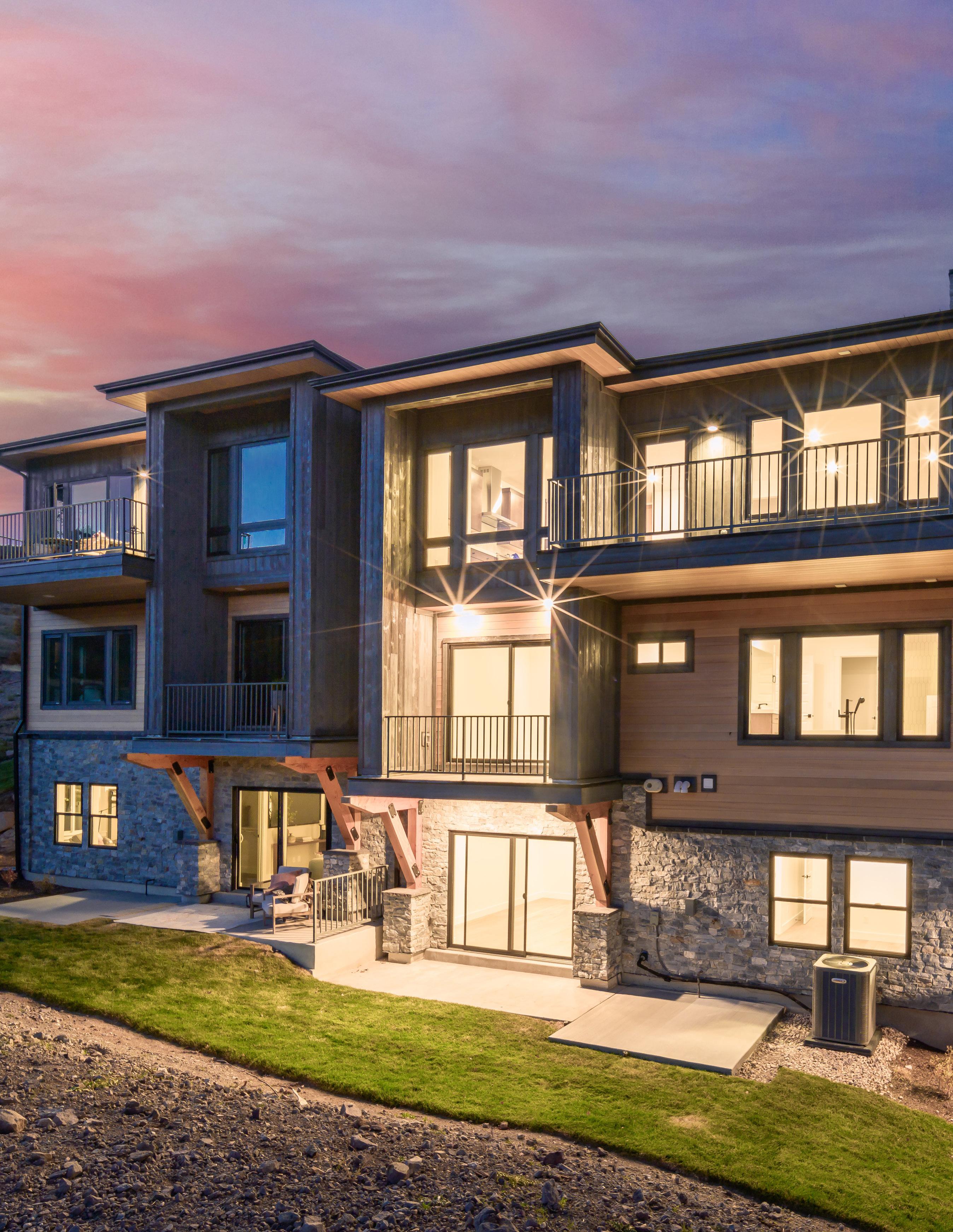

President and CEO Barry Gittleman credits his team’s dedication to delivering a high-quality product and ensuring customer satisfaction.

Written by Dawn Killough
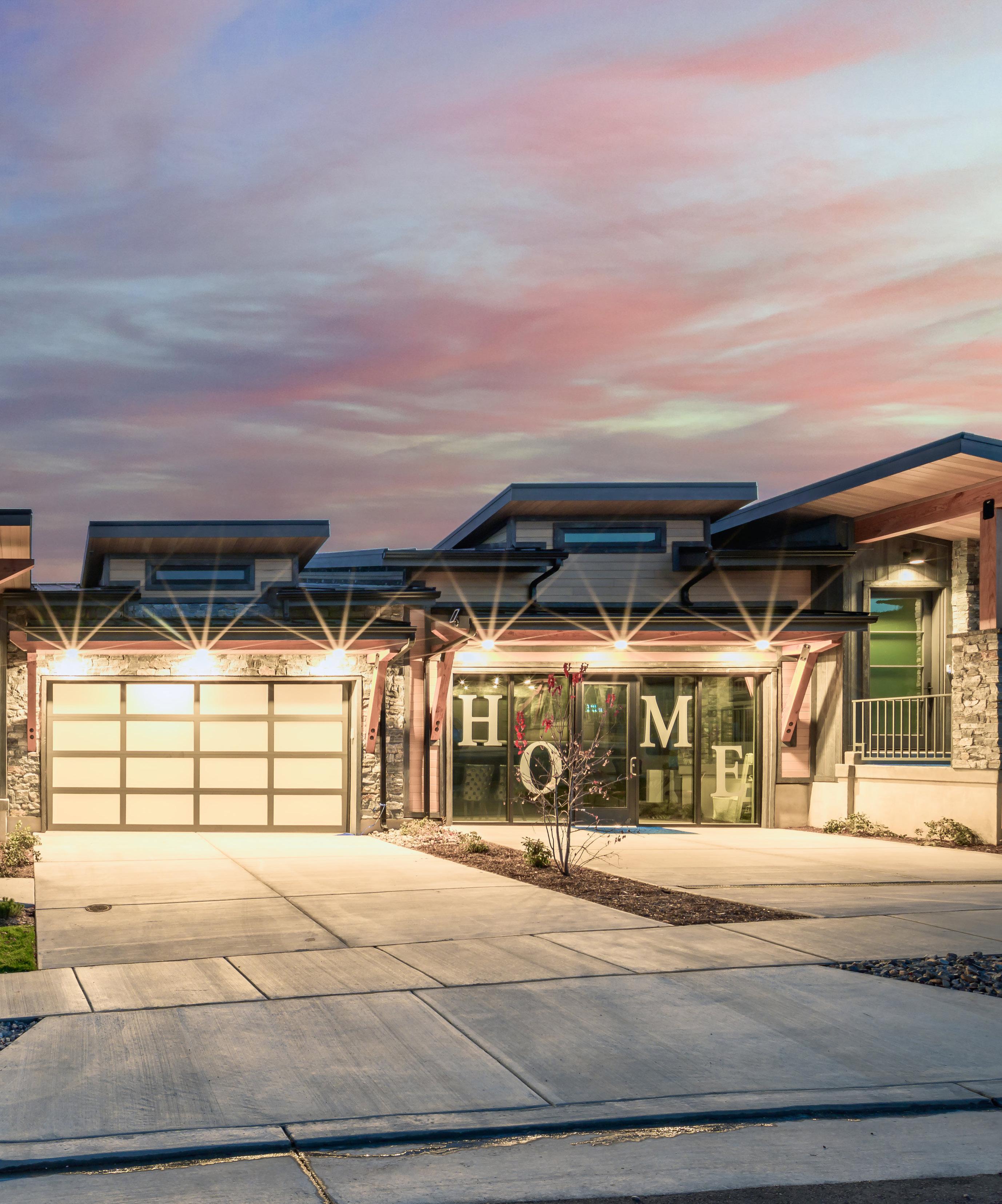
Hamlet Homes, a residential developer and builder in Utah, celebrated its 30th anniversary in 2025. The company was founded in 1995 by Michael Brodsky, a former Ryland Homes executive. Barry Gittleman, current President and CEO, credits his 20 years in the US Navy as a submarine officer for much of his success in residential development today. While the two seem radically different, Gittleman draws heavily on his military experience in leading the Hamlet team.
The Hamlet team uses tools such as afteraction reviews and contingency planning, both of which Gittleman learned through his military experience, to help improve their performance and help ensure they’re prepared for any eventuality. “When we finish a project, we go back and compare what we thought
the timeline, average sales price, average cost, and profit would be to the final results,” Gittleman explained. “We get all departments together, and we talk about what went right and what went wrong. Anything that went right, we want to repeat in the next neighborhood, and anything that went wrong, we want to make sure we don’t make that mistake again.”

“Reaching 30 years in business is a testament to our commitment to quality and customer care. This milestone reflects the collective efforts of our team and the loyalty of our customers and partners.”
Barry Gittleman, President and CEO
Contingency planning helps the team determine next steps when faced with a challenge, such as a market slump. Gittleman credits such planning with helping the company survive the COVID-19 pandemic in 2020. “COVID happened in March 2020, and we had put together our big picture strategic contingency plan just three months earlier. So, while we weren’t happy about the fact that
we went six weeks without selling a home, we didn’t panic because we had just put together a plan a few months earlier.”
Gittleman was recruited by founder Brodsky to take over the role of President in 2016, after his experience as a market researcher at Centex Homes, years at John Wieland Homes working in land strategy and finance, and time at Fisher Homes, the top residential developer in Cincinnati.
Gittleman worked alongside the department heads at Hamlet for a few months to ensure he was a good fit for the team. In early 2017, the management team purchased the company from Brodsky. The team included Elliott Jenkins, CFO; Jon Southern, COO; and Phil Mosher, Advisor. Hamlet built about 50 homes a year at that time and is now producing 100150 homes a year.

In 2022, the ownership team was expanded to include Tami Ostmark, Vice President of Marketing and Design; John Peterson, Vice President of Production; and Nate Kingdon, Vice President of Sales and Principal Broker. While Hamlet has focused on the Utah market, it expanded into Idaho in 2023.
“Reaching 30 years in business is a testament to our commitment to quality and customer care,” Gittleman said. “This milestone reflects the collective efforts of our team and the loyalty of our customers and partners. Over the decades, we have stayed true to our mission of building exceptional homes and fostering vibrant communities. I’m incredibly grateful to our employees, whose talent and dedication have been the cornerstone of our success, and to our customers and partners, who have trusted us to be part of their journey. Together, we have achieved something truly remarkable.”
For many years, Hamlet’s tagline has been “Great homes, great people, great experience,” and Gittleman and his team work tirelessly to continue that legacy.
To help ensure they provide a quality product, Hamlet thoroughly researches and vets its subcontractors, who usually remain with the company for 10-20 years. “It’s much easier to not hire a bad subcontractor than to get rid of one and then fix the messes they made.” The purchasing team meets with potential subcontractors and their teams
and visits projects to see the quality of their work before hiring them. Subcontractors are celebrated each year with a banquet, awards, and a casino night. Hamlet recognizes the contributions its subcontractors make to their success and ensures that they feel appreciated.
“It’s much easier to not hire a bad subcontractor than to get rid of one and then fix the messes they made.”
Barry Gittleman, President and CEO
Safety is a major focus for Gittleman and his team. After years spent in a submarine, he knows a few things about working in dangerous environments. “Being 800 feet underwater at sea is hazardous, and being up on the roof of a three-story townhome in winter is also hazardous. Our construction manager reinforces to our superintendents that if they see someone on a roof who’s not following safety protocols, they should say something immediately. Don’t wait an hour until he comes down from finishing the job and say something, say something immediately.” In the eight years since Gittleman and his team took over, there have only been two safety incidents, neither of which was determined to be the company’s fault.
Gittleman credits much of the company’s success to its staff of dedicated owners and employees. Since taking over, they have improved staff amenities, including a larger breakroom stocked with a variety of drinks and



snacks, a foosball table, and employee parties and events, such as a summer barbecue and a Monday when the owners provide and cook a full breakfast for the staff. They also offer to pay 100% for professional development and seminar costs that directly affect their employees’ on-the-job performance, as well as 25% of personal development costs. “We do all of this to reinforce the message that this company wouldn’t exist without them, and we appreciate the work they do.” The company has been selected as one of Utah Businesses ‘Best Companies to Work For’ since 2020.
Hamlet prides itself on providing an exceptional customer experience, which Gittleman largely credits to their communication with customers. “We make sure that we’re communicating
“We make sure that we’re communicating with our customers from the week they sign their contract until they close on their home, and then afterwards also.”
Barry Gittleman, President and CEO
with our customers from the week they sign their contract until they close on their home, and then afterwards also. The sales reps and superintendents pair up and call every customer to give them a weekly update. We’ve won awards from Customer Insight, the third-party company we use to survey all our customers, and we use that feedback and train
our team on it.” They are proud to boast a 91% approval rating.
And communication doesn’t stop once the sale is final. “Our warranty extends for a year after they close on the home. We continue the weekly calls for about three months after they close just to check in and see how they’re doing and let them know we’re available anytime.” When he’s in the office, Gittleman often gives his business card to customers who are signing on their home sale, inviting them to call him if any issues aren’t resolved. “Some other home builder CEOs whom I know say, ‘You’re crazy to do that. Why would you give every one of your customers a business card? Do you get calls every week from customers who want you to help fix an issue?’ And I really
don’t. Because we have such a good team, a good process, and a good experience, I would estimate one or two times a year in the nine years that I’ve been with Hamlet, I get an email or a call from a customer.”
Hamlet has also built a legacy of giving back to their community, whether it’s collecting canned food at a model home opening, collecting donations for other local charities, or volunteering at a women’s shelter to help with needed repairs.
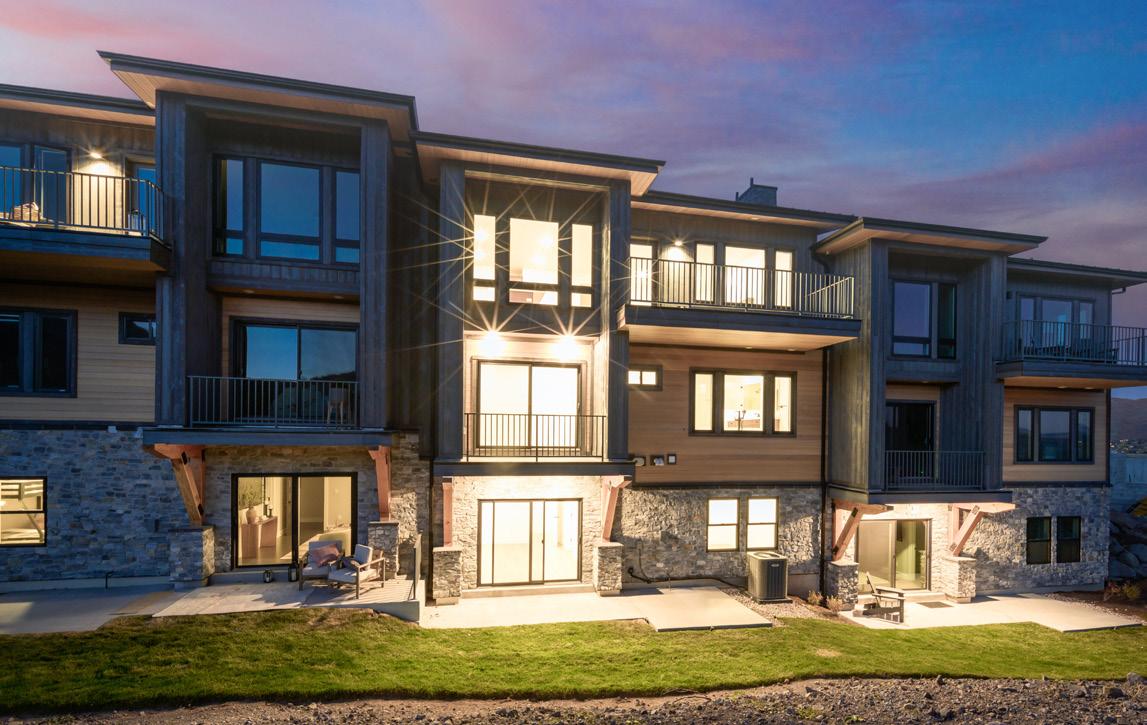
They were chosen as guest builders on HGTV’s hit show Rock the Block. They built four homes in their Worthington Ranch neighborhood in Grantsville, Utah. The crew had a total of 14 weeks to build all four homes,

“The common theme for me in choosing the Navy, submarines, and home building was wanting to challenge myself. I wanted to do whatever would be harder, just to push myself and see what I could do.”
Barry Gittleman, President and CEO
from earthwork to finishes, including 6 weeks of filming for the series after the homes reached the drywall stage. After completion, the homes could not be shown or sold until the show aired, so Hamlet had to wait almost six months to put them on the market. Once it aired, they
hosted a Block Party Weekend during which almost 10,000 people walked through the four homes over two days. They auctioned off furniture and other items that weren’t going to be included in the sale of the homes and raised over $40,000 that was donated to the local chapter of HomeAid, a national charity dedicated to helping the homeless.
Today, Gittleman spends much of his time working on land purchase deals and raising money from investors for future projects.
He advises young people to take risks in their professional careers. “A lot of people that I knew in high school were shocked that I went

to the Naval Academy and ended up serving in the military when that wasn’t a part of my family background. But the common theme for me in choosing the Navy, submarines, and home building was wanting to challenge myself. I wanted to do whatever would be harder, just to push myself and see what I could do. There are a million things we can do to make our houses and neighborhoods better than our competitors across the street. And that’s one of the things I love about this work.”
“I’ve enjoyed challenging myself, and if I were going to talk to my younger self, I might say, ‘Do that even more. Constantly take risks and challenge yourself, because that’s how you grow and develop.’”