




By Irwin Rapoport
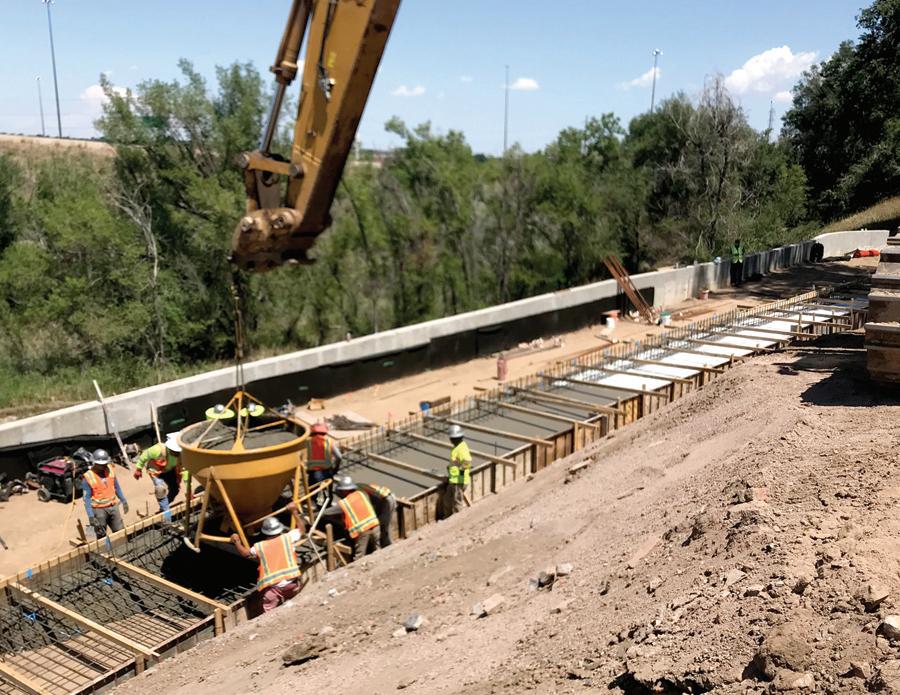
Concrete Works of Colorado Inc. (CWC) said it anticipates completing the $85 million Wadsworth Improvement Project covering 2 mi. of Colorado 121/Wadsworth Boulevard from 35th Avenue to Interstate 70 in mid-April 2026.
The city of Wheat Ridge led the planning and design effort for the project and is overseeing the construction that is transforming Wadsworth into a multimodal roadway. The upgrade will permit 45,000 vehicles to travel the section — bounded by mileposts 15 and 17 — daily.
Construction began in November 2021. Substantial completion of the larger infrastructure was achieved in December 2025
“After years of planning and construction, Wadsworth Boulevard is fully open with major safety, mobility and access improvements,” according to the city’s January construction update. “While final landscaping and artwork will wrap up this spring, the transformation of this vital corridor is already delivering smoother travel, improved connectivity and new economic opportunities for the community.”
widened the road from two lanes in each direction to three.
The project, financed by partnerships and funding from local voters, along with federal ($44 million), state and regional sources,
Additional work included redesigning the intersections at 38th and 44th avenues into continuous-flow intersections, installing
new utilities, building a continuous sidewalk on the west side, installing a bike/pedestrian path on the east side of Wadsworth, updating signals and adding raised medians.
Workers also built a 550-ft. long sound
wall between 35th and 36th avenues; constructed raised crosswalks across right-turn lanes at the northwest and southeast corners of the 44th Avenue intersection and the northwest corner of the 38th Avenue intersection; and installed new lighting for sidewalks and paths. Additionally, 30,000 trees, plants and shrubs are being planted.
Safety and efficient traffic flow are key aspects.
“Compared to other intersection types, the CFI design best reduces wait times, makes traffic flow smoother, and improves safety by reducing conflict points where crashes typically occur,” according to the city’s project page. “The CFIs also require less land for construction and shorten crossing distances for pedestrians and cyclists compared to traditional intersection designs. Prior to construction, crash data showed that Wadsworth had a crash rate more than four times higher than the statewide average for similar corridors.”
HDR designed the project, which features concrete roadways.
Mark Almond, CFC’s project manager, explained to Construction Equipment Guide that concrete roads typically last 30 to more than 40 years with far less maintenance than an asphalt road lasting 15 to 20 years.

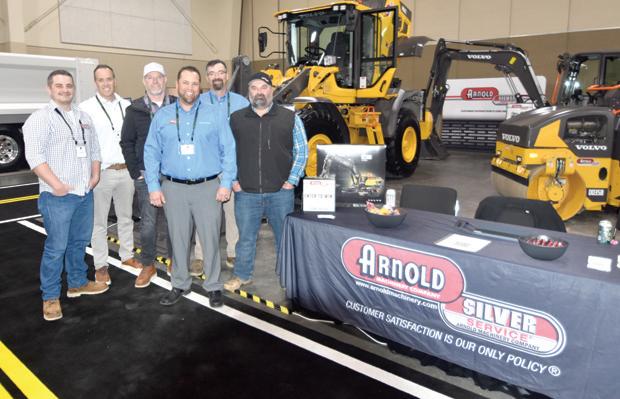
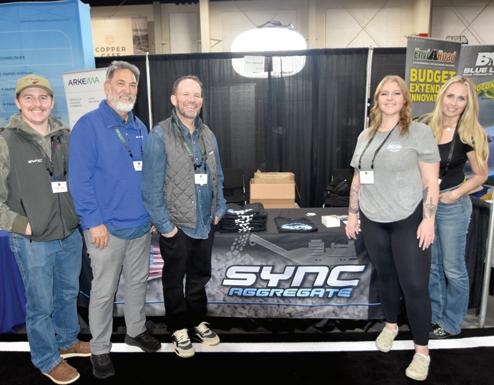
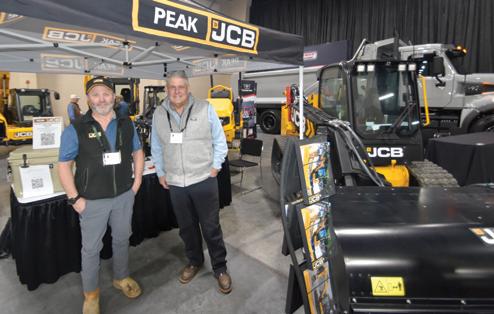
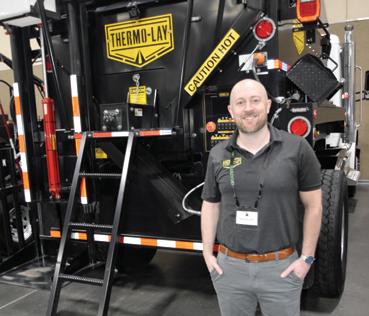
The 2026 Utah Asphalt Conference (UAC) hosted by the Utah Asphalt Pavement Association was held Feb. 18-19, 2026, in Sandy, Utah.
The popular event drew contractors, agency staff, suppliers and consultants for two days of technical programming, professional development and industry networking. The regional conference highlighted practical, field ready advances and spec updates affecting pavement production and construction.
The event hosted technical sessions and PDH accredited professional development tailored to asphalt practitioners and public agency buyers.
The keynote address, “Asphalt Industry 2026: Trends & Outlook,” presented by Mike Skinner of the Asphalt Pavement Alliance, examined market drivers, performance expectations and emerging technologies.
For contractors and fleet managers, the conference underscored equipment and process changes that improve compaction control, material handling and jobsite efficiency.
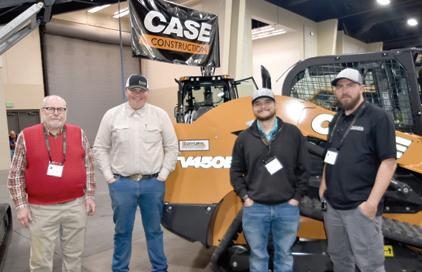
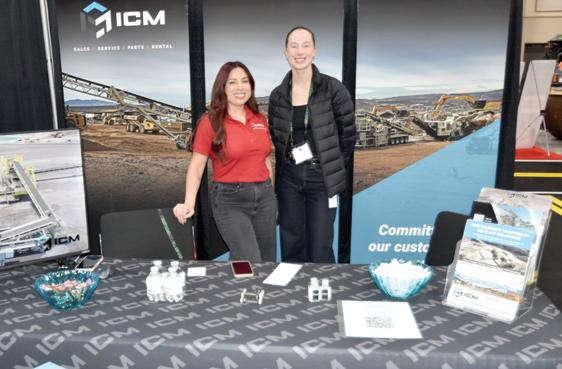
Representatives of manufacturers and suppliers were on hand with demonstrations and spec sheets to support post show evaluations and pilot projects.
CEG
(All photographs in this article are Copyright 2026 Construction Equipment Guide. All Rights Reserved.)
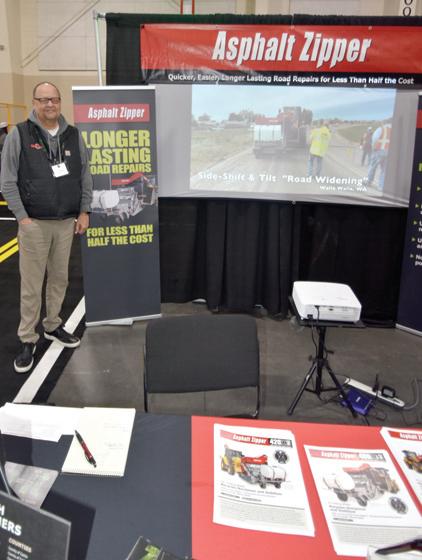
Follett of Asphalt
talked about the most cost-effective and productive way to open utility trenches and repair roads.
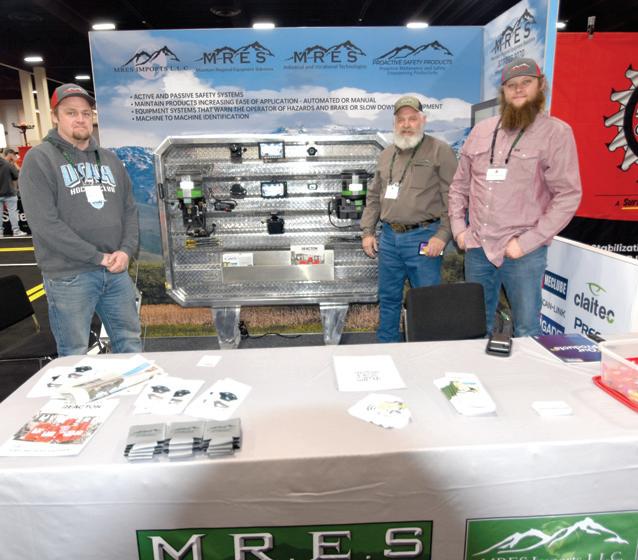
high-quality hydraulic, lubrication and fluid control systems that ensure peak performance and reduce downtime.
Granite, the lead partner in the GraniteTraylor Joint Venture with Traylor Bros. Inc., announced on Jan. 15, 2026, that the city of Tucson selected it for the 22nd Street Widening and Bridge Replacement Project.
Granite is based in Watsonville, Calif., and Traylor Bros. is Evansville, Ind.-based.
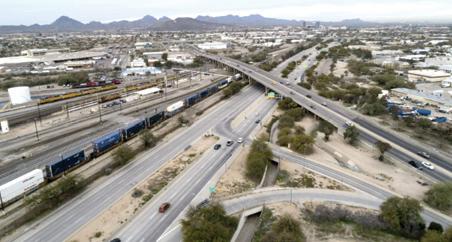
The $157 million project will be funded by the city of Tucson, the Regional Transportation Authority and a $25 million RAISE Grant.
This project will rebuild 22nd Street from Kino Parkway to Tucson Boulevard (a dis-
tance of .85 mi.) and replace the current fourlane bridge over Barraza-Aviation Parkway and the Union Pacific Railroad with a modern six-lane bridge. As a major east-west route and Regional Freight Corridor, these upgrades address structural deficiencies, enhance safety and connectivity, and support regional economic growth.
“Granite and Traylor have a proven history of successful collaboration on past projects and will bring that same teamwork to the city of Tucson,” said Granite Vice President of Regional Operations Derek Betts. “By combining Granite’s strong local resources with Traylor’s extensive experience in complex segmental bridge construction, we are well positioned to deliver a high-quality project for the people of Tucson.”
Granite will supply 10,525 tons of asphalt from its nearby Swan Facility, which it said reinforces its commitment to leveraging local capabilities for efficiency and sustainability.
Work began recently on the Arizona Department of Transportation’s (ADOT) project to add travel lanes and other improvements along Loop 303 between Interstate 17 and 51st Avenue in north Phoenix.
Pulice Construction Inc. is the project contractor.
The $129 million project includes construction of direct freeway-to-freeway ramps connecting I-17 and Loop 303. Project elements include:
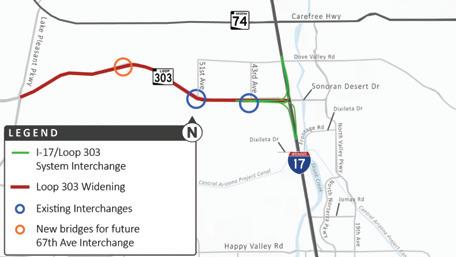
Arizona Department of Transportation map
A map of the Loop 303 project
• building direct connecting ramps at the I-17/Loop 303 system interchange;
• adding a third general-purpose lane on Loop 303 in each direction between Lake Pleasant Parkway and I-17;
• constructing new bridges to accommodate a future traffic interchange at 67th Avenue;
• widening northbound I-17 exit ramp at Sonoran Desert Drive;
• installing new lighting;
• constructing drainage improvements; and
• installing new overhead signs.
It is the first Phoenix-area freeway project
to be funded under the Maricopa Association of Governments’ (MAG) Proposition 479 regional transportation plan approved by county voters in 2024. Funding sources include a half-cent sales tax for regional transportation projects.
ADOT is partnering on the Loop 303 improvement project with MAG, which manages the regional transportation plan, including the funding and scheduling of Valley freeway projects.
Construction is expected to take about two-and-a-half years to complete.
For more information, visit azdot.gov/L303LakePleasantI-17.


























































The Utah Department of Transportation (UDOT) completed safety upgrades along approximately 4 mi. of U. S. 6 in Spanish Fork Canyon and is beginning two major construction projects to significantly improve safety and traffic flow in the area.
Since the summer of 2025, UDOT crews have installed more than 9,000 ft. of median barrier and added six new drainage systems near Diamond Fork Road. These improvements help reduce the severity of crashes and improve driving conditions during storms by better managing water, ice and debris.
In the coming weeks, crews will begin installing 29 new overhead light poles to improve nighttime visibility through the canyon.
Crash attenuators — energy-absorbing cushions placed at the ends of median barriers that wrap around a driver upon impact — also were installed as part of the project. These features are designed to absorb the force of a crash, helping slow vehicles and reduce the risk of serious injuries.
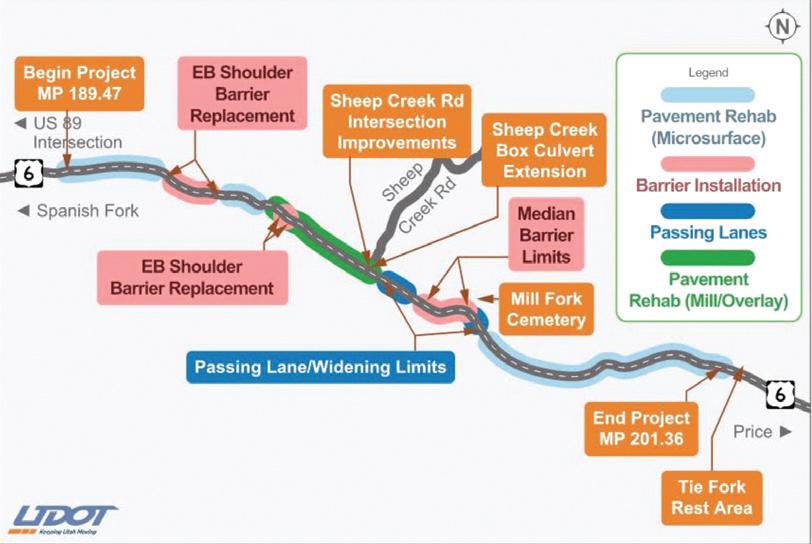
Department of Transportation graphic A map of the work slated for U.S. 6 in Utah
“This stretch of U.S. 6 is squarely on our radar,” UDOT Region Three Director Rob Clayton said. “These upgrades, and the additional projects now under way, reflect a long-
term commitment to tackling known safety risks and reducing serious crashes in the canyon.”
Building on those efforts, two major construction projects
starting this year will continue UDOT’s long-term safety improvements along U.S. 6. Staker Parson Materials & Construction is the contractor.
One project recently began near Sheep Creek Road. The $53.4 million project will widen U.S. 6 from two lanes to four, add a center median barrier, flatten steep curves and improve the intersection at Sheep Creek Road.
Later this spring, construction will begin to improve the U.S. 6 and U.S. 89 intersection in Thistle. The project will create longer acceleration and deceleration lanes and separate traffic by constructing a bridge that allows U.S. 89 traffic to pass underneath U.S. 6. Both projects are expected to be completed in 2027. Over the past two decades, UDOT has invested heavily in improving safety along U.S. 6 and will continue to prioritize future upgrades. More than $110 million is programmed for near-term safety improvements between Spanish Fork and Helper, along with nearly $20 million for pavement preservation projects between Wellington and Interstate 70.
Other recent safety enhancements include adjusted speed limits and new “Prepare to Stop” warning signs near Center Street and U.S. 6 in Spanish Fork.
Remaining work consists of striping, grinding and irrigation commissioning.
“We were waiting for the weather to warm up to get it done,” Almond said.
Working in an urban setting is never easy, which created several challenges that Concrete Works of Colorado overcame.
“The biggest challenges were rooted in this being a busy urban corridor,” Almond said. “The last time there was a major urban project on Wadsworth was in the mid-1950s. Everything needed to be upgraded. This was a bottom-up [project], starting with the deepest wet utilities and then getting the dry utilities out of the way before we could get to the paving. And, because it’s urban, there are space constraints, so phasing the project to keep the public moving was paramount.”
Another early challenge was relocating a CenturyLink telephone line.
“The city didn’t realize that it had to be relocated in its entirety before we could demolish any of it,” Almond said. “That delayed us six months right out of the gate. We were able to make some of that back, but then they change-ordered another $16 million worth of work to complete the whole corridor. The original phase bid went from I70 to 43rd Avenue with concrete pavement, and the rest of it to 35th Avenue was going to be a concrete overlay. They received some federal funding that came through in 2023.”
Almond was able to work through the challenges and still has time to finish the project.
“I am on schedule,” he said.
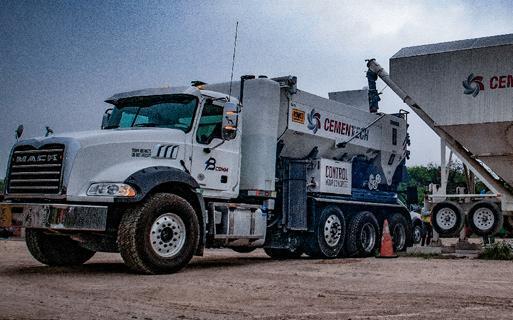
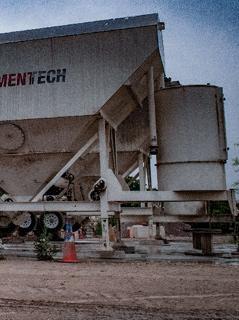
In addition to building two new lanes, the existing asphalt lanes were replaced with concrete lanes that have, at minimum, 6-in. subgrade reconditioning, a 6-in. road base and a 10-in. concrete topping. CWC brought in a Con E Co. concrete batch plant for the project. Working with an engineer, the company designed its own mix for the concrete topping.
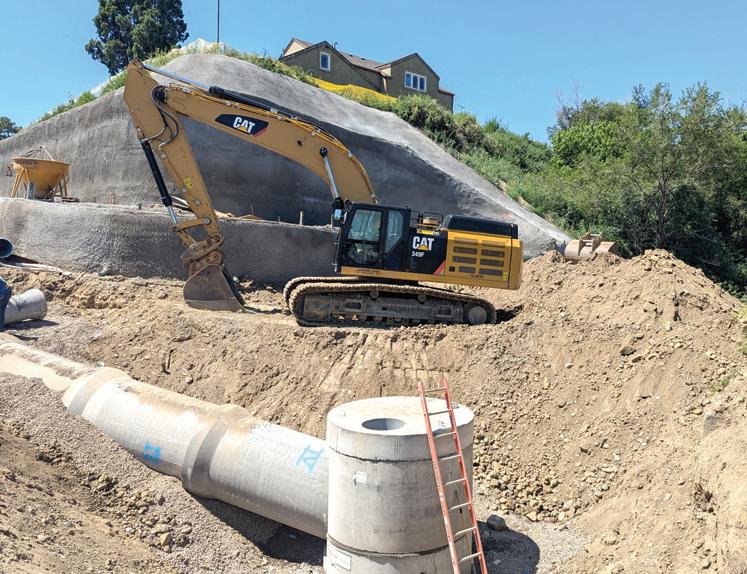
part of the road was built on a wetland and, toward 35th Avenue in the south end, CXWC was unaware of a landfill area.
“We discovered it as we started digging,” Almond said. “We came across construction debris and trash and ended up hauling all of it to the dump. When we tested the groundwater, there was contamination.”
“We imported some crushed concrete base to mix in with it,” Almond said. “That dried it out and made it usable.”
The concrete pours proceeded smoothly.
“For the most part, you put traffic on the concrete we used in a week,” Almond said. “Our original plan was to do most of the concrete work during the warmer months. This is the first time we paved while waiting for the weather to warm up. With the utility delays and items like that, we placed concrete whenever we had areas available.”
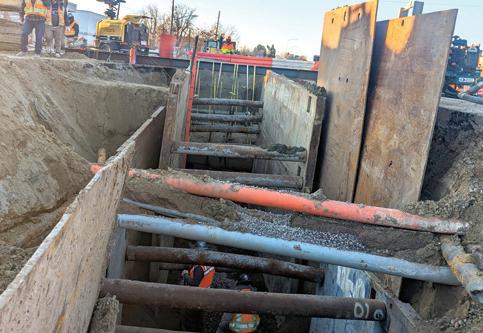
The road work began at I-70 and headed north to 35th Avenue with the construction of the two new lanes, then headed back south to reconstruct the existing four asphalt lanes.
Early on, CWC had excavation, site prep and paving crews working simultaneously.
“That was our plan coming in,” Almond said. “Get our wet utility crews going and have the paving crews right behind them. We used our Wirtgen W210i milling machine to pull up the asphalt and saved the millings to be used as road base.”
There were some groundwater issues, as
For the most part, crews constructed two lanes simultaneously.
Almond pointed out that the scheduling was based on road work, utility installation, the building of the sidewalk on the west side and bike lane on the east side, and the work on the intersections being done simultaneously via section to maximize the efforts of the crews. The owners of the dry utilities removed and relocated their infrastructure.
For the stormwater infrastructure, CWC installed prefabricated manholes and inlets.
In addition to recycling the milling, some of the landfill material was reused.
help guide the wall panels.”
Almond said solid planning was the key to the project’s success.
“This is an exciting project for us,” Almond said. “There was certainly some pain as we were going through various aspects and learning on the job. The guys absolutely had to show up to work. It’s one of those projects where you have a 20-foot deep hole, and you have to stick it out until you can leave it in a safe condition before going home. The crews sometimes put in 12- to 16-hour days.”
Peak days had more than 40 CWC and subcontractor personnel on site.
Major subcontractors include Sturgeon Electric (electrical), Baerren (shotcrete), Ludwig (caissons), Colorado Barricade (signage), Kolbe (striping), Ideal Fence (fence and barricades), JH Pavia (trucking), Powell Restoration (landscaping and Irrigation), Brannan (detour pavement), Chacon Paving (detour pavement) and Dynamic Pump Services (contaminated groundwater treatment).
Approximately 30,000 tons of recycled asphalt from the existing road were recycled to build the new lanes. More than 17,000 cu. yds. of old construction debris and otherwise unsuitable material were relocated from the pond area to the landfill and nearly 20,000 cu. yds. of concrete was used for concrete paving.
Almond said the project has unique equipment issues.
For the roadwork and associated operations, CWC used a Gradall XL 4300, XL 5200 and XL 3300; a Cat CP 323 compactor; Cat excavators, including two 345CLs, a 365CL, 308, a 349f and a 321CL; a Cat 140M2 motor grader, a Cat 938M loader; a GOMACO RTP500 placer; a GOMACO GP 2500 slipform paver; a GOMACO 9500 trimmer, a Cat C27 generator set; and a Genie S-65RT lift.
The 550-ft.-long concrete sound wall is 20-ft.-tall, placed above 30-ft.-deep caissons that were cast in place. SEMA prefabricated the posts and panels.
The soundwall construction was sequenced over three two-week periods. The caissons were installed in mid-2024, the posts were put up in early 2025 and the panels were placed in November 2025.
“We had a Rocky Mountain crane on site with a 60-ton crane,” Almond said. “We didn’t want to place the sidewalk first, but, because we did, we were able to use our Genie S-65RT manlift on the sidewalk to
“One of the places where we had serious ongoing maintenance was that we used our asphalt milling machines to cut the grade down to the subgrade level,” he said. “You could pretty much cut to exactly where we wanted it in one pass, but that turned into needing to replace the teeth quite a bit and more than we anticipated. Our shop was only 30 minutes away, and our mechanics visited the site often.”
CWC buys and rents equipment from dealerships such as Wagner Equipment Co. (Cat), 4Rivers Equipment (John Deere), Arvada Rent-All, Equipmentshare and Faris Machinery Co. (paver molds and custom fabrication).
“Equipment dealerships become key partners at the worst times,” Almond said. “When everything goes per plan, your success is already laid out; when things don’t go per plan, sometimes you need partners. From 4Rivers staying on site into the night to fix a piece of equipment we would need in the morning, to Arvada Rent-All delivering items like plate tampers and manlifts on a moment’s notice, it’s the hard times that make you appreciate people who follow through.” CEG
(All photos courtesy of Concrete Works of Colorado.)