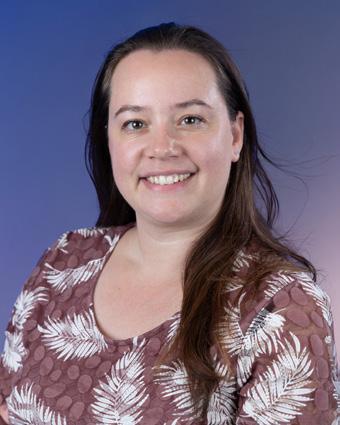
Abigail Furey Deputy Director (Academic), International School of Monaco
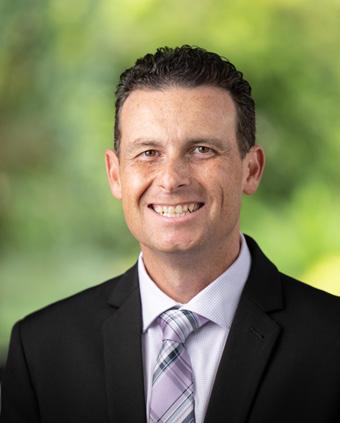
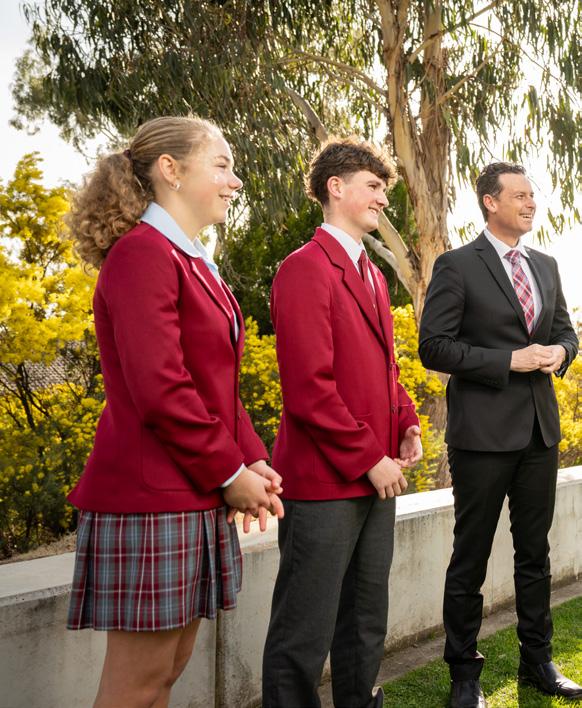
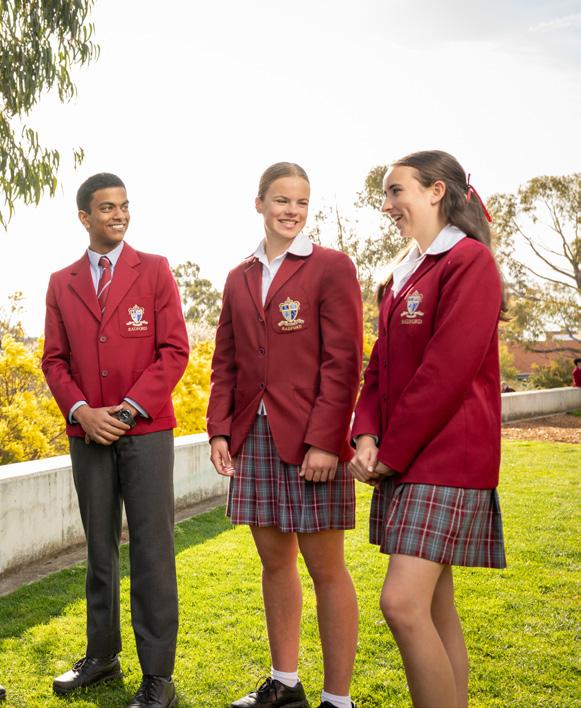
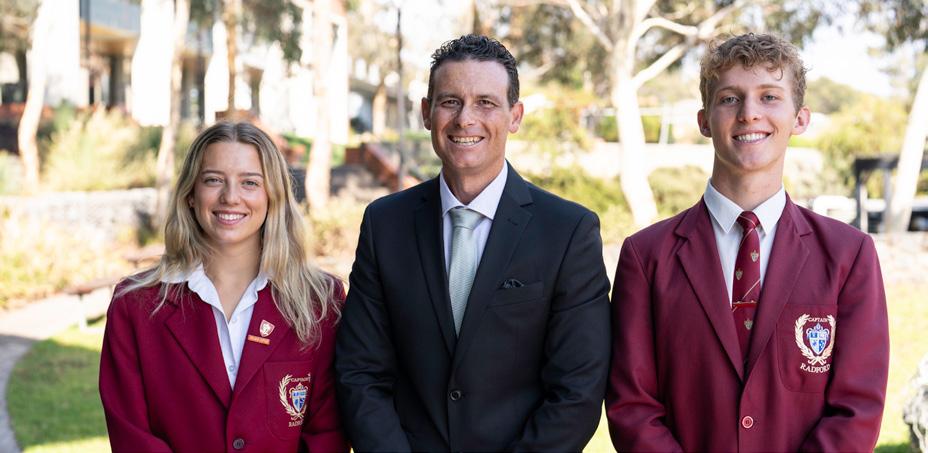
Chris Bradbury Principal, Radford College
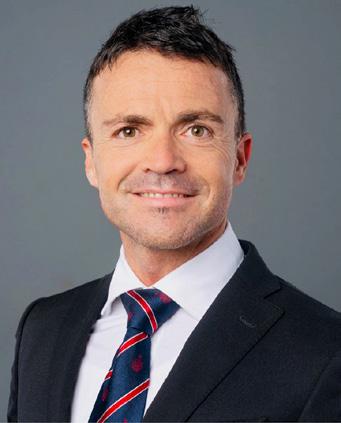
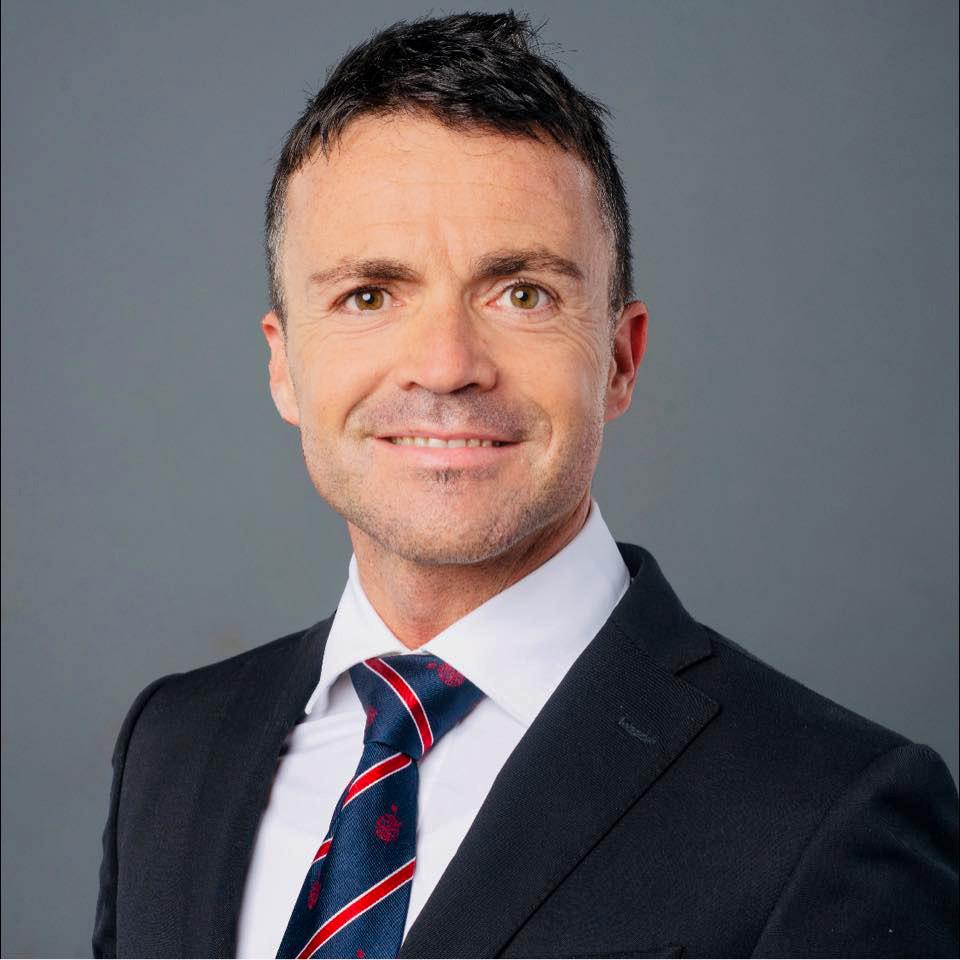
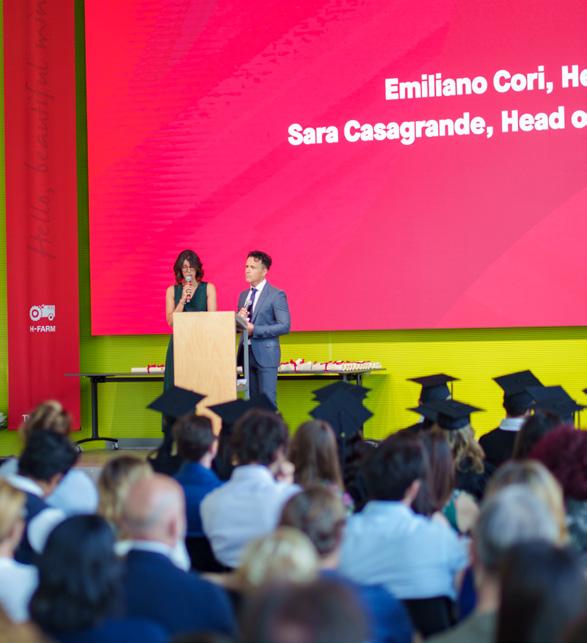
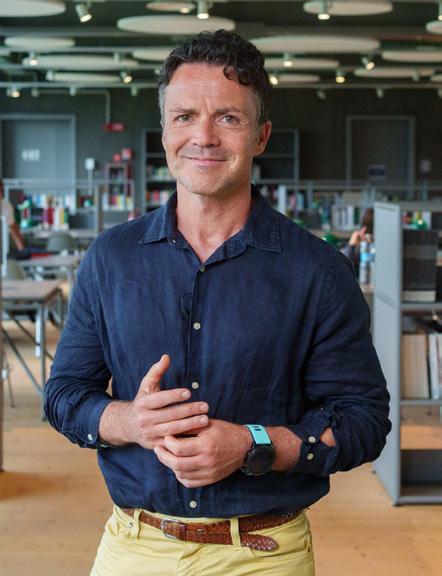
Emiliano Cori Head of School, H-FARM International School Venice
Timothy Barraud Principal, Balmoral State High School
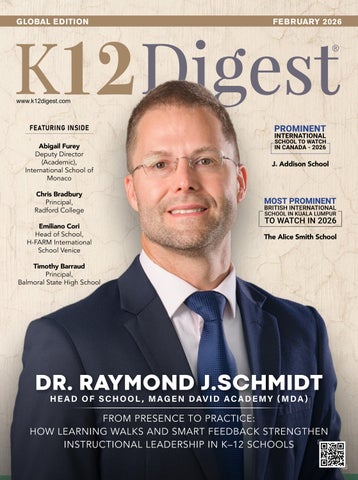
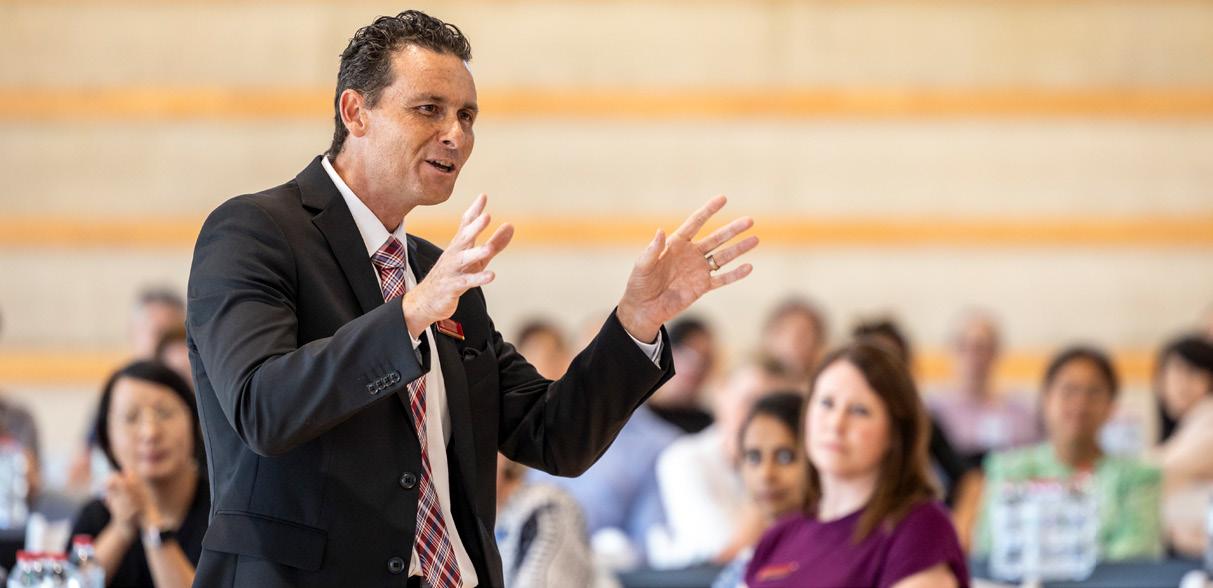
DR. RAYMOND J.SCHMIDT HEAD OF SCHOOL, MAGEN DAVID ACADEMY (MDA)
FROM PRESENCE TO PRACTICE: HOW LEARNING WALKS AND SMART FEEDBACK STRENGTHEN INSTRUCTIONAL LEADERSHIP IN K–12 SCHOOLS
The Alice Smith School
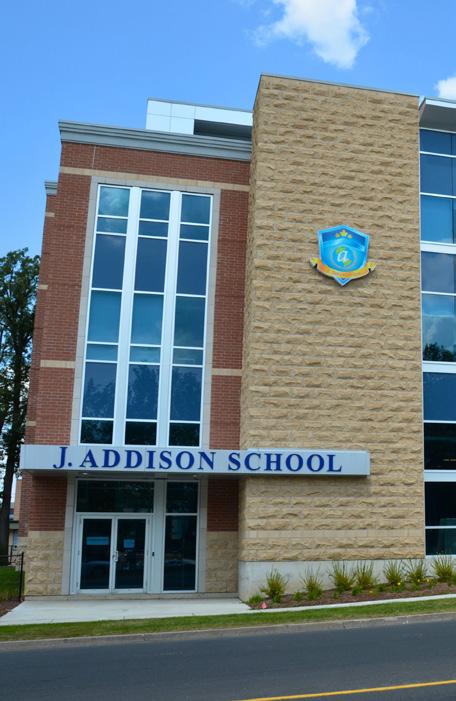
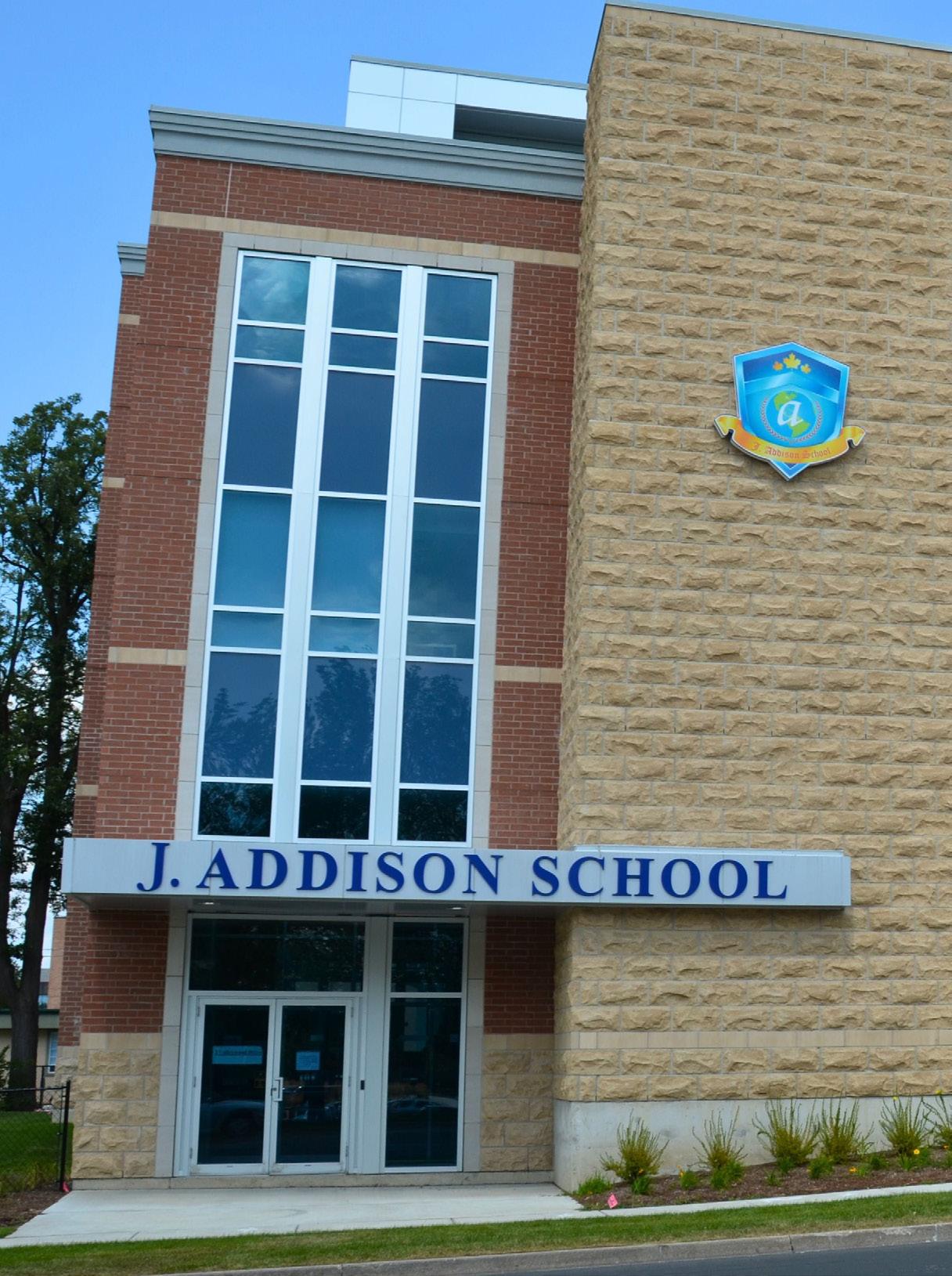
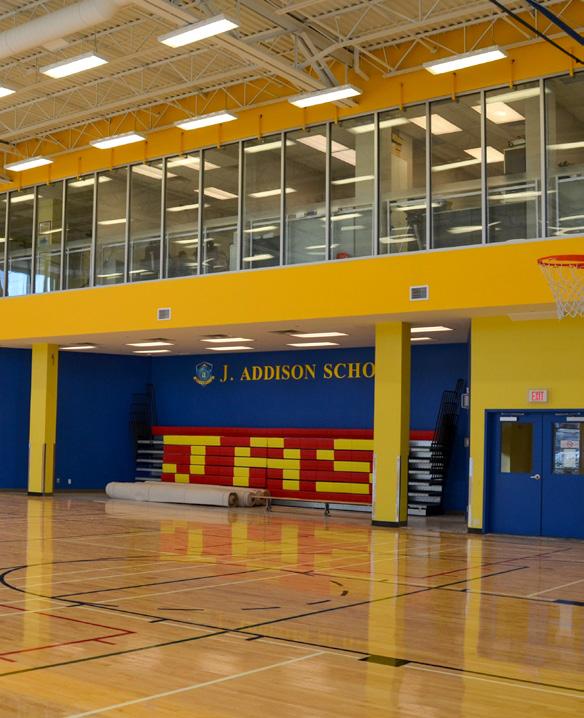
J. Addison School
Managing Editor
Sarath Shyam
Consultant Editors
Dr. John Andrews
Emma James
Andrew Scott
Naomi Wilson
Stanly Lui
Joseph Alex
Art & Design
Charlie Jameson
Sales & Marketing
Jennifer Anderson
Alice Smith
Monica Davis
Anna Elza
K12 Digest www.k12digest.com is a global knowledge sharing digital platform published by Connecta Innovation Private Limited. All rights reserved. The opinions expressed in the content and pictures provided are those of the authors. They do not purport to reflect the opinions or views of Connecta Innovation Private Limited or any of its members and we do not assume any responsibility. The publisher does not assume any responsibility for the advertisements, its content, pictures, and all representation of warranties made in such advertisements are those of the advertisers and not of the publisher. K12 Digest www.k12digest.com is a Free Subscription and Free-to-read digital platform strictly not for sale and has to be strictly for internal private use only. Publisher does not assume any responsibility arising out of anyone modifying content and pictures, printing a copy of this digital platform in any format and in any country and all matters related to that.
When Trust Becomes the Real Report Card
In today’s education landscape, everyone is measuring something. Test scores. Attendance. Rankings. Satisfaction surveys. Schools are being watched more closely than ever by parents, boards, and communities. Accountability matters. But here is a quiet truth we do not talk about enough: metrics may tell us what is happening, but trust determines what is possible.
Over the years, I have noticed something simple. The schools that thrive are not always the ones with the most impressive dashboards. They are the ones where teachers feel supported, students feel seen, and parents feel heard. Research continues to affirm that relational trust within schools has a direct impact on student achievement and longterm improvement. Yet, in the rush to prove results, many institutions forget to invest in the very relationships that make those results sustainable.
This month’s cover story in K12 Digest speaks directly to this moment. Dr. Raymond J. Schmidt, Head of School at Magen David Academy, draws from more than three decades of global experience to reframe practices that are often misunderstood. In his thoughtful piece, he explores how learning walks and SMART feedback can move leadership beyond observation toward meaningful action. More importantly, he challenges us to see these practices not as compliance tools, but as bridges of trust. His perspective is both practical and deeply human. It reminds us that improvement begins with connection.
Beyond the cover story, this issue brings together a range of voices offering insights on leadership, innovation, and the evolving expectations placed on schools today. You will encounter ideas that challenge, perspectives that broaden, and experiences that resonate across sectors.
If education truly operates in a trust economy, then every conversation, every classroom visit, and every piece of feedback is an investment. I invite you to turn the pages with that in mind. The future of our schools may well depend on the trust we choose to build today.
Enjoy Reading.
Sarath Shyam
DR. RAYMOND J. SCHMIDT
HEAD OF SCHOOL, MAGEN DAVID ACADEMY
(MDA)
FROM PRESENCE TO PRACTICE:
HOW LEARNING WALKS AND SMART FEEDBACK
STRENGTHEN INSTRUCTIONAL LEADERSHIP IN K–12 SCHOOLS
18
J. ADDISON SCHOOL
Where Learning Becomes Belonging
46
Growing Global Minds with Purposeful Education THE ALICE SMITH SCHOOL
ADMIN PERSPECTIVE ADMIN PERSPECTIVE
ADMIN PERSPECTIVE
BUILDING A CULTURE OF EXCELLENCE AND CHARACTER
Chris Bradbury, Principal, Radford College
30
54
EMPOWERING LEARNERS FOR A BRIGHTER FUTURE
Timothy Barraud, Principal, Balmoral State High School
CULTIVATING GLOBAL CITIZENS FOR TOMORROW
Emiliano Cori, Head of School, H-FARM International School Venice
40
60
BUILDING SCHOOLS THAT PUT PEOPLE BEFORE PACE
Abigail Furey, Deputy Director (Academic), International School of Monaco
ACADEMIC VIEW
DR. RAYMOND J.
SCHMIDT
HEAD OF SCHOOL, MAGEN DAVID ACADEMY (MDA)
FROM PRESENCE TO PRACTICE:
HOW LEARNING WALKS AND SMART FEEDBACK STRENGTHEN INSTRUCTIONAL LEADERSHIP IN K–12 SCHOOLS
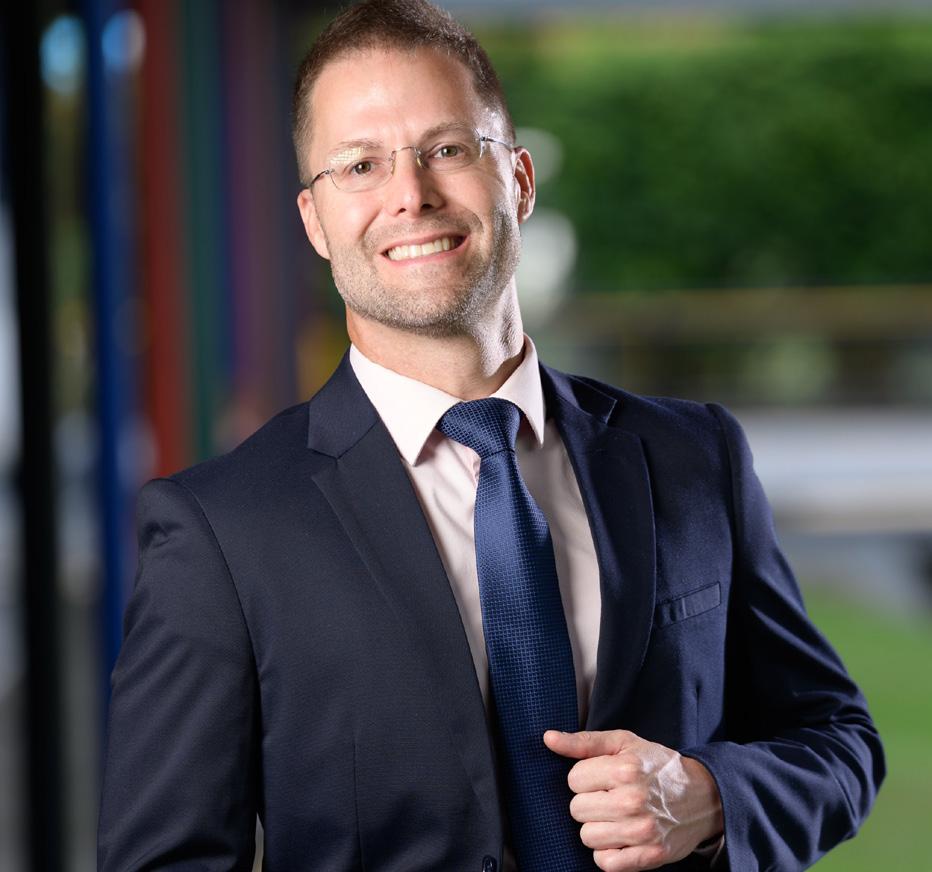
Dr. Raymond J. Schmidt is an accomplished education leader with over 30 years of global experience in teaching, coaching, and school leadership. He began his career in Chicago in 1994 and later worked across the U.S., the Middle East, and Latin America, earning a Master’s degree in Education and a Doctorate in Educational Leadership. Dr. Schmidt has served as an advisor to principals in Abu Dhabi, an instructional coach in São Paulo, and held senior leadership roles in Los Angeles, Guatemala, and Honduras. Currently, he serves as Head of School at Magen David Academy in Panama City, committed to inclusive, high-quality education and lifelong learning communities worldwide.
Across more than three decades in PreK–12 education, I have watched instructional leadership shift from a peripheral responsibility to the central work of school leaders. Today, amid rising academic expectations, diverse learner needs, and ongoing change, the most effective leaders are those who stay closely connected to classroom practice. Research consistently confirms what many practitioners have long observed: when leaders focus intentionally on teaching and learning, student outcomes improve (Hallinger, 2015; Harris et al., 2020; The Wallace Foundation, 2013). Two practices have proven especially powerful in translating instructional leadership from theory into daily practice: regular Learning Walks and the use of SMART (Specific, Measurable, Achievable, Relevant, Timely) feedback. When thoughtfully implemented, these approaches foster professional trust, sharpen instructional coherence, and ultimately elevate student learning across grade levels.
Instructional Leadership as a Driver of Student Achievement
Instructional leadership centers on influencing what happens in classrooms, how teachers teach, and how students learn. Unlike managerial or purely transformational leadership, it is directly tied to pedagogy, curriculum, and assessment (Lloyd et al., 2018; Marzano et al., 2015). Large-scale research underscores its impact. The Wallace Foundation (2013) identifies school leadership as second only to classroom instruction in influencing student achievement, and studies show that leaders who prioritize instructional quality create conditions that allow
effective teaching to flourish (Harris et al., 2020; Hallinger & Heck, 2021).
A critical mechanism for this influence is feedback. When leaders observe instruction and provide timely, actionable feedback, teachers are more likely to refine practice and persist in improvement efforts (Brookhart, 2017; Kraft & Papay, 2014). Over time, these cycles of observation and feedback build collective teacher efficacy, one of the strongest predictors of student achievement (Goddard et al., 2017; Hattie, 2015).
Learning Walks: Purposeful Presence in Classrooms
Learning Walks are brief, frequent, and focused classroom visits designed to gather evidence about teaching and learning rather than to evaluate individual teachers (Downey et al., 2014). Their strength lies in their formative nature. By reducing the stakes associated with observation, Learning Walks encourage openness, reflection, and professional dialogue (Hall & Simeral, 2017).
From a leadership perspective, Learning Walks serve several interrelated purposes. First, they make instruction visible. Leaders who are regularly present in classrooms signal that teaching and learning are the school’s core priorities (Bryk & Schneider, 2012). Second, they provide real-time data about instructional trends, student engagement, and curriculum implementation, enabling leaders to make informed decisions about professional development and support (Danielson, 2017; Glickman et al., 2018). Third, they open the door to evidence-based conversations that strengthen professional learning communities (Hord, 2019).
In practice, Learning Walks are most effective when they are systematic and transparent. Clear “look-fors,” aligned to schoolwide instructional priorities, help ensure consistency and fairness (Danielson, 2017). When leaders share patterns and trends, rather than isolated judgments, teachers are more likely to see the process as supportive and growth-oriented.
The Power of SMART Feedback
Observation alone does not improve instruction; feedback does. Decades of research highlight feedback as one of the highest-impact influences on learning, particularly when it is specific and actionable (Hattie & Timperley, 2017; Shute, 2018). The SMART framework offers a practical structure for delivering feedback that teachers can readily use.
Specific feedback names observed practices rather than offering vague praise or critique.
Measurable feedback references evidence or criteria, grounding conversations in data.
Achievable feedback focuses on realistic next steps.
Relevant feedback aligns with instructional goals and standards.
Timely feedback is delivered while the observation is still fresh, typically within 24–48 hours.
SMART feedback supports a growth mindset by emphasizing progress and strategy rather than fixed ability (Dweck, 2006; Dweck & Yeager, 2019). Teachers who receive feedback in this form are more likely to experiment with new approaches, reflect on outcomes, and sustain improvement over time
When leaders observe instruction and provide timely, actionable feedback, teachers are more likely to refine practice and persist in improvement efforts
The effectiveness of Learning Walks and feedback depends largely on how they are implemented. Research and experience suggest several guiding principles.
A clear instructional vision is essential. Learning Walks should be aligned with shared priorities, whether those involve student engagement, formative assessment, or differentiation (DuFour et al., 2016). Leaders must also communicate purpose consistently, emphasizing that walkthroughs are formative and non-evaluative. Trust, as Bryk and Schneider (2012) note, is a foundational resource for school improvement.
Observer training is another critical factor. Calibration among administrators helps ensure reliability and fairness, reducing mixed messages to teachers (Frontier et al., 2021; Guskey, 2012). Regular scheduling matters as well; when Learning Walks are predictable and frequent, they become part of the school’s culture rather than an occasional initiative.
Finally, feedback must be paired with support. Modeling lessons, co-planning, instructional coaching, and access to resources all reinforce the message that feedback is meant to help teachers succeed (Glickman et al., 2018; Harrison & Killion, 2017).
Impact on Teaching and Learning
When Learning Walks and SMART feedback are embedded into daily leadership practice, their effects compound over time. Teachers
When Learning Walks and SMART feedback
are embedded into daily leadership practice, their effects compound over time
become more reflective and intentional in their planning. Instruction aligns more closely with standards and learning goals. Differentiation improves as teachers respond to feedback about student needs. Most importantly, student engagement and achievement rise as instruction becomes more responsive and coherent (Blazar et al., 2018; Clarke & Hattie, 2019).
Meta-analytic research supports these observations. Blazar et al. (2018) found that observation-based coaching and feedback produced statistically significant gains in instructional quality and student performance, particularly when sustained over time. Teachers also report higher levels of professional clarity and satisfaction when feedback is timely and supportive rather than punitive (Brown et al., 2021).
Challenges and Practical Considerations
Despite their benefits, Learning Walks are not without challenges. Time constraints remain a persistent barrier for administrators (Hallinger & Murphy, 2023). Teacher skepticism can arise if walkthroughs are poorly communicated or inconsistently applied. Sustainability requires systems, not individual effort.
Successful schools address these challenges by embedding Learning Walks into leadership schedules, co-creating protocols with teachers, and investing in ongoing professional learning for leaders. When the process is shared and transparent, resistance tends to diminish.
A Relational Vision of Instructional Leadership
At their best, Learning Walks reflect a servantleadership approach in which leaders see
themselves as partners in learning rather than distant evaluators (Greenleaf, 2002; Spears, 2020). By walking classrooms, listening carefully, and engaging in honest dialogue, leaders reduce professional isolation and strengthen collaboration across grade levels and departments (Hohepa et al., 2019).
A complete feedback cycle, pre-observation conversation, observation, SMART feedback, action planning, and follow-up, signals that professional growth is continuous and collective. Over time, this cycle builds collective efficacy, which research identifies as one of the most powerful influences on student achievement (Donohoo, 2017; Hattie, 2015).
Conclusion
In today’s complex PreK–12 landscape, instructional leadership grounded in Learning Walks and SMART feedback remains one of the most effective levers for sustained improvement. These practices make teaching visible, feedback actionable, and leadership relational. By prioritizing presence, purpose, and partnership, school leaders can strengthen teacher practice, build trust, and improve outcomes for all students.
When leaders consistently show up in classrooms, not to judge, but to learn and support, they help create schools where continuous improvement is not an initiative, but a way of life (Bryk et al., 2015; City et al., 2019).
J. ADDISON SCHOOL
Where Learning Becomes Belonging
Set just north of Toronto, the city of Markham offers a rare balance. It is close enough to the cultural energy, universities, and opportunities of Toronto, yet grounded in the calm, safety, and openness that families value. As one of Canada’s leading hubs for technology, business, and life sciences, Markham quietly reinforces an idea that runs deep at J. Addison School: education today must prepare students for a global future without losing sight of who they are as individuals.
Within Canada’s respected education ecosystem, J. Addison School has shaped its identity around a simple but demanding belief. Students are more than grades and test scores. Learning, here, is about developing the whole person and nurturing a lasting curiosity for the world. Lee Venditti, Supervising Principal, shares, “Education should help students discover who they are, not just what they can achieve academically.” That philosophy shows up not in slogans, but in daily classroom life.
Lee Venditti, Supervising Principal
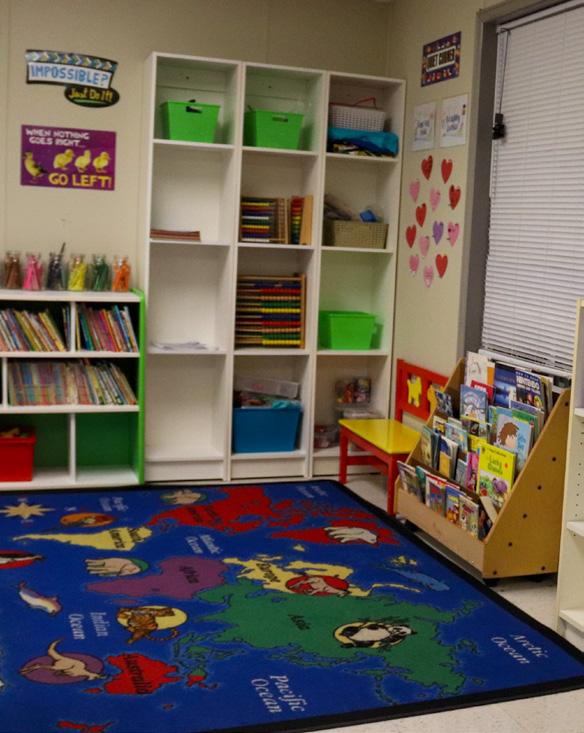
In the Elementary years, the school delivers the Ontario curriculum, thoughtfully enriched with elements drawn from Reggio Emilia, Montessori, and International Baccalaureate approaches. Teachers blend methods with intention, recognizing that children learn through movement, dialogue, creativity, and inquiry. A classroom might hum with smallgroup discussion in one corner while students experiment hands-on in another. The atmosphere feels purposeful, but never rushed.
That same student-centered mindset carries into the secondary program. Guidance teams meet students one-on-one. Teachers take time to understand how each learner processes
information and responds to challenge. Staff check in, not only about coursework, but about wellbeing. Progress is noticed. Effort is acknowledged. “We want students to feel seen. When they know someone is paying attention, they start taking ownership of their learning,” Venditti explains. The aim is not only university readiness, but the confidence and self-awareness students need to navigate life beyond the classroom.
Since its founding in 2002, J. Addison School has welcomed students from across the globe, with learners representing more than 50 countries over the years. Classrooms naturally become spaces where different perspectives
meet. Cultural celebrations, shared meals, and participation in local festivals give students daily practice in listening, adapting, and appreciating difference. Families often remark that their children grow more open-minded simply by learning alongside peers from around the world. In a city as diverse as Markham, that experience feels both authentic and essential.
Learning also extends into the community. Students volunteer at events such as the Terry Fox Run and the Markham Santa Claus Parade, and explore nearby heritage areas like Unionville. These moments connect academic learning with real places and people, helping students understand that education does not exist in isolation from the world around them.
Since its founding in 2002, J. Addison School has welcomed students from across the globe, with learners representing more than 50 countries over the years
From the earliest years, J. Addison School’s curriculum is enriched through inquiry-based and experiential practices inspired by Montessori, Reggio Emilia, and the International Baccalaureate
At the heart of it all is trust. J. Addison School views education as a partnership among students, families, and educators. That sense of responsibility is especially strong for boarding students, whether local or international. The school’s role goes beyond supervision to mentoring independence, accountability, and healthy routines. Communication with families remains constant through regular meetings and platforms such as Edsembli, ensuring parents remain closely connected to their child’s academic and personal growth.
Where Curiosity Leads and Students Take Ownership
At J. Addison School, the Ontario curriculum serves as a strong foundation rather than a rigid framework. Its flexibility and academic rigor make it particularly effective in a multicultural setting, where students arrive with different learning histories, strengths, and expectations. From the earliest years, the curriculum is enriched through inquiry-based and experiential practices inspired by Montessori, Reggio Emilia, and the International Baccalaureate.
The goal is clear. Meet students where they are, while holding them to high academic standards.
In Elementary classrooms, learning often begins with a question rather than an answer. Teachers design lessons that invite exploration and personal discovery, allowing students to engage in ways that feel natural and motivating. This early exposure to inquiry sets the tone for later years, when students are expected to think independently and take responsibility for their progress.
That shift becomes more pronounced in the secondary program. Concepts are introduced, then students are guided through research, discussion, collaboration, and project-based application. For many international students,
the experience can feel unfamiliar at first. Participation is expected. Questions are encouraged. Critical thinking is part of everyday classroom life. “It takes time, but you can see the change. Students begin to trust their own thinking. Once that happens, their confidence grows quickly,” says Venditti. Certified teachers maintain academic rigor while adapting instruction to individual learning needs, helping students develop skills that translate well beyond the school environment.
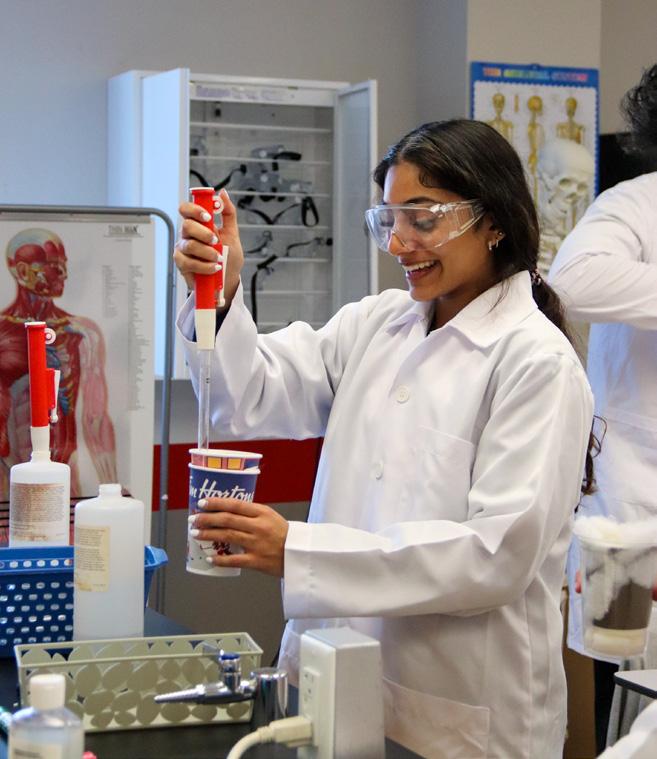
Inquiry-based learning is important in this approach. Students review material independently so class time can be used for debate, experimentation, and problem-solving. A science class might involve building working models. A technology lesson could turn into a coding challenge. Art and language classes invite expression through movement, design, and performance. Teachers track progress closely, offering added challenges to students ready to push further and targeted support to those who need it. With an average class size of 15, teachers know their students well. Strengths are noticed. Gaps are addressed early. No one fades into the background.
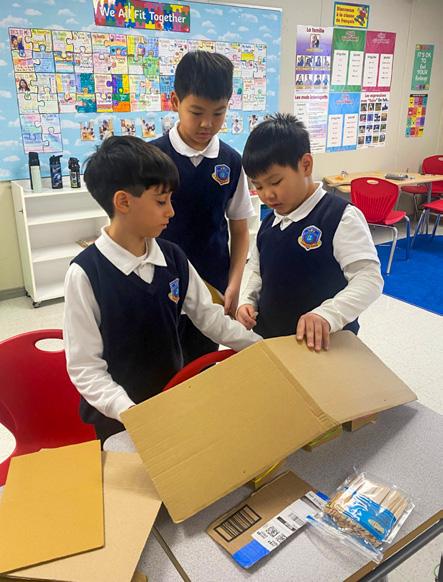
In the Elementary years, this philosophy comes alive through hands-on projects that feel more like discovery than instruction. Students test ideas by building spaghetti structures, explore mechanics through hydraulic models, and bring language learning to life through drama and visual art. Classrooms buzz with conversation and movement. Curiosity leads, and learning follows.
Balance is another defining feature of the school day. The Focus for Success® program creates space beyond traditional academics, giving students a fifth period to concentrate
on what they need most. For some, that means academic support. For others, it is sports, the arts, or exploring a new interest. Because the program is cross-grade, students connect with peers who share similar passions, building relationships that extend beyond their usual circles. Families often point to this program as a reason their children remain engaged and motivated. Without the pressure of grades, students learn to manage stress and rediscover the enjoyment of learning.
Responsibility and collaboration are reinforced through experience rather than instruction alone. Group projects, clubs, and leadership roles require students to work together and follow through. Through student council and residence council, students help organize events, support their peers, and collaborate closely with staff. Volunteering initiatives further connect learning to service, reminding students that leadership carries
Last year, 92 percent of J. Addison School’s graduates achieved Ontario Scholar status, and the school maintains a 100 percent postsecondary acceptance rate
responsibility. “We want students to understand their role in the community. Leadership is about contribution, not position,” Venditti notes.
The results of this approach are evident in student outcomes. Universities frequently commend J. Addison graduates for their academic readiness, maturity, and adaptability. Last year, 92 percent of graduates achieved Ontario Scholar status, and the school maintains a 100 percent post-secondary acceptance rate. Partnerships with York University, Toronto Metropolitan University, Wilfrid Laurier University, and Trent University offer students additional guidance and scholarship opportunities. Admissions teams consistently describe J. Addison students as motivated, prepared, and ready to engage with university life.
A Community That Cares
For students at J. Addison School, learning begins with a sense of safety and belonging. That feeling is especially important for international students, many of whom are adjusting a new country, language, and culture for the first time. From the day they arrive, staff and teachers step in with quiet consistency, helping students
settle into routines and find their footing. The on-campus residence operates with 24/7 supervision, creating an environment where students feel supported, seen, and cared for.
Life in residence quickly becomes a rhythm. Shared meals. Study time. Laughter in common areas. Weekend trips introduce students to Canadian life beyond the school gates, while cultural celebrations and everyday interactions help friendships form naturally. Over time, confidence replaces uncertainty. Independence grows. “We want students to feel secure enough to take risks. When they feel supported, they begin to trust themselves,” shares Venditti. Those early adjustments often shape a resilience that stays with students long after graduation.
Cultural understanding is approached with intention. Canadian holidays such as Canada Day, Thanksgiving, and Reconciliation Day are
not only celebrated, but explained in classrooms, giving students context and meaning behind the traditions. At the same time, the school recognizes international holidays represented by its diverse student body. The result is a shared culture rooted in respect and curiosity. Students learn to ask questions, listen carefully, and appreciate different perspectives. Civic values such as responsibility, kindness, and community involvement are reinforced through school-wide events, volunteering initiatives, and student-led activities that make those ideals tangible.
Beyond academics, students are encouraged to explore who they are through sports, arts, and leadership. Athletics such as basketball and volleyball teach discipline, teamwork, and perseverance. Wins are celebrated. Losses are processed. Both become lessons. Arts programs
and clubs offer creative outlets where students can express themselves and discover new interests. Leadership opportunities through Student Council and Residence Council invite students to take responsibility, support their peers, and collaborate closely with staff. These roles help students find their voice and understand the impact they can have on others.
One program that stands out is the school’s Elite Basketball Program for both boys and girls. Competing at a high level across Canada and the United States, the program demands focus and balance. Student-athletes learn to manage rigorous training schedules alongside academic expectations. Many go on to earn full or partial athletic scholarships at universities and colleges in Canada and the U.S., a reflection of their growth both on and off the court.
“Time management becomes real very quickly. Students learn that commitment in one area supports success in another,” Venditti explains.
Community involvement remains a constant thread. Students regularly volunteer at events such as the Terry Fox Run, local Christmas parades, and charity initiatives, some of which the school has supported for more than a decade. These experiences help students see themselves as active members of the community rather than observers. Giving back becomes part of daily life, reinforcing values of empathy, cooperation, and shared responsibility.
Preparing Global Citizens with Purpose and Perspective
In a country as diverse as Canada, multiculturalism is not an aspiration. It is daily life. At J. Addison School, that reality guides how students learn, interact, and grow. Walk
Looking ahead, J. Addison School is focused on strengthening its role as a destination school for families around the world
through the hallways and you hear different accents, see friendships that cross cultures, and sense an openness that feels natural rather than curated. The school mirrors the nation around it, offering students an early education in empathy, respect, and cultural awareness.
For Venditti, this environment is one of the school’s greatest strengths. “We see both our school and Canada as powerful places for shaping future leaders. Students don’t just study here. They learn how to live and collaborate in diverse communities,” he says. That distinction matters. Students are not asked to simply adapt to a new country. They are guided to understand it, participate in it, and eventually carry those lessons forward.
Looking ahead, J. Addison School is focused on strengthening its role as a destination school for families around the world. The vision is steady and intentional. A safe and structured environment. Clear expectations. Consistent care. Within that framework, students are encouraged to explore, question, and grow into themselves. Over time, families often notice a shift. Students return home or move on to universities abroad with a broader worldview, greater confidence, and a quieter maturity. Curiosity replaces hesitation. Tolerance
becomes instinct. Leadership begins to feel inclusive rather than positional.
The school’s future direction remains grounded in its core values. Academic excellence continues to set the standard. Character development remains central to daily life. Global citizenship is treated as a lived experience, not a theoretical goal. Discipline is balanced with care. Community stays closeknit. Students are known by name, challenged with purpose, and supported when it matters most. “We believe in discipline with care. When students feel supported, they rise to the expectations set for them,” Venditti highlights.
As more families look to Canada for a highquality, values-driven education, J. Addison School stands firm in what it offers. Strong academic foundations. A sense of belonging. The confidence to lead with empathy in an interconnected world. It is an education designed not only for university readiness, but for life beyond it.
And as students step forward into that wider world, they carry with them something lasting. A clear sense of self. Respect for others. And the understanding that leadership, at its best, begins with how one chooses to engage with the world around them.
Building a Culture of Excellence and Character
Chris Bradbury, Principal, Radford College
Chris Bradbury, Principal at Radford College, is a distinguished and visionary educational leader whose dynamic contributions have elevated school leadership, teaching excellence, and student achievement in many school contexts. Throughout his career as a Principal and systems leader, Chris has championed improvements in academic outcomes, student wellbeing and inclusive educational practices.
Chris has a genuine commitment and passion for the growth of young people to achieve their personal best through instilling a love of learning. An award-winning teacher of History, Legal Studies and Politics, his leadership was recognised by the Teacher’s Guild of New South Wales with an Honorary Fellowship Award exemplifying integrity, service and transformative leadership in education. His commitment to learning has seen him earn a diverse range of qualifications both in Australia and internationally at Harvard and Oxford. Recently, in an exclusive interview with K12 Digest, Chris shared insights into his career journey in education, emphasizing student growth, values-based culture, and leadership. He highlighted the importance of presence, physical and emotional, in leadership. He also shared his dream destination, future plans, words of wisdom, and much more. The following excerpts are taken from the interview.
Hi Chris. Please tell us about your background and areas of interest.
With a career in education spanning 24 years, my journey has been defined by a deep commitment to both academic excellence and the development of student character. My teaching background is in the Humanities, specifically in History, Legal Studies, and Politics.
Before arriving in my current role as Principal of Radford College in the ACT, I held a variety
of middle and senior leadership positions at Hurlstone Agricultural High School and The King’s School. These experiences provided a strong foundation for my first headship as the Principal of Northholm Grammar, a role I held for six years. Each of these schools has shaped my understanding of how diverse school cultures can foster growth and excellence. My areas of interest include sport (in particular rugby league, cricket, running),
My areas of interest include sport, travel, foreign affairs and politics, all of which provide a broader perspective on the world we are preparing our students to enter
The strategic decisions we make todaywhether refining a pastoral care framework, implementing a new curriculum, or developing a world-class facility - will impact thousands of lives long after my own tenure ends
travel, foreign affairs and politics, all of which provide a broader perspective on the world we are preparing our students to enter.
What do you love the most about your current role?
The greatest reward of Headship is centred in the human element of the role. It is a position that sits at a rare intersection: one foot in the immediate, vibrant life of the classroom and the other in the long-term strategic stewardship of our school legacy.
At the heart of my passion for this role is witnessing student growth and achievement. There is a profound sense of pride in observing a student’s trajectory over time. To see a hesitant Year 7 student transform into a confident, articulate Year 12 leader - or to witness the “lightbulb moment” when a child finally master’s a concept they have long struggled with - is the true heartbeat of the school.
This individual growth is supported by the work of building a values-based culture. I find deep fulfillment in shaping the “spirit” of the College. It is one thing to write words like character, kindness, and leadership into a strategic document; it is quite another, and far more rewarding, to see those values manifest in the daily, unprompted actions of students and staff. When these principles become the “lived experience” of our community, the mission of the school truly comes to life. Finally, I am motivated by the concept of educational legacy. The strategic decisions we make today - whether refining a pastoral care framework, implementing a new curriculum, or developing a world-class facility - will impact thousands of lives long after my own tenure ends. Ultimately, it is this combination of the daily “small wins” in the hallway and the enduring, long-term impact on the community that keeps me inspired and dedicated to this calling every single day.
What trends in education technology are you most excited about?
New advances in technology, from the introduction of artificial intelligence (AI) chatbots like ChatGPT to the growing accessibility of virtual-reality tools has expanded the boundaries of the classroom. For educators, at the heart of it all is the hope that every learner gets an equal chance to develop the skills they need to succeed.
In our current educational context, I’m most excited by the responsibility schools have in using technology purposefully for specific educational outcomes rather than as a default delivery method. There is a prevailing assumption that digital technology is an inherent ‘force multiplier’ for learning when in fact many digital initiatives in schools are based on a misunderstanding on how the human brain processes information.
The concept of “Digital Natives” - the idea that children born into the technology age have brains wired differently for multitasking - is a fallacy. While students may be proficient at using devices, their biological cognitive architecture (memory, attention, and processing speed) remains identical to previous generations. Assuming they can “naturally” navigate digital distractions is a mistake that hinders deep learning that schools in partnership with families need to address effectively. Although there are benefits to technology, it should never be the primary driver of pedagogy. The teacher must act as the expert who understands cognitive load. Technology is most effective when used as a ‘tool for creation’ rather than a ‘vessel for consumption,’ and often low-tech environments are superior for the initial phases of deep conceptual learning.
For schools, we need is to establish a ‘balanced’ approach to emerging technologies. To maximise student learning, schools must navigate the tension between innovation and cognitive health. While it is essential to embrace the transformative opportunities provided by artificial intelligence, virtual reality, and collaborative digital platforms, this must be balanced against a clear-eyed acknowledgment of the pitfalls. A successful
modern pedagogical approach utilises these high-tech tools to enhance immersive learning and analytical efficiency while simultaneously protecting the ‘sanctuary’ of deep, focused thought. In meeting the trends in education technology, we need to get this balance right to ensure technology serves to amplify human intelligence rather than unintentionally degrading the fundamental cognitive processes required for mastery.
Climate change and sustainability is not just an academic exercise; it about the future and equipping young people with the knowledge and skills to navigate the complexities of a rapidly changing world and become proactive agents of change
What role should schools play in addressing global issues like climate change and sustainability?
Schools play an important role in addressing climate change and sustainability by educating students about its causes and impacts, promoting sustainable practices within school operations, and empowering students to become environmentally responsible citizens who advocate for change in their communities and beyond.
Climate change and sustainability is not just an academic exercise; it about the future and equipping young people with the knowledge and skills to navigate the complexities of a rapidly changing world and become proactive agents of change.
At Radford College, our departments are intentional in weaving climate education into the fabric of their curriculum to provide a holistic understanding. Curriculum enhancement is achieved through a variety of approaches such as interdisciplinary learning, solutions-oriented learning and experiential education.
Social responsibility and leadership are key features of a Radford Education, therefore we empower Student-led initiatives. Students are not passive recipients of information; they are active agents of change. Schools can empower students to take the lead in climate action initiatives, fostering their leadership skills and sense of responsibility. We have Sustainability Captains that lead environmental initiatives and are representatives on regional and national sustainability projects. Radford College proudly achieved its fourth star in its sustainability accreditation becoming the first school in the ACT to receive sustainability certification through the Sustainable Schools Program.
How
do you
think schools can better support student mental health and wellbeing?
Supporting student mental health and wellbeing is a critical responsibility that sits at the very heart of a thriving school. To truly support our young people, schools must move beyond reactive measures and instead cultivate a proactive, safe learning environment built on the foundational pillars of belonging and connection.
A sense of belonging is the essential starting point; students must feel seen, known, and valued for who they are before they can engage deeply with learning. This is achieved through the intentional cultivation of positive relationships - not just between peers, but through mentoring programs where staff act as consistent, supportive advocates. When a student feels they belong to a community that cares for their individual journey, they develop the internal confidence to believe in their own agency and potential.
The implementation of comprehensive character education programs should not be treated as adjuncts to the curriculum but integrated into the daily lived experience of the school. By explicitly teaching resilience, empathy, and ethical decision-making, we provide students with a “mental toolkit” to navigate the complexities of modern life.
Crucially, schools must foster a culture of high expectations with high support. While we should maintain high standards for every student, these must be equally complemented by high levels of pastoral support and academic care. This balance ensures that “stretching” for excellence does not lead to breaking under pressure.
A strong partnership between the school and families is vital. When parents and educators work in alignment, it creates great support around the young person, ensuring that wellbeing and mental health is reinforced both at home and at school. By focusing on this holistic journey of becoming, we empower our students to emerge not just as successful academics, but as the best, most resilient versions of themselves.
What’s a book or resource that has had a significant impact on your thinking recently?
Tony Blair’s On Leadership: Lessons for the 21st Century had a significant impact on my thinking. For a school leader, Blair’s insights into the “Art of Reform” are invaluable. He emphasises that leadership is essentially the management of momentum. He articulates a philosophy where clarity of purpose must be matched by a relentless focus on data and accountability; yet cautioned by the understanding that a leader must maintain their “political capital” to spend on the battles that truly matter. His concept of the “leader as a learner” mirrors the values of a quality education. He suggests that the transition from a traditional “command and control” style to a “collaborative and empowering” model is the only way to sustain an institution in the globalised, digital era.
Blair closely examines the psychology of leadership, particularly the isolation of the “final say.” He encourages leaders to build a “inner circle” of truth-tellers – individuals who prioritise the institution’s mission over personal loyalty. This directly speaks to the importance of mentoring and fostering a culture of professional practice, where feedback
loops are shortened and excellence is a shared responsibility rather than a top-down mandate. Blair frames leadership through humility and experience. The advice and experiences shared relate to the role of Principal and the lessons will be invaluable for the new year.
If you could travel anywhere in the world, where would you go and why?
The destination I would love to travel is Egypt. I have attempted to reach the land of the Pharaohs on two previous occasions, and both times, major global events have intervened to spoil our plans.
The primary draw is, of course, the unparalleled history and culture. Egypt is the cradle of civilisation. The opportunity to stand before the Great Pyramids of Giza, explore the Valley of the Kings, and sail the Nile is more than just sightseeing; it would be an unbelievable experience. Beyond the historical allure, Egypt represents an amazing part of the world to explore with my family. I believe that travel is one of the most powerful ways to broaden our children’s perspectives and spend quality time together in a different environment. Navigating the vibrant bazaars of Cairo, sharing traditional meals, and experiencing a culture so distinct from our own would be a transformative experience for us all.
What’s one thing you’re passionate about outside of education?
If you had asked me several years ago what my passions were outside of education, running would certainly not have been on the list. For most of my life, I was never particularly interested in distance running; however, the
When parents and educators work in alignment, it creates great support around the young person, ensuring that wellbeing and mental health is reinforced both at home and at school
unique circumstances during the pandemic, combined with the persistent encouragement of a few good friends, completely changed my perspective. What started as a way to get out of the house has evolved into a genuine passion that I now lean on.
I have found that running offers far more than just physical fitness. While the cardiovascular benefits are significant, the mental clarity it provides is even more valuable. In the quiet rhythm of a run, I find a unique space for staying focused and relaxing away from the complexities of school leadership. Moreover, I enjoy the personal challenge of the sport. I am constantly striving to improve my performance over longer distances, finding deep satisfaction in the discipline required to reach new milestones.
Where do you see yourself in the next 5 years?
I’ve just completed my first year at Radford College. We are about to launch our next Strategic Plan which will cover our three year journey. It is my intention that in the next five years we have delivered on our strategic priorities continuing to foster our learning culture based on excellence, inclusivity, community engagement and developing wellrounded individuals who are prepared for
the challenges of modern life. And we have embarked on our next strategic plan which continues to be ambitious in delivering on high quality teaching and learning, pastoral care and the evolution of our masterplan.
Looking back on your career, what advice would you give to someone just starting out in school leadership?
The number one piece of advice I would give someone starting out in school leadership is to be aware there will be many challenges but also great satisfaction. Be very clear that the role is not a job, it is a lifestyle choice and you need to have your family on board to support you and the appropriate support network around you. School leaders can be very good at giving everyone else advice on how important it is to look after one’s self but not so good at heeding this for their own wellbeing.
Staying positive and optimistic (even if it is just outwardly!) is important for the troops. I love Rudyard Kipling’s words on leadership in his poem If: to “… keep your head when all about you are losing theirs”. Creating order out of chaos; instilling confidence and trust within your community; and looking and listening with a discerning mind and heart for all things I would advise future leaders to aspire to.
ACADEMIC VIEWS
Cultivating Global Citizens for Tomorrow
Emiliano Cori, Head of School, H-FARM International School Venice
What inspired you to pursue a career in education leadership?
A few years ago, while working in Switzerland, I was invited to step into a senior leadership role. I did not accept immediately. What ultimately convinced me was the growing sense that secondary education, in particular, needed leaders willing to commit fully to its renewal. I felt an ethical pull to re-humanise schooling: to move forward without severing ourselves from what the past has already taught us. Western philosophy, with its long reflection on truth, goodness and beauty, has shaped my thinking profoundly. Education risks becoming hollow
when values are reduced to slogans and actions drift away from intentions. When the opportunity arose to lead H-FARM International School Venice, a place where Italian cultural roots meet an international vocation and a strong link to both local and global communities, I recognised a rare chance to align vision and practice in a truly coherent way.
What do you love the most about your current role?
I value the complexity of the role and the fact that no two days are ever the same. School leadership sits at the intersection of human
Artificial intelligence is clearly the defining conversation of our moment, and our school is actively integrating it into the curriculum
Emiliano Cori is Head of School at H-FARM International School Venice. Educated in the humanities, with a background in classical studies and philosophy, he has held senior leadership roles across international schools in Europe. An experienced IB practitioner, he serves as an IB evaluation team leader and has contributed to multiple authorisation and evaluation visits, supporting schools in aligning purpose, practice and culture. His work is shaped by a commitment to intellectual rigour, ethical coherence and the enduring values of truth, goodness and beauty. Emiliano is particularly interested in the thoughtful integration of technology, including artificial intelligence, into education, and in cultivating school cultures where academic excellence, wellbeing and human relationships are held in deliberate balance. Recently, in an exclusive interview with K12 Digest, Emiliano shared insights into his commitment to re-humanizing education by balancing academic rigor, wellbeing, and ethical values. He discussed how his school is adopting AI to extend human capacity, not replace it, and stressed the importance of schools addressing global issues like climate change by “practising a different relationship with the world.” Emiliano also shared his personal hobbies and interests, future plans, words of wisdom, and much more. The following excerpts are taken from the interview.
relationships, intellectual life and organisational responsibility. What I find most rewarding is the possibility of having a real impact on young people’s lives, not in the abstract, but through daily decisions that shape the culture of a school. It allows me to translate a vision into lived reality, slowly and imperfectly, yet meaningfully.
What trends in education technology are you most excited about?
Artificial intelligence is clearly the defining conversation of our moment, and our school is actively integrating it into the curriculum. What interests me most is not the technology itself, but the ethical stance we adopt towards it. AI invites us to ask what it truly means to be human, to think, to create and to judge. Used wisely, it can extend human capacity rather than diminish it. The challenge is to ensure that both adults and young people remain active, critical and responsible, working with technology rather than surrendering agency to it.
Every teacher should be someone who knows how to listen, who pays attention, and who recognises that learning is inseparable from emotional life
What role should schools play in addressing global issues like climate change and sustainability?
Schools should not be limited to teaching about these issues; they should become places where a different relationship with the world is practised. Climate change calls for a genuine paradigm shift. We must move away from an exploitative stance towards nature and rediscover a living relationship with the environment and the wider cosmos. Education has a responsibility to help young people experience themselves as connected beings, capable of respect, care and responsibility, rather than as isolated consumers of resources.
How do you think schools can better support student mental health and wellbeing?
Schools need to rethink their role as part of a wider ecosystem that includes families and students themselves. Wellbeing cannot
be outsourced to programmes alone. Every teacher should be someone who knows how to listen, who pays attention, and who recognises that learning is inseparable from emotional life. This requires time, trust and a culture where relationships are taken seriously, not treated as an optional extra.
What’s a book or resource that has had a significant impact on your thinking recently?
The Future of Teaching by Guy Claxton has resonated strongly with me. It offers a thoughtful critique of mechanistic approaches to learning and argues persuasively for an education that develops judgment, adaptability and intellectual humility, qualities our students will need far more than narrow technical competence.
If you could travel anywhere in the world, where would you go and why?
I am deeply drawn to Asia, particularly Japan and Thailand. These are cultures I know only partially, yet they fascinate me for their
traditions, their sense of form and meaning, and their different ways of holding together modernity and heritage. Travel, for me, is always an opportunity to learn how else one might live and think.
What’s one thing you’re passionate about outside of education?
I have a strong attraction to speed and adrenaline, and whenever possible I enjoy driving on track with sports cars. Alongside this, sport plays an important role in my life, especially activities that combine endurance and strength. Spartan races, which demand both physical resilience and mental discipline, capture something I value deeply: effort, balance and perseverance.
Where do you see yourself in the next five years?
At present, my commitment to H-FARM International School is total. Looking further ahead, I can imagine myself leading a school in Eastern Europe, perhaps in the Czech Republic or Slovakia. These are regions rich in cultural depth and intellectual tradition, and I would welcome the challenge of contributing to educational leadership there.
Looking back on your career, what advice would you give to someone just starting out in school leadership?
Guard your integrity carefully and take the time to develop a clear vision. Do not be excessively hard on yourself; leadership is learned through reflection and experience, not perfection. Above all, keep the child at the centre of every decision. When choices are difficult, that principle rarely leads you astray.
THE ALICE SMITH SCHOOL
Growing Global Minds with Purposeful Education
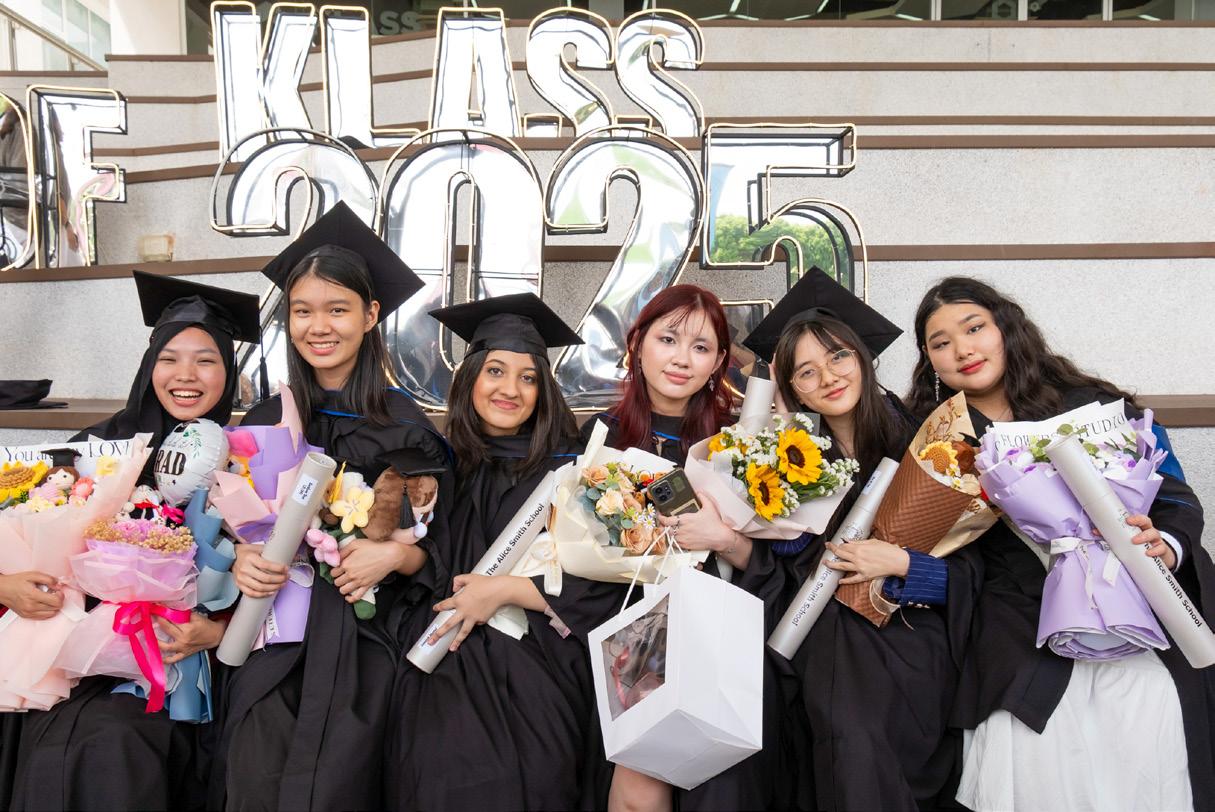
Founded in Kuala Lumpur by Alice Fairfield-Smith with a clear purpose to deliver high-quality British education, The Alice Smith School began as a small teaching community and has since grown into one of the most respected not-for-profit international schools in the region. Over the decades, the school has developed its curriculum, facilities, and teaching methods in step with global education standards, while staying true to its original mission. The focus remains on fostering a love for learning, shaping character, and helping every student reach their potential. That founding vision continues to guide daily life on campus today.
As the oldest British international school in Malaysia and among the oldest in Southeast Asia, The Alice Smith School holds a strong place in the country’s education landscape. Operating as a not-forprofit foundation means every resource is directed back into teaching and learning. The school offers a British-based curriculum from Early
Years to Sixth Form, supported by experienced and well-qualified educators. Families are drawn to its strong pastoral care, wide range of co-curricular activities, and a close-knit community built on inclusion and student wellbeing. Its long-standing reputation and personalised learning approach continue to set it apart.
The school’s global alumni network remains an active part of this journey. Former students stay connected through mentoring, university guidance, internships, career talks, and networking support for current learners.
Many also give back through events, outreach, and philanthropic initiatives. Their ongoing engagement shows a deep sense of belonging and pride that extends well beyond their years at the school.
Learning with Purpose and Direction
The curriculum at The Alice Smith School is based on the English National Curriculum. At the same time, the school’s independent and not-forprofit status allows it to adapt and enrich learning to suit its diverse international community and the local Malaysian context. This balance between
The Alice Smith School’s independent and not-for-profit status allows it to adapt and enrich learning to suit its diverse international community and the local Malaysian context
structure and flexibility helps students learn with confidence and relevance from the early years through to graduation.
Learning begins with an inquiry-based approach in Early Years and Primary. As students progress, they move into focused subject learning that leads to (I)GCSEs and A Levels. Teaching is shaped around the needs of each learner. Support is provided through differentiated instruction, language development, pastoral guidance, and a wide range of enrichment opportunities. Every student is guided in a way that supports steady progress and strong academic outcomes.
Teachers play a central role in this environment. All are highly qualified and bring strong subject knowledge along with international classroom experience. Professional learning is part of daily life at the school. Staff take part in regular training, coaching, and accredited programmes that keep teaching practices current and well informed. Collaboration and reflection are encouraged across teams. Many educators also contribute beyond the school as examiners, trainers, and educational leaders in the region. This shared commitment helps maintain high standards in every classroom.
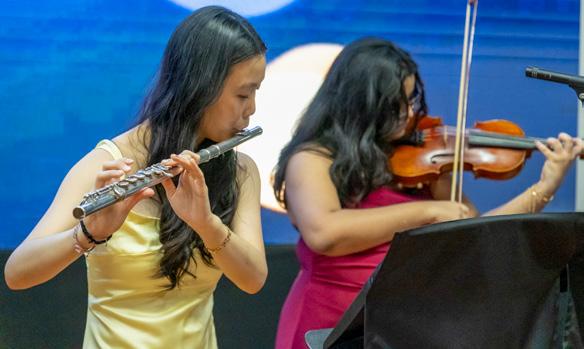
The Sixth Form follows the same focus on preparation and care. Students choose from a wide range of A Level subjects and receive individual guidance for university applications. Advisors support them at every stage, from course selection to final placements. Beyond academics, students build leadership, research, and communication skills through service learning, Model United Nations, Prefect programmes and the Duke of Edinburgh International Award. With strong results and a well-rounded profile, graduates move on to leading universities around the world and continue their journeys with confidence and purpose.
A Community Built on Trust and Wellbeing
At The Alice Smith School, the relationship between home and school is seen as a shared responsibility. Parents are active partners in each child’s learning journey, and their involvement plays a key role in building a positive and respectful community. To strengthen this shared commitment, the school has introduced a Community Promise. It sets out clear expectations for behaviour and conduct for parents, carers, staff, and students. These shared values guide daily interaction and help create a learning space that feels safe, welcoming, and supportive for all.
Student wellbeing is treated with the same importance as academic success. The school has a strong pastoral structure supported by counselling services, safeguarding systems, and a wellbeing curriculum. Personal mentoring and leadership opportunities help students grow in confidence. Sports, creative arts, and service-
learning programmes give them space to explore interests and build resilience. Wellbeing is also integrated into classroom practice so that progress remains steady, healthy, and balanced. Diversity is a defining part of life at the school. It is evident in the curriculum, in community gatherings, and in student-led initiatives. Cultural celebrations and intercultural learning help students understand different perspectives from an early age. Language support and peer mentoring ease transitions and strengthen connections. Every student is encouraged to feel seen, safe, and respected. Through daily practice, the school nurtures empathy, curiosity, and mutual respect, helping students grow into thoughtful global citizens.
Beyond
academics,
students at The Alice Smith School
build leadership, research, and communication skills through service learning, Model United Nations, Prefect programmes and the Duke of Edinburgh International Award
Standards That Build Trust
Having earned notable recognition from COBIS, The Alice Smith School is pursuing additional accreditation through NEASC. The school is also a member of FOBISIA, ISC, EARCOS and CIS. These demonstrate the school’s longstanding commitment to quality, safety, and strong governance. They also place the school within a trusted global network of British and international institutions.
Accreditation at the school is treated as an active and ongoing process. Regular reviews help ensure that teaching standards, safeguarding practices, and school operations remain closely aligned with recognised international benchmarks. For students, this external validation supports smooth academic transitions across borders and strengthens university applications worldwide. For parents,
it offers reassurance that their children are learning in a well-regulated and carefully monitored environment.
Learning Across Two Purpose-Built Campuses
As a not-for-profit institution, The Alice Smith School reinvests all financial surpluses directly into the school. Resources are focused on improving teaching, strengthening student support systems, and enhancing learning environments. Investment also supports technology, specialist staffing, sports and arts facilities, and the continued development of physical infrastructure. This consistent focus on educational value over financial gain guides the school’s steady growth and long-term planning.
The impact of this reinvestment is most visible across the school’s two purpose-built campuses. Each campus is designed to support students at different stages of their learning journey. The Primary Campus, located in the city centre, welcomes children from Preschool to Year 6. The Secondary Campus, set on 25 acres in Equine Park, serves students from Year 7 to Year 13 and offers both (I)GCSEs and A Levels.
The Primary Campus is shaped around the needs of young learners. It features dedicated Early Years spaces, open learning areas, and outdoor environments that support active learning and early independence. These settings allow children to explore, build confidence, and develop foundational skills in a safe and structured environment.
As a not-for-profit institution, The Alice Smith School reinvests all financial surpluses directly into the school
The Secondary Campus is designed to support advanced learning and personal growth. It offers science laboratories, design and technology studios, performance venues, sports complexes, and a Sixth Form learning centre that supports independent study. Together, both campuses support wellbeing, student engagement, and a strong sense of community at every stage of school life.
Looking ahead, the school continues to invest in teaching practice, student wellbeing, and personal development. Sustainability, digital literacy, global awareness, and futureready skills remain key priorities. The longterm focus is to nurture a learning community where every student is equipped to grow with confidence, care, and purpose.
Empowering Learners for a Brighter Future
Timothy Barraud, Principal, Balmoral State High School
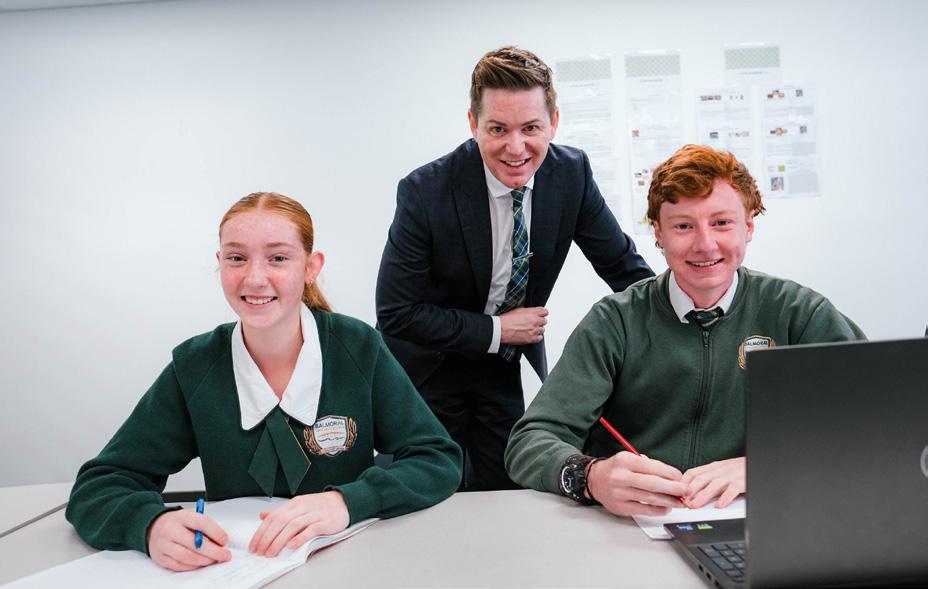
Timothy Barraud is a highly respected Queensland educational leader recognised for leading transformative and future-focused educational innovation. As Principal of Balmoral State High School, he has strengthened curriculum leadership, built staff capability, and restored community confidence through strategic, people-centred reform. Known for clarity, authenticity and inclusive leadership, Timothy champions equity, student voice, and learner agency. His work embeds innovation, belonging and high expectations across school culture. With a strong focus on measurable impact, he creates environments where students and staff thrive academically, socially, and personally. Timothy’s leadership is defined by courage, collaboration, and an unwavering commitment to improving outcomes for every learner.
Recently, in an exclusive interview with K12 Digest, Timothy shared insights into his journey as an educational leader, his approach to leadership, and the future of education. Timothy emphasized the importance of learner agency, citing it as the fundamental building block to self-actualization, and shared how his school is using technology to personalize learning and elevate student voice. He also shared his favorite quote, future plans, words of wisdom, and much more. The following excerpts are taken from the interview.
Hi Timothy. What inspired you to become an educational leader, and how has your journey shaped your approach to leadership?
I was inspired to lead because I saw too many capable young people quietly disengaging from systems that were never designed to truly see them. Early in my career, I remember thinking, “If school is meant to be a place of possibility, then we must design it that way.” During my
own high school experience I had thought about leaving school, trying a different opportunity to find out what I wanted to do in the future.
My friends at school were the cornerstone of enabling me to improve my self confidence and skill as a future and inspired educator.
My leadership journey within the Brisbane metropolitan area and within my work across international education has been inspired by those incredible students I have connected with
Whether it is a student confidently articulating their learning pathway, a teacher redesigning curriculum with courage, or a community reconnecting with a school’s purpose — those moments remind me why this work matters
during my journey. As a leader in a system I often saw too many capable young people quietly disengaging from a school system that they felt was not designed for them. Contributive learning for greater student impact should be our call to action for all educational leaders. We want our students to focus on personal growth, academic and personal resilience and when faced with adversity be willing to try and strive for personal improvement. I am successful as a leader if my community appreciate this commitment from me as a principal and from those in my team. Early in my career, I remember thinking, “If school is meant to be a place of possibility, then we must design it that way.”
My leadership journey across metropolitan, international and innovation-focused school contexts — alongside state and national partnerships — has shaped a clear belief: leadership is not positional, it is cultural.
As I have often said in my writing and conversations, “Culture is not what we say — it is what students experience when no one is watching.”
That belief now guides my approach. I lead to building a school culture where students feel known, teachers feel trusted, and learning feels purposeful. innovation-focused school contexts — alongside state and national projects— have help me shape a clear belief: leadership is not positional, it is cultural and connection to community is critically important to lead successfully with any school community.
As I have often said in my writing and conversations, “Culture is not what we say — it is what students experience when no one is watching.”
That belief now guides my approach. I lead to building cultures where students feel known, teachers feel trusted, and learning feels purposeful.
Technology will always reshape education, but culture will determine whether that change is transformative or transactional
What do you love the most about your current role?
I love witnessing agency come alive. Enacting student agency is my fundamental way of leading for purpose, passion and clarity as a leader.
Students who interact with me understand why it is important to me, and my colleagues and community acknowledge the impact this has for the community that I lead as Principal.
Whether it is a student confidently articulating their learning pathway, a teacher redesigning curriculum with courage, or a community reconnecting with a school’s purpose — those moments remind me why this work matters.
In one of my recent leadership reflections, I wrote: “The most powerful shift in a school occurs when learners stop asking for permission to think.” For me as Principal, who is a leader of community, influencing a local and national ecosystem, as a leader I need to design systems and provide opportunity for all members of my school community to contribute and ensure that
we are all support our students to personally achieve.
What are some of the biggest challenges facing educators today, and how can we address them?
The greatest challenge is not change — educators are resilient and innovative. The challenge is coherence amongst teams, within schools and making sure to highlight what matters most in your community.
Teachers are navigating wellbeing demands, curriculum reform, digital disruption and accountability expectations simultaneously. What they need most is clarity, trust and alignment. Of course, we need a dedicated workforce willing to support the next generation of learners, we also need committed people willing to put others before themselves. Educators rely on intrinsic reward and celebration, we are driven by the purposeful conversations and connections we have each and every day as educators.
Nationally and across Queensland, I have worked with leadership teams to simplify improvement agendas around learner impact, not compliance. As I often say, “If our strategy cannot be felt in a classroom, it is not yet a strategy.” What is our value proposition or our promise to our community and students. We must protect the moral purpose of education while modernising how we deliver it.
How do you think technology will continue to shape education in the next 5-10 years?
Technology will always reshape education, but culture will determine whether that change is transformative or transactional.
Through my involvement in AI and emerging issues research with school leaders published nationally, we have explored how digital tools can amplify agency rather than replace thinking.
I strongly believe: “Technology should extend human potential, not automate human curiosity.”
The next decade will belong to schools that use technology to personalised learning, elevate student voice and strengthen relationships. Sure the emergence of this technology will help us summaries, consolidate study notes or reference points for presentations, but it will never replace the need for us to connect to the story, purpose of the narrative of why we are learning this information for meaning and impact.
What’s the most important skill or competency you think students should be developing in school?
Learner agency is the fundamental building block to self-actualization as a lifelong learner.
Agency enables students to reflect, adapt, collaborate and lead themselves. Through programs such as learner agency conversations, micro-credentialing and authentic pathways partnerships with universities, I have seen firsthand how agency transforms confidence and aspiration.
As I have said publicly, “When students own their learning story, they begin to write a future they believe in.” Agency is the foundation of lifelong success as a learner, leader and successful graduate who is future focused.
What’s your favorite book or resource that has shaped your leadership style?
Michael Fullan’s work on moral purpose and system coherence has deeply influenced me. But equally, student voice has been my greatest teacher.
One student once said to me, “School works best when adults trust us to be part of the solution.” That sentence reshaped how I view leadership more than any textbook ever could.
However, I filter every policy through one lens: learner impact.
I often remind leaders, “Policy gives us direction, but purpose gives us meaning.”
If we hold onto purpose, policy becomes a tool rather than a burden
What is your favorite quote?
“Every child deserves a school that believes in who they are becoming, not just who they have been.”
This reflects my belief that education is fundamentally about hope.
Where do you see yourself in the next 5 years?
Still leading learning — but at broader scale.
I see myself continuing to shape school and system cultures that prioritise agency, belonging and excellence, while contributing nationally to conversations around assessment reform, learner pathways and future-focused schooling.
Do not chase approval — chase impact and personal growth to feel more fulfillment in life
How do you stay informed about changes in education policy and curriculum?
I stay connected through state advisory networks, national research collaborations, professional associations and leadership communities.
I also hope to continue mentoring emerging leaders who believe, as I do, that leadership is an act of optimism.
What advice would you give to someone just starting their career in educational leadership?
Lead with courage and compassion.
Do not chase approval — chase impact and personal growth to feel more fulfillment in life.
Listen deeply to students. Trust your teachers. Challenge systems respectfully. And remember: “You do not change schools by changing structures — you change schools by changing beliefs.”
If you hold onto that, your leadership will always matter.
ACADEMIC VIEWS
Building Schools That Put People Before Pace
Abigail Furey, Deputy Director (Academic), International School of Monaco
Looking back on your journey from teacher training at Oxford to your current role at ISM, what experiences have most shaped the leader you are today?
Reflecting on my journey from teacher training at Oxford to my current role as Deputy Director (Academic) at the International School of Monaco, I would say that a combination of experiences across different schools and leadership roles has shaped the leader I am today. Each role, from Head of Department to Head of Year and Head of House, has offered me
unique opportunities to work collaboratively, mentor colleagues, and also be mentored myself. These experiences have given me a deep understanding of what meaningful support looks like in a school community and how to foster it at every level.
Professional development has been central to my growth. Completing an MSc in Teaching and Learning at Oxford while balancing full-time school responsibilities taught me invaluable organisational skills. These experiences also collectively helped me develop a more strategic vision as a leader, allowing me to look beyond
The role of schools is to frame AI as an enabler of creativity which supports inquiry, problemsolving, and original thinking, rather than something that shortcuts the learning process
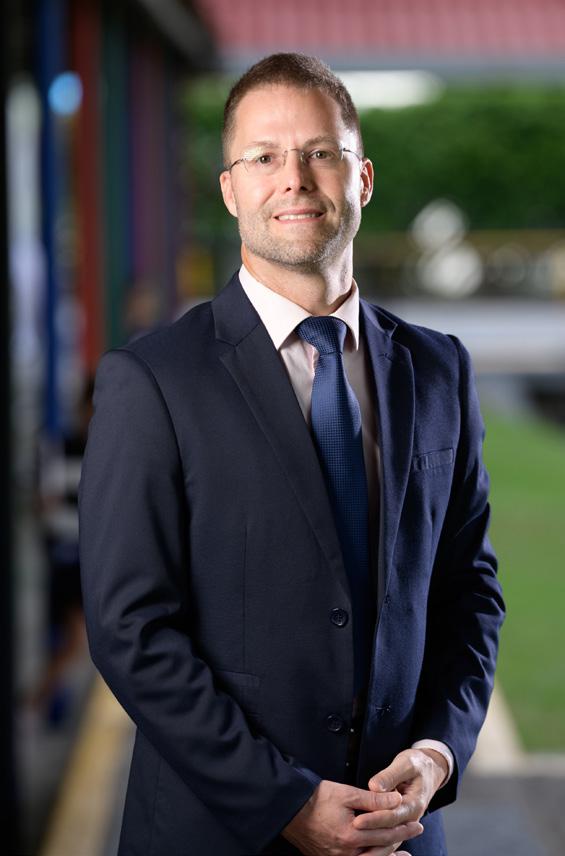
Abigail Furey is an accomplished international educator and serves as Deputy Director (Academic) at the International School of Monaco. Her work is guided by a clear educational philosophy that places students at the centre of decision-making, valuing individuality, lived experiences, and cultural identity while preparing learners to thrive as global citizens. She brings extensive leadership experience from independent schools in the UK, where she has held senior academic and pastoral roles including Head of Department, Head of Year, and Head of House. Through these roles, Abigail has developed strong expertise in innovative teaching and learning, international curriculum development, multilingual education, and inclusive practice.
Known for her collaborative leadership style, Abigail is deeply committed to mentoring staff and building strong partnerships with students and families. Abigail is passionate about research-informed, futurefocused education and believes effective leadership is rooted in reflective practice, shared values, and a coherent academic vision. She holds a BA in French and Spanish from the University of Exeter, an MSc in Teaching and Learning from the University of Oxford, and is currently completing an EdD at the University of Bath.
In an exclusive conversation with K12 Digest, Abigail talks about the evolving realities of leading learning in a fast-changing international school environment. She reflects on her journey through academic and pastoral leadership roles and how those experiences have shaped a leadership philosophy grounded in collaboration trust and long-term vision. Abigai also shares insights on teacher wellbeing professional agency and why sustainable innovation begins with empowered educators rather than performative change. Below are the excerpts of the interview.
day-to-day tasks and consider the long-term growth of both learners and educators.
Ultimately, I see leadership as a dynamic balance between vision and collaboration. It’s about creating structures and environments where students and staff feel supported, challenged, and inspired.
What are the biggest challenges you see schools facing now in balancing foundational skills with innovative practices like AI integration and inquirybased learning?
One of the biggest challenges schools face today is managing the fast pace of change.
Innovation, particularly in areas such as AI, VR and technology, is moving far more quickly than many school systems can realistically sustain. While it’s exciting, the speed of innovation often outpaces the time and capacity needed to train teachers effectively, embed new practices thoughtfully, and evaluate their impact. Without careful planning, this can place significant pressure on staff and contribute to teacher fatigue or burnout, which ultimately undermines the quality of learning we are trying to enhance.
At the same time, schools must guard against innovation becoming performative rather than purposeful. With AI in particular, there is a growing concern especially in the parent body,
When leaders are open to new ideas and willing to be challenged, they foster a culture of trust, innovation, and collective responsibility
that over-reliance on technology could diminish creativity, critical thinking, and deep learning if it is positioned as a replacement rather than a tool. I believe the role of schools is to frame AI as an enabler of creativity which supports inquiry, problem-solving, and original thinking, rather than something that shortcuts the learning process.
As you engage with the wider global education community, what trends or insights are currently guiding your academic vision and priorities at ISM?
I feel that teacher wellbeing and professional agency are central to any sustainable academic vision. Across international schools, there is a growing recognition that meaningful innovation only happens when teachers feel valued, supported, and empowered to lead their own learning. Rather than professional development being something that is done to teachers, the most impactful models position educators as active contributors to a shared learning culture, that is one where reflection, collaboration, and trust are embedded into daily practice.
At ISM, this insight is guiding our priorities in very practical ways. We are increasingly focused on creating structures that allow teachers to invest in their own professional growth, share expertise, and feel a strong sense of belonging within the learning community. When teachers are engaged and confident in their learning, that energy and purpose translates directly into richer classroom experiences for students.
This philosophy was strongly reflected in the Innovate-Share-Empower Conference recently hosted at the International School of
Monaco. It embodied our belief that wellbeing, professional trust, and academic excellence are deeply interconnected.
How do you see emerging technologies, particularly artificial intelligence, enhancing both teaching practice and student learning outcomes in international schools?
Emerging technologies, and artificial intelligence in particular, have the potential to significantly enhance both teaching practice and student learning outcomes when they are implemented with purpose and ethical clarity. One of the most powerful opportunities AI offers international schools is in the area of access and inclusion. Used thoughtfully, it can support diverse learning needs, personalise learning pathways, and remove barriers to engagement, creating more equitable opportunities for all students to succeed.
AI also has an important role to play in increasing student engagement and motivation. When used creatively, it can help build positive, meaningful learning experiences that encourage curiosity, inquiry, and confidence. This is particularly important in international school contexts, where preparing students to be future-ready global citizens requires them to engage critically and ethically with the technologies shaping the world around them.
This approach was recognised through the International School of Monaco’s nomination for the TES Best Use of Technology Award for International Schools, reflecting our commitment to innovation that is inclusive, sustainable, and grounded in strong educational values.
In your view, what are the essential qualities of effective leadership in a diverse, multilingual, and globally connected educational environment?
Effective leadership in a diverse, multilingual, and globally connected educational environment begins with a deep commitment to inclusion. In international schools, no single leader can hold all the expertise. Distributed leadership is therefore essential: understanding the strengths of individuals and teams, creating opportunities for others to lead, and intentionally building capacity across the organisation. When leaders are open to new ideas and willing to be challenged, they foster a culture of trust, innovation, and collective responsibility.
For me, strong international school leadership is less about authority and more about influence. I see it as bringing people together around shared values and a common purpose, while ensuring that the school community is well equipped to meet both current challenges and future opportunities.
Outside your professional work and academic research, what personal values or interests guide you and how do they shape your approach to education?
Outside of my professional work and academic research, the values that guide me most strongly are balance, care, and respect; for myself and for others. In the fast-paced world of international education, it is easy
to prioritise outcomes and innovation over people, but I firmly believe that sustainable excellence begins with wellbeing. Making time for others, listening carefully, and being present are not separate from effective leadership; they are foundational to it.
What advice would you offer to students and aspiring educators who want to make a meaningful impact in schools and communities in the decade ahead?
For students and aspiring educators looking to make a meaningful impact in schools and communities, my first piece of advice is to truly work with your community. Parents, colleagues, and local stakeholders are not just supportive voices, they are valuable partners in shaping learning experiences. Engaging them thoughtfully and collaboratively helps to build shared understanding and buy-in, and ensures that any vision or initiative is both relevant and sustainable. The more we bring people along with us, the stronger and more connected the school community becomes.
My second piece of advice is: Let go of your ego! No one has all the answers, and education is never one-size-fits-all. The most effective leaders and teachers draw on the resources, expertise, and perspectives around them, staying humble, curious, and adaptable. Recognising that we are all learners allows us to innovate responsibly and respond to challenges with creativity and resilience.