International Partnerships admin@highereducationdigest.com
Americas Europe
Middle East & Africa Asia-Pacific Follow Us On www.linkedin.com/company/ highereducationdigest www.facebook.com/HigherEducationDigest
Higher Education Digest www.highereducationdigest.com is a global knowledge sharing digital platform published by Connecta Innovation Private Limited. All rights reserved. The opinions expressed in the content and pictures provided are those of the authors. They do not purport to reflect the opinions or views of Connecta Innovation Private Limited or any of its members and we do not assume any responsibility. The publisher does not assume any responsibility for the advertisements, its content, pictures, and all representation of warranties made in such advertisements are those of the advertisers and not of the publisher. Higher Education Digest www.highereducationdigest.com is a Free Subscription and Free-to-read digital platform strictly not for sale and has to be strictly for internal private use only. Publisher does not assume any responsibility arising out of anyone modifying content and pictures, printing a copy of this digital platform in any format and in any country and all matters related to that.
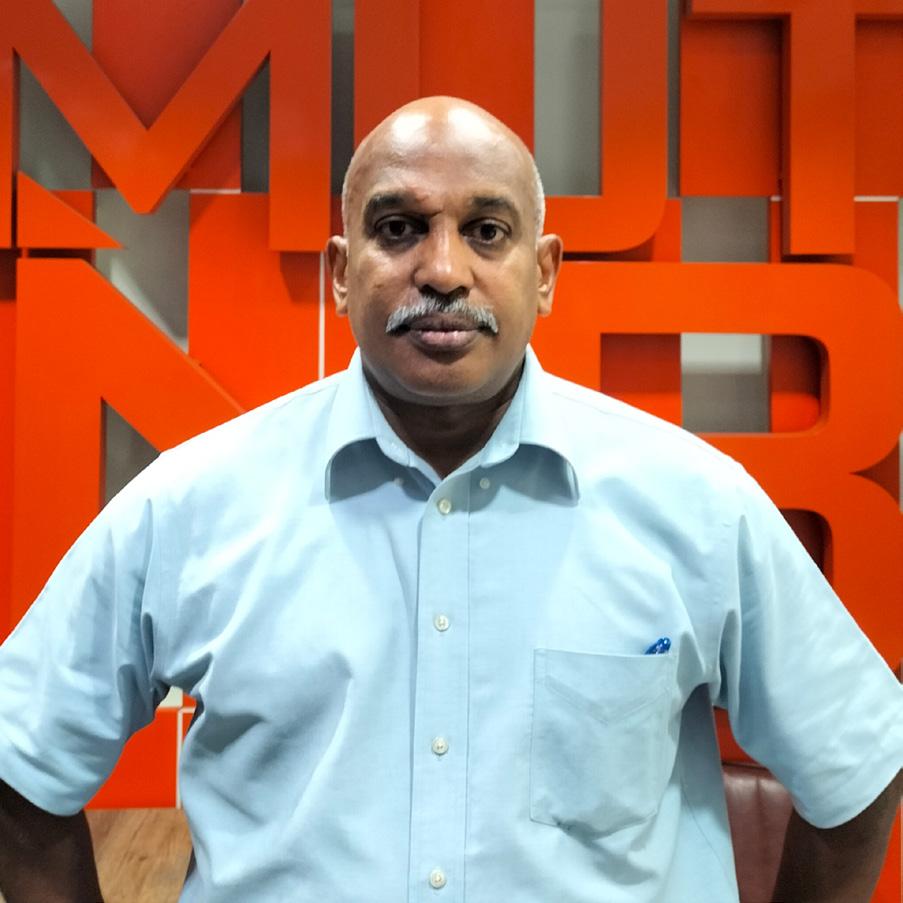
Sarath
The Strength That Doesn’t Shout
There is a kind of strength that never raises its voice. It does not chase headlines or count its worth in noise. You feel it instead, quietly, steadily, over time. I was reminded of this recently while speaking with a young professional who said something simple yet striking: “My education didn’t just prepare me for my job. It prepared me for life.” In an era obsessed with speed, scale, and instant results, that kind of outcome feels almost radical. And yet, study after study continues to remind us that employers value adaptability, integrity, and critical thinking as much as technical skill. The challenge, of course, is that these qualities cannot be rushed. They have to be cultivated.
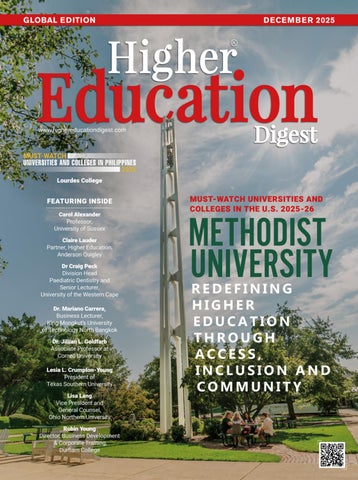
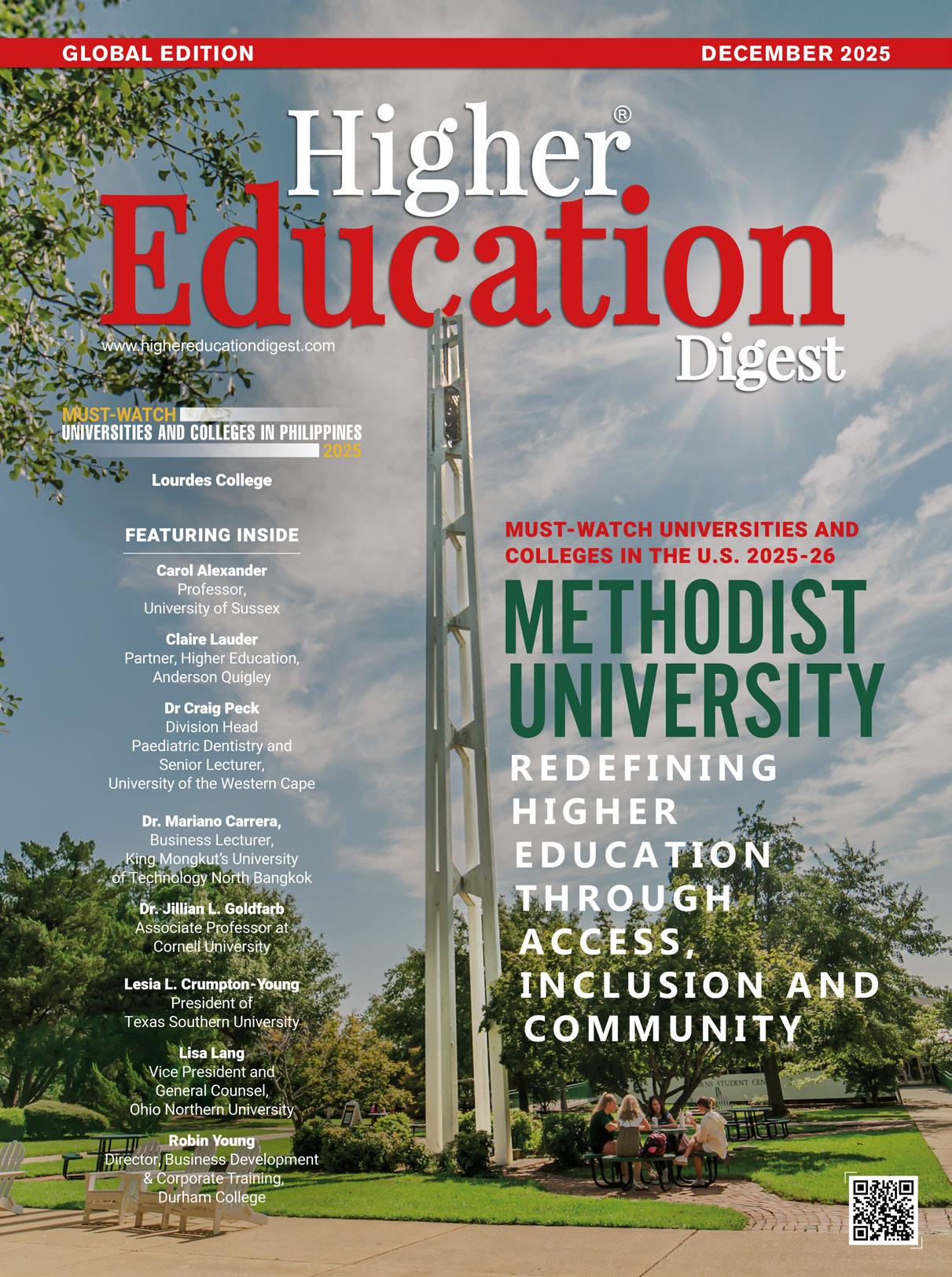
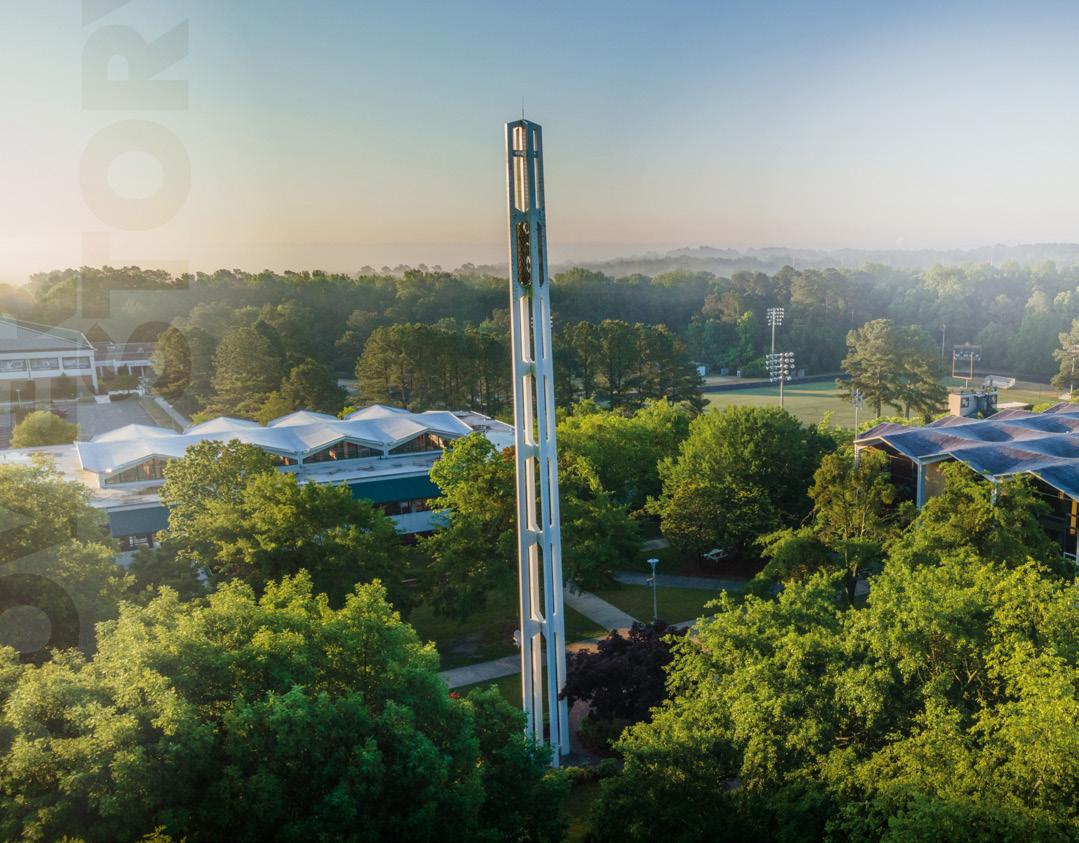
This quiet, enduring approach to education is exactly what our December cover story celebrates. We feature Methodist University, recognized among the Must-Watch Universities and Colleges in the US for 2025–26, not for flashy promises, but for nearly seven decades of purposeful work. Located in Fayetteville, North Carolina, Methodist University has stayed true to a powerful belief: education must develop the whole person. Rooted in the
liberal arts and supported by more than 80 areas of study, its model blends critical thinking, professional preparation, and personal growth with remarkable balance. What makes this story compelling is not just what the university offers on paper, but how consistently it has lived its mission through teaching, service, and community engagement.
Beyond our cover, this issue of Higher Education Digest Magazine brings together a diverse set of voices from across the education and leadership landscape. Our pages explore ideas that range from innovation in learning to leadership in uncertain times, offering thoughtful perspectives from institutions and individuals who are shaping the future in their own measured ways. You will find stories that question assumptions, share hard-earned lessons, and remind us why education still matters deeply.
As we close another year and look ahead with cautious optimism, I invite you to spend time with these stories. Let them challenge you, steady you, and perhaps slow you down in the best possible way. Because in a world that often confuses speed with progress, it is still purpose that carries us the farthest.
Enjoy Reading.
Sarath Shyam
UNIVERSITIES & COLLEGES IN THE U.S. 2025-26
INDUSTRY PERSPECTIVE
WHAT DOES THE VICE-CHANCELLOR OF 2030 LOOK LIKE?
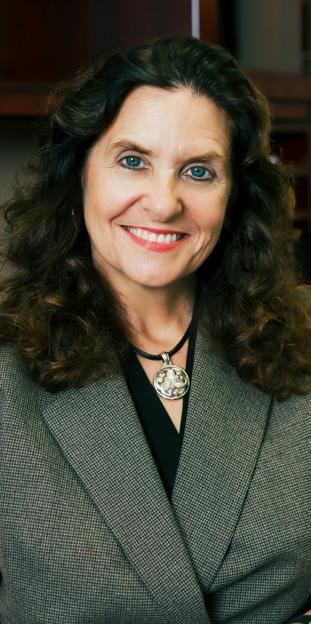
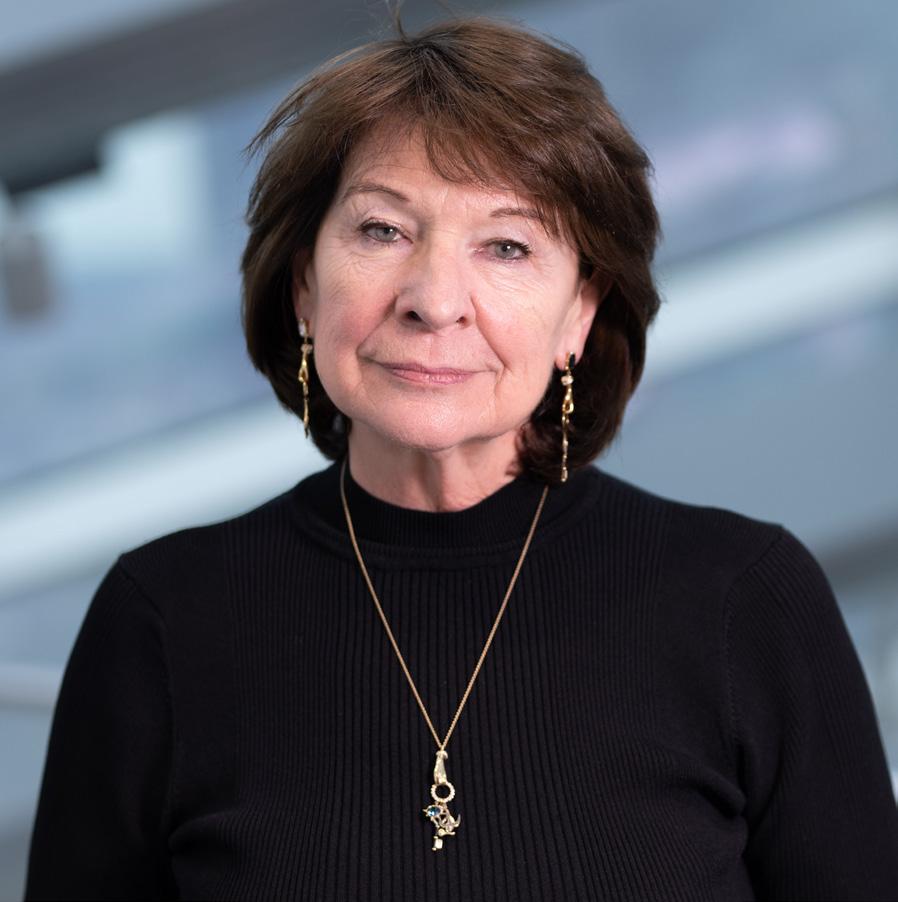
Claire Lauder, Partner, Higher Education, Anderson Quigley
THE NEXT CHAPTER IN HIGHER EDUCATION: DEMAND-LED LEARNING
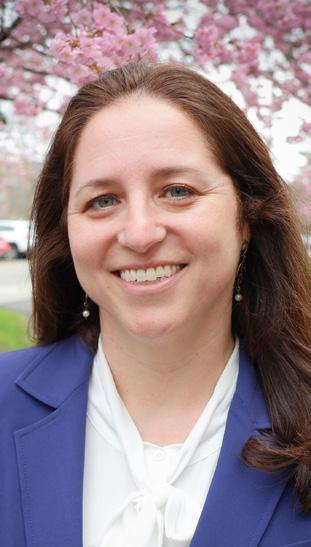
Robin Young, Director, Business Development & Corporate Training, Durham College
ACADEMIC VIEW
NAVIGATING CHANGE IN HIGHER EDUCATION LAW
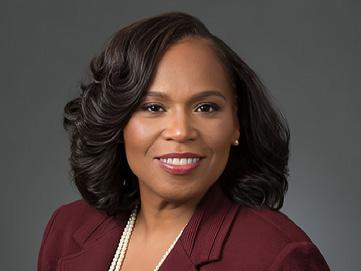
Lisa Lang, Vice President and General Counsel, Ohio Northern University
HOW ACTIVE LEARNING AND INTERDISCIPLINARY THINKING ARE TRANSFORMING STEM EDUCATION
Dr. Jillian L. Goldfarb, Associate Professor at Cornell University
60
ACADEMIC VIEW
72
PERSONAL CHALLENGES: A UNIQUE STRENGTH OF TEACHERS THAT AI CANNOT MATCH
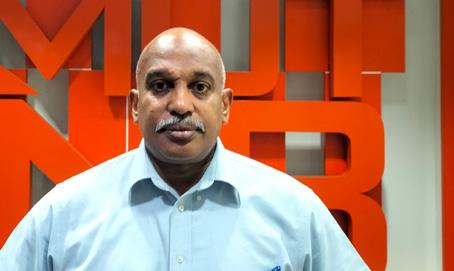
Dr. Mariano Carrera, Business Lecturer, King Mongkut’s University of Technology North Bangkok
THE SLOW SHIFT: WHY TRADITIONAL FINANCE TEACHING NEEDS A TECHNOLOGICAL OVERHAUL
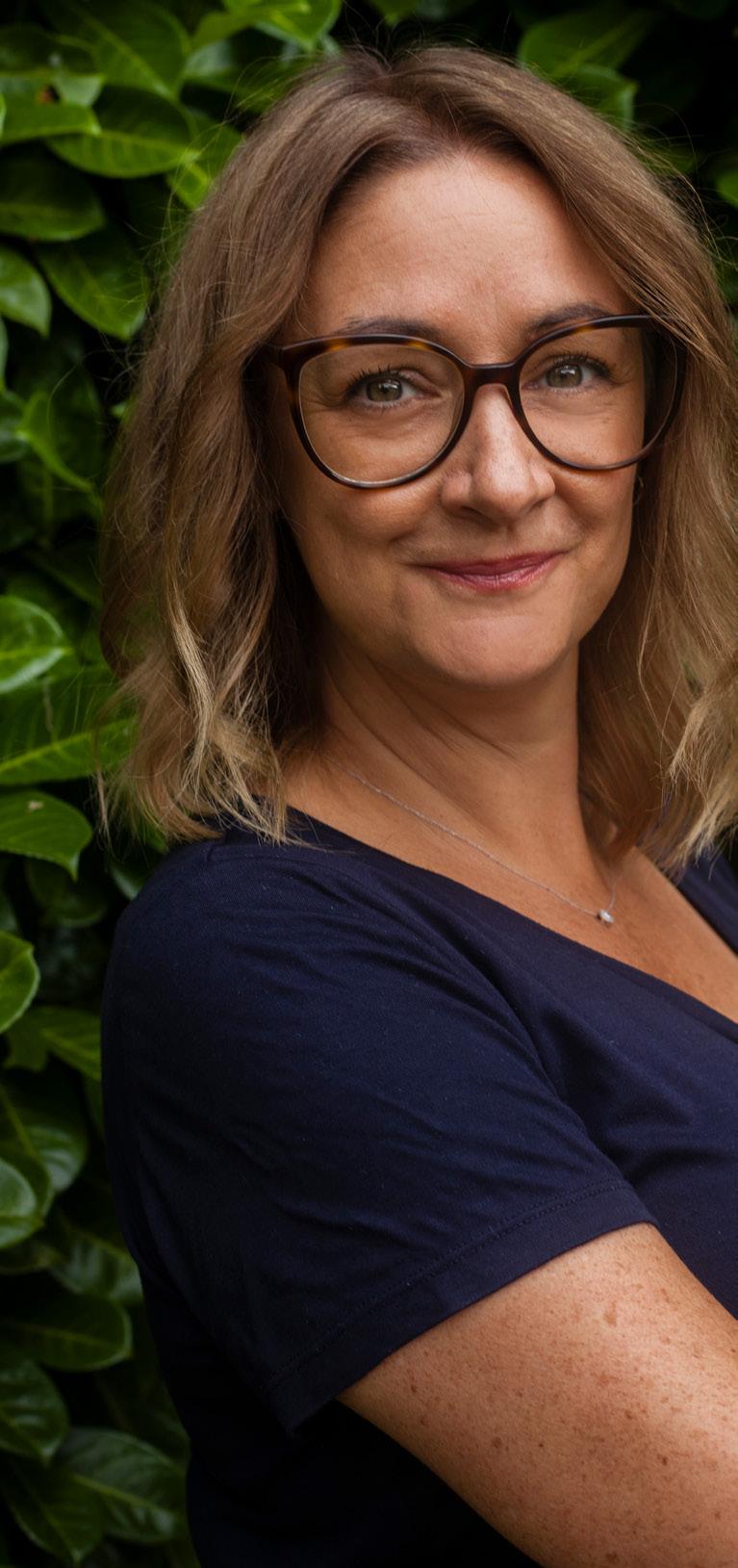
Carol Alexander, Professor, University of Sussex 76
80
LEADING WITH VISION: TRANSFORMING HIGHER EDUCATION THROUGH EMPOWERED TEAMS AND COACHING CULTURE
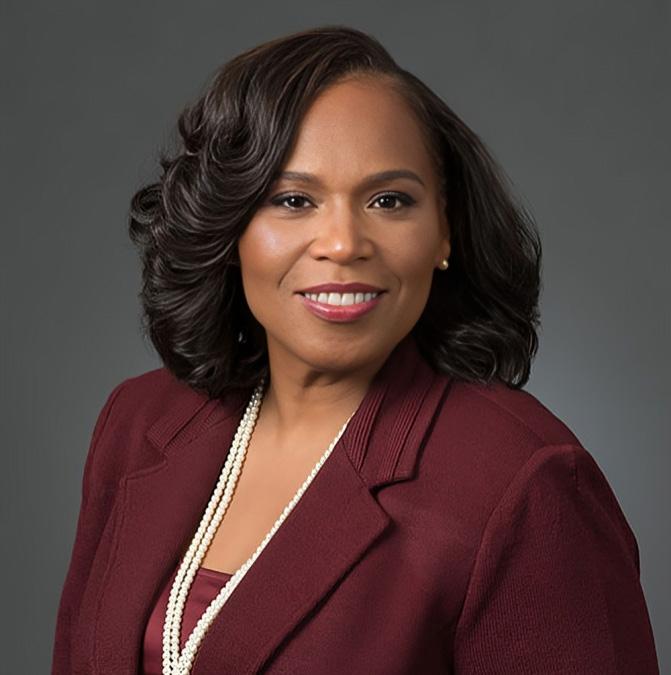
Lesia L. Crumpton-Young, President of Texas Southern University
CURRICULUM ANALYSIS –THE NEED FOR A CONTEXTUALLY RELEVANT GUIDING FRAMEWORK
Dr Craig Peck, Division Head Paediatric Dentistry and Senior Lecturer, University of the Western Cape 90
COVER STORY
MUST-WATCH
UNIVERSITIES & COLLEGES IN THE U.S. 2025-26
METHODIST UNIVERSITY
REDEFINING HIGHER EDUCATION THROUGH ACCESS, INCLUSION, AND COMMUNITY
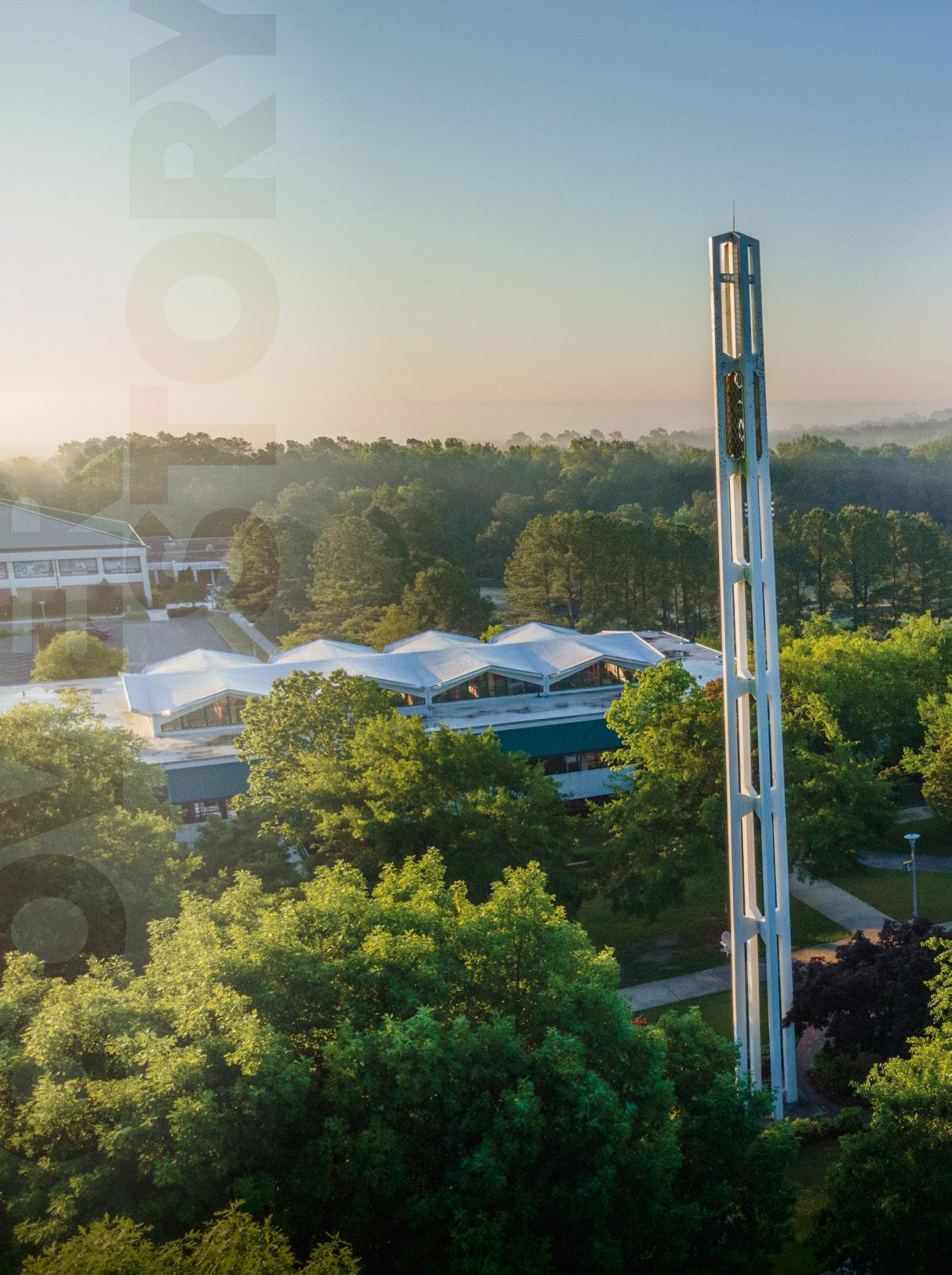
Methodist University, located in Fayetteville, North Carolina, has a nearly seven-decade history built on the powerful belief that education must develop the whole person. This principle guides everything the university does, from teaching to community service.
Rooted in the liberal arts, Methodist University provides a foundation that blends critical thinking, professional preparation, and personal growth. With more than 80 areas of study, students find the space and support to explore their ambitions and build meaningful futures. “We are deeply committed to preparing students for success in their professional lives and their personal lives. Our goal is to educate ethical leaders who serve with purpose and integrity,” says Stanley T. Wearden, Ph.D., President of Methodist University.
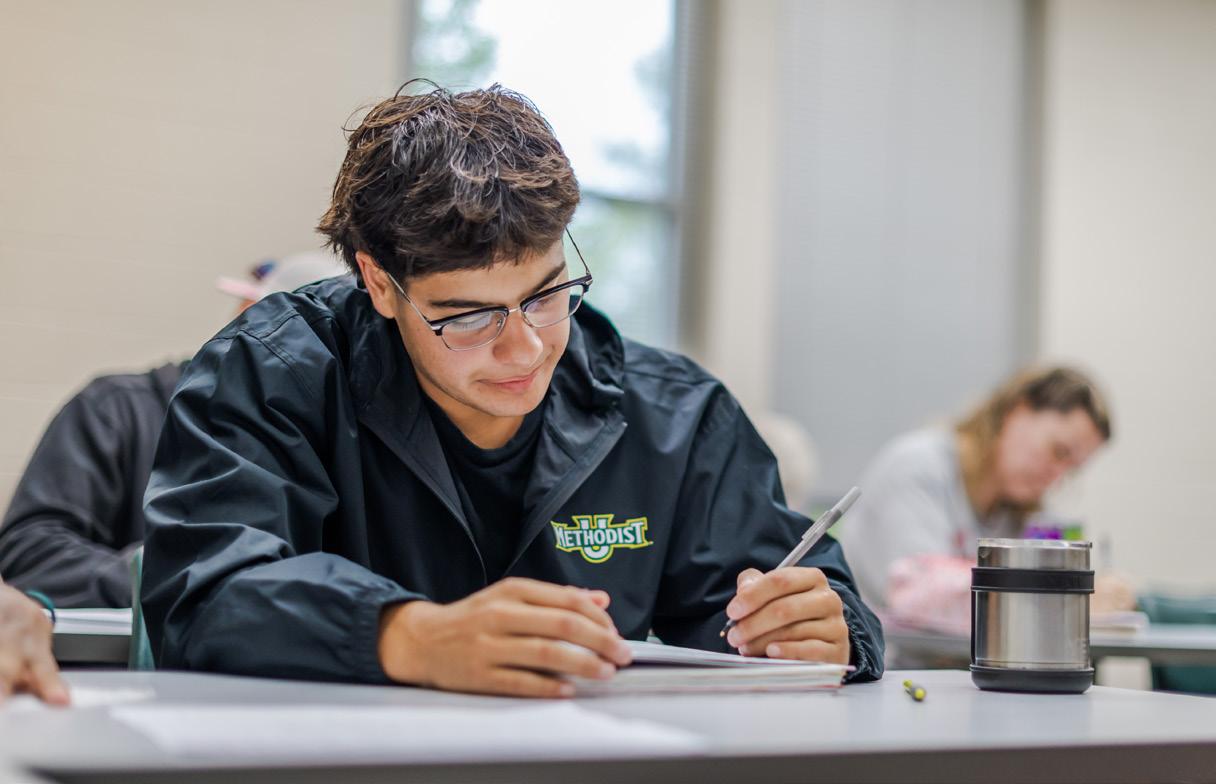
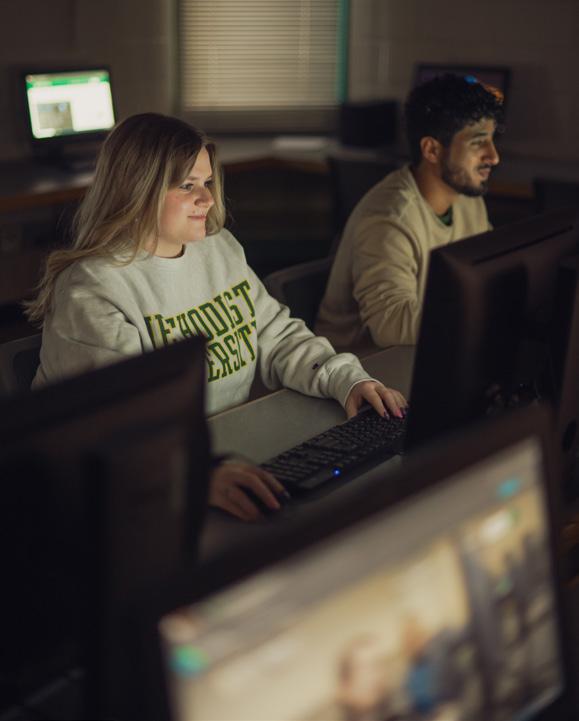
That mission is visible across the university’s campus and programs. Methodist University offers a vibrant learning community, small class sizes, and a culture that values integrity, engagement, and care for others. Faculty and staff are dedicated to helping students find direction and purpose, whether in the classroom, through leadership roles, or in community service.
Methodist University is evolving with higher education by growing its programs, forming new partnerships, and offering flexible online options. This modern approach is always guided by the university’s traditional values. “We focus on our people: our students, faculty, and community. This has always defined Methodist University and will remain our guide in the future,” Wearden states.
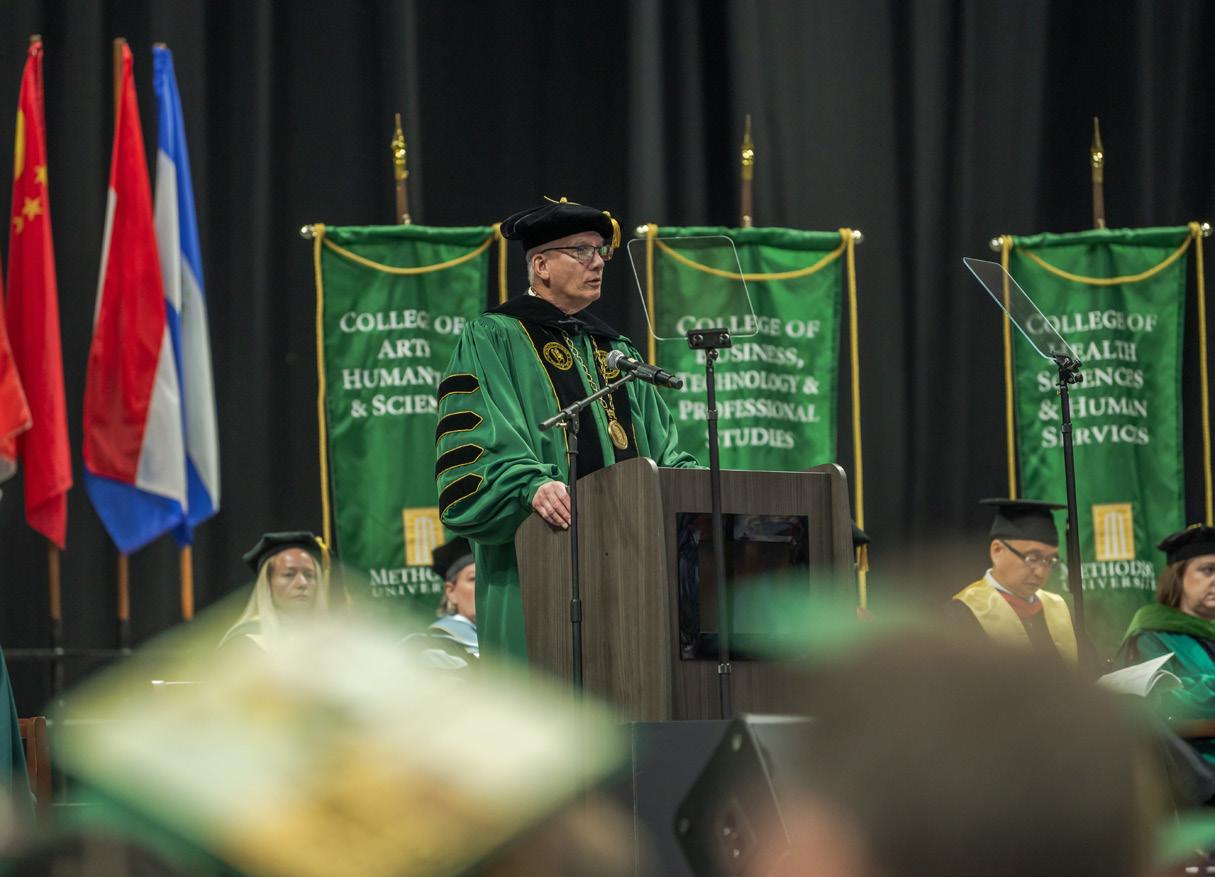
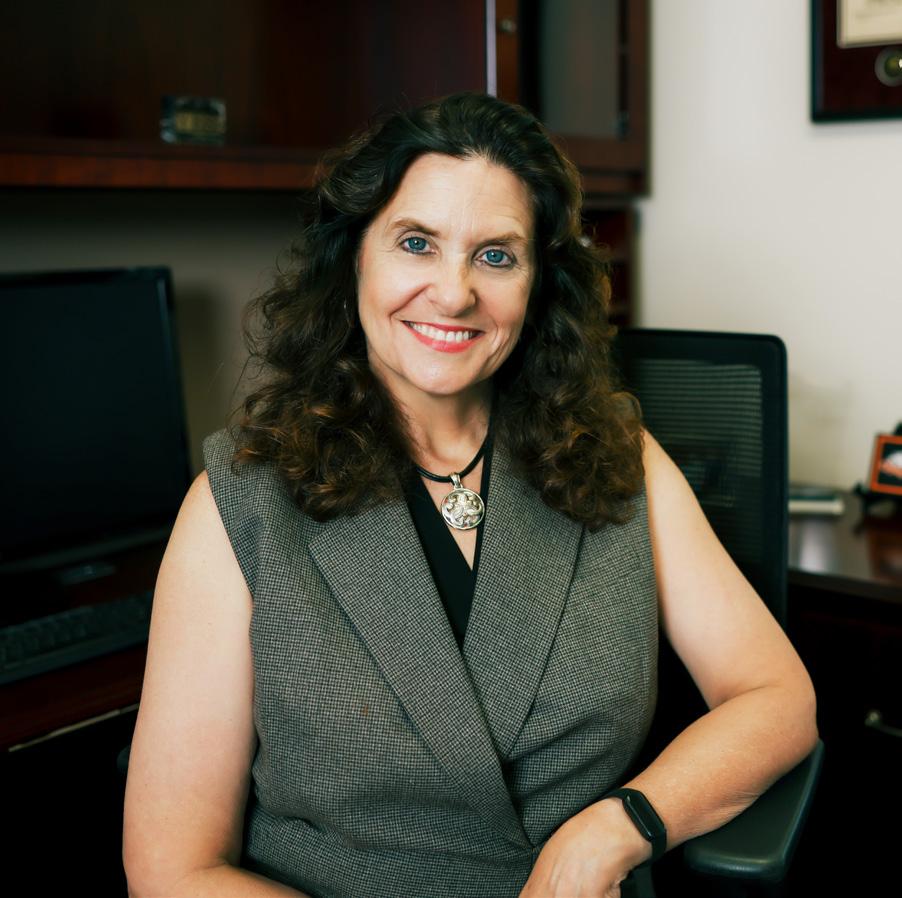
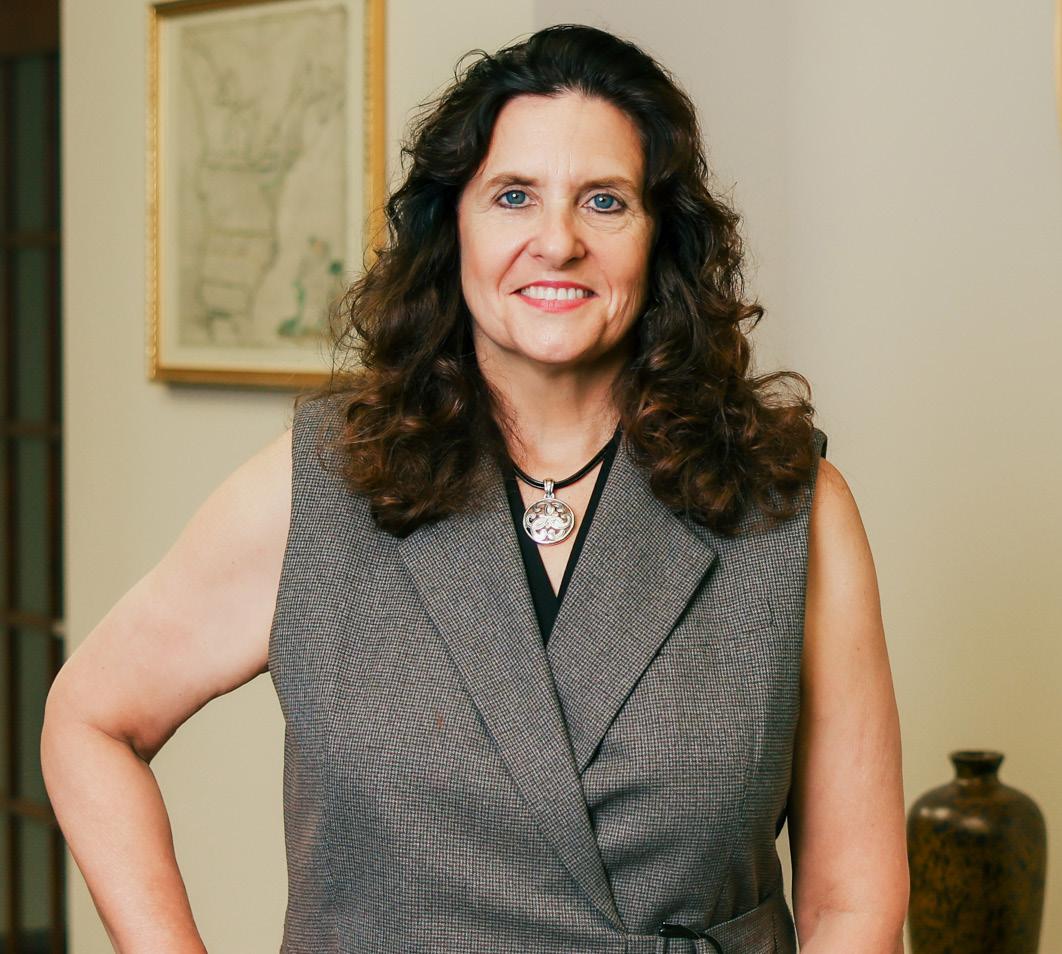
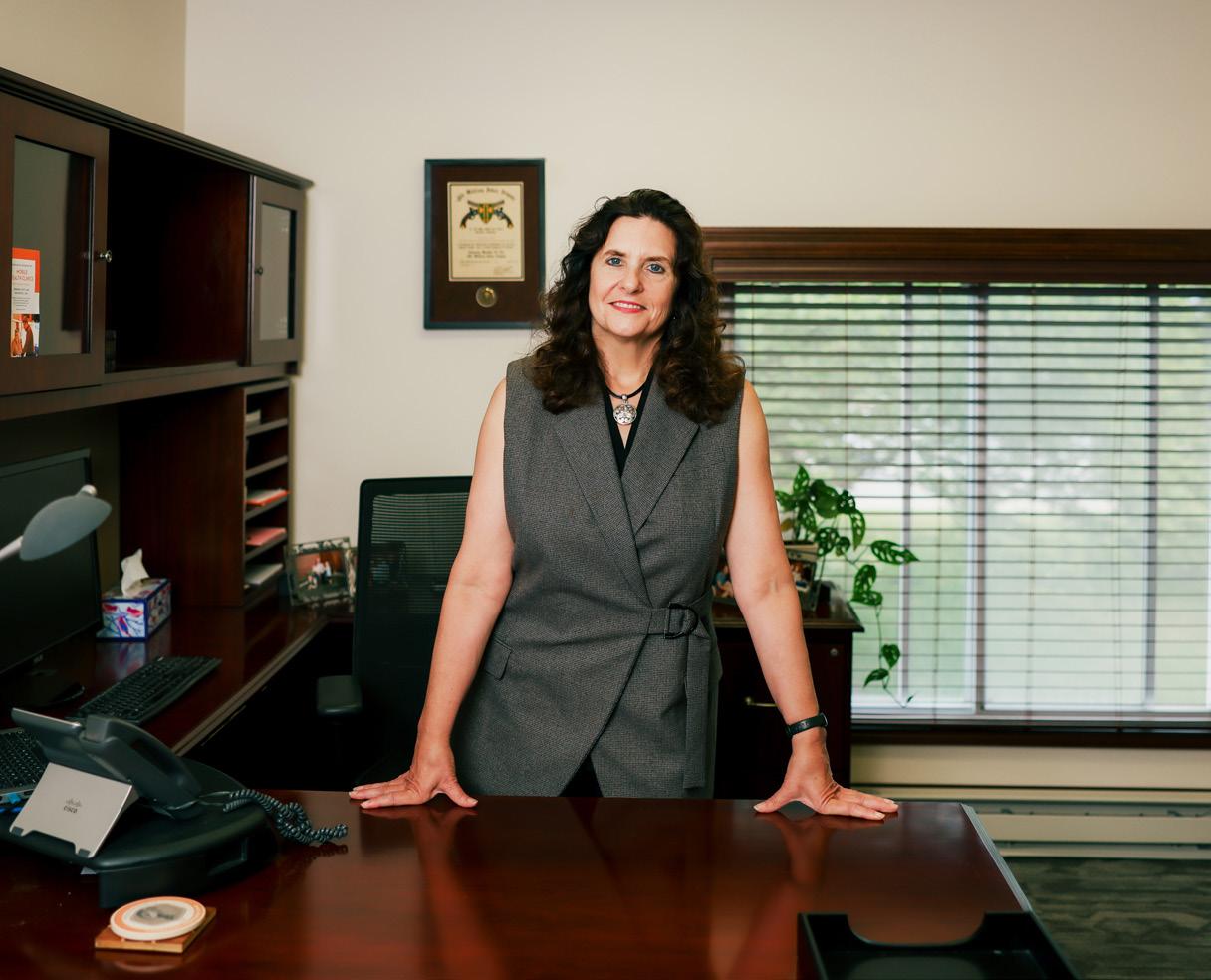
Stanley T. Wearden, Ph.D., President of Methodist University
A Mission with Direction
Methodist University offers a vibrant learning community, small class sizes, and a culture that values integrity, engagement, and care for others.
Methodist University provides undergraduate and graduate education rooted in the liberal arts, aiming to build students’ moral integrity, ethical reasoning, and intellectual curiosity. From that foundation, the university builds strong professional and graduate programs that prepare students for meaningful work and purposeful lives. “Our mission gives us direction and keeps us grounded in the liberal arts while allowing us to grow in ways that serve today’s students and tomorrow’s needs,” says Wearden. That mission extends beyond academics. Methodist University remains an active community partner, offering cultural, educational, and service programs that connect campus life with the broader region. The university’s current strategic plan focuses on key goals: improving student retention and graduation rates, expanding online and community college partnerships, deepening military and civic
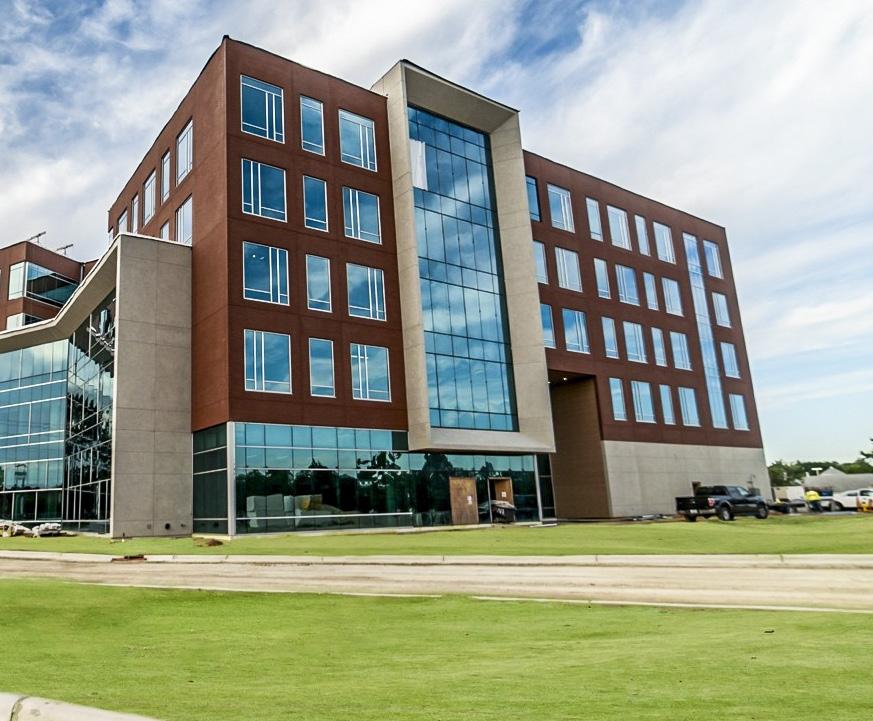
The new medical school (pictured at right) is scheduled to open in 2026, pending full approval from LCME and SACSCOC (the necessary accreditation organizations).
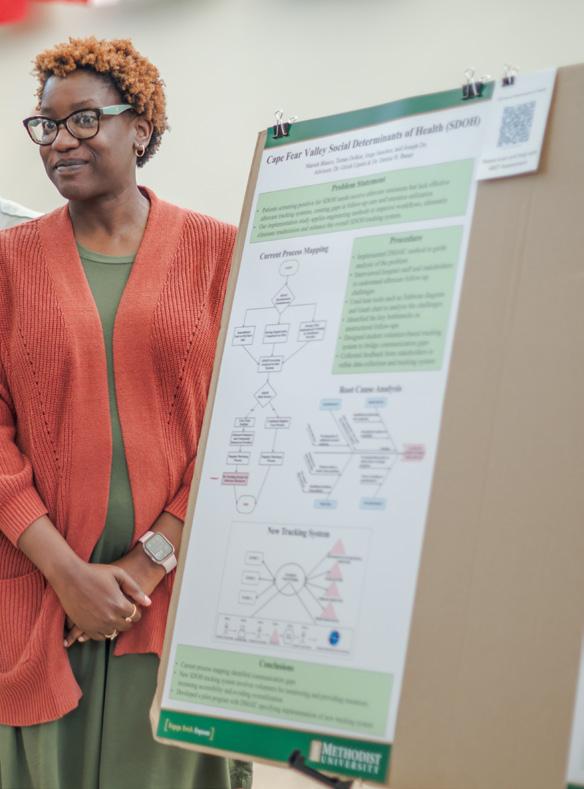
engagement, and growing its scholarship endowment to increase accessibility. A major milestone ahead is the opening of the Methodist University Cape Fear Valley Health School of Medicine in 2026, which received preliminary accreditation from the LCME in October. The school – the first MD school in North Carolina in several decades that isn’t already tied to an existing medical school – will train physicians to serve in underserved areas, strengthening healthcare in the region.
Looking ahead, Methodist University aims to balance on-campus and online learning, ensuring both uphold the same standards of excellence and personal attention. Partnerships with businesses, healthcare providers, and community organizations are helping bridge academics with workforce needs, giving students more real-world opportunities. “We want every capable student to access a Methodist University education. That means keeping it affordable, flexible, and relevant,” adds Wearden.
Learning that Leads to Purpose
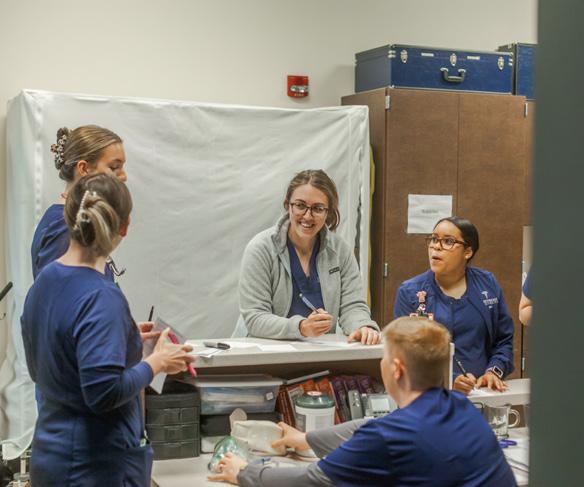
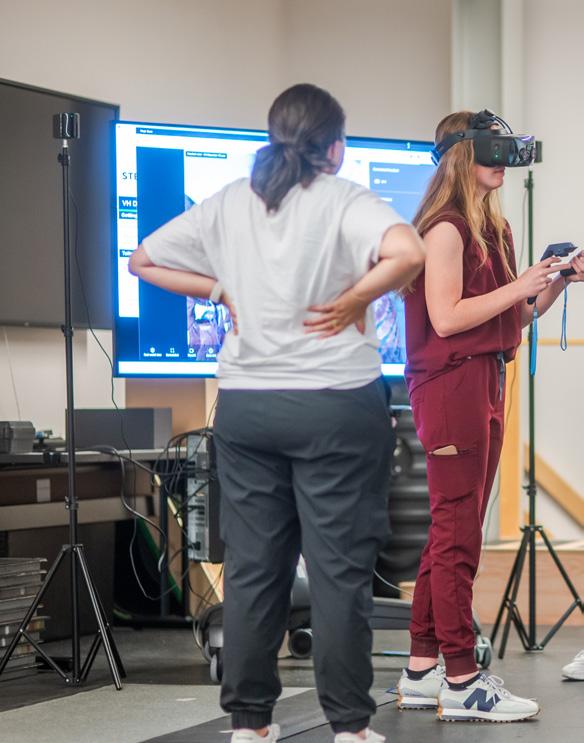
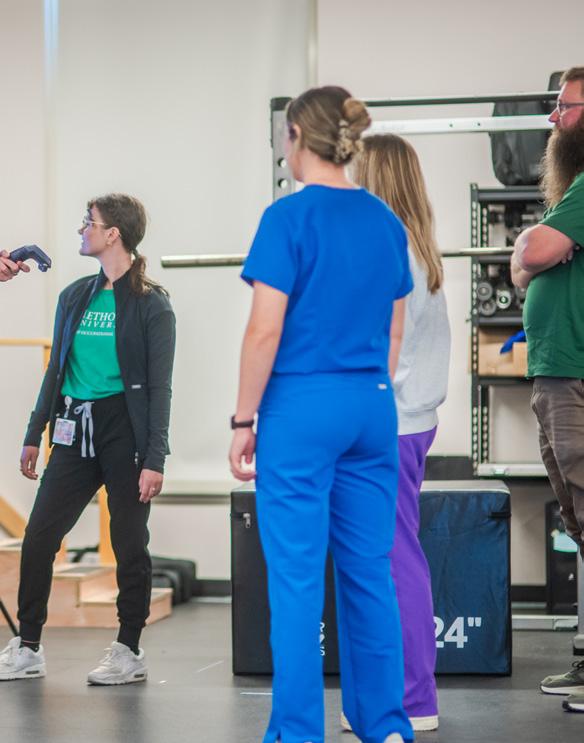
Several programs at Methodist University have become key draws for students nationwide. The College of Health Sciences & Human Services offers a wide range of disciplines, including Nursing, Physical Therapy, Occupational Therapy, Social Work, Health Administration, and Physician Assistant Studies.
The Physician Assistant Studies program, in particular, has earned national recognition for its rigorous curriculum and strong outcomes. Many students have received competitive
National Health Service Corps scholarships, underscoring the program’s quality and community focus.
The Reeves School of Business continues to attract students pursuing degrees in Accounting, Marketing, Finance, and Business Administration. Accredited by the ACBSP, the school emphasizes practical learning and responsible leadership.
A unique highlight is the Professional Golf Management (PGM) program, one of only 17 in the country accredited by the PGA of America.
Since 1989, its graduates have achieved a 100 percent job placement rate, entering roles in golf operations, management, and instruction.
Career preparation begins early at Methodist University. Every student works with an academic advisor to align studies with career goals, while the Center for Career Services offers hands-on support through internships, workshops, and networking opportunities.
The New York Times recently ranked Methodist University in the top 16 percent of U.S. institutions for social mobility, highlighting its success in helping students achieve lasting success. “Our mission has always been about opportunity. When students come here, they find mentors, support, and a community that believes in them,” says Wearden.
A Community That Learns Together
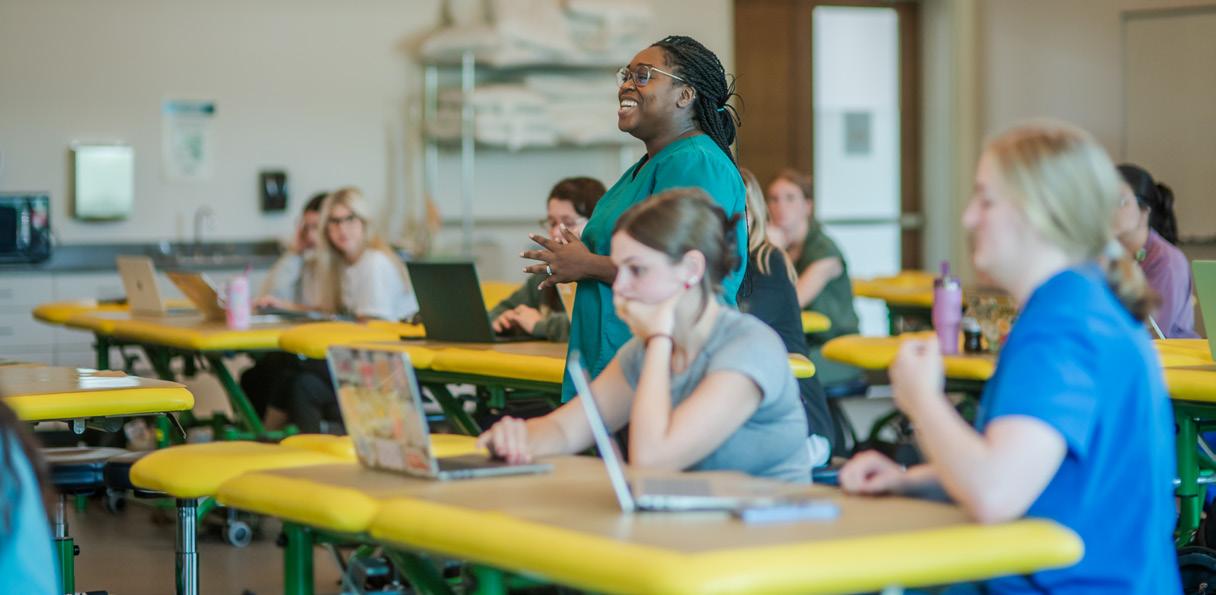
At Methodist University, learning happens through connection. With a 12:1 student-faculty ratio, relationships run deep. Students aren’t anonymous faces in large lecture halls; they are known, guided, and mentored.
With a 12:1 student-faculty ratio, relationships run deep. Students aren’t anonymous faces in large lecture halls; they are known, guided, and mentored.
Faculty take the time to understand each student’s strengths and challenges. They ask questions, encourage curiosity, and adjust their teaching to fit individual learning styles. “Our small class sizes allow professors to truly engage with students. It creates an environment where learning becomes personal and meaningful,” says Wearden.
This close-knit academic setting builds trust and accountability. Professors often become advisors and advocates, supporting students not only in coursework but also in their career goals and personal development. When a student needs extra help or wants to explore a new idea, support is never far away.
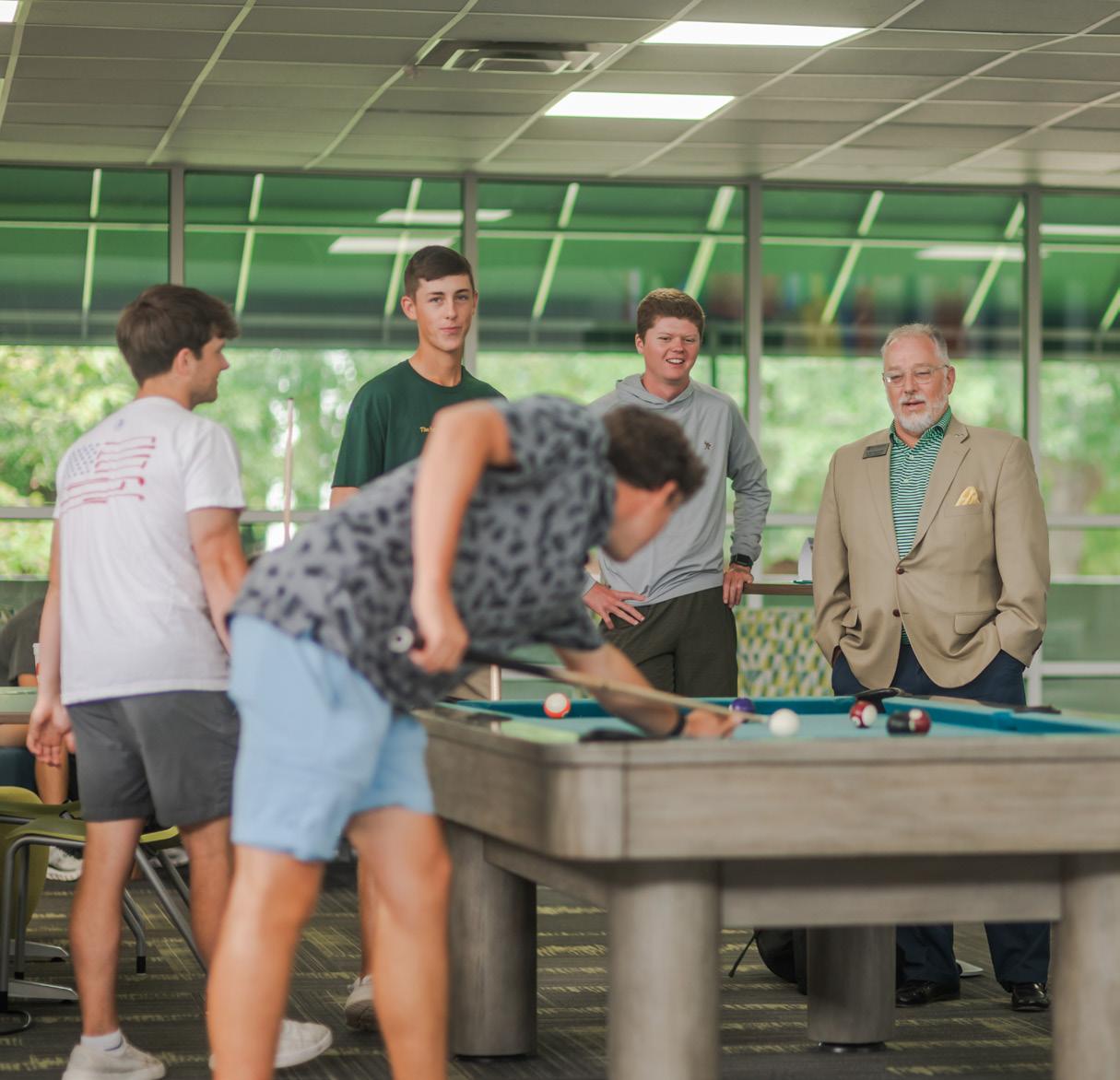
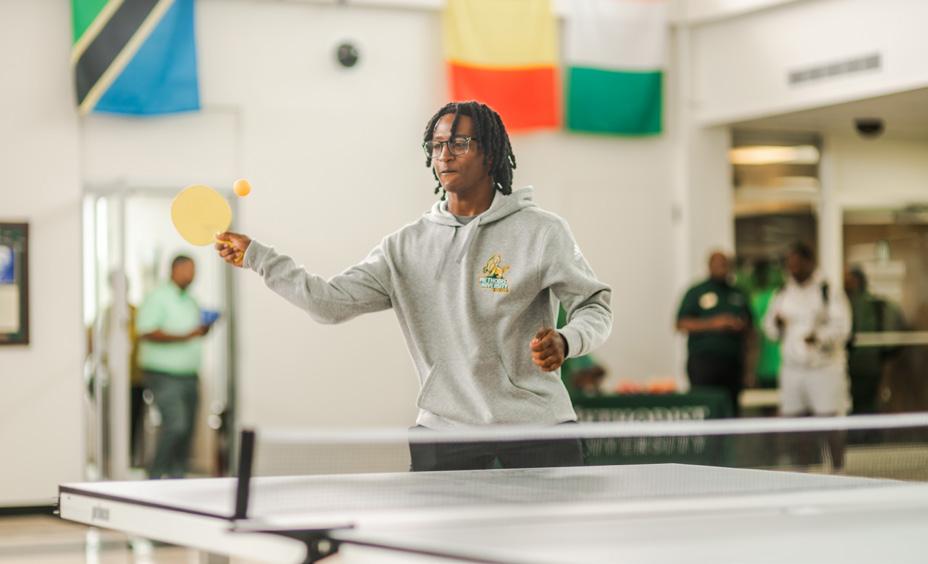
Beyond academics, Methodist University’s vibrant campus life shapes students into leaders and collaborators. With more than 70 student organizations and 20 NCAA Division III athletic programs, there are opportunities to get involved in every corner of campus life. Students join professional societies, plan campus events, and take on leadership roles in student government, clubs, and service projects.
Leadership and community engagement are built into the student experience. Methodist University’s programs encourage students to serve the local community through volunteer work, mentorship, and service-learning initiatives. These experiences help students develop responsibility and compassion.
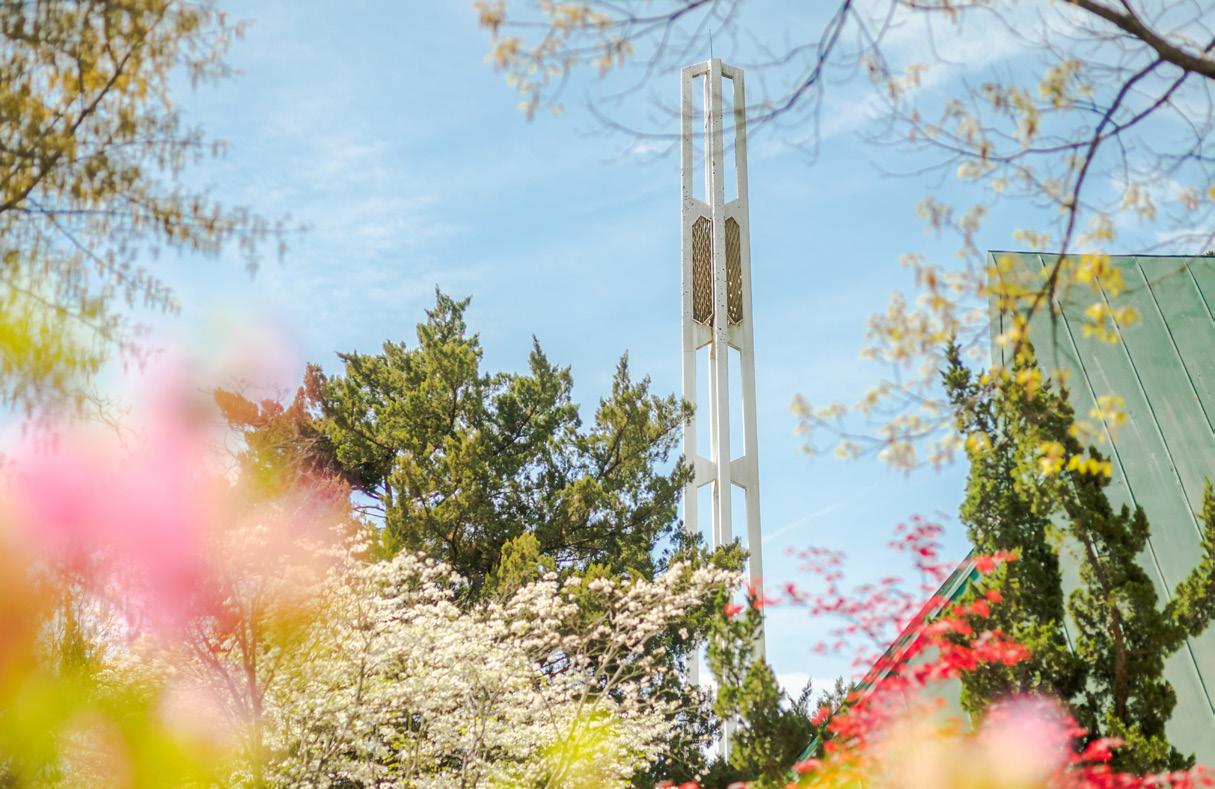
The 600-acre campus itself encourages balance and connection. It features more than 50 buildings, blending academic spaces with recreational and social areas. Students enjoy unique amenities such as an 18-hole golf course, athletic fields, arenas, and walking trails. Spaces like the outdoor amphitheater and Berns Student Center serve as gathering spots for study, events, or relaxation.
Everyday campus life also carries a strong sense of community. Students share meals at the Green & Gold Dining Hall, grab coffee at Starbucks, or meet friends at the on-campus Chick-fil-A. The Matthews Ministry Center provides a welcoming space for reflection and worship, reminding everyone of the university’s commitment to faith, compassion, and service.
The
Spirit of Competition and Character Athletics hold a special place in Methodist University’s identity. A large portion of the student body participates in sports, and their energy resonates throughout campus. Whether cheering from the sidelines or competing on the field, Monarch pride brings the community together.
Methodist University competes in 20 NCAA Division III sports, and its record of success is remarkable. The university’s golf teams have earned 41 national championships; the most by any NCAA program in the nation. Other athletic teams continue to perform at high levels, regularly winning conference titles and earning postseason recognition.
“Our athletic success shows the same commitment to excellence as the rest of the university. We take pride in developing studentathletes who succeed on the field and in their studies,” says Wearden. Athletics at Methodist University are about more than winning; they reinforce important lessons like discipline, teamwork, and perseverance, which support the university’s broader educational mission. Coaches and faculty work closely to ensure that student-athletes maintain strong academic performance, with many earning conference and national academic honors.
Methodist University competes in 20 NCAA Division III sports and has won more than 80 team and individual national championships.
Student-athletes are also active contributors to the community. They volunteer, mentor younger students, and participate in service projects throughout the region. These experiences strengthen the connection between athletics, academics, and civic responsibility. “Our students represent the best of what Methodist University stands for. They work hard, support each other, and lead with integrity. That’s what true success looks like,” adds Wearden.
Expanding Access, Building Belonging
Methodist University focuses on making education affordable and accessible. Each year, the university awards more than $24 million in scholarships and grants to help students reach their educational goals. Nearly 97 percent of
Methodist University students receive some form of financial assistance, ensuring that cost never stands in the way of opportunity. Once financial aid is factored in, the total cost of attending Methodist University is similar to that of many public universities, which often surprises families. Students benefit from the personal attention and close community of a private university, without the burden of excessive tuition.
Methodist University’s financial support includes a wide range of scholarships and grants, from merit-based awards to need-based aid. The university also partners with outside organizations to help students secure additional funding. Dedicated financial aid counselors work closely with families to create tailored plans that make a Methodist University education realistic and sustainable. “Our goal is to make quality education accessible to every student who wants to learn. By investing in scholarships, we’re investing in people and in the future, they’ll shape,” says Wearden.
Affordability is only one part of Methodist University’s commitment to inclusivity. The university’s strong diversity and belonging efforts have earned statewide recognition. Over the past five years, Methodist University has been named the most diverse university in North Carolina multiple times, reflecting both its demographics and its culture of respect and equity.
The Engagement, Community & Belonging (ECB) Office plays a key role in this work. It coordinates programs that promote inclusion, equity, and collaboration across campus, connecting students, faculty, and staff through shared experiences. The office also partners with community organizations to strengthen relationships beyond the university.
ECB’s Faculty Fellowship program supports professors in creating inclusive teaching practices
and service projects that reflect the needs of a diverse student body. Students benefit from initiatives like “Here to Hear,” peer outreach programs, and bias-reporting mechanisms that ensure every voice is acknowledged and respected. “Diversity is part of who we are. We strive to make every student feel they belong here and that their background, story, and identity matter,” Wearden adds.
Learning Without Boundaries
Methodist University has responded to the evolving needs of students with flexibility and foresight. Through MU Online, its growing online platform, the university reaches learners
everywhere, including working adults, military personnel, and families balancing school with other responsibilities.
MU Online offers a wide selection of undergraduate and graduate programs that maintain the same academic quality, faculty support, and personal attention found on campus. “We’ve built online programs that feel connected. Students know their professors, engage with their peers, and receive the same level of care and mentorship as they would face-to-face,” says Wearden.
The university’s location in Fayetteville strengthens this approach. As the home of Fort Bragg, the world’s largest military installation,
MU has been ranked in the top 16 percent of U.S. institutions for social mobility, highlighting its success in helping students achieve lasting success.
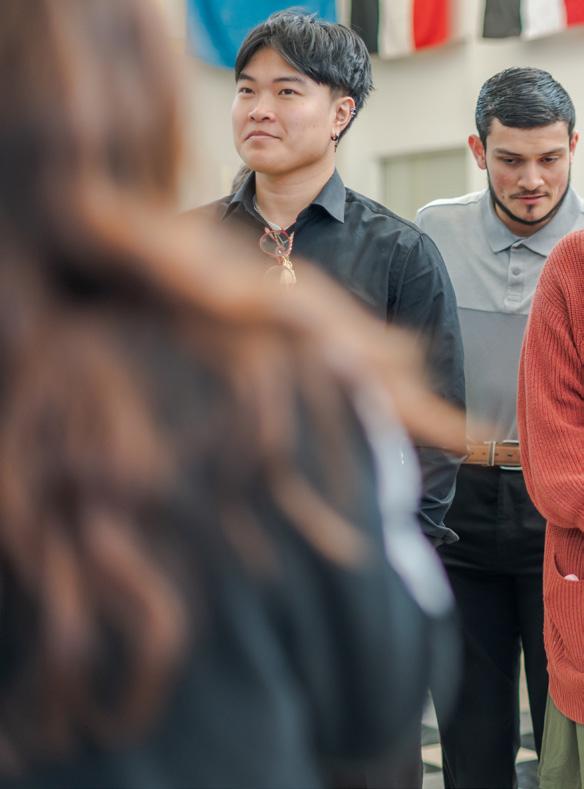
MU has more than 80 areas of study, 70 student organizations and currently has students from more than 50 different countries.
the region is deeply connected to service members and veterans. Methodist University has developed flexible programs, transfer pathways, and dedicated support for military students and their families. Its commitment to serving the military community has made MU a trusted partner for those pursuing education during and after service. “Our relationship with the military community is long-standing and meaningful. We understand their needs and have built systems that make education achievable within their demanding lives,” Wearden shares.
Methodist University’s global presence continues to grow as well. The university partners with institutions and organizations worldwide, welcoming students from more than 50 countries. This diversity brings a global perspective to classrooms, where students learn from each other’s cultures and experiences every day.
A University Rooted in Community
Methodist University’s history is closely tied to the city of Fayetteville. Nearly 70 years ago, local leaders and residents came together with a shared goal: to create a university that would serve the people of the region. Their vision became a reality in 1956, when Methodist University opened its doors as “the community’s university.” That identity continues to guide its work today.
The spirit of partnership that shaped the university’s founding remains strong. Methodist University students, faculty, and staff are deeply involved in the life of Fayetteville. They volunteer with local schools, mentor young people, and collaborate with civic and nonprofit organizations on a regular basis. Through service-learning courses, students apply classroom knowledge to real-world needs, contributing thousands of hours each year to projects that improve lives and strengthen neighborhoods.
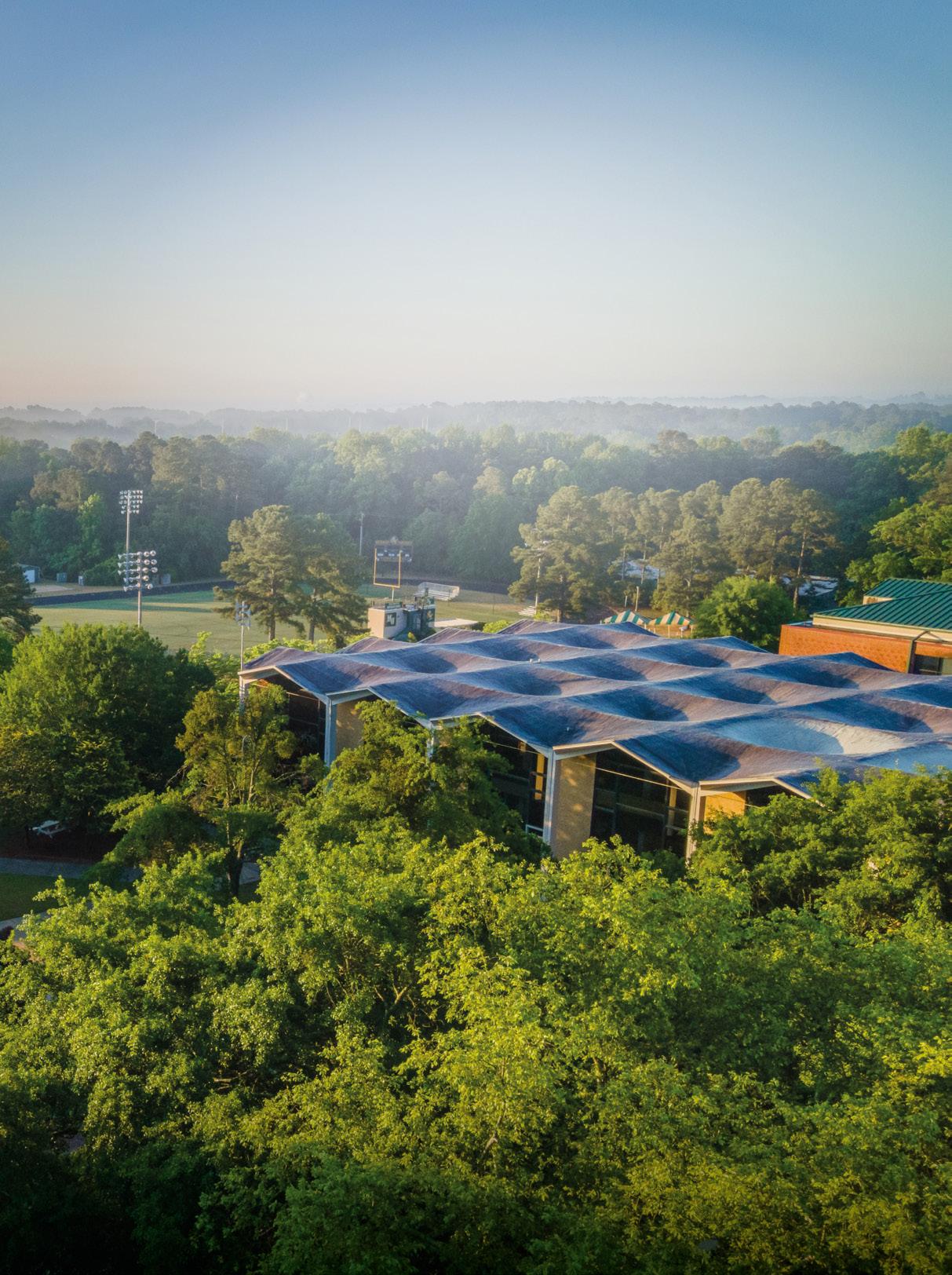
Located between the ocean to the East and the mountains to the West, MU has more than 50 buildings (and an 18-hole golf course!) located on its picturesque 600-plus acres.
“We are closely connected to Fayetteville. The community supported the founding of this university, and we are committed to lasting service in return,” says Wearden. The university’s impact extends well beyond service. Methodist University contributes to the region’s economic and cultural vitality, drawing students, families, and professionals who support local businesses and enrich community life. Through partnerships with local industries, the university helps prepare a skilled workforce that meets the area’s evolving needs.
Campus events in the arts, athletics, and public service regularly bring Fayetteville residents together, turning the university into a shared space for learning, celebration, and collaboration. From its founding to the present day, Methodist University has remained faithful to its original purpose: to serve its community with integrity, leadership, and compassion. It continues to be, in every sense, a university built by the community, for the community. To learn more about Methodist University, visit methodist.edu
ACADEMIC VIEW
Navigating Change in Higher Education Law
Lisa Lang, Vice President and General Counsel, Ohio Northern University
Lisa K. Lang is Vice President and General Counsel at Ohio Northern University, where she also teaches Contracts, linking legal theory to practice. With over 30 years of experience spanning military service, private practice, government, and higher education, she provides strategic counsel and leadership guidance. A U.S. Army veteran, she has held legal roles in the public sector and academia, cultivating a collaborative, pragmatic style. An active speaker on legal ethics and committed mentor, Lisa is dedicated to service, education, and fostering community within the legal profession.
Recently, in an exclusive interview with Higher Education Digest, Lisa shared insights on her career journey, the evolving role of in-house counsel in higher education, advice for aspiring lawyers looking to transition into in-house counsel roles, her future plans, and much more. The following excerpts are taken from the interview.
Hi Lisa. Can you tell us about your early career experiences and how you got started in law?
I’ve always been interested in a career in law, but growing up, I was told I’d make a good teacher so that was the path I choose. I went to college with plans to teach English to high school students with special needs.
However, as I started taking education classes, I realized that, while teaching was something I could do, it wasn’t something I truly wanted to do at that time. So, I dropped my education major and graduated with a Bachelor’s degree in English instead.
Although the law still intrigued me, I wasn’t entirely certain I wanted to become a lawyer.
I love being an in-house lawyer working in higher education because it’s the perfect intersection of my skills, abilities, and interests
I thought working as a paralegal might help me figure it out, but without any legal training or experience finding a paralegal job proved difficult. That’s what led me to join the United States Army, where I became a military paralegal with the Judge Advocate General’s Corp. I loved the legal work I did while serving in the military, but I didn’t enjoy the long deployments and time away from my family.
When I left the military, I transitioned into civilian life as a paralegal in a law firm. Even then, though I was busy raising two very young children and serving as my family’s primary wage earner, I felt like something was still missing. I worked as a litigation paralegal, with a full and demanding life—but the call to be a lawyer kept growing stronger.
Eventually, I decided to pursue law school. I continued working at the firm by day while attending classes at night. It took four years, but I did it. I earned my Juris Doctorate from the University of Louisville, Brandeis School of Law.
After earning my law degree, I moved from being a paralegal at the firm to a litigation attorney. After several years, it became increasingly clear that being a litigator wasn’t the right fit for me. I eventually transitioned into the public sector, specializing in education law. While I enjoyed those roles, I continued to yearn for a greater purpose and challenge.
Then one day, I received an offer I couldn’t turn down: my first position as General Counsel for a small public university. I accepted the job and finally felt like I had found my place.
After a few years, I transitioned to a my current role as Vice President and General Counsel at Ohio Northern University, a slightly larger university with law school that came
with the opportunity to teach at its law school. This is a position where I feel both content and continually challenged.
What do you love the most about your current role?
I love being an in-house lawyer working in higher education because it’s the perfect intersection of my skills, abilities, and interests. As an in-house counsel, I’m part of a team of highly talented professionals who work together to achieve the university’s mission and vision through a strategic plan. My role allows me to help solve complex problems, remove obstacles, by identifying and minimizing risks so we can successfully implement that plan.
The most rewarding part of my job is having a front-row seat to the impact we have on our primary customer base—our students. It’s incredibly fulfilling to watch students grow, evolve, and discover their own paths. Over the years, I’ve had opportunities to serve as a judge for law school competitions, mentor law students, and teach a practical skills class which has all deepened my connection to the educational mission.
This space is not without its challenges. Laws and regulations are constantly changing, guidance evolves quickly, and we are often tasked with doing more with fewer resources. We are always looking for ways to improve processes and leverage technology to enhance our work.
Despite these challenges—or perhaps because of them—I find the work deeply meaningful. What we do is important, and it’s essential for us to keep pace with change so we can continue delivering high-quality education to our students.
How do you see the role of in-house counsel evolving in the next 5-10 years?
The role of the in-house lawyer is constantly in a state of flux. I don’t see that changing any time soon. Our responsibilities are expanding in an environment that is more complex than ever and expectations are increasing. In many ways, the modern in-house lawyer is no longer just a legal advisor or compliance officer— in-house lawyers are now strategic business partners.
In the context of higher education, this evolution is especially visible. Higher education is an industry, and like any industry, it must constantly adapt to external pressures. The pandemic was a turning point. Practically overnight, colleges and universities had to
reinvent how they operated. In-house lawyers in higher education were an integral part of that shift. We had to figure out how to change manual processes—like contract execution— into a secure electronic process. We had to track constantly evolving laws at the local, state, and federal levels. We had to ensure board meetings could be conducted virtually and legally, and we worked side by side with Human Resources and administration to develop and implement remote work policies in real time.
But that moment wasn’t a one-time disruption—it was just the beginning. Since then, the role of in-house counsel has only grown in complexity. In higher education, we’re now grappling with the impact of the
In many ways, the modern in-house lawyer is no longer just a legal advisor or compliance officer— in-house lawyers are now strategic business partners
demographic cliff: fewer students are entering college, and those who are, are questioning its value. They’re choosing different programs of study, demanding more flexible learning models, and challenging our assumptions about how, where, and why education happens. That shift requires not just compliance oversight, but creative, legally sound problem-solving. This also mean that in-house lawyers must deliver their services in ways that are
more efficient, cost-conscious, and valuedriven. Sometimes that means doing more with fewer people. It often means adopting legal technology—tools for contract lifecycle management, data compliance, and document automation—to streamline workflows. It can also mean expanding beyond traditional boundaries. In my case, that’s meant stepping into leadership roles such as Acting Director of Veteran and Military Student Affairs or Acting
As in-house counsel, your job isn’t just to spot legal risks— it’s to help the organization achieve its goals while staying within the boundaries of the law
Chief of Staff. These opportunities not only support the institution more broadly, but they also align with a more integrated view of legal counsel as part of the leadership team.
Beyond education, we’re seeing a broader transformation across industries. In-house lawyers are expected to understand technology, data, and even geopolitics. We’re now advising leadership on matters like supply chain risks and regulatory shifts that affect cross-border operations. We’re also being asked to lead initiatives in ethics and compliance—areas that increasingly define an institution’s values and risks.
Another major shift is around technology. Legal departments must now be data-literate and tech-savvy. Tools powered by AI and automation are helping us reduce manual tasks, allowing us to focus on high-level strategy and risk analysis. Adopting technology isn’t just about efficiency— it’s about insight. We’re now expected to connect legal work to broader organizational data and strategy, helping decision-makers understand not just what’s legal, but what’s smart and sustainable.
Finally, the in-house role is evolving toward flexibility and adaptability. We’re expected to think cross-functionally, to understand the needs of departments like Human Resources, Information Technology, and Finance, and to operate in a way that’s collaborative and forward-looking. We’re not just supporting the business anymore—we’re helping shape its future.
So, while the title may not change, the expectations, tools, and scope of what it means to be an in-house lawyer have changed dramatically— and will continue to do so. The goal remains the same: provide sound legal guidance, but now, we do that as strategists, technologists, risk managers, and often, organizational leaders.
I became deeply committed to challenging the culture of overwork in our profession, because I saw firsthand how unsustainable it was, and how much better we functioned as a team when we gave ourselves permission to step back, breathe, and support one another
What skills or qualities do you think are essential for success as an in-house counsel?
That’s a great question, because I think people sometimes underestimate just how multidimensional the role of in-house counsel really is. From my experience—and from writing about it—I’d say there are several core skills and qualities that are absolutely essential.
First and foremost, you have to be adaptable. The issues that come across your desk as inhouse counsel are incredibly diverse, and no two days are the same. One moment you might be reviewing contracts, the next you’re dealing with a crisis, advising leadership on a new regulatory development, or helping craft policy. Especially in higher education, the landscape
can shift quickly—whether because of legal changes, technology disruptions, or social and political pressures. You have to be comfortable switching gears and learning on the fly.
Second, you need to be business-minded. As in-house counsel, your job isn’t just to spot legal risks—it’s to help the organization achieve its goals while staying within the boundaries of the law. That means understanding how your institution or company operates, how it makes money or fulfills its mission, and what pressures it’s facing. You have to be able to see the bigger picture and provide practical, solutions-focused advice, rather than just saying “no.”
Communication is another essential skill. You have to be able to translate complex legal concepts into language your clients—who may
not have any legal background—can understand and act on. You also need to be approachable so that people feel comfortable coming to you before small problems become big ones. And sometimes you have to deliver tough news in a way that preserves relationships and trust.
Relationship-building is absolutely critical. In-house practice is very relational. You’re not just an outside advisor who comes in for a transaction and leaves—you are part of the team. You have to build credibility and rapport across departments, from the C-suite to staff on the front lines. Those relationships help you get information, influence decision-making, and work collaboratively to solve problems.
I’d also emphasize the importance of curiosity and a commitment to continuous learning. The legal landscape is always changing, but so is the business environment, technology, and the regulatory world. You need to keep learning—not only about the law, but about the business you support, and the industry more broadly. That’s how you stay relevant and provide value.
Finally, resilience and a sense of humor go a long way. In-house practice can be demanding and sometimes isolating. You’re often the person who has to say hard things or flag uncomfortable risks. You’re also working under pressure and tight deadlines. Being able to keep perspective, stay positive, and maintain your well-being is key to having a sustainable and fulfilling career.
At the end of the day, being successful as in-house counsel is about more than just being a good lawyer. It’s about being a trusted advisor, a business partner, and someone who helps your organization move forward—even in the face of uncertainty.
What has been your most career-defining moment that you are proud of?
My most career-defining moment happened during the COVID-19 pandemic. Practically overnight, everything about how we worked and how higher education operated changed. It was an incredibly stressful time, both professionally and personally. I realized very quickly that if we were going to successfully navigate those challenges, we had to change the way we worked—not just in terms of technology or processes, but in how we supported each other as human beings.
As a team, we came together in a way I had never seen before. We tackled the challenges at home and at work together. We figured out how to keep our institutions running, how to support students, faculty, and staff, and how to keep ourselves afloat emotionally and mentally. It wasn’t easy, but it was transformative. That experience reshaped how I view leadership and the practice of law.
I actually wrote about this in my Above the Law article, “Bringing Change By Making Change: Changing The Culture Of Overwork In The Practice Of Law.” I became deeply committed to challenging the culture of overwork in our profession, because I saw firsthand how unsustainable it was, and how much better we functioned as a team when we gave ourselves permission to step back, breathe, and support one another.
How do you prioritize your own wellbeing and self-care given the demands of your work?
The pandemic was also the catalyst for me to prioritize my own well-being in a new way. During that time, I decided to work with a
coach. She helped me completely change my mindset. One of the most important lessons she taught me was that my home life and my work life are not separate—they’re deeply connected. If one is out of balance, the other will inevitably suffer.
I’ve come to believe that work-life balance, at least in the traditional sense, is a myth. I believe in work-life integration. Sometimes work needs more of me, and other times my personal life needs more attention. And that’s okay. What matters is staying attuned to where my energy and focus are needed most and giving myself permission to shift as needed.
I’ve also learned that you simply can’t pour from an empty cup. There are times when you have to step away and refill that cup—whether that means taking a walk, spending time with loved ones, getting enough sleep, or just giving yourself a quiet moment to breathe.
This philosophy and approach have made all the difference for me, both professionally and personally. It’s not perfect, but it’s sustainable. And it has allowed me to keep doing the work I love while taking care of myself and those around me.
Is there a particular person you are grateful for who helped get you to where you are?
I’ve been incredibly fortunate to learn from many people whose guidance, example, and support have profoundly shaped who I am— not just as a lawyer, but as a leader and as a human being. These individuals have helped me challenge my own assumptions, consider different perspectives, and grow both personally and professionally. They’ve provided a safe space
to discuss difficult decisions, seek guidance, and test ideas before bringing them forward.
Some of my greatest insights have come from people who were much younger or earlier in their careers than I was. It’s easy to assume that mentorship only flows one way—from seasoned leaders to those still learning the ropes—but that
Staying open, curious, and humble is what keeps us growing, no matter how much experience we have
simply isn’t true. Working closely with younger colleagues has exposed me to new ways of thinking, emerging technologies, and cultural and generational shifts. I’ve learned as much from them as they’ve learned from me. Staying open, curious, and humble is what keeps us growing, no matter how much experience we have.
Shuo Han is one such person who made a lasting impact on me. Shuo and I worked closely together at Kentucky State University, where I served as the General Counsel and she served as the Deputy General Counsel. Shuo was one of the most extraordinary people I’ve ever worked with—brilliant, empathetic, fiercely dedicated
to justice, and always willing to fight for the underdog. We made an incredible team because our strengths complemented each other.
One piece of wisdom she shared with me has stayed with me ever since: “Your floor is my ceiling. If you want me compensated appropriately, you have to first demand that you are.” Her words were a powerful reminder that leaders must advocate for themselves so they can advocate effectively for others. That lesson continues to inform my leadership style today. I believe it’s my responsibility not only to lead effectively but also to create a path for others to thrive.
Even after we parted professional ways, we remained close until January of this year, when Shuo died unexpectedly at the age of 38. Her loss has been profound for all that knew her, but her influence remains a constant guide for me.
Rob Deck is another person who has profoundly shaped my career. Rob is a trusted friend, confidant, and accomplished leader who has held roles as a general manager and engineering director. He has shown me what it means to maintain integrity and composure even in the most difficult circumstances. Rob has taught me the importance of clear and thoughtful communication, particularly when dealing with executive teams. One of the most valuable lessons he imparted to me is that not everything I think needs to go into a written communication. His guidance has helped me become more precise, strategic, and impactful in my interactions—a skill that has been invaluable in my role as General Counsel.
From Rob, I’ve also gained insights into navigating complex organizational structures, managing teams, and driving meaningful change. His perspective, which comes from
outside the legal profession, has been particularly valuable in helping me think differently and approach challenges from new angles.
I’m deeply grateful for everyone who has poured their knowledge and insight into me over the years. Their influence is woven into every aspect of who I am as a lawyer and how I lead. They remind me that leadership is ultimately about relationships—about lifting others up, staying open to learning, and never forgetting that we rise by helping others rise as well.
What is your favorite quote?
“You can’t connect the dots looking forward; you can only connect them looking backwards. So you have to trust that the dots will somehow connect in your future.” Steve Jobs
What are your long-term career aspirations, and how do you see yourself evolving as a leader over the next five years?
I see myself in the in-house counsel role for the long term — it’s truly the work I want to be doing, and I can’t imagine doing anything else. I love being close to the business, helping solve practical problems, and contributing to the bigger picture.
One of my biggest aspirations is to help train the next generation of lawyers. I’m committed to paying it forward through mentoring and, hopefully, by teaching as well. Sharing what I’ve learned and helping others navigate their careers is incredibly important to me.
As for evolving as a leader, I firmly believe the work to be a better leader is never finished. Over the next five years, I want to continue developing my ability to support and empower those around me, to communicate clearly and authentically, and to pivot when circumstances
Over the next five years, I want to continue developing my ability to support and empower those around me, to communicate clearly and authentically, and to pivot when circumstances change
change. I’m committed to staying curious, open-minded, and willing to challenge my own assumptions — that’s how I’ll keep growing, both professionally and personally.
What advice would you give to aspiring lawyers looking to transition into inhouse counsel roles?
First and foremost, don’t romanticize the move in-house. It’s not an automatic ticket to shorter hours and zero stress. In-house life comes with its own pressures — you’ll have a single ‘client,’ yes, but that client will be everyone in the business, often all at once, and sometimes with competing priorities.
My biggest piece of advice is this: develop a business mindset. Learn to speak the language of business folks. If you walk into an in-house role thinking you’re only there to say ‘no’ to risk, you’re going to have a short shelf life. The best in-house lawyers are problem solvers, not just problem spotters.
Second, get practical. Build experience with contracts, compliance, employment issues, intellectual property — the kinds of matters that keep companies running. Even if you’re coming from litigation or a niche practice, find ways to pick up transactional or advisory experience.
Third, work on your emotional intelligence. In-house lawyers need strong communication skills and the ability to navigate sensitive conversations. You’ll be counseling colleagues at all levels, and you’ll have to deliver hard messages in a way that preserves relationships and keeps business moving forward.
Finally, network, network, network. So many in-house jobs are filled through connections, not job postings. Talk to lawyers who’ve made the move. Find out what they love — and what they wish they’d known.
In-house can be incredibly rewarding. But go in with your eyes open — and a willingness to be both lawyer and business partner.
MUST-WATCH
UNIVERSITIES AND COLLEGES IN PHILIPPINES
LOURDES COLLEGE
Transforming Communities Through
Faith - driven Education and Global Leadership
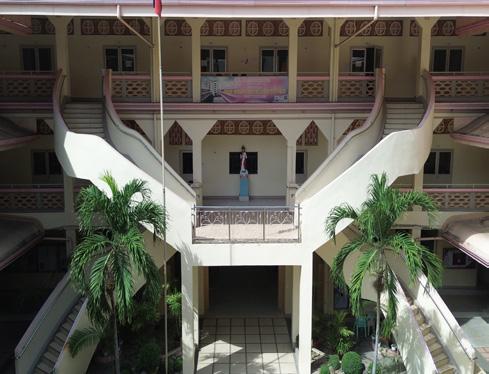
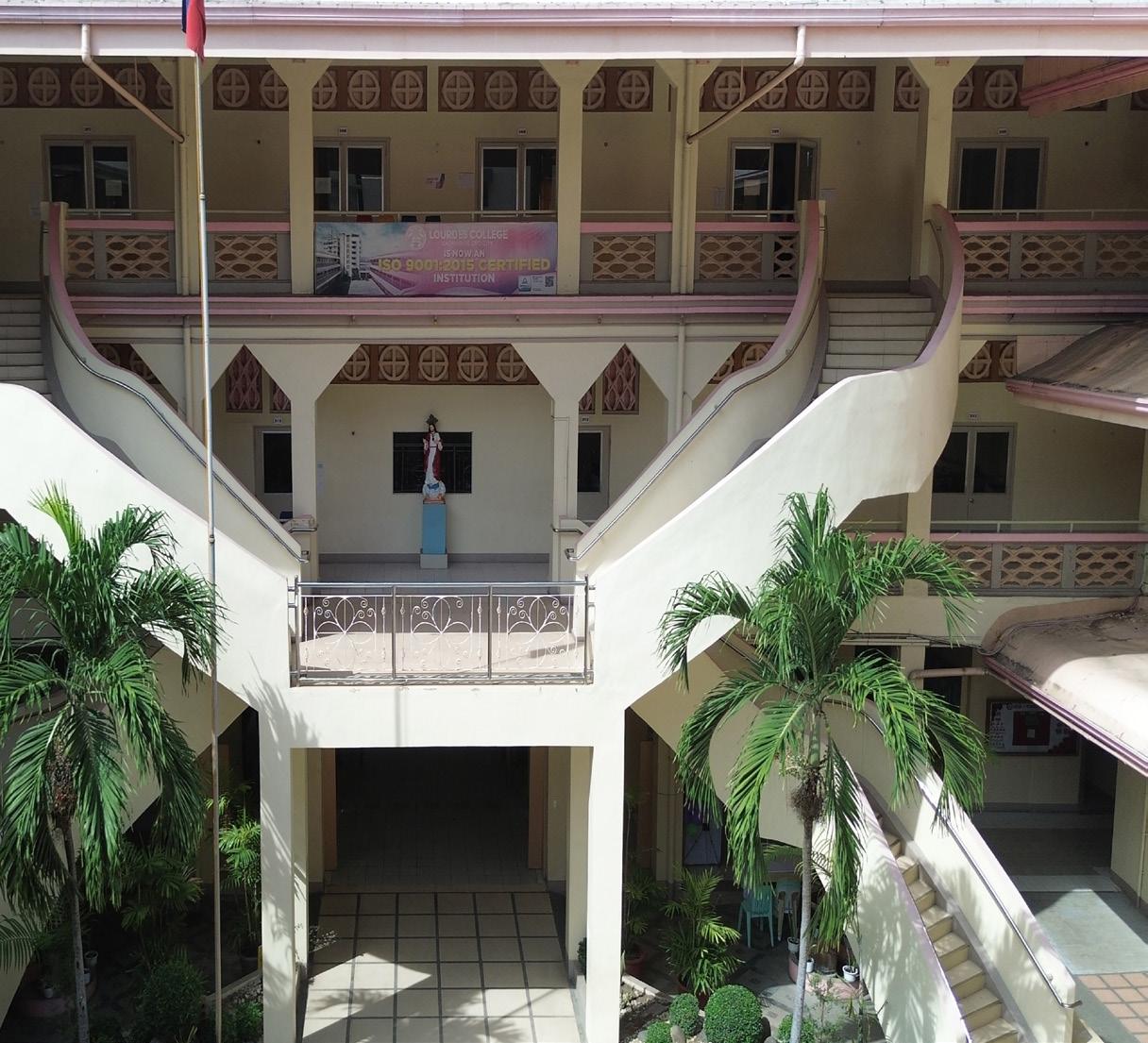
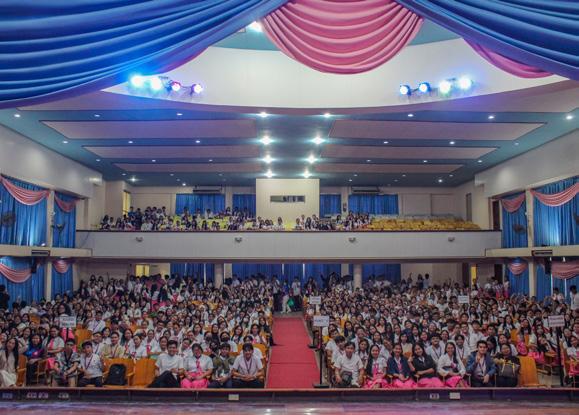
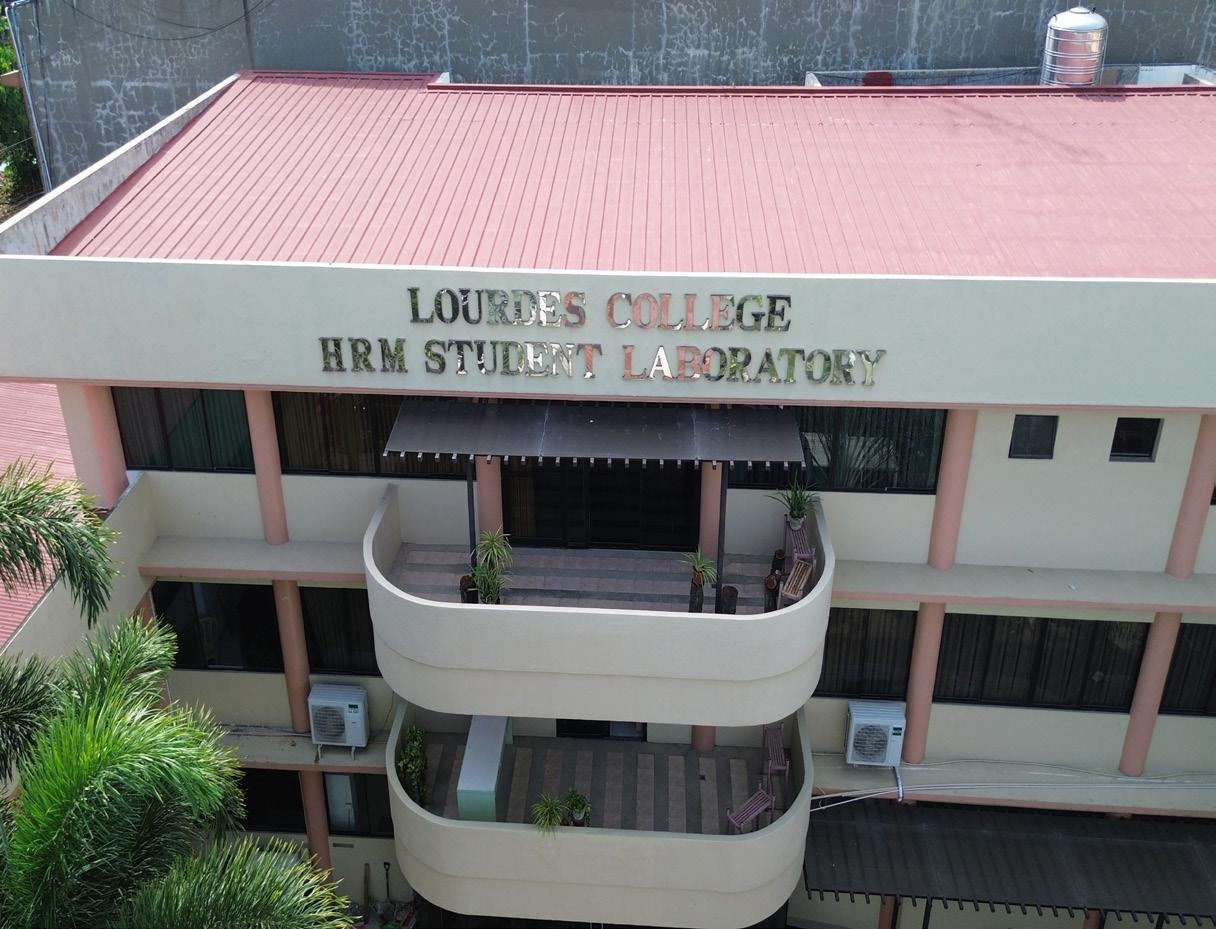
Lourdes College in Cagayan de Oro City, Philippines carries a legacy that stretches far back to 1928. Founded under the vision of Bishop James Thomas Gibbons Hayes, SJ, and entrusted to the Religious of the Virgin Mary (RVM) Sisters, the institution has since then remained faithful to its mission of faith, excellence, and service. Today, Lourdes College continues to live by this commitment while preparing students to thrive in a global and interconnected world.
The school’s vision is to be “a Ignacian Marian community who witness to the loving compassion of Jesus, opening new horizons with hope of nurturing learners to be humble and globally competent
At Lourdes College, education goes beyond academics, as it places equal importance on intellectual, spiritual, and moral growth
leaders grounded in solidarity and committed to social renewal for the common good.” Dr. Judith C. Chavez, Director of the Graduate School explains, “We offer Transformative Ignacian Marian Education through the use of RVM Pedagogy in our instructional processes so we can provide opportunities for the integral development of both our personnel and students.”
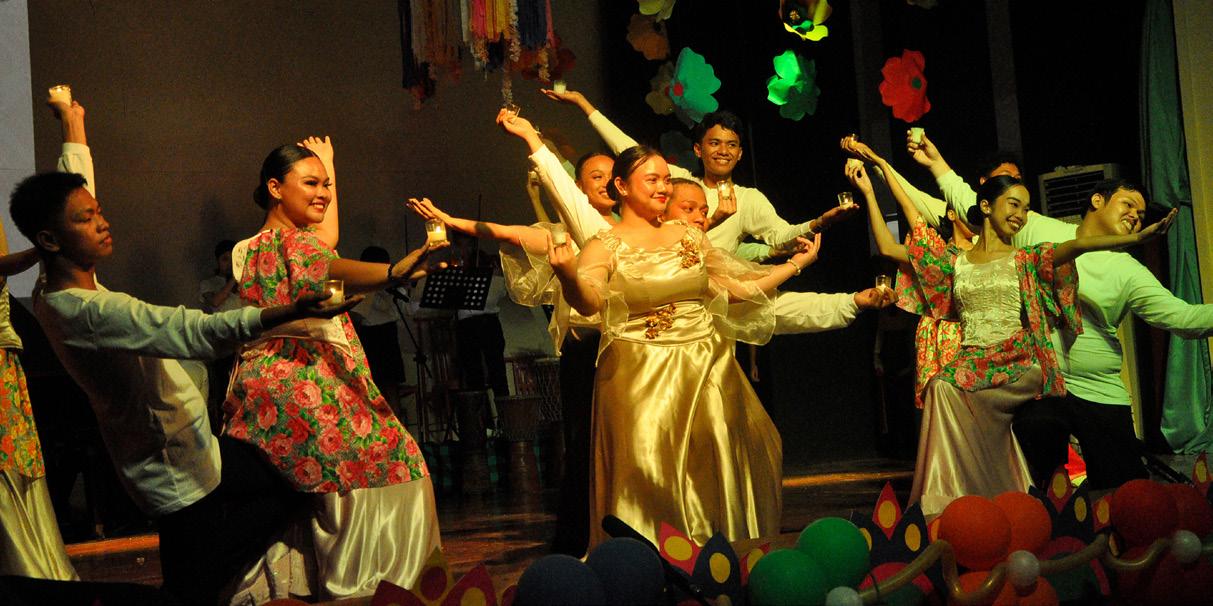
The institution’s approach emphasizes both academic excellence and personal formation which give equal importance to intellectual, spiritual, and social growth. The campus environment fosters a strong sense of community in the form of meaningful events which include spiritual, professional, and social activities that strengthen relationships and promote holistic development.
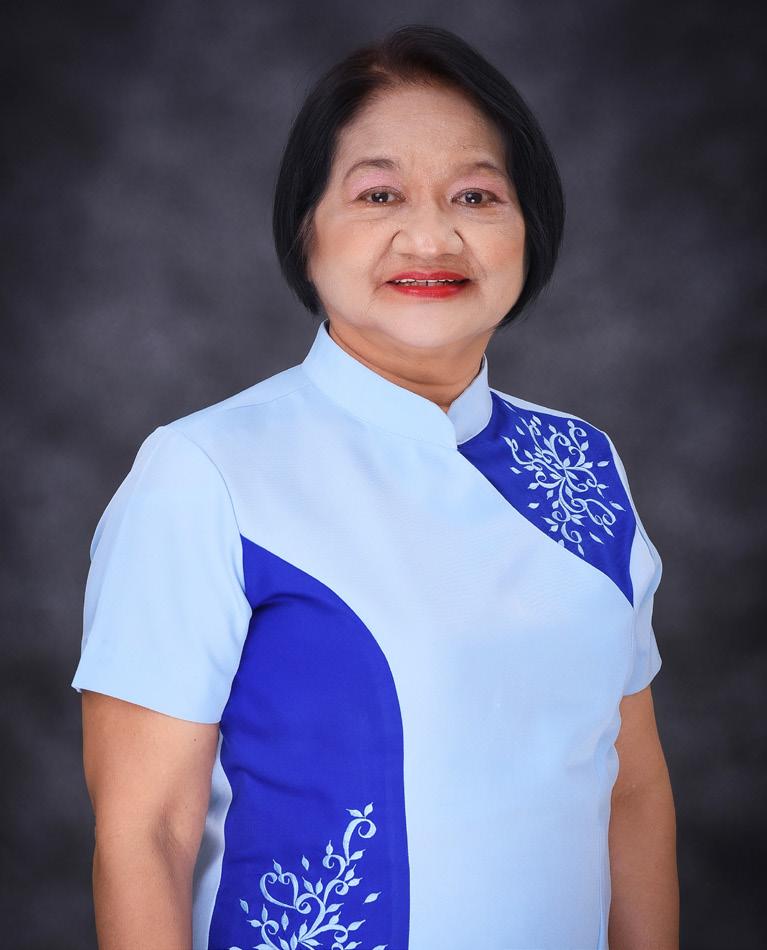
Dr. Judith C. Chavez, Director of the Graduate School
Lourdes College sets challenging yet attainable standards that prepare students to be critical, creative, and responsible thinkers
Quality serves as a key characteristic of the college’s educational system evident in its programs that meet international and national standards, with a certification from the International Organization for Standardization (ISO) and accreditation from the Philippine Accrediting Association for Schools, Colleges, and Universities (PAASCU). The institution’s local partnerships, especially those tied to student internships, also ensure that learners acquire practical experience and gain opportunities to engage with the community.
As a priority, community engagement remains central to the college’s identity. Faculty, staff, and students actively participate in outreach and development programs aimed at improving lives in the wider community. Dr. Chavez even points out that “The personnel and students likewise actively engage in community involvement programs that uplift the quality of life of the people we serve.”
At the heart of Lourdes College is its motto, “Initium Sapientiae Timor Domini,” which means that the fear of the Lord is the beginning
Lourdes College is recognized as a PAASCU-accredited institution, a distinction that reflects its ongoing pursuit of quality education
of wisdom. This motto guides academic and spiritual life across the campus. It shapes the curriculum, particularly in Christian living and religious studies, to encourage students to embody values of humility, faith, and responsibility. Campus ministry activities, including liturgical celebrations, retreats, and outreach, guide students to experience wisdom not merely as knowledge, but as a way of life deeply grounded in faith and dedicated to service.
The RVM Schools’ distinctive 4-pronged approach is fully integrated at Lourdes College. It combines Ignacian Core and Related Values with Gospel-centered learning which also links academic lessons to social realities, fosters interdisciplinary understanding, and reflects back on biblical texts. This framework ensures that learners are academically capable, socially aware, spiritually grounded, and reflective thinkers guided by faith.
Nurturing the Whole Person
Education goes beyond academics in Lourdes College. It places equal importance on intellectual, spiritual, and moral growth. Holistic
development is seen as the foundation of forming leaders who can think critically, act responsibly, and live with compassion.
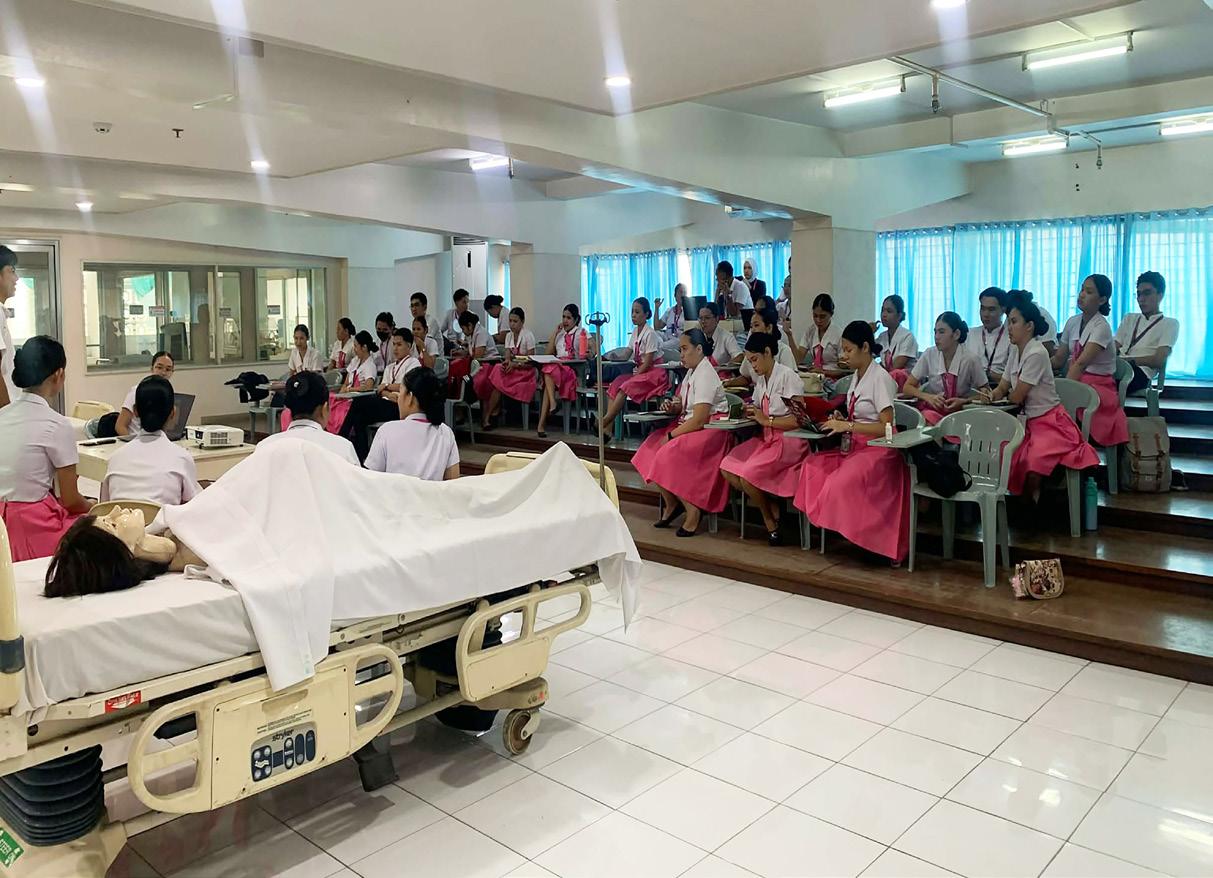
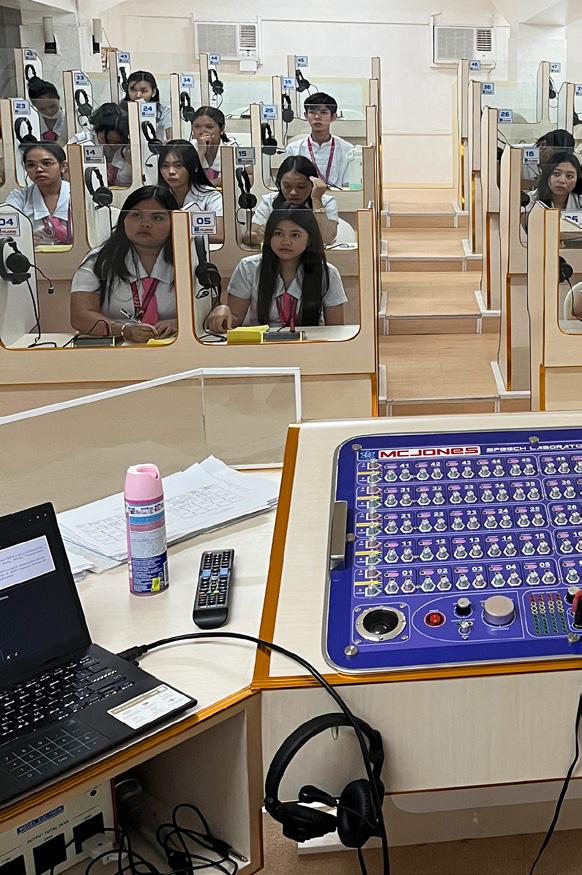
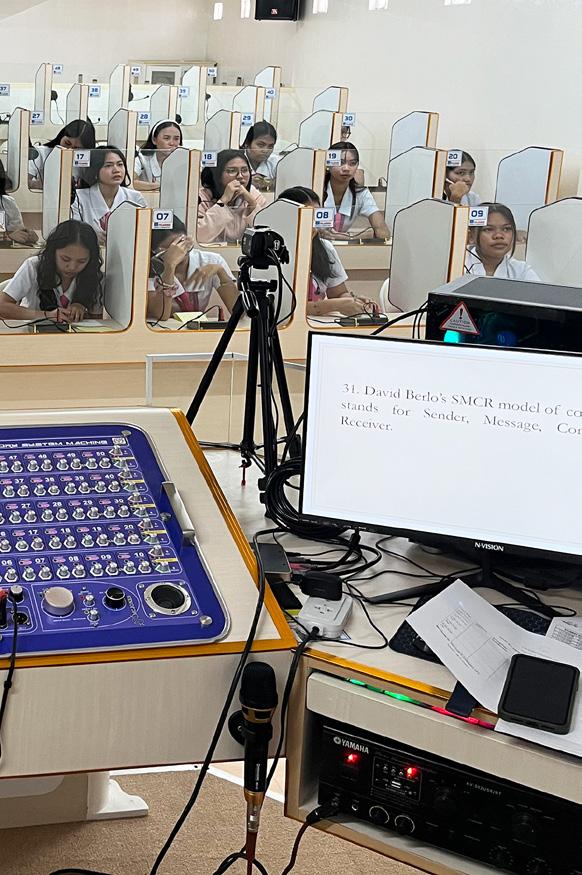
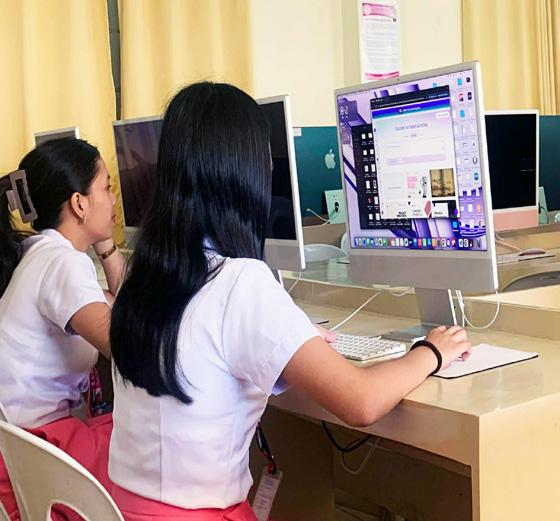
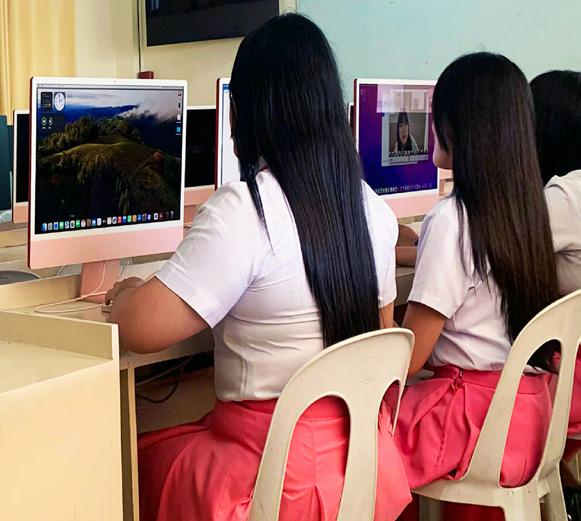
With the goal of bridging theory and practice, students are encouraged to explore knowledge deeply and apply it to real-life situations. Meanwhile, learner-centered teaching, critical thinking activities, and meaningful assessments guide this process. Teachers are given comprehensive training to equip them with the necessary skills in delivering quality learning and inspiring growth among their students. The curriculum, aligned with the four-pronged integration, emphasizes curiosity, creativity, and a genuine love for learning across subject areas. Support is also provided through tutorial sessions, student-faculty consultations, and parentteacher conferences to ensure that no learner is left behind.
Spiritual formation remains a vital mission of Lourdes College, deeply woven into its educational philosophy. The integration of Christian Life Education values across disciplines, together with active participation in Campus Ministry programs, nurtures students in their journey of faith. Recollections, liturgical celebrations, and community outreach activities provide meaningful opportunities for students to live out their beliefs in daily life.
Moral development is likewise cultivated through Christian values formation, characterbuilding initiatives, and open classroom discussions on ethical issues. These experiences guide students to become responsible, respectful, and compassionate individuals in thought, word, and action. Through these faithcentered and values-based programs, Lourdes College continues to form students who are not
Over the years, Lourdes College has produced worldclass professionals through strong academic programs and accredited departments
only intellectually capable but also spiritually grounded, morally upright, and generous in service—living witnesses of the institution’s Ignacian-Marian identity.
The values of faith, excellence, and service are woven into every student experience. Lourdesians are encouraged to live their faith openly through words and actions, even in difficult moments. They take part in religious practices such as the praying of the rosary and
the Eucharistic celebrations on First Fridays and Marian feast days. Classes would also begin and end with prayer, reinforcing the college’s faith-centered identity. In the same vein, respect for other religious beliefs is strongly encouraged, to ensure that inclusivity is part of the formation process.
The academic formation at Lourdes College is equally rigorous, upholding high yet attainable standards that develop students
into critical, creative, and responsible thinkers. Through group work, authentic projects, and research opportunities, learners engage in meaningful collaboration and problem-solving that reflect real-world contexts. In essence, the college emphasizes a hands-on and realitybased approach to education, where students are encouraged to apply theoretical knowledge to practical situations—bridging learning and life through purposeful experience.
This balance of intellectual training, spiritual formation, and moral integrity reflects the college’s belief that education should prepare students not only for their careers but also for life. In doing so, Lourdes College shapes learners who are ready to serve their communities with faith, competence, and compassion.
A Commitment to Quality and Excellence
Lourdes College is recognized as a PAASCUaccredited institution, a distinction that reflects its ongoing pursuit of quality education. Accreditation serves as both an internal and external check, reminding the school community to uphold high standards in every aspect of its operations. The selfsurvey process allows administrators, faculty, and staff to identify strengths and areas for improvement, while external assessors provide valuable feedback to further enhance the school’s programs and services.
The internal assessment conducted through the self-survey deepens the school’s awareness of its best practices that warrant reinforcement, as well as aspects that call for enhancement. In turn, the external assessments serve as a reflective mirror, providing valuable insights into the institution’s core strengths and areas for further improvement.
More importantly, the value of accreditation extends to students as well. Since the Commission on Higher Education (CHED) recognizes the PAASCU accreditation, Lourdes College is exempted from applying for Special Orders in specific accredited courses. This recognition makes a difference for graduates
when they present their transcripts to potential employers, as it carries a mark of quality that sets them apart.
As a defining principle, continuous improvement stands as a hallmark of the institution’s commitment to excellence. Academic programs are systematically reviewed and realigned with global educational trends to ensure relevance, quality, and innovation. The active involvement of both internal and external stakeholders strengthens the college’s capacity to respond effectively to the evolving needs of learners, industries, and communities. Ultimately, this enduring pursuit of quality translates into tangible benefits for graduates, whose transcripts reflect a mark of excellence that enhances their employability and professional credibility.
By combining rigorous academics with faith, service, and integrity, Lourdes College ensures that graduates are not only competent professionals but also responsible citizens
Beyond PAASCU, Lourdes College has taken another step toward strengthening its quality assurance through ISO Certification, specifically ISO 21001:2018 for Educational Organization Management Systems (EOMS). This certification highlights the college’s commitment to efficient operations and learnercentered education. Preparations are underway for the Stage 2 audit, with a focus on inclusivity, stakeholder engagement, and flexible delivery modes that support diverse learners.
Faculty members are being equipped to use differentiated instruction and inclusive strategies, which are now embedded in syllabi and unit plans. Furthermore, special attention is given to ensuring that students with special needs have access to meaningful learning opportunities. Accordingly, the institute’s curriculum and research also align with the Sustainable Development Goals (SDGs), particularly SDG 3 (Good Health and Well-being), SDG 4 (Quality Education), SDG 5 (Gender Equality), and SDG 13 (Climate Action). These efforts only demonstrate that Lourdes College is not merely preparing students for academic success but also encouraging them to be responsible contributors to a sustainable and equitable future.
Building a Tradition of Excellence
Lourdes College has earned its reputation as a center of academic excellence in higher education. Over the years, it has produced worldclass professionals through strong academic programs and accredited departments. Flagship programs include Teacher Education, Nursing, Nutrition and Dietetics, Library and Information Science, Social Work, and Psychology. These programs have consistently achieved outstanding results in national licensure examinations, proving
Guided by its Catholic identity and the RVM charism of compassionate service, Lourdes College has built strong outreach and engagement programs that make a direct impact on the lives of people in Cagayan de Oro and beyond
the institution’s high standards of preparation and instruction.
One of the college’s most notable achievements is its consistent 100% passing rate in the Licensure Examination for Teachers—a testament to the academic rigor and commitment of both faculty and students. Equally commendable is the outstanding performance of graduates from the Nursing, Social Work, Nutrition and Dietetics, and Library and Information Science programs, which has positioned Lourdes College among the top-performing institutions nationwide. These accomplishments embody the institution’s unwavering pursuit of excellence and its dedication to producing competent and valuesdriven professionals.
The Bachelor of Science in Social Work program stands out for being ranked Top 6 out of 168 schools in the Philippines. This recognition affirms Lourdes College’s leadership in social work education. Similarly, graduates of Nursing and Nutrition and Dietetics are known for excelling not only in licensure exams but also
in their professional practice, contributing significantly to the health sector locally and abroad. In addition, the Library and Information Science and Psychology programs continue to shape skilled professionals who are making important contributions to education, mental health, and information management.
Significantly, the institution’s impact extends beyond licensure results. EduRank has recognized Lourdes College as one of the Top 5 Best Higher Education Institutions in Cagayan de Oro. This ranking highlights its commitment to research, non-academic achievements, and alumni influence. Every academic program of the college is accredited by the Philippine Accrediting Association of Schools, Colleges, and Universities (PAASCU), assessed by the Commission on Higher Education Institutional Sustainability Assessment (CHED-ISA), and aligned with International Organization for Standardization (ISO) standards. Recently, Lourdes College also completed the audit for Educational Organization Management
Systems ISO 21001:2018 by TÜV Rheinland, a milestone that strengthens its commitment to continuous improvement.
This pursuit of excellence is deeply anchored in the institution’s core values, integrating rigorous academics with faith, service, and integrity. Lourdes College remains steadfast in forming graduates who are not only competent in their chosen professions but also conscientious and compassionate citizens. Guided by the values of Faith, Excellence, and Service, the college ensures that its learners develop both intellectual strength and moral character. Through this holistic formation, Lourdes College continues to produce graduates who are
globally competitive, locally responsive, and firmly grounded in Marian-Ignacian values.
Serving Communities with Compassion
Lourdes College has always been committed to social justice and its preferential love for the poor. Guided by its Catholic identity and the RVM charism of compassionate service, the institution has built strong outreach and engagement programs that make a direct impact on the lives of people in Cagayan de Oro and beyond.
Another central focus is the capacity-building for youth. The college has organized skills training for out-of-school youth in Barangay Consolacion
and has held leadership and mental health first aid seminars for peer leaders. These efforts focus on helping young people build resilience, strengthen their emotional well-being, and prepare for future opportunities.
Through education, health, livelihood, and compassiondriven efforts, Lourdes College continues to shape a more just and caring society
The college also extends much-needed health and nutrition services through community nursing programs, prenatal health education, and nutrition counseling. Lourdes College reaches families who often have limited access to healthcare. One distinct program is the Basic Microsoft Office Training for Barangay Health Workers and Nutrition Scholars which seeks to improve digital literacy and equip local workers to deliver health services more efficiently.
Education remains to be a central part of its outreach as Lourdes College provides tutorial classes for struggling readers and runs book donation drives for small private and public schools. A mobile
library brings books directly to children in public schools to ensure that learning opportunities are not confined to classrooms.
It is also a part of the school’s efforts to provide practical acts of compassion that are also deeply valued, evident in how the school organizes gift-giving programs that provide rice, groceries, learning materials, and hygiene kits to families in need. Through “Share-aMeal” activities, students and faculty prepare and distribute food to street dwellers, trisikad drivers, and motorela drivers.
On the other hand, support for mothers and families is another priority. Training programs teach mothers how to prepare nutritious, low-cost meals and start small livelihood projects, such as making snack foods or “no-cook” meals. These skills enable them to support their families and strengthen food security in their communities.
In times of crisis, Lourdes College activates its emergency relief program. Whether responding to calamities or assisting families facing hardship, the school mobilizes resources quickly to provide help where it is most needed.
These sustained initiatives embody the college’s mission to uphold human dignity and empower communities. Lourdes College demonstrates its steadfast commitment to social justice and its “preferential love for the poor” through diverse community outreach and social engagement programs. Through education, health, livelihood, and compassion-driven initiatives, the institution continues to nurture transformative change and contribute to building a more just, humane, and caring society.
Alumni Who Carry the Mission Forward
Lourdes College takes pride in its alumni, who continue to live out the institution’s core
values of service, compassion, and social responsibility. Their accomplishments are impressive, but what sets them apart is their lasting commitment to their alma mater and to the well-being of their communities.
Among its graduates are leaders recognized at the highest levels. Col. Filipinas Francisco-Papa, from the High School Class of 1963, received a 2023 honor from the Professional Regulation Commission for her contributions; Annabel P. Acedera, who has built a distinguished career in librarianship, earning the 1999 PAARL Academic and Research Librarian Award, a Lifetime Achievement Award in 2020, and the 2024 PRC Outstanding Professional of the Year Award; Dr. Dures Fe Escarro-Tagayuna who was honored with the Outstanding Mindanaoan Award and the Mindanao Governance and Leadership Excellence Award for her leadership and service in the region. Together, these alumni reflect the excellence and integrity that Lourdes College seeks to instill in every graduate.
The alumni community also shows its bond through acts of generosity wherein batches from different generations consistently support the college with outreach activities, financial aid, and “Share-a-Meal” projects for the underprivileged.
One of the most meaningful initiatives they partook is the Alumni Scholarship Program for the Basic Education Department. It is funded by contributions from High School Jubilarians who want to give future students the same opportunities they once received. A notable example is the LCHS Batch 1982 Four-Year Scholarship Program, which provides full support to deserving students, covering tuition, fees, uniforms, books, and supplies. Other groups, such as LCHS Batches 1975 and 1987,
Lourdes College has established key structures, including the Research Ethics Committee, Internationalization Office, and an Intellectual Property unit, ensuring that research and innovation are guided by proper standards
have extended similar help by easing the school expenses of graduating students.
These acts of service demonstrate what it means to be part of the Lourdesian family. The alumni not only achieve success in their own professions but also create opportunities for others. Their contributions ensure that the mission of Lourdes College continues to grow stronger with each generation.
Building a Future-Ready Lourdes College
Faced with unprecedented challenges, Lourdes College was compelled to think differently and respond with creativity during the challenging times of the pandemic. The institution acted quickly to put in place sustainable plans that supported teaching, learning, and essential services. It subscribed to Google Workspace for Education and trained teachers in using different kinds of digital platforms. Bandwidth was upgraded, and new equipment was purchased to make online and hybrid learning possible. Faculty and staff were supported not only with materials but also through moral and spiritual care. This strengthened the sense of compassion in the school community, especially for those most affected by difficult circumstances.
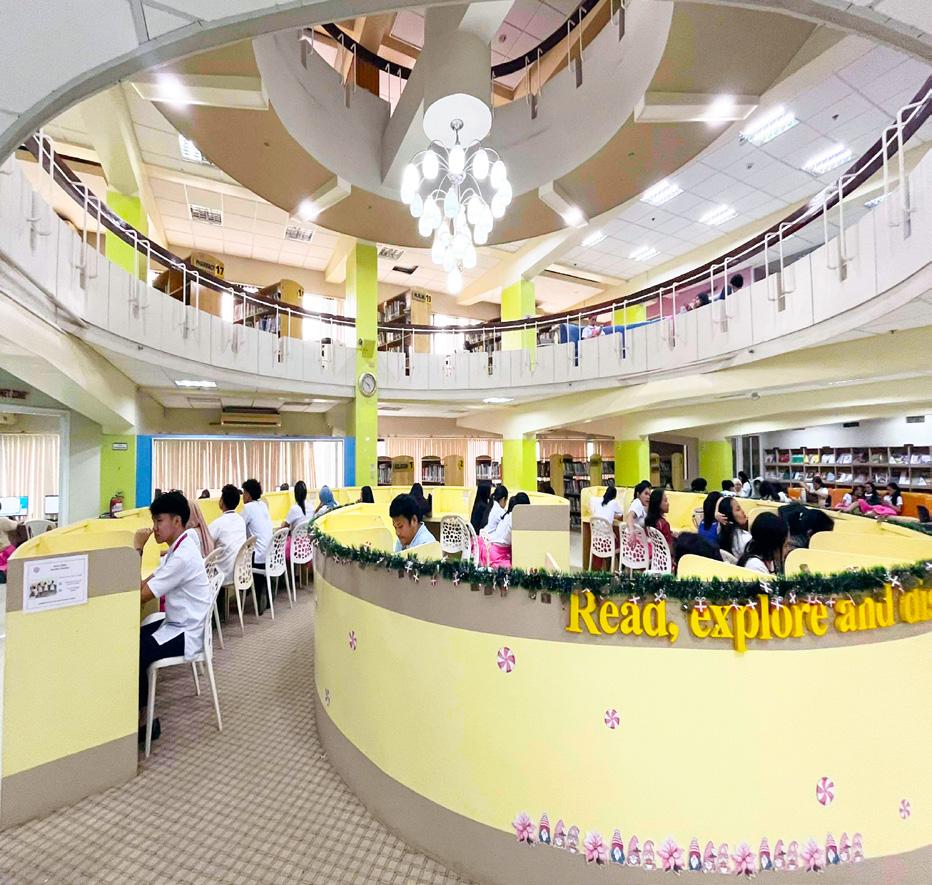
The college also kept pace with rapid changes in research, technology, and instruction by way of expanding access to information, through its subscriptions to databases such as ProQuest, Gale, and Emerald, on top of existing library resources. It also invested in Turnitin for plagiarism checks, SPSS for quantitative research, and HyperResearch for qualitative studies. Alongside these tools, Lourdes College established key structures, including the Research Ethics Committee, Internationalization Office, and an Intellectual Property unit, ensuring that research and innovation are guided by proper standards. Looking ahead, the institution has set its sights on the next decade with an even clearer vision. Lourdes College aims to open new horizons by producing highly competent graduates, leading-edge research, and community extension programs that make a lasting impact. Plans include forging more international partnerships, offering forwardlooking programs in engineering, artificial intelligence, and robotics, and continuing to raise the quality and relevance of its education. Through it all, the college stands unwavering and committed in its mission to deliver
Transformative Ignacian Marian Education one that’s deeply rooted in faith, guided by excellence, and dedicated to humble service.
INDUSTRY
PERSPECTIVE
The Next Chapter in Higher Education: Demand-Led Learning
RobinYoung,Director, Business Development & Corporate Training, Durham College
Like many others working in higher education, I began my journey inspired by the idea that learning transforms lives. My path was clear, and I enrolled in an EdD program ready to shape the future of education. That was the vision. Yet sometimes on the way to chasing a dream, you get lost and find a better one, and that was the case for me. Throughout my EdD journey, I found myself being pulled in another direction. While theory has its place, I longed for
something more practical, more immediate, and more connected to the needs of learners and the world around them.
I made the decision to leave the program, something that felt very risky at the time, but ultimately was the right move for me. And so, I left the doctorate behind and shifted my focus to an MBA. Looking back, ending my EdD early provided me with a different perspective on higher education. I didn’t give up on education, I was more motivated to reimagine it.
I believe that work reflects a broader truth: the future of education lies in flexibility, choice, relevance, and meaningful industry partnerships
Robin Young is the Director of Corporate Training Services at Durham College in Ontario, Canada, where he leads one of the country’s most recognized teams in workforce development and employer-driven education. With experience spanning learning consultancy, corporate L&D, government, and higher education, Robin brings a learner-centered lens to every stage of the educational journey. He holds an MBA from the University of the West of Scotland, a Postgraduate Certificate in Advanced EducationfromtheUniversityofGlasgow and a PGDE from the University of Strathclyde. As someone committed to lifelong learning, Robin has spoken at TEDx, led international education initiatives, and continually explores innovation in learning.
We are now in a society where we get what we need when we need it, and learners are now asking this of education
Today, as the Director of Corporate Training Services (CTS) at Durham College in Ontario, Canada, I work at the apex of higher education, innovation, and workforce development. I lead a team that supports skills development across sectors such as automotive, healthcare, and energy. Our work focuses on designing practical, responsive training programs in partnership with employers. Over time, I’ve come to see how skills training can support a learner’s entire career journey from hire to retire.
I believe that work reflects a broader truth: the future of education lies in flexibility, choice, relevance, and meaningful industry partnerships.
The Shift is in Motion
Across the globe, post-secondary institutions are feeling the pull of transformation. Not away from degrees necessarily, but toward a more dynamic environment: one where traditional credentials coexist with microcredentials, short-upskilling training, and employer-driven programming.
Demand-led learning means working with organizations and community partners to deliver targeted training that supports everything from leadership development to technical trades and emergency response. One recent example from CTS is our elevator rescue program, designed in collaboration with academia (our School of Skilled Trades) and industry (a local Fire Department). In just a few days, firefighters developed the technical and situational knowledge needed for a very specific, life-saving scenario. The value was clear. The skills were measurable, and the learning was immediately applicable.
And that’s the heart of demand-led education. It leverages traditional, proven academic programming and meets learners and the market exactly where they are, and where they’re going.
Demand-Led Learning is a Balanced Model for the Future
In a research paper I wrote during my graduate studies, I explored the philosophical tension between liberal and neoliberal approaches to education. Liberal traditions prioritize personal growth and exploration. Neoliberal frameworks respond to economic forces and market needs. But the most powerful insight from my research was this: we don’t have to choose.
In fact, the healthiest educational institutions balance both. They champion critical thinking while also helping people build skills that enable them to contribute meaningfully to the economy. Let me be clear: demand-led learning is not about abandoning academic freedom. It’s about adding value, expanding access, and building responsiveness into our institutions. We are now in a society where we get what we need when we need it, and learners are now asking this of education. Chances are, the last time you needed to learn something quickly, you turned to a short online video. You probably skipped ahead to the exact part you needed, and our learners are doing the same. They want learning that fits their schedules, that’s recognized by employers, and that delivers a clear return on investment. These shifts are not threats to education; they are opportunities to blend theory and practice into a well-rounded learning experience.
Higher Ed and the Corporate Connection
Too often, the conversation around workforce training and higher education becomes polarized. Yet in my experience, the most successful models come from collaboration, not competition.
Collaborating with industry leaders to co-create relevant programming without compromising academic integrity, is one of the most promising paths forward. This isn’t about turning education into a transaction; it’s about designing experiences that are meaningful and career-relevant.
When used well, demand-led learning demonstrates how post-secondary institutions can be agile partners in lifelong learning. It puts us in front of future employers and strengthens relationships between the academic institution and the community at large.
The Rise of the Learning Consumer
In my research, I also explored how consumerism influences education. Today’s learners seem to approach education as an investment. They ask
questions like: What will this help me do? Will it get me further in my career? Can I afford the time and money?
The great news is that higher education is responding. Institutions are developing new business models, designing stackable learning pathways, and expanding professional development offerings through corporate training. This is not the end of traditional education. Instead, it marks the beginning of a more responsive, learner-centered future, which is an exciting evolution for our sector.
A TEDx Reflection: Kindness and Relevance
When I spoke at TEDx Oshawa about kindness in leadership in May of this year, one message I emphasized was that people flourish when they feel seen and supported. I believe the same is true in education.
Demand-led learning is not just about economics, it’s also about empathy. It’s about recognizing that people’s lives are complex,
Institutions are developing new business models, designing stackable learning pathways, and expanding professional development offerings through corporate training
their time is limited, and their aspirations are valid. When we offer education that fits their realities, we’re not dumbing it down. We’re lifting it up.
A Call to Higher Education Leaders
To my academic peers: this is our moment for change.
You already hold the expertise, the capacity, and the reputable brand. To meet this moment, learners and employers need clear, accessible
pathways. Pathways through shorter, stackable, affordable, and applicable programming that bring their goals together.
The future of education isn’t one size fits all. The future includes traditional degrees, short, high-impact programs, co-designed industry partnerships and contextualized learning that empowers people to thrive in complex, fastchanging environments.
It’s not either-or. It’s both. We don’t have to choose.
ACADEMIC VIEW
How Active Learning and Interdisciplinary Thinking Are Transforming STEM Education
Dr. Jillian L. Goldfarb, Associate Professor at Cornell University
Dr. Jillian Goldfarb holds a B.S. in Chemical Engineering from Northeastern University and Ph.D. from Brown University. She is an Associate Professor of Chemical and Biomolecular Engineering at Cornell University. Dr. Goldfarb’s research tackles challenges surrounding energy generation and its impact on the environment. She has developed novel concepts the integrated biorefinery and new approaches to engineering education. Dr. Goldfarb serves as a Dean’s Fellow for the Cornell College of Engineering, where she spearheads the college’s ABET accreditation efforts. She is a National Science Foundation CAREER Awardee, 2017 ACS Green Chemistry Institute GreenX: Rising Star, and a Fulbright Scholar. She was a delegate to the 1st National Academies of Science U.S.-Africa Frontiers Symposium and a recipient of the Cornell University College of Engineering James and Mary Tien Excellence in Teaching Award. She was named Fellow of the American Chemical Society in 2023.
In a recent interview with Higher Education Digest, Dr. Jillian Goldfarb discussed her experience in science education, higher education, and research. She also shared her views on emphasizing the evolving role of educators in a technology-driven world, the importance of embedding real-world challenges into STEM curricula, and the need to foster creativity, empathy, and critical thinking in the next generation of researchers and engineers.
What initially
inspired your
path into science education and higher education [and] research?
My journey was (and continues to be) shaped by incredible mentors. I often wonder how
different my path might have been without their guidance through every stage of my academic life. One especially formative experience came in 10th grade, when my chemistry teacher, Mrs. Green, not only taught me how to work
We’re implementing active learning strategies more widely across courses and curricula and researching how to make them more effective
We’re seeing sustainability integrated into design and capstone projects, where students are asked to consider environmental and social impacts alongside technical feasibility
in a lab but invited me to co-develop new lab experiences for both general and AP chemistry. That experience showed me the transformative power of a great teacher and mentor, and how deeply they can influence a student’s trajectory.
My love for chemistry and problemsolving led me to chemical engineering. It was quite a surprise to me when I got to my first undergraduate engineering class and discovered that women were in the distinct minority. It really had never occurred to me (this was the late 1990s after all – the internet had just come online!) that STEM fields were so imbalanced. My mentors never let me question my place in the scientific world. They gave me the courage to explore new ideas, take risks and keep fighting for my place in the lab. My mentors made me see that I had the capacity to contribute to knowledge and encouraged me to apply for a Ph.D.
In graduate school, I focused on the fundamental thermodynamics of pollutant mixtures at Superfund sites, research that helped identify risks from environmental contamination. This first real research experience solidified my belief that science is a tool for justice and the public good. While I loved this work, as I started my own academic career I wanted to work on designing sustainable solutions to global problems, so I moved into biofuels and waste-based carbon materials as well as engineering pedagogy.
Today, I try to pay forward the mentorship I received by supporting students and early-career researchers, whether through my teaching, my research, or my outreach on platforms like LinkedIn. Helping others find their path in science is one of the most rewarding parts of my career.
Science education is evolving rapidly. What are some of the most exciting shifts you’ve witnessed in how science is taught and learned at the university level?
One of the most exciting shifts I’ve seen is the growing embrace of active learning. We’re implementing active learning strategies more widely across courses and curricula and researching how to make them more effective. It’s a dynamic, evidence-based approach that’s transforming classrooms into spaces of engagement and discovery. Students really appreciate the effort faculty put into designing new activities and materials; they’re more open to learning from their own failures when faculty talk about what we learned from our classroom experiments.
I’m energized by the multi-modal approaches we’re using to reach students. The traditional lecture model is giving way to more interactive, diverse experiences inside and beyond the classroom. While hands-on labs and design projects have always been a big part of the engineering curriculum, we’re also seeing faculty make smaller, everyday shifts. We’re posing more open-ended, unconstrained questions that both intimidate and inspire our students while fostering collaboration through team-based learning that helps students meet the challenge of solving such “real world” problems. These changes help students build confidence and develop the kind of critical thinking that extends far beyond the classroom.
One example I’m especially proud of is an interdisciplinary undergraduate research course I co-developed with a faculty member in Government around the environmental legacy of the Ithaca Gun Company. Students
investigated lead contamination in the nearby Fall Creek Gorge by studying the site’s industrial history, understanding past cleanup efforts, and conducting their own soil sampling and data analysis. We also designed, ran and analyzed public surveys of Ithaca residents to gauge their understanding of the situation and opinion on future site uses. Students communicated their findings and recommendations to stakeholders including local policymakers and concerned citizens. This course bridged scientific inquiry with real-world impact, and it gave students a chance to engage deeply with both environmental justice and community-centered science from both engineering and social science perspectives.
Another area I’m passionate about is rethinking assessment. My colleagues and I are investing time in developing meaningful rubrics and sharing them with students from the outset. This transparency helps students understand expectations and take ownership of their learning. I’ve seen a noticeable improvement in both the quality of their work and their satisfaction with the process—they’re not just completing assignments, they’re striving toward clear, purposeful goals.
Sustainability has become a critical global priority. How are institutions incorporating sustainability into science education and research practices?
Sustainability is being infused throughout higher education, from the creation of new sustainability-focused courses, minors and majors, to (in my view) a more powerful and impactful approach of weaving sustainability into the fabric of existing curricula. Faculty across disciplines are embedding sustainability
concepts into their teaching. For example, in thermodynamics, we explore how improving engine efficiency can reduce carbon emissions and global warming potential. Such exercises are no longer theoretical; they’re grounded in real-world impact and showing students how learning the fundamentals in our field is critical to making positive changes in the world.
While one might expect such sustainability concepts to appear in engineering courses, they’re popping up in some unexpected ways. For example, I’ve guest lectured in public policy courses where students want to understand the science behind the biofuels we develop in my lab. The students want to learn to craft legislation and make evidence-based recommendations to policymakers on how to use public lands for sustainable fuel production. Such interdisciplinary dialogue is essential for addressing complex global challenges.
We’re also seeing sustainability integrated into design and capstone projects, where students are asked to consider environmental and social impacts alongside technical feasibility. And in research, there’s growing emphasis on life cycle analysis and systems thinking, tools to evaluate the broader implications of our work. These shifts are preparing a generation of scientists and engineers who are not only technically skilled, but also deeply attuned to the ethical and environmental dimensions of their work.
What role does interdisciplinary collaboration play in addressing today’s complex challenges in sustainability and scientific innovation?
Without Interdisciplinary collaboration we have no hope of solving the complex, interconnected challenges of sustainability.
We’re at a crossroads in higher education, where emerging technologies like generative AI and big data tools offer both salvation and potential demise
Publicly funded science should serve the public good, which requires making it both accessible and actionable. But the reality is, the scientist developing a new sustainable technology in the lab often doesn’t have the tools to understand how to motivate public adoption or influence policy. Nor do they necessarily understand what is feasible to implement in each culture or economy, necessitating interdisciplinary collaboration.
In my own work, we partner with political scientists to explore how we can better communicate the science behind sustainable fuels to both policymakers and the public. These collaborations ensure that our research moves beyond academic journals and into the hands of policymakers and investors to inform real-world decisions.
Scientists must work with economists and social scientists to evaluate the feasibility and adoption of new technologies. A sustainable solution isn’t truly sustainable if it’s not economically viable or socially accepted. By bringing together technical, social, and economic perspectives, we can design innovations that are not only scientifically sound but also scalable and equitable.
How do you see higher education research transforming in the next five to ten years, especially with the rise of data-driven and digital methodologies?
We’re at a crossroads in higher education, where emerging technologies like generative AI and big data tools offer both salvation and potential demise. I see this tension play out daily on LinkedIn and at my own institution; there are those who fear such tools will undermine the role of educators, and those who see them as
opening entirely new paradigms for teaching, learning, and research. I’m cautiously in the latter camp.
More and more we’re turning to tools like Copilot and ChatGPT to brainstorm ideas, refine rough drafts, and explore unfamiliar topics. While such tools have tremendous potential benefit, I’m also critical of the content generated, and this is what I worry about as an educator. My ability to evaluate and improve upon what these tools generate is rooted in a strong foundation in communication and engineering fundamentals. These tools are only as powerful as the critical thinking and disciplinary knowledge behind them.
As faculty, we must evolve alongside technology; we can no longer be just content experts (though of course, that remains a core part of who we are). We must help students navigate a world where digital tools are ubiquitous. We need to teach students how to use these technologies and how to question them, critique them, and build upon them. These technologies cannot replace a mentor, professor or scholar, yet by thoughtfully and responsibly integrating digital technologies into our classrooms and our work I truly believe we can make the student experience more efficient and meaningful. I will admit, however, that it does mean quite a bit of work
In an age where AI can calculate, code and even write for us, what sets us apart is our creativity, empathy, and ability to connect new ideas across disciplines
on the faculty’s part, particularly those who have long given the same textbook problems or factual essay prompts. We need to be more creative in how we craft our assignments and the student learning experience overall.
In your view, what skills and mindsets will be essential for the next generation of educators and researchers in science and sustainability fields?
I love this question of what skills and mindsets will be essential for the next generation of STEM educators and researchers because it gets to the heart of what we’re preparing for in higher education. In an age where AI can calculate, code and even write for us, what sets us apart is our creativity, empathy, and ability to connect new ideas across disciplines.
STEM education is no longer just about developing technical proficiency (though don’t get me wrong, it’s still critical that students know the core subjects). In my courses I regularly reference the United Nations Sustainable Development Goals (SDGs) to ground our technical discussions in the broader context of global challenges. So many students are surprised when they learn that the SDGs aren’t just about technologies to enhance sustainability. The SDGs are also about the social and economic changes that we need to see to ensure a just and therefore sustainable world. Many of my assignments ask students to quantify the potential impact of an innovation in an environmental context, and then to discuss the impact on two seemingly disparate UN SDGs. Students connect, for example, how providing clean drinking water within remote communities can increase gender equality in education, and open economic opportunity for rural residents.
I think one of the reasons why I love research so much is the chance to be creative. Whether I’m in the laboratory fabricating catalysts for biofuels or in my kitchen designing the perfect pasta dish, I’m constantly inventing new things. Creativity will be a defining skill for the next generation of educators and researchers. Generative AI is built on what already exists and has the advantage of “knowing everything,” but it’s human ingenuity that will drive breakthroughs never imagined. To help our students grow their creativity, we need to encourage them to take risks. I want my students to see that failure is not a setback; it’s part of the innovation process writ large and something from which we can learn a great deal. I see students paralyzed by fear of a bad grade, as if a B on an exam would define their future. We need to shift the focus in our classrooms away from grades and towards impact, and from teacher-led assessments to a partnership between students and faculty in students’ learning.
Foundational skills like information literacy (the ability to find, evaluate, and synthesize knowledge) are more important now than ever. It amazes me that despite having a treasure trove of library resources at the end of the keyboards my students hardly ever use our vast e-resources collections. Rather, they Google a question and routinely assume that the GenAI answer, or the first few search hits, are trustworthy and correct. In this age of misinformation it’s critical that students can locate trustworthy, unbiased information and form their own opinions.
I hesitate to write this as it’s somewhat paradoxical to the proliferation of social media, but I also think that social skills are critically important and overlooked in today’s higher
education landscape. I came of age when AOL’s Instant Messager was “high tech,” and we picked up the phone to plan to meet a friend at the dining hall, so we wouldn’t feel lonely eating by ourselves. I worry that our students, immersed in digital spaces and constantly on their devices, are losing the art of building real relationships. One glance around a dining hall often reveals students sitting at the same table, yet each on their phone, communicating in an empty digital space rather than with those around them. As educators, we have a role in helping them reconnect with each other, with their communities, and with the world they’re trying to improve.
Higher education teaching has changed significantly post-pandemic. What pedagogical innovations have emerged that you believe are here to stay?
The pandemic forced us to rethink our approaches to teaching; we couldn’t rely on our vast stores of knowledge to pontificate at the blackboard or even watch our students’ body language in the classroom to know when our points were being heard. We had to rapidly innovate, and it was exhausting! Faculty were suddenly expected to become video producers, tech troubleshooters, and full-time emotional support systems for students in crisis, often working 80-hour weeks. I’ll be honest: during that time, I lost some of the empathy I had always brought to my teaching. I was overwhelmed and felt like it wasn’t okay to talk about my internal struggles because we were instructed to prioritize our students’ needs, and I know many of my colleagues felt the same.
Thankfully in the years since, I’ve found my way back to that empathy, partly through my own experiences navigating an orthopaedic disability, and partly through witnessing the ongoing challenges my students face in a world that feels increasingly uncertain. These experiences have reshaped my perspective on the importance of meeting students where they are and understanding where they want to be. Pedagogical innovation starts with acknowledging our students’ humanity, and then helping them build resilience not just academically, but personally. The innovation that I think has emerged that’s the most critical to this is perhaps the least technical in nature: a renewed commitment to compassion and tempering how we instil accountability and responsibility with flexibility.
Our classrooms should be learning communities where students feel supported and empowered to learn in ways that work for them. Digital media plays a role in this, not to replace in-person connections, but rather to supplement the student learning experience. While I’m not such a fan of many of the digital tools that became popular during the pandemic (things like polling apps and discussion platforms often feel performative) I do see value in thoughtfully integrating digital media into learning plans. For example, assigning a podcast or short video as pre-class material can lead to more thoughtful in-person discussions. I’ll record videos to review really challenging concepts so that students who may be struggling to catchup don’t feel embarrassed that they need help. I feel like these tools can create more inclusive, accessible classrooms that support everyone’s learning. I also think it’s important to turn the
Our classrooms should be learning communities where students feel supported and empowered to learn in ways that work for them
tables, pedagogically speaking, to have students take a more active role in their own learning. I often ask students to create digital content, an experience which surprises them. For example, I challenge students to make an infographic on a water treatment system that a community needs to install and for which there’s an upcoming referendum to fund it. Such assignments challenge students to synthesize complex ideas (wastewater pollutants, anaerobic digestion, adsorption, irradiation) and make them accessible to a public audience in creative ways. For me, the pedagogical innovation of digital media isn’t that it exists; it’s learning how to use it not as a substitute for engagement, but as a springboard for more meaningful learning.
What institutional or systemic shifts do you think are necessary to better align science education with real-world sustainability challenges?
Fifteen years ago, I would have said that we need a cultural shift across academia to convince people that sustainability is a necessarily component of every STEM course. I truly believe this alignment is happening naturally as our students are demanding more insight into addressing real-world sustainability challenges and our faculty are eagerly and enthusiastically responding. I have the privilege of working with all our programs in the Cornell College of Engineering to design programlevel assessments, and I can’t tell you how uplifting that role is in terms of sustainability education. Rarely do I see a course that doesn’t include some aspect of sustainability. From training students to substitute greener solvents in chemical processes to design smart cities to
From training students to substitute greener solvents in chemical processes to design smart cities to account for environmental impacts in materials design, sustainability is deeply embedded in our STEM curricula
account for environmental impacts in materials design, sustainability is deeply embedded in our STEM curricula.
I recognize that Cornell is a unique place that prioritizes sustainability in its campus goals. How can we achieve this across academia? I think we need to restructure incentives in academia. So many institutions around the world reward faculty primarily for research output and citation metrics and not for their innovations in the classroom or their community-engaged scholarship. If we want to graduate students equipped to tackle sustainability challenges, we need to support and reward the educators who are
building interdisciplinary, experiential, and justice-oriented programs. We need to provide resources and incentives for faculty to redesign their courses to feature real-world sustainability challenges and facilitate connections with industry and community stakeholders to bring different perspectives into our classrooms.
The impacts of climate change are not evenly distributed, and neither are the opportunities to shape solutions. Science education must prepare students to understand and address these disparities, and institutions must ensure that students from all backgrounds have access to the tools, mentorship, and support that they need to lead.
ACADEMIC VIEW
Personal Challenges: A Unique Strength of Teachers that AI Cannot Match
Dr. Mariano Carrera, Business Lecturer, King Mongkut’s University of Technology North Bangkok
Dr Carrera, aka, Dr Mario, has been teaching business related courses to undergraduates at Thai universities since 2016. Before teaching, Dr Mario spent 20 years in the petroleum industry in Trinidad and Tobago, Oman, United Arab Emirates and Kuwait. Mainly as petroleum geologist involved in field development concept design to redevelopment.
Having studied in Jamaica (BSc), UK (MBA) and USA (Doc. Mgt), Dr Mario has a global perspective on learning and work, and is interested in making education practical and usable. He has written and presented on various practical concepts such as learning conversations, mentoring and parenting. Also, Dr Mario is proponent and practitioner of using reflective learning in the classroom to build student awareness of themselves and how to use opportunities presented to them. His works available on his LinkedIn profile and other media outlets.
Astudent’s feedback on my undergraduate Business Communication class included a comment that reading aloud in class was a challenge. It felt like a personal attack, and I was trying to embarrass him in front of his peers. I understood where he and others were coming from. He was unprepared, nervous, and afraid of making mistakes in front of classmates. Yet, the exercise was not about
humiliation but about meeting class expectations and being able to overcome challenges.
These comments capture something essential about teaching that AI will never replicate: the ability to challenge students in necessary but uncomfortable ways. Devices can tutor, quiz, and even give feedback. However, devices cannot hold students accountable like a teacher can. Technology cannot look a student
Technology cannot look a student in the eye, see the hesitation, and walk through the concerns
in the eye, see the hesitation, and walk through the concerns. Machines cannot empathize when saying, “I know this is hard. Do it anyway.”
AI is a potentially helpful tool to support individual learning, but it depends on the individuals themselves. The interaction is, to a large extent, controlled by the student’s motivation and desires. If the student does not want to learn, then AI will not be able to motivate the student to learn; instead, it will present alternatives that may be fun and engaging but do not provide learning.
AI cannot prepare students to navigate a world where discomfort is part of growth. This discomfort matters more today when students live in curated comfort. Algorithms tailor content and dictate tastes on platforms seamlessly. If something is boring, difficult, or emotionally taxing, there’s always an easier alternative one click away. AI adapts things to the user.
Learning is not always fun or comfortable. Some of the most important moments in a classroom come when students are asked to do things they do not want to do—like reading aloud, presenting ideas, defending arguments, or revising work they thought was finished. These moments build confidence, communication, and character. Growth comes from challenge, not convenience.
This is where teachers matter most: constructive challenges.
Unfortunately, teachers are increasingly discouraged from being challenging. The pressure to be liked, to maintain classroom harmony, and to keep student evaluations high is worrying. End-of-year reviews influence promotions, salary increases, and
teaching loads. A student complaint, even if mild, can carry weight. Leaving teachers stuck between doing what students want and doing what students need.
For example, if a teacher asks a student to read aloud to the class (to build speaking, presentation, language, confidence and other skills), but the student feels uncomfortable and resists or complains that he is being put under pressure, what happens? The teacher is seen as unfair and does not have a rapport with the student. Being seen as fair and having rapport is needed to encourage student learning. Not putting students under pressure also helps in creating a learning environment. However, where do teachers draw the line in getting students to do what is required and be considered demanding, especially in large classes? The current system rewards comfort over challenge.
Students from disadvantaged backgrounds often lack the social and academic scaffolding that helps others succeed. These learners may be just as intelligent, but without strong guidance, they are more likely to fall behind those students whose parents are actively involved and learning about AI alongside them. Students who are already motivated and wellsupported will use AI to accelerate. Others may use it as a crutch or, worse, a distraction. AI would not fix this educational and social divide and may widen the gap.
Real equity in education requires more than access to technology. Education requires human educators who can see a student’s potential and are willing to pull it out, pushing students further than they know themselves, which can sometimes be jarring.
Education requires human educators who can see a student’s potential and are willing to pull it out, pushing students further than they know themselves, which can sometimes be jarring
Educators need to focus on preparing students for life, not just jobs. Job life spans are dropping steeply in the 2020s. For example, in 2023, Prompt Engineering jobs were a rage, and by 2025, the fad is no more. By 2030, we cannot confidently say what jobs will exist, but we can say this: skills that endure, communication,
adaptability, and the ability to handle pressure will still matter.
These skills cannot be fully taught through screens or AI simulations. They require real human interaction for proper practice and feedback.
Even in an AI-rich classroom, students must learn to speak persuasively to others, collaborate in teams, and handle disagreements. These are social, emotional, and embodied skills. A chatbot can generate talking points, but it cannot fully prepare someone for the feeling of standing in front of an audience. It looks easier than it is. Influencers speak to cameras, rarely to crowds. Growth happens in real life, and it often begins in a classroom where a teacher nudges a student out of their comfort zone.
Teachers try to soften school by shielding students from discomfort, believing students will grow eventually, on their own terms. That growth is happening less, as seen with GenZs who are arriving at workplaces (or even adulthood) without having faced real challenges. They are unprepared, feel disillusioned, and are unsure of what their education is for. We are seeing some of this now in the growing skepticism about the value of higher education, especially in the United States.
Technology is evolving rapidly, and AI capacities are doubling in months making Moore’s Law quaint. But humans are not changing at the same pace. We still learn most deeply from human interaction. And we still need people—especially teachers—who believe in us enough to challenge us to improve.
Teachers should not apologize for challenging students, especially when preparing them for life. That is what being an educator in a time of AI needs to do.
The Slow Shift: Why Traditional Finance Teaching Needs a Technological Overhaul
Carol Alexander, Professor,UniversityofSussex
Carol is an expert in crypto asset and derivatives market microstructure, financial risk analysis, decentralizedfinance,volatilityanalysis,investmentstrategies,benchmarking,andportfoliomanagement. She has a dual career in academic and is currently Professor of Finance at the University of Sussex and Research Council for the Exponential Science Foundation. She edited the Journal of Banking and Finance fortenyears,until2023,andauthoredthebest-sellingfour-volumetextMarketRiskAnalysis(Wileys,2008).
Throughout her career, Carol has designed and implemented mathematical models for pricing, trading, hedging, and risk assessment for a wide range of asset management and investment banking clients, includingsomeofthelargestglobalexchangessuchastheNewYorkStockExchange,theIntercontinental Exchange, and the FTX.US Exchange. During the last few years, she has held many interviews on TV, mainstream business news, and podcasts on crypto market microstructure.
In a recent interview with Higher Education Digest, Carol Alexander discussed her experience in finance education to adapt to emerging technologies, decentralized finance, and interdisciplinary collaboration. She also shared her views on emphasized the importance of innovation, humility, and purpose-driven work in preparing the next generation of finance scholars and professionals.
How is the role of business schools shifting in response to global economic disruptions, digital finance, and emerging technologies like AI and blockchain?
Not fast enough! There is far too much emphasis on sustainability topics in corporate finance that the industry has no use for. Few Finance academics have the guts to change subject area because it takes so much time to learn about this new stuff, especially decentralized finance,
which is hugely complex and totally new and uses a completely different lexicon of jargon. Most academics are simply focused on getting a paper published in the (supposedly) right sort of journal so they can get tenure or promotion. They just want to teach easy old things like the CAPM so they can focus on their research. It can take years to get one paper published in the (supposedly) right type of journal.
It is imperative to integrate generative AI (GenAI) technologies into all aspects of education in a way that does not damage higher-order critical thinking
As a result, in these new areas (especially decentralized finance), computer scientists are gradually taking over from Finance academics with foundations in maths, physics, or economics. The Computer Science publishing paradigm is completely different from Finance, because the subject changes so rapidly, whereas Finance journal editors can be resistant to change, referring to stick with financial economics, corporate finance, and traditional asset pricing. By contrast, computer science researchers write a paper in a few months, present it at an IEEE conference, and then immediately move on to the next paper.
In your view, how should higher education institutions evolve to better equip future finance professionals with both technical and ethical competencies?
It is imperative to integrate generative AI (GenAI) technologies into all aspects of education in a way that does not damage higher-order critical thinking. In my department, we are using a threelane assessment approach with AI prohibited, AI permitted, and AI integrated modes evenly distributed across the student’s entire degree. I’m most interested in the AI integrated mode, where I teach students how to use GenAI ethically and responsibly, and to use it to think and learn more actively. Only this way will they have the skills required for the workplace as it is today, and will be even more so in the future.
How do your international networks enhance collaboration in quantitative finance research and practice?
I do this through activity on advisory boards like the Centre for Financial Industries at the Fields Institute in Canada, which organises regular
seminars and thinktanks. I’m also on several prize committees, like the Leverhulme Prize, the Bachelier Prize in Mathematical Finance, the Risk Quant of the Year awards, and so forth. These all focus on recognizing young and emerging talent in quantitative finance research.
How do you foster interdisciplinary collaboration between finance, business, and other academic departments to drive innovation in teaching and research?
Personally, this has been very easy for me because I made so many contacts in my long academic career, which has spanned so many different subjects: algebraic number theory, game theory, statistics, risk analysis, econometrics, mathematical finance, asset pricing, decision theory, market microstructure, and now blockchain and crypto.
In your experience leading finance doctoral programmes, what qualities distinguish exceptional candidates who go on to become influential scholars or industry leaders?
Having a sunny and amenable personality, an eagerness to learn, and enough humility to act on good advice.
What is one piece of advice you would offer to someone aspiring to build a meaningful and impactful career at the intersection of academia, leadership, and global finance?
Work for the sake of the work itself. Work because you enjoy it, not for what you hope it might bring you. Tend to your reputation. Reputation is everything – all the rest (wealth, fame, power) is just a corollary.
Wa n t t o S e l l o r fi n d
I nve s t o rs f o r yo u r
B u s i n e s s ?
ACADEMIC VIEW
Leading with Vision: Transforming Higher Education Through Empowered Teams and Coaching Culture
Lesia L. Crumpton-Young, President of Texas Southern University
Dr. Lesia L Crumpton-Young served as the 13th President of Texas Southern University. Dr. Crumpton-Young is a transformative leader with more than 25 years of executive leadership experience gained while serving in the roles of University President, Provost and Senior Vice President, Vice President for Research and Institutional Advancement, Associate Dean and Department Head. Dr. Crumpton-Young is an exceptional professional recognized for demonstrating transformative leadership and an excellent record of working with teams to achieve unprecedented success at an accelerated pace. Dr. Crumpton-Young has led various institutions through the process of achieving their highest priorities. Dr. Crumpton-Young is passionate about ensuring the academic, professional, and personal success of individuals, institutions, and organizations as well as advancing research and discovery in our nation stimulating economic and community development while advancing national security.
Both knowledge and experience have both proven that it takes vision to transform organization. However, part of the responsibilities of a leader with a vision, who is trying to transform an organization, is to ensure that they inspire their team members to join them in making the vision reality. Likewise, an element of effectively
inspiring the team is to actively coach them as they perform their roles and responsibilities that are critical to organizational transformation. Thus, it is essential that leaders develop their acumen for creating a coaching culture within Higher Education. There are many examples in the literature of organizations that successfully transform while others fail, and I firmly believe
Resilience is often misunderstood. It’s not just about pushing through; it’s about pushing forward
that the secret ingredient isn’t how smart the leader is or how strategic they are within the organization. The secret lies in how well they can coach their team while encouraging and reminding the team to remain disciplined and focused on achieving their shared goals, priorities, and desired outcomes.
Resilience is More Than Endurance and Essential for Transformation
Some of the most defining moments of leading with vision in one’s career didn’t come from moments of ease or perfect planning. They came from mounting resistance, navigating setbacks, and refusing to let obstacles dictate the outcome. From my earliest days as an engineer to my tenure as a university president and CEO, I’ve learned that success—true, lasting, measurable success—isn’t built on comfort. It’s built on resilience, strategic execution, and the
ability to inspire teams to move forward when others pause.
Resilience is often misunderstood. It’s not just about pushing through; it’s about pushing forward. In my journey—often as the “first” or the “only”—as a woman in engineering, a leader in academia, and a disruptor of traditional systems, I’ve found that grit paired with vision is what leads to transformation.
Transformation doesn’t happen in isolation. It requires the courage to challenge outdated assumptions, the foresight to see possibility where others see limits, and the willingness to lead others through change—even when the path is steep.
A Systematic Approach to Change
As an engineer, my mindset is systems-oriented: diagnose the problem, assess the inputs, and implement a solution that’s both innovative and
As an engineer, my mindset is systemsoriented: diagnose the problem, assess the inputs, and implement a solution that’s both innovative and sustainable
sustainable. That same approach guided my leadership in higher education.
At Texas Southern University, we accelerated progress not over a decade—but in just two years. We launched institutional improvements faster than many thought possible by prioritizing strategic planning, empowering teams, and aligning vision with measurable action. This is what I call “transformation at an accelerated pace.” It’s not about disruption for disruption’s sake. It’s about bold, intentional change that is grounded in data, driven by purpose, and executed by empowered people.
Empowered Teams Are the Engines of Transformation
True institutional transformation begins with people. I believe in leading with vision— but executing through collaboration. That means building a culture of freedom-based accountability: assigning responsibilities, setting expectations, and trusting individuals to lead within their roles—while coaching them to success through holding each other accountable for amassing desired outcomes.
In practice, that looks like fostering a problem-solving mindset across every layer of the organization. It means asking teams to question the status quo, explore new possibilities, and challenge their own perceived limits. Leaders must create the conditions for innovation: not just supporting new ideas but providing the environment for them to grow and flourish.
The most transformative work I’ve led— from launching new initiatives and restructuring departments to securing multimillion-dollar funding—happened because people believed in the vision and they were coached to use their power to drive it forward.
Coaching Culture as a Catalyst for Growth
Coaching is essential to help others overcome fear and limiting beliefs so that they can accomplish outstanding outcomes.
Whether working with emerging leaders, faculty, or executives, I see coaching as an act of service. It’s about helping people connect the dots—between who they are and who they want to become and need to accomplish. Coaching is not about giving answers; it’s about asking the right questions, opening new pathways, and creating space for people to own their growth.
Coaches have helped countless individuals identify the goals they need to realize and then strategically map the steps to get there. From increasing research productivity, developing new technologies, designing new curriculum programs, creating new student experiences and professional development opportunities, to reframing limiting narratives, good coaching strategies are designed to help team members approach their work with clarity, confidence, and concrete action plans. And that transformation—person by person—is a powerful component of any institutional change.
Vision, Innovation, and Disruption: The Transformation Triad
To truly transform an institution, you need three forces working in harmony: a compelling vision, a commitment to innovation, and a willingness to disrupt.
A compelling vision inspires action. Innovation gives people the creative space to think differently. And disruption forces an organization out of stagnation. These are not abstract concepts—they’re strategic tools.
Successfully transforming Higher Education requires empowering your team and creating a culture to coach them as they work to enhance and advance the institution
Universities facing declining enrollment, eroding infrastructure, or waning philanthropic support don’t just need tweaks. They need transformation.
That’s why transformational leadership isn’t just about where we’re going. It’s about how we get there—and who we bring with us.
The Tenets of Transformational Leadership
Over the years, I’ve distilled what makes transformational leadership effective into five interconnected practices:
1. Creating a compelling vision that is bold, clear, and shared.
2. Establishing implementation plans that are credible and achievable.
3. Mobilizing a collective team effort, encouraging synergy and collaboration over individual silos.
4. Fostering a culture of coaching and accountability, built on trust, freedom, and shared responsibility.
5. Recognizing and rewarding contributions of team members, ensuring that people feel seen, supported, and celebrated.
These aren’t just leadership principles— they’re fuel to accelerate impact, build momentum, and ensure that transformation reaches every corner of an organization.
Successfully transforming Higher Education requires empowering your team and creating a culture to coach them as they work to enhance and advance the institution.
INDUSTRY
PERSPECTIVE
What does the Vice-Chancellor of 2030 Look Like?
Claire Lauder, Partner, Higher Education, Anderson Quigley
Not so long ago, the Vice-Chancellor was a familiar figure: a seasoned academic who had climbed the professorial ranks, carved out a strong research identity, and led a department or faculty. Leadership was deeply rooted in scholarship.
But that model is changing.
Nearly half of the UK’s current Vice-Chancellors have been appointed since 2022. The volume of vacancies is rising, and the complexity of the
brief is escalating. Universities are no longer simply academic institutions, they’re multimillion-pound organisations juggling growth, governance, and reputation on a public stage.
The evolving brief: CEO in all but name Today’s Vice-Chancellor must be far more than a respected academic. The role demands a blend of financial acumen, commercial thinking, digital literacy, strategic communication, and political nous. It’s about managing risk, generating income, navigating
Recent analysis from HEPI suggests that candidates from outside academia can bring a fresh perspective and, in some cases, drive stronger performance than those promoted through traditional pathways
Claire Lauder is a Partner at leading executive search and people advisory firm Anderson Quigley. Claire has supported the public sector for over 20 years, providing interim and consultancy solutions to universities, housing associations, local authorities and the NHS.
regulatory headwinds, and making hard decisions under scrutiny.
Universities are, in effect, hiring chief executives.
This shift isn’t just anecdotal, it’s systemic. Job descriptions are changing. Where once sector experience was non-negotiable, many briefs now actively welcome candidates from other industries. Increasingly, boards are less interested in where candidates have come from and more focused on what they bring.
This trend is already well established at professional services level. Directors of Estates, Finance, and HR are being recruited from the NHS, local government, infrastructure, and even retail, often with great success. The heavily regulated nature of these environments, coupled with experience in customer-focused delivery, translates more naturally into higher education than many assume.
What was once considered a leap across sectors now feels like a logical next step.
The same is beginning to apply at executive level. Those who’ve led transformation in public services, commercial growth in regulated sectors, or strategic renewal in complex organisations are increasingly viewed as viable contenders, even for the top job.
Rethinking the route to the top
Recent analysis from HEPI suggests that candidates from outside academia can bring a fresh perspective and, in some cases, drive stronger performance than those promoted through traditional pathways. Their experience balancing stakeholder interests, leading through crisis, and operating within strict governance frameworks is proving invaluable.
They understand how to lead change, not just propose it. They know how to stretch resources, safeguard institutional reputation, and respond decisively when scrutiny intensifies. These are precisely the challenges that today’s university leaders face.
But still, some hesitate
It’s true: for many, a non-academic ViceChancellor still feels like a step too far. There remains a deeply held belief that credibility with staff and students comes from having “been there” in academic life. And that’s not wrong, but it’s not the whole story.
Credibility can be earned through values, not just through CVs. If we want Vice-Chancellors to guide institutions through uncertainty, then we need to be open to leaders with different toolkits, leaders who may not look or sound like their predecessors, but who are deeply aligned with the mission.
This isn’t a call to move away from academic leadership. It’s a call to evolve our definition of it.
We need to stop thinking in binaries: academic or business-minded, sector or external, research-driven or commercially astute. The most successful Vice-Chancellors of 2030 will be able to bridge these worlds, not choose between them.
They may come from academic roots, but they’ll also have boardroom credibility. Or they may bring external leadership experience and earn their influence through clarity, empathy, and action. Either way, they will need to lead change, build trust, and maintain focus in turbulent times. Credibility need not come from a single kind of career.
The next generation of Vice-Chancellors will be defined not by where they come from, but by how effectively they can lead universities into the future
As the responsibilities of the role expand, so too should our expectations of what successful candidates might look like.
A recent Times Higher Education analysis of HEPI data reports that only 5% of UK university VCs in February 2025 were from outside the academic sector, but those leaders “appear to have the greatest impact on performance”. Moreover, HEPI author Josh Freeman notes: “Safety first isn’t always the best strategy”.
What will success look like?
Higher education is at a critical inflection point. Financial constraints, reputational pressures, digital disruption, and shifting student expectations are creating a perfect storm.
Leadership must evolve in response. Academic grounding remains important, but rankings and financial health are even more so. Universities now need leaders who can manage change, build resilience, and guide strategic renewal.
The next generation of Vice-Chancellors will be defined not by where they come from, but by how effectively they can lead universities into the future.
It’s time to stop trying to replicate the past. The Vice-Chancellor of 2030 won’t be another safe pair of hands. The sector needs bold, values-led, commercially minded, systemsavvy leaders who can keep higher education not just afloat, but thriving.
That’s not a loss of tradition. It’s progress.
ACADEMIC VIEW
Curriculum Analysis –The Need for a Contextually Relevant Guiding Framework
DrCraigPeck, Division Head Paediatric Dentistry and Senior Lecturer, University of the Western Cape
Dr Craig Peck is currently the Head of Paediatric Dentistry at The University of the Western Cape’s Dental Faculty. He obtained a B.Med.Sc Degree (Medical Virology & Medical Physiology, 1994), a B.Ch.D Degree in Dental Surgery (1997), a Master’s Degree in Philosophy (M.Phil.) in Health Professions Education (2018) and a Postgraduate Diploma in Interprofessional Education in Health (Magna Cum Laude, 2022). Being part of academia affords him the great privilege of combining his two passions – dentistry and education. He believes in the power of education and uphold its importance because education instils hope, creates dreams, unifies, ensures growth and grounds society by setting norms.
The curriculum is considered to be that matrix or educational blueprint which clearly defines those projects of knowledge which promote student development and change. For any curriculum to be a pedagogical vehicle which successfully drives the educational theory, attention must be given to what is being taught and how it is being taught. That is, what educational encounters with knowledge will offer students greatest chance
of eliciting the change within themselves to promote their growth. An important aspect of any curriculum is that it should be flexible but stable enough to be able to be applied seamlessly and with the confidence that all educational principles contained within it are able to positively shape students to become agents of educational change themselves. Given the increasing complexity of our modern society, the modern curriculum should specify going beyond the mere acquisition
Curriculum analysis provides a descriptive analysis of the micro-curriculum and explains how it relates to the macrocurriculum or broader academic program in which it is located
of knowledge and skills to fostering those dispositions and qualities within students which are needed for them to become successful in their chosen professions.
The continuous cycle of curriculum analysis is essential in order to ensure that this intent is effectively managed and given full priority throughout a student’s academic career. Curriculum analysis allows educators to evaluate and adjust the curriculum to meet the ever-changing demands and diversity of student populations in a bid to remain current, applicable and true to the educational ethos that underpins transformative education. Curriculum analysis provides a descriptive analysis of the microcurriculum and explains how it relates to the macro-curriculum or broader academic program in which it is located.
It is important to identify at which level during the academic program a module will be offered and what the reasoning for its specific locality in the program is
The contextualised analytical framework developed here to critically analyse a microcurriculum, is grounded on several individual frameworks which are considered to have direct application to the structure, meaning and efficacy of the curriculum. The use of this collaborative framework makes it possible to examine exactly to what extent the curriculum is successful in meeting its own specified objectives of being an accurate and comprehensive matrix for the education process.
Explanation of the analytical framework
The framework was developed as a set of critically appropriate questions which can be applied to any curriculum in a contextually motivated and reflective manner. The backbone of the framework consists of a combination of key curriculum elements taken from Kern’s six-step approach, Harden’s ten questions and the SPICES Model, which elicits seven main
themes for consideration. Within these seven main attributes of a successful curriculum, additional factors have been interceded and considered as contributory elements of a comprehensive curriculum and deemed valuable for the analysis of a module. The framework makes allowance for the identification of both the successes and gaps within a module (or micro-curriculum) to strengthen and harness those aspects which are regarded as favourable for student learning and those which perhaps require further consideration in terms of their inability to meet such needs effectively.
The Analytical Framework –
“The 7-Question Module Analysis Framework”
1. What general need(s) does this module address and how do they align with the larger program/ curriculum in which it is located? This question should focus on aspects such as community impact, social and environmental responsibility, lifelong learning, and personal and educational empowerment in broad terms.
2. What are the aims of the module, where does it fit in to the larger program and what is its purpose? It is important to identify at which level during the academic program a module will be offered and what the reasoning for its specific locality in the program is.
3. What are the objectives of the module? The expected outcomes and specified objectives must be explicit from the onset. For this to be validated, there must be evidence of constructive alignment of content and be clear
which cognitive aspects are being addressed, and on what level of Bloom’s Taxonomy the objectives are being targeted. This not only speaks to how the module is structured (i.e. outcome-based or competency-based), but also takes student-related attributes such as behavioural and social aspects into account. In other words, what aspects in the module design go beyond knowledge and skills acquisition –such as “knowing”, “becoming” and “being” of and within the student?
4. Which educational strategies are in place/ utilised? The course content should clearly demonstrate alignment, with a supportive basis for the inclusion of content into the module that is well organised, sequenced and scheduled – taking timetable planning into account. The module guide should be accurate, detailed and available to all students to ensure that content is communicated timeously to students, and identify the parts of the module containing a more traditional and/ or an experiential curriculum. Learning and teaching should always take on a student-centred approach. For this reason, teaching and learning activities (TLAs) should actively engage students though group work, peer learning, tutorials or projects to promote active learning. TLAs should similarly demonstrate constructive alignment, cover a range of learning theories that promote multiple inclusiveness within the student cohort and be specifically outlined in the module guide as what the priorities of the various TLAs are. In doing so, not only the “what” of being taught is given attention, but the “how” as well, which includes how diversity is dealt with (amongst students, between supervisors/ teachers, and between students and teachers). Assessment
remains a fundamental aspect of the education project and drives learning, so it is important to ask: “How does any assessment suit/ meet the identified needs, outcomes and expectations of the module and the program/ curriculum in which it is located?” It must be clear on what level of Miller’s Pyramid each assessment is pitched at, demonstrating clear constructive alignment between assessments, with the TLAs and with the content, and follow all principles of sound assessment practice (including the purpose and educational impact of the assessment). Assessment formats must be included in module guides detailing their structure, weighting, time and scheduling, and assessment practices should be regularly evaluated and modified in terms of their effectiveness, validity and reliability of student performances.
5. Is there evidence of integration/ articulation of the module into the larger course curriculum (horizontal) and/ or into other curriculum programs within other departments (vertical)? The more integration and articulation the module has, the more transferability of knowledge and skills the module will demonstrate. This directly translates into a greater impact of the module – within the educational space but also within the community on a societal level.
6. What aspects of the implementation of the module have been successfully addressed? During the module analysis, aspects such as acceptable timetabling for staff and students, overall module coordination and optimal planning of all educational processes (TLAs, assessments, feedback, etc.), and cost implications for
The more integration and articulation the module has, the more transferability of knowledge and skills the module will demonstrate
delivering the module should be reviewed and reported on. Equally important, is to identify any barriers to module implementation, with possible solutions to address these going forward and to note what aspects where successful based on student and staff feedback.
7. How has evaluation of the success or gaps in the module been evaluated?
Module evaluation is critical and often overlooked. Formalising module evaluation and reporting on the outcomes should include student feedback, the evaluation methods employed to assess the module (how often and when), the changes made to the module from previous years feedback and evaluations, and what the current success of the module is based on student results and feedback. It is important to note the degree to which ethical standards in evaluation are considered and optimised to improve rigour.
The Value of the Framework
Based on module-specific information elicited after application of the analytical framework, critical analysis of a module could highlight several key issues which require more consideration and improvement for the future. For example, the introduction of a flipped classroom or blended learning approach could be recommendations made, based on a sound critical analytic and methodical approach to curriculum (re)design using such a framework. Curriculum development, design and analysis represents a continuous and living process of modulation and improvement for the betterment of the student learning experience - to strengthen the educational outcomes which underpin exceptional educational
The complexity of both curriculum development and analysis demonstrates the vast amount of knowledge which is available to educationalists to develop a tailor-made framework to apply in a contextually specific manner to their own curricula
efforts within any faculty. The complexity of both curriculum development and analysis demonstrates the vast amount of knowledge which is available to educationalists to develop a tailor-made framework to apply in a contextually specific manner to their own curricula.
The present climate of transformative education could not be a brighter beacon of direction for the educational process to navigate towards in order to deliver students into their communities who are agents of educational change themselves, to make a social and economic difference within society. In order for any core curriculum to be
able to promote the inherent dispositions and qualities within students which are deemed essential outcomes of their course of study, any modern curriculum must explicitly and comprehensively address its ability to foster these attributes. The process of curriculum review and evaluation is essential to ensure that the curriculum is current, fit-for-purpose and inclusive with the concurrent intent of promoting fair and attainable student learning outcomes. To ensure that this process is educationally sound with scientific rigour, a framework is essential to guide, to focus, to reflect and to strengthen the final outcome.