



TRAVIS SNELL
The CUJ
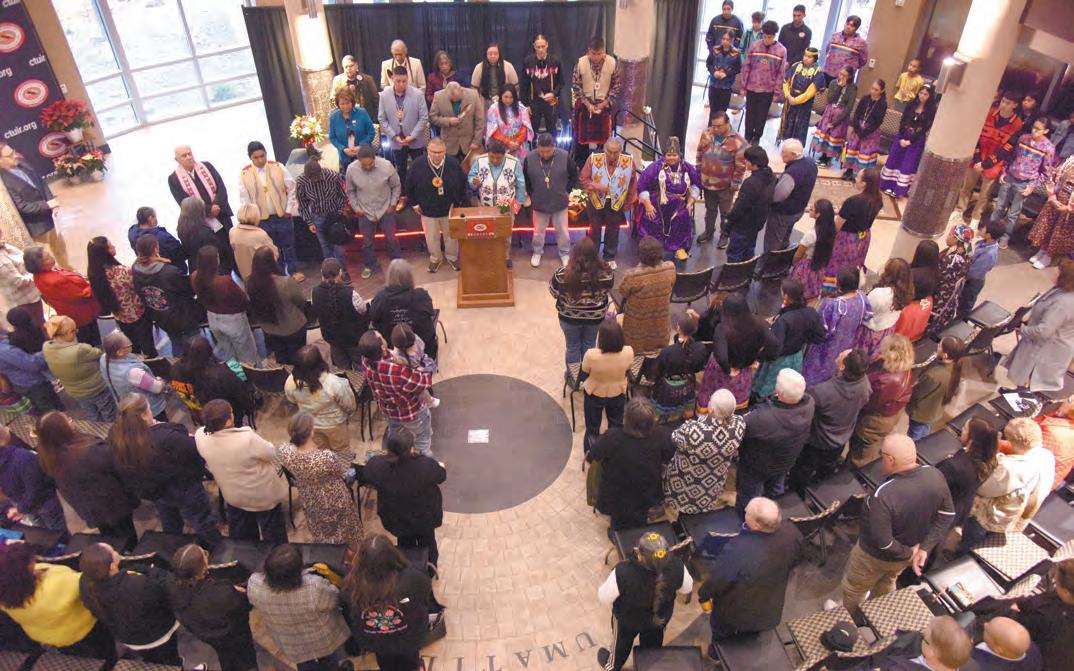
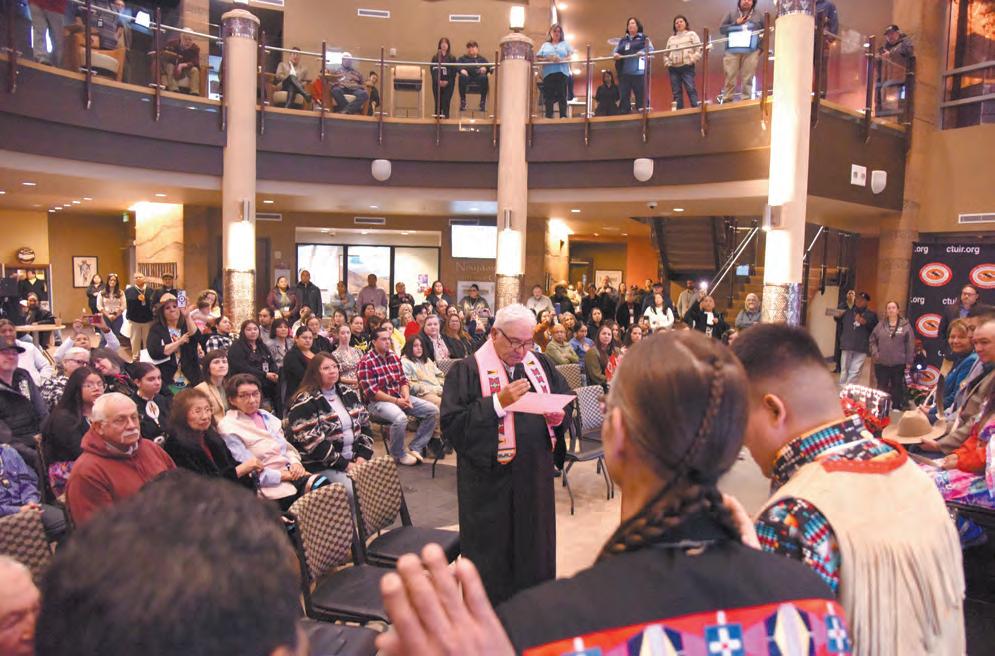
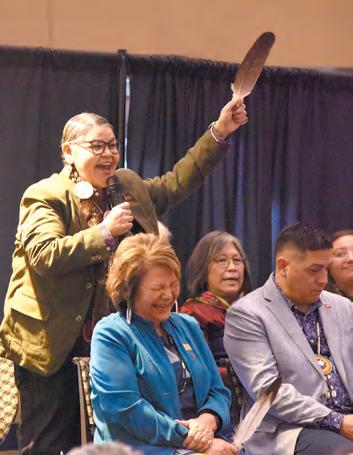
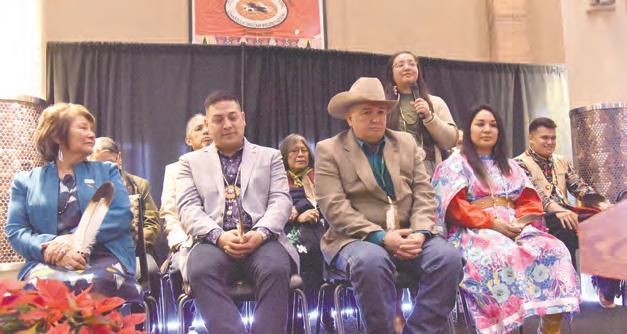
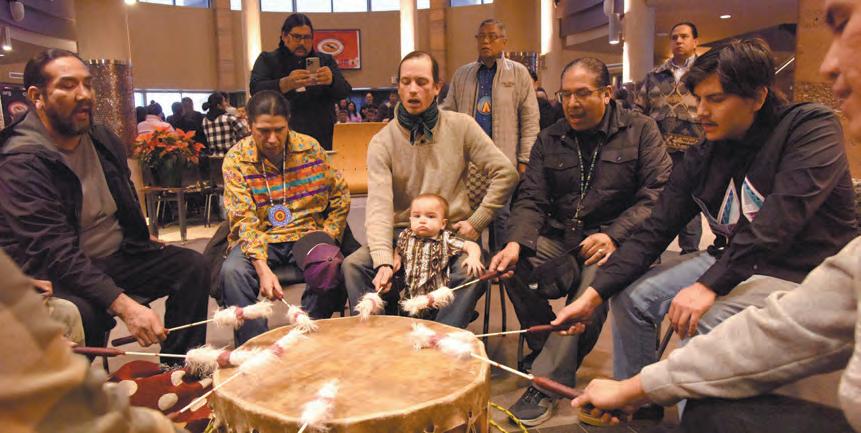
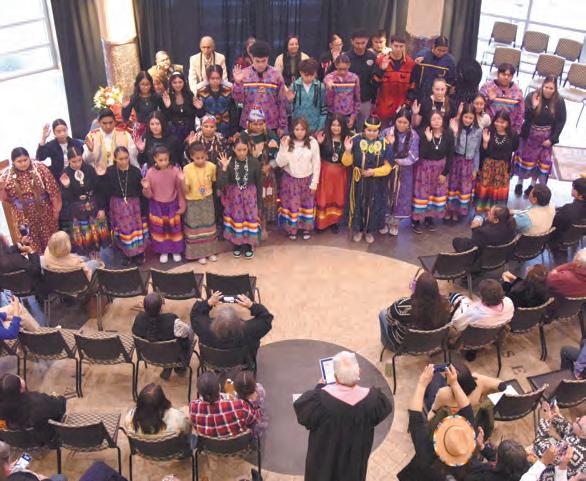
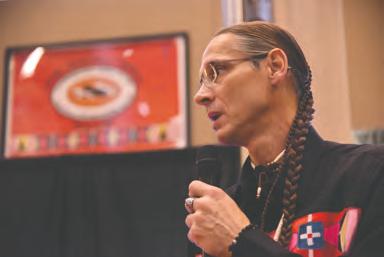
MISSION – Recently elected members of the Confederated Tribes of the Umatilla Indian Reservation (CTUIR) Board of Trustees (BOT) and General Council officers took their oaths of office on Wednesday, Dec. 3 at the Nixyáawii Governance Center.
A crowd of approximately 200 people gathered in the center’s rotunda to watch CTUIR Chief Judge William Johnson swear in the eight BOT members and four General Council officers.
The BOT exerts the Cayuse, Walla Walla and Umatilla Tribes’ sovereign authority to protect the rights reserved by the Treaty of 1855 and promote the interests of tribal members and residents of the Umatilla Indian Reservation. It
See SWEARING IN, Page A14
TRAVIS
SNELL
The CUJ
MISSION – With two months having passed since his disappearance, family members of 71-year-old Confederated Tribes of the Umatilla Indian Reservation (CTUIR) member Wesley Dixon Jones are relying heavily on their tribal culture with the hope they will see him again.
Molly Jones, Wesley’s daughter, said she and her family are relying on their prayers, tribal ceremonies and sweat lodge to see them through this difficult time.
“We are just going day by day. This is very heartwrenching,” she said. “Our hearts are really heavy, and it’s a really different kind of trauma that we are having to learn to live through –having to live and go to work or get the kids ready for school – and at the same time all you want to do is find your dad or your brother or your uncle or your grandpa. We have multiple family members in our communities who are helping us search…It’s very difficult as a family.”
Wesley was last seen on video around 3:15 p.m. on Oct. 5 in his gray 2003 Ford Escape heading east along Short Mile Road. When the vehicle returned west on the same road Wesley was no longer visible in it. The driver’s identity hasn’t been disclosed because of the investigation.
Wesley is described as a 5-feet, 8-inch-tall
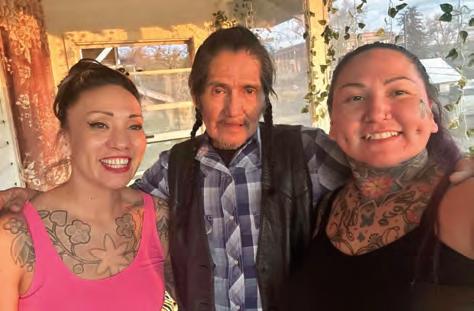
Native American weighing approximately 140 pounds with long black hair and brown eyes. He was last seen wearing a black and red Tiger Scott jacket, black shirt, black sweatpants and boots.
According to the Umatilla Tribal Police Department (UTPD), his family reported him missing at 10:44 that night and began searching for him the next day. Molly said she and her family have looked for Wesley almost daily along the Umatilla River and surrounding areas. She said they, along with volunteers, have searched on horseback, on ATVs, in the river wearing waders and side by side in the brush.
The family also helped bring in a sonar device


for underwater searches. During the weekend of Oct. 31 to Nov. 2 a search led by the MMIW Search & Hope Alliance used sonar for deeper waters along the Umatilla River. Two days earlier, the UTPD, FBI and a CTUIR Department of Natural Resources employee walked the river from Nicktyoway Road to the Highway 331 bridge using a GIS application to mark deep pools of water for the sonar search.
The MMIW Search & Hope Alliance-led search also included an area east of Sampson Lane and Short Mile Road along the railroad right-of-way, as well as upriver around the Cayuse community.
“I don’t think we’ve looked thoroughly in a lot of areas that need to be searched. There is a lot of river span to be looking at and a lot of land span along that,” Molly said.
Since Oct. 6, the UTPD has conducted searches with the Umatilla County Sheriff ’s Office Search & Rescue, aerial drone searches over parts of the Umatilla River and searches on foot. Other areas included in the investigation are between Cayuse and Bingham roads as well as Short Mile Road to Cayuse Road, including River Road.
On Nov. 18 with the help of CTUIR’s Geographic Information Systems, the UTPD conducted an aerial drone search in three previously unsearched locations. Citing the investigation, the UTPD did not specify the locations other
See JONES, Page A11

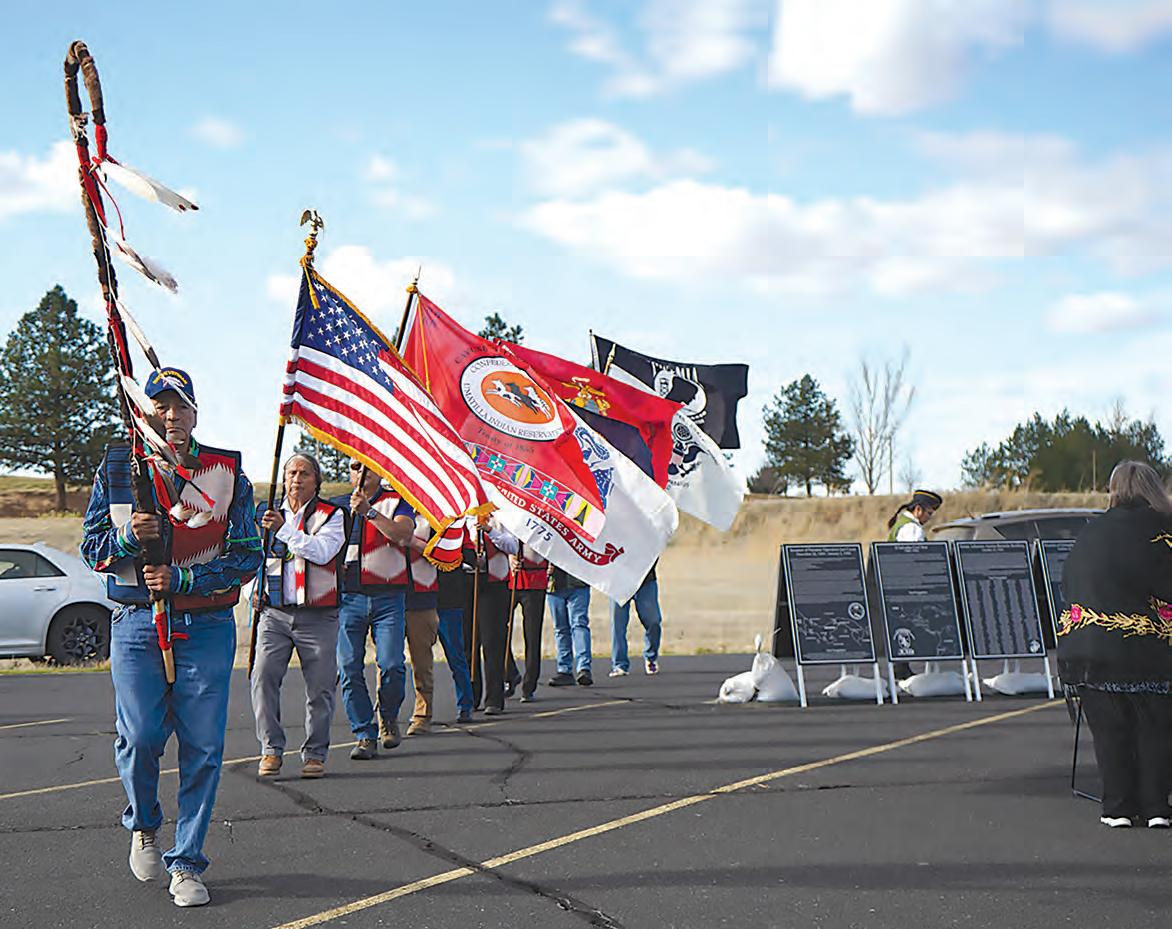
Veterans from the Confederated Tribes of the Umatilla Indian Reservation bring in the eagle staff and flags of the U.S. military branches and the CTUIR during a Nov. 7 ceremony opening the Vietnam Memorial Wall replica at Tamástslikt Cultural Institute in Mission, Oregon. The traveling tribute containing 80% replica of the Vietnam War Memorial in Washington, D.C. was on public display Nov. 7-12. From
Thank you for expecting the best — We’re working toward it
A NOTE FROM THE PUBLISHER
Last December, our Communications Department held its first-ever team retreat, and those few days gave us some clarity, alignment, and shared standards we needed to tighten up our media presence and build a stronger, more consistent CTUIR Communications Department. Our retreat laid the foundation for who we wanted to become as a team: collaborative and creative, level up consistency, accountability, and much more.
Both the Confederated Umatilla Journal and KCUW have always been an integral part of this community. And yes, we all miss the way it used to be. But here’s the thing, media is changing and we have to change with it. During our retreat we dug into the community survey from 2024, and the main themes were consistency and transparency, our elders still rely on the CUJ, and there is a strong interest in podcasting, video content, digital media, and we heard you say SMS text alerts. So, with that we do have a lot of work to do. Please know this: we hear you, we see the
ABOUT THE CUJ
The Confederated Umatilla Journal (CUJ) was created in 1975 as the official publication of the Confederated Tribes of the Umatilla Indian Reservation (CTUIR), which includes the Cayuse, Umatilla and Walla Walla people. The CUJ is produced monthly by the CTUIR Communications Department.
gaps and we’re rebuilding with purpose.
In 2025, however, we faced some challenges we didn’t expect.
Staff turnover across the department, the change in the federal adminstraton which led to funding cuts to public broadcasting which directly impacts KCUW, the fast pace of social media, the reality of today’s short attention spans and need for instant gratification all create major challenges for us. And as we look ahead to 2026, new tariff increases will gut punch the CUJ with a price hike on printing costs.
We have heard your frustrations about consistency, delays, typos and expectations. And we’ve heard your praise, especially for improvements on transparency with the Board of Trustees meeting recaps and improved social media presence among other things. 2025 has definitely been a balancing act.
Your feedback is shaping the next chapter for CTUIR Communications. As we close out this year, we’re dusting off that roadmap from last year’s retreat and tuning it up for the reality we’re in now and planning for some good stuff in 2026. To our loyal and day-one KCUW volunteers, we thank you. Also, our CUJ contributors, we appreciate you more than you know. To our loyal
PUBLISHER: Kaeleen McGuire kaeleenmcguire@ctuir.org
INTERIM EDITOR: Travis Snell
REPORTER: Vacant
ADVERTISING: M. Moses-Conner cuj@ctuir.org
CONTRIBUTORS: Kathy Aney Dallas Dick Annie Fowler Lee Gavin Wil Phinney Travis Snell Aaron Wooden Sammantha McCloud
CONTACT US Confederated Umatilla Journal 46411 Timíne Way Pendleton, OR 97801 email: cuj@ctuir.org phone: 541-429-7005
EMAIL ADVERTISING, LETTERS TO THE EDITOR, AND OTHER SUBMISSIONS TO: cuj@ctuir.org
ADVERTISING DEADLINE: 20th of the month prior to publication. The CUJ prints on the first Thursday of each month.
advertisers and subscribers, you make the CUJ possible. Your continued advertising and support truly keep our media outlets alive and moving forward and we thank you.
We are revamping KCUW, and soon we’ll announce new opportunities as that work takes shape. And, as we search for a new CUJ editor, we’re busy rebuilding the standards and expectations that make the CUJ a trusted voice for our people. We’re also committed to continuing to level up our sports coverage and shining more light on the stories that often go untold — the achievements of our youth, our students, our athletes and tribal members doing big things across the country and the world. Hang in there with us and thank you for your patience and expecting the best. Better days are coming. We can only hope.
Kaeleen McGuire is the Director of Communications for the Confederated Tribes of the Umatilla Indian Reservation and Publisher of the Confederated Umatilla Journal. Her first job was at the CUJ.
For more information or daily news, visit the CUJ online at: cuj.ctuir.org
or visit the Finance Department in person at Nixyáawii Governance Center, 46411 Timine Way, Pendleton. One Year: $15 Two Years: $28
Senate Bill 1011, the first of its kind in the United States, is helping restore legal jurisdiction to most Oregon tribes
STERLING COSPER
CTUIR Legislative Affairs Manager
SALEM – Gov. Tina Kotek signed a historic bill into law that more clearly outlines and helps restore criminal and civil jurisdiction for most Oregontribes during a Nov. 18 ceremony as part of Legislative Days at the Oregon State Capitol.
“This legislation represents a significant advancement in honoring tribal sovereignty and fostering collaborative relationships between the State of Oregon and federally recognized tribes, because it recognizes two of the most basic and inherent powers of any sovereign nation–the power to make one’s own laws and to enforce those laws through one’s own courts,” Confederated Tribes of the Umatilla Indian Reservation (CTUIR) Board of Trustees Member at Large Corinne Sams said during the event.
Senate Bill 1011, championed and drafted by the CTUIR during the 2025 Oregon Legislative Session, establishes a clear statutory process for the retrocession of federal Public Law 280 jurisdiction, according to CTUIR documents. Retrocession is defined as the action of ceding territory and/or jurisdiction back to a government.
“This bill provides a clear process to correct a long-standing wrong imposed without our consent,” CTUIR Chairman Gary I. Burke said. “SB 1011 honors our inherent rights and strengthens the governmentto-government relationship we’ve fought to uphold.”
Enacted in 1953 during the Termination Era, PL-280 required certain states such as Oregon

“The current policy grew from a dark chapter in our history. This bill is about living up to our obligations to Oregon’s sovereign tribal nations.”
Sen. Anthony Broadman (D)
to assume criminal and civil jurisdiction over tribal lands. Several tribes were excluded in some of these states, including the Confederated Tribes of the Warm Springs in Oregon.
“The history of this land and the history of the State of Oregon is intertwined with shameful acts of violence, oppression and systematic eradication by the United States government and the State of Oregon against the people who have resided here since time immemorial. We have
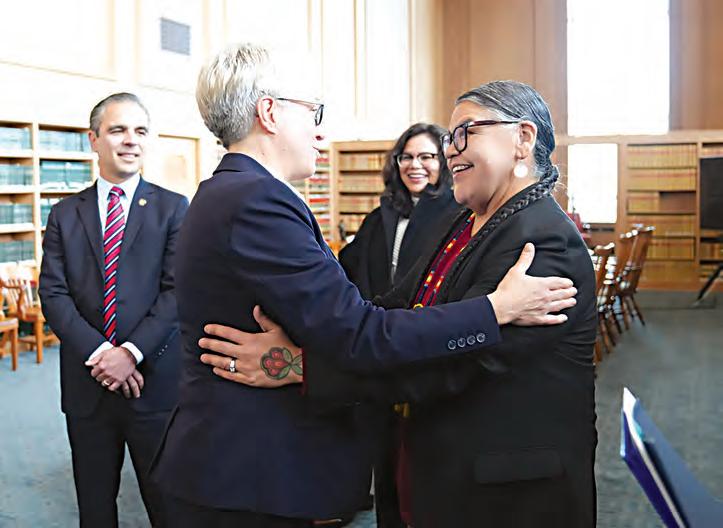


a clear moral duty to act for a more equitable future,” Kotek said during the signing ceremony.
This law allowed state law enforcement to operate on reservations without tribal consent, prosecuting both Native and nonNative individuals in state courts. No federal funding was provided to support states in this role, which strained their resources.
“States received no federal funding (inaudible) and often lacked the cultural, political and legal understanding needed to serve tribal communities effectively,” Kotek said.
In 1968, Congress amended PL-280 to allow states to return jurisdiction to tribes or the federal government through the retrocession process, which tribes could request when they determine they are ready to do so. However, states lacked a specific process for this.
“The current policy grew from a dark chapter in our history. This bill is about living up to our obligations to Oregon’s sovereign tribal nations,” said Oregon Sen. Anthony Broadman (D), who introduced SB 1011.
Prior to the bill, decisions on retrocession were being made on a case-by-case basis. This created uncertainty for tribes pursuing jurisdictional restoration as well as the states they requested it from.
“When a tribe decides to ask for retrocession, neither should have to rely on ad hoc or undefined processes nor be dependent on shifting political dynamics or
individual decisionmakers for retrocession to occur,” Sams said during a March 6 Senate Committee on Veterans, Emergency Management, Federal and World Affairs hearing for the bill.
As part of advocacy for the bill, CTUIR supporting material stated that the CTUIR achieved criminal retrocession in 1980 through Executive Order 80-8 issued by former Gov. Vic Atiyeh and has built a tribal court system that enforces the CTUIR’s laws, helps it better support the state in judicial matters and asserts the CTUIR’s inherent sovereignty.
‘It helps all tribes in Oregon who wish to seek retrocession in the future, but was of particular concern to the CTUIR in order for the tribe to seek retrocession of civil jurisdiction,’ CTUIR Office of Legal Counsel Attorney Brent Leonhard stated by email.
The CTUIR Board of Trustees approved Resolution No. 25-081 during the Nov. 10 public session, which along with an accompanying letter, formally requests retrocession of PL-280 civil jurisdiction from the State of Oregon.
The governor must acknowledge receipt of the request within 10 days of it and within 90 days, convene a meeting with representatives from the requesting tribe to discuss the request, including but not limited to the implications and logistics of retrocession. The governor must accept or deny the request and notify the requesting tribe of their decision within 180 days. If the governor accepts, they must petition the U.S. Secretary of the Interior regarding retrocession within 10 days after their decision for final approval.
The bill had bipartisan sponsorship and passed unanimouslyin the Senate on March 31 and in the Houseon May 14.

Serving urban Natives, infant to elder, in Portland and Vancouver
Resident Services Manager
Early Childhood Coordinator/ Site Director
Family Shelter Advocate (On Call)
Domestic Violence Community Advocate
Alcohol & Drug Specialist
Youth Housing Advocate
Foster Care Support Specialist

Serving urban Natives, infant to elder, in Portland and Vancouver. Visit nayapdx.org/jobs to learn more. 11/19/2025
$72-76K/yr
$65K/yr
$28-30/hr
$27/hr
$25-27/hr
$22-25/hr
$24+/hr
Incoming Chair thanks tribal voters
To CTUIR members, I want to thank all of you for taking part in the 2025 tribal election and thank you for your vote and support. I am very excited about winning the Confederated Tribes of Umatilla Indian Reservation Board of Trustees Chair position. I am going to do my very best to represent the CTUIR and looking forward to the next two years. Thank you very much and wish you the very best! Thanks! Kat Brigham

(based in Portland, OR)
• Manager, Policy Developement and Litigation Support Dept • $156-180K annual
(based in Hood River, OR)
• Police Officer • $32-38 per hour
• Dispatch Supervisor • $28 per hour DOE
Renovated space provides space for all Workforce Development programs, which grow career pathways for tribal members
BY THE CUJ
MISSION – Confederated Tribes of the Umatilla Indian Reservation (CTUIR) officials and employees on Nov. 14 held a ribbon-cutting ceremony for the Workforce Development program’s new location.
Housed in the former Tribal Services building at 73239 Confederated Way, the refurbished building will accommodate Workforce Development’s Drone, 477 Workforce Development, Building Our Life Skills Training and Employment Readiness (BOLSTER), Tribal Employment Rights Office (TERO), GED, Tribal Vocational Rehabilitation and Summer Youth Employment programs.
“It looks really nice inside compared to what it was,” said CTUIR Public Works Director Justin Northern. “There were a lot of naysayers at first, thinking is this building worth investing into. I just really want to give thanks to everyone involved. I think this is going to be a great place to facilitate the community and Workforce Development.”
Workforce Development grows career pathways for tribal members with various interests and skills, enhancing cross-department and program communication as part of a referral management system and enhancing training partnerships with tribal, local, county and state workforce development initiatives.
Preceding its refurbishment, the building was also used to house the Nixyáawii Community School classrooms prior to the completion of the Nixyáawii Education Center.
The nearly 10,500-square-foot, one-story building now includes office space, conference rooms, equipment simulators and a computer lab for training and GED instruction.
“I would like to thank our Board of Trustees for approving our funding to get this work going and all the people that made it happen,” Workforce Development Director Brandie Weaskus said. “We are
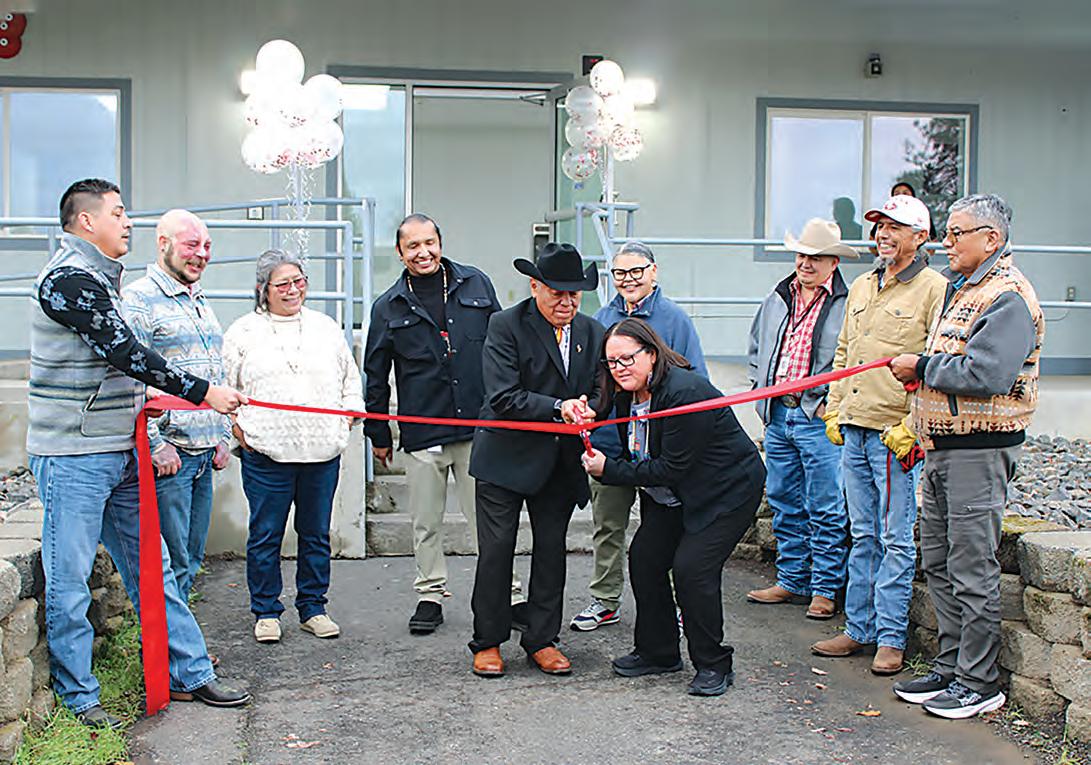
excited to get into this building and have all of our programs be under one roof so that people aren’t going to different parts of government. We look forward to working with new partnerships and just all the potential we have to help our tribal community here on the Confederated Tribes of the Umatilla Indian Reservation.”
Before the renovation, TERO and Tribal Vocational Rehabilitation were under the Human Resources Department. The BOLSTER, 477 Workforce Development and Drone programs were under the Department of Children and Family Services, while Summer Youth Employment and GED were under Education.
The refurbished building will allow all Workforce Development programs to be housed in one location. Weaskus said all the programs were slated to begin moving into the building on Nov. 18.
The building’s renovation began in May, and Public Works, along with other stakeholders, were slated to conduct a final inspection
on Nov. 30.
The Board of Trustees approved slightly more than $1 million for the renovation using monies from the Contingency, Bureau of Indian Affairs regional carryover and
Tribal Vocational Rehabilitation funds. Nelson Construction in Walla Walla was the primary contractor with Wenaha Group in Federal Way, Washington, providing project management services.
TRAVIS SNELL
The CUJ
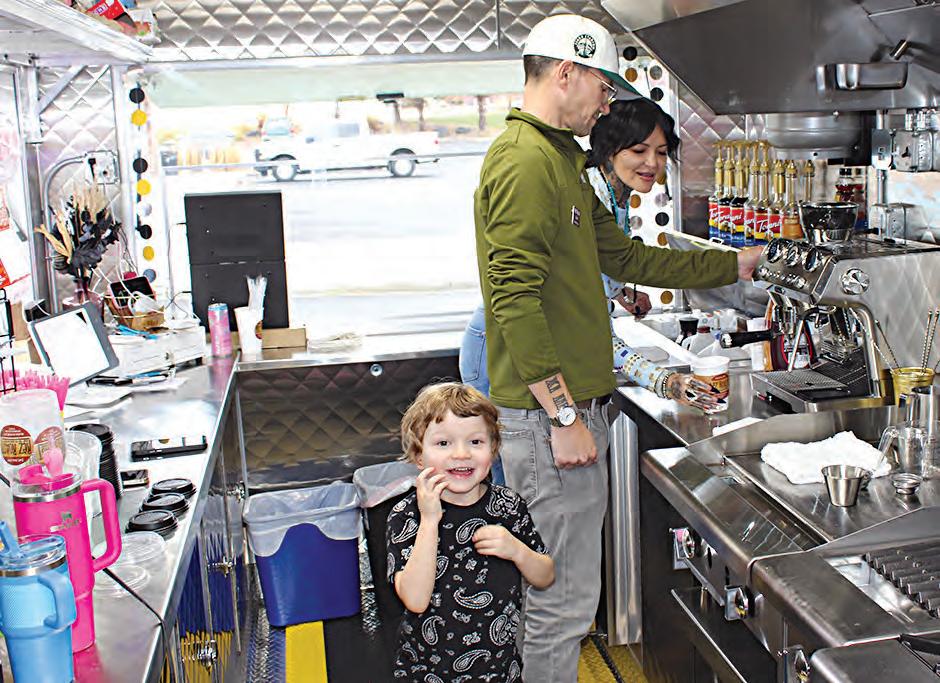
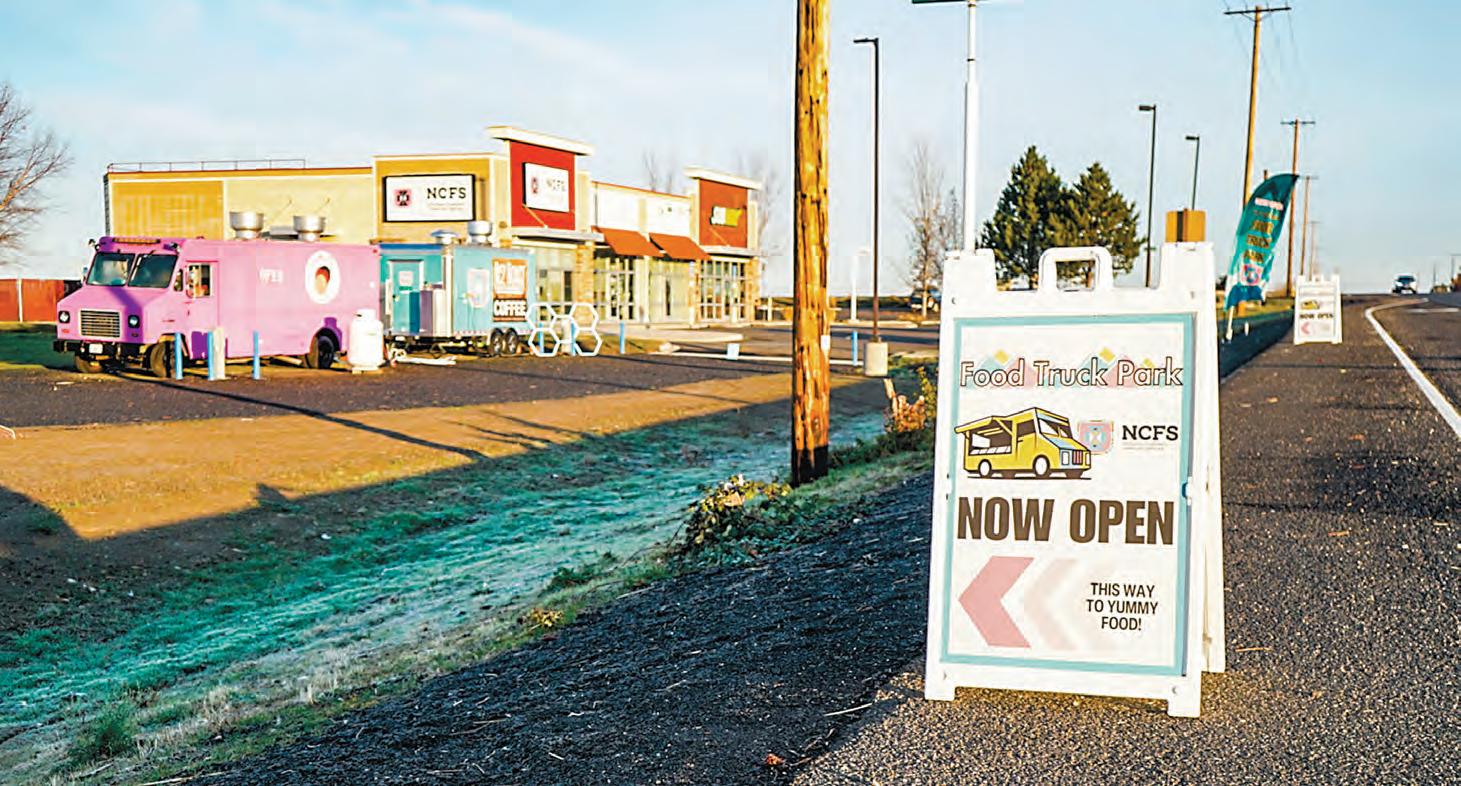
MISSION – Nixyáawii Community Financial Services (NCFS) helped serve some good eats and drinks on Nov. 14 by holding a soft opening for its Tx̣táyma (pronounced TieEma) Food Truck Park.
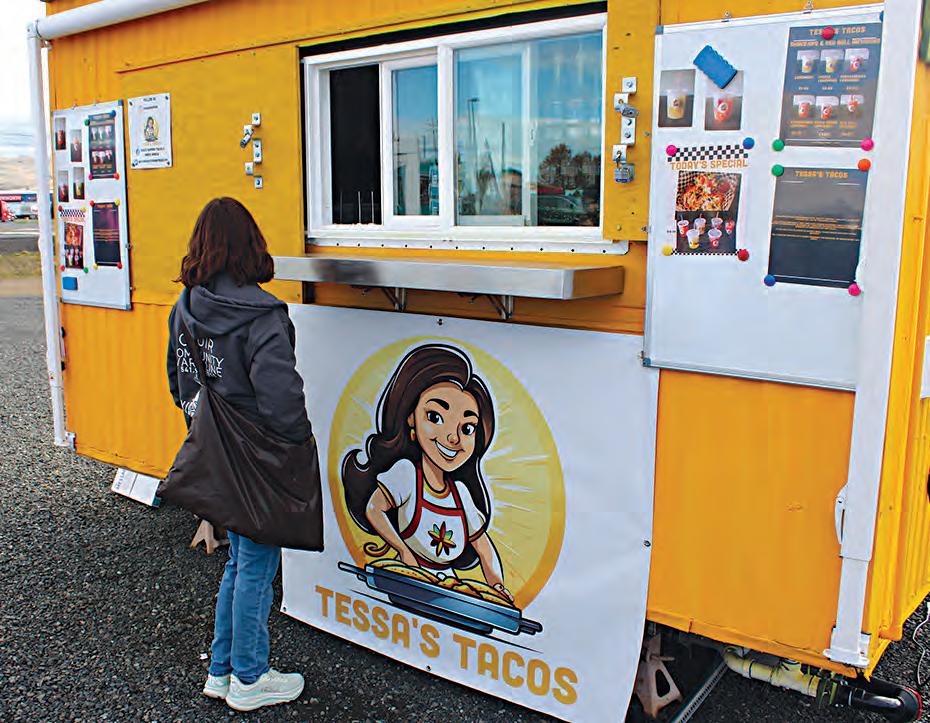
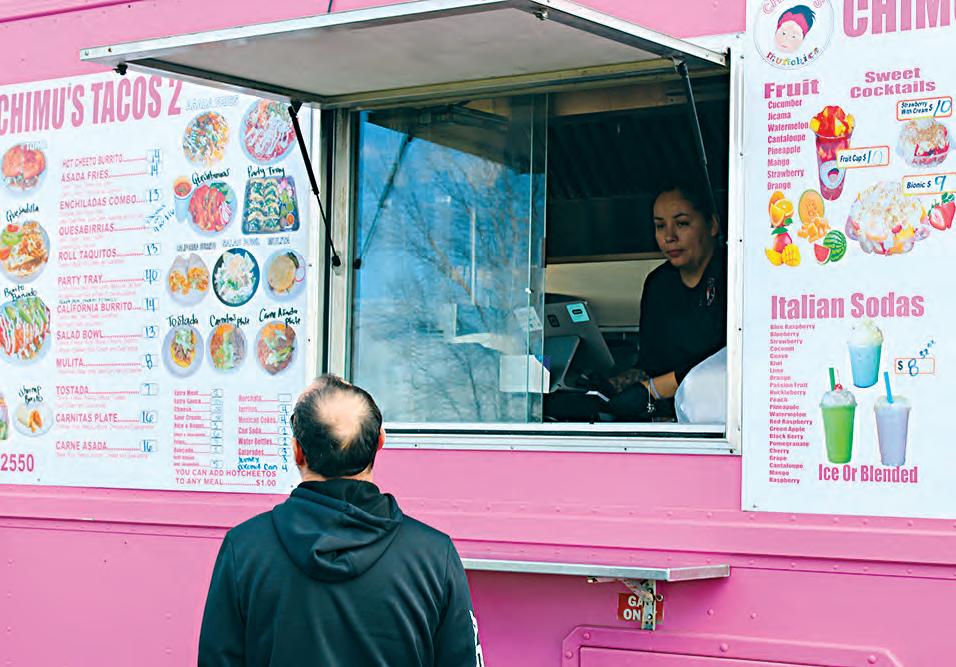
The park, located at 46434 Kusi Road, opened with three food trucks: Rez Roast, which serves coffee, energy drinks and pastries; Chimu’s Tacos, serving Mexican cuisine and drinks; and Tessa’s Superb Tacos, with modern Indigenous cuisine.
NCFS Business Service Manager Jacob Wallis said the park was three years in the making.
“Ironically this was a plan thought up at a
lunch meeting and spurred by our local food and beverage small businesses that lacked infrastructure to be operating year-round,” he said.
The project began as a concept for an emerging retail business center, a multi-use retail space intended to serve as a long-term community and economic hub. However, a feasibility study revealed that such a facility would require 10 to 15 years to develop whereas developing the park to serve small businesses only needed three to five years.
“When we reviewed the industries our clients were most interested in, food and beverage emerged as a clear leader with arts and creative businesses close behind,” Wallis said. “During
a working luncheon with a few partners at CTUIR’s Department of Economic & Community Development, we discussed what kind of project could meet immediate needs, fit within our budget and still lay the groundwork for a larger ecosystem in the future.”
He said the food truck park rose to the top because it offered a more attainable financial entry point for entrepreneurs, reduced traditional barriers to starting a food business and aligned with trends toward flexible community-oriented dining spaces.
Wallis said two of the food truck operators own and operate their own business, managing their menus, hours and daily operations. The exception is the NCFS-owned trailer, currently

operated by Rez Roast with the goal of purchasing its own trailer in the future.
“Our role is not to run individual businesses, but to provide a safe, welcoming and well-supported food truck park,” he said. “We focus on creating a space that attracts customers, hosts events and offers marketing and technical assistance services unique to this park.”
For now, Wallis said the park would remain open in alignment with the food trucks’ operating hours, allowing each business to set its own schedule.
Confederated Tribes of the Umatilla Indian Reservation (CTUIR) member Tessa Woods, who owns Tessa’s Tacos with help from her husband Shane Woods and daughter Mikyla Ureno, said she’s glad to see the park finally open.
“I think it’s just going to be a blessing to all of us and to the community and to the customers. I think this is amazing. It’s just going to keep opening up more opportunities,” Woods said.
Even with Tessa’s Tacos, Rez Roast, owned by CTUIR member Chelsey Park, and Chimu’s Tacos, owned by Aide Monico, set up at the park, two food trucks spots are still available.
“We’re already working with several NCFS clients who are in the early stages of launching their food businesses,” Wallis said. “Our team is helping them build business plans, secure financing and get prepared for operational readiness, whether that means entering through our food trailer program or purchasing their own trucks. As those entrepreneurs move through the pipeline, we anticipate seeing a wider variety of foods and cultural influences represented at the park.”
Wallis added that any licensed food business is eligible to operate at the Tx̣táyma Food Truck Park with priority given to Native American entrepreneurs, local Umatilla Indian Reservation residents and
“We’re standing in essentially the middle of the reservation and there’s virtually no small business infrastructure. This is history in the making. It means everything to me”
— JACOB WALLIS NCFS BUSINESS SERVICE MANAGER
rural small business owners.
“But we welcome any vendor who aligns with the community-focused and culturally respectful nature of the park,” he said. “The goal is to create a diverse mix of foods and experiences that reflect both our tribal community and the broader region.”
To get the park to where it is, Wallis said NCFS employees worked with many partners and resources and became experts on food truck parks during the feasibility study. From there the general contractor, BP Grading, handled the construction process of grading and excavation, installing utilities, building vendor spaces, adding lighting, improving parking and placing modular restrooms.
Bringing the park to operation was originally projected at around $400,000. As the project moved through planning and design, NCFS identified several upgrades to improve functionality and create a space the tenants could take pride in and feel supported by. But Wallis said the project’s real foundation was built through partnership and planning.
“This park exists because of the grant makers who believed in a Native-led vision for rural small business development,” he said. “Support from Business Oregon, Wildhorse Foundation, Wells Fargo Foundation, Spirit Mountain Foundation, Meyer Memorial Trust, The Roundhouse Foundation, Administration of Native Americans, Tamalpais Trust, Union Pacific Foundation, Oregon Community Foundation and the Native American Agriculture Fund made it possible to transform
an idea into a fully operational community asset.”
Wallis also said NCFS worked closely with several CTUIR departments, particularly the departments of Economic & Community Development, Planning and Public Works, which played key roles in navigating infrastructure needs, permitting and long-term planning.
“Operating a food truck involves strict codes, regulations and health compliance, which can be overwhelming for new entrepreneurs,” he said. “We’ve been fortunate to partner closely with tribal Environmental Health & Safety Specialist Brian Fullen to develop streamlined systems that make these processes easier for both NCFS as the operator and for our tenants.”
Wallis said NCFS is now seeking funding for park’s next phase, which focuses on building the central infrastructure — a yearround community retail and multi-use space. This phase will expand the park’s role as a cultural and economic anchor, creating an enclosed environment for winter markets, events and community gatherings while deepening opportunities for Native entrepreneurs.
“I’m genuinely thrilled to see the park opening. This soft launch represents more than just turning on the lights. It’s the beginning of a vision our team have been working toward for years,” Wallis said. “To finally watch our Native and local entrepreneurs step into a space built for them, fire up their kitchens and start connecting with the community is incredibly meaningful. There’s a real sense of pride and possibility in seeing the first meals served and the first customers arrive. This opening marks the start of new opportunities, new relationships and a new chapter headed into the new year and a grand opening in the spring, and I’m grateful to be a part of it.”
As we close another year at the Confederated Tribes of the Umatilla Indian Reservation (CTUIR), I find myself reflecting on the progress and challenges that have defined our work together. This year marked a major transition for me personally as I stepped into the role of executive director in February of this year after serving as interim executive director since May 2024. It has deepened my appreciation for the responsibility entrusted to the office. I cannot overstate the feeling of both the immense privilege and the tremendous responsibility of leading our sovereign nation.

“I cannot overstate the feeling of both the immense privilege and the tremendous responsibility of leading our sovereign nation.”
— J.D. TOVEY
Serving in this role has truly been the honor of a lifetime, and the most challenging of my career. I want to thank the Board of Trustees (BOT) and our dedicated directors and staff for their confidence, collaboration, patience and commitment and expertise in their work.
As executive director I have had two guiding priorities throughout the year: strengthening


communication across all levels of government and improving operational efficiency. One major step forward came with the implementation of new software systems for Annual Work Plans. These tools will allow managers to track progress more accurately and enable real-time reporting. This is intended to improve transparency, accountability and strategic alignment across the organization. Another major step forward is the recruitment and hiring of Chanda Yates, deputy executive director. Her leadership, insight and experience in complex organizational operations have already had positive impacts. Many times, the executive director must be in two, three and sometimes four places at once. Chanda has been instrumental in carrying these responsibilities. I look forward to filling the second deputy executive director position and working to establish the Office of Executive Director as a streamlined process more than an individual.
One of the most significant accomplishments of 2025 was the completion of the transition to our new Workforce Development Department. Under the leadership of newly hired Director Brandie Weaskus, we consolidated programs, aligned budgets and remodeled Building 131 on the July Grounds campus to house the department.
The vision for the new department is a centralized onestop shop where tribal members can access job training, overcome employment barriers, build skills in emerging industries and take advantage of opportunities that strengthen their families and our local tribal economy.
Economic diversification remained a major area of work this year. Highlights include the groundbreaking of Cairnsprings flour mill, Nixyáawii Community Financial Services’ food truck court that is supporting small tribal entrepreneurs, and of course, the ongoing progress on the Wildhorse Resort & Casino (WRC) expansion.
One of my most memorable events of the year was joining the BOT and WRC leadership in signing the final steel beam at the expansion. This project will continue to support our long-term stability, increased revenue, new jobs and broader economic opportunities for our people and the region.
WRC also hosted the annual Epson Tour of the LPGA as well as the Eastern Oregon Women’s Coalition Economic Development Summit, highlighting our role as a regional leader in innovation and economic collaboration.
Throughout the year, we continued building relationships, representing the CTUIR at events and sharing our story with partners
across the region and beyond. Some highlights include participating at the second annual Two Cultures One Community celebration at the Pendleton Convention Center, sponsoring the Tri-City Water Follies, which is three days of speedboat racing and an over-theriver air show, and hosting a booth at the Benton County Fair that engaged the local community about our historical and contemporary connections to the land and river.
And of course, once again, we had a strong presence at the Pendleton Round-Up, where we welcomed partners and strengthened relationships with friends, new and old. Two new events we participated in this year included attendance at the 150th anniversary of Columbia County, where General Council Secretary Martina Gordon emphasized our shared history and our shared responsibility to protect the land and the people who depend on it, and the Farm to Square event in Portland’s Pioneer Square, highlighting the bounty of Umatilla County, including our First Foods.
Immediately following RoundUp, I traveled with Vice Chair Aaron Ashley and Member at Large Steven Hart to Washington, D.C., for a series of congressional meetings. We were joined by Legislative Affairs Manager Sterling Cosper and our lobbyists Josh Clause and Rani Williams. We advocated for CTUIR’s sovereign priorities, including the 2026 appropriations cycle, the Parity for Tribal Law Enforcement Act and strengthening tribal consultation during federal agency reorganizations, amongst many others.
During the trip we were honored to be given an after-hours tour of the Capitol, hosted by Rep. Val Hoyle from Oregon’s Fourth District. The most humbling moment of perhaps the year and my life occurred at the National Archives where we were given the rare opportunity to see the original 1855 Treaty. Standing before those X’s placed by the hands of our ancestors reinforced the purpose of our work: to protect what they fought for and to build upon the foundation they left.
With 2025 being an election year for the BOT, I want to express my gratitude for the outgoing BOT’s collaborative spirit and dedication to the tribe. Together, we completed the Workforce Development transition, initiated the CTUIR Enrollment Study and improved organizational processes that will continue benefiting our government for years to come.
As we prepare to welcome the incoming BOT, there is much to be hopeful for such as continued organizational improvements and carrying out their priorities.
It was a busy year, certainly the busiest year of my life, but we have much work to do to continue the progress of our nation and strengthen our sovereignty and secure a more resilient future for the next generations. I remain honored to serve you, and excited for the year ahead.
J.D. TOVEY is the Executive Director of the Confederated Tribes of the Umatilla Indian Reservation.




More than $498,000 granted to eligible nonprofi ts, government
BY THE CUJ
MISSION – The Wildhorse Foundation, a community fund managed by the Confederated Tribes of the Umatilla Indian Reservation (CTUIR) in partnership with Wildhorse Resort & Casino, announced its grant awards for the third quarter of 2025.
A total of 39 organizations were awarded grants, in amounts ranging from $3,000 to $30,000, for projects in the areas of public health, public safety, arts, education, environmental protection, cultural activities and salmon restoration. The total amount awarded this quarter was $498,939.
In addition to the quarterly grants, two organizations recently received Rapid Response Grants (RRGs), which are designed for small and immediate needs that surface throughout the year. Inland Northwest Musicians received $1,500 to improve its music storage system, and Milton Freewater Valley Ambulance District received $1,450 for technology upgrades.
Each year, the Wildhorse Foundation makes grants to eligible nonprofit, government and tribal organizations within the homeland area of the Cayuse, Walla Walla and Umatilla people. Also eligible for funding are tribal government
agencies or Native American charitable organizations with their base of operations within Oregon, as well as national or regional Indian organizations.
The Wildhorse Foundation has awarded a total of more than $20 million in grant funding since its establishment in 2001. Grants are awarded on a quarterly basis with the deadlines being Jan. 1, April 1, July 1 and Oct. 1.
The formation of the Wildhorse Foundation was for the purpose of formalizing the charitable giving on behalf of the CTUIR and Wildhorse Resort & Casino. Every step of the Foundation’s review and decisionmaking process is geared towards building strong communities and healthy families in the region.
Some of the organizations awarded in the third quarter included:
• Crow’s Shadow Institute of the Arts in Mission for traditional arts
– $30,000,
• Eastern Oregon University in La Grande for salmon and steelhead restoration – $6,000,
• Nixyáawii Community School in Mission for technological boost –$20,346.
The Wildhorse Foundation reflects the commitment of the CTUIR to take a proactive, positive role in the well-being of the community. Funds, derived from a percentage of revenues from Wildhorse Resort & Casino, are managed and distributed by a board of directors comprised of community leaders and CTUIR representatives.
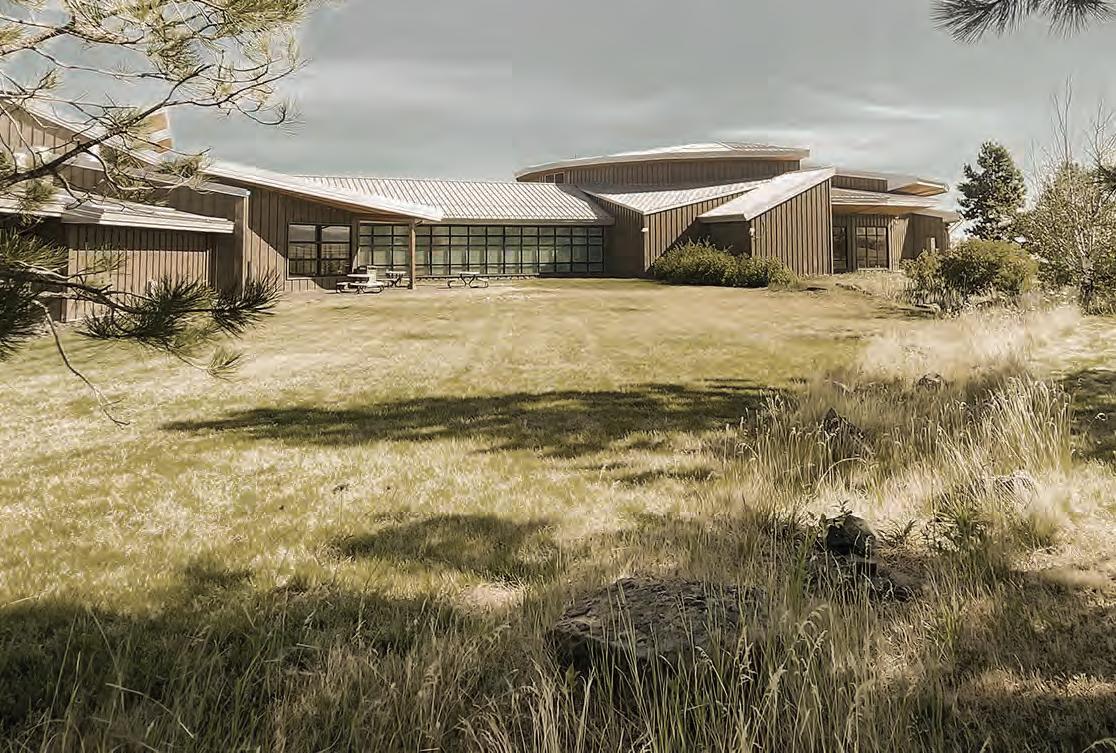


If you aren’t already a member of our Inwai Circle of Friends, we invite you to join. There are several options from which to select and include at minimum such benefits as a free regular admission to all exhibits, advance notice of events, store and café specials, 20% discount at Museum Store, 10% discount at Kinship Café, and free regular admissions to our cultural partners: Oregon Historical Society, North American Reciprocal Museum (NARM) Association, and Fort Walla Walla. Select the level of membership that fits your needs, enjoy the benefits, and accept our deepest gratitude for playing a vital role in ensuring the traditions, life ways, and histories of our people are safeguarded and honored.
Simply go to www.tamastslikt.org/membership or stop by the reception desk to join.
December 1-31
Enjoy 25% o all Pendleton Wool merchandise! Everyone loves receiving Pendleton Wool apparel, bags, blankets, scarves, towels, and more! Get all your shopping done in one stop. Be sure to get in early while the selection is at its best!
25% o all Pendleton!
O er may not be combined with other o ers/discounts.
FREE admission all day at Tamástslikt Cultural Institute.
December 5 10am-5pm
Enjoy Indian Tacos, Frybread, Smoked Salmon Corn Chowder, and Elk Stew on the menu from 11am-2pm at Kinship Café. Shop the Museum Store!
than they were farther away from the Umatilla River.
With all the search activity, Molly said the family and UTPD are keeping each other informed.
“I keep the authorities in the loop and give them updates, and right now we are at a mutual point with the authorities where they give me updates if there are things they are doing that I don’t know because we’re kind of working alongside each other,” she said. “Sometimes I felt a bit upset because a lot of times we as a community or family were out searching, they would not even send one tribal officer to come search with us. Their presence wasn’t there, and I had mentioned that, and I know they have other duties to do as well, but in the beginning of this, it was a bit frustrating.”
However, she said despite the early frustration, she and her sister Twila Jones have spoken more with the UTPD, which has resulted in better communication. “He (UTPD Det. William Morris) was able to express to us what he’s capable of doing as an officer and within his bounds of following the laws, but sometimes it feels like there is more that can be done.”
Molly added that she and her family are also frustrated with the CTUIR government and hopes it implements policies and procedures for future missing persons situations.
“My father is not the first or the last that this will be happening to on our reservation,” she said. “Maybe next time it might be their daughter or son, or your niece or nephew, or your mom and your dad. Then maybe the tribal government will care.
“Our people will have higher (missing persons) numbers because the alcohol sales that will soon come,” Molly added, referring to alcohol sales expected to start at Arrowhead Travel Plaza. “A door will be opened to more violence to our people. I hope our tribe is ready to warrior up and protect our tribal people from the violence that may be coming our way. MMIP numbers will go up. It’s not a matter of if. It is a matter of when. And when it comes, our tribe better be ready to protect and get justice for our people.”
Despite her warning to the CTUIR, Molly said she and her family appreciate the help they’ve received, but with the amount of time her father has been missing, she said they realize seeing him
OCT. 5: Wesley Dixon Jones is last seen on camera at 3:15 p.m. in a gray 2003 Ford Escape with Oregon license plate SM15454 heading east on Short Mile Road. When the vehicle returned west on the same road Jones was no longer visible in it.
OCT. 5: Jones’s family reports him missing at 10:44 p.m.
OCT. 6: The Umatilla Tribal Police Department (UTPD) begin searching for Jones along the Umatilla River and around his former residence.
OCT. 6-16: The UTPD, with help from CTUIR’s Geographic Information Systems (GIS), conducts three aerial drone searches over parts of the Umatilla River and two searches on foot between the bridge spanning the Umatilla River on Highway 331 and the train tracks at Sheoships Lane.
OCT. 8: Umatilla County Sheriff’s Office Search & Rescue and UTPD conduct a canine search around the area of Jones’s residence near Parr Lane.
OCT. 24: The UTPD requests video camera footage from anyone who has road-facing cameras and lives anywhere from Short Mile Road east to Cayuse Road, including River Road, or from Cayuse Road east to Bingham Road on the Umatilla Indian Reservation. Video footage can be uploaded to https://umatillatribalpd. evidence.com/axon/community-request/ public/wes-jones
alive again is unlikely.
“After I went through his house and noticed that he left things that he normally wouldn’t leave if he planned on taking off or if he was going to head out or take a break from whatever may have been stressing him out at that house or whatnot,” Molly said. “If he was going leave, and he left without his wallet or certain things, I don’t think he would have done that. And he would have let me know. He didn’t even grab his medicine or things like that. So it was shortly after him coming up missing, like a couple of weeks, and then after it hit 30 days, I know without a doubt that if my dad was out there and he was alive my dad would let me know.”
So despite keeping his cellphone on with the small hope he will call it, Molly said she and the family have turned their hopes from rescue to recovery and are leaning on their culture to find Wesley.
“We are going into our ceremonies, and we’re going to keep searching
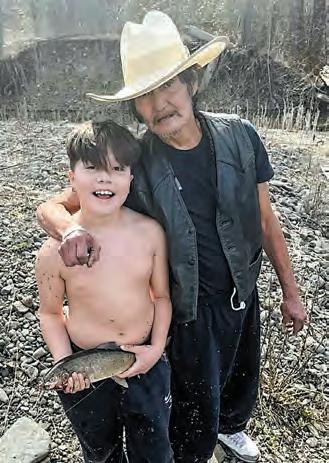
Wesley Dixon Jones poses for a photo while fishing with his grandson, Wocatsie Tiscareno-Jones, son of Mollyanne Jones. Photo taken earlier this year. MOLLY JONES / CONTRIBUTED
OCT. 24: The UTPD clarifies two pieces of misinformation associated with the investigation. The first is the rumor that the gray 2003 Ford Escape was not the vehicle Jones was last seen in because it had a flat tire. UTPD officials said it is the vehicle contrary to the rumor. The other misconception deals with Jones supposedly being seen at Arrowhead Travel Plaza the night of his disappearance. UTPD officials said they checked on the lead and found it to be false.
thoroughly, and we’re going to bring him home so that we can lay him to rest,” she said. “We can’t give up, can’t lose hope or lose the light no
OCT. 29: The UTPD and FBI, with help from CTUIR Fisheries, mark deeper areas of the Umatilla River to prepare for a sonar search from Nicktyoway Road to the Highway 331 bridge. Expecting to lead the search was the MMIW Search & Hope Alliance with an AquaEye Pro, which sends a sonar pulse into water echoing off objects. The echoes bounce back to the device, which determines if the echoes match those that would be made by a human body. It then provides the location and distance of the suspected body in the water.
OCT. 31-NOV. 2: The MMIW Search & Hope Alliance lead the sonar search along the Umatilla River east of Sampson Lane and Short Mile Road along the railroad right-of-way as well as upriver around the Cayuse community. The alliance also use a cadaver dog during the search.
NOV. 5: Jones’s missing persons case hits the month mark as the investigation continues.
NOV. 14: UTPD begins coordinating searches outside the original search area, but officials do not specify the locations due to the investigation.
NOV. 8: UTPD and GIS perform a drone search in three previously unsearched locations farther away from the Umatilla River. The search focuses on fields with tall grass and tree-dense areas.
Anyone who may have information on Jones’ location is asked to call the UTPD at 541-278-0550.
matter how he is. We are going to find him. Whether it’s just his shell, we are going to find him and bring him home.”






As a University of Oregon student focused on politics and the environment, Amy Bowers Cordalis had every right to feel defeated in 2002 when she returned home and saw evidence of the largest salmon kill in the Klamath River.
The lifelong fisherwoman and member of the Yurok Tribe learned the cause was avoidable: A federal order diverted water just as salmon were spawning.
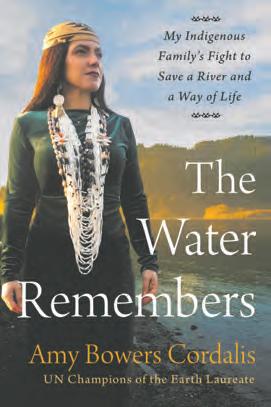
For generations, destructive dams, logging, mining and development had already impacted the ecosystem of the Klamath River, which once had the third largest salmon runs in all of the lower continental United States.
Cordalis, then 22, decided to change course while she was in her boat, surveying the depth of the salmon die off.
She also worked for the Yurok people to recover 73 square miles along the eastern side of the lower Klamath River, now known as Blue Creek Salmon Sanctuary and Yurok Tribal Community Forest.
The area, logged for a century, was acquired over time by the environmental nonprofit Western Rivers Conservancy for $56 million. The transfer to the Yurok people in June is the largest single “land back” deal in California history.
Cordalis continues to litigate to protect the rights of Indigenous people and the natural and cultural resources that are part of their identity and sovereignty. That includes salmon. She still works to save coho salmon, a listed Endangered Species Act species on the Klamath River.

Now 45, the Ashland attorney, activist and environmental defender serves on the front lines of conservation.








As lead lawyer for the Yurok Tribe, she was present at the signing of the agreement that in 2024 resulted in the Klamath River flowing freely from southern Oregon to northern California for the first time in a century.



The dismantling of four hydroelectric dams that had impacted ancestral lands, altered the ecology, degraded the water quality and disrupted once-prolific salmon runs is considered the world’s largest dam removal project.
A month after the last dam was demolished, thousands of salmon, a cornerstone species for overall ecological health, began repopulating.
“The salmon have come home,” Cordalis said. “We are starting to move back into balance.”
In her just-released memoir, “The Water Remembers: My Indigenous Family’s Fight to Save a River and a Way of Life,” Cordalis tells the story of her family’s multigenerational struggle to protect the Klamath River and their legal successes to preserve the Yurok people’s sustainable relationship with nature.
Through her former work as Yurok general counsel and an attorney at the Native American Rights Fund, and since 2020 as the executive director of the Ridges to Riffles Indigenous Conservation Group, Cordalis’ message is clear: Respect the earth. Listen to the rivers, protect the land.
Treat the earth, Cordalis said, not as a resource, but as a relative.
Changing course
In 2002, Cordalis spent her summer break from college interning for Yurok Fisheries Department near her family’s ancestral home in the Northern California village of Rek-Woi.
That September, she witnessed the salmon kill. Water diverted upstream to farmers and ranchers by federal orders had lowered the river flows, increased the water temperature and allowed diseases to spread to spawning salmon.
Cordalis saw the salmon kill as ecocide, a deliberate effort to end the Yurok people’s way of life and their principles of respect, responsibility and reciprocity with all of creation.
She vowed to fight through the courts, as her family had in the past. She earned a law degree at the University of Denver’s Sturm College of Law and became the Yurok Tribe’s general counsel.




In 1973, her great-uncle Aawok Raymond Mattz forced the landmark Supreme Court case reaffirming the Yurok Tribe’s rights to land, water, fish and sovereignty.
Cordalis devotes a chapter of her memoir to her great-grandmother Geneva’s protests in the 1970s, inspired by the Civil Rights movement, to end the Salmon Wars, the government’s crackdowns on tribal fishing rights.
In 2019, Cordalis led the effort for the Yurok people to declare personhood rights for the Klamath River. For the first time, a North American river has legal right to flourish, free from human-caused climate change impacts and contamination.
In 2020, she and other representatives of Native American communities with historic ties to the Klamath River faced the owner of the four hydroelectric dams: Berkshire Hathaway, one of the biggest and best known U.S. conglomerates. Its subsidiary, Berkshire Hathaway Energy, owns PacifiCorp, which operated the four Klamath River dams.
The Indigenous-led coalition told the energy holding company’s executives they would never stop fighting for the river’s restoration.
More than 400 enjoyed a free meal thanks to college’s Student Government Association and local sponsors
TRAVIS SNELL
The CUJ
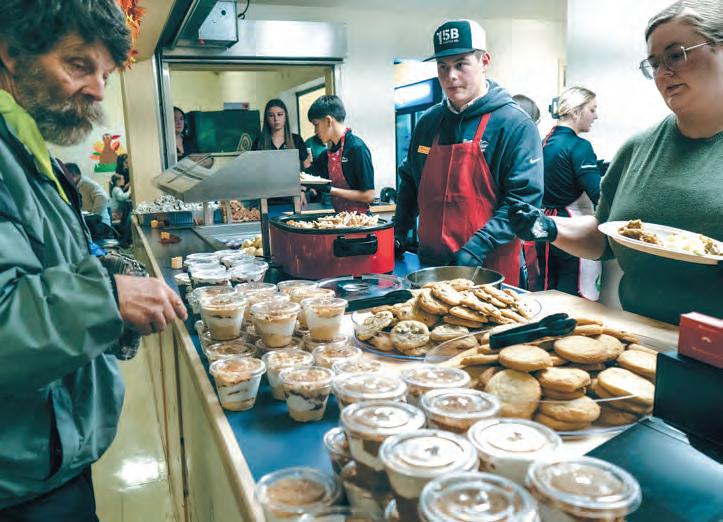
PENDLETON – More than 400 people from the surrounding area got a free turkey dinner on Nov. 20 thanks to the Blue Mountain Community College (BMCC) Associated Student Government (ASG).
Christine Zumwalt, BMCC Student Recruitment & Engagement coordinator, said 242 people were served dinner inside the BMCC Pendleton Campus Student Union, while 110 meals were delivered by volunteers to area residents. Another 40 meals went home with people who attended the dinner for family members who couldn’t attend, and 30 meals went to volunteers after the dinner.
This year, BMCC held the feast earlier than years past. For years, it hosted a traditional Holiday Dinner in December, offering meals to students and community members. However, this year the ASG and its 35 student, staff and local volunteers hosted a Community Turkey Dinner.
From food prep, cooking, meal delivery, food service, decorating to cleanup, the volunteers had a hand in all the dinner’s aspects.
“It was definitely really hectic because this use to be the Holiday Dinner, which we used to have a little bit more time to get ready for,” Katelyn Damianew, ASG vice president, said. “And we have an almost brand-new team this year along with a new advisor, so it was definitely new for all of us, but I think we definitely made it, and we are definitely thankful for all our sponsors.”
Helping BMCC students prepare the meal was the Sweet & Sourdough Co. of Pendleton.
“The Sweet & Sourdough Co. was fabulous,” Zumwalt said. “They put in incredibly long hours to make this dinner happen while launching their own business. They were amazing to work with, patient with volunteers and rolled with the punches when
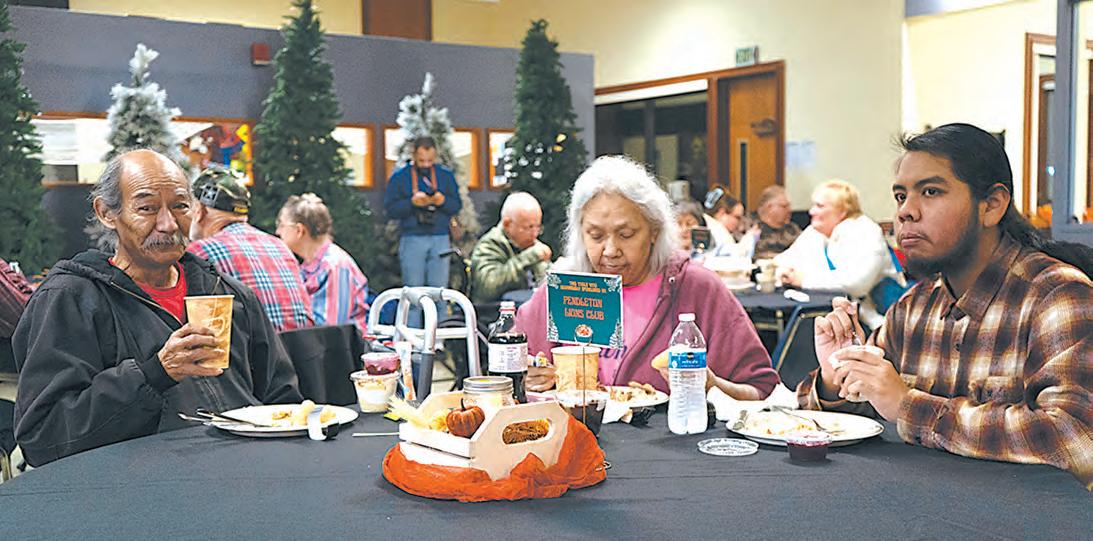
things didn’t go as planned. On top of being talented cooks, they are truly incredible people.”
Other community members and local businesses sponsoring the event included Banner Bank, St. Anthony Hospital, First Community Credit Union, R. Rebellion, Jacob & Cathy Cambier, Pendleton Lions Club, L Reyburn & Doris Collis, Rogers GMC, Subaru and Toyota, Family Health Associates, Byrnes Oil, Altrusa International Foundation of Pendleton, Pendleton Kiwanis Club, and Master Printers.
Zumwalt said donations were still coming in and was expected to cover the dinner’s full cost.
“This is truly an event put on by our community for our community,” she said.
While the dinner was free, BMCC invites the community to support the cause by “Setting Another Place at the Table.” This donation campaign allows anyone to give in a way that directly supports the dinner from funding a single delivered meal to sponsoring a full table. Sponsorship details and links to donate can be found at bluecc. edu/turkeydinner.
“I’m also really excited to be able to give the opportunity to help people in the community during these times because we know that it’s hard,” Damianew said. “So being able to give them a nice homecooked during this time makes me happy.”

sets policy, decides tribal affairs and leads in prioritizing projects and issues by conducting weekly meetings and work sessions.
The BOT now consists of Chairwoman N. Kathryn Brigham; Vice Chairman Aaron Ashley; Treasurer Raymond Huesties; Secretary Monica Paradise; and Members at Large Toby Patrick, Corinne Sams, Lisa Ganuelas and Seirra Quaempts.
“I would like to thank everyone for coming today and thank you for your support in voting me as the Confederated Tribes of the Umatilla Indian Reservation Board of Trustees chair,” Brigham, who served as BOT chairwoman from 2019-2023, said. “For the next two years it is my goal to work with all the Confederated Tribes of the Umatilla Indian Reservation entities internally and externally to accomplish our common goals. As your chair, I plan to listen, be accountable, be respectful, be transparent, be professional, stay focused and seek solutions for our community that benefits the tribe.”
Huesties, who is beginning his second term as BOT treasurer, thanked the crowd for his reelection while reminding it of the BOT’s job to protect and promote CTUIR sovereignty.
“I’m very honored to have the opportunity to serve you folks again,” he said. “I know we are going to have a lot of bumps in the future. We’ll always have a lot of bumps. We’re still dealing with that western expansion. It’s been calm for a while and now it’s starting to rev up again. More people are coming over into our lands. We need to make sure that they are following our rules and our laws, and that’s what this body does, your governing body. It’s a constant education for the people who are coming in to visit. It’s a reminder to those folks that we are not going away.”
Paradise, a first-time BOT member, said she was honored to go from being a spectator at past CTUIR swearing-in ceremonies to being sworn in this year.
“I remember coming and watching every couple of years the swearing in, and so I’m happy that I’m able to stand here today and serve you all,” she said. “One of the biggest things for me growing up with grandparents was the history and the stories that tell us of why we’re here and who we are since time immemorial. So that’s always very important for me to bridge the gaps between history and what is happening today…I am happy to stand here before you and tell you all that I will uphold the constitution, and the Treaty of 1855.”
The General Council meets monthly to hear from its chairperson, the BOT, work groups and tribal members. Special meetings can also be held on specific issues. General Council officers taking their oaths were Chairman Lindsey X. Watchman, Vice Chairman Boots Pond, Secretary Shawna Gavin and Interpreter Thomas Morning Owl.
“It definitely is an honor and privilege to serve in the role of as chairman of the General Council for the Confederated Tribes of the Umatilla Indian Reservation,” Watchman, who served as General Council chairman during the 2021-2023 term before not seeking re-election, said. “I chose this position specifically so that I would keep my opinion to myself and make it a priority with the other officers to reach out and get the General Council’s opinion about a topic.”
Morning Owl retains his seat as a holdover until a new interpreter is elected. The CTUIR Election Commission issued a statement on Nov. 4 saying because it did not receive any nominating petitions from candidates, it subsequently did not catch the missing write-in line until after absentee ballots were mailed. Therefore, no write-in line for the seat was on the ballot. According to the CTUIR Constitution, the Election Commission will establish a separate voting process for all General Council members to vote for the interpreter position.
The newly inaugurated BOT members and General Council officials, except for Morning Owl, were elected in the CTUIR’s Nov. 4 general election and will serve in their respective seats for the next two years.
Also taking their oaths were the CTUIR Junior and Senior Youth Councils.

“It definitely is an honor and privilege to serve in the role of as chairman of the General Council for the Confederated Tribes of
BY THE CUJ
MISSION – Following its passage in the Confederated Tribes of the Umatilla Indian Reservation’s (CTUIR) Nov. 4 general election, a resolution to sell limited alcohol products at the Arrowhead Travel Plaza (ATP) is one step away from completion.
Wildhorse Resort & Casino (WRC) CEO Gary George stated in an email that WRC officials will soon schedule a Board of Trustees (BOT) work session so that new BOT members can consider a resolution or motion to allow beer, wine, hard cider and hard seltzer sales at ATP.
“Once the BOT approves, ATP is ready to begin alcohol sales immediately thereafter,” George stated.
Since previous BOT members had approved alcohol sales at ATP, he stated, the travel plaza’s general manager and crew underwent Oregon Liquor and Cannabis Commission training in 2024 and received OLCC approval for alcohol sales at ATP.
“Also, the CTUIR Liquor Code was updated authorizing packaged liquor sales at Arrowhead. All the proper permits have been in place since 2024,” George stated.
With alcohol sales at ATP only a BOT vote away, the debate over whether to allow such sales is nearly at a close.
According to CTUIR code, on June 12, 2023, the BOT approved limited alcohol sales at ATP with Resolution 23-056 following a survey of General Council members in which 52.71% of them approved such sales.
However, during a special General Council meeting on Jan. 11, 2024, a motion was adopted
that called upon the BOT to rescind Resolution 23-056 and place a referendum on the tribal ballot asking General Council members to decide the matter. Because of the controversy, ATP and WRC management were not allowed to offer alcohol sales at ATP until they had clear direction from the BOT, according to CTUIR code.
On Feb. 26, 2025, the BOT held a work session to review the matter before passing Resolution 25-020 on March 3, 2025. That resolution directed the CTUIR Election Commission to include a referendum vote regarding ATP alcohol sales on the Nov. 4 general election ballot.
The measure passed by 54.45%, according to the Election Commission.
“In accordance with BOT Resolution 25-020, selling alcohol at Arrowhead was put to a referendum vote as part of the tribe’s Nov. 4 general election,” George states. “The General Council voted in favor of ATP alcohol sales by a vote of 428 in favor to 358 opposed… The resolution that approved the referendum said two things about the effect of the referendum vote on ATP alcohol sales. First, that the Board of Trustees shall determine whether to permit Arrowhead alcohol sales based on the results of the referendum vote, and second, that the Board of Trustees hereby directs that the Wildhorse chief executive officer and Arrowhead manager shall take no action to offer alcohol sales at Arrowhead until and unless the Board of Trustees takes official action to permit alcohol sales after the referendum vote. Accordingly, a Board of Trustees resolution or motion will be required to authorize packaged alcohol sales at ATP as previously approved by Resolution 23-056.”
JAMES HOSHEIT, Transportation Planner, CTUIR
For the CUJ
With below-freezing temperatures settling over the region, CTUIR officials are reminding drivers to take extra precautions on the road this winter. Cold weather, snow, and ice can create dangerous conditions, and simple habits can help keep you, your passengers, and the community safe.
Drivers are encouraged to slow down, use headlights at all times, and choose well-traveled routes whenever possible. Road crews also urge motorists not to pass plows or sanding trucks and to give them plenty of space to work.
Key safety recommendations include keeping windows, mirrors, lights, and wipers clear of ice; carrying chains or using traction tires; and avoiding cruise control in wet or icy conditions. Extra caution is advised on bridges, shaded areas,

and concrete highways where ice forms first and melts last.
Officials also stress the importance of communicating your travel plans, maintaining a safe following distance of 6–12 seconds, and steering, braking, and accelerating smoothly. If you lose traction, gradually slow down rather than slamming on the brakes. In the event of an emergency, stay with your vehicle and avoid overexertion.
Before heading out, ensure your exhaust pipe is free of snow to prevent carbon monoxide buildup, keep your gas tank at least half full, and follow manufacturer guidance for maintaining battery charge in electric or hybrid vehicles during cold weather.
For up-to-the-minute travel conditions, Oregonians are encouraged to check TripCheck. com, a statewide resource offering live road cameras, travel speeds, and winter weather alerts.

PORTLAND, Ore.—A
Pendleton man pleaded guilty on Dec. 1 to sexually abusing two minors and engaging in sexual contact with a third minor.

Confederated Tribes of the Umatilla Indian Reservation (CTUIR) member and former CTUIR employee Aaron William Pizer, 41, pleaded guilty to two counts of sexual abuse of a minor and one count of abusive sexual contact. According to court documents, on or between July 10, 2016, and July 9, 2017, and on or between Aug. 22, 2019, and Aug. 21, 2020, Pizer sexually abused two minors under the age of 16 on the Umatilla Indian Reservation (UIR). On April 19, 2024, Pizer engaged in sexual contact on the UIR with a 13-year-old victim.
On Sept. 4, 2024, a federal grand jury in Portland returned a three-count indictment charging Pizer with sexual abuse of a minor and abusive sexual contact.
Pizer faces a maximum sentence of 15 years in prison for counts one and two, a $250,000 fine and a five yearsto-life term of supervised release. He faces a maximum sentence of two years in prison for count three, a $250,000 fine and a five years-to-life term of supervised release. He will be sentenced on March 12 before a U.S. District Court judge.
As part of the plea agreement, Pizer has agreed to pay restitution in full to
the victims.
The FBI, Umatilla Tribal Police Department and Pendleton Police Department are investigating the case.
Assistant U.S. Attorney Cassady Adams is prosecuting the case.
“First and foremost, the Pendleton Police Department should be recognized as their investigator conducted the bulk of the early investigation in this criminal investigation, and the Umatilla County District Attorney’s Office worked with investigators from the Pendleton Police Department and the Umatilla Tribal Police Department to prosecute these cases that took place within their jurisdiction,” UTPD Chief Timothy Addleman said. “The UTPD in partnership with the FBI conducted numerous other investigations into Mr. Pizer’s criminal conduct and were instrumental in bringing this case to the US Attorney’s Office.”
This case was brought in collaboration with Project Safe Childhood, a nationwide initiative to combat the growing epidemic of child sexual exploitation and abuse, launched in May 2006 by the Department of Justice. Led by the U.S. Attorneys’ Offices and the DOJ’s Child Exploitation and Obscenity Section, Project Safe Childhood marshals federal, state and local resources to locate, apprehend and prosecute individuals who exploit children, as well as identify and rescue victims. For more information about Project Safe Childhood, visit www. justice.gov/psc.
The Confederated Tribes of the Umatilla Indian Reservation (CTUIR) has released updated regulations for Tribal members participating in the 2025–26 treaty bison hunt on open and unclaimed lands surrounding Yellowstone National Park.
The hunt season runs Sept. 1, 2025, through March 31, 2026, with bull-only harvest from March 1–31. Eligible CTUIR hunters must be in good standing with the CTUIR Fish and Wildlife Commission and have completed a bison hunt orientation within the past three years.
Hunt Permits & Party Requirements
Permits are issued as party permits, requiring a Hunt Party Leader and at least one assistant—though a minimum of three assistants must be present during any active hunt. All applications must be submitted at least 15 days before the intended hunt date. Hunt Party Leaders must also attend an annual pre-hunt orientation and are responsible for reporting all harvest data within 72 hours.
Coordination With Enforcement
Hunt Party Leaders must contact Umatilla Tribal Police Game Enforcement five working days before a hunt. Hunting without prior coordination is considered a violation.
Hunt Area & Limits
Hunting is allowed on open and unclaimed lands in Montana outside Yellowstone National Park, with some exceptions such as the Royal Teton Ranch Buffer Zone. Only two bison may be on the ground at one time per party, and each animal must be fully processed and removed from the field before another is taken.
Weapons & Waste Requirements
Only centerfire rifles with 150-grain or larger bullets are allowed. All edible portions, as well as hide, head, heart, and liver, must be packed out. Waste of game may result in prosecution.
Additional Provisions
• Non-eligible individuals may assist only with field dressing and transport—not pursuit or harvest.
• Tribal I.D. and the CTUIR bison permit must be carried at all times and shown on request.
• Over-snow vehicles are permitted where not restricted; shooting from vehicles or across groomed trails is prohibited.
• The Fish and Wildlife Commission may issue emergency closures based on biological or safety concerns. Tribal members are encouraged to review the full regulations before applying or heading into the field.
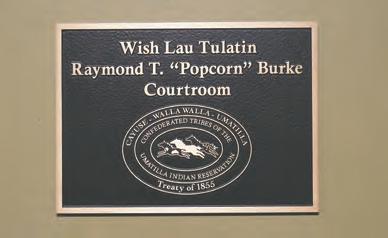
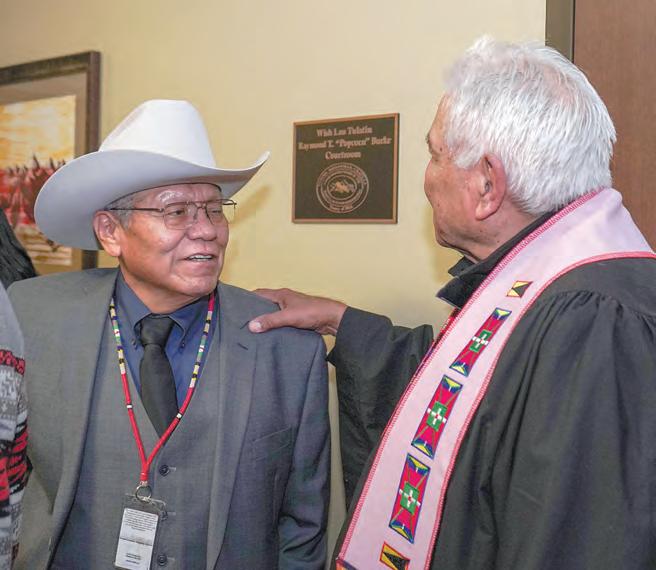
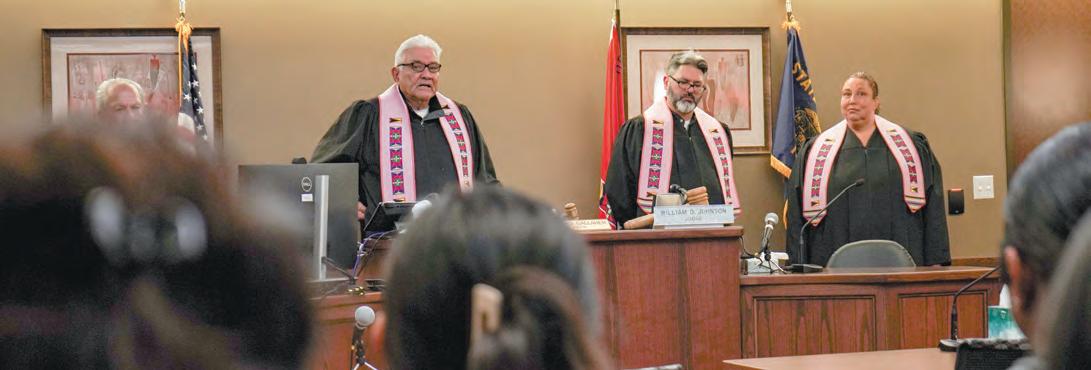
MISSION - The Wish-Lau Tulatin Raymond T. “Popcorn” Burke Courtroom was named in late 2024 at the recommendation of Chief Judge Bill Johnson to honor Burke, the Tribe’s first chief judge. Known for his fairness and belief in self-governance, Burke often said, “We want to do things for ourselves and we want to do them our way,” and reminded the court that “we don’t throw people away.”
The bench now includes Chief Judge Johnson and Associate Judges Dave Gallaher, Doug Nash, Naomi Stacy, Matt Johnson and Louisa Allman.


from Page A12
The meeting took place at Blue Creek, one of the most important tributaries on the Lower Klamath River and a salmon sanctuary with spiritual significance, recently returned to the Yurok Tribe.
The coalition handed the executives a document that outlined the key terms and conditions of their proposed agreement. They talked about their proposal and then let the river speak for itself, according to Cordalis.
The next business day, both parties were in discussion. In the end, the $550 million agreement to dismantle the aging dams cost less than it would to upgrade them to meet modern environmental standards.
Cordalis said that the dam removal, one of the largest nature-based solution projects in the world thus far, can be replicated for environmental and economic gain.
“When we choose to work together toward sustainability, we can create different outcomes that are better for the planet, better for people,” Cordalis said.
“We don’t have to accept that the only path to prosperity is industrializing nature,” she said. “We can adjust our practices, find
nature-based solutions” and continue to enjoy a modern lifestyle, while working to heal nature.
This is a historic time, she said. “We are at a tipping point and what we do matters,” she said. Clean air and water, and natural, nutritious food are needed for life to survive.
Ripple effects
Cordalis’ work and motivations are captured in the 2024 Patagonia Films documentary, “Undammed: Amy Bowers Cordalis and the fight to free the Klamath,” which plays on a screen inside the Yurok Country Visitor Center in downtown Klamath, a small coastal city in California.
Cordalis has been recognized by various groups for her involvement with the largest river restoration project in history.
She received the United Nation’s highest environmental honor, UN Champion of the Earth, and selected for Time magazine’s 100 most influential climate leaders in 2024.
In October, she was announced as one of 10 change makers in the 20th L’Oreal Paris Women of Worth philanthropic program.
The $25,000 award, given for her climate action work that fuses law, policy and Indigenous knowledge, will help Ridges to Riffles Indigenous Conservation
Group, the nonprofit she co-founded in 2022 with Karuk Tribal member Molli Myers, continue to work on life-changing restoration projects.
“The L’Oreal Paris Woman of Worth award is a tremendous opportunity because it will uplift our work and expand our partnerships,” Cordalis said. “The power of being in partnership, collaborating and combining resources and efforts, expands and strengthens the scope of all of our work.”
She said one of her greatest joys is hearing about people restoring nature in their community and the worldwide “ripple effects” of those efforts.
Cordalis titled her book “The Water Remembers” because the river and people remember the salmon. “We have ancestral knowledge about what it was like to live on a healthy planet,” she said.
When the Klamath River’s ecosystem started collapsing, “that put us into this culture of scarcity,” she said. “Rebuilding ecosystem resiliency lets us recover from the colonial period and move toward a culture of abundance.”
Today, tribal members are restoring the Klamath River’s almost 400 miles of historic salmon spawning habitat. Revegetation efforts include planting native seeds, trees, shrubs and grasses.

Starting Feb. 1, 2026, travelers who arrive at airport security without an acceptable form of identification, including those with non-REAL ID driver’s licenses, will be directed to a new TSA identity-verification option that costs $45 for a 10-day travel period. The optional system, called TSA Confirm.ID, allows passengers to verify their identity and continue traveling, though TSA warns the process may increase waiting times.
TSA continues to urge travelers to upgrade to a REAL ID or carry another approved form of identification well before their trip. Acceptable IDs include U.S. passports, tribal IDs issued by federally recognized Tribal Nations (including Enhanced Tribal Cards), DHS trusted traveler cards, Department of Defense IDs, and others. The agency says more than 94 percent of travelers already use REAL ID or another approved document. Those who do not will be referred to the Confirm.ID process and may pay online in advance or at the checkpoint.
For CTUIR members, carrying your Tribal ID remains an important protection.
The CTUIR Enrollment Department issues official Tribal Membership Identification Cards, which are accepted forms of identification at TSA checkpoints. Cards cost $5 and can be obtained without an appointment by emailing enrollment@ ctuir.org or calling 541-429-7025, Monday through Friday, 7:30 a.m. to 4 p.m. Carrying your CTUIRissued card helps verify your identity and provides an additional layer of security while traveling.

Actor says she was stopped and questioned by masked group
THE CUJ
REDMOND, Wash. —Elaine Miles, a member of the Confederated Tribes of the Umatilla Indian Reservation (CTUIR) says she was stopped and questioned by a group of unidentified men in Redmond on Nov. 3, an encounter she described as frightening, confusing and racially targeted.
Miles, who is famously known actress for her roles in “Northern Exposure” and “Smoke Signals,” and who lives on the east side of Seattle, said she was walking to a bus stop after finishing errands and visiting her bank when a vehicle pulled up and several men wearing masks approached her. She said they demanded to see her identification but did not present badges, names, or any clear agency information.
Miles told the CUJ the men dismissed her tribal ID as “fake,” despite her repeated explanations that it is a federal form of identification from a federally recognized tribe. Miles said she also offered her birth certificate and passport, which she routinely carries.
“They kept saying, ‘We need to know if you’re Mexican,’” Miles said. Miles said two young women at the bus stop also appeared frightened. She advised them not to show identification after the men rejected hers. According to Miles, the group left abruptly after someone in the vehicle signaled to them.
Miles said one of the men even remarked on her beaded earrings, telling the others, “She doesn’t look Mexican — she’s got bead earrings,” a comment she described as unsettling and dismissive.
This incident comes as rumors of ICE vehicles circulated last week on and around the Umatilla Indian Reservation, prompting concern among families and schools.
Umatilla Tribal Police Department officials confirmed the reports were unfounded, and the Pendleton School District also issued a statement saying there was no verified ICE presence in the area. However, the CTUIR Board of Trustees plans to meet to discuss ways the Tribe can stay informed about any federal agents operating in the region and ensure the community remains aware and prepared.
“I stayed calm the whole time because my parents taught me to know my rights,” she said. “But it was scary. They never showed badges, and their vehicle didn’t have proper plates.”
Miles said her adult son was stopped by similar individuals a week later in Bellevue, despite showing both his tribal ID and military identification.
Miles said she reported the encounter on social media, but not to local police. She said she has since been contacted by multiple news outlets.
Community concerns about immigration enforcement activity have circulated throughout Washington in recent weeks. However, there has been no official confirmation about the identity of the men who stopped Miles, and she emphasized that the individuals never identified themselves or the authority they claimed to represent.
Miles’ advice to others is to remain calm, carry valid identification, and check in on friends and family.
“This can happen to any brown person,” she said. “People need to be prepared and aware of their surroundings.”
Miles plans to continue speaking publicly about the incident and encourages others who have experienced similar encounters to come forward.
If ICE agents approach or question you in PUBLIC:
• ASK TO VERIFY THEIR IDENTITY: Politely request to see the agents’ identification or badge to confirm their legitimacy.
• DO NOT RESIST: In the event ICE agents force entry, remain calm and avoid resistance to their actions.
• IF YOU ARE DETAINED OR ARRESTED, clearly state, “I am exercising my right to remain silent. I want to speak to my attorney.”
• DOCUMENT THE ENCOUNTER: If possible, record the interaction through video or audio and make note of important details such as names, times, and any relevant circumstances.
• REPORT THE ENCOUNTER: Notify your local American Civil Liberties Union (ACLU) affiliate or legal support organization about any raids or checkpoints for proper follow-up assistance.
If ICE agents show up to your HOME:
• DO NOT OPEN THE DOOR: If ICE agents do not present a valid warrant, keep the door securely closed and respectively state, “I do not consent to your entry.”
• ASK FOR A WARRANT: Ask to see a warrant signed by a judge before allowing action to proceed.
Tribal Membership Identification Card Information: To further protect yourself, carry your CTUIR-issued tribal membership card.
• Tribal identification cards are issued through the CTUIR Enrollment Department.
• Cards are $5. To contact Enrollment, email enrollment@ctuir.org or call 541-429-7025, Monday through Friday, from 7:30 a.m. to 4 p.m., no appointment necessary.



















































































































































































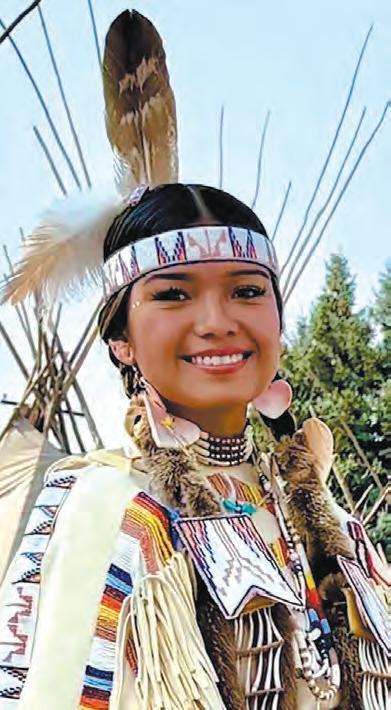
PENDLETON – The Happy Canyon Board of Directors is proud to announce MyaLyn Mills and Manaia Wolf as the 2026 Happy Canyon Princesses. These two outstanding young women will serve as official ambassadors of the Happy Canyon Night Show, Oregon’s premier outdoor night pageant, performed each evening during the world-famous Pendleton Round-Up.
A formal introduction of Princess MyaLyn and Princess Manaia will take place at the annual Princess Brunch
“The Abandons” available for streaming beginning Dec. 4
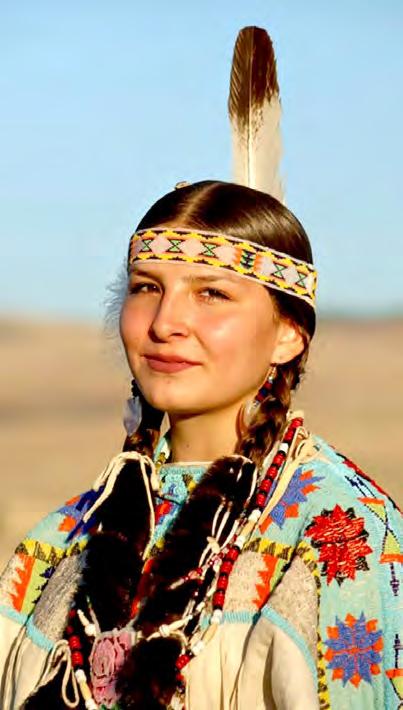
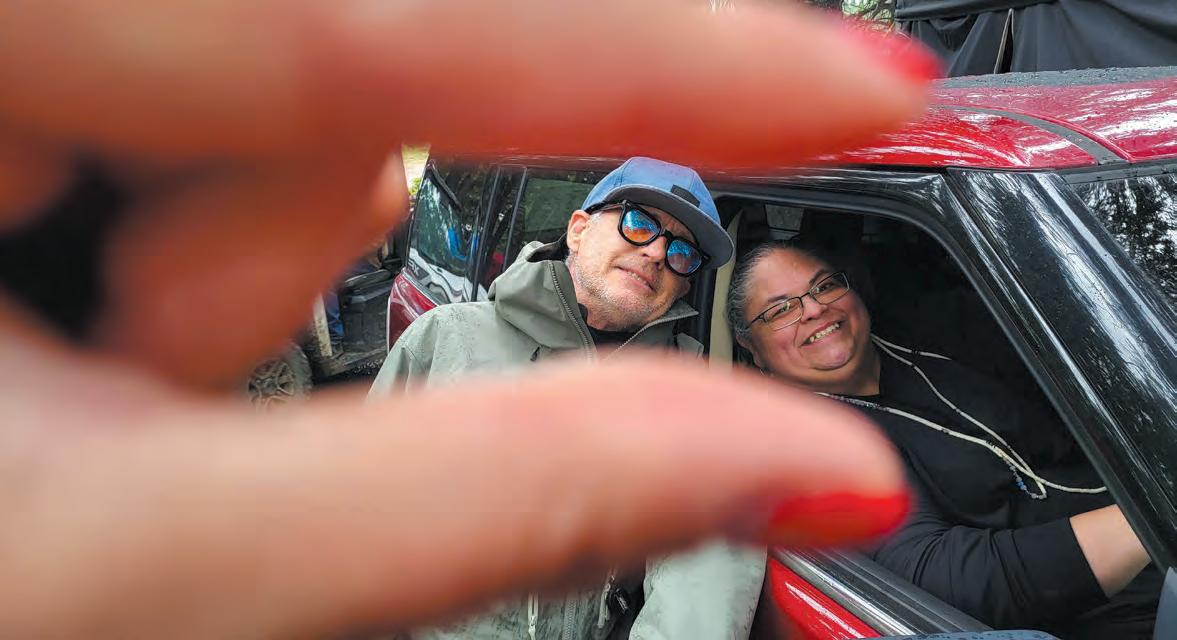
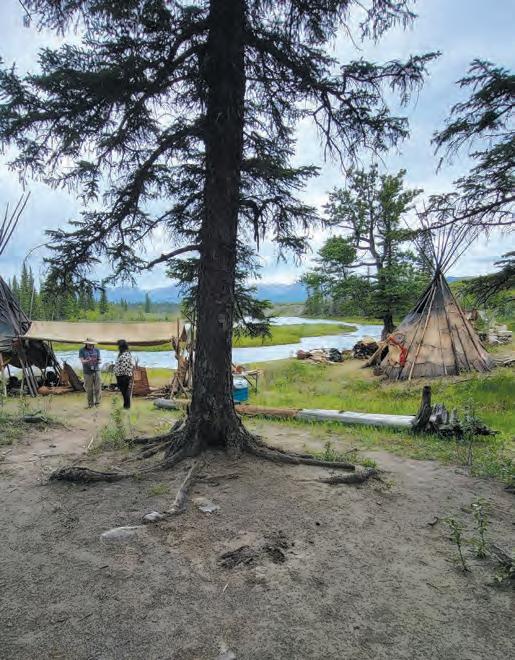
A group of CTUIR cultural and language experts recently supported production of The Abandons, a new Netflix series premiering Dec. 4. Filming took place in 2024 on Stoney Nakoda First Nations land west of Calgary, Alberta—an area familiar to many as the landscape used in The Revenant.
Serving as Cultural and Language Consultants were ʔinm’ásqap Josiah Pinkham, ʔinm’éeks Kaz Kipp (who was later promoted to producer), weyíiletpunm sepehitemenew’éet Kristen Parr, and CTUIR graduate student and Oregon State University scholar Cloe McMichael. Their work included advising on cultural accuracy, language use and representation throughout production.
Pinkham also provided guidance to the wardrobe department on Plateau-style clothing to help ensure authenticity in the series. “The wardrobe crew did a great job,” the team shared. Native actors featured in the series speak niimiipuutímtki, reflecting the Weyíiletpuu identity of the characters portrayed.
The Abandons includes a number of wellknown Native and non-Native actors and will debut with eight episodes. The series becomes available for streaming on Netflix beginning Dec. 4.

on Saturday, Dec. 13, at 10:00 a.m. at the Pendleton Convention Center. The event is open to the public, and community members are invited to join in celebrating the new princesses.
“We’re thrilled to welcome MyaLyn and Manaia as the 2026 Happy Canyon Princesses,” said Happy Canyon President Kipp Curtis. “They represent both the strength of our history and the spirit of our future.”
See HAPPY CANYON, Page B4
Language
efforts.
She

Winter sports are officially underway across the region, and the CUJ will be tracking scores, highlights and standout moments from our local area schools all season long. Seeing a gap in consistent high school sports coverage, we are working to provide timely updates, solid reporting and recognition for our student-athletes. This is our renewed attempt to provide consistent local sports coverage, and we appreciate your patience as we continue to rebuild and strengthen our reporting.
PAIGE PARKER
Oregon Community Foundation
We’re about to walk beside a creek and into a forest where someone is telling a fuller story of Oregon.
We’ll begin at the headwaters of Tryon Creek near the storefronts of Portland’s Multnomah Village and the traffic-laden I-5 corridor. We’ll continue through the modern, noisy cities of Portland and Lake Oswego that grew around the steep slopes of the creek, see the pipes and culverts that divert it, the stormwater that drains into it and the homes and roads that encroach upon it.
And we’ll arrive in a hushed forest where bigleaf maple, Douglas Fir and western red cedar tower over sword ferns, Oregon grape and red huckleberries. Here, Tryon Creek seeps and burbles over basalts that were laid down deep by lava flows 7 million years ago, then buried by wind-blown sand and silt and topped by soils and rocks carried by the Missoula floods.
This is the Tryon Creek State Natural Area. From here, the creek travels the rest of its seven miles, ending at its confluence with the Willamette River. It’s a little creek, and it’s part of something much, much bigger.
The First Peoples have lived on and traveled through this land with the seasons since a time beyond memory, gathering and harvesting berries, camas and wapato, hunting wild game, and fishing for steelhead, salmon and lamprey.
So, you can imagine the surprise of one of their descendants — Gabe Sheoships, who is Cayuse, Walla Walla and a Citizen of the Confederated Tribes of the Umatilla Indian Reservation — when he joined the nonprofit Friends of Tryon Creek as its education director and saw a timeline and interpretive exhibits that began in 1850.
That’s when a man from Vermont, Dr. Socrates Hotchkiss Tryon, took out a donation land claim of 645 acres of canyon bisected by a creek and forested with virgin cedar and Douglas Fir. Tryon cut down a lot of those trees, built a house, sawmill and farm — and died five years later. His name stuck around. The rest of the story didn’t.
Sheoships — a fisheries biologist who is now executive director of Friends of Tryon Creek — has spent the last nine years trying to change that. The organization’s influence now stretches beyond the park’s boundaries and into how our region’s educators, environmentalists, philanthropists and policymakers think about ecology and land stewardship.
“One of the biggest misconceptions is that tribes are in the past, that they’re not around anymore, that they don’t carry their traditions or histories,” Sheoships says. “We meet kids that aren’t aware that there are any tribal members left, or they think that fishing for salmon and lamprey happened hundreds
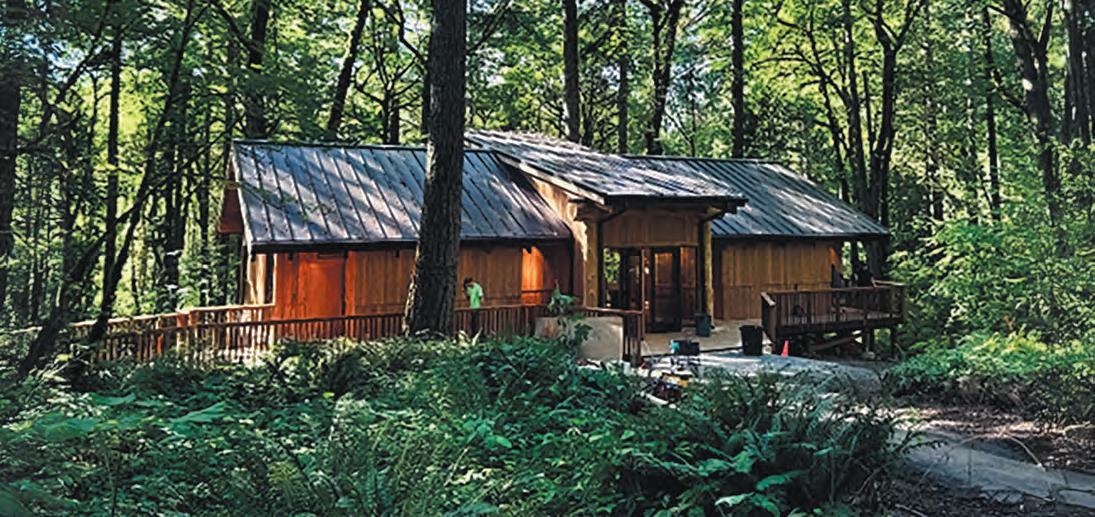
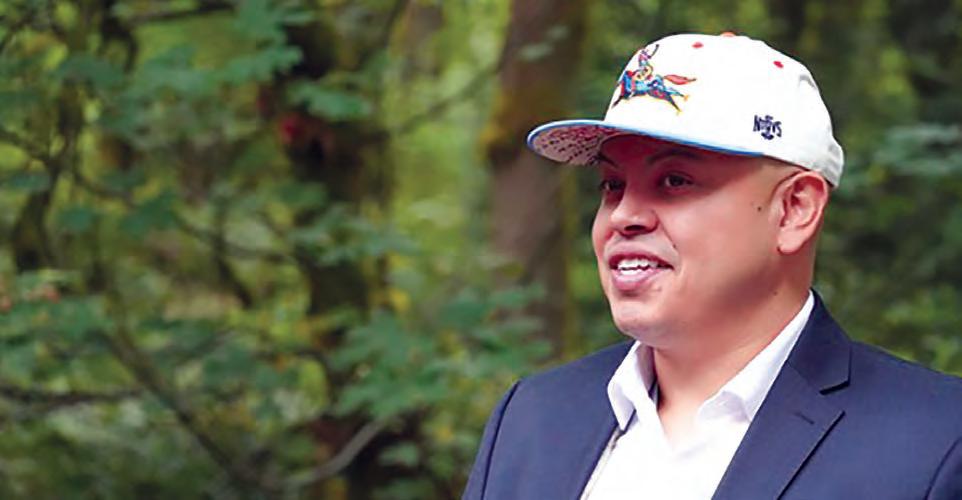
“One of the biggest misconceptions is that tribes are in the past, that they’re not around anymore, that they don’t carry their traditions or histories.”
— GABE SHEOSHIPS
of years ago, when really, that happened yesterday.”
The preservation of Tryon Creek began in the late 1960s when a group of about 300 women raised money door-to-door and partnered with the state to create a state park. The group became Friends of Tryon Creek, and they acquired land over 17 years through donations and purchases. The park’s neighbors helped save it from development, and neighbors still volunteer.
However, as is the case with other public lands, the park became exclusive, mostly visited by wealthy people who lived nearby. The board promoted Sheoships in 2020 to make it a park that welcomed everyone to the peace of the forest, and that began by welcoming back its first inhabitants.
Leading with Belonging
Sheoships took an inter-tribal approach, reaching all nine of Oregon’s federally recognized tribes and tribal governments. He recruited to the board Indigenous people, other people of color and younger members and worked with the board on a new strategic plan. Creating an inclusive community would be at the core of that plan and so would telling authentic stories of people, place and landscape as a stated goal.
Under Sheoships’ leadership, Friends of Tryon Creek has woven indigenous knowledge and traditional ecological knowledge throughout the park’s education programs, offering insight into the connections between people, plants, animals and water.
The approach now reaches thousands of students each year through field trips, cultural ecology trainings for educators and annual events such as Indigenous Culture
Day and a Tribal Water Summit.
“Tryon Creek is a gateway to the entire state,” Sheoships says. “When someone comes to visit us, we’re hoping that they’ll take this knowledge and these values wherever they go in life.”
Through programs like Native Family Nights, Indigenous Community Day and partnerships with community organizations — including groups serving immigrants, LGBTQ+ hikers and families with limited transportation — Friends of Tryon Creek is reducing barriers and redefining what belonging in nature looks like.
“There are some cultural underpinnings in the way Gabe leads,” says Direlle Calica, director of the Institute for Tribal Government at Portland State University’s Mark O. Hatfield School of Government.
Calica, who is Filipina and a citizen of the Confederated Tribes of Warm Springs, co-taught a tribal relations certificate program with Sheoships for several years.
“In our plateau culture, there is a style of leadership that is very statesmanlike — well spoken, thoughtful and seeking multiple perspectives,” she said. “I appreciate the way Gabe is always seeking advice from folks. He came in with a sense of integrity, grace and diplomacy. As a tribal person, we have a responsibility to be a steward of and speak for those natural resources, and Gabe does that.”
Visit Tryon Creek today and one of the first things you’ll see is a $2.6 million education pavilion built in the style of a traditional Northwest tribal plankhouse. Made with Western red cedar, the building’s
bluestone hallway represents Columbia River basalt.
Sheoships has called the pavilion a “living land acknowledgement.” To commemorate Tryon Creek as a place of connection among tribal people, the building will permanently display original carved artworks by renowned local Indigenous artists: Shirod Younker (Coquille Indian Tribe), Gregory Archuleta (Confederated Tribes of Grand Ronde) and Greg Robinson (Chinook Indian Nation). Artist Earl Davis (Shoalwater Bay Indian Tribe) will create metal recognition pieces.
The pavilion will serve youth and families from across the Metro area through year-round day camps, field trips and adult programs, as well as Oregon State Parks programs. Funding came from OCF and its donors, the Hollis Foundation, the Gray Family Foundation, the State of Oregon, Metro, Craft3, Meyer Memorial Trust, M.J. Murdock Charitable Trust, the Marcia H. Randall Foundation and hundreds of private citizens. Building it brought a lot of people together — as Sheoships tends to do.
OCF supported the project because it exemplifies how partnership, place and cultural understanding can lead to stronger, more equitable communities.
“Right now, it feels like there’s so much pulling apart,” says Carlos Garcia, OCF’s senior program officer for the environment. “You win; I lose. I win; you lose. It’s a zero-sum game. I think Gabe has done this in a way that has managed to expand who the park serves while still keeping everybody in the tent. OCF is a bridge, and Gabe has been a bridge in many ways, not just at Tryon, but other places, too.”
Tom Gaskill, executive director of Greater Oregon City Watershed Council, says when he met Sheoships, they introduced themselves by talking about how they live in the same watershed, a commonality they return to. Sheoships inspires him, he says.
“Just by being who he is, he’s helping us to form as a community in this watershed,” Gaskill says, adding that he’s “in awe” of the educational pavilion and what it represents.
It’s one building — and it’s part of something much, much bigger.
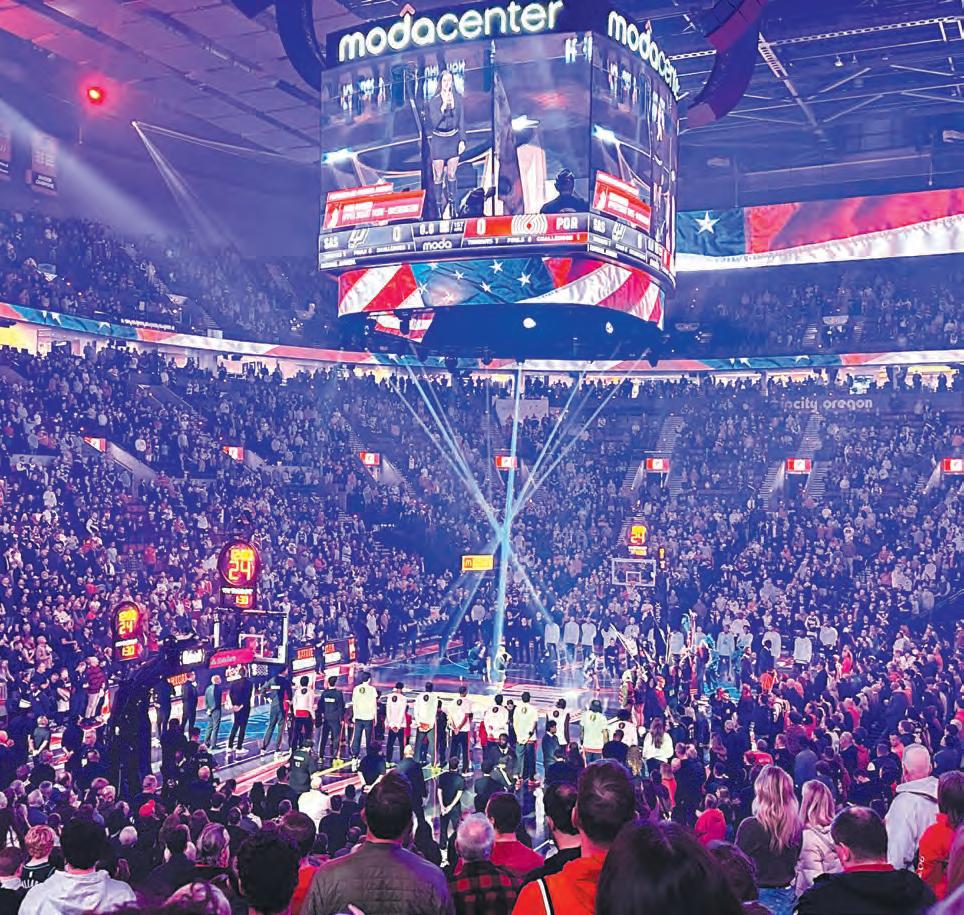
PORTLAND — More than 100 Confederated Tribes of the Umatilla Indian Reservatioin tribal members attended the game after winning tickets provided by the CTUIR Board of Trustees as an effort to show appreciation and increase tribal representation at the event. CTUIR member Micah Johnson was recognized for his work with Native youth in Portland, and Executive Director JD Tovey III delivered the game ball adding to CTUIR’s visibility and representation at the event.



Princess MyaLyn, whose Indian name is Panaknuwithla (“the one who takes care of us”), is an 18-year-old enrolled member of the Confederated Tribes of the Umatilla Indian Reservation (CTUIR). A 2025 graduate of Nixyáawii Community School, she is continuing her education at Blue Mountain Community College, pursuing a bachelor’s degree in nursing with an emphasis on pediatrics. She hopes to gain experience at a children’s hospital before returning to serve her community on the reservation.
Princess MyaLyn is the daughter of Celeste Watchman and Jack Mills, and the proud sister of Dion Denny, Chelsie Paddlety, Mari Mills, and James and Madison Marsh. Her family’s strong ties to Happy Canyon, the Pendleton Round-Up, and CTUIR history run deep.
Following the example of her mother and her aunt Renee, Princess MyaLyn has participated in the Junior and American Indian Beauty Pageants, earning second runner-up in 2024. Raised on her childhood horse, Dreamer, she began appearing in parades at just three years old, and was riding even earlier. Her great-great-grandparents, Lucy and Wilbur, have held a place in the Pendleton Round-Up Teepee Village since the 1920s. She is honored to continue her family’s longstanding Happy Canyon legacy, including that of her cousin Avery Quaempts and grandmother Michelle Spencer.
In her free time, Princess MyaLyn enjoys trail riding, beading, baking, fishing, hunting, powwow dancing and leatherwork. At Nixyáawii, she photographed school events, managed the girls’ basketball team and was a member of Communicare. She also completed the NW NARCH Public Health Research and Tribal Health Scholar Academy, further strengthening her commitment to community health.
She will ride her paint horse, Foxy, with trappings she designed alongside her aunts Julie
Johnson and Tina Calamity of the Fort McDermitt Paiute Shoshone Tribe. She will also proudly use her family’s first set of horse trappings, crafted by her paternal grandmother, Loretta Wright.
“As a 2026 Happy Canyon Princess, I am excited to represent my community, build new connections, and deepen relationships within the Happy Canyon and Pendleton Round-Up courts,” Princess MyaLyn said.
Princess Manaia Wolf
Princess Manaia, whose Indian name is Tanawiinanmay (“inquiring maiden”), is a 17-year-old enrolled CTUIR member and a senior at Weston-McEwen High School in Athena. She is the eldest daughter and middle child of Jeremy and Althea Wolf, and the sister of Aiden Mamnisha and Stella Watishyosyos. She is also close with her cousins, Althea Hicks, Clarise, Garrett, Richard and Oscar Huesties, who will rotate as her horse crew. She comes from the Wolf, Charlie and Conner families on her father’s side and the Burke, Patrick, Jones and Pond families on her mother’s side.
Her family has been involved with Happy Canyon and the Pendleton Round-Up since their earliest days. Princess Manaia first appeared in Happy Canyon as a baby, tucked into her babyboard during the trade scene. She now becomes the third consecutive generation in her family to serve as a Happy Canyon Princess, continuing a 30-year pattern: her grandmother Alvina (Burke) Huesties in 1963; great-aunt Judy (Burke) Farrow in 1966; aunt Esther Huesties in 1993; and her mother Althea Huesties-Wolf in 1996.
Princess Manaia’s dress was gifted to her by her grandmother, whom she calls Kotsa, at her auntie Esther’s memorial. The dress, created nearly 110 years ago by renowned Columbia Plateau dressmaker Elsie Pistelhead, was crafted when Elsie was just 16 during what she described as her “psychedelic design phase.” The accessories were beaded by Kotsa, and her headband was made by atway Cheryl Conner. Her matching horse regalia was created primarily by
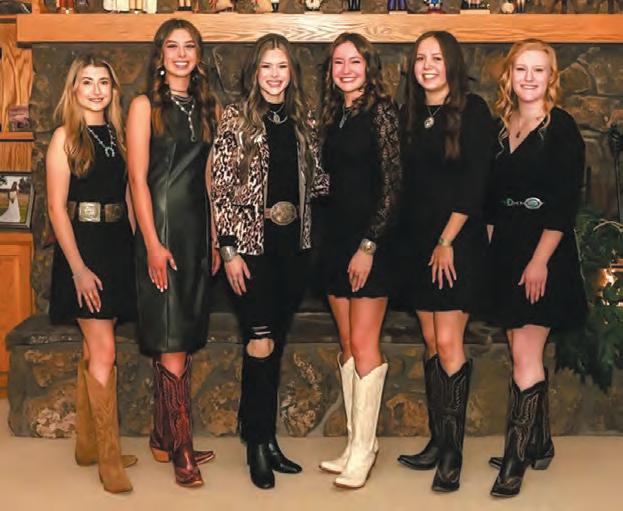
her grandmother Sue Sams, with help from her mother and auntie Feather Sams-Huesties.
At Weston-McEwen, Princess Manaia competes in cross-country, basketball and track; serves as Chairperson of Atina Club; is a member of the National Honor Society; and plays snare drum for the Scottish Pipe & Drum Band. Outside of school, she is a youth whitewater rafting guide, practices rope beadwork and bag weaving, digs for seasonal first foods at the Longhouse, cooks for ceremonies and gathers roots and medicines with her family. As a 4-H member, she focuses on barebow archery and horse projects.
“As I prepare for my year as a Happy Canyon princess, I look forward to representing my family in new places, making new memories, and sharing how Happy Canyon continues to preserve and protect elements of my Native culture,” Princess Manaia said.
The Happy Canyon Night Show will celebrate 110 years in 2026, in conjunction with the Pendleton Round-Up taking place from Sept. 1619, 2026.

BY THE CUJ
PENDLETON – The Crow’s Shadow Institute of the Arts (CSIA) and Pendleton Center for the Arts (PCA) are collaborating on a miniature baskets exhibit titled “By My Hand: Holding Power.”
The exhibit, which runs until Dec. 31 at the PCA, features work by beginning and experienced weavers.
“While miniature baskets are small enough to fit in one’s hand, they hold an enormous amount of technical mastery, tradition, artistry and cultural knowledge,” a CSIA release states. “Plateau baskets (Wa’paas) are specific to the people of the Columbia Plateau, but basketry appears across countless cultures around the world and has been fertile ground for a wide range of artistic exploration.”
The CSIA is a nonprofit organization founded in 1992, serving Native American artists and communities. Its vision is to inspire a world enriched and elevated by Indigenous creativity.
In the three decades since its founding, CSIA has emerged as a premier studio, renowned for advancing Native voices in contemporary fine art printmaking, while championing the preservation of Indigenous artistic traditions. Nestled at the foothills of Oregon’s Blue Mountains on the traditional homelands of the Cayuse, Walla Walla and Umatilla people, CSIA stands as a beacon for artistic innovation and cultural continuity. Its Traditional Arts program sustains the deep heritage of practices such as beadwork, basketry and garment-making,

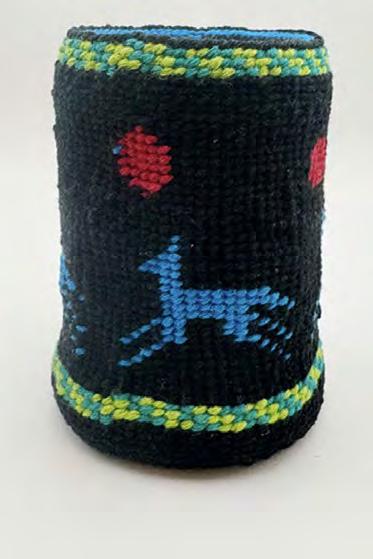
Best Wa’paas by an enrolled tribal member – Bernadine Mardel
Best use of post-consumer waste –Donna C. Kuttner
Best use of non-traditional materials – Claudia Mullek
Best Micro-Miniature (Less than 1″ in any direction) – Avary Rose McKay
Best Natural Fibers (100% natural materials) – Gloria Stanley
Best Pattern – Robin Rankin Coffin Honorable Mentions – Marion Halupczok, Fabian Spencer, Kawika Maui Kalama
Special Judge’s Award –Sherrie Fairfield-Larson
offering artists a rare space to explore both ancestral techniques and contemporary forms.
The CSIA’s commitment to Native perspectives in fine art has established it as a vital force within the arts community, where tradition and innovation converge in service to a vibrant, relevant and ever-evolving cultural legacy.














CONFEDERATED
LOS ANGELES, CA - Bring Them Home / Aiskótáhkapiyaaya, a new feature documentary executive produced and narrated by Academy Award–nominated actress Lily Gladstone, debuted on OPB on Nov. 24, 2025.
The film was broadcast nationwide to 330 local PBS stations, and available to stream on the PBS App, PBS.org and wellbeings.org.
Bring Them Home tells the powerful, urgent story of the Blackfeet Nation’s decades-long effort to return wild buffalo (“iinnii” in Blackfeet) to their ancestral lands, and with them, a critical part of Blackfeet identity, spirituality and sovereignty. The film is directed by Daniel Glick and Ivan and Ivy MacDonald, a brother and sister filmmaking team who are members of the Blackfeet Tribe. Blackfeet tribal members were involved in telling the story at every level of the process and the film was made in close consultation with a Blackfeet Tribal Member Advisory Board.
“The Blackfeet effort to return wild buffalo to the native lands where they once thrived is a story of extraordinary perseverance against the malignant forces of natural and cultural eradication. As the Blackfeet reclaim and revitalize a central part of this heritage, both Indigenous and non-Indigenous communities can draw from this initiative a powerful lesson about the importance of reconnecting with nature through conservation,” said Glick and the MacDonalds in a joint statement.
The 54-minute documentary for PBS broadcast was excerpted from an 85-minute theatrical version, both of which chronicle the decadeslong initiative by members of the Blackfoot Confederacy to bring wild buffalo back to the Blackfeet Reservation. A thriving wild buffalo population would not only reconnect Blackfeet with a central part of their heritage, spirituality and identity, but would provide economic opportunities and healing for the community.



“The Blackfeet effort to return wild buffalo to the native lands where they once thrived is a story of extraordinary perseverance against the malignant forces of natural and cultural eradication.”
— DIRECTORS DANIEL GLICK, IVAN AND IVY MACDONALD
Along the way, however, the initiative faces obstacles from ranchers who see the buffalo as a threat to the cattle ranches that dominate the land and are a legacy of colonization.
“Bring Them Home is a monumental film depicting a monumental achievement. We are thrilled to bring this powerful documentary to public media and the general public. It beautifully tells of the hard-earned efforts of the Blackfeet to restore not only their land, but also their cultural identity and relationships by returning wild buffalo to their natural home,” said Derek Roberto of WETA.
Bring Them Home examines the deeply meaningful role that buffalo played in Blackfeet life prior to the arrival of settlers who nearly eradicated wild buffalo in an effort to eradicate the Blackfeet people. For Blackfeet, the buffalo are seen not only as fundamental to a healthy ecosystem, but as spiritual relatives. Their removal from the land meant the loss of the Blackfeet way of life, the trauma of which still reverberates today.
In the present day, the film focuses on three main protagonists who are at the heart of the effort to reclaim these traditions through wildlife conservation: Ervin Carlson, director of the Blackfeet Buffalo Program; Paulette Fox,
co-creator of the Iinii Initiative; and Leroy Little Bear, a leading tribal elder and educator involved in the Iinii Initiative. They join forces with nonNative conservation groups, such as the Wildlife Conservation Society of New York City, who recognize the buffalo as a keystone species not only for Blackfeet lands, but for North America’s ecological stability. Ultimately, they strive to return to the wild a herd of buffalo that are direct descendants of the buffalo that originally inhabited their land.
The documentary recently received the Big Sky Award at the Big Sky Documentary Film Festival in Montana, recognizing its artistic achievement in honoring the character, history, tradition and imagination of the American West. It also screened at the Salem Film Fest in March 2024, where it was met with critical and audience acclaim.
As part of the national debut, the producers of Bring Them Home developed a robust public impact campaign in consultation with the Blackfeet community and in partnership with numerous conservation organizations that will include screenings and panel discussions across the United States. The initiative, anchored in the themes of reciprocity, education, action and advocacy, will expand learning on the importance of buffalo to Blackfeet culture and build support for returning more wild buffalo to Indigenous land.
More information on the film and impact campaign is available at thunderheartfilms.com.
About Bring Them Home
Bring Them Home is a production of Thunderheart Films and The Redford Center. Directed by Ivan MacDonald, Ivy MacDonald and Daniel Glick. Produced by Daniel Glick, Ivan MacDonald and Sarah Clarke. Cinematography by Zane Clampett, Kier Atherton and Daniel Glick. Executive produced by Melissa Grumhaus, Sarah Clarke and Lily Gladstone. Narrated by Lily Gladstone.

















































BY THE CUJ
MISSION – In a continued effort to promote health, safety and dignity for all community members, Yellowhawk Tribal Health Center’s (Yellowhawk) Behavioral Health department is launching two harm reduction vending machines on the Confederated Tribes of the Umatilla Indian Reservation (CTUIR).
Due to the opioid epidemic on Oregon reservations, Yellowhawk is ramping up harm reduction efforts. These vending machines provide that opportunity with ease of access to community members.
The machines will soon be available 24 hours a day seven days a week at Wildhorse Resort & Casino and outside of Mission Market, offering free access to life-saving and essential supplies.
The vending machines, one specifically designed for outdoor conditions, are funded through the opioid settlement funding. Both will be stocked with naloxone (Narcan), basic hygiene products and other harm reduction supplies. They are free to acquire, no money needed or stored in the machine, ensuring accessibility for anyone in need.
“While we do not encourage drug use,” said Cindy Cecil, clinical director of Yellowhawk’s Behavioral, “we acknowledge that some members of our community are facing serious challenges and our primary responsibility as a health care organization is to promote health and wellness, reduce harm and ultimately save lives. Each machine is designed to display local as well as national resources and information to ensure greater visibility and access, should community members wish to engage in
“We’re proud to offer these resources in a way that’s accessible, respectful and rooted in care.”
— AARON HINES, Yellowhawk CEO
behavioral health services.”
The initiative is part of a broader harm reduction strategy and reflects a compassionate health-centered approach to substance use. According to the Centers for Disease Control and Prevention (CDC), Oregon saw a 22% decline in drug overdose deaths in 2024, with 420 fewer deaths than the previous year. An estimated 1,480 people still lost their lives to overdose in the state. While this marks progress, Oregon’s decline was slightly below the 27% national decrease reported by the CDC’s National Center for Health Statistics.
“This project reflects the strength of our partnerships and our commitment to community well-being, we contribute lower numbers on CTUIR due to Yellowhawk Prevention efforts as well as access to Narcan through all the distributions and trainings.” Yellowhawk CEO Aaron Hines said. “We’re proud to offer these resources in a way that’s accessible, respectful and rooted in care.”
Community members are encouraged to use the machines responsibly and follow posted instructions. If you witness vandalism or misuse, call the Behavioral Health Department at 541-240-8670.










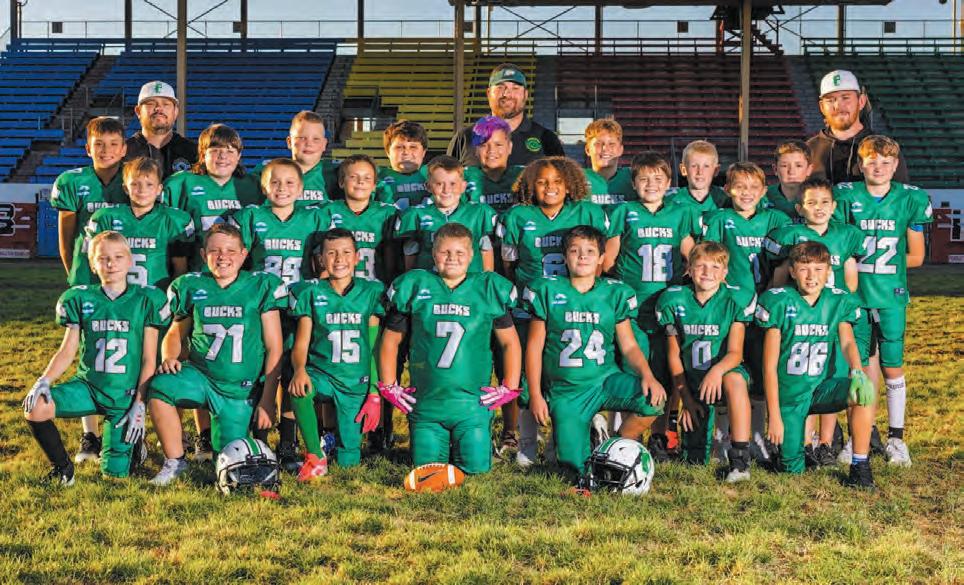


The team, which has players from various elementary schools in Pendleton, finished the season with a 9-1 record.
The Pendleton CBYF eighth grade, sixth grade and third/fourth grade teams all reached the semifinals.
The fifth grade team is coached by Roy Schuening, offensive
coordinator Drew Van Cleave, defensive coordinator Steven Breshears and special teams coordinator Cody Jones. Team members include Jacob Adelman, Maddox Arroyo, Deven Bennese, Layton Bodewig, Tucker Breshears, Judah Brunette, Finley Christy, Zender Crowder, Caleb Currin, Brohdy Fulton, Jacob Goad, Ryker Groce, Chris Kobasa, Noah Miller, Gunner Mitchell, Landen Murdock, Cyrus Ostlund, Kelton Palm, Shad Schuening, Elijah Smith, Kodee Stanger, Lucas Van Cleave, Tucker Watkins and Andrew Williams.
































ANNIE FOWLER
For the CUJ
ATHENA — Becky Kane has no trouble pulling her hair back in a ponytail and working with her players as they get ready for the upcoming season.
Kane, 56, took over the WestonMcEwen boys basketball program after Martin Heredia stepped down in October.
Heredia was hired in the spring to replace longtime coach Brian Pickard, who stepped down after last season.
“I was the girls junior varsity coach last year, and I was coaching the middle school boys when he (Heredia) quit in October,” Kane said. “His job obligations at work no longer worked with him coaching. I applied and got the job. He did a lot with the boys over the summer. I can’t thank him enough.”
While Kane transitions to her new position, she said the support of her assistants Nick Stanford and Nate Fuller has been invaluable.
Kane is no stranger to coaching whether it be girls or boys basketball.
“This is my 21st year coaching,” she said. “I was the JV boys coach in Touchet two years ago, and the JV girls coach here last year. I have coached everything from middle school boys and girls to JV. This is my first varsity gig. I do think coaching boys and girls is different. I like them both equally.”
Kane played high school basketball in Montana, and walked on at Eastern Montana College. She said she didn’t last long with the Yellowjackets.
“I was there for like three weeks,” she said. “It wasn’t for me. I took classes for coaching and officiating. I switched to coaching and now I’m here.”
Kane spent 30 years teaching
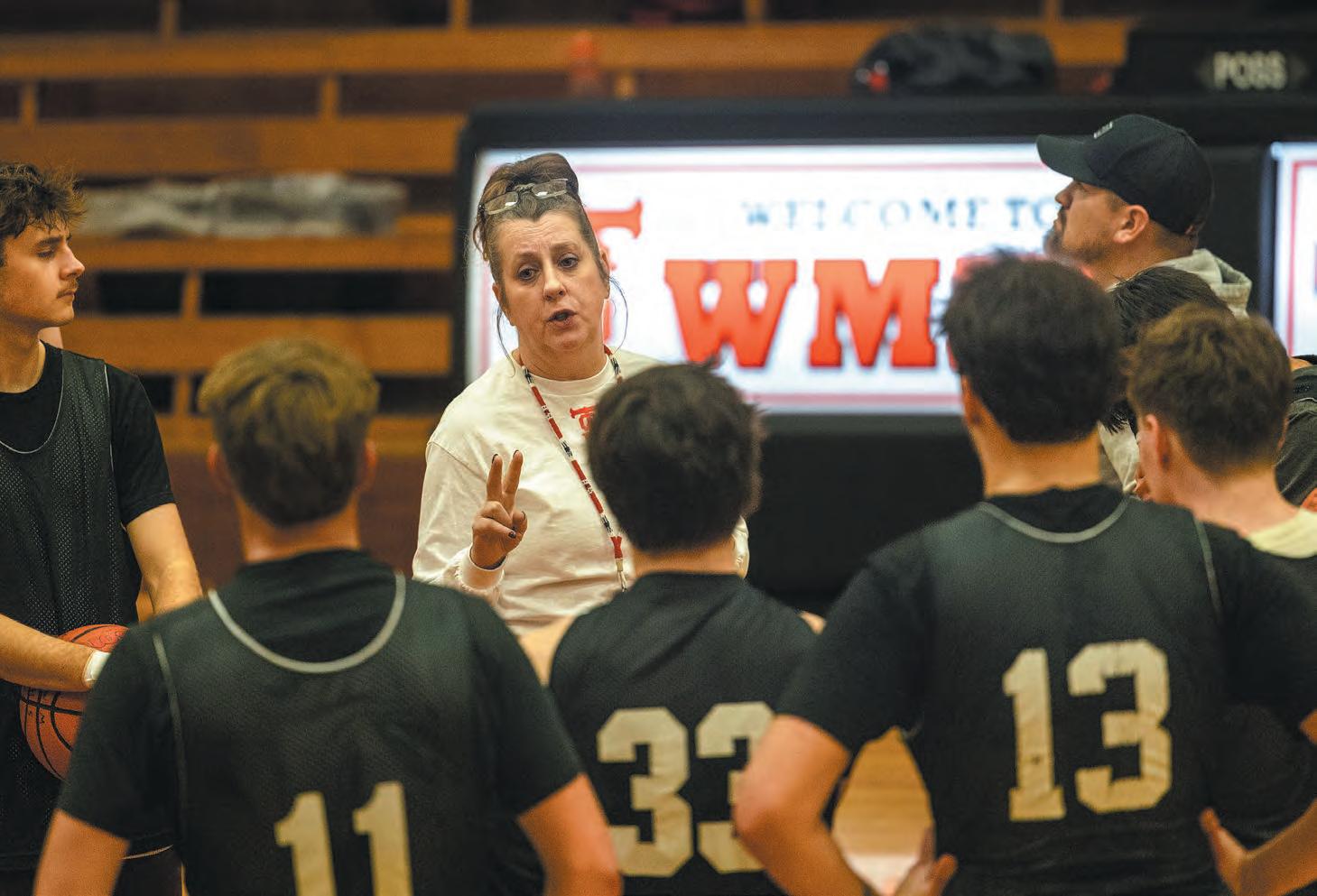
“I want to build a whole program. I don’t want it to be JV here, middle school there. I want it to be sixth through 12th grade. I want to keep that going. I told them we are all TigerScots.”
— BECKY KANE
and coaching in Montana before retiring. Not one to sit still, she substitute teaches as well as coaches.
Kane is getting her team ready for the season, which begins Dec. 3, with a jamboree at Pendleton. The TigerScots will host Nixyáawii Dec. 4 in the first meeting ever between the teams.
Kane said the players have been very receptive to her coaching.
“They know who I am,” she said.
“I am excited. It’s a great group of boys and they work hard. Basketball is about coaching and relationships. We are growing humans, not just basketball players.”
Weston-McEwen is laden with upperclassmen. The TigerScots have six seniors, a dozen sophomores and two sophomores.
“We will have a lot of experience,” Kane said. “I hope that draws us into some good games.”
Seniors Tristan Weseman, Tim Taylor and Jacob Schurtz lead the TigerScots, and 6-foot-5 junior Koen Hastings will take care of things inside. Jonathan Leighty, a transfer from Prairie City will add depth, and football player Jace Dunlap will add size.
“Koen is my big man,” Kane said.
“He is going to be really strong underneath. Tim is pretty quick, and Tristan is phenomenal.”
Adding to the depth chart are seniors Ryan Wood and Heith Gilman, and juniors Michael White, Colby Perkins and Theo Sprenger.
The TigerScots play in the always tough Blue Mountain Conference with Stanfield, Enterprise, Heppner and Grant Union. Irrigon, under new coach Fredy Vera, also looks to be much improved this year.
“Enterprise will be tough this year,” Kane said. “They have a big kid (Ryder Tomasini), who’s like 6-7. I’m just learning how everything works. I met a couple of the other coaches. It will be different coaching at this level. It’s something I have to grow into and adjust to. I’m excited. It’s different and it’s great.”
While Kane was a late addition to the Weston-McEwen coaching ranks, she would like to stick around.
“I want to build a whole program,” she said. “I don’t want it to be JV here, middle school there. I want it to be sixth through 12th grade. I want to keep that going. I told them we are all TigerScots.”

ANNIE FOWLER
For the CUJ
MISSION — Fred Grass was looking to get back into coaching after a few years away from the court, and the Nixyáawii Community School girls position seemed like a good place to start.
“My wife (Angie Winks Grass) is an enrolled member,” he said. “She said the girls have been looking for a coach for the past couple of years. She said I should get back into it. I missed it. I contacted (principal) Ryan Heinrich and he said I should apply. They interviewed me within a week and offered me the job.”
Grass, who has worked for the past 18 years in the Oregon Employment Department, replaces Aaron Noisey, who coached the Nixyáawii boys and girls last year when the school could not find a girls coach.
The Golden Eagles went 2-8 in Old Oregon League play last year, and 5-17 overall.
Grass was a multi-sport athlete growing up in Arizona, but when his family moved to Pilot Rock his junior year of high school, he chose not to play any sports.
Grass graduated from Pilot Rock High School in 1996 and started his coaching career in Pilot Rock at the middle school level, then was an assistant for Butch Wilson when he coached the girls team.
When he was at the middle school level, he coached Tyler Zyph, who now is the Pilot Rock athletic director and boys basketball coach.
He also was an assistant boys basketball coach at Pendleton.
“I spent 14 years coaching basketball,” Grass said.
The experience will come in handy with the Golden Eagles. They have seven returning players, but not a lot of experience.
“With the girls, there aren’t as many playing any more,” he said. “Two of the girls I have playing, I’m teaching from scratch. We need to get the younger girls playing again.”
Returning to the court for Nixyáawii are seniors Liana Stewart and Nevaeh Moore, juniors Emma Star-Nez, Annalise Watchman, Gracie Wilson and Devon Hall Spencer and sophomore Brooklyn Jones.
“I started in June with summer
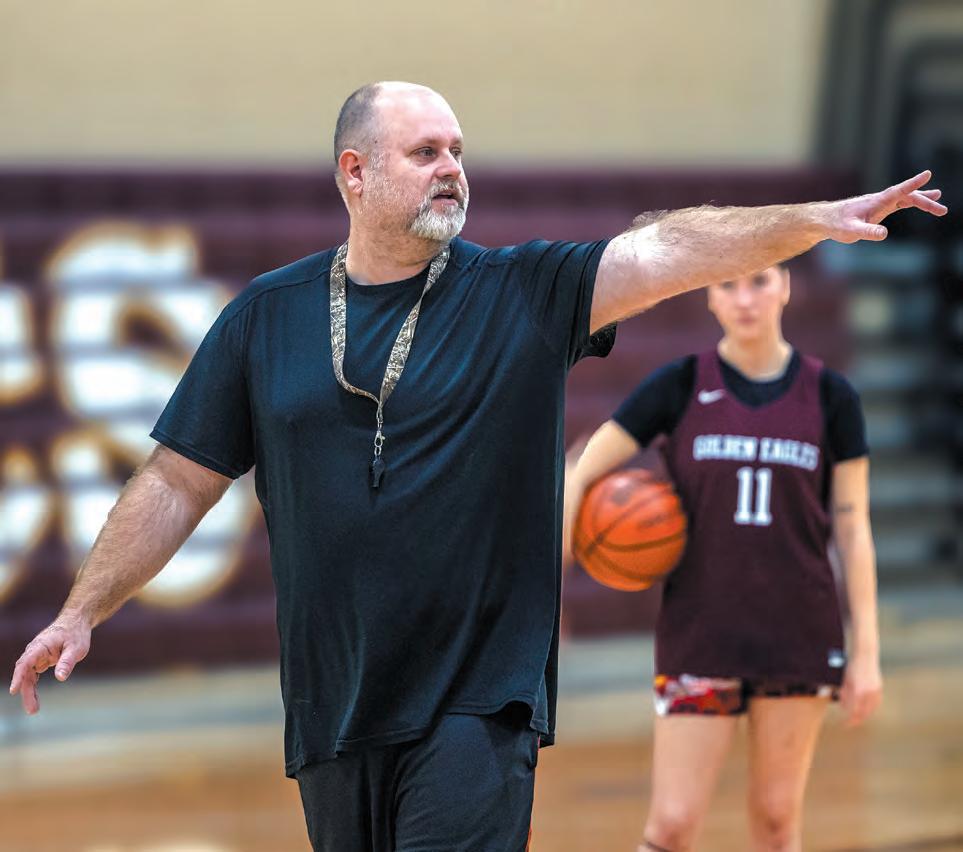
“I think they are a very talented group. They are excited. They are positive and encouraging to each other. I told them I want them to play fearless.
— FRED GRASS
league so I got to know them before the season,” Grass said. “I think they are a very talented group. They are excited. They are positive and encouraging to each other. I told them I want them to play fearless.
There are a few of them, when they miss a couple of shots, they get down. We need to work on that. They just need to keep playing.”
Watchman is penciled in at point guard, Stewart and Hall Spencer are post/wing players and Moore can play a multitude of positions.
“Nevaeh is a character,” Grass said. “She keeps me laughing and makes practice fun. Gracie is a good shooter and Emma is a great defender, one of the best we have. I think they are all pretty neat young ladies.”
Also joining the group is freshman Cryssa Kirkie, who made a splash

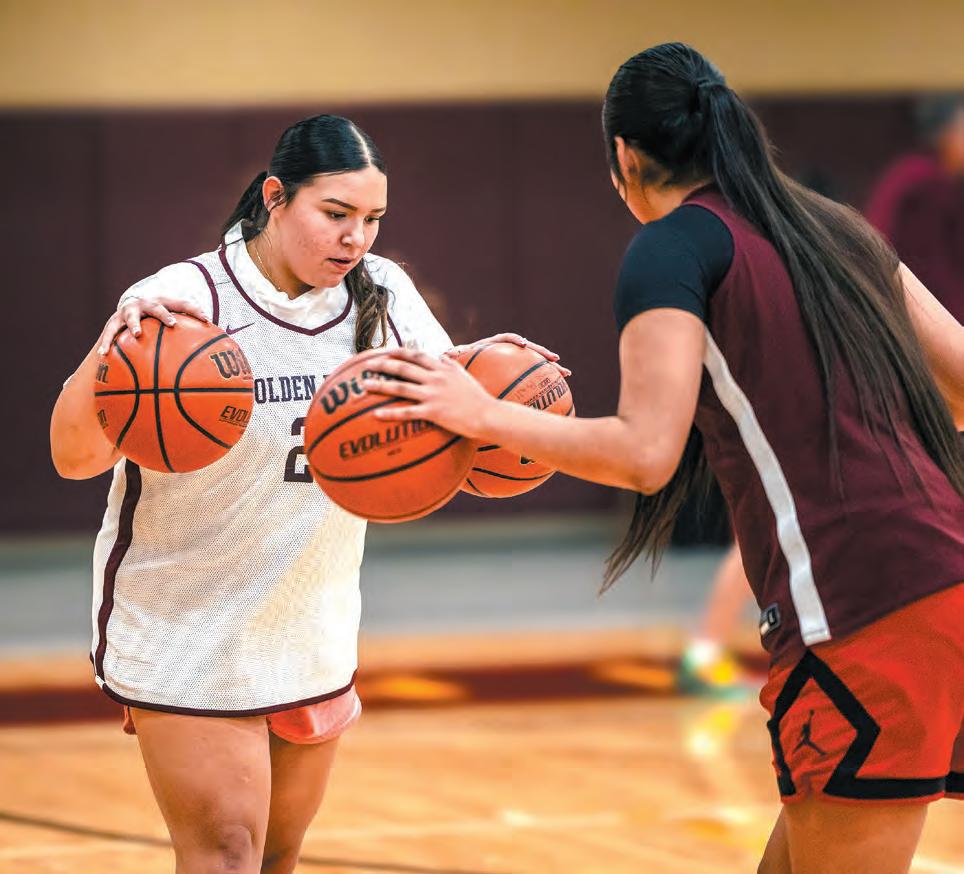
during volleyball season.
“You can tell she has played before,” Grass said. “She’ll help us out.”
The Golden Eagles play in the Old Oregon League Ladd Division, which features Imbler and Echo, both of which played at Baker City in the 1A state tournament last season.
Before league play begins Jan. 13, at Pilot Rock, Nixyáawii has a pretty tough preseason schedule with games against Weston-McEwen, Crane and Powder Valley.
“They gave us a pretty tough schedule before league,” Grass said. “I’m excited. I like the idea of a tough schedule, it makes you tougher.”
Tyasin Burns, a Nixyáawii Community School alum, who now plays basketball for Northwest Indian College, along with his teammates will host a free youth basketball clinic on Saturday, December 6, 2025 from 11 am – 1 pm at the Nixyawaii Old Gym. Or, afterschool program. The event is free, and lunch will be provided for participants after the clinic. For more information contact Linda Sampson at 541-429-7845 NWIC is also scheduled to play the Blue Mountain Community College men’s team on Friday, Dec. 5, at BMCC.
ANNIE FOWLER
For the CUJ
MISSION — For the first team in recent memory, the Nixyáawii boys basketball team does not return a wealth of talent from the previous year.
Graduation gutted the Golden Eagles to just a handful of returning players, but coach Aaron Noisey is optimistic with the players he has on the court.
“I’m excited for our underclassmen and to see what they will be able to do with their opportunity,” Noisey said. “Our youth is going to be a plus with us. We have a lot of team speed and kids who can handle the ball.”
Last year, the Golden Eagles placed fourth at state, were 10-0 in the Old Oregon League and 26-4 overall. They had losses to 3A Umatilla, Mannahouse Academy, Crane and Country Christian 91-83 in the state quarterfinals. They also won the Sportsmanship Trophy at state.
This season, Cashis Bevis and Kash Bronson return from last year’s squad, along with Jeffrey Van Pelt and Irvin Stewart.
A nice surprise for Nixyáawii will be freshman Andrew Simpson.
“We aren’t as bare as people might think we are,” Noisey said. “Andrew has played quite a bit of basketball with AAU and we had him in the summer. I’m excited for the youth, and to be able to mold them into what we want for this season and next. We get through this year, we will be back to where we have been, but I don’t want to take anything away from this group.”
As the Golden Eagles figure out their lineup, the one thing they know they will not have is height.
“We could get to 6-7 if we stack three on top of each other,” Noisey joked. “I feel like we can beat people with speed. Would we like to have some height? Yes.”
The Golden Eagles have yet another tough preseason schedule, starting the year off with good competition with 2A Irrigon, 3A Riverside and 3A Umatilla.
“I wanted to play a tough preseason,” Noisey said. “We will probably take some lumps, but it will get us prepared for league. We will play some pretty tough teams, but that will help us prepare for our side of the league. We have to use those games as learning opportunities and not get down on ourselves.”
Nixyáawii also will play neighboring Weston-McEwen for the first time in school history Dec. 4 in Athena, and have Pendleton on their schedule for Feb. 10.
“It’s nice we finally got them on our schedule,” Noisey said of the TigerScots. “We are excited.”
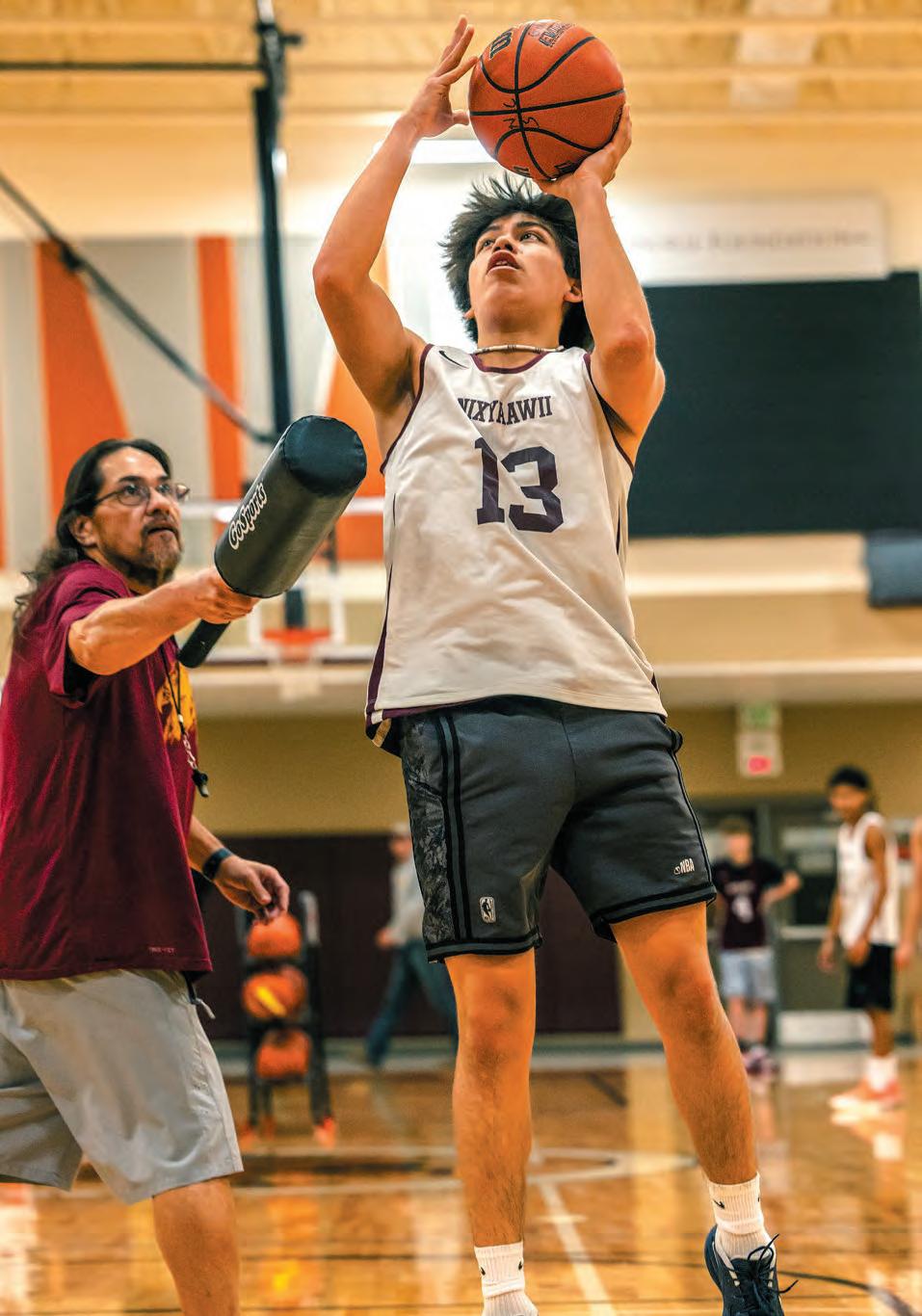

In league play, Noisey said Cove, Pilot Rock and Echo will be tough opponents.
“Pilot Rock has picked up some great additions, Cove will be tough, and Ben (Campbell) does a great job in Echo,” Noisey said. “We just need to be mentally tough when we are in close games. It will be a dogfight, but I think we will be in the mix. Hopefully by district we will know who we are as a team.”
Noisey has been putting his players through a few tough practices to see what they can handle mentally and physically.
“I have been pushing them hard to see where their mental toughness is at,” he said. “They have taken everything I have thrown at them and haven’t complained. We have some athletic kids. They have encouraged and uplifted each other.”
If you’d like to support the Nixyáawii Basketball programs, and the Nixyáawii Community School Booster club you can consider purchasing fan directly from the Booster Club. All proceeds go to the studentathletes of Nixyáawii Community School. The club helps raise funds for needs of student athletes, activities and programs that aren’t fully covered by the basic annual budget of the school. Costs suchs as new equipment, meals when students are traveling to away games and other opportunities for student athletes to be recognized. Contributions can also include volunteering at events like concessions or admissions, cash donations or booster club memberships.
ANNIE FOWLER for the CUJ
PENDLETON — It’s a new season, which means new faces for Ron Murphy’s Pendleton boys basketball team.
“We are talented, but inexperienced.”
— RON MURPHY, Pendleton Boys’ Coach
“There are returners, but only two that got consistent playing time last year,” said Murphy, who is in his fourth year with the Bucks. “We are pretty inexperienced. We are talented, but inexperienced.”
Seniors Garret Reinhart and Dillon Elrod are the players who consistently showed up on the score sheet last year.
“They are going to be the ones we are going to look to to keep things calm when they get out of control,” Murphy said. “They are pretty level headed. They both do things well. Garret can slash and get down the floor, and Dillon can hit the open shot.”
The Bucks are coming off a season where they finished 3-3 in Greater Oregon League play and 11-16 overall.
Jalen West is another senior Murphy is excited about, along with 6-foot-4 junior Jubal Hoisington.
“Jalen is about the strongest kid on our team,” Murphy said. He can go inside and outside. Jubal has grown and he’s a kid we are going to look to to be a leader on both ends of the floor. When we put him in varsity games last year, he showed flashes of what he’s capable of. He can take kids off the dribble and post up on kids smaller than him.”
Murphy also is excited about sophomores Aaden Hernandez and Teegan Herrera and senior Zane Emry. Hernandez is recovering from a wrist injury from football.
“Aaden is quick as a hiccup,” Murphy said. “He’s not big, but he makes up for it in will power and might. We have eased him back in. Day by day he is getting healthier. He should be 100% by our first game. Zane returns as a guard and can knock down shots, and Teegan is going to be that kid we sic on other people. He likes to play defense.”
The Bucks also will have a bench of players ready to come in, including seniors Archer Krigbaum and Sheldon Joseph, juniors Cole Sazue and Alonzo Corona-Rodriguez, and sophomores Tucker Kuza and Jakeb Richardson.
“All of those guys will be ready to go when we call upon them,” Murphy said. “Hopefully, they will be ready to go on defense.”
The Bucks will dive into the season with their jamboree Dec. 3, with Weston-McEwen and Pilot Rock. It doesn’t get any easier from there.
“I’m excited to have a jamboree before our first game,” Murphy said. “Just to get the kids on the floor in a game situation against someone other than us. Sometimes I wish there were some easy games in there. Our goal is to be in the final 16 or eight, we can’t get there with cupcakes on our schedule. There are some scheduled games where we will be the underdog, and that’s OK.”
The Avista Tournament in Lewiston, Idaho, will be a big test for the Bucks, who open with Ellensburg, Washington.
“Those games will get us ready for league and our goals,” Murphy said.
The GOL will be a battle this year. Defending state champion Baker lost six seniors and standout athlete Rasean Jones, who would have been a senior this year. They also have a new coach in Robert Barrington.
La Grande lost just two seniors off a 3-3 GOL season, and Ontario has won just one league game over the past two years.
“Our league will be pretty tough this year,” Murphy said. “Us, La Grande and Baker will be competing for that top spot. It will come down to who wants it more. Baker will still be good. It will be a three-dog race. Ontario will give a team a run for their money. You have to be ready to play them.”

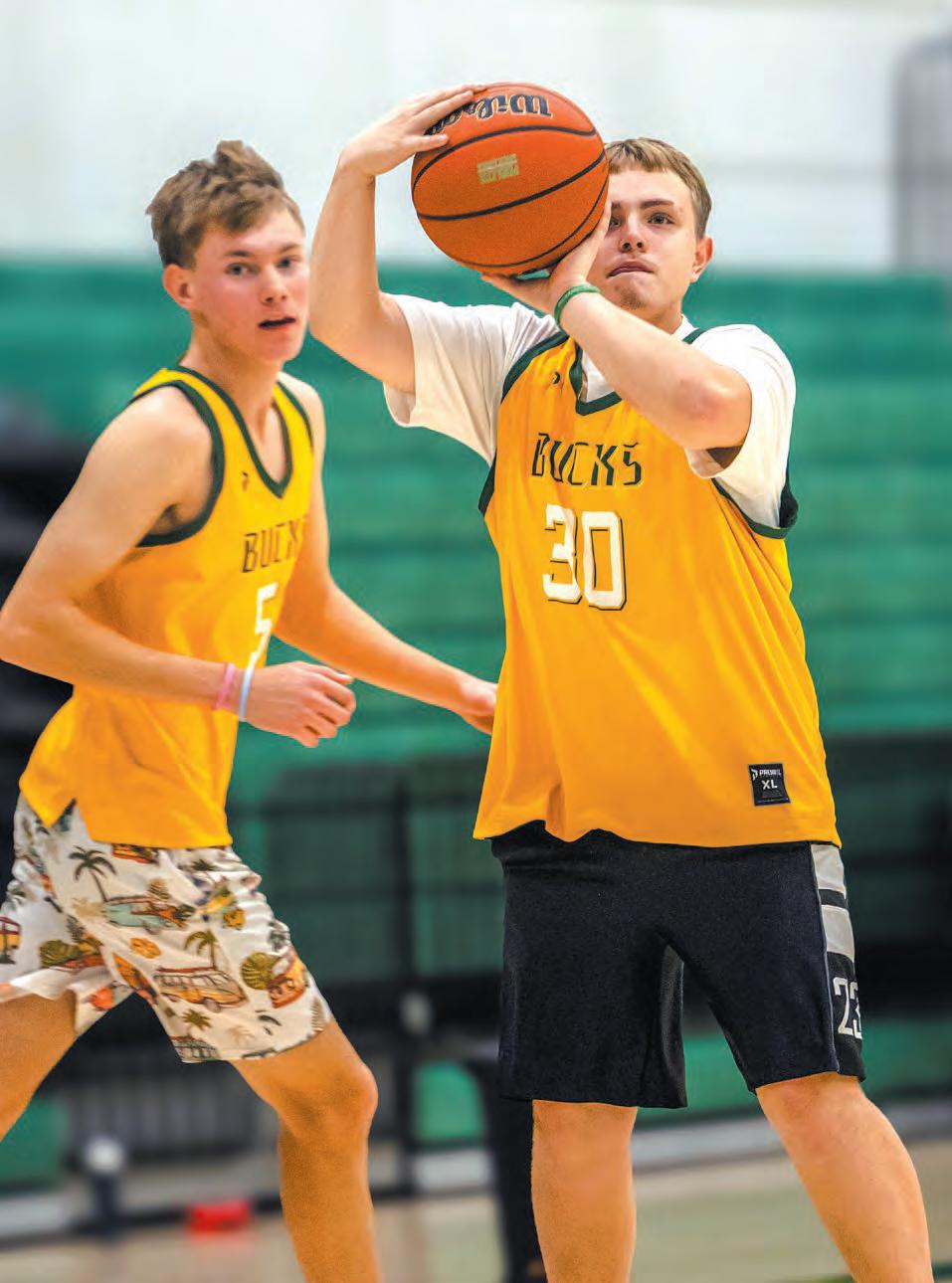
ANNIE FOWLER
For the CUJ
PENDLETON — Pendleton coach Tim Foster likes what he sees when his team takes the court for practice every afternoon.
The Bucks return seven lettermen from last season, including firstteam all-league junior guard Khimora Scott, who averaged 10 points a game last season.
“We aren’t that big in the backcourt, but Khimora is going to be really good for us,” Foster said. “She had a good summer, added to her game, and is not rushed. She is looking for her shot, she’s more calm, but also more explosive. It’s going to be interesting to see what her ceiling is this year. I think it will be pretty high.”
Pendleton, which finished 8-19 overall last season, and 2-4 in Greater Oregon League play, graduated guard Josie Jenness, along with 5-foot-11 post player Ellery Flerchinger and 5-8 forward Nessa Neveau.
The Bucks return 5-10 sophomore Paisley McLaughlin, 5-9 sophomore Presley Greenwalt and 5-8 sophomore Jadyn Schmidt inside, and sophomore guard Rylee Jackson to help run things out front.
Seniors Chais Surber, Avery Quaempts and Katelyn Boatman offer experience and leadership.
“We’re going to be long and lanky,” Foster said. “Jayden is pushing 5-9,
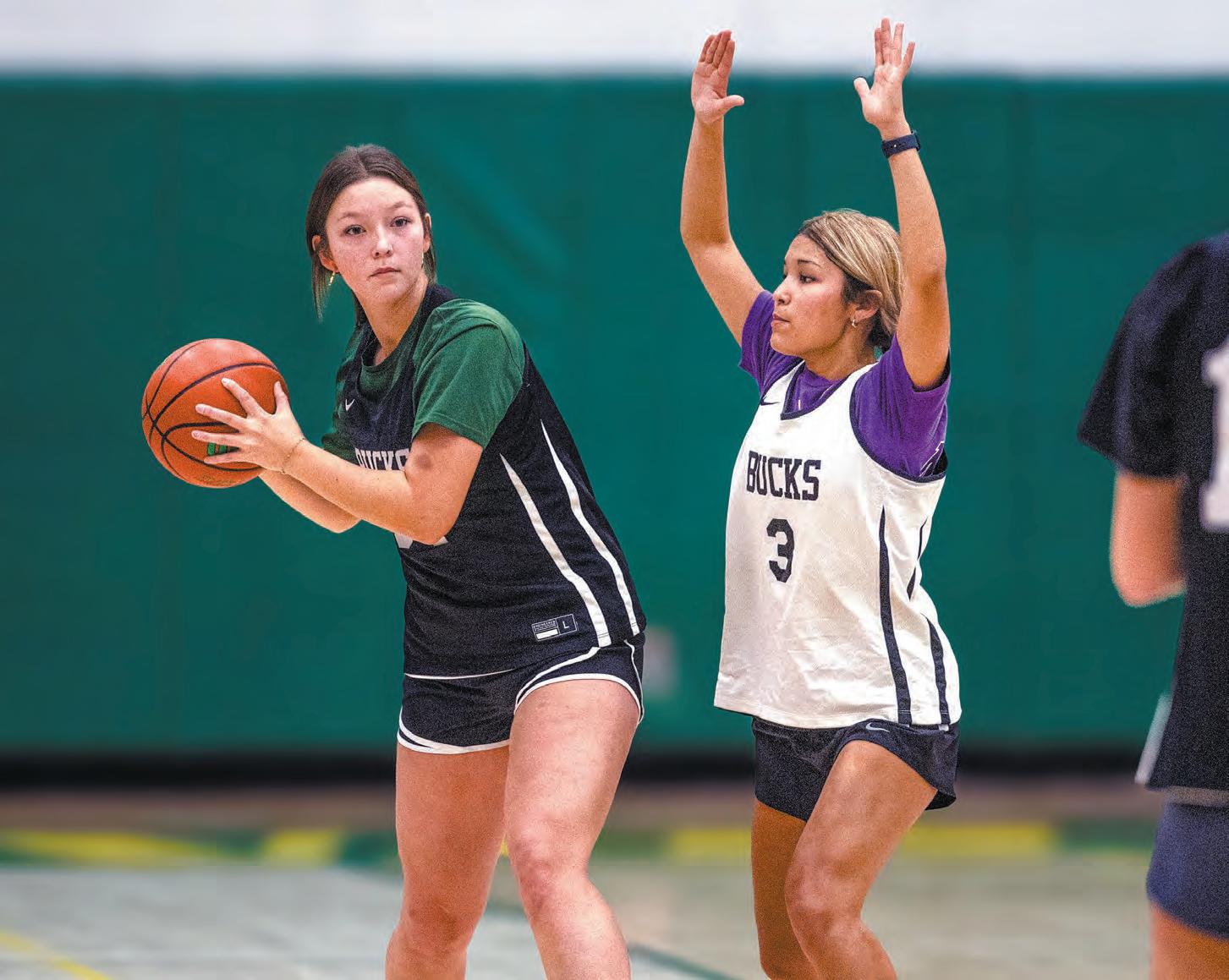
but has a longer wingspan. Shaylor Fisher, who is the same height as Paisley, didn’t play last year but it’s

nice to have her back in the mix. Rylee handled the ball a lot for us last year. She puts in a lot of work and it shows. To see her take the next step is big for her.”
The Bucks have a tough preseason ahead of them, taking on Scappoose and Taft in the Red Lion Tournament at Warberg Court, Lewiston, Idaho, on the road and then the always tough Avista Tournament in Lewiston after Christmas.
Pendleton will get its feet wet with a jamboree Dec. 3 at Warberg Court, playing Weston-McEwen and Stanfield, who historically have tough programs.
“We start with like 13 games in 25 days, not counting the jamboree,” Foster said. “It’s a fast start. By the time we get to January, we will take a breath and see where we are at. We had good, competitive games with Scappoose last year and I expect the same. We competed well last year in Lewiston, hopefully we can get a win or two while we are there.”
The preseason will prepare the Bucks for play in the Greater Oregon League, where La Grande and Baker were the top two teams last year.
“We have a really strong league for how small we are,” Foster said. “You have to be good when you get to this point. We have to come out strong and do well in the rankings and win in league.”
La Grande lost key seniors, but returns GOL player of the year Rowan Evans, along with wing


Peyton Daggett.
“It’s going to be a slugfest,” Foster said. “Hopefully we can be in the mix. La Grande returns Rowen Evans. If we can contain their shooter, we have a chance to beat them. Baker is scrappy too.”
Parents are being urged to take new online threats seriously as sextortion scams and violent digital networks increasingly target young people. One group, known as 764, has drawn national attention after luring thousands of kids into dangerous and sometimes violent online situations. Federal investigators have arrested some members, but the network’s tactics continue to circulate on social media, gaming platforms and mobile apps.
Predators often pose as teens, build trust through friendly conversation and then send an explicit image, asking the child to share one in return. Once a young person sends a photo or video, scammers use it as leverage—demanding more images, money or harmful actions. In more extreme cases, predators pressure kids to injure themselves on camera, carve words or numbers into their skin, or harm animals. If victims refuse, scammers may threaten to reveal their identity (“doxing”) or send law enforcement to their home under false pretenses (“swatting”).
These schemes have led to tragic outcomes. Families across the country have shared stories of teens who died by suicide after being manipulated online. In South Carolina, one of these tragedies inspired “Gavin’s Law,” which now makes sextortion of minors a felony punishable by up to 20 years in prison.
How Sextortion Works
The American Academy of Pediatrics defines sextortion as a form of image-based sexual abuse. Children as young as 9 have been targeted, though most victims are between 13 and 17. Predators target kids of all genders.
Common tactics include:
• Pretending to be someone close to the victim’s age

• Building trust over days or weeks
Sharing an explicit image to encourage one in return
• Demanding more content or money
• Threatening to post images publicly or send them to friends and family
How Parents Can Help Protect Their Children
Experts say safety starts with ongoing conversations—not one-time warnings.
Tips for keeping kids safe online:
• Explain risks in clear, age-appropriate language
• Teach kids to block strangers and ignore suspicious messages
• Remind them not to share private images or personal details
• Use strong passwords and be cautious with unexpected links
• Cover webcams and fully close devices when
not in use
Encourage children to trust their feelings—if something feels wrong, leave the chat, game or platform immediately
Parents should also strive to be a safe, judgment-free place for kids to talk. Shame and fear often keep victims silent.
If Your Child Has Already Been Targeted Victims may struggle with anxiety, depression, or PTSD. Parents should:
• Reassure their child that they are not at fault
• Report the incident to the CyberTipLine, the FBI or local law enforcement
• Seek support from medical or mental-health professionals
Experts stress that millions of young people worldwide have been impacted by sextortion and other forms of online exploitation. Staying aware, engaged and supportive can make a lifesaving difference.
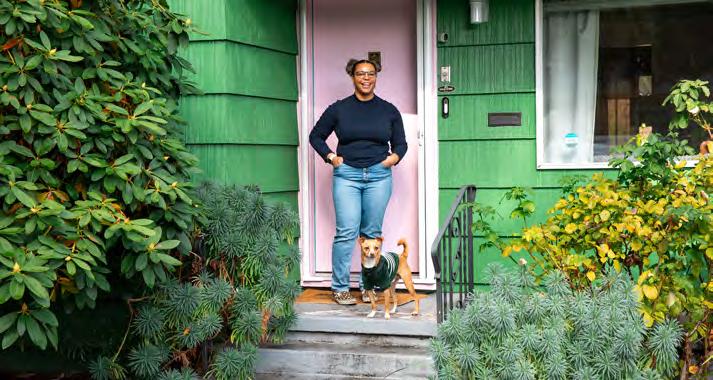
SALEM, Ore. – Oregon’s community colleges are experiencing strong enrollment growth this fall. Fourth-week data released Nov. 20 by the state’s Higher Education Coordinating Commission (HECC) shows continued increases in both overall headcount and Full-Time Equivalent (FTE) enrollment at most colleges across the state, underscoring growing demand and momentum across Oregon’s community college system.
According to HECC’s report, total community college headcount climbed to 94,898 students, marking a 3.7% increase over fall 2024. FTE enrollment also rose to 22,671 students, a 3.5% gain from the same point last year.
Enrollment has been climbing steadily since 2022, and while statewide it has not yet reached prepandemic levels, with headcount still 14.5% lower and FTE down 11.2% compared to fall 2019, the pace of recovery is accelerating. Nationally, community colleges saw the steepest enrollment declines of any sector of higher education during the pandemic due to a combination of factors, including the high proportion of students who were working adults juggling jobs with childcare, which was severely disrupted by the pandemic. It is important to note that headcount provides the most accurate measure of enrollment
at Oregon’s community colleges. According to the HECC, 59% of community college students were enrolled part-time in 2023–24. This reflects the reality that many community college students balance education with significant responsibilities and barriers, including financial hardship, transportation challenges, unmet basic needs, childcare obligations, and employment, often working one or more jobs to support themselves and their families.
“Rising enrollment highlights the essential role community colleges play in powering Oregon’s workforce,” said Dr. Abby Lee, Executive Director of the Oregon Community College Association (OCCA). “Students are choosing pathways that lead to strong careers, and our colleges are committed to meeting that demand with accessible, high-quality programs that prepare Oregonians for the opportunities ahead.”
While the state’s latest (Nov. 19) revenue forecast indicates a smaller potential for significant statewide budget cuts mid-biennium, OCCA continues to advocate for the resources needed to sustain this momentum, particularly to the Community College Support Fund (CCSF). Stable and adequate funding is essential for supporting increasing enrollment, expanding CTE capacity, and ensuring that community colleges can continue to deliver high-quality career training and transfer pathways for all Oregonians.





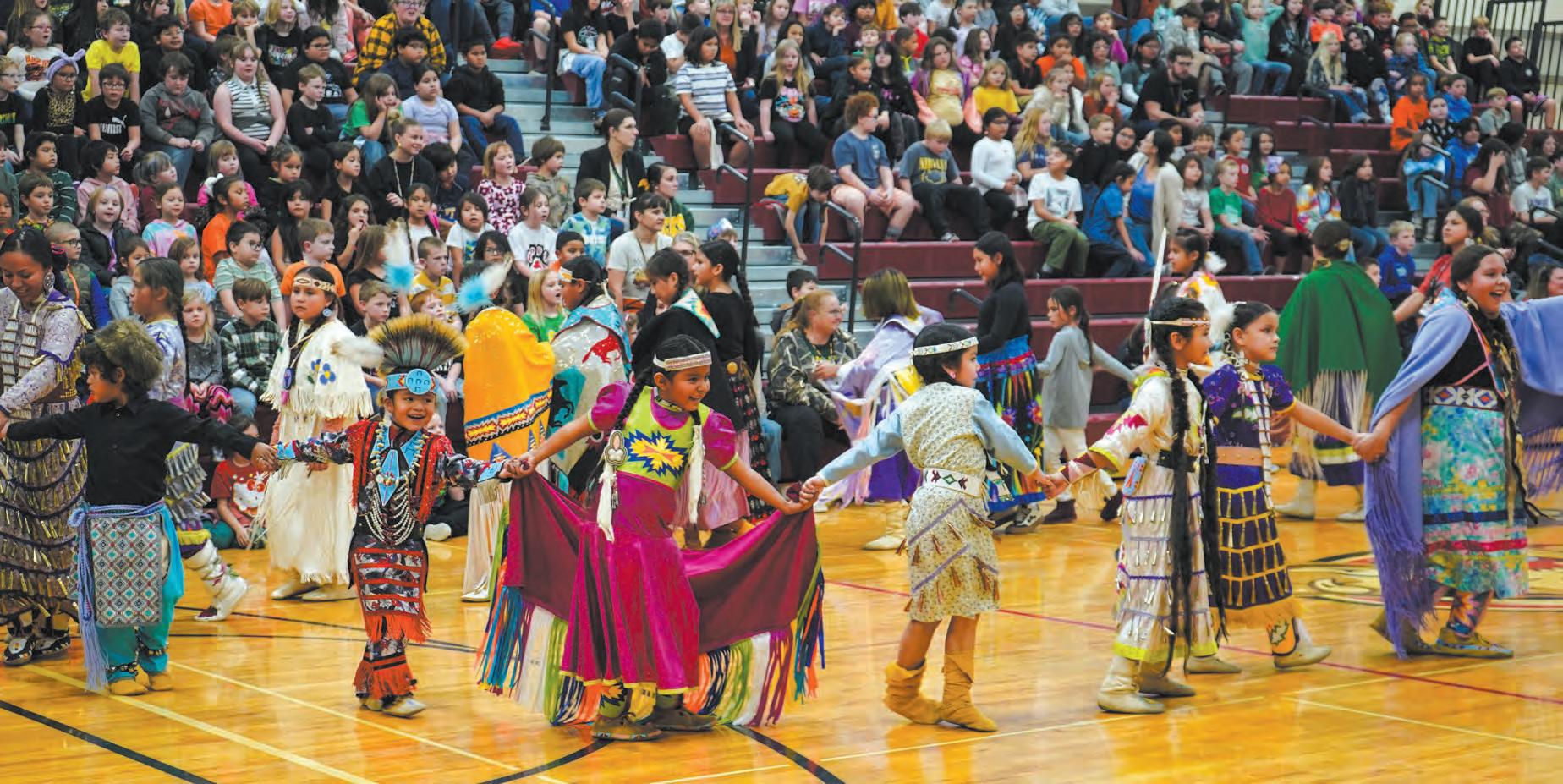
PHOTOS BY SAMMANTHA MCCLOUD
Native American students make up about 21% of the Pendleton School District. According to educators and tribal leaders, yearround recognition of Native culture — not just during Heritage Month — supports student belonging, strengthens relationships with tribal families and underscores why representation matters in meeting Oregon’s requirements to teach tribal history and sovereignty in all grades
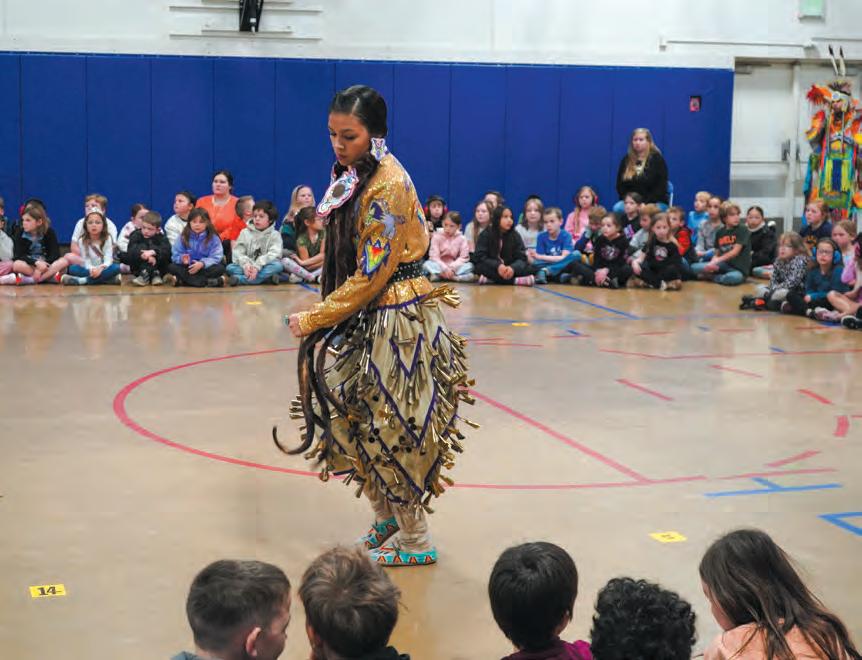
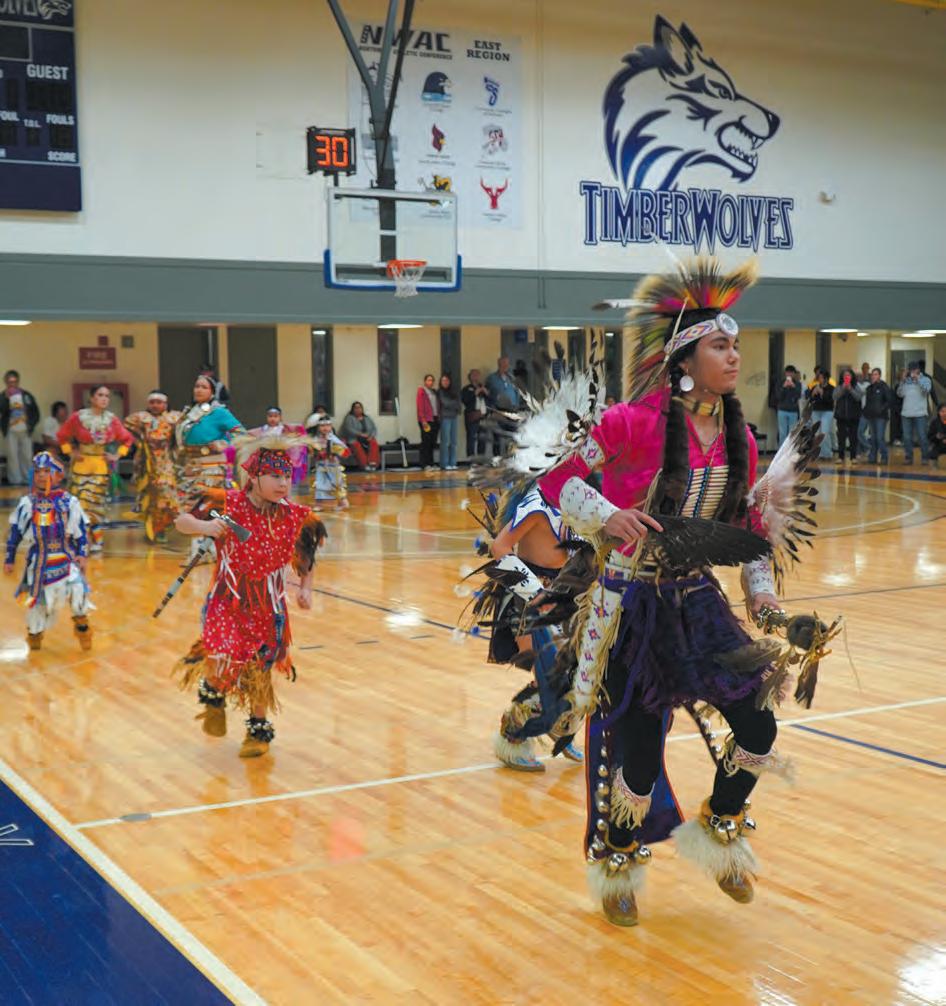
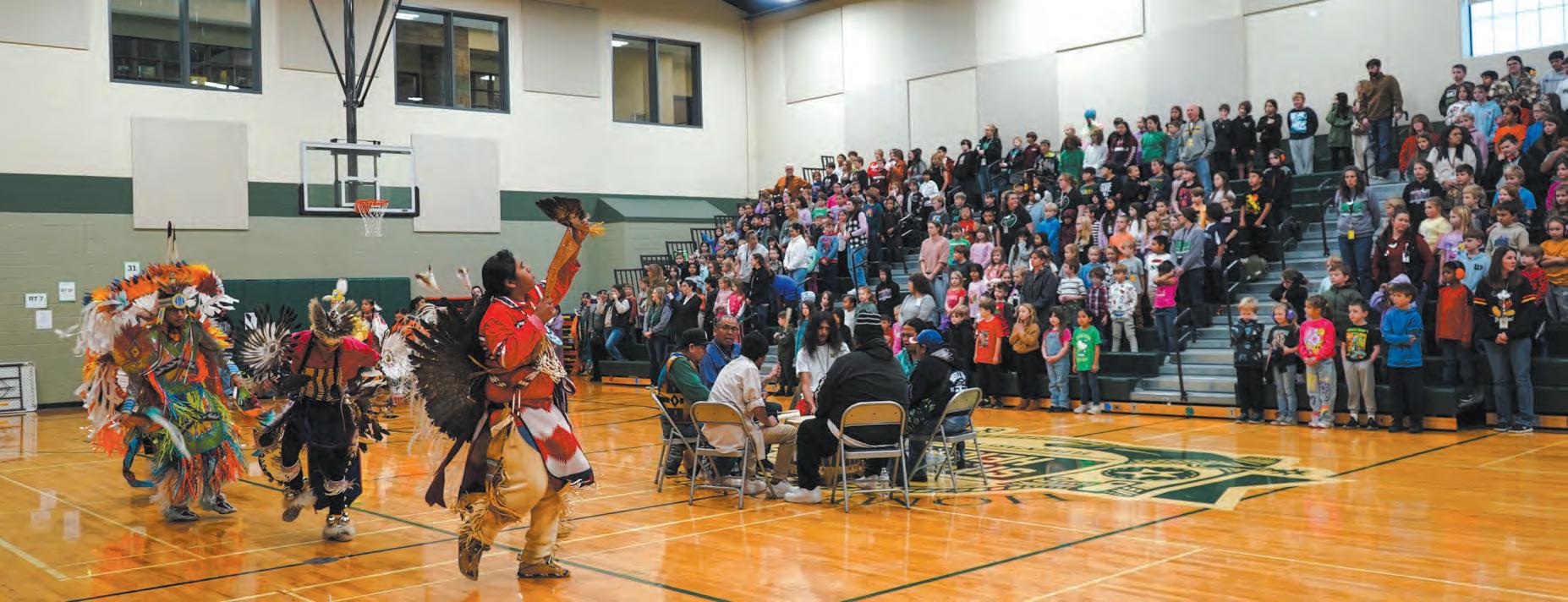
JOURDAN BENNETT-BEGAYE
Indian Country Today
WASHINGTON — Even in the fight to decolonize data, Abigail Echo-Hawk thinks about how she’s counted, whether that’s on a census form, in the doctor’s office or for a survey.
She’s a citizen of Pawnee Nation in Oklahoma and a member of the Upper Ahtna Athabaskan people of Mentasta Lake in Alaska.
“I am blessed to be able to contribute to both of those tribes in the way that I should as a tribal person,” she said. “And we deserve to be seen and counted in all of that.”
The public health researcher and director of the Urban Indian Health Institute has trained her two sons to not check the box, “Hispanic,” on any and all data forms because they are also Mexican.
“We know now that if they mark Hispanic/Mexican and American Indian/Alaska Native that they’re not counted as Native people,” Echo-Hawk said. “They’re only counted as Hispanic which is kind of sad because it is an essential part of their identity. …
“It’s another way that we’re made invisible within the data,” she said. “We have a lot of multiracial, multitribal folks and we want to make sure that they’re all counted.”
And she’s right. Anecdotally, if you’re a Native person, chances are you know someone who is multiracial, from multiple tribes, both, and all the in-between. It’s also the historical and social context that is often missing in the data narrative that western science has created and applied.
Those issues are on top of the wide range of tribal citizenship criteria set by 574 federally recognized tribes, including blood quantum, lineage, needing to be born on the reservation for enrollment, matrilineal lineage, no dual enrollment, and more. Non-Native people usually don’t understand these issues unless they are allies or in conversation with Native people or tribal leaders.
Case in point, Echo-Hawk said one of her sons was in the hospital once. Being the scientist she is, she went to see how her son was identified by the hospital. They classified her son as white, which he is not. He is an American Indian, Alaska Native and Hispanic kid, she emphasized to the front desk person.
“I stood for 30 minutes fighting with the person at the front desk saying that I wanted my son reclassified as Native and she kept telling me it wasn’t an option. And I could feel my heart rate increase. I could feel my face flush,” she said. “I could feel the intensity of what it meant to fight for our identities. And I feel that every single day in this data work.”
The front desk woman told EchoHawk that there was no box to check, but Echo-Hawk knew the person was wrong because she had worked with this particular hospital
“... it [data] solidifies who I am as an Indigenous person and my responsibility to my community now, my community of the ancestors before, and for the ancestors after me.”
—
system using data on American Indians and Alaska Natives.
“But here we had somebody who was untrained, somebody who was looking at an angry Indigenous woman and applying a multitude of stereotypes,” Echo-Hawk said. “And it became a fight, one that I was determined to win. And I did.”
As Echo-Hawk experienced with the hospital, the fight for being counted and seen can impact mental and physical health.
The same is said with her sons making the decision to not check the Hispanic box, as identity is tied to self-worth and having to prove to the federal government or an institution that they exist.
“I think it’s detrimental to their mental health,” she said. “And I really was cautious about the conversation I had with my children. I think I still didn’t do it right in the sense that I’m having to tell them that they can’t claim that they’re Hispanic, which is an important part of their identity. And I feel that struggle every single day.”
Colonial counting systems errors
Echo-Hawk is the latest example of how the colonial systems Native people work with aren’t working and haven’t worked since the United States started counting Native people.
First off, no one knows definitively how many Native people were in North America and the Americas pre-contact or during contact with colonial settlers.
For the Americas, that number ranges from 40 to 100 million Indigenous peoples in North, Central and South America. In what is now the United States and Canada, the pre-contact number falls anywhere between 2 and 15 million, according to scholars.
Those same scholars say that it’s because there are no written records and oral tradition was a big way to pass on knowledge. But Native people know the ancestors counted in their own ways on hides, petroglyphs, rocks and more. Look at the Mayan Empire records.
The United States needed its way of counting its population so citizens could get fair representation in the U.S. House of Representatives. So Article I, Section 2 of the U.S. Constitution includes a provision for a census every 10 years.
Natives weren’t counted in the early decades of the census. Often the Indian census rolls took place outside of the required decennial census and were used for removal, westward expansion, the infamous Manifest Destiny, and later, statehood.
The National Archives initially concluded that Natives were first counted in a decennial census with the general population in 1860,
ABIGAIL ECHO-HAWK
according to a report by ICT in 2019. In the process of digitizing its collection in 2022, however, the National Archives found specific rolls related to the Indian Removal Act of 1830. Those rolls, the Eastern Cherokee Census Rolls from 1835 to 1884, are part of the records of the Bureau of Indian Affairs.
“In the fall of 1835, officials of the Office of Indian Affairs were sent into the Cherokee Nation to enumerate the Indians in order to determine the number of Cherokees to be removed by the government,” as stated in the National Archives.
“Each of the Eastern Cherokee census rolls was compiled for different administrative reasons, had a different format, and contained different amounts of information. Most of the rolls were made to determine eligibility for payments due under provisions of the 1835 treaty, or were receipt rolls for per capita payments made to tribal members. Some of the rolls are copies that were used by enrolling agents to assist them in their work,” the records description states.
Some Native people did slip into the decennial census records between 1790 and 1840 because they were prominent. David Moniac, Creek, who was one of the first Native Americans to attend the U.S. Military Academy in West Point, was counted in the 1830 census for Baldwin County in Alabama, according to the National Archives. Those records indicate he was the head of the household and he had “two other free people and 10 enslaved people.” Moniac was counted as a free White man. He had a grandparent who was European.
It wasn’t until 1860 that there were special instructions on how to count Native people. Count those “who have renounced tribal rule, and who under State or Territorial laws exercise the rights of citizens,” according to the National Archives.
Renouncing “tribal rule” in exchange for U.S. citizenship was commonly practiced back then. These Native people would live with the general population and be eligible for enumeration and U.S. citizenship.
When the U.S. counted Native people in 1880, they counted them as “Indians not taxed,” which meant “Indians living on reservations under the care of Government agents, or roaming individually, or in bands, over unsettled tracts of country.” Indian agents would count taxed Indians and not taxed Indians and include the totals. Taxed Indians also included the number of people who were Indian and white. The National Archives shows that those were recorded as
“HB” for half-breed or “½ I.”
The 1870 census report counted biracial as “where persons reported as ‘Half-breeds’ are found residing with whites, adopting their habits of life and methods of industry, such persons are to be treated as belonging to the white population. Where, on the other hand, they are found in communities composed wholly, or mainly of Indians, the opposite construction is taken.”
The U.S. Census has improved since then. Native people do not have federal Indian agents looking at them and counting them as “Indian,” “non-White,” or “copper.”
In the 2020 Census, Native people could self-identify. There was the option to check multiple race boxes and input up to six tribes. Selfidentification brings its own set of problems.
Tribal identity has also changed over the decades. Nowadays, more Native people use their Indigenous name rather than one given to them by outsiders. For instance, many people use the term Haudenosaunee instead of Iroquois, which was given to them by the French. Others use Diné rather than Navajo, or Apsáalooke and not Crow. Often the English names were misinterpreted by colonizers.
“There may be other ways to identify a person’s tribe — by its general name, such as O’odham, Salish or Ojibwe or even by a specific band of the tribe, such as Miniconjou (Mnikoju) Sioux,” as stated in the the 2020 Census toolkit created by the National Congress of American Indians, the oldest and largest national tribal and political organization.
In 2023, the Biden administration proposed ways to reclassify racial data collecting. The proposals have been discarded by President Donald Trump’s latest directive to redo how the Census Bureau collects data. Another colonial dataset often relied on for accurate data on American Indians and Alaska Natives is the American Community Survey, which falls under the U.S. Census Bureau. It’s an ongoing survey conducted annually. The results are released every year and every five years for estimates. Of course, this is also based on selfidentification.
‘The federal government changed its mind about me’
In the line of historical context, another factor in gathering accurate data on Native people and how it ties into Native identity is federal recognition and the fight for it.
Republican Utah Sen. Arthur V. Watkins led the Termination Era — which stretched from the 1950s to 1970 — as chairman of the Senate Subcommittee on Indian Affairs under former President Dwight D. Eisenhower.
Congress passed a resolution in 1953 to “make Indians within the territorial limits of the United States subject to the same laws and entitled to the same privileges and responsibilities as are applicable to
continued from Page B17
other citizens of the United States, to end their status as wards of the United States, and to grant them all of the rights and prerogatives pertaining to American citizenship.”
According to the resolution, Congress was to free tribal nations “as quickly as possible” from federal supervision and control. Another assimilation policy and no protection by the federal government. The termination policies started.
By 1960, more than 100 tribal nations had been terminated, including the Menominee through the Menominee Termination Act. “The Menominee Tribal rolls were closed as a result of the Termination Policy,” according to the tribe. Thirteen years later, President Richard Nixon signed the Menominee Restoration Act that restored the tribe’s federal status and federal services, and re-established a framework for its tribal membership.

It took years for the Mashpee Wampanoag Tribe to gain federal recognition in 2007. The federal register put out its notice of the tribe’s federal status three days before Robert Maxim’s 18th birthday. Maxim is a fellow at the Brookings Institution, a think tank and nonprofit public policy organization in Washington, D.C.
“I’ve lived about half my life in a tribe that’s federally recognized and about half my life in a tribe that’s not,” Maxim said. “And the federal government for half my life effectively didn’t consider me a real Native person. So nothing about me or my ancestry changed right before I turned 18, but the federal government changed its mind about me.”
A year after he started at Brookings, the organization put out its annual demographic report of its staff. The report indicated the institution had no American Indian or Alaska Native staff. The research director reached out to Maxim and told him to check. The organization had listed Maxim under the two or more races category.
“And that was kind of one of the moments where it hit me, saying, ‘Wow, okay, so this is how Native people get erased in data,’” he said. “So that was really a big motivating factor for me to begin researching more deeply who gets considered Native and how Native people are reflected in data.”
Federal data problems
So how should the United States define Indigenous while keeping in mind the political, legal, and, perhaps, racial aspects of it, considering the lack of federal recognition for some, blood quantum requirements for some but not others, and adoptions.
Colonization is a huge factor to consider when looking at statistical challenges, Maxim said.
The federal government’s definition for American Indian and Alaska Native is the first challenge.
“When they’re collecting data,
the American Indian, Alaska Native definition is inclusive of all people Indigenous to North, Central or South America,” he said. “And so that becomes a challenge because that’s a much broader definition than who the federal government offers service to and has a governmentto-government relationship with, which is just enrolled citizens of federally recognized tribes.”
He continued with the second challenge: “We’re conflating two issues: one of racial identity with one of citizenship as a nation.”
One report authored by Brookings Metro and the Southern California Association of Governments was released in August.
It concluded that the federal government isn’t the place for accurate data on Native communities and that local and regional government organizations should be proactive partners for tribal nations in collecting accurate data.
“We are currently in a moment where I think the integrity of federal data is really being questioned by a lot of folks, in large part due to actions by the Trump administration,” Maxim told ICT right after the report’s release.
Trump’s actions that have affected federal data include public datasets being removed at the start of the administration, the commissioner of labor statistics being fired in August due to the employment report showing a decline in jobs during Trump’s time in office.
“This idea of whether federal data is accurate and trustworthy is really at the top of a lot of people’s minds right now. So one of the messages in our report is that tribes and Native people have always been operating in an environment where federal data doesn’t accurately represent them and their experience,” Maxim said in August.
Maxim and Echo-Hawk say the federal government’s credibility is fading.
“The U.S. Census isn’t going to get it right, right now. The federal government is not going to get it right,” Echo-Hawk said. “But our tribes, we have the opportunity to do it right.”
As Echo-Hawk emphasized, her sons shouldn’t have to decide how to be counted.
“They should have the options to be counted as all of who they are,” she said. “But because of the colonial systems that are eradicating them in the data I’ve had to train them to do that.”
Data sovereignty
The miscounting of Native people doesn’t just stop when they are missing or dead.
The missing and murdered Indigenous peoples epidemic and the COVID-19 pandemic catapulted the need for data on Native people, building on work that had been ongoing for years.
“The pandemic … really brought people together around it and people not only in tribal communities, but now outside of it, members of Congress saw the need for it,” Echo-Hawk said. “At that time, the leaders in the [Centers for Disease Control and Prevention] and the administration saw the need for the data so that we could address how prevalent the virus
was … in our communities. And so COVID pushed it forward faster than it was moving before, but it was really moving across the work that had already been done. And now we see lots of pieces of federal legislation that have written into it data sovereignty.”
tribes, but that brings its own set of challenges. Tribes define their own terms for citizenship, which can take into account blood quantum, lineage, matrilineal, adoption, or more.
This health component is one of the reasons William Carson, Ohkay Owingeh Pueblo, went back to school to obtain a doctorate in health behavior and health promotion. He looked at the mental health impacts of Indigenous identity.
His research gave him more insight into how data is collected on Native people in the health sector, particularly after they died from COVID-19.
“When an Indigenous person dies or passes away in the United States, they’re no longer there to check off the box to say who they were,” he said. “Very often that’s left up to coroners. It’s left up to people that work with states where if they don’t go through your wallet or they don’t see your tribal ID card or if you don’t look like what they think a Native should look like, you’re not going to be marked as a Native.”
The same is true for missing and murdered Indigenous people.
When Echo-Hawk and her team conducted the 2018 report on missing and murdered Indigenous women and girls, they found that law enforcement was not collecting data on race and ethnicity on victims.
“As a result of that, everything that was happening to us was being hidden,” she said. “And there was no data to take to Congress to say we need more investment in law enforcement.”
Following the report, the Not Invisible Act of 2019 and Savannah’s Act of 2020 were passed in Congress to respond to the missing and murdered Indigenous peoples cases and human trafficking. Both bills had language stressing that training was needed for law enforcement, not just tribal law enforcement but also authorities in counties and states.
Echo-Hawk said a government report in 2022 highlighted that none of those trainings were happening.
“The federal government was not fulfilling what they needed to do to ensure that we’re being properly captured in the data,” she said. “And so my team and I have been going out and doing it ourselves. We are doing it because no one else was. Now there are other folks doing it and I’m so grateful for that. But we sit down with law enforcement, we go over their databases, we talk to them about what boxes they need to have in there.”
Stepping up to conduct data collection training is one of the many ways Native people, Nativeled entities and tribal nations have been riding a resurgence of Indigenous data sovereignty.
“Indigenous data sovereignty is the right of a nation to govern the collection, ownership, and application of its own data,” according to a statement on the website of the Native Nations Institute at the University of Arizona.
From there the power is given to
“There’s the same thing of naturalization, if you want to like the modern day term for adding people into your country,” Carson said. “There was adoption, there was naturalization within communities before blood quantum, before federal enrollment. But we don’t see that now.”
Blood quantum didn’t hit Carson as hard until one of his kids was born and wasn’t able to be enrolled. His pueblo, back then, required a specific percentage of Native blood to qualify for enrollment. He asked himself a lot of questions.
“So what does that mean in terms of how much do I want to be part of this community and … what will that do to him knowing that I’m going to go into this field, go into this research, go talk about this and because of things completely out of his control, he’s not going to be able to be enrolled,” Carson asked. “It did create a little bit of a crisis for me.”
Carson’s pueblo did change its policy to a modified version of lineal descent. He felt a huge weight lifted off his shoulders for his son.
Each tribe’s citizenship criteria is an entire battle on its own and receives criticism from Native people and tribal nations — and nonNative people. But that’s sovereignty. Sovereignty, however, still does not show how many Native people exist in the United States from enrollment or the census.
Tribal nations do have enrollment data, but that’s data they do not want to give over because it has been used against them. There is also a lack of data sharing agreements between tribes and states. For example, when some tribes gave COVID-19 data to the states, the states wouldn’t give it back. And each state has either amiable or contentious relationships with the tribes.
“Tribes do have the right to govern their tribal data and how they share that, and because of the weaponizing that has happened with data,” Echo-Hawk said.
At the end of the day, sovereignty reigns, although the system must work through hundreds of tribal nations to comprehensively capture accurate data.
“When we think about how the Western world looks at the data, it’s what actually says there are Native people left, and they’ve actually used the lack of data of Native people to promote this idea, this story: there’s only a few of us left. There’s barely any culture,” EchoHawk said.
“For me, it [data] solidifies who I am as an Indigenous person and my responsibility to my community now, my community of the ancestors before, and for the ancestors after me,” Echo-Hawk said. “It both solidifies our existence and our ways of knowledge and being through the cultural history. And then we use that to push on this Western side.”






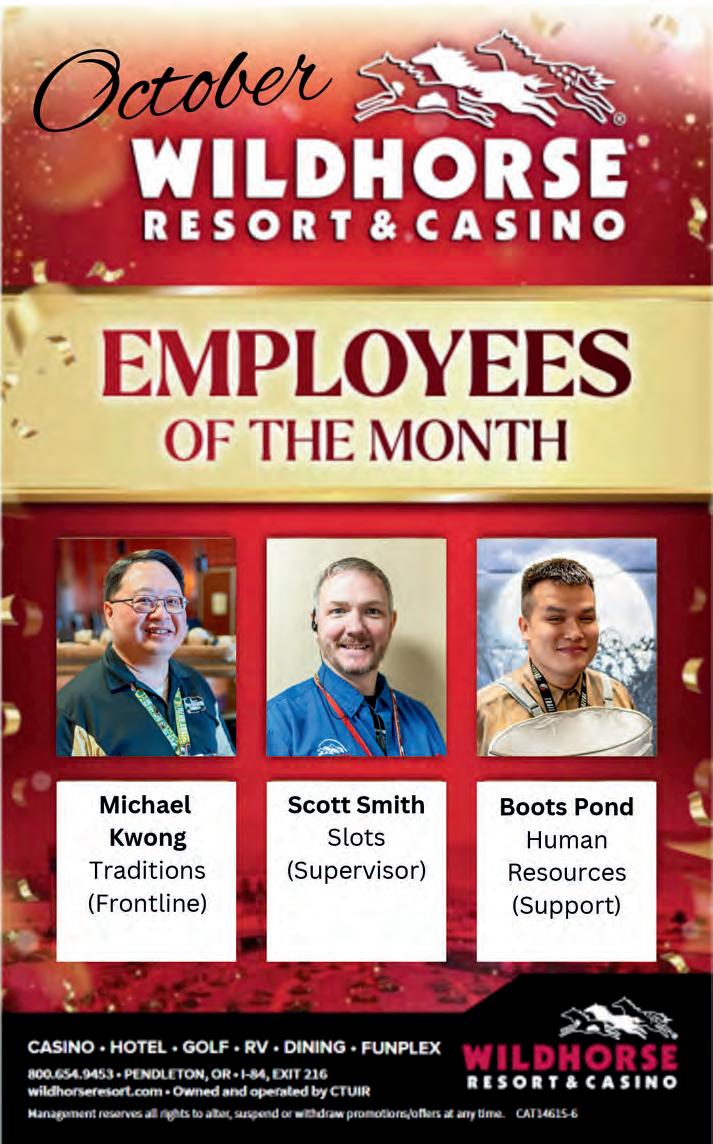










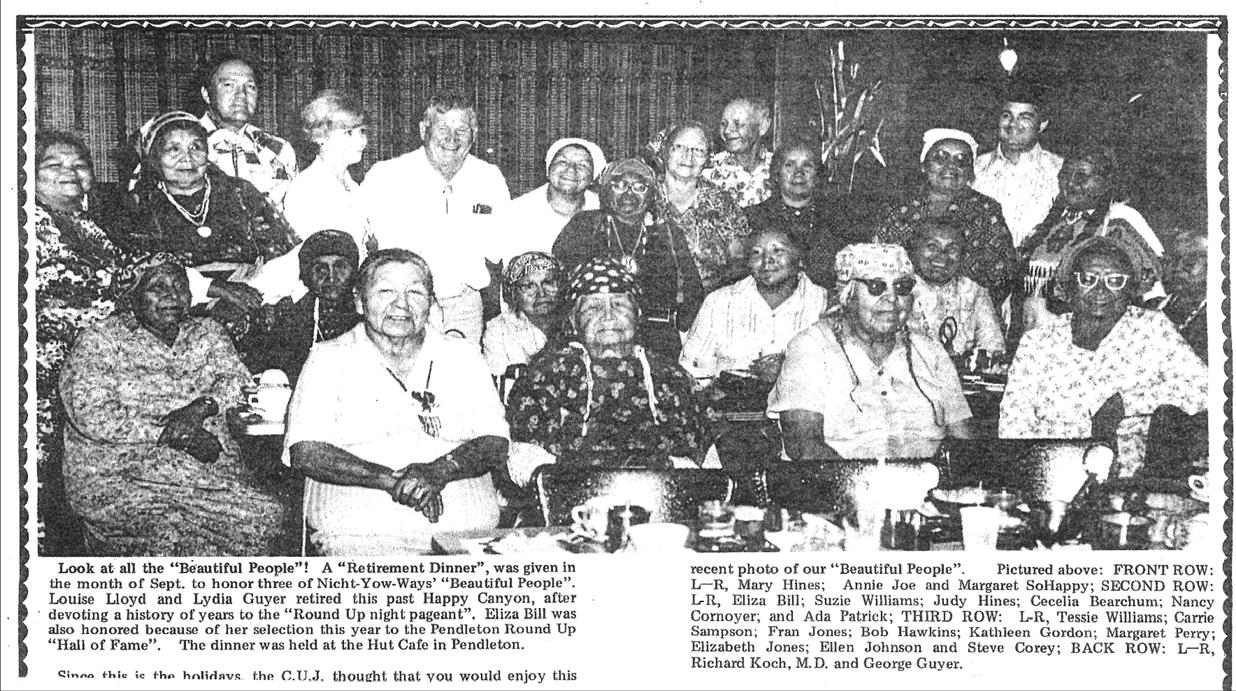
Friday, December 26, 2025
Grand Entry at 6:00pm
Saturday, December 27, 2025
Grand Entry at 6:00pm
Traditional
P


Categories for Women & Men Golden Age: 55+ Tiny Tots: 6 & Under