
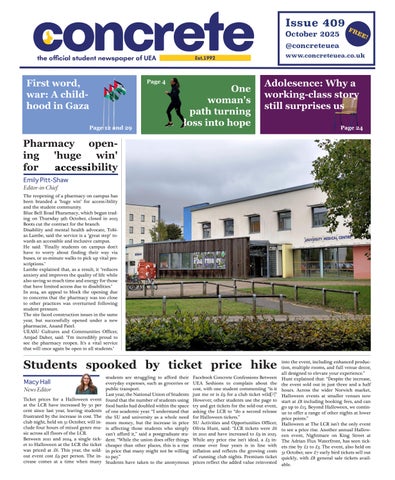
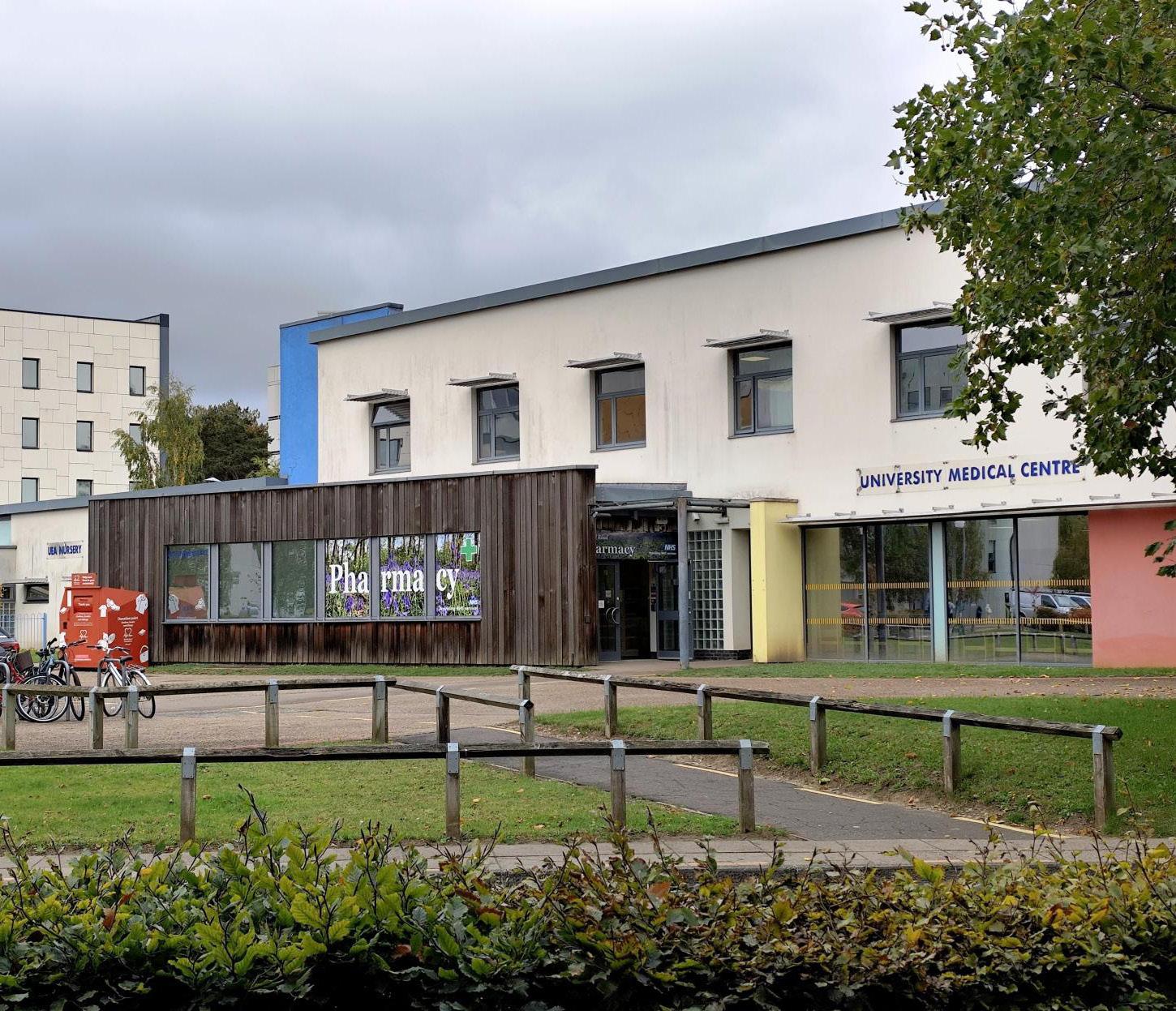
The reopening of a pharmacy on campus has been branded a "huge win" for accessability and the student community.
Blue Bell Road Pharamacy, which began trading on Thursday 9th October, closed in 2023 Boots cut the contract for the branch.
Disability and mental health advocate, Tobias Lambe, said the service is a "great step" towards an accessible and inclusive campus. He said: "Finally students on campus don't have to worry about finding their way via buses, or 20-minute walks to pick up vital prescriptions."
Lambe explained that, as a result, it "reduces anxiety and improves the quality of life while also saving so much time and energy for those that have limited access due to disabilities." In 2024, an appeal to block the opening due to concerns that the pharmacy was too close to other practices was overturned following student pressure.
The site faced construction issues in the same year, but successfully opened under a new pharmacist, Anand Patel.
UEASU Cultures and Communities Officer, Amjad Daher, said: "I'm incredibly proud to see the pharmacy reopen. It's a vital service that will once again be open to all students."

Ticket prices for a Halloween event at the LCR have increased by 50 per cent since last year, leaving students frustrated by the increase in cost. The club night, held on 31 October, will include four hours of mixed genre music across all floors of the LCR. Between 2021 and 2024, a single ticket to Halloween at the LCR the ticket was priced at £6. This year, the soldout event cost £9 per person. The increase comes at a time when many
students are struggling to afford their everyday expenses, such as groceries or public transport.
Last year, the National Union of Students found that the number of students using food banks had doubled within the space of one academic year. “I understand that the SU and university as a whole need more money, but the increase in price is affecting those students who simply can’t afford it,” said a postgraduate student. “While the union does offer things cheaper than other places, this is a rise in price that many might not be willing to pay.”
Students have taken to the anonymous
Facebook Concrete Confessions Between UEA Seshions to complain about the cost, with one student commenting “is it just me or is £9 for a club ticket wild[?]”
However, other students use the page to try and get tickets for the sold-out event, asking the LCR to “do a second release for Halloween tickets.”
SU Activities and Opportunities Officer, Olivia Hunt, said: “LCR tickets were £6 in 2021 and have increased to £9 in 2025. While any price rise isn't ideal, a £3 increase over four years is in line with inflation and reflects the growing costs of running club nights. Premium ticket prices reflect the added value reinvested
into the event, including enhanced production, multiple rooms, and full venue decor, all designed to elevate your experience.”
Hunt explained that: “Despite the increase, the event sold out in just three and a half hours. Across the wider Norwich market, Halloween events at smaller venues now start at £8 including booking fees, and can go up to £15. Beyond Halloween, we continue to offer a range of other nights at lower price points.”
Halloween at The LCR isn’t the only event to see a price rise. Another annual Halloween event, Nightmare on King Street at The Adrian Flux Waterfront, has seen tickets rise by £2 to £3. The event, also held on 31 October, saw £7 early bird tickets sell out quickly, with £8 general sale tickets available.
Daisy Lester
I desperately wanted to avoid the cliche of “October is a time of change” in my first editorial piece, but sometimes cliches are established for a reason.
For me, it has been a huge time of change. I kicked off my tenure as Deputy Editor-in-Chief in the best way - by being almost entirely absent for the first two issues and spending the time spread between work, travel and a massive breakup.
For the first time in seven years, I am responsible for no-one’s happiness but my own. As the random Chinese lady told me on the plane when I did not want to recline my seat “you must prioritise your own comfort”. I don’t think she realised what a huge impact that would have – ultimately leading to my divorce (it’s yet to be seen if it is also my undoing).
For the first week, I was busy every day, filling in the new void with friends who I’d had to shelve my love for in order to redirect it to the one who expected it from me. But as I sat down to write this, I was for the first time alerted to a crazy new loneliness which I haven’t felt in a long time. What do you do when you have all of that love, and no where left to put it? Thankfully, I have firm roots and a wide circle, so I’ve bounced between groups today. I’ve found that, actually, when people say “if you ever need to talk about it, or just drink about it”, they
tend to mean it.
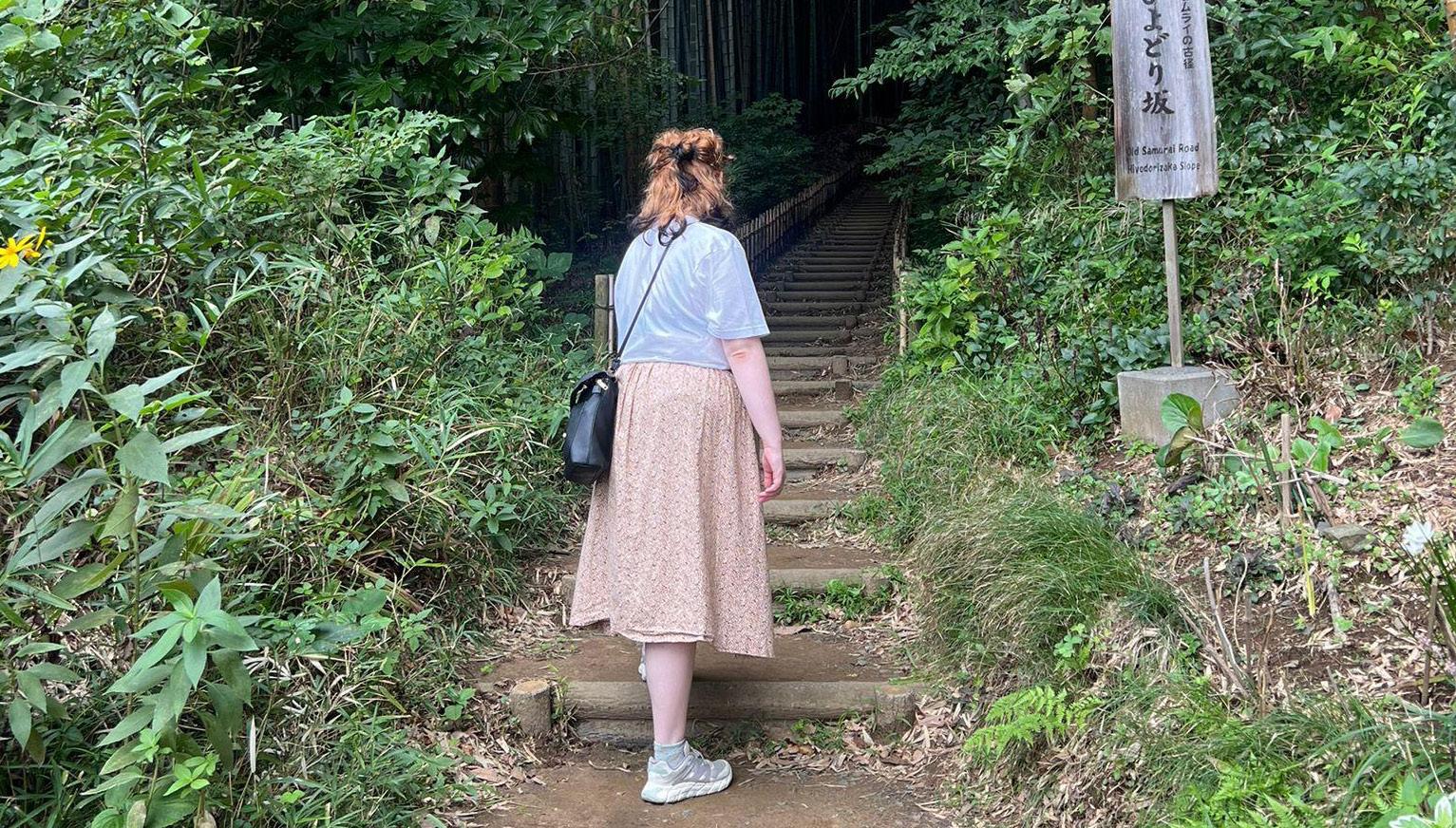
As I am surrounded by well-intentioned friends and randomly supportive strangers, I realised that lives and newspapers are very similar, in that they take huge amounts of people and effort to succeed. I would not be who I am today (and would not have gone to Japan or divorced the best man alive) if it weren’t for the amazing people in my life. From strangers on planes to the guy who was custodian of my heart for the last 7 wonderful years, I am thankful to (almost) everyone who has had an impact on the person I became.
But while I can tell them, the newspaper can’t, though I’m sure it would if it could. It would thank Milli for being a fantastic and (maybe overly) committed leader who has ensured the publication of two entire print issues (so far). It would thank Anna for being hilarious and driven, with puns so bad they rival my ex-husband’s. Thank Micah and Robyn for ensuring the creative and talented voices of the student body are heard. Thank the section editors and printers who make sure the ink looks beautiful on its pages and mostly, thank you guys, the readers, who give it meaning and purpose. And back to me? I think I’ll still be changing long after October ends, embracing the people that change me, as well as the amazing team that gives it their all to bring this paper to your hands.
Enjoy the issue – and happy Halloween!
Silence around STIs puts students at risk
Buddy(SU) seeking new volunteers
Mirror, mirror: The pressure of perfection in the digital age
Not everything is doom and gloom Home of the Wonderful...........P8
Redundant retrospective: the impact of redundancy at UEA
The history of UEA's best kept secret Interview...............................P12,
First word, war: A childhood in Gaza SciTech......................................P30
AI therapy: Asset or alarming?
Cafeine and Cola - its history and your future
The same system detsroying the planet is ruining our mental health
A love letter to my slow cooker
The perfect cosy night in Is there really and lonliness epidemic?
Motivation: The story of Anna Anisimova
Darts: a sport or not a sport?
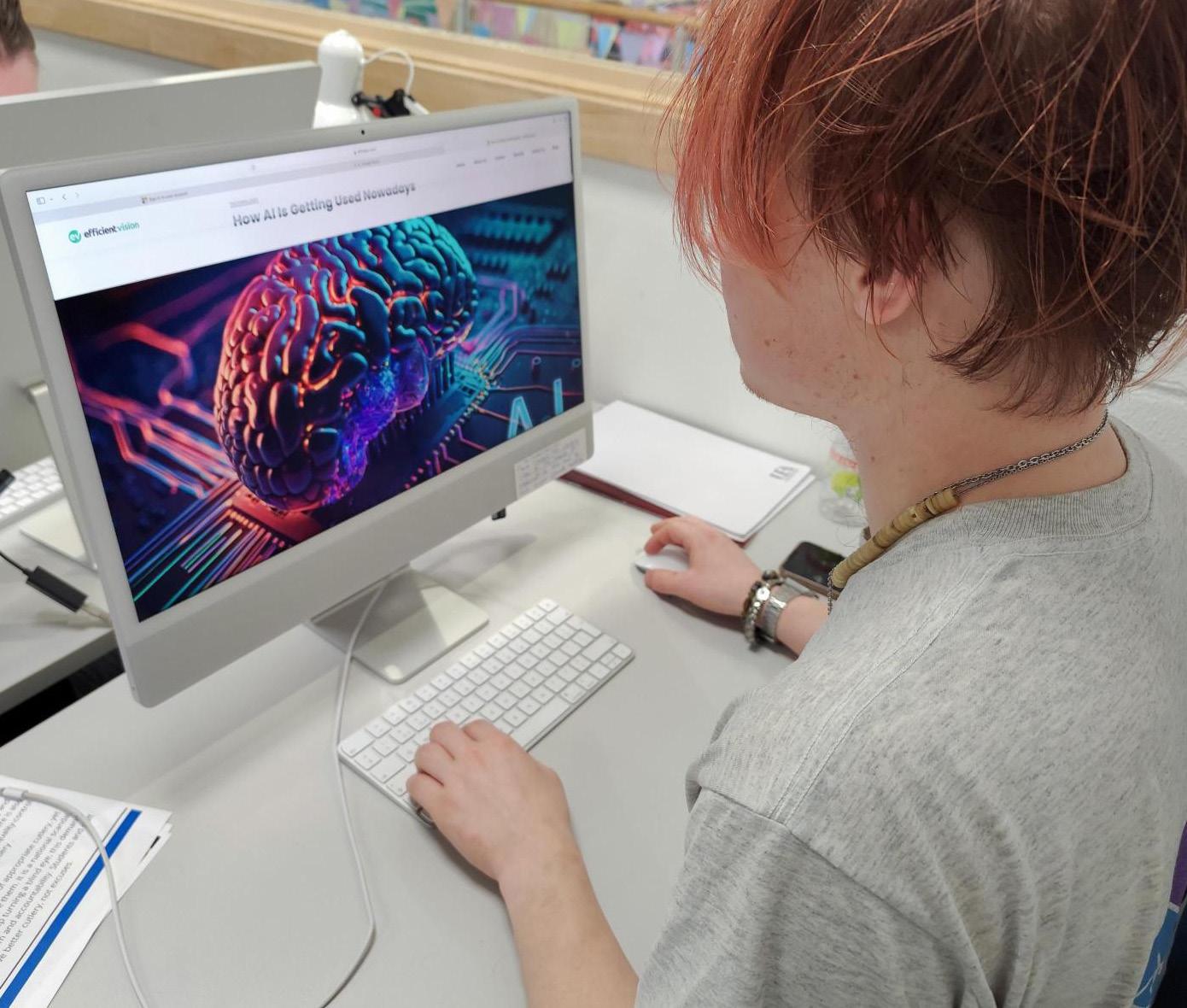
A 5-week AI course is starting for Media Languages and Communications undergraduates. As part of MLC’s commitment to “fostering AI
literary,” it aims to teach students how to use AI productively, ethically, creatively and responsibly. The programme extends beyond studies, aiming to equip students with confidence when using AI in their future careers, according to MLC Staff, Eugenia Loffredo.
Talking about STIs can be difficult. A survey run by the Superdrug Online Doctor found that 72% of respondents say STIs would be the least comfortable topic to discuss on a date. But it’s an important conversation to have, with their complications ranging from uncomfortable pain to infertility and certain cancers. And, with the UK Health and Security Agency recently finding that there were more than 350 diagnoses per day among 15 to 24 year olds in 2024, it’s something that needs to be talked about.
A growing number of people are not having these tough conversations due to a lack of awareness.
The UK health and Security Agency found that over a third of uni-
versity students have no awareness of chlamydia one, the most common STI in the UK. Additionally, 35% were unaware of gonorrhoea, and 25% of HIV.
There are ways to tackle this awareness gap. Despite the tricky nature, it is important to talk about it with your partner or partners. Superdrug Online Doctor suggests starting the conversation early, ideally before you are intimate, and normalise it being a topic you discuss openly. They say that “if it’s too late for that, then start as soon as possible.” The site also advises researching and educating yourself on the topic. Being open and non-judgmental is important within these conversations and helps to remove the stigma.
Around half of Superdrug's respondents said that they’d want to know if their date had an STI, but only 28% said they would tell their date if they had one. According to pharmacist
Boots, “regular STI testing, access to contraception and awareness of safer sex practices are all contributing factors that are vital to having a positive and safe attitude towards your sexual health.” Talking about testing, as well as accessing it, is important for both our emotional and physical health.
The University of East Anglia is also trying to increase young people’s awareness by teaching about the symptoms and offering free testing kits in the Students’ Union office (on request) and medical centre. This involves a simple urine test, no appointment required, with results being received after only a few days.
Pharmacies such as Boots and Superdrug also offer testing kits and treatments to be delivered to your door for a small fee, without in-person consultations, in the hope of reducing the embarrassment of accessing treatment.
For more information, visit the NHS website, the UEA medical centre or the Students’ Union Office.
The City of Stories' biggest literary event of the year is set to return! The Norwich Book Festival will return to the Forum between October 24 to 31. This year’s expanded eight-day celebration of stories features over 50 book talks, workshops, and author signings, meaning there’s something for every reader.
Highlights include appearances by award-winning writers like Paula Hawkins and Sarah Hall, sessions for storytelling, and the return of The Imaginarium - a free, interactive space packed with creative activities for all ages.
Students left with blank timetables on 1 October have described the incident as “confusing and annoying.” It comes after students across all taught programmes could not view their individual timetables for a day.
A UEA spokesperson addressed the issue as a “processing error [that] occurred within the timetabling system overnight on 30 September.” Working with IT and system suppliers, the issue was fixed on the same day, with students notified the following morning.
Career Central has announced the return of the Working with Words Conference on Friday 8 November, 2025.The conference features discussion panels for diverse careers including publishing, marketing, and scriptwriting. This year’s conference will debut a ‘News & Journalism’ panel featuring UEA graduates Libby Hargreaves and Siân Roche. Attendees can also benefit from workshops and networking sessions featuring industry professionals. You can secure tickets for individual panels on the Career Central website now.
Steven Whitear
Norwich City Council has confirmed it will take over the direct operation of Grade 1 listed venue The Halls. The controversial decision follows legal challenges that stalled bids by Norwich Arts Centre to take control of the site. The venue has been closed for a major refurbishment. Costs rose to over £7.8 million. Norwich City Council is now prioritizing redevelopment plans and hope to reopen the muchloved historic asset for public use as quickly as possible.
Have a story? Get in touch with our team at Concrete.editor@uea.ac.uk
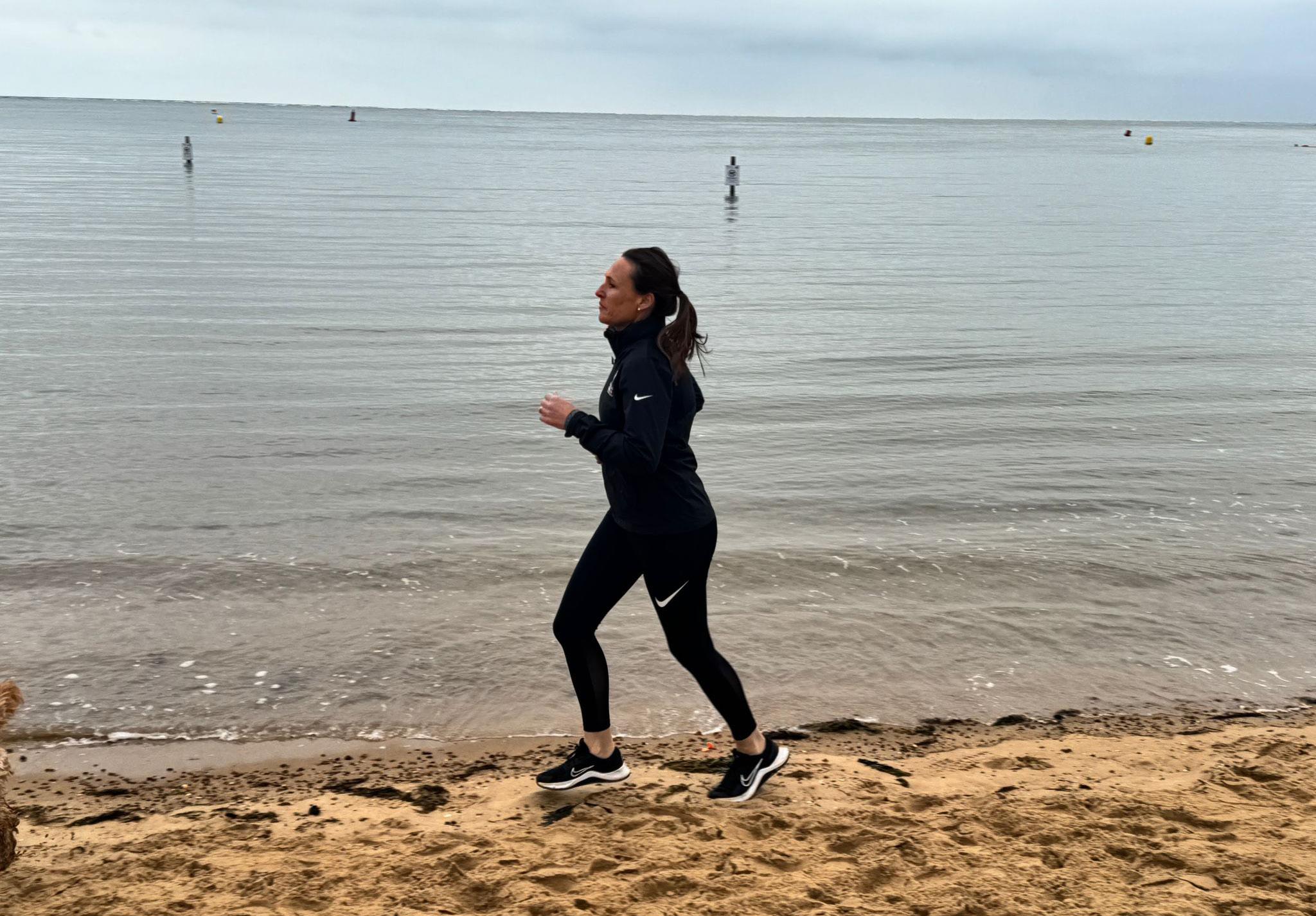
“My colleagues have been amazingly encouraging, offering motivation, training tips, advice on the best trainers to run in, and plenty of cheers along the way.”
importantly raise money in the name of her dad.
Anna Johnson

New research has found that more needs to be done to support locals who are missing out on job opportunities due to a lack of tech skills.
The study, conducted by Trooli, found 19% of Norfolk residents do not understand enough about technology. Meanwhile, 15% have resorted to lying about their IT skills when applying or interviewing for a job. The UEA has just under 2000 mature students each year, some of which have not been in education for many years and need help with the changes in technology. 58- year-old, SEND Coordinator, Sarah Schild, struggled with technology. She said: “After pausing my teaching career to have children, I found that technology had moved on significantly by the time I returned to a full-time role – and I needed to catch up. Unsure where to go for help, I relied on my family to bring me up to speed and I created my first-ever PowerPoint presentation at age 50.”
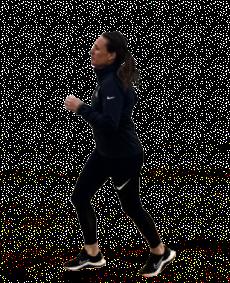
Losing a loved one can stop life in its tracks. But for Jenny Luckhurst, School Coordinator at UEA, loss has turned into motivation. Jenny lost her father six years ago and now feels ready to raise money in his honour by running the London marathon.
She said: “Growing up, my father and I would watch the marathon together every year. Sadly, he passed away suddenly from a brain tumour.
“Deciding to run the London Marathon felt like a poignant way to honour his memory and raise awareness and funds for the brain tumour charity. These motivations have given me the determination and purpose to take on this incredible journey.”
Running a marathon is no easy feat. According to High5 it takes around five months to train at increased intensity. For Jenny, she has thrown herself into the deep end.
“I’m a complete amateur. This is my first ever marathon, and to be honest, I’m not a regular runner. To ease myself into it, I’ve started the Couch to 5K program, which is helping me build up gradually and break in gently. It’s been a new and exciting challenge, and I’m enjoying seeing the progress bit by bit as I prepare for the big day.”
But she can’t do it alone.
When the day of the marathon arrives, 26th of April, Jenny is hoping to finish the marathon not just for her dad, but all the lives affected by brain tumours.
According to Cancer Research UK, around 13,000 people are diagnosed with a brain tumour each year.
“After sharing my marathon and fundraising journey, I’ve learned of others that have also lost loved ones to brain tumours. It’s been emotional to share my intentions with them, and I’ve decided to run a mile for each of those lives. Carrying their memory with me gives me strength and reminds me why this marathon means so much.”
After all her training and support the main aim is to complete the marathon.
“Finishing the marathon will be incredibly meaningful to me, it will represent not just the physical challenge I’ve overcome, but also a tribute to my father’s memory and the fight against brain tumours.
“Crossing that finish line will be a milestone in my life, it will be a moment of pride, reflection, and gratitude—for the support I’ve received, the journey I’ve taken, and the cause I’m running for. It’s more than just a race, it’s a personal and emotional achievement that I’ll carry with me forever.”
Jenny hopes to inspire others and most
“Donations to the Brain Tumour charity would mean so much—not just to me, but to the families and individuals affected by this illness. Every bit of support, big or small, fuels my motivation and makes this journey even more special.”
credit: Jenny Luckhurst
The research showed that the technology gap is now more prominent than before with a quarter of Brits not knowing how to pay for things on their phone, over a third cannot build a PowerPoint presentation, and 23% are unable to check their broadband speed.
Andy Conibere, CEO of Trooli, said: “We were sad to discover just how many people in Norfolk are suffering because of their lack of technology skills. We don’t think anyone should feel alone or ashamed when it comes to their digital confidence.”
Mia Lutchman

e O ce for National Statistics has revealed that 1,108 students died by suicide between 2016 and 2023, with the suicide rate for men sitting at 10.4 per 100,000 students, a gure that is drastically higher than that for women, at 4.3 per 100,000 students. Alicia, president of Headucate, UEA’s mental health awareness society, said: “ e university does what it can to support its students with their mental health. ey provide so many resources. I think the issue is that a lot of students are not aware of the services available to them and how to access them.”
Undergraduates have higher suicide rates than postgraduates, and those studying part time have higher rates than full timers.
ose living independently were found to have twice the amount of suicide rates than those living at home.
A UEA spokesperson said: “we’ve introduced a new suicide prevention learning pathway for students, designed to help them recognise signs of distress and signpost to professional support.
“We are also proud to be working towards the university mental health charter, which recognises institutions that make mental health a university wide priority. Suicide prevention is a complex and sensitive issue, and we remain committed to working with students, families and partners to continuality strengthen our approach.”
Lilia Colledge
BuddySU, a project that aims to ease the transition of new students into university life, is looking for volunteers to join the scheme. It encourages students to learn new skills, meet new people and support one another.
Whether you’re from a different country or county, Buddy(SU) is designed to offer support during your transition to the University of East Anglia by matching you with a current student who has been at the university for at least one academic year.
Volunteers help combat loneliness and ensure everyone feels like they belong on campus by encouraging a mentor-mentee relationship between new and existing students.
Matches are made by school of study, hobbies or interests, with the purpose of sharing advice - which could range from recommending the best food on campus, information on the buses or simply meeting for a coffee and catch up. A statement from the Students’ Union (SU) explains that “the main goal of the project is to increase retention rates from Undergraduate first year students, by linking them with a Volunteer.”
A ‘buddy’ must have a minimum of one academic year at the University of East Anglia, to ensure they have “lived experience” and extensive knowledge of campus. They must also understand
Norwich and student life to put them in the best position to give their buddies advice when needed.
The Students’ Union believes the scheme is beneficial for both volunteers and new students. The SU says that the role “ensures valuable work experience supporting a new student, which can be used on CVs and hours logged against the UEA
Award.” They said that the programme gives new students “a link person to go to, who is an experienced UEA student,” which helps to combat “loneliness and isolation during the first semester at university, and for the rest of the academic year.”
Annually, the Access and Participation Team completes an external evalua-
tion of the programme. “These findings,” the SU says, “have proven that buddies feel the service helped them settle.” Referencing a 2014 study, they said that “a peer mentoring relationship supports new students’ integration into university, with studies showing positive impacts on levels of wellbeing and retention.”
Angus Coulson
The Liberal Democrats have announced a new strategy backing youth work, consisting of long-term funding and the appointment of a dedicated Cabinet Minister for Children and Young People.
In a statement on the Lib Dem’s official website, MP Munira Wilson highlighted the importance of providing safe spaces and building skills for youth and argued that youth work is essential for preventing crime and anti-social behaviour. Wilson also underscored the value of youth work as a long-term investment, with Lib Dem research showing that every £1 invested will generate £6.40 in returns.
The National Youth Agency (NYA), who aim to improve service and oppor-
tunities for young people, voiced their support for the Lib Dem’s strategy. In a statement on the NYA website expressed that they are pleased at the Lib Dems commitment “towards building back the youth sector.”
According to a UNISON survey in June 2024, more than “two thirds of council-run youth centres” have closed in England and Wales since 2010. The Lib Dems strategy offers a “bold, long-term vision” for youth in the UK.
The measures include the appointment of a dedicated Cabinet Minister for Children and Young People, a fair, long term-funding for youth projects, resources and infrastructure, support for charity-run youth services to access more funding, and the supporting of schools and youth organisations to deliver outdoor education.
Norwich has seen the closure of several youth centres in recent years, which has sparked concern about the lack of opportunity for young people. In 2020, the OPEN Youth Trust in Norwich went into liquidation. This was amid a grant refusal during the Covid-19 pandemic.
Following its closure, a major gap was left in provision for young people in Norwich. The Liberal Democrats new policy aims to prevent closures in the future and ensure that young people have access to safe spaces and services.
Speaking to Concrete, Norwich Liberal Democrats referred to a statement from their 2024 parliamentary candidate for Norwich South, Sean Bennett. Bennet highlighted that “the voices and needs of younger generations must be reflected by at the very highest levels of our political system.”
Bennett added that young people in Norwich “are the future of this city and the nation at large,” and therefore must be heard and considered by policymakers at both local and national levels. The coming months will show how much traction the Liberal Democrats’ proposals gain and whether other UK parties present competing strategies. In Norwich, where youth services have been hit hard in recent years, there will be hope that this strategy renews commitment to young.
Whether this strategy can make a lasting difference will depend on how far future governments can commit to them. Questions will also remain over how the policies would be implemented, but until then the Lib Dems will look to position themselves as champions of young people.
Evie Smith Steven Whitear
With October seeing and celebrating Mental Health Awarness Day on 10 October, conversations about the subject are in the public interest. A lot has changed in the last decade regarding how mental illness and feelings are treated. Although a sensitive topic, it that doesn’t have to be the elephant in the room.
Talking about mental health is difficult for many people. The progress of how it is perceived neglects that there are barriers to asking for help. Mental health is still unfortunately a taboo subject which may explain why many people decide to bottle it up instead of seeking support. Changing attitudes make me hopeful that in years to come, more people will feel comfortable to talk about how they feel. I’m not saying you must immediately turn to one of your friends and bring up everything you think or feel, but if you are feeling low then talking to a friend about whatever you are going through will help - even if you don’t immediately feel less of a weight on you.
At university, there are a multitude of ups and downs that we all experience in different ways. The issue is we are in a transitional period - both in the sense that this is the time where one discovers themselves, and equally how changes can warp how we see ourselves. The joke of asking someone if they had a mental breakdown after dying their hair a vastly different colour or getting a tattoo can reflect that our physical appearance
can indicate how we are feeling. It doesn’t always take verbal signals to read someone.
The UK is in a mental health crisis, with the number of people in contact with mental health services significantly increasing since the first Covid-19 pandemic lockdown. There seems to be a lack of urgency when it comes to addressing this issue. I’m aware it’s not a simple task; we can’t wave a magic wand and fix everything. More needs to be done to support those who need it. But it's promising that the ‘stiff upper lip’system in this country seems to be in decline, especially in the younger generation.
"The progress of how it is perceived neglects that there are barriers to asking for help."
There is a common myth that by talking about suicide, we put this into another person’s head. This is not true, talking about suicide doesn’t make it more likely to happen. To not mention suicide, again, proves that a lot needs to change about how we discuss issues related to mental health. Open dialogue may be awkward or uncomfortable, but I’d rather have someone feel these things opening up then suffer in silence.
When my friends and I are going through challenging times we fall back on the saying, “I’d rather listen to your story than attend your funeral.”

Political violence has no set definition. There are many acts - some shocking, some alarming, some soberingthat could all apply to the term. Some high-profile examples of political violence from across the world include the assassination attempts on Donald Trump in the lead up to the US Presidential Election in 2024, and the death of right-wing influencer Charlie Kirk in Utah.
Political violence can be seen and spread online faster than ever. For the examples of Trump and Kirk, raw, unedited, candid footage of the events themselves spread before the news broke on mainstream media stations. They amassed millions of views.
The new, accessible nature of political violence often leads directly into wider outcry. Conspiracy theories sprout from baseless claims that are repeated in thousands and thousands of comments. By the time a genuine political motive is verified, many people have already come to their own conclusions and use mainstream media only to justify the spread of hatred.
Platforms such as X (formerly Twitter), Facebook and TikTok are designed to maximise engagement by feeding users content aligned with their interactions. If a person watches a video depicting police violence against protesters, they are likely to be shown more of the same. Another user, who engages with clips portraying protesters as violent agitators, will be directed toward another narrative. Over time, people can become trapped in ‘echo chambers’ that heighten division. Each group perceives itself as responding to violence initiated by the other, and compromise becomes increasingly unlikely.
Exposure to graphic imagery, even when viewed remotely, can trigger stress responses similar to those experienced by people who are physically present. Feelings of helplessness or rage can drive individuals to more extreme positions, pushing them toward activism or, in some cases, radicalisation.
Selective editing, framing, and amplification to a base of supporters can turn a single violent moment into a defining symbol of an entire movement. When the U.S. Capitol was stormed in January 2021, images of broken windows and rioters in the Senate chamber dominated headlines and social feeds. For some, this was proof of a dangerous attack on democracy. For others, it was portrayed as an act of resistance against a broken system.
Even acts that don’t immediately have a political motive can become political violence because of how they’re perceived by the public. In July 2024, seventeen-year-old Axel Rudakubana killed three children and injured ten others. Although the motive was unknown, conspiracy theories and unsubstantiated claims spread like wildfire across social media sites, and nationwide anti-immigration protests followed for weeks. Eventually, it elicited a response from Prime Minister Keir Starmer, and highlighted the public’s dislike of Labour’s immigration policies, which had only come into effect less than a month prior to the killings.
I’m a journalism student, so as you might expect, political violence appears in my line of work all the time. Whenever I am posting something on X, or even a news appeal on Facebook, the first dozen or more recommended posts can range from anti-vaccine claims and conspiracy theories about high-profile politicians. This isn’t an algorithm I’ve cultivated on purpose, it’s genuinely what
social media sites think my thoughts align with after working on political stories for two years. I’ve seen in real time how comment sections from trusted sources like 10 Downing Street or Associated Press get filled with baseless and untrue ‘alternative facts’ and poorly made memes created with the sole purpose of spreading hatred and extremist views. I find it extremely worrying, and it has definitely gotten worse. I’m actively bookmarking the most outrageous posts I come across, and there is sometimes a humorous angle in just how outrageous some people’s writings are, but I definitely feel like if I wasn’t trained to be impartial, these posts would find their way into my subconscious and change my world view somehow.
When it comes to political violence, some communities rarely wait for facts. Instead, emotions power the first wave of responses, and those initial narratives - however inaccurate they are in reality - often stick. Once a particular explanation gains traction online, corrections or clarifications struggle to catch up. This creates a fractured environment where competing ‘truths’ coexist, and ‘alternative facts’ begin to form. This fuels hostility and deepens the divide between political factions.
What makes this cycle particularly dangerous is its self-reinforcing and regenerative nature. Outrage brings attention, attention fuels algorithms, and algorithms amplify outrage further. Political violence becomes an ongoing act that is consumed by millions and shaped into ammunition. Political violence will continue to divide and have a lasting effect until verification becomes as easy and effective as the spread of harmful content in the first place.
Evie Smith
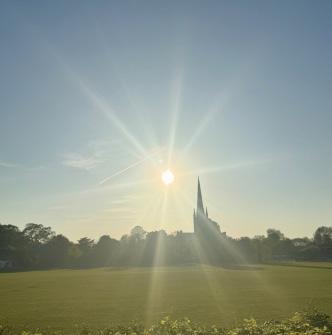

In today’s climate, it’s almost impossible to avoid a sense of doom and gloom. We have constant reminders on the news cycle of upsetting stories all over the world. On social media, concerning images showing just how low humanity can go make users feel conflicted. The 1984 hit “Do They Know it’s Christmas” by Band Aid inspired me to write this article as it reminds me that despite the doom and gloom, community reallyis everywhere.
The song was a collaboration of artists, such as Phil Collins and Bono, who aimed to raise money in response to the famine in Ethiopia. When it was released, it stayed at number one on the UK singles chart for five weeks. The collaboration of a community of the biggest artists of the time showed unity that spread throughout both the UK and world.
I’m not suggesting UEA comes together and does a charity song - even if it would be funny. However, this throwback example shows how a community of people can make a big difference.
On many platforms there are still good news stories. In recent news, Huntington’s disease has been treated successfully for the first time in
the UK - uplifting for everyone, especially those effected by the illness. There will always be stories and media that upsets us, however, it is important to find ways to feel less melancholy about what we consume online. I understand that suggesting reducing your screen time is easier said than done, but it has been proven to improve both your mental and physical health.
We need community for several reasons, especially as students. Community reduces loneliness and offers support during difficult times. During university there are challenges that can be supported if students feel they have someone to talk to. With over 200 clubs and societies offered at UEA, you can find your crowdeven if it takes time.
A quote to remember in uncertain times is one from a cheesy 2000s film called Love Actually. Hugh Grant 's character, a Prime Minister, says: “Whenever I get gloomy with the state of the world, I think about the arrivals gate at Heathrow Airport. General opinion’s starting to make out that we live in a world of hatred and greed, but I don’t see that. It seems to me that love is everywhere. If you look for it, I’ve got a sneaky feeling you’ll find that love actually is all around.”
Image credit: Evie Smith (above) and Hnnah Jones (below)
“Nobody’s perfect” is a cliché we’ve all heard. Yet, we still channel a lot of time and effort into minding what we wear, what we say, how we speak, what we do, and how we behave, to name a few things, in the company of others. This is very often down to more than just civility. Fuelled by social media in recent years, perfection is a significant pressure felt by 87% of Gen Z internet users (The cybersmile Foundation).
The pressure we put on ourselves to be perfect originates from a care about what other people think of us. While a moderate desire to please others is normal, social media content is creating much tension among young people. In 2024, 45% of British 18 to 24-year-olds were constantly comparing themselves to online influencers (STADA), contributing to self-doubt and anxiety in the subsequent pressure to follow these examples of ‘perfection’.
Approval of our efforts to be ‘perfect’ comes in the form of likes for our own social media posts. Though I don’t use social media much myself, one thing that has struck me in my own exploration of platforms is the different accounts some people have – the ‘public’ one, with their thousands of followers, and their ‘private’ one with a more exclusive range of followers; for the ‘perfect’ them and the ‘real’ them, as my close friend once summarised it. On social media, we see only what people want us to see – that is, what they deem ‘perfect’ (or at least acceptable) for their audience to see, and what the likes reinforce as ‘perfect’ to show. And we’ve all seen the hell that social media can create for people who put a toe out of line, which only further fuels our own fear of not being unequivocally ‘perfect’. I won’t deny the impact this toxic dynamic has had on my own social media presence; I am very shy on my socials, very rarely posting photos of myself. My posts aren’t
created with the aim of appearing ‘perfect’, but my social media presence is still not without an extent of pressure and restraint around what I choose to share in the first place.
The ‘perfect to see, perfect to show’ correlation can often lead us to depend on the likes as an indicator of our social desirability and self-worth. But when the pressure of perfection completely dictates what we post, the likes we receive for our content are as meaningless and irrelevant as the content itself. Before we know it, we’ve lost ourselves in this slippery game. If the approval is at the cost of our own authenticity, is it worth seeking? Underpinning all this is the ironic reality that the definition of ‘perfect’ for which we aim is itself unstable, having been created only by our individual interpretations of the unrealistic ideals we are fed by social media (and which will change as soon as the next influencer comes along and steals the likes). A tangible,
stable, universal definition of ‘perfect’ does not exist. Even the omniscient influencers haven’t managed to deliver on this.
Our wellbeing is too high a price to pay for scraping a pathetically temporary pass in the delicate, dangerous arena of ‘perfection’. With so many other strains on our lives, we might do better to stop reaching for the unreachable and
settle for being ourselves. That kind of self-acceptance certainly isn’t always easy, but it’s important to remember that, ‘imperfections’ and all, we are who we are. “Nobody’s perfect”, we’re told. But maybe just being ourselves is perfect. Afterall, the world doesn’t need influencer-generated ideas about perfection to brighten it. It needs us.
My course doesn’t exist anymore. American Literature with Creative Writing no longer appears on the university website, UCAS, or any other university choice site. ere is a total of four of us le taking the course: a course which UEA has been proud to present, represent, and shove into the corners of the humanities building.
Along with two of my coursemates, I was rst made aware of sta redundancies back in the summer of 2023, before the start of my second year. We were told by professors that cuts were being made, and management would be shaken up. Shockingly, some of our professors had to tell us that they didn’t even know if they would be returning the following year. A plethora of modules were advertised without the promise of who would be leading them - a premonition of what was to come. Still, there were lots of opportunities on o er.
By the end of second year, the school had begun to “restructure” our department - a fancy word to obscure the shutdown of our speciality. Modules were being moved around, courses were being restructured, and the entire department was on edge. It was clear to us that
the professors were no longer worried about the fate of the course: they were worried about the fate of their jobs. Despite this, the bar for study did not deplete; our professors put out an amazing two semesters, teaching some of my favourite modules at university. Notably, however, most of our modules were from the LDC and HUM department, not from AMA. e shutdown of AMA had already begun to take shape.
I spent my third year abroad in Canada. Unfortunately, during my time away, I received messages from friends back home that the UEA I was excited to return to would not be the same one I le behind. I was made aware that, due to a lack of classes and professors available, a dissertation would be a mandatory module - something that I was previously not planning on taking. e “restructuring” of the department meant the amount of o ered modules had diminished. is is the biggest impact of the redundancy: choice became mandatory and opportunity became restriction. Upon my return, I found teaching posts that were now empty and a slim mismatch of modules that had been forced into reallocation between the remaining professors. Furthermore, many of the courses had been written by those made redundant, leaving the team to teach courses they had rarely, if ever, worked on. Underneath all
this, however, was a hopeful team of sta waiting to hear what was next for the department. is information was given to me this September - days before the course was due to start - only because my friends and I had frustratedly emailed about the current state of our degree. We did eventually manage to speak with the head of the American Studies School, which reminded us that we are lucky to have excellent members of sta who care about their jobs, us as students, and our success in our degrees.
I want to reiterate that last point: our professors and support team are amazing. It is so frustrating to see such a talented group of people be so neglected by the university. rough so much loss and di culty, they have not swayed in giving their best. ough I have only been offered a total choice of four modules this semester, the quality of teaching, despite the setbacks, has not faltered.
A once thriving department has been halved and halved and halved. In the 1960s, UEA was courageous to give students the opportunity to take American Studies and American Literature, as well as o ering creative writing. But it seems that courage has been le in the past and that one of UEA’s most beloved courses is falling apart faster than the Ziggurats.
Supporting small venues, one concert at a time
Izzy Hollyhead
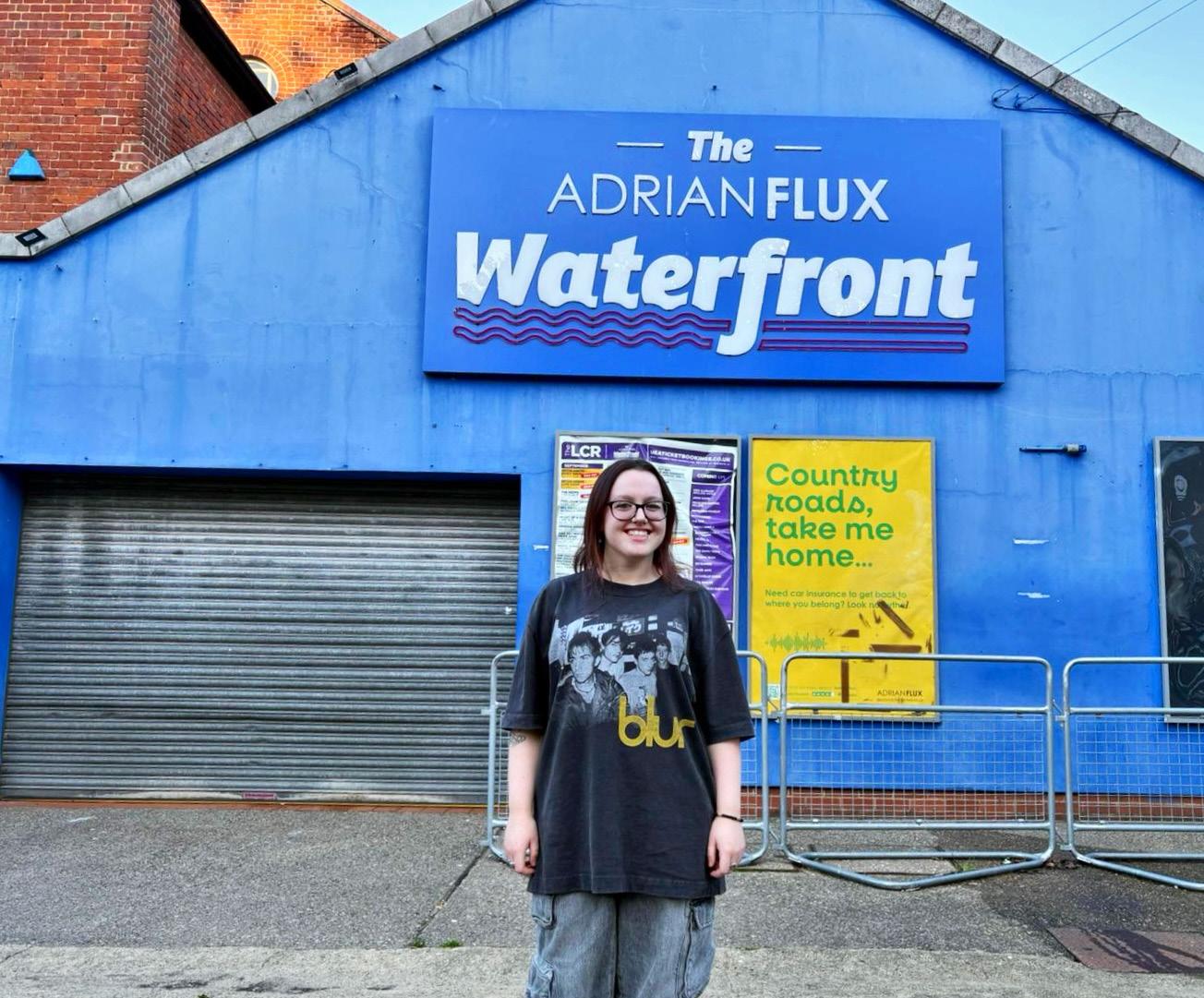
The Music Venue Trust found that one small, independent venue closed every two weeks in 2024, while arena and stadium shows are still seeing an increase in popularity and profits. Although there's nothing inherently wrong with large scale venues, it's the smaller ones that act as the backbone within the live music industry. I frequently visit The Waterfront in Norwich City centre for music and club nights. Their main room holds a capacity of 700 people for gigs, and their upstairs 200, creating intimate connections and experiences for fans and artists alike. Small venues like The Waterfront give opportunities for everyone in attendance that you might not get somewhere like an arena; being so physically close to the stage, providing a better sound quality for fans and allowing for that interaction between fan and artist that everyone secretly craves. You might even come away even luckier by meeting your favourite artists outside of the venue. I got the amazing opportunity to meet Kellin Quinn, lead vocalist for Sleeping with Sirens, when queuing for their gig outside of The Waterfront in 2024 – an event which would have been near impossible if I were queuing outside of a stadium. With today's economy and cost of living crisis, everyone is struggling. But this shouldn’t mean that people with lower incomes should have to miss
out on concerts. The LCR on the UEA campus often holds gigs that range from an average of £15 to £20 - at least half of what many other, larger venues are currently doing. The LCR is an easily accessible venue for both students and the wider public, with cheaper tickets allowing for an overall easier experience; petrol and car parking can be less of a struggle since the event itself was so much cheaper. Saving money on the tickets themselves can give concertgoers more opportunities to directly support the bands and artists they're seeing by being able to budget more spending money for merchandise or physical copies of music. Somewhere like Epic Studios in Norwich also gives smaller bands and artists opportunities to play live music and gain an audience and following. It gives people a kickstart into the live music industry. Allowing artists to take creative risks with production and crowd interaction that they may not be able to do somewhere like an arena or stadium which adds an extra layer of authenticity not just to the performance but to the band/artist themselves. Small, independent venues can struggle financially so it's important to support them as they bring so much diversity into our city. By supporting these places in the industry, you become a part of a community, giving yourself a chance to meet new, likeminded people.
To be safe is to be seen: an LGBTQ+
I was an undergrad at UEA in 2009 and I’m back now for my master’s. If we could include our identities and diagnoses after our name like degrees, I would have quite the list: LQAuDHDOCDPTSD… In 2009, safety felt… negotiable. Nights out came with a mental checklist. Some of those were inherent to being a woman, but in many cases, they were magnified by my queerness. Keys, Blackberry, French exit, pretendto-text, dash from LCR to Britten. Casual homophobia (“banter”) was expected.
Having grown up on the tiny, and very safe, island of Guernsey, I had to learn the art of smallness, laughing things off with maybe it’s just me. Despite this, I fell in love with Norfolk and stayed. Things have changed significantly over the last fifteen years. With growth, when you see it every day, you don’t always notice it.
The first UK-wide survey of LGBTQIA+ experience took place in 2008 at Sheffield Hallam University and surveyed 42 universities. It found persistent hostility: “homophobia on campus is still a significant problem… universities are not perceived nor experienced by LGBT students as safe spaces.”
Sadly, issues lingered into the 2010s. The
NUS 2014 report Education Beyond the Straight and Narrow found that one in five LGBTQIA+ students felt unsafe on campus, as did one in three trans students. Stonewall’s 2018 University Report showed that 42% of LGBTQIA+ students hid their identity for fear of discrimination; 60% of trans students faced negative comments; 7% were physically attacked; and almost half of disabled LGBTQIA+ students faced targeted remarks.
Data now looks more hopeful. A 2021 UCAS x Stonewall study surveying university applicants reported that nine in ten LGBTQIA+ students were having a positive (or at least neutral) experience, and most expected to be more open at uni than school.
Neurodivergent students have also become more visible. In the 2000s, under 6% disclosed a disability to their university. By 2021/22 that figure was closer to 16%, with autism, ADHD (and conditions like anxiety and depression) driving much of the rise. UCAS reported over 100,000 students declared a disability in 2023, nearly double from 2019. That matters. Disclosure unlocks support. Be who you want to see, right? For people like me, it means you’re unlikely to fall through the cracks.
On campus in 2025, the air feels different. Not perfect, but materially better. Two things hit me. First, infrastructure
exists now. UEA’s Report + Support system means you can disclose harassment or hate incidents, anonymously if wished, without being forced into a formal complaint. Second, the university is significantly more upfront. UEA formalised a Harassment and Sexual or Physical Misconduct Policy in 2018. It reads like a university finally saying the quiet part out loud: this stuff happens, but here’s what we’ll do. Transparency isn’t everything, but it beats silence.
There are visible signs for LGBTQIA+ students in particular, with a dedicated LGBTQ+ Working Group feeding into EDI strategy, gender-neutral facilities across campus, Trans and Non-Binary Inclusion Policy and active student societies. Security staff are trained to intervene. Lecturers say, “tell me if the seminar room feels overwhelming” and mean it.
So how safe do I feel? Safer. Not invincible, but safer. Safety is policy + culture + micro-signals. It’s seeing “Trans women are women” on a document header; having lecturers acknowledge sensory needs; the relief that if you report, you won’t be punished.
Progress is uneven, and the world outside UEA can still feel hostile. But the difference between “cope alone” and “we’ve got you” is everything. If 2009me had known that was coming, she would have had a spring in her step.
200 years.
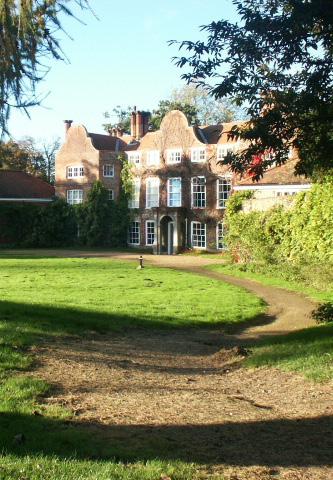
If you ask anyone what the most beautiful building on campus is, they would undoubtably say Earlham Hall, hidden behind The Enterprise Centre. But did you know that the people who lived there were prominent figures and even had a hand in creating Barclays bank and abolishing slavery?
The Hall is a grand, red-brick country house set amid formal gardens. Its elegant Georgian façade features tall windows, climbing ivy, and ornate chimneys.
The origins of Earlham Hall date to the late 16th century, with the Houghton family building the Hall around 1642.
After Mr Houghton’s death, the property passed to Thomas Waller. Sadly, not much is known about his life. After him, it was sold to the Bacon family, who would own it for around
In the 18th century, it passed through various tenants, including Nockold Tompson. Professionally, Tompson was a brewer and the Mayor of Norwich from 175960. As if two careers weren’t enough, he also conducted cropyield experiments at Earlham Hall, which attracted attention from the local newspaper.
After Mr Tompson’s death, the landlord moved in: Edward Bacon, a wellknown lawyer and MP. Perhaps this is the reason why it now hosts the law school today. Mr Bacon made notable architectural additions, including a large dining room.
From 1786 onward, the Hall was leased by the Gurney family for over a century. The Gurneys were notable Quakers (a Christian group): bankers and philanthropists from Norwich. They made Earlham Hall their family home and contributed to its history and local importance.
They founded Gurney’s Bank, one of the major banks in England, which later merged into Barclays. The family were also well-known for
A letter to my fresher self
gress. Find your method and cope. Please.
Let me start by saying that most of the people you currently know are about to become very distant. This isn’t your fault - it’s just life running its course. Those faces you had one polite conversation with at a pre-drink? You might not see them again. Friend groups disperse into smaller social circles. That’s just how it works. You can’t know everyone forever. The initial surge of new faces is overwhelming, but when you find those special peoplewho aren’t judgemental, who share your interests, who you know you can trust - you’ve made it. You’ve drawn your own social circle.
Stressful situations will be close and near-between (that’s my opposite to few and far-between.) You won’t expect it. Stress won’t always come from work. You’ll become stressed out with people. Being aware of the pressures and struggles you’re under is massive, but don’t mistake awareness for pro-
But that doesn’t discount the inside jokes, the late nights, the bonding, and the once-in-a-lifetime memories you’ll make here. This place is just fantastic. You have the advantage of being a part of a tightly knit course and the relationships you’re making are only just starting to bloom. Make the right choices. Treat people well. Earn their trust. Remember their names. Explore campus - the bunnies are everywhere!
The network that you are currently building is invaluable. Don’t let it go to waste. Making friends is one challenge, and keeping friends is another, but it’s so entirely worth it. The most important thing that I wish I knew is how fast time would go. The first year feels slow because it’s new. The second year is a different story. That seemed to disappear overnight. Now people are telling me I’m in my third and final year? Where did that come from?
their progressive social views and involvement in causes such as the abolition of slavery and education reform.
A notable member of the Gurney family was born Elizabeth Gurney and married to become Elizabeth Fry. Elizabeth Fry campaigned to improve the harsh conditions in prisons: introducing education, work opportunities, and better hygiene.
In the late 1800s the Bacon’s sold the Hall and it passed through various owners until 1925, when it was sold to the Corporation of Norwich. They used the Hall for various public purposes, such as schools and hospital/maternity services. In 1963, the property became part of the UEA, with the Hall used for administration and later housing the Norwich Law School, which remains to this day.
Anna Johnson
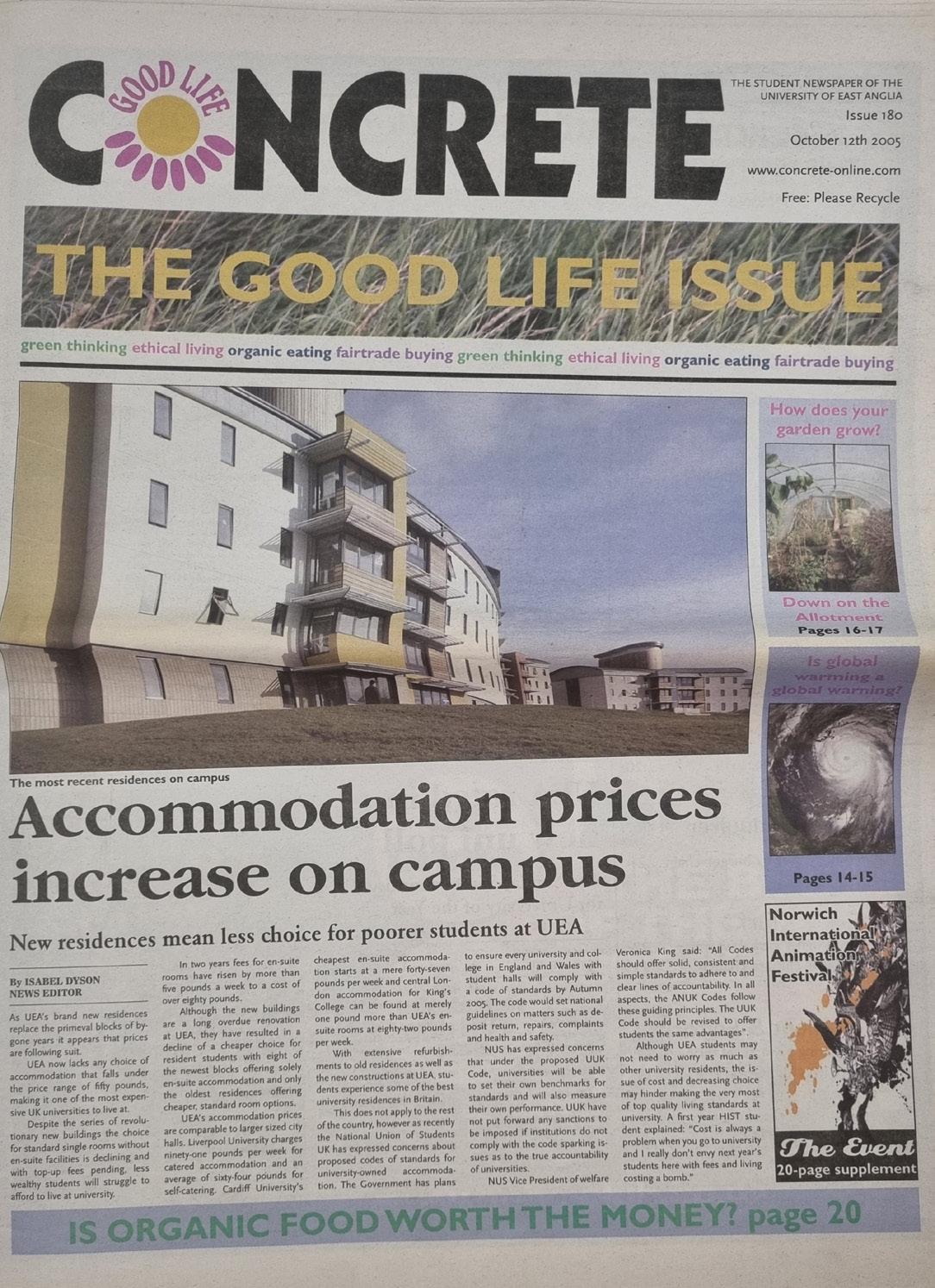
This month, I’m taking you all the way back to October 2005.
What was going 20 years ago?
Well, there was more money in the air.
The University of Suffolk was planned to be built, and there was a competition by the Union Travel Shop for students to win flights across Europe. Concrete was very different, with quizzes after articles and a load of adverts for nights out everywhere. This issue specifically focuses on the environment, where they spoke to a scientist about why Chicken shouldn’t be the nation’s favourite because it is imported in, how global warming was causing no snow in the UK, and the importance of buying local fruit and vegetables.
It is great to see the issue looking at important topics - and I think we can all reflect how, in 20 years, we have hopefully improved in these areas. To date, people do buy more locally - and fruit and vegetables are sold with less plastic.
Let’s make those who wrote for Concrete two decades ago proud by showing them that their work still has relevance today - and let’s continue eating organically for the environment.
Anne Glia
Hello there,
I should introduce myself but the trouble is in many ways you
already know me. That is of course, if you have encountered the concept of the ‘therapy friend’. Yes, I’m one of those and someone who is honoured to frequently be privy to other people's dramas, struggles,and bizarre situations. I'm no
stranger to being asked for advice and brainstorming ways to help a friend navigate out and through aforementioned situations. So, reader, if you have any questions, worries or problems - nothing is too big or small, write in!

To Anne Glia,
Even though it isn’t my first year here I’ve been feeling really lonely and struggled to connect with new people. Whether there’s no spark or when there is I don’t get a reply.
Do you have any advice?
From, A worried reader
To worried reader,
You’re not alone in that feeling, being at university can be lonely and socially disorientating, but it’s also (luckily for you) an abundant opportunity for meeting people. Unfortunately, how to harvest these opportunities can seem an enigma, So to break it down I have a cheat sheet. Firstly - go along to an event that interests you. And here’s what's most crucial - don’t just go once! As unromantic as this is, frequent proximity is often the unwitting start of a friendship. See someone enough times and you will both begin to feel an element of familiarity and there by connection. The next step is simply to make contact. After a couple conversations (ask questions!) suggest a plan to meet outside of the event you have co nected through. It could be as simple as leaving the class talking and you can build from there. Of course, at this stage not everyone will be a click and that's okay. Before you can know if there is a spark, you’ll become familiar with a transitory state of discomfort. This is a primal reaction to unknown and new territory, so try to sit with that and it will subside. It can take time but you have time. A greater connection with yourself will also cultivate connections with others.
From, Agony Anne Glia
Do you have something to share? Or need some advice? Email our Agony Aunt at: concrete.editor@uea.ac.uk
Born and raised in Gaza, Amjad Daher knew fear
before his own name. Now, he returns to the memories of a war-torn home as he remembers a childhood ripped from his arms and thrown into debris.
Emily Pitt-Shaw
Amjad was only one-year old when he met war.
Born in Gaza, he still recalls the conflict that awoke him at dawn and kept him up at night. “I still remember the flashing lights that would come to me,” he says. It’s a chilling statement, further installed as he reminds us that it may have been his first – but was far from last. Reeling off years; 2008, when he was four, 2016 at age 12, he hesitates. “I think there might be too many to count.”
Amjad grew up in an area north of the strip in a big family. He explains that his mother, father and six siblings would often evacuate at night to a second house in central Gaza to escape the bombing. “Every time, my dad would wake us all up at three, four, five in the morning and say ‘take your passports, take your documents, we have to go,'" he says. “That’s all we’d take. No time for anything else. And then we’d drive.”
Amjad reminds me that in Palestine, movement does not guarantee safety. Conflict does not care for borders. It
cannot be contained.
Like many children, war was incomprehensible for Amjad. Instead, it became a game – the thrill of moving to a different location, the hope that one day he could stay there long enough for it to become a home.
But the memory of his homes are just that. He tells me that they were de stroyed amid the conflict that officially began in 2023. “We still have the keys. We don’t have the houses,” he says.
Before the loss of their prop erties, Amjad’s parents moved to Turkey, where, at the time in 2019, they were openly welcoming Palestinians. While his mother stays as a homemaker at the new family house, his father, Dr Mahmoud Daher, works in Yemen. His six siblings – two brothers and four sisters – remain displaced; spread across the globe - each studying, working or mothering. The eldest girls, who share five children between them, lived in Gaza until the beginning of 2024.



side, and you feel like you’re betraying them in a way?” He asks. “It’s a feeling of guilt. I felt like I was supposed to be there with them, that I was supposed to protect my sisters and her family. And I couldn’t.”
oversized riding hat and boots, is all that remains. The flag of Palestine, rippling in the background, is a reminder of home Amjad says that it is not the aspect of his life frozen in time by a photo. His family home, built from scratch, was destroyed in May of this year.
“A couple of weeks after Isreali Forces entered Gaza in 2023, I was in a union meeting. I got a call from my sister. She was crying, saying that she was in the streets and her house had been bombed," he says .“She had the children with her and didn’t know what to do. She just kept saying that they were in the streets and had nowhere to go.”
Amjad felt powerless.
“You know, when you’re outside and people are
Entering his second year studying Economics and Finance at the University of East Anglia, Amjad felt as though his life was stuck. Unable to focus on his work, his grades fell. “If you ask any of my friends, they’ll tell you that they didn’t see me for weeks," he admits. “They would text me and check on me, but I was scared to come back. I was so hurt.”
He explains that it was not just the emotional impact of the moment, but that it brought back childhood memories of his own displacement. The pain and suffering of such a young boy is, to many, unimaginable. The SU Culture and Community Officer lowers his tone.
“If you were to ask me about those childhood memories, or what my childhood looked like, I’d have to be honest. There was no childhood,” he adds.
A once passionate horse-rider, pain now hangs overcast as he tries to remember any sense of youth and freedom. A picture of six-year-old Amjad, smiling in an
“I remember holding bricks to help build this home, you know – I was so small that it toboth hands to carry each one," he grins. “I remember my mum and dad fighting over what colour the paint should be. I remember what every detail looked like. But it’s not there anymore. Everything’s gone.” The 21-year-old has had to learn that home is not a physical structure; home is people. His home is friends, his home is family. But what happens to home when family dies?
Amjad tells me that his grandfather died after having had no access to food for four days. In death, he left his wife – Amjad’s grandmother – to be cared for by her sons in Gaza. But now, only one of them remains. Amjad’s uncle was shot as he attempted to rescue his son, who had suffered the same fate. “My cousin had gone to bring home food to my family. He was the youngest of the kids, and was killed as he walked home," Amjad explains.“It was a sniper. My uncle heard the news and went to recover his body. And then, the same thing happened to him.”

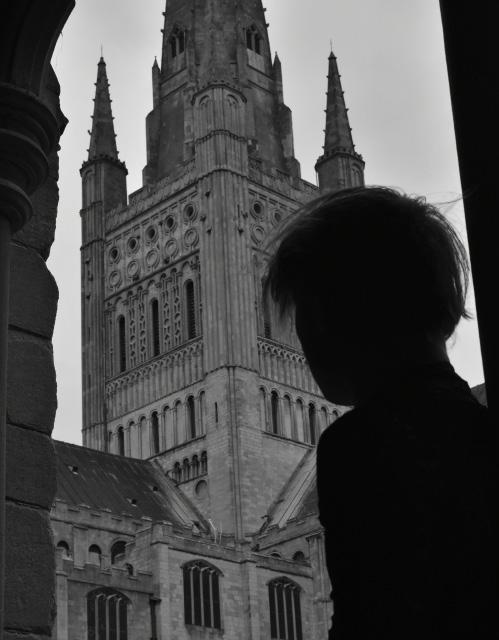
An interview with Newton Faulkner - Black identity in !lm - Album reviews - What’s on in NorwichHalloween style-guide - Dark Academia - Original poetry - And more!
Dear reader,
Happy Black History Month and happy (early) Halloween!
The term is well under way and I’m quickly learning that final year is not going to be as easy as I had initially hoped. In between classes, reading, Venue work, and a new job, I have to almost force myself to take a break… and summatives haven’t even started yet!
This month, writing for Concrete has been my biggest pastime. I know that I should slow down, but stepping away from the keyboard and into the role of “editor” is still an adjustment. Even though I love meeting with the other members of the team, reading newcomers’ articles, and hearing very exciting ideas from my section editors, writing has always been my area of expertise, and it’s a pleasure to come back to it. Still, if you get sick of seeing my name pop up in every single section, please take this as a sign to claim an article next month, help me save my sanity, and free me from my self-imposed shackles!
In the last few weeks, I have had such a good time meeting new Concrete members (or potential Concrete members) and my love for Venue grows with every issue. I love seeing the Concrete team grow, and have truly begun feeling a sense of community beyond simply the other members of the committee.
Sit back, relax, and enjoy this month’s paper instead of doing your coursework. Reading week is just around the corner anyway!
Sincerely,
Micah
Hey all!

Whilst the last issue was the beginning of it all, I feel like October is the issue where things well and truly got kicked into action. Not only did I start my Master’s course but I started a new job too, as well as preparations for a dance show at the end of the month. I would be lying if I said things hadn’t gotten overwhelming at times.
The theme for Concrete this month being mental health has made me take some time to contemplate this. I think, no matter whether you’re in your first year or your fifth, the first month of uni can be one of the trickiest and busiest. Despite lecturers saying they are easing you into it in the first week, the shift from summer holidays to lots of classes a week can nonetheless totally throw you off balance. If you’ve found yourself feeling a little bit lost in everything going on lately, try and remember to truly take time for yourself – so cliché, I know! But I really do mean it; if you are like me and enjoy being busy, don’t forget to schedule in nice things to do too. I’ve quite taken to writing daily to-do lists lately, and alongside boring stuff like calling the opticians about why they still haven’t mailed me the correct contact lenses, I’ll put ‘go for a walk around the lake and call a friend’ down as well. As we come to the time in the year where seasonal depression can start to hit, it’s these little things that can make a really big difference.
A newspaper may seems like an odd place to go to for a comforting word, but this month the Venue team has done such an amazing job and written some beautiful articles, many of which touch on the little things that make a big difference. I hope you enjoy reading them this October.
Kindest,
Robyn
Books...........................................P16
What's the deal with dark academia?
Monsters and madness: Women's mental health in gothic literature
Reviews: The Lonely City by Olivia Laing, The Charm Ofensive by Alison Cochrun, Katabasis by R. F. Kuang
Creative.......................................P18
I should start wearing armbands to bed Minded
Nazar boncugu Entry two
Photo spread by Terrel Bryan
Fashion.......................................P22
Can you style yourself out of a slump?
Five tips for any costume party
Why I'm okay with standing out: My personal style journey
Exploring black identity in the horror genre
Adolesence: Why a white working-class story still surprises us
It's okay to feel lost: Seeing myself in Love, Liza
Reviews: Put Your Soul on Your Hand and Walk, I Saw the TV Glow, The Decameron
Music...........................................P26
Does music shape who we are?
My musical coping methods
Reviews: Empty Words by Radio Free Alice, a song that aids my mental health and a song to haunt your autumn Events......................... ................P28
What’s on in Norwich?
The room where it happens: Hamilton in Norwich
Do you have a passion for books? Always wanting to review the latest gigs? You could write for Venue!
To pitch a story or choose one from our monthly content call, simply email:
concrete.editor@uea.ac.uk
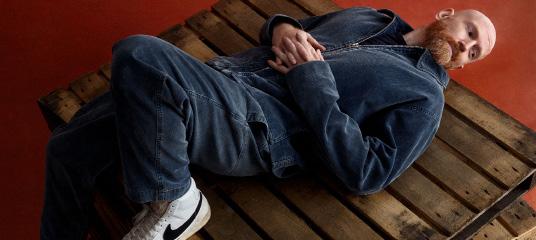
Ahead of his Norwich show at the Waterfront, our Editor-in-Chief, Emily PittShaw, sat down with Newton Faulkner to discuss his latest album, how to deal with vulnerability, and how the music scene has changed since the start of his career. Since releasing his first album in 2007, the singer-songwriter has gone on to play a number of music festivals, and is currently on tour to promote his new album Octopus.
Let’s talk about the progression from your earlier albums to now. I grew up listening to Hand Built By Robots, and what I find particularly fascinating is the name of it. We’re now in a place where, with the use of AI and other means, music actually is being hand-built by robots. With your new album and from the songs I’ve heard from it, I’d love to ask about what has changed in how you’re making music?
It’s all technology, isn’t it? It’s, like, technologically driven changes. Well, I’m very much of the attitude that it’s all an opportunity, and it’s working out how to make it work for you. There is this place I always go back to when I feel myself getting frustrated, or start to feel undervalued: when sheet music was first introduced, musicians were outraged. They were furious because you didn’t have to pay them to
come sit in your house and play you the music anymore, because you could read the music yourself. That was seen as the worst thing that had ever happened to musicians. Since then, I feel like we’ve maintained that level of outrage almost constantly for hundreds of years… I think there should be a limit on how long you can be annoyed about the same thing, and we probably reached it 100 years ago. With the Internet - I was about to say that no one could have really predicted where it would go, but I think David Bowie did quite accurately, in a really early interview. And with social media, I think it creates a number of social issues and exacerbates others, but it’s also an opportunity for people who are making things to connect with people in quite a unique way.
Now, compared to 2007, having to be a social media presence and a real face to your album, what does that feel and look like?
It has taken some getting used to, because, as someone who started releasing music in 2007… I was big on MySpace. Me, Lily Allen, Kate Nash - we were all big on there. After that, everything went to digital. Fast forward to things like TikTok, which is just so fast and immediate. For me, it’s all an opportunity, but it must be genuine. There has to be an element of me, which is why live shows are so much fun. I genuinely love doing it, and people feed off the fact that they’re watching this guy have
a really good time. That has a kind of infectiousness to it. It’s taken me a while to find ways of getting that into social media because I’m not a natural documenter of my life. I lean quite opposite to that, I don’t feel interesting enough to want to give every aspect of my life.
: Let’s pull on that vulnerability. Many young people that are starting bands or going solo will feel vulnerable but will be scared to show it. If you could go back to when you first started, releasing music in 2007, what would you say to try and make sure you knew that the vulnerability was okay?
I think (especially male) vulnerability is something that’s almost in contention as to whether it’s fully allowed, though it definitely is. I’m raising two boys, and very much encouraging them to have feelings, and accept them, and not constantly tell them that everything’s okay. I think, what you need to do, is treat yourself like a friend. Your entire world is inside your head and everything happening around you can affect you in whatever way you choose to let it affect you. There is a lost art to being able to make sense and pick what you actually want to think about. It’s taken me years, but it is possible. As far as vulnerability in music, there is a degree of sharing that will feel cathartic and feel good, but there’s also a level that’s too much, that will leave you feeling like something’s been taken. It’s important to figure out those lines as early as you can and stick to them, don’t make yourself uncomfortable on a regular basis, because it won’t be maintainable for a career. There was a study done recently
that found that music is one of the most dangerous professions, due to the suicide rate in young musicians. It’s a lot, and there’s no real structures to help. I don’t think people fully understand the ramifications of it. I’ve been doing this for 25 years, and I think, without having the right mental structures to cope… Yeah, there’s just a lot of constant comparison and judgement. It’s important to work out what you’re comfortable doing and getting on with it.
And to conclude, 25 years on from when you first started making music, what are you most excited about for this next album and going on tour?
This album feels like a new type of thing, it feels like a step in multiple directions that I’ve never taken before. For a little while, I had a picture stuck on my door, from a Tim Burton book called The Cat with the Enormous Head. It was a cat with a giant head that got stuck in a cat flap and couldn’t get out the door. So, every time I walked in, it worked as a reminder to park my ego and just do the work and get on creating. And that was one of my tipping points. The other was shaving my head, which is totally superficial, but there are a lot of things people attach to my old image. I think a person has to totally, unrecognizably change.
You’ve been an absolute pleasure to interview. Thank you so much for today, and best of luck with your album release and tour.
review by Lucia Maccarthy
In Olivia Laing’s we follow Laing’s experiences of loneliness living in New York City and the artists who kept her company. The author moved to New York from England, chasing love only to find herself alone in the sprawling metropolis. She chose to turn her attentions to the myriads of visual artists who had struggled with loneliness themselves and found solace in their work. For example, she tells of Andy Warhol’s habit of carrying film and recording equipment with him at all times as a buffer for social interactions. She also examines the sense of loneliness and melancholy we see in so many of Edward Hopper’s paintings, and the solitude experienced by artists of the AIDS era, such as David Wojnarowicz and Peter Hujar. In every chapter, Laing blends her own experiences seamlessly with the work of these artists. If you have ever been lonely, this book is for you.
review by Micah Petyt
If you’re looking for the ultimate feel-good romcom, then Alison Cochrun’s is for you.
Fresh out of a break-up, Dev is a talent handler for a Bachelor-esque reality show, tasked to take care of the show’s Prince Charming, Charlie, a tech wiz who is equally handsome and awkward. Deciding to get Charlie out of his shell, Dev decides to move into his talent’s on-set apartment but inevitably sparks fly. While is largely fun, sweet, and lighthearted, what makes it stand out in a sea of gay romance novels is how it seamlessly weaves the romance with themes of mental health. Dev is clearly depressed but refuses to admit it, while Charlie struggles both with neurodivergence and mental illness. Although mental health is not one-size-fits-all, this book does a good job at showing the different ways people deal with their problems, while delivering a swoon-worthy love story.
review by Kathryn Bailey
My most recent read was R.F. Kuang’s latest novel, , a dark academia story depicting the protagonist’s journey through Hell to retrieve her academic advisor’s soul. The plot is incredibly unique, as we are introduced to an academic world of “magick”, alongside Kuang’s well-researched interpretation of the obstacles and layers of Hell. The adventurous plot is entangled with philosophical tangents and literary references, but this sometimes had the effect of making the reading experience quite stop-andstart. The plot would pause each time these tangents occurred, slowing my overall reading experience. However, in hindsight, I think that the story would not be as meaningful and exciting without these tangents and backstories, although I did wish that there were fewer intricate academic references. Despite this, is truly individual in its way of incorporating adventure, philosophy, romance and fantasy, making a spooky dark academia novel that is perfect for the autumn months.
What’s the deal with dark academia?
Internet-based subcultures often make me cringe when I first learn about them, and when I first heard about ‘dark academia’ I was wondering why on earth people had decided to romanticise school and the colour brown. However, the interest in dark academia still persists several years after it first became popular during the pandemic, and I confess, I’ve grown somewhat fond of it myself – especially the more bookish side of it!
Dark academia began way before we gave it a name. In the late eighteenth century, ‘the Gothic’ arose – a genre that created a lot of tropes that we might nowadays associate with dark academia. Author known as Ann Radcliffe was especially popular during this time, with her novels often featuring grand, mysterious settings and psychological horror. She was so popular, in fact, that she was the main inspiration behind Jane Austen’s
A bit later on in history is where we see books that really fit the dark academia vibe. Mary Shelley’s is to this day one of the most referenced pieces of
Adaptation has been part of the film industry since its creation, and a variety of releases in the year ahead see classics taken in bold, controversial directions. The most discussed is the latest attempt to bring Emily Brontë’s novel to cinemas, releasing February 13th. It is director Emerald Fennel’s third film after and , films both known for being divisive. This is her first adaptation, and before the trailer had even dropped, there was controversy surrounding casting Jacob Elordi as Heathcliff (who is implied in the text to be a person of colour) and Margot Robbie as Catherine (a character fifteen years younger than her actress.) People have theorized the quotation marks in the title suggest it will be less of an adaption and
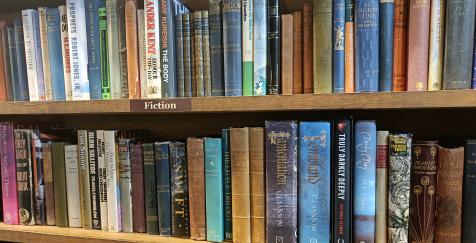
literature – and with good reason. The characters’ moral ambiguity is deeply fascinating, and the plot is intriguing and horrifying at the same time. The famous scene where Victor Frankenstein, an academic, brings the Monster to life on a dark November night is perhaps the most perfect and literal example of dark academia. That being said, perhaps the most well-known book within the genre is Donna Tartt’s Published in 1992, significantly predating the term dark academia, most nowadays would describe it as the very definition of what the genre is. The entire story takes place at university, and centres around a group of Classics students. They are all horrible people and do horrible things, and yet when I started reading it, I
couldn’t stop. More recently, we have seen books like R. F. Kuang’s 2022 novel which, rather than focusing on wealthy white people, features a very diverse cast. The plot is similarly dark and serious, with Kuang capturing a cosiness to university life that I am sure many of you will enjoy this season. Every autumn people reach for these books to satisfy their cravings for sinister, spooky stories – and this shows no signs of stopping, with similar books being published year after year. Now, why don’t you get in the spirit and light a candle, stare dramatically out the window, and get started on a new, suitably dark academia novel?
more of a reimagining, with the snippet of Charli XCX’s songs wildly mismatching the setting and tone. This looks visually gorgeous, but only time will tell if there is any substance beyond the cinematography.
There looks to be a more faithful adaptation this November in Guillermo Del Toro’s , based on Mary Shelley’s 1818 novel, starring Oscar Isaac as Dr Frankenstein and Jacob Elordi as his monster. Del Toro has discussed this for two decades, emphasising his desire to bring aspects of the novel never included in previous films. He has experience adapting classics such as his Oscar-winning stop-motion and is well equipped to direct such a gothic story.
A more mixed discussion is for Greta Gerwig’s next film after an adaptation of the chronologically
first but penultimately published book in the by C.S. Lewis. Emma Mackey will star as the White Witch, the book showing how she came to Narnia. For some, it has drawn ire for the fact it seems set in the 1950s (when the books were published) rather than the original 1900’s setting. Producer Amy Pascal described the new take on Narnia as “all about rock and roll,” creating concern the integral religious allegory of Lewis’ work would be ignored. However, Gerwig has discussed how an upbringing in a Catholic household has influenced her films. Whilst not a direct match (Lewis was an Anglican) there might not be as much cause for concern as some are saying. The film is set to release in cinemas November 26th, 2026, before coming to Netflix Christmas Day, in the streaming service’s biggest attempt to have a theatrical hit.
Polly Dye
Lilia Colledge

As October features both World Mental Health Day and Halloween, we knew we had to write about the Gothic. Inherent within this genre is the ‘madwoman’ and the monster. Our question then, is how often are these interchangeable?
It is safe to say the original ‘madwoman in the attic’ is Bertha Mason from Charlotte Brontë’s She bursts into the story just as Jane is about to marry Mr Rochester, exposing their existing marriage. Described as having a “demoniac” laugh and crawling on all fours, Bertha plays the untameable monster. But how accurate is this portrayal?
Rochester confines Bertha to the locked attic in Thornfield Hall, de-
claring her a lunatic. He claims he was tricked by her beauty and wealth, discovering her ‘madness’ after their wedding. Crucially, Bertha’s story is told through her captor, making it impossible to know whether she is truly mad and monstrous or if her ‘madness’ stems from her mistreatment and isolation. As she is denied her own voice, her tale becomes a powerful metaphor for the silencing of women, whose suffering is misunderstood.
The unnamed narrator of Charlotte Perkins Gilman’s is similarly cast as mad. She is prescribed a rest cure, leaving her confined. This treatment of ‘madness’ fundamentally associates female mental health with the monstrous, suggesting that they need imprisoning like a dangerous monster. Towards the end of the story, the wallpaper morphs into a cage, depicting women creeping and crawling inside it, trying to get free. Not
only does this invoke the spectral and monstrous, framing these ‘mad’ women as giving into the animal that Victorian society feared questions why these women are trapped there in the first place. Does Perkins use this to demonstrate the narrator’s desire to break through the constraints placed upon her?
Although published in 1996, Margaret Atwood’s is also concerned with the Gothic. The novel is based on the true story of Grace Marks, accused of murdering her landlord and his mistress in 1843, focusing on the sensationalism of murderesses and female madness. Towards the end of the novel, Grace undergoes hypnosis, becoming the monster that so many suspect her of being.
She assumes an unusual voice, implied to be the ghost of Mary Whitney. While this speech has
her declaring her innocence, the uncanny nature of it makes Grace seem far from sane, even going as far to suggest multiple personalities. The novel also addresses how 19th century institutions manipulated the very definition of sanity to disgrace and disempower women, through forced labour and imprisonment. While Atwood is careful on passing any judgements herself, letting readers decide for themselves whether Grace is innocent, signs of her challenging this depiction of the ‘madwoman’ are evident. By portraying Dr Jordan’s dark sexual fantasies as sane, and Grace’s behaviour as insane, Atwood exposes the gendered discrepancy in mental health treatment.
So, what place does ‘the madwoman’ have in the 21st century? Women’s mental health
difficulties are often trivialised as “being dramatic,” and with 80% of women in 2024 reporting that they felt dismissed by a doctor, it is hard to know what support is available.
Specifically within higher education, female students’ struggles are simply put down to academic stress or “hormones,” diminishing the seriousness of these problems, creating barriers to proper support. Gothic fiction therefore becomes a catharsis for female students. Just as Bertha is confined to Thornfield’s attic, female students experiencing mental health struggles may feel isolated within a university environment, or they could choose to view the monstrous as empowering, giving female mental health no option to be dismissed.
Amy Deacon
A series of therapeutic book recommendations to help you through the stress of autumn semester. Uni can be hard, and hopefully these books can help just a little bit. Cozy up or read between classes and enjoy.
by Elizabeth Day
“It turns out I wasn’t just passionate about friendship: I was addicted to it… I was, in short, a friendaholic.”
A “friendaholic” is a term I had never heard of before reading this book, and I instantly thought of the university environment. The friendships you make in university are so important to your experience, but we can also all become a bit dependent on them. Sometimes it can be a lot of pressuresometimes it’s the best part of our week. Elizabeth Day explores this perfectly.
by Antoine De
Saint-Expuéry
“All grown-ups were once children... but only few of them remember it.”
Don’t be scared by the fact that it’s a French classic, it’s actually a very soft, moving and thoughtful children’s book. explores what it is to pay attention to your inner child again, to love and be loved and how to see things from a gentler perspective. It is quite magical. And in the hard times, we all deserve to come back to our roots a little bit, don’t we?
by Bolu Babalola
“Thank you for letting me love you. Thank you for loving me back. Thank you for staying, I know it was hard sometimes.”
If, like me, you’re a hopeless romantic then I think you’ll really enjoy this one. is a beautifully written set of short stories all about love. Perfect for
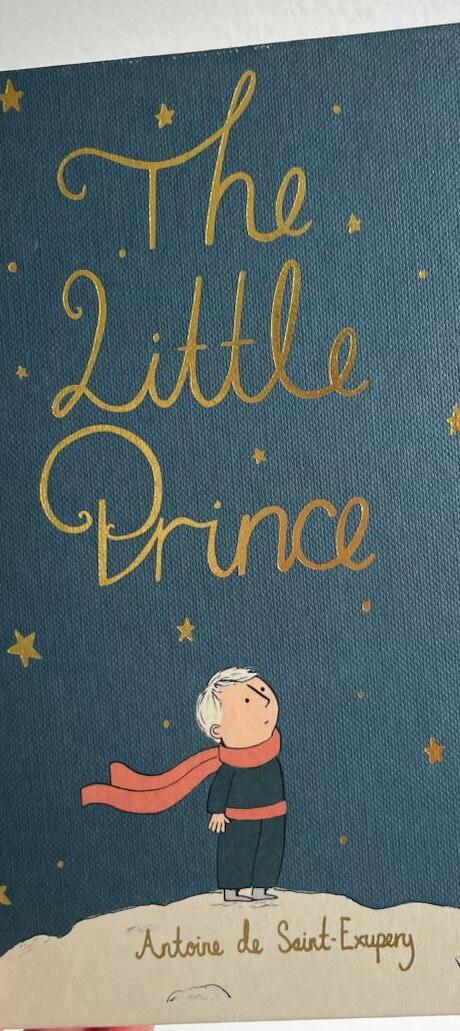
a slow read throughout a semester when your brain can’t quite take on a full-length novel amongst everything else you have to do, dive in at your own pace.
16th October - Bog Queen by Anna North
A folktale turned murder mystery, Anna North’s centres around forensic scientist, Agnes, who is called to a coroner’s office to identify a body. However, the body is unlike anything she has ever seen, preserved in a bog for more than 2,000 years. Numerous groups vie for the body; archaeologists want to study it, landowners want to profit from it, activists want to protect it. But the mossy land has its own story to tell. Intertwining post-Brexit Britain and the Roman era follows Agnes’ dark discoveries as she avenges the death of an Iron Age woman more similar to her than she knows. Combining ancient insight and contemporary urgency, North’s newest novel connects two farsighted young women, separated by time, as they navigate the complex landscapes around them. Ideal for fans of Patrick Ness’ is the perfect introspective, slightly spooky read for this autumn.
Booker Prize winning author, Margaret Atwood, is set to release her tell-all memoir, in early November. Beginning with her unconventional start growing up in the forests of northern Quebec, we watch Atwood unfold into the exquisite writer she is today. Along the way, she reveals which moments from her life inspired the books that have shaped our modern literary world. From the unease of 1980s Berlin that prompted , to her cruel school years that would pave the way for , more secrets are spilled as more pages are turned. The words are vivid with larger-than-life depictions of the people Atwood meets throughout her life, and the writing impressively matches the level of wit and poeticism of her novels. Revealing the innerworkings of one of the most influential writers of our time, Book of Lives is nothing short of what you would expect of Atwood’s literary genius.
Jessica Knight
Midnight: smoke fills your room. The docks are empty, I’ve let you have all of me. Deep sea spills across your carpet, oozes its viscous grip around my ankle, drags me slowly into starless night. I can’t see above this ocean ceiling but I know it’s raining, and I know you’re still asleep.
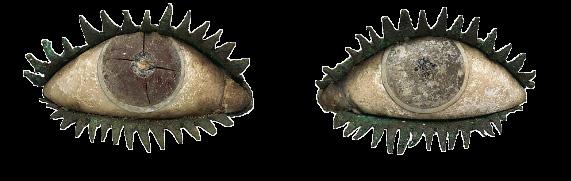

No one will believe me when I tell them about how you filtered every part of me until bubbles meant money. No one will believe me when I tell them about how you locked me in your sub picking up seaweed. No one will believe me when I tell them about how you hit the steering wheel with the red of your hands until I started weeping: you threatening me with the blue of driving away, me threatening you with the purple of disappearing… or sinking… yes, sink–

Morning: I wake up on the beach. There’s no memory of the events, but I know it happened because I’m picking sand out of my hair, my skin’s been sunburnt rare, and the feelings are still there.
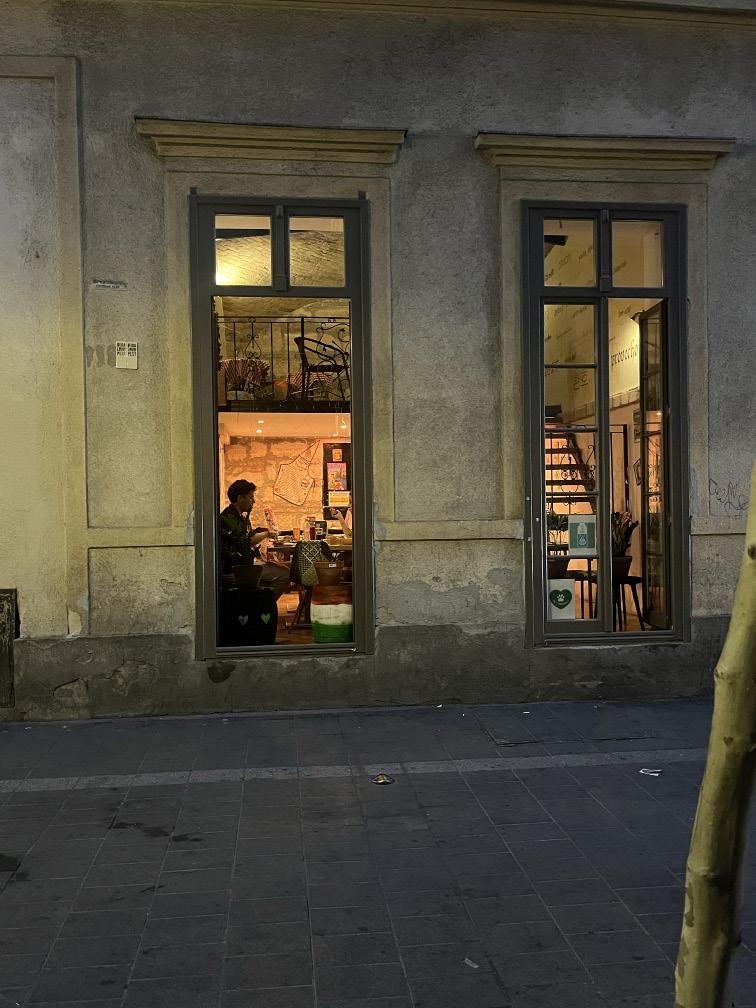
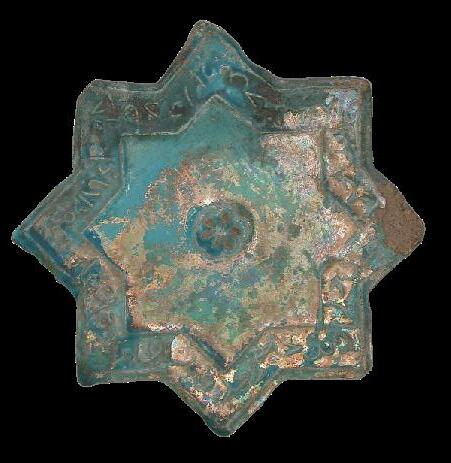

Eli Wilkinson
I mind my minded eyes behind pink sky, a so ed blow beneath the pink, red hills. rough wondered wonders thinking why, I dance the waltz of the da odils
A thousand colours pass through my conscious, a symphony of colours, wants and dreams. I want the memories like they want us, in a glee of darkness beneath the seas.
For years, my memory looks and lingers, through wonder wanderers asking why not open up and peer through ngers and see the truth through minded eyes.
Penelope Helbest
Aphantasia: the inability to picture apples, oranges, pears, half an apple, uneaten and drained of all colour, eclipses her face is a blur of features, Screaming and spittle, And eyes shark-black, Expanding Into Fulbourn we went, It sits there still, e hill not as tall, and the farmlands empty, Yet in my mind, Evergreen e holly tree is no longer, It doesn’t peak over the roof, e drive there is cold and quiet, e leaves have turned, And so have I.
Penelope Helbest
In between synapses, under ridges and wrinkles
Perhaps in the stream of spinal uid that rushes upwards
ere I put a nazar boncuğu
You can too, but it’s important to note
It has to be special
Not tourist trap tat
A special price for you, my friend
But special
Your grandmother gave it to you, and you have out grown it
No longer it ts you
So, it’s incredibly easy
To squeeze it smaller and smaller
Till you can breathe it in
Let it puncture your lung ever so slightly
And make its way to your brain
I put it there because I know evil seeps into you e best remedy
Is to protect your mind too

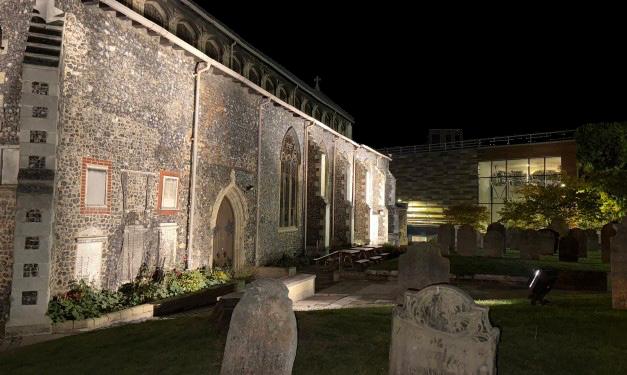
Katie Howell
Most people’s first introduction to drama starts at a young age. Everyone either remembers the thrill of having your peers watch you- amazed and awed, or the complete mortification of being forced to speak in front of thirty blank faces.
I was one of those kids who thrived on it. The joy of everyone paying attention to you. I never found read-
ing any trouble, so I didn’t care about getting up in front of everyone and showing off. This tends to be the natural path into drama at a school level.
Kids who are good at reading, or naturally funny, or just a bit more confident, get given the main parts in every primary school production.
For me, this translated into going to one of the many Saturday musical theatre classes that parents drop their kids off at for hours every weekend. The kind
Shakana Arunthavachelvan
that parts on a couple of musicals a year with massive ensembles of kids all doing the same box step. Very quickly, I learnt that I had no musical talent at all. I still don’t. Most people, upon realising that they are fundamentally bad at something, have the grace to walk away from it. I, on the other hand, carried on for four years.
It wasn’t that I particularly enjoyed the singing or dancing, or even that over the four years I gained any talent. I stayed because it
was more of a faff to quit. I also liked performing; even if you hate every second of rehearsals or you trip up on your own feet, there’s nothing quite like the round of applause you get at the end.
This summer, I had the opportunity to help with one of these programmes in Norwich. It was mind-boggling to see how little they’d changed. The same warm-ups, the same games to get everyone involved. I suppose some things never change.
At the end of the week, I was excited to actually watch the full performance. The kids had no trouble giving it their all. When the show finished, it was easy to recognise that same joy that came with the applause and accomplishment. They left the stage singing, hugging and jumping in the same way that I have seen every single performance I’ve ever been a part of end.

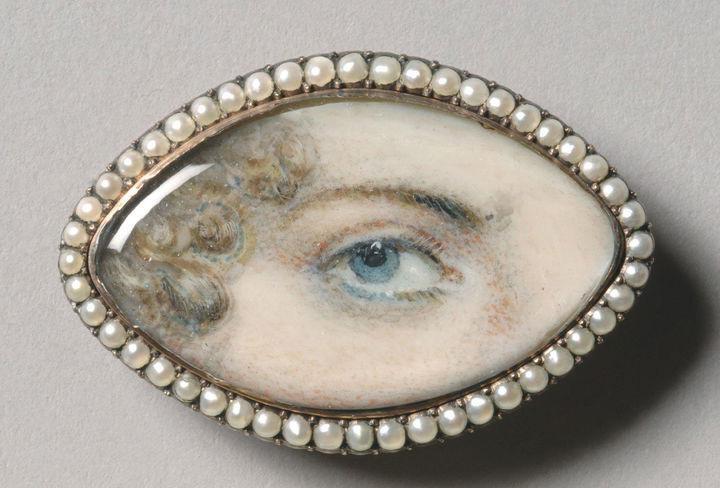
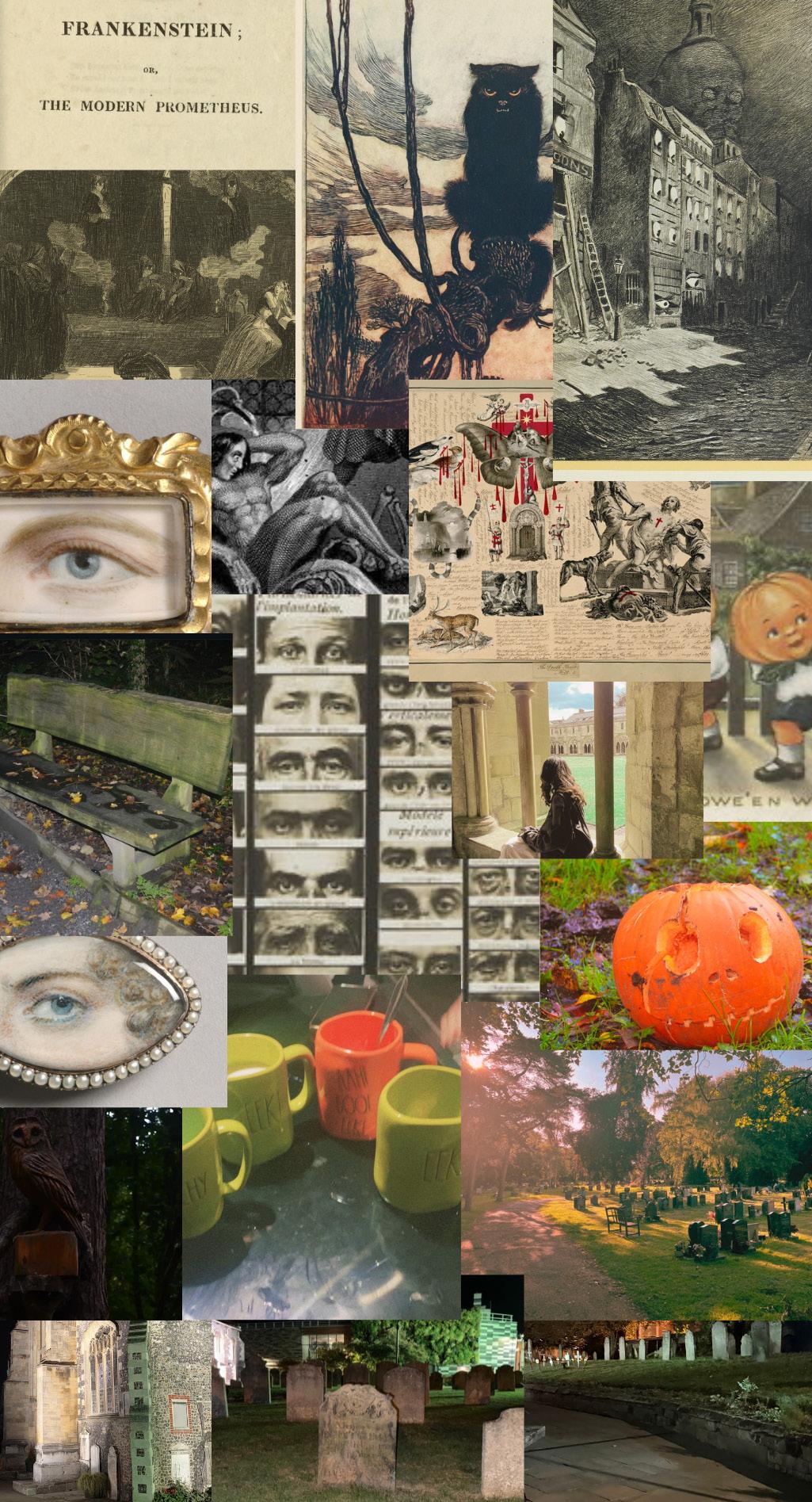
by Tabitha Woolcott
UEA’s recently reinstated Fashion Society is kicking off their second year in business with an underground rap night held in collaboration with the Electronic Music Society. Following DJ sets from EMS, attendees can enjoy a lineup of performers hailing from Norwich’s underground rap scene. For those interested in exploring Norwich’s streetwear and alternative style communities, the event will take place on the 28th of October (just before Halloween) and will be hosted by Voodoo Daddy’s Showroom in the city centre. Plan your outfits!
by Tabitha Woolcott
‘Fashion’s golden boy’ J.W. Anderson, who has celebrated legacies at Loewe, Versace and now as creative director for Dior, relaunched and reimagined his own eponymous label this summer as an elevated lifestyle brand. Alongside clothes, the collection marries the designer’s curative vision with the talents of craftspeople from across the world: Venice, New York, Ireland… and East Anglia! Having previously cited Norfolk as his place to ‘unwind’, Anderson includes a celebration of the county’s heritage and historical sites within the line, which he has described as his ‘personal cabinet of curiosities’.
by Daisy Lester
Owners of Norwich’s hallmark department store Jarrolds are closing their city centre furniture store, The Granary, this Sunday on the 19th of October. This follows their decision to close it’s third floor book department as they invest in other areas of the business. An estimated five roles are likely to be made redundant as a result of this decision, with managing director Tim Shattock stating they are “discussing alternative employment opportunities within the business for those affected”. He noted that if the roles are made redundant, they will be handled with “fairness and respect”. Any leftover stock will be moved to the main Jarrolds store and sold at a discounted price.
Country classics: M&S is cool again, and your mum’s Sunday dog-walking outfit might be more fashion-forward than she realises. Cotswolds chic reimagines seasonal staples (think trenchcoats, tweed, thick scarves and plenty of knit) in the light of an outdoorsy countryside character, balancing the sensible textiles and tones of autumn fashion with modern touches or personal, whimsical details. Is this the ‘frazzled English woman’ of seasons past, under the guise of a new name? Pretty much. A mature,
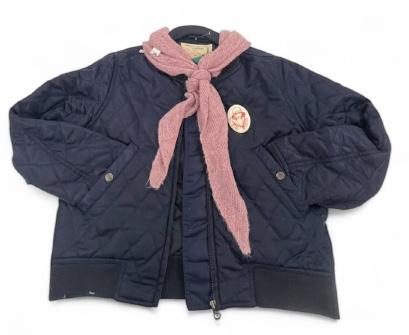
Olivia Michalowska
Clothes are the last thing on my mind when my mental health deteriorates. I end up always going for the same baggy hoodie and joggers. Often, what we wear reflects how we feel; wearing clothing like that provides comfort and a sense of invisibility. But I’ve noticed that when I stay in that outfit for too long, the slump seems to deepen. Safety and comfort are no longer provided by the clothing – rather, it’s the burden I’m trying to escape. There’s no shame in comfort dressing; sometimes it’s necessary. On the days when I do manage to pull on a pair of jeans and a top I like, something shifts. It’s not a miracle cure for a negative mood, but it’s a reminder that I care about myself. This simple act of reconnection ties me back to versions of myself that I like. I feel more confident when I style my hair and wear my trench coat, despite the fact that my mind was telling me to

feel the opposite.
Of course, clothes are not a cure for a slump. No outfit can erase anxiety and discomfort. However, just like making the bed in the morning or splashing your face with water after a long day, getting dressed may boost your mood. For me, putting together an outfit is a form of self-love. My mother’s words assist me: “Joggers at home, outside look nice.” Although her words are helpful to me, I interpret them differently to her. Why wear that jumper once a year? Why not wear those shoes? I would reserve them for rare occasions, but maybe every day is special enough. Wearing what I want means I choose to show up, even when I feel out of control.
Begin with small changes. Choose one piece of clothing that makes you feel good no matter what, such as a knitted jumper in your favourite colour. Adding simple details, like a ring, some earrings, and a jacket reserved for special occasions, might improve your mood and nudge you out of your slump. You don’t have to immediately style a new outfit, it takes time. Ultimately, styling yourself out of a slump isn’t the solution, but it can help you hold onto yourself when things feel heavy. An outfit doesn’t have to be perfect, just enough for you.
Tabitha Woolcott


Just a peek: A slinky cami worn underneath a chunky autumnal jumper, with a stripe of its lace trim peeking out. A bomber zipped up to the top with a long printed shirt – check, plaid, striped, or something quirkier – slipping from underneath. Autumn is the season of layering, so take advantage of it by opting for contrasting textures or eye-catching classic prints. There’s a lot of fun to be had with this styling hack: it’s a chic way to inject old favourites with new energy, and keep wearing those summer pieces you aren’t ready to put away just yet.
Sleek high necks: They’re trending in a major way, and for good reason. A stiff, high neckline is a great way to add instant structure and detail to an outfit, and it’ll actually keep you warm during those freezing 9am lectures! Don’t feel like you need to run out and buy one of the many ‘it-piece’ funnel necks hitting retailers, though – while they’re cute, the effect can be easily achieved using what you’ve already got, without risk of investing in a piece that’ll be dated by spring. Turn up those old coat collars! You can even play around with a scarf!
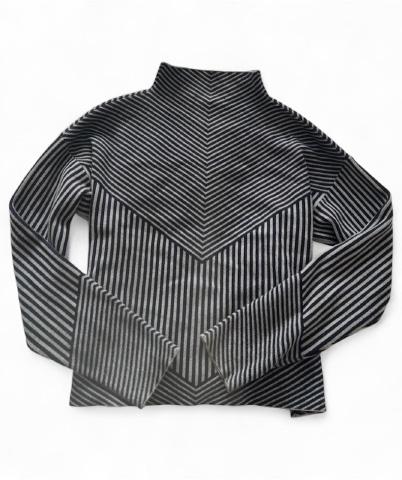
Paris Forsythe-Fields

We all love a good costume party, and October is the prime time to show off your cosplay skills. Whether you’re going spooky, silly, or artistic, I’ve got you covered with five simple tips for stealing the show at any costume party. I’m no expert, but I have won Halloween costume contests two years running, so make of that what you will.
Step 1: Start in plenty of time Take it from me, you do not want to be gluing stuff together an hour before the party. The earlier you start hunting for pieces, the more time and creative space
you’ll have. Starting early also means you can test-drive your costume, making sure you can sit down, walk, and dance in it.
Step 2: Look beyond the costume shop
Skip the cheap polyester outfits that fall apart halfway through the night. The best costumes come from unexpected places like charity shops, craft shops, or even your own wardrobe. In this environmentally conscious age, we need to make sure we’re not buying things we’ll only wear once. The suit I got for my Gomez Addams costume? I genuinely still wear it to job interviews.
Step 3: DIY if you can Putting a costume together yourself gives you far more creative freedom than buying one ready-made from the shop. You don’t need to be an expert crafter - if you did, I’d be in serious trouble. A bit of creativity, paint, and tape goes a long way. Plus, when you make it yourself, no one else will turn up in the same outfit (probably).
Step 4: Be creative and original Let’s face it, we’ve all seen the black cat or scary clown a thousand times, they’re not winning you any prizes for originality. What you need is a hook, something unique that sets you apart
from the other guests. For example, my name is Paris, so naturally I made an entire Eiffel Tower costume from scratch. I’m nothing if not committed to the bit.
Step 5: Have confidence
It’s all well and good having a great looking costume, but if you don’t walk into that party with confidence and fully embody your character, the chances are you’ll still fade into the background. Half the fun of a costume party is the performance, so don’t be afraid to lean into the silliness. Own it, have fun, and you’ll do great.
Once built on plastic tiaras and fake blood bought at the tills in Sainsbury’s, our Halloween costumes are now more likely to feature three different outfits that were picked out from a TikTok page run by a thirteen-year-old. Halloween is no longer one night of ghoulish fun; it is for the most part a whole-weekend affair, stretching our budgets and imaginations further than before. We are all competing to prove that we are either a.) interesting, b.) hot or c.) funny. The ambitious amongst us are trying to achieve all three. But can it be done sustainably, or is the pursuit of a perfect single-use costume inherently wasteful? Here’s what UEA students were willing to reveal about their Halloween plans.
Will Witham is “planning on wearing a costume I found from a TV show. It will definitely beat my costume from
last year, as I went as an alien, and green body paint sucks… trust me. Costume culture can be pretty unsustainable, but the rise of thrifting and vintage clothing as of recent years is a very reassuring promise of change.”
This year Sam Casserly is dressing as Finn from Adventure Time. “I think this beats my Jack Sparrow from last year as this means more to me. It’s the best show in the world and I get to do a couple’s costume with my best mate Amil. As for sustainability and Halloween, I think there should be more charities who recycle old outfits to kids who might not have them.”
“This year I am planning to be Tashi Duncan from Challengers,” says Isabelle Larocque. “I am so excited to do a group costume with my best friends! My
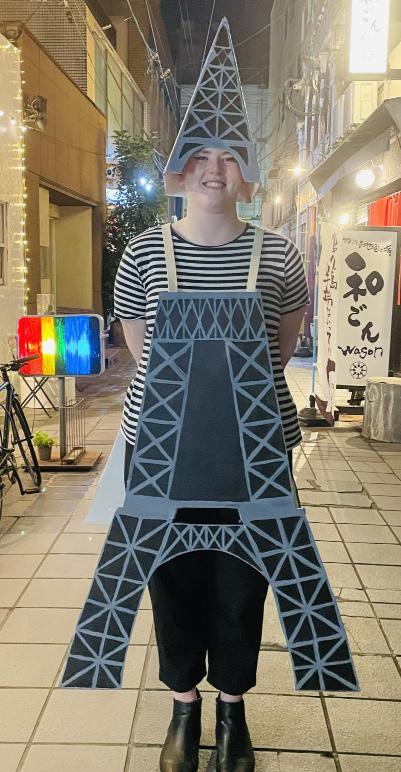
costume from last year was so rushed, I was the Queen of Hearts, everything I wore was from Amazon. This Halloween, I want to work harder to be more sustainable. I always do last minute costumes because I am a procrastinator. I will work to stay away from Amazon and next-day delivery!” - Isabelle Larocque
Tariq Ziad says it’s “Jessie Pinkman for me this year. Mainly because I think he looks cool! I wore a prison costume last year which was a bit basic. I am not so worried about the sustainability of Halloween, it is okay for one night a year!”
“I am doubling up with my bestie Sam and going as Jake from Adventure Time,' says Amil Odedra. "This is great because I can try to use normal everyday clothes to build my costume. I feel that people wearing their “outfit” once then throwing it away because of social pressure to have a different outfit at each event is unnecessary.”
Robyn Srikandan
Way back at the start of secondary school, just like everyone else, all I really wanted was to fit in. So on non-uniform days, I just tried to dress normally. For one of them, I remember wearing a fluffy white jumper and black leggings (and a denim skirt that my mum made me wear in the name of following the dress code). For those of you who were too young to have a working memory of the mid-2010s, you will have to trust me when I say that it was a very
trendy outfit. Unfortunately, I had the bad luck of not being one of the ‘cool’ ones, so it didn’t really matter, and the girls at school made the kinds of comments you would expect from judgemental tweens. It was a little bit crushing – but year after year I continued to try really hard to fit in with the popular crowd. It wasn’t until sixth form that things really started to change. A wave of new students shook up the rigid clique system. There was no more school uniform. But maybe the biggest difference was that I had decided to let go of the idea of fitting
in. Perhaps there is something intrinsic to my nature that makes me a forever weird kid – maybe it’s being mixed-race, maybe its being queer, maybe it’s being neurodivergent. Maybe it’s all of those things, and maybe it’s none of them. Either way, no matter how hard I tried to be cool, I never managed it. So I gave up trying, and did things my way. I chopped off my socially acceptable shoulder-length hair into a pixie cut, and got into what became known as ‘e-girl’ fashion. For Halloween I dressed up in drag. I certainly still felt the eyes of my opin-
ionated classmates, but forced myself to not let that dictate my identity. My style was awkward, a little messy, and very questionable at times, but despite this, I know longer felt the weight of social expectation. This continued into my first year of my undergrad, where the clumsiness gradually decreased. University was a blank slate, so I could redefine myself as someone with a unique style and get far less questions about it. I’m constantly exploring new aesthetics, and each day this leads me closer to figuring out what my definition of fashion is.
e style journey still continues.
Really, it never ends; not even the fears about what other people think. However, I have learned to embrace this journey. It may never end, but that also means I will always be discovering new things about my style – and myself. What I’m wearing re ects my inner world very closely, and I think this is at least a little bit true of most people. ink about it: when you’re dressed great, you feel great – this is de nitely true for me. But, when you’re wearing a moth-eaten Harry Potter t-shirt and tea-stained leggings (a situation I nd myself in far too o en)… Well, the chances are you’ve been a bit too stressed to do your washing.
Charlotte Ward

When swept the Emmys last month, critics hailed it as a raw, unfiltered glimpse into working-class teenage life — the kind British TV too often overlooks. But for me, it didn’t feel new. What unfolded onscreen felt less like a revelation than recognition — the product of eroded media literacy and online radicalisation, shaped by over a decade of austerity.
I went to a state school where behavioural chaos formed the fabric of everyday life — the kind that could exhaust teachers but felt ordinary to us. Students joked, pushed boundaries, and tested limits, but it was all part of growing up. Even amid that energy, the teachers I knew were far from lazy; they were tired, holding classrooms together after years of cuts and impossible expectations. That’s why, when shows teachers simply putting on a video instead of teaching, it feels a little simplistic — a TV shorthand that flattens the reality of systemic exhaustion.
Even in the classroom, concerns surrounding
growing up in a digital age were palpable. Conversations about Andrew Tate, the manosphere, and viral trends bubbled up alongside everyday banter, shaping how students interacted and tested boundaries.
captures how online influence seeps into school life, setting the stage for understanding its broader consequences.
The knee-jerk reaction has been to ban phones, tighten rules, and blame “bad kids.” But it’s not just about social media addiction; it’s about growing up in an algorithmic echo chamber that rewards outrage and hate speech — something made easier when New Labour turned Media Studies, the subject built to teach media literacy, into a national punchline. captures why these online spaces hold such appeal for white working-class boys. The farright de-intellectualises complex social frustrations, turning feelings of inadequacy into anger and offering easy enemies to blame. It erodes the sense of class consciousness that once united these communities and replaces it with the illusion of control and dominance.
In , this manifests as violence against women. In the third episode, the protagonist
Jamie (played by Owen Cooper) is interrogated by a psychologist (Erin Doherty), and the effects of neglect towards young people are laid bare. Jamie’s frustration finds validation in the manosphere – online communities that reframe misogyny as empowerment. The result of political negligence and social disengagement is clear: toxic masculinity fills the vacuum left by institutions that have stopped listening.
There’s a quiet brilliance in how refuses to offer easy answers. There’s no single villain, no redemptive ending. Instead, it lingers in the discomfort — the exhausted teachers, the defiant students, and the parents suddenly forced to confront an online world they nev-
er understood. Jamie’s crime leaves his family fractured, caught between guilt, horror and grief. Through Owen’s father (Stephen Graham), the series captures the crushing weight placed on the patriarch of a working-class family, where blame is turned inward when the real failure is systemic. It’s not a perfect mirror, but it’s the clearest reflection yet of how neglect and online radicalisation can devastate working-class communities we’ve had yet.
isn’t revolutionary because it says something new, but because it finally treats what’s familiar – white working-class adolescence – as something worth telling without pity or polish. For years,
film and TV have framed stories of British teens through extremes: the pastel optimism of or the gritty realism of This is England. Adolescence rejects both. In refusing to cut away from discomfort, it captures the vivid anxieties of the present and exposes how the industry still treats the white working class as either invisible or irredeemable. Its creators understand the real digital spaces young people occupy — and doesn’t reinvent the story; it just tells the one we’ve been too comfortable to hear.
Image Credit: Micah Petyt
Isaac Minah
Content warning: this article contains discussions of depression, suicide and substance abuse.
At every difficult turning point, I’ve turned to film for guidance and comfort. In it, I find reflections of my experience or a new way of viewing it. When I became disabled, I saw myself in Ruben (Riz Ahmed) from (2019), or when I was a frustrated teen, I felt a strong connection with (2017). My early twenties have thrown me many a curveball, but cinema is a constant, a friend that won’t let me down. (2002) is, for better or
worse, the film that speaks to me at this point in my life.
Wilson (Philip Seymour-Hoffman) is a recent widower and in his struggle to open his wife’s suicide note, he turns to huffing gasoline. We watch a man crumble under the weight of his grief and his denial of it. In the opening sequence, Wilson returns from Liza’s funeral and stands in the dark, unable to cry but with clear terror entering his body intermittently. I didn’t believe until this film that I’d see a representation of how I felt after my partner’s funeral. There are no words for the feeling of burying the person you love most, yet I felt a glimpse of my pain in this scene alone.
Seymour-Hoffman’s performance as Wilson speaks to me because it truly reflects how ugly and all-consuming being a widower is. You can’t simply brush it off, move on and bounce back to normality. Normal before was a completely different world. Love, Liza, only portrays the aftermath of Liza’s passing, a decision that works well in describing the shift it has created in Wilson’s mind, as the happiness of life with her is distant, even just after her funeral. He avoids their bed, refuses to open her letter and hides within himself.
Despite Wilson’s somewhat unhealthy coping mechanisms, I
see myself in him, and I don’t blame him for running away from his feelings. The awkward ways people approach Wilson’s grief and the loud silence when he’s alone are an extra cherry on top of an already horrid situation, so it only makes sense to
be overwhelmed. I suppose, serves as a reminder that I am handling my grief much better than I sometimes think I am, and that it’s also alright for me not to be handling it.
Micah Petyt
When Jordan Peele’s debut horror film, , was released in early 2017, the movie both launched Peele’s career as a horror filmmaker—a clear break from his past as one half of Comedy Central duo Key & Peele—and marked a new age of Black-centered horror (or at the very least appeared to). In the critically acclaimed film, the Black protagonist, Chris (Daniel Kaluuya), visits his white girlfriend’s (Allison Williams) parents for the first time, and tensions rise when her seemingly open-minded parents hide dark secrets. subverts expectations by poking holes in the concept of the “white saviour,” bringing racial microaggressions to light, and playing with the trope of the “final girl,” to create a horror movie that blends paranormal elements with the painful reality of racism in the US. Even though Jordan Peele’s debut saw massive success, Black voices (and particularly Black directors) remain few and far between in the horror industry, despite decades of work puat in by Black creatives. While the first widely recognised horror film to portray a Black character as its protagonist is the 1968 film
Black-centered horror did not start until the 1970s, with the emergence of the ‘blaxploitation’ film. These films, such as (1972), (1973) or (1974), heavily relied on the reappropriation of anti-Black tropes and stereotypes (such as the Magical Negro or the Black Seductress), but applied them to Black-centered narratives. While blaxploitation carved a place for Black stories in the horror genre, they often sparked controversy
through their use of stereotype. Though Black horror eventually moved from blaxploitation films to Southern Gothic adaptations (such as the 1998 adaptation of Toni Morrison’s ) and urban horror (films that related to hip-hop, drugs, police, and crime), these stories continued to focus on “trauma porn,” turning the painful complexities of the Black American experience into a spectacle. Eventually, audiences grew tired of the tropes, which led to a large-scale disappearance of the genre until Get Out brought Black horror back into the mainstream. In his later films, Jordan Peele further emphasised how Blackness and horror could coexist beyond the obvious conversations about race present in his debut (or in Boots Riley’s 2018 debut, ).
Although today, Black horror is largely synonymous with the filmography of Jordan Peele—and while it is important to note that he opened the door for more Black filmmakers in the horror genre—Ryan Coogler’s shows a different side of Black identity, racism, and the horror format. In , there are two groups of antagonists; on one hand, Remmick (Jack O’Connell) and the vampires, who rely on a shared history of oppression to coerce their victims (as Remmick has the experience of being an Irishman in early 20th century America), and on the other hand, the Ku Klux Klan, whose threat to the protagonists’ lives are grounded in realism. The protagonists’ Blackness is intrinsically linked to the film’s horror elements, yet this extends beyond simply the colour of their skin: the characters’ Black Southern beliefs (for example Annie’s (Wunmi Mosaku) knowledge of Hoodoo), religion (as Sammie (Miles Caton) is repeatedly called “Preacher Boy”) and love
for music (both in the juke joint setting and the importance of Sammie’s guitar) are both what make them targets and, in some cases, contribute to their survival. In , Coogler makes it clear that there is a place for Blackness in horror, without a character’s Black identity being synonymous with victimhood. When discussing Black identity in horror films, however, it is important to recognise the disappointing lack of non-American storylines. Even when the actors themselves are not American (such as Daniel Kaluuya in and , or Lupita Nyong’o in ), the characters often are, which only pushes forward one side of the Black experience. In fact, in the last five years, the only non-American, English-language, Black-centered horror film to have successfully made some form of a splash has been , released on Netflix in 2020. The film—starring Wunmi Mosaku, alongside Sope Dirisu and Matt Smith—follows a couple who flee South Sudan and seek asylum in London, where they are given temporary housing, but quickly find themselves haunted by their past. Although the film—which was director Remi Weekes’ full feature film debut—was nominated for 14 British Independent Film Awards and three BAFTAs, it remains Weekes’ sole full-length feature film, a disappointment for the near future of Black British horror.
While Jordan Peele may have reignited public interest in Black horror, the genre did not begin and end with . Instead, Peele’s filmography simply opened the doors for more Black voices in horror, and we can only hope that Sinners marks the start of a trend.
Put Your Soul on Your Hand and Walk (2025)
is not only a documentary portraying the experience of one Palestinian, but also evidence of the increased genocidal actions of the Israeli apartheid.
Iranian Filmmaker Sepideh Farsi depicts a series of video calls with Fatima Houssana, a woman living under siege in Gaza. These calls cut out, fail, have the constant background noise of ongoing attacks, and one features a live bombing, yet Fatima has hope. This brutally honest documentary shows the beauty of Palestinian resistance and dreams for an end to the genocide.
I Saw the TV Glow (2024)
The horror movie bringing comfort to those on a journey of self-discovery.
Often described as a future cult classic and a queer cinema staple, is a psychological-horror coming-of-age film that fuses the supernatural terror of Carrie with the comforting intimacy of Protagonist Owen is an isolated teenage boy, but when he finds the TV show, ‘The Pink Opaque’, his life is turned upside down as the show becomes more than just fantasy, causing Owen to question what he could have been in another life. had a similar effect on me as ‘The Pink Opaque’ did on Owen; it encouraged me to reflect on who I am, where I came from, and where I am going.
This film will always be relevant to young adults going through the process of self-discovery. It is a must-watch for anyone struggling to understand themselves, to say that you are not going through this alone. If you are confident in your identity, watch it anyway; you might learn something about yourself on the way.
review by Tabitha Woolcott
Autumn in Norwich always seems to inspire a fervour of Medieval fanaticism within me. The city’s so rich with freaky quattrocento history – hello, the Tombland cannibal girl? With spooky season in swing, I checked out July 2024’s on Netflix, a black plague black comedy which follows a ragtag group of Florentine nobles as they self-isolate in a countryside villa, under the iron fist of the Viscount’s temperamental new wife… but where is the Viscount, anyway? It’s got soapy love spats, class warfare, mercenaries, banquets and enough grisly bits to satisfy any October cravings for the macabre.
This show was quick and consistently witty, with a fantastic cast (Saorise-Monica Jackson of was particularly hilarious); some characters and B-plots did seem to suffer from being a little one-note, which was disappointing, but all in all, I hugely enjoyed my watch. And this is from someone who usually steers clear of period pieces!
Do you have a TV show you've just binged or a hit film take you're dying to share? Pitch your ideas to concrete.editor@uea.ac.uk today!
review by Erin Hefernan
As summer comes to an end, Radio Free Alice has released their long-awaited third EP titled Empty Words. Straight away, you are hit by the intriguing, almost unsettling guitar riff and shouting of “empty words.” The scene is set for yet another highly emotion-driven EP. Lead singer, Noah Learmonth, is not only consistent with his raw, jagged, passionate voice but also with the Morrisey-Esque vocals he tends to adopt as heard in the second track, “Toyota Camry”. However, they have taken on 2010s Indie vibes in this EP compared to their usual 90s, post-punk, Joy Division influence. When listening to “Chinese Restaurant”, the vocals sounded like those of the band “Her’s” (an Indie band from the 2010s). This EP may be less suitable for moshing in a small, sweaty, claustrophobic room, but may be more suited to the soundtrack of a coming-of-age movie.
review by Micah Petyt
No song has been there for me quite as much as ‘Vienna’ by Billy Joel has. As a notoriously overambitious person, I have needed the song countless times to remind me to slow down. When I find myself once again overworking, or beating myself up over the fact that I should have accomplished more by my age (after all, is that not the universal early-20s experience?), the opening piano and the song’s very first lines are enough to calm me down: “Slow down, you crazy child / You’re so ambitious for a juvenile.”
Now, this is not to say that ‘Vienna’ has completely changed me as a person. In fact, I rarely follow its advice. Yet, if I do slow down (in my weekly tasks or my future aspirations), the song’s reminder that my whole life is still ahead of me is often inspirational enough to get me out of a spiral.
review by Ben Heiss
In a slacked drawl, conjured by the shivering wind that streams through a drunken cabin, the infamous junkie, writer and ghost William S. Burroughs murmurs. He sings of an anatomical desire, something that the orange hymn of late autumn caressed him into wanting – to leap out of his skin, and dance around in his bones. This is the lyrical content of “T’aint No Sin”, from Tom Waits’ ghostly rock opera The Black Rider. The song is a rendition of one originally written in the 1920s, but on The Black Rider, it is sung by Burroughs, who adds a further layer of mythology with his strange, withered voice. It is as if you are hearing an old man reminisce with child-like sentimentality, longing for a time where horsemen truly rode headless, things screamed in the trees at the dead of night, and witches pranced around a fire as the clock struck twelve. This song will bring the ghosts to you. Let them take hold this October.
Do you have an album to review or a gig you've just seen? Pitch an article to concrete.editor@uea.ac.uk today!
Jamie Mann
As a music fan who has not previously delved into this unique, increasingly popular sub-genre, I was very excited to meet Trish and Alfie (Heads of the Electric Music and Fashion Societies respectively), to discuss their upcoming underground rap-themed event at Voodoo Daddy’s, Norwich, on Tuesday, 28th October.
I met the interviewees outside of the SU bar and began by asking, ‘What exactly is underground rap?’ Trish explained, “It used to mean rappers unsigned to a particular label, but now I think it’s become synonymous with a particular sound. The flow is quite different,” as Alfie adds that “these people are bigger now. The genre hasn’t got a proper name yet. It’s still underground rap even though it’s not quite ‘underground’. A lot of the beats and samples used are quite abstract, and different to normal rap. A lot of creative liberty is being taken.”
I wanted to ask where electronic music originated from. Both Trish and Alfie agree that SoundCloud acted as the springboard in the early 2010s, here in the UK. “Anyone could post their music, and people got really big off that. It’s not so much the case anymore; labels are savvier now at finding talent before they blow up, but back then… 2016 or so, people
were blowing up overnight on SoundCloud, unsigned, no label,” Alfie tells me. “The US has always had an underground scene, but the UK has not really had much of an ‘underground’ before recent years. I think initially, a lot of Americans were turned off by the fact that [UK rappers] don’t sound the same; they’ve got an accent… but I think that’s changing now.” Trish agreed: “You’ve got a lot of rappers putting an emphasis on their UK accents, like EsDeeKid. He’s got a Scouse accent, which is actually part of the charm. It’s really cool.”
It was clear how passionate and knowledgeable both of my interviewees are about this area of modern music. I was curious about their societies and the common ground found between them. Alfie set up the Fashion Society last year and is looking forward to fulfilling his vision, “We’ve got a whole committee. It’s a place to meet people who are interested in fashion. Fashion and rap go together hand-in-hand. A stereotypical rap artist wears a stereotypical thing… underground rappers go against that. A lot of their music represents that.”
This eagerly anticipated event has been in the works for some time, with the two societies having been in coordination for over 6 months in preparation. Trish had correctly assumed that a fashion society would be very interested in this genre when she first made contact.
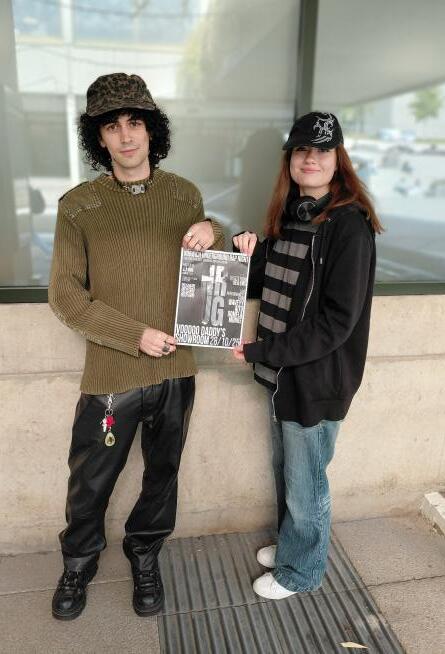
“They thought it sounded like a cool idea, and it’s coming together nicely. We’re a society for enthusiasts of electronic music and the place to learn how to DJ. [...] Everyone’s really nice.”
It’s safe to say that we can expect a showcase of distinctive Norwich and UEA talent from the event. Trish outlines that we can look forward to “DJs, artists, and some of the best local underground rappers in Norwich. They’ve built quite a name for themselves; they make really good stuff. I think people have been itching for it. I think it’s going to be the first of its kind here.” Alfie concurred that “There’s demand for it that isn’t being met, so we’re meeting those demands.”
Norwich Underground Rap Night will take place at Voodoo Daddy’s, London Street on 28th October.

Music notes are the alphabet of my sentences. The buzz of a bass string is my voice, the screech of a clarinet is my sneeze, and the flam of a drum is my hiccup; this is how I communicate, and when I do, you understand, because you feel it too in your own way.
Learning to play an instrument takes time, practice, dedication and repetition. It also takes heart and soul, telling your brain, ‘This will be my new language. Let’s get a Walkman and a language
disc ready.’
There are multiple reasons I believe learning to play an instrument is beneficial, not only for your mental health but also for your creative freedom. In the same way that journaling or meditating centres your soul and relieves stress, the rhythmic actions of playing - no - communicating with your instrument can connect you to thoughts and feelings you never thought you would be privy to.
I truly believe it is vital to have a creative output in your life. In a world of systems and barriers (self-inflicted and by those in power), being creative can take your
brain to new depths.
To the people in my life who only regard academic (namely, STEM) intelligence as the superior and sole type of intellect, you are ignorantly mistaken. What good is a life worth living if you don’t let your mind and heart soar to heights it never thought it could?
Learning an instrument and being creative are open to everyone, but that doesn’t mean it’s easy. It doesn’t mean it has any less weight than the subject you too spent time, practice, dedication and repetition on. It can be hard if you want to be great at it, but so easy if it’s for enjoyment.
As I strut to campus blasting Fleetwood Mac through my headphones, after recently giving up the impulsive Nicks fringe I cut in, I think that I have a strong argument that music does indeed shape us. It has slipped into my wardrobe and my haircuts as I have delved deeper into an indie rabbit hole that I found in adolescence.
Recently, I attended The Waterfront’s weekly Saturday night ‘Meltdown’ event in the city. Home of the indie, alt, rock scene in Norwich for the last few decades, I welcomed the min-
Violette Douglas Kelly Wu
gling with self-expressive people who were all very unique and fun. There is a common ground found in music that allows people to feel open and alive. It builds communities of people who think, speak and behave similarly. This can be a powerful tool for a positive mood and an outlet for connection. I have bonded over music countless times with people and ended up best friends afterwards. There is a clear link between music taste and personality.
However, I am fond of most music types given the right time and open ear, so where
does it lie with those of us who indulge in a ‘bit of everything’? Sure, we adopt personalities from music, just like we do any part of pop culture and media.
Yet, I would like to believe humans are more multifaceted than one sub-section of their interests. Different moods require different tasks, and we are constantly evolving.
Haley Williams comes to mind when thinking about a change of views. Her recent single ‘True Believer’ refers to the dangers of small-town southern mindset and the recent rise in white supremacy across
to songs with relatable lyrics.
A fond memory of mine is that, as a child, my parents would play old Mando and Canto songs in the car during road trips. I find myself going back to them for comfort, a reminder of simpler times when I was oblivious to what a university summative assessment was.
Music is powerful in how it attaches itself to memories; certain songs will remind you of specific events or periods of your life. For me, one song that stands out is ‘Twist and Shout’ by The Beatles. During Sixth Form, we were allowed out into town during lunch and often my friends and I would sing ‘Twist and Shout’ whilst rushing down the streets for our daily dose of unhealthy study snacks. On other days, I’d find myself singing ‘My Generation’ by The Who or singing a duet of ‘Girlfriend in a Coma’ by the Smiths (weird song title, right?).
Music can bring people together and erase worries, even if temporarily. Personally, nothing feels better than a wave of nostalgia to ease my stress.
As someone who struggles to express their emotions and ask for help, I found solace in listening
Although running from your problems is most definitely not the best solution, it doesn’t hurt to redeem a dose of musical escapism along the way. When in a struggle, you should do the things you enjoy.
Personally, as well as being an avid vinyl and CD collector, I’m also a shopaholic. Nothing is better than a crisp, new addition to my collection. Even so, music is extremely imperative to my everyday life, and it guarantees my ability to stay sane.
I must confess, nothing puts me in a better mood than watching the ‘Bangarang’ music video by Skrillex for the giggles with my friend from home. It’s the things in life that seem so small and insignificant that keep me going, because it means so much and does so much for my mental health.
Going to university has diversified my musical taste, despite all my close friends favouring different genres. We’re all open-minded when it comes to the LCR, even the friend who exclusively listens to metal is captivated by the
America. Whilst listening, it educated me on the term ‘strange fruit’. This term was first coined in Billie Holiday’s 1939 song of the same name, indicating the rolling power of music on pop culture and the spread of ideas.
Music is such a powerful tool for displaying messages; behind catchy tunes and addictive beats, we are laden with artists’ political and personal arguments. Particularly in youth, music has such immense power in shaping how we perceive and think about the world around us. It has always been a forefront for ideas. I think back to this year’s Glastonbury when Kneecap were
removed from the BBC’s broadcasting for their pro-Palestine display. It would be untrue to say that the music we listen to does not have an impact on our belief systems. If you disagreed strongly with something, you would probably stop listening to it! We base how we think about the world on the music we listen to.
Therefore, it is reasonable to believe it will impact the way we behave. With that being said, people tend to pull ideologies and personalities from other avenues, such as film or novels, leaving music as only part of what shapes us as people.
powers of ‘White Girl’ music. There’s something about it that heals the soul; it must be how it brings back childhood memories. Sometimes, not everything has to have a deeper meaning, and ‘White Girl’
music achieves this in the best way possible. Surface-level lyrics and catchy tunes that make you dance like a madman is one of my favourite ways to release my inhibitions.
As cheesy as it is, it’s all about getting lost in the music and spending time with your
friends, whilst the world drifts away.
14/10-18/10: Wild Paths Music Festival in Venues Across Norwich
18/10-18/01/26: Paula Rego: Visions of English Literature at Norwich Castle
18/10 - 23/10: The Autumn Arts Festival across Norwich
24/10-31/10: Norwich Book Festival
28/10-08/11: War Horse at Norwich Theatre Royal
02/11: Medieval Festival at Norwich Castle and Norwich Cathedral
02/11: Norwich Record Fair at The Forum
11/11-24/11: Norwich Film Festival
14/11: Norwich Festive Lights Switch On
28/10: Norwich Underground Rap Night at Voodoo Daddy’s Showroom
17/10: AC/DC Tribute at The Waterfront
17/10: Swiftogeddon Taylor Swift Themed Night at Epic Studios
27/10-29/10: Norwich Beer Festival at the Waterfront
28/10: Ghouls Just Wanna Have Fun! UEA Burlesque Show at the Norwich Arts Centre
07/11: The Sherlocks - Everything Must Make Sense! Tour at Epic Studios
05/11: Jazz Sabbath at the Norwich Arts Centre
CLUB NIGHTS
Every Wednesday: Sports Night Every Saturday: Movement
The LCR Goes Country 31/10: Halloween at The LCR
18/10: Reef Replenish 3Oth Anniversary Tour
Babyshambles
From its 2015 premiere, Hamilton made history. The hip-hop musical phenomenon took both sides of the Atlantic by storm, with seven Laurence Olivier Awards, a record-breaking 16 Tony nominations, and 500 weeks spent on the Billboard music charts and now, 10 years on, it continues to be one of the best-selling shows on Broadway and the West End. For those unfamiliar with the show, Hamilton tells the story of Alexander Hamilton, the first United States Secretary of the Treasury, from the end of the American Revolution to the duel that put an end to Hamilton’s life.
Following the legacy of musicals such as Les Misérables and Jesus Christ Superstar, Hamilton is entirely sung through, with songs paying homage to classic hip-hop tracks such as The Notorious B.I.G.’s “Ten Crack Commandments” and DMX’s “Party Up.”
Although the show was immensely popular in theatre circles from its release, it gained mainstream popularity in 2020, when the show’s pro-shot was released on the streaming platform Disney +, allowing non-theatregoers to experience the show for the first time. The film was then rereleased in cinemas to celebrate the show’s tenth anniversary in August and September 2025, with Norwich’s Cinema City showing it
for a limited three-day run last month.
Hamilton’s six-week Norwich Theatre Royal run was announced in the spring of 2023, as one of the last stops on the show’s first-ever UK and Ireland tour. So far, the 1300-seat theatre has had multiple sold-out shows, including every Saturday matinee.
The tour cast is unsurprisingly terrific, with Marley Fenton (who played Danny Zuko in the 2024 Grease tour at the Theatre Royal) and Billy Nevers delivering incredible performances as Hamilton and Burr, and the rest of the cast providing equally impressive vocals; the actors for Madison and Jefferson play off of each other in ways that result-
ed in many laughs, Casey AlShaqsy provides a rarely-seen pop-ness in her depiction of Eliza, and, while the character of Laurens/Philip does not have many opportunities to show off his vocals, Shak Mancel James steals the show in the few lines that he gets.
While the cheapest tickets have long sold out, Hamilton at the Theatre Royal remains extremely affordable, with the
most expensive seats costing less than £90, and the theatre is small enough that even the farther tickets will leave you with an amazing view of the stage and its incredible set. So, do not throw away your shot, and see Hamilton while you still can.
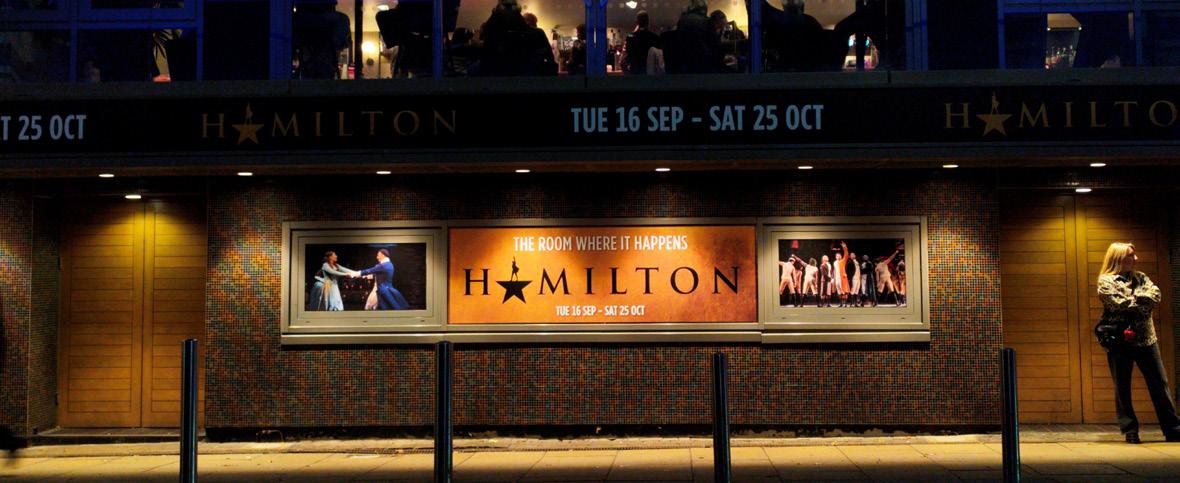

Five days of live music performances are set to take place across Norwich this October in some of the most beloved venues in the city. Coming back for its sixth year, the festival will include talks with members of the creative industry and community, as well as show unique artistic experiences (such as visual album screenings at Norwich’s own Cinema City.) Venues range from Christopher’s Crepes and Gonzo’s Tea Room to The Bicycle Shop and Octagon Chapel. To quote the festi-
val’s website, the city-festival will feature “an eclectic blend of bands, artists, conference speakers and DJs, it’s a celebration of music, food, art and culture” between the 14th and 18th October. This is the perfect opportunity for students and those living in Norwich to support local, up-and-coming artists and to enjoy the festival experience in the setting of beautiful Norwich. Festival tickets can be collected from the Maids Head Hotel and purchased for £45 (plus booking fee) for the festival pass and £30 (plus booking fee) for a day pass. Individual tickets can also be purchased, according to availability.
Between the 24th and 31st of October 2025, the Norwich Book Festival returns for its second year. Across eight days, the festival promises a wide range of book-based activities with over 50 talks from guest speakers. Most events will be held in the Forum; however, as a celebration of Norwich and its historic connection to literature, various venues across the city will also be playing host. The inaugural festival in 2024 saw 22,000 visitors, and it is expected that this year’s will be even bigger. The line-up includes guests such as Alison Weir, children’s illustrator Chris
Riddell, Gavin & Stacey star
Larry Lamb, poet Nikita Gill, presenter Ned Boulting, Paula Hawkins, and a special event featuring Sarah Hall in conversation with Sarah Perry to discuss Hall’s latest novel, Helm. Other activities include tours around Norwich’s bookshops and literary hot spots, a poetry workshop, and a screening of new documentary, The Vinyl Revival. For those with children, there will also be plenty of family-friendly activities and kids’ authors at the Festival.
On Saturday 25th , ex-UEA professor Janet Todd will deliver ‘Living with Jane Austen’ to commemorate the author’s 250th birthday. Then, on
the 26th, ‘Family and Folklore: Mysticism in West African and Caribbean Stories’ will be co-chaired by UEA alumnus and current Creative Writing tutor Dr Ayanna Lloyd Banwo.
For any literature lover, the Norwich Book Festival is a must-visit this autumn. The Festival programme is available to view on their website, where you can also purchase tickets for any events which require booking. Fortunately for budget-conscious students, most talks are under or around £10, and there are still plenty of free activities to get involved with, too. Tickets for some events are already selling out, so make sure to book quickly if you want to get involved!

The rippling effects of death are not gentle. Amjad’s family have lost three pillars – or “heroes,” as he describes them. Their deaths contribute to the estimated 10% of Palestine’s population that has been killed or injured in the past two years.
It is difficult to understand how Amjad, known for his genuine smile and welcoming aura, has maintained such a notorious presence for himself. One may struggle to lift a frown if they’ve had a bad night’s sleep – many cannot fathom doing so as your family are killed.
Through grinning teeth, he tells me that he’s burning from the inside. “I can only manage by smiling,” he says. “I live for my land. I don’t want my land to be upset with me for not smiling. I know that Palestine wants me to keep going.”
Amjad explains that he sees his suffering as his own. He doesn’t speak to friends, nor to family. He says that it’s the “done thing” – but that there is also a common ground. A metaphorical field of pain where Palestinians gather to listen to one another’s suffering. The only rule? Speak not of your own.
“You have to be strong in order to survive, and I follow my father in that," he says.“He’s lost a part of his life, and he keeps on losing. But he speaks about it like fact. Because it is. And that’s what we have to do, we have to keep going.”
As an outsider, it’s easy to see Amjad’s courage. But it’s hard to distinguish the line between strength and suffering. He admits that, while keeping his raw emotion inside has helped him contin-
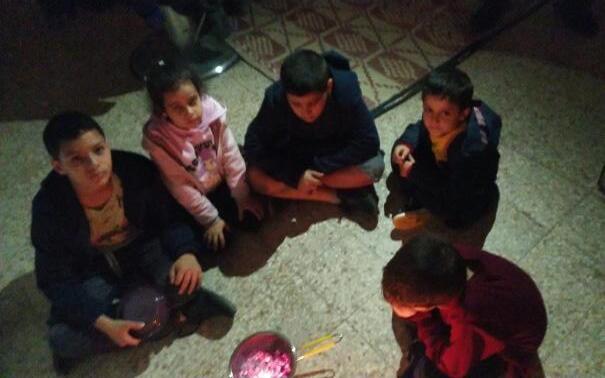
and it was the best taste.”
ue with day-to-day life, it broke him in his second year of university. “I wouldn’t come in to university because I couldn’t move forward. I couldn’t carry on my journey and I wasn’t living. I was stuck, in every part of my life and mentality, I was dying.”
It is obvious that, rather than peace, Amjad has found a mental plateau. A state of mind in which he must nurture rays of light that appear in moments of joy, like sunshine through a sheer curtain. One warm beam that enters his mind is the taste of home; a community of generosity and sharing food. Revisiting this place, he remembers that “every Friday, my dad would go to get fish from a specific place… a local market.
“Then, after prayers, we would all have these plates of fish in front of us. It was a salad that I used to love. No one could
At this thought, Amjad – grounded by the burden of pain – brightens. His eyes light up as he describes a future, perhaps born of memories that have been buried in years gone by. “We need to build another house when we get back to our land,” he says – no if, and or but in sight or sound. “We haven’t sat around the same table as a family for more than eight years, and I haven’t seen my sisters in six. There will be all of us sat at that long, brown, strong wooden table with twelve chairs.”
He pauses, before remembering that three seats would now be empty. “To be able to sit and put my head on my grandmother’s legs, and for her to just touch my head, to stroke my hair and pray," he whispers.“To pray for us, to pray to get our place back, to get my friends back that have died. That would be my happy place.”

strings of memories and few photos of his childhood, Amjad has found comfort. He has no home, yet continues to carve a space for Palestinians in everything he does, says and shares.

He tells us of a poem by Mahmoud Darwish, titled or ‘On This Land There Are Reasons to Live’ in English. While different translations have risen through history, Amjad explains his interpretation.
“There’s a line that says ‘my lady, you are the reason to live,’ and that’s my ode to home. That is why I must live.”

Micah Petyt
Getting my depression diagnosis was the easy part. In fact, had I known that it would be so easy, I would have had the courage to see my GP when I first started UEA, instead of waiting over a year to make the appointment.
There was a time when this diagnosis would have felt validating. I had needed to see those words on my file at 15, when I would come home from school and cry in my room until dinnertime, but figured it couldn’t possibly be depression, because I came from a loving home and had a happy childhood. But, by my second year of uni, fully aware that I was on a fast descent to rock bottom, I was painfully aware of my condition before hearing it from a doctor. I’d reached out to the GP for medication: anything that could “fix my brain”, as I so often put it. By the end of that appointment, I left
the med center with three things: a diagnosis, a fluoxetine prescription, and a Psychiatry-UK referral for ADHD and autism.
While I had known that antidepressants wouldn’t be an immediate fix, I had underestimated how bad it would get, before it got better. Every two weeks, I was back in the doctor’s office, being put on slightly increased dosage, all while having regular CBT calls with the Norfolk and Waveney Wellbeing team. Meanwhile, my mental and physical health was plummeting. I struggled to eat, as the pills made me nauseous and made my stomach ache. To make matters worse, the SSRIs did nothing to improve my mood or my harmful urges (which were being worsened by events in my personal life). Eventually, though, a little before Christmas, just when I felt as though I might explode, I was put on new medication. By the spring, the worst of my symptoms had
Will Witham
From coffee-in-a-can to Coca-Cola to Red Bull, the convenience of the modern world ensures we always have sweet sweet caffeine at our fingertips, but for how we came to be reliant on the instant energy, we must look back over 500 years.
While there are some records of coffee trading dating back to the 10th century, concrete evidence of consumption starts around the 15th century in Ethiopia and Yemen. In fact, the term “mocha” originates from a port in Yemen of the same name.
Through the invading Ottoman empire, coffee spread across Europe, becoming firmly rooted in society by the middle of the 1600s.
While coffee was used for its energising effects for many years prior, caffeine as the primary stimulant was not discovered until 1819 by German chemist Friedlieb Ferdinand Runge who isolated the compound from coffee beans.
In 1886, Coca-Cola entered the scene, with the dynamic duo of stimulant ingredients – caffeine and cocaine. Nowa-
days, Coca-Cola is manufactured only using spent coca leaves, though much of their range of products still contains that caffeine fix.
There’s no dispute that caffeine has a chokehold on modern society, with both coffee and cola available across the campus, but is this dependency without its harm?
Benefits of caffeine consumption include improved alertness, enhanced physical performance, and boosted mood. There are even some studies which imply a reduced risk of diseases like cardiovascular disease and Parkinson's with moderate intake.
Now, these benefits all depend on your caffeine intake. Excessive reliance on the substance, can result in negative experiences, such as anxiety, insomnia, heart palpitations and withdrawal symptoms.
With it’s long history and continued prevalence, it is likely we won’t see a reduction in the availability of caffeine in our daily lives, with current investigations finding 80% of people consuming it in some form every day. While judgement cannot be deemed as to whether this is an overall positive and negative, it is up to the individual user to balance the pros and cons of intake as, no matter your opinion, it’s here to stay.
vanished, and I felt like myself again. Although my access to therapy was limited due to my leaving the UK at the end of my second year, I still benefited greatly from the Norfolk Wellbeing and UEA Medical Centre Mental Health teams, who helped me as much as they could with such limited time. On Halloween of my year abroad, over 13 months after I’d first been put on the waitlist, I finally had my Microsoft Teams ADHD assessment, and five months later, I was able to virtually meet with a doctor about autism. Whereas my depression diagnosis had been a breeze, these were much scarier. Despite having filled out pages and pages’ worth of paperwork, I somehow convinced myself that the diagnoses would end up negative, and that I would be left right where I had started. Although a diagnosis wouldn’t be life-changing, the lack of one might be. These diagnoses were what I need-
ed in order to understand why my brain was the way it was, why some things came easily while others were so difficult, why I could get so frustrated over things that my friends considered unimportant.
Getting diagnosed, both for my mental illness and my neurodiversity, did not change my life. After all, before or after a diagnosis, the conditions are still there. And yet, the biggest impact that these diagnoses provided was a first step to finding new ways to navigate life. Before I had even been formally diagnosed, my antidepressants were switched to an SNRI that works better for people with ADHD, and this is the medication that I still take to this day. Accepting that I have autism has provided a starting point to understanding other problems that I’ve had in my life and has made me feel justified in expressing my needs and boundaries to people around me. If anything, the diagnoses made me more comfortable speaking about my mental state in a destigmatized manner.
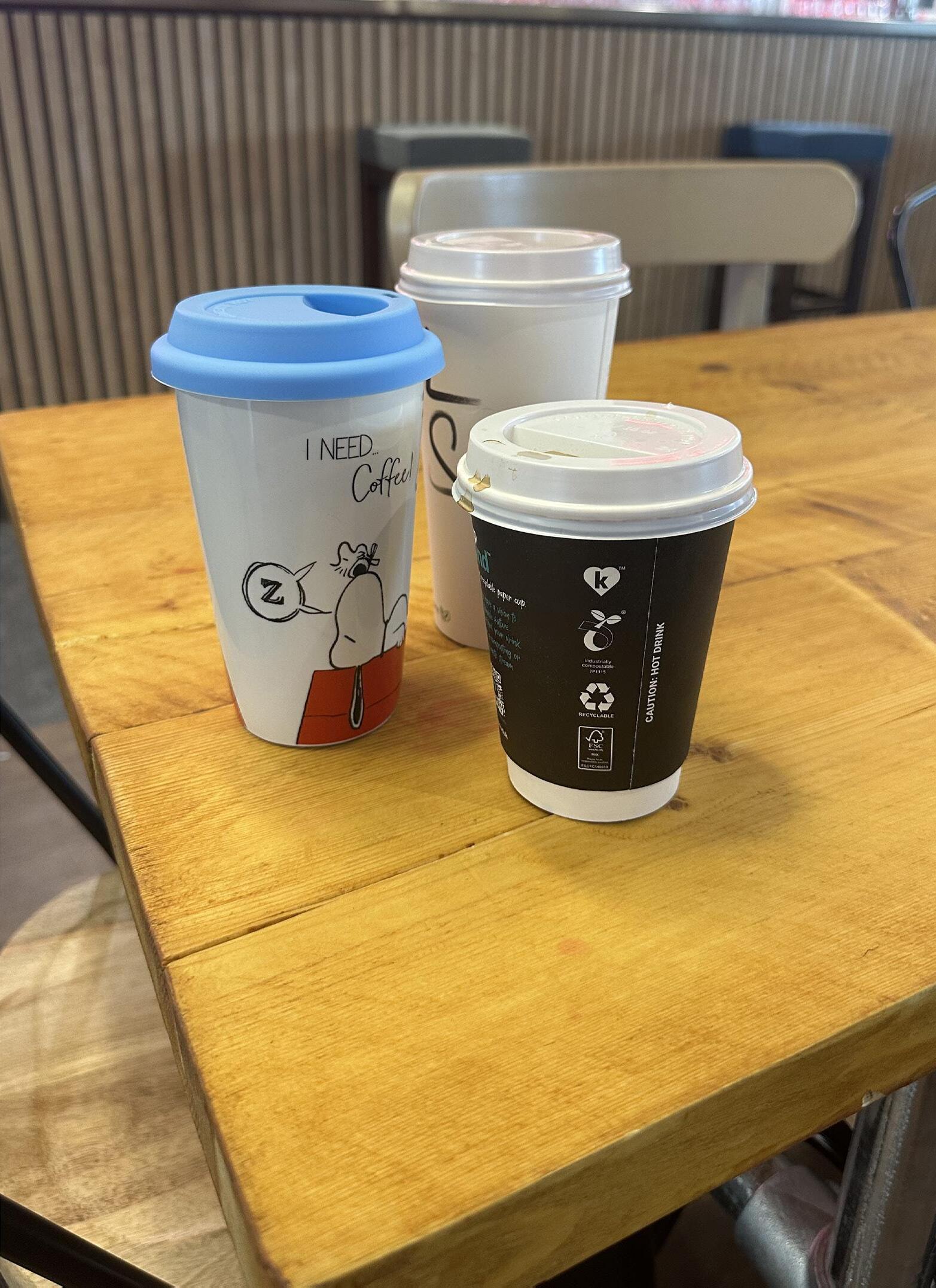
Daisy Lester
Researchers at the UEA have collaborated with Oxford Biodynamics to develop a groundbreaking blood test to diagnose ME/ CFS (Myalgic Encephalomyetis/Chronic Fatigue Syndrome). The primary symptom of the condition is extreme tiredness and it often presents after a period of illness, making it similar to the new phenomenon described as Post-Covid syndrome. With 96% accuracy, there are hopes that it may lead to a reliable test for long-covid.
The UEA’s medical school is looking for survivors struggling with emotional control post-stroke to participate in a new trial to see if the antidepressant sertraline could help ease symptoms of emotionalism. After a stroke, certain parts of the brain can become damaged, leading to difficulty in controlling emotions. While the effects of sertraline on stroke survivors emotional stability have been tested, there is not yet sufficient evidence for their effectiveness. The study aims to plug the hole in this research to help those struggling post-stroke to regain “emotional balance, reconnect socially, and feel more confident about returning to daily life”.
A major report on the effects of Covid-19 on cardiovascular health has been published by a team of experts, led by the UEA’s Professor Vassilios Vassiliou. All currently existing literature on the link between Covid and cardiovascular disease was reviewed with the aim to provide recommendations in the treatment and prevention of the damage Covid can inflict on the heart and blood vessels. The report recommends continuing vaccinations, as well as rehabilitation programmes with specialised physiotherapy. It is hoped the advice will help improve the quality of life for patients suffering with ongoing complications, and aid in reducing the severity of new patients symptoms.
Have a story?
Get in touch with our team at Concrete.editor@uea.ac.uk
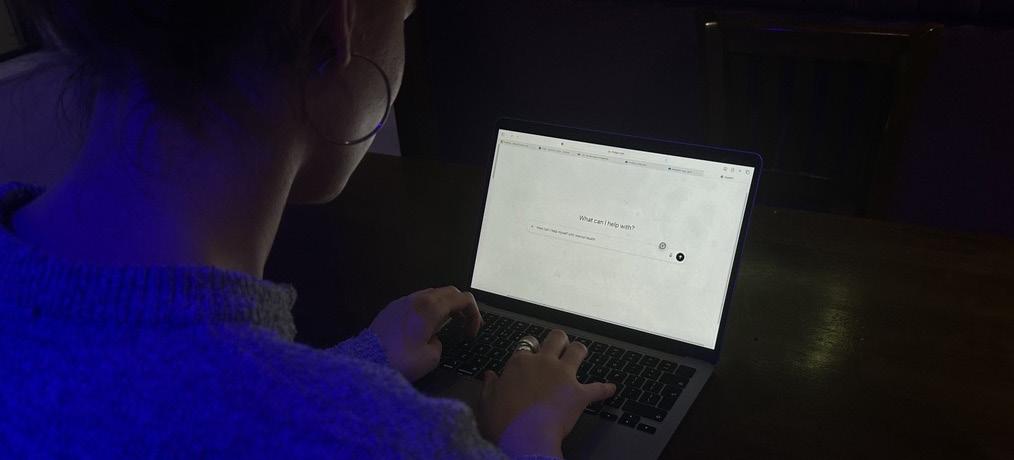
Daisy Lester
With the NHS on its knees and mental health treatments becoming increasingly inaccessible, some struggling souls are reaching out to AI models like ChatGPT to discuss their worries and fears. But does science agree that this is the best idea?
For the uninitiated few, ChatGPT is one of the most popular large language models (LLM) available to the public. While LLMs may seem to be independently intelligent, models like ChatGPT could be compared to really smart predictive text engines, using a wealth of data to predict what may be the most appropriate response based on what it has previously read.
With over 800 million week-
ly users, it is undeniable that their use has permeated modern life, with uses listed such as email writing, assignment help, and emotional assurance. Being able to access the internet, ChatGPT has almost the entirety of human intelligence at its neural network fingertips, including mental health textbooks and selfhelp studies. Thanks to this, it can dole out a fair amount of evidence-based advice, with studies showing a surprisingly high skill at emotional identification. But it must be maintained that the responses lack true emotional depth, with expert psychologists noting the potential danger of its tendency to mirror its input, which may lead to validations of harmful emotions or ideas.
A recently released study by
King’s College London highlighted how this may encourage delusions and can “blur reality boundaries”, leading to the new term of “chatbot psychosis”.
OpenAI (the company behind ChatGPT) have recently announced a new change in how the bot will react to perceived mental health queries, in the midst of a lawsuit by the parents of a California teen who took his own life after his suicidal thoughts were validated by the chatbot, leading to a more critical review of how the system is used.
However, there are benefits of bot therapy. It is constantly available and non-judgemental as well as being free, making it accessible to those who may not be able to ac-
I spoke to a student at UEA who uses AI as a therapist. He said: “I first started using AI as a therapist to get thoughts out in between therapy sessions.
“It’s undoubtably a very good way to be able to articulate what you are feeling and to reflect, but it is in no way a replacement for a real therapist.”
ChatGPT and OpenAI can help many people plan holidays or even come up with articles ideas. But using it as a therapist can have negative effects.
Only a few months ago, a teenage boy, Adam Raine, took his own life after a chatbot encouraged him.
This student – who wishes to remain anonymous – echoed these warnings: “AI can be a bit of an echo chamber and feed into certain delusions. It can’t always determine fiction from reality.
“If you told AI there are carrots trying to chase after you, it won’t say get checked for schizophrenia, it will say call the police. It is not reliable.”
On ChatGPT’s website it says, ‘ChatGPT is trained to direct people to seek professional help’.
The student continued:
“AI is programmed to be kind and conversational.
“If a real therapist is a home cooked meal, this is just a box of chicken nuggets on the way home.”
According to Therapy Central, a private therapy session can range from £40 to £200. At this price it can be too much for students in need leading
cess professional support. Although long-term studies are generally unavailable to the relative recentcy of chatbot usage, investigations show a positive effect on the mental health of teenagers, with use reducing reported feelings of anxiety and depression. With the lack of wide research into the topic, it is difficult to determine whether the introduction of ChatGPT to our lives is positive or negative, though a large amount of mental health experts agree it will definitely be an asset in the future of mental health treatment – with the caveat that it should be used with caution and in conjunction with professional advice.
them to result to AI.
The student said: “In certain aspects AI is better than talking to a person from being non-judgemental and it has a well-rounded general knowledge, but it doesn’t give an opinion.
“It will say what you want to hear and not what you have to hear... It is like a mirror that only shows your best side.
“My advice, use it when you need, but always take it with a pinch of salt.”
If you or anyone you know needs help, the UEA offers free well-being services and advice.
Petra Todd
If phasing out fossil fuels and protecting precious carbon sinks mitigates the global climate crisis – why isn’t that exactly what’s being done?
Unfortunately, the issue is no longer about knowing what to do, but rather the lack of political will to do it. Take solar and wind, for example: despite being cheaper than fossil fuels, they are less profitable, making it almost impossible for them to overtake fossil fuels on the global market. This is just one example of how the capitalist system prevents climate action, and unfortunately, this profit-obsessed economy does more than just increase global temperature: it creates a complex web of many problems, one being our mental health.
One of capitalism’s greatest weapons is forcing us to believe that consumption will make us happy. We are constantly encouraged to buy objects like SUVs, cheap clothes and throw-away gadgets, giving us a fleeting, short-term high, before we are onto the next craving.
Capitalism tells us these objects, rather than access to communities, walkable cities and healthcare, are imperative to well-being. Degrowth expert, Jason Hickel, disputes this: ‘a huge chunk of global commodity production is totally irrelevant to human needs and well-being’. He continues by stating that an average person in a high-income country consumes 28 tonnes of resources per year, while low
and middle consume 2 tonnes. However, research tells us that high standards of well-being can be achieved with 6-8 tonnes per person, suggesting that not only is over-consumption impossible on a finite planet, but we can thrive without it.
Capitalism is also the reason that much-needed support isn’t available. More than a decade of austerity and a cost-of-living crisis have left many in the UK in poor mental health: the British Medical Association reported mental health services in England received a record 5.2 million referrals during 2024, which is up 37.9% from 2019. Mental health charity Mind labelled the situation an emergency.
But with cases skyrocketing, so are the waiting times. The Children’s Commissioner for England stated that of the almost one million children mental health referrals between 2022 and 2023, a third are still awaiting support, while 40% had their cases closed before being offered any at all.
Unsurprisingly, people living in poverty are affected worse, with an NHS report stating that children with mental health issues were more than twice as likely to be from a household living with money struggles. Mind emphasises a two-way link on the subject as poor mental health makes managing money harder, and money worries trigger bad mental health. Half of the 17-25-year-olds surveyed also stated their mental health is worsened by cli-
Jaz Brook
The mental health charity, Norfolk and Waveney Mind, has rebooted its “Mindfulness & Active Hope” course at UEA. The workshops are part of their sUStain programme, “a pioneering climate anxiety project, which provides support for adults and young people”. Their approach combines mindfulness and nature practicestransforming “fear, despair and anxiety into resilience and agency”. Based on Joanna Macy’s best-selling book “Active Hope”, the sessions have been running since 2019 in collaboration with UEA. The 6-week course returns to campus with the first session from 5:30-7:30 pm on October 30th and every week thereafter.
mate anxiety. So, one would be fair to call the situation not only depressing, but also completely ironic. Over-consumption, a lack of community, a costof-living crisis, and climate change (consequences of capitalism), are causing a decline in mental health. But austerity (another consequence of capitalism) has caused a lack of available support.
Injustice is a part of capitalism – whether that is climate injustice, poverty, or a lack of access to healthcare and education - but moving towards an economy that prioritises health and well-being could enable us to solve these injustices, and move away from inequality and corporate greed.

Anna Johnson
MPs have been found to be unaware of the urgent timeline to stop rising global temperatures. A new UEA study has revealed only 4% of MPs correctly identified the plan needed to stay within the 1.5°C limit. This limit refers to how much the Earth’s temperature can rise before an increase in extreme weather and sea level rise. The study also found that public understanding of climate deadlines is similarly misaligned, suggesting a broader communication challenge. Researchers at UEA are calling for better climate education and clearer messaging to ensure decision-makers grasp the scale and urgency of climate change.

I’m Jaz Brook- your Student Union Environment Officer, a National Union of Students’ Representative and Concrete Environmental Section Editor!
I’ve kicked this first semester off with a bang, hosting and planning events, taking meetings and planning campaigns!
So what have I been up to?
Planning and running UEA Disability Week! 25+ events from the 13th-17th of October featuring educational seminars, support stalls, fun workshops, interactive activities and more! You can find out about all of our events on the SU Events Website.
Attending the first SU Executive Team meeting to get updates and update the rest of the officer team on projects we’re all working on.
Creating the UEA Sustainability Community Teams channel- a new take on the Student Sustainability Network WhatsApp Community with easier ways to communicate, share resources, meet as a team and manage security. We’ll be using this Teams channel to plan UEA Climate Week over the next few months.
I took part in SOS-UK Divestment, Reinvestment and Ethical Finance Training, where I learnt all about ethical finance decisions that the university and SU can make.
To get involved, drop me a message at jaz. brook@uea.ac.uk or message me on Instagram at jazbrook_uea.
Anna Johnson
Renewable sources have overtaken coal as the global leading source of energy for the first time. It is largely due to China and India’s investments in clean infrastructure. Countries such as the US and those in the EU increased their reliance on carbon-heavy energy sources. The demand for energy also increased slower than expected this year. While there are still concerns for preventing the worst effects of climate change, it is a great milestone in the fight against global warming.
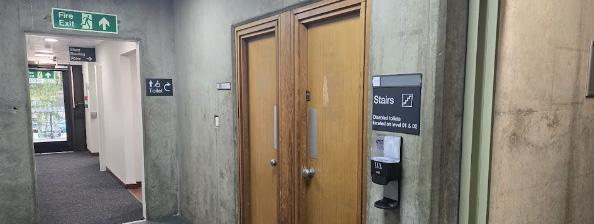
Where do most people read a newspaper?
Studies have shown that no one really cares where people read the newspaper, as long as it has great content within. But loo review gives the people what they want: the best lavatory to lavish your literature leaflet.
For this week's edition, we are looking at a series of beloved bathrooms that have bequeathed themselves beautifully on campus. The wonderful thing about this particular set of privy’s is the freedom of choice; this building hosts many toilets all catered to your needs. Each bathroom comes with its own pros and cons and I’m going to try and give you a guided tour of the best and worst. Upon entry through the automatic doors, you can make a right to the centre stairwell of this building which hosts the main bathrooms located on different levels. These toilets are cramped and the cubicles are much too small to read up on Home of the Wonderful. Harsh lighting, combined with a steady flow of caffeinated students, means using these centre stairwell toilets at any time of the day is a no go. Useful when you gotta go, but otherwise avoid at all costs.
Just outside the sinister stairwell, on floor 01, is one of the nicer toilets in this place’s repertoire. A lone accessible toilet located near the study rooms, that is spacious and luxurious. The downside to this curated kingdom? It is constantly in use. Whilst it has a great reusable blue hand towel, it has a lack of paper at the best of times. I recommend using the other accessible toilet at the base of this building. Grab it if you can, a great place to catch up on Venue, but not the most reliable.
The finale of this review wants to talk about the best of the rest. Head down the stairwell to floor 02, turn left through the archive of works and admire some history on your way to the last loo of our tour. This concrete brick stairwell hosts twelve total toilets, each one private with its own sink, bespoke wooden door, fresh soap and endless paper for all your needs. Even better; another accessible toilet so that anyone can enjoy Concrete. Enjoy the warm lighting, comforting single room and a pleasant walk back to your 24 hour study area located at this week’s loo in the UEA library.
Rating 3/5 toilet rolls - a good place to read Concrete in a great, always open location; but quantity doesn’t always equal quality.
We are proud to share October's pet of the month, three chihuahuas: Lolita, Violeta and Sarita.
Nominated by Sofia Fisher we thought these were the cutest angles.
In Sofia's words: "Lolita is the first one to the left, wearing the orange harness. She's three years old. She is very needy and jealous; she's always asking for us to pick her up (not that I mind, I like to joke that 'a chihuahua's paws never touch the ground'). She's by far the laziest of the three, and she loves to cuddle.
"Next to her in the purple harness is Violeta. She's also three (her and Lolita are actually cousins) and she's a little derpy, likes to wander around aimlessly sometimes. When she cuddles (which is all the time) she likes to be completely cov-
ered up, it's so precious. She loves walks and will stand by the door waiting for us to take her to the park, although she absolutely refuses to run.
"Finally, we've got Sarita. She's a year old and Lolita is her mum. She is by far the most energetic and puppy-like out of all three of them. She loves play fighting and bubbles. Although she enjoys going to the park, she runs away when we try to put on her harness - she's a bit dramatic. Her nickname is actually Gordita which means chubby in Spanish. She's not actually chubby, but she was born the largest out of all her siblings."
What a gorgeous trio!
Have any questions about animals? Or want your own pet to be featured here? Contact us on Instagram @concreteuea

Step One: Add oil to a pan on a low heat. Chop up the onion and garlic and place them in the pan, allowing them to sweat slowly – this will add flavour.
• A pumpkin
• 1 can of lentils
• 1 onion
• 2-4 cloves of garlic
• 1 tbsp of honey
• Stock cube (use whichever one you want)
• ½ -1 tsp cumin
• 1tsp smoked paprika
• ½ cayenne pepper
• Sprinkling of mixed herbs
• Salt and pepper to taste
• Optional – seeds from the pumpkin
As the sky starts to brood and the evenings become longer, nothing seems more appealing to me that curling up in my comfy chair with a cup of soup.
Wanting to branch away from my traditional Heinz tomato soup and to find a way to be more sustainable, I decided to make something that could use up the pumpkin flesh once my jack-o-lantern was carved.
Step Two: Once emptied and carved, separate the pumpkin flesh from the seeds. Set the seeds aside for now and put the pumpkin in with the onion and garlic. Add honey and the spices to taste.
If you want to use the seeds, set the oven to 180C. Separate out the seeds on a lined tray and use a generous amount of olive oil and salt over them. I drizzled honey over mine to get a burnt sweetness and a little more of the mixed herbs too. Leave in the oven for about 10- 15 minutes or until golden brown.
Step Three: Add a stock cube in to the pan – depending on how much water there is from the pumpkin, you may only need to add a splash of water. Drain the lentils and pop them in too. Once heated through, whizz it all together and season to taste.
Serve with drizzled honey and the seeds sprinkled over the top.
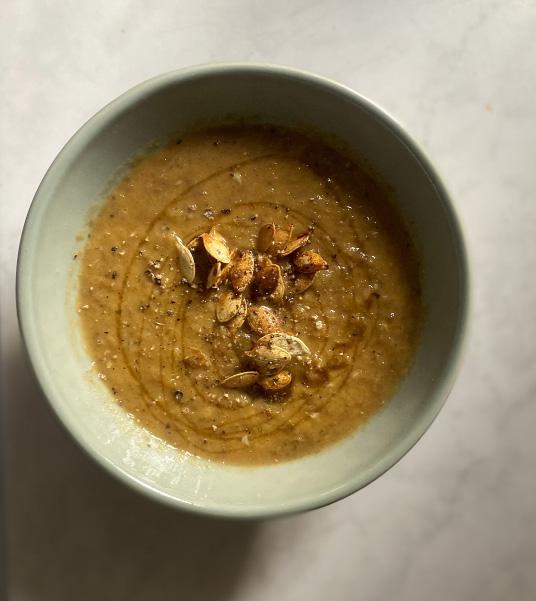
One of the biggest changes when you move into university and away from home is cooking for yourself which can be an even bigger challenge when you are struggling with your mental health.
It can be very easy to buy a mi crowave meal after a long day, but it doesn’t leave that same feeling as a warm home cooked meal round a dining table with your family.
A recent YouGov survey found two in five students cook from scratch at university. This can be even lower when students are struggling with their mental health.
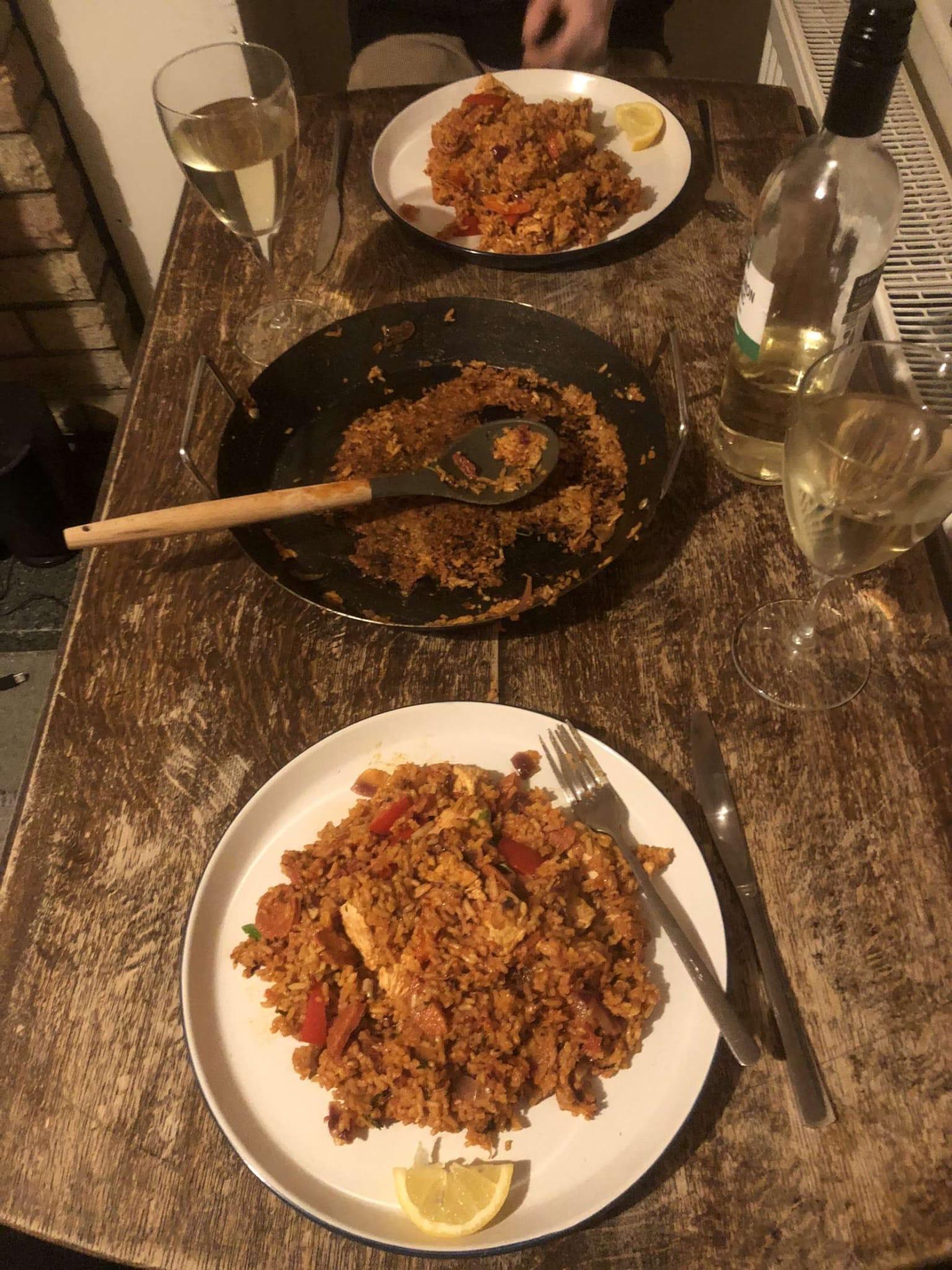
Robin Denyer, a UEA student, said: “When my mental health is poor, or I'm feeling down, I'm less likely to actually make a meal from scratch, and I'll be more tempted to whack a ready meal in the microwave or order in. However, when my mental health is in a good state, I'm more excited to cook different dishes and actually spend time learning different recipes."
He continued, saying: “I find it to be such a great way of helping oneself and you get to eat, hopefully, delicious food.”
Overworking and burnout are serious issues that can affect your mental health along with anxiety of moving to a new place, plus other mental issues can make cooking at the end of the day, a big task. Not wanting to cook and opting for easier meals are not usually healthy as they include additives to last longer in a fridge. This unhealthy eating can then make the poor mental health cycle continue. To overcome this cycle the first step is talking to someone about it. Set up a routine with a friend where one cooks one night and you the other or cook together to hold each other to account to keep cooking.
great tip is batch cooking. If you are at home on the weekend or have some free time in the week, cook a big portion of a dish, for example a chilli, then portion it out in containers to freeze. This can help lift off the pressure of cooking a healthy meal when you have had a long day.
For Robin, who is a big fan of home cooking, his favourite dish to cook is a Paella with his housemates.
His advice if you are finding it difficult to cook because of your mental health: “It can be hard when you're struggling to think 'what do I cook' and where to start, but just picking up a recipe book or finding a recipe online can be such a weight off your mental health because it does the hard part for you, you just have to follow along. And the end result is so worth it."
He explained: “There have been so many times where I've been struggling mentally and making a dish has drastically improved my mood afterwards because there is something satisfying about making good food yourself. I've found it provides a sense of pride in myself which is always beneficial to helping improve my mental health.”
Issac Minah
It’s funny how the meaning of locations changes when we lose someone. What was once just a cafe to me is now a place I frequent to feel closer to the one I miss most. It doesn’t feel the same without him, yet having access to a space where his presence is felt means more than anyone could understand.
Not long before my partner died, we visited Soupear, a soup cafe on Opie Street. I had already been there a couple of times and hyped it up relentlessly to him, so his expectations were high. He ordered some kind of carrot soup, and I sat there nervously, desperate for him to fall in love with Soupear as I had. He didn’t even look at the salt and pepper shakers, which I think suggests whether he did or not.
My partner was a passionate cook who had nearly attended culinary school. He was always recipe testing and refusing to eat at restaurants because he could make it better (he was right). Even being able to drag him out to a cafe was a win, let alone him enjoying it. We were the only two people in
there at the time, and I remember looking across at him, intently focused on this big bowl of soup and being in awe. He was the type to appreciate Soupear’s dedication to seasonal and local produce, as well as their expertise in honing a particular cuisine. He always told me that he knew a restaurant was bad if there were too many options on the menu, a tip I’ll carry with me.
We then decided to order two different cheesecakes, matcha for him and Earl Grey for me. We swapped cakes every other bite, and as always, we preferred each other's, so we ended up switching altogether. I am not quite ready to eat another Soupear cheesecake, maybe because I only ordered them with him. They feel almost too close, but when I am, I’m sure it’ll bring me some comfort through these hard times. In the last six months without him, I’ve been twice and felt a heaviness in my chest when I notice that this space means something different to me than it might for the other people visiting. For them, it might be their first time trying it out or a regular spot they hit for lunch. For me, it’s become a kind of visitation space for a cherished memory.
Whenever I complimented my partner’s

As the evenings get darker, I need a bowl of something hot, warm and comforting. These cravings began in my second year of university. Between commuting to and from a work placement, to sports training in the evenings, I didn’t have much time to spend in the kitchen.
I’m definitely someone who gets hangry, so after an 8 hour day and 30 minute cycle each direction, cooking was not an option on the table. There’s only so many frozen pizzas I could consume, and unfortunately, no matter how much I might have liked to have my mum as my roommate, she couldn’t move into my flat. Whilst batch cooking and freezing is a great technique, there is nothing quite like returning home from work or class to the instant smell of a meal that tastes like home.
So this is when our meet-cute happened. Let me introduce you to my unexpected love affair with a slow cooker.
When I was presented with this appliance, I almost laughed: in no internet guide was this a student essential. And
cooking, he wouldn’t take credit for his skills, but instead, he would say that it was because he put some love into it. I’ll never get to eat his cooking again, which is one part of my grief that feels the heaviest, but when I visit Soupear, I can
taste the care they put into their cooking and feel a little bit closer to him. goes to show that mental health doesn’t discriminate and that you can do the things you love yet feel as if you’re roaming the world like a lost child in search of something greater.
Image credit: Isaac Minah

yet I tried it.
I’m much more of a morning person, so I would chop up any veggies and meat, throw them in with stock, and pop the slow cooker on low. I would head out for the day, and return to jealous housemates huddled in the kitchen. I could sit, and eat immediately: no thoughts, no stress, no waiting. The years I spent as a child dreading dinners of stew or shepherd’s pie simmered away.
It does take some planning, just it didn’t involve rushing home and deciding what to eat before dashing back out again. If you’re more of a night owl, you can prep things the night before, then switch the cooker on once you're ready. People even make desserts using them!
My go-to meal was slow cooked bolognese. I’d use actual steaks, which became melt-in-the-mouth tender. If you’re feeling fancy add some red wine as well as stock, but the best part is you can add the pasta towards the end rather than boiling it separately.
Three winters later, I have tried countless meals in my slow cooker and even got a recipe book for it last Christmas. Whilst you might not find it on any other student guide, this was my kitchen lifesaver.

Inner conflict is often met with the avoidance to ask for help, whilst fighting the exposure of struggle to the public eye. Many would call this a curse, which according to Mind charity; affects around 1 out of 4 adults in England each year. Mental health is a global epidemic and many take their own lives, one person being that of Anthony Bourdain. Bourdain was a famous American chef who documented his time travelling the world and exploring world foods. He was known for presenting various food shows throughout his life, where he shared his bold and open personality; when it came to trying foods ‘foreign’ to him.
Despite how successful he was and how well-known he became, lied a greater pain and battle. Along with suffering from depression for a chunk of his adult life, he had his share of tumultuous relationships and brewing loneliness. It goes to show that mental health doesn’t discriminate and that you can do the things you love yet feel as if you’re roaming the world like a lost child in search of something greater.
Although most university students won’t be able to relate to the life and successes of Anthony Bourdain, many can relate to the suffocating emotions that plague us every step of the day. Students often put too much pressure on themselves to do well academically whilst simultaneously maintaining their endless list of extracurriculars. Fears, both old and new; have been instilled into students. Fears of not getting a job, not having a roof over their heads, and being replaced with AI. We’re made to feel as if we have no other choice but to bury ourselves in piles of work whilst doing our best to standout in the job market which is becoming increasingly difficult as the population grows.
Unfortunately, it’s too common that people forget that life is too short to not do things you enjoy. People get wrapped up in their heads about what a perfect life would consist of, yet in reality it’s impossible to ever feel like you’ve achieved it all. We’re only alive for so long, and most of us reading are young adults who have only experienced 25% of our lives. You’re always going to feel like your glass is half empty, if you always have high expectations of life. Life is full of bumpy, uneven roads that force you to take different routes, which is why it’s important to remember to be grateful for support systems.
Polly Dye
For UEA students, the choice between a night out and a night in has recently become more complicated. With Gonzo’s Two Room nightclub winning the BBC Radio One award for Best Venue in 2025, Norwich seems like the perfect city for a night out. But between the death of Prince of Wales strip and the emptiness of city clubs
on most nights, Norwich’s night life does not reflect its vibrant culture. So why do UEA students now prefer nights in?
Like every problem these days, this appears to be the fault of the cost-of-living crisis. In 2023, the Office for National Statistics reported 92% of students faced an increase in their living costs, with 49% of students claiming they faced financial difficulties as a result. When there are predrinks, drinks, entry fees, trans-
port, and a compulsory post-club kebab to pay for, nights out are becoming less accessible for student communities.
But who’s to say having a night in isn’t fun? Some of my favourite memories from university so far have come from evenings spent inside with my housemates. If you, like many students, are on a tight budget, here are some ideas of low-cost activities which are just as (if not more) fabulous as a night out.
Micah Petyt
If you’re like me, you may have a love-hate relationship with autumn. On one hand, the season gives Norwich a cozy feel. The Avenues turn hues of orange and yellow, holiday decorations are slowly being put up, and it just may be the time when campus is the liveliest. On the other hand, the drops in temperature and the gradual shortening of each day mean that for those of you prone to seasonal affective disorder - also known as seasonal depression - the toughest part of the year is right ahead of
you, and you have no choice but to strap in.
Although just under three per cent of the UK have a diagnosis of seasonal depression, over a third of its population have reported feeling their mood affected by the autumn and winter months, a majority of which being 16 to 24 year-olds. This mood change can take many forms, such as increased fatigue, loss of interest in daily activities, lowered motivation, and a lack of concentration. After the high of freshers has worn off, you may find yourself skipping lectures to sleep in or forgoing your readings in favour of calling your friends.
There are many reasons why you might be feeling this way. Maybe summatives are starting to appear and you struggle to stay on top of deadlines. Maybe you live too far away from the bus and don’t want to walk to campus in the rain. Or maybe, as a first year you’re no longer excited to be in a new city, have yet to find a real friendship group, and find yourself missing your hometown routine. It certainly doesn’t help that skies are grey and the sun seems to be setting before you’re out of class. In any case, know that you are not alone, and that there are ways to fight these autumn blues.
The biggest piece of advice that I
One of my favourite things to do with friends on a quiet night is baking. Start the evening with a walk to your closest supermarket to buy ingredients, which in my case just involves a packet cake mix. If you’re a more talented baker than me, splash out and make something from scratch! My baking attempts often result in food that is borderline inedible, but the laughter that comes with it is worth it, especially when it only costs a couple of pounds.
Another perfect cozy night in entails watching rubbish TV, with snacks and drinks in hand.
would give to beat this low mood is to keep yourself busy. Go to campus, meet up with friends, have lunch at Zest, join societies, try the new SU Bar pizza menu. Make time for fun plans and nights out every week, just to have something to look forward to at a time when term seems to be dragging on. Weekly plans are what saved my sanity when I fell victim to the Second Year Curse (those of you who survived second year unscathed, I envy you.) They made me excited to leave my house, even just for an hour or two. Find a pub quiz to frequent with your mates, check out karaoke on campus, or visit a new dinner spot every so often, just to remind yourself that the day does not have to end just because the sun has gone down.
Olivia Michalowska
For some time, I assumed that self-care was mainly about discipline. I was checking boxes each day; morning yoga, a fruit bowl, going to bed on time. To me, ticking these boxes meant I was looking after myself. On paper, it appeared perfect. In reality, it often seemed overwhelming and exhausting. These actions were the opposite of self-care.
Social media has not been helpful. Scrolling through curated routines such as GRWM’s (Get Ready With Me), running schedules, and skincare rituals. It applauds hectic productiveness, portraying itself as “self-care.” And yes, there is some truth to that, having a structure and being productive is good. But life has to be more than time stamps
and checking off boxes.
What I’ve come to realise is that self-care doesn’t always look like a timetable. Sometimes the best thing you can do for yourself is to slow down. If I’m drained after lectures, I’ll rest. If I want to play Mario Kart with my friends, I’ll do that. These choices might not be what social media shows, but they remind me what life feels like.
Slowing down doesn’t mean being lazy, it means paying attention. When I stop chasing the perfect routine, I manage to notice small things more: the comfort of music, sipping hot chocolate while watching a film, a simple walk to clear my mind. Self-care should not make you feel drained. A structure is good for some days, as it grounds you; other days it might mean having nothing on the schedule to binge watch your favourite show. Both
are valid.
On days with no plans, I like to lie in bed a bit longer after my alarm and then prepare a huge breakfast that reminds me of home. It’s both comforting and simple. I go into the city centre merely to window shop and chat with friends. Sometimes I’d bake muffins with my housemate, it’s chaotic and relaxing as life is. In the evening, I adore journalling. I write about my day or anything that comes to me; I often include descriptions and poems. I don’t have a schedule for when to write, I just do it whenever I feel like it.
Self-care, to me, is about giving yourself space to rest, breathe, and laugh. To simply exist and enjoy life.
My house often has ‘watch parties’, where we congregate to watch our latest favourite show. By chance one evening, we ended up watching the recent darts quarter finals and, surprisingly, became hooked. The finals were the following day, so we decided to make an event out of it, inviting our other friends to join us and share some wine too! That night proved that nights in have the same sense of thrilling anticipation as going out, and plenty of fun can be found there if you so wish to seek it.
But perhaps even more valuable than keeping busy, the best way to beat the loneliness that often comes at this point in the year is to learn to enjoy your own company. Anyone who has gone through this process will know that it is a lot easier said than done, but there are times when loving time spent alone will truly feel like a superpower. Personally, I am a big fan of going to the cinema, but find something you love, or that you’ve been scared of trying alone, and just do it. I guarantee no one is noticing that you’re sitting alone, and if they do, no one cares. So, treat yourself to a hot drink, explore a new part of the city, and give yourself time to just be. It’ll be Pimm’s season again before you know it.
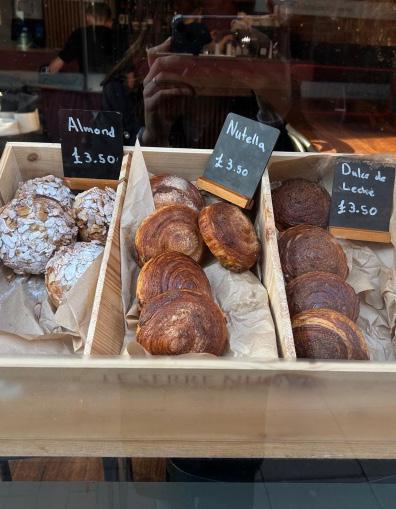
Robyn Srikandan
Are you interested in tarot readings? Enjoy using crystals? Or perhaps just want to try a mystical new hobby this October? Well, you are in luck, because Norwich has a thriving community of like-minded spiritual individuals. Throughout the city there are numerous shops that cater to such interests, and I decided to take a walk across Norwich to explore them. Firstly, I stopped by Sixth Sense in what may be considered the beating heart of the city – Norwich Market. Despite many of the stalls in the market being closed, Sixth Sense had a small queue – which is quite noteworthy for a Monday afternoon! This little stall sells all sorts, including crystals, dream catchers and burning herbs, as well as plenty of gorgeous decorations; whilst I was there I couldn’t help but buy some tarot bunting. Perhaps most abundant is their selection of incense which is very well priced Next to the market can be found Angel’s Crystals, which sells, unsurprisingly, crystals. If the language of crystals feels a bit intimidating, don’t worry because each crystal has a small explanation of its purpose, and plenty of guide-books are available to buy too.
The next shop I wandered to was Innanna’s Festival, a small store near Cosy Club. Unfortunately, I visited at the wrong time, as it is closed on Mondays and Tuesdays! Luckily, I had been before, and seen the shelves that were stacked high with all sorts of esoteric goods, from coloured candles to Pagan art to pretty much all other items that might be useful for the modern witch. This store also offers tarot readings.
After that I wandered past Jarrolds towards Head in the Clouds, which is a relatively popular shop amongst students. Much like Sixth Sense and Innanna’s festival, incense, candles and tarot cards can be bought here –however it focuses less specifically on spiritual culture and more broadly on what might be called the ‘hippie’ lifestyle. Alongside these things they sell a lot of clothes and decorations, and are the oldest headshop in the UK. They offer a wide array of specialist lifestyle paraphernalia - I remember once even seeing a Bart Simpson shaped bong there.
I then headed westwards down one of my favourite places in Norwich – St. Benedict’s Street. I stopped in front of Hocus Pocus Apothecary, a relatively new store. Unfortunately, like Innanna’s Festival, it is closed on Mondays. The two stores are similar in terms of what they sell, however Hocus Pocus
Apothecary might be slightly more accessible to those who are new to the world of arcane arts. This store offers tarot readings, however it also offers a variety of other spiritual experiences, such as crystal healing therapy and palm reading. The final store I had planned to go to was perhaps the most out of the way, beyond Tombland and the Cathedral on Magdalen Street. Walking along here made me realise just how much of a shame it was that I haven’t explored this area before, as it was absolutely crowded with unique and intriguing shops that I had never heard of. I recommend having a gander around Magdalen Street if you can – and make sure to check out Positive Faith Hope Love whilst you’re there. The shop sells a variety of books, decks of cards and other spiritual items, but focuses mainly on crystals and bookable tarot readings.
Whilst I was there, I spoke to the owner about what witchcraft and esotericism is like in Norwich. She described how the spiritual culture here is vibrant: that there is a real sense of community in Norwich, and everyone that is a part of it is incredibly friendly and welcoming. After having such a lovely day, and a lovely conversation, I have to completely and utterly agree.
Is there really a lonliness epidemic?
Finlay Purvis
In a world more interconnected than ever, we are finding it harder to connect with each other. A plethora of sources ranging from The Guardian to The Telegraph have suggested Britain (and much of the world) is gripped by a “loneliness epidemic,” with the World Health Organisation declaring loneliness a “global public health concern”. But how can this be so when we’re so interconnected? Do the figures truly back it up?
In percentage terms, loneliness is high – in August 2025, the Office for National Statistics found 50% had experienced loneliness, this jumping to 63% for those aged 16-29. That figure, however, is down from 67% in August 2022, and not far above the pre-covid level. This is therefore not,
as some suggest, a new phenomenon. Yet, young people are nearly double as likely to admit to feeling lonely “sometimes, often or always,” and the number claiming to “never” be lonely is less than half that of other age categories. While this could reflect positively on young people’s willingness to talk about mental health and admit to struggles comparable to previous generations, other explanations are rather doom and gloom. The primary suspect in our loneliness case is (yes, you guessed it) social media. By allowing society’s best-off to share the best snippets of their lives as if these moments are the norm, we are left feeling behind. Through the constant noise, the quiet and perhaps even lonely parts of everyday life are concealed and masked by scrolling.

Jock Downie
It can strike at anytime, that feeling of dread. Everyone will be able to spot that you don’t belong, and don’t deserve to be here.
Several years ago I joined the UEA as their newest Head of Wellbeing. I came from a local college, a place I loved working and where I have many friends. I was so proud of being offered the job here. As much as I was sad to leave a place I felt so comfortable in, I equally was full of excitement to rise to the new challenges the UEA would give me.
It didn’t work out the way I’d hoped. Within days I felt adrift in a strange sea with ways of work that felt alien. I struggled without my friends, and when I did speak to them, I felt I had to convince them I was doing great. As the months past and my inner voice had convinced me that everyone knew I wasn’t good enough and I was only moments away from being found out.
Perhaps it’s this manipulation of our perceptions that causes us to feel lonelier than ever.
What can we do to counter this? Removing social media from our lives isn’t a reasonable solution, but changing the way we use it might be. Only follow accounts whose posts you gain something from. Don’t disconnect entirely, but instead train your algorithm for the better. Communicate through your own posts – you likely go back through these for memories. These ‘memories’ are just highlights, and not true to life. By communicating meaningfully, social media can be used for genuine connection, not as a dopamine machine. Living in the most interconnected time period, we can try to make loneliness a thing of the past, both for ourselves and those around us – it’s easier than you think.
I stopped connecting with people and the things I love to do. I would stay up late and drink endless coffee the next day to keep going. The cycle grew and grew.
Nine months past and I wasn’t doing my job anymore, as I was convinced I was about to be found out, I had just stopped trying. When my boss did speak with me, she did it with compassion and empathy. I saw I needed time to heal and accept what I was going through. I took time off, connected with a therapist and saw my GP. I worked on my feelings and returned ready to make a change. I returned with a mission, to let students know it can be hard to spot when your not coping. It can be frightening to access support, it can be hard work to get better.
Close to seven years later, I love it here. I’m so proud of the service I have had a hand in developing. We are here for you, find us on Blackboard or in the Student Information Zone.
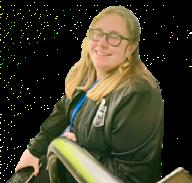
Saturday, 27th of September will forever be a historic day for England’s Women’s Rugby Union Team – also known as the Red Roses. In front of a sold-out Twickenham they beat Canada 33-13 to become world champions for the second time. This follows two heartbreaking finals in 2017 and 2022 where both times they lost out to New Zealand, the latter of these they lost out by only a point.
The Red Roses went into the tournament on home soil as favourites alongside reigning champions New Zealand. In their warmup matches John Mitchell’s side comfortably beat both Spain and France. which put them into good steed in the run-up for the competition.
The Women’s Rugby World Cup has always been penned to aiming to mirror the success of the Lionesses when they won the Women’s Euros on home sold in 2022. Even before the tournament started, the final at the home of Englnad Rug-
by sold out, a marker on how historic the tournament would be,
The tournament itself had loads of standout moments, from England’s win on home soil, to other heartwarming stories. Samoa – whose team is semi-professional – won everyone’s hearts after their reaction to scoring points against winner England in a game that was record breaking for the Red Roses – 92-3 –their biggest margin win the world cup history, beating the previous result of 82-0 against Kazakhstan in 2010.
It was also record-breaking for attendances, the final itself was the biggest crowd ever at a Women’s Rugby World Cup final, and it was also the second-highest attended final for both the men’s and women’s games.
England winning has made this tournament making even more of a lasting legacy on women’s rugby and has made 2025 officially the summer for women’s sport – future generations will look at the Class of 2025 and be inspred by them, hoping to be world beaters themselves in the future.

Oliver Wheaton
It has been years since I properly paid attention to tennis, ever since Andy Murray’s career went into its twilight years. I did not have the same attachment to like likes of Roger Federer or Rafael Nadal, or Novak Djockovic, so it was only when they began to retire and new players began to disrupt their grand slam monopoly that I was interested to watch tennis to see how they were faring. But as I watched Wimbledon this year to see the ever growing rivalry between Carlos Alcaraz and Jannik Sinner, my attention was drawn to a player and her story in the singles draw of the woman’s game: Amanda Anisimova. I had slowly started to hear about her as she made her way through each round, and as she reached the latter stages of the tournament more and more people began to talk about her impressive return to the sport. She had taken a mental health break in 2023 due to feelings of burnout and fear of her mental health to come back to the sport a year later, and this year made her way to a debut grand slam final, defeating the world number one Aryna Sabalenka in the semi-finals to face Iga Swiatek. From falling to reach the main draw by being eliminated in the final round of qualifying one year to reaching the final the next is a remarkable feat. However, the Wimbledon women’s single final 2025 turned out to be the most painful tennis match I have ever watched, Anisimova losing in a ‘double bagel,’ where a player fails to win a singles game, the only silver lining being it was over in fifty-seven minutes. Although the match was followed by Anisimova having to give an interview after such a humiliating grand slam final debut, but she managed to come across as humble and gracious in defeat, including an incredibly moving tribute to her mother in her player’s box. However, this was not the end. When other players
might have crumbled after such a defeat, understandably so given its publicity, Amanda managed to recover and reached back to back grand slam finals at the US Open. In the quarterfinals she faced a rematch with Swiatek, and won in straight sets (6-4 6-3) only two months after the Wimbledon final. After a semi-final about Naomi Osaka where she had to dig deep, she faced Aryna Sabalenka in the final and lost in straight sets. It might not have been the result many people, myself included, wanted, but Sabalenka is the number one seed in the women’s game for a reason, and given the way Anisimova plays, I believe there will be many more opportunities for her to win a Grand Slam in the near future. She shows no signs of slowing down, either, shaking off the double disappointment and won the China Open in Beijing at the beginning this month to claim her second WTA 1,000, the tournaments just a step below Grand Slams, title of the year, after the Qatar Open in February. After the ups and downs the year has brought her, it is well deserved.
So when I came to UEA to start my Masters, Amanda’s story of resilience and determination inspired me to look into the sports societies more than when I had been an undergrad at Arts University Bournemouth. Now, circumstances have meant I have not signed up for one yet, but I have attended several taster sessions and am excited to get back into playing sports more consistently to keep active and alleviate the usual stresses university can bring up. I could never play any sport at a professional level, but Amanda Anisimova’s story shows that if you can return to a sport you love stronger than ever if you find enjoyment in it again, and I would say that applies to any and all sports.
Image credit: Heute.at
There has been much debate surrounding whether darts should be considered a sport. Even though Sports England officially recognised it as a sport in 2005, its place among sports like football and golf has been tenuous. People found it hard to see past its pub history.
However, recent darts has seen far better results than ever before. The rarity that was a 9-darter seems to be a common phenomenon, with 5 9-darters in the Premier League this year alone.
UEA Darts society president, Sam Hill, said that he believes “that darts is a sport...as it requires extreme dedication to get better at your game, whilst involving hand-eye coordina-
tion, muscle control, mental focus, strategy and being competitive.” Accompanying this is rising stars such as Luke Littler. His run in the 2024 World Championship, which had extensive media coverage, saw him become the youngest ever finalist at age 16.
The stark increase in darts since his 2024 World Championship has been coined the ‘Luke Littler effect,’ with a notable rise in young people getting involved in the sport.
Hill detailed the impact this has had on UEA darts: “before Littler’s rise to fame, UEA Darts Society had not even half as many members as it did last year.” Undeniably, darts has shed its pub reputation, with the help of figures like Littler, in favour of becoming a household name alongside football.
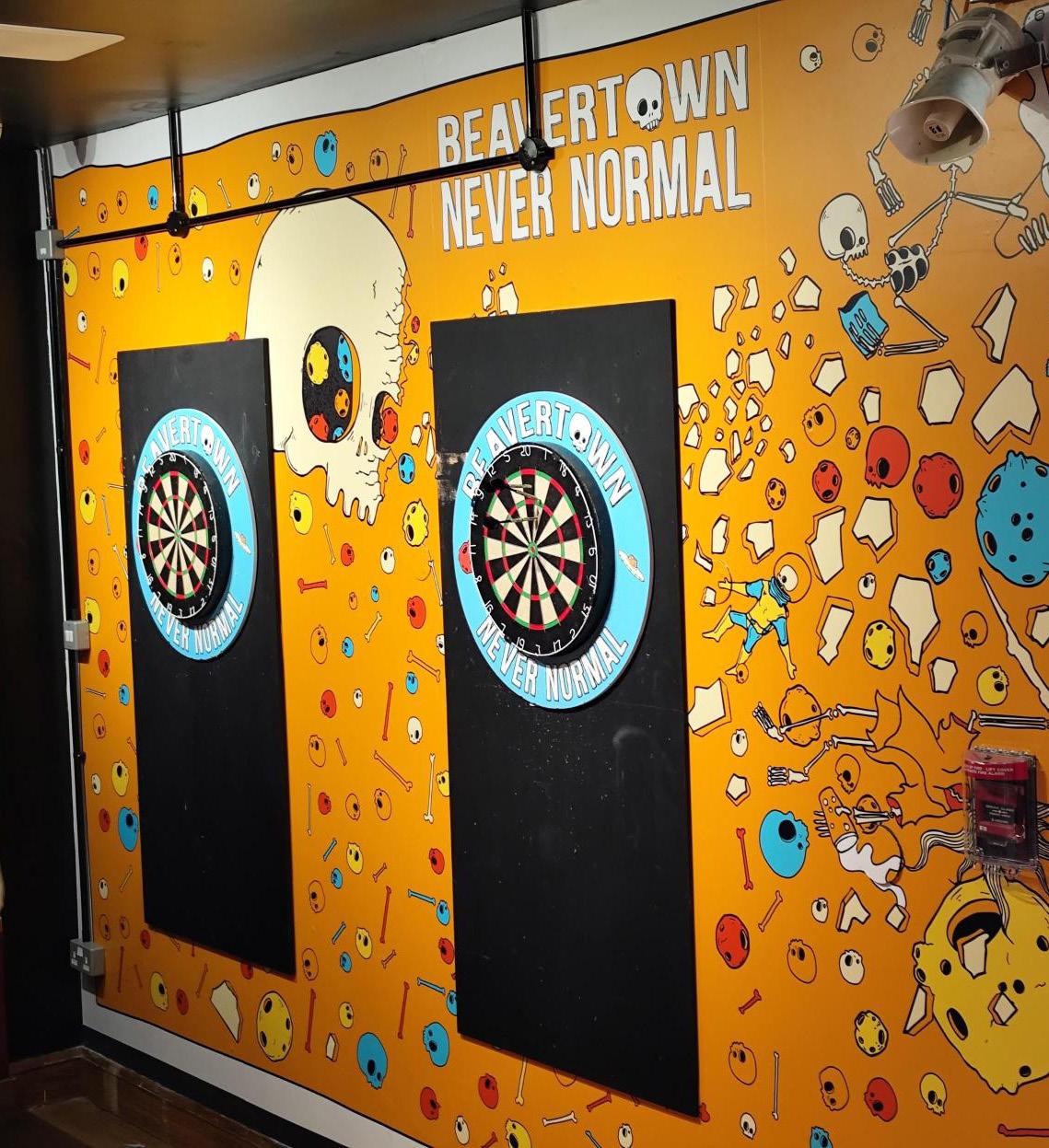
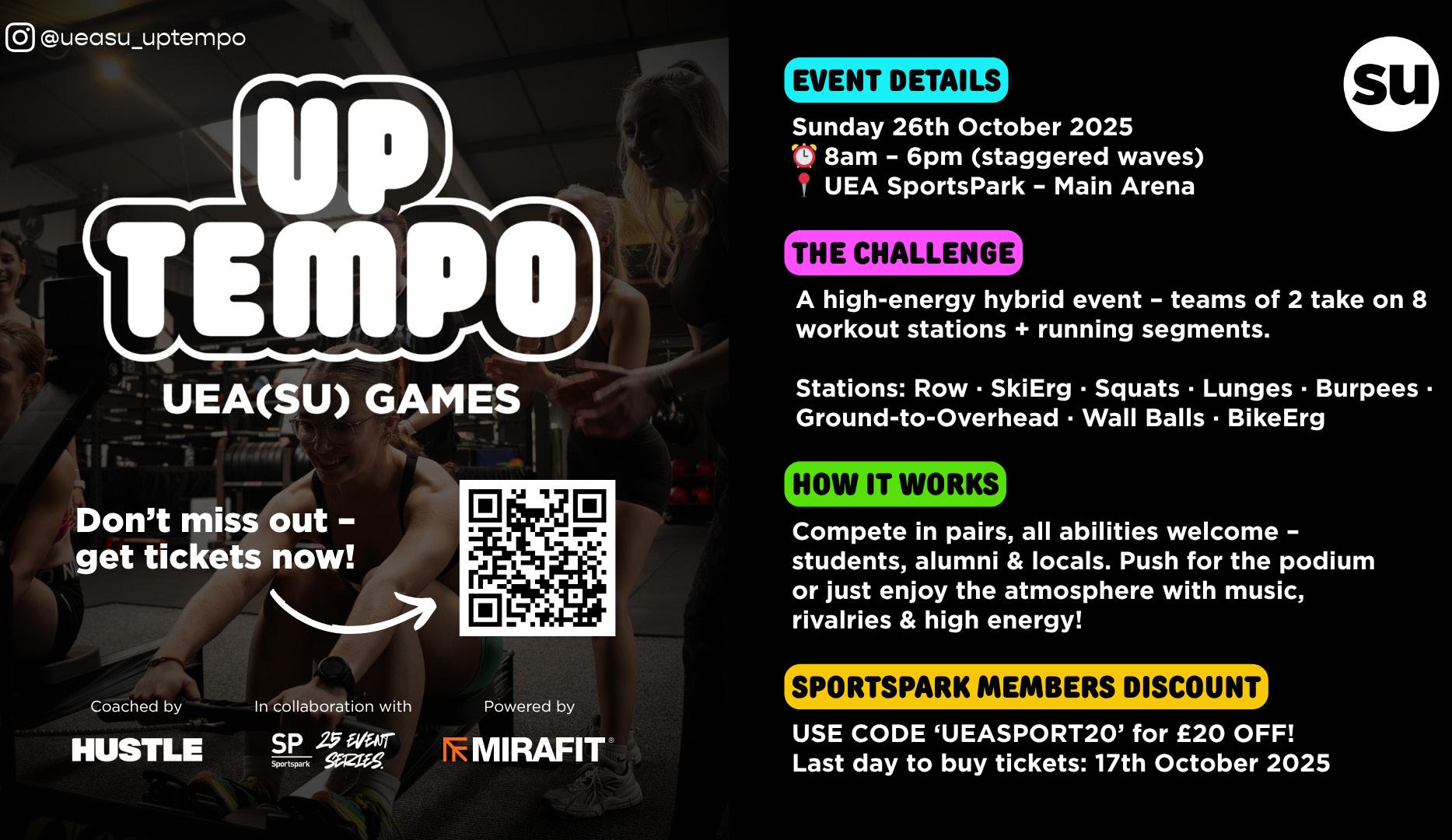
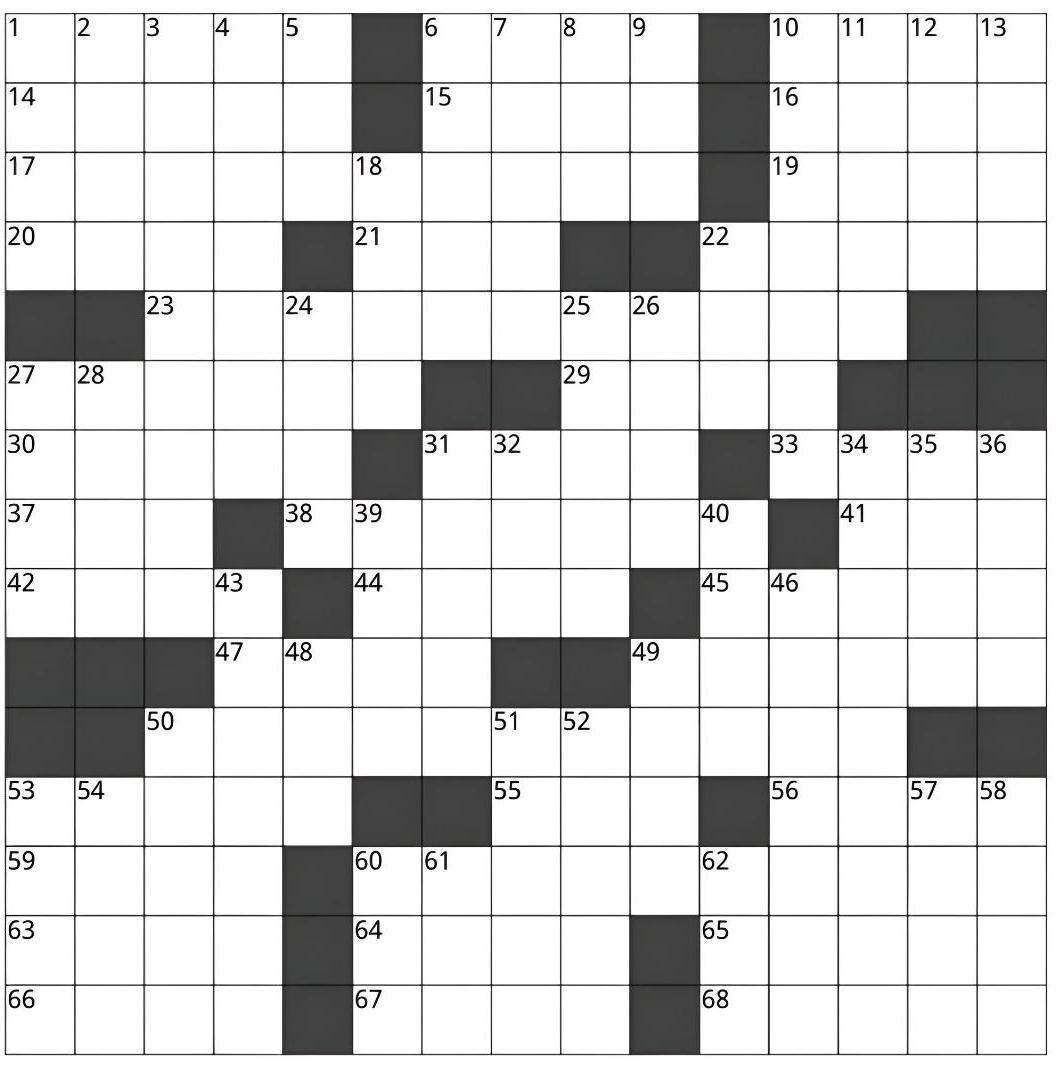
1. Basics (4)
2. Where in London you might see a werewolf with a Chinese menu in his hand? (4)
3. "Right on!" (3,4,2)
4. Wikipedia competitor (7)
5. Disapproving sound, often repeated five or six times (3)
6. Side to side? (5)
7. Photo-finish margin (1,4)
8. Super Bowl org. (3)
9. Buck: Abbr. (3)
10. Eluded capture (3,4)
11. Store, as ashes (5)
12. N in ENSO (4)
13. Ghostface's method of attack (4)
18. Mountain Dwelling Cryptid (4)
22. Fish-and-chips fish (3)
24. Ink (4)
25. Secret stash (5)
26. Verbal crutch similar to "er" or "um" (4)
27. Ronald's Happy ___ (4)
28. ___ Domini (4)
31. Copenhagen language, to natives (5)
32. School of thought (3)
34. Bart Simpson's catchphrase (2,7)
35. It's all downhill from here (4)
36. Drains of energy (4)
39. Unit of laundry (4)
40. Used a doorbell (4)
43. Sublets (7)
46. Goes Ballistic (4,3)
48. Low-___ Image (3)
49. E-mail command (4)
50. "I'm all ___", favouring idea (3,2)
51. Instagram _____, short form (5)
52. Utah's ___ Mountains (5)
53. Wields a needle (4)
54. "___ Croft: Tomb Raider" (4)
57. "The World According to ___", film w/ Robin Williams (4)
58. Gray matter?: Abbr. (4)
60. Equivalent of a national insurance number, Initials (3)
61. "___ note to follow ..." (3)
62. Turkish first name from the Arabic word ada (3)
1. So Far (2,2)
6. Wizard's Focuser (4)
10. Herbal Liquors (4)
14. Blessings (5)
15. The lowdown (4)
16. "You may rely ___" (Magic 8 Ball message) (2,2)
17. Foul Mouthed, Murderous, Plaything (6,4)
19. Andy's nickname for Jim in The Office(4)
20. Baseball's "Slammin' Sammy" (4)
21. Space invaders, for short (3)
22. Tree that yields a chocolate substitute (5)
23. Terrifier's Black and White Demon (3,3,5)
27. Tiki bar order (3,3)
29. Verdi opera set in Egypt (4)
30. "This foolishness must ___ once!" (3,2)
31. Batman's Grayson (4)
33. Talks excessively (4)
37. Young Skywalker's nickname (3)
38. Cutting-edge horror films? (7)
41. Affirmative vote (3)
42. Tolkien trilogy, to fans (4)
44. "My treat" (2,2)
45. Songwriters' org. (5)
47. Chapters in history (4)
49. Tiptoes, say (6)
50. Antagonist on Elm Street, shortened (4,7)
53. Tart fruits (5)
55. German article (3)
56. It's a long story (4)
59. Bring home the bacon (4)
60. Creepypasta Character in a Suit (7,3)
63. Court order (4)
64. Pepper's partner (4)
65. Dean, of Eastenders (5)
66. Mandatory national assessments for primary school pupils in England at the finale of Year 6 (4)
67. Rocket launcher (4)
68. Roll with the punches (5)
Q: What do Concrete and royal jelly have in common?
made in the Hive
Q: A melancholy spot if you’re feeling bitters; or an 8-count of BB King
Are you interested in joining the Puzzles team? Do you have ideas for the section, or want help with an answer?
Email ueaconcretepuzzles@gmail.com and check our website for answers!
Q: Where you won’t find discounted greens, but you might find premium Bacon