CHOSEN TO BE HIS LIVING STONES
EQUIPPED SENT BOLD: JESUS DOOR-2-DOOR BRINGS GOSPEL TO ST. LOUIS NEIGHBORHOODS
BUILT TOGETHER IN CHRIST
CHOSEN TO BE HIS LIVING STONES
EQUIPPED SENT BOLD: JESUS DOOR-2-DOOR BRINGS GOSPEL TO ST. LOUIS NEIGHBORHOODS
BUILT TOGETHER IN CHRIST
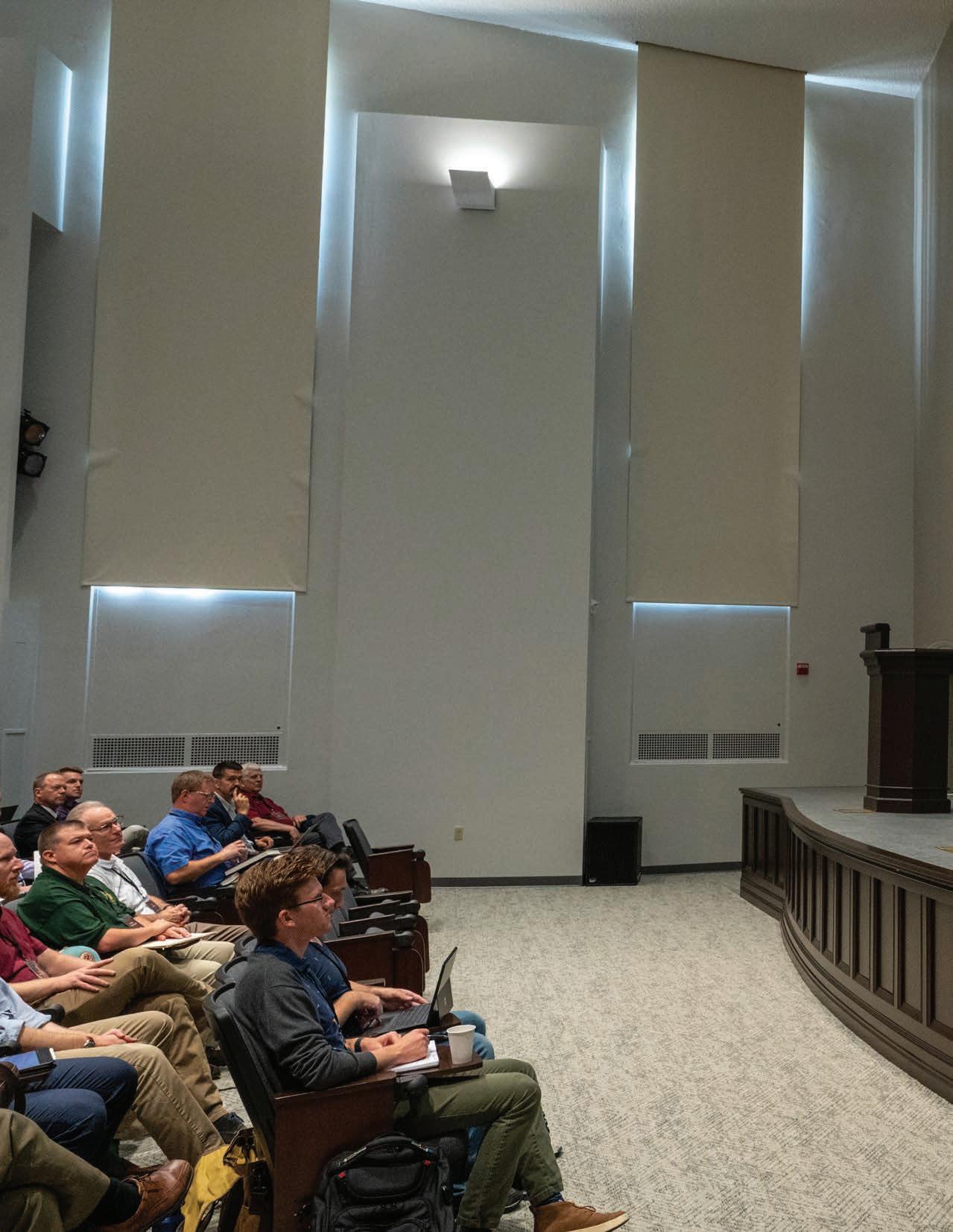
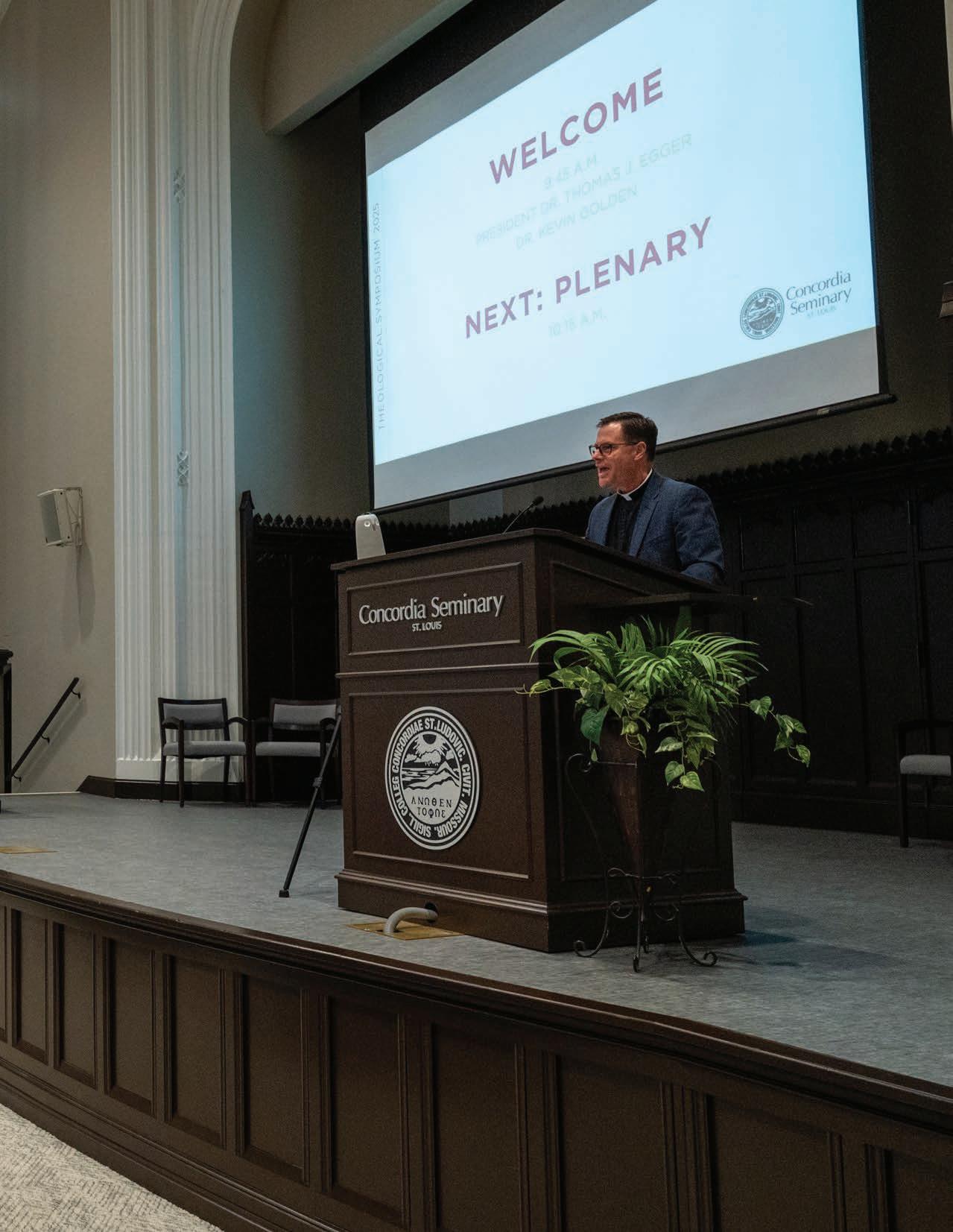
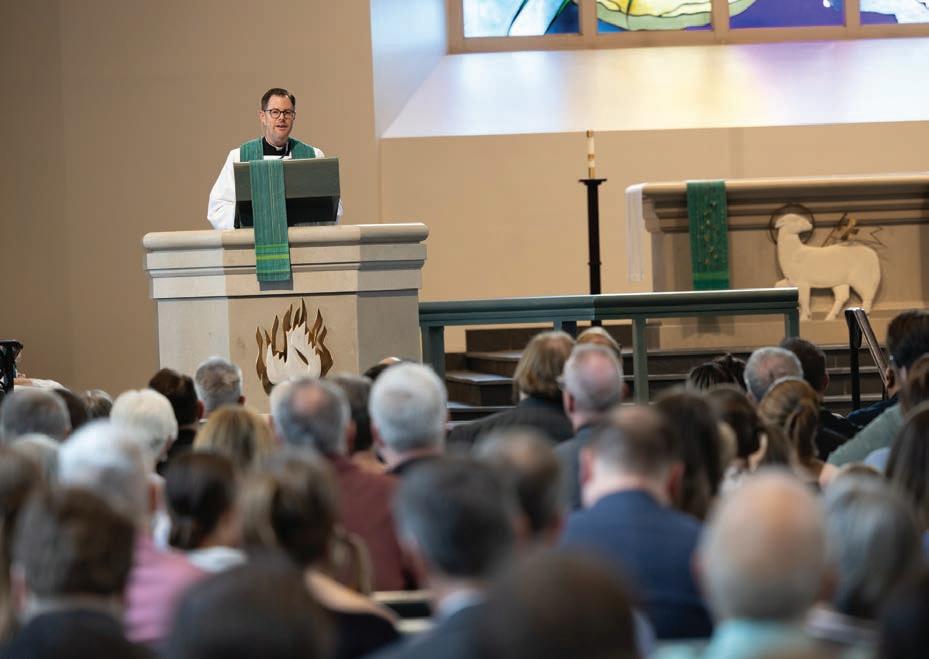
Seminary President Dr. Thomas J. Egger welcomes some 362 attendees to the 35th Theological Symposium Sept. 16-17 in Werner Auditorium. The Symposium focused on the 1,700th anniversary of the Council of Nicaea and its lasting impact on Christian doctrine, discipline and church relations. To learn more about the annual Symposium, see page 25. Photo: Sid Hasting
ON THE COVER
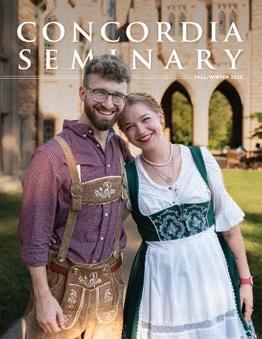
Dressed in dirndl and lederhosen, M.Div. student Stephen Christian and his fiancée Anna Braun are all smiles at this year’s annual Student Association Oktoberfest Sept. 26. Stephen and Anna were married Nov. 1. Photo: Sam Held
PRESIDENT
PUBLISHER
Dr. Thomas J. Egger
Dale A. Meyer
EXECUTIVE EDITOR
EXECUTIVE
Vicki Biggs
Vicki Biggs
MANAGING EDITOR
MANAGING
Ken Ohlemeyer
Melanie Ave
ART DIRECTOR
ART DIRECTOR
Beth Hasek
Jayna Rollings
DESIGNER
Life and purpose! These are the gifts of God, in Christ Jesus, our Lord.

St. Peter writes: “As you come to Him, a living stone rejected by men but in the sight of God chosen and precious, you yourselves like living stones are being built up as a spiritual house, to be a holy priesthood, to offer spiritual sacrifices acceptable to God through Jesus Christ” (1 Peter 2:4-5 ESV).
DESIGNERS
Courtney Koll
Michelle Poneleit
Brothers and sisters, the Lord is building us together as His chosen and precious people, so that we might carry out, together, acts of devotion and love and praise — as Peter puts it, “spiritual sacrifices acceptable to God through Jesus Christ.” By His precious blood, the Lord Jesus has ransomed us from a vain and futile life. He has given us meaning and purpose, to bear fruit that will last.
Jayna Rollings
WRITERS
Vicki Biggs
Dr. James Fickenscher
WRITERS
Sarah Maney
Sarah Maney
Marissa Nania
Daniel Mattson
Ken Ohlemeyer
Lisa Mills
Travis Scholl
PHOTOGRAPHERS
Jill Gray
This high calling applies to every Christian, to the priesthood of the baptized, serving our neighbor and bearing witness to our Savior in word and deed, in our God-given vocations. And certainly, then, it applies to the shared work being done at Concordia Seminary. God is building us, upon Christ, to be a spiritual house doing holy work, together. Here, God is preparing us for the ministry of the Gospel of Jesus Christ in the world.
PHOTOGRAPHERS
Sid Hastings
Jill Gray
Sam Held
Sid Hastings
Sarah Maney
Marissa Nania
Courtney Koll
Cathy Newman
Sarah Maney
Ken Ohlemeyer
Michelle Poneleit
Tyler Simmons
Harold Rau


Concordia Seminary magazine is a member of the Associated Church Press and the Evangelical
This household that the Lord is building will stand forever. Built on the Rock, the church will stand. Heaven and earth will pass away. These earthly tents that we live in, our bodies, they will perish, for a time. All earthly achievements and institutions and kingdoms will pass away. And, yes, our Seminary campus and its impressive buildings will one day pass away. “Not one stone will be left upon another.” But Christ’s Word and Christ’s household will never pass away!
Let us then live the life that has been so magnificently and graciously given us by the Living One, the Living Stone. For we were not a people, but now we are the people of God! And we, like living stones, are being joined together with the whole people of God, joined together with Christ Himself, that we may “proclaim the excellencies of Him who called you out of darkness into His marvelous light!” What a life! What a purpose!
In Christ’s love, Dr. Thomas J. Egger, President

Concordia Seminary serves church and world by providing theological education and leadership centered in the Gospel of our Lord Jesus Christ for the formation of pastors, missionaries, deaconesses, scholars and leaders in the name of The Lutheran Church— Missouri Synod.
To be added to the mailing list, or to receive the magazine electronically, address correspondence to: Concordia Seminary magazine, Concordia Seminary, 801 Seminary Place, St. Louis, MO 63105; call 800-822-5287; or email magazine@csl.edu. Congregations may request copies in bulk for distribution within their churches.
Copyright © December 2025, Concordia Seminary, 801 Seminary Place, St. Louis, MO 63105. All rights reserved. No part of this publication may be reproduced without the prior written permission of Concordia Seminary.
“Jesus is the Life-Giving Stone, chosen and priceless in God’s sight. So too are we, as living stones, because we are built on Him”
–Dr. James Fickenscher

The Apostle Peter opens his first letter by writing to the “chosen exiles of the Dispersion” (1 Peter 1:1).
Peter’s audience is Christians who were scattered across different regions, surrounded by people who do not share their faith in Jesus, far from home and far from one another. Peter is honest with them that their situation will bring trials, persecution, and the need to defend and explain their hope in Jesus. Difficult words!
Even so, Peter assures them of their unity and hope in Christ. God the Father is at work in them according to His foreknowledge and plan (I Peter 1:2; 5:10). Across great distances, they are one in Christ Jesus (I Peter 2:24–25; 4:12–14). The Holy Spirit who brought them the Good News empowers their faith, their lives and their witness (I Peter 1:12; 4:14). In other words, they are not alone. Their situation is no accident. Jesus has brought them to Himself, builds them together as one in Him, and works life and salvation in the world through their acts of love, proclamation of the Gospel and even their sufferings. Good news, indeed!
Peter’s words are great news for us as Christians today. While our situation is not exactly the same, we need the same encouragement to point our hearts and minds to Jesus for our identity,
BY DR. JAMES FICKENSCHER
purpose and life together in the world. This is why our theme for this academic year at Concordia Seminary, St. Louis is “Christ the Living Stone … Building Us Together,” based on (1 Peter 2:4-5 ESV): “As you come to him, a living stone rejected by men but in the sight of God chosen and precious, you yourselves like living stones are being built up as a spiritual house, to be a holy priesthood, to offer spiritual sacrifices acceptable to God through Jesus Christ.” Let us walk through this passage of Scripture and see how the Apostle Peter describes who Jesus is, how our identity is found in Him alone and what He does for us and through us as His people in the world.
The passage begins with us coming to Jesus. But Peter is clear that this is not our doing; it is the work of Jesus, who ransoms us (I Peter 1:18), gives us faith (I Peter 1:21), calls us out of darkness (I Peter 2:9), heals us by His wounds (I Peter 2:24), saves us by Baptism (I Peter 3:21) and gives us His Spirit (I Peter 4:14). We are not alone. Jesus unites and gathers His people as one by faith through the Gospel (Is. 56:6–8; Ezek. 37:15-24; John 10:14-16).
And who is this Jesus? He is the “Living Stone.” First, this means that Jesus lives! Resurrected from the dead, He will never die again!
CONTINUED ON PAGE 8 >
Our identity is derived from Jesus, the crucified and risen Lord of all. He is our foundation, our salvation and our source of identity. We live because He lives. We are chosen and priceless because Jesus has made us His own.
Jesus works life and salvation in the world through our acts of love, proclamation of the Gospel and even our sufferings. We are together one holy priesthood, one in purpose because we are built on Christ, the Living Stone.

Second, this means that He gives life. The Living Stone makes what was once dead in sin alive again. Christ and His work were rejected by men and considered worthless. But, in the sight of God, Jesus is chosen and priceless. By His cross and resurrection, He is the Living and Life-Giving Stone of God. He brings life and salvation to all who believe and set their hope on Him.
Jesus is the Life-Giving Stone, chosen and priceless in God’s sight (I Peter 2:4, 6). So too are we, as living stones, because we are built on Him (I Peter 1:1; 2:5, 9). Our identity is derived from His. Jesus, the crucified and risen Lord of all, is our foundation, our salvation and our source of identity. We live because He lives. We are chosen and priceless because Jesus has made us His own. Jesus is the Living Stone, who makes us alive and chosen by building us on Himself.
Peter then moves from our shared identity in Christ to our shared purpose. Jesus is building us together in a special way for a special goal. Our situation is no accident. Jesus has brought us to Himself, builds us
together as one in Him and works life and salvation in the world through our acts of love, proclamation of the Gospel and even our sufferings. Or, to use Peter’s words, we are being built together into a spiritual house, for a holy priesthood, in order to offer spiritual sacrifices. Wherever we are scattered around the world, however large or small our congregation size or circuit or district, no matter how budgets look, we are together one spiritual house, one holy priesthood, one in purpose because we are built on Christ, the Living Stone.
Peter writes that our shared purpose in this priesthood is to offer spiritual sacrifices that are pleasing to God through Jesus Christ. What are these sacrifices? We need to keep reading! Our priestly role includes proclaiming the excellencies of God and receiving His mercy (I Peter 2:9–10). We offer spiritual sacrifices when we call on the Father’s name (I Peter 1:17), set our hope on Jesus (I Peter 1:13) and follow Him even through suffering and hardship (I Peter 2:21–24; 4:12–16). Our priesthood is one of prayer (I Peter 3:7; 4:7), love for others (I Peter 4:8–9) and patient expectation of God’s
• Proclaim the excellencies of God
• Hope in Jesus (even through suffering)
• Patiently await God’s goodness
• Love others
• Pray

It is not our effort, the perfection of our offering or even our sincerity of faith that makes our spiritual offerings pleasing to God. It is that they are offered through Jesus Christ. By His grace and power alone, He works life and salvation in us and through us.
goodness in His time (I Peter 1:3–5; 1:8–9; 5:10). Our offerings to God through Christ serve as a witness to the world, so that they might see Jesus as He dwells within us and works His good through us (I Peter 2:12–15; 4:19). But it is not our effort, the perfection of our offering or even our sincerity of faith that makes our spiritual offerings pleasing to God. It is that they are offered through Jesus Christ. Jesus, the Life-Giving Stone, builds us together so that, through our spiritual offerings, by His grace and power alone, He works life and salvation in us and through us.
As we reflect on this academic year theme for the Seminary, this is the foundation that we seek to cultivate in the lives of our students, our faculty, our staff and all our community. As we form, certify and send pastors and deaconesses for service in Christ’s church, it is Peter’s Jesus-centered approach to identity, life and ministry that we want them to take into congregations, chaplaincies, missionary work and throughout the world! Christ alone is the center of our identity as God’s people. Christ alone is the center of our relationships and community life, as He builds us together. And Christ alone is the center of
our proclamation and witness in the world. Purely by His grace, He uses our spiritual sacrifices to work life and give hope, to us and to those around us, even through times of suffering and difficulty.
It can be easy to feel isolated and alone — as people, as congregations, even as a Synod. Sometimes we can struggle in the face of trials and the evils of sin, both in the world around us and in our own hearts. And, especially in modern times, it can be increasingly difficult to understand what it means to live faithfully as Christians in a culture that is constantly tempting us to seek power over others, to act in self-righteous anger and to find our identity in anything and everything other than Christ alone. Jesus works through us, His people, to point others to His cross and His salvation alone for hope, life and peace. Christ is the Living Stone, building us together. He is our identity, our life, our purpose — our everything.
Dr. James Fickenscher is an assistant professor of Exegetical Theology at Concordia Seminary, St. Louis
BY SARAH MANEY
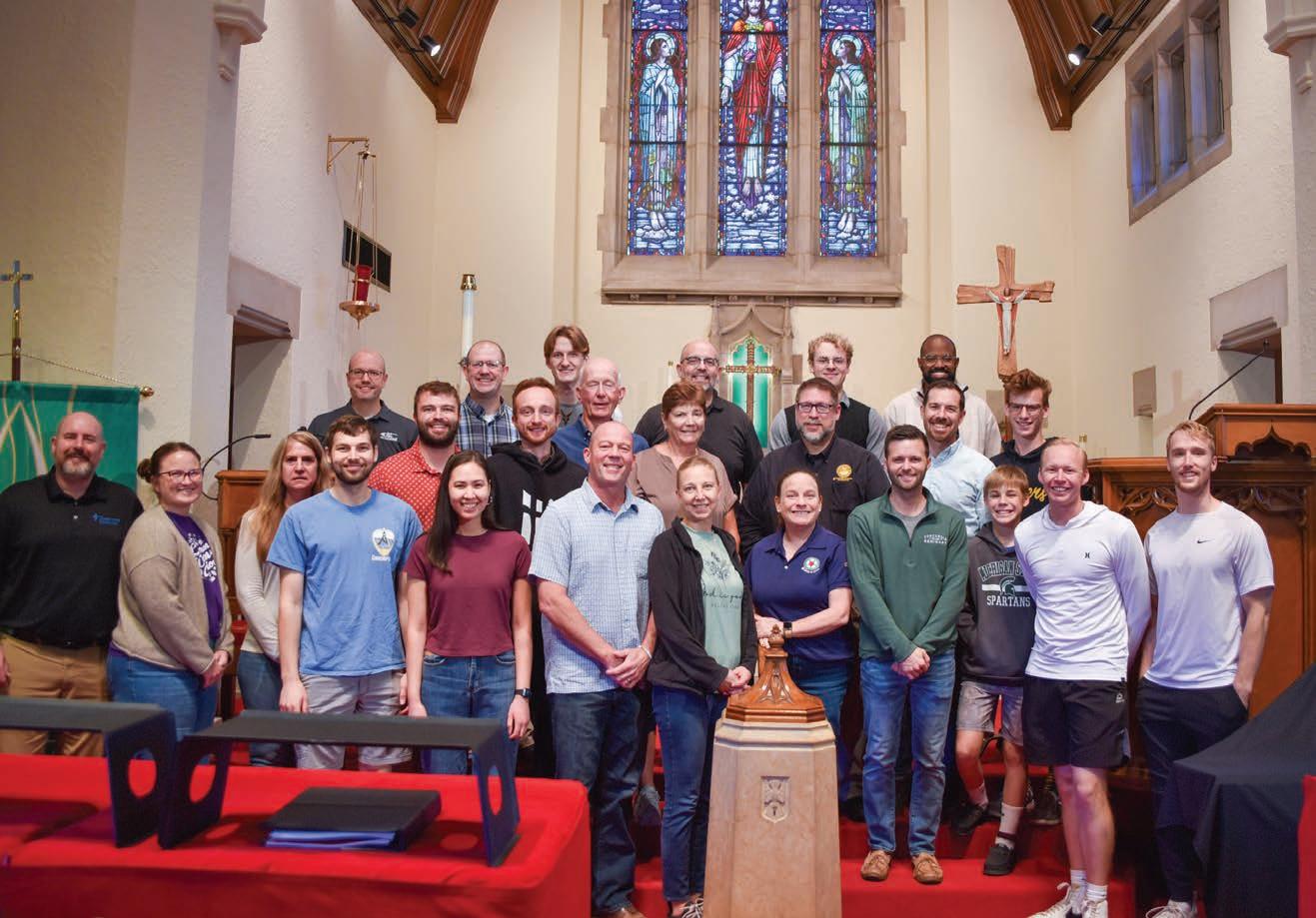
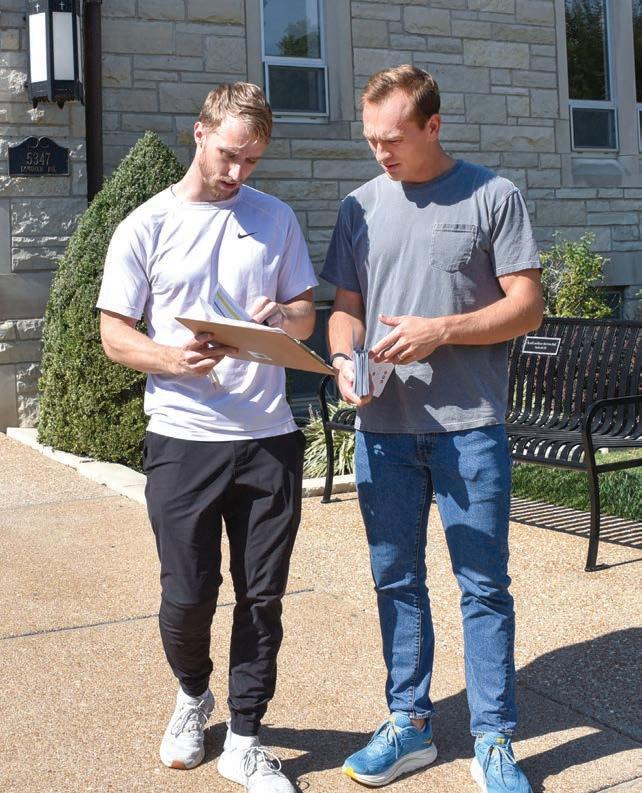
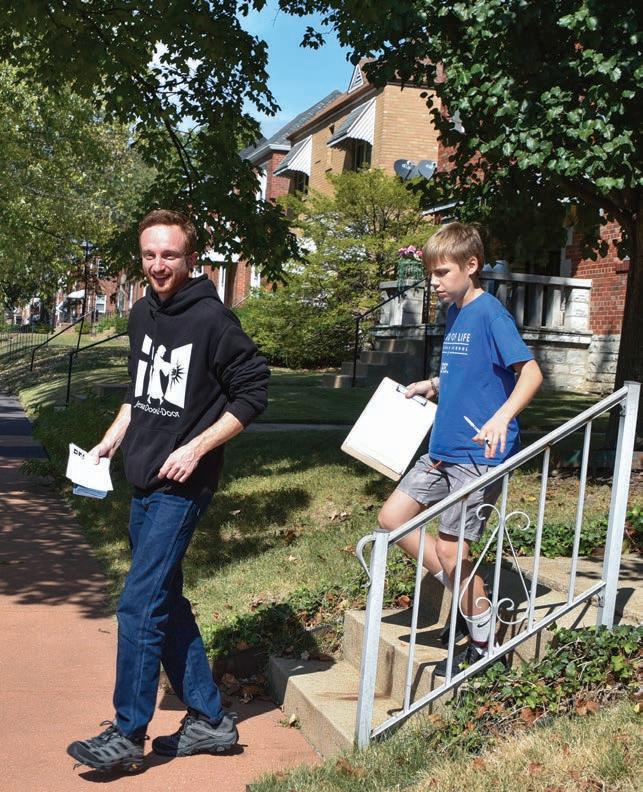
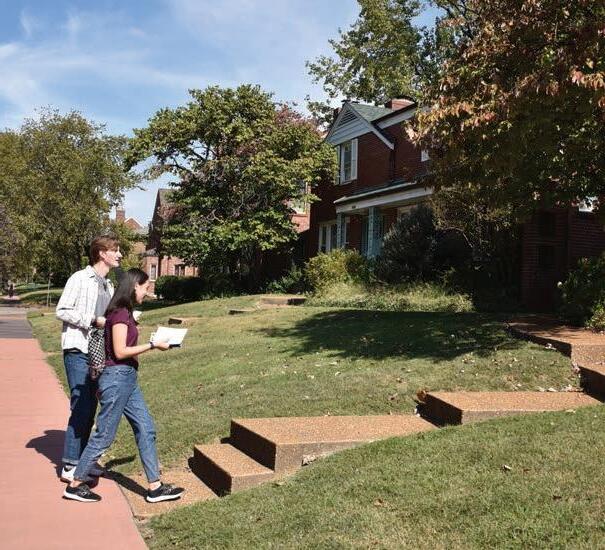
On a sunny Saturday in October, Seminary students, faculty, staff and local church members gathered for a day of bold, Spirit-led outreach in St. Louis through Jesus Door-2-Door (JD2D) — an evangelism initiative designed to equip believers to share the Gospel face to face in their communities.
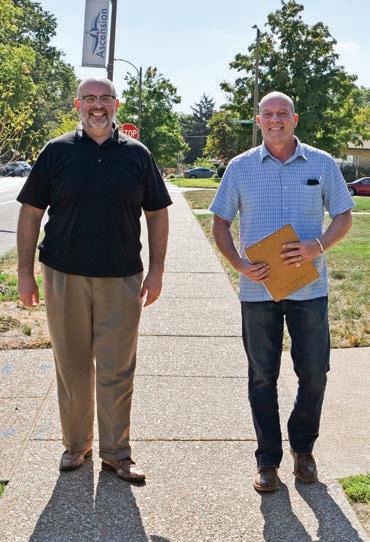
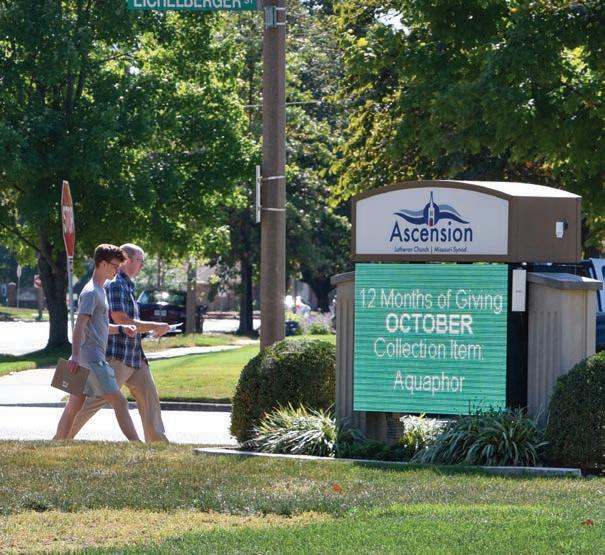
Led by Rev. Tim Koch (M.Div. ‘10, S.T.M. ‘13) and hosted by Ascension Lutheran Church in St. Louis, the event immersed participants in the work of evangelism — preparing hearts, forming skills and sending witnesses. JD2D prepares everyday believers to speak clearly and confidently about Jesus Christ — and sends them out to do just that.
Eleven teams canvassed neighborhoods throughout St. Louis Oct. 11, knocking on 351 doors, conducting 68 spiritual surveys and connecting two individuals with local churches for follow-up. Among those surveyed, two key insights revealed the urgency of the work:
• 23.5% of respondents said they believed they would go somewhere other than Heaven after death.
• Of those who did answer “Heaven,” only 19% confidently attributed their salvation to what Jesus has accomplished for them.
“The fields, as Scripture tells us, are ripe for harvest,” says Koch.
“Knocking on a stranger’s door can be intimidating,” says Dr. Kevin Golden, associate professor of Exegetical Theology and director of the Seminary’s Resident Field Education (RFE) Program. “But the
Gospel is the power of salvation for all who believe. We know what the Spirit does through the Word, so we can boldly speak the Word and let the Spirit work as He pleases.”
The outreach teams quickly learned that fear gives way to joy. Several participants noted how friendly people were and how receptive some were to genuine spiritual conversations.
“You will hear people say, ‘I don’t know where I’ll go when I die,’ or ‘I think I’ll go to Heaven because I’m a good person,’” says Koch. “You quickly realize how many people have not heard the simple truth: Jesus died for you. If you can say that you are already equipped.”
Dr. Ryan Tinetti, assistant professor of Practical Theology and a JD2D participant, adds, “The Scriptures tell us that part and parcel of ministry is to ‘do the work of an evangelist’ (2 Tim. 4:5 ESV), and in a secular age like our own, this work is even more essential. Wherever we send leaders for God’s mission, whether overseas or in our own backyard, they are going as missionaries!”
Koch emphasizes that JD2D is not about one “right” method — it is about sharing Jesus. “If this method isn’t for you, that’s okay. But let it inspire you to find one that is,” says Koch. “We need more laborers for the harvest, and there are plenty of fields — both overseas and in our own neighborhoods.”
JD2D provides valuable vocational clarity for the seminarians who participated.
“This event was an invaluable opportunity to put our theological training into practice,” says Benjamin Wagner, a second-year Master of Divinity (M.Div.) student. “Having real conversations about faith reminded me why I am pursuing this calling. It is one thing to study evangelism in the classroom — it is another to experience the joy and challenge of sharing the Gospel face to face.”
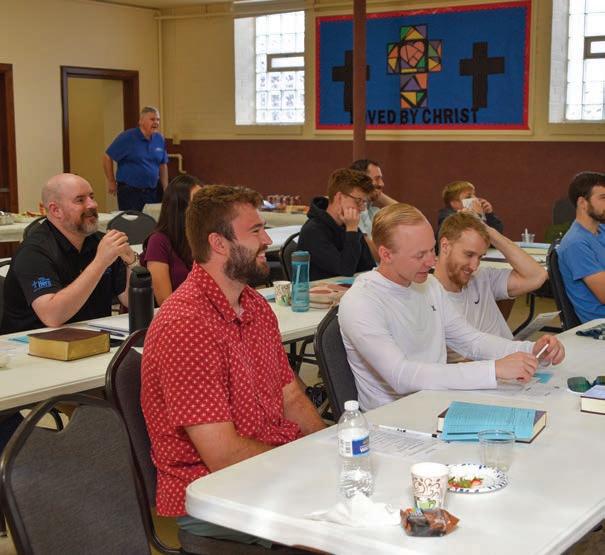
Patrick Hamilton, also a second-year M.Div. student, shares similar reflections. “JD2D was an amazing and enriching experience,” he says. “We sang hymns, shared a meal and prayed together before going out to evangelize. Many of the people we met were open to conversation, and some were eager to hear the Gospel message. I encourage everyone to step outside their comfort zones and share the Gospel —
CONTINUED ON PAGE 12 >
especially our Seminary students, since it is a vital skill that will serve them well in future ministry.”
Golden adds that events like JD2D complement the Seminary’s RFE Program by helping students grow confident not only within congregational settings but also in neighborhood contexts as bold witnesses for Christ.
JD2D finds its roots in Ongoing Ambassadors for Christ (OAFC), an LCMS Recognized Service Organization. Koch, deeply influenced by OAFC in his youth, eventually discerned a new direction. “I had a vision for door-to-door evangelism. With OAFC’s blessing, I started something new — both for the sake of the church and for my own children, so they could grow up loving to share the Gospel, just as I did.
“JD2D manufactures opportunities to talk about Jesus. We do not force conversations, and we always respect when someone says ‘no,’” says Koch. “But many are more open than we expect. And in a culture where people are starved for meaning, offering to share the Gospel is surprisingly welcome.”
“JD2D is a wonderful opportunity to speak with people about the Christian faith. Each time I have participated, I’ve felt a mix of anxiety and excitement,” says Rev. Joel Heckmann, admissions officer at Concordia Seminary and a JD2D participant.
“The Spirit works as the Word is faithfully shared. It is exciting — and yes, a little intimidating — to talk to strangers about Jesus. But JD2D helps students navigate those questions: What do I say? How do I say it? What if someone reacts badly? This is the kind of experience that shapes Christians — especially future pastors and deaconesses — into respectful, courageous, faithful witnesses of Christ.”
The greatest fruit of JD2D is not in the numbers but in the divine moments when the Holy Spirit stirs a soul. At a previous JD2D event, Koch recalls one participant who asked a man, “Where do you believe you’ll go when you die?”
“That’s a really good question,” the man said. “And honestly, it’s one I’ve been thinking a lot about lately.”
“It’s moments like these that remind us God is already at work,” says Koch. “We simply join Him in the field.”
Sarah Maney is the communications manager
Louis.
BY MARISSA NANIA
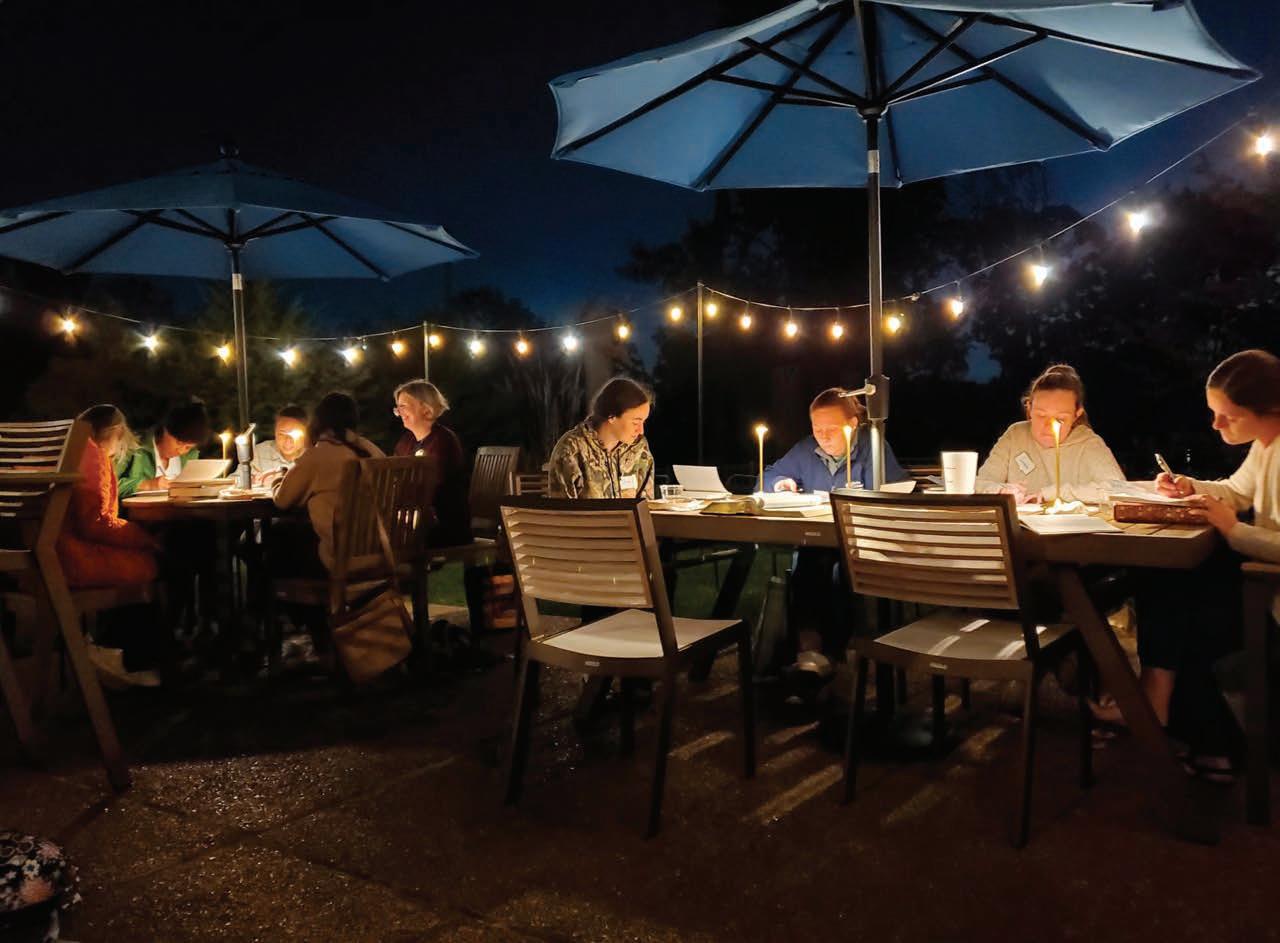
The front door of a faculty home opens to the sound of conversation and laughter. Inside, stories are shared, prayers offered and friendships deepened. These moments of welcome — often unseen — reflect the heart of Concordia Seminary, St. Louis.
Rooted in this year’s theme, “Christ the Living Stone … Building Us Together,” the Seminary’s ministry of hospitality and its investment in faculty housing reveal a truth that extends beyond bricks and mortar. They reflect how Christ Himself builds His people into a living household of faith — a community of grace, stability and shared life.
Faculty housing is more than convenience; it is a foundation for ministry and formation. Living near campus allows professors and their families to share daily life with students, offering stability and connection beyond the classroom.
“The faculty homes on campus enrich our life together in many ways,” says Seminary President Dr. Thomas J. Egger. “Those who live here have a great advantage in fully investing themselves in the Seminary community outside of the classroom. Living as neighbors helps develop bonds of friendship and collegiality among professors and allows them to invite students into their homes — modeling the posture of hospitality and shared life we desire to form in our future pastors and deaconesses.”
Egger also emphasizes the Seminary’s stewardship of these historic homes. “I thank God for our forefathers who constructed these homes on our campus and for Mrs. Jean McCall and other generous donors who have contributed to their renovation and upkeep,” he says.
CONTINUED ON PAGE 14 >
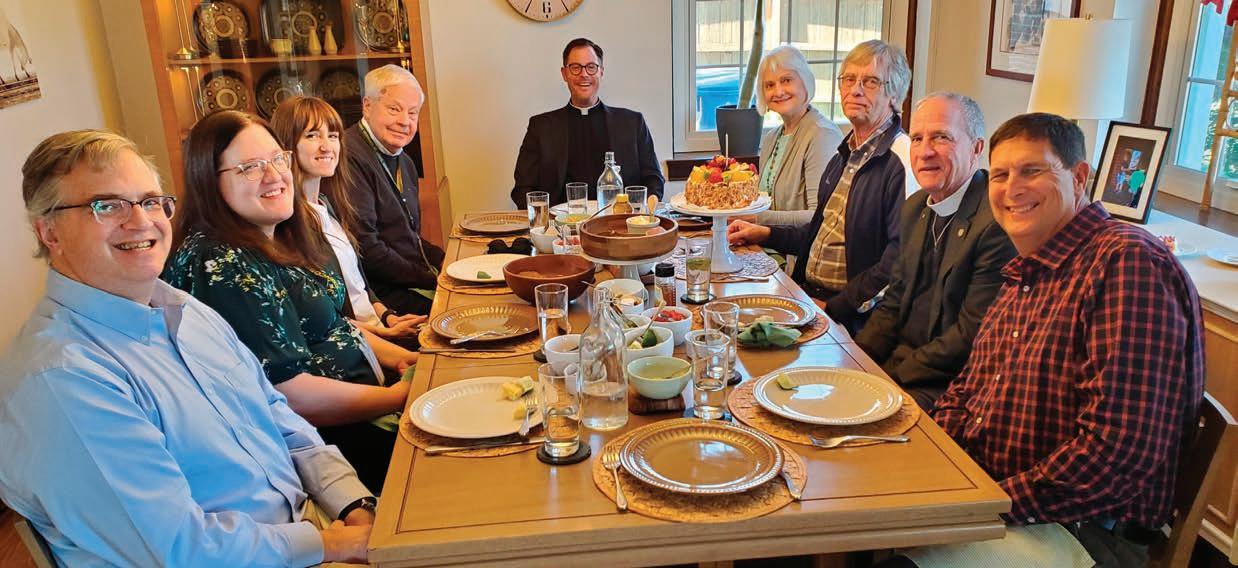
Such care ensures that these homes remain welcoming spaces where teaching, mentoring and ministry take root.
“Christ builds us together by giving of Himself,” says Tori Egger, wife of Seminary President Dr. Thomas J. Egger. “He brings us together around His Word in the classroom, yes, but also in daily chapel. Most notable is when our Lord spreads a table for us to feast upon at each Wednesday’s Divine Service. There we approach His table together — each of us comes empty handed — and we receive His very body and blood for the forgiveness of our sins. Christ actually feeds and nourishes us there and gives just what we need most. He shares with us all that He has to give. Then we rise together from our knees and leave the chapel, ready to serve one another.
“All other acts of hospitality flow from this one,” she continues. “Following Christ’s example, we share what we have been given with others who need it. We are willing to sacrifice ourselves because we have been given so much. This is really all that Christian hospitality is — responding to the needs of those around us just as Christ has responded to our needs.”
Hospitality at the Seminary mirrors this Christcentered generosity. Faculty families open their homes for dinners and Bible studies; students and their spouses gather for fellowship and prayer; and faculty members extend care to those in need. “The best kind of hospitality isn’t practiced on our own terms — it’s given as needs and opportunities arise,”
Tori Egger says. “Practicing hospitality is a powerful tool in the pastor’s home. Relationships are built. The pastor and his family become ‘masks of God,’ as Luther put it, serving their parishioners and other neighbors in a very real way.”
In this shared life of service, faculty and students alike learn what it means to embody Christ’s love — to wash one another’s feet, as Jesus taught His disciples in John 13. Through such acts, the Seminary community is truly built together in Christ.
Hospitality leaves a lasting imprint on students and their families. “I often receive sweet notes from Seminary women thanking me for opening our home to them,” says Tori Egger. “Student wives tell me that they hope to do the same in their own parishes one day because they have experienced love through hospitality. I also see them opening their own apartments to one another now and sharing life together. I hope that the Seminary is a safe place to practice hospitality, even if it’s just spreading a blanket in the backyard and sharing peanut butter sandwiches. It’s a good place to work at it together, for the sake of the Gospel.”
Dr. Egger witnesses the same ripple effect. “In my few years as Seminary president, I have had hundreds of opportunities to visit with students, staff, faculty, pastors, LCMS church leaders and international visitors around our firepit, on our patio, on our screened-in porch, in our living room, around our family table or even hosting them overnight,” he says. “I thank God for
the friendship and love given and received in these ways, and there is no question in my mind that this magnifies the mission and impact of the Seminary. The ripples of these occasions extend out into the church — into parsonages and congregations across the LCMS and even around the world.”
“Following Christ’s example, we share what we have been given with others who need it.”
–Tori Egger
When students witness a professor’s simple act of welcome — a shared meal, a listening ear, a moment of prayer — that experience becomes a model for ministry. It is formation not only of the mind but of the heart.
Behind every meal shared, every porch gathering and every moment of comfort offered in Christ’s name stands a network of faithful donors who make it possible.
“I am grateful every day for the beautiful faculty home that I am blessed to share with others,” says Tori Egger. “I am very well aware that it is all gifted
to me, not earned or deserved, and that is part of why I enjoy sharing it with others. It is the same for the beautiful campus we have inherited from those who have gone before us. I am so thankful for those who gave sacrificially to build this Seminary campus in the first place and for those who have given so generously over the years to preserve it. Generous donors over the past 100 years have ensured that we still have this treasured campus to share with others.”
Those gifts sustain not only the buildings that shelter the Seminary’s work but also the ministry of hospitality that flows from them. Through their generosity, donors join in this ministry of welcome — helping to build up the next generation of servants for Christ’s church.
“Do not neglect to do good and to share what you have, for such sacrifices are pleasing to God”
(Heb. 13:16 ESV).
Marissa Nania is a communications specialist at Concordia Seminary, St. Louis.
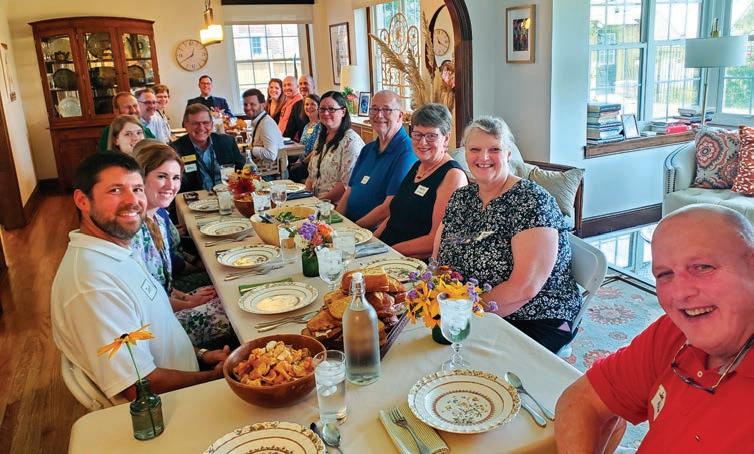
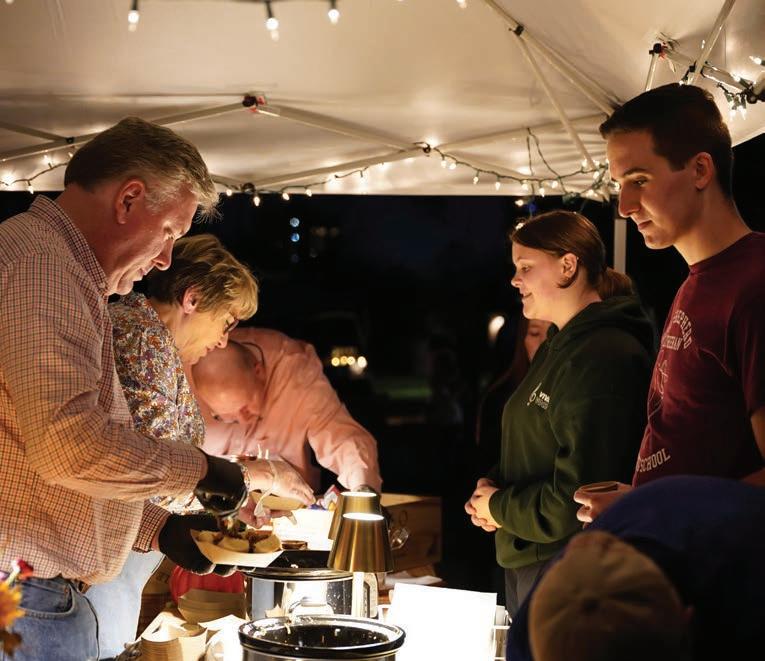
At bottom left, Dr. Jon Vieker and his wife, Kim, serve students during the annual McCall Terrace block party, where faculty members host various tasting stations for the Seminary community. Photo: Sam Held
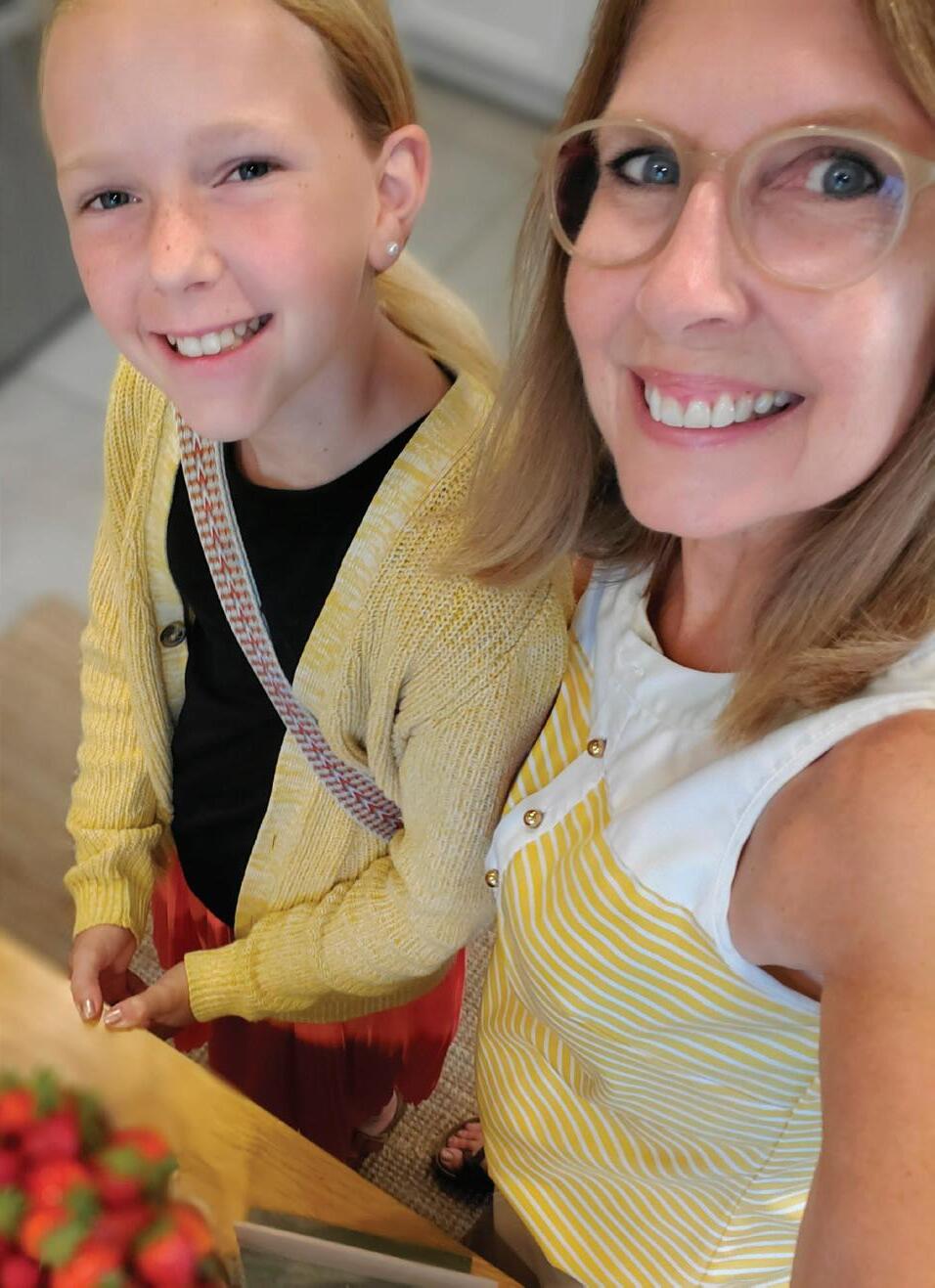
At bottom right, the daughter of a Seminary student helps Tori Egger set up the Wednesday pre-chapel breakfast each week. Photo courtesy Tori Egger
“PASTORAL MINISTRY IS THE CARE OF SOULS”–Rev. Mark Barz
BY VICKI BIGGS
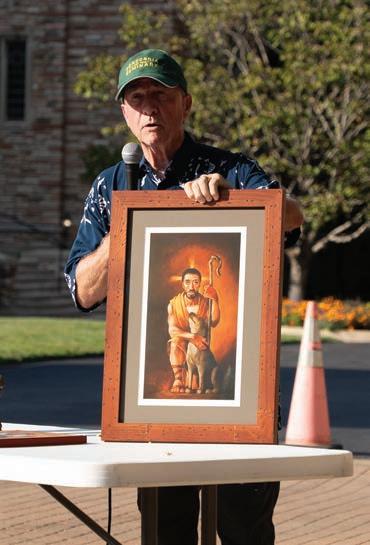
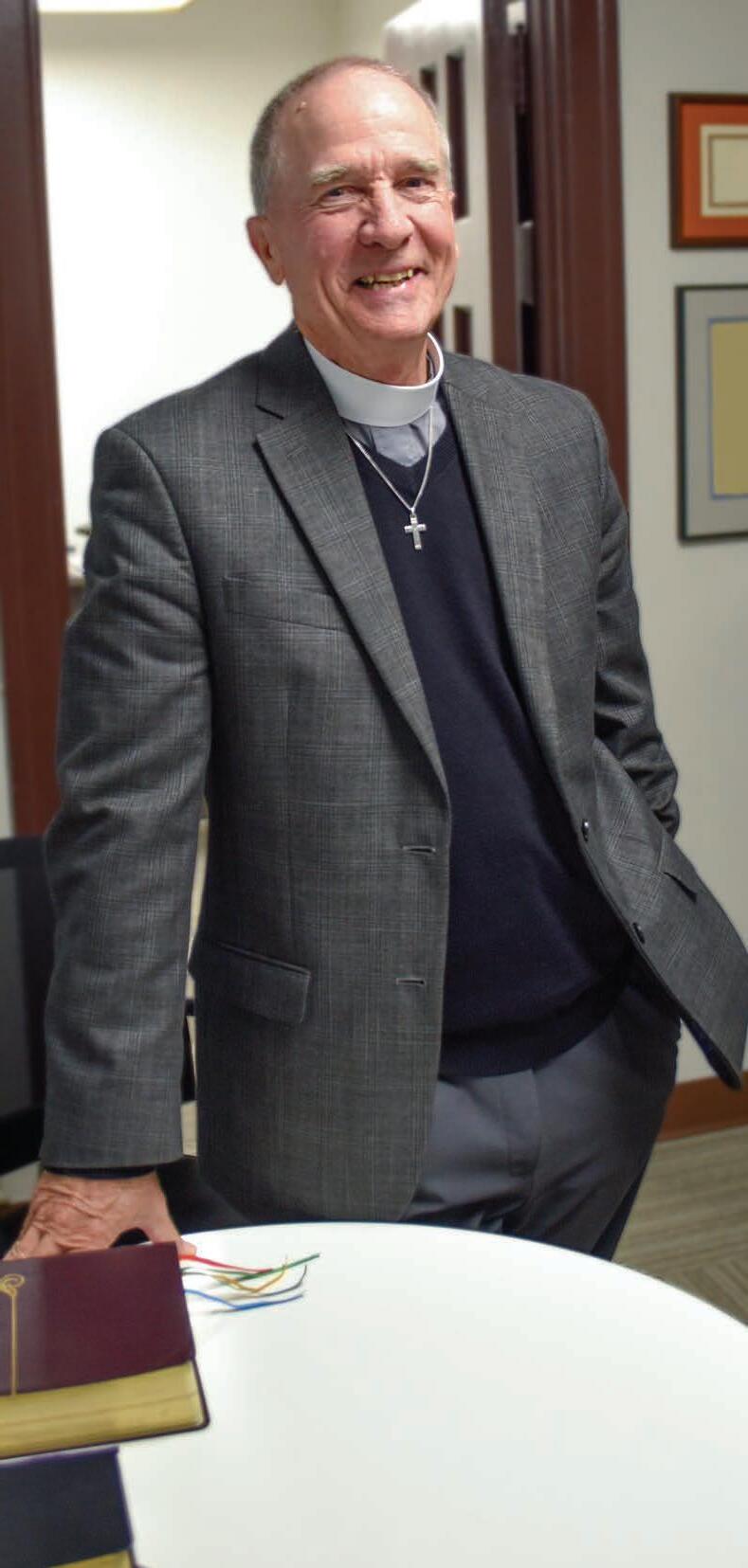
In summer 2022, Rev. Mark Barz was on campus attending his 40th class reunion. During that event, he had a brief encounter with Seminary President Dr. Thomas J. Egger and asked, “Is there anything I can do for the Seminary?” That nine-word question led to his call to serve as campus chaplain effective this past August.
When the call came from Egger, it was a “kinardlee” moment. Kinardlee is a contraction Barz and his brothers made up to mean “can hardly” believe it.
Before joining the staff at the Seminary, Barz served as senior pastor at Crown of Life Evangelical Lutheran Church in San Antonio, Texas, since 1987. From 1982-87, he was the assistant pastor at Bethlehem Evangelical Lutheran Church in Saginaw, Mich. He graduated from Concordia Seminary with a Master of Divinity (M.Div.) in 1982.
As he wrapped up his responsibilities at Crown of Life — celebrating a final Christmas with his congregation, leading his final confirmation class — his elders said about his upcoming role
at the Seminary, “You can’t do parttime!” Barz’ response: “I’m going to prove you wrong!”
As campus chaplain, Barz is meant to work for about 20 hours a week. He schedules daily office hours which might typically begin at 7:30 a.m. He may meet with a student before an 8 a.m. class to offer Confession and Absolution, pray, share Scripture and speak a blessing.
He serves all members of the campus community – including faculty and staff – in addition to students. “In some ways, this service is much like that of a congregational pastor. People are experiencing joys and sorrows of life, and they turn to the chaplain,” he says.
“Pastoral ministry is the care of souls,” Barz elaborates. He referred to the German word seelsorger, a carer of souls. This care, though, does not just happen in his office. It happens in chapel with the students; it happens in conversations after chapel; it happens in planned appointments and in spontaneous dialogues on the sidewalks.
In the short time since taking on the role of campus chaplain, Barz has been meeting with student cohorts and with faculty, attending campus events such as the popular Prof ‘n Stein gatherings on Friday nights, and playing intramurals: flag football and ultimate frisbee this fall, volleyball in the winter and softball in the spring. In addition, Barz ran — slowly he says — the Faster Pastor 5K in early November. “The role of the chaplain is to serve the entire campus community,” Barz says, “and I want to know people and their stories. So, I go where they are!
“Jesus says in John 10, ‘I am the good shepherd; I know My sheep and My sheep know Me,’” Barz says. His desire: I want to know you and call you by name.
As Barz looks to the future of his campus chaplaincy, he says he is honored and humbled to be given this role because of the impact of the Seminary. “Our mission has ripples that will continue for generations as we form and send church workers,” Barz says. “Some of the impact won’t be known until we get to heaven; but here on earth, we’ll hear that someone helped another person to know Christ because they shared the Gospel. To be a part of that is a great privilege.”
When Barz and his wife, Connie, came to St. Louis and Concordia Seminary when Barz began his M.Div. studies, this was the first “big” city the couple had lived in. In addition to the Seminary’s academic rigors, navigating an urban location provided many opportunities to learn new things.
As Barz reflects on a lifetime of ministry coming full circle back to the Seminary where his preparation for
this work began, he says, “I hope to still be learning as a child of God.” One way: He hopes to sit in on classes, to learn especially about the vocations of teacher and student.
–Rev. Mark Barz
“Learning, serving, growing. To be a follower of Christ is to be a disciple, which is to be a learner. All to be a better carer of souls,” Barz says.
It could be indeed that the Crown of Life elders called it!
BY SARAH MANEY
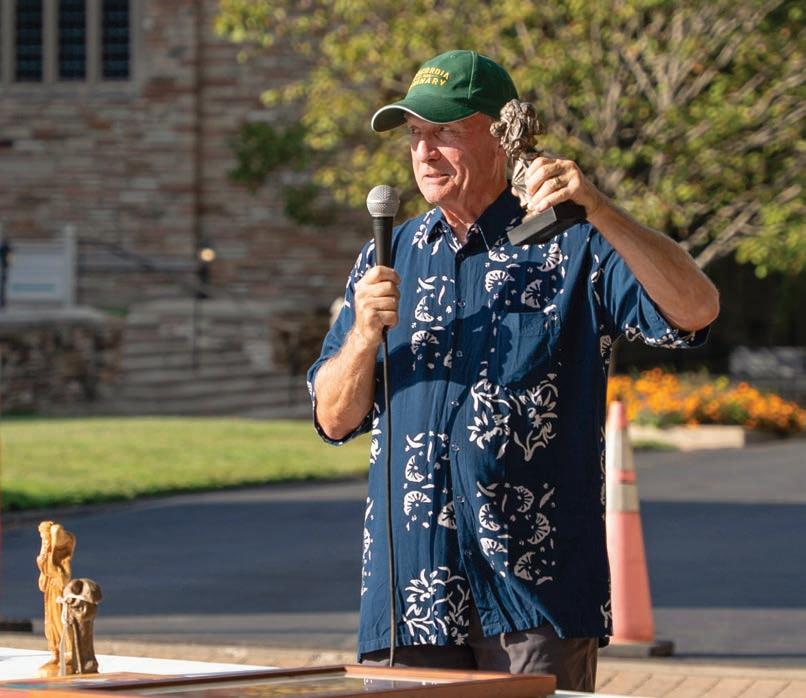
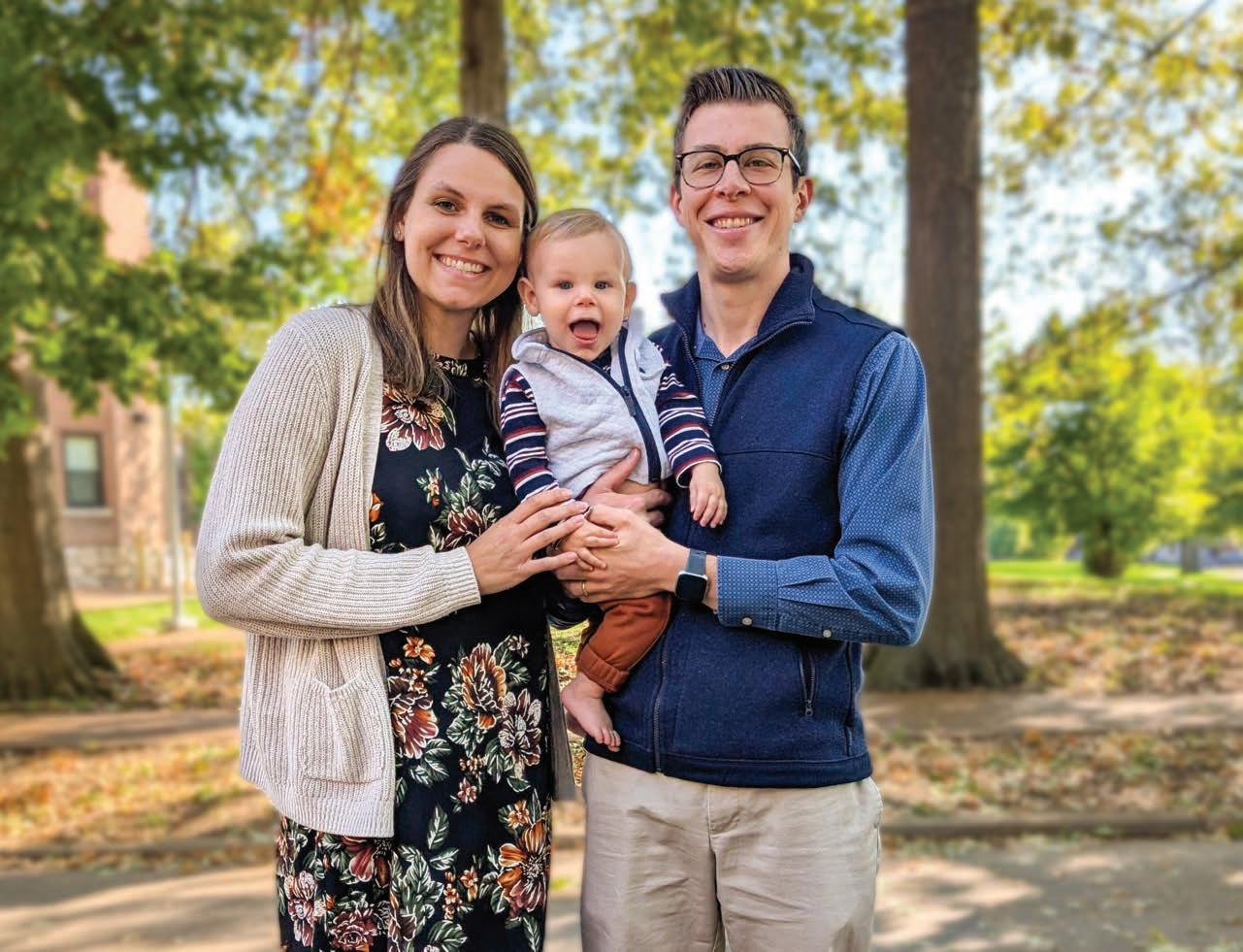
When Kyle Moellenhoff first arrived at the Seminary, he never imagined he would one day be preparing for a Ph.D. in Exegetical Theology. Yet today, as the inaugural recipient of the Future Faculty Fellowship Fund, he is doing
just that — pursuing advanced study while balancing life as a husband, father and future pastor-scholar.
Established in memory of Rev. Alton Koch (’36), the Future Faculty Fellowship Fund supports Ph.D. students identified as potential future faculty members for the seminaries and colleges of The Lutheran Church—Missouri Synod (LCMS). For Moellenhoff, receiving this award is both a great honor and a profound encouragement.
“I’m humbled and honored to receive this,” he shares. “It’s incredibly generous, and it makes pursuing this next academic step possible. It’s not something I take for granted, and I want to live up to the investment that’s being made in me.”
Before coming to the Seminary, Moellenhoff earned a degree in mechanical engineering from Missouri
S&T in Rolla, Mo., and worked as a project manager in the contracting industry. Yet questions of faith and theology continued to tug at his heart.
“I always had an interest in theology and faith,” he says. “But it wasn’t until college and after that I began wrestling more deeply with it, falling in love again with theology and the person of Jesus.”
A pivotal influence in his discernment was Rev. Bryan Meadows (’19), who also had transitioned from engineering into ministry. “He really pushed me seriously to consider the Seminary,” Moellenhoff recalls. “That connection helped a lot.”
After earning his Master of Divinity (M.Div.) in 2024, Moellenhoff pursued a Master of Sacred Theology (S.T.M.), which helped set the stage for his next academic step.
“Most of my S.T.M. credits ended up transferring into the Ph.D., so it’s been a bit of an unconventional start. But it’s worked out well.”
This semester, Moellenhoff’s coursework is filled with advanced Greek and Hebrew — something he describes as both a challenge and a privilege.
“It’s been great to focus again on language work,” he says. “I tried to keep up my Greek and Hebrew over time, but getting back into it intensively is a real blessing.”
Moellenhoff is currently studying under Professor of Exegetical Theology Dr. David Adams for Hebrew and Professor of Exegetical Theology Dr. Bruce Schuchard for Greek. While he enjoys both languages, he leans toward Greek. “The structure of Greek just makes sense to me,” he says.
He credits his engineering background with shaping the analytical mindset that now serves him well in biblical
studies. “Engineering helped me approach things systematically — breaking down arguments, analyzing forms. It’s not a direct connection, but the mindset carries over.”
As Moellenhoff continues his doctoral studies, his research interests are taking shape around biblical theology — tracing themes, imagery and narrative unity throughout Scripture.
“I’m drawn to exploring how the unified story of Scripture culminates in Christ,” he says. “I want to understand how the first-century worldview helps us better grasp the Gospel and how those insights can enrich preaching and teaching today.”
He hopes his work will help bridge the gap between modern scholarship, historical exegesis and confessional theology.
Looking ahead, Moellenhoff is considering a focus on the New Testament, particularly the Gospels and Revelation. “I really like Luke and John,” he notes. “I’m also drawn to Revelation. I’m open to guidance on where my work could be most helpful — areas where I can contribute meaningfully to the ongoing conversation around the New Testament.”
In December 2024, Moellenhoff and his wife, Kayla, welcomed their first child, Eugene — an experience that has deeply shaped his perspective on vocation and ministry.
“It’s been a great joy and a challenge,” he reflects. “It’s helped me refocus my priorities — making sure I’m ministering to my own family first. That’s foundational to being able to minister well to others.”
Balancing academics, family and his wife’s work schedule requires
teamwork. “We tag-team a lot,” he says. “When Kayla works part-time, I’m home with the baby, and when I’m in class or studying, she takes over. We make time every evening for dinner, devotion and just being together. It’s busy, but it’s good.”
Moellenhoff often credits the Seminary’s supportive environment for helping him thrive in this demanding season.
“THE SUPPORT OF THE SEMINARY COMMUNITY HAS MADE ALL THE DIFFERENCE.”
–Kyle Moellenhoff
“From the beginning, people have been so welcoming to me, to Kayla and to Eugene. The support of the Seminary community has made all the difference.”
As he looks to the future, his vision is clear: to serve both the parish and the classroom.
“I came to the Seminary to be a pastor, and I still want that to be my first step — serving a congregation, preaching, teaching, walking with people in faith,” he says. “But I’m also excited about the possibility of teaching and shaping future pastors here at the Seminary.”
His prayer is that his scholarship will serve the life of the church.
“If I can help others see Scripture as a unified story that points us to Christ and help bridge the gap between academic study and the life of the church, that would be a faithful stewardship of my calling.”
BY KEN OHLEMEYER
If you could no longer wear a cross to work, how would you witness your faith? If someone asked who Jesus is, or what you believe, how would you respond?
For Pastor Daniel Ross, the answer does not take long. It takes about 45 seconds — the time it takes to speak the Apostles’ Creed.
Ross (’11), who serves as The Lutheran Church—Missouri Synod’s Oklahoma District evangelism executive, pastor at Christ Lutheran Church in Mustang, Okla., and a church planter, points to the Creed as a faithful, time-tested way to speak clearly about the Christian faith.
“The ancient church gave us those words because people were asking, ‘What is it you believe?’” Ross says. For centuries, believers have used the Creed to confess Christ in every setting and Ross believes the same is true today.
That historic statement shapes how Ross approaches ministry and evangelism. Whether from the pulpit, in Bible studies or during confirmation classes, he intentionally returns to the Creed as a foundation for witnessing. His goal is to encourage his congregation to see themselves not as spectators, but as everyday evangelists who can speak clearly and confidently about their faith.
On Sunday mornings, his Bible study group is working through the Book of Acts. Fifteen sessions in, they have only reached Chapter 5. The deliberate pace
is by design. “You can be intentional and encourage people in outreach, mission and witness by talking about it in sermons and walking through it in Bible studies on a regular basis,” says Ross.
He uses the text to ask challenging questions about how believers today can share their faith, just as the early church did. Ross regularly encourages members to think about how they might respond when challenged about their faith, and how the Creed gives them words that are both ancient and living. He recounts the stories of martyrs and Paul’s dramatic conversion, drawing connections between the courage of the first Christians and the witness opportunities believers face now.
Ross’ passion for evangelism is rooted in personal experience. As a Seminary student, he traveled to Russia and visited a forest where victims of Soviet persecution were buried in unmarked graves — sometimes 15 to 20 people at a time. Their only crime was refusing to renounce their faith.
He still remembers meeting two elderly women who the KGB had taken from their village, placed on a train with other victims and dropped in the middle of Siberia with no food or tools. Told to survive the winter on their own, many in their group perished before the KGB returned in spring. The women’s unwavering faith left a lasting impression on Ross.
Stories like theirs give him perspective when talking about the challenges Christians face today. Ross quickly acknowledges growing cultural hostility, targeted attacks on places of worship, violence and increasing pressure on believers. Yet, he views these difficulties
not as reasons for fear, but as opportunities to share the hope of Christ.
“There’s nothing new, it just looks different,” Ross says. “The Lord has still won the victory, and that’s a great way to introduce people to the Gospel.”
Church planting is one of the ways Ross puts that belief into action. “I talk about it constantly,” says Ross. “It’s probably why I got elected as my district evangelism executive, which in Oklahoma is an added responsibility on time, especially when you’re in a parish.” He sees church planting both as evangelism and as a base for ongoing outreach.
“SEMINARY IS A FORMATION, WHICH MEANS THAT YOU ARE GIVEN THE TOOLS THAT YOU WILL USE FOR THE NEXT 30, 40 OR 50 YEARS.”–Rev. Daniel Ross
“Church plants tend to attract people who have become de-churched for a variety of reasons. That’s evangelism,” he says. “But it also provides a base for outreach. There’s a presence there. People are gathered together and the Word does not return empty.”
Personal invitations play a key role. Ross believes no program is more effective than one person inviting another. This kind of connection not only gathers people into worship but also fosters the environment where future pastors are raised.
“God calls pastors from congregations,” Ross often says. He sees church plants as a way to increase opportunities for the Gospel to be heard and for the Holy Spirit to work. It is also a long-term commitment and formation. He is quick to point out that a new congregation can take decades to form leaders and future pastors. Ross readily acknowledges that church planting is not about his efforts but about God’s work in God’s time.
Ross is eager to encourage current and future seminarians who may feel unprepared for ministry. He often reminds them that God places people where He wants them to serve. He sees the Seminary not simply as a place for academic training, but as the beginning of a lifetime of formation.
“Seminary is not an education. Seminary is a formation, which means that you are given the tools that you will use for the next 30, 40 or 50 years.” Ross continues, “Who is to say what society is going to look like in 30 years, toward the end of your ministry, but you have been given the tools to keep learning, to keep adapting and to keep proclaiming God’s Word where God has called you.”
He also encourages new pastors to lean on fellow pastors, their district and the Synod. “It is not you versus the world,” Ross says. “You are part of The Lutheran Church—Missouri Synod, walking together and with support resources to help with church plants, to help with outreach. Trust in the Lord, because the outcome is based on the Lord.”
Ross sees church plants, evangelism and pastoral formation as extensions of the same mission that began with the apostles. Just as the early church used the Creed to confess the faith in a hostile world, today’s believers can use those exact words to witness in a changing culture.
At the heart of Ross’ message is a conviction that Christians are eager to proclaim the Gospel and that the church already possesses the language to do it. He believes people today are hungry for what is enduring. In a culture where so much feels unstable, the unchanging Word of God, the liturgy and the ancient confessions offer solid ground.
“People are eager to hear the Word. They are eager for liturgy. They are
eager for things that are historic because everything else around them feels like sand,” he says.
For Ross, that is the heart of evangelism — ancient words spoken with living faith. The same confession that shaped the witness of the early church still shapes believers now, linking modern voices to a timeless testimony.
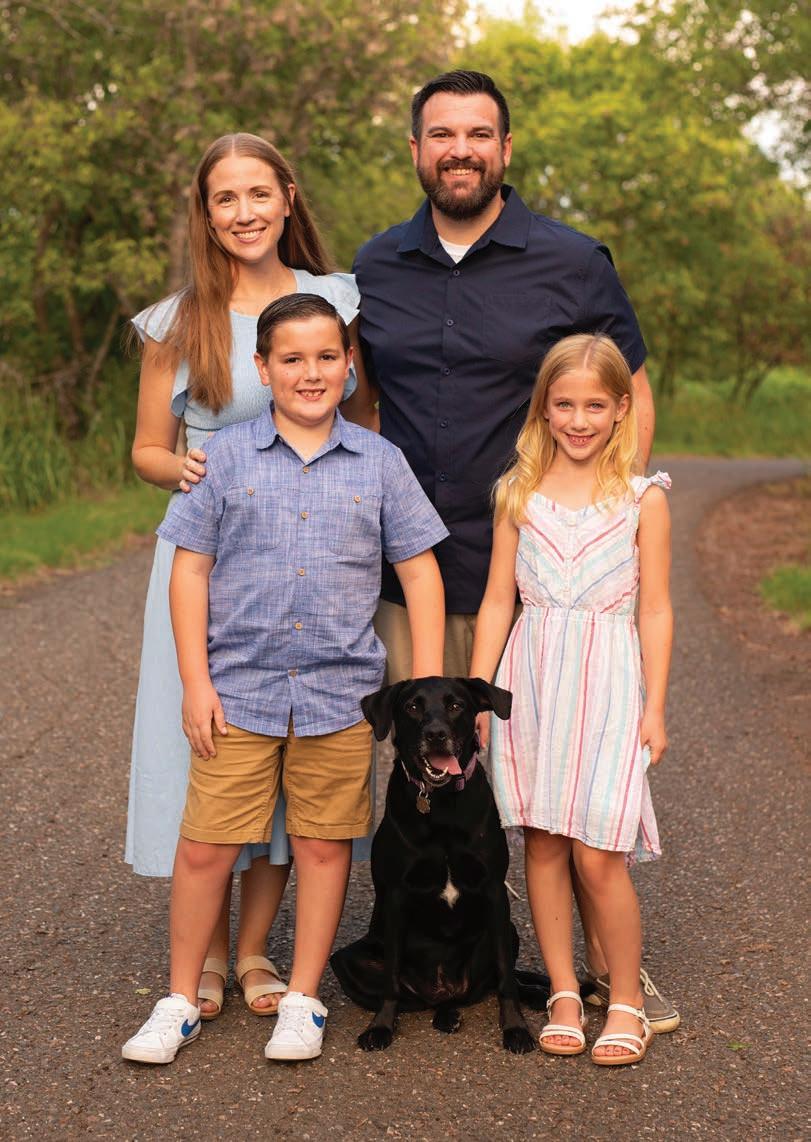

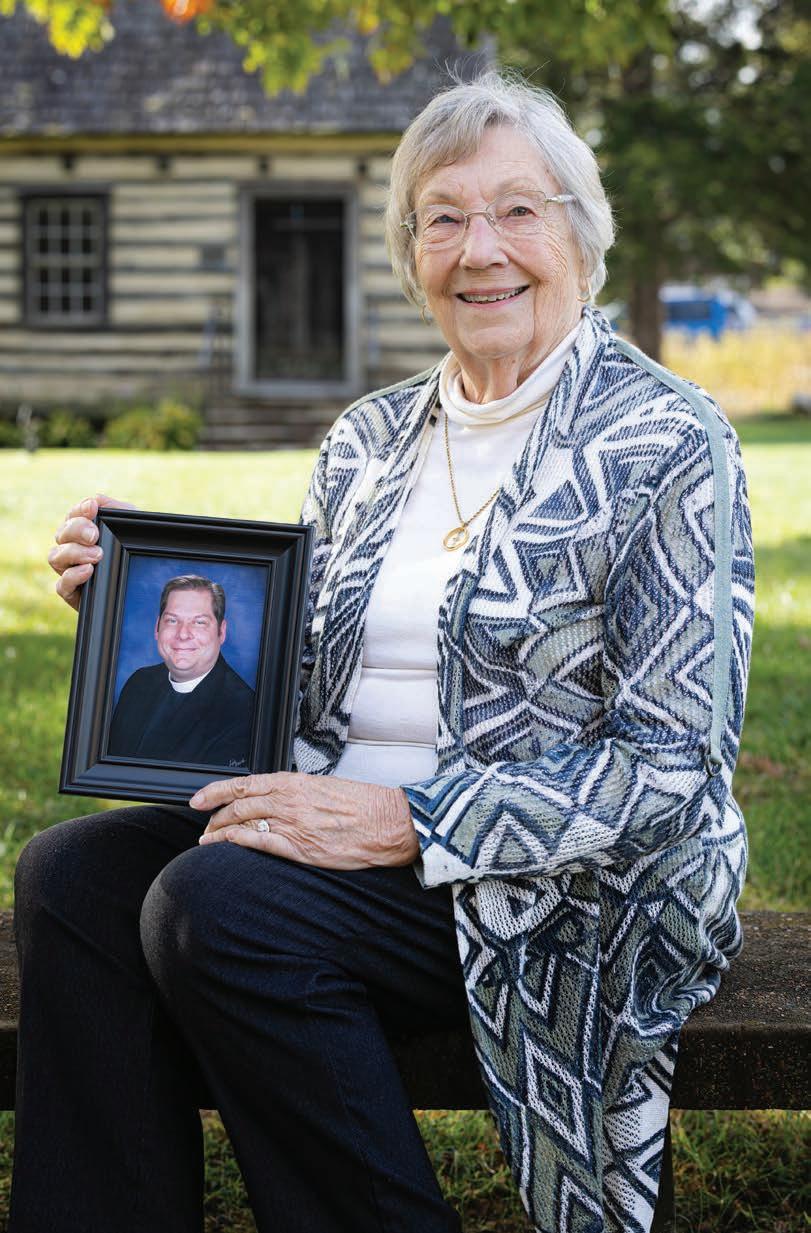
Joann Palmer has built her giving on intentional planning, gratitude and faith, making her generosity part of a larger structure that endures. Through her annual unrestricted support, she joins with others in a shared effort to strengthen the Seminary — a community building together, like living stones, to raise up the church’s future leaders.
“I grew up on a farm near Wentzville, Mo., with my mother, father and sister,” Palmer says. She began first grade in a one-room rural school and later attended Wentzville public school and Immanuel Lutheran School. After high school she studied elementary education at the University of Missouri-Columbia, where she met her husband on a blind date.
She married in 1966 and continued teaching in Lawton, Okla., while her
husband was stationed at Fort Sill. After his Army service, he worked for PPG Industries. During his 25 years with the company, the family moved five times. “At each location we were blessed to actively participate in a Lutheran church and have a faith community led and nurtured by a dedicated pastor,” Palmer says. Their two children were able to begin their education in a Lutheran school in Texas.
After battling cancer for several years, Palmer’s husband passed away in 1996. Several months later, her son, Kevin — then teaching at a Lutheran school in New York City — called to ask what she would think if he changed his career. “His major was history but he was teaching several religion classes that were challenging him to dig deeper into theology,” she says.
BY MARISSA NANIA
Palmer recalls how the family’s pastors influenced his decision. “The faithful visits of pastors during his father’s illness, the support given during the family’s journey through grief, and his current teaching experience were undoubtedly God nudging and directing him for that career change,” she says. He enrolled at Concordia Seminary and graduated in 2001.
He was serving a church in Indiana when he passed away suddenly from a heart condition. “His love for the Seminary and his appreciation of his training and education motivated me to contact the Seminary when I was able to make an IRA qualified charitable distribution,” Palmer says.
Palmer says her gifts are a direct expression of thanksgiving for the ways God has worked in her life. “With praise to God and heartfelt thanks for the many ways pastors had been the hands and feet of the Lord to bring support and love to my life, I wanted to say thank you,” she says.
That gratitude has shaped how she plans her charitable giving. By making qualified charitable distributions part of her financial routine, she ensures her gifts serve both practical and spiritual purposes. The practice not only benefits her personally as a wise use of her retirement resources but also provides sustainable support for the Seminary’s mission.

“The end of the year is a good time to look back as well as look forward and be proactive,” she says. “Think about giving before Tax Day comes!”
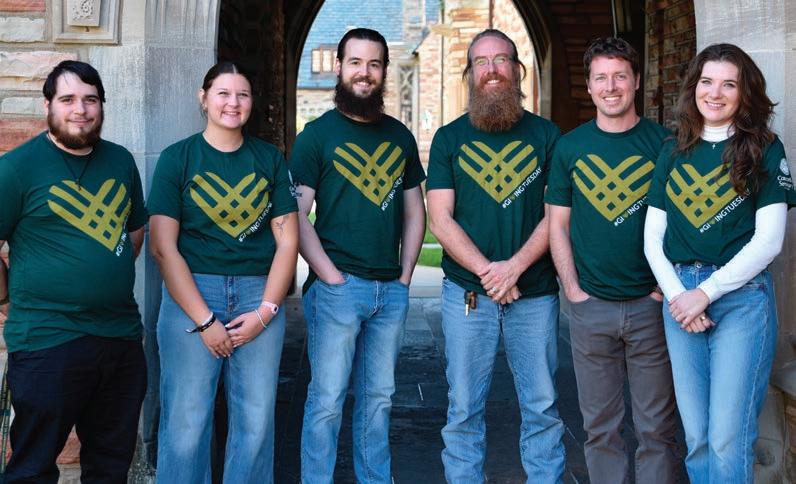
In addition to planned year-end giving, Palmer finds joy in participating in Giving Tuesday as a match challenger. This role allows her to pledge a certain amount in advance, encouraging others to give by knowing their gifts will be matched dollar-for-dollar until the challenge amount is met.
“I am happy to be part of Giving Tuesday, hoping that matching funds will encourage others to think of the impact of doubling their gift,” she says. “It is a way of giving more no matter the financial situation.”
For Palmer, being a match challenger is more than a financial commitment — it is a way to inspire others to join in supporting the Seminary. She recognizes that many people are motivated when they know their gifts will be amplified. By stepping forward with her own challenge, she helps create a sense of partnership and momentum that multiplies the impact of every dollar given.
Palmer says the Seminary’s 2025–26 academic theme, “Christ the Living Stone … Building Us Together,” is especially meaningful because she
views her gifts as part of something larger than herself. “As a donor, I can make a commitment to have a personal mission to build God’s kingdom through the Seminary’s work,
To learn more about year-end giving or how to become a match challenger, visit csl.edu/support/ or contact Seminary Advancement at 800-822-5287 or advancement@csl.edu.
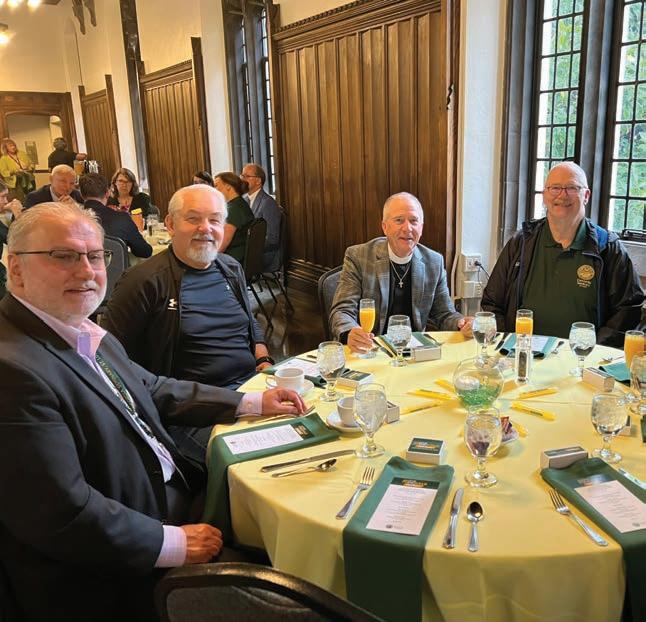
Donors, including alumni, faculty and staff, gave a record $130,156 for the Seminary’s 2025 Give Green and Gold Day, surpassing the $108,000 goal and setting a new benchmark for the campaign’s seven-year history. Some 378 individuals supported the campaign, themed “Let it Shine,” which celebrated the Seminary’s mission to equip future church leaders to share the light of Christ worldwide. Gifts were matched dollar for dollar up to the first $54,000 raised, boosting momentum toward the goal. “We are immensely grateful to all of the donors,” said Vicki Biggs, senior vice president of Seminary Advancement and chief communications officer. Give Green and Gold Day is one of three giving days at Concordia Seminary. Learn more at csl.edu/support.
Faculty and staff enjoy a delicious breakfast Sept. 24 to kick off Give Green and Gold Day.
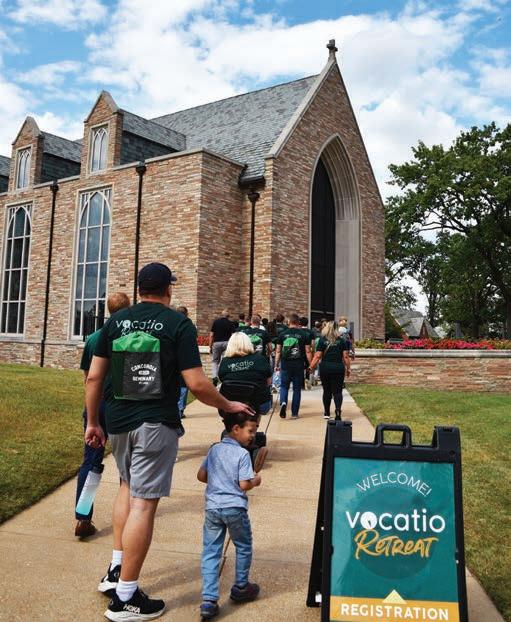

College students and second-career adults explored church work vocations as pastors, deaconesses, missionaries and chaplains during Vocatio: Retreat Oct. 5–7. The three-day event introduced over 40 participants to Seminary life through worship in the Chapel of St. Timothy and St. Titus, time in Bible study, and conversation with faculty and students. The schedule featured chapel services, class visits, panel discussions on academic programs and ministry paths, introductions to campus ministries, and presentations from Lutheran Church—Missouri Synod missionary and military chaplain recruiters. “The fields are ripe, and for those discerning the possibility of serving the church, Vocatio: Retreat offers the perfect opportunity to come, pray and get your questions answered,” said Rev. Jesse Kueker, director of Enrollment. The next Vocatio: Retreat is scheduled for April 2026.
Guests make their way to chapel during Vocatio: Retreat.
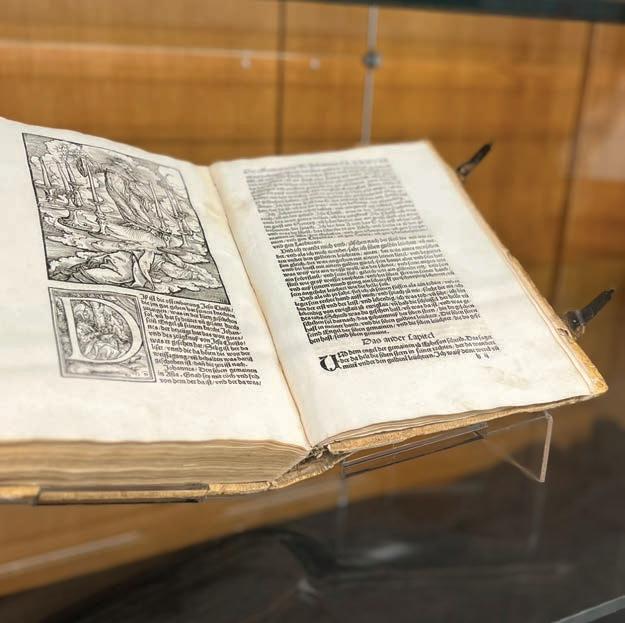
The Kristine Kay Hasse Memorial Library opened a new exhibit Oct. 29 featuring a rare 1523 German New Testament translated by Martin Luther and illustrated with Apocalypse woodcuts by Hans Burgkmair. The third edition, printed in Augsburg, was the first to include Burgkmair’s full cycle of Revelation images. “This German New Testament demonstrates the popularity and rapid dissemination of Luther’s translation,” said Dr. Paul Robinson, professor of Historical Theology and director of Library Services. A digital slideshow of the woodcuts complements the physical display, which also features other early printed Bibles from the Hasse Library’s collection. The free exhibit will be open to the public during regular library hours.
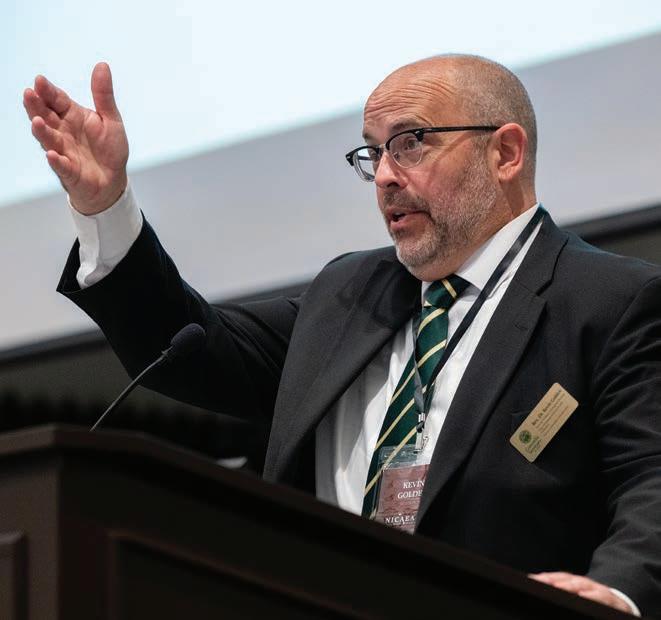
Over 300 people attended the 35th Annual Theological Symposium Sept. 16–17. The event, themed “Nicaea 1700,” explored the 1,700th anniversary of the Council of Nicaea and its lasting impact on Christian doctrine, discipline and church relations. Featured plenary speakers included Dr. John McGuckin, professor of Theology at Oxford University, Wellington Square, Oxford, on Nicaea’s paradigm status for the oecumenical faith; Dr. Joel Elowsky, professor of Historical Theology, on confessing and experiencing the Nicene Creed; and Dr. Todd Hains, associate publisher, Acquisitions and Development, Lexingham Press, Bellingham, Wash., on the Creed’s relevance and joy in Christ. The symposium included the 10th Annual Dr. Jack Dean Kingsbury Lecture in New Testament Theology by newly named Kingsbury faculty chair Dr. David Lewis, associate professor of Exegetical Theology. Lewis gave a rousing lecture on “The Colossus from Nazareth: Jesus and the Unclean Spirits in the Gospel of Mark.”
Dr. Kevin Golden, associate professor of Exegetical Theology and dean of Theological Research and Publication opens the 35th Theological Symposium. Photo: Sid Hastings
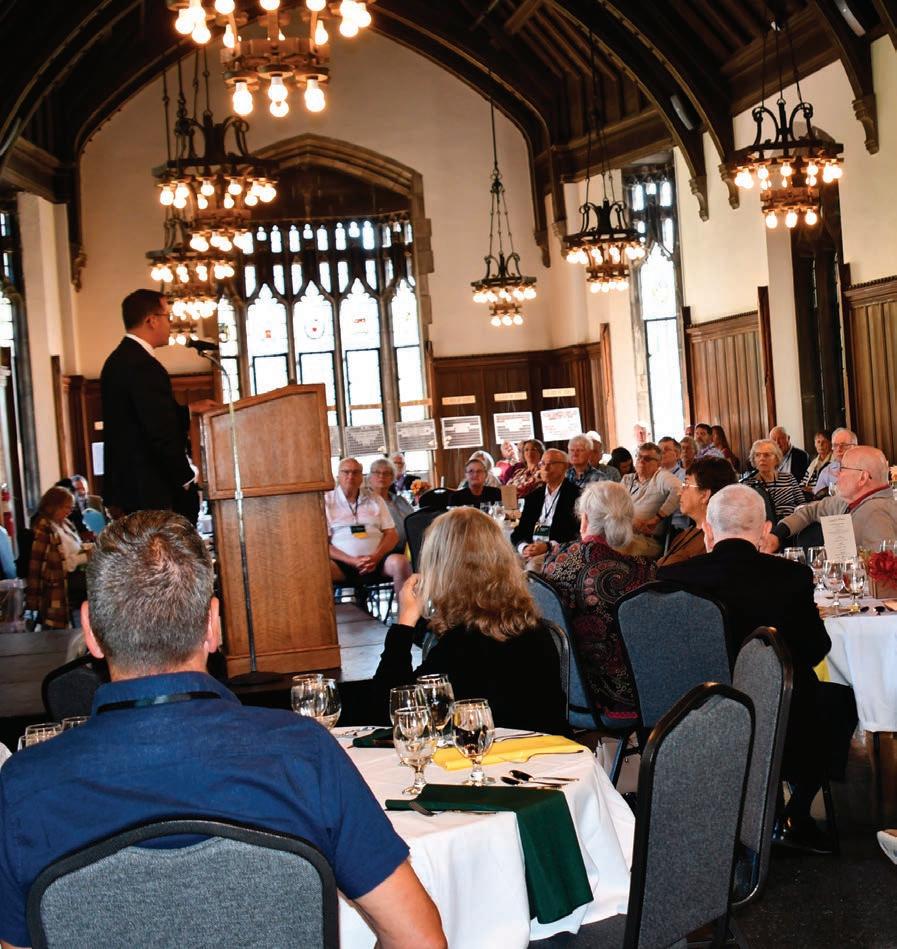
The 2025 annual Alumni Reunion was held on campus Oct. 9–10 and welcomed the jubilarian class of 1975, the silver anniversary class of 2000 and all graduates from class years ending in “5” or “0.” The class of 2020, which missed in-person Call Day and Commencement celebrations due to the Covid-19 pandemic, received special recognition. Highlights of the two-day gathering included an address from Seminary President Dr. Thomas J. Egger and a tour of the stained-glass windows in the Chapel of St. Timothy and St. Titus led by Dr. Kent Burreson, professor of Systemic Theology, and Dr. David Schmitt, professor of Practical Theology. Alumni also enjoyed a “Taste of St. Louis” supper and a closing banquet featuring Laudamus. Seminary leaders expressed gratitude for the alumni and their Gospel-centered service. “We look forward each year to welcoming our alumni back home to Concordia Seminary — and back to the place where the formation for their life’s work began,” said Vicki Biggs, senior vice president of Seminary Advancement and chief communications officer.
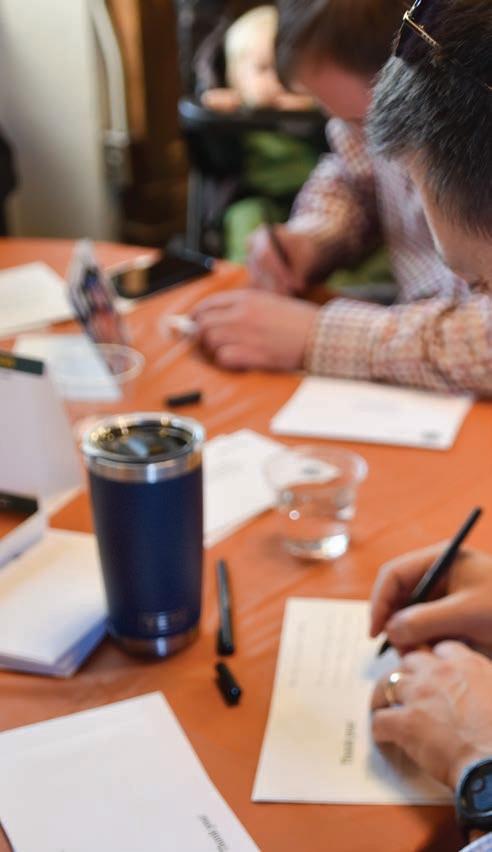
Concordia Seminary’s Advancement team hosted its annual student/family thank-a-thon in Koburg Hall Oct. 21. The evening included food and fellowship, and special activities for children, while seminarians and their spouses handwrote notes of thanks to those whose generosity helps to make the Seminary’s no-tuition guarantee possible. This event is held annually specifically to thank those donors who establish general endowments at the Seminary, which benefit, in part, students enrolled in the Seminary’s residential ministerial formation programs and for whom tuition is guaranteed to be 100% covered. To learn more about establishing an endowment, visit csl.edu/support/endowments.
Seminarians write thank you notes in Kolburg Hall during the thank-a-thon.
Photo: Ken Ohlemeyer
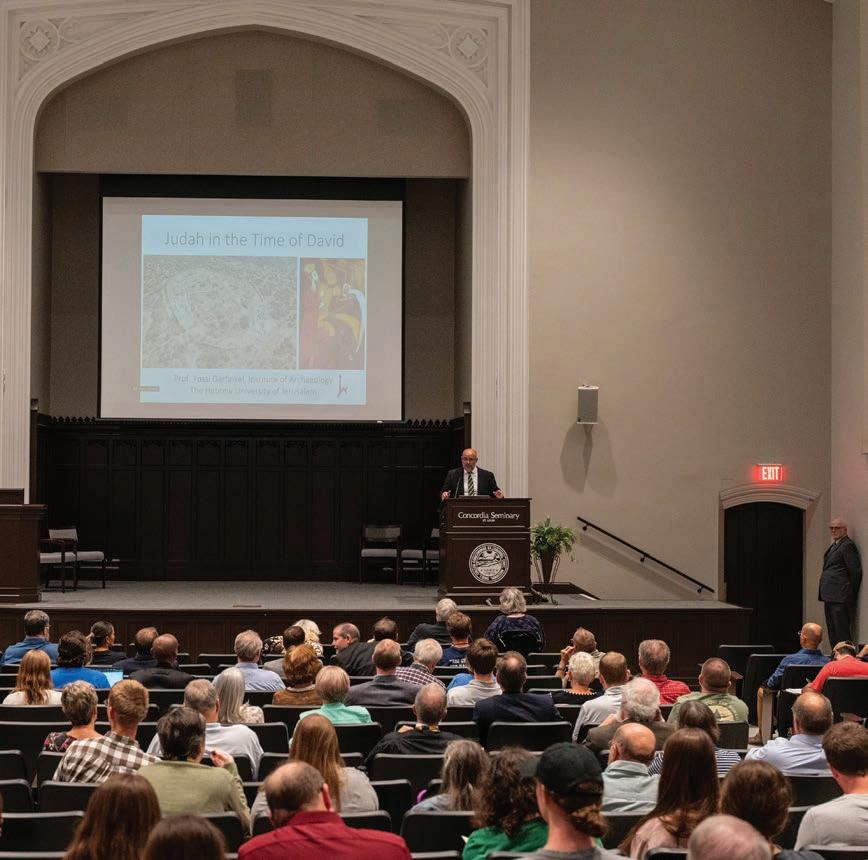
Dr. Yosef Garfinkel, the Yigael Yadin Professor of Archaeology of the Land of Israel at the Hebrew University of Jerusalem, was the keynote speaker at the second annual “These Stones Will Shout” Lecture in Biblical Archaeology held Sept. 9 on campus. His talk, “Judah in the Time of David,” examined archaeological and historical evidence about the Kingdom of Judah and offered insights into the era of David and Solomon. Dr. Kevin Golden, dean of Theological Research and Publication, said Garfinkel’s findings support the biblical record, showing that the Kingdom of Judah had fortified cities, administration and writing in the 10th century B.C.
A large crowd fills Werner Auditorium during the second annual “These Stones Will Shout” lecture Sept. 9.
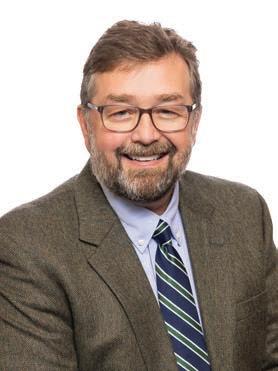
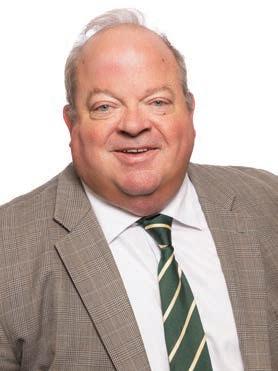
Dr. Gerry Bode and Dr. David Lewis were installed as endowed faculty chairs during the Opening Service for the 2025–26 academic year. Bode was named the Eugene E. and Nell S. Fincke Graduate Professor of Theology, joining Dr. Charles Arand, senior professor of Systemic Theology, in holding the prestigious title that honors the Finckes’ legacy of supporting confessional Lutheran scholarship. Lewis was named the Dr. Jack Dean Kingsbury Professor of New Testament Theology, succeeding Dr. James W. Voelz, professor emeritus of Exegetical Theology. This chair honors Kingsbury’s support for scholarship in New Testament studies. President Dr. Thomas J. Egger praised both professors as exemplary scholars and beloved teachers whose work strengthens the Seminary’s mission.
The Unambitious Ambition: Leading Quiet Lives of Hope
Join Dr. Ryan Tinetti as he explores the peace and purpose found in God’s presence, hope and faith.
Register: Jan. 26, 2026
laptop csl.edu/lbi

Feb. 7, 2026
A three-day retreat held in the spring and fall for college students and second-career men and women.
laptop csl.edu/admissions/ visit/vocatio-retreat/
April 12-15, 2026
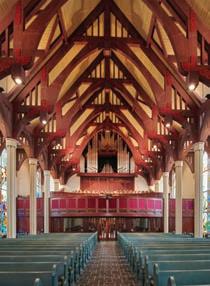
By Johann Sebastian Bach (1725)
Featuring the American Kantorei and Orchestra and the Concordia Seminary Children’s Choir
laptop csl.edu/event/stjohn-passion-by-johannsebastian-bach-1725/
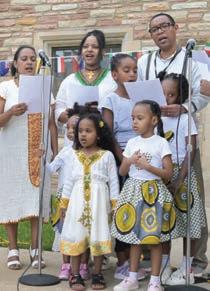
United in Praise: Celebrating God’s Love and Faithfulness Across All Nations
The 2026 Multiethnic Symposium will celebrate God’s steadfast love that unites His people across all nations.
laptop csl.edu/multiethnic
Palm Sunday March 29, 2026
May 5-6, 2026