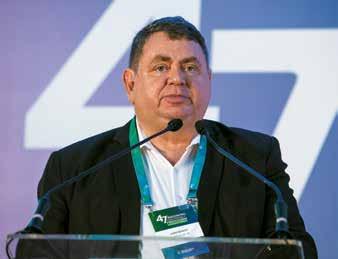
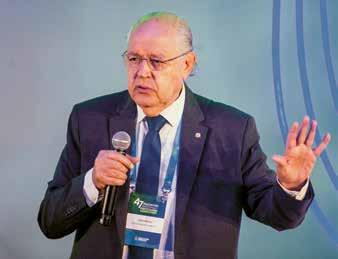
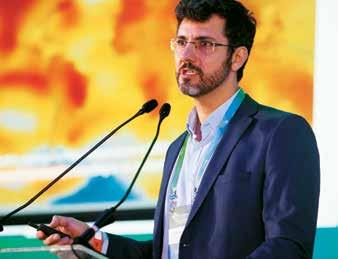
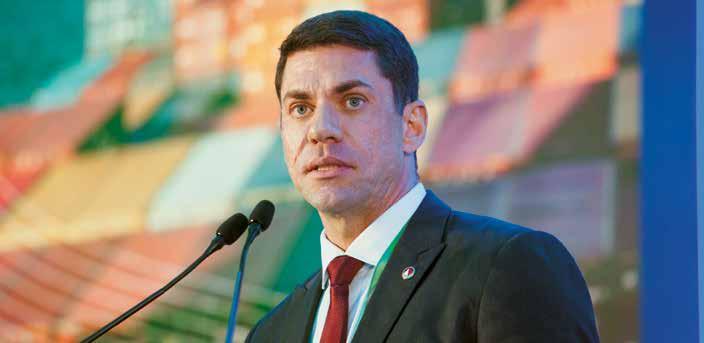
Brazilian Maritime Pilots' Association Magazine 72st edition - October/2025 to January/2026
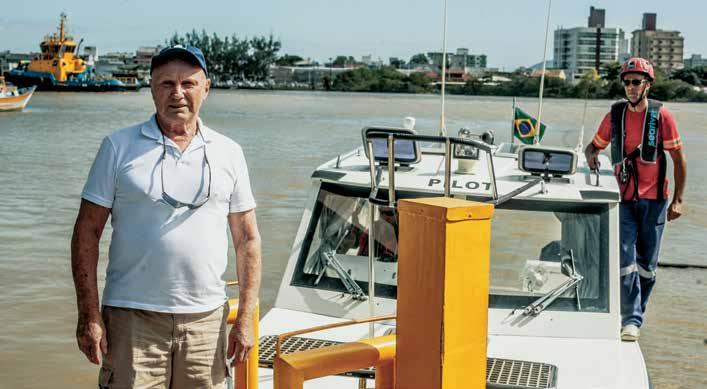
In this edition of Rumos Práticos, we invite readers to turn the pages and discover not only the growing complexity of pilotage activity, but also its institutional maturity and alignment with contemporary agendas.
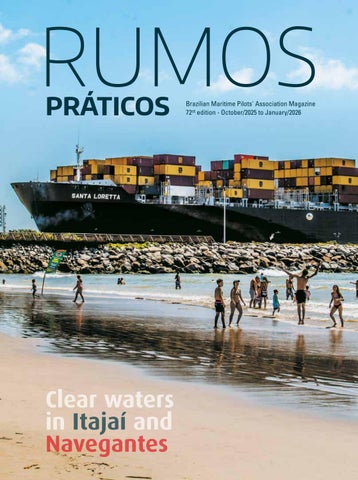
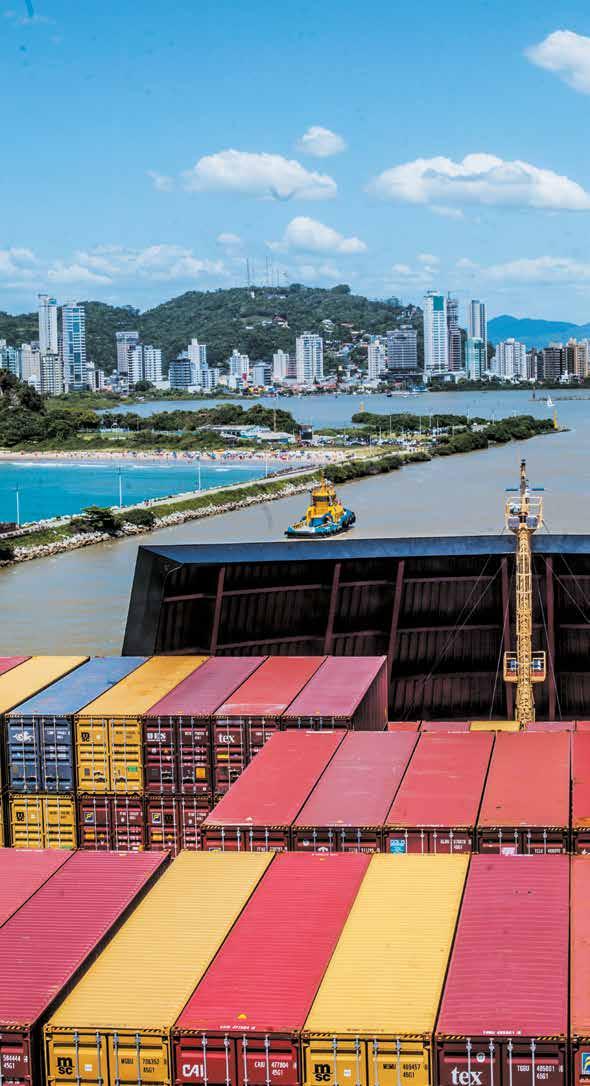
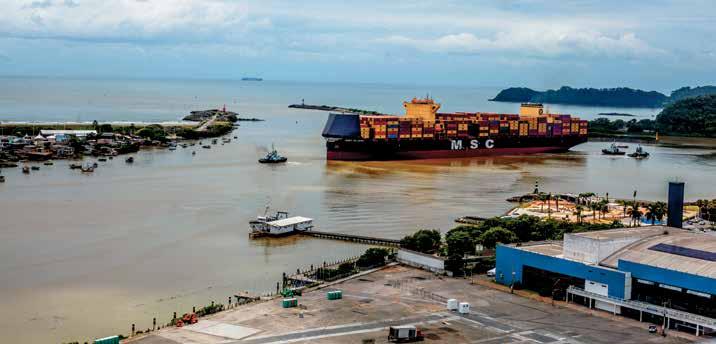
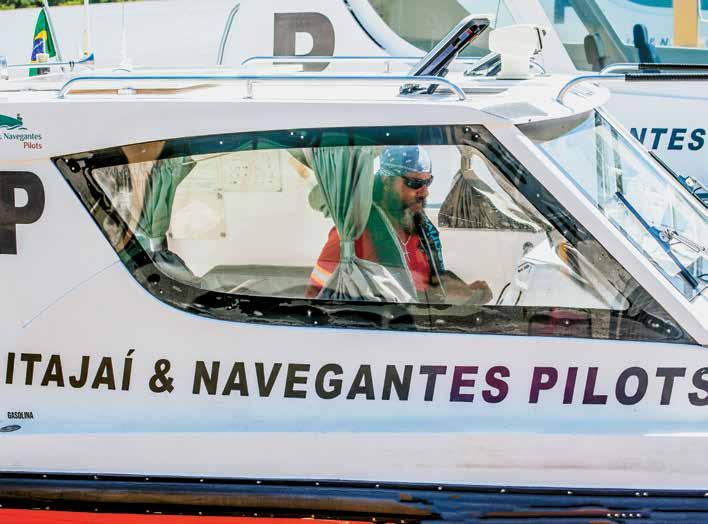
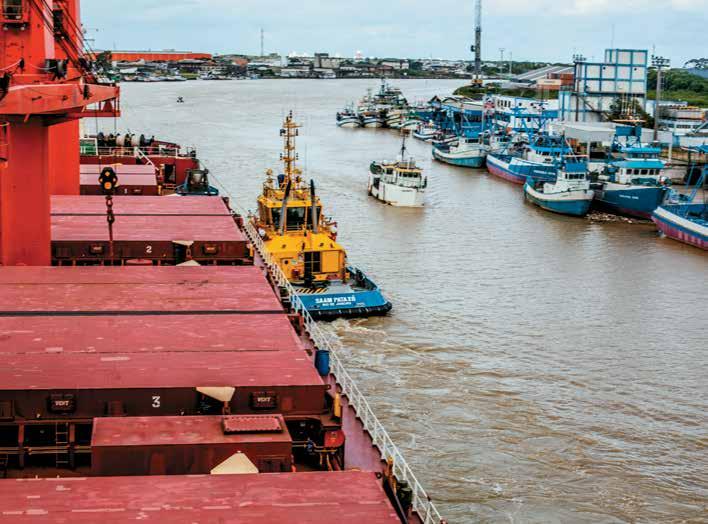
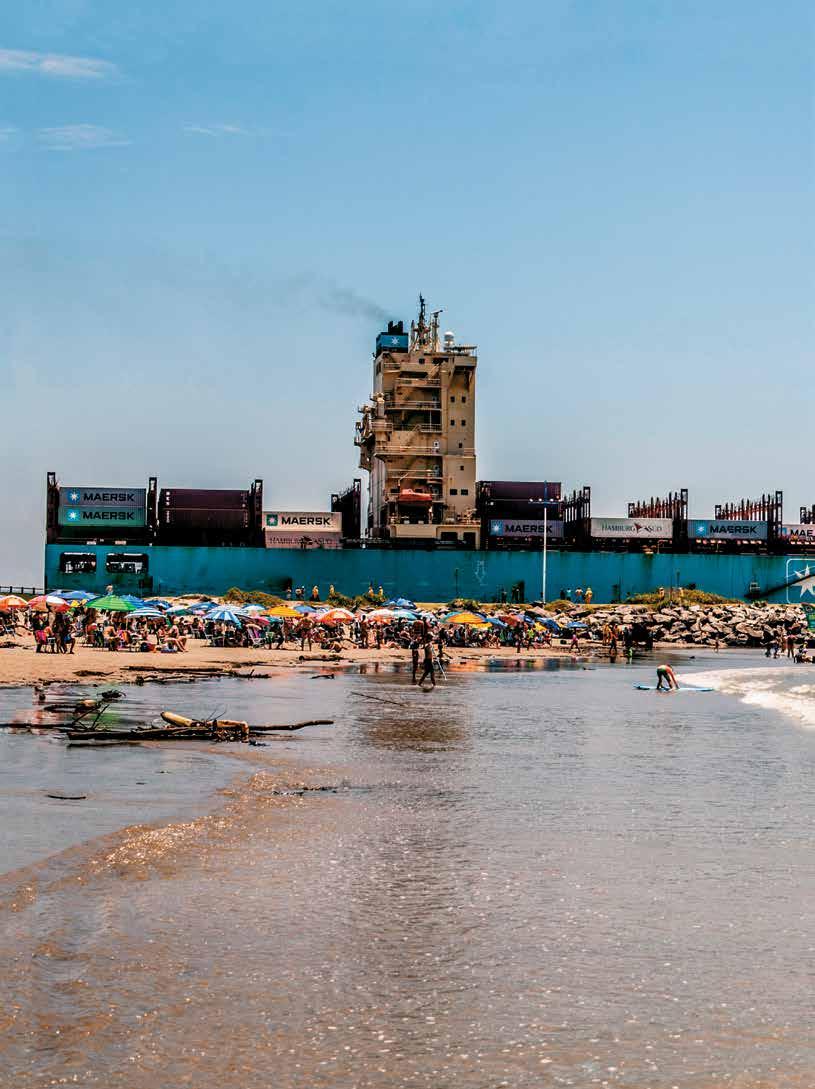
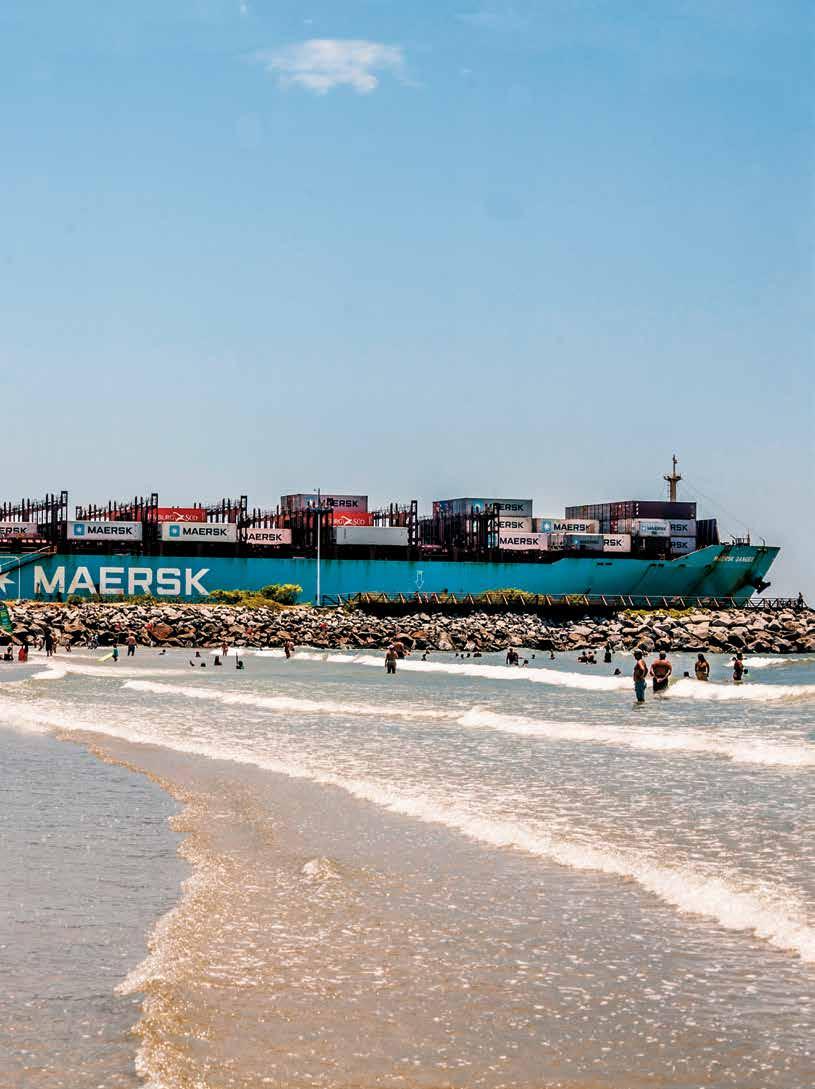
Our cover story takes us to Itajaí and Navegantes port complex at Santa Catarina state, where pilotage expertise has been decisive in enabling the safe and efficient operation of ever-larger vessels in a challenging estuary. It is another chapter in our series on Brazilian Pilotage Zones, which is now approaching its final stretch.
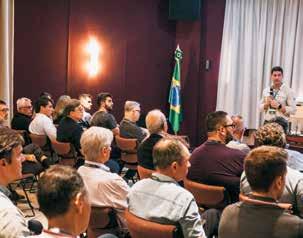
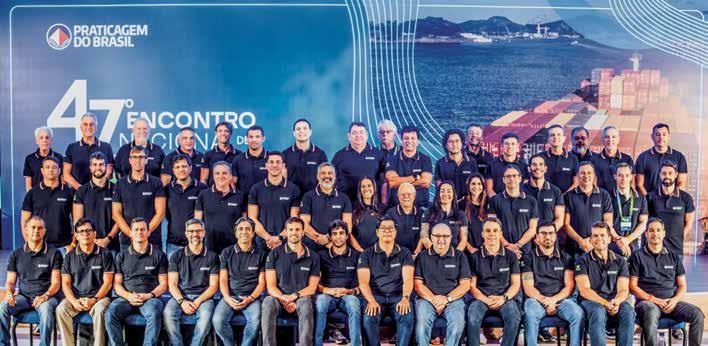
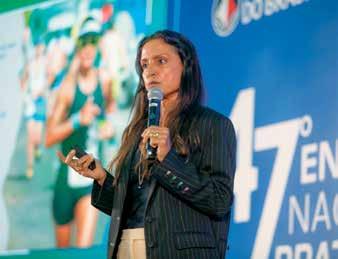
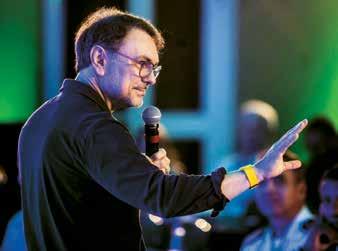
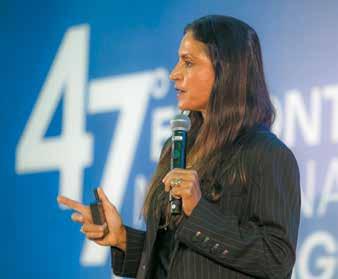
We also followed the debates and reflections of the 47th National Pilots’ Meeting, held in Guarujá (São Paulo), which brought maritime pilots together to address key issues shaping the present and future of the profession. External perspectives from invited speakers such as psychologist Rossandro Klinjey and triathlete Fernanda Keller broadened the discussion on the human factor in high-risk activities, highlighting emotional balance, discipline, and teamwork as elements just as essential as technical skill.
This issue also features reports on recent institutional developments, including the re-election of the Brazilian Maritime Pilots’ Association Board, progress on the service’s first greenhouse gas emissions inventory, and pilot Ricardo Falcão's appointment to the presidency of the national section of the World Association for Waterborne Transport Infrastructure (PIANC).
Closing the edition, we present an article of relevance to maneuvering safety, addressing the influence of underwater waves on berthing operations.
Enjoy your reading.
Otavio Fragoso is the editor in charge
Brazilian Maritime Pilots’ Association
Av. Rio Branco, 89/1502 – Centro – Rio de Janeiro – RJ – CEP 20040-004
director president of Brazilian Maritime Pilots' Association
Bruno Fonseca
director vice-president
Marcio Fausto
directors
Evandro Saab
Marcello Camarinha
Pedro Parente
director / vice-president of IMPA
Ricardo Falcão
Rumos Práticos
planning
Otavio Fragoso/Flávia Pires/Katia Piranda
editor
Otavio Fragoso
writer
Rodrigo March (journalist in charge)
MTb/RJ 23.386
translation
Julia Grillo
revision
Raquel Furtado
layout and design
Katia Piranda
pre-print
DVZ Impressões Gráficas
cover photo: Gustavo Stephan
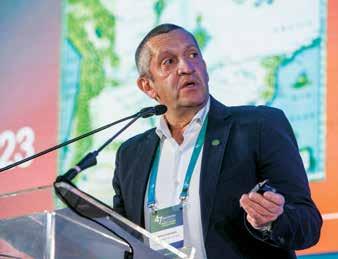
The Brazilian Maritime Pilotage meets in Guarujá and plans for a safe and sustainable future
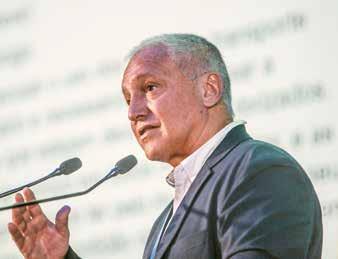
“The level of attention is too high”
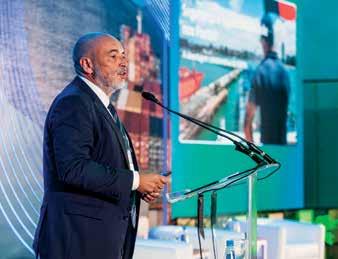
“Ironman Is Not a Solo Journey”
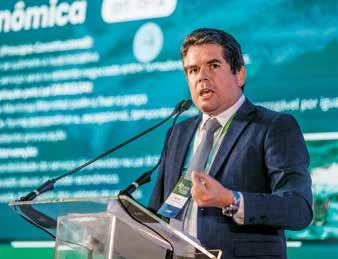
Bruno Fonseca is re-elected President of the Brazilian Maritime
Detroit Shipyard
SANTA CATARINA
Barra do Rio PUT
Trocadeiro PUT
Poly PUT
Teporti PUT
Portonave PUT
Itajaí Port
Braskarne PUT
Itajaí-AçuRiver
Efficiency put to the test
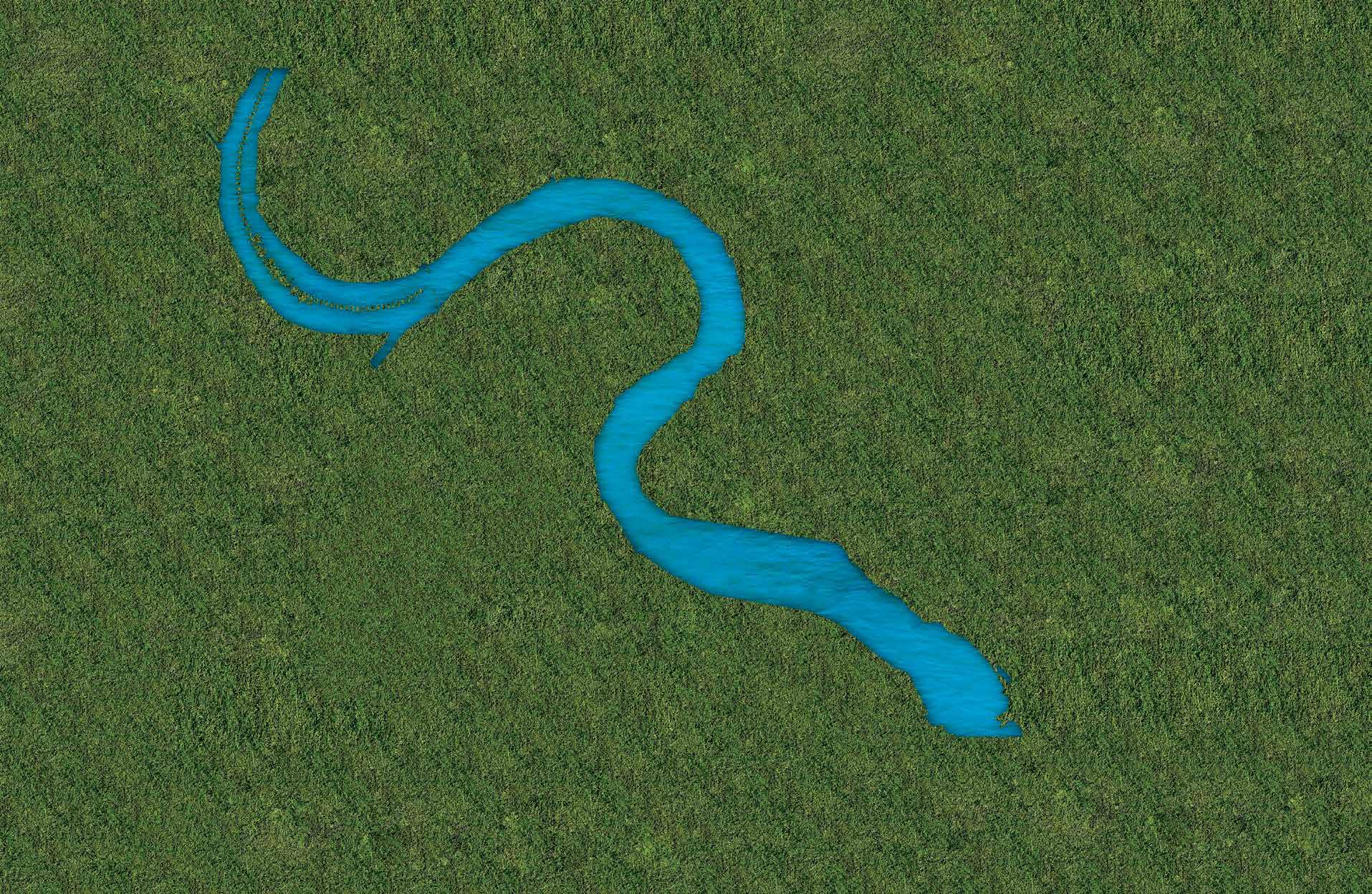
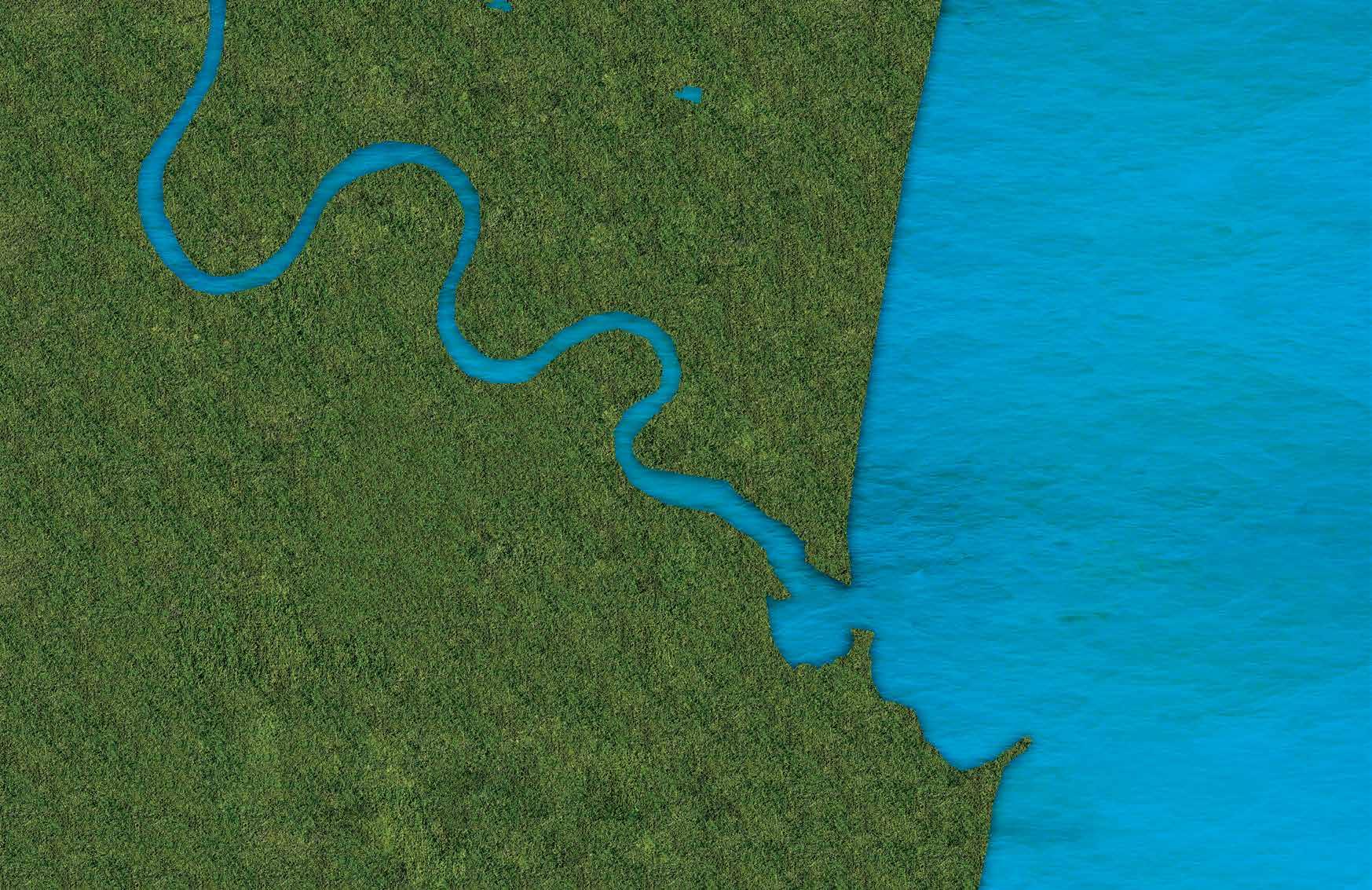
Since 2020, pilotage expertise has ensured the entry of large vessels into the narrow Itajaí-Açu River. The new Turning Basin has already hosted 2,370 turns
Waiting Area
Saco da Fazenda
Atalaia
At first, the ship masters were startled by the long astern navigation in such a narrow river. After a 180-degree turn, the ship proceeds against the current for one and a half nautical miles until berthing with the required tug assistance. Depending on the environmental conditions, the operation is reversed, the vessel enters the river bow-first and, on departure, proceeds stern-first. Six years later, there were 2,370 turns without a single incident. The solution that allowed the port complex to remain on the route of large container vessels – and thus preserve its competitiveness – was proposed by the Itajaí and Navegantes Pilotage (Santa Catarina), specifically by pilot Pedro Cipriano. This is the 17th report in the series on Brazil’s 20 Pilotage Zones.
Located on the northern coast of Santa Catarina, the Itajaí-Açu River Port Complex comprises the Itajaí Public Port, leased to JBS; the Navegantes Private Use Terminal (PUT), Portonave, owned by the MSC Group; Braskarne PUT, also linked to JBS; and four additional upstream PUTs as follows: Barra do Rio, Trocadeiro, Poly and Teporti. In addition, maneuvers take place at four shipyards, the furthest being Detroit, totaling just over ten nautical miles of navigable waters (almost twenty kilometers).
In 2025, through November, 94% of the cargo throughput in ZP-21 was containerized, according to the National Waterway Transportation Agency (ANTAQ). The remainder was carried by general cargo vessels and bulk carriers. Cruise ships berth at the public port.
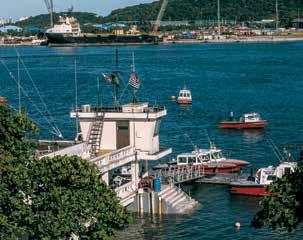
The pilotage administrative and operational base is strategically located on the Itajaí riverfront for rapid response. By pilot boat, it
takes three minutes to reach the main terminals. The furthest terminal, Teporti, is 20 minutes away, the same distance to the pilot waiting point outside the Itajaí-Açú River mouth.
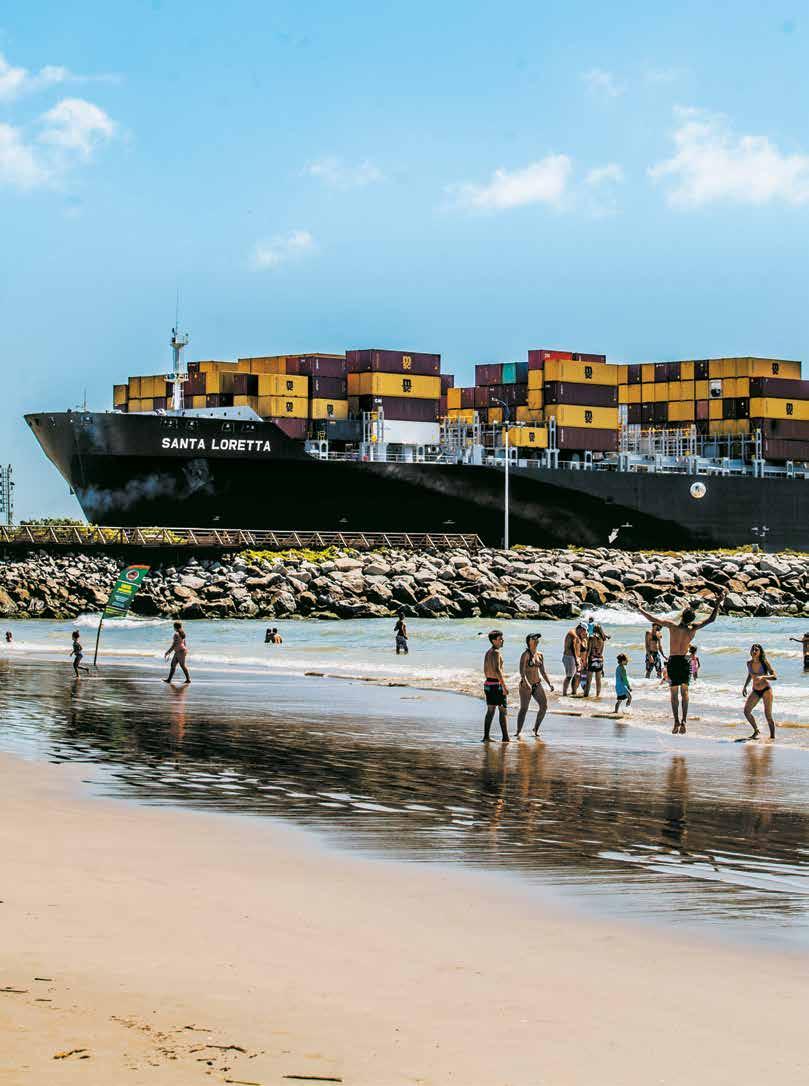
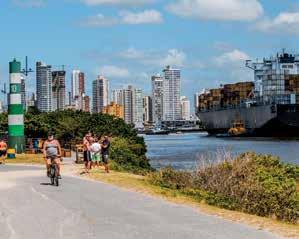
After the pilots’ boarding, vessels navigate an outer channel with a depth of fourteen meters. Three pairs of buoys lead to the river mouth, which is delimited by breakwaters whose construction began in 1912. On both sides of the breakwaters are bathing beaches – Atalaia and Pontal. The close passage of ships has become an attraction for beachgoers and highlights the importance of pilotage in environmental protection.
The inner channel is 170 meters wide and 13.5 meters deep. The draft is 12.17 meters at chart datum. Upstream of Braskarne the river narrows and becomes shallower. The maximum speed throughout the estuary is seven knots. Overtaking and crossing of ships are prohibited, but the distance between terminals allows simultaneous maneuvers further upriver.
Larger vessels turn in Turning Basin no.2, at Saco da Fazenda, proposed by pilotage and inaugurated in 2020. The Basin has a diameter of 500 meters and accommodates vessels up to 350 meters in length and 52 meters in beam during daytime operations. At night, limits are reduced to vessels up to 306 meters in length and 48.50 meters in beam. These same dimensions apply to Turning Basin No.1, which is located between Itajaí Port and Portonave, provided no vessel is berthed on the opposite bank. For nighttime entries and departures without turning, the restriction is vessels up to 337 meters in length and 48.50 meters in beam.
“If we didn’t have this Turning Basin at Saco da Fazenda, I believe our operations would be seriously impaired, because our vocation is container shipping. It’s the vessel type that has grown most in size over the past 20 years, and we are located at a river mouth, with all its physical and geographic constraints,” observes maritime pilot Kelly Greicy, who chaired the local pilotage service for the past two years and was succeeded by Paulo Ferraz, the current chairman.
The new Basin, she adds, also eliminated waiting time:
“Sometimes the ship would be ready but couldn’t sail until the opposite bank was clear for the turning. With Basin no. 2, we no longer have that bottleneck.”
After studying four possible turning locations, Pedro Cipriano indicated Saco da Fazenda, which allowed the entry of larger vessels at a lower implementation cost, without the need for expropriations. 12 of the 17 pilots underwent simulator training in the Netherlands, and the first real maneuver took place on January 16th, 2020. Five months later, the vessel APL Paris became the largest ship to call on the Brazilian coast, at 347 meters in length and 45 meters in beam.
Maneuvers must take place with current intensity limited to a maximum of one and a half knots. Four tugs are required, along
with two pilots on board using portable pilot units (PPUs), which provide greater accuracy than onboard systems:
PILOT PEDRO CIPRIANO SUGGESTED THE SPOT FOR TURNING BASIN NO 2
PILOT KELLY GREICY GUIDING A CONTAINER SHIP
ph otos: Gustavo Stephan
“In our ZP, the use of this tool was essential to receive these larger vessels. It significantly increased safety in maneuvers where the margin for error is extremely small. In addition to the PPU, we installed an RTK antenna that ensures centimeter-level positional accuracy,” explains maritime pilot Livia Lage.
To further enhance turning safety, two pilot boats – one at the bow and one at the stern – mark the slope at the edge of the Basin.
“This has a very positive psychological effect for the master, who notices our concern and genuinely feels safer,” notes maritime pilot Wallace Siqueira.
During navigation, one point of attention are the ferryboats transporting pedestrians and drivers between Itajaí and Navegantes. The ferry terminals are located on a bend before the main port area.
The strong ebb tide is one of the natural challenges of the ZP. Located at the river mouth, all the water from the Itajaí Valley watershed flows through this area, bringing sediment with every heavy rainfall.
“It used to rain a lot in September and even more in October, but not so much nowadays. Now it’s more spread out, with phenomena that are harder to predict,” observes Paulo Ferraz.
In the maneuver accompanied by Rumos Práticos at berth JBS-2, at the Itajaí Public Port, maritime pilot Leandro
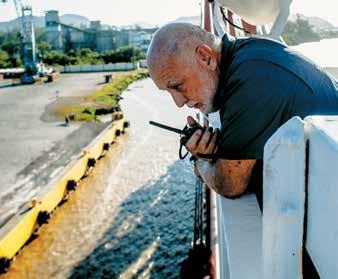
Caliento used two tugs and full bow thruster power to berth the vessel, as the current runs along the outer bank, striking the bow and tending to push it off. In contrast, Portonave is sheltered.
When rainfall is heavy, the current can break the vessels’ mooring lines. In one such incident, Leandro had to board a vessel whose bow was moving starboard:
“There have been occasions when all the lines broke and the vessel was left adrift. The pilot then boards in an emergency. There were situations where no lines remained to secure the ship. In such cases, we must proceed outside the river mouth. The tugs turn the vessel, and we sail in exceptional conditions, beyond normal limits. That’s what can be done. There’s no space for internal anchoring.”
During one flood event, the current reached nine knots, a critical situation that led to the river mouth being closed to navigation. Two berths on the Itajaí side of the river were destroyed in 2008 and 2011, Itamar Costa, the pilot-boat master, with 25 years of pilotage service, recalls:
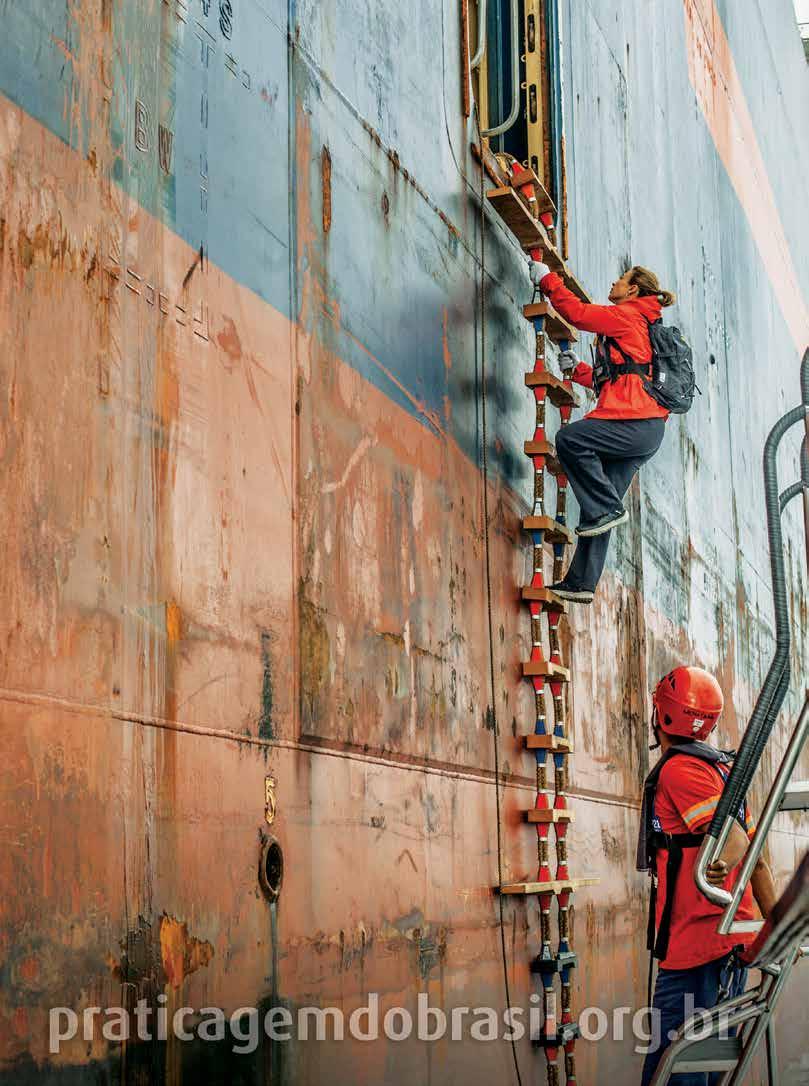
“In 2008 we had one of the toughest situations. Lines were breaking, ships drifting downstream, quays destroyed. It was a real struggle. We even had to rig ladders so the pilot could board abandoned vessels that were adrift.”
Sedimentation requires skill from the pilot, explains Wallace:
Gustavo Stephan
PILOT LIVIA LAGE INSTALLING PPU ANTENNAS ON THE SHIP'S BRIDGE WING
“When the water is denser, you need more power and more rudder to get the same ship response. It's as if the vessel were stuck, it gets very sluggish.”
To prevent shoaling, maintenance dredging must be continuous. Recently, a three-month interruption in dredging led to a draft reduction of almost 30 centimeters, which has since been restored.
Pilotage operates a portable ADCP, an instrument that measures depth and current velocity.
“It sometimes happens that the bar needs to be closed due to prolonged upstream rainfall which leads to flooding, increasing current strength and sediment load. We then monitor the data until an opportunity window opens and we can get back to work, supporting the Maritime Authority”, explains Kelly.
The river also poses challenges for pilot-boat masters and maintenance. Five pilot boats are in operation, one of them is a port-based catamaran.
“Especially at night, the master can’t see floating logs. It’s a major risk. During the day you can still spot debris. From time to time, we must haul a boat out to straighten propellers and shafts. We’ve even had to replace a shaft bracket because of tree trunks coming down the river. Maintenance here is always complex – sometimes entire trees come down,” reports fleet manager Rogério Machado.
UPRIVER MANEUVERS
Pilot boat crews constantly assist pilots during maneuvers. In addition to marking turns in the Basins using laser rangefinders, they move ahead to request that small craft leave the navigation channel or remove fishing nets. Fishing traffic is intense.
During a descent from Teporti, Rumos Práticos witnessed a tug taking more than five minutes to clear the narrow channel. Maritime pilot Kelly had to sound the whistle three times, dispatch a pilot boat and “brake” the ship using a tug with a line passed astern, while another worked alongside.
“Often, the tug has to be used,” states pilot Francisco Hyppolito.
In the channel above Braskarne up to Teporti, width is 60 meters and depth is 7.70 meters. Limits are vessels up to 153 meters in length and 24.20 meters in beam, with a draft of seven meters at chart datum. General cargo vessels and bulk carriers use this access. The maximum current set by the Navy is two knots.
During the trial period, 131 special maneuvers were conducted in a 100-meter-wide channel, an extension of the natural 60-meter channel. This allows larger vessels with smaller drafts to maneuver: 5.80 meters at chart datum for a depth of 6.40 meters. Limits are vessels up to 180 meters in length and 28.40 meters in beam. Two pilots board with PPUs, and the requirement for two tugs remains.
PILOT LEANDRO CALIENTO DURING AN INBOUND MANEUVER IN ITAJAÍ
The access channel is highly sinuous, requiring dozens of helm orders. Depending on wind direction, wind and current may act on opposite sides or combine on the same side. The prevailing wind in the ZP is from the southern quadrant, except in December, January, and February, when there is major influence from the northern quadrant.
“Because the river is sinuous, the relative wind is constantly changing. At each reach, when you round a bend, the wind comes from a different side and the ship’s behavior changes. The same happens with the current. You must continuously adapt to new wind and current effects. Even within a single bend, the vessel’s behavior changes,” details Wallace.
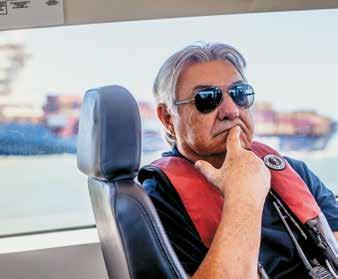
“When you finish this maneuver, which lasts about two hours, your brain is drained. It demands total attention. You can’t lose focus for a second,” adds Kelly.
In 2025, pilotage conducted 2,142 maneuvers in ZP-21. Through November, according to ANTAQ, cargo handling reached 13.8 million tons, a 7.04% increase, mostly long-haul trade.
The future is not restricted to vessels up to 350 meters despite estuarine limitations, The final design of Turning Basin No.2 provides for a diameter of 530 meters, allowing the entry of container vessels up to 400 meters in length (currently, 366-meter vessels call in Brazil). This will require infrastructure adjustments, such as widening the bar entrance and removing remnants of the vessel Pallas, discovered during dredging.
Portonave is already rebuilding its quay to receive these vessels, an investment of R$ 1.5 billion. Pilotage actively participates in all projects across the complex, consistently pursuing safety and operational efficiency.
PILOT BOAT
DEDICATED TO PILOTAGE
Gustavo Stephan
PILOT FRANCISCO HYPPOLITO ON THE PILOT BOAT FOR BOARDING
PILOT WALLACE SIQUEIRA DURING BERTHING AT TEPORTI
ph otos: Gustavo Stephan
DOWNRIVER TRANSIT THROUGH THE NARROW CHANNEL: HEAVY FISHING TRAFFIC
OUTBOUND BAR CROSSING SEEN FROM THE OPPOSITE SIDE OF THE BREAKWATER, AT ATALAIA BEACH
photo: Gustavo Stephan
The Brazilian Maritime Pilotage meets in Guarujá and plans for a safe and sustainable future
Mental health, regulation, sustainability, training, and innovation were the focus of the 47th National Pilots’ Meeting
With debates on mental health, sustainability, legislation and technology, the 47th National Pilots’ Meeting, held in Guarujá (São Paulo), brought together pilots from across the country in November. Psychologist Rossandro Klinjey and triathlete Fernanda Keller attended as special guests and reflected on emotional balance in high-responsibility professions. National and foreign experts advocated for pilotage free from commercial pressures, in line with international safety and environmental standards. The event also celebrated the advances achieved since the new pilotage law, the investments in training and innovation, and the commitment to an increasingly sustainable navigation.
Psychologist Rossandro Klinjey addressed the importance of mental health care for good professional performance:
“When we are in a situation of risk, all we need is an attentive mind. The level of attention needed from pilots is extremely high. They perform around 80 thousand maneuvers annually, that is 80 thousand potential tragedies avoided by pilots in their daily work.”
According to Rossandro, in order to achieve balance, it is important to have leisure time when not on duty:
“You need to have moments of peace. Mental life is like the tide; it ebbs and flows. If the sea only surges forward, it's a tsunami. If it only retreats, it's a drought. There are times when you are there working on the ship under heavy stress, but there are times when silence is necessary. I do it in my own life. I need a moment of calm to read, listen to music, and get away from the digital environment. No one does it for you. I don't outsource my mental health.”
photo: Gustavo Stephan
BRAZILIAN MARITIME PILOTS ON THE FINAL DAY OF THE MEETING
Fernanda Keller, the only Latin American athlete in the Ironman Hall of Fame, reaffirmed the need for this caution in long-distance triathlon events: 3.8 kilometers of swimming, 180 kilometers of cycling, and 42.195 kilometers of running. She drew a parallel with pilotage:
“Controlling adrenaline is part of all challenging professions, such as pilotage. In an Ironman competition, conditions are challenging all the time. We never know what is going to happen, even though we know what we must do. Mental preparation is essential. As an athlete, I seek this through training, repetition, and study.”
At 62, Fernanda completed her 28th Ironman in October in Hawaii, among more than one hundred races completed around the world. She explained what has changed in her preparation process over the years. Beyond the evolution of nutrition, the athlete's fuel, Fernanda pointed out technological support. She emphasized, however, that one should not become dependent on technology:
"Triathlon has evolved, as have navigation systems. Your coach gives you a watch, which is like an electronic bracelet, and monitors your performance on an app. You know, for example, when you have to take it easier in training if your heart rate is high. This technological device is good, but we cannot lose our human sensitivity. It is human sensitivity that operates the devices. If a ship suffers a blackout, you must stop it, right? There are people who don't run the marathon anymore if the watch has broken. These are people operated by devices nowadays. That's not right. Our intelligence can’t be diminished because of artificial intelligence.”
In the technical part of the plenary session, Sergio Gorriarán, a pilot from the Uruguayan Corporation of Pilots of the Uruguay River, Río de la Plata, and Maritime Oceanic Coastal Area, presented
the country's pilotage model. Uruguay follows safety principles like those of Brazil and recommended by the International Maritime Organization (IMO). The service runs independently of commercial pressures, is provided without competition, and distributed equally among maritime pilots.
“In Uruguay, there is great respect for the activity. The party that assumes the government follows what has been established for the system. Our accident rate is almost non-existent; we are always vigilant.”
In contrast to its neighbor, Argentina faces competition in maritime pilotage and, more recently, the threat of greater deregulation. Pilot Pablo Pineda, from the Argentine Chamber of Pilotage, reported on the situation. One of the proposals is to make the service mandatory only for oil tankers. The Minister
photos:
Gustavo Stephan
PSYCHOLOGIST ROSSANDRO KLINJEY
TRIATHLETE FERNANDA KELLER
PILOT SERGIO GORRIARÁN, FROM URUGUAY
of Deregulation and State Transformation, Federico Sturzenegger, gave an interview saying that there are no rocks to hit in Argentine ports, only sandbanks: “We will never have environmental pollution.”
“The price is not up for discussion. The goal is to destroy the pilotage system,” lamented Pineda.
The Portuguese pilot Miguel Castro, president of the European Maritime Pilots Association (EMPA), condemned competition in the pilotage system and mentioned a terrible example:
“If a ship arrives with a major defect, the pilotage company will not report it because its competitor next door will welcome it and perform the maneuver. In Romania, four companies were in competition and there were a series of accidents. The professionals were not qualified. Anyone could get a license. The service ended up being transferred to the port authorities. We continue to advocate for a service free from commercial pressure and competition, ensuring the highest standards and protecting the environment.”
Brazil is experiencing a period of stability, two years after the approval of the new pilotage law. The legislation prompted the launch of the book Lei de Segurança do Tráfego Aquaviário e a atividade de praticagem no Brasil (Maritime Traffic Safety Law and Pilotage Activity in Brazil), subject of one of the panels. The work was coordinated by the Minister of the Superior Court of Justice (STJ), Paulo Dias de Moura Ribeiro. At its launch, the Vice President of the STJ, Minister Luis Felipe Salomão, said that the publication will contribute decisively to the improved application of the current law. Minister Moura Ribeiro opened the panel remotely:
"We all know the importance of the maritime pilot. I am from
Santos and used to seeing container ships, as big as buildings, sailing in front of us on the coast. Without maritime pilotage, it would be impossible for these huge vessels to turn and enter the port. I hope that the National Pilots’ Meeting will give rise to further positive initiatives for navigation safety and environmental preservation.”
One of the authors of the book, lawyer Fábio Zech, advisor to Brazilian Maritime Pilots’ Association, addressed crucial points of the Law No. 14,813/2024, which modernized Law No. 9,537/1997 in aspects related to the pilotage service. One of these aspects was the inclusion of a single rotation schedule for providing service to shipowners. This ensures that there will be no competition between maritime pilots, which could jeopardize the safety of operations. The new law also highlighted the legal nature of maritime pilotage: an essential private activity whose purpose is to ensure public interest.
"The law guarantees the Brazilian Navy's leading role as the true pilotage authority, which masterfully fulfills its obligation to ensure navigation safety. It provides greater legal certainty for the Maritime Authority to have its competence preserved, regardless of changes in government. It is a recognition of what the Navy has been doing for a long time, through its administrative rules (Normam-311/DPC), reflecting international commitments made by Brazil”, Zech emphasized, adding that, two years later, the Navy has not received complaints about the price or provision of the service.
For lawyer Maria Cristina Gontijo, another author of the book, this internalization of international standards is highly technical in nature and has brought greater legal certainty to the entire shipping sector. She highlighted the contribution of the IMO, the UN agency responsible for regulating maritime transport:
PILOT MIGUEL CASTRO, PRESIDENT OF EMPA
PILOT PABLO PINEDA, FROM ARGENTINA
“The IMO has been promoting a revolution in public international law by bringing uniformity to the maritime industry, something never seen in other sectors. The ship-port binomial needs this uniformity. Shipowners who do not comply with the standards are unable to dock their ships.”
Lawyer Daniella Castro Revoredo, also an author, completed the panel. She discussed the importance of pilotage for trade since ancient times:
“In 2024, Brazilian exports and imports totaled almost US$ 600 billion, an increase of 3.3%. About 95% of this movement passes through ports, and the maritime pilots are highly responsible for this economic strengthening.”
Maritime pilotage has also demonstrated its importance through the Brazilian Maritime Pilotage Institute in Brasilia, which goes far beyond being a maneuver simulation center. Executive Director Jacqueline Wendpap reported on last year's activities. There were three classes of the Updating and Refresher Training Course for Pilots (ATPR), two classes of the Pilot Station Operator Course, five Pilotage Zone training sessions, five simulations for private companies, and six corporate training sessions.
The Institute has established partnerships with the National Waterway Transportation Agency (ANTAQ), the Arbitration Chamber Specialized in the Maritime, Port, and Trade Sectors (CAMAR), and the Federal District section of the Brazilian Bar Association (OAB). It also obtained certification in standards that ensure quality management, environmental care, and occupational health and safety (ISOs 9001, 14001, and 45001). It received 430 invitations to meetings (with 60% participation) and hosted 24 delegations from institutions such as the Navy, ANTAQ, and the Ministry of Ports and Airports.
“Today, the Institute is part of the segment's calendar. We are taking pilotage to a leading role within the sector.”
Navigandi, a partner of the Institute in the technological area, detailed the development of a new Portable Pilot Unit (PPU) with the support of Rio Grande Pilotage (Rio Grande do Sul). This pilot decision support equipment is of the semi-independent type; it is simpler and more portable, and can be used in all maneuvers.
“Before starting the PPU development, we sought international references and visited the two largest pilotage services in Texas (USA). Each maritime pilot has their own semi-independent PPU, and there are two independent ones shared between them for the most complex maneuvers. Rio Grande Pilotage follows the American standard; however, the semi-independent devices face limited support and long maintenance times abroad (the
photos:
Gustavo Stephan
LAWYER FÁBIO ZECH, LEGAL ADVISOR TO THE BRAZILIAN MARITIME PILOTS’ ASSOCIATION
LAWYER MARIA CRISTINA GONTIJO
LAWYER DANIELLA REVOREDO
independent devices are from Navigandi)”, said Rodrigo Barrera, partner and director of the 100% Brazilian company.
Investments in studies, training, and technology add efficiency and safety to operations, naturally contributing to fewer emissions into the atmosphere and preventing water pollution resulting from accidents. Pilotage, however, goes beyond its mission to protect the environment and has commissioned a greenhouse gas emissions inventory for the entire activity. Based on this assessment, service providers will be able to offset their emissions.
The progress of this initiative was explained by the advisory board member, maritime pilot João Bosco, and the executive director of Via Green Institute, Conrado Bertoluzzi:
“We are moving towards existing and future regulatory demands, complying with international protocols that will require emissions reductions. In this way, pilotage is consolidating itself as a sustainable activity. We are in this for the long haul, and we will always be conducting clean and safe maneuvers,” emphasized Bosco. "It is no longer possible to row against the current. The market has already incorporated this global agenda. Research shows that society prefers sustainable companies. Whether they like it or not, companies will have to take a stand. Publishing an inventory is like filing an income tax return. Everyone needs to do it," reinforced the director of Via Green.
Representing the National Congress, Federal Congressman Luiz Carlos Hauly attended the event once again. He reflected on the current state of the Brazilian economy and tax reform, a subject in
JACQUELINE WENDPAP, DIRECTOR OF THE BRAZILIAN MARITIME PILOTAGE INSTITUTE
photos: Gustavo Stephan
RODRIGO BARRERA, PARTNER AT NAVIGANDI
PILOT JOÃO BOSCO, PILOTAGE ADVISORY BOARD MEMBER
CONGRESSMAN LUIZ CARLOS HAULY
which he is an expert. Finally, Hauly praised the quality of Brazilian Maritime Pilotage:
“Pilots operate within a world-class structure. The Brazilian public sector does not operate with an excellence of segments such as the pilotage service. When that excellence is achieved, through structural changes, Brazil will truly succeed.”
The president of the Brazilian Maritime Pilots’ Association, pilot Bruno Fonseca, opened and closed the event. He defended the importance of the presence and unity of Brazilian maritime
pilots. In his opening statement, he welcomed the attendance of 52 colleagues:
"I thank the Brazilian maritime pilots for coming. We are 590 professionals divided into 20 Pilotage Zones, including 14 women, three of whom are present: Debora (Barros) from Rio Grande, Vanessa (Moraes) from Paraná, and Vanessa (Zamprogno) from Pernambuco. We conduct around 80 thousand maneuvers per year with a very low accident rate. We have never had an accident involving a major oil spill. Our expertise and our commitment to society are non-negotiable pillars for maintaining safe navigation, protecting the environment, and ensuring efficiency in port operations. Holding this meeting is yet another sign of our commitment to excellence.”
Rear Admiral Sérgio Guida, Chief advisor for maritime traffic safety at the Brazilian Maritime Authority - Directorate of Ports and Coasts (DPC), represented the Maritime Authority at the event, as did the captain of the Ports of São Paulo, Captain Marcus André. Also in attendance were Ricardo Molitzas, Executive Director of the Union of Port Operators of the State of São Paulo (Sopesp), and the directors of the Brazilian Maritime Pilots' Federation (Fenapraticos), pilots Adonis dos Santos, Carlos Alberto Barcellos, and Pedro Parente.
The 47th National Pilots’ Meeting was sponsored by Volvo Penta, Supmar, All System, Hidromares, Navigandi, Porto Sudeste, and UMI SAN. In addition to the series of lectures, there was a meeting of managers and advisors and a maritime pilots' assembly that re-elected President Bruno Fonseca for the 2026/2027 term.
CONRADO BERTOLUZZI, DIRECTOR OF VIA GREEN INSTITUTE
PRESIDENT OF THE BRAZILIAN MARITIME PILOTS’ ASSOCIATION, PILOT BRUNO FONSECA
photos: Gustavo Stephan
photos: Gustavo Stephan
Gallery
photos: Gustavo Stephan
THE LEVEL OF ATTENTION IS TOO HIGH
Psychologist Rossandro Klinjey defends the importance of mental health care in high-risk activities
In high-risk activities, where decisions are made under pressure and mistakes have serious consequences, emotional balance is a core component of professional competence. For those who have chosen to deal with risk daily, prioritizing mental health is essential, emphasized psychologist Rossandro Klinjey during the 47th National Pilots’ Meeting in Guarujá (São Paulo):
“You (maritime pilots) deliberately operate in a risk environment. So, the level of alertness is extremely high.”
According to Klinjey, this silent routine demands not only technical skill, but also the ability to manage stress when a crisis arises. He mentioned as a good example the tragedy averted by pilotage in Baltimore, United States, in 2024. Although the ship collided with the bridge after successive blackouts, the maritime pilot warned traffic control in time, and they were able to stop the passage of vehicles.
In addition to focusing on individual mental health care, the psychologist reflected on the well-being of society. According to his analysis, we now are currently facing an anxious generation that does not tolerate judgment:
“These are people who want to join a company and become CEO in six months, and who cannot withstand criticism. When you
offer a non-toxic comment, they return the next day with a psychiatric leave for depression. That's when they don't cry in front of you, an adult...”
Klinjey recalled that, in the song “Há tempos” [For a long time now], more than 30 years ago, Renato Russo had already identified this ongoing social process:
“He said, ‘For a long time now, not even the saints have known of the true measure of malice, and for a long time now, it is the young people who are falling ill.’ It’s a socio-anthropological description of what we are experiencing today.”
The composer did not limit himself to diagnosing chaos when he wrote the verse “discipline is freedom,” something that is now lacking in family education according to the psychologist's view:
"He had quite a bit of poetic license to put discipline, which sounds like imprisonment, and freedom in the same sentence. But those who belong to the generation that had moral and civic education in school know very well: only those who have the discipline to do what needs to be done will have the freedom to be what they want. There is no other way.”
In a hyperconnected world, children and young people are no longer listened to by their parents and have lost family references, Klinjey observed. No wonder, he said, we are experiencing a global epidemic of child and adolescent suicide, and the greatest use of ChatGPT is for therapy:
“There is a lack of values, principles, guidance. What are a father and mother if not maritime pilots teaching you how to navigate? They are someone who says: I came before you, I know this sea, I know how to dock, and I am here to ensure you do it safely. However, if I fail to fulfill my role, what happens to my children? They sink. Parents believe that school and society will solve everything.”
While ignoring and outsourcing children’s education, everyone pampers them, said the psychologist; and this is the result of a misguided, albeit well-intentioned, decision by parents who have struggled and entered the middle class:
“My children will not go through what I went through. This was the most tragic decision made in the recent Western world. We have created the most fragile generation for enduring life. It does not mean your children have to experience the same difficulties, but you cannot go to extremes. Excess leads to a lack of presence.”
We are always facing immense challenges in life, Klinjey pointed out, and people don't understand that it takes emotional skills to deal with them:
“No one is born resilient and self-confident. We develop and become that way. The problem is that society trains us intellectually in school, including knowledge we will never use. What did they teach me, however, about forgiveness, virtue, respect, and coexistence, for example? Deep down, what defines life is this, the way I manage my emotions. What is a feeling of deep anguish if not a giant, uncontrolled boat that I have to dock?”
IRONMAN IS NOT A SOLO JOURNEY
Fernanda Keller highlights the importance of teamwork and emotional focus
Triathlete Fernanda Keller delivered an inspiring keynote speech at the 47th National Pilots’ Meeting held in Guarujá (São Paulo), sharing the experience gained over nearly five decades of training and competition. Speaking directly to the reality of maritime pilots, she showed how the challenges faced in extreme endurance races, such as the Ironman, mirror the daily demands of guiding ships in unpredictable scenarios. She underscored that excellence in any field comes from consistent practice and the ability to stay balanced under risk.
Fernanda opened her talk by drawing a parallel between sport and maritime pilotage, noting that both constantly deal with the unexpected:
“You (pilots) are people who prepare yourselves to face challenging circumstances all the time. You step in at the toughest moment,
photo: Gustavo Stephan
often with environmental conditions right at the limit, and you hold the line. We have a lot in common. We work in all kinds of weather and we train continuously – rain or shine.”
Born in Niterói (Rio de Janeiro), she began her athletic career at 16, at a time when few people talked about swimming 3,800 meters, cycling 180 kilometers, and running a full marathon. In 2025, at the age of 62, she completed her 28th World Championship in Hawaii, after competing in more than one hundred Ironman races.
According to Fernanda, becoming an elite athlete requires preparation – just as pilots carry out hundreds of maneuvers as trainees, attend regular refresher courses, and must complete a minimum number of maneuvers to maintain proficiency:
“I know your profession is extremely demanding. You must keep updating your skills, take care of your physical condition for boarding, and your emotional condition to manage risk. It is constant – almost a calling – because everything we do in life affects our profession. Sometimes people don’t realize how much dedication it takes. But I’m sure you feel proud when you look back at all the times you’ve handled tough situations.”
Fernanda said planning is just as essential in sport, to handle unexpected factors that may come up during a race:
“You have to anticipate what might happen, so you know how to respond safely. Conditions are challenging all the time. As an athlete, my awareness is about knowing my body, my limits, and my nutrition during the race. I have to be ready for the battle against my own limitations – know my weaknesses and overcome them. In the same way, you take on the challenge of piloting a ship fully aware of everything that needs to be done, no matter what may come up.”
She emphasized that teamwork is essential – just as a pilot must manage the bridge team, tug masters, and mooring crews ashore, while also relying on support from lookout stations and crews on pilot boats:
“The responsibility is yours, but you’re supported all the time, in the strategic and nutritional aspects.”
In endurance and extreme-performance events, mental focus is essential, she stressed:
“As athletes, we train our emotional confidence every day – by practicing and repeating, situation by situation. Managing adrenaline is part of many demanding professions. You guide ships loaded with fuel, often carrying oil, right through busy cities. There is no way your heart will not race in extreme situations – just like at the start of an Ironman.”
Fernanda then showed a video illustrating a personal moment of resilience in which mental strength was decisive. It happened during the 2004 Ironman in Florianópolis. She and an Italian athlete battled for the lead from the swim onward. With 25 kilometers left in the marathon, still testing each other stride for stride, Fernanda felt pain in her knee and had to slow to a walk.
“There are moments when your mind takes over. I found some tape and tied it around my leg – even though I knew it wouldn’t fix anything. I couldn’t quit. My friend John Collins, who created Ironman, always says you have to finish what you start, no matter how. Resilience is closely tied to humility – to facing your worst moments. Not every day will be the way we want it to be. So, I told myself – let’s go!
“I started running again. I had the physical and mental preparation for that moment. The other athlete may have relaxed when she heard I had stopped. I closed the visual gap and thought: I’m not going to run alongside her again. We’ll both end up in the hospital if needed. I passed her without looking back. Now everything I’ve talked about comes together. Ironman is not a solo journey. When I won that race, I won with the Brazilian crowd lining the streets, with my sponsors, my parents, the teammates who pushed me in training, and my entire support team. You’re never alone in victory, and you should never stop being grateful.”
Bruno Fonseca is re-elected President of the Brazilian Maritime Pilots’ Association
Pilot outlines the technical and institutional priorities for the 2026-2027 term
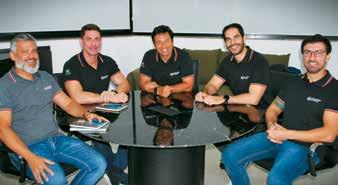
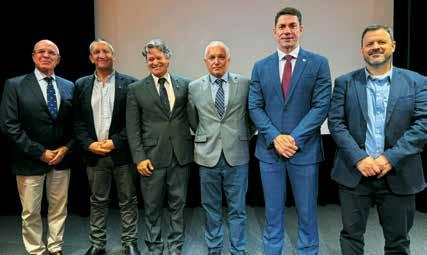
During the 47th National Pilots’ Meeting, held in Guarujá, maritime pilots, meeting in the general assembly, re-elected Bruno Fonseca (ZP-5, Ceará) as President of the Brazilian Maritime Pilots’ Association. Completing the Board for the 2026-2027 term are Vice-President Marcio Fausto (ZP-18, São Francisco/Santa Catarina); Administrative Director Evandro Saab (ZP-3, Pará); Finance Director Marcello Camarinha (ZP-15, Rio de Janeiro); and Technical Director Pedro Parente (ZP-5, Ceará).
For the Audit Committee the following were elected as full members: Jelmires Galindo (ZP-18, São Francisco/Santa Catarina), José Bedran Simões (ZP-20, Lagoa dos Patos/Rio Grande do Sul) and Vanessa Moraes (ZP-17, Paraná); and as alternate members: Felipe Perrotta (ZP-12, Bahia), João Bosco (ZP-19, Rio Grande/Rio Grande do Sul) and Marcos Martinelli (ZP-3, Pará).
President Bruno Fonseca highlights the main objectives for the next two years. In the institutional sphere, he points out the following actions: Keep advising the Brazilian Navy on matters related to maritime pilotage; maintain the 2024 Pilotage Law consolidation and the service delivery model; promoting
awareness of the importance of maritime pilots to society; maintain the close monitoring of interest bills in Congress (such as those addressing maritime accident response conventions); and the ISO standards implementation within the Brazilian Maritime Pilots’ Association, following the example of the Brazilian Maritime Pilotage Institute, in Brasilia.
“The new Pilotage Law, enacted after a decade of debate in Congress, has brought regulatory stability, but also a renewed commitment to ensure its effective implementation. We will also seek to advance the signing of international conventions addressing pollution from maritime accidents and wreck removal, expanding the capacity to deal with environmental emergencies in Brazil,” Bruno Fonseca states.
Among the challenges on the technical front, he lists: redesigning the next cycle of the Updating and Refresher Training Course for Pilots (ATPR); maintaining standards for pilot boats, crews and operations centers; continuing the nautical knowledge course for operators offered at the Brazilian Maritime Pilotage Institute and extended to staff from the Ministry of Ports and Airports and the National Waterway Transportation Agency (ANTAQ); and developing emergency-focused training for maritime pilots, also at the Institute.
“We inaugurated the Brazilian Maritime Pilotage Institute and its simulation center. Since 2021, it has enabled advances in integration with regulatory bodies such as the Maritime Authority, the Ministry of Ports and ANTAQ, as well as terminals and other stakeholders connected to the activity. We will strengthen the Institute’s role by offering training for pilots, operators, civil servants, and the wider maritime community. We will also continue to use our facilities to conduct simulations that test the feasibility of new terminals, maneuvers, and port operations, always with the participation of all those involved. Our innovation is constant and serves the country’s progress,” concludes Bruno, who also serves as President of the Pilotage Institute’s Board of Directors.
photo:
Luiz Carlos
MARCIO FAUSTO, BRUNO FONSECA, MARCELLO CAMARINHA, PEDRO PARENTE AND EVANDRO SAAB
Brazilian Maritime Pilots’ Association completes its first greenhouse gas emissions inventory
Survey is being finalized by Via Green Institute and is expected to be released in April
Brazilian Maritime Pilots' Association has commissioned a greenhouse gas (GHG) emissions inventory covering all member entities involved in the activity. This diagnosis is the first step for any organization on the path toward a low-carbon economy. Subsequently, the service-providing companies will be able to offset their emissions. This project is conducted by Via Green Institute, which has carried out the same assessment for São Paulo Pilots, now expanded to the national level.
In January, the project was in the final phase of technical visits to the Pilotage Zones (ZPs), to conduct interviews and assess the socio-environmental maturity at each entity, with only a few ZPs remaining. The second phase – running concurrently with the first – includes training for the full-year data collection on an in-house platform. Information requested includes fuel consumption, electricity use, water consumption and treatment, solid waste generation and liquid effluents, as well as employee transportation.
The compiled material will be incorporated both in individual environmental reports and in an overall report for 2025, which may be shared with stakeholders and the wider public. The publication is expected to be released in April. With a clear understanding of the carbon footprint arising from their operations, companies will be able to offset emissions by supporting UN-recognized projects
recommended by Via Green (a phase not yet contracted). These initiatives aim to reduce or avoid emissions, conserve forests, and restore degraded areas and springs.
Throughout the project, workshops, webinars, and training sessions on ESG-agenda topics are planned. The goal is to disseminate best practices and foster a culture of socio-environmental management within the entities. To ensure transparency regarding the sector’s commitment to the global decarbonization effort, participating companies will be awarded program seals.
“Across the country, maritime pilotage services are aligned with all three ESG pillars – environmental, social, and governance. When we invest in adding efficiency to port operations, that naturally contributes to reducing ship pollution. On the social front, the activity supports impactful causes. Now we have taken a further step by undertaking our first carbon inventory, however small our emissions may be. By promoting sustainability among our members, we align pilotage with global requirements for environmental protection,” says pilot Bruno Fonseca, president of the Brazilian Maritime Pilots’ Association.
The inventory follows the GHG Protocol standards (The Greenhouse Gas Protocol), the world’s leading method for calculating corporate
photo: Gustavo Stephan
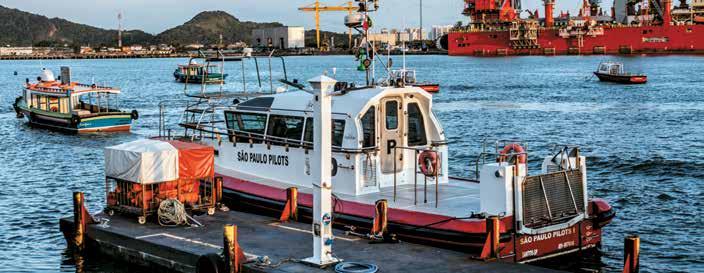
SÃO PAULO PILOTS’ PILOT BOAT: THE ENTITY TRIALS MORE EFFICIENT NAVIGATION
greenhouse gas emissions. In Brazil, the method has been officially adapted by Fundação Getulio Vargas (FGV). According to Conrado Bertoluzzi, Executive Director of Via Green, upon completion of the assessment, the Brazilian Maritime Pilots’ Association will already be eligible to qualify as a member of the Brazilian program in the Silver category – entities that complete a full inventory of emissions for the mandatory Scopes 1 and 2. The Gold category requires verification of the work by a Inmetro-accredited body.
A GLOBAL CONCERN
O Via Green Institute is one of the partners of Navigating a Changing Climate, a coalition formed by nine associations to support the waterborne transport infrastructure sector in responding to climate change. Its mission is to encourage transport owners, operators, and users to reduce emissions, transition to a low-carbon economy, and act urgently to prepare for the future climate. Supporters include universities, ports and international maritime pilots’ associations.
Although not strictly subject to specific targets, pilotage services worldwide have been contributing to the decarbonization process. In São Paulo, a data-collection project for pilot boats generates reports that enable optimization of pilotage operations by training pilot-boat masters toward a more efficient navigation style. A hardware device installed on the boats captures real-time engine and navigation data – such as speed, rpm, and fuel consumption. The data are transmitted to software that analyzes them and converts them into strategic intelligence. Known as EcoPilots, the project developed in an academic environment is being tested on two pilot boats and includes the participation of Dorivaldo Viana, a former pilot-boat master at São Paulo Pilots. Continuous analysis also enables predictive engine maintenance, preventing unexpected downtime.
Shipping accounts for 2.2% of global carbon emissions, comparable to the pollution levels of countries such as France and Canada. The International Maritime Organization (IMO) plans to bring greenhouse gas emissions from ships to net zero around 2050.
Achieving this objective will require substantial investment to develop alternative fuels and distribute them at scale, safely adapt the global fleet, and train thousands of seafarers. In addition, the cost of new technologies must remain acceptable to avoid a major impact on freight rates.
To enforce shipowners’ compliance, the IMO’s Marine Environment Protection Committee (MEPC) approved, in April 2025, the draft of a new regulatory framework. The technical and economic measures were expected to be formally adopted at a session in October, with entry into force scheduled for 2027, establishing emission limits from January 2028, and introducing charges in 2029. However, consensus among countries was not reached, and a new session will be reconvened this year.
Known as the IMO Net-Zero Framework, this set of rules will be incorporated into the International Convention for the Prevention of Pollution from Ships (MARPOL). Prior to the setback, the measures were to be mandatory for vessels exceeding 5,000 gross tonnage (GT), which are responsible for 85% of CO₂ emissions from waterborne transport.
Over time, total net GHG emissions would be reduced, with charges applied through decreasing the carbon intensity of fuels, in accordance with the draft approved in April.
Vessels emitting above the established limits would be required to acquire compliance units, through the transfer of surplus units from other ships, the use of accumulated surplus units, or by making contributions to the Net-Zero Fund to be established.
Conversely, those employing zero-emission or near-zero technologies would be rewarded by the fund, the revenue of which would also be directed toward supporting innovation and infrastructure in developing countries; financing technologies and training aligned with the IMO strategy; and mitigating impacts on vulnerable States. Compensation structures remain to be defined.
“The energy and digital transition of shipping have already started. However, the absence of global regulations will increase the costs of this transition in the long run. It will incite a proliferation of regional and national climate measures leading to inefficiency and a myriad of emissions pricing schemes, without IMO Member States or the industry having a say in how to use the collected revenue,” said IMO Secretary-General Arsenio Dominguez in his address at the October session.
As international consensus on the regulation has yet to be reached, the IMO working group on the subject has continued discussions since October, gathering new proposals. In April, the progress report will be submitted to the 84th session of the MEPC.
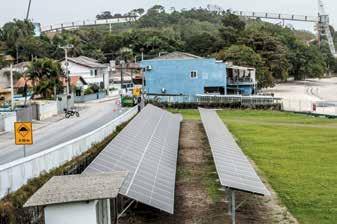
SOLAR PANELS AT SÃO FRANCISCO PILOTS: COST SAVINGS FOR THE BENEFIT OF THE ENVIRONMENT
photo: Gustavo Stephan
Maritime Pilot Ricardo Falcão takes office as president of PIANC Brazil
Advisor to the Brazilian Maritime Pilotage Institute is the president of the PIANC national section and outlines planning for 2026
The national section of the World Association for Waterborne Transport Infrastructure (PIANC) has a new board following the general assembly on December 5th. Ricardo Falcão, advisor to the Brazilian Maritime Pilotage Institute and vice-president of the International Maritime Pilots Association (IMPA), has taken over as president. Meanwhile, the executive secretary-general is the Institute's executive manager, Ana Paula Jaeger.
PIANC is the most important nautical association in the world, founded in 1885, long before the International Maritime Organization (IMO), in which it holds a seat, as does IMPA. Highly technical, the entity is responsible for producing reports that guide port planning, whose guidelines are recognized by the IMO and applied in the Brazilian Navy regulations. After all, it is the Maritime Authority that grants approvals and establishes operational limits in Brazilian ports.
Since 2007, the National Waterway Transportation Agency (ANTAQ) has represented Brazil in the international PIANC; its director-general, Frederico Dias, serves as the first delegate of the national section, which was set up in 2023 with the support of the agency.
Both the Brazilian Maritime Pilots’ Association and the Pilotage Institute are members of the national section. Brazilian specialists may take part in the committees responsible for developing international technical guidelines, incorporating the country's perspective into the planning process.
“Through the national section, we engage in global discussions on a wide range of topics. We can suggest amendments to already published PIANC reports that have global implications. When we do not take part in these conversations, we are affected without having the opportunity to raise technical issues which are specific to our country,” explains Ricardo Falcão.
Pilotage is intricately linked to this theme. As specialists in restricted navigation waters, maritime pilots are routinely consulted on operational advancements and new port facilities, in addition to taking part in simulations to assess the safety of these projects. In 2025, the Institute set up a partnership with ANTAQ to make its simulators available for the analysis of private terminal authorizations and the expansion of leases in public ports.
“We are also committed to creating knowledge in this field. In 2022, we launched the book Port Planning – Recommendations for Nautical Access (Planejamento portuário – recomendações para acessos náuticos), based on documents such as PIANC reports. In 2023, the year the national section of PIANC was created, we held the first Port Planning Seminar in Rio de Janeiro. The event has greatly contributed to advancing technical expertise in the maritime sector. In 2026, we will hold the fourth edition. Participating more actively in PIANC will certainly help us overcome challenges”, says Bruno Fonseca, president of the Brazilian Maritime Pilots’ Association and Chairman of the Institute's Board of Directors.
ANTAQ director Caio Farias highlights the importance of pilotage's contribution to the new administration:
"After ABEPH (Brazilian Association of Port and Waterway Entities) established the national office and gave structure to PIANC Brazil,
RICARDO FALCÃO, THE NEW PRESIDENT OF PIANC BRAZIL
photo: Bruno Merlin
pilotage takes over with all its expertise, its scope in the IMO, and active participation in PIANC International, joining forces in management.”
Among the topics to be discussed by PIANC Brazil throughout 2026, Ricardo Falcão mentions the standardization of the "super-convoys" (extra-large barge tows) transporting agribusiness cargo; offshore wind farms and their impact on navigation; bathymetry management on waterways and navigable rivers; climate change and its influence on access channels; and the human factor.
Regarding waterway super-convoys, the issue is that they only exist in Brazil and, therefore, are outside the standards of PIANC 141 report.
“We will produce the first publications on super-convoys, which may either be integrated into PIANC 141 or become an independent PIANC report on the subject,” Falcão anticipates.
With regard to offshore wind farms – promising in Brazil and the subject of Report No. 161 – the challenge lies in the fact that their turbines generate magnetic fields that interfere with the identification of structures on ship radars. The situation worsens during days of low visibility, as pointed out by Falcão:
“In countries such as Germany, France, and the Netherlands, this has already become a problem, as wind farms are deployed adjacent to port access channels, and in many of them, navigation between turbines is allowed. We need to set up parameters to avoid similar
cases. The issue is complex, as each country has sovereignty in issuing these regulations within its territorial waters.”
The national entity's planning also provides for the establishment of thematic committees and the organization of seminars, with a view to contributing to the discussions involving the Brazilian Navy, universities, Brazilian ports, and engineering companies in the sector. One of the coordinators of the Port Planning book and a leading expert on PIANC, Dr. Edson Mesquita, is the consultant at the Brazilian Maritime Pilotage Institute and will be involved in the debates.
“Pilotage will contribute to a broader dissemination of PIANC culture in Brazil, since the activity is present in all of the country's major ports,” notes Mesquita.
photo: Claudia Hinz para o Pixabay
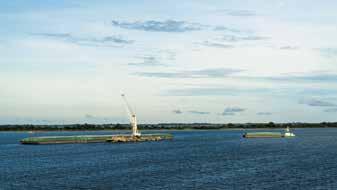
STANDARDIZING CONVOYS IS ON THE AGENDA
photo: Fernando Martinho
When docking goes sideways
The unseen underwater waves that can interfere with docking operations
DrSandyGrégorio
– Institut des Sciences de la Mer (ISMER) / ProfDanielBourgault – ISMER
Dr Peter Galbraith – Department of Fisheries and Oceans Canada / Prof Cédric Chavanne – ISMER
When docking large vessels, professional mariners and pilots closely monitor environmental conditions such as wind, waves, and currents, all of which directly affect a ship’s manoeuvrability. Yet another phenomenon – less known but no less influential –can also disrupt docking: underwater waves. These are large, slow-moving waves that travel beneath the surface, often hidden from view, but capable of deflecting a ship.
Underwater waves are similar in nature to surface waves, but instead of traveling along the air-sea interface, they propagate at depth along boundaries between water layers of different density. Although difficult to detect without specialised instruments and expertise, underwater waves are widespread in marine environments.
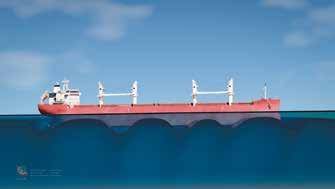
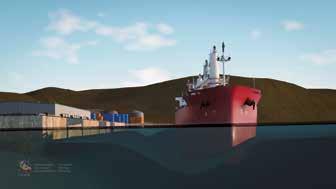
They can pose particular challenges in estuaries and fjords –marine environments where the water column typically has two distinct layers; a thin, light layer of brackish water about five to ten metres thick floating atop a denser layer of salt water. These waves form and travel along the sharp density interface between the layers, known as the pycnocline. In such fjord-like environments, underwater waves may reach heights of around ten metres and wavelengths between 50 and 100 metres, though these values vary considerably from one fjord to another. They also propagate much more slowly than surface waves – at speeds comparable to a walking pace. These waves typically have periods of two to three minutes, compared to a few seconds for surface waves. Although hidden beneath the surface, these waves can generate strong horizontal wave-induced currents –sometimes reaching up to one knot in speed – that extend from the surface down to tens of metres below. As a result, ships passing through them may encounter significant reversing currents along the full depth of the hull, which can interfere with manoeuvring.
Underwater waves tend to propagate as isolated groups, or wavetrains, typically composed of 10 to 12 waves. A full wavetrain
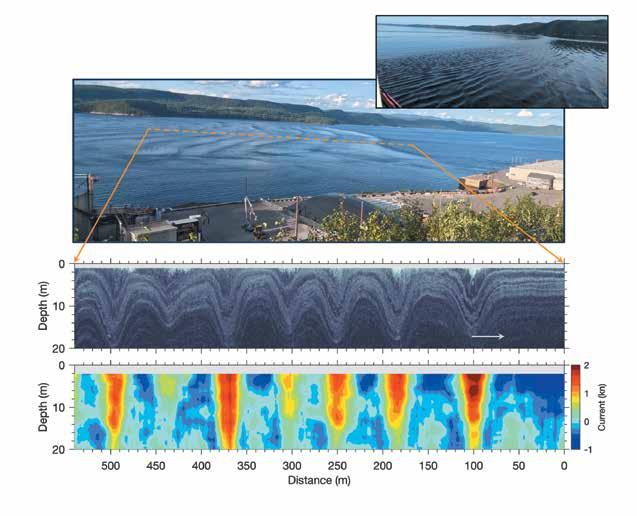
event usually lasts around an hour. Although they are difficult to detect, a trained eye can recognise the presence of underwater waves by the regular bands they tend to produce on the surface, alternating between smooth and rippled water, as shown in the top panel of Figure 1. These surface signatures, however, are only visible when the sea is calm.
FORMATION
Unlike surface waves, which are mostly driven by wind, underwater waves can form in dead calm. They may arise from flow disturbances over seabed features, from the meeting of water masses with different densities (such as at density fronts, which are common in coastal waters), or from many other types of natural perturbations that can excite the pycnocline. Many of these generation mechanisms remain poorly understood, making this an active field of oceanographic research. Remarkably, ships themselves can generate underwater waves as they move – especially in fjords, where the pycnocline lies within the ship’s draught. This can lead to the so-called ‘dead water’ phenomenon, first documented in 1893 by Fridtjof Nansen, the Norwegian Arctic explorer, in which vessels experience significant slowdowns due to increased underwater wave drag.
VESSEL INTERACTIONS
The idea that underwater waves can interfere with a vessel’s manoeuvrability, stability, and safety is not new. A study dating back to 1978 highlighted the potential impact of these waves on drillship operations and recommended that their effects be considered in future operations. More recently, a study from 2015 attributed the breaking of a mooring hawser of a Floating Storage Offloading unit in the Gulf of Guinea to the passage of a particularly strong underwater wave. Yet, aside from these two cases, no substantial field studies or observational
evidence have been reported, and none, to our knowledge, specifically address the influence of underwater waves on vessel manoeuvrability.
THE JAEGER ARROW INCIDENT
Despite the scarcity of documented cases, a striking incident occurring in 2019 drew our attention to the potential influence of underwater waves on vessel manoeuvrability. On the evening of 30 September 2019, about an hour and a half after high tide and during calm weather, the MV Jaeger Arrow approached the Grande-Anse terminal in the Saguenay Fjord, Canada, for a routine docking. During the final approach, the vessel was suddenly and unexpectedly pushed sideways, offshore, by a current of unknown origin. While this event compromised the initial docking attempt, it did not cause any incident, only delaying the docking operation. The Jaeger Arrow then sailed away and was repositioned for a second attempt, this time approaching the wharf much more closely to avoid being pushed off again by the apparent outward-flowing current. Approximately 30 minutes later, just as the Jaeger Arrow was about to dock –
being parallel to the wharf and about 10 metres away – it was once again unexpectedly displaced, but this time towards the wharf, resulting in a collision that caused damage to both the ship and the terminal.
Several circumstantial factors suggest that underwater waves played a role in the incident – in particular, the observation that the vessel was initially pushed offshore and then, 30 minutes or so later, pushed back toward the wharf. This behaviour and timing strongly suggests that the Jaeger Arrow was docking in the presence of an incoming underwater wavetrain that had collided with and then reflected off the wharf, generating significant transverse, wave-induced oscillatory currents. These currents would alternate direction – at one moment flowing offshore, and a minute or two later, flowing back toward the wharf.
FIELD EXPERIMENTS
To explore our hypothesis, we conducted a field experiment near the Grande-Anse terminal. As mentioned earlier, underwater
FIGURE 1
OF
waves leave a distinct surface signature under calm seas, forming alternating bands that could be captured by shore-based cameras or drones. When these images are spatially corrected to match real-world coordinates, a process known as georectification, they allow for accurate measurements of wave direction and propagation speed. To observe the waves below the surface, we used scientific echo-sounders which use ultrasound to image the water column structure, just like ultrasound is used to see inside the human body. In addition, current meters are used to record the characteristic patterns of opposing currents generated by the passage of these waves.
Our observations during the field experiment revealed numerous occurrences of underwater waves propagating toward and reflecting off the wharf. A clear and typical example of underwater waves approaching the Grande-Anse terminal from the west is shown in Figure 1. The top panel captures a series of alternating smooth and rippled bands on the water surface, typical of the surface signature of a wavetrain. In this particular case, about 10 bands can be counted, each marking a wave within the train. The inset shows the same scene as seen from our sampling research boat.
An ultrasound image of the upper 20 metres of the water column (the total depth at that location exceeds 100 metres), shown in the middle panel of Figure 1, reveals the structure of the underwater wavetrain. The wave height reaches ten metres, and the distance between successive wave troughs ranges from 50 to 75 metres. The bottom panel of Figure 1 shows the corresponding horizontal currents composed of alternating eastward (red) and westward (blue) currents. These currents can reach up to two knots. More importantly, the difference between opposing currents can be as much as three knots. This means that a vessel positioned parallel to such a wavetrain would experience transverse current shifts of that magnitude in just a minute or two. This is likely what occurred during the Jaeger Arrow’s docking attempt.
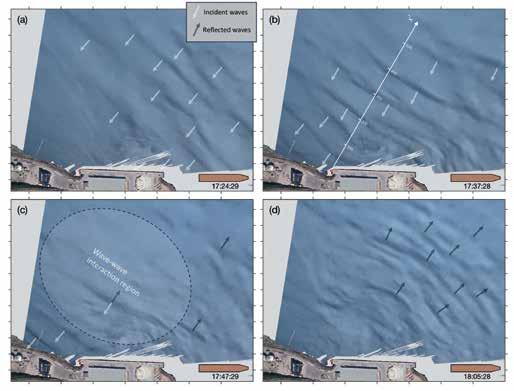
Figure 2 shows a sequence of georectified images capturing another wavetrain event approaching the wharf, this time from the northeast (panels a and b). This wavetrain consists of about ten waves, spaced roughly 100 metres apart. Such a wavetrain propagating toward the wharf generates currents toward the wharf. However, when the waves reach the wharf and shoreline, they reflect back and produce currents in the
FIGURE 2
SEQUENCE
GEORECTIFIED IMAGES SHOWING THE SEA SURFACE SIGNATURE OF UNDERWATER WAVES INTERACTING WITH THE GRANDE-ANSE WHARF. FOR SCALE, THE SCHEMATIC SHIP IN THE LOWER RIGHT CORNER OF EACH PANEL REPRESENTS THE MV JAEGER ARROW (171 M X 25 M). THE WHITE AXIS IN PANEL (B) IS LABELLED IN METRES.
opposite direction, away from the wharf. This behaviour is clearly visible in the images. At around 17:47 (panel c), part of the wavetrain has reflected while the remaining waves, with opposing currents, continue moving toward the wharf. In the overlapping zone of incident and reflected waves, labelled ‘wave-wave interaction region’ in the figure, the opposing currents interfere and partially cancel out, creating a blurry surface pattern that is harder to interpret. After the incoming wavetrain has fully passed, the reflected waves become more distinct and can be tracked as they propagate away from the wharf (panel d).
IMPLICATIONS FOR MARITIME SAFETY
Our study suggests that underwater waves in coastal environments can interfere with docking operations by generating horizontal currents strong enough to displace a vessel during manoeuvring. As shown in Figures 3 and 4, above, the scale of these waves is far from negligible – with heights comparable to a ship’s draught and wavelengths exceeding its beam. As such, underwater waves are more than just a scientific curiosity – they can have practical implications for port operations and maritime safety.
We are keen to gather additional accounts of maritime events related to underwater waves and invite port authorities, mariners, and other maritime stakeholders to share their observations with our team of oceanographers. Reports of such occurrences can support ongoing research aimed at better identifying where these waves occur and how they affect navigation.
This research was principally funded by the Fonds de Recherche du Québec and is a contribution to the Québec-Océan scientific program. We would like to thank Port Saguenay for their continuous support and for providing access to the site to deploy our instrumentation.
For readers interested in the scientific details underlying this study, a more technical version of this work has been published in Scientific Reports:
Grégorio, S., Bourgault, D., Galbraith, P.S., Chavanne, C., Hupé, L., Richard, A., and Landry, É. The impact of underwater waves on ship manoeuvrability: a case study in a fjord. Sci Rep 15, 5598 (2025). https://doi. org/10.1038/ s41598-025-90132-x
Corresponding author: sandy_gregorio@uqar.ca
Originally published in the Nautical Institute Magazine Seaways, in association with the Royal Institute of Navigation in July 2025 and reproduced with the author’s permission
nautinst.org
FIGURE 3
FIGURE 4
fast & focused
COOPERATION BRAZIL’S PARTICIPATION IN ARGENTINIAN EVENTS
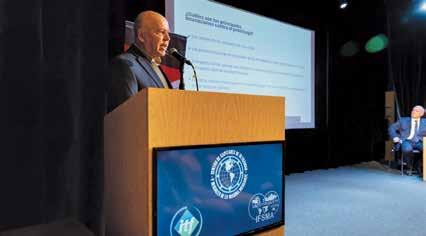
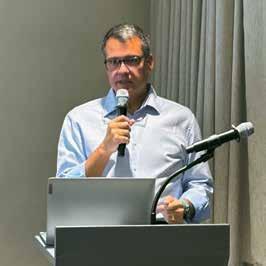
In the second half of the year, the Brazilian Maritime Pilots’ Association took part in two events organized by the Argentine Chamber of Pilotage and Piloting Activities. In October, the President of the Brazilian entity, maritime pilot Bruno Fonseca, attended the National Pilots’ Meeting together with Edson Mesquita, a consultant at the Brazilian Maritime Pilotage Institute. Bruno presented the advances brought about by the Pilotage Law approved in 2024, while Mesquita stressed the importance of the pilot’s role in ship maneuvers in confined waters. At a seminar held in August, Otavio Fragoso, a consulting board member of the Brazilian Maritime Pilots’ Association, highlighted the fallacious arguments used worldwide to attack the pilotage system –particularly criticism regarding service costs. He presented charts from a university study showing that pilotage costs are minimal within maritime freight rates and in the final price of exported soybeans, without harming consumers or export competitiveness.
ASIA MISSION
IBI DELEGATION VISITS THE PORTS OF BUSAN AND HONG KONG
In November, Ricardo Falcão, Vice-President of the International Maritime Pilots' Association (IMPA), joined the Asia Mission of the Brazilian Infrastructure Institute (IBI), the technical arm of the Joint Parliamentary Front for Ports and Airports (FPPA) in Brazil’s National Congress. Industry executives and members of parliament carried out technical visits to the ports of Busan, in South Korea, and Hong Kong. The agenda also included meetings with Brazilian diplomatic representatives. The mission’s objective was to gather inputs to support improvements to national port legislation currently under discussion in Legislature.
PILOT OTAVIO FRAGOSO DURING HIS SPEECH
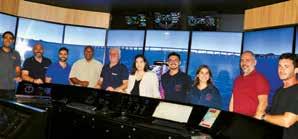
PROFESSOR MESQUITA AND PILOT BRUNO, THIRD AND FIFTH FROM THE LEFT
TRAINING
CURRICULUM REVISED FOR PILOT STATION OPERATORS
The course for operators at pilot stations, delivered by the Brazilian Maritime Pilotage Institute, has undergone a curriculum revision. The Person-Overboard Rescue Training has been added to the program. The Institute has also opened the course to staff from the Ministry of Ports and Airports and the National Waterway Transportation Agency (ANTAQ), adding technical expertise to support governmental analysis of projects in the maritime and port sectors.
NEW BOARDS AT FENAPRATICOS AND THE BRAZILIAN MARITIME PILOTAGE INSTITUTE
SUPPORT
The Brazilian Maritime Pilots’ Federation (Fenapraticos), which operates in the labor sphere, and the Brazilian Maritime Pilotage Institute, focused on training and project assessment, have appointed new boards. At Fenapraticos, maritime pilot Gustavo Martins remains President. Former director Carlos Alberto Barcellos has moved into Vice-Presidency, while maritime pilot Vanessa Zamprogno has replaced him in the Administrative Board. Pilots Adonis dos Santos and Pedro Parente continue as Chief Financial Officer and Institutional Director, respectively. At the Institute, maritime pilot Bruno Fonseca also continues as President of the Board of Directors. Marcio Fausto has taken over as Vice-President. Former President Marcello Camarinha is now Chief Financial Officer, and Pedro Parente is the Technical Director. Jacqueline Wendpap remains as Executive Director.
THE BRAZILIAN MARITIME PILOTS’ ASSOCIATION RENEWS PARTNERSHIP WITH ISAQUIAS QUEIROZ
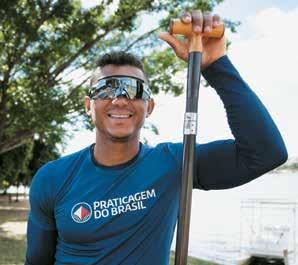
The Brazilian Maritime Pilots’ Association has renewed its sponsorship agreement with canoeist Isaquias Queiroz, a five-time Olympic medalist (Rio 2016, Tokyo 2020, and Paris 2024). The athlete from Bahia, who trains in Lagoa Santa (Minas Gerais), is preparing for the Los Angeles 2028 Olympic Games, aiming to remain among the greatest Brazilian athletes in history. “I’m happy that pilotage continues to support me and encourage sport. We have this partnership since 2020, and it fills me with pride to represent such an important activity for the country,” said Isaquias
photo: Publicity
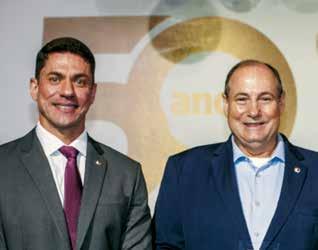
PILOTS BRUNO FONSECA (INSTITUTE) AND GUSTAVO MARTINS (FENAPRATICOS)
media success
IT WENT VIRAL
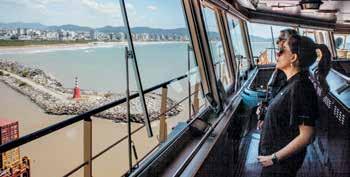
More than 840,000 views between January 6th and 22nd, and 12,500 new followers on our Instagram profile. That was the reach of the video we posted showing maritime pilots Kelly Greicy and Francisco Hyppolito conning a 336-meter container ship at the entrance to Navegantes (Santa Catarina). We followed the maneuver on board to produce the cover story that opens this edition of Rumos Práticos. All photos from the voyage are also available on our Flickr.
HALF A MILLION
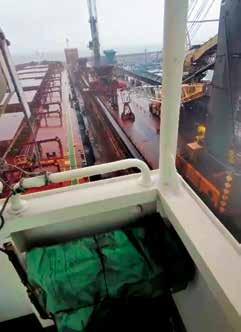
A 255-meter bulk carrier unberthing maneuver at Pecém Port generated 525,000 views across our social media channels, bringing in nearly 2,000 new Instagram followers. Maritime pilot Bruno Fonseca recorded the operation from his own perspective, using smart glasses from the moment he boarded the vessel. Filmed on a rainy day, the footage captures the pilot’s orders to tug masters and the bridge team, clearly illustrating the complexity of the activity.
NOT AI
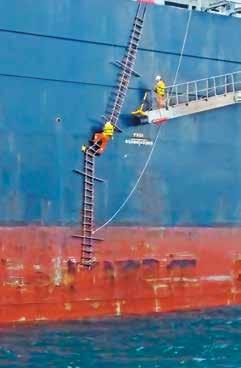
Ranking third in audience, with 415,000 views, was a video showing crew members placing their own lives at risk while attempting to adjust the ship’s accommodation ladder. The incident occurred in Portugal and was shown at the 47th National Pilots’ Meeting by Miguel Castro, President of the European Maritime Pilots’ Association (EMPA). Although it may appear almost comical at first glance, the scene serves as a stark reminder of the importance of proper inspection of embarkation and disembarkation arrangements by all pilots. Safety is everyone’s responsibility.
photo: Gustavo Stephan
Video reproduction
The BRAZILIAN MARITIME PILOTS’ ASSOCIATION is also on LinkedIn
We have broadened our engagement with the public and joined the world's largest professional network, with more than 850 million users.
Follow us on social media for exclusive content on the work of the professionals who keep the Brazilian economy moving with safety, efficiency and environmental protection.