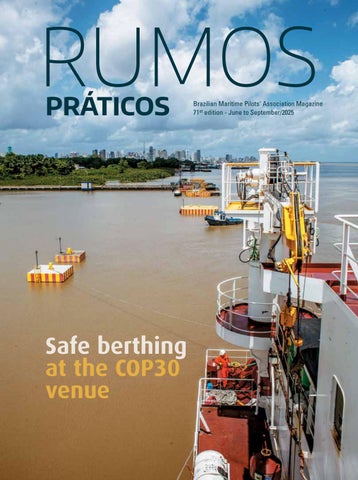
Brazilian Maritime Pilots' Association Magazine 71st edition - June to September/2025
We have reached the 71st edition of Rumos Práticos, closely following the maritime pilotage challenges, achievements and transformations at home and abroad. In this issue, our cover story delves into the reality of Pilotage Zone 3 in Pará, the venue for COP30 and where the maritime pilot profession is intertwined with the sustainable development of the Amazon. Four ZPs remain to complete our series on the 20 Pilotage Zones.
We also mark a historic moment: the name change for the Brazilian Maritime Pilots’ Association in Portuguese from Conselho Nacional de Praticagem to Praticagem do Brasil, consolidating the activity’s representativeness and strategic role at the national level.
Port planning and its close connection to safety and efficiency are central themes of the seminar highlighted in our pages, as are the new standards approved by the International Maritime Organization (IMO) for ship ladders used by pilots to board and disembark, which are fundamental to their safety.
We also bring you a summary of the main topics addressed at the Latin American Forum of Pilots in Peru, as well as an article on the ten years of the VTS (Vessel Traffic Service) at the Port of Açu (Rio de Janeiro).
We close the edition with an inspiring story in Rio Grande (Rio Grande do Sul - RS), where the donation of a boat by the pilotage service reinforced a project formed by women who are breast cancer survivors.
We always seek to be in tune with the major social, environmental, and technical issues in the sector.
Enjoy your reading!
Otavio Fragoso is the editor in charge
Brazilian Maritime Pilots’ Association
Av. Rio Branco, 89/1502 – Centro – Rio de Janeiro – RJ – CEP 20040-004
director president of Brazilian Maritime Pilots' Association
Bruno Fonseca de Oliveira
director vice-president
Marcello Rodrigues Camarinha
directors
Felipe Perrotta Bezerra
Jelmires José Galindo Junior
Ricardo Augusto Leite Falcão (vice-president of IMPA)
Rumos Práticos
planning
Otavio Fragoso/Flávia Pires/Katia Piranda
editor Otavio Fragoso
writer Rodrigo March (journalist in charge)
MTb/RJ 23.386
translation
Julia Grillo
revision
Elvyn Marshall
layout and design
Katia Piranda
pre-print
DVZ Impressões Gráficas
cover photo: Gustavo Stephan The
Where the environment is most sensitive (ZP-3)
Brazilian Maritime Pilots’ Association has officially changed its name in Portuguese to Praticagem do Brasil
Port Planning Seminar reinforces the importance of combining efficiency and safety
Brazilian Maritime Pilotage Institute and regulatory agency sign protocol
IMO approves new rules for boarding and disembarking ladders
In Lima, Latin American pilots gather to discuss mutual challenges
Unitapajós joint venture grain PUT
Liquid Bulk Terminal
Grain waterways PUT
Ponta da Montanha grain PUT Imerys Kaolin PUT
Where the environment is most sensitive
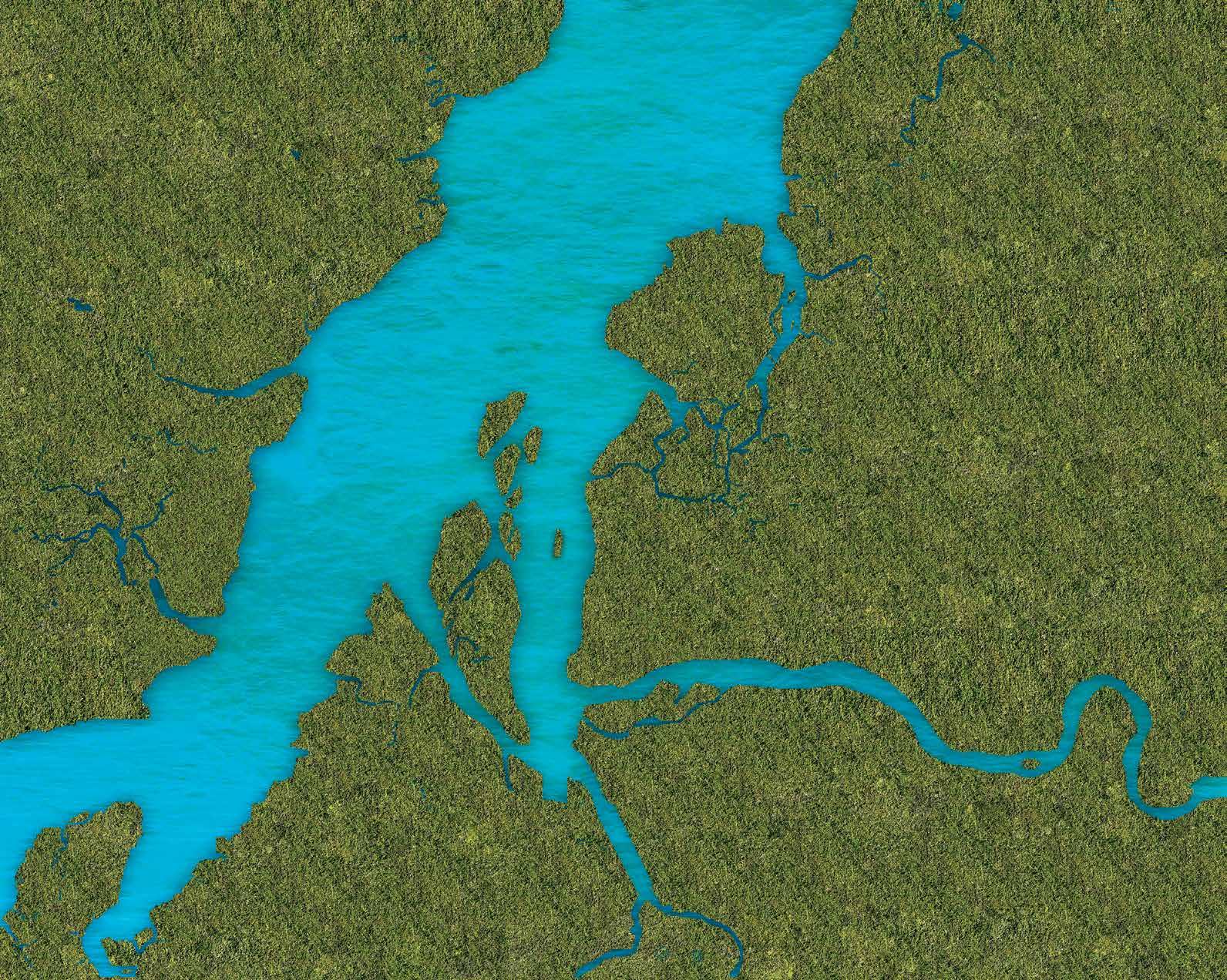
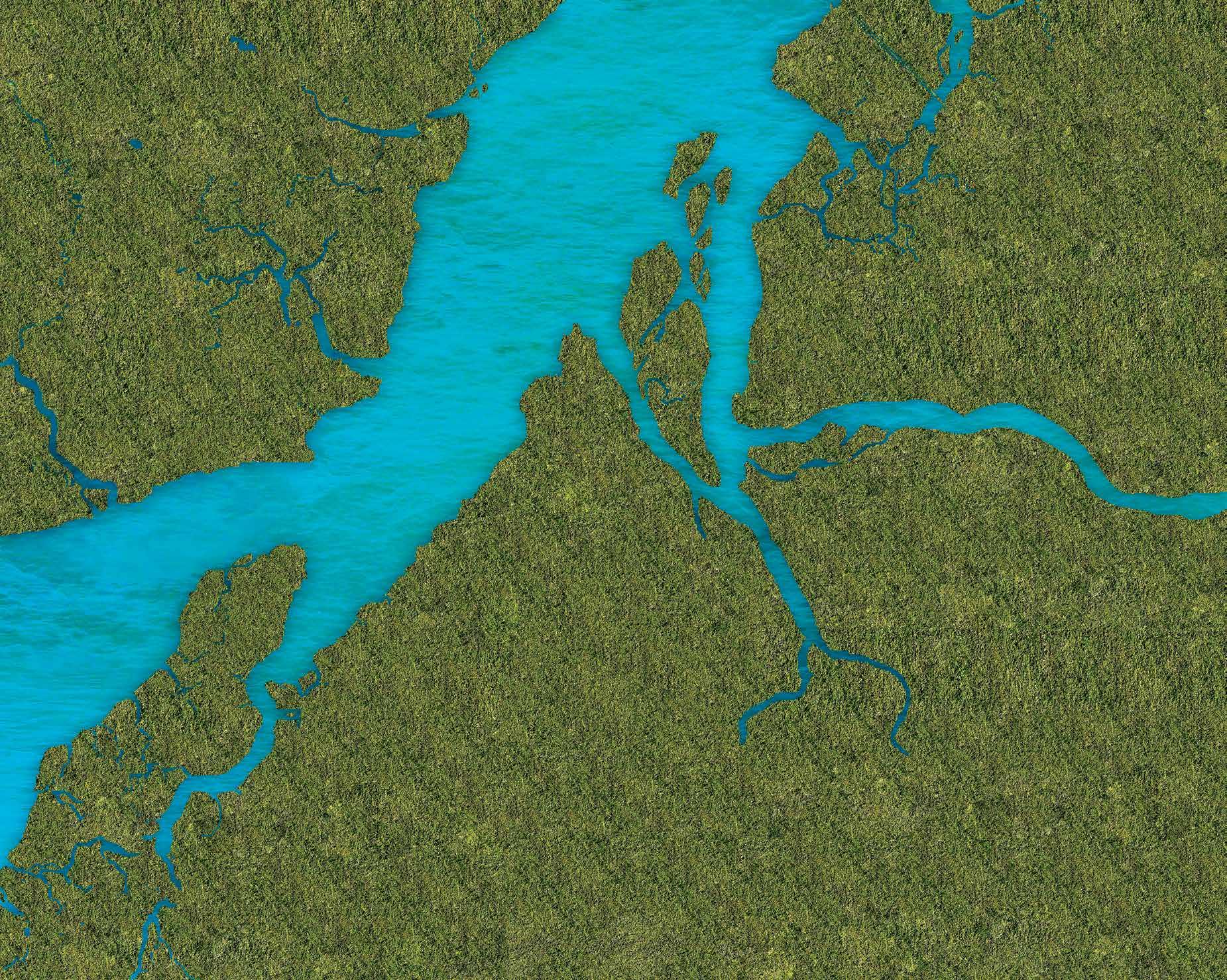
The venue for COP30, Pilotage Zone 3 (Pará) is one of three located in the Amazon, where the waters irrigate the forest, quench thirst, and feed the population
Mosqueiro Base
Malato Anchorage
Marajó Bay
Quiriri Channel
Vila do Conde Port
Arrozal Base
Vista Alegre Watchtower
Icoaraci Anchorage
Guajará Bay
Outeiro Terminal Atem PUT
Miramar Terminal
Belém Port
Belém Watchtower
pilotage in Brazil
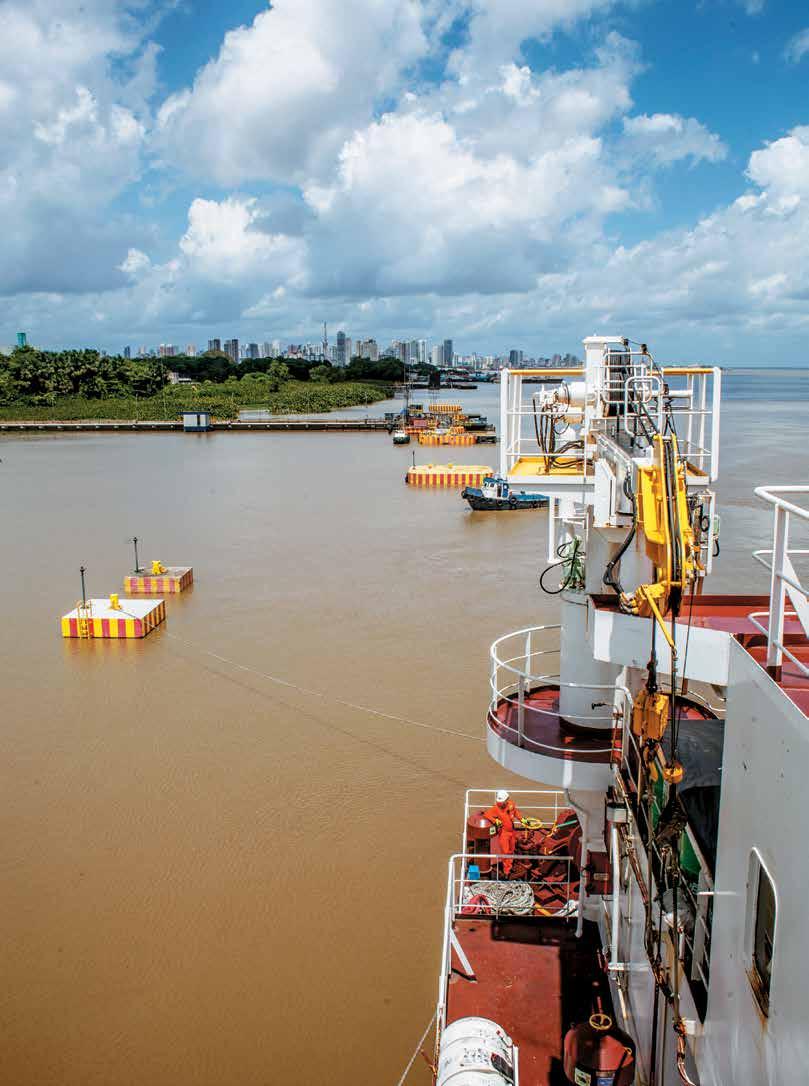
Hail, O land of rich forests. Hail, O land of mighty rivers. Thus begins and ends the anthem of Pará. In the 15th article in the series on Brazilian pilotage zones, Rumos Práticos returns to the Amazon to learn about the work of the guardians of the Pará River (ZP-3), whose competence has been highlighted in documents since the 19th century. In this region, in addition to their logistical importance, maritime pilots play an essential role in protecting the rich biodiversity that sustains the lifestyle of riverside communities. Each year, 37 professionals safely perform more than 4,400 ship maneuvers, contributing to sustainable development in the host state of the 30th UN Climate Change Conference (COP30).
The ZP area is huge. It stretches from the mouth of the Pará River inland, to the access point to the Estreitos Region, considering the Tocantins River as a part of it. Public ports and private terminals (PUTs) handle all types of cargo, mainly from agribusiness, and are located in the bays of Guajará and Marajó.
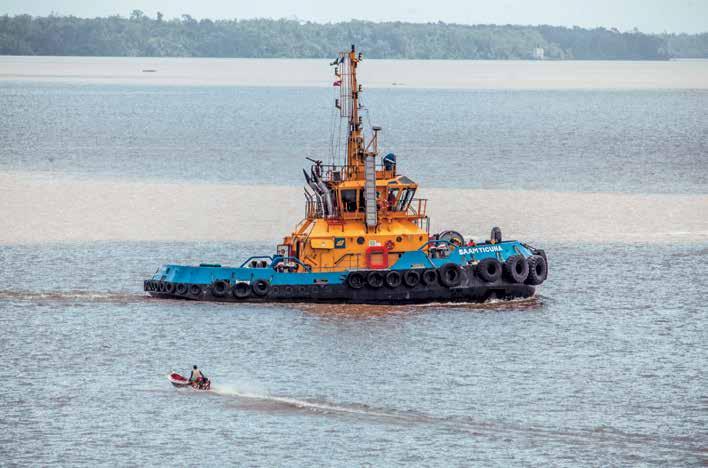
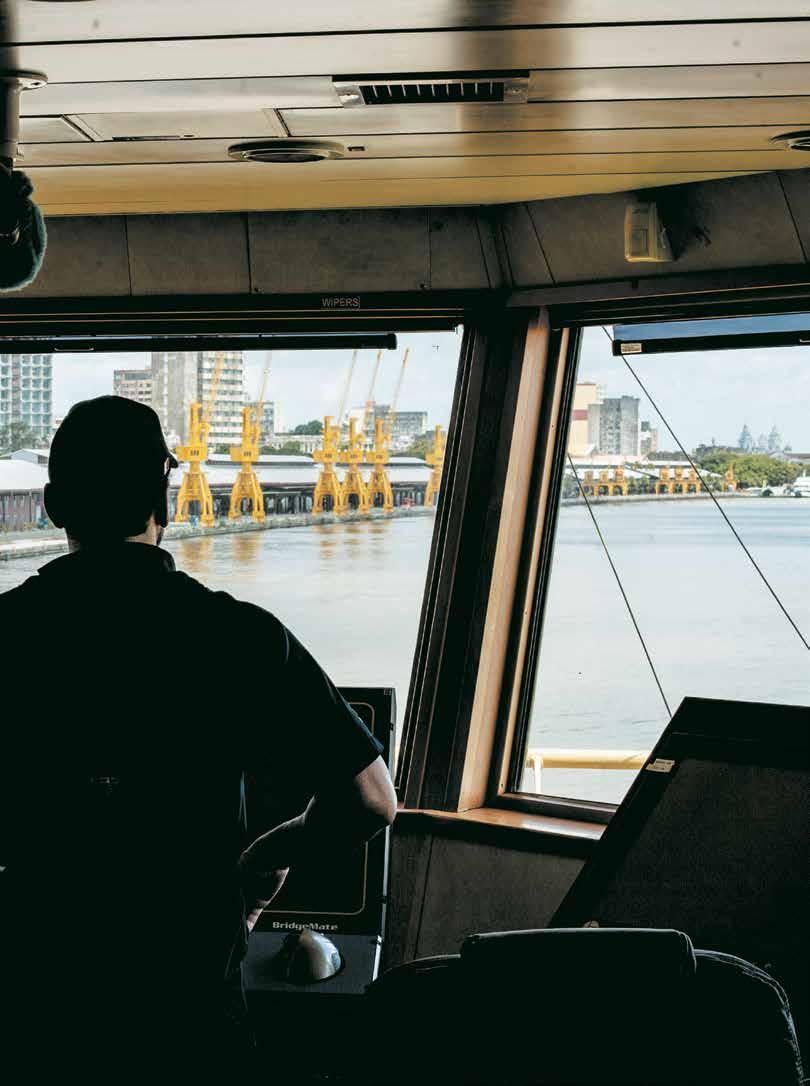
The challenges for pilots begin right at the two access points to the muddy river. From Belém to Vista Alegre, where the boats depart for the boarding/disembarkation points, it is about a three-hour sail. By boat to the ship, if the entrance is through the Quiriri Canal, it takes another two and a half hours, due to the speed limit imposed by the passage through an environmental reserve. In this naturally deep channel, pilotage is compulsory for vessels with a draft greater than 12.2 meters or carrying hazardous cargo. The maximum draft is 13.90 meters.
In the Espadarte Canal, the service is mandatory for all vessels, and the maximum draft is 11 meters.
"It is not as narrow as a port channel, but it has shallow passages, requiring the tide to navigate it. In addition, it is full of fishing boats”, reports pilot André Tunes.
At the mouth, the current is considerably stronger, varying from five to seven knots at spring tide, according to pilot Evandro Saab, president of the Union of Pilots of Ports and Navigation of the State of Pará. In the inland stretch of the river, he says, the variation is three to four knots:
"We learned from our older colleagues how to work the current. Pilots like it, even though it seems counterintuitive”.
To cope with such a force of nature, it is for a good reason that all tugboats in the ZP are azimuth. When it rains heavily in the first half of the year, the ebb tide is also very strong, notes André Tunes:
"The ship sails at up to 18 knots on departure”.
From Espadarte to Mosqueiro, it takes five hours to sail; and from Quiriri, six to seven hours. The departure from Quiriri takes 12 hours because the ship has to anchor and wait for the tide to turn. It is as if the tide were a wave coming from the mouth of the river inwards. At the entrance, the ship surfs the wave. At the exit, the wave acts as a speed bump, slowing down the journey.
In Mosqueiro, the vessel can either anchor or proceed to moor or anchor further ahead. Maneuvers at the Icoaraci and Malato anchorages are frequent and very complex due to the current, also requiring precision, as the areas are always crowded.
From Mosqueiro onwards, pilotage is mandatory for all vessels, and the maritime pilot who boarded at the mouth of the river is replaced. It takes approximately two and a half hours to reach Vila do Conde in Barcarena.
The wind is yet another feature of the region. The first half of the year is the rainy season, known as winter time. At this time of year, there is little wind, but there are storms lasting up to half an hour that reduce visibility and are accompanied by strong
MARITIME PILOT ANDRÉ TUNES ON THE WING OF
MARITIME PILOT EVANDRO SAAB LEAVING BELÉM PORT
gusts, which can reach 50 knots. Maritime pilots always check how close the storm is and do not initiate maneuvers or enter narrow channels during this period. The downpour is very clear on the horizon, always coming from the Northeast-East. In Belém, they say that when it doesn't rain every day, it rains all day.
In the second half of the year, the rain decreases, and the phenomenon is not usual; the wind, however, is constant, reaching 15 knots at dawn and 40 knots in the afternoon. Each terminal has its operational limits. The ebb tide in the river is always contrary to the wind. Large waves form depending on the strength of tide and wind. In such cases, operations are aborted because the tugboats will be in critical operating conditions.
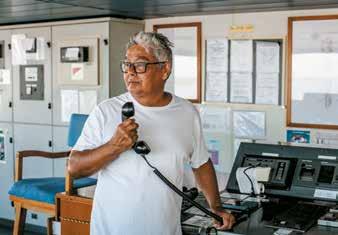
When leaving the inner berths of Vila do Conde Port, wind and currents require caution, as witnessed by Rumos Práticos during a unberthing with pilot Arino Castro:
“The wind pushes the vessel toward the pier, and I use the tugboats to hold it in place. It is more concerning when passing the ship at the end of the pier. On unberthing, the current pushes you towards it. You have to head for the tip of the TGL (Liquid Bulk Terminal).”
Another point that requires extra attention from pilots concerns smaller vessels that cross the bow of ships, which either don't have radios or don't respond to communication. These include barges traveling between Mamão and Maguari, passenger boats and speedboats between Cotijuba Island and Icoaraci, and fishing boats.
ph
Gustavo Stephan
MARITIME PILOT MILTON COSTA SAILING TOWARD MIRAMAR
SMALL BOAT TRAFFIC ATTRACTS ATTENTION ON BOARD
“Generally, people won't respond to radio contact unless they are in trouble, in which case they call us,” says maritime pilot Milton Costa.
During an outing to anchor at the Miramar Terminal in Belém, Rumos Práticos witnessed a small boat change course when it realized there would not be enough time to cross the ship's bow.
Pilots of pilot boats need to be vigilant.
"We have to be very careful when piloting here, especially at night, because of visibility. We often see fishermen with their lights off in our navigation route or the ship's route. They fish inside the channel and in the anchorage area. And they don't understand, they don't move. We have to blow the whistle or ask them to leave the area," says Captain Claudionor Paiva.
Maritime pilot Arino Castro dealt with an emergency situation early in his career when a vessel carrying 200 passengers crossed his bow as he entered the Port of Belém. The incident
occurred near the Docks Station, now a hotspot for restaurants in the city.
“I had to make a decision and had to steer the ship I was piloting onto a sandbank,” he recalls.
The Belém Canal is the narrowest in the ZP and is not dredged, limiting it to ships up to 190 meters in length that pass very close to the banks. The margin for error is minimal. In addition to the Docks Station, the vessels pass another city landmark: the Ver-o-Peso Market, which dates back to 1625 and houses a large market. Passenger and fishing boats still circulate on the canal. There, pilot Evandro Saab also experienced a difficult situation:
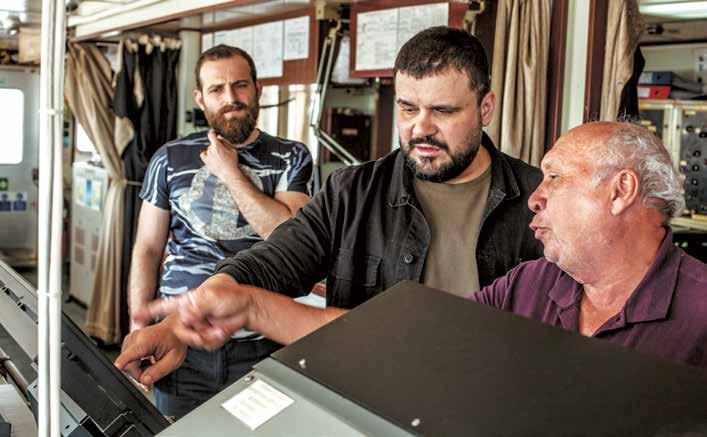
"When the ship was very close to Ver-o-Peso, the rudder locked up on the port side. There was no tugboat to assist with the maneuver. I had to act quickly and perform an emergency procedure, using the ship's engine and anchors to avoid colliding with the Market and the Docks.”
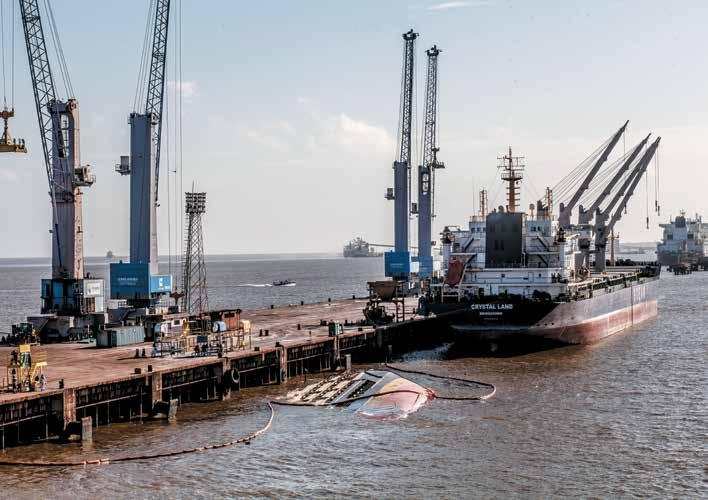
HAIDAR SHIP STILL WRECKED IN VILA DO CONDE
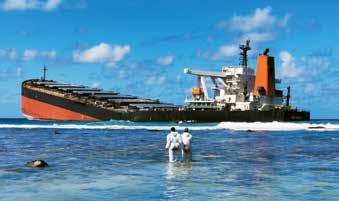
The challenges of the activity also include structural issues. Public terminals may lack fenders (to absorb the impact of berthing) and mooring bollards. In Vila do Conde, the Haidar ship has been a wreck for ten years, making operations at berth 302 unfeasible. The Lebanese-flagged vessel capsized and sank in 2015 after loading cattle. The accident caused major pollution, with 357.5 cubic meters of oil spilled. At the time, the port had no emergency action plan.
Three terminals are misaligned with the current, which hinders the maneuvering. Two are located in Vila do Conde: the Private Use Terminals Imerys Caulim and Grãos Ponta da Montanha. The third, managed by Companhia Docas do Pará (CDP), is located on Outeiro, an island in Guajará Bay, 40 kilometers from the Port of Belém. Within the ZP area, CDP is also responsible for the operation and administration of the ports of Belém and Vila do Conde, and the Miramar Terminal.
In Outeiro, the current sometimes reaches four knots and pushes the ship away from the pier, forcing it to enter at a more acute angle, bow first into the terminal. The federal government signed a contract with two cruise ships to serve as accommodation units for COP30. For this reason, in July the terminal underwent expansion work to accommodate them. Local maritime pilots
participated in simulator training and on vessels of the same size as those expected in other pilotage areas.
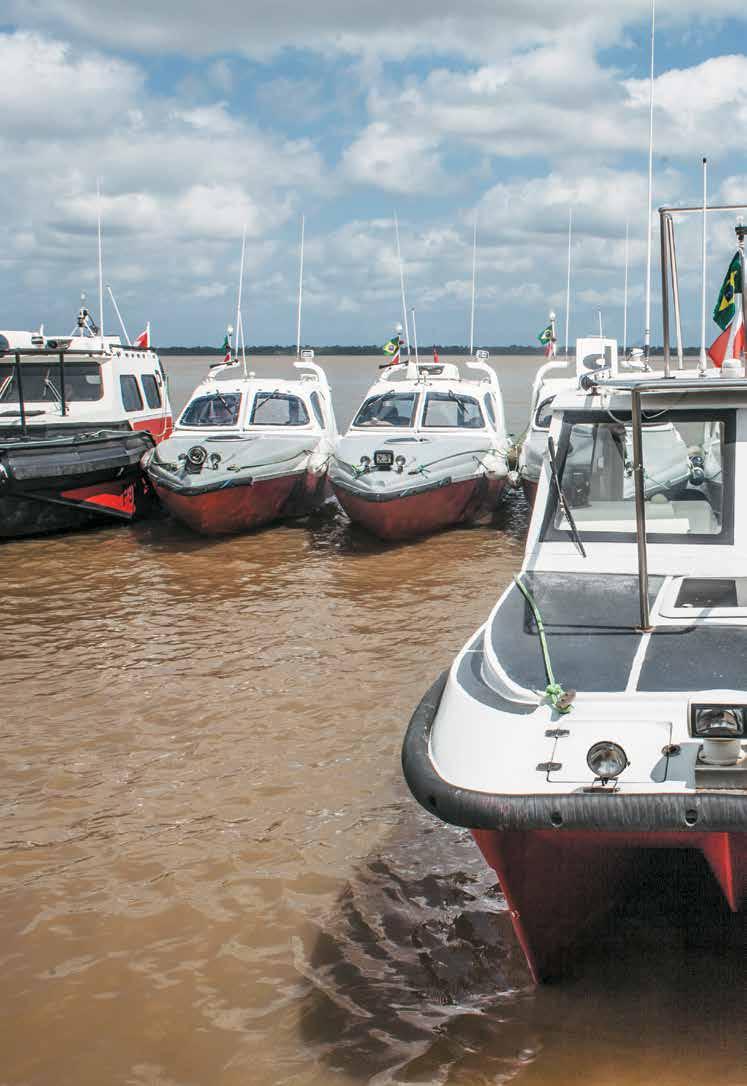
To overcome barriers and maintain service readiness with boarding/disembarkation points up to 180 kilometers away, Pará Pilotage needs to have a robust structure and make significant investments. There are 154 employees, 18 motorboats, and four operational points (Vista Alegre Watchtower, Mosqueiro Base, Belém Watchtower and Arrozal Base).
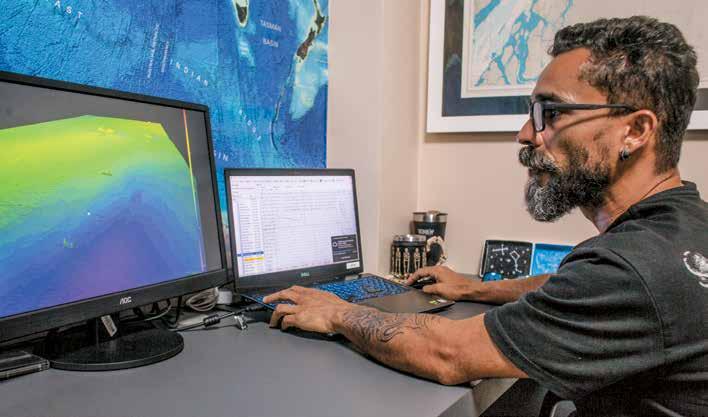
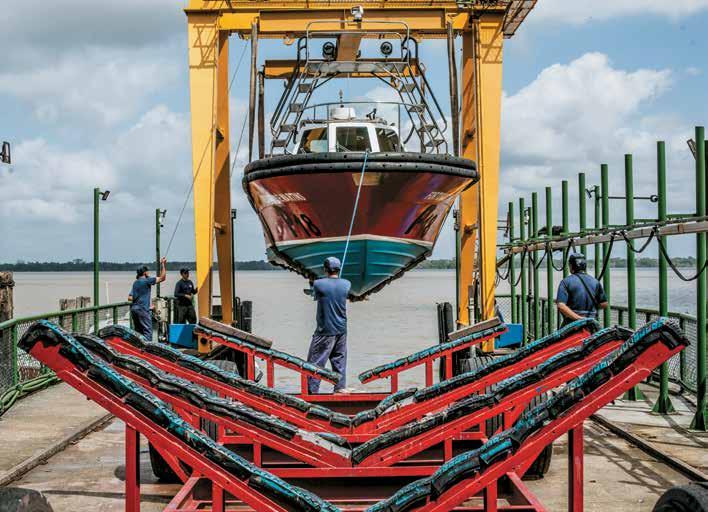
The maintenance shipyard at Belém Watchtower has docking capacity for four motorboats. Of the 18 vessels, ten are pilot boats, seven are support boats, and one is a bathymetric boat used to survey the depths of the Pará River. The rapid movement of sandbanks requires regular monitoring to update the official nautical chart. In 2019, the service supported the Navy in identifying debris and vehicles on the bed of the Moju River after a bridge collapsed in the interior of the state.
Pilotage also contributes to the marking of the Quiriri, Espadarte, and Belém channels. The virtual buoy system was a pioneering one, implemented in 2018. Physical buoys were vandalised, were difficult to maintain in long channels, or difficult to see in heavy rain. The Espadarte Canal had been without buoys for two years
ph
oto:
Gustavo
Stephan
MARITIME PILOT ARINO CASTRO DIRECTS COMMANDER
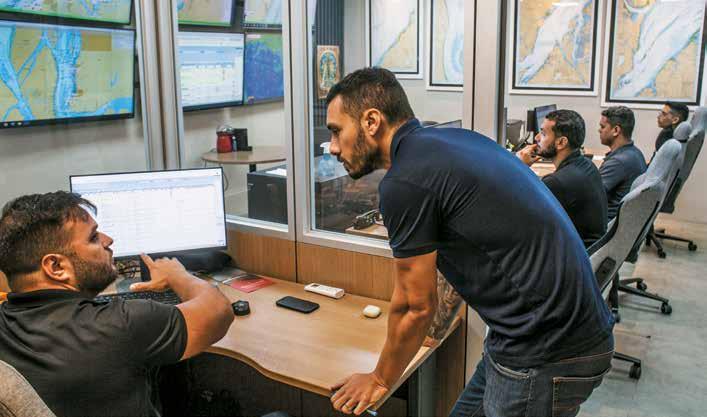
VIRTUAL BUOYS ARE EMULATED FROM THE OPERATIONS CENTER
DEYVISON ROBERDAN, FROM THE BATHYMETRY SERVICE
until the virtual navigation aids began operating. The operations center has the capacity to emulate 40 electronic signals. The system is versatile and can be used to mark accidents, new banks, positioning for pilot boarding, etc.
Another investment in maneuvering safety is the portable pilot units (PPUs) from Brazilian company Navigandi. The portable electronic navigation device provides more accurate information than onboard systems, assisting the pilot in his decision-making. The equipment is often used in ship-to-ship (STS) operations with gas ships in Vila do Conde and at Atem PUT in Belém, where ship turning is more difficult.
In 2024, the Pilotage's activities boosted cargo handling at ports, terminals, and mooring buoys installed in the ZP. There were 51.9 million tons, an increase of 6.24%, according to the Waterway Statistics of the National Waterway Transportation Agency (Antaq).
The busiest locations were the Vila do Conde Port (20.2 million tons), Grain Waterways PUT (11.5 million), Unitapajós joint venture grain PUT (7.8 million), Ponta da Montanha Grain PUT (5.9 million), and the Port of Belém (3.9 million). The cargoes include soybeans, corn, wheat, fertilizer, bauxite, alumina, kaolin, oil and gas by-products, containers, live cargo and general cargo.
In addition to providing resources with its mission, the pilotage service invests in various social and environmental projects, especially in Marapanim, Barcarena, and the metropolitan region of Belém. The goal is to encourage the community to adopt good practices and preserve the forest, in line with the COP30 agenda against global warming. This action reinforces the category's commitment to environmental preservation and sustainable growth in the Amazon region. Bring on the big event!
photo: Gustavo Stephan
SHIPYARD
photo: Gustavo Stephan
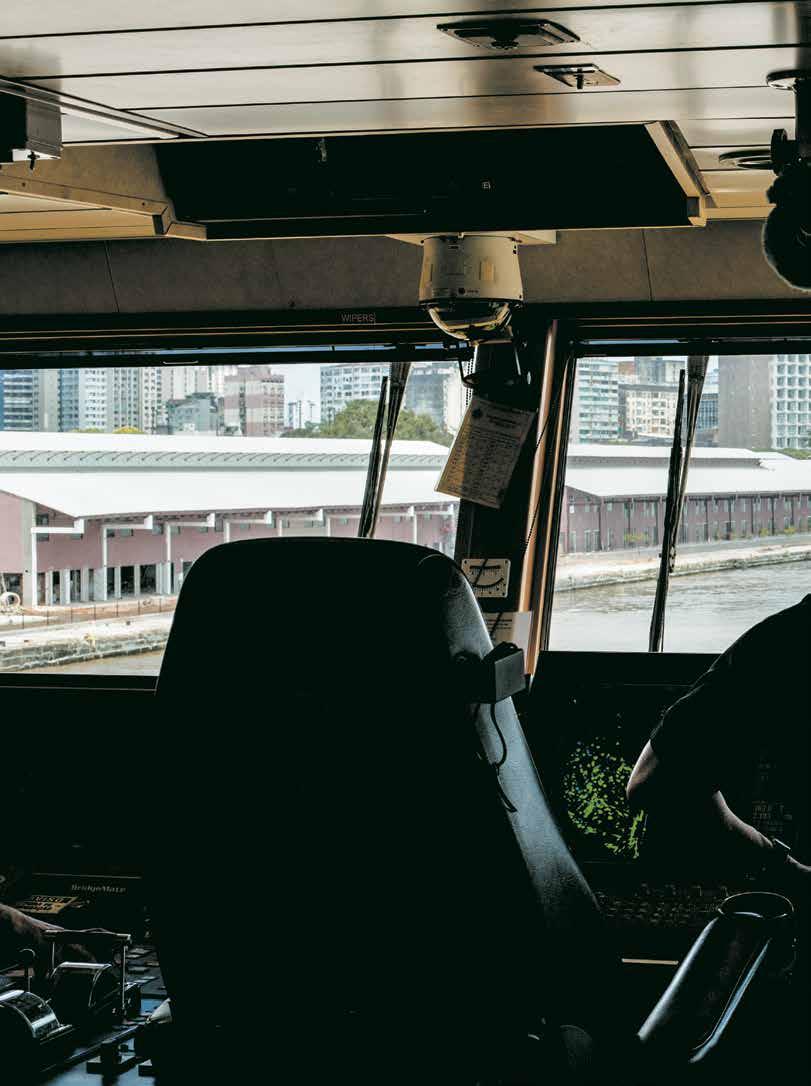
VIEW FROM THE DOCK STATION BRIDGE, THE CITY’S GASTRONOMIC HOTSPOT
Brazilian Maritime Pilots’ Association has officially changed its name in Portuguese to Praticagem do Brasil
The change was announced during the institution's 50th anniversary in Rio de Janeiro
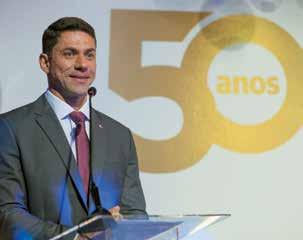
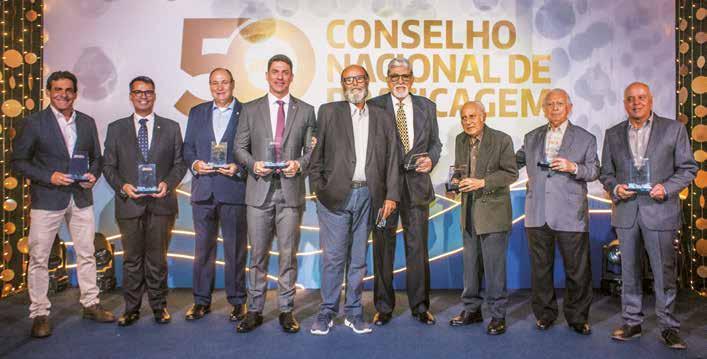
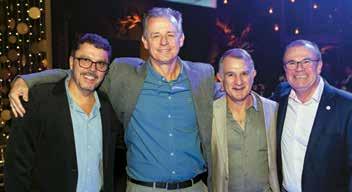
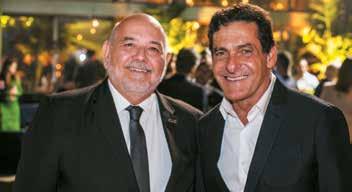
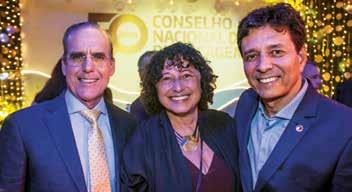
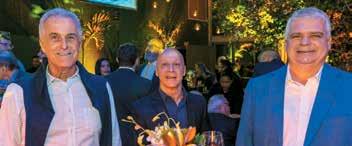
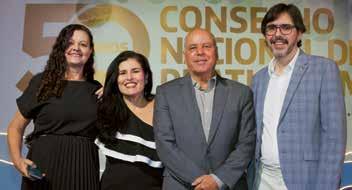
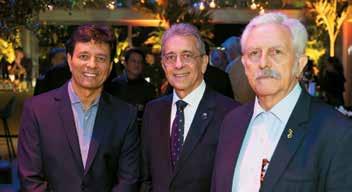
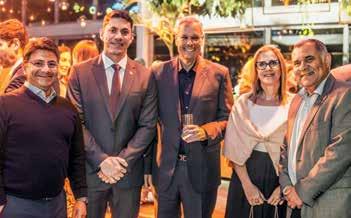
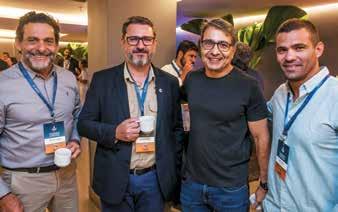
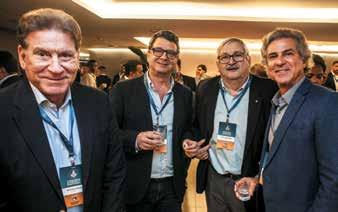
The maritime community and Brazilian pilots attended, in June, the event celebrating the 50th anniversary of the Brazilian Maritime Pilots’ Association in Rio de Janeiro. On the occasion, the new name of the entity in Portuguese, Praticagem do Brasil , was announced. Among the approximately 300 guests were representatives from the Maritime Authority, the Maritime Court, the Ministry of Ports and Airports, port authorities, port operators, shipowners, maritime support companies, port users, as well as specialized lawyers and researchers. Olympic medalist Isaquias Queiroz, the athlete supported by Brazilian pilotage, also attended the celebration.
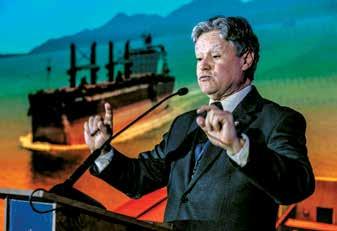
The president of Brazilian Maritime Pilots’ Association, pilot Bruno Fonseca, gave a brief speech highlighting the history of the association, which was founded in 1975. The institution is recognized by the Navy as the national representative body for the activity, holds one of the vice-presidencies of the International Maritime
Pilots’ Association (IMPA), and is part of the Brazilian delegation that serves on the International Maritime Organization (IMO).
“Check out the relevance we have acquired on the national and international scene. And all this was built up through the union of Brazilian pilotage. Our entity was the basis for coordinating actions on behalf of pilotage services that are so diverse and have very different characteristics, due to the size of our country. There have been many initiatives in favor of the development of the service and, consequently, of society. The main one was the protection of the pilotage system without competition between pilots. This competition degraded quality in certain countries, leading to accidents and increased insurance costs”, said the president.
After the speech, guests watched the new institutional video for the first time. The film was published on the Brazilian Maritime
photo: Gustavo Stephan
THE FORMER PRESIDENTS AND THE CURRENT PRESIDENT DURING THE TRIBUTE AT THE PARTY
Pilots’ Association's social media on June 12, the association's anniversary and the 217th anniversary of regulated pilotage in the country.
Following the video, former presidents of the institution who were present were honored, in chronological order according to their periods of mandate, including the current one: pilots Euclides Alcantara, Mauro de Assis, Paulo Esteves, Otavio Fragoso (editor of Rumos Práticos), Carlos Eloy, Marcelo Cajaty (vice president of the National Federation of Pilots), Gustavo Martins (president of Fenapráticos), Ricardo Falcão (vice president of IMPA) and Bruno Fonseca. Vice President Marcello Camarinha participated in the presentation of the nameplates.
Next, the collaborators were remembered, as was the president of São Paulo Pilotage, pilot Fábio Mello Fontes, representing all his professional colleagues throughout his 56 years of service.
“It was exciting, something I hadn't been expecting until I found out a few days before. I'm an ordinary kind of man, I don't have any really exceptional traits, but I was very happy with the recognition. I like to pass on optimism to younger people,” said Fontes gratefully.
The event was attended by several senior officers, including the Chief of the Navy General Staff, Admiral Arthur Fernando Bettega; Commander-in-Chief of the Marine Corps, Admiral Carlos Chagas; Director-General of Navy Materiel, Admiral Edgar Luiz; Director of Ports and Coasts, Vice Admiral Carlos André Coronha Macedo; and former Director, Vice Admiral José Luiz Feio Obino.
Director André Macedo said that the Brazilian Maritime Pilots’ Association promotes unity of thought within the activity. He emphasized the partnership with the Navy for the benefit of Brazilian society:
"In these 50 years of history, I emphasize the concern for navigation safety. This partnership with the Maritime Authority, regulating the service in the country, only contributes to the enhancement and progress of Brazil. As President Bruno rightly said, the more ships
we see entering and leaving our ports, the greater our blue economy will be and the better our development. We do our utmost to ensure safe navigation through our standards and rules, and we are happy with the result. Enforcement is healthy and for the good of all who benefit from maritime trade.”
The combination of port safety and efficiency was also highlighted by the presiding judge of the Maritime Court, Vice Admiral Ralph Dias. The court is responsible for ruling on accidents and incidents involving navigation, with Brazil having a very low accident rate, in 80,000 ship maneuvers annually:
"Without a doubt, Brazilian Maritime Pilots’ Association is an agency that contributes to navigation safety. We have enormous potential for navigation in Brazil, and entrepreneurs need this safety, not just legal safety. The institution manages to reconcile safe and efficient navigation, that is, responsible development, working alongside the academic community and all the actors involved.”
The event was an opportunity to announce the institution's name change in Portuguese to Praticagem do Brasil. This process had already been underway for the external public, but was now extended to all of the entity's stakeholders.
"We cannot fail to raise awareness in society about the importance of this activity, which goes far beyond maneuvering. Communication is essential to help the public understand and value the pilots’ work. For this reason, the entity continues to renew itself, adopting the name Praticagem do Brasil in all spheres. We must be connected with these times of transparency and dialogue, and the new name clearly reflects our scope and our strategic role for the country. The Council's legacy will live on in our memory," concluded President Bruno Fonseca.
The cocktail party featured a performance by former Kid Abelha member George Israel, who not only played the band's greatest hits, but also top hits by other artists.
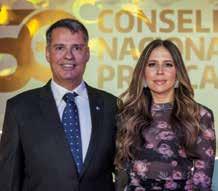
PRESIDENT BRUNO, MARITIME PILOT FONTES AND VICE PRESIDENT CAMARINHA
photos: Gustavo Stephan
TIME TO ACKNOWLEDGE THE COLLABORATORS
photos: Gustavo Stephan and Ricardo Pereira
Galeria
photos: Gustavo Stephan and Ricardo Pereira
Port Planning Seminar reinforces the importance of combining efficiency and safety
The third edition provided practical examples of concepts presented at previous events
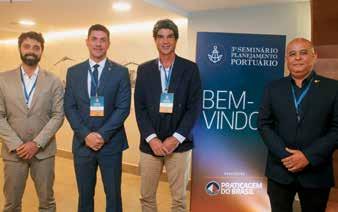
Although the previous event concepts were presented in a more academic manner, the third edition of the Port Planning Seminar showcased the results in practice. The combination of safety and efficiency was a recurring theme among the speakers, proving that it is possible to develop ports responsibly for the benefit of society which enjoys foreign trade, coastal shipping, and a preserved environment. Around 200 guests from the maritime community attended the event in Rio de Janeiro in September, including Vice Admiral Carlos André Coronha Macedo, director of Ports and Coasts of the Navy, one of the honored guests.
The seminar was opened by the program coordinator, Dr. Edson Mesquita, consultant in the Brazilian Maritime Pilotage Institute in Brasilia. He stressed that many studies and engineering companies, which began as startups, collaborated on port planning and relied on pilotage support for their development:
“The maritime pilot, therefore, does not just steer the ship. They manage risk, and are also concerned with the safety and efficiency of operations.”
photo: Gustavo Stephan
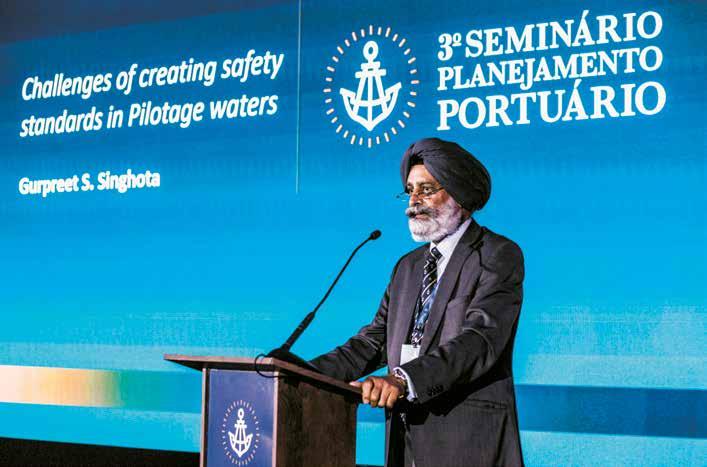
COMMANDER GURPREET SINGHOTA DELIVERED THE OPENING SPEECH
PRESIDENT BRUNO FONSECA AND THE DPC, VICE ADMIRAL ANDRÉ MACEDO PROFESSOR EDSON MESQUITA, PROGRAM COORDINATOR
Indian commander Gurpreet Singhota gave the first lecture. A maritime consultant with over 26 years of experience in the International Maritime Organization (IMO), he addressed the institution's regulations on pilotage. Singhota commented on Resolution A.159 of 1968, which encourages governments to organize services that increase safety to date, including Resolution A.960 of 2003, with recommendations on training, certification, and operational procedures for pilots. This Resolution helped establish the Brazilian Refresher Course for Pilots (ATPR), a global benchmark.
Among the strategies to ensure compliance with regulations, the consultant supported the idea that countries should have specific legislation on the activity, updated regularly, something that Brazil achieved in January 2024 with the approval of Law No. 14,813, modernizing the Waterway Traffic Safety Act (Law No. 9,537 dated 1997).
The captain mentioned that rigorous training is required to guarantee service standards:
"An example worth mentioning is the simulation center implemented by the Brazilian Maritime Pilots’ Association, in Brasilia, through its Institute.”
With advances in onboard technology and a reduction in crew numbers, Singhota has noted an increase in accidents relating to cell phone distraction, which requires increased vigilance by maritime pilots, himself included, regarding the use of the device during maneuvers.
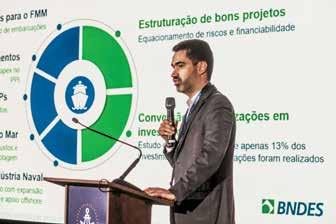
After the captain, it was the turn of economist Tiago Toledo, head of the Transportation and Logistics Department at the BNDES bank, to give his presentation. In the bank, he leads infrastructure and navigation credit operations. Toledo presented the institution's long-term vision for financing, highlighted supported projects, and pointed out a challenge:
“We need good projects with adequate funding. It is this combination which will generate investment. There may, however, be a lack of good projects.
BNDES is one of the development banks of Porto Sudeste, located in Itaguaí, Rio de Janeiro. Engineer Luis Guilherme Caiado Sodré, director of Operations and New Businesses for the venture, spoke about the advances made in recent years thanks to port planning. He mentioned the participation of pilots in project simulations. There have been 16 so far.
“It is very positive to have engineering associated with the operation. Operating is easy. Many risk analysis studies were carried out to achieve efficiency combined with safety. If we hadn't studied so much with pilotage, we wouldn't be where we are today. We will very soon be 100 million tons/year", he celebrated.
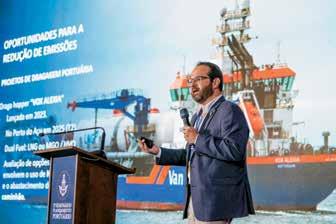
The sector's decarbonization process also requires planning for the supply infrastructure for zero-emission or less-polluting ships. This was the topic addressed by Luiz Gustavo Cruz, general manager of
photos: Gustavo Stephan
TIAGO TOLEDO, ECONOMIST AT BNDES
LUIS GUILHERME CAIADO, DIRECTOR AT SUDESTE PORT
Port Control and Infrastructure at the Port of Açu, located in northern Rio de Janeiro state.
The venture aims to establish a hub for hydrogen and low-carbon byproducts in an area initially covering one square kilometer, in collaboration with foreign players. The Liquid Terminal, for example, has already supplied a tugboat with green diesel. Another proposal is to create incentives to establish green routes connecting Açu.
“The future industrialization of the port will be based on sustainable business,” he said.
“This drifting requires great skill from pilots, even in moderate conditions,” Pantoja emphasized.
The pilot also stressed the importance of adopting a standard operating procedure, with repeated application of risk management tools during maneuvers.
In Maranhão, strong currents prevail in ZP-4. With the largest tidal range in Brazil, pilots need to take advantage of short operational windows to maintain port efficiency. For this reason, maneuvers are practically always simultaneous. This means that as one ship leaves the berth, another is already moving in to dock.
“This is our daily routine. Otherwise, there is a drop in productivity,” explained Marcelo Delgado.
In Santos (São Paulo - SP), simultaneous maneuvers are also a necessity, in addition to two-way traffic, since the channel is winding and narrow in several sections. Operational gains are possible because the pilots devote time to meticulous planning of maneuvers, invest in environmental and technological tools, and work together with stakeholders such as mooring operators and tugboats.
“We need all port players to work together,” stated pilot Bruno Roquete Tavares, vice president of São Paulo Pilotage.
From June 2024 to June 2025, 306 maneuvers were streamlined in Santos, with optimized dock time of 1,529 hours and estimated savings of US$ 148,000.
In Itajaí and Navegantes (Santa Catarina - SC), pilotage expertise allowed larger ships to enter the Itajaí-Açu River, with the indication of a new turning basin for ships. According to maritime pilot Alexandre da Rocha, container ships with a transport capacity of 7,000 TEUs gave way to those with a capacity of 12,000 TEUs. He summarized the risk managed by maritime pilotage in general:
In the afternoon, maritime pilots Reginaldo Pantoja (ZP-19) and Marcelo Delgado (ZP-4) discussed the local characteristics of their pilotage zones and the challenges they face.
In Rio Grande (Rio Grande do Sul - RS), at the entrance to the bar, a cross current pushes the bow of the ship toward the eastern pier.
LUIZ GUSTAVO CRUZ, GENERAL MANAGER AT PORTO DO AÇU
MARITIME PILOTS REGINALDO PANTOJA, MARCELLO CAMARINHA (VICE PRESIDENT) AND MARCELO DELGADO
photos: Gustavo Stephan
“Maritime pilotage is a control function, it exists to help ships perform tasks they were not designed to do. Ships spend their entire useful lives on the high seas, and pilotage is the very end of their journey. We never maneuver the same ship twice. Loading and environmental conditions change, and the vessel ages. Each maneuver is unique.”
NEW NAVIGATION CHARTS
The last panel was dedicated to the importance of hydrodynamic and meteorological data. The director of the Navy Hydrographic Center, Captain Daniel Peixoto, presented the next generation of electronic navigation charts (model S-100), which will be able to receive dynamic updates, such as wind and current information, optimizing routes for navigators:
“Starting in 2029, all ships' ECDIS must be able to read S-100 charts.”
Priscila Farias, technical director and partner at UMI SAN, commented that real-time data transmission allows for more optimized and secure access channels. However, data from environmental sensors must be reliable:
“Simulations, dynamic draft systems and risk assessments require dynamic and up-to-date information. Without good data, there is no safe window. Quality means that the data is adequate for the purpose of efficiency and safety. Quality generates safety, which, in turn, is an investment.”
She listed the numerous challenges to ensure reliability, such as the location of meteo-oceanographic equipment, installation methods, durability, maintenance, staff qualifications, among others, even damage caused by birds.
Finally, Claudio Coreixas, technical manager of Maranhão Pilotage and coordinator of the Rio Pilotage simulation center, reinforced the relevance of the data in its application in bridge simulators.
Hydrodynamic coefficients from the simulation must be validated with sea trial results and feedback from captains and pilots, as well as environmental factors, he emphasized:
“It is important that environmental data truly represent average local conditions and their extremes.”
The president of Brazilian Maritime Pilots’ Association, pilot Bruno Fonseca, closed the event:
“On July 22, we signed an agreement with Antaq (National Waterway Transportation Agency) to make our state-of-the-art simulations available for the analysis of new terminals and lease expansion. This partnership with the Brazilian Maritime Pilotage Institute demonstrates that the service goes far beyond the professional on the wing of the ship with a radio in hand. From our point of view, the sound of safety is silence. If you don't hear about pilotage, it's because everything is going very well. We conduct about 80,000 maneuvers annually and are proud of our low accident rate. And if we are all that, it is because we do our work with a lot of planning.”
PARTNERSHIP WITH ARBITRATION AND TRIBUTES
During the seminar, a cooperation agreement was signed between the Brazilian Maritime Pilotage Institute and the Chamber of Arbitration for Maritime, Port, and Foreign Trade Law (Camar). The Institute is always available to contribute to public and private entities in social matters. The association of efforts between the entities will help promote good practices and develop the maritime and port sector.
photos:
Gustavo Stephan
MARITIME PILOTS ALEXANDRE DA ROCHA, MARCELO CAJATY (VICE PRESIDENTE OF FENAPRÁTICOS) AND BRUNO TAVARES
CAMARINHA, CLAUDIO COREIXAS, PRISCILA FARIAS AND DANIEL PEIXOTO (CHM)
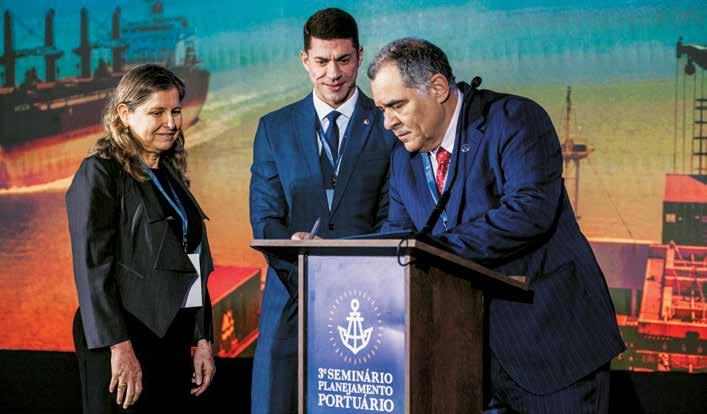
The institutional cooperation agreement was signed on stage by the Institute's executive director, Jacqueline Wendpap, and the president of the Maritime Court, Vice Admiral Ralph Dias, representing Camar.
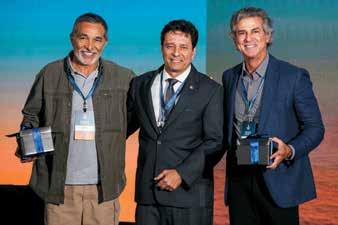
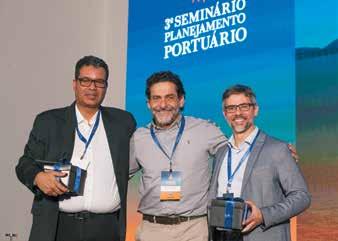
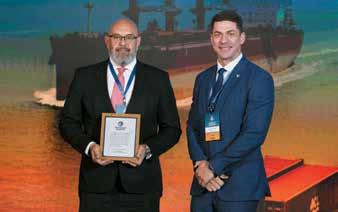
In addition to the director of Ports and Coasts, other guests were André de Seixas, president of Logística Brasil, honored for the association's ten years of defending port users, and Raimundo Nascimento, technical manager of the Brazilian Maritime Pilots’ Association, who has been in the business for 19 years and is responsible for coordinating the ATPR Course.
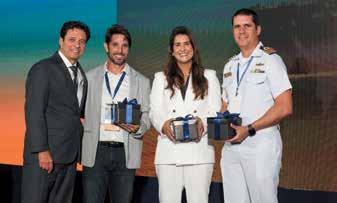
The vice president of the Brazilian Maritime Pilots’ Association, pilot Marcello Camarinha, and maritime pilot Marcelo Cajaty, vice president of the National Federation of Pilots, presented souvenirs to the speakers. Among the dozens of guests were the captain of the Ports of Rio, Captain Luciano Calixto, and professors Eduardo Tannuri, from USP Numerical Test Tank, and Paulo de Tarso Themistocles, from Coppe-UFRJ.
Check out all the photos from the event at: flickr.com/photos/praticagemdobrasil/albums
photos: Gustavo Stephan
ANDRÉ DE SEIXAS, FROM LOGÍSTICA BRASIL, RECEIVES TRIBUTE FROM PRESIDENT BRUNO FONSECA
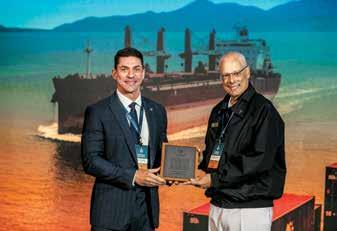
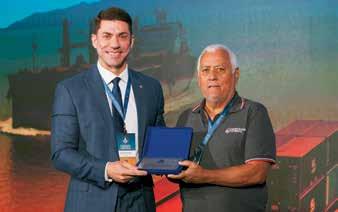
BRUNO FONSECA PRESENTS PLAQUE TO TECHNICAL MANAGER RAIMUNDO NASCIMENTO
photos: Gustavo Stephan
Brazilian Maritime Pilotage Institute and regulatory agency sign protocol
Agreement will enable the National Waterway Transportation Agency (Antaq) to use simulators to approve new private terminals and leases in public ports
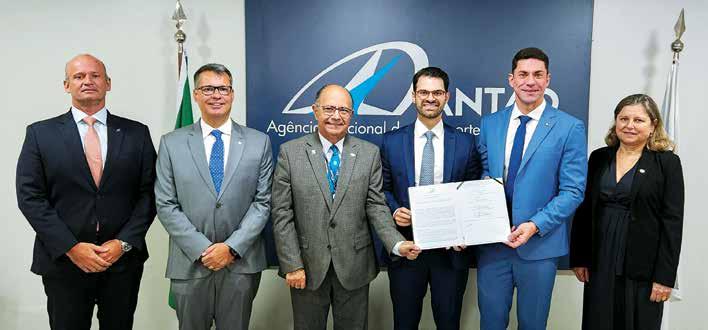
The National Waterway Transportation Agency (Antaq) can now rely on the support of high-tech simulators when analyzing authorization of new port facilities, providing even stronger technical grounding for its decisions. The memorandum of understanding between the Brazilian Maritime Pilotage Institute and the regulatory agency was signed in July in Brasilia.
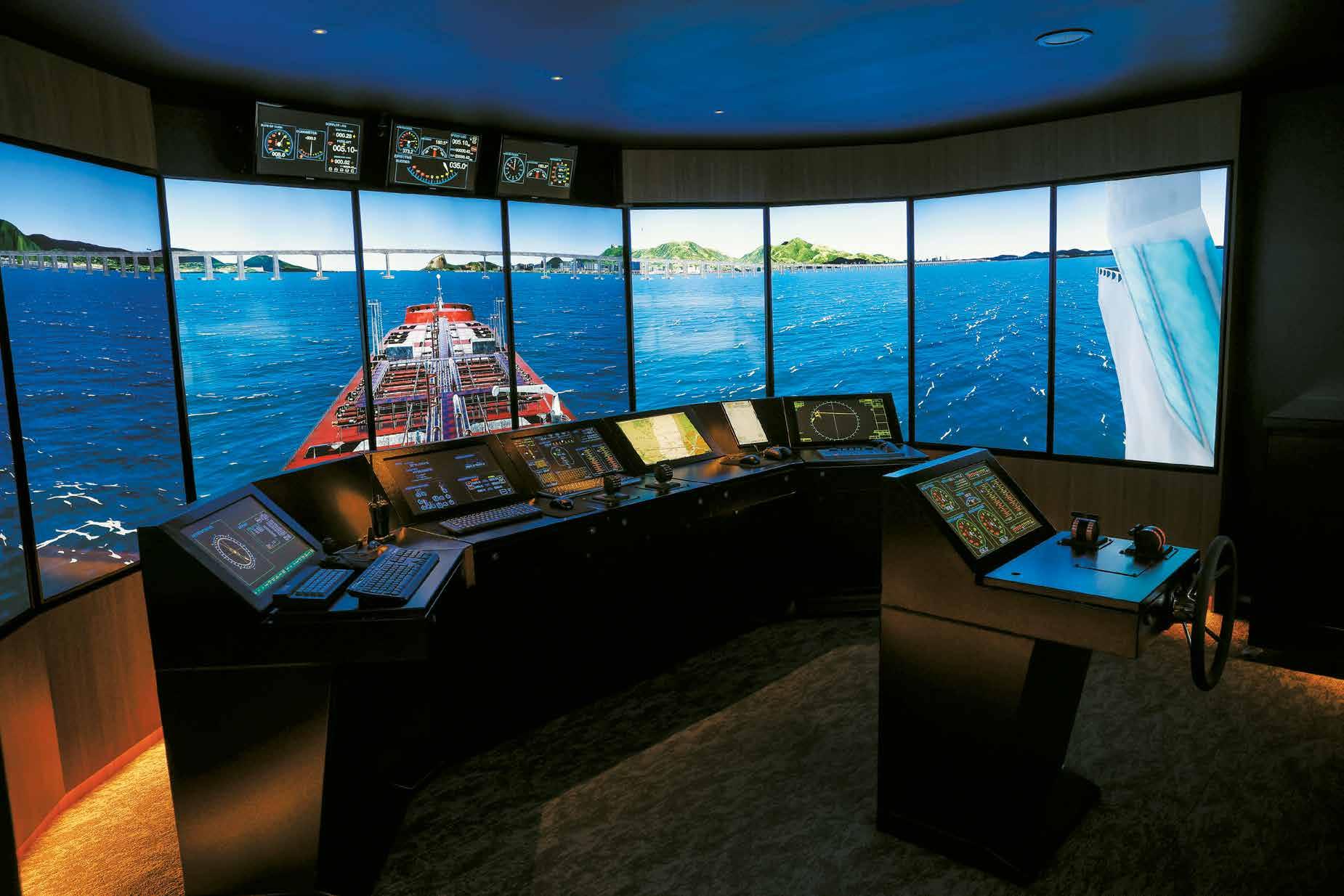
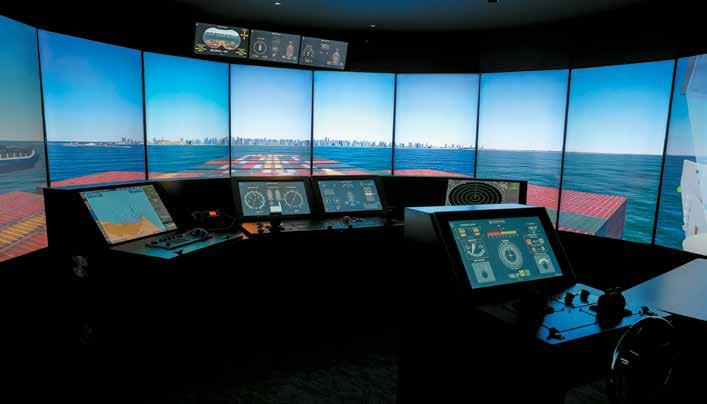
As recommended by the World Association for Waterborne Transport Infrastructure (Pianc), all projects must be simulated in advance, with the participation of those involved, including local maritime pilots. The Brazilian Maritime Pilotage Institute has two ship-bridge simulators, which can be used to assess the safety and efficiency of new terminals and port operations.
Antaq is responsible for regulating waterway transport services and the operation of port and waterway infrastructure. One of the agency's tasks is to grant concessions for the construction and operation of private port facilities outside organized ports, which is a prerequisite for users when entering into contracts with the federal government.
Since 2007, the regulatory agency has represented Brazil in Pianc, a global entity that produces guidance reports for port planning. In 2023, Antaq supported the creation of Pianc's national section, and the Brazilian Maritime Pilotage Institute is one of its associate partners.
ALBER VASCONCELOS (ANTAQ), RICARDO FALCÃO (INSTITUTE), LIMA FILHO (ANTAQ), CAIO FARIAS (ANTAQ), BRUNO FONSECA AND JACQUELINE WENDPAP (INSTITUTE)
“We often emphasize that pilotage services go far beyond ship maneuvering. The protocol signed with Antaq is further proof of this. We are offering all our expertise and technological apparatus so that projects can be evaluated. Combined with Antaq's technical knowledge, we can verify the feasibility of new berths and operations, as well as adjust the alignment of a terminal, for example. Regarding data sharing, Antaq holds the port information, and pilotage holds the environmental data. Together, we will make progress in enhancing safety and efficiency at our ports,” says Bruno Fonseca, President of Brazilian Maritime Pilots’ Association.
The acting Director-General of Antaq, Caio Farias, highlights the key points of the partnership:
“The agreement will promote navigation and contribute to Brazilian society. The public data we have will be made available for pilotage studies. For Antaq, we can improve our technical training and enhance the locational feasibility of studies for the authorization of private use terminals (PUTs) and for the expansion of leases in public ports. It is a partnership for the public good.”
The Ministry of Ports and Airports predicts an average growth in the sector of between 3% and 6% in the coming years. Around 65% of cargo handling in the country occurs through PUTs, authorized by Antaq. In 2024, private ports handled 846.9 million tons, mainly iron ore, oil derivatives, and soybeans.
Also present at the ceremony were the agency's Directors, Wilson Lima Filho and Alber Vasconcelos; the Director of Brazilian Maritime Pilotage Institute and member of the Institute's Board of Directors, Ricardo Falcão; and the Institute's Executive Director, Jacqueline Wendpap.
ABOUT THE INSTITUTE
The Brazilian Maritime Pilotage Institute has two full mission simulators, in partnership with the Numerical Test Tank at the University of São Paulo (TPN-USP) and Technomar Engenharia. Both feature state-of-the-art electronic simulation technology. The studies carried out using these simulators incorporate risk analysis and, in addition to safety, can add efficiency to projects, such as identifying the best location for a future terminal.
The simulation center also offers simulators for training in electronic navigation (Radar and ECDIS), engine rooms, and VTS (Vessel Traffic Service). Its location in the federal capital facilitates technical monitoring of projects by regulatory entities in the sector, such as Antaq, the Ministry of Ports, and the Brazilian Navy.
photo: Pedro Ladeira
IMO approves new rules for boarding and disembarking ladders
New regulation comes into force in 2028 with incentives for early adoption
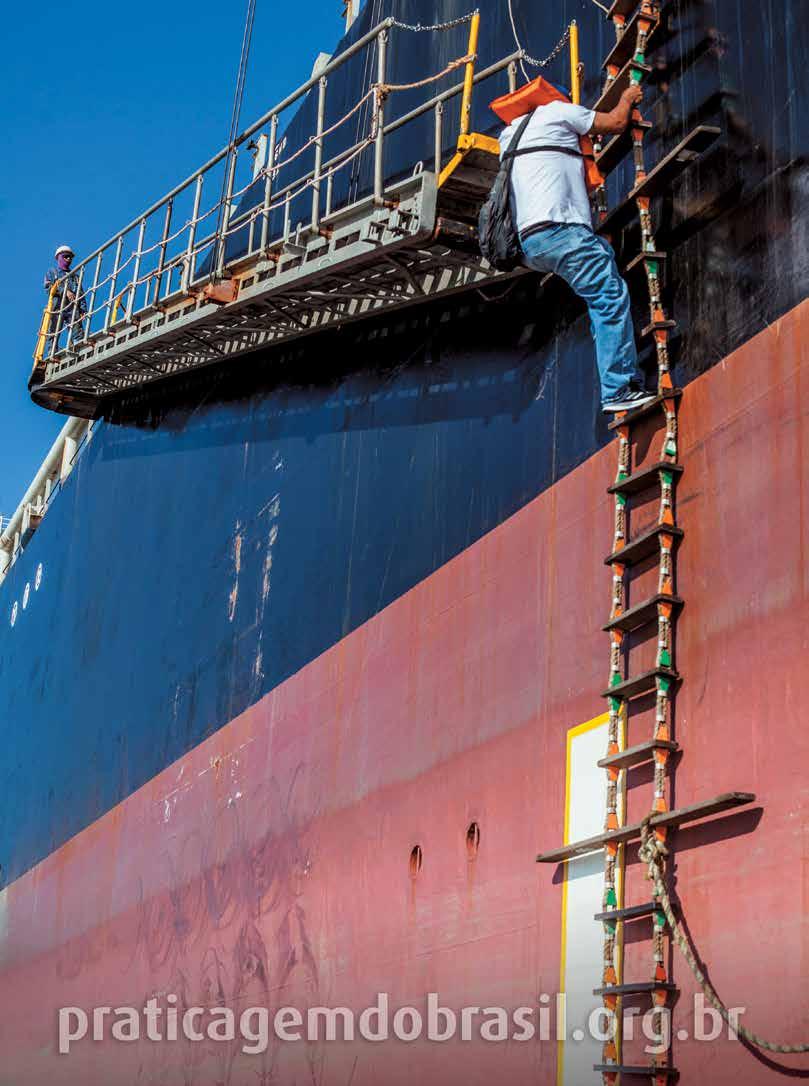
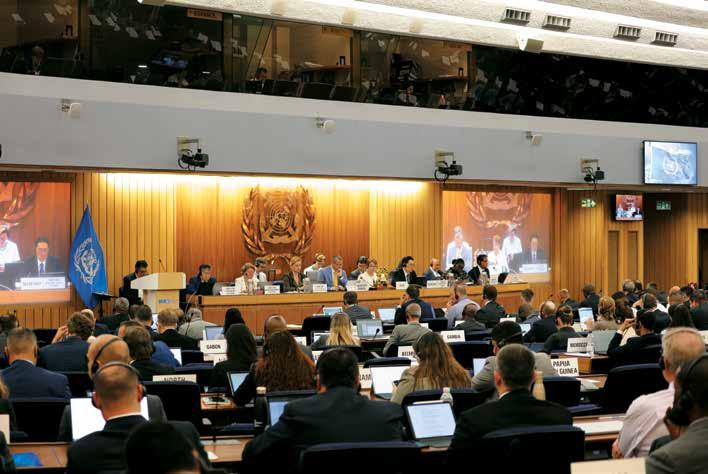
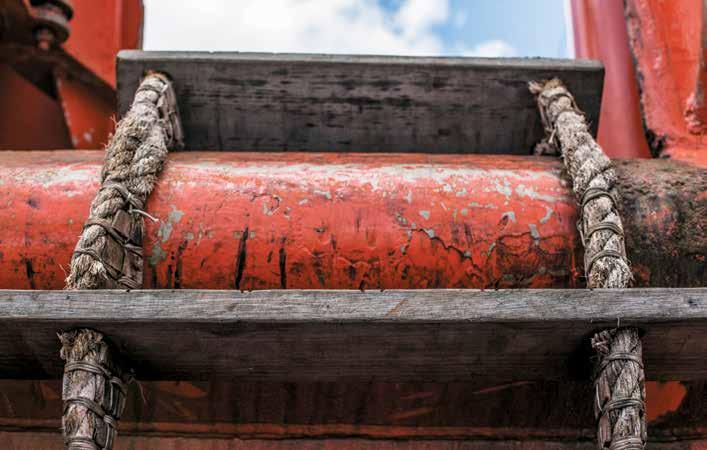
After three years of discussion, the International Maritime Organization (IMO) Navigation Safety Committee approved stricter and clearer rules in June for the installation and maintenance of ship access ladders for pilot boarding and disembarking. Pilot ladders and their combination with boarding ladders are the most common means of transfer between boats and ships.
The amendments to the International Convention for the Safety of Life at Sea (SOLAS) and its supplements will come into force in January 2028, with encouragement for early adoption by countries in which vessels are registered.
photo:
Some of the measures are to set an expiration date for pilot ladders, which shall be replaced 36 months after manufacture. Self-certification by manufacturers is now mandatory. The new standards require means to fix them at intermediate lengths. Moreover, terms in the text have been reworded to provide greater clarity and enforce the application of requirements, such as replacing the verb “a” with the imperative “shall” in certain passages.
“Maritime pilots are also responsible for their own safety and must comply with regulations,” notes Ricardo Falcão, vice president of the International Maritime Pilots Association (IMPA).
Changes began with a proposal from China in 2022, with the original text improved. The Safety Committee meetings are attended by IMO signatory countries and non-governmental organizations with technical seats, such as IMPA, which has represented pilotage in the UN agency since 1973.
“Pilots provide an efficient, essential service, and the IMO has taken the major step in a generation to make this work safer. IMPA appreciates the support it has received from the agency's member states. The result is proof that we're able to achieve when pilot associations worldwide work together”, says IMPA President Simon Pelletier.
IMPA Secretary General Matthew Williams points out that the new standards do not only benefit pilots:
“Seafarers, inspectors, technical experts, and others who use transfer devices will benefit from the changes.”
In order to support crews regarding the correct installation of ladders, the IMPA poster with the obligations was revised. The material has been posted on the bridge of the vessels and now contains a QR Code directing to further information on the association's website.
The results of the entity's annual safety survey once again demonstrate the importance of regulatory changes. This year, 14% of the more than 5,000 reports submitted by maritime pilots demonstrated non-compliant boarding and disembarking arrangements.
President Simon Pelletier believes that the provisions will help transform this reality by encouraging countries to adopt regulations and practices in advance, in order to educate crew members:
“We are ready to assist member states, shipowners, operators, seafarers and manufacturers to meet the requirements.”
photo:
IMO
In Lima, Latin American pilots gather to discuss mutual challenges
In 2027, the 13th edition of the Regional Forum will be held in Brazil
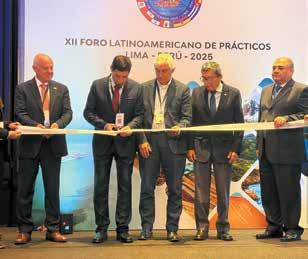
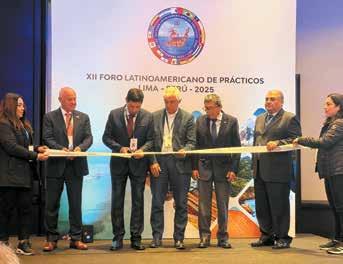
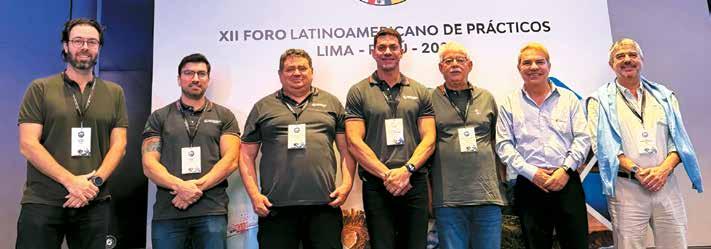
Latin American maritime pilots were in Lima from September 21 to 26 for the 12th Regional Forum for the profession. The Brazilian Maritime Pilots’ Association was represented by its president, pilot Bruno Fonseca, as well as pilots Artur Ferreira and Evandro Saab (Pará); João Bosco (Rio Grande do Sul); Laviera Laurino, Leandro Caliento, and Paulo Ferraz (Santa Catarina); and Porthos Lima (Rio de Janeiro). In 2027, Brazilians will be the hosts.
After a cocktail reception on the first day, the president of the National Pilots’ Association of Peru (Anpra), Sandro Gallet, gave the welcome speech at the opening ceremony.
He stated that, in recent years, the country has undergone significant port development, evidenced by the new Port of Chancay, the infrastructure improvements in Callao, the future Corío project, alliances with the Port of Paita, as well as other projects which are now in their initial stages. Currently Peru has 89 port facilities, 40 of which are public and 49 private, including the Chancay terminal (owned by Cosco Shipping and Volcan), whose attractions were highlighted by Ambassador Elard Escala Sanchéz.
Sandro Gallet believes that there are still legal and structural challenges for pilotage to continue fulfilling its strategic mission of maintaining navigation safety. And events such as the Forum, he emphasized, contribute to its progress:
“As in previous events, the goal is to learn from experiences in technical, legal, and structural areas in order to improve a system that works for the benefit of our own nation, our region, and the world.”
Simon Pelletier, president of the International Maritime Pilots’ Association (IMPA), addressed amendments on pilot boarding and disembarkation arrangements to the International Convention for the Safety of Life at Sea (SOLAS). He also mentioned autonomous ships and remote pilotage, a sensitive issue that IMPA is studying and monitoring closely at the International Maritime Organization (IMO).
“Maritime pilotage is 99.98% efficient. If we are going to test any other system to replace it, the safety index must be at least higher than that,” Simon stated.
Professor Juan Carlos Paz analyzed Latin American countries and their importance in world trade, presenting the characteristics of their ports, infrastructure bottlenecks, and opportunities. One of the immediate challenges he mentioned was the importance of strengthening maritime pilotage:
“The arrival of increasingly larger ships, 24,000 TEU container ships, Capesize bulk carriers, and VLCCs, increases the risks of maneuvering. The ongoing training of maritime pilots and their integration with port planning should be part of a regional agenda.”
Gustavo Suárez, president of the National Pilots’ Association of Argentina, discussed the characteristics of the country's ports, navigation details on the Plata and Paraná rivers, and the effects felt by ships on these waterways. The trunk waterway (VNT) is Argentina's main river-sea route and connects the two rivers with the ocean. Its infrastructure, consisting of a system of canals, ports and terminals, is part of the Paraguay-Paraná Waterway, one of the longest in the world. There are 506 pilots working on the VNT, 80% of them on the rivers. Suárez stressed the need to maintain dredging and buoyage to improve competitiveness, as well as a review of bidding and concession processes to attract investment and advance the management of the waterway.
Argentina still suffers from regulatory instability in pilotage services, which are always under strong economic pressure, despite high safety standards. This was the topic addressed by Pablo Pineda, a
photo:
OPENING OF THE EVENT IN THE COMPANY OF THE PRESIDENT OF IMPA (SECOND FROM LEFT)
pilot on Río de la Plata. Over the last three years, there have been 40,595 maneuvers without serious incidents or environmental pollution.
“Is Argentine pilotage a deficient system with a lack of safety to the point of endangering the public interest?” asked Pineda.
In neighboring Uruguay, the situation is different. The system is very similar to the Brazilian one, with a limited number of professionals and a rotation schedule for serving shipowners, according to pilot Fernando Adaime. The system prevents competition between pilots, which has led to accidents in some countries, and ensures the functional independence of the activity, without economic influence on decision-making regarding safety.
Uruguayan maritime pilot Sergio Gorriarán listed the criteria for pilotage exemption in Latin American countries, starting with Brazil, where Law 14,813/2024 established that the Maritime Authority may grant pilotage exemption to Brazilian captains of Brazilian-flagged ships up to 100 meters in length, with at least two-thirds of the crew being Brazilian.
In Uruguay, the criteria vary for ships flying the national flag, depending on the area requested. The treatment may be extended to flags of countries with which there is a reciprocity agreement. Interestingly, Gorriarán said, there is an agreement with Paraguay but not with Argentina, so that all Argentine ships are piloted by Uruguayan pilots, regardless of their size, except for vessels carrying passengers between the two shores.
In Ecuador, a major issue concerns piratage of ships in the channel leading to the Port of Guayaquil. There were 45 such pirate actions in 2024, reported pilot Jose Segovia, who explained how pilotage is legally organized. Ships must be accompanied by private security boats until they reach the open sea, mainly due to drug trafficking.
In Panama, the challenges are water-related, ensuring competitive draft for ships crossing the canal between the Atlantic and Pacific
oceans. Last year, the number of crossings fell by 21% due to drought, according to IMPA senior vice president Alvaro Moreno. The solution to accumulate water would be to build a new lake in the middle of the Indio River, an investment estimated at US$ 1.5 billion.
In terms of workplace safety, Panamanian maritime pilot Juan Carlos Molino analyzed fatal accidents that have occurred in recent years during on-duty boarding and disembarkation. He emphasized three points: helmets can reduce serious injuries in the event of a fall, crotch straps are essential on life jackets, and backpacks can hinder the rescue of professionals from the water.
The importance of situational awareness for pilots on board –perception and understanding of the situation around them and projection of future conditions – was addressed by Anpra President Sandro Gallet.
At the meeting open to maritime pilots from IMPA member countries, they signed the final declaration of the Latin American Forum. The president of the Brazilian Maritime Pilots’ Association, Bruno Fonseca, took the opportunity to pay tribute to Anpra and confirm that the event will be held in Brazil in 2027. Rio de Janeiro will host the event in the second half of the year, one year before the IMPA world congress in the country.
He emphasized that, despite the different ways in which pilotage services are organized, there are common problems in the region:
“Events such as the Forum are an excellent opportunity to talk and find solutions. That is how we evolved with the pilotage law in Brazil.”
On the last day, the event ended with a maritime visit to the terminals of the Port of Callao and the traditional gala ball. The agenda throughout the event also included tourist and cultural activities open to the pilots’ family members and guests.
LEANDRO CALIENTO, EVANDRO SAAB, JOÃO BOSCO, BRUNO FONSECA, PAULO FERRAZ, PORTHOS LIMA AND LAVIERA LAURINO
photo: Publicity
Port of Açu Vessel Traffic Service (VTS) celebrates ten years
Luiz Gustavo Cruz Henriques da Silva General Manager of Port Control at the Port of Açu
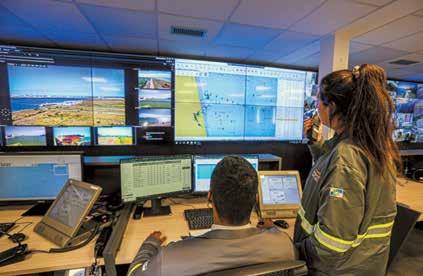
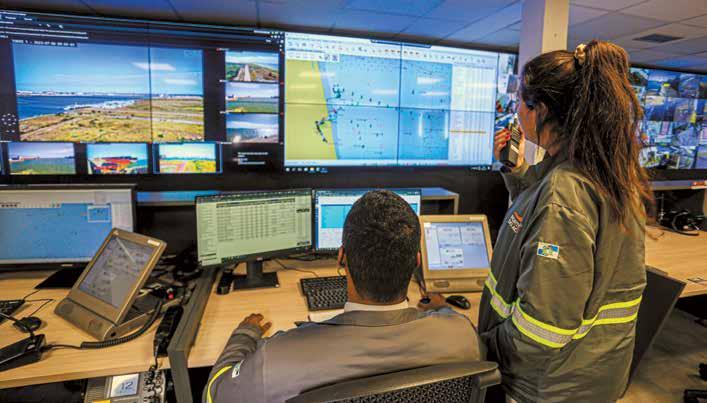
In 2025, the Vessel Traffic Service (VTS) at the Port of Açu will celebrate ten years of operation. Authorized by the Brazilian Navy in 2015, the Port of Açu VTS was the first service of its kind to be implemented in the country and covers an area of approximately 585 km² through which more than 7,000 ships pass each year. Its integrated operation with maritime pilotage, among other actors, represents a model of excellence that inspires the modernization of Brazilian ports in order to increase safety and efficiency in the port environment
VTS ACCORDING TO THE MARITIME AUTHORITY
Following the guidelines of the International Organization for Marine Aids to Navigation (IALA), as well as the recommendations of the Maritime Authority Standards that regulate the licensing, implementation, and authorization for the operation of a VTS in Brazil (Normam-602/DHN), VTS is a navigational aid that provides maritime traffic monitoring and management services in port and coastal areas, in order to increase navigation safety and efficiency, safeguard human life at sea, prevent water pollution, and protect adjacent communities and infrastructure.
The service provides active monitoring of ship traffic in a defined maritime area, with real-time images displayed at the VTS Center. To this end, its essential elements are radar, AIS, VHF communication, meteorological and oceanographic sensors, closed-circuit cameras, and data integration and management systems. All personnel assigned to the VTS Center associated with its operation and supervision must meet international standards in terms of professional qualifications, certification, and ongoing training in the workplace, ensuring the effectiveness of the service.
SAFETY AND EFFICIENCY
The work of the VTS, in close partnership with allied services, contributes decisively to reducing the risk of collisions, groundings, and other maritime accidents, especially in areas of heavy traffic, positioning itself as a strategic tool for navigation safety. Also noteworthy is the work of VTS in cooperation with the Maritime Authority in related search and rescue (SAR) activities.
The Port of Açu VTS Center maintains a real-time image of port traffic, allowing for early identification of risks such as collisions,
groundings, and operational interference, as well as acting as a decision-making support interface by providing timely information on weather conditions, traffic, ongoing maneuvers, and safety alerts, promoting increased situational awareness among sailors, an essential element for safe decision-making by captains, pilots, and port operators.
In the same vein, the positive impact of VTS on the organization of port operations is remarkable: by enabling real-time monitoring of berthing, unberthing, and vessel movement maneuvers, the service contributes to optimizing the use of the access channel and berths, always in close coordination with port terminal operators, resulting in reduced waiting times, increased logistical predictability, and other benefits.
RELATIONSHIP WITH MARITIME PILOTAGE
The synergy between VTS and maritime pilotage services is strategically complementary: while maritime pilots ensure the safe navigation of ships, VTS provides informational and situational support by continuous monitoring of all traffic, which enhances the effectiveness of this activity, ensuring that maneuvers are carried out with maximum safety and efficiency. It is worth noting that it is not the role of VTS to replace pilotage services at any level, nor should it interfere in the relationship between the captain and the maritime pilot on board.
This alignment is especially relevant at critical moments, such as maneuvers in adverse weather conditions or during peak traffic times. To this end, it is essential that the VTS operator understands and respects the moments of concentration of the maritime pilot and the captain, thus avoiding overlapping information and ensuring that the data transmitted is accurate and useful for the safety of the operation, always acting as a supporting and complementary element.
The VTS does not replace the pilotage operations center (watchtower), provided for in federal law and Navy regulations, which continues to have direct contact with ships that will receive a pilot, in addition to providing support to the pilot on board. The watchtower and the VTS maintain frequent contact, and the pilot can speak to both, depending on what he or she needs to report or request.
ALIGNING EXPECTATIONS
Information is crucial for both navigators and VTS. Among the key tasks of the service are the collection, analysis, and provision of quality and valuable information to the navigator. For the VTS to do its job effectively, there must be structured communication channels between the navigator and the VTS operator, which makes it possible to build a “traffic picture” at any given moment.
Thus, in a port area covered by a VTS, navigators can expect to receive a properly structured, reliable navigation assistance service that complies with international standards. The VTS Center has modern surveillance and communication systems that enable realtime monitoring of all vessels in the area of interest. Operators, who are properly trained and certified, follow standardized operating procedures validated by the Maritime Authority, ensuring that any guidance or information provided to navigators is accurate, timely, and contributes to navigational safety.
In turn, the VTS expects navigators to act proactively and collaboratively within the monitored area. This includes maintaining a constant state of alert while navigating, anchoring or berthing, integrating the information received into the decision-making process on board. Navigators must respond promptly to VTS communications, confirm receipt of messages, and follow current operating procedures. Adherence to good seamanship practices and strict compliance with national and international standards are essential to ensure the effectiveness of the service and collective safety. This relationship of mutual trust and technical cooperation is fundamental to the fluidity and safety of port and maritime operations.
CONCLUSION
After 10 years of operation, the Port of Açu VTS celebrates a history marked by innovation, safety, and efficiency, establishing itself as a national benchmark in navigation safety and port management. More than just a management or monitoring tool or software, VTS is an agent of logistical transformation that connects technology, people, and processes for safer, more efficient, and more productive navigation. Its legacy inspires the evolution of Brazilian ports towards digitization, sustainability, and integration with maritime services provided by logistics operators involved in the ship-port interface.
photo:
Publicity
Paddling for life against breast cancer
A team of female paddlers in Rio Grande receives the first Dragon Boat from the local pilotage service
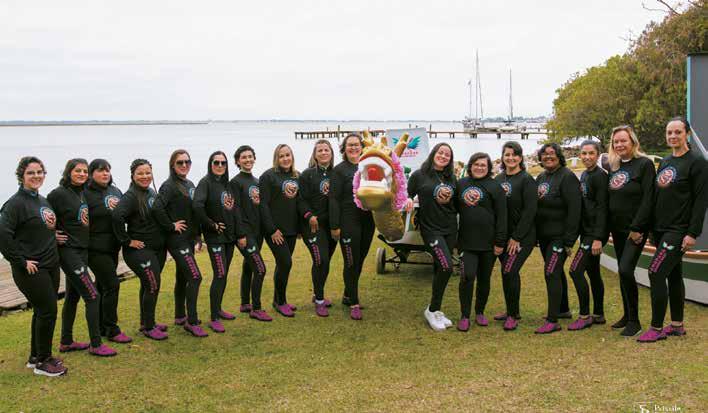
THE PROJECT'S ATHLETES TOGETHER
Every boat carries many stories, but this is a special one. The arrival of the Panapaná team's first Dragon Boat in Rio Grande (RS) goes beyond the achievement of a collective dream: it is a symbol of overcoming adversity, of unity and hope. Formed by breast cancer survivors, the team of paddlers found in the sport not only a tool for physical and mental health, but also for acceptance, friendship, and purpose.
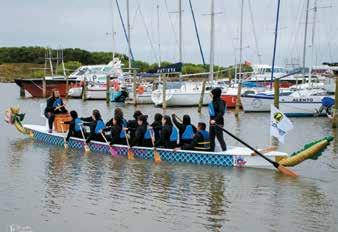
The procurement of the boat was made possible thanks to the support of Rio Grande Pilotage, which embraced the cause and made the project of putting a Dragon Boat in the city waters a reality. The wooden boat, traditional in southern China, has its roots in ancient folk rituals. Today, in addition to competitions,
it is used in therapeutic activities, mainly among women who have survived breast cancer.
For Debora Barros, a maritime pilot in Rio Grande, her relationship with the team was marked by coincidences that made her believe in the predestination of their support:
" Panapaná went to the pilotage service to present the project, but, curiously, it also came to me through three different people at different times. Perhaps because I am the only woman among the pilots, or because they knew how much the issue affects me, since I have a really close history of cancer in my family.”
Debora says that after the third contact, she thought:
“This is no coincidence, it's meant to be.”
She then decided to get to know Panapaná better, row with the team, and feel the group's energy:
“It was a remarkable experience. I realized even more clearly the nobility of the cause, each woman's personal battle, and, at the same time, the collective struggle to acquire a boat that would allow them to train and compete. I came back completely amazed and certain that we needed to support the project.”
THE ORIGIN OF THE PROJECT
The creator of the project, Fernanda Rafaela, captain of the team, brought with her the experience she gained in Natal, Rio Grande do Norte. There, in 2022, she learned about the program developed by Dr. Don McKenzie, a Canadian who, almost two decades earlier, had introduced Dragon Boat racing for the recovery of breast cancer survivors. Fernanda was a member of the Fenix Potiguar team. When she moved to the South of Brazil, she continued her mission to promote health and well-being through canoeing.
Fernanda approached clubs and survivors to join Dragon Boat. And so she formed the Panapaná team with women such as Thays, Joice, Izabel, Ivonete, and Tatiana.
“We brought together the two Rio Grandes, from the North and South, around the same goal of promoting the physical, mental and social well-being of those who have survived breast cancer through canoeing. We are a group of butterfly survivors and life enthusiasts,” emphasizes Fernanda, referring to the symbol that represents transformation and hope.
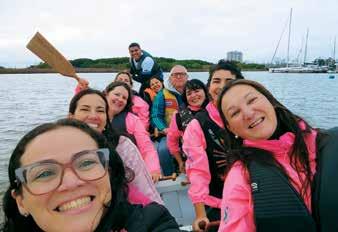
The team was officially created on May 11th, 2023, becoming the second pink rowing team in Rio Grande do Sul. Before the boat arrived, the group improvised. First, training sessions were held on benches, using broomsticks as oars. Then, with the support of the Yacht Club, they were able to row in a small sailing boat, nicknamed Dragãozinho (Little Dragon). The arrival of the Dragon Boat allowed the 24 active rowers to prepare properly for greater challenges.
Training sessions are held up to four times a week. The team plans to participate in the South Brazilian Dragon Boat, Canoeing, and Paracanoeing Festival in November in Curitiba. Panapaná is seeking support to travel with at least 20 rowers.
Dragon Boat is not only physical training but also therapeutic. Studies show that the practice helps prevent and control the effects of breast cancer, in addition to promoting self-esteem and discipline, and strengthening social bonds.
For Rio Grande Pilotage, supporting the project is also a means of being closer to its community:
“We are very honored to be part of one more noble cause like this one,” says Debora.
Fernanda reinforces the impact of the partnership:
“I thank the Pilotage for their donation and empathy, on behalf of all the butterflies at Panapaná.”
The project participates in the International Breast Cancer Paddles Commission (IBCPC), an international organization that encourages the formation of Dragon Boat teams.
THE BOAT WELCOMED BY THE RIO GRANDE TEAM
photos: Gustavo Stephan
IN THE FOREGROUND ON THE LEFT, FERNANDA AND DEBORA
STUDY ACCIDENTS RELATING TO LACK OF ATTENTION INCREASE
An analysis conducted by the UK Marine Accident Investigation Branch (MAIB) found that a lack of attention on the bridge is linked to numerous recent disasters. Crew members using cell phones or falling asleep are among the causes of increased ship automation that have made surveillance tasks extremely tedious, leading crews to view their shifts as a time for rest and relaxation. To make matters worse, some seafarers disable alarms that sound regularly to ensure that everyone is attentive to the ship's systems. The issue was the subject of a report in The Telegraph.
VARIABLES THAT ARE DIFFICULT TO INCORPORATE INTO SIMULATIONS
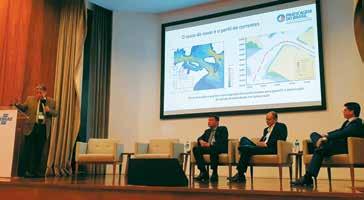
Some environmental variables are difficult to incorporate into ship maneuver simulations. For example, simulators are unable to realistically reproduce nighttime scenarios or gusty winds accompanied by rain. Therefore, it is important to perform experimental maneuvers in an actual environment after validation on a simulator. This was the focus of the lecture given by Dr. Edson Mesquita, consultant at the Brazilian Maritime Pilotage Institute, during the Brazilian Hydrography Symposium in July in Rio de Janeiro. “Variations around the average value of environmental forces are relevant when they are able to alter the ship’s inertia,” he said.
IMPA RECEPTION ON HMS WELLINGTON
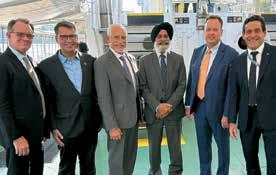
Reception of the International Maritime Pilots’ Association (IMPA) on board HMS Wellington in London. Pictured are the organization's Senior Vice-President, Alvaro Moreno (Panama); Vice-President Ricardo Falcão (Brazil); Jorge Viso (USA, member of the Advisory Board), Gurpreet Singhota (India), Clay Diamond (USA), and Marcelo Cajaty (Brazil, member of the Brazilian delegation to the International Maritime Organization – IMO). They visited the English capital in June during the IMO Safety Committee meeting that approved new rules for pilot access ladders to ships.
photo:
photo:
RIO DE JANEIRO OPERATORS TRAIN TO ASSIST IN RESCUE OPERATIONS
EMPA
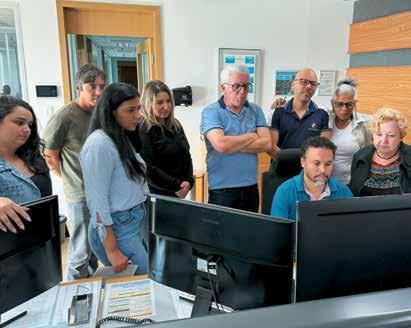
If a pilot falls overboard during the transition from pilot boat to ship or ship to pilot boat, in addition to the pilot boat crew, another professional is essential in the rescue: the pilot station operator. In fact, everyone must work in an integrated manner and follow procedures in order for the operation to be successful. This was emphasized by consultant Roberto Costa during man overboard training for operators at Rio de Janeiro Pilotage. They performed theoretical classroom and practical classes on the Rio de Janeiro Pilotage simulator and then on a boat. “It is important for the operator to be able to perform a checklist of tasks. He becomes a good crisis manager,” said Costa.
MIGUEL CASTRO ELECTED PRESIDENT OF EUROPEAN MARITIME PILOTS’ ASSOCIATION
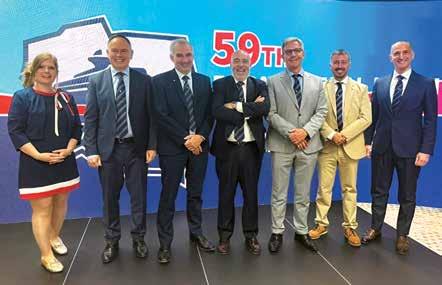
Brazilian Maritime Pilots’ Association congratulates its Portuguese colleague Miguel Vieira de Castro (pictured with his arms crossed) on his election as President of the European Maritime Pilots’ Association (EMPA), as well as Senior Vice-President Peter Lightfoot (United Kingdom) and VicePresidents Gerhard Janssen (Germany), José Antonio Perez Lorente (Spain), Kaj Hahtonen (Finland), Salvatore Mecca (Italy), and Stéphane Pousset (France).
Miguel Vieira de Castro is a harbour pilot in Sines and President of the Association of Bar and Port Pilots of Portugal (Apibarra). The board was elected during its 59th General Assembly in May in Poland.
photo:
Publicity
MEDIA SUCCESS
SWAYING
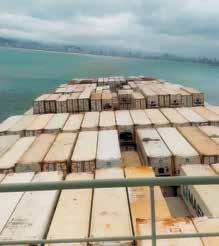
Two videos by maritime pilot Adriano Dias (São Paulo) have been outstanding for viewers since our last edition. The footage of a 300-meter container ship swaying as it entered the Port of Santos has already surpassed one million views on social media. We edited the mate rial using external images taken by MK Drone (Instagram) and internal images taken by Adriano himself. The video of the pilot disembarking from the Tikuna submarine, recorded by him using smart glasses, has reached 423,000 views. We appreciate his collaboration.
GIANT IN FOCUS
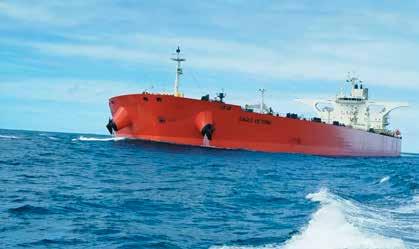
Photos of the first VLCC (Very Large Crude Carrier) with a draft of over 20 meters refueling in Todos os Santos Bay received 665,000 views. The Eagle Victoria, 336 meters long and 60 meters wide, had a draft of 21.1 meters. Bahia Pilotage was responsible for safe and well-planned navigation.
RUNNING AGROUND WITHOUT A MARITIME PILOT
With 453,000 views, the record was set for a ship that ran aground at high tide, without a pilot, in the Quiriri Channel (Pará). As stated in the magazine's opening, the action of a pilot in Quiriri is optional for vessels with a draft of 12.20 meters or less, provided they are not carrying dangerous cargo. On the other hand, pilotage experience includes, on average, five weekly trips in the channel, with drafts of up to 13.90 meters. Pilots have detailed knowledge of tides and currents, radar navigation, which is often neglected, and updated depths.