Compassionate communities change lives 2022-2023 Programmes
Learning and growing together

Why we exist
As a UK-based charity, Compassionate Communities UK’s mission is to build compassion as a significant value in life, manifesting in the way we treat each other and the world around us. We provide practical resources, education, support and know-how to people and places.



Julian Abel Director


Ed Straw, Chair Person Manjula Patel, Trustee Emma Hodges Development Director

Living, dying, loss and caregiving are part of the human experience. As an international movement, Compassionate Communities believes in the positive impact individuals can have on communities through compassion.
Compassion is when a person is moved by the suffering or distress of another and wants to take action. Compassion is like a muscle we can exercise and strengthen to improve our communities and workplaces.
Steve Crabb Trustee
We support people, including professionals, who want to harness the power of compassion to change how society manages health and wellbeing, including dying and loss.
Allan Kellehear, Associate Director Catherine Millington Sanders, Associate Director

www.compassionatecommunitiesuk.co.uk
For
Click to hear Julian talk about Why Compassion Matters AND The Compassion Project more information contact: visit website
Serious illness, ageing, dying, caregiving and grief are part of what it means to be human, yet many fail to recognize or support these significant life experiences. Under Dr Julian Abel's and colleagues' guidance, the people of Frome, Somerset, UK, set out to become more compassionate. The results were transformative.
our
“If compassion came in tablet form, it would be hailed as a wonder of modern medicine.”
info@compassionate communitiesuk Or
This vital work contributes to the growing evidence that social connectedness and innate compassion within communities can reduce suffering, improve health outcomes and reduce mortality for individuals.
Frome came together to create solutions that worked for their community. Together, they demonstrated the power of compassion and social connectedness on health and wellbeing by reducing suffering, improving health outcomes and reducing mortality for individuals.
~Dr. Julian Abel, co-founder of Compassionate Communities UK, author of The Compassion Project.
Compassion
Compassionate Communities UK takes a public health approach to palliative the care combines traditional models of palliative medicine with a lens that focuses on practice solutions, health and wellbeing, and community and civic involvement in care.
info@compassionate communitiesuk Or visit our website www.compassionatecommunitiesuk.co.uk
Click here to view Professor Kellehear and Dr Able sharing their perspectives on public health palliative care.
People living with serious illnesses spend most of their time in their communities, with friends, families, workplaces and the places we visit. Only 5% of their time is spent with a healthcare professional. For this reason, building compassion-based skills in our communities is key to improving quality of life and health outcomes.
Public Health Palliative Care
Hear a brief description of Public Health Palliative Care from Professor Allan Kellehear
Compassionate Communities UK co-founders are also co-authors of the Oxford Textbook of Public Health Palliative Care published in 2021.
For more information contact:
Accreditation standards include celebrating the existing compassion initiatives in the community, senior commitment to recognise a community development approach and an action plan for the next steps to build upon strengths, embed, and grow new ideas from the community.
View Compassionate City examples at www.compassionate-city.com
Compassionate City Foundation Programme
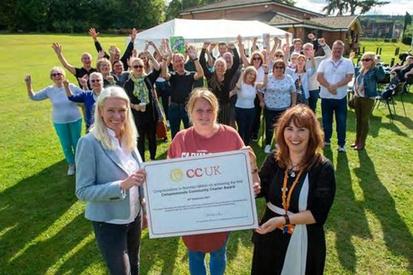
For more information or to book a course, please contact us on info@compassionate communitiesuk.co.uk
Each weekly 1.5-hour session is a balance of theory and practice bringing together a the place-based team who go on a learning journey together.
Places that have been through this programme finish with practical next steps approach to ready them for Compassionate City Charter Accreditation which includes 13 standards that focus on public health palliative care.
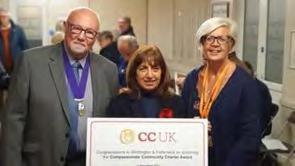
This six-week programme is the starting point for places looking to implement the Compassionate City Charter or broaden their knowledge to benefit their community or workplace.
For more information or to book a course, please contact us: info@ compassionatecommunitiesuk.co.uk
three-hour a course is usually a place-based group of 10 people who are often volunteers. Once accredited, trainers can train other people locally.
Connectors may suggest the person tries out a walking group, lunch club or bereavement help point.

Our Connector Train the Trainer
This training can be part of a broader place-based strategy to reduce loneliness and increase community sources of support.
Compassionate Community Connectors are people who know what is going on in their community and want to be more comfortable in holding supportive conversations that might help the person they are chatting with.
Everywhere there are people, there are connectors. They might be hairdressers, publicans or taxi drivers. They may be in schools, workplaces and faith groups. Everyone qualifies.
Compassionate Community Connector Train the Trainer Course
Dr Julian Abel

Dr Joseph Sawyer
Basic concepts and theory
Content includes:
Our team of course leaders
Dr Kerrie Noonan


Dr Libby Sallnow
Evidence-based research Education and training
With the new Oxford Text Book in Public Health Palliative Care
To book or learn more click here
Basic practice methods
providing a strong evidence base, this development programme provides an opportunity for specialist registrars to take part in an interactive discussion with leaders in the field.
The case for Public Health Palliative Care
Professor Allan Kellehear

Population based approaches
Public health palliative care is now part of specialist training for all palliative medicine consultants. However, for many healthcare professionals, including doctors, this essential training hasn’t been part of their previous training or practice.
Specialist Registrar Training
The case for public health palliative care Basic concepts and theory Basic practice methods
Public Health Palliative Care for Multi-Disciplinary Teams

Contact us at info@
compassionate communitiesuk.co.uk
Population-based approaches Evidence base Education and training
For the full course, details click here.
This course combines specialist training with a public health approach and includes:
Individual and team-based programmes are available.
The multi-disciplinary team (MDT) role is key in palliative care and includes many health professionals, including doctors, nurses, social workers, specialists and therapists.
Public Health
This programme includes skills and practical service redesign workshops.
The full programme is available here.
In keeping with a growing body of evidence, Public Health Palliative Care for Hospices aims to align public health palliative care with enhanced specialized services.
Integrating public health palliative care approach into a hospice’s strategy helps hospices maximize care quality for patients, families and communities.
Palliative Care for Hospices
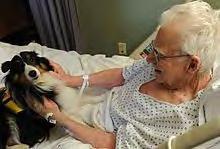
Many hospices include aspects of public health palliative care as part of their operational strategy. However, this work is often at the fringes as it competes with family support and income generation priorities.
Contact us at info@ compassionatecommunitiesuk.co.uk
“There is no such thing as ‘not racist.’ If you are actively challenging racism, congratulations, you are being an anti-racist. But if you are doing nothing while trying to claim some kind of neutral territory between racist and anti racist, you are complicit in allowing the structural problem to persist. To do nothing in a society of injustice is to uphold racism. To do nothing in the face of racism is to be racist.”
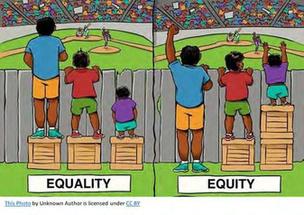
Anti-racism, diversity and structural inequity is an essential course for organisations and individuals committed to being part of the solution. Over ten sessions, participants will learn about the importance of understanding privilege, dismantling institutional bias structure, implementation restructuring, community participation and power relationships. The course uses the equity based principles of public health palliative care to deal with the structural limitations of current institutional behaviour. The emotional safety of all participants is a priority, and breaks will be taken when complex and emotional issues arise.
Anti racism, diversity and structural inequity
For further information visit our website www.compassionate-communitiesuk.co.uk
~ Ibram X Kendi The Guardian 25/7/2022
The course is designed for organisations and individuals who are keen to address the difficult issues of anti racism, equity, diversity and inclusion to improve palliative care in their communities.
For decades, people who face structural inequities, including racialised people, disabled, LGBQT+, incarcerated, and unhoused people, have worse palliative access and outcomes. This well-documented and systemic issue remains an unsolved problem in the UK.
Hospices continue to face multiple challenges of limited capacity, funding and workforce constraints which mean that issues such as inequity of access are very difficult to solve.
Palliative care has done an enormous amount to relieve the physical, psychological, social and spiritual suffering of people with terminal illnesses over the last 60 years. Millions of people have been supported, however, significant challenges remain.
Contact us at info@ compassionatecommunitiesuk.co.uk
The full programme is available here.
This one-day programme aims to support Trustees understanding of how a public health approach to palliative care can help resolve some of these ongoing challenges and enhance hospice strategy.
Trustee Development Programme

Compassionate cities A mainstay of public health palliative care. Death, dying, loss and care giving is everyone’s responsibility. Compassionate cities are villages, to towns, to cities to whole countries. Come and discover the basics of how to do this.
Bookings are via our website on www.compassion atecommunitiesuk.co. uk OR via Eventbrite
Public health response to bereavement - 100% of people need the support of love, laughter and friendship when they suffer from grief and loss. Yet models for bereavement, limit care to the small percentage of people bereaved. Public-health palliative care responses to bereavement are population based for all.
Roadblocks in palliative care Current provision of palliative care is for the minority of people experiencing death, dying, loss and caregiving. Limited research paradigms exacerbate this problem. It does not need to be like this.
for members
Public Health Palliative Care - This is an enormous dilemma for professionals who work in the area of palliative care. How on earth can we think about providing palliative and end of life care for everyone, irrespective of age and diagnosis? Come and explore how to change this.
Interactive Webinar Series
Power relationships and equity - Lying at the heart of public health palliative care is equity, how we can provide care and support for all, irrespective of diversity or disease. Institutional change is needed to achieve this.

Community connectors - How is it possible to have a deep dive into communities? Community connectors play a vital role in connecting with whole populations
Palliative research - The limited conceptual framework of current palliative care service provision is found in the narrow focus of palliative care research. We can learn from other research stations and develop new research paradigms to make sure that we are really making a difference.
Racism and palliative care - It is not enough to be non racist, because we need to take action against racism. We have to be anti racist. This is a problem for health services as a whole and palliative care is not immune to this.
Health is a social function - Good social relationships are more effective at helping us live long, happy lives than any other intervention we have. Health and wellness is something that can be profoundly influenced by good social relationships. We should make best use of the most powerful therapeutic tool we have.
Webinar Series
Bookings are via our website on www.compassionatecommunitiesuk.co.uk OR via Eventbrite
Hospices and public health palliative care - It is possible to transform specialist palliative care services, including hospices to provide a population based approach that focuses on the social nature of dying. This is a challenge of service re-orientation.
for members
Six Pillars of Health
Contact us to find out more
The six pillars are food, movement, relationships, environments in which we live, community and healthy minds.

We thrive on love, laughter, and friendship. Our innate need for social connection is built into hundreds of millions of years of evolution and imbues everything we do. Yet this basic information is not part of the everyday practice of medicine. So why not use this free compassionate treasure we all possess to help lead healthy lives?
The impact is dramatic, supercharging efforts to get healthy by making the best use of making friends. Contact us to find out more.

The main emphasis of the Six Pillars training combines good social relationships with low-cost ways to improve health. After taking this course, participants will be able to set up a Six Pillars training group, understanding that the problems and the solutions for good health can be found in the group rather than through a professional The secret to health is found in a sense of belonging that happens with the friendships that develop along the way.
Contact at info@compassionatecommunitiesuk.co.uk
In addition to the range of learning opportunities Compassionate Communities UK offer. We also accredited several areas of practice: -
Compassionate Organisation this award builds on the Compassionate Workplace award and adds to the success criteria of compassion in its external environment as part of its community.

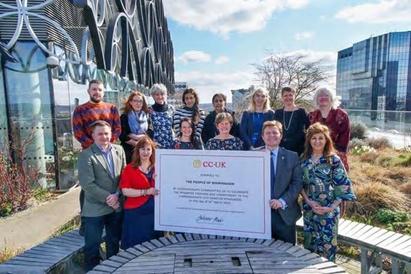
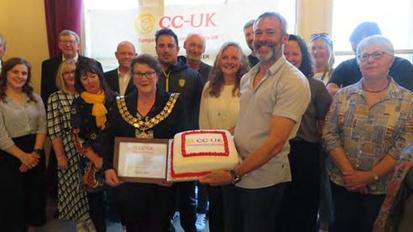
Compassionate City Charter - this charter status is available to places of any size that show commitment and achievement against the 13 standards within the charter. To find out more, view examples here.
Compassionate Workplace - this award involves a baseline assessment and, where necessary, an improvement plan demonstrating a commitment to human workplace culture, practices, and development
us
to learn about our Award programme
Awards
Find out more https://compassionatecommunitiesuk.co.uk/me mbership/
Membership benefits include:
20% discount on training programs (unless using a third-party provider)
Join a collective of like-minded people from UK and around the world on our mission to improve health through compassion.
vary

Membership Become a member of Compassionate Communities UK and be part of a global movement of social change agents.
Prices
Free participation in monthly virtual events including book clubs, policy cafe and ‘kitchen-table’ chats, which are casual conversations about topics of interest to members.
Regular CC-UK updates start from and on size and type organisation
£35
of
Compassionate communities change lives Let's keep the conversation going! @CompassionComUK @ccuk _city @compassionatecommunitiesuk Compassionate Communities UK Compassionate Communities UK Compassionate City