is distributed FREE at locations in Truckee and Tahoe, also on www. northwoods.news and www.Issuu.com. When you visit our advertisers, please mention Northwoods Tahoe.
Submitted articles, if published, become the exclusive property of Community Media LLC We reserve the right to edit, or choose not to print submissions. The views and opinions expressed in the content are not necessarily shared by the Publisher, Editor, Community
2292 Main Street, Suite 7, Genoa, NV 89411
Mailing: PO Box 1434 Genoa, NV 89411 (530) 582-9012 harry@communitymediallc.net
Mountain Muscle
by Mark McLaughlin
The early years of the Great Depression proved to be fertile ground for the growth and development of winter sports in California. Bert Cassidy, a newspaperman from Truckee who had moved to Auburn and been elected state senator, knew firsthand that snow-oriented activities could boost cash flow in mountain communities. In recounting how the town of Truckee had pulled itself out of an economic malaise by promoting winter sports, Cassidy wrote, “While skiing was available for the outdoor sportsman, the businessmen were soon united behind our winter sports program, because the popular sport brought visible returns in the form of a busy cash register. What appeared to be a dying town [Truckee]
was soon one of the busiest beehives in winter economic life of eastern California. The sport was exhilarating.”
After the success of Truckee, the next big stride in Sierra winter sports came when the Auburn Ski Club was organized in 1928 with a mandate “to provide warm shelter, cleared slopes, and the first engineered ski jumping hill to be built in California.” Right out of the gate it was apparent that the Auburn Ski Club (ASC) was going to be something special, a virtual dynamo of energy and accomplishment that would soon propel it to the forefront of ski development in California and the West. Led by Wendell T. Robie, a no-nonsense businessman with a talent for organization and a passion for the outdoors, the ASC moved forward in leaps and bounds. It’s probably safe to say that no California ski club has played such a major role in promoting winter sports as Auburn, especially during the 1930s when skiing first captured the country’s imagination.
Continued on Page 4
Continued from page 3
Bert Cassidy wrote, “In 1928, the Auburn Ski Club was formed and this group of live-wire Californians soon gave the impetus to Winter Sports that has carried to every city in the state. They all now have their favorite ski grounds. Ready access to these snow areas, due to good highways and the snowplow crews of the State Division of Highways, bring them within a few hours ride of the most distant city.” Open highways cleared of winter snow was a new phenomena. Truckee had been accessible by railroad since the late 1860s, and Tahoe City had train service after 1900, but it wasn’t until 1931 that California resolved to keep the road over Donner Pass open throughout the winter. Prior to that, when deep snow closed the Summit for the season, those wishing to cross by automobile paid Southern Pacific a fee to load
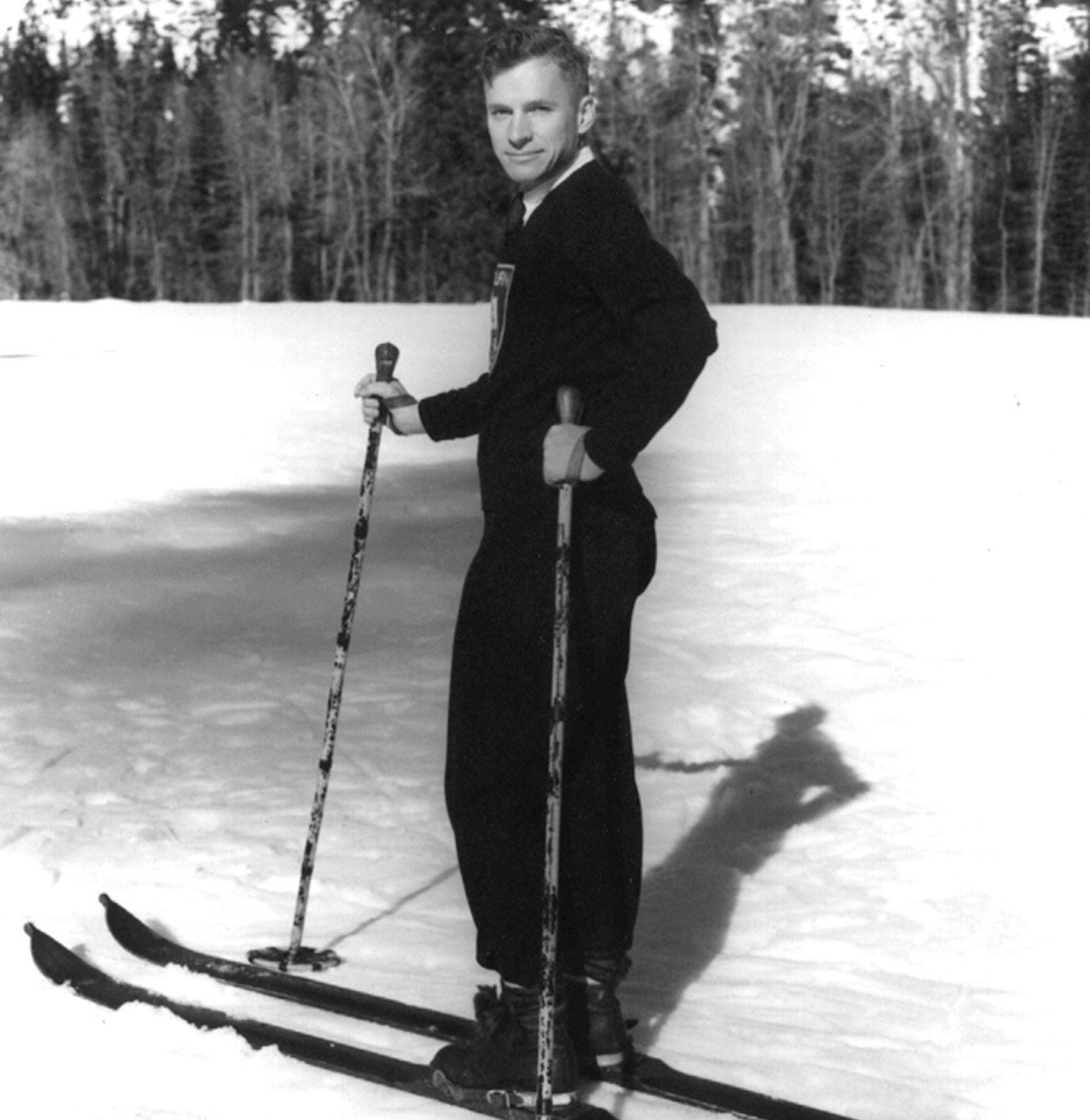
Auburn Ski Club President, Wendell T. Robie
Photo courtesy of Western Skisport Museum
their car onto specially designed railroad flatbeds which carried them over the mountains.
Automobile traffic stopped at the snowline, but the deeper snow and greater coverage lay well beyond the closure point. Wendell Robie wrote about how club members took it upon themselves to clear part of the road: “Always, the road to higher snow pack areas for skiing were guarded by solid barrier, deep drifts that had been created and protected where tall trees had stopped the winter winds. It took youth, muscle, and hard shovel work to clear the drifts to force open a lane of old Highway 40 up to where the snowpack was continuous for skiing. The club had all this to do and their hard shoveled road lane remained for several winters solely a skier’s road.”
After three long winters shoveling snow, the members of the Auburn Ski Club had enough and decided to take bold action. In January 1931, they petitioned the California state legislature to fund snow removal operations for high elevation arterial highways, beginning with Highway 40. The club was convinced that winter travel by skiers and others would more than pay for the purchase of plows, equipment and personnel. The ASC proposed a bill for the Legislature to appropriate $685,000 for clearing Highway 40 first, with other highways to follow. The club had a powerful ally in Senator Bert Cassidy, who introduced the bill and helped move it forward to a vote.
In a small booklet titled A Half Century of California Skiing, Wendell Robie described how the club came up with this innovative solution to their number one problem, access to better snow conditions at the higher elevations. The idea germinated from an opinion by club leadership that skiing would produce enough gas tax revenue from winter traffic to pay for snow removal to keep the highway open. Robie wrote, “The Auburn Ski Club determined to sell this solution to the Legislature,
Continued from page 4 and with the aid and counsel of Senator Bert Cassidy, an active member of the club, a bill was presented for the Legislature. Most of the legislature had never been in snow. Only a handful had ever been in the mountains in winter.” With only a few lawmakers experienced in the enjoyment of snow for fun and sport, there was little motivation to appropriate the money. It seemed a dead issue and the date for action on the bill approached with little favorable response from the legislators.
Robie and his fellow club leaders realized that approval of this legislation could prove to be a critical moment in California ski development and some form of direct action was needed. The club determined to secure votes by persuading the legislature that the snow removal idea made political and economic sense. Representing the ASC, Senator Cassidy extended an invitation to the whole legislature to be guests of the club at their winter sports grounds in the mountains on Sunday, January 18, 1931. The proposal was very unusual, but the outing appealed to most of the politicians and the invitation was widely accepted.
Robie continued with his story: “With help of the people of Auburn a motor caravan of 56 automobiles left Auburn in the dark at 6:00 a.m. on that Sunday morning. With a large Highway Patrol Motorcycle escort they pulled up in
front of the Capitol, loaded in the legislature with many of their families and sweethearts and early on a bright warm, pleasant day arrived at the Auburn Ski Club at Cisco. The legislature was entranced with the beauty of the snow and the mountains on that day. Entertainment was provided by the skiers and [alcohol] refreshments by E. Clampus Vitus [prohibition notwithstanding], and a great time was had by all.”
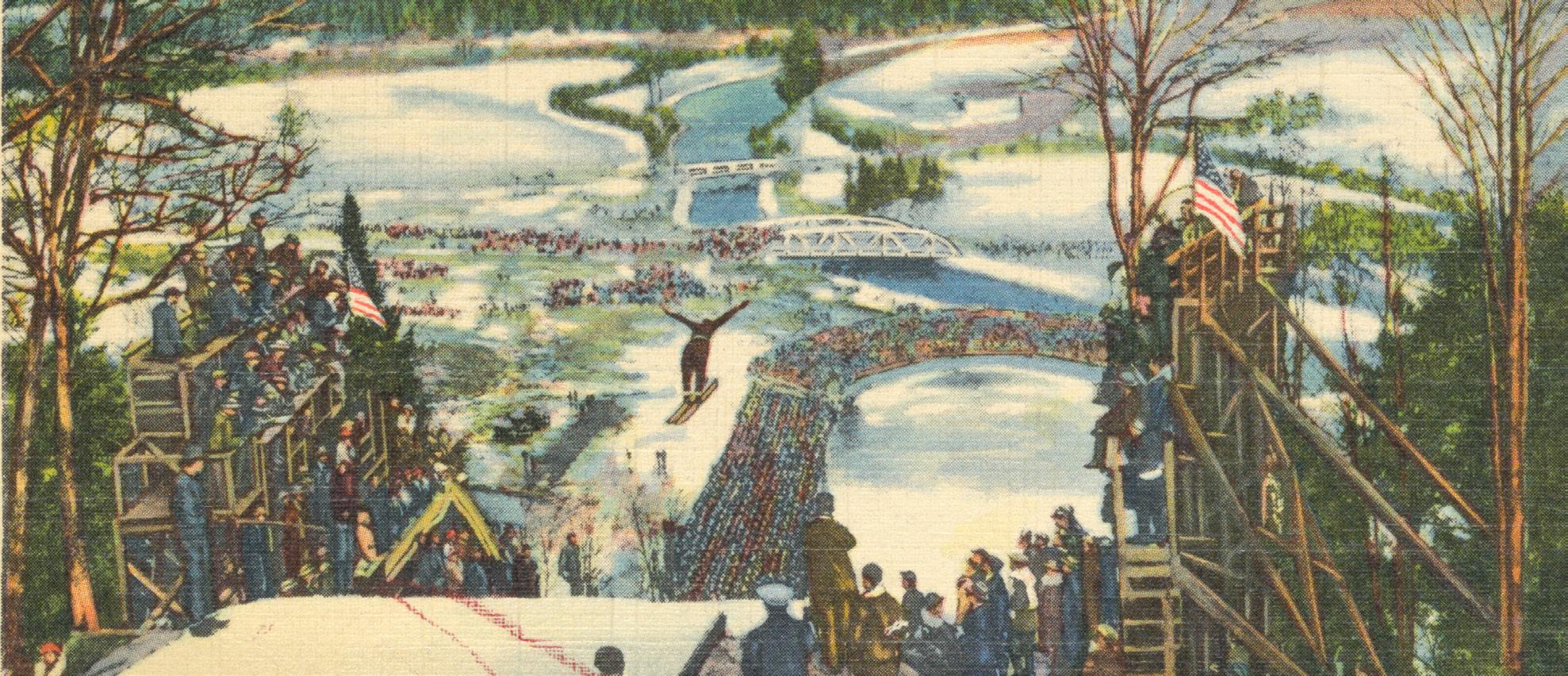
The Auburn Ski Club had left nothing to chance. Since the main point of this effort was to show the legislators that maintaining access to snow country would in essence pay for itself, the club also invited the general public to attend a free ski jumping event that day. By lunchtime long lines of automobiles had arrived with skiers and spectators anxious to see the ski jumping. A man stationed along the highway with a counting instrument recorded more than 2,400 automobiles, all of which drove into the dead end road to park behind the cars bearing the legislators. Of course, at the end of the ski jumping exhibitions and festivities, the mass of cars became a monumental traffic jam. The legislators had seen enough and the next day they approved a snow removal budget for Highway 40, with other routes cleared in the future. From that came the 1930s explosion of snow play areas and rope-tow and ski operations up and down the Sierra.
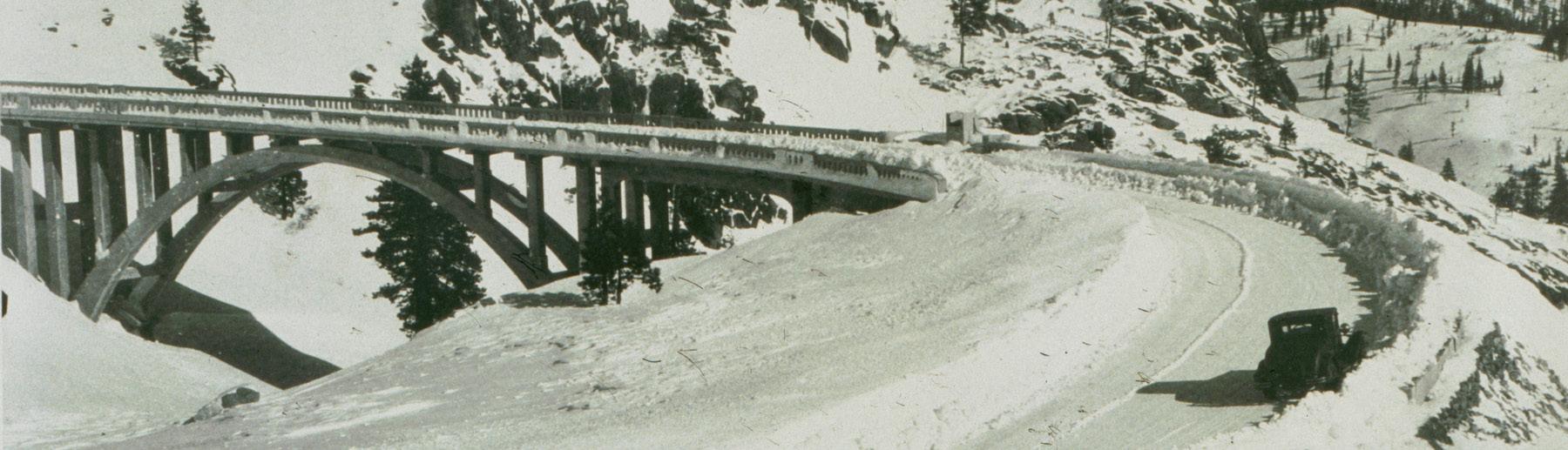
Highway 40 first plowed in the winter of 1932
Photo courtesy of Donner Summit Historical Society
Exp sed
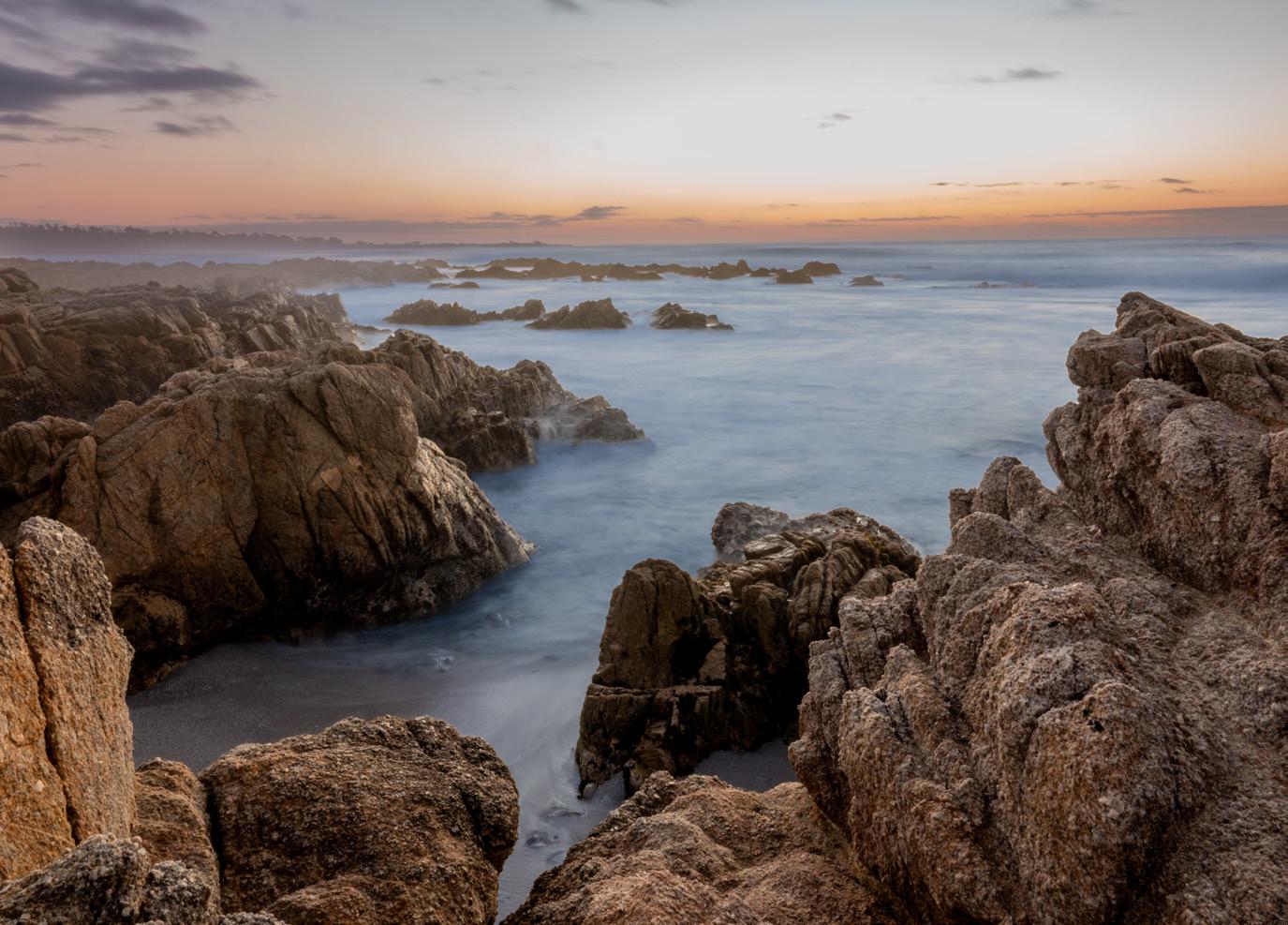
Long exposure photography has become one of the most poetic forms of fine art landscape work. Instead of capturing a single instant, the photographer records several seconds—or even minutes—of movement in a scene. The result is a landscape transformed: water softens into mist, clouds stretch into sweeping brushstrokes, and shifting light melts into gentle gradients. The camera becomes a tool not just for seeing, but for translating the passage of time into visual art.
At the heart of long-exposure imagery is the idea of revealing what we normally overlook. Waves crashing on a rocky coastline may feel chaotic in real life, yet in a long exposure they become silky and calm, almost meditative. A fast-moving sky turns into elegant streaks that guide the eye across the frame. Light, instead of appearing harsh or directional, accumulates into a soft glow that feels more like sculpture than illumination.
Landscape photographers lean on this technique to create images that feel serene, dreamlike, and sometimes otherworldly. The approach shifts the viewer’s attention away from literal detail and toward mood, atmosphere, and emotion. We’re invited not to stand in the photographer’s shoes, but to step into their interpretation of the moment.
Creating these images requires patience and a thoughtful approach. Because the final photograph won’t match what the eye sees in real time, the photographer must imagine how motion will transform the scene. Clouds drifting overhead, tide lines rolling in and out, or a waterfall rushing over stone all become part of a slow visual performance. The artist composes around the still elements—rocks, trees, shorelines—while anticipating how moving parts will blur into softness.
Even though the technique relies on long shutter times, the process is less about equipment and more about slowing down. The photographer studies the rhythm of the landscape, waits for light that feels expressive, and embraces whatever the environment offers. Sometimes the best images come from unpredictable conditions: changing weather, shifting winds, or the subtle glow of twilight.
Once captured, the final image often needs only light refinement to bring out its atmosphere. Soft contrasts, gentle tones, and careful attention to mood help complete the dreamlike effect.
In the end, long-exposure landscape photography is a way of sculpting time. By allowing movement to flow through the frame, photographers create images that convey peace, wonder, and the quiet poetry of the natural world—inviting viewers to linger a little longer in each scene.
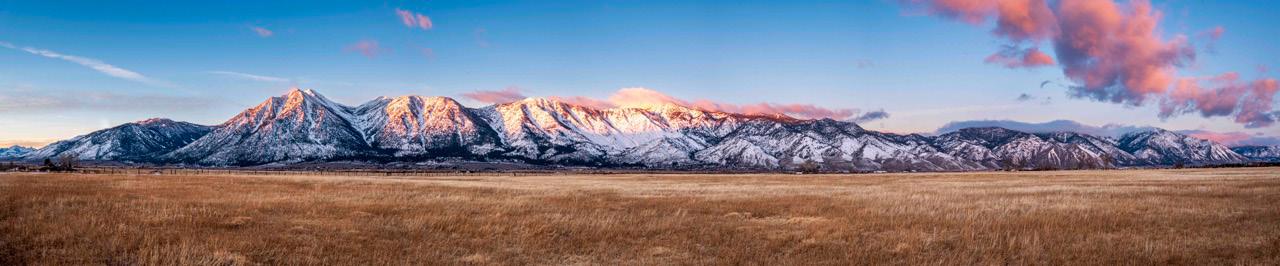
Asylamar Winter Sunset by Aaron Jones 15mm | f/22 | 5 second exposure | ISO 200
“Grizzly” Wolf Pack Emerges in Southern Plumas County
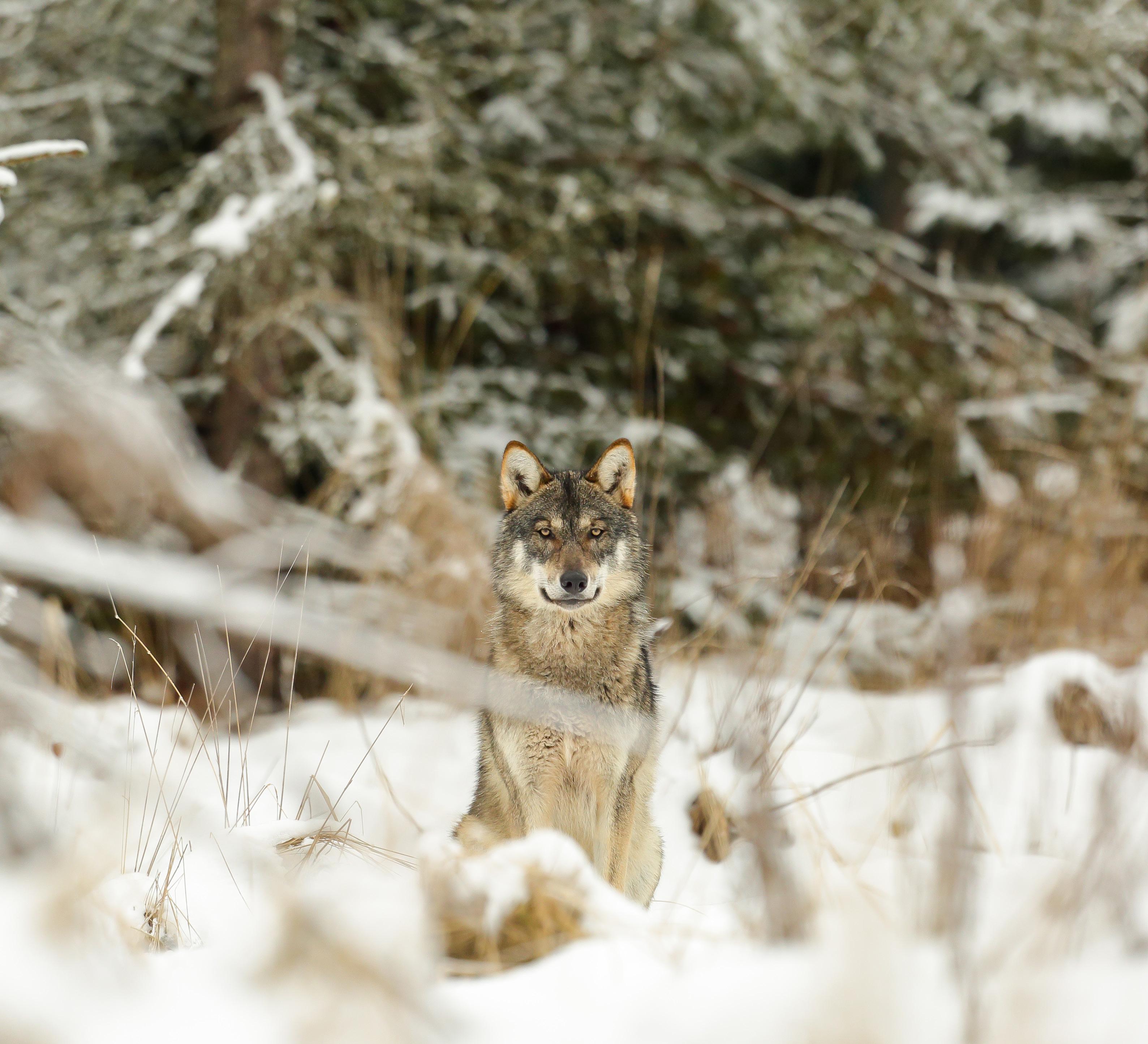
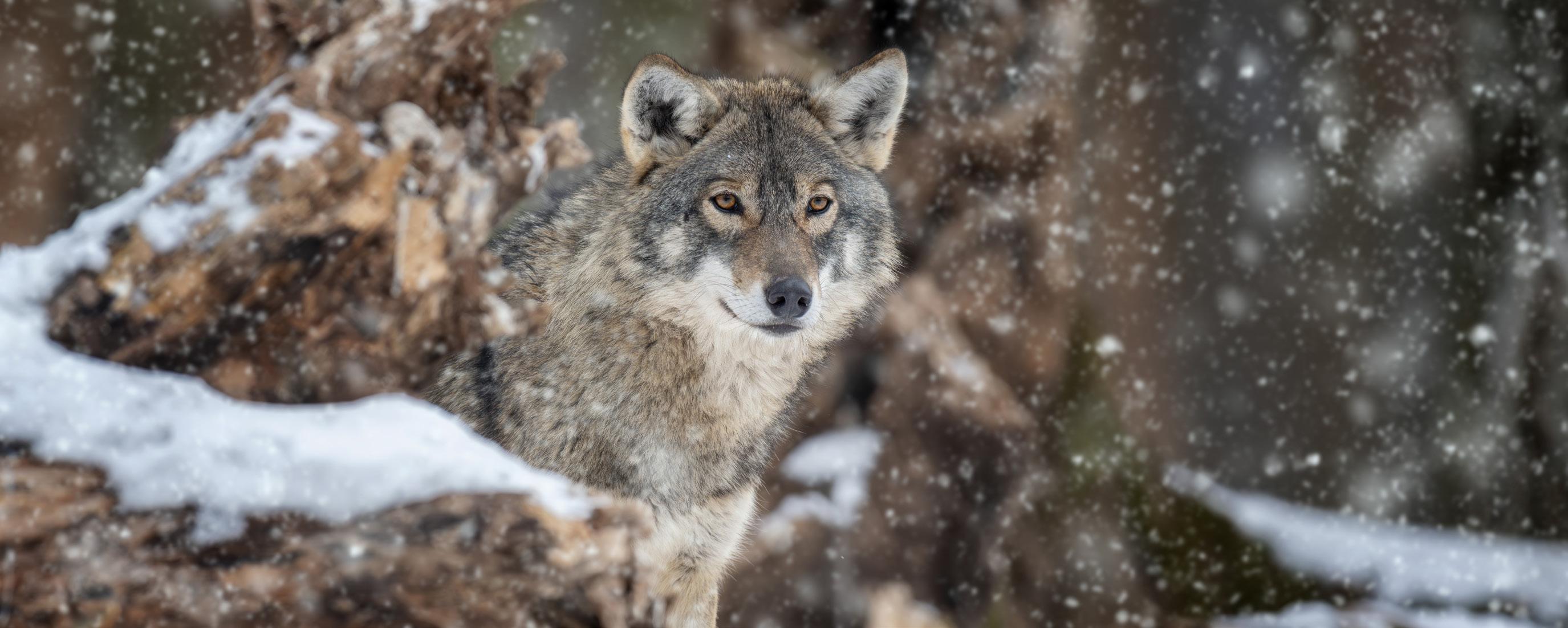
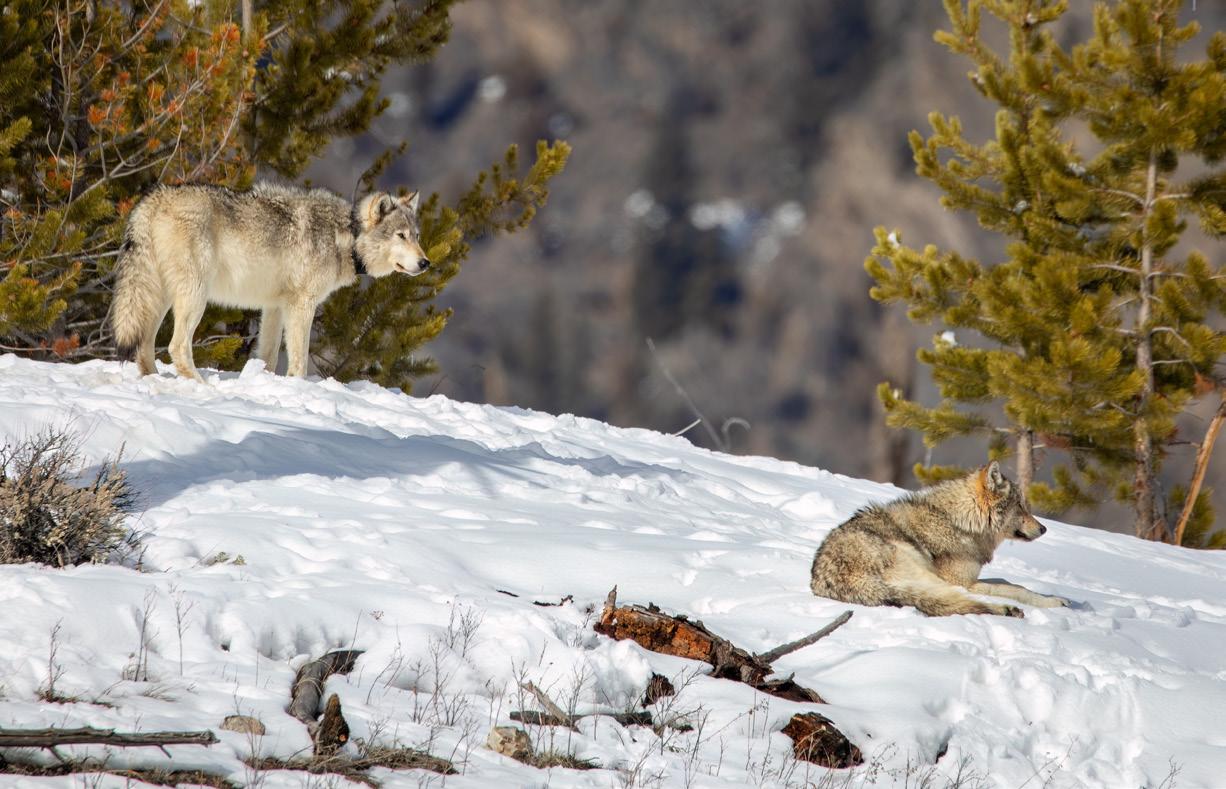
A newly confirmed gray wolf pack, dubbed the “Grizzly pack”, is now established in southern Plumas County, California, just north of Sierra Valley in the Quincy area. State wildlife authorities officially recognized it after detecting reproduction, marking another milestone in California’s slow but steady wolf recovery. ¹
Size and Composition
The Grizzly pack consists of two adult wolves and at least one pup, as confirmed through a combination of cameratrap images, noninvasive genetic sampling (scat), and visual observations by California Department of Fish and Wildlife (CDFW) biologists. ² The presence of a pup met CDFW’s criterion for declaring a group a “pack.” ²
During field operations, biologists spent approximately ten days attempting to ground-capture individuals, while also deploying additional cameras, collecting scat, and surveying the area in cooperation with U.S. Forest Service and private landowners. ²
Origins and Genetic Background
Genetic analysis has shed light on the likely origins of the Grizzly pack. The female wolf has been identified as LAS37F, an individual originally from the Lassen pack, a well-known longstanding pack in northern California. ¹ The male, meanwhile, is identified only as DIS05M, a disperser whose prior origin remains uncertain; CDFW reports categorize him as a “disperser male.” ² Some local media suggest he may have come from out of state, possibly Oregon, consistent with known patterns of wolf movement into California. ¹
Conflict and Controversy
The appearance of the Grizzly pack comes amid heightened tensions over wolf-livestock interactions in the region. Neighboring Sierra Valley has been the focal point of a contentious management episode: in October 2025, CDFW lethally removed four members of the Beyem Seyo pack after persistent cattle depredations. ³ Those actions
Continued on page 12
stoked deep divisions — ranchers expressed relief, but many conservationists sharply criticized the removals, arguing that nonlethal options had not been fully exhausted. ⁴
Ranchers in Plumas County are especially vocal. According to local reports, livestock losses to wolves are imposing heavy economic burdens: one cattleman told the Plumas County Board of Supervisors that ranch operations were losing as much as $50,000 annually. ⁵ These depredations, they say, threaten not only livestock but the viability of their ranching livelihoods.
To address wolf concerns, Plumas County officials even proposed an emergency resolution that would authorize the local sheriff’s office to investigate wolf incidents, declare specific wolves “public safety threats,” and permit their “removal” under certain conditions. ⁶ The proposal fueled significant debate over balancing wolf protection and ranching needs.
Conservation Status & Management
Still, the new pack’s arrival underscores the delicate balancing act facing wildlife managers. While ranchers worry about future livestock losses, conservationists view the Grizzly pack as a sign of ecological resilience and a positive step in the rebuilding of California’s wolf population.
Looking Ahead
As monitoring continues, CDFW and partner agencies will likely intensify efforts to track the pack, assess its interactions with ranching operations, and apply nonlethal conflict mitigation tools. Given the recent lethal removal of another pack nearby, stakeholders on all sides will be watching closely. Continued from page 10
Gray wolves in California remain rare and fragile. The Grizzly pack is now one of ten confirmed packs statewide, according to CDFW. ⁷ The species is protected under state and federal law, and California’s wolf-management framework emphasizes nonlethal deterrents such as electric fencing, range riders, guard animals, hazing, and diversionary feeding. ⁸ In its most recent quarterly wolf news update, CDFW reported no confirmed depredation events tied to the Grizzly pack during the July–October 2025 reporting period. ²
Footnotes
1. CDFW confirms that the Grizzly pack consists of two adults and a pup; the female is from the Lassen pack, the male is a disperser. “Wolf Management Update … July 2025 – October 2025.” ([SierraDailyNews.com][1])
2. Genetic confirmation (DIS05M and LAS37F) and fieldwork details from CDFW biologists. ([SierraDailyNews. com][1])
The discovery of the Grizzly pack adds both hope and complexity to the story of wolf recovery in California. On one hand, it underscores that wolves are continuing to disperse, reproduce, and form new social bonds within the state. ¹ On the other hand, it raises fresh questions about how best to manage coexistence — especially in a region already marked by conflict over wolf-livestock losses.
3. The Beyem Seyo pack was lethally removed due to livestock predation. ([San Francisco Chronicle][2])
4. Conservationists and other critics argue nonlethal methods were insufficient. ([San Francisco Chronicle][3])
5. Plumas County ranchers claim heavy financial losses; local meeting cited. ([The Plumas Sun][4])
6. Plumas County Board of Supervisors proposed emergency resolution for wolf “removal” by sheriff. ([The Plumas Sun][5])
7. CDFW lists ten confirmed wolf packs in California, including the Grizzly pack. ([wildlife.ca.gov][6])
8. CDFW’s wolf management plan emphasizes nonlethal deterrents and conflict mitigation. ([wildlife.ca.gov][6])
Transform Your Kitchen with Lighting Upgrades
As the heart of many homes, the kitchen is often for much more than cooking. From morning coffee and gathering for family meals after long days at school and the office to entertaining loved ones on the weekend, functional, stylish lighting can make your kitchen truly shine – day or night.
Whether you’re planning a full-scale remodel or simply looking to refresh one of your most-used spaces, even modest lighting updates can enhance its aesthetic appeal and usability. From swapping out lightbulbs to replacing fixtures, adding smart controls and more, these ideas can help you brighten things up.
Add Balance with Layered Lighting
The most well-lit kitchens incorporate three layers of lighting: ambient, task and accent. Ambient lighting, typically from recessed ceiling lights or a centralized light fixture, provides general illumination and sets the tone for the space. Task lighting, such as under-cabinet light strips or a hanging fixture above an island, provides focused light over work zones like the sink, stove or countertops. Finally, accent lights in cabinets, baseboards or backsplash can add depth and drama, for a practical and inviting layered look.
Upgrade to Energy-Efficient Lightbulbs
One of the simplest ways to upgrade your kitchen – or any room – is swapping old lightbulbs for energy-efficient LED bulbs. From cozy warm whites to bright white and amber hues, LEDs come in a variety of color temperatures to fit your space. They typically last longer and use less energy than halogen, incandescent and fluorescent bulbs and they’re often dimmable, giving homeowners complete control over the space’s brightness and mood.
Make a Statement with New Fixtures
A design feature all their own, lighting fixtures like chandeliers or pendants over the kitchen table or center island can instantly elevate your kitchen’s look and feel. For a sleek, modern aesthetic, consider polished chrome finishes; think brass or brushed nickel for warmth; or opt for matte black for stunning contrast. Remember to look for fixtures in finishes that complement your appliances and cabinet hardware to truly bring the space together.
Embrace Smart Technology
Even small updates can make a big difference when it comes to bringing your kitchen into the future. Swap out old switches with smart options that allow you to adjust brightness throughout the day, schedule your lights to turn on or off automatically and change the color temperature from your smartphone or voice assistant. All can enhance usability and convenience while reducing energy usage.
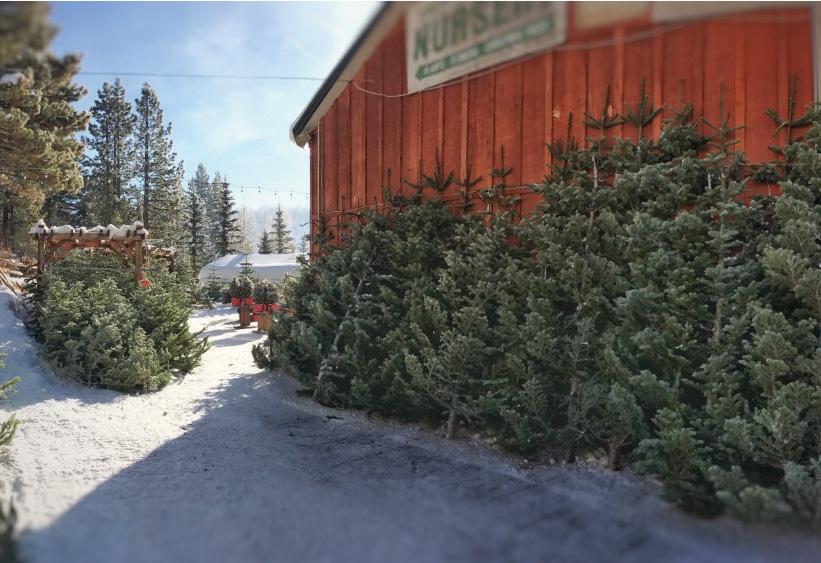
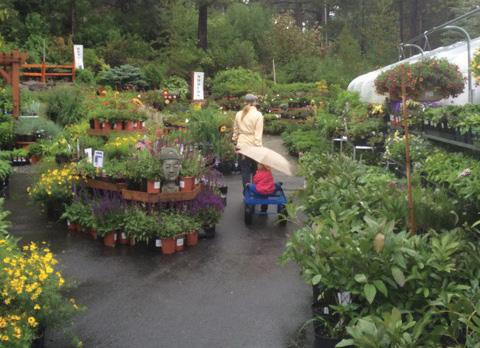
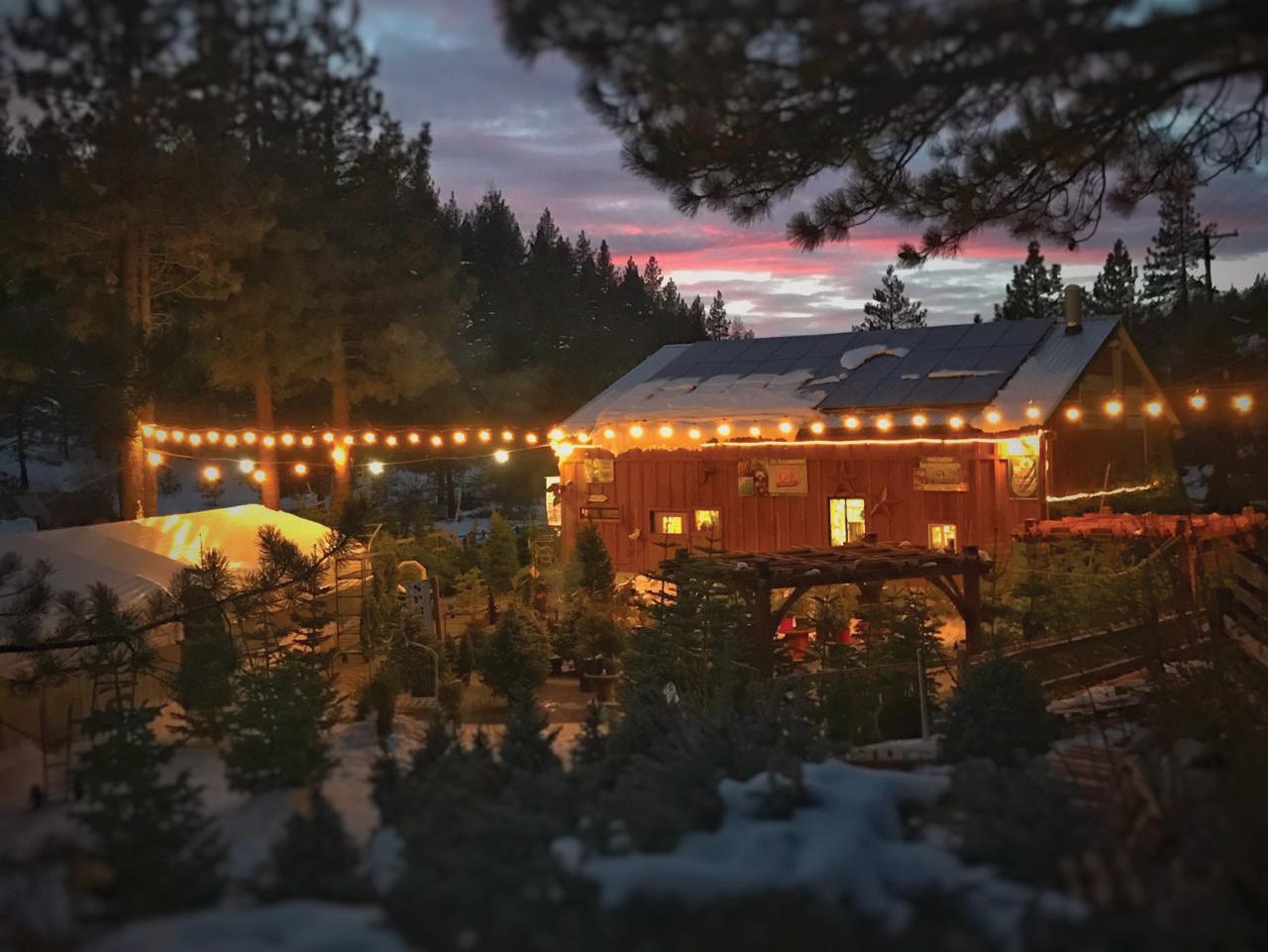
A real nursery for any plant lover. We’ve been helping Sierra gardens thrive for over 40 years.
Winter in the Tahoe Basin carries a kind of light that feels almost otherworldly—soft, angled, and full of quiet drama. It is a season when even the simplest moments, from scraping ice off the windshield to walking the dog at dusk, shimmer with unexpected beauty. Locals often describe it as “storybook light,” but the reasons behind it are both poetic and surprisingly rooted in the landscape itself.
It starts with the sun’s position. During December and January, the sun stays low on the horizon, never rising to the strong midday height we experience in summer. This low-angle sunlight travels through more of the atmosphere, softening its intensity and stretching shadows across snowbanks, rooftops, and the forest floor. Instead of harsh illumination, winter brings a warm glow that glides across the basin, highlighting textures that often go unnoticed during brighter sea-
sons. The lake, meadows, and granite boulders become canvases for long, languid rays.
The clarity of Tahoe’s high mountain air only intensifies the scene. With fewer particulates floating in the atmosphere, light scatters less, making winter colors appear unusually crisp. Blues deepen, whites sharpen, and even the muted greens of Jeffrey pines stand out with surprising clarity. On exceptionally cold mornings, tiny ice crystals suspended in the air can catch the rising sun, creating halos or faint pillars of light that seem almost mystical.
Then comes winter’s grand finale: alpenglow. This phenomenon occurs when the sun slips below the horizon but continues to illuminate the mountains from below, turning the Sierra Nevada an ethereal pink or orange. In Tahoe, the effect is magnified by the basin’s geography. The mountains rise steeply around the lake, catching the last light long after the valleys have fallen into dusk. For a brief window each evening, the peaks ignite with color—soft rose, deep lavender, or a fiery crimson—while the lower landscape
rests in cool indigo. It feels as though the mountains themselves are radiating light.
Even after the final glow fades, Tahoe continues its quiet show. The lake becomes a vast mirror, reflecting twilight blues, silvers, and purples back into the sky. On still nights, when the surface settles into glass, it creates the illusion of a double horizon. Twilight lasts longer here, stretched by reflection and framed by the dark silhouettes of surrounding ridges.
Snow also plays its part. Fresh snowfall brightens everything, bouncing light in every direction and enhancing the
overall luminance of the basin. During full-moon nights, the combination of reflective snow and thin, crisp air can be so bright that shadows form with surprising sharpness, and the lake glows like brushed metal.
Tahoe’s winter light is more than a visual trait—it’s a seasonal mood. It invites stillness. It encourages people to look a little longer, breathe a little slower, and appreciate the quiet artistry of the natural world. In the heart of winter, light becomes Tahoe’s most delicate and enchanting storyteller.