2024-25


2024-25
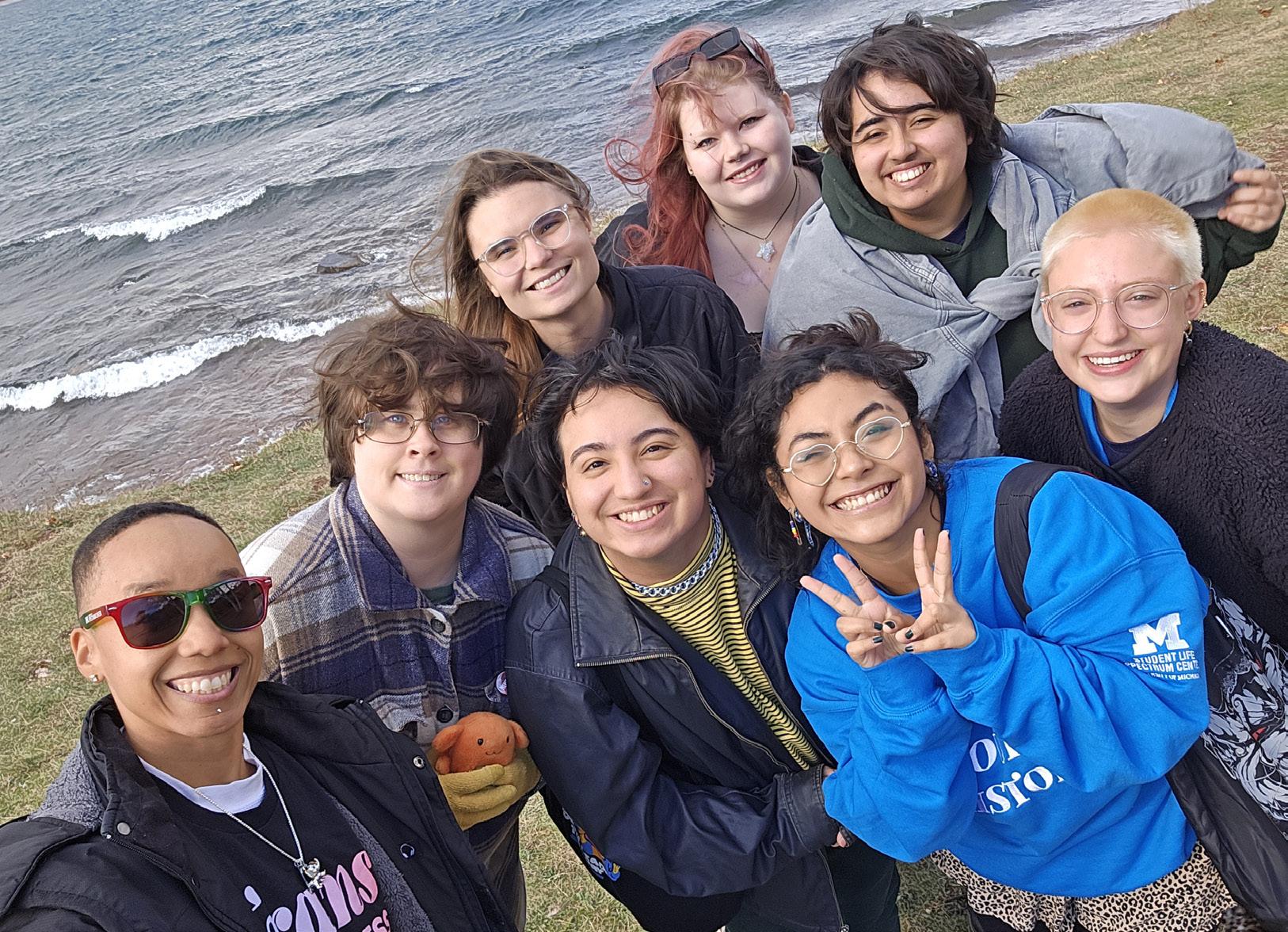
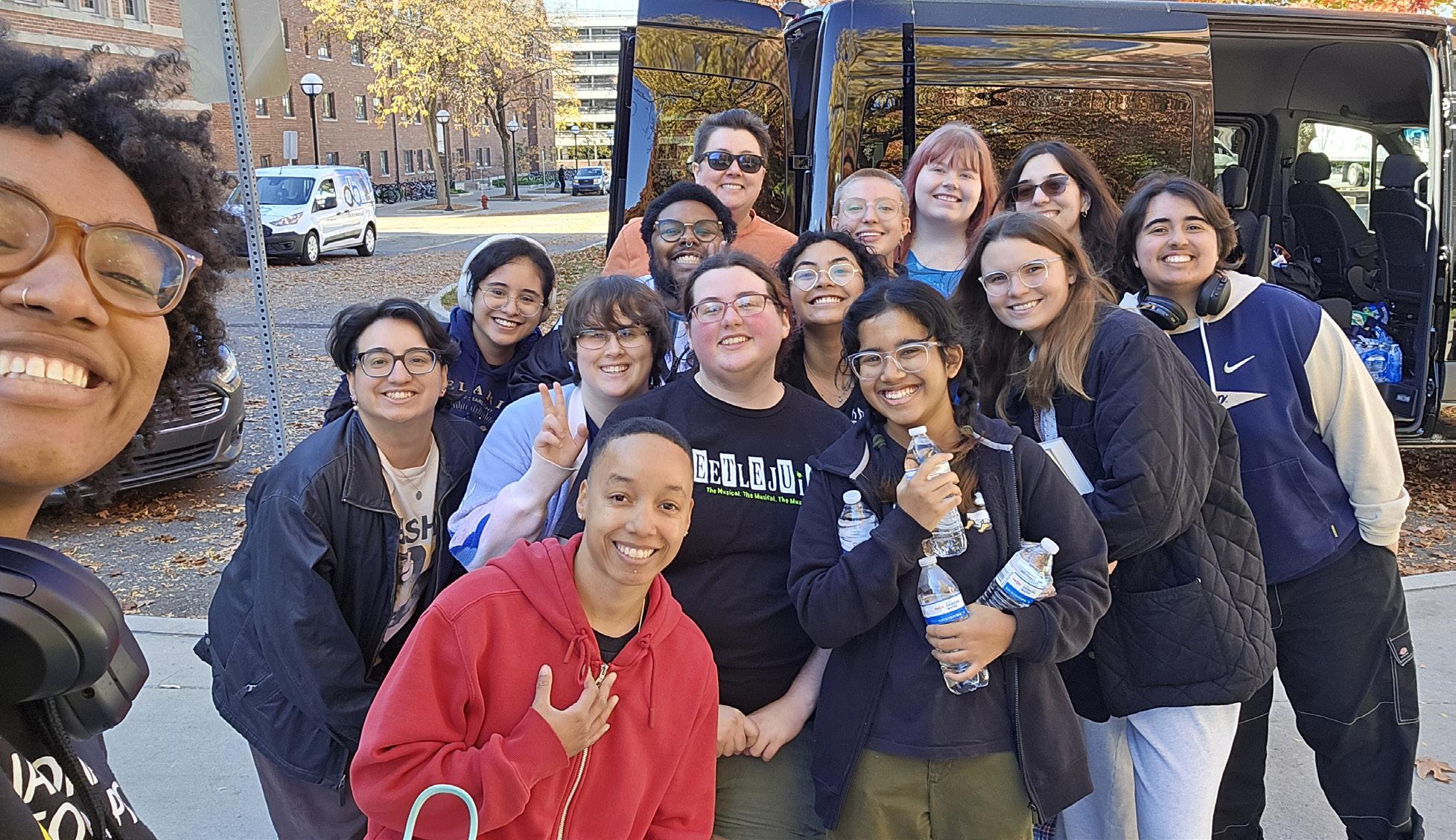
One of my favorite memories from this year was driving a 12-passenger van full of students back from the Upper Peninsula, singing show tunes at the top of our lungs for the last two hours of a very, very long trip. We had just attended MBLGTACC, the Midwest Bisexual, Lesbian, Gay, Transgender, and Asexual College Conference. MBLGTACC is a unique conference because it draws together college students from across the Midwest to build community, develop leadership skills, and connect with their peers. The conference had been an intense and meaningful experience. Traveling together forges strong bonds. It was the last weekend in October–the eve of the 2024 election. As I write this, I am smiling thinking about how we cheered when Defying Gravity began–a song from Wicked, a delightfully queer-coded show. This moment of pure joy sustained me and has given me hope over the past months.
This year our theme was “Queer Joy as Resistance.” We selected this theme in recognition of the profound power of delight, pleasure, and celebration in movement-building. Joy might be effortless and ample in the good times, but in times of fear, repression, and restriction, joy must be generated–most often by community and connection. Joy then becomes a source of resilience, empowerment, and courage. We are experts in building joy with and for our
community—through Pride Prom, LavGrad, the Clothing Closet, and so many more opportunities we create moments of joy.
Celebrating joy as resistance is a way of defying gravity—the song is about breaking free, living authentically, and questioning oppressive forces. Elphaba sings:
“I’m through accepting limits, ‘Cause someone says they’re so, Some things I cannot change, But ‘til I try, I’ll never know, Too long I’ve been afraid of, Losing love, I guess I’ve lost, Well, if that’s love, it comes at much too high a cost.”
Our right to be joyful in the face of adversity must be asserted. It is a practice or a skill that we hoped to model for each other, our students, and communities. In this year, we grew our ability to be joyful by learning from these connections. We bring this spirit into the next academic year.
Still holding space for the lyrics of Defying Gravity, Jesse
Founded in 1971, SPECTRUM CENTER is the first campus-based gender and sexuality center. Through education, research, and community building, the center works to enhance campus experiences, increase students’ sense of belonging, and help students thrive.
We are dedicated to serving and supporting members of the University of Michigan’s LGBTQIA2S+ communities and strive to create a campus where people of all sexualities and genders are welcome, included, and valued. Our center is a “home away from home,” where students can find friends, get support, and learn more about themselves and others.
As a result of engaging with Spectrum Center, student will:
• Be able to cultivate a sense of joy for themselves and their communities.
• Make friends and build meaningful social connections within and across differences.
• Understand their identity and positionality in relationship to power, privilege, and oppression, specifically related to gender and sexuality.
• Understand how to access resources and services related to basic needs, gender, and sexuality, within the Spectrum Center, across campus, and locally.
• Identify their role(s) in LGBTQIA2S+ inclusivity and liberation.
• Build resiliency and skill to navigate anti-LGBTQIA2S+ oppression.
14K Instagram post likes
18 co-sponsored events
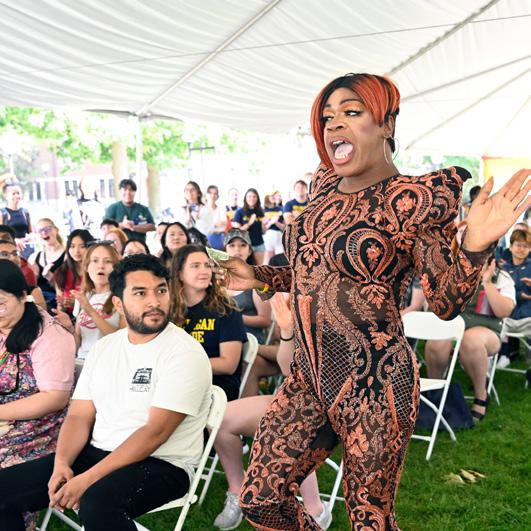
9.3K engagements 34%
3 fall student welcomes
152 total events & programs
3.4K newsletter subscribers
28 new partners PAGE 43
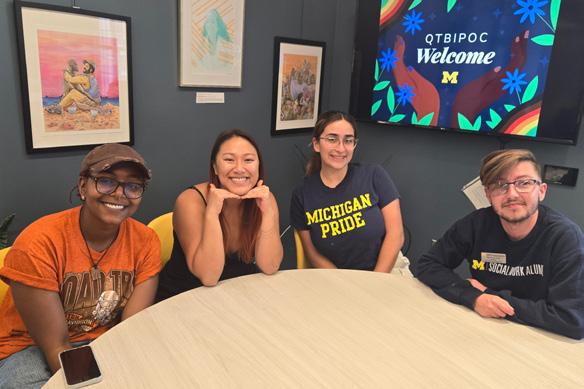
We collaborate with MESA year-round on student needs, as well as events like QTBIPOC Welcome, QTBIPOC Kickbacks, heritage and history months that foster belonging. This year, we also partnered for the Wolverine Mix and Mingle and the Queer and Trans Research Symposium.
NCID co-sponsored “Serving and Supporting Trans and Nonbinary People in US Higher Education,” where Dr. Sarah Simi Cohen and Jesse Beal discussed new national guidelines with scholars, practitioners, and students. They also supported the Queer and Trans Research Symposium.
On page 45, explore a full list of partners who supported, improved, and extended the impact of our work.
HEALTH & WELL-BEING
ESSENTIAL NEEDS
ART & EXPRESSION
NAVIGATING SYSTEMS
RESEARCH HISTORY & CULTURE
COMING OUT NAVIGATING CHANGE
JOY CAREERS RIGHTS SKILL-BUILDING
BELONGING NETWORKING PROCESSING
60 individual events
28 Q’mmunity Q’nnections gatherings
19 HIV/STI testing days
13 FreshSpectives gatherings
10 Let’s Talk sessions
7 QTBIPOC Kickbacks
6 LGBTea wellness breaks
5 open workshops*
ENACTING JUSTICE, EQUITY, & LIBERATION
BUILDING & CELEBRATING COMMUNITY EDUCATION, TRANSFORMATION, & CAPACITY BUILDING WELL-BEING, BELONGING, & SUCCESS
SEPTEMBER 1, 2024
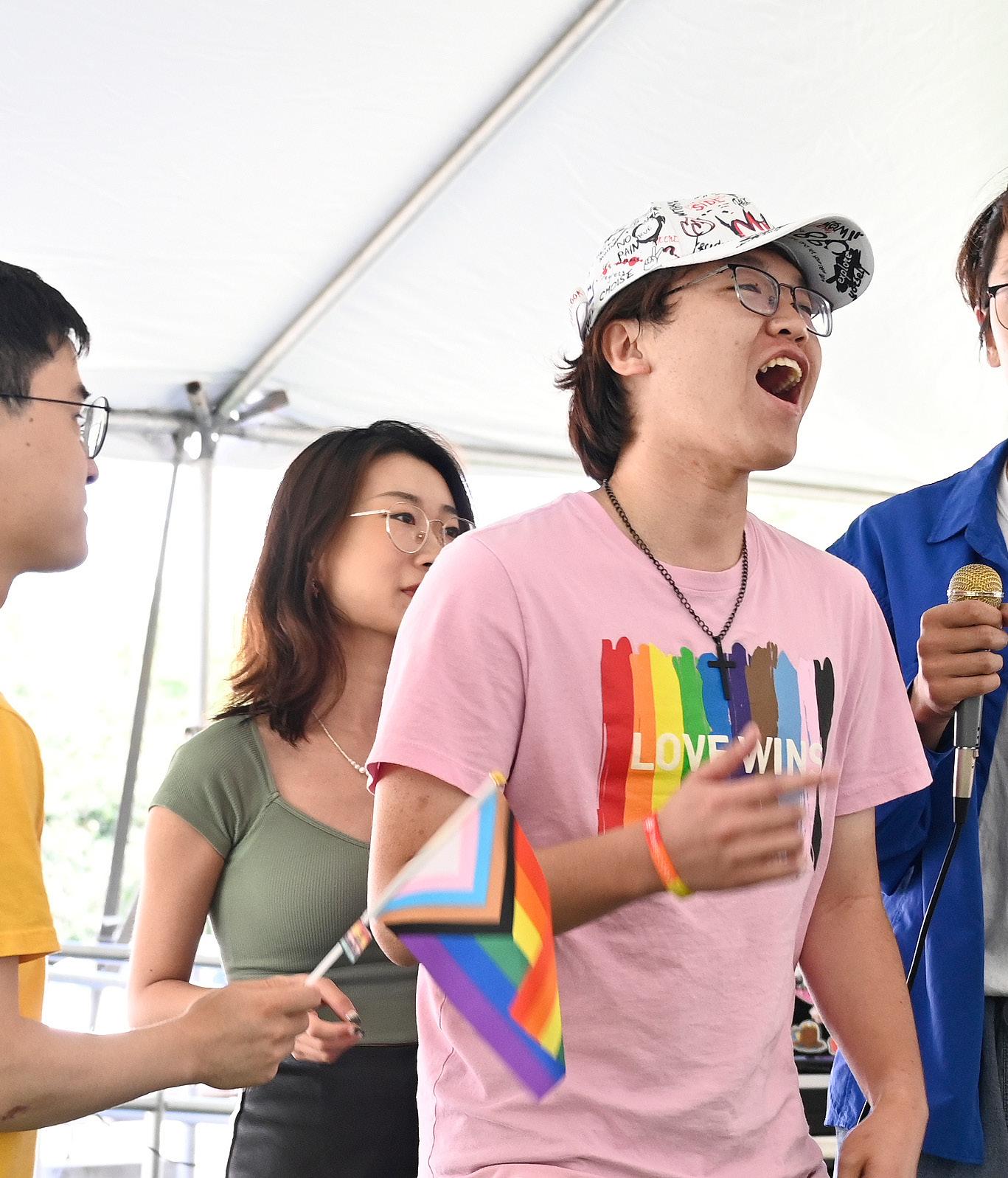
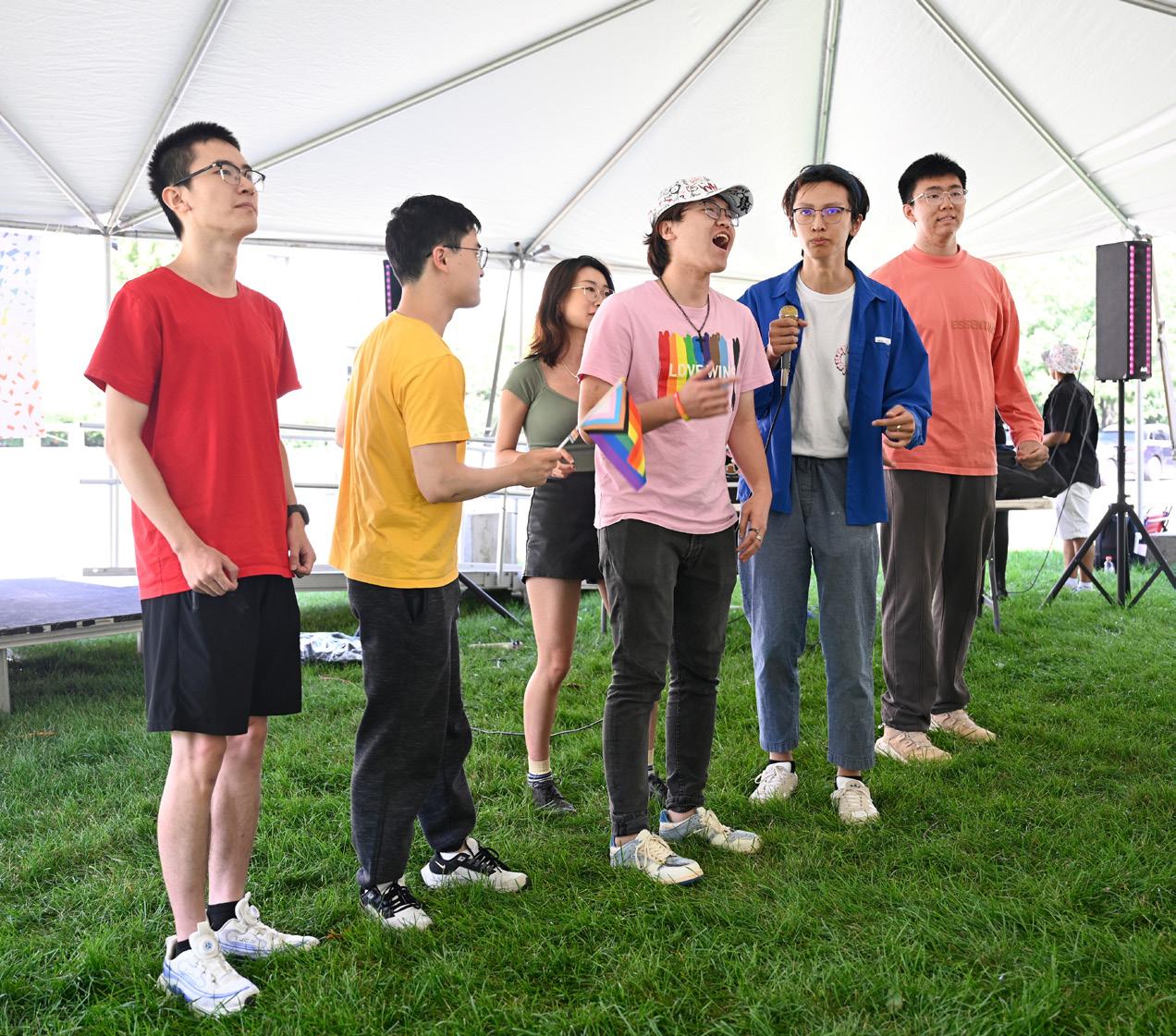
Pride Outside
Co-sponsors: oSTEM, ODEI, Engineering, CEW+, SMTD
SEPTEMBER 4, 2024
QTBIPOC Welcome
Co-sponsors: MESA, Trotter
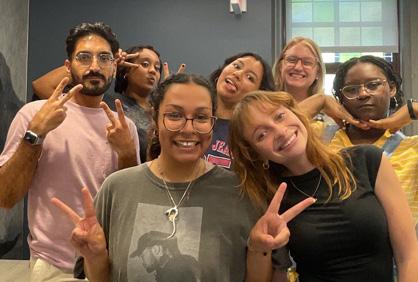
SEPTEMBER 12, 2024
Grad Student Mixer
SEPTEMBER 19, 2024
In a Bind? Let’s Do It Safely
Safe binding workshop
SEPTEMBER 23, 2024
Bis, Bevs, and Board Games
SEPTEMBER 20, 2024
LGBTQ+ Grad Panel and Resource Fair
Co-sponsor: Rackham
SEPTEMBER 28, 2024
Chosen Family Feud
Co-sponsor: Blavin Scholars
OCTOBER 1, 2024
LGBT History Month
kickoff: QT Trivia
OCTOBER 2, 2024
Tucking Into Fall
Safe tucking workshop
OCTOBER 8, 2024
How to Flourish: Sweet Sensations
Lead: Trotter
OCTOBER 11, 2024
FAM Friday
National Coming Out Day
Co-sponsors: Trotter, Notably Black and Gay
OCTOBER 16-17, 2024
Clothing Closet
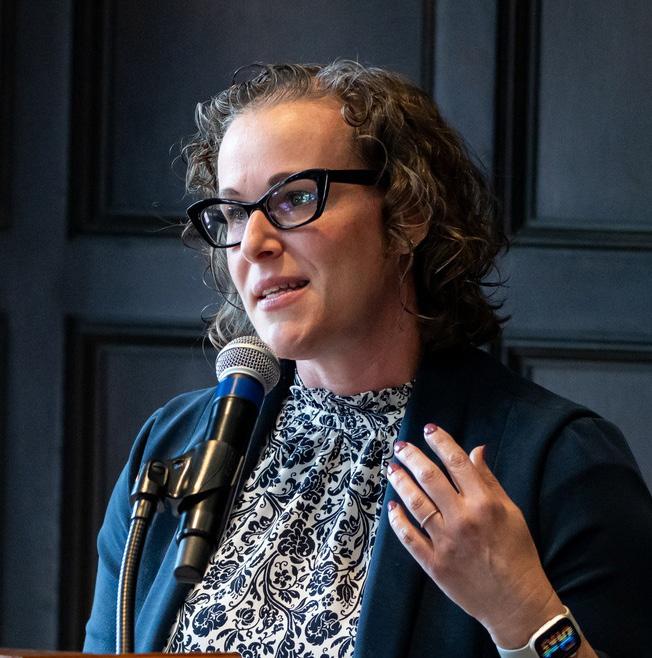
OCTOBER 17, 2024
Election Insights for LGBTQIA2S+ Communities
Naomi Goldberg
Co-sponsor: Ford School
Center for Racial Justice
OCTOBER 18, 2024
Center Awareness Day
OCTOBER 21, 2024
Community and Cookies
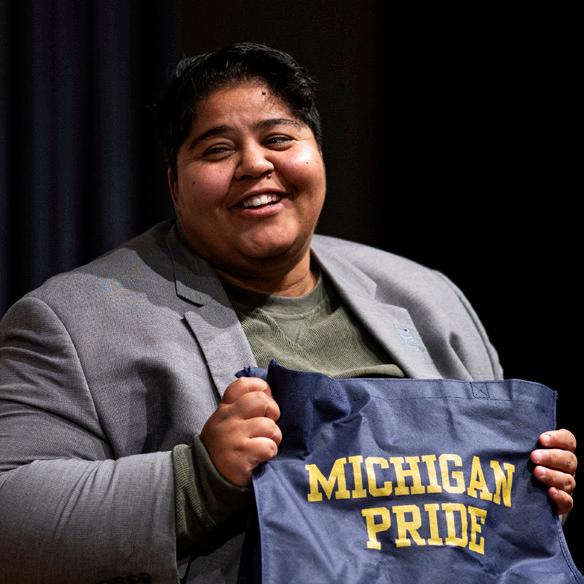
OCTOBER 23, 2024
LGBT History keynote
Katie Barnes
Co-sponsors: UMMA, Ford School, ODEI
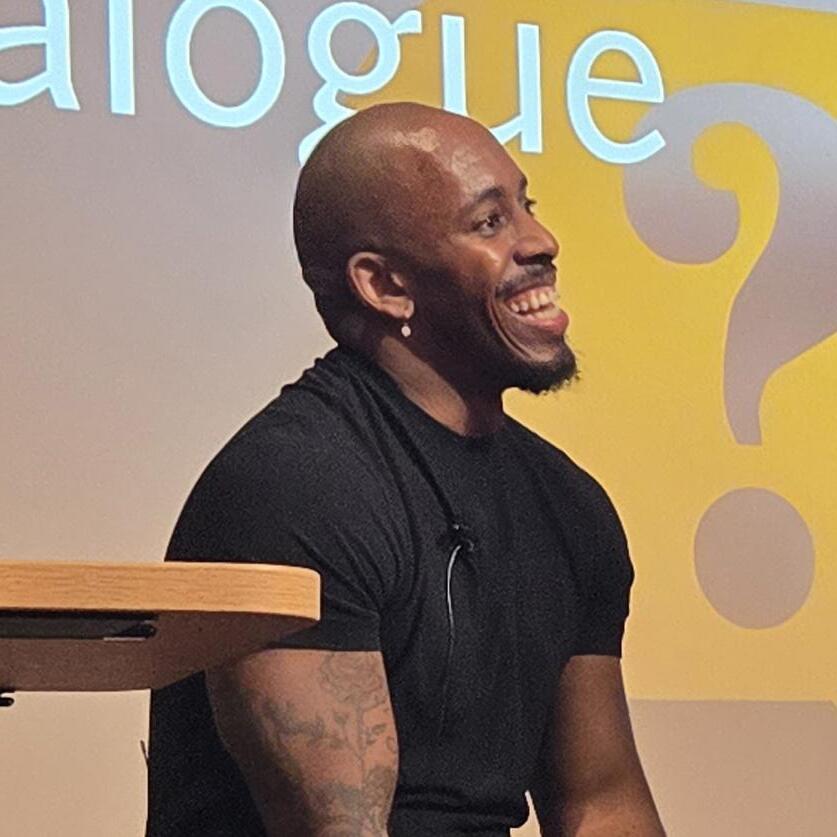
NOVEMBER 13, 2024
Trans Awareness
Month keynote
Quortne Hutchings
Co-sponsor: UMMA
NOVEMBER 14, 2024
Chef Demo
Co-sponsor: Maize & Blue
Cupboard
NOVEMBER 7, 2024
QT Pie Wellness
NOVEMBER 18, 2024
Serving and Supporting Trans and Nonbinary People in U.S. Higher Education: An Exploration of the Consortium Guidelines
Co-sponsors: ODEI, NCID, Consortium
NOVEMBER 8, 2024
Name Change Info Session
Co-sponsor: OutLaws
NOVEMBER 18, 2024
Trans and Nonbinary
Passport Clinic
Co-sponsors: Social Work, CGIS
NOVEMBER 19, 2024
Trans Awareness
Month Read-a-thon
NOVEMBER 20, 2024
Trans Day of Remembrance
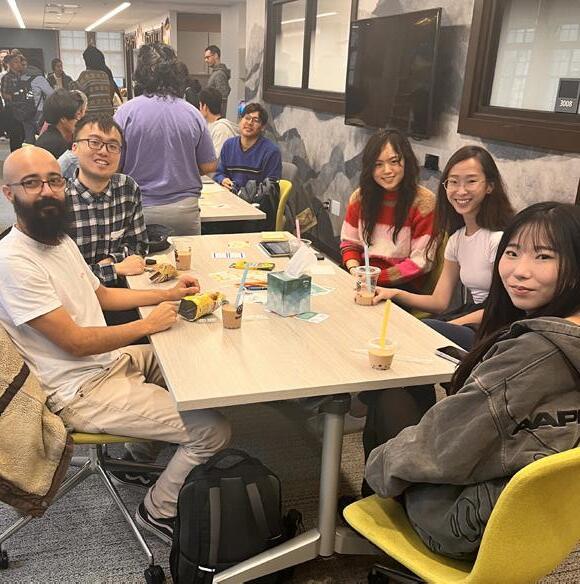
NOVEMBER 22, 2024
Int’l Coffee Hour
Co-sponsor: International Center
DECEMBER 4, 2024
Post-Election Insights for LGBTQIA2S+ Communities
Angie Martell
DECEMBER 3, 2024
World AIDS Day
DECEMBER 5, 2024
Processing Circle
Co-sponsor: OSCR
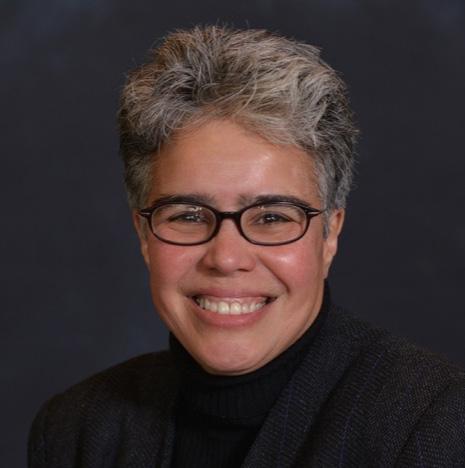
FEBRUARY 13, 2025
Post-Election Insights for LGBTQIA2S+ Communities
Angie Martell
DECEMBER 6, 2024
History and Heels
Co-sponsor: Ford School Center for Racial Justice
JANUARY 21, 2025
CommuniTea
Co-sponsor: Trotter
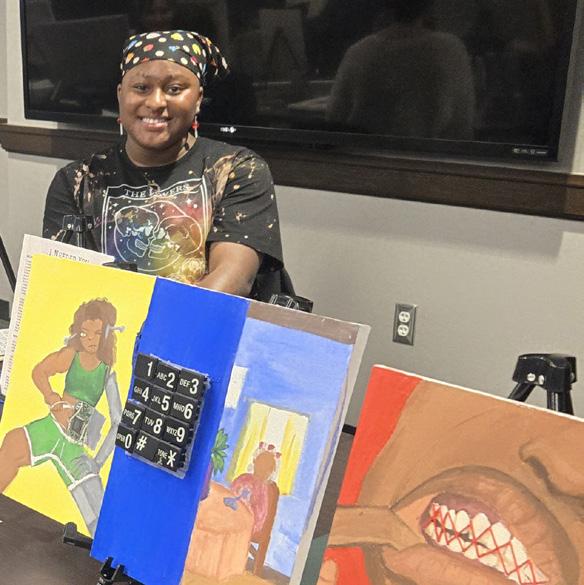
JANUARY 30, 2025
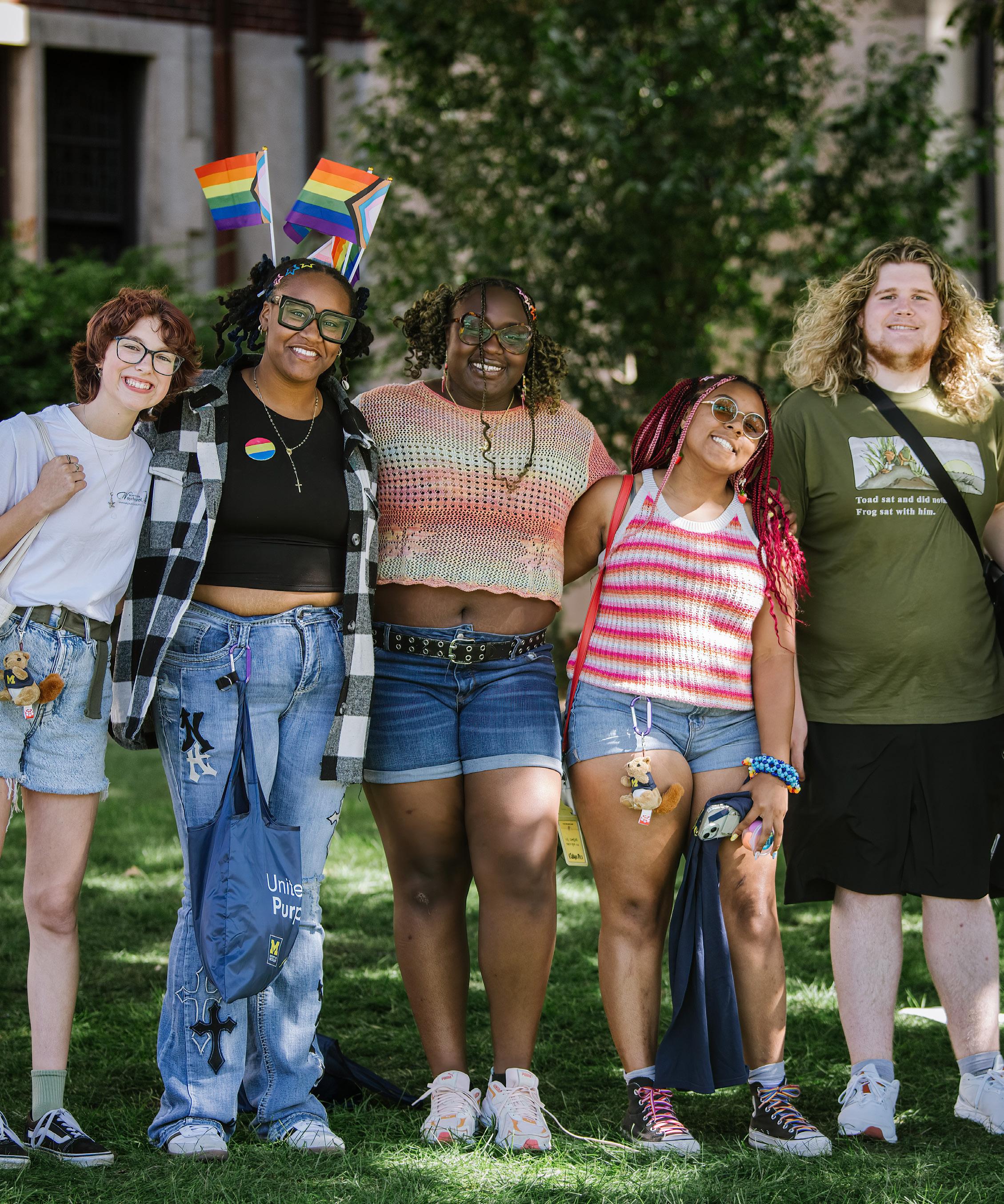
Queer Art Showcase
FEBRUARY 16, 2025
PALentine’s Card
Making
FEBRUARY 19, 2025
Discussing Aro Experience on Campus
FEBRUARY 21, 2025
Speed Friending
FEBRUARY 22, 2025
Queeraoke
FEBRUARY 25, 2025
Roadmap to Gender Affirming Healthcare and Surgery
With representatives from CAPS, CGSP, UHS, and Blue Cross Blue Shield
MARCH 27, 2025
QT Networking Social
MARCH 28, 2025
Name Change Clinic
Co-sponsors: OutLaws, Jim Toy Community Center, Ann Arbor District Library
APRIL 4, 2025
Pride Prom
MARCH 20-21, 2025
Clothing Closet
MARCH 24, 2025
Journal Making
MARCH 31, 2025
TransForum: The Lived Experiences of Accessing Gender Affirming Care
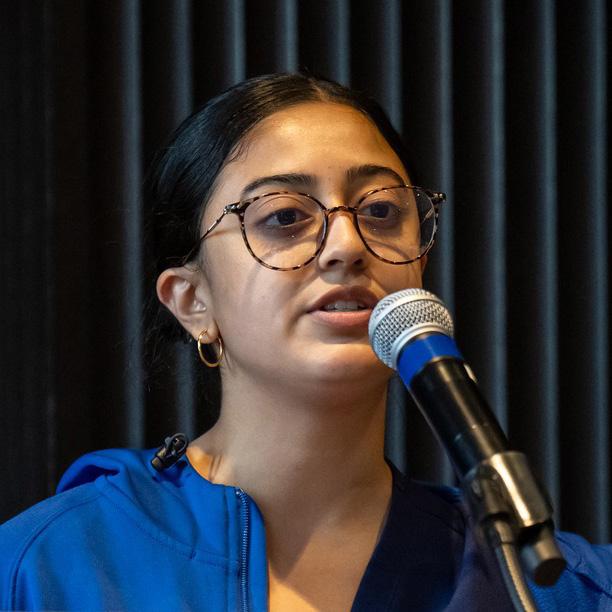
MARCH 27, 2025
QT Research Symposium
Co-sponsors: Ginsberg Center, MESA, LSA DEI, Rackham, NCID, SSW Flourish, GoStem, OutMD
APRIL 3, 2025
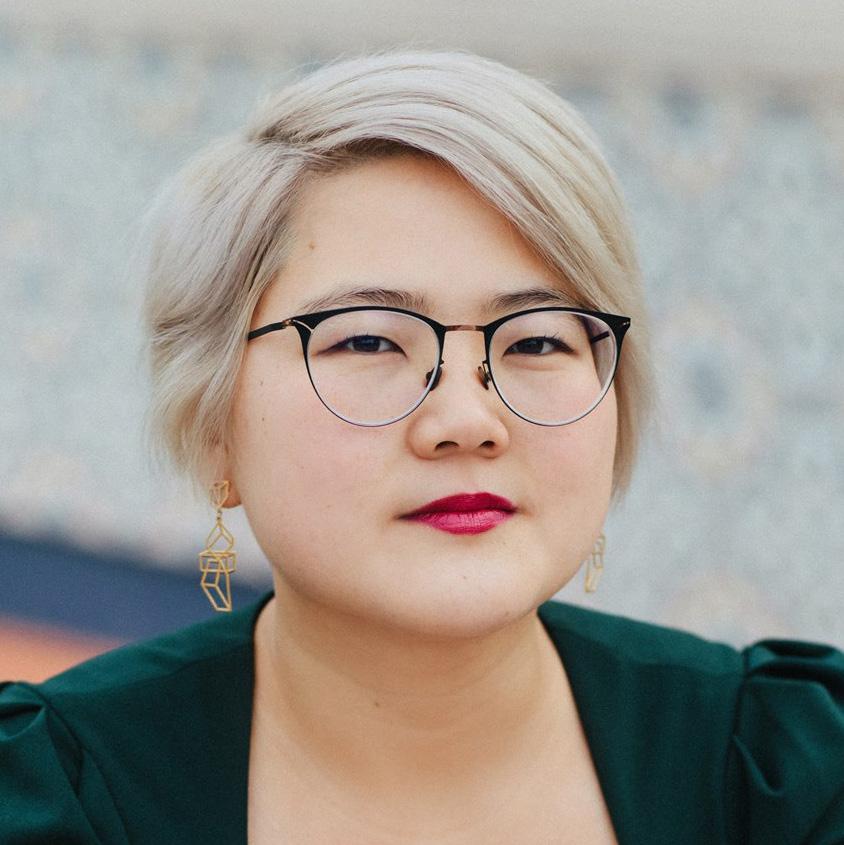
Pride Month keynote
Angela Chen
Co-sponsors: Women’s and Gender Studies, IGR
APRIL 9, 2025
Career Paths and Perspectives: Journeys in Supporting Trans Youth
Co-sponsor: LSA Opportunity Hub
APRIL 16, 2025
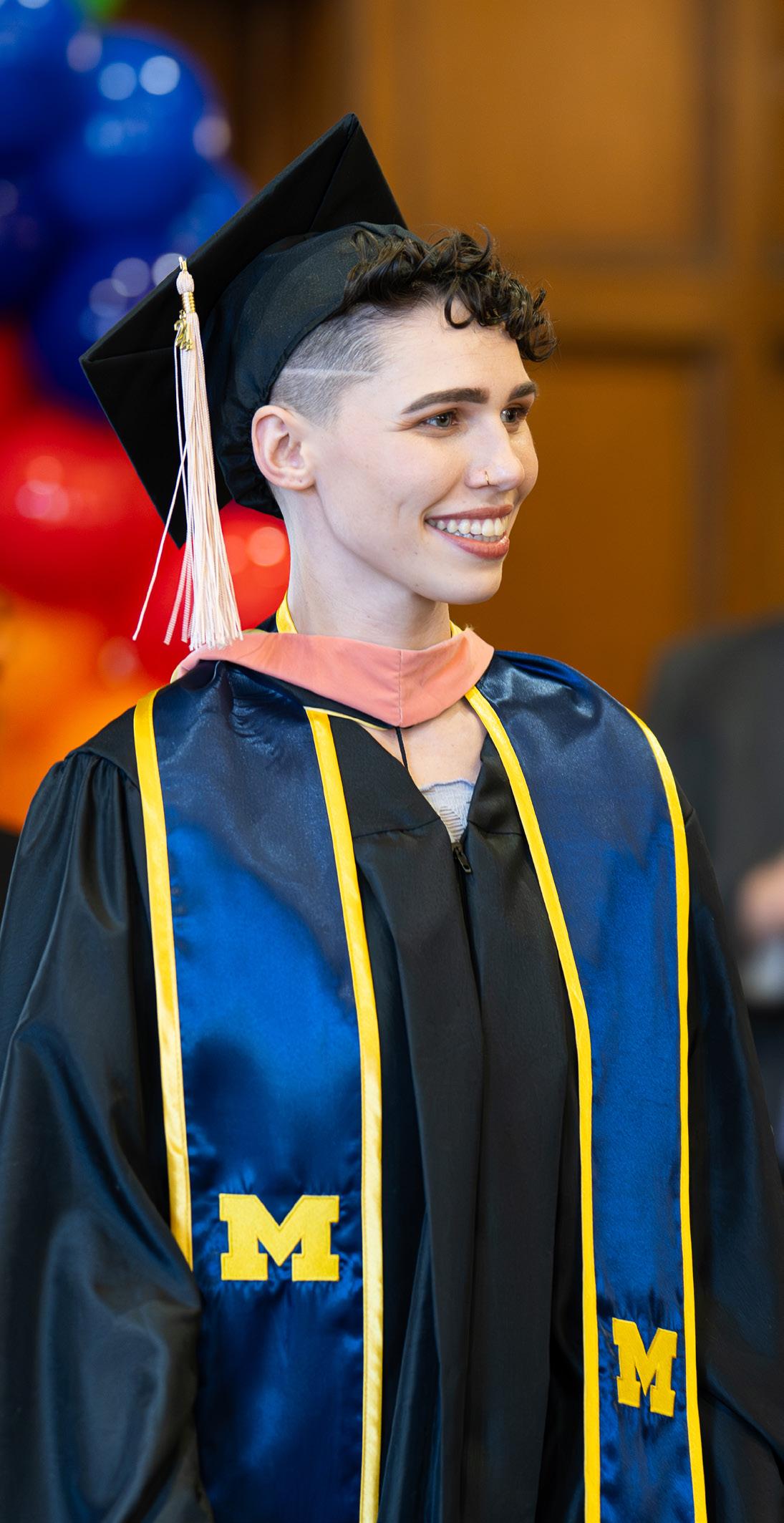
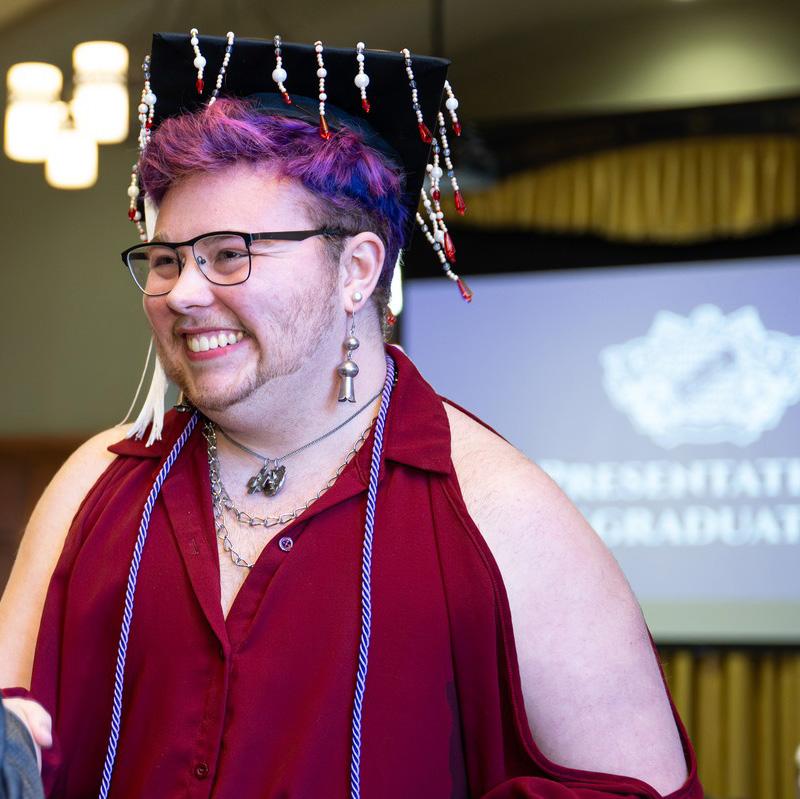
Lavender Graduation
JUNE 5, 2025
Pride keynote
Lead unit: Michigan Medicine
JUNE 26, 2025
Scoop Out Stigma
Co-sponsors: CSG, Wolverine Wellness, SAPAC
“I truly understood the definition of ‘Pride’ when we would fill Spectrum Center with students to learn, create, and come together.”
— KYLA KRALAPP, BA
’25
“Belonging”
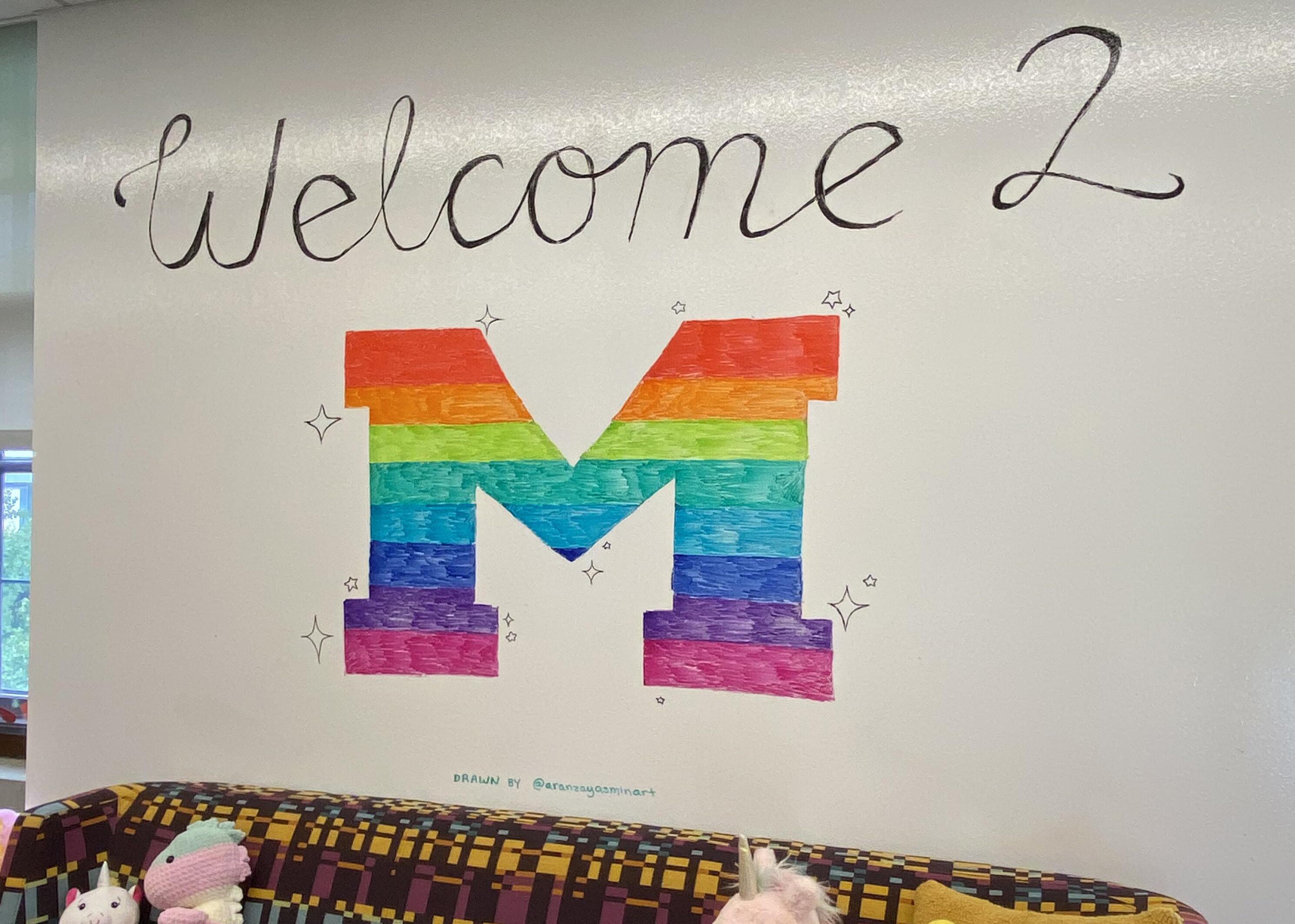
is one of our core values. We work as a team to build an equitable and inclusive campus that centers students, values their experiences and identities, and ensures every individual feels connected, known, and supported.
In this section, explore how we foster connection and belonging through our programs, services, and initiatives.
We welcomed Nicole Newsome as the program specialist for student engagement and belonging, a new role developed following our QTBIPOC research project and with special funding from the provost. Nicole is responsible for leading a growing portfolio centered on student identity development. During their brief time at Spectrum Center, Nicole has already deepened relationships with student organizations, supported ongoing programs, and begun developing new initiatives.
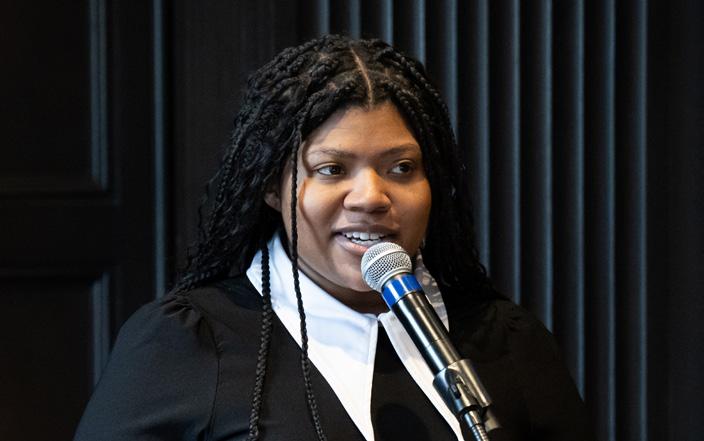
“Nicole has really been a bridge for not only me but the executive board of a black queer student organization, Notably Black and Gay... Every interaction since has been connecting with students, advocating for us, or acting as a resource.”
JADA MAXWELL, BA ’25
Q’mmunity Q’nnections is a biweekly peer-led drop-in space for students to gain support from one another while building community, gaining connection and empowerment, and building support in a space free of discrimination and harassment.
We offered four groups this year—Ace/ Aro, Grad Students, Trans/Nonbinary, and QTBIPOC—with alternating discussions and activities. Attendance averages 1–6 students per session.
“Q’mmunity Q’nnections is really a welcoming space where people feel comfortable and accepted being their truest selves... It’s great to have a place where people can talk about their experiences without having to defend or explain their existence.”
ACE / ARO GROUP PARTICIPANT
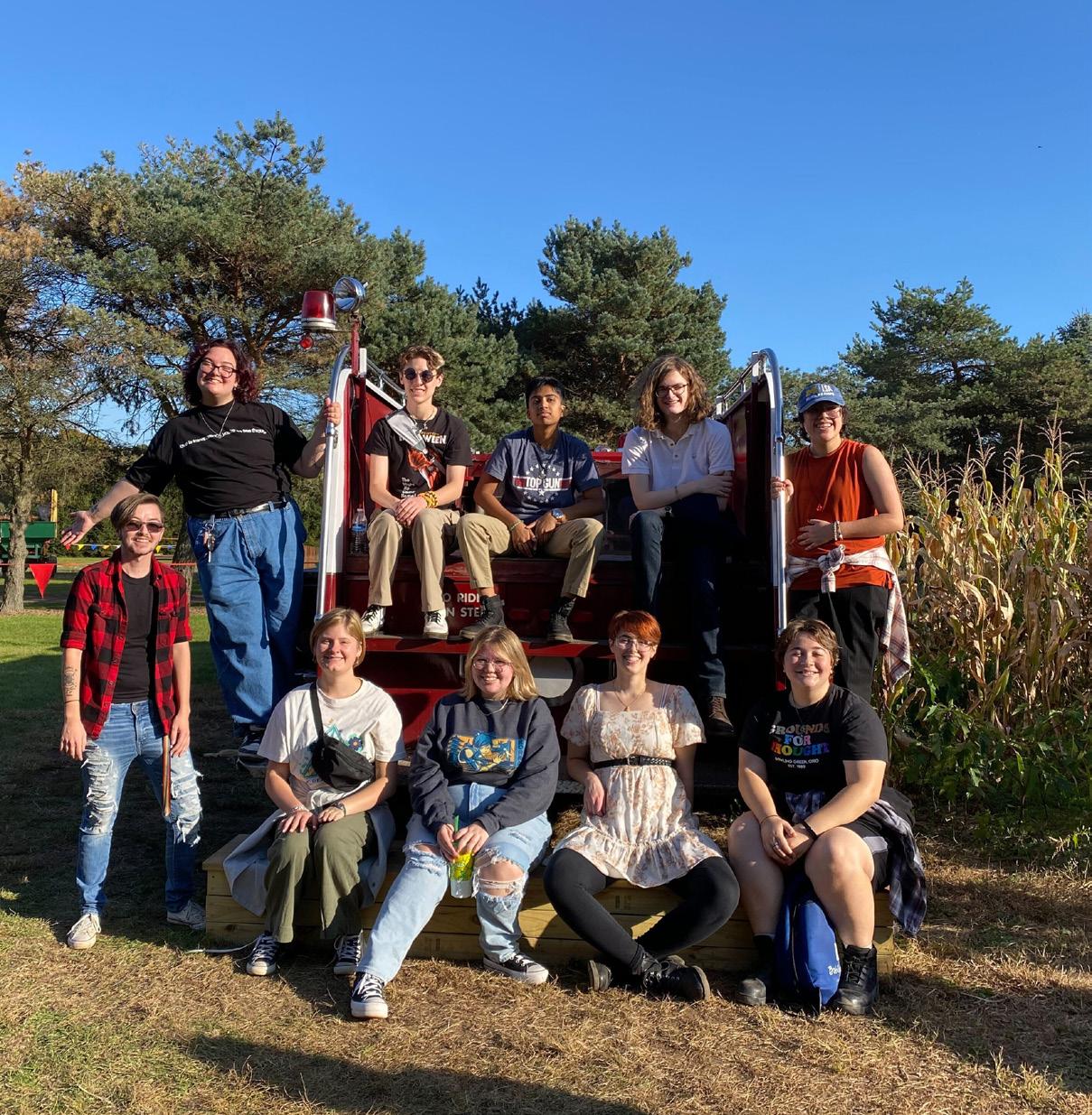
Through FreshSpectives, 52 students enjoyed a variety of community building activities—such as game nights; resource scavenger hunts; pumpkin, rock, and canvas painting; creating sensory toys; and bowling—while also learning about important wellness resources, opportunities across Student Life, public transportation, how to build a class schedule, email a professor, technology resources in libraries, and art resources.
100% felt able to build community and gain knowledge of resources on campus
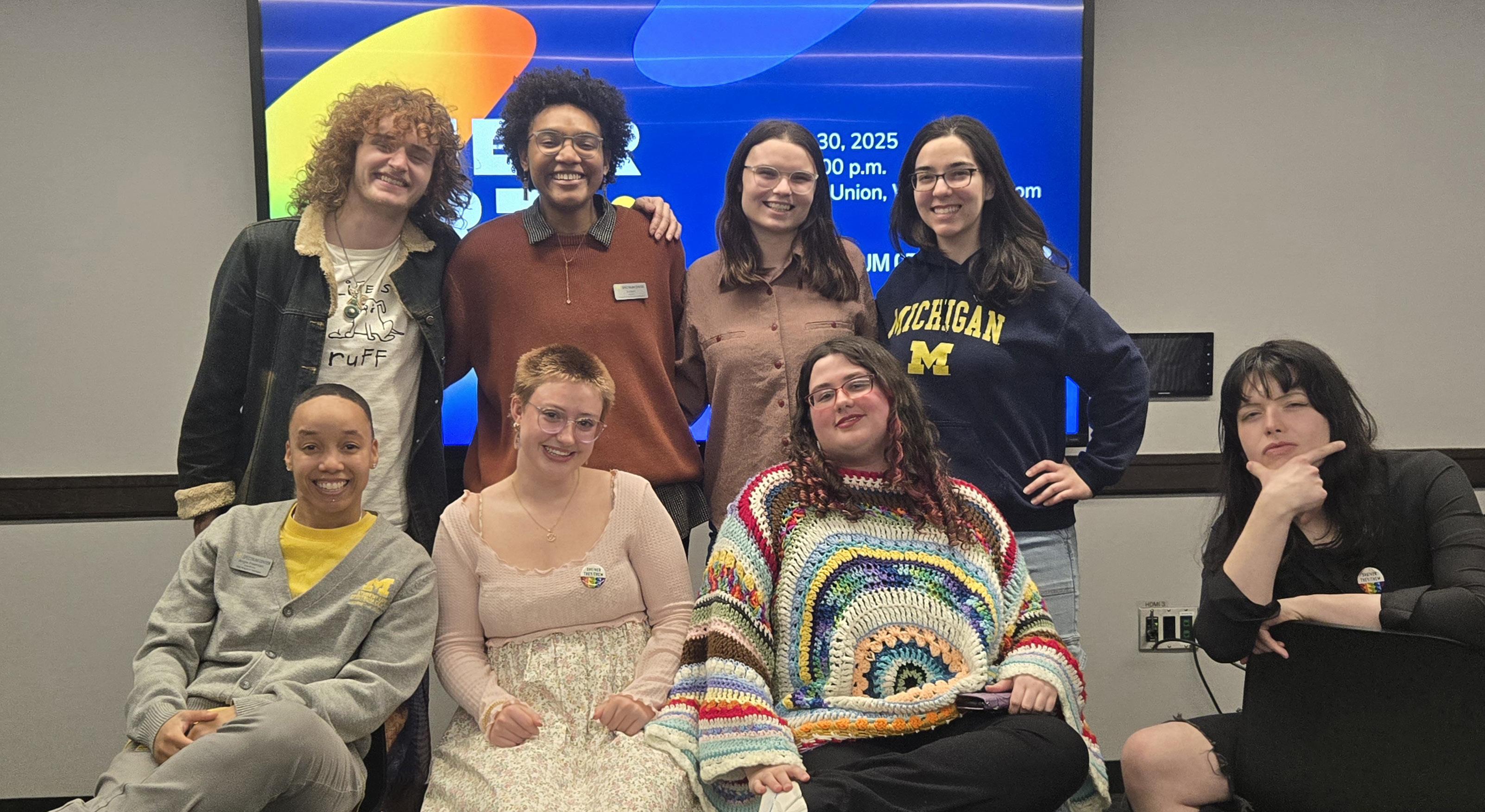
Programming Board takes student leadership to another level. Students volunteer their time, energy, and passion to truly make a difference not only for their peers but also for the campus at large.
With empowering guidance, they build skills in event planning, conflict management, collaboration, and administration.
Some highlights this year included:
• A fun slate of events including Pride Prom and the Queer Art Showcase
• Student presenter at MBLGTACC
• Recipient for the Arts Accolades “Special Recognition Award”
“Programming Board helped me find community at UMich, and allowed me to give back by organizing social and educational events... I was able to grow into the student lead [role] and a mentor to my friends and peers... [It] also allowed me to attend conferences and meet LGBTQIA+ student activists from across the country who inspired my leadership.”
KYLA KRALAPP, BA ’25
Well-calibrated email, social media, and website content continue to be critical to strategies for our own channels and extending that reach through pitches.
Two target emails about Lavender Graduation awards opportunities— each reaching over 103,000 UM-Ann Arbor students, faculty, and staff, including Michigan Medicine—helped achieve over 10 times as many award nominations as the prior year, and a historic 223 Lavender Graduates
And in partner newsletters, we successfully pitched over 160 pieces of content—further extending reach for our events and programs, funding opportunities, and other relevant news.
We sent 20 editions of our own newsletter, Spectrum Center Digest. With careful and consistent nurturing of our contact list, we grew the newsletter’s subscribership by 17% over last year.
57% newsletter open rate 4 POINTS
Now totaling over 3,700, the list also grew healthier, with our average open rate up four percentage points at 57% and modest growth in our average click rate at 5.8%—both well above higher education industry benchmarks.
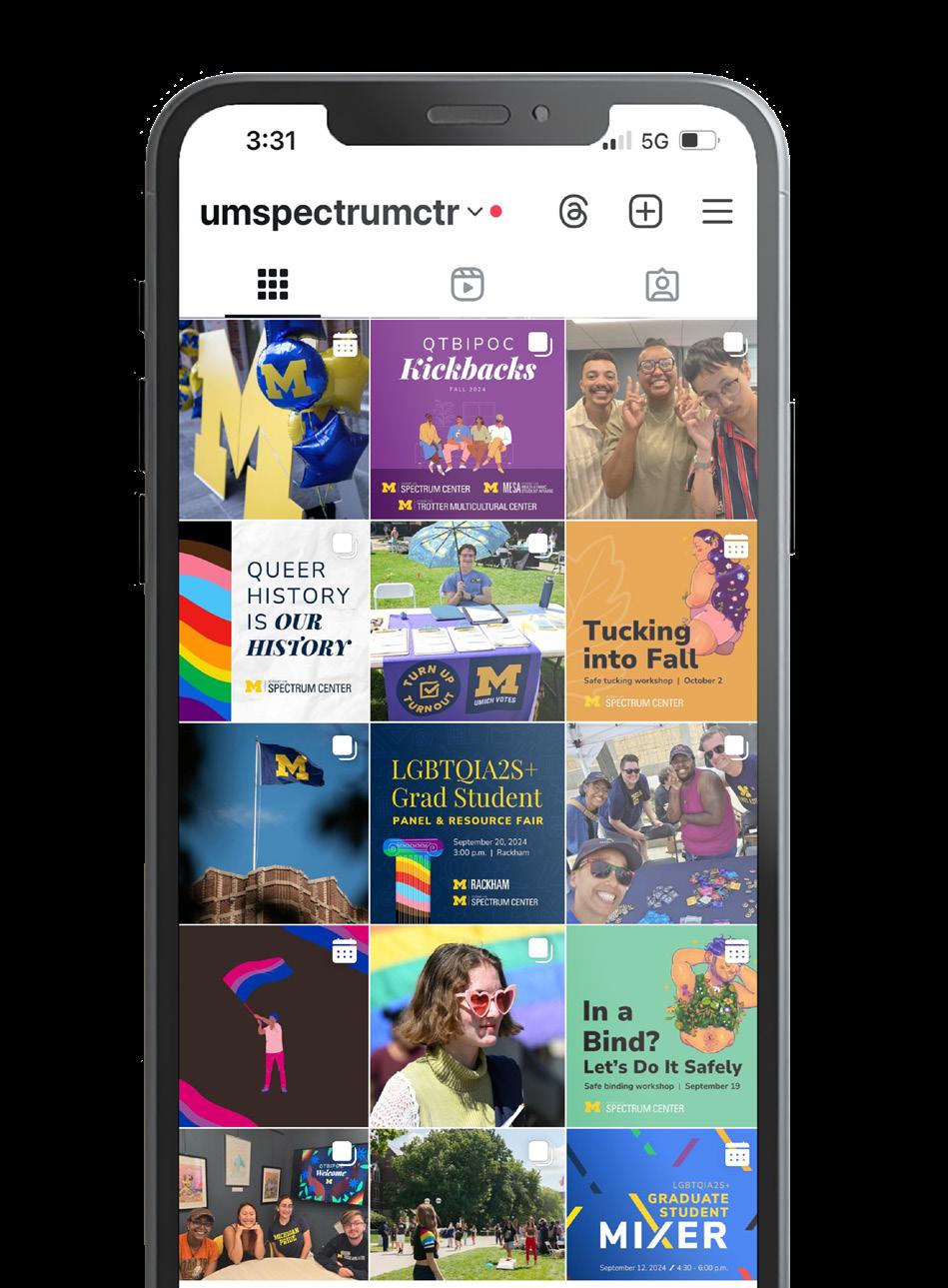
Careful attention to and intentional collaborations on our most impactful social media platform also helped us reach over 41,000 Instagram user accounts in fall and over 38,000 accounts in winter, yielding 14,000 post likes.
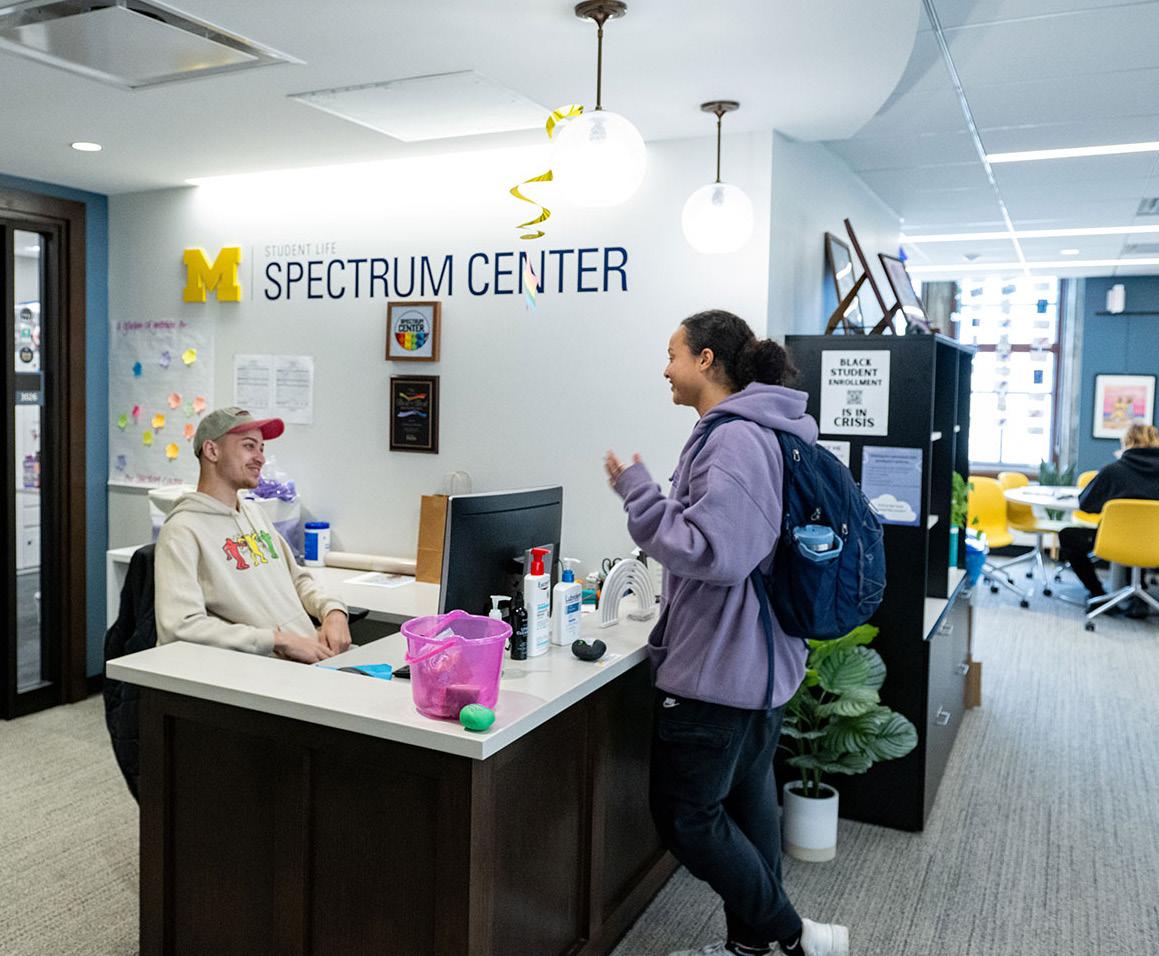
Students visit Spectrum Center throughout the day to meet, study, relax, connect with staff, work, and more. We’ve filled our space with student art, seating and work areas, books, and activities, while our David Bohnett Foundation Cybercenter provides state of the art computing to the LGBT community.
2.3K visits 2024-2025
750 lbs of clothes donated
$61K awarded in scholarships
Spectrum Center fosters an inclusive campus where all students can thrive. Our work supports student wellbeing by addressing essential needs like food, housing, finance, and health and wellness.
Queer and trans students experience similar needs to their cisgender and heterosexual peers, as well as unique and more pronounced needs due to their sexuality and/or gender.
We selected Spencer Hall to helm a newly reimagined role and lead its transformation. A social worker with experience supporting youth and young adults, Spencer developed new programs and enhanced existing ones by increasing their quality and attendance. He responded thoughtfully to our current political moment by creating supportive programming that raised awareness of resources, connected students with one another, and assisted students with navigating legal and medical transitions. His performance and dedication have been essential to revitalizing support services as a core strength of the center and leader in the field.
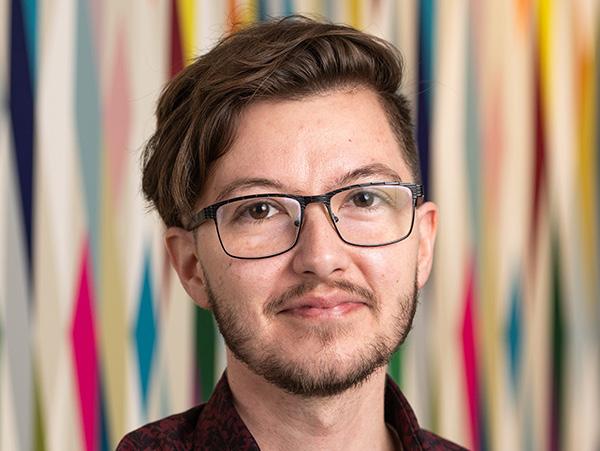
“Spencer is a vital support to students and a dedicated advocate for them, designing programs and spaces that are grounded in accessibility and tailored to the needs of students both on an individualized and a communal basis.”
MACIE RICHARDSON (BA ’26)
We collaborated as a host site for Counseling and Psychological Services’ Let’s Talk program, which supports students starting their mental health journeys by providing casual meetings with counselors throughout the semester, from the comfort of our center.
QT Pie Wellness was a program that we hosted to provide students a space to destress and practice mindfulness through arts and crafts, being in community, and connecting with Spectrum staff. Students continued to engage until our center closed, a full hour after the program was intended to conclude.
LGBTea
To address the ongoing wellness needs of our community, our center introduced a new wellness break program, LGBTea, during the 2025 winter semester. An opportunity to prioritize their wellbeing, this event series provided students an informal space to enjoy restorative activities with their beloved peers in the Spectrum Center.
Among 72 visitors across 4 LGBTeas, one student regarded them as:
“A place to feel seen, relaxed, happy, and included!”


“Receiving this grant means a great deal to me, especially during a time when things have felt uncertain.”
Through our new essential needs grant, we provided financial support to 12 students experiencing hardship related to their gender and/or sexuality.
essential needs grants
We’re grateful to donors and alumni who have generously contributed funding to support U-M students’ participation to improve campus climate and ensure students’ basic needs are met. During the 2024-2025 academic year, we awarded 17 students a total of $61,250 in scholarships.
Powered by the generosity of our donors and our late friend Howard Bragman, UMAnn Arbor students in these circumstances are able to request up to $500 in funding per semester and up to $1,000 in one academic year—and we expect to double the available funds for essential needs grants in the upcoming academic year.
Anyone who would like to support this initiative and fund student essential needs can give to the Howard Bragman Coming Out Fund.
“This award enables me to continue working with and for queer and trans folks in my community with reduced financial insecurity. I am honored to be a recipient and receive recognition for my hard work with the Spectrum Center and U-M LGBTQIA2S+ community throughout my time at the university.”
TJ BULTMAN (MSW ‘25)
17 scholarships awarded
The Chef Demo was a beautiful collaboration between our center, the Maize and Blue Cupboard, and Dining. The event allowed for students to cook alongside a chef over Zoom and all ingredients were provided by the Maize and Blue Cupboard. This allowed for students to learn about the Maize and Blue Cupboard as a resource, gain life skills, and be in community with one another. We had a total of 16 students attend the event.
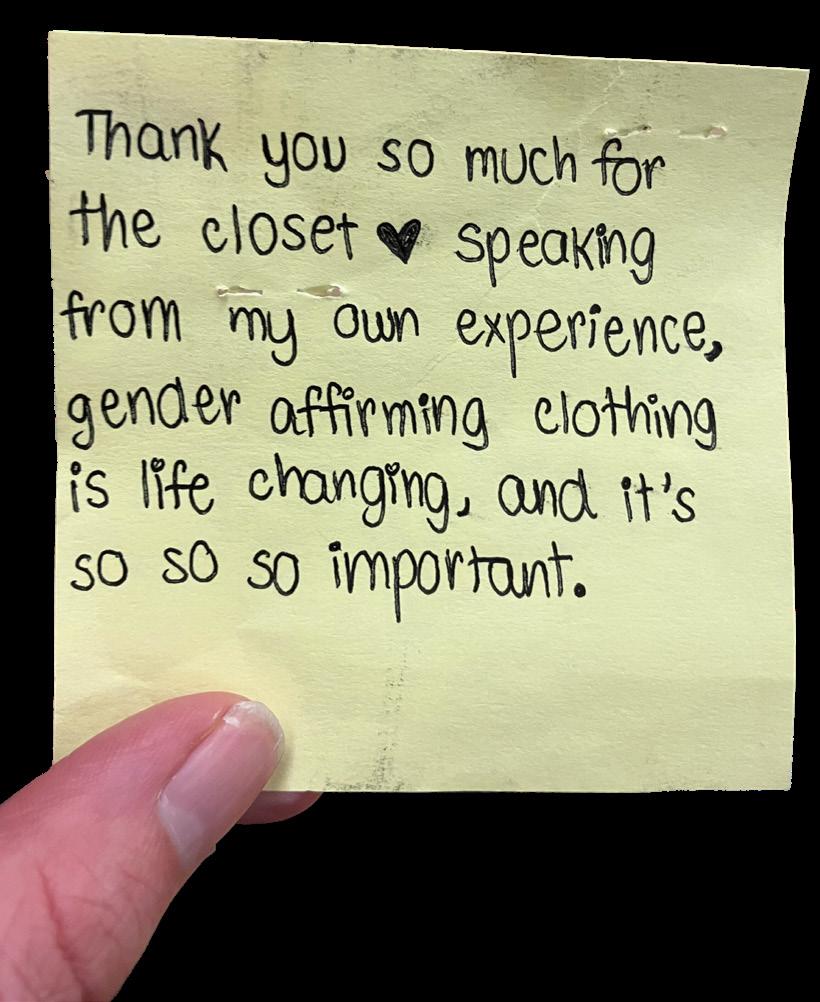
Our staff witnessed students experience joy for two days, as they were able to access clothing safely at no cost, while also being in community with one another. For queer and/or trans people, clothing is so much more than a basic need: it is survival, as it has an impact on mental health for many and in turn ultimately safety. Clothing, accessories, and shoes come in a wide variety of sizes and styles. Over the last academic year, we received approximately 750 pounds of donated clothing. Our clothing closet, which took place in the winter 2025 semester, served 98 people
“I hope that these donations will help queer people feel more comfortable and confident in their identities and bodies. I am so grateful that the closet exists.”

When students come to Spectrum Center with questions about healthcare, we’re endlessly grateful for the support and collaboration of University Health & Counseling and Dr. Rachelle Wilcox. Her teams at UHC play a critical role in shifting the narrative for the students we serve by providing understanding, supportive, and expert care.
1K+ educational engagements
274 workshop participants
745 webcourse participants
We value curiosity, life-long learning, and creating opportunities for U-M community members to connect, try out their ideas, and engage with difficult topics. As educators, we believe that powerful learning can occur both inside and outside of the classroom. In this section, we highlight how we produce and share knowledge and research.
We hosted the inaugural Queer and Trans Research Symposium, a half-day, interdisciplinary academic conference that uplifted and celebrated queer and trans student research and researchers at U-M. Graduate students gained valuable experience presenting their research. Participants connected with faculty, staff, and students from across our campus at the symposium and the networking social, and they learned from their peers and our keynote speaker, Naomi Goldberg.
“I loved
it
and had an amazing time! I learned so much!” —ATTENDEE
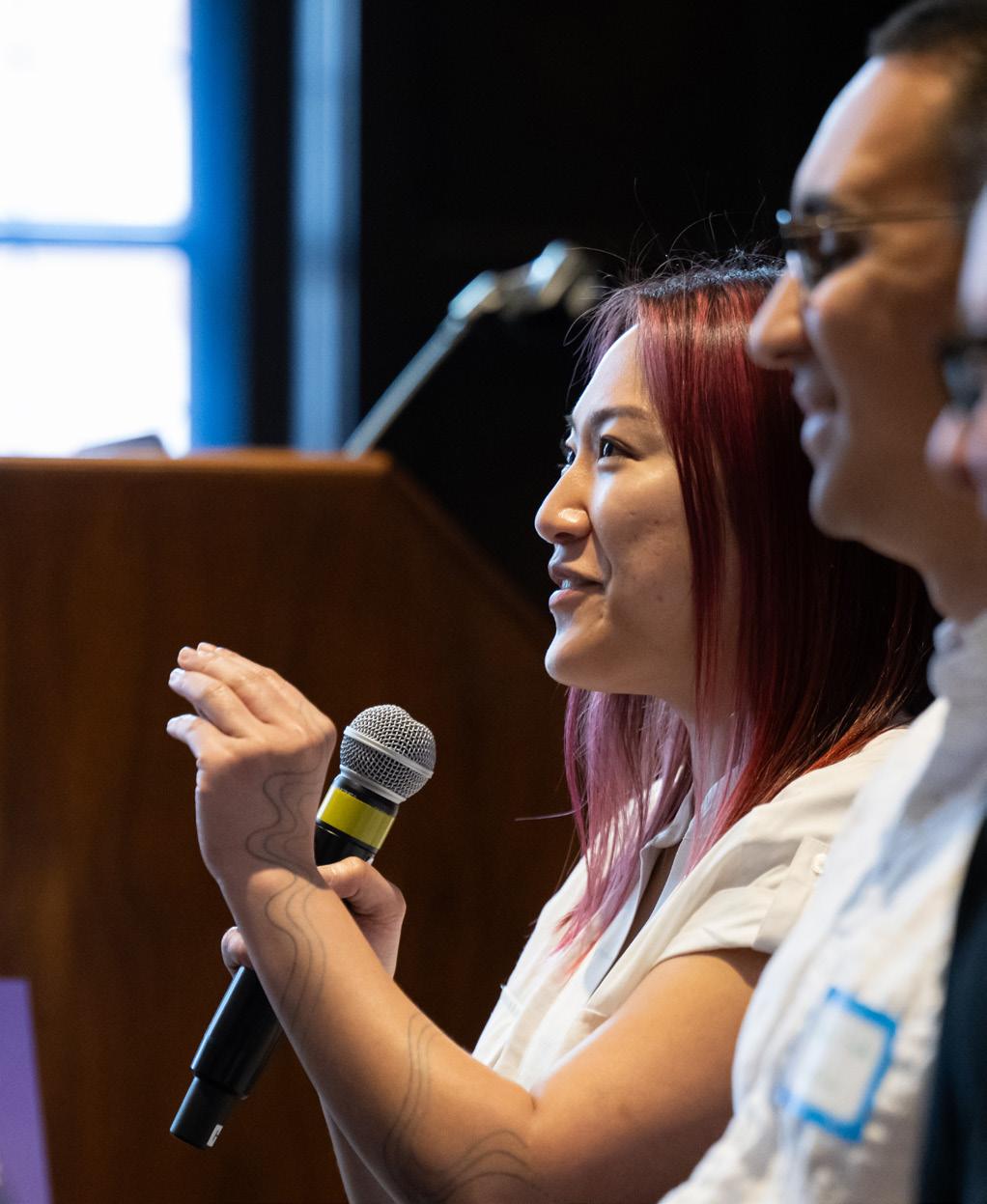
We hosted two lunch-and-learns focused on LGBTQIA2S+ communities and civic engagement. Naomi Goldberg (MPP ’08), executive director of the Movement Advancement Project, led the first session, “Election Insights: Impact on LGBTQIA2S+ Communities,” exploring the political climate, current civil rights, election stakes, and poll safety. Angie Martell, Michigan
attorney and founder of Iglesia Martell Law Firm, led the virtual second session, “Post-Election Insights for LGBTQIA2S+ Communities,” covering the legal landscape and future pathways under a new administration. Over lunch, both sessions fostered community connection and empowered attendees with knowledge and civic awareness.
Spectrum Center offers opportunities and resources for U-M community members wanting to learn, grow, and enhance experiences and belonging on campus.
The Introduction to LGBTQIA2S+ Identities and Communities webcourse is a free, self-paced, one-hour educational training available to all U-M students, staff, and faculty. Launched in October 2022, over 2,000 people have participated to date. 83% of participants this year reported that they increased their understanding of LGBTQIA2S+ vocabulary and terminology.
745 webcourse registrants
2K OVER LIFE
“The most valuable part of this web course was the explanations of every topic mentioned. It was nice to have examples and connections to real people and real systemic issues LGBTQIA2S+ face.” —PARTICIPANT
Through our 2-hour workshop on pronoun basics, 192 participants had the chance to practice using different sets of pronouns and work on bystander intervention skills.
We delivered nine of these sessions by request. 84% of this year’s participants reported that they deepened their understanding of personal pronouns. Participants also reported increased knowledge and comfortability engaging in affirming practices supporting the LBGTQIA2S+ communities.
When asked about the most valuable components of the workshop, participants cited participants cited “gaining clarity on the impact of others” and “that the respectful use of pronouns is life affirming and life saving.”
“I felt the opportunity for us to learn from each other was transformative in helping folks understand how these conversations and issues can come up in their personal and professional lives.”
84%
reported a deepened understanding of pronouns
A 6-hour workshop that aims to deepen our U-M community’s understanding of and ability to engage with LGBTQIA2S+ allyship. In Towards Solidarity, we move beyond basic conceptualizations of allyship and challenge participants to center liberation as they show up actively for LGBTQIA2S+ communities.
48
Towards Solidarity registrants
243%
In our second year with the new curriculum, we offered two workshops by request and one open session to all campus. We had 48 participants total.
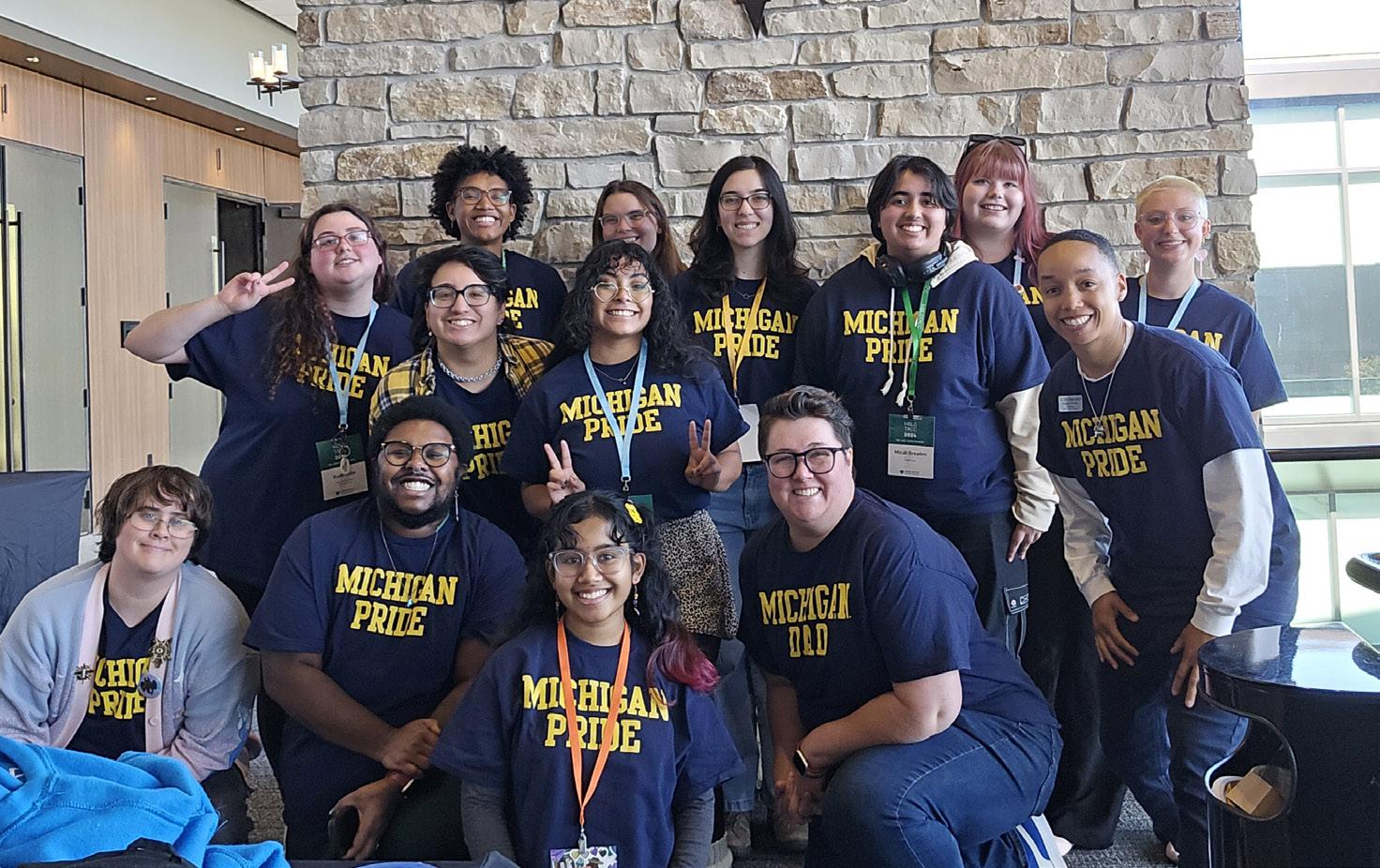
This year we took 5 graduate and 6 undergraduate students to the Midwest Bisexual Lesbian Gay Transgender Asexual College Conference (MBLGTACC) hosted in Marquette, Michigan. One of our undergraduate students presented on mental health and reserved a booth at the vendor fair. “Now I have a family and will be hanging out with them for years to come,” a member of Programming Board reflected. MBLGTACC is a life-changing experience for our students and bonding opportunity for those yearning for connection with their peers.
We’ve undertaken a new original research project to establish fresh benchmarking data about LGBTQIA2S+ programs and services at Big Ten institutions and the gender and sexuality practitioners on these campuses. The latest comes in response to a needs assessment conducted by the Consortium of Higher Education LGBT Resource Professionals and a 2024 meeting of gender and sexuality resource practitioners across the Big Ten Academic Alliance. Building on prior studies, we aim to:
• identify and analyze trends across programs and services practitioners;
• support programs and services practitioners in advocating for growth; and
• facilitate inter-institutional collaboration and shared resources across programs and services practitioners.
In the year ahead, we’ll present initial findings in a white paper, and intend to submit a journal article for publication at the completion of the study to increase the knowledge about these programs and services.
Spectrum Center offers project grants to student organizations and individual students who seek to improve the experiences and climate for LGBTQIA2S+ communities. During the 2024-2025 academic year, we awarded $4,299.84, for a total of 10 projects:
• Pride Pin Initiative Project Grant
• I am (Jo)Sephine
• Blood Battle 2024
• Fursona and Fursuit Creation
• 22nd Annual Vietnamese Interacting as One Conference (VIA-1)
• Community Care: Queer Tango Workshop
• Into the Woods Film Project
$4.3K awarded 2024-2025
• Community Discussion
• Stage Fright (film)
• ÆTHER Film
Made possible by our incredible community of donors, including B. Clare Harris and Anne G. Harris.
“Now I have a family and will be hanging out with them for years to come.”
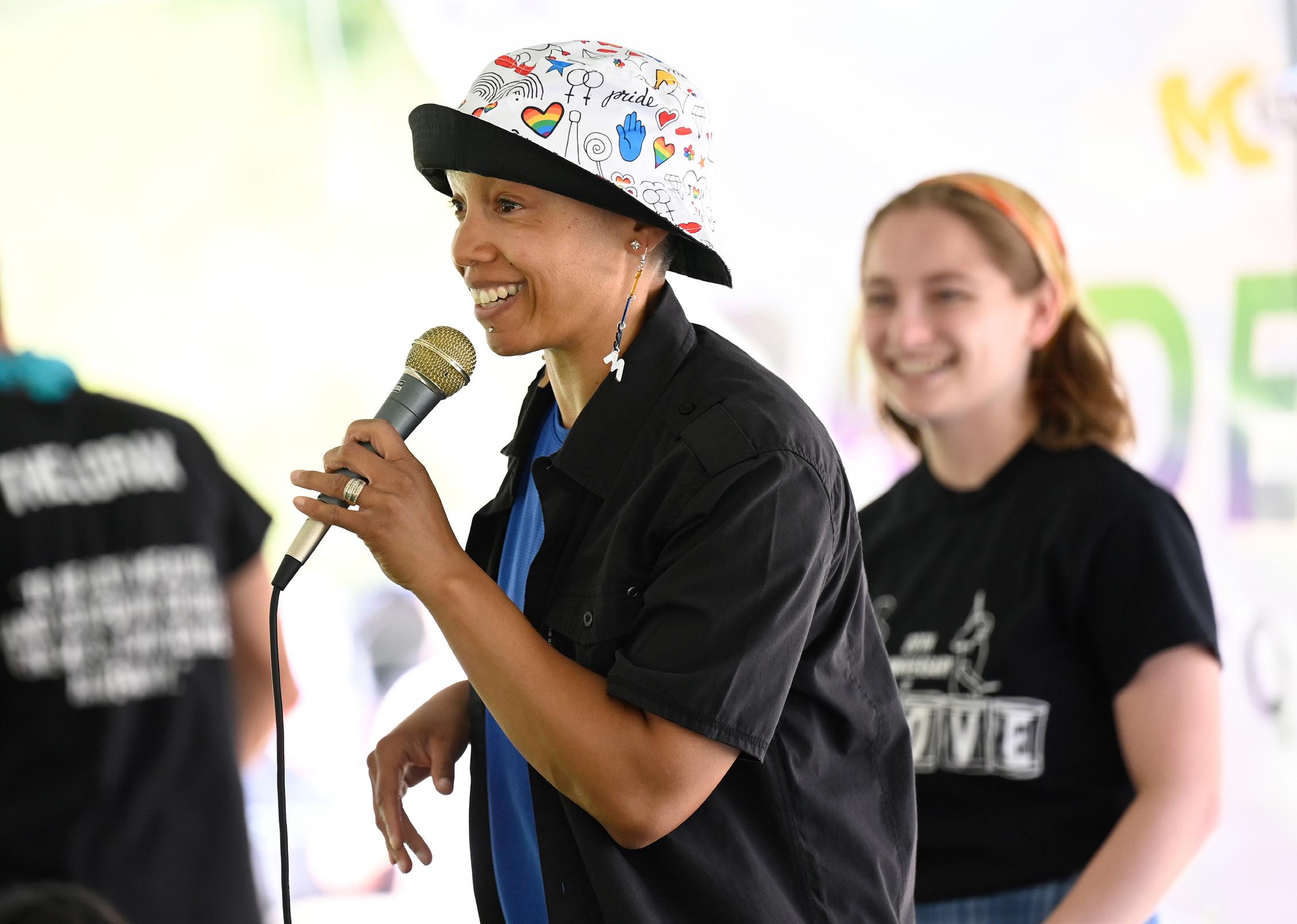
We seek to co-create a just, equitable, and inclusive community for people of all genders and sexualities. To deliver on our mission, Spectrum Center cultivates partnerships with faculty, staff, students, alumnx, and community. In this section, we highlight how we’ve worked to build capacity and develop leaders across campus.
The Queer and Trans (QT) Task Force, with Spectrum Center as a convening partner, moved into year two of its five-year plan in fall 2024. Building on earlier LSA and Spectrum Center reports, the tri-campus group seeks to better understand and address challenges faced by 2SLGBTQIA+ students, staff, faculty, and alumni—and serve as a model for other institutions.
In year two, we completed the inventory of policies, practices, resources, programs, and initiatives related to LGBTQIA2S+ people at U-M. We held student focus groups, met with constituencies, learned from functional areas across the university system, and issued a list of preliminary recommendations to leaders. In year three, we’ll launch faculty, staff, and alumnx focus groups and develop a plan for a multi-campus survey.
Arushi Rana (MSW ‘25) was the project manager and co-lead for the task force, coordinating student focus groups on all three campuses. She collaborated with our director on the “Centering QTBIPOC Experiences” study and is co-authoring a journal article on the study’s second phase. Arushi’s impactful research and advocacy have left a lasting mark on the center.
Spectrum Center offers consultation and support year-round for the campus community. The director and associate director meet, provide guidance, and share best practices for staff and faculty seeking support to build their own capacity and develop inclusive and equitable processes, practices, and policies for LGBTQIA2S+ communities.
During the 2024–2025 academic year, our leadership provided over 100 hours of consultation for faculty and staff.
Frequently requested consultation topics include:
• Supporting inclusive and equitable learning environments for all students
• Enhancing LGBTQIA2S+ student mental health
• Supporting LGBTQIA2S+ survivors and interpersonal violence prevention
hours of unit consultations
• Demographic collection on gender, sex, and sexuality
• Assistance with gender-inclusive policy development
• Support for gender inclusive facilities (e.g. restrooms, locker rooms)
This year our director consulted with the Center for Research on Learning and Teaching (CRLT )in the development of “An Instructor’s Guide to Promoting Student Mental Health and Well-Being.” Our director contributed to MODULE 2: Considering the Role of Identity in Student Mental Health and was a part of the pilot group which provided feedback on the entire course before the launch. This multi-module webcourse was a collaboration between multiple units all in service of improving the health and wellbeing of all students.
Dr. Quortne Hutchings keynoted Trans Awareness Month, speaking on “For Us, By Us: Envisioning a Kiki Methodology in Black Queer Storytelling.” Dr. Hutchings also facilitated a 3-hour professional development workshop with Spectrum Center professional and student staff on resilience as higher education professionals. This opportunity built upon the work of our former scholar-practitionerin-residence, Dr. D-L Stewart.
Angie Freeman participated in the Student Life LEAD program. During this yearlong professional development, Angie strengthened their leadership skills and made valuable connections across the division. Their mentor in the program was Kellyn Mackerl-Cooper. Jesse Beal also served as a mentor in the LEAD program with their mentee, Saumya Gupta
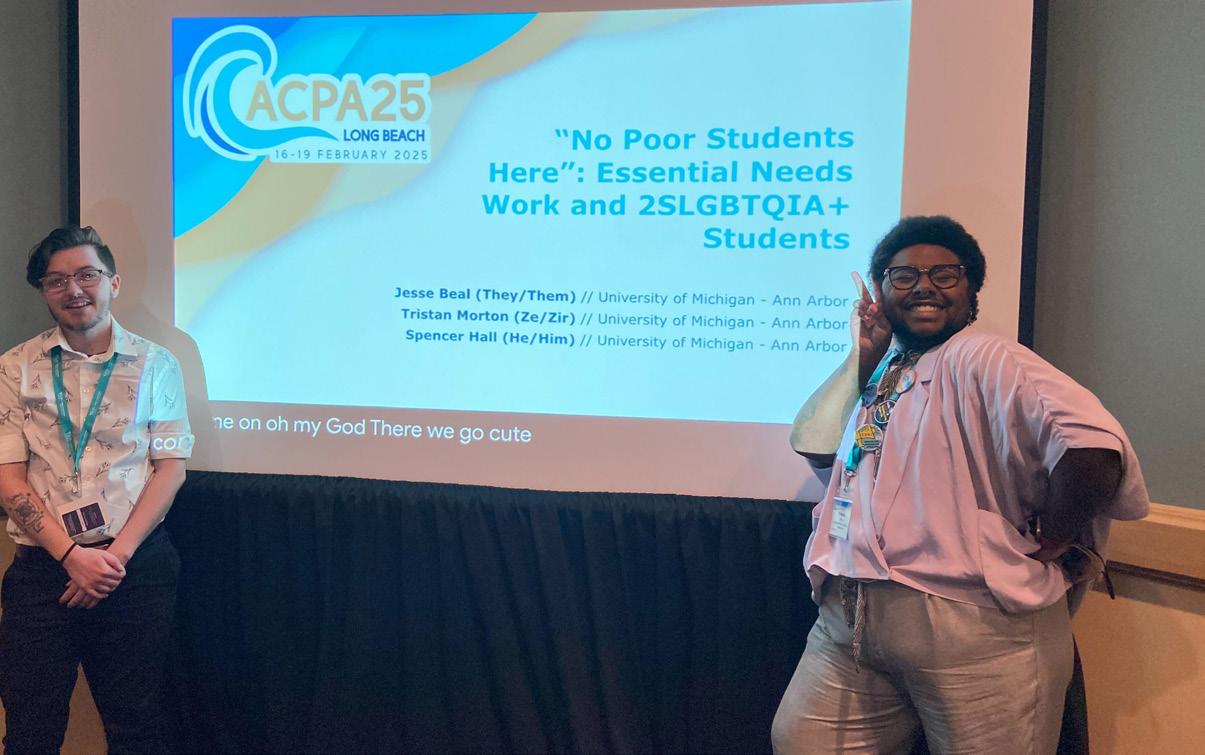
Several staff attended and presented at two national conferences this academic year: the ACPA (College Student Educators International) Convention and Creating Change. They shared the innovative work of the center and brought learning back to campus to enhance our programs and services. In addition to the student delegation, we also sent five staff to MBLGTACC.
New microlearning workshop demystifies name, pronoun updates in Wolverine Access
We worked with Organizational Learning to develop a microlearning workshop on how to update names and pronouns in Wolverine Access. The one-stop resource is available to faculty, staff, and students across all three University of Michigan campuses. We would like to thank Katie Reece for her support, expertise, and collaboration on this project.
The CCRT is a tri-campus collaborative of U-M community members dedicated to improving policies and practices for addressing sexual misconduct. Since its creation, our director has served as a member and this year they participated in two working groups: Prevention Education and Repairing Harm. The ARC3 survey found that U-M LGBTQIA2S+ students, faculty and staff experience higher levels of harassment and violence than their cisgender and heterosexual peers. Supporting survivors and preventing sexual and interpersonal violence are critical to the work of Spectrum Center.
We could not do the work we do to support students without the generous support of our community of donors. We want to highlight two areas of our development work:
First, we raised over $5,000 for the Trans Belonging Fund on Giving Tuesday. This fund was established by Marchell (AB ’84) and Jeffrey Willian in 2023 and supports programming and initiatives supportive of trans and nonbinary students and education on gender for the larger campus community.
Second, we raised $5,500 for essential needs and student project grants on Giving Blueday! Essential needs grants are available to U-M students experiencing hardship related to their sexuality and/or gender, while student organizations and individual students who seek to improve the experiences and climate for LGBTQIA2S+ communities.
In the year ahead, we face unprecedented challenges and new opportunities for connection and collaboration. In each of the primary areas of our work, we have identified strategic goals to guide or work in the year ahead.

Complete strategic planning: We’ll finish developing our new five year strategic plan in fall 2025.
Onboard our new associate director: We’re delighted to welcome Dawn Espy, our new associate director.
Rebuilding the Spectrum Advisory Council: We’ll rebuild this dedicated team, focusing on bringing together leaders who provide strategic insight on how to lead the center in the current moment and the years to come.
Continuing the Queer and Trans Task Force: The Queer and Trans Task Force will begin the third year of their five year plan. Jesse Beal, Spectrum Center’s director, will continue as co-chair.
Expanding research and scholarship: As a center, we are uniquely positioned to conduct original research that enhances our impact and advances higher education. Recent research projects have strengthened our work and focus on campus. Moving forward, we will complete phase two of the Centering QTBIPOC Voices study, contribute to QT Task Force research, and continue the Big Ten Benchmarking Project. We will expand student opportunities to share research, such as the QT Research Symposium, and seek new ways to support student-led research.
Supporting survivors: In fall 2025, four Spectrum Center staff will become confidential resources under the Sexual and Gender Based Misconduct Policy. By offering a confidential resource within the community, we aim to encourage help-seeking and better support students as they navigate options after experiencing violence or harassment.
Launching a peer education program: We’ll develop and pilot a peer-to-peer education model to support co-curricular learning at UM-Ann Arbor. Early work will focus on curriculum design, creating a facilitator training, and piloting workshops with student organizations.
Enhancing online offerings: We will re-launch our updated “Introduction to LGBTQIA2S+ Communities and Identities” web course in MI LINC, with new content based on feedback and evolving concepts. We’ll also debut our first micro-learning course on changing names and pronouns in U-M systems.
New workshops for faculty and staff: We’ll develop two new workshops for faculty and staff to better support students and increase staf capacity to treat all people with dignity and respect.
Increasing graduate student engagement: We’re committed to supporting graduate and professional students, recognizing their unique needs. We’ll expand to eight graduate student roles, including research and assessment; host a second QT Research Symposium; and continue offering off-campus events through QTBIPOC Kickbacks and original programs.
Growing relationships with queer and trans student organizations: We’re doubling down on our student-centered commitment, and plan to work even closer with student organizations and/or student leaders as we plan for major events and programs.
Bringing back “Pop Up Pride”: Past “Pop Up Pride” events brought Spectrum Center to different locations, helping students feel seen and connected. They raised awareness, shared resources, and built community where students needed us most.
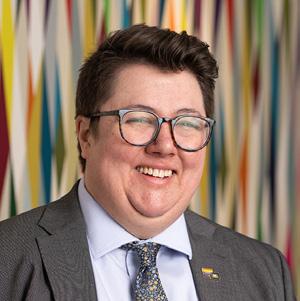
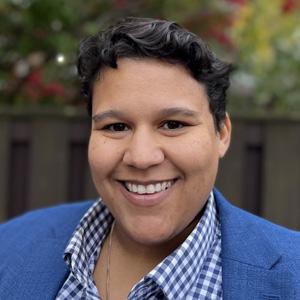
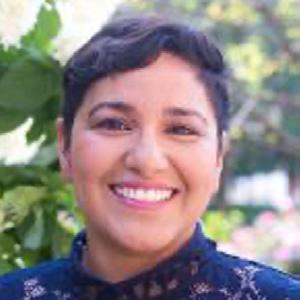
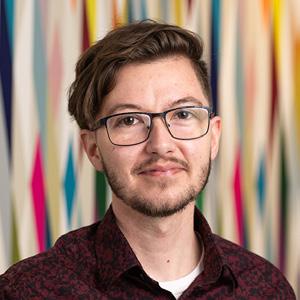
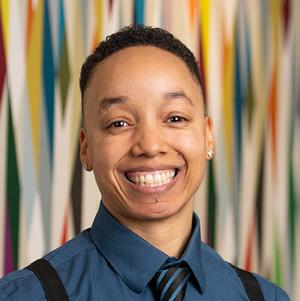
Jesse Beal
they/them
Director
Dawn Espy** they/them
Associate Director
Elizabeth González* she/they/ella/elle
Program Manager, Educational Engagement
Spencer Hall he/him
Support Services & Wellness Advocate
Angie Freeman they/them
Program Manager, Events & Partnerships
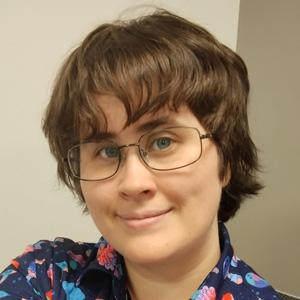
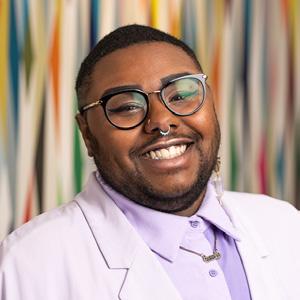
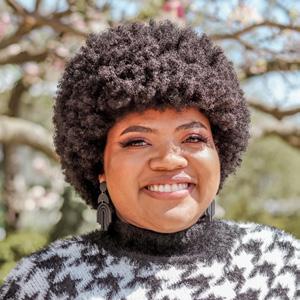
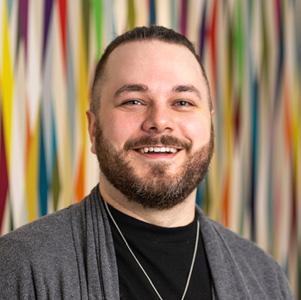
Uriel Light they/them
Office Coordinator
Tristan Morton*** ze/zir
Associate Director
Nicole Newsome they/she
Program Specialist for Student Engagement and Belonging
Nick Pfost he/they
Communications Strategist
*Eli González served as the interim associate director from March 2025 to July 2025
**Dawn Espy joined on June 30, 2025
***Tristan Morton departed in March 2025
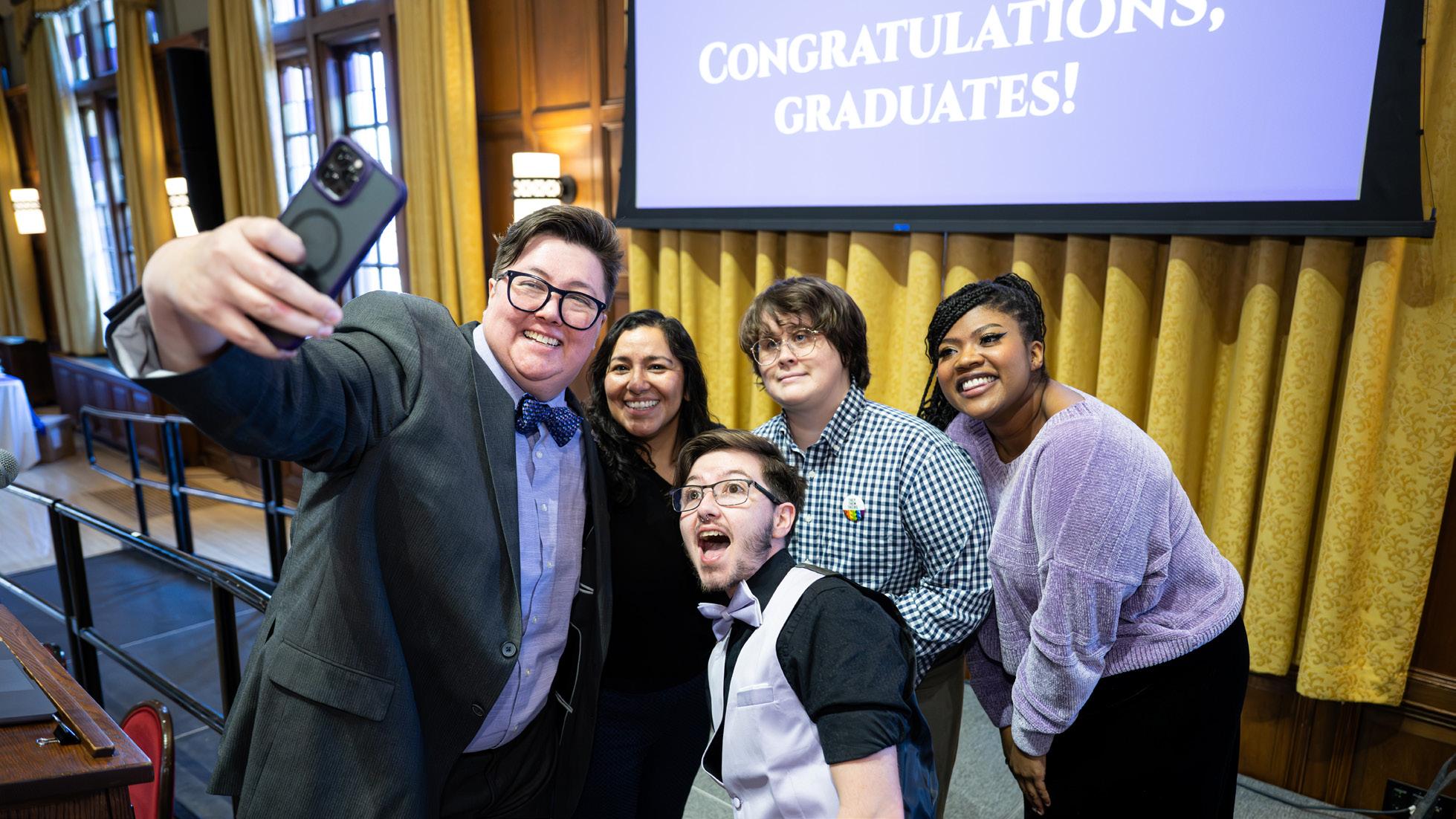
Sebas Abbate he/they/elle
Thea Bultman they/them
Daniel Chavez he/him
Jamy Lee they/any pronouns
Sol Llanes he/him
Arushi Rana she/her
Jordan Rhym she/her
Macie Richardson they/them
Arial Saldana any pronouns
Isaac Schultz he/they
Avery Thompson she/they
Spectrum Center Programming Board is a volunteer leadership opportunity and sponsored student organization. Our goal is to provide U-M students the opportunity to develop and organize events that are LGBTQIA2S+ focused. While supporting major Spectrum Center events, the board also hosts their own unique programs.
M. Breaden
Noemie Durand she/her
Nicole Fleming-Lee she/her
Kyla Kralapp she/her Kade Kuba they/them
Ihaa Mohan any pronouns
Rye Roberts he/him
JESSE BEAL
• Co-Chair, Queer and Trans Task Force
• Member, Coordinated Community Response Team
• Member, Repairing Harm Group
• Member, Prevention and Education Group
• Member, Student Life Strategy
• Member, Student Life Assembly
• Member, LGBTQ+ Health Advisory Committee
• Member, Campus Climate Support Ad Hoc Team
• Member, LSA Opportunity Hub Council
• Member, QT Research Symposium Planning Committee
ANGIE FREEMAN
• Member, Welcome to Michigan
• Chair, LGBT History Month Committee
• Chair, Trans Awareness Month Committee
• Chair, Pride Month Committee
ELI GONZALEZ
• Member, QT Research Symposium Planning Committee
• Co-Chair, Spectrum Center Associate Director Search Committee
• Member, Student Life Student Success Metrics Working Group
SPENCER HALL
• Member, Well-Being Network
• Member, LGBTQ+ Health Advisory Committee
• Member, OSCR Program Manager Search Committee
URIEL LIGHT
• Member, Student Life Support
• Member, Student Life Key Administrator Community of Practice
TRISTAN MORTON
• Member, Student Life Assembly
• Member, IGR Advisory
• Lead, SpARC
NICK PFOST
• Member, Student Life Connect
• Member, Student Life Marketing and Communications Community of Practice
• Member, Student Life Social Media Community of Practice
• Member, Student Life Technology Community of Practice
• Member, Maize X Blue Marketing and Communications Summit planning committee Liaison relationships
JESSE BEAL
• Comprehensive Gender Services Program
TRISTAN MORTON
• Student Life Assessment
SPENCER HALL
• Blavin Scholars
• Financial Aid
• University Career Center
• Counseling and Psychological Services
• Gender Inclusive Living Experience (GILE)
NICOLE NEWSOME
• Trotter Multicultural Center
• Multi-Ethnic Student Affairs (MESA) Professional service
JESSE BEAL
• Director of Community and Advocacy, Consortium of Higher Education LGBT Resource Professionals
Executive Board
• Member, Consortium of Higher Education LGBT Resource Professionals
• Member, American College Personnel Association (ACPA)
• Member, Association for the Study of Higher Education (ASHE)
ANGIE FREEMAN
• Member, Consortium of Higher Education LGBT Resource Professionals
• Regional Representative, Consortium of Higher Education LGBT Resource Professionals
• QTBIPOC Affinity Group Facilitator, Consortium of Higher Education LGBT Resource Professionals
ELI GONZALEZ
• Member, Consortium of Higher Education LGBT Resource Professionals
• Member, National Association of Social Workers - Michigan
• Board Member, kNEWJoy
SPENCER HALL
• Member, Consortium of Higher Education LGBT Resource Professionals
URIEL LIGHT
• Member, Consortium of Higher Education LGBT Resource Professionals
NICOLE NEWSOME
• Member, Consortium of Higher Education LGBT Resource Professionals
• Marketing and Communications Coordinator, Consortium of Higher Education LGBT Resource Professionals
NICK PFOST
• Member, Consortium of Higher Education LGBT Resource Professionals
BEAL, J. L. (2024). Imagination and action: Continuing the exploration of QTBIPOC students’ relationships with U-M’s Spectrum Center. Works in Progress Session, Association for the Study of Higher Education (ASHE) Conference.
BEAL, J. L. , Christiaens, R., Cohen, S. S., Dirks, D. A., Gopar, M., Maliskey, J., Morton, T., Newsome, N. L., Velazquez, D. & Wallace, M. (2025, February 15). Pre-Convention Workshop [Conference Presentation].
American College Personnel Association Conference. Long Beach, CA, United States.
Cohen, S. S., NEWSOME, N. L., Pasternak, M. & Wallace, M. (2025, February 17). LGBTQ+ Student Mental Health: Active Minds’ A.S.K. Peer Support Tool [Conference Presentation].
American College Personnel Association Conference. Long Beach, CA, United States.
BEAL, J. L. , Cohen, S. S., Denmon, L., Maliskey, J. & NEWSOME, N. L. (2025, February 18). Planning for and Responding to Campus Threats: Strategies for Support [Conference Presentation].
American College Personnel Association Conference. Long Beach, CA, United States.
BEAL, J. L. , HALL, S., & MORTON, T. (2025, February 18). “No Poor Students Here:” Essential Needs Work and 2SLGBTQIA+ Students [Conference Presentation]. American College Personnel Association Conference. Long Beach, CA, United States.
BEAL, J. L., AND MORTON, T. K. (2025). Supervising Advocates: Tensions and New Possibilities. U-M Student Life Professional Development Conference.
FREEMAN, A. (2025, January 24). The influence of intersectionality on privilege [Conference presentation]. Creating Change Conference, Las Vegas, NV, United States.
HALL, S. (2024, October 14). TRANS-forming Reproductive Health. [Presentation]. Trans Empowerment Month (Stand with Trans). Detroit, MI, United States.
PFOST, N. (2025, January 25). Pulling it all together: Using Google Sites as an intranet. [Conference presentation]. Student Life Professional Development Conference (University of Michigan), Ann Arbor, MI, United States Publications
BEAL, J. L., HALL, S., & MORTON, T. K. (In Press). “Queering Basic Needs Work.” New Directions for Student Services
CENTER /// Pustulka, A. (2025, January 30). “Spectrum Center hosts Queer Art showcase.” The Michigan Daily.
CENTER /// Sargent, N. (2024, November 24). “Transgender Day of Remembrance Banquet honors lives lost while looking toward the future.” The Michigan Daily
CENTER /// Shabelski, A. (2024, September 4). “Spectrum Center welcomes students back to campus with Pride Outside event.” The Michigan Daily
• Adaptive Sports & Fitness
• Adventure Leadership
• Ann Arbor District Library
• Blavin Scholars Program
• Center for Campus Involvement
• Center for Global and Intercultural Study
• Center for Racial Justice
• Central Student Government
• College of Engineering
• Comprehensive Gender Services Program
• Conference and Event Services
• Dean of Students
• Duderstadt Center
• Enrollment Management & Student Experience Team
• Fraternity & Sorority Life
• Gender Inclusive Learning Experience
• Gerald R. Ford School of Public Policy
• Grand Rapids Community College, English Department
• Iglesia Martell Law Firm
• International Center
• International Education Network
• Jim Toy Community Center
• LGBTQ+ Alumni Association
• LSA Opportunity Hub
• Maize and Blue Cupboard
• Michigan College Advising Corps
• Michigan Institute for Clinical & Health Research
• Movement Advancement Project
• Multi-Ethnic Student Affairs (MESA)
• National Center for Institutional Diversity
• Office of Financial Aid
• Office of New Student Programs
• Office of Student Affairs, Kinesiology
• Office of Student Conflict Resolution
• Office of the Provost
• Organizational Learning
• oSTEM
• Outlaws
• Prevention Education, Awareness and Resources
• Rackham Graduate School
• Residence Halls Association
• School of Social Work Continuing Education
• School of Social Work Flourish Office
• School of Social Work Global Office
• School of Kinesiology
• Services for Students with Disabilities
• Sexual Assault Prevention and Awareness Center
• Student Life Human Resources
• Sweetland Writing Center
• The Program on Intergroup Relations
• Trotter Multicultural Center
• University Career Center
• University Health and Counseling
• University of Michigan Audit Services
• Uplift Ann Arbor
• Vivent
• Washtenaw Community College, Enrollment Management & Student Experience Team
• Washtenaw County Clerk
• Wolverine Support Network