CASE STUDY Author: Dr Margarita
Garfias Royo
CASE STUDY Author: Dr Margarita
Garfias Royo
The Integrated and Inclusive Infrastructure Framework (3IF) for Informal Settlement Upgrading

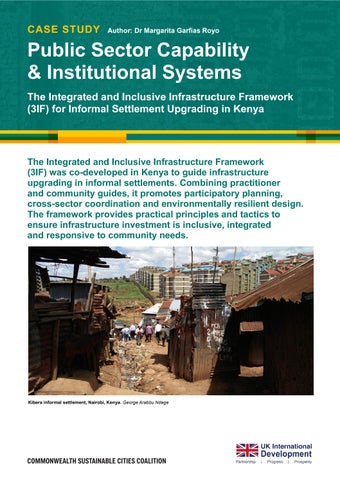
The Integrated and Inclusive Infrastructure Framework (3IF) was co-developed in Kenya to guide infrastructure upgrading in informal settlements. Combining practitioner and community guides, it promotes participatory planning, cross-sector coordination and environmentally resilient design. The framework provides practical principles and tactics to ensure infrastructure investment is inclusive, integrated and responsive to community needs.
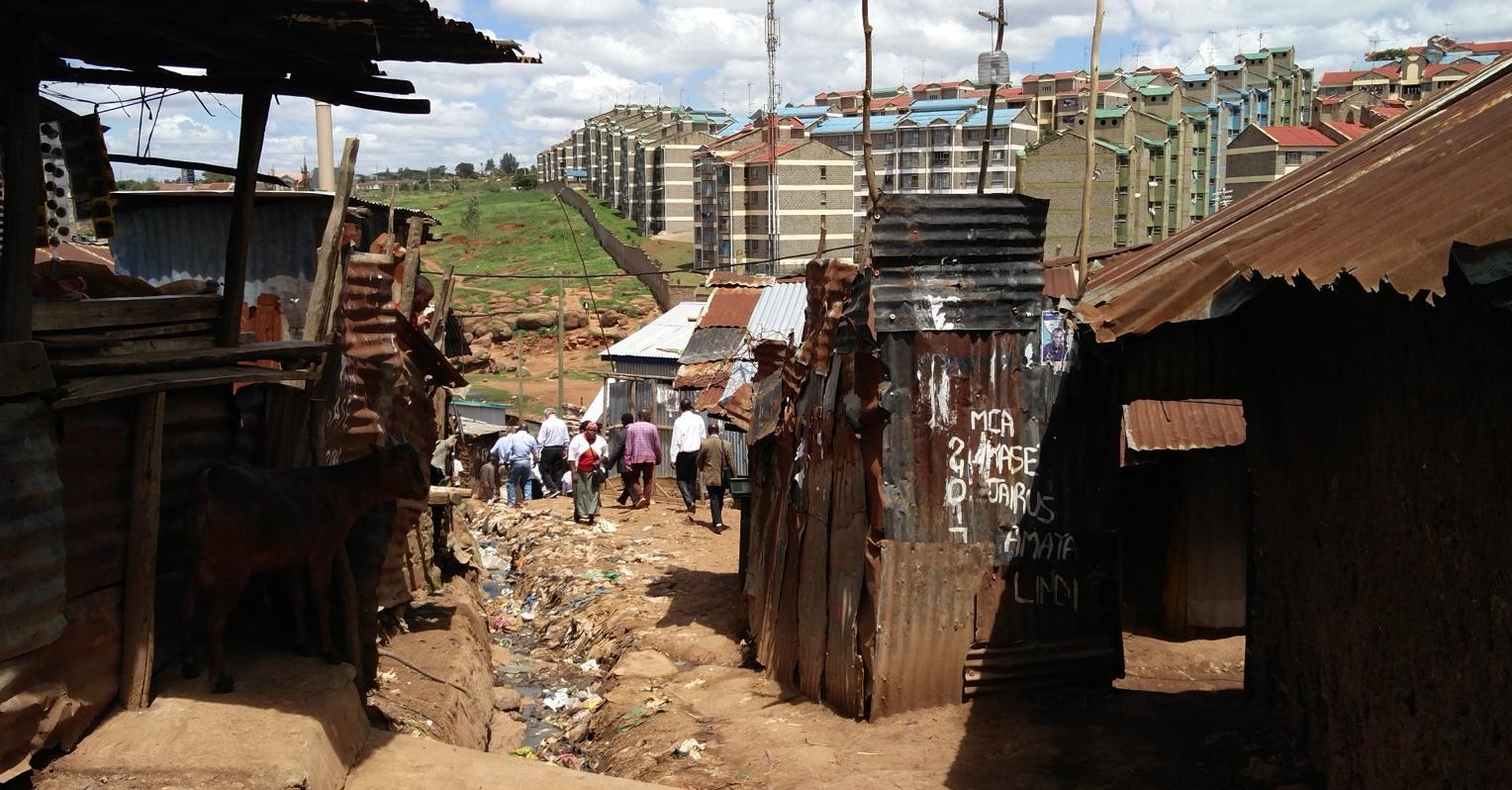

Kenya is experiencing rapid urbanisation and increasing investment in infrastructure. National programmes increasingly position infrastructure, such as roads, drainage, water and sanitation, as the backbone of urban development. Yet many projects affecting informal settlements are designed and delivered through top-down processes that overlook community priorities and fail to integrate social, environmental and spatial systems. In some cases, infrastructure investment risks reinforcing existing inequalities rather than improving living conditions.
The Integrated and Inclusive Infrastructure Framework (3IF)1 was developed to address this challenge. It was co-produced by a coalition of practitioners, community organisations, professional institutions and academic partners including Kounkuey Design Initiative2, Arup East Africa3, Akiba Mashinani Trust4, the Architectural Association of Kenya5, the Institution of Engineers of Kenya6 and the UCL Engineering for International Development Centre at the Bartlett School of Sustainable Construction7. The initiative was supported through UKRI GCRF funding aimed at strengthening professional engineering capacity in East Africa.
The framework provides practical guidance for planning and delivering infrastructure upgrades in informal settlements in ways that are integrated, inclusive and environmentally sustainable. It combines a Practice Guide for policymakers, planners, engineers and architects with a People’s Guide designed to support communities and grassroots organisations to participate effectively in infrastructure decision-making.
Together these tools help bridge the gap between technical planning processes and community priorities. By setting out a clear set of principles and practical tactics that can be applied throughout the project cycle from planning and design to implementation and monitoring the framework helps ensure infrastructure investment supports more equitable and sustainable urban development.
The experience of developing and applying the framework highlights the importance of co-production, systems thinking and community participation in infrastructure planning. These lessons are relevant across many Commonwealth countries facing similar challenges of rapid urbanisation, infrastructure deficits and fragmented governance.
1 3IF: https://www.3if.info/
2 Kounkuey Design Initiative: https://kounkuey.org/
3 Arup East Africa: https://www.arup.com/contact-us/kenya/
4 Akiba Mashinani Trust: https://akibamashinanitrust.org/
5 Architectural Association of Kenya: https://aak.or.ke/
6 Institution of Engineers of Kenya: https://www.iekenya.org/
7 Bartlett School of Sustainable Construction https://www.ucl.ac.uk/bartlett/construction
Infrastructure is increasingly viewed as a key entry point for neighbourhood upgrading in Kenya. National policy frameworks, including Kenya Vision 2030, the Constitution of Kenya (2010) and international commitments such as Agenda 2063 and the UN Sustainable Development Goals, recognise the role of infrastructure in improving living conditions and supporting economic growth.
However, the delivery of infrastructure in informal settlements often fails to reflect these ambitions. Planning and investment decisions are frequently fragmented across institutions and sectors, while projects may proceed without meaningful engagement with affected communities.
In Nairobi this challenge is particularly visible. An estimated 60–70% of residents live in informal settlements occupying only around 5% of residential land, yet these areas have historically received limited public infrastructure investment. Where infrastructure projects do occur, they are often delivered through large-scale initiatives such as major road developments, implemented through centralised decision-making processes.
Local planning mechanisms have attempted to address this imbalance. Nairobi City County Government can designate areas as Special Planning Areas (SPAs) to enable alternative planning approaches. The Mukuru Special Planning Area (MSPA)8 represents one of the most ambitious examples of participatory planning in the city. Through collaboration between communities, civil society organisations, professionals and government agencies, a comprehensive plan was developed for upgrading one of Nairobi’s largest informal settlements.
Despite this progress, implementation has proved challenging. Infrastructure projects have sometimes proceeded outside agreed planning frameworks, highlighting the absence of practical tools to support inclusive infrastructure planning and ensure coordination between agencies, professionals and communities.
These challenges are common across many rapidly urbanising cities. Large infrastructure investments are expanding, yet governance fragmentation, limited community participation and sector-based planning continue to undermine their effectiveness. The 3IF framework was developed to help address these gaps by providing practical guidance for more inclusive infrastructure development.
8 Mukuru Special Planning Area (MSPA): https://african-cities-database.org/urc-record-index/mukuru-spa/
The 3IF framework was developed through a collaborative process involving practitioners, community organisations, professional institutions and researchers. Workshops, research, technical roundtables and onthe-ground experiences including the real world practices of the Kibera Public Space Project (KPSP)9 initiative helped establish a shared understanding of what integrated, inclusive and sustainable infrastructure should mean in the Kenyan context.
The framework consists of two complementary tools.
• The Practice Guide is intended for policymakers, planners, engineers and architects responsible for infrastructure planning and delivery. It provides guidance on how to incorporate inclusive and integrated approaches throughout the project lifecycle.
• The People’s Guide translates these principles into accessible language and visual formats so that communities and grassroots organisations can engage meaningfully in infrastructure planning and decision-making. It helps residents understand infrastructure proposals, articulate priorities and hold implementing agencies accountable.
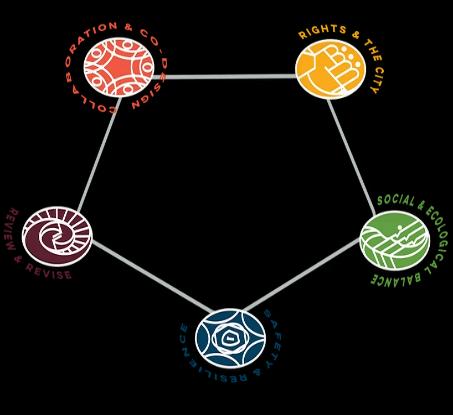
Together the two guides aim to bridge the gap between professional planning processes and community participation. At the core of the framework are five principles that define inclusive and integrated infrastructure:
• Rights & the City.
Advocates for the rights of all city dwellers to participate in creating just, safe, healthy, accessible, affordable, resilient and sustainable cities. It emphasizes the necessity of sharing city resources with informal settlements and including them in city development processes.
• Social & Ecological Balance.
Argues that infrastructure development processes in informal settlements and the wider city uphold community-based knowledge of the environment, do not harm existing natural ecosystems and biodiversity, include nature-based elements whenever possible, strengthen community resilience, follow the strategy of ecological mainstreaming and prioritise ecosystems over aesthetics.
• Collaboration & Co-Design.
Encourages treating all stakeholders, from residents to policy makers, as equal partners at all stages of project development to create a win-win situation in which all stakeholders benefit from each other’s lived experiences and expert knowledge in shaping decisions.
• Safety & Resilience.
Infrastructure investments should respond to environmental risks such as flooding and climate change while strengthening ecological systems and delivering multiple and multiplying, positive outcomes that benefit all community members. Safe and resilient communities reduce communities’ vulnerabilities and allows them to thrive and to monitor, evaluate and learn from the risks they face. They also understand that safety and resilience is not an equal issue, meaning that some groups are disproportionately more affected, and accept that both process and outcome require long-term and continuous commitment and engagement.
9 Kibera Public Space Project: https://kounkuey.org/projects/kibera_public_space_project_network
• Review & Revise.
Recognises the challenges brought about by the rapid growth of informal settlements in Kenya, aiming to transform them into opportunities for sustainable and equitable development. In real-life practice, problems do not present themselves to urbanists as givens but must be named and framed by the communities. Review & Revise focuses on the methods by which communities and urbanists define the means to be chosen, the decisions to be made and the ends to be attained.
To translate these principles into practice, the framework identifies practical tactics that can be applied throughout the project cycle. These include mapping existing infrastructure systems and community assets, facilitating participatory workshops, coordinating planning across agencies, testing infrastructure proposals against social and environmental criteria and monitoring project outcomes. It must be noted, however, that while the team has proposed several tactics, these are meant to be dynamic such that every project could end up creating a unique tactic.
The framework has been applied in real contexts, including work related to road development in Kianda, Kibera, where the project team mapped infrastructure systems, engaged with the Kenya Urban Roads Authority and contributed technical inputs to government discussions. These activities highlighted the tensions that can arise between large-scale infrastructure delivery and inclusive planning processes.


The framework has also been used as a monitoring and evaluation tool, allowing practitioners and community organisations to assess whether infrastructure projects meet the principles of inclusive and integrated planning.
Several lessons emerged from the development and early application of the 3IF framework.
• First, co-production across sectors can generate new approaches to inclusive infrastructure planning. Bringing together community organisations, practitioners, professional bodies and academic institutions enabled the development of shared principles and practical tools. However, maintaining momentum requires sustained institutional engagement and long-term partnerships.
• Second, community participation must be continuous and meaningful. While community organisations played a central role in developing the framework, the process highlighted the need for deeper engagement with residents throughout the planning and implementation cycle.
• Third, infrastructure systems must be understood within the wider urban context. Informal and formal areas are interconnected, and upgrading efforts must consider citywide infrastructure networks, governance arrangements and financing mechanisms.
• Finally, alignment with national and international policy frameworks creates opportunities for institutional adoption. By linking the framework to Kenya Vision 2030, Agenda 2063, the Sustainable Development Goals and constitutional commitments to participatory governance, the initiative has strengthened its relevance for policymakers.
For cities across the Commonwealth facing rapid urbanisation and infrastructure deficits, the experience highlights the importance of systems thinking, participatory governance and transdisciplinary collaboration in delivering equitable infrastructure investment.
• Co-production across all levels of government, civil society, academia and private sector actors can strengthen shared approaches to inclusive, integrated infrastructure.
• Meaningful community participation is essential; expert-led processes risk limiting the sense of ownership and reducing long-term impact.
• Transdisciplinary teams and coordination mechanisms are critical for addressing complex, interconnected infrastructure challenges.
• Evaluation tools like 3IF can help assess ongoing projects and guide improvements in inclusivity, integration and sustainability.
• Strengthening links to infrastructure finance and citywide planning systems will improve the Framework’s applicability and scalability.
• 3IF aligns with Kenya Vision 2030, the Constitution of Kenya (2010), Agenda 2063 and the SDGs, enabling policy integration and potential institutional scale-up.
This Case Study was prepared by Dr Margarita Garfias Royo, Co-Director of the UCL Engineering for International Development Centre and Lecturer in Infrastructure and Development at the UCL Bartlett School of Sustainable Construction by way of contribution to the work of the CSCC Housing Action Group, March 2026.