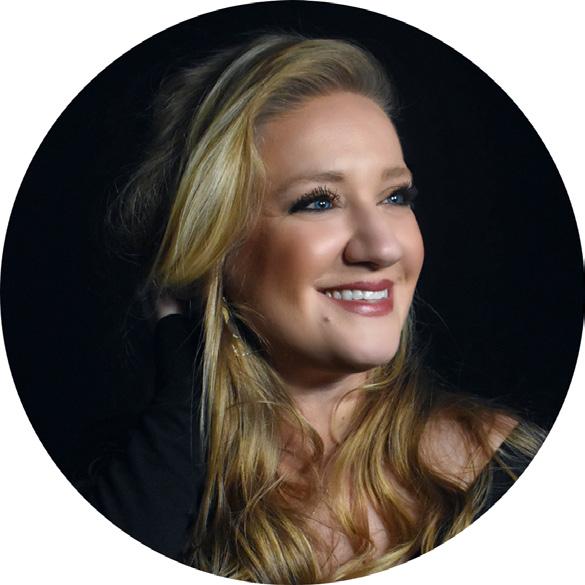
Quickly gaining attention for her “solid technique and heroic timbre” (Opera Today), lyric coloratura soprano Aubry Ballarò continues to build an international profile with notable debuts across Europe, Asia, and the United States.
In the 2025–2026 season, Ms. Ballarò makes her Asian debut as Lucia in Lucia di Lammermoor with Musica Viva Hong Kong, marking an important milestone in her growing global career. She begins the season as Micaëla in Carmen with Opera in the Park Portland and the soprano soloist in Strauss’s Vier letzte Lieder with the Chautauqua Symphony. Later in the season, she debuts with Portland Opera as Musetta in La Bohème, performs Stravinsky’s Pulcinella with the Princeton Symphony Orchestra, and returns to Opera Columbus in a co-production with the Columbus Symphony as Violetta in La Traviata and with the symphony as the soprano soloist in Orff’s Trionfo di Afrodite.
Internationally, Ms. Ballarò made her Spanish debut in a solo gala with the RTV Slovenia Orchestra at the Auditorio Nacional de Madrid. She first came to European attention with her debut as Lucia in Lucia di Lammermoor at State Opera Stara Zagora in Bulgaria, a company to which she later returned as Violetta in their 2023 production of La Traviata. In 2024, she debuted with the Sofia Philharmonic as the soprano soloist in Mozart’s Requiem.
In the United States, recent highlights include her role debuts as Adina in L’elisir d’amore with Opera Grand Rapids, Gilda in Rigoletto with Opera Columbus, and Fiordiligi in Così fan tutte with The Princeton Festival. She has also been heard as Madame Herz in Mozart’s The Impresario with The Princeton Festival and as the soprano soloist in Handel’s Messiah with the Columbus Symphony.
Ms. Ballarò is recognized for both her “deep lyric color with unflagging flexibility” and her expressive interpretations. With an expanding repertoire that bridges bel canto, lyric roles, and concert works, she continues to establish herself as a versatile and compelling artist on international stages.
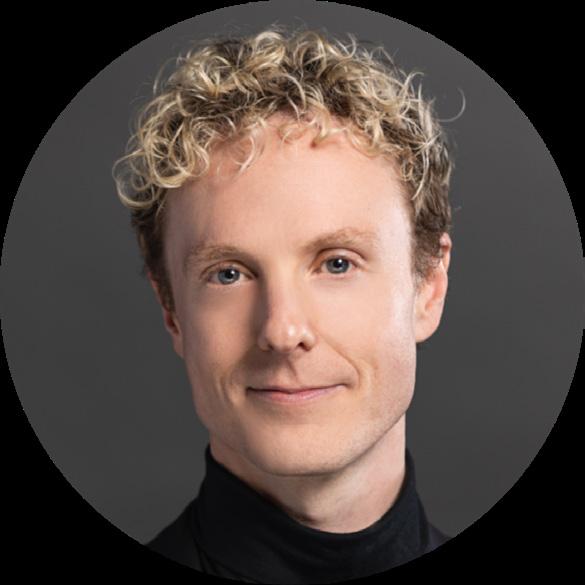
NICHOLAS NESTORAK, tenor
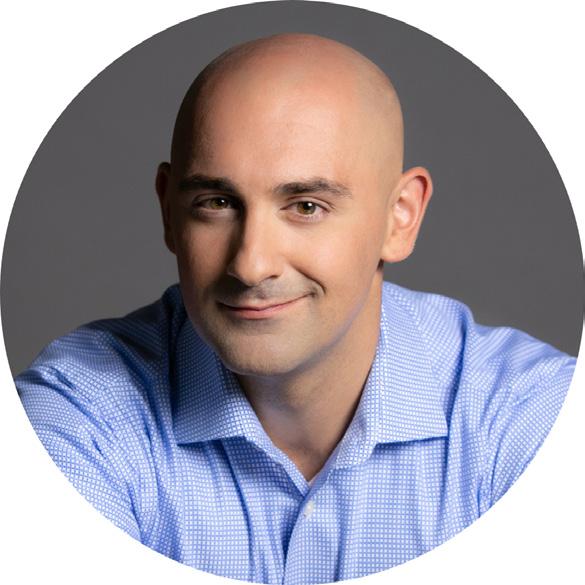
Nicholas Nestorak is a tenor on the rise since joining the Metropolitan Opera roster in 2021 and making his highly anticipated Met début as Pang in their lavish production of Turandot. Also at The Met, he has covered Pang, Tanzmeister in Ariadne auf Naxos, Bardolfo in Falstaff, and Spoletta in Tosca. He returns this season as the Second Priest in the holiday presentation of The Magic Flute and covering the Waiter in Arabella.
Additional engagements last season included Goro in Madama Butterfly with Opera San Antonio and Austin Opera. Mr. Nestorak also took his acclaimed Spoletta to the Princeton Festival’s Tosca and joined Opera Maine to portray Beadle Bamford in Sweeney Todd. This season, he portrays Ralph Rackstraw in HMS Pinafore with Opera Grand Rapids. In concert, he will be heard as the tenor soloist for Stravinksy’s Pulcinella with the Princeton Symphony Orchestra, as well as two rarely heard works, Dvorak’s The American Flag and Orff’s Trionfo di Afrodita, with the Columbus Symphony.
Mr. Nestorak has had recent success throughout the U.S. in a wide variety of repertoire, including Pedrillo in Die Entführung aus dem Serail and a different member of the Turandot trio, Pong, with Opera Grand Rapids; Prunier in La rondine with Opera on the James; Beppe in Pagliacci and Kaspar in Amahl and the Night Visitors with Opera San Antonio; Pang with Opera Delaware; Borsa in Rigoletto with Pacific Symphony; Brighella in Ariadne auf Naxos for Lakes Area Music Festival; and Count Almaviva in Il barbiere di Siviglia, Antonin Scalia in Derrick Wang’s Scalia/Ginsburg, and Monsieur Vogelsang in Der Schauspieldirektor at the Princeton Festival. He performed Goro in Madama Butterfly with Knoxville Opera and Florida Grand Opera, Monostatos in Die Zauberflöte with Toledo Opera and Opera Grand Rapids, the Witch in Hänsel und Gretel with Brava! Opera Theater, and Grant Wood in Strokes of Genius, a new work about Cedar Rapids native Grant Wood, with Cedar Rapids Opera Theater. He also made his critically acclaimed début as Count Almaviva in Il barbiere di Siviglia with Opera Roanoke.
Mr. Nestorak delighted audiences at the Glimmerglass Festival as Tobias in Stephen Sondheim’s gruesome favorite, Sweeney Todd, after he made his début at the festival as Monastatos in Die Zauberflöte the season before. He appeared in the title role of Albert Herring and Jupiter in Semele at Opera MODO; and as Lord Geoffrey in The Picture of Dorian Gray at Opera Fayetteville. Additional operatic engagements include the Physician in The Fall of the House of Usher; Borsa in Rigoletto and Spoletta in Tosca with Wolf Trap Opera; Pang in Turandot with Cedar Rapids Opera Theatre, the role of Gastone in La Traviata with Austin Lyric Opera, and a performance in Kurt Weill’s Seven Deadly Sins.
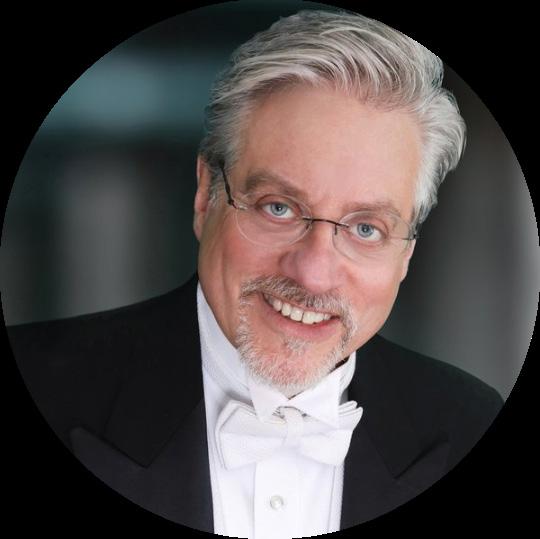
HUGH RUSSELL, baritone
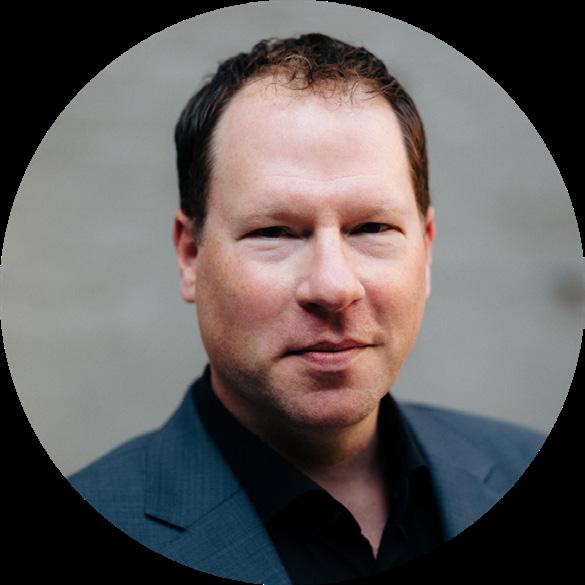
Baritone Hugh Russell has performed with The Philadelphia Orchestra, Cleveland Orchestra, Los Angeles Philharmonic, Pittsburgh Symphony, San Francisco Symphony, Houston Symphony, National Symphony, Detroit Symphony, Milwaukee Symphony, Dallas Symphony, Seattle Symphony, Israel Philharmonic, Danish Radio Symphony, Toronto Symphony, Vancouver Symphony, Orchestre Métropolitain (Montréal), Cincinnati Symphony, and Kansas City Symphony, among many others.
He has been honored to work with many eminent conductors, including Yannick Nézet-Séguin, Rafael Frühbeck de Burgos, Jaap van Zweden, Charles Dutoit, Leonard Slatkin, Manfred Honeck, Edo de Waart, Kent Nagano, Donald Runnicles, Steuart Bedford, Michael Christie, Hans Graf, Carlos Miguel Prieto, and Rossen Milanov.
Operatically, he has been featured in productions at Los Angeles Opera, New York City Opera, Opera Theatre of Saint Louis, Atlanta Opera, Michigan Opera Theatre, Arizona Opera, Boston Lyric Opera, Vancouver Opera, Calgary Opera, Pittsburgh Opera, Manitoba Opera, the Wexford Festival, and Angers-Nantes Opera.
Hugh has also been featured in recital at Weill Recital Hall at Carnegie Hall, The Kennedy Center, and in many appearances with the New York Festival of Song.
As a pianist, he has been featured in performance with Stephanie Blythe at a celebration of the 50th Anniversary of Seattle Opera, and has also been featured in performance with Christine Brewer for Illinois Humanities.
In the coming season, Hugh will be featured in performance with pianist Craig Terry, and will return to North Carolina Opera to perform Papageno in Die Zauberflöte. He will also return to the New Mexico Philharmonic to perform his signature work, Orff’s Carmina Burana.
REMI WÖRTMEYER, artistic director
Born in Adelaide, Australia, BalletMet Artistic Director Remi Wörtmeyer is a multi-award-winning choreographer, dancer, designer (of décor, costumes and fashion) and teacher who trained in classical dance at The Australian Ballet School.
Formerly a principal with Dutch National Ballet, he also danced with The Australian Ballet and American Ballet Theatre and guested internationally, dancing on the world’s greatest stages including Sydney Opera House, New York’s Metropolitan Opera House, The London Coliseum and Sadler’s Wells, St Petersburg’s Alexandrinsky Theatre, New National Theatre Tokyo, the Grand Theatres of Shanghai and Hong Kong, National Centre for the Performing Arts Bejing, Palais de Congrès and Théâtre du Châtelet Paris.
Mr. Wörtmeyer’s one-act and evening-length choreographic works include creations for Dutch National Ballet, Queensland Ballet, Royal Concertgebouw Orchestra, Benois de la Danse, and a bespoke pas de deux – Penumbra – for Roberto Bolle and Melissa Hamilton (Arena di Verona, 2022). Remi’s ballet Significant Others (on the subject of artists Sonia and Robert Delauney) headlined Atlanta Ballet’s spring season earlier this year.
Remi’s fashion and sculptural works have been exhibited by galleries in Amsterdam, Sydney and Berlin. His collaboration with haute couturier Ronald van der Kamp saw him debut his own high-end handmade sculptural jewellery as part of RVDK’s spring/summer 2023 collection at Paris Fashion Week.
Mr. Wörtmeyer was named Artistic Director of BalletMet in June 2024 where he will continue to choreograph new works for companies both domestically and abroad.
Since 1978, BalletMet has brought incredible dance to theaters, studios and classrooms in Central Ohio—and beyond. Located in the heart of downtown Columbus, BalletMet boasts a black box theatre performance space, seven dance studios, administrative offices and costume and scene shops.
Every year, BalletMet reaches over 100,000 audience members through local performances, touring shows, academy classes and extensive outreach. BalletMet maintains its commitment to the creation of new work and the re-staging of contemporary masterworks with the goal of ceaselessly stimulating audiences. BalletMet also operates a dance academy impacting more than 1,000 students each year. Classes offered include ballet, tap, modern and lyrical dance and are designed for all levels of experience, from the avid dance lover to the aspiring professional. In addition to performances and education, BalletMet impacts the community through free and open rehearsals, scholarships and more.
STEPHEN CARACCIOLO, Chorus Director
Stephen Caracciolo is the Chorus Director of the Columbus Symphony Orchestra, preparing the CSO Chorus for appearances in the Masterworks concert series and conducting community performances of the CSO Chamber Choir. Dr. Caracciolo is a conductor recognized for his passionate artistry and creative leadership in interpreting an expansive range of the choral repertoire, including choral-orchestral works, Renaissance and Baroque motets, GermanRomantic part songs, French chansons, the sacred literature of the English and Russian churches, opera choruses, American folk songs and spirituals, and works by living composers.
For twelve years he was a professional choral bass at Washington National Cathedral where he also served as the cover conductor for masses, choral evenings, and special services. He has performed choral masterworks with the New York Philharmonic, the Philadelphia Orchestra, the Juilliard Orchestra, the American Symphony, and the orchestra of Washington National Cathedral with such renowned conductors as Robert Shaw, Zubin Mehta, Riccardo Muti, Kurt Masur, Erich Kunzel, Michael McCarthy, and James Levine.
Known nationally as a composer and arranger, Caracciolo’s choral works are performed extensively throughout the United States and Europe. He is a composer with MorningStar Music Publishers, E.C. Schirmer, Kjos Music, and Roger Dean Publishing, and is active as a consultant for various educational, ecclesiastical, and professional organizations.
His publications—including commissions for the acclaimed professional vocal ensemble, Cantus—appear on numerous professional, collegiate, and cathedral repertoire lists, and may be heard on nationally distributed recordings as well as syndicated radio broadcasts including the well-known Sunday program, With Heart and Voice.
Dr. Caracciolo concurrently serves as Artistic Director of ProArteOHIO, Central Ohio’s premier professional vocal ensemble. Under his leadership, the ensemble consistently garners high praise for its beauty of tone, remarkable blend, and exceptional commitment to elegant text phrasing. Previous conducting posts include the Maryland Choral Society and choral ensembles at the University of Maryland-Baltimore, Roberts Wesleyan College, the Ohio University School of Music, and Denison University. Caracciolo holds a doctoral degree in conducting from the Jacobs School of Music at Indiana University, a master’s degree in conducting from Westminster Choir College, and a bachelor’s degree in music education from the Capital University Conservatory of Music.
COLUMBUS SYMPHONY CHORUS
SOPRANO I
Alleana Bammerlin
Laura Byars
Andrea Dent
Katie DiPietro
Charlotte Geary
Makenna Koehl
Sarah Higley
Eve Julien
Stephanie Rodriguez
Lexi Scherzer
Kristen Snyder
Megan Trierweiler
Deanna Walton
Victoria Zanatian
SOPRANO II
Elizabeth Arteta-Cunningham
Elizabeth Jewell
Becker
Kathryn Ehle
Karissa Frische
Charlene Grant
Alexa Konstantinos
Suzanne Magazzeni
Miriam Matteson
Gretchen Mote
Elizabeth Neer
Maureen O’Brien
Amy Adele Parker
Stephanie Pikovnik
Sadie Wuertz
Mary Yarbrough
Jennifer Young
ALTO I
Leslie Armstrong
Amy Bergandine
Kara Carlen
Kelli Clawson
Kailey Coulter
Deborah Forsblom
Suzanne Fryer
Jessica Kahn
Hannah Miller Rowlands
Natalie Myers
Cassie Otani
Wendy Rogers
Gretchen Rutz Leist
Jenna Shively
Brianna Stokes
Katie Thornton
Katerina Warner
Shelli White
ALTO II
Jordan Abbruzzese
Lauren Grangaard
Kirby Johnson
Georgia Loftis
Janet Mulder
Melissa Obergefell
Debbie Parris
Lisa Peterson
Christina Rossi
Elizabeth Pittman
Laura Scobell
Laura Smith
Tara Smith
Peggy Wigglesworth
TENOR I
Wade Barnes
Justin Burkholder
Geoffrey Gear
Aaron Lashley
Adam Mesker
Brennan Pendrake
Matt Pittman
Richard Spires
Drew Sutherland
Eric White
Michael Wigglesworth
TENOR II
William B. Catus III
Todd Chandler
Michael Cochran
Andy Doud
Hector Garcia
Santana
Darius McBride
Matthew Norby
Paul Ricketts
Evan Stefanik
Ed VanVickle
Jason Yoder
Aidan Young
BARITONE
Alexander Almeida
Kevin Baum
Anthony Brown
Raymond Cho
Gary Everts
Keith Frische
William Gehring
Eric Gibson
Andrew Grega
Ernest Hoffman
James Legg
Gordon McKnight
Kyle Norton
David Scott
Dominic Straquadine
David Zach
BASS
Kevin Bilbrey
Jacob Conrad
Luis Falcon
Ian Furniss
Kent Maynard
Robert Moreen
Allen Rutz
David Rutz
Drew Shadwick
Bruce Turf
Keith Whited
DIRECTOR
Stephen Caracciolo
ACCOMPANIST
Casey Cook
BOARD CHAIR
William Gehring
COORDINATOR
Lauren Grangaard
PROGRAM NOTES
The American Flag, Op. 102 (1892-93)
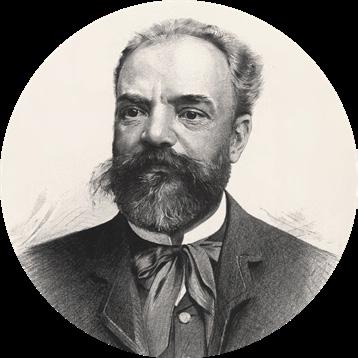
by Antonín Dvořák (Nelahozeves, Bohemia, 1841 -
Prague, 1904)
This is the first Columbus Symphony performance.
Duration: 21’
It was at the behest of his patron Jeannette Thurber that Dvořák wrote the most American work of his American period. When Mrs. Thurber invited the Czech composer to New York to become the director of the new National Conservatory she had founded, she asked him to write a cantata to celebrate the 400th anniversary of Columbus’s voyage. However, by the time the composer received the text for the cantata— the poem The American Flag by Joseph Rodman Drake—he was already working on his Te Deum, which was performed at the quadricentennial instead. He did set Drake’s poem the following year as requested, but the work did not receive its premiere until May 1895, by which time Dvořák had already returned to Prague.
As contemporaries attested, Dvořák spoke excellent English, and he had an ear not only for the meaning of Drake’s poem but also for its tone. In his cantata, he found just the right notes for the poet’s grandiose Romantic imagery. He drew on the idioms of church hymns, nationalist operas and military marches (with occasional echoes of Slavonic dances) to render Drake’s pathos and patriotic fervor in music. The image of the dying sailor who is comforted by the flag even as he draws his last breath prompted a powerful musical portrayal of a sea storm, followed by the finale, marked “Prophetic,” which concludes the work in a glorious quadruple fortissimo.
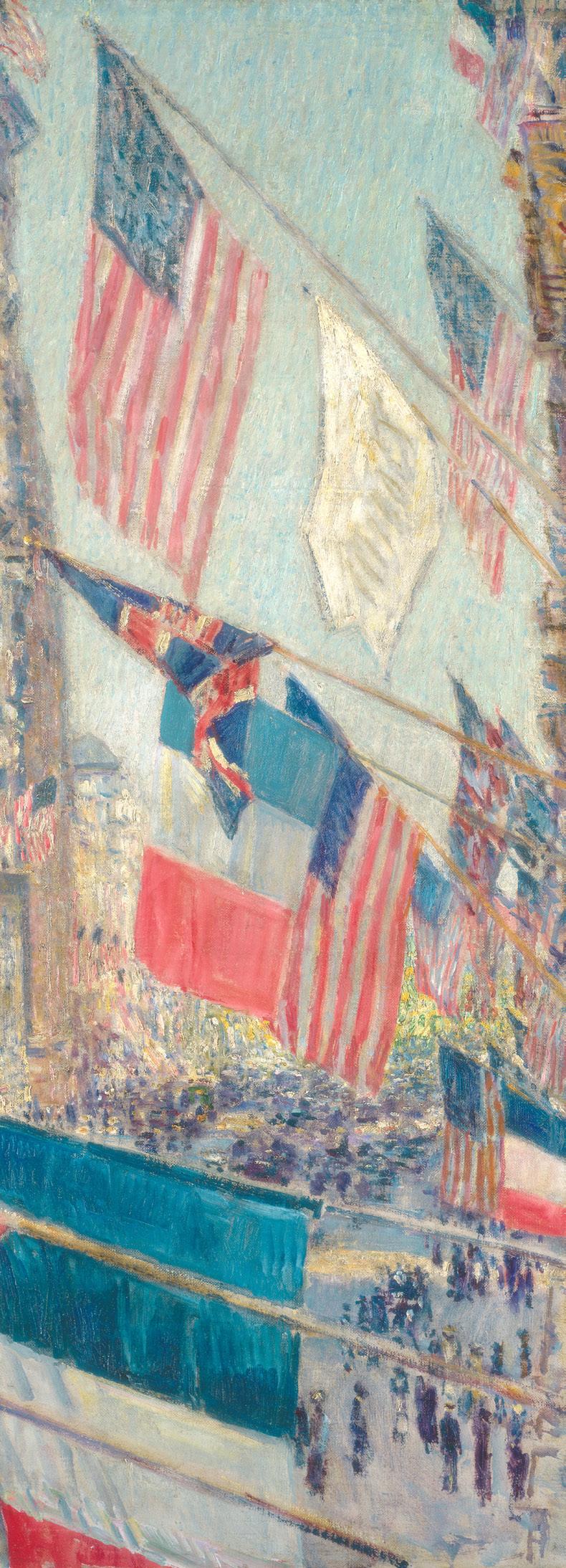
Detail of Allies Day, May 1917 by Childe Hassam (oil on canvas, 1917)
PROGRAM NOTES
Trionfo di Afrodite (1951-53)
by Carl Orff (Munich, 1895 - Munich, 1978)
This is the first Columbus Symphony performance. Duration: 43’
chamber to comment on what’s going on inside. Orff evidently relished these downto-earth moments, which he rendered with rich orchestration and powerful ostinatos (repeating rhythmic and melodic patterns).
After the resounding success of his Carmina Burana, Carl Orff wanted to write a sequel. Eventually, he composed two: Catulli Carmina (1940-43) after poems by the Latin poet Catullus, and Trionfo di Afrodite, after Catullus, Sappho and Euripides (1951-53). The three works were later united under the collective title Trionfi (“Triumphs”).
Orff was an accomplished Classical scholar, and he was evidently aiming to give antique poetry a 20th-century sound. In the case of Trionfo di Afrodite (a concerto scenic, as the composer called it), the poetry was all about wedding rituals. Although Catullus (ca. 84-54 BCE), Sappho (ca. 630-570 BCE) and Euripides (ca. 480-406 BCE) belong to vastly different historical periods, they each wrote wedding poetry invoking the gods, and Aphrodite, the goddess of love, in particular. With a few exceptions, Sappho’s work survives only in fragments, yet there is evidence that Catullus knew more of her poetry than we do today. In the two long wedding poems that Orff used, the Roman poet enriched the Greek tradition with some Roman elements. The mythological memory of the event known as the “rape of the Sabine women” is undoubtedly at the root of Catullus’s representation of the Roman wedding, where the bride is forcibly removed from her family. Aphrodite (Venus) presides over the event, together with her two associate deities Vesper (Hesperus, the evening star) and Hymenaeus, the god of marriage. They are invoked to make sure that the wedding ritual is observed according to their laws.
For all its solemnity, the ritual is not without some crude jokes, as when the husband is commanded to give up his favorite boy lover, and when the crowd gathers outside the bridal
However, Catullus’s poems represent only the official aspect of the wedding, and the poet provided no lines at all for the bride and the groom. Orff, for his part, gave them a voice by compiling a veritable collage of Sappho fragments, and here his musical style completely changed: the two soloists sing florid melodies free from any metric constraints, and the huge orchestra of the other movements is strongly reduced.
After an erotically charged love scene, the final movement brings us back to the public world. Here Orff turned to a hymn to Aphrodite from Euripides’s tragedy Hippolytus, praising the boundless power of the goddess, and ending the work on an ecstatic note.
Trionfo di Afrodite received its premiere at La Scala in Milan on February 14, 1953, under the direction of Herbert von Karajan, as part of a scenic production of the entire triptych. Elisabeth Schwarzkopf and Nicolai Gedda starred as the bride and groom. The triptych’s Italian title Trionfi suggests associations with Renaissance pageantry, in which an ancient ritual would be re-enacted—introducing yet another historical layer between Antiquity and the 20th century.
Texts and translations for The American Flag and Trionfo di Afrodite can be found in the booklets distributed by the ushers.