POSTMASTER: Send address changes to Columbus CEO, P.O. Box 221, Lincolnshire, IL 60069
SUBSCRIPTIONS 800-815-3626 columbusceo@omeda.com
Editor’s Notes
jhohbach@ColumbusCEO.com
Employers of Choice
It’s no secret that employees are more inclined to stay with their organization if they believe their work is meaningful and their contributions are valued and recognized by their managers.
Employers, too, deserve recognition—not just for boosting revenue and generating dividends, but for the type of organization they create and how they treat their customers and workers.
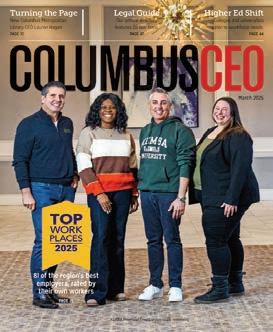
For the 14th year, Columbus CEO is recognizing some of the region’s best employers through the Top Workplaces awards. In partnership with our research partner, Energage, based in Exton, Pennsylvania, we are shining the spotlight on 89 for-profit, nonprofit and government organizations who do it right.
The awards are determined by employees, so it’s not an honor that can be bought. Organizations nominate themselves for the program, and Energage surveys their workers to determine who is worthy of the Top Workplaces designation. (Learn more about how the winners are chosen on Page 16.)
One of the things I love about Top Workplaces is the diversity of the list, and this year is no exception. From auto dealers to banks to HVAC companies and wholesalers, it proves that any organization can create the type of culture and environment where employees can thrive.
This year brings 17 first-time winners, 13 who are two-time Top Workplaces honorees and dozens more repeat honorees. Eight of our winners have made the list 10 or more times. (See who they are on Page 29.)
As part of the survey, employees rank a set of 25 metrics in areas such as leadership, communication, pay and benefits, training and more. This year, the top five-scoring metrics were:
• 82.1% of respondents said their company operates by strong values
• 81.7% said their manager cares about their concerns
• 79.9% feel included at their organization
• 79.7% have managers who help them learn and grow
• 78.8% are overall very satisfied with their job
Tellingly, the first four of those also made last year’s top-five list. Stay tuned to see which of this year’s Columbus honorees will make the USA TODAY Top Workplaces list, which will be unveiled April 8. Twenty-eight local employers earned the honor in 2025.
Congratulations and good luck to all our 2026 Top Workplaces! Thanks for reading.
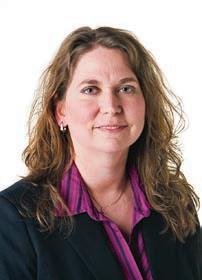
Julanne Hohbach Editor
Why cancer immunotherapy can sometimes fail
How T cell exhaustion affects cancer immunotherapy
“T cells are components of the immune system that detect and attack viruses, bacteria and more ‘bad guys’ inside our bodies,” Li says.
In their landmark study – published in the prestigious journal, Nature – Li’s team isolated both exhausted and effective T-cells and compared them. Eventually, the team discovered increases in proteins – sometimes referred to as stress proteins – in exhausted T cells from cancer patients. Further research showed that those stress proteins also tended to solidify in T cells that lost function.
“These were becoming solid, which we had never seen before,” Li says. “This was an important discovery –something fundamental.”
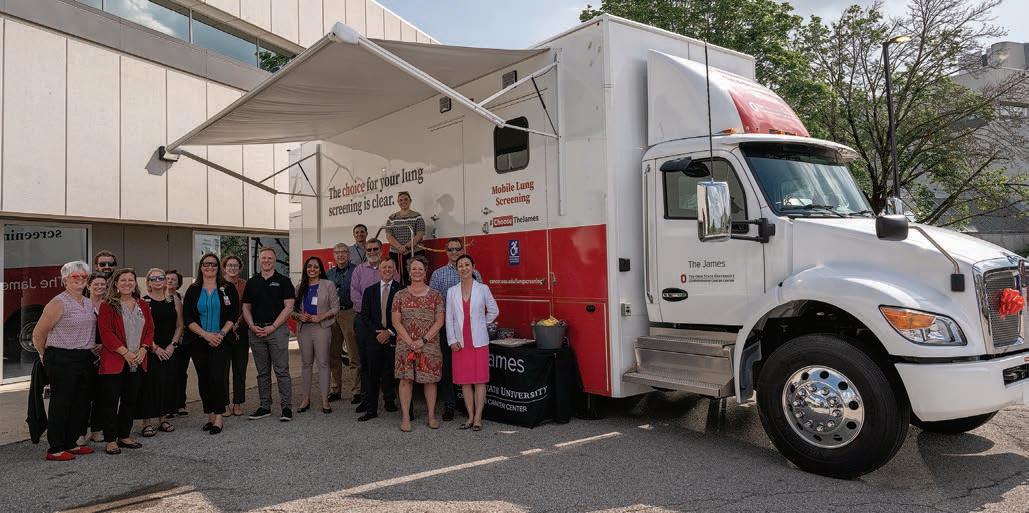
Scan the QR code to learn more about oncology innovation at the OSUCCC – James.
How research could lead to improved cancer immunotherapy
Immunotherapy is revolutionizing health care by harnessing the body’s natural defenses to treat cancer from within.
However, while these treatments have already saved countless lives, immunotherapy isn’t always successful.
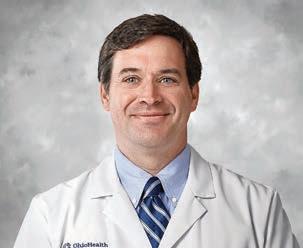
“All of us in the field of immunology and cancer research are trying to figure out what the immune system can do and cannot do,” says Zihai Li, MD, PhD, the founding director of the Pelotonia Institute for Immuno-Oncology at The Ohio State University Comprehensive Cancer Center – James Cancer Hospital and Solove Research Institute (OSUCCC – James).
As a world leader in the immuno-oncology field, Li, also the OSUCCC – James’ Deputy Director for Translational Research, has long been at the forefront of cancer immunotherapy. One of his team’s latest breakthroughs is a study that sheds light on T cell exhaustion, a major reason cancer immunotherapy can fail. The research could lead to improved treatments for patients.
“As scientists, we’re driven by curiosity,” Li says. “When we study cancer immunology, whatever knowledge we learn can aid in the development of better strategies to help patients.”
Scan the QR code to learn all about cancer immunotherapy at the OSUCCC – James.
T cells can also attack tumor cells, and when they do so successfully, patients are able to stay free of cancer. But, over time, those tumor cells can mutate and “learn” to evade T cells, which results in the development of cancer.
By helping T cells adapt to those changes and detect tumor cells after cancer is diagnosed, immunotherapy has been a game changer for patients and oncologists.
“The T cells in the body’s immune system are powerful weapons in the battle against cancer and can be energized to better detect and kill cancer cells with immunotherapy drugs,” Li says.
Along with the progress, though, immunotherapy has presented some challenges to doctors and researchers, especially when it comes to “chronic cancers,” in which the body constantly engages T cells.
Through their research, Li and his colleagues discovered that, in these cases, the constant effort can reduce the functionality of T cells, which in turn can limit the body’s ability to kill cancer cells.
“If a marathoner runs continuously for two hours, they’ll be o.k., but running for 20 hours would be a problem – this is the concept of T cell exhaustion,” Li says. “T cells try to run that race for a long time without any kind of rest or recalibration, and eventually they can become dysfunctional.”
This major step forward in the understanding of immunotherapy could pave the way for improved treatments for patients with several types of cancer.
“We want to give the T cells more weapons to help rejuvenate them so they can win the fight against cancer,” Li says. “We have to pay attention to protein quality control.”
The impact could be wide-ranging, guiding the development of new immunotherapy drugs while also identifying additional benefits of some treatments that are already in use.
“My hope is that, by combining this new strategy with existing drugs, we’ll see improvements in immunotherapy,” says Li, who believes that immuno-oncology is a foundational piece of the future of cancer care – and that it’s only starting to show its promise.
“The field of immuno-oncology is relatively young, but it’s accelerating rapidly,” he says. “I am absolutely optimistic that immunotherapy will one day help a very high percentage of patients with all types of cancer, including leukemia, melanoma and even brain cancer.
“This is the most important way forward in treating cancer.”
Scan the QR code to learn all about cancer care, research and support at the OSUCCC – James.
9th Annual Columbus Chamber Foundation Golf outing
Title Sponsor
Monday, June 15, 2026
The Medallion Club 5000 Club Drive, Westerville, OH 43082
The Columbus Chamber of Commerce Foundation leverages the connections and expertise of the Chamber to eliminate barriers to prosperity across the Columbus Region. All proceeds benefit the Columbus Chamber Foundation, a 501(c)3.
Chairman’s Circle
Presenting Sponsor
with media support from:
PROFILE
By SARAH DONALDSON
Taking the Reins
Dan Crane sets his sights on growth and stability as the fourth-generation CEO to lead Crane Group.
When Dan Crane’s father, Mike Crane, had work to do on the weekends, young Dan would often tag along.
“My brother and I were like, ‘This is so cool, we can run around the office and do whatever,’” Dan says. He even conquered learning to ride his bike in the parking lot of the Crane Plastics plant off Fairwood Avenue.
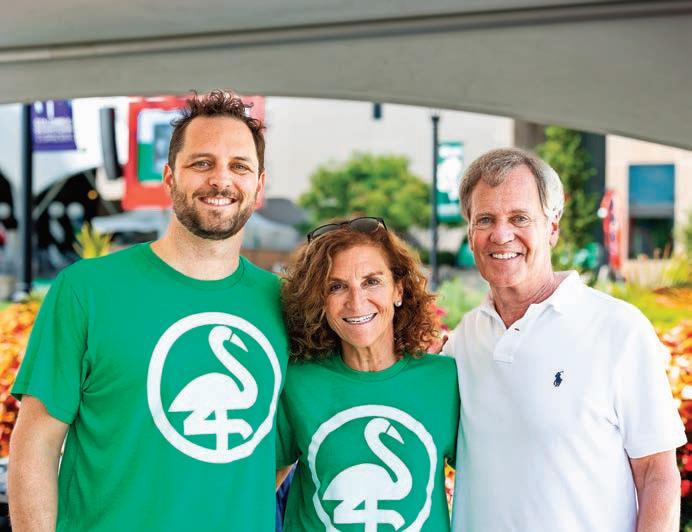
Now Dan, 42, has taken over as president and CEO of the family-owned company. He made the official transition Jan. 1, after a year’s worth of succession planning with his cousin, Tanny Crane. Tanny served as president and CEO of Crane Group for 22 of her 38 years there, overseeing major structural and strategic changes more than once at the former plastics maker turned holding company.
During a January conversation at the company’s Arena District offices in the Belmont Building, Dan Crane says he wants to hone in on Crane Group’s identity as a holding company and doesn’t plan on pivots, at least major ones, anytime soon.
“I want to lean into our values, and lean into, really, business fundamentals,” he says. “We’ve been around businesses for a long time, but we’re still shifting and learning how to go from … running businesses that we grew and we started, to running businesses that other people have grown and started, and we’re now partnering with them to take them to the next level. That requires a little bit of a different skill set.”
Rooted in Plastics
The current Crane Group investment portfolio consists of three companies: Crane Renovation Group, an exterior home renovations company; Pet Paradise, which offers veterinary and boarding services; and the newest, Fairwood Brands, a luxury estate management business that Dan created in 2022. Crane Group holds controlling stakes in all three.
It’s a far cry from the company’s earliest days, which stretch back almost 80 years.
That history is memorialized in a mini-museum of sorts, which lines a hallway in the recently renovated second-floor corporate offices off
Spring Street with views of the city skyline. The placards and photos, in green and white like the Crane Group logo, give readers a decade-by-decade rundown of the business, which has held and divested numerous companies over the years.
After his lighting business went under in the 1929 stock market crash, Robert Crane Sr. went to work in plastics. In 1947, Robert, then 58, formed his own company, Taytec Corp., later renamed Crane Plastics. It was then, and remained for decades after, a plastics manufacturer. His son, Robert “Bob” Crane Jr., joined him a short time after, folding the second generation of Cranes into the mix.
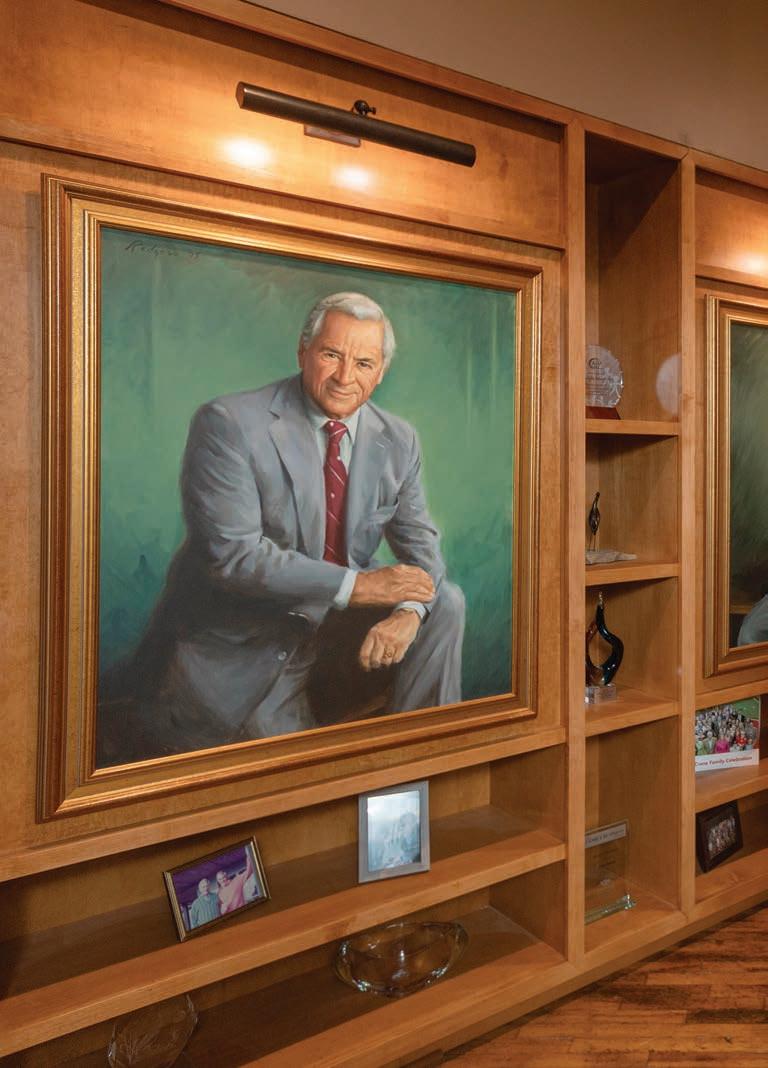
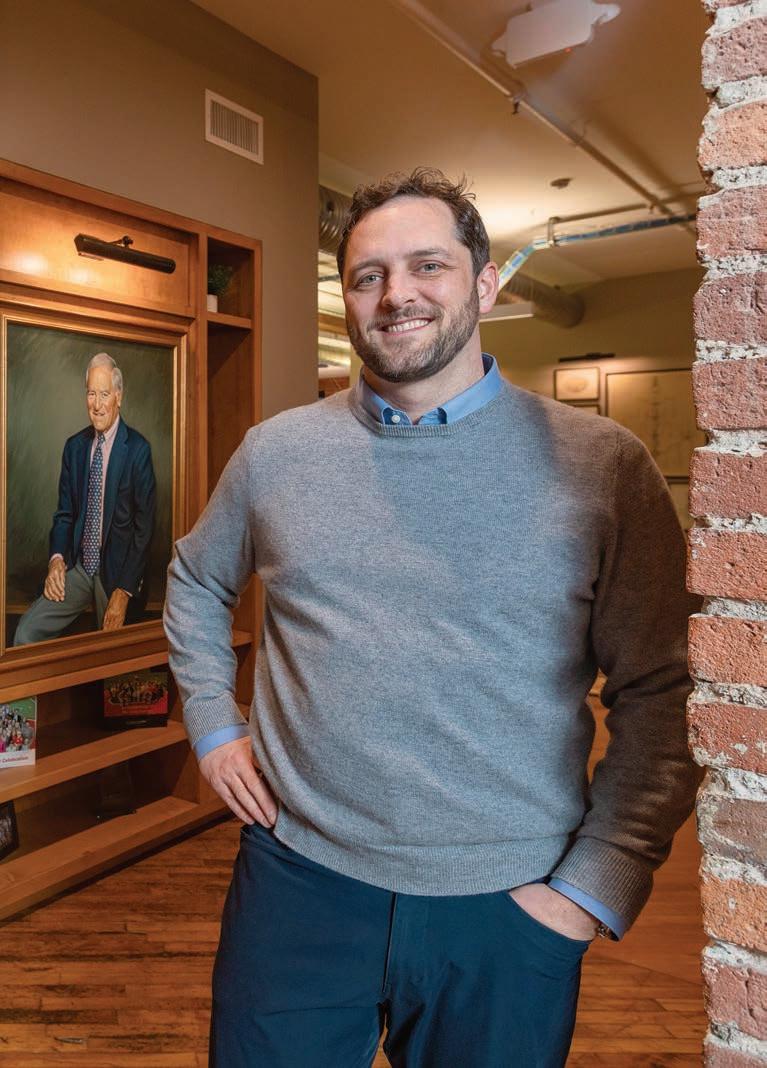
Dan Crane with portraits of Bob (left) and Jim Crane
Dan Crane
President and CEO, Crane Group
Age: 42
Previous: Senior vice president and other Crane Group roles, Nationwide Financial
Education: Bachelor’s degree in applied mathematics, Harvard University
Involvement: Boards of United Way of Central Ohio and CelebrateOne, formerly Ohio CASA
Family: Wife Christie Crane and daughters Nora and Josie Crane
They began manufacturing plastics for others. But in the 1950s, the Cranes started producing vinyl siding, and by the end of the decade, something more colorful: hula hoops. Those hula hoops turned a profit in an otherwise bleak financial year.
In the 1960s, Bob became CEO, succeeded after his death in the early 1990s by his brother, Jameson “Jim” Crane Sr. By then, Crane Plastics had begun acquiring other building materials businesses, from roofing, to decking, to steel.
Amid all of that, Tanny says, an anti-nepotism policy took root, for years prohibiting third-generation Cranes from joining the company. But she doesn’t look back on the policy with any ill will. “The luxury of that decision that our fathers made allowed each of us to really pursue our passions,” she says.
By the 1980s, Tanny had moved to Chicago and was working for Quaker Oats. But as Crane Plastics got bigger and diversified, the rule was no longer needed, she says. As the second generation aged, the question of what came next for Crane Plastics became unavoidable.
Neither her dad, Bob, nor her uncle, Jim, wanted to sell the company. And their leadership team wanted them to keep it private within the family, she says. “My dad turned to me and started the three-year drip, drip, drip
Photo by Tim Johnson
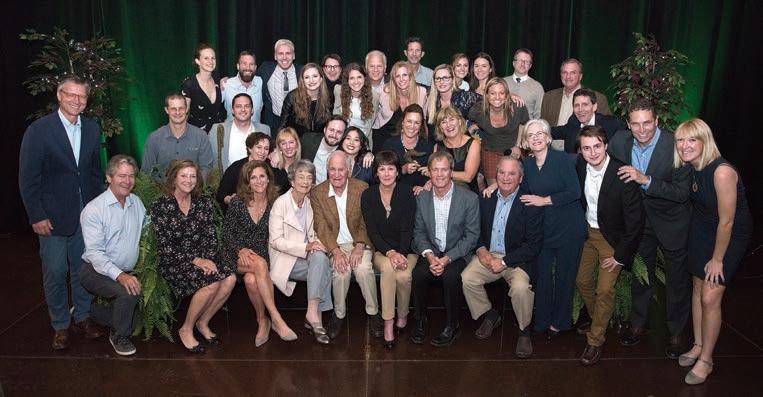
Three generations of the Crane family at the company’s 70th anniversary gala in 2017 Photo courtesy Crane Group
campaign of every Sunday night calling me, saying, ‘Yeah, come back to Columbus,’” she says. Tanny joined the company in 1987.
Even among family businesses, anti-nepotism policies are somewhat common, says Conway Center for Family Business President Kelly Jasin. “A lot of family businesses will have family entrance requirements that talk about how family members are brought into the business, that there needs to be a role for which they are qualified,” Jasin says.
With the policy eliminated, Bob and Jim also brought in Mike and his brother, Jay (Jim’s sons); Tanny’s husband, John Wolff; and her brotherin-law, Tim Miller.
In 1999, four years before Tanny took on the CEO title, the company underwent a major restructuring, splitting off its brands into nine individual limited liability companies. A decade later, Crane Group sold off its legacy plastics business, cementing its current status as a holding company with more than 2,000 employees.
Joining the Fold
Dan knew he wanted to work for the family company one day, but the details would take some time to iron out.
“I wanted to be able to kind of find my own way and make sure that it was the right move for me before I did that,” Dan says.
We get together every year, we talk about the business. It’s almost like a little bit of a family reunion. It’s a really great way to get all of us connected and then to kind of work toward bringing the next generation into engaging with the business.”
Dan Crane
So, the Columbus Academy graduate left the city to study mathematics at Harvard University, where his dad is an alumnus. After getting his bachelor’s degree, he came back, moved to the Short North, and took a job in 2006 as a consultant doing financial management with Nationwide Financial. He says he “was out there learning as much as I could” at Nationwide. And with his office a short distance from Crane Group, Tanny and his dad started courting him. The three met
frequently for lunch, sometimes at the Flatiron Tavern, where Tanny tried the “drip, drip, drip” on him, she says.
“Just talking about what his goals were, and talking about the future direction of Crane and how incredibly exciting it was to be a part of it and what Crane meant to the community, and I think really touching a nerve for him,” she says. “I think he, like I did decades before, kind of analyzed where he was in his trajectory.”
Mike, who retired as executive vice president of Crane Group in 2023 after decades with the company, says he wanted his son to feel comfortable joining the ranks. When Mike started in 1989, he wanted to be treated like everybody else working there. “But I had the last name Crane and sometimes felt self-conscious about that,” Mike says.
Dan remembers those lunches as welcoming, not forceful. And they did obviously, work. After several years at Nationwide Financial, he took a job as a financial director at Crane Group in 2012. He says it was “a very informative way to learn about the guts of a business. … and how to be efficiently working with our information, and then my interest just continued to grow,” Dan says.
He shifted into general management, then to leadership, and was a senior vice president before being named president and CEO.
“At first, Tanny wanted to understand if I was all in or not, and if this is what I really wanted,” Dan says. “And that was a great question, because I needed to figure that out for myself.”
Some soul searching and conversations with those closest to him led him to a “yes.”
Tanny “couldn’t be more excited” about the future of Crane Group under her cousin’s leadership, she says. She will continue to serve as board chair. “We’re starkly different, which is the beauty of it,” she says. “I am a very strong extrovert, I think he would categorize himself as an introvert. I’m action oriented, and I think that he’s more pensive, more thoughtful and makes decisions differently than I do.”
Committed to the Community Crane Group’s philanthropic efforts are core to its identity. The family’s
Dan, Tanny (center) and Mike Crane at the company’s 75th anniversary party in 2022
name is found on multiple buildings in town, including the Ohio State Jameson Crane Sports Medicine Institute, the Bob Crane Community Center, and Columbus College of Art & Design’s Loanne Crane Center for Design, named for Tanny’s mother. In 2024, Tanny rode her bike with about two dozen other riders from California to Massachusetts for Pelotonia, raising more than $273,000 that year, according to the nonprofit.
United Way of Central Ohio President and CEO Lisa Courtice remembers how excited she was to have Dan join the United Way board in 2017, shortly after she took the reins at the nonprofit. “He would bring a different perspective around the next generation of philanthropists,” Courtice says. “Since the internet, giving has changed so much.”
The Cranes all volunteer their time similarly, she says: consistently, thoughtfully and with humility. “I don’t know if it’s genetics or role models or a combination of it,” Courtice says.
Crane Group’s 40 or so corporate employees volunteered an average of 25 hours in 2025, totaling more than 1,000 hours.
“Columbus and the Central Ohio community have been so good to us. We owe so much of our success to what this community is,” Dan says. “When I think about how I want to be viewed in the community, it is as a leader of other great leaders. It’s not just the volunteering but it’s serving on boards.”
As of January, half the company’s corporate employees served on nonprofit boards, many through an internal program encouraging nonprofit involvement.
Looking to the Future
For now, Dan is the only member of the fourth generation working at Crane Group.
Even getting to that point is a relatively rare feat, Jasin says. “Only 3 or 4 percent of family businesses get to the fourth generation, so that’s a true testament to them,” she says.
Still, Dan says it matters to him that family members remain aware of what’s going on. Annually, 60 or so of his relatives get together for what they call “family council,” which has been hosted everywhere from the corporate headquarters to Ohio State University
to the Columbus Foundation.
“We get together every year, we talk about the business. It’s almost like a little bit of a family reunion,” Dan says. “It’s a really great way to get all of us connected and then to kind of work toward bringing the next generation into engaging with the business.”
They also use that weekend to volunteer, eat together and maybe go to a sporting event.
Those dynamics aren’t easy for everybody, Jasin says. “You’re trying to balance the family dynamics along with the business dynamics, and … those aren’t always congruent,” Jasin says. “Being able to put on your founder hat or your business hat and deal with a family member in the business setting versus being able to talk to them at a family table is very different.”
But making the business work is all the more vital because it is the family legacy, says Dan, who grew up in Bexley and moved back recently after buying his grandfather’s home.
As CEO, he aims to set the right workplace tone. One day in January, he squeezes his daughter’s birthday lunch in between meetings and wants company employees to find the balance, too. Crane Group asks corporate employees to be in-office three times each week. “Everybody knows how to get their work done and do what they need to do,” he says.
Short term, he’s thinking about the immediate goals every business has each year: hitting budgets, growing revenues.
The company also is working to resolve a lawsuit filed last year by Pet Paradise board members and former executives alleging Crane Group engaged in self-dealing that negatively impacted the business. “We’ve got more locations, more employees, more happy customers than ever before. We’re completely confident that the decisions we’ve made in regard to Pet Paradise have been appropriate, ethical and in the best interest of the business and its employees and customers,” Dan says.
Though he has barely had time to settle into his new office, let alone his new role, Dan says he is not immune to thinking about what will come next, years down the line.
“When I worry about things in the business, it’s those long-term questions. It’s, ‘What is the legacy that I’ll leave behind?’ And I want it to be of stability and growth,” he says. “Whether there be another family member that is up to the task and is interested in [taking over], we will find out.”
Sarah Donaldson is a reporter/ producer with the Ohio Public Media Statehouse News Bureau and a freelance writer.
Photos courtesy Crane Group (2)
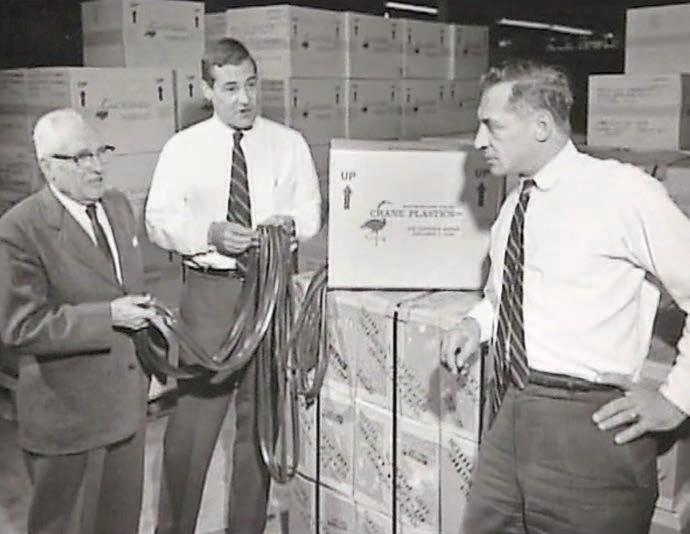
Founder Robert Crane (left) and his sons, Jim and Bob, in the Crane Plastics plant in the 1960s
TECH TALK
BY CYNTHIA BENT FINDLAY
Getting off the Ground
Theanna empowers women entrepreneurs through a novel software platform and a peer network.
Stocks and the labor market continue to be chilled by fears of AI-driven disruption to traditional and tech businesses alike.
One new Columbus-based company, Theanna, is positioning itself to do some of that disrupting.
Theanna is a new Software as a Service (SaaS) consultancy targeting women tech founders. The platform melds an AI-empowered knowledge base with the deep human experience of founder Nomiki Petrolla and a live community of like-minded entrepreneurs.
Petrolla’s early career focused on product strategy in multiple industries. As a consultant, she says she encountered many women looking
Theanna
theanna.io
LOCATION: Virtual, based in Columbus
LEADERSHIP: Nomiki Petrolla, founder and CEO
BUSINESS: AI-assisted product accelerator
FOUNDED: December 2024
EMPLOYEES: 4
FUNDING: Bootstrapped
for support with issues—and priorities—that were a bit different from male founders.
First, she says, women often were looking to build sustainable businesses they can lead on their own terms, not necessarily unicorns.
Second, for women looking to pull in venture capital, it’s well documented they’re going to face significant hurdles. “Last year, all women teams only received 1.2 percent of venture capital. That set the spark for me: Let’s help women build without needing capital,” Petrolla says.
Her first venture, PDS Lab, was a female-founder-focused product accelerator. It was successful enough that Petrolla soon wanted to scale to help more woman entrepreneurs. She decided to build a software platform that could multiply the number of founders she could mentor and also network them together.
Theanna was the answer. “Our software is a trifecta,” Petrolla says.
“We bring in the community aspect, but on top of that we give them the tooling to build their business. Then, we pull data from your tools, so that’s fed into AI to analyze and help you build. That three-prong approach allows them to reduce time to decision-making and get results faster.”
Theanna currently boasts 227 founders, from a crowdfunding platform helping farmers in Africa to a fintech firm in Queensland, Australia.
While there are competitors, Petrolla says no product development platform provides all three aspects Theanna does: business strategy and goal setting, analytical decisionmaking and community support.
Sarah Delevan, founder of the Good Food CFO, says Theanna has allowed her to build the company she’s been dreaming about for years. The Good Food CFO helps small, clean-food industry businesses—ranchers, farmers, artisans and grocers—understand their financial picture and grow.
After years being a fractional CFO in the food industry, Delevan knew her experience could be automated and packaged in the form of SaaS, but she didn’t know how to get there until she found Petrolla. “She summarized, ‘You don’t need to be a programmer or developer to create software in this day and age.’ I remember trying to find a developer who I could work with [to] help me, but … I had to know a lot of info I just didn’t know. She said, ‘I can help you figure that out,’ ” Delevan says.
Using Petrolla’s process, Delevan developed an initial version of her software in about five months. “We had 40 users right out of the gate, which is exciting for us. And now we’re iterating,” Delevan says—and earning revenue.
Theanna itself is still growing, Petrolla says. “Currently we serve tech entrepreneurs, but our goal is to serve woman founders regardless of the sector or vertical you are in,” she says.
Though Theanna is not a fundraising platform, Petrolla says she one day aims to create a fund through which Theanna can invest in women founders ready for scale— ultimately helping to address the issue of capital scarcity.
Cynthia Bent Findlay is a freelance writer.
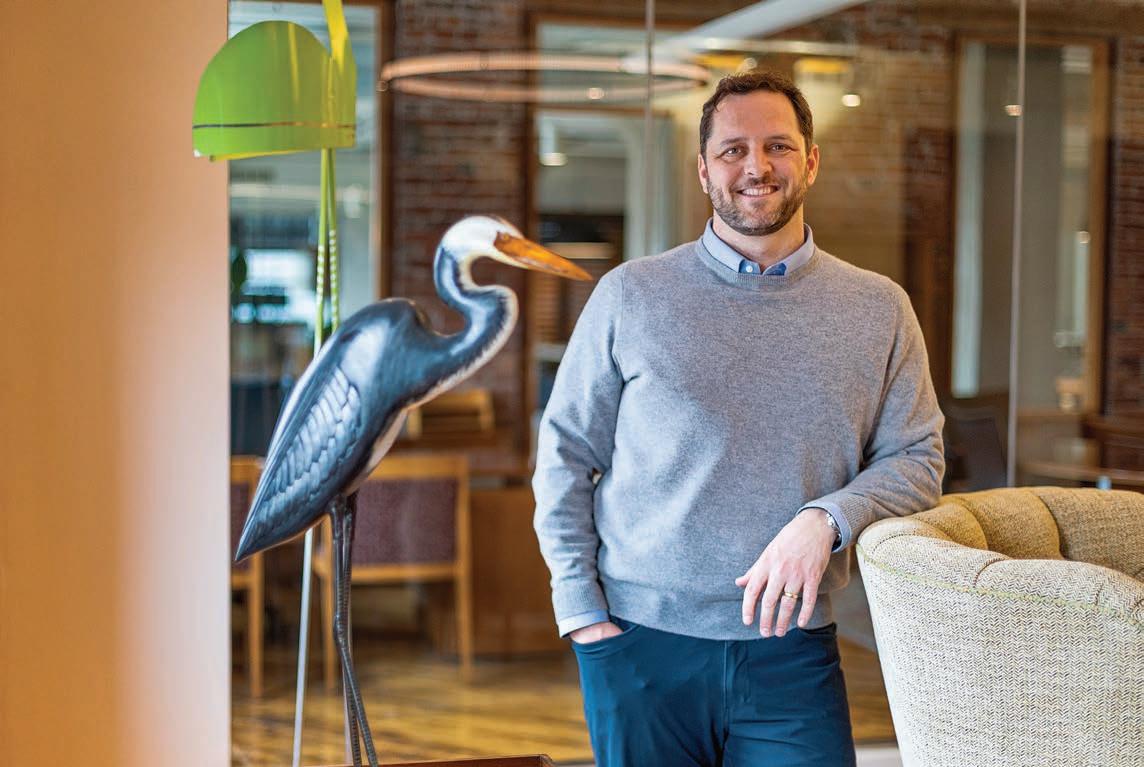
Nomiki Petrolla, founder and CEO of Theanna Photo courtesy Theanna
OUTSTANDING ORGANIZATIONS
Our Top Workplaces 2026 winners stand out as employers of choice. See who the 89 honorees are and learn how they earn their employees’ loyalty.
THow the Top Workplaces Are Determined
op Workplaces don’t happen by accident. They are created through an intentional, people-first approach to workplace excellence.
For the 14th year, employee survey company Energage has partnered with Columbus CEO to honor the top places to work in the Columbus region.
The award is verified and earned through an employee survey process. Workplaces where employees offer positive feedback about their experience make the winners list.
Energage, an employee survey company based in suburban Philadelphia, analyzes feedback based on responses to 26 questions. The Top Workplaces survey asks employees for their opinions on factors such as pay and benefits, direction, leadership, meaningfulness and appreciation. Energage scores companies based on the responses.
The award cannot be bought; it is earned. There is no cost to employers to survey their employees. If they choose, organizations can purchase the survey data from Energage.
There is no obligation for winners to purchase any product or service.
For the 2026 winners list, 2,685 organizations nominated themselves or were invited to survey their employees, and 117 agreed to do so. Based on the survey feedback, 89 have earned recognition as Top Workplaces in the Columbus metropolitan area.
“Earning a Top Workplaces award is a celebration of excellence,” Energage CEO Eric Rubino says. “It serves as a reminder of the vital role a people-first workplace experience plays in achieving success.”
To qualify for Top Workplaces recognition, employers must have at least 50 workers in the region. Beginning this year, employers are grouped by the overall size of their organization, as well as the number of employees invited to survey, which might include employees outside the Columbus region. Employers are grouped into similar sizes to best compare similar employee experiences. They are ranked within those groups based on the strength of the survey feedback.
Employers earn Top Workplaces recognition if their aggregated employee feedback score exceeds national benchmarks. Energage has established those benchmarks based on feedback from about 30 million employees over 20 years.
Survey results are valid only if at least 35 percent of employees respond; employers with fewer than 85 employees have a higher response threshold, requiring responses from at least 30 employees.
Why might a particular employer not be on the list? Perhaps it chose not to participate, or perhaps it did and employee feedback scores were not strong enough. Energage also runs tests on survey feedback and in some cases may disqualify an organization if, for example, a high number of employees said they felt pressured to answer positively.
To participate in the 2027 Top Workplaces awards, or for more information about the program, go to the nominations page at columbusceo.com/nominate.
—Bob Helbig, Energage
LARGE ORGANIZATIONS (350 OR MORE EMPLOYEES INVITED TO TAKE THE SURVEY)
These 89 organizations are the 2026 Top Workplaces. They are listed by their rankings, which were determined by Columbus CEO research partner Energage, in three size categories. Categories are based on total number of employees and the number invited to take the survey. The Employees column represents region employees/ survey invitees. Data is current as of employee surveys from late 2025.
Thankyouemployees!
Founded in 2012, we not only offer you topnotch electricians but also project managers and support staff to ensure that your project goes without a hitch.
Special Awards
16 Winners Earn Extra Honors
Recipients of these 14 Special Awards were chosen based on standout scores for employee responses to specific survey statements. Employees rate these statements on a seven-point scale, from strongly disagree to strongly agree.
LEADERSHIP
I have confidence in the leadership team of this company.
I believe this company is going in the right direction.
New ideas are encouraged at this company.
about my concerns.
Senior managers understand what is really happening at this company.
Wilcox Communities
COMMUNICATION
I feel well-informed about important decisions at this company.
Boss Gal Beauty Bar
APPRECIATION
I feel genuinely appreciated at this company.
Renier Construction Corp.
WORK/LIFE FLEXIBILITY
I have the flexibility I need to balance my work and personal life.
Revolution Mortgage
WELL-BEING
This company does a great job of prioritizing employee well-being.
Thrive Companies
BENEFITS
I am very satisfied with my benefits package.
Hamilton Capital
SOCIAL RESPONSIBILITY AWARD
My employer is socially responsible in the community.
The Richwood Banking Co.
SCAN THE QR CODE TO LEARN MORE ABOUT NCCC!
Maintaining Momentum
Whether they’re dishing up chicken fingers or helping to build an airport terminal, these repeat winners strive to inspire employees and deliver for their customers.
By PETER TONGUETTE
To be named a Top Workplace once is a feat, but to repeat the honor represents a significant accomplishment.
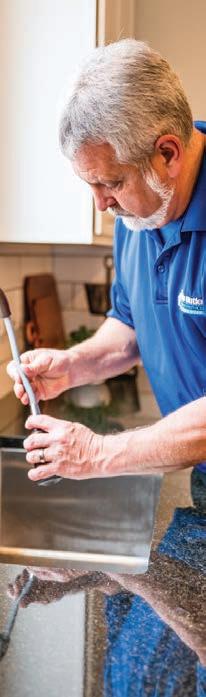
Just ask Michael Swepston, CEO of Atlas Butler Heating, Cooling and Plumbing, a 105-year-old Columbus-based company that employs 147 workers. Atlas Butler is a Midsize Organizations category winner for the second year in a row.
“I wish I had a secret answer,” Swepston says. “It’s even a little harder because so many of our guys take their vans home, get a call sent to them and they go to that customer’s house.”
Because 70 percent to 80 percent of Atlas Butler’s workforce does not make regular appearances in the office—some might come in as seldom as once a month—Swepston has to get creative about promoting company culture and communicating with employees. Atlas Butler brings everyone together at quarterly meetings and also holds a monthly breakfast with Swepston, the chief operating officer and 10 employees.
Sometimes, though, the best approach is simply reaching out informally as opportunities arise—especially with a workforce that has chosen this line of work because they don’t want a meeting-heavy job. “We
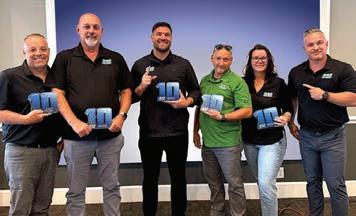
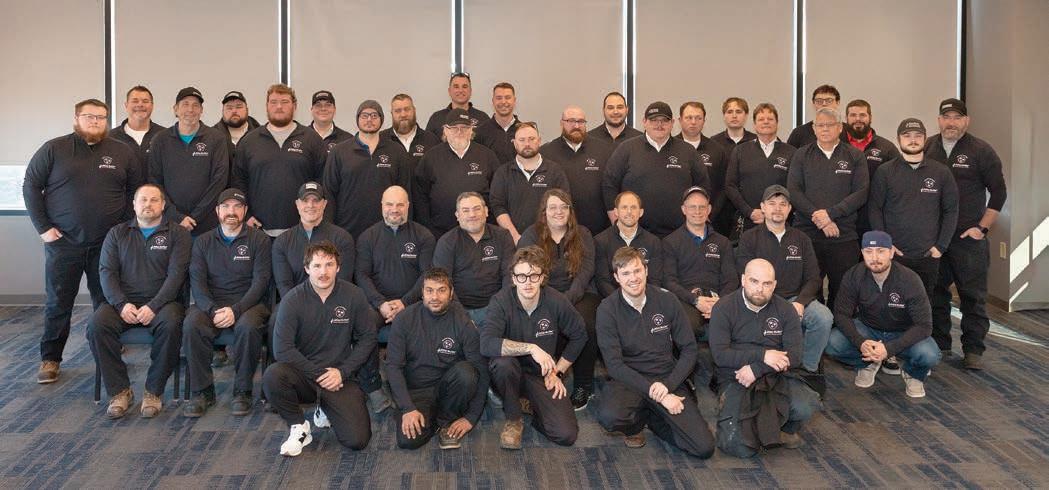
Atlas Butler Heating, Cooling and Plumbing’s 2025 Top Performers were recognized at the company’s quarterly meeting.
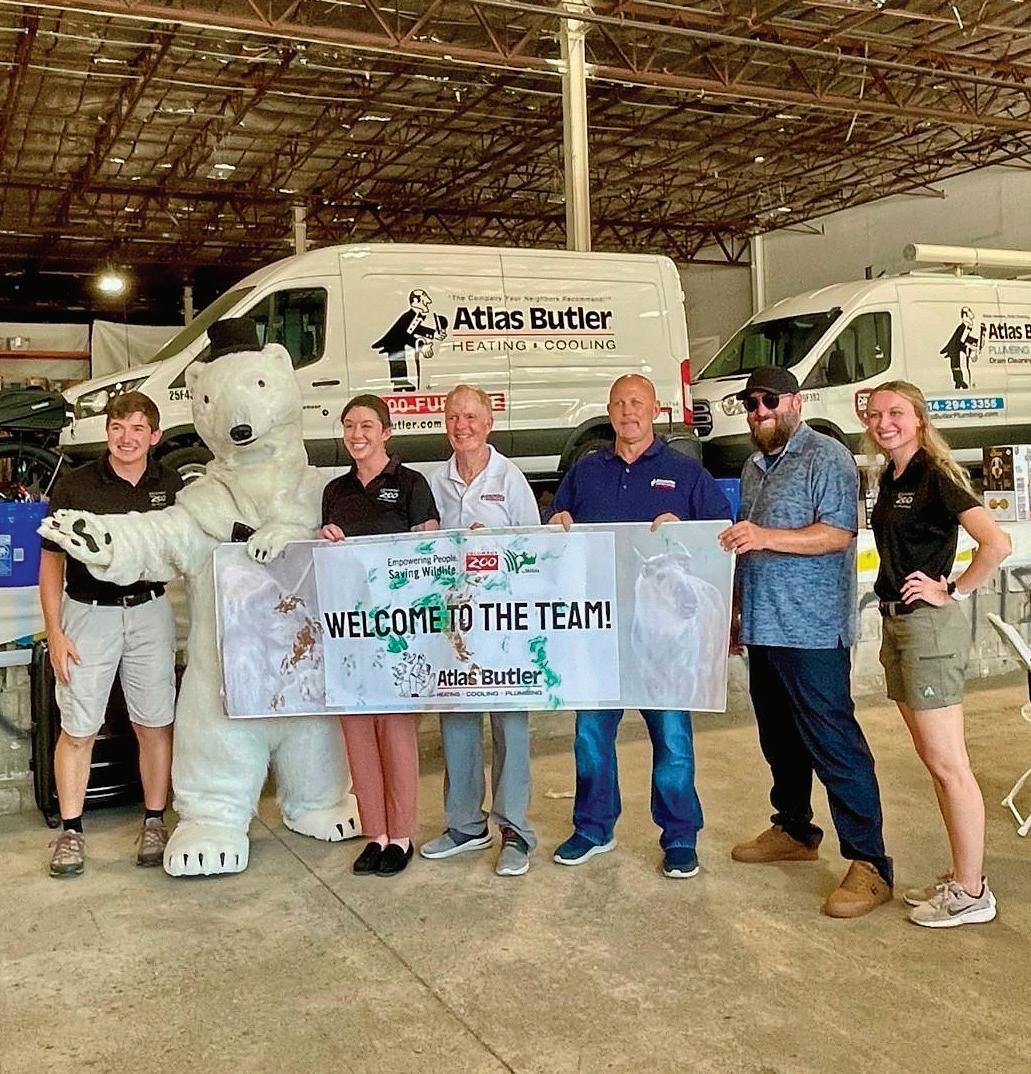
Atlas Butler and the Columbus Zoo and Aquarium celebrate the organizations’ new partnership.
TOP WORK PLACES
COLUMBUS CEO
tend to get a lot better feedback when you just meet someone in the hallway or you’re at an event and you’re just casually talking to them about it as opposed to a set meeting, [where] you need to come with eight bullet points,” Swepston says. “I can’t fix stuff if I don’t know it’s broken, so I encourage people on a very regular basis to let me know what their thoughts are.”
Employee-initiated suggestions have led to the company making birthdays paid days off, as well as the implementation of paid parental leave and increased bereavement days.
One reason leaders have been receptive to implementing such ideas is because so many worked their way up the ladder, Swepston says. “A lot of us came up working in warehouses,” he says. “The whole leadership team does their best they can to say, ‘All right, if I was in that role, what would I want?’ ”
Although 2025 saw increases in the costs of both materials and insurance, Swepston points to consistent company growth and the ability to regularly increase employee pay and benefits as pluses. It’s the sort of work environment that encourages employee retention. “We actually had a guy who just spent 50 years with us,” he says.
Longtime workers become the company’s best recruiting tool. “I would say a majority of our new hires come from recommendations from someone who already
Columbus for the third straight year—is based in Baton Rouge, Louisiana, its founding city.
Key to its success is its designation of all crew members, managers and executives as “fry cooks and cashiers.” Even if their day-to-day responsibilities seldom include in-restaurant work, they still receive such training.
“Our founder is the original fry cook and cashier,” says Brian Stegall, division leader of restaurants, who is based in Cincinnati. “When he was starting the business, he did it by being inside the four walls of the restaurant, working with his crew, helping them to execute the shifts, helping them to serve the perfect box. That has been a foundational part of our culture.”
This mentality has resulted in an atmosphere in which every employee, no matter how senior, knows what it takes to run a restaurant. “There are a lot of organizations out there that train whatever level of leadership that gets them exposure to the restaurant,” Stegall says, but Raising Cane’s ensures that everyone from a restaurant operator to a financial analyst knows what it takes to fry chicken fingers and take orders. “When I go into the restaurants, the first thing that I am is a fry cook and cashier, and I am working side by side, hip to hip, with our crew members,” he says. “We are never separated from our one true purpose.”
Working alongside restaurant workers allows company leaders to recognize good work while demonstrating opportunity for advancement. “We also have a really strong internal development and internal growth pathway that our crew members can take,” Stegall says. “That gives them the ability to know that they can have a very clear path to a long-term career with Cane’s.”
works here, saying, ‘Hey, you should probably work here, too,’ ” Swepston says.
Building on the Basics
A similarly inclusive, democratic ethos governs Raising Cane’s Chicken Fingers, which employs more than 85,000 people across nearly 1,000 restaurants in the U.S. and some international destinations, including the Middle East. The 30-year-old company—a Top Workplaces winner in
An emphasis on managing work-life balance is engrained in the company’s values. Raising Cane’s shuts down on eight major holidays, Stegall says, including some not generally observed by other restaurants, like Memorial Day and Independence Day. “We recognize the hard work that our teams go through,” he says.
The Top Workplace ranking is significant to the company because it reflects the sentiments of its employees. “We take a lot of pride in being able to say that, ‘Hey, we’re one of the Top Workplaces,’ ” Stegall says. The achievement also aids in recruiting, he adds, which is especially important given its plans to expand to London, England, this year.
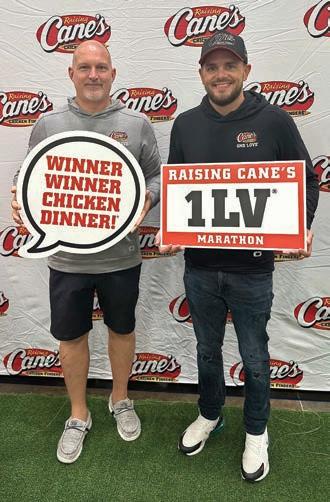
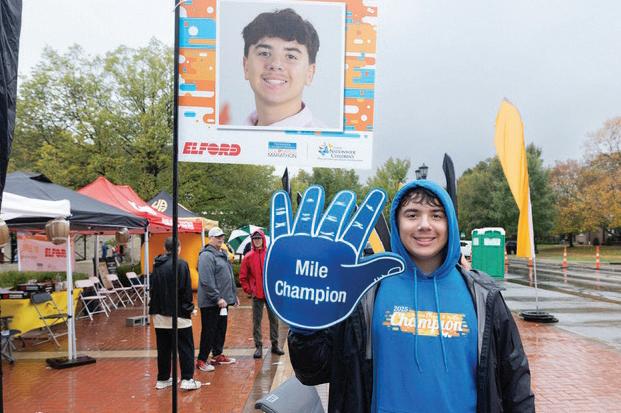
Raising Cane’s participants in the 2025 Nationwide Children’s Hospital Columbus Marathon include restaurant leader Neil Lokey and restaurant partner Michael McClaskey.
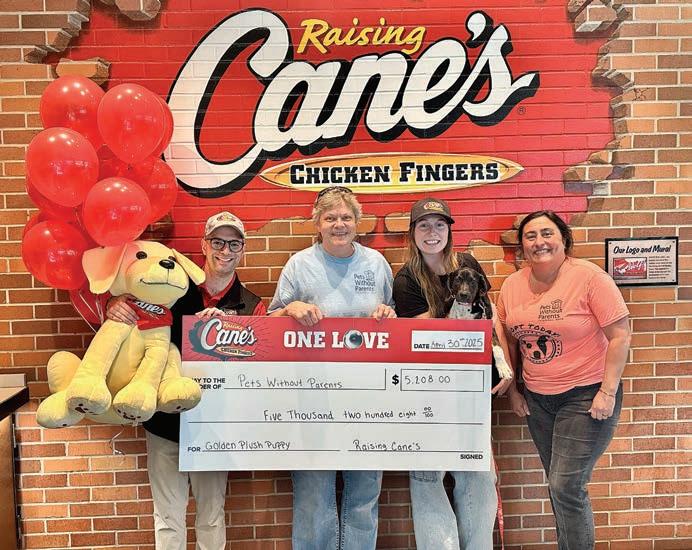
Local Raising Cane’s leaders present Pets Without Parents a donation from a 2025 Plush Puppy campaign.
Watching out for Workers
Greif, with 14,000 workers around the globe, emerged as a Top Workplaces winner for the seventh consecutive year. Called “one of Columbus’ best-kept secrets” by Bala Sathyanarayanan, Greif’s executive vice president and chief human resources officer, the company produces a variety of industrial packaging, including bottles, drums and bulk containers. More than 250 people work at its Delaware headquarters.
“We have almost 250 manufacturing facilities in these 40-plus countries,” says Sathyanarayanan, adding Greif is known for its expertise and its high-quality products. “When Pfizer came out with the vaccine during COVID, they looked for a partner who could safely transport their most valuable product at that point in time in the world then—the vaccine—to places like Africa, who were starved of those vaccines.”
With such a large workforce, Greif, like other companies of its size, is tasked with promoting its values across a broad geographic footprint. “We look at that challenge as an opportunity,” Sathyanarayanan says.
A particular emphasis, he says, is on assuring safe working environments across sites and continents. “Walk into a Greif facility in Columbus, Ohio, or in Chennai, India, or in China, or in Chile, you will experience the same level of sophisticated safety culture,” Sathyanarayanan says.
“Every manufacturer says, ‘I keep my employees safe.’ … We go over and above. Beyond providing them with equipment, we actually train them on how to use it and also provide them with ways … to express their focus and passions, not just
Voted a Top
Workplace
by the people who matter most: our team
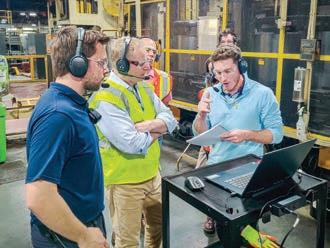
Greif President and CEO Ole Rosgaard (in the yellow safety vest) visits the company’s facility in Warminster, Pennsylvania.
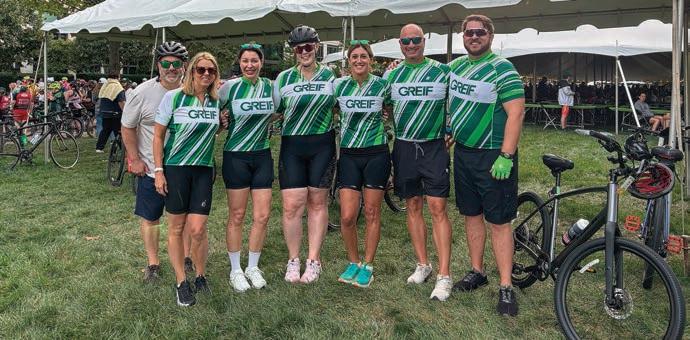
Greif employees raised more than $200,000 for Pelotonia in 2025.
for safety but bringing their enthusiasm and involvement in the day-to-day job.”
Greif prefers the term work-life integration to work-life balance because, Sathyanarayanan says, “there is nothing called ‘work’ outside life. You are working when you are living.”
At the corporate office in Delaware, the company does not require in-person work but encourages employees to be on-site for the amenities it offers. “The company makes lunch available for any colleague who walks into the organization. There is free Starbucks, there is free soft drinks, there is a free gym, there is a free haircut, too,” he says, as well as a company pool. “We do not mandate people to show up; we enable people to show up.”
Business conditions were challenging last year due to tariffs, Sathyanarayanan says, and 2026 may offer more of the same. “But manufacturing companies are finding ways to work inside the constraints of what challenges tariffs can throw at us,” he says. Such a can-do corporate attitude may be one reason for Greif’s continued success as a Top Workplace, he adds. “We earn this award because this is what you are seeing from our colleagues.”
Engaging Employees
Though it has experienced significant growth this decade, Elford Inc. strives to maintain a personal connection with its workforce.
The Columbus-based construction company, founded in 1910, was named a Top Workplaces winner for the ninth
straight year. Elford’s portfolio includes projects in the education, health care, multifamily housing, retail and industrial sectors. “We’ve been around for a while,” says Erick Piscopo, chief talent officer of the company, which also has an office in Charlotte, North Carolina.
Economic growth in its core markets has resulted in a major increase in Elford’s employee headcount, from about 270 workers in 2020 to almost 450 in early March—410 of whom are in the Columbus region. Despite the size, Piscopo says Elford endeavors to “make everything as personal as possible.”
“The bigger you get, the harder it is to maintain that culture,” he says. “We still have folks who occasionally say, ‘I wish we still had that small company feel.’ And you just can’t do that when you’re that big with that many people.”
Nonetheless, Elford works overtime to engage with its people, no matter what they do or where on the org chart they fall. “This isn’t the kind of place where the C-suite is like an ivory tower and nobody ever sees them,” Piscopo says. “One of the things that I’ve been told by folks that work for us is they love the fact that they’re just walking down the hall one day and they might bump into the chairman of our board, our CEO, our CFO [or] myself as the chief talent officer, and we know their names. … We put a lot of effort into getting to know our folks personally.”
In knitting together such a large workforce, Piscopo has found certain common denominators among employees. “They’re
good builders,” he says. “They want to build something that has an impact on their community and where they live, and seeing something that they’re involved in go from design and construction to completion.”
An egoless workplace is encouraged, as is flexibility with schedules. The latter is particularly important in an environment where workweeks might amount to 50 or 60 hours. “We work more than we have free time. … But we also understand. ‘You know what? Take off—it’s 1:30 on a Thursday afternoon,’ and they’ve been overwhelmed,” Piscopo says. “We try to be flexible as best we can.”
Elford works in tandem with the Builders Exchange of Central Ohio to offer workforce development and leadership programs, going beyond those the company provides internally, to build its bench of future leaders. “Several of our vice presidents that lead different market sectors … started out here as maybe a project engineer or a project manager,” Piscopo says.
Several years ago, the company developed an employee resource group called the Women Builders of Elford, which has 45 to 50 participants. “This has become something that sets us apart as far as becoming an attractive place to work, especially for women,” Piscopo says.
In the “unprecedented” year that lies ahead, the company is on the ground floor of a number of major projects, including the new passenger terminal at John Glenn Columbus International Airport. That means more work for more workers. “People want to be here,” Piscopo says.
Peter Tonguette is a freelance writer.
Elford Inc. team members volunteer at the Mid-Ohio Food Collective.
Elford field operations team members work at a jobsite.
PHOTOS
FIRST- TIME WINNERS
Seventeen of our 2026 Top Workplaces are being honored for the first time.
LARGE
EisnerAmper
Gifthealth
Graybar Greenix
Morgan Properties
SAM
Sonesta International Hotels Corp.
Towne Properties
VITAS Healthcare
Woda Cooper Companies Inc.
MIDSIZE
Modern Office Methods
Sarnova
SMALL
Advanced Technology Products
Dynotec
Famous Supply
SMACT Works
Synergy Electrical
WINNINGIST HONOREES
These are the 2026 Top Workplaces winners with the most honors throughout the program’s 14-year history.
14 years
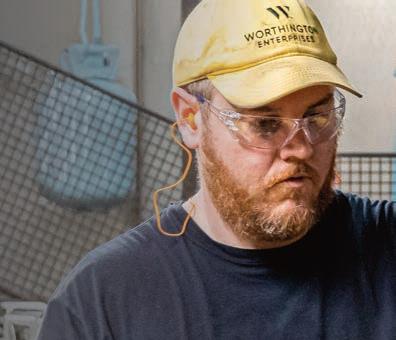
Worthington Enterprises (12 as Worthington Industries)
13 years
KPMG LLP
The Richwood Banking Co.
12 years
Fifth Third Bank
Lake Shore Cryotronics Inc.
Manifest Solutions Corp.
10 years
Lindsay Automotive Romanoff Group
Customer Centric
At Fifth Third Bank, communication is key to an engaged workforce and satisfied clients.
By TIM FERAN
Photos by TIM JOHNSON
When the news broke last year that Fifth Third Bancorp. would acquire Comerica Inc. and become the nation’s ninth-largest bank, Francie Henry remembered something a CEO had told her years ago.
“He said, ‘Bigger isn’t always better. Better is better,’ ” says Henry, Fifth Third’s regional president since 2018.
In Henry’s 40-year career with the Cincinnati-based bank, Fifth Third has gone from $3 billion in assets to nearly $300 billion. But that doesn’t mean Fifth Third has become a big, impersonal organization treating its customers like numbers in a ledger. “We believe in a decentralized model. My job as regional president is to make sure to find the right people,” she says—ones who operate local branches with the same spirit as a small, community bank: “Client first.”
“Our goal is to have our people know that they are part of something bigger than themselves.”
FRANCIE HENRY, Fifth Third Bank regional president
“We’re in a service industry,” she says. “Our goal is to have our people know that they are part of something bigger than themselves. The financial part is part and parcel of the dream—that there are people, places and things that you’re responsible for.”
Fifth Third’s emphasis on showing employees that their jobs are more than dollars and cents, and that they make a meaningful contribution to their community, is at the heart of why the bank is a 12time Top Workplaces winner in Columbus.
Elizabeth Boyuk, vice president of regional marketing and communications at Fifth Third, says the bank does many things to help employees feel connected and appreciated. “Internal communication is a big part of that,” Boyuk says. “We have quarterly ‘Cascade’ meetings in which information cascades from the top. That is an opportunity to make sure we all stay connected.”
The bank fosters a sense of belonging through a host of initiatives, particularly its volunteer programs, but other examples abound.
Fifth Third’s Business Resource Groups, for example, are designed to bring together people with common interests to develop a variety of projects. “We have a women’s group, African American group, LGBT group, young professionals group, a military group,” among others, says Boyuk, the
regional BRG adviser.
The company’s Spirit of the Pin award is a peer-to-peer recognition program in which employees can praise one another for their efforts in areas ranging from volunteer work to “bringing a project over the finish line,” Boyuk says. “It provides instant recognition to a peer.” The name refers to the ubiquitous “5/3” pins worn by the bank’s employees.
“We also have a mentoring program that’s in its fourth year,” Boyuk says. “It provides an opportunity for an employee to go from one line of business into another line. The program not only provides career advice but also helps employees learn about other businesses. That’s why we say you can have multiple careers at Fifth Third.”
And that applies to both men and women.
In the past, the banking industry was something of an old boys’ club—particularly in the executive ranks—so the fact that Fifth Third’s Central Ohio leaders are women is notable.
“I’ve been fortunate to be with an organization that values me as a person and doesn’t look through a gender lens,” says Boyuk, a 15-year veteran of Fifth Third. “I would be lying, though, if I did not say that there’s a little chip on my shoulder, wanting to prove that the people who have backed me were right.
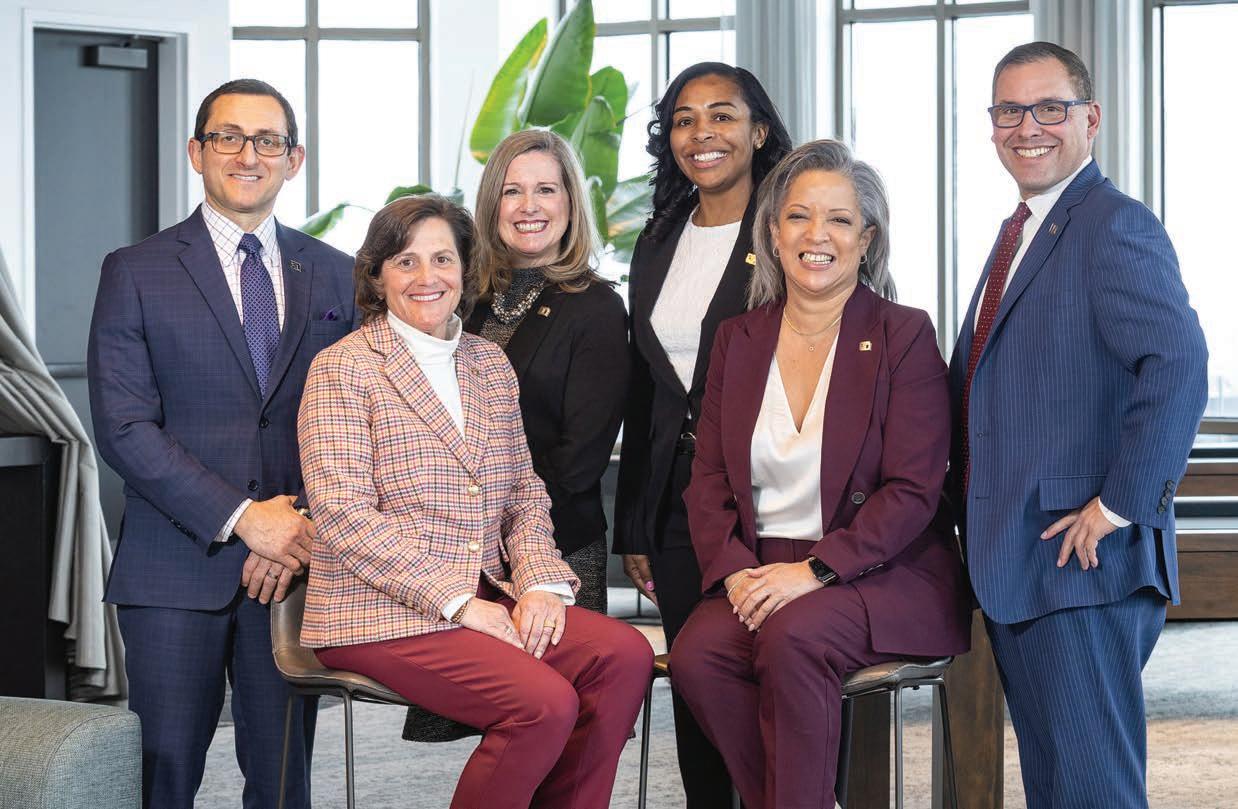
Fifth Third Bank employees (from left) Peyman Salehi, regional president Francie Henry, Elizabeth Boyuk, Tina Byrd, Sandra Lopez and Jeremy Gutierrez
“I was one of the few females when I walked into a room. That never worked against me, but I was very cognizant of it. … Every time I’ve moved on, I’ve prepared someone else to follow me.”
Regardless of an employee’s identity, the ultimate goal is to show them they are “part of something bigger than ourselves, that this is not just a job,” Boyuk says.
“It’s something we never take for granted,” Henry says. “When your people feel good, it’s better for your clients.”
Clients do notice that good feeling. Henry says that one client commented, “It feels different here. You all get along.” That’s especially important when “60 percent of our workforce is in retail, the rest is wholesale and wealth management.”
The fact that Fifth Third not only offers conventional retail banking, but also provides other financial services sometimes leaves clients pleasantly surprised, Henry says. One new client remarked, “You brought in people from your wealth department? Well, that’s different,” Henry says.
The emphasis on serving clients face to face is one reason Fifth Third was
one of the first organizations to come back into the office after the pandemic shutdown. “Our CEO at the time talked about it, that we can survive remotely but we can’t thrive remotely,” Henry says. “To be our best selves, we can’t do it at my house. It wasn’t easy, of course. We had all the masks, the desks separated, all the safety precautions.”
The pandemic had one unusual effect at Fifth Third: Work-life balance actually improved. “The pandemic changed a lot—we were working smarter and better,” Boyuk says. “So, even though we were back in the office, we realized that some things ebb and flow,” and didn’t require working extended hours.
The pandemic was just one unpredictable event that banks have dealt with in recent times.
“When things are going smoothly, I get nervous now,” Henry says. “I think about 2007 [during the Great Recession] to now, and how many crises at financial institutions we’ve faced. It’s almost like being an ER doctor—we’re not sure what’s coming in the door next.”
Tim Feran is a freelance writer.
At Worthington Enterprises, we design and manufacture products essential to everyday life — for cooking, cooling, heating, drinking, celebrating and more. What don’t we manufacture? Our people-first culture. That’s authentically lived every day by our employees, who put Our Philosophy into action and have once again earned us a top workplaces designation.
Tina Byrd, Fifth Third’s North Columbus retail regional manager, meets with colleagues Justin Walter (center) and Michael Shumate at the Perimeter Drive branch in Dublin.
Pictured: Noah Brislen
Investing in Innovation
By SHANNON SHELTON MILLER
Photos by TIM JOHNSON
Michael Swartz likes to say his family-owned company began as a basement startup only because it’s too cold in Columbus to run a business in a garage.
In that basement in Minerva Park, John Swartz, a professor of electrical engineering at Ohio State University who studied semiconductor physics, began making devices that could work as cryogenic temperature sensors. His brother, David Swartz, sold the products from his home outside Buffalo, New York. It was 1968, and the venture often required John Swartz to rent time on a PDP-11 computer at Ohio State at 2 or 3 a.m.
Those were the origins of what would become Lake Shore Cryotronics Inc., which is approaching 60 years providing scientists and engineers with physics and materials science tools and systems. Lake Shore offers cryogenics, magnetics and other solutions that support cutting-edge research, groundbreaking discoveries and
Lake Shore Cryotronics Inc.
“I think our employees get behind our mission because we’re developing products to advance science.”
MICHAEL SWARTZ, Lakeshore Cryotronics president and CEO
scientific advances around the world, with a focus on electronics, clean energy, nanotechnology and more.
John Swartz’s children started working for the company when they were in high school. Michael Swartz began working full time for Lake Shore in 1986 and became president and CEO in 2003. Karen (Swartz) Lint was appointed chief operating officer in 2003.
That family legacy has been the foundation of success for Lake Shore, a 12-time Top Workplaces winner, which has its corporate headquarters and a manufacturing facility in Westerville.
The company’s approach to workplace culture has long been based on the idea that by investing in its people, Lake Shore can advance science and technology for the betterment of humanity. Michael Swartz says his management and leadership strategy emphasizes employee autonomy, encouraging decision-making at all levels across the organization. No matter their position, employees gain a sense of purpose and feel encouraged to make sound decisions for the good of the organization and all co-workers. The idea that collaboration is vital to decision-making is at the heart of his leadership approach.
“I really value W. Edwards Deming’s management philosophy,” Swartz says. “One of the key points in his management
philosophy is to drive out fear. That gives people the comfortability and the confidence to make decisions and go forward and get things done.”
Building a solid company culture also comes from making employees feel valued. Happy hours take place every few months, and during a January event, Swartz recognized employee accomplishments from the past year. For workers celebrating milestone service anniversaries, leaders gave gift cards and created a presentation that highlighted those employees, including photographs of them at company events.
Work-life balance is also important to company leaders. Because of the nature of their hands-on assembly jobs, most employees work on-site, but there is flexibility for remote work when needed. Lint says a number of employees choose to complete more hours on-site Monday through Thursday and work half days on Friday, or remotely if their duties allow.
Lake Shore employees also give back to the community, contributing their time to robotics and STEM program sponsorships, annual food drives, holiday giving trees and support for nonprofit organizations. Paid employee volunteer time is offered to support these efforts.
“I feel what makes our company culture so valuable is that it’s employee driven,” Lint says. “People want to do work that
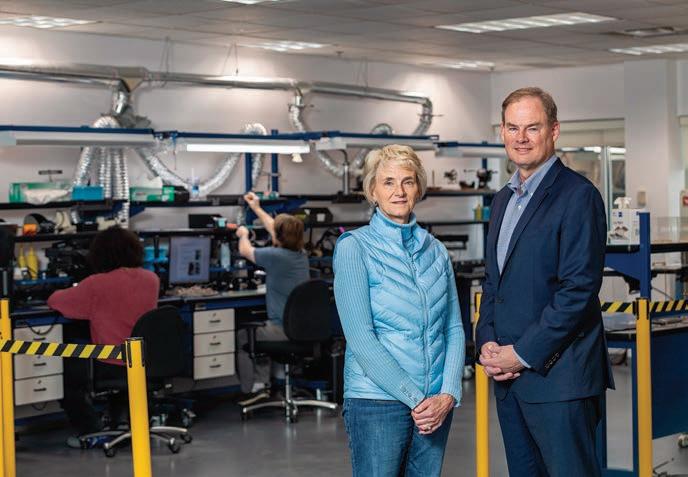
Chief Operating Officer Karen Lint and President and CEO Michael Swartz at Lake Shore Cryotronics Inc.
matters. It’s important to create an environment where people can grow and feel valued, and feel listened to, respected and trusted. When everyone connects to that shared purpose, great things can happen.”
Lake Shore didn’t get through 2025 without challenges. The uncertainty around tariffs became an obstacle from an operations standpoint, since about 50 percent of the company’s revenues are international. The uncertainty affected the top line, and paperwork for existing orders had to be redone when the tariffs kicked in. “We learned to roll with the punches,” Lint says.
The future, however, is bright. The company moved its Massachusetts manufacturing operations to Westerville, a shift Lint says will create more local jobs.
Lake Shore also nearly doubled the size of its manufacturing facility, and new product developments have the company poised for growth.
“We’re optimistic because some of our products are in important areas of the future,” Swartz says. “Historically we’ve sold a lot into research, but now we’re selling more in the industry, potentially in supporting fusion. There’s new technology making fusion more practical, and more startups in
that area. That’s one area we’re investing in.” Lake Shore supplies key components for dilution refrigerators, which are needed for quantum computing. That’s also a growth area, even though practical quantum computers might be a few years away from viability, Swartz says. Still, the company is getting ahead of the curve by supplying equipment for product developers—a future-focused decision that’s been the foundation for company growth since Swartz’s father began
making devices in his basement.
“I think our employees get behind our mission because we’re developing products to advance science, and our mission statement is focused on supporting research that can improve humanity, both in science and industry,” Swartz says. “A lot of our employees get excited about that.”
Air flows because of vents. Water flows because of pipes. Our culture flows because of our people.
Systems only work when what’s essential is present. For us, our people are essential. Thank you for making Atlas Butler a Top Workplace 2026. Your engagement, honesty, and pride in your work keep our culture strong and moving forward.
Shannon Shelton Miller is a freelance writer.
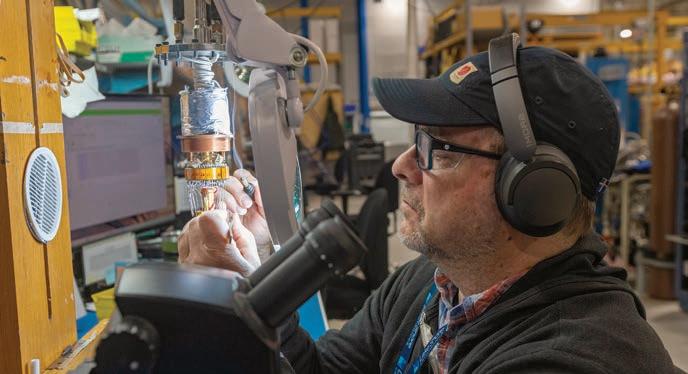
Steve Steele uses an illuminated magnifier to solder a part.
Growth Mindset
SMACT Works finds success in the crowded IT arena by looking to the future.
By SHANNON SHELTON MILLER
Photos by TIM JOHNSON
In 2013, Ranjith Yengoti saw the future of IT and embraced it.
Big tech corporations like Amazon, Oracle, Google and Microsoft were launching their cloud platforms and infrastructure. Yengoti knew public- and privatesector organizations would need to navigate this growing digital landscape and decided to focus his startup on providing Oracle cloud consulting and support.
Today, Dublin-based SMACT Works has more than 150 employees and consultants across the U.S., offices in North America and India, and clients spanning the higher education, health care, government and commercial sectors.
SMACT Works’ name is derived from an industry acronym—(S)ocial, (M)obile, (A)nalytics, (C)loud and (T)echnology, or the internet of (T)hings—and the company now is an Oracle-preferred partner. In 2025, Oracle recognized SMACT Works for innovation in PeopleSoft applications, and more than 95 percent
“As long as we are striving for excellence and doing things with integrity, the results will come automatically.”
RANJITH YENGOTI, founder and CEO of SMACT Works
of employees have earned Oracle certifications.
SMACT Works is a first-time Top Workplaces winner, and Yengoti is the recipient of the Special Award for Leadership in the Small Organizations category.
From the start, Yengoti identified excellence, integrity and a platform of growth as the core principles he wanted the company and employees to embrace. They’re rooted in his immigrant background: Yengoti arrived in the United States from India in 2004 to pursue a graduate degree in electrical engineering at the University of Texas. After completing his studies, he found employment in tech consulting and became a U.S. citizen. In 2010, his wife landed a job in Columbus, and the family moved to Central Ohio.
“Things have worked out very well for me,” Yengoti says. “With the U.S. being a place for opportunities, I had the opportunity to start a company. In the interim, I saw I could provide employment opportunities for many others like me. I see SMACT Works as more than just a revenue-making mission. It gives me the opportunity to help others.”
Within the company, that means operating with a people-first, growth-oriented mindset. “We don’t have pressure here
that we need to continuously grow and grow,” Yengoti says. “Our motto is to do your best. As long as we are striving for excellence and doing things with integrity, the results will come automatically.”
Recent achievements have validated that approach. SMACT Works is a four-time entrant on the Inc. 5000 fastest-growing private companies list. Over four consecutive years, SMACT Works moved from No. 4,651 in 2022 to No. 2,957 on the 2025 list based on revenue growth. For the 2025 list, the company’s three-year growth was 139 percent.
Employees are encouraged to participate in community service and social responsibility projects outside the office. SMACT Works’ Attitude of Gratitude initiative encourages and matches employee volunteer time and contributions to organizations such as Toys for Tots, Mid-Ohio Food Collective, LifeCare Alliance and a homeless shelter. Yengoti is the executive director of Sponsor Kids, a nonprofit helping underprivileged children through education and care programs, and has an advisory role at HoloPundits, where he supports integration of augmented and virtual reality technologies to enhance K-12 learning.
Rae Scherrer says SMACT Works’ emphasis on trust, accountability and
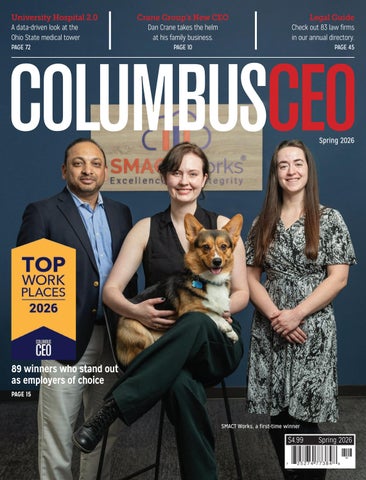
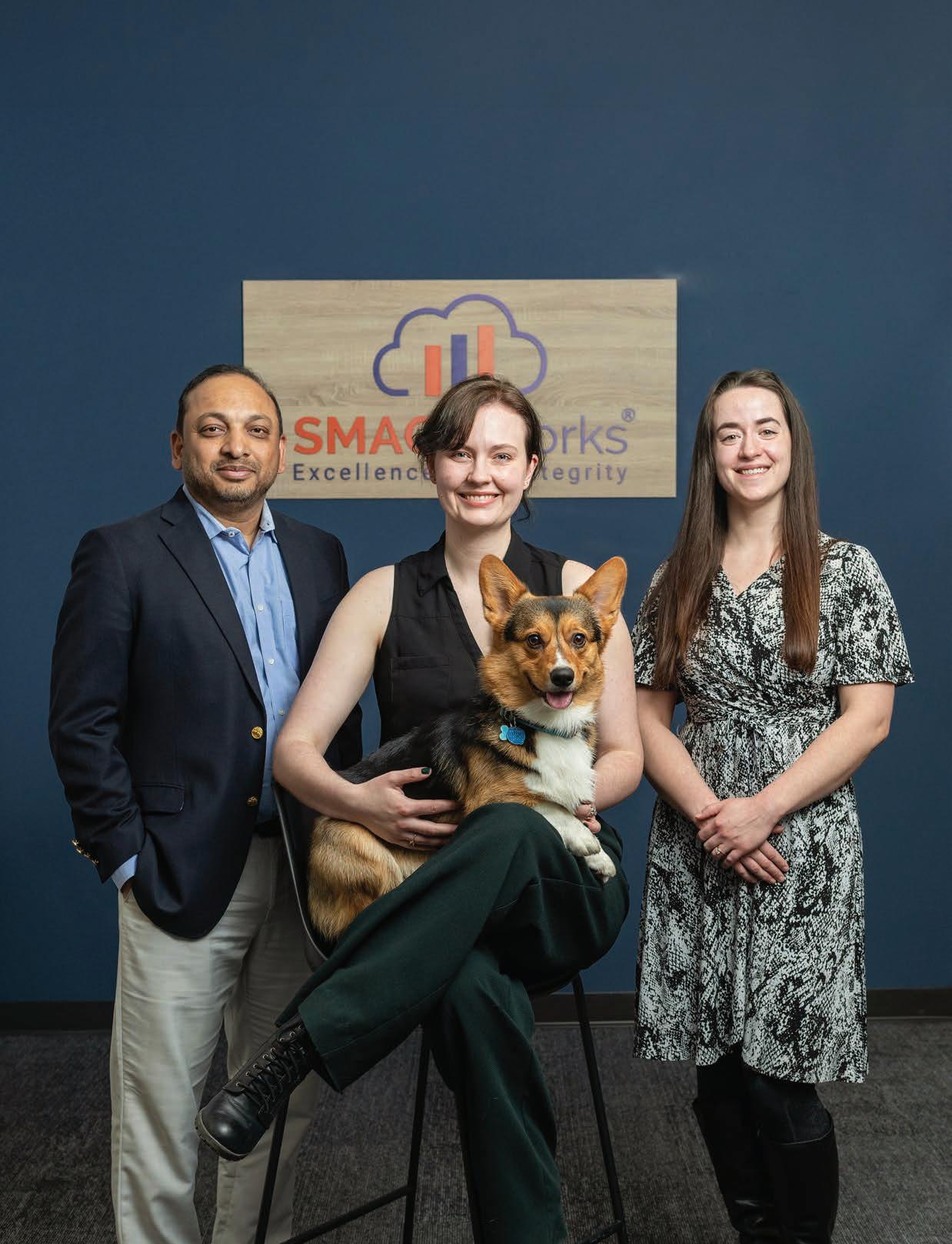
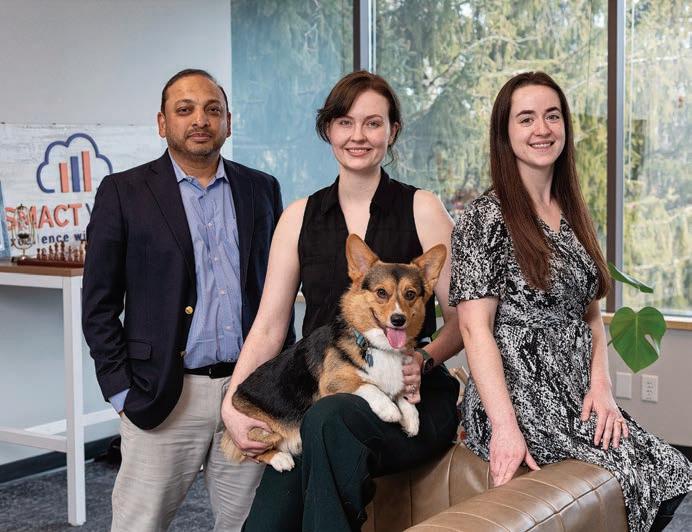
Founder and CEO Ranjith Yengoti, Rae Scherrer, Harry the corgi and Cecelia Glackin-Hunt at the SMACT Works office
flexibility for employees has kept her at the organization for more than two years.
“There’s a long-term thought process here, not just immediate gratification,” Scherrer says. “I like challenging and collaborative environments, and that’s one of the reasons I’ve stayed. I’ve never been at a job before where I wake up and want to continue coming each day.”
Scherrer did not plan a career in tech. An English and theater major at Ohio Wesleyan University, Scherrer was pursuing a master of fine arts in acting in New York before the pandemic made her rethink her plans. She returned to Columbus, where her partner lived, and looked for jobs where her left brain and right brain could be equally engaged, she says.
She landed an operations administrative position at SMACT Works and became operations manager within three months. Now a proposal manager, Scherrer gets to employ her communications skills to talk technology with potential customers and detail how SMACT Works’ offerings would work within their organizations.
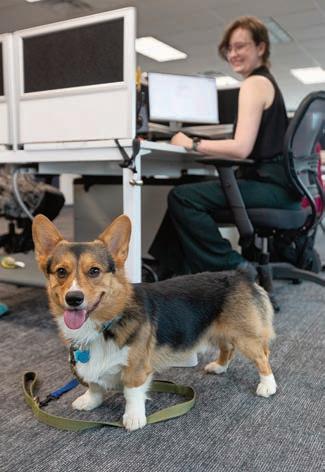
Scherrer also recruited another key team member to the company: her dog, Harry. A corgi in training to become a service
dog, Harry visits the office to learn how to navigate social situations. A “Happy Hour Harry” program takes place weekly, and Yengoti even gave Harry an official CEO title: chief emotional officer. Other employees have embraced Harry and offer to take him for walks outside during their breaks.
“There are so many different people impacting how this dog is going to grow and become an effective member of society,” Scherrer says. “It’s led to beautiful conversations about developmental stages from adolescence to getting older and how it all works.”
That’s the kind of growth Yengoti envisioned when he launched the company: skills and lifestyle growth for employees while building a better community through public service. Physical growth has naturally followed, and in early 2026, SMACT Works moved to a larger Dublin facility. The company continues to embrace cutting-edge digital technology, adding augmented reality, virtual reality and cloud AI services to its portfolio.
“It takes time to grow and create success, but that type of success will last much longer,” he says. “You can have an overnight success, but at the same time
you can have an overnight failure, so I’m looking for a steady growth perspective that’s a lifelong activity.”
Harry the corgi, who is training to become a service dog, is a fixture at the company’s weekly happy hour.
Shannon Shelton Miller is a freelance writer.
Creating a Culture
Four organizations discuss how they rely on principles such as collaboration, innovation, inclusivity and values to foster environments that workers seek.
By PETER TONGUETTE
At health care products and services company Sarnova, leaders assure that teams work together harmoniously by starting where many organizations finish.
“We start with the desired outcome, and then with multiple departments in mind, reverse-engineer the steps that they need to take together to make sure that at the end of the process, not only is the result achieved, but they all felt like they checked the right boxes,” says Jim McGannon, senior vice president of human resources.
This emphasis on achieving specific goals through conscientious teamwork is knitted into the company culture. “We bring teams together on a regular basis just to talk through things, to see how the person on the other end of the transaction is receiving the efforts of one department versus another,” McGannon says.
Employee satisfaction with interdepartmental cooperation is one of the metrics Top Workplaces in Columbus felt more positive about than last year.
Surveyed employees were asked to rank a series of metrics on a seven-point scale, and the statements that saw the greatest increase in positivity were interdepartmental cooperation (a 2.6 percent increase over 2025), fair compensation (up 10.7 percent) and workplace efficiency (a 3.1 percent increase). Those areas are strong points for Sarnova, too.
Founded in Dublin in 2008, Sarnova employs 1,800 domestic workers and several hundred more overseas. The company goes to market in the form of four primary business units: Bound Tree Medical, Cardio Partners, Digitech and Tri-anim Health Services. Achieving efficiency in a multidimensional, still-growing organization is key.
“As we grew, things became more complex, and we knew that we really had to really put some muscle behind cross-functional collaboration and streamlining processes, and making sure that cross-functional teams had an easy time working together,” McGannon says. “One of our strategic imperatives is that we accelerate innovation, and the infusing of innovation
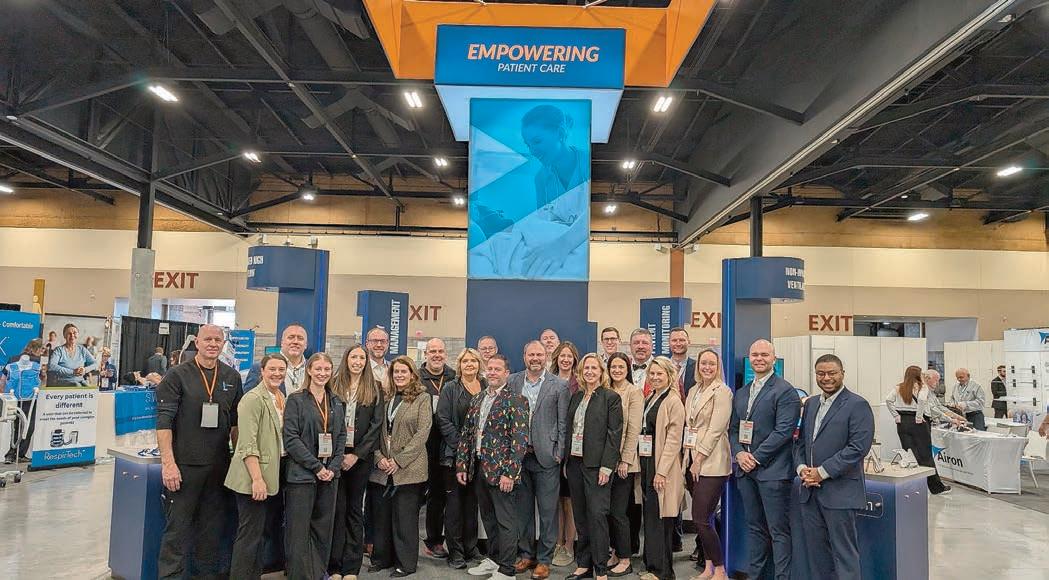
Sarnova’s sales and marketing team at the American Association for Respiratory Care conference
PHOTOS COURTESY SARNOVA (2)
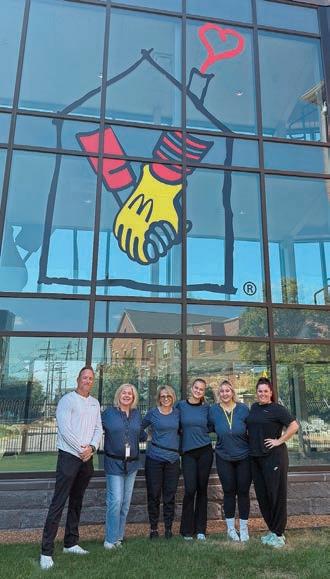
Sarnova’s inside sales team volunteers at Ronald McDonald House Charities of Central Ohio.
into how we work has really made life a lot simpler for our teams to work together.”
The Importance of Employee Experience
McGannon says Sarnova keeps its compensation competitive and at or above market rates through external research. Some Top Workplaces find that while wages are important to employees, they needn’t be paid at the top of their field to feel fairly compensated.
Olentangy Local School District has neither the highest nor lowest pay scale among Central Ohio districts, which is a conscious decision by its board of education, says Nancy Freese, chief human resources officer. Why, then, do teachers seek out the district years before a job opening emerges? “I do believe that, even though we’re not the highest paid like some of the elite districts … it’s attributed to the experience that [employees] have,” Freese says. “As long as they’re fairly compensated, they will take living and working in this environment over getting paid more for an environment that is less supportive and less desirable.”
While the district works with its unions to make cost-of-living adjustments each year, Freese says, it’s the atmosphere of inclusivity that makes Olentangy most appealing to its staff.
Indeed, feeling included was among the four metrics that employees of this year’s Top Workplaces in Columbus felt most positively about: 79.9% of respondents felt included at their organization.
That’s a big task in a school district adding 400 to 500 students and over 200 new employees annually. The district, one of the fastest-growing in Ohio, has more than 3,000 full-time workers.
“It’s easy for a district our size to lose sight of our mission and our values and
“The intentionality comes from constantly driving the work around our mission statement, which is to facilitate maximum learning for every student.”
NANCY FREESE, chief human resources officer of Olentangy Local School District
our priorities,” Freese says. “So with that, the intentionality comes from constantly driving the work around our mission statement, which is to facilitate maximum learning for every student.”
Olentangy has implemented seemingly small things that have made a large impact, including giving teachers half-hour uninterrupted lunch breaks, as well as a period incorporated in the school day for collaboration. “From the teacher’s lens, I felt very valued with the fact that they were saying, ‘In order for us to continue with
our academic success, teachers need time, and the time shouldn’t always need to happen outside of their school day,’ ” says Freese, who began her career as a teacher and was promoted to assistant principal and principal before moving into HR.
This year, the highest-ranked Top Workplaces metric showed 82.1 percent of respondents feel their organization operates according to strong values.
That certainly motivates the workforce at T-Cetra, a Hilliard-founded technology company now based in Dublin. The business’ 160 employees devote themselves to facilitating wireless carrier transactions tailored to the underbanked population, who hold bank accounts but may not have a credit card. “We’re trying to help them gain the access that the banked population has today,” says co-founder and Chief Information Officer Gus Hashem. “I like to serve that demographic. It’s very important for me to make sure that I have the product available for [the] environment that we support, … the minority areas, the immigrants that need help.”
T-Cetra prides itself on promoting a red-tape-free environment at work. “An engineer can come to me and have an idea, and we can work with them on whatever the idea is if it makes sense for the company,” Hashem says. “We don’t have the hierarchy that you usually find in the larger company. We’re dynamic.”
Supporting Company Staff
The remaining top-four metrics are closely intertwined: 81.7 percent of respondents feel their manager cares about their concerns, and 79.7 percent say their manager helps them learn and grow.
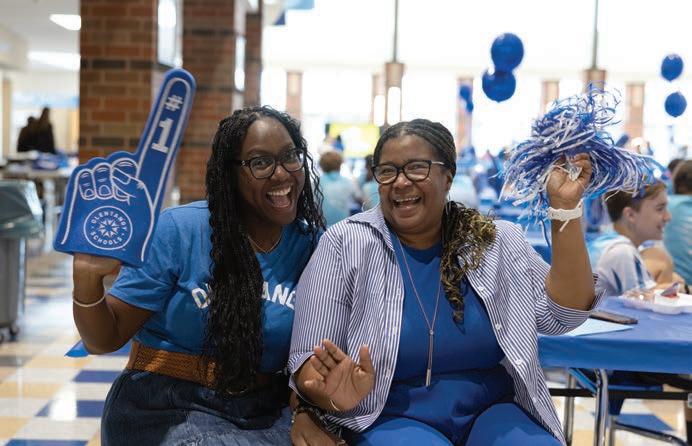
Administrators Ebone Ford (left) and Monica Brown cheer on staff members at Olentangy Local School District’s 2025 back-to-school convocation.
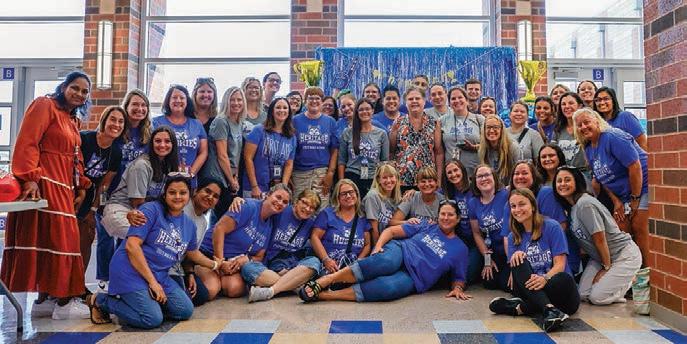
Heritage Elementary School educators are welcomed back to school at Olentangy’s annual convocation.
Hashem says T-Cetra tries to stay attuned to its employees’ needs as they seek to learn new skills and advance within the organization. “We go through an evaluation that makes them comfortable in their career path, to see what’s needed, what would make them go to the next step,” he says. “We do have our leadership program for developing leaders and managers. … We have resources that are available for development on the management side, and also on the employee level, we use the Ohio TechCred for training our employees with technologies.”
Westerville-headquartered event venue company BTTS Holdings also places a priority on supporting its workforce, which encompasses a staff of about 90 and a parttime roster around 350.
“We work very hard to make sure that our employees feel like they are part of something that is bigger than themselves,” says human resources director Jennifer Rasar, who points to a give-back program that offers workers one day a year to volunteer. “We also curate a give-back week where we all volunteer together [in]
different organizations throughout Central Ohio,” she says.
Also notable is BTTS’ Hunt the Good initiative, begun two years ago as an easy way for employees to compliment one another. “You just scan this little QR code and you nominate your co-worker,” Rasar says. “They get a little postcard in the mail that says, ‘Hey, you’ve been caught doing good.’”
BTTS—which, in addition to owning and operating eight venues, also runs inhouse catering and floral operations—has initiated programs to simplify interdepartmental communication. An initiative called Followed By All offers an overview of internal processes and procedures in a single, shareable document. “[We] can look right at this document and say, ‘OK, this is who I go to for this. This is who I go to for that,’ ” Rasar explains.
Additionally, while in the past staff were split up at different locations, they now work together on a 25,000-square-foot campus in Westerville. “It provides this great experience for our teams to be in one location, but also for our clients and our
couples,” she says.
Employees who felt empowered at their organizations and by their managers were consistent themes in workplaces that did well in the positivity metrics.
“We set large company goals, and then cascade those down through different business units, and then through different functions within those business units, all the way down to the individual contributor level,” says Sarnova’s McGannon. “People feel like their work is meaningful and that it really does matter.”
And leaders at these organizations believe their employees matter, too. Freese points to the willingness of Olentangy Local School District supervisors to accommodate staff when personal needs present themselves.
“It could be that I need two hours to go to doughnuts for dad, [or] I need to take a day to be with my mom,” Freese says. “The human side of that always prevails. … Any time we can support a true need, the answer is going to be yes, and we’ll walk side by side with them, for sure.”
Peter Tonguette is a freelance writer.
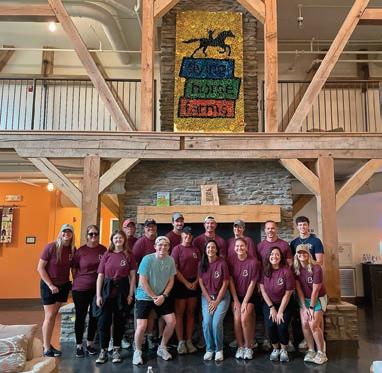
The BTTS Holdings team volunteers at Flying Horse Farms.
BTTS Holdings donated 120 Thanksgiving meals to the Center of Hope for the sixth year in 2025.
PHOTOS
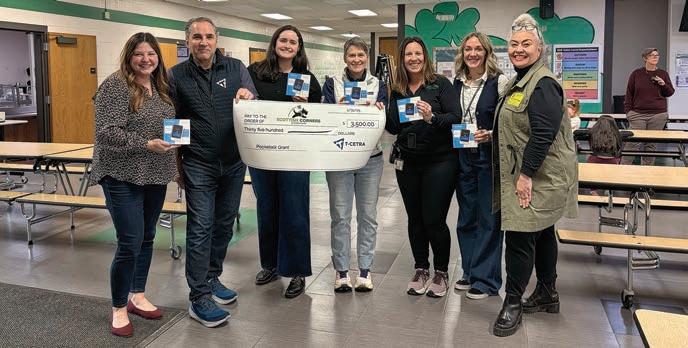
T-Cetra supported Scottish Corners Elementary School’s purchase of Pocketalk devices to help English language learners.
PHOTOS COURTESY T-CETRA (2)
T-Cetra walking club members logged more than 500,000 steps in 2025.
SPRING 2026 COCKTAIL
COMPETITION
JOIN US
May 14, 2025
Vitria on the Square 5:30 - 8 p.m.
SPONSOR
Columbus Monthly’s Cocktail Competition brings together the city’s top bartenders and standout bar programs for an unforgettable evening.
Guests will sip inventive cocktails crafted with Middle West Spirits, enjoy live music and entertainment, and experience the creativity of Central Ohio’s favorite bars. Bartenders will compete in three categories—Most Creative, Best Booth Design, and Best Overall—and attendees will help decide the winners with their votes. Guests must be 21 or older.
CONGRATULATIONS TO THE 2026 HONOREES
THANK YOU TO OUR SPONSOR
THANK YOU TO OUR EVENT SUPPORTERS
HE LTH C RE LOGISTICS • S NERG ELECTRIC L • L KE
SHORE CR
OTRONICS, INC. •
ECO PLUMBERS, ELECTRICI NS,
ND H C TECHNICI NS • TL S
BUTLER HE TING, COOLING ND PLUMBING • BOSS G L BE UT
B R • CONSTR CTION ONE, INC. • SL LOM • ORTHINGTON
STEEL • BTTS HOLDINGS • NORTH
COMMUNIT COUNSELING
CENTER • ROM NOFF GROUP OF COMP NIES
YOUR BUSINESS CAN HELP
PATIENTS CROSS THE FINISH LINE
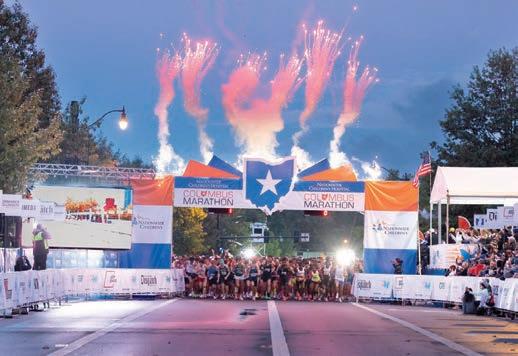
by sponsoring Nationwide Children’s Hospital Columbus Marathon & 1/2 Marathon!
YOUR TEAM CAN MAKE A DIFFERENCE!
Partnering with us is an incredible opportunity to support lifesaving work, while showcasing your brand. Sponsorships begin at just $1000, with each level offering impactful marketing benefits reaching millions of people in the community, and more than 100,000 runners, spectators, volunteers, and fundraisers on race weekend.
Scan the QR code or go to NationwideChildrens.org/Marathon to learn more
HIGHER EDUCATION Needs Assessment
Colleges and universities are updating their degree programs to meet workforce demands.
By KATHY LYNN GRAY
When semiconductor manufacturer Intel announced plans in 2022 to build a massive plant in the Columbus region, local college and university officials began imagining how they could train the company’s future employees.
Though Intel’s development has faced significant delays, the plans to retrofit higher education classes and degrees to match a growing need for modern biotech and manufacturing skills are still going strong.
“Everyone started to scramble with Intel, and that’s stopping, but now we’re looking beyond that to what we need to do to ramp up to make sure our curriculum is matching what industry needs are,” says Mark Mahoney, dean of business, engineering and technology at Columbus State Community College.
Although Columbus State officials have always consulted with business and industry leaders like Honda and Amgen Inc. to make sure its curriculum meets workforce needs, the process has accelerated as changes in manufacturing and technology have accelerated and, in the case of the biotech industry, growth has skyrocketed.
Mahoney says in the past year college leaders have talked with officials from 60 different industries of various sizes through CSCC’s Business and Industry Leadership Team effort, funded with a National Science Foundation grant, and soon will be working with faculty to modify curriculum based on those discussions.
One change in the works is the addition of a semester-long capstone course to the college’s two-year
Electro-Mechanical Technology degree. The planned class will help graduates troubleshoot and improve multifaceted manufacturing systems, Mahoney says. “This is something our faculty realized was missing and industry confirmed it,” he says. “It’s very valuable for someone going into modern manufacturing.”
her part-time job at biotechnology company Amgen.
“I’ve realized how important it is to have both electro and mechanical technology skills,” she says. “You’re ahead of the competition if you know and understand both of them. Most colleges don’t offer this degree.”
What role does a four-year institution play in workforce development? We need to define our role.”
Randy
Smith, vice provost for academic programs at Ohio State University
Student Ava Zellers, who will graduate from Columbus State in May with an Electro-Mechanical Technology degree, says the value of the classes became evident through
To accommodate growing demand for manufacturing classes, Columbus State plans to build the Ohio Center for Advanced Technologies, a new campus structure funded by federal, state and local sources. Preliminary designs call for a $60 million building of up to 100,000 square feet.
Although two-year degrees or certifications are adequate for many industrial jobs, others require four-year degrees, and Ohio State University is working to expand those offerings.
“We’re looking out to the horizon to see, ‘What role does a four-year institution play in workforce development?’ ” says Randy Smith, vice provost for academic programs at OSU. “We need to define our role.”
Smith heads a task force identifying additional programs Ohio State could offer, how students would funnel into those programs and which outside organizations could help
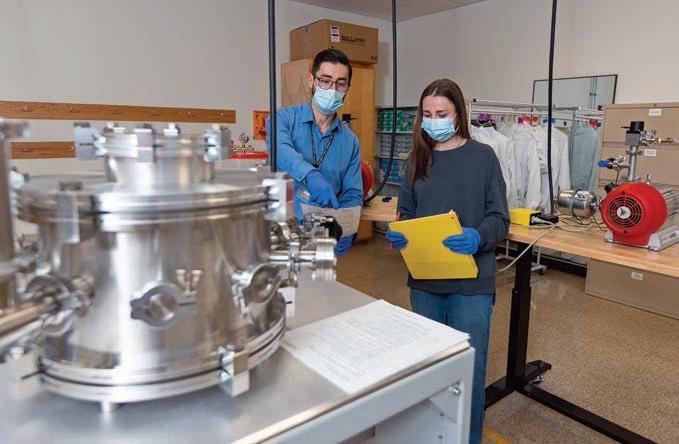
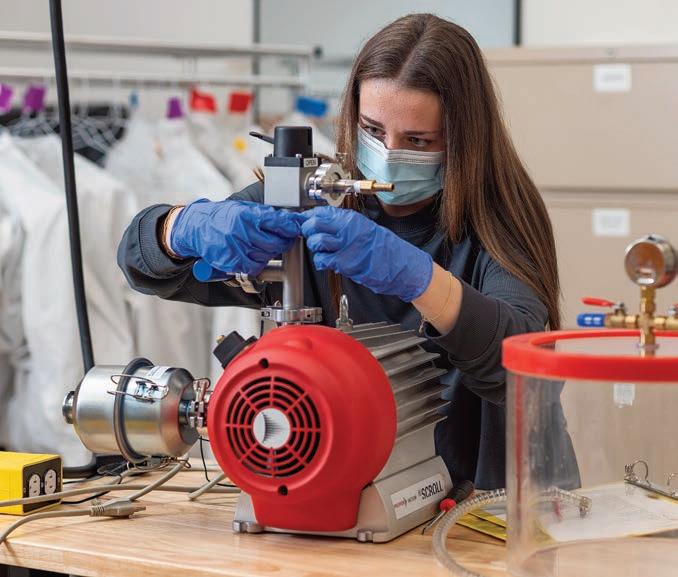
Columbus State Community College student Ava Zellers works on a device to create a vacuum in an Electro-Mechanical Technology class.
Photo by Tim Johnson
define and facilitate them. Those may include new degree offerings, as well as stackable certificates, particularly for those who already have degrees, Smith says. OSU works closely with Columbus State so students can attend there and then complete degrees at Ohio State. That also is part of the task force considerations, Smith says.
One new major planned at OSU is cybersecurity, which Smith says may start in late 2027. He says a degree or certificate offerings in advanced manufacturing also may find a future niche.
The university already has capitalized on another high-demand field with a Master of Supply Chain Management degree, which it began offering in 2023. “Supply chain management touches just about every industry, and the pandemic made it clear how critical strong supply chains and strong leaders really are,” says Aravind Chandrasekaran, interim dean and John W. Berry Sr. chair in business at the Fisher College of Business. Offering the master’s degree was a natural step for the college, which Chandrasekaran says is recognized for its expertise in logistics and operations. He says it has attracted students working for companies including DHL Supply Chain, Procter & Gamble, Owens Corning and Honda.
At Central Ohio Technical College in Newark, a two-year program in respiratory therapy was introduced in response to demand. “That was based on the needs of local hospitals,” says Provost Greg Ferenchak. “We rely on the local workforce to determine which programs we start. We don’t want to offer something and just hope students come.”
In 2023, the college added a semiconductor associate degree, based on Intel’s future needs. With the company’s future in Central Ohio unclear, the college is reworking the degree and working with other companies to see which ones can use graduates from that program, Ferenchak says.
COTC also is incorporating artificial intelligence education into many classes and degrees. “It’s just exploded as far as the need for students to know it, and we’re teaching them how to use it, especially in IT classes,” Ferenchak says.
Kathy Lynn Gray is a freelance writer.
Billy Raulerson
Dan Reinhard
Jake
Mike Bowen Govt. Relations
Danny Briggs Corporate, M&A
Maryellen Corbett Govt. Relations
Ryland Doerr Litigation
Blake Beachler Public Finance
Erin Ahern Litigation
Chris Jackson Intellectual Property
2026
Columbus Legal Guide
Our annual directory highlights 83 law firms that specialize in practice areas from arbitration to workplace safety.
by Getty Images
Photo
Columbus Legal Guide
The Columbus region is fortunate to have an abundance of legal talent, but it can be hard to whittle down the options. If you’re in the market for a lawyer, you’ve come to the right place. Columbus CEO’s 2026 Legal Guide features 83 law firms ranging in size from boutique practices to those with more than 170 attorneys. These firms specialize in a wide variety of practice areas; some have a presence in multiple states and countries.
Information in this directory was submitted by firms that responded to our annual survey of multiple-attorney practices. Listings include the number of partners and full-time attorneys (including partners) in the Columbus area, up to three areas of practice and the office managing partner.
To be added to the contact list for the 2027 Columbus Legal Guide, send an email to pressreleases@columbusceo.com.
Amundsen Davis LLC
500 S. Front St., Suite 1200, Columbus 43215 614-228-5511 amundsendavislaw. com
Partners: 6
FTE attorneys: 10 Practice areas: Business and corporate law; litigation; employment and labor law
Managing partner: Larry James
Arenstein & Andersen Co. LPA
655 Metro Place S., Suite 900, Dublin 43017 614-602-6550 aacolpa.com
Partners: 5
FTE attorneys: 13 Practice areas: Business; estate planning; litigation Managing partner: G. Gregory Arenstein
Arnold & Clifford LLC 115 W. Main St., Suite 400, Columbus 43215
614-460-1600 arnlaw.com
Partners: 7
FTE attorneys: 9 Practice areas: Business litigation; tax litigation; labor and employment
Managing partner: Damion M. Clifford
Atkins and Atkins, Attorneys
at Law, LLC
503 S. Front St., Suite 203, Columbus 43215
614-485-8248 atkinsandatkins law.com
Partners: 2
FTE attorneys: 3
Practice areas: Divorce; family law
Managing partner: Arianna Atkins
Bailey Cavalieri LLC
10 W. Broad St., Suite 2100, Columbus 43215 614-221-3155
baileycav.com
Partners: 31
FTE attorneys: 55
Practice areas:
Directors and officers liability
insurance; corporate; estate planning and tax Managing partner: Bob Dunn Barnes & Thornburg 41 S. High St., Suite 3300, Columbus 43215 614-628-0096
btlaw.com
Partners: 13
FTE attorneys: 22 Practice areas: Real estate; health care; labor and employment
Managing partner: Pat Cornelius Barr, Jones and Associates LLP
150 E. Mound St., Suite 200,
Photos by Getty Images
Columbus 43215
614-702-2222
barrjoneslegal.com
Partners: 3
FTE attorneys: 6
Practice areas: Family law; bankruptcy; criminal law
Managing partners: Jason Barr and Andrew Jones
Barrett, Easterday, Cunningham & Eselgroth LLP
7259 Sawmill Road, Dublin 43016
614-210-1840
ohiocounsel.com
Partners: 4
FTE attorneys: 6
Practice areas:
Estate and business planning; dispute resolution; commercial transactions
Managing partner: David C. Barrett
Becker & Lilly LLC
475 Metro Place S., Suite 150, Dublin 43017
614-469-4778
beckerlilly.com
Partners: 3
FTE attorneys: 3
Practice areas: Estate planning; probate; general business/corporate
Managing partner: Phillip G. Lilly
Behal Duvall
Law Group LLC
500 S. Front St., Columbus 43215
614-643-5050
behal-duvall.com
Partners: 2
FTE attorneys: 7
Practice areas: Business law and litigation; divorce law; probate and estate planning
Managing partner: Bob Behal
Benesch
41 S. High St., Suite 2600, Columbus 43215
614-223-9300
beneschlaw.com
Partners: 19
FTE attorneys: 48
Practice areas: Litigation; health care; corporate Managing partner: Frank Carsonie
Bergman & Yiangou
3040 Riverside Drive, Suite 132, Columbus 43221
614-279-8276
byattorneys.com
Partners: 2
FTE attorneys: 4
Practice areas: Probate; bankruptcy; family law
Managing partner: Robert D. Bergman
Bluestone Law Group LLC
141 E. Town St., Columbus 43215
614-220-5900
bluestonelawgroup. com
Partners: 1
FTE attorneys: 2 Practice areas: Real property tax; real
estate transactions; business law
Managing partner: Charles L. Bluestone
Borshchak Law Group
1650 Lake Shore Drive, Suite 380, Columbus 43204
614-334-6851
dlbcounsel.com
Partners: 1
FTE attorneys: 2 Practice areas: Family; divorce; custody
Managing partner: Dmitriy Borshchak
Brennan Manna & Diamond LLC
41 S. High St., Suite 3750, Columbus 43215
614-246-7500
bmdllc.com
Partners: 4
FTE attorneys: 7
Practice areas: Real estate and construction; cybersecurity; intellectual property Columbus managing partner: Christopher Santagate
Bricker Graydon Wyatt LLP
100 S. Third St., Columbus 43215
614-227-2300
bricker.com
Partners: 50
FTE attorneys: 96
Practice areas:
Litigation; public sector; health care
Managing partner: Christopher L. McCloskey
Burman & Robinson
200 E. Campus View Blvd., Suite 200, Columbus 43235
614-221-8900
burmanrobinson. com
Partners: 2
FTE attorneys: 2
Practice areas:
Collection services; commercial transactions and litigation
Managing partner: Randal D. Robinson
Calfee, Halter & Griswold LLP
1200 Huntington Center, 41 S. High St., Columbus 43215
614-621-1500
calfee.com
Partners: 9
With more than 1,800 labor and employment attorneys around the world, Littler provides workplace solutions that are local, everywhere. Our diverse team and proprietary technology foster a culture that celebrates original thinking, delivering groundbreaking innovation that prepares employers for what’s happening today, and what’s likely to happen tomorrow.
FTE attorneys: 3 Practice areas: Insurance; personal injury; civil rights
Managing partner: David Goldstein
Dickinson Wright PLLC
180 E. Broad St., Suite 3400, Columbus 43215 614-744-2570
dickinsonwright.com
Partners: 25
FTE attorneys: 34 Practice areas: Corporate and private equity; real estate; commercial and real estate finance
Managing partners: Scot Crow and J. Troy Terakedis
Dinsmore & Shohl
191 W. Nationwide Blvd., Suite 200, Columbus 43215
614-628-6880
dinsmore.com
Partners: 35
FTE attorneys: 50
Practice areas: Health care; mergers and acquisitions; labor and employment
Managing partner: Stacey A. Borowicz
Eastman & Smith Ltd.
250 Civic Center Drive, Suite 280, Columbus 43215 614-564-1445
eastmansmith.com
Partners: 4
FTE attorneys: 11 Practice areas: Environmental; labor and employment; white-collar crime and investigations
Managing partner: Mark A. Shaw
Epstein Becker Green
250 West St., Suite 300, Columbus 43215
614-872-2500
ebglaw.com
Partners: 13
FTE attorneys: 22 Practice areas: Employment, labor and workforce management; health care and life sciences; litigation and business disputes
Managing partner: Jennifer M. Nelson Carney
Fisher Phillips
250 West St., Suite 400, Columbus 43215 614-221-1425
fisherphillips.com
Partners: 3
FTE attorneys: 6 Practice areas: Traditional labor and employment; workplace health and safety; workers’
compensation
Regional managing partner: Steven M. Loewengart
Flannery Georgalis LLC
175 S. Third St., Suite 285, Columbus 43215
380-444-6096
flannerygeorgalis. com
Partners: 2
FTE attorneys: 7
Practice areas: Criminal defense; civil litigation; internal investigations
Partner-in-charge: Matthew Jalandoni
Friedman & Mirman
1320 Dublin Road,
Suite 101, Columbus 43215
614-221-0090 friedmanmirman. com
Partners: 2
FTE attorneys: 7
Practice areas: Family law
Managing partner: Denise Mirman
The Friedmann Firm
3740 Ridge Mill Drive, Hilliard 43026
614-610-9755
tfflegal.com
Partners: 2
FTE attorneys: 4 Practice areas: Employment law; employment litigation
Managing partner: Peter Friedmann
Gallagher, Gams, Tallan, Barnes, & Littrell LLP
471 E. Broad St., 19th Floor, Columbus 43215
614-228-5151 ggtbl.com Partners: 7
FTE attorneys: 11 Practice areas: Personal and commercial lines; insurance defense; personal injury
Managing partners: Belinda S. Barnes and Robert J. Kidd
Golden & Meizlish Co. LPA
923 E. Broad St., Columbus 43205
614-258-1983 golmeizlaw.com
Partners: 2
FTE attorneys: 2
Practice areas: General practice; estates and estate planning; transactional law
Managing partner: Keith E. Golden
Grossman Law Offices
32 W. Hoster St., Suite 100, Columbus 43215
614-221-7711
grossman lawoffices.com
Partners: 2
FTE attorneys: 11 Practice areas: Family law
Managing partner: Andrew S. Grossman
Daniel R. Mordarski
MORDARSKI LAW
5200 Upper Metro Place, Suite 100 Dublin, OH 43017
PH: (614) 221-3200
dan@mordarskilaw.com mordarskilaw.com
Practice Areas: GENERAL LITIGATION MEDIATION & ARBITRATION WRONGFUL DEATH/CATASTROPHIC INJURY
Dan Mordarski worked for a commercial litigation law firm for 12 years and represented some of the largest international companies. In 2006, he resigned as a partner and started his own firm. Mordarski represents plaintiffs in civil litigation matters including wrongful death, catastrophic personal injury, sexual abuse, civil rights, employment, products liability and all types of commercial litigation. His practice also includes attorney ethics and expert witness assistance in legal malpractice and attorney fee matters. As a result of his extensive experience with complex litigation, as well as his record of successfully trying cases for defendants and plaintiffs, Mordarski has become a top-choice mediator for sophisticated, complex and high value claims. Mordarski has appeared on the Today Show, Anderson Cooper, Dr. Drew and other local television and radio programs. He also lectures on civil litigation matters, attorney ethics and professionalism.
Columbus
Hrabcak & Co. LPA
Nearly four decades of experience in a leading AmLaw Top 50 global corporate and M&A practice Focus on personal attention, responsiveness and cost-e ective rates
JRW ESQ is a boutique commercial and corporate law practice providing counsel and legal services to clients across a variety of industries within and outside the US.
Named as one the The Best Lawyers in America® 2026:
Je Wahl
Matt Bailey
Recognized in The Best Lawyers in America® 2026 for work in:
Corporate Law
Mergers and Acquisitions Law
67 E. Wilson Bridge Road, Suite 100, Worthington 43085 614-781-1400 hrabcaklaw.com
Partners: 1
FTE attorneys: 5
Practice areas:
Business; real estate; litigation
Managing partner: Michael Hrabcak
Ice Miller
250 West St., Suite 700, Columbus 43215 614-462-2700 icemiller.com
Partners: 33
FTE attorneys: 76
Practice areas: Corporate transactions; litigation; real estate
Office managing partner: Catherine Strauss
Isaac Wiles
Burkholder & Miller LLC 2 Miranova Place, Suite 700, Columbus 43215 614-221-2121 isaacwiles.com
471 E. Broad St., Suite 1600, Columbus 43215 614-384-2075
lawyerlewis.com
Partners: 1
FTE attorneys: 3
Practice areas: Litigation; business; criminal Managing partner: Jeffrey M. Lewis Jones Day 325 John H. McConnell Blvd., Suite 600, Columbus 43215 614-469-3939
jonesday.com
Partners: 22
FTE attorneys: 55
Practice areas:
Business and tort litigation; corporate; health care and life sciences
Partner-in-charge: Elizabeth P. Kessler
Joseph & Joseph & Hanna
155 W. Main St., Suite 200, Columbus 43215 614-449-8282 josephandjoseph.com
Partners: 1
FTE attorneys: 3
Practice areas: Family law; real estate law; civil litigation
Managing partner: Courtney Hanna
JRW Esquire Ltd. 1733 W. Lane Ave., Columbus 43221
380-239-8500
jrw.esq
Partners: N/A
FTE attorneys: 2
Practice areas: Commercial; corporate; mergers and acquisitions
Founder: Jeffrey R. Wahl
Kaman & Cusimano LLC
8101 N. High St., Suite 370, Columbus 43235
614-882-3100
community associations.law
Partners: 3
FTE attorneys: 11
Practice areas: Community association law; condominium law; HOA law
Columbus office chair: Jeffrey Kaman
Katz DiCuccio LLP
10 N. High St., Suite 405, Columbus 43215
614-363-3500
katzdicuccio.com
Partners: 2
FTE attorneys: 3
Practice areas: Real estate litigation; business litigation; personal injury
Managing partners: Steven M. Katz and Robert K. DiCuccio
Kegler Brown Hill + Ritter
65 E. State St., Suite 1800,
Columbus 43215
614-462-5400
keglerbrown.com
Partners: 37
FTE attorneys: 48
Practice areas: Corporate law; litigation; government affairs
Managing partner: Steve Barsotti
King Law Group LLC
165 E. Livingston Ave., Columbus 43215
614-324-0602
kingdivorcelaw.com
Partners: 1
FTE attorneys: 3
Practice areas: Family law; wills and trusts; mediations
Managing partner: Jessica G. King
KJK
10 W. Broad St., Suite 2500, Columbus 43215
614-427-5731
kjk.com
Partners: 5
FTE attorneys: 7
Practice areas: Corporate and
Criminal Defense Counsel
securities; litigation and arbitration; real estate and environmental Columbus partnerin-charge: David Campbell Jr.
Koffel and Nesbitt
1801 Watermark Drive #350, Columbus 43215
614-884-1100
koffellaw.com
Partners: 2
FTE attorneys: 3 Practice areas: Criminal defense; education law; juvenile law
Managing partner: Brad Koffel
Kozich, Jackson, Binau & Cox PLL
400 S. Fifth St., Suite 101, Columbus 43215
614-464-2572
hmbc.com
Partners: 3
FTE attorneys: 8
Practice areas: Real estate; business litigation; personal injury
Practice areas: Patent law; trademark law; intellectual
property law
Managing partner: Jason H. Foster
Law Offices of William L. Geary Co. LPA
155 W. Main St., Suite 101, Columbus 43215
614-228-1968
columbusfamily lawyer.com
Partners: 1
FTE attorneys: 3
Practice areas: Family law; guardianship; juvenile law
Managing partner: William L. Geary
Lawrence Law Office
57 E. Wilson Bridge Road,
Worthington 43085
614-228-3664
ohio-family-law.com
Partners: 2
FTE attorneys: 7
Practice areas: Family law; corporate law; estate planning
Managing partner: Linda Lawrence
Littler
41 S. High St., Suite 3250, Columbus 43215
614-463-4201
littler.com
Partners: 11
FTE attorneys: 19.6
Practice areas:
Employment and labor law
Office managing shareholder: Lisa Kathumbi
Lumpe, Raber & Evans
1700 Lake Shore
Drive, Suite 300, Columbus 43204
614-221-5212
ohioliquorlaw.com
Partners: 2
FTE attorneys: 2
Practice areas: Ohio alcoholic beverage law
Managing partner: David A. Raber
Luper Neidenthal & Logan LPA
1160 Dublin Road, Suite 400, Columbus 43215
614-221-7663
lnlattorneys.com
Partners: 4
FTE attorneys: 19
Practice areas: Civil litigation; business
law; creditor rights
Managing partner: Matthew T. Anderson
Mac Murray & Shuster LLP
6525 W. Campus Oval, Suite 210, New Albany 43054
614-939-9955
mslawgroup.com
Partners: 6
FTE attorneys: 11
Practice areas: Consumer law; privacy and data security; class action and regulatory enforcement defense
Managing partner: Michele Shuster
McDaniel Law LLC
1335 Dublin Road, Suite 211A, Columbus 43215
614-675-5930
mcdaniellaw.com
Partners: 1
FTE attorneys: 5 Practice areas: Workers’ compensation defense and workplace safety
Managing partner: Jennifer McDaniel
Miller Bahnson Law LLC
2 Miranova Place, Suite 330, Columbus 43215
614-747-6955
millerbahnsonlaw. com
Partners: 3
FTE attorneys: 6
Practice areas: Family law; mediation; alternative dispute resolution
Co-managing partners: Alyson B. Miller and Eimear M. Bahnson
Mordarski Law
5200 Upper Metro Place, Suite 100, Dublin 43017
614-221-3200
mordarskilaw.com
Partners: 1
FTE attorneys: 1 Practice areas: General litigation; mediation and arbitration; wrongful death/catastrophic injury
Managing partner: Daniel R. Mordarski
The lawyers at Fisher Phillips equip Central Ohio employers to anticipate challenges, seize opportunities, and meet their business goals.
With over 800 attorneys across the United States and in Mexico and Japan, Fisher Phillips provides practical business solutions for employers’ workplace legal problems.
NELSON
KENNETH
AARON
JOHN
CHAD
GARY
LONI
KIRSTEN
AMANDAH
Onda LaBuhn 35 N. Fourth St., Suite 100, Columbus 43215 614-716-0500 ondalabuhn.com
Partners: 4 FTE attorneys: 10 Practice areas: Business transactional; commercial real estate; business litigation
Partners: 8 FTE attorneys: 15 Practice areas: Commercial litigation; general litigation; employment/ workers’ compensation
Managing partner: Sarah Perez
Peterson Law LLP
545 Metro Place S., Suite 435, Dublin 43017
614-365-7000 peterson-llp.com
Partners: 7 FTE attorneys: 10 Practice areas: Business law; commercial litigation; criminal defense
Managing partner: N/A
Petroff Law Offices LLC 140 E. Town St., Suite 1070, Columbus 43215 614-222-4288 petrofflawoffices. com
Partners: 1 FTE attorneys: 5 Practice areas: Family law; divorce; custody
Managing partner: Ronald R. Petroff
Philipps & Graham LLC
5880 Venture Drive, Suite A, Dublin 43017
614-760-1801
pglawohio.com
Partners: 2
FTE attorneys: 3
Practice areas:
Estate and special needs planning
Managing partners: Logan Philipps and Derek Graham
Plunkett Cooney
716 Mount Airyshire Blvd., Suite 150, Columbus 43235
614-629-3000
plunkettcooney.com
Partners: 6
FTE attorneys: 9
Practice areas:
Banking law; title insurance; labor and employment law
Managing partner: David Van Slyke
Porter Wright Morris & Arthur LLP
41 S. High St., Suites 2800-3200, Columbus 43215
614-227-2000
porterwright.com
Partners: 54
FTE attorneys: 90
Practice areas: Corporate;
litigation; labor and employment
Managing partner: Robert Tannous
Reminger Co. LPA
200 Civic Center Drive, Suite 800, Columbus 43215
614-228-1311
reminger.com
Partners: 12
FTE attorneys: 31
Practice areas: Workers’ compensation defense; medical malpractice defense; probate, trusts and estates
Columbus partnerin-charge: Ronald Fresco
Roetzel & Andress LPA
41 S. High St., Huntington Center, 21st Floor, Columbus 43215
614-463-9770
ralaw.com
Partners: 11
FTE attorneys: 20
Practice areas: Litigation; employment; corporate/
McDaniel
transactional
Chairman and shareholder: Robert E. Blackham
Center, 41 S. High St., Columbus 43215 614-365-2700
squirepattonboggs. com
Partners: 21
Saia, Marrocco & Jensen Inc.
713 S. Front St., Columbus 43206 614-444-3036
splaws.com
Partners: 4
FTE attorneys: 9 Practice areas: OVI/DUI defense; criminal; domestic Managing partner: Jon J. Saia
FTE attorneys: 64 Practice areas: Corporate/financial services; labor and employment; litigation/ environmental Managing partner: Traci Martinez
Shumaker 41 S. High St., Suite 2400, Columbus 43215 614-463-9441 shumaker.com
Partners: 8
Standley Law Group LLP 6300 Riverside Drive, Dublin 43017 614-792-5555 standleyllp.com
Partners: 6
FTE attorneys: 13 Practice areas: Litigation; environmental; government affairs Managing partner: Michael J. O’Callaghan
Squire Patton Boggs 2000 Huntington
FTE attorneys: 9 Practice areas: Patents; trademarks; copyrights Managing partner: Jeffrey S. Standley
Steptoe & Johnson PLLC 41 S. High St., Suite 2200, Columbus 43215 614-221-5100
steptoe-johnson.com
Partners: 9
FTE attorneys: 11
Practice areas:
Corporate/mergers and acquisitions; litigation; labor and employment
Office managing member: Marilyn T. McClure-Demers
Strip Hoppers
Leithart McGrath & Terlecky LPA
575 S. Third St., Columbus 43215
614-228-6345
columbuslawyer.net
Partners: 7
FTE attorneys: 14
Practice areas: Bankruptcy and insolvency; business representation/ litigation; family law
Managing partner: Ken Goldberg
Taft
41 S. High St., Suite 1800, Columbus 43215
614-221-2838
taftlaw.com
Partners: 31
FTE attorneys: 47.03
Practice areas: Commercial litigation; employment and labor relations; construction Columbus partnerin-charge: Janica Pierce Tucker
Teetor Westfall LLC
200 E. Campus View Blvd., Suite 200, Columbus 43235
614-412-4000
teetorwestfall.com
Partners: 8
FTE attorneys: 10
Practice areas: Litigation; business and commercial; general practice
Managing partner: Management committee
Thomas Law Group 5148 Blazer Parkway, Suite A, Dublin 43017 614-761-7701 thomaslawgroup. com
Partners: 2
FTE attorneys: 3
Practice areas: Business; estate; dental board
Managing partner: Chad P. Hanke
Thompson Hine LLP
41 S. High St., Suite 1700, Columbus 43215
614-469-3200 thompsonhine.com
Partners: 18
FTE attorneys: 38
Practice areas: Business litigation; corporate transactions and securities; investment management Office partner in charge: Michael Wible
Trolinger Law Offices
175 S. Third St., Suite 700, Columbus 43215
614-705-6025
trolingerlaw.com
Partners: 1
FTE attorneys: 7
Practice areas: Domestic relations; juvenile; civil
WOLINETZ | HORVATH | BROWN
GUIDING YOU TOWARD A BETTER FUTURE
BEHAL DUVALL LAW GROUP
GUIDING CLIENTS THROUGH PERSONAL AND BUSINESS CHALLENGES
At Behal Duvall Law Group, our accomplished attorneys support clients in Central Ohio through difficult life changes as well as important business decisions. Our attorneys, including three who have been selected to Super Lawyers, have extensive experience in family law, estate planning, business law and personal injury. This allows us to anticipate interconnected needs across these areas. We see the big picture and protect our clients’ best interests with reliable solutions tailored to their unique needs. Our attorneys are skilled litigators and negotiators who have successfully handled cases in Ohio’s state and federal courts, domestic courts and probate courts. We provide the responsive personal attention of a smaller firm combined with big-firm experience as clients face uncertainty and complex legal issues.
L-R: Robert J. Behal*, DeAnna J. Duvall* Not Pictured: John M. Gonzales* *Selected to Super Lawyers
L-R: Heather B. Sobel, Dennis E. Horvath, Barry H. Wolinetz, Eric M. Brown
JESSICA G. KING, ESQ
FOUNDER, MANAGING PARTNER
I would highly recommend Jessica for any difficult family law case. She has succeeded in ways our previous representation was not able.
appeals
Managing attorney: Chris Trolinger
UB Greensfelder LLP
65 E. State St., Suite 1100, Columbus 43215
614-229-0000
ubglaw.com
Partners: 3
FTE attorneys: 6
Practice areas: Business litigation; product liability; intellectual property Managing partner: Rex A. Littrell
Vorys, Sater, Seymour and Pease LLP
52 E. Gay St., Columbus 43215
614-464-6400
vorys.com
Partners: 99
FTE attorneys: 173
Practice areas: Corporate; labor and employment; business litigation Managing partner: Michael Martz
Weltman, Weinberg & Reis Co. LPA
5475 Rings Road, Suite 200, Dublin 43017
614-801-2600
weltman.com
Partners: 3
FTE attorneys: 6
Practice areas: Consumer/ commercial collections and litigation;
bankruptcy; real estate default
Managing partner: James G. Kozelek
Weston Hurd LLP
101 E. Town St., Suite 500, Columbus 43215
614-280-0200
westonhurd.com
Partners: 13
FTE attorneys: 15
Practice areas: Insurance; litigation/ trial practice; real property/ construction Columbus office partner-in-charge: Steven G. Carlino
Wolinetz, Horvath & Brown LLC
250 Civic Center Drive, Suite 600, Columbus 43215
614-341-7775
wolinetzlaw.com
Partners: 4
FTE attorneys: 6
Practice areas: Family law
Managing partner: Eric Brown
Zaino Law Group LPA 5775 Perimeter Drive, Suite 275, Dublin 43017
614-799-2800
zainolawgroup.com
Partners: 3
FTE attorneys: 4
Practice areas:
Estate planning; taxation; business planning
President: Michael J. Zaino
MEETING PLANNING GUIDE VENUES
These unique corporate event spaces in Columbus boast facilities and staffs that can accommodate a variety of business needs.
MEETING PLANNIN G GUIDE - VENUES
VITRIA ON THE SQUARE
Vitria on the Square is Columbus’ newest sophisticated event venue to host your upcoming celebration. Vitria is located at the storied intersection of 15th & High within steps of the iconic Ohio State University Oval, as well as Mirror Lake. The venue is proud to feature elevated dining with a beverage-forward approach that will leave your guests impressed and stand out from their typical event experience. The culinary team prides themselves on curating menus specific to the event they are hosting and suggests special touches to enhance the experience for all attendees. The beverage team enjoys customizing cocktails with freshpressed juices and signature garnishes unique to an event that add a custom touch.
The Grand Ballroom at Vitria on the Square features 25-foot, floor-toceiling windows that overlook several of the iconic landmarks of The Ohio State University. This space features built-in, state-of-the-art monitors that can showcase logos, a slideshow or custom artwork during an event. The Grand Ballroom can accommodate 320 guests seated at round tables with a stage or dance floor, or 500 seated theater style.
The Gallery is just outside of the Grand Ballroom and is ideal for a cocktail reception or seating area. This space has natural lighting and features its own private balcony overlooking University Square, which is available for guests to enjoy. The Gallery features soft seating and artwork throughout the space and offers a built-in monitor to display a logo, slideshow, or custom artwork, as well.
14 E. 15th Ave., Columbus
614-540-3436
vitriaonthesquare.com
The Terrace Ballroom, which is just on the opposite side of the Gallery, is surrounded by windows and features its own private balcony also looking out to University Square. The space can accommodate 100 guests seated at round tables or 150 guests in theater-style seating. This space can split into two separate sections that could both accommodate 50 guests seated at round tables. The Terrace Ballroom also features two built-in monitors that guests can utilize as they would like.
Stories That Matter
Columbus Monthly was honored by the Ohio Society of Professional Journalists and the Press Club of Cleveland with 11 awards for excellence in 2024 coverage.
Best Feature Reporting
Editor Katy Smith, for her compelling story about the founding of the Arc of Appalachia land preservation trust.
Best Sports Reporting
Freelance writer Chris DeVille, for his powerful profiles of OSU women’s ice hockey coach Nadine Muzerall, Columbus Crew head coach Wilfried Nancy, and Dr. Anthony Williams, whose youth soccer efforts transformed urban Columbus.
Best Environmental Reporting
For our first-place October 2024 feature, “Pollinator Gardens vs. Perfect Lawns.”
Best Architecture and Design Writing
Editor Katy Smith, first place, for her home feature on a Bexley resident’s inventive use of vintage pieces.
Best Photographer in Ohio
Photo editor Tim Johnson, second place, for a portfolio of 2024 work.
Plus six more awards across categories including arts reporting, medical and health reporting and overall third place for Best Magazine in Ohio, highlighting the depth and range of our newsroom.
We’re grateful for the recognition and inspired to keep delivering stories that inform, challenge and connect our community.
THE POWER OF CONNECTION
Why Social Media and Events Still Matter in a Digital-First World
By Jackie Murphy
In today’s hyper-digital world, it’s easy to think of social media as just another marketing checklist item: post consistently, use the right hashtags, maybe boost a few ads and hope for the best. But after more than two decades working in marketing, design and event planning, I’ve learned something simple but powerful: Social media isn’t about posting more. It’s about connecting better.
At its best, social media is not a broadcast channel. It’s a relationship builder.
I’ve spent much of my career helping businesses bridge the gap between what they want to say and what their audience actually wants to hear. Through my work at Queen Bee Jackie Creative, I partner with organizations to develop social media strategies that foster real conversations and long-term engagement rather than just chasing likes or impressions.
What many companies miss is that social media doesn’t exist in a vacuum. It works best when it’s part of a larger ecosystem of connection—one that includes events, partnerships and authentic community building.
That’s where in-person experiences still shine.
Events create the kind of emotional connection that digital platforms alone cannot replicate. Whether it’s a client appreciation gathering, a nonprofit fundraiser or a community networking event, the energy that happens when people come together face-to-face strengthens relationships and builds trust in ways that algorithms never will.
The magic happens when these two worlds—digital and physical— work together.
A thoughtfully planned event should begin long before guests walk in the door and continue long after they leave. Social media allows organizations to build anticipation, share behind-the-scenes moments and amplify the voices of attendees. After
Jackie Murphy
the event, those conversations can continue online, reinforcing the community that was created in person.
In other words, social media becomes the thread that ties the entire experience together.
This approach has become increasingly important for small and mid-sized organizations that may not have full marketing teams. Many of the businesses and nonprofits I work with treat my role as a hybrid one: part strategist, part creative and part connector. I’m often thinking about collaborations, partnerships and opportunities for my clients that go beyond marketing tactics.
That mindset is rooted in my own entrepreneurial journey. Years ago, I ran a stationery company from my home that eventually grew into a business employing other stay-at-home moms and exhibiting at national trade shows. That experience taught me something I still carry today: Businesses thrive when they support each other and build genuine communities.
The same principle applies now in
If brands want to stand out in crowded social feeds, they must move beyond polished graphics and promotional messaging. They need to listen, respond, collaborate and show up consistently for the communities they serve.
Social media isn’t just a marketing tool. It’s an invitation.
When businesses use it thoughtfully and pair it with meaningful real-world experiences, they create something far more valuable than reach or engagement metrics. They create belonging.
And in today’s marketplace, belonging is the most powerful brand strategy of all.
the digital age.
Photo courtesy
Jackie Murphy
A Sporting Solution
Classic For Columbus plans an America250 celebration focused on scholarships and workforce recruiting.
By SOPHIA VENEZIANO +
JOHNSON
In the early 1990s, Columbus native John Pace organized a Historically Black Colleges and Universities football classic as a fundraiser for the King Arts Complex, which was then in its early years.
The tournament was a great success, and after a few years it moved to NFL stadiums in Cincinnati and Cleveland. Pace moved on but later revived the tournament in Columbus in 2021 as he established a nonprofit, Classic For Columbus. The organization produces sports and entertainment events to promote education, economic development and mobility while raising money for student scholarships to HBCUs.
Now, Pace and Classic For Columbus are combining basketball with workforce development to connect the community in a new initiative. Beginning in April, Classic For Columbus is hosting a monthlong Sports & Music Extravaganza through a grant from America 250-Ohio. The central event is a three-on-three basketball game, which offers an opportunity for workforce recruiting by inviting local employers to participate in their own division.
The celebration begins April 3 and runs through May 3. Providing programming for the whole community was a priority, so organizers made sure to include low- and no-cost
experiences. “We have an entire 30 days of educational, cultural history storytelling, sports and music events that’s going to help celebrate our nation’s semiquincentennial,” Pace says.
The basketball tournament, which is hosted by former NBA player Kenny Anderson, takes place at the Ohio State University Recreation and Physical Activity Center. It is open to the public, but spots are limited. Registration takes place online. Employers will have their own division, and players and spectators— from middle school students to recent college graduates—are encouraged to bring their résumés to connect with the companies.
“We really want to emphasize 3v3 hoops as an innovative solution for workforce recruiting. We have a lot of data from academia that says [when] employers participate in athletic competition, the outcomes for recruiting are just so great. So, we’ve put together a design that will allow employers being able to network and connect,” Pace says.
“It’s really going to be a lot of fun. It’s going to be entertaining. But the community impact will be in connecting employers with the workforce.”
Other events also will take place at Ohio State, including a Patti LaBelle concert at Mershon Auditorium on April 3.
Classic For Columbus will award
$15,000 in scholarships to participants, Pace says. Since launching, the nonprofit has awarded more than $750,000 in student scholarships to HBCUs.
Michael Gatto, the chief venue officer with Columbus Arena Sports & Entertainment, which manages Nationwide Arena and the Schottenstein Center among other facilities, says the decision to have events on campus was largely due to this educational component. “John does a wonderful job of just making sure that it’s more than just a basketball game. There really is something for everyone,” Gatto says.
“It’s really a great community. It’s not just an event for the African American or Black community. It’s an event for all people from Columbus.”
Following the Sports & Music Extravaganza, Pace says Classic For Columbus is hoping to bring back the HBCU football classic in 2027.
This article was made possible by support from the Center for HumanKindness at The Columbus Foundation, which has partnered with Columbus CEO to profile those making our community a better place. Help us lift up inspiring stories of kindness by suggesting people, initiatives, or organizations to feature by emailing kindness@dispatch.com. Columbus CEO retains full editorial independence for all content. Learn more at ColumbusCEO.com/Kindness.
Photo by TIM
John Pace, president and CEO of Classic For Columbus
EverydayKindness Heroes
Kindness is all around us.
We look to honor those who improve, heal, and unite our community, one selfless and extraordinary act of kindness at a time.
Look for quarterly stories in Columbus CEO celebrating kindness in Central Ohio.
The Center for HumanKindness at The Columbus Foundation has partnered with The Columbus Dispatch to highlight those making our community a better place. Help us inspire kindness by suggesting people, initiatives, or organizations to feature by emailing kindness@dispatch.com The Dispatch retains full editorial independence for all content.
Nominate your heroes: Learn more at ColumbusCEO.com/Kindness.
HEALTH WATCH
Cause for Concern
Doctors are seeing more lung cancer cases in younger women—many of whom have never smoked. Higher screening rates could improve outcomes.
By KATHY LYNN GRAY
When thoracic surgeon
Dr. Ioana Baiu sees lung cancer patients these days, she’s often shocked.
By their age, by their gender but most of all by this fact: They aren’t smokers.
“Traditionally we saw older men who smoked, but now about 20 percent are nonsmokers and they’re younger—in their 20s and 30s— and they’re women,” says Baiu, a doctor at the Ohio State University Comprehensive Cancer Center –Arthur G. James Cancer Hospital and Richard J. Solove Research Institute.
That’s why she and many others in health care are trying to get the word out: Smoking isn’t the only cause of lung cancer, and screening is available that can catch cancer early.
Lung cancer is the leading cause of cancer deaths in the United States and caused 1.8 million deaths worldwide in 2022. The Centers for Disease Control and Prevention says while 80 percent to 90 percent of people diagnosed with the disease
have a history of smoking, the remainder of cases show up in people with little or no smoking history. And because lung cancer can take years to develop, Baiu says the percentage of patients who don’t smoke will increase over time.
The second-leading cause of lung cancer is radon exposure, says Dr. Vincent Daniel, a thoracic surgeon at OhioHealth. Radon is a colorless, odorless gas that seeps into buildings from the ground. Longer exposure and higher radon levels can elevate cancer risk, he says. Since radon is common in Ohio, he suggests homeowners test their radon levels. Free test kits are available through
the Ohio Department of Health at ohio.radon.com.
Exposure to chemicals, secondhand smoke and air pollution also are risk factors, and genetics can play a part, too, Daniel says. “There are a lot of environmental exposures we don’t have a good understanding of, and we don’t have a slew of genetic mutations we have identified,” he says. “There’s so much we don’t know.” Ohioans have reason to worry.
The American Lung Association reported in November that while the national rate of new lung cancer cases per 100,000 people is 52.8, it climbs to 63.88 in Ohio, ranking the Buckeye State the ninth-highest in the nation. Not surprisingly, Ohio’s smoking rate also is high, at 14.9 percent of the population, compared with the national average of 10.8 percent in 2023.
Not all the news is grim. For more than a decade, smokers and some former smokers have been eligible to get a low-dose computerized tomography, or CT, scan that can detect lung cancer at its earliest stage. The 30-second test detects lung lesions
The OSUCCC – James launched the state’s first mobile lung cancer screening unit in July.
Photo courtesy Ohio State University Wexner Medical Center
Dr. Vincent Daniel
Photo courtesy OhioHealth
at a much smaller size than previous tests, Daniel says, which saves lives because those lesions can be removed before the cancer spreads.
Annual screenings are recommended for those who are 50 to 80 years old, smokers who have smoked a pack a day for 20 years and those who quit smoking within the last 15 years. The test is generally covered by insurance. It’s especially important because symptoms of lung cancer, such as chronic coughing, hoarseness, weight loss, shortness of breath and chest pain, don’t usually appear until lung cancer is well established.
“If you already have symptoms, it’s a little late,” says Dr. Talya
Greathouse, vice president of medical affairs for Licking Memorial Hospital. “The key is to get screened.”
Greathouse hopes talking about screening will make people more aware of its importance, especially in counties like Licking where smoking rates are high. In 2022, 19.4 percent of its residents were smokers.
To encourage screening, Ohio State began operating a mobile CT unit in July.
Interventional pulmonologist Dr. Jasleen Pannu, director of the Lung Cancer Early Detection program at the OSUCCC – James, says the vehicle goes to community events and locations where screenings may not be readily available.
“Many people face barriers to get tested, so the mobile unit allows screening directly in the community,” she says. Patients preregister and have a telehealth appointment before the unit arrives, so the actual scanning just takes a few minutes. Experts at the James read the scans and let patients know about any concerns, Pannu says. Nationally, just 18.2 percent of people at high risk for lung cancer
were screened in 2025, according to the American Lung Association. “One life is saved from screening 320 people, while it takes 864 colonoscopies to save one person who has colorectal cancer,” Pannu says. “The test is the most successful screening for cancer there is.”
“The reason we’ve done such a poor job of treating cancer is that we’ve often found it too late,” says Daniel. He has had many patients whose lung cancer was detected when they had tests for other health issues, such as heart problems or a chronic cough.
Baiu hopes the current lung cancer screening recommendations will be expanded so more cases can be caught early. Currently, most insurance companies won’t pay for CT screening for those with risk factors other than smoking.
“Your survival rate is drastically different if your cancer is stage 1,” she says. Then, she says, you have a 90 percent chance of living for five years; that drops to 20 percent for those with stage 4 cancer.
Kathy Lynn Gray is a freelance writer.
Dr. Talya Greathouse
Breakdown
By Julanne Hohbach
O-H-pen for Business
After watching it rise for more than five years along state Route 315, Ohio State University Wexner Medical Center has opened the doors to University Hospital, launching a new era of care for the health system. According to Ohio State, the hospital is the university’s largest-ever single-facility construction project—and the largest single-building hospital to open this year in the U.S.
Approved by the university’s board of trustees in August 2020, the $1.9 billion facility broke ground that October and welcomed its first patients Feb. 22.
The hospital emphasizes patient comfort, with 349-square-foot private rooms—larger than many hotel rooms. Each has 9-foot windows to admit natural light, and a 75-inch digital screen offers care information, room controls and entertainment. Additionally, patients can take advantage of roundthe-clock dining service and reflection spaces. Expectant mothers will find the Columbus area’s only Level 4 maternity facility, which they are whisked to via an express elevator.
Volunteers
University Hospital replaces older facilities and also increases the system’s total bed capacity, including 148 new beds for the Ohio State University
Comprehensive Cancer Center – Arthur G. James Cancer Hospital and Richard J. Solove Research Institute. Here’s a look at University Hospital.
BY THE NUMBERS
1.9 million square feet
12,000 providers and support staff
820 private patient rooms
410 feet tall, making it the city’s 10th-tallest building
234 intensive care unit beds
26 stories
24 operating rooms
10 interventional radiology suites
Source: Ohio State University Wexner Medical Center
Photo courtesy Ohio State University Wexner Medical Center
created Script Ohio by lighting up 88 patient rooms at the new Ohio State University Hospital.
Achieve Your Goals with a Degree from Franklin University
Earn your degree at Ohio’s #1 adult-focused university and join the ranks of Franklin University alumni who put their expertise to work at leading organizations like Nationwide, Cardinal Health and OhioHealth. Franklin’s faculty of in-field experts help you gain knowledge you can put to use right away, and our flexible online programs enable you to balance your education with your life. For a list of partnerships and programs designed to help you maximize your education benefits, go to franklin.edu/partners.
Franklin Makes It Possible. Franklin
Best MBA Program
Earn a FlexFIT MBA in as Few as 12 Months
• Accredited + 100% online
• In-demand specializations
Best Continuing Education Offerings
Build Specialized Skills or Build On What You Know with Continuing Education Options