Columbia Riverkeeper Currents Newsletter Issue 2, 2025
Columbia Riverkeeper protects and restores the water quality of the Columbia River and all life connected to it, from the headwaters to the Pacific Ocean.
Your support empowers all of us to keep up the momentum at this critical time.
Staff
Simone Anter, Senior Staff Attorney & Hanford Program Director
Eric Block, Communications & Marketing Director
Kelly Campbell, Policy Director
Lorri Epstein, Science & Education Director
Lauren Goldberg, Executive Director
Miles Johnson, Legal Director
Kayla Jones, Director of People & Culture
Emily Kao, Advancement Director
Audrey Klein, Events & Operations Coordinator
Audrey Leonard, Staff Attorney
Juan Monje, Community Organizer
Lisa Muñoz, Grants Manager
Kate Murphy, Senior Community Organizer
Siobhán O’Halloran, Finance & Administration Director
Dan Serres, Advocacy Director
Alex Smith, Development Manager
Liz Terhaar, Deputy Communications & Marketing Director
Teryn Yazdani, Staff Attorney Board of Directors
Emily Washines, President
Carlos Marroquin, Vice President
Alanna Nanegos, Secretary
Sue Vosburg, Treasurer
Jessica Black
Elaine Harvey
Ana Molina Buck Parker
David Spurr
Ted Wolf
For th e River
This year marks 25 years of incredible victories powered by work in solidarity with Tribes and river communities. It is also a special milestone for me: I started volunteering at Columbia Riverkeeper 20 years ago.
At a law school conference on the Oregon Coast, I listened to a wonky, compelling presentation about the Clean Water Act and toxic pollution delivered by former Riverkeeper Executive Director Brent Foster. I had arrived at law school champing at the bit to make a difference pursuing public interest environmental law. I found my calling at Columbia Riverkeeper.
Time flies. Two kids, countless lawsuits, and many a victory party later, I am proud to work for an organization that punches above its weight, tackles complex challenges with optimism and hope, and makes a difference. I am humbled to work with colleagues and volunteers whose passion, drive, and dedication keep me motivated at a moment in history when I have never been more scared for the future of our country.
A painting by my grandmother, a gifted artist still at 93 years old, hung in my childhood home: her rendition of the famous “Never give up,” illustration with the frog grasping the neck of the bird attempting to make it a meal. I have a Post-it with that quote on my computer.
“Never give up,” could be Columbia Riverkeeper’s motto. Despite the political climate, we continue to advance:
• Lawsuits to stop federal environmental rollbacks and pollution from flowing into the Columbia and its tributaries.
• Creative policy and community organizing strategies to secure laws and policies that protect everyone who relies on the Columbia and locally caught fish.
• Work in solidarity with Tribes who are fighting for salmon recovery and to protect sacred places from permanent destruction.
• Strategic litigation and community organizing to protect our climate from refineries and dirty-energy infrastructure.
• Free, bilingual environmental education to inspire the next generation of river advocates.
• Advocacy to hold the government accountable for Hanford Nuclear Site cleanup and engage people whose future rests on effective cleanup.
Columbia Riverkeeper unites people to fight for clean water, salmon recovery, and our climate. And together we make an impact. Your support empowers all of us to keep up the momentum at this critical time.
Onward,
Lauren Goldberg, Executive Director
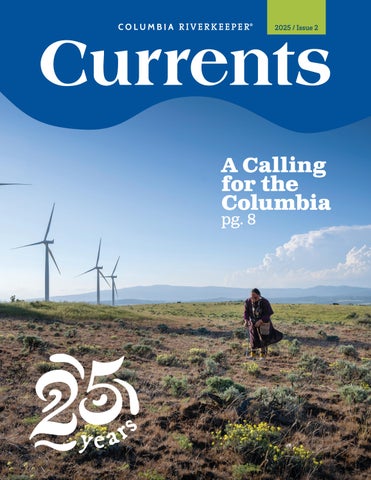
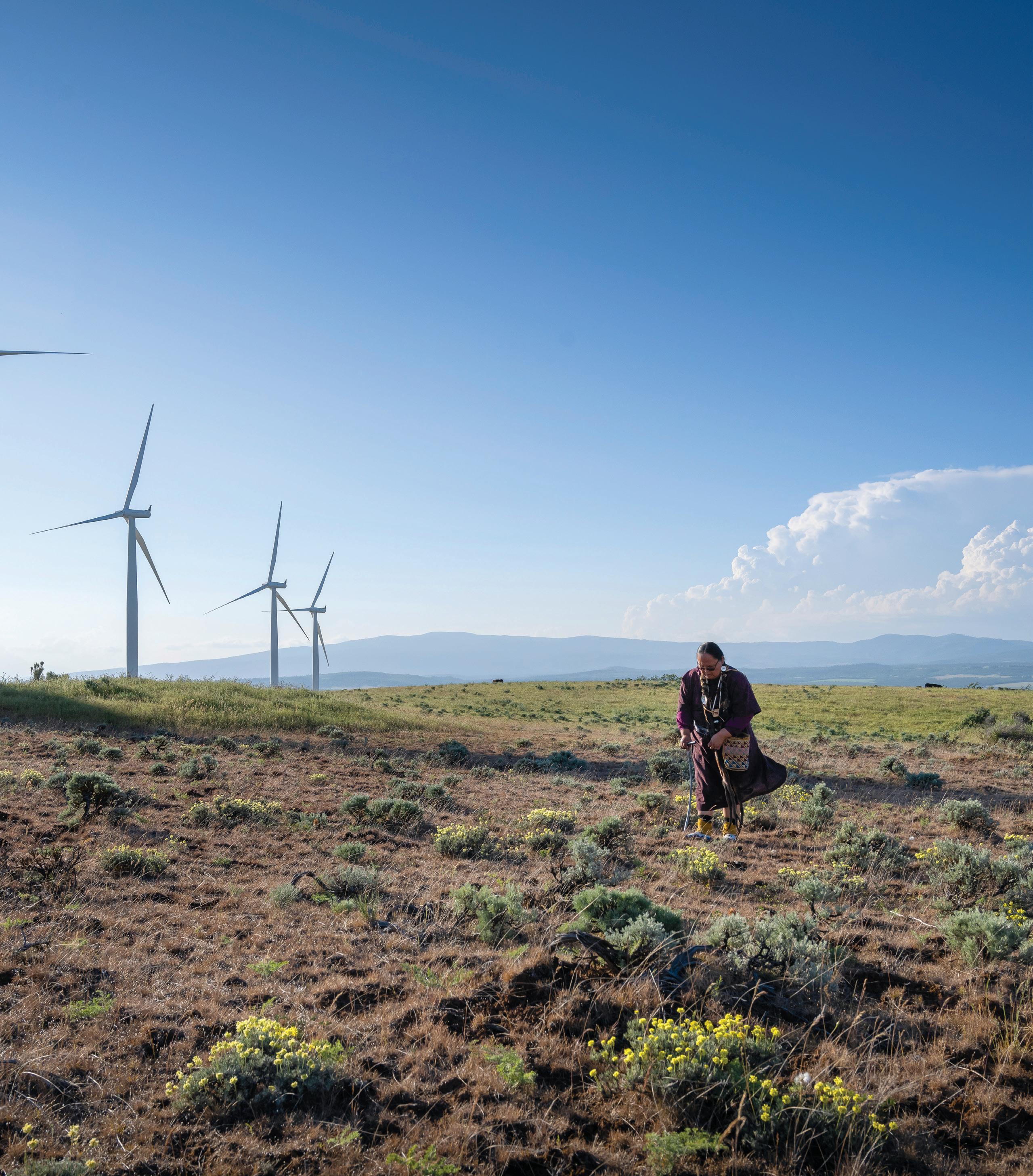
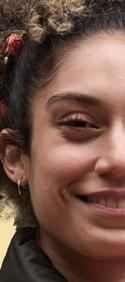
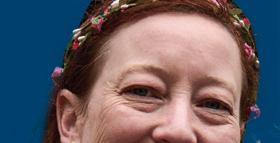
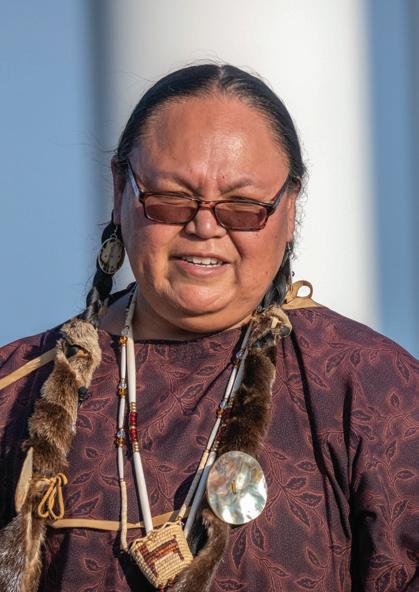
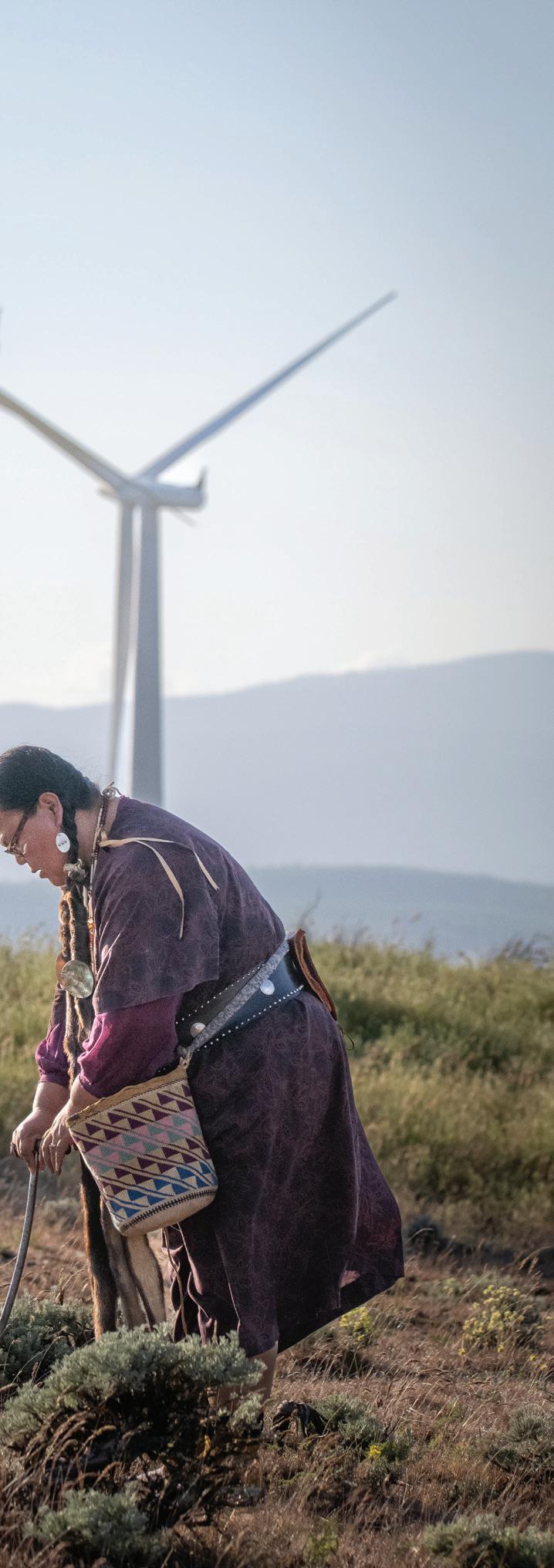
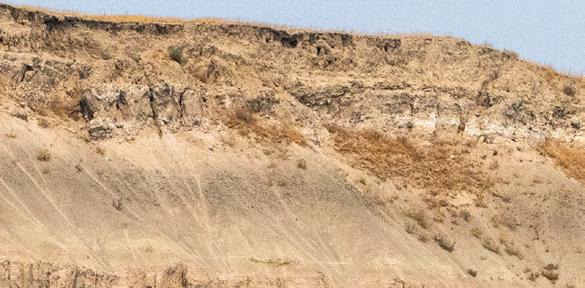
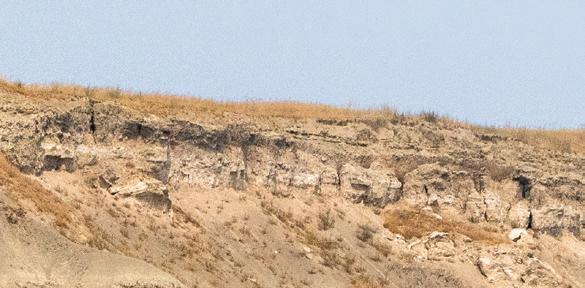
Front cover: Columbia Riverkeeper Board Member
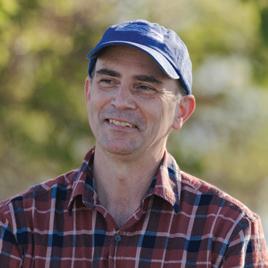
Elaine Harvey at the Goodnoe Hills, known as Put-a-lish. Photo by Matt Swain.
Our Mission
Your Impact in 2025 C
To protect and restore the water quality of the Columbia River and all life connected to it, from the headwaters to the Pacific Ocean.
Our Vision
A Columbia River that unites people to fight for clean water, abundant fish and wildlife, and our climate.
Our Commitment
Embrace diversity, equity, and inclusion at every level of our work.
Columbia Riverkeeper earned the highest ratings for top charity guides
Four stars = Exceptional. Exceeds industry standards and outperforms most charities in its cause.
olumbia Riverkeeper’s successful formula combines strategic legal advocacy, community organizing, creative communications, and education. We work in solidarity with Tribes, partner with people who live and work along the Columbia, and celebrate the impact of people coming together to fight for what they love. Here are a few of the year’s highlights by the numbers.
Salmon Recovery
30,400 acre feet of water every year wasted by the Lower Snake River dams, enough to meet the residential needs of over 240,000 Washingtonians, according to a report commissioned by Columbia Riverkeeper and developed by the Stockholm Environment Institute
2,225 Columbia Riverkeeper members who told their senators and representatives to oppose laws that would undermine salmon recovery, energy modernization, commitments to Northwest Tribes, and progress towards undamming the Lower Snake River
15 nonpro t organizations that joined Columbia Riverkeeper’s comments opposing the “low-impact” certification of Wells Dam on the Columbia River, which harms migrating salmon and steelhead and drowns 25 miles of fall Chinook spawning habitat
Climate & Energy
6 lawsuits advanced to protect our climate and reduce air pollution, including legal challenges to NEXT Energy’s diesel refinery and the GTN Xpress pipeline expansion
2000+ Columbia Riverkeeper members and supporters who urged the Oregon Dept. of Environmental Quality to reject an air pollution permit for the Zenith Energy facility in Portland, OR
Cleanup Hanford
800+ Columbia Riverkeeper members who reminded the U.S. Dept. of Energy that leaked high level waste is still high level waste
70+ people who gathered on the Yakama Nation reservation to remember the bombings of Nagasaki and Hiroshima and the connection to the Hanford Nuclear Site
40+ pages of detailed technical comments submitted by Columbia Riverkeeper on the U.S. Dept. of Energy’s proposed plans for remediation of the 324 Building, located less than 1,000 feet from the Columbia River
Science & Education
250 water quality samples collected at Columbia River beaches
800+ kids and young adults who experienced bilingual (English and Spanish) environmental education through Columbia Riverkeeper’s outreach program
60+ events Columbia Riverkeeper hosted or partnered in to inspire people in Columbia River communities to speak up for clean water, salmon, and our climate
Clean Water
5 Clean Water Act legal actions brought or settled in 2025, all with the goal of reducing harmful pollution in the Columbia and its tributaries
$425,000 awarded to Tribes and nonpro t organizations as a result of our Clean Water Act enforcement actions
1500+ pounds of garbage collected at community cleanup events along the Columbia
13 proposed bills defeated in the Oregon Legislature that would have paved the way for new nuclear energy volunteers for cleanup
70,000+ people who watched our videos in Spanish or English about the fish advisories at Bonneville Dam and how to advocate
Platinum = Highest Seal of Transparency.
Columbia Riverkeeper, our nonprofit partners, and community members gathered to deliver thousands of petitions against Zenith Energy’s air pollution permit. Left to right: Samantha Hernandez, Oregon Physicians for Social Responsibility; Kate Murphy, Columbia Riverkeeper; and Dineen O'Rourke, 350PDX.
Photo by Alex Milan Tracy.
Strategies for Pushing Back in 2026
By Miles Johnson, Legal Director
The threats to the Columbia River and our communities are serious. But so are the opportunities to defend what we love, and even strengthen state and local protections for clean water and the climate. Here are a few of the strategies Columbia Riverkeeper will use in 2026.
We all have different expertise, and we all have a stake and a voice in protecting the Columbia.
Tell the Truth
In the face of lies and deception, we will operate with honesty and integrity. Count on Columbia Riverkeeper to bring you accurate, relevant information about how to enjoy—and protect—the Columbia River. Our staff have the legal and policy expertise to comb through thousands of pages of technical documents and find the right data to sway a decision-maker or judge. Our scientists monitor water quality at swimming beaches and share that information via SwimGuide so that you can use the river safely. When government agencies withhold public documents, our attorneys use
records requests and litigation to ensure transparency. We work hard to present information to you in ways that are both accurate and understandable. We all have different expertise, and we all have a stake and a voice in protecting the Columbia.
Beyond our staff, we hire scientists and consultants from a variety of fields to bring critical information to the public and policy makers. In 2025, we helped publish detailed factual reports on how data centers will affect energy and water use in the Northwest, how the Lower Snake River dams waste massive amounts of water through evaporation, and how NEXT Energy’s proposed diesel refinery won’t live up to its “renewable” hype. Next year, tune in for groundbreaking research on how Snake River dam removal would increase salmon and orca populations, revelations about fracked gas pipelines proposed near the Columbia, and real-time tracking of progress toward replacing electricity from the Snake River dams. Knowledge is still power.
Act Locally
Columbia Riverkeeper has always focused on state and local solutions, and working in solidarity with Tribal Nations. For good reason: state and local decision-makers are far more accessible and accountable to river communities than any president in the “other” Washington. State and local officials are also more willing to use their legal authority to protect clean water, climate, and communities when the president is attacking them. You might call this political posturing; we call it opportunity. Despite many challenges, we have real opportunities to work with Tribes and regional policy makers to increase protections for clean water and healthy communities. We don’t intend to waste them.
Defend Environmental Laws
Columbia Riverkeeper wields federal environmental laws—like the Clean Water Act—to protect water quality, recover salmon, and
Examples of How We’ll Push Local and State Policymakers to Protect the Columbia River in 2026
• Work with allies, Tribes, and members of the public to make sure that Oregon legislators keep saying “no” to bills that would allow nuclear development in Oregon.
• Support implementation of the City of Vancouver’s Climate Action Framework and Clark County’s Climate Project.
• Encourage the Washington Dept. of Ecology to use its full authority to find solutions to heat pollution from the Lower Snake River dams.
• Continue to elevate and implement the Columbia Basin Restoration Initiative, the historic agreement among the states of Oregon and Washington and the Tribal Nations of Nez Perce, Yakama, Umatilla, and Warm Springs.
defend river communities. The Trump administration is weakening and ignoring those laws. Alongside states, Tribes, and other organizations across the Northwest and the nation, we are doing our part to defend bedrock environmental rules and hold the federal government and polluters accountable.
We’ll go to court to defend what matters. The Trump administration is trying to rewrite regulations to harm the climate and the Columbia, but many of the new rules and orders are illegal. In 2026, we will challenge a rule that removes long-standing protections for the habitat of endangered fish and wildlife. We also anticipate, and will likely oppose in court, federal attacks on states’ authority to protect water quality and efforts to weaken Washington’s clean water laws. We’re also prepared in the event the U.S. Dept. of Energy follows through on its plan to
reclassify and abandon high-level nuclear waste at Hanford.
Build Power
When we value one another and work together for a healthy Columbia and safe communities, our movement gets stronger. Seemingly insurmountable challenges—like stopping Tesoro’s oil-by-rail terminal—have given birth to powerful and effective new networks of friends and neighbors who understand how to protect what matters. We will face new and unprecedented threats to public health and the environment in 2026. In the process of defending the Columbia, we will forge strong, lasting, reciprocal and powerful relationships among colleagues, partners, policy-makers, community members, and Tribal governments.
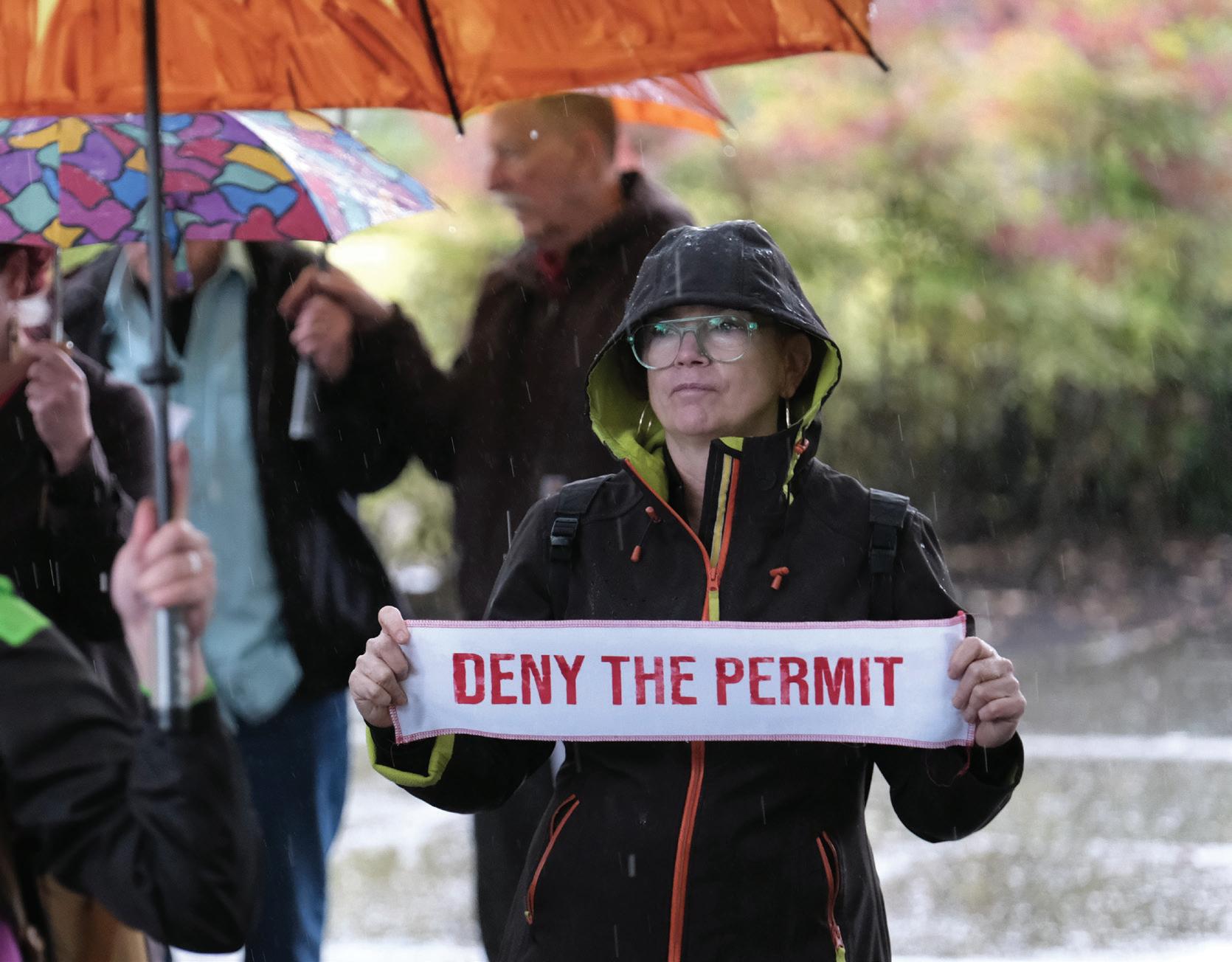
Community members rally ahead of the Oregon Dept. of Environmental Quality’s public hearing about Zenith Energy’s proposed air pollution permit. Photo by Alex Milan Tracy.
A Calling for the Columbia
By Jacqueline Keeler, Guest Author
An Interview with Columbia Riverkeeper Board Member
Elaine Harvey
Elaine Harvey, Watershed Department Manager for the Columbia River Inter-Tribal Fish Commission (CRITFC), is a citizen of the Kamiltpah (Rock Creek) Band of the Yakama Nation. Elaine integrates traditional ecological knowledge with Western science by bringing a holistic, community-centered perspective to resource management. Her work is based on the fundamental belief that the health of the community and the health of the environment are inseparable.
Elaine Harvey (EH): My background is in fisheries, water resources, environmental science, and forestry. I’ve spent the past twenty years working across these fields, often where they intersect with environmental and tribal law.
At the Columbia River Inter-Tribal Fish Commission (CRITFC), I oversee the Watershed Department, which works to protect the Columbia River and its tributaries within our Tribes’ usual and accustomed fishing, hunting, and gathering areas. CRITFC represents four Columbia River Treaty Tribes: the Yakama Nation, the Confederated Tribes of Warm Springs, the Confederated Tribes of Umatilla, and the Nez Perce Tribe.
Jacqueline Keeler (JK): What are the main environmental challenges you’re facing?
EH: High water temperatures are a major issue. In 2015, we lost thousands of sockeye salmon and sturgeon when temperatures exceeded what fish can tolerate.
In 2021, a heat dome pushed the air above 100°F for weeks, again warming the river and threatening migration.
A big factor is the dams—over 200 in the Columbia Basin. Instead
Our work is grounded in the 1974 United States v. Washington decision, known as the Boldt Decision, which affirmed our treaty rights to fish, hunt, and gather, and allocated tribes 50 percent of the harvestable fish. That decision also recognized that for Tribes to exercise these rights, there must be viable fish habitat. That’s where co-management and CRITFC’s technical and scientific support come in.
Our organization began small, but now includes departments for watershed restoration, fisheries science, enforcement of treaty rights, and harvest management. Each year, our scientists forecast salmon returns and determine the tribal quota for Washington and Oregon.
of a free-flowing, cool river, we now have a series of reservoirs that trap heat. We work closely with the Army Corps of Engineers on fish passage and water temperature management, and with the EPA on toxics and water quality.
CRITFC also monitors the estuary at Astoria through our Coastal Margin Observation and Prediction Station. This is what we would call a critical migration area, because when the salmon are leaving the Columbia River,
juveniles go into the estuary and their bodies are changing from being a freshwater fish to a saltwater fish. The fish are in the ocean for two to three years, then they come back. This transition zone of the estuary is really important. So, we spend a lot of time and effort on the estuary because it is a critical point for salmon migration.
We're putting millions of dollars into fish restoration and salmon restoration but you have all these other factors that are affecting the fish like dams, water temperature, predation, estuary changes with climate change.
JK: What inspired you personally to enter this work?
EH: I come from a traditional family and we have a community called the Ḱamíłpa Band. Some people know it as the Rock Creek
To me, this work isn’t just a job; it’s a calling. I wake up thinking about what problem we can solve next for the fi sh, the river, and our people.
— Elaine Harvey Watershed Department Manager for the Columbia River Inter-Tribal Fish Commission
Elaine Harvey (left and right) at Goodnoe Hills. Photos by Matt Swain.
Band, and we're known to be fishing people. Also, my relatives all fish for salmon on the Columbia. So, salmon's really essential to our life, culture, and ceremonies.
Back in the eighties, the salmon populations were really in decline. We usually have a salmon feast every spring, I must have been like 14, we didn't have a salmon. No longhouse for any Tribe had fresh salmon. It kind of opened my eyes as a young person. That’s when I decided to go to school to be a fish biologist. I started with AmeriCorps and Salmon Corps, doing restoration and monitoring, then earned a Bachelor’s in Fisheries and Aquatic Sciences from the University of Washington and a Master’s in Resource Management from Central Washington University, a program that integrated cultural and natural resources. I’m now completing a Ph.D. in Natural Resources and Fisheries at the University of Idaho.
Change takes time. You have to educate people about colonization, treaty rights, and why these issues matter—not just for Tribes, but for everyone who calls this land home.
I ended up working for my Tribe for nearly 20 years, monitoring steelhead and coho for about 15 years. And then, towards the end of my career at Yakama, I was the hydro systems oversight coordinator dealing with hands-on hydro issues in regards to fish passage and water temperatures. And then I became the Environmental Coordinator for Yakama Fisheries before joining CRITFC. So all my work is kind of in this science field, but also, incorporating traditional ecological knowledge that I have just as a Native person growing up and, and knowing like the natural laws. And the changes that I've seen over time to our fish fishing areas, to our huckleberry areas, to our root gathering. I just think it's a combination of everything in my life, which kind of brought me to this position.
To me, this work isn’t just a job; it’s a calling. I wake up thinking about what problem we can solve next for the fish, the river, and our people.
JK: How does your Yakama worldview influence the way you approach environmental work?
—Elaine Harvey
when you take something away, it's going to cause a domino effect on another species to the ecosystem.
In our way of thinking, you can’t separate elements of the ecosystem or think in silos. That’s how we approach salmon restoration—looking at the whole basin, not just one watershed. Collaboration among Tribes, agencies, and scientists is essential.
It is sad that today our sacred salmon are now labeled as unhealthy to consume because of toxics from pesticides and industrial waste.
We’ve even had to issue advisories warning tribal members—especially pregnant women and elders—not to eat too much salmon or lamprey. But our elders still say, “We’ll eat salmon even if it’s radioactive,” because it’s part of who we are.
JK: How have federal policies and administrations affected your work?
EH: The current administration has made things harder. We can’t even use the term “climate change” in grant applications. Some Inflation Reduction Act (IRA) funds meant to help Tribes were frozen or canceled, creating huge uncertainty.
One of the most important lessons is the power of alliances. In college, no one told me how crucial relationships and partnerships would be. You can’t protect the river alone—you need allies, even outside the tribal
world.
That’s how we’ve made progress, like when CRITFC worked with Columbia Riverkeeper or when Yakama Nation fights projects like Goldendale Pump Storage. Building trust, communicating, and finding shared
EH: In our Yakama culture and teachings and upbringing, we always share. It was shared with me from our elders that everything is connected. That if you're going to clear cut the forest and the headwaters, it's going to impact the creek from the headwaters all the way down to the Columbia River. Or if you're going to drive one population of either an animal or aquatic species to extinction . . . everything has a purpose. So
Our work depends on partnerships with federal agencies like NOAA and the EPA, so when there are shutdowns, cutbacks, or shifts in priorities, our progress on water quality and climate adaptation suffers. It’s frustrating, because the problems—warming rivers, declining fish runs—don’t wait for politics to settle.
JK: What have you learned over your career that you wish young people knew?
values is key.
I also served on the Northwest Forest Plan Federal Advisory Committee—22 people from Tribes, industry, NGOs, and government. We spent months learning from each other until we could make unanimous recommendations. Through that collaboration, I helped get commercial huckleberry picking banned on the Gifford Pinchot National Forest—something people This interview has been edited and condensed. said was impossible without an act of Congress. It happened because of persistence, education, and relationship-building.
That’s another lesson: perseverance. Change takes time. You have to educate people about colonization, treaty rights, and why these issues matter—not just for Tribes, but for everyone who calls this land home. I always remind people: if you live here now, you’re a steward too. Being a steward means protecting the land and water for future generations, not just seeing them as resources to profit from.
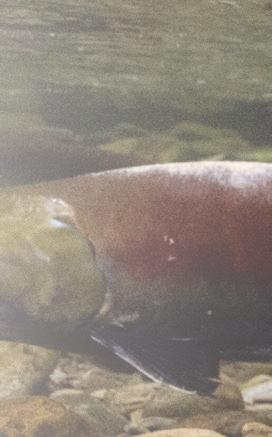
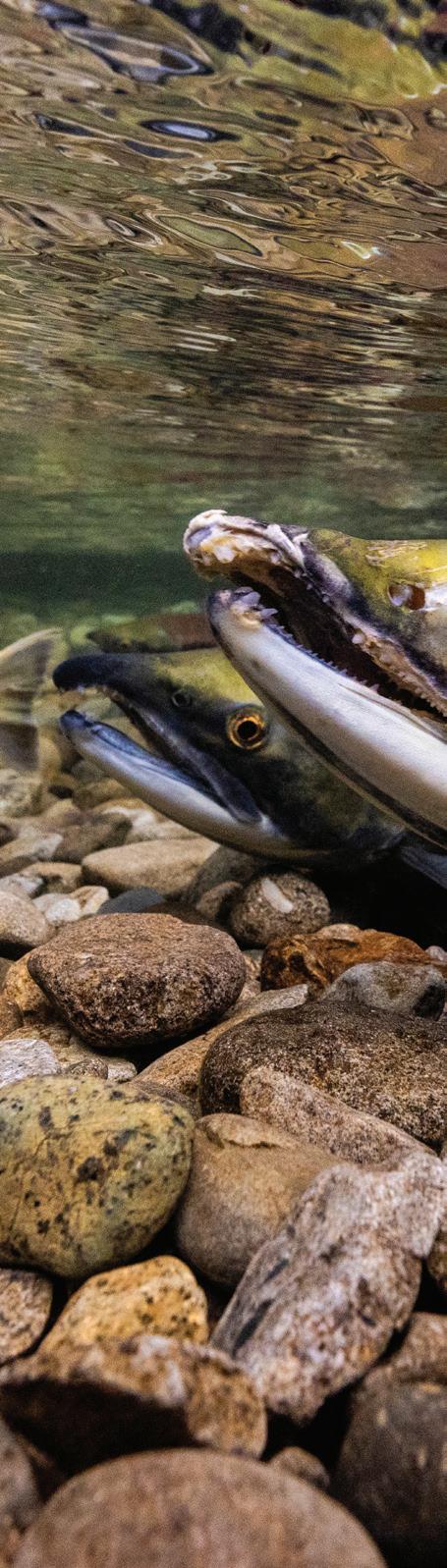
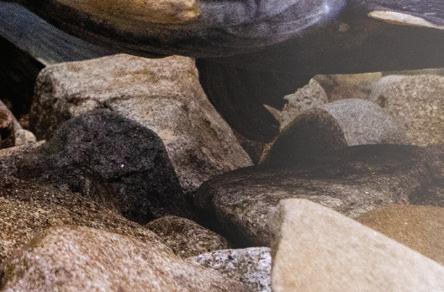
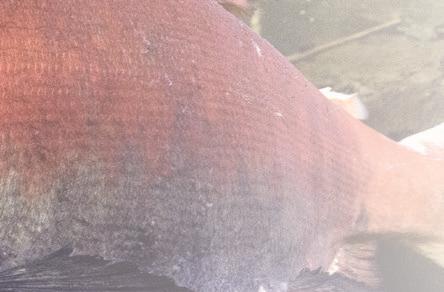
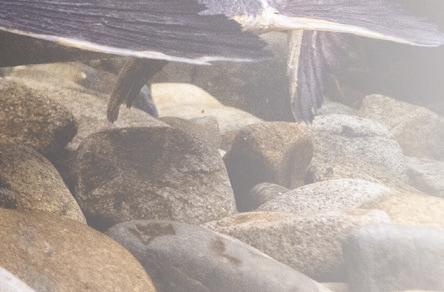
The clean cobbles of the Cle Elum River make ideal spawning habitat for sockeye salmon. The Yakama Nation has recently restored spawning streams, such as this one, that had been destroyed by irrigation projects. Photo by David Moskowitz.
Standing with the Community
By Juan Monje, Community Organizer
For years, residents of Vancouver have fought back against dangerous fossil fuel projects along the Columbia. With the proposed expansion of oil train and transloading operations at Tristar Transload PNW, those same concerns are rising again: more oil trains running through neighborhoods, more air pollution, more risks to our climate and river.
That’s where Columbia Riverkeeper steps in. Together with our partners at Advocates for a Cleaner Environment (ACE), we mobilized community members, translated the technical details of permitting into clear language, and made sure people understood what’s at stake.
Headed Off at the Start
When Tristar quietly filed paperwork to expand, Columbia Riverkeeper and ACE raised the alarm. We explained the facility’s history, the risks of transporting more petroleum by rail and river, and how the permitting process works. We turned out residents to public hearings, connected neighbors with resources, and supported local voices in speaking up.
Why it Matters
This fight is bigger than one facility. Each time we stop fossil fuel expansion, we protect our climate, health, and the Columbia River. And in Vancouver, the stakes are especially high. If Tristar’s air permit is approved, it will directly undermine the city’s hard-won climate change goals and policies. Local leaders and advocates fought for years to pass strong measures to cut pollution and reduce fossil fuel dependence. Allowing Tristar to expand would weaken those commitments, undercutting the community’s vision for a healthier, more sustainable future.
The Tristar campaign shows how community power works. When people have the tools and support to understand complex processes, they can stand up for their right to clean air, safe neighborhoods, and a healthy Columbia.
At Columbia Riverkeeper, we’re committed to working alongside grassroots groups like ACE to make sure polluters can’t expand without a fight and without the community’s voice being heard.
Vancouver city planning staff confirmed that Tristar abandoned its expansion plans after the project was deemed subject to the City’s Fossil Fuel Ordinance. Instead, the company will only repair existing equipment, with no added capacity. I’m proud to be part of a team that is deeply connected to river communities and doing everything we can to protect our climate and the river.
We’re also committed to protecting policies and plans that protect the Columbia and its communities, including:
Washington State Climate Change Goals: Under the Climate Commitment Act and related policies, the state is targeting a 95-percent reduction in climate pollution by 2050, alongside near-term milestones.
Vancouver Comprehensive Plan (“Our Vancouver”): This plan is the guiding 20-year growth and development roadmap for Vancouver, active through 2045, to decrease emissions.
Washington State Environmental Policy Act (SEPA): The foundational state law requires environmental review of proposed projects like facility expansions, including evaluation of impacts, public comment, and mitigation
As a result, decision-makers heard from a strong, informed community. The company was forced to scale back its plans, and regulators now know the public is paying attention. Instead of letting fossil fuel expansion slip through unnoticed, our coalition made sure the public interest came first. steps.
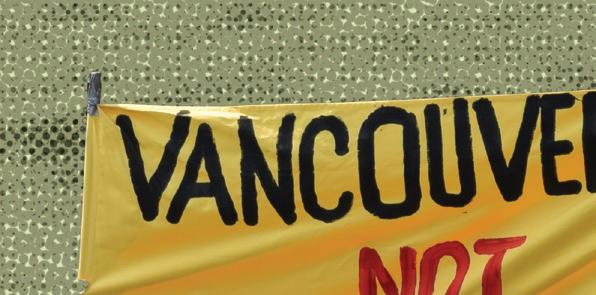
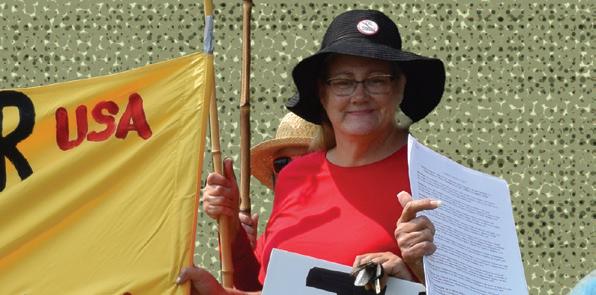
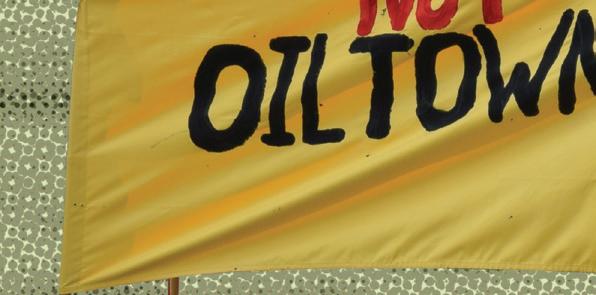
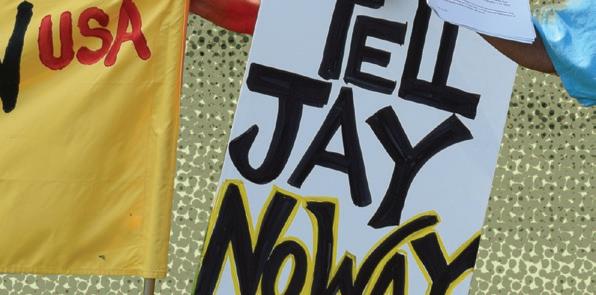
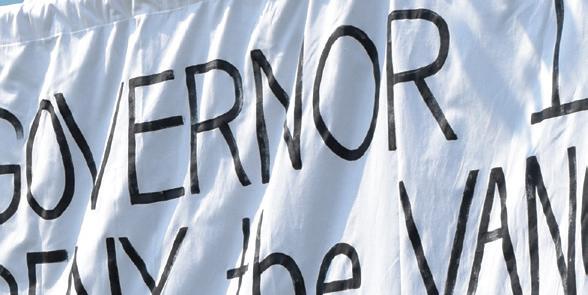
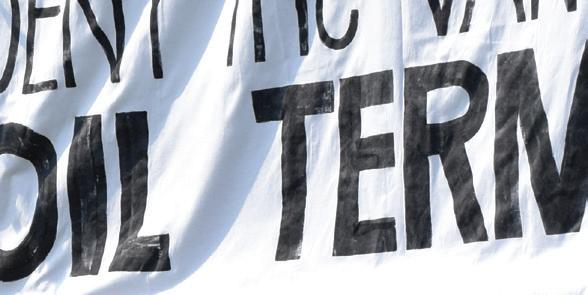
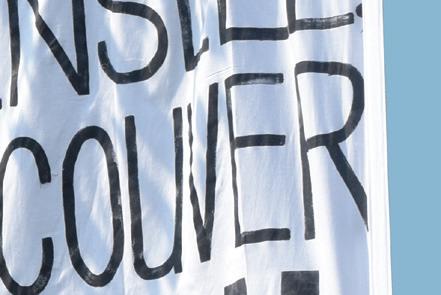
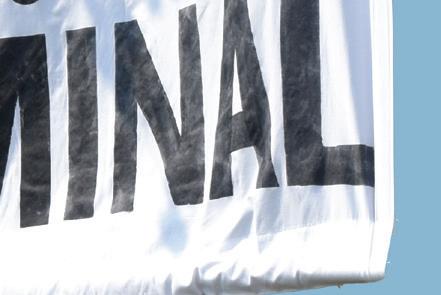
Rally and public hearing in Vancouver, Wash., in 2016 about the Tesoro Savage oilby-rail terminal. In 2018, Governor Inslee denied the project.
Remembrance and Bold Action
By Dan Serres, Advocacy Director
The Hanford Nuclear Site is a place of deep harm and deep healing. In 2025, Columbia Riverkeeper’s Cleanup Hanford Program took a layered approach—collaborating with Yakama Nation on education and outreach to Tribal youth, diving into rabbit holes to critique complex cleanup plans, and advancing lawsuits for government transparency. And we paused to remember: this year marks the 80th anniversary of the atomic bombings on Nagasaki and Hiroshima, Japan.
Connection Across Time, Cultures
This summer Columbia Riverkeeper had the honor to collaborate with Yakama Nation as the Tribe welcomed hibakusha, atomic bomb survivors, at a Day of Remembrance on the Yakama Reservation.
The Tribe hosted Norimitsu Tosu, an 83-year-old Hiroshima survivor, and his son, peace activist Fumi Tosu, who organized a “Fierce Nonviolence” pilgrimage calling for an end to nuclear weapons.
“When we think about nuclear weapons, we most often think
weapons production and testing. The event also highlighted Yakama Nation’s ongoing leadership in cleanup.
Also in August, Board President Emily Washines, a Yakama Nation member, spoke at Portland’s Day of Remembrance. She asked: “In 1000 years, in 3025, what will Hanford look like? Who will drink the water, skip rocks from shore, gather the foods, and nourish future generations?”
of Hiroshima and Nagasaki,” explained Fumi. “But one of the intentions of this pilgrimage is to expand that view to include testing of nuclear weapons, mining for the uranium, storage and disposal of nuclear waste, and the current deployment of thousands of nuclear weapons, including at the Trident submarine base in the Puget Sound.”
Together, we reflected on Hanford’s role in producing the plutonium for the bomb dropped on Nagasaki, which killed more than 80,000 people, and on the continuing impacts of nuclear
Her words reminded the crowd that Hanford’s story is not just about the past. The event also included testimony from hibakusha, veterans, and Marshall Islands survivors, connecting the victims of nuclear weapons use and testing to the urgent need for nuclear abolition today.
Generational Sharing
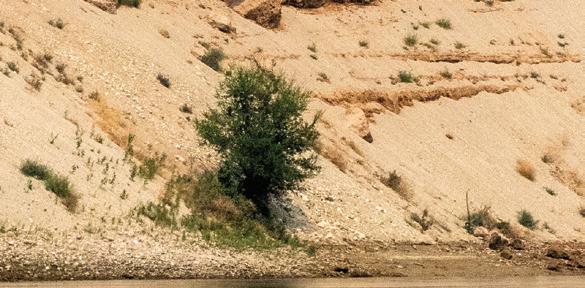
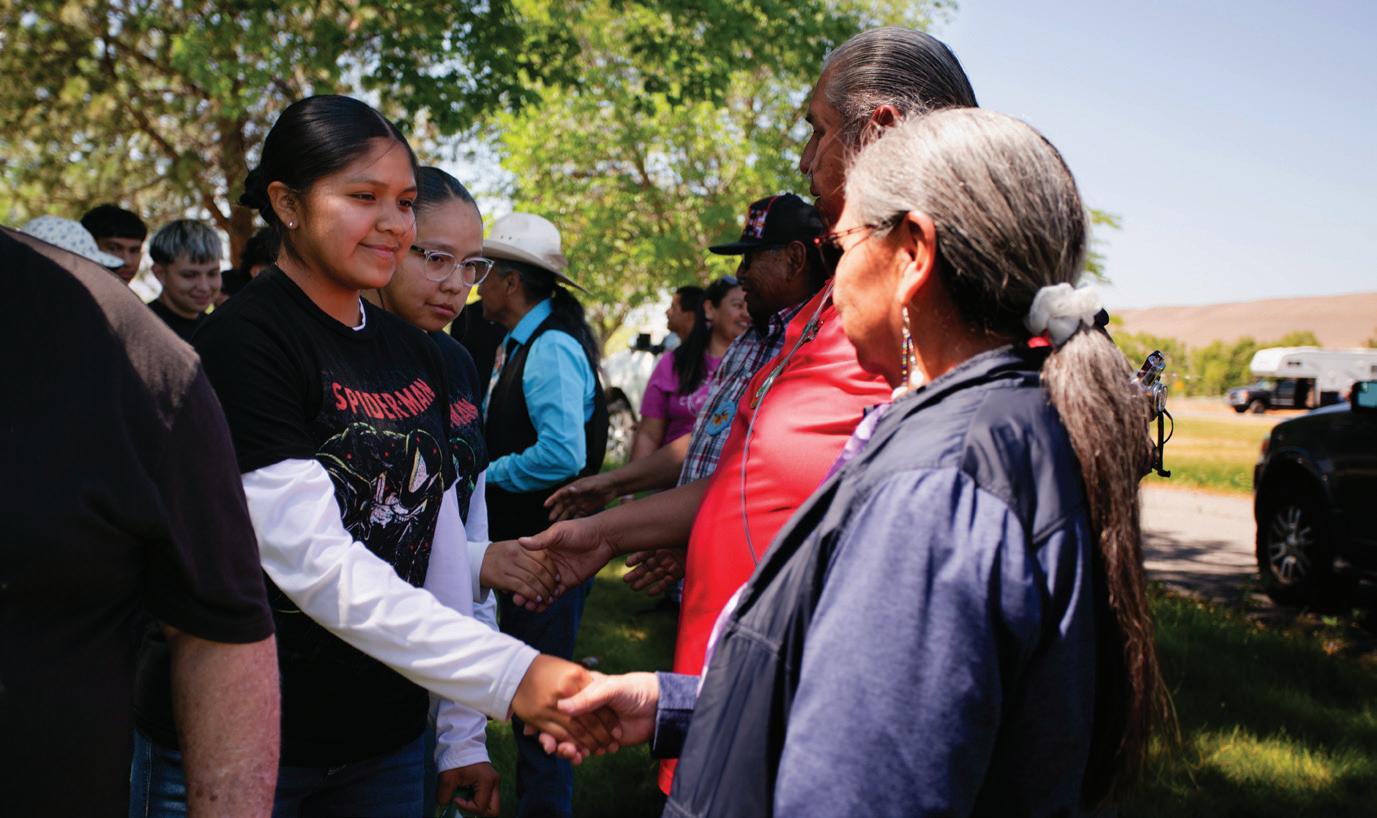
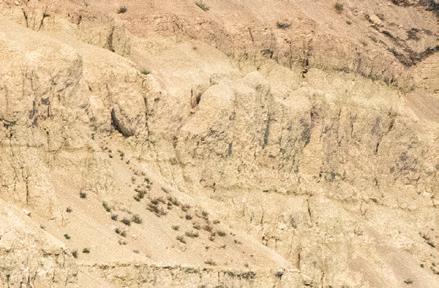
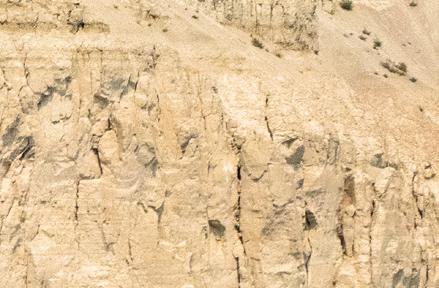
This year’s Hanford Journey, co-hosted by Columbia Riverkeeper and Yakama Nation Environmental Restoration and Waste Management program, brought together students and elders at the Hanford Reach to learn about the history of the land and the future of cleanup. Over a shared meal, boat tours of the White Bluffs, and powerful stories, elders shared with the next generation.
the waste as high-level waste. Columbia Riverkeeper, alongside Heart of America Northwest, Hanford Challenge, Oregon Physicians for Social Responsibility, and Yakama Nation, mobilized to demand that Energy comply with the law and prioritize worker safety.
Over 800 Columbia Riverkeeper members signed a petition calling for safe and legally compliant cleanup. The sheer volume and quality of comments sent a clear message that communities will not accept shortcuts.
Push for Transparency
Over a shared meal, boat tours of the White Bluffs, and powerful stories, elders shared with the next generation.
energy. But it must be socially just and environmentally sound, particularly in this area, which has been rife with cleanup challenges.” Transparency is not optional when the stakes are this high.
The Fight Continues
Bold Action for Cleanup
With reflection must come action. Less than 1,000 feet from the Columbia sits the 324 Building, one of Hanford’s most radioactive and dangerous sites. Recent findings revealed a surprise: higher levels of contamination than expected— enough to deliver a lethal dose of radiation within hours of exposure.
Cleanup challenges go beyond radioactive waste. Energy has also advanced a proposal to lease 19,000 acres of Hanford for clean energy development. While renewable energy is essential, serious concerns remain. Would development delay cleanup? Were Tribes properly consulted? Could it open the door to new nuclear reactors?
When Energy refused to release records about the project, Columbia Riverkeeper filed a lawsuit under the Freedom of Information Act.
The U.S. Dept. of Energy’s draft cleanup plan omitted a legally required component: treating
Senior Attorney and Hanford Program Director Simone Anter explains, “We’re supportive of green
This summer was full of reminders of Hanford’s power—the destructive legacy of nuclear weapons and the resilience of people committed to peace and restoration. The work ahead is immense. But the strength of this movement lies in its intergenerational and intercultural connections. Hanford’s future is not yet written. Together, we can ensure that the Columbia River is protected, that cleanup is pursued with integrity, and that remembrance continues to guide bold action.
Students greet Yakama Nation elders and officials during