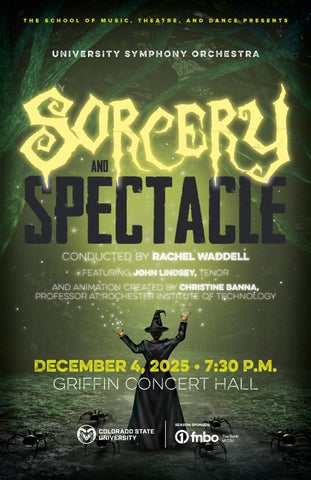
CSU SYMPHONY ORCHESTRA
DECEMBER 4, 2025 | 7:30 P.M. | GRIFFIN CONCERT HALL
SORCERY AND SPECTACLE
Follow Us on Instagram @CSUOrchestras
Program:
Overture to The Magic Flute (Die Zauberflöte) Wolfgang Amadeus Mozart (1756 – 1791)
Five Mystical Songs
I. Easter
II. I Got Me Flowers
III. Love Bade Me Welcome
IV. The Call
V. Antiphon
Ralph Vaughan Williams (1872 – 1958)
John Lindsey, Tenor
The Firebird Suite (L’Oiseau de feu) (1919 Version)
I. Introduction (L’introduction)
Igor Stravinsky (1882 – 1971)
II. The Firebird and its dance (L’Oiseau de feu et sa danse)
III. The Firebird’s variation (Variation de l’Oiseau de feu)
IV. The Princesses’ Khorovod (Rondes des Princesses)
V. Infernal dance of King Kashchei (Danse infernale de roi Kachtcheï)
VI. Berceuse (Lullaby)
VII. Finale
Christine Banna, Projection Designer
Nicole Diroff, Assistant Projection Designer
Courtney Guastafeste, Assistant Animator
Vanessa Sweet, Additional Animation
For your awareness, this performance uses flashing lights, which may affect some viewers. If you need support at any time, our events staff are available to help.
PERSONNEL:
Dr. Rachel Waddell, Music Director and Conductor
Sam Cooper, Assistant Conductor and Graduate Teaching Assistant
Flute
Evan Moore, Principal for Mozart and Vaughan Williams
Annika Johnson, 2nd flute for Mozart and Vaughan Williams
Ella Patterson, Principal for Stravinsky
Elizabeth Movinsky, 2nd flute/piccolo for Stravinsky
Oboe
Madina Rashidova, Principal
Amber Mills, 2nd oboe for Mozart and Vaughan Williams, 2nd oboe/english horn for Stravinsky
Clarinet
Orion Rayburn, Principal on Mozart
Bradley Irwin, Principal for Vaughan Williams and Stravinsky
Kaiden Pink, 2nd clarinet for Mozart and Vaughan Williams
Peter Hansen, 2nd clarinet for Stravinsky
Bassoon
Evelyn Underwood, Principal for Mozart and Stravinsky
Brody Ramirez, Principal for Vaughan Williams, 2nd bassoon for Mozart
Zhihong Zhang, 2nd bassoon for Vaughan Williams and Stravinsky
Horns
Colby Hutson, Principal
Jenna Yonce, Asst. Principal
Zoe Huff, horn 2
Jonah Loschky, horn 3
Maxine Ewing, horn 4
Trumpet
Bryce Wicks, Principal for Vaughan Williams, 2nd trumpet for Mozart
Lauren Smith, Principal for Mozart, Asst. Principal for Stravinsky
Adam Smith, Principal for Stravinsky, 2nd trumpet for Vaughan Williams
Trombone
Carson Koch, Principal
Silas Riep
Amber Minich, Bass
Tuba
David Davis, Principal
Percussion
Luci Harlow, Principal
Dylan Ewing
Harrison Gelber
Nathan Krause
Neo Shaffer
Harp
Katerina Mead, Principal
Piano
Reynaldi Raharja, Principal
Violin 1*
Ella Batson, Concertmaster for Mozart and Vaughan Williams
Geneva Boersema
Alyssa Byrne
Coverdale
Mason England
Li Gomez
Kirby Miller
Nathan Newman
Russell Wolfe, Concertmaster for Stravinsky
Violin 2*
Lamarana Baldé
Grace Bennett
Maribel Brannan
Taylor Green
Fabian Kaltenbach
Alexander Latham, Principal
Mari Marsh
Jordan Olson
Haley Rieger
Violas*
Raymundo Barrera
Cassidy Hall, Principal for Mozart and Vaughan Williams
Alan Larsen
Madison Ramonette
Jade Vargas-Reynoso
Ruby Ybarra
Charlie Wootton, Principal for Stravinsky
Cellos*
Zuzu Davis
Amy Effinger
Aurora Farrell
Matt Fox
Axel Gallegos, Principal for Stravinsky
Isabelle Howard
Caleb Kintner
Cora Larson
Taryn Limke
Talitha Marinho, Principal for Mozart and Vaughan Williams
Louisa Mitchell
Lillian Rogers
Avery Stahla
Alex Strobel
Bass*
Nick Hailey
Lucy McHugh, Principal
Josephina Matibag
*The members of the string section are listed alphabetically.
Librarians
Dr. Ethan Urtz, Head Librarian
Sam Cooper, Librarian Liaison
Devon Bignell
Gabriela Greenberg
Set-Up Crew
Nathan Krause
Lucy McHugh
Sam Cooper
THE CSUSO WISHES TO THANK:
Dr. Ethan Urtz
Devon Bignell
Gabriela Greenberg
Nathan Krause
Lucy McHugh
Harrison Gelber
Adam Smith
Daniel Stein, SMTD Events Manager, and his student staff
Valerie Reed, Assistant Events Manager
Jim Doser, Audio Engineer
Dr. Dawn Grapes, Professor of Music History
Dr. John Lindsey, Professor of Voice
Dr. Galit Kaunitz, Professor of Oboe
Dr. Cayla Bellamy, Professor of Bassoon
Dr. John McGuire, Director of the Department of Music and Brass Area Coordinator
Dr. Drew Leslie, Professor of Trombone
Dr. Rose Wollman, Professor of Viola
Dr. Meredith Blecha-Wells, Professor of Cello
Professor Ron Francois, Violin
Professor Cristian Mazo, Double Bass
The Colorado Symphony Orchestra musicians and staff who contributed their time and expertise in leading Stravinsky sectionals:
Dmitri Pogorelov, Violin
Mary Cowell, Viola
Kelcey Howell, Cello
Mary Reed, Bass
Jason Lichtenwalter, Oboe/English Horn
Morgan Davidson, Bassoon
Paul Naslund, Trombone
Lizzie Van Wirt, Percussion
Lindsay Genadek, Community Education Manager
PROGRAM NOTES
Overture to The Magic Flute (Die Zauberflöte)
Wolfgang Amadeus Mozart (1756 – 1791)
The “Overture” to The Magic Flute is the first piece of music heard in the German singspiel, Die Zauberflöte. Written by Mozart in 1791, this work was performed on stage only two days after Mozart finished his composition, allowing barely any time for the ink to dry on the page. The opera as a whole was the response of librettist Emanuel Schikaneder and composer Wolfgang Amadeus Mozart to other popular operas at the time. The project began taking shape as Mozart felt a lack of success in Vienna, likely struggled with debt, and needed a new place to explore theatre.
Mozart’s “Overture” to The Magic Flute serves as a precursor for what follows in the larger operatic work but does not foreshadow the individual characters in the opera. The plot of the full opera follows the main character Tamino through his journey to rescue Pamina, the queen’s daughter, with whom he falls in love. The overture has two distinct parts: a slower (adagio) introduction followed by a faster (allegro) section. The overture’s first sounds feature three prominent chords, heard a total of five times. In these, Mozart references Masonic ideas that underlie the opera, for the numbers three and five carry great significance to the Freemason people. The Cambridge Companion to The Magic Flute lists other major themes as “terror; triumph; popular, if slightly misogynist, comedy,” while biographer Julian Rushton highlights “politics, religion, and Freemasonry” as well as “magic, adventure, and…conflict of good and evil.”
Although Mozart composed a number of overtures, this one is unique due to the fugal material present at the start of the allegro section. Some musicians believe that this material was borrowed from Clementi’s Sonata in B-flat. All throughout the sonata-like form of the music, different instruments trade fugal passages in various tonal areas that are explored before an immediate pause in the music. This break signals a return of the “threefold chords,” before a transition back into allegro. Mozart’s writing leads the listener on a dynamic journey to an exuberant ending, just like the drama that follows. The opera’s premiere on September 30, 1791, only months before Mozart’s death, served as a distinct model for other composers. As you listen to this music, be sure to relate the relationship of the “Overture” to the ideas of Freemasonry and religion as you consider how it might relate to the concert theme of “mysticism and spirituality.”
— Program Note by Harrison Gelber
Five Mystical Songs
Ralph Vaughan Williams (1872 – 1958)
Ralph Vaughan Williams was a well-known British composer who wrote symphonies, concertos, orchestral works, operas, choral pieces, and chamber music. He was a teacher, conductor, historian, musical editor, and even a folksong collector, whose compositions commonly contained components of British folk music. George Herbert (1593–1633), a seventeenth-century priest in the Church of England, authored the verse set in Five Mystical Songs. As a devout Christian, faithful writer, and mystic poet, he wrote The Temple, an impressive collection of 164 poems. While Herbert’s anthology was written almost three centuries before Vaughan Williams set the verses to music, his countryman’s orchestration breathed new life into Herbert’s words. The British composer, although agnostic, appreciated Herbert’s clear and strong love for music, which led him to choose four works from the collection, one of which is separated into two songs, leading to five total pieces.
Vaughan Williams started writing Five Mystical Songs in 1906 but only dabbled with the music periodically until he was asked to compose a work for a Three Choirs Festival in 1911. This commission prompted him to complete the song cycle, which was first performed at the Worcester Cathedral on September 14, 1911. The premiere was conducted by Vaughan Williams himself and featured the London Symphony Orchestra with baritone soloist, Campbell McInnes. Although originally written for orchestra, baritone soloist, and optional SATB choir, there are other arrangements of this music for voices and piano.
The first movement—“Easter”— provides the perfect opening for a sacred work as Vaughan Williams uses music to portray sights and sounds common at the most important of all Christian holidays. While listening to the Romantic sounds of the orchestra, listeners are afforded time to reflect on what Easter means. “I Got Me Flowers”—with only harp and a few winds accompanying the baritone soloist—uses simple melodies that beautifully support the poem and foster impressive opportunities for expression. “Love Bade Me Welcome” was actually the last poem that Vaughan Williams set to music. The penultimate movement— “The Call”—is marked by its quieter, more delicate sound, preparing the listener for the last movement of the composition. “Antiphon” is a grandiose work in which a strong orchestral opening is followed by a powerful statement from the choir, blending all sounds strong and beautiful to ring past the walls of any performance hall.
While Five Mystical Songs was carefully crafted and contains the unique sounds of Vaughan Williams’s music, the work has been somewhat lost throughout history. This is likely a result of Vaughan Williams’s writing style that did not retain many twentieth-century conventions
traditionally followed by other composers. Vaughan Williams himself was mystical in nature, carefully lining up with George Herbert’s way of thinking. They both saw music as “not a science only but a divine voice,” as described by scholar Michael Kennedy, a collaboration providing the perfect aesthetic for a concert program of “mysticism and spirituality.”
— Program Note by Harrison Gelber
The Firebird Suite (L’Oiseau de feu) (1919 Version)
Igor Stravinsky (1882 – 1971)
At the time of The Firebird’s premiere in 1910, the young Igor Stravinsky was largely unknown, especially outside his hometown of St. Petersburg, Russia. The composer grew up in a musical family—his father, Fyodor, was an operatic star by the time Igor was born in 1882 and was enthralled by composers like Richard Wagner and Ludwig van Beethoven. Igor received some musical training in the form of casual piano lessons and eventually found a knack for composing. Still, he entered St. Petersburg University as a law student rather than a musician. Fortunately, during his opera career Fyodor connected with Nikolai Rimsky-Korsakov, which allowed Stravinsky the opportunity to present some sketches at his summer estate in 1902. The sketches lacked maturity, but Rimsky-Korsakov saw enough potential to take Stravinsky on as a student and encourage him to pursue a career in music despite his mother’s desire for him to continue studying law.
Several years later, Sergei Diaghilev, another Russian native, found himself in Paris hoping to disseminate his culture to Western European audiences through the arts. To that end, he founded a company known as the Ballets Russes in 1909, and the concept was well received. Diaghilev realized that Russian art could be successful in the West and continued forward with his plans. He decided to commission new musical works rather than using previously performed repertoire. Diaghilev believed that music should not merely be a decoration to a ballet, but rather an exciting and revolutionary piece of art on its own. To achieve this vision, he needed something big — something that would not only make a statement in the world of ballet, but also in the world of music.
Diaghilev began his search for the one who would compose a piece that would launch the Ballet Russes to fame. Diaghilev had heard Stravinsky’s Scherzo Fantastique in 1909 at a concert in St. Petersburg; his interest was piqued. Stravinsky was still young and internationally unknown, but Diaghilev contacted Stravinsky, who was still in Russia, and asked if he would compose a work for the 1910 season. The young composer jumped at the idea and began. For The Firebird, Stravinsky employed a rather large orchestra, using triple
winds and offstage brass and focused on painting the story in the music with more tone colors, volume, and chromaticism than was previously used in ballet.
Tonight’s performance presents the 1919 suite subsequently arranged by Stravinsky himself, which utilizes a slightly smaller orchestra (only double winds), and weaves together highlights from the larger work commissioned by Diaghilev. The 1919 edition not only allowed Stravinsky to extend his copyright on the work (an issue about which he was quite paranoid), but also allowed for smaller orchestras to perform the work without the commitment of triple winds and a full forty-five-minute score.
The Firebird tells the story of the young Prince Ivan, who in the ballet’s introduction is found wandering through a dark and enchanted garden owned by the wicked magician Kastchei the Immortal. In the garden, Ivan stumbles upon a Firebird, whom he chases and captures out of intrigue. In exchange for setting her free, the Firebird gives him a magical feather which he can use to call upon her for protection any time needed.
The response to Stravinsky’s score to The Firebird was resounding, but the staging and choreography by Mikhail Fokine was received poorly (perhaps increasing the pressure to compose the 1919 suite). Costumes were recycled from previous productions and there were four significant disagreements between Fokine and Stravinsky regarding the way in which the ballet should end. Alexandre Benois, a music critic involved in the production, stated that “If [The Firebird] did not turn out to be exactly what I had dreamed of, the fault does not lie with Stravinsky, for the score is undoubtedly one of his finest creations.” He continued, “It is difficult to imagine music more poetical, more expressive, more fantastic, and beautiful.” In spite of Fokine and Stravinsky’s strained relationship, Diaghilev, Stravinsky, and the Ballet Russes were launched to fame.
The Ballet Russes continued to improve and gain notoriety, using their newly discovered superpower in Stravinsky to premiere several more ballets, including Petrushka (1911), The Rite of Spring (1913), and Pulcinella (1920). These, along with The Firebird, went on to revolutionize symphonic music and are still performed regularly today. Other composers were tapped by Diaghilev, leading to the composition of works like Ravel’s Daphnis et Chloe (1912). After Diaghilev’s 1929 death, the Ballets Russes formally dissolved. Stravinsky continued to spread his neoclassical influence throughout the world, composing symphonies and chamber works that proved just as revolutionary as his ballets. He died in 1971 in New York, but his musical impact continues to thrill and enchant audiences today. — Program Note by Adam Smith
BIOS:
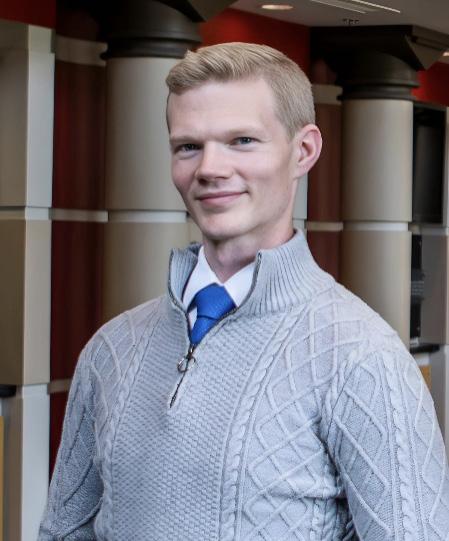
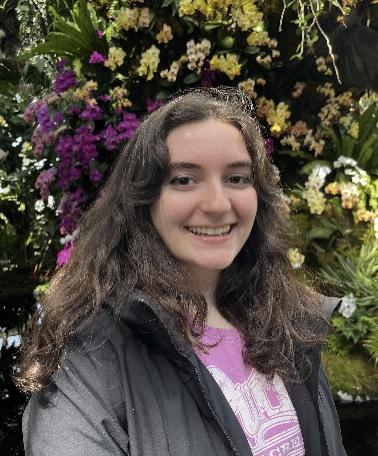
John Lindsey
Having performed regularly with opera companies and orchestras in the United States and abroad, John Lindsey brings a thorough understanding of high-level musicianship, stagecraft, healthy and sustainable vocal technique, and professional singing experience to his students.
Throughout his performance career, Professor Lindsey sang many of the most challenging works in the tenor repertoire, including works by Wagner, Strauss, Puccini, Verdi, and Bizet, along with multiple world-premiere performances with major companies in the United States and internationally.
His scholarship and research focus on nonviolent communication, compassion, and traumainformed pedagogy practices, offering students a safe and encouraging environment to develop resilience, insight, and self-awareness integrated with their vocal development. He has trained and worked as a meditation instructor and holds multiple certifications in traumasensitive meditation and mindfulness.
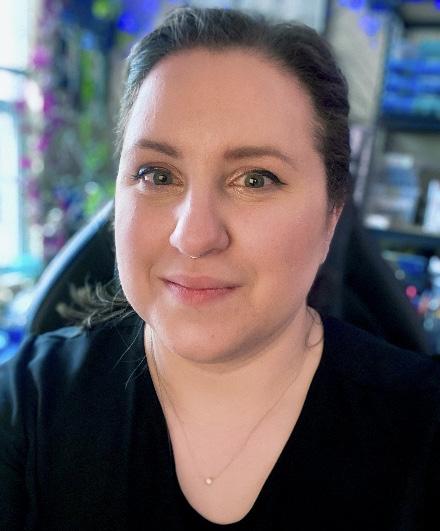
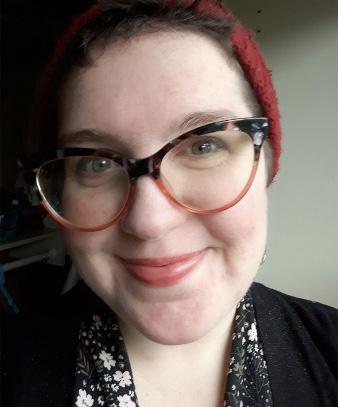
Christine Banna
Christine Banna is an internationally showing, experimental animator and multidisciplinary artist. She works in both contemporary and traditional media with a focus on experimental processes and projection design. Her films and projections have been shown at the European Cultural Council (ECC) in conjunction with the Venice Biennale and at various film festivals around the world. Some of her credits and clients include the Mount Hope World Singers, singer/songwriter Moira Smiley, composer Jennifer Bellor, pianist Christina Wright-Ivanova, Greater Boston Stage Company, MassOpera, Lowell Chamber Orchestra, among others.
Christine Banna received her MFA from the School of the Museum of Fine Arts, Boston. She received her BFA in Painting with a minor in Art History from Boston University’s College of Fine Art. She is an assistant professor in the School of Film and Animation at the Rochester Institute of Technology and currently resides and works in Rochester, NY.
Nicole Diroff
Nicole Diroff is a film projectionist and archivist based in Rochester, NY. She is a 2021 graduate of The L. Jeffrey Selznick School of Film Preservation, and has worked on a variety of archival projects at the George Eastman Museum, the Rockefeller Archive Center, and the Visual Studies Workshop. She specializes in analog film projection, and regularly projects film at both the Dryden Theatre and the Little Theatre.
Courtney Guastafeste
Courtney Guastafeste is a multidisciplinary artist who works in both 3D and experimental animation. She recently graduated from Rochester Institute of Technology with a BFA in 3D Animation and an immersion in Principles of Computing. Her past films have won multiple awards in film festivals internationally, including Audience Choice Award, Best Sci-Fi Short, and Official Selection. In addition to her films, Courtney has contributed to projects as a 3D modeler and stop motion fabricator including work as a 3D Art Intern at DB Creations, an AR gaming studio, creating assets for their newest game, Crystal Commanders. Courtney also worked as a Graphic Designer and Content Creator for MAGIC Spells Studios and a Content Creator for RIT Parents and Family Department. She was responsible for creating graphics and editing videos to be posted on their social accounts. Courtney currently lives and works out of Rochester, NY.
Vanessa Sweet
Vanessa Sweet is an award-winning multidisciplinary artist and educator that specializes in illustration and animated short films. She works with both digital and physical mediums, often with hand-painted watercolor textures, she creates hybrid pieces that utilize texture to create mood and feeling as a subtext to her work.
Her work has been shown in over fifty international and national festivals and conventions such as COP28, Science Film Festival, Anibar International Film Festival. Currently residing in Rochester, NY, Vanessa’s work often touches upon themes of social and environmental advocacy, activism, and sustainability. Through her independent studio she has created animations, illustrations, and graphic design for such clients as Fandango, Hallmark, the BBC and more.
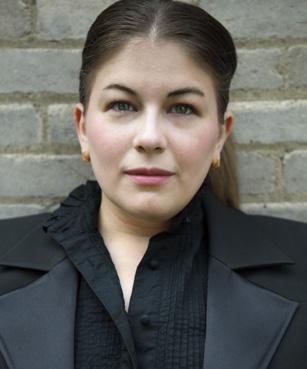
Rachel Waddell
Rachel Waddell shapes orchestras as interconnected forces, bridging the professional and educational to transform vision into action. With a proven record of growth, artistry, and impact across the United States and beyond, she positions ensemble artistry as a catalyst for community. Orchestras, under her leadership, pulse as civic and cultural heartbeats, rooted in the enduring complexity, beauty, and relevance of today’s orchestral music.
Whether coaching youth ensembles or collaborating with international soloists, Rachel approaches the podium with grit, imagination, and humor. She currently serves as Director of Orchestras at Colorado State University and the Music Director of the Longmont Youth Symphony. Rachel is a sought-after guest conductor, recently leading the TMEA All-State Orchestra Sinfonietta (2025) and the AA Montana Festival Orchestra (2024). Her past work with the University of Rochester Orchestras earned national acclaim for innovative programming, winning the American Prize’s Vytautas Marijosius Memorial Award in 2019 and 2020. In recognition of her ongoing commitment to education and mentorship, Rachel was named a Quarterfinalist for the 2025 Music Educator Award through the Grammys.
Rachel’s professional engagements span the Orchestre Métropolitain, Rochester, Las Vegas, and Denver Philharmonics, the Greater Bridgeport Symphony, and Southwest Michigan Symphony Orchestra, among others. She is currently a Music Director finalist for the MidColumbia Symphony in Washington. As Associate Conductor of the Canton Symphony Orchestra, she led over 80 concerts of classical, pops, and education programming. She has attended numerous conducting programs including the Dallas Opera’s prestigious Hart Institute for Women Conductors, and Mark Shapiro’s Conducting Intensive at Juilliard. In August 2022, she made her Vienna debut conducting Così fan tutte as part of the Vienna Opera Academy. In July 2023, she made her Canadian debut with the Orchestre Métropolitain, after being selected to conduct by Yannick Nézet-Séguin at Le Domaine Forget de Charlevoix
Driven to reshape the narrative of American orchestras, Rachel co-founded Conductors for Change, Inc., a 501(c)(3) nonprofit empowering artistic leaders to build inclusive, futureforward institutions. Her research explores how 21st-century orchestras can engage through liberal arts education, civic dialogue, and interdisciplinary storytelling to cultivate cultural transformation.
Rachel holds degrees from the Hartt School (BM, Composition) and University of Nevada, Las Vegas (DMA, Conducting), and earned a certificate in Music Industry Essentials from NYU’s Clive Davis Institute and Yellowbrick. She is a member of the Recording Academy.
From podium to program, Rachel continues to advance orchestras as interconnected, community-driven, and artistically alive. To learn more about Rachel Waddell please visit www.rachelwaddellconductor.com or follow her on Instagram @rachel_waddell_conductor.
COLORADO STATE UNIVERSITY MUSIC APPLIED FACULTY
Violin
Ron Francois
Viola
Rose Wollman
Cello
Meredith Blecha-Wells
Bass
Forest Greenough
Guitar
Jeff Laquatra
Flute
Ysmael Reyes
Michelle Stanley
Oboe
Galit Kaunitz
Clarinet
Wesley Ferreira
Saxophone
Peter Sommer
Dan Goble
Bassoon
Cayla Bellamy
Trumpet
Stanley Curtis
Horn
John McGuire
Trombone
Drew Leslie
Tuba/Euphonium
Brian Sugrue
Percussion
Eric Hollenbeck
Shilo Stroman
Harp
Kathryn Harms
Piano
Bryan Wallick
Tim Burns
Organ
Joel Bacon
Voice
Nicole Asel
Tiffany Blake
John Lindsey
WADDELL
DECEMBER 8, 2025 | 7:30 P.M.