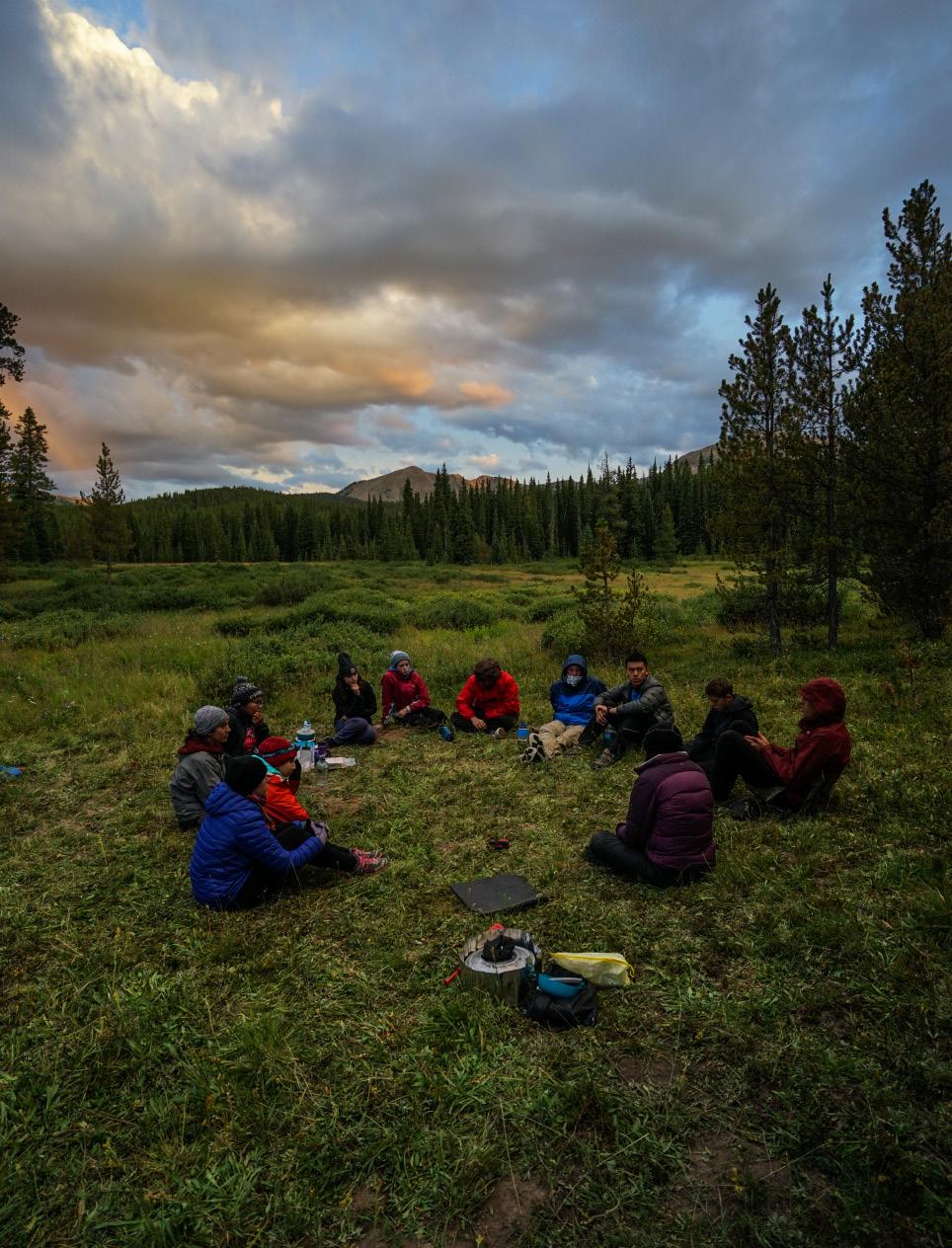
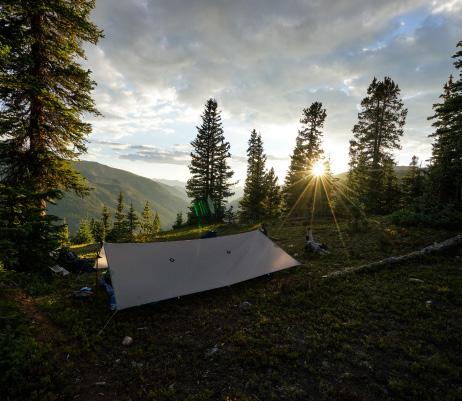
CRMS Colorado Rocky Mountain School Newsletter • Fall 2017 IN THIS ISSUE Service Crews at CRMS Alumni Weekend Recap Program Updates Wilderness 2017 near Sawyer Lake
photo by Whitton Feer ’18

be successful rather than focusing too heavily on the outcomes, and that our open and welcoming approach to encouraging students to learn new skills and participate in new activities is both increasingly rare and all the more important in an era of intense specialization. One might incorrectly conclude that our approach would ultimately compromise the overall performance of our athletes. But the results we see in the gym, playing fields, trails, and slopes suggest that a healthy and balanced approach to competition — with a focus on learning the lessons the sport teaches us rather than the outcomes — ultimately lead to impressive results, particularly for a relatively small school with our regional isolation.
and this isn’t isolated to just the students. A significant number of our faculty and staff who spend their weekends enjoying the local mountains, trails, rivers, and gyms are accomplished athletes in their own right. Unlike most schools, CRMS relies on its adults to actively participate in many of the activities that involve the students rather than simply passively coaching on the sidelines.
footage, and provides for better monitoring and access to better lighting.
When John and Anne Holden founded Colorado Rocky Mountain School as the “antidote to modern easy living,” they did so by establishing a core program that would include challenging academics, a diverse offering of arts, service-oriented work crews and household jobs, and universal student participation in sports programming. I have shared during my time here that our tongueand-cheek mascot is emblematic of a sports program that prioritizes a focus on the process that it takes to
This past year CRMS students performed admirably and successfully at the state and national levels in a number of sports. Outstanding performances for both female and male athletes over the course of the entire year indicate that our students are working hard both in and outside the classroom and drawing upon their CRMS experiences when it is necessary. One of our students who finished second in the state in her sport was asked if she was nervous at a critical time in her competition, and her response was revealing: “After Wilderness, nothing I experience will ever be that challenging.”
We have always believed that participation in sports can lead to a healthy and vibrant life of physical activity,
Ensuring that our community members have a facility where they can maintain strength, rehabilitate from injuries, and collectively train indoors as a team has been a priority for CRMS since the completion of the recent capital campaign and our decision to move forward with a new health and wellness center. In addition to having up-to-date equipment, I envision a space that makes available a broad set of materials that will educate our students on the most relevant understanding of physical health, including mobility, strength training, conditioning, and injury prevention and recovery.
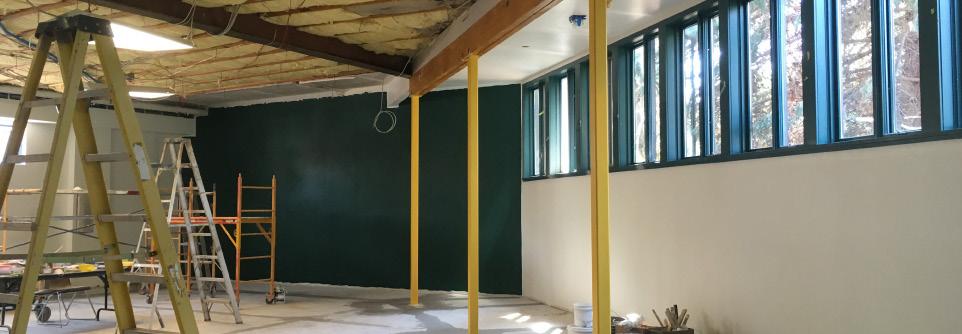
The new strength-and-conditioning facility will utilize the area between the gym and the Bar Fork that had served as a “multipurpose room” including the hallway. The new facility maximizes the space available by removing interior walls and the internal ramp that connected the gym to the student center. The new footprint significantly increases the overall square
Similar to all the work that has been done throughout the campus over the past decade, a significant amount of attention has been given to ensuring that the improvements we are making supports rather than alters our historic educational philosophy, an approach to education that continues to serve us so well today. Our attention is always on the needs of the students. We are going to remain focused on the process that contributes to their growth; we are going to continue to expect broad participation in our athletic program by all our students; and these experiences will be led by adults who work with the students in the classroom and the residential program.
The new strength and cnditioning facility is well underway. Construction will be finished mid-September.
CRMS Newsletter
HEAD OF SCHOOL Jeff Leahy // jleahy@crms.org
DIRECTOR OF ADVANCEMENT Lisa Raleigh // lraleigh@crms.org
DIRECTOR OF ANNUAL GIVING Beth Smith// bsmith@crms.org
ALUMNI & PARENT RELATIONS Randall Lavelle // rlavelle@crms.org
COMMUNICATIONS & MARKETING MANAGER Aimee Yllanes // ayllanes@crms.org
DIRECTOR OF ADMISSIONS Molly Dorais // mdorais@crms.org
500 Holden Way, Carbondale, CO 81623
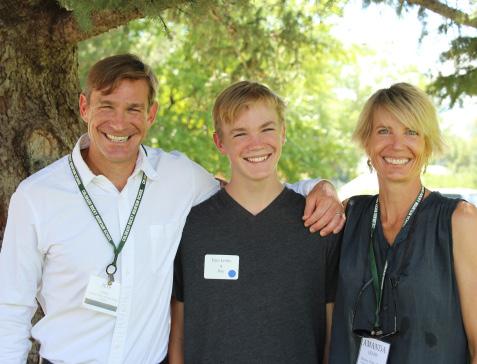
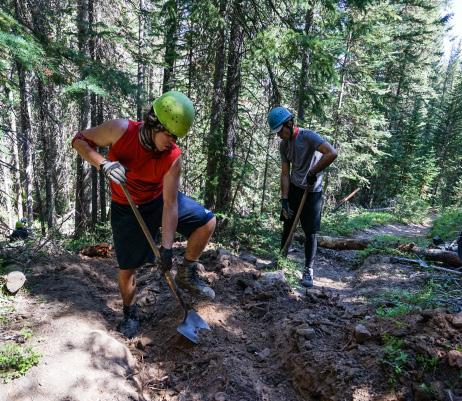
Head of School, Jeff Leahy with his wife Amanda (History Faculty Department Chair) and son Finnian ’21 at New Family Orientation in August. The is published three times a year by Colorado Rocky Mountain School. Fall 2017Each year, new students at CRMS head out on a 10-day Wilderness experience that begins with two days of trail-building work for the U.S. Forest Service. This volunteer work introduces a vital concept that students will be immersed in over their four years at CRMS.
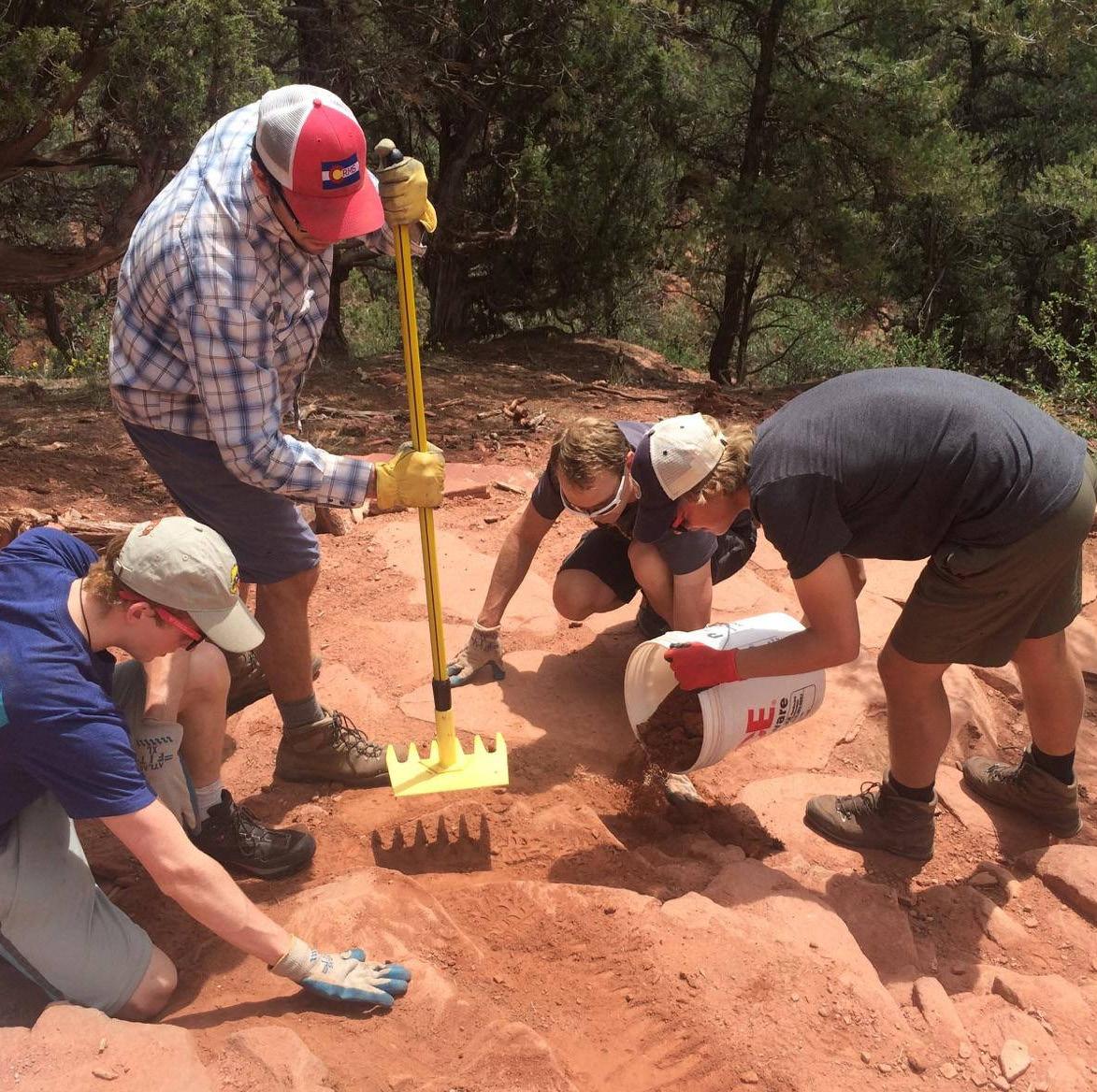
“It is not a mistake that the first thing we do with new students is emphasize that there’s a ton of value in doing work and doing work for others,” says Outdoor Program Manager Darryl Fuller.
Hard work and service to the community are core values that date back to the founding of the school in 1953. When John and Anne Holden arrived at the foot of Mount Sopris with the notion to open a coed boarding school as an antidote to modern, easy living, these ideals were critical.
“They were building a school campus while the school was trying to exist,” says Head of School Jeff Leahy. “Somebody had to clean the dishes. Somebody had to help cook the meals. The involvement of students in that process was essential to the daily functioning of the school.”
Over the decades that followed, that work was also necessary for building the school’s infrastructure. The Solar
Dorm and the Adobe Art Studio are both products of student-faculty work. While students are no longer building their own dorms today, the school remains committed to teaching the value of meaningful work and making a contribution to one’s community. To Leahy, that value creates an awareness of one’s place in the world and develops a willingness to make meaningful contributions on a daily basis. “Over the course of four years, our students leave this program with a capacity and an appreciation for doing the work that’s necessary. We are always complimented on our students being hard workers. That doesn’t happen accidentally.”
Nowhere are the lessons of hard work and community more tangibly practiced than in the Service Program, where students learn skills such as how to work together toward common goals and outcomes, how to bring their best selves to a project, and how to take satisfaction from the effort to improve the experience of others in the community.
“The most important outcome is the meaning and sense of purpose a student derives from the work that has taken place,” says Leahy. “The service program is ultimately an instructional platform no different than any of the subjects that are covered in the classrooms.”
Students helping to build and repair trails on Red Hill.FARM TO TABLE
Horticulture
Culinary
Ranch ARTISAN
Glassblowing
Ceramics
Blacksmithing
Theatre
THE TRADES
Bike Mechanic
Route Setting
Theatre Set Building
Trip Logistics
Ski Tuning CONSERVATION
Recycling & Sustainability
River Watch
Trail Building SCHOLASTIC
Publishing & Photography
Peer Tutoring
Consistency is key to the program’s enduring impact on students, according to Active Program Director Diane Hackl. While many high schools may offer service projects, they tend to be one-time activities. At CRMS, service is a part of everyday life.
“We’re asking students on a daily basis to participate in community and in the care and maintenance of the place we live and to do things on behalf of others around them. That happens all year long. The consistency of that has greater impact over time. We’re laying the groundwork so as they go out into the world after graduating, they want to extend themselves into their communities and provide service in a larger context.”
Historically known as Work Crew, the program recently was renamed to Service Crew to better reflect its values and vision.
“The change in name is intentional to ensure students understand the larger nature of what we’re trying to do,” says Leahy. “Plenty of work can be done on a daily basis, but that doesn’t mean students are learning from it or that it’s productive or valuable. There has to be an intention organized in such a way that they see the value of what they’re doing in the community and that we’re asking it of all our members.”
Along with the name change came a restructuring to better align the program with the broader mission of the school and allow students to understand the purpose and potential that the Service Crew program offers.
“We’re connecting the pieces programmatically for the students so they can see the scope of why they’re doing the work and what it means both to them and to everyone else in the community,” says Leahy. “Whatever work they’re taking on has a larger context than just within themselves individually.”
In order to better articulate that scope, service crews are now divided into five family groupings. Students can look at the groupings as a way of complementing their academic studies. They can choose to go deep into a single area of interest or go broad and try something new. These crews can also serve as résumé builders, which may be a new way for students to think about the program.
Within the five groupings, each quarter students choose from a menu of options. Some crews like Ranch have been around since the founding of the school. Others like Peer Tutoring are newer incarnations, but all must pass a litmus test to ensure they provide necessary, authentic, and relevant work experiences that are useful to students in today’s world.
“Nobody likes to just do busy work,” says Hackl. “That’s one of the pieces of the program that’s super engaging. It’s clear students are contributing in a genuinely helpful way to things that benefit their own education, their campus, and the environment that they’re living in.”
Unless a student is on a sports team, they participate in Service Crew twice a week for two hours in
the afternoon. The program creates opportunities for growth in a variety of arenas that range from character skills to technical skills to practical work habits, such as working independently or being on time. The crews often intersect in meaningful ways with learning happening in academics or the outdoor program as well.
“The goal of the school’s programming is to transition a teenager, who through the largest portion of their life has been dependent on other people, from dependence to independence to interdependence,” says Leahy. “That is really the scope of movement that we’re striving for. We hope the Service Program helps students understand that work has meaning and value.”
As the Farm to Table movement has swept the nation, CRMS’s Farm to Table service category is an excellent example of the school’s dedication to making service crews relevant to today’s world. Students can choose from Horticulture, Ranch, and Culinary crews.
In Horticulture, the two-acre garden provides 30% of the school’s vegetables annually, and it couldn’t exist without student assistance in preparing the gardens, planting, harvesting, and working on the annual plant sale fundraiser. The crew also opens students’ eyes as to how much work goes into creating the food they eat every day.
“It’s a learn-by-doing program,” says Garden Program Director Heather McDermitt. Students get to see the full circle of cause and effect when seedlings planted in January
are harvested in the fall. The entire school community appreciates the bounty and hard work at the school’s annual Harvest Dinner.
Stewardship is at the heart of the Ranch service crew, which is overseen by CFO Joe White. With 320 acres of ranchland and water assets oncampus to manage, students focus on tasks that range from the iconic CRMS chore of fence-post digging to helping a local rancher with his 100 head of cattle on the property to repairing diversion structures and ditches.
“The fence line might not be as straight as if we’d hired a fencing contractor,” White admits, “but it’s good for students to have exposure to hard manual labor and to put
themselves in the shoes of others who do that type of work for a living. Prepping the food in the kitchen, for instance, is tedious and sometimes challenging, but it helps students appreciate the work that others do that they benefit from.”
Character skills such as leadership, initiative, teamwork, and responsibility all come into play in these service crews, while academic topics such as biology and math are also incorporated. Current efforts now are focused on reinvigorating eight new acres of land historically used in agriculture on Tick Ridge. Two additional acres will be planted this fall, and a Bee-Keeping crew will be introduced by the spring as well.
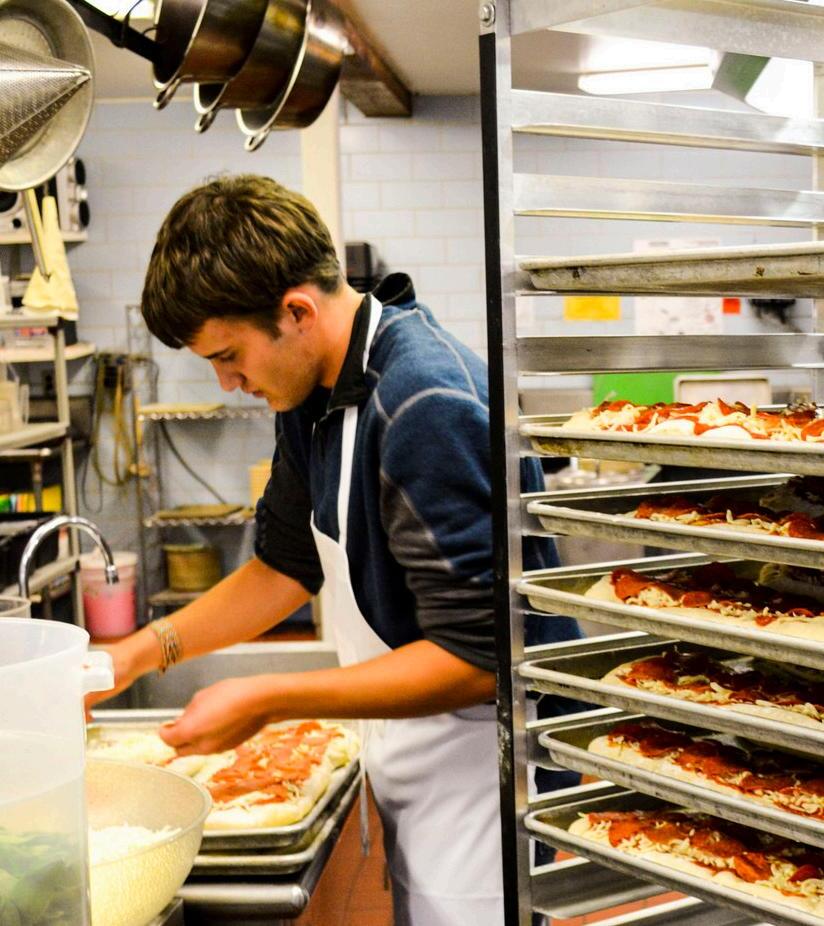
just something you purchase out of a store. It’s great when students feel confident either in asking the right questions or in doing the work themselves to create something, have a vision and see it through.”
Some students enter these crews with no idea how to hold a wrench or a screw driver. In addition to learning universal skills around tools and mechanical systems, the hope is that this knowledge can then translate to other arenas and problems. Sticking with a tricky repair or building challenge fosters skills that transfer especially well to studying and academics. Best of all, however, is the fact that they’re working on bikes and skis and routes and sets for other members of their community.
ARTISAN
Walk through campus with alumni today, and chances are good that they can point out a bridge railing they made during blacksmithing or a ceramic mug or glass still in use in the Bar Fork. In the artisan category of service crew, students learn handson crafts such as glassblowing, ceramics, blacksmithing, and theater that are put to use for the greater common good.
The two-hour block of time twice a week is especially important to the arts, because it allows students to work in a focused and uninterrupted block of time on projects that benefit the entire community. According to longtime teacher Dave Powers ’72 it’s also a chance to explore the arts and work simply for the joy of learning something new.
As students master the skills and techniques of each artisanal craft, there are often cross-overs into academics. Chemistry, physics,
geology, and history all find their way into these crews, as do character skills such as teamwork and risktaking. Powers points especially to a motto that hangs in the glassblowing studio that reads: Clear Intention, Deliberate Steps, Reflect on Outcome.
“The vast majority of students will probably never blow glass again,” he says, “but if they can learn this idea of starting a project, having a clear intention, then going through deliberate steps and learning skills to execute the steps, then at the end be able to reflect on what worked well to get the optimum outcome, those are life lessons that kids can apply anywhere.”
At the end of the quarter, students in glassblowing typically produce between 15 to 20 glasses for the cafeteria as well as pieces for the silent auction during parents weekend. Students in the Theater service crew put on two student productions a

year, while Blacksmithing produces everything from coat racks to bridge railings used throughout the campus.
Teaching practical technical skills is the focus of the Trades service crews. Students can sign up to learn how to repair bikes, tune skis, set routes in the CRMS climbing gym, build theater sets, and plan outdoor trip logistics. Students often go on to find summer jobs that utilize these practical skills. As in the gardening program where students gain a greater appreciation for the work that goes into producing our food, one of the takeaways in the trades is gaining a greater appreciation for what it takes to repair and build things and care for belongings. Once students master basic skills, they can mentor others and also work on projects of their own design.
“It opens their eyes a little as to what they can do,” says teacher Jeremy Wolf, “The bike, for instance, isn’t
educational outreach about how to reduce waste through informational campaigns and talks at school meetings. Students come away with a stronger awareness of where their waste goes and feel empowered that they can make a difference.
Empowerment and making a difference come into play in Trail Building and River Watch crews as well. The Trail Building service crew maintains and builds trails along the Tick Ridge Network, which are then used for cross-country, winter sports training, and Oystermeister events.
tutoring involves academic expertise but other times it’s simply a matter of helping the student get organized or stay on task. The benefit often goes both ways as well.
“For many peer tutors, sometimes it’s a way to be in a relationship with other kids,” says Froelicher. “A lot of friendships are built through the peer-tutoring mechanism.”
“I’m always putting a strong emphasis on providing a service for other people in our community,” says teacher Darryl Fuller. “That has a lot of value in terms of trying to foster a spirit of service and volunteerism.”
Stewardship and conservation themes arise during every outdoor trip, and the Conservation service crews ensure they have a tangible place on campus as well. Students can choose from Recycling, River Watch, or Trail Building service crews.
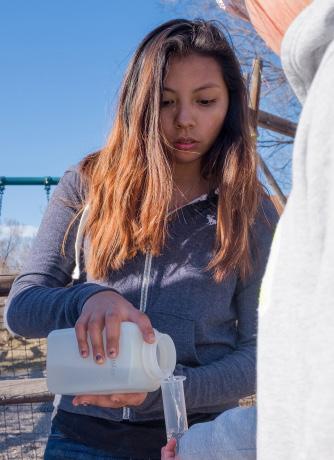
“We want to keep taking steps toward sustainability,” says teacher Robin Colt, who runs the Recycling & Sustainability Crew. “It’s not a destination but a journey along a spectrum to lessen our ecological footprint. We have to walk our talk.”
Students in the Recycling crew empty the various paper, glass, plastic, and aluminum bins throughout campus while also taking a leadership role in
“It’s really an opportunity for students to learn lessons around stewardship and taking care of the lands,” says Fuller. Likewise, in River Crew, students are directly involved in monitoring the water quality of the Crystal River. Their data is then submitted to the State of Colorado to help provide information for the healthy management of the river.
While many of the service crews involve physical labor and teamwork, Peer Tutoring is a more individualized but critical part of the academic program. Begun a decade ago to cut down on the number of outside tutors coming into the school, the program especially underscores the school platform of contributing to community.
“Peer tutors are out in the library or the Bar Fork helping other kids, and it creates this environment where it’s not stigmatized to be someone getting help,” says Learning Specialist Heather Froelicher. “It emphasizes that we are a community of learners.”
Peer tutors take on a position of responsibility and trust and work independently with the student needing support. Sometimes that
The program gives students who might not be shining in other areas such as sports a place to contribute and build on strengths as well. Those strengths may then transfer back to these other areas. The peer tutoring service crew also helps students develop their interpersonal skills, their ability to communicate ideas, and their ability to understand the importance of collaboration. Like many of the broader character skills taught in service crews, Academic Dean Nancy Draina says, “there’s no place those skills don’t fit into the future and the vocation that a student may choose. Whether they go into engineering or social service or become a lawyer, communicating ideas is always going to be an important skillset to have.”
Competitive swimming might not seem like a natural pursuit for an adult living in the mountains of Colorado, but longtime CRMS teacher Kayo Ogilby has not only returned to a beloved sport from his youth but also clocked in with such impressive results that he’s headed to the World Masters Swimming Championships in both open water and pool events.
Ogilby, who has been teaching at CRMS for nearly two decades and is chair of the science department, grew up in Vail, Colorado, where he participated in summer swim teams and followed his father around to masters swimming competitions.
“Swimming has always been an appealing sport to me and an athletic discipline that I loved,” he says. “My grandfather and father were both swimmers, and it created a special connection, but it was always something we just dabbled in as kids because we were pursuing other interests.”
After a short stint on a swim team in college, he didn’t return to the sport until his 30s when middle age aches and pains began to set in. He also was intrigued by the idea of an aerobic athletic endeavor that required training, and he began to swim three days a week.
Alumnus Jon Birzon introduced Ogilby to open water swimming when, as a 9th grader at CRMS, he invited Kayo to join his family on an annual swim from Alcatraz Island to the mainland. “My first response was hell no! But I did it. I went with him and his family, and I was just blown away. It was so cool and beautiful.”
Ogilby had to put in miles of training to overcome a longstanding fear of swimming in dark water. He also had to learn critical new skills like “sighting,” or the ability to look up and adjust where one is going without losing the continuity of the stroke. Ogilby did the swim three times with Birzon and then again with Birzon’s sister Katie and his own daughter and niece.
This year Ogilby took open-water swimming to the next level by training for a rigorous 12-mile competition around Key West. He modestly says he was pleasantly surprised to come in second place among 100 solo swimmers.


While Ogilby loves the challenge of open-water distance swims and the chance to witness beautiful landscape and water topography, he’s also met with success in more traditional swimming venues after realizing he could swim in masters events alongside his daughters’ swim-club team. Instead of standing around watching them, he began – with their blessing – using his daughter’s meets to get back in the pool competitively himself.
His efforts paid off this year. At his second state masters championship, Ogilby won the mile and the 200-free events and came in second in all the others. Those times qualified him for the World Masters Championship, which took place in Budapest in August. He competed in an open-
water swim as well as the 800 free, 400 IM, 200 free, 200 IM and the 100 butterfly on August 11-17, where he placed 33rd, 16th, 13th, 20th, 26th, and 33rd respectively.
Ogilby attributes his recent success to training, his family’s support, and the companionship of remarkable coaches in the community. CRMS has played a role as well, and he hopes students will see that faculty are as keen as students to keep pushing themselves and taking risks.
“There’s an important culture at CRMS of going for it and living fully and completely,” he says. “The culture of CRMS is infectious and it may be the very reason why I felt inspired to do this in the first place.”
Ogilby isn’t sure what the future has in store for him. He might decide to pursue other interests like returning more regularly to his bluegrass band, but either way it’s been an exciting ride. “Seeing what has been possible, it gives you the bug, so we’ll see where this all goes.”
- Allison Johnson Above left to right: Bobby Rosati (fellow CRMS faculty member), niece Sophia Jacober ’19, Kayo, daughter Amalie Ogilby, and Katie Birzon ’18 after the Escape from Alcatraz Swim. Right: Kayo swimming around Key West this summer where he came in 2nd place among 100 solo swimmers.A middle-school teacher mentored Feer, but it wasn’t until Feer attended CRMS that he started to focus more specifically on athletic and mountain photography. An avid mountain biker, climber, and backcountry skier, Feer refined his skills at CRMS and was also able to use the school as a jumping-off point to connect with athletes around the valley.
CRMS Senior Whitton Feer is more interested in the back country than the spotlight; however, recent awards have driven him out from the behind the lens of his camera. After winning the second annual Aspen Photo Challenge in the under-18 category and a Dream Project scholarship from the 5Point Film Festival earlier this year, Feer has a busy fall ahead of him that includes videography, photography, and applying to college.
Feer first developed an interest in photography in seventh grade after visiting family in Switzerland. “I was so inspired by the visit that as soon as I got home, I bought my first camera and just started shooting.”
“I like to show how an athlete is interacting with the mountains in a really expansive sense,” says Feer. “It’s the interaction that makes a picture so powerful. Photography portrays that interaction better than most other mediums of art because it’s all focused on the subject. It’s all about the mountains, it’s all about the athlete. It’s not necessarily about me, and I really like that.”
Although he admits his winning photograph in the Aspen Photo Challenge wasn’t his favorite shot submitted, he acknowledges that the picture of a kayaker poised on the lip of a waterfall deep in a canyon portrays that expansive interaction between human and environment.
This spring Feer branched out in a new direction and applied for the $1,500 Dream Project scholarship with the intention to make a video about the importance of public lands. Over the next month, he’ll be filming between three and five solo trips into the back country around
Midway Pass, the Williams Range, and Peer Lakes Basin. A proponent of fast-and-light travel, Feer had to learn both how to use his new videography equipment and how to negotiate the extra weight of it.
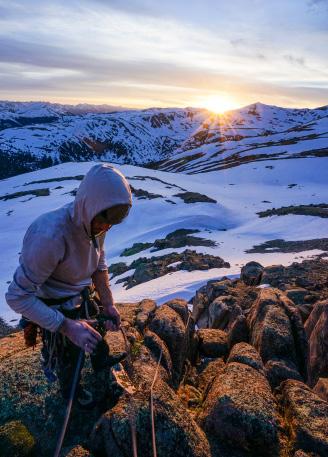
“Videography is so equipment intensive and there’s way more equipment to worry about than with photography,” he says. “So just getting dialed in with that has been important. In the mountains when
the light’s moving fast, there isn’t a second chance. I definitely made sacrifices in comfort to carry the gear.”
His trips, which will range from two to seven days, will show how photography and video are powerful means to capture the raw beauty of public lands.
“I’m going in with the goal to learn about videography and make
something that affects people and motivates them to speak out for public lands,” he says. “In today’s climate, there are a lot of people wanting to take away our public lands. The more public lands get sold off, the more in danger every acre of public lands is.”
Feer will spend his fall editing the video, which he hopes to complete by 2018. In the meantime, he’ll continue to student-lead in the
outdoor programs at CRMS and be busy applying to colleges. Although he isn’t interested in pursuing a degree in photography, he does see it as a potential career path and credits CRMS for the direction his future is heading. “Without CRMS, I wouldn’t have the experience I needed to pursue this adventure side of photography at all.”
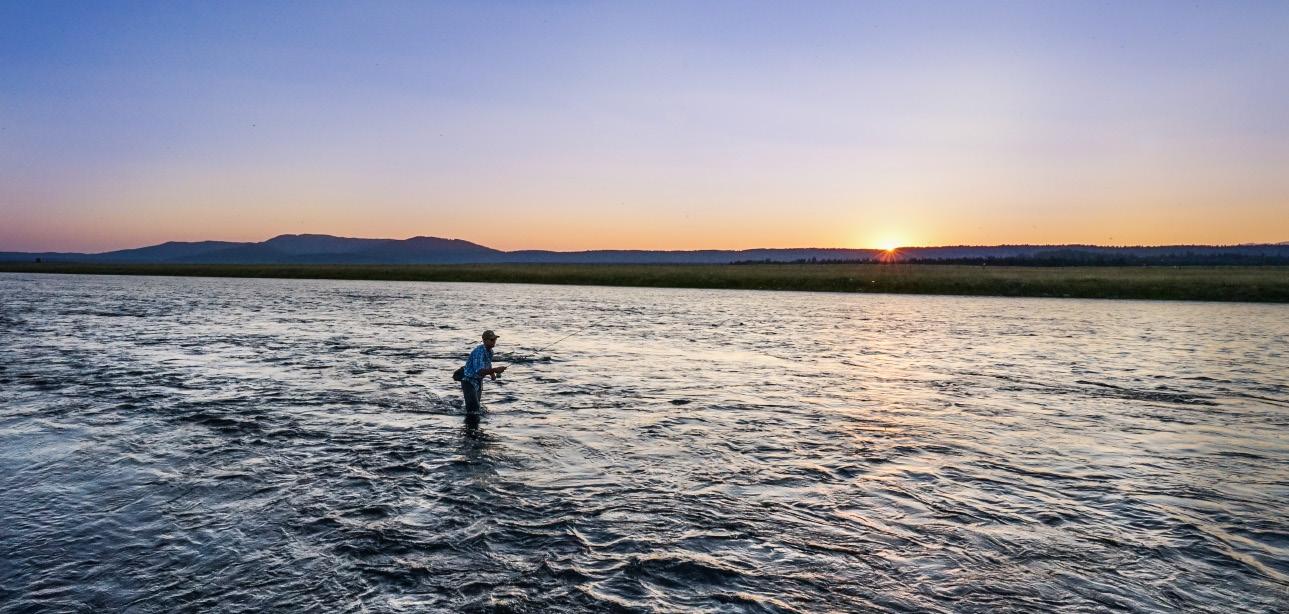
- Allison Johnson Left: Britt Reuger tops out on the Instant Karma wall; Below Flyfishing on the Henry’s Fork in IdahoEven with all the changes, some elements have remained the same. The barn is just as rustic and beautiful as when he took salsa dance classes there. “What I loved about CRMS was that if we had something that we wanted to try out and we got a group of people together, the faculty would work with us to create a program.”
Visiting the dorms also inspired memories of his boarding-school experiences from dorm pranks to household chores. His least favorite household chore was to clean the bathrooms, but he rose to the challenge and even taught his peers how to not clog a toilet. “I felt like a parent, but it made my life easier in the long run. I’m still good at cleaning bathrooms.”
Joe Wagner, class of 2000, grew up in Napa Valley amidst the vineyards of his family’s estate. He first heard about CRMS from a friend of his brother’s, and those stories of a school out in the Colorado Rockies with hands-on learning, outdoor trips, and challenging athletics spoke to him. Only looking back now, however, does he realize the full impact the school had on him.
“My father instilled that you don’t rest on your laurels and you should try to make things better and constantly challenge yourself,” he said. “I didn’t realize when I went to CRMS how much that played a role in the curriculum as well, but it was magnified compared to what I had at home. I left much more capable in those ways than I came in.”
After graduating from CRMS, Wagner rode a wave of adventure, talent, and serendipity to his own success in the wine industry. In ten years, he went from living in a trailer and growing table grapes in Mexico to experimenting in a corner of the family cellars with Pinot Noir to producing half a million cases of wine annually. Today Wagner owns Copper Cane Wine & Provisions and is a staple at Aspen’s Food & Wine Classic. This year he made time to return to CRMS.
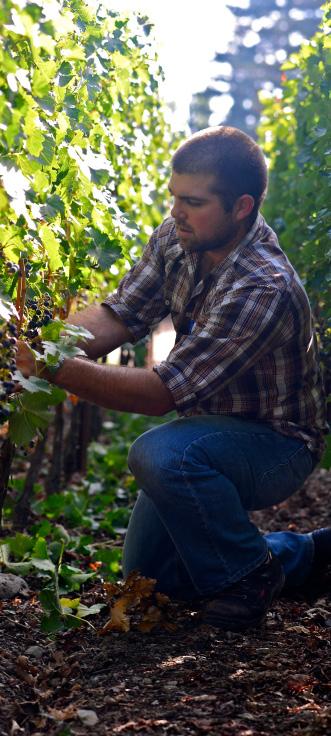
“I’m quite impressed,” he said. “The facilities upgrades and the new buildings were the biggest surprises. The expansion was done really thoughtfully and all for a great purpose. It was really cool to see that the school has progressed in such a large way.”
CRMS continues to influence his life today. The corporate culture at Copper Cane Wine & Provisions reflects many of CRMS’s values around challenge and hard work, and mountain bikes hang from the ceiling. He’s continued to pursue an interest in photography and regularly takes his six young children hiking and skiing. He looks forward to introducing them to the back country as well. Also on the bucket list is to someday create his own forge and return to blacksmithing. He fondly recalls that class along with learning how to debate in AO Forbes’s class. Kayo Ogilby’s geology class had a lasting impact as well.
“I loved the interaction we had with nature and what we were reading about,” he said. “A lot of that knowledge translated over when I got into vineyard management and had to understand soils and how they developed over time.”
Even his experiences on the work crews taught valuable life skills that still come in handy. “I still dig fence posts for fun. There are a lot of fence posts to be put in for vineyard installation.”
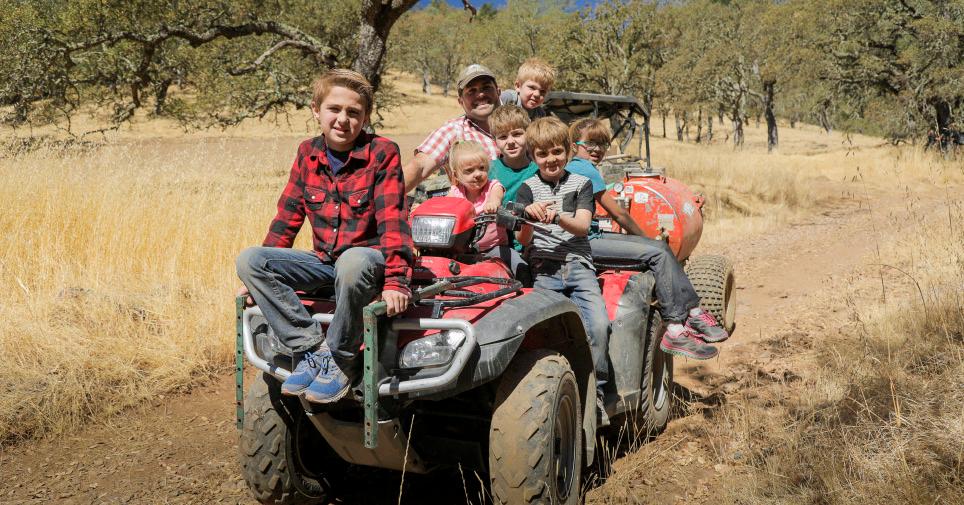
Most of all, though, Wagner remembers how well the boarding experience prepared him for adulthood.
“Having independence and accountability for yourself at a young age – with guardrails, that’s the beauty of CRMS – that set me on a course for wanting to get my life started. I was able to dedicate myself to a career and a family at an early age. If I hadn’t had the experience of CRMS, I would be delayed in that process today. That was a huge part of entering the world as an adult in a much more secure and prepared way.”
- Allison Johnson Joe working in his vineyard in California.Based on Louisa May Alcott’s life, Little Women follows the adventures of sisters Jo, Meg, Beth, and Amy March growing up in Civil War America.
November 10 & 11 at 7:30 p.m.
November 12 at 2:00 p.m.
General admission $10, students $5.
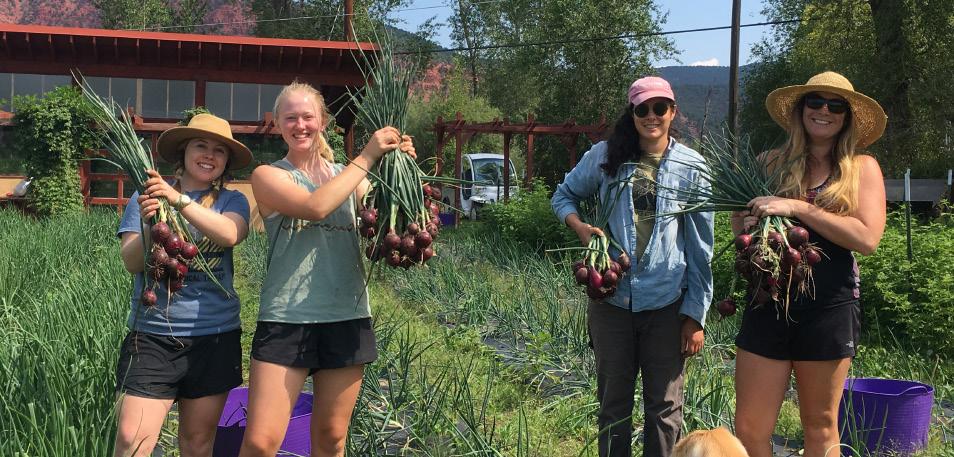
It was an excellent season in the garden. This season’s crew consisted of eager garden interns from Pennsylvania, Texas, and Michigan. We grew a very diverse array of vegetables and were able to provide the summer program with some early summer vegetables. Our focus continues to be on the fall harvest of storage crops, which is turning out to be strong. This year, we have had an amazing harvest of over 1000 lbs. of onions! We are looking forward to providing all of these tasty, fresh vegetables in the Bar Fork this year.
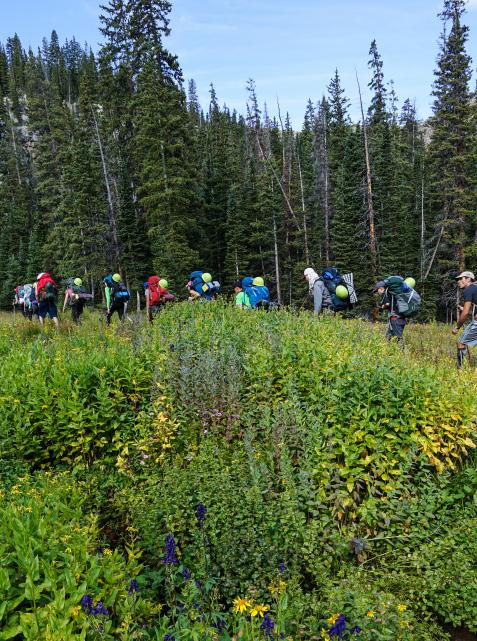
Wilderness Orientation is designed to introduce all new students to the school’s values of respect, responsibility, and excellence through a ten-day backpacking trip. Wilderness also serves the important role of creating a shared common experience through service, teamwork, challenge, and adventure all prior to the start of the academic school year. The skills taught on Wilderness not only benefit students on subsequent outdoor adventures, but also provide valuable lessons and strategies that will help them better approach everyday life at CRMS and beyond.
This year five groups explored high-country areas in the Hunter Fryingpan, Snowmass, and Maroon Bells regions.
We as a school community will be exploring the many issues surrounding immigration this year, and our visiting scholar program will support this effort. By bringing in experts in the field, be they legal experts or other concerned and invested citizens, we hope to open dialogue and allow for a more complete picture to emerge of the complexities of the immigration policies in our country. In a break from years past, we hope to bring in several different perspectives on the issue rather than a single speaker as a way to value the wide range of opinions on the subject.
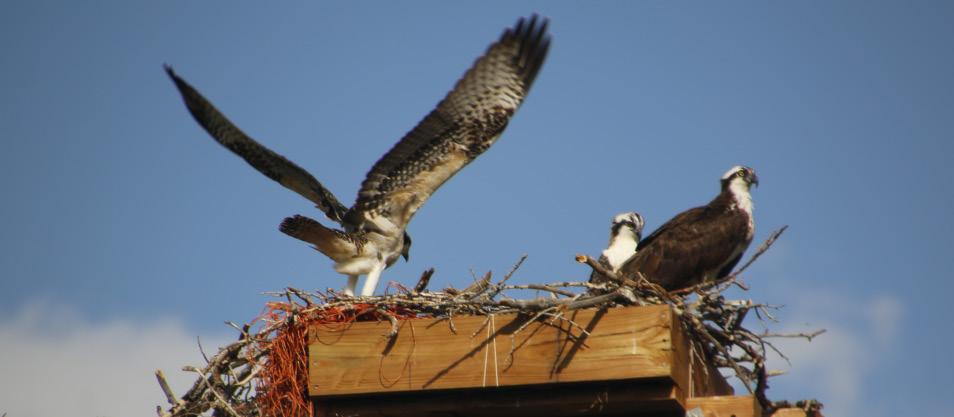
Upon starting the school year, we have been blessed with the constant activity and lovely calls of our four resident Osprey. The two adults that adopted the nest this spring successfully hatched two juveniles who are now full grown. The nest is busy and active. Typically, two of the birds roost on the trees across the river and two in the nest. When the birds migrate south for the winter, we plan to get up into the nest and get the camera online.
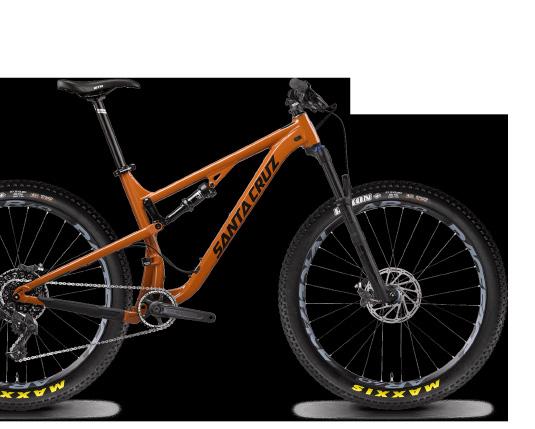
The Family Weekend fundraiser, OysterBash, supports our arts and active programs at CRMS. This year, we’ve got great items such as: a Santa Cruz Tallboy 3.0 Mountain Bike, a Tepui Tent, and Red Paddle Co. SUPs. For more information visit: crms.org/raffle
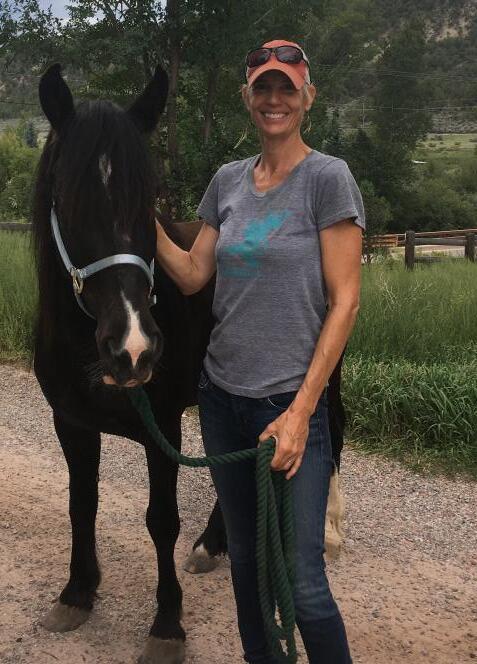
Rune, a recently adopted BLM mustang, is now a vibrant part of the CRMS Horse Program. Rune comes to us haltertrained, and the students involved in the riding program will take part in learning and applying various saddle-training techniques used to help him become an integral and responsive school horse for the program. He hails from a Divide Basin herd in Wyoming and is eager to join this amazing community!
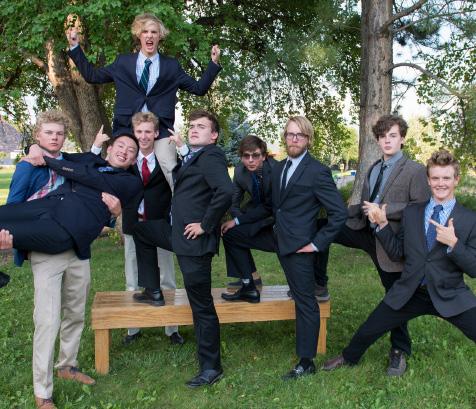
Andrew Overstreet’s advisory group – all seniors – joke around during the first Formal Dinner of the year.
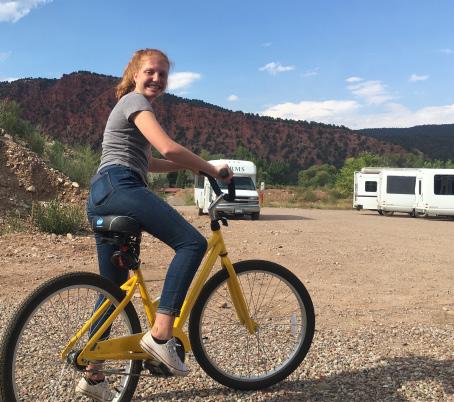
Last year, a group of students drafted a proposal to start a bike-sharing program at CRMS. The four initial bikes were purchased using a Chris Babbs Grant Award. This summer more bikes were purchased to bring the fleet up to eight. The bikes are easily identifiable and allow community members to get around campus without the need for a personal bike.
Thanks to 700+ incredibly generous supporters and an unprecedented number of leadership-level gifts, the 2016-2017 Annual Fund & Special Events brought in $736,867*. This total is the largest amount in the school’s history, and we are grateful to everyone who helped make this possible. Special Event contributions were also key to our success, including our Family Weekend auction and raffle and Scholarship Work Day which provided $85,000 of this total.
For a complete list of donors who made this historic milestone possible, please see our winter newsletter – Impact Report. Contributions to Colorado Rocky Mountain School demonstrate a strong belief in the unique and impactful independent-school education provided here. Thank you to everyone for your belief and investment; your generosity allows the school to continue to flourish and thrive.
*number pending final audit
“I am forever grateful for the experiences and mentoring that I was lucky enough to receive at CRMS. I learned to be an individual, respect the Earth, explore, be a positive role model, and participate in community. [CRMS is] the most amazing, well-rounded academic and campus life a student could imagine and a place that sets the stage for the rest of your life!”
- Sharelle Rodman ’89
As part of the overall Health & Wellness Facilities, the new Strength & Conditioning Center, located in the Bar Fork Building, is designed to support the school’s ongoing commitment towards our robust active and outdoor program offerings. The dedicated space will include a new 2,200 sq. ft. indoor-training facility and completely remodeled gender-neutral bathrooms. The new facility will open this fall.
The primary goal of the Holden House renovation is to provide high-functioning and thoughtfully-designed spaces for our students’ emotional, social, and physical well being. Some important features of this facility include a modern Nurse’s Office with two exam rooms, an infirmary, and a dedicated office. The Counseling Office will also be located there with a private, dedicated office for student meetings and enough space for groups to gather.
In addition, the building’s renovation will include one large and one to two moderately-sized new faculty apartments. Increasing the amount of on-campus housing for both faculty and staff is a priority for the school, as it enables us to run an effective residential program that includes weekend experiences. Providing housing also addresses the challenge many employees face when confronted with the high cost of living in the Roaring Fork Valley. The restoration will commence once the school secures the necessary funding for the project.
To learn more, or to support either of these important projects, please contact Lisa Raleigh, lraleigh@crms.org or 970-963-2562 x 130.
We are delighted to announce our new Annual Fund campaign for 2017-2018, and hope you will get involved by summarizing your CRMS experience in one word. We look forward to sharing your words throughout the year on social media and beyond. The Annual Fund is a financial backbone to the school, underwriting financial need-based scholarships (ensuring economic diversity in our student body), faculty salaries and professional development (allowing us to recruit and retain the best faculty), in addition to the unique and robust program. This year’s Annual Fund & Special Events goal is $700,000.
To give today or learn more, please contact Beth Smith (bsmith@crms.org), Director of Annual Giving. Thank you in advance for your ongoing support and for sharing your one word with our community.
one word: Can you sum up Colorado Rocky Mountain School in one word? Tell us the one emotion, memory, or experience that captures CRMS for you. Submit your word along with your donation.
one gift: Show your pride for CRMS with one gift to the 2017-2018 Annual Fund, and enrich each of our students’ lives with a one-of-a-kind education.
one CRMS: There is only one CRMS. One shared experience that unites us all. Sixty-four years later, CRMS continues to provide students with the academic skills, confidence, and knowledge to be successful in life and to contribute to their communities. Active pursuits, wilderness adventures, robust art offerings, and work experiences broaden each student’s sense of what is personally possible. In the shadow of Mt. Sopris, students, teachers, and staff live and learn together as family. Together as one community we can create endless possibilities.
CHELSEA BRUNDIGE, President
RAVI VENKATESARAN ’69, Vice President
JAMIE EMMER, Secretary
TONY CHERIN ’58, Treasurer
JOHANN ABERGER
RALPH BECK ’73
ELIZABETH (LIBBY) BOHANON
ERIC CALHOUN
GRACE ENGBRING

MIKE FLAX ’63
STEVE KAUFMAN
SUZI MCKINLEY ’96
MARGARET (MAGS) MILLER ’90
VIRGINIA NEWTON
LISANNE ROGERS
ROBIN RYMER ’60
VIRGINIA TOUHEY ’74
SEPTEMBER 15-16, 2017
DECEMBER 8-9, 2017
FEBRUARY 9, 2018 video conference
MAY 18-19, 2018
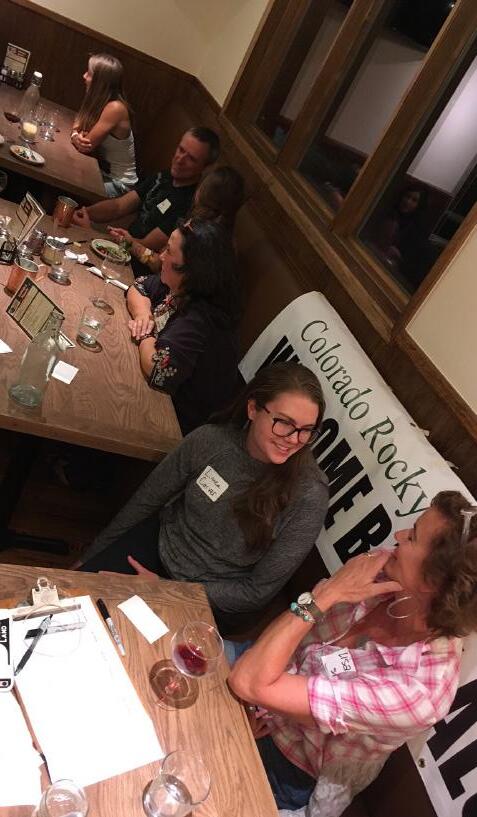
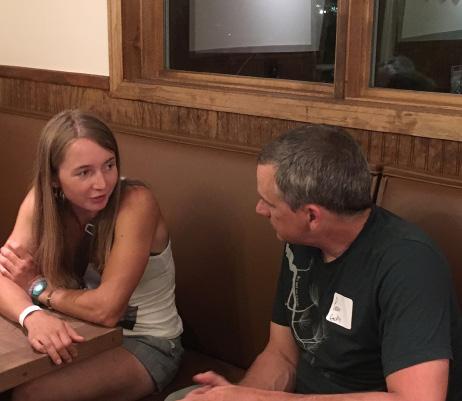
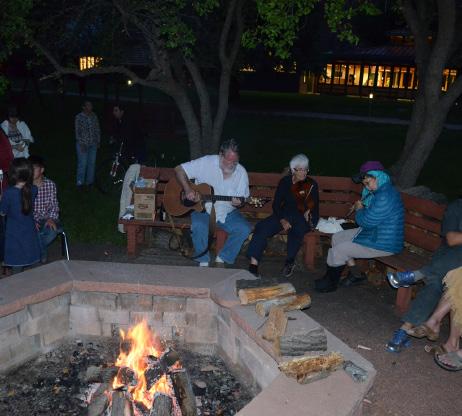
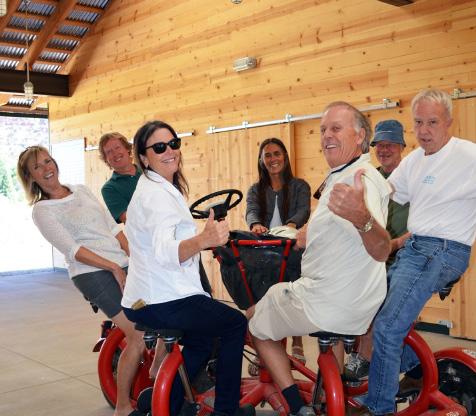
It was an anniversary year for classes ending in 2 and 7, but what made the weekend such a success was having alumni from all eras present.
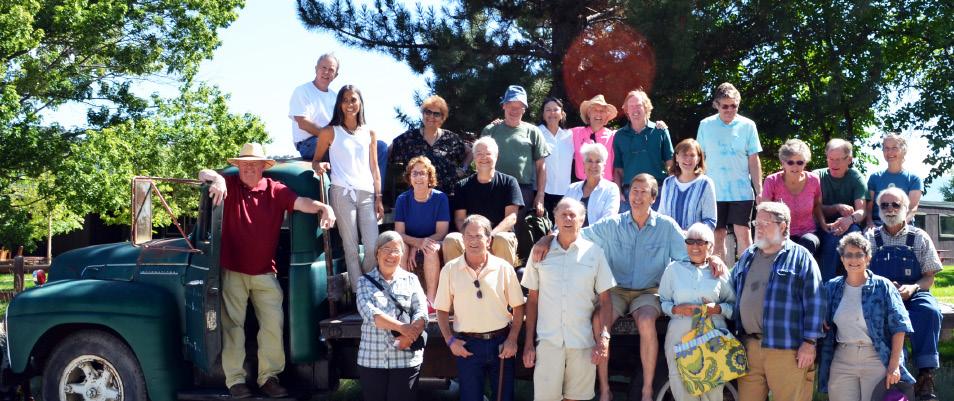
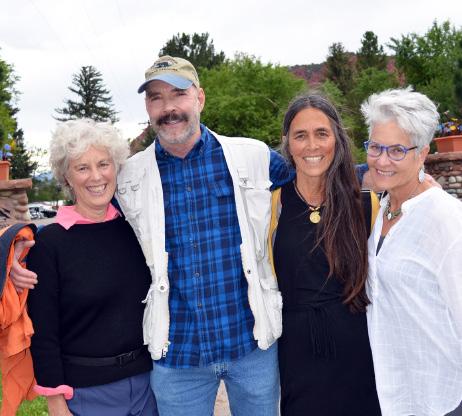
1957, 1962-69, 1977, 1986-88, 1996-97 were represented as well as the 2000s. What an amazing show of support and proof that regardless of the age or era, CRMS holds a very special place in our hearts.
Our annual gathering takes place on the Friday evening of Mountain Fair after the music ends in
 Sopris Park.
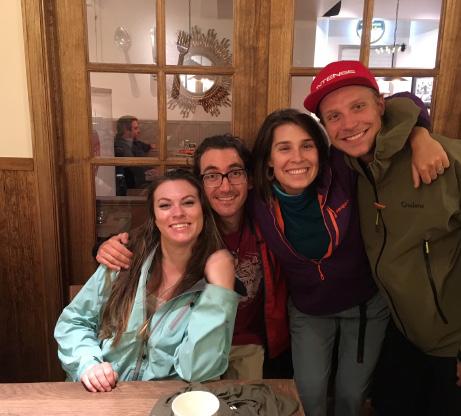
Photos clockwise from left: Hannah Horn ’10, a friend, Aisha Weinhold ’10, Robert Weinhold ’12; Peter Benedict, Mathematics Faculty Member, with Lea Linse ’13; Lisa Raleigh, Director of Advancement, with Linnea Carver ’10
Sopris Park.
Photos clockwise from left: Hannah Horn ’10, a friend, Aisha Weinhold ’10, Robert Weinhold ’12; Peter Benedict, Mathematics Faculty Member, with Lea Linse ’13; Lisa Raleigh, Director of Advancement, with Linnea Carver ’10
PARENTS OF
If this is addressed to your son or daughter who no longer maintains a permament address at your home, please email amineo@crms.org with his/her new address.

Where:
When: