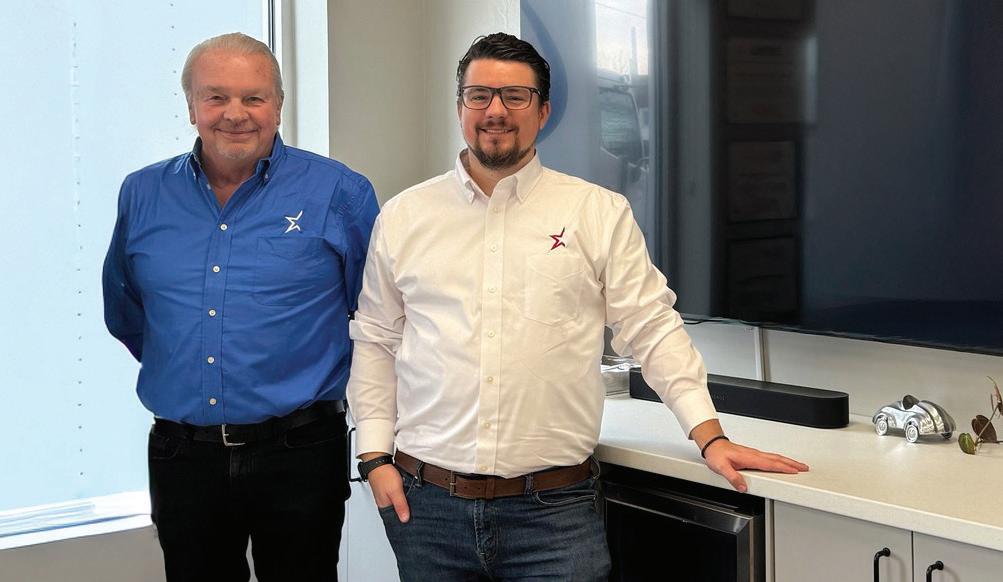
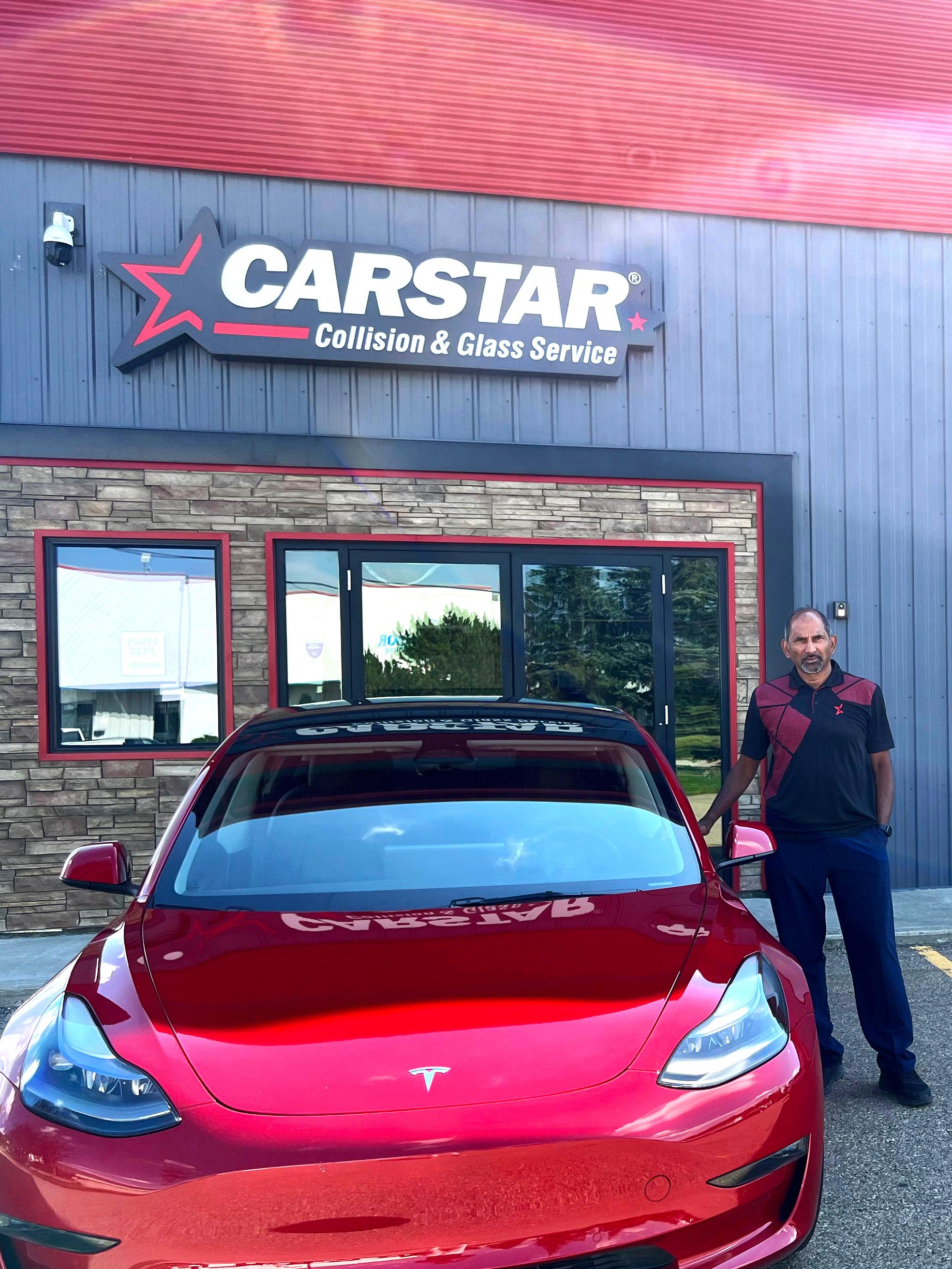
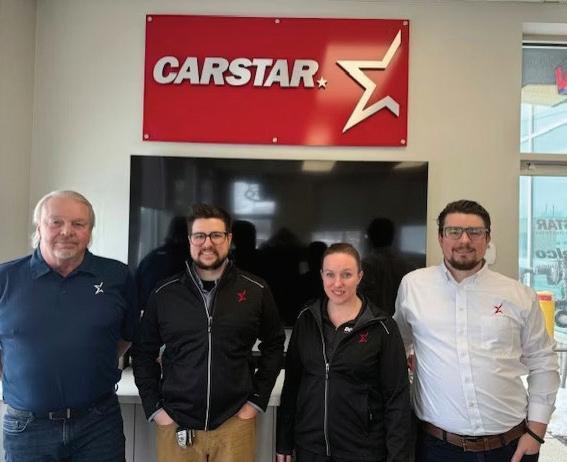
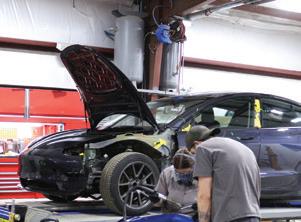
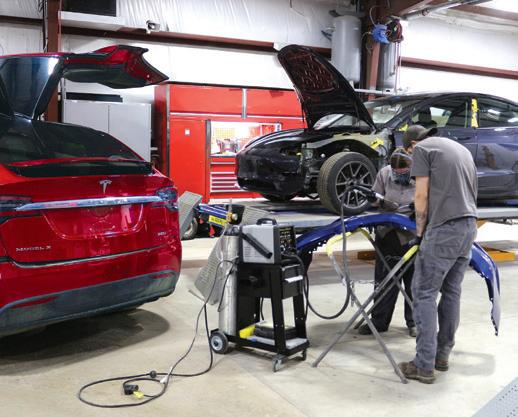
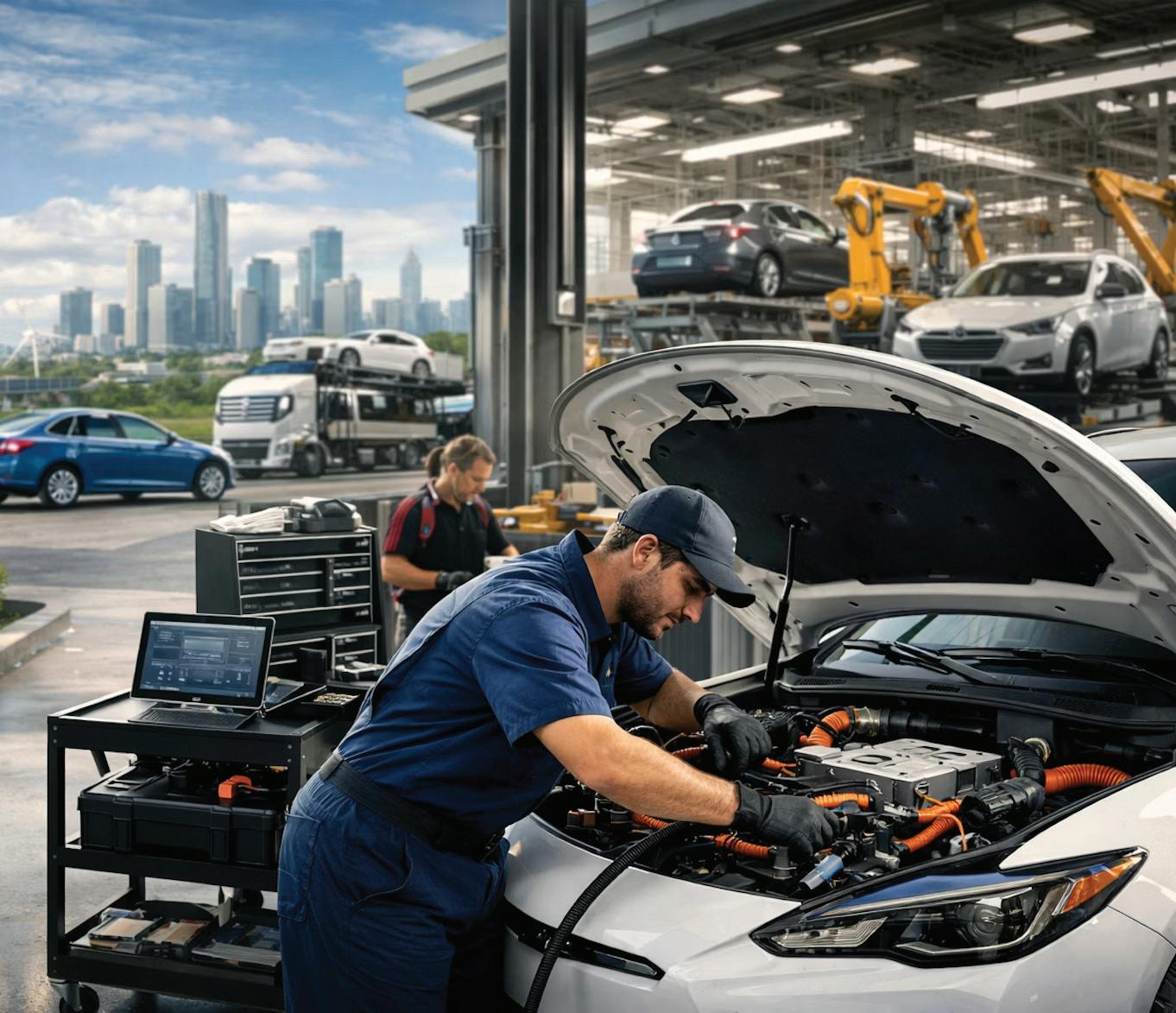
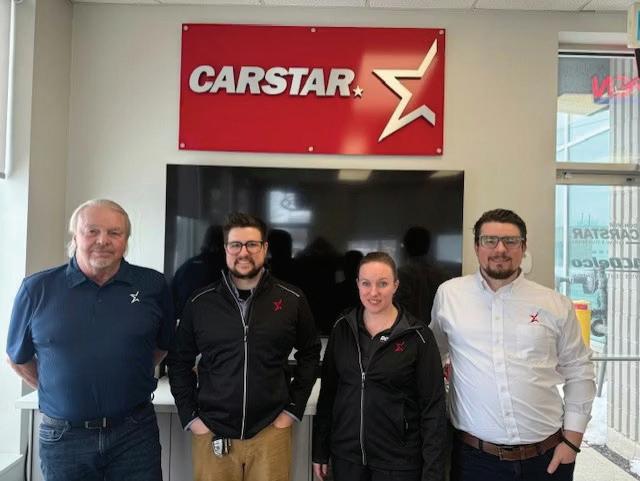
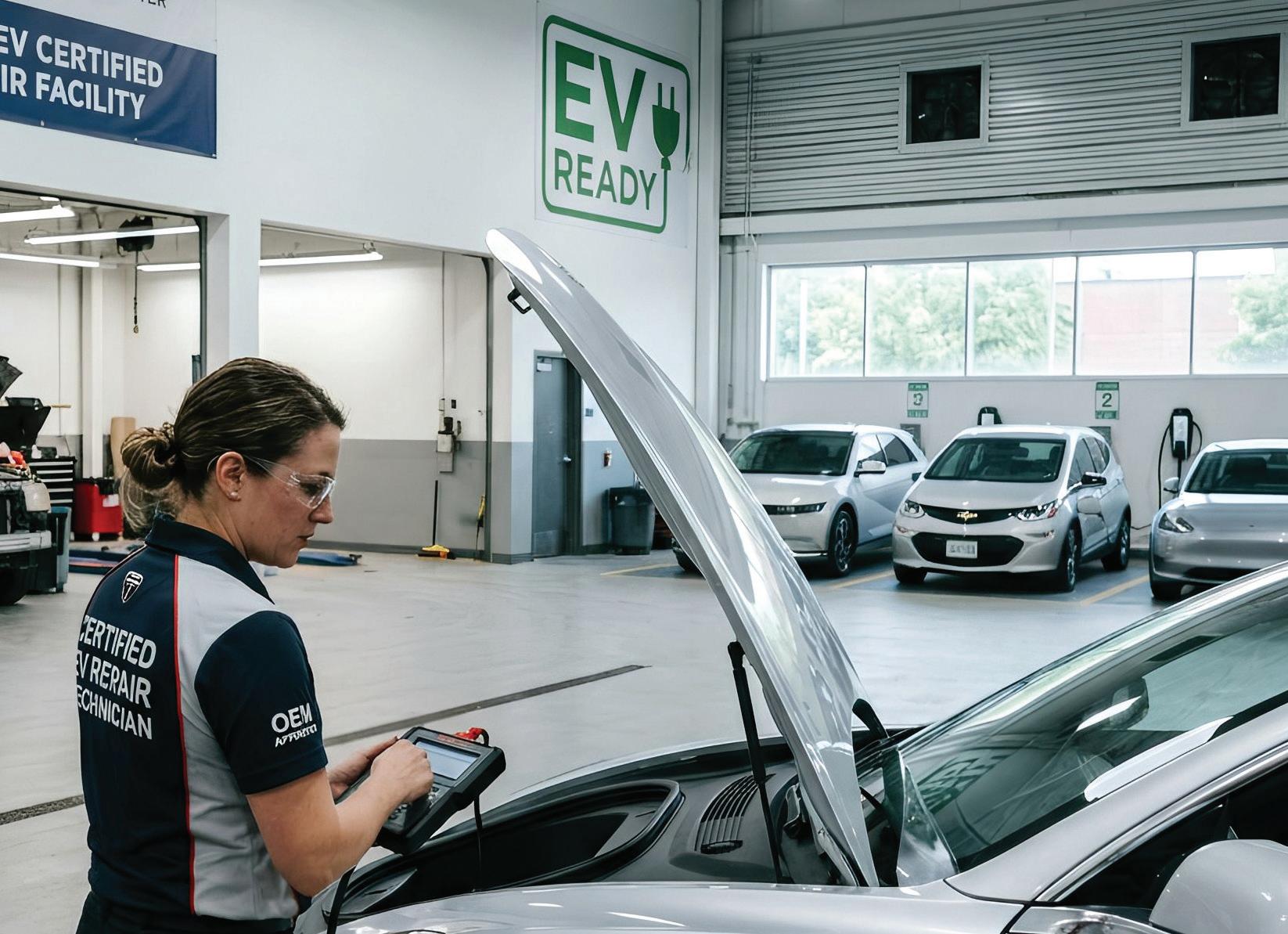
“ As electric vehicles become more common on our roads, proper repair matters more than ever. At CARSTAR, we’ve committed to advanced EV training and the specialized tools required to handle high-voltage systems safely. Our goal is simple — restore every vehicle to pre-accident condition with complete confidence.”
Vinny Patel
Owner,
CARSTAR Edmonton Parsons Road
THE STATE OF EV READINESS IN CANADA
By William Simmons
The next EV in your bay isn’t a question of if — it’s whether your shop is ready when it arrives.
THE INFRASTRUCTURE COST OF EV REPAIR
By Caitlyn O’Keefe
From charging stations to isolated battery storage, shops must rethink their buildings to safely handle electric vehicle repairs.
REUSE, REPURPOSE, RECYCLE: EV BATTERIES IN ACTION
By Deborah Poon
Safe management of end-of-life EV batteries in collision repair protects staff, meets regulations, and keeps materials in play.
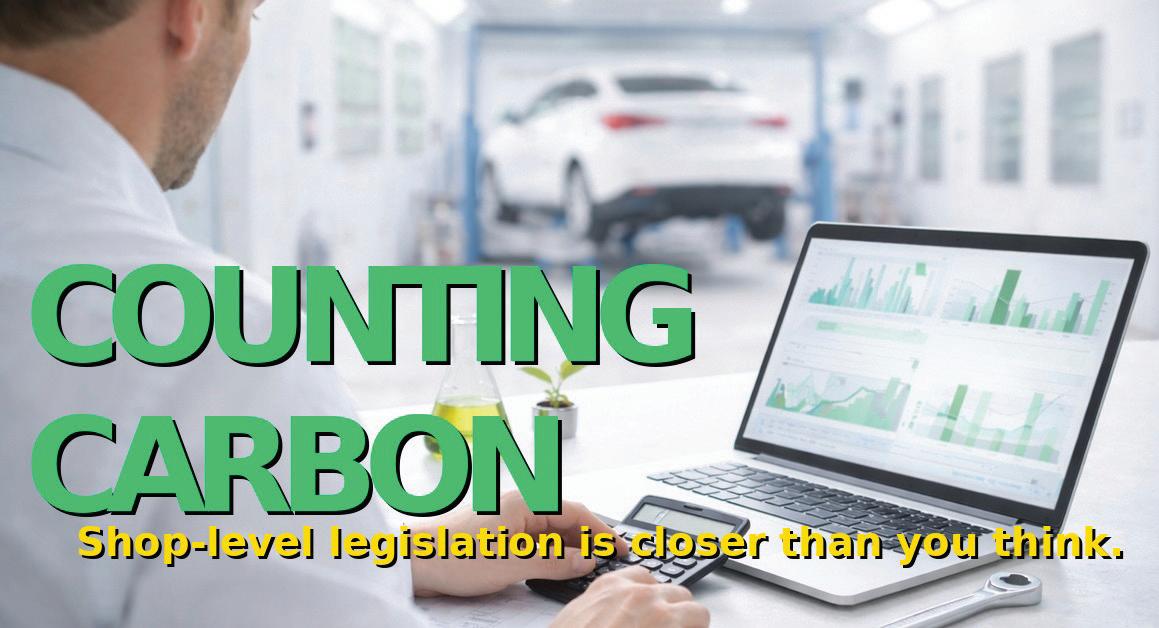
COUNTING CARBON
By Darryl Simmons
Research focuses on Collision Repair’s Environmental Footprint.
06 PUBLISHER’S PAGE By William
Simmons
Timely coverage of trends, technology and policy driving electrification
THE PROCESS HASN’T
KEPT UP WITH THE VEHICLE
Electric vehicles are no longer new to collision repair. What’s new, and overdue, is the discipline required to handle them from intake to delivery
Nobody in this industry needs to be convinced that EVs are here. The volume is real, the familiarity is growing and most professionals handle them without hesitation. That’s not the problem. The problem is that handling them confidently and handling them correctly are not always the same thing, and the gap between those two is where risk quietly accumulates.
Battery involvement at intake is not always visible. That’s the foundational reality every shop and every appraiser needs to internalize.
BY WILLIAM SIMMONS
battery condition and authorize next steps.
Clear escalation paths, documented intake procedures and defined roles for batteryrelated decisions are not administrative overhead. They are the difference between a controlled process and one that leaves your team improvising in the moments that carry the most consequence.
The file does not close at damage identification and repairability determination. A complete assessment, one that holds up and reflects the full scope of handling a vehicle safely,
“PARKING AN EV OVERNIGHT WITHOUT CONFIRMING BATTERY CONDITION IS NO LONGER A NEUTRAL STEP. IT IS A DECISION, AND THE INDUSTRY IS BEGINNING TO EVALUATE IT AS ONE.”
A vehicle that presents as a straightforward structural repair may carry underlying conditions that affect how it should be approached, where it can be stored and what must be confirmed before work begins. These are not edge-case concerns. They are routine considerations in EV repair and they need to be treated that way.
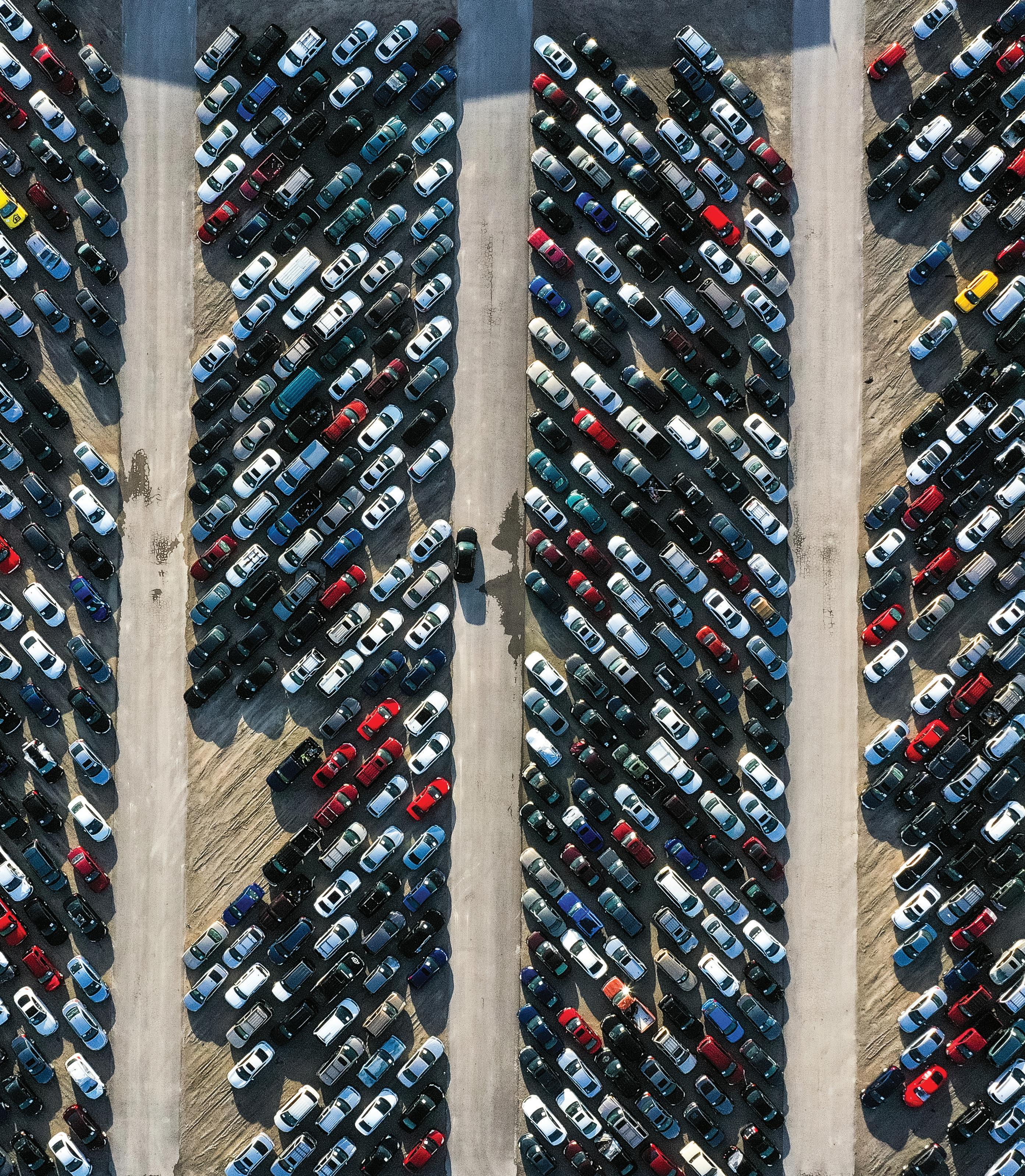
Storage is where many operations are quietly exposed right now. Not through negligence, but through outdated habit. The expectations around EV storage, including separation requirements, state-of-charge monitoring and documented awareness of condition, are no longer advisory. They are becoming the standard against which facilities are measured and against which risk is assessed by carriers. Getting ahead of that matters.
Once a repair path is established and battery removal is on the table, the procedural expectations tighten further. Stability must be confirmed before handling. Packaging must meet the regulatory requirements for transport, and everyone involved in that step needs to understand those requirements firsthand, not rely on someone else in the chain to have covered it. This is not auxiliary work. It is the repair.
Technical repair training addresses what happens when you’re actively working on the vehicle. The more common gap is what happens when you’re not: intake staging, overnight storage, escalation protocols and the question of who is actually qualified to assess
accounts for storage conditions, battery-related procedures and transport requirements from the first line of the estimate. Flagging these considerations after the fact, or leaving them to the shop to surface, is a gap that the evolving standard will not accommodate indefinitely.
Appraisers who build EV-specific considerations into their workflow from the start are not adding complexity. They are writing files that accurately reflect the work and protecting everyone downstream.
The clearer guidelines taking shape across the industry are, on balance, good news. They give professionals something concrete to align to. They set a defined expectation of what proper looks like. And they reward the shops and appraisers who have already been operating with discipline, because that discipline now has a framework to stand on.
For everyone else, the friction will show up in the spaces between steps, the moments where an assumption used to be sufficient and now it isn’t.
EV repair is not the same job with a different badge on the grille. It asks more from the people handling it, not just in the technical execution, but in how the entire process is conceived and followed through. That discipline starts with awareness. It’s reinforced through training. And it shows up in every decision made from intake to final delivery. That’s where the standard is being set right now, and where reputations will follow. EV
AUDIENCE ENGAGEMENT MANAGER
William Simmons | william@mediamatters.ca
VP OF INDUSTRY RELATIONS & ADVERTISING
Gloria Mann 647.998.5677 | gd.mann@rogers.com
INDUSTRY RELATIONS ASSISTANT
Wanja Mann 705.928.0653 | wanjamann1@gmail.com
ART DIRECTOR
Yvonne Maschke | yvonne@mediamatters.ca
ASSISTANT EDITOR
Mackenzie Grant | mackenzie@mediamatters.ca
INTERIM EDITOR
Gideon Scanlon | news@collisionrepairmag.com
DIGITAL OPERATIONS MANAGER
Cassie Doyle | cassie@mediamatters.ca
MEDIA PRODUCTION SPECIALIST
Dayna Dicuangco | dayna@mediamatters.ca
DIGITAL MEDIA
Natalie Dinh | natalie@mediamatters.ca
CONTRIBUTORS
Wally Dingman, Caitlyn O’Keefe
PRESIDENT
Darryl Simmons | publisher@collisionrepairmag.com
VICE PRESIDENT
Orest Tkaczuk | orest@mediamatters.ca
EV Repair magazine is published by Media Matters Inc., publishers of:
SUBSCRIPTION
Single edition $12.95
EV Repair ™ magazine is published Annually, and is dedicated to serving the business interests of the EV repair industry. It is published by Media Matters Inc. Material in EV Repair™ magazine may not be reproduced in any form without written consent from the publisher. The publisher reserves the right to refuse any advertising and disclaims all responsibilities for claims or statements made by its advertisers or independent columnists. All facts, opinions and statements appearing in this publication have been compiled and included with the permission, though not necessarily the endorsement, of the editor, or of independent columnist contributors, and are in no way to be construed as those of the publisher, or as endorsements of them.
PRINTED IN CANADA ISSN 1707-6072
CANADA POST CANADIAN PUBLICATIONS MAIL SALES PRODUCT AGREEMENT No. 40841632
RETURN POSTAGE GUARANTEED
Send change of address notices and undeliverable copies to: 86 John Street, Thornhill, ON L3T 1Y2
“We acknowledge the financial support of the Government of Canada”
BATTERY RECYCLING: UN EXAMINES LIFE CYCLE EMISSIONS STANDARDS
A United Nations working group has proposed a global method to measure the climate impact of vehicles across their full life cycle, from raw material extraction through to dismantling and recycling.
The draft resolution, now under review by the UNECE Working Party on Pollution and Energy (GRPE), aims to address a long-standing issue: current life cycle assessment methods vary widely, making results difficult to compare across manufacturers and powertrain types.
The proposed framework evaluates emissions at every stage, including material production, vehicle manufacturing, use, maintenance and end-of-life processing. It also accounts for the impact of repairs and servicing, noting that maintenance can meaningfully affect a vehicle’s overall carbon footprint.
Electric vehicle batteries are a key focus, with guidance on recycling, disposal and potential secondlife applications.
The resolution would be non-binding but is intended to guide governments and automakers toward more consistent reporting, as regulators and industry push for clearer, comparable data on vehicle emissions. evrepairmag.com/15819387
BATTERY RECYCLING: UN EXAMINES LIFE CYCLE EMISSIONS STANDARDS
Canada’s push toward 75% electric vehicle sales by 2035 and 90% by 2040 is gaining momentum, supported by more than $97 million in new federal funding and a planned $2.3 billion EV Affordability Program.
The funding, announced as part of the federal government’s Automotive Strategy, includes support for more than 8,000 new EV chargers, fleet modernization initiatives and education programs aimed at increasing awareness and adoption of zero-emission vehicles.
The strategy also introduces stronger greenhouse gas emissions standards, replacing the previous EV availability mandate with a framework focused on emissions outcomes.
For the collision repair and insurance sectors, the policy signals continued growth in EV volumes. Increased adoption is expected to drive demand for high-voltage repair capabilities, battery diagnostics and adherence to OEM repair procedures.
While the measures are part of a long-term plan, the direction is clear: EV adoption in Canada is accelerating, with corresponding implications for vehicle repair and appraisal. evrepairmag.com/15817289
Unlock Opportunities:
MOST RELIABLE PRE 8AM DELIVERY SERVICE
Understanding the importance of time within your transportation strategy, means you can move at the speed of your customer, not your carrier. Cardinal’s Pre 8am transportation solutions and unique night network provide a competitive advantage where first to market comes standard. Expect Cardinal’s night network with unattended pickups and deliveries to deliver a competitive advantage to your business.
Cardinal is a wholly owned Canadian company that has built its reputation as the most reliable Pre 8am delivery service for time-sensitive goods and parts, servicing communities across
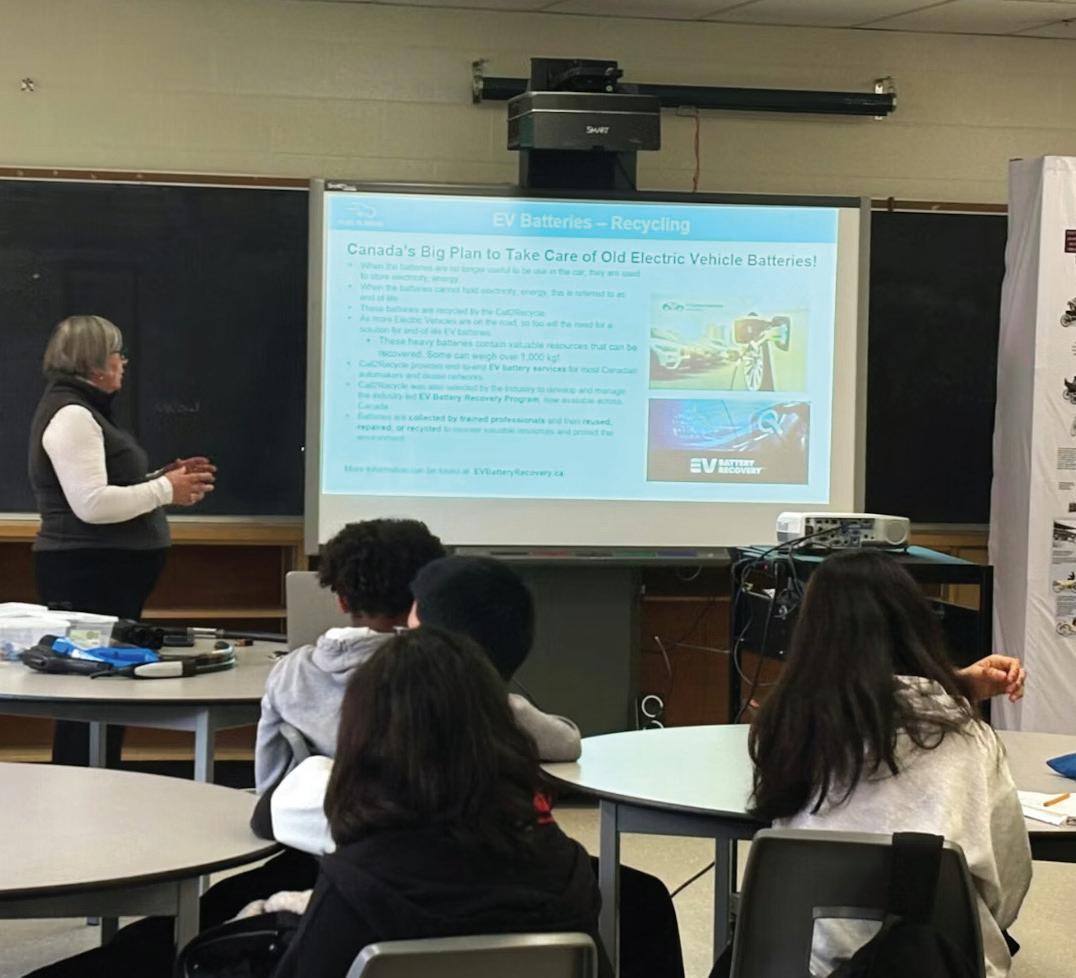
Plug’n Drive and Call2Recycle Canada have launched a national education partnership to introduce electric vehicle battery recycling and stewardship into classrooms across the country.
The initiative will integrate battery-focused content into Plug’n Drive’s EV Awareness Student Learning Program, delivered in partnership with the Skills Council of Canada and aimed at students in Grades 7 through 12.
The expanded curriculum will include lessons on the full life cycle of EV batteries, from use and maintenance through to recycling and repurposing. Students will also be introduced to the “5Rs” pathways, including repair, remanufacturing and recycling, as part of a broader focus on circular economy principles.
The Skills Council of Canada is supporting the program by aligning battery stewardship education with workforce development priorities in skilled trades and clean technology sectors.
As EV adoption increases, the program aims to build early awareness of battery management and prepare the next generation for roles tied to electrification and vehicle repair.
evrepairmag.com/15815249
EVS ARE NO LONGER “EASY WRITE-OFFS”
Electric vehicles are beginning to shed one of their most persistent assumptions: rapid depreciation. New data from J.D. Power’s 2026 Canada ALG Residual Value Awards shows electrified vehicles are among the strongest performers for value retention in the Canadian market.
According to the analysis, 65.5 percent of awardwinning models include some form of electrification, with fully electric vehicles also gaining ground. Stronger residual values mean more EVs are clearing higher repair thresholds, reducing total losses and keeping more complex repairs in play.
For collision repair facilities and insurers, the shift has direct implications. Residual value is a key factor in repair-versus-replace decisions, and improved performance is increasing the likelihood that highvoltage vehicles will be repaired rather than written off.
Toyota and Lexus led the 2026 awards, supported by hybrid-heavy lineups, while fully electric models such as the Porsche Taycan and GMC Hummer EV also ranked among top performers.
The findings point to longer vehicle life cycles—and more advanced repairs—across the EV segment.
evrepairmag.com/15814737
COMING TOGETHER TO POWER EV EXCELLENCE
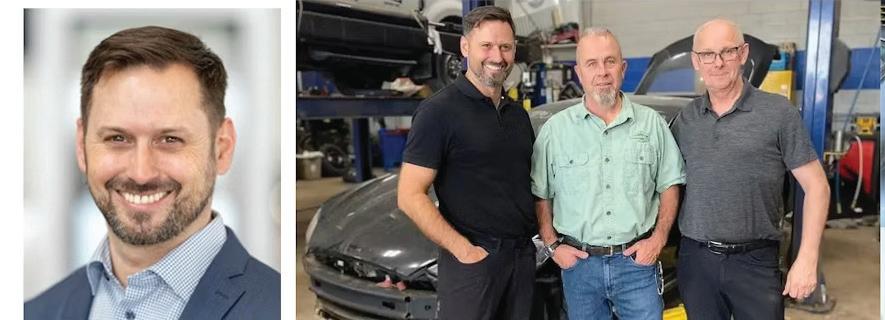
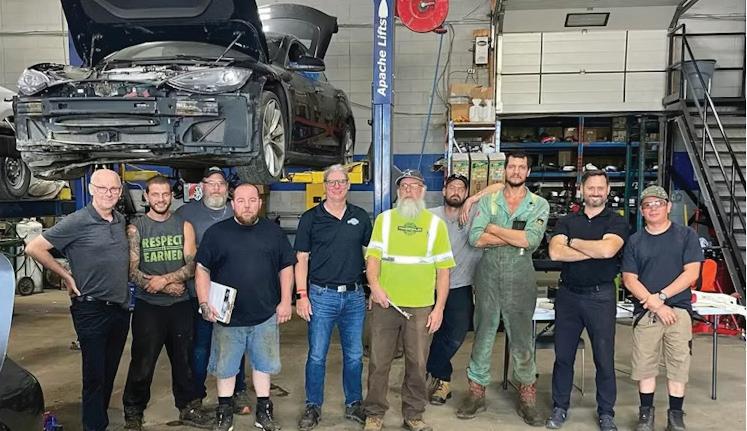
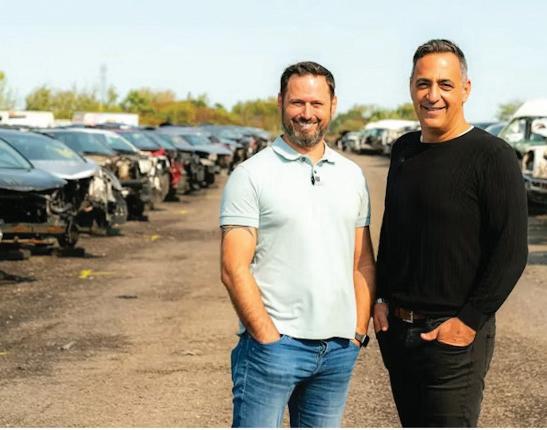
The Ontario Automotive Recyclers Association (OARA) and International Automotive Consulting (IAC) are collaborating to deliver electric vehicle (EV) training tailored specifically to the needs of the auto recycling sector.
As electrification continues to reshape the automotive landscape, recyclers are seeing a growing number of high-voltage vehicles entering their yards. The partnership is intended to help address that shift by providing practical, job-specific training focused on real-world handling, safety protocols and operational requirements unique to dismantling and recycling EVs.
OARA will support member engagement, communication and program accessibility, while IAC will lead the development and delivery of training designed for recyclers rather than traditional repair environments.
“Together we are strengthening access to training that reflects the operational realities of today’s yards,” said Greg Aguilera.
“OARA is committed to supporting our members through the transition to electrification,” said Steve Fletcher, Ambassador and former Executive Director of OARA and the Automotive Recyclers of Canada. “This partnership ensures recyclers have access to relevant, practical resources as the sector continues to evolve.” evrepairmag.com/15817272
From data-led sessions to structured networking and roundtable discussion, delegates gain practical insight and strategic perspective to support informed business decisions.
Experience three days of insightful content, collaborative discussion and high-quality engagement, set within the dynamic and historic surroundings of Vienna.
MARKET SHIFT: CANADIANS WARMING TO CHINESE EVS
More Canadians are open to buying electric vehicles made in China, according to a new poll suggesting affordability is becoming a key driver in EV adoption.
A survey by Abacus Data for Clean Energy Canada found 35 per cent of Canadians would consider purchasing a Chinese-brand EV. Among those already open to EVs, that figure rises to 70 per cent.
Perceptions of quality are mixed but trending positive. Eighteen per cent of respondents view Chinese EVs as superior to current offerings, while 32 per cent see them as comparable. Twenty-one per cent consider them inferior, with the remainder unsure.
Younger Canadians show the highest level of interest, while regional trends align with existing EV adoption patterns.
For the collision repair sector, increased acceptance of Chinese EVs could introduce new considerations around parts sourcing, software systems and OEM repair procedures as more brands enter the Canadian market.
evrepairmag.com/15816350
ARC STATEMENT: EV POLICY, INCENTIVES AND THE FULL VEHICLE LIFE CYCLE
By Wally Dingman
Canada’s recent shift away from a rigid EV sales mandate toward GHG-based emissions standards, combined with the return of EV purchase incentives, marks a significant change in federal automotive policy.
While ARC supports policies that reduce emissions and encourage innovation, how these measures are designed matters just as much as the intent behind them.
INCENTIVES MUST BE SUSTAINABLE — AND NOT DESTABILIZING
Over-incentivizing any vehicle segment risks distorting the automotive ecosystem, particularly the auto repair and recycled parts markets that keep vehicles affordable, repairable, and on the road longer.
EV rebates must be:
· Sustainable for taxpayers,
· Calibrated so they do not unintentionally undermine the existing repair and recycledparts marketplace,
· Designed with an understanding that repairability and parts availability are central to affordability and emissions reduction.
A cleaner fleet is not achieved simply by accelerating new vehicle sales — it also depends on keeping vehicles repairable and responsibly managed throughout their full life cycle.
AUTO RECYCLERS MUST BE PART OF THE POLICY DIALOGUE
Canada’s automotive recycling sector is routinely left out of upstream policy discussions, yet we are ultimately responsible for managing the outcome:
· vehicles written off due to collisions,
· vehicles deemed non-repairable, and
· end-of-life vehicles, whether ICE or EV.
When policy changes occur without recycler input, the burden shifts downstream — without the tools, funding, or information required to manage the risk properly.
EV TRANSITION REQUIRES TRAINING, DATA, AND TRANSPARENCY
As EV volumes increase, auto recyclers need:
· Formal EV training programs,
· Clear battery chemistry and safety information,
· Standardized guidance on dismantling, storage, transport, and emergency response,
· Reliable parts and fitment data to support repair and reuse.
These are not optional — they are publicsafety and environmental necessities.
WHILE ARC
SUPPORTS POLICIES
THAT REDUCE EMISSIONS AND ENCOURAGE INNOVATION, HOW THESE MEASURES ARE DESIGNED MATTERS JUST AS MUCH AS THE INTENT BEHIND THEM.
CHINESE EV IMPORTS RAISE IMMEDIATE AND UNRESOLVED CONCERNS
The introduction of Chinese-manufactured EVs into the Canadian market presents a new and urgent challenge.
At present, recyclers have little to no access to:
· repair procedures,
· battery specifications,
· dismantling and handling protocols,
· part numbering or fitment information.
This lack of transparency creates real safety, environmental, and operational risks for repairers, recyclers, insurers, and emergency responders alike.
ARC’S POSITION
ARC supports a competitive automotive marketplace — but competition only works when all participants are operating with the same information, standards, and expectations.
Policy decisions around EV incentives, emissions standards, and trade must account for the full vehicle life cycle, not just the point of sale.
Auto recyclers are not a downstream afterthought. We are a critical part of Canada’s automotive system — and we must be included early, consistently, and meaningfully in the conversation.
ARC is ready to engage — constructively and collaboratively — to ensure Canada’s transition is safe, affordable, and responsible from first registration to final recovery.
evrepairmag.com/15816967
Modeling the Impact of Chinese EVs on Canadian Repair Costs
Canada’s March 1, 2026 permit‑and‑quota regime re‑opens a path for Chinese‑origin EVs to enter the country at a 6.1% MFN tariff within a 49,000‑unit annual cap, replacing the prior 100% surtax barrier. This policy change compresses timelines for market entry and will filter quickly into claims mix and severity.
Solera wanted to discover lessons learned in other markets where Chinese EVs are already in the car parc and discuss the implications for their introduction into the Canadian market.
Using Solera’s vast Global Data Lake, we analyzed repairable EV claims from 2025 through Q1 2026 for model years less than or equal to five years of age (current year models are considered to be Year 0). Data from Australia, France, Germany and the U.K. were compared against Canada, with all costs converted to Canadian dollars. While this analysis incorporates data from tens of thousands of EVs, it is important to note that smaller data segments are intended for directional insights rather than precise measurement.
To compare repair costs fairly across markets, we normalize to Canada using a modified version of The Economist’s Big Mac Index for purchasing power parity (PPP). Rather than using the beloved Big Mac, we anchor the translation on a cross‑market control —the Tesla Model Y, the first EV to become the world’s best selling private passenger vehicle. This allows us to remove country‑level repair cost‑level noise. Although we recognize that we are oversimplifying the story – since many regional factors come into play – this lets us translate observed severities abroad into Canada‑equivalent values with fewer market idiosyncrasies.
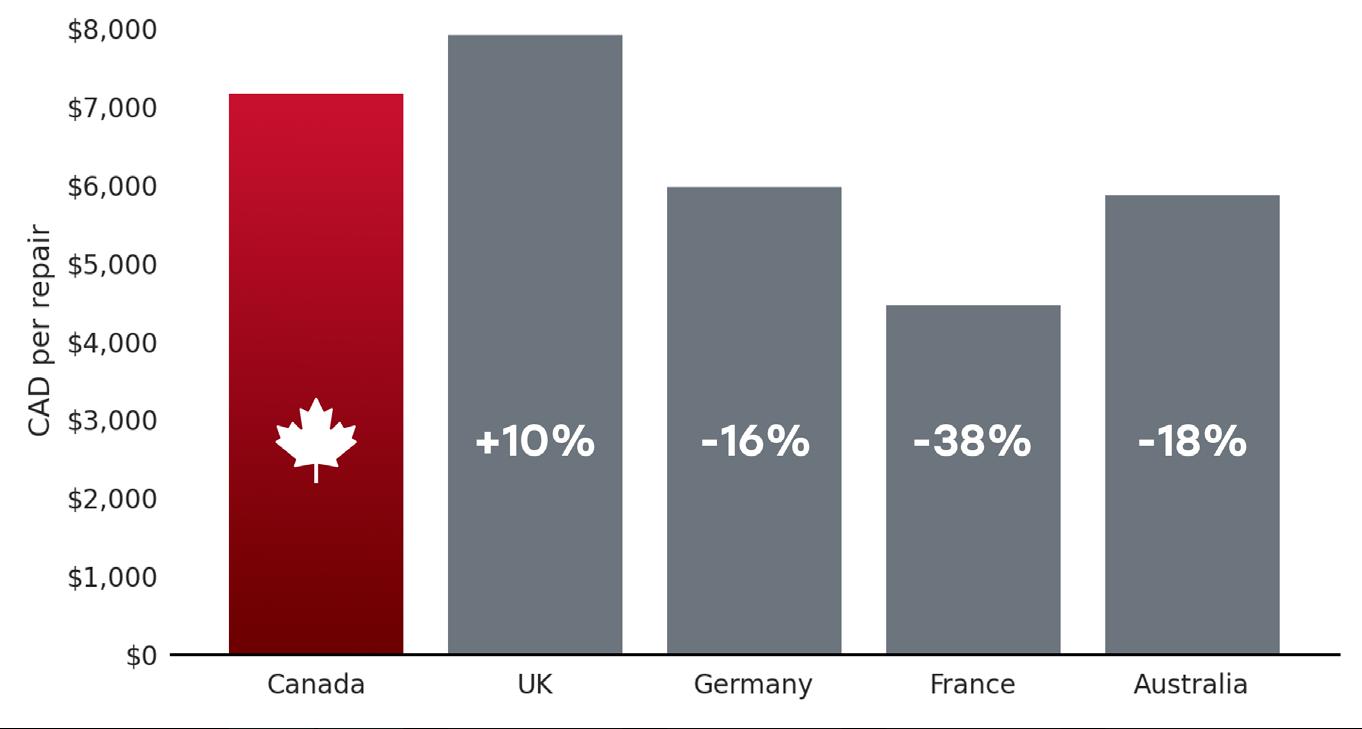
To start, we compared the average Canadian insurer repair costs for the Model Y against the benchmark countries. Canadian repair costs averaged slightly more than $7,000. As shown at right, the UK tracks modestly above Canada on gross severity while Germany, France and Australia trend below. Notably, France’s severity was 38% lower than Canada.
Y – Avg Claim Cost (Gross) by Country (CAD)
Model
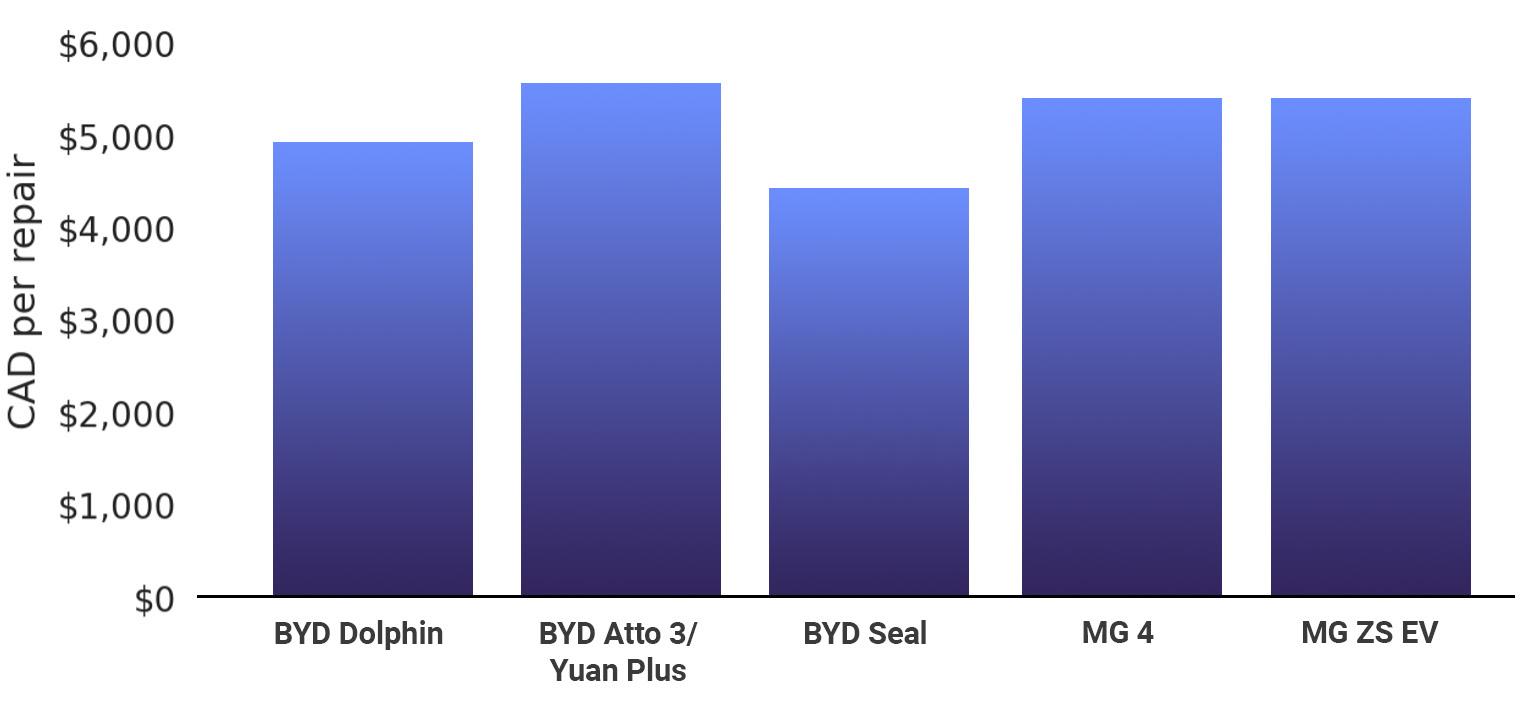
According to current literature, BYD, MG, Geely, Chery, Leapmotor, and GWM (Great White Motor) are anticipated to be among the initial entrants into the Canadian market. Drawing on Solera data from these benchmark countries, our analysis focuses on selected BYD and MG electric vehicles. Solera then used these Model Y indices to translate observed severities for the expected entrants (BYD Dolphin/Atto 3/Seal/Seagull, MG4/ZS EV) into projected Canadian severities and cost mixes. Using the PPP‑anchored translation and Model Y share multipliers, we project repair costs landing below Model Y severity ($7,000) and in line with typical ICE vehicle costs for smaller vehicles, with ranges from $4,400 to $5,500.
Interestingly, smaller does not always mean lower severity. The BYD Seal sedan, which will likely be a direct competitor to the Tesla Model 3, had the lowest average severity ($4,400) among these expected entrants. This is even though it is the largest vehicle analyzed in terms of size at approximately 2,000 kg.
Projected
Canadian Avg Claim Cost – Expected Models
Not surprisingly, severity generally decreases as the vehicles get older; our analysis indicates that there are significant repair cost decreases after about 3 years in the majority of benchmark markets.
Operationally, Canadian carriers should work closely with the entire supply chain to manage logistics SLAs, harden calibration documentation standards, and tune paint‑materials controls. To mitigate high numbers of economic total losses for new vehicles, insurers should work with the OEs to ensure OE and alternative parts are available as quickly as possible in the Canadian market. Supply chain efficiency is paramount in order to avoid excess cycle time.
Repairers should double‑down on high voltage safety, particularly for the new lithiumironphosphate (LFP) battery within the Chinese EVs, ADAS setup discipline, and blueprinting—to absorb an influx of compact EV work without elevating cycle time.
EVS ARE HERE. IS YOUR SHOP READY?
BY WILLIAM SIMMONS
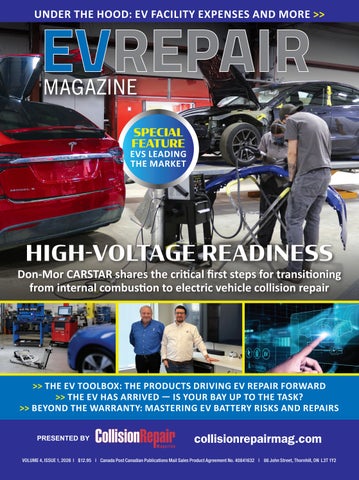
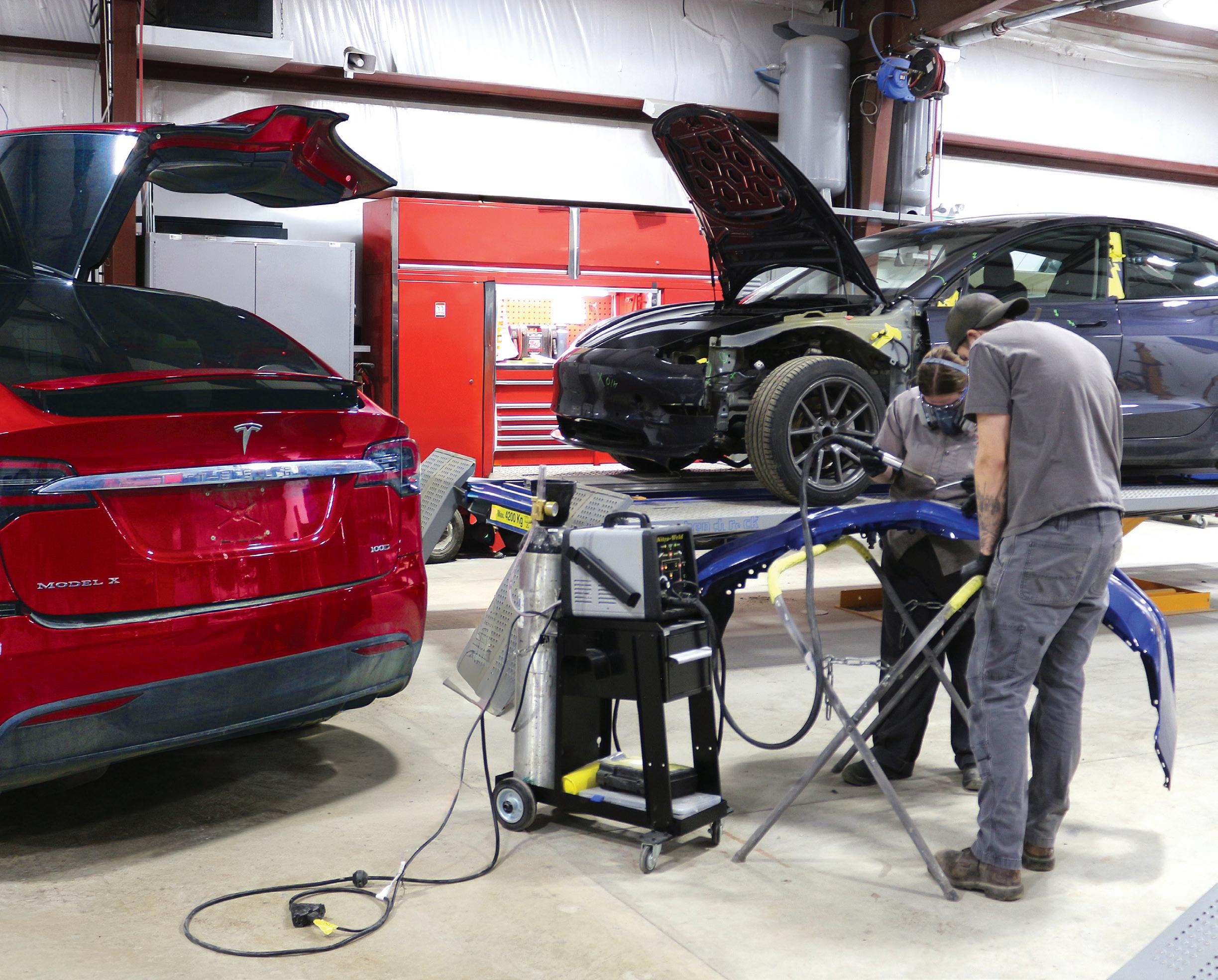
Don-Mor CARSTAR did not wait for the electric wave to hit, they got ready before it did. That mindset has defined the business for more than four decades, and it is now shaping how the group approaches electric vehicle repair.
Electric vehicles are no longer a niche conversation. They are becoming a regular part of the collision repair mix across Canada, and the shops that are prepared are the ones already capturing that work. For Don-Mor CARSTAR in London, Ont., the decision to step into EV repair was not reactive. It was deliberate.
General manager Jeff Brown had been watching the market closely for years before the shop made its move.
“The strategic decision to integrate Tesla repairs into the store’s service portfolio came after years of closely monitoring trends in the London market,” Brown said.
WE’VE WORKED HARD TO STAY AHEAD OF THE CURVE IN THE COLLISION REPAIR INDUSTRY.
— DON-MOR CARSTAR
What he saw was a growing number of electric vehicles on the road and a limited number of certified repair options. For a shop built on adaptation, that gap was an opportunity to prepare early rather than wait for demand to dictate change.
That philosophy traces back to founder Don Morton, who opened his first bodyshop in 1980. What began as a modest operation in a small cinder block building has evolved into a multi-acre collision repair campus with multiple buildings, departments and a workforce built to handle high-volume, complex repairs.
Over the decades, the business has weathered major shifts in the industry, from aluminum repair to advanced electronics and ADAS. Each time, the approach has remained consistent: invest, learn and move forward.
“We’ve worked hard to stay ahead of the curve in the collision repair industry,” Morton said when reflecting on the company’s long list of OEM certifications and training investments.
Electric vehicles represent the latest evolution of that philosophy.
For Brown, the transition into EV repair is less about chasing a trend and more about aligning with where vehicle technology is going.
“Vehicle technology doesn’t stop changing and electric vehicles are simply a result of innovation in the auto manufacturing space,” he said. “Repairing them requires us to think the same progressive way the OEMs are.”
That thinking led the Don-Mor team to pursue Tesla certification, opening the door to a highly specific and growing segment of the market. From there, the shop expanded further, adding programs such as VinFast to broaden its capabilities and position itself for the future of electrified vehicles.
But certification is only one part of the equation.
The shift to EV repair required a deeper investment in training, infrastructure and process. Unlike traditional internal combustion repairs, EVs introduce highvoltage systems that demand specialized knowledge and strict safety protocols.
Technicians need to understand how to safely disable high-voltage battery systems, how to assess damage in components that are often unfamiliar to traditional repairers, and how to follow manufacturer-specific procedures without deviation. There is no room for shortcuts.
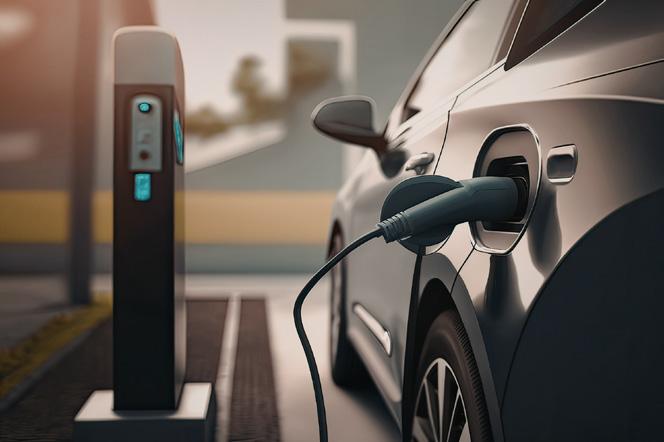
At the same time, the physical shop environment had to evolve. Don-Mor invested in charging infrastructure to support diagnostics and repair workflows, ensuring vehicles can be powered safely while in the shop. High-voltage insulated tools and personal protective equipment became standard, not optional.
These types of investments are becoming increasingly common across the industry as more electrified vehicles enter repair bays. For Don-Mor, they were necessary steps to ensure the business could perform repairs safely and to OEM standards.
From a business standpoint, the move into EV repair has also proven to be a smart one.
“This expansion has significantly contributed to our revenue growth and underscores our dedication to delivering premium automotive repair solutions,” Brown said.
Beyond revenue, EV certification creates access. Certified shops are positioned to service vehicles that uncertified facilities
INSTALLING AN EV CHARGING STATION AND FAMILIARIZING YOURSELF WITH EV OPERATIONS ARE CRITICAL FIRST STEPS.
— DON-MOR CARSTAR
cannot, which creates a natural pipeline of work as more electric vehicles require collision repair.
That strategy fits into a broader pattern that has defined Don-Mor CARSTAR for decades. The business has consistently diversified its services to maintain control over production and stabilize revenue streams. Mechanical repair, OEM certifications and specialized capabilities have all been added over time to keep more work in-house.
“Thank goodness we diversified,” Morton said, reflecting on how the business has evolved and the challenges that come with operating in a rapidly changing industry.
Today, the Don-Mor campus operates almost like a self-contained repair hub. Multiple buildings and departments work together to move vehicles efficiently through the repair process. The scale of the operation even requires practical touches, including staff using golf carts to travel between buildings across the property.
That same philosophy of efficiency and adaptation now applies to electric vehicles.
For Brown, getting started does not mean transforming everything at once. It means taking the right first steps and building from there.
“Installing an EV charging station and familiarizing yourself with EV operations are critical first steps,” he said.
From there, shops can begin assessing their readiness. Understanding local EV adoption
trends is an important starting point. If more electric vehicles are entering the market, the need for qualified repair facilities will follow. Investing in technician training early allows shops to build internal capability before pursuing certifications. Establishing the basic infrastructure ensures they can safely and efficiently handle EVs when they arrive.
The good news is that the transition does not have to happen overnight. Shops can phase in training, equipment and processes as demand grows. What matters most is starting the process.
Electric vehicles still represent a smaller portion of the overall vehicle population, but that share is steadily increasing. As more EVs hit the road, the pressure on the repair industry to keep up will only grow.
For Don-Mor, that reality feels familiar. Every major shift in the industry has come with its own learning curve, and every time, the approach has been the same: prepare early, invest in people and adapt to new technology as it emerges.
More than 40 years after opening its first shop, Don-Mor CARSTAR continues to operate with the same mindset that built the business in the first place.
The vehicles in the repair bays may look very different today, but the philosophy remains unchanged. Stay ahead of the curve, invest in training and infrastructure, and be ready for whatever the next generation of vehicles brings through the door. EV
ARE YOU READY FOR THE EV IN BAY ONE?
COLLISION CLAIMS FOR ELECTRIC VEHICLES IN CANADA JUMPED 24 PERCENT IN 2025 — EVEN AS SALES SLOWED. THE SHOPS THAT AREN’T PREPARED ARE ALREADY LOSING WORK. HERE’S WHAT THE DATA SAYS, AND WHAT YOU NEED TO DO ABOUT IT
BY WILLIAM SIMMONS
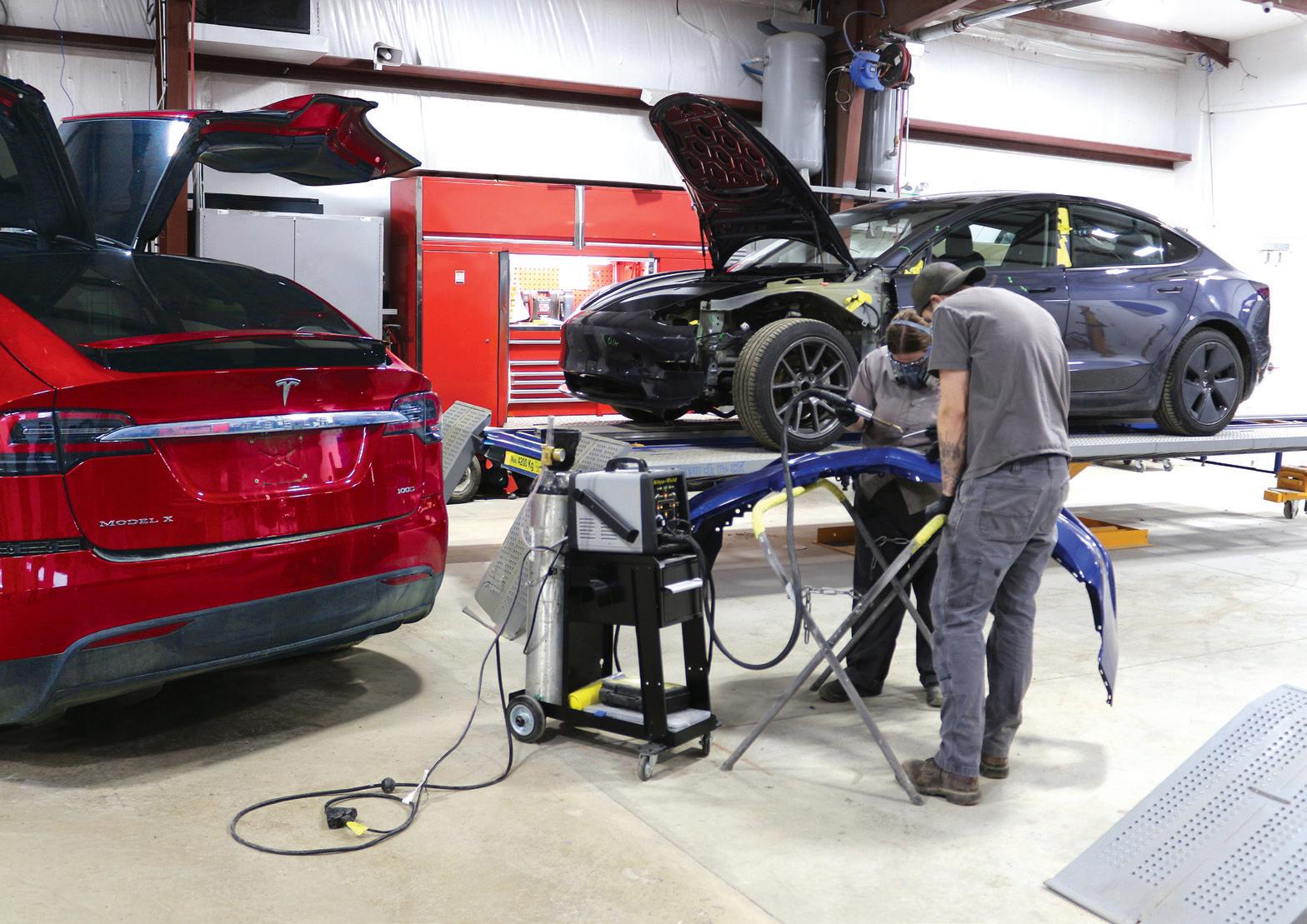
The car sat in the bay for weeks. From the outside it looked like a straightforward job — a headlight, a bumper, a northern Ontario Tesla that had caught the wrong side of a collision. But the technicians didn’t have the parts, and they didn’t have the know-how. The car went to Tesla directly. The final bill: $18,000. The shop got nothing. That story is becoming less unusual. And if it hasn’t happened in your shop yet, the numbers suggest it’s only a matter of time.
+24% 4.77% 8.48% ~11%
Rise in Canadian BEV collision claims, 2025
BEV share of all repairable Canadian auto claims
B.C. BEV claims rate — No. 1 in North America
Source: Mitchell Plugged-In: EV Collision Insights 2025 Year in Review
Combined electrified share of Canadian repairable auto claims
WHAT DO THE NUMBERS ACTUALLY SAY ABOUT EV REPAIR DEMAND?
Canada’s EV market has had its share of turbulence. Sales retreated in early 2025 after federal and provincial purchase incentive programs were suspended, and trade uncertainty added to the headwinds. But slower sales do not mean fewer EVs on the road.
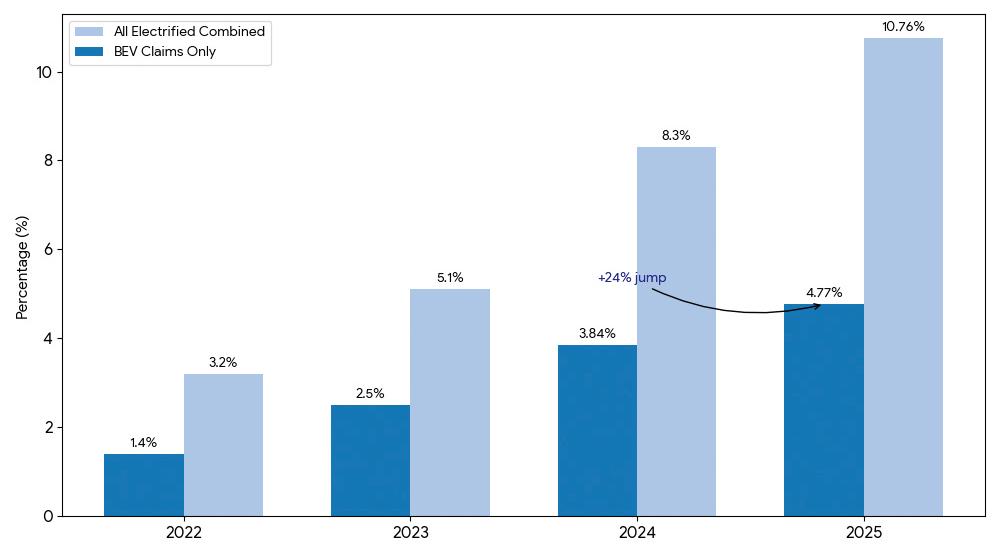
According to Mitchell’s 2025 Plugged-In: EV Collision Insights report, repairable battery electric vehicle (BEV) claims in Canada represented 4.77 percent of all repairable auto claims — a year-over-year increase of 24 per cent. Add mild hybrid electric vehicles (MHEVs) at 4.44 percent (up 29 percent) and plug-in hybrids (PHEVs) at 1.55 per cent (up 26 percent), and the electrified share of the Canadian collision workload is already approaching 11 percent.
British Columbia leads all of North America at 8.48 percent repairable BEV claims frequency. Quebec sits at 8.21 per cent — both ahead of California’s 6.58 per cent. In those markets, EV repair is not a specialty. It is part of the regular workload.
Claims severity is narrowing, too. Average repair cost for a repairable BEV in Canada fell two per cent in 2025 to $7,253. Insurers are pushing harder for repair over replacement — putting pressure on shops to be capable, not simply willing, to take the work.
OEM parts account for 86 per cent of parts dollars on repairable BEV estimates, versus 62 percent for ICE vehicles. That gap makes OEM certification and relationships more necessary than ever.
WHY IS EV TRAINING NON-NEGOTIABLE?
EV electrical systems carry voltages that can kill. That is not hyperbole — it is the central fact that makes technician training the most non-negotiable investment a shop can make. Most automakers now require documented proof of technician competency before granting certification — a direct condition of access to parts, procedures and insurer-directed work.
I-CAR Canada, operated by AIA Canada, has developed a structured curriculum for EV collision repair covering high-voltage safety, cooling systems, repair procedures and specialized diagnostics including HV isolation testing and milliohm meter use. In June 2024, I-CAR Canada partnered with Quebec’s CPCPA to provide immediate EV training access, with completed courses counting toward I-CAR Gold Class status.
In September 2025, AIA Canada released minimum national standards for collision repair. They carry no legal force but give insurers and consumers a clear benchmark for what a properly equipped shop should look like.
DOES THE SHOP HAVE THE RIGHT TOOLS TO MAKE THE REPAIRS?
Trained staff are only part of the equation. EV repairs require specific equipment that either exists in the shop or doesn’t: insulated hand tools, battery lifting equipment, manufacturer-approved scan tools, ADAS calibration equipment. Without them, certain repairs cannot proceed safely.
In 2025, BEVs averaged 1.70 ADAS calibrations per repair estimate versus 1.54 for ICE vehicles. A shop not set up for calibration is misaligned with an increasing share of every EV job that comes through the door.
HOW REAL IS THE FIRE RISK WITH DAMAGED EVS?
Physical facility upgrades are the most expensive part of EV readiness — and the most consequential if ignored. A hard impact can trigger thermal runaway: a self-sustaining chemical reaction that generates its own heat and is extremely difficult to suppress. EV battery fires burn at significantly higher temperatures than gasoline fires and require vastly greater volumes of water.
According to research by EV FireSafe, reignition occurred in approximately 10 per cent of EV fire incidents studied globally — in one documented case, 68 days after the initial incident. The NTSB has identified thermal runaway as a significant safety concern for second responders, a category that explicitly includes collision shops.
Best practice: keep damaged EVs isolated outdoors, terminals protected, with sufficient spacing between units. Protocols must exist before an incident, not after. Staff must know the warning signs — unusual heat, swelling, off-gases, popping or hissing — and know exactly what to do.
A VEHICLE IN YOUR LOT WITH APPARENT MINOR FRONT-END DAMAGE MAY STILL POSE A SERIOUS FIRE RISK DAYS — OR WEEKS — LATER.
IN B.C. AND QUEBEC, EV REPAIR IS NO LONGER A SPECIALTY. IT IS PART OF THE REGULAR WORKLOAD.
WHAT IS FORMING A TWO TIER MARKET?
The readiness gap is creating a two-tier market. Shops that have invested in training, tooling and infrastructure are positioned to capture EV work as volume grows. Shops that have not are increasingly at risk of losing it — often to dealerships or manufacturer-owned service networks.
OEM certification networks are tightening requirements and tying access to parts, technical data and insurer-preferred status to demonstrated competency. Insurers are already steering EV claims toward facilities they trust.
With BEV claims severity averaging $7,253 in Canada in 2025, a shop completing five additional BEV repairs per month is looking at roughly $435,000 in annual gross revenue — revenue that either flows to a certified facility or does not.
HOW MUCH TIME DO SHOPS HAVE TO ADAPT?
The state of EV readiness in Canada’s collision repair sector is best described as uneven and transitional. Shops most exposed to EV volume have largely adapted out of necessity. Shops in slower-adoption markets have more time — but the window is narrower than it appears.
The fleet of EVs already on Canadian roads is not going away. The infrastructure of OEM certification and insurer steering is quietly rewarding prepared facilities and penalizing unprepared ones. The shops that map their gaps and build a realistic plan will be the ones positioned to compete. Those that put it off will find the catch-up far more costly than the preparation would have been. EV
THE STATE OF EV READINESS IN CANADA’S COLLISION REPAIR SECTOR IS BEST DESCRIBED AS UNEVEN AND TRANSITIONAL.
Sources:
• AIA Canada. Minimum Standards for Collision Repair in Canada. September 2025.
• AIA Canada / I-CAR Canada. CPCPA Partnership for EV Training in Quebec. June 2024.
• EV FireSafe. EV Fire Reignition Research. evfiresafe.com.
• NTSB. Safety Risks to Emergency Responders from Lithium-Ion Battery Fires in Electric Vehicles. SR-20-01.
• Canadian Underwriter. How Collision Claims Are Trending for Electric Vehicle Repairs. February 2026.
• Mitchell International. Plugged-In: EV Collision Insights 2025 Year in Review. February 2026.
EV Collision Claims as Share of All Repairable Auto Claims — Canada
Source: Mitchell Plugged-In: EV Collision Insights 2022–2025
IS YOUR SHOP READY? THE EV READINESS CHECKLIST
TRAINING
Training All technicians working on EVs have completed I-CAR Canada high-voltage safety training or equivalent provincial certification
Training Shop holds or is actively pursuing OEM certification(s) relevant to EVs in your market
Training Technicians are enrolled in ongoing I-CAR training to maintain Gold Class and keep pace with model-year changes
TOOLING
Tooling Facility has insulated hand tools rated for high-voltage EV work
Tooling Approved EV scan tools are on hand for each manufacturer platform you service
Tooling Battery lifting equipment is rated for the weight and dimensions of current EV battery packs
Tooling ADAS calibration equipment is in place and technicians are trained to use it
Tooling HV isolation and electrical bonding test equipment is available for post-repair validation
INFRASTRUCTURE
Infrastructure Electrical service capacity is sufficient to charge vehicles under repair Infrastructure EV storage protocols are documented and staff are trained on thermal runaway warning signs
EV REPAIR ESSENTIALS
EVS REQUIRE NEW SAFETY AND WORKFLOW APPROACHES —HERE’S THE ESSENTIAL EQUIPMENT FOR
CERTIFIED SHOPS
EBY EV REPAIR MAGAZINE STAFF
lectric vehicles are now a steady part of the collision repair mix. Shops stepping into EV work quickly learn that the risk profile, tooling and workflow are different. High-voltage systems, integrated battery structures and mixed materials demand tighter processes and the right equipment. This guide outlines essential tools used by EV-certified bodyshops, with consistent, practical detail for each.
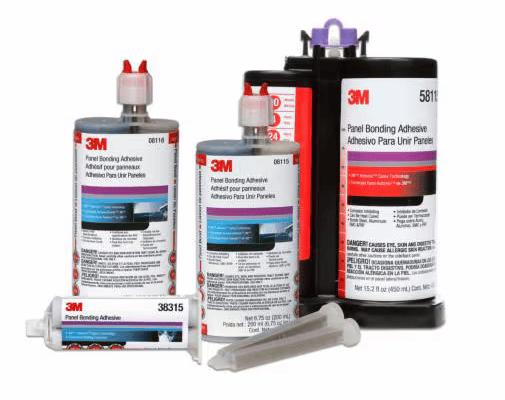
BOND STRUCTURAL PANELS — 3M PANEL BONDING ADHESIVE
3M Panel Bonding Adhesive is a two-part epoxy designed for joining metals and composites in modern vehicle construction. It is approved by many OEMs and is often specified where welding is not recommended. The adhesive contains glass beads that help maintain consistent bond-line thickness while also providing corrosion protection between panels. This allows technicians to achieve repeatable results when bonding structural components such as quarter panels or roof skins.
3mcanada.ca/3M/en_CA/p/d/b40066467
MODERN EVS RELY ON MIXED MATERIALS LIKE ALUMINUM AND COMPOSITES, MAKING HEAT-FREE BONDING SOLUTIONS LIKE 3M PANEL BONDING ADHESIVES ESSENTIAL FOR SAFE, CORROSION-RESISTANT REPAIRS.
The Car-O-Tronic® with Vision2™ software from Car-O-Liner® measures vehicle structures in real time using electronic sensors. According to the company, it integrates with a vehicle database to provide reference points and guide technicians through repairs. Measurements can be taken throughout the repair process, allowing technicians to monitor progress and reduce rework. This approach improves accuracy and efficiency across structural repairs. Modern electric vehicles have specialized structural designs (e.g., high-strength alloys, battery enclosures, unique frame dimensions) that require precise and accurate measurement before and after repairs to ensure safety and performance. Tools like Car-O-Tronic® with Vision2™ help technicians meet those needs.
car-o-liner.com/product/car-o-tronic
EVS HAVE UNIQUE STRUCTURES— HIGH-STRENGTH ALLOYS, BATTERY ENCLOSURES, AND SPECIAL FRAMES— THAT DEMAND PRECISE MEASUREMENTS, AND CAR-O-TRONIC WITH VISION2 HELPS TECHNICIANS GET IT RIGHT.
MEASURE STRUCTURAL DAMAGE — CAR-O-TRONIC® WITH VISION2™ SOFTWARE
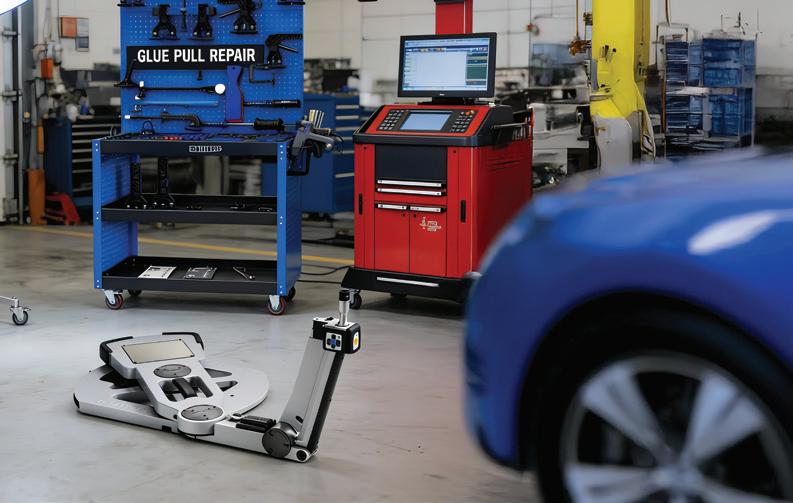
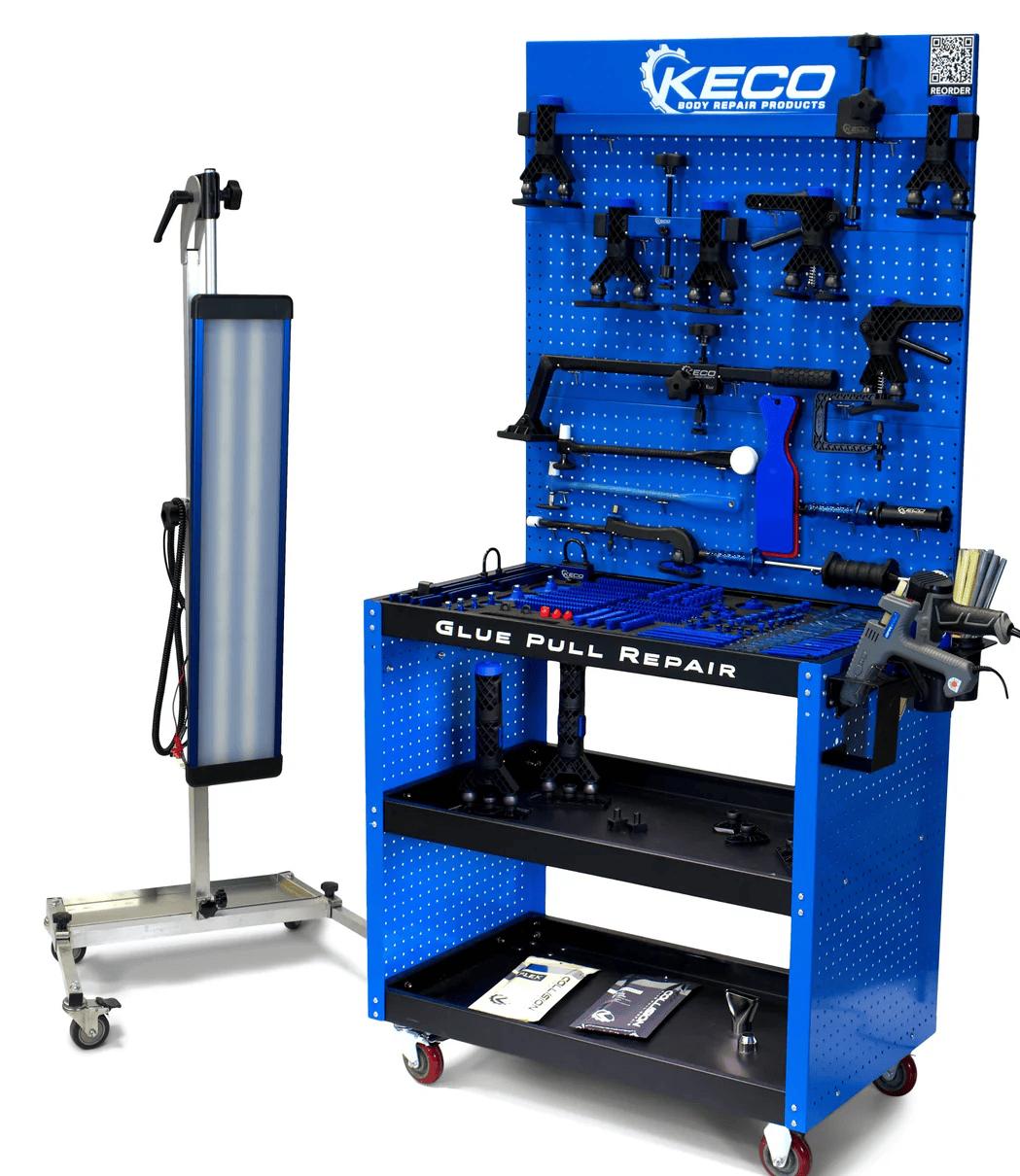
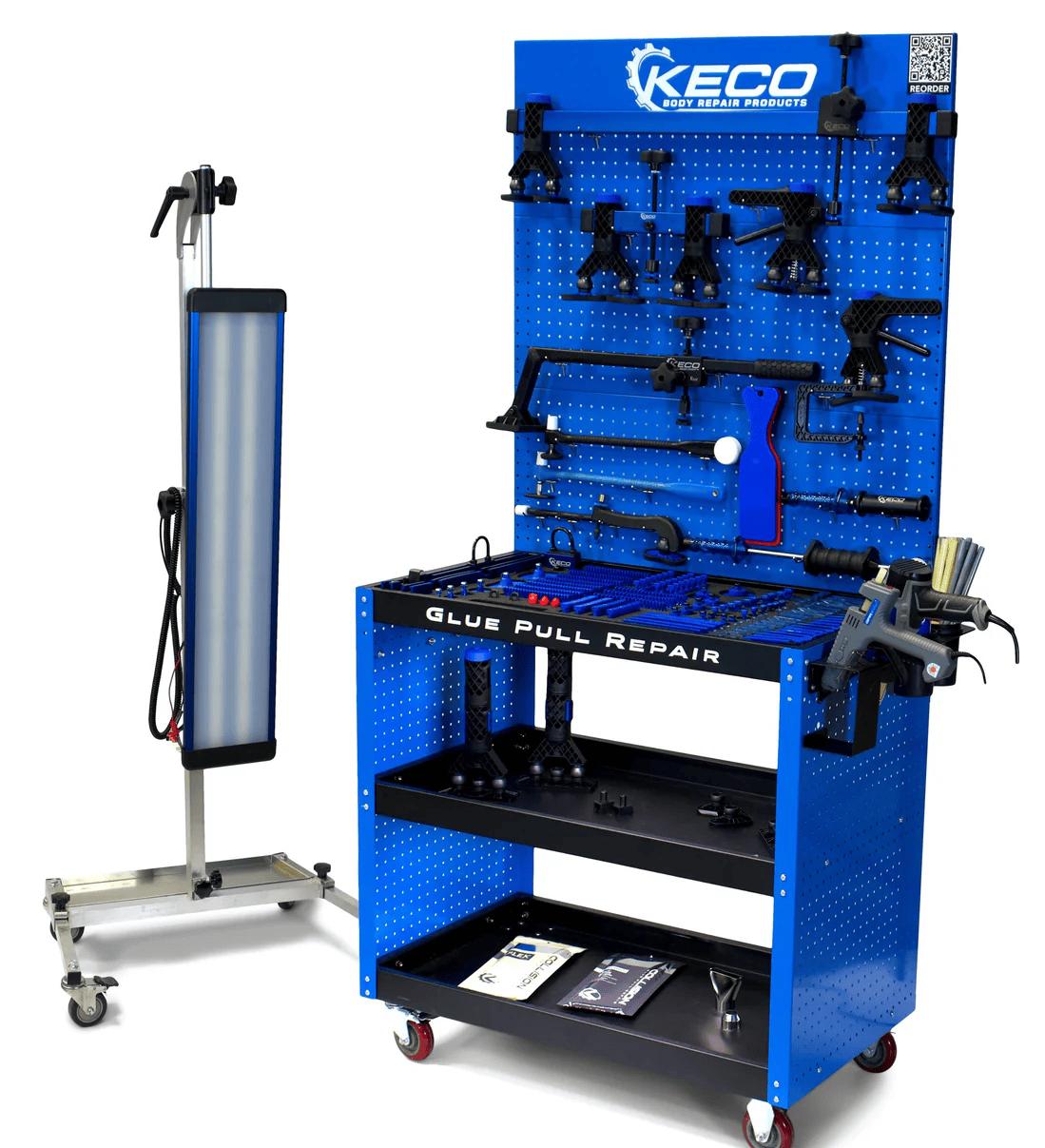
The KECO L2E glue pull system uses specialized tabs and controlled tension to repair dents without welding or excessive heat. According to the company, the process helps preserve coatings and reduce invasive repair methods. Technicians apply pulling force gradually, allowing for controlled correction of panel deformation. The system includes multiple tools and tab designs to suit different materials and shapes. This method is particularly useful on electric vehicles, which often use aluminum and mixed materials. Heat-based repairs may not be suitable in these cases. Glue pull repair helps retain original panels and reduce the need for replacement parts.
collisionrepairmag.com/15735668
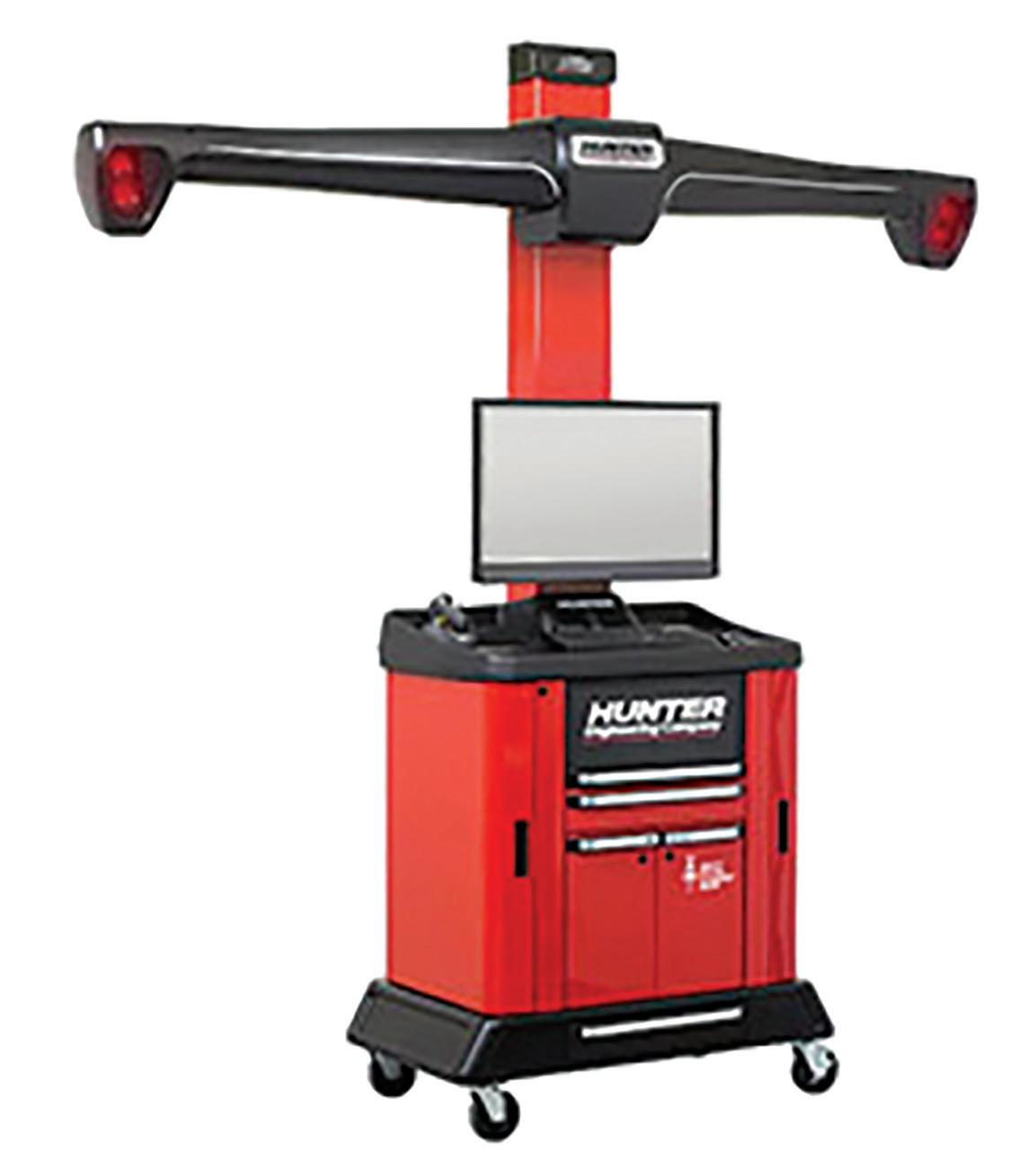
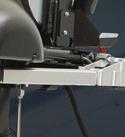
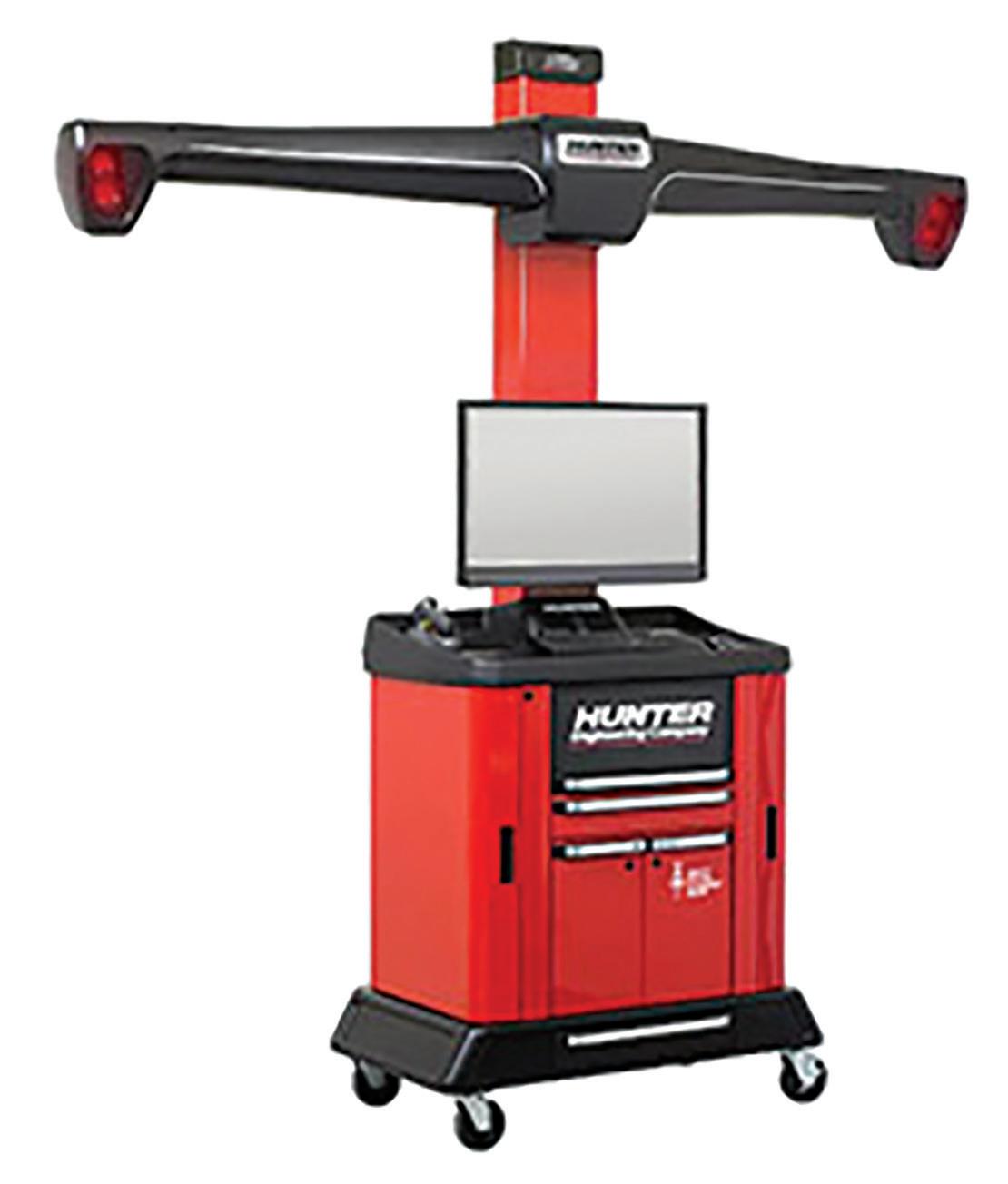
Using camera-based technology, the HawkEye Elite from Hunter Engineering measures alignment angles and compares them with OEM specifications. The system captures camber, caster and toe quickly while guiding technicians through adjustments. Electric vehicles often carry significant battery weight low in the chassis. After a collision, even small shifts can affect suspension geometry and vehicle handling. Alignment systems provide a measurable way to confirm that repairs have restored the vehicle to proper specifications. In EV repair environments, accurate alignment checks are a routine part of verifying that structural and suspension work has been completed correctly and consistently before delivery.
collisionrepairmag.com/15771715
ALIGN SUSPENSION GEOMETRY — HUNTER HAWKEYE ELITE
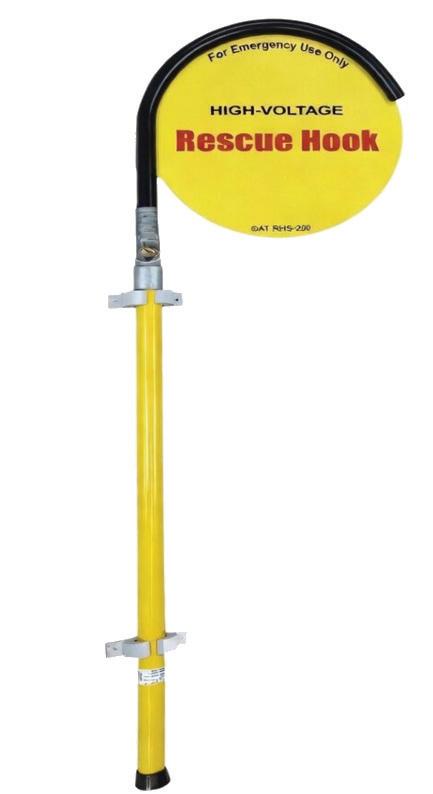
RESCUE ELECTRIC SHOCK — INSULATED RESCUE HOOK
The insulated rescue hook is designed to pull a technician away from an energized component during an electrical incident. It is made from non-conductive materials and rated for high-voltage environments. The tool is typically wall-mounted in EV work areas and kept visible for quick access. It is intended for emergency use only.
AN INSULATED RESCUE HOOK SAFELY PULLS A TECHNICIAN FROM HIGH-VOLTAGE DANGER IN AN EMERGENCY.
SHIELD HIGH VOLTAGE — CLASS 0 INSULATED GLOVES
Class 0 insulated gloves are designed for work around systems up to 1,000 volts AC. They are typically worn with leather protectors to prevent cuts and abrasion. Technicians are expected to inspect and test gloves regularly to ensure they remain safe to use. Even small defects can compromise protection.
The MSD lockout device prevents accidental reconnection of a vehicle’s service disconnect during repairs. It physically blocks the disconnect port and can be secured with a padlock. This ensures that high-voltage systems remain de-energized while technicians are working. Warning tags can also be applied. The device provides a simple but effective safety control.
MSD LOCKOUT DEVICES PHYSICALLY PREVENT RECONNECTION, KEEPING HIGHVOLTAGE SYSTEMS SAFELY DE-ENERGIZED DURING REPAIRS.
BARRIER KIT
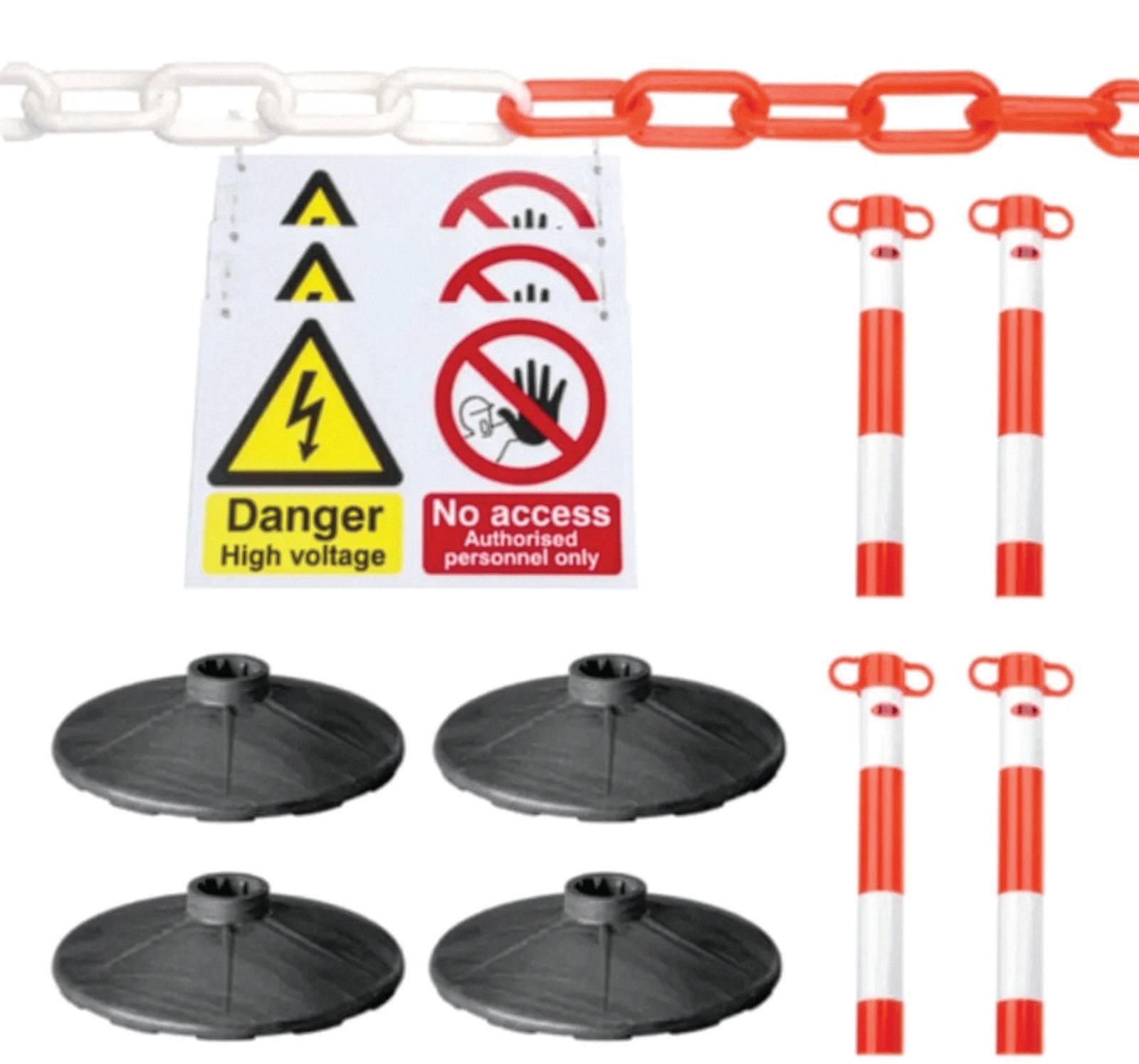
Safety barrier kits are used to mark EV work zones and restrict access to authorized personnel. The one from Icon Autocraft includes cones, posts and warning signage. Clear visual boundaries help prevent untrained staff from entering areas where high-voltage work is underway. Establishing a dedicated EV zone is recommended in many training programs. Barriers support safer shop operations.
iconautocraft.com/ev-safety-tools-andkits.html
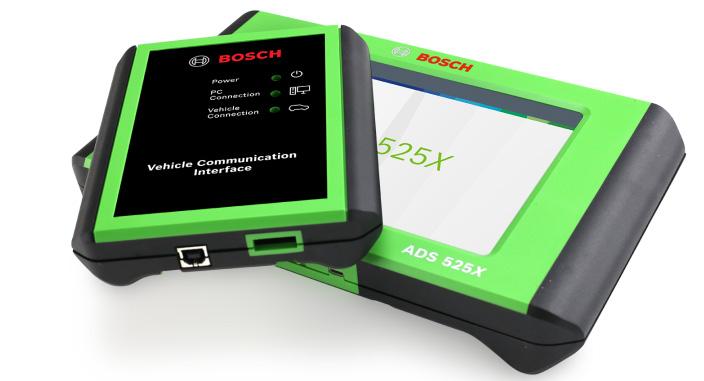
DIAGNOSE EV SYSTEMS — BOSCH ADS 525X SCAN TOOL
Built for modern vehicles, the ADS 525X from Bosch is designed to perform full-system scans, live data monitoring and bi-directional testing across a wide range of platforms, including electrified vehicles. According to Bosch, the tool provides access to detailed system data needed during repair and verification. In collision environments, scan tools are used before teardown and again before delivery. With EVs, they also help monitor battery status, identify fault codes and reset systems affected by impact damage. As vehicle electronics become more complex, diagnostics become central to repair workflows. For EV work, scan tools provide the confirmation needed to ensure that systems are operating correctly before the vehicle is returned to the customer.
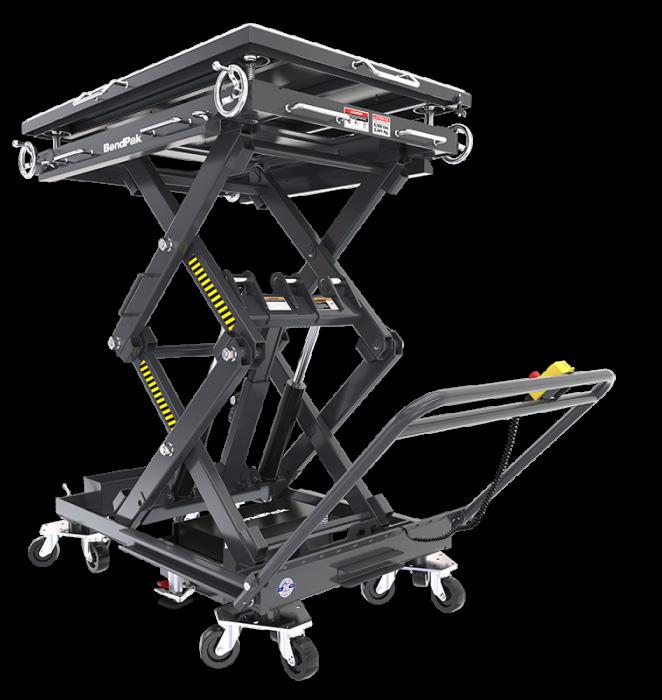
Featuring a low-profile scissor design, the Mobi-EVS from BendPak is intended to support safe removal and installation of EV battery packs in collision repair environments. According to the company, the unit is rated to roughly 4,500 lb., covering most passenger electric vehicle battery assemblies currently in service. The platform uses a battery-powered hydraulic system combined with adjustable saddles that help stabilize uneven loads during removal. Shops can move the unit between bays, which is useful when EV work is not yet dedicated to a single area. Adapters allow technicians to support different battery shapes securely. Controlled lifting reduces risk to both technicians and battery packs while improving consistency across the repair process.
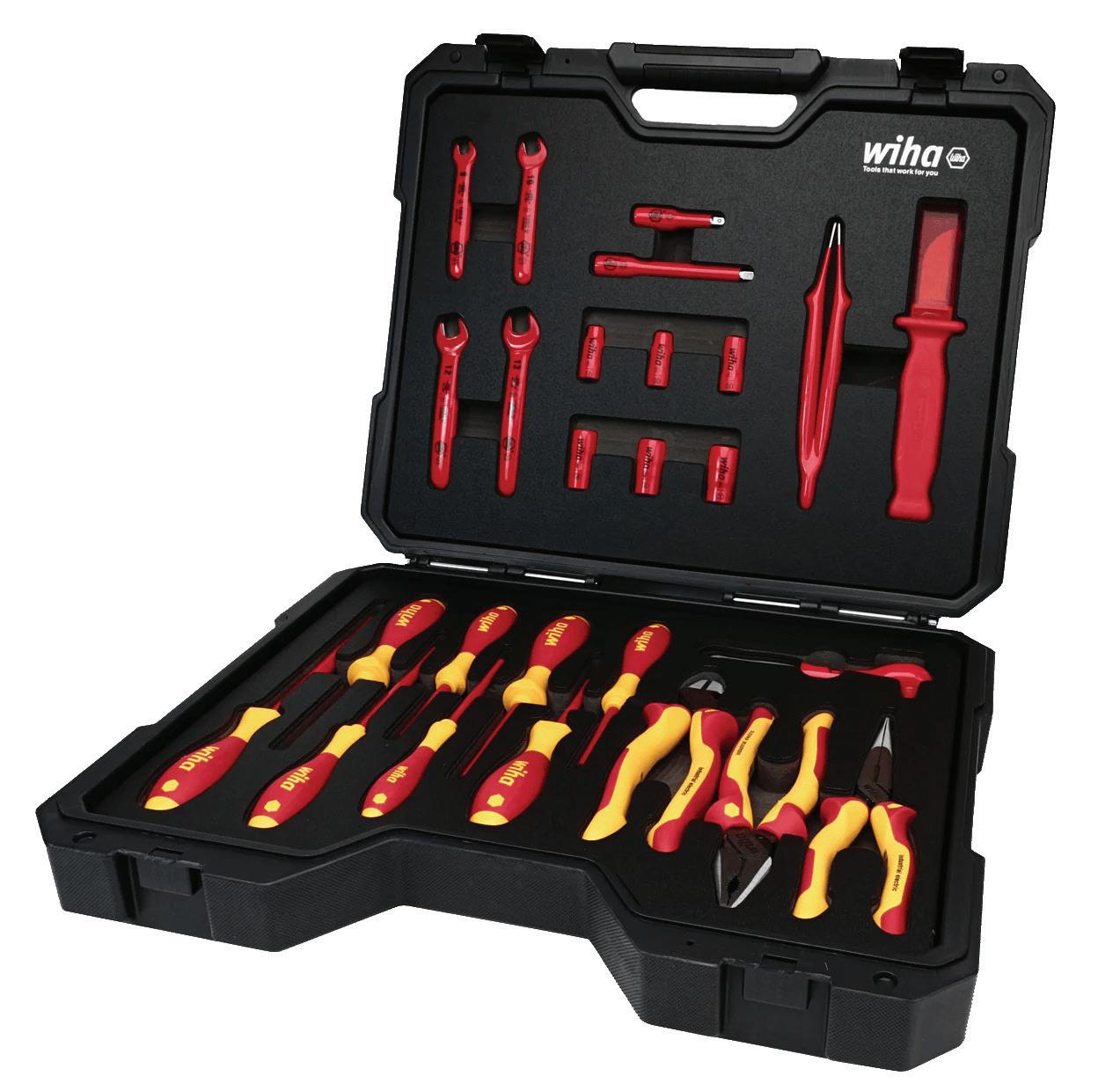
PROTECT AGAINST VOLTAGE — WIHA INSULATED EV TOOL KIT
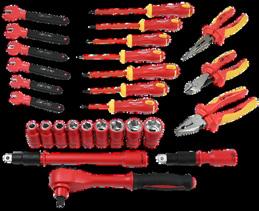
Designed for high-voltage service work, the Wiha insulated EV tool kit provides technicians with a dedicated set of hand tools intended for use around energized systems. Each tool is individually tested to 10,000 volts and rated for use up to 1,000 volts AC. The kit includes insulated screwdrivers, pliers and sockets organized in a protective case to keep them separate from standard shop tools. Insulated tools are a baseline requirement in most OEM programs. For bodyshops entering EV repair, they are one of the simplest and most effective ways to reduce electrical risk while maintaining proper procedures.
INSULATED TOOLS ARE AN OEM BASIC AND A SIMPLE WAY TO REDUCE EV ELECTRICAL RISK.
LIFT HEAVY BATTERIES — BENDPAK EVS4500
EV IN FOCUS
BY EV REPAIR MAGAZINE STAFF
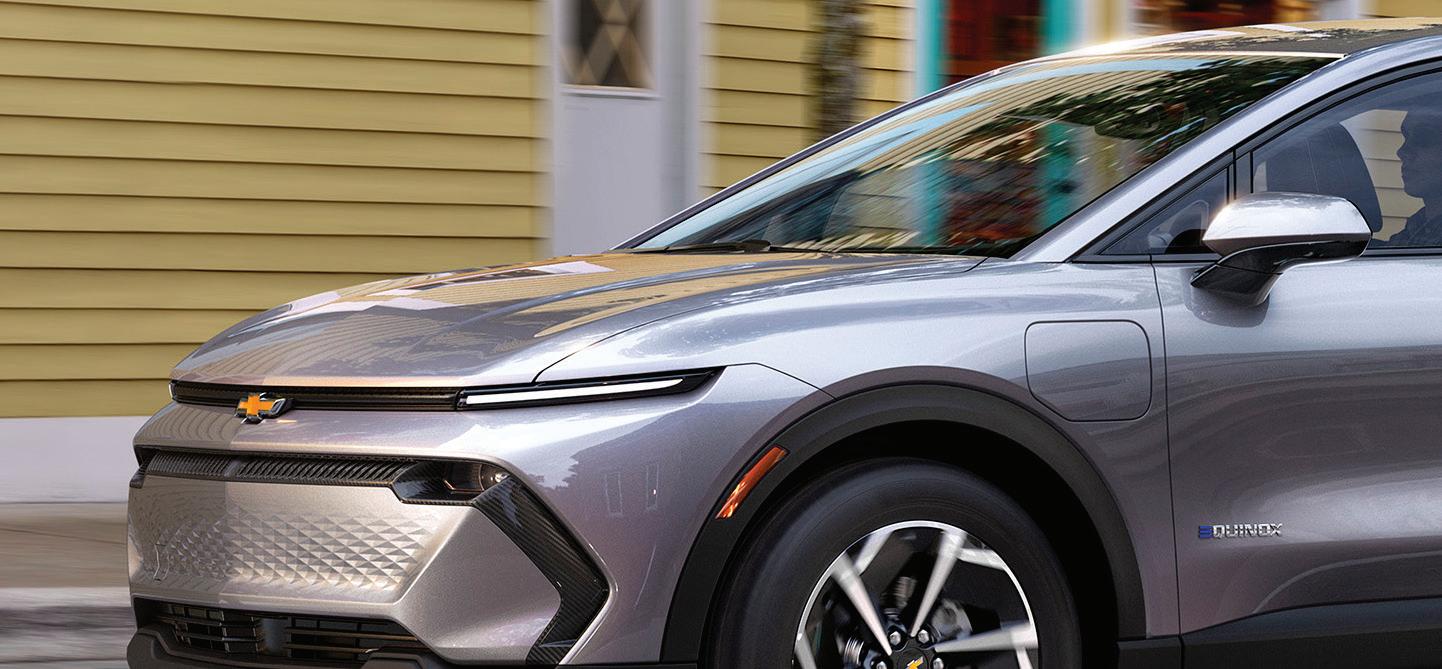
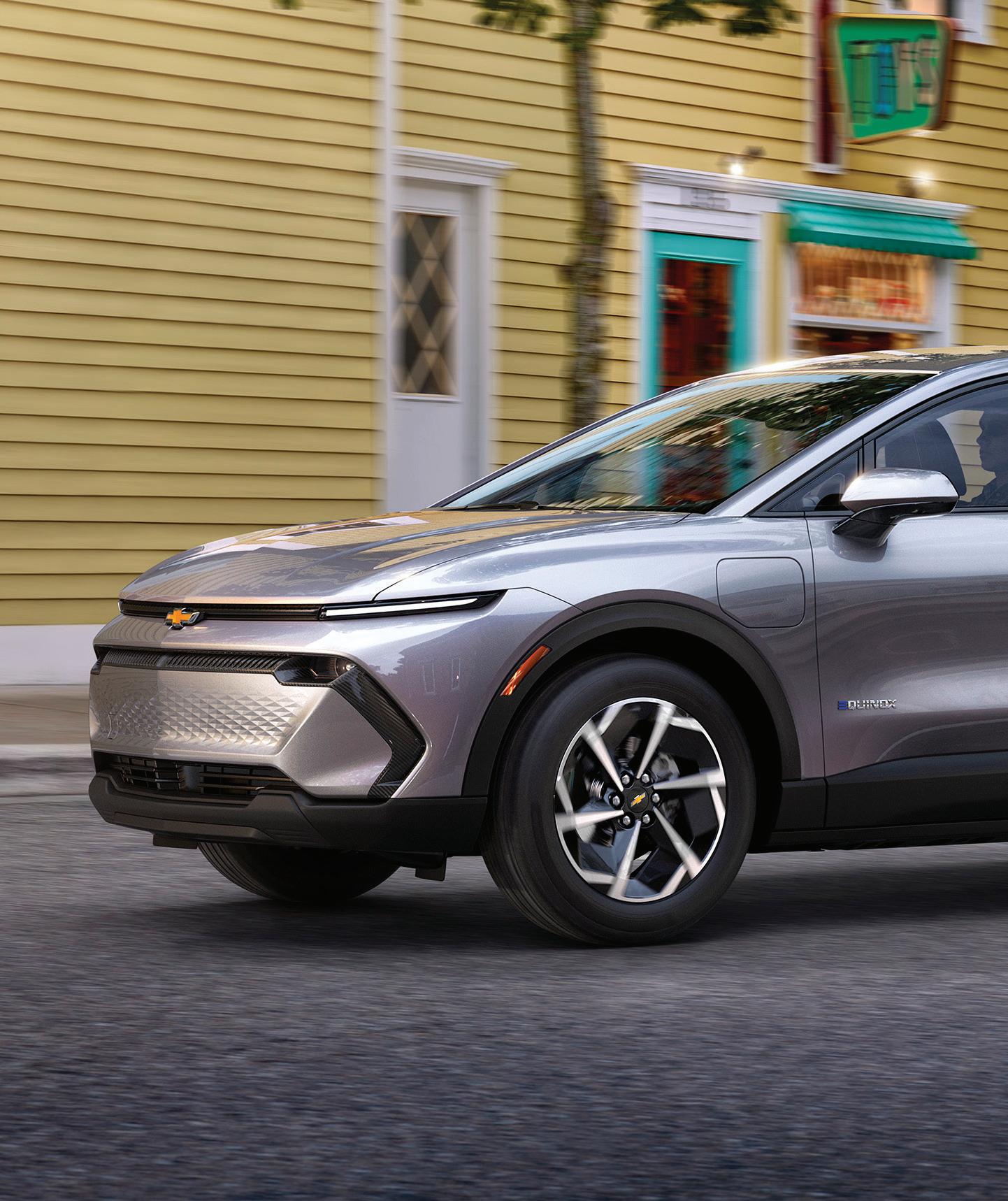
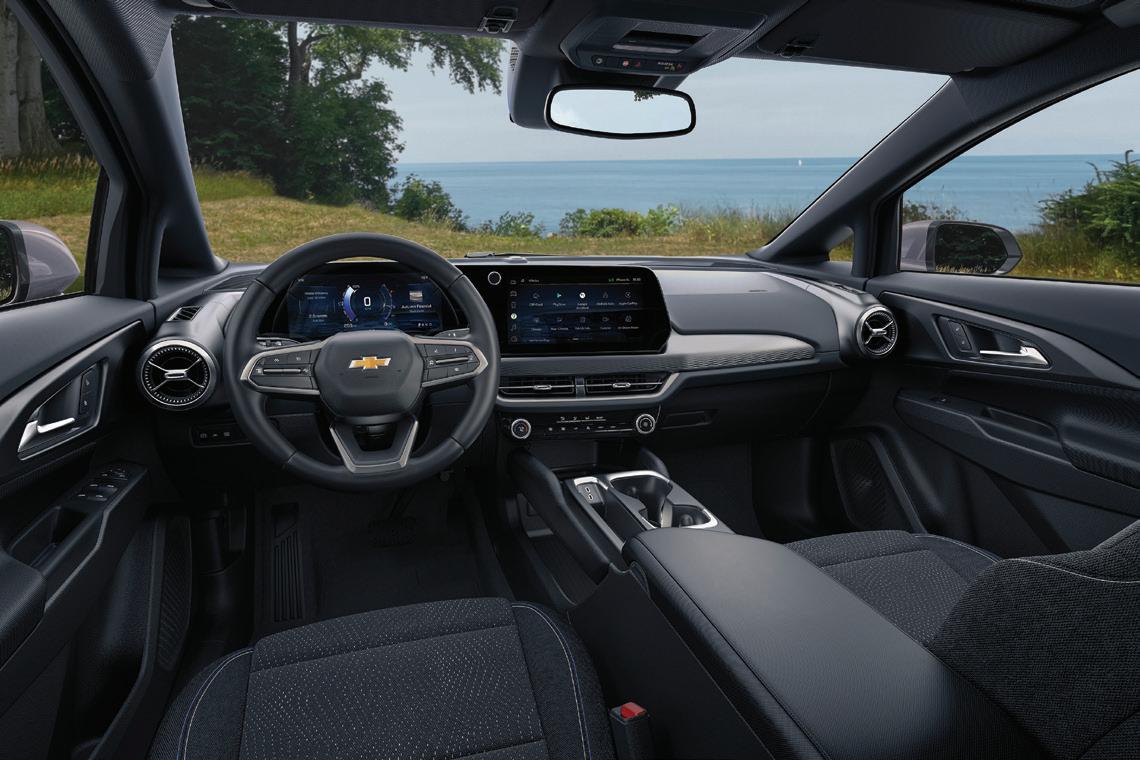
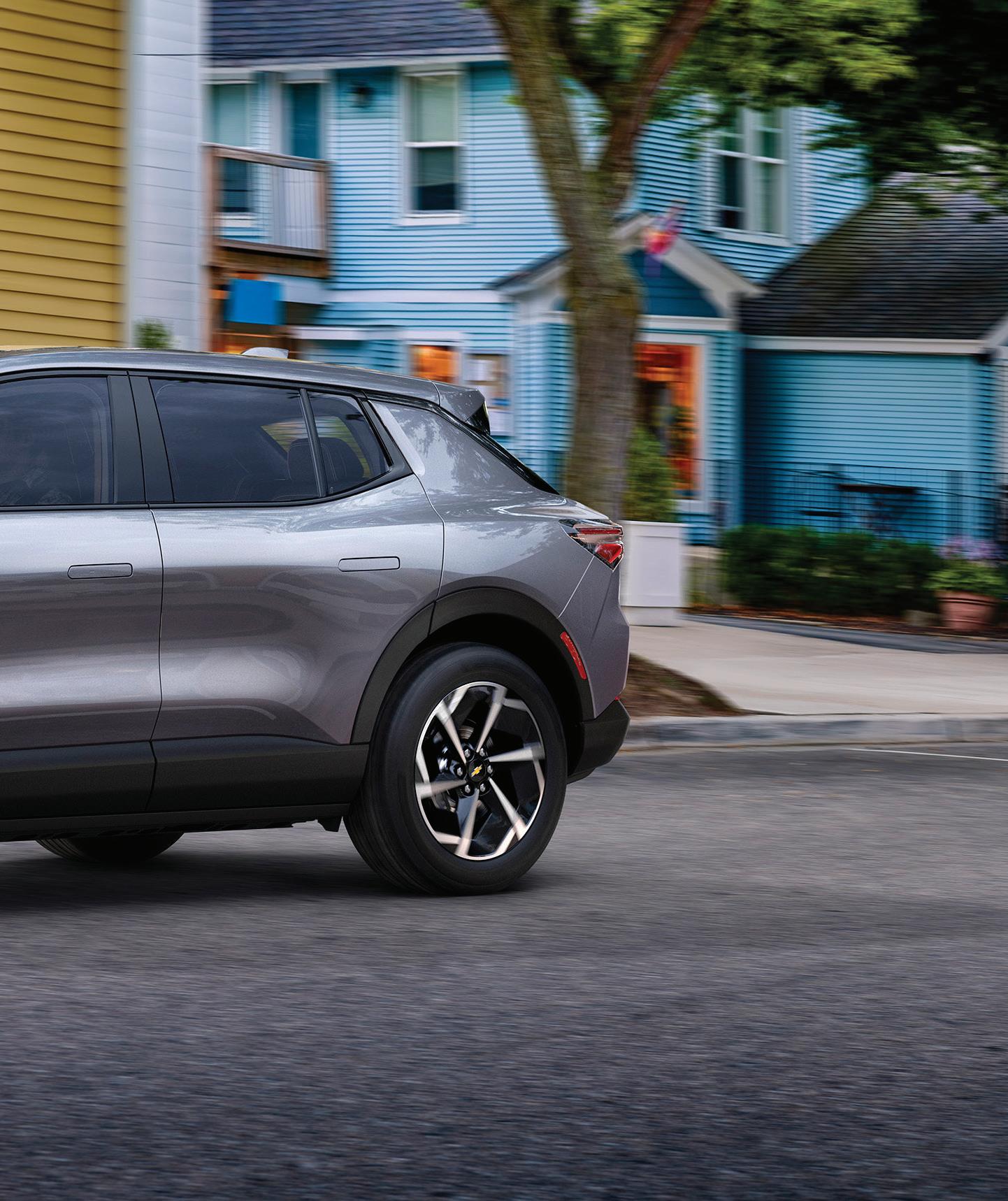
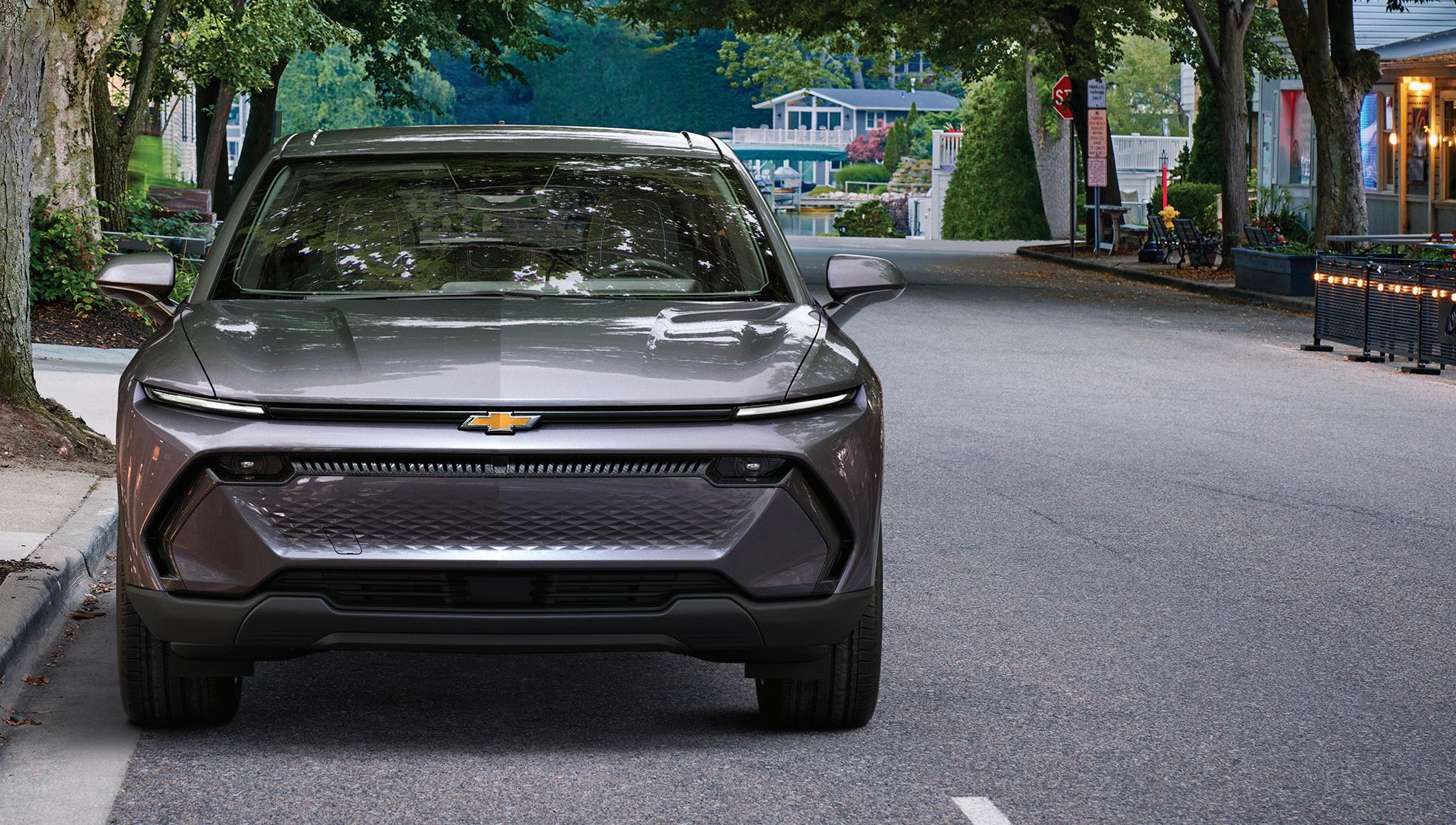
Canada’s top-selling EVs are changing the way shops work — and the Chevrolet Equinox EV is leading the charge. In this feature, we take a close look at its design, technology, and what repairers need to know to stay ahead. Designed to bring electric mobility to the mainstream, the Equinox EV balances affordability with modern technology. Built on GM’s Ultium platform, it features a flexible battery architecture and streamlined electronics that simplify manufacturing — but introduce new repair considerations around structural integration and calibration. For collision repairers, its mix of advanced driver assistance systems and cost-conscious design makes it a key vehicle to understand as EV adoption expands.
For more information on GM Canada visit collisionrepairmag.com/15740622
Driver’s side view of 2026 Chevrolet Equinox EV 1LT in Galaxy Gray Metallic driving down the road. Preproduction model shown. Actual production model may vary. Visit chevy.com/EquinoxEV for availability.
CHEVROLET EQUINOX EV — REPAIR PROS & CONS
EV REPAIR PROS
• Accessible design and parts strategy: High-volume production leads to better parts availability and more standardized repair procedures.
• Ultium platform familiarity: Shared architecture with other GM EVs reduces the learning curve for repair shops.
• Fewer mechanical components: No traditional engine or transmission simplifies certain repairs.
• Growing OEM support: GM’s EV training, certifications, and documentation continue to expand.
EV REPAIR CONS
• Battery-related repair complexity: Collisions may require battery pack inspection or replacement.
• ADAS calibration requirements: Advanced systems need precise recalibration after many repairs.
• High-voltage safety protocols: Strict procedures and PPE are required when working around energized components.
Front view of 2026 Chevrolet Equinox EV 1LT in Galaxy Gray Metallic parked on a street with trees. Preproduction model shown. Actual production model may vary. Visit chevy.com/ EquinoxEV for availability.
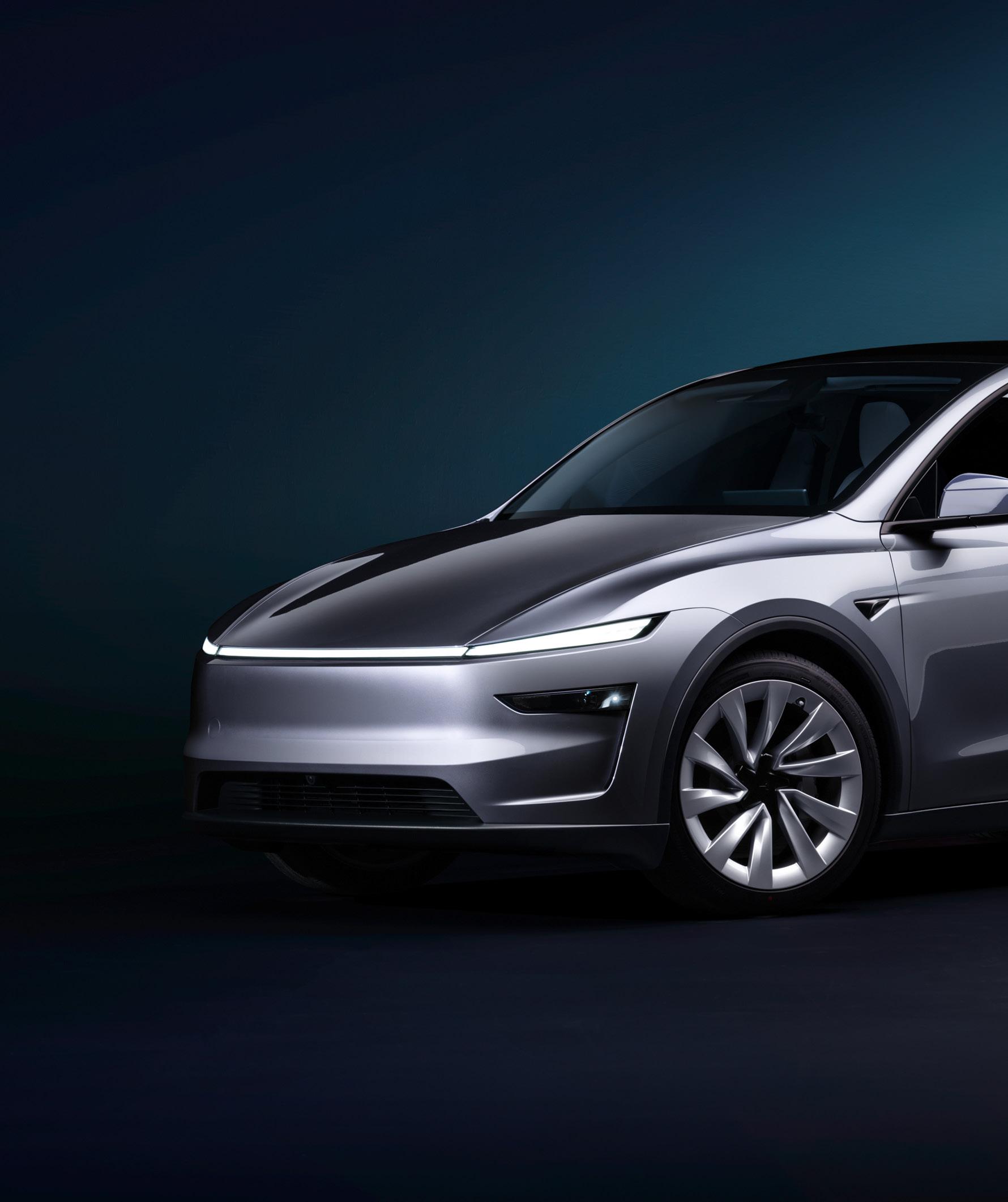
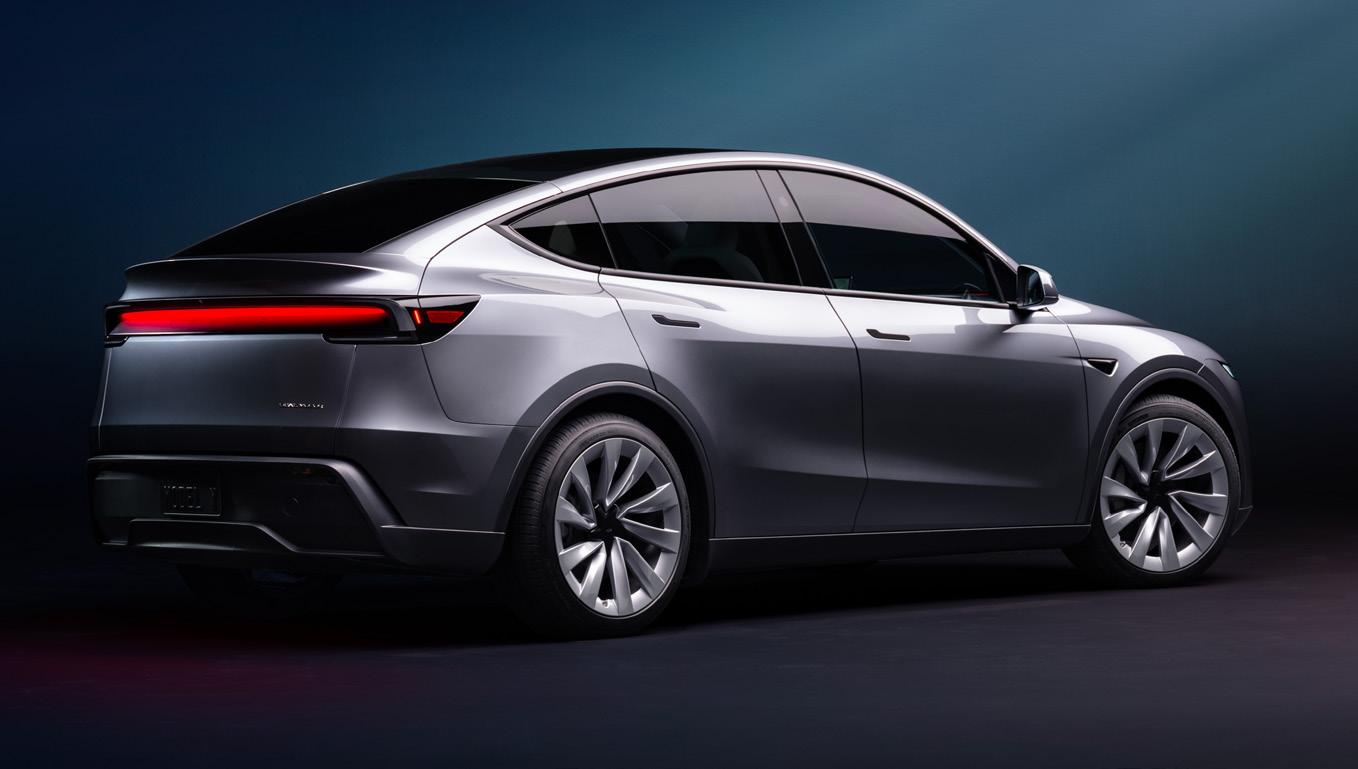
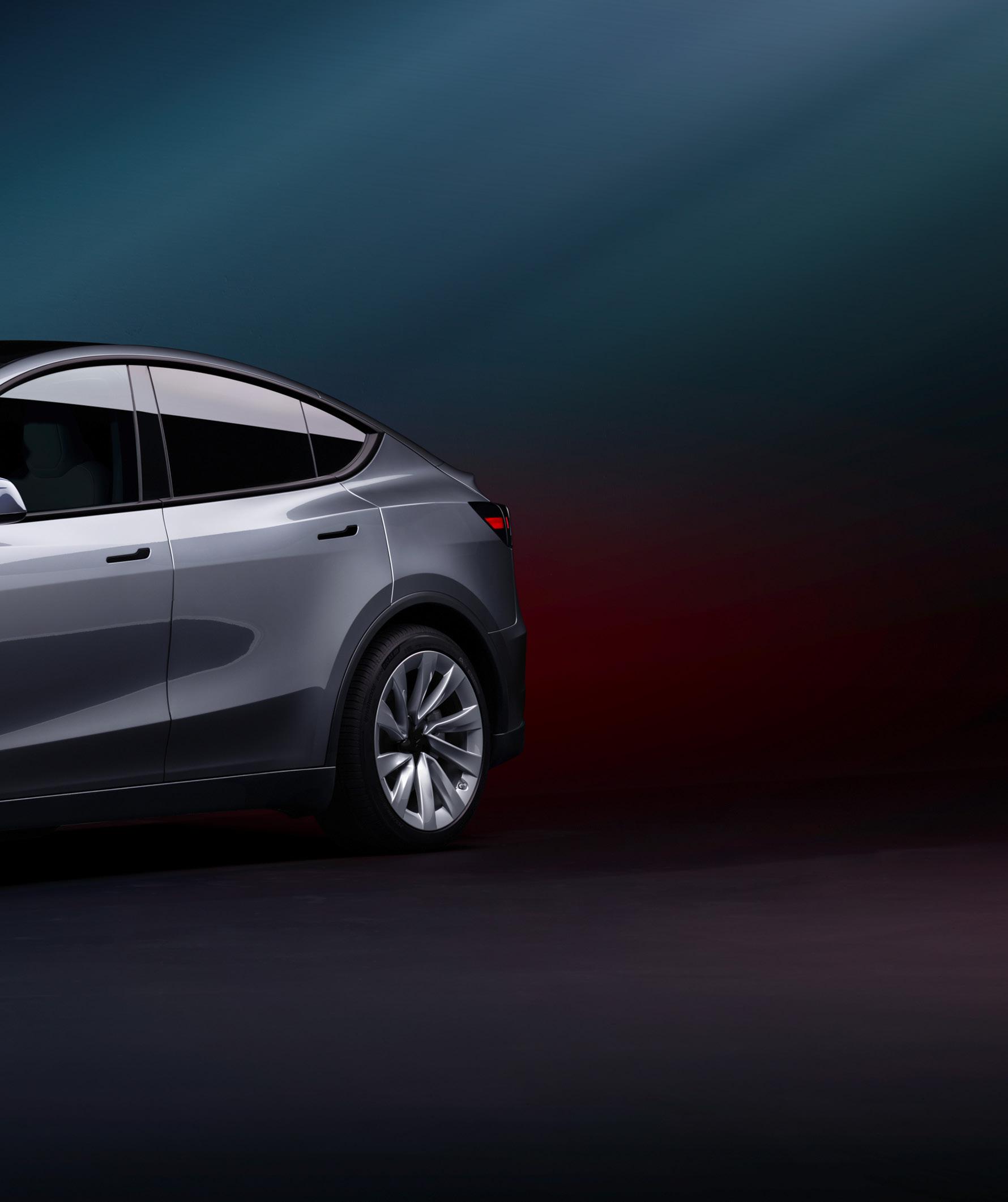
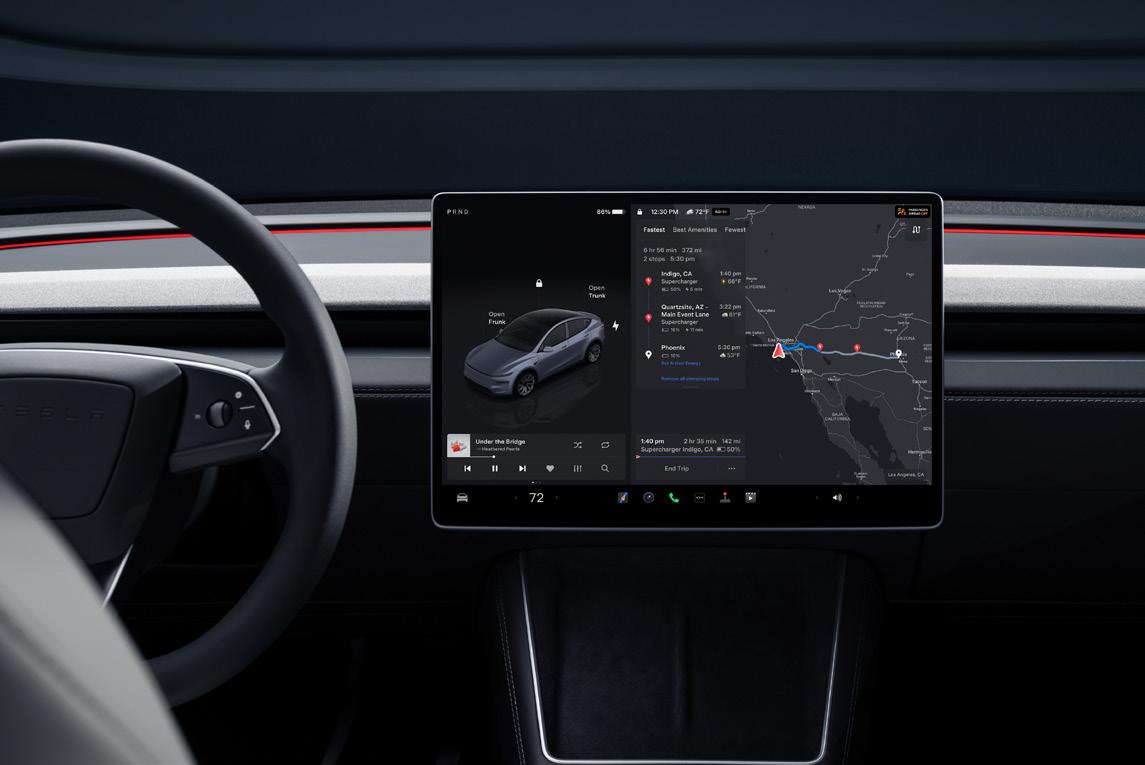
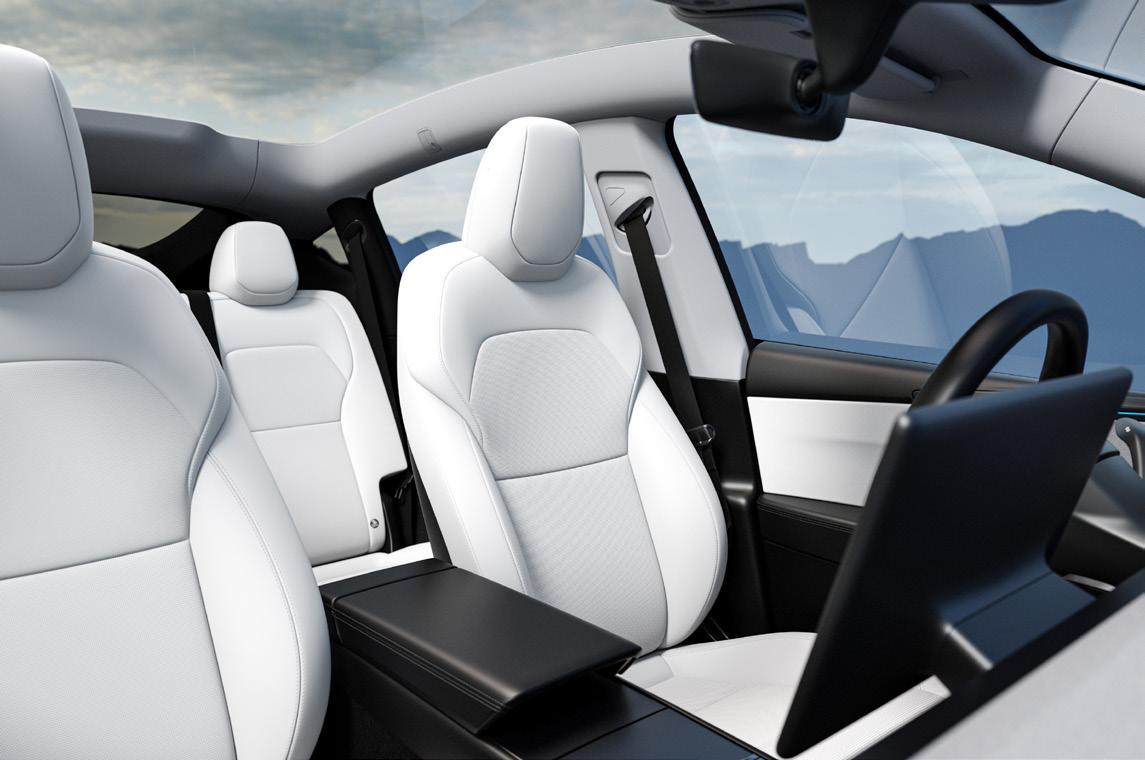
As one of the best-selling EVs globally, the Model Y continues to influence how vehicles are designed — and repaired. Its minimalist construction, large cast body sections and software-driven systems set it apart from traditional vehicles. For technicians, that means fewer parts in some areas but greater emphasis on structural repair procedures, diagnostics and OEM-approved methods. Its prevalence alone makes it a critical model for any shop servicing electric vehicles.
TESLA MODEL Y — REPAIR PROS & CONS
EV REPAIR PROS
• High availability of online repair resources: Tesla’s technical documentation and repair guides are extensive and constantly updated online.
• Simplified mechanical layout: Minimalist design and fewer moving parts make some repairs straightforward.
• Structural rigidity benefits: Large cast body sections can improve collision safety.
• High market presence: Commonly encountered EV, giving shops experience with frequent repairs.
EV REPAIR CONS
• Complex body repair: Large castings make panel replacements and structural repairs more challenging.
• Software dependency: Many systems require Tesla-specific software to diagnose or recalibrate.
• Battery pack sensitivity: Repairs near the floor require careful handling to avoid high-voltage risks.
All images courtesy of Tesla, Inc. For availability visit Tesla.com
EV IN FOCUS
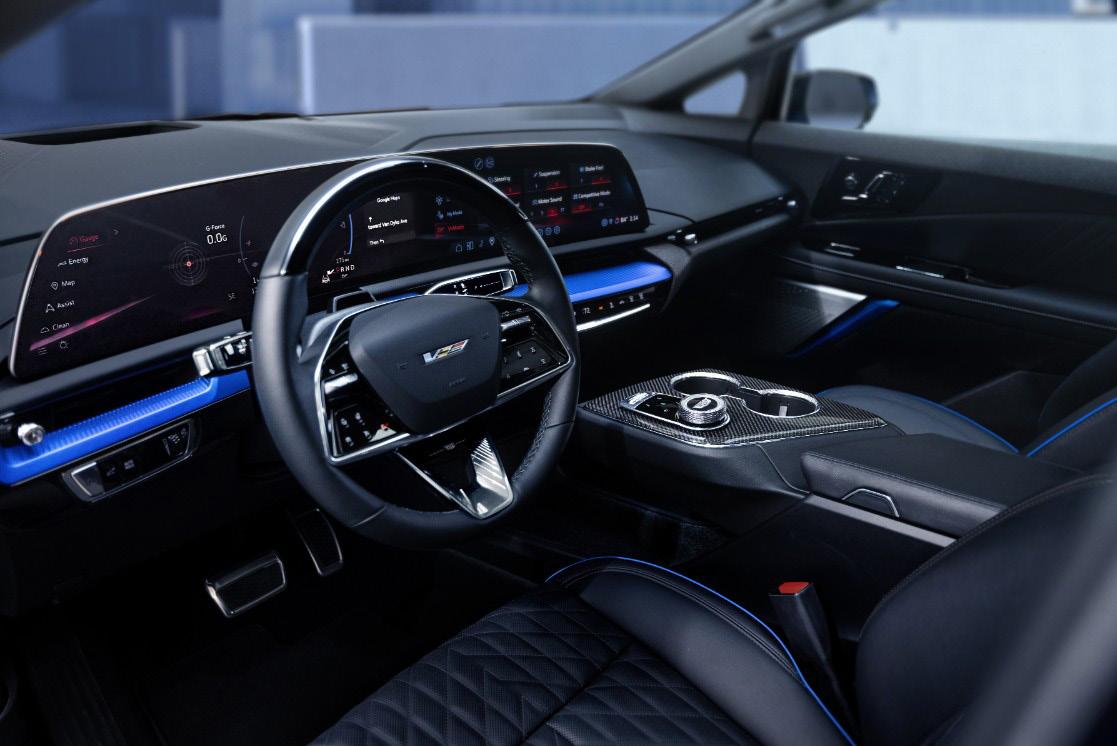
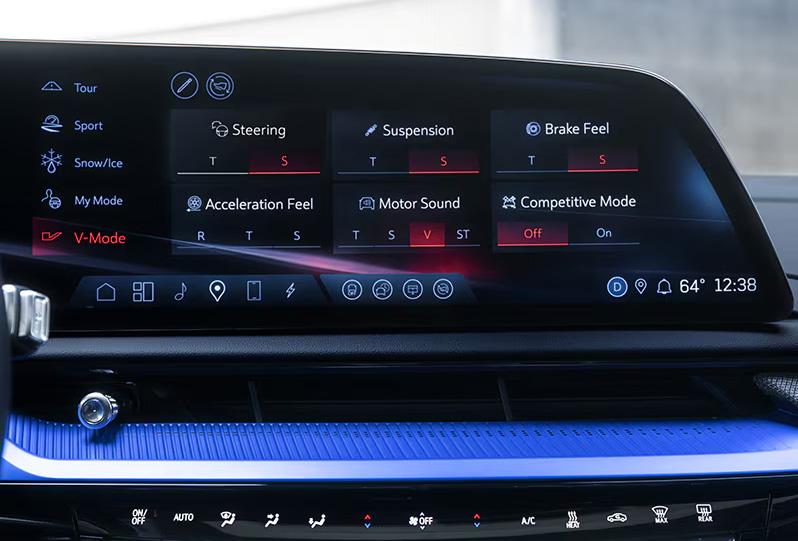
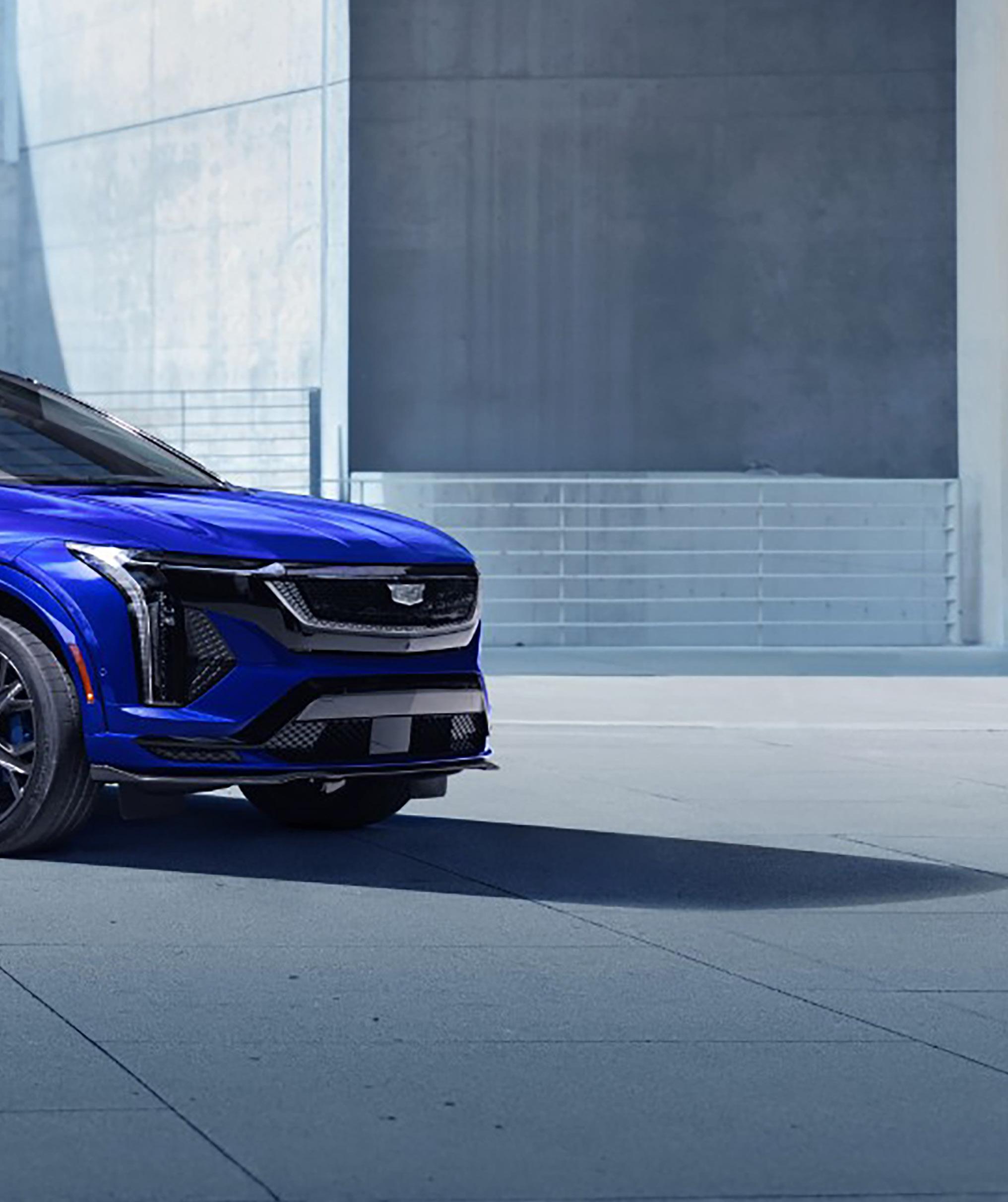
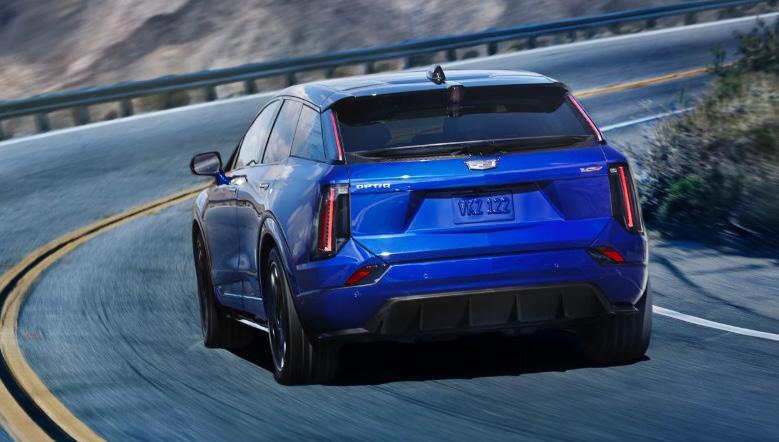
CADILLAC OPTIQ SERIES
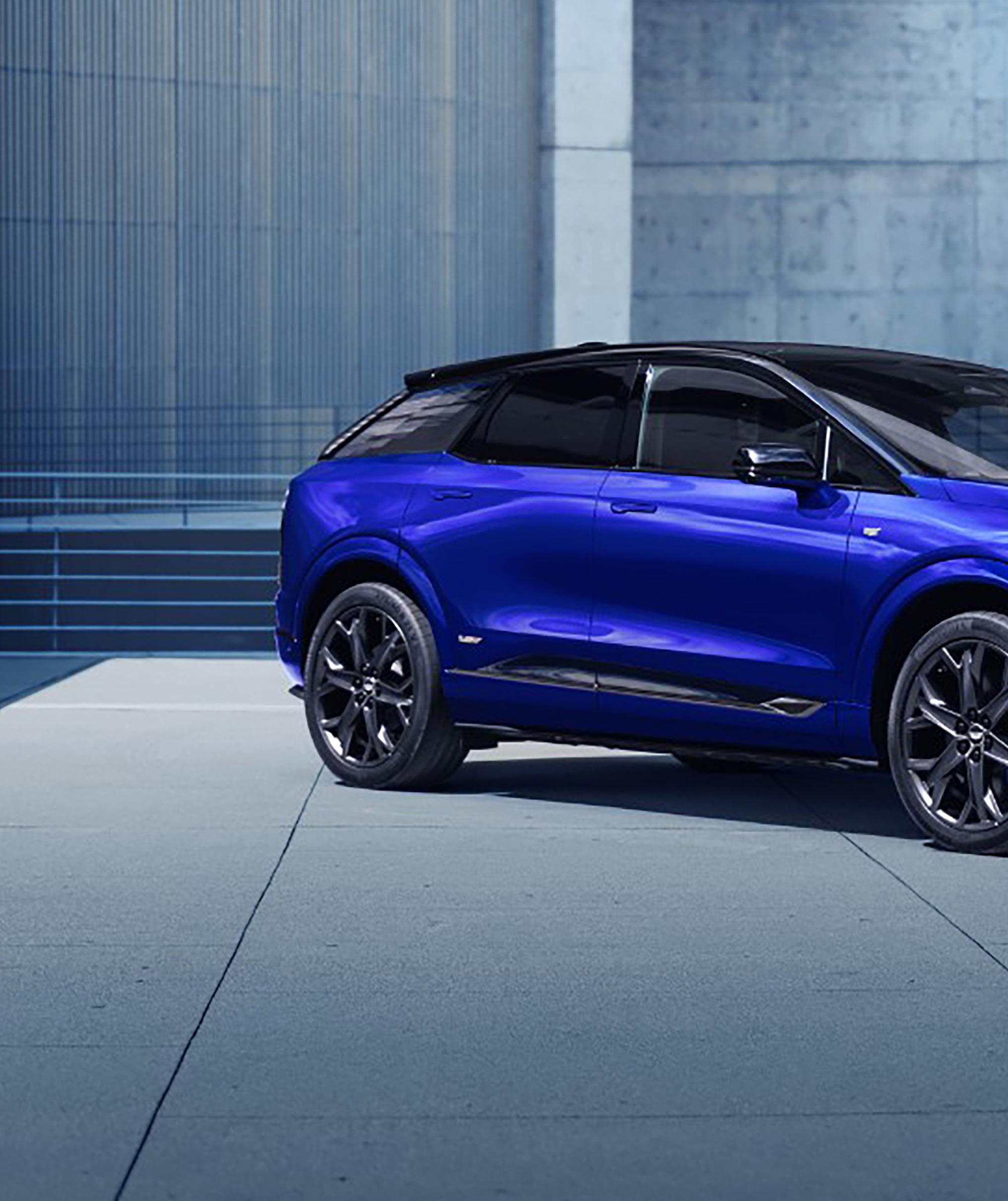
Cadillac’s EV lineup signals a shift toward luxury electrification, with the LYRIQ and OPTIQ showcasing premium materials, advanced displays and refined Ultium-based engineering. These models introduce added complexity through integrated lighting, sensor-rich exteriors and high-end interior systems. From a repair perspective, they demand careful attention to calibration, material handling and brand-specific procedures — reflecting the elevated expectations that come with luxury EV ownership.
For more information on GM Canada visit collisionrepairmag.com/15740622
CADILLAC OPTIQ SERIES — REPAIR PROS & CONS
EV REPAIR PROS
• Premium build quality: High-end materials and components allow for durable repairs when OEM procedures are followed.
• Shared Ultium platform: Familiarity with GM EV architecture aids trained shops in efficient repairs.
• Advanced safety systems: ADAS and battery safety protocols are well-integrated, providing clear OEM guidance.
• Luxury EV market insights: Servicing these models positions shops as EV-capable specialists.
EV REPAIR CONS
• Complex interior and exterior systems: Integrated lighting, displays, and sensors increase repair difficulty and cost.
• Battery and floor integration: Structural integration complicates underbody and collision repairs.
• Calibration-heavy: Numerous sensors and high-end driver assistance systems require specialized recalibration.
• High repair costs: Luxury components and replacement parts drive higher repair expenses.
All images courtesy of Cadillac Canada. For availability visit cadillaccanada.ca
WHAT ARE THE REAL INFRASTRUCTURE COSTS OF EV REPAIR?
THE REAL COST OF EV REPAIR ISN’T TOOLING OR TRAINING. IT’S WHAT YOUR BUILDING CAN HANDLE.
BY CAITLYN O’KEEFE
Electric vehicle collision repair gets a lot of attention for training, tooling and certification. Those are visible investments. What gets talked about less, and often costs more, are the infrastructure changes required to support EV work safely and consistently.
For many Canadian collision repair facilities, the biggest barrier to EV readiness is not whether technicians can handle highvoltage systems. It is whether the building itself can handle the demands that come with them.
Electrical capacity is one of the first pressure points. EV chargers, battery conditioning equipment and diagnostic systems all draw significant power, often at the same time. Many older facilities were never designed for that kind of load. Upgrading electrical service can involve new panels, transformers and coordination with local utilities. In some cases, shops may need to move from singlephase to three-phase power, depending on the scale of their operation.
Charging infrastructure alone can place substantial demands on a building’s electrical
system. Level 2 chargers commonly used in commercial settings require dedicated circuits and careful load management to avoid overtaxing existing capacity. Faster charging solutions, while less common in collision environments, push those requirements even higher.
Power is only part of the equation. Space planning is becoming just as important.
OEM procedures and safety guidelines consistently call for designated areas for EV work. This includes isolation zones for damaged vehicles, particularly those
with potential battery compromise. These areas need clear access, separation from other vehicles and, in some cases, outdoor positioning to reduce risk.
Battery storage adds another layer of complexity. Damaged or suspect lithium-ion batteries cannot be treated like conventional parts. They require secure, monitored storage away from flammable materials and high-traffic areas. Some OEMs and safety organizations recommend minimum distance requirements between stored vehicles and other assets, along with temperature monitoring and fire mitigation measures.
These requirements can force shops to rethink how they use their floor space. What was once a productive working area may need to be converted to safety zones, limiting how much work a shop can take on unless additional space is added.
Fire risk mitigation is also an area where infrastructure demands are evolving.
EV fires are statistically less common than fires in internal combustion vehicles, but guidance from fire safety organizations and OEMs emphasizes the need for preparedness. Lithium-ion battery fires behave differently from conventional fires and can reignite after being extinguished. Shops handling EVs need to consider emergency service access, appropriate suppression tools and clear protocols for thermal events.
Some jurisdictions and insurers are beginning to look more closely at how facilities manage these risks. That includes reviewing storage practices, ventilation and the proximity between vehicles. In certain cases, fire departments may require preplanning or site walkthroughs for facilities that regularly handle damaged EVs.
Compliance with municipal codes and permitting adds still more complexity.
TRAINING AND TOOLING CAN BE SCALED OVER TIME. BUILDINGS
ARE LESS FLEXIBLE.
Electrical upgrades typically require permits and inspections. Changes to building layout, including designated EV work areas or exterior storage zones, may also trigger local approvals. Requirements vary significantly between provinces and municipalities, creating a patchwork of expectations that shops must navigate on their own.
Transport Canada regulations and provincial building codes provide overarching guidance, but implementation is largely local. That means timelines for upgrades can stretch beyond initial expectations, especially when utilities or inspectors are involved.
All of this carries a cost, both direct and indirect.
Direct costs include electrical upgrades, construction, equipment installation and compliance measures. Indirect costs can
be just as significant: downtime during renovations, reduced usable floor space and the need to adapt workflows around new safety requirements.
Taken together, these factors make clear that EV readiness is not a single purchase or certification. It is an operational shift that touches the physical structure of the business.
For collision repair facilities thinking through their next steps, understanding these infrastructure realities is essential. Training and tooling can be scaled over time. Buildings are less flexible.
As EV volumes continue to grow in Canada, the shops that plan for power, space and safety early will be better positioned to adapt. Those that do not may find that the biggest obstacle to EV repair is not in the vehicle, but in the building. EV
For many Canadian collision repair facilities, the biggest barrier to EV readiness is not whether technicians can handle high-voltage systems. It is whether the building itself can handle the demands that come with them.
Charging infrastructure alone can place substantial demands on a building’s electrical system. Level 2 chargers commonly used in commercial settings require dedicated circuits and careful load management to avoid overtaxing existing capacity.
POWERING CIRCULARITY
WHAT HAPPENS
TO EV BATTERIES AT END-OF-LIFE?
ABY DEBORAH POON, DIRECTOR ACCOUNT MANAGEMENT, CALL2RECYCLE
s electric vehicle (EV) adoption accelerates across Canada, attention is increasingly turning to a critical but less visible challenge: managing batteries at the end of their life. For repairers, dismantlers, insurers, and fleet operators, high-voltage batteries are entering the aftermarket in growing numbers, bringing new safety, regulatory, and operational considerations.
Historically, most EV batteries were handled within manufacturer-controlled systems, particularly those under warranty or subject to recall. Today, however, a significant volume of batteries falls outside those channels, especially from collision-damaged or endof-life vehicles processed by independent operators. This shift is creating an urgent need for clear, standardized approaches to battery recovery.
Without proper handling, EV batteries present real risks. Thermal events, improper storage, and non-compliant transportation can endanger workers and facilities. At the same time, evolving regulations around dangerous goods mean businesses must be increasingly diligent in how these batteries are classified, packaged, and shipped.
For repair professionals, establishing a consistent process is key. Best practices begin with assessing the battery’s condition, whether intact, damaged, or defective, as
this determines handling and transport requirements. From there, identifying core characteristics such as chemistry, size, and condition ensures the battery is routed appropriately. The final step is arranging transport through qualified service providers that meet Transport Canada requirements and safely manage high-voltage systems.
Just as important as safe handling is ensuring batteries are directed toward the most appropriate next use. End-of-life does not necessarily mean end-of-value. Many EV batteries retain significant capacity and can be remanufactured for reuse in vehicles or repurposed for applications such as stationary energy storage. When reuse is no longer viable, recycling enables the recovery of critical materials like lithium, cobalt, and nickel, reducing reliance on virgin resource extraction and supporting domestic supply chains.
This hierarchy, reuse, repurpose, then recycle, is central to a circular economy approach. As EV volumes grow, maximizing material recovery will be essential not only for environmental performance but also for long-term industry sustainability.
For the repair sector, these changes represent both a challenge and an opportunity. EV batteries introduce complexities that go beyond traditional mechanical work, requiring new knowledge, safety protocols,
As Director, Account Management, Deborah is responsible for Call2Recycle’s expansion into EV, eMoblity and embedded battery programs, managing and developing relationships with all key stakeholders. Deborah brings years of account management experience from the Consumer Packaged Goods (CPG) industry. She is recognized for her project management and analytical strength in optimizing sales and implementing business development opportunities.
and partnerships. At the same time, repairers and dismantlers are becoming a crucial link in the vehicle life cycle, ensuring that batteries are managed responsibly once they leave the road.
Integrating structured recovery practices into daily operations can help businesses reduce liability, improve safety outcomes, and stay ahead of regulatory expectations. It also reinforces the role of the independent repair sector in supporting Canada’s transition to electrified transportation.
As the volume of end-of-life EV batteries continues to rise, having a clear, compliant pathway for recovery is no longer optional; it is a core operational requirement. For repair professionals, the focus is clear: handle safely, route responsibly, and contribute to a system that keeps valuable materials in circulation long after a vehicle’s final drive. EV
COUNTING CARBON
RESEARCH FOCUSES ON COLLISION REPAIR’S ENVIRONMENTAL FOOTPRINT
BY DARRYL SIMMONS
One of the more interesting signals about where the collision repair industry is heading didn’t come from a trade show floor or a supplier announcement. It came from a scientific journal.
Yes, scientists are now studying collision repair.
Not casually, either. With detailed models, engineering analysis and the kind of process mapping normally used to examine factories and manufacturing lines. When that level of attention starts showing up in academic research, it usually means the work being done inside today’s repair operations has become important enough — and complex enough — to deserve serious study.
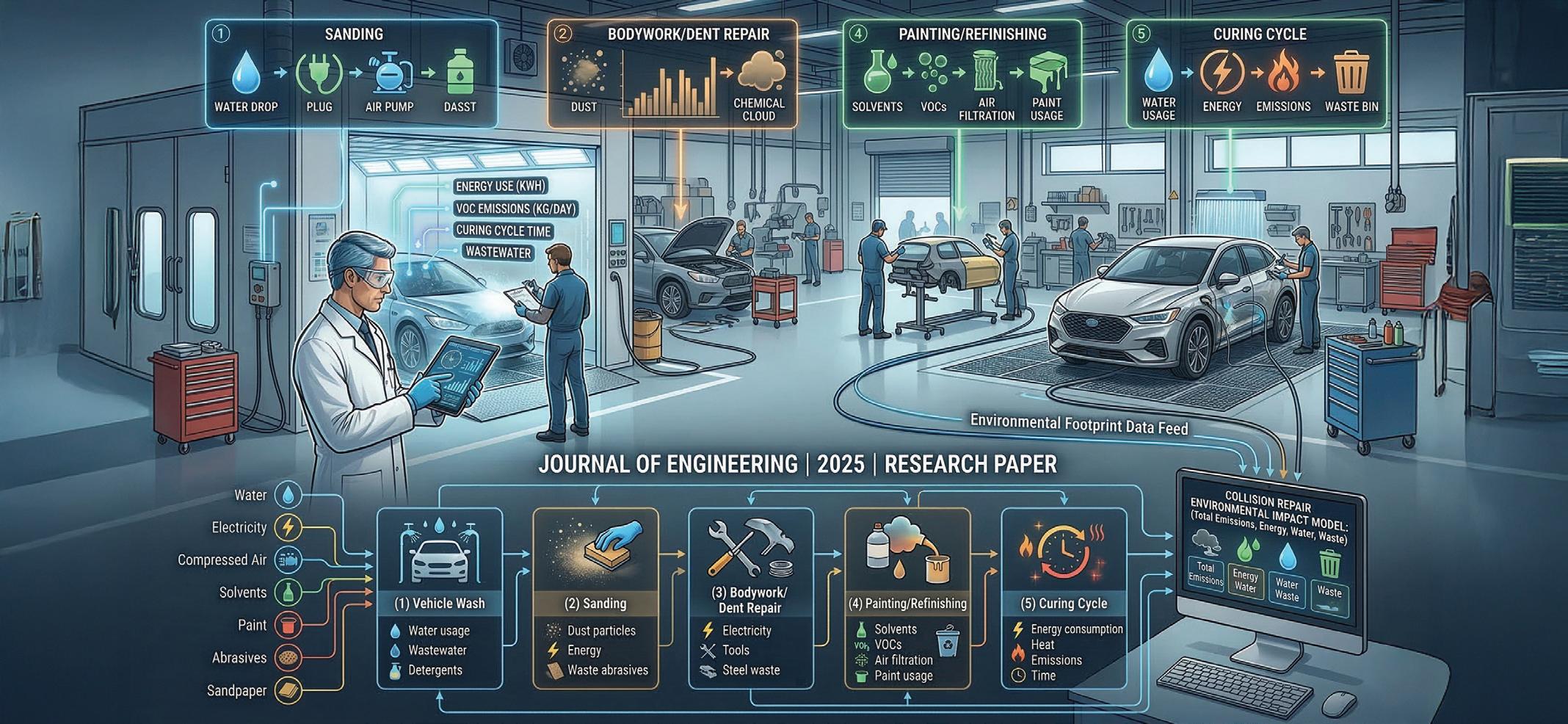
A paper published in 2025 in the Journal of Engineering titled “ A Novel Model to Quickly Assess the Environmental Impact of Automotive Collision Repair Workshops” takes exactly that approach. The researchers set out to calculate the environmental footprint of collision repair operations by breaking down the activities inside a collision repair facility and measuring the impact of each one.
Instead of treating a repair business as one large operation, the researchers examined the individual services that take place inside a collision repair facility — washing vehicles, sanding panels, straightening metal, refinishing surfaces and running curing cycles in a spray booth. Each activity was analyzed for its environmental inputs and outputs, including water consumption, electricity demand, solvent use, waste generation and emissions.
The goal, according to the authors, is to allow repair facilities to “quickly measure their environmental footprint and identify which operations create the most impact.”
To build that model, the researchers essentially mapped the workflow of a repair operation the way an engineer studies a production line. Each task was treated as its own process with measurable inputs and outputs. Water consumption, electricity demand, compressed air use, solvent evaporation, waste materials and emissions were all assigned environmental values so they could be included in the larger calculation.
Once the analysis begins, even routine shop activities take on a surprising level of detail. Vehicle washing brings water consumption, detergents and wastewater management into the equation. Sanding operations introduce dust generation, abrasive materials and energy consumption from electric tools and extraction systems.
Refinishing operations receive particularly close attention. Anyone who has watched a spray booth move through a heating and curing cycle will understand why. Paint preparation, solvent use, air filtration, heating cycles and curing time all contribute significantly to the environmental footprint of the process. The researchers describe their method as “a structured approach to quantify the environmental impacts associated with each repair activity.” By mapping these individual steps, the model builds a detailed picture of how the environmental footprint of a collision repair facility develops piece by piece.
From that analysis, the researchers reached several conclusions worth highlighting.
A new engineering model published in the Journal of Engineering (2025) transforms the traditional auto bodyshop into a data-driven environment. By breaking down every stage of the repair process — from initial washing and sanding to energy-intensive spray booth curing — researchers can now quantify the specific environmental footprint of each activity.
1. A WORKABLE MEASUREMENT TOOL IS POSSIBLE
The main outcome of the study is the model itself. The researchers proved that a collision repair shop’s environmental impact can be calculated by breaking the operation into individual services and assigning environmental indicators to each one. In their words, the model makes it possible to monitor emissions and environmental performance linked to specific repair activities.
They also built a simple monitoring tool around the model so companies could apply it without needing deep technical expertise. The intent is that a shop or company could plug in operational data and receive an estimate of its environmental footprint.
2. ENVIRONMENTAL IMPACT VARIES WIDELY BETWEEN SHOP ACTIVITIES
One of the clearest findings is that not all repair work contributes equally to environmental impact. Certain operations — particularly refinishing and energy-intensive processes — account for a disproportionately large share of emissions and resource consumption.
By isolating each service step, the model highlights which activities have the most negative environmental impact, allowing businesses to focus improvement efforts where they matter most.
3. THE INDUSTRY CURRENTLY LACKS CONSISTENT MEASUREMENT METHODS
The paper points out a major gap in the literature: despite growing pressure around sustainability, there has been very little structured research on environmental performance in collision repair shops. The authors argue that the industry has lacked clear tools or indicators to measure impact in the first place.
Their model is meant to fill that gap by providing a standardized way to evaluate environmental performance.
4. MEASUREMENT IS MEANT TO DRIVE CONTINUOUS IMPROVEMENT
The model isn’t just about reporting emissions. The authors frame it as a continuous improvement tool. Once environmental impacts are quantified, companies can monitor progress over time and adjust operations, equipment choices or processes to reduce their footprint.
In other words, measurement becomes the first step toward operational change.
5. SUSTAINABILITY WILL INCREASINGLY AFFECT COLLISION REPAIR OPERATIONS
The broader conclusion of the paper is that collision repair will not be exempt from the wider push toward sustainability in the automotive sector. The researchers place the work within the “triple bottom line” framework — environmental, economic and social performance — suggesting that environmental metrics will become part of how businesses evaluate success.
For the collision repair industry, that means environmental performance inside a collision repair facility could eventually be monitored in the same structured way shops already track productivity, cycle time and materials usage.
BOTTOM LINE
The paper doesn’t tell shops exactly how to become greener.
What it does show is that the industry is now being studied closely enough that environmental impact can be measured in detail. Once measurement exists, standards, benchmarks and reporting requirements usually follow.
That’s the real takeaway. The science is starting to catch up with the collision repair industry. EV
evrepairmag.com/15819067
Anyone interested in seeing the level of detail the researchers applied to everyday repair operations can read the full study here: https://onlinelibrary.wiley.com/doi/10.1155/je/8863257
Full paper: Ricardo Pinto et al., “A Novel Model to Quickly Assess the Environmental Impact of Automotive Collision Repair Workshops,” Journal of Engineering, 2025.
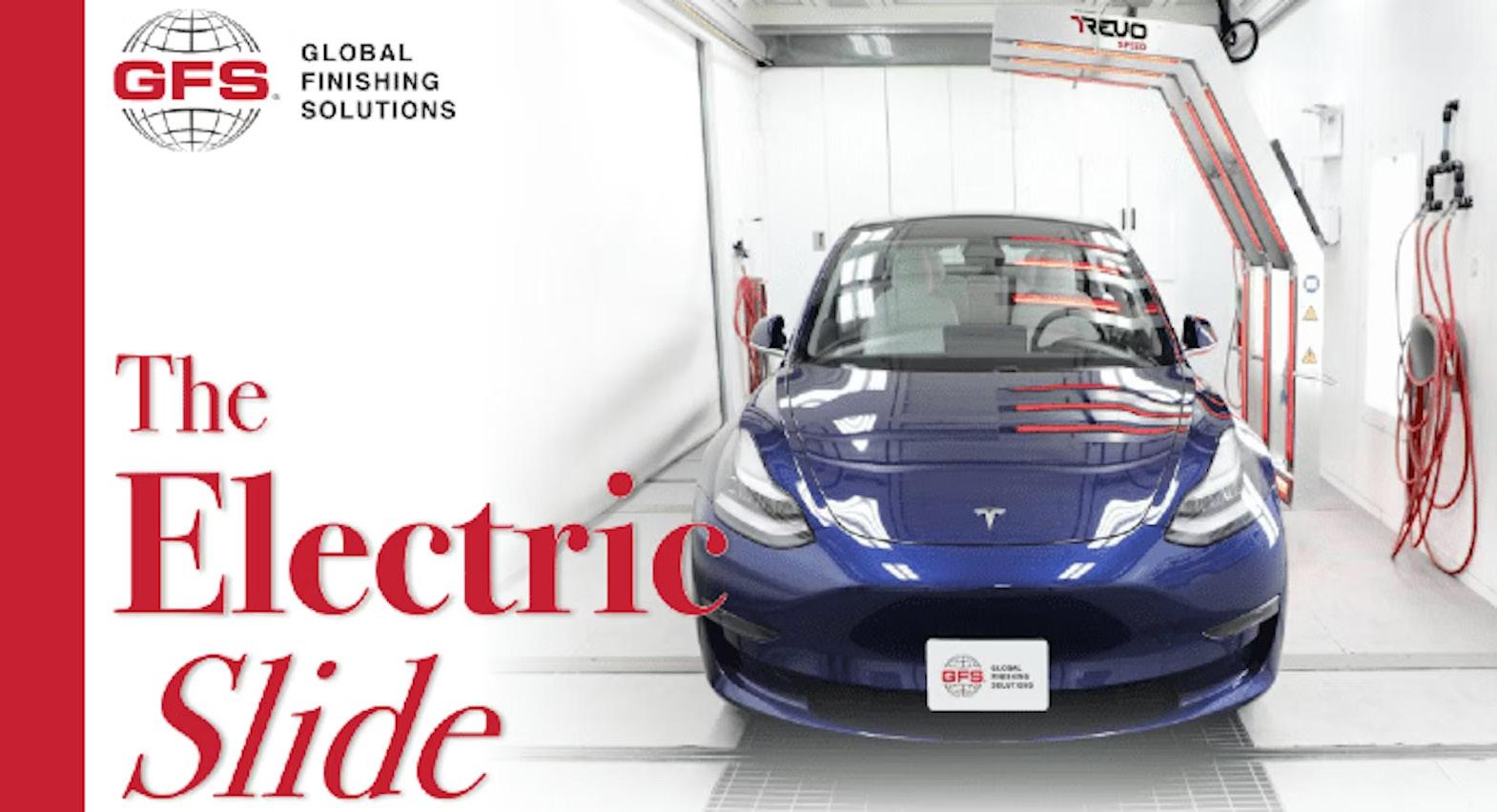
The EV Cure: Global Finishing Solutions releases free EV refinishing guide
With EVs making up a growing share of Canada’s vehicle parc, refinishing work is becoming more common — and Global Finishing Solutions is aiming to keep it safe.
The company recently released a free guide to EV refinishing, outlining market growth, best practices and key considerations for shops.
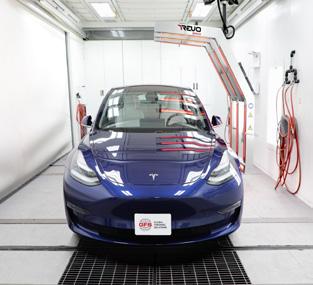
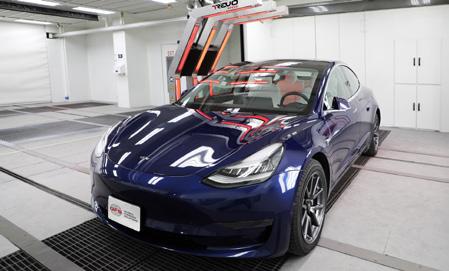
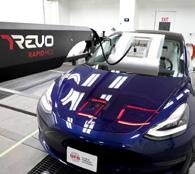
It highlights EV heat sensitivities and the need for alternative curing methods, with solutions ranging from gas catalytic dryers to electric infrared (IR) technology.