MATERNAL IMMUNISATION ESSENTIALS FOR MIDWIVES COURSE
This course is for those working in midwifery or nurses giving antenatal vaccination. It is intended to help you increase your knowledge and confidence in supporting hapū wāhine in their decisions around vaccinations.
Enrol for free before 31 December 2025, and also claim a one-off $250 payment upon completion!
Maternal immunisation provides vital protection for pēpi and māmā before and during the most vulnerable first months of life. Your recommendation to immunise can save lives.
To enrol, or for more information, visit tinyurl.com/46dpj3b2
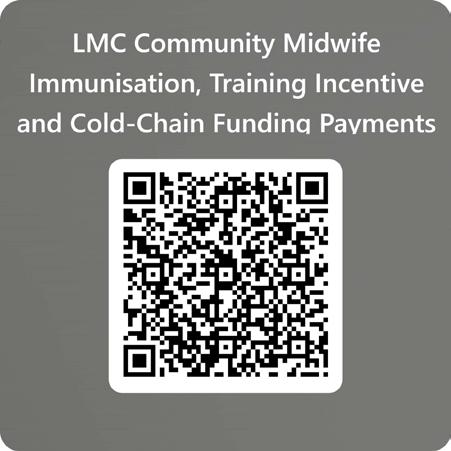
Scan here for more information on immunisation training payments
FORUM
4. FROM THE CO-PRESIDENTS
5. FROM THE CHIEF EXECUTIVE
10. YOUR COLLEGE
12. BULLETIN
13. OBITUARY: DR MICHEL ROBERT FORTUNÉ ODENT
14. PRACTICE GUIDANCE: PREVENTING DOG-RELATED INJURIES
16. PRACTICE GUIDANCE: BARIATRIC SURGERY
18. YOUR UNION
20. YOUR MIDWIFERY BUSINESS FEATURES
22. NGĀ MĀIA
23. PASIFIKA MIDWIVES
24. BRONWYN FLEET: ARE WE BRAVE ENOUGH?
26. WHO ARE OUR GRADUATE MIDWIVES?
30. ANNUAL MATERNITY DATA FOR 2023-2024
32. INTERNATIONAL MIDWIFERY
36. TE AO MĀORI
38. BREASTFEEDING CONNECTION
42. MY MIDWIFERY PLACE DIRECTORY
EDITOR
Hayley McMurtrie
E: communications@nzcom.org.nz
ADVERTISING ENQUIRIES
Hayley McMurtrie
P: (03) 372 9741
MATERIAL & BOOKING
Deadlines for March 2026
Advertising Booking:
1 February 2026
Advertising Copy: 10 February 2026
Welcome to Issue 119 of Midwife Aotearoa New Zealand
As the year draws to a close, this edition reflects the complexity and strength of midwives across Aotearoa. Our features reflect a wide range of voices and experiences, offering insight and inspiration as we look toward 2026.
We are pleased to share Bronwyn Fleet’s powerful conference presentation, which invited members to consider whether we are brave enough to truly listen to the stories whānau tell. Her kōrero resonated deeply with those who attended and serves as an important reminder of the trust placed in midwives every day.
This issue takes an in-depth look at the current graduate midwifery workforce, revealing a vibrant and increasingly diverse group stepping into practice. The passion and commitment of our newest colleagues give us great confidence for the future of midwifery.
Our Practice Guidance sections continue to grow as a core resource for members. In this edition you will find updated clinical guidance on preventing dog-related injuries and supporting women following bariatric surgery. These pieces reflect our commitment to providing practical, evidence- informed tools that strengthen everyday care.
We also highlight perspectives from our Ngā Māia, Pasifika Midwives and global midwifery partners, showing the value of learning and working together from within and beyond our motu.
As always, we welcome your ideas and feedback communications@nzcom.org.nz
Ngā mihi nui, Hayley Square
HAYLEY MCMURTRIE EDITOR/COMMUNICATIONS MANAGER
FROM THE CO-PRESIDENTS
BEATRICE
LEATHAM CO-PRESIDENT
DEBBIE FISHER
CO-PRESIDENT
For the first time, we have a national midwifery leadership structure in place, including our National Chief Midwife and National Hauora Māori Midwife. All districts now have Chief Midwife roles, with regional leadership and Hauora Māori midwifery positions being established.
Kia Ora Koutou, Tēnā koutou katoa, Talofa lava, Mālō e lelei, Kia orana, Bula vinaka, Fakaalofa lahi atu, Greetings to you all.
As we approach the end of 2025, it’s a meaningful time to pause and reflect on our mahi and the service we provide to whānau and communities across Aotearoa.
This year has been one of growth, connection, and transformation. Some highlights include:
WORKFORCE GROWTH & DIVERSITY
We have welcomed the largest cohort of new graduate midwives to date with similar numbers expected in early 2026, with a heartening increase in Māori and Pacific graduates. This reflects the commitment to a diverse and culturally responsive workforce.
LEADERSHIP MILESTONES
For the first time, we have a national midwifery leadership structure in place, including our National Chief Midwife and National Hauora Māori Midwife. All districts now have Chief Midwife roles, with regional leadership and Hauora Māori midwifery positions being established—an exciting step forward for the profession and new opportunities in health leadership for midwives.
REVISED SCOPE AND EXPANDED SCOPE OF PRACTICE
Midwives are increasingly meeting community needs by offering a wider range of services such as vaccinations, Early Medical Abortion
care, early pregnancy ultrasound, and longacting contraceptives. The expanded scope opens doors to even more opportunities to support whānau holistically particularly in rural areas and for communities where current models of health care are not meeting their needs and inequities exist.
GOVERNANCE TRANSFORMATION
The College Board is deep in the process of reshaping our governance structure. We look forward to 2026, when the new Board will be empowered to provide stronger leadership, commitment to Te Tiriti o Waitangi principles, enhanced support for your regions, and greater opportunities for the College to support midwives across the motu.
NGĀ MĀIA TŪRANGA KAUPAPA WORKSHOPS
These have begun for all midwives, fostering connection, learning, and cultural safety. Thank you Ngā Māia for your leadership and delivery of these inspiring and important sessions.
STRATEGIC PLANNING
It’s time to review and renew our strategic plan for the next three years. We want to hear from you—what should be our priorities? Email your ideas to communications@nzcom.org.nz
Thank you for your dedication, passion, and service. We look forward to continuing this journey together in 2026.
Ngā mihi o te wā – Season’s greetings and warm wishes to you and your whānau. Square
THE COMMUNITY MATERNITY COMMISSIONING FRAMEWORK
WHAT IS IT AND WHAT DOES IT MEAN FOR MIDWIVES?
The national Kahu Taurima team have recently publicised a new Maternity Commissioning Framework (MCF) through a webinar for midwives and within Health NZ pānui. This new framework has been developed as a result of the direction set by the New Zealand Health Plan | Te Pae Tata (2022). The MCF is intended to offer a more relational approach to commissioning primary maternity services, and to address persistent inequities in maternity outcomes. So, what exactly is the MCF, and how does it relate to the College's advocacy to improve the funding model for Lead Maternity Carer (LMC) midwifery?
THE NOTICE
The Primary Maternity Services Notice (the Notice) has been the main funding model for LMC midwives since the mid-1990s. It enables individually contracted midwives to provide continuity of care and be paid modular fees through a national system. While there have been revisions, additions and fee increases, the funding model has changed little since its inception.
The Notice’s strengths include providing a national framework that allows women to choose their caregiver, setting expectations of continuity of care, outlining minimum service expectations, and supporting midwives’ professional autonomy. However, it also places heavy responsibility on individual midwives, requiring 24/7 availability without funded mechanisms for locum cover, group practice or administrative support.
ALISON EDDY CHIEF EXECUTIVE
The protracted nature of negotiations to improve the funding model for LMC midwifery has taken a toll on workforce sustainability and service coverage. Significant gaps and inequities in access to primary maternity care have been quantified by a recently published report which analysed claiming patterns from the Notice.
Because it is embedded in legislation, updating it is slow and complex. Major flaws include the lack of incentives to promote equity, service integration or quality improvement, and its inability to address workforce shortages or accommodate new services such as midwife-provided maternal immunisation. National administration limits flexibility for local solutions, meaning support for rural or struggling services is often reactive rather than planned. As a result, regional funders have historically had minimal involvement in primary midwifery service workforce planning.
The most significant concern is that midwives have no negotiation rights under the Notice, a situation which ultimately led to legal action by the College in 2015.
From its first formal engagement with legal mediation in 2015, the Ministry of Health clearly stated it believed that the Notice was no longer a fit for purpose contracting mechanism for primary maternity services. This led to an agreed process to co-design
a new funding model, a clear signal of the Government’s intention to replace the Notice with a modernised contract. Ten years later this commitment has not been upheld, and midwives are still working under the Notice whilst we await the outcome of the High Court legal case that was heard in August last year.
The protracted nature of negotiations to improve the funding model for LMC midwifery has taken a toll on workforce sustainability and service coverage. Significant gaps and inequities in access to primary maternity care have been quantified by a recently published report which analysed claiming patterns from the Notice. Fragmentation of care was evident in the Sapere report1, with data showing that some midwives regularly claimed only one or two modules from the Notice. Among women who had LMC care for their birth, 70-80% received full continuity of care across all modules. The report also found that there were geographic and ethnic inequities in
1.
access to LMC care. Continuity was lower in rural areas and certain districts, and some midwives had high caseloads but did not attend births, indicating varied practice models. It is important to note that this data is from 2022, a time where the midwifery workforce shortage sat at an estimated 40%.
Inequity of access to LMCs by district and ethnicity
• The districts with the lowest rates of access to LMC care were Hutt Valley, Counties Manukau, Auckland and Nelson/ Marlborough.
• Nationally, Pasifika women were the least likely to have accessed an LMC, followed by Middle Eastern, Latin American, African (MELAA), Indian and then Māori.
Gaps in accessing all modules of care
• 11% of women who gave birth with an LMC did not receive all modules of care.
• Women were most likely to miss out on the postnatal module (7%).
• Māori and Pacific women were less likely than other groups to have received all modules of care.
TE PAE TATA
• It appeared that there was a publicly stated commitment to update the contracting model, when the New Zealand Health Plan Te Pae Tata (2022) noted the following actions would occur.
• Redesign the universal model of care, working with LMCs and Well Child Tamariki Ora providers to implement a more flexible and responsive model.
• Design and commission Te Ao Māori, whānau-centred and Pacific whānau-centred integrated maternity and early years services.
$60 million over 4 years ($15 million per annum) was allocated in Budget 2020 to support community maternity initiatives arising from any accepted recommendations of the Health and Disability System Review. Documents released to the College under the
discovery process, which preceded the Class Action court case last year, demonstrated that this funding was later signed over to Te Aka Whai Ora to fund a variety of services through a competitive Request for Proposal (RFP) process, the aim of which was to achieve the action in Te Pae Tata to Design and commission Te Ao Māori, whānaucentred and Pacific whānau centred integrated maternity and early years services. The College has profiled a successful midwiferyled example of these pilot services in the September 2024 edition of the magazine. It will be valuable to see an evaluation of how these services met whānau needs, how many are receiving ongoing funding and how many involved midwifery services.
Progress to Redesign the universal model of care, working with LMCs and Well Child Tamariki Ora providers to implement a more flexible and responsive model has been frustratingly slow. Late last year (two years after the publication of Te Pae Tata) Health NZ sought the views of midwives via the Midwifery Insights Survey, the stated purpose of which was to learn what midwives value in alternatives to the current funding model, to inform the development of new national settings for enhanced workforce support for community midwifery and to achieve improved access, outcomes and experiences of care for whānau.
The information which accompanied the survey reassured midwives that Continuity of care will continue to be a cornerstone of any future Kahu Taurima service stating that midwives are a vital and valued workforce within our health services and will continue to lead in the provision of primary maternity care. We hope this survey will allow us to identify the aspects of midwifery that are good for midwives and good for whānau
The survey presented four hypothetical future models, asking midwives to rate which elements they preferred of each option and which of a range of factors were most important to them. Hundreds of midwives completed the survey, the results have been analysed, and a set of recommendations has been developed. The College understands that publication of these survey results is imminent.
The College has also been regularly requesting information from Health NZ about its intentions to progress the work that was signalled in Te Pae Tata. The questions we have been raising include:
• Will there be a new contract model to replace the Notice?
• If so, what will the process be to develop it, and how will it be negotiated?
• Will a new contract model continue to enable midwives to be self-employed if they choose to?
• Will it include support for group practices, administration and on-call work and will it be able to be negotiated regularly?
• Will it support improved integration of midwifery within the wider health system?
We have been unable to obtain clear or definitive answers to any of these questions, with responses citing a lack of clarity about the direction or decisions from Health NZ leadership.
THE MATERNITY COMMISSIONING FRAMEWORK
In 2024 Health NZ convened a Technical Advisory Group (TAG), which had the responsibility of advising on the development of a commissioning framework for primary maternity services, known as a Maternity Commissioning Framework (MCF). Commissioning is a more sophisticated and responsive method of contracting or purchasing health services. It has distinct processes which are undertaken in sequential steps, which are repeated and ongoing.
The TAG’s work was completed in June 2025 and the draft document, the Community Maternity Commissioning Framework Technical Advisory Group Final Draft Report for Regional Commissioning of Community Maternity Care in New Zealand was submitted to Health NZ. A summary of the MCF is available in the sidebar. Health NZ has not yet signed off or released the MCF report publicly. Health NZ staff have been meeting with regional commissioning teams to present the draft report to seek their feedback on it, but they have not shared the full draft report with midwives.
As the predominant workforce in maternity and the principal providers of primary maternity care, midwives are deeply invested in any future arrangements. The College has been strongly advocating for midwives to be informed about the MCF, and for midwives to be at the table as any future frameworks are being developed. At the College’s request, Health NZ provided a webinar specifically for midwives in September to explain the MCF.
As well as presenting the high-level details of the MCF, webinar presenters Nicole Pihema (Chief Clinical Officer Midwifery, Hauora Māori Services) and Kiley Clarke (Interim Chief Midwife, Health NZ)
reassured webinar attendees that continuity of midwifery care would remain central to future contracting arrangements for primary maternity care, that the Primary Maternity Services Notice would remain in place, and that moving to any new arrangements developed as a result of the MCF will be optional (not compulsory). Assurances have also been provided to the College that midwives who continue to claim off the Notice will be able to access additional supports or services that develop as a result of the MCF implementation; they will not be excluded from these if they continue to be funded by the Notice.
Feedback received from midwives who attended the webinar presentation indicated that some felt that whilst the MCF sets out a high-level conceptual approach it fell somewhat short on detail. More work is needed before the approach outlined in the MCF can be implemented. However, it is unclear at this stage how midwives will be engaged in it at national, regional or local levels.
The recommendations in the MCF signal that responsibility for commissioning primary maternity services will sit at a regional (rather than national) level. This is consistent with the current direction for all health services, which is that key strategy, frameworks and guidelines will be nationally developed, they will be administered and coordinated at a regional level, and there will also be a level of local decision-making and tailoring to meet local needs.
The Notice will, however, remain nationally administered as it is simply not possible to devolve it to a regional level in its current form. Primary midwifery services will be considered as an integral part of regional
maternity services, and thus included in the planning and development of services and in workforce succession planning.
MOVING FORWARD
The College has heard clearly from members that LMC midwives value the autonomy of self-employment and that they want to be part of developing any future frameworks for maternity care funding.
Through the past decade the College has looked deeply into what is necessary from a contractual point of view to support and sustain LMC midwifery practice and we therefore have a considerable body of knowledge and innovation to contribute.
We are also aware from our history that as a small, mostly-female profession, it is important that we maintain a collectivised, national approach to negotiating terms. Any new funding arrangements for primary
maternity care will offer both opportunity and risk for our midwifery-led model of care, and due diligence will be needed to ensure new arrangements offer the possibility of enshrining continuity of care as a building block in a modernised context, one which supports midwives to be responsive to the needs of the communities they serve, and which recognises and resources the need for group practice models as a key factor of sustainable LMC practice.
TAG MEMBERS
Co-Chairs: Tamara Karu, Dr Ed Hyde. Members: Alison Eddy, Dr Anna Hudspith, Dr Aria Graham, Bea Leatham, Professor Bev Lawton, Frankie Karetai Wood-Bodley, Henrietta Hunkin-Tagaloa, Kate Nicoll, Kelsey Mitchell, Lisa Kelly, Michelle Vincent, Rāwā Karetai Wood-Bodley, Dr Rose Elder, Sarah Nicholson, Tash Wharerau. Square
Health NZ describes the MCF as a strategic, relational approach to commissioning community-based maternity services in Aotearoa New Zealand. Grounded in the Pae Ora (Healthy Futures) Act 2022, it shifts away from transactional funding models toward trust-based, culturally safe and whānau-led care. The framework is designed to address persistent inequities in maternity outcomes, particularly for Māori, Pacific Peoples and disabled, migrant and rural communities.
The MCF is structured around five components: Continuity of Care, Needs Assessment, Service Mapping, Gap Analysis, and Integration. It outlines expectations for regional commissioners, including embedding continuity of care, centring whānau-defined needs and fostering sustainable partnerships. Strategic levers such as investment and leadership culture are emphasised to support change. The framework also includes guidance for reducing administrative burden, supporting innovation and ensuring quality through continuous learning and feedback. Square
COLLEGE EDUCATION
Midwifery Emergency Skills Refresher workshops have been planned for next year and are available on the College website, book early to avoid disappointment. For more information visit: www.midwife.org.nz/midwives/education/elearning/ Square
Te Tiriti o Waitangi
This course explores the rich story of Aotearoa, past and present. With this knowledge we gain a greater understanding and are better equipped to make informed, thoughtful decisions for the future. Square
Syphilis and other STIs in midwifery
This course is to equip midwives in Aotearoa with up-to-date knowledge on effectively communicating relevant and tailored information about pākewakewa | syphilis and other mate paipai | sexually transmitted infections (STIs). Square
Midwifery care for former refugee whānau
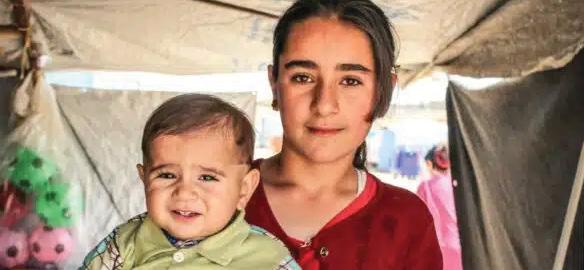
In this course, you will discover who former refugees are and learn about what supports former refugees to have positive midwifery and maternity care during their resettlement into their new homes. Square
UNDERSTANDING THE ROLE OF THE MIDWIFERY EXPERT ADVISOR
ALISON EDDY CHIEF EXECUTIVE
Independent bodies which hold midwives to account for their practice, such as the Te Tatau o te Whare Kahu | Midwifery Council, Health Practitioners Disciplinary Tribunal, Health and Disability Commissioner, Coroners Court and others, rely on advice from Midwifery Expert Advisors. These midwives serve a crucial function by providing independent, professional opinions on midwifery practice. They play a vital role in upholding the standards and integrity of midwifery practice in Aotearoa when midwives are being held to account through formal processes.
The College has developed a midwifery Expert Advisors accreditation programme, which ensures that midwifery experts have the necessary credibility and preparation to carry out this important responsibility on behalf of the wider profession.
To be eligible for nomination to become a College-accredited Expert Advisor, there
are criteria that must be met. These include having significant midwifery practice experience (including being currently practising) and being actively engaged in the midwifery profession. The midwife must be recognised by their peers for their clinical competence and professional integrity, and have a deep understanding of the midwifery philosophy. They must demonstrate analytical ability, articulate communication, ethical conduct, culturally safe practice and respect for cultural diversity. The ratification process involves midwives being nominated by their peers at College regional level and ratified nationally.
This role is independent and impartial. While the Expert Advisor is endorsed by the College, they do not represent the College or any other organisation when providing expert opinion. Instead, they represent the midwifery profession itself, offering informed, objective assessments of midwifery practice in a range of formal settings.
They are also expected to acknowledge when a matter falls outside their expertise and to seek clarification when needed. In court or tribunal settings, they may act as expert witnesses, offering opinion without making judgments, which remain the responsibility of the adjudicating body.
The role requires ongoing professional development, including attendance at Expert Advisor Study Days and participation in quality assurance processes.
The College has developed a Midwifery Expert Advisors accreditation programme, which ensures that midwifery experts have the necessary credibility and preparation to carry out this important responsibility on behalf of the wider profession.
Their responsibilities include reviewing case materials, preparing written reports and providing oral testimony. They relate midwifery practice to established professional frameworks, including the Scope of Practice, Standards of Competences, Midwifery Philosophy, Code of Ethics, and the Standards of Practice.
The role requires a high level of professionalism and accountability. Expert Advisors are named within the published outcomes from the cases on which they provide opinions, such as a Coroner's finding or HDC decision. They must be well-prepared, maintain confidentiality and respond to questions truthfully and clearly.
In the College’s experience, when agencies seek opinions from College-accredited experts the opinions provided tend to be generally accepted by the midwife whose care is under scrutiny. When advice is sought from non-accredited midwife experts, concerns can arise such as faulty advice to the decision-maker, distress to the midwife and affected whānau and a lack of confidence in the process (by both whānau and the health practitioners involved). This can result in the use of additional resources to obtain further expert advice to challenge the non-accredited opinion, leading to confusion for the family that is faced with what may be very conflicting opinions and significant delays in reaching a resolution of a complaint.
Ultimately, the Midwifery Expert Advisor contributes to a system where midwives are assessed by credible peers—those who understand the complexities of the profession and are committed to maintaining its standards. This peer-based model reinforces the integrity of midwifery and ensures that accountability processes are informed by professional expertise and ethical practice. Square
YOUR COLLEGE
WEBINARS
The College has recently held the following webinars for members: Rheumatic Heart Disease in pregnancy and AI midwifery in practice
These are available on the College website education pages. Square
POSTGRADUATE GRANT APPLICATIONS
Applications are now open for 2026, please see the College's website education pages for details of how to apply. Square
CHRISTMAS CLOSE DOWN
The National Office will close at lunchtime on Wednesday 24 December 2025 and will reopen on Monday 5 January 2026. Square
INAUGURAL CLINICAL SENATE MEETING
The new national Clinical Senate held its first meeting in Auckland on 10 October, bringing together more than 100 clinicians from across hospital, community, and primary care settings. The multidisciplinary group included representation from the College and Ngā Māia and has been
Chaired by Dr Jonathan Christiansen, the meeting focused on “Unlocking our clinical potential – identifying and addressing barriers to the efficient delivery of quality healthcare.” Board Deputy Chair Dr Andrew Connolly opened the session, underscoring the importance of ensuring clinical voices are heard and encouraging bold, innovative thinking.
Senate members shared examples of successful initiatives and identified key enablers to inform future principles and recommendations. This marks the first time such a wide-ranging group of clinicians has been brought together nationally to help shape solutions that improve access, efficiency, and outcomes for patients and whānau. Square
Save the Date! Joan Donley Midwifery Research Forum 2026
We are delighted to confirm that the Joan Donley Midwifery Research Forum will be held in Dunedin on Wednesday 9th and Thursday 10th September 2026. Please save the date in your calendars. More information and a call for abstracts will follow soon. Square
BULLETIN
Chloe Wright Celebration at Nga Hau
Nga Hau Mangere Birthing Centre hosted an event celebrating the legacy of the unit's founder Chloe Wright on the 24th of October. Chloe sadly passed away at aged 75 in September 2023 from Covid.
Chloe was chief executive and trustee of the Wright Family Foundation which built four primary birthing centres, including the centre at Nga Hau. The Wright Family Foundation has since divested its operations of these centres, with their management being taken over by Health NZ, or in the case of the Nga Hau unit in Mangere, by Turuki Health Care in partnership with Tagata Moana Maternity Trust. The event celebrated Chloe’s enduring legacy to the Mangere community, and acknowledged her passion and commitment to giving families the best start to life. Square
Applying Disability Responsive Care
Te Whatu Ora Disability Health Team invites midwives across Aotearoa to join a new professional development opportunity focused on Applying Disability Equity, an essential component of the Midwifery Council’s professional requirements. These interactive, 4-hour online sessions + 4 hours of prescribed learning will explore:
• Understanding disability as an equity and rights-based issue
• Challenging attitudes and dismantling systemic barriers in maternity care
• Practical strategies for communication, accessibility, and reasonable accommodation
• Building confidence to become allies and role models for disability-inclusive practice
Sessions: Offered quarterly throughout 2026
Time: 9 am – 1 pm online workshop + 4 hours of self-directed learning (8 hours of CPD)
Search: “Applying Disability Equity” on Ko Awatea, Connect Me, or Health Learn
The Tūranga Kaupapa Education is an accredited blended learning programme that combines flexible self-paced e-Learning with interactive live sessions.
Gain 8 hours of vital, culturally safe skills
Learn at your own pace, with support from expert facilitators
Join a community committed to improving Māori health outcomes
Complete the course for just $195
Scan the QR code above to access now, or visit: www.ngamaiatrust.org. turanga-kaupapa
Ngā Māia’s Tūranga Kaupapa Education Programme
A CELEBRATION OF LIFE DR MICHEL ROBERT FORTUNÉ ODENT
Michel Odent often spoke about his life journey — from his childhood and medical training in Paris to his pioneering advocacy for undisturbed birth, birth under water and the role of the maternal oxytocin response. Michel recalled his mother telling him that the day he was born was the happiest day of her life (Colson, 2020; Heatherwick, 2024). He also described how special it was to become a father (Heatherwick, 2024). A positive birth story from the beginning of Michel’s life, together with the joys of fatherhood, are fragments of Michel’s long, extraordinary and well-lived life that led him to speaking out against what he described as industrialised birth, while speaking up about birth physiology and his profound respect for women and midwives. Michel saw midwives as the antidote to what he could see going wrong with childbirth – midwives as the unobtrusive antidote to industrialised childbirth.
At a time when birth was medicalised and taking place in institutions bereft of any home-like environment Michel was a trailblazer. At Pithiviers Hospital in France he became interested in how pain in labour could be reduced using active birth, birth in water, birth positions such as squatting or standing (rather than the common position of lying flat) and creating an environment of comfort and security. Michel authored a paper published in The Lancet in 1983 entitled ‘Birth under Water’ after he had supported the 100th birth under water at Pithiviers (Odent, 1983). This was the first time birth under water had been discussed seriously in medical literature since Embrey wrote about it in 1805. Michel’s article describes how water immersion reduced pain and how most mothers birthed in the pool in a vertical position, kneeling in the water, and holding their baby in their arms so that skin-to-skin and eye-to-eye contact were as ‘perfect as possible’ (Odent, 1983, p. 1477). The first
breastfeed after twenty minutes was common and Michel concluded that water seemed to ‘facilitate the development of the mother-infant relationship’.
Just as women will have their own special stories about undisturbed birth at home or in home-like environments, midwives all around the world will have their own special stories of meeting Michel, working with him and attending his workshops. UK midwife Sara Wickham, who has described herself as a ‘knitting midwife’, recalls how Michel drew her attention to the unremarkable sight of a midwife quietly and repetitively knitting in the corner of a room while a woman was in labour, observing but not interfering – an environment which seemed to support the release of maternal oxytocin, known as the ‘love hormone’ (Wickham, 2025). Sara worked for many years with Michel and, at a silent knitting workshop at a Mid-Pacific Conference on Birth and Primal Health in Hawaii, Sara taught Michel, who had knitted socks for French soldiers during the war, how to knit again.
Michel authored many academic articles, wrote 17 books in 22 languages and developed the Primal Health Research Centre with an accessible database of literature. The belief in the power of birth physiology and respect for women, midwives and birth remained with Michel Odent until the end. Square
References available on request
PREVENTING DOGRELATED INJURIES: KEEPING WHĀNAU AND MIDWIVES SAFE
VIOLET CLAPHAM MIDWIFERY ADVISOR
Dog-related injuries are an under-recognised but growing public health issue in Aotearoa. Over 108,000 new ACC claims and 3,456 hospitalisations for dog-related injuries were recorded between 2014 and 2019, with Māori and people in higher-deprivation areas disproportionately affected (DuncanSutherland et al., 2022a).
The total number of ACC claims for dogrelated injuries in 2023 was 14,104, an increase of 6 percent from 2019 (RNZ, 2023). Nearly half of all dog-related injuries occur on
private property, often in homes where health professionals or community workers visit (Duncan-Sutherland et al., 2022b).
Midwives, through trusted one-to-one relationships, are ideally placed to help reduce harm. Integrating brief dog-safety education into routine care, advocating for safer environments and supporting whānauled approaches can protect both families and the midwives providing care to them. Dogrelated injuries are almost entirely preventable.
WHO IS AT RISK?
A New Zealand systematic review confirmed that dogrelated injuries are preventable, not ‘accidental’. Interventions proven to reduce harm include stronger dog-control legislation, compulsory reporting of bites, community engagement, and education.
Children and infants are especially vulnerable to dog-related injury. Fatal attacks in Aotearoa often involve babies or toddlers, frequently in familiar environments. National data show that tamariki Māori aged 0–9 years are 2.5 times more likely to be hospitalised for dogbite injury than non-Māori children (DuncanSutherland et al., 2022a). Adults, particularly those entering homes for health, delivery or service work, also face growing risk as dog ownership rises and control compliance declines.
WHAT THE EVIDENCE SHOWS
A New Zealand systematic review confirmed that dog-related injuries are preventable, not ‘accidental’. Interventions proven to reduce harm include stronger dog-control
legislation, compulsory reporting of bites, community engagement, and education (Duncan-Sutherland et al., 2022b). Importantly, child-directed education alone has not been effective; evidence favours adult-directed, oneto-one education delivered by trusted health professionals.
Discussions within the National Dog-Related Injury Prevention Group (2023), of which the College is a member, highlighted several emerging priorities:
• Protection of mokopuna must remain paramount.
• Strategies should be co-developed with, by and for Māori, honouring Te Tiriti o Waitangi and incorporating tikanga kurī (traditional and evolving Māori knowledge of dogs).
• Education must promote the social norm that any dog can bite and that children should be kept within arm’s reach or separate from dogs.
HONOURING TE TIRITI O WAITANGI
Equity-focused prevention must recognise the impact of colonisation on shaping current dog-ownership patterns, access to desexing services, and regulatory enforcement. Empowering Māori to design and deliver Te Ao Māori-aligned dog-safety education is essential for lasting change. Square
GUIDANCE FOR MIDWIFERY PRACTICE
Midwives frequently visit homes during pregnancy and in the postnatal period — a time when fatigue, stress and household change may heighten risk of dog-related injury.
Midwives can play a vital preventive role by:
Including dog-safety conversations in antenatal and postnatal visits, normalising this as part of whānau wellbeing.
Advising parents to never leave babies or children unattended with any dog, regardless of breed or temperament.
Encouraging simple environmental ‘engineering’ (for example, gates, baby playpens or separate dog areas) especially where dogs live indoors.
Promoting safe visitor practices: ask if there is a dog on the property before you visit, ask that dogs be contained or muzzled before you enter a property.
Reporting concerns about aggressive or poorly contained dogs to local Animal Management, in line with new Starship clinical guidance recommending notification of all dog-related injuries (Starship, 2024).
Using reputable educational resources such as the Dog Safe for Kids programme (www.dogsafeworkplace. com) or the Australian We Are Family programme (www.wearefamily.nsw.gov. au/thefacts.html)
References available on request
BARIATRIC SURGERY
VIOLET CLAPHAM MIDWIFERY ADVISOR
Over the past decade bariatric surgical procedures in Aotearoa have almost tripled, moving from a few hundred operations in 2013 to nearly 2,000 in 2023 (Bariatric Surgery Registry, 2024). Women account for over 75% of these patients, and the vast majority of surgeries are carried out in the private sector.
Women who have had bariatric surgery have fewer obesity-related pregnancy complications (such as gestational diabetes or pre-eclampsia) but higher risks of micronutrient deficiency and small for gestational age (SGA) infants, particularly after malabsorptive procedures (Akhter et al., 2019; Shawe et al., 2019).
Malabsorptive bariatric procedures induce substantial weight loss by surgically bypassing portions of the small intestine to limit calorie absorption, but this same mechanism also reduces the absorption of essential nutrients, leading to potential deficiencies.
MIDWIFERY PRACTICE POINTS
Midwives must recommend obstetric consultation in the second trimester when a pregnant woman has a history of bariatric surgery (Referral Guidelines code 1077, Te Whatu Ora, 2023).
Ongoing collaborative care planning is important, including for requesting and reviewing extra antenatal screening (such as blood tests and scans). It is useful to establish baseline levels for the following in early pregnancy: full blood count, ferritin, B12, folate, vitamins D/E/K/A, calcium, parathyroid hormone (PTH) and albumin. These tests should be repeated during each trimester of pregnancy.
Screening for gestational diabetes is challenging after bariatric surgery as the oral glucose tolerance test is often not well tolerated. In place of standard screening consider checking HbA1c at booking and offering one week of self-monitored blood glucose (SMBG) testing at 24 weeks to screen for gestational diabetes (Benhalima et al., 2018).
Nutrition and supplementation
Nutrition and supplementation are a core focus when providing midwifery care to women who have had bariatric surgery. Referral to a dietitian may be useful to support optimal nutritional balance in pregnancy. Typical nutritional needs for pregnant women with a history of bariatric surgery include:
• a daily prenatal multivitamin (avoid >3,000 µg retinol/Vit A)
• iron (often above standard antenatal dosing)
• B12 (oral high-dose or 3-monthly IM if low)
• folic acid (0.8 mg; 5 mg if high-risk)
• vitamin D (titrate to level)
• calcium citrate (1,200–1,500 mg in divided doses)
If women have persistent vomiting it is important to check thiamine levels promptly to prevent Wernicke’s syndrome (Shawe et al., 2019).
Fetal growth and antenatal care
Because SGA risk is increased after malabsorptive procedures (as evidenced by significant cohort studies published after the SGA guideline was developed), consider offering serial growth scans in the third trimester to women who have had OAGB or RYGB procedures. The SGA risk is strongly influenced by time from surgery to conception and maternal nutritional status— optimal outcomes are seen when pregnancy is delayed for at least 12 months post-surgery and micronutrient levels are closely monitored (Shawe et al., 2019).
In women who have had RYGB, escalate antenatal abdominal pain urgently to exclude internal hernia (Vannevel et al., 2016).
Birth and breastfeeding
Mode of birth is not influenced by a history of bariatric surgery and vaginal birth should be supported unless there are other contraindications to this. Any prior abdominal surgery may increase the risk of adhesions. Note that NSAIDs are contraindicated after RYGB (due to increased risk of gastrointestinal ulcers and bleeding). Breastfeeding should be encouraged and supported, as bariatric surgery does not appear to affect women’s breastmilk composition (Jans et al., 2018).
COMMON BARIATRIC PROCEDURES AND IMPLICATIONS
TYPE
SLEEVE GASTRECTOMY (SG)
• Restrictive procedure
• 75–80% of the stomach is surgically removed, leaving a narrow tubular “sleeve” that restricts intake and reduces appetite through hormonal effects
ONE-ANASTOMOSIS GASTRIC BYPASS (OAGB) (also called mini-gastric bypass or single-anastomosis gastric bypass)
• A newer, restrictive + malabsorptive procedure
• Creates a long gastric pouch and connects it to the small intestine with a single anastomosis (connection).
ROUX-EN-Y GASTRIC BYPASS (RYGB)
• Restrictive + malabsorptive procedure
• A small gastric pouch is created and connected directly to the jejunum, bypassing the duodenum to restrict intake and reduce nutrient absorption
• Lower risk of malabsorption than other bariatric procedures
• Potential risk of growth restriction (mixed evidence)
• Reflux and vomiting common
• Major SGA risk (RR = 4.7; p = 0.006) (Rottensteich et al., 2025)
• Significant SGA risk (OR = 2.20, (95% CI = 1.64–2.95) (Johansson et al., 2015)
• Distinctive late-pregnancy risk of internal herniation that may present subtly— seek urgent surgical review if abdominal pain, nausea/vomiting or bowel symptoms occur (Vannevel et al., 2016)
• Dumping syndrome, vomiting, nutrient deficiencies and reflux common
ADJUSTABLE GASTRIC BAND (AGB)
• Restrictive procedure
• A silicone band laparoscopically placed around the upper stomach creates a small pouch; band tightness is adjustable via a subcutaneous access port to restrict food intake.
* Percentage of all bariatric surgeries in Aotearoa (Bariatric Surgery Registry, 2024)
• Fewer malabsorption issues
• Band slippage, obstruction, vomiting and reflux common
Now rarely performed in Aotearoa
References available on request Square
HOLIDAY BLUES
A REVIEW OF THE TRICKIER PARTS OF HOLIDAY PAY AND FINAL PAY
MERAS CO-LEADER (MIDWIFERY)
DAVID MUNRO
MERAS CO-LEADER (INDUSTRIAL)
The Holidays Act 2003 covers a range of leave, including annual, public holiday, sick and bereavement leave. The MERAS Collectives include some of the provisions from the Holidays Act, Parental Leave Act and enhanced provisions in some cases.
The various forms of leave have differing provisions and this can make for difficult interpretation. MERAS is often asked to provide advice on leave provisions and what will happen to leave when circumstances change. This article highlights some aspects that members need to be aware of in terms of annual leave and public holiday alternative days when reducing standard hours of work (FTE), transferring to a new role, taking parental leave, or resigning or retiring. The article also outlines some of the proposed changes that have been signalled by this government.
ANNUAL LEAVE
Now shown on payslips and taken as weeks or part thereof. Leave not used accrues from year to year. Annual leave is paid based on the greater of:
• Ordinary weekly earnings as at the beginning of the holiday, or
• Average weekly earnings for the last 12 months up to the last pay period before the leave is taken
REDUCING FTE
When a member is planning to reduce their FTE, and if they have a substantial amount of accrued annual leave, they may want to consider in discussion with their line manager the following:
• Using one annual leave day a week or fortnight for a few months to reduce the shifts they work without reducing FTE, e.g. at 0.9FTE work 2 x 12-hour shifts per week and take 1 x 12-hour shift as annual leave.
• Taking some weeks of annual leave before reducing FTE
Once FTE is reduced the value of a ‘week’ of leave will gradually reduce.
Example: A member has accrued 6 weeks’ leave whilst working 0.8FTE and then reduces FTE to 0.6. They still have 6 weeks’ accrued leave, but its value will be based on a 0.6FTE. The previous 12 months’ earnings at 0.8FTE will influence ‘average earnings for the previous 12 months’ but that influence will diminish completely over the following 12 months.
TRANSFERRING TO A NEW ROLE
When moving to a new role with the same current employer, or transferring from one Health NZ district to another, accrued leave transfers with the employee.
Currently, when splitting FTE between two roles within Health NZ, two separate employment contracts are created for the employee, known as a ‘multi-jobber’. Any accrued leave remains with the original role. This can create a very uneven leave balance and make it difficult to use accrued leave.
PARENTAL LEAVE
When a midwife returns from parental leave, caution is needed when using annual leave. Any annual leave taken is likely to only be based on their ‘ordinary weekly wage at the beginning of the holiday’ as their parental leave period will influence the 12-month average where there was little or no earnings. This can be a challenge for a midwife who wants to come back from parental leave on a reduced FTE or wants to use some annual leave soon after returning.
RESIGNING OR RETIRING
Accrued leave is paid out. An 8% accrual of gross earnings is calculated and paid
for the period since the last annual holiday entitlement, less any leave taken or paid in advance.
PUBLIC HOLIDAY ALTERNATIVE DAYS
Public Holiday alternative days are credited if a public holiday is worked that would otherwise be a normal working day. Where an employee rostered a day off on a public holiday as part of their rostered shifts (i.e. not an additional ‘public holiday on the day it falls’) then the following provisions apply to entitlement for an alternative public holiday to be credited:
• Full-time employees – where a public holiday, and the weekday to which the observance of the public holiday is transferred where applicable, are both rostered days off for an employee they will be granted one alternative holiday in respect of the public holiday.
• Part-time employees – where a parttime employee’s days of work are fixed, the employee shall only be entitled to an alternative holiday if the day would otherwise be a working day for that employee.
• Part-time employees – where a part-time employee’s days are not fixed, the employee shall be entitled to an alternative holiday if they worked on the day of the week that the public holiday falls for more than 40% of the time over the last three months. Payment will be at relevant daily pay.
• An employer must pay an employee not less than the employee’s relevant daily pay or average daily pay for the day which is taken as the alternative holiday.
CAROLINE CONROY
REDUCING FTE
Accrued public holiday alternative days are not impacted by any reduction in FTE, although this could influence the ‘average daily pay’ value. A reduced FTE could influence entitlement to being credited an alternative public holiday, as the 40% provisions would apply to a rostered day off.
TRANSFERRING TO A NEW ROLE
Any accrued alternative days transfer to a new role if it is with the same employer, this includes changing districts in Health NZ.
RESIGNING OR RETIRING
Upon resignation or retirement, untaken accrued alternative public holiday leave is paid out at the rate of relevant daily pay or average daily pay for the employee’s last day of employment. (Note: this means that if the employee had worked a mix of 8- and 12-hour shifts and the last shift worked is an 8-hour shift, then all accrued alternative leave will be paid out based on an 8-hour shift.)
PROPOSED HOLIDAYS ACT CHANGES
In September the government proposed far-reaching changes to the Holidays Act. A summary of the changes can be viewed on the Ministry of Business, Innovation & Employment website (https://tinyurl.com/4utffhx5).
Insofar as the changes relate to the matters discussed here, MERAS believes there is a real opportunity to see simpler, fairer and more easily understood leave payments in the future if the proposed changes proceed. Under the new regime annual leave would accumulate 0.0769 (4/52) for all contracted hours of work –including time on parental leave but excluding time on ACC – and to be paid at the rate that would have been earned that day if it was worked, i.e. including penal payments and fixed allowances.
Note the reference to the term ‘contracted hours’. The proposed changes would introduce a compensation loading of 12.5% for additional hours worked beyond contracted hours. There would be no holiday pay accumulation
for additional shifts or overtime, but a 12.5% loading paid at the time (including on overtime hours where the 12.5% would apply on top of the overtime rate, e.g. T1.5 hours after 80 hours in a fortnight) would be paid at T1.625, and T2 at T2.125 etc.
As always, the ‘devil will be in the detail’ and at time of writing there isn’t even a draft Bill yet. However, it is also proposed that the changes would be phased in over two years once enacted. There will be plenty of time to consider the possible impacts, including what it means for incentives to work additional shifts, and/or to seek to make such hours permanent. It is also the case that the advice provided above will continue to be relevant for quite some time to come. Square
For MERAS Membership membership@meras.co.nz www.meras.co.nz
STAYING TRUE TO MIDWIFERY IN A DIGITAL WORLD: HOW MMPO IS SAFELY INTEGRATING DIGITAL TOOLS INTO MIDWIFERY PRACTICE
Digital innovation is transforming healthcare. For midwives, new tools promise relief from paperwork and support for time-pressured workloads — but they also raise vital questions about privacy, consent, and cultural safety.
WAYNE ROBERTSON GENERAL MANAGER, MMPO
At the MMPO, part of our purpose is to help midwives adopt technology that strengthens care while keeping midwives and whānau safe.
Working in partnership we are committed to ensuring every digital solution aligns with the principles of Te Tiriti o Waitangi, the Health Information Privacy Code (2020), and professional midwifery standards.
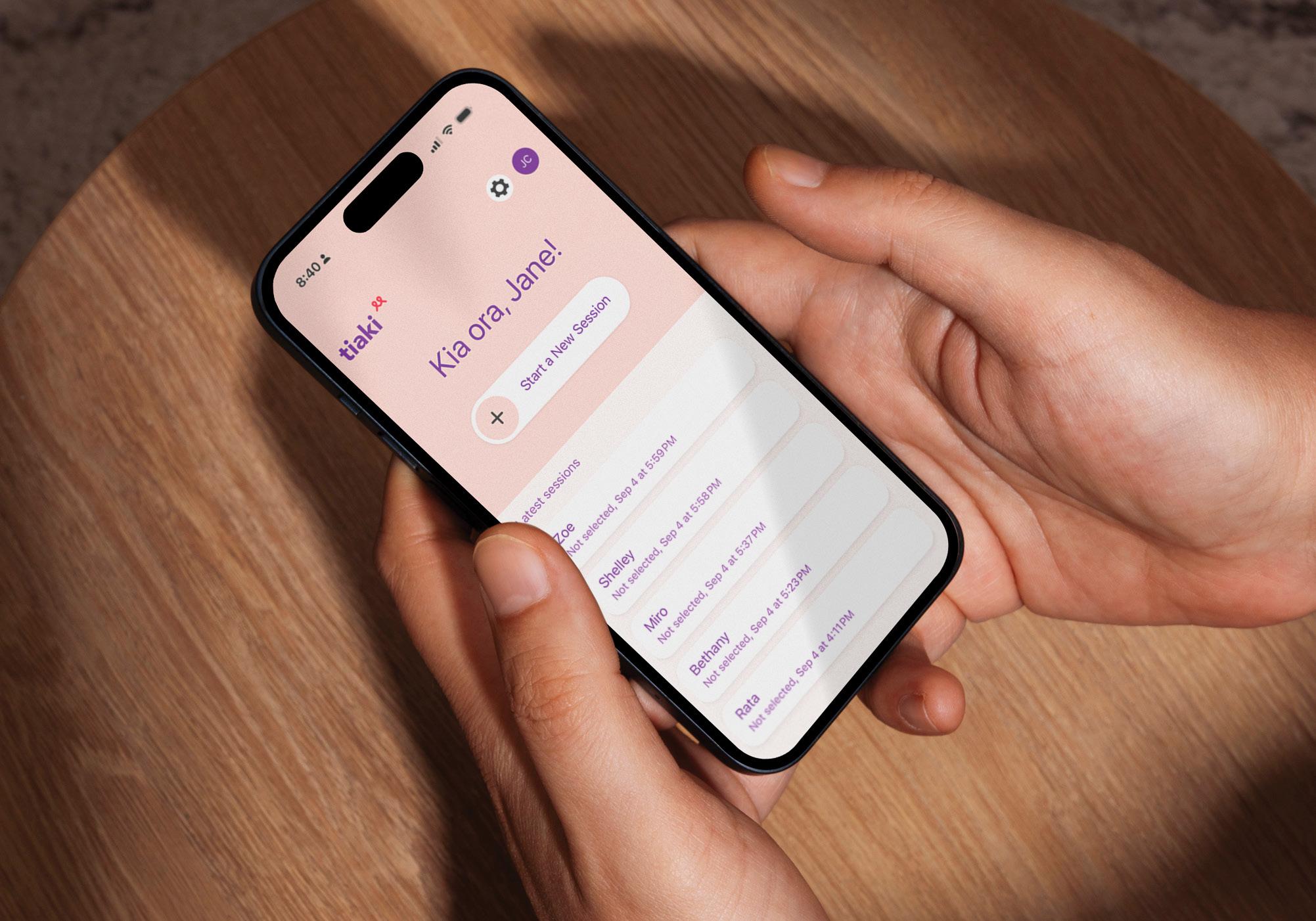
Two key initiatives show this commitment — the development of Tiaki AI Scribe (powered by Whio) and the continued evaluation of Celo Direct Messaging.
TIAKI AI SCRIBE — DEVELOPED IN AOTEAROA, FOR AOTEAROA MIDWIVES
Tiaki AI Scribe, currently being developed by MMPO in partnership with Make Collective, is an assistive/supportive AI tool that helps midwives complete their documentation more efficiently and effectively. It has been designed and developed in response to the
www.mmpo.org.nz
E: mmpo@mmpo.org.nz P: 03 377 2485
administrative load that is affecting midwives’ wellbeing, time with women and whānau, and workforce sustainability.
The idea is that each consultation will be recorded on the midwife’s secure device — only with informed consent — and transcribed through a bilingual AI system (through Papa Reo) that recognises both English and te reo Māori. The draft summary produced by the system will then be reviewed, edited, and approved by the midwife before being added as the clinical record to Tiaki and, where relevant, BadgerNet.
The Tiaki AI Scribe (powered by Whio) runs entirely within Aotearoa New Zealand, ensuring all processing and data handling remain onshore. Once a summary is confirmed, the audio will then be permanently deleted immediately, with the transcription held for a short cautionary period before also being deleted — a zeroretention model that safeguards privacy and follows the Health NZ Generative AI Policy.
This privacy-by-design approach is matched with midwife-in-the-loop oversight: AI never saves or acts autonomously. Midwives keep full control and professional responsibility for the final midwifery health record.
TIAKI SCRIBE – DESIGN, DEVELOPMENT AND VALIDATION
To deliver a safe, effective AI tool that eases documentation while upholding midwifery values and New Zealand’s privacy, ethical, and
professional standards. MMPO has established a comprehensive, multi-stage governance, development, and validation process.
Governance and Oversight:
• Guided by the New Zealand College of Midwives, which provides professional oversight to ensure Tiaki AI Scribe aligns with midwifery standards, codes of ethics, and the partnership model of care.
• Supported by the MMPO Clinical Reference Group (CRG) — practising midwives from across Aotearoa who contribute real-world insight, structured feedback, and ongoing evaluation.
• Tiaki Scribe is being independently reviewed under Health NZ | Te Whatu Ora’s Generative AI Policy and the National Artificial Intelligence and Algorithm Expert Advisory Group (NAIAEAG) — the body responsible for assuring the safety, transparency, and trustworthiness of AI in healthcare. NAIAEAG endorsement confirms that Tiaki Scribe meets national standards for privacy, equity, and human oversight, and is fit for clinical use in Aotearoa. Importantly, it affirms that Tiaki Scribe remains assistive, not autonomous — with the midwife always retaining professional control and accountability.
Development Process:
• Co-design workshops with practising midwives to shape structure, language, and workflow.
Aotearoa New Zealand's midwife-centred support partner.
• Iterative testing and refinement led by Make Collective, incorporating continuous feedback from the College and CRG.
• Cultural partnership with Te Hiku Media to ensure bilingual capability, Māori data sovereignty, and culturally safe design.
• A comprehensive Privacy Impact Assessment (PIA) to ensure full compliance with the Health Information Privacy Code (2020).
• Ongoing training and feedback loops to maintain ethical, clinical, and cultural standards throughout development.
Pilot Programme:
A national pilot involving around 30 midwives from across Aotearoa is now testing Tiaki Scribe’s transcription accuracy, bilingual performance, usability and workflow integration. The pilot also measures time savings, documentation quality, and midwife experience, alongside structured feedback from māmā and whānau on trust, consent, and cultural safety. These insights will confirm expected benefits — including reduced administrative burden, improved
accuracy, and strengthened midwife–woman engagement.
By integrating professional governance, clinical expertise, and continuous evaluation, MMPO is ensuring that Tiaki AI Scribe emerges as a tool that not only reduces workload but also enhances the safety, accuracy, and sustainability of midwifery practice in Aotearoa.
CELO DIRECT MESSAGING* — BEING EVALUATED FOR SECURE COMMUNICATION
While Tiaki Scribe continues to be developed, MMPO is also evaluating Celo Direct Messaging as a secure platform for midwifery communication.
Celo is a New Zealand-based, health-grade encrypted messaging system that allows primary health professionals to share messages and documents safely within a compliant environment. Midwives currently rely on standard text messaging or consumer apps that store data offshore and fall outside privacy law.
MMPO’s evaluation is exploring whether Celo can reduce these risks by providing
a secure, auditable, locally hosted communication option that protects midwives and the sensitive information they exchange every day.
LEADING MIDWIFERY SAFELY INTO THE DIGITAL FUTURE
MMPO’s digital leadership is not about technology for its own sake — it is about protecting midwifery practice and sustainability. By working in partnership with the College, Health NZ | Te Whatu Ora, and trusted local technology partners, we are ensuring that AI in midwifery remains grounded in trust, transparency, and tikanga. Tiaki Scribe’s development and Celo’s evaluation are building a secure digital ecosystem that keeps data onshore, supports te reo Māori, and strengthens the profession’s resilience.
Because in midwifery, technology should never replace the midwife’s skills — it should strengthen and protect them. Square
*Celo Direct Messaging keeps midwifery kōrero private and compliant.
NGĀ MĀIA UPDATE
Tēnā koutou katoa, kahu pōkai mā, tauira mā, ngā tini whānaunga maha.
This update opens with warm congratulations to Ngarangi Pritchard on her announced retirement. We celebrate a remarkable career spanning decades of dedicated midwifery service and as a founding member of Ngā Māia o Aotearoa ki Te Waipounamu. Deeply respected within her community, Ngarangi has served with both heart and expertise—first as an LMC, then as a core midwife providing specialist care in complex antenatal cases. Beyond her clinical work, she has held important leadership roles, including Tangata Whenua Co-Chair of Te Tatau o te Whare Kahu (the Midwifery Council). Ngarangi has contributed across many kaupapa, such as a Standards Reviewer, and was a reassuring active member of the Wellington College region. Her legacy of compassion, commitment to quality assurance and tireless
dedication to patient safety leaves an indelible mark on Te Whanganui-aTara and Ngā Māia as a whole. Nō reira e te ringa ngaio, he mihi aroha tēnei. Ko tō whakatūwheratanga i te tatau pounamu tō tātou maringanui. Ko koe tonu rā tēnā e whakatauirahia i te pikitanga i te paepae ā te ruahine.
Turning to governance, we welcome two new trustees, Amanda Douglas ō Tararua Ngā Pae Maunga and Katarina Komene ō Te Kahu Wahine, and thank all four nominees who made up the high-quality selection for the Trustee election 2025. With their fresh eyes, Amanda and Katarina join our board in driving strategic priorities to strengthen our collective impact. The remaining trustees who make up the full complement of seven include: TeAnna Hema, Jacqueline Martin, Jasmine Kerei, Waimarie Onekawa and Lisa Kelly. We also acknowledge the invaluable expertise of our trustees who are stepping down: Janet Taiatini, whose enthusiasm for knowledge is infectious, and Crete Cherrington, whose mana motuhake led leadership is grounded in tikanga. Together they harmonise our worlds beautifully. Although they vacate the board, our tuakana continue to serve on the Kāhui Kaumātua advisory committee, ensuring continuity and wisdom, mā muri ā mua.
POSITIVE FEEDBACK AND ENROLMENT MOMENTUM
Education remains a cornerstone of Ngā Māia. Our Tūranga Kaupapa programme continues its steady growth, blending 4 hours of flexible e-learning with 4 hours of live teaching.
Awanuiārangi is progressing a Bachelor of Health Sciences in Midwifery, centred on Te Ao Māori perspectives, cultural responsiveness and whānau autonomy in birthing. This degree aims to prepare midwives for culturally grounded care. A dedicated advisory group continues to provide support for students in the many accreditation requirements.
Ngā Māia’s role in the Health NZ Clinical Senate grows, with Tamara Karu representing midwifery voice alongside Alison Eddy. Their work will shape health service priority with a system-wide lens, aiming to influence the Health NZ Board directly and reduce bureaucracy.
Looking ahead, mark your calendars for Hui ā Tau 2026 in Tairāwhiti, 12–14 October. Eligible midwives are encouraged to apply for the Pūtea Rangahau Māori Midwifery Research Grant, supporting Kaupapa Māori research to enrich our profession.
Stay connected with us at admin@ngamaiatrust.org or on social media for the latest news. Together, we continue our vision—he kahu pōkai, mō tēnā, mō tēnā—Māori hands catching Māori babies. Square
TAMARA KARU NGĀ MĀIA TRUST GENERAL MANAGER
Ngarangi Pritchard.
THE IMPORTANCE OF EQUITY-BASED INITIATIVES IN IMPROVING PACIFIC MIDWIFERY WORKFORCE REPRESENTATION
SHEKINAH ULUGIA PASIFIKA MIDWIFE RESEARCHER
As a Pacific midwife working in the Counties Manukau region, there was an evident inequity in the lack of Pacific representation within the midwifery workforce. It is well-documented that health inequities exist for indigenous and ethnic minority groups, such as Māori and Pacific. We are over-represented in statistics relating to maternal and neonatal mortality and morbidity yet under-represented in the workforce serving our high-needs community.
Increasing Pacific midwifery representation is a direct response to improving the health and wellbeing of our Pacific mothers and babies. Evidence points to the importance of developing a diverse workforce that reflects the community it serves as it increases cultural competency and therefore improves health outcomes for our Pacific mothers and babies.
Equity-based initiatives, such as Te Ara o Hine – Tapu Ora, for indigenous and Pacific midwifery students are purposed to support academic success and increase the number of practising Pacific midwives in our community. It acknowledges for indigenous and Pacific students the tertiary journey is not a “level-playing field”, highlighting the complex interaction of social determinants of health and their aggregate impact on Pacific student success and access to tertiary health education. Research shows the interplay between social determinants of health, such as socioeconomic status, racism, and educational opportunities, create compounding negative effects leading to worsening inequities between non-Māori, non-Pacific students and Pacific students. Despite evidence, political and societal views
often label equity-based interventions as ‘special treatment’, leading to institutionalised resistance and limited intervention effectiveness. This demonstrates that the inequities Pacific students experience is an institutional and systemic issue, and social accountability demands a level playing field by supporting our Pacific midwifery students through widening access to health programmes and prioritising increasing health workforce diversity.
Since the introduction of the equity-based initiative Te Ara o Hine –Tapu Ora in 2021 there has been a steady increase in Pacific midwifery graduates from 2021 to 2025. Statistics from the Midwifery Council Workforce Data Survey show that in 2021, 44 midwives claimed Pacific Peoples as their primary ethnicity in comparison to 69 midwives in 2025. Thus, showing in the last 4 years we have welcomed 25 Pacific midwives into our workforce. This serves as both inspiration and motivation to continue the trajectory of increasing Pacific midwifery success, and therefore Pacific midwifery numbers, to keep building the diverse, culturally competent workforce that meets the unique needs of our Pacific mothers and babies.
The educational focus has firmly been on the undergraduate as an immediate response.
As the workforce has grown, a natural curiosity has surfaced to explore the postgraduate space, a pathway to better understand a Pacific nuanced approach to inform working within these communities.
"Tautua ne mo sou manuia taeao" – Serve now for a better tomorrow. Square
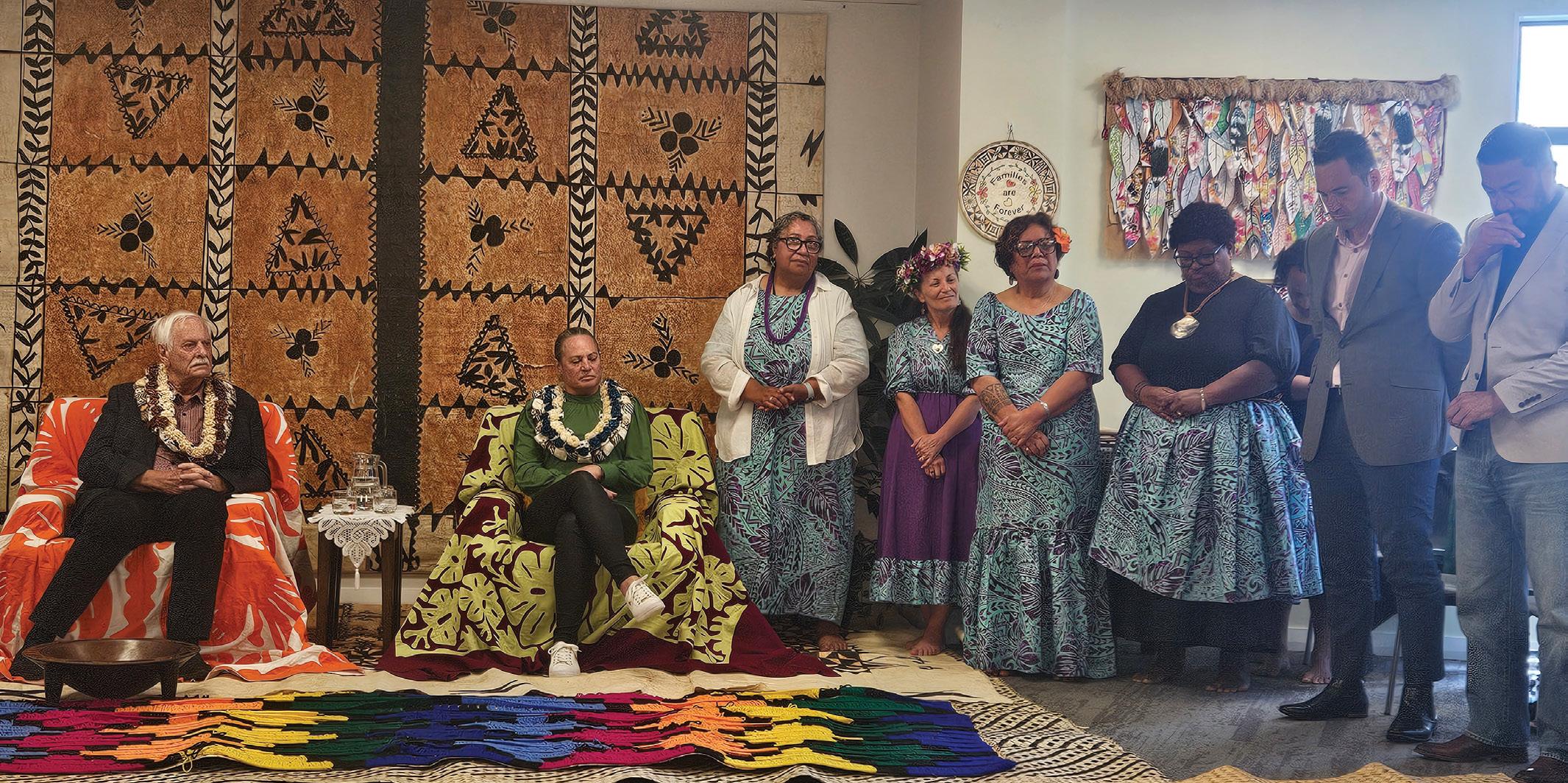
National Pasifika Midwifery Fono 2023 – Wintec, Kirikiriroa.
ARE WE BRAVE ENOUGH? NATIONAL CONFERENCE 2025
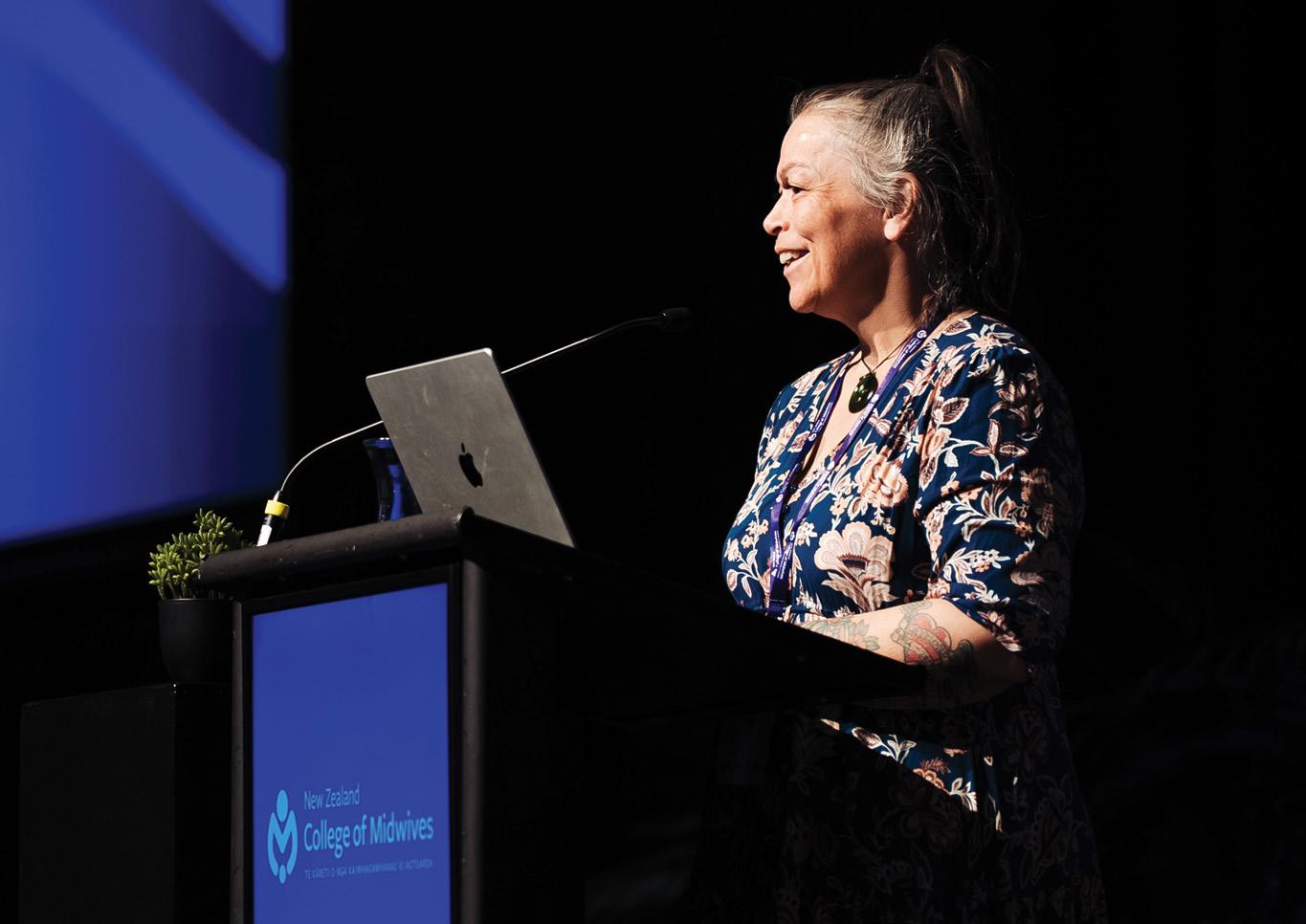
When Bay of Plenty | Te Moana-a-Toitehuatahi midwife, Bronwyn Fleet, took the stage at the College’s National Conference in Kirikiriroa in August this year, she invited the audience to consider the question, ‘are we brave enough?’. What followed was a compelling exploration of birth in Aotearoa New Zealand—a reflection of the rich and inspiring kōrero that shapes our College conferences. We are delighted that Bronwyn has agreed to share her presentation here for all members.
Tena koutou katoa, ko Bron Fleet taku ingoa, thank you very much for having me here.
I am a midwife. It has been my absolute privilege to care for over 450 birthing whānau, 200 of those birthing at home.
My contribution to the kaupapa today is as a working midwife, daily accompanying whānau who are navigating birth in Aotearoa New Zealand in 2025. I speak from my experience and from my heart, and I acknowledge the whānau who have so generously shared their journeys with me, and who have taught me so much.
Whānau tell their stories. Stories of women who have felt well supported, well cared for, who recall their births as positive experiences that enhanced their lives. And stories of women who feel battered and betrayed and traumatised, who feel their maternity carers have failed them, who feel bullied, coerced and dismissed.
These are often the whānau who opt out, either wholly or partly, from mainstream maternity offerings. We don’t really know how many remove themselves fully from 'the system', although anecdotally it seems the numbers, while still very small, are increasing.
Those who I am more likely to see are whānau who want some aspects of maternity care but are unwilling to follow recommendations uncritically, who consider each component of care then decide which they will or will not accept. Such as families who want a VBAC or a twin birth at home, who will agree to an IOL under certain circumstances but will not accept continuous CTG, who decline postdates induction and will wait as long as it takes for their baby to be ready, or who decline ultrasound scans and GDM testing.
These are the ones who challenge us, who make us nervous and who keep us awake at night, the ‘difficult’ ones, the ‘non-
compliant’ ones. These are also the ones who can come away from our care feeling let down and unsupported, and they are the ones who may go on to become complete ‘opt outers’ if they cannot find what they seek in our maternity system.
Whānau tell their stories. And there are some hard stories out there and more than a few families who feel ill served at the hands of maternity health professionals, who feel unsafe and unwelcome in our maternity care system. And when I think of my midwife and obstetrician colleagues – of the care, the devotion, the commitment, the worry, the anxiety, the grief, the sheer hard slog that is our mahi – it hurts my heart to think that women and whānau are sometimes broken by what we do.
When whānau tell their hard stories, the stories where we, maternity health professionals, are the harm-doers, we are challenged to listen. It’s not easy to hear criticism of the work that we pour our hearts and souls into. A natural reaction is to tell them, or tell ourselves, why they are wrong. Why what they thought we were doing – pressuring, dismissing, ignoring, pushing, minimising, coercing – was not what we were doing at all!
But if we want our maternity system to be safe for ALL whānau, if we want ALL whānau to benefit from what we have to offer, if we want ALL whānau to feel we are alongside them, then we must be open to hear their experiences, as hard as it is. And we must believe what they tell us.
Guidelines are sometimes accused, by both families and midwives, of being a part of the problem. Too prescriptive, too restrictive, too impersonal, not individualised, not nuanced. I see them differently, I see them as friends. For me, guidelines provide the framework that underpins information sharing. Knowing the guidelines, and using them as the basis of my decision-making conversations with women, keeps me safe
BRONWYN FLEET MIDWIFE
in caring for those ‘opt out’ whānau. Sharing guidelines with whānau, not as ‘the rules’ or ‘what you must do’ but as a starting point for discussion and further information gathering, enables me to fulfil my professional responsibilities, to safeguard my ability to continue to practise. Supporting families to supplement our maternity guidelines with other credible sources of information is a way of supporting their right to selfdetermine, while keeping myself professionally safe.
I find that guidelines are surprisingly honest about themselves – the Induction of Labour Guideline, for instance, specifically states, 'the quality of research evidence varied considerably’ and ‘if the evidence was rated to be of low or very low quality, then the Panel made practice points’.
And, reassuringly supportive of whānau rights as health care consumers, the Section 97 Referral Guidelines give a fourpage description, including a flow chart, of how a midwife should work with whānau who are declining some or all care recommendations.
Obstetricians and midwives are siblings. In the maternity care whānau, we carry different and equally important responsibilities. Women are best served when obstetricians and midwives work respectfully together to provide the appropriate type of care at the appropriate time.
Like siblings, obstetricians and midwives don’t always agree, and sometimes we annoy each other and sometimes we fight.
Also, like siblings, for the sake of family harmony, we can try to see the other’s point of view and acknowledge that there is more than one version of ‘right’.
And ultimately, whānau first, we look after each other! When I’ve worked long and hard with a home birthing whānau to get their baby born, and we’ve come to the point where we all acknowledge it’s just not happening, my first phone call is to the on-call obstetrician and goes something like, ‘bro, I need you’ and what I want to hear on the other end of the line is, ‘come on in, sis, I’ve got your back!’.
And if that’s what I want, then the daily mahi I must do before that phone call is relationship building, honest acknowledgement of the importance of the obstetric role, and genuine effort to understand my bro’s reality and to help him understand mine.
For me this means no surprises, it means requesting permission from that twin home birthing mama who has declined an obstetric referral to give my OB team a heads up, to keep them informed so if we need them, they’re already in the loop.
It’s not always easy, and pushback is real. But it’s what is required to keep myself, my colleagues and my clients as safe as we can be on the journey that they have chosen. Obstetricians are not the opposition, they’re our brothers and sisters, and we owe it to our clients to build strong, respectful, collegial and human relationships with them.
Being a midwife is a bit like being an actor, you get typecast, known for a certain type of role, and when someone is looking for an actor (a midwife) to play that role, they look for you.
This is how my caseload, over the years, has come to consist of more and more whānau who are looking for a particular kind of maternity care – care where they are indisputably
leading, where they own the story of their birth and I am merely the guide on the side, and the emergency backup in the unlikely event that it is needed.
And, if I’m honest, that can make my life a bit stressful. I’m not at all immune to the pressures and fears that come with supporting whānau who are making decisions that sit outside, and sometimes very far outside, of mainstream care. I have anxiety, I have sleepless nights, my ever-patient husband has his ear frequently bent with my mini-panics about the ‘what ifs’.
But I also have the absolute joy and satisfaction of knowing that I have enabled a profoundly positive experience in the life of that family, and what a wonderful thing that is!
So, how do we as midwives navigate our responsibility to be ‘with women’, to be ‘with whānau’? I think we do that by being willing to listen to, believe and trust them, by reminding ourselves that birth belongs to whānau and the nature of their journey to birth is important, and by knowing that the way we care for them makes a difference – the way we conduct ourselves, the way we engage, the language we use, the presence we bring, can all either uplift or diminish them. Let’s be uplifters, let’s be a positive presence in their lives and in their births – wherever they start, however they travel, wherever they land.
One of the things I’ve noticed about myself is that I can spiral up or spiral down in terms of my willingness, comfort and skill in supporting whānau. The more I exercise my navigation skills for supporting whānau on a less-travelled path, the more willing I feel. The more familiar and confident I am with the guidelines and the associated research, the more comfortable I feel. The more I use sound relationship building and communication techniques, the more skilled I feel. The more I flex my brave muscle, the stronger it gets. The more I flex my brave muscle, the stronger it gets. So, here’s my wero for us today, as a group of midwives who make a difference every day to childbearing whānau – will we flex that muscle? Are we brave enough? Square
WHO ARE OUR GRADUATE MIDWIVES?
CLAIRE MACDONALD MIDWIFERY ADVISOR - RESEARCH
The midwifery and wider health workforce is well recognised as being important in promoting health equity. As well as the expectation of cultural safety as an essential component of equitable care provision, there is a focus on diversifying our workforce to reflect our communities.
In the December 2024 issue of Midwife Aotearoa, we explored the census and birthing data which showed how the Aotearoa population has rapidly diversified in the last decade. So how are we doing with expanding ethnic diversity in our profession?
Due to the nature of recruitment and retention efforts, any workforce strategy will include a significant lead-in time to demonstrate results at an aggregate level. Indeed, annual Midwifery Council | Te Tatau o te Whare Kahu workforce surveys demonstrate a fairly modest and gradual increase in ethnic diversity over recent years. To really understand what the future looks like, we need to zone in on who our graduates are.
It is not possible to use published data to accurately compare proportions of ethnic groups in the midwifery workforce with the birthing population. This is because of the different ways that ethnicity is measured and reported. Prioritised ethnicity is reported in Health NZ maternity data (e.g. Report on Maternity). Each person is only counted once in their prioritised ethnic group, which means the total adds up to 100% (for details, see Ministry of Health Ethnicity Data Protocols, 2017). In contrast, Council
workforce data reports midwives’ first, second and third ethnicities. Because a midwife with more than one ethnicity is counted for each ethnic group, the total is greater than 100%.
To enable a comparison between the birthing population and the midwifery workforce in this article, the Council has kindly supplied its anonymised raw data for analysis, from which prioritised ethnicity has been classified for each midwife using MoH protocols. Midwifery First Year of Practice (MFYP) programme data has also been classified in this way and provides a snapshot of the new generation of midwives. Prioritised ethnicity rates have been calculated for each dataset.
In the most recently available data from Health NZ | Te Whatu Ora (2023, published 2025), a quarter of our birthing population were Māori. In contrast, within the midwifery workforce data, 14.2% of midwives with APCs in 2025 identify as Māori. A very different picture is evident when we look at the enrolment data for the MFYP programme in 2025, where almost a quarter of graduates whakapapa Māori (See Table 1, next page).
TABLE 1. COMPARISON OF PRIORITISED ETHNICITY RATES USING THE MOST RECENTLY AVAILABLE DATA
*Direct comparison for Middle Eastern, Latin American and African (MELAA) communities and for ‘Other’ ethnicities is not available as these ethnic groups are included within ‘European’ in HNZ maternity data.
The biggest proportional gap between midwives and women/ people having babies is now in the Indian group, followed by Asian (non-Indian). The difference in these gaps may be related to the demographic changes over the last decade, as seen in the birthing population.
Graduates with a Pacific prioritised ethnicity are also getting closer to parity with the birthing population. It is important to note that there are an additional 6 Pacific midwives (2.5% of the total) who are in the Māori count, as these midwives identify both ethnicities but are prioritised as Māori.
The biggest proportional gap between midwives and women/people having babies is now in the Indian group, followed by Asian (non-Indian). The difference in these gaps may be related to the demographic
changes over the last decade, as seen in the birthing population (see graph). Growth in the Asian population started more than a decade ago, allowing time for the workforce to increase and close the proportional gap. In contrast, a rapid increase has occurred more recently in the Indian community, which in 2023 reached the same percentage of birthing population as all other Asian groups combined. A strategy is clearly needed to promote midwifery as a career option in these communities.
A significant decrease is evident in the proportion of graduate midwives who identify as European only (including NZ European and other European), compared with the whole midwifery workforce.
Our graduates illustrate the changing face of midwifery as we make strides towards our profession reflecting our birthing communities. This is the result of many years of hard work, strategic thinking and advocacy from our Māori, Pacific and education midwifery leaders to promote midwifery as a career and to ensure support is available during the degree programme.
Work that was commenced by the Counties Manukau Māori Health Workforce team ultimately led to the implementation of Te Ara ō Hine – Tapu Ora in 2021 (see Midwife Aotearoa Issue 101), a programme to support
recruitment, retention and success for Māori and Pasifika midwifery students in bachelor of midwifery programmes nationally. More than four years on, the programme is demonstrating its value, as seen in MFYP enrolment data.
Ngatepaeru Marsters, the national lead for Tapu Ora (the Pacific arm of the programme), explains that retention in the midwifery programme is a key aim of the support provided by Tapu Ora liaisons, and is thrilled to see a 94% retention rate among Pacific students in years 2-4 of the midwifery programme at AUT. Ngatepaeru and Joyce Croft, national lead for Te Ara ō Hine, the Māori arm of the programme, both attribute much of this success to the liaisons who act as cultural touchstones for students, supporting them as they work through their degrees.
The success pou is demonstrated by completion of the degree programme but, as Ngatepaeru points out, a crucial part that has been missing was linking the completion of the degree to registration and joining the midwifery workforce. This gap is now being closed with the Midwifery Council planning to shift the national midwifery examination into the schools of midwifery, so Te Ara o Hine – Tapu Ora liaisons can continue to provide support until successful completion of the exam, registration as a midwife and enrolment in the MFYP programme.
Joyce has seen the flow-on effects of the connections made during the programme. “The students and then graduates are better connected with one another. If they go to work in another region or even if they stay in their home town they will have connections and friendly faces at work. They are connected with the Ngā Māia group or College group locally. It’s really good, they already have that when they become a graduate midwife”.
The word about Te Ara o Hine – Tapu Ora is spreading through the kumara vine, supporting further recruitment of students and rising numbers of Māori and Pacific graduates. Other factors supporting recruitment are an intentional increase in STEM (science, technology, engineering, mathematics) programmes for health careers in schools, and study readiness programmes offered by tertiary providers. Work is also underway on micro-credentialling and staircasing opportunities into health careers.
Joyce points out that the next challenge is supporting the retention of midwives in Aotearoa. Some midwives are being attracted overseas for better pay or to be with family. We also need to start planning now for the future when there are even more Māori and Pacific graduates, to ensure there are jobs available when they graduate. While our national data demonstrates that there has been a gradual shift in ethnic diversity in the whole midwifery workforce, a very different picture is revealed when we see who our graduates are and compare data using the same metrics as national maternity reporting. It will take time before the full workforce proportionately reflects the ethnicities of birthing communities, but it is exciting to already see an increase in the diversity of the new generation of midwives. Welcome to the future. Square
Are you a dedicated LMC with a passion for rural care, eager to join a close-knit, small rural team based in Dannevirke?
Tararua Health Group offers a 3-bed maternity unit within the Dannevirke Community Hospital. We provide comprehensive continuity of care for women throughout antenatal, labour, birth, and rural/remote postnatal care.
About your new role:
Roster: A balanced schedule with a 24-hour roster of 4 days on/4 days off. Accommodation: The option to stay at our Maternity Cover House at no cost. Team: Be part of a supportive and welcoming team committed to exceptional rural and remote care.
Travel: If you’re from out of town and need assistance with your travel expenses, we’re happy to discuss a travel allowance.
You will have the following skills:
Experience: An experienced midwife seeking a move to a rural environment. Skills: Strong clinical skills and a compassionate approach to care. Professional Requirements: Current APC, Indemnity and Vulnerable Children’s Check.
You will be a team player with a sense of humour, excellent bedside manner and bundles of enthusiasm. Your energy and understanding will be vital in providing exceptional care for our newest arrivals and their mothers.
Apply today and become a valued member of our team to tanya.holak@omnihealth.co.nz or call Tanya on 027 320 5616.
ANNUAL MATERNITY DATA FOR 2023-2024
CLAIRE MACDONALD MIDWIFERY ADVISOR - RESEARCH
Each year Health New Zealand | Te Whatu Ora publishes data from the National Maternity Collection. In this year’s article we consider patterns and trends in the 2023 baby data from the Report on Maternity and Maternity Clinical Indicators (published in 2025) and in the 2024 data from New Zealand Breastfeeding Association (NZBA).
BREASTFEEDING
Exclusive breastfeeding at discharge from a maternity facility decreased slightly from 77.5% in 2020 to 76.5% in 2024. The major change in the same time period was an increase in partial breastfeeding from 14.5% to 17.5%, meaning more women and gender diverse people who intended to breastfeed their babies were also giving formula for some reason.
In 2024 Te Tai Tokerau has the highest rate (by far) of exclusive breastfeeding at discharge (90.7%). It would be worth comparing infant feeding guidance and policies, practice and support for exclusive breastfeeding between
our district hospital services to learn what is working well and what could be implemented nationally to support whānau feeding intentions.
In the decade from 2008 there was a relatively stable average rate of 69% for exclusive breastfeeding at two weeks. Since 2018, however, there have been year-on-year decreases, reaching a low of 63% in 2023. There was an associated trend of increasing partial breastfeeding over the same period, from 16% in 2018 to 23% in 2023. Fully breastfeeding at two weeks and only formula feeding have both gradually decreased between 2008 and 2023.
PRETERM BIRTHS BY GESTATIONAL GROUP AND TOTAL <37 WEEKS
Breastfeeding rates look different according to demographic groups. Being at the youngest and oldest ends of the maternal age spectrum decreases the likelihood of exclusive breastfeeding at two weeks; while European (72%) and Māori (65%) babies are most likely to be exclusively breastfed. There is a stepwise correlation with deprivation quintile (the population measure for neighbourhood wealth), from the highest rate among the least deprived women (69%) to the lowest rate among the most deprived women (60%).
The reasons for the downward trend in exclusive breastfeeding over the most recent 5 years of data reporting are no doubt multifactorial. However, it is noteworthy that compulsory breastfeeding education was removed from the midwifery recertification programme in 2017. Is it time for this to be reintroduced?
PRETERM BIRTH
Preterm birth refers to any birth which occurs after 20 weeks’ and before 37 weeks’ gestation, whether the baby is live or stillborn. Preterm birth is a major cause of morbidity and is the leading cause of death in under-5-year-olds.
The Report on Maternity (ROM) and the Maternity Clinical Indicators (MCIs) both report on liveborn preterm births for all women and gender diverse people, and demonstrate variation by ethnicity, age group, deprivation quintile and region of residence.
Preterm birth rates appear to have been gradually trending up over the last 15 years, from 7.4% in 2008 to 7.9% in 2023 (there is a small discrepancy between the ROM and MCIs, the latter reporting 7.8%). The graph above demonstrates the proportions of preterm births by gestational group, demonstrating that the majority are late preterm (32–36 weeks).
The National Mortality Collection gathers data on preterm birth mortality rates, which used to be reported in annual Perinatal and Maternal Mortality Review Committee reports. Unfortunately, the National Mortality Review Committee discontinued annual reporting in that format after the 16th report was published last year, so we do not have public visibility of these outcomes recorded since 2021.
Preterm birth follows a u-shaped curve by maternal age, with higher rates among <20 year olds (9.9%) and ≥40 year olds (10.5%) than those aged 20–39. Maternal resourcing is linked with preterm birth in a stepwise way;
as neighbourhood wealth (the deprivation quintile) increases, preterm birth rates decrease. Prioritised ethnicity also features different rates, with the European/Other and Asian groups experiencing fewer preterm births than Indian, Māori and Pacific whānau.
The Carosika Collaborative has recognised the impact of preterm birth for whānau and for the health system, and acknowledges the short- and long-term outcomes for babies born prematurely. Since 2019, the Collaborative has brought together a wide representation of clinicians and whānau to form a multi-stranded strategic kete and work plan, with the aim of preventing, predicting and optimising preterm birth. As reported in the March edition of Midwife Aotearoa, the Collaborative’s website includes resources and guidance about preterm birth for clinicians and whānau. The National Maternity Clinical Network is working with the Collaborative to progress implementation of Taonga Tuku Iho | A Best Practice Guide for Equity in Preterm Birth in Aotearoa (www. bestpracticeguide. carosikacollaborative.co.nz/). Square
References available on request
GLOBAL TRENDS IN OPPOSITION TO WOMEN’S REPRODUCTIVE AUTONOMY
ZAB FRANKLIN MIDWIFE ADVISOR - ICM
Sexual and reproductive health and rights are increasingly under threat.
The Trump Administration in the United States has restricted dialogue about and access to contraception and safe abortion causing a global ripple effect. A troubling trend is emerging: other governments and international organisations are following suit by limiting funding and avoiding the language of reproductive rights.
DEFUNDING SRHR – GLOBAL IMPACT AND CONSEQUENCES
The Trump Administration has overseen the dismantling of the US Agency for International Development (USAID), withdrawn 500 million USD in global health funding, and terminated all US contributions to the United Nations Population Fund (UNFPA), the UN agency for sexual and reproductive health. The result is the destabilisation of global sexual and reproductive health and rights (SRHR) initiatives, undermining progress toward gender equality, jeopardising the 2030 Agenda for achieving the United Nations Sustainable Development Goals (SDGs).
The suspension of contraception, comprehensive abortion care and reproductive health programmes has left an estimated 130,390 women without access to contraceptive services every day, translating to 47.6 million women annually. This gap is projected to result in 17.1 million unintended pregnancies and 34,000 preventable maternal deaths. The impact will be felt most harshly by women in humanitarian
environments, where the need for contraception is often overlooked and more than 60% of all maternal deaths occur.
Further compounding the crisis, the termination of USAID contracts and the Global Health Supply Chain Program—which served more than 40 countries—has resulted in $9.7 million worth of contraceptives, including intrauterine devices (IUDs), implants, and pills, being stockpiled in Belgium. In July 2025, a decision was made to destroy these supplies at a cost of 167,000 USD. This, even though the life-saving commodities were already paid for by American taxpayers and multiple attempts had been made by international humanitarian organisations, governments and global health actors to purchase and redistribute the supplies (at the time of writing, it was unknown whether the incineration of the stockpile had been commenced). These actions make clear the current American President’s determination to break from established international human rights norms, replacing them with an agenda openly hostile to sexual and reproductive health and rights.
The current American Government has been reinstating and strengthening regressive, conservative policies that further an agenda which has a global impact. One example is the reinstating of the ‘Global gag rule’ in January 2025. The rule prohibits organisations that receive U.S. foreign assistance from providing, referring for, or advocating abortion services using any funding, including money from non-U.S. sources, even in countries where abortion is a standard part of healthcare.
CUTTING COSTS OR CONTROLLING THE RHETORIC?
Evidence shows that contraceptive services yield cost savings by reducing unintended pregnancies. Modelling carried out in 2020 revealed that for every additional 1 USD spent on family planning services in low- and middle-income countries, 3 USD could have been saved on the cost of maternal, newborn and comprehensive abortion care. UNFPA has described the global agenda of strengthening health systems and preventing unintended pregnancies, unsafe abortion and maternal deaths by meeting women’s needs for access to modern contraceptives as “work that is a ‘best-buy’ in development, a costeffective investment that generates positive returns over generations”.
Although the United States has been the largest bilateral donor to global health funding, this cost represents less than 1% of the country’s budget. The cuts have been described as a ‘negligible saving for the United States, yet a devastating loss for the world’. Economic policies shape
productive autonomy. The recent cuts to global health funding disproportionately impact women’s access to reproductive services. These measures are being justified as fiscal responsibility, but in fact reflect deeper political choices about whose needs matter, foreshadowing an imminent future where reproductive health and rights, especially those of women, will matter less and less.
THE SPREAD OF REGRESSIVE POLICIES
The current American Government has been reinstating and strengthening regressive, conservative policies that further an agenda which has a global impact. One example is the reinstating of the ‘Global gag rule’ in January 2025. The rule prohibits organisations that receive U.S. foreign assistance from providing, referring for, or advocating abortion services using any funding, including money from non-U.S. sources, even in countries where abortion is a standard part of healthcare. This creates confusion and reduces access to essential contraception and abortion care services, interferes in the patient-health professional relationship, and silences SRHR advocates.
In January 2024 the American Government, led by President Trump, invoked another piece of policy – the Kemp-Kasten Amendment which restricts funding to organisations or programs that support or participate in the management of a program of coercive abortion or involuntary sterilisation. Originally developed in the 1980s in response to concerns over China’s coercive population policies, the Kemp-
Kasten Amendment has been used in 19 of the past 40 fiscal years, consistently by Republican governments, to withhold UNFPA funding. UNFPA maintains that allegations of promoting abortion or involuntary sterilisation are unfounded and have been repeatedly disproved, including by the American Government itself.
The Trump Government’s precedent has prompted several other donor countries to cut, or plan cuts to international family planning, further endangering global SRHR. This reflects a shift in norms around women’s reproductive autonomy, a tacit acceptance of the anti-rights-based rhetoric, and a weakening of international cooperation. ICM’s member associations describe both the impact of restrictions imposed on women as care recipients and as providers, and that of funding cuts on services provided by midwives and working to reduce maternal morbidity and mortality, especially in humanitarian and fragile settings.
PATRIARCHAL
CONTROL AND GENDER NORMS
Women’s reproductive autonomy is about power, who holds it, who controls bodies, and whose voices shape laws and norms. At the heart of the global backlash against women’s rights, particularly SRHR, is patriarchal control over women’s bodies. Societies have long prioritised women’s reproductive functions and their role as mother and caregiver over their autonomy, with cultural conservatism driving much of the opposition to reproductive rights. Selected doctrines across many different
faiths are used to promote heterosexual marriage, distinct gender roles, male dominance, and female modesty, clashing with SRHR principles like gender equality and sexual autonomy. Sexual education is perceived as encouraging promiscuity, and contraception or abortion viewed as morally unacceptable and regarded as a threat to moral values or national identity.
Advocates of restricting reproductive freedom often frame their position as protecting life or family values, yet forced pregnancies, denial of contraception, and criminalising abortion are forms of reproductive coercion. Whether imposed by partners, families, or communities, these practices aim to control rather than empower women and should be recognised as genderbased violence.
INTERSECTIONAL INEQUITIES
Restrictions to reproductive autonomy are not experienced equally and tensions between approaches to gender and sexuality also significantly impact the rights and freedoms of LGBTQ+ individuals, women of colour, women with disabilities and those experiencing poverty, all of whom face compounded barriers to accessing SRHR services.
Reproductive justice is key to addressing the gendered dynamics that control people’s reproductive lives. It is based on an intersectional analysis of how factors such as race, age, class, economic status, gender, and sexual orientation combine to affect people’s experiences and opportunities. Protecting those most affected by restrictive reproductive norms is essential for achieving justice and freedom for all.
GENDER EQUALITY AND SUSTAINABLE DEVELOPMENT
Shifts in global norms around SRHR, combined with funding cuts, programme closures, and the loss of vital medical supplies, are a major setback for women’s SRHR and reproductive autonomy. These policies are not neutral; they reflect political ideologies and world views that seek to limit women’s agency and reinforce traditional hierarchies.
The long-term consequences will harm women’s health, gender equality, and sustainable development.
Governments must move beyond malecentred, patriarchal norms and create conditions for women to fully exercise reproductive autonomy. This means challenging gender stereotypes about women’s sexuality and their position in
family and society and removing legal and practical barriers to reproductive health services. This can be achieved in a way that is respectful of diverse cultural and religious beliefs provided these do not infringe upon individuals’ SRHR.
The International Confederation of Midwives (ICM) asserts that governments, implementing partners, and donors must have the courage to resist restrictive sexual and reproductive health and rights (SRHR) policies and continue funding global health initiatives, ensuring that women everywhere can access comprehensive sexual and reproductive health services.
The ICM strongly advocates for continued efforts by midwives, midwives’ associations, regional and national decision makers and the global health community to eliminate all forms of gender-based violence, including reproductive coercion, to empower women through the provision of information and education, ensuring their unlimited access to contraception and comprehensive abortion care services based on free and informed consent, the protection of the right to privacy, confidentiality and the provision of adequate support and services to ensure positive reproductive outcomes. Square
ENRICHING LIVES WITH TAONGA PŪORO
TE RINA JOSEPH MĀORI MIDWIFERY ADVISOR
In this personal reflection, TeRina relates the passion she and her husband share for taonga pūoro and how these powerful instruments are enriching the lives of whānau.
In the sacred space of hapūtanga, where new life is nurtured and birthed, the presence of taonga pūoro, traditional Māori instruments, has become a powerful companion in our hapū wānanga journey. These ancient instruments, steeped in whakapapa and wairua, have reawakened a deep resonance within our whānau, offering healing, connection and transformation.
A JOURNEY OF REDISCOVERY
Our journey began not with a plan, but with a presence. My husband, Dougie Joseph, accompanied me to a hapū wānanga to help set up. As the pāpā began to arrive, he naturally engaged in kōrero, sharing his passion for crafting and playing taonga pūoro. What started as a spontaneous conversation became a calling. Dougie, who never imagined himself in this space, is now a dedicated hapū wānanga facilitator, bringing his mātauranga and wairua to every gathering.
At our recent College conference, the deep, resonant call of the pūkaea, handcrafted by Dougie from the kauri windowsills of his Nan’s home in Hangarau, echoed through the venue. It was a moment of collective stillness. The vibration touched the wairua of every midwife present, and even those who could not be there. It was a reminder that our mahi is not just clinical, it is spiritual, it is ancestral.
TAONGA PŪORO IN PRACTICE
Over the years, we have woven taonga pūoro into our hapū wānanga and postnatal workshops, creating spaces that honour taha wāhine, taha tāne and ngā ira tāngata. These instruments are not merely tools of sound,
they are vessels of healing. We have witnessed their ability to:
• Shift emotional states, helping to deescalate anger, anxiety and depression.
• Support intergenerational healing, inspiring whānau to break cycles of addiction and disconnection.
• Facilitate connection – between parents and pēpi, between partners and between the living and their tūpuna.
HEALING THROUGH FREQUENCY
Each cell in our body vibrates at a frequency. Taonga pūoro, as vibrational instruments, interact with our cellular makeup, helping to release trauma and restore balance.
Instruments like the kūkau are used to calm the nervous system, support breath regulation and even clear mucus from a child’s chest.
The purerehua is a powerful tool for lifting wairua and connecting to the spiritual realm.
We have seen māmā and pāpā reconnect with their own healing journeys through these taonga. One pāpā, after attending several wānanga, shared that he had given up cannabis – something we hadn’t even known he was struggling with. Another māmā, grieving the loss of her pēpi, found solace in the purerehua, feeling her baby’s presence in the swirling vortex of sound.
TAONGA PŪORO IN ACTION
At the birth of our youngest moko, after two normal pregnancies and births, our daughterin-law faced pre-eclampsia and an induction of labour. She was nervous and anxious. My husband filled her hospital birthing room with the sounds of taonga pūoro. Within an
hour, labour progressed rapidly and our moko entered the world swiftly. Dougie returned to the room reciting karakia and an aunty followed with a gentle karanga. Today, that moko, only one year old, attempts to play the taonga pūoro and signals for her Koro to play for her. My daughter-in-law always remembers the sounds and how they guided her into a relaxed state for her birth – she did not expect baby to come so fast and so easily.
ATUA AND WHENUA
Each taonga pūoro carries the essence of an atua. Hine Pū Te Hue, the goddess of peace, is embodied in the puruhau, made from a hue (gourd), and supporting slow, rhythmic breathing. The hue poi awhiowhio, a birdcaller, clears energy and brings the sounds of the ngahere into the room.
When wāhine have to birth away from their whenua, their homes and their whānau, a shell played as a taonga pūoro can reconnect māmā to their whenua. Even if they cannot play it, simply holding it to their ear and hearing the wave vibrations can bring the shores of home to them.
CONCLUSION
As midwives, we hold whānau as they transition from pregnancy through to parenthood. We are guardians of the physiological processes of wāhine, but we also hold the ability to help whānau make life changes that support their whakapapa. Taonga pūoro may not be in every midwife’s kete but they offer a way to deepen our practice, to honour te ao Māori and to support whānau in ways that are both ancient and urgently needed today. Square
He Oro, He Mauri: The healing vibrations of taonga pūoro in hapū wānanga
LACTATION AFTER INFANT LOSS - ‘WHITE TEARS’
Clinical bereavement care includes support for women to manage lactation after the loss of their infant. Plagg et al. (2024) describe loss after miscarriage or stillbirth as often being viewed through the lens of disenfranchised grief which may be marked by a lack of social recognition, limited rituals and a clinical approach that may not recognise deeply personal loss.
Disenfranchised grief has been described by Doka (1989) as grief that a person experiences when they incur a loss that is not or cannot be openly acknowledged, publicly mourned or socially supported.
Although an Irish study by a bereavement support midwife (Sweeney, 2021) identified a need for continuing education and training for midwives in all aspects of bereavement care, the midwifery continuity of care partnership model in Aotearoa, with a holistic individualised approach, should be able to support both bereavement and lactation management.
PHYSIOLOGY OF LACTATION –A BRIEF SUMMARY
Understanding lactation physiology is necessary to understanding how to support bereaved mothers. During pregnancy there is a high progesterone to oestrogen ratio which results in mammogenesis – the process of development and growth of the mammary
glands in females in preparation for breast milk production. Lactation is a physiological change which occurs from around 16 weeks gestation (Sereshti et al., 2016). Circulating levels of progesterone released by the placenta, in addition to a prolactin-inhibiting factor produced by the hypothalamus, prevent full milk secretion during pregnancy, although some women will experience leakage.
MANAGING LACTATION AFTER INFANT LOSS
A booklet produced for parents and families to help with grief in the early days has a section entitled, “Your body does not know your baby has died” (Schwiebert, 2001, p. 12). The drop in hormones after birth triggers the arrival of breast milk regardless of plans to breastfeed or not breastfeed, and regardless of whether the infant survives.
Breast milk leakage may cause additional distress, which many women, particularly
primigravida, are not prepared for (McGuinness et al., 2014). Midwives can provide information and advice to women experiencing this distressing physical consequence to support the emotional impact of this often-unexpected lactation. The emotional pain of experiencing lactation after infant loss has been described as more painful than any breast discomfort or pain experienced with breast engorgement (Sweeney, 2021). Women with previous breastfeeding experiences may be more likely to experience marked engorgement (McGuiness et al., 2014).
Mothers who need to reduce or suppress their lactation require evidence-informed guidance. Management of lactation after loss at any time, either in early or late pregnancy, is necessary to avoid pathology such as mastitis or breast engorgement. In situations of pregnancy loss, gradually reducing any milk supply by wearing a firm bra, removing a small amount of milk from the breast if necessary for comfort, using cool packs and taking anti-inflammatory medication is recommended (ABA, 2023).
If breast milk expression or breastfeeding has commenced or been established prior to the death of an infant, breast milk removal will stimulate production, so suppression must be carefully managed. As breast engorgement triggers a negative feedback mechanism this will suppress lactation, but the aim is to avoid painful engorgement. Removing just enough milk to reduce discomfort will gradually reduce supply. This gradual method has been described as a fluid process that requires ongoing support, as some women will prefer a plan responsive to their symptoms (express a little for comfort when your breasts are uncomfortable, while aiming to increase the intervals between expressing times), while others may choose a timetable to follow (Parish & Doherty, 2021). Midwives can provide information to ensure women are aware of the signs of impending potential complications such as mastitis.
CAROL BARTLE POLICY ANALYST
Understanding lactation physiology is necessary to understanding how to support bereaved mothers. During pregnancy there is a high progesterone to oestrogen ratio which results in mammogenesis –the process of development and growth of the mammary glands in females in preparation for breast milk production.
There are pharmacological methods used for lactation suppression such as Dostinex (Medsafe, 2025) but gradually reducing milk supply using non-pharmacological methods rather than effecting a sudden suppression is recommended and there are numerous publications that can be used for reference. For example, the Australian Breastfeeding Association (2025) has a comprehensive handout about lactation suppression that covers suppression at both the start of lactation and in established lactation.
PALLIATIVE CARE, LACTATION AND BREASTFEEDING
World Health Organization defines palliative care for children as the active total care of the child’s body, mind, and spirit, which also involves giving support to the family (2023). Palliative care may be provided for infants who have been diagnosed during pregnancy as having a fatal condition or one where survival is unlikely. Infants may have been born prematurely or have had life threatening conditions diagnosed in the neonatal period.
In terms of supporting mothers who wish to breastfeed their seriously ill or dying infants, it is valuable to note that even in circumstances where breastfeeding may usually be considered unlikely, some surprising and emotionally positive situations can occur. All that is necessary is for someone willing to facilitate the opportunity, if and when appropriate, and if requested.
Lactation physiology results in the mother’s body being primed and programmed to produce milk even though the infant is not expected to survive, so management of lactation in this situation does present other options for the mother in terms of lactation and comfort provision for her infant. There is a value in non-pharmacological pain relief and comfort means for the infant
and these may also provide comfort for the mother and her whānau. This includes skin-to-skin contact with parents and siblings, breastfeeding to soothe, and suckling at the mother’s breast to ease distress, even without actual transfer of milk from breast to baby. In terms of supporting mothers who wish to breastfeed their seriously ill or dying infants, it is valuable to note that even in circumstances where breastfeeding may usually be considered unlikely, some surprising and emotionally positive situations can occur. All that is necessary is for someone willing to facilitate the opportunity, if and when appropriate, and if requested.
For example, Chapman (2013) presents a case story of palliative care after the birth of an infant with anencephaly. The mother of this infant girl Hope was supported to have skin-to-skin contact after her birth and Hope latched at the breast and breastfed well. Hope breastfed regularly during the fourteen hours she lived, of which part of the time was in the hospital and part at her home. This case study represents support for the mother’s birth and bereavement plan and describes how the parents were “kept at the centre of care, providing space for them to make informed choices with the support of integrated care from both the hospital and community” (p. 8).
Using expressed breast milk for infant oral mouth cares and putting some milk into the infant’s mouth can also bring comfort to the infant and the mother.
O’Connell et al. (2019) describe how perinatal palliative care for babies with a prenatal lethal diagnosis can provide a positive experience for some mothers who have decided to continue with their pregnancies. They emphasise that a good relationship with healthcare professionals is vital to the process.
GRIEF RITUALS
Producing breast milk after the loss of an infant has been described as ‘white tears’ (Parish & Doherty, 2021; Schwiebert, 2001) and ‘silent tears’ (McGuiness et al., 2014). As described by Parish and Doherty this demonstrates “the emotional weight of this physiological phenomenon” (2021, p.32).
An aspect of lactation to be considered after the death of a baby is what to do with expressed and stored breast milk. There is some literature on the value to the grieving process of breast milk donation (Carroll et al., 2014; Tran et al., 2023; Tully, 1999; Ward et al., 2023). As Aotearoa now has established milk banks, including one within a neonatal intensive care unit, the possibility of breast milk donation is now a reality in some regions. Expressing and donating breast milk
to non-profit milk banks after perinatal loss has been described as a grief ritual that helps mothers towards some resolution of their loss and also a legacy donation to honour the lost baby (Oreg, 2020).
The Australian Breastfeeding Association describes other rituals involving breast milk that some women have used, such as burying some milk with the infant, using the expressed milk on a special plant in the garden and making breast milk jewellery (2023).
Pihama et al. (2025) discuss Māori cultural understandings and emotional expression and describe how emotions are expressed through cultural practices that serve to support emotional wellbeing, with a broad range of tikanga (cultural traditions and practices), te reo (language) and mātauranga (knowledge forms) grounding the collective understanding of emotions. Whakataukī, used to express emotions, was a key theme in the research by Pihama et al. Included in their work is an example of a whakataukī relaying the pain felt with the loss of a child: Me he rau i peke i te haupapa (Like a leaf shrivelled by frost). Stevenson (2018) developed a Kaupapa Māori methodology to explore whānau experiences following harm or loss of their infant around birth. Five components are described: whānau (family), wahi haumaru (providing a safe space), whakaaro (engaging in Māori philosophies), kaitiaki (being empathetic) and hononga (building and maintaining relationships). Recognition that wāhine Māori are more likely to experience poorer perinatal outcomes, and that less than 50% of those experiencing low mood will engage in seeking help, highlights the importance of culturally appropriate midwifery care (Hayward et al., 2025).
CONCLUSION
It is important to meet the individual needs of women and their whānau and understand that grief will take many forms. Sensitive and compassionate management of lactation – after early pregnancy loss, late pregnancy loss, stillbirth or in some situations where an infant is receiving palliative care – is an important part of midwifery practice.
KEY CLINICAL POINTS
4. Use cold compresses.
5. Avoid direct heat on the breasts.
6. Consider analgesia and anti-inflammatory medication.
7. Ensure gradual milk suppression rather than an abrupt stop.
8. Breast engorgement triggers a negative feedback mechanism, but it is important to avoid painful engorgement.
9. Removing just enough milk to reduce discomfort will gradually reduce supply.
10. Be alert for symptoms of mastitis.
References available on request.
Comfort and safety for babies newborn-2 years
More restful, safer sleep and helps prevent flat head
• More restful, safer sleep limb and hip movement
Goes over any type of swaddling, sleeping bag or sleepwear, for a snug and more restful sleep
• Ensures swaddling, sleepwear, Sleepingbag use is safer and cosier
• Excellent for babies requiring varied sleep positions or cot elevation
Natural, flexible body, limb and hip movement
1992 Helps keep young babies comfortably o the tummy; older babies turn freely within the wrap
safely lasts two babies aged 0-2 yrs
Use code ‘NZCOM’ for 20% OFF
TRUSTED • SAFE • UNIQUE
EPI-NO is clinically proven to of an intact per ineum, reduce episiotomy, and is safe to use
EPI-NO is a dual pur pose CE approved medical device designed muscles from ear ly in pregnancy, and again postpar tum The per ineal stretching exercises commence concur rently after Week 36.
EPI-NO Childbir th Tr aining has been accepted in Austr alia & New Zealand for over 15 year s as an effective prepar ation for women choosing a natur al vaginal bir th
EPI-NO Patient Brochures can be requested for New Zealand via info@starnbergmed.co.nz
Over 65,000 EPI-NO births in Austr alia and New Zealand. Available in over 20 countr ies wor ldwide www.starnbergmed.co.nz
Available online with shipment from Auckland and at selected phar macies.
‘The human body performs to maximum trained and prepared. Childbir th is no exception ’ Dr Wilhelm Hor kel, Star nberg (EPI-NO inventor)
1. Use breast pads for leakage.
2. Wear a supportive bra.
3. Support breasts with a pillow when side lying in bed.
TAKU WĀHI MAHI
MY MIDWIFERY PLACE -
HOW A MIDWIFERY RESOURCE HUB STRENGTHENS COMMUNITY
At the heart of Ōtautahi Christchurch, the Midwifery Resource Centre (MRC) is demonstrating how midwifery care connects community. The midwife-led centre serves as both a navigation hub for whānau and a vital support system for midwives across Waitaha.
Run by a team of six part-time midwives, the resource centre provides a midwifery navigation service which helps whānau find midwifery care in the community, ‘an invaluable service in the face of ongoing workforce shortages,’ says Dani Gibbs, midwife and MRC Administrator.
‘Because the team at the MRC are midwives, we have the links with the midwifery community and we know who is out there, who’s a home birth midwife, who is experienced for a particularly complicated pregnancy, who lives rurally.
‘We use those contacts to ensure people get care that’s not only midwifery care, but also culturally appropriate care... care that is best for them. We can also triage and provide urgent care needs when required, when a woman has not yet accessed care but has a pressing need, such as blood tests or ultrasound screening,’ says Dani.
The MRC has helped connect over 550 families with a midwife this year. This includes around 350 women on the Festive List, a list of those whose babies are due in December and January. This unique approach to supporting navigation into midwifery care over the holiday period is a partnership with the local hospital and has been running successfully for many years. This collaborative approach ensures women and whānau receive the care they need, whilst greatly reducing the number of women who have their care provided by the hospital team.
The MRC’s doors are open to women at all stages of maternity care. A weekday drop-in service allows women to meet directly with a midwife for help finding care, understanding maternity services in Aotearoa or accessing pregnancy testing, vaccinations or breastfeeding support. Weekly breastfeeding clinics, interpreter access and culturally responsive guidance ensure the service meets the needs of diverse communities, particularly Māori, Pasifika and
migrant whānau. The centre also acts as a collection point for pēpi pods, lab specimens, miscarriage packs for whānau experiencing loss, and many other resources.
‘We do all sorts here, loads of little things, but its impact is actually quite massive,’ says Dani.
The MRC also co-ordinates the anti-D prophylaxis programme, with clinics across Christchurch, Ashburton, Rolleston and Rangiora. ‘We can offer vaccination at the same time, women love that because who needs another appointment?’.
Beyond its community role, the MRC functions as a professional hub for midwives. It has two low-cost clinic rooms available for rent and provides free access to resources, as well as being a place to purchase essential clinical supplies. During the Covid pandemic, the hub’s centralised PPE distribution service became critical in supporting community midwives providing frontline healthcare.
The centre also helps balance midwives’ caseloads, filling or redistributing them when illness or family needs arise.
‘Instead of a midwife ringing 10 people trying to rehome her caseload, we can just do it for her,’ Dani explains. For midwives new to the region or those moving from core to LMC practice, the MRC provides connection to an invaluable professional network.
Working in partnership with LMC and core midwives, and tertiary and primary maternity units, the hub ensures seamless support for whānau while safeguarding the sustainability of the local workforce.
Many of the midwives who work at the MRC are mothers, and they enjoy being able to continue with midwiferyrelated work in a way that works for their families. As Dani reflects, ‘We all have little people in our lives and we’re all flexible — we support each other so we can keep doing what we love’.
That spirit of mutual care between midwives, whānau and community, is what makes the MRC more than a building. It reflects manaakitanga: care in action, for everyone. Square
The College has a range of midwiferyrelated books, leaflets, merchandise and other resources available through our website: www.midwife.org.nz/shop
ADVERTISING POLICY AND DISCLAIMER: The New Zealand College of Midwives maintains a schedule of guidelines to exclude advertisements for products or services that are not aligned with its principles and ethics. Every effort is made to ensure that advertising in the magazine falls within those guidelines. Where advertising is accepted, this does not imply endorsement by the College of the product or service being promoted
Midwife Aotearoa New Zealand is published quarterly for the New Zealand College of Midwives. The articles and reports printed in this newsletter are the views of the authors and not necessarily those of the New Zealand College of Midwives, its publishers or printers. This publication is provided on the basis that New Zealand College of Midwives is not responsible for the results of any actions taken on the basis of information in these articles and reports, nor for any error or omission from these articles and reports and that the College is not hereby engaged in rendering advice or services. New Zealand College of Midwives expressly disclaims all and any liability and responsibility to any person in respect of anything and of the consequences of anything done, or omitted to be done, by any such a person in reliance, whether wholly or partially upon the whole or any part of the contents of this publication. The College acknowledges and respects diversity of identities through the language used in this publication. Te reo Māori is prioritised, in commitment to tāngata whenua and te Tiriti o Waitangi. To maintain narrative flow, the editorial style may use a variety of terms. Direct citation of others’ work maintains the original authors’ language, and contributing writers’ language preferences are respected. All advertising content is subject to the Advertising Standards Authority Codes of Practice and is the responsibility of the advertiser. Contents Copyright 2025 by New Zealand College of Midwives. All rights reserved. No article or advertisement may be reproduced without written permission. ISSN: 2703–4546.
the needs of midwives and the requirements of the Te Tatau o te Whare Kahu Midwifery Council. Master of Midwifery
Post-graduate Diploma
Pathways to Thesis: Midwifery Knowledge (2 February – 26 June)
Pathways to Thesis: Midwifery Research Methodologies (20 July – 18 September)
Midwifery degree allows you to undertake an original research project
Staying Connected: Midwifery Education in a Digital Age
* This course is a prerequisite to completing any of the following three midwifery educator courses.