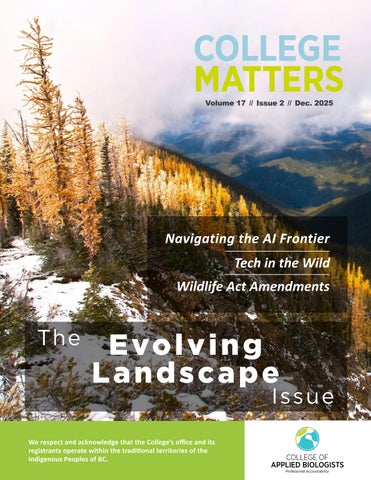
Navigating the AI Frontier Tech in the Wild Wildlife Act Amendments
The Evolving Landscape Issue

We respect and acknowledge that the College’s office and its registrants operate within the traditional territories of the Indigenous Peoples of BC.

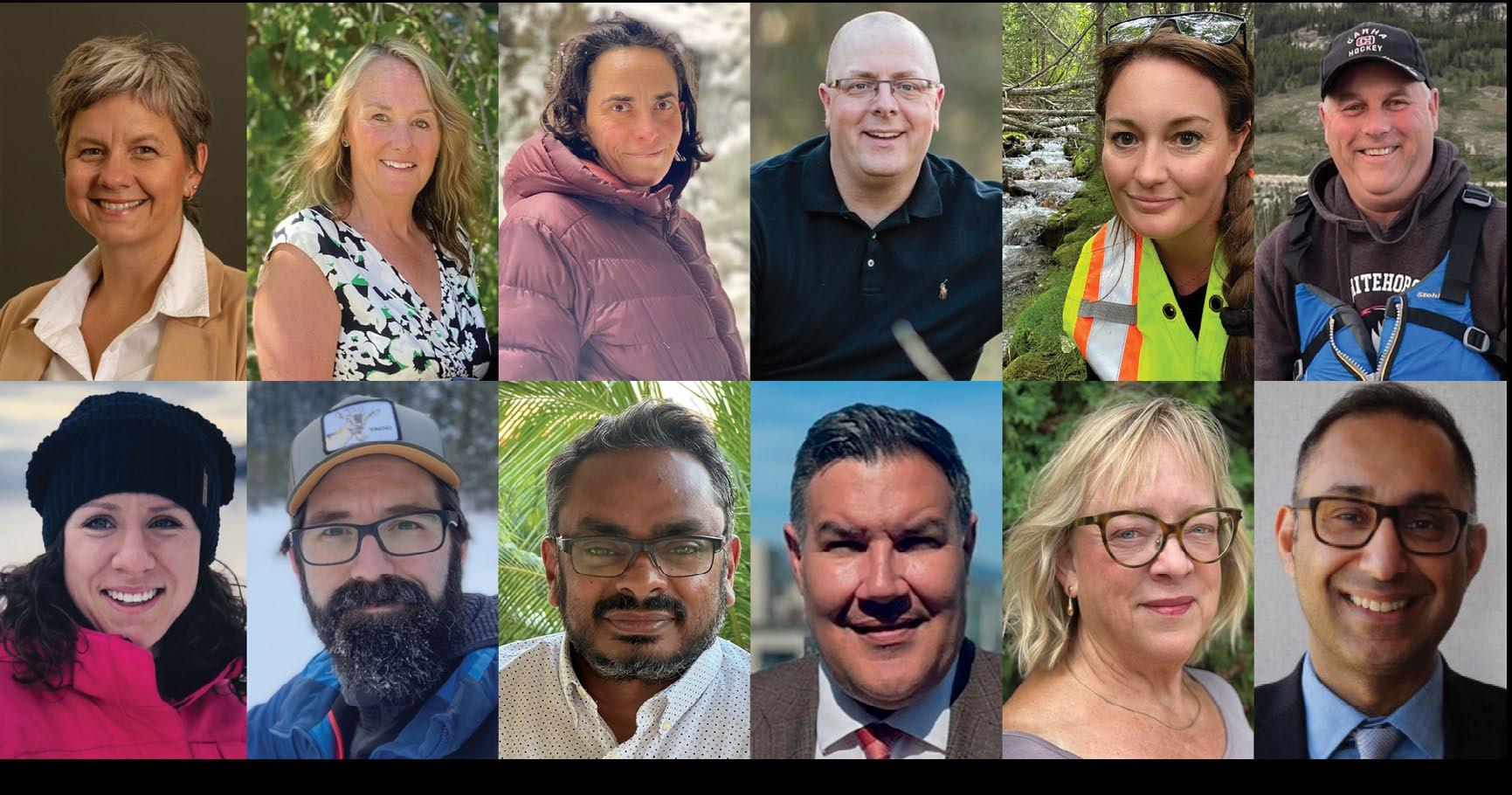
2025-2026 College Board
Top Row (left to right): Corinna Hoodicoff, Deborah Stanyer, Victoria Burdett-Coutts, Denis Dean, Kathryn Graham, Bob Redden.
Bottom Row (left to right): Gabrielle Hindley, Keenan Rudichuk, Mark De Croos, Jason Kuzminski, Alison Dennis, Salman Azam.
COLLEGE BOARD
Corinna Hoodicoff, RPBio Chair
Deborah Stanyer, RPBio Vice Chair
Victoria Burdett-Coutts, RPBio Past Chair
Denis Dean, RPBio
Kathryn Graham, RPBio
Gabrielle Hindley, RPBio
Bob Redden, RPBio
Keenan Rudichuk, RPBio
Salman Azam, Lay Board Member
Mark De Croos, Lay Board Member
Alison Dennis, Lay Board Member
Jason Kuzminski, Lay Board Member
EDITORIAL BOARD
Raychl Lukie, RPBio - Co-chair
Elizabeth Zajc, RPBio - Co-chair
Eva Maria Boehringer, RPBio
Jayme Brooks, RPBio
Cheng Kuang, RPBio
Leilane Ronqui, RPBio
Gaius Wilson, RPBio
PUBLISHED BY
The College of Applied Biologists Suite #310 - 1207 Douglas Street
Victoria, BC V8W 2E7
TEL 250-383-3306
www.cab-bc.org
Past issues are available at www.cab-bc.org/college-matters-digital-edition/
COLLEGE STAFF
Christine Houghton
Chief Executive Officer
Elaine Vale Registrar
Samuel Pittman, RPBio
Director of Practice
Helen Taraskin
Director of Finance & Administration
Cameron Dexter, RPBio
Sr. Manager of Compliance
Isaac Anderton, RPBio
Sr. Manager of Registration
Sue Owen
Sr. Manager of Practice
Boris Chow
Manager of Strategic Initiatives
Tory Davis
Manager Executive Operations-Communications
M. Eugenia Fernandez
Registration Officer
Sharon Stewart
Finance Officer
Farzaneh Mousavi
Sr. Administrative Officer
Betsy Hagerty (on leave)
Administrative Officer
Josie Byington
Administrative Officer
ABOUT US
The College of Applied Biologists is the regulator of applied biology professionals in British Columbia. Established by government legislation in 2003, the College protects the public interest by ensuring that applied biology professionals Registered Professional Biologists (RPBios), Registered Biology Technologists (RBTechs), Applied Biology Technicians (ABTs) and Applied Biology - Limited Licensees (AB-LLs) meet rigorous standards of professional and ethical competency.
COLUMNS
MESSAGE FROM THE CHAIR
3 Technological Innovation, AI and the Practice of Applied Biology
MESSAGE FROM THE CEO
4 Innovation in Motion: How the College is Evolving with Purpose
ANNOUNCEMENTS
5 Introducing New Board Members
6 Introducing New Lay Board Members
7 Ensuring Compliance with Titles Use and Reserved Practice
8 Continuing Professional Development (CPD) Reporting
29 Next Issue: Applied Biology in Changing Times
30 2025-2026 Committee & Working Group Members
FEATURE ARTICLES
10 Navigating the AI Frontier: Professionalism, Accountability and Ethics for Applied Biologists
14 Checklist for Applied Biologists' Ethical, Responsible, and Professional AI Use
16 Tech in the Wild: AI Tools for Applied Biologists
23 Whirling Disease in BC: A Quick Overview
24 Wildlife Act Amendments: Strengthening BC's Legal Tools to Prevent Aquatic Invasive Species
26 Emergency Response to Chronic Wasting Disease in BC
REGISTRANT
CONTRIBUTIONS
29 Photos From The Field, 2025
Cover photo: Golden larches and a valley view, E.C. Manning Provincial Park, BC by Charly Caproff, Unsplash
Back cover photo Hotel Grand Pacific, Victoria www.hotelgrandpacific.com
Christine Houghton’s photo by Naomi Maya Photgraphy
*Disclaimer: the opinions expressed in College Matters do not necessarily represent those of the College, its Board or other registrants.

Technological Innovation, AI and the Practice of Applied Biology
By Corinna Hoodicoff, RPBio, Chair
ICAN’T HELP BUT be inspired by some of the technological innovation that is rapidly transforming the practice of applied biology, enabling more precise, efficient, and scalable approaches to challenges we face as professionals. Specifically, artificial intelligence (AI) is embedded in the tools we use to enhance our ability to make informed decisions that support ecological integrity and sustainable resource management. However, it also challenges us to critically assess data ethics, transparency, and the role of professional judgment in environmental stewardship.
AI is no longer a distant concept, rather a powerful tool with profound implications to reshape our professional landscape. Integration of AI into the practice of applied biology can improve how we collect information, analyze complex datasets, identify patterns, and interpret biological data to make thoughtful recommendations. This technology can transform how we monitor ecosystems and populations, model complex systems using large datasets, and how we prioritize conservation efforts. These innovations are not replacing professionals; they are empowering us to work smarter and more collaboratively across disciplines.
However, the use of AI also challenges us to uphold ethical standards and protect the public interest. As AI tools become more embedded in decision-making, we must ensure that their use is transparent, grounded in sound science, and that we are accountable for results and recommendations we make. Ethical considerations, such as data privacy, algorithmic bias, and the potential for unintended ecological consequences, all must be considered as we learn how to effectively use new technologies in our professional practice.
New technologies are emerging faster than ever, reshaping how we make decisions that influence our environment.
In British Columbia, where environmental stewardship is deeply tied to public trust and ecological integrity, the thoughtful integration of new technologies into applied biology can enhance both scientific rigor and environmental stewardship— if guided by strong ethical frameworks and professional standards.
It can be overwhelming thinking of the speed of change in our industry. New technologies are emerging faster than ever, reshaping how we make decisions that influence our environment. While it can feel like a challenge to keep up, it’s also an exciting time to be part of a field where innovation is driving real-world impact. I have had to challenge myself to embrace these changes, incrementally, to help me be adaptable as the practice of applied biology evolves.

Innovation in Motion: How the College is Evolving with Purpose
By Chistine Houghton, Chief Executive Officer
SINCE THE PROFESSIONAL Reliance Review was launched in 2017, the College of Applied Biologists has undergone a transformation — not just in structure, but in mindset. We've moved from being a regulatory body focused on compliance to a strategic organization that is actively shaping the future of professional applied biology in British Columbia. At the heart of this evolution? Innovation and adaptability.
Reserved Practice: A Defining Shift
Let’s start with the big one. The introduction of Reserved Practice in 2022 was more than a regulatory milestone — it was a declaration. For the first time, applied biology professionals were granted exclusive rights to carry out work that directly impacts ecosystems, species, and environmental decision-making. That’s a huge leap forward in public trust and professional accountability.
But with that authority came responsibility. The College had to pivot — fast. We developed new guidance documents, hosted webinars, and restructured internal processes to support registrants through the transition. It wasn’t just about meeting legal requirements under the Professional Governance Act — it was about raising the bar for what it means to be a professional biologist in this province. While there is (much) more work to do – we are on the right path.
Governance That Builds Confidence
One of the most meaningful shifts in recent years has been the College’s steady refinement of its statutory and governance processes — the nuts and bolts of how we regulate, support, and evolve as a profession. These improvements may not grab headlines, but they’ve quietly strengthened the foundation of public trust and professional accountability. A few examples include:
• Registrations processing times are now clearly communicated, and applicants have access to better guidance and digital tools.
• The complaints process has matured into a more transparent and structured system, with clear expectations and documentation that support both fairness and procedural integrity.
• The audit and practice review program has evolved from a compliance checkpoint into a constructive dialogue.

Registrants are invited to reflect on their practice, identify areas for growth, and engage with standards in a meaningful way. It’s not punitive — it’s professional development with teeth.
• The nominations and volunteer recruitment processes have been improved to encourage broader participation. Whether it’s board service, committee work, or strategic input, registrants now have a clearer path to help shape the College’s direction.
Together, these changes reflect a College that’s not just meeting its obligations — it’s raising the bar. We’re building systems that are fair, transparent, and future-ready.
Communication as a Catalyst
Innovation isn’t always flashy. Sometimes, it’s about showing up consistently and transparently. That’s exactly what the College has done through College Connections and College Notices.
This kind of real-time communication reflects a deeper cultural shift: we’re not just informing registrants — we’re inviting them into the process. Whether it’s shaping policy, serving on committees, or attending AGMs, the message is clear: your contributions to the profession matters.
Our flagship publication has also evolved. Recent issues of College Matters have leaned into themes like collaboration, engagement, and working in partnership with Indigenous knowledge holders — topics that speak to the complexity and interconnectedness of the work applied biology professionals do.
Looking Ahead
Adaptability isn’t just about reacting to change — it’s about anticipating it. The College’s strategic planning, digital transformation, and commitment to continuous improvement show that we’re not content to rest on our laurels. We’re building a professional organization that is resilient, relevant, and ready for what’s next.
As someone who has been privileged to be part of this evolution, I can say with confidence: we’re not just keeping up — we’re leading. And that’s something every applied biology professional should be proud of.
Introducing New Board Members
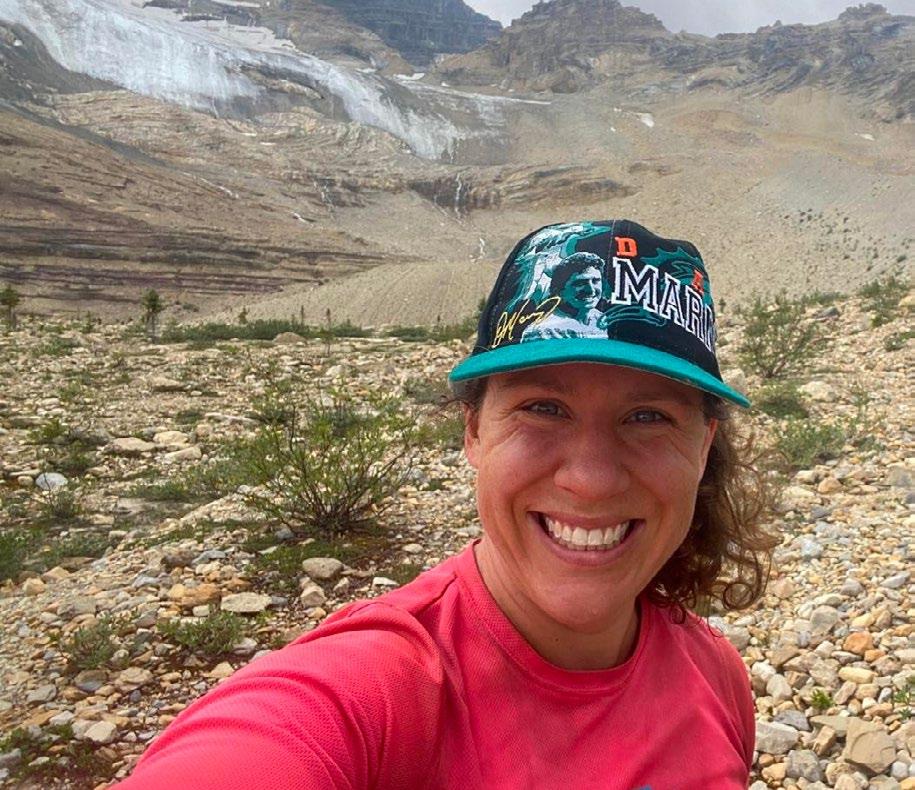
GABRIELLE HINDLEY, RPBIO is an experienced biologist with an MSc in Ecological Restoration from Simon Fraser University and a BSc in Biology from the University of British Columbia. She has been a member of the College of Applied Biologists since 2018, first as a Biologist in Training and currently as a Registered Professional Biologist.
Gabrielle has spent most of her professional life working in environmental consulting, where she leads multidisciplinary teams in ecological assessments, restoration planning, and environmental monitoring. Her expertise spans terrestrial ecosystem mapping, plant species at risk surveys, habitat assessments, and developing mitigation strategies. Gabrielle has played pivotal roles in major projects, including environmental assessments, coordinating and conducting field programs, and preparing regulatory applications. Her work is distinguished by her ability to prioritize tasks, provide clear communication, and thorough data analysis. She has led restoration initiatives targeting invasive species, developed planting and monitoring plans, and contributing to habitat offsetting strategies under federal and provincial regulations.
Beyond her work, Gabrielle is an active rugby player competing at the provincial and national levels in rugby union and rugby league. Her leadership, technical skillset, and passion have led her to opportunities including captaining the Canada Ravens at the Rugby League World Cup in 2022. Gabrielle is excited to bring her experience and skills to her position with the CAB board.
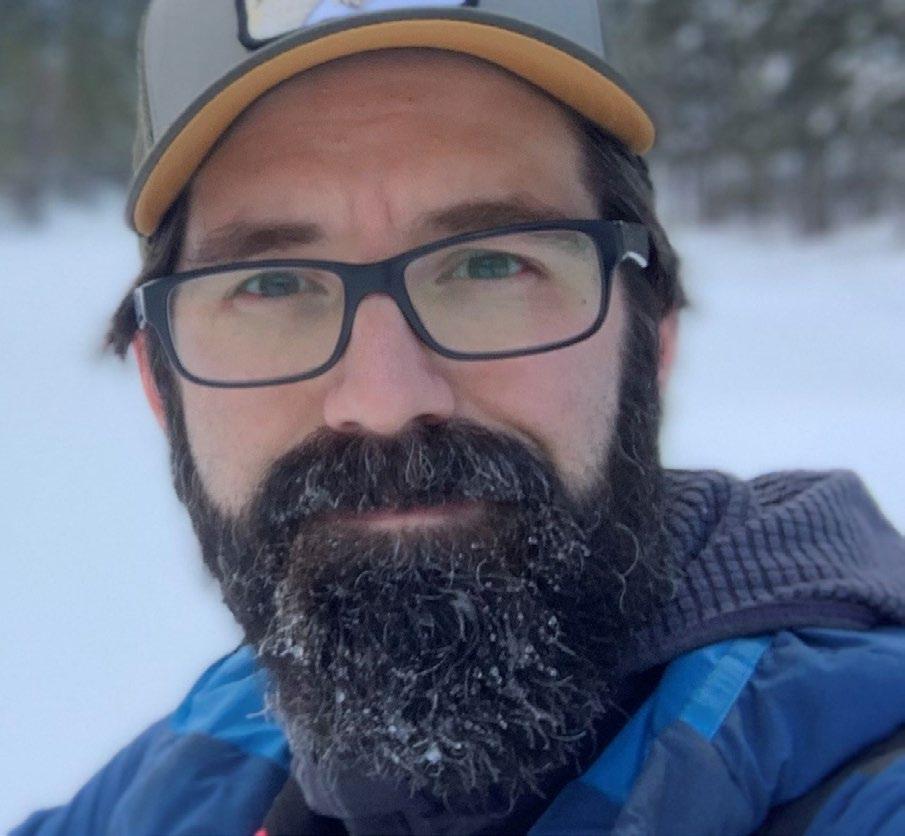
KEENAN RUDICHUK, RPBIO is an environmental consultant with Associated Environmental Consultants Inc., in Vernon, BC. Keenan completed his degree in Natural Resource Sciences at Thompson Rivers University in Kamloops, and has since worked throughout western Canada studying vegetation, ecosystems, and wildlife interactions in response to human use. His career began in the forestry sector and has since transitioned to be primarily focused on wildlife and wildlife habitat, in particular largeranging mammals. Currently, his work focuses on supporting industry, governments, and Indigenous organizations navigate large, greenfield, landscape-level impact assessments.
With over 20 years of experience working in the environmental sector, Keenan can proudly say he has worked in almost every BEC zone in BC (with some of the coastal maritime zones still on the checklist), and his career has taken him to many other jurisdictions, such as: Yukon, Alberta, Saskatchewan, and Northwest Territories.
Keenan joined the College as a Board Member in June 2025 with an interest in learning how the College operates, and how the new Professional Governance Act will affect the way professionals with reserved practice from different sectors work together.
As his career has progressed, Keenan finds himself at the desk all too often, and to counter that, he can often be found either on his mountain bike, hiking in the mountains, or finding fun new lines to lay down with his skis.
Introducing New Lay Board Members

ALISON DENNIS, BGS, MA (Educ), joined the College this summer as a new Lay Member of the Board. She is a retired teacher/counsellor from BC’s Interior (Vernon). Alison holds a Master of Arts in Education, with a focus on At-Risk Children and Youth. She has worked for the federal government, Indigenous Nations, and public schools in BC. She most recently has held committee membership in four BC Regulatory Colleges [BC College of Nurses and Midwives, Engineers and Geoscientists BC, the College of Pharmacists of BC (current Vice-Chair, Discipline), and the College of Complementary Health Practitioners of BC].
Alison has long held interest and advocacy for the environment and is excited to be learning along with the board, staff, and registrants about this College and all that we do.
Alison is a new gardener and is developing her ability to grow clean food and fit her successes into jars! She is a downhill skier, camper, and outdoor enthusiast. She has also been a long-term volunteer, from working with disadvantaged children and teens, multiple health-oriented councils, and is currently part of a national research team addressing the education of internationally trained nurses from a regulatory lens. She hopes her long love for our natural resources will allow her to delve into all that we do here!
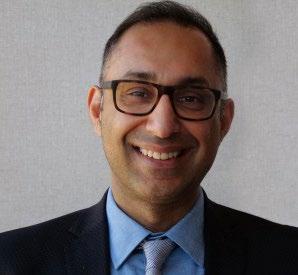
SALMAN AZAM, CERTIFIED Project Director, joined the College in September 2025 as a Lay Board Member He currently serves as the Vice President, Legal Operations and Chief Operating Officer of Legal Aid BC, a role he transitioned into in 2023 after joining the organization in 2021 as VP of Corporate Services and Public Relations. With decades of senior leadership experience, his expertise spans business planning, technology, finance, human resources, and labour relations.
As Chief Operating Officer, Salman is the lead for the Legal Operations Division, responsible for the delivery of critical services, including Intake and Referral Services, Parents Legal Centres, Lawyer Services, and Family Law Advice Services.
Prior to his current role, Salman held several Assistant Deputy Minister positions in the provincial government, where he established a reputation for creative problem solving, sound fiscal management, and strong team building in supporting cross-sector solutions. Additionally, he spent several years as the Chief Operating Officer for the Independent Investigations Office of BC, overseeing finance, human resources, information technology, public engagement, policy, and project management.
Under the Professional Governance Act, regulatory bodies are required to have four lay board members appointed by government serving on their boards. Lay board members bring in an external and independent perspective from registrant board members and represent the public interest in the governance of the profession(s).
Ensuring Compliance with Titles Use and Reserved Practice
By Boris Chow, RPBio, Manager of Strategic Initiatives
THE COLLEGE OF Applied Biologists is responsible for protecting the public interest by regulating the practice of applied biology, as authorized by the Professional Governance Act (PGA). This includes safeguarding reserved titles and reserved practices. To achieve this, the College created a comprehensive Reserved Practice Compliance Plan that outlines how it will monitor and enforce these regulations.
Proactive Compliance Activities
In 2024 and 2025, the College conducted proactive searches to ensure former registrants were no longer using reserved titles on platforms like company websites and LinkedIn. The search found that about 20% of former registrants were still using these titles. However, all infringements stopped after the College sent notifications. This successful effort highlights the College's dedication to protecting reserved titles and educating stakeholders.
In 2025, the College expanded its proactive searches to monitor compliance with reserved practices. The College used public information from government directories, company/public websites, job boards, and social media, and checked more than
1) 100 practitioners’ information,
2) 30 environmental deliverables,
3) 35 job postings related to applied biology, and
4) 10 company websites.
While the results showed that most stakeholders were aware of the regulations, some communication was necessary to improve understanding. The College sent letters to the relevant stakeholders, who responded positively and demonstrated a strong understanding of the compliance requirements. They subsequently submitted applications to the College.
Moving Forward
The College will continue to implement its Compliance Plan and proactively engage with stakeholders. By doing so, the College will ensure that the public interest in applied biology is protected and that British Columbia's valuable natural resources are properly stewarded.
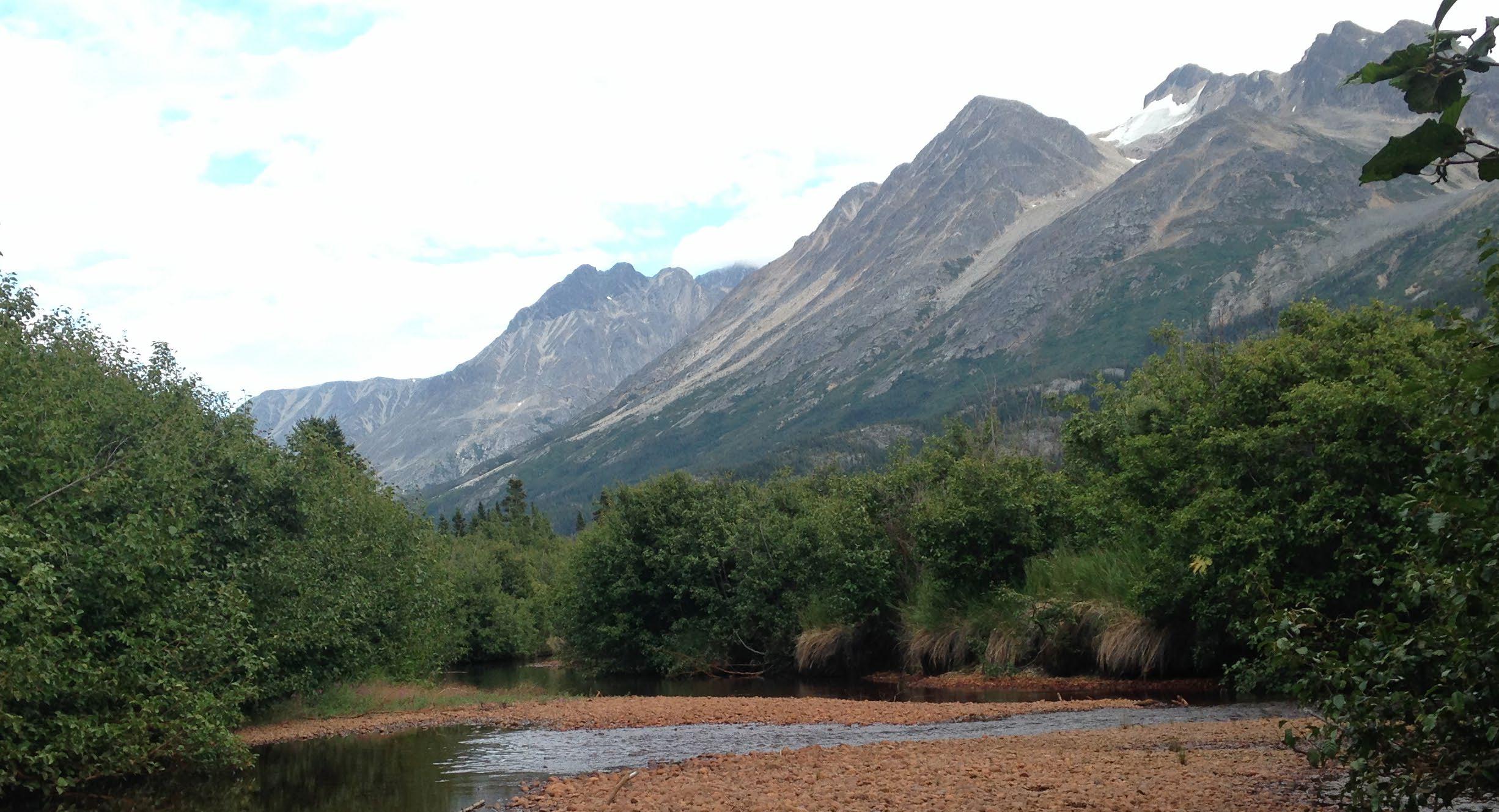
Photo by Alexandra de Jong-Westman, RPBio.
Continuing Professional Development (CPD) Reporting
By College Staff
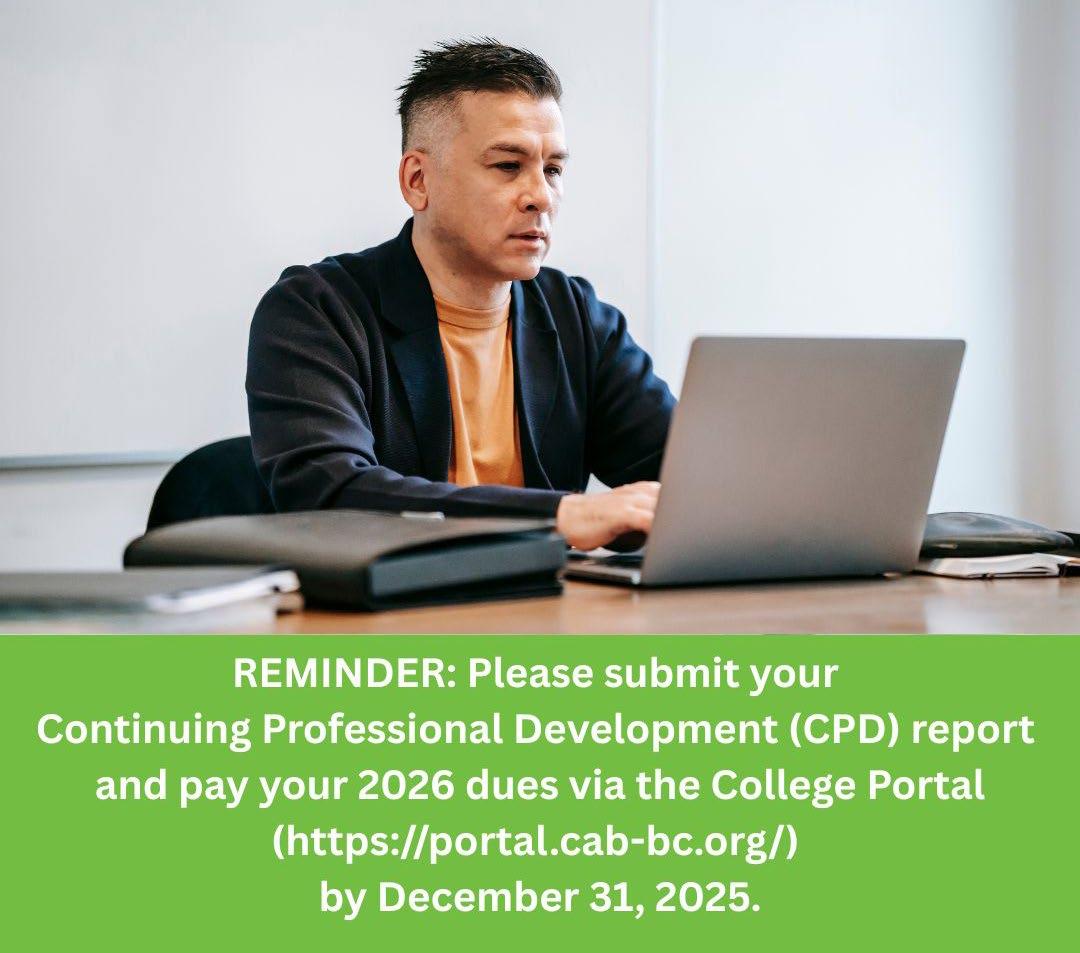
REMEMBER TO SUBMIT your Continuing Professional Development (CPD) report via the College Portal before the December 31, 2025 deadline. You'll need to complete it to pay your 2026 registration dues.
The Continuing Professional Development (CPD) Program requires registered applied biology professionals to maintain and improve their professional competencies by completing continuing professional development activities. The CPD Program aids the College of Applied
Biologists in protecting the public interest by ensuring registrants continue to remain up to date as applied biology professionals. A practicing or in-training registrant is required to earn 100 qualifying CPD points over three consecutive CPD years since the date of registration. A CPD year runs from January 1st to December 31st of the same year.
If you have any questions about CPD, please refer to the CPD Standard or contact Sue Owen, Sr. Manager of Practice, at sue.owen@cab-bc.org

Evolving Landscape
Image by rawpixel.com on Freepik
Navigating the Al Frontier: Professionalism, Ethics, and Accountability for Applied Biologists
By Julia Hengstler, MA, Professor, Educational Technologist & Instructor Faculty of Education, Vancouver Island University
THE ARRIVAL OF sophisticated Artificial Intelligence (Al) tools marks a "technological spring," with potential comparable to that of the Industrial Revolution in reshaping work and life (Ellis, 2023). For Applied Biologists, this signifies a "cognitive revolution," augmenting capacities but demanding new "cognitive adaptability" (Ellis, 2023). As stewards of ecosystems and biological resources, College of Applied Biologists (CAB) members hold public trust and must uphold integrity, competence, and accountability. This article offers insights for CAB members on navigating Al and maintaining professionalism and ethics in this new era.
Understanding
Al:
A Brief Overview for Professionals
While conceptualized in the mid-1950s, Al's public engagement ignited in late 2022 with generative Al tools like DALL-E 2 (images) and ChatGPT (text). These are often accessible and initially free, with costs for higher quality. Al enables computer systems to "mimic human cognitive functions such as learning and problem solving" (Microsoft, 2025). Generative Al specifically produces unique content— text, imagery, audio, and synthetic data (Lawton, 2023). This isn't mere automation but an augmentation of human capacity (Ellis, 2023). Al's potential to enhance professional analytical capabilities is immense, fueled by growing data, computational power, and algorithmic sophistication.
A Double-Edged Sword: Key Issues and Concerns with Al in Applied Biology
Al's power brings critical considerations for Applied Biologists, impacting professional responsibilities:
• Intellectual Property (IP): Questions surround IP of Al training data and Al-generated content, pertinent when using Al for proprietary data analysis or reports, as the legal status of Al-created derivative works can be ambiguous. Fee-based or enterprise Al tools may offer clearer IP terms than many "free" versions.
• Bias: Al, trained on vast datasets, can reflect and amplify existing societal or historical biases, leading to skewed analyses if not critically evaluated. For instance, if historical ecological data underrepresents certain regions, an Al model might perpetuate these biases. UNESCO (2023) notes Al may operate as a "black box," obscuring its reasoning and potentially embedding specific cultural or commercial values, with minority voices often underrepresented.
AI presents not just automation, but an augmentation of human professional capacity.
• Information Provenance, Accuracy, and "Hallucinations": Reliability is a major concern. Al models can "hallucinate," producing plausible-sounding but incorrect or fabricated outputs (sometimes called “confabulations”). As Benjamin Mittelstadt warns, the risk isn't always obvious errors, but outputs that are "slightly wrong or slightly biased or where you need some specific expertise to tell that it's wrong" (Duboust, 2023). Meticulously verify all Al-cited sources for existence, relevance, and accurate representation.
• Misinformation and Manipulation: The ease with which Al can generate realistic but false content poses a substantial risk for the spread of misinformation, which professionals must guard against.
• Privacy of Data: Inputting sensitive data into Al tools (e.g., client information, unpublished research, locations of endangered species) raises significant privacy concerns. Users must understand the terms of service of any Al tool regarding data handling. Fee-based or enterprise Al solutions may offer more robust data privacy controls.
• Cybersecurity of Tools: Al platforms can be targets for cyberattacks, potentially exposing sensitive information. Choosing reputable vendors with strong security practices is important.
• Environmental Impact: Large Al models have a notable environmental footprint from energy consumption (a single ChatGPT query can use 10 times the energy of a Google search, UN Environment Programme, 2025 estimate), water for cooling, raw materials, and e-waste— factors for environmentally-conscious biologists to consider.
• Mitigating Risks: Approaches like Retrieval-Augmented Generation (RAG) can help by allowing users to define vetted knowledgebases or specify external knowledge sources, instructing the Al to draw information from these predefined materials. This can reduce concerns about bias and confabulation, and RAG models often provide source attribution. However, human bias can still influence the selection of content and knowledgebases. Careful tool selection, including scrutinizing terms of service for all tools (free or paid), remains crucial.
Existing ethical principles for Applied Biologists provide a strong compass for navigating the complexities of AI.
Upholding CAB Standards: Al Through the Lens of Professional Ethics
The College of Applied Biologists' principles of professionalism and public trust offer a strong compass for navigating Al use. Key CAB Code of Ethics principles include:
• Principle 1: Members must be "objective, science-based, intellectually honest, practicing with attention, caution, prudence and due diligence." This demands rigorous verification by the professional of any Al-generated information and a critical assessment of tool suitability.
• Principle 3: Advice must be developed "carefully and conscientiously." "New/unusual methods" like Al must be "justified, referenced, & explained" (3.v), detailing rationale and validation. Work should align with documentation standards (3.ix), potentially including Al use disclosures.
• Principle 4: Respecting client/employer confidentiality is paramount when using Al tools with sensitive information requiring understanding of Al data handling.
• Principle 8: Professionals must avoid injuring reputations through malice or negligence, including disseminating Algenerated misinformation or flawed analysis.
CAB has recognized space for innovation, noting that in a past disciplinary case that biologists should be encouraged to innovate and "application of a novel technique does not in and of itself constitute a lack of 'an appropriate standard of care'" (CAB Discipline Case 017-11). However, this innovation must satisfy the professional duty to document and justify non-standard methods in reports and likely extends to Al tools used and their validation. "Appropriate acknowledgement must always be included when using the work of another" (CAB Discipline Case 011-01)—again, likely extendable to Al contributions. Regardless of Al assistance, professionals affix their seal to work, signifying their accountability for its entire content (CAB Discipline Case 007-02).
Practicing
Digital professionalism—being deliberate, ethical, and accountable in technology-mediated interactions (Ellaway et al., 2015)—directly applies to Al use. My “Calculus of Al Professionalism" (Hengstler, CAB Panel, 2024) posits that true professionalism in the Al age combines embracing technological innovation with cultivating technological proficiency. Professionals must understand Al's capabilities, limitations, and ethical implications to use it proficiently and responsibly, ensuring Al aids, not replaces, professional judgment.
1. Adhere to Ethics/Guidelines: Follow professional codes and organizational Al policies.
2. Vet Services and Terms: Choose ethical Al providers. Critically read Terms of Service for data privacy, IP, and sharing agreements before use. Fee-based services may offer better protections than "free" options.
3. Vet Content Rigorously: Scrutinize all Al-generated content for reliability, biases, and reputational impact. Verify every cited source for existence and actual support of the claim.
Harnessing Al Responsibly: Practical Applications and Strategies for Applied Biologists
Applied Biologists can use Al effectively by employing it as a "Zero-shot Translator" (users provide reliable data; Al outputs are based only on that data; Duboust, 2023) or via RAG (using predefined, vetted knowledge sources), not as an infallible oracle. All Al-provided citations must be meticulously verified. Al can also be responsibly used to rewrite text, curate data, or translate formats under supervision. The Government of Canada (2024) identified responsible generative Al uses like document editing, coding, and research. For biologists, this extends to:
• Literature Reviews and Research: Tools (e.g., Research Rabbit, SciSpace) assist in sourcing articles and brainstorming as aids, not replacements for critical synthesis.
• Data Analysis and Visualization: Al can help detect anomalies or create initial visualizations under biologist guidance where professionals validate methods and outputs.
• Predictive Modeling: Al models can analyze historical data for future trends where biologists critically assess the assumptions, data, biases, and outputs, ensuring validation.
Tips for Professional Al Use (Hengstler, 2024):
4. Be Transparent: Clearly disclose Al use. For significant Al contributions, describe its use (including prompts) in an introduction or methods (e.g., "OpenAl's ChatGPT-4 generated an initial outline based on the prompt: [Insert Prompt]. All claims were independently verified."). Appending chat logs enhances transparency.
5. Accountability Remains with the Professional: The individual professional is responsible for the quality, accuracy, and professionalism of all content provided, even if Al assisted. Your seal signifies endorsement of all content you provide. The Path
The individual professional remains responsible for the quality, accuracy, and professionalism of all content, even if parts were completed with or by AI.
Forward: Cognitive Adaptability and Lifelong Learning for Applied Biologists
Al integration is a fundamental shift requiring ongoing "cognitive adaptability." Applied Biologists' lifelong learning must now explicitly include developing Al literacy— understanding not just tool operation, but how they work (e.g., large language models), their inherent limitations (lack of true understanding), data dependencies, and societal implications. Professionals must critically evaluate Al outputs, challenge assumptions, and engage in thoughtful discourse. As Sandra Wachter states, "In the scientific community, it is vital that we have confidence in factual information, so it is important to use LLMs [& Al] responsibly" (Duboust, 2023).
The UNESCO (2023) Guidance for generative Al in education and research also offers valuable insights. It emphasizes developing Al competencies, maintaining a critical eye on data reliability (Al can "confabulate"; future Al models trained on Al-generated text risk error loops), awareness of bias (Al may reflect dominant views), respect for intellectual property, and responsible use of services per their terms.
• Fostering Responsible AI in Ecological Data Management and Indigenous Data Sovereignty: Champion best practices for AI in ecological data management, crucially upholding Indigenous data sovereignty. Future guidance, developed collaboratively with Indigenous Nations, communities, and experts, should ensure respectful, ethical AI use with Traditional Ecological Knowledge, aligning with OCAP® (ownership, control, access, and possession) principles and supporting Indigenous-led data governance.
• Facilitating Dialogue on AI's Role in Regulatory Submissions: Proactively foster dialogue on AI-generated content in regulatory submissions/reporting. This might explore standards for disclosure, validation, and accountability for AI use by Applied Biologists, supporting transparency and professional integrity before regulatory bodies and clients.
Conclusion:
Leading with Professionalism in the Age of Al
Suggestions for Future Consideration by the College of Applied Biologists
As AI evolves, profoundly impacting professional practice, CAB might explore avenues to further support its members and applied biology in Canada:
• Developing Tailored Guidance: Explore creating practicearea-specific AI guidelines and ethical frameworks, complementing the Code of Ethics. These could cover AI in environmental impact assessments, sensitive ecological data stewardship (including spatial information and Indigenous Knowledge), wildlife monitoring, habitat modeling, and AI's environmental footprint.
• Enhancing AI-Focused CPD: Offer/expand targeted CPD on AI fundamentals, ethics (including bias detection), practical biological applications, hands-on tool training, and strategies for critically evaluating AI outputs to boost member AI literacy.
Artificial Intelligence holds transformative potential for Applied Biology, offering powerful tools for research, analysis, and communication. However, this potential is linked with risks: accuracy, bias, privacy, IP, and socio-environmental impacts. For CAB members, navigating this frontier requires steadfast commitment to objectivity, integrity, and accountability. By encouraging thoughtful technological innovation, robust proficiency, and deliberate, ethical, and accountable digital professionalism, the College can support Applied Biologists in harnessing Al to advance their field while upholding public trust and ensuring responsible stewardship of biological resources.
Checklist for Applied Biologists’ Ethical, Responsible, and Professional AI Use
By Julia Hengstler, MA, Professor, Educational Technologist & Instructor Faculty of Education, Vancouver Island University
THIS CHECKLIST OFFERS initial points for consideration to assist Applied Biologists as they explore the integration of AI tools into their professional work. It is designed to encourage critical reflection and support due diligence, functioning as a complementary resource to the valuable guidance and official standards established by professional organizations, which it does not intend to replace.
NOTE: This checklist provides general orientation and may not encompass every specific scenario. Applied Biologists are encouraged to exercise their sound professional judgment and, where appropriate, seek further expert advice or consult directly with their professional organization.
I. FOUNDATIONAL UNDERSTANDING & ETHICAL ALIGNMENT:
F Understand AI Capabilities and Limitations:
o Do you have a basic understanding of how the specific AI tool works, what it can realistically achieve, and its known limitations (e.g., potential for bias, "hallucinations")?
F Alignment with CAB Code of Ethics:
o Have you considered how your intended use of AI aligns with the CAB Code of Ethics, particularly principles of objectivity, honesty, diligence, confidentiality, and accountability?
F Identify Organizational/Client Policies:
o Are there any existing AI usage policies from your employer or client that you must adhere to?
II. TOOL & DATA CONSIDERATIONS:
F Vet the AI Service/Tool:
o Is the provider reputable?
o What are their data privacy and security policies?
o Have you read the Terms of Service?
o Where is data stored and processed? Does this comply with Canadian privacy laws (e.g., Personal information Protection and Electronic Documents Act, PIPEDA) or specific provincial laws and requirements, especially if handling personal or sensitive information (e.g. BC’s Freedom of Information and Protection of Privacy Act, FIPPA or PIPA)?
• What are the provider's policies on intellectual property for both input data and AI-generated output?
F Assess Data Sensitivity (Input):
o Are you inputting confidential client data, unpublished research, sensitive ecological information, or personal information into the AI tool?
o If so, does the tool's security and privacy policy provide adequate protection? Do you have consent if required?
F Consider Indigenous Data Sovereignty:
o If the data involves Indigenous communities or Traditional Ecological Knowledge, have OCAP® principles (or other relevant Indigenous data governance protocols) been addressed and respected before using AI tools?
F Environmental Considerations: (“Making Greener Choices”)
o Model Efficiency:
> Have you considered if a smaller, more taskspecific, or more energy-efficient AI model could achieve your purpose, rather than defaulting to the largest available model? (Larger models generally have a higher energy footprint.)
o Usage Optimization:
> Can you optimize your use of the AI to reduce energy consumption (e.g., simplify complex queries if possible, use batch processing where appropriate, avoid unnecessary or overly frequent queries)?
o Local/Edge Solutions:
> For your specific need, could a locally run AI model or an edge computing solution be viable and more energy-efficient by reducing data transfer to large data centers?
o Provider's Sustainability Practices:
> Does the AI tool provider or their cloud hosting service share information about their commitment to renewable energy sources or energy-efficient data centers?
(The Government of Canada encourages asking suppliers about GHG reduction targets.)
o Transparency in Energy Use:
> Are there any available metrics or tools (e.g., "AI Energy Score") that provide insight into the energy consumption or cabon footprint of the AI models you are considering?
o Necessity vs. Impact:
> Have you balanced the potential benefits of using the AI tool against its environmental cost, especially for energy-intensive tasks?
> Is the level of performance/complexity necessary, or would a "good enough," less energy-intensive option suffice?
III. CONTENT GENERATION and USAGE:
F Critically Evaluate AI Output:
o Accuracy:
> Have you independently verified all factual claims, data points, and analyses generated by the AI?
o Sources:
> If the AI provides sources, have you checked every single one to ensure they are real, relevant, and accurately support the AI's claims? Be aware AI can invent sources.
o Bias:
> Have you considered potential biases in the output (e.g., skewed representation, omission of minority perspectives, reinforcement of stereotypes)? Does the output reflect a balanced, objective view where required?
o Completeness:
> Is the information complete, or are there critical gaps?
F Maintain Professional Accountability:
¶ Did you critically evaluate all AI output with the same rigour you would apply to content you directly crafted?
F Ensure Transparency and Disclosure:
o How will you clearly disclose the use of AI in your work product (e.g., reports, presentations, publications)?
o How will you describe which AI tools were used, for what purpose, and (if appropriate) include prompts or methodologies? (e.g., "Figure 3 was generated using [AI Tool Name] to visualize species distribution data based on parameters X, Y, Z.")
F Respect Intellectual Property (IP):
o Are you using AI-generated content (text, images, code) in a way that respects copyright and IP rights?
o Does your use of the AI tool to process existing data infringe on any IP rights associated with that data?
IV. PROFESSIONAL JUDGMENT and RESPONSIBILITY:
F Apply Professional Judgment:
o Does the AI output make sense in the context of your biological expertise and the specific project?
o Does it pass a "common sense" test from a professional biologist's perspective?
o Do you accept responsibility for all AI content you include in your work before affixing your seal and/or signature?
F Avoid Over-Reliance:
o Are you using AI as a tool to augment your skills?
o Are you becoming overly reliant on it to the detriment of critical thinking and professional skill development?
F Stay Informed:
o Are you making efforts to stay updated on AI developments, emerging ethical considerations, and best practices relevant to applied biology?

Photo by Glenn Carstens Peters, Unsplash.
Tech in the Wild: AI Tools for Applied Biologists
By Tyne Baker, MSc, RPBio - A/Vian Eco
*Generative AI models supported the research and review of this article.
READER, I HOPE to convince you of the potential for machine learning to increasing the scale and complexity of data supporting conservation decisions. “Artificial Intelligence” or “AI” is a hot buzzword making catchy headlines (see above) or standing in for technical language. As the goal of this article is to provide biologists usable software advice, I promise little jargon or media buzzwords from here onward. I’ll use language in alignment with relevant literature: “machinelearned model” or “ML” for those in a hurry. Maybe we’ll even talk about Plinko.
This article provides general information on current ecology ML tools: pitfalls, and successes. I start broad by explaining what a ML model is and provide general cautionary notes. Then, we dive into specific examples. To provide strong suggestions, I relied on examples from my expertise in wildlife audio-visual data.
What’s a Machine-learning Model?
Applied biology professionals aren’t new to clever statistics for analyzing large-scale data (e.g., GIS tools, cumulative effects, principal components analysis, etc.). ML models are an emerging method to probabilistically apply labels or provide outputs extrapolated from existing labelled data.
Picture a Plinko board, at the top you input a puck (“data”). It falls through multiple layers of pegs (“calculations”), then lands in a labelled bin. The probability of landing in any label is initially random. After each drop (“training run”) the results are graded and the board’s pins adjusted, so the correct label is more likely. Repeat many times for many datapoints until the new unseen test data fall in the right bins. Users are delivered the adjusted (“trained”) Plinko board, ideally wrapped in a friendly user interface [UI]. The user can use this trained model to apply probable species or feature labels to large quantities of data, provide long-form written answers, or draw polygons on maps.
Cautionary Notes for ML Users
Great, I'd like to use a model to label my field data. How do I choose? Here's some cuationary guidance:
• Choose products not projects. Small ML models are accessible to build with open-source labelled datasets and simple code. Many models are made for specific journal articles or as side-projects and may not be broadly applicable, nor updated and maintained. Reliable products offer new versions with expanded training data to improve accuracy over time, transparency on strengths and weaknesses, and accessibility (i.e., UI, instructions). Check for software “version history” or “release notes” to see ongoing development and improvements over time. Use a recent version of the model.
• You’re responsible for data security and privacy. Many contracts provide data sharing and intellectual property stipulations. Beware of these and review the software’s terms of service to ensure compliance. Not a consultant? All biologists and land stewards are subject to privacy laws. Data collection (e.g., cameras, audio recorders) might capture personally-identifiable information (e.g., faces, verbally-spoken names or addresses). If this information is open-sourced without scrubbing or permission to share, you could be liable. See privacy tools and warnings in the example tables below.
• Garbage In = Garbage Out. Was the model trained with high-quality, large-quantity, diverse, and geographically appropriate data? Are some labels you’re interested in (e.g. specific species, or features) underrepresented in the training data? Is it robust for varied equipment or noise? Inadequate training data results in more labelling errors. Use models that provide transparency training and testing processes. Conversely, how’s the quality of your data input? Is it extremely noisy, or blurry? Did you consider both ecology and optimal sensor placement? Inputting low quality data for analysis, even when the model is strong, also results in poor labelling.
• Useful doesn’t mean perfect. No statistical tools, ML models, or human work are devoid of errors. If a tool improves the speed and accuracy of work, it is useful. I remember paging through hours of acoustic recordings 15s at a time. With simple statistical clustering (i.e., no labels, only sorts like with like), analysis sped up 4-fold. With ML tools some tasks are another 11-fold faster than clustering. Yes, there are errors, however the time improvements listed include time for a human verification of results. All work needs quality review, but don’t ignore useful tools waiting for “perfection."
• It should deserve your professional seal. A bad tool is easy to dismiss. A “magical” tool that’s often right can foster complacency. Design a workflow that includes examining a tool’s appropriateness before use (e.g., data security, geographically appropriate training data, strong accuracy on species or features of interest). Also, have
a vetting process for model outputs to reduce false positives (i.e., mislabelling) and false negatives (i.e., missing something entirely). Treat exceptional ML models like a junior employee: set it up to succeed and check its work thoroughly.
Examples of Available Tools
Examples included are free-to-use models with user-interfaces (no code) for accessibility. Each section provides a type of tool and a general description followed by a table of examples. In the table are three columns: Description provides the name, developer, and summary of the tool; Use Cases describes the type of data and uses for the tool; and Vetting flags some cautions and suggestions for reviewing outputs.
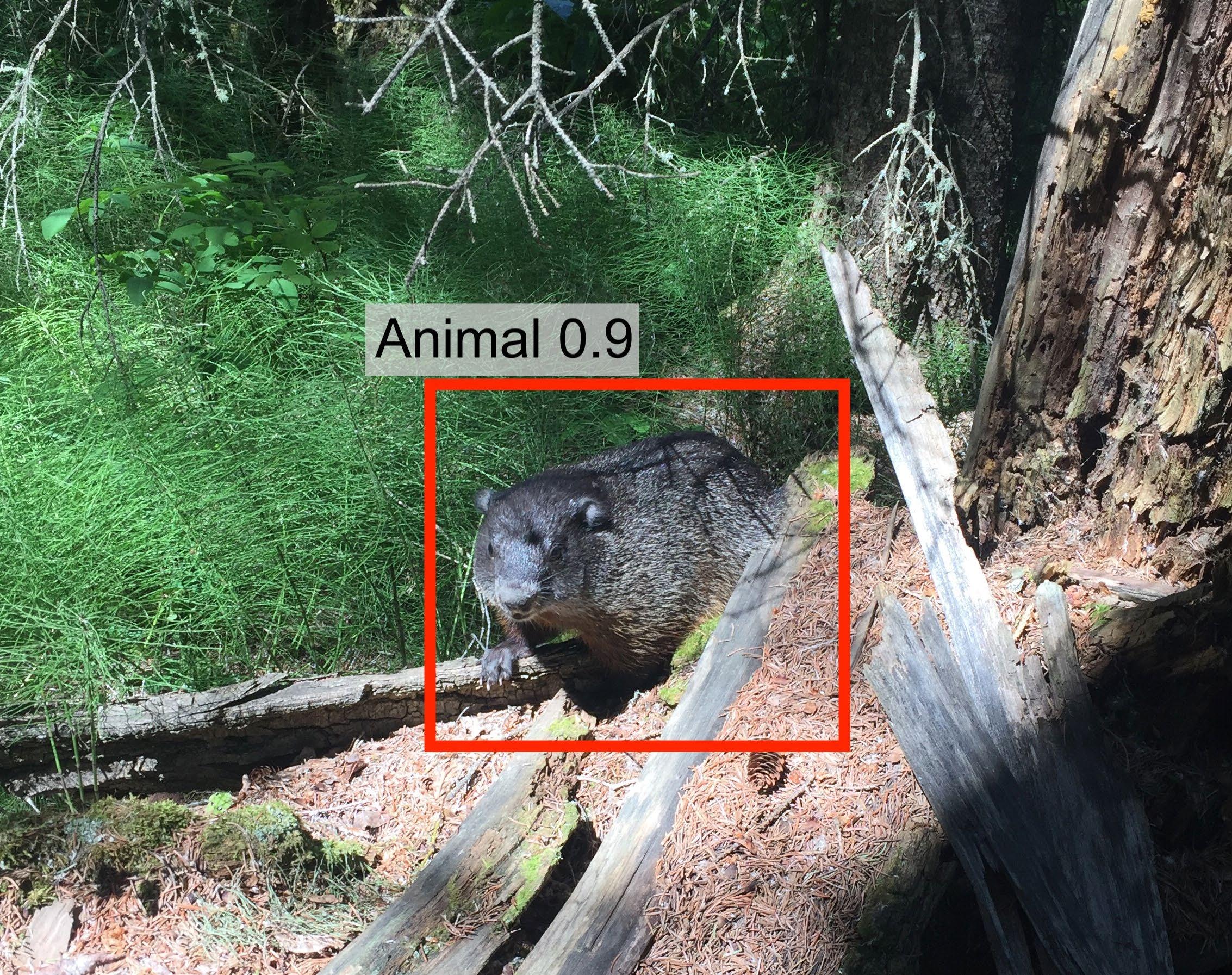
Image of a groundhog (Marmota monax) with a pseudo ML model tag. Photo by Tyne Baker, RPBio.
Web-based Analysis and Sharing
This section describes some websites where ML models can be applied to uploaded user data. Data sharing is a strength and weakness for these platforms. They are ideal for open-sourcing data, and collaborative analysis which is key for long-term and large-geography ecological insights. Review the service’s data policies to ensure compliance with your internal guidelines, client agreements, and privacy laws. See "SoftSpoken" and “FaceBlur” privacy tools below for additional assistance.
Users may benefit from a host’s expensive hardware, only limited by their own internet connection speed. I recommend time to upload data to the service and lay-out your project online be factored into the total time to complete the work.
Description
Arbimon Random Forest Models, Rainforest Connection
Online platform to share and analyze acoustic data. Offers statistical sorting (e.g., pattern matching, cluster analysis), and user-trainable ML models.
Use Cases Vetting
Open-source acoustic data.
Share analysis effort between users.
Pattern Matching - Provide a single call example to search for similar examples throughout your recordings.
User-labelled datasets can hone existing random forest models for unique or local species.
Uploaded data is irrevocably licensed to Arbimon and third parties. They discourage uploading identifiable human voices.
Assess a portion of each label to confirm true positives for simple species list.
For analysis of behaviour or activity, more vetting may be required.
If other strong models with appropriate coverage of geography and species of interest are available, training your own model is not advised.
Wildlife Insights, WI Core Members
A web platform for sharing and processing camera trap data. Labels for 1,295 species. Model groups lower confidence detections to higher orders like “deer sp.” Website explains basics of model testing and includes links to general ML resources.
WildTrax Image Models, Alberta
Biodiversity Monitoring Institute
Web platform for analyzing multiple data types (photo, point count, and audio). Incorporates ML and software tools from in-house and other providers (e.g., Mega-Classifier, face blur, MegaDetector, BirdNet, Timelapse-like camera workflow).
Remove blank images to reduce the time to review data.
Initial species labels for sorting and human verification.
Share or review other users' creative commons images, sorted geographically.
Sharing analysis tasks, while maintaining data controls and privacy. Data can be public or private on upload or shared later.
Upload detections from any species ID model for vetting.
Photos sorted with MegaDetector and species labelled with ABMI’s new MegaClassifier.
BirdNet help in vetting step to assist review of human analysts’ work.
Can view data and insights other users made public in "discover data."
Uploads must be licensed with creative commons licenses. Allows use by Wildlife Insights and other users.
Assess results as described for Arbimon regarding diversity and behavioural measures.
Ensure that data sharing settings are appropriate for your project.
Use the vetting platform to review ML or human detections to ensure true positives.
Desktop Applications
Desktop applications are those that run directly on your computer, no uploads or internet connection required. For strict data confidentiality, this may be best. Speed of processing data will depend on your computer hardware, though most ecological models are developed for typical office computers. Test time to process data on your computer using the program of interest. Factor in processing time and manual vetting steps to any deadlines for report delivery.
For efficient processing and review work, store data physically close to your computer’s processor. The hard drive inside your computer is faster than an external hard drive, which is faster than your server, cloud, or SharePoint. You’ll need several storage places though, to back up your data.
Description
BirdNet, Cornell University
Detects and labels over 6000 global bird species within audio recordings. Use in RavenPro’s Learning Detector (paid). Alternately, label with BirdNet Analyzer and review in preferred analysis platform: Raven (Pro - paid, Lite - free), Kaleidoscope (Pro - paid or Lite - free), Audacity (free), or as CSV (free).
Use Cases
Label and sort for vocalizations from local bird species.
Create a preliminary species list for manual vetting.
Incoroprated into citizen science and learn tools (e.g., BirdNet App, BirdWeather).
Vetting
Before analysis, narrow species list to species local to project site.
Don’t confuse “confidence” as real-world values. It’s estimated based on fit to training data. Note that 90% confidence on average may be more accurate, but some 90% labels will be incorrect.
For simple species lists, sort detections by confidence (high to low) then by species. Assess results as described for Arbimon, regarding diversity and behavioural measures.
Additional, manual review of a subset of full recordings can reduce false negatives.
MegaDetector, Dan Morris - Google
Pre-sorts remote camera Images into broad tags: Empty, Human, Vehicle, Animal. Use Addax AI interface for ML labelling then Timelapse Analysis Platform to review detections offline. Also integrated in WildTrax online.
Sort and review detections to eliminate photos without animals (e.g., human-only, vehicle-only, empty) then analyze animal photos.
Use in conjunction with WildCo Face Blur R-script to blur human detections. This process protects privacy in open-sourced datasets, while retaining human activity information
Vetting process is well-described in Timelapse Image Recognition Guide
SoftSpoken, Jarrett Lubky and A/Vian Eco
Finds human voices in ecological recordings. Review screen and batch silencing allows users to keep animal sounds and remove voices.
Find instances of identifiable human voices and silence for privacy in open-source acoustic datasets.
Find human activity presence to examine effect on species behaviour.
Vet detections in review screen to ensure few false positives before batch silencing sounds.
Test tool on a small subset of known data for false negatives to ensure it works for project data and locale.
Mobile or Tablet Applications
There are many new mobile apps to assist with species identification and gamify learning about nature. Many contain learning resources and citizen science components, building open datasets and engaging the public in ecology. Beware these are “suggestion engines” not “answers machines." Use in conjunction with other references and never substitute for professional determination. Also be aware of data sharing practices; all smartphone photos have location embedded.
Description
BirdNet & Merlin Bird ID, Cornell Lab of Ornithology
BirdNet model suggests probable species with a real-time scrolling sound graph. Merlin reviews photos or audio recordings and provides species suggestions or provides identification-keys in their “step-by-step” tool.
Use Cases Vetting
Bird species suggestions for learners and forgetters alike.
Citizen science data sharing. Merlin connects to eBird and BirdNet saves detections for training.
Don’t submit private or sensitive data, e.g., data restricted under client agreement, recognizable human personal information, or submissions without land owner or land steward consent.
Cornell blurs location and timing data for sensitive species under their ebird protocol. If using a similar app check how sensitive species data is handled before uploading.
In Merlin ID use multiple features (step-bystep, auto-ID) to expand suggestions.
Does not replace expert point-counting; however, can provide reference material.
Some audio may be difficult to identify due to background noise.
Cross-compare to other sound libraries (e.g., Xeno-canto).
Models review only short audio snippets (3s) at a time for ID, they may miss some information, e.g., American Goldfinch switch between song types regularly, and when individual songs are like other warblers this trait is diagnostic and not assessed by these apps.
SEEK & iNaturalist Apps, iNaturalist
Reviews photos and provides species suggestions for many taxa.
Suggestion engine for species easily photographed (e.g., insects, fungi, plants). Will also provide genus-level suggestions.
A citizen science data sharing platform, with community vetting. Webpage has batch downloads for researchers.
Don’t submit private or sensitive data. Sensitive species data also blurred under taxon geoprivacy policy
Compare to other resources to confirm.
Photos of distant individuals, with low light, poor quality, or rare species may be misidentified.
Not a replacement for botanical or entomological expertise but a learning tool for narrowing ID options.
Large Language Models
You might be familiar with “chat” type experiences (e.g., ChatGPT, Gemini). The model is incorporated into a mobile app or website where you can ask a plain language question via a text box or spoken aloud, then get a written response. Below are some suggestions for using them in your own work.
Description
ChatGPT, Open AI Gemini, Google
Well known chat interfaces used for broad writing and research tasks.
Use Cases Vetting
Deep research – gather many resources on topics or get personalized “Wikipedia” articles on any question.
Document search – Connected to personal databases to answers about your own documents (e.g., Gmail, SharePoint, cloud drives).
Breakdown and Summary – Upload papers or long documents to summarize or explain. For example: five-levels of abstraction, summarize, define key terms and acronyms, language translation, explain technical concepts across fields.
Step-by-step – Especially when web-search enabled, models provide up-to-date, step-by-step instructions (try: “How to insert a landscape page into portrait Word document?”). With broader asks, they can also suggest multiple tools (try: “How do I translate SHP files to a GPX for free?”).
Code generation and review for R or Python scripts – Excellent coding partners, particularly when broken into chunks. Can review scripts and suggest efficiencies. Rapidly improves skill and accomplishments for new coders. Super charges the speed of more experienced coders as they can more accurately explain more complex code and rapidly vet outputs.
Be specific for more effective outputs, e.g., in deep research: specify only government resources, textbooks, and/or peer-reviewed journal articles as reference material.
Do not connect internal resources or client data without permissions. Use general prompts that don’t reveal project-specific information when using free online versions vs. versions provided by your employer.
Models occasionally hallucinate non-existent information or select poorly-aligned resources. Check closely, read parallel resources.
Carefully review code that could delete valuable data or make permanent changes.
For professional products, I recommend all final wording is from a human author. Chat models have writing styles or “watermarks” apparent in unmodified text.
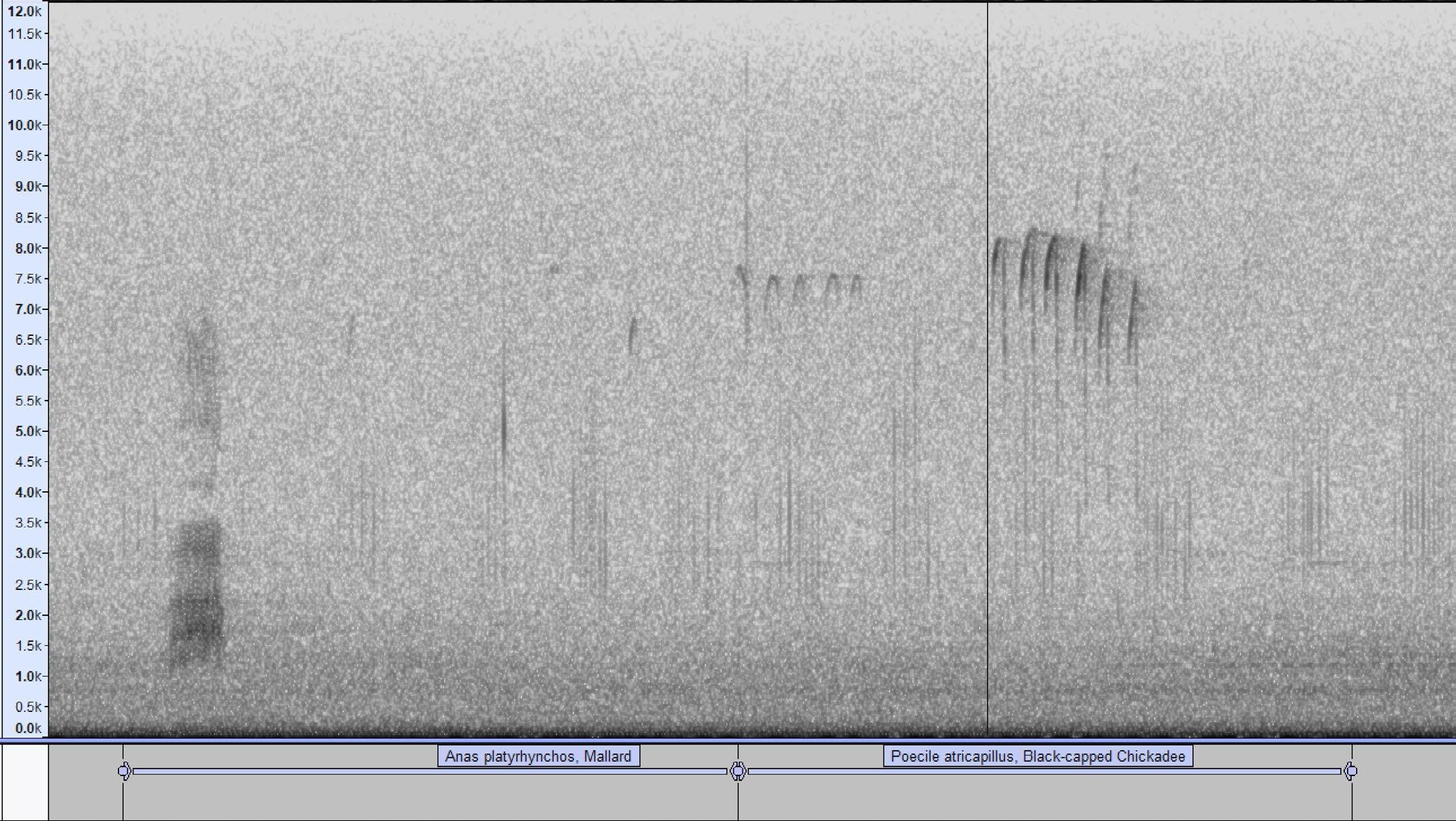

BirdNet detections viewed in Audacity as labels. Image by Tyne Baker, RPBio.
Photo by Bob Green, RPBio (Retired).
Whirling Disease in BC: A Quick Overview
By Manjit Kerr-Upal and Martina Beck, B.C. Ministry of Water, Land and Resource Stewardship (with assistance from MS Copilot)
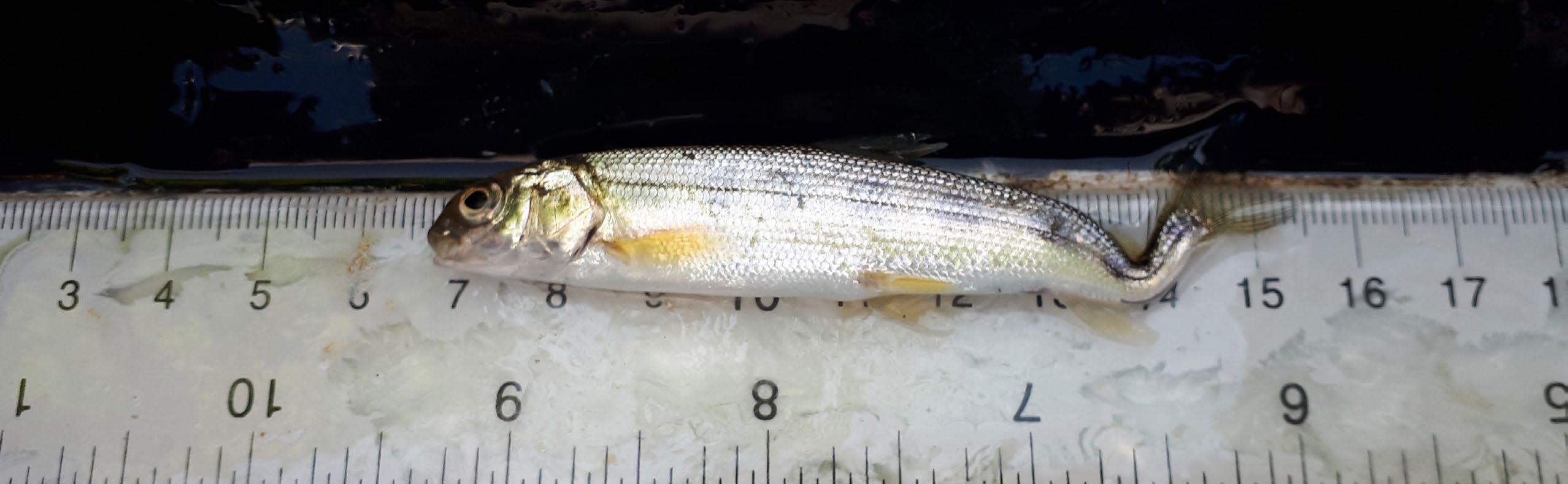
WHIRLING DISEASE, CAUSED by the parasite Myxobolus cerebralis, was first confirmed in British Columbia on December 6, 2023, in Yoho National Park. Since then, the Province has been working to monitor and minimize the potential spread of this aquatic disease, which primarily affects juvenile salmonids such as rainbow trout, cutthroat trout, and kokanee.
The parasite requires two hosts—a fish and a freshwater worm—and targets cartilage and nervous tissue. Infected fish may develop spinal deformities, blackened tails, and erratic "whirling" swimming behaviour. While not harmful to humans or pets, Whirling Disease can cause high mortality in susceptible fish populations. However, the presence of the parasite does not necessarily mean that fish populations will be adversely affected, as susceptibility varies by species, age, and environmental conditions.
In 2024, the parasite was confirmed in Boulder Creek, Goat River, and Duck Creek—tributaries to the southern arm of Kootenay Lake. Environmental DNA (eDNA) samples from the Lower Kootenay River and Elk River also indicated possible presence. Surveillance efforts in 2025 are building on these results to better understand the potential range of Whirling Disease in BC and inform decisions aimed at limiting its spread.
The Province’s Whirling Disease Task Team—comprising staff from the Ministry of Water, Land and Resource Stewardship (WLRS) Aquatic Ecosystems Branch, Water Authorizations, BC Parks, and the Ministry of Transportation and Infrastructure—has been working closely with First Nations, Parks Canada, and the Canadian Food Inspection Agency to coordinate surveillance, share data, and refine monitoring strategies.
What Can You Do?
All biologists working in and around aquatic environments are in a unique position to help reduce the risk of spreading Whirling Disease. The Province has implemented a mandatory decontamination protocol for all government staff and contractors working in the Columbia River watershed. This protocol is also strongly recommended for the public.
Key steps include:
• Remove all mud, sand, and organic material from gear, equipment, and vehicles before leaving the site.
• Immerse submersible items (e.g., nets, boots, waders) in a disinfectant solution for at least 10 minutes.
• Ensure full submersion of all surfaces that contacted water, mud, or fish.
• Dry thoroughly before reuse in a different waterbody.
This protocol is in addition to the "Clean, Drain, Dry" campaign, which remains a best practice for all water users and should always be followed to help reduce the transport of aquatic invasive species and diseases.
For updates, resources, and the full protocol, visit the Province’s Whirling Disease website.
Reports or inquiries can be directed to WhirlingDisease@gov.bc.ca
Wildlife Act Amendments: Strengthening BC's Legal Tools to Prevent Aquatic Invasive Species
By Manjeet Kerr-Upal and Martina Beck, B.C. Ministry of Water, Land and Resource Stewardship (with assistance from MS Copilot)
ON JUNE 20, 2025, the Province of British Columbia enacted targeted amendments to the Wildlife Act to enhance its ability to prevent the introduction and spread of aquatic invasive species (AIS) and diseases including zebra and quagga mussels, and whirling disease. These changes respond to long-standing requests from First Nations, local governments, and environmental organizations for stronger tools to protect BC’s freshwater ecosystems.
The amendments focus on high-risk pathways for aquatic invasive species spread—particularly the overland transport of watercraft and water-related equipment—and introduce new authorities and penalties to support prevention and compliance.
For more information on the Wildlife Act amendments and AIS prevention in B.C., visit the Province’s Invasive Mussel website.
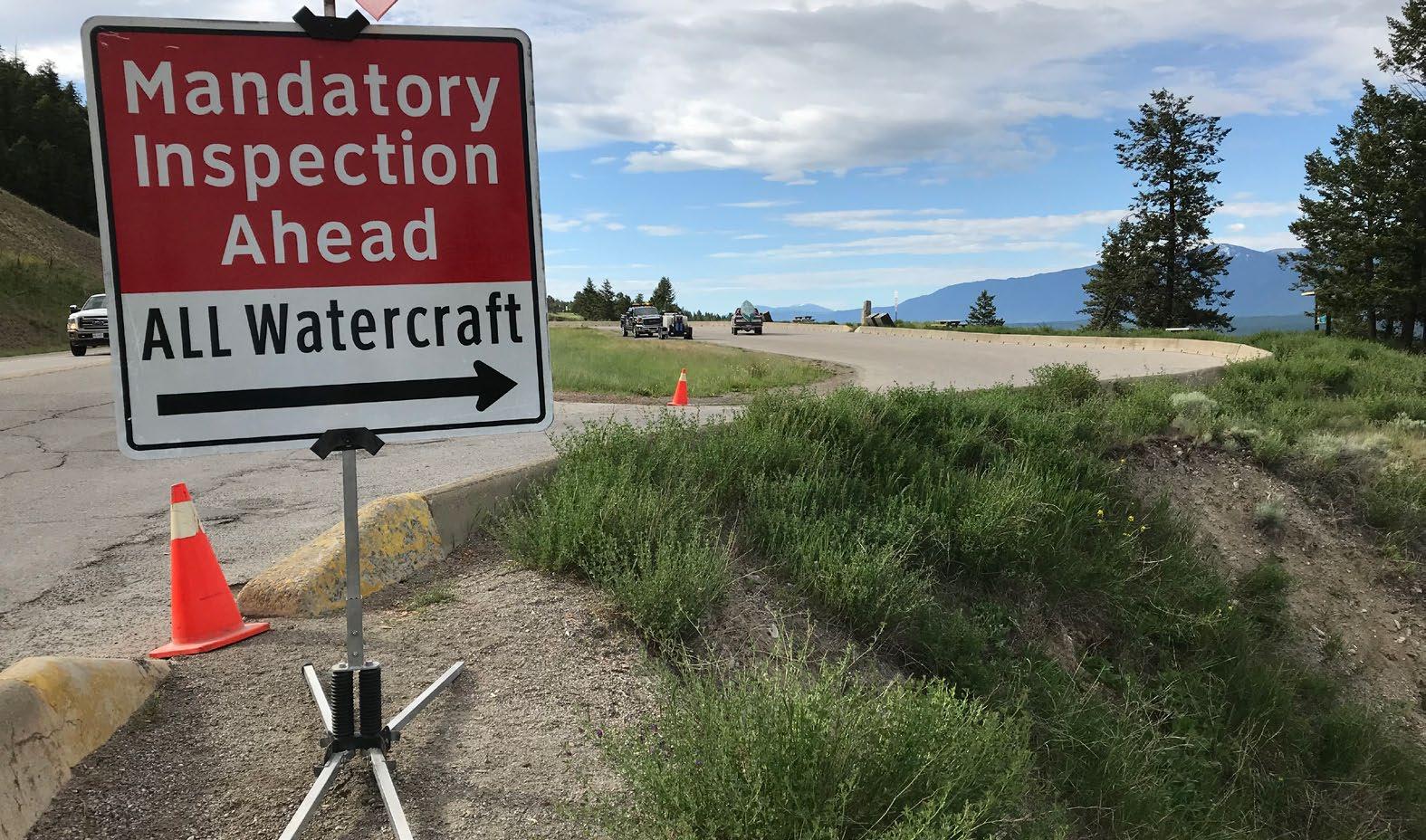
Watercraft inspection station. Photo submitted by MWLRS.
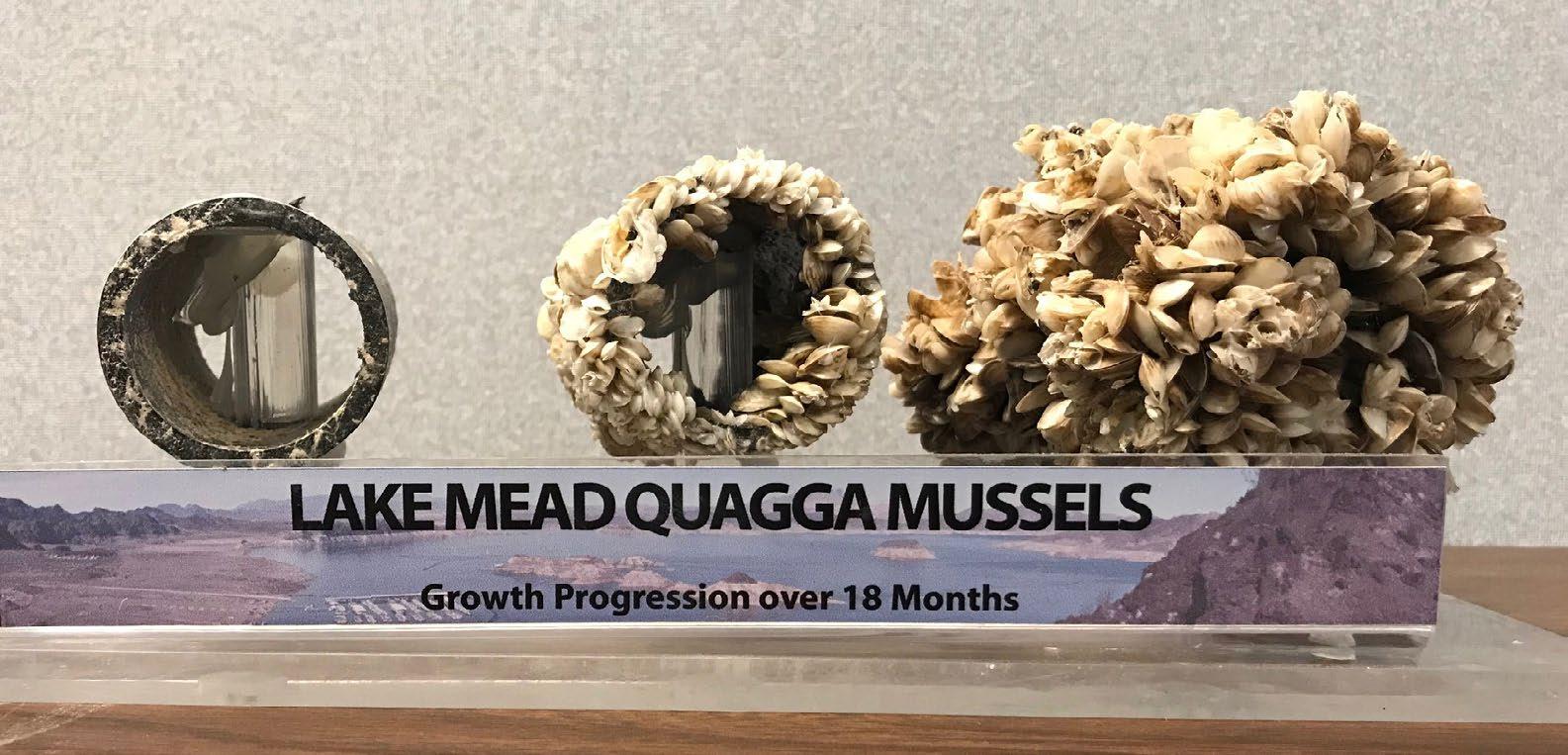
Growth of Quagga Mussels. Photo submitted by MWLRS.
KEY AMENDMENTS TO THE WILDLIFE ACT
1. “Pull the Plug” Requirement
All drainage plugs, valves, or similar devices on boats, water-related equipment, and aircraft must now be left open during transport overland. This measure helps prevent the transfer of residual water that may contain invasive species such as zebra mussels or the parasite responsible for Whirling Disease.
Penalty for non-compliance: $345 fine
2. Mandatory Watercraft Inspection Station Stops
Anyone transporting boats or related equipment must stop at open watercraft inspection stations in British Columbia. This applies to all types of boats including canoes, kayaks, and stand up paddle boards. These inspection stations are a critical line of defense in BC’s Invasive Mussel prevention efforts.
Penalty for non-compliance: $690 fine
3. Golden Mussel Prohibition
The golden mussel (Limnoperna fortunei), first detected in North America in 2024 in California’s Sacramento-San Joaquin Delta, is now listed as a prohibited species under BC’s Controlled Alien Species Regulation. The prohibition aligns with existing restrictions on zebra and quagga mussels and includes bans on possession, breeding, transport, and release.
Golden mussels pose a serious threat to BC’s aquatic ecosystems as they are similar in appearance, biology, and impacts as zebra and quagga mussels, including the ability to attach to solid and semi-solid surfaces. Golden mussels are prolific invaders of new regions as they easily acclimate to different environments and can establish in waters with considerably lower levels of calcium than required by zebra and quagga mussels. For more information, check out the Golden Mussel Fact Sheet
4. Future Mandatory Inspections for Watercraft entering BC
The Act now enables regulations requiring mandatory inspections of watercraft entering BC from other jurisdictions before launching in provincial waters. This provision will be brought into force later, following further analysis and engagement with First Nations and stakeholders.

Tatlayoko Lake, Chilcotin. Photo by Karen Barry, RPBio.
Emergency Response to Chronic Wasting Disease in BC
By Cait Nelson, RPBio, Wildlife Health Biologist | Wildlife Branch, B.C. Ministry of Water, Land and Resource Stewardship
CHRONIC WASTING DISEASE (CWD) was first detected in BC in January 2024, in two deer from the Kootenay Region. This invader threatens our deer, elk, moose, and caribou populations and it will require a strong and collaborative response to keep it at bay.
CWD is a neurological disease that affects species in the deer family or cervids. We are not sure where it came from, but it was first described in captive deer and elk in the 1960s in Colorado. The disease is caused by an abnormal protein, a prion, that accumulates in the body and leads to deterioration of brain tissue. There is no vaccine or treatment—the disease is always fatal. The risk to humans is unknown so public health authorities urge the public to avoid exposure. This adds to conservation concerns, as the disease will have far reaching impacts, threatening food security, cultural practices, and wildlife related business. Surveillance and management are particularly challenging because infected animals appear healthy while shedding the disease agent into the environment. For this reason, we refer to infected animals as silent carriers.
BC’s surveillance and response planning has been building for two decades. In the mid-2000s the Wildlife Health team established a collaborative advisory team that would help to build and deliver a plan for BC. As the risk increased, strategies were updated and efforts expanded. Importantly, partnerships were formed through this process. We knew CWD would reach BC one day and when it arrived, it would require a team effort to respond effectively.
When the disease was first detected in BC, a collaborative and coordinated emergency response was deployed, bringing together all relevant groups, including First Nations, stakeholders, academic advisors, and experts from other jurisdictions. Management targets were set, best management practices were developed, and regulations were adjusted promptly to respond to the emerging threat of CWD. Our team analyzed existing policies and approaches from other places to understand what has been effective
and where challenges remain. This ongoing collaboration with cross-border partners and experts has provided a strong foundation for shaping BC’s strategy, ensuring it was evidencebased.
During the 2024/25 hunting season, over 4,000 samples were collected, resulting in the detection of four additional positive cases. Targeted management and research are being directed in the areas where CWD cases have been identified and the knowledge we are gaining is being used to inform the plan and adapt strategies as needed. Management goals remain focused on reducing disease transmission, preventing the spread to new areas and other vulnerable species at risk, and limiting negative impacts of CWD as much as possible.
We have learned from the experience of others that when CWD is caught early, actions can be taken to mitigate the impacts and keep infection rates down. However, for this to work, our team needs to work together. An effective response requires support and assistance from countless other eyes and ears on the ground—notably First Nations and the hunting community. CWD continues to be an enormous challenge across North America and elsewhere, but BC is well positioned, in this early stage of disease incursion, to fight this threat with the best available information and in lockstep with our partners.
Ongoing collaboration with cross-border partners and experts has provided a strong foundation for shaping BC's strategy, ensuring it was evidence-based.
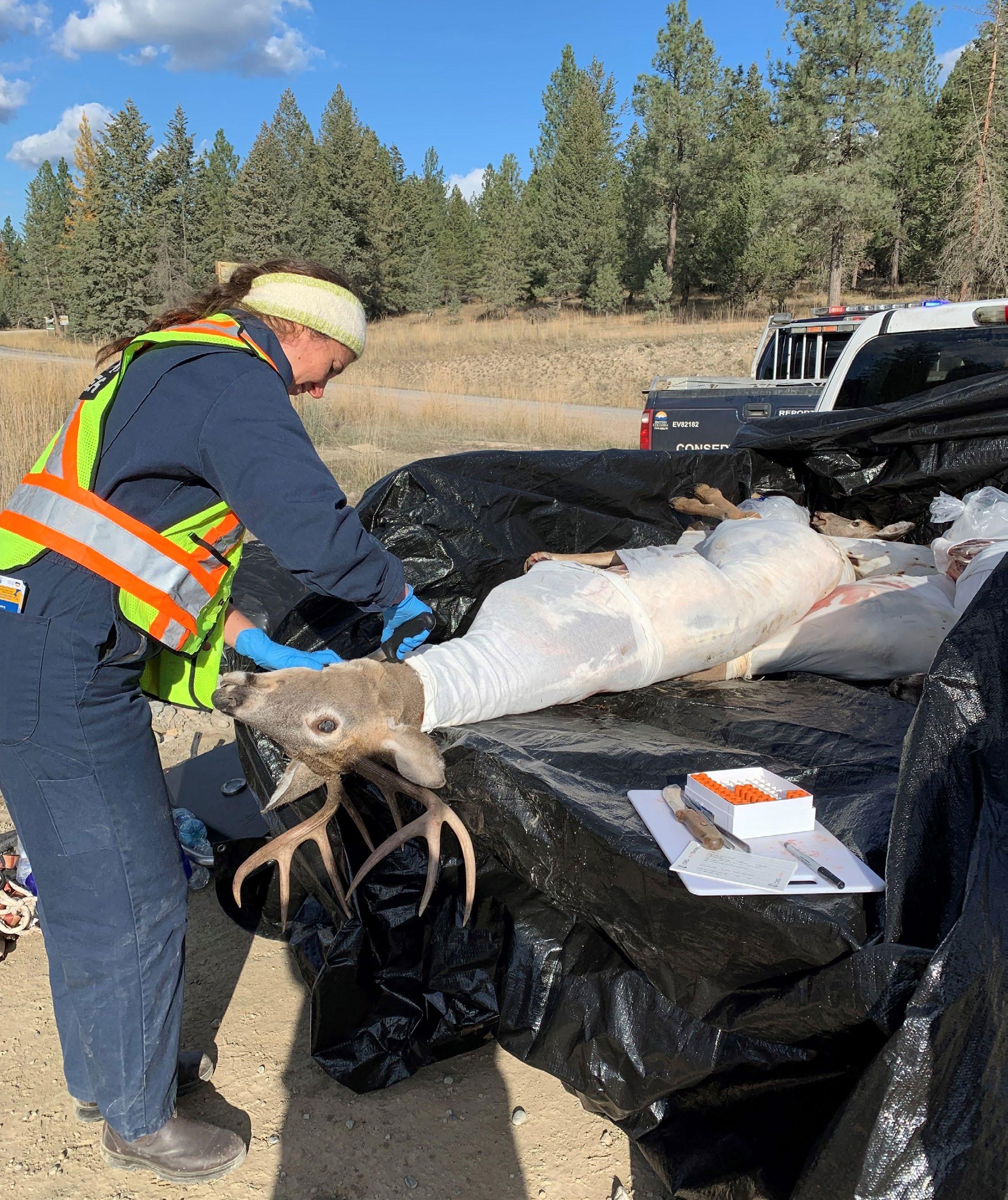
Cait Nelson, RPBio, conducts a game check. Photo submitted by Cait Nelson.
Notes, References & Links
Navigating the Al Frontier: Professionalism, Ethics, and Accountability for Applied Biologists — Page 10
References
Duboust, O. (2023 Nov 20). ‘Unreliable research assistant’: False output from AI chatbots pose risk to science report says. Euronews.com. https://www.euronews.com/next/2023/11/20/unreliable-research-assistant-false-outputs-from-ai-chatbots-pose-risk-toscience-report-s
Ellaway, R., Coral, J., Topps, D. & Topps, M. (2015). Exploring digital professionalism. Medical Teacher, 37(9), 844-849. https:// pubmed.ncbi.nlm.nih.gov/26030375/
Ellis, D. (2023 Oct 20). AI and the Cognitive Revolution. Forbes. https://www.forbes.com/councils/forbesbusinesscouncil/2023/10/20/ ai-and-the-cognitive-revolution/
Government of Canada. (2024 Mar 21). Guide on the use of generative AI. https://www.canada.ca/en/government/system/digitalgovernment/digital-government-innovations/responsible-use-ai/guide-use-generative-ai.html
Lawton, G. (2023 Mar). What is generative AI? Everything you need to know. TechTarget. https://www.techtarget.com/ searchenterpriseai/definition/generative-AI
Microsoft. (2025). “What is artificial intelligence?” in Explore AI basics (Unit 3 of 11). https://azure.microsoft.com/en-us/resources/ cloud-computing-dictionary/what-is-artificial-intelligence
UN Environment Programme. (2025). AI had an environmental problem. Here’s what the world can do about that. https://www. unep.org/news-and-stories/story/ai-has-environmental-problem-heres-what-world-can-do-about
UNESCO. (2023). Guidance for generative AI in education and research. https://unesdoc.unesco.org/ark:/48223/pf0000386693
Other Links Featured in This Issue
> College of Applied Biology website (page 2): https://cab-bc.org/
> Past College Matters issues (page 2): https://cab-bc.org/college-matters-digital-edition/
> Hotel Grand Pacific (page 2): www.hotelgrandpacific.com
Next Issue: Applied Biology in Changing Times
By College Staff
THE NEXT ISSUE of College Matters will cover urgent challenges and pivotal opportunities as our profession navigates rapid legislative shifts, economic volatility, technological progress, and environmental pressures.
Topics may include:
> Resource dynamics - implications of infrastructure and resource development projects,
> Economic realities - translating the current economic climate into practical impacts and strategies for practitioners, and
> Innovation edge - how new technologies are reshaping field practices and driving necessary policy innovations and updates.
If you’re interested in contributing to College Matters, contact the College at cab@cab-bc.org with your proposed topic. Submissions that are printed in an issue of College Matters can be claimed for Continuing Professional Development points!
Photos From the Field, 2025
REGISTRANT CONTRIBUTIONS
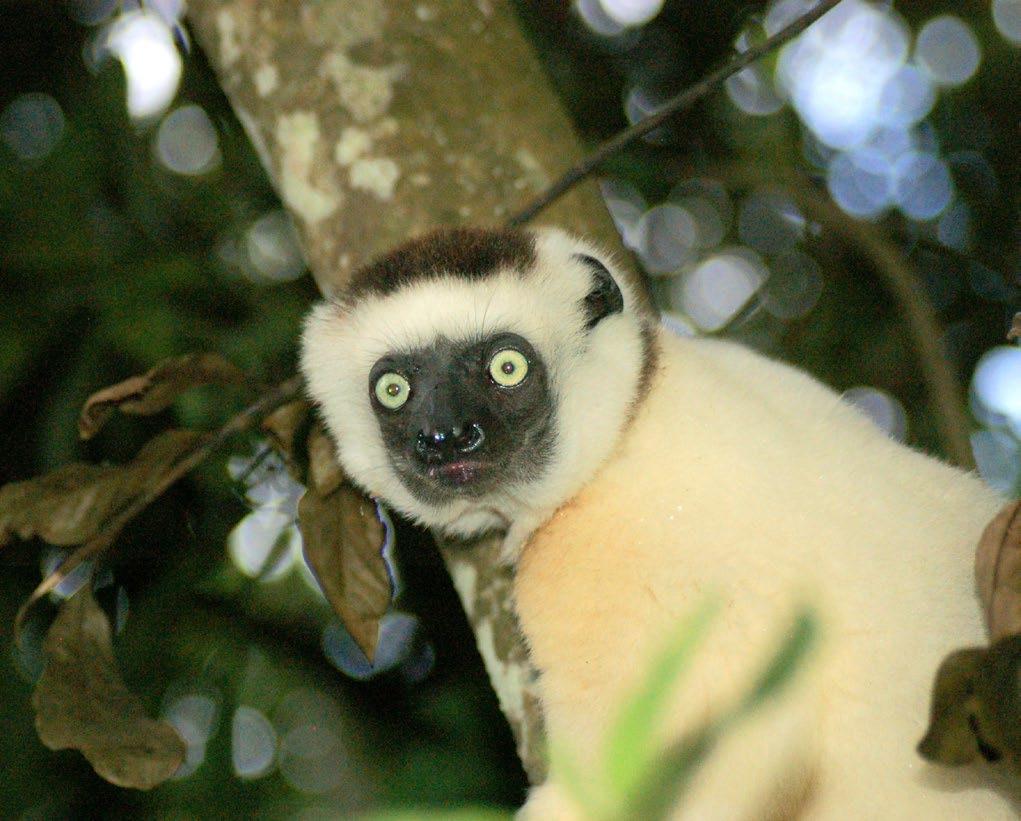
The piercing glare of a wild “dancing lemur” photographed in Madagascar. They get this name because of the dance-like means of locomotion when on the ground. Their habitat requirements are intact forest canopies which are now limited in much of Madagascar. Photo by Lee Nikl, RPBio #601
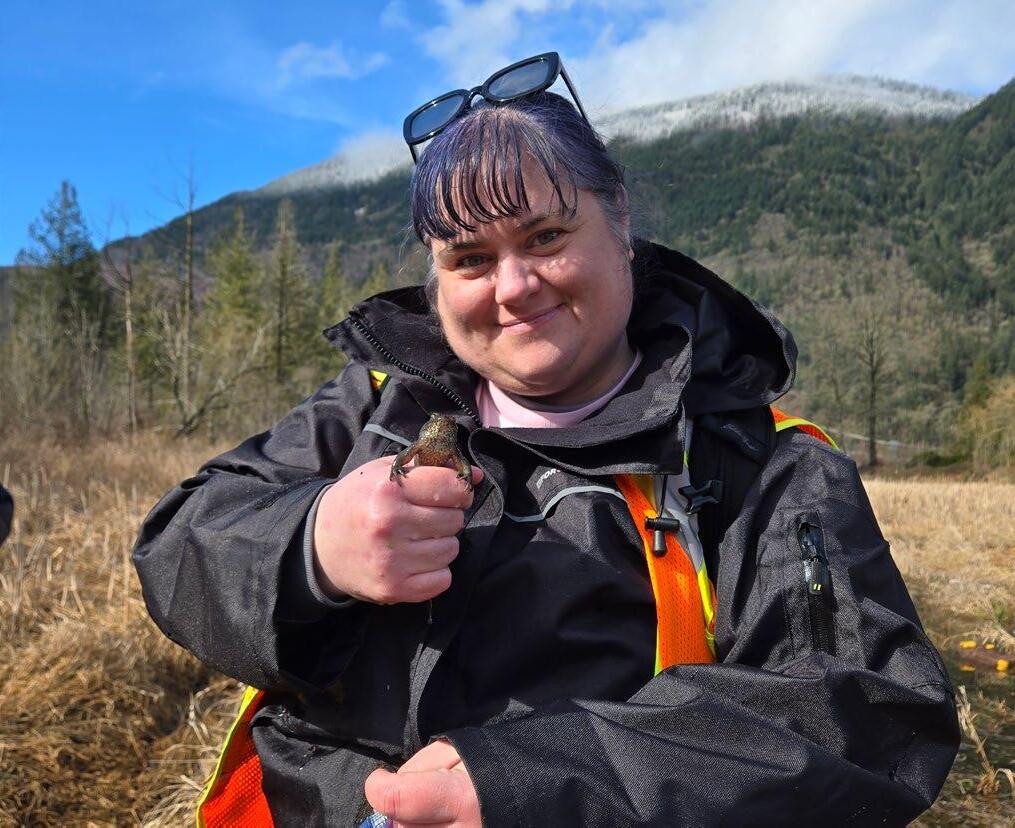
Jillian Stewart-Szpac during the March 2025 Oregon Spotted Frog surveys with the Ministry of Water, Lands & Resource Stewardship and Fraser Valley Conservancy.
Photo by Jillian Stewart-Szpac, RPBio #4106, PBiol, ABT
2025–2026 Committee and Working Group Members
AUDIT AND PRACTICE REVIEW COMMITTEE
Jasen Nelson, RPBio - Chair
Meghan Goertzen, RPBio
Cory Lagasse, RPBio
Brian Clark, RPBio
Marie King, RPBio
Jonathan Lok, Lay Committee Member
Trevor Ashe, Lay Committee Member
NOMINATIONS COMMITTEE
Victoria Burdett-Coutts, RPBio Past Board Chair - Chair
Farshad Shafiei, RPBio
Miriam Marshall, RPBio
Nnamdi Amaeze, RPBio
Sonja Panozzo, RPBio
Len Owen, Lay Committee Member
DISCIPLINE COMMITTEE
Jennifer Prive, RPBio - Chair
Kim Klaczek, RBTech
Tanya Seebacher, RPBio
CREDENTIALS COMMITTEE
Jocelyn White, RPBio - Chair
Francesca Knight, RPBio
Gaius Wilson, RPBio
Heather Taylor, RPBio
Jeremy Nilson, RPBio
Jaewoo Kim, RPBio
Andrew Hall, Lay Committee Member
Stephani Horstman, Lay Committee Member
Brittany John, Lay Committee Member
CONFERENCE PLANNING WORKING GROUP
Deborah Stanyer, RPBio - Chair
Diana Chomack, RPBio
Candy Lo, RPBio
Rhonda Maskiewich, RPBio
Bob Redden, RPBio
Lisa Tedesco, RPBio
Roxanne Tripp, RPBio
Jason Kuzminski, Lay Board Member
INVESTIGATION COMMITTEE
Alex De Jong Westman, RPBio - Chair
Sharleen Hamm, RPBio
Mark LeRuez, RPBio
Adam Harding, RPBio
Corwyn Bettles, RPBio
Gina Layte Liston, RPBio
Kerry Head, RPBio
Cairine Green, Lay Committee Member
Howard Kushner, Lay Committee Member
EDITORIAL BOARD WORKING GROUP
Raychl Lukie, RPBio - Co-Chair
Elizabeth Zajc, RPBio - Co-Chair
Eva Maria Boehringer, RPBio
Jayme Brooks, RPBio
Cheng Kuang, RPBio
Leilane Ronqui, RPBio
Gaius Wilson, RPBio
Volunteer with the College of Applied Biologists
Because the College is committed to bringing diverse backgrounds and expertise to College activities, we invite all registrants to consider applying for open volunteer positions. Please review the positions available here along with their respective terms of reference.
Key benefits of your association’s professional liability program.
Your professional association has one of the best Professional Liability (E&O) insurance programs for its members. Backed by one of the top insurance carriers in Canada, you have access to excellent coverage and claims services, including:
Exceptional
Coverage & Limits
• Employment Practices Liability - $250,000
• Legal Expenses for Defense of Professional Liability Claims – unlimited
• Legal Expenses for Professional Disciplinary Hearings - $100,000
• Directors’ & Officers’ Liability - $50,000
• Lost Income – when you’re required to attend trial or pretrial matters for a claim
• No Deductible – when no damages are paid or awarded to the claimant
• No E&O Pollution Exclusion – commonly excluded from most other E&O policies
• Forest Fire Fighting Expenses – included in Commercial General Liability to $1,000,000
Quick & Easy Coverage
• Certificates of Insurance, when required by your client(s), are issued within 24 hours of being requested
No Retroactive Date
• All prior work done would be covered by the policy once put in place
• Work for a former employer would not be included, as your employer is responsible for your work while under their employ
Cessation of Business & Retirement Coverage
• Future coverage for past work is automatically included if you meet the qualifications
• Under most policies, once a Professional Liability or E&O policy is cancelled, coverage ceases as if were never in place
Coverage Options for Drones & Cyber
• Affordable options for unmanned aircraft, and a variety of cyber risks
Have questions about these benefits or other aspects of your policy? Contact us at the phone number or email below, and we’ll be happy to assist.
*Coverages and limits may change, and are subject to policy wordings, conditions, exclusions, and limitations.
Jordan Fellner Account Executive
T: 604-269-1888 TF: 800-606-9969

2026 Conference in Victoria, BC
The College’s Annual Conference will take place April 9-10, 2026