MICHAEL COLLAZO

mikecollazo35@gmail.com • 224.428.5987
Northeastern University
Candidate for B.S. in Architecture
Minor in Urban Landscapes
Expected 2025
Hello! I am a designer and 4th year undergraduate student from Chicago, IL, majoring in Architecture and minoring in Urban Landscape Studies.
Growing up in Chicago, going to school in Boston, and having experience in NYC, I’ve been developing special interests in not only architecture but also urban design, sustainability, and environmental justice. (How can a city best serve the interests of the public, and how can architecture help with that?)
This portfolio shows the beginnings of that, along with the evolution of my design thinking. Although I’m showcasing these works in my own name, they would nothing without the amazing instructors, classmates, and professional designers who helped me along the way.
Michael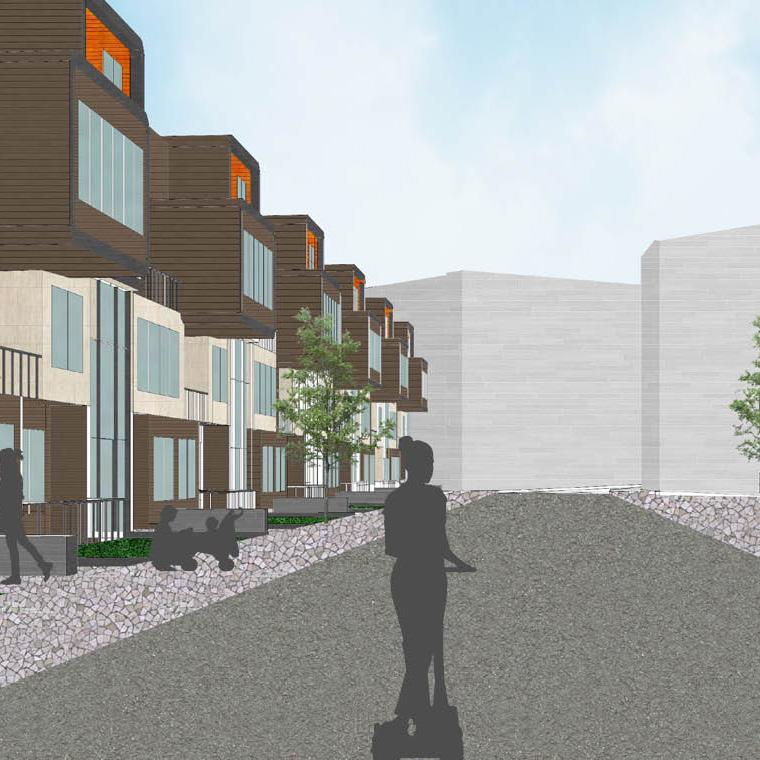
Studio: Urban Institutions
Professor: Wonwoo Park
Date Completed: May 2022
How can housing adapt to a changing city?
Specifically in the context of Boston, for better or worse, demographics are rapidly changing. Through densely aggregated housing, this studio aimed to strike a balance between privacy and protection in the age of the pandemic, versus community and the use of public and semi-public spaces.
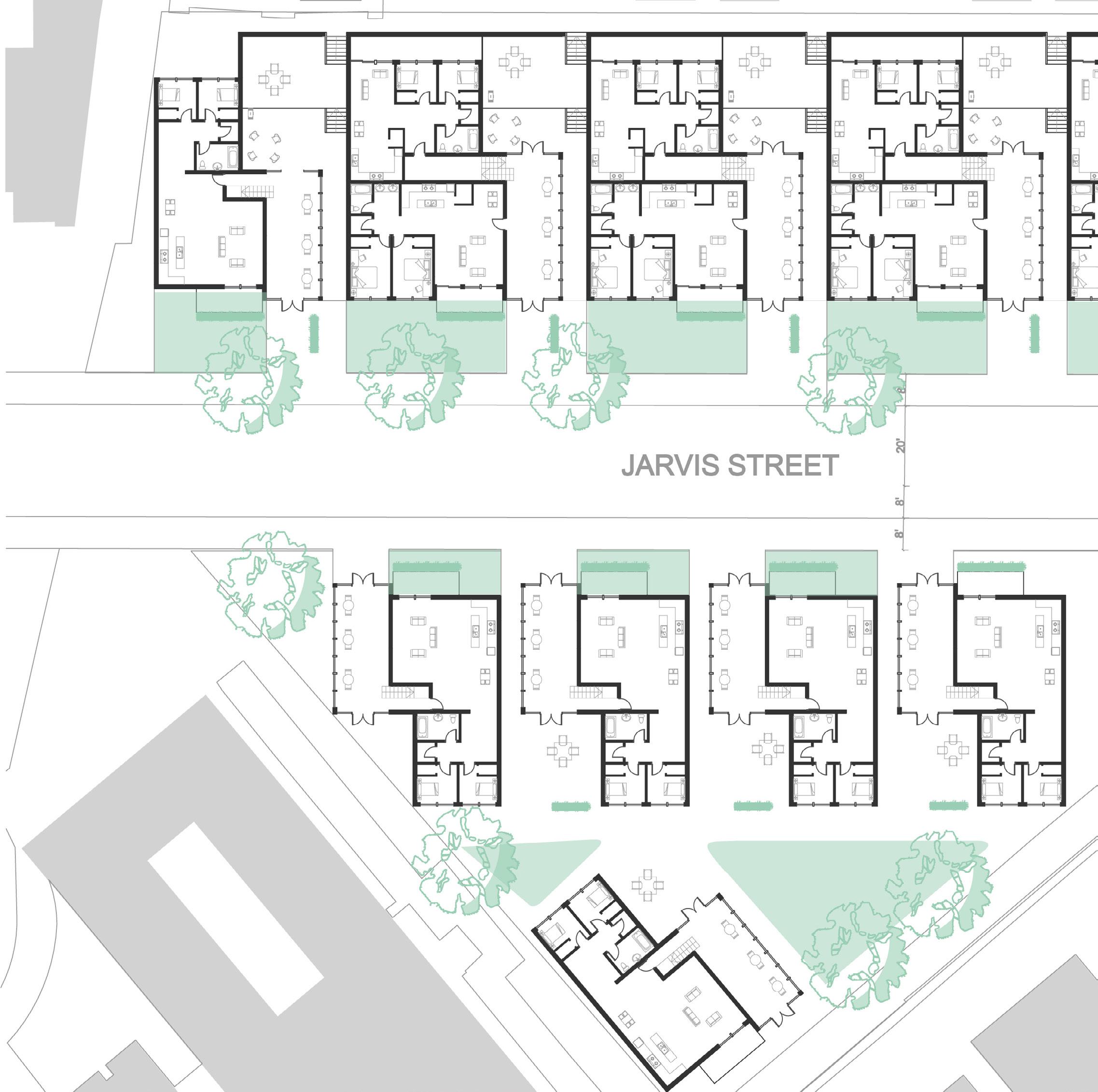
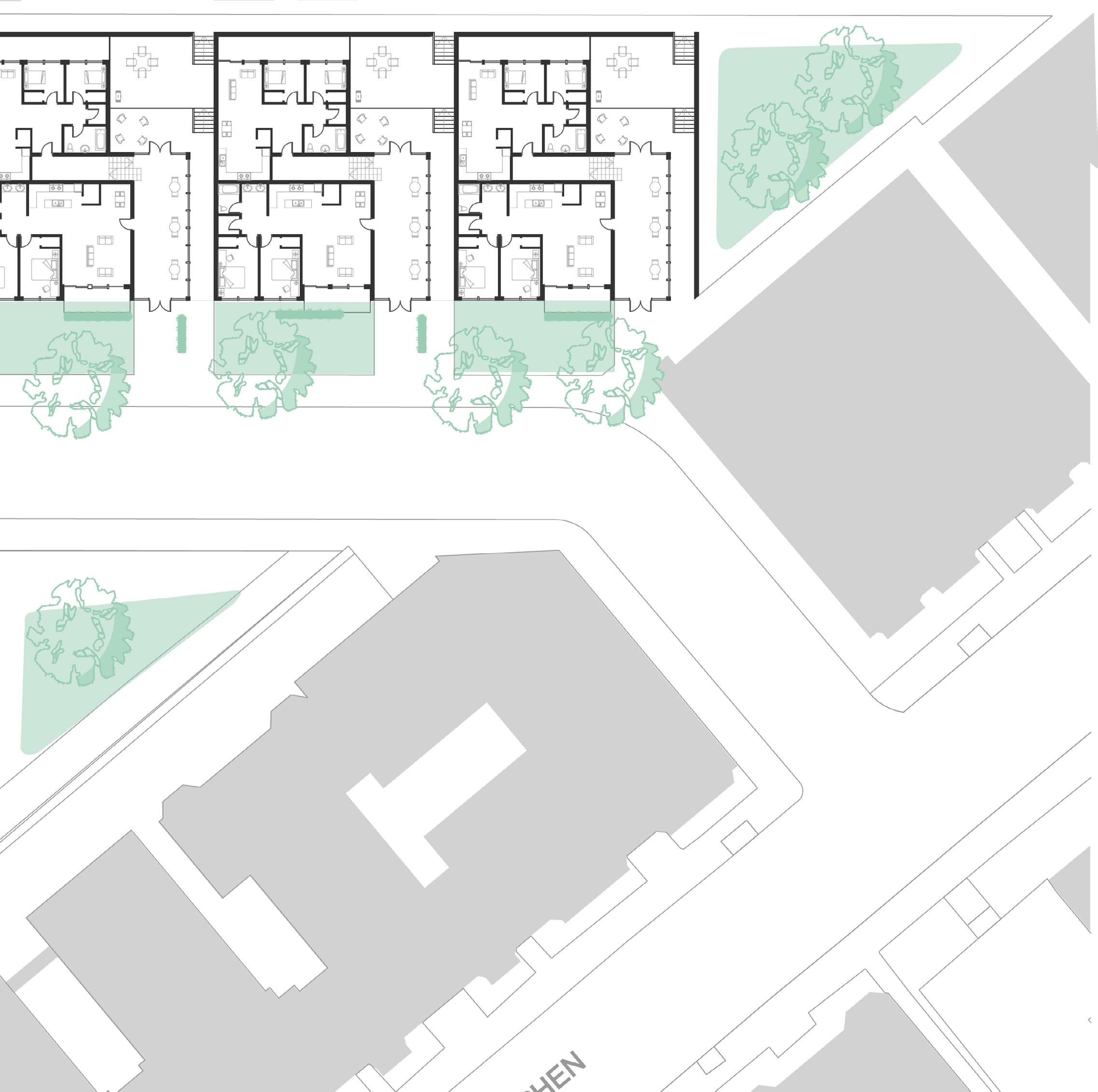
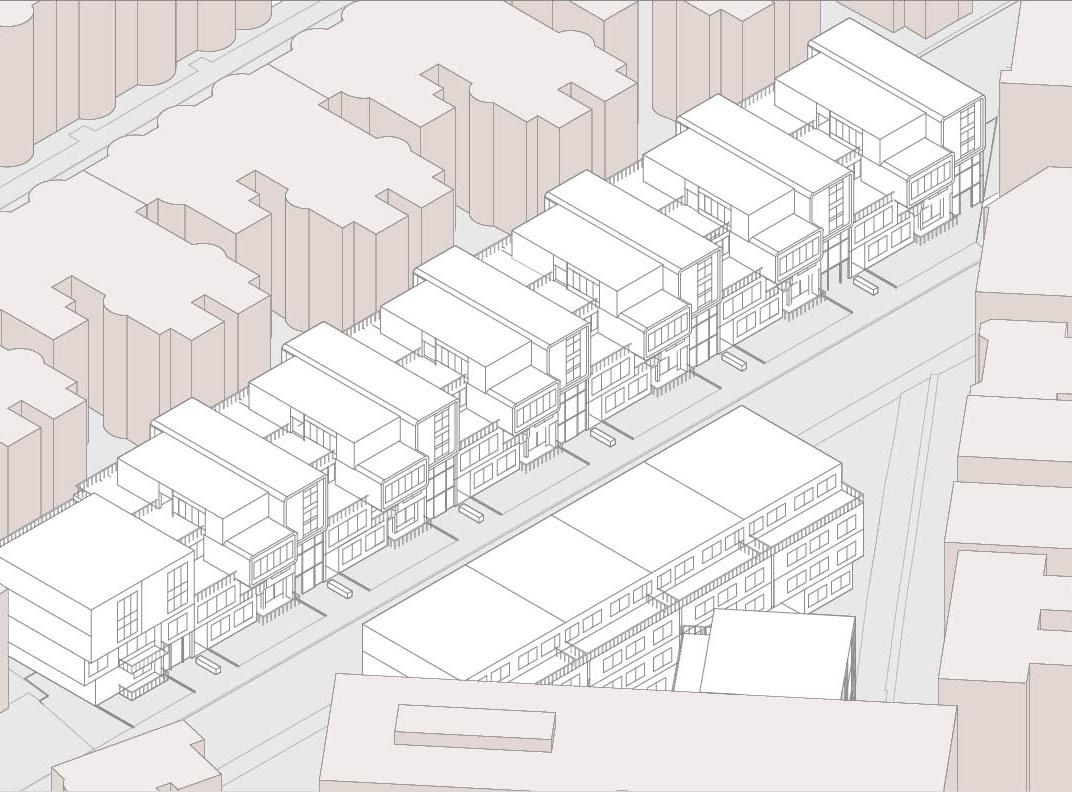
The first step was to analyze current housing typologies in the Fenway/Kenmore neighborhood. Then a prototype was drawn from that, with each unit prioritizing outdoor space and semi-private spaces. After that, the prototype was aggregated along “Jarvis Street” (right now it exists as a parking lot).
The versatility of the spaces within this development is meant to adapt to changing populations. The units within each aggregate have a variety of sizes and accessibilty needs, so than anyone can have an exceptional living standard that meets their needs.
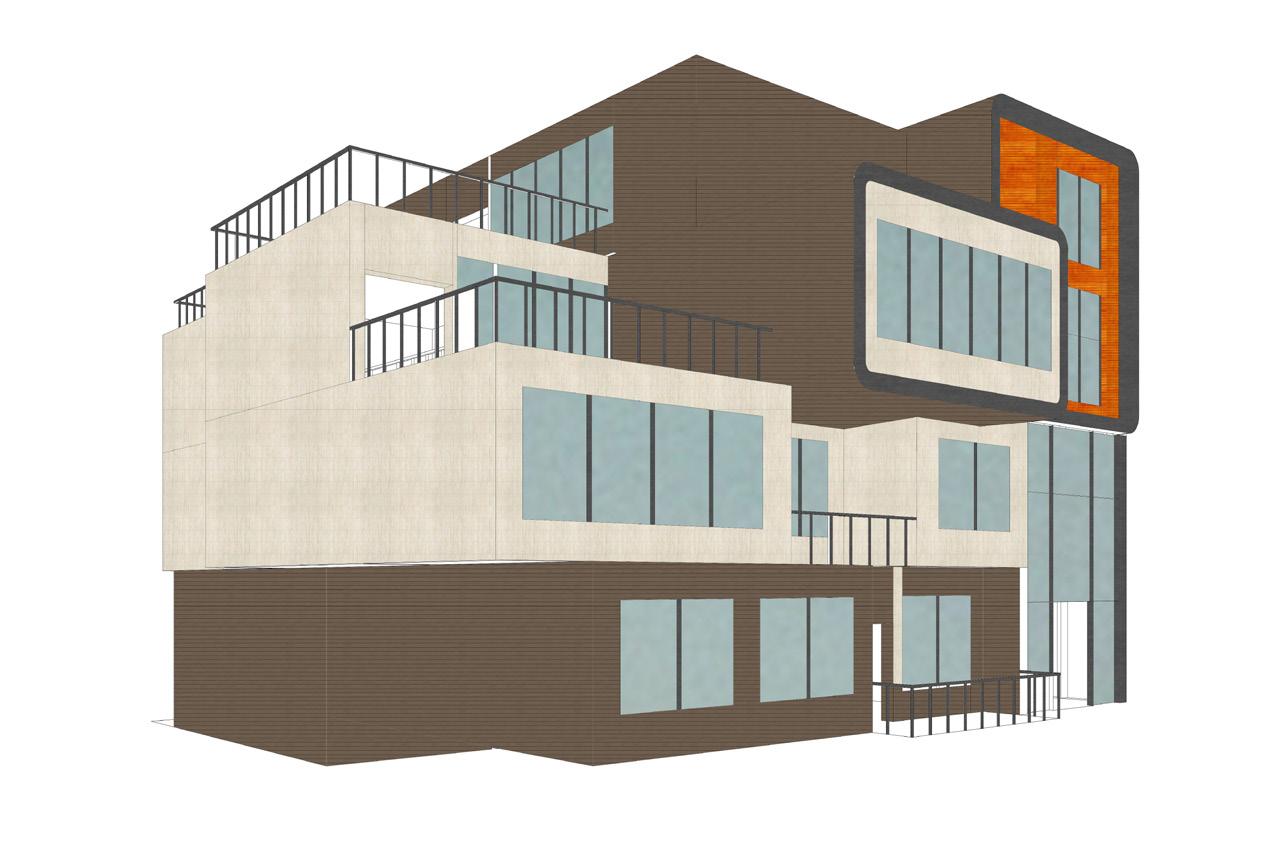
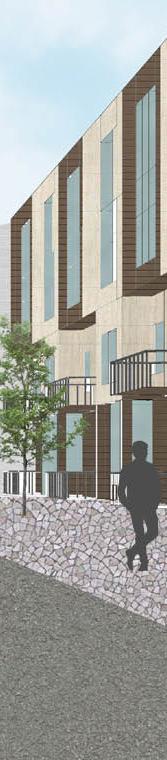
In a post-pandemic world, housing must be flexible enough to adapt to a variety of lifestyles. Within each prototype lies a variety of units, all with semi-private and private outdoor spaces, and nooks for a comfortable work-fromhome environment. The ground floor units are always ADA accessible.
Each prototype has 8 units and can be aggregated along a street, or stand alone depending on the urban context. The density that this typology achieves is meant to address a growing housing issue in Massachusetts while still providing every resident with connection to the street and to the community.
77 Total Units
8 Unit Types
40.8 Units per Acre
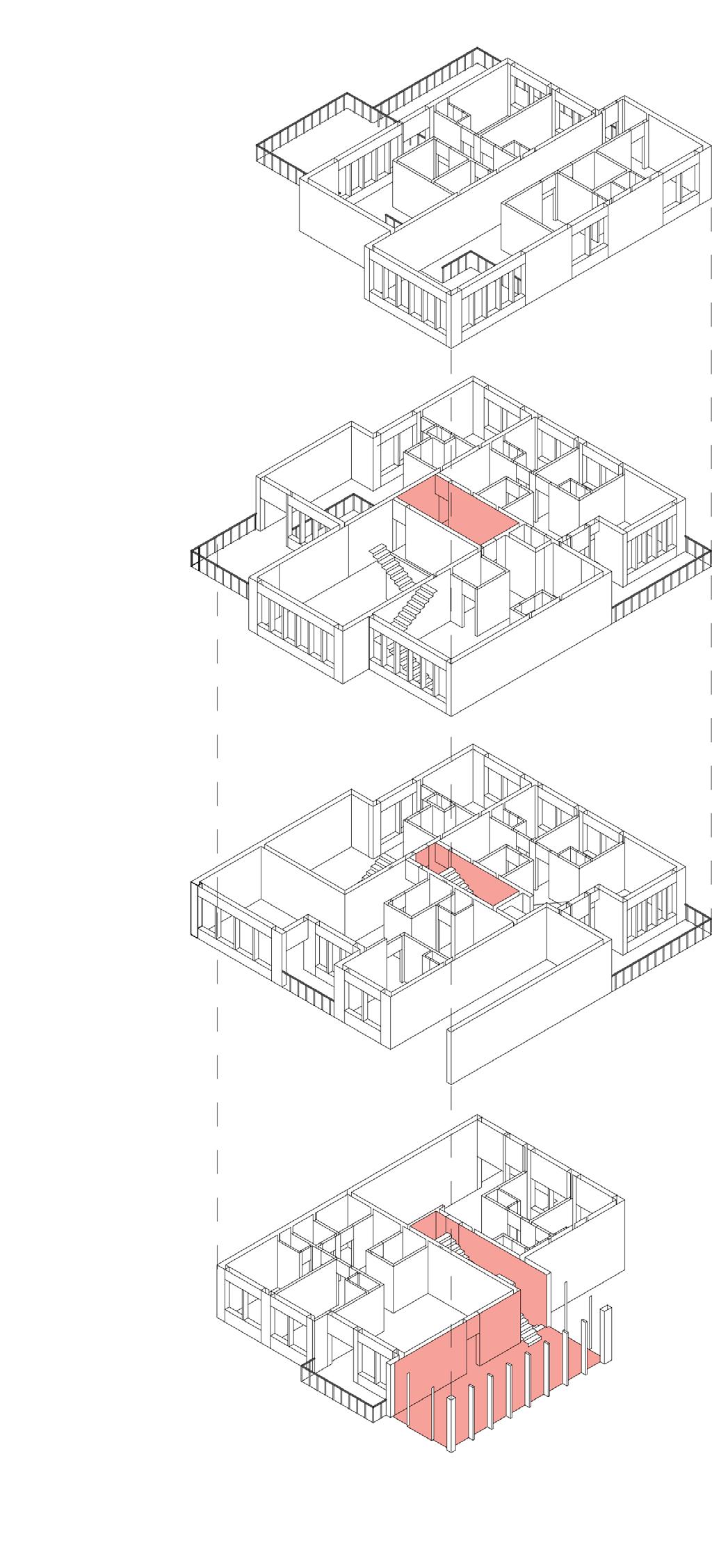
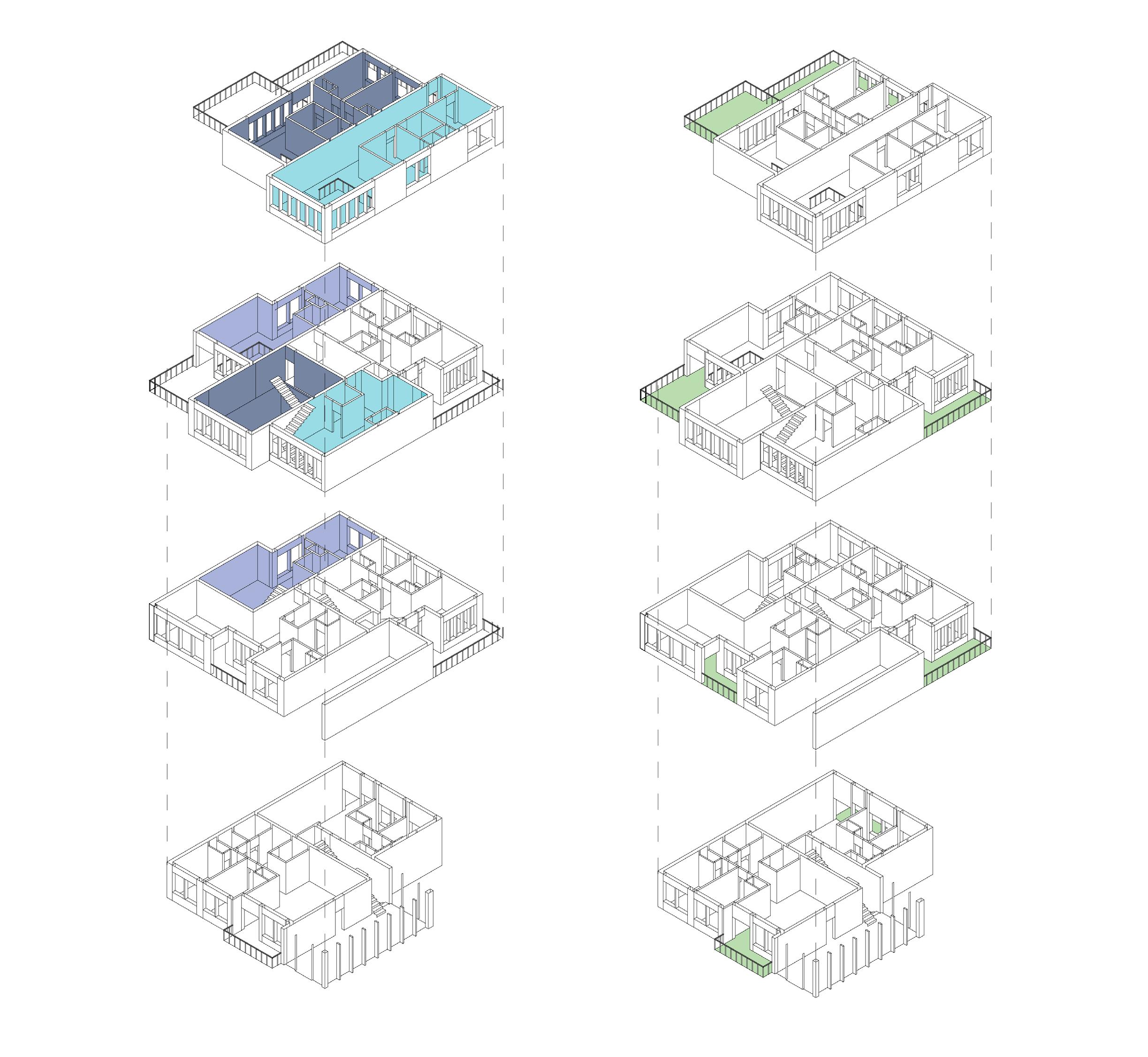
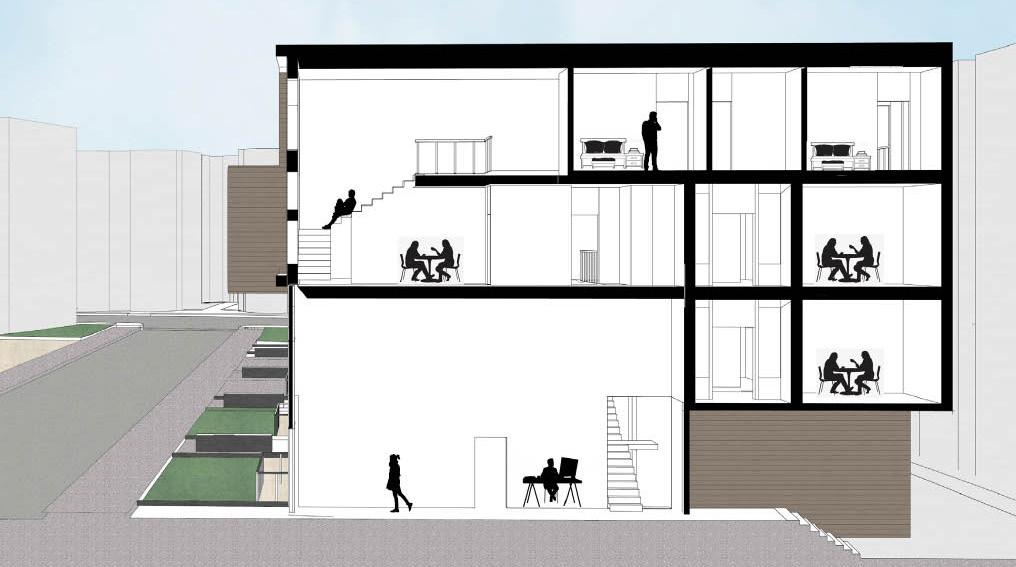
Each prototype is no higher than 4 stories, as that is the maximum height a person may live before they feel isolated from the street.
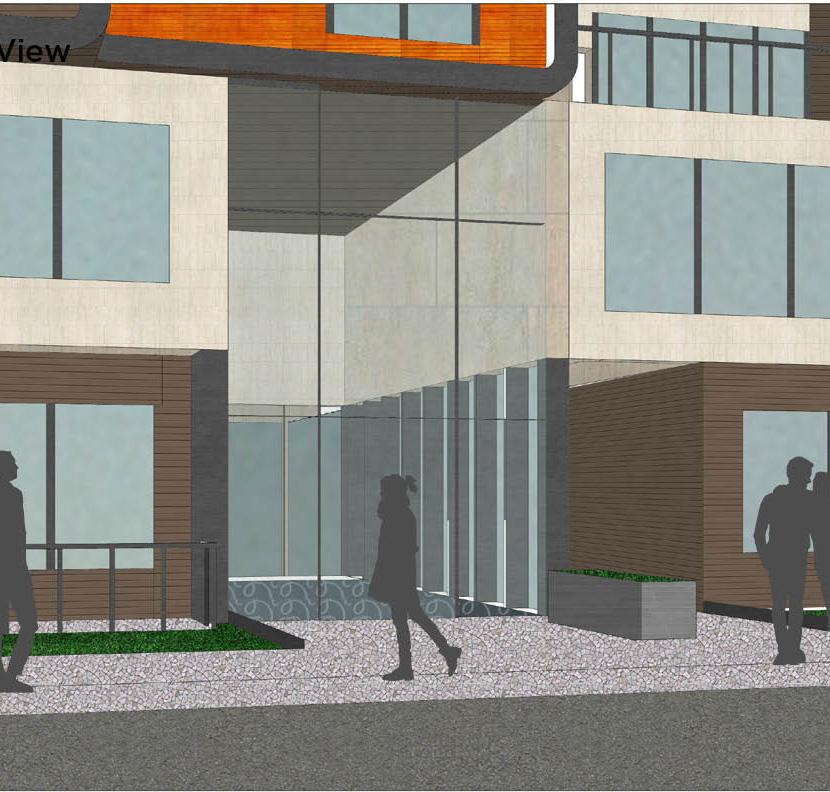
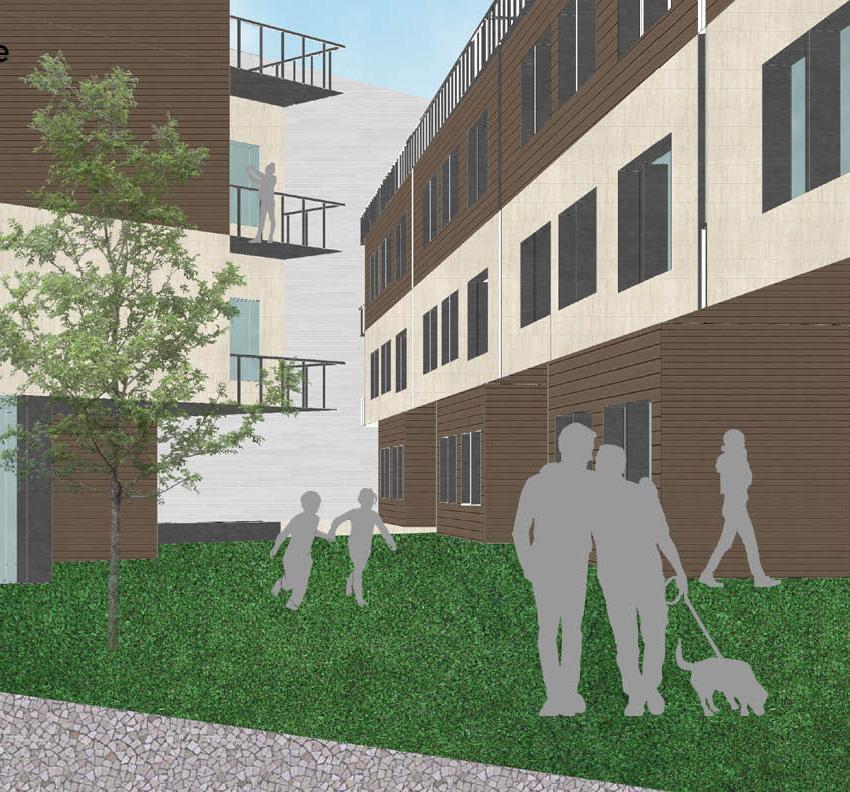
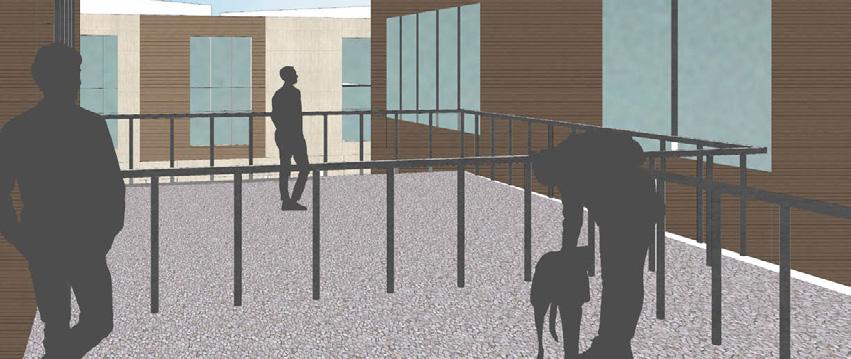
Creating housing is more than just seperating the the public life from the private, it’s about designing transitions as well. From the left in clockwise order, what’s featured is the main lobby to the building, a shared backyard, and balconies between neighbors.
 Graphic by Rafaela Haberer-Reppucci
Studio: Architecture, Infrastructure, and the City Professor: Marie Law Adams
Date Completed: Dec 2023
Project Collaborators: Lee Anderson, Rafaela Reppucci
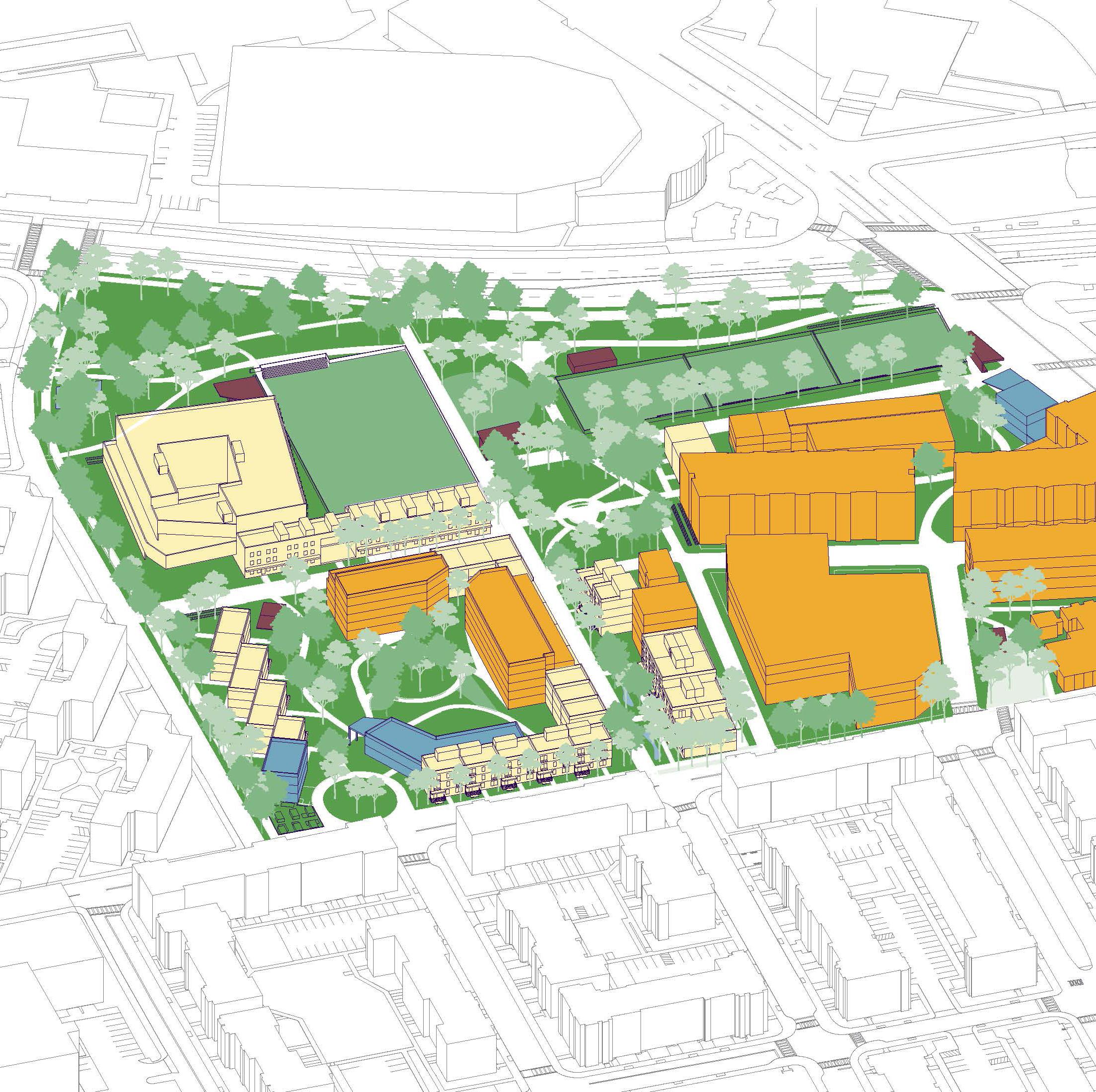
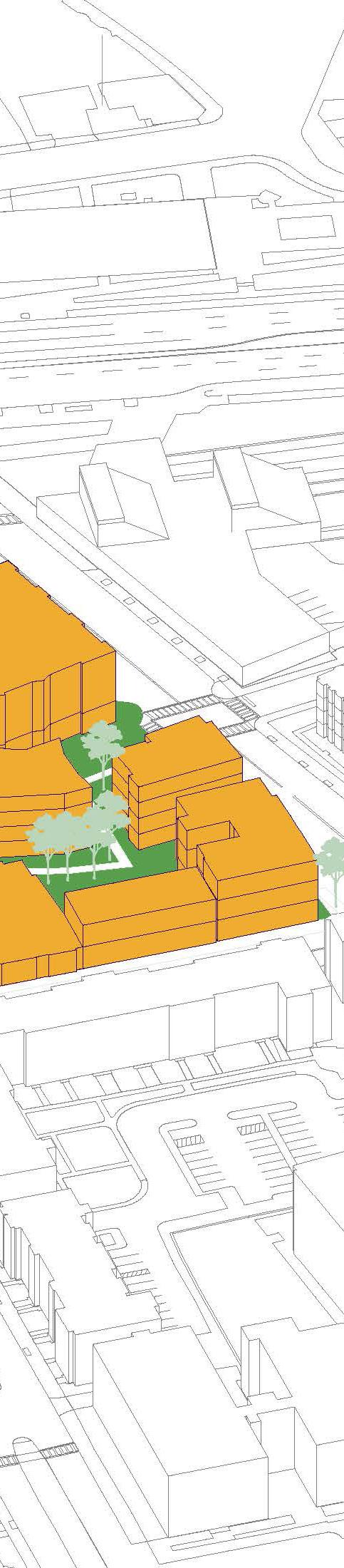
On the corner of Tremont and Malcolm X Boulevard sits Roxbury Crossing, an area strattled between Huntington Ave, Mission Hill and Roxbury. The former being a strip in Boston dominated by high education institutions, and the latter two being neighborhoods facing the threat of rising rent prices and the fleeing of families with children.
This studio builds off of the last one, Urban Institutions, and translates the values learnt from designing dense housing onto the city scale.
This neighborhood would serve people from every age, with a focus on resiliency, comfortability, and intergenerationality. This manifests itself through specific urban design moves, including dense urban housing, public comfort stations, and extensive green infrastructure.
This project was done as group, with my fellow collaborators Lee and Rafaela, who I accredit to much of the”built” parts of this development, while I focused more on the “in between.” Later, we each did our own transects, where we each focused on a portion of the site and extracted what can be applied to cities across the nation.
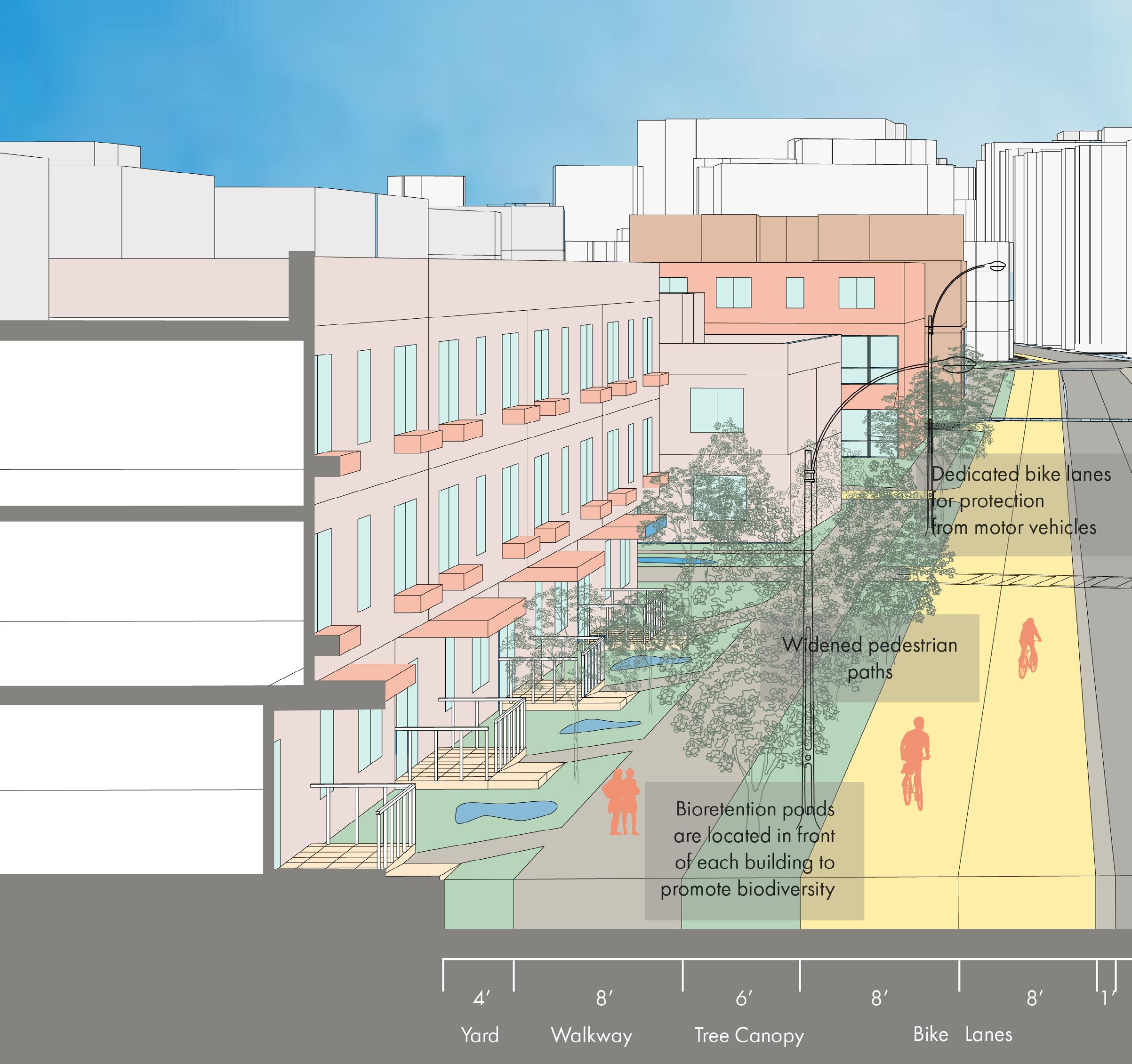
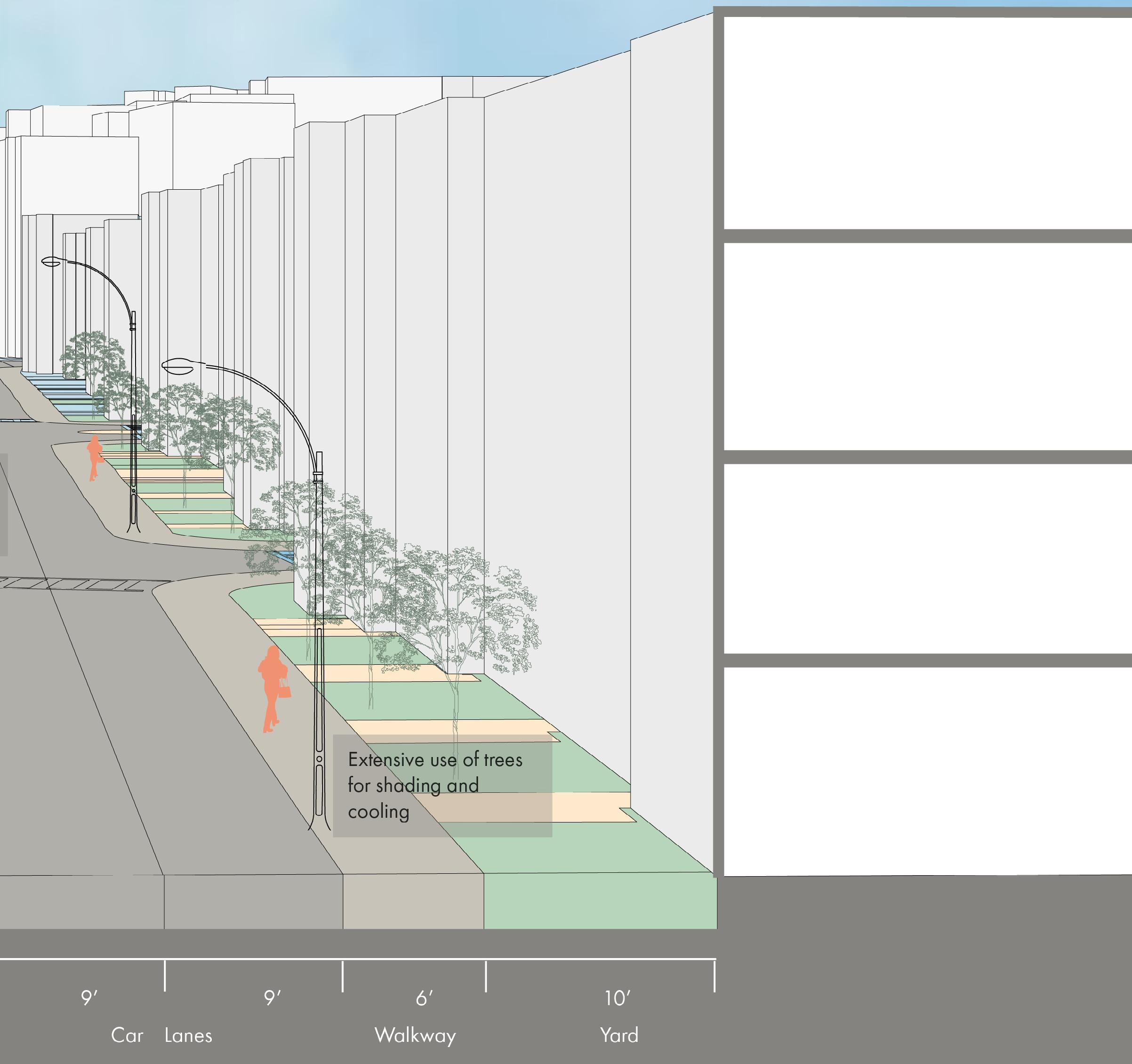
Through accessible bike networks, green infrastructure, and human-scale architecture, the streetscape aims to prioritize the pedestrian (and bike rider), rather than the car.
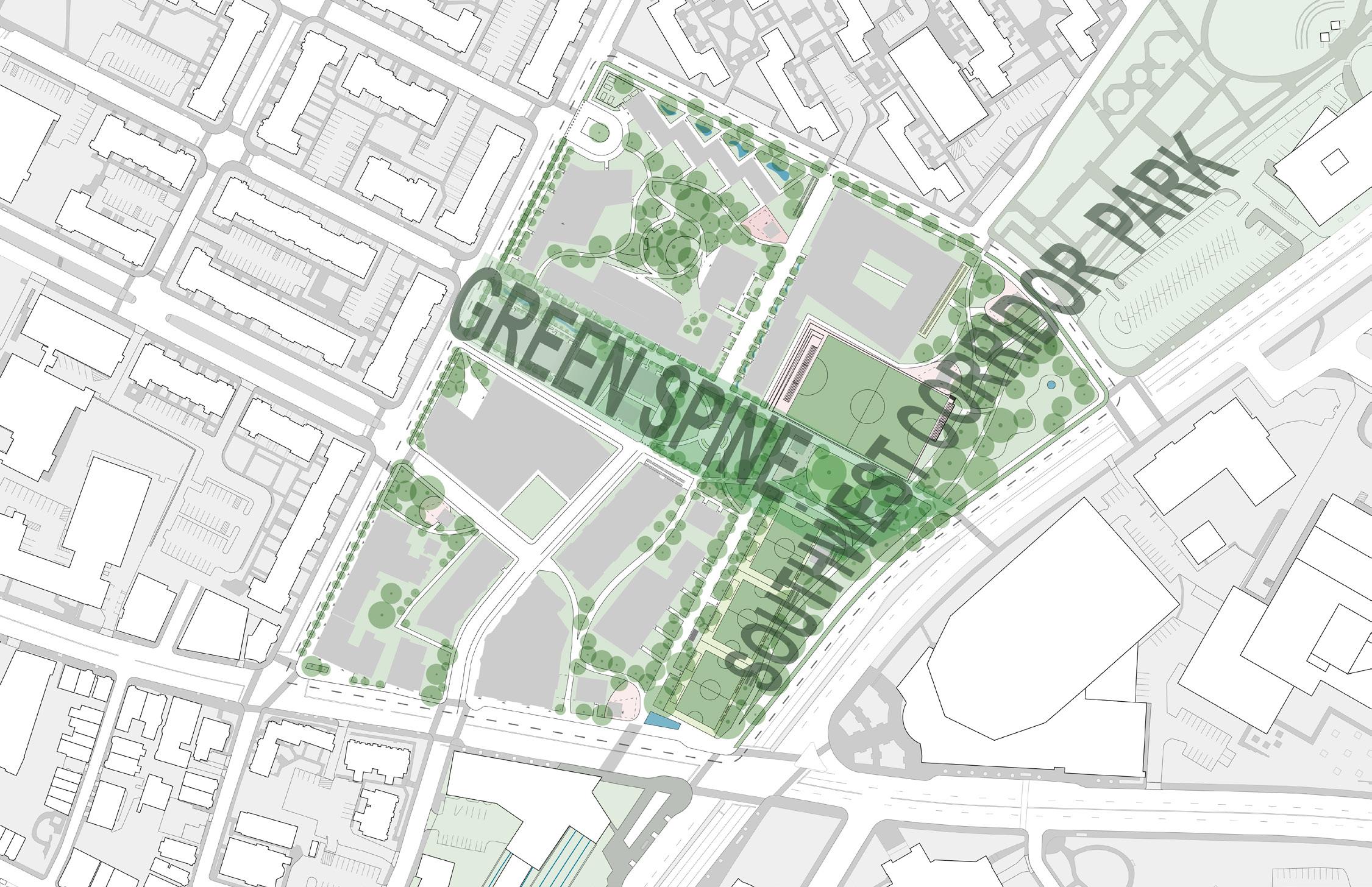
One of the main layout strategies of designing the “in-between” was to create a Green Spine. This site sits along the Southwest Corridor, an elongated park that runs from the South End to Jamaica Plain. Our plan is to connect this corridor to the rest of the Mission Hill neighborhood, and employ green- and comfort-infrastrsturctucture strategies along the way.
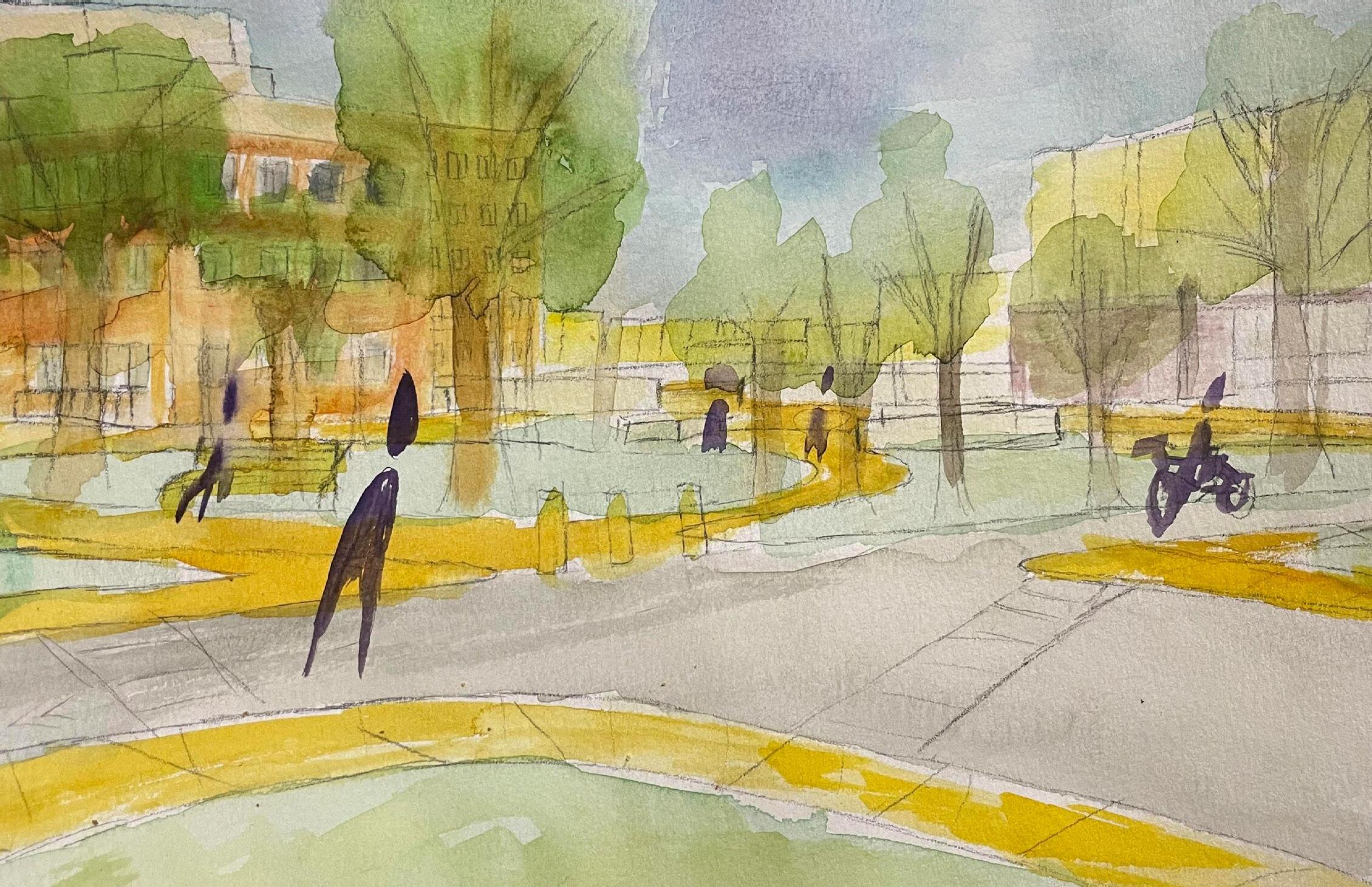
Along the Green Spine sits an open space at the center. This watercolor painting shows this area, featuring an extensive tree canopy and public seating.
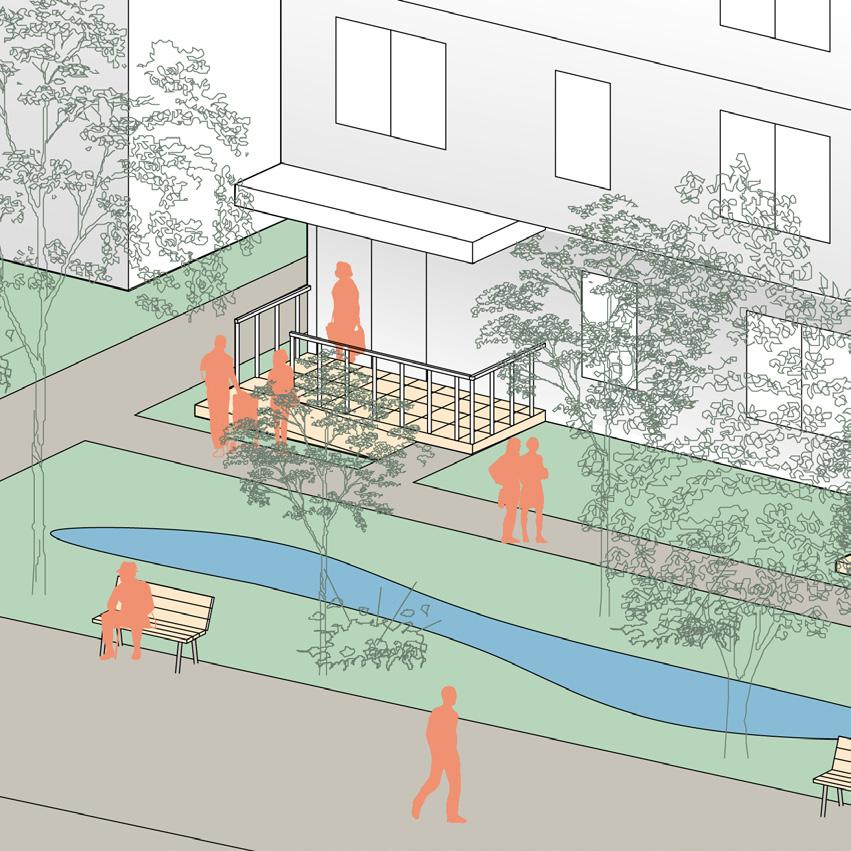
Bioretention gardens can act as a buffer between the central pedestrain path and more semi-private paths along the front doors of the row houses.
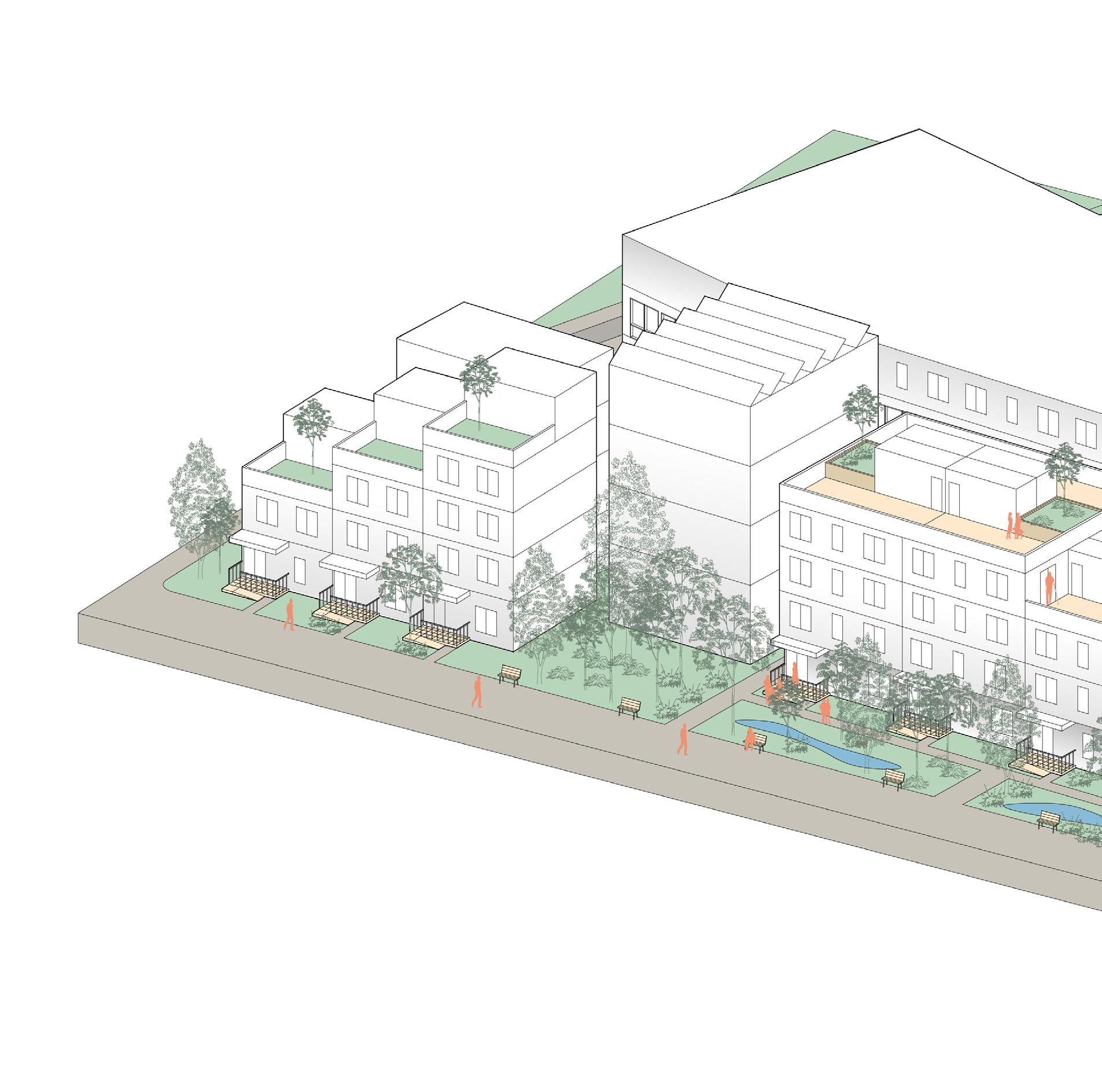
Extensive trees and plantings of various types to provide overhead shading and cooling for residents and visitors.
The Stacked Rowhouse
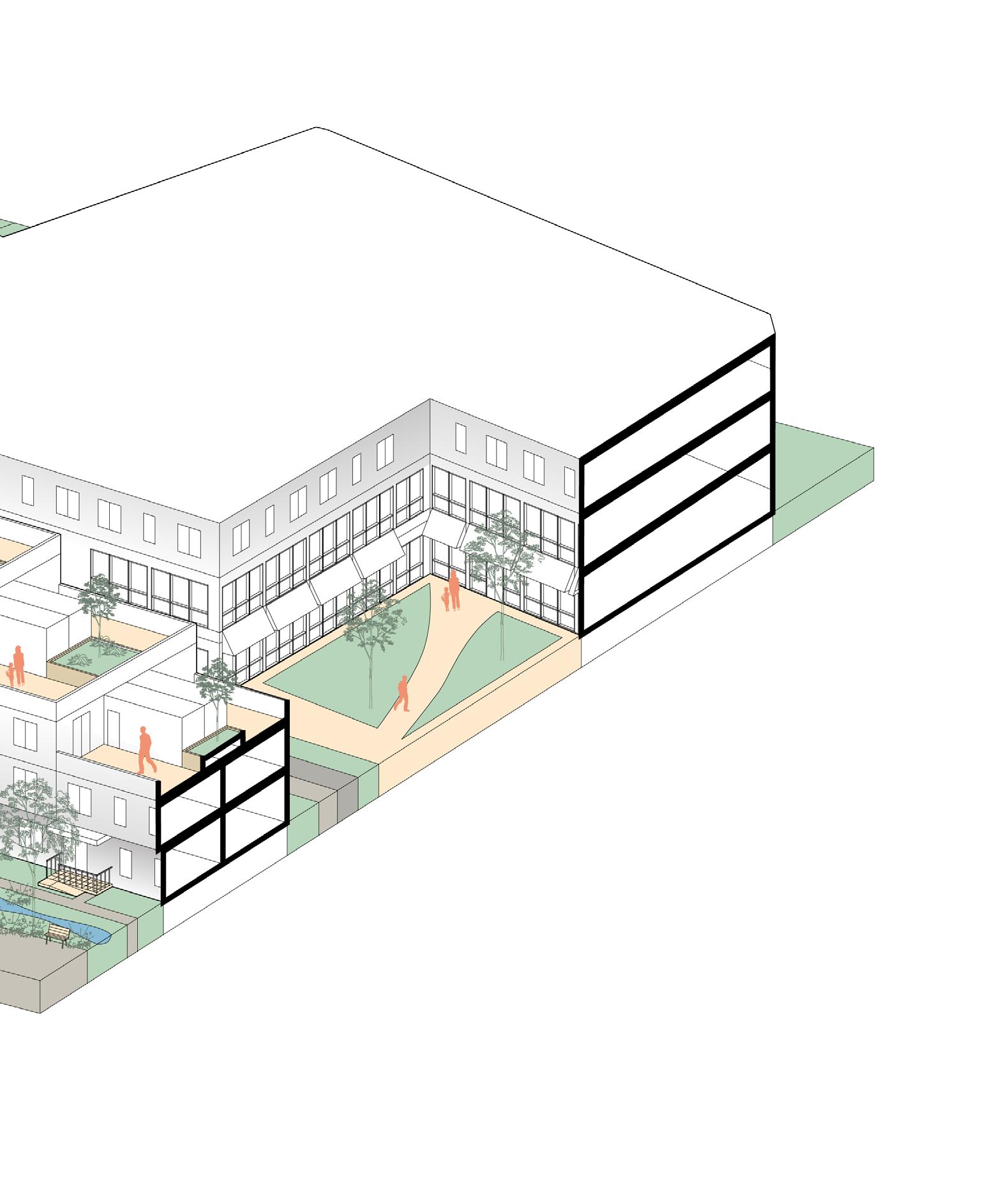
Stacked and double-backed row houses for optimal sunlight, and maximizing the fronts of buildings to the street. The terracing and setbacks help with maintaining the existing scale on Parker Street and with directing stormwater.
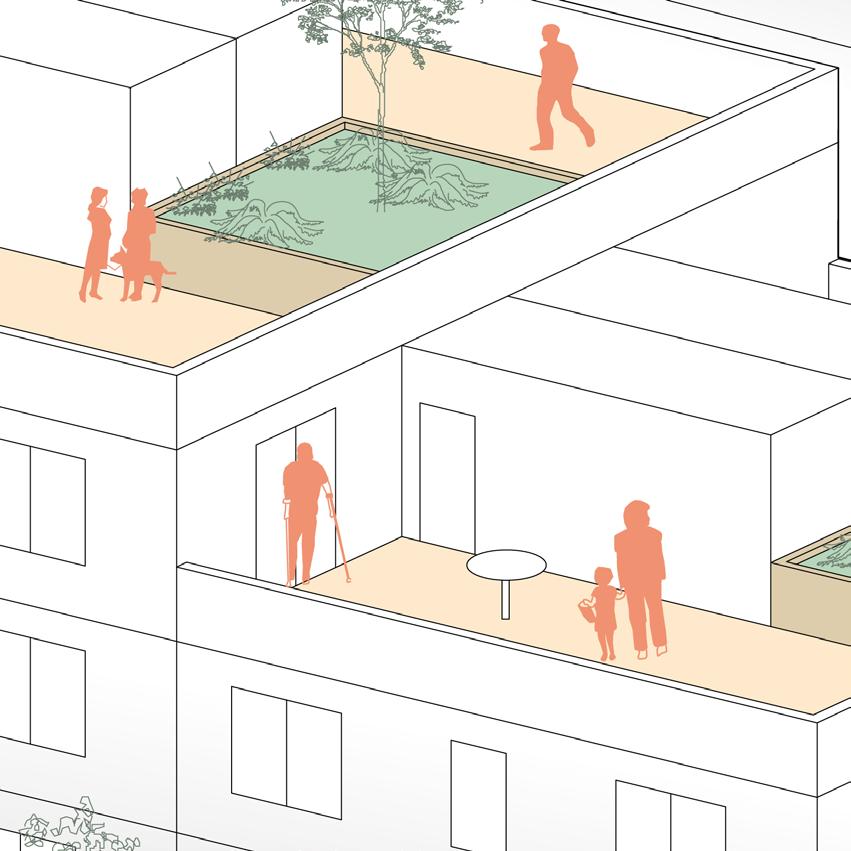
Each roof has dedicate space for both greenery as well as residents.
The stepped nature of the row houses allows for unique opportunities where residents from different units can interact with each other, transforming the roofscape into a collaborative space.
Firm: Murphy Burnham & Buttrick Architects
Project Architects: Tommy Kim, Quinn Lammie
Date Completed: Aug 2022 (Design Development Phase)
During the summer of 2022, I was lucky enough to work with the talented architects and designers at MBB Architects in New York City.
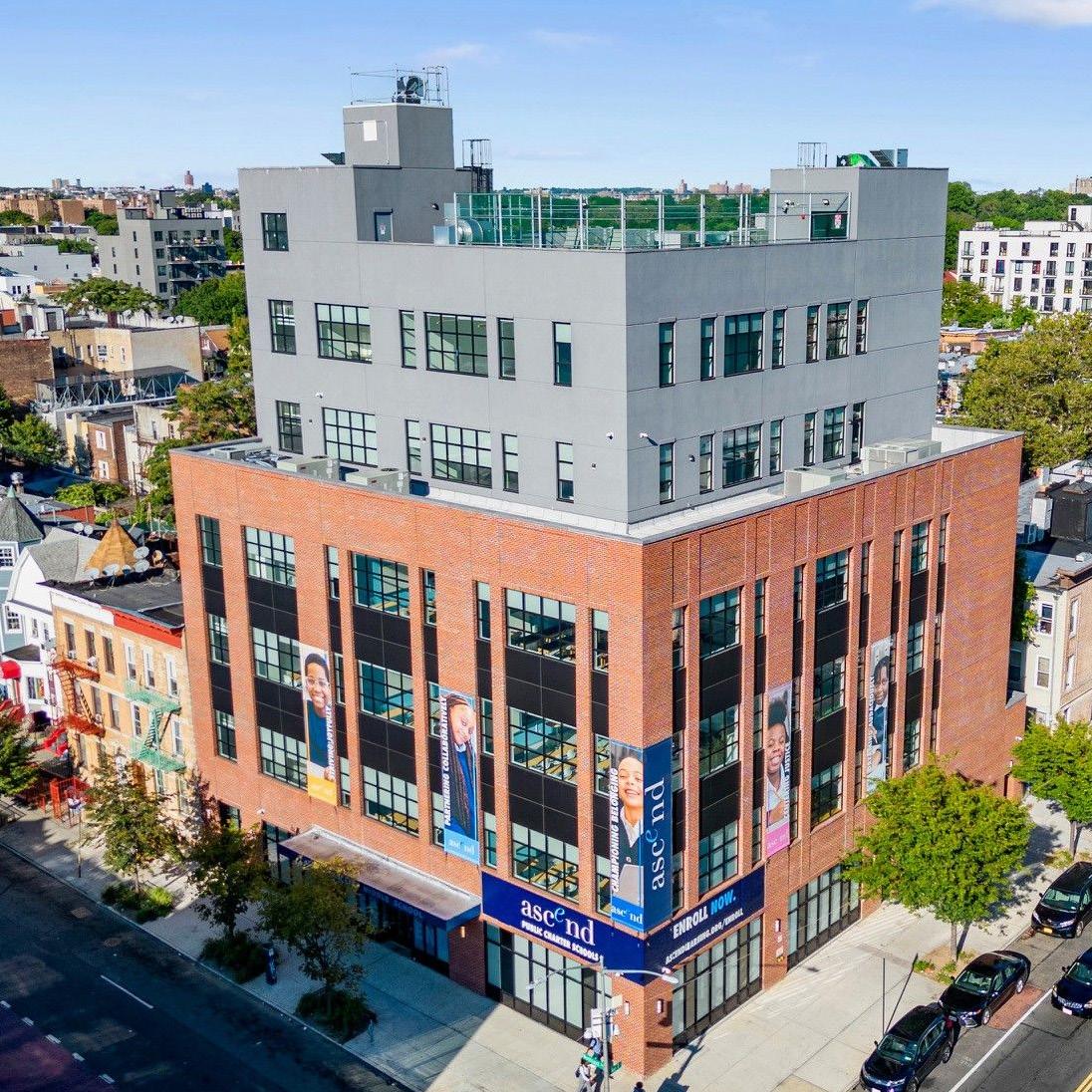
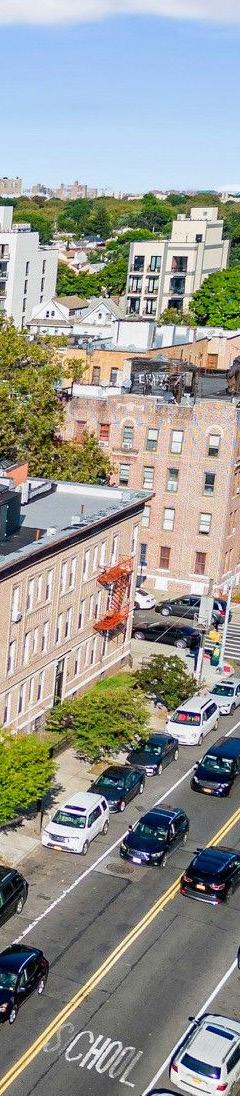
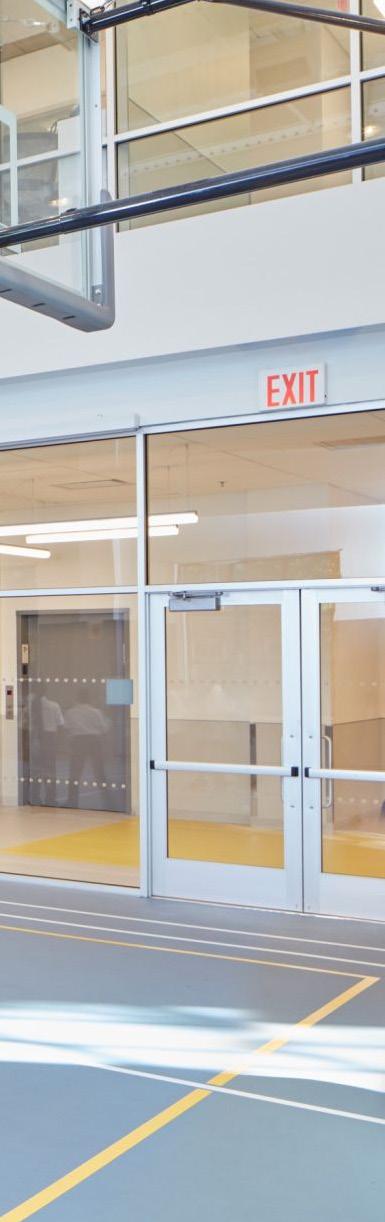
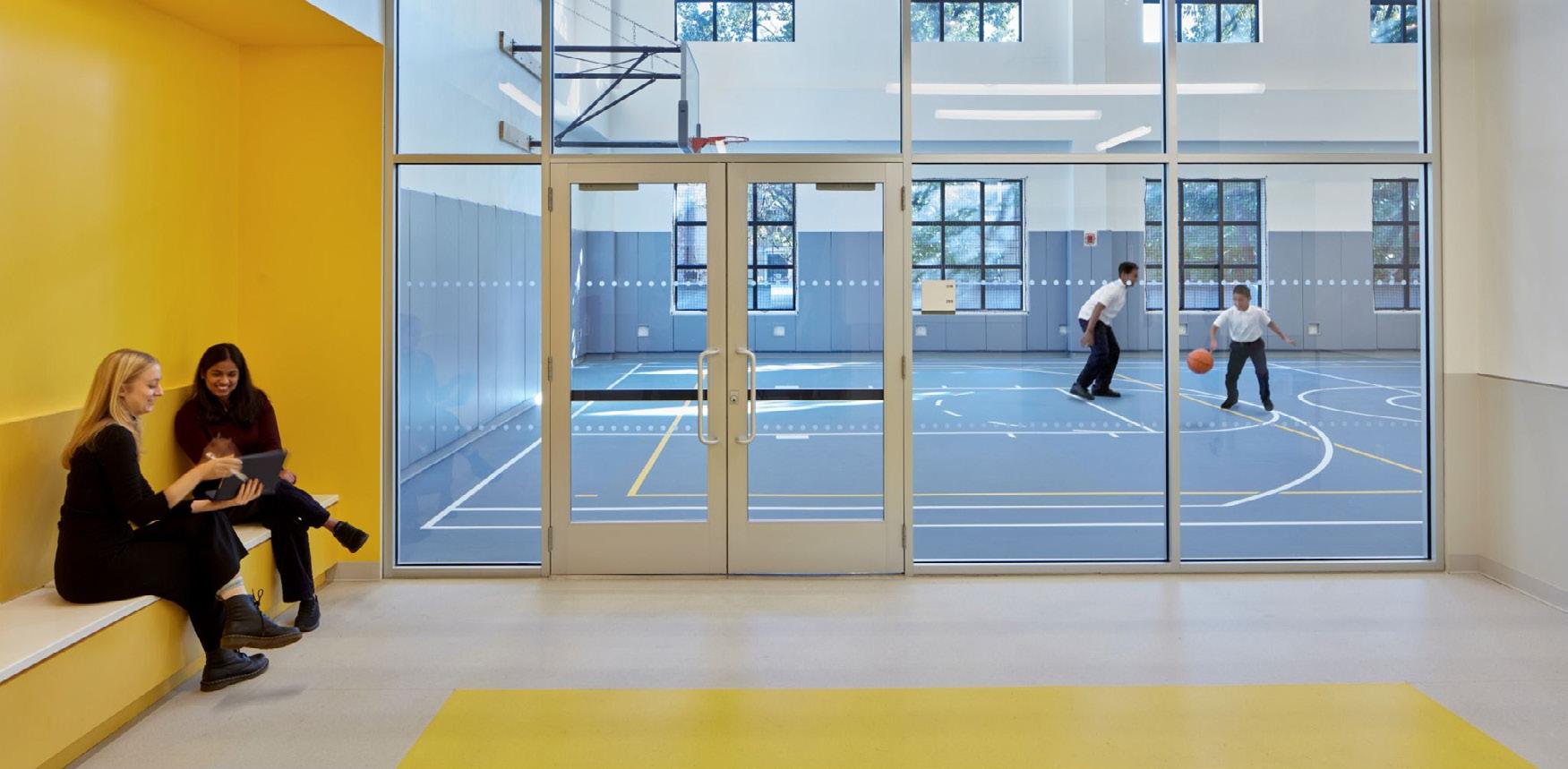
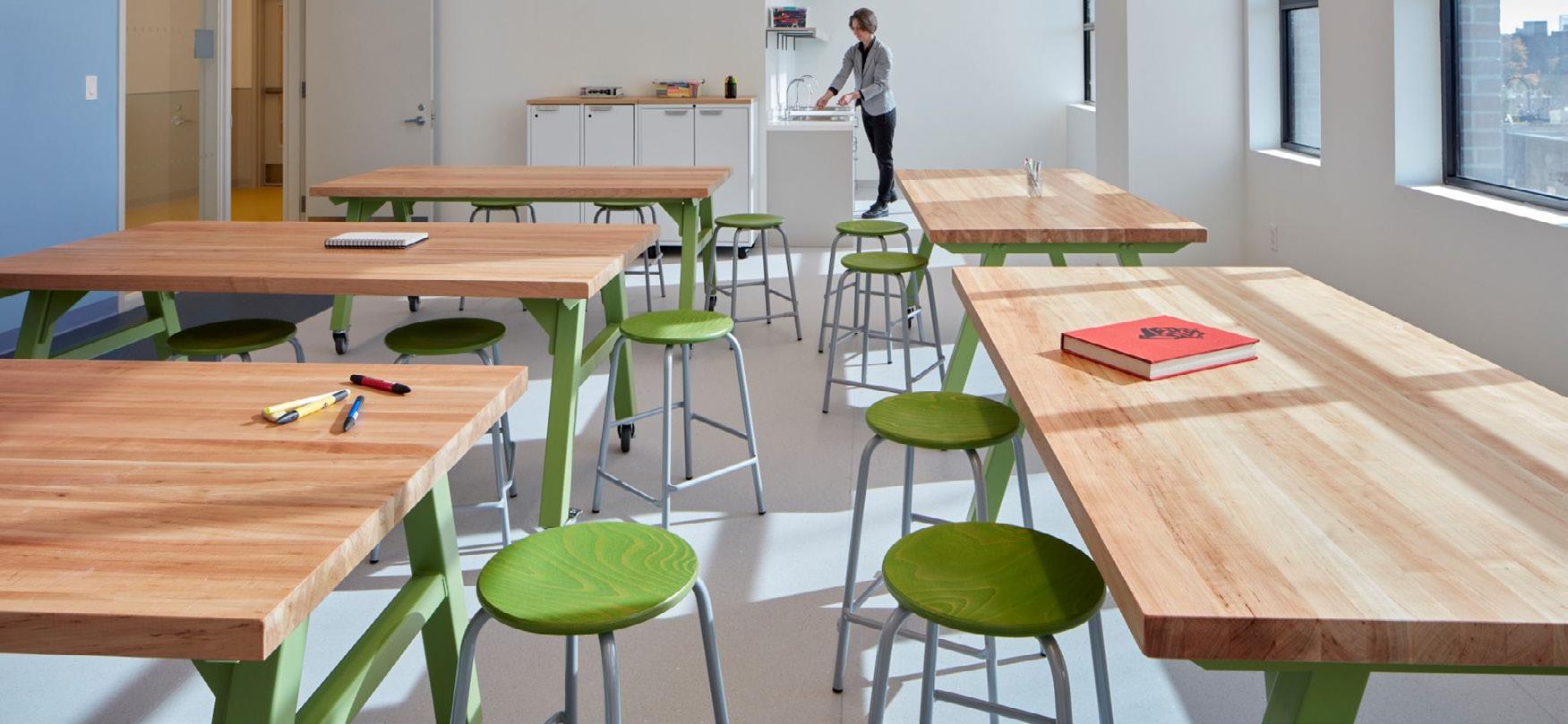
One of the highlights of working here was this project, which is a middle school on Flatbush Avenue in Brooklyn, NY. In collaboration with the project architects working on this, our goal was to retrofit a formerly-used industrial building to serve as a space that educates and inspires.
My role in this project was defining differentiating learning environments in the in-between spaces. This includes hallways, the several nooks, and the classroom thresholds, and reviewing different materials, color palettes, and defining the patterns that would define such spaces. I have contributed in part to the renderings shown in the following pages using Revit.
My role was working mainly in the design development phase, but throughout my time at MBB, I was able to go on multiple site visits and see the progress of construction. All in all, I am thankful to learn about what it means to create spaces that will enrich and inspire the next generation.
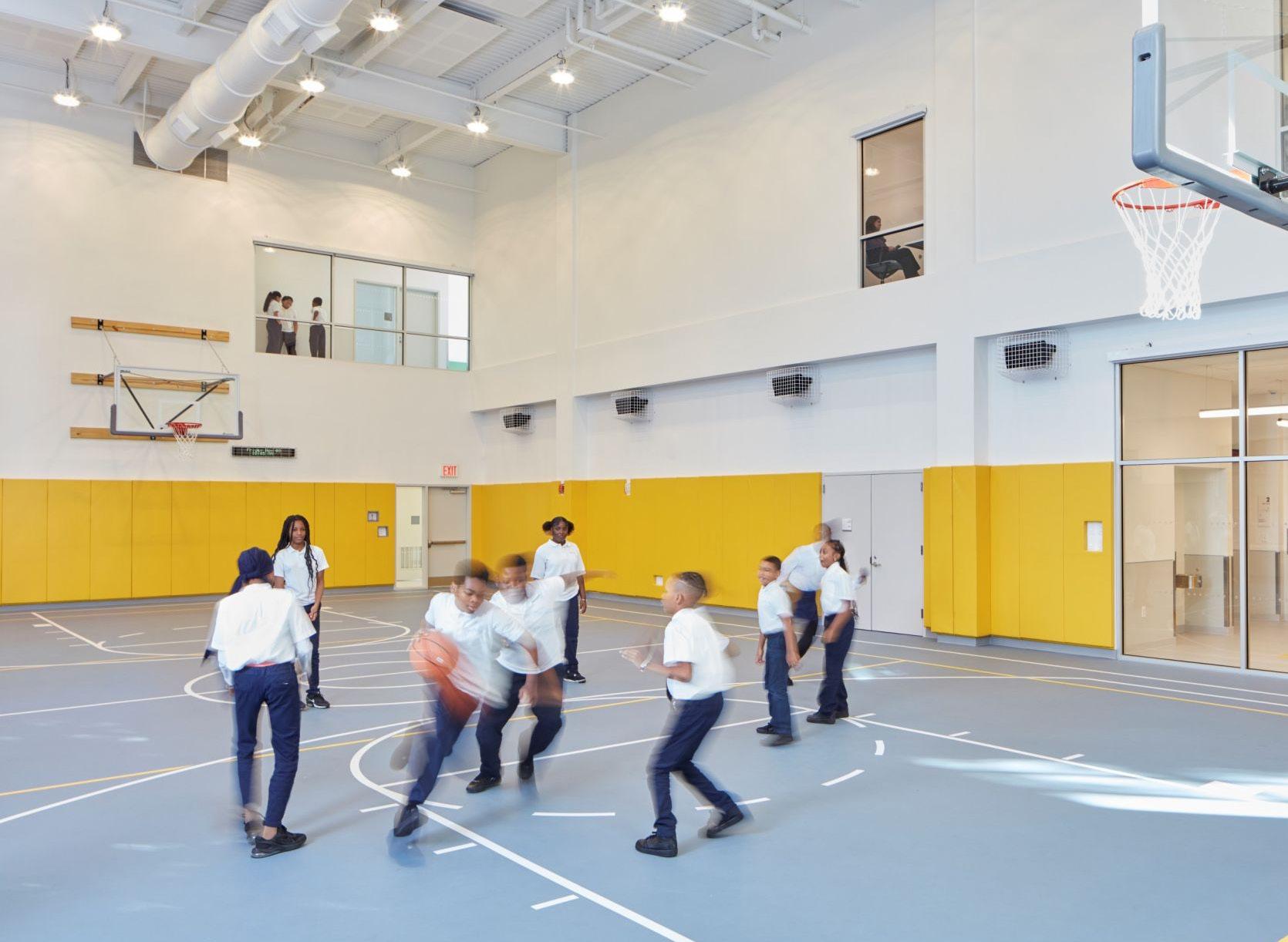
When it comes to a place that hundreds of kids will spend at least 8 hours a day in outside of home, it is our job to create a space that feels alive and can speak to what goes on in the classroom. My role in these spaces included looking through colors to be used and iterating designs for the hallway and classroom flooring.
Studio: Site, Space & Program
Professor: Killion Mokwete
Date Completed: Dec 2021
Chinatown has faced many challenges historically. In the middle of the twentieth century, The U.S. Highways Act led to the destruction of homes and displacement of families in the middle of Chinatown. Although the Big Dig and the Rose Kennedy Greenway has attempted to remediate that, some of the scars are still felt today in the community.
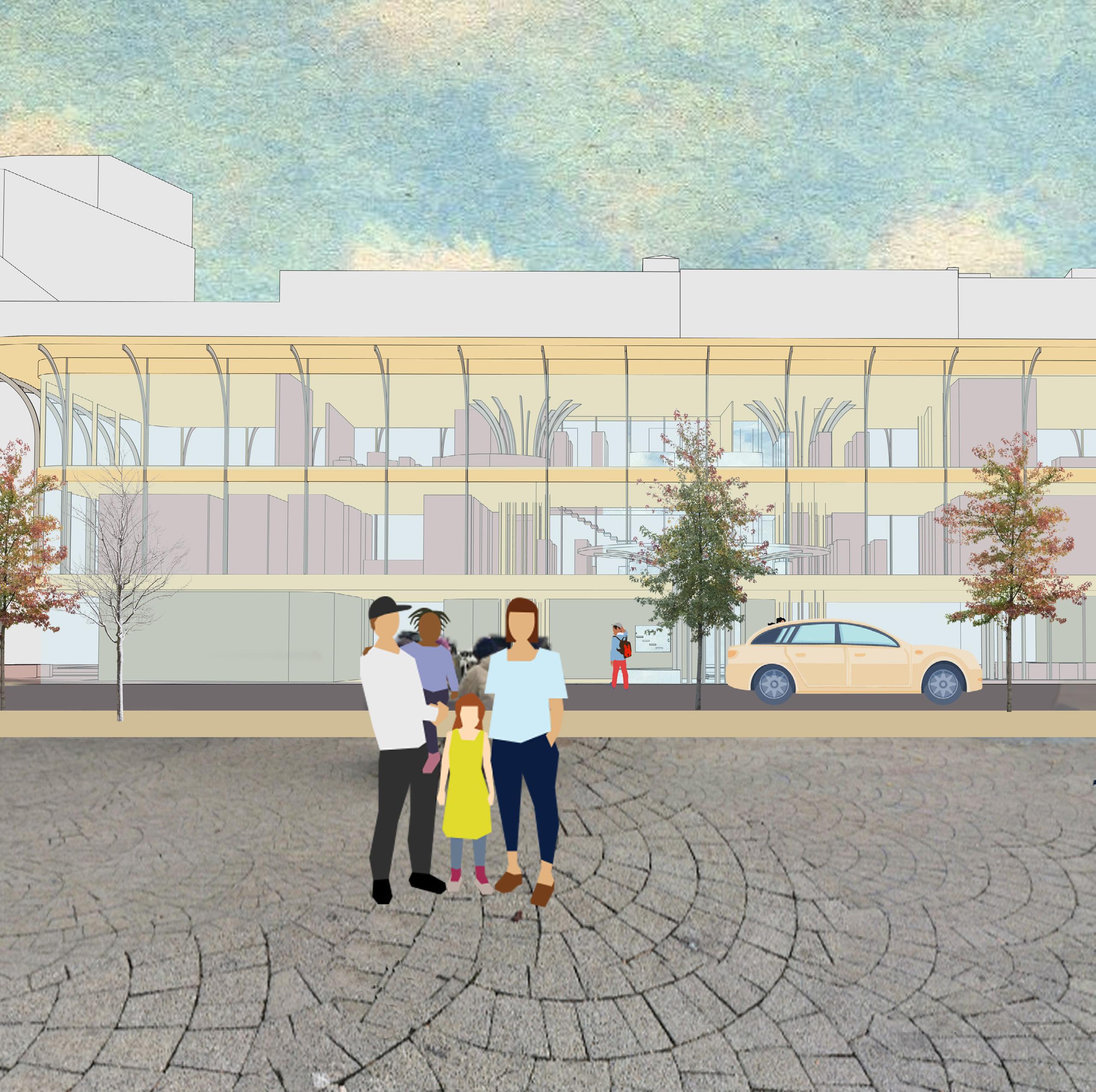
The Library and the Chinatown neighborhood both face extistential issues due to external factors (the former because of the digital age and the latter because of gentrification). This project celebrates both the Library as well as Chinatown, both as bodies of culture that can exist with relevance today.
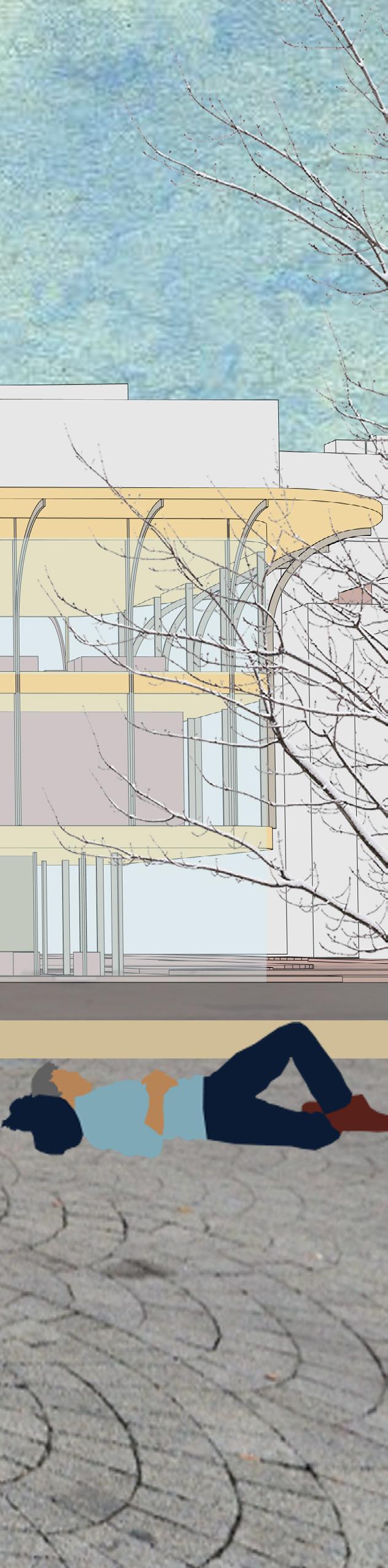
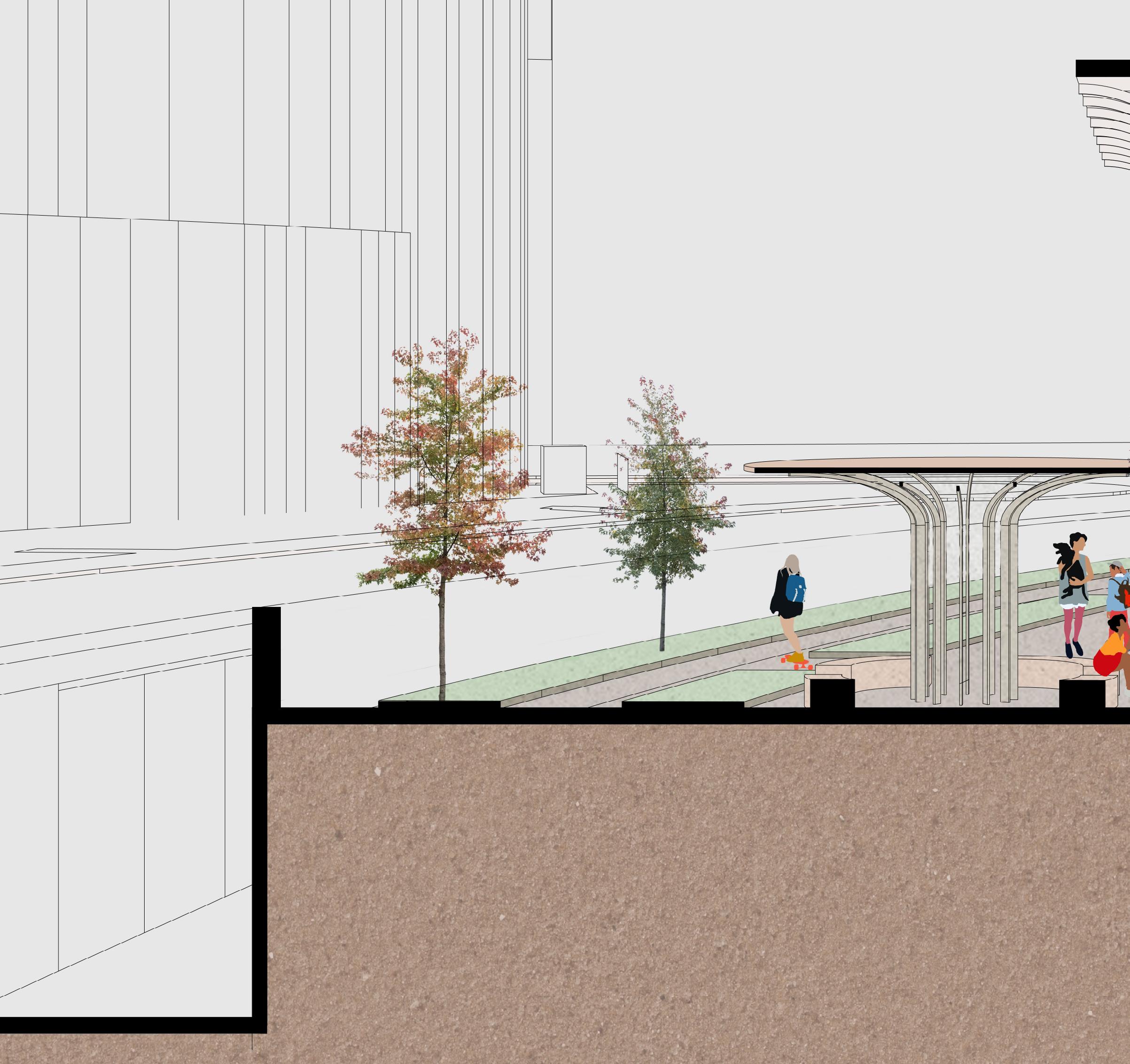
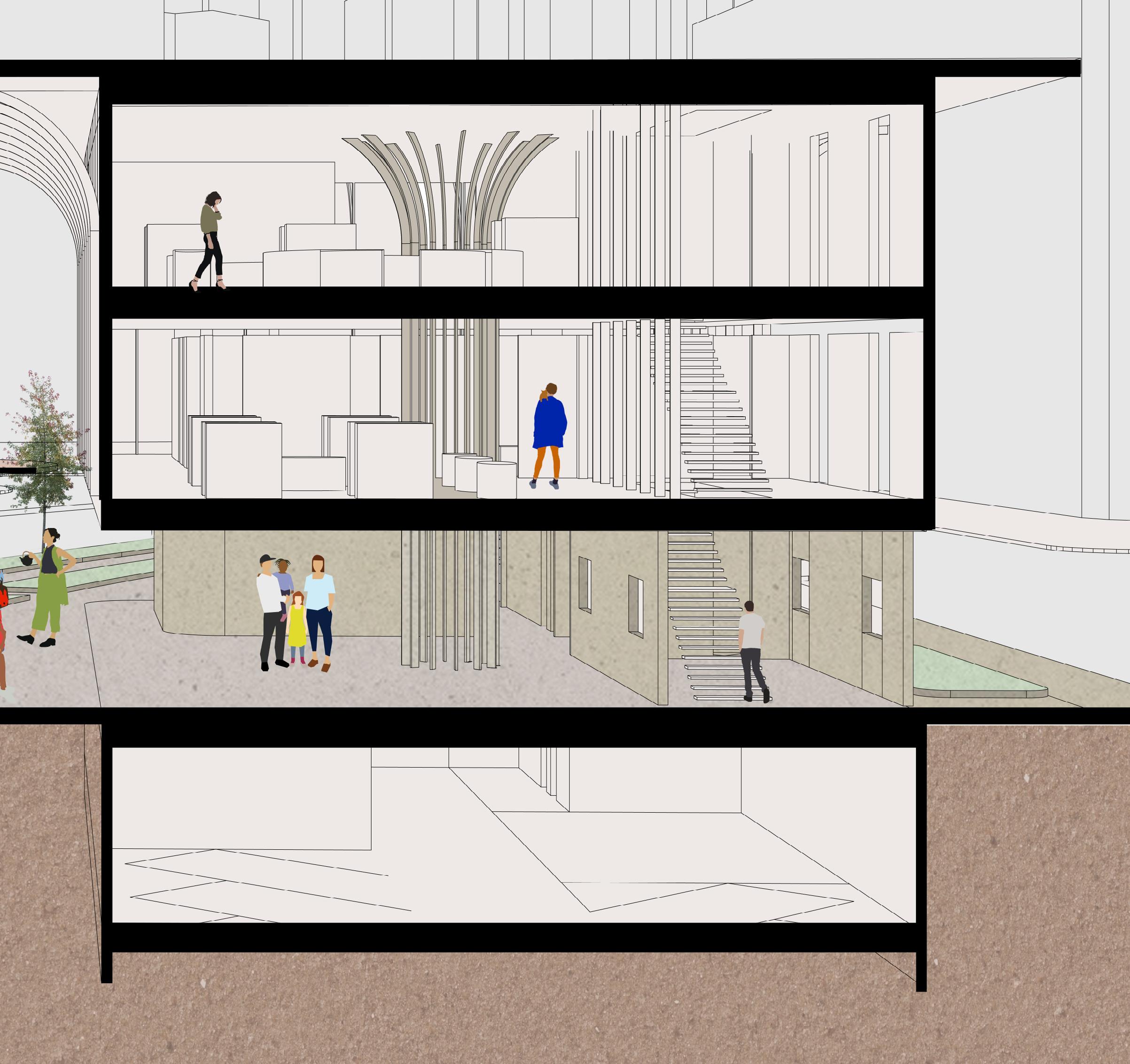
BPL - Chinatown sits along the Greenway, meaning that it sits on the nexus of Chinatown and the rest of the city. Therefore, what’s featured in this project is the outdoor living room, which invites the community to come in and explore all the library has to offer.
Inside, various programs such as a media room, a lecture hall and cafe, all meant to provide an enriching and public space for the people in Chinatown, no matter what age.
Chinatown
South Station
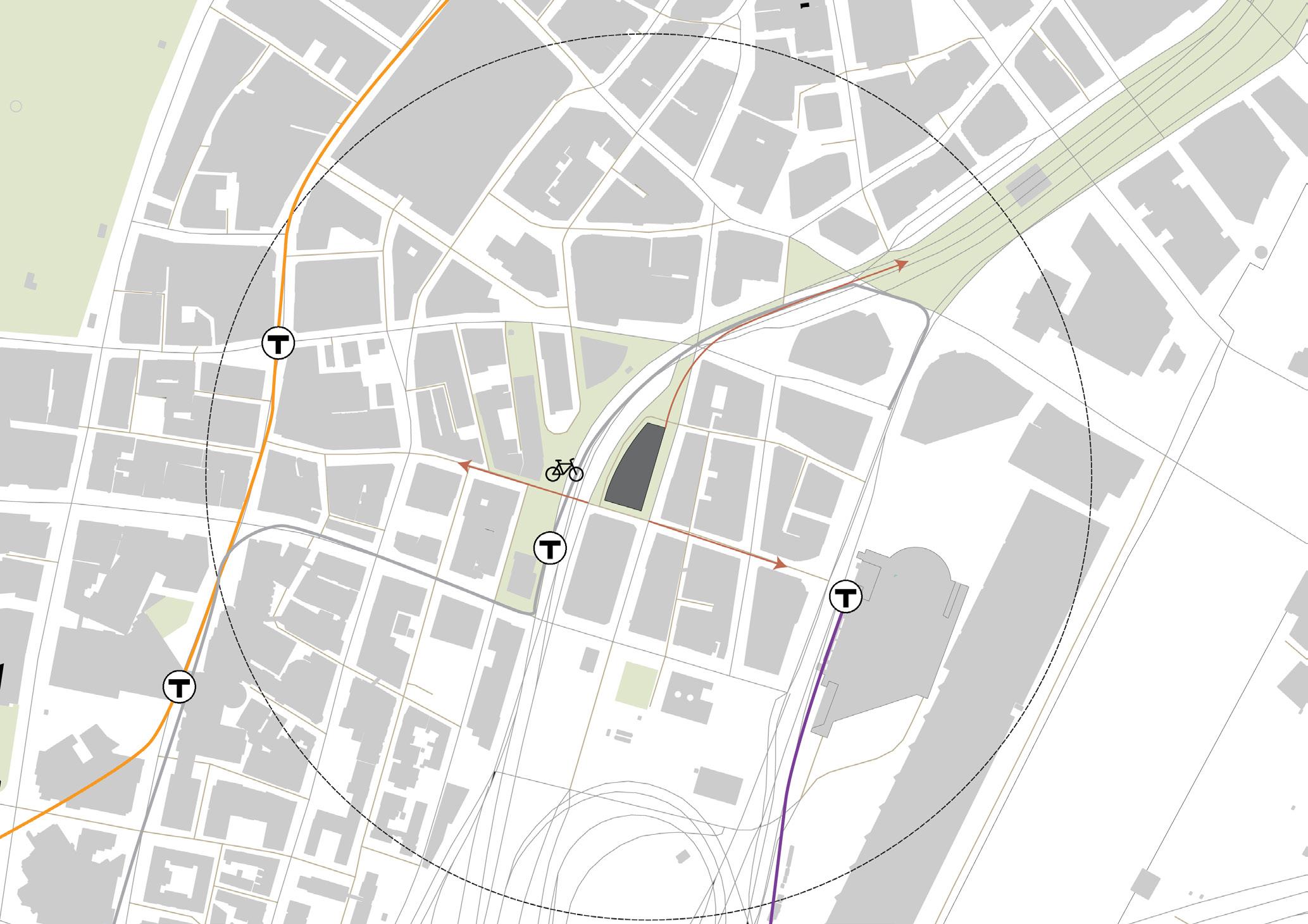
The site sits on the nexus of Chinatown and the rest of Boston. To the west lies Chinatown along with two stops on the Orange Line. To the north sits the Rose Kennedy Greenway, connecting the site to downtown and the North End. To the east lies South Station, a critical hub for entering and exiting Boston.
Rose Kennedy Greenway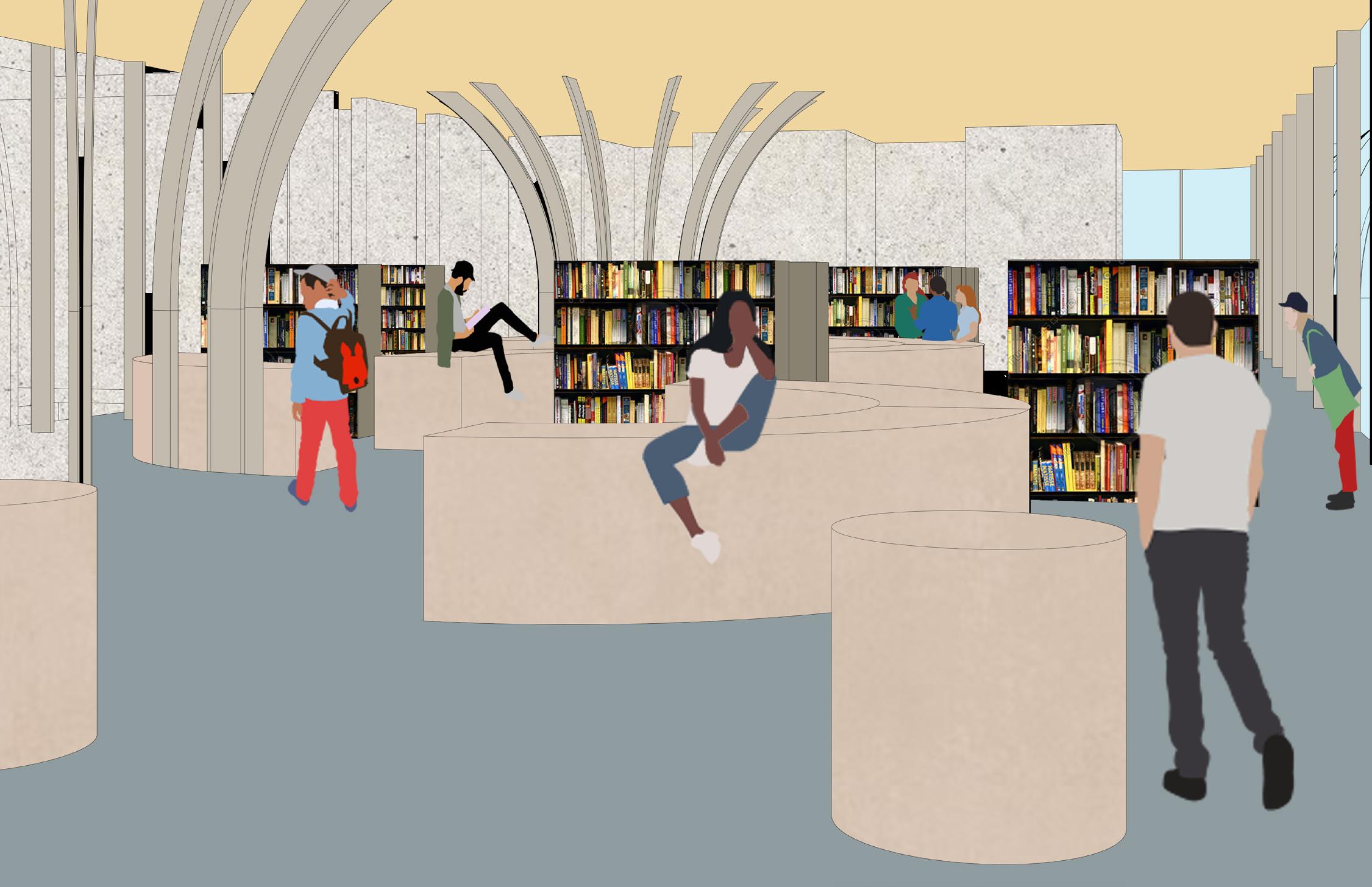
Studio: IE University visiting program, Segovia, Spain
Professor: Sandra Herrera Martinez
Date Completed: May 2023
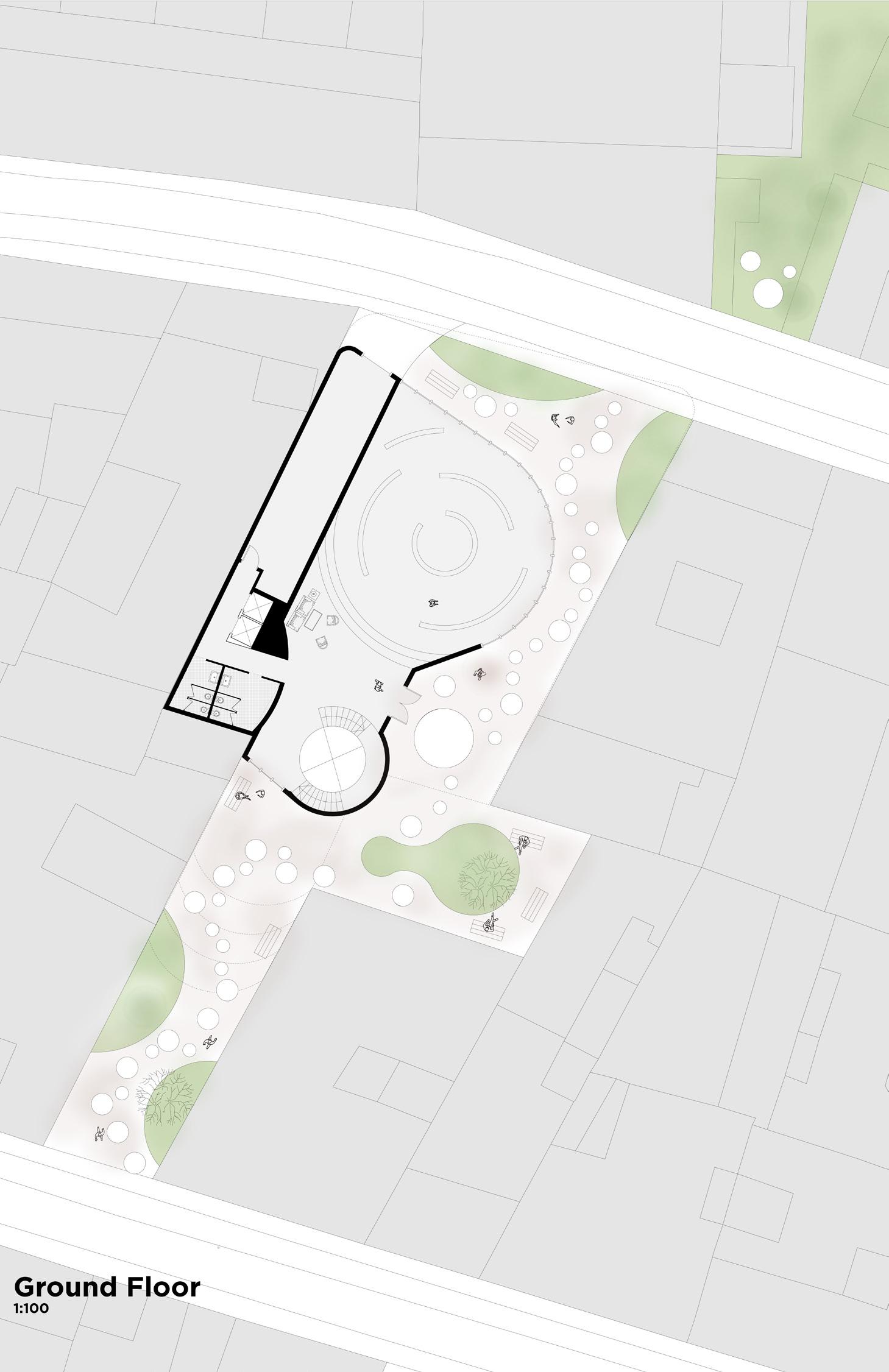
In the heart of the capital of Spain lies the vibrant Chueca neighborhood, the site for the architecture school of COAM.
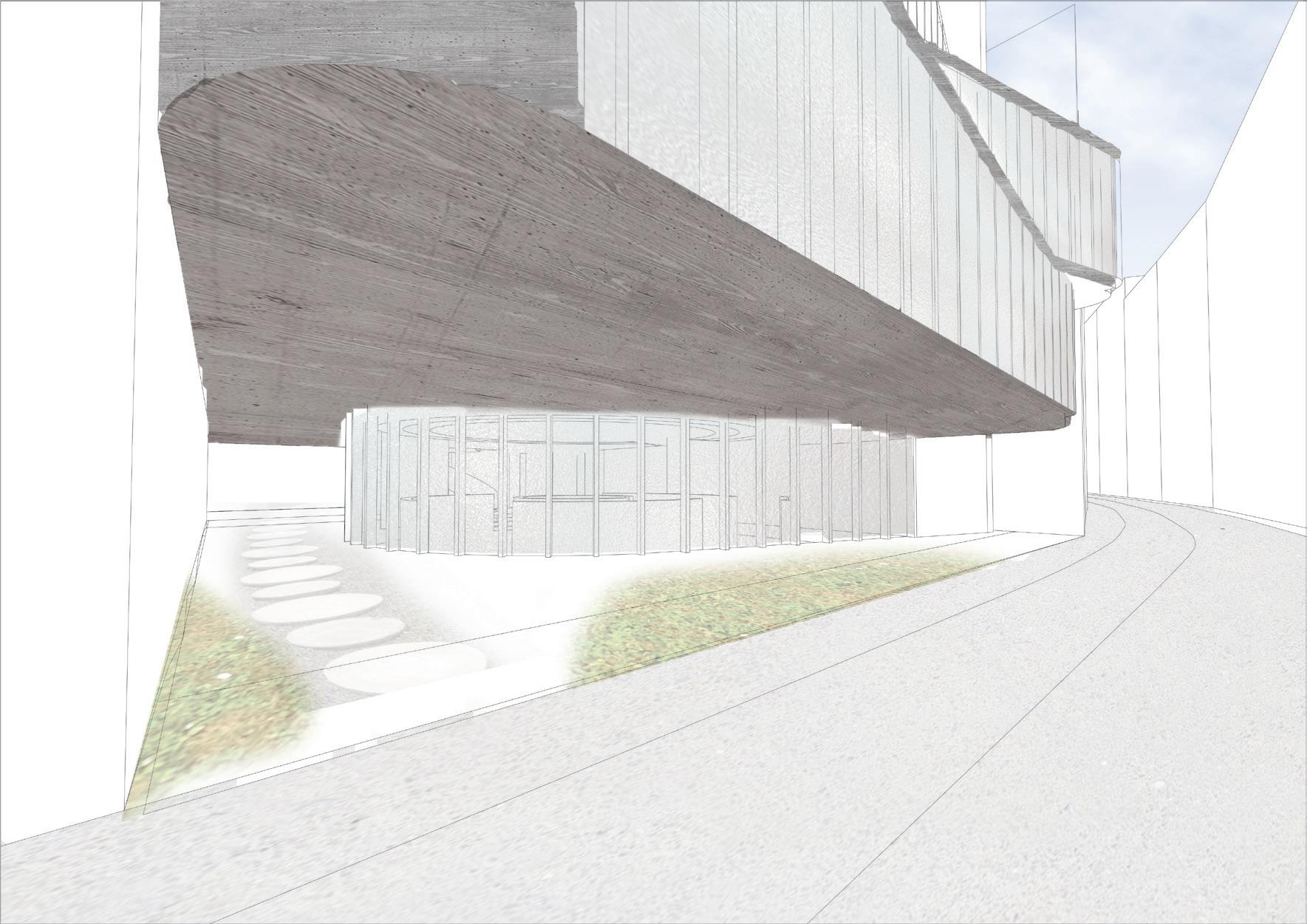
Including an exhibition space, an athletic center, a cafe, and a grand circus, 8 different programs fit into a small plot in this densely built neighborhood.
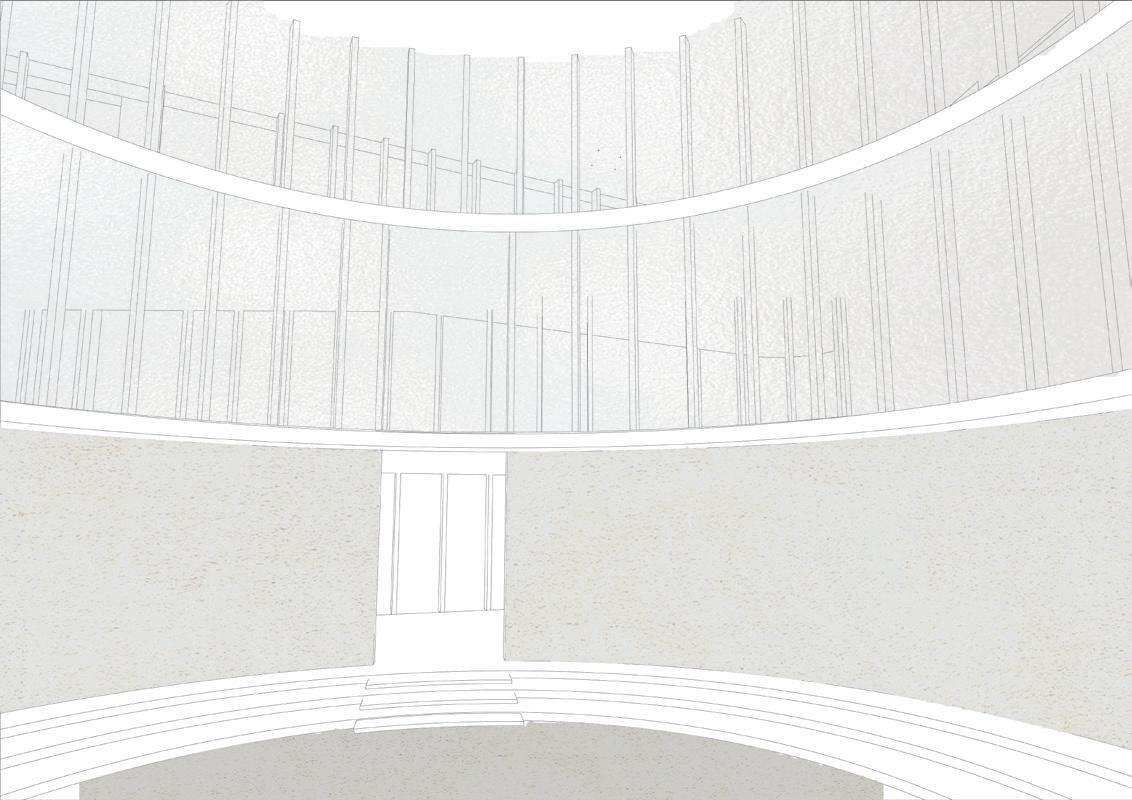
The building itself utilizes clear circulation so that one may reach all these programs with ease. In the center of it all you’ll find the circus, which soars three stories. In the upper levels, there are views to look onto the circus.
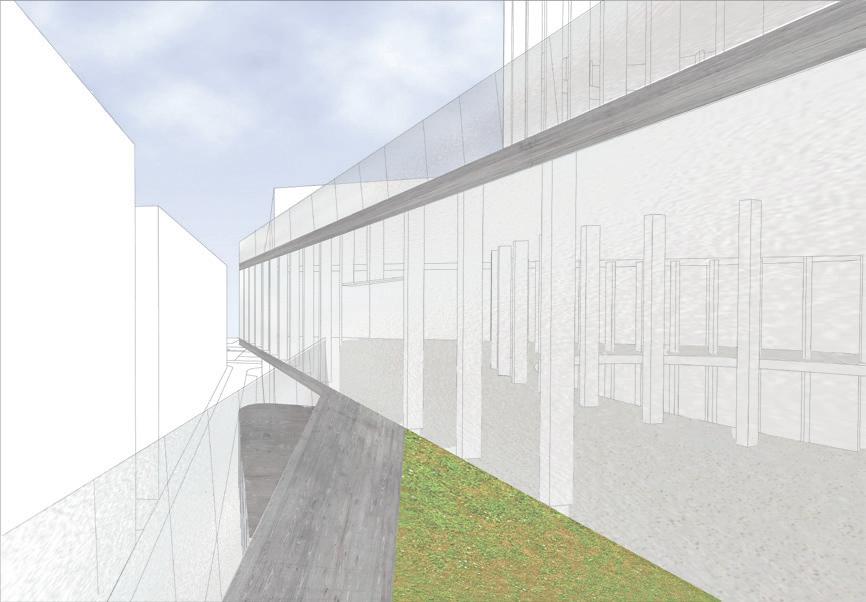
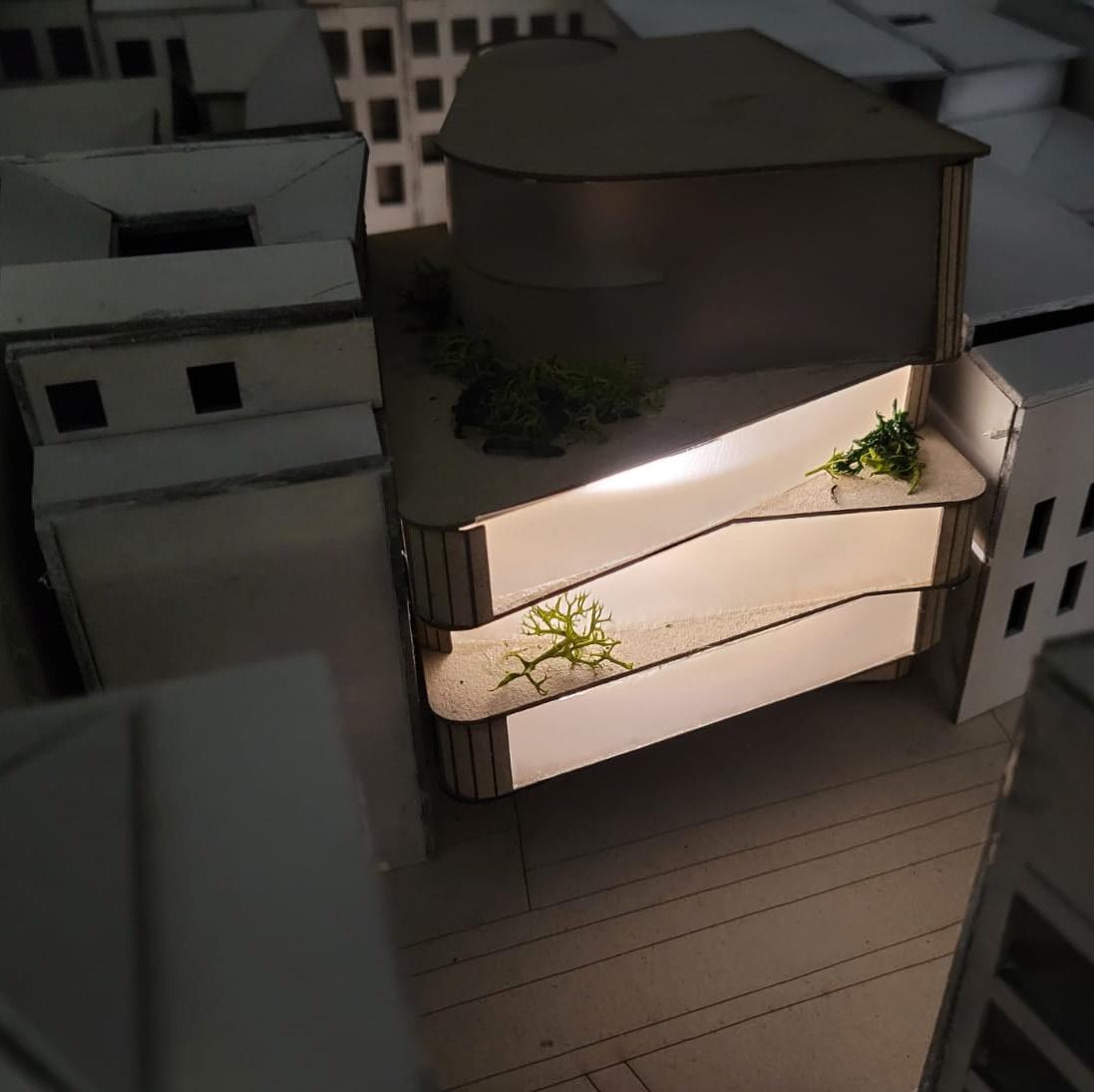
The facade reimagines the typology of the European rowhouses in this site’s vicinity. With each level being pushed and pulled in several directions, onlookers can have more optimal views of the city.
This project celebrates the circus as a contemporary art form which speaks with the 8 studios and other spaces in a school that values art and design.
LOCKER ROOMS
RESEARCH LAB
WORKSHOP
ATHLETIC CENTER
ENTERTAINMENT/ SERVICE
EDUCATION
STUDIO SPACE
CIRCUS
SHOP CAFE LOBBY
EXHIBITION SPACE SPA
SPORT
Exhibition Space
Main Entrance
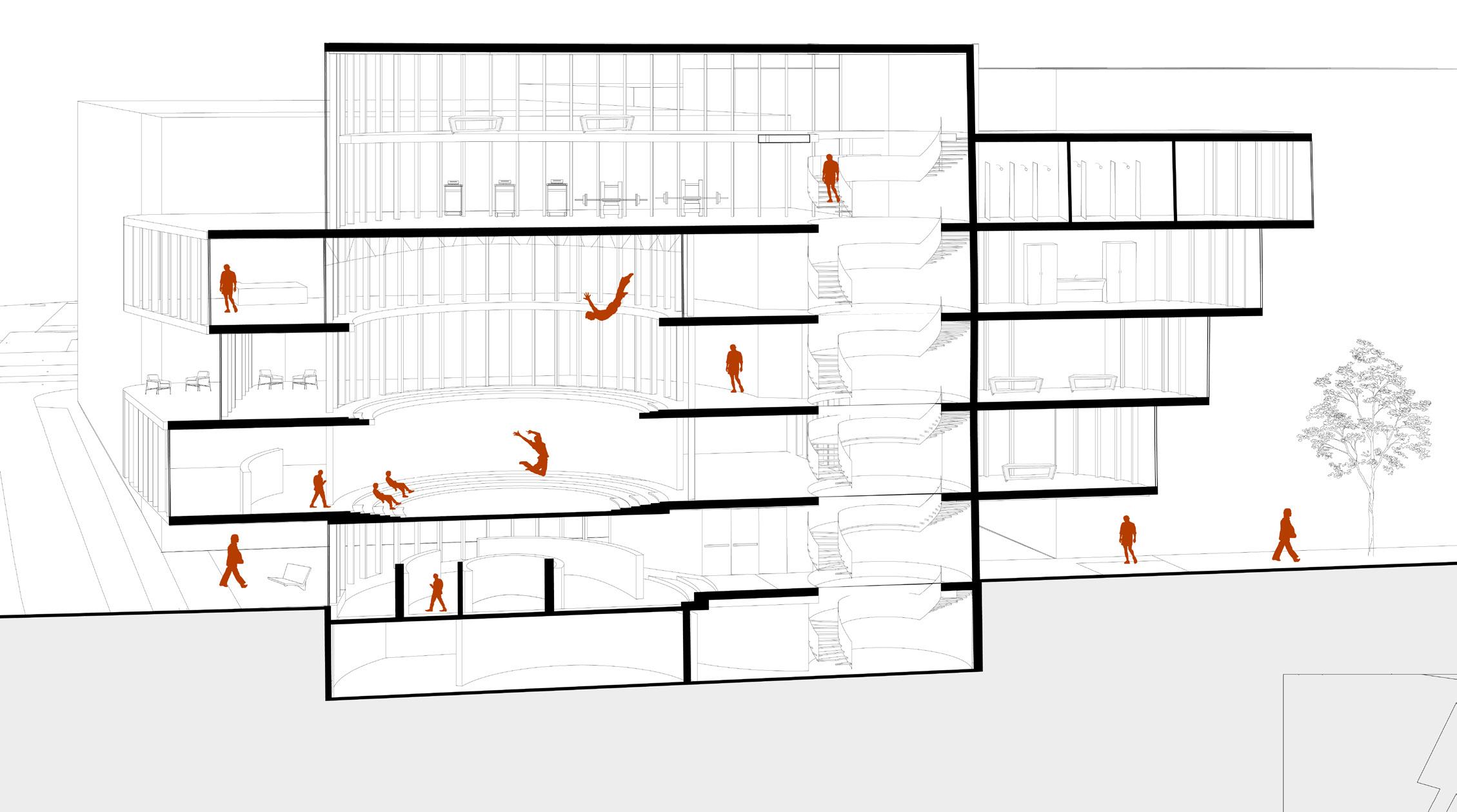
The circus spans three levels, from the mezzanine to the 3rd level (in European terms!) while still being concealed from the facade. In the upper levels, where a cafe, a sports shop, and some of the studios sit, anyone can be a spectator of the grand show going on in a given evening.