








Revista digital 2024, Segunda Edición. Raíces.

Queridos lectores,
Es un placer darles la bienvenida a la segunda edición de Inside-Out, Bayard School. En esta ocasión, hemos decidido centrarnos en un tema que consideramos fundamental para cualquier comunidad: la identidad y las raíces.
La identidad es lo que nos define, lo que nos hace únicos y especiales. Nuestras raíces, por otro lado, nos conectan con nuestra historia, nuestra cultura y nuestras tradiciones. En esta edición, exploraremos cómo estos dos conceptos se entrelazan y nos ayudan a comprender quiénes somos, de dónde venimos y hacia dónde queremos ir.
un naturalista y escritor argentino que aunque inspiró a Hemingway o al mismísimo Borges, ha caído en el olvido de nuestras raíces literarias. Sumado a esto, ¿hay algo más argentino que el mate? Para hablar de este ícono nacional, en el segmento en francés, encontrarán una lección para preparar buenos mates. El segmento en español, nos hablará sobre la importancia de recordar el pasado para no volver a cometer los mismos errores. Y por último, las secciones de escritura creativa nos demostrarán una vez más lo importante que es el arte como herramienta de la memoria individual y colectiva.
Nuestros colaboradores han trabajado arduamente para ofrecerles una variedad de artículos, ensayos y reseñas que abordan la identidad y las raíces desde diferentes perspectivas. En este número podrán leer desde un cómic que aborda algo tan identitario como son nuestros genes , hasta historias de
Revista digital 2024, Segunda Edición. Raíces.
Agradecemos a todos los estudiantes, y profesores que han contribuido a hacer posible esta edición. Su dedicación y creatividad son lo que hace que nuestra revista sea un reflejo auténtico del profesionalismo de sus docentes, quienes constantemente impulsan a sus alum-
nos a tomar desafíos y a superarse a sí mismos.
Este compromiso con la excelencia educativa es lo que nos permite producir contenidos de alta calidad y relevancia.
Anhelamos que disfruten de esta edición y que los inspire a valorar y celebrar sus propias identidades y raíces. ¡Feliz lectura!
Editor jefe: Lucio R.
Editoras: Valentina A. y Mila G.
Segmento musical: Lorenzo P.
Ilustraciones: Marianna K.
Fotografía: Federica N.
Editor digital: Franco H. G. yAgustina H. O.
Coordinación técnica: Prof. Pablo C.
Coordinación general: Prof.Graciela O. P.
Revista digital 2024, Segunda Edición. Raíces.
1. “La Segunda Guerra Mundial y el Holocausto”
2. Rincón de escritura creativa
1. “The King’s Magic Drum”
2. Second Year Biology Project
3. Reviews
4. Writer’s Corner
1. “Comment prépare un maté?”

El día 21 de mayo hicimos una visita guiada al Museo del Holocausto para complementar el material sobre la Segunda Guerra mundial y el Holocausto que veníamos estudiando en la materia Historia.
La Segunda Guerra Mundial se desata tras la ruptura del pacto de paz que Hitler había firmado con la URSS una vez que invade Polonia. Para ese entonces, el movimiento antisemita estaba profundamente instalado en Alemania, alentado por el Estado nazi que desde 1933 había implementado leyes contrarias a la comunidad judía e iniciado su persecución. En 1941, la guerra alcanza su máxima expansión: desde Francia hasta las puertas de la Unión Soviética, conquistando así la mayor parte de Europa y esparciendo el antisemitismo y las políticas de persecución racial iniciadas una década antes.
En países como Polonia, el ejército alemán trasladaba a los judíos hacia guetos, barrios amurallados construidos por los mismos judíos con el fin de lograr un aislamiento espacial. A lo largo de la Europa conquistada por los alemanes, se crearon campos de concentración y trabajo y miles de judíos fueron llevados allí. Al cabo del tiempo y especialmente tras la implementación de la “Solución final a la cuestión judía” se llevó a cabo una política de exterminio total de dicha población.Se estima que seis millones de judíos europeos fueron asesinados entre 1939 y 1945.
Más allá del fallecimiento de Hitler y el fin del régimen nazi, el nazismo no murió con él. La historia y el presente de interconectan constantemente y lo que pasó en el Holocausto no es una excepción, este suceso todavía impacta en nuestro día y en las cuestiones asociadas con la identidad en la actualidad.
Revista digital 2024, Segunda Edición. Raíces.
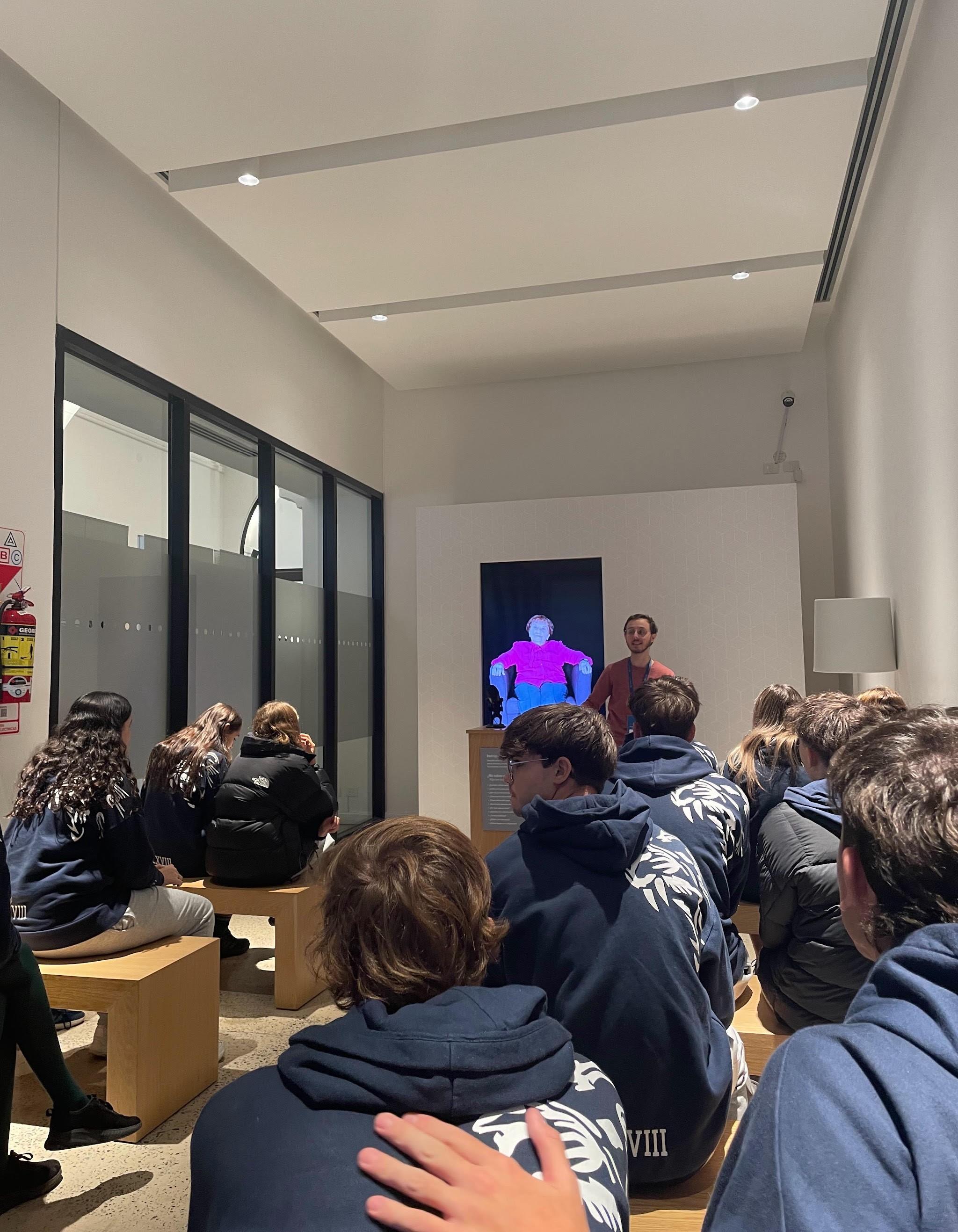
La educación sobre el Holocausto y su impacto es esencial para entender las razones y hechos que detonaron esta catástrofe y para prevenir futuros casos similares promoviendo tolerancia y y respeto a la diversidad y diferentes etnias. Muchos países son los que integraron la enseñanza del Holocausto en sus programas educativos con la intención de concientizar a las generaciones más jóvenes sobre el peligro del odio, racismo y discriminación.
Aún así, a pesar de los esfuerzos para promover la tolerancia y el respeto hacia diferentes etnias, el antisemitismo todavía existe hoy en día a lo largo de todo el mundo. Esto se puede encontrar en ataques a sinagogas o la propaganda antisemita actual en línea.
Es importante resaltar la importancia de la educación para poder combatir el odio y la intolerancia para evitar que el antisemitismo avance a un punto más peligroso y poder evitarlo en todas sus formas.
muy peligroso debido a que es crucial recordar, preservar la verdad histórica y honrar la memoria de todas sus víctimas. Todas las calamidades ocurridas, las consecuencias que trajo el odio extremo y la discriminación deben ser recordados y honrar la memoria de los testigos con el fin de poder mantener viva la memoria de las victimas y sus vivencias son cruciales para poder prevenir otra catástrofe similar futura.
Todavía hay gente que niega o minimiza lo ocurrido, siendo esto
Revista digital 2024, Segunda Edición. Raíces.
De la mano de esta memoria histórica, creemos que los testimonios son de suma importancia, nos recuerdan lo que se vivió. Escuchar a un o una sobreviviente contar su historia nos acerca a las situaciones ocasionadas y nos ayuda a entender la fuerza y resistencia de las personas. Además, tener la oportunidad de escuchar a personas en específico también nos ayuda a darle identidad y rostro a aquellos que atravesaron esto, no fueron solo 6 millones de judíos que fueron víctimas sino que millones de padres, madres, hijos, hermanos, amigos, personas.
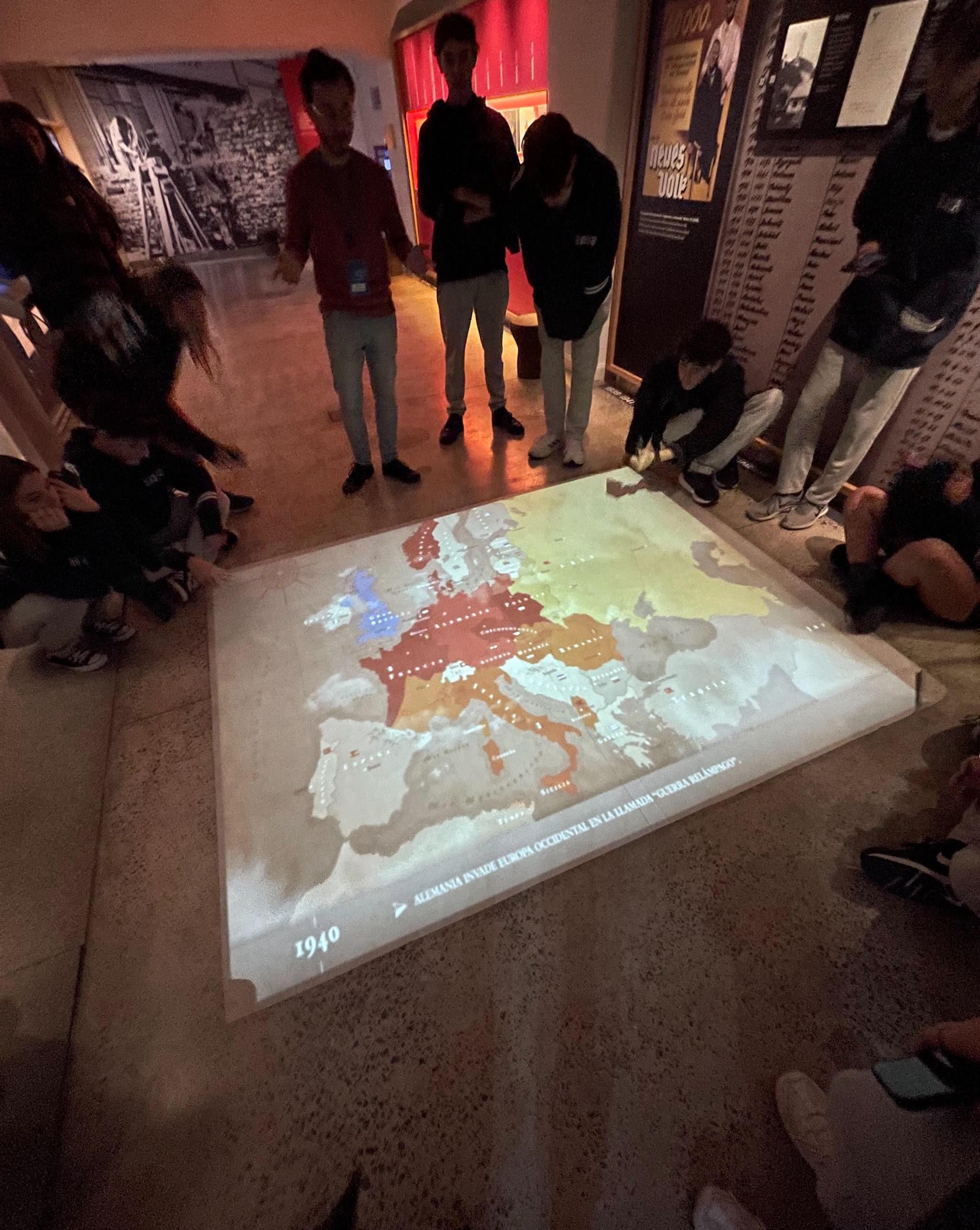

Un ejemplo de una persona que ayudó a tener noción de estos temas con sus testimonios es Lea Zajac de Novera. En la visita pudimos tener una conversación con ella en la que le pusimos hacer preguntas y ella nos dio respuestas generadas por una IA. Dentro de estas respuestas, comentó que piensa que su propósito es justamente este, dar testimonios y concientizar, nos compartió que ella siente que atravesó todo lo que atravesó para poder dar testimonio. En conclusión, entre los años 1933 y 1945 se vivieron atrocidades y brutalidades únicas en unaAlemnia nazi.
Se llevaron a cabo asesinatos y tortu ras por odio y discriminación con el fin de conseguir un país de raza aria. Si bien fue una excepción en la historia, no significa que no se pueda reproducir, por lo que es necesario escuchar las voces de aquellos sobrevivientes para educarnos, ya que, como dijo Jorge Santayana, “Aquellos que no pueden recordar el pasado están condenados a repetirlo”.
digital 2024, Segunda Edición. Raíces.
La vertiente creativa de la revista, en la que podrás explorar textos escritos por alumnos de nuestro colegio.
En
esta sección:
• “Entre Dios y el mundo”
• “Me alquilo para soñar”
Por Mía P. Emilia B., Lara S.,Ana F., Bruno B., Thiago M., Tomás C., Cristóbal S.,Anne D., Mila G., Federica N. y Marianna K..
Sor Juana Inés de la Cruz fue una monja mexicana ampliamente conocida durante la época del barroco y fue una figura crucial en la historia y la literatura latinoamericana, debido a su destacada contribución como poeta, y defensora de los derechos de las mujeres y de su acceso a la educación. También tuvo una enorme importancia en el territorio colonial, ya que funcionaba como un nexo entre España y América durante este período, gracias a su popularidad y su contacto con la Iglesia y la Corte. Sin embargo, dentro del ámbito religioso, su capacidad y creatividad para escribir no eran del todo valoradas. Más bien era juzgada y demonizada por su amplio conocimiento, especialmente por parte de las autoridades eclesiásticas. Su astucia e ingenio desafiaron las normas sociales de su época, convirtiéndola en un símbolo de resistencia y empoderamiento femenino. El hecho de que una mujer como Sor Juana tuviera la capacidad de expresar sus pensamientos a través de sus poemas con tanta liviandad y presentara su impactante sabiduría e interés por la filosofía y la astronomía hacía que permaneciera constantemente en la mira de las autoridades eclesiásticas. Como resultado de esto, fue censurada y silenciada, todo por el simple hecho de ser una mujer apasionada por la literatura que expresaba su visión acerca de la sociedad del momento.
Revista digital 2024, Segunda Edición. Raíces.
Tanto su historia de vida como la película “Yo, la peor de to-
das”(1990), dirigida por María Luisa Bemberg, que trata sobre sus últimos años de vida, nos inspiraron a ponernos en sus zapatos y escribir, a partir de una escena, una página de su diario personal.
“Me alquilo para soñar” - Satoshi
En el marco de Lengua y Literatura, los Doce cuentos peregrinos, de Gabriel García Márquez, fueron el punto de partida para la escritura de distintos textos en cuarto año. Estos trabajos de escritura creativa son el emergente de una lectura, en la que todos los significados se han resemantizado, para dar lugar a otras formas de expresión.
grupo de estudiantes que optó por firmar con pseudónimo, y surgió de una actividad vinculada con el cuento “Me alquilo para soñar”. Incluye algunos fragmentos del cuento.
El poema que sigue fue escrito por un
Revista digital 2024, Segunda Edición. Raíces.
Ella
Hay alguien detrás de mí que no deja de mirarme, solo la poesía es clarividente en su arte
Soñé que él estaba soñando conmigo, un vínculo singular, ella soltó su carcajada irresistible, un encanto sin par.
Soñé con esa mujer que sueña, en la noche profunda, la sola interpretación parecía una infamia, en la mente fecunda.
También ella acababa de despertar de la siesta, en su mundo onírico, soñé con el poeta, en un universo lírico.
¿Ya está escrito?
Pregunta que resuena en la eternidad,
he venido solo para decirte que anoche tuve un sueño contigo, en la realidad.
El mundo le parecía un inmenso juguete de cuerda, una ilusión, me dijo en voz muy baja, revelando su pasión.
Entre tantos sueños se nos cuela uno ajeno, a la vida real, no se imagina lo extraordinaria que era, en su esencia vital. Él me miró desencantado, ante la revelación de un sueño profundo, será uno de sus laberintos, en el misterio fecundo.
Satoshi
Revista digital 2024, Segunda Edición. Raíces.

“
By Júlia F. & Clara B.
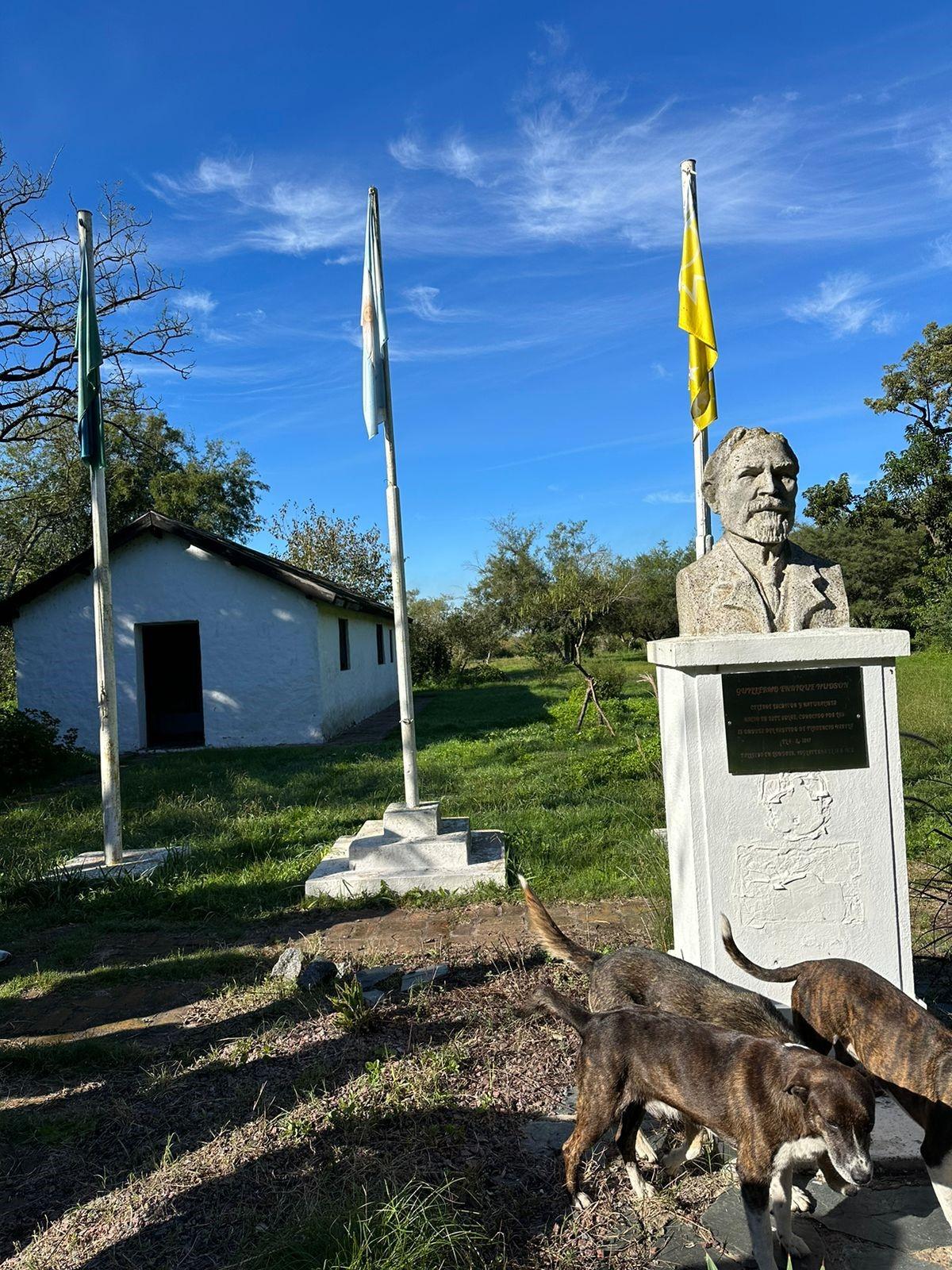
William Henry Hudson was a naturalist writer born in 1841, Quilmes,Argentina. What makes Hudson such a special author is his approach towards ecocriticism. He lived during a time in which nature was only seen as an economic interest, something that must be explored and exploited. Hudson, however, saw it as something sacred. His avant-garde works are filled with valid eco-critic envisions, despite the fact that the term had not even been
Revista digital 2024, Segunda Edición. Raíces.
coined in the late nineteenth century.
In 2024, Bayard’s senior year focused on studying one of Henry Hudson’s most famous pieces: Green Mansions. The story entails the memories of an old Venezuelan gentleman, Mr.Able and his adventurous journey through the jungles in SouthAmerica. Due to political complications,Able escapes from Venezuela and will find himself in an awakening situation in which he dis-
covers his passion towards nature and meets a majestic indigenous girl that will teach him the wonders and care of nature. It is an interesting fictional piece with enriching historical content. Since it was written in the early twentieth century, the book is filled with accurate cultural contests, it vividly describes the relationship between the white man and the native tribes and the relationship between humankind and nature.
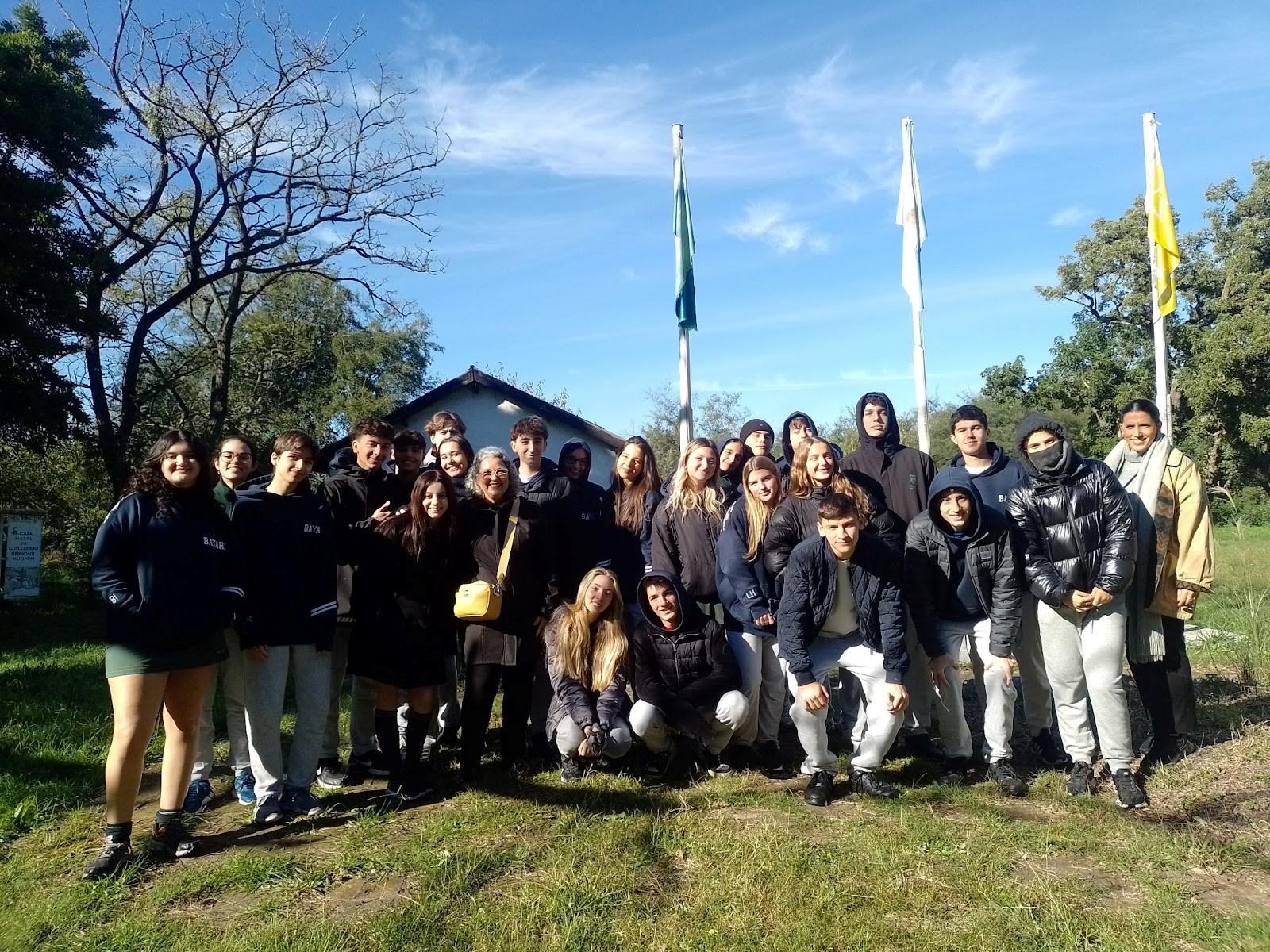
On May the 3rd, fifth year had the opportunity to visit Hudson's house in his hometown, Quilmes. The visit consisted in attending the Reserva y Museo Histórico Hudson, and experiencing a fragment of what this author's life was like. The students previously prepared questions to interview the guide during the unique and interesting tour. Some of the questions had to do with the preservation of the reserve, its connection with Hudson, how many people lived in Hudson's house, the museum's history, the species found there, problems the organi-
Revista digital 2024, Segunda Edición. Raíces.
zation might have had, among others.
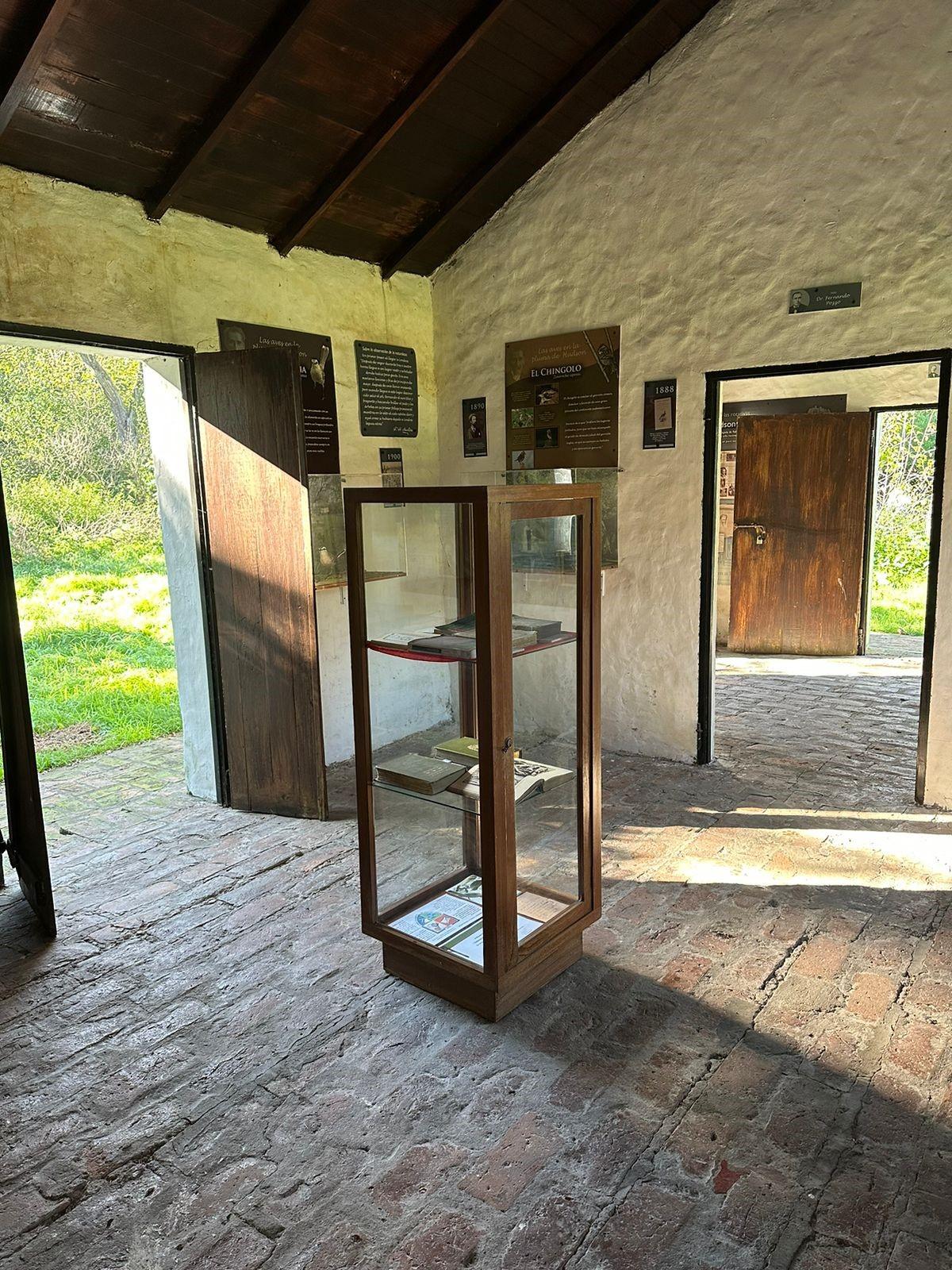
When talking to the guide, Marcelo, the students found themselves among a vast and careful natural reserve. There was nature spread all along and a tiny little white house. Hudson shared that home with 7 people: his parents, siblings and helpers. The house was about 300 years old, built in around the late 18th century, it consisted in three rooms made out of “tapera” bricks and cow excretion that
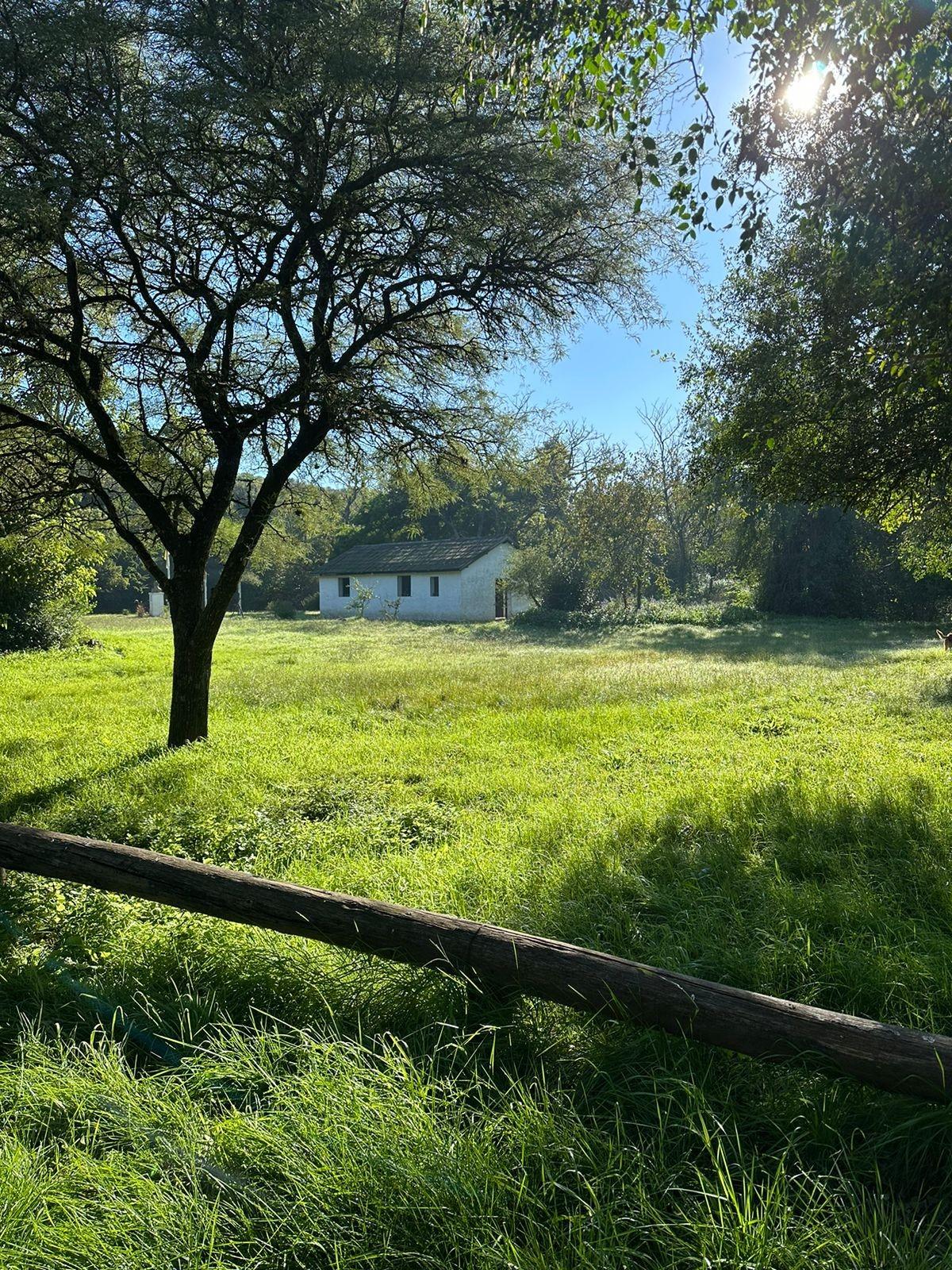
was used as glue. The bathroom was outside and had a “quincho” ceiling, which made it an uncomfortable place to move around during winter time.
The doors were short to prevent gaucho attacks. They were made short so that the gauchos would have to get off their horses.
The ecological reserve was founded when Fernando Pozo, a fan of Hudson’s novels, discovered its existence and decided not to let it come upon the hands of the anthropic effect. He protected the reserve and didn't let its space be used in the construction of city buildings. The initial idea was to turn it into a natural bird reserve, since it had the presence of vast species of birds, which were animals Hudson was really acquainted with. Hudson had a passion for studying bird species and actually wrote Birds of La Plata, a book about the different birds that inhabit the area.
The reserve has educational purposes such as embracing eco-consciousness and the grand biodiversity it harbors. With over a hundred species of birds, turtles, river bivalves, frogs, and even the peculiar "lagarto overo" that carries its offspring in pouches like kangaroos, the reserve is a natural treasure. Zarigüeyas (opossums), hares, and
a variety of butterflies can also be found, including the quarter eyes, monarch, ‘lecheras’, and the “Argentine flag”, with impressive size and vibrant colors. However, the reserve's history is marked by European prejudice, which resulted in the decline of butterflies due to the cutting down of native trees to be replaced by European species. Fortunately, the reserve lives on through the shared knowledge of Fukuoka, who discovered methods to nourish the soil naturally.
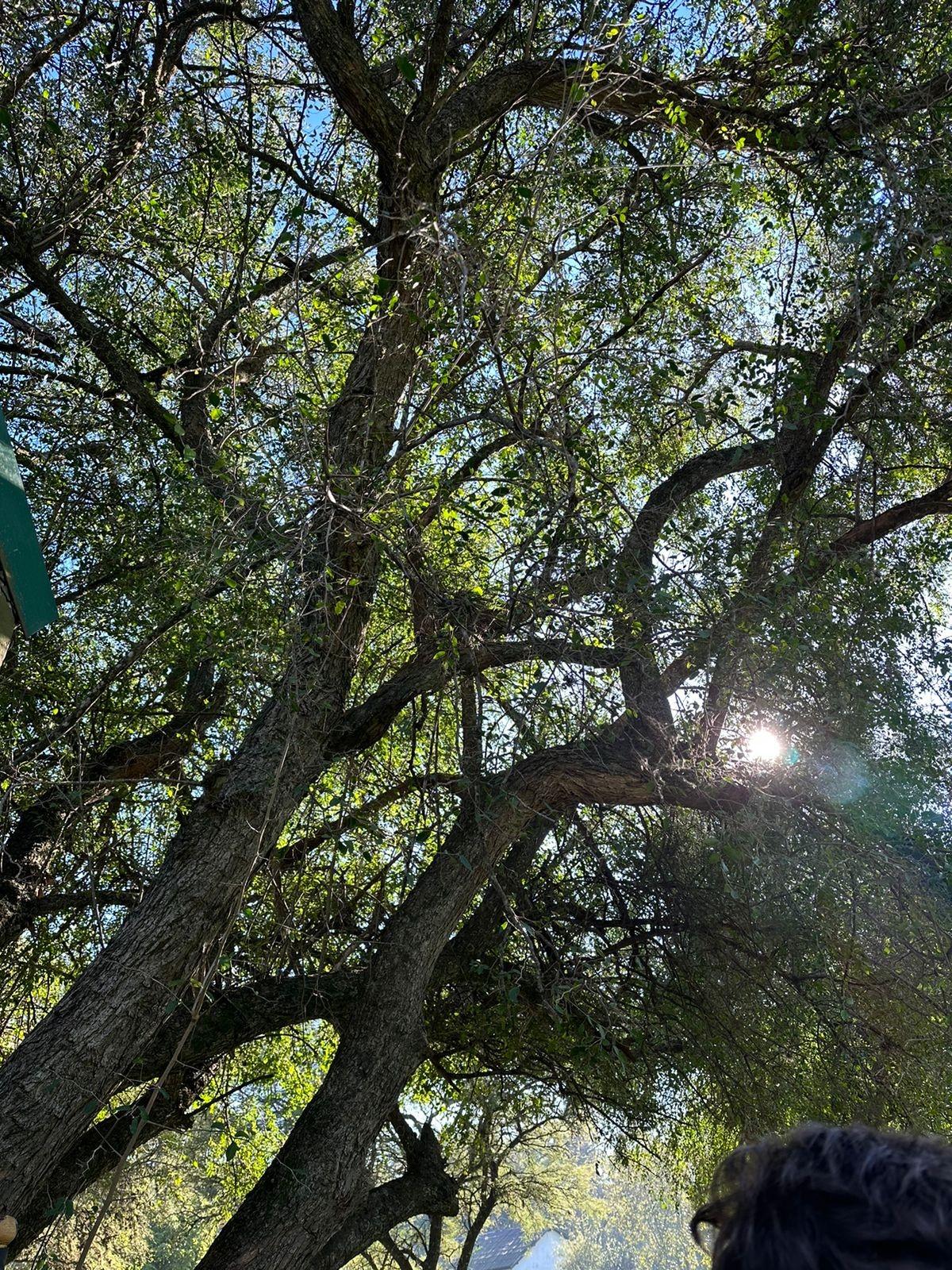
During their fifth-year visit, students learned about a local myth surrounding the ‘ombu’tree.According to legend, within the depths of the ombu resides a mischievous creature known as the Pombero, a kind of spirit or elf. It is said that the Pombero, a wind spirit known for its capricious nature, harbors a vengeful streak. The Pombero is particularly drawn to indulgent pleasures such as drink and cigarettes. This myth adds an enchanting layer to the natural surroundings, sparking the imagination of those who venture into the realm of the ‘ombu’tree.
Revista digital 2024, Segunda Edición. Raíces.
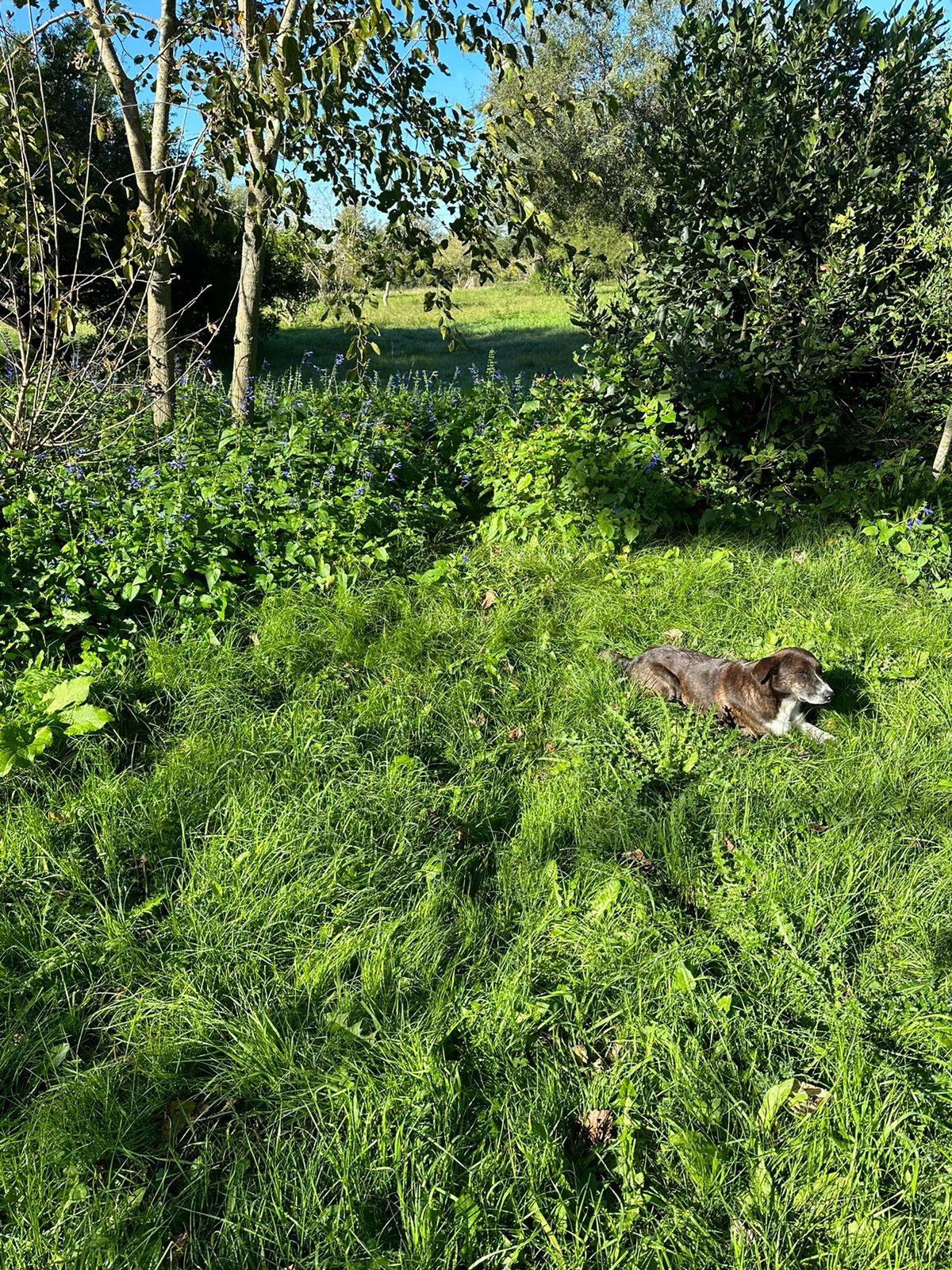
The whole field trip was a trip to the past, in order to embrace a new point of view. Hudson was a visionary, he had ecological consciousness in a time in which people only saw nature as a place to be explored, he saw its beauty and doom. While talking to the guide our seniors understood that Hudson was a romantic. Despite his most utter love for the plain flat horizons of the Pampas region and its distinctive and majestic biodiversity, he left it and never looked back. Hudon knew that his paradise would be destroyed by human presence and couldn't bear coming back and seeing it changed. He chose to stay with the memory of what it once was and he lived by that dilemma in every place he visited. Hudson would never visit the same place twice.
This field trip shed light on William Henry Hudson's remarkable legacy. Born inArgentina in 1841, Hudson's writings showcased a unique perspective on nature, contrasting sharply with the
prevailing views of his time. While others saw nature merely as a resource to exploit for economic gain, Hudson viewed it as sacred and worthy of preservation. His famous work, Green Mansions exemplifies this ethos, telling the tale of a man's awakening to nature's wonders through encounters with an indigenous girl named Rima. Rima, depicted as a protector of the jungle, symbolizes Hudson's belief in the need to safeguard the environment from human encroachment. Hudson's concerns about humanity's negative impact on nature resonate strongly today, as evidenced by the decline of butterfly populations due to deforestation in the reserve. Despite facing European prejudice, Hudson's ecological consciousness shines through in his works, inspiring readers to reevaluate their relationship with the natural world. During the visit to Hudson's house and the reserve, they gained insight into the author's profound love for nature and his foresight regarding its fragility in the face of human intervention.
As they explored the reserve, they were reminded of Hudson's message:
Revista digital 2024, Segunda Edición. Raíces.
that nature is not just a place to be exploited but a precious entity that deserves reverence and protection.
“
By SantiagoA. & Ignacio B.
About two months ago we started to read the Nigerian folk tale “The King's Magic Drum''. This story was about the kind and peaceful king Efriam, who owned many different instruments; his most cherished one being his drum. With it he delivered food and drinks.Additionally, he didn’t like wars, so instead of fighting his enemies he invited them to eat a feast with tasty dishes and beverages.
One day, Efriam’s wife was washing her daughter in the spring when the girl wanted a palm nut, which had just fallen from the tree.A tortoise, taking advantage of this situation, told the wife that the nut was his and that she and her daughter had stolen it from him.
They went to the palace and the king offered him jewels, cloth, and money but the only thing the tortoise wanted was the “Magic Drum”. The king gave it to him right away and the tortoise was now delighted with his new drum.
Furthermore, the drum had a curse which the king hadn’t told anyone
about. It being that if you stepped over a fallen tree or a stick on the road, 300 egbo men would punish you.And after throwing lots of feasts, it happened to the tortoise. He stepped over a stick while being drunk and was punished, along with his family. Nevertheless, he threw another feast, but this time to trick the guest into being beaten as him and his family.
To finish with the story, the tortoise decided to give the drum back to the king. In exchange for it, the king offered a magic palm nut that gave him food, but just one time a day. However, the greedy tortoise’s son once gathered food twice, breaking the rules and making their punishment be to live under a palm tree with nothing as food but leaves.
Afterwards, we started a project in music class. It consisted in trying to recreate some of the sounds from the book but in real life. With our music teacher we recreated the sounds by using different instruments from the school and we also created some of them from scratch. For example, we
Revista digital 2024, Segunda Edición. Raíces.
made shakers out of rice and lentils. With them, we imitated lots of sounds like drums, children screaming, and even nuts falling to the ground.
Finally, we recorded an audio of the story and we mixed that with all the sounds we had created using the items we brought and the materials provided by the school.
In conclusion, we found the activity very entertaining because not only did we read an amazing and different new story, but we also had lots of fun while creating sounds with everything around us.
You can listen to our recorded version of the story here: Link
Revista digital 2024, Segunda Edición. Raíces.
By Isabel N. and Inés A. C.
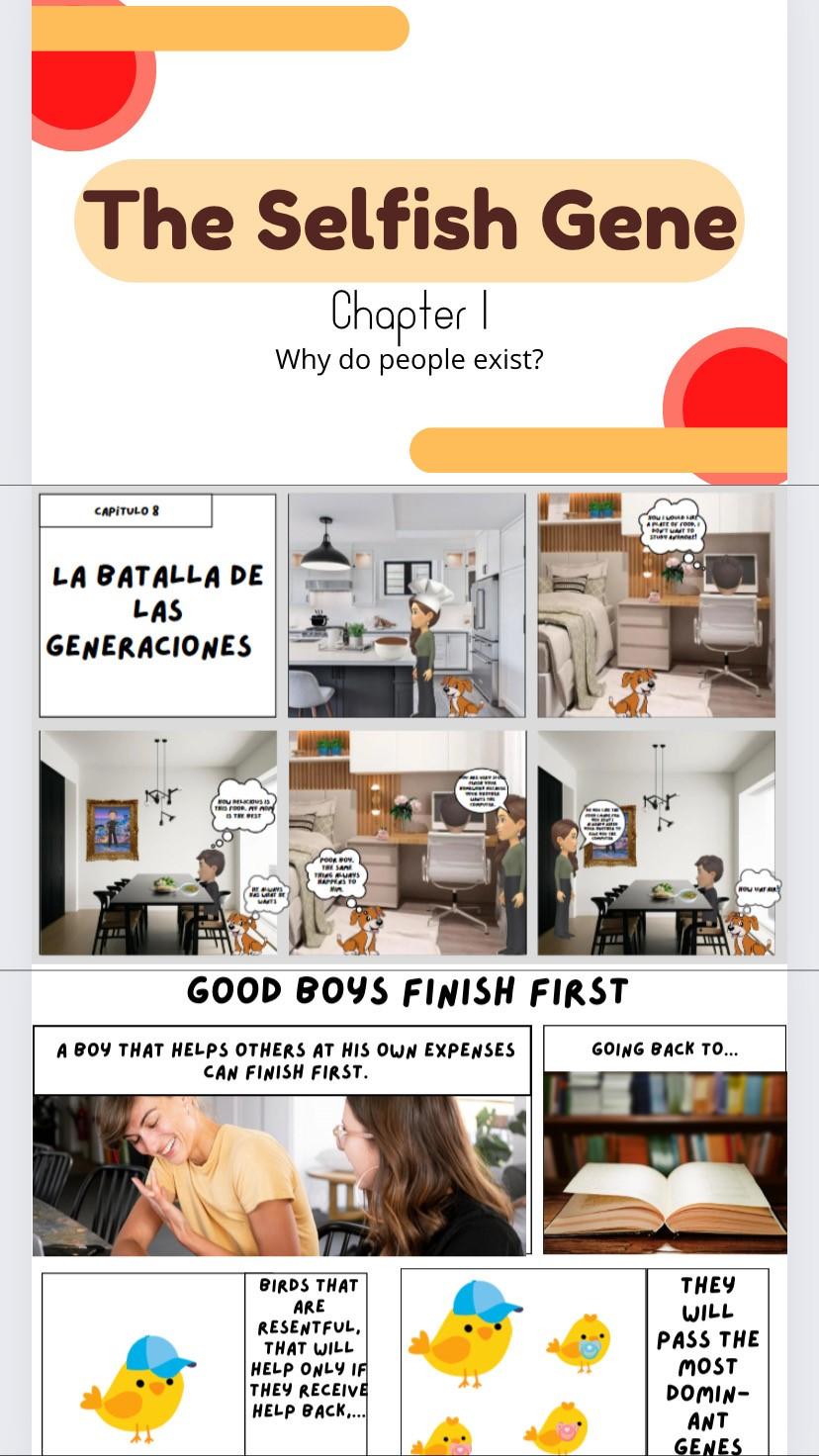
For our first project of the year, Edward, our biology teacher, made us do and present a digital comic. On the following lines we will explain our process in the making of this project.
Firstly, we were assigned pairs and we were each given a chapter of our biology book “El Gen Egoista” by Richard Dawkins and we started doing a mind map about our chapter.
Secondly, we started our first comic draft on paper with more than twenty squares, making sure they were very detailed and informative.
Once it was done, we were able to start our final digital version. Most of us used Canva or Google Slides to illustrate and develop our comics.
Thirdly, we prepared a speech with Grace to go along with the comic. To do this, we had to rehearse talking to later record ourselves and upload it to the same file of our presentation.
Lastly, we presented our final
Revista digital 2024, Segunda Edición. Raíces.
version to first year students. We put the comics up on the walls and first year would pass in groups to see and listen to our different chapters. The comics were also proyected onto the screen along with the audio.
Overall, we really enjoyed this project and the process we went through to complete it. We were really grateful to have Edward as our teacher to help us with this final project with him. In this link we have the entire comic for you to see as a video:
And here the link to see as a presentation: Link
by Sylvia P. - Mila G.

Never in my life have I read a novel quite like “the Bell Jar”. This easy yet captivating read by the one and only Sylvia Plath is truly a rollercoaster of emotions that does not really rise. The novel, set in the 50’s, begins with Ester Greenwood in her summer fashion internship in New York, where she describes her “adventures” in the
Revista digital 2024, Segunda Edición. Raíces.
city, together with multiple flashbacks to her past. On her last night, she is set up for a horrendous date, which is a turning point for her. When she comes back home, we can see in detail her spiraling into madness until she is institutionalized. We accompany her throughout the long process of getting better, until she is released.
It truly is one of the most depressing books I have ever read, not only because of its writing style, but also since readers are observing this gifted and talented teen decay slowly into depression.Also, seeing how mental health was treated many decades ago, together with the dark history behind some of the parents she shares the institution with, creates a rather gloomy environment.
If you are looking for a downer that has the ability to hook you up, then look no further. It is not only praised by me but by countless critics too. It is not a long read either, with less than 300 pages and being a simple read, one can finish it in just two weeks.
Revista digital 2024, Segunda Edición. Raíces.
The creative side of the magazine, in which you can explore texts writen by students from our school.
In this section:
• “What’s on your mind, Marcus?”
• “The Monotony of Existence”
• “If no one knew”

Eloise had liked Marcus for over a year and a half. It was the kind of quiet, persistent affection that seemed to grow with every shared glance and fleeting touch. Marcus always has a great day, but Eloise only does if Marcus looks at her.
This year, things have changed. Marcus is constantly giving Eloise mi-
xed signals, which feed Eloise’s delusions. She’s always waiting for him to make a move, but he just stands there, while he laughs with his friends, about who knows what. However, when people joke about them being together, Marcus starts complaining about it. He says he doesn’t care about her at all, but he’s instantly jealous when she
talks to other boys, always overhearing her conversations and trying to get involved in them, and he’s always staring at her. So, what if he likes Eloise?
Marcus had always been the quieter one, preferring to be a listener. Eloise, on the other hand, was outgoing and charismatic, the kind of person who could light up a room with her smile. But Eloise is only extroverted when Marcus is not around. Over time, Eloise's feelings deepened, transforming into a steady undercurrent of longing. Marcus, however, was an enigma. Some days, he would lean in close, his eyes holding hers in a way that made her think he felt the same way. Other times, he would pull back, treating her no differently than any of their other friends.
One crisp autumn afternoon, they found themselves walking home from school together, leaves crunching underfoot. The sky was a brilliant canvas of oranges and pinks, the air filled with the scent of woodsmoke.
"Eloise," Marcus began, his voice cutting through her reverie. "Can I ask
Revista digital 2024, Segunda Edición. Raíces.
you something?"
Her heart skipped a beat. "Of course."
He hesitated, kicking at a stray leaf. "Have you ever... liked someone, but weren't sure how they felt about you?"
Eloise's breath caught in her throat. Was he talking about her? She studied his face, searching for clues in the curve of his lips, the furrow of his brow. "Yes," she said softly. "I have."
Marcus nodded, his gaze distant. "It's tough, you know? Not wanting to ruin a friendship but also not wanting to miss out on something more."
Eloise swallowed hard, her mind racing. She wanted to tell him, to lay bare her heart, but fear held her back. "It is," she agreed, her voice barely above a whisper.
They walked in silence for a few moments, the weight of unspoken words hanging between them. Eloise's mind was a whirlwind of hope and doubt, each step bringing her closer to a decision.
Finally, she stopped, taking a
deep breath. "Marcus, there's something I need to tell you."
He turned to face her, his expression unreadable. "What is it?"
She looked down, her hands twisting nervously. "I've liked you for a long time. More than a friend.And I don't know how you feel, but I needed you to know."
The silence that followed was deafening. Eloise felt her cheeks flush with embarrassment, her heart pounding in her ears. She risked a glance up at Marcus, afraid of what she might see.
To her surprise, he was smiling. "Eloise," he said gently, "I've known. I've been giving you mixed signals because I was scared too. Scared of losing you if it didn't work out."
Her eyes widened. "You knew?"
He nodded, stepping closer. "But the truth is, I like you too. I just didn't know how to handle it."
Relief washed over her, mingled with joy and disbelief. "Really?" "Really." He reached out, taking her hand in his. "Maybe we can figure this
Revista digital 2024, Segunda Edición. Raíces.
out together?"
Eloise smiled, feeling the warmth of his hand in hers. "I'd like that."
As they continued their walk, the future seemed a little less uncertain, and the world a little brighter. For the first time in a long while, Eloise felt a sense of hope, knowing that no matter what came next, they would face it together.
And then, Eloise woke up, it was 6:00 am in the morning, and her mom had already prepared her breakfast.
“
“
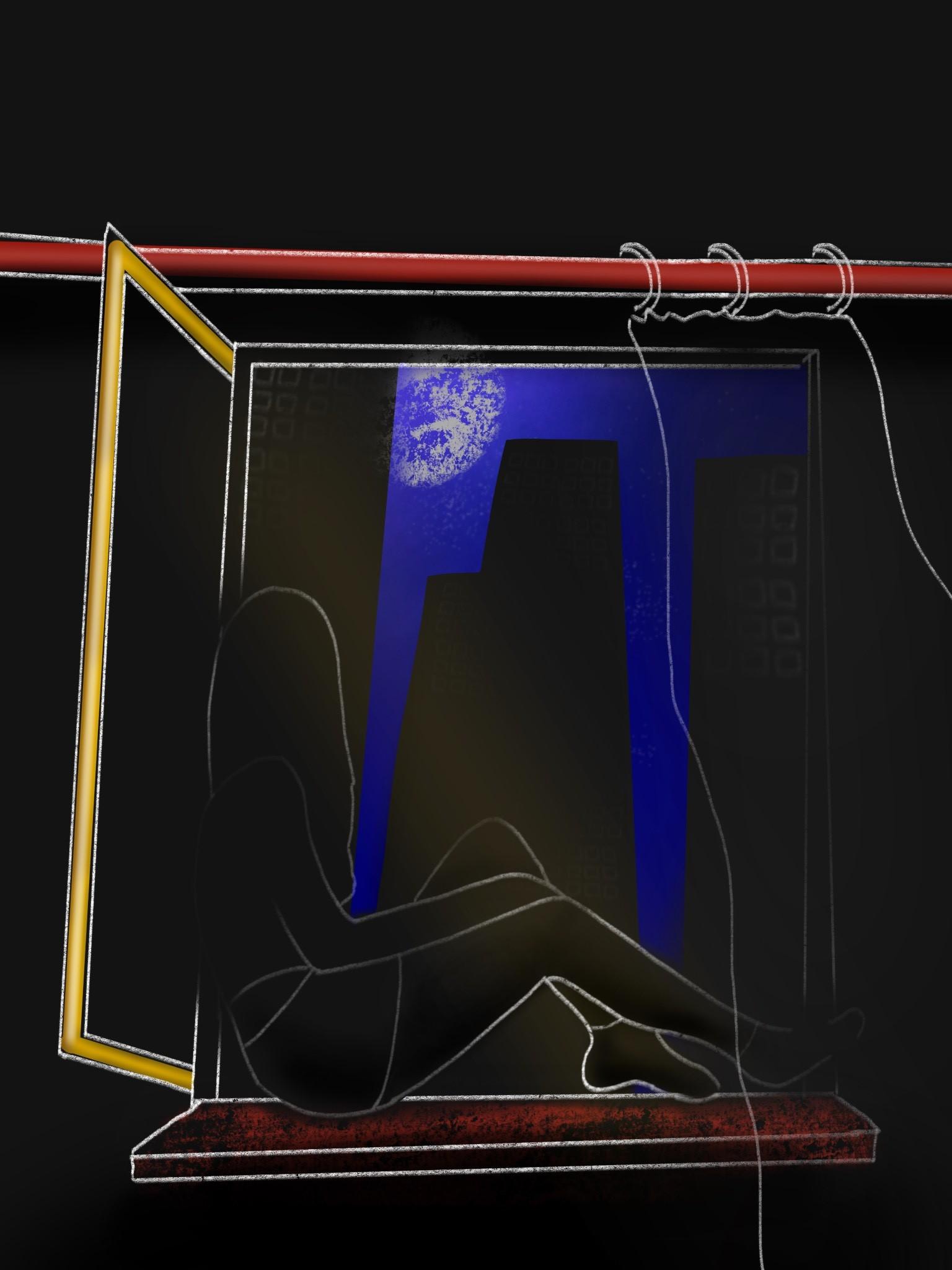
Every day, the same old thing, Nothing new, nothing different, I'm tired of it all, I'm bored to the core. The days melt into one, No excitement, no surprises, I'm stuck in this dull routine, I long for something new, something to break the monotony.
I'm not asking for much, Just some adventure, something different, Abreak from the daily grind, Away to make life interesting.
I know this may sound silly, And I shouldn't complain, But I can't help but feel that life's a bore, It's like I'm stuck on a never-ending treadmill of mundanity.
And yet, I long for more, For something to break up the mold, For something that will set my soul on fire, For something that will make my pulse race, And give me a reason to smile, Areason to live, Areason to fight, Areason to be.
“If no one knew” By Venus
I don’t know what to say I don’t know what to do I think things would be better If not everyone knew Sometimes I wonder what would happen If I didn’t open my life to everyone
Like a gossip magazine
But I guess it is my daily routine
I wish I could know his thoughts Without ending up being shot
Without having a broken heart
Which may be enough to tear me apart
I’m sorry I’m not brave enough
But it’s really tough sometimes Boys tend to be rough, and end up Breaking my heart.
In the strength I find in my tears
In the courage it takes to face my fears
I hope that one, I’ll be able to express myself Without crumbling in the process
Revista digital 2024, Segunda Edición. Raíces.
By Lorenzo P.
Have you ever established a link between music and identity? Otherwise, let me make you acquainted with the main exponents of this relationship throughout the 20th century.
Continue cruising throughout the article, you'll thank me later!
Revista digital 2024, Segunda Edición. Raíces.
At first sight, most listeners dabble or engage effortlessly with musical pieces that differ from their times, showing an imperceptible and quick sense of disapproval, unabling these to show their
maximum potential; intertwined with history and meaning, apart from a remarkable contrast with today's standards, leading to introspection and evoking a touching effect.
In this specific case, Carlos Gardel, a composer, singer and one of the most prominent figures in the history
of Tango, performing between the 10s and the 30s, exhibited his unique talent and style, by the use of his innovative and unusual voice, his meaningful, poetical lyrics (that convey love and passion, as well as nostalgia, sorrowfulness, life in the city) and the vast array of instruments, as violins,
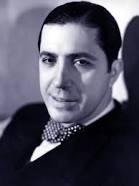
pianos, acoustic guitar, and bandoneon, portraying a distinctive mixture with classical music, prior to his persistent legacy, still present in today’s world.
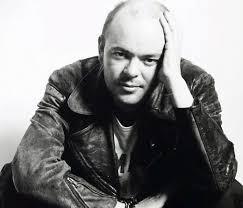
Whereas, Luca Prodan, also a singer and composer, had a notable peculiarity: He was born in Italy, raised in the UK and lived inArgentina, which enriched, nourished and polished his mixed and unrepeatable productions in the band he led in the 80s, SUMO.
In a nutshell, the Identity-music relationship is a broad and complex-tograsp concept that can't be confined or limited to a few words or genres, as it comprises everything that makes an individual feel represented/identified, which is completely subjective.
He employed unconventional resources as bizarre sound effects and a very special, harsh and low-pitched voice. Besides, his lyrics were original and eccentric, often exploring themes of love, life experiences and urban lifestyle, as in “Mañana en elAbasto” where he mentions Gardel and uses an uncommon metaphorical sense, conveying a sense of calmness through highpitched sounds and a low pace, differing from Tango on almost every aspect despite the fact that both are considered to be vital from the identity point of view.
Revista digital 2024, Segunda Edición. Raíces.
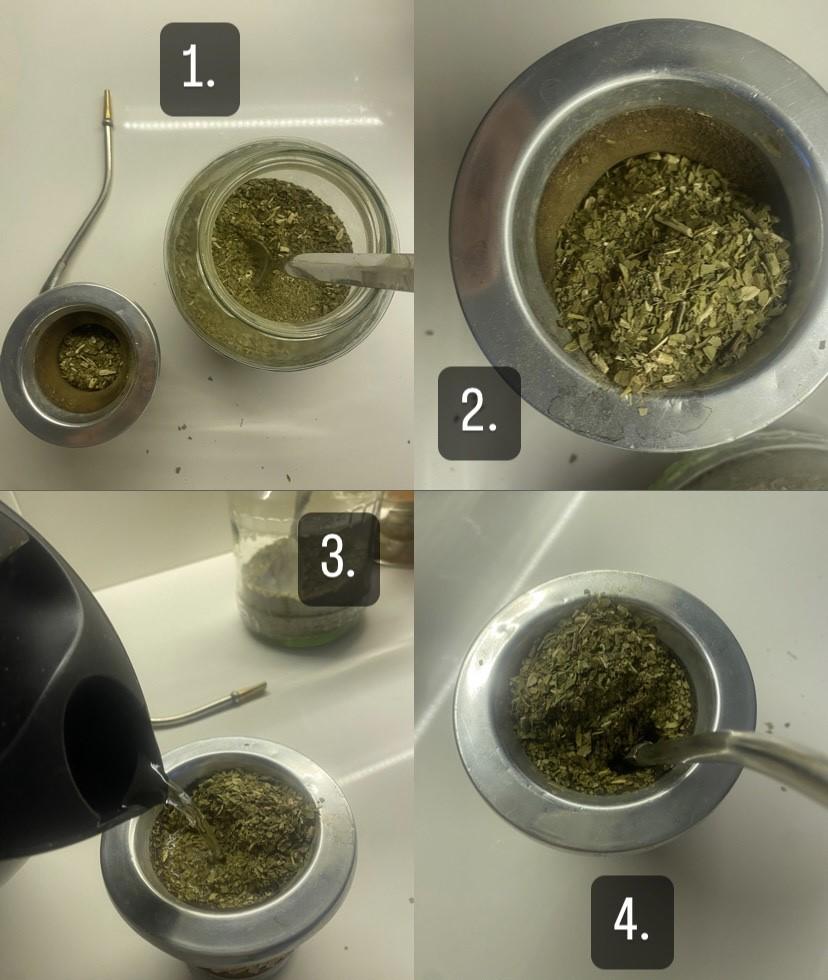
Le maté est une boisson typique que nous buvons habituellement tout au
long de la journée. Certaines personnes en prennent toute l'année même s'il fait chaud. Quels sont les ingrédients et les usten-
sils nécessaires?
Une calebasse. Il existe des calebasses en bois, en verre et en silicone naturel, mais traditionnellement la calebasse est fabriquée à partir d’une courge séchée. Il s’appelle calebasse parce que il y a de centaines d’ années, la calebasse était utilisée comme recipiente pour boire du maté
Une paille: La paille filtrante qui permet de boire le maté sans laisser passer les feuilles
De l’herbe maté: C'est la plante que l’on fait infuser pour préparer le maté.
Un thermos: Pour ajouter de l'eau et préserver sa temperature
Toutes les personnes qui boire du maté utilisent le même récipient et la même paille.
maté. Il boira la première infusion pour s’assurer qu’elle est à la bonne
• Tout d’abord, une personne doit jouer le rôle de serveur. C’est à lui que revient la tâche de préparer le
Revista digital 2024, Segunda Edición. Raíces.
température et que le filtre de la bombilla n’est pas obstrué.
• Ajoutez l’herbe de maté dans le calabasse environ aux trois quarts de sa capacité.
Le maté est un peu particulière, car on utilisera la même yerba jusqu’à ce qu’elle perde son goût. C’est ne pas nécessaire de le renouveler après avoir terminé le premier maté. En outre, le maté est une infusion particulière, la yerba peut en effet être infusée jusqu’à 10 à 15 fois, soit environ un litre d’eau.
• Retirer la poudre de votre maté: De par son processus d’élaboration, il est normal que l’herbe maté contient une poudre résiduelle. Toutefois, il est important de la retirer, car elle risque de boucher le filtre de la paille.
Pour cela, placez votre main sur la
bouche de votre calebasse et retournezlà énergiquement plusieurs fois de suite.
• Coloque la paille
C’est une étape décisive, car si elle n’est pas correctement réalisée la yerba maté risque d’être infusée trop rapidement ou bien, la paille peut se boucher et empêcher l’eau de passer correctement.
Une fois que vous aurez retiré toute la poudre de votre herbe maté, retirez la main de la calebasse et inclinez votre maté de façon à ce que l’herrbe soit répartie selon une pente de 45°.
• Versez l’eau dans le maté
(l’eau doit être à 70° ou 80°) (C’est optionnel de ajouter du sucre mais nous le préférons amer)
• Déguster le maté (Avertissement: La paille n’est pas un levier de vitesses, elle doit rester en place lors de la consommation de la boisson)
Revista digital 2024, Segunda Edición. Raíces.
• Une fois votre infusion terminée, vous devez nettoyer la gourde et la faire sécher.