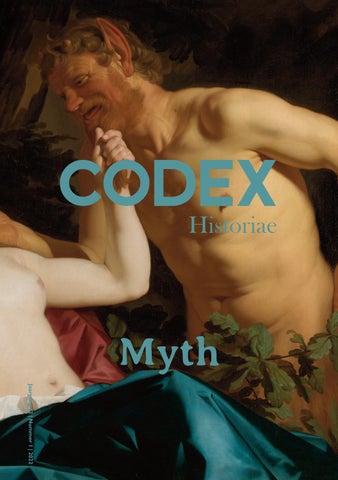
Historiae Myth
Jaargang 43 | Nummer 1 | 2022
Redactioneel
Het nieuwe nummer van CODEX Historiae gaat helemaal over Myth! Mythen zijn zo oud als de geschiedenis zelf. Het kunnen verhalen zijn die het ontstaan van volkeren, landen of landschappen beschrijven. In sommige gevallen is het duidelijk dat een verhaal een mythe is. De gebeurtenissen die worden beschreven, geven de werkelijkheid niet weer en hun betekenis is vaak spiritueel of religieus. Mythen kunnen complexer zijn wanneer hun relatie tot de feitelijke werkelijkheid minder duidelijk is. Mythes zijn namelijk per definitie verzonnen en onwaar.Wanneer verhalen, waarvan wordt aangenomen dat ze waar zijn, in werkelijkheid mythen blijken te zijn, hebben zij in veel gevallen hun schade al aangericht. In deze tijd van informatieoorlogen en nepnieuws moeten we altijd kritisch blijven en ons, zowel bij het beoordelen van het verleden als het heden, afvragen welke en wiens belangen een rol spelen.
De redactie heeft gereflecteerd op het mythische thema. In de artikelen worden nieuwe perspectieven op oude mythen geboden. Je zal lezen over de starre en patriarchale denkwijzen van historische figuren, over de bron van het antisemitische bloedsprookje, over het gebruik van het klassieke Romeinse erfgoed van Italië door het fascistische regime en over de betekenis van de oorsprongsmythe van Korea in de huidige wereld. Zoek je na het lezen van deze interessante artikelen wat afwisseling? Doe dan mee aan een leuke quiz of buig je over een opiniestuk. Daarnaast bevat dit nummer ook een research update van twee docenten aan de FGW over hun project over Nederlandse kronieken. Wij wensen jullie veel leesplezier!
CODEX is er om studenten ervaring te bieden met het publiceren van artikelen en om hun schrijfvaardigheid te helpen verscherpen. Wij verwelkomen allerlei soorten inzendingen: van academische onderzoeksartikelen tot columns, recensies en opiniestukken. Heb jij iets geschreven voor een vak of ben je geïnteresseerd om iets nieuws te schrijven voor het volgende nummer? Twijfel niet, stuur het naar ons op! info@codexhistoriae.nl
De deadline voor het volgende nummer, ‘Rivalry & Friendship’, is 30 april.
The new issue of CODEX Historiae is all about Myth! Myths are as old as history itself. They can consist of stories describing the origin history of peoples, countries, or landscapes. In some cases, it is evident that a story is a myth. The described events do not depict reality and their meaning is often spiritual or religious. Myths can be more complex when their relation to facts and reality is less clear. By definition, myths are stories that have been made up. When narratives that are assumed to be true, turn out to be myths after time has passed, damage may already be done. In this time of information wars and fake news, we should always remain critical and ask ourselves what and whose interests are at stake, when reviewing both the past and the present.
The editors have reflected on the mythical theme. Their articles offer new perspectives on old myths.You will read about the rigid and patriarchal beliefs of historical figures, about the source of the antisemitic blood libel, about the mobilization of Italy’s ancient heritage during the Fascist regime, and about the meaning of the origin myth of the Korean people in today’s world. Are you looking for some variety after reading these interesting articles? Then take part in a fun quiz or ponder an opinion piece. This issue also includes a research update from two teachers at the Humanities Faculty about their project investigating Dutch chronicles. We hope you enjoy reading this issue of CODEX!
CODEX exists to offer students experience in publishing articles and to help them improve their writing skills. Various kinds of submissions are welcome: from academic research papers to columns, reviews, and opinion pieces. Have you written something for a course, or are you interested in writing something new for our coming issue? Don’t hesitate and send your work over to us! info@codexhistoriae.nl
The deadline for the next issue, ‘Rivalry & Friendship’, is the 30th of April.

2
In dit nummer
The Korean Homogeinety Myth
To Go Beyond the Strenghts and Weaknesses of the Dangun Myth
The Dutch Proverbs
Nederlandse Spreekwoorden by Pieter Bruegel the Elder
Het beeld van de vrouw, door de man Hoe
Op de VU / At the VU
3
Hosoo Kim
historische
onjuiste
geschriften bijdroegen aan het
beeld van de vrouw
Project on the Bloggers of the Early Modern Period
Opinion Pagina 8 Leah Niederhausen Eva van Roozendaal Erika Kuijpers & Theo Dekker Pagina 11 Pagina 14 Pagina 20
The Dutch Saga of Thor’s Skyfall Arthur Koopmans Pagina 24 St. William of Norwich De bron van het bloedsprookje Nica de Korte Pagina 28 Mussolini’s Rome The Palazzo della Civiltà Italiana as the Embodiment of Romanità Claire Majoor Pagina 31 Capitalist Anarchism and its Inherent ContradictionC A Critique of Anarcho-Capitalism Thymo Gieltjes Pagina 43 De coronapas als Jodenster? Een foucaultiaanse analyse Brenno Mulder Pagina 46 (EN) (NL) (EN) (EN) (NL) (EN) (EN) (NL) (EN) Messages from Merlijn & the Student Wellbeing Panel Niels & Brenda Pagina 19 (EN) Niels Koopmans Amanda van Dord (EN) (NL) Alternative Chronology and Myth On David Rohl’s A Test of Time De Amerikaanse Droom Hoe het mormonisme de Verenigde Staten veroverde Pagina 35 Pagina 38
van Vliet (NL) Eeuwenoude sociale ongelijkheid
vergelijking tussen het gedachtegoed van de filosofen Plato en Marx Pagina 4
Research Update - Chronicling Novelty A
Opinie /
Elisabeth
Een
Eeuwenoude sociale ongelijkheid
Een vergelijking tussen het gedachtegoed van Plato en Marx
Ineen uitgebreid recent onderzoek van de NRC blijkt dat inkomensongelijkheid, kansenongelijkheid en vermogensongelijkheid in toenemende mate een probleem vormen voor de Nederlandse samenleving.1 Deze problemen raken aan alle dimensies van het menselijke bestaan: inkomen, werk, gezondheid en sociale omgeving. Hoewel de kloof tussen arm en rijk in de huidige samenleving toeneemt, zijn er in het verleden ook altijd grote economische en sociale verschillen geweest tussen grote groepen mensen.
Verontrusting om sociale ongelijkheid in de samenleving werd reeds tweehonderd jaar eerder tot uitdrukking gebracht door filosoof, historicus en econoom Karl Marx en zijn compagnon Friedrich Engels. Door de Industriële Revolutie van de achttiende eeuw en de toenemende industrialisatie en mechanisatie, ontstond in het westen een nieuwe maatschappelijke klasse: het proletariaat. Het proletariaat bestond voornamelijk uit arbeiders die in grote getalen moesten zwoegen in gevaarlijke en onhygiënische fabrieken, terwijl de winst van hun arbeid verdween in de zakken van de fabriekseigenaren.
Rond 380 v. Chr. analyseerde filosoof Plato in zijn beroemde dialoog Politeia de ontwikkelingen van diverse staatsvormen tegen de achtergrond van zijn zoektocht naar een rechtvaardige samenleving.2 Daarnaast liet hij in zijn analyse zien dat scherpe tegenstellingen tussen burgers sterke ontevredenheid van de lagere klassen in de hand werkten en dat dit onvermijdelijk tot politieke en sociale conflicten leidde. In zijn dialoog benadrukte Plato het verband tussen economie en politiek in een polis. Ondanks de grote verschillen in context waarin het gedachtegoed van beide denkers tot stand is gekomen, zijn er dus raakvlakken zichtbaar in hun begrip van sociale ongelijkheid. Hoe beschouwen filosofen Plato en Marx de sociale ongelijkheid in hun samenlevingen vanuit een economische en politiek perspectief? Deze vraag kan ons helpen om de hedendaagse ongelijkheid beter te begrijpen.3
Plato: verhouding economie en politiek
In zijn dialoog Politea benadrukt Plato de relatie tussen economische processen en politieke besluitvorming in de polis. Zo stelt hij bijvoorbeeld dat de oligarchie als staatsvorm niet houdbaar is, omdat deze slechts gericht is op het genereren van maximale rijkdom.4 Dit eenzijdige uitgangspunt van een polis doet de politieke wetgeving verschralen, met als gevolg dat grote groepen burgers sterk verarmen.5 In een oligarchie worden burgers niet beschermd voor economische grillen. Heersende oligarchen hebben namelijk baat bij economische achteruitgang van hun medeburgers, aangezien zij op deze manier hun eigen vermogen kunnen vermeerderen. Het eigen vermogen van de oligarchen
vormt namelijk ook de legitimiteit van hun machtsstreven. Het is dus essentieel dat oligarchen hun eigen rijkdom verzekeren. Plato noemt enkele manieren waarop oligarchen dit kunnen bewerkstelligen, zoals het opkopen van eigendom van verarmde burgers, het verschaffen van leningen en het verstrekken van kredieten.6 Deze voorbeelden lijken sterk op verschillende mechanismes uit het hedendaagse kapitalistische systeem, net zoals de oplossingen die Plato vervolgens aandraagt. Hij noemt bijvoorbeeld de ‘ingreep op bestedingsbeperking’ om zo burgers te beschermen en een einde te maken aan uitbuiting.7
Het verarmen van groepen burgers heeft verschillende sociale consequenties tot gevolg, zoals het verliezen van status of burgerlijke rechten, maar ook het verdiepen van klassentegenstellingen.8 Plato beschrijft hoe de rijkdom van oligarchen hun kinderen tot slappe nietsnutten laat veranderen, ze zijn immers niet genoodzaakt tot werken omdat het geld hun komt aanwaaien. Dit steekt de arme arbeiders die wel noeste arbeid moeten verrichten. Binnen de kortste keren kan een ‘klassenstrijd’ ontvlammen, met chaos in de maatschappij tot gevolg. Opvallend is het marxistisch jargon dat de vertaler hanteert in deze passages met woorden zoals ‘klassenstrijd’, ‘kapitalisten’, ‘uitbuiting’ en ‘kapitaal’.9 Wellicht zijn deze keuzes gebaseerd op de motivatie om de overeenkomsten met Marx’ gedachtegoed weer te geven.
Plato’s politieke visie houdt sterk verband met zijn metafysica. Dit blijkt uit de beroemde allegorie van de grot uit de Politeia, een verhaal waarin de mens onwetend en vastgeketend in de grot zit, terwijl de filosoof zich heeft losgemaakt van maatschappelijke conventies door uit de grot te ontsnappen. Op deze manier verwerft hij inzicht in de diepere ideeën van de realiteit.
4
“Plato beschrijft hoe de rijkdom van oligarchen hun kinderen tot slappe nietsnutten laat veranderen.”
Volgens Plato is er in de zichtbare werkelijkheid een verstoring van onze ‘normale’ ideeën over de wereld, omdat deze slechts schaduwen zijn van de echte grondvormen (ideai). De filosoof begrijpt werkelijk wat de begrippen ‘rechtvaardigheid’ of ‘liefde’ behelzen, omdat hij de ideai kent.10 Deze metafysische ideeën hebben ook implicaties voor Plato’s politieke visie. Degene die zich met politiek bezighoudt, kan zich namelijk niet inlaten met wereldlijke zaken, zoals winst en kapitaal. Eenmaal verlicht door ware kennis kan hij zich niet meer interesseren voor vergankelijke economische zaken.11
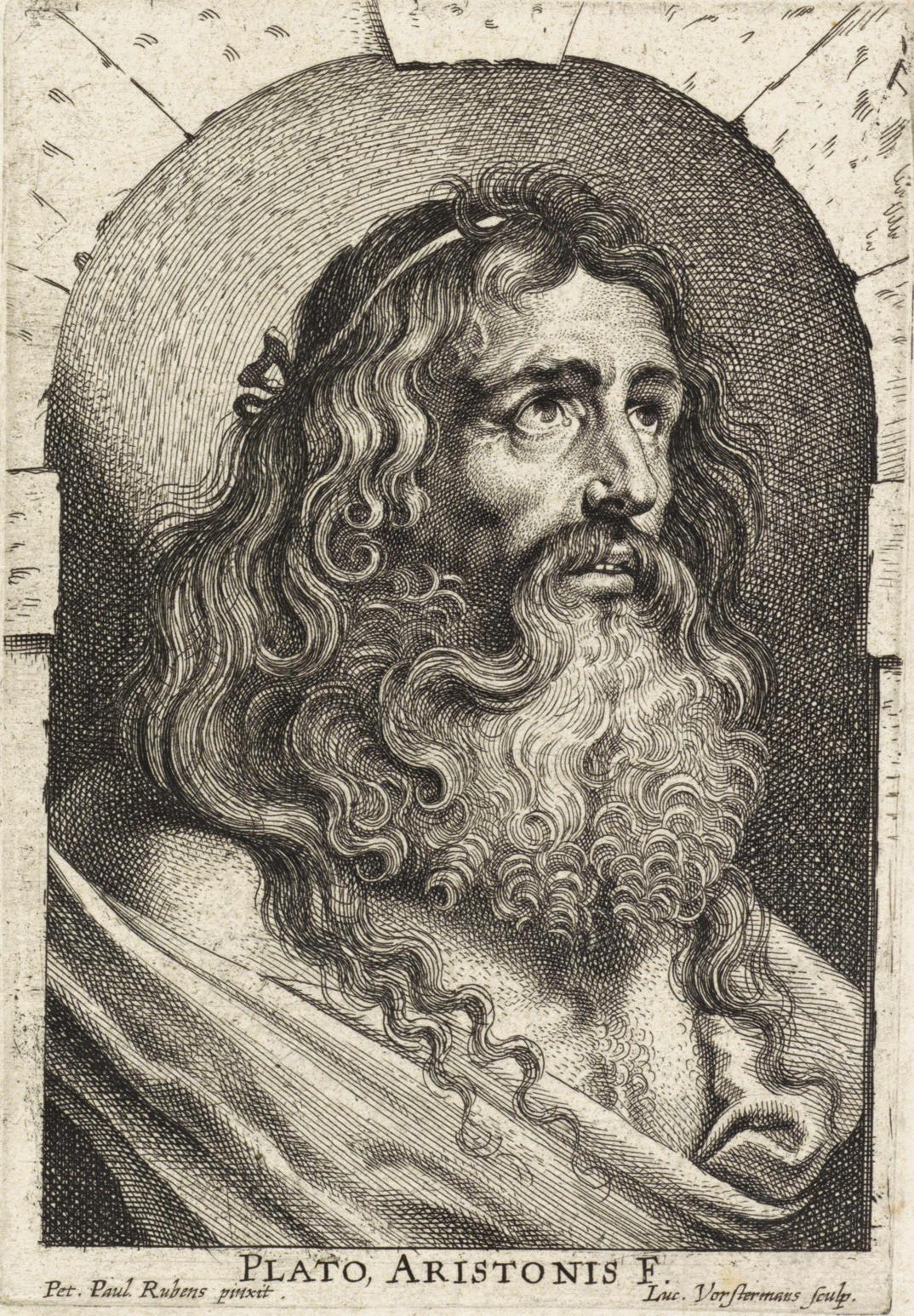
Volgens Plato is de koning-filosoof uiteindelijk de enige rechtvaardigde leider in de polis, omdat hij weet wat de ideeën rechtvaardigheid en eerlijkheid werkelijk betekenen. Uit de analyse van de eerdere passage uit de Politeia blijkt ook de corrumperende werking van winst en kapitaal voor een polis. Plato concludeert dat excessieve economische activiteiten aan banden moeten worden gelegd en dat politieke wetgeving (door de koning-filosoof) de manier is om buitensporige sociale ongelijkheid tegen te gaan.
Marx: historische analyse van onderdrukking
In het beroemde Communistisch Manifest beschrijft Marx de opkomst van het proletariaat en het verloop van de klassenstrijd
aan de hand van een historische analyse van productieverhoudingen en -middelen en kapitaal. Deze productiemiddelen enverhoudingen vormen het geheel aan technologische en materiële hulpbronnen, zoals fabrieken, machines en grondstoffen. Ze structureren ook de feitelijke macht, doordat ze de sociale verhoudingen creëren tussen mensen. Arbeiders worden gereduceerd tot productie-eenheid, terwijl leden van de bourgeoisie fabrieksbazen of politici worden. De bourgeoisie blijft door deze hoge sociale posities welvaart vergaren, waardoor de klassentegenstellingen toenemen. Uiteindelijk ontvlamt op deze manier de communistische revolutie. Volgens Marx is de revolutie onvermijdelijk door de interne contradicties van de bourgeoisie zelf.12 Het kapitalisme en de bourgeoisie vragen om continue schaalvergroting door concurrentie. Proletariërs worden dus in almaar uitdijende fabriekshallen geplaatst. Een grote menigte uitgebuite werkers wordt zo verenigd, wat de onvrede onder de werkers zal laten toenemen. De verwoesting van het onderdrukkende mechanisme lijkt slechts een kwestie van tijd volgens Marx.
Hoe beschouwt Marx de relatie tussen economische verhoudingen en politieke wetgeving? Volgens Marx vormt het gehele politieke bestuur slechts een afspiegeling en rechtvaardiging van de bestaande economische verhoudingen. Dit idee kan worden uitgelegd aan de hand van de begrippen ‘onderbouw’ en ‘bovenbouw’.13 De onderbouw is het geheel aan productiemiddelen en -verhoudingen in de maatschappij, die de relaties tussen mensen over eigendom en productiemiddelen structureren. Deze verhoudingen werken vervolgens door in de bovenbouw: verschillende uitingsvormen van het ‘bewustzijn’ in de samenleving zoals religie, kunst, filosofie, jurisdictie en dus ook politiek.14 Het bewustzijn dat bepaalde mensen uit een klasse hebben wordt dus bepaald door de economische en materiële omstandigheden waarin ze leven.15 Een arbeider die zijn dagen in een overvolle fabriekshal slijt, heeft een ander bewustzijn van de wereld dan een fabriekseigenaar die in zijn kantoor de winst telt. De ideeën en overtuigingen die mensen bezitten worden dus gevormd door hun maatschappelijke omstandigheden.
De politiek uit zich bovendien voornamelijk als een mechanisme om het proletariaat te onderdrukken en uit te buiten. De mensen in het politieke bestel komen namelijk uit de hogere klassen en vertegenwoordigen slechts hun eigen klassenideeën die diametraal tegenover de belangen van het proletariaat staan.16 Deze tegenstellingen in klassenideeën en productieverhoudin-
5
Elisabeth van Vliet
“Een arbeider die zijn dagen in een overvolle fabriekshal slijt, heeft een ander bewustzijn van de wereld dan een fabriekseigenaar die in zijn kantoor de winst zit te tellen.”
(I) Schets
van Plato (1619-1675)
gen kunnen alleen met een revolutie worden vernietigd. Wanneer deze onderdrukkingsmechanismes zijn opgeheven, kan er ook geen politieke organisatie bestaan die de werkelijke uitbuiting van het proletariaat kan verhullen. Politieke wetgeving is dus op geen enkele manier in staat om een einde te maken aan sociale ongelijkheid, omdat het slechts een mechanisme is om de werkelijke sociale condities te verhullen.
Vergelijking tussen Plato en Marx
Uit de weergegeven denkbeelden van Plato en Marx blijkt allereerst dat volgens beide denkers de sociale en maatschappelijke posities van burgers in sterke mate beïnvloed worden door economische omstandigheden. Deze sociale en economische verhoudingen hebben vervolgens direct weerslag op de politieke structuur van de maatschappij. Plato definieert heerschappijen zelfs op basis van de verdeling van welvaart en goederen. Een democratie is de regeringsvorm waarin de arme meerderheid het voor het zeggen heeft, terwijl de oligarchie bestuurd wordt door een klein groepje rijke burgers. Bovendien gold een verval van vermogen of financieel debacle in antiek Athene als een verlies van burgerrechten. Burgerrechten en politieke inspraak waren immers gekoppeld aan een minimumvermogen, zelfs in een democratie. Het verlies van rijkdom van velen vormde dus een directe aanleiding tot maatschappelijke onvrede.17
Plato beschrijft hoe individueel eigendom en economische posities de basis vormen binnen de polis voor bepaalde politieke klassen. Deze hiërarchische klassen werkten door in de gehele Atheense samenleving. Er was immers geen sprake van (Verlichtings)ideeën over (natuurlijke) gelijkheid tussen mensen. De samenleving waar Marx zichzelf vindt, lijkt ogenschijnlijk meer egalitair, mede omdat afkomst een minder belangrijke rol speelt in sociale verhoudingen en de strikte feodale verhoudingen tussen mensen afgebroken waren. In een kapitalistische maatschappij spelen factoren zoals efficiëntie, hard werken en concurrentie een belangrijkere rol. Marx laat echter in zijn analyse zien dat ook zijn maatschappij gebaseerd is op klassen, maar deze zijn minder zichtbaar dan in de tijd van Plato. De klassen die Marx beschrijft zijn politieke eenheden gebaseerd op kapitaal, productiemiddelen en -verhoudingen: de bourgeoisie en het proletariaat. Deze klassen zijn niet constitutioneel vastgelegd, toch bepalen ze de levens en het bewustzijn van burgers. Voor beide denkers zijn de economische verhoudingen dus expliciet verbonden aan de politieke en sociale structuur van een samenleving.
Vervolgens betogen beide denkers dat de kloof tussen arm en rijk niet houdbaar is in een maatschappij omdat de tegenstellingen uiteindelijk onrust en een revolutie actualiseren. Marx beschrijft hoe het kapitalisme haar eigen scherpe tegenstellingen in zich draagt, waardoor een revolutie onvermijdelijk is. Enerzijds werken krachten zoals efficiëntie en concurrentie in het kapitalistische systeem zo sterk door, dat de bourgeoisie zelf uiteindelijk ook uit elkaar valt. Anderzijds schept de bourgeoisie haar eigen ondergang door uitgebuite proletariërs in toenemende mate met elkaar te verenigen in grote werkplaatsen. De productiemiddelen zoals fabrieken en vliegtuigen reflecteren de almaar doordenderende krachten van het kapitalisme. Ook Plato beschrijft dat conflicten kunnen opkomen in een samenleving wanneer er diepe sentimenten van onvrede ontstaan tussen tegengestelde klassen. Wanneer deze klassen met elkaar in contact worden gebracht, bijvoorbeeld bij de dienstplicht of een religieus festival, kunnen er conflicten uitbreken die mogelijk uitmonden in een klassenstrijd.18 Grote economische verschillen creëren dus contrasterende politieke belangen onder de bevolking volgens beide filosofen. Deze grote ideologische verschillen kunnen uiteindelijk de politieke stabiliteit ondermijnen.
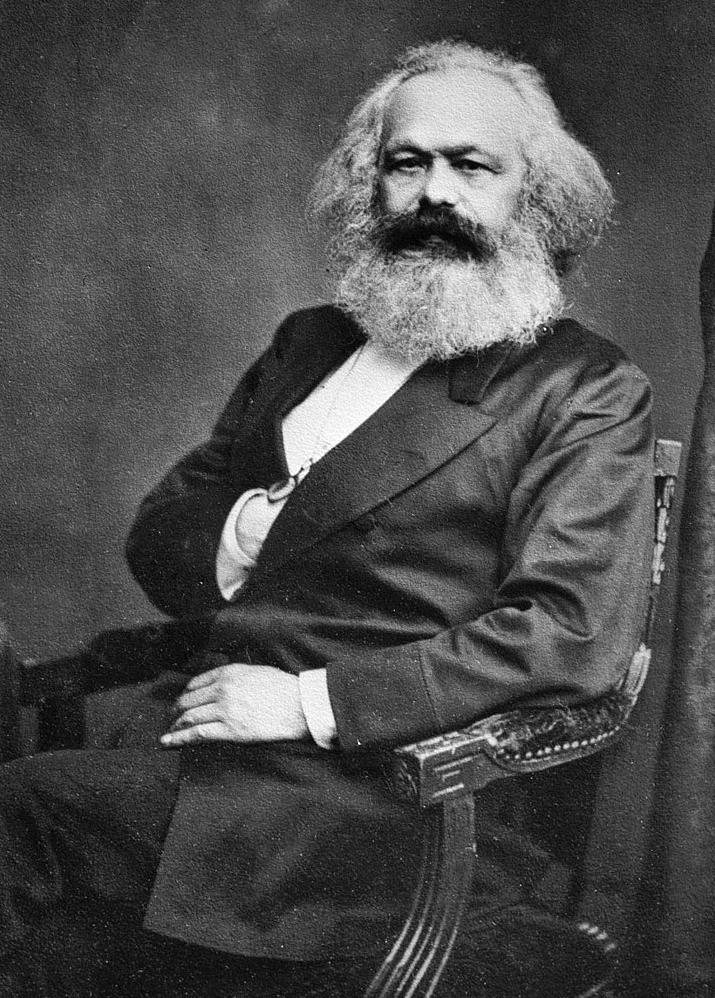
(II) Portret van Karl Marx
6 6
“Beide denkers betogen dat de kloof tussen arm en rijk niet houdbaar is in een maatschappij omdat de tegenstellingen uiteindelijk onrust en een revolutie actualiseren.”
Daarnaast is het boeiend om op te merken dat Plato enkele ‘kapitalistische’ mechanismes beschrijft die ook in Marx’ analyse terug te lezen zijn. Zo benoemt Plato dat kapitalisten rente innen om hun kapitaal te vergroten en kredieten verstrekken om hier later winst op te maken.19 Daarnaast omschrijft hij de onverschillige houding van oligarchen met betrekking tot wetgeving die financiële problemen zouden moeten inperken. Bovendien is dit vertaald met de frase: ‘dan zou er in de maatschappij niet zo’n schaamteloze uitbuiting plaatsvinden.’20 Dit komt overeen met Marx die stelt dat de bourgeoisie kapitaal vermeerdert door het proletariaat uit te buiten, investeringen te doen in de productiemiddelen en winst te maken op loonarbeid.
Er zijn ook enkele overeenkomsten te ontdekken in het politieke aspect van beide analyses. Beide denkers benadrukken de onwetendheid van de massa met betrekking tot de politieke systemen. Volgens Plato is de massa per definitie onwetend, omdat zij nooit buiten de grot is geweest en dus nooit werkelijk inzicht in de wereld kan krijgen. Marx beschrijft hoe het proletariaat meewerkt aan zijn eigen ondergang door zijn arbeid te verkopen aan de kapitalist en zichzelf daarmee te reduceren tot productie-eenheid. Daarnaast rechtvaardigt de ‘bovenbouw’ de status quo van de maatschappij, waardoor proletariërs vaak geen weet hebben van hun onderdrukking en mogelijke revolutionaire alternatieven. Dit heeft als gevolg dat zij veelal niet in opstand komen. Het heersende politieke narratief wordt aan de arbeider opgedrongen, waardoor hij zijn eigen situatie niet in twijfel trekt. Marx legt hierbij sterk de nadruk op het begrip ‘bewustzijn’ en hoe ideeën gevormd worden door bepaalde klassen. Ook beschrijft hij hoe bepaalde klassenideeën heersend worden, waardoor ze het algemeen belang zouden verkondingen, terwijl zij feitelijk slechts het belang van één klas uitdrukken: de bourgeoisie.
Een van de grote verschillen tussen Plato en Marx is hun begrip van (sociale) politieke wetgeving die de economie al dan niet zou kunnen beteugelen. Plato beschrijft hoe sociale wetten burgers moeten beschermen tegen economische uitspattingen, omdat een gebrek aan wetgeving zou leiden tot verarming en sociale onrust. Marx daarentegen ziet politieke wetgeving slecht als een maskering van de werkelijke economische belangen die de bourgeoisie heeft. De politiek kan daarom niet de manier zijn om sociale ongelijkheid aan te vechten. Daarnaast hebben Plato en Marx een verschillend begrip van menselijke waarden zoals vrijheid en gelijkheid. Plato hanteert een sterker elitair begrip van politiek en hiërarchische sociale structuur in de maatschappij. De koning-filosoof is de enige gerechtvaardigde leider, terwijl de gewone man geen verstand van zaken heeft. Dit grijpt terug op zijn metafysische begrip van kennis en hoe de mens tot kennis komt.Vrijheid en gelijkheid zijn voor hem geen deugden en leiden zelfs tot moreel verval in de polis. Marx pleit daarentegen voor de bevrijding van het onderdrukte proletariaat en een communistische staat waarin ieder mens tot volle wasdom dient te komen.
Elisabeth van Vliet
Uit de bestudeerde teksten blijkt dat er al duizenden jaren sprake is van sociale en maatschappelijke ongelijkheid ten gevolge van ongelijke verdeling van goederen en welvaart in de maatschappij. Deze scheve verdeling heeft vervolgens invloed op de stabiliteit van het politieke klimaat en algehele politieke structuur van de maatschappij. De complexe factoren die een rol spelen in het begrijpen van sociale ongelijkheid worden door beide filosofen benadrukt. Hoewel het laatste woord over de kloof tussen arm en rijk nog niet gezegd is, beschrijven Plato en Marx allebei de diepgaande repercussies die deze kloof heeft voor de maatschappij.
Verantwoording
1 ‘De grote scheefgroei: dit zijn de vijf belangrijkste ongelijkmakers’, NRC (25 juni 2021) (geraadpleegd op 14 maart 2022).
2 Plato, Constitutie (‘Politeia’) in: Plato schrijver, vert. Gerard Koolschijn (Amsterdam 1988).
3 In dit werkstuk wordt gerefereerd aan het gedachtegoed van Marx en Engels, maar ten behoeve van de leesbaarheid wordt alleen Marx’ naam genoemd.
4 Plato, Constitutie (‘Politeia’) 555b-562a, 211.
5 Ibidem, 212.
6 Ibidem.
7 Ibidem.
8 Ibidem.
9 Ibidem, 212-213.
10 Plato, Constitutie (‘Politeia’) 515a-518b, 186-187.
11 Ibidem, 188.
12 Karl Marx en Friedrich Engels, Communistisch Manifest. Marx/Engels Selected Works, Vol. One, vert. Samuel Moore (Moscow 1969) retrieved from Marxist Internet Archive (marxists.org)
13 P. Virenque S.J., ‘De wereldbeschouwing van Karl Marx: Het dialectisch en historisch materialisme’, Streven 3:1 (1949-1950) 352.
14 Ibidem.
15 Karl Marx en Friederich Engels, The German Ideology in: R.C. Tucker ed., The Marx-Engels Reader (Norton 1978), 163.
16 Karl Marx, The German Ideology, 154.
17 Plato, Constitutie (‘Politeia’) 555b-562a, 212.
18 Ibidem.
19 Plato, Constitutie (‘Politeia’) 555b-562a, 212.
20 Ibidem.
Afbeeldingen
(I) Lucas Vorsterman (naar Peter Paul Rubens), Buste van Plato in een nis, 1619-1675, Antwerpen, ets/gravure op papier, 136x92 mm, Rijksmuseum Amsterdam.
(II) John Jabez Edwin Mayal (circa 1875), via: Wikipedia, https://commons.wikimedia.org/wiki/File:Karl_Marx_001.jpg.
7
The Korean Homogeneity Myth To
Go Beyond the Strenghts
and
Weaknesses of the Dangun Myth

In July 2017, the Korean presidential residence revealed some behind the scenes stories from President Moon’s trip to Europe.1 While the unaired episodes showed how President Moon tried to thaw some of the frozen, stiffened conversations between state leaders by bringing up topics like “how to make kimchi” or about the new mascot doll for the upcoming Pyeongchang Olympics, it was interesting to notice that the Korean president shared the “Dangun myth” to French president Macron.The news became quite an issue among Koreans who thought it was funny to see how the French president finally got to know about ‘our’ Dangun story. What is this Dangun myth, and why does it remain such an attention-grabbing issue among Koreans nowadays?
When speaking about the essence of their national identity, many Koreans would refer to themselves as ‘the descendants of Dangun’. The birth story of Dangun, known to be the ‘godking’ of the first Korean kingdom Gojoseon (?-108 BCE), is a story that every Korean child would have heard of at some point, although most people (including myself) can’t remember when exactly. While Gojoseon is historically acknowledged as the first actual kingdom in the Korean peninsula, the founding story of the kingdom still seems to be heavily relying on a myth. The story is quite simple.
Once upon a time, the God of Heavens (Hwanin) noticed that his son (Hwanung) wanted to descend to the human world. After he was sent down to the area near Mount Taebaek, Hwanung met a bear and a tiger who were desperate to become human themselves. He challenged them by giving each a mugwort and twenty garlic bulbs, explaining, “If you live on this and avoid the light of the sun for one hundred days, you shall acquire the appearance of humans”.2 Only the bear was able to overcome the challenge, and was rewarded by being turned into a woman (Ungnyeo). Eventually, Hwanung decided to marry Ungnyeo, and Ungnyeo gave birth to a child named Dangun, who established the Gojoseon kingdom.
The historicity of the Dangun myth, of course, is not proven, and many different interpretations exist on what each of the characters, the names, or the storyline symbolise about the ancient Korean society. However, it is also noticeable that the phrase ‘we are the descendants of Dangun’ itself serves as a strong symbolic, stabilising, and political force in Korea, even in the modern day.
The Modernity of an Ancient Myth
Does it seem strange to define your roots in a mythical story? Obviously, the belief in ‘descendants of Dangun’ doesn’t mean that all Koreans perceive this in its literal terms.The myth functions more as an instrument to maintain the firm belief that all Koreans are one ethnic group’. By being frequently reminded of Father Dangun as a monolithic root of ‘our’ ethnic group,
Korean national identity usually consists of the belief that all Koreans have been and still are ethnically homogenous, unified through the same language, skin colour, racial descent, culture, and even a joint fate for more than five thousand years.3
According to Seol, the fundamental basis of this Korean nationalism can be categorised as an “ethnic conception of nationhood”, rather than a civic conception of nationhood which emphasises the equal political rights of all members within a nation.4 Furthermore, the roots of this national identity might rely on pre-modern or, what might be called, “proto-nationalist” elements of collective feelings that had already existed before the emergence of a modern state. Hobsbawm himself mentions in Nations and Nationalism since 1780 that Korea is “among the extremely rare examples of historic states composed of a population that is ethnically almost or entirely homogeneous”.5
8
However, recent scholars such as Kang argue that the particular Korean ethnic nationalism is rather a modern phenomenon that modified its proto-nationalistic aspects for functional necessities during initial state-building processes.6 The nationalism was produced as a national discourse by the elites since the first record of its official use in 1948, pointing to the characteristics of the newly formed South Korean state, which was constantly used to spur a collective sense of identity and solidarity to strengthen state boundaries through modern history.7 Thus, the myth of Korean homogeneity itself can be seen as a modern product, rather than a belief that has been with the Koreans throughout ancient and medieval times.
The Strengths and Weaknesses
In what ways was this myth actively produced and used for political reasons? Since 1948, the national discourse of homogeneity has been actively distributed through different political contexts, being contingent on periodical characteristics and political needs. During this process, the strong belief in homogeneity functioned in two-sided directions, which we can view as its strengths and weaknesses.
On the one hand, in terms of strengths, ethnic nationalism was used as the most powerful source that motivated the waves of independence among Koreans against the Japanese colonisers (1910-1945). The Korean Declaration of Independence (1919), a statement that marked the beginning of anti-colonial uprisings in Korea, indicates ‘our single ethnic group’ as the main subject of the declaration. During the period of dramatic economic development of South Korea in the late twentieth century, which is recalled as the ‘miracle of Han River’, ethnic homogeneity was used as the main driver that triggered the citizens to willingly contribute their personal gold items to the country as a ‘na-
tional sacrificial movement’. Their motivations were strongly supported by the dream of an economic rise of ‘our ethnic group’.8
However, the homogeneity myth has been starting to show its weaknesses, especially in accordance with the increase of human mobility. From the dawn of the twenty-first century, different migrant groups – or one can call them ‘overseas (or ethnic) Koreans’ – who had been living in other countries for a long period of time increasingly started to return to the Korean peninsula. For example, more and more interaction with the Korean Chinese (chosunchok) or the Koryo-people (koryosaram), both descendants of Koreans who had migrated to Manchuria or Russian Primorsky Krai in times of political upheavals (mostly during the nineteenth and twentieth centuries), caused confusion among the people living in South Korea. Are these people part of ‘our’ ethnic group? But why are they speaking in a different accent? Why are they living in an unfamiliar culture? Can we really call them Korean?

Among the emergence of different migrant groups, it was, sure enough, the North Korean defectors that engendered the most puzzlement to the long-standing Korean homogeneity myth.The sudden appearance of North Korean defector groups in the early twenty-first century, mostly entering South Korea after the death of Kim Il-Sung and consecutive natural disasters in the 1990s, started to challenge the firm basis of national identity. According to the widespread belief in ethnic homogeneity, North Korean settlers were still co-ethnic ‘compatriots’ that should be considered as part of ‘us’ with no doubt. Also, the third article of the South Korean constitution states that its jurisdiction covers the whole Korean peninsula, meaning that North Korean settlers were to be still considered members as equal Korean citizens.9 Nevertheless, the sudden appearance of North Korean defector groups, speaking in a different accent (and using different vocabularies) with a different cultural background, and above all, being educated in a completely different ideology caused a visible crack in the long-held belief in the ‘single-blood’ community.
In other words, amidst the growth of human mobility and interaction across national borders, the Korean homogeneity
9 Hosoo Kim
“The myth of Korean homogeneity itself can be seen as a modern product, rather than a belief that has been with the Koreans throughout ancient and medieval times.”(I) Hwanung, the tiger, and the bear
myth has been immensely challenged. While it was not easy for many Koreans to question the roots of their national identity, the confusion rather led society to strategically use the underlying homogeneity logic as a way to justify discrimination, exclusion, and prejudice against the migrant groups. Based on a survey (including multiple answers) conducted in 2018 by the Ministry of Reunification, 69.9% of the North Korean defector respondents claimed that they experience difficulty in the South Korean society because of “different cultural communication methods”, while 49.9% thought it was because of the “remaining negative stereotypes” against the defector groups.10 The level of exclusiveness in South Korean society can definitely be regarded as a severe weakness of the homogeneity myth.
tory is filled with suffering from external invasions, to endure and even overcome colonisation, war, and poverty. At the same time, especially during an era of increasing human mobility, the myth has been encountering confusion and puzzlement that requires it to go beyond and question the most fundamental roots that have been sustaining the country’s inner stability for a long time. In particular, Korea’s unique situation of remaining as a divided country leads to crucial questions about its identity. What does it mean to be Korean? How are people included and excluded into a state community? And to go even further, what does it mean to hold a national identity?
Footnotes
1 G.S. Jung, ‘President Moon and the Dangun Myth: Behind the Scenes of G20’, Mediapen (11 July 2017).
2 Encyclopedia of Korean Folk Culture – Myth of Dangun (檀 君神话), https://folkency.nfm.go.kr/en/topic/detail/5336#:~:text=%E2%8 0%9CDangunsinhwa%20%E2%80%9Dis%20the%20first,of%20 Korea’s%20first%20kingdom%20Gojoseon.&text=Dangun%20 set%20up%20a%20capital,then%20back%20to%20Pyeongyang%20Fortress. (consulted 19 February 2022).
The Korean homogeneity myth, shaped and formed on the basis of political needs, has brought both strengths and weaknesses throughout the modern history of Korea.The myth stood firmly as a stabilising force that allowed the small country, where his-
3 Y.H. Jeong, ‘National Identity and the Identity of Korean Nation’, Review of Korean Cultural Studies 9 (2010) 21.
4 D.H. Seol, ‘Hierarchical Nationhood? The Korean Nation and its Others in the Era of Reunification’, Discourse 201 23:1, 11.
5 E.J. Hobsbawm, Nations and Nationalism since 1780, Penguin Books (1992) 66.
6 J.W. Kang, ‘The Epic of the Republic of Korea’s Minjok: The Development of Ethnic Nationalism and its Faces’, The Korean Sociological Association 47:1 (2013) 187.
7 Jeong, National Identity, 21.
8 Of course, it is hasty to generalise and reduce these examples as simple ‘strengths’ of the myth; depending on how you view the events, especially the national sacrificial movement, the use of ethnic homogeneity indeed can be seen as having produced negative consequences. However, for the sake of the overall argument of this article, I chose to categorise it (without discounting its side-effects) as one of the ‘strengths’ of the homogeneity myth.
9 Article Ⅲ of the South Korean constitution states that “the territory of the Republic of Korea shall consist of the Korean peninsula and its adjacent islands.”
10 J.R. Kim, ‘2 Out of 10 Defectors Experience Discrimination’, Yeonhap News (22 April 2019).
Images
(I) Anonymous, from monthly.chosun.org
(II) From economist.com
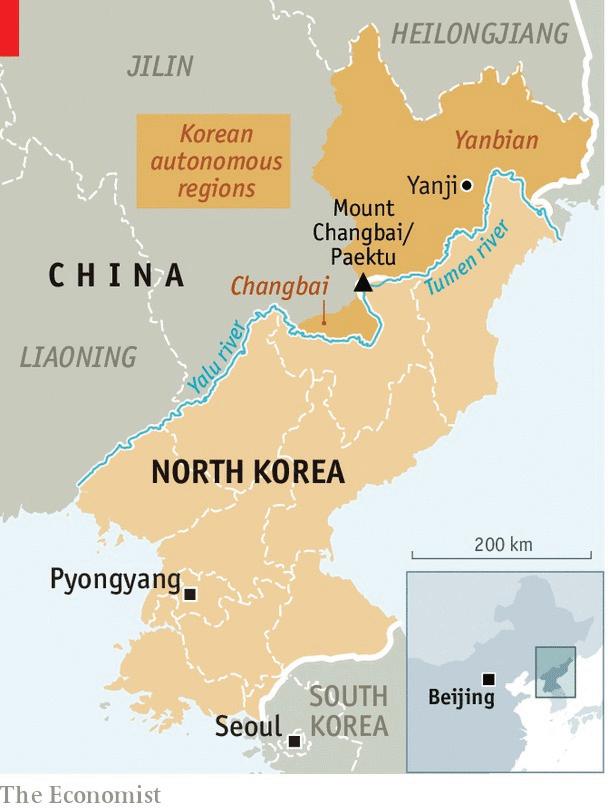
(II) Map of the ethnic Korean enclaves in China
10
“The Korean homogeneity myth, shaped and formed on the basis of political needs, has brought both strengths and weaknesses throughout the modern history of Korea.”
The Dutch Proverbs
Nederlandse Spreekwoorden by Pieter Bruegel the Elder
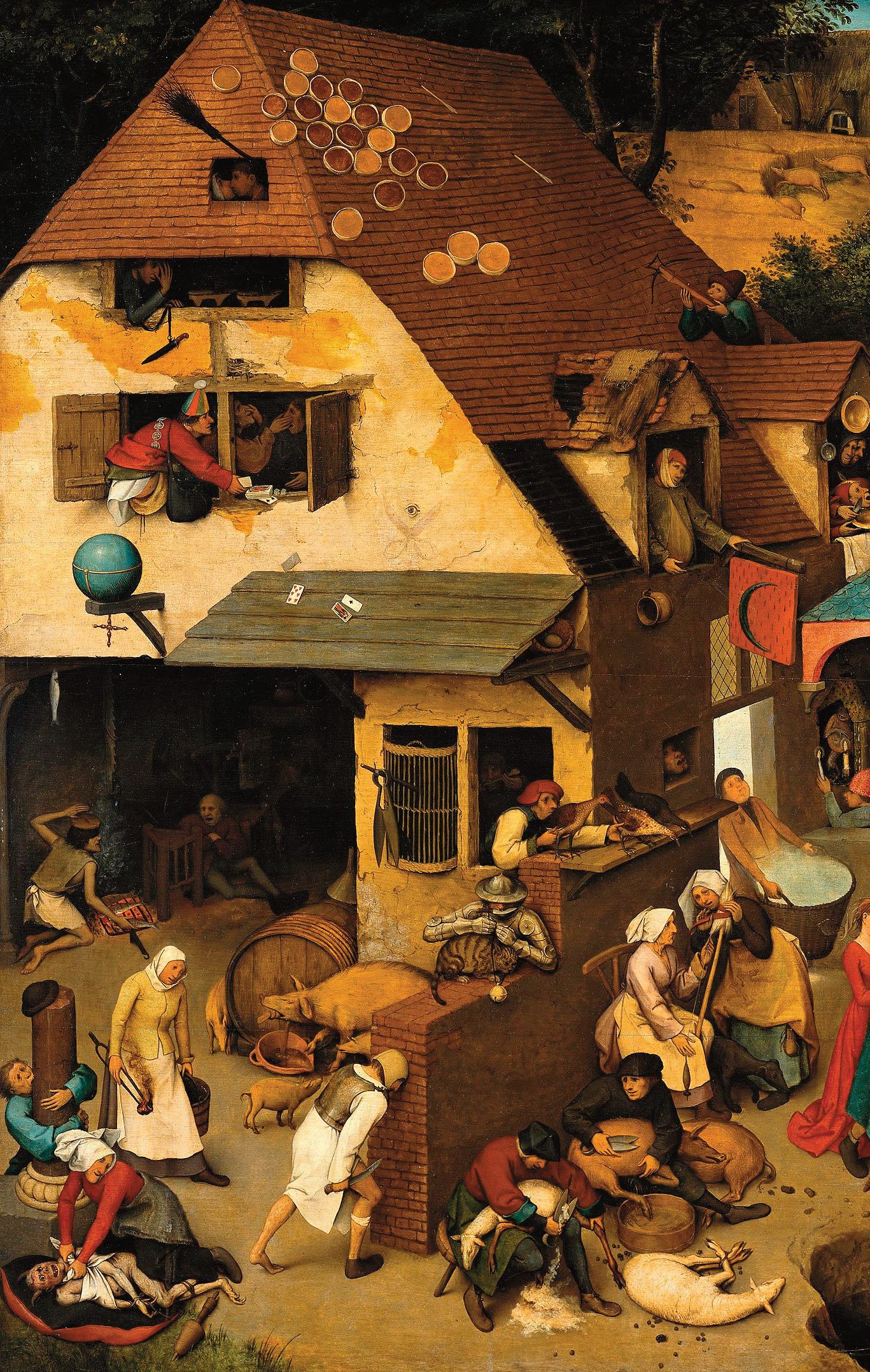
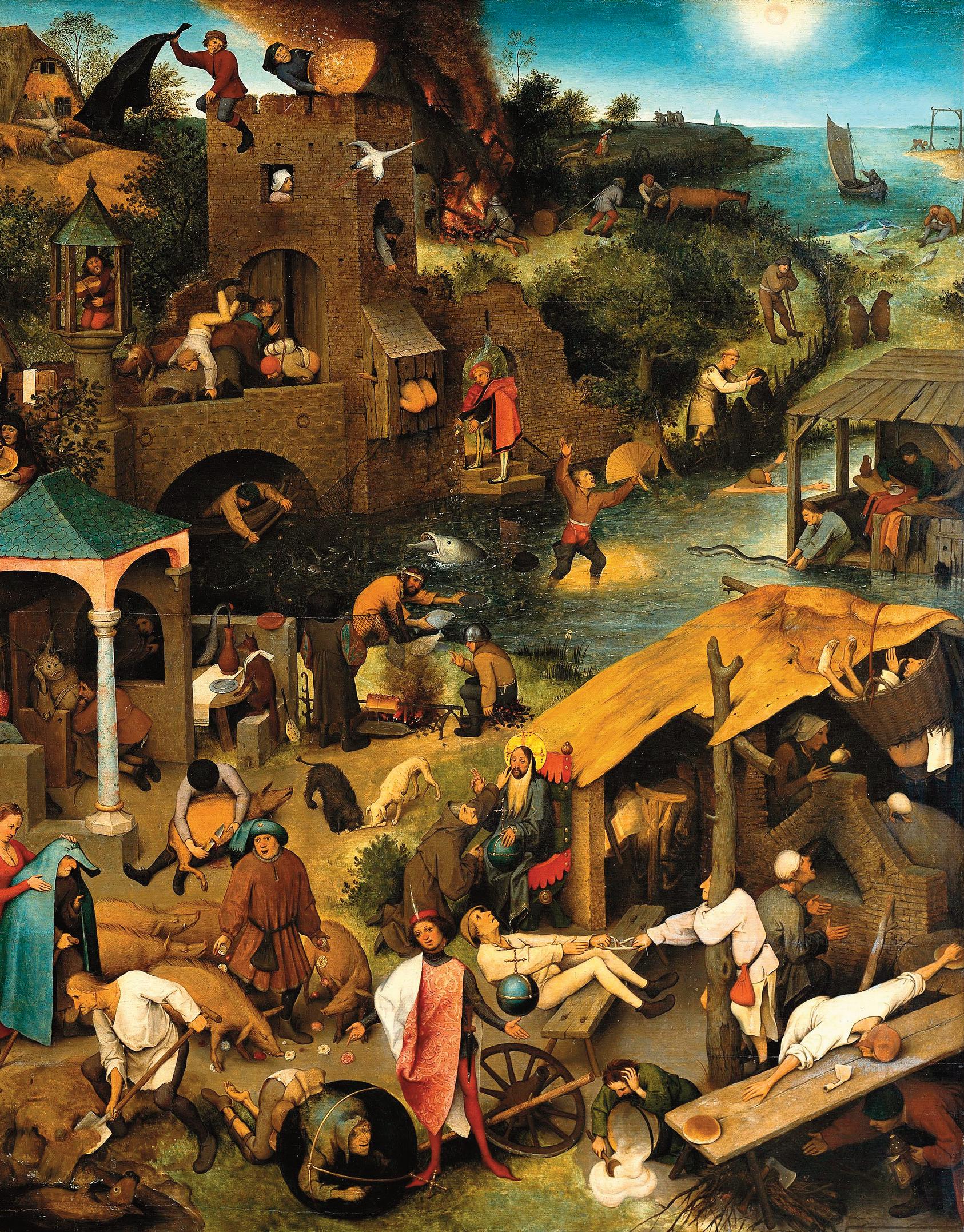
Sayings are myths used in our day-to-day language and life. Dutch Renaissance painter Pieter Bruegel the Elder (ca.1525 – 1569) dedicated an entire painting to the beauty of funny, silly, and absurd sayings. Pieter Bruegel is mainly known for landscapes and peasant scenes like his Peasant Wedding (1566 – 69). However, in 1559, he changed his focus to a multitude of different Dutch sayings. In its turmoil, Nederlandse Spreekworden (‘The Dutch Proverbs’) invites the viewer to dive into the chaotic scene portrayed and find the different sayings hidden, reminding of a Renaissance version of ‘Where’s Waldo’. Since 1914, the painting is on display at the Gemäldegalerie of the Staatliche Museen zu Berlin.
Nederlandse Spreekwoorden includes around a hundred Dutch sayings. Placing them in real-life contexts makes the painting appear as one coherent narrative of people in a seaside village. Scenes portraying individual narratives are depicted side by side without interfering with each other. Thereby, Bruegel creates a complex setting of seemingly common events that follow an inherent order of sayings.The painting’s original title had been De dwaasheid van de wereld (‘the foolishness of the world’), thus Bruegel did not only see his painting as a collection of sayings but as a depiction of human foolishness, which he asks the viewer to reflect upon.
1. Bij iemand in het krijt staan (‘To stand in someone’s chalk’)
A: Derives from the time of chalk mines. The last worker to finish work was the last one to “stand in chalk” and therefore had to pay for after work drinks,
B: First came up in Dutch schools in the nineteenth century to describe a mess made by students. Everything was so messy that even the chalk was laying on the floor.
C: In early modern times, debts that customers would make at shops were written down with chalk on a board behind the counter to not be forgotten the next time.
D: All of the above.
Although we don’t expect you to find all 100 proverbs that are depicted in the painting, we challenge you to scrutinize the chaotic scene and see how many sayings you recognize. How many can you find? Often, sayings in different languages are similar, so even if you do not know Dutch, go ahead, and try to find sayings in your language of choice.
After having explored the impressive variety of sayings in the Dutch language, the question arises where these sayings actually come from.
2. Door de mand vallen (‘To fall through the basket’)
A: In the Middle Ages, it was a form of punishment to put someone in a basket hanging over a body of water for people to mock the unfortunate. After a while, the basket’s rope would be cut, and the person inside would fall in the water.
B: Derives form a sixteenth century custom of girls wanting to reject unwanted suitors. Girls would invite the suitors to their rooms by throwing them baskets with a rope connected to their window. However, they would make sure that the basket had a loose bottom so that the suitor would actually fall through it.
C: A bottomless basket was a way of boys to make fun of girls who did not have a partner at parties in the seventeenth and eighteenth century.
D: All of the above.
3. Rozen/paarlen voor de zwijnen gooien (‘To give roses/pearls to the pigs’)

A: Goes back to the gospel of Matthew. In Jewish belief, pigs are seen as impure animals.
B: In his extravagance, King Louis XIV. gave roses and pearls to his pigs.
C: In nineteenth century Netherlands, farmers could join competitions with their pigs for the biggest, fastest, or loudest pig. As a prize, the winner would get roses and pearls.
D: All of the above.
11 Leah Niederhausen
1 C 2 D 3 A
to know more?
the code! Answers
Want
Scan
12
Nederlandse Spreekwoorden, by Pieter Bruegel the Elder (1559).
13
Niederhausen
Leah
Het beeld van de vrouw, door de man
Hoe historische geschriften bijdroegen aan het onjuiste beeld van de vrouw
Wat betekent het om vrouw te zijn? Eeuwenlang werd het zijn van een vrouw gedefinieerd als het tegenovergestelde van het zijn van een man; vrouwen waren alles wat mannen niet waren: stil waar mannen luid waren, lief waar mannen ruw waren. Dit eeuwenoude beeld drukt nog altijd zijn stempel op het huidige beeld van de vrouw. Nog te vaak worden vrouwen afgeschilderd als onschuldige wezens die moeten worden beschermd tegen slechte mannen, manipulatie en, natuurlijk, hun eigen naïeve gedrag.1
Dit beeld is gevormd door eeuwenoude ideeën over wat het betekent om vrouw te zijn. Eeuwenoude ideeën… van mannen. De archieven liggen vol met historische geschriften, geschreven door mannen. Het beeld van de vrouw is te vinden in de geschriften van de Griekse filosoof en de zeventiende-eeuwse geleerde, van de kapitalist tot de communist. Zij creëerden de vorm van de vrouw: een mismaakte vorm, een lege huls, een slecht aftreksel van de werkelijkheid, als die er al enige overeenkomstigheid mee vertoont. Toch is de geschiedenis van dit vervormde beeld van de vrouw belangrijk. Om te kunnen losweken van dit oude beeld en ons te schikken naar nieuwe beelden van de vrouw, moeten we namelijk haar geschiedenis kennen. Pas als wij onze geschiedenis kennen, kunnen wij ons ervan vrijwaren.2
Hieronder vindt u een narratief van het beeld van de vrouw, verteld door de man. Een gesprek van reflectie tussen historische figuren over hun eigen geschriften. Hierbij is het opvallend, maar niet verbazend, dat in deze bespreking over het beeld van de vrouw alleen mannen aanwezig zijn. De onderstaande conversaties zijn fictioneel en daarmee ook de meningen van de historische figuren: ze bestaan alleen in het hoofd van de schrijfster. Ze zijn gebaseerd op de geschriften die de figuren hebben geschreven, aangegeven met verwijzingen en voetnoten in de conversaties. De Griekse traditie wordt gevolgd, waarbij mensen verschijnen waar ze niet waren en spreken waar ze niets zeiden. Om zowel te starten als te eindigen met Karl Marx: beelden der vrouwen aller eeuwen, verenig u!3
Het startwoord
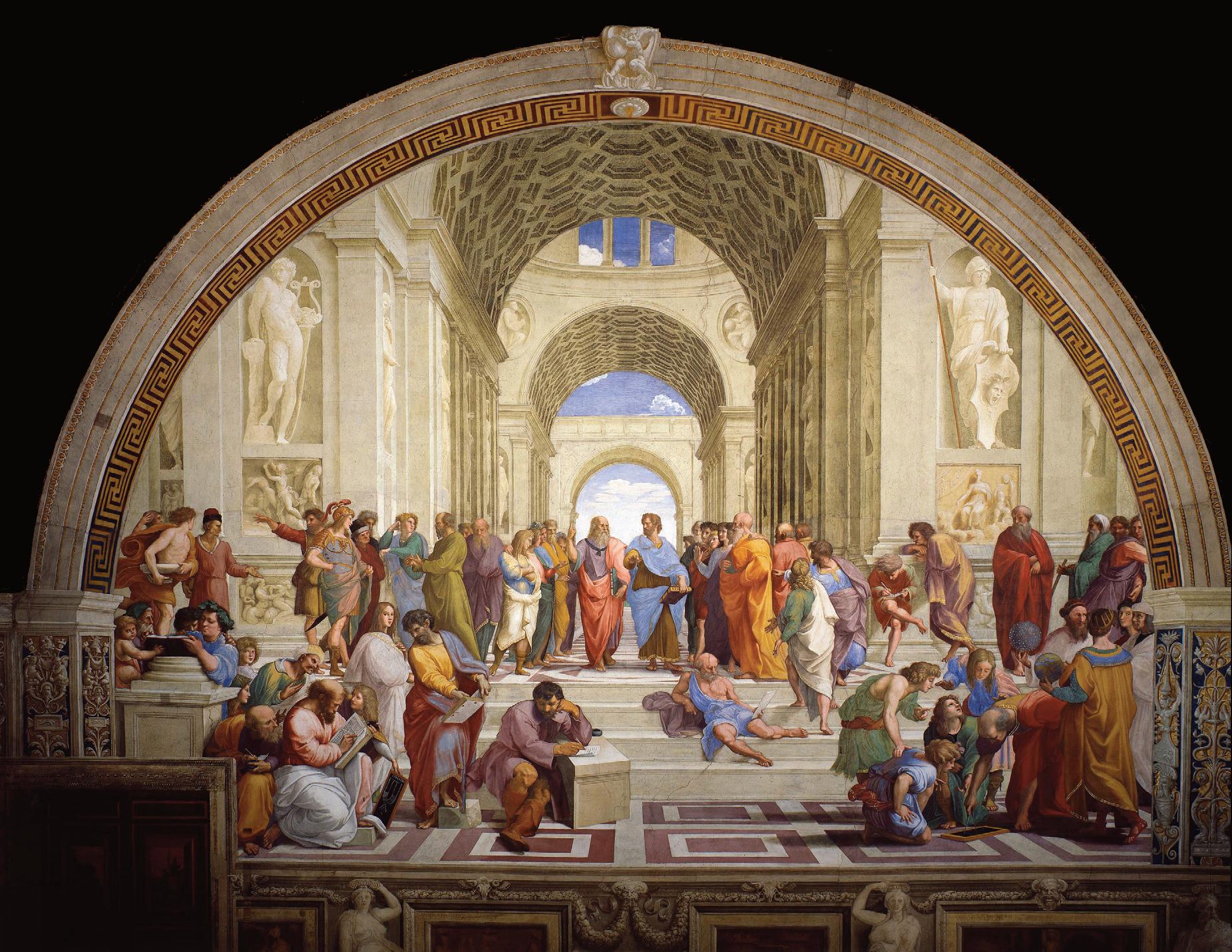
En zo kwam het dat zeven grote historische figuren in 2022 na Christus bij elkaar kwamen. Ze stonden voor een belangrijke taak: de geschiedenis van het beeld van de vrouw blootleggen. Zij zetten zich gezamenlijk rond een eikenhouten tafel en keken elkaar één voor één aan. Thucydides, de oudste van de zeven, schoof zijn stoel naar achter en stond op. Hij schraapte zijn keel
en nam als eerst het woord. “Heren, we zijn hier vandaag bijeen om voor eens en voor altijd af te rekenen met ons beeld van de vrouw. Met de kennis van nu is duidelijk geworden dat het beeld dat in de loop der eeuwen van haar is ontstaan, onjuist is. Zij is neergezet als minderwaardig, als dom, naïef, onnadenkend en niet meer dan uiterlijke schijn. Door dit gecreëerde beeld is zij ook als zodanig bejegend. Wij allen”, hij ging het gehele gezelschap rond en keek eenieder in de ogen, “inclusief ikzelf, hebben ons hieraan schuldig gemaakt. Laten wij deze samenkomst gebruiken om alles boven tafel te krijgen. Laat ons vrij en oprecht spreken. Laat niets achterwege. Zo kunnen wij dit onrecht zo snel mogelijk verslaan en achter ons laten. Laten wij de waarheid weergeven zoals zij daadwerkelijk is geweest.” En met die woorden begon de zitting.
Vooraf was door Aristoteles bepaald wat de volgorde van sprekers zou zijn; de vruchten van zijn levenslange systemische onderzoek. Hij zou zelf starten, waarna Thucydides hem zou opvolgen. Zij behoorden immers tot dezelfde historische periode. Daarna zou Erasmus het woord krijgen; hij was de enige afgevaardigde van de Renaissance, maar zijn bijdrage telde gelukkig voor twee. Daarna zouden respectievelijk Voltaire en Kant spreken: beide invloedrijke filosofen uit de Verlichting, en als laatst zouden Karl Marx en Friedrich Engels het woord krijgen, waarbij ze zowel het aandeel van het kapitalisme als hun eigen communistische aandeel van het beeld van de vrouw zouden verklaren.
14
“Het mag opvallend maar niet verbazend genoemd worden dat in deze bespreking over de vrouw alleen mannen aanwezig zijn.”
(I)
De school van Athene, Rafaël (1509-1511).
De klassieke inzichten
Aristoteles liep naar de kop van de tafel. Onder zijn arm droeg hij zijn geschrift Politica. Hij startte met een ellenlange lofzang over zijn jarenlange onderzoek naar verschillende vormen van staat. Het was duidelijk dat hij trots was op de democratie waarin hij in Athene had geleefd. “Elke vrije burger had rechten en plichten en een recht was, dat zij allen mochten stemmen.” Toen vertrok zijn gezicht. Hij rolde zijn geschrift uit tot 1291 b 25, IV.4 en las voor uit eigen werk: “(…) voorts de groep die niet uit een huwelijk van twee vrije burgers stamt, maar wel vrij geboren is (…)’ Ik herhaal: ‘een huwelijk van twee vrije burgers’.” Alle mannen rond de tafel waren stil. Ze snapten dat hier iets niet klopte, maar wat? Aristoteles schraapte zijn keel. “Het gaat hier niet om de context, maar om die paar woorden. Tot slaaf gemaakten mochten niet stemmen, dat was duidelijk, dat zijn geen vrije burgers. Metoiken mochten niet stemmen, ook dat zijn geen vrije burgers. Maar vrouwen? De vrouw die noch tot slaaf gemaakt was, noch metoik, was een vrije burger. Het was haar plicht om te stemmen, maar mocht zij dat? Nee!” Aristoteles ging steeds harder praten.Thucydides stond op en maande hem tot stilte. Hij vroeg Aristoteles te gaan zitten, die duidelijk van slag terugliep naar zijn stoel.
“Zo”, zei Thucydides met een gewichtige stem. “Ik heb jullie beloofd de waarheid weer te geven zoals zij daadwerkelijk is. Dit heb ik altijd zo gedaan.Voor al mijn geschriften heb ik meerdere bronnen geraadpleegd en men kan er daarom op vertrouwen
Eva van Roozendaalrecht dat ik zocht.” Thucydides las voor uit de rede voor de overleden Atheense soldaten van de Peloponnesische oorlog. Vrouwen van de overleden mannen kregen, anders dan de vaders en zonen van deze mannen, in deze rede een advies mee: zij moesten leven in overeenstemming met hun natuur en zij moesten zorgen dat er zo weinig mogelijk over hen werd gesproken door mannen.4 “Is het niet vreemd”, vroeg Thucydides aan de aanwezigen toen hij klaar was met het oplezen, “dat alleen vrouwen wordt geadviseerd zich te gedragen ‘in overeenstemming met hun natuur’, wat dat ook zijn moge.” “Waarschijnlijk rustig en zachtaardig”, mompelde Voltaire, die niets werd gevraagd. Ongestoord ging Thucydides verder over de verantwoordelijkheid van de man in de geschetste situatie. “Uit mijn eigen geschrift concludeer ik dat vrouwen in mijn tijd onrecht werd aangedaan door hen verantwoordelijk te houden voor wat gezegd werd door de mannen van mijn tijd. Het is schandalig hoe vrouwen zich onder de radar zouden moeten houden, zonder dat in deze aangehaalde speech ook advies wordt gegeven aan de man.” Hij beëindigde zijn rede met een klap op tafel en liep terug naar zijn stoel.
De dwaasheid is een man
Erasmus was als volgende aan de beurt. Zwierig stond hij op, duwde zijn stoel aan en liep naar het hoofd van de tafel. Onder zijn mantel vandaan haalde hij een klein verkleurd boekje tevoorschijn. Hij duwde zijn mutsje recht en keek de tafel rond. “Heren, als eerst wil ik mijn excuses maken. Dit boekje”, hij er even mee voor het gezicht van Voltaire, die het dichtstbij zat, “‘De Lof Der Zotheid’ had nooit gepubliceerd mogen worden. Het was een ongeluk dat ik in een paar dagen tijd heb geschreven.
15
Ik heb er erg veel mensen mee tegen de borst gestoten en dat spijt me. Ik ga ervan uit dat jullie het allemaal hebben gelezen, behalve dan misschien Aristoteles en Thucydides, maar verder verwacht ik toch wel dat-”, maar Aristoteles stopte hem. “Erasmus, blijf bij het onderwerp.Wat heb je te zeggen over het beeld van de vrouw dat je schetst?” “Oja, oja” en Erasmus ging verder. Hij sprak over de vrouwelijke gedaante Dwaasheid, de hoofdpersoon van het boek. Hij gaf toe dat dit niet netjes was. “Ik heb uitspraken gedaan als: ‘Als u vindt dat ik ergens te brutaal of te loslippig heb gesproken, moet u maar bedenken dat Dwaasheid, die ook nog eens een vrouw is, aan het woord was.’5 Ik had vrouwen niet hoog in het vaandel zitten en niemand uit mijn tijd eigenlijk. Maar, hier wil ik mezelf graag toch verdedigen, ik heb het er niet erg dik bovenop gelegd.Voltaire daarentegen,” en hij wees met een lange knokige vinger naar de filosoof, “ik heb jouw boek Candide gelezen en dat is toch hele andere koek!”. Voltaire wees met zijn vinger naar zijn eigen borst en keek geschokt. “Ik? Je kan helemaal niet bewijzen dat dat geweldige boek van mij is! Mijn naam wordt niet eens genoemd.” Uit de binnenzak van zijn mantel haalde hij het boek in kwestie. Hij sloeg het open op het voorblad. “Kijk! Mr le Docteur RALPH, dat staat hier toch duidelijk.”
De mannen fluisterden verbaasd met elkaar. De filosoof Immanuel Kant, tijdgenoot van Voltaire, maande de mannen tot stilte. “Ik geloof dat men zelf moet nadenken en niet anderen voor hem moet laten denken.6 Houd ons niet voor dwazen Voltaire, iedereen weet dat u dit boek heeft geschreven. Waarom heeft u het anders meegenomen naar deze zitting? Nou?” Een grijns brak door op het gezicht van Voltaire. “Ah, daar heeft u me.” Hij zakte weer op zijn stoel en gebaarde met zijn hand naar Erasmus, “Ga door, ga door”. Erasmus nam lichtelijk verrast weer het woord. “Uhm, nou, zoals ik al zei… ik was half zo erg nog niet. Ik zinspeelde alleen op de vrouw als de grootste dwaas van allen, maar het boek heet niet voor niets ‘de Lof der Zotheid’:
voor ieder die het gelezen heeft weet dat het eindigt met een lofzang. Zo slecht is dat toch niet voor het beeld van de vrouw in de Renaissance?”
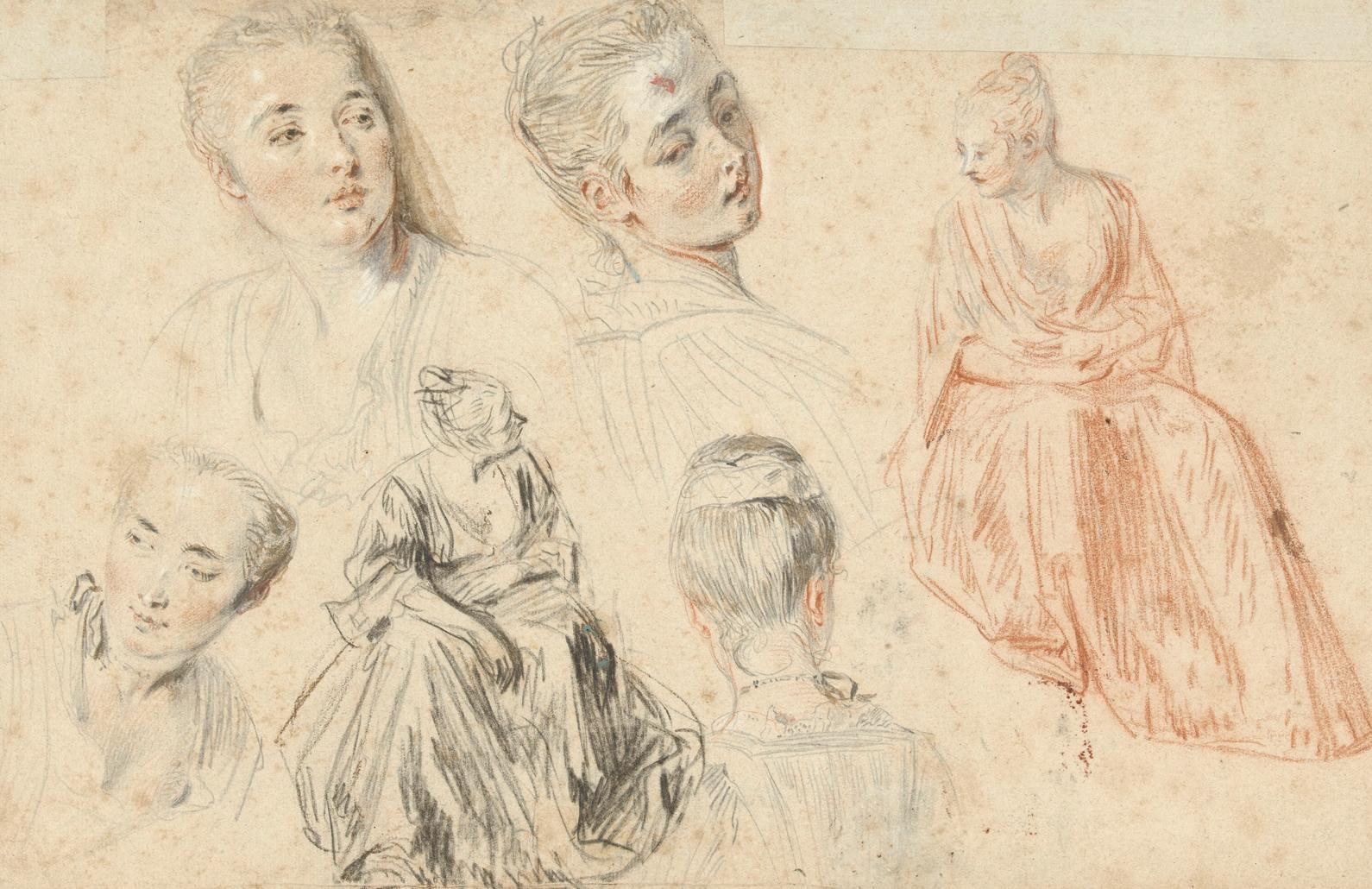
De belezen mannen aan de tafel moesten beamen dat Erasmus het daar bij het rechte eind had. Er was geen daadwerkelijke uithaal geweest naar de vrouw in zijn geschrift, vonden zij, alleen onderliggende aannames over het zijn van een vrouw: dwaas, brutaal en loslippig. Het gehele schrift was toch een grote berg van kritiek geweest op alles en iedereen, zo slecht was dat toch niet? Ze waren allemaal benieuwd geworden naar de waarheid uit het boek Candide en keken reikhalzend uit naar de toespraak van Voltaire, die, volgens de stapsgewijze aanpak van Aristoteles, zou volgen.
Gelijkheid voor iedereen!
“Geachte aanwezigen, nu de waarheid boven tafel is gekomen en iedereen hier weet dat ik de satireroman Candide heb geschreven, zal ik maar beginnen met de beschuldiging van Erasmus dat ik het er ‘erg dik bovenop heb gelegd’. Waarop? vraag ik me dan af. Enfin, ik kan me niet herinneren dat ik in mijn boek onderscheid heb gemaakt tussen mannen en vrouwen… nu ik er langer over nadenk, spelen vrouwen bijna helemaal geen rol in mijn boek.”7
Karl Marx, die tot nu toe vooral had geluisterd naar de andere mannen aan tafel, nam het woord. “Ik denk, mijn beste man, dat dat precies een van de problemen is. De mannen in jouw boek staan op de voorgrond: hoe er ook over hen wordt gesproken, er wordt over hen gesproken. De beschrijvingen verschillen van het prijzen van hun intelligentie tot het prijzen van hun stupiditeit. Voor de vrouw daarentegen… het enige geprezen is hun uiterlijk, bijvoorbeeld ‘knappe, goed geklede meisjes’8 en ‘het meisje was heel knap’9. En wanneer de enige belangrijke vrouwelijke figuur in het verhaal lelijk is geworden, ‘deinsde [Candide] vol afschuw drie stappen achteruit’10. De vrouwen zijn niets anders dan hun uiterlijk in dat boek van jou.”
16
“De vrouwen zijn niets anders dan hun uiterlijk in dat boek van jou.”(II) Schets van vrouwen door Jean Antoine Watteau.
Immanuel Kant was inmiddels opgestaan en had plaatsgenomen naast Voltaire. Hij tikte met zijn geschrift Wat is Verlichting? op de tafel. Ook hij had zich schuldig gemaakt aan het benoemen van één kenmerk om de vrouw weg te zetten: hij had vrouwen ‘het schone geslacht’ genoemd in het geschrift dat hij vasthield. “Ik dacht dat het onschuldig was”, begon hij, “het mooie geslacht, dat leek me een compliment, maar ik snap nu dat het fout was.” Hij gaf context – in het geschrift werd uitgelegd dat volgens hem Verlichting inhield dat mensen zelf gingen nadenken, mondig werden -, voordat hij de volgende zin voorlas: “’dat het veruit grootste deel van de mensen (waaronder het gehele schone geslacht) de stap naar de mondigheid, behalve dat hij lastig is, ook voor zeer gevaarlijk houdt (…)’.11 Zowel Voltaire als ik hebben altijd vastgehouden aan het idee dat vrouwen passief deelnemen aan het leven en niet zelf kunnen nadenken.” Voltaire kon dit beamen, de grote denkers in Candide waren stuk voor stuk mannen geweest: Meester Pangoss, Martin, de wijze man in El Dorado.12 Karl Marx was ook opgestaan en riep ferm dat vrouwen door zowel Kant als Voltaire werden gezien als afhankelijk van de man, als hun eigendom, “net zoals in het kapitalisme!”.13
De gammele hoeksteen van het kerngezin
En met deze laatste zin van Karl Marx, begon de laatste redevoering. Friedrich Engels en hij namen plaats aan het hoofd van de tafel en zwaaide met hun Communistisch Manifest. “Wij zijn jullie tijd – en de onze – ver vooruit. Praat tegen ons niet over democratie, Aristoteles, of over gelijkheid,Voltaire en Kant, want wat jullie democratie en gelijkheid noemen, is maar eenzijdig; voor één groep bedoeld, namelijk het mannelijke deel van de bevolking. En daarmee zijn jullie geen haar beter dan de bourgeoisie in onze eeuw. Zij zien de vrouw als machine, als product, als bezit; net zoals jullie. Wij willen sociale gelijkheid voor man en vrouw; een samenleving waarin een vrouw geen eigendom is van een ander: een community of women14 waarin zij zelfstandig zullen zijn.
Eva van Roozendaalsamenkomst, maar inhoudelijk kwam het overeen. Hij knikte daarom instemmend bij alles wat zijn compagnon zei.
Toen Karl Marx klaar was met zijn betoog, was ook de rest van de tafel instemmend aan het knikken. Thucydides nam het woord. “Kunnen wij dan stellen dat de waarheid is dat deze twee heren – van alle heren in deze ruimte – als enige een begin hebben gemaakt aan de afbrokkeling van het onjuiste beeld van de vrouw?” “Het begin van het einde”, beaamde Immanuel Kant. “Dan lijkt het,” zei Thucydides langzaam, zodat elk woord goed kon worden verstaan, “alsof we in ieder geval een groot deel van de waarheid boven tafel hebben gekregen vandaag.” Voltaire stond op en keek de groep voor de laatste keer rond. “Dan hebben we het een beetje goed gedaan. Dát is ons beste werk.”15
Verantwoording
1 The Economist, ‘Essay Awesome, weird and everything elseBeing a girl is special, difficult and better than it used to be’, the Economist, https://www.economist.com/christmas-specials/2020/12/19/awesome-weird-and-everything-else, geraadpleegd op 31 januari 2022.
2 Chiel van den Akker, The modern idea of History and its Value. An introduction. (Amsterdam 2020).
3 Aanpassing van vertaling van Karl Marx en Friedrich Engels, ‘Manifesto of the Communist Party’, 1848.
4 Vertaling van Thucydides, De Peloponnesische Oorlog 2.3447.
5 Vertaling van Erasmus, Lof der Zotheid. (Amsterdam 1509).
6 Vertaling van Immanuel Kant, ‘Ausgewählte kleine schriften’ (Hamburg 1784).
7 Vertaling van Voltaire, Candide. Of het optimisme. (Amsterdam 1759).
8 Vertaling van Voltaire, Candide. Of het optimisme. (Amsterdam 1759) 112.
9 Ibidem, 107.
10 Ibidem, 132.
11 Vertaling van Immanuel Kant, ‘Ausgewählte kleine schriften’ (Hamburg 1784).
12 Vertaling van Voltaire, Candide. Of het optimisme. (Amsterdam 1759).
Wij hebben vaak het verwijt gekregen dat het communisme de rol van de vrouw in de samenleving zou ontwrichten. We zouden de hoeksteen van het gezin verwijderen, het gezin waarin vrouwen juist zo goed beschermd werden. Het kapitalisme heeft niet door, dankje,”, vervolgde Marx zijn verhaal nadat hij snel een slok water had gedronken – dat felle geschreeuw maakte zijn keel droog -, “dat dit burgerlijke gezin al lang verdwenen is door henzelf. Nu vrouwen en kinderen ook werken in de fabrieken, is dit gehele gezin uit elkaar gevallen. Het communisme brengt weer evenwicht in deze chaos, ordening in de maatschappij!” Dit was niet helemaal wat Friedrich Engels in zijn hoofd had gehad; Karl Marx had geen woord overgelaten van de tekst die hij had geschreven ter voorbereiding op deze
13 Vertaling van Karl Marx en Friedrich Engels, ‘Manifesto of the Communist Party’, 1848.
14 Ibidem, 15.
15 Aanpassing uit Vertaling van Voltaire, Candide. Of het optimisme. (Amsterdam 1759).
Afbeeldingen
(I) Rafaël, De school van Athene, 1509–1511 fresco in de Kamers van Rafaël in het Apostolisch paleis in Vaticaanstad, via: https://commons.wikimedia.org/wiki/File:Raffael_058.jpg.
(II) Jean Antoine Watteau, Vier vrouwenhoofden en twee zittende vrouwen, 1705-1721, Rijksmuseum Amsterdam.
17
“Dan hebben we het een beetje goed gedaan. Dát is ons beste werk.”
Op de VU At the VU

Merlijn Update
Dear readers of CODEX, and members of Merlijn,
After months of COVID-lockdowns, the situation is slowly getting back to normal on the VU. We wish you all the best of health now that the measures have been released for the most part. Many people have still been falling ill, and our board-members were also not immune, not even with Merlijn’s magic!

Last month we were able to organise a very fun board game day that many people attended. Thank you everyone for joining us and making it fun! There were smiles all around while we drew funny pictures and moved thematic chess-pieces; Chairman Beau lost his marbles while playing Diamond and here and there some kittens exploded (it’s a game, don’t worry). More games are yet to come, as we will be playing Beerpong together with other faculties before this CODEX is released, and Niels will start his lectures on the ancient game of GO once he can go out of isolation!
Throughout the last month, we have also been busy preparing the famous trip abroad for our Merlijn members, together with our awesome trip abroad committee. This year’s destination will be the lovely city of Prague! We will be going there in April, from the 14th19th, and it will be awesome! Watch out for that full photo report in one of the next editions of CODEX!
In this last paragraph, we as the Merlijn board would like to put a heart under the belt of everyone whose mind wanders to the situation in Ukraine. We are also following the situation with great sadness and want to be there for anyone who needs some comfort or an ear. Stay strong, and we will see you at the next Merlijn meeting, where besides fun and games there is always room for good conversation.
We hope to see you in the social room (HG-12A-43) from time to time. And do keep an eye out while you’re there for those lovely new printed editions of CODEX Historiae, in mint condition, and sporting a new handy size!
All the love from the Merlijn board!
Student Wellbeing
The Student Wellbeing Point is a student initiative, where trained VU students offer their fellow students a listening ear, a pleasant conversation, or advice in the field of student welfare. These so-called Point Peers are also in close contact with existing VU services such as the student psychologists to whom they can easily refer if necessary. All this takes place in an informal, homely atmosphere in the Student Wellbeing Point which has been set up centrally on the campus.
You can visit the physical Student Wellbeing Point from Monday to Friday from 10.00 to 16.00. It is located on the ground floor of the VU main building. You can also use the live chat, zoom, or email option we have provided. You can send an email to studentwellbeingpoint@vu.nl.
The Student Wellbeing Panel consists of one representative per faculty. Do you have a question or an idea about how student wellbeing can be improved within your faculty? Your panel representative can think along with you! Feel free to send an email to studentwellbeingpanel@vu.nl and you will be contacted.
Together with the Student Wellbeing Panel, the Point hopes to improve student’s wellbeing and to provide a safe space for everyone.
Love,
The Student Wellbeing Point & Panel
19
Research Update - Chronicling Novelty A Project on the Bloggers of the Early Modern Period
‘Knowing the world’ from a local perspective
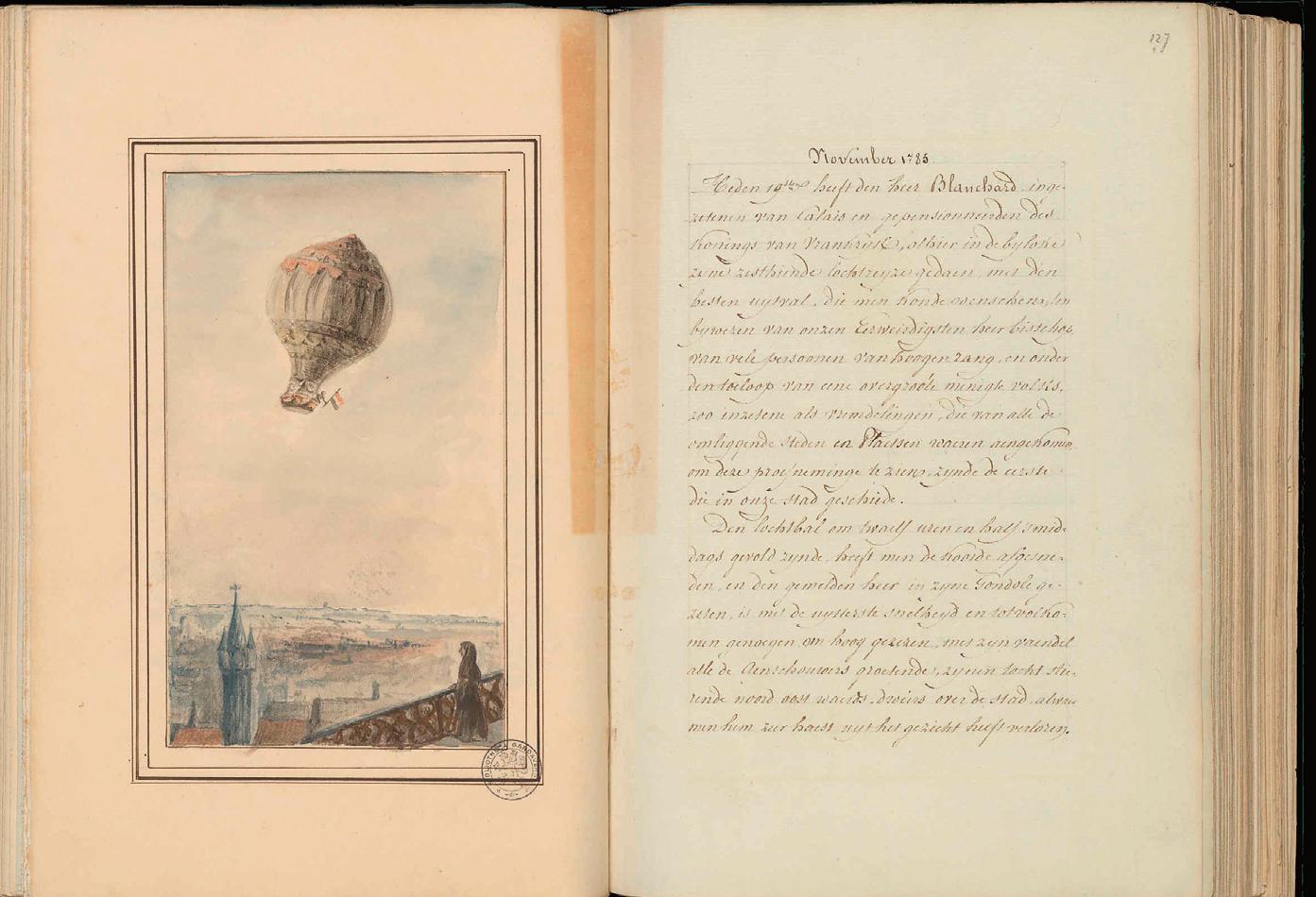
The explanation for the economic expansion of Europe between 1650 and 1900 is the topic of a long and intense debate. The Industrial Revolution was preceded by a series of so-called revolutions: the Agrarian Revolution, the Industrious Revolution and the Scientific Revolution during which new ideas and technologies were developed. Recently it was suggested that cultural changes were a pre-condition for this series of innovations to happen. The historian Joel Mokyr sees the relatively open exchange of ideas in early modern Europe as the key to understanding why notions of progress emerged, which ousted earlier suspicion of ‘novelty’.1 According to him, this made Europeans after 1650 more receptive to new knowledge and innovation than their ancestors.
As we are witnessing today during the Covid-19 pandemic, the acceptance of new knowledge and technology by specialists, does not guarantee wider appropriation by the rest of society. Now, as in the past, people have access to different ‘systems of knowledge’. There are various approaches to health, some of which have long cultural traditions, that may influence their interpretation of the epidemic and the choice to take vaccinations.
In the research project Chronicling Novelty. New Knowledge in the Netherlands, 1500-1850, we study when, how, and to what effect, new knowledge actually anchored among the wider public. To what extent did new scientific explanations for natural and societal phenomena (e.g. concerning lightning or bacterial germ theories of disease) trickle down and change people’s way of thinking? Did ‘ordinary people’ regard novelty as something positive, or did they only accept change when it could be easily integrated in their existing worldview? We are trying to answer such questions by using a large corpus of local chronicles, a type of diary, from the early modern Low Countries. In September 2018 prof. dr. Judith Pollmann (Leiden University) and dr. Erika Kuijpers (VU) started with the creation of this corpus. Three years later, they have collected, digitized, and annotated over 300 handwritten chronicles, worked with more than 500 volunteers and several student assistants at the VU and in Leiden, and pioneered with digital research methods. At the VU we also set up a new research seminar on the history of knowledge for the third-year students of the BA Geschiedenis track.
Manuscript chronicles: a neglected genre
Chronicles have been written since Antiquity and are especially known as a rich narrative source in medieval history. However, since the late Middle Ages, until well into the nineteenth century, local or private chronicles emerged, written by the ‘middling’ rank of society.2 In contrast to their predecessors, early modern chroniclers not only covered the past but also kept notes of the ongoing events they experienced in their own lifetime. Chronicles were written to be useful collections of memorable events and knowledge for family, fellow citizens, and future generations.3 Despite their importance for the local com-
munity, only very few chronicles were published in print during the lifetimes of their authors. Moreover, they were, and are, scattered across personal and local archives.4
Chronicles have long been dismissed by historians as a distinctly old-fashioned and uninteresting type of text. The content was often regarded as subjective and trivial, as many chroniclers wrote at length about the weather, prices, and petty crimes. On the other hand, authors usually wrote little about themselves and their feelings, which makes chronicles less useful to study people’s personal thoughts and feelings. Consequently, the genre fell between two stools: historiography on one hand and egodocuments on the other.5 We believe, however, that chronicles have much to offer. It is one of the most stable genres for the early modern period, allowing for long-term studies and comparisons in time and space. Moreover, they were written by people belonging to the middling rank of society; a group that may have played a key role in the process of acceptance of new knowledge by the broader public.
Thus, we collected scans from more than 200 manuscript chronicles in the Netherlands and Belgium. The scans were uploaded on the crowdsourcing platform VeleHanden.With a community of 528 volunteers, and the Handwritten Text Recognition software of Transkribus, the scans were transcribed, annotated, and made available for (digital) research. Another set of about 100 previously published chronicles was digitized by the Royal Library in the Hague, and made available through the Digital Library for Dutch Literature (DBNL).
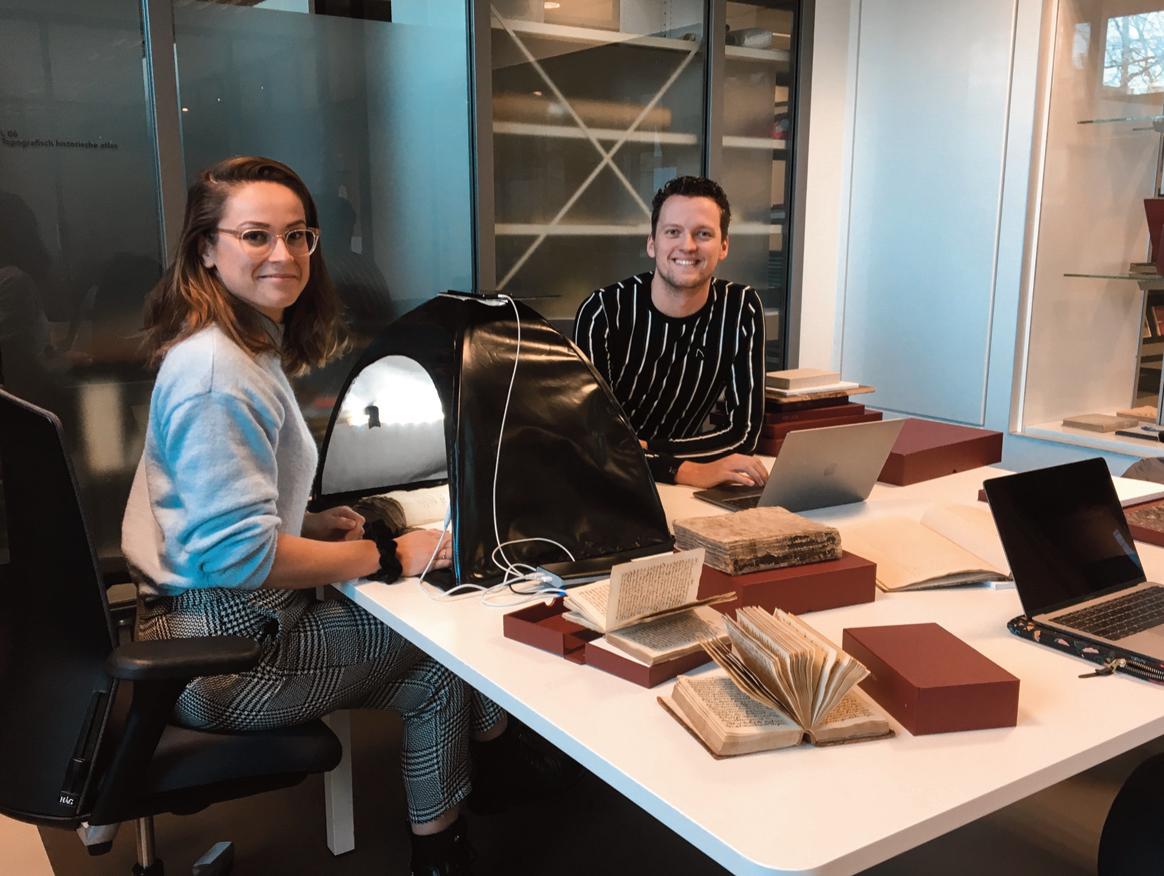
In September 2019, Alie Lassche and Theo Dekker started as PhD candidates in the project. First, they helped to photograph
20
“To what extent did new scientific explanations for natural and societal phenomena trickle down and change people’s way of thinking?”
the chronicles and supervised the work by the volunteers. Two years later, they have presented several research papers and have written various articles and chapters of their dissertations. Lassche studies the sources of information the chroniclers used and how this developed as the range of media expanded over time. Dekker investigates the way people understood the world and how new knowledge was perceived, especially how it changed people’s way of thinking.
Erika
Kuijpers& Theo Dekker
Reasoning, causality, and the appreciation of noveltyTheo Dekker
Despite the diverse backgrounds and education of chroniclers, they shared an interest in topics such as epidemics, meteorological phenomena, and prices. This makes it possible to trace the development of knowledge on these topics over a long period of time. To make it more concrete, by comparing chronicles, Theo Dekker explores questions such as how people interpreted epidemics and lightning storms, and how that changed over time. Were they positive about technological inventions such as vaccinations and the lightning conductor, or did they stick to their old explanations and ways to deal with these phenomena?
Changing mediascapes and the collection of knowledge
Alie Lassche investigates when and where local chroniclers encountered newer types of media and information (observation, oral sources, manuscript, books, newspapers, pamphlets, periodicals), what sources they valued or trusted more than others, and how this changed over time. Did the importance of oral information decrease as there was more printed information available? What information, and which sources were considered reliable? Lassche uses a combination of traditional and new computational methods in her research. She set up an annotation task, in which a small group of annotators labelled the mention of sources of information in the chronicles, using three different tags: source (for instance the newspaper), receiver (usually the chronicler), and perception (meaning the type of information transfer, in this case reading, but in other cases hearing, eye witnessing or else). Lassche uses the manually annotated data to train an automated classifier: she learns the computer to recognize the same mentions of ‘source’, ‘receiver’, and medium or type of ‘perception’ as the human annotators. The aim is to detect changes and patterns in the use of sources by chroniclers throughout the whole corpus of texts, and thereby answering the questions mentioned above, while also developping new methods that can be used by historians in the future. Currently Lassche is a visiting researcher at Aarhus University in Denmark at the Centre for Humanities Computing (https://chcaa.io/#/), where she develops methods to automatically detect topics and events in the chronicles.
In his research so far, Dekker has demonstrated how chroniclers reflected upon epidemics.What were the causes and consequences of epidemics, and how did chroniclers respond to prophylactic measures and remedies? One of the conclusions is that natural explanations were predominantly subordinate to divine explanations, even as late as 1850. Consequently, prophylactic measures such as quarantine measures and hygiene regulations were used alongside processions, days of prayer, and penance.This means that there was no inverse relation between natural and divine explanations. As a matter of fact, according to most contemporaries, there was not even a clear distinction between the two. In the eighteenth century, natural explanations even enhanced divine explanations.
In another chapter, Dekker investigates how meteorological phenomena were described in chronicles. How did chroniclers interpret natural phenomena and climatological changes such as eclipses, storms, floods, draughts, rain, excessive winters, and lightning? Similar to in the chapter about epidemics, Dekker demonstrates that natural explanations became more complex and detailed over time, but remained within a religious framework. Although chroniclers started to record temperatures, wind directions, the amount of rainfall, and the duration of an eclipse, they did so to discover correlations and patterns, mean-
21
“By studying natural phenomena, price fluctuations, and political events in relation to each other, chroniclers practised a form of risk management.”
- Alie Lassche(I) Alie Lassche and Theo Dekker photographing chronicles with the ScanTent in the University Library of Tilburg (2019).
ing that they did not share the same goals as natural philosophers at the time. Chroniclers investigated phenomena and events to make sense of the world around them and to anticipate on the (near) future. Natural phenomena – especially disasters – were interpreted as a message from God, but one that people could learn from. Those who kept a chronicle often recorded that a cold autumn could result in a period of dearth, followed by an epidemic in the following year. By studying natural phenomena, price fluctuations, and political events in relation to each other, chroniclers practised a form of risk management.
Students have also been involved in interdisciplinary research. Both in 2020 and in 2021 we were rewarded an Academy Assistant Project by the VU Network Institute in order to carry out research projects with two students from two disciplines.
Interdisciplinary research
From the very beginning of the project, we worked together with dr. Roser Morante who works at the VU at the CLTL: the Computational Linguistics & Text Mining Lab, also located in the Faculty of Humanities. Morante is a specialist in the text mining of subjectivity, negation, uncertainty and perspectives. In our project she investigates how chroniclers express (un)certainty when they describe the information they receive. The aim of her research is to find out whether it is possible to automatically detect such moments of uncertainty and whether these instances are also indicators for the moments in which authors are dealing with new information. If this were the case, this method would enable us to automatically detect the occurrence of ‘novelty’ in our corpus. This type of research has been done before on modern languages, but for a dataset of early modern Dutch which is very heterogeneous in spelling and vocabulary, it is pioneering work.
In 2020-2021, Lianne Wilhelmus (BA student History) and Ellie Smith (RMA student Linguistics) worked on a project entitled ‘The Cycle of News in Chronicles from Eighteenth-Century Holland. A Stylometric Approach’. Chroniclers frequently copied excerpts from earlier chronicles and other sources like history books, official documents, local announcements and by-laws, pamphlets, and newspapers, without being explicit about the fact that they were copying. As we are very interested in how authors dealt with their sources, this project focused on automatically finding what parts of chronicles contain the wordings of the chronicler him(/her)self and what parts might be copied. To do so, the students applied both close reading and computational stylometry techniques that are often used in authorship verification. Stylometry can be defined as the statistical analysis of variations in literary style between one writer or genre and another. We used this method for the task of authorship attribution; by comparing fragments of texts from different parts of a chronicle, we were able to detect similarities in stylistic choices in writing, such as patterns in function word use, sentence length, syntactic construction, and punctuation style. It turned out that the automatic method worked very well in the case of an eighteenth-century chronicle from Purmerend. The parts that the author placed in between inverted comma’s and that we assumed to be copied fragments from other sources, clearly differed in style from the rest of the chronicle. In a next step we will test this method on another chronicle from the same period to see if the method also works when we do not know which parts might be copied. Ellie Smith, who also wrote her MA thesis on this research project, was awarded a PhD position at Antwerp University, where she continues to work in the field of historical linguistics.
The project funded by the Network Institute in 2021 is entitled ‘Horizons of Interest: The Geographical Scope of Knowledge in Early Modern Chronicles (1500-1850)’. This project is supervised by Erika Kuijpers as well as Ronald Siebes and Tobias Kuhn, who are both from Computer Science. The aim is to test the assumption that chronicles, over time, came to include news and topics deriving from a greater variety of information sources and therefore from an increasingly global information network. The question this
22
“Chroniclers frequently copied excerpts from earlier chronicles and other sources without being explicit about the fact that they were copying.”
(II) Novelty in the chronicle of Edouard Callion (Ghent). The recent invention of the hot air balloon in November 1785.
project wishes to answer is in what way the geographical scope of the chroniclers’ access to information and news changed in the period 1500-1850. What places are mentioned by these authors in their accounts? How did the ratios between local, supra local or regional, and international news develop over time? In this project, Tinka de Haan (RMA student History), Alessandra Polimeno (MA student Computational Linguistics), and Joran Leest (MA Computer Science) are research trainees, while Nienke Huijbens (BA History) helps with the data curation. Joran and Alessandra will work on the curation of the data and the geotagging and mapping of the locations mentioned in the chronicles on interactive maps, which will also include a time scale.Tinka will work on interpretating the outcomes, taking into account the historical context and variables that may have defined the chronicler’s scope and interest, such as political and religious centres, territories, commercial networks, landscape, and infrastructure.
To conclude, the project has created quite some spin-off at the VU. We developed a research seminar for the third year BA Geschiedenis on the history of knowledge, using the chronicles to teach practical research skills. Since 2018, a number of students wrote papers and BA theses based on chronicles, and other students worked as student assistants for the project. All of them have had the opportunity to make significant contributions to this project, e.g. by writing a source analysis, a research paper on a specific topic or by helping us with the management of the digitization project. We thank them all for their valuable work. The Chronicling Novelty project runs until the end of 2023. We still welcome interns and students who would like to write a thesis connected to the project. However, if you wish to work with the corpus, command of Dutch is required. For updates on the project, check our website: www.chroniclingnovelty.com.
Erika Kuijpers & Theo DekkerReferences
1 Joel Mokyr, A Culture of Growth (Princeton 2016).
2 Judith Pollmann, ‘Archiving the Present and Chronicling for the Future in Early Modern Europe’, Past & Present 230, nr. suppl 11 (2016): 232-252, https://doi.org/10.1093/pastj/gtw02; Brodie Waddell, ‘Writing History from Below’, Chronicling and Record-Keeping in Early Modern England’, History Workshop Journal 85 (1 april 2018): 239-264, https://doi.org/10.1093/hwj/dbx064.
3 Pollmann, ‘Archiving the Present and Chronicling for the Future in Early Modern Europe’, 232; Waddell, ‘Writing History from Below’, 241.
4 Waddell, ‘Writing History from Below’, 244; Pollmann, ‘Archiving the Present and Chronicling for the Future in Early Modern Europe’, 232.
5 Pollmann, ‘Archiving the Present and Chronicling for the Future in Early Modern Europe’.

23
Advertentie Are You a Fan of CODEX but Leaving the VU? This is not the end! For a mere €15 per year you can receive CODEX Historiae right on your doormat, four times a year. Subscribe by sending an email to: info@codexhistoriae.nl
The Dutch Saga of Thor’s Skyfall
There is a lake in the Netherlands that has a very interesting folk story attached to it, which was published in the early twentieth century. The story is about how Thor, the god of thunder, fell out of the sky after a battle with a giant snake, and then crashed down to earth. The lake is located in the central part of the Netherlands near the city of Apeldoorn. Its name is Uddelermeer,1 but in the Early Middle Ages it was called Uttiloch. It is a sacred lake that was created after Thunar (the old Saxon name for Thor) battled with a serpent. The local mythology tells us that in the fight, Thor’s hammer and the serpent fell down to earth and then created the lake. Thor himself came crashing down somewhere nearby, creating a second lake called the Bleeke Meer.2 Ancient peoples have repeatedly witnessed meteorite impacts since the dawn of time. Could this be one of many ancient eyewitness accounts of an impact event, wrapped in the symbolism of myth?
Battles between the Hero and Cosmic Serpent
The image of Thor, his hammer, and the snake falling from the sky is a striking one. The original Dutch saga can be found in the book Veluwsche Sagen3 by Gustaaf F.W. Perné (first published in 1911). Not only has Perné collected old folk tales from the Veluwe, but he also bound and illustrated the book himself. In the saga,Thunar fought a giant snake and hit it on its head – the blow making him lose his hammer.
“There, the snake lifted her mighty head up through the clouds, with jaws wide open, and she blew her stinking breath in the blue dome of heaven, which suddenly turned black.Then,Thunar lifted his never missing thunder hammer, and struck it, with bolts of lightning, down upon the gaping snake head with such a force that both the giant monster, crushed, and the hammer, sunk down seven miles deep into the shaking earth.”4
The poisonous breath of the serpent made Thunar fall out of his chariot. He landed close to the snake, creating a second hole in the ground: “With a terrible blow, he crashed out of heaven into the earth, close to the place where he had crushed the serpent.”5 It gets more interesting. Following this great celestial battle, a terrible winter giant ruled the earth for a long time.
After the long winter, two lakes remained. The lake where the hammer and the snake crashed was called Uttiloch (Uddelermeer), and the lake where Thunar fell was called the Godenmeer (“God’s lake”), Witte Meer (“White Lake”), or Bleeke Meer (“Pale Lake”).
The saga as recorded by Perné is steeped heavily in seasonal imagery, as is consistent with ideas about myths being symbolic for the cycles of nature and the passing of the seasons, as was in vogue around the turn of the twentieth century. As far as we know, ordinary lightning strikes (symbolised by Thor’s heavenly battles) don’t leave holes in the ground seven miles deep, which hints at the idea that this saga might be about something more catastrophic.The Dutch saga has been recorded in relatively recent times, but it draws on a theme that has been known in myth since prehistory; that of the battle between hero and serpent. In ancient Greek myths, for example, we find the battles between the thunderbolt-wielding Zeus and the dragon Typhon,6 leaving behind many scars in the Mediterranean landscape, including several volcanoes. The authors of the book The Cosmic Serpent summarise this theme: “The earliest recorded myths are those of combat, between a god or hero and a dragon.The dragon was a familiar figure in Greece, Egypt, Meso-
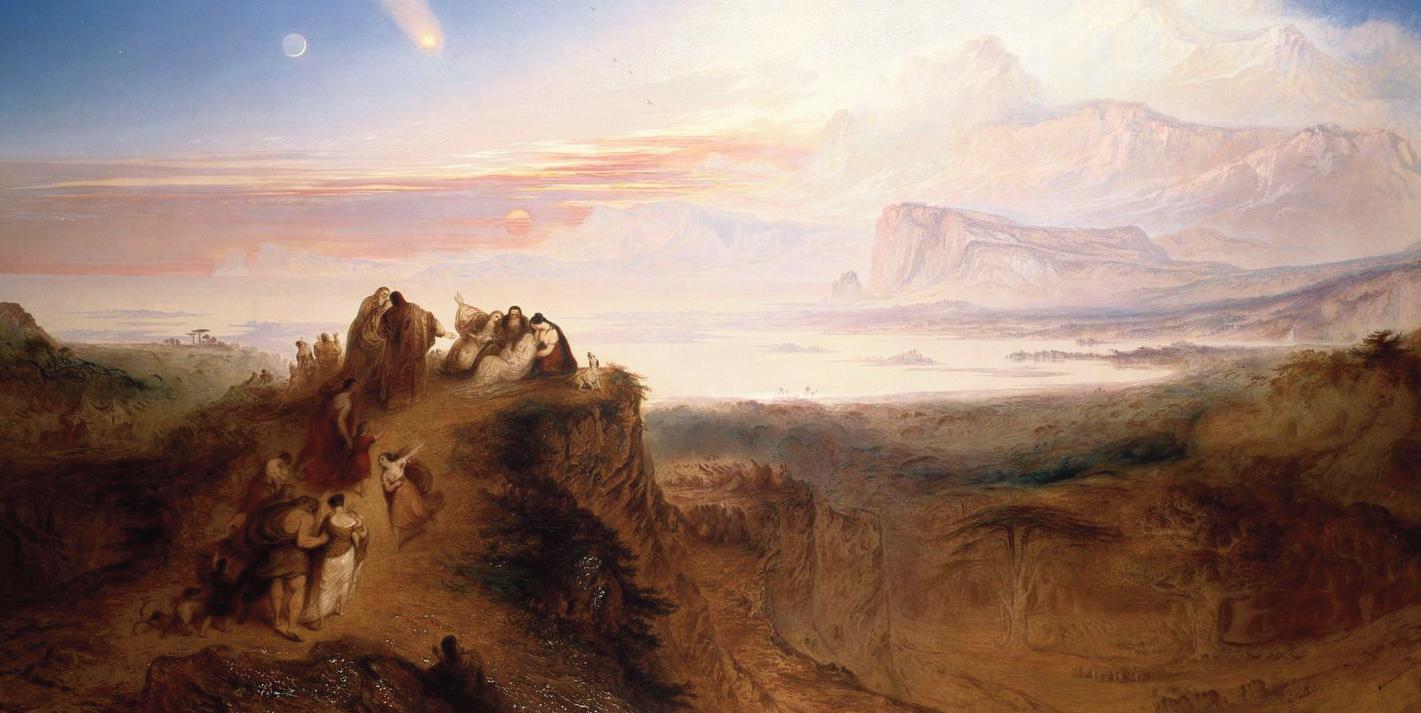
24
potamia, Babylon, India, China, North America and elsewhere. Usually, he has the form of a winged serpent. He is a gigantic monster; he spouts fire and smoke; bellows and hisses; he throws rocks, and is the creator of terrible destruction; and his home is in the sky. ”7
The authors of the book, both astrophysicists, propose that the breakup of a giant comet that entered our Solar System around 20,000-30,000 years ago was responsible for various motifs in ancient myths, such as fiery dragons and sky deities. If these ancient myths are symbolic of cosmic impacts, what evidence can we find that links the Dutch saga to the same destructive phenomenon?
a long period of winter. The Iranian myth is very specific about the severeness of this winter: “Thereupon came Angra Mainyu, who is all death, and he counter-created by his witchcraft the serpent in the river, and winter, a work of the demons. [Now] there are ten winter months there, two summer months, and these are cold for the waters, cold for the earth, cold for the trees Winter falls there, with the worst of its plagues.”10
A former paradisiacal land of myth was turned into a frozen wasteland for ten months of the year. What can cause such a rapid and severe cooling of the environment? The idea of such a long winter fits very well with what we know of the effects of cosmic impacts. Periods of heavy cosmic bombardment were often followed by long periods of global cooling. The Earth passing through the dust tail of a comet, or the dust clouds generated by a cosmic impact event can block the light of the sun, causing a cometary or meteoritic winter, similar to the effects of a nuclear winter. Any large impact onto land, sea or ice could have significant effects on the global climate. Both the Dutch saga and Iranian mythology mention a snake as the cause of this terrible winter, and they both mention a darkening of the sky around the time of noon. Perhaps the common ancestors of both peoples witnessed the same (global) event, somewhere deep in ancient history?
Myths and Meteorites
I have made the link between Thor and meteorites before,8 but there was still a lack of concrete evidence to connect the myth about the thunder god and stones falling from heaven. In Scandinavian folklore, meteorite stones were associated with pieces of Thor’s hammer. Benjamin Thorpe notes in Northern Mythology9 that the Swedes believed that meteorites were hurled by Thor because only he was strong enough to lift them. Both traditions were recorded at a relatively recent date, however; no earlier than 1851. It makes sense though, to connect the god of the sky and storms not only to lightning and thunder, but also to meteorites. The latter are a regular recurrence in the sky, which is the god’s domain. Meteor showers can be seen throughout the year in the nightly skies, with peak activity occurring on certain days of the year. Seeing as larger meteorite impacts are relatively rare, they would have been of special importance to the people who witnessed them. The local Dutch saga does add further weight to the idea that Thor’s thunder weapon Mjöllnir was actually of meteoritic origin, by saying that its crash left a hole in the earth. Although the number of seven miles for the crater may have been chosen for symbolic reasons, the saga certainly suggests that it must have been of a large size. Thor himself and also the snake crashed to earth as well, and are themselves likely symbols for cosmic impacts.
The Snake that Froze the World
In the Dutch saga, an ice giant ruled for an extended period of time after the snake’s fall, similar to Norse mythology, in which the world is created out of the dead body of the ice giant Ymir. The Iranian cognate of Ymir, who is called Yima, is also linked to
We have seen how the saga explains the creation of the two Dutch lakes, and how some scientists think that cosmic impacts are behind these myths. But how do geologists explain the formation of these lakes? And is there evidence for a time of terrible winter?
Ruins of the Last Ice Age
A Dutch geology website provides a scientific explanation for how the Uddelermeer was formed.11 The lake is described as one of the largest pingo ruins of the Netherlands. A pingo is a hill made purely out of ice, that typically forms under very cold conditions, when the ground is in a permanently frozen state, known as permafrost. When this ice hill melts, it leaves behind a hole in the ground that is not unlike a meteoric crater. During the Ice Age, the Netherlands was home to a cold tundra environment. Radiocarbon dating suggests that the Dutch pingos were formed around 11,000-12,000 years ago. Does this mean that they are not meteoric craters but remnants of ice hills? Geology does bring us to a long period of winter, but is it the long winter of the omnipresent sagas and myths?
The last part of the Ice Age, when the pingos were supposedly formed, is also called the Younger Dryas Cold Period. Just when the Earth was waking up out of the Last Ice Age, something happened which caused a sudden and dramatic return to freezing conditions around 12,800 years ago. For another thousand years, large parts of the Northern Hemisphere of the planet became locked in ice. What caused this climatic downturn is still debated, but evidence is mounting in favour of a cosmic impact.12 Large fragments of a disintegrating comet likely impacted
25
Koopmans
Arthur
“In Scandinavian folklore, meteorite stones were associated with pieces of Thor’s hammer.”
(I) “The Eve of the Deluge” by John Martin (1840). The painting depicts a comet causing the Great Flood.
the Northern Hemisphere, with the ice sheet of North America being the epicentre of the bombardment. Other elements such as volcanism and massive floods were likely triggered by the impacts, but they were most likely not the primary cause for the downturn in global climate.13 Could the saga about Thor and the snake contain memories of the end of the Last Ice Age, when winter ruled for another thousand years?
Ancient Memories of Catastrophic Events
Since the dinosaurs, there have been many episodes of cosmic impacts, even in our own Holocene Period after the Ice Age. Two of the most recent impacts to leave an impression in the human psyche were the 1908 Tunguska meteorite (which exploded in the atmosphere), and the Chelyabinsk meteor in 2014. The dendrochronological14 (tree ring) record shows that there were several periods15 since the Ice Age in which global temperatures plummeted for an extended period of time. The Dark Ages of the Early Middle Ages and the Little Ice Age that started in the Late Middle Ages were the most recent cold periods, but severe as they were, they were not nearly as catastrophic as the Younger Dryas Period. Moreover, myths about a hero battling a mighty serpent go back to a time thousands of years before the Dark Ages, to a time when the ancestors of the Germanic peoples still roamed
The Younger Dryas was likely a period of cosmic bombardment, but according to Dutch geologists, the pingo was not created by impacts, but by a slow build-up of ice in the permafrost. If the two lakes indeed started out as ice hills, then they would have formed during or sometime after the period of heaviest bombardment. In the Netherlands too, we can still find traces of this great clash between fire and ice. Not too far from the two lakes, geologists have found evidence16 of the so-called “black mat layer”. This layer of black soil has been found across four different continents, and dates to the Younger Dryas Boundary. In this layer, impact proxies such as nanodiamonds17 have been found. These microscopic minerals suggest a cosmic origin for the global conflagrations that caused this black layer to form.
While geologists give a slightly different origin story for the two lakes, it is not necessarily in conflict with the events in the saga. As we have seen, science itself points to a time period of global catastrophe: the end of the Last Ice Age. The saga seems to describe real catastrophic events, symbolised by a battle between gods and giants. It is not unlikely however, that older myths about cosmic battles were attached to the Uddelermeer and the Bleeke Meer at a later time, to provide an explanation for their origins. If this is the case, then we would expect to find other locations in the Germanic world (and elsewhere) that have a similar origin story. In places around the world, holes in the ground and sacred lakes are linked to serpentine monsters or dragons, or other divine beings. We have examined the fire from the sky, and the global freeze that it caused, but impacts also bring another element: the Flood. It was a flood that filled the lakes in the saga.
The Flood
The Dutch saga has many parallels with the Norse Ragnarökr myth (“Twilight of the Gods”). Both stories describe the death of gods and the cataclysmic end of the world as we know it. In both the Dutch and Scandinavian stories, the earth sank into the sea following the great battle. To quote the saga: “Then it became silent and the earth sank into the sea ... The sea god blew on his blaring horn, and he came riding over the wide waters in his great dark ship. He took the dead Thunar with him. Now the fleet of icebergs of the white winter giants of the north came floating in, and it made the god’s ship flee. Many sad times past, in which the terrible winter giant reigned supreme. After the earth had become dry again, two lakes remained, as deep as the world, and the one was called the Uttiloch, and the other the Godenmeer or Witte Meer.”18
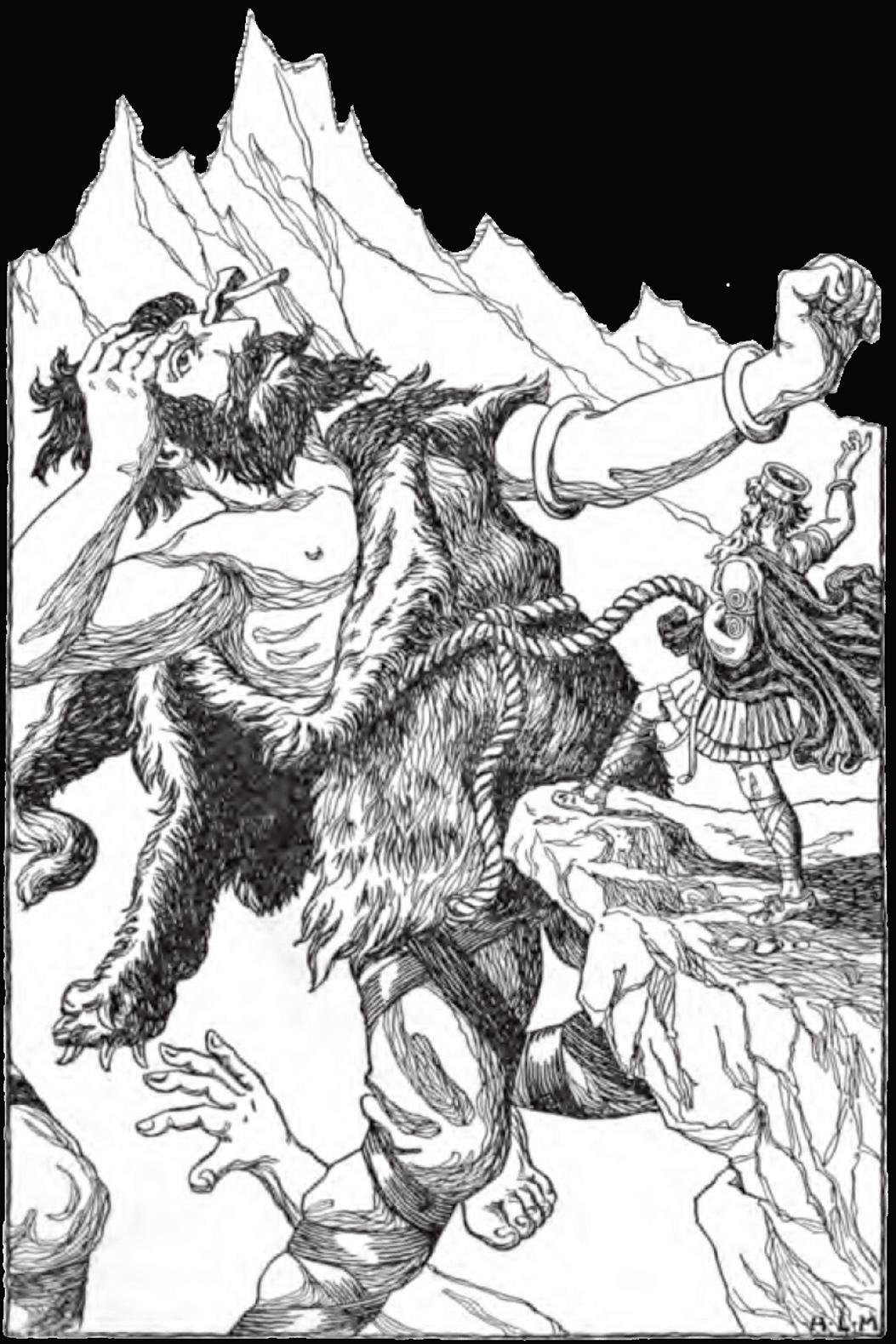
26
“In the Netherlands too, we can still find traces of this great clash between fire and ice.”(II) Thor's Battle with the Frost Giants.
So according to the saga, the lakes were not formed immediately following the impact, but only after a giant flood had filled the two craters. Is it a coincidence that science has also identified the occurrence of three large meltwater pulses, two of which happened around the end of the Ice Age and the third just before the dawn of civilization ca. 6200 BC? This third flood can also be linked to a time of sudden global cooling, the socalled 8.2-kiloyear event.19 As we have seen, meteoric impacts are given as one of the possible causes for these abrupt climatic downturns. Flood myths too are found in different continents around the world, most notably the Biblical Deluge.
It seems clear that the Dutch saga is not just about some local event of little significance. Its roots lie in older myths about the destruction of the world through cosmic impacts, plunging the world into darkness, bitter cold, raging fires, and devastating floods. These myths are found around the world, and they all tell the same story in their own unique but similar versions. With mounting evidence of cosmic impacts in the past, and in particular the cataclysms of the Younger Dryas, it is perhaps time to take the catastrophic events that are described in the ancient myths more seriously. Science still favours a more gradualist explanation for geological features most of the time, but cosmic catastrophes likely played a larger role in shaping the landscape and influencing the climate than we think. The saga ends on this note:
“Afterwards, when the people had become Christians, and the old gods were driven away, it was told until the day of today, that a Golden Calf had sunk into the Bleeke Meer; but that was only a manner of speaking, because it was a heathen god who sunk into that lake.”20
(An older version of this article was originally posted on the Secrets of the Norse blog by Arthur Koopmans on 25 September 2020).
References
1 ‘Uddelermeer’, Pagan Places, https://paganplaces.com/places/uddelermeer/ (consulted on 25 September 2020).
2 ‘Bleeke Meer’, Pagan Places, https://paganplaces.com/places/bleeke-meer/ (consulted on 25 September 2020).
3 G.F.W. Perné, Veluwsche sagen. Eerste Bundel (5th Edition; Amsterdam 1932) 21.
4 Ibid., 21 (translation by the author).
5 Ibid., 22 (translation by the author).
6 ‘Typhoeus’, Theoi, https://www.theoi.com/Gigante/Typhoeus.html (consulted on 20 January 2022).
7 S.V.M. Clube and W.M. Napier, The Cosmic Serpent (New York 1982) ch. 8.
Arthur Koopmans
8 A. Koopmans, ‘Thor’s Fishing Trip: a Meteorite Impact?’, Secrets of the Norse, https://www.secretsofthenorse.com/norsemyths/norse-gods/thors-fishing-trip-a-meteorite-impact/ (consulted on 22 January 2022).
9 B. Thorpe, Northern mythology. Concerning the principal popular traditions and superstitions of Scandinavia, North Germany and the Netherlands (1851) 51-54.
10 E. J. Darmetester and H.L. Mills (Eds.), The Zend Avesta Trans. F. M. Muller (Oxford 1883) 5.
11 ‘Uddelermeer’, Geologie van Nederland, https://www.geologievannederland.nl/landschap/geologische-locaties/uddelermeer (consulted on 25 September 2020).
12 For an extensive investigation into and debates about the Younger Dryas Impact Event see: ‘Younger Dryas Impact Evidence’, The Cosmic Tusk, https://cosmictusk.com/category/younger-dryas-impact-evidence/ (consulted on 25 September 2020).
13 ‘Sweatman destroys Sun et al. in rapid review’, The Cosmic Tusk, https://cosmictusk.com/younger-dryas-volcanoes-orcomet-sun-befus-sweatman/ (consulted on 25 September 2020).
14 M.G. Baillie, Exodus to Arthur. Catastrophic encounters with comets (London 1999).
15 A. Koopmans, ‘The Wisdom of the Dead: A History of Comets and Catastrophe’, Secrets of the Norse, https://www.secretsofthenorse.com/catastrophism/the-wisdom-of-the-dead-comets-catastrophe/ (consulted on 25 September 2020).
16 ‘Joanne Ballard: Amazing pics from field work in European coversands’, The Cosmic Tusk, https://cosmictusk.com/joanneballard-amazing-pics-from-european-cover-sand-field-work/ (consulted on 25 September 2020).
17 ‘Dutch Diamonds Demand Extraordinary Explanations’, The Cosmic Tusk, https://cosmictusk.com/dutch-diamonds-requireextraordinary-explanations/ (consulted on 25 September 2020).
18 Perné, Veluwsche sagen. Eerste Bundel, 22 (translation by the author).
19 T. Kobashi et al., ‘Precise timing and characterization of abrupt climate change 8200 years ago from air trapped in polar ice’, Quaternary Science Reviews 26:9-10 (2007) 12121222. DOI: https://doi.org/10.1016/j.quascirev.2007.01.009.
20 Perné, Veluwsche sagen. Eerste Bundel, 27 (translation by the author).
Images
(I) John Martin, The Eve of the Deluge, 1840, oil on canvas, 144.3x218.5 cm, Royal Collection Windsor Castle (https://www.rct.uk/collection/407176/the-eve-of-the-deluge).
(II) Illustration: Signed H.L.M. – M.H. Foster, Asgard Stories. Tales from Norse Mythology (Silver, Burdett and Company 1901) 53.
https://commons.wikimedia.org/wiki/File:Thor%27s_Battle_wi th_the_Frost_Giants_by_H._L._M.jpg
27
St. William of Norwich De bron van het bloedsprookje
zijn door de eeuwen heen in tal van complottheorieën neergezet als kwaadaardig. Een van de bekendste complottheorieen is die van de Protocollen van de wijzen van Zion; volgens dit geschrift is de Joodse gemeenschap uit op complete wereldoverheersing en zouden alle politieke leiders slechts marionetten zijn van machtige Joden. Hoewel deze theorie misschien alleen nog te vinden is in de krochten van het internet, is er een andere theorie die al eeuwen overeind blijft staan: het bloedsprookje. Men zou verwachten dat deze mythe inmiddels verdwenen is uit de huidige wereld, maar dit is helaas niet het geval. Hij wordt nog verspreid en zelfs geloofd.
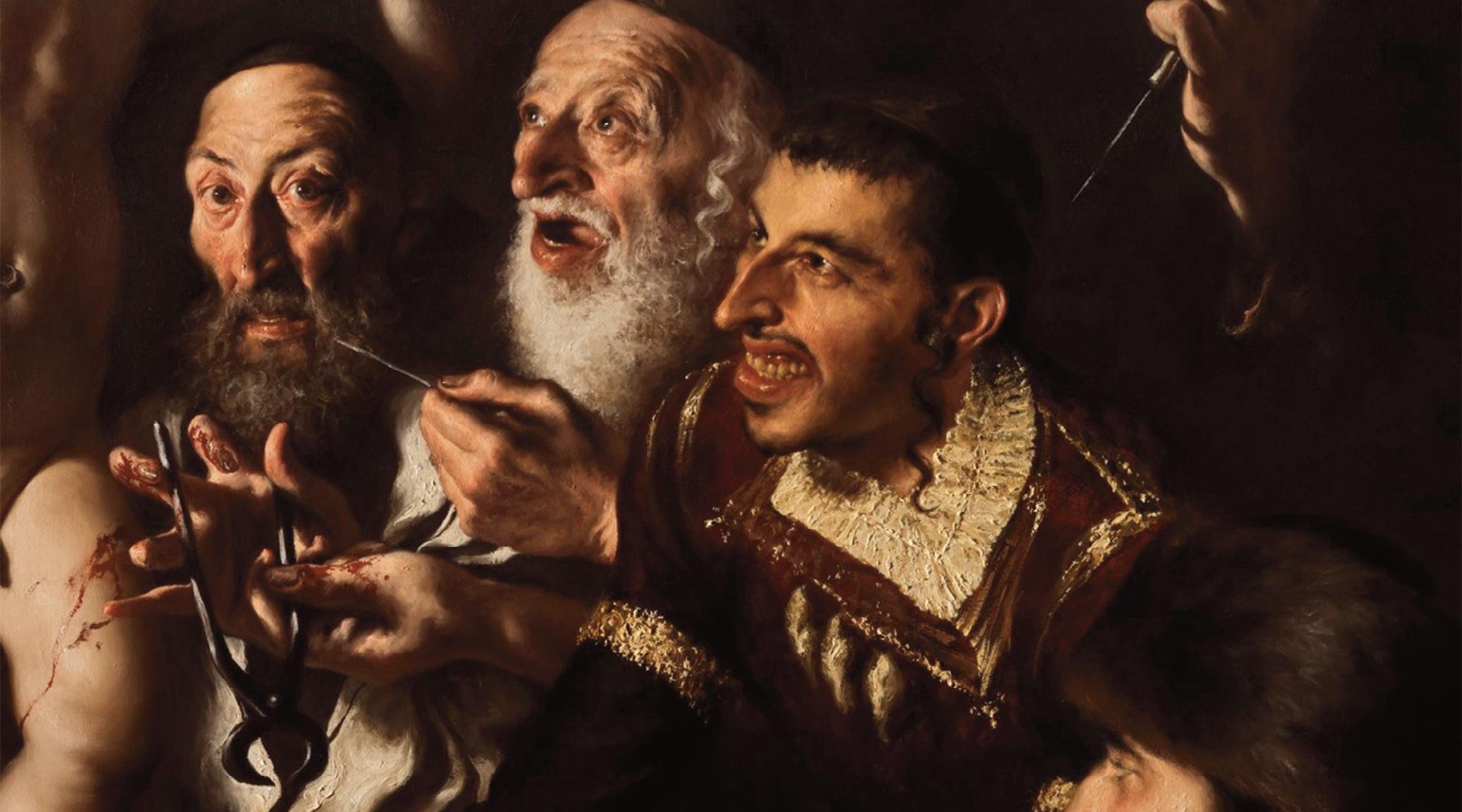
Joden
In Rusland dook het bloedsprookje op in 2005, toen de verbrande lijken van twee jongens gevonden werden. Nationalistische groeperingen wezen de Joden aan als daders. Ze beweerden dat: ‘...er een Joodse sekte is die kinderen vermoordt rond het Paschafeest (Pesach), en hun bloed voor religieuze doeleinden gebruikt.’1 In 2007 beweerde de Libanese dichter Chamoun, dat: ‘...in 1840 een priester vermoord werd in het bijzijn van twee rabbijnen. Deze rabbijnnen zouden vervolgens het bloed meegenomen en geconsumeerd hebben om dichter bij hun God te komen.’2 Zelfs in 2020 is het bloedsprookje nog te zien: de Italiaanse schilder Gasparro toonde twee jaar geleden zijn controversiële schilderij. Hierop is te zien hoe Joden (met haakneuzen en gele tanden) een jongen martelen en zijn bloed drinken.3 Ook op de Facebookpagina van Gasparro zijn antisemitische overtuigingen te vinden: ‘Jewish supremacists are upset about that truth shown about themselves and their sick, brutal practices throughout history’ en ‘If the painting is a lie then why are you having a shit fit over it? You don’t look psychotic and guilty at all.’ Deze voorvallen zijn enkele van vele voorbeelden uit de eenentwintigste eeuw. Waar is dit antisemitische gerucht begonnen?
De details van het bloedsprookje verschillen afhankelijk van tijd en plaats, maar ze komen op hetzelfde neer: Joden vermoorden niet-Joden – en met name kinderen en christelijken - voor hun Joodse rituelen.4 Het bloedsprookje kwam in de middeleeuwen voornamelijk voor in de christelijke wereld als een vorm van anti-judaïsme. Anti-judaïsme kan gezien worden als een vorm van religieus antisemitisme; men wijst de Joodse religie af en discrimineert de aanhangers van deze religie. De christelijke gemeenschap was bijvoorbeeld, in tegenstelling tot de Joodse, ervan overtuigd dat Jezus de messias was. Christenen keerden zich, onder andere door dit meningsverschil, tegen de Joodse religie. Christenen waren ervan overtuigd dat de Joden schuldig waren aan de kruisiging van Jezus en dat zij satanisten waren.5 Het bloedsprookje zou al tijdens de eerste kruistochten rond 1000 verspreid zijn door Europa.
Een van de eerste, specifieke gevallen van een bloedsprookje is te vinden in de twaalfde eeuw in Engeland. Toen in 1144 de Engelse William of Norwich werd vermoord en met vreemde verwondingen op zijn lichaam gevonden werd, beschuldigde de plaatselijke priester de Joden ervan de jongen vermoord te hebben. Zij zouden de jongen gekruisigd hebben als ritueel
28
(I) Deel van het controversiële schilderij van Gasparro.
tijdens hun Paschafeest. Naar aanleiding van zijn dood werd William heilig verklaard en werd een hagiografie (heiligenleven) over hem geschreven. Een benedictijnse monnik, Thomas of Monmouth, schreef de hagiografie: The life and miracles of St.William of Norwich. In dit werk beargumenteert hij dat William vermoord werd door Joden. Het is belangrijk om te weten dat de auteur hoogstwaarschijnlijk personages bedacht heeft om zijn verhaal kracht bij te zetten. Theobald, een priester die vroeger Joods zou zijn geweest, is waarschijnlijk zo’n bedacht personage.6 Hij verklaart het voorval als volgt:
‘He told Thomas that the Jews had a written tradition that in order to regain their freedom and their fatherland they must sacrifice a Christian every year. In order to select their victim, the leading Jews of Spain assembled annually at Narbonne, where they were exceedingly influential, and cast lots for all the countries of the world where any Jews lived.The country which was selected by lot had, in turn, to cast lots for all its cities, and the city thus selected had to furnish the victim. Theobald asserted that it was within his knowledge that in 1144 the lot had fallen on Norwich.’7
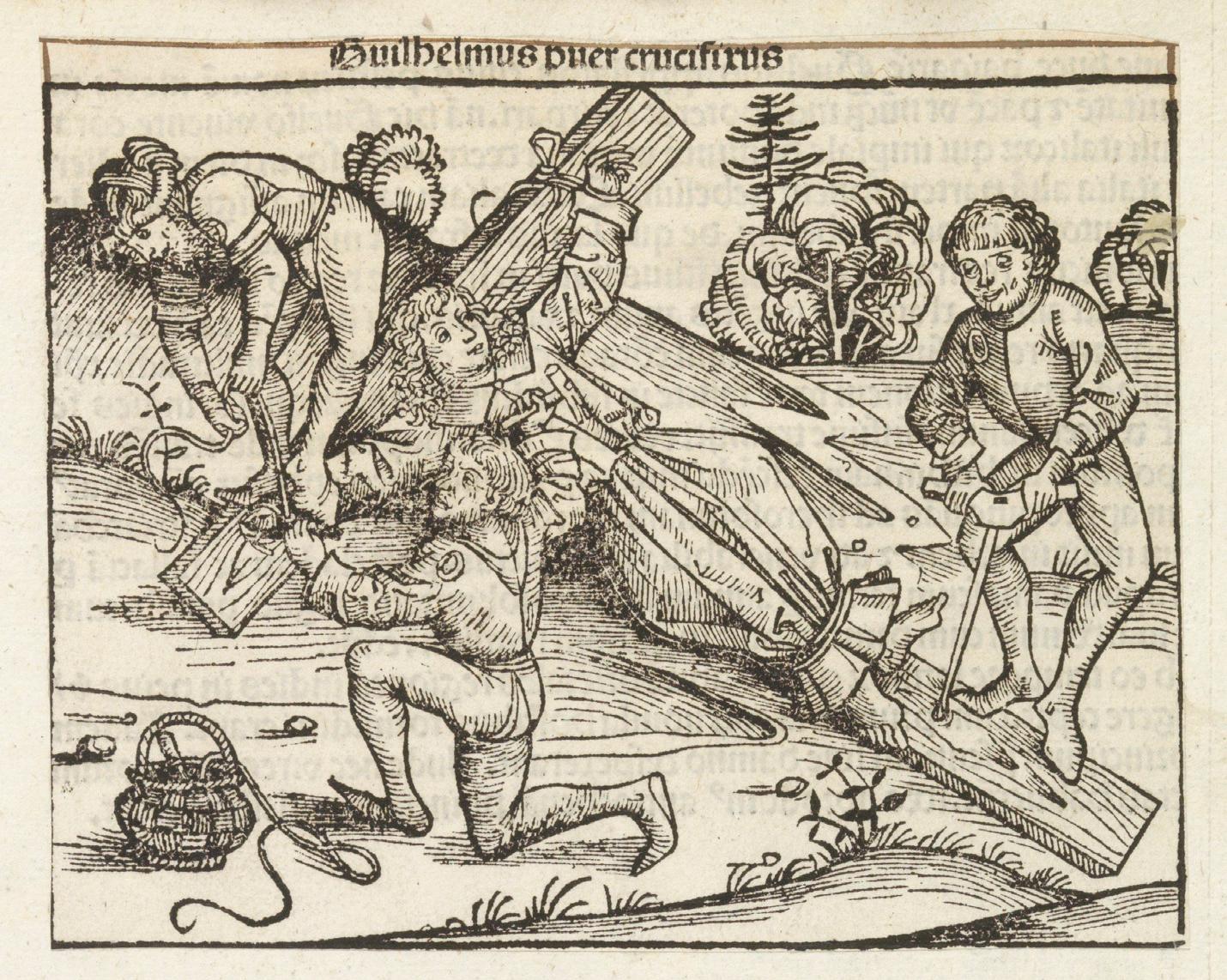
William zou volgens Thomas of Monmouth onder valse voorwendselen door een Jood meegelokt zijn naar zijn huis, waar hij gemarteld werd. Zijn hoofd werd kaalgeschoren, hij kreeg een doornenkrans en werd vastgebonden aan een kruis.Vervolgens werden zijn linkerhand en voet vastgespijkerd en zijn hart doorboord. Om de wonden dicht te schroeien werd Williams lichaam overgoten met kokend water.8
De auteur was hier zelf geen getuige van, maar zou het vernomen hebben van de hulp van het Joodse huishouden.9 Vervolgens zouden de moordenaars het lijk in het bos hebben
gedumpt. De volgende ochtend zou het lichaam gevonden zijn door een plaatselijke landheer, die direct aan de verwondingen dacht te zien dat Joden de schuldigen waren: ‘...only a ‘miscreant’ and no Christian man could have treated a boy in such a way.’10 Nadat dit nieuws zich verspreidde, keerde de plaatselijke bevolking zich tegen de Joodse gemeenschap, wat dreigde te eindigen in een bloedig conflict.11
Hoewel de bewijzen flinterdun waren, was de plaatselijke bevolking toch overtuigd dat de Joden de daadwerkelijke daders waren. Dit is niet verbazingwekkend als men kijkt naar de positie van Joden in de Engelse samenleving destijds. De Joodse bevolking mocht van het Engelse koningshuis maar een paar beroepen uitoefenen; geldschieten was daar een van. Christenen werd door hun geloofsovertuiging verboden leningen te verstrekken met rente, maar de Joden mochten dit wel. De Engelse staat profiteerde hier vervolgens van, door Joden een speciale, extra hoge belasting op te leggen.12 Als geldschieters hadden de Joden een slecht imago, gepaard met de anti-judaïstische overtuigingen van de christelijke kerk konden antisemitische gevoelens sterk groeien onder de Engelse bevolking. Dit antisemitisme uitte zich in de dertiende eeuw in discriminerende regelgeving. Joden werden zoals eerder genoemd al langere tijd buitengesloten van bepaalde beroepsgroepen, verder mochten Joden enkel in aangewezen wijken wonen en werd hen verboden om land te bezitten. Tijdens het vierde Concilie van Lateranen in 1215, werd ook door de kerk bepaald dat Joden herkenbaar moesten zijn door afwijkende kleding of een stuk stof.13 In 1290 werden de Joden zelfs verbannen uit Engeland.14
Het bloedsprookje begon als valse beschuldigingen in een sterk religieuze samenleving met anti-judaïstische en antisemitische overtuigingen, maar toch lijkt dit onwaarschijnlijke sprookje de tand des tijds te hebben doorstaan. In de eenentwintigste eeuw lijkt het bloedsprookje nog altijd geloofd en verspreid te worden, soms zelfs door middel van beeldende kunst. De geschiedenis van het antisemitisme is natuurlijk veel omvattender dan enkel het bloedsprookje, maar met het bloedsprookje als voorbeeld, kan men zien hoe het antisemitische gedachtegoed nog lang niet de wereld uit is.
29 Claire Majoor
“...only a ‘miscreant’ and no Christian man could have treated a boy in such a way.”(II) Prent van de kruisiging van William of Norwich.
Verantwoording
1 Auteur onbekend, ‘Jewish people were accused with murder of children in Krasnoyarsk’, Regnum.ru (16 mei 2005). via: https://regnum.ru/news/454284.html, geraadpleegd op 08-022022.
2 Auteur onbekend, ‘Lebanese Poet Marwan Chamoun: Jews Slaughtered Christian Priest in Damascus in 1840 and Used His Blood for Matzos’, Memri (6 februari 2007), via: https://www.memri.org/reports/lebanese-poet-marwan-chamoun-jews-slaughtered-christian-priest-damascus-1840-andused-his, geraadpleegd op 02-02-2022.
3 A. Reich, ‘Italian artist accused of antisemitism for new painting of blood libel’, The Jerusalem Post (27 maart 2020), via: https://www.jpost.com/Diaspora/Antisemitism/Italian-artistaccused-of-antisemitism-for-new-painting-of-blood-libel622578, geraadpleegd op 08-02-2022.
4 S. Bell, Anti-Semitic Folklore Motif Index, (Utah, 2009), 15,
5 S.E. Bronner, A Rumor about the Jews Conspiracy, Anti-Semitism, and the Protocols of Zion, (2e editie, New Brunswick, 2019), 26.
6 R.B. Dobson, ‘The Jews of Medieval Cambridge’, Jewish Historical Studies, Vol. 32 (1990-1992), p 1-24, aldaar 5-6.
7 T. of Monmouth, The life and miracles of St. William of Norwich, (Cambridge University Press; Cambridge, 1896) via: https://archive.org/details/lifemiraclesofst00thomuoft/page/lxx/mode/2u p?q=theobald, 81.
8 T. of Monmouth, The life and miracles of St. William of Norwich, 66.
9 Ibidem, 67.
10 T. of Monmouth, The life and miracles of St. William of Norwich, 69.
11 T. of Monmouth, The life and miracles of St. William of Norwich, 69.
12 Auteur onbekend, ‘The History of the Medieval Jews of England’, Oxford Jewish Heritage, via: http://www.oxfordjewishheritage.co.uk/english-jewish-heritage/68-english-jewish-heritage, geraadpleegd op 02-02-2022.
13 A.W. Novinsky, ‘Two thousand years of antisemitism: from the Canonical laws to the present day’, in: Global Antisemitism: A Crisis of Modernity, C.A. Small eds., (2013), 345-346.
14 M. Berenbaum, ‘Anti-semitism in medieval Europe’, Britannica (21 april 2021), via: http://www.britannica.com/topic/anti-Semitism/Anti-Semitism-in-medieval-Europe, geraadpleegd op 02-02-2022.
Afbeeldingen
G. Gasparro, ‘The Martyrdom of St. Simon of Trento for Jewish ritual murder’, Radio Spada (29 maart 2020) via: https://www.radiospada.org/2020/03/giovanni-gasparro-sottoattacco-la-solidarieta-di-radio-spada/comment-page1/?fbclid=IwAR1mxtA7U0eQ3Kv-iJ-9KLXPt6BYv8xci7rimsOP NUh_rwjrJ2icrKYnsVg, geraadpleegd op 08-02-2022.
(II) Michel Wolgemut ‘Kruisiging van William van Norwich’, Neurenberg (1493) via:
https://commons.wikimedia.org/wiki/File:Kruisiging_van_William_van_Norwich_Guilhelmus_puer_crucifixus_(titel_op_o bject)_Liber_Chronicarum_(serietitel),_RP-P-2016-49-401.jpg.
Advertentie
CODEX Historiae is Looking For...
Editors and Copy Editors!
This is your chance to gain experience with editorial work and improve your writing skills in a fun, friendly, and relaxed environment.
As an editor, you will read and reflect upon articles written by other editors or by guest writers. In addition, there are plenty of opportunities to contribute to the issues with your own writing as well.
As a copy editor, you will be responsible for the flawless publication of our articles and should therefore be well-versed in language and know most grammar and spelling conventions by heart.
Previous experience with editorial work is not required, a desire to learn and develop yourself is. It doesn’t matter if you speak English, Dutch, or both! Are you interested or do you have any questions? Don’t hesitate to email us: info@codexhistoriae.nl

30
Mussolini’s Rome
The Palazzo della Civiltà as the Embodiment of Romanità
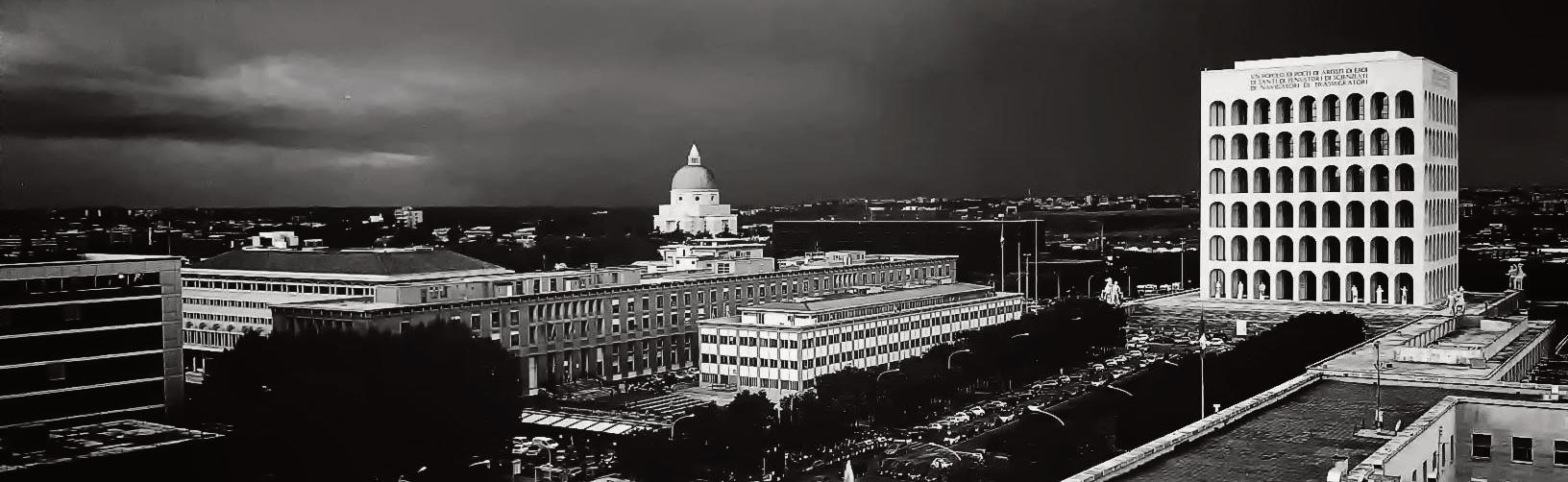
Throughout history, people in power have misused the past for their own benefit. What they put forward as ‘historical truths’ were actually mythologised versions of the past, based on selective historical knowledge and formed to fit specific narratives. An example where history was clearly mobilised to legitimise political policies, instead of giving a nuanced vision of past occurrences, was during Benito Mussolini’s ventennio fascista (‘twenty fascist years’, 1922-1943). Starting from the March on Rome and the subsequent ascension to power, the Fascist Party and its leader Mussolini promised the Italian people the revitalization of the Roman Empire. They constructed their vision of the past and the myth of romanità (‘Roman-ness’), which specifically referenced Rome under the reign of Emperor Augustus (63 BCE-14 CE).This period epitomised Mussolini’s view of ‘a Roman Italy’, with an adequate military organisation and citizens who were proud and courageous. Mussolini did not mean to directly replicate history or to go back to the past; instead, he meant to create a similar atmosphere in the Rome of the present. The myth he created about how Rome once had an unparalleled cultural unity and military prowess was meant to legitimise his efforts to the people of Italy. It was important for Mussolini to present himself as the rightful heir of Augustus’ Rome and to remind the Italian people of their Imperial heritage. He did this by intervening in the built environment of the capital city: demolishing old constructions and building new places.1
Although the fascists transformed the architecture in cities all over Italy, Mussolini had an especially strong vision for Rome.2 Already from the start of his reign in the 1920s, he expressed interest in transforming the city. The ideas about balancing the past with the future, which were central to the concept of romanità, got a very practical application with the fascist interventions in the urban planning of Rome. Like many other European cities, Rome’s cityscape was getting run down in the nineteenth century. Increasing growth of the population and no upkeep of old neighborhoods led to poor hygiene and bad living situations. Therefore, Mussolini made a distinction between what he called the ‘questions of necessity’ and the ‘questions of grandeur’.With the former, he alluded to renovating the city centre; making changes in the densely populated neighbourhoods to provide better living situations. However, his priority lay with the latter: the projects that would bring grandeur to Rome, and he wasn’t afraid to unmistakably divulge his agenda. After all, Mussolini wanted to transform the city into la terza Roma (the ‘third Rome’). With this language, the fascists highlighted how Rome had a history of greatness, with the highest points during the ancient Imperial past (the ‘first Rome’) and during the reign of the popes in the Renaissance (the ‘second Rome’).3
Mussolini’s Rome was set out to be a continuation of the theme of greatness of the city. In order to achieve this, the urban and architectural evidence from the centuries between the Roman Empire and the Renaissance, as well as between the Renaissance and the Fascist Era, had to be erased.4 Mussolini explained his plans during his speech La nuova Roma (‘the new Rome’), held at the end of 1925 and which was addressed to the first governor of the city: “In five years, Rome must appear to all peoples of the world: vast, ordered, powerful, as it was in the times of Augustus’ first empire. You will continue to free the great oak from all that still overshadows it. You will create space around the Augustan Mausoleum, the Theatre of Marcellus, the Capitoline, the Pantheon. Everything that has grown in the centuries of decadence must disappear. In five years, the Pantheon, thanks to a large opening, must be visible from Piazza Colonna.You will also free the majestic temples of Christian Rome from the parasitic and profane constructions around them. The thousandyear-old monuments of our own history must stand like giants in their necessary solitude.”5
As expressed in his speech, Mussolini wanted to create space in the urban fabric of the city. The ‘parasitic and profane con-
31 Nica de Korte
(I) The EUR-neighbourhood anno 2012.
structions’ that were built around the great ancient monuments and the Renaissance churches polluted the grandeur of the city. Demolishing these parts of the fabric would restore Rome’s true potential. The fascist interventions in the urban environment started with a policy of sventramenti (‘demolitions’). Mussolini had the power to order the demolition of built fabric that he labelled as ‘parasitic’ and ‘profane’ because he had installed a city council with unconditional power.The municipality of Rome was ruled by a governor, two vice-governors, and a secretary, who were all appointed by the Fascist Party and had to directly answer to Mussolini himself. This way, the governor’s decisions were immediately effective. No one of high rank questioned the justification of the demolishing of built heritage and Mussolini was able to ‘free’ the city.6
However, there were limits to what Mussolini could achieve in the historic centre of Rome. Only by commissioning new projects in vacant parts of the city was he able to control the building process from beginning to end, without being hindered by the already existing built fabric. That is why Mussolini looked outside of the city centre to new spaces, where he could design the urban fabric from scratch in a way that truly embodied the fascist spirit of romanità. The first major effort in this regard began in 1928 with a project in the north of the city. Here, Mussolini ordered a sports complex that was dedicated to himself: the Foro Mussolini (now known as the Foro Italico), which included two stadiums, tennis courts, and a swimming pool. Italian youths and men could use the facilities, with which the fascist regime wanted to propagate the ancient Greek and Roman ideal of strengthening the mind and body. Another complex Mussolini added to Rome was the cinema city of Cinecittà (completed in 1937), which was used to produce fascist films. The most ambitious one of these projects was a whole new neighbourhood to the south of Rome which was to house the Esposizione Universale di
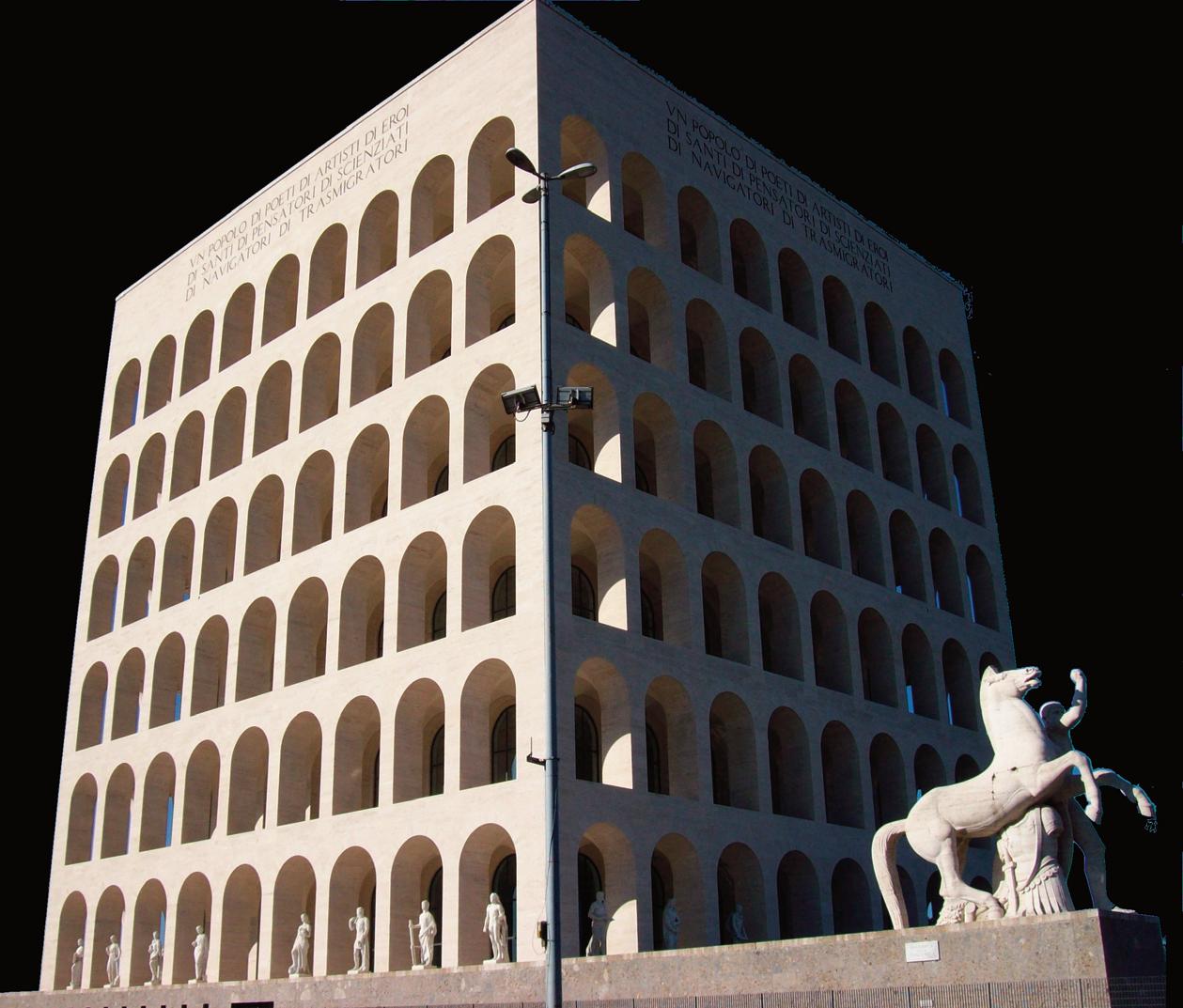
planned to take place in Rome in 1942. This still deserted part of the city offered the fascist urban planners an open space to create a whole new city for the world fair that would be a permanent addition to the third Rome. The project was to be a celebration of the twentieth anniversary of the fascist regime in Italy and it would symbolise the permanent and universal power of fascism.7
The idea to host the world fair of 1941 in the Italian capital originally came from Giuseppe Bottai, who was the governor of Rome for a short period in 1935-1936. The proposal was soon accepted by the international organisation in charge of overseeing and regulating the world fairs. Mussolini endorsed the idea enthusiastically, but he changed the date: instead of 1941, the international event would take place in 1942 to coincide with the twentieth anniversary of the fascists’ rise to power. Hosting the exhibition had political significance for Mussolini and the Fascist Party; it was an opportunity to show Fascism’s power and prestige in a time when western democracies, Soviet communism and German National Socialism were rapidly emerging on the world stage. Mussolini intended the 1942 Esposizione Universale as a way to demonstrate his superiority to the international community. In this way, it was hoped that the world fair would function similarly to the 1936 Olympics in Berlin, which had increased the international attention and admiration of Hitler’s regime.8
The designing and planning for the EUR exhibition city where the 1942 world fair would take place started in 1937. The project was initially handled by a five-strong committee, consisting of the architects Marcello Piacentini, Giuseppe Pagano, Luigi Piccinato, Ettore Rossi, and Luigi Vietti. Piacentini and Pagano had previous experience with commissions from the fascist regime, seeing as they had designed the Italian pavilion for the 1937 world fair in Paris. The latter three architects were chosen because they were known for designing in a rationalist style, which strongly appealed to Mussolini and the fascists.The first full plan of the new quarter, published in April 1937, was a result of an apparent harmonious collaboration between the five men and the newly founded organisation that would oversee the preparations for the exhibition.This harmonious collaboration came to an end quite quickly: a revised overall plan for the project was published in 1938, with the sole signature of Piacentini. Shortly before, there were serious disagreements between the five architects about the direction of the project, which resulted in the resignation of three of them. Piacentini was known as the favourite architect of Mussolini, which could be why he increasingly took direction of the plans for EUR, at the expense of architectural input and creative freedom of the other creators in the organising committee.9
32
(II) The Palazzo della Civiltà Italiana in the Roman neighbourhood EUR. At the top of all four sides of the building is a citation from one of Mussolini’s speeches. The English translation is: A nation of poets, of artists, of heroes, of saints, of thinkers, of scientists, of navigators, of migrators.
Piacentini came to have the overall supervision of the design of EUR as a whole. The architectural designs for the most important buildings within the quarter were to be decided with the help of competitions. With these, a general brief would be formulated for the function and the preferred style of the specific building, after which architects could propose their design. Although it was known that Piacentini strongly controlled the plans for EUR and that he favoured a monumental architectural style, architects with different aesthetics participated in the competitions; some of them even got the commissions and some were directly asked for other buildings in the project.10 The building that would house the most significant thematic exhibition of the 1942 world fair was also commissioned via a competition of this sort. The building occupied one of the two highest points in the quarter and it was to house the Mostra della Civiltà Italiana (‘Exhibition of the Italian Civilization’), which would form the spiritual center of the world fair and present a chronological presentation of the brilliance of the Italian people over the course of history. Because of its significance, Piacentini was involved in the judging committee for the competition of this building, titled from the start as the Palazzo della Civiltà Italiana (‘Palace of the Italian Civilization’, sometimes also referred to as the Palazzo della Civiltà del Lavoro).11
The competition brief for the building mentioned some guidelines for the preferred style, but it was relatively adaptable to different interpretations in comparison with the briefs for the other buildings in EUR. For the Palazzo, ‘monumentalism’ and ‘classicism’ were mentioned as the primary inspirations for the design, as was the case for the other buildings in the quarter. What made it a hard task for the competing architects, was that Piacentini and the other members on the organisation committee wanted a design for the Palazzo that was inspired by the
EUR and the Palazzo della Civiltà Italiana Recontextualised
quintessential elements that had manifested itself in all artistic expressions of the Italian nation in the past, but now in a more modern and functional form. In this way, the Palazzo had to express the idea of romanità; the brief invited architects to unite the very recognizable artistic features from past Italian architecture, for example from Imperial Rome or the Renaissance, with the modernist approach from the twentieth century. The only actual requirement that was mentioned in the competition brief was the use of locally available materials like stone and marble, instead of iron and steel, which also stressed how the building was supposed to reflect historical architecture and to revive an Imperial Roman past.12
From a total of fifty-three submissions, the winning design for the Palazzo della Civiltà Italiana was sent in by architects Ernesto Bruno La Padula, Giovanni Guerrini and Mario Romano. Although a simple design, it is a perfect marriage between ancient Roman architecture and the modernist approach that the fascists were looking for to add to the city and specifically to EUR. Construction started in 1938, and although the building was only finished in 1943, it was already inaugurated in November 1940. The building consists of a square with huge proportions: fifty meters tall (sixty-eight including the pedestal) and a square meter area of 8,400. All four façades of the square building consist of a grid of six vertical arches by nine horizontal arches, formed in recesses. These arches strongly evoke the architecture of the Colosseum, the building that epitomised romanità for a lot of fascists.The strongly defined shapes that provoke the silhouettes of the Colosseum are also the reason that the building was, and still is, often referred to as the Colosseo Quadrato (‘Square Colosseum’). The Palazzo is made from reinforced concrete and clad in travertine, a local stone that was used for more buildings in EUR to give the impression of solid
Construction of the EUR-quarter was already in progress when the world fair of 1942 was cancelled due to the Second World War. A substantial part of the plans for the neighbourhood were realised, among which was the Palazzo della Civiltà Italiana. The building never functioned as it was intended to, but over the course of its history, it was used for different purposes. In a similar fashion, the EUR-quarter has not stood untouched over time: it is constantly developing, with the addition of new buildings or the altering of urban fabric. In the 50s and 60s, EUR was rebranded as a modern part of Rome, which functioned as an administrative and business district with an increasing number of residential buildings as well.This new focus took attention away from the fascist roots of the neighbourhood.14 In fact, to this day the strong connection with Fascism is not apparent for the average visitor. The buildings commissioned by the fascist regime and designed for propaganda purposes have developed new functions and house different public and private institutions, but there is no visible recognition of the history of its creation. The transformation of the Palazzo della Civiltà Italiana is an interesting case in this regard. After WWII, the building has been restored multiple times, undoing damage from the war and wear over time. Different institutions were housed in the Palazzo, often for only a short time. This changed in 2015, when the fashion house of Fendi moved its offices to the building. Fendi saw this decision as paying tribute to its history, seeing as the fashion house originated in Rome and hadn’t been located in the city thereafter.15 For Fendi, the Palazzo has no political connotations; the chief executive of the company, Pietro Beccari, reduced the building purely to its aesthetics when explaining the decision: “This building is beyond a discussion of politics. (...) It is a masterpiece of architecture. For Italians and for Romans, it is completely deloaded, empty of any significance of that [fascist] period.”16 The decision was met with criticism from people who did not think the Palazzo can be separated from its history, seeing as the building was not only commissioned by fascists but also designed from a propaganda standpoint. Architecture expert Owen Hatherley is right in concluding: “However much the architecture of the era can be interesting and attractive, its values were deeply sick. It is right that its architecture remain tainted.”17
33
Nica de Korte
(III) The EUR-quarter in Rome in 1956.
marble. The size and strong definitions make that the building impresses the viewer; in this way, the Palazzo reflects the strength and vision of the totalitarian project.13
Mussolini had big plans for transforming Rome, which mainly took shape in the urban planning for the district that was to house the world fair of 1942. The architecture and urban space in the city were used as a means of propaganda to show the superiority of Italy and Fascism to people inside and outside of the country. By strongly referencing ancient Rome, Mussolini demonstrated how he intended to reign Italy like the ancient emperors and to bring back the grandeur of Imperial Rome. That this idea of romanità was as much about the future as it was about the past, can be deduced from the design of the Palazzo that was to house the exhibition of the Italian civilization. The architecture of ancient classicism is easy to recognize in the building’s design, but the strong and rigid forms also make a modern and rational design, that characterised the twentieth century. The course of history has shown that Mussolini was too preoccupied with his own version of the future. The world fair that was supposed to attest the superiority of Fascism did not take place as a consequence of the Second World War. Mussolini had made elaborate plans for the international exhibition and the whole new permanent quarter to house it, while the presumed international triumph of Fascism was quickly slipping away. However, these completed buildings, the most important of which was the Palazzo della Civiltà Italiana, serve as materialised memories of a fascist past in the Italy of the present.
References
1 F. Marcello, ‘Forma Urbis Mussolinii: Vision and Rhetoric in the Designs for Fascist Rome’, in: H. Roche & K.N. Demetriou (ed.), Brill’s Companion to the Classics, Fascist Italy and Nazi Germany (Volume 12) (Leiden 2018) 370-403, q.v. 371; J. Nelis, ‘Constructing Fascist Identity: Benito Mussolini and the Myth of “Romanità”’, The Classical World 100:4 (2007) 391-415, q.v. 407-408.
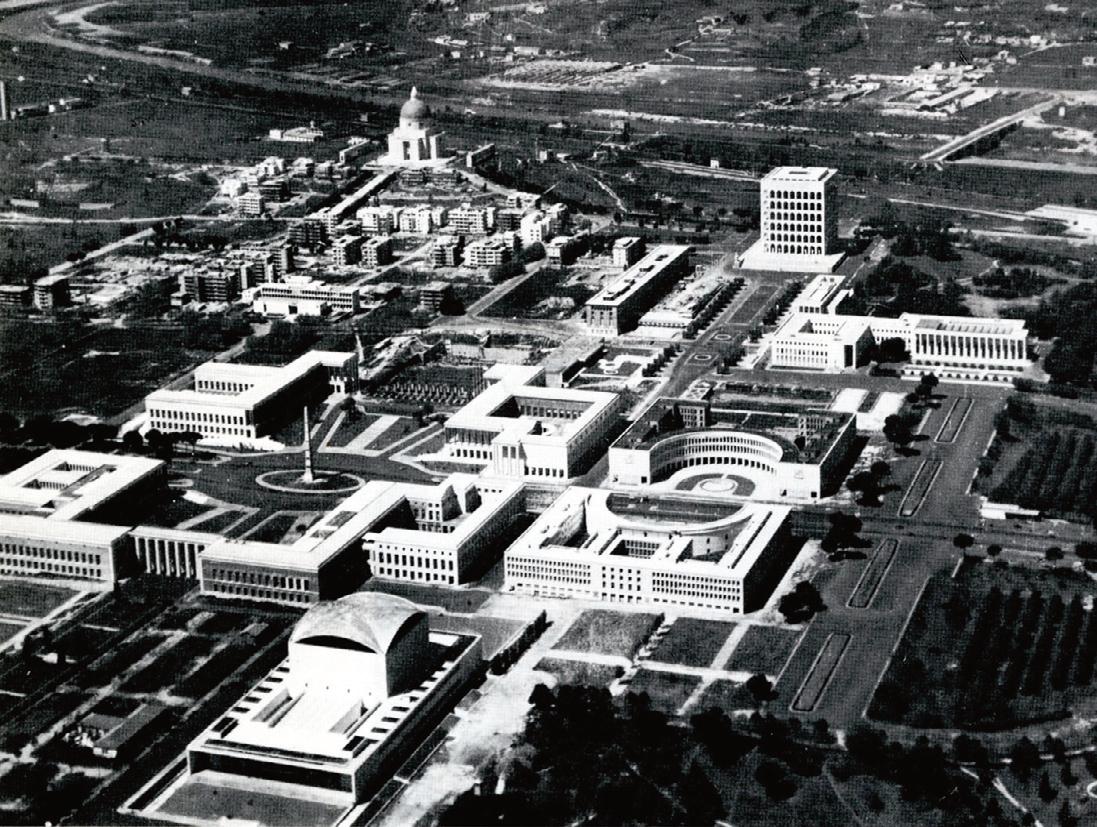
2 F. Marcello, ‘Building the Image of Power: Images of Romanità in the Civic Architecture of Fascists Italy’, in: H. Roche & K.N. Demetriou (ed.), Brill’s Companion to the Classics, Fascist Italy and Nazi Germany (Volume 12) (Leiden 2018) 326-369.
3 A. Kallis, ‘The “Third Rome” of Fascism: Demolitions and the Search for a New Urban Syntax’, The Journal of Modern History 84:1 (2012) 40-79, q.v. 40-45 and 51-55.
4 Marcello, ‘Forma Urbis Mussolinii’, 373-374.
5 Benito Mussolini, ‘La nuova Roma’ (Speech given at the establishment of the Governorate of the City, Rome, Italy, 31 December 1925). Cited from: Marcello, ‘Forma Urbis Mussolinii’, 376.
6 Marcello, ‘Forma Urbis Mussolinii’, 374-378.
7 B. Painter, ‘Mussolini and Rome’, in: C. Holleran & A. Claridge (red.), A Companion to the City of Rome (Hoboken 2018) 683697, q.v. 687-688 and 692-694.
8 A. Kallis, The Third Rome, 1922-1943: The Making of the Fascist Capital (London 2014) 244-246.
9 Ibid., 248-250; Painter, ‘Mussolini and Rome’, 693.
10 Kallis, The Third Rome, 250.
11 Ibid., 223 and 253.
12 Ibid., 253-254.
13 Ibid., 255-256; A. Zambenedetti, ‘Filming in Stone: Palazzo della Civiltà Italiana and Fascist Signification in Cinema’, Annali d’Italianistica 28 (2010) 199-215, q.v. 199-201.
14 F. Moral-Andrés, ‘The definition of an urban and global icon. Public-private strategies for the regeneration of the Museum Palazzo della Civiltà Italiana, Rome’, Revista de Arquitectura 21 (2019) 254-259.
15 Ibid.; ‘History of Fendi’, https://www.fendi.com/nl-en/insidefendi/the-history-of-fendi (accessed on 4 March 2022).
16 S. Kirchgaessner, ‘Fendi rejects criticism over new HQ in Mussolini propaganda building’, https://www.theguardian.com/world/2015/oct/22/fendilaunches-hq-in-mussolini-propaganda-building?utm_medium=website&utm_source=archdaily.com (accessed on 4 March 2022).
17 O. Hatherley, ‘Fendi vidi vici: when Fashion flirts with Fascism’, The Architectural Review (3 March 2015), https://www.architectural-review.com/essays/fendi-vidi-vici-when-fashion-flirt s-with-fascism?utm_medium=website&utm_source=archdaily.com (accessed on 4 March 2022).
Images
(I) Frankie Zoff, E42, Santi Pietro e Paolo, 29 October 2012, licensed under the Creative Commons Attribution 3.0, https://commons.wikimedia.org/wiki/File:E42,_Santi_Pietro_e _Paolo_-_panoramio.jpg).
(II) Ernesto Bruno La Padula, Giovanni Guerrini and Mario Romano, Palazzo della Civiltà Italiana, 1939-1953, Rome (photo: Wikipedia-user Blackcat, March 2011, https://it.wikipedia.org/wiki/File:20110307_Roma_Palazzo_della_Civilt%C3% A0_Italiana_fronte_-
_lato_sx.jpg#/media/File:20110307_Roma_Palazzo_della_Civiltà_Italiana_fronte_-_lato_sx.jpg).
(III) Photographer unknown, EUR foto aerea del 1956, 1956, public domain, https://it.wikipedia.org/wiki/File:EURA1956.jpg).
34
De Amerikaanse Droom
Hoe het mormonisme de Verenigde Staten veroverde
het mormonisme, de kerk van Jezus Christus van de Heilige der Laatste Dagen zoals de officiële naam luidt, haar entree maakte in het gevarieerde religieuze landschap van de Verenigde Staten in 1830, waren er weinig verwachtingen. Het was slechts één van de, vaak kortstondige, groeperingen die de kop op stak tijdens deze periode van religieuze opwinding die nu bekend staat als de Second Great Awakening. 1 Tot ieders verbazing zou het mormonisme, met haar eigenaardige mix van christendom en schijnbare mythologie, uitgroeien tot één van de machtigste kerken in Amerika.Wat begon als een kleine christelijke sekte, telde in 1845 al bijna 40.000 leden, in 1870 ruim 120.000 leden en vandaag de dag meer dan 16 miljoen leden wereldwijd, waarvan 6,7 miljoen woonachtig is in de Verenigde Staten.2 Wat is het geheim achter de grote populariteit van de kerk? En hoe wist het mormonisme zich te onderscheiden van andere religieuze bewegingen die in deze tijd opkwamen?
Toen
Het begon allemaal met één enkele man, Joseph Smith Jr.(18051844), de zoon van twee arme dagloners uit Vermont.3 Tijdens zijn veertiende levensjaar kreeg hij naar eigen zeggen zijn eerste visioen. God en Jezus Christus verschenen aan hem en vertelden dat zijn zonden vergeven waren en dat alle hedendaagse kerkgenootschappen “zich hadden afgekeerd van het ware evangelie”.4 In de jaren die volgden zou Smith ook door verschillende engelen bezocht worden. Zij brachten hem een belangrijke boodschap: God had hem uitverkoren om de ware christelijke kerk te herstellen. Drie jaar na dit voorval werd Smith bezocht door een engel genaamd Moroni, die hem vertelde over een heilige tekst geschreven op gouden platen in ‘hervormd Egyptisch’.5 Deze platen zouden begraven zijn op een heuvel net buiten Manchester, New York. In de twee jaar die volgden “vertaalden” Smith en een paar vertrouwelingen de Egyptische hiërogliefen naar het Engels met behulp van speciale, oude “ziener”-stenen. Na het voltooien van deze zware taak meldde Smith dat hij, zoals eerder afgesproken, de platen aan de engel had teruggegeven.6
Het Boek van Mormon
De vertaalde tekst zou in 1830 officieel gepubliceerd worden als Het Boek van Mormon 7 Het boek bevat de langste en meest complexe openbaring van Smith. Het vertelt het verhaal van de opkomst en ondergang van een religieuze beschaving die begon omstreeks 600 voor Christus en eindigde in 421 na Christus. Het verhaal begint met een familie die net voor de Babylonische ballingschap uit Jeruzalem vertrekt. God had hen opgedragen om een schip te bouwen en vervolgens naar het “beloofde land” op het westelijk halfrond te varen. Onder leiding van de profeet Lehi settelden ze uiteindelijk in het huidige Midden-Amerika, waar ze na aankomst snel in aantallen zouden toenemen. Op een bepaald moment splitsten zij in twee groepen: de Lamanieten en de Nefieten. De Lamanieten, volgens de kroniek de voorouders van Amerikaanse inheemse bevolking, keerden zich al snel van God af en verwierpen hun geloof. De Nefieten bleven wel trouw aan God. Ze stichtten een hoogontwikkelde beschaving met verscheidene indrukwekkende steden. De Ne-
fieten geloofden al honderd jaar voor zijn geboorte in Christus en werden persoonlijk bezocht door hem na zijn opstanding. Toch zouden zij later tragisch aan hun einde komen.Volgens Het boek van Mormon werden de Nefieten rond 400 na Christus volledig uitgemoord door de Lamanieten. Het boek beweert grotendeels het werk van Mormon, een Nephitische profeet en militair te zijn. Het eindigt wanneer Mormons zoon, Moroni, de engel die later Joseph Smith zou bezoeken, klaar is met het graveren van zijn vaders werk en de kronieken op de gouden platen begraaft.8
Veel niet-mormoonse christenen vinden dat de mormoonse leer te sterk afwijkt van de christelijk leer en verwerpen daarom het door de mormonen gewenste predicaat ‘christelijk’. Een van de grootste struikelblokken hierbij is de hantering van het heilige boek, Het Boek van Mormon, als gezaghebbend naast de Bijbel.9 Hoewel dit hen dus ongeliefd maakte bij andere christenen, blijkt het boek achteraf instrumenteel te zijn geweest voor het succes van de jonge religie. Het boek bood christelijke Amerikanen namelijk iets uitzonderlijks: een nieuwe openbaring die zich afspeelde in hun eigen land. De mormoonse theologie leert dat de Verenigde Staten een unieke plaats is en dat haar bewoners Gods uitverkoren volk zijn. Het Boek van Mormon zinspeelt op de Verenigde Staten als het Bijbelse beloofde land, met een goddelijk geïnspireerde grondwet.10 Met de ongeliefde inheemse bevolking in de rol van de slechteriken (de Lamanieten) en het bezoek van Jezus aan de nieuwe wereld na zijn opstanding, omarmde het boek bovendien de dominante Amerikaanse ideologie van die tijd. Het mormonisme werd zo op ingenieuze wijze verweven met de nieuwe natie.11
De kerk heeft hiernaast ook een groot deel van haar succes te danken aan haar profeet en oprichter Joseph Smith. Smith was erg charismatisch en dit stelde hem in staat om zijn denkbeelden met gemak tot realiteit te maken voor zijn volgers.12 Zijn meest fanatieke aanhangers spraken dan ook vol bewondering over hun leider en uit overleveringen blijkt dat zij hem als een soort Goddelijke figuur leken te beschouwen. Zo zou
35 Amanda van Dord
Hiërarchie
Vijftien apostelen leiden de kerk; de langstzittende hiervan bekleed de positie van president. De president kiest vervolgens twee andere apostelen als zijn raadgevers, en gezamenlijk vormen zij het Eerste Presidium: het hoogste bestuursorgaan van de kerk. De overige twaalf apostelen vormen het Quorum der Twaalf Apostelen. Het Quorum der Twaalf Apostelen en het Eerste Presidium houden samen toezicht op de gehele kerk. Zij worden hierbij geassisteerd door een groep leiders, genaamd de Zeventigers, vanuit verschillende locaties over de hele wereld. Er zijn momenteel acht groepen van de Zeventigers, die vanzelfsprekend maximaal 70 leden kunnen hebben. Op lokaal niveau wordt elke gemeente geleid door een bisschop. Zij doen dit op vrijwilligersbasisNet als alle leden wordt hen gevraagd een tiende van 10 procent van hun inkomen aan de kerk te schenken.27
Brigham Young, de opvolger van Smith claimen dat: ‘Als Jezus leeft en de verlosser van de wereld is, dan is Jospeh Smith een profeet van God… Zijn kleding is even puur als de engelen die de troon van God omringen.’13 Heber C. Kimball, een anderevroege volger van Smith, ging nog een stapje verder: ‘De dag zal zijn, dames en heren, of u nu wel of niet tot deze kerk behoort dat u [Joseph Smith] als God zult beschouwen.14 Ook zou hij door andere vroege aanhangers beschreven worden als ‘een man die met de wijsheid van God handelde’ en als ‘de grootste profeet, ziener en openbaarder die ooit geleefd heeft, met uitzondering van Jezus.’15 Deze grote liefde voor zijn persoon werd gelukkig ook gedeeld door de profeet zelf. Smith zag zichzelf naar verluidt als ‘iemand beter dan Solomon’ en claimde dat ‘geen man ooit zulk werk als ik heeft gedaan’.16
De dood van de profeet
Waar vrijwel alle religieuze bewegingen samen met hun profeet ten onder gaan, bleek het mormonisme opnieuw de uitzondering op de regel te zijn. De heiligen der laatste dagen beweging wist namelijk in stand te blijven na de dood van Joseph Smith. Op het moment van Smiths onverwachte overlijden verbleef de mormoonse gemeenschap in Nauvoo, Illinois. Zij waren in dit gebied gesetteld nadat zij in 1838 uit Missouri
kritiek ging voornamelijk over de gedragingen van haar leider Joseph Smith, die regelmatig beschuldigd werd van misstanden, waaronder diefstal, fraude, oplichting en zijn controversiële standpunten betreffende polygamie. Naast zijn eerste vrouw Emma, had Smith namelijk nog zo’n dertig andere vrouwen. Enkelen van zijn vrouwen waren nog minderjarig.18 Ook andere hoogstaande leden van de kerk zouden zijn standpunten overnemen en meerdere huwelijken aangaan.
In 1844, toen The Nauvoo Expositor, een krant geleid door de tegenstanders van de profeet, zijn machtsmisbruik en polygamie bekritiseerde in haar eerste en enige oplage, gaf Smith onmiddellijk opdracht tot de vernietiging van hun drukpers.19 Deze actie had echter het tegenstelde effect en zou de bestaande anti-mormoonse gevoelens juist sterker doen aanwakkeren. Uit angst voor de niet-mormoonse bevolking reed Smith naar Carthage, Illinois, om daar terecht te staan voor een andere misdaad: het aanzetten tot opstand. Hij en zijn broer Hyrum bleken hier uiteindelijk toch niet veilig te zijn. Op 27 juni werden zij gelyncht door een razende menigte die de gevangenis bestormde. Na de dood van Smith verkeerde de kerk in een staat van crisis, aangezien het de bedoeling was geweest dat Hyrum de rol als president van de kerk over zou nemen. 20
Het beloofde land
In eerste instantie was het onduidelijk hoe de opvolgingsprocedure nu moest verlopen. Er waren verschillende kanshebbers, maar het overgrote deel van de mormonen zou zich uiteindelijk aansluiten bij Brigham Young, een toonaangevend lid van de kerk en voormalig President van het Quorum der Twaalf Apostelen. De moord op Joseph Smith en het toenemende geweld dat volgde maakte de voortdurende aanwezigheid van de mormonen in Illinois onhoudbaar en Young besloot daarom dat het tijd was om op zoek te gaan naar een nieuwe woonplaats voor de jonge gemeenschap. Een plek waar zij hun religie konden praktiseren zonder angst voor vervolging.21 Dit moest het nieuwe Israël worden; een hemels koninkrijk op aarde. De keuze viel uiteindelijk op het huidige Utah, een gebied dat destijds nog bij Mexico hoorde en dus buiten de jurisdictie van de vijandelijke Amerikaanse overheid viel. Daar stichtte de groep op 24 juli 1847 Salt Lake City nabij het Grote Zoutmeer.22
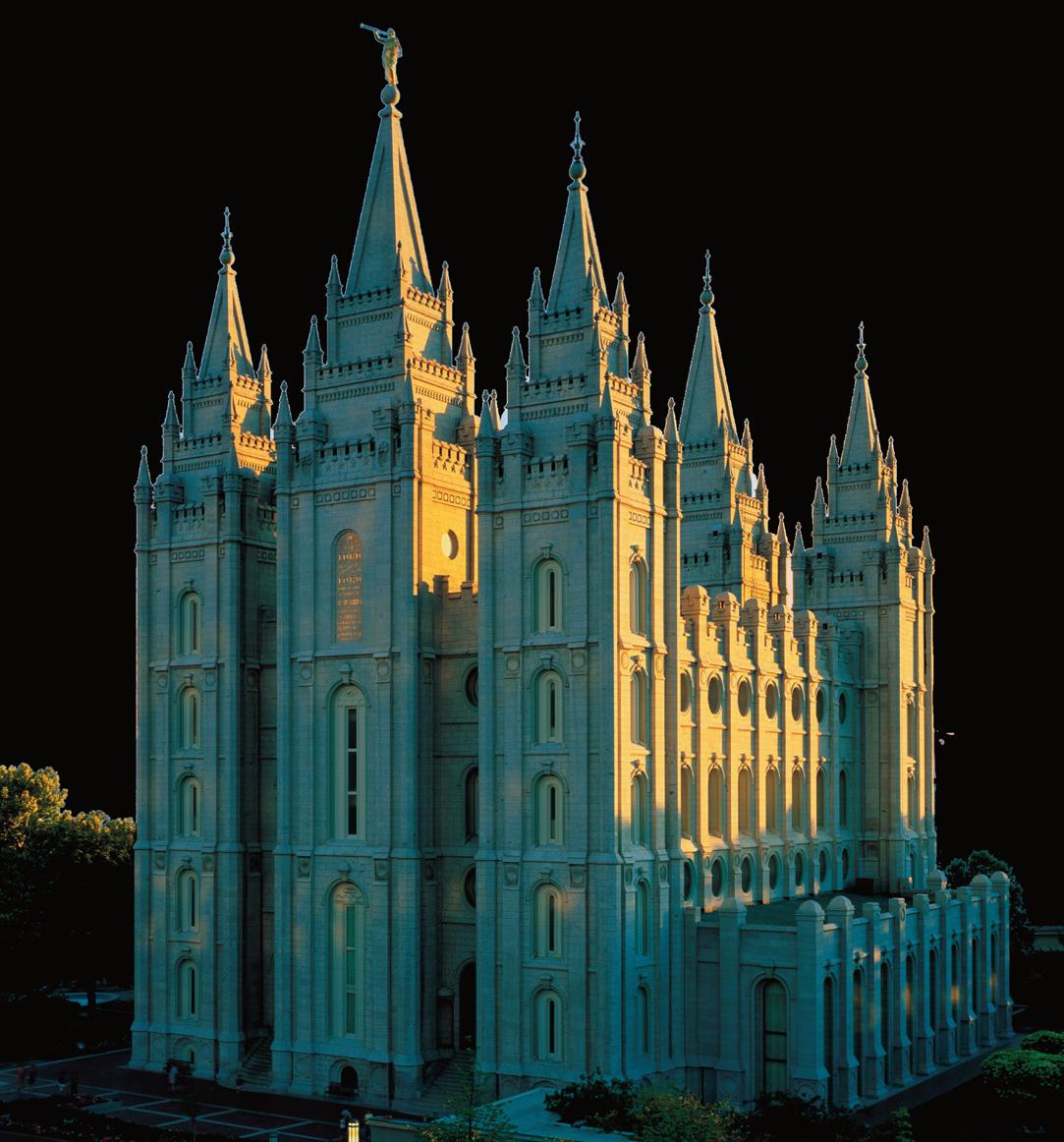
36
(I) De Salt Lake Temple in Salt Lake City.
Young ontpopte zich hier tot een zeer effectief leider. Politiek, economisch en cultureel verstevigde hij de positie van de gemeenschap en hij bevorderde daarnaast de emigratie van mormonen naar Utah door geld uit te trekken om nieuwe pioniers te helpen met de trek naar het westen.Young probeerde de gemeenschap op eigen benen te laten staan, zodat zij niet afhankelijk zouden zijn van import uit het oosten van de VS. Hij meed daarom activiteiten als mijnbouw die buitenstaanders kon aantrekken.23 De gemeenschap leefde sterk geïsoleerd, waardoor zij vrijwel niet beïnvloed werd door politiek, oorlogen en andere religies uit de oostkust van de VS. Zo slaagde zij erin om de Amerikaanse Burgeroorlog in zijn geheel te vermijden. Geen enkele mormoon vocht of stierf tijdens de oorlog. De kerk kon hierdoor een snelle groei maken, terwijl de meeste andere Amerikaanse subculturen in die tijd juist kleiner werden of zelfs compleet uiteenvielen als gevolg van de chaos.24
Het hielp ook dat in deze kritieke tijd van groei zo’n 50.000 Europese immigranten zich zouden aansluiten bij de beweging. De meeste hiervan waren afkomistig uit Groot-Brittannië en Scandinavië.25 De mormonen stuurde een groot aantal evangelisten naar Europa, die daar hun uiterste best deden om zo veel mogelijk immigranten naar Utah te lokken met de belofte van gratis land en een nieuwe religie. Dit was een strategisch slimme zet. De jaren 40 van de 19e eeuw waren zwaar in Europa. De enclosure movement dreef miljoenen van het platteland naar een armoedig en ellendig leven in de vervuilde industriële steden.26 Voor deze immigranten was het mormonisme de belichaming van de Amerikaanse droom.
Hoewel het mormonisme een relatief korte geschiedenis heeft in vergelijking met anderen Abrahamitische religies als het christendom, het jodendom en de islam, is de leiding van de kerk er toch in geslaagd om een prominente positie te bemachtigen in de mainstream cultuur van Amerika. Zo worden zij sterk vertegenwoordigd in de Huis van Afgevaardigden en de Senaat, en in 2012 schreef de republikeinse Mitt Romney geschiedenis als het eerste lid van de kerk dat de presidentsnominatie van een politieke partij ontving. Dit overweldigende succes lijkt voornamelijk te danken aan het unieke Amerikaanse karakter van de religie, het strategische leiderschap binnen de kerk en de centrale geïsoleerde locatie in Utah. Zo wist de kleine sekte, ondanks vijandige buitenstaanders, meerdere gedwongen verhuizingen en de dood van de profeet, het onmogelijke mogelijk te maken en uit te groeien tot een van de meest toonaangevende religies van de Verenigde Staten.
Verantwoording
1 H. B. Clark, Freedom of Religion in America: Historical Roots, Philosophical Concepts, Contemporary Problems (Philidelphia: 1981) 16.
2 D. Vogel, Joseph Smith: The Making of a Prophet, (Salt Lake City: 2004), 24.
3 R. Bushman, Joseph Smith: Rough Rolling Stones (New York: 2005), 37-38.
4 Ibidem.
5 Hervormd Egyptisch is volgens egyptologen en linguïsten een totaal onbekende taal.
6 M. D. Quin, Early Mormonism and the Magic World View (Salt Lake City: 1998) 136-138.
7 W.W. Phelps, A Book of Commandments, for the Government of the Church of Christ (Zion: 1833) 55.
8 J. Smith Jr., The Book of Mormon: An Account Written by the Hand of Mormon, Upon Plates Taken from the Plates of Nephi (Palmrya: 1830).
9 Bushman, Joseph Smith, 62.
10 J. Bracht (2012) [1990]. “The Americanization of Adam”. In G. W. Tromf (ed.). Cargo Cults and Millenarian Movements: Transoceanic Comparisons of New Religious Movements, Religion and Society. Vol. 29, 97-142.
11 M. Hanks, Mormon Faith in America (Salt Lake City: 2003), 70.
12 M. F. R. Kets de Vries, “Crisis Leadership and the Paranoid potential.” Bulletin of the Menniger Clinic ( 1977), 41:1, 351-52, aldaar 352.
13 G. J. Bergera, ‘Joseph Smith and the Hazards of Charismatic Leadership’, The John Whitmer Historical Association Journal, 6:1(1986), 33-42, aldaar 33.
14 Ibidem.
15 Ibidem.
16 Ibidem.
17 S. C. LeSeuer, The 1838 Mormon War in Missouri, (London: 1990), 131-142
18 T. Compton, In Sacred Loneliness: The Plural Wives of Joseph Smith (Salt Lake City: 1977), 11.
19 Bushman, Joseph Smith, 75.
20 R. C. Jenkins, The Assassination of Joseph Smith (Springville: 2015), 54.
21 T. F. O’Dea., The Mormons, (Chicago: 1957), 86.
22 W. W. Slaughter, M. Landon, Trail of Hope—The Story of the Mormon Trail. Shadow Mountain (San Diego: 1997), 20.
23 Brigham Younghttps://www.history.com/topics/religion/brigham-young (Geraadpleegd 1 maart 2022).
24 Mormonism and the American Mainstream-http://ationalhumanitiescenter.org/tserve/nineteen/nkeyinfo/nmormon.htm (Geraapleegd 1 maart 2022).
25 Bushman, Joseph Smith, 409.
26 E. A. Eliason, Mormons and Mormonism: An Introduction to an American World Religion (Chicago: 2001), 213.
27 Organizational Structure of the Church -https://newsroom.churchofjesuschrist.org/topic/organizational-structureof-the-church (Geraapleegd 1 maart 2022).
Afbeelding
(I) https://www.churchofjesuschrist.org/temples/details/saltlake-temple?lang=eng
37 Amanda van Dord
Alternative Chronology and Myth On David Rohl’s A Test of Time
Few could say that they lived their life as a rockstar and as a real-life Indiana Jones. British Egyptologist and musician David Rohl (*1950) used the earnings from his sixties and seventies music career to kick-start his research into Egyptian chronology. His inquiry focuses mainly on the period known as the Third Intermediate Period (TIP),1 the period between the New Kingdom and the Late Period commonly dated between 1070 BCE and 664 BCE. In his 1995 book A Test of Time, the first of a series, David Rohl made his case for the faultiness of this chronology of the TIP. He became convinced that the timeline was over-extended by about 350 years, having far-reaching consequences for the historicity of biblical narratives and Hellenic myths.We must “pull down the whole structure and start again”, he claimed.2 Rohl’s books, films, and revisionary timeline, called the New Chronology, led him into fierce debate among his peers. He wrote his A Test of Time in full awareness of the awaiting ridicule, expecting his opponents to treat his work as folly.3 While some scholars see merit in Rohl’s work, his efforts are left largely ignored. Why does Rohl believe that the standard chronology is wrong, and what are the implications of his revisions for ancient myths? Through his theory and research, we gain an interesting window into the art of chronology, which will hopefully provide a moment of reflection on how we sometimes take our timeline for granted.
House of ancient chronology
According to David Rohl, there are four main pillars of ancient chronology.These pillars together help anchoring known events from remote times in our Anno Domini dating system. For example, the great Battle of Kadesh took place in 1274 BCE, 1274 years before our fixed zero point in history, the supposed birth of Christ. No hieroglyph or papyrus ever gave us this specific number of ‘1274’; it had to be calculated meticulously by combining multiple sources that provided relative anchors in time, some of which are these ‘fixed’ main pillars. In combination with other sources of information, for instance lists of regnal years of kings and dynasties, an intelligible chronology could be built. If the main pillars are sound, they help carry other events to stable positions within the house of history. If these pillars are found to be unstable or false, however, our understanding of ancient times would inevitably turn to quicksand. And not just the Egyptian chronology would crumble to dust; practically all ancient civilizations’ chronologies depend on the soundness of this pharaonic structure supported by the four main pillars, Rohl explains. Egypt civilization is so important, because unlike
others it left us many writings on stone walls, and the dry deserts kept papyri safely stored.4 Suggesting these pillars to be mistakenly placed is bringing something akin to an earthquake or a raging storm into our safe and sheltered home.
The four main pillars mentioned by David Rohl are:
The sacking of Thebes (664 BCE) by the Assyrian Asurbanipal. A network of sources from across different ancient cultures points out the date for this event.5
The identification of the biblical Shishak I, who attacked Jerusalem (925 BCE), with the Egyptian founder of the 22nd dynasty, Shoshenk I. This was calculated using the bible as a chronological anchor point6 –an important detail to remember.
The beginning of the Egyptian New Kingdom, dated to 1517 BCE. This date was reconstructed from the Ebers-Papyrus.7
The beginning of the rule of Ramesses II, dated to 1279 BCE through the Papyrus Leiden I 350.8
Rohl dares questioning the dating of at least three of these four pillars. Only the first, the sacking of Thebes, he believes survives all scrutiny.The next segment focuses on examining the second of these four pillars, as Rohl does extensively in his A Test of Time
Will the real Shishak please stand up?
One sunny day in May 1983, in Egypt, near Luxor, Rohl minced across the Ramesseum’s inner sanctum. He went past statues of “decapitated giants” that guarded the timeworn temple in “lofty arrogance”. At the First Court, Rohl sought a specific inscribed sandstone block – a cornerstone of a tower – that was laying dangerously balanced atop a pile of earthquake-shaken
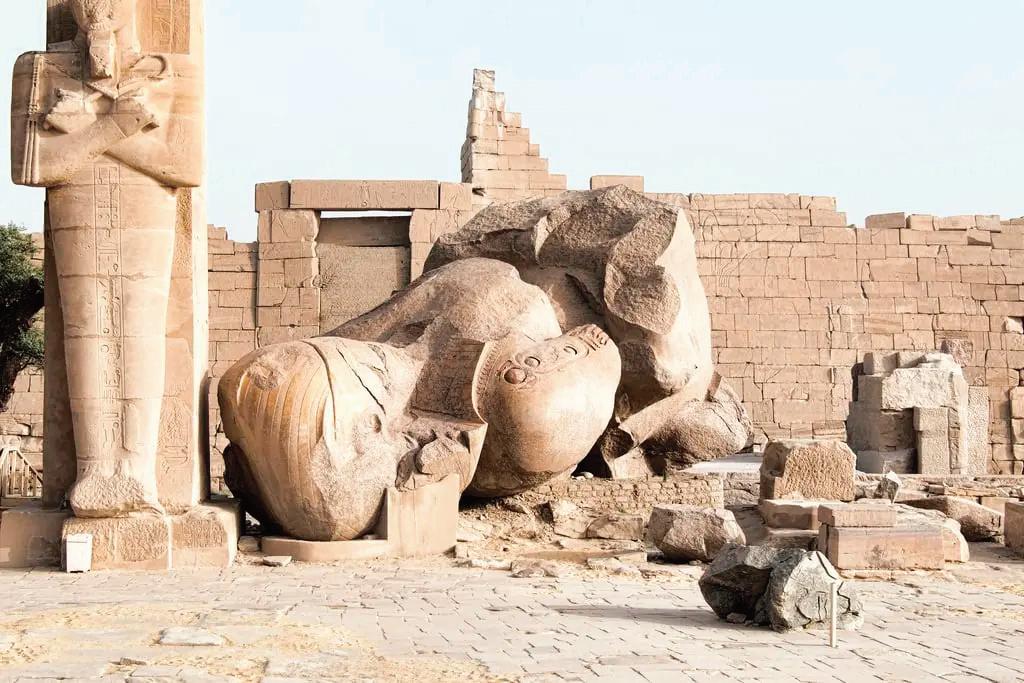
38
--
(I) The First Court of the Ramesseum.
remains. The objective of his venture was to photograph a hieroglyphic inscription on this block, crucial to the theory he had mulled over ever since the seventies. There on that sandstone block, when the sun revealed the name ‘Shalem’, Rohl witnessed remote history gently collapsing in on itself. For him, this early name for the city of ‘Jerusalem’ meant proof of a fatal chronological error made by former Egyptologists:The misidentification of the aforementioned historical pharaoh Shoshenk I with the biblical Egyptian king Shishak I.9
for a campaign into Judah. In fact, the cities mentioned on the Ramesseum match up perfectly with biblical Shishak’s campaign.14 But this would offer us a severe chronological conundrum: Ramesses II (1303-1213 BCE) is dated to a very different era than his rival candidate Shoshenk I (reigned 945-924 BCE) in our standard chronology; it would mean a significant shifting of dates. And if Ramesses is not the pharaoh of the Exodus, who is? And when would that event have taken place, if the Bible were (at least in part) actual history rather than fiction? These are the questions Rohl attempts to answer in his A Test of Time Series
Consequences for the Bible
This rather intuitive comparison is based on two factors. First, their confusingly similar names: Shoshenk and Shishak. To distinguish between the two in this article, Shishak will be referred to as ‘biblical Shishak’. And secondly, both are said to have waged war on ancient Jewish lands. Shoshenk’s sandstone inscription mentions a venture into Israel and beyond, while the Bible story says that biblical Shishak campaigned into Judah.10 This identification of Shoshenk as the biblical Shishak was first made by the ‘father of Egyptology’, Jean-François Champollion, in the nineteenth century after he famously deciphered the Rosetta Stone.11 According to Rohl, however, Champollion had made a hasty mistake in his translation. Rohl explains that the campaign of Shoshenk, as inscribed on the sandstone block, did not match the campaign described in the Bible for biblical Shishak, since Israel and Judah were separate political entities at the time. Some other Egyptian king must have been the one who ravaged Judah, Rohl thought.12
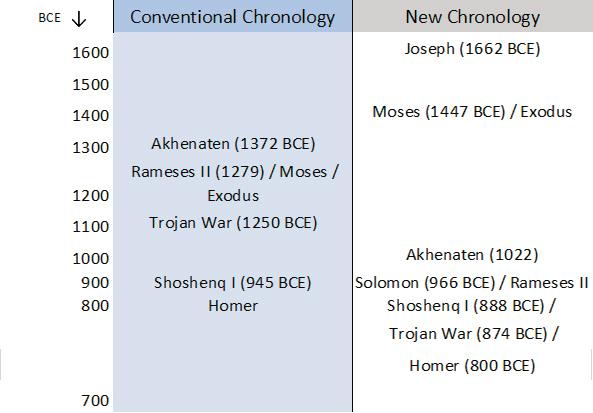
It must be noted here that this (mis)identification by Champollion was made at least in greater part on the deceiving similarity of these two kings’ names. However, Egyptologists must be careful not to jump to such ‘sound’ conclusions, as Rohl demonstrates by revealing another, surprising candidate for the biblical Shishak: King Ramesses II. This pharaoh is famous for being re lated to another bible story in a completely different age. Movies have portrayed Ramesses II as the pharaoh of the Ex odus story, where he tried to prevent the Israelites from de parting into the desert under the guidance of the patriarch Moses. Rohl however, makes an interesting case for Ramesses II being the ‘real’ biblical Shishak. In A Test of Time, he deliberates how the name Ramesses would have been vocalised as Shisha(k) in the Hebrew language.13 If this is correct, Ramesses provides a shocking likeness to the biblical culprit.
But there are other more convincing reasons for suspecting Ra messes II as the actual biblical Shishak I, besides these ‘shallow’ name comparisons. Rohl explains that for Ramesses II, unlike for the other candidate, Shoshenk I, there might be direct proof
After shattering the readers’ beliefs of ancient history, Rohl moves along to paste together the broken shards. In his book series he travels backwards in time visiting familiar stories and myths. A Test of Time revolves around many familiar Bible stories. Rohl travels back in time all the way to the moment of patriarch Joseph’s entrance into Egypt. Along the way, many famous biblical figures pass by. In this article, two of them are highlighted to portray how small changes of interpretation can lead to big differences in chronology, and to vastly different connections between archaeology and myth.
King Solomon
Rohl’s first stop on the road to a New Chronology is the age of Israel’s third king: Solomon, builder of the famous temple. The Bible describes the wealth and splendour of early Israel under his rule: “King Solomon was greater in riches and wisdom than all the other kings of the earth. The whole world sought audience with Solomon [...] everyone who came brought a gift— articles of silver and gold, robes, weapons and spices [...]”15
Archaeology paints a different picture, however, as can be gathered from this quote by Professor James Pritchard: “[...] Jerusalem itself was in reality more like villages. [...] small public buildings and poorly constructed dwellings with clay floors. [...] even by the standards of the ancient Near East, could not be judged sophisticated or luxurious.”16
39 Niels Koopmans
“Rohl believes the archaeological evidence for the existence of a Greek Dark Age to be sparse and wrongfully interpreted.”
The time of Solomon is conventionally dated to the Iron Age IIA, around 972-932 BCE. As described by Pritchard, none of the biblical riches were found in this layer in the ground.

In the year 1961, archaeologist Dame Kathleen Kenyon led a seven-year dig into the eastern slopes of ancient Jerusalem. Deep underneath she found what she thought was a terraced structure built by Solomon, called the ‘Millo’, known from the Bible. But pottery found in the same layer was dated to an era before the conventional date of Solomon, about 360 years earlier.Therefore, Kenyon concluded that the Bible must have overstated Solomon’s role and she degraded him from the Millo’s builder to a mere repairman of an apparently much older structure. Rohl instead states that the problem lies with the dating of the pottery, and that their dating was based on a faulty chronology.The same pottery was unearthed and originally dated in Egypt’s Tell El-Amarna, so all comes back to the land of the pyramids. He believes that Kenyon’s first instincts were unmistaken – that she truly stumbled upon Solomon’s stone terracing.17 These found structures definitely sound closer to the biblical description than Pritchard’s clay floors.
Joseph
After examining the possible historicity of famous figures such as David and Joshua, Rohl travels to the ancient Egyptian city of Avaris where strong evidence has been found for the long-term settlement of an Asiatic (read Semitic) people in Egypt.18 After following the narrative of the Bible through Moses’s Exodus towards Jericho and then into the promised land, Rohl returns to the earlier Jewish visitor of Egypt, the dream reader and wearer of the rainbow-like many-colored coat, Joseph. For a historical Joseph, Rohl also finds tantalizing specks of proof. In the Bible, Joseph’s father Jacob had twelve sons. Joseph was sold by his brothers and ended up in Egypt, eventually charming the pharaoh through his wisdom and stories of dreams. In the end Joseph’s family would reunite in Egypt. In the city of Avaris, archaeology reveals that a great house was built in the Asiatic settler community of Avaris, constructed in Egyptian style. Near it were thirteen remarkable graves of Asiatic men. Many of them were buried with a beautiful dagger, one such only Asiatic chieftains would wear, and with North-Syrian sacrificial sheep. The thirteenth had an outstanding pyramid grave fit for someone akin to royal status. A statue used to stand in front of it, presumably sculpted in the royal workshop. Layers of paint on the statue’s remains reveal a distinct striped rainbowlike pattern.19
Consequences for Greek Mythology
Rohl’s quest for reform does not stop at the Bible, but spreads into the realm of ancient Aegean history (Modern day Greek and Turkish area). His book The Lords of Avaris explores the pasts of ancient Greece, Troy, the Minoans, Mycenae and much more. He also suggests surprising connections between biblical narratives, Egyptian archaeology, and Aegean civilisations. Perhaps
the most intriguing case he puts forth in The Lords of Avaris, is the denial of a Greek Dark Age, and an alternative story for the Trojan War and the poet Homer.
When one studies ancient Greek history and mythology, the Trojan War cannot be neglected. The war was described in the mythical poems of the illustre yet contested poet Homer. In conventional chronology, a historical Trojan War might have happened around 1250 BCE, historian Trevor R. Bryce suggests. He places (a) Homer near the eighth century BCE, at the end of the Greek Dark Age, so there is a good half a millennium separating the main source and the alleged events.20 But by now we are familiar with Rohl’s thesis of a chronological overextension of a few hundred years, so it may come as no surprise that he believes the time between the war and the poet to be overexaggerated.
In conventional chronology, the Greek Dark Age started with the fall of the Mycenaean civilization at approximately 1200 BCE, and lasted until the Archaic Period, about 800 BCE.21 Rohl believes the archaeological evidence for the existence of a Greek Dark Age to be sparse and wrongfully interpreted. He states that the idea of a Dark Age did not arise from any archaeological find or historical document, but from how ancient chronology was built upon the four pillars. Again, Egyptian pottery was used to establish the starting date of this period, just like with Solomon. Rohl says that because the timeline is overstretched, a gap appeared in ancient Greek history, and he believes that archaeologists went to find evidence to fill it from this frame of reference, instead of letting archaeology speak for itself. He calls it “an article of orthodox dogma”, and a “phantom”.22
40
(II) David Rohl
An absence of evidence is not evidence of absence – this infamous line could be used to defend the Greek Dark Age, but Rohl pleads that there is actual archaeological evidence against the existence of a Greek Dark Age. The biggest argument Rohl puts forth for the non-existence of the Greek Dark Age is the continuity in the pottery from before and after the shadowy era. Mysteriously, it seems as if some potterer “had suddenly woken up after a centuries-long slumber and picked up his daily life exactly where he had left off.” Rohl accuses archaeologists of quietly ignoring the continuity problem. 23 Rohl places the Trojan War in the ninth century BCE, rather than the thirteenth. In opposition to the 400-year gap, Rohl suggests a 115-year gap, implying that whomever Homer was, he lived perhaps in the ninth century BCE, and he wrote the Iliad within a century of the Trojan War happening. Rohl suggests that this is why the Iliad could be written with such detail in its locations, objects and customs.24
ignored and unaccepted by conventional Egyptology. The reliance on the mistakenness of the conventional chronology for creating his own is one point of critique to be had with Rohl’s thesis. He attacks conventional chronology pillars well enough but ends up painting the resulting gaps with broad strokes himself. He acknowledges this, saying that his New Chronology will contain errors in the details, while being right at the core – the correction and criticism of the pillars.29 This freedom of speculation in the chronological void creates interesting narratives for his books and movies, but it also breathes distrust in his peers, leaving him side-lined and ridiculed.
Rohl’s critical rejection of dendrochronological and carbon techniques for dating the eruption of Thera might also cause some dispute between him and this part of the science community. Rohl states that archaeology and science in this case pull in different directions,30 but it might eventually be modern scientific dating methods that pull at Rohl’s thesis. Time will tell, but contemporary dating methods have not shone a favourable light on the New Chronology thus far.31
Conclusion
Critiques and debate
Rohl’s theory is discussed shortly in the Ancient Egyptian Chronology handbook by Erik Hornung et al. Egyptologist Hornung agrees with Rohl that the pillar of Shishak is not a certainty, and thus sees merit in Rohl’s questioning. Nevertheless, Hornung does maintain that the overall interlocking framework of Egyptian chronology is rigid and does not allow for multiple hundred-year bends, or other radical revisions.25
But the tone of the debate concerning Rohl’s thesis has not been filled with mere niceties. Rohl’s most vocal critic, Kenneth Kitchen, calls Rohl a “crank chronologist”, while referring to “the full array of evidence” which shows that Rohl’s thesis is “100% nonsense”.26 Another harsh critic of Rohl, French Egyptologist Philippe Brissaud, compared Rohl’s quest for correction as a “diabolical search for Nessie’s soul”. In other words, Rohl is chasing mythical monsters, not historical truth.27
The difficulty in arguing over chronological arguments is, however, that the different parties do not acknowledge the same stable footing. This results in an unhinged array of intellectual martial arts, followed by many jabs under the belt, but, so far, no knock-out punches. Kitchen for instance, takes the Sothic dating technique to be reliable, while Rohl does not. Therefore, when Kitchen provided an Egyptian source using Sothic dating techniques to debunk Rohl’s thesis, agreement could not be reached.28
But a full-scale disarming of Rohl’s armament has not been undertaken so far. As said before, his thesis has been left largely
An article like this cannot do more than glance at the comprehensive wealth of arguments presented by Rohl in his series of books, as an introduction into his interesting thesis. Nor can it fully appreciate the fine details of the debate, and justly exhibit all the counterarguments that have been made by Rohl’s critics. Important to note is also the fact that since Rohl wrote his books, scholars and science did not stand still, and new contrary evidence and methods could have been established. However, whether Rohl is right or wrong might not be his books’ main selling point; his search for answers lets readers explore indepth the tightrope act that is chronology. A house is as strong as its foundation, and Rohl inspects history’s pillars, beams, and creaking floors. He delivers painstaking research with effortless panache, and transports readers vividly through scorching deserts, across tarmac roads that “bubbled like black soup under the crushing heat”,32 and we walk with him through desolate tombs. It’s the scholars’ DaVinci Code, and perhaps, who knows, amongst myth and legend more than fiction might rest enclosed.
References
1 ‘David Rohl’, Wikipedia, https://en.wikipedia.org/wiki/David_Rohl (consulted on 14 February 2022).
2 D. Rohl, A Test of time (London 1995) 12.
3 Ibid., 49.
4 ‘The Biblical Exodus... Fairytale or Historical Fact? (by David Rohl)’, YouTube, https://www.youtube.com/watch?v=QEmovpMM5c (consulted on 19 February 2022).
5 Rohl, A Test of Time, 134.
6 Ibid., 136.
7 Ibid., 151.
41 Niels Koopmans
“Speculation in the chronological void creates interesting narratives for his books and movies, but it also breathes distrust in his peers.”
8 Ibid., 153.
9 Ibid., 2-3, 10.
10 Müller points out Champollion’s error: W. M. Müller, T.K. Cheyne & J. Sutherland Black eds., Encyclopaedia Biblica, vol IV, (London 1988) col. 4486, n. 5; Rohl, A Test of Time, 137.
11 Rohl, A Test of Time, 13, 121-123, 135-137.
12 Ibid., 135-146.
13 Ibid., 188, 190-2.
14 Ibid., 176-182 199-201.
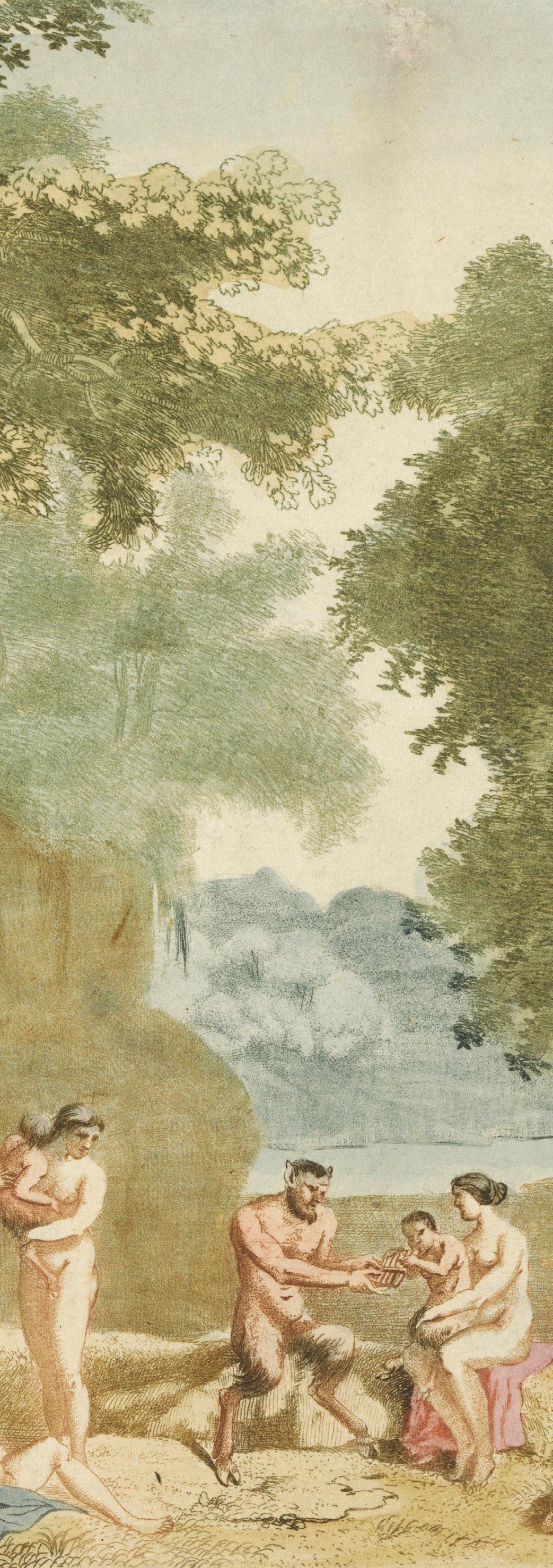
15 New international version of the Bible on: Bible Hub, https://biblehub.com/niv/1_kings/10.htm (consulted on 24 February 2022).
16 J.B. Pritchard ed., Solomon and Sheba (London 1974); Rohl, A Test of Time, 207.
17 Rohl, A Test of Time, 215-7
18 Ibid., 323-331.
19 Ibid., 431-438, 442-451; ‘The Biblical Exodus... Fairytale or Historical Fact? (by David Rohl)’, YouTube, https://www.youtube.com/watch?v=QEm-ovpMM5c (consulted on 26 February 2022).
20 T. R. Bryce, ‘The Trojan War: Is there Truth behind the Legend?’, Near Eastern Archaeology 65:3 (2002) 182-195, q.v. 185.
21 Read more on the conventional Greek Dark Age here: World History Encyclopedia, https://www.worldhistory.org/Greek_Dark_Age/ (Consulted 16-03-2022).
22 D. Rohl, The Lord of Avaris (London 2007) 439-444.
23 Ibid., 443-446.
24 Ibid., 468.
25 E. Hornung, R. Krauss & D.A. Warburton, Ancient Egyptian Chronology (Leiden 2006) 13.
26 K. Kitchen, ‘Egyptian interventions in the Levant in Iron Age II’, in: K. Kitchen, W.G. Dever & S. Gitin eds., Symbiosis, Symbolism, and the Power of the Past: Canaan, Ancient Israel, and Their Neighbours from the Late Bronze Age through Roman Palaestina (Wellesley 2003) 113-133, q.v. 122.
27 P. Brissaud, ‘Le Monstre de Loch Ness Est-Il Né Dans Le Lac Sacré de Tanis’, Bulletin de la Société Française des Fouilles de Tanis 10:1 (1996) 1-28.
28 http://www.newchronology.org/fullt/107.txt (consulted on 26 February 2022).
29 Ibid.
30 Rohl, The Lords of Avaris, 225-231.
31 More on dating: R. Lovett, ‘Egyptian Kingdoms Dated’, Nature (2010); R. Krauss & D. A. Warburton, ‘The Basis for the Egyptian Dates’, Time’s Up! Dating the Minoan Eruption of Santorini 10 (2009).
32 Rohl, A Test of Time, 1.
Images
(I) Image gained from: https://www.bjharvest.co.uk/rohl.htm.
(II) Image by Christopher Michel, gained from https://www.flickr.com/photos/cmichel67/8528927760/.
42
Opinion
Uitsnede van: Martinus Berkenboom (naar ontwerp van Herman van Swanevelt), Nimfen en saters in een landschap, ca. 1650-1715, Rijksmuseum Amsterdam.
Capitalist Anarchism and its Inherent Contradictions
A Critique of Anarcho-Capitalism
Anarchist theory has given birth to numerous ideologies that are more akin to thought experiments than actual schools of thought. A multitude of branches has emerged, of which many have led to naught in the ‘actual world’ outside of theoretics, and for good reason: they simply cannot be applied in a meaningful manner because of their farfetched ideological basis.
The most extreme of these examples is neither the egoistic anarchism of Max Stirner nor the controversial anarcho-primitivism of figures such as Theodore Kaczynski or John Zerzan. It is the most extreme oxymoron in the entirety of political philosophy: anarcho-capitalism.1 The tenets of this nonsensical viewpoint are even more contradictory and self-defeating than those of ‘green capitalism’ or the naïve libertarianism plaguing the current politics of the United States. It is an ideology which, when thought about in any meaningful and insightful way, falls apart within such a short time span, one is left to wonder why it even garnered recognition in the first place.
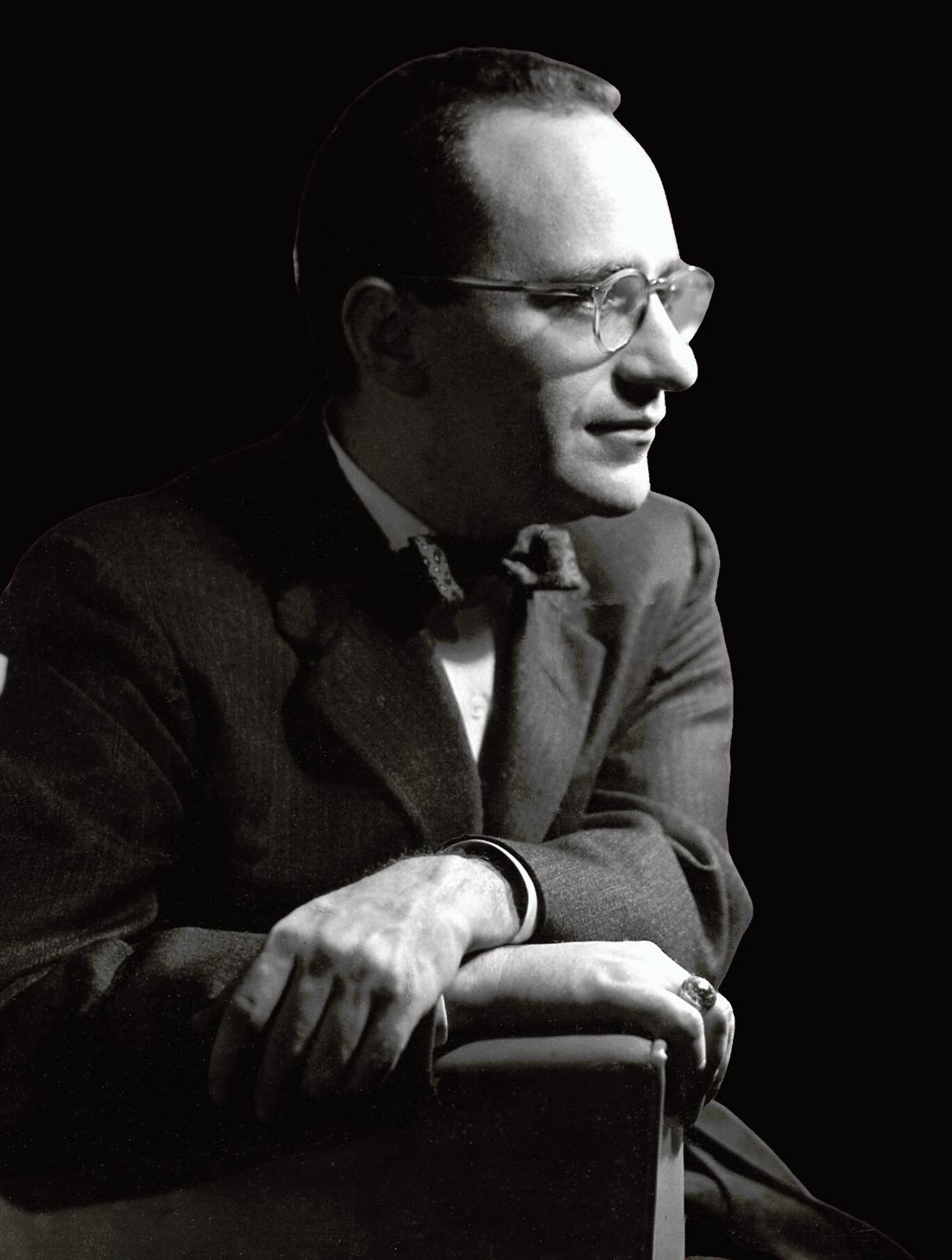
In this article, an attempt is made to refute anarcho-capitalism as both an anarchist ideology and as an ideology as a whole. To begin, the core constituents of anarchism will be identified and explained, after which anarcho-capitalism will be defined. Last of all, it will be made clear why the latter fails as both an anarchist school and a political philosophy.
What is anarchism?
The Stanford Encyclopedia of Philosophy defines anarchism as a ‘a political theory that is skeptical of the justification of authority and power’.2 This definition, albeit a concise one, simply clarifies too little for our purposes here, although it forms a good start. A more clarifying definition of anarchism might be that of linguist, philosopher, and public intellectual Noam Chomsky: ‘an antistate branch of socialism, which meant a highly organized society, nothing to do with chaos, but based on democracy all the way through.’3 In this, one can extract two defining features of anarchism: it is inherently socialist and thoroughly democratic. Inherently socialist, because it prefers the power of the many over that of the few; thoroughly democratic, because it wishes to realize the power of the many through democracy.
This is, however, far from the images that are conjured up when most people think of anarchism. Its unfortunate etymological link to the word ‘anarchy’ only supports this: one is stimulated to think of bombings, lawlessness, the total collapse of society, and a perpetual state of Hobbesian bellum omnium contra omnes 4 Nonetheless, this could not be further from the truth. As stated before, anarchism is an ideology which advocates the dismantling of the state apparatus, but not to promote a lawless or asocial society; it only wishes to transform power, which it perceives to currently be in the hands of a non-democratic state, to a possession of the people, and thereby to have all people realize their full potential of liberty.
43 Thymo Gieltjes
(I) Murray Rothbard, often seen as the founder of anarcho-capitalism.
It differs herein from communism, because communism attempts to grant equality (which it equates to freedom, a statement some anarchists agree with) through the State. Anarchism, however, sees the State as something that can never grant freedom, but only take or hamper it. It may offer temporary or false freedom, but that will never be anywhere near the freedom that a society without the State could enjoy.
Anarchism differs from Western capitalist libertarianism through its definition of freedom and how it may be attained. This will be touched upon later, as anarcho-capitalism is the paradoxical lovechild of these two ideologies. However, it is already worthy of being pointed out that, seeing as anarchism is in and of itself a leftist movement,5 its capitalist descendant is intrinsically flawed on a logical level.
lows: ‘The last problem [that of the non-aggression principle] is especially vexing, since anarcho-capitalists seem to be caught up in a contradiction here. On one hand, they are proponents of a specific moral theory (based on non-aggression principle), on the other hand, they do not allow for any central, monopolistic agency to impose that moral theory on society.’6 It is no difficult undertaking to identify the flaws in anarcho-capitalist philosophy: it wishes to impose a moral guideline onto people without any underlying, organized way to enforce penitentiary reprisals upon those who violate said guideline. The anarcho-capitalist’s despisal of authority will thus lead to the inevitable downfall of their whole system.
What is anarcho-capitalism?
Anarcho-capitalism is, with regards to capital, the antithesis of communism: it wishes to privatize all functions of the State. In doing so, it promises not only complete entrepreneurial freedom, but the highest possible degree of freedom altogether. In an anarcho-capitalist utopia, government functions are radically curtailed, if not done away with entirely.
According to proponents of the philosophy, like Ayn Rand and Murray Rothbard, society should not be based on State power, a proclamation with which many ‘true’ anarchists would agree. Instead, anarcho-capitalist society ought to be based on the socalled ‘non-aggression principle’, a libertarian axiom stating that every form of aggression (which it defines as being any forceful act carried out upon either an individual or their property) is inherently wrong. This is, however, strictly a moral guideline: it should in no way be enforced by the State.
Through the power of the free market and the absence of any inhibiting measures, the economy would flourish and individual freedom would be able to be exercised in its greatest capacity. Any functions previously overseen by the State are now provided by the free market. Property rights, an important cornerstone of said utopia, would be protected by private companies, not through State measures. Individuals within said society ought to do everything within their means to make profit, thereby ensuring their own wellbeing, whilst abstaining from breaching the non-aggression principle, and protecting themselves from others who wish to do so.
Contradictions and refutations
To criticize anarcho-capitalist reasoning, one ought to start with its foundations, i.e. the non-aggression principle. Stanisław Wójtowicz, a contemporary political thinker, phrases it as fol-
Another failing of anarcho-capitalist theory is its radically individualist mindset. Skullduggery and backstabbing are implicitly, if not explicitly, encouraged, if not necessitated.Yet the modern economy is largely intertwined and based upon a complex network of co-operation,7 which would be quick to disintegrate when the guideline upon which society is based is ‘think only of yourself and make profit’. As such, anarcho-capitalism is neither supportive of human life nor of the free market. It thinks in terms of individual success, believing it to be the key to progress. However, progress is based upon the success of many and the mutual co-operation of many persons, who band together to build the foundations of tomorrow—together.
Furthermore, such an individualist mentality is nonsensical when one observes the entirety of economic history. In the words of Pyotr Kropotkin, a nineteenth-century Russian anarchist: ‘There were [in the past] the roads and the bridges made in common, the swamps drained by common toil, the communal pastures enclosed by hedges which were kept in repair by each and all. If the looms for weaving or the dyes for colouring fabrics were improved by somebody, all profited; and even in those days a peasant family could not live alone, but was dependent in a thousand ways on the village or the commune.’8. One can only deduct a co-operative economic system for the majority of people everywhere when examining history. Man has forever lived in societies, in which he has worked with others to manifest ideas greater than himself.The individualist reading of economics, on which anarcho-capitalism is based, is as ahistorical as it is erroneous.
44
“As such, anarcho-capitalism is neither supportive of human life nor of the free market.”
gold black
Moreover, this individualistic mindset with regards to economics is, clearly, a non-leftist one: it perpetuates the notion that man is made as an individual being, not to be part of a community. The latter is, however, the source of all leftist thought, leaving anarcho-capitalism well outside the boundaries of leftist or socialist thought. Another, albeit rather obvious, way in which anarcho-capitalism does not pertain to leftism is its blatant approval and praise of capitalism, which is generally seen by the Left as a deeply flawed and unjust economic system.
Anarcho-capitalism’s final and perhaps most fatal flaw is that of egotistical freedom. Its sense of liberty is based solely on competitive force: that is, ‘I shall defend my freedom, you shall defend yours’. In theory, this leads to a society wherein man’s freedom is defended to the best of his abilities. However, freedom is not freedom when one is under constant stress of their freedom being infringed upon. This stress would most surely be present in a society in which the free market, and thus profit, is the only measure of success. Freedom does not equate to the ability to perform any act and suffer no consequences, for that would in turn infringe upon the freedom of others.
oritarianism, which would always turn to profit to the expense of man’s personal well-being. One can already perceive this in the present day, where companies do not shy away from destroying the environment, using lives and depriving liberty to enhance profit margins; the anarcho-capitalist de facto plutocracy would serve only to exacerbate this problem, not stop it in its ill-fated tracks.
It can thus be stated that anarcho-capitalism is neither an anarchist school of thought nor a reasonable political philosophy in general. Its self-defeating and contradictory nature can be discerned in every aspect of its being.Thus, it cannot, in its current shape, be concluded to be anything other than a thought experiment, a contradictio in terminis revealing a drastic misunderstanding of political philosophy, economic history and the fundamentals of society.
Footnotes
1 The term ‘anarcho-monarchism’ is an even more substantial oxymoron that one can come across in works of political philosophy, but, seeing as it has no practical applications, it is omitted from this article.
2 Anarchism (Stanford Encyclopedia of Philosophy), https://plato.stanford.edu/entries/anarchism/ (consulted 13 February 2022).
3 Noam Chomsky, ‘Interview with Harry Kreisler, from Political Awakenings’ in: Noam Chomsky, On Anarchism (London 2013) 103-115, q.v. 107.
As stated before, the anarcho-capitalist utopia features no state which can impose the non-aggression principle. As such, it is left up to individuals to do so—one can picture private security companies, property-rights firms and corporations specializing in offering some sort of legally binding documents (since the absence of a state would mean no such documents could feasibly exist without extensive pressure from said corporations, itself violating the non-aggression principle). The ‘free’ market needs securities, for no entrepreneurial dreams could come to fruition if no system was in place to enable, protect, and secure these dreams and their yields.That is why the public market developed and flourished in the West from the early modern period onward, with its nation-states and plethora of financial institutions, and not in, say, China during the same period.
All of this would, in turn, surely mean the emergence of a pseudo-state. This grave deviation from the anarcho-capitalist foundations would by its very nature be more authoritarian than the current one, for there is no overarching apparatus by which the public can halt the advances of this free-market auth-
(II) The anarcho-capitalist flag, with gold symbolizing capitalism. Black is a recurring color in anarchist flags, indicating anarchism itself.
4 To combat this misinterpretation of anarchism, the term ‘social anarchism’ is sometimes used in order to elucidate its viewpoints.
5 ‘Leftist’ is used in this article as an economic and political term. It is distinctly not meant to represent progressive cultural values.
6 Stanisław Wójtowicz, ‘Anarcho-capitalism, or can we do away with the state’, Nauka 4 (2017) 141-166, q.v. 165-166.
7 That is not to say that the modern economy does not also encourage said practices; it does, however, have a State which can inhibit them, if only superficially.
8 Pyotr Alexeyevich Kropotkin, The Conquest of Bread (Durham 2017) 25.
Images
(I) Photograph by an unknown photographer, time and place of creation unknown, property of the Ludwig von Mises Institute, distributed under GNU Free Documentation License.
(II) Digital image of the anarcho-capitalist flag, from: https://en.wikipedia.org/wiki/Anarchocapitalism#/media/File:Flag_of_Anarcho-capitalism.svg.
45 Thymo Gieltjes
“Its self-defeating and contradictory nature can be discerned in every aspect of its being.”
De coronapas als Jodenster?
Een foucaultiaanse analyse
Metde introductie van de coronapas werd een vergelijking met de Jodenster gemaakt. Sommige coronademonstranten droegen tijdens protesten een Jodenster op hun borst, om uit te drukken in wat voor ondergeschikte positie de ongevaccineerden verkeren.1 Tijdens de discussie rond de coronapas, schreef fractievoorzitter van Forum voor Democratie Thierry Baudet het volgende op Twitter: ‘Die krantenberichten dat de #apartheidspas best prima te doen is voor veel mensen...Tja, blanke Amerikanen hadden ook geen centje pijn toen de zwarten er tot tweederangsburgers werden verklaard.’2 Met ‘apartheidspas’ bedoelt hij dat het niet bezitten van deze pas zorgt voor maatschappelijke uitsluiting. Het gaat hier om de coronapas, ook wel CTB (coronatoegangsbewijs) of vaccinatiepaspoort genoemd, die mensen nodig hebben om toegang te krijgen tot niet-essentiële plekken, zoals zwembaden, theaters, etc. Andere leden van Forum voor Democratie maken regelmatig de vergelijking tussen de coronapas enerzijds en de Holocaust en de Jodenster anderzijds.3 De Jodenster gebruikten demonstranten om te laten zien dat ongevaccineerden langzaam in dezelfde ondergeschikte positie als de Joden zouden komen.Volgens Thierry Baudet zou de coronapas op een soortgelijke manier de vrijheid ontnemen. Echter, de coronapas is een omgekeerde Jodenster, waarbij juist de afwezigheid ervan nadelig is. De stelling van Baudet is dat de coronapas het begin is van een totalitair regime, waarbij de maatregelen steeds strenger zullen worden. De vergelijking tussen de coronapas en de Jodenster fungeert dus als argument tegen de coronapas. Als de coronapas even moreel verwerpelijk is als de Jodenster, dan zou de coronapas moeten worden afgeschaft.
In hoeverre is er sprake van de veronderstelde overeenkomst van Thierry Baudet tussen de coronapas en de Jodenster? Veel mensen kennen de gemaakte vergelijking tussen de coronapas en de Jodenster. Het is daarom een veelgehoorde vergelijking die ik wil ontkrachten. Momenteel wordt de vergelijking alleen maar weggezet als ‘walgelijk’, zonder met redelijke argumenten te komen. Om nieuwe inzichten te brengen in deze discussie, zal ik deze vergelijking analyseren met het gedachtegoed van Foucault. Michel Foucault (1926 – 1984) was een Franse filosoof die veel heeft geschreven over macht en de uitoefening daarvan. Macht is hierbij overal werkzaam, niet alleen bij machtshebbers, maar ook binnen sociale relaties. Daarmee is macht niet direct slecht; pas als macht adequaat is geanalyseerd kan er een normatief oordeel geveld worden. Ik zal vanuit een foucaultiaans perspectief beargumenteren dat de vergelijking tussen de coronapas en de Jodenster niet opgaat. Een dergelijke analyse is belangrijk, omdat het Thierry Baudet niet louter wegzet als ‘populist’ of ‘gek’, maar serieus neemt binnen de discussie rondom de coronapas.
Uitsluiting
Wanneer twee dingen met elkaar worden vergeleken, gaat de vergelijking nooit helemaal perfect op. Relevant zijn dan de bijkomende elementen, die afwijken van de overeenkomstige ‘kern’ waarmee vergeleken wordt. Knokploegen, concentratiekampen en de Endlösung zijn in de vergelijking van de coronapas met de Jodenster de bijkomstige elementen, die niet tot de kern van de vergelijking behoren. Als de coronapas en de Jodenster dezelfde kern bevatten met een paar bijkomende elementen, dan kan het alsnog een waardevolle vergelijking zijn. Het kunnen slechts gevolgen zijn van een overkoepelend ‘fascisme’. Een foucaultiaans perspectief focust op de machtsuitoefening van prak-
tijken. Alleen wanneer er sprake is van dezelfde machtsuitoefening, kan er tussen de coronapas en de Jodenster een goede vergelijking gemaakt worden.
Belangrijk om te weten is dat Foucault macht niet simpelweg ziet als iets dat door één persoon wordt uitgeoefend. We hebben eerder te maken met een complex mechanisme, waarbij technieken en methodes macht uitoefenen, zowel zichtbaar als onzichtbaar. Zoals eerder gezegd is er altijd en overal sprake van machtsuitoefening. Een van deze vormen van macht is disciplinering. In Discipline, Toezicht en Straf beschrijft Foucault ter illustratie van disciplinering de pestuitbraak in de Franse stad Vincennes in de zeventiende eeuw, welke leidt tot een volledige lockdown.4 Karakteristiek aan de zogenaamde ‘peststad’ is opsluiting (iedereen moest thuisblijven), inspectie (iedereen werd gecheckt), registratie (iedereen werd geteld) en het grondig reinigen van huizen. Deze kenmerken van macht kunnen we ook terugvinden in het nazi-beleid tijdens de Tweede Wereldoorlog. In mei 1940 werd Nederland door de Duitsers bezet. Er werd een nazi-beleid ingevoerd dat nadelig was voor alle Nederlandse Joden. Al snel werd het anti-Joods beleid strenger en werd Joden de toegang tot het publieke leven ontzegd, denk aan winkels, scholen en woonwijken. In 1941 werd de Joodse Raad opgericht, een organisatie die diende als bemiddelaar tussen de Duitse bezetters en de Joodse bevolking. Al snel kwam de Joodse Raad voor lastige dilemma’s te staan, doordat ze maatregelen moesten invoeren die juist tegen de Joden waren. Zo werd in april 1942 de Jodenster ingevoerd. De ster had de functie Joden van niet-Joden te onderscheiden. Het niet-dragen van een Jodenster was levensgevaarlijk en er werd regelmatig gecontroleerd. Iedereen van Joodse afkomst kreeg de ‘J’ van Jood in zijn of haar persoonsbewijs gedrukt. In de Tweede Wereldoorlog
46
werd voor elke Jood het label van ‘Jood’ opgelegd, zelfs al was men niet volledig Joods. Kenmerkend voor de anti-Joodse maatregelen is dus opdeling door de Jodenster (onderscheid tussen Jood en niet-Jood), inspectie (burgers werden gecontroleerd) en registratie (alle Joden werden geregistreerd).
In dit geval gaat de vergelijking tussen de coronapas en de Jodenster op, in zoverre er sprake is van opdeling, inspectie en registratie. Het klopt dat er een onderscheid bestaat tussen gevaccineerden en ongevaccineerden, aangezien de coronapas letterlijk is bedoeld de ene groep van bepaalde locaties te scheiden waar de pas vereist is. Tevens is er sprake van inspectie bij elke plek waar een coronapas verplicht is; iedere bezoeker wordt met een QR-scanner gecheckt op een werkende QR-code. Bovendien is er registratie: iedereen die is gevaccineerd krijgt een bewijs van vaccinatie, met een bijbehorende QR-code. Een andere verwoording is dat de coronapas een manier is om potentiële ‘besmettelijken’ van potentiële ‘onbesmettelijken’ te scheiden. De groep van gevaccineerden heeft toegang tot nietessentiële plekken die gesloten zijn voor anderen, zoals zwembaden en theaters. Gevaccineerden en mensen met een negatief testresultaat komen hierdoor minder in aanraking met potentiële besmettelijke personen. In werkelijkheid is het natuurlijk niet zo zwart-wit. Gevaccineerden worden minder ziek, maar kunnen nog steeds besmet raken met het coronavirus en ook anderen besmetten. De coronapas heeft eigenlijk niet het doel om potentiële dragers van het coronavirus van anderen te scheiden, maar het doel ervoor te zorgen dat de IC niet vol komt met coronapatiënten. Het voorkomen van het gevaar van potentiële besmettingen en daardoor te veel IC-opnames zorgt derhalve voor uitsluiting.
Volgens Foucault is macht nooit louter goed of slecht, maar repressief of productief. Macht produceert namelijk betere vormen van gedrag bij mensen. Elke vorm van machtsuitoefening is zowel productief als repressief, zo
overheersing of onderdrukking, maar het zou ook IC-opnames kunnen voorkomen en de volksgezondheid beschermen. In dit geval zorgt opdeling, inspectie en registratie van de coronapas voor een vermindering in ziekenhuisopnames, wat ook gebaseerd kan zijn op het principe van subsidiariteit. Bij het analyseren van macht mag er geen normatief oordeel klaarliggen dat macht inherent slecht is, macht kan immers ook productief zijn. Het gaat bij een foucaultiaans perspectief altijd om de situatie analyseren zoals deze nu is. Zo stelde Foucault in Veiligheid, territorium, populatie6 dat epidemieën van de pest of lepra nooit aan elkaar gelijk zijn, omdat hij inzag hoe machtsuitoefening altijd per situatie verschilt.7 Nog te vaak ligt er aan dit soort vergelijkingen de veronderstelling ten grondslag dat macht louter slecht is. Pas als de machtsuitoefening helder in kaart is gebracht, kan het moreel of immoreel genoemd worden.
Keuze
Vanuit een ‘biopolitiek’ oogpunt is de werking van de coronapas productief: het invoeren van de coronapas heeft voor meer gevaccineerden gezorgd, wat gunstig is voor de volksgezondheid. Met biopolitiek bedoeld Foucault een politiek of beleid dat gaat over leven. Het gaat om een vorm van macht die betrekking heeft op levende mensen, wat verklaart waarom Foucault voor het Griekse voorvoegsel heeft gekozen. Biopolitieke keuzes zorgen voor classificaties van ‘normaal’ of ‘abnormaal’. In het geval van de coronapas worden ongevaccineerden geclassificeerd als abnormaal. Een biopolitiek beleid heeft als doel de volksgezondheid te reguleren. Zo luidt ook in Nederland het devies dat de coronamaatregelen nodig zijn voor de gezondheid van het volk. De regulerende macht van de biopolitiek probeert de populatie vatbaar te maken met statistieken, denk hierbij aan besmettingscijfers, ziekenhuisopnames en het vaccinatiegehalte.
Het argument van Thierry Baudet is dat de coronapas op dezelfde manier vrijheid ontneemt van Nederlandse burgers als de Jodenster dit deed bij Joden. De machtsuitoefening van de coronapas zorgt inderdaad voor opdeling, inspectie en registratie, maar pas bij een overkoepelend machtsmechanisme kan de vergelijking met de Jodenster gemaakt worden. Waar de coronapas gebaseerd is op een biopolitiek beleid dat streeft naar volksgezondheid, was de Jodenster onderdeel van een geschiedenis die eindigde in genocide van de Joden. Weliswaar onder ook onder het mom van ‘volksgezondheid’, omdat Joden van niet-Joden moesten worden gescheiden. De Joodse bevolking werd vervolgd op basis van hun etniciteit, ongevac-
(I) Michel Foucault
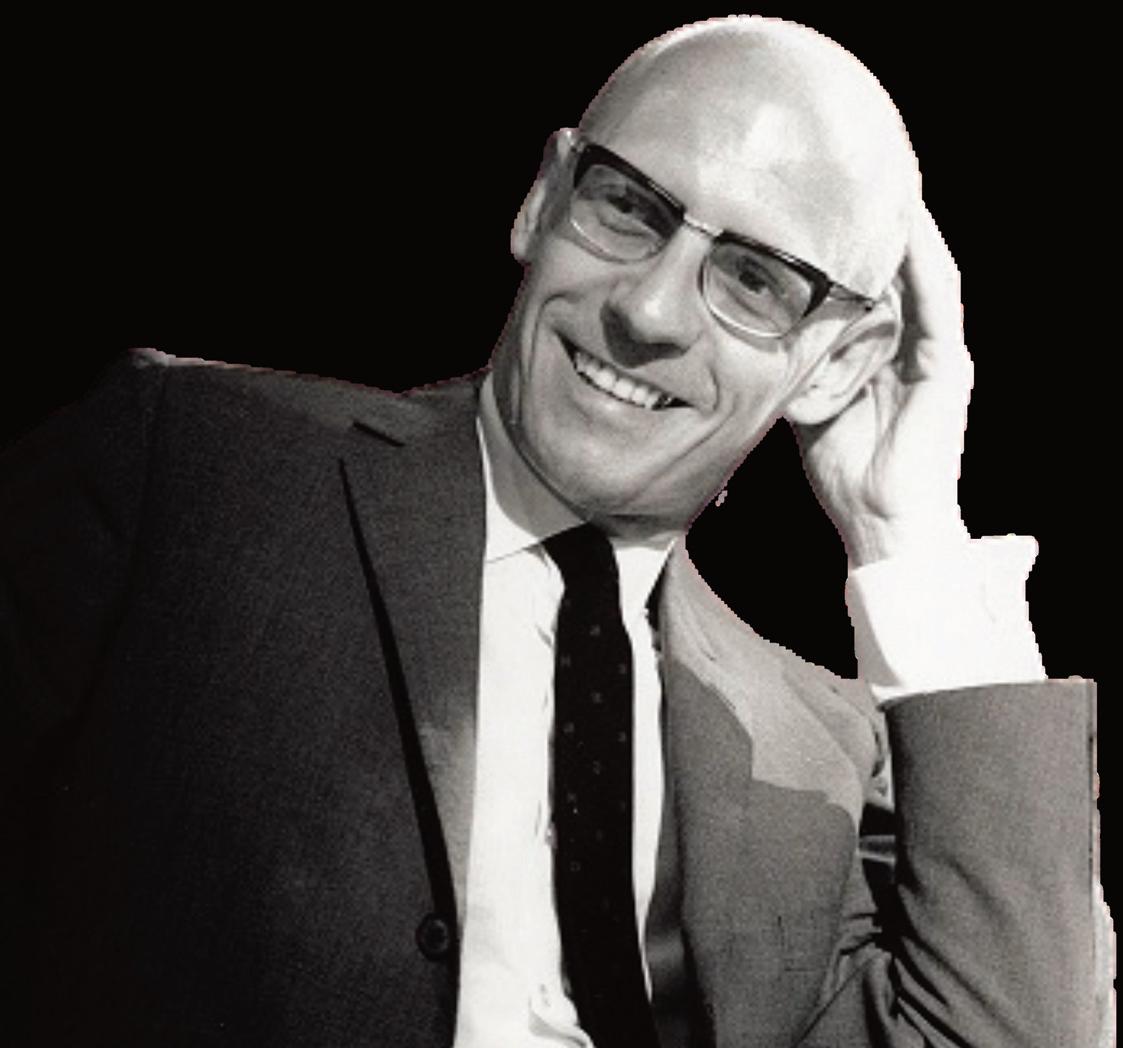
47
Brenno Mulder
“Volgens Foucault is macht nooit louter goed of slecht, maar repressief of productief.”
cineerden niet. Ongevaccineerden hebben in tegenstelling tot Joden wél een keuze. Wel of niet vaccineren is een vrije keuze, Joden hadden tijdens de Tweede Wereldoorlog geen keuze. Ongevaccineerden mogen nog naar buiten, de supermarkt, hun studie en hun werk, en krijgen toegang tot niet-essentiële winkels met een negatief testbewijs. Iedereen heeft daarom de mogelijkheid tot een coronapas, terwijl een Jodenster verplicht was voor iedereen van Joodse afkomst. Er is een verschil tussen de productieve macht van de coronapas enerzijds en repressieve macht van de Jodenster anderzijds. De productieve macht van de coronapas zorgt voor minder kans op besmettingen,8 terwijl de repressieve macht van de Jodenster ervoor zorgt Joden van niet-Joden worden gescheiden. Als Jood is de Jodenster voor het leven, de coronapas geldt maar voor een bepaalde tijd, alhoewel het onder de spoedwet weer kan worden ingevoerd. Joden hadden geen alternatieven. Joden werden namelijk niet alleen buitengesloten, maar ook opgepakt, vervolgt, gevangengezet, verhongert, neergeschoten of vergast. Praktijken die in Nederland absoluut niet het geval zijn.9 ‘Iedereen die die vergelijking maakt, is eigenlijk ziekelijk bezig’ stelt Ronnie Tafnatiel,Voorzitter Centraal Joods Overleg bij PowNed
tot nieuwe ideeën leidt. Het gaat er daarom om dat de vergelijking tussen de coronapas en de Jodenster waardevol is, in zoverre de overeenkomstige machtsuitoefening leidt tot opdeling, inspectie en registratie. Echter, de vergelijking is niet waardevol, doordat een biopolitiek beleid fundamenteel verschilt van een naziregime. De coronapas deelt dus wel dezelfde bijkomstige elementen van opdeling en registratie, maar niet hetzelfde fascistische machtsregime. Daarom kan de coronapas niet meteen een ‘apartheidspas’ genoemd worden. Baudets vergelijking draagt daarom weinig bij aan de discussie rondom de coronapas.
Ikzelf vind dat er andere argumenten nodig zijn die ons laten inzien dat de coronapas verkeerd is. Ik hoop te hebben aangetoond dat de vergelijking met de Jodenster een mythe is. Bij toekomstige analyses mag er nooit een waardeoordeel klaarstaan dat macht louter slecht is. Foucault herinnert ons hieraan.
Verantwoording
1 ‘Halsema: Jodensterren bij coronaprotest dieptriest’, NOS (6 september 2021), https://nos.nl/artikel/2396802-halsema-jodensterren-bij-coronaprotest-dieptriest.
2 Thierry Baudet, Twitter post, 12 oktober 2021, https://twitter.com/thierrybaudet/status/14478558068216422 40.
Glijdende schaal
Een tegenargument is dat het naziregime ook begon met kleine maatregelen, waarbij het langzaamaan in intensiteit toenam. Ongevaccineerden zouden in dezelfde trant uiteindelijk ook worden vastgezet of vervolgd, oftewel dat ‘dat stapje voor stapje opvoeren van totalitaire staatscontrole’ waar Baudet het op Twitter over heeft.10 Echter, dit argument van Thierry Baudet en andere FvD’ers is eigenlijk een ‘hellend vlak’ drogreden, omdat demonstranten de uiterste conclusie van vervolging van ongevaccineerden baseerden op de situatie van het 3G-beleid. Natuurlijk kunnen we niet weten waar het heden zal eindigen, maar het is ongerechtvaardigd om uit de gewijzigde wetvoorstellen en de coronapas af te leiden dat dit zal leiden tot extreme situaties, zoals bij het naziregime. Nederland heeft geen naziregime. De coronapas als biopolitiek is uit op volksgezondheid en veiligheid, niet op etnische zuiverheid. Het gevreesde ‘hellend vlak’ is dus onterecht: Thierry Baudet gebruikt de vergelijking slechts als retorisch middel. Hij grijpt naar extreme voorbeelden van Jodenvervolging om het wantrouwen tegenover de coronapas te rechtvaardigen. Er is meer sprake van een biopolitiek beleid dan een fascistisch beleid. Daar de coronapas onder dit beleid valt, gaat de vergelijking tussen de biopolitieke coronapas en de fascistische Jodenster niet op.
Geschiedkundig gezien is het altijd lastig om één op één te vergelijken met het verleden. Eigenlijk gaan vergelijkingen nooit helemaal op. Enerzijds stellen historici dat men nooit kan leren van de geschiedenis, anderzijds dat vergelijken met het verleden
3 ‘Baudet vergelijkt invoering ‘coronapas’ met Jodenvervolging, De Kanttekening (23 juli 2021), https://dekanttekening.nl/nieuws/baudet-vergelijkt-italiaansecoronapas-met-jodenvervolging4/.
4 Michel Foucault, Discipline, Toezicht en Straf (Groningen 2018) 266.
5 Ibidem, 264.
6 Oorspronkelijke titel: Sécurité, territoire, population.
7 Michel Foucault, Sécurité, territoire, population (Parijs 2004) 12.
8 ‘RIVM: vaccins beschermen bij alfavariant tegen overdracht coronavirus’, NOS (6 september 2021), https://nos.nl/collectie/13850/artikel/2392614-rivm-vaccins-beschermen-bij-alfavariant-tegen-overdracht-coronavirus.
9 Overigens beperk ik mij tot Nederland, en ik ben bewust dat in landen zoals Australië of Oostenrijk de situatie anders is, waarbij men wordt opgepakt vanwege het verspreiden van corona, zie bijvoorbeeld: ‘Australische tiener gearresteerd om avondje stappen met corona’, De Telegraaf (28 december 2021), https://www.telegraaf.nl/nieuws/1302474405/australische-tiener-gearresteerd-om-avondje-stappen-met-corona.
10 Thierry Baudet, Twitter post, 12 oktober 2021, https://twitter.com/thierrybaudet/status/14478558068216422 40.
Afbeelding
(I) Via: https://www.filosofie.nl/filosoof/michel-foucault/.
48
“Thierry Baudet gebruikt de vergelijking slechts als retorisch middel.”
CODEX
Historiae
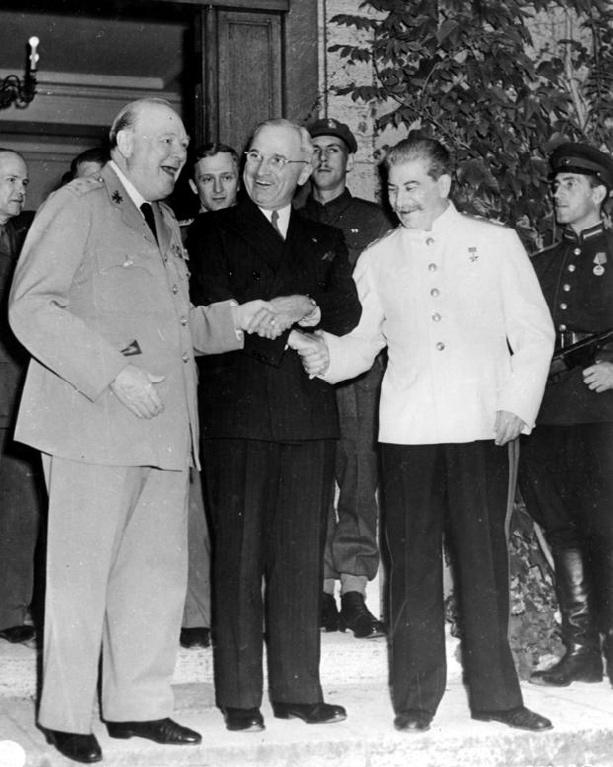
Theme: Rivalry & Friendship July 2022
Colofon
Hoofdredactie Chief editor
Redactie Editors
Nica de Korte
Claire Majoor
Amanda van Dord
Thymo Gieltjes
Niels Koopmans
Leah Niederhausen
Eva van Roosendaal
Eindredactie
Copy editors
Brenda Bakker
Quinty Frankvoort
Amber Jarigsma
Hosoo Kim
Nica de Korte
Bram Roelofs
Marlinda van der Vos
Gastschrijvers
Guest writers
Theo Dekker
Hosoo Kim
Arthus Koopmans
Erika Kuijpers
Brenno Mulder
Elisabeth van Vliet
In juni verschijnt het nieuwe nummer van CODEX Historiae. Deze editie staat helemaal in het teken van Rivarly & Friendship.
Dit thema is breed in te vullen en CODEX is zeer benieuwd naar jullie perspectieven en ideeen. Heb jij iets geschreven dat met Rivalry & Friendship te maken heeft (of niet) en wil je het graag laten publiceren? Neem contact met ons op! De deadline is 30 april. Mail ons op info@codexhistoriae.nl.

Blijf op de hoogte via onze social mediakanalen of via onze website codexhistoriae.nl.
The next issue of CODEX Historiae will appear in June and will be all about Rivalry & Friendship.
This is an incredibly broad theme and we at CODEX would love to hear your perspectives and ideas. Have you written something related to Rivalry & Friendship (or not) and want to publish it? Contact us! The deadline is the 30th of April. Email us on info@codexhistoriae.nl.
Stay up to date through our social media channels or via our website codexhistoriae.nl.



Vormgeving
Graphic design
Omslag Cover

Nica de Korte
Claire Majoor
Gerard van Honthorst
Sater en nimf 1623
Jaargang 43, nummer 1, mei 2022
Postadres: Redactie CODEX Historiae
Vrije Universiteit Faculteit der Geesteswetenschappen
T.a.v. CODEX Historiae De Boelelaan 1105 1081 HV Amsterdam
Mail voor meer informatie over abonneren, publiceren of adverteren naar info@codexhistoriae.nl.

Financieel mogelijk gemaakt door de Vrije Universiteit Amsterdam
Abonnement: voor studenten en personeel aan de faculteit geesteswetenschapen aan de VU: gratis Voor anderen €15 per jaar. Email ons voor meer informatie over abonneren.
Subscription: For students and employees at the faculty of humanities at the VU: Free For others €15 per year. Email us for more information about subscribing.
ISSN: 2666-9048 e-ISSN: 2666-9056
CODEX Historiae maakt gebruik van de Creative Commons CC-BY-NC licensie: inhoud mag worden hergebruikt voor niet-commerciele doeleinden, mits de bron goed wordt aangegeven.
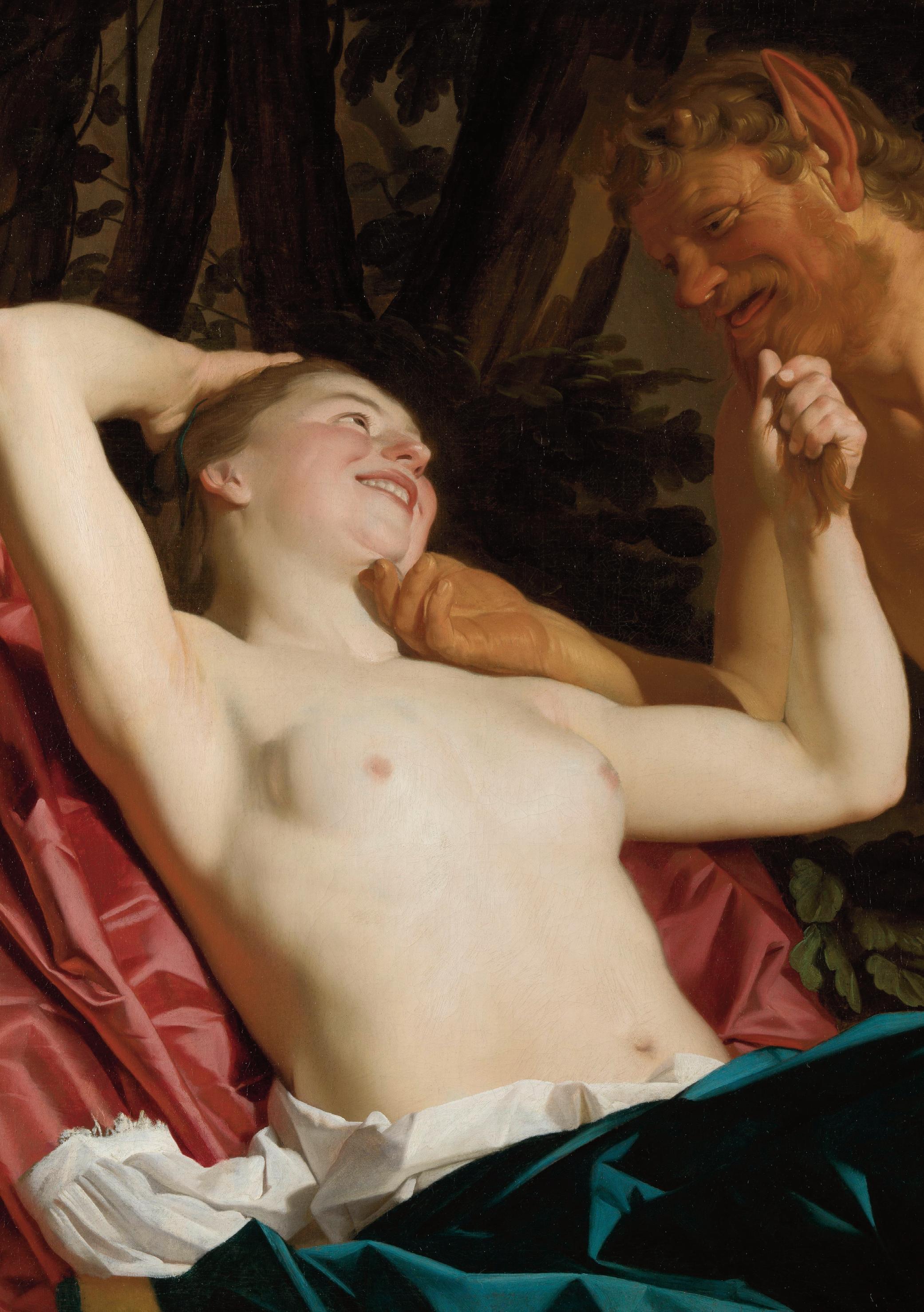
codexhistoriae.nl