CODE M Magazine Volume 1- Premiere Issue - Winter 2018
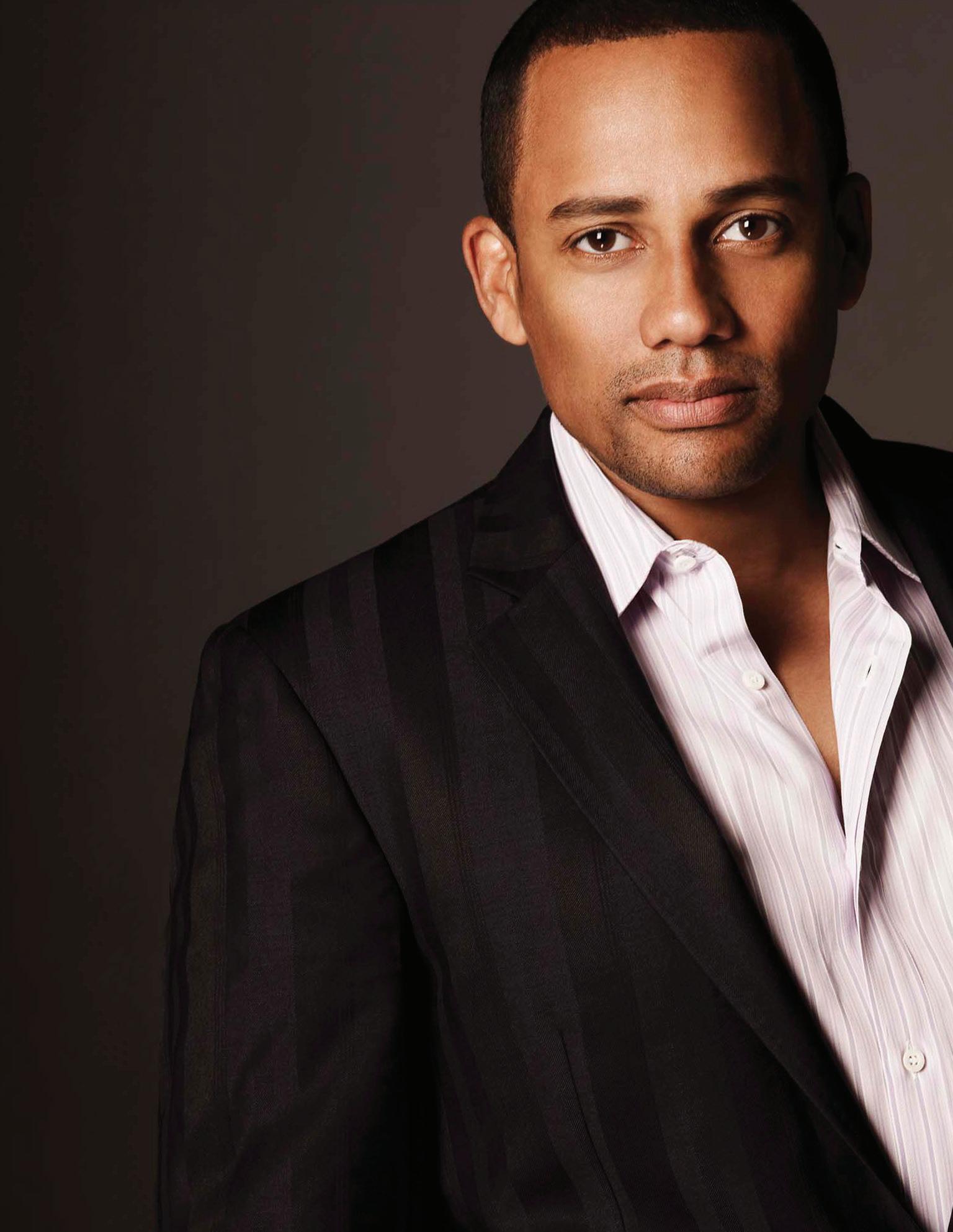
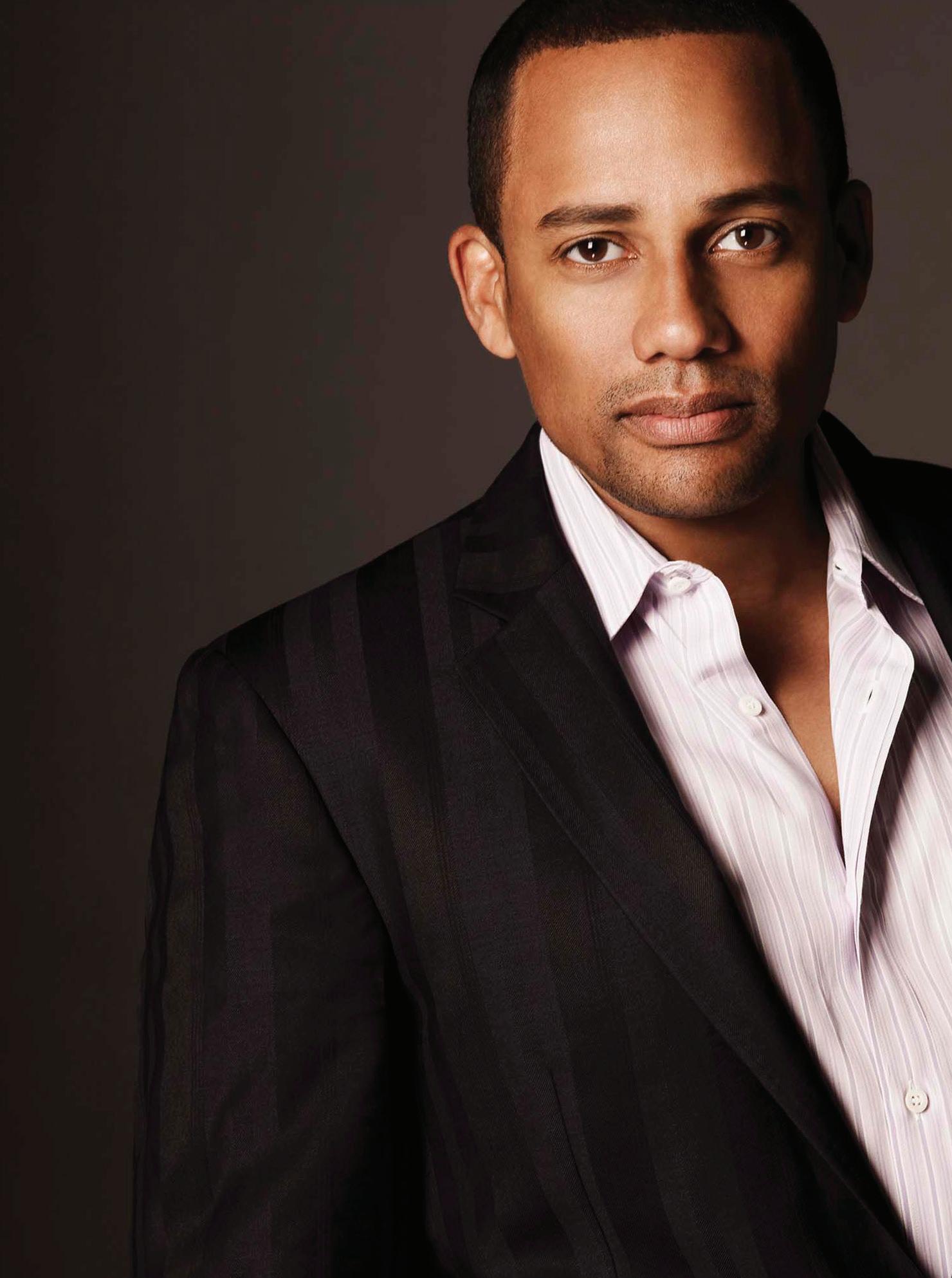
Hill Harper
Actor, Author, Father and Philanthropist discusses Manhood and Being a Single Parent
Dealing with Diabetes: Joseph M. Coney, MD speaks out
Anthony Anderson strives to master the “German Lieder”
For Your Health and Well Being by Rose Hosler, RN, BSN
The Expat Experience: A Black Man Living in Kazakhstan by Sharif Akram
Overcoming Cancer by Dan Dean
No Upfront Costs To You! Custom built to your specific needs while we service and monitor them 24/7/365. You only pay the monthly service costs. 36 month terms available. Packages start at $39/month.
Key Features & Benefits
Cloud Spillover
Efficiently manage your backup and DR storage costs by keeping the most recent or important backups on the local appliance, with the remainder archived to the DigitalJetstream cloud. Local and replication retention policies are managed separately allowing more effective use of your local and offsite appliance storage allocation.
Hyper-V & VMware Agentless Backup & DR
The DR cloud supports an agentless approach to backing up and recovering VMware and Hyper-V environments. Backup physical machines and recover them to existing hypervisors, or recover VMs as physical machines (P2V and V2P recovery support). Set policies to automatically protect newly created VMs to save additional time, money, and reduce risk of downtime due to human error.
15 Minute Failover Guarantee
Our cloud failover service guarantees that you can bring any system back online in our cloud in 15 minutes or less from time of the disaster.
Failover to the Cloud
For Windows and Linux machines, Administrators can right-click backups and choose any version of a machine’s backup to be booted and run directly in the DigitalJetstream cloud, with RDP access to help businesses minimize downtime.
Local Disaster Recovery
Windows and Linux systems that have been backed up onto an on-premise DigitalJetstream appliance (Cloud Failover series) can be run directly on the appliance by simply right-clicking a backup and selecting “boot.” In a matter of minutes, administrators will have VNC access to a live running machine. Once ready, the machine(s) can be powered off, backed up and recovered to production environments, including recovery to an existing vSphere environment.
Central Deployment and Management
Appliance backup settings and schedules as well as recoveries can be accessed over the WAN from a central management console or limited to LAN/VPN access for environments requiring greater security.
Happy New Year!
As we enter into a new year, with it bringing new possibilities, new hopes and new dreams, comes a new publication, CODE M Magazine. A digital magazine to be published quarterly, CODE M was born from the desire to make a difference in men’s lives around the world.As men’s lives are changed, so are the possibilities that women and children lives will be changed as well.
Each new year brings endless possibilities for resolutions, setting new goals and higher expectations in our lives. Each new year brings hope that we can become better people and our situations will improve. Each new year brings hope that our relationships will get better, our health and wellness will improve, and so will our finances.
CODE M Magazine’s topics will focus on the mind, the body and the soul. In this premier issue, we feature the extremely talented and gifted actor, author, father and philanthropist, Hill Harper. I had the pleasure of meeting Mr. Harper last summer and shared with him my vision for this magazine. He graciously accepted the invitation to be interviewed and be on the first cover. As a result of attracting Mr. Harper’s interest, we believe the sky’s the limit in moving forward and growing the CODE M brand.
I now give thanks to my God and creator and my Lord and Savior, Jesus Christ. I am humbled and thankful to bring you CODE M Magazine. Behind the scene there are so many people to thank, starting with my wife, Heidi, who has been patiently supportive in all of my entrepreneurial ventures. My friend, mentor and senior advisor, Alexandria Johnson Boone who has been my guiding force and advocate in helping to bring this vision to fruition. Special thanks to the Howse Solutions and Sway Effect creative team: Christopher Howse, Lisa Bottoms and Jennifer Coiley Dial. Also, thanks to all of the contributing writers who gave of their time and effort to submit the interesting content you will read. Most of all, I thank you, the reader who will take the time to give CODE M Magazine a chance. I know there are many things you could be doing, so I pray reading CODE M Magazine will be time well spent. Sit back, relax and enjoy the premier issue!
Remember, it’s about time and it’s about CODE M Magazine.
Bilal S. Akram CEO / Publisher
Publisher
Bilal S. Akram
Senior Advisor
Alexandria Johnson Boone
Chief Operating Officer
Wayne L. Dancie, Sr.
Media Coordinator
Paula D. Morrison
Asia Affiliate
Cyril White
Europe Affiliate
Sharif Akram
North America Affiliate
David Williams
Account Executives
Bilal S. Akram
David Williams
Graphic Design & Creative
Jennifer Coiley Dial Sway Effect / Howse Solutions
Welcome to the premiere issue of CODE M Magazine, a career and lifestyle magazine, focusing on, and highlighting the global male experience!
Through our digital platform, we will easily reach thousands of upscale, professional, compassionate sons, fathers, brothers, grandsons, grandfathers and husbands around the globe.
This has been a long, arduous journey for Bilal Akram, our publisher and visionary. But he never gave up. His determination and strength are the sole reasons that CODE M has come to life.
Each quarter, we will share amazing stories of personal and professional triumphs and challenges. Stories of thriving community initiatives, unique entrepreneurial ventures and adventures, health tips, relationship advice, wealth management and financial strategies, local and global political perspectives and profiles of historic & every day heroes.
As you read through these pages, it is our hope that you will be motivated and inspired to be your very best self, and that you will encourage others you love and care about, to do the same.
Please enjoy our magazine, and by all means, feel free to share it with men (and women) living on the planet!
Senior Advisor CODE M Magazine and
President & Chief Executive Officer GAP Communications Group
Inspiration for our readers...
Peace is the beauty of life. It is sunshine. It is the smile of a child, the love of a mother, the joy of a father, the togetherness of a family. It is the advancement of man, the victory of a just cause, the triumph of truth. –Menachem Begin
By three methods we may learn wisdom: First, by reflection, which is noblest; second, by imitation, which is easiest; and third by experience, which is the bitterest. –Confucius
Let’s be very clear: Strong men – men who are truly role models – don’t need to put down women to make themselves feel powerful. People who are truly strong lift others up. People who are truly powerful bring others together. –Michelle Obama
Character cannot be developed in ease and quiet. Only through experience of trial and suffering can the soul be strengthened, ambition inspired, and success achieved.
–Helen Keller
I always thought money was something just to make me happy. But I’ve learned that I feel better being able to help my folks, ’cause we never had nothing. So just to see them excited about my career is more of a blessing than me actually having it for myself. –Kendrick Lamar
Words are singularly the most powerful force available to humanity. We can choose to use this force constructively with words of encouragement, or destructively using words of despair. Words have energy and power with the ability to help, to heal, to hinder, to hurt, to harm, to humiliate and to humble. –Yehuda Berg
Good humor is a tonic for mind and body. It is the best antidote for anxiety and depression. It is a business asset. It attracts and keeps friends. It lightens human burdens. It is the direct route to serenity and contentment. –Grenville Kleiser
Make it a habit to tell people thank you. To express your appreciation, sincerely and without the expectation of anything in return. Truly appreciate those around you, and you’ll soon find many others around you. Truly appreciate life, and you’ll find that you have more of it. –Ralph Marston
The essential lesson I’ve learned in life is to just be yourself. Treasure the magnificent being that you are and recognize first and foremost you’re not here as a human being only. You’re a spiritual being having a human experience.
–Wayne Dyer
I love a man with a great sense of humor and who is intelligent – a man who has a great smile. He has to make me laugh. I like a man who is very ambitious and driven and who has a good heart and makes me feel safe. I like a man who is very strong and independent and confident – that is very sexy – but at the same time, he’s very kind to people. –Nicole Scherzinger
Charmaine D. Brown President
Connexions Consulting, Inc.,
is
f
related aspects of strategic human capital management, organizational development and strategic human resources compliance.
Email: charmaine.brown@connexconsultinginc.com
•
•
10 What’s going on? Stigma! by
Charma Dudley, PhD
14 A ‘Lieder’ in Training by Rhonda
Crowder
17 Going Places: Amsterdam!
18 Addressing Sexual Violence and a Rape Culture in a Way No One Else Will! by Shawn
Francis-Coleman
22 COVER: Redefining Manhood by Rhonda Crowder Hill Harper discusses manhood and being a single parent
26 Successful Entrepreneur Takes His Business Global
28 Overcoming Cancer by Dan Dean
30 Paul Laurence Dunbar: Ohio’s Bridge to 19th Century Britain by Geronimo Redstone
32 Dealing with Diabetes by Joseph M. Coney, MD 34 Meet A.J. Jenkins, III: Superstar Sports Agent
36 For Your Health & Well-Being by Rose Hosler, RN, BSN
38 The Expat Experience: A Black Man Living in Kazakhstan by Sharif Akram 44 Gentrification Monetization by Thomas “T.J.” Loftin
meet some of our
{ contributing writers }
LaLa Marie Eric Guthrie, Esq.
Shawn Francis-Coleman
Sharif Akram
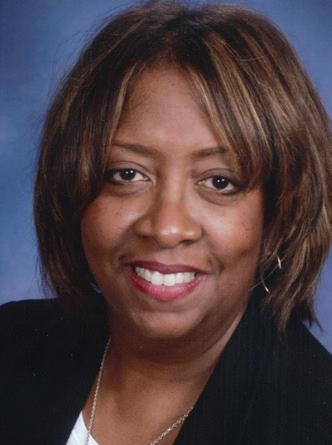
Rose Hosler, RN, BSN
Thomas “T.J.” Loftin
Dan Dean
Charma Dudley, PhD
Rhonda Crowder
Geronimo Redstone
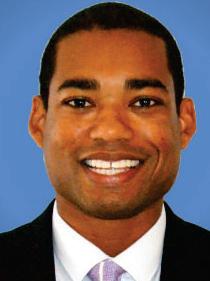
Joseph M. Coney, MD
Embrace Consulting specializes in providing Diversity and Inclusion consulting and leadership development services to champion employee engagement and drive for business results. Embrace Consulting is positioned to partner with your Leadership Team(s) as well as your Business Resource Networks to ensure alignment of business objectives, cultural competencies and skill development opportunities.
Creativity and innovation thrive in organizations that recognize the importance of building and sustaining a culture where all employees feel their contribution is recognized and valued. Creating and sustaining that culture is critical for businesses to grow and thrive. Embrace Consulting provides the essential foundational services to customize your Diversity & Inclusion and Employee Engagement strategic initiatives.
EMBRACE! CONSULTING
We provide Strategic Planning services, which include the design and development of your strategic Diversity & Inclusion business case, mission, vision, goals and objectives. This plan will be your roadmap to support employee engagement, inclusion opportunities and achievement of key business results.
We specialize in Business Resource Network development and education. Business Resource Networks, Employee Resource Networks and Affinity Groups, encourage diversity and inclusion to ensure that a range of perspectives and experiences are recognized and leveraged to achieve organizational goals. These networks provide both internal and external value to organizations by increasing employee engagement, strengthening brand awareness and enhancing leadership development.
We provide Coaching and Consulting for Senior Leadership to Drive for Results critical to the success and sustainability of both the strategic planning process and Resource Network development. Essential to the success of these efforts is an actively engaged Leadership Council. This Leadership Council is representative of Business leaders throughout the organization given the privilege to champion and actively lead the progression and achievement of Diversity & Inclusion goals.
What’s ? Going On
by Charma Dudley, PhD
Stigma!
Have you taken a mental health quiz lately? If not here is your chance… read the questions below and check off those that might pertain to you or someone you know.
Do you notice that you have a fast pulse?
Do you avoid tasks and responsibilities?
Do you feel sad?
Do you have little time to relax and let go?
Is your living environment cluttered and disorganized?
Do you feel uneasy, irritable, and/or restless?
Do you have problems sleeping?
Do you have headaches?
Do you move, walk or eat rapidly?
Do you rarely take time to do something you really enjoy?
If you responded yes to more than a couple questions and they have persisted for a period of time, something may need to change because your mental health may be at risk. But you may be reluctant to talk about it or even convince yourself if the responses are about you that it is nothing. You may convince yourself that it is no big deal because of that silent, uncomfortable S-word... STIGMA.
You may not be familiar with it as it relates to mental health but, in a nutshell, “public stigma is the reaction that the general population has to people with mental illness and selfstigma is the prejudice which people with
mental illness turn against themselves.” Stigma involves prejudice, stereotypes and discrimination. You may be thinking, “It is 2018.” Yes, but stigma still exists in our society, including communities of color but even more so in the African American community.
The focus of this article will be on stigma and mental illness in the black community. My goal is to provide education as well as highlight the fact that recovery is possible through treatment, just like any other physical health condition that affects your body.
We all know that the human body consists of
different organs, all of which are very important but as a psychologist, I tell people that the brain is the most important part of our body because it is the control center and functions much like a computer. The brain, however, is more complex and powerful because it communicates and sends messages via nerve cells.
Some of you may remember as a child listening to the soulful sounds of Marvin Gaye, specifically, one of his most critical songs that continues to highlight the human condition in 2018, “What’s Going On?” If he were alive today, he would ask the exact same question. Well, what is going on? The response could include violence, wars in the streets and in the world, breakdown in the black family, high rates of incarceration of black males, low socioeconomic status, substance abuse, disparities in education and health care, housing, and don’t forget discrimination and RACISM.
Each one of these areas could be a dissertation starting with Marvin Gaye’s 1970s hit,
“What’s Going On?” Why is there stigma when it comes to mental health? Why, when more than one in five adults and also one in five children suffer from a mental health condition and that’s a lot of people. Why, when prevalence rates show that more than 16 million adults suffer from major depression? Why, when suicide is now the second leading cause of death among 15-24 year olds? Why, when more than 40 percent of children living in crime ridden neighborhoods are exposed to violence every day and more than 25 percent suffer from PTSD: Post Traumatic Stress Disorder. “What’s Going On?”
Read on.
Did you know that suicide rates increased 233 percent among young African Americans between 10-14 years of age? Did you know that nearly 50 percent of all adult prisoners (state and federal) and 40 percent of juveniles in legal custody are African American? African Americans of all ages are more likely to be victims of serious violent crimes. “What’s Going On?”
continued on page 12
continued from page 11
According to the American Foundation for Suicide Prevention, every 13.7 minutes someone in the US intentionally ends his or her life. Sixty percent of all Americans will know someone who died by suicide and, over a lifetime, two in ten people will have a suicide in their own family.
With these alarming facts coupled with other psychosocial stressors affecting the African American community such as the ones mentioned previously, even the most put together person can feel the burden and experience a meltdown, become disengaged, isolate and become depressed. Stigma reduces patients’ access to resources and opportunities (e.g., housing, jobs) and leads to low self-esteem, isolation, and hopelessness.
Adults and children in AA communities are not getting treatment and the ones that do are not getting quality services. Why you may ask or “What’s Going on?” Well, there may be many factors but one of the biggest ones is the S-word… STIGMA.
Who are you calling crazy? I’m not crazy. You crazy? Due to stigma and some of the stressors or risk factors identified earlier, less than one half of African American adults with mental illness seek treatment and less than one-third of their children receive treatment (Urban League of Philadelphia). The point I am trying to make is that mental health conditions are common, particularly anxiety disorders and depression. I refer to depression as the common cold of mental illness. Everyone can get depressed - feel down, blue, sad and hopeless at times because we are human. Sadness is an emotion and is part of the human condition, however we need to recognize when depression becomes more than just feeling blue, when sadness or the irritability does not go away.
To learn about the signs and symptoms, read full story at www.codemagintl.com
Charma Dudley, PhD is Associate Director of Behavioral Health Services, Value Behavioral Health of Pennsylvania, and President of the NAMI Southwestern PA Board of Directors. She also serves on NAMI National’s Board of Directors.
For more information about depression and other mental health conditions and how to find support in your area, please contact:
National Alliance on Mental Illness (NAMI)
Suicide Prevention
National Institute of Mental Health
Mental Health America
American Association of Suicidology
WKYC News Anchor
Russ Mitchell
by Rhonda Crowder
photos Franklin Solomon
Anthony Anderson strives to master German Lieder
In German, the term Lieder means art song but more specifically it is the setting of a German poem and literature to classical music – which dates back as early as the 12th century. However, German art songs from the Romantic period (roughly the 19th century) are most noted as music of the Romantic period was highly emotional and expressive with strong lyrical melodies and rich harmony.
Initially, one might think opera when hearing of it. But, German Lieder is different than opera, said Daphne Dunston, a voice instructor at The Duke Ellington School of Arts in Washington, D.C. She went on to say it’s rare for a teenager to take to German Lieder because of its varied nuances and that’s what makes her former student Anthony Anderson so special.
“Anthony has developed a keen ear for the language. Most students reject it,” said Dunston. “He is one of those exceptional ones who has embraced it and sings it well.”
When asked her thoughts, the first time she heard him sing, she said, “I thought it was a very mature voice for his age, not so much the vocal quality but his musicianship.”
She also said his interruptions of these really old songs are demonstrated in his performances. “He has a sensitivity to the music you don’t often find in a young man.”
That passion for the music coupled with the struggles common to virtually every young man from an American inner city led to Anderson’s story being documented by The Washington Post. After talking to Dunston and learning more of Anderson, it became a must for us to feature him within the pages of Code M.
continued on page 16
Favorite German Lieder composer:
G.L. Shubert. “I sing a multitude of his pieces. You get a feel for what the composer is like and have to get the message across to the audience, to feel what the composer was feeling.”
Training regimen:
“I have to sing everyday including warm-ups. Singing is really a sport and opera is the Olympics.” Anderson works with a coach twice a week and spends 30 minutes singing.
Biggest supporters:
His family and teachers are supportive, he said. “People will support me if I believe in myself and my love for the art form.”
continued from page 15
Immediately, through the phone, from hello, we heard the maturity of his voice Dunston raved about. We asked, “What is your attraction to German Lieder?”
“I think it was my natural talent,” Anderson said. “I found something in my soul that connected to German Lieder. I feel the emotion of the composer.”
Anderson shared his desire to pursue a career in German Lieder, art song and opera – of course. And, ironically, he never took singing serious as a child.
“It wasn’t until I went to Ellington, was in a nurturing environment, that my voice started to develop,” said Anderson, who before that only sang in elementary school to crush. At Ellington, he focused on academics and his voice.
“I didn’t know I could sing until I put in the work. Ellington gave me the encouragement and nurturing. It was people like Ms. D. who really helped along the way.”
Knowing there are not a lot of African American men in the big leagues of his field, he believes it’s important to break out new talent. “I could be a person who could change that.”
Anderson said he can’t imagine living without singing, that it saves a person. It’s like bringing a good message to people.
“I think that’s what God put me here for… My job now is to put in the work, to learn the German culture,” said Anderson, who has looked at institutions in Germany and knows he’ll take a class in German next year. “It’s important to have the language skills.”
Being a singer, you have to be sensitive, he continued. “Sensitivity is in me. I think that’s what connects me to German Lieder.”
Anderson sees German Lieder as something that you really can’t take for granted, something that you can’t walk past and not stare at. “I’m glad I stumbled upon it. I hope others find the same joy,” said Anderson. “I think I’m a very lucky person to be gifted with this special talent so I intend to use it.”
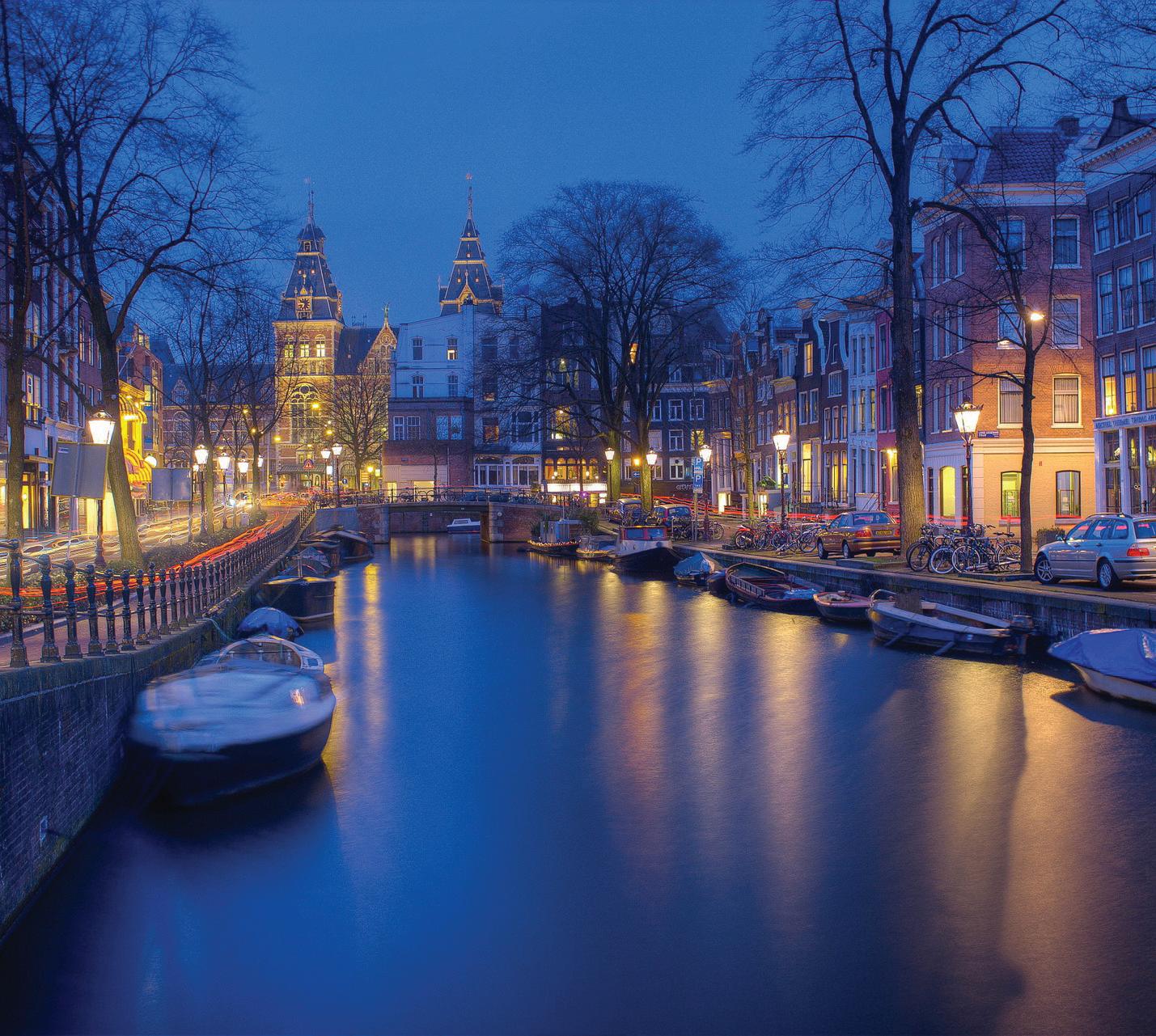
Going Places: Amsterdam!
A Romantic Getaway
When you think of Amsterdam, you may think of weed and women of the Red Light District. However, there’s so much more to Europe’s version of sin city. In fact, it is a very romantic place – a great little getaway for you and your significant other.
From a vibrant food, drink and cultural scene to canal cruises, there’s plenty to see and do in one of the world’s most unique destinations. Visit iamsterdam.com to help plan your trip.
and a rape culture
Addressing sexual violence in a way no one else will!
by Shawn Francis-Coleman
“It helped me to rethink how I think about women before I act.”
“Very thought-provoking and [it] encouraged good dialogue between myself and my brothers.”
“All the brothers seemed to take away a lot from this [discussion].”
“I thought it was very interesting and thought provoking and gives you a different perspective of how to see women.”
These are some of the things that fraternity members and males in general have been saying after the seminar discussions I have been doing at high schools and on university campuses. In 2003, I turned 18 years of age and became a legal adult but it was not until the age of 23 that I believe I began to enter into true manhood. As I have continued to reflect on the topic itself, I must say, I’m thoroughly disgusted with the state of masculinity and what continues to be projected and encouraged from some. High school after high school, college after college, and place after place, I continue to hear and read how males and females define manhood and it is alarming.
The onus is not completely on them because many of these messages have been written onto our Tabula Rasa thanks to psychosocial development.
Since self-discovery is not promoted within some cultures, these maladaptive messages become the embedded foundations that create our belief systems about manhood. I am also sickened by the strategies that are being used to “attack and eliminate” unhealthy behaviors in both males and females – because this is not solely a male issue.
I attended a conference led by a well-respected colleague who
continued on page 20
FROM HIS PERSPECTIVE { }
continued from page 19
travels internationally fighting against sex slavery. It was an informative and poignant presentation. She talked about how billions of dollars are being spent to educate people on the topic and rescue missions are being completed to save women.
Great stuff. Inspirational! I enjoyed it. But I noticed that there was no talk about addressing the male desire to assault, rape, and violate women. So I raised my hand and asked, “Is there any action being taken to address the male desire to engage in these violent types of sexual behaviors?”
She paused and searched for an answer, looking a bit flustered, then stuttered a little bit and said, “Well no... there’s no task force or money being spent to address that.”
So, you are telling me that billions of dollars are being spent to educate people, save women, and do other admirable things but nothing is being done to address the core issue. If that is the case then we have a major problem. It’s as if a boxer is going out to fight just for the sake of fighting. He has no real strategy, doesn’t really know much about his opponent, has not trained well, but expects to win – and has been doing this his entire career.
My discontentment and anger came to an alltime high in mid-2015 when I was serendipitously talking to a mentor of mine, a psychol-
Booking information:
Shawn Francis-Coleman, MS, PC
Executive Director / Author / Psychotherapist (412) 592-2291 www.PerspectVe.com PerspectVeLLC@yahoo.com
ogist, who shared some of the same views as me. He had attended a couple previous unrelated seminars I had done and he thought I was the right person to address these issues. He summoned me to put together a seminar that is discussion-based and that addresses manhood, sexual violence, and rape culture in a non-traditional way while being non-judgmental towards the audience.
The results? Incredible!
Not only have these discussions been educational, exciting, and fun; young and older men are actually saying that they want to become more aware of their unhealthy thoughts towards women so that they can challenge these thoughts. It has gotten to the point where staff members at the events and audience members follow up before we get a chance to follow up with them.
What’s the secret you ask?
Well, without giving away the full recipe, some of the salient ingredients have been one cup of non-traditional advertisement, two cups of tactful courage, and a great product!
We hope to help your establishment with any needs you may have and we hope you can help us continue to redefine manhood by addressing sexual violence and rape culture in a way no one else will.
Bottom Line Consulting Group
Organizational and Leadership Development
Guiding non-profits, government agencies, small businesses and faithbased institutions to create innovative solutions to build capacity and services.
We are committed to giving your organization an advantage by assessing and addressing your needs.
We help you advance to the next level and achieve real results by providing comprehensive advice and exceptional service.
We listen, assess, and identify new ideas. We work with your board, executive team, staff and community partners to create strategies to build stronger organizations, impactful service delivery and resilient communities. Contact us today to find out how we can advance your organization!
Bottoms
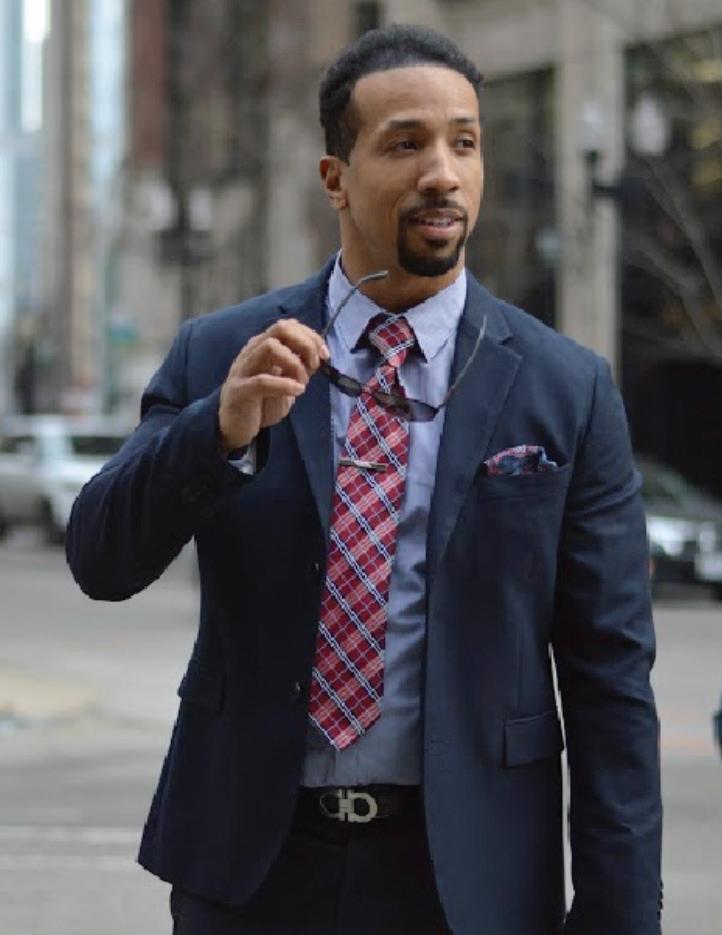
Hill Harper has never appeared to be the average Hollywood type.
Accomplished in several endeavors, in addition to becoming an acclaimed actor, he’s a Harvard law grad, an author, philanthropist, political activist, serial entrepreneur, and most importantly, dad to Pierce Hill Harper – who he recently adopted and is raising as a single parent.
He’s a truly a man’s man, a renaissance man, if you will.
So, with Code M being a platform to address topics related to men, to start this conversation, we asked, “How would you define the role of men today?” He paused for a second. He even chuckled a bit.
“Umm, I have no idea how to answer that question,” he said then thought about it for a moment. “To me, and many folks may not like this answer, the role of men and women are to be self-determined by the individual and by their relationships. We are all of the human race.”
He went on to say that’s why he supports equal pay and gender equality across the board but, at the same time, respects tradition and history and ritual of the family unit. He honors the idea of a man being a provider for his family but knows that doesn’t have to be the case if a family unit decides that’s not best suited for them.
“I have full respect for a stay at home father whose wife has a better job,” Harper continued. “The rules are meaningless. Folks are able to define their own roles of their relationships and families.”
redefining manhood
by Rhonda Crowder
when asked
who is Hill Harper? He responded, “I want to do well and do good. I always said that’s my thing.”
To provide illustration of this, he explained that, as the founder of the non-profit Manifest Your Destiny, he sees the role of philanthropy shifting and changing. Similarly, he’s shifting and changing.
“I realized recently how many rubber chicken dinners can you sell? How many silent auctions can you have? How many tables can people buy each year? It would be more effective for me to create businesses to provide our young people jobs. So, being a social entrepreneur, doing well and doing good, is something I’m taking very seriously now.”
“I’m evolving,” he continued then elaborated by saying, he thinks the phrase “jack of all trades, master of none” can be damaging to the psyche, especially for men. “All of us have the capacity to be masters of many things, to do many things well. The people you admire most in the world do a number of things well.”
He used Ervin “Magic” Johnson as an example.
“I think there’s an opportunity to be great in many areas and that’s my goal. I think, as men, we should look at ourselves as having that capacity to be phenomenal in multiple areas. To be great. But, there are a number of things that go with that.”
He said you must ditch the “can I get the up hook” mentality. He stressed that the basics, the foundational work must be done first. “Whatever you’re passionate about, learn it. Study it. Then let the results come. Apply what you’ve learned.”
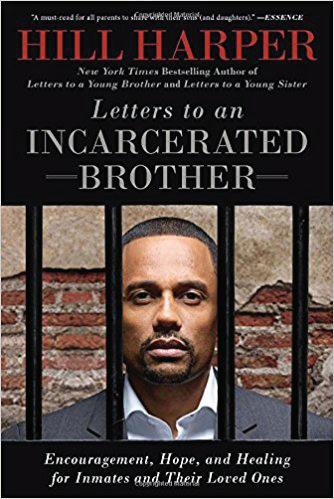
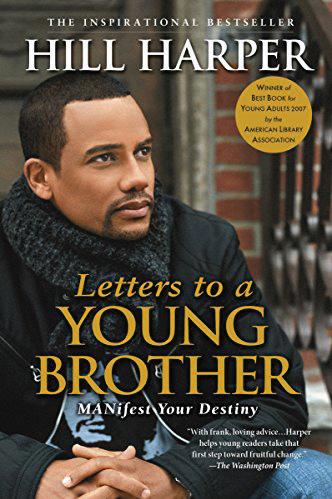
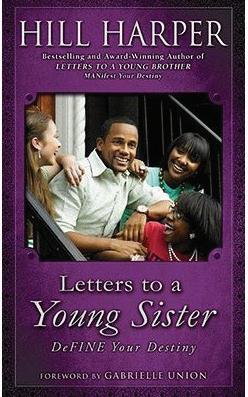
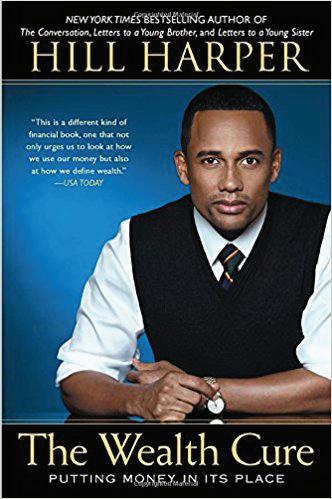
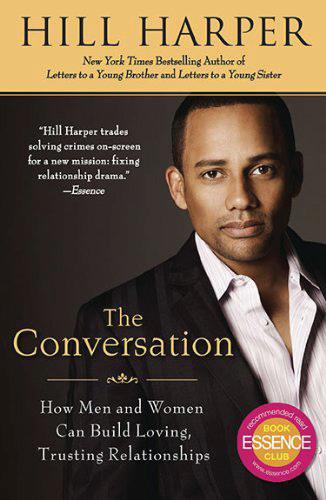
Books by Hill Harper
He encourages men to figure out what they are passionate about, as men, then ask themselves a fundamental question: “What impact do I want to have on the world and how do I go about accomplishing it?”
That “it” can be multiple things such as being a great father, owning a business or having success in a profession, he said.
“The part of my life that I’m most proud of is the books.” On a daily basis, he said, someone comes up to him or through correspondence and tells him how his books inspired them, impacted their life. “That’s something I never anticipated.”
Being a single father is something Harper never anticipated either, although, ironically, he is the product of single fatherhood. His parents divorced when he was five and his father raised him. He said the most important lesson his father instilled in him is you can do anything you can imagine. “He taught me there’s nothing I couldn’t do. No limitation. That always stuck with me. He gave that to me. That’s a real gift. He gifted me courage.”
His wish for his son, Pierce? “I hope that I can play a role so that he has the information, knowledge and courage to live his life exactly how he wants to live it,” Harper said.
“I want him to self-actualize. I want him to be happy. Whatever he decides he wants to do, he can decide. There are no hard and fast rules. Hopefully, I can create that opportunity and life for him. He’ll have to realize there’s still hard work in whatever he does.”
Hill’s biggest challenge:
Being diagnosed with thyroid cancer in 2010. His father, grandfather and uncle died of cancer. “Cancer has ravished the males in my family,” he said. Appointed by former President Barack Obama to serve on the President’s Cancer Panel, this is something he takes serious. He hopes to encourage others. “I believe in my lifetime, we’ll see the eradication of cancer,” he said.
What’s Hill reading?
It varies. It depends on how much he’s acting. “There’s a number of books that I love and that are interesting to me.” He named Between the World and Me by Ta-Neshisi Coates. He recently bought a 100-year-old home in Detroit and has been reading articles and books about how to renovate it.
Will Hill ever enter politics?
“I’ve always considered it and never ruled it out but there are aspects that I really don’t like,” he said. One aspect is the continuous need to ask people for money. “Maybe the next frontier but I hope I can have real impact and real legacy.”
Hill on African Americans in Hollywood
“It’s really an amazing time right now,” Harper explained, saying that for the first time a film written and directed and produced by a black man is the number one grossing film in a genre in a given year. “You have a feast opportunity from that side because people are recognizing the power of our audience but, at the same time, you have the same problem… they think everything is an exception.” He stressed that African Americans in film must keep doing what they are doing as technology has lowered the barrier, exposing more creative talent.
What Hill discovered about Tupac Shakur during All Eyez on Me
“I had no idea about his work ethic. His work ethic was off the chain. His work ethic was unparalleled. If you’re going to work that hard you’re going win.”
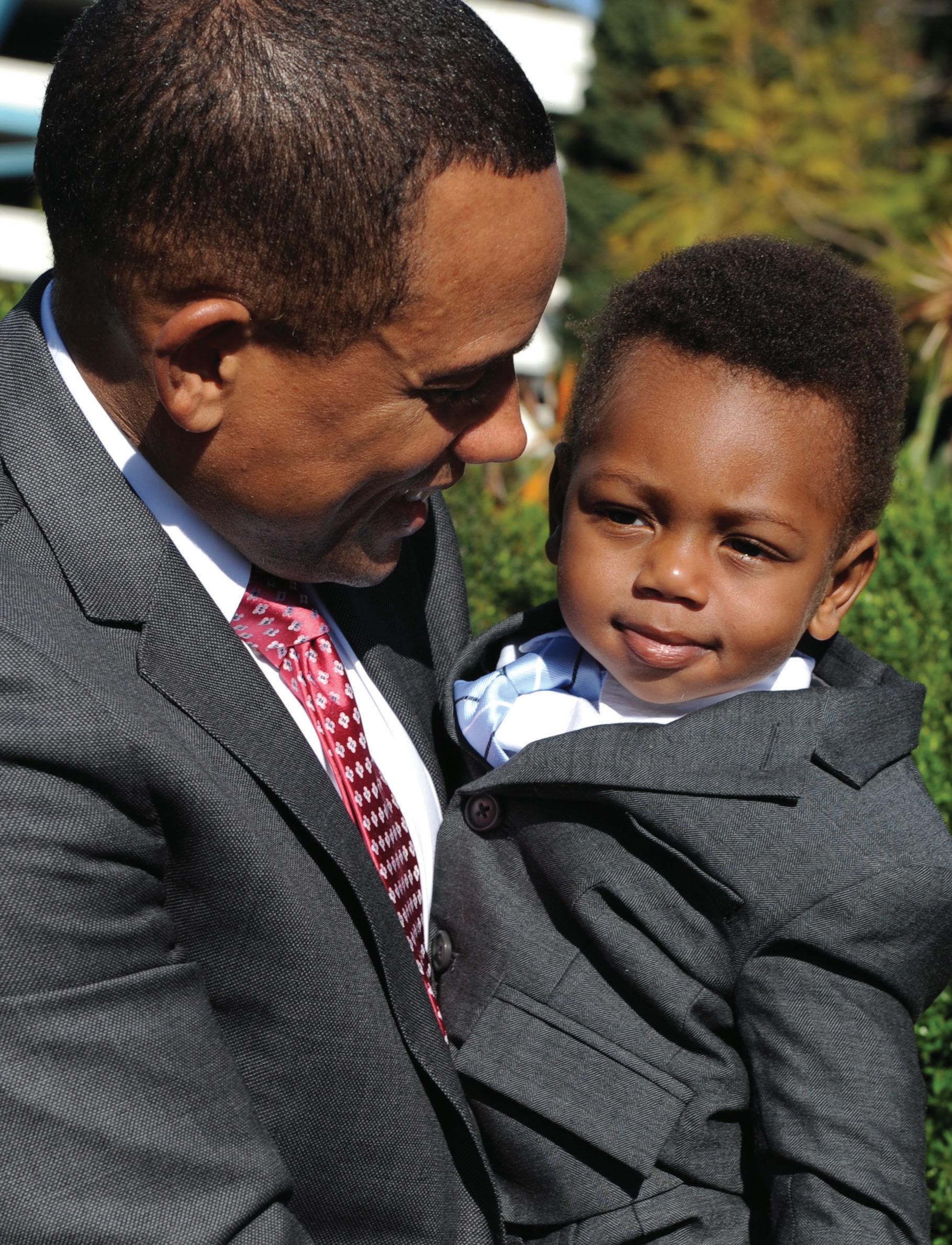
Harper with his son, Pierce.
Global Successful Entrepreneur Takes His Business
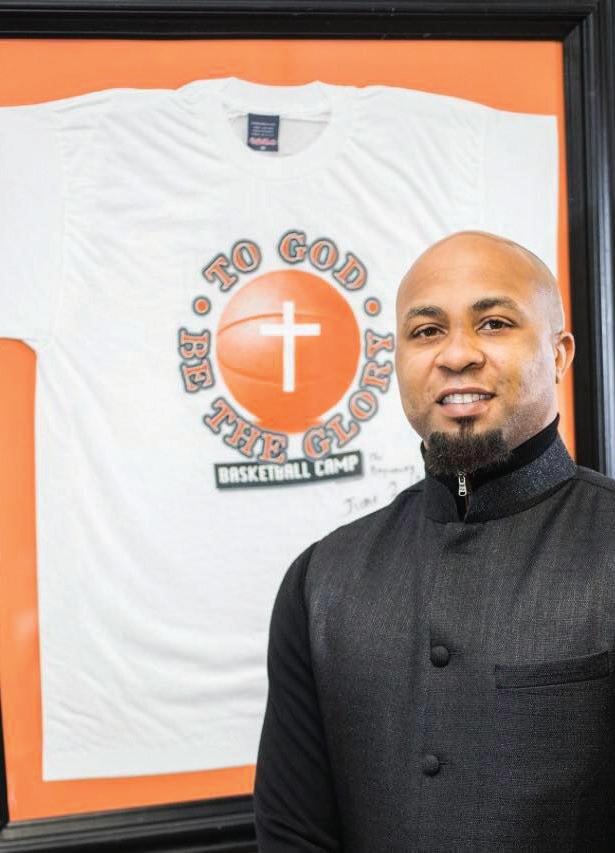
Cyril White is the founder/ managing director of To God be the Glory (TGBTG) Sports, a Texas based corporation that works with aspiring athletes in the USA, China, India, and other parts of the world.
He has combined his passion for sports and knowledge of foreign culture to create a company that has established a track record of effective results and international goodwill. His company was featured in the Wall Street Journal and the New Yorker Magazine for their unique achievements in the international sports world.
White graduated from Lamar High School (HISD) in 1992 and earned a full basketball scholarship to Texas Lutheran University. He completed his B.A. of Communications from the University of St. Thomas in Houston, Texas.
White got his start in college coaching on the Women’s Basketball staff at Angelina College and, one year later, was hired as a Student Assistant Coach at Rice University. The next year, White opened the TGBTG Sports Company which consisted of high level sports
training camps, and college/ professional exposure events to target markets.
TGBTG Sports secured contracts with the WNBA Comets for 4 years providing male scout teams, over 60 NCAA athletic programs for exhibition games, and entered the international sports market when White began going overseas to play professional basketball.
From 1998-2004, White played professional basketball in Panama (1998 & 2000), China (1999-2003), and Nicaragua (2004), allowing the TGBTG brand to expand into these international markets.
White hired two Mandarin tutors in 2005 to work with him one-onone for ten months to learn how to speak Mandarin to provide better service to clients. He also maximized the opportunity for TGBTG by securing a ten year contract in China for TGBTG to bring professional level teams for tours to more than 50 cities in China.
White and his associates have brought hundreds of athletes to China pro sports, and have created over $150 million in
overseas contracts value for TGBTG athletes and clients during that time period.
TGBTG can set up manufacturing deals for new products, arrange distribution in cites in China, arrange new product design, advise on business practices in China, and other added value services to come from over 15 years of doing business in China.
White’s brand has manufactured, licensed and distributed custom lines of shoe products in China since 2004, and advised other companies on similar ventures.
Cyril White
His company designed and built the To God be the Glory Center, a $3 million, 22,400 square foot multi-purpose center in 2008, located in Houston, Texas near Hobby Airport. The state-of-the-art facility designed for sports training is also a church, conference center, training venue, and emergency evacuation shelter.
It has been the host to several sports events, community affairs, and church services.
In 2010, White was hired by former NBA Star Stephon Marbury as a project development consultant for the “Starbury China” brand, a brand that has now become one of the biggest brands in China sports market.
Two years later in Beijing, White worked to create the Stephon Marbury Basketball Academy through special partnerships in China, bringing dozens of foreign coaches to China to train young athletes, and setting up other foreign exchange programs.
TGBTG has worked with several athletes at all levels to help them achieve their individual goals and maximum success.
White says, “I’m in business to serve, to help people reach their goals according to the resources available to me.” The company has offices in Houston, Texas, Shanghai, and Beijing, China. To learn more visit www.tgbtg.com
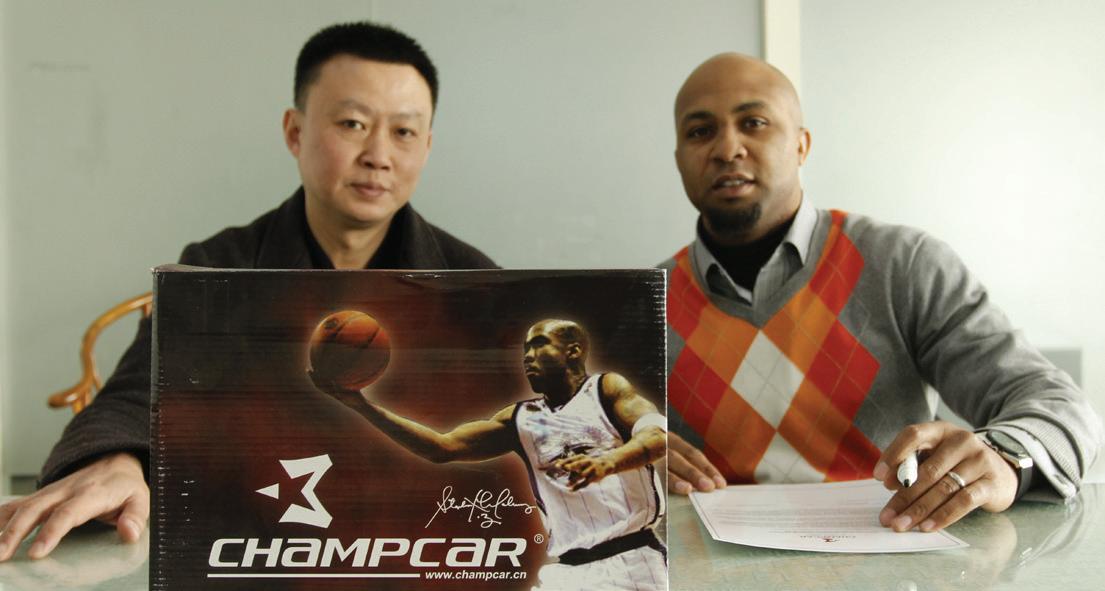
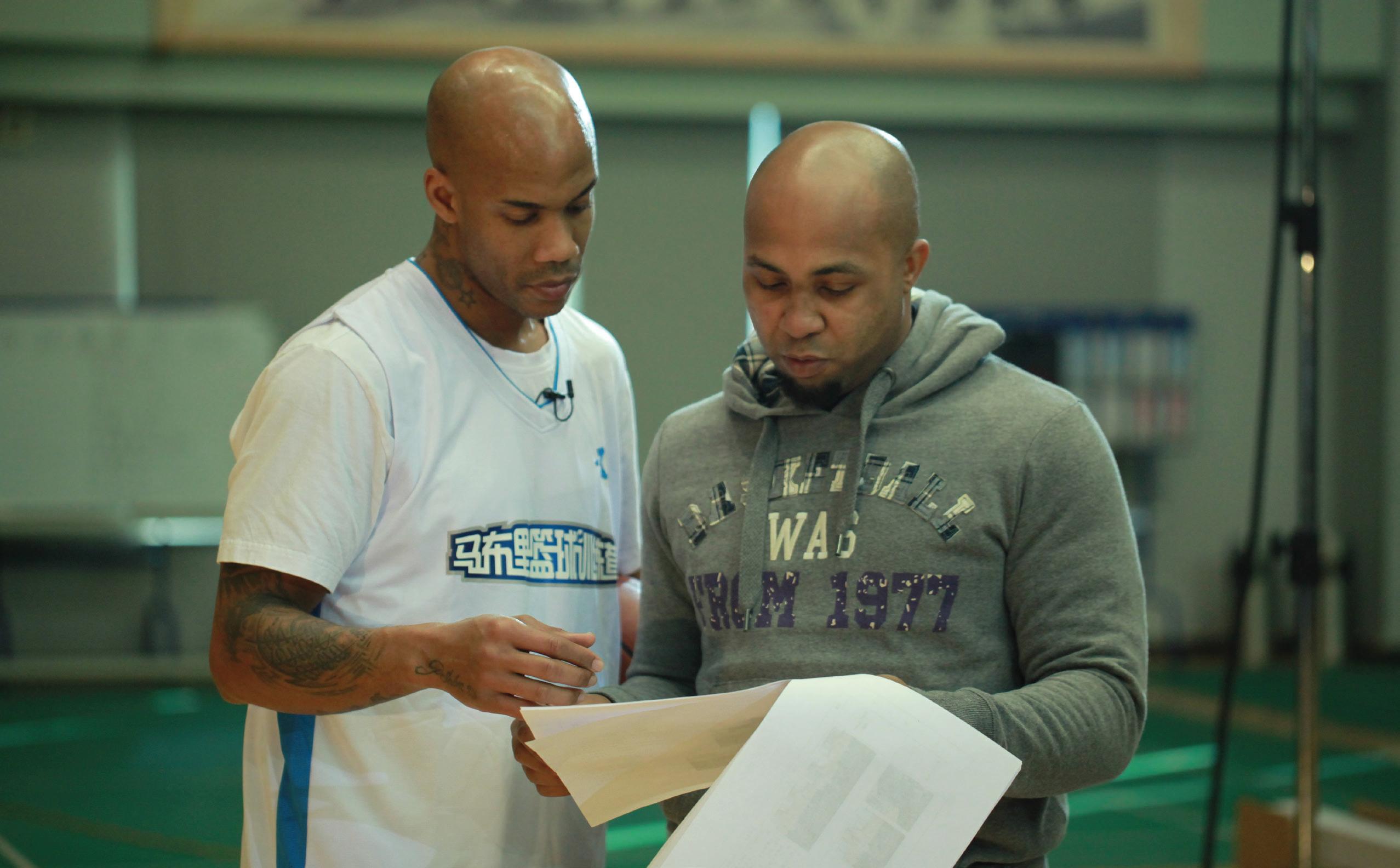
Cyril White signing contracts with Chinese partner (above) for product sales in China, and working with basketball star Stephon Marbury (below) on film project also in China.
overcoming cancer
by Dan Dean
With just three words, my shield of invincibility was pierced.
As a 23-year old, you don’t expect to hear the words “you have cancer.” Although I didn’t know it at the time, my ambitions of building a career, dating, and marrying were profoundly changed. There weren’t clear alternatives to take their place. For weeks and months, I didn’t know what I wanted to do after this lifechanging event.
Wrestling with existential questions after cancer wasn’t unique to my experience. Many cancer patients experience some kind of reckoning during or after treatment. It was frustrating because the things I aspired to – earning a good paycheck, providing for myself and my family, not feeling weak or vulnerable –are a few of the important pillars that we, as men in our society, ascribe to.
My diagnosis made me no less of a man, but the ramifications of that diagnosis felt like it did. How do you explain to a partner that you have ED as a result of your treatment? If you have to stop work to get the therapy you need – and lose your job or have diminished earnings as a result – how do you think that affects your self-worth?
While my peers were seemingly moving forward with their lives, I felt like I was stuck, trying to make sense of the fragmented pieces of my life after treatment.
Over time, I worked my way through those challenges by reading meaningful books, seeking the advice of a few trusted friends, and learning when – and how – to share my story. The farther I moved out from my own personal experience and met other men going through treatment and recovery, I recognized that we shared many of the same challenges.
Unfortunately, men also often share the same stubbornness and don’t let our guard down – our invincibility – long enough to get much-needed support in working through those struggles. I did a survey of several national cancer non-profit organizations, which showed that only 25 percent of the people they served are men. We think we’re good once treatment stops, but that really is when a whole host of new challenges begin.
We think that we can’t show our vulnerable side
because people would think less of us if we do. While it’s not a great idea to be an open book to everyone we meet, finding the right community to get support and move past our cancer diagnosis is an important step in leading a rich, full life.
If we don’t, we simply shortchange our own happiness by giving power to perceived failings and faults that have nothing to do with us, but by the illness we were beset by.
That’s why I founded M Powerment in 2015. We bring together men affected by cancer, offering tools and concrete strategies to help guys deal with and move past their cancer experience. If you’re thinking it is some cry session or support group that serves stale coffee, you’d be wrong. We drink beer and we take care of business. It’s a cancer brotherhood – a fraternity where we support each other as men and discover newfound strength and insight about ourselves post-cancer – a new kind of invincibility.
Right now, we travel to different cities around the country with our microbrew meet-ups. This year, through the generous support of the Fowler Family Foundation, M Powerment is partnering with University Hospitals in Cleveland and Lurie Cancer Center in Chicago to develop an online workshop that can help men in any place at any time. Our estimated launch date for this online platform is April 2018.
If you’d like to help support us – financially or through volunteer efforts (i.e. marketing, grant writing, etc.) –anything is much appreciated.
Dan is a 13-year survivor of stage IV non-Hodgkin’s lymphoma. Recognizing that few resources exist geared specifically toward men affected by cancer, Dan founded M Powerrment to bring men of all ages together to lead amazing, impactful lives after a cancer diagnosis. He can be reached at dan@m-powerment. org. Learn more about his organization at: www.m-powerment.org.
Paul Laurence Dunbar: Ohio’s Bridge to 19th Century Britain
by Geronimo Redstone
Nineteenth-century Ohio, specifically the city of Dayton, blessed the world with two creative talents. Count as one the duo of the Wright Brothers, Orville and Wilbur, who pioneered the field of modern aviation that ultimately united continents. The other talent was their equally-brilliant classmate at Dayton’s Central High School. He was the literary virtuoso who ultimately would become known to the USA and the United Kingdom as Paul Laurence Dunbar.
Not bad for a son born in 1872 of two former Kentucky slaves.
Dunbar was the only AfricanAmerican at Central High, yet the aviation inventors befriended him – the bigotry of that era, notwithstanding. Dunbar tutored Orville in writing and literature. Orville reciprocated in math and science. And Dunbar would hone his writing prowess and leadership skills as president of the school’s literary society and editor of its newspaper.
Again, please note that he was the only black at Central High in a postReconstruction America.
Thwarted, after graduation, in his attempts to become a journalist, Dunbar would direct his energies
to self-publishing his first book of poems. However, since racial prejudice prevented him from obtaining employment equal to his skills, he was forced to settle for a job operating an elevator cab. Nonetheless, adaptable and as inventive as the Wright Brothers, he used that opportunity to sell copies of his book to his passengers while he ferried them floor-to-floor within that downtown office building.
But selling that initial print run was not enough. Determined to be a writer whose voice would be heard, Dunbar won support from the legendary Frederick Douglass. That led to an opportunity to read his striking lyrics at the World Columbian Exposition of 1893. And that event, a world’s fair staged in Chicago with visitors from some forty-six nations, became a coming out party for American exceptionalism – as well as Dunbar’s.
Approximately three years later, Paul Laurence would catch the attention of the most prominent literary critic of that era, William Dean Howells. Howell’s influence translated into a publishing deal for Dunbar’s second book of poetry, Lyrics of Lowly Life. The stage was set. The Ohio bard, who previously endured the limiting ups and down
of working an elevator shaft, found his audience. He became the first black poet and novelist to achieve both national and international prominence.
Almost 100 years earlier, the poetess Philip Wheatley made history as the first published black poet in America. However, Ohio’s native son would become the first to garner an international following. This international man from the Buckeye State would soon be destined for a reading tour in Britain.
After a groundswell of praise for his works, Dunbar embarked on the American lecture circuit, touring and delivering public readings. By 1897, he was ready to set sail for London where he spent several months presenting his lyrics in the late-Victorian circles of British society.
However, historical reports suggest that, just as news of Dunbar talents had spread to the United Kingdom in the 1890s, news of the talents of an Afro-British musical genius had spread to the United States. That genius, Samuel Coleridge-Taylor, was three years younger than Dunbar and had impressed London elites with his gifts as a composer of classical music.
While it is unclear whether Coleridge-Taylor sought out Dunbar when the latter arrived in Britain or vice-versa. The two eventually connected. And they launched an artistic collaboration. Dunbar’s poetry, those poignant lyrics of black American life, was added to the composer’s music. That novel alliance resulted in an operetta entitled “Dream Lovers,” and the duo would also conduct a joint recital entitled “African Romances.”
Over a century before the pairing of John Legend and Common, there was Dunbar and ColeridgeTaylor. One can imagine that their performances made the spirits of the British public soar.
Perhaps as much as Orville and Wilbur Wright were brothers whose fates became entwined, aligned in a common enterprise that incubated manned flight, Paul Laurence Dunbar found a brother of the soul. He and Samuel Coleridge-Taylor (who, ironically, was named after a famous British poet) developed a friendship based on common racial identity and uncommon artistic prominence.
There was the bridge of similarities, as well the contrast of
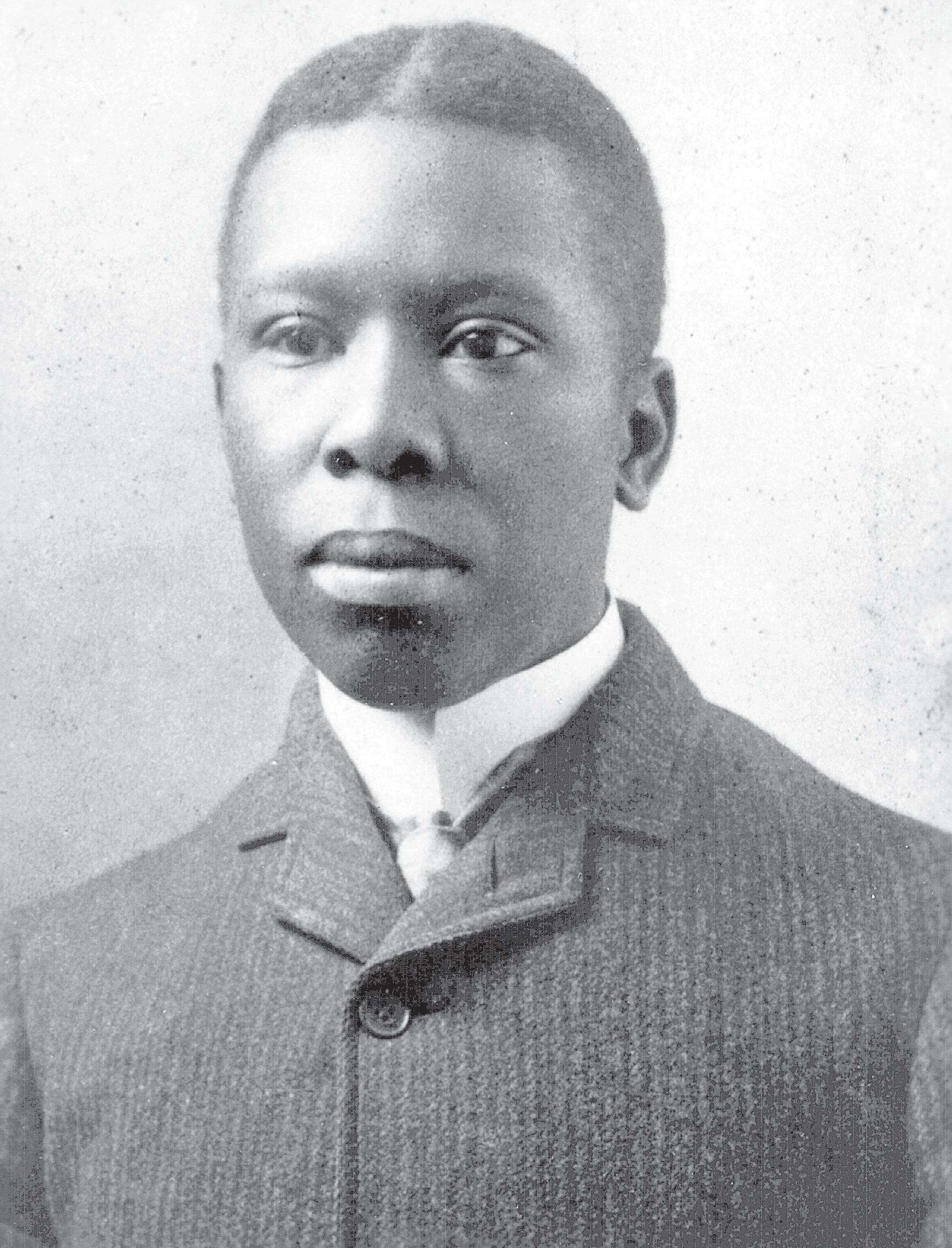
their differences. Paul’s complexion was coal-black and the genetic gift of two former slaves. Samuel was lightskinned, as he was the offspring of a white mother and an African doctor. One wore his hair closely-cropped with a part down the middle of his scalp. The other was photographed with what was the equivalent of a nineteenth-century Afro. And one would die in Dayton from tuberculosis at the age of thirty-three, while the other would expire from pneumonia after only thirty-seven years of life.
What heights might have both
achieved if but they had better health?
Nevertheless, that friendship formed in England – during those several months – would establish the black Ohio poet’s international legacy. And that is partly why dozens of buildings in America bear his name today.
Geronimo Redstone is the author of The Bachelor Scrolls – Isis Unleashed, the philosophical fantasy based on the legacy of Paul Laurence Dunbar. Available at www. amazon.com.
Dealing with Diabetes
by Joseph M. Coney, MD
Diabetes is an epidemic crisis worldwide and, in the United States, rates have continuously grown over recent decades. As the number of individuals with diabetes increases, so do the complications related to the disease such as eye disease which leads to vision loss as well as nerve and blood vessel disease that can cause amputation, kidney disease that can require dialysis, heart disease, and strokes.
Diabetic retinopathy (DR) is the most common cause of blindness in the working population. Diabetic macular edema (DME), which is swelling in the retina, is the most common complication of DR that leads to potential visual impairment if not treated.
When DME affects the center of vision, the individual can lose 50 percent of vision by 3 years without treatment. As the disease progresses, reduced blood flow and poor oxygenation lead to a debilitating loss of vision from bleeding and scar tissue in the back of the eye that often requires surgery.
Unfortunately, delayed treatments and diagnosis can result in irreversible damage to the retina and poor visual prognosis, affecting quality of life.
Diabetes and diabetes-related complications are seen at higher rates in certain ethnic groups, affecting Blacks and Hispanics disproportionally when compared with Caucasians. Blacks are almost 3 more times likely than whites to develop DR and to have vision-threatening DR. Mexican Hispanics are more than twice as likely as whites to develop DR and almost twice as likely to have vision-threatening DR.
Male sex, as well as higher A1c levels, which indicate blood sugar levels over time, longer duration of diabetes, insulin use, and higher blood pressure are independently associated with the presence of DR. Although the reasons may be multifactorial, the fact that diabetes and its complications disproportionately affect people of color is related to poor access to healthcare, under-insured or lack of insurance, poor knowledge of disease and its complications, and poor compliance in these communities.
In order to prevent the long-term complications of DR, early detection and treatment are important in preserving vision. A study at the Joslin Clinic (an affiliate of the Harvard Medical School) has shown that 50 percent of diabetics have sight-threatening vision loss and are not even aware of it. With early detection and proper management, diabetes-related eye disease no longer means blindness.
Over the past decade, newer treatment has changed the landscape on how retina specialists can halt the progression of DR and visual loss and possibly restore vision in some patients.
Most importantly, early diagnosis often leads to better outcomes. Maintaining all medical appointments is critical, and an annual dilated eye exam is crucial to the prevention of vision loss. If you have diabetes, contact your local ophthalmologist today for a baseline exam.
Whenbusinesses, organizationsandcelebritiesneed excitingspecialeventsandexpertmarketing advice, theycallAlexandriaJohnson Booneof GAP Comm · ·ons Grouptogetthejobdone.
At GAP Communications Group, theseprinciples guideeverythingwedo. Fromnationalcorporate communications campaigns toannualreportsfor non-profit organizations. Wehelpour clients hitthe target every time!
JJenkins’ journey to becoming an athletic advisor began years ago, when he worked with a high school student named Mikel LeShoure. Instrumental in LeShoure’s collegiate upbringing and the enhancement of his athleticism, he mentored and prepared him to pursue his goal of playing in the NFL. In 2011, Detroit Lions drafted LeShoure and Jenkins manages various day-to-day details of his career.
Jenkins, who has handled over $50 million in athlete deals, corporate transactions and real estate investments, also served as a client advisor and board member with NFL super-agent, Fletcher Smith’s sports management firm Blueprint Sports. Smith negotiated over $500 million in NFL contracts, including one involving most notable former NFL quarterback Donovan McNabb.
As a top liaison, Jenkins essentially helps “connect the dots” for athletes. He has managed more
than 12 NFL players, including Super Bowl winner Michael Buchanan of the New England Patriots and New Orleans Saints, Martez Wilson. Jenkins assists with pre-draft preparation and every day management services for his clients. He also negotiated a brand ambassador endorsement for Heisman trophy winner and New Orleans saints RB Mark Ingram, San Diego Chargers RB Melvin Gordon and Miami Dolphins WR Jarvis Landry.
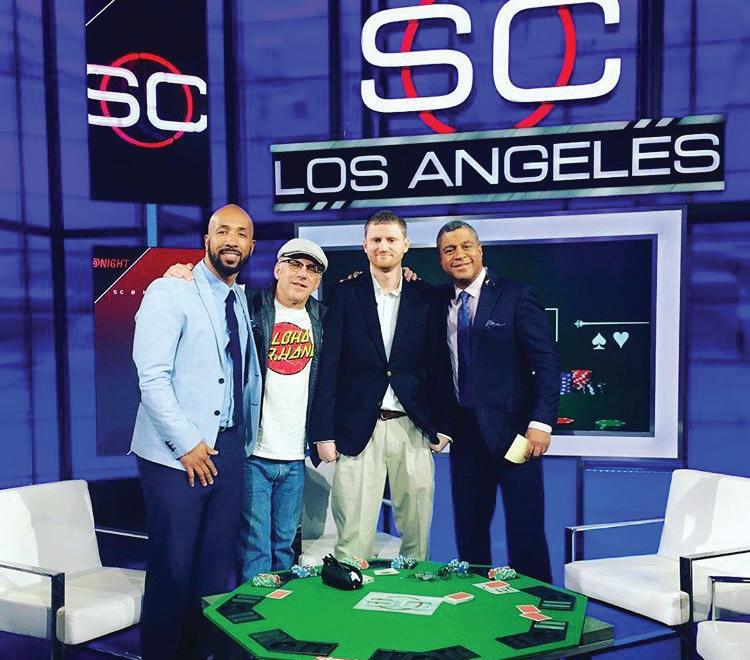
Jenkins is now currently managing David Peters, the 2016 #1 ranked poker player in the world.
Jenkins spent several years volunteering for Miami Dolphins Defensive Tackle Ndamukong Suh’s Charity Foundation and also hosting charity events to raise money for the Ronald McDonald Children’s House. While living by the motto of helping athletes become professionals on and off of the field, he maintains his own personal motto: “Let’s plan our work, then work our plan!”
How do you reset yourself during the day?
Is it possible when its feels like you’re always on the go?
Well, yes it is and it’s deep breathing.
As we walk around during the day, we don’t think about our breathing. It happens automatically and, for most of us, we do shallow chest breathing. If you have ever watched a baby breathe, the breath comes from their belly.
When we are stressed and hurried and caught up in day-to-day tasks, we don’t take the time.
For Your Health and WellBeing}
by Rose Hosler, RN, BSN, HNB-BC, HWNC-BC
Rose has 26 years of nursing experience in medical / surgical nursing, surgical intensive care, sexual assault nurse examiner, emergency, and post anesthesia care unit. She is a board certified holistic nurse and health and wellness coach. She is in a unique position to integrate her clinical knowledge with her holistic approach when working in the hospital environment.
Breathing is free, no equipment necessary and anyone can do it. To create a shift in the body and promote the relaxation response, begin with the breath. We really underestimate the power and benefits of deep breathing. Can do this in any position, sitting or lying.
Focus on your breath as you breathe in deeply through the nose, allowing your abdomen to expand like a balloon, then exhale through the mouth or nose (whichever feels comfortable for you) your exhalation should be longer than your inhalation.
Focus on the rhythm of your breath. Feel the power as you inhale and exhale.
When I am working with patients, family, staff and myself, I will breathe in what I need, an intention or a word such as calm, centered, etc. As I breathe out, I’m setting the intention “letting go and releasing.”
Focus on this and try for one minute, then work up to three minutes. I have heard from healthcare workers, “I don’t have any time during work to do anything for stress.”
I offer this, actually time yourself for one minute while your breathe. A minute is a long time and it’s not. When you bring focus and attention to your breath, you can “reset” yourself. I encourage patients and staff to go for three minutes.
Before you eat a meal, try it. Time yourself and breathe for 1-3 minutes. Before you go into a meeting, breathe. While you’re walking to your car, breathe. There are lots of ways to incorporate, it’s a matter of recognizing and focusing! We know the health benefits of breathing elicit relaxation response, decrease blood pressure and help heart rate.
Many techniques about breathing are available, as noted from Dr. Andre Weil. He suggests the 4-7-8 breath, where your breathe in for count of 4, hold breath for count of 7, and breathe out for count of 8.
We come into this world and take our first breath, when we leave this world we take our last breath.
May you be well, and use the power of your breath!
is the largest country in the world not to touch an ocean. In the western world, we never hear about this country except the movie Borat or the boxer Triple “G.”
This Post Soviet nation is located west of China; south of Russia; north of Uzbekistan, Turkmenistan and Kyrgyzstan; and to the east of the Caspian Sea. The collapse of the Soviet Union in 1991 led to a handful of “new” countries – Kazakhstan being one of these nations.
FYI: American citizens do not need visas to enter Kazakhstan or Kyrgyzstan. We are allowed to stay in these nations for 15 and 60 days visa-free, respectfully.
The primary language is Russian; however, Kazakh is the official language – which has Turkish origins. The government has mandated that schools teach Russian, Kazakh, and English. Mostly younger and educated residents of this country are tri-lingual.
Currently, there is great economic development in Eurasia sparked by the Chinese - One Belt One Road Initiative. Perhaps this is the greatest modern logistical development in the world. Freight can now be shipped via railroad from England to Eastern China with a lead time of about 20 days. This route cuts directly through Kazakhstan.
The expat experience: a Black man living in Kazakhstan
In fact, China and Kazakhstan agreed to create a Free Economic Zone on the border that will act as a gateway to Central Asia. This newly developed neutral territory, Khorgos, is projected to be the largest dry port in the world by 2020 – potentially trillions of dollars will flow through this port.
DP World is one of the major players developing this dry port as they are providing consultation to one of the managing companies located on the Kazakh side – SEZ Khorgos – Eastern Gate, which is a subsidiary of KTZ Express and SamrukKazyna. The operational scheme emulates Jebel Ali and London Gateway.
Kazakhstan is a mineral rich nation. Currently, the mining industry is worth approximately $30 billion. One of the largest exporters of uranium –approximately 15 percent of the world’s supply and home to the largest oil field outside of the Middle East – Kashagan Field.
This reservoir sits about 17,000 feet below the Caspian Sea. This field is run and operated by NCOC (North Caspian Operating Company). After years of setbacks due to its sour content and tens of billions of dollars spent, this project is finally online.
Nearby, the Tengiz field operated by Tengizchevroil is another massive operation. In 2016, Chevron (which holds 50 percent interest in Tengizchevroil) approved the Future Growth Project – Wellhead Pressure Management Project (FGP-WPMP) valued at $37 billion.
This is in the midst of other major oil companies selling and liquidating their assets because of low oil prices. FGP-WPMP will increase output by 260,000 barrels per day, and first oil is scheduled by 2022. What I have come to learn, the oil and gas industry is cyclical. It is not going anywhere. Tesla is no threat. The automobile industry accounts for 2 percent of the global oil and gas industry.
The global demand has steadily increased by 1.5 to 2 percent annually. There is not a known battery strong enough to power airplanes, massive cargo ships, military vehicles, and the heating of buildings. Environmentalists, nice try. AND Energy ETFs are lower than average right now. You are welcome!
The currency is called Tenge and the exchange rate is about 314 KZT to 1 USD. When I first arrived in 2016, the exchange rate was about 380 KZT to 1 USD. My friends in Atyrau told me, at one point, it was hovering at 180 KZT to 1 USD then the currency sharply devalued to the 300 range in the span of a month.
This affects the prices mostly on imported items. Most FMCG, for example, are imported. Kazakhs generally do not trust their own products, and they prefer imported products.
For distribution purposes, Kazakhstan is divided into three sections. The western section with cities like Aktau and Atyrau near the Caspian Sea. The continued on page 40
central section of this nation is where Astana, the capital, is located.
Currently, the largest tallest building in Central Asia is under construction in Astana – Abu Dhabi Plaza led by CCC (Consolidated Contractors Company) and Arabtec. The eastern section is where Almaty, the largest city, is located. Each has its own climate. The western side is a desert. Dry during the summer. When it rains, it is muddy. The absolute worse. The central basin is frigid during the winter, and harsh during the summer. This area of the country is virtually flat. The eastern oblast is rugged and
mountainous. Trees are plentiful. Very beautiful!
Distribution can be a challenge for companies wanting to enter Kazakhstan for the following reasons: 1) The large geographical size and low population densities outside of major cities 2) Infrastructure 3) Climate extremes. There are two strategies to deal with this. One is to find a distribution partner in each region and work with each separately. The second is to work with national distributors such as Uni Commerce or Turkuaz. Companies such as Nestle have their own DCs in strategically placed regions to ensure on-time deliveries. Lead
time within Kazakhstan is about three weeks.
However, 3PLs such as DHL have presence. UPS and FedEx just recently expanded into Kazakhstan. Deliveries to homes are slow, and can be quite expensive if it is international shipping – sometimes as much as the product. Cash on delivery is an option, as a majority of residents do not use bankcards.
There is no firewall, however, I still have a VPN – I recommend Astrill. There may be an app or website that may not work, usually at random. Just turn on the VPN and you are fine. You can go to any phone store
continued on page 42
and buy a SIM Card for your American phone. Very cheap. About $20 will last the month, but this depends on usage.
You will have 3G service in the west and 4G in the central and east. The internet speeds are no different from being in the US. Their unofficial country code is +8, the official is +7 – like Russia. When you receive a phone number, the giver may use 8 as the country code. WhatsApp on my phone does not recognize +8, so I substitute with +7. I have a local work phone and I can use +8 to make calls.
Navigation is generally easy in Almaty. Uber works there. It is about $2–$4 to get around Almaty. However, Google Maps and the Uber maps are terrible! There is a website and app called 2Gis. This is the best map for Almaty and Astana. Very
reliable and accurate.
In the western part of the country, taxi is the only option. This is the downside. They generally try to exploit expats and charge more. Negotiate before you enter a taxi. Rides around Atyrau should be about 500 – 700 KZT. One thousand is pushing it and anything more is robbery. I stay away from taxis in Almaty and only use Uber. Taxis prices in Almaty are double what they are in Atyrau.
Visa, Mastercard, and AMEX work in Kazakhstan. I cannot verify Discover, as I do not have a Discover card. I generally do not experience issues at the ATM. Once in a while I do, but more ATMs accept American bank cards than those that do not.
When you go out to dinner or
lunch. Do not tip. It is not needed. This charge is included in the check and the amount generally goes to the “house.” Waiters and waitresses are on salary.
On my first trip, I was nervous as I have sensitive skin at times which can cause eczema flair ups. One store I recommend in Kazakhstan is Ramstore. This is a chain of grocery stores. I generally buy baby detergent, baby soap, and baby oil – which are made by Johnson & Johnson. I have not had one flair up in my two rounds in Kazakhstan. My skin will get very dry during the winter. This varies per person. I have heard of horror stories. I just have not experienced this myself.
As for toiletries such as toothpaste, shampoo, They are all sold at grocery stores. Floss is actually sold at pharmacies.
Kazakhstan is a mineral rich nation. Currently, the mining industry is worth approximately $30 billion.
No need to pack these items unless you have something specific you want to bring. These items are generally inexpensive. Drycleaners and barber shops are there, too, as I have received many haircuts. Hospitals are sterile and they provide great service if an emergency occurs.
I was quite surprised because in Almaty, you can drink from the tap. My coworker told me this and I looked at him like “Yeah right!” In fact, the water in Almaty comes from the mountains. Very pure. Now, in the western region. Do not drink the water from the tap! That water contains harsh chemicals, and I’ve heard that the water is laced with antifreeze.
Fashion is Kazakhstan is mostly exhibited by women. They take great pride in their looks. The women are beautiful and very nice by the way, Russian and Chinese fusion. In general, Kazakhs are nice people. In Almaty, both sexes dress well. They like popular designers. The prices are more expensive then what we pay in the US, up to 200 percent more. I saw stores not available in Miami, at least, such as Koton, Pull & Bear, Bershka, and LTB Jeans that sell amazing products.
As an expat, I highly recommend, do not visit clubs by yourself or with a group of expats. Befriend a local male who speaks Russian. This is your shield of protection at clubs. Kazakhs and Russians
drink a lot (liquor is cheap by the way; a bottle of local cognac or vodka may cost less than $8 at a grocery store). This may place a target on your back if you are alone or with other individuals not from the region, be mindful. You have to respect them, first because you are in their country and secondly because they had to fight for everything they have. Respect Kazakhs. They are tough people and they pride themselves on this.
It is safer to walk on the street at night than it is to be in clubs alone or without some level protection. I have heard stories, but I have never once experienced something dangerous in the street. I have been in unfamiliar areas at night in Almaty, and felt perfectly safe. Although it may be fun to go with women to the clubs, as I love to, they cannot protect you. Generally, just exercise common sense, and you will be perfectly fine.
To anyone reading this, I want to dispel this vision that you may have of this region of the world. As an African American working in a Post-Soviet state, my experience has been quite unique. Frustrating at times, yes, also beautiful at times, yes. People will stare. This stare is more like intrigue. Let’s just be real here, very few African Americas visit this country especially at 32 years of age!
In America we are still recovering
from the attacks on September 11th, and people hear the word “Stan” and associate this country with “Radical Islamic Terrorism.” In fact, they are worried about their security and terrorism too.
This is an Islamic country and, until you experience visiting one, it is difficult to deprogram the propaganda we as Americans have been fed for many decades. I have one word for this country: safe. Matter of fact, safe as hell! Unfortunately, we have a president that ran a vitriolic campaign propelling xenophobia and surfacing the hatred of people from this region (possibly for marketing reasons, but that is a different discussion).
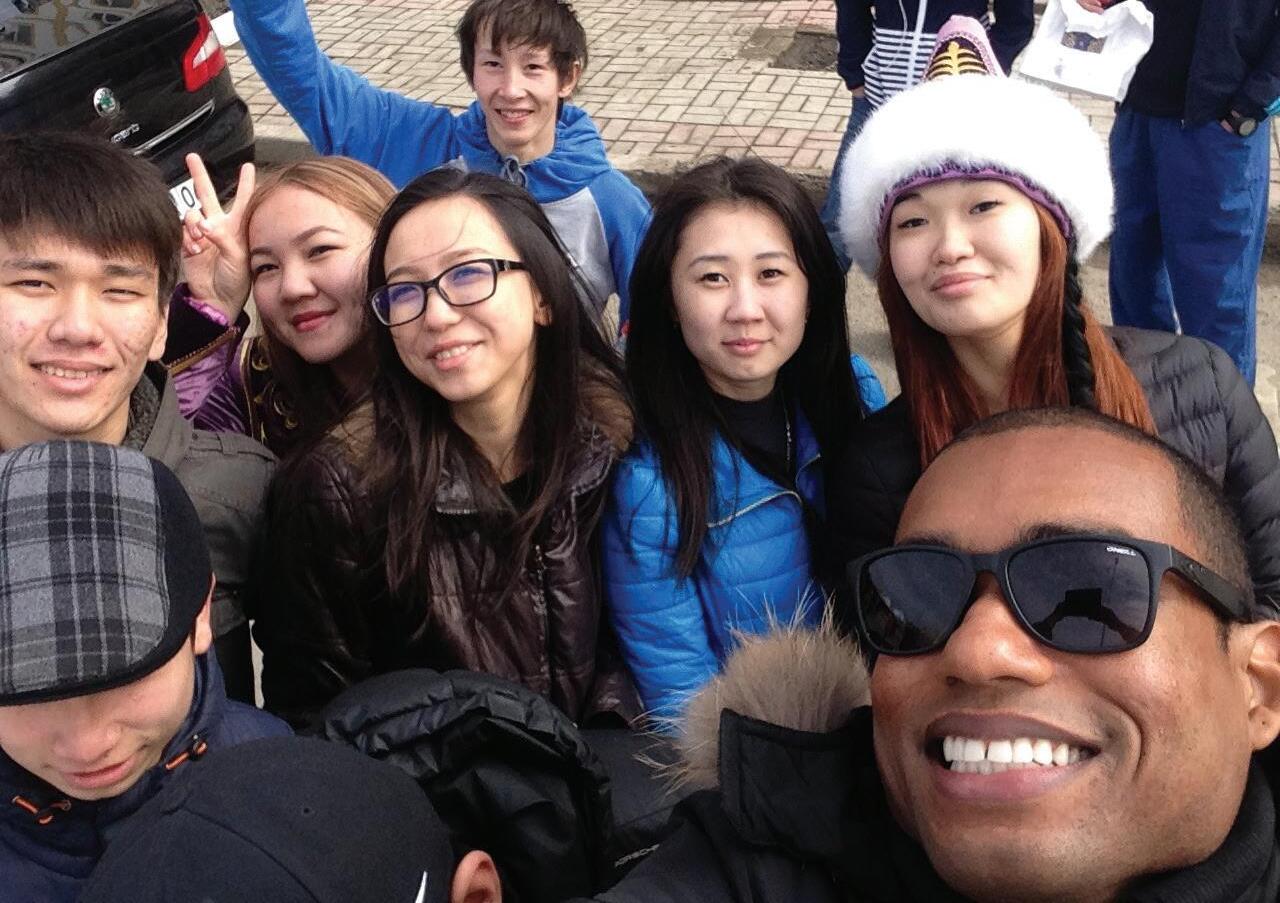
Why do I travel here? I work for a Kazakh-based company. I deal with business planning, development, research, public relations, and act as a liaison to US based companies. I wear different hats and my role extends into China. I work on rotation, so I float between Kazakhstan, China, and the United States. I love what I do, and I have made wonderful and diverse friends from all over the world in the process.
gentrification monetization
by Thomas “T.J.” Loftin
Merriam Webster defines gentrification as the process of renewal and rebuilding accompanying the influx of middle-class or affluent people into deteriorating areas that often displaces poorer residents. Sounds like such a dirty thing to do, huh?
Well, I say, it depends on how you look at it.
PBS described gentrification as general term for the arrival of wealthier people in an existing urban district, with relative increase in rents and property values, and changes in the district’s character and culture. They went on to say the term is often used negatively, suggesting the displacement of poor communities by rich outsiders but the effects of gentrification are complex and contradictory, and its real impact varies.
When gentrification occurs (and it does), displacement is inevitable. A community changes for the better in terms of standards of living and quality of life. When, gentrification occurs, there will be winners and losers. However, there are no rule in place stating the middle-class or affluent are the only ones who can benefit from gentrification.
Anyone can benefit for gentrification if they know what to look for and when to strike. In fact, it could be one of the best investments one will ever make.
Think about it this way. If an affluent person really wants something, they’ll gladly pay to get it. And, will pay what it’s worth. You just have to be the one holding what they want.
It’s just that simple.
Right now, practically every major city is undergoing major construction. I’m even hearing about development in cities I didn’t know existed. So, how does one win when it comes to gentrification, I’ll tell you how. The first thing you need to understand is if and where it is occurring. Here’s how to make the determination.
Keys indicators of gentrification
● Rapid growth in a community, usually neighborhoods plagued by high crime rates
● Major corporations like Amazon or Home Depot moving into a community
● What’s being built both residential and commercial in a community? You want anything in that area. The value is going to skyrocket.
What to do once you’ve identified gentrification is occurring
● Stay up on laws pertaining to real estate, especially zoning.
● If you own property in the area, keep your mortgage and taxes current.
● Monitor what the houses are going for on the market. You want to buy low.
● Always look for land. There is no maintenance on land. If you can drop a few bucks and don’t need to see a return soon, that land can yield huge return on investment
continued from page 45
Wherever there are two lots sides by side, get them. Cities can change zoning laws to build apartments. You always want to get connected lots as big developers will come for you. Most developers want to build on land where they don’t have to tear down a structure. They always look for vacant land first.
One place to start to staying informed about what is happening in a community is city council meetings. You can also check with the planning department or local non-profit organizations that focus on community development.
I think it is important that, as men, we think about wealth building. Investment in real estate is one great way to build and transfer wealth. And, with the need to rehab old properties in communities undergoing gentrification, acquiring them also provides an excellent opportunity to teach younger men construction trades so they too can buy and develop land.
It’s just that simple.
Thomas “T.J.” Loftin is a global business leader, land developer and business coach has an extensive background in the classic car, auto parts manufacturing and land development. This industry pioneer is also the mastermind behind the Creating Entrepreneurs with the Youth Tour.
Learn more about Thomas “T.J.” Loftin at: www.thomastjloftin.com