

A Digital Access Agenda for Philadelphia (2025)



1Philadelphia (1PHL) and the Technology Learning Collaborative (TLC) present Resilience in Action: A Digital Access Agenda for Philadelphia (2025), a collaborative effort rooted in our shared vision of digital equity and community empowerment. This report stands as a testament to the collective power of partnerships, emphasizing how organizations across Philadelphia can come together to drive meaningful change. It reflects a joint understanding of where we ’ ve been, where we are today, and the critical steps we must take to ensure Philadelphia’s continued progress as a leader in technology and innovation.
Access is the foundation of opportunity it is the key that unlocks pathways for individuals and communities to thrive in the modern digital world. Our commitment to ensuring that every neighborhood in Philadelphia feels the positive impact of this transformation is unwavering. Equity in digital access is not just a goal but a necessity for building stronger, more resilient communities. By addressing gaps and seizing opportunities, we believe Philadelphia can grow into one of the top 10 tech hubs
This report does more than just reflect on current progress; it offers actionable recommendations that chart a clear path forward Together, we can ensure that every Philadelphian has the tools and access they need to be active participants in this rapidly evolving digital landscape Together, we will continue to push boundaries, create opportunities, and build a brighter future for all
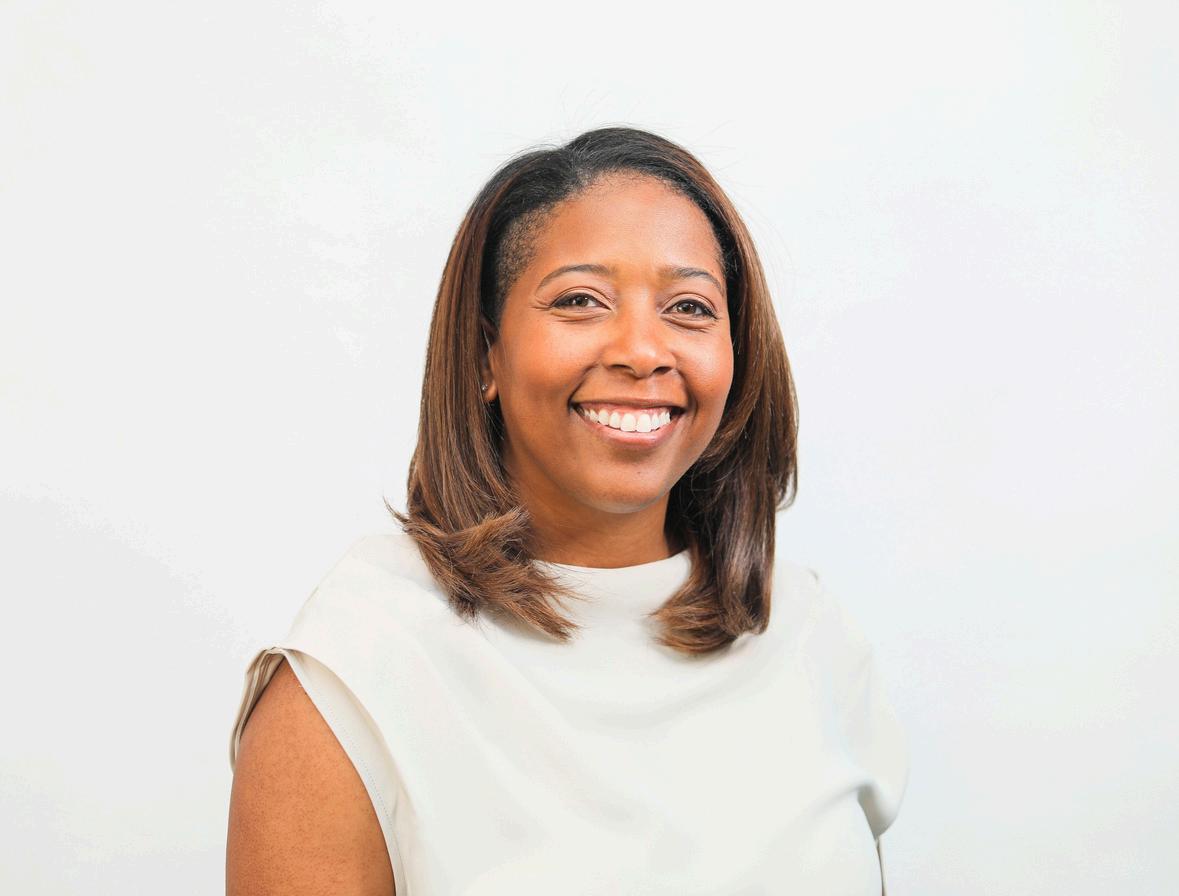

Danae Mobley Executive Director, 1Philadelphia


Kate Rivera Executive Director, Technology Learning Collaborative
This report is a collaboration between the Technology Learning Collaborative (TLC) and 1Philadelphia We extend our sincere gratitude to Andy Stutzman, the lead author and primary contributor to this report His expertise, leadership, and dedication to advancing digital equity in Philadelphia were instrumental in shaping the research, analysis, and recommendations presented here
In 2005, Philadelphia launched the Wireless Philadelphia project with an ambitious goal: to provide low-cost internet access to more than 550,000 households. Despite its promise, the initiative faced political and technical challenges and ultimately reached only about 6,000 households. Still, it marked a turning point sparking a cultural shift in city government that cemented a long-term commitment to closing the digital divide across four successive administrations.
In 2011, with federal funding from the Broadband Technology Opportunities Program (BTOP), the City and the Urban Affairs Coalition launched the KEYSPOT Program (originally the Freedom Rings Partnership). Partnering with more than 50 nonprofits, KEYSPOT opened 77 public computer labs that offered free internet access and digital skills training across the city. The program also provided affordable hotspots to Philadelphia Housing Authority residents through Wilco. Even after BTOP funding ended, the City continued investing in KEYSPOT, keeping more than 50 labs open through 2020 until the pandemic curtailed operations.
KEYSPOT’s success laid the groundwork for broader collaboration. In 2017, the City created the Digital Literacy Alliance (DLA), funded by ISPs and philanthropy, which has since awarded $1.6 million to 36 organizations through eight grant cycles Today, the DLA includes 35 members representing businesses, nonprofits, and industry leaders, collectively funding and advancing digital inclusion citywide At the same time, the Technology Learning Collaborative (TLC) was founded in 2013 as Philadelphia’s digital equity coalition Formed by practitioners to continue collaboration as BTOP funding wound down, TLC provided professional development, hosted annual conferences, and created space for knowledge-sharing among nonprofits, higher education, Philadelphia Works, and the City For years, it operated as a volunteer-led network, strengthening the city’s ecosystem and capacity for digital inclusion
In 2021, the Technology Learning Collaborative (TLC) officially incorporated as a 501(c)(3) non-profit, allowing the organization to raise additional funding and hire part time leadership. This has enabled the organization to broaden its reach into the Greater Philadelphia area and expand the support that the organization provides to the local digital equity community. Since 2021, TLC has raised $900,000 and supported various projects for the Federal Communications Commission, United Way, Centri-tech Foundation, Comcast, Verizon, and the City of Philadelphia. The impact of the organization was well seen in October 2024 as they held their 10th annual conference which garnered national attention.
TLC was one of the first digital equity coalitions in the country and has played a key role in sustaining the long history of collaboration in Philadelphia’s robust digital equity community. The wealth of institutional knowledge and foundation of collaboration, along with strong leadership from the City of Philadelphia, has positioned Philadelphia well for future funding opportunities and has contributed to Philadelphia’s national recognition for its digital equity work TLC’s leadership was also instrumental in founding the Keystone Internet Coalition, Pennsylvania’s statewide digital equity coalition
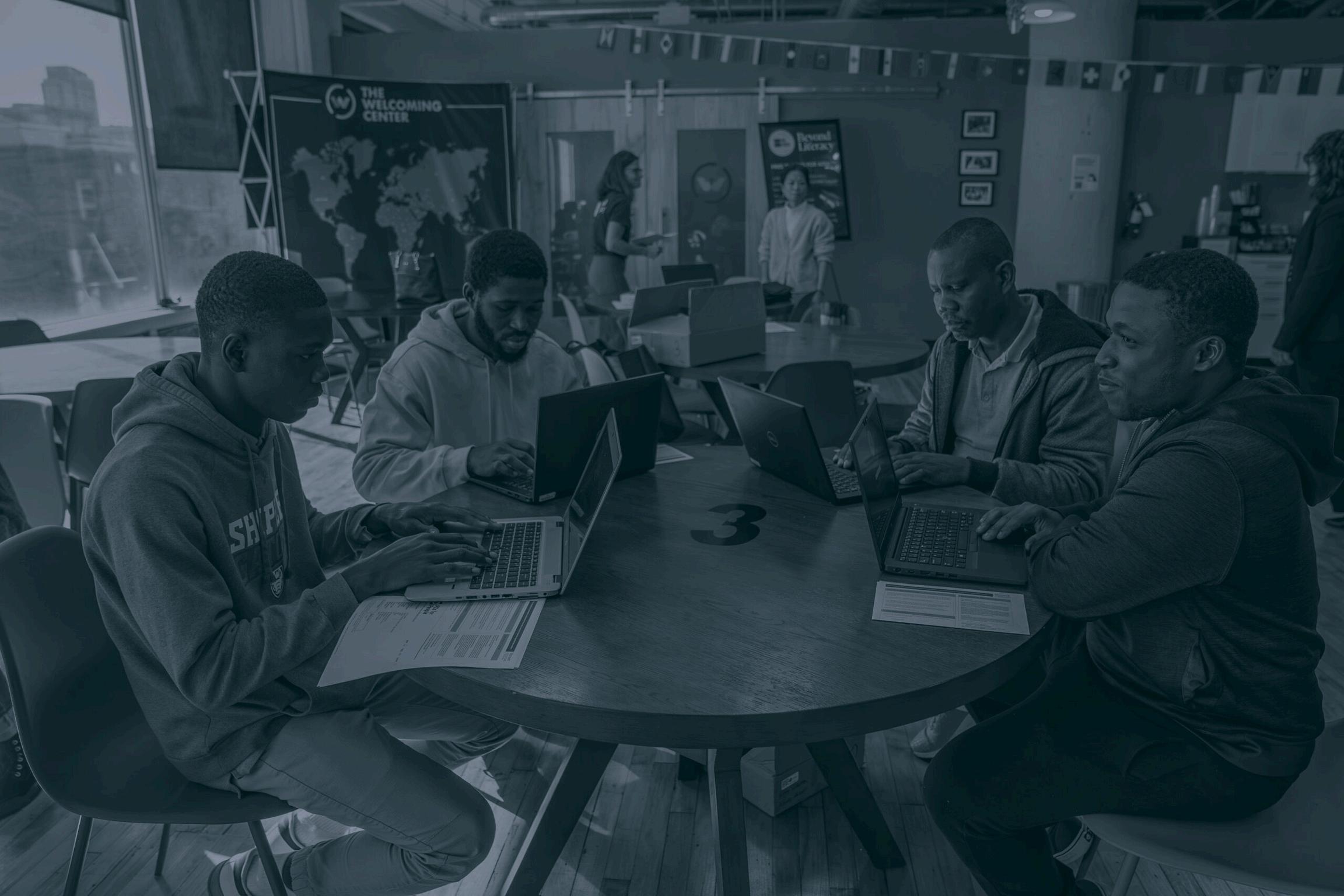
In response to the COVID-19 pandemic in 2020, the City of Philadelphia's Office of Innovation and Technology (OIT) launched one of the first Digital Navigator programs The program first funded three organizations (Beyond Literacy, Drexel University, and SEAMAAC) adding Esperanza later on Digital navigators provide assistance to any Philadelphian trying to connect to discounted Internet programs, needing a device, looking for digital skills training, and basic technical support The City partnered with the United Way to manage the Digital Navigator system United Way provided their 211 call system to unite the Digital Navigator programs, providing residents a single number to call for assistance.
In 2025, OIT shifted to hiring Digital Navigator staff internally and stationing them with the organizations that operate the program. This will allow for more consistent training and service across the program. Now in its fifth year, the program has assisted thousands of individuals.
In 2021, the City’s Office of Children and Families (OCF) began funding organizations to offer the Northstar Digital Literacy program; providing adults access to free digital skills training. Many organizations also provide laptops as an incentive to complete the program; the majority of laptops being provided through OCF grants or donated by Comcast.

Philadelphia’s Digital Literacy Alliance launched a pilot project in 2020 to create a Digital Navigator program in Philadelphia. This report highlights the outcomes of the first year of Philadelphia’s Digital Navigator program, shares best practices, and provides information about other noteworthy Digital Navigator programs across the country
In parallel with the Digital Navigator program, OIT, in partnership with Comcast and T-Mobile, launched the PHLConnectED initiative in 2020. This new initiative provided free Internet access to households with school aged children. At that time, there were an estimated 35,000 households with students that lacked a high speed broadband connection. Working with the School District of Philadelphia (SDP), the Digital Navigator program, and United Way’s 211 service, over 22,000 qualified households were provided Internet connections over a three year period. PHLConnectED was modeled from the Chicago Connected program that was put in place very quickly in the spring of 2020
In 2022, the PHLConnectEd program began a concerted effort to move households over to the Federal Communication Commission’s Affordable Connectivity Program which provided eligible households $30 a month for their Internet costs The Affordable Connectivity Program (ACP) was a federal program launched in 2021 that provided qualified households a $30 discount ($70 for tribal lands) each month towards their broadband Internet costs and up to $100 towards the cost of a computer or tablet As of February 2024 over 23 million households across the country had signed up for the ACP
In Philadelphia over 348,000 households were eligible for the ACP. In 2024, almost 195,000 had signed up for the program, just over 50% of those eligible. Unfortunately, as demand for the program exceeded expectations, Congress chose not to refund the program. The ACP ended in February of 2024, leaving almost 200,000 low-income households (23 million nationally) without the means to afford this essential service.
The ACP was just a piece of a larger federal program enacted in 2021 called the Infrastructure Investment and Jobs Act which included the Digital Equity Act and the Broadband Equity Access and Deployment (BEAD) program. With over $45 billion in funding, $1.16 billion designated for Pennsylvania, these programs required each state to establish broadband offices and draft plans to connect communities that were either unserved and underserved. The state created the Pennsylvania Broadband Development Authority (PBDA) in late 2021. The PBDA drafted a Five-Year Action plan that addressed several issues including broadband affordability, workforce development, and outreach strategies Regrettably, the NTIA restructured the BEAD program, forcing states to quickly pivot their timelines with less funding Governor Shapiro recently announced the PBDA’s approval of nearly $800 million in broadband expansion contracts
In January 2025, the National Telecommunications and Information Administration announced a $12 million award through the Digital Equity Act to the City of Philadelphia This was a multi-year opportunity to boost workforce development and training programs with a cohort of community-based organizations However, after the change in presidential administrations, the NTIA cancelled the Digital Equity Act grant program in May.

In 2022, Philadelphia joined leading cities like Portland, Austin, and Seattle by releasing its first five-year Digital Equity Plan Built on the 2021 Household Internet Assessment and guided by the newly formed Digital Equity Coordinating Committee, the plan identified urgent needs, spotlighted vulnerable populations, and outlined a bold four-part strategy: devices, connectivity, training and workforce, and ecosystem. This report captures both the city’s current progress towards those goals and the challenges ahead. This section provides insight on the historical context, current strategies, and potential next steps for each strategy below.


One of the biggest obstacles that learners face is access to affordable high-speed internet, computers, and basic digital skills When it comes to serving people’s digital equity needs, Philadelphia ranks as one of the leading cities in the country For several years, Philadelphia has received the Digital Inclusion Trailblazer award from the National Digital Inclusion Alliance (NDIA), illustrating the City’s continual commitment towards digital equity However, the digital divide continues to grow at a rapid rate with the incredible speed of technological advancement and the continual increase in wealth disparity As digital access needs affect a high percentage of Philadelphians, it’s imperative that the tech and digital equity ecosystems work together to create awareness and develop solutions that create economic mobility The goal of 1Philadelphia is to build a coalition of local organizations working together to elevate Philadelphia as a global tech and startup ecosystem Working closely with the Technology Learning Collaborative, this report was developed to capture the extraordinary investment that Philadelphia has made toward closing the digital divide, highlight current obstacles, and ascertain forward thinking goals that will continue that momentum.
While some progress has been made in recent years, Philadelphia grapples with persistently high rates of poverty (as high as 20%). Low income rates lead not only to food and housing insecurity, but also limit access to high speed Internet connections and computer ownership, contributing directly to the digital divide. The digital divide limits economic opportunities and affects health equity. Research shows that economic mobility is the decisive factor for individuals to rise out of poverty. And that social interactions, programs, and training at the community level are the key mediators to improving economic mobility [Raj Chetty] As shown in a recent report by the Urban Institute the digital divide

So how has Philadelphia stood up over time when it comes to broadband connectivity and device ownership? With broadband connectivity rates around 70% in 2019, the city ranked 10% behind the national average. Similar to Philadelphia, cities such as Chicago, Baltimore, and Cleveland also faced daunting connectivity issues.
In 2021, the City of Philadelphia completed a Household Internet Assessment Survey to better understand Internet connectivity and device ownership With the onset of the COVID-19 pandemic, the City reacted quickly and launched programs to assist households in getting connected The survey showed that in 2021 high-speed Internet connections rose to 84% with device ownership rising by 4% This increase in connectivity and device access was an incredible feat However, this isn’t the beginning of the story The City of Philadelphia has been dedicated to closing the digital divide for over 20 years through policy and innovative efforts that have coalesced into a thriving digital equity ecosystem with tremendous impact.
+4% 84%
Households device ownership rose 4% in 2021.
Households access to high-speed Internet connections rose in 2021.
Philadelphians can access appropriate & affordable technology devices.
Philadelphia has a long history of connecting residents with affordable devices Early efforts included the Nonprofit Technology Resource Center, which refurbished donated electronics for low-cost distribution, and Temple University’s Computer Recycling Center, which has provided refurbished computers to nonprofits and community members for more than 20 years
The demand for devices has always been present, but it became urgent during the pandemic In response, the City, the School District of Philadelphia, philanthropy, and local organizations mobilized quickly. The largest investment came in March 2020, when Aileen and Brian Roberts of Comcast donated $5 million to help the School District purchase 50,000 Chromebooks for students. Additional programs emerged, such as PHLDonateTech, which encouraged residents to donate old electronics. That initiative alone refurbished more than 500 devices for redistribution through Digital Navigator programs. The OCF also provided grants to Northstar programs, offering laptops as incentives for participants who earned certificates.
In 2022, the Free Library of Philadelphia secured a federal Emergency Connectivity Fund grant, enabling it to purchase and lend 11,000 tablets and hotspots helping residents access the internet and bringing devices directly into homes. Since then, Temple’s CRC, Drexel’s Digital Navigator program, Comcast, and the Pennsylvania Broadband Development Authority have collectively distributed thousands more devices across the city.
Building on this momentum, in March 2023, OIC and the DLA awarded PCs for People a $500,000 grant, funded by the Independence Public Media Foundation and local internet providers, to establish a permanent computer refurbishing program in Philadelphia The initiative has already supplied computers to Digital Navigator programs and opened a storefront near Temple University in early 2024 to sell discounted devices directly to residents The goal: a sustainable refurbishing hub that will serve the community for years to come
While PCs for People provides critical services, their integration into Philadelphia’s broader digital equity ecosystem has been gradual. Progress has been slowed by a lack of local leadership to build community trust and secure a steady supply of used devices The foundation for success is in place and aligns with the city’s five-year Digital Equity Plan What’s needed now is sustained investment, stronger leadership, and collaboration to ensure every resident has access to the devices they need
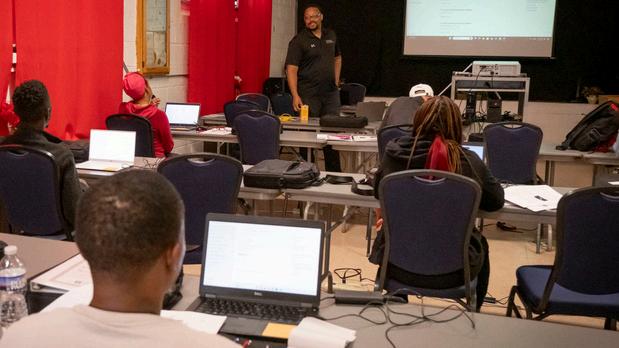
Philadelphians can access & afford the internet connectivity they need.
The City has always had a focus on providing ways to connect residents to high speed Internet However, the issue isn’t about the availability of the connection, but the affordability In a City with 20% poverty rates, many residents cannot even afford discount programs such as Comcast’s Internet Essentials which, for over a decade, cost just $10 a month As OIT’s internet assessment stated, many residents experience “subscription fatigue” and cannot afford an annual contract, due to tight budgets and income fluctuations or unexpected expenses They prefer to rely on lower speed cellular connections for their internet needs as many phone companies provide month-to-month services
With the Affordable Connectivity Program (ACP) ending in 2024, many are now looking towards states to address the affordability issue through BEAD, as affordability was a requirement in the BEAD applications. However, the majority of states were relying upon the ACP in their affordability plans. New York is one of the few states to enact their own plan through their Affordable Broadband Act which requires providers to offer plans between $15-20 a month. It’s still uncertain how Pennsylvania’s PBDA will address the issue of affordability or if the new administrations at the FCC and NTIA will continue to enforce the requirement. The issue of broadband affordability has ultimately been placed back with the City to resolve on its own.
However other smaller connectivity efforts have been taking place in Philadelphia at the
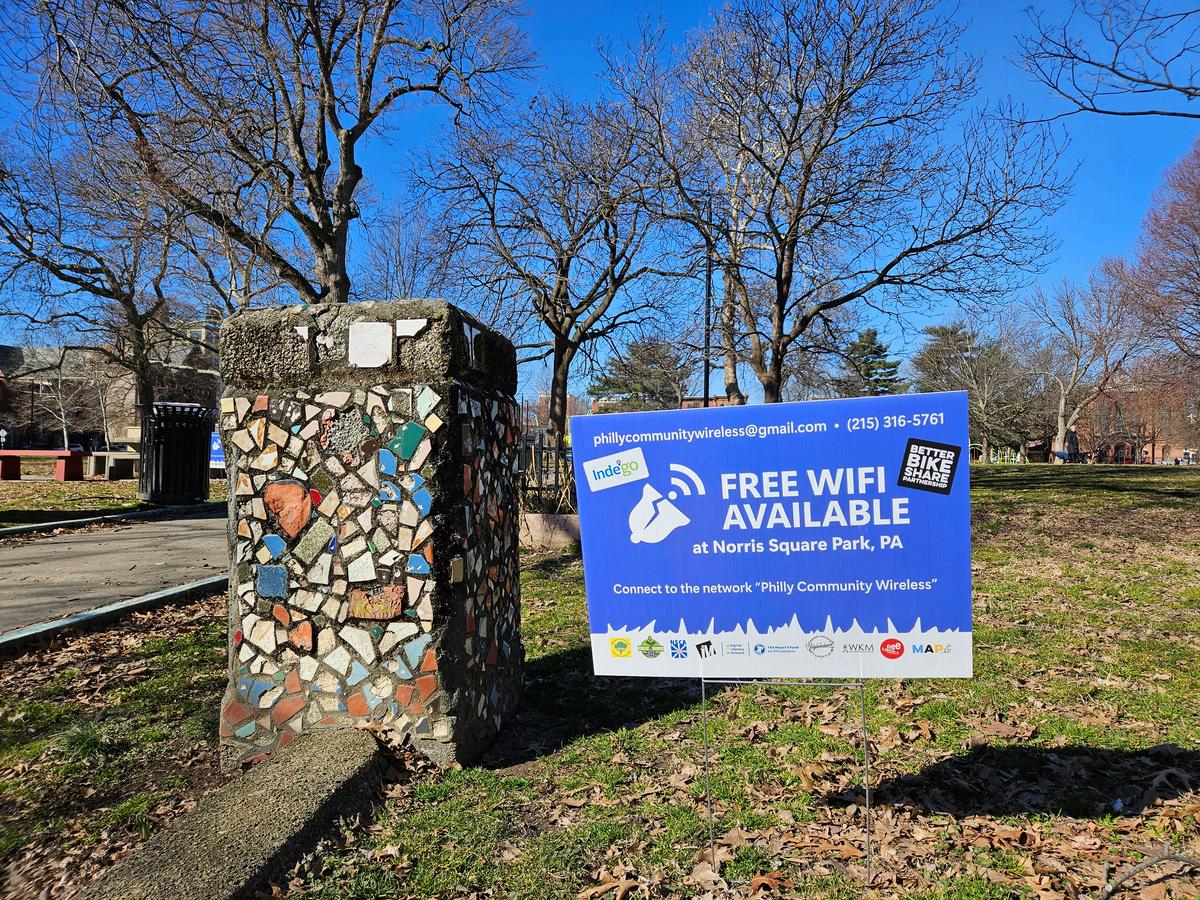
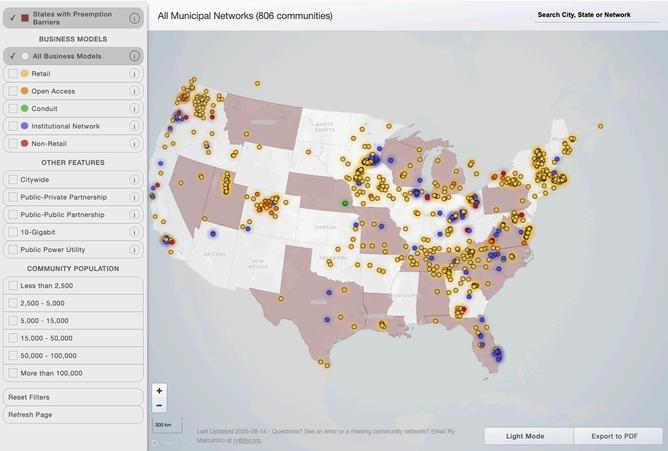
Similar wireless mesh networks have had great success in cities such as NYC Mesh in New York and the Equitable Internet Initiative by the Detroit Community Tech Project in Detroit. Larger municipal broadband projects have had great success in cities such as Chattanooga, TN, Holland, MI, and Fort Collins. Likewise, Baltimore has recently announced their ambitious plans to launch an open access network owned by the city that will result in discounted internet plans for local residents. Municipal and community based networks are on the rise with over 400 across the country. In 2024, the Institute for Local Self Reliance (ILSR) launched an interactive map of these networks through their Community Networks initiative.
A secondary local project has been developed through the Community College of Philadelphia’s (CCP) $2 9 million Connecting Minority Communities program grant through the NTIA Awarded in 2023, the grant is focused on workforce development, device distribution, and creating a local fixed wireless network To date, CCP enrolled 40 participants in their training program and has placed 23 people in on-the-job training opportunities They are currently working with the City to approve the installation of three antennas in and around their Career and Advanced Technology Center in West Philadelphia as a pilot program to provide a fixed wireless (5g) based internet connection In partnership with PCs for People, Wilco, and BlocPower this grant will connect 300 people in the region with laptops, and wireless routers, and two years of free internet service.
The City is seeking to highlight their community networks, along with other free public wifi options through a recently released dashboard. And, through a new franchise agreement, Verizon will be providing high-speed broadband to 183 recreation centers throughout Philadelphia. These efforts are continuing to strengthen the city’s strategic goals around connectivity. With limited state or federal support on affordability, it will take continued efforts such as these as well as innovative new solutions to broaden the affordable broadband options for Philadelphians. RESILIENCE IN ACTION: 2025 DIGITAL EQUITY REPORT I PG 9
Philadelphians develop the digital skills necessary for work and life.
Over the past 10–15 years, digital skills have become essential for anyone entering the workforce. Research published by the National Skills Coalition in 2023 found that 92% of jobs require digital skills, yet one-third of workers lack them. Strong digital training programs give learners the chance to upskill, access better jobs, and increase economic mobility. In Philadelphia, digital literacy has long been a cornerstone of digital equity. From the 77 public computer labs launched through the KEYSPOT program where digital literacy training was required from day one to Philadelphia Works’ ongoing training through PA CareerLink, the city has built a deep foundation for this work.
In 2021, the City’s Office of Children and Families expanded access by funding free licenses for the Northstar Digital Literacy Assessment, a nationally recognized tool for assessing and certifying digital skills Northstar functions as both an assessment and learning platform, connected to GCFGlobal’s free online training Learners can track progress, complete modules, and earn certificates upon passing Today, Northstar is offered in more than 40 locations across Philadelphia Partnerships between United Way, OIT, and Digital Navigator programs have made enrollment simple: residents can call a hotline, connect with a Navigator, and be referred directly to a class Since 2021, just one site the Beachell Family Learning Center at Drexel University has reported more than 400 certificates earned, underscoring the program ’ s impact on workforce readiness and advancement
Through these partnerships, OIT has built strong connections with community organizations, making digital training easier to access citywide Multilingual outreach has been another strategic focus The City has funded groups like SEAMAAC and the Cambodian Association of Greater Philadelphia to provide training and Navigator support in multiple languages, while United Way’s 211 service offers translation assistance. Although Northstar has historically been an English-only platform, it now includes a Spanish-language version and is designed to support English language learners. Beyond basic digital literacy, Philadelphia’s network of providers also offers complementary programs in English language learning, job readiness, writing, and even apprenticeships. This diversity of training ensures residents can pursue skills that align with their career goals.
The City has made significant progress in building a connected ecosystem of training providers, creating accessible entry points for learners, and collecting data on participation and certificates earned. However, one critical gap remains: while Philadelphia can track program completion, more robust data collection is needed to measure the long-term social and economic impact of digital skills training Understanding how learners progress after completing programs will be key to demonstrating value, refining strategies, and securing sustained investment
Philadelphia grows and sustains the capacity and infrastructure required to increase digital equity.
For more than 20 years, Philadelphia has been a national leader in digital inclusion. Its history includes bold efforts like the 2004–2008 attempt to launch one of the country’s first large municipal broadband networks, and the 2010 creation of KEYSPOT, one of the largest single-city federal stimulus grants targeting broadband adoption This legacy has been sustained through the combined efforts of the City of Philadelphia and the Technology Learning Collaborative (TLC) TLC’s expertise is recognized nationally: members contributed to the Digital Equity Ecosystem Measurements Framework (DEEM) and NDIA’s Digital Inclusion Coalition Guidebook, both used as models by communities across the country In 2025, TLC led a coalition-building workshop at the NDIA conference, further underscoring Philadelphia’s leadership
The COVID-19 pandemic renewed attention—and funding—for digital inclusion. Philanthropy, corporate partners, and state and federal government support enabled the City and TLC to set broader goals and collaborate more deeply. Programs like Digital Navigators and Northstar expanded, while OIT developed software to track requests, outcomes, and resident progress. With support from United Way’s 211 data and scheduling tools, Philadelphia created a consistent system for measuring impact and identifying underserved areas. This data-driven coordination between government and community partners has become a model for other cities.
Philadelphia’s strong ecosystem has also fueled regional and statewide momentum. Leaders from Philadelphia and Pittsburgh worked together to form the Keystone Internet Coalition (KIC) a statewide digital equity coalition launched alongside the creation of the PBDA. This early coordination built critical relationships and advocacy capacity as the state shaped its broadband strategy. Locally, the Philadelphia Federal Reserve has hosted events linking digital inclusion to workforce development, and convened broader discussions with the PBDA and statewide leaders
Philanthropy has played a pivotal role Comcast and the Independence Public Media Foundation (IPMF) have been consistent funders, supporting the DLA, TLC, Digital Navigator programs, and KIC IPMF also backed national advocacy efforts through Next Century Cities, which produces briefs on policy issues and tracks Philadelphia’s progress
Philadelphia’s work has long been championed by the National Digital Inclusion Alliance (NDIA), which has recognized the city as a Digital Inclusion Trailblazer for many years Local leaders are frequently invited to share their expertise nationally, and in February 2024, Philadelphia hosted NDIA’s largest-ever Net Inclusion Conference, welcoming more than 2,000 attendees. Mayor Cherelle Parker, fresh from her inauguration, opened the event with remarks that highlighted Philadelphia’s ongoing leadership in digital equity.
Together, these efforts position Philadelphia not just as a trailblazer in digital inclusion, but as a model for communities nationwide showing how collaboration, innovation, and sustained investment can close the digital divide and create lasting opportunities.
Philadelphia’s digital equity ecosystem is strong—but strength alone isn’t enough. To truly drive economic mobility, the city needs bold, sustained investment and coordinated action. Local government, nonprofits, community groups, and private businesses must come together around a comprehensive strategy that ensures affordable internet, accessible devices, and the digital skills residents need to thrive. With federal support for digital advancement on shaky ground, now is the moment to lean on proven state and local solutions. What follows are targeted recommendations to build on that foundation and accelerate Philadelphia’s path toward true digital equity
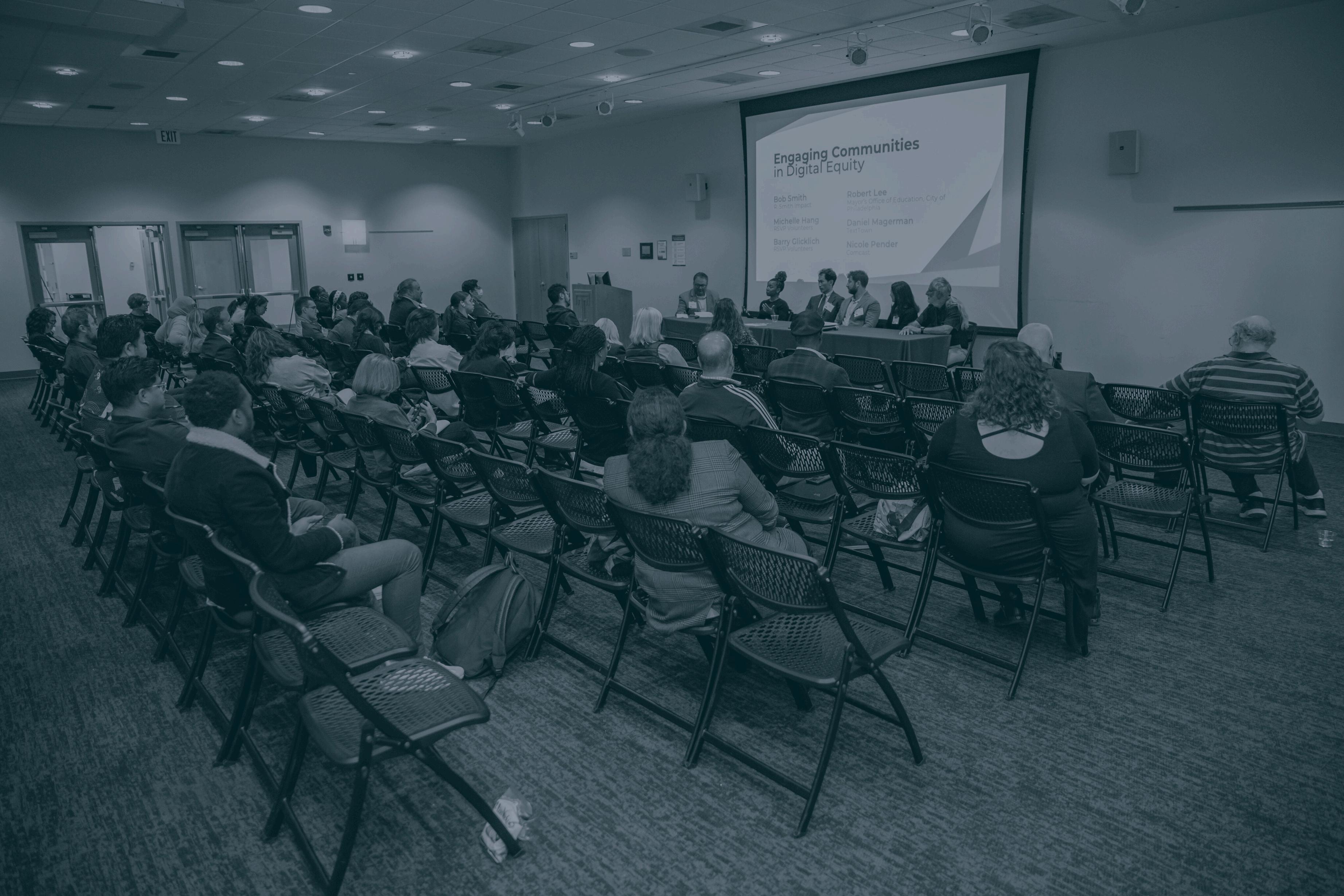
Recommendation: Access to reliable, quality, and affordable internet needs to be improved through a variety of methods such as ISP offerings, internet subsidies, or municipal networks.
Though many rural areas across the country do not have a high speed internet option, in Philadelphia the issue is more about affordability. There are a collection of options to assist with affordability and it will take multiple pathways to reach the right solution.
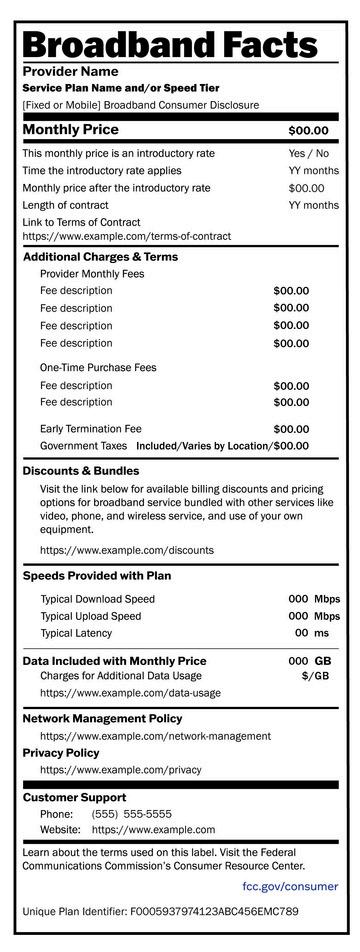
Low-cost plans from ISPs is the first step toward affordability. Many ISPs offer discount plans for eligible households, including Comcast’s Internet Essentials at $14 95 a month and the Verizon Forward program for $20 a month Comparing speed and cost, both plans have their benefits depending on the need However, plans can often be confusing as consumers need to understand the costs for equipment, what upload and download speeds mean, and the terms of their contract Due to this issue, the FCC launched their Broadband Consumer Labels program in 2024.
Based on nutrition labels, each ISP is to show a uniformed label on their plans that explains speed and cost in simple terms. Having clear discount plans from providers is essential, however, many Philadelphians still struggle to afford even the discounted plans from month-to-month.
On a policy front, providing a broadband benefit to low income households has been one of the most effective solutions for getting households connected. The bipartisan ACP benefit was an overwhelmingly popular program that demonstrated the need, but was short sighted with its funding mechanisms and congress lacked the political will to renew the funding And, with a new administration in the White House, support for the Digital Equity Act and infrastructure programs like BEAD are waning States and local governments will have to develop their own policies and funding mechanisms to create programs of their own Policy measures like NY states Affordable Broadband Act, which requires ISPs to offer plans as low as $15 a month, is one example A secondary example is through public-private partnerships like Cleveland created with the nonprofit ISP, DigitalC, to create a network that offered low-cost solutions to residents.
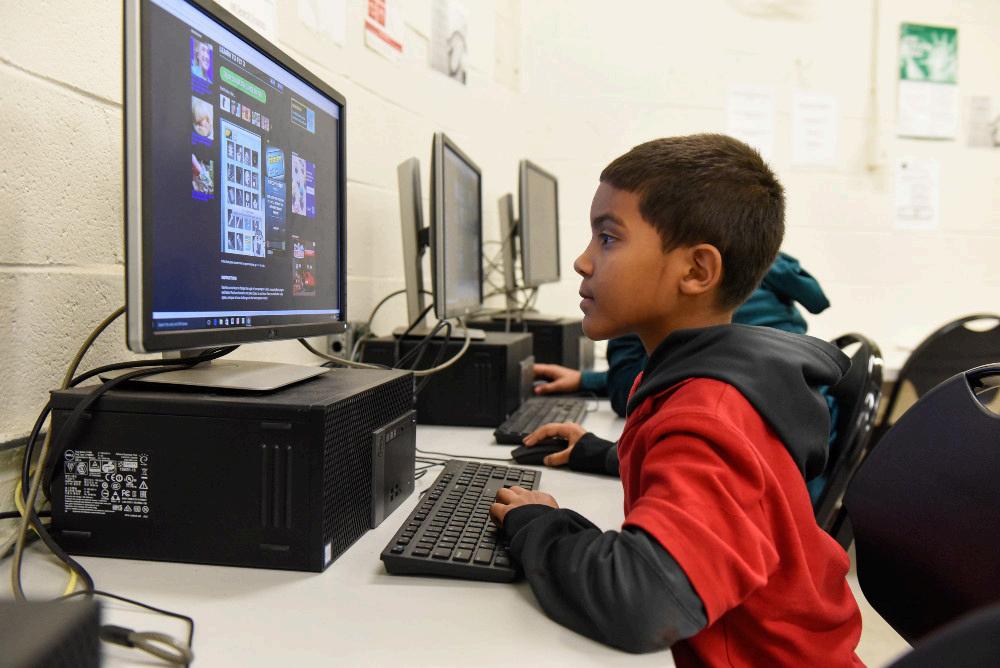
Launched in 2020, PHLConnectED was the most successful city-led programs in Philadelphia to connect residents. It connected over 22,000 student households to high speed broadband over several years Identifying funding to relaunch a sustainable version of this program would have an extraordinary impact on the lives of thousands of Philadelphians for many years Combined with continued funding for digital skills courses and device distribution, families could overcome subscription fatigue and be able to afford higher speed Internet connections on their own as their outcomes improve
Other cities have opted to build their own municipal networks which have led to more affordable high speed internet access, and created additional economic opportunities for businesses and industry The City of Baltimore announced this year the development of a publicly owned open access fiber network that will lease bandwidth to local service providers and businesses to enable more transformational opportunities for all residents. Such networks have had success in multiple cities, creating competition between service providers, and providing revenue to support larger digital access goals. Chattanooga’s EPB fiber network has been the preeminent example that has consistently offered low cost access to their residents, generated regular profit, and created larger economic impacts for the community.
However, Pennsylvania is one of 16 states that have restrictions on the implementation of municipal networks. This contentious law may receive one its first challenges during the PBDA’s BEAD implementation as various parties have now submitted proposals for the first round of funding by the FCC for broadband expansion.
Through all of these opportunities, Philadelphia has the potential to piece together multiple affordability options for residents in the future
Investment is required to develop a robust and community-centric computer refurbishing network and quality device standards. Device distribution is complemented by digital skills training to ensure community members stay safe online and are equipped to use their computer or other device to accomplish their goals.
As illustrated by Digitunity, an affordable internet solution is only useful if residents have access to devices that meet their needs and the skills to use them The City has invested in a couple of different solutions to help provide affordable computers and training to residents through the Digital Navigator and Northstar Digital Literacy programs, but the overall ecosystem for device ownership and training needs improving.
It will take a larger systems change in Philadelphia to create an effective and enduring solution to provide quality refurbished computers or new devices to local residents. Philadelphia needs to develop a community-driven environment for refurbished computers and devices. This includes creating community locations for residents and businesses to drop off older electronics and purchase refurbished devices. PC’s for People has had success with their online sales and store front location in North Philadelphia, but it has not had the impact on the larger refurbishing and electronic recycling environment that many have been hoping for. Looking at the success of Philadelphia’s former Nonprofit Technology Resource center, or the Free Geek model in both Portland, Oregon and Minneapolis, Minnesota, there’s a community aspect that Philadelphia is missing. Creating communitybased solutions that offer drop off donations, create relationships with local businesses for donations, and utilize volunteers would go a long way to expanding access to devices through refurbishing
Also, standards need to be established on what qualifies as a useful and equitable device While Microsoft set 4gb of memory as the minimum standard for Windows 11, tests have shown that very little can be accomplished with 80% of the memory being utilized by the operating system after boot up Unfortunately, this minimum requirement allows computer manufacturers with a license to create and sell new low-cost devices that have limited use Leading to local governments, nonprofit digital inclusion programs, and corporate impact programs to purchase these low-performance computers This also applies to some computer refurbishers Refurbishers also need to consider the age and limitation of devices. If the goal is to provide individuals with economic mobility, providing them with low-performance devices seems counter-productive.
Improving access to both affordable internet and equitable devices needs to be connected with digital skills training. Providing the skills necessary to navigate a computer is essential for individuals to perform basic tasks that many people take for granted. This includes tracking finances, understanding health benefits, online learning, and job applications.
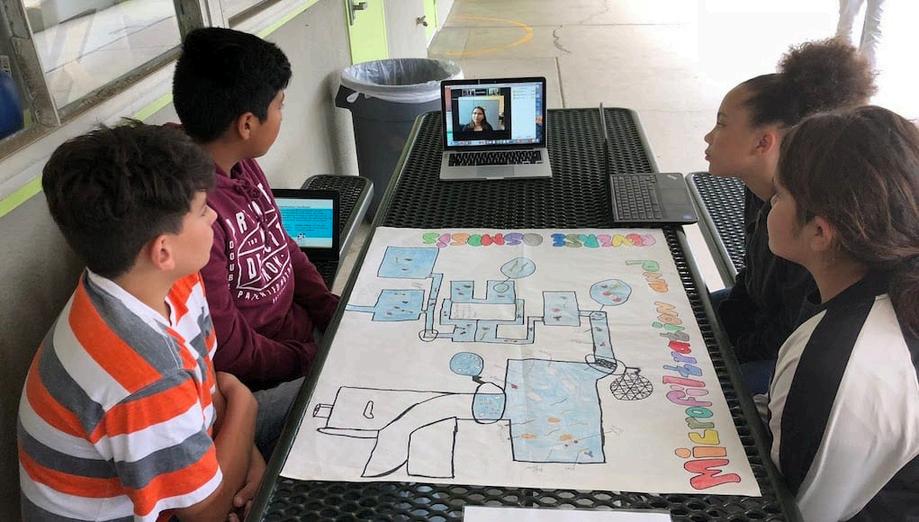
Connecting device accessibility to digital skills training is essential This can be seen with many of the programs offering the Northstar Digital Literacy training who offer a device as an incentive to complete the training Temple University’s Digital Equity Center also has a standard practice of requiring a level of in-person training before distributing computers
Furthermore, connecting basic digital skills training directly to specific training provides users with confidence and a connection to the learning. The City has seen the benefits of this through the variety of organizations it funds for the Digital Navigator program and through endeavors like the Digital Health Equity Taskforce. You can also see this across multiple workforce development programs including PA Career Links. Device ownership is also essential for education and workforce programs. Not only does it provide the opportunity for remote learning, but also provides learners with the ability to practice and use their new skills at home.
Internet for All illustrates that internet access, device ownership, and training are the pillars of a three legged stool to achieve digital access. Developing a larger awareness of the connection between these pillars with service providers such as healthcare, higher education, and workforce development programs is essential. And, developing a more robust ecosystem around device ownership and digital skills training will provide organizations with access to resources and best practices needed to create successful experiences and improve outcomes.
We must work as a community to increase awareness of the importance of digital access programs. This includes increasing funder awareness, supporting nonprofits and community groups to incorporate digital access into their existing services, and working with universities and other institutions to emphasize the importance of wrap-around digital access supports.
As many workforce development, education, and social service programs provide support services like clothes, food, and other essentials, considering the digital access needs of their clients is also pertinent. Whether it’s providing mobile hotspots, assistance with programs like Lifeline, or even referrals to the Digital Navigator program, taking care of an individual’s digital access needs could connect them with consistent access to critical care, benefits, employment opportunities, and stable communication with family.
New York State’s Office of Strategic Workforce Development (OSWD) created a resource that highlights the general need for wrap-around services. In their section on Whole-Person Supports, it lists internet access and digital literacy as being on par with housing, childcare, and transportation supports. The University of Chicago’s Inclusive Economy Labs did an eight year research study with the One Million Degrees nonprofit which showed increased enrollment and completion of community college degrees due to wrap-around services to support students during their academic career citing that ”median earnings of a full-time employee with an associate degree are over 40 percent higher than those of a high school graduates ”
Many nonprofit organizations have long recognized the importance of digital inclusion efforts as wrap-around services that enable community members to achieve their goals, with some nonprofits wholeheartedly investing in these services while others piecemeal their approach Funders, including foundations and government departments, have often been slower to recognize the importance of these supports There has been a gradual dawning recognition of the need for grant funding to address digital inclusion, especially an emphasis on devices during the pandemic However, many foundations do not include digital inclusion in their priorities and many government grants do not include digital inclusion in their permissible activities. Integrating digital access funding into existing grant opportunities and funding sources would be a significant step toward an integrated and sustainable digital equity ecosystem.
As digital access is a key factor in enabling the economic mobility necessary to lift individuals and families out of poverty, encouraging more programs to offer digital access as a wrap-around service could prove critical in improving overall outcomes.
Foundations, corporations, local government, and other institutions must collaborate to provide sustained local investment in achieving digital equity.
Although the importance of digital access has become increasingly clear, there is very little stable, dedicated funding for this work. Federal funding initiatives have been intermittent and most digital equity funding from state, local government, and foundation sources is piecemealed into funding for other priorities, such as allowing workforce funding to be used for digital skills training. While Philadelphia’s digital equity ecosystem has been resourceful in cobbling together limited resources, digital access is a vital issue that requires sustained investment.
A 2024 article from FSG reports that funders are moving away from funding systems change and towards funding strong ecosystems and networks focused on making sustainable systems-level change. Utilizing the strength and diversity of Philadelphia’s digital equity ecosystem, The City, TLC, and local organizations are working to develop more awareness with local funders. This would allow funders to shift from being at the center of change and, instead, invest in the strength of the ecosystem. Developing a network of funders dedicated to supporting digital access work in Philadelphia would create a strong, stable funding environment and assist with measuring impact and outcomes to understand what strategies work best
With proper funding, post assessment and evaluation efforts could assist in understanding gaps in training, the effectiveness of the curriculum, and highlight improved outcomes Ironically, the federal Digital Equity Grant program that is now on the chopping block included a requirement for robust multi-year program evaluation that would have resulted in clear outcome data on the program ’ s effectiveness addressing economic stability, access to quality education, and access to healthcare
Created in 2017 as a response to the COVID-19 pandemic, the Digital Literacy Alliance has laid the foundation for this type of local investment. Creating similar opportunity for even greater sustained investment by local foundations, corporations, and other philanthropic institutions would provide critically needed funding and enable Philadelphia’s ecosystem to meaningfully advance digital access.
Research shows that investment in digital inclusion improves workforce readiness and educational attainment, resulting in higher-paying careers and increased economic mobility. Emphasizing both the importance of economic mobility for Philadelphians and the connection between economic mobility and digital access is a key strategy to engage funders.
As technology evolves, we cannot allow the disconnected to fall even further behind. Digital skills training must be continually updated to keep pace with a changing environment and technologists must work to ensure their innovations are inclusive and beneficial to all.
In a 2019 TedX Philadelphia talk, Dr. Youngmoo Kim, of Drexel University, talked about how the speed of innovation continues to widen the divide. Artificial intelligence (AI)is continuing to grow and affect how basic technology is used and redefining how all levels of work are being accomplished. The World Economic Forum released an article in early 2025 on AI in the workforce, stating that the standard definition of a “tech job” is changing as technology literacy is rapidly becoming required for most jobs The Brookings Institute published an article in 2024 which stated that, “that more than 30% of all workers could see at least 50% of their occupation’s tasks disrupted by generative AI, while some 85% of workers could see at least 10% of their work tasks impacted ”
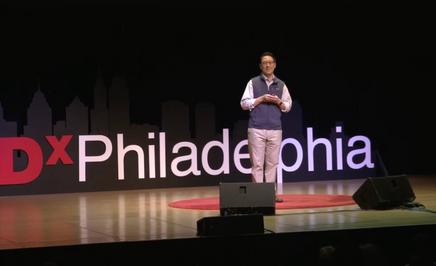
Think of today’s tech luminaries as Bach, Mozart, and Beethoven. Following their traditions, how will we ever get to the jazz or hip hop of technology? If we don’t change tech culture to embrace contributions from different traditions, we miss the opportunity of a much richer, diverse, and inclusive society
As technology changes the workforce, the definition of basic digital skills will need to change to meet the goals of economic mobility and independence desired by many residents. A recent article in Forbes magazine discusses how entry-level jobs are being affected and how a, “concerted effort among educational institutions, the corporate world and the government can help mitigate these effects.” The larger digital equity and workforce development ecosystems will need to collaborate and develop standards for updating digital skills curriculum over time. The ecosystem needs to prepare job seekers for the current job market and provide them with the skills to adapt and learn as technology advances.
Likewise, the innovators, start-ups, and corporations that are developing AI and other new technologies should do so with the intention of decreasing rather than increasing the technological gap in our society This includes increasing diversity in the tech sector, centering inclusive design that takes into account the needs of people with low technology skills and the needs of people with disabilities, and supporting nonprofit efforts in their communities to bridge the digital divide


collapsed in cycles. Programs like BTOP (2010 2013) and the Affordable Connectivity Program proved effective, yet their expiration left organizations facing steep fiscal cliffs. Despite these challenges, the City of Philadelphia and partners like TLC have managed to sustain a coordinated digital inclusion ecosystem with limited resources. But this critical work cannot survive on short bursts of funding it requires long-term commitment.
Now, with the end of the ACP and the potential unraveling of federal policies on net neutrality, digital discrimination, and the Universal Service Fund, Philadelphia stands at another tipping point. The much-anticipated $12 million Digital Equity Competitive Grant seems out of reach Waiting is not an option Philadelphia’s digital equity ecosystem must push forward, chart its own course, and refuse to lose ground
The stakes are high: without digital access, residents face barriers to healthcare, employment, education, and economic mobility The Philadelphia Federal Reserve’s recent research underscores this urgency, showing that poverty in our city runs deeper than official calculations suggest Digital access isn’t a side issue it’s central to economic stability and opportunity
For over two decades, Philadelphia has led with innovation and collaboration, building an ecosystem dedicated to closing the digital divide. That foundation is strong, but growth demands more. To set the standard for digital access nationwide, we need sustained, dedicated funding and cross-sector collaboration government, business, nonprofits, universities, and philanthropy working together toward a shared goal.
The time to act is now. Philadelphia cannot afford to wait for the next federal program or fleeting grant. We must rally as a city, invest in digital equity, and ensure every resident has the tools to thrive in the digital age.
Chetty, R. (2024). Changing Opportunity: Sociological mechanisms underlying growing class gaps and shrinking race gaps in economic mobility [Working paper]
Metro New York Library Council. Digital Equity Ecosystems [Report]
Boston Consulting Group Digital Navigators and closing the digital divide [Report] Benton Institute for Broadband & Society The Human Infrastructure of Broadband [Report]
Brookings Institution Impacts of generative AI on work and productivity [Brief/Report]
University of Chicago, Inclusive Economy Lab. Eight-year study on wrap-around services [Study] FSG. Funding strategies for digital equity [Brief/Guide]
Matthew Sprintson, Edward Oughton. “BEAD and Digital Equity Plans could lead to higher employment and an increase in overall GDP.” [Report]
Government, Law & Program Guidance
NTIA, BroadbandUSA. BEAD Five-Year Action Plans [Program guidance/compendium]
Pennsylvania Broadband Development Authority (PBDA) BEAD Round 1 [Announcement/plan materials]
Pew Charitable Trusts. Definitions of “unserved” and “underserved” [Policy explainer]
NDIA (National Digital Inclusion Alliance) Digital Inclusion Coalition Guidebook [Guide]
Baltimore City Information Technology. Open Access Fiber Network [Program page/plan]
News & Journalism
Technical.ly. Failed municipal broadband program [Article]
Technical.ly. (2022). PHLConnectED [Coverage].
Technical.ly. Ecosystems [Feature/series]
Billy Penn. Philly Community Wireless [Article] Philadelphia Sunday Sun. CCP Connecting Minority Communities award [Article] Columbia Spectator NYC Mesh in West Harlem [Article]
Programs, Case Studies & Philanthropy
Chicago Connected Free internet program [Program overview/evaluation]
ACP Enrollment Tracker Affordable Connectivity Program participation data [Data tool]
Free Library of Philadelphia (2022) Emergency Connectivity Fund grant [Announcement/impact summary] PCs for People Philadelphia computer refurbishing grant/program [Press release/impact page]
Aileen & Brian Roberts/School District of Philadelphia (2020) $5M Chromebook donation [Press release/news]
Chattanooga EPB. EPB Fiber Network [Case study/utility overview]
DigitalC (Cleveland). High-speed internet plan [Program overview]
Institute for Local Self-Reliance (ILSR). Community Networks map announcement [Post/map] Per Scholas. Alumni Program [Program page/outcomes]
Connect Humanity. Digital equity giving [Report/guide]
Benda, N. PhD and Veinot, T. PhD, MLS, et. al. (2020) “Digital divide as a social determinant of health ” [Report]
New York State – Office of Strategic Workforce Development Wrap-Around Services Guide [Guide]