
Fareham Coastal Defence Study
Fareham Quay and Alton Grove to Cador Drive (Portchester)
Position Statement March 2026

Position Statement
Fareham Coastal Defence Study
Fareham Quay and Alton Grove to Cador Drive (Portchester)
This position statement has been prepared by Coastal Partners following the completion of the Fareham Coastal Defence Study. It aims to set out the findings of the Study, the current roles and responsibilities of key partners in relation to ongoing coastal management, potential future scenarios for the management of each site, alongside the residual risks and next steps.
1. Introducing the Fareham Coastal Defence Study
Where?
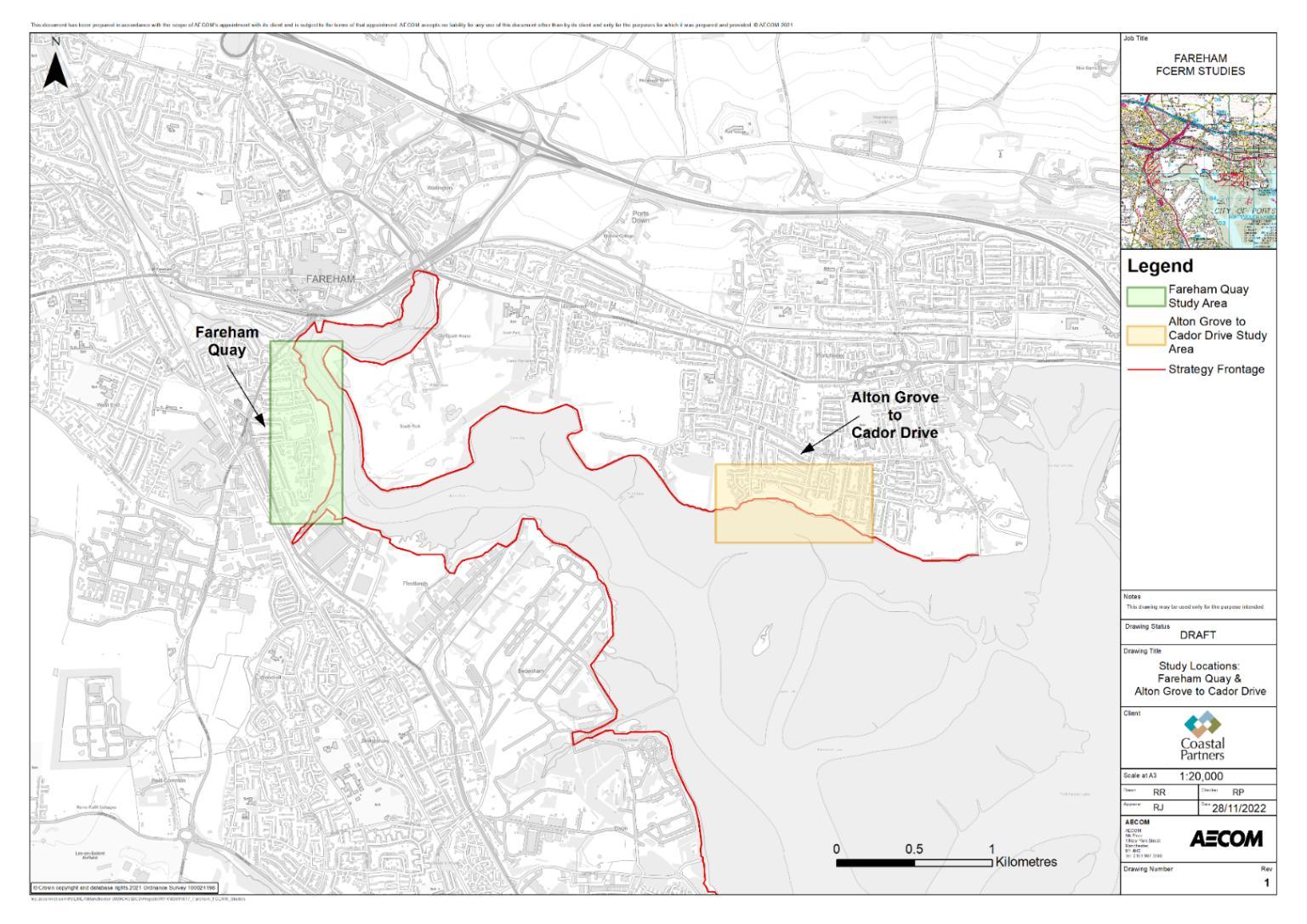
The Fareham Coastal Defence Study focused on two sections of coastline in the north of Portsmouth Harbour as shown in the map below.
The Fareham Quay study area extends south from Fareham Quay and includes the Salterns Recreation Ground. The study area overlaps with the Town Quay Conservation Area.
The study also focused on a section of shore between Alton Grove and Cador Drive, Portchester, and includes the Harbour View Road Recreation area
Why?
Alton
Grove to Cador Drive (Portchester)
Harbour View Road Recreation Ground is defended partly by a section of sea wall which is now in poor condition, with the remaining areas undefended. There is also a section of poor condition concrete sandbag wall Landfill activities have been identified from historical operations on the site from as early as 1932. The frontage was identified as a ‘high-risk’ legacy coastal landfill site as part of the River Hamble to Portchester Strategy (RHPS) (2015). Most of this area is undefended and is subject to erosion.
Given the exposure to the prevailing south and south westerly winds, the frontage is susceptible to wave overtopping when strong winds combine with high tidal conditions. During an extreme tidal event, without defences in place, properties are at flood risk today, with the risk increasing over time with sea level rise.
Fareham Quay
The majority of Great Salterns Recreation Ground is a former coastal landfill site which lies immediately behind the seawall. Landfill activities have been identified from historical operations on the site from as early as 1932. The frontage was identified as a ‘medium risk’ legacy coastal landfill site as part of the RHPS. This area is currently defended by a poor condition masonry block wall which provides erosion protection.
The frontage is tidally dominated, relatively sheltered, but subject to wind driven waves. During an extreme tidal event, without defences in place properties are at flood risk today, with the risk increasing over time with sea level rise.
Both Frontages
The impacts of climate change are likely to exacerbate flood and erosion risk in the future. Across both frontages, a significant number of properties (400) are at risk of an extreme tidal flood event during the next 100 years.
Sea defence damage and failures present an on-going and increasing risk. At both sites, sections of the sea wall are in a very poor condition. Continued deterioration of the existing defences threatens to expose the historic coastal landfill behind and places both sites at increasing risk of flooding and erosion, which may result in the unknown contents of the landfill spilling out into the internationally environmentally designated Portsmouth Harbour. Both coastal frontages and existing defences are owned and maintained by Fareham Borough Council (FBC) and are now reaching the end of their serviceable life.
The 2017 SCOPAC Coastal Landfill Study, identified both areas as key sites to protect from flooding and erosion given the level of risk posed by former legacy coastal landfill in these locations. Alternative options such as landfill remediation or removal were shown to be unaffordable.
How?
Coastal Partners as part of FBC, supported by engineering consultancy AECOM, worked in partnership to deliver this Study
The Study was funded by Southern Regional Flood and Coastal Committee (SRFCC) Local Levy
What?
The Study is the first step towards delivery of a capital scheme.
The primary objective of the study is to identify a leading option that aligns with the River Hamble to Portchester Strategy, addresses climate change, tidal flood risk and coastal erosion risk to both property and historic landfill whilst delivering the maximum Standard of Protection possible.
The study followed the latest Environment Agency (EA) Flood and Coastal Erosion Risk Management (FCERM) Appraisal Guidance. A longlist of recommended defence measures were developed and appraised, generating a shortlist of feasible options. Further economic, environmental and carbon appraisal was undertaken to help identify a leading option at each location
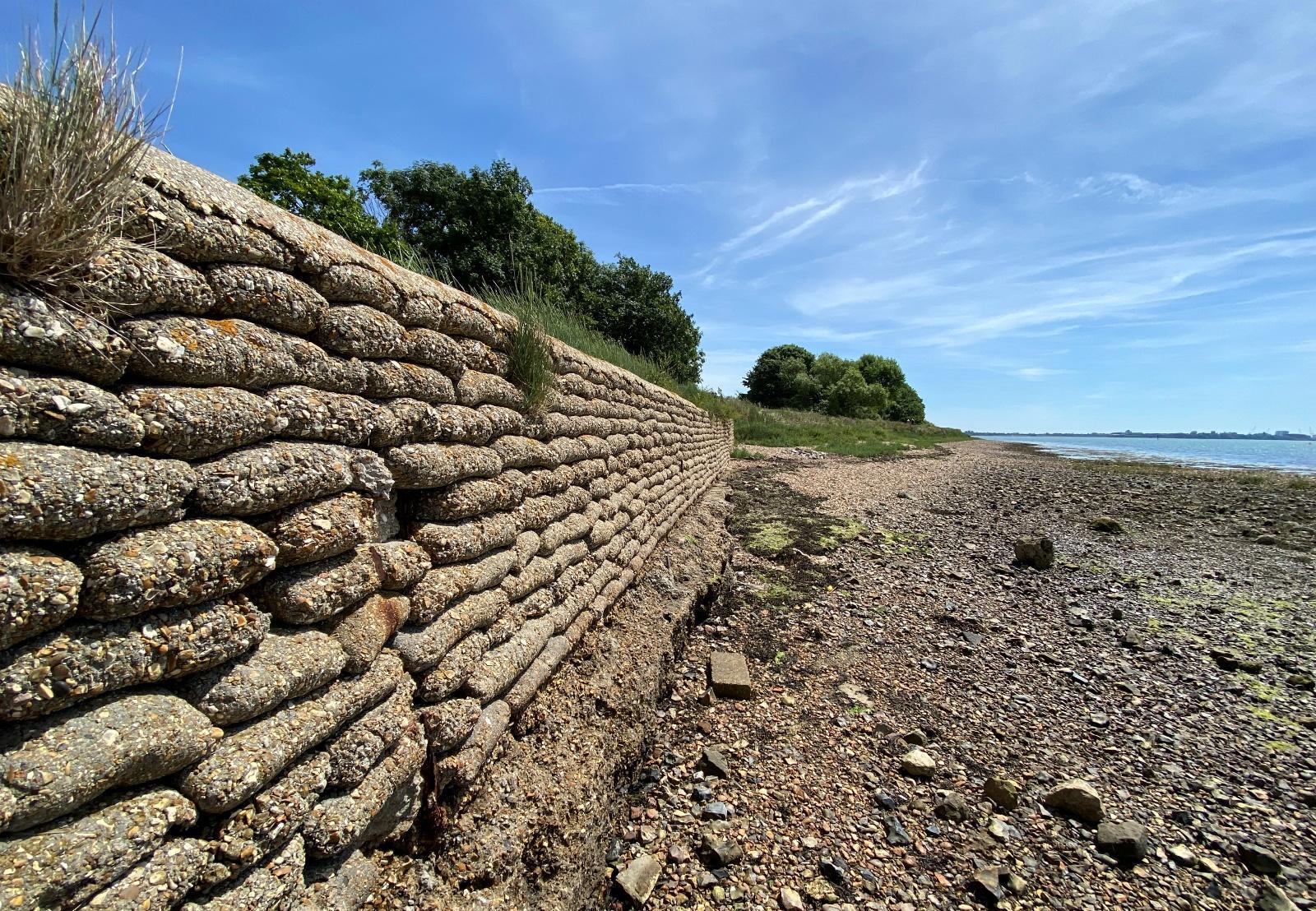
Image showing a section of existing concrete bag work wall at Alton Grove to Cador Drive (Portchester) Coastal Partners
2. Key findings of the Study
Through the study we now better understand:
Defence Condition Assessment
Flood Risk Assessment
• At Alton Grove to Cador Drive 25% of the frontage is undefended. Where there are defences, condition is varied, ranging between good and poor condition, and without maintenance, are expected to fail within the next 10-20 years.
• At Fareham Quay, the existing coastal defences generally comprise masonry block walls that are in a fair to poor condition due to localised movement, and without maintenance, are expected to fail within the next 10-15 years.
• With climate change, sea levels are expected to increase by approximately 1m over the next century exacerbating flood and erosion risk over time.
• At Alton Grove to Cador Drive without defences in place, during an extreme tidal flood event,18 properties would be at risk today, rising to 95 in 2043 and 160 in 2073.
• At Fareham Quay, without defences in place, during an extreme tidal flood event, 24 properties would be at risk today, rising to 37 in 2043 and 59 in 2073.
Erosion Risk
Economic Appraisal
• In both locations, ongoing deterioration of the existing defences threatens to expose the legacy coastal landfill. With climate change impacts, erosion of already exposed legacy coastal landfill will increase. In both cases, the release of unknown materials into the adjacent waterbody of Portsmouth Harbour is a risk.
• Although technically feasible leading options have been recommended for each frontage, the economic appraisal has shown that under current Government funding rules, none of the options considered would be economically viable (i.e. benefit cost ratios are less than one).
• The economic appraisal does also recognise ‘local benefits’ such as recreation, biodiversity and ecology, water quality and remediation/protection of legacy coastal landfill. However, these do not form a strong enough business case for securing national funding.
Leading options for each frontage were selected based on cost, technical feasibility, environmental impact, and carbon footprint. The recommended leading options are summarised below
Alton Grove to Cador Drive
Leading Solution
Fareham Quay
Leading Solution
• Phase 1: New erosion protection to historic landfill areas.
• Phase 2: New raised flood defences in around 20 years’ time
• Phase 1: New raised frontline erosion and flood protection to the recreation ground in the North.
• Property Flood Resilience measures are proposed for properties at risk on Fareham Quay.
• Phase 2: Replacement of the frontline erosion protection at the same height around the recreation ground in the south in around 20 years’ time.
The future progression of these schemes is dependent upon the availability of funding
Challenges
To proceed to the next stage of a capital defence scheme (detailed design, planning and consenting and construction), it will be necessary to secure funding which under current national funding rules, is unlikely to come from Defra Grant in Aid.
Although new Defra funding rules are due to be introduced in April 2026, Government funding is not guaranteed and there is still no specific funding identified for reducing erosion risk to coastal landfill
Outline designs have been developed for each leading option which will allow FBC to be in an advantageous position to take advantage of any future changes in funding policy
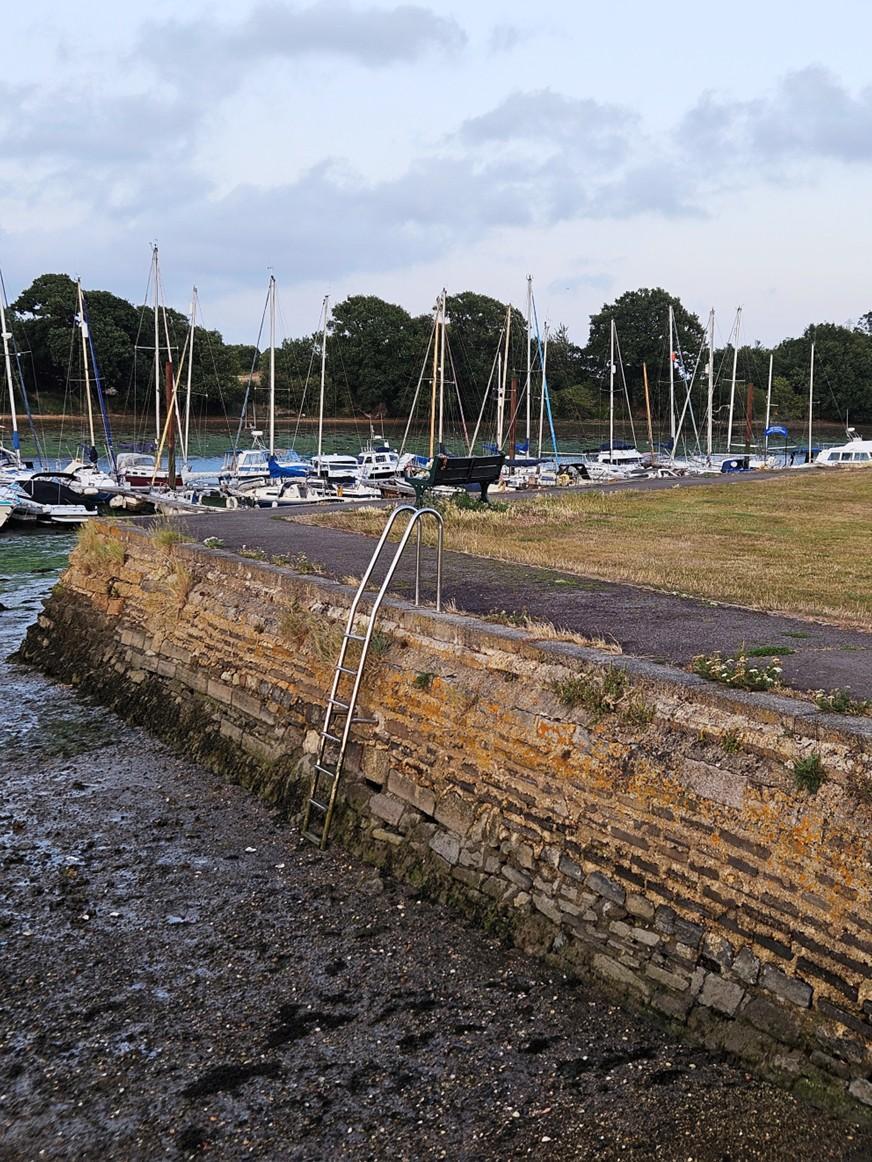
Image showing existing block wall at Salterns Quay
3. Partner Responsibilities
This section identifies the key partners and their responsibilities in relation to the study areas.
Fareham Borough Council
FBC is a Risk Management Authority (RMA) and has permissive powers to undertake works (where there is a wider public benefit, clear economic benefit and an achievable solution) under The Coast Protection Act 1949 and Land Drainage Act 1991. These are permissive powers and not a legal obligation or responsibility on the Council to undertake any works (maintenance or new defences) to protect property from flooding or erosion. Coastal Partners provide the coastal engineering service to FBC, acting on behalf of the RMA.
Where FBC is the asset owner, they have a responsibility to manage health and safety risks effectively. The ongoing coastal erosion along undefended sections of coast at Alton Grove to Cador Drive is leading to legacy landfill materials being exposed. Until a permanent solution is in place, any public risks presented by the site will be managed by FBC and, where necessary, mitigated through periodic multi-disciplinary inspections, litter picking, dynamic remedial action and a clear escalation process.
Environment Agency
The EA is responsible for the strategic overview of the management of all sources of flooding and coastal erosion in England. They are tasked with administering FCERM Grant in Aid on behalf of Defra. They are also an RMA and have permissive powers to undertake defence works (where there is a wider public benefit, clear economic benefit and an achievable solution), but there is no legal obligation for the EA to undertake any works to protect property from flooding or erosion.
Private Landowners / asset owners
Private Landowners have ultimate responsibility for protecting their own property from flooding and erosion but must act within statutory planning regulations and other applicable legislation e.g., Coast Protection Consent.
Private asset owners can reduce the impact of flooding through the installation of Property Flood Resilience (PFR) measures either on a building, to reduce the risk of floodwater entering the property or inside a building to minimise damage if water gets into the property
Coastal Partners have compiled practical advice about management of flood risk here: https://coastalpartners.org.uk/protecting-against-flooding
4. Potential future coastal management pathways
Coastal management adaptive pathways have been developed for each site. An adaptive pathway approach identifies the management decisions that can be taken now and those that may be taken in the future. It is a flexible approach which allows decision makers to plan for and prioritise future actions in line with changing circumstances over time. Decision points are included which could trigger a decision to transfer to a different action or pathway
Alton Grove to Cador Drive (Portchester)
The potential coastal management pathways for Alton Grove to Cador Drive are shown below. The current management approach is highlighted in green.
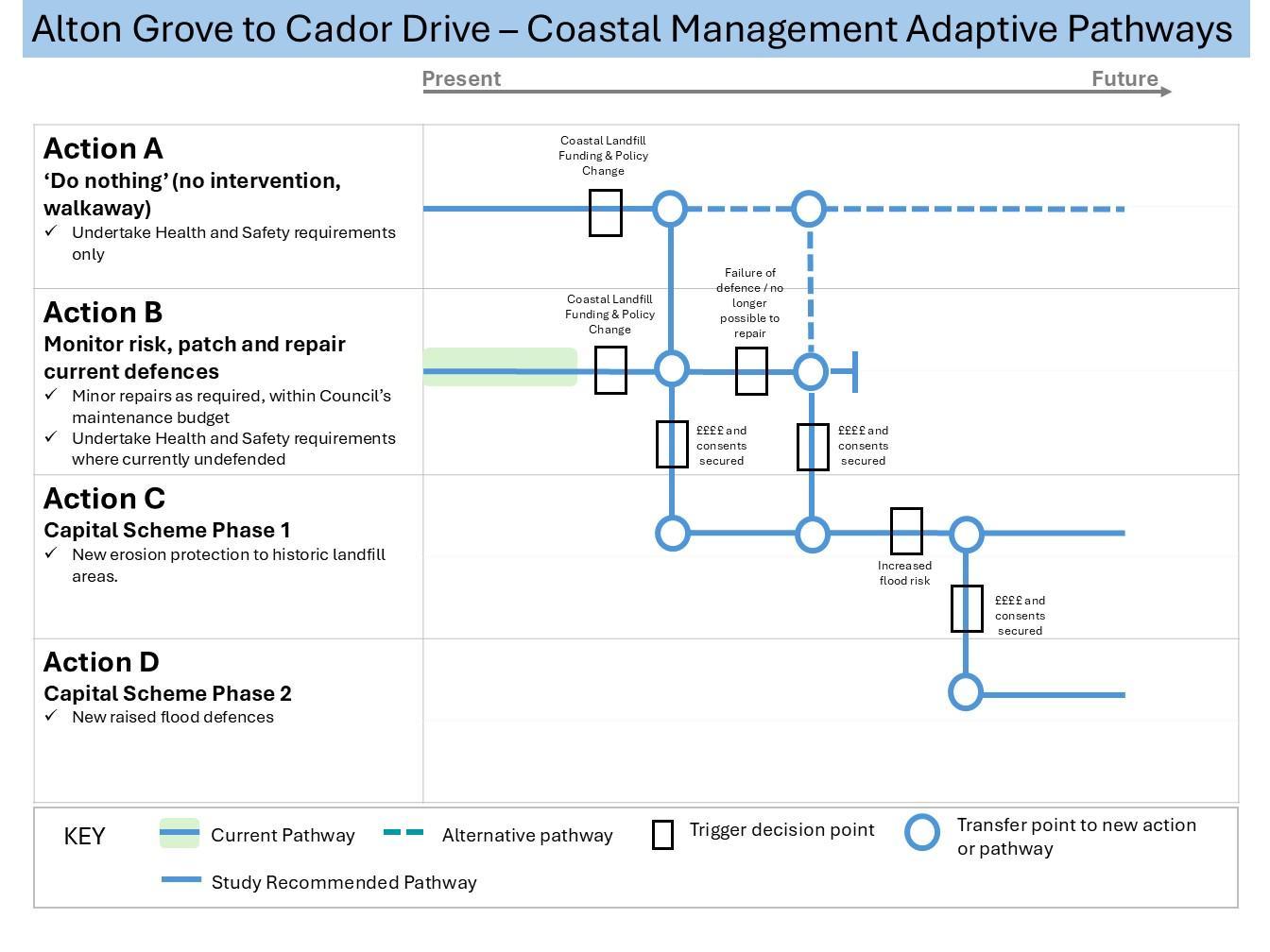
CURRENT PATHWAY: Action B
Via this pathway, Coastal Partners on behalf of FBC would continue to be responsible for monitoring risk and patch and repair of existing defences until it is no longer cost effective to do so or defences reach the end of their lives. FBC continue to undertake health and safety requirements for existing undefended sections where susceptible to erosion.
Under this current pathway the following impacts and risks are expected over time:
• The integrity of the existing defences will be maintained until such a time that it is not technically or economically viable to continue to maintain, i.e., significant repairs or capital investment is required.
• Undefended sections will continue to erode (see Section 4 for how this is being managed).
• Sea water may wash over during very high tides and during storm events. The frequency of these events will increase as sea levels rise.
• Increased overtopping of existing defences will result in more frequent maintenance requirements and increased costs.
• Even with maintenance, an exceptional event could lead to failure of existing structures.
• This pathway does not result in reduced flood risk to property or amenity space.
• Defences will fail over time.
STUDY RECOMMENDED PATHWAY: Action B until funding and consents secured to move to Action C then Action D.
This study recommended pathway progresses a phased capital scheme once funding and consents are secured, transferring from Action B to Action C (Phase 1 of the scheme) and then Action D (Phase 2 of the scheme) with increased flood risk as the trigger.
Under this study recommended pathway the following impacts and risks are expected over time:
• Through implementing Phase 1, new erosion protection is constructed to reduce risk of erosion to historic coastal landfill areas.
• Through implementing Phase 2, new raised flood defences are constructed to reduce flood risk to properties and amenity space.
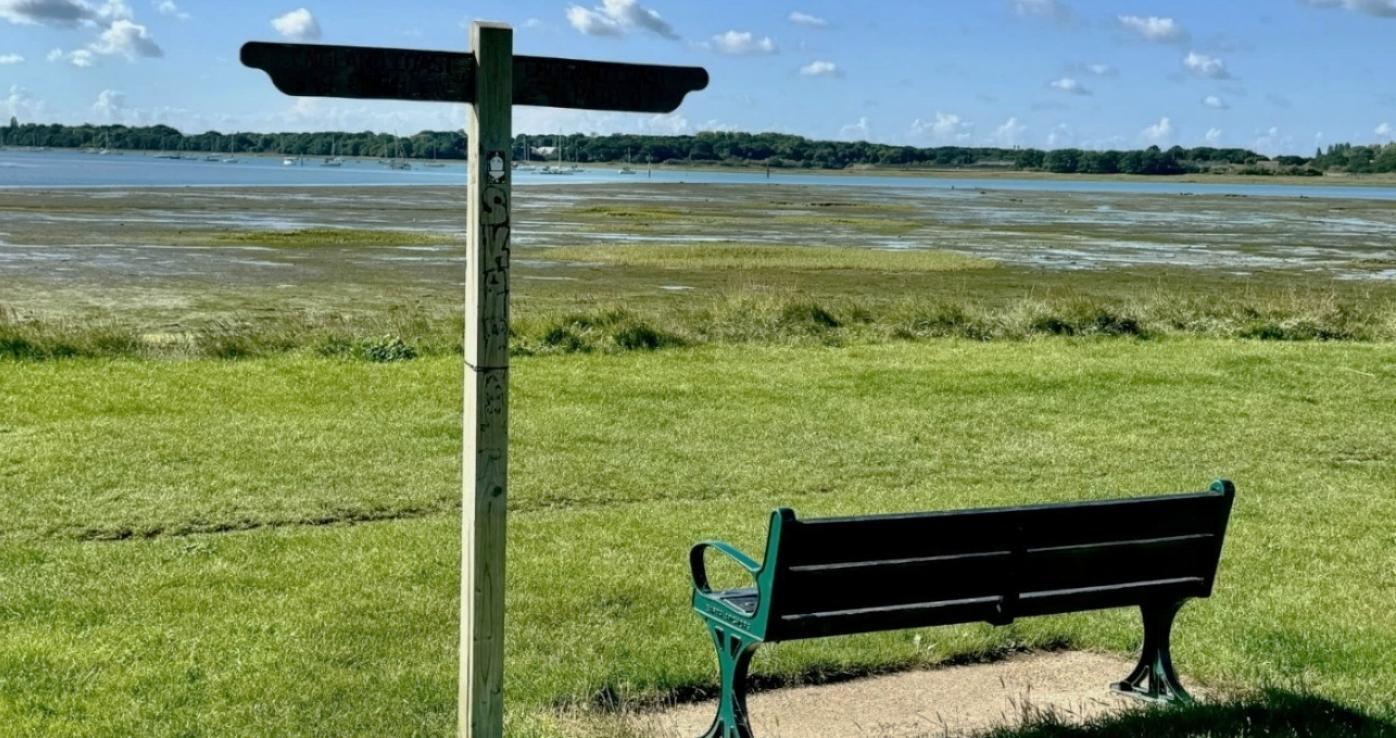
View out to Portsmouth Harbour from Alton Grove to Cador Drive Coastal Partners
Fareham Quay
The potential coastal management pathways for Fareham Quay are shown below. The current management approach is highlighted in green.
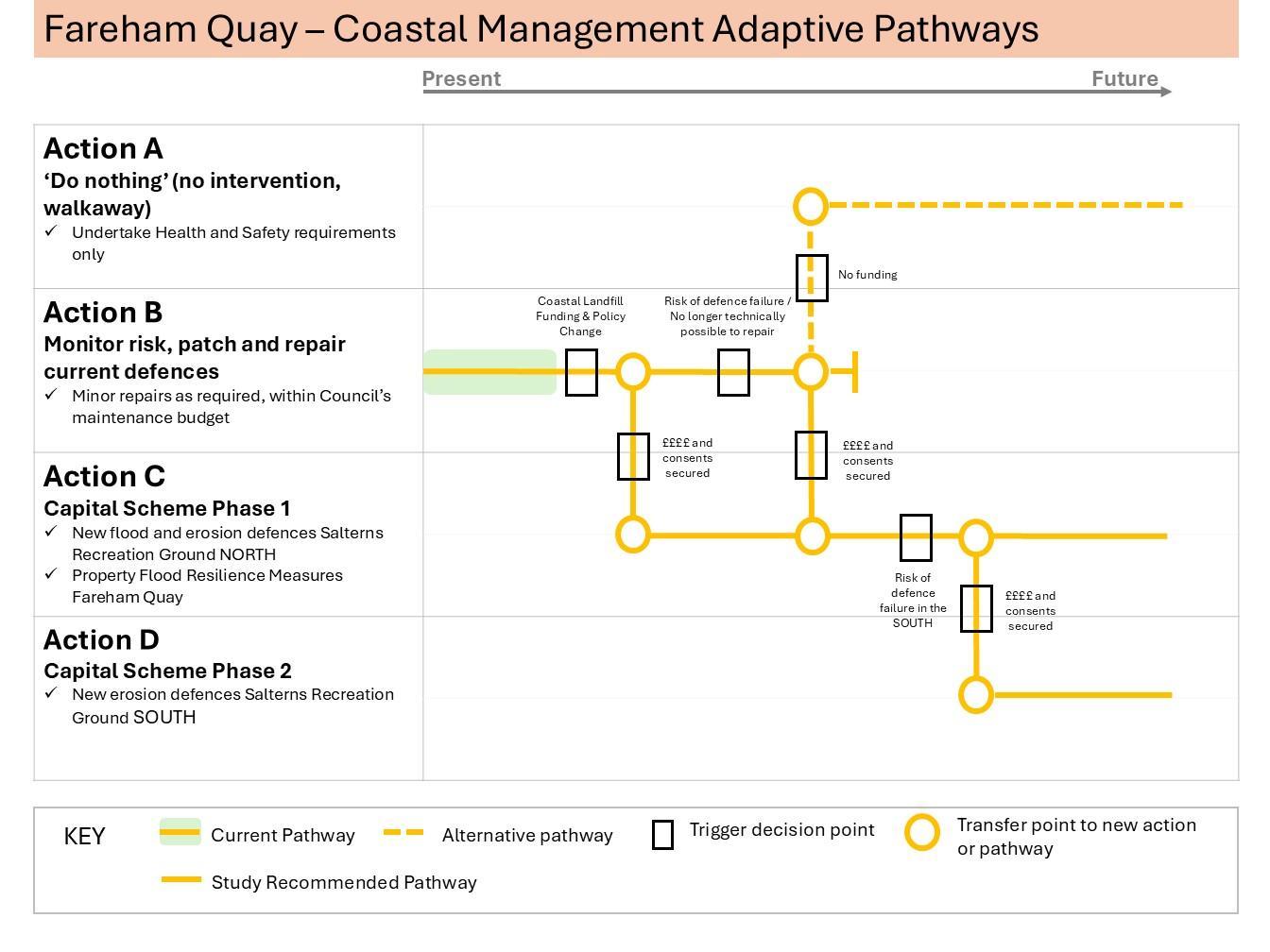
CURRENT PATHWAY: Action B
Via this pathway, Coastal Partners on behalf of FBC would continue to be responsible for monitoring risk and patch and repair of existing defences until it is no longer cost effective to do so or defences reach the end of their lives
Under this current pathway the following impacts and risks are expected over time
Across the frontages:
• The integrity of the existing defences will be maintained until such a time that it is not technically or economically viable to continue to maintain, i.e., significant repairs or capital investment is required.
• Sea water may wash over during very high tides and during storm events. The frequency of these events will increase as sea levels rise.
• Increased overtopping of existing defences will result in more frequent maintenance requirements and increased costs.
• Even with maintenance, an exceptional event could lead to failure of existing structures
• This pathway does not result in reduced flood risk to property or amenity space.
• Defences will fail over time.
STUDY RECOMMENDED PATHWAY: Action B until funding and consents secured to move to Action C then Action D.
This study recommended pathway progresses a phased capital scheme once funding and consents are secured, transferring from Action B to Action C (Phase 1 of the scheme) and then Action D (Phase 2 of the scheme) with risk of defence failure in the south as the trigger.
Under this study recommended pathway the following impacts and risks are expected over time.
Salterns Recreation Ground frontage:
• Through implementing Phase 1, new flood defences are constructed in the north section of Salterns Recreation Ground, providing new erosion protection to legacy coastal landfill areas. Reduces erosion risk to legacy coastal landfill.
• Reduces flood risk to the northern section of recreation ground and properties.
• Through implementing Phase 2, new erosion defences along the southern section are constructed to provide erosion protection to legacy landfill areas and amenity space.
• The southern section of the Salterns Recreation Ground will continue to be at risk of flooding.
Fareham Quay:
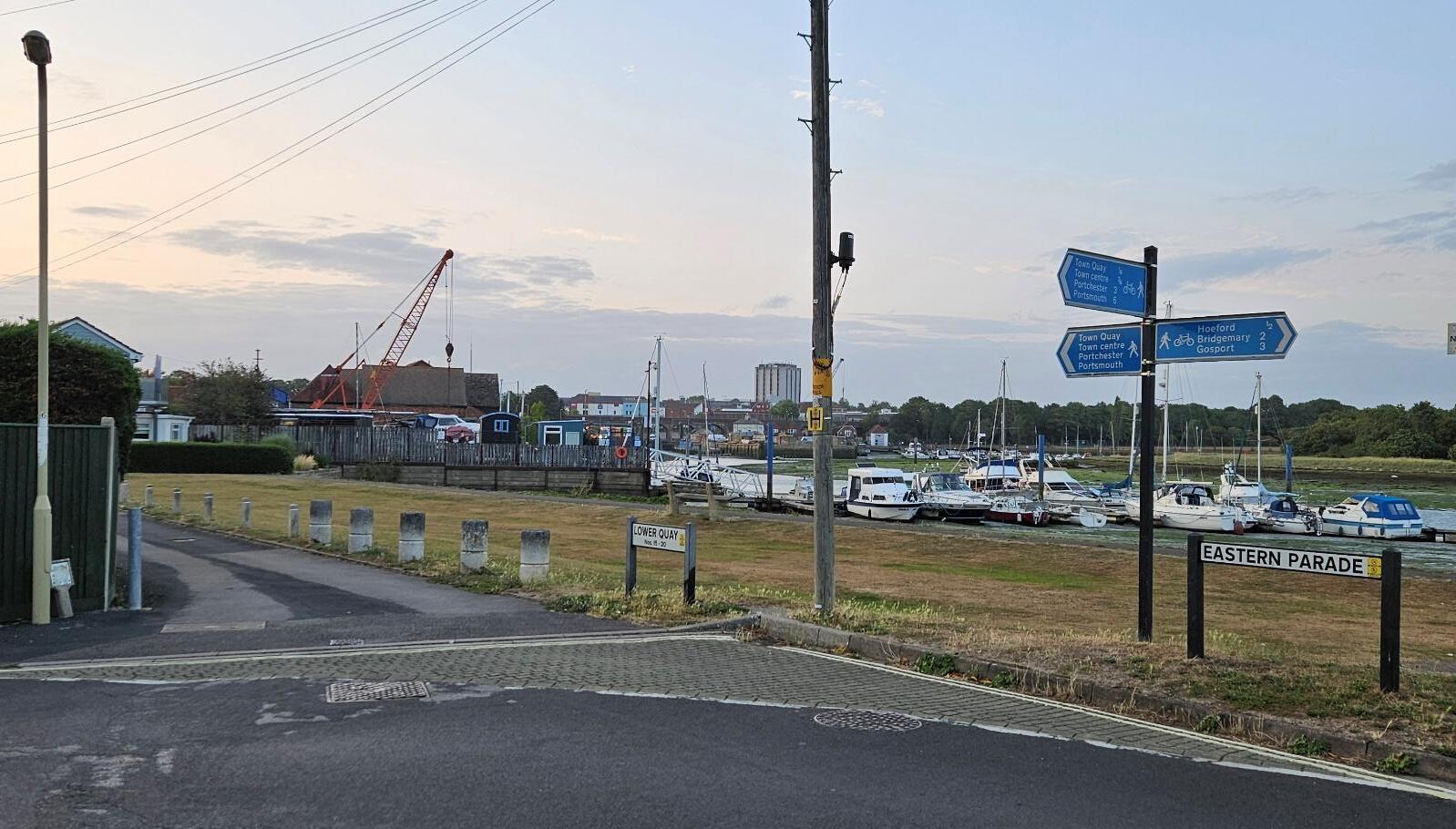
• Through implementing Phase 1, property flood resilience measures (such as flood barriers, flood doors, non-return valves, automatically closing airbricks and pumps) are effective measure to provide additional protection to properties with flood risk. Over the longer term and with increasing flood risk, a combination of flood resilience measures and flood recoverable measures (such as waterproofing plaster, solid flooring and raising of electric sockets) are required.
5. Addressing future risks and uncertainties
Funding uncertainty remains a key risk for delivery of capital defence schemes at Alton Grove to Cador Drive or at Fareham Quay. Coastal Partners will continue to lobby at a national level for funding and policy reform in the legacy coastal landfill space and FBC will continue to support national discussions on the topic with Defra and Ministers. FBC are not alone in the challenges being faced, as highlighted by the LGA Coastal SIG Coastal Landfill Working Group.
Until funding for these schemes is found, FBC will continue to monitor risk and undertake patch and repairs to extend the serviceable life of defences and reduce risks at each frontage, within available resources. The existing defences will still require significant spend over time due to poor residual life and diminishing condition and there is always a risk of further defence failures over time (such as the 2022 Salterns Wall collapse)
At Alton Grove to Cador Drive, management of the foreshore for public health and safety will continue to be led by Streetscene. A Risk Assessment and Management Plan has been produced to reduce the risk to the public from eroding landfill material in the interim and into the long term until funding for a scheme is available
6. Further Information
For further information please visit:
Fareham Studies Project Webpages: https://coastalpartners.org.uk/project/fareham-quay-tocador-drive-study/
Long term flood risk: https://www.gov.uk/check-long-term-flood-risk
Coastal Landfill Working Group (LGA Coastal SIG) Coastal Landfill Working Group – LGA Coastal SIG
Managing flood risk: https://check-long-term-flood-risk.service.gov.uk/managing-flood-risk
Streetscene: https://www.fareham.gov.uk/clean_and_tidy
PFR: https://www.befloodready.uk/what-is-pfr/ and https://thefloodhub.co.uk/pfr/