ENGAGING IN FEMINIST EVALUATION
By
This winter, our team at Coady Institute is working with our partners SEWA in India, CCDB in Bangladesh, CLE in Haiti, TGNP in Tanzania, and WISE in Ethiopia to wrap up the five-year long ENGAGE! Women’s Empowerment and Active Citizenship Project.
ENGAGE works to advance gender equality and poverty reduction by enhancing women’s capacity to participate in the social and economic life of their communities.
The project was funded by Global Affairs Canada as part of their Feminist International Assistance Policy, which focused on gender equality and the empowerment of women and girls.
Meredith Davis, Coady Institute & Dr. Kate Grantham, FemDev Consulting
With the end of a long project like ENGAGE comes the responsibility to conduct a final evaluation to understand whether the project did what it set out to do, the difference that the project made for women and communities on the ground, and the lessons we want to carry forward in future work aimed at advancing gender equality. In keeping with ENGAGE’s focus on gender transformative practice, we wanted to ensure that the final evaluation integrated feminist approaches. With that in mind, we prioritized feminist expertise in selecting an external consulting firm to lead the final evaluation process, partnering with FemDev Consulting.
There is no singular, agreed upon definition of “feminist evaluation” (or “feminism”, for that matter). It can be understood in a variety of ways, but at its core, feminist evaluation is about power: Who has it, who does not, how it’s exercised, and how it can be shared - including within the evaluation process.
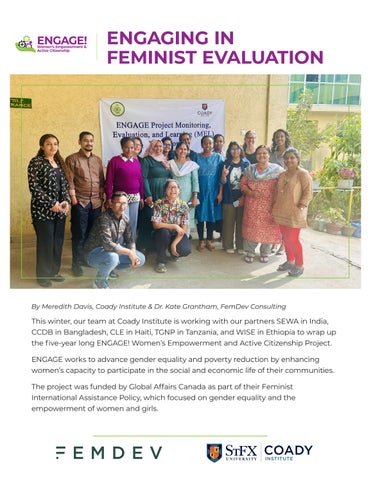
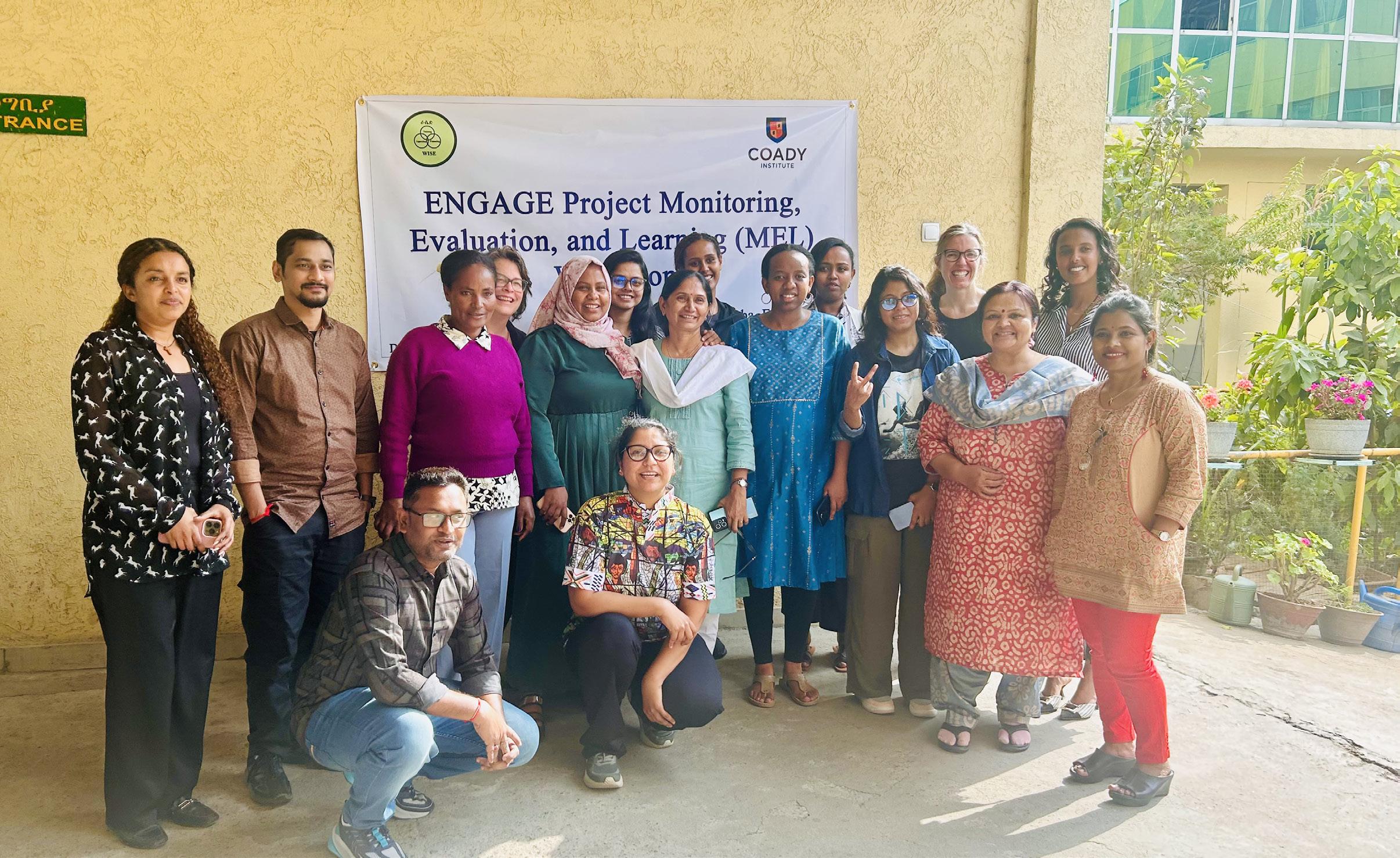
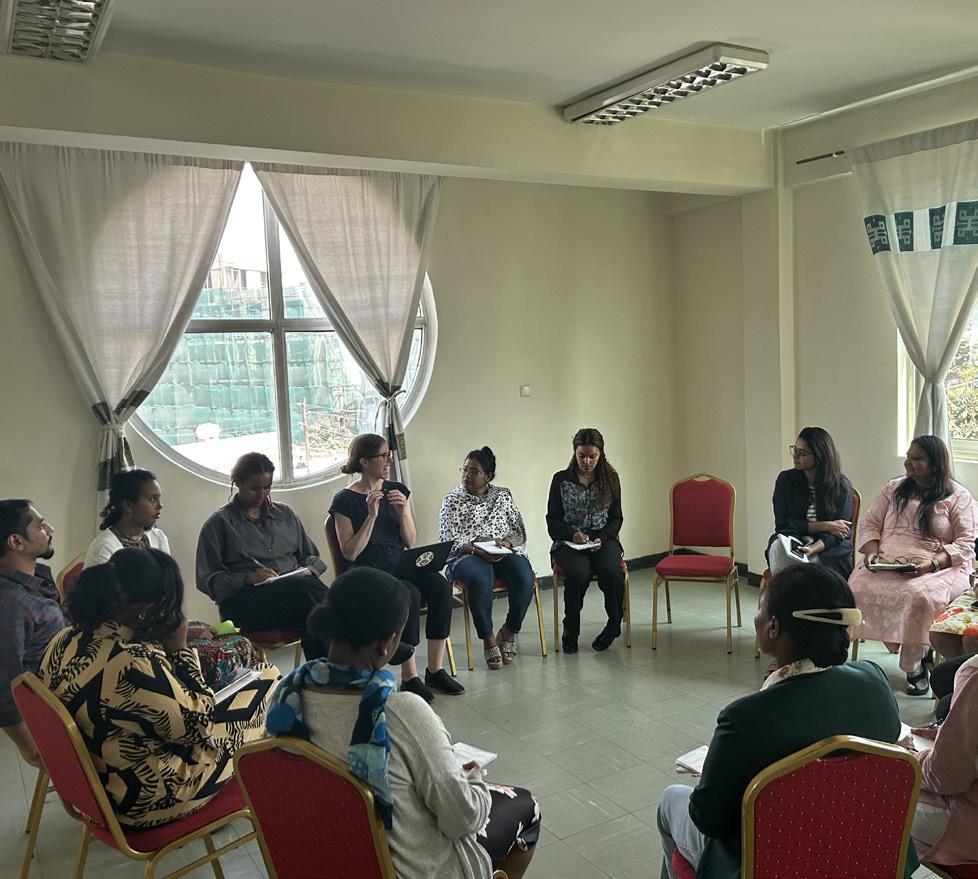
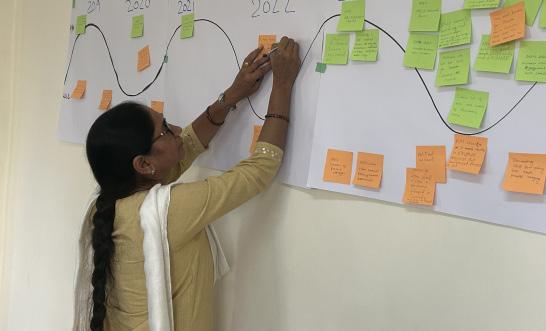
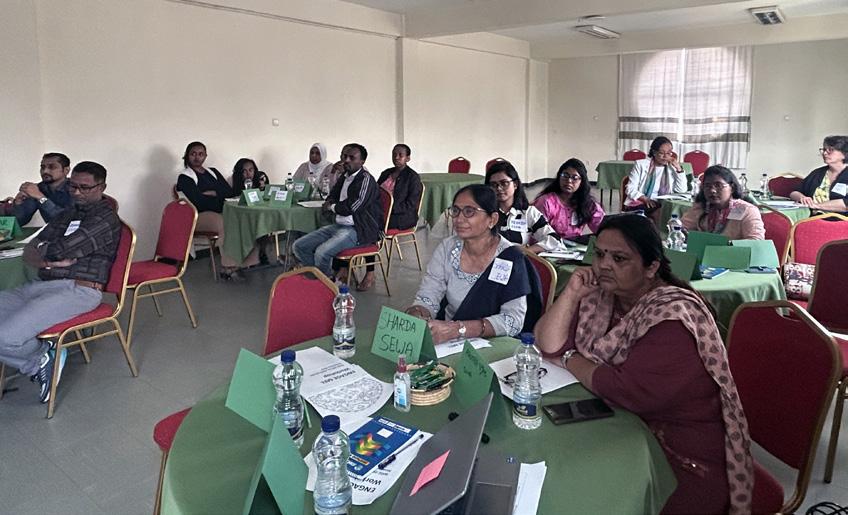
In November 2025, evaluation staff and project managers from partner countries gathered in Addis Ababa for a week to dig into the topic of feminist evaluation. Together, we brainstormed what feminism and feminist evaluation mean to us individually and collectively, and how those understandings can be incorporated into the final evaluation design and approach.
Here are some of the ways that project partners have defined and incorporated feminist principles into monitoring, evaluation, and learning activities. throughout the project, as well as how FemDev approached the final evaluation of ENGAGE in partnership with local feminist researchers in all five countries.
Flexible: Evaluation activities have been adapted to different geographies and groups to support meaningful participation of women, responding to partners’ diverse contexts and priorities. In practice, this has included reducing barriers to participation by providing transportation stipends and on-site childcare, and scheduling data collection activities at times that work best for participants balancing work and caregiving responsibilities.
Ethic of Care: We have embedded care, kindness, and a “Do No Harm” approach into all our evaluation data collection activities. This include ethical protocols for ensuring informed consent, voluntary participation, confidentiality, and clear communication on data use, as well as trauma-informed facilitation approaches that prioritize participant safety, comfort, and wellbeing.
MeanIngful: Evaluation questions and findings should be relevant and accessible to partners and participants. ENGAGE program partners defined their own progress markers at the beginning of the project based on early consultation with women in the community through a baseline study process. These markers were designed to track movement towards the larger, long-term goal of gender equality. Partners also weighed into the evaluation questions and approach through individual consultations and a virtual co-creation workshop. Recommendations from the final evaluation will be developed collaboratively with project partners at a sensemaking session in Tanzania, and results will be disseminated back to participating women and community stakeholders in creative and accessible formats.
Intersectional: The final evaluation will examine how different aspects of participants’ identities such as gender, disability, ethnicity, and socio-economic position combine to shape program experiences and outcomes. The evaluators will dig into how and why certain groups may have experienced or benefitted differently from their participation in the program, and how intersecting forms of inequality can be addressed moving forward.
Non-linear: We recognize that transformative gender and power changes are complex and outcomes will not be experienced by all participants in a clear linear pathway. The challenges introduced by the COVID-19 pandemic right at the start of the project certainly illuminated this, requiring ongoing adaptation and learning over time.
Integrated: Ongoing evaluative and reflective exercises were incorporated throughout the program, with local MEL staff supporting monitoring and learning in ways that made sense for each partner. For example, in Ethiopia, staff visited women in their homes to gather information on their self-employment journeys through one-on-one conversations, while in India they used a simple stoplight tool to help women reflect on changes in a variety of areas of their lives in a way that supported varying levels of literacy. These activities not only generated valuable evaluation data, but also created space for women to reflect on their own life circumstances and goals. Coady also facilitated focus groups with organizational staff and participants in the project to understand early outcomes. Insights from these ongoing activities are feeding into the final evaluation through a document review.
Self-reflective: Evaluators must practice ongoing self-reflection by acknowledging their position within systems of power and the biases they may bring into the evaluation process. They are transparent about these dynamics, and work to ensure they do not interfere with the integrity, openness, or inclusivity of the evaluation. In practice, this has included intentionally working with local researchers in each partner country to support linguistic and cultural understanding and to reduce power imbalances between evaluators and participants.
Transformative: A feminist evaluation approach has at its core the use of knowledge and learning to advance gender equality. Evaluation findings will be used to feed into future efforts to challenge unequal power relations and to advocate for systemic changes that address the root causes of inequality and reduce the need for social programs over time.
Feminist evaluation is not a checklist or a fixed set of tools, but a collection of principles and ideals to strive for. While it is not always possible to fully achieve all of these ideals in practice, we are committed to applying them as consistently as possible to the choices we make throughout the evaluation process for ENGAGE. It is these everyday decisions that bring us closer to the core goal of feminist evaluation: co-creating knowledge with communities that can help to advance gender equality and community-led change.