CARNEGIE MELLON ENGINEERING

Spring 2026


Spring 2026
Rail transit in the United States has challenges that drive up costs and delay implementation: technical complexity requiring expensive signaling and inspection systems, thorny regulatory hurdles, rigid funding structures that limit financial innovation, and reliance on costly feasibility studies to justify demand. These barriers reinforce high-cost, consultant-driven development models that discourage scalable, community-responsive transit.
This situation prompted a team of Carnegie Mellon engineers to ask, “Rather than relying on billion-dollar rail projects, what would happen if transit could start small, grow with demand, and be shaped by the people it serves? Their research reveals how legacy rail can overcome barriers that dramatically inflate revitalization costs.
Breakthrough results in lowering rail costs
$2 billion per mile WEST SEATTLE LINK EXTENSION

1.6 miles for under $1 million
Carnegie Mellon University researchers are bringing passenger rail back to communities by revitalizing existing rail lines—and in doing so, decreasing costs from billions to millions.
Passenger rail has the power to transform communities by connecting residents to essential services while reducing emissions and roadway congestion. Despite these benefits, expanding rail in the United States has proven nearly impossible due to its sky-high price.
As an example, the city of Seattle recently embarked on a four-mile light rail extension, costing just under $2 billion per mile. With this price tag, in addition to regulatory and bureaucratic hurdles,
projects in this space often stall before they begin.
Carnegie Mellon University researchers are working to flip this model and, in doing so, decrease a multi-billion-dollar project to millions.
With support from the National Science Foundation’s Civic Innovation Challenge (CIVIC), a unique program that emphasizes rapid, on-the-ground impact with direct community engagement, the team is leveraging the nation’s underutilized “legacy rail,” or existing and established tracks that remain underutilized or abandoned, to pave
a path toward faster, more affordable, and more sustainable rail transit.
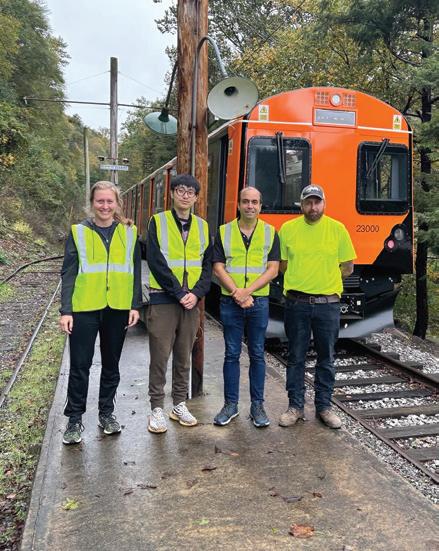
The project was conducted in two phases, where Phase 1 aimed to quantify the scale and feasibility of the project undertaking, from the on-the-ground community engagement to the technology deployment, and the partnership collaboration.
Centered around 1.61 miles of legacy rail along Philadelphia’s Delaware River Waterfront, a neighborhood long isolated from their community by Interstate 95 and unreliable public transit, the


To hear more about this research, watch this video.
CIVIC team set out to reconnect these residents to essential services, economic opportunity, and safe transportation. By deploying a modular, lowcost rail system that is responsive to real-time needs, the goal was to overcome the technical, financial, and regulatory hurdles that stall traditional transit development.
“The challenges in the Delaware Riverfront mirror those in cities nationwide, where thousands of miles of underused legacy rail remain untapped to close this gap,” said Katherine Flanigan, assistant professor of civil and environmental engineering, and lead principal investigator of the CIVIC project. “This project will disrupt the standard model of rail transit development by demonstrating that revitalizing legacy rail in collaboration with community stakeholders creates effective and scalable transit solutions.”
Through community forums, surveys, and workshops, more than 4,000 Philadelphia residents provided insights into their needs that would directly inform the pilot design. Led by partners Hinge Collective, the Delaware River Waterfront Corporation, and Operation Lifesaver, direct community engagement ensured that the project addressed future rider needs and priorities.
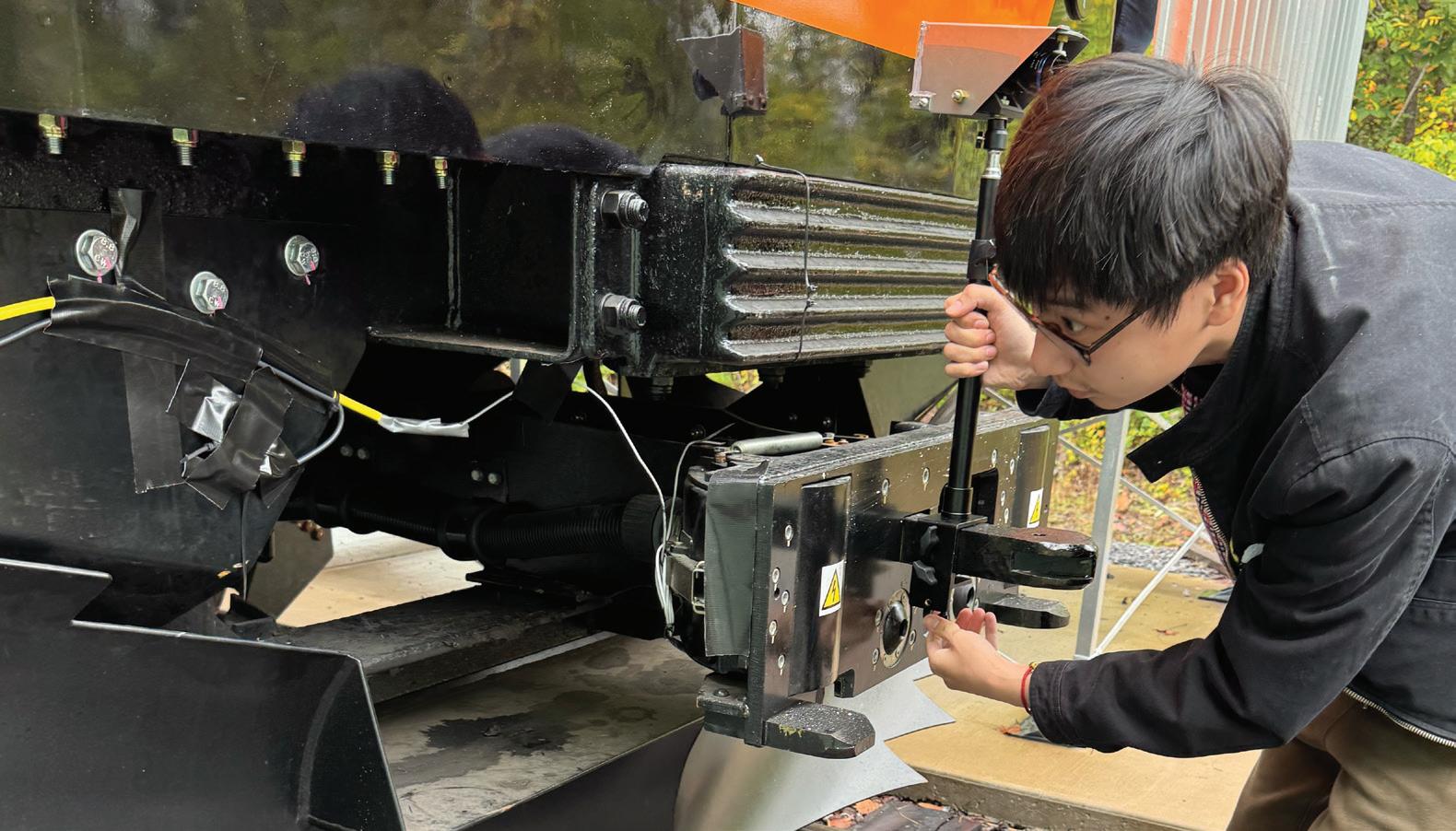
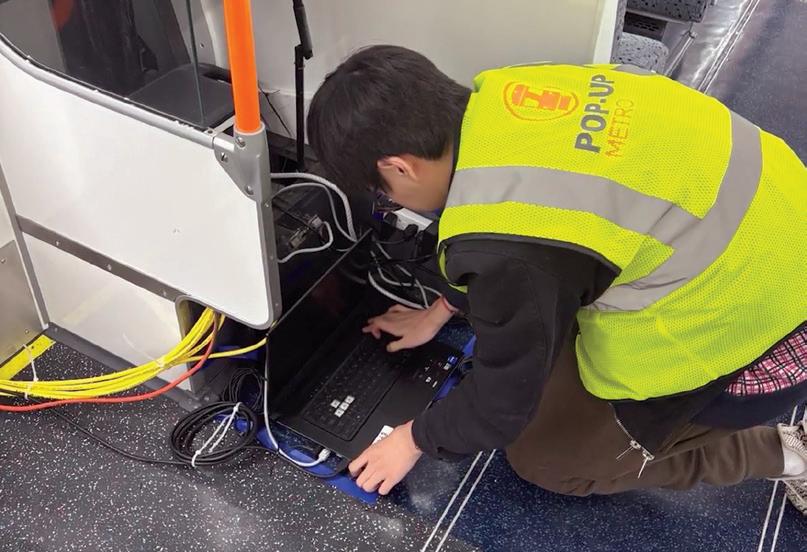
On the technical side, CMU’s Flanigan and Mario Bergés, professor of civil and environmental engineering, tested their cutting-edge on-board rail damage detection technology for rail inspection. By integrating acceleration- and vision-based AI, their system monitors rail integrity to not only detect broken rail in real time but also evaluate the overall condition of existing tracks. With improved track monitoring, communities can confidently introduce rail transit on their legacy lines and cost-effectively streamline maintenance strategies.
“By translating sensing technologies from our lab into operational rail vehicles, we can monitor safety and reliability in a way that is low-cost, scalable, and adaptable to changing community needs,” said Flanigan.
Between the technical innovation; resident engagement; low-cost, lightweight Pop-Up Metro train cars; and existing rail lines, the project showed that their model of revitalizing legacy rail for passenger service could be achieved for under $1 million per mile—compared to constructing new rail lines for nearly $2 billion per mile.
NSF’s CIVIC recently awarded Phase 2, for work which started in October 2025 to scale the pilot into
a full operational deployment in Philadelphia. The project will also create an open-access database of America’s legacy rail lines, providing tools and workshops to identify opportunities for replication across the country.
“Phase 1 allowed us to work closely with communities to understand both the promise and the barriers,” said Bergés. “Phase 2 is where the rubber meets the road. It’s about putting our vision into practice and showing communities across the U.S. that they can replicate this approach.”
“Thirty cities across the country have already expressed interest in adopting our model,” said Flanigan. “This project is truly an unprecedented example of the power of community-driven innovation.”
Demonstrating that legacy rail can be revitalized for millions over billions, as well as the impact on accessibility, emissions, and economic growth, could transform the rail industry—an accomplishment congruent with the Western Pennsylvania region.
“There’s a deep connection between the legacy of our region and the future of rail in this country,” said Bergés. “We see this project as charting new pathways into the future of how the rail industry will operate and we’re thrilled to be a part of this renaissance.”
EDITOR
Sherry Stokes (DC ’07)
4
DESIGNER
Tim Kelly (A ’05, HNZ ’14)
THE SMART, AFFORDABLE, AND SUSTAINABLE FUTURE OF RAIL
Carnegie Mellon University researchers are bringing passenger rail back to communities by revitalizing existing rail lines and in doing so, decreasing costs from billions to millions.
10
THE MANUFACTURING IMPERATIVE
Engineers advance digital twins and AI to give U.S. industry an edge.
22
MODIFYING RED BLOOD CELLS FOR DRUG DELIVERY
Multidisciplinary team advances technology to load blood cells with drug molecules.
30 THE FUTURE OF DRONES IN CONSTRUCTION
Eliminating collisions makes it safer for drones to survey construction sites.
36
SOFTBOTICS ANTENNA TO SENSE THE SPECTRUM
Soft, flexible antenna can sense and move to most efficient radio frequency.

Introducing our new dean, Burcu Akinci

46
ROBOTICS INNOVATION CENTER IS OPEN FOR BUSINESS
AI is elevating robotics and national economic growth.
52 SUMMER OF DISCOVERY Fellowships support inspiring undergraduate research.
54
NEW COURSE BRIDGES INDUSTRY GAP IN HARDWARE VERIFICATION
Industry will benefit from a pool of graduates who understand verification methodology.
62 BE”SPOKE”
Mechanical engineering alumna re-engineered the bicycle for women.
64
MEN OF SCIENCE, MASTERS OF HOVER
How three engineering alumni learned to fly without leaving the ground.
For 25 years I have conducted research and taught Civil and Environmental Engineering in the College of Engineering. During my tenure as a professor, head of the College’s research office, and then department head, I’ve witnessed remarkable advances. The discoveries engineers make, whether in the lab or field, push boundaries and enrich our capacity to impact the world. Now as dean of the College, I, along with the faculty and staff, remain steadfast in our mission to conduct impactful research and deliver transformative education as the world around us changes in an unprecedented way.
I am excited and honored to lead the College. From our students to our faculty, staff and alumni, the College is filled with curious and creative people, who ask important questions and exchange ideas. Engineering is fundamentally driven by the mission to solve society’s most complex challenges—an objective that is both ambitious and deeply inspiring, and especially at this point in time, is very much needed. Often research that seems futuristic is actually reliant on earlier breakthroughs. In this magazine, we discuss an award we received to develop a 3D-printed liver that could reduce the need for transplants. This new initiative utilizes FRESH 3D bioprinting, a technique that was invented at Carnegie Mellon more than 11 years ago. Of course, technology development can move quickly, leapfrogging traditional steps and electrifying markets. Either way, to solve critical problems, Carnegie Mellon researchers devise daring ideas and take risks, and their determination to succeed drives our world-class research.
An integral part of research is collaborating with industry, experts from different disciplines, and government and community partners. Recently Carnegie Mellon opened the Robotics Innovation
Center. This facility is designed to expand the impact of the university’s robotics, automation and AI research, development and commercialization. Engineering researchers will have room to develop and test robots for use in a range of physical environments and work closely with researchers from other disciplines and industry partners. Recently, I also traveled to Carnegie Mellon-Africa, where I met with students, alumni, faculty, staff, and partners. CMU-Africa delivers transformative education and engages in collaborative research to address African and global challenges. Program alumni are working in key sectors like fintech, health, and energy, engaging in entrepreneurism, and pursuing Ph.D.s at top institutions. I am energized about the future possibilities of our location in Kigali.
In this issue, you will find stories that illustrate the breadth of the College. Page by page you will discover the opportunities before us. Now is the time to be bold, dream big, and blaze new trails to engineer our brightest future.
Sincerely,
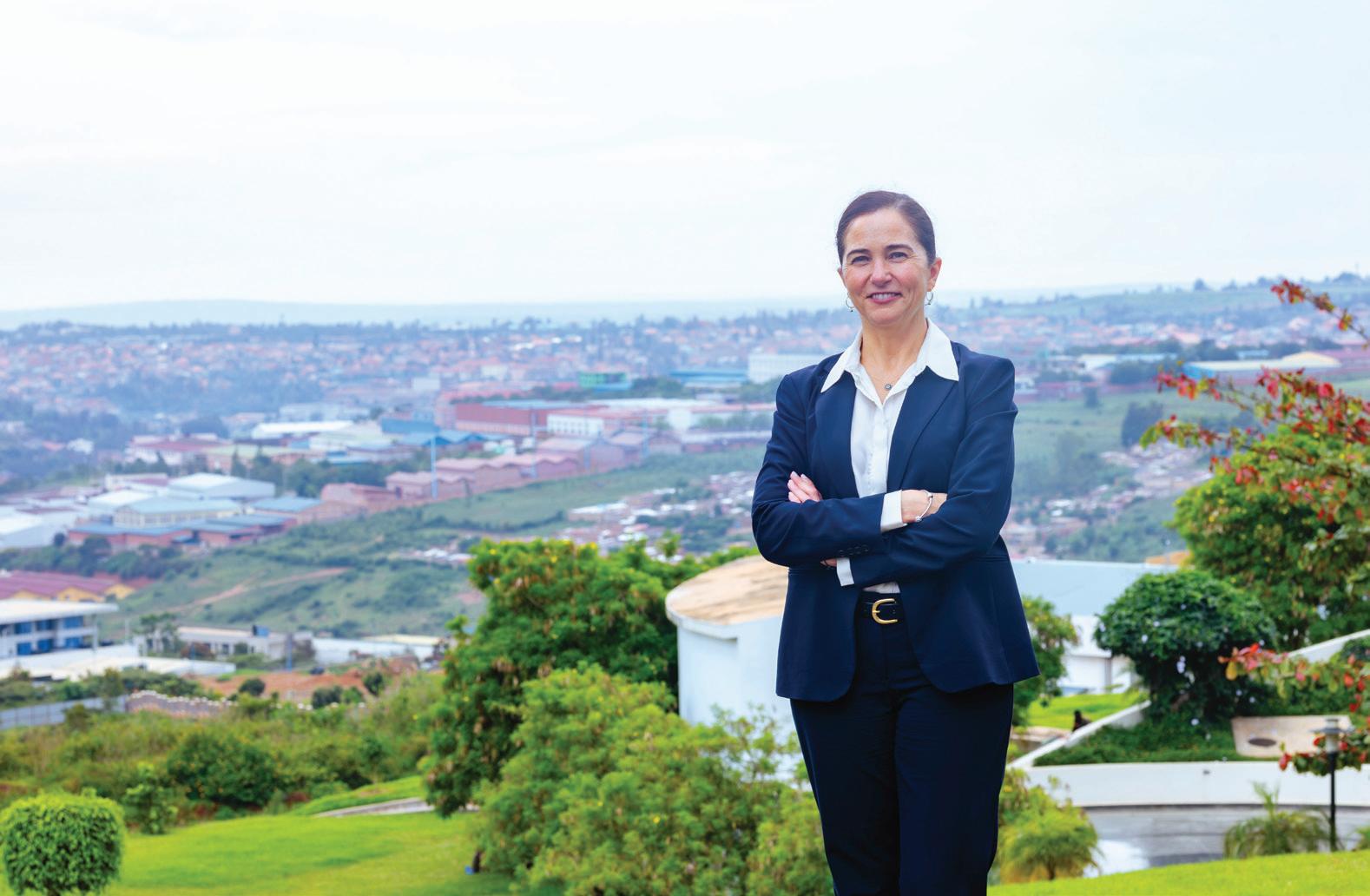
Burcu Akinci
Dr. William D. and Nancy W. Strecker Dean, College of Engineering
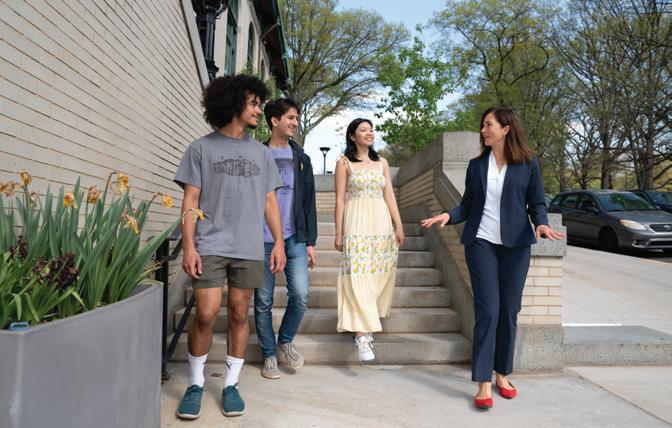
Burcu Akinci was appointed the next Dr. William D. and Nancy W. Strecker Dean of the College of Engineering at Carnegie Mellon University, on January 1, 2026.
The former head of the Department of Civil and Environmental Engineering (CEE) has been a member of the CMU community for 25 years. Akinci is an exceptional leader who brings the strategic vision, research impact, and collaborative spirit necessary to lead the College of Engineering. She served as associate dean for research for six years, driving institutional-level growth by helping to establish the “moonshot initiative” to cultivate large-scale research centers, developing the college’s strategic research direction, and increasing the value of new research awards.
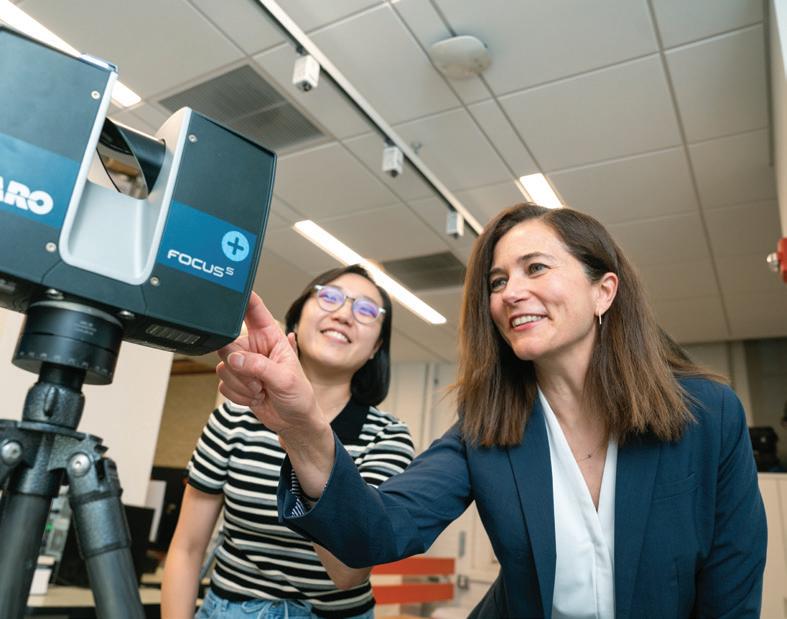
As CEE's department head, Akinci fostered a culture of collaboration among students, faculty, staff, alumni, and external partners, encouraging shared learning and the open exchange of ideas across all levels of the department. Through initiatives such as the alumni-to-student and Ph.D.-to-Ph.D. mentorship programs, as well as the Industry Partnership Program that connects students directly to opportunities at more than 20 leading engineering firms, she helped drive innovation by creating pipelines for meaningful engagement.
Under her leadership, the department also expanded its graduate offerings, including CEE’s first online certificate program, AI Engineering - Digital Twins & Analytics, and a new interdisciplinary master’s degree in the emerging field of civil and computer engineering. kinci’s research expertise lies at the intersection of computing and infrastructure management and employs data-capturing and sensing technologies and digital twin models. Her cutting-edge work is making the built environment, facility operations, and construction projects smarter, safer, and more sustainable. A pioneer in this nascent field, she has published more than 190 peer-reviewed papers, is an inventor on multiple patents, and co-founded a start-up company.
A member of the National Academy of Construction, distinguished member of the American Society of Civil Engineers, and a fellow of the American Association for the Advancement of Science, Akinci was also named a University Professor in 2023, the highest rank of distinction for faculty at Carnegie Mellon.
Akinci began as a faculty member at CMU in 2000. She received her bachelor’s degree from Middle East Technical University, her MBA from Bilkent University in Ankara, Turkey, and her master’s and doctoral degrees from Stanford University.
The future of manufacturing is digital and Carnegie Mellon engineers and scientists are advancing digital twin technology and AI for human-machine collaboration capabilities that can give U.S. industry the operational edge it needs to regain its competitive advantage.
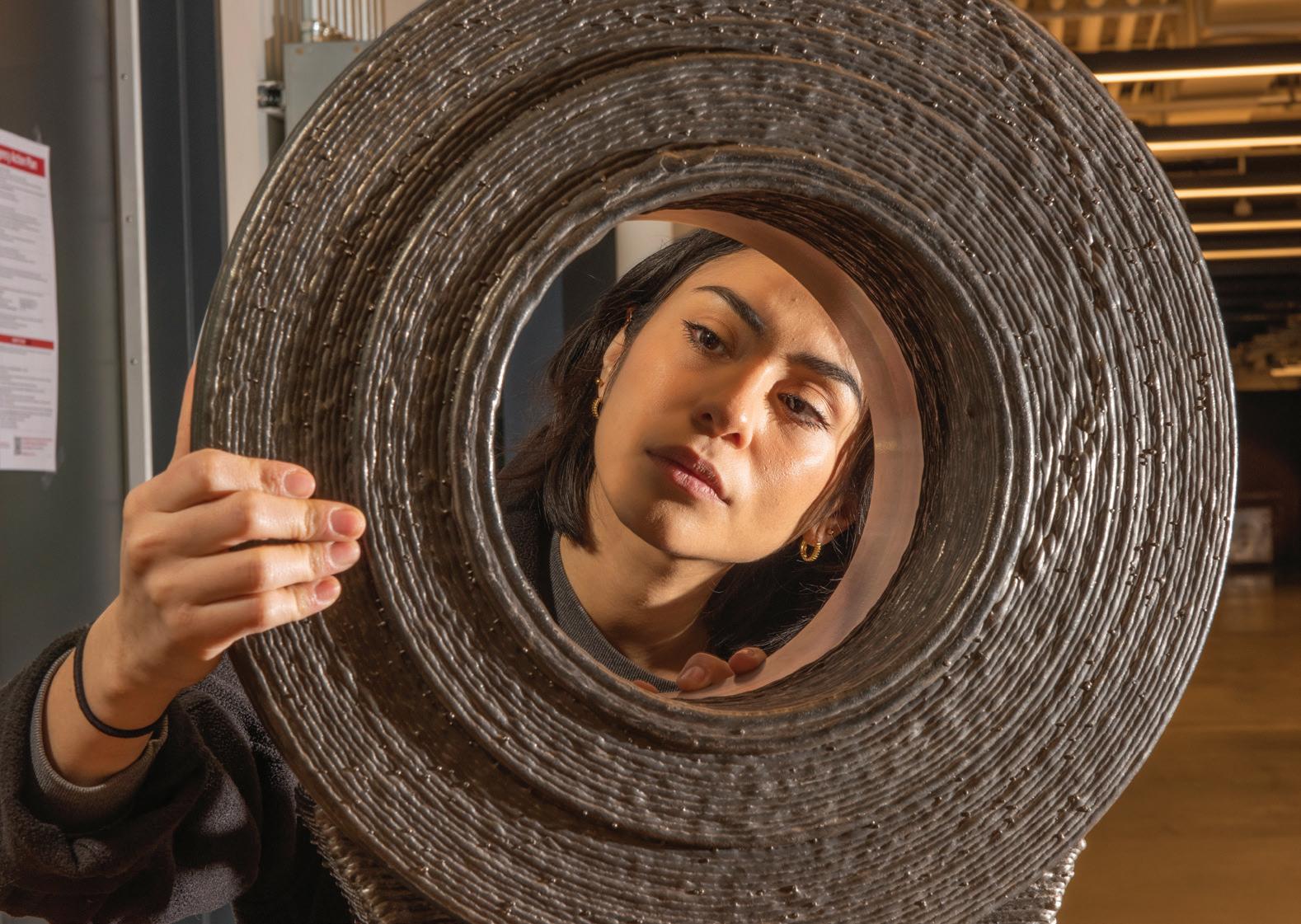
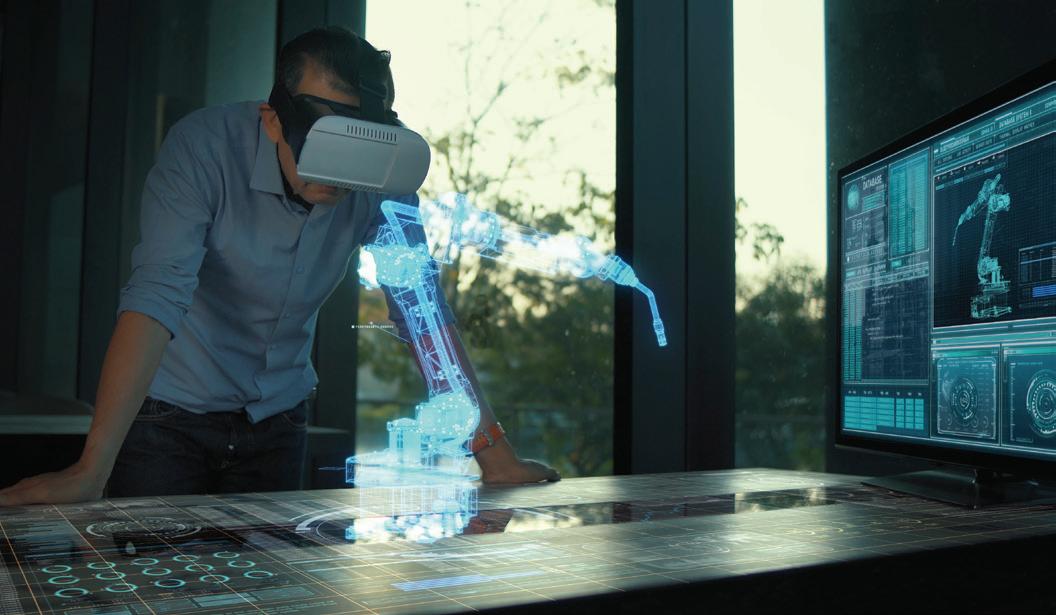
Among the impressive scope of industry-related research are several broad strategic approaches that hold promise for nearterm implementation as well as enormous potential for continual adaptation and adoption.
ENHANCING PRODUCTIVITY BY DEPLOYING HUMAN-CENTERED AI
Complex production challenges are being solved with advances in digital twin technology by integrating powerful AI that is trained with hard data derived from physical equipment, systems, and environments and enriched by soft data that relies upon the intuitive knowledge, skills, and performance of factory workers.
The next generation of manufacturing robots are being trained with sophisticated machine learning techniques that will enhance their ability to assist human coworkers, perform more fine manipulation tasks, and readily adapt to shifts in complex production methods.

Learn how CMU research will advance U.S. manufacturing productivity and drive industrial resilience.
ENHANCING MATERIALS PROPERTY, PERFORMANCE, AND POTENTIAL
AI is revolutionizing the development of new metal alloys with refined additive manufacturing technologies that can produce more complex designs and dramatically increase the strength and performance of materials for critical transportation, electronics, energy, and health care applications.
The promise of 3D printing to efficiently and reliably produce metal parts for safety critical applications in automotive, aerospace, and defense sectors is being accelerated with generative design, AI-driven monitoring and control, and digital twin technology.
Collaborations with public entities and private industry partners are providing insight and opportunities for manufacturing researchers to develop strategies, programs, and policies needed to attract, train, and support a skilled, adaptable, and inclusive U.S. workforce.
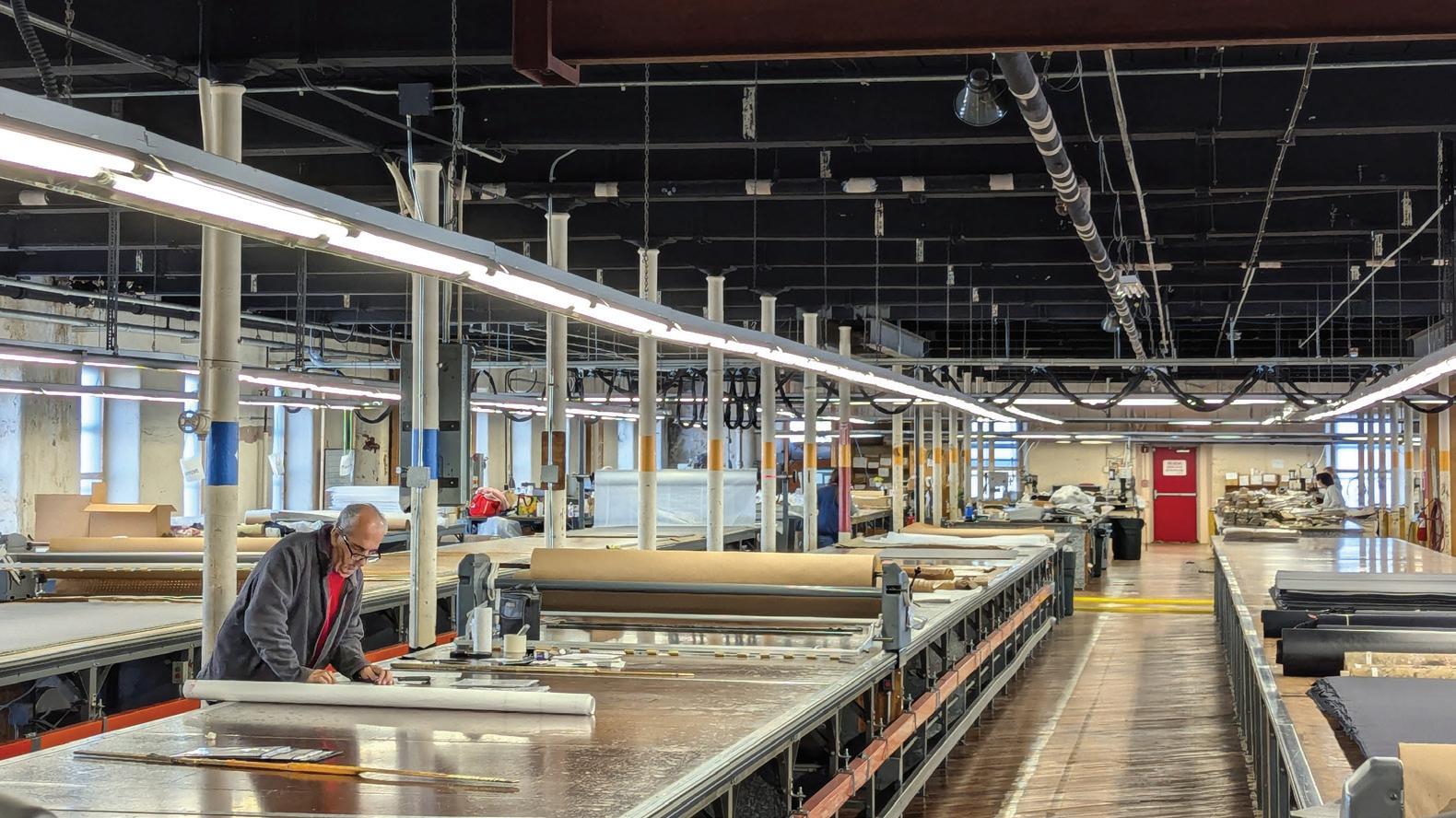
Researchers are solving complex manufacturing challenges by using factory workers’ intuitive knowledge to train AI.
In Falls River, Massachusetts, a textile manufacturing company that was established almost 200 years ago is championing “Made in the USA” by embracing the advanced manufacturing technology the U.S. needs to regain competitive advantage.
“Factories aren’t relics. They’re extensions of the lab. When we connect research, universities, commercial problems, and production—we accelerate progress,” declared Charlie Merrow, CEO and an 8th generation family member of the Merrow Manufacturing company.
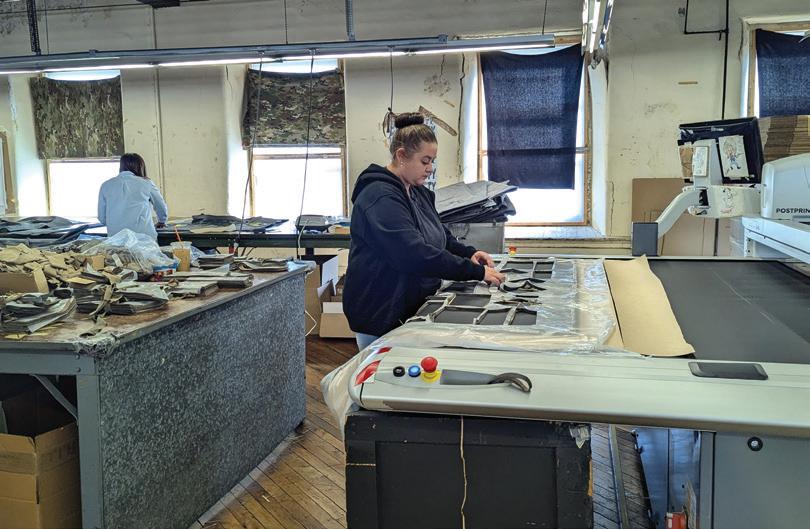
In October 2024, a team of Carnegie Mellon engineers and scientists visited Merrow’s 300,000-square-foot facility to model their production processes with limited data to support business decision-making for using automation to scale up their manufacturing lines. By integrating human intelligence with
artificial intelligence (AI), the team helped the company identify opportunities to achieve a three-fold increase in their output of T-shirts for the U.S. military.
Today, research with the Merrow company continues, and Pingbo Tang, an associate professor of civil and environmental engineering, leads the effort. He describes himself as a construction engineer whose work focused on human interactions with autonomous machines in airports, nuclear power plants, transportation, and construction systems before being drawn to manufacturing-related research.
In 2021, he received seed funding from Carnegie Mellon’s Manufacturing Futures Institute to study how enhancing humanmachine collaboration could reduce waste in the manufacture of customized modular housing components, a process that requires frequent changeovers of equipment and production lines.
His team employed what is essentially digital twin technology to train computers to analyze human-in-the-loop (HITL) production histories reconstructed from field notes, videos of workers, and control system logs of production lines.
Researchers integrated intuitive human expertise with advanced machine learning techniques that used data derived from actual human interactions. Tang’s team was then able to generate plans for safely and efficiently reconfiguring production lines that could accommodate the production of new products without building new production lines.
In 2024, Tang received funding from the Manufacturing PA Innovation program to employ a similar human-machine teaming approach to resolve time and resource waste in small orders of customized products for several manufacturers, including DMI Companies, which provides ventilation ductwork for buildings.
By collecting waste-generation scenarios from active production lines, the researchers used simulations and data analytics to identify ways to reduce the waste of costly materials used to make ductwork.
training methods and communication styles are most effective to standardize and optimize how workers can gain new skills.
Tang is pleased with the results of this work, particularly in the potential of digital twin technology to solve manufacturing problems for both hard and soft production, in single-worker and team scenarios, and by using multiple modes of data collection.
He is especially interested in expanding the use of audio, human biometric and behavioral data, in addition to video capture. However, to get the most value from this data, there must be a unifying language. Researchers must identify and consistently use keywords to ensure that the underlying information related to a machine’s operation and performance are clearly defined.
AI has the power to make discoveries from human and machine behavioral data, but only if researchers can eliminate
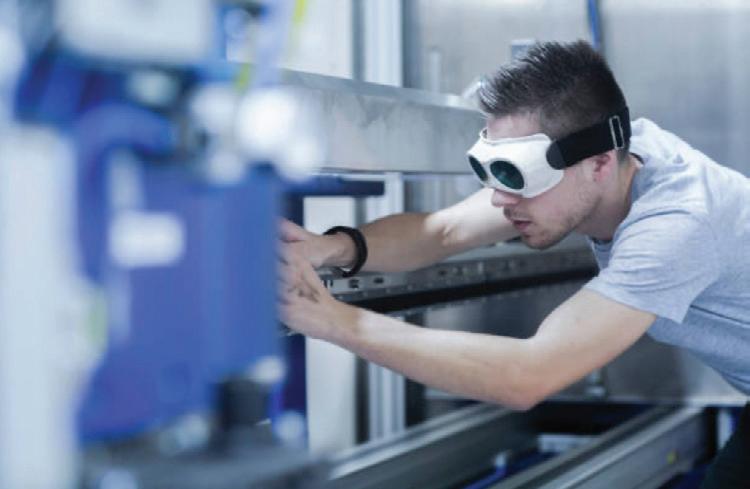
Compelled to dig deeper, Tang is scrutinizing how human behavior informs AI. “Why is one worker better at a task than another? When we can more proactively observe and capture their historical behavior, we can organize that data and use AI to identify the optimal behavior.”
Again, working with DMI Companies, Tang is conducting human behavior analysis to determine better methods for training their workers on a newly commissioned piece of equipment. Tang and his team analyzed the verbal exchanges between the trainers and users, video capture of their interactions, and biometric data of the participants to find better ways to convey how to set up and use the new equipment.
In this case, researchers are trying to determine which
- CHARLIE MERROWCEO, MERROW MANUFACTURING
ambiguity in the multimodal data. Tang hopes to conduct research on how to standardize observation data to ensure accurate results.
Tang and collaborators from CMU and the Advanced Robotics for Manufacturing Institute intend to further analyze and improve production by installing additional sensors, including those capable of gathering vibration and electricity consumption data.
The goals of their work are to develop methods that optimize production of an existing system, replicate those methods for use throughout a facility, and predict performance that can justify investment in new levels of automation.
Those goals resonate with Merrow, who believes, “Made in the USA isn’t a premium. It’s a competitive advantage.”
In the 1980’s when Micro-ElectroMechanical Systems (MEMS) were first created, computer engineers were excited by the idea that these new devices that combine electrical and mechanical components at the microscale could be used to build miniature robots.
What was particularly exciting about shrinking robotic mechanisms to such tiny sizes was the potential to achieve exceptional performance speed and precision. But making robots at smaller scales is easier said than done due to limitations in microscale 3D manufacturing.
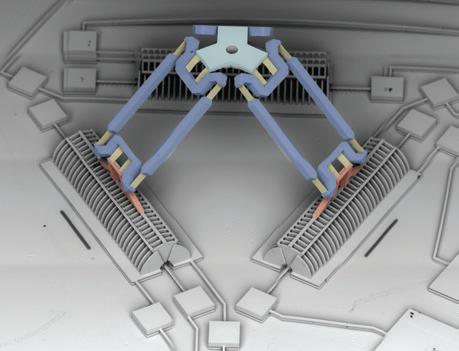
Nearly 50 years later Ph.D. students Steven Man and Sukjun Kim, working with mechanical engineering professor Sarah Bergbreiter, developed a 3D printing process to build tiny Delta robots called microDeltas that have the potential for real-world applications in micromanipulation, microassembly, minimally invasive surgeries, and wearable haptic devices.
Bergbreiter’s team developed a 3D printing process for microrobotics that uses two-photon polymerization, an advanced nanofabrication technique in which a focused laser solidifies photosensitive material with extremely high precision. Then a thin metal layer is deposited that
enables electrical functionality for the complex 3D geometries and actuators without folding or manual assembly. Previous methods for making robotic mechanisms at these smaller microscales had been to create 2D components that required manual assembly and folding.
“Eliminating the need for post-processing assembly has huge benefits in terms of rapid fabrication and design iteration,” said Bergbreiter. “Researchers can assemble larger robots from motors and mechanisms that you can buy offthe-shelf. We don’t have that luxury at these small scales and connecting pieces together that are smaller than a millimeter is exceptionally challenging. That’s where this new fabrication process is incredibly beneficial.”
Delta robots at larger scales (typically 2 to 4 feet in height) are used for picking, placing, and sorting tasks in manufacturing, packaging, and electronics assembly. The microDelta robots, which are 1.4 mm and 0.7 mm in height, are the smallest and fastest Delta robots ever demonstrated.
By building microDelta robots at different sizes, the researchers were able to test those predictions that scientists made almost 50 years ago. As expected, shrinking the robot improved precision to less than a micrometer, increased speed by
operating at frequences over 1 kHz, and delivered enough power to launch a grain of salt–a projectile that is 7.4% the mass of the entire robot.
Bergbreiter said that Man quickly pushed through eight iterations of the design of the microDelta robots. This fast turn-around is due to the 3D design and printing of these robots in contrast to previous approaches that might take weeks or months to design and fabricate.
“I love how quickly Steven was able to iterate these designs, and moving forward, students can more easily continue that work, which will result in future improvements.”
Using the model developed in this work, students can further improve desired metrics such as bandwidth, accuracy, and workspace by changing the robot’s design parameters or even adding further improvements like sensing for closed loop operation.
Robotic Institute professors Zeynep Temel and Oliver Kroemer are already using arrays of larger scale Delta robots for complex manipulation. Because the microDelta robots are so small, densely packed arrays of multiple microDelta robots could enable entirely new robot capabilities at small scales for rich haptic feedback or previously infeasible micromanipulation tasks.
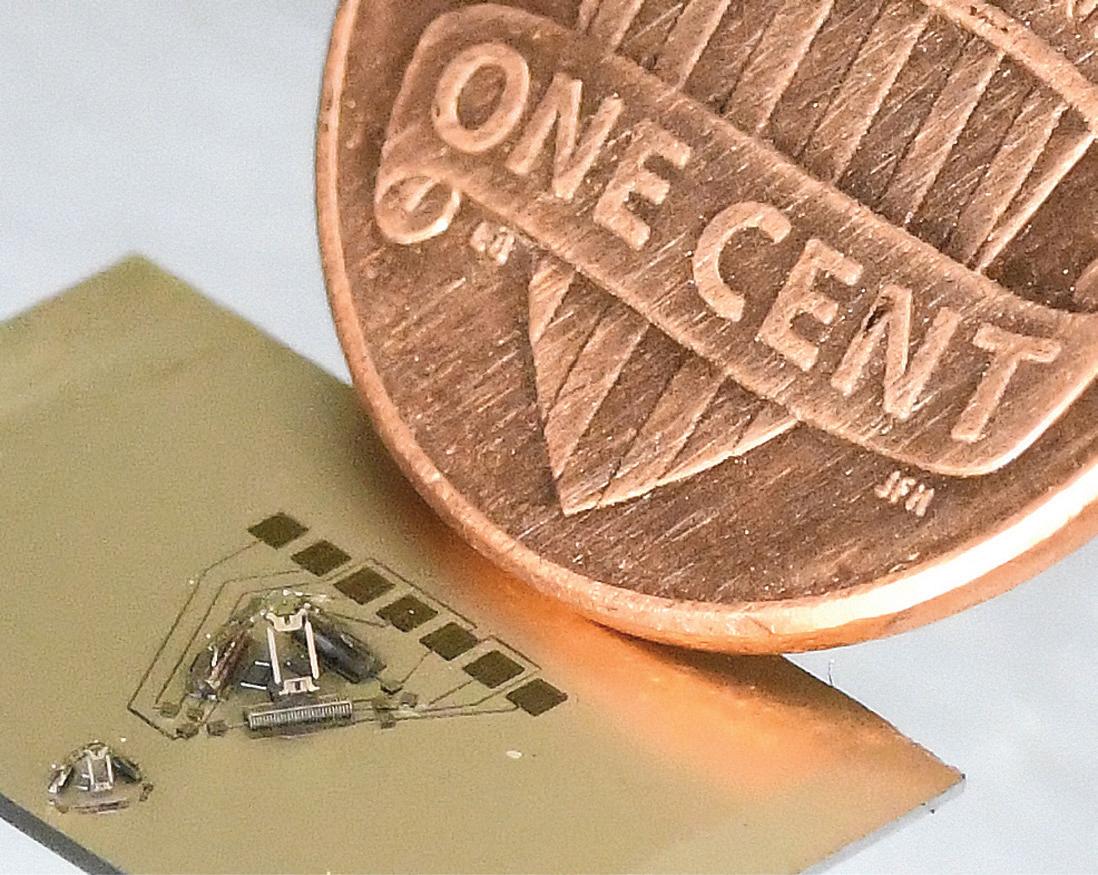
Multiple scanning electron microscope (SEM) images are stitched together to provide a high resolution image of the
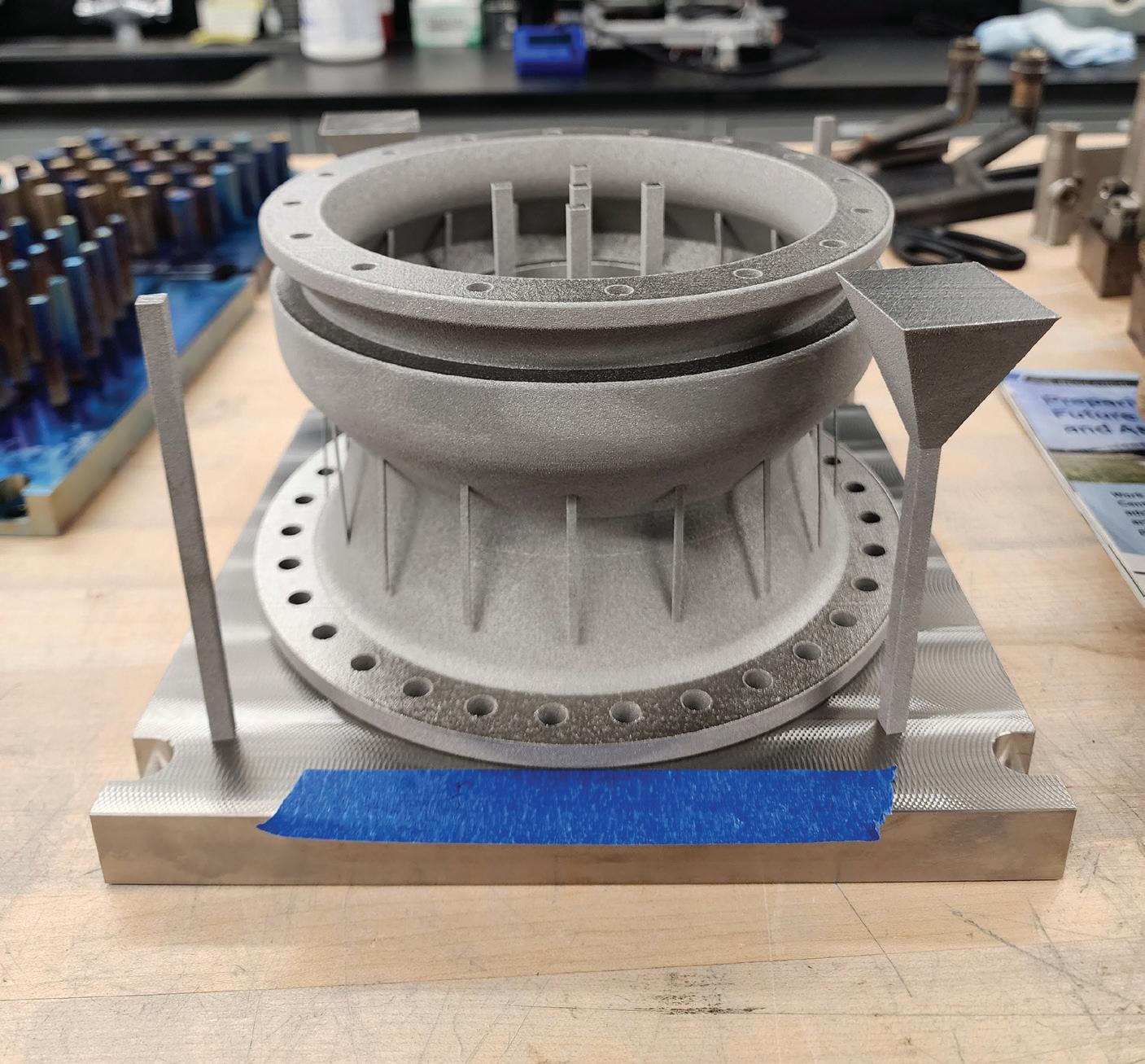
Researchers have completed their first successful production of a challenge part through the NASA Space Technology Research Institute, which will advance efforts to optimize additive manufacturing of custom components used in aeroengines.
The rapid production of custom components for rockets and satellites is often essential to support design modifications, repairs, and operational needs in space travel. Additive manufacturing can provide an effective solution, but optimization of the design, production and testing processes is crucial to maintain the quality and reliability of 3D-printed components.
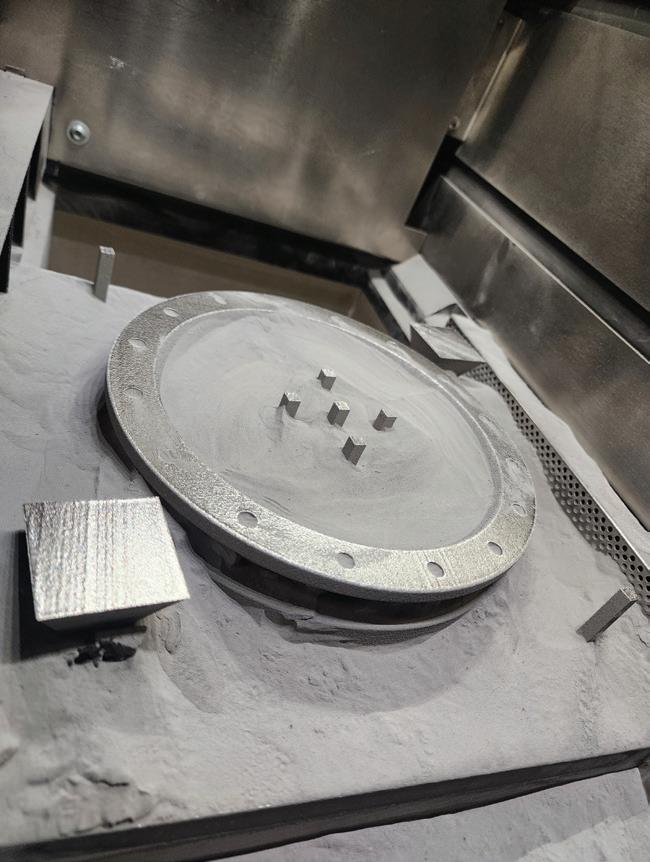
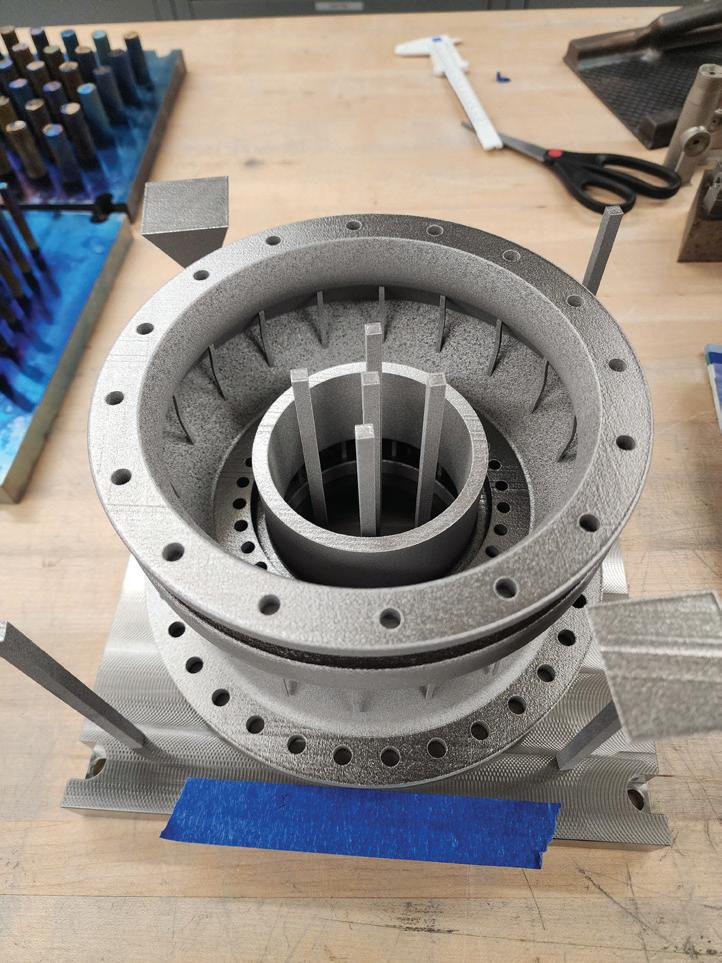
Researchers at Carnegie Mellon University have completed their first successful production of a challenge part through their Institute for Model-based Q&C of Additive Manufacturing (IMQCAM) that will advance efforts to achieve these outcomes. This part is representative of components used in aeroengines while being non-proprietary and is expected to be capable of sustaining loads
at elevated temperatures. The digital twin that is being developed through this project will model fatigue evolution in this challenge part for incorporation in the qualification and certification (Q&C) process.
The IMQCAM is a NASA Space Technology Research Institute (STRI) that is co-led by CMU materials science and engineering professor Anthony Rollett and Somnath Ghosh, professor of civil and systems engineering and mechanical engineering at Johns Hopkins University. Established in 2023, the effort seeks to shorten the cycle required to design, manufacture, and test custom vehicle parts that can withstand the conditions of space travel through the development of models for qualification and certification. By developing a digital twin through this project, NASA will ultimately be able to use computer based-integrated models to accurately predict fatigue performance of spacecraft parts.
Throughout this project, there are components based on processing, modeling, and verification. With Carnegie Mellon taking the lead in the processing element, researchers implemented a design set forth by their partners at Pratt & Whitney in order to test the computer-based multiscale models of performance and life that are being developed by Johns Hopkins.
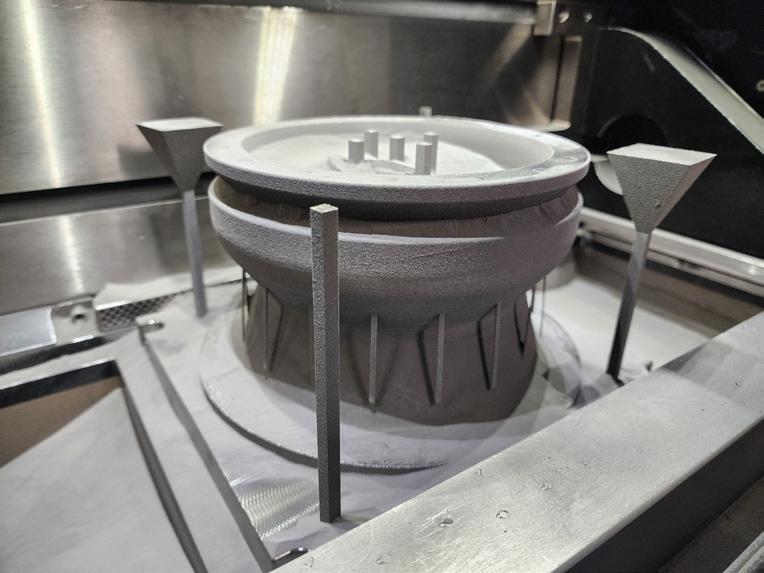
“The main concern is the consistency of the product, so one of the ultimate tests is to demonstrate that our models work for printing something that is representative of the complexity of an actual part,” says Rollett. Acknowledging this, Ghosh adds that the robust integration of physics-based modeling with AI/ ML and uncertainty quantification makes this digital twin a robust platform for tackling this challenge.
The test part will now be verified to confirm its ability to sustain a variety of mechanical loads, temperatures, and conditions. While there were no obvious defects externally, test samples will be analyzed to ensure there are no internal defects and that the mechanical properties, particularly fatigue, meet the necessary standards. Non-contact measurements will be gathered through interferometric techniques, and the part will be re-measured once it has been cut from the build plate to determine any impacts of residual stress. The part will also be heat treated to bring it closer to a product that a company might use.
The CMU team plans to print additional iterations of the part with a greater variety of conditions, to further enhance the printing process and product properties. The first version was created using a standard titanium alloy with 6% aluminum and 4% vanadium, but eventually the part will be printed with nickel alloy 718, a superalloy known for its excellent mechanical properties and corrosion resistance.
Researchers in the Materials Science and Engineering Department have pioneered the potential to train large language models to improve the speed and reduce the cost of alloy design for various manufacturing processes.
Additive manufacturing of alloys has enabled the creation of machine parts that meet the complex requirements needed to optimize performance in aerospace, automotive, and energy applications. Finding the ideal mix of elements to use in these parts when there are countless possible combinations available is a complicated process that has been accelerated by computational tools and artificial intelligence.
With large language models (LLM), such as ChatGPT, evolving to better understand natural languages, researchers in the Materials Science and Engineering Department at Carnegie Mellon University have pioneered the potential to train LLM to understand a
novel alloy physics language in a similar manner. Led by Mohadeseh Taheri-Mousavi, they have developed AlloyGPT, which recognizes the relationship between composition, structure, and properties in order to generate novel designs for additively manufacturable structural alloys.
The AlloyGPT model is unique in that it has dual functionality. It accurately predicts multiple phase structures and properties based on given alloy compositions, and conversely, it can suggest a comprehensive list of alloy compositions that meet desired design goals.
“We have created an architecture that has learned the physics of alloys in order to design enhanced alloys that have the desired qualities for mechanical
performance and manufacturability in a variety of applications,” said Taheri-Mousavi, an assistant professor of materials science and engineering.
Taheri-Mousavi’s group, which focuses on structural alloy design, built the autoregressive model by developing a language for the physics of alloys for training this generative AI model. Rather than analyzing words, the model examines compositions and structural features in a sentence format to understand how the composition, structure, and properties are connected. Unlike conventional iterative methods, which often face challenges in finding all possible solutions, AlloyGPT can provide a comprehensive list of elemental combinations to produce the material properties requested. This is useful for designing gradient composition additively
manufactured alloys in which gradual changes in material properties exist across a single part.
“It’s exciting to build a model that can solve prediction and design tasks simultaneously,” said Bo Ni, a postdoctoral researcher at Taheri-Mousavi’s group.
“It’s even more interesting when we demonstrate that AlloyGPT can synergize accuracy, diversity, and robustness in problem solving.”
This language model has potential to lay the groundwork for similar models and to accelerate material design for alloys manufactured by both traditional and additive manufacturing.
“Our approach will enable scientists to quickly discover alloys with new or improved properties and will ultimately help industry partners to improve the speed and reduce the cost of their alloy design for various manufacturing processes,” said Taheri-Mousavi.
Organizers celebrate strides they’ve made attracting women and under-employed individuals to manufacturing careers by introducing them to new skills, equipment, and job opportunities.
Among the job seekers at a job fair hosted by Carnegie Mellon Universi ty’s Manufacturing Futures Institute (MFI) last fall was a group of partici pants from the Step on Up – Maker to Manufacturer program
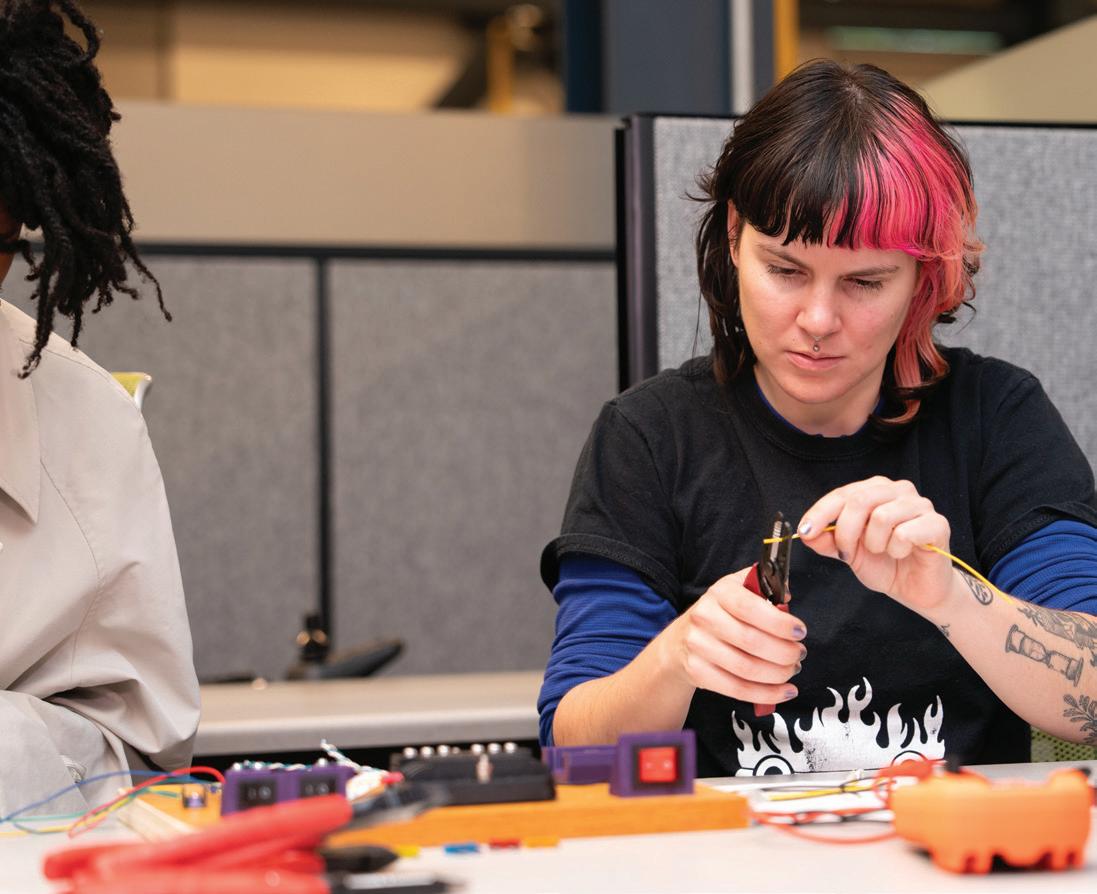
Every other week for six months, 25 participants were introduced to manufacturing skills and equip ment at sessions hosted by MFI, Prototype PGH, and New Century Careers. The program was designed to encourage interest in manufacturing careers by offering participants unique experiences using tools and machinery.
One exhibitor at the job fair was so impressed with the participants’ knowledge and enthusiasm that he hopes to find ways for his company to support the program and look to it as a source for future talent.
Their interest was just one of many wins the pro gram organizers are celebrating.
Prototype PGH Founder Erin Gatz says that her non-profit organization provides low-cost access to high-tech equipment in a welcoming makerspace environment that provides free workshops and equipment training, as well as a network of support intended to build confidence and technical skills.
During the first weeks of the program, participants learned vector design, screen-printing, laser cutting, and 3D printing at Prototype’s Sharpsburg location.
“I am so excited about the success we’ve seen with the first cohort. We’ve graduated 25 participants, some of whom are beginning to interview with local manufacturing companies,” said Gatz, who added that one participant has already enrolled in the New Century Careers pre-apprenticeship program.
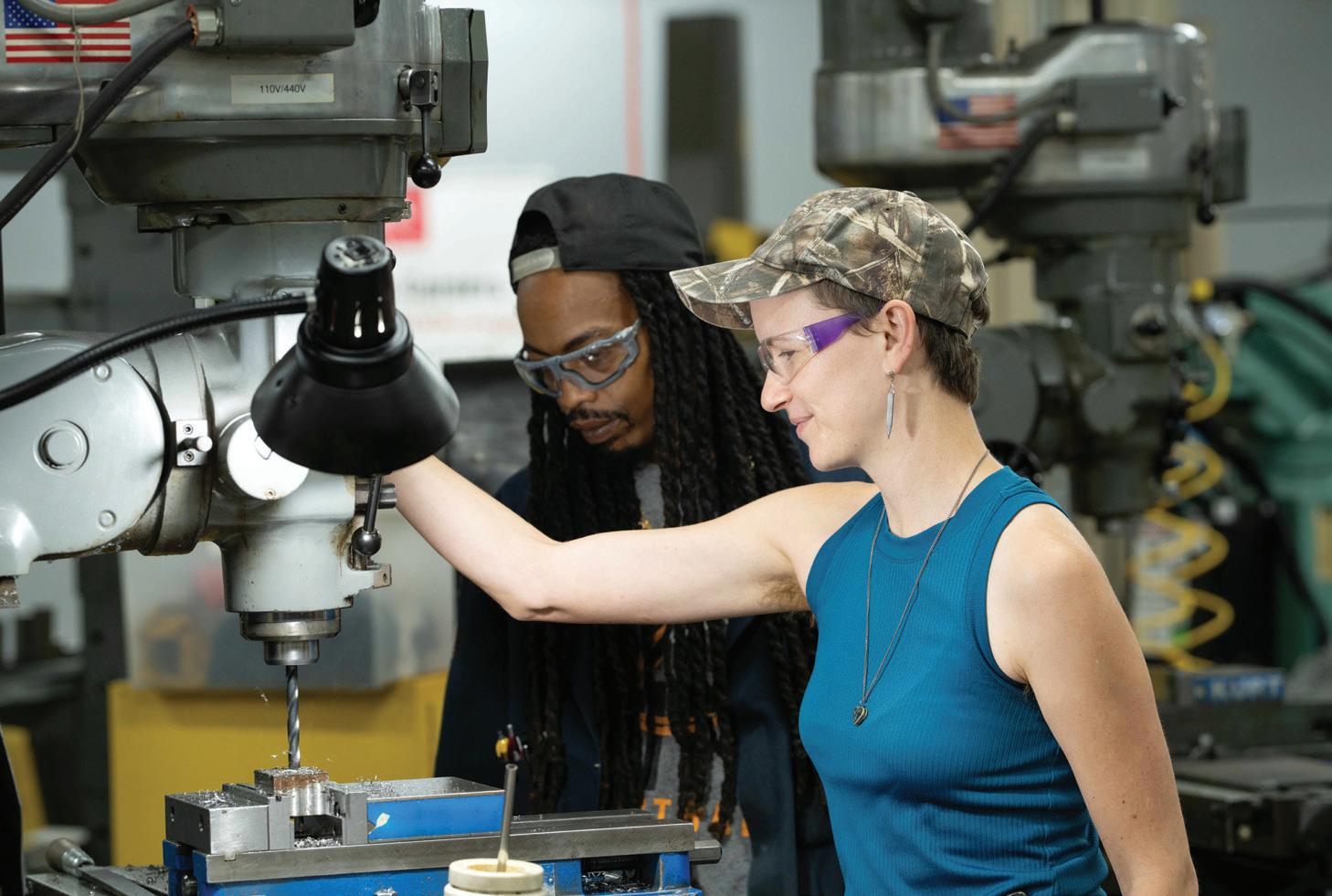
Teaira Collins enrolled in the MANUFACTURING 2000 Pre-Apprenticeship program, which offers entry-level machinist training to qualified applicants at no charge.
While at New Century Careers, she and the other participants used surface grinders, lathes, and vertical milling machines, and were introduced to advanced manufacturing equipment including industrial robots and CNC Machines.
“This program is a wonderful way to address workforce shortages by giving individuals the chance to learn about skills and competencies needed in advanced manufacturing careers,” said Neil Ashbaugh, the president of New Century Careers, a non-profit manufacturer and technical skills development orga-
Abundant and persistent, red blood cells have a lifetime of about four months in the human body and travel to every organ and tissue. They could soon be leveraged to transport more than oxygen and carbon dioxide.
A team led by researchers at Carnegie Mellon University is receiving $5.4 million from the Defense Advanced Research Projects Agency (DARPA) to develop technologies for loading red blood cells with drug molecules. DARPA’s Red Blood Cell Factory (RBC-Factory) program aims to create a medical device-based platform to insert biologically active components, like proteins and peptides, into red blood cells to provide enduring protection for service members in challenging environments.
The 21-month project, titled Visco-Elastic Large Volume Erythrocyte Transfection (VELVET), will study the feasibility of a new method for loading diverse components into red blood cells. Developed by Derin Sevenler, the method could enable delivery of medication at safe, effective, and consistent concentrations for extended periods of time. For example, drug molecules designed to remain inactive while inside the red blood cells could become active upon release when those cells are naturally recycled by the body.
“The vision is a single outpatient procedure with a therapeutic effect that lasts for months,” says Sevenler, assistant professor of chemical engineering.
The Sevenler Lab is developing a device to load drug molecules into red blood cells taken from a standard blood draw, with the goal of eventually infusing the drug-loaded cells back into the patient. They use manufacturing techniques originally developed for computer chips to make microfluidic devices that can precisely manipulate biological samples like cells.
Inside the microfluidic device, Sevenler’s design takes advantage of the nonlinear mechanical properties of viscoelastic fluids. Cells are exposed to an extremely brief but intense pulse of stretching forces, which creates leaky pores in the cell membrane. These pores stay open for a few seconds, long enough to efficiently deliver molecules into the cell by molecular diffusion.
Previous research has found that existing methods of making a hole in a red blood cell can shorten the lifetime of the cell. The membrane is weakened, the cell becomes more fragile, and it is cleared by the body faster.
Membrane damage can also activate the immune system. Immune cells recognize certain changes in the membrane structure, identify those red blood cells as damaged, and destroy them. “We want to understand if we can develop methods that keep these modified red blood cells in circulation for their natural lifetimes,” says Sevenler.
Another limitation of existing methods is that they can only load small molecules into red blood cells, leaving out an important class of drugs based on larger biological molecules like proteins.
Sevenler’s proposed method is gentler on cells, can be used with both large and small molecules, and is uniquely high-throughput. The ability to modify billions of cells per minute is critical because potential clinical applications will require loading medication into a lot of red blood cells.
“If we can increase the amount of medication we can load into the cells, that will open up more possibilities for which treatments can be delivered this way,” says Sevenler.
Sevenler is leading a multidisciplinary team of experts in microfluidics, intracellular delivery, bio-nanotechnology, biomedical devices, transfusion medicine, and technology policy. Within Carnegie Mellon’s College of Engineering, Daphne Chan and Jim Schneider are leading the development and formulation of different molecules to maximize how much can be loaded into red blood cells. Kathryn Whitehead and Phil Campbell are working to understand if and how the immune system recognizes a red blood cell that has been modified by this process and how to keep those cells from being destroyed. Doron Cohen will assess the ethical, legal, and societal impacts of the new technology. Joining them are Susan Shea at the University of Pittsburgh Trauma and Transfusion Medicine Research Center and Lu Li in the Robotics Institute at Carnegie Mellon.

Multi-Party Team (MPT) represented by Carnegie Mellon University researchers and private industry partners has secured an award of up to $26.7 million from the Advanced Research Projects Agency for Health (ARPA-H) Platform Optimizing SynBio for Early Intervention and Detection in Oncology (POSEIDON) program to usher in a new era of proactive cancer screening by offering an at-home solution to detect more than 30 Stage 1 solid tumor cancers from a simple urine sample.
The R&D component of the CMU MPT project will be led by Rebecca Taylor, principal investigator, with research support from multiple co-investigators, including Burak Ozdoganlar. Both Taylor and Ozdoganlar are professors of mechanical engineering at CMU. Combining recent advancements in synthetic biology with cutting-edge detection technology, the team will develop both a highly innovative orally administered pill containing specially engineered, tumor-targeting sensors and a user-friendly cancer screening device designed for at-home urine testing. Ginkgo Bioworks will serve as the commercialization partner, working to bring the team’s cutting-edge technologies to market.
Using a combination of synthetic biology and nucleic acid nanotechnology, the pill’s specially engineered, tumor-targeting sensors will be able to detect tumor-specific conditions, such as low oxygen, acidity, and lactate—hallmarks of cancer. The sensors will then release reporters to indicate the presence of a tumor and its specific tissue of origin. Synthetic reporters will then be excreted into urine to collect the results.
“Our dual-function approach is designed to provide an unprecedented level of precision, effectively illuminating hidden tumor s from within the body, which then signals the presence of disease thr ough a simple urine test,” explained Taylor. “This is a scientific le ap forward that we believe will profoundly change how we approach ear ly cancer diagnostics.”
The team’s multiplexed cancer screening device will process the urine sample, indicate the presence of cancer, identify the tissue of origin, and wirelessly transmit the results to a smartphone application along with educational resources and healthcare pathways. RNA reporters found in the urine will be identified using specialized biosensors based on CRISPR-Cas technology in the device. This will allow early cancer detection via a measurable electrical signal.
With plans to move the multi-cancer detection kit into human trials and to secure its commercialization at an affordable cost, less than $100, this project aims to not only save lives but also redefine how we approach cancer screening and care, making it more proactive, convenient, and patient-centric.
“Beyond the scientific breakthroughs, our focus is on creating a truly impactful solution,” said Ozdoganlar. “The CMU MPT kit is a giant step towards making early cancer detection dependable, affordable, and convenient for everyone, with the potential to save millions of lives. Our ultimate goal is to translate this innovation into a commercial product that empowers individuals to take control of their health, significantly reducing the burden of advanced cancer and improving outcomes globally.”
In addition to Carnegie Mellon researchers, the multi-party team includes academic experts from the University of Pittsburgh, the University of Massachusetts Amherst, and KU Leuven, as well as corporate partners at Ginkgo Bioworks, Velentium Medical, Clinical Research Strategies, and Platypus Bio.
Additional researchers on the project include Carnegie Mellon faculty members Maysam Chamanzar and Tzahi Cohen-Karni.
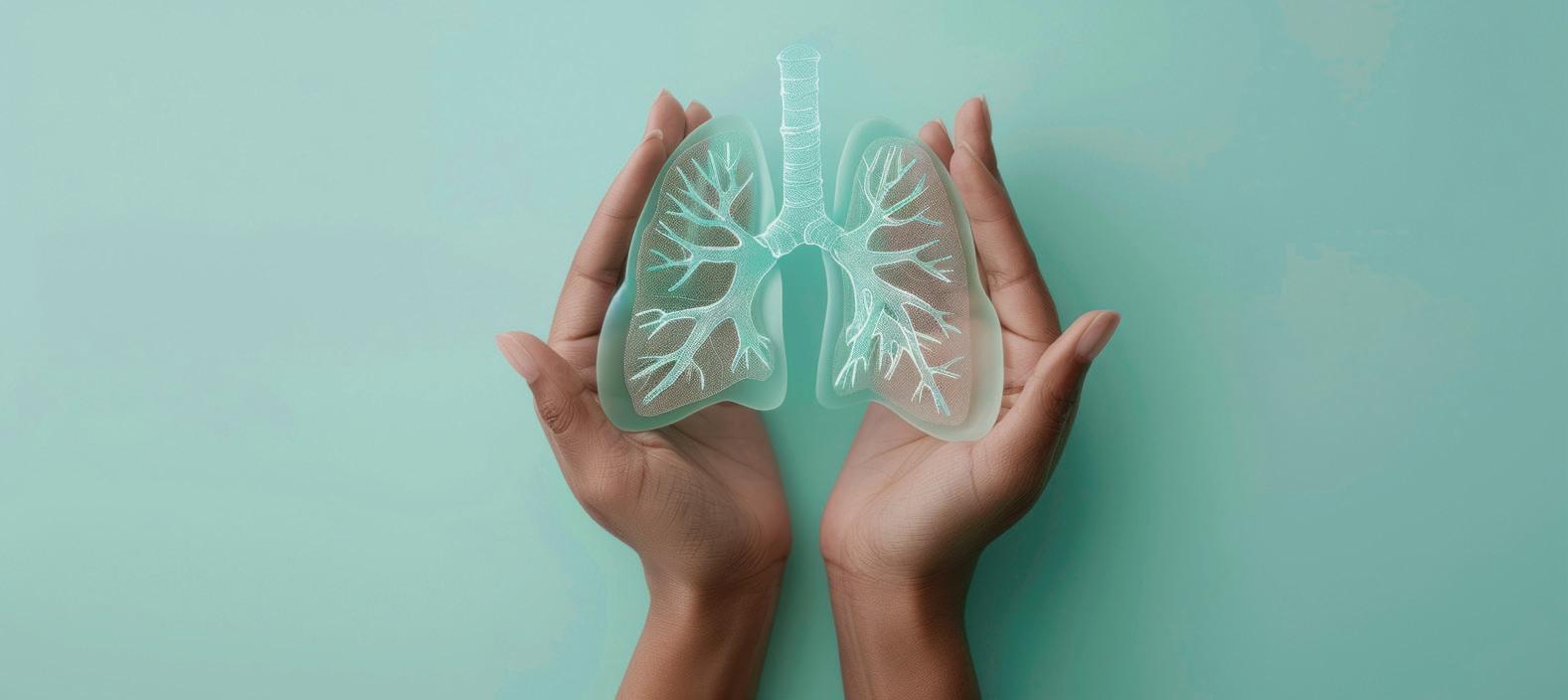
brand-new engineering approach to generate “designer” biological robots using human lung cells is underway in Carnegie Mellon University’s Ren lab. Referred to as AggreBots, these microscale living robots may one day be able to traverse through the body’s complex environments to deliver desired therapeutic or mechanical interventions, once greater control is achieved over their motility patterns. In research published in Science Advances, the group provides a novel tissue engineering platform capable of achieving customizable motility in AggreBots by actively controlling their structural parameters.
Biobots are microscopic, manmade biological machines capable of autonomous movement and programmability to perform specific tasks or behaviors. Previously, enabling biobots’ motility has been centered around using muscle fibers, which allow them to move by contracting and relaxing like real muscles.
A novel, alternative mechanism of actuation can be found by using cilia, the nanoscopic, hair-like, organic propellers that continuously move fluids in the body (like in the lungs) and help some aquatic creatures,
like Paramecium or comb jellies, swim. However, a reliable way to control the exact shape and structure of a ciliapowered biobot (CiliaBot, for short), and thereby its motility outcome, has proven difficult to come by.
The Ren lab pioneered a novel modular assembly strategy for CiliaBots, using spatially controlled aggregation of tissue spheroids,
tissues with our AggreBots,” explained Bhattaram. “Through the process of fusing together different spheroids into different shapes, together with the inclusion of nonfunctional spheroids, we can precisely control the location and abundance of cilia propellers on the tissue’s surface to direct CiliaBot behavior for the first time. This is a seminal step forward
which their lab engineers out of lung stem cells. Using the strategy, these aggregated CiliaBots (AggreBots) can incorporate stem cell spheroids bearing a genetic mutation that renders cilia in specific regions nonfunctional and immotile.
Dhruv Bhattaram, first author of the paper and biomedical engineering Ph.D. student, likened the process to taking away the oars at chosen locations on a rowboat while paddling.
“We’re pushing forward an alternative method of powering biobot
that we and others can invest time into for productive outcomes.”
“The Aggrebots approach adds a new design dimension to these types of biobots and biohybrid robots,” added Victoria Webster-Wood, associate professor of mechanical engineering. “Being able to combine different ciliated and non-ciliated elements modularly will allow future researchers to create biobots with specific engineered mobility patterns. Because the Aggrebots are made entirely from biological materials,
Microscale biological robots made from human lung cells are advancing with new research showing control over their movement via engineered structural design.
they are naturally biodegradable and biocompatible, which may enable their direct application in medical settings in the future.”
As the Ren lab continues to build on the platform, they acknowledge the technology could benefit a wide range of audiences, including those in the biorobotics community, clinicians, and medical researchers who study how cilia work in diseases like primary ciliary dyskinesia or in the thick, high-viscosity mucus of cystic fibrosis. Notably, CiliaBots can be made from a patient’s own cells, which could be used to generate personalized therapeutic delivery vehicles without running the risk of an immune rejection.
“Motility matters, because the body is a complex environment,” elaborated Xi (Charlie) Ren, associate professor of biomedical engineering. “Cellular delivery of therapeutics has great potential, but without a proper propulsion mechanism, cells can easily get stuck. We’ve laid down a path that people can use to control CiliaBot motility. From helping us understand the health impact of environmental hazards to facilitating in vivo therapeutic delivery, CiliaBots have a swath of potential uses, and it’s exciting to be part of their evolution.”
Researchers develop a bioluminescent sensor to speed up a lengthy step in drug discovery for neurodegenerative diseases like Alzheimer’s Disease.
Drug discovery can be a long and complex process. Medicines for neurodegenerative diseases like Alzheimer’s Disease are among the most expensive to develop, as animal model results have not proven to be predictive of efficacy in humans. Scientists usually have to screen many biological targets before identifying a single potential new drug.
Researchers at Carnegie Mellon University are developing a platform to enable high-throughput drug screening. Their work is part of efforts to optimize each piece of the drug discovery process, with real impacts in the race to treat patients.
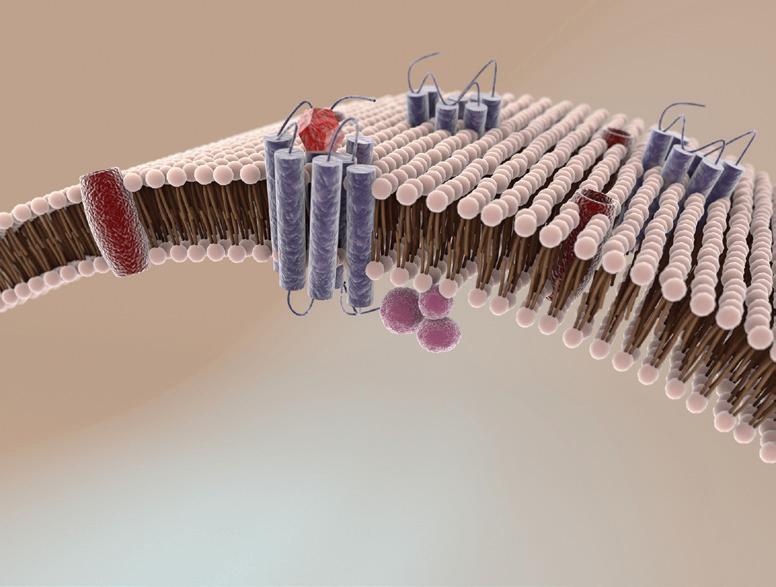
Anne Skaja Robinson investigates G-Protein Coupled Receptors (GPCRs), proteins that reside at the cell’s surface. They are the target of many small-molecule drugs, including therapies for diabetes, allergies, and cancer.
The Robinson Lab is focused on the role of these transmembrane proteins and their downstream cellular responses. One side of a GPCR faces into the cell, where it’s associated with a G-protein. The other side of a GPCR is outside the cell, where a drug can bind; thus, they serve as sensors for a cell’s environment. “There’s a lot of untapped therapeutic potential,” says Sarah Sonbati. There are 800 known GPCRs, yet current drugs target less than 15% of those.
The gap in disease treatments exists because scientists don’t yet know what binds to some GPCRs. Identifying small molecules to activate these orphan GPCRs is one path to possible new drugs. Alzheimer’s Disease is of particular interest because scientists know that there is an upregulation, or an increase, of specific GPCRs in people with the disease. There’s also no cure yet.
“What if we start looking at the root cause of Alzheimer’s Disease, and we try to target that?” asks Sonbati, a chemical engineering Ph.D. student. “The answer might be in GPCRs and understanding how a GPCR is activated.”
When a drug combines with the GPCR on the outside of the cell membrane, the G-protein inside the cell dissociates. Sonbati leveraged that change in association to create a biosensor that uses bioluminescence to detect the coupling of GPCRs and G-protein.
“Our platform enables more specific detection of the protein activation itself, and in a cellular context,” says Robinson, professor of chemical engineering. Robinson and Sonbati developed their cell-based assay from an existing system that uses an enzyme specifically designed to provide transient luminescence, based on the light emitted by fireflies. The enzyme luciferase is split into a small bit and a large bit, each attached to a protein. When the two proteins are interacting, the luciferase bits are close enough to reconstitute function and glow.
Sonbati optimized the approach using a GPCR that the Robinson Lab has worked with extensively, the adenosine A2A receptor. “We needed to understand what the data looked like in a well-characterized system, understand what it tells us about the interactions in the cell, before entering that unknown space of orphan GPCRs,” says Sonbati.
The drugs that activate A2A are known. Sonbati looked at two classes of drugs: agonists, which upregulate receptor activity; and inverse agonists, which downregulate receptor activity. Initially, the A2A is already bound, or “pre-coupled,” with the G-protein, creating bioluminescence even in a resting state in the cell. When an agonist is added, the GPCR and G-protein should dissociate, and the sensor should no longer show luminescence. Sonbati’s results confirmed this behavior from the control protein.
When an inverse agonist is added, the G-protein is recruited back to the GPCR, and luminescence increases again. “These results helped us understand that we're not always expecting to see a decrease in luminescence. We're looking for changes compared to the initial state, which will give us more information about our sensor,” says Sonbati.
After optimizing for cell type, density, and transfection methods, Sonbati successfully applied the platform to two orphan GPCRs that are upregulated in Alzheimer’s Disease. “No one has been able to look at them before in quite this way,” she says.
The sensor also confirmed that both of the orphan GPCRs are pre-coupled to the G-protein, like A2A is. They don’t require another molecule to interact or activate functions in the cell. “That means everything we learned about luminescence with A2A can be applied in this space,” says Sonbati.
The Robinson Lab is now testing a 700-drug library from the National Institutes of Health (NIH) to see if any activate the orphan GPCRs they are working with. Sonbati has also designed constructs to switch their platform from mammalian cells to yeast. Yeast grows faster and is more robust, enabling more experiments and faster results.
Robinson and Sonbati’s platform is a powerful tool to test and understand GPCR activation. It is quicker and less expensive than traditional methods.
“Our vision is to apply this more generally for high-throughput drug screening,” says Sonbati. “Picture a well plate with our sensor in each small well. You add a different potential drug to each well. All the wells start glowing, meaning the proteins are interacting, except for one. The drug in that well is the one you want to look at further.”
Electrochemical therapy makes currently available drugs more effective against yeast infections that the CDC classifies as an urgent threat.
Resistant to most antifungal drugs, the yeast Candidozyma auris is spreading globally and has caused recent outbreaks in U.S. hospitals.
The US Centers for Disease Control and Prevention (CDC) classifies it as an urgent threat. To meet the need for better treatments, researchers at Carnegie Mellon University are developing a novel way to combat drug resistance.
There are currently few methods to control C. auris infections, which spread through contact. Most infections start on the skin and can enter the bloodstream if unchecked. The mortality rate is high for immunocompromised individuals.
In Chemical Engineering Journal, Tagbo Niepa, Camila Cué Royo, and collaborators demonstrate the potential of electrochemical therapy to treat C. auris, both alone and in combination with currently available antifungal drugs. “We’re trying to maximize the effects of drugs that are already available but are not working,” says Cué Royo, a Ph.D. student in chemical engineering.
Electrochemical therapy delivers a low dose of electrical current. “The current is below our perception level, so we wouldn’t even feel it on the skin,” says Niepa, associate professor of chemical engineering and biomedical engineering. The technology has shown promise eradicating bacteria and other species of yeast. Niepa and Cué Royo’s study is the first to describe its effect on C. auris
They evaluated cell viability and metabolic functions under three different levels of electrical current. Their findings show that C. auris responds in a dose-dependent manner. Treatment with electrochemical therapy becomes more effective as the level of current increases.
Higher current levels have more effects on cell shape, structure, and other indicators of health.
17.5 μA/cm2DC

In response to the electrochemical stress, C. auris cells become hyperactive. Toxic material starts to accumulate in them, and they activate their internal machinery to try to clear it. Unable to recover from the stress, the cells eventually die. Higher current levels kill more cells.
At lower levels, electrochemical therapy damages cell membranes but does not kill C. auris. When Niepa and Cué Royo tested a low level of electrical current in combination with a common class of antifungal drugs, they found that the two treatments, which do not work individually, can be effective in combination.
The antifungal drug caspofungin can interrupt the ability of C. auris to replicate, but it only works on cells that are metabolically active. “Owing to their innate ability, C. auris cells commonly remain dormant when they are exposed to drugs in a biological environment. During that dormancy, the drug does not have an effect,” says Niepa.
Before administering electrochemical therapy, Niepa and Cué Royo observed antifungal drug mole-
cules accumulating on C. auris cell walls. Healthy cells can control their permeability, and they do not allow the drug to diffuse in. After using a low level of electrical current to damage the cell walls, Niepa and Cué Royo observed the drug molecules inside the cells.
For antifungal drugs that are currently ineffective, delivering them with a low dose of electrochemical therapy could make them more potent. The treatment method also has implications for the development of new drugs. “If we’re able to potentiate a drug, we can use a lower dose and minimize the possibility of resistance developing,” says Cué Royo.
Niepa has extensively studied the mechanisms of how electrochemical therapy works. “We have a better understanding of our next step toward applications because we know exactly what is happening here,” he says. With Cué Royo and other collaborators, he is developing an electrochemical bandage that can be applied to the skin to treat C. auris and other infections.
CMU-Africa professor is using automatic feeders and computer vision to make fish farming in Rwanda more economical.
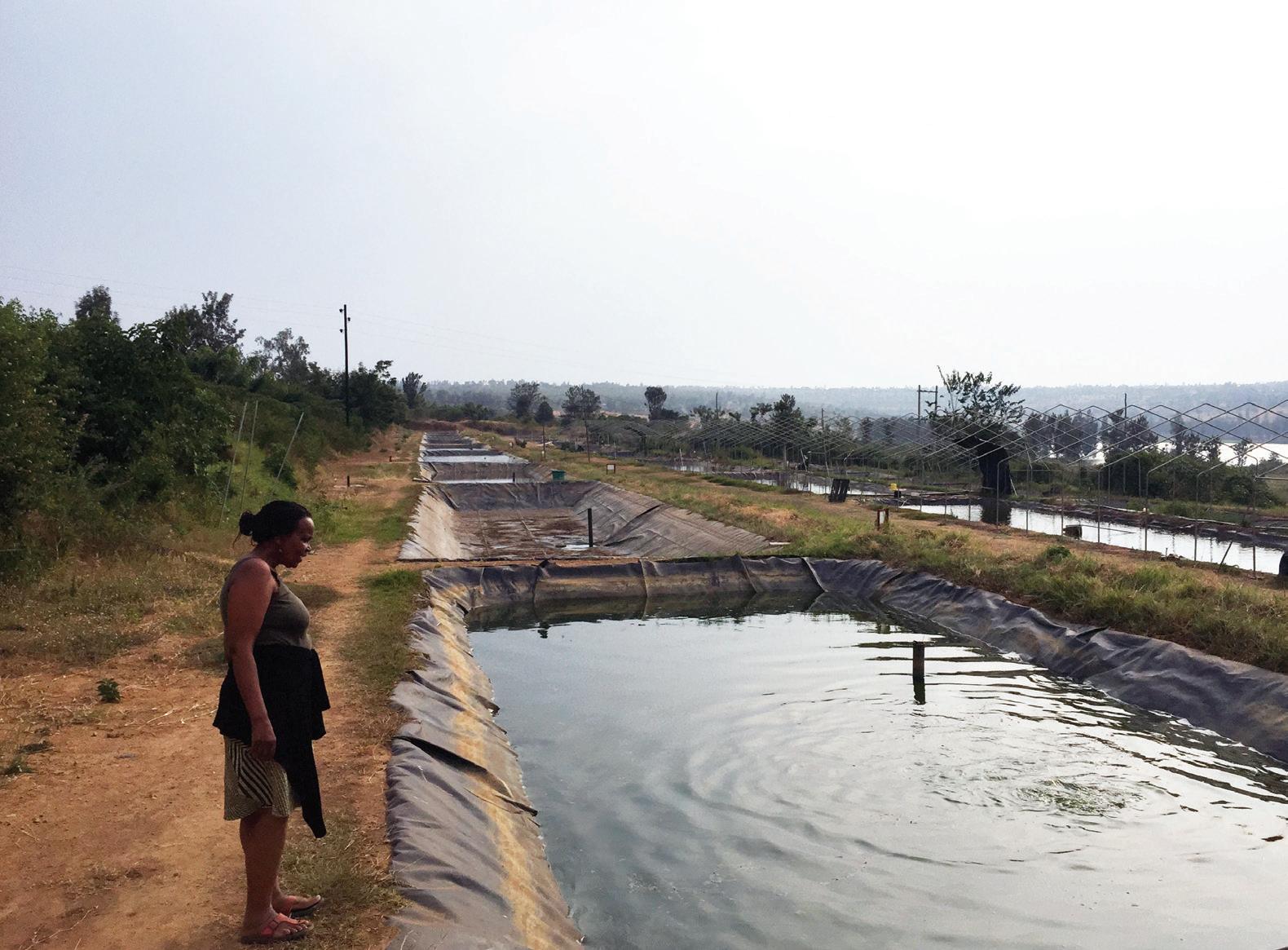
In fish farming, the highest cost isn’t the fish—it’s the food. From buying the feed itself, to the labor needed to throw it out by hand multiple times a day, up to 70 percent of the cost associated with fish farming can be attributed to feeding. But Jesse Thornburg, assistant teaching professor at CMU-Africa, is looking to change that by automating the feeding process.
“We saw that the farmers’ big need was in tracking and improving the feeding of their fish,” Thornburg said. “Automatic feeders were key for improving their metrics.”
Through the use of solar-powered automatic feeders and computer vision, Thornburg and his team at the Grid Automation for Development Lab are working with industry partners, including Lakeside Fish Farm, to make tilapia farming in Rwanda
more economical. Other feeding methods like demand feeders, which release food when triggered by a fish, can lead to excessive or wasted feed. As a result, many in the global industry have adopted automatic feeders, which are shown to increase feed accuracy and reduce waste. According to Thornburg, automatic feeders can also improve feed conversion ratios, or the measure of how the volume of feed converts to fish weight gain.
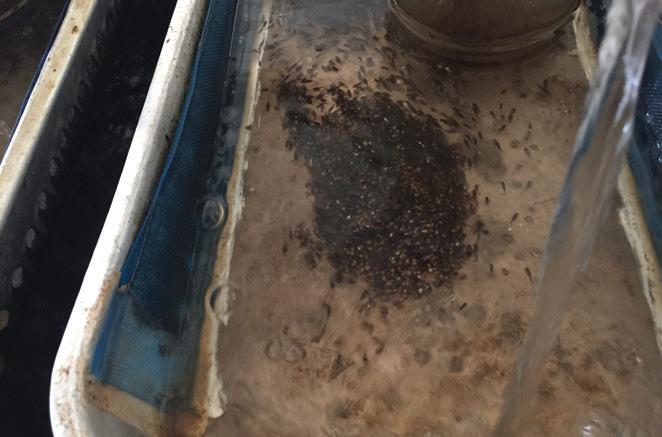
Despite the growing use of automatic feeders in aquaculture, by-hand feeding is still the standard in Rwanda and nearly all of Africa. Yet, in Thornburg’s paper, published in the Journal of the World Aquaculture Society, finds that automatic feeding produces better outcomes, including greater weight gain, when compared to traditional by-hand feeding.
To better track how much and how fast fish eat,
Thornburg is using computer vision, a field of AI that allows computers to analyze and interpret data from images. He is specifically focusing on tilapia because they are the most-consumed fish in Rwanda and sub-Saharan Africa. Since tilapia eat floating feed, the team’s cameras monitor the water surface and capture images that are analyzed locally by microcontrollers (low-power edge devices). This system also facilitates image uploads to a remote server network, or cloud, where they are processed by the team’s software to enhance feeding algorithms.
After installing their first feeder last February on a tilapia pond at Lakeside in southern Rwanda, Thornburg’s team is collecting more image data to characterize fish behavior and optimize feed timing. But improving their feeding algorithm is not the only purpose of the camera system—it can also be used
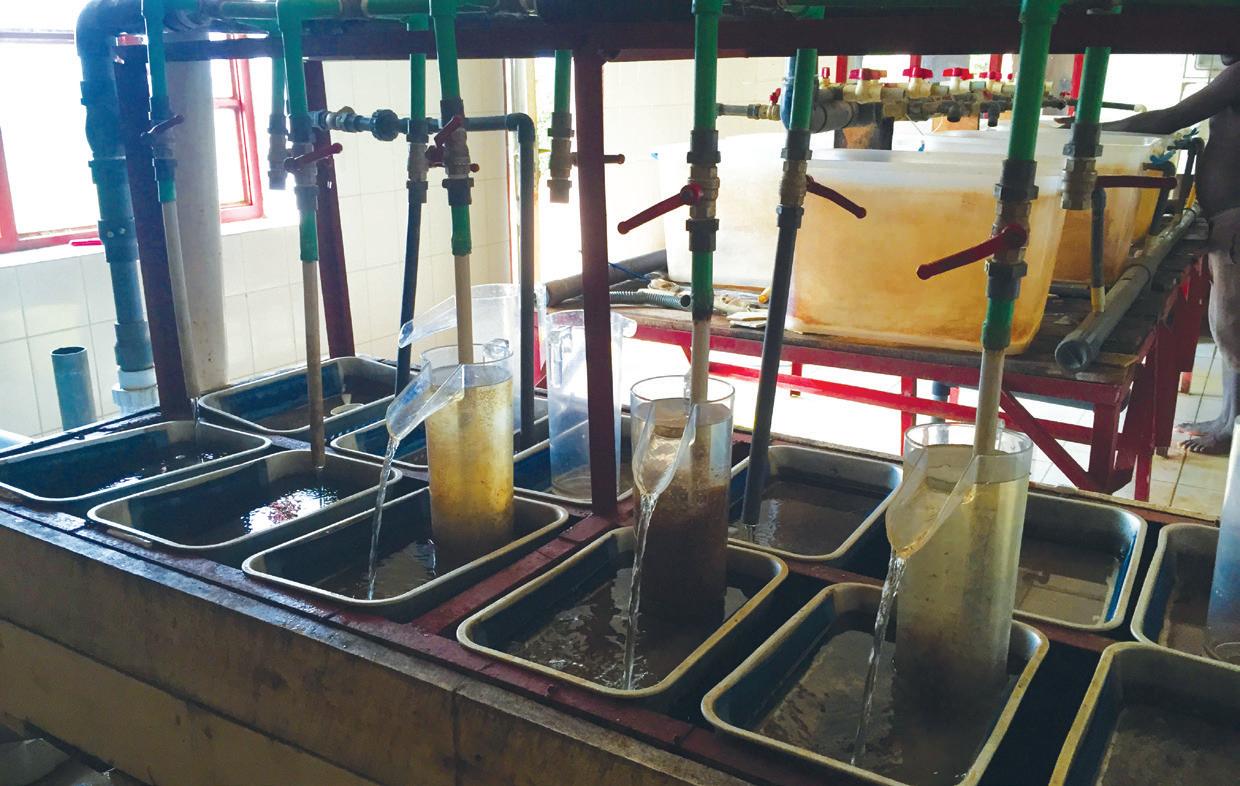
for surveillance to help farmers deter fish theft and offer reassurance that their fish are being fed enough. Thornburg is hopeful that the surveillance system will help support farmers regardless of whether an auto-feeder is installed.
“Not many farmers buy into auto-feeding immediately,” Thornburg said. “They’re hesitant to take that out of human hands and give it to a robot, an automated feeder, or to a company that is quite new.”
Through industry partnerships, Thornburg is developing a monitoring app that alerts farmers of when their fish are being fed or if any unusual activity, like theft, occurs at their ponds. In the future, Thornburg plans to develop a version of the app that sends alerts as text messages, allowing farmers without smartphones to still receive updates about their fish.
The data Thornburg and his team collect will also be used to help guide what goes into the feed pellets. Not only will this improve the nutrition of the fish, but it will benefit the people who rely on fish as a source of protein.
“Many Rwandans live near water and would like to buy fresh fish, but it was too expensive. We saw that with automatic feeding and optimization, we can drive the cost down below 40 cents per pound of tilapia,” Thornburg said. “We foresee this being even bigger than just characterizing how much and how quickly fish are eating.”
While Thornburg’s team is currently working in Rwanda, they have plans to expand their automated feeding system to other parts of Africa, including Egypt, Kenya, Morocco, Nigeria, and
Ghana. To commercialize the solution and scale across fish farms in these different countries, they have formed a company called Aquabotics Limited and raised funding from Rwanda Green Fund.
The initial research work is funded by Rwanda’s National Council for Science and Technology. The research team includes Emenike Goodluck (MS ECE ’22), Emmanuel Annor (MS ECE ’22), Samiratu Ntohsi (MS EAI ’25), Emmanuel Adjei (MS EAI ’25), and Isaiah Essien, a student at the African Leadership University studying software engineering.

Research will make it safer for drones to survey construction sites by eliminating the risk of collision.
As it becomes more evident to general contractors that autonomous drones can efficiently survey land and inspect infrastructure without pilots on the ground, the global drone construction market is expected to grow into a nearly $20 billion industry. Kenji Shimada aims to make this ever-growing industry safer by eliminating concern about onsite drone collisions.
To avoid a collision, drones must be two steps ahead of the objects around them. This starts by ensuring the drone can “see” everything in its path. Shimada, a professor of mechanical engineering, does this by installing both a high-quality camera and radar sensor onto the drones. This allows the drone to “see” 3D objects around it and understand its distance from each object and person. Because the drone is collecting data from different sensors, each data set can be cross-checked for accuracy, which adds another layer of security.
Next, Shimada ensures that his drones can predict the course of the people around it using a model called the Markov Decision Process. Instead of predicting a single trajectory per obstacle, Shimada’s module generates all possible trajectories including stopping, turning, and forward movement. After processing this information, Shimada’s drones can plan the best route to avoid collision.
As a bonus to general contractors, Shimada found that his radar sensor is able to measure the coordinates of a construction site after just one 30-second flight.
“Land surveying requires expensive equipment and leaves room for human error,” said Shimada. “Automating this process would save time and money.”
Reinforcement learning is a machine learning technique that mimics the trial-and-error method people use as they learn to navigate the world. In the real world this would look like a handful of drones flying into people and buildings as they learn how to avoid them. Thanks to digital twins, Shimada’s team can expose thousands of drones to any number of collision risks in a destruction-free, injury-free environment.
Oftentimes when a robot trained in simulations is put to the test in the world it fumbles because of the differences in simulated and real-world sensory information. Shimada’s team worked to overcome this hurdle by adopting a “safety shield” on top of the novel reinforcement learning framework. The safety shield works based on the velocity obstacle concept that says that “the set of all velocities of a robot that will result in a collision with another robot at some moment in time, assuming that the other robot maintains its current velocity.” With this, Shimada’s drones can assess which obstacles are high risk for future collision and react accordingly to avoid them.
“Safety is always the most important thing,” said Shimada. “In this case we are looking at making it safer for drones to operate around workers on construction sites, but there are also a lot of dangerous sites where drones can take over jobs to make people safer in those environments too.”
In the future, Shimada’s lab will work to help drones avoid not just humans on a construction site but moving machinery as well. He hopes to build drones that can react to movement in the same way that flies avoid a swatter— quickly and effortlessly.


Drones equipped with magnetic blocks have precise pick-and-place assembly. A large language model can translate high-level design goals like “build a bridge” into executable plans to be used with such drones.
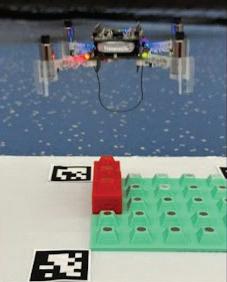
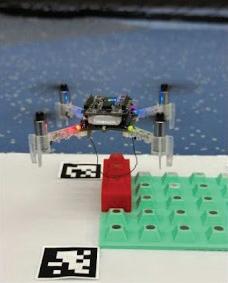
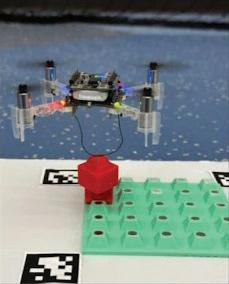
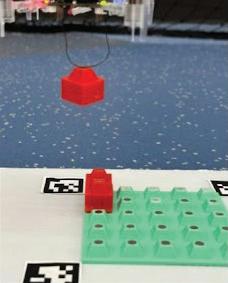
Advancements in aerial additive manufacturing from the lab of Amir Barati Farimani could one day enable drones to construct remote infrastructure, maintain cities, and support space exploration.
Disaster just struck, roads are inaccessible, and people need shelter now. Rather than wait days for a rescue team, a fleet of AI-guided drones takes flight carrying materials and the ability to build shelter, reinforce infrastructure, and construct bridges to reconnect people with safety.
It sounds like science fiction, but research from Carnegie Mellon University’s College of Engineering combines drones, additive manufacturing, and large language models to rethink the future of aerial construction.
Aerial additive manufacturing (AM)—think flying 3D printers, has been fascinating researchers for years, but the natural instability of a drone in flight makes traditional layer-by-layer fabrication nearly impossible. To overcome this, Amir Barati Farimani, associate professor of mechanical engineering, has equipped drones with magnetic blocks to allow for precise pick-and-place assembly and a large language model (LLM) that can translate high-level design goals like “build a bridge” into executable plans.
“The adaptability of LLMs allows us to generate and adapt building plans onsite. If we encounter problems while building, we can switch gears to ensure efficient and accurate construction,” said Barati Farimani.
To test this take on aerial AM, researchers set up a 5x5 grid and tasked drones with designing specific shapes using the magnetic blocks. Because the drones were monitored by a camera, if they dropped a block in the wrong position, left a gap, or built inefficiently, the LLM autonomously prompted the drone to work with the error from a new plan rather than starting over. Thanks to this closed feedback loop, construction builds were successful 90% of the time.
“We can imagine this tool filling potholes, fixing spaceships in orbit, and constructing infrastructure in mountainous regions where heavy machinery can’t reach,” he said.
Moving forward, the team plans to test their drones outside of the lab to address future real-world challenges. They plan to explore using LLMs to construct 3D structures, and to work with more dynamic building materials that would further optimize the performance flexibility of construction designs.
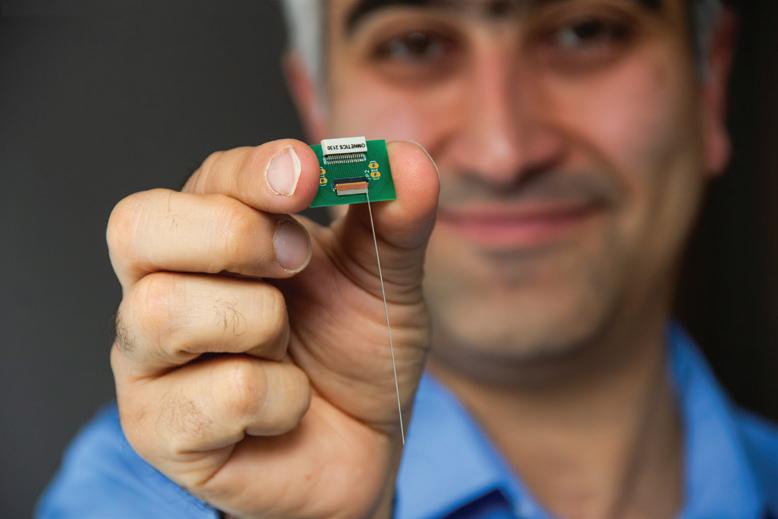
The human brain is complex. Understanding deep brain function usually requires the insertion of probes that frequently result in irreversible tissue damage. Current neural probes are made out of silicon, which is a brittle material and can shatter during placement. Carnegie Mellon engineering researchers have fabricated the first stainless steel neural probe that allows for customizable, high-density neural recording, making brain readings much safer than before.
Over the last few decades, novel manufacturing and microfabrication processes have revolutionized neural probe technology. Based in large part on the adaptation of silicon as the material of choice, it has been possible to increase recording channel density using high resolution lithography and microfabrication processes, and to add new functionalities such as optical stimulation and imaging and chemical sensing. While existing silicon probes work well in thin, shallow tissue, its brittleness limits deep brain maneuvering. By creating probes made out of stainless steel, researchers are able to navigate to the middle brain with minimal cortical tissue damage, enabling inter- and intraoperative neural recording for epilepsy localization and deep-brain-stimulation implantation.
The team is led by Maysam Chamanzar, the Dr. William D. and Nancy W. Strecker Career Development Professor of Electrical and Computer Engineering.
“High-resolution electrophysiology requires long, compact, high-density probes that are inserted with minimal invasiveness,” explains Chamanzar. “Current silicon neural probe technology has a low fracture toughness and runs the risk of breaking during surgery, leaving residue behind in the brain. By fabricating high-density probes out of stainless steel, we are able to increase the length of the probes while strengthening its toughness, which ultimately minimizes the risk of breakage.”
Currently used in biomedical implants such as prosthetics and coronary stents, stainless steel is biocompatible, resilient, and less brittle. Though its microfabrication has been historically limited, Chamanzar has found a way to manufacture these probes in a customizable way.
These novel, customizable stainless steel neural probes, or steeltrodes, that are microfabricated using a multilayer process which enables high-density electrode integration is the focus of a paper published in Nature Communications The team has demonstrated successful high resolution neural recording from the auditory cortex in trials.
One hurdle the team had to overcome was the micro- and nanofabrication process for stainless steel. In the case of silicon probes, the fabrication process has benefitted from decades of research and development in the Micro-/Nano-Electromechanical Systems (MEMS/NEMS) and Complementary metal–oxide–semiconductor (CMOS) electronic industries. However, the same processes cannot be readily translated to stainless steel. By using a multilayer fabrication process that enables high-density electrode integration, as well as optional flexible cables, Chamanzar believes these probes can be manufactured en masse.
“The micro- and nanofabrication processing for stainless steel is quite challenging and comparatively underdeveloped and underexplored,” explains Chamanzar. “Optimized scalable microfabrication and micromachining processes are necessary to leverage the excellent material and mechanical properties of stainless steel to design miniaturized biomedical devices such as high channel density neural probes with micron-scale features on stainless steel. Our devices are robust, reusable, customizable, and can be produced at scale.”
This breakthrough is particularly important, both as a diagnostic tool and also as an intervention tool for patients with brain disorders such as epilepsy, Parkinson's Disease, and schizophrenia.
Zabir Ahmed, who worked on this project as part of his Ph.D. thesis at CMU, is excited about the great potential of this platform technology, even beyond neural interfacing.
“Beyond creating robust stainless steel neural probes for clinical use, I’m excited that this work introduces a novel planar microfabrication process directly
on steel,” says Ahmed. “This manufacturing process could lead to a new class of resilient devices that integrate multiple functionalities on steel, which can be useful for a wide range of applications."
In addition to microfabrication on stainless steel, the team has also optimized post-fabrication processing and packaging.
“Designed for seamless integration, our packaging method works effortlessly with commercial stimulation and recording systems—making it easy for researchers and medical professionals to readily adopt our stainless-steel devices,” says Ibrahim Kimukin, a research scientist in Chamanzar’s lab.
“This research represents a step-change in how we can interface with the brain, achieving high-resolution recording and stimulation using robust, clinically scalable materials,” said Vishal Jain, a research scientist in Chamanzar’s lab. “I’m thrilled to have contributed to the design and validation of this technology, which bridges the gap between research-grade precision and real-world translational potential.”
Outside of the clinic, the probes also fill an important gap for neuroscience research. According to co-author Tobias Teichert, associate professor of psychiatry and bioengineering at the University of Pittsburgh, hand-made laminar electrodes have much lower density and can cost significantly more.
“The design of these steeltrodes is an amazing advancement because they provide much higher channel count and density, yet at the same time, they can be mass produced at a fraction of the cost,” says Teichert.
In the future, the team hopes that neurosurgeons will be able to use multiple stainless-steel probes on a patient in order to generate a more comprehensive recording of brain activity.
“Using steeltrodes, one day we will be able to record neural activity across multiple areas of the brain with high resolution and minimal damage to the brain tissue,” explains Chamanzar. “This crosshatch of neural recordings will change the diagnosis and treatment of brain diseases.”
Contributors on this paper include Zabir Ahmed, Ibrahim Kimukin, and Vishal Jain from the Department of Electrical and Computer Engineering at Carnegie Mellon University, as well as Kate Gurnsey and Tobias Teichert from the Department of Psychiatry and Bioengineering at the University of Pittsburgh.


Near-infrared spectroscopy (NIRS), an optical tool that leverages light-tissue interaction to measure changes in hemoglobin concentration and oxygenation, has been used in a variety of fields due to its ability to measure tissue oxygenation and blood flow non-invasively. In a study led by Carnegie Mellon University and University of Pittsburgh researchers, NIRS was investigated as a screening tool for adults with sickle cell disease to assess not only oxygenation changes, but also the underlying mechanisms associated with aging with the disease.
Sickle cell disease significantly affects and disrupts oxygenation in the body and its impact on the brain has been understudied. As individuals with sickle cell disease age, they can develop problems with small blood vessels in the brain, leading to reduced blood flow and difficulties with thinking, memory, and other functions that might impact their quality of life. One marker of cerebral small vessel disease, a neurological complication of sickle cell disease that increases with age, is cerebral autoregulation. Cerebral autoregulation ensures that blood flow is maintained or controlled as blood pressure varies.
Current methods to assess cerebral autoregulation are largely accomplished through the measuring of pressure and flow from the body’s larger vessels, for example, using a blood cuff on the arm or a transcranial doppler ultrasound. A significant drawback is that transcranial doppler ultrasound measurements have poor blood flow measurements in adults and do not report oxygenation. Furthermore, finding a reliable way to measure blood and oxygen changes in the body’s smallest vessels has presented an ongoing challenge.
To address this, researchers led the first study to monitor cerebral autoregulation in sickle cell disease using NIRS, while highlighting NIRS as an important screening tool for cerebral small vessel disease in adults with sickle cell disease.
“Rather than looking only at the larger vessels in adults, our study focused highly on the hemodynamics associated with blood pressure changes in the smaller vessels, and what NIRS can reliably detect about blood and oxygen changes there,” noted Sossena Wood, assistant professor of biomedical engineering at Carnegie Mellon. “Unlike prior studies done on large vessel abnormalities or at rest, this one measured dynamic cerebral autoregulation and participants’ response during breathing, taking things a step further toward positive utility.”
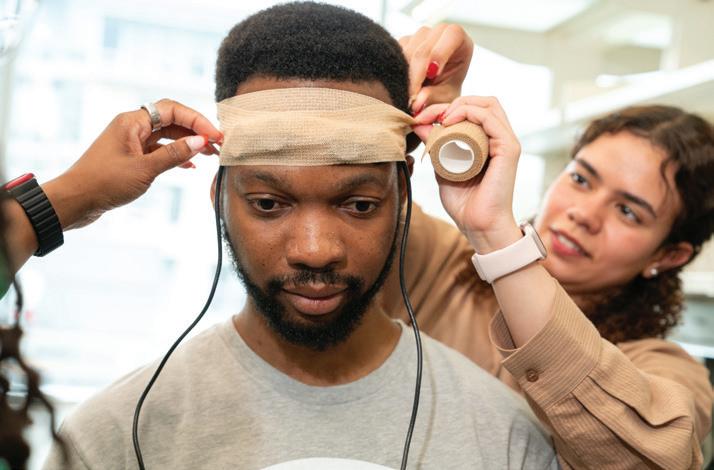
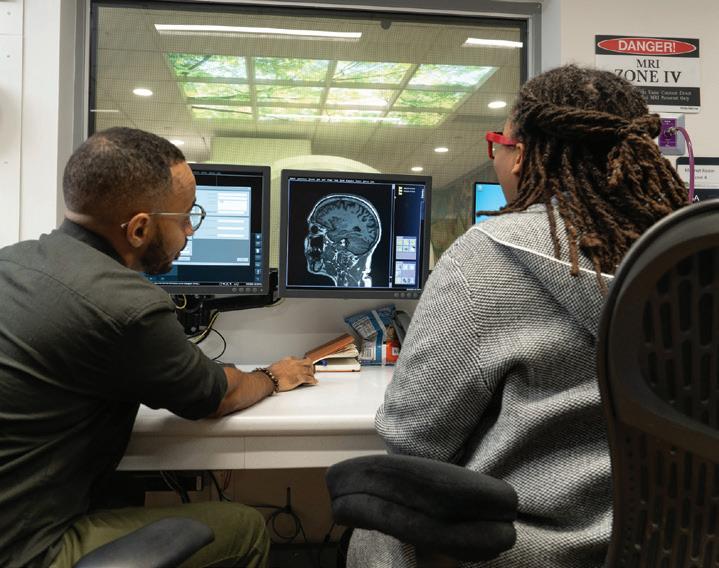
Systematically aligning all study participants, whether they were controls or adults, to breathe at the same rate was an important consideration noted in the Journal of Applied Physiology paper. From there, with NIRS measurements and an advanced mathematical tool, researchers could extract important measurements about blood flow, transit times, and changes in the microvascular level that current measurement tools lack.
This research has also been foundational for work Wood’s group is doing abroad, in partnership with Carnegie Mellon University Africa and University of Pittsburgh Medical Center’s Adult Sickle Cell Center for Excellence.
In Nigeria, they are participating in a clinical trial with colleagues from Pitt and Lagos University Teaching Hospital, where sickle cell disease patients are administered an affordable medication, erythropoietin, that boosts hemoglobin levels. With NIRS, they have been able to track blood and oxygen changes in tiny vessels, finding that the medication led to higher oxygen levels in patients after each dosage. Observed wins like this could lead to greater adoption by clinicians and the hematologist community.
“The whole motivation is to show that NIRS is reliable and could do more than it’s currently utilized for,” said Wood. “The adult sickle cell disease population is very young, and they’re getting older because of the therapies that are helping them live longer. As they age, there is a lot we are learning about the pathology of the disease and NIRS is a useful point of care screening tool in environments where sickle cell disease is most prevalent. I’m excited to be part of improving measurement tools for sickle cell disease progression and in turn, quality of life for those living with the disease.”
Researchers have developed soft, flexible antennas to better utilize radio waves, increasing wireless connectivity and communication.
The radio spectrum is a fundamental resource for wireless communication. Cellular networks, WiFi, and Bluetooth are all examples of wireless systems that depend on the radio spectrum. Researchers from Carnegie Mellon University have developed a soft antenna to better utilize radio waves, increasing connectivity and communication.
Historically, antennas are rigid metallic devices that need to be pointed in a specific direction to connect to the radio spectrum. Most programmable radios today either require mechanical or electronic switching between antennas, or wide-band antennas. With radio frequency being tunable, a static antenna can easily lose connection to the frequency. By introducing a soft, flexible antenna, the device can sense and move to the most efficient radio frequency available.
Researchers in CMU’s College of Engineering have developed Softenna, a firstof-its-kind soft-robotic highly reconfigurable antenna platform that dynamically adapts its radio frequency properties, including center frequency, beam pattern, directionality, and polarization. Softenna achieves this through a combination of mechanical and electronic reconfiguration.
“This is an unusual interdisciplinary project where we want to leverage advances in shape-shifting materials and surfaces from robotics for wireless antenna and meta-surface design,” says Swarun Kumar, professor of electrical and computer engineering, director of the WiTech Lab, and lead on the project.
Softenna is composed of fabricating multiple elements using stretchable and flexible materials and liquid metal. This smart antenna is designed to offer rich shape changes and a learning-based pipeline that studies which shape pattern is best suited to a given operating frequency, device location, and environment.
“The system will be fully implemented on soft robotic antennas integrated with software defined radios operating in the sub-6 GHz frequency bands and evaluated in these spectral bands,” says Carmel Majidi, professor of mechanical engineering, faculty director of the Carnegie Mellon Softbotics Lab, and co-author on the paper.
Benefits of using these soft antennas include clearer cell phone calls, faster WiFi, and smarter Bluetooth connectivity.
“We are application agnostic, so this concept impacts all technologies from cellular to WiFi and Bluetooth,” says Kumar.
The College of Engineering is uniquely positioned to lead research in soft antennas. With experts in emerging wireless technologies from the WiTech Lab, along with pioneers in soft robotic materials from the Soft Machines Lab, Kumar and Majidi can innovatively connect the fields in a way that many universities cannot.
The team received funding from the National Science Foundation as part of the Spectrum Innovation Initiative. Throughout this three-year project, the team aims to build partnerships toward technology transfer and commercialization.
As part of educational and outreach efforts, the investigators will develop a workshop module where high school students program wireless radios during CMU’s Spark Saturday program, and they will integrate findings in university-level courses in wireless systems and robotics.
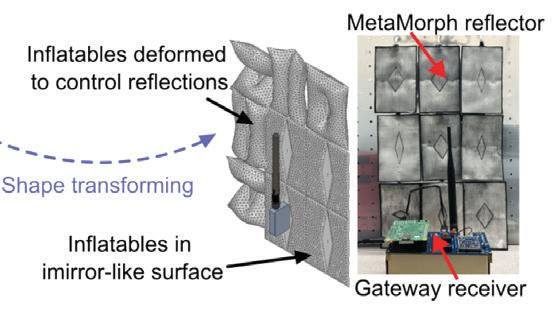
s the energy transition continues to shift the focus from fossil fuels to climate-friendly alternatives, adopting clean energy technologies could revolutionize the way we heat and cool our homes. From skyrocketing energy bills to inadequate indoor temperatures, energy insecurity is a growing concern among millions of households, suggesting the need for a new approach to improve indoor comfort.
Heat pumps are an emerging technology that have the potential to alleviate energy insecurity and reduce household energy expenses. Instead of generating heat, heat pumps work by transferring thermal energy between the inside and outside of a home.
In a study published in Nature Energy, researchers from Carnegie Mellon University and the University of Maryland examined the relationship between heat pump adoption and household energy insecurity using electricity records from 8,656 households in Phoenix, Arizona. By employing a thermal comfort index (the temperature at which individuals turn on their heating or cooling system), the researchers found that households with heat pumps initiate cooling at nearly one degree Celsius lower than those without and consume less electricity per degree of temperature increase.
“Many low-income households currently don’t use enough energy to keep their homes safe during extreme weather.
The U.S. Energy Information Administration estimates
this is between 10–15 million homes, so it is important to understand how cooling and heating infrastructure will impact this divide,” said Destenie Nock, assistant professor of engineering and public policy and civil and environmental engineering at Carnegie Mellon, and lead co-author of the study.
Energy insecurity can disproportionately affect different groups of people and is exacerbated by several factors including income inequality, racial disparities, differences in energy access between rural and urban areas, COVID-19 pandemic impacts, and ongoing climate change issues. The disparities between income or ethnic groups in terms of the outdoor temperature at which individuals turn on their air conditioning can be defined as the energy equity gap.
In this study, researchers found that heat pumps lead to reduced disparities in thermal comfort across different income groups, suggesting that this new technology could help narrow the energy equity gap.
Using the same technology as an air conditioner, heat pumps provide both heating and cooling to a home. In the summer, heat pumps work to pull hot air out of your home and push it outside, generating a cooling effect. In the winter, the process reverses, and warm air is pulled from the outside and moved indoors. This transfer of energy promotes greater efficiency and comfortable indoor temperatures.
In addition to reducing energy costs and alleviating energy insecurity, heat pumps are crucial to global decarbonization, leading many governments to offer rebates and tax credits to encourage their installation. “Recent policy shifts—particularly through incentives like the Inflation Reduction Act (IRA)—are changing the calculus for clean heating technologies,” Nock said. “By doubling or even tripling rebate support for low-to-moderate income families, these policies are finally making heat pump adoption not just a possibility but a financially viable path toward energy equity and climate resilience. However, if the current administration repeals the IRA, it will be uncertain how many people can make use of the financial incentives.”
Principal investigator:
Kizito Nkurikiyeyezu (University of Rwanda and Carnegie Mellon University Africa)
Co-investigators: Eric Umuhoza (Carnegie Mellon University Africa), Johannes Machinya (University of the Witwatersrand)
In Rwanda, 86 percent of adults rely on mobile money services for essential transactions, but the Unstructured Supplementary Service Data (USSD) powering these services creates significant barriers for visually impaired users. USSD interfaces use textbased menus accessed through dial codes like *182#, and they lack audio feedback, while imposing strict time limits, and providing no input validation. These accessibility failures force visually impaired individuals to depend on caregivers for transactions, which increases error rates and fraud vulnerability as they cannot independently verify recipients or amounts. As Rwanda moves toward its goal of a fully cashless society by 2030, these barriers threaten to marginalize the country’s 1.4 percent visually impaired population from financial independence. This research addresses this critical gap by developing an AI-powered voice interface smartphone application tailored for Kinyarwanda that enables visually impaired users to navigate USSD menus independently and securely.
Modeling Artificial Intelligence Skills Gaps and Upskilling Strategies in the Construction Industries of Developing
Principal investigator:
Oluwaseun Sunday DOSUMU (University of Rwanda)
Co-investigators:
Jesse Thornburg (Carnegie Mellon University Africa),
Iniobong Beauty John (University of Lagos), Christine Munanese (University of Rwanda)
The project examines AI skills gaps in the construction industries of Rwanda and Nigeria by identifying the specific competencies required, analyzing demand-supply mismatches, and evaluating effective upskilling and reskilling strategies for the workforce. It will further develop a structural equation model and a digital training framework to guide professionals, policymakers, and stakeholders in fostering AI adoption, enhancing productivity, and driving sustainable digital transformation in the sector.
The African Engineering and Technology Network (Afretec), a pan-African collaboration of technology-focused universities, awarded $2.3 million USD in grants last year to build research capacity and accelerate digital growth throughout the African continent.
Each multi-institutional research team will build on existing science, engineering, and technology in disciplines such as artificial intelligence (AI), machine learning, robotics, information technology, and cybersecurity. The selected projects are particularly focused on improving the state of health, environment and sustainability, and energy in Africa.
The Carnegie Mellon University Africa-led network has awarded almost $7.43M in research funding since it was established in 2022. Following is a listing of new grants that include researchers from CMU-Africa.
Principal investigator:
Prasenjit Mitra (Carnegie Mellon University Africa)
Co-investigator:
Titus Adhola (University of Nairobi)
This project will focus on developing AI tools to mitigate human-wildlife conflicts, with a specific emphasis on African contexts. By leveraging advanced machine learning models, the project aims to create predictive tools to forecast and manage potential conflicts, ensuring the safety and coexistence of both humans and wildlife. The researchers will also seek to train students and postdocs in engineering and ecology and how to pursue high impact social projects in the African context using state-of-the-art AI.
Privacy and Mobile Money Use in Sub-Saharan Africa
Principal investigator:
Assane Gueye (Carnegie Mellon University Africa)
Co-investigators:
Doudou Fall (Université Cheikh Anta Diop)

Scan for complete list of 2025 grants

Developing Natural Language Processing Powered Digital Health Solutions for LowResource African Languages
This comparative project studies how mobile money users and agents in Rwanda, Kenya, Senegal, and Ghana manage privacy risks and personally identifying information. It will investigate:
• User’s concerns about privacy in mobile money transactions
• The privacy practices of agents in interacting with personal data
• The extent to which privacy regulations in each country overlap with users’ and agents’ concerns and practices
Principal investigator: Lucienne Abrahams (University of the Witwatersrand)
Co-investigators: George Okeyo (Carnegie Mellon University Africa), Audrey Mbogho (United States International University-Africa), Ntsibane Ntlatlapa (University of the Witwatersrand), Kgopotso Magoro (University of the Witwatersrand), Ruth Wambua (United States International University-Africa), Jane Muchiri (United States International University-Africa)
The project aims to develop highquality natural language processor models for three low-resource African languages: KheLobedu (South Africa), Kidaw’ida (Kenya), and Kinyarwanda (Rwanda). The focus will be on health language data collection and related software development; digital design and co-creation workshops; health information content production and project management.
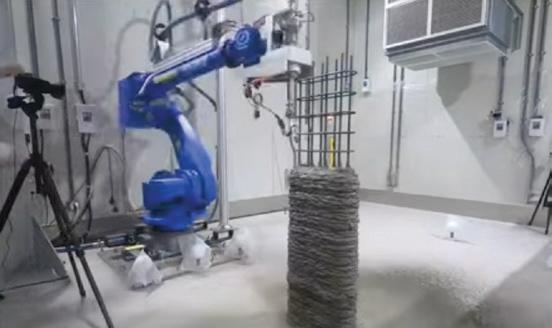
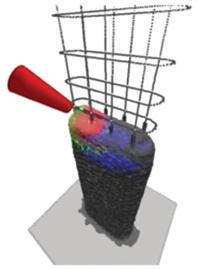
CCarnegie Mellon engineers have developed a simulation tool that predicts how sprayed concrete behaves and solidifies, even around rebar. The breakthrough could transform how buildings are constructed, cutting material waste and enabling stronger, more complex structures for tomorrow’s cities.
oncrete 3D printing reduces both time and cost by eliminating traditional formwork, the temporary mold for casting. Yet most of today’s systems rely on extrusion-based methods, which deposit material very close to a nozzle layer by layer. This makes it impossible to print around reinforcement bars (rebars) without risk of collision, limiting both design flexibility and structural integrity of builds.
Kenji Shimada and researchers in his Carnegie Mellon University’s Computational Engineering and Robotics Laboratory (CERLAB), are breaking through that limitation with a new simulation tool for spray-based concrete 3D printing.
“Spray-based concrete 3D printing is a new process with complicated physical phenomena,” said Shimada, a professor of mechanical engineering. “In this method, a modified shotcrete mixture is sprayed from a nozzle to build up on a surface, even around rebar.”
The ability to print freely around reinforcement is especially important in places like Japan and California, where earthquakes are an imminent threat and structural strength is critical.
“To make this technology viable, we must be able to predict exactly how the concrete will spray and dry into the final shape,” Shimada explained. “That’s why we developed a simulator for concrete spray 3D printing.”
The new simulator can model the viscoelastic behaviors of shotcrete mixtures, including drip, particle rebound, spread, and solidification time. This way, contractors can assess multiple printing paths based on a CAD design with the simulator to evaluate whether spray 3D printing is a feasible fabrication technique for their structure.
The team traveled to Tokyo, Japan, where Shimizu Corporation already operates spray 3D printing robots to validate their model. In the first test, the team focused on the simulator’s ability to predict shape based on the speed of the nozzle’s movement. With 90.75% accuracy, the simulator could predict the height of the sprayed concrete. The second test showed that the simulator could predict printing over rebar with 92.3% and 97.9% accuracy for width and thickness, respectively.
According to Soji Yamakawa, a research scientist in Shimada’s lab and the lead author of the team’s research paper published in IEEE Robotics and Automation Letters, a simulation of this kind would typically take hours, if not days, to run.
“By making wild assumptions, we were able to successfully simplify a super complex physics simulation into a combination of efficient algorithms and data structures and still achieved highly realistic output,” Yamakawa said.
Future work will aim to increase accuracy by identifying environmental parameters like humidity, optimize performance, and add plastering simulation to create smoother finished products.
“There are still so many applications and technologies that we can develop with robotics,” said Kyshalee Vazquez-Santiago, a co-author of the paper and a mechanical engineering Ph.D. candidate leading the Mobile Manipulators research group within CERLAB. “Even in concrete 3D printing, we are working with an entirely new type of application and approach that has so many advantages but leaves so much room for further development.”
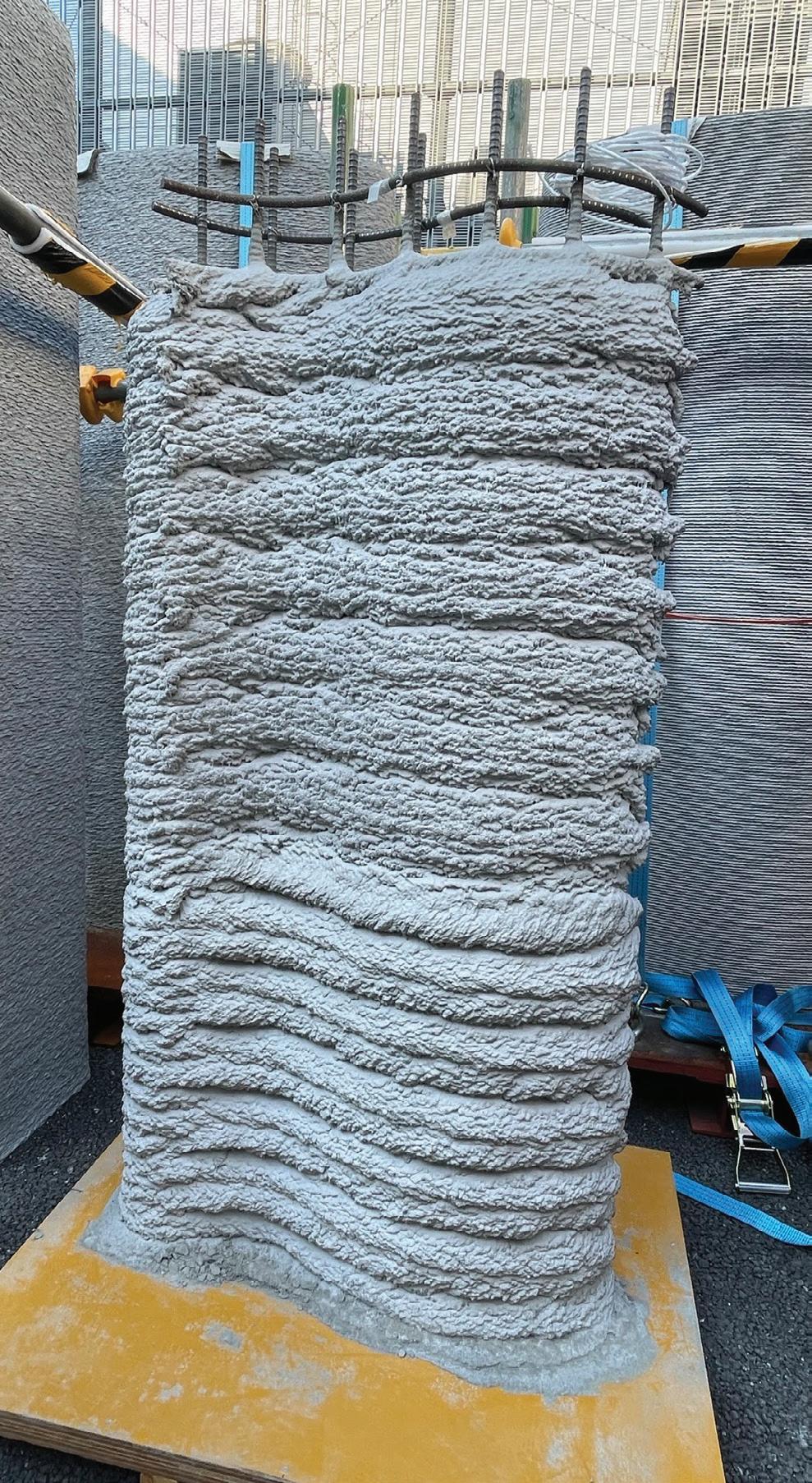
Spray-based concrete 3D printing allows builders to work around reinforcement bars. This is especially important in places like Japan and California, where earthquakes are an imminent threat and structural strength is critical.
Imagine snapping a photo where every detail, near and far, is perfectly sharp—from the flower petal right in front of you to the distant trees on the horizon. For over a century, camera designers have dreamed of achieving that level of clarity. In a breakthrough that could transform photography, microscopy, and even smartphone cameras, researchers at Carnegie Mellon University have developed a new kind of lens that can bring an entire scene into sharp focus at once—no matter how far away or close different parts of the scene are.
The team, consisting of Yingsi Qin, an electrical and computer engineering Ph.D. student, Aswin Sankaranarayanan, professor of electrical and computer engineering, and Matthew O’Toole, associate professor of computer science and robotics, presented their findings at the 2025 International Conference on Computer Vision and received a Best Paper Honorable Mention recognition.
system builds on a design known as a Lohmann lens, which uses two curved, cubic lenses that shift against each other to tune focus. By combining this setup with a phase-only spatial light modulator—a device that controls how light bends at each pixel—the researchers were able to make different parts of the image focus at different depths simultaneously.
Researchers develop a camera with spatially selective focusing, allowing the lens to focus on objects at many different distances at once.
Traditional camera lenses can only bring one flat layer of a scene into perfect focus at a time. Anything in front of or behind that layer turns soft and blurry. Narrowing the aperture can help, but it also dims the image and introduces new kinds of optical fuzziness caused by diffraction.
“We’re asking the question, ‘what if a lens didn’t have to focus on just one plane at all?’” says Qin. “What if it could bend its focus to match the shape of the world in front of it?”
The researchers developed a “computational lens”—a hybrid of optics and algorithm—that can adjust its focus differently for every part of a scene. The
The system uses two autofocus methods. The first is Contrast-Detection Autofocus (CDAF), which divides the image into regions called superpixels. Each region independently finds the focus setting that maximizes its sharpness. The second is Phase-Detection Autofocus (PDAF), which uses a dual-pixel sensor to detect not just whether something is in focus, but which direction to adjust. This makes it faster and better suited for moving scenes—the team achieved 21 frames per second with their modified sensor.
“Together, they let the camera decide which parts of the image should be sharp—essentially giving each pixel its own tiny, adjustable lens,” explains O’Toole.
Beyond its obvious appeal to photographers, the technology could have sweeping applications. Microscopes could capture every layer of a biological sample in focus at once. Autonomous vehicles might see their surroundings with unprecedented clarity. Even augmented and virtual reality systems could benefit, using similar optics to create more lifelike depth perception.
“Our system represents a novel category of optical design,” says Sankaranarayanan. “One that could fundamentally change how cameras see the world.”


Conventional photo and its confined focal plane
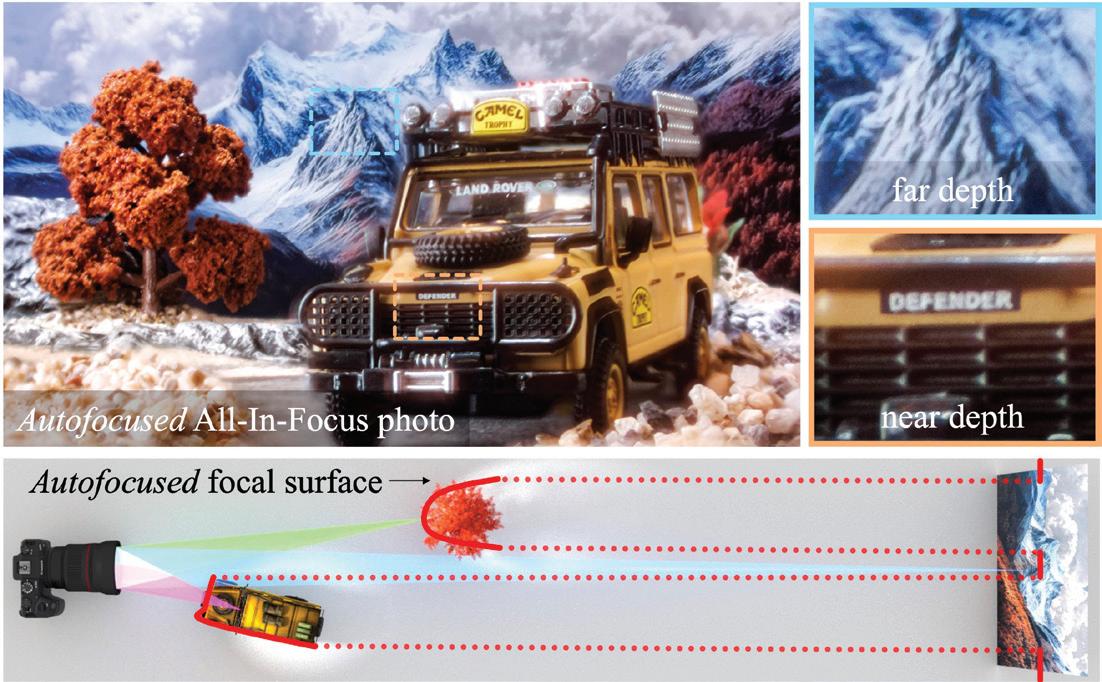
All-In-Focus photo and its spatially-varying autofocused focal surface (ours)
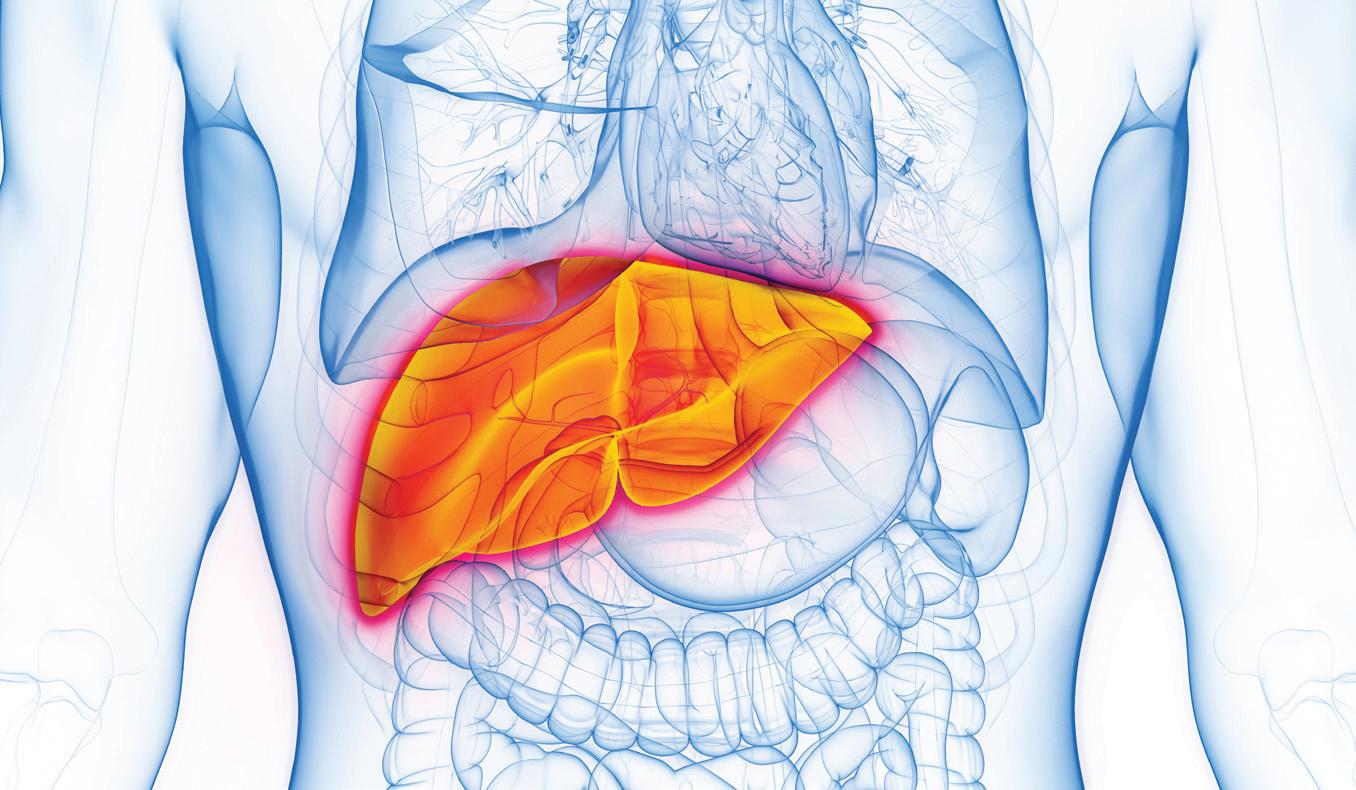
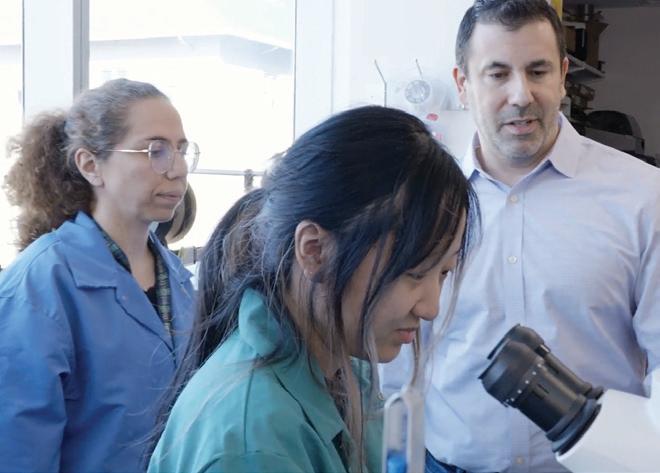
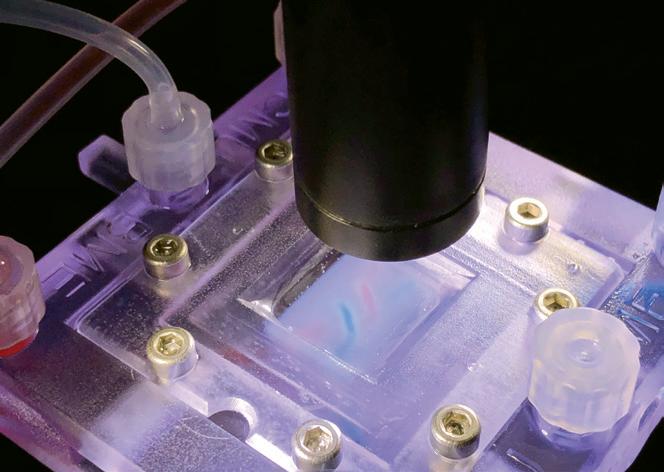
Researchers receive up to $28.5 million to develop a 3D bioprinted liver for patients with acute liver failure. The temporary, immune-compatible liver is designed to support the regeneration of a patient’s own liver, reducing the need for full organ transplants.
ACarnegie Mellon University-led team has secured an award of up to $28.5 million from the Advanced Research Projects Agency for Health (ARPA-H) to develop a functional, 3D bioprinted liver for patients with acute liver failure. The project, called LIVE, or Liver Immunocompetent Volumetric Engineering, aims to provide a temporary liver that supports regeneration of a patient’s own liver, reducing the need for full organ transplants. The project is under ARPA-H’s Personalized Regenerative Immunocompetent Nanotechnology Tissue (PRINT) program, which is led by ARPA-H Program Manager Ryan Spitler, Ph.D.
LIVE addresses a major public health challenge. Each year in the United States, about 100,000 organ transplants are performed, while another 100,000 people remain on transplant waiting lists. Millions more would benefit from organ replacement, but do not qualify for a transplant.
“The goal is to create a piece of liver tissue that you can use as an alternative to transplant, specifically for acute liver failure,” said Adam Feinberg, professor of biomedical engineering at Carnegie Mellon and principal investigator. “The liver we are creating would last for about two to four weeks. It would give patients time for their own liver to regenerate, and then, they would not need a liver transplant, freeing up those livers for other patients. The liver is just the first application, with the plan to expand to the heart, pancreas, and other organs. This innovation would fundamentally change healthcare as we know it, because most people suffer at some point from end-stage organ failure.”
The team is co-led by Kelly Stevens, a professor of bioengineering at the University of Washington, together with experts in liver stem cells, biomanufacturing, biomaterials, hepatology, transplantation, pre-clinical models, and regenerative medicine from Charité – Universitätsmedizin Berlin, FluidForm Bio, Inc., Iowa State University, Mayo Clinic, the University of Pittsburgh, and the University of Washington. The project will use Carnegie Mellon’s FRESH 3D bioprinting and 3D ice platforms to create biologic livers composed entirely of human cells and structural proteins, such as collagen. The livers are engineered to be immune-compatible, eliminating the need for immunosuppressive medications, which are often toxic and damaging to patients’ liver and kidney function.
“The challenge is really the immune system,” Feinberg elaborated. “We are going to be using hypoimmune cells, which are engineered to be a universal donor, so anyone can have the cells and tissues we are building without needing to take immune suppression.”
Within five years, the team hopes to have the bioengineered liver working at adult-scale and ready for pre-clinical testing prior to the first human clinical trials. LIVE is part of a broader effort to address organ shortages and advance bioengineered solutions for life-threatening conditions. Beyond acute liver failure, the technologies developed through the ARPA-H PRINT program could be adapted to other liver conditions and even other organs, including the heart and kidney.
“The LIVE project is going to significantly advance organ biofabrication for transplant by funding our highly capable team that combines the very best engineers, biologists, and clinicians,” Feinberg added. “The technologies and capabilities we develop will also have an impact beyond the liver, enabling additional efforts to build human tissue and organs to treat congenital heart defects, heart disease, blindness, and Type I diabetes.”
This project is supported by the Engineering Research Accelerator. Additional researchers on the project include Carnegie Mellon faculty members Burak Ozdoganlar, Jessica Zhang, Phil Campbell, Phil LeDuc, Tzahi Cohen-Karni, and Vickie Webster-Wood.
Artificial intelligence is elevating the role of robotics and boosting regional and national economic growth. To accelerate Carnegie Mellon University’s pioneering research and impact, the Robotics Innovation Center (RIC) opened in February.
The 150,000-square-foot facility supports the development and testing of robots constructed from soft and hard materials designed for use on land, in water, in the air, in outer space, and even in humans. The resulting applications will enhance agriculture, transportation, healthcare and other fields.
Corporations are invited to partner with Carnegie Mellon engineers and scientists at the Robotics Innovation Center to advance commercialization activities. Collaborating with CMU experts will give industry an operational edge and yield solutions that have significant impact on the economy and society.
The RIC is located at Hazelwood Green, next to Mill 19, the home of the university’s Manufacturing Futures Institute and its partners the Advanced Robotics for Manufacturing (ARM) Institute and Catalyst Connection, and near the University of Pittsburgh’s BioForge. Established with support from the RK Mellon Foundation, this important facility will uphold the region’s position and growth as a strategic technology hub.
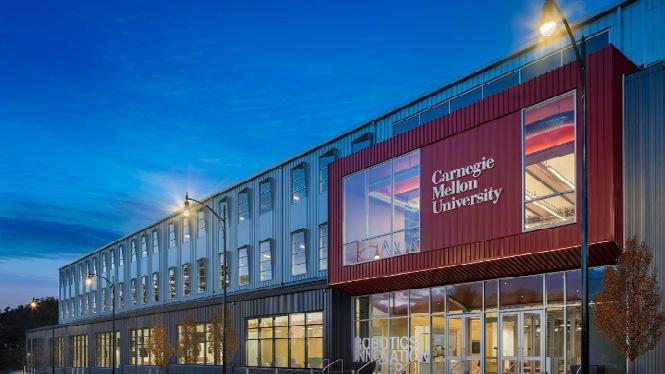
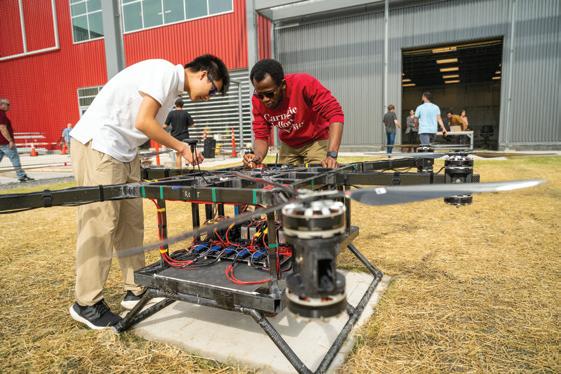
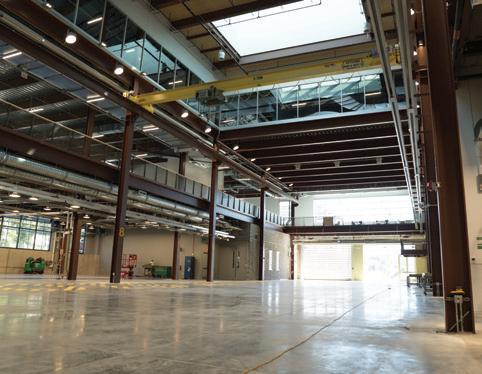

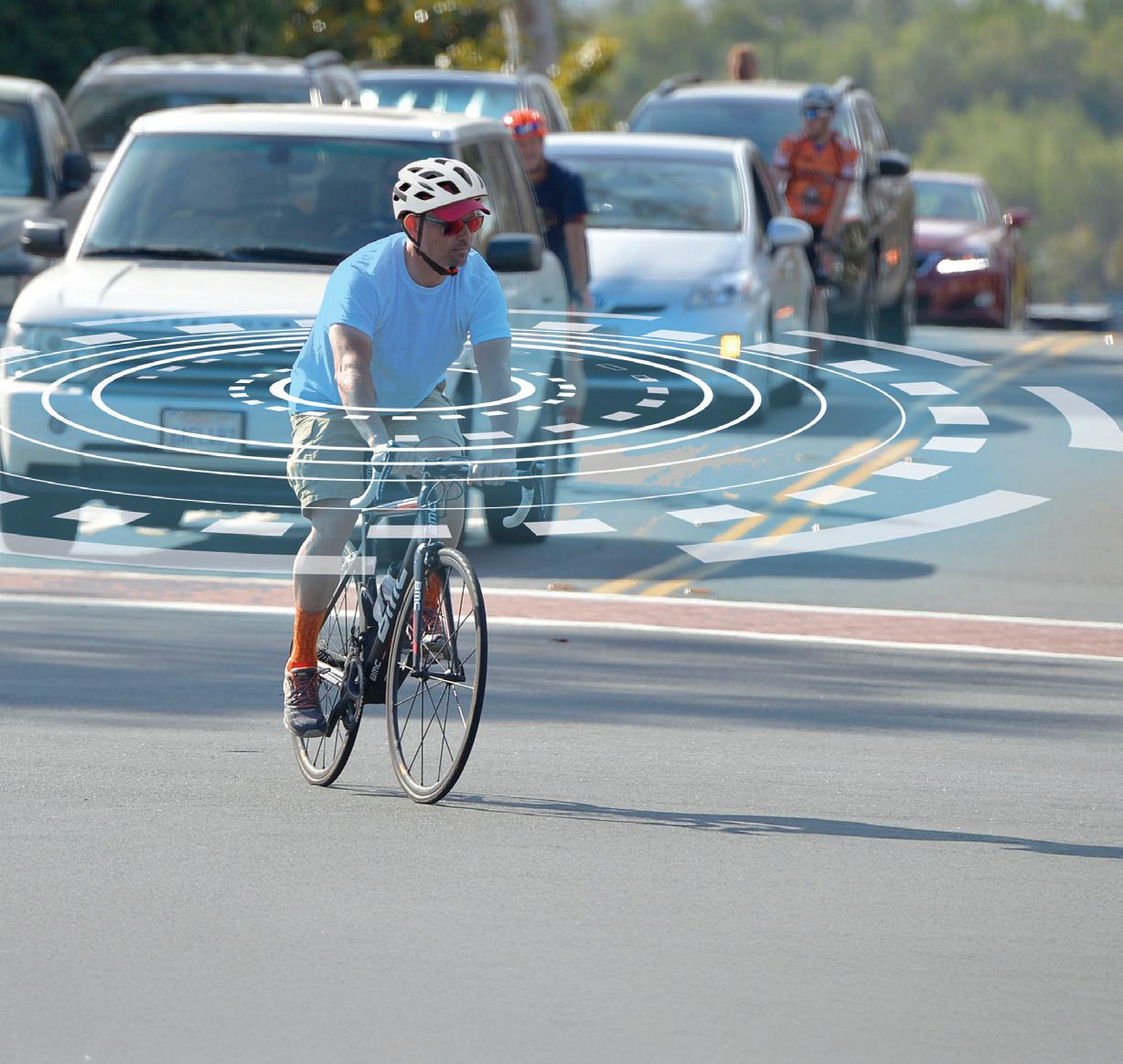
At Carnegie Mellon we are inventing sensory intelligence to enhance human experiences in real-time. A bike rider receives heightened awareness of the space and traffic behind and surrounding the bike through camera images that are transferred into pulsations felt through the clothing. No cell phone or screen is required.
This enables the rider to make quicker, more informed decisions and navigate safely. Softbotic technology is expanding the human sensory experience today in innovative ways.
Bringing robotics into everyday life.
The National Science Foundation (NSF) has given the Faculty Early Career Development (CAREER) award to Trevor Jones, assistant professor of mechanical engineering, and Yorie Nakahira, assistant professor of electrical and computer engineering. This prestigious five-year grant is given to junior faculty who show promise of being leaders in their field and supports the integration of research and education.
Jones’ research is inspired by understanding the physics of everyday objects to develop new technologies. At CMU, Jones heads the Mechanically Intelligent Engineered Structures Laboratory. Reimagining natural phenomena and human expression as tools to design materials, his research traverses multiple applications, including soft robotics, wearable technologies, and morphing structures.
With this award, Jones will explore the mechanical properties of beadwork as a new class of programmable metamaterial. Beadwork, a diverse art with cultural significance, comprises weaving thread through beads to form structures typically used for decorative applications. This patterning not only makes beadwork visually stunning but gives rise to emergent mechanical properties with potential functional applications. Beadwork combines the complementary mechanics of granular matter, an ensemble of macroscopic particles that has the potential to resist high loads, with the flexible, woven fibers of textiles, thereby positioning this metamaterial as both flexible and durable.

Nakahira’s research sits at the intersection of neuroscience, cell biology, cloud computing, and autonomous systems, as she applies the fundamental theory of optimization, control, and learning to these fields. She studies how theoretical foundations and computational tools can be used to enhance the stability and efficiency of autonomous systems and devices.
These autonomous devices, like the ones found in cars or robots, operate with little to no human intervention and are becoming increasingly utilized in today’s world. But to achieve efficiency, such devices must be equipped with real-time learning and control algorithms in order to actively respond to their internal and external environments.
With this award, Nakahira will develop techniques that mitigate against risks in autonomous systems that operate in an uncontrolled environment.
Using beadwork as a material to advance national health through development of soft robotics and wearable technologies, Jones’ work will investigate the interwoven relationship between beadwork design and its mechanical properties. This work will characterize beadwork’s mechanical response to nonlinear deformation, internal contact, and friction to develop predictive models for beadwork’s physics.
“As a kid, I remember playing with beadwork headbands my mom made. The patterns and combinations of color would catch my eye, and once I picked them up, the tactile feel made them impossible to put down. As I’ve grown to do mechanics research, when my mom crafted my daughter a beadwork embroidered vest, I was reminded of how mechanically fascinating beadwork is,” Jones said.
“For these experiences to culminate in recognition from the National Science Foundation to research beadwork as a novel material platform is an honor to my heritage as an Ojibwe scholar.”
To design safer, more human-aligned autonomous control systems, Nakahira will quantify long-term risks and develop efficient control techniques that offer long-term assurance against human-perceived risks. Her research will also develop real-time control strategies that adapt their level of caution based on inferred human preferences, providing strong safety guarantees without sacrificing performance.
In addition, she will study how repeated interactions—such as those between autonomous systems and human users, or among multiple devices— can lead to unintended consequences like adversarial or unstable behavior. By modeling these dynamics and designing policies that anticipate and prevent such outcomes, her work will help ensure that autonomous systems remain trustworthy and cooperative over time.
“As a whole, this award will help us design high-performing, safer, and more human-aligned autonomous control systems,” Nakahira said.
Joseph F. DeCarolis, an internationally recognized leader with technical expertise in energy systems, climate change, computing and public policy became head of the Department of Engineering and Public Policy at Carnegie Mellon University on November 1, 2025.
DeCarolis succeeds Peter Adams, professor of engineering and public policy and civil and environmental engineering, who has served as the department’s head since 2019. Adams has return to the engineering faculty to continue his research and teaching.
DeCarolis earned his Ph.D. at Carnegie Mellon in Engineering and Public Policy. He has returned to CMU after spending four years at the Environmental Protection Agency and 17 years at North Carolina State University. From 2022-2025 DeCarolis served in a Presidentially appointed, Senate-confirmed role as administrator of the Energy Information Administration, the official statistical and analytical agency within the Department of Energy. In this role he led 350 federal employees and 300 contractors with a $135 million annual budget. With more than 60 peer-reviewed research publications, DeCarolis has focused his research on the need to rapidly develop sustainable energy systems. His work combines domain knowledge in energy systems with numerical and mathematical modeling, life cycle assessment, and energy economics with the aim of providing practical energy-related insights to decision makers.

Carnegie Mellon University’s Erica Fuchs joined leaders from across government, technology, business, and academia at the World Economic Forum Annual Meeting in Davos, Switzerland from January 19-23, 2026.
This year’s theme, A Spirit of Dialogue, served as an impartial platform to exchange ideas and support problem-solving during a period of significant geopolitical and societal change.
Fuchs, director of CMU’s Critical Technology Initiative and Kavčić-Moura Professor in the Department of Engineering and Public Policy, researches how emerging technologies are developed, commercialized, and manufactured, and the policies governments need to support national competitiveness in those areas.
Fuchs moderated two sessions. The first, titled “How can governments innovate?” explored how public institutions can adopt
more adaptive and experimental approaches to policymaking. By adapting the approach of product designers, the panelists will consider the use of frontier tools, iterative methods, and future-focused perspectives to create bold, adaptive systems that are ready for tomorrow’s challenges.
The second session, “AI for Curricular Value Chains,” examined how artificial intelligence can improve material design, efficiency, transparency, and reuse across global production systems, while at the same time enhancing economic competitiveness and supply chain resiliency.
Her participation builds on two decades of involvement in national and international discussions on technology policy. In 2012, Fuchs was selected as a World Economic Forum Young Scientist and has been an invited speaker at past WEF events.
Last summer, these students, who were drawn to the biomedical engineering applications of their respective fields, participated in the Summer Undergraduate Research Fellowship (SURF) program that supported full-time summer research on campus.
Rhea Soo, an electrical and computer engineering student, became interested in biomedical engineering after taking the Biomedical Engineering Systems Modeling and Analysis course with Sossena Wood, assistant professor of biomedical engineering. Soo used her SURF fellowship to conduct research with Wood.
“I am making a process to create a pipeline of MRI scans of skull images that can be used to identify a potential relationship between skull thickness and the progression of sickle cell disease,” explained Soo.
Such MRI scans require time-consuming manual review and adjustment in order to capture the right information for the skull images. Soo used Brain Suite, software that extracts the skull images she needs.
Crediting Wood for giving her the independence to conduct research that benefits patients with sickle cell disease, Soo intends to pursue her Ph.D. in bioengineering or biomedical engineering.
Amber Lo was interested in the biomedical side of chemical engineering and studying ways to fight cancer, which had taken her grandmother.

After talking to Derin Sevenler, assistant professor of chemical engineering, Lo joined his lab in 2025. Sevenler leads a research group that’s developing
microfluidic devices, similar to those used to make microelectronic computer chips, for potential gene therapies that can treat diseases like cancer.
These tiny chip devices can perform a type of surgery on millions of individual cells within seconds by tearing nanoscale holes in their membranes, which allow biomolecules such as DNA and protein to diffuse into the cells and treat disease at its molecular source.
After spending the spring semester learning how to culture cells and keep them alive, Lo used her SURF fellowship to continue working in the lab. She helped to optimize the production of epoxy chips to ensure high volume production and create a high-throughput device that can allow the team to perform surgery on cells more efficiently.
Lo explains that their method allows for larger amounts of modified cells to be produced, which has the potential to lower the cost of cancer therapeutics.
“It’s exciting to be working in this lab, anticipating the improvements that can be made, all while expanding my view of chemical engineering,” said Lo.
Sofia Warehall knows what it’s like to recover from a sports injury. The figure skater has had meniscus repair surgery twice. She is a mechanical engineering and German studies junior whose personal experience contributed to her delight in conducting research in Eni Halilaj’s lab.
Halilaj, associate professor of mechanical engineering, leads the Musculoskeletal Biomechanics Lab, where researchers integrate insights from experimental and computational work to develop rehabilitation strategies for people who have had ACL reconstruction surgery.

Warehall attended MRI appointments with young study participants and attended their sessions in the motion capture lab where infrared cameras tracked body markers that record gait analysis. These analyses can be used to improve outcomes for as many as 50% of patients who can expect to develop osteoarthritis early in life.
She is training a computer model to automatically label the multiple markers that are manually tracked and labelled. Once the data is labelled, it is scaled or matched to the patient’s actual bone structure. Warehall compared those manually obtained results to determine the accuracy of those produced by the software that automatically conducts the scaling process.
Thea Spellmeyer used her SURF grant to work with Phil Campbell, who she met while taking his physiology course, one of her favorite classes. Campbell, professor of biomedical engineering, researches tissue engineering and natural-based biomaterials.
Spellmeyer worked with Ph.D. student Nader Rezazadeh to study ultrafine fibers made of soybean protein for use as a wound dressing. The fibers are created by electrospinning, a process that creates fibers by using an electric field to draw a polymer solution into filaments.
The premise is that the wound healing process can be enhanced with growth factors found in extracellular versicles (EV), the nano-sized vesicles released by cells that play a critical role in cellto-cell communication and influence the behavior of recipient cells.
Spellmeyer collected EVs from cultured cells that are added to soy polymer solutions, which are then electrospun into films to promote the type of cell growth that can accelerate healing. She also explored sterilization methods to keep the films free of contamination.
Caroline Vernon knew from an unusually young age that she wanted to work on artificial organs and that she wanted to come to CMU to study biomedical engineering. She then chose materials science and engineering as her primary major because of its applications in biomaterials.
“Making human anatomy from scratch is really cool to me,” said Vernon.
She used her SURF fellowship to work with Adam Feinberg, professor of biomedical engineering and materials science and engineering, whose research focuses on replacing human heart transplants by repairing or replacing damaged heart tissue with 3D printed tissue. Feinberg’s FRESH bioprinting technology enables fully biologic systems to be developed by creating models of human anatomy made of collagen, a major building block of human tissue.
The process of injecting bioink and collagen into a gelatin bath requires high levels of precision in order for doctoral students to identify and analyze structure, distribution, and chemical composition. Vernon, an undergraduate, worked on staining procedures that enhance the contrast in microscopic images of biological tissues or cells. These results allow for adjustments of the 3D prints to function more successfully in the body.
The opportunities Feinberg gives to students demonstrate his belief in expanding technology development with those who will further it in their own careers.

We were delighted to receive this photo! It’s never too early to appreciate engineers
Two-year-old Cameron Collins takes a break from playtime to catch up on the latest news in the
College
of Engineering.

As computer chips grow more complex, designing hardware is only part of the challenge. Ensuring that those designs work correctly has become one of the most critical and in-demand skills in the semiconductor industry. To address this need, Carnegie Mellon’s Department of Electrical and Computer Engineering has introduced a new course: Hardware Verification.
The course responds directly to long-standing feedback from industry partners who have emphasized a growing gap in undergraduate and graduate curricula: while students are well trained in circuit design, few receive formal education in how to systematically verify modern hardware designs.
“We are very good at teaching students how to design circuits and make them fabrication-ready,” said Sam Pagliarini, special professor of electrical and computer engineering, and who developed and teaches the course. “However, modern computer chips are extremely complex, with features built on top of features. It is not trivial to verify that every intended feature is present in the chip, or that the interactions between features are correctly implemented.”
Hardware Verification introduces students to the principles and practices used by verification engineers in industry. Students learn how to write effective SystemVerilog testbenches that exercise designs and expose corner cases through simulation. A core component of the course is the Universal Verification Methodology (UVM), the industry-standard framework for organizing and scaling verification environments.
In addition to simulation-based verification, students are exposed to verification metrics that help quantify confidence in a design’s correctness, as well as elements of formal verification using SystemVerilog Assertions. The course also introduces related topics such as linting, non-functional verification, analog and physical verification, and verification management, providing students with a broad view of the verification landscape.
The course was developed with input from an industry leader and refined through extensive collaboration with teaching assistants prior to its first offering in the fall of 2025. The goal was to ensure that the content reflects how verifica-
tion is practiced in real engineering environments.
“As a general rule of thumb, there is a higher demand for jobs in circuit verification than in circuit design,” says Pagliarini. “Industry benefits from having a pool of highly talented graduates who already understand the inner workings of a verification methodology. This course helps students enter those roles ready to contribute from day one.”
The course emphasizes hands-on learning. Students spend more time in the lab than in lecture, working directly with tools and methodologies used in industry. The course culminates in a comprehensive final project in which students are given a hardware design and a natural-language specification that may be ambiguous or incomplete, mirroring real-world conditions. Students must then interpret the specification, develop a verification plan, and create tests to demonstrate whether the design’s features are implemented correctly. Uniquely, students are allowed to present their final project multiple times, incorporating feedback, and refining their work over the course of the semester.
“As long as students are making progress, they can improve their grades by presenting again,” says Pagliarini. “Most students end up presenting about three times in order to secure an A on the final project.”
For students, the course provides both technical depth and career clarity. Sutong Yao, a senior in electrical and computer engineering who completed the course last semester, enrolled to gain formal training in verification and UVM, skills she knew were essential but rarely taught in universities.
“The course covered the fundamentals of verification and how to build a complete UVM-based verification project,” says Yao. “We also interacted with a startup working on AI-based verification and heard from guest speakers who are leaders in the field.”
Yao credits the course with helping her stand out in job interviews and internships, where many engineers typically need additional internal training to learn verification methodologies.
“This course was extremely helpful for my career,” she said. “It also solidified my decision to pursue a career as a hardware verification engineer.”
Along line of students waited to talk with the L'Oréal representatives at the STEM Career Fair. Naomi Dibong, who dreams of working in the beauty industry, was thrilled. As part of her job at Carnegie Mellon's Career & Professional Development Center, she had campaigned to increase participation from beauty companies in the career fair. "I want people to know that the beauty industry is an option for chemical engineering majors, mechanical engineering majors, all of us," she says.
Dibong, a chemical engineering (ChemE) major with an additional major in biomedical engineering (BME), got an inside view of L'Oréal through a ninemonth fellowship with the company. She learned how the company operates in the industry and was paired with a mentor.
With career interests spanning skincare, cosmetics, and dermatology, Dibong wants to develop accessible and inclusive skin-care products, as well as treat patients with various skin conditions. She participated in a career preparation program through the American Academy of Dermatology. The exposure to medical students, residents, and practicing dermatologists confirmed her path toward medical school.
Chemical engineering courses are preparing her with an understanding of formulation and process engineering, along with critical thinking skills. She's connecting the dots back to her interest in skincare through undergraduate research. With Tagbo Niepa, associate professor of ChemE and BME, Dibong researches the skin microbiome. "Bacteria have a huge role in our skin. Some are protective. Others are harmful," she says. In her research, she cultures skin bacteria to study biofilm formation and microbial adaptation to interfacial stress.
Dibong developed new skills during a summer internship at Unilever, where she did benchwork for skincare brands. She was a research and development formulation intern, helping to develop new skincare technology for lotions.
"Ensuring stability over time is a challenge. We don't want the oil in a lotion to separate or the consis-
tency to become too liquid. Because Unilever is a global company, we have to account for different weather conditions where these products will be transported, sold, and used," she says. Dibong conducted stability testing for each new product formulation.
Her job required her to understand the biological and physical chemistry of the products. She also collaborated with design, formulations, fragrance, and consumer technical insights teams. "Working with cross-functional teams taught me a lot because people communicate in different ways. I learned how to present my technical work in a way that my whole audience, both technical and non-technical, could understand," says Dibong.
Whether designing products or talking with people, Dibong is inspired to think from different points of view. She grew up in Cameroon, then attended high school in Paris before moving to Pittsburgh for college. "My background makes me open. It gives me more perspectives," she says.
As a member of the Engineering Student Council, Dibong sees herself as a conduit bringing student ideas and opinions to leadership in the College of Engineering. She helps plan events to foster a sense of community within the college.
Dibong also serves as vice president of the Young African Leaders Association (YALA) and secretary of Ignite, a Black Christian ministry. These groups have helped her build a support system on campus.
Her chemical engineering cohort is another part of her campus network. "Everyone is willing to go the extra mile," she says, describing how they work together on homework assignments and support each other in other ways. Dibong has also found that her professors are understanding and get to know her and her classmates. "I've made real connections, real friendships that I'm going to carry with me after CMU," she says.
While summer break may be a breather from classwork, many Carnegie Mellon students continue their education through internships across the country. These real-world career experiences put their technical skills to the test, all while they explore fields of interests and connect with potential employers.
CMU Silicon Valley master’s student Chandhana Solainathan landed an internship last summer with Meta as a part of their internal infrastructure team. Solainathan, who is studying software engineering, worked on a fullstack application project, which includes both the frontend (user-side) and back-end (server-side) of a website application. By the end of her internship, Solainathan delivered production-ready code—an impressive and rare accomplishment for an intern to achieve.
“I feel really proud that I was able to give out production-ready code as an intern,” Solainathan said. “I also really loved learning about the qualities of being a good software engineer, like time management, communication, documentation, and presentation skills.”
Solainathan credits CMU-SV career services for helping her prepare for a rigorous application cycle by refining her LinkedIn and Handshake profiles.
“Through CMU’s help, I gained an understanding of the importance of LinkedIn,” Solainathan said. “I had multiple sessions with career consultants who made sure I was aware of how important LinkedIn is for recruiters and how to connect with Meta employees to get a referral from a CMU alum.”
Solainathan, who holds a bachelor’s degree in electronic and communications engineering, became interested in software engineering after taking a free online course in website building. This initial course is what led her to pursue web development projects on her own time while still an undergrad and even pushed her to apply for and accept an internship at Microsoft in 2021.
Now fully committed to pursuing a career as a software engineer, Solainathan has her eyes set on one day becoming a senior lead or technical project manager, but she is keeping an open mind to any and all opportunities that come her way. She recently accepted a full-time offer from Meta and will be returning to the company as a software engineer.
“I had a very fruitful experience at Meta,” Solainathan said. “While it was challenging at times, I was able to stay proactive and overcome the hurdles in my project. I found that as long as I was giving 100 percent effort and keeping my managers, peers, and stakeholders updated, everything worked out in the end.”

With dual passions for food and the tech industry, Lisa Wang has been looking for a way to bridge her two interests into one profession. Thanks to a summer internship at 7-Eleven’s corporate office in Irving, Texas, Wang, a CMU-SV master’s student in software management, gained first-hand experience in how the food industry can be transformed with technology.
As a product manager intern on the store systems team, Wang worked on a back-office store system—a portal used by 7-Eleven store leaders to help with inventory control and day-to-day store operations. Powered by an AI engine, this back-office management system helps to forecast product demand based on factors such as seasonality, historical sales, and even the day of the week or hour of the day. The goal of this tool is to drive up sales and lower write-offs by connecting 7-Eleven mobile devices with the management system to inform store teams when and what to cook each day.
Currently, engagement with this tool is pretty low, but Wang was able to redesign the user interface to make it easier for store leaders to interact with the data they are given without increasing their workload.
“Part of the redesign process was challenging because I would have to put a lot of thought into what type of feature would give us the quickest feedback and what was the easiest to develop while incorporating the feedback from my teammates and leaders as well as engineers on the development team,” Wang said.
While Wang’s internship took place at 7-Eleven’s corporate office, she spent two eight-hour shifts behind the register at a 7-Eleven store alongside store leaders. This experience was crucial to her redesign of this tool, as she was able to witness first-hand the challenges workers faced on a day-to-day basis.
As a home bakery owner, Wang said it was her personal interest in the food industry coupled with the projects she worked on at CMU-SV that gave her the necessary foundation to succeed at 7-Eleven.
“I had an awesome experience at 7-Eleven. I think if I had been solely focused on applying to big tech companies, I would not have had this good of a time,” Wang said.
“One piece of advice I would give to future applicants is to expand your scope. Think about what you're interested in, what your strengths are, and what makes you stand out as a candidate. You don’t have to be at a big tech company. Nearly every industry uses tech right now.”
Wang will graduate from CMU-SV in December 2026 and return to 7-Eleven this fall as a Product Manager to keep up the momentum she built from her internship.
We surveyed undergraduate students, and asked, What inspires and drives you to succeed?”
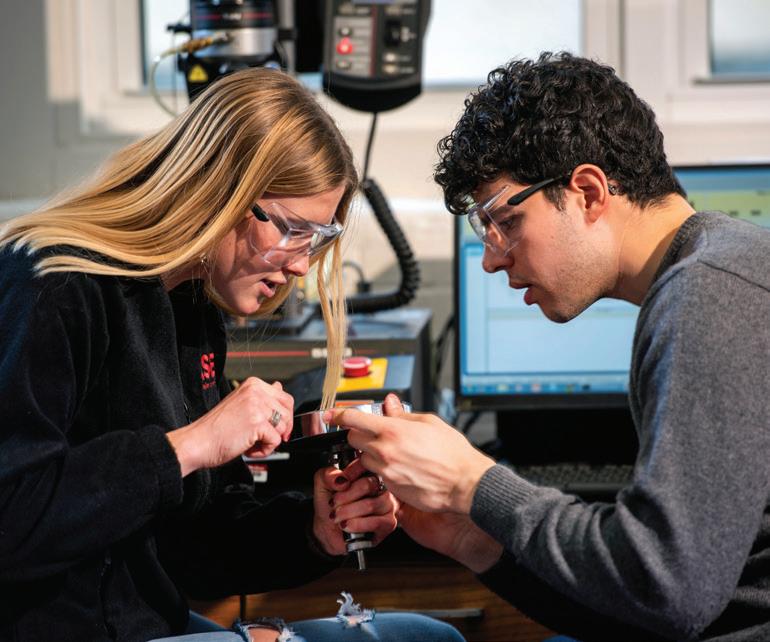
I want to provide access to clean and affordable water for communities close to my heart, so I see my success as a necessary step in pursuing an admirable line of work.”
“Pure, unadulterated ego.”
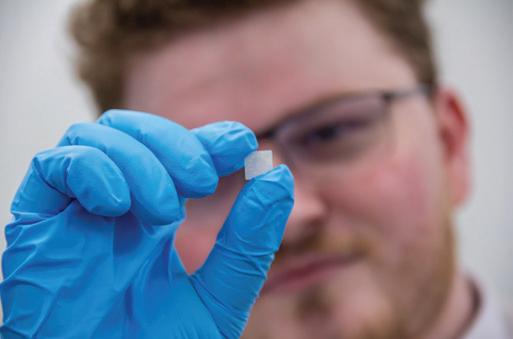
I believe that innovation for joy is just as important as innovation for advancement in medicine, energy, transportation, and other domains. As an engineer, it's my dream to leave something behind that will, above all, make the world a more cheerful place. I hope to someday use my skills to build roller coasters and other immersive amusement experiences. When I'm deep in midterm season and wondering if the stress is worth it, thinking about the first family to get off one of my rides smiling makes me want to relentlessly keep moving forward.”
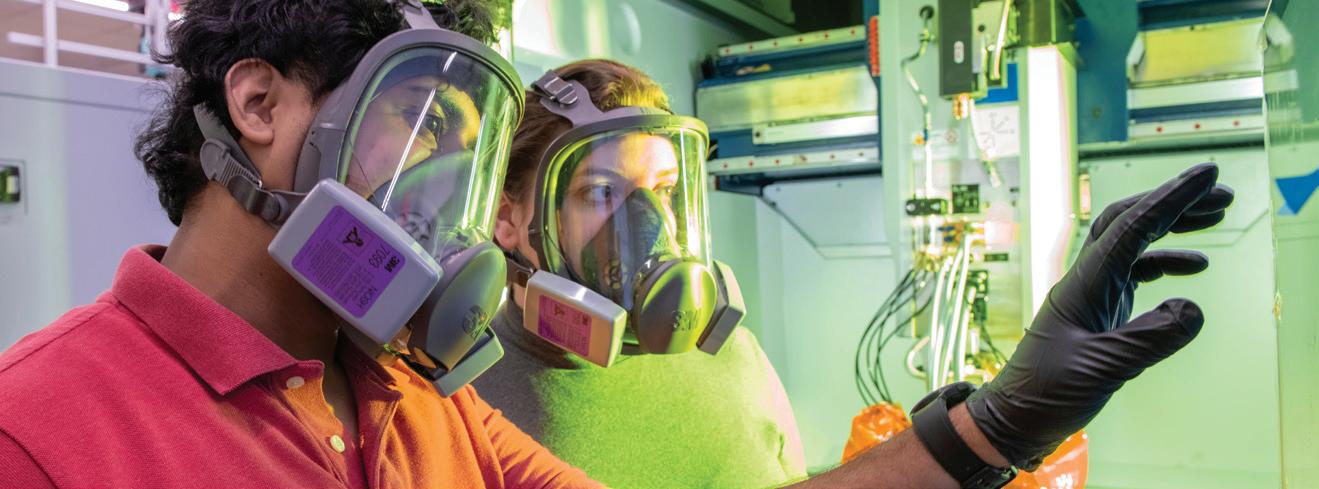
“ “ “ “
I come from a rural area where students do not have access to many educational opportunities. The ability to study at CMU is a tremendous gift that I refuse to take for granted, even when it feels overwhelming.”
Being a great engineer and getting paid well for it.”
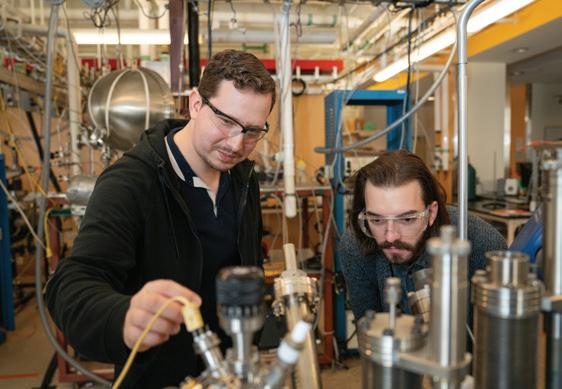
There are problems that need solving, and I am in the position here to gain a large and in-depth toolset for solving them. I must learn what I can so that I can work towards a better, more just future. I often come back to the phrase sapere aude or dare to learn. Dare to be curious, to fail, and to ask questions. That is the only way to improve yourself and the world around you.”
I love engineering. I want to be good at it.”
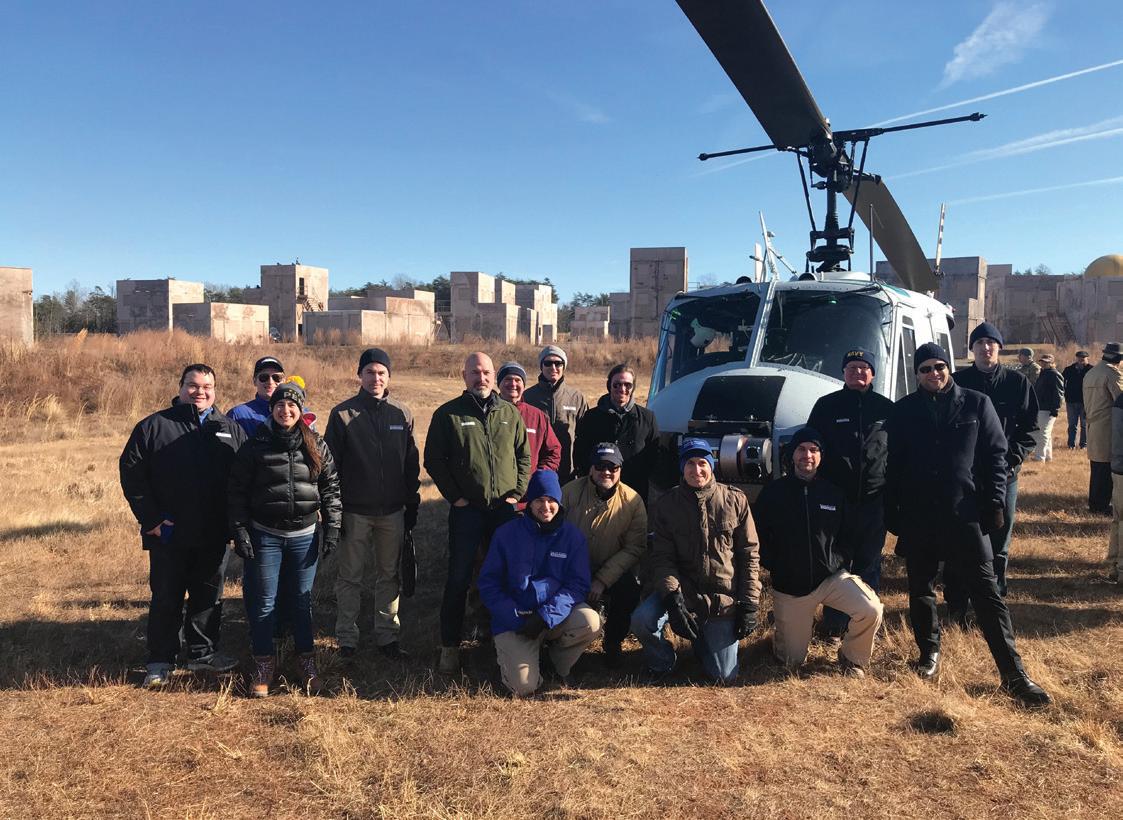
Stepping into the offices of Near Earth Autonomy is a bit like stepping into a robotics exhibit at a science center. Various modules, sensors, and technologies line the wall, proudly displayed in the order they were developed, like a hall of fame for autonomous flight.
The COO of Near Earth Autonomy, Marcel Bergerman (ECE 1996), walks down the line, telling the story of each project and its place in the company’s history. Since 2012, the company has been building and testing autonomous flight technologies for un-crewed cargo transport and aerial inspection. Near Earth Autonomy is creating systems capable of navigating complex terrain like disaster areas and combat zones to deliver supplies and other cargo, as well as perform automated inspection of airplanes, buildings, tunnels, and other infrastructure.
Bergerman’s excitement for the work is palpable.
But it is not where he expected to be as a young student at Universidade de São Paulo in Brazil.
“This was absolutely not the plan. I grew up thinking I would be a professor, and so my path was clear,” said Bergerman. In his experience in Brazil, most people with Ph.D.s stayed in academia to teach or do research. “CMU completely changed that for me.”
Following his master’s degree program, Bergerman came to Carnegie Mellon to pursue his Ph.D. in electrical and computer engineering. His first advisor was former College of Engineering Dean Pradeep Khosla, and among Khosla’s other students, Bergerman started to notice a pattern.
“It seemed most people who got Ph.D.s at CMU were not going to universities to research and teach; it seemed most were going to industry to pursue innovation and create new technologies that turn into products,” he said. His interest in innovation was piqued and only grew during his years as a Ph.D. researcher.
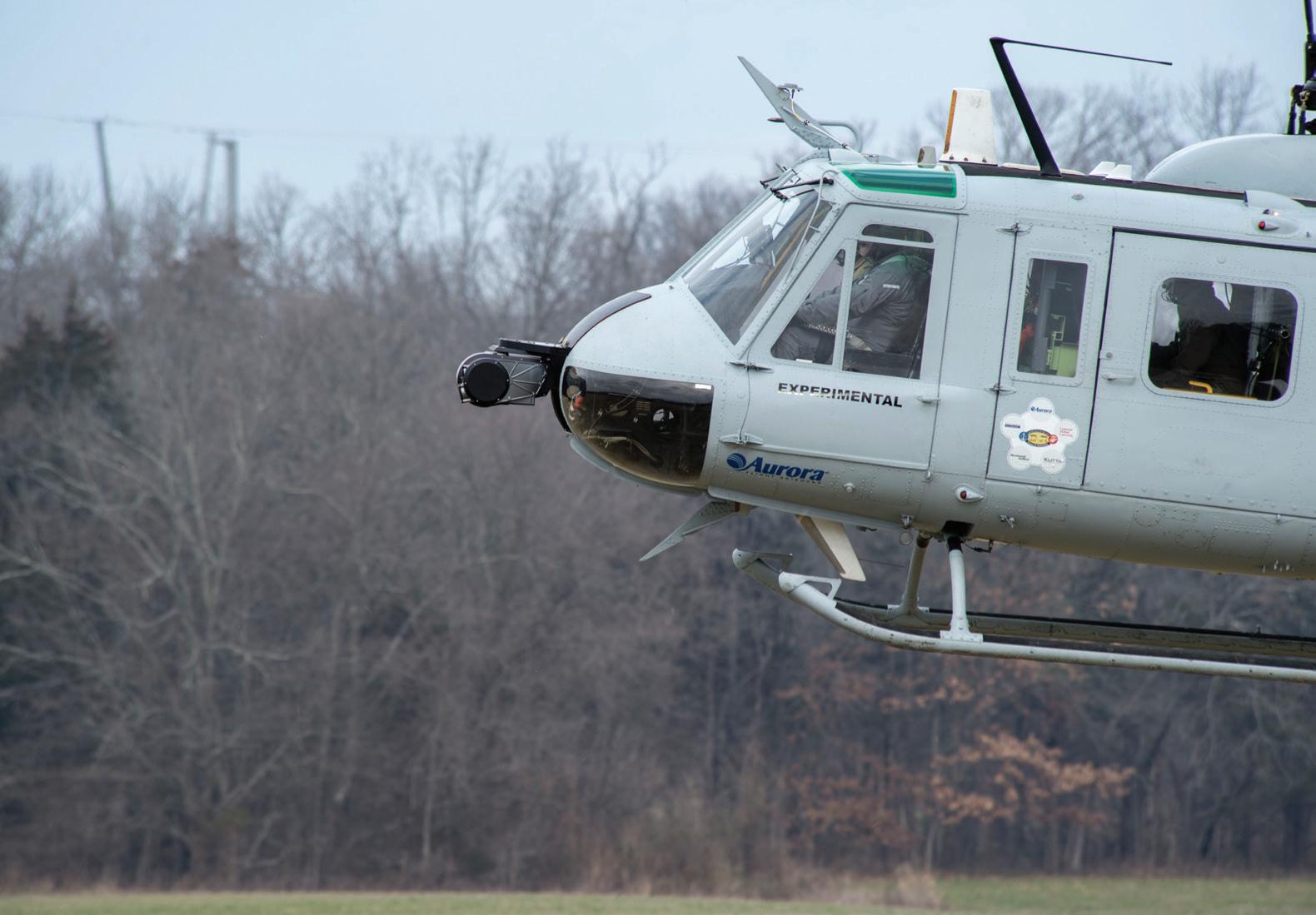
“CMU’s entrepreneurial mindset and culture is genuine. When I was at CMU, people were creating technologies that were ahead of their time,” said Bergerman. “There were things being built at CMU 20-30 years ago that are now being spun out into companies and products.”
Near Earth Autonomy is one such startup. It began as a project between Bergerman, Sanjiv Singh from CMU’s Robotics Institute who is the company’s CEO, as well as CTO Lyle Chamberlain and CMU faculty member Sebastian Scherer.
After finishing his Ph.D., Bergerman spent several years back in Brazil before returning to CMU to work on a NASA contract as a project manager and became reacquainted with Singh. The two had been Ph.D. students at the same time in the 90s—but they didn’t meet in the lab.
“Actually, we met playing volleyball!” said Bergerman. He and his wife, Maria Yamanaka (CEE 1996),

joined the Robotics Institute’s intramural volleyball team, which is where they first met Singh.
As faculty members, Bergerman and Singh worked on several projects together, eventually winning a contract with the U.S. Navy to work on autonomous aerial cargo and utility systems. That
was the start of Near Earth Autonomy.
Bergerman talks about the patience, dedication, and persistence required to innovate and achieve scientific progress, qualities from his days as a Ph.D. researcher that he carries with him in his role as COO.
“When our aircraft goes out and flies successfully
and completes its objective, that’s a happy day. When our team comes back from long days in the field and things aren’t working yet, those are harder days,” said Bergerman. “People generally only see the end result of an effort, but those of us who work with innovation know those results don’t happen overnight. Principles are established little by little through design and experimentation. Success takes time.”
Bergerman is used to things taking time and painstaking effort. During his Ph.D. years, he planted a surrogate orchard near a decommissioned steel mill along the Monongahela River in Pittsburgh, personally digging 300 holes with an auger to plant trees for agricultural robots to navigate around. That site is now Hazelwood Green, home of CMU’s Mill 19 and Robotics Innovation Center.
“We were there 20 years ago, testing robots small and large,” said Bergerman. “Many of the trees we planted are still there.”
To fully understand the impact on cycling that Georgena Terry (MechE ’80) has had, it’s important to understand a bit of her philosophy: that is, her philosophy on bikes themselves and the freedom they give the rider.
“The bicycle is an extension of your body. You are not separate from the bike, you are both one, and you help each other,” said Terry. “I treat my bikes like they are human beings. For me, when I get on a bike I’m inserted into nature and we are able to experience and enjoy everything that’s hap-
pening together, whether it’s rainy, snowy, sunny, windy, whether the terrain is going up, down, or sideways.”
Terry has been an avid cyclist since her childhood in Montgomery, Alabama. While the famously hilly, winding terrain of Pittsburgh may be confounding to some, Terry found it to be a welcome perk of studying engineering at Carnegie Mellon. For fun, she and her biking pals would challenge each other to climb some of the city’s most grueling hills.
“If you can ride in Pittsburgh, you can ride anywhere,” she said.
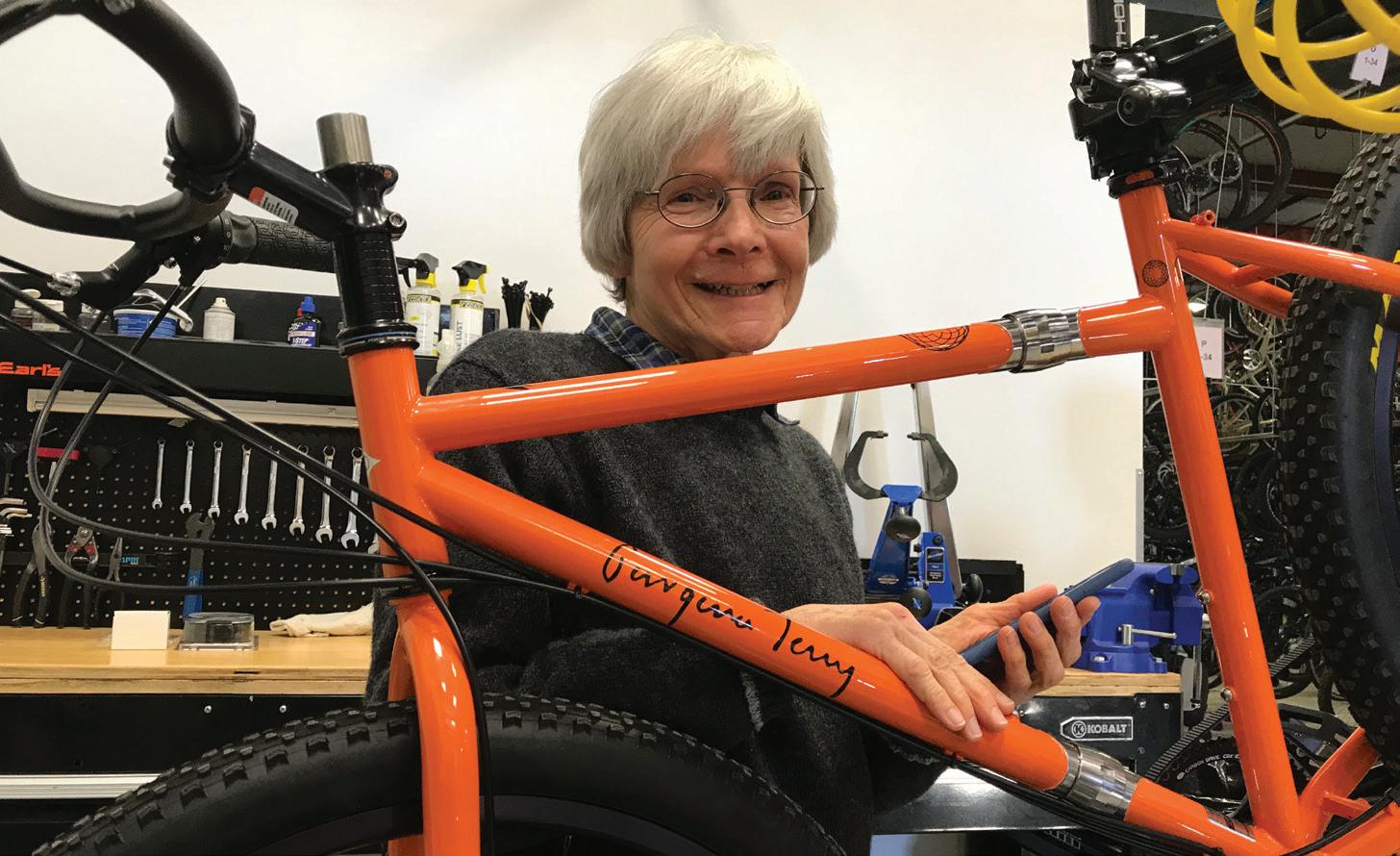
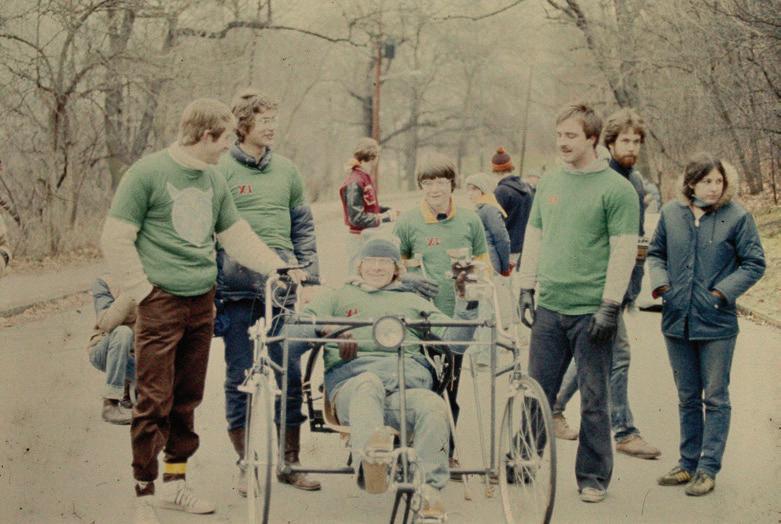
Georgena Terry (MechE ’80) built the first custom bikes created specifically for women, leading a new industry, influencing an entire sport, and blazing a trail to the U.S. Bicycling Hall of Fame.
While working on her senior project, she picked up a brazing torch for the first time. But it certainly wouldn’t be the last time.
“That experience stuck with me, and I think of that every time I pick up a torch,” Terry said. “Looking back, I wish I had been at CMU for longer, my education was enlightening, and I was having such a good time.”
Shortly after graduating from CMU, Terry moved to Rochester, New York, to take a job with Xerox. In her spare time, she started applying her mechanical engineering knowledge in an unexpected way—building custom bicycle frames in her basement. Her very first hand-built bike was a duplicate of the Schwinn she was riding at the time. She immediately noticed aspects of the design that she thought she could improve upon, and it wasn’t long before she turned her attention to building bikes full time.
“I was thinking about CMU all the time,” said Terry. “When you’re building something custom, the basic principles of mechanics apply to everything you’re doing. Every customer is different, so every custom bike is different. Each project is like a puzzle you have to solve.”
As word spread locally that Terry was the go-to person for bespoke bicycles, she started to notice something in her clientele: many of them were women who lamented
that the bikes on the market simply didn’t fit them. It was the 1980s, and in Terry’s estimation, women (especially smaller women) were an entire market that was being ignored by the cycling industry.
“I heard from so many women that riding their bike would cause back and neck problems because they were too stretched out on the bike, and they didn’t feel fully in control,” said Terry. That got her thinking that maybe it wasn’t just a matter of making bikes for women smaller; maybe the entire geometry of the bike needed to be reimagined to better suit women on an anatomical level. As it turns out, this was a breakthrough.
Terry started exhibiting her custom-built designs at cycling rallies and her bikes got a lot of attention, from women and men who took them for a test spin. Her company, Terry Precision Bicycles for Women (now Terry Cycling), started to take off.
In fact, demand scaled up so quickly that she could no longer build the bikes herself. Terry partnered with a manufacturer in Japan that would build a size range of bikes to her unique specifications. This arrangement allowed her to continue designing each bike (while also bringing down the cost) as the company continued to grow.
In the years that followed, Terry Cycling expanded into other markets including
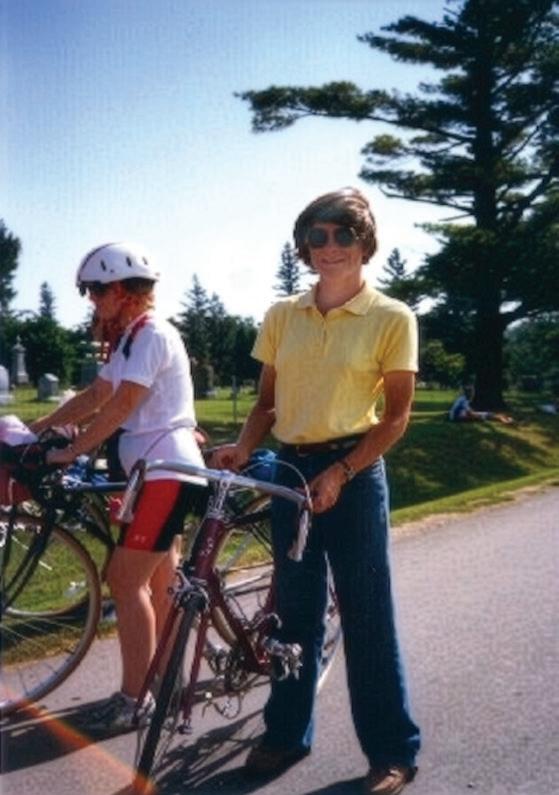
biking saddles, apparel, and other gear. However, the custom work was always closest to Terry’s heart. In 2009, she sold her interest in Terry Cycling to return her focus to one-on-one custom building. She still sweats over every design.
Over the course of her career, Terry and her company’s products have earned many awards and industry accolades, recognizing her many contributions and innovative products that have changed the world of cycling. Last October, she was inducted into the U.S. Bicycling Hall of Fame at a ceremony in Chicago.
“It was really pretty cool!” said Terry. “To know that they realized I had been doing something all this time; it’s very fulfilling.”
Fittingly, when Terry’s induction was announced, the U.S. Bicycling Hall of Fame had to create a new award category to properly recognize her pioneering legacy: “Contributor to the Sport in General.” Alongside Terry, the institution honored three additional inductees for that brand new category—Glenn Curtiss and the Wright Brothers. That pretty much says it all.
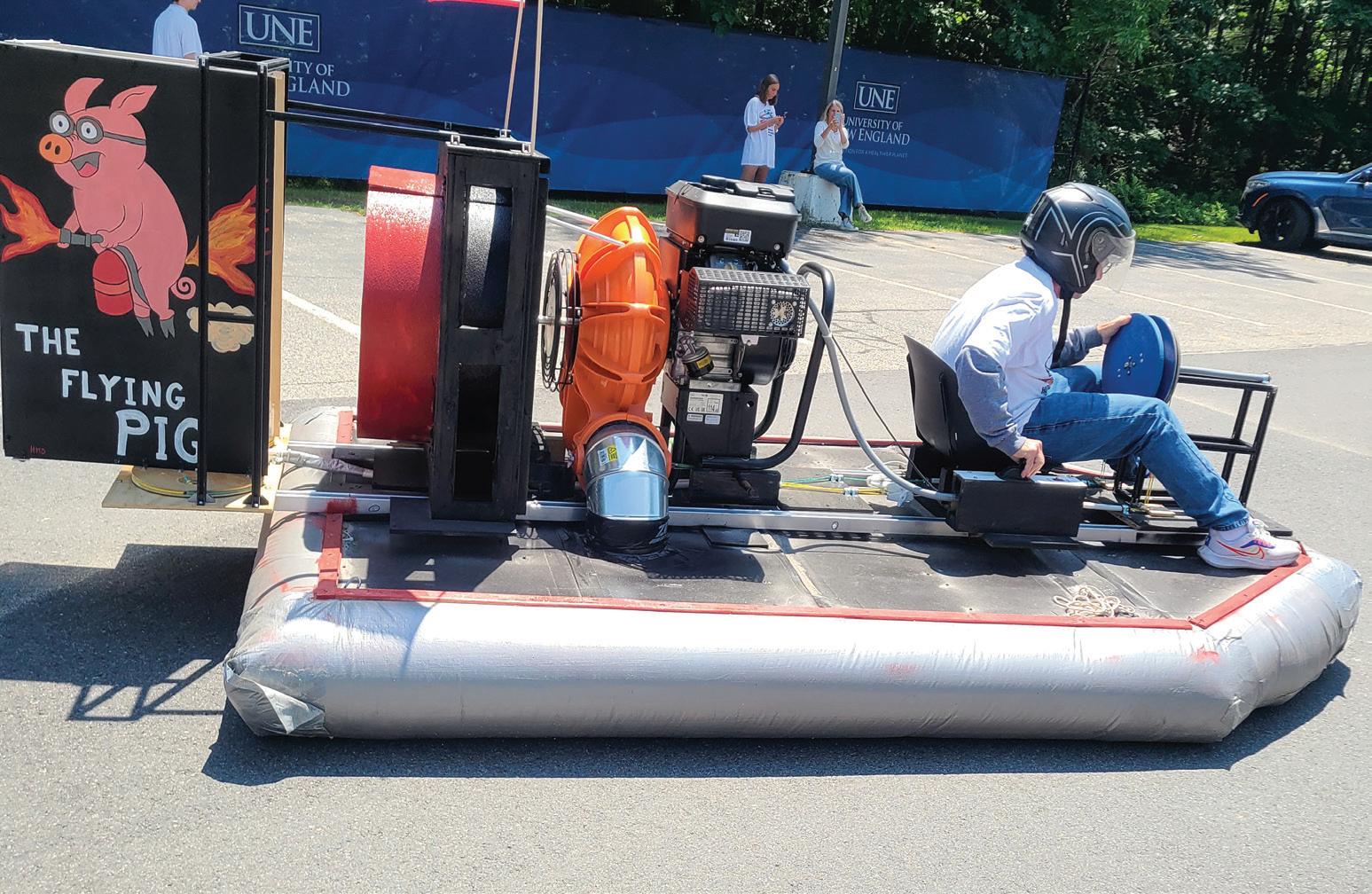
Hovercraft is a feat of engineering.
An amphibious craft capable of travelling over land and water, the design of an air-cushion vehicle weaves together many different areas of engineering.
So naturally, alumni from across Carnegie Mellon’s College of Engineering would be interested in creating their own ground-effect machine.
For the past two summers, engineering graduates from the Carnegie Mellon Class of 1984, Richard DeFelice (MechE), Dr. Keith DeVos (ECE and Physics), and Adam Rizika (MechE), have gathered in Biddeford, Maine, to design and build The Flying Pig, a personal hovercraft fabricated over a 10-plus day engineering marathon.
After a career in technology companies like Teradyne and PTC, Rizika rediscovered hands-on building through family projects.
“About 15 years ago, I started building things with my kids,” explains Rizika. “We began with Halloween haunted houses, inspired by CMU Carnival Booths, then moved on to a potato launcher, rockets, and a trebuchet. Once my kids were older, the projects had to grow, too. When we decided to build a hovercraft, I knew I needed the help of real engineers. So I called my old friends, Richard and Keith.”
Rizika reached out to Richard DeFelice, his freshman roommate and longtime friend, and to Keith DeVos, a classmate and former cross-country runner he hadn’t seen in decades. The three had crisscrossed paths at CMU in the early 1980s, studying, inventing, and occasionally mischief-making in the halls of Hamerschlag. Reuniting, they found that the spirit that first drew them to engineering hadn’t faded a bit.
Gathered in Rizika’s garage, the trio began to create the hovercraft from blueprints in DeFelice’s head with design improvements as needed to yield
How three engineering alumni learned to fly without leaving the ground.
a flying hovercraft. With no specific goal except for having fun and reconnecting, the engineers launched what would become a yearly summer tradition—The Hovercraft Hackathon.
DeFelice served as lead engineer, drawing on a career that spanned semiconductor reliability testing at AT&T, intellectual property negotiations at AT&T & Lucent, ventures launching technologies from Bell Labs and building his own businesses.
“Engineering never leaves you,” he said. “This kind of project brings back that CMU spirit of inquiry, persistence, teamwork, and a sense of play.”
After a few days of brainstorming, they quickly realized their original five-day build plan was a bit optimistic, and that they would need a few more helping hands. They enlisted the assistance of their friends, Tim Wegner (Northeastern BSEE) and Steve Luby (UMASS BSME) without whose contributions, the craft may have remained just a fun idea.
“We also decided to invite some younger folks to help us build,” says Rizika. “Our goal for the younger crew was to provide them with hands-on learning— designing, using tools, collaborating, and having fun. For the older engineers, it was about working together creatively on something outside of work. We ended up needing that balance.”
That first Hovercraft Hackathon resulted in a team of nearly twenty participants. They worked in shifts, cutting, assembling, testing, and redesigning. After many failed attempts, the team kept altering their design until the craft finally hovered on ground.
“Who knew it would take ten days of twelve-hour shifts just to get it hovering?” Rizika laughed. “Then another week to get it steering straight and stopping safely. But the process was pure CMU, hands-on learning, iteration, and teamwork.”
For DeVos, a neurologist and longtime teacher now based in Tennessee, the experience rekindled not just friendships but also memories of the intellectual spark CMU ignited.
“I came to CMU as a kid who loved science and math,” says DeVos. “I had no idea what I wanted to do, only that it would involve figuring out how the world works. That’s what CMU gave me, not just the skills, but the mindset.”
DeVos, who studied under Vijayakumar Bhagavatula, the U.A. and Helen Whitaker Professor of Electrical and Computer Engineering, carried that mindset into every stage of his life, from signal processing research at Johns Hopkins to a career in neurology and medical education.
“Even now, I see the nervous system as an amazing cellular computer, with many intertwined and interdependent circuits, many that operate as control systems with feedback loops” says DeVos. “Engineering and physics shape the way I think about everything and help guide me to be a logical problem solver in medicine.”
Reconnecting with Rizika and DeFelice felt like stepping back into the best parts of college.
“It reminded me of why we all fell in love with
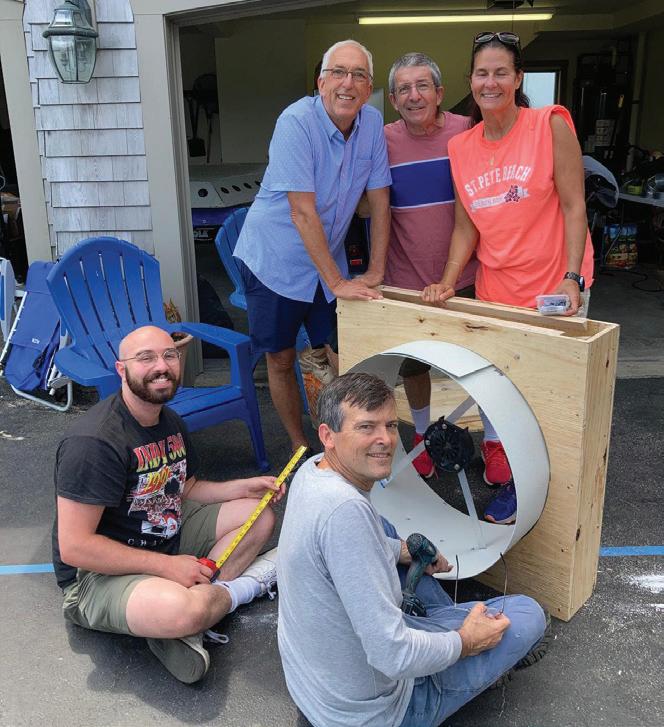
engineering in the first place—the collaboration, the problem-solving, the sheer fun of discovery,” says DeFelice. “It felt like being back at CMU again, late nights, creative minds, everyone pitching in to make something work.”
By their third week together, the group had launched Hovercraft Hackathon III, improving their design and pushing for new speeds and navigation ability. There’s even a theme song, an AI-generated tune created just for the occasion.
“It’s all in good fun,” DeFelice said. “But it also shows how engineering connects generations. Everyone learns something, and everyone contributes.”
The trio plan to keep building. Maybe faster hovercrafts, maybe something new. But what matters most, they agree, is the collaboration itself.
“It’s not about what we build,” Rizika said. “It’s about who we build it with, and what it brings out in us. Every time we do one of these projects, it feels like we’re back at CMU again.”
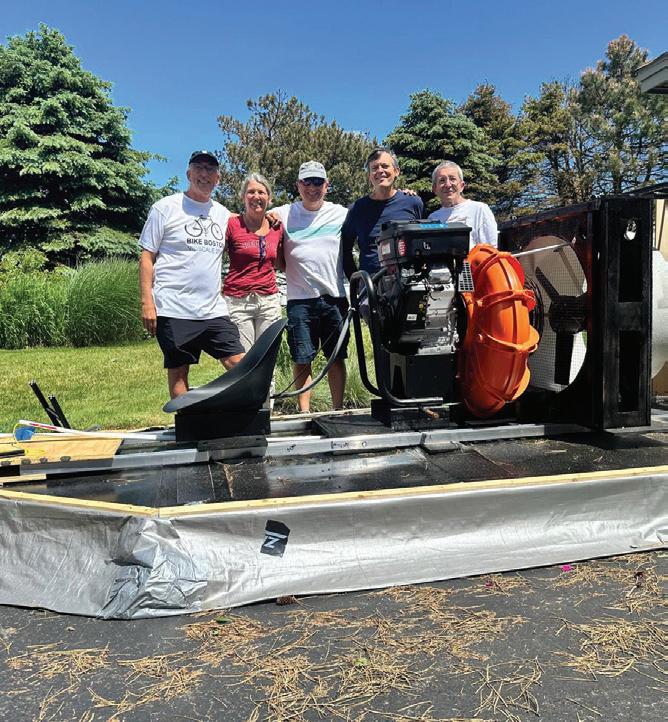
Why I wrote a book about privacy for 4-to-6-year-olds
Lorrie Cranor, the director of CyLab and the Bosch Distinguished Professor in Security and Privacy Technologies, shares her motivation for writing a book for the youngest technology users.
Iam ridiculously excited about my latest project: a children’s picture book about privacy called Privacy, Please!
In Fall 2024, the Privacy Engineering master’s program at CMU planned an event at the Carnegie Library in Oakland, and I asked the librarians if I could read privacy books to preschoolers during story time. They agreed, but they didn’t have any suggestions for privacy-related picture books.

In 2014, I worked on a project in which I asked people to draw pictures of what privacy means to them. I built a website called Privacy Illustrated that has hundreds of these drawings. So, while I pondered privacy books, I looked at drawings from our youngest contributors.
I saw drawings of kids in their rooms, hiding from siblings, and enjoying privacy in the bathroom. Privacy is a concept that children begin to understand in preschool. As a researcher who focuses on online privacy issues, I know that young children have limited online interactions, and I was tempted to leave out these issues altogether. But I realized that some mention of online privacy could help prepare children for the future.
I read my book’s first draft on Privacy Day at the Carnegie Library. The parents were impressed and encouraged me to finish it. The kids seemed to like it, too.
I asked educators at the Carnegie Mellon Children’s School if I could workshop my book with them. The teachers gave me great feedback, and I made substantial revisions.
I originally included a page about superheroes going into phone booths to put on their costumes, but today’s kids have never seen a phone booth. Nonetheless, I couldn’t let the concept go, as it was inspired by an adorable drawing from a five-year-old who explained, “Spiderman needs privacy to put his costume on.”
In the final version, the protagonist, who wears a purple cape throughout the book, hides in a closet to change into a superhero suit.
Learn more about the book at https://privacypleasebook.com/
Your reading list for making better decisions

Baruch Fischhoff has spent his career studying how decisions are made, and applying that knowledge to help people make better decisions. A decorated educator, researcher, and University professor in the Department of Engineering and Public Policy and Carnegie Mellon Institute for Strategy & Technology, Fischhoff has spent decades shaping the field of decision science. His new books, Decisions and Bounded Disciplines and Unbounded Problems, bring together this lifetime of research, told in stories of work conducted at Carnegie Mellon. Decisions describes how decision science has evolved, driven by real-world problems in health, safety, the environment, and national security. It calls for more places like CMU – places that bring together the bounded wisdom of disciplinary sciences to make hard decisions. Bounded Disciplines expands on that foundation, describing how to create such work environments.
Fischhoff’s career mirrors these calls. A member of the National Academy of Sciences and the National Academy of Medicine, he has advised federal agencies and chaired numerous National Academies committees on how science can guide better, more informed decisions.

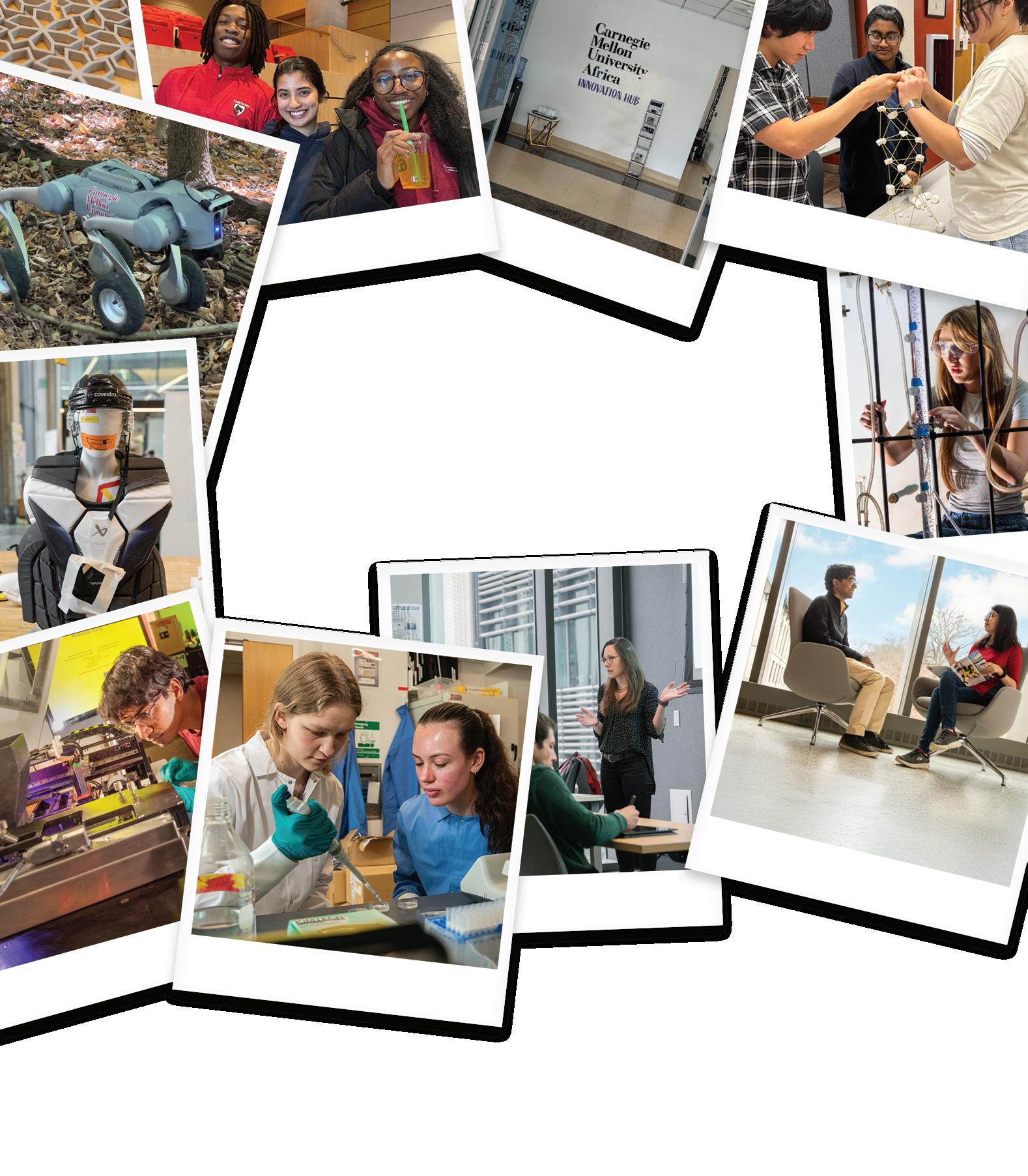
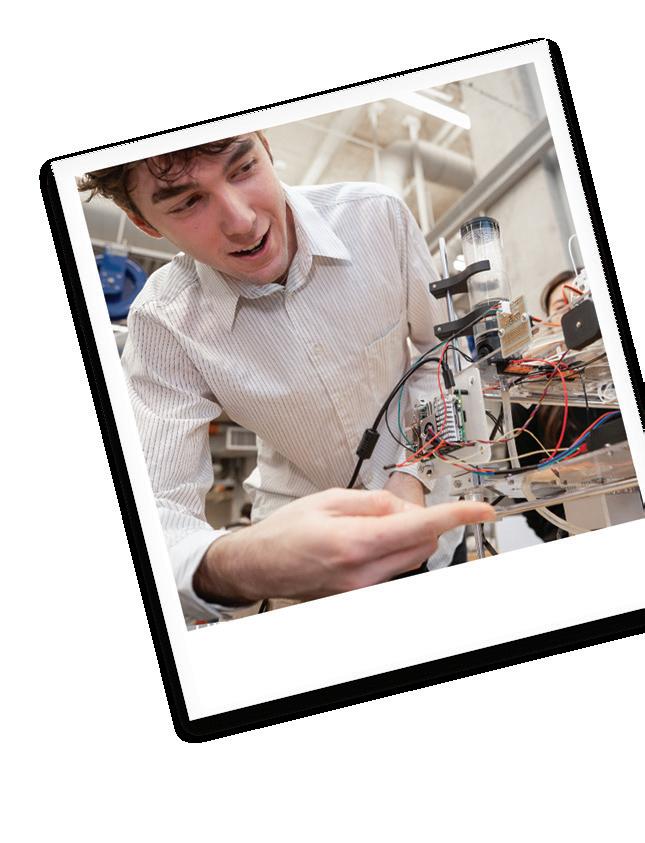
Hamish Gordon and Ph.D. students in his research group traveled to New Zealand to join the HALO-South research flights. In the pristine conditions above the Southern Ocean, they sampled atmospheric particles to understand how they interact with clouds. They’ll use the data to improve atmospheric processes in climate models.