SPRING 2026

by Arnold Bennett
DIRECTED
BY
SPRING 2026
by Arnold Bennett
DIRECTED
BY
CLAY JACKSON
by Anton Chekhov
DIRECTED
BY
ELLIE ANDERSON
TEN-MINUTE INTERMISSION TEN-MINUTE INTERMISSION TEN-MINUTE INTERMISSION
by J.M. Barrie
DIRECTED BY SOPHIE EASTONE


BBYARNOLDBENNETT
DIRECTEDBY DIRECTEDBY
CLAYJACKSON CLAYJACKSON DIRECTEDBY
CLAYJACKSON
Included in Polite Farces for the Drawing Room (1899), The Stepmother is a one-act farce that explores love and its difficulties. The play centers on the idea that misunderstandings can lead to doubts in love and loyalty. The main dramatic question seems to be whether truth will win in the end.
Arnold Bennett wrote his novels, short stories, and plays for the ordinary person. Born in the Staffordshire Potteries, an industrial area in northern England, Bennett applied his lived experience to his writing. He might be most famous for The Old Wives’ Tale (1908), a fictional account of two sisters based on a real-life encounter. Bennett utilizes the unique and the mundane to craft stories. In fact, his writing is so detail-oriented that Virginia Woolf, in her famous essay “Mrs. Brown and Mr. Bennett” (1924), described him as ineffective at empathizing with his characters. Conversely, I argue that Bennett recognizes particular attributes and relationships in real life, and he writes the details he observes in his stories. The Stepmother is an example of this with its sharp wit, wordplay, and realistic elements.
In a play that is full of quick dialogue and physical comedy, I would like to emphasize how the problems these characters have are innately human. There are moments of true love, betrayal, confusion, and hope. My approach to this play is to highlight how each person wants to heal from their pain. Within the world of The Stepmother, characters tend to stick to old habits as they attempt to escape the uncertainty of love. They all have goals that inspire rash actions that drive them to personal realizations. Overall, each character has a problem (a “disease,” if you will) that they must find the medicine for. Whether that medicine is their soulmate, their dream job, some extra money, or a prize novel, this play shows the paths taken to find solutions.
While this play was published in 1899, I am setting it in 1910. In this pre-WWI era, there was a movement for the independence of women, especially in voting rights. While fighting for these political opportunities, suffragettes were pushing for social and economic equality as well. The Stepmother shows the professional lives of two very independent women and the men they encounter. These women seek equality and respect within their field as novelists. As a man, I want to make a point of showing that no woman relies on a man for her independence. While the world might tell these women what they can and cannot have, they individually control their own destiny. I believe that this story shows how Mrs. Prout and Christine utilize their strength and independence to find the cures they need.
CORA PROUT..................................JILLIAN BURMAN
CORA PROUT CORA PROUT..................................JILLIAN BURMAN ..................................JILLIAN BURMAN
CHRISTINE FEVERSHAM
CHRISTINE FEVERSHAM...........RILEY MCCONNELL ...........RILEY MCCONNELL
CHRISTINE FEVERSHAM...........RILEY MCCONNELL
THOMAS GARDNER
THOMAS GARDNER.........................CONNER BOGGS .........................CONNER BOGGS
THOMAS GARDNER.........................CONNER BOGGS
ADRIAN PROUT
ADRIAN PROUT..............................JACK FREEDMAN
ADRIAN PROUT..............................JACK FREEDMAN ..............................JACK FREEDMAN




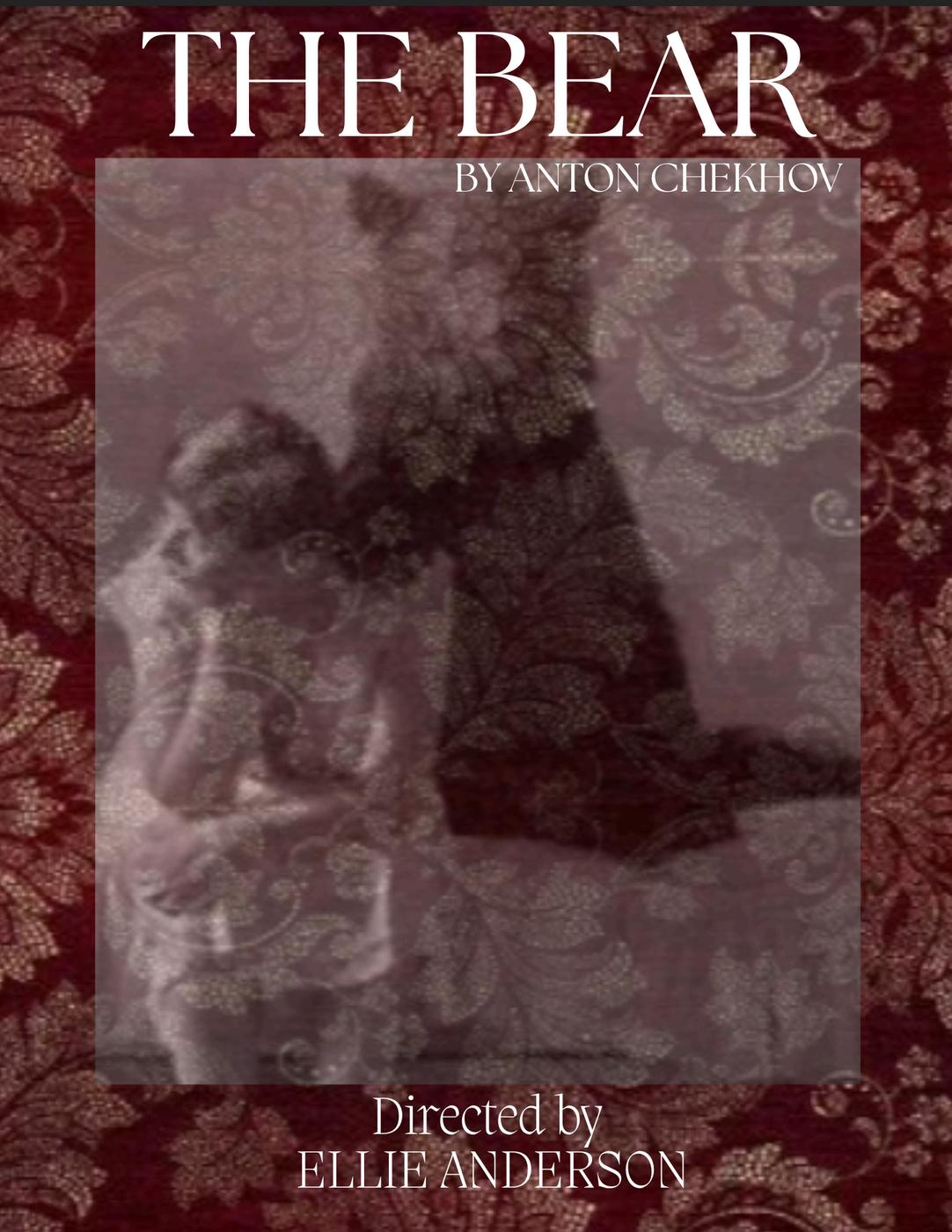

Playwright Anton Chekhov is best known for his plays The Seagull, The Cherry Orchard, Uncle Vanya, and The Three Sisters. The Bear, a short play that predates his masterworks, premiered in 1888 in Moscow, Russia. In this comedy, the famous playwright explores human absurdity in everyday life through colorful characters; Chekhov utilizes gender roles, grief, entitlement, pride, and the demanded repayment of a debt to establish an unexpected and farcical connection.
The Bear is an enemies-to-lovers satire. Set in the nineteenth-century drawing room of a house owned by the recently widowed Popova, the play highlights how sparks can fly when two strong personalities butt heads. Popova mourns her late husband, who passed away seven months ago. Luka, Popova’s elderly maid, encourages her mistress to put grief behind her and move on with her life. Enter Smirnov, who demands immediate repayment of a debt incurred by Popova’s deceased husband. His brash entrance and demanding tone insult Popova’s sensibilities: Smirnov is rude.
The Bear cleverly utilizes rudeness to challenge social norms and create unforeseen and abrupt attraction; Chekhov cleverly weds desire and disrespect, which are usually polar opposites, for comedic effect. Initially, the characters act with selfish intentions, speaking bombastically over each other. The structure of the dialogue is intentional: to provoke a response in the other character. However, that response ultimately backfires into something unexpected and delightful.
The characters’ rudeness becomes the foundation of the show and unifies all our work as our concept. The application of the seed, “rudeness,” uses the multiple definitions of the word. These definitions include:
Discourteous or impolite, especially in a deliberate way.
Without culture, learning, or refinement.
Rough in manners or behavior; unmannerly; uncouth.
Rudeness drives the tempo of the play’s dialogue, helps contrast the characters’ personalities, and informs some of the design choices to create a unified vision from the performance and technical elements.
Though rehearsals began in mid-February, I’ve been working with this script since last summer. The hard work and dedication of this team are exactly what a director dreams of. We certainly hope our “rude” production delights you in every way as Smirnov and Popova’s story unfolds. Enjoy the show!




ByJ.M.Barrie
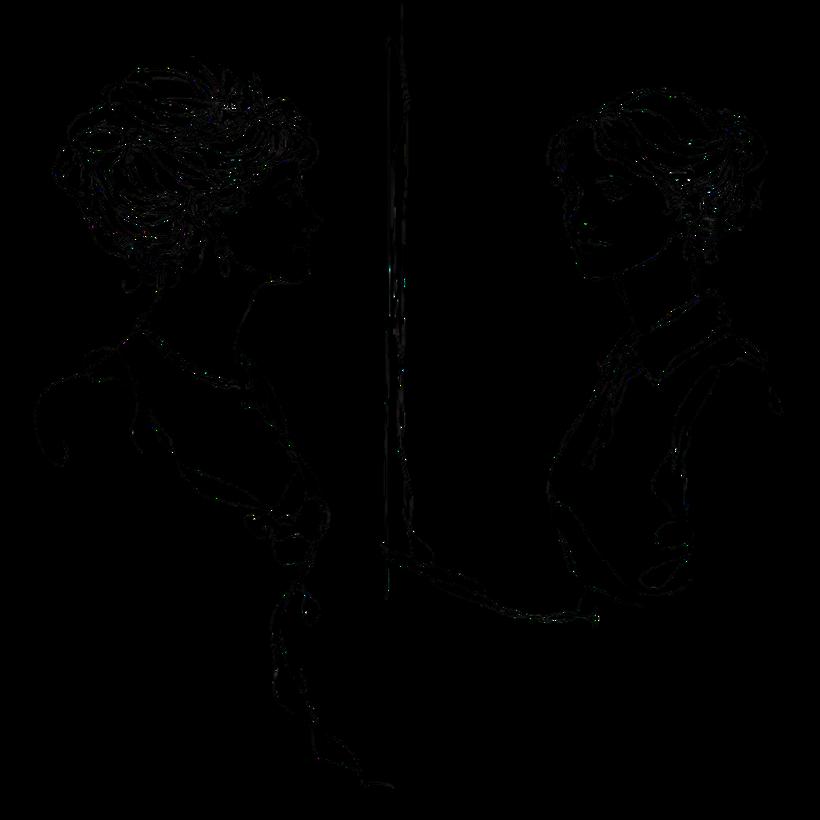
Directed by Sophie Eastone
When I first read The Twelve-Pound Look, I was struck by how quietly it explores power. There are no dramatic confrontations or explosive arguments. Instead, authority, expectation, and social pressure operate beneath the surface, shaping how characters speak, move, and see themselves. The play reveals how class and gender roles are reinforced through politeness, routine, and performance, making conformity feel natural rather than imposed.
This led me to my central concept for this production: vanity. In Edwardian society, success was often measured through appearance, reputation, and social status. Individuals were expected to present polished versions of themselves to the world, even if those appearances hid deeper insecurities or dissatisfaction. Sir Harry’s world is built on this kind of social performance. His knighthood, his office, and even his relationships reinforce the importance of prestige and outward success.
Within this world, each character reveals a different relationship to vanity. Sir Harry’s confidence is closely tied to status and recognition, suggesting that his authority may be built on the need to maintain appearances. Lady Sims embodies the ideal society wife, performing grace, refinement, and composure in a way that reflects the expectations placed upon women of her class. Tombes, the butler, helps maintain the order and formality of this environment, reinforcing the structured social world that surrounds Sir Harry.
Kate disrupts this system entirely. By choosing independence and work as a typist, she rejects the pressure to define herself through status or social approval. Her presence challenges the values that Harry’s world is built upon and raises the question of whether success defined by reputation and appearance truly leads to fulfillment.
Although written in another era, The Twelve-Pound Look still resonates today. Modern culture often encourages people to measure success through image, achievement, and external validation. This play invites audiences to question those expectations and to consider the difference between a life shaped by appearances and a life shaped by authenticity. My hope is that audiences leave this production reflecting on the ways vanity, reputation, and social pressure influence their own lives. If this story encourages even one person to reconsider how they define success and self-worth, then the play has accomplished something meaningful.
Thank you for being part of that reflection.




We would like to extend our sincere thanks to Traci Ledford, our advisor, for her guidance and support throughout this process. We are also incredibly grateful to Sydney Tripp and Laura Gracey, as well as Grace McGovern and Jessica Mueller, whose support with costumes, props, and furniture helped bring these productions to life.