CMDA





















couraging and equipping, never condemning. At the same time, we recognize that our struggle is not ultimately “…against flesh and blood, but against the rulers, against the authorities, against the powers of this dark world and against the spiritual forces of evil in the heavenly realms” (Ephesians 6:12). If we are to bear lasting fruit, we must rely both on research and worldly knowledge as well as the power of the Holy Spirit, who alone equips us with courage, wisdom and compassion to respond in ways that glorify Christ.
It is with gratitude and humility I write to you for the first time in these pages as CMDA President. As a new contributor, I am deeply honored to speak into the life of this community of Christian healthcare professionals—brothers and sisters committed to serving Christ through healthcare and ministry. This is a special season for us as an organization, one of growth and anticipation, as we look forward to gathering together at the 2026 CMDA National Convention in Loveland, Colorado. That gathering will be a time of renewal and unity, and it is my prayer the seeds planted now will bear fruit there and beyond.
As Christian healthcare professionals, we are called to preserve life and to affirm it—in the clinic, in our communities and in the public square. CMDA has long been a strong voice for life in areas such as conscience freedoms, beginning and end-of-life care and bioethical challenges. Yet, the escalating epidemic of violence in our society reminds us of other urgent threats to life demanding a Christ-centered response.
The newly formed CMDA Violence Response Committee exists to help our members faithfully engage this challenge. Our charge is clear:
• To present a biblically based response to America’s culture of violence.
• To advocate for comprehensive public health and healthcare approaches that can reduce death and disability from firearms and other forms of violence.
• To minister to victims and their loved ones, while also supporting healthcare professionals who suffer moral injury in caring for them.
• To identify high-risk youth and individuals struggling with mental illness and intervene before violence erupts.
• To study the demographics and contributing factors—from alcohol and drugs to media and social disconnection—that fuel violence.
• To facilitate education and open forums within CMDA, the church and local communities, fostering awareness, prevention and action.
We undertake this work with humility, striving to remain apolitical and bipartisan, grounding our counsel in both Scripture and evidence-based research. We are not a political organization; we are a Christian fellowship. Our goal is not to align with a party but to align with the kingdom of God—informing, en-
CMDA already has strong tools to advance this mission. Through Freedom2Care, we have a platform for advocacy and legislative engagement. Through the CMDA Learning Center, podcasts, evangelism programs and the CMDA Go app, we have educational channels to equip members. And through valuable partnerships with organizations like Christian Community Health Fellowship (CCHF), we are reminded that the work of violence prevention and healing must go hand-in-hand with care for the poor, the marginalized and the overlooked. Together, these resources position CMDA not just to defend life, but to actively cultivate peace, justice and healing. Violence is not simply a public safety issue—it is a public health crisis, a moral crisis and, ultimately, a spiritual crisis. By embracing this work, CMDA affirms life in all its dimensions, offering the hope and healing of Christ to both victims and perpetrators while shining His light into the darkest places.
I invite you to pray with us, learn with us and stand with us. Join the CMDA Violence Response Committee as we work to restore what has been broken and to affirm the dignity of every person created in God’s image. Email omari.hodge@cmda.org to learn more. May this effort be a reflection of the very gospel we proclaim, and may it prepare our hearts for what God has in store as we look toward Loveland in 2026.
Holy Spirit,
Come and guide us as we confront the brokenness of our age. We lift before you the burdens of violence, poverty, racism, gender confusion, addiction and despair. Where there is hatred, sow love. Where there is injustice, bring truth and righteousness. Where there is fear, pour out courage. And where there is despair, fill hearts with the living hope of Christ. Use us, Lord, as vessels of healing, peace and reconciliation in a world desperate for your light.
In Jesus’ name,
Amen
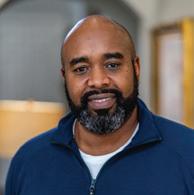
Omari Hodge, MD, is the program director of the family medicine residency program at AdventHealth Wesley Chapel in Tampa, Florida, and he received his medical degree from Morehouse School of Medicine in Atlanta, Georgia. He has served as a CMDA Trustee since 2018.
EDITOR
Rebeka Honeycutt
EDITORIAL COMMITTEE
Gregg Albers, MD
John Crouch, MD
Autumn Dawn Galbreath, MD
Curtis E. Harris, MD, JD
Van Haywood, DMD
Rebecca Klint-Townsend, MD
Debby Read, RN AD SALES
423-844-1000 DESIGN
Ahaa! Design + Production PRINTING
Pulp
CMDA is a member of the Evangelical Council for Financial Accountability (ECFA).
CMDA Today™, registered with the U.S. Patent and Trademark Office. Winter 2025, Volume LVI, No. 4. Printed in the United States of America. Published four times each year by the Christian Medical & Dental Associations® at 2604 Highway 421, Bristol, TN 37620. Copyright© 2025, Christian Medical & Dental Associations®. All Rights Reserved. Distributed free to CMDA members. Non-doctors (US) are welcome to subscribe at a rate of $35 per year ($40 per year, international). Standard presort postage paid at Bristol, Tennessee.
Undesignated Scripture references are taken from THE HOLY BIBLE, NEW INTERNATIONAL VERSION®, NIV®
Copyright © 1973, 1978, 1984, 2011 by Biblica, Inc.® Used by permission. All rights reserved worldwide. Other versions are noted in the text.
P.O. Box 7500, Bristol, TN 37621 888-230-2637
main@cmda.org•cmda.org
If you are interested in submitting articles to be considered for publication, visit cmda.org/publications for submission guidelines and details. Articles and letters published represent the opinions of the authors and do not necessarily reflect the official policy of the Christian Medical & Dental Associations. Acceptance of paid advertising from any source does not necessarily imply the endorsement of a particular program, product or service by CMDA. Any technical information, advice or instruction provided in this publication is for the benefit of our readers, without any guarantee with respect to results they may experience with regard to the same. Implementation of the same is the decision of the reader and at his or her own risk. CMDA cannot be responsible for any untoward results experienced as a result of following or attempting to follow said information, advice or instruction.
Choosing the “Life Narrative” For My Daughter Living with Trisomy 18
DavidMusser
Choosing transformative faith in the face of a challenging diagnosis

Treating Others as Vision Impaired, Depleted Physicians
DavidCrippin,MD How Christian healthcare professionals can confront burnout

CMDA’s latest policy statement on firearm associated violence 10 ON THE COVER
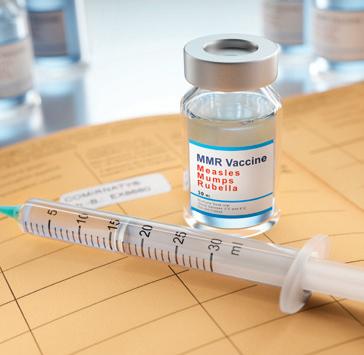
CMDA Ethics Statement on Commercial Surrogacy
CMDA’s latest ethics statement concerning commercial surrogacy

32 Measles, Measles Vaccine and the Christian Clinician
RichardK.Zimmerman,MD, MPH,MA(Bioethics),FIDSA, FAAFP
A Christian healthcare professional’s response to measles vaccination
CMDA Public Policy Statement on Firearm Associated Violence
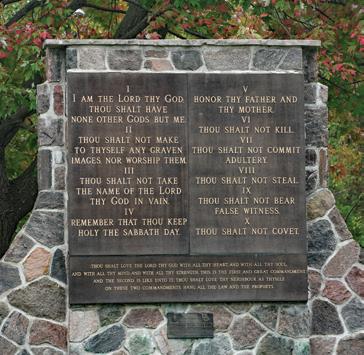
The Dr. John Patrick Bioethics Column Cries for Justice JohnPatrick,MD
Exploring how relativism contrasts traditional moral wisdom
REGIONAL MINISTRIES
Connecting you with other Christ-followers to help better motivate, equip, disciple and serve within your community
Western Region: Wes Ehrhart, MA • 6204 Green Top Way • Orangevale, CA 95662 • 916-716-7826 • wes.ehrhart@cmda.org
Midwest Region: Connor Ham, MA • 2435 Lincoln Avenue • Cincinnati, OH 45231 • 419-789-3933 • connor.ham@cmda.org
Northeast Region: Tom Grosh, DMin • 1844 Cloverleaf Road • Mount Joy, PA 17552 • 609-502-2078 • northeast@cmda.org
Southern Region: Grant Hewitt, MDiv • P.O. Box 7500 • Bristol, TN 37621 • 402-677-3252 • south@cmda.org
®
CMDA honors the life and ministry of Dr. Doug Lindberg, who went to be with his Savior on Saturday, August 30 after a battle with cancer. His tireless devotion to both CMDA and the Center for Advancing Healthcare Missions was inspiring, as he equipped healthcare professionals and students to intentionally live their lives fully surrendered to Jesus and His kingdom. Included in his work were the Remedy Medical Missions Conferences, Pre-field Orientation for New Healthcare Missionaries, 5:11 Groups, the Capstone ministry, the Journal Club, the Your Call blog and more. In addition, Doug was key to the development of several domestic missions scholarships at CMDA. He truly embraced the vision of bringing the hope and healing of Christ to the world through healthcare, and we were honored to serve alongside him as he passionately fulfilled his mission of introducing others to his Savior, Jesus Christ.
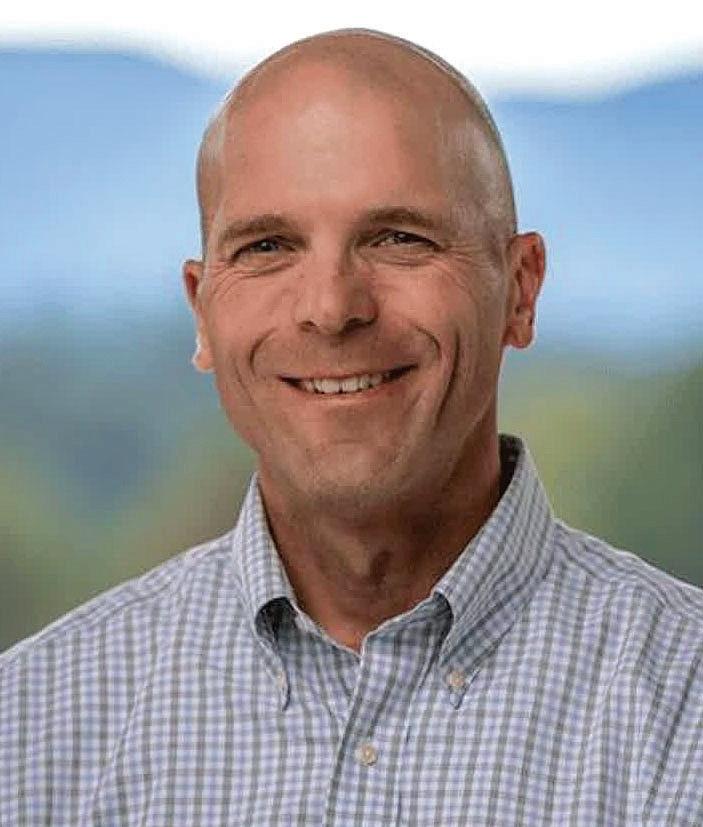
(January 17, 1977 – August 30, 2025)
“If one part suffers, every part suffers with it; if one part is honored, every part rejoices with it. Now you are the body of Christ, and each one of you is a part of it”
(1 Corinthians 12:26-27).
Doug Lindberg, MD, and Ruth Lindberg, MD, met in a weekly CMDA student Bible study at Loyola University Chicago Stritch School of Medicine as first year medical students in 1999. They fell in love and together discerned God was calling them to serve in cross-cultural healthcare missions ministry. Together with Ruth, Doug served with The Evangelical Alliance Mission (TEAM) starting in 2009 in Dadeldhura, Nepal, where he worked as medical director of a 55-bed hospital—the sole care provider for hundreds of thousands across a vast mountainous region.
It was CMDA CEO Emeritus Dr. David Stevens who first told me Doug and Ruth’s story in 2020; how Ruth was diagnosed with Stage IV endometrial cancer in 2013 after they had served for four years on the field and returned to the U.S. Around this time, the Nepali government took over management of the Dadeldhura Hospital. The Lindbergs saw their missions career come to an abrupt halt as Ruth underwent systemic chemotherapy.
God had other plans for the Lindbergs. Ruth’s cancer vanished and her oncologists were not able to attribute this remarkable
resolution to the chemotherapy she had received. Thousands of God’s people prayed for Ruth, and God heard their cry for her healing. In late 2020, Doug came to Bristol, Tennessee with Ruth and was interviewed by our CMDA national leadership team for the position of Director of the CMDA Center for Advancing Healthcare Missions (CAHM).
For five years, Doug passionately led CAHM, mentoring and equipping healthcare professionals to serve in healthcare missions worldwide. Doug also covered a part-time position as an urgent care physician with ProHealth Care in Waukesha County, Wisconsin during this time. Doug advanced several initiatives with CAHM, which included Remedy: Healing for the Nations conferences at California Baptist University and Liberty University; funding and mobilization of minority students and residents for missions’ electives, both domestic and international; 5:11 groups for encouraging career missionaries on the field; expansion of new healthcare missionary pre-field training and so much more.
On August 30, 2025, Doug lost his year and a half battle with metastatic appendiceal cancer and passed peacefully into the
presence of his Savior, Jesus Christ in the presence of Ruth and their two teenage children, Maddie (16) and James (13).
We asked for testimonies from those whose lives Doug had touched among CMDA members and ministry partners after his death. Dr. Jim Ritchie, a mutual friend of Doug and CMDA, shared the following:
“Doug is a true prince of the kingdom. A treasured friend. We worked together on many projects and programs. He graciously covered for my shortcomings and consistently brought spiritual depth and unswerving competence to everything he did. His many wonderful works will continue to bear spiritual fruit for some time. I miss him awfully and fully expect that the next time we see each other, he will greet me with some groaner of a joke (do they allow those in heaven?). We look forward to sharing his joy.”
Another testimony about his impact:
“One of the biggest reasons we moved overseas was from the influence, encouragement and guidance of Doug. His heart for the lost and the unreached is so evident in the way he lived his life. We are forever thankful for him walking the journey with us to go overseas and to use our skills as healthcare professionals to bless those in need. We now serve in the Middle East.”
From a veteran, now retired, missionary:
“Seeing Doug’s friendly face at CMDA events overseas while I was serving as a healthcare missionary, hearing there of his passion for the 5:11 groups, which he recruited me to facilitate. Feeling myself part of the pre-field orientation team over the last four years, and participating in Remedy for my organization—I feel Doug’s
ministry touched my life in so many ways. He helped me personally develop a transition plan for when I returned to the U.S. after my overseas service with quiet wisdom and smiling encouragement. May all his areas of ministry bear fruit in the age to come, but I join his family and friends in lament.”
Finally, from a medical student leader at Liberty University:
“I will always remember Doug as a passionate leader who mobilized the next generation of medical missionaries. He truly ran his race with endurance all the way to the finish line. What a legacy! What an example to us all of what it looks like to be a man after God’s own heart and a Christ-follower completely sold out for the gospel. Doug has been one of the most significant mentors in my life. His passion for medical missions greatly shaped my journey! Doug’s influence on my life has been immeasurable, and I will forever count him among the few people who have profoundly impacted my life.”
Dr. Doug Lindberg lived with confident hope in the guarantee God gave him (2 Corinthians 5:5), that he would enjoy God’s presence throughout eternity because of his faith in Jesus Christ. Doug wanted as many people as possible to discover this same hope and healing through the gospel of Jesus Christ. As Doug’s friend and co-worker in the kingdom, I urge you to pray with me for Ruth, Maddie and James as they process this grief and loss throughout their lifetimes and the ripple effect from Doug’s life and ministry in healthcare missions will result in hundreds of new healthcare missionaries hearing the call and taking the gospel to the ends of the earth, until Jesus comes back.
“…he was full of light, laughter and love for the Lord. His faith was inviting and contagious.”
— ELIZABETH PENSABANE
“Doug’s thread was far too short, but what a beautiful thing it will be to see how it is woven into God’s amazing design, and how MANY lives he touched and inspired.”
— KIMBERLY WALHOF
“Doug was able to do many of the things we could only dream of. What a blessing he was to the world we live in.”
— CHUCK LINDBERG
“All who love and trust Jesus will be with Doug again and never be separated again.”
— CHRISTINE DOLEJS
“He carried wisdom and joy in equal measure, always ready with encouragement and always ready with a laugh…What a blessing he was to SO many. I am better because I knew Doug.”
—CH
“Despite only meeting briefly, his life example, words of wisdom and infectious love for Christ has spurred us on as allied health professionals to experience Christ fully….”
— ERIC CHENG
Gifts received July through September 2025
• Rick Adamich in memory of Dr. Doug Lindberg
• Stephanie Alexander in memory of Dr. Doug Lindberg
• Valerie Althouse in memory of Dr. Doug Lindberg
• Nicole Baldwin in memory of Dr. Doug Lindberg
• Carla Ballecer in memory of Dr. Doug Lindberg
• Jason Brewer in memory of Dr. Doug Lindberg
• Geoff, William and Sarah Bridges in memory of Dr. Doug Lindberg
• Carol Brody in memory of Dr. Doug Lindberg
• Daniel Byars in memory of Dr. Doug Lindberg
• Joshua Campbell in memory of Dr. Doug Lindberg
• VCL Church Care Team in memory of Dr. Doug Lindberg
• Mark and Melinda Carlson in memory of Dr. Doug Lindberg
• Linda Carlson in memory of Dr. Doug Lindberg
• Philip Carlson in memory of Dr. Doug Lindberg
• Leah Charles in memory of Dr. Doug Lindberg
• Hannah Chow-Johnson in memory of Dr. Doug Lindberg
• Douglas Christgau in memory of Dr. Doug Lindberg
• Eva Cone in memory of Dr. Doug Lindberg
• Becky Conway in memory of Dr. Doug Lindberg
• Kim Cordes in memory of Dr. Doug Lindberg
• George Courtney in memory of Dr. Doug Lindberg
• Carolyn Crandall in memory of Dr. Doug Lindberg
• Christina Crumbliss in memory of Dr. Doug Lindberg
• Linda Cutting in memory of Dr. Doug Lindberg
• Lori and Steve Czerniejewski in memory of Dr. Doug Lindberg
• John Dang in memory of Dr. Doug Lindberg
• Kelly Data in memory of Dr. Doug Lindberg
• Joan Daughton in memory of Dr. Doug Lindberg
• Timothy Elmer in memory of Dr. Doug Lindberg
• Juan Sebastian Fajardo in memory of Dr. Doug Lindberg
• Christine Fleischmann in memory of Dr. Doug Lindberg
• Carrie Gale in memory of Dr. Doug Lindberg
• Philip Gentlesk in memory of Dr. Doug Lindberg
• David Gilson in memory of Dr. Doug Lindberg
• Jennifer Glader – SW Team in memory of Dr. Doug Lindberg
• Debbie Griswold in memory of Dr. Doug Lindberg
• Megan Hakes in memory of Dr. Doug Lindberg
• Nicole Hayes in memory of Dr. Doug Lindberg
• Amy Henriques in memory of Dr. Doug Lindberg
• Byron Holden in memory of Dr. Doug Lindberg
• Monica Holm in memory of Dr. Doug Lindberg
• Carrie Joshi in memory of Dr. Doug Lindberg
• David and Kathy Kerner in memory of Dr. Doug Lindberg
• Kathryn Lind in memory of Dr. Doug Lindberg
• Larry Lind in memory of Dr. Doug Lindberg
• Kathryn Lind in memory of Dr. Doug Lindberg
• Amy Lind in memory of Dr. Doug Lindberg
• Chuck Lindberg in memory of Dr. Doug Lindberg
• Michael Long in memory of Dr. Doug Lindberg
• Faith McCormick in memory of Dr. Doug Lindberg
• Pam McFarland in memory of Dr. Doug Lindberg
• Kat Michalski in memory of Dr. Doug Lindberg
• Sandra Midkiff in memory of Dr. Doug Lindberg
• Tracy Nevins in memory of Dr. Doug Lindberg
• Robert and Bonnie Oleson in memory of Dr. Doug Lindberg
• Tim Othmer in memory of Dr. Doug Lindberg
• Steve Packer in memory of Dr. Doug Lindberg
• Ryan Packer in memory of Dr. Doug Lindberg
• David Papritz in memory of Dr. Doug Lindberg
• Phil and Mary Perso in memory of Dr. Doug Lindberg
• Megan and Grant Peterson in memory of Dr. Doug Lindberg
• Kathy Phelan in memory of Dr. Doug Lindberg
• Anna and Nick Pitrone in memory of Dr. Doug Lindberg
• Shanella Ramlall in memory of Dr. Doug Lindberg
• Jennifer Roskopf in memory of Dr. Doug Lindberg
• Kevin Rubenstein in memory of Dr. Doug Lindberg
• Tania Runyan in memory of Dr. Doug Lindberg
• Dave Eddi Schmitt in memory of Dr. Doug Lindberg
• Maureen Sensiba in memory of Dr. Doug Lindberg
• Sarah Slagter in memory of Dr. Doug Lindberg
• Rich Soderberg in memory of Dr. Doug Lindberg
• Tim and Anna Trotier in memory of Dr. Doug Lindberg
• Monique Tucker in memory of Dr. Doug Lindberg
• Tom Wade in memory of Dr. Doug Lindberg
• Steve Walters in memory of Dr. Doug Lindberg
• Michael Ward in memory of Dr. Doug Lindberg
• Victoria and John Wauterlek in memory of Dr. Doug Lindberg
• Susan Carter in memory of Dr. Doug Lindberg
• Thomas Witzig in memory of Mary Ann Witzig
• Robert Wolf in memory of John Lewis Wolf
• Tina Slusher in memory of Carol Bos
• Keith Boyd in memory of Charlie Kirk
• William Lero in memory of William and Josephine Lero
• Dana Paladino in memory of Dianne Talbert
• Terry Schmidt in memory of Nancy Schmidt
• Franklin and Krishna Smith in honor of Milwaukee CMDA
• Shannon Vogt in honor of Troy Hatfield
• Lindsay Pope in honor of Pastor David Vaughn and Nicki Vaughn
• Patricia Brock in honor of Bruce MacFadyen
• Evelyn Gonzalez in honor of Peter Frank, MD
• Randy Laine in honor of all St. Louis CMA
• Alex McCarthy in honor of Simbarashe Maphosa
• Steve and Shannon McCune in honor of Don and Carol Shaffer
• Debra Schwinn in honor of all the wonderful, strong women in CMDA
For more information about honorarium and memoriam gifts, please contact stewardship@cmda.org.
Our hearts are with the family members of the following CMDA members who have passed in recent months. We thank them for their support of CMDA and their service to Christ.
• Paul Vandersteen, MD – Hudson, Wisconsin Member since 1995
• Jan R. Mensink, Bsc, MD – Keene, California Member since 2016
• Connie Sadik, RN – Fairfield, Ohio Member since 1995
• Gwendolyn Poles-Corker, DO – Harrisburg, Pennsylvania Member since 2006
• William H. Markle, MD – Clairton, Pennsylvania Member since 1982
• Lisa Fair – Granite Falls, North Carolina Member since 1997
• Bonnie Adolph Lifetime Member since 2006
Please encourage students, residents and fellows to submit an abstract for CMDA’s ninth annual VIE Poster Session, which will take place during the CMDA 2026 National Convention. Presentations in areas of spirituality, ethics, education, computational biology, mathematical modeling, biophysics, biotechnology, biomedical science, medicine, surgery, dentistry, nursing and medical humanities are all welcome! Visit cmda.org/vie to submit an abstract by January 31, 2026. Cash prizes are awarded!
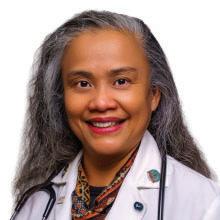
CMDA is pleased to announce lifetime member, Josephine Glaser, MD, FAAFP, was recently awarded the American Medical Association Women Physicians Section (WPS) Inspiration Award. This award honors and acknowledges physicians who have offered their time, wisdom and support throughout the professional careers of fellow physicians, residents and students. Dr. Glaser also serves as the CMDA Missouri State Representative and the Missouri American Academy of Medical Ethics State Director.
Are you listening to CMDA’s podcast with CEO Dr. Mike Chupp? Faith in Healthcare—The CMDA Matters Podcast, formerly known as CMDA Matters, is the premier audio resource for Christian healthcare professionals. This popular weekly podcast shares powerful stories and explores the issues that matter most to you, along with the latest news from CMDA and healthcare. A new episode is released each Thursday, and interview topics include bioethics, healthcare missions, financial stewardship, marriage, family, public policy updates and much more. Plus, you’ll get recommendations for new books, conferences and other resources designed to help you as a Christian in healthcare.
CMDA is pleased to announce Allan Josephson, MD, was recently awarded the Columbia Academic Freedom Council’s 2025 Academic Freedom Prize. A distinguished child and adolescent psychiatrist, he led academic programs in psychiatry for several years, transforming them into nationally recognized leaders through meticulous research, dedicated leadership and unwavering commitment. Over his 40-year academic career, he also earned the prestigious Oskar Pfister Award for outstanding contributions to psychiatry and religion.
Listen to Faith in Healthcare—The CMDA Matters on your smartphone, your computer, your tablet…wherever you are and whenever you want. For more information, visit cmda.org/cmdamatters.
CMDA is excited to announce an opioid and substance use disorder and treatment course now available in the CMDA Learning Center. The 2023 MATE Act requires prescribers to complete at least eight hours of continuing education on substance use disorder assessment and treatment before their new DEA renewal. This course in the Learning Center includes four modules that satisfy this requirement for most U.S.-based prescribers. Plus, it is a one-of-a-kind, wholeperson addiction course, which integrates faith and science in approaching and treating addiction. And even better, it is FREE for CMDA members! For more information, visit cmda.org/learning
Included in CMDA’s network of podcasts is The Voice of Advocacy with Vice President of Bioethics and Public Policy Brick Lantz, MD. This monthly podcast features special guests and members of the Advocacy team. Listen to learn more about Advocacy’s grassroots efforts at the state and federal level, legal and legislative victories and how CMDA members can be involved in achieving justice for the vulnerable. To listen to the latest episode, visit cmda.org/advocacy
As a result of a partnership between CMDA and Alliance Defending Freedom (ADF), we are now offering free legal consultations for CMDA members who may be experiencing conscience freedom issues in the workplace. Exclusively available to CMDA members, this program is designed to serve members who feel they are being discriminated against in the workplace due to their firmly held moral and religious beliefs. We believe conscience freedoms have profound ethical and religious importance within the healthcare profession, and we encourage colleagues, institutions and governments to respect these freedoms. If you feel your conscience freedoms are at risk, please visit cmda.org/legal.
The CMDA Learning Center offers complimentary continuing education courses for CMDA members. This online resource is continuing to grow with new courses to help you in your practice as a Christian healthcare professional. All continuing education courses are available at NO COST to CMDA members. For more information and to access the CMDA Learning Center, visit cmda.org/learning.
Over the last several months, we’ve been working on something special just for our members and ministry partners, and we’re excited to announce our new online CMDA experience is now available. Visit cmda.org and login to your CMDA profile to access an entirely new online portal that allows you to update your membership details, contact information, donation methods, communication preferences and more. Plus, you’ll find an updated look and feel to our system as you register for events, make donations and more.
We’re continuing to update this new online experience for you, and we look forward to connecting with you. Thank you for being an integral part of the CMDA community. If you need assistance with your profile, please contact CMDA Member Experience at memberexperience@cmda.org or call 888-230-2637.
Dates and locations are subject to change. For a full list of upcoming CMDA events, visit cmda.org/events.
Remedy Chicago January 10, 2026 • Oak Park, Illinois
2026 West Coast Winter Conference January 15-18, 2026 • Cannon Beach, Oregon
Marriage Enrichment Weekend (WPDC) January 16-18, 2026 • St. Augustine Beach, Florida
Mentoring with a Coach Approach – A Framework that Fosters Well-Being February 26-March 26, 2026 • Online
CMDA Winter Ski Conference February 28-March 7, 2026 • Avon, Colorado
2026 CMDA National Convention April 23-26, 2026 • Loveland, Colorado
18th ICMDA World Congress June 30-July 5, 2026 • South Korea
Until the last few years, trisomy 13 and 18 have been among a few congenital syndromes that medical texts and experts deemed to be “incompatible with life.” It therefore has been a common practice for families and physicians facing this diagnosis to either choose abortions or to withhold certain medical interventions that would prove lifesaving. Now, we know more than anything, culture can influence these attitudes. Thus, we are in desperate need of shifting our culture out of the practice of believing the “death narrative” and choosing a path that promotes dignity, hope and a life that displays the works and glory of God (John 9:3).
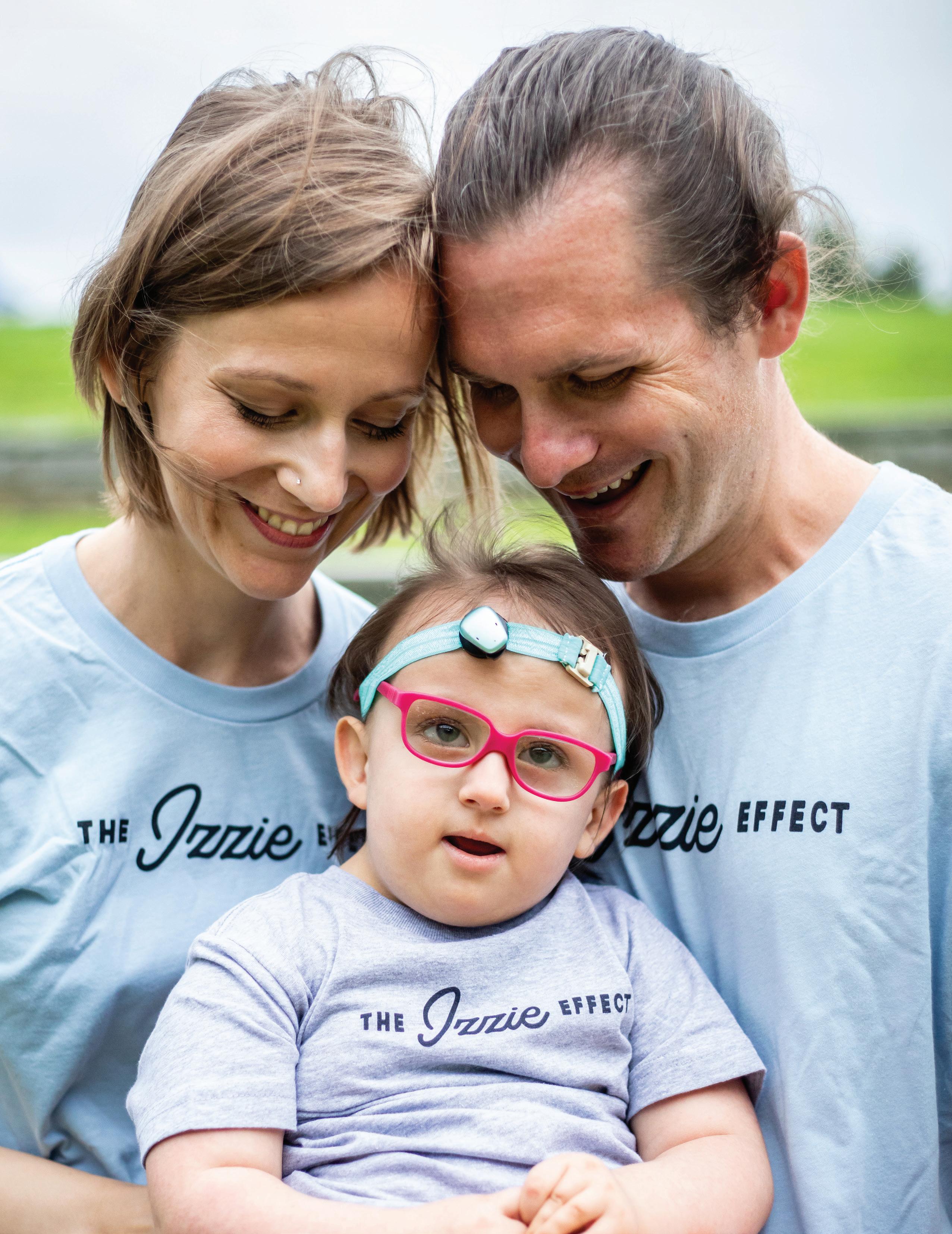
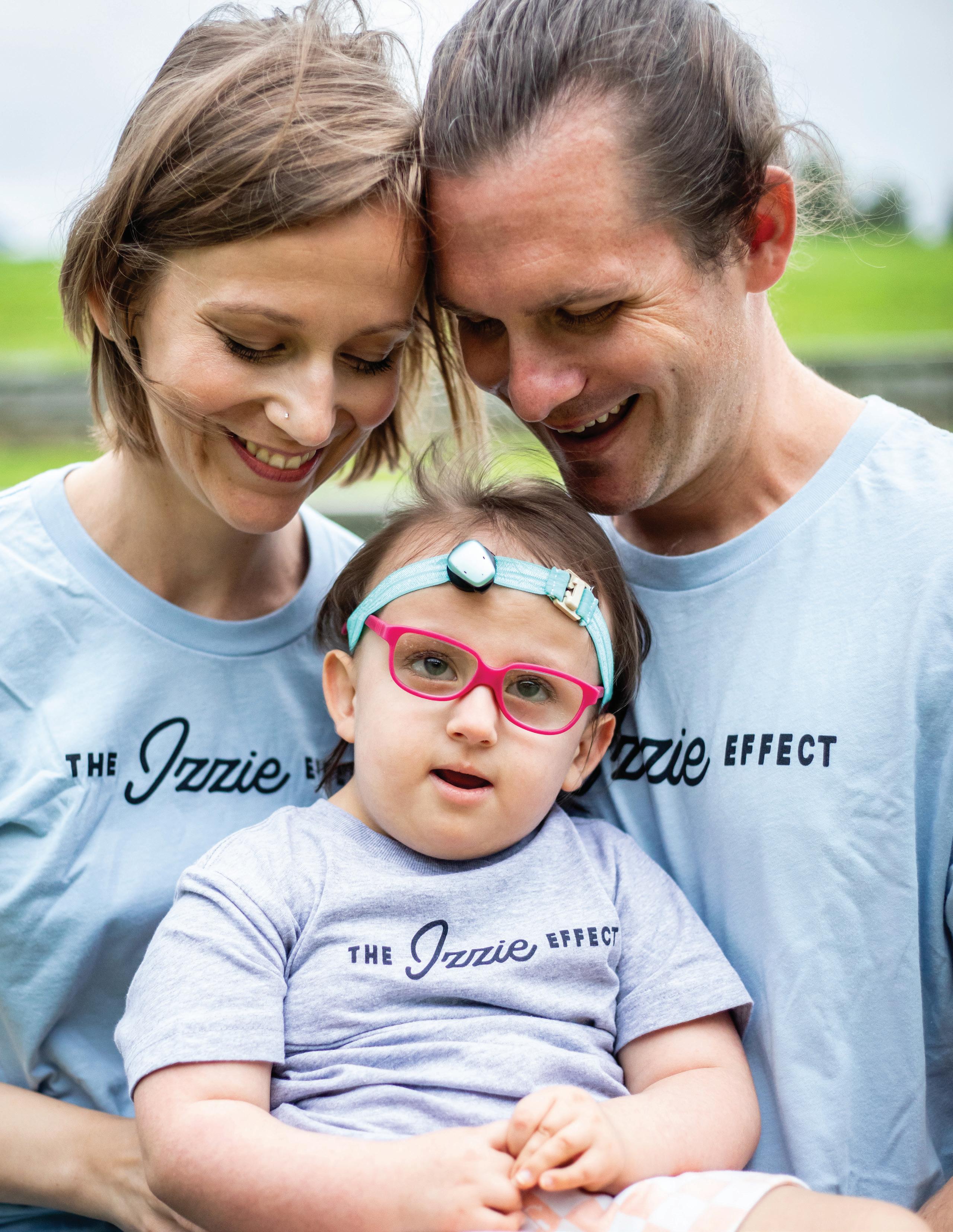
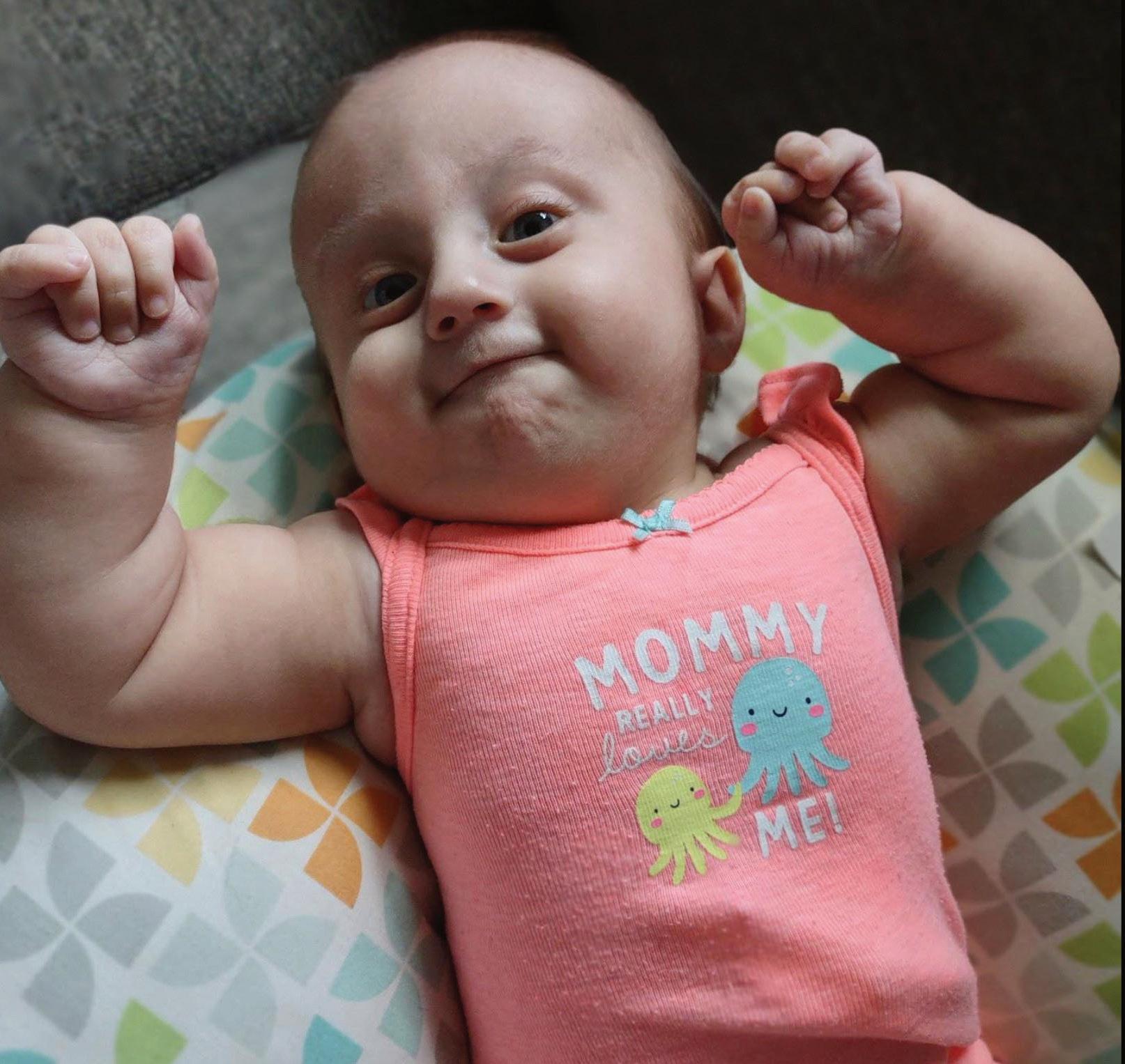
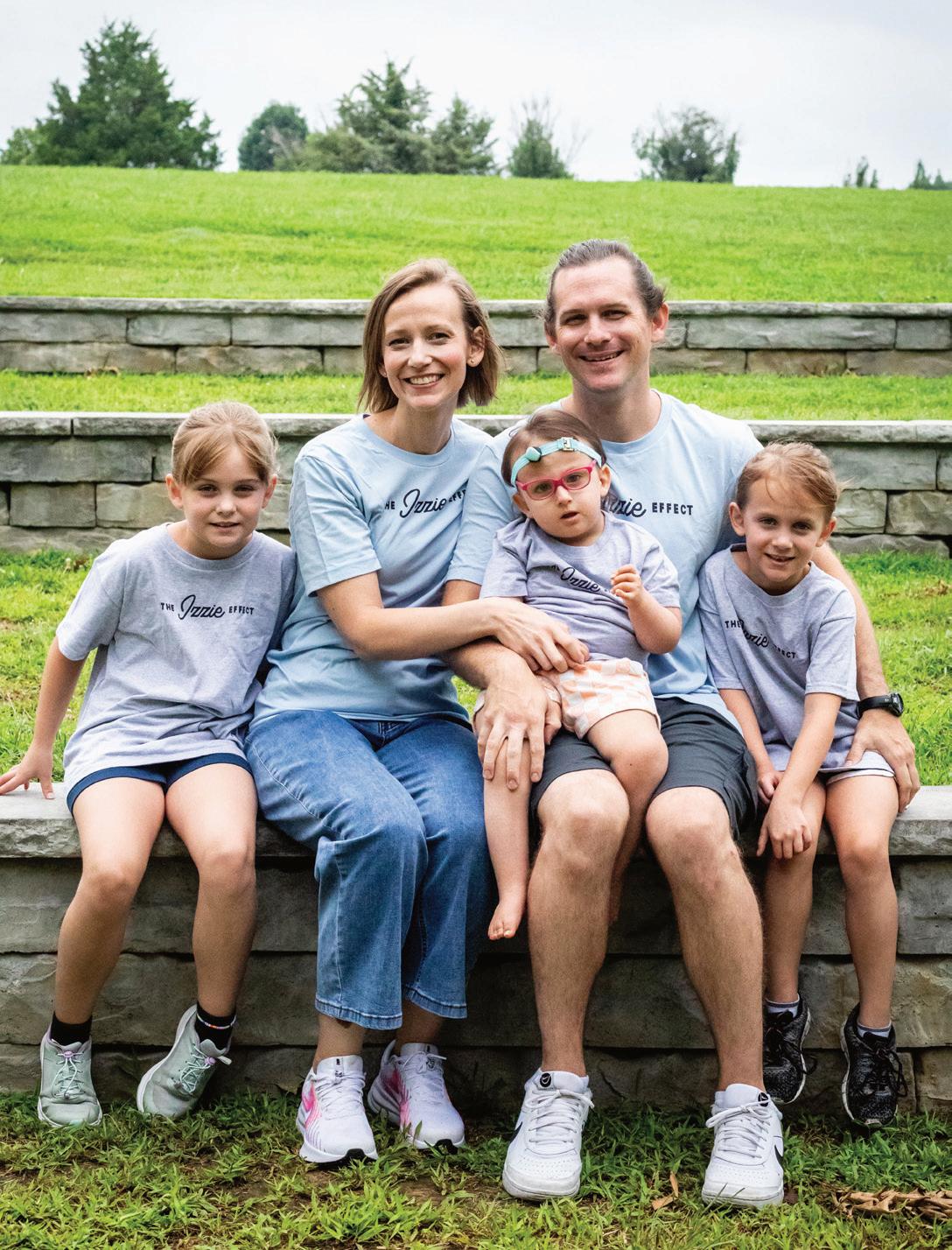
Two weeks after my third daughter was born in November 2021, my wife, Katie Musser, DMD, CMDA’s Director of Dental Ministries, and I learned our four-pound newborn baby, Izzie, had full trisomy 18. Now, if you are unfamiliar with this disorder, the first thing you will probably do is Google it.
Here are a few phrases from the top hits on the internet that might stand out to you:
• “Edwards syndrome is a very severe genetic condition…”
• “The median of survival among live births has varied between 2.5 and 14.5 days. About 90 to 95 percent of babies do not survive beyond the first year and many live only a few days…”
• “...lethal abnormality that is almost always fatal at birth…”
• “Very small numbers of children with Trisomy 18 can survive as teens and young adults. If they do survive, they will require round-the-clock care and life-long home nursing support with activities of daily living. No young adults living with trisomy 18 can live independently…”
• “Life-limiting...” “Life-threatening…”
• “...most affected fetuses die before birth, and about half of babies born alive die within their first week…”
• “...birth defects in organs that are often life-threatening…”
• “...has no treatment and is usually fatal before birth or within the first year of life…”
• “Heart defects…”
• “Other problems include apnea (the brain does not send a message to the body to breathe), difficulty feeding, under-developed lungs, bone abnormalities, hearing loss, eye defects…prone to develop Wilm’s tumor…” or “hepatoblastoma (liver cancer)”1
You can skim through Google, but you will not likely find many words of hope or encouragement when it comes to this chromosomal disorder (or trisomy 13 for that matter). Therefore, if you receive a trisomy 18 (or 13) diagnosis and turn to Google, you will be left with one dark and all-consuming thought: “My baby is going to die.” I call this, the “death narrative.”
If you happened to read any news in 2023-24, it’s possible you will remember reading about the story of a Texas woman who wanted an abortion because she found out her preborn child had trisomy 18—except abortions were illegal in Texas, which put this story squarely in the pro-choice and pro-life headlines nationally for months. If you read anything about this story, you will see incendiary death narrative. I pulled the above, “fetus has a lethal abnormality that is almost always fatal at birth,” straight from the headline of this article in December 2023. Here are some quotes from that article, “It is not a matter of if I will have to say goodbye to my baby, but when,” and “I’m trying to do what is best for my baby and myself, but the state of Texas is making us both suffer.”2 And from January 2024 from CBS News, “We asked, ‘How long we could have with our baby—best-case scenario?’ And she [the doctor] said she thought maybe a week. If she [the baby] survived the pregnancy and the birth, that it might be a week. I didn’t want to watch her suffer. That would be very hard. She would have had to be placed directly on to hospice. There’s no treatment that can be done.”3 That’s it. There’s nothing that can be done. Complete and utter hopelessness.

There is no question about it, the narrative you choose to believe about your child (or your patient’s child if you are a healthcare professional) will have a profound impact on the decisions you choose to make as a parent (or physician) on their behalf. In some ways, it can become a self-fulfilling prophecy. If you have internalized a belief that your child is going to die within days or months (as is the case for “90 to 95 percent of kids” with that diagnosis), then you will likely not choose to help give them a chance at life by offering surgery or respiratory support or other interventions. If the situation is doomed and hopeless to begin with, why would you want to draw it out and make everybody suffer even longer? What kind of loving parent (or caring physician) would you be in that case?
Now, my wife and I have done things a little backward from how most folks do them these days. We knew we were having a high-risk pregnancy (namely due to only having one umbilical artery instead of the typical two), so we were offered a range of genetic testing options we could pursue. However, we chose not to do any testing because we knew there was nothing we could do about any of it anyway—and none of it was going to impact our stance or our love for our child. We recognized we were not in control of anything—especially in regard to how our unborn daughter was developing in the uterus. We also knew there was nothing we could do from outside the womb that would change whatever was going on inside the womb, even though Katie did receive extremely painful steroid shots for the last few weeks
of her pregnancy because there was a slim chance they would help boost our unborn child’s defenses and growth. Mothers are truly rare, remarkable and sacrificial creatures. It was all in God’s hands, regardless of whether we had any clear diagnosis before delivery or not.
I believe this willful act of not-knowing—of faith—was a small mercy that saved us an incredible amount of pain, stress and torment in that season, particularly when it came to the realm of making medical decisions in her best interest. What that act of not-knowing did was save us from internalizing the death narrative before our baby had a chance to show us that she had the capacity to live—that she deserved a chance at life. As a result, we weren’t faced with decisions like, “Our baby is going to suffer and die [internalized death narrative], do we abort or not?” or “She’s not breathing, do we give oxygen or not?” or “Her heart isn’t going to function for long without surgery, do we do it or not?” or “She’s having seizures, do we give her meds or not?” or “She can’t eat on her own, do we hook up a nasogastric tube or not?” or “If she codes, do we try and save her life or not?” Our answers were: “That’s not an option; we want to meet our daughter regardless of her chromosomal count,” “Of course we give her oxygen,” “Yes, we will take the life-saving heart surgery,” “Duh, we give the meds,” “Absolutely we get her on a feeding tube,” and “Double duh, we try and save her life if she codes.” Whatever she needed, we pushed for that option—we advocated for that intervention. We let her tell us what she needed, and we gave her that support, she was the
There is no question about it, the narrative you choose to believe about your child (or your patient’s child if you are a healthcare professional) will have a profound impact on the decisions you choose to make as a parent (or physician) on their behalf.
boss. The idea of giving her every viable support and, therefore, chance to thrive and succeed at life is called “life narrative.”
Here’s the problem with our culture’s current stance on trisomy 13 and 18: the basis of the death narrative is not even 100 percent true because it is an unknown! Nobody knows the future! Nobody knows how these syndromes will present themselves! The reality is a WIDE range of kids live with trisomy 13 and 18; every case is different; every kid is different. There is no one-size-fits-all with extra chromosomes! While it may be true most kids with this diagnosis will pass away within their first year—we have walked alongside several other families where this has been the case—that statistic in no way means this will necessarily be true for your child. Some kids are mosaic (only some cells are affected) and can walk and talk and eat similarly to anybody else. Yes, some kids will require open heart surgery within a few months, but others won’t.
Some kids eat all their meals by mouth and others won’t be able to. Some kids require oxygen support or ventilators and others don’t. Some kids are on half a dozen medications while others are on zero. Medical experts make their best guesses, but in plenty of cases, they can be wildly off the mark. Nobody knows the future. Nobody knows what your kid is going to be like or what medical battles they will need to fight to live. The life narrative, at the very least, gives them the chance and the dignity to show who they are and what they need to thrive. It assumes life as their baseline, not death.
It was all in God’s hands, regardless of whether we had any clear diagnosis before delivery or not.
You know, it wasn’t that long ago our culture believed the death narrative for kids with trisomy 21, also known as Down syndrome. Something happened within our culture in the last 40 years or so, and we now have internalized the life narrative for people with Down syndrome. Thomas Collins, MD, coauthored a study published in the Stanford Medical Magazine in 2018, which, among other things, proved newborns with trisomy 13 and 18 can benefit from heart surgery as well as other interventions. For trisomy 18, they found the number of children who survive more than doubled after surgery. Here’s what he said about Down syndrome: “Back in 1975, folks would’ve said there’s nothing we can do to help those babies. But now people have proven if you do heart surgery early, patients with Down syndrome can live to adulthood and be active members of their community. The difference it makes for them is tremendous.” To further quote this study, and the need to challenge the narrative for trisomy 13 and 18, “Forty percent of people with Down syndrome have congenital heart disease, and unlike cases of trisomy 13 and 18, it is now standard-of-care to operate on children with Down syndrome.”4 If you Google trisomy 21 now, there is zero death narrative present. Page after page is all about how people diagnosed with Down syndrome can lead healthy lives with the right care. To quote my daughter’s cardiologist, “The paradigm is shifting for kids diagnosed with trisomy 18,”—we just need culture to catch up.
Here’s a tidbit from the life narrative you won’t likely glean from reading about these disorders online—you will
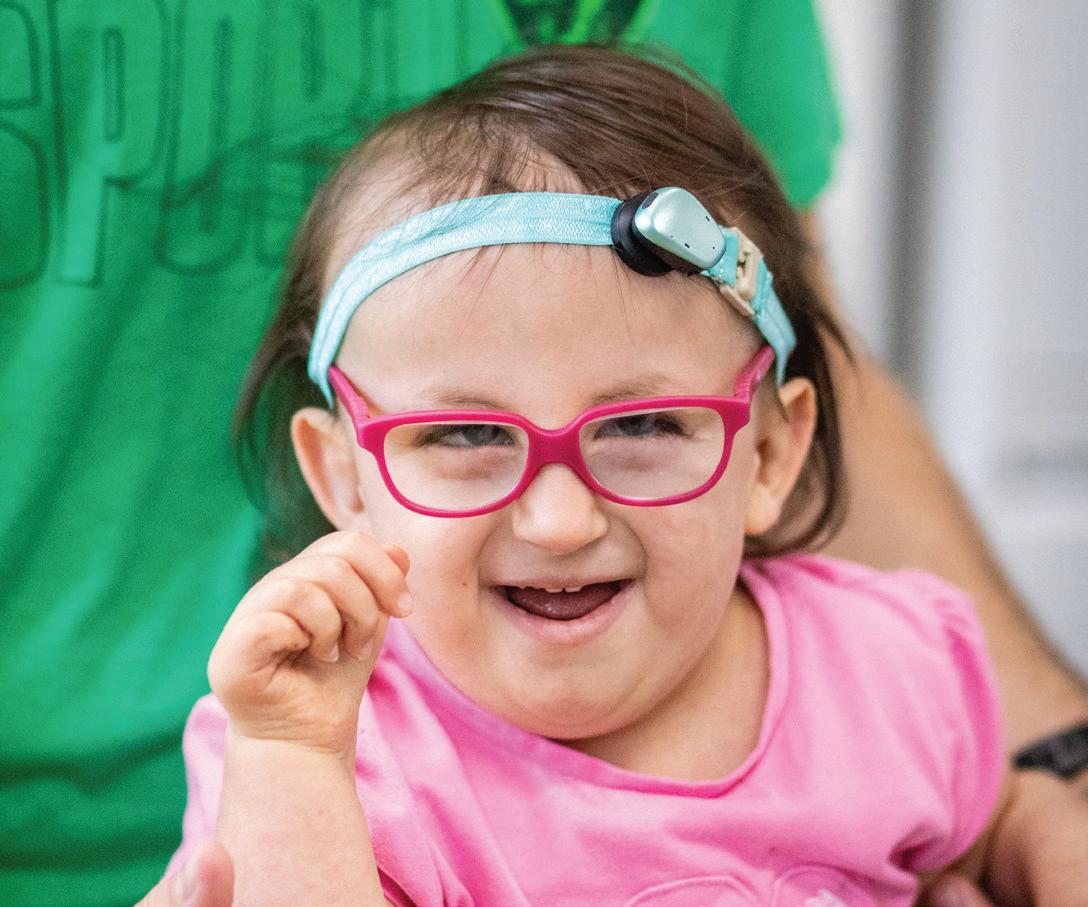
not find a more content person on the entire planet than someone living with trisomy 13 or 18. They are so joy-filled and easy to please—full of big belly laughs and cheeky smiles. These kids all have their own personalities—they are not just suffering and languishing in their disability and all of the things they can’t or won’t be able to do. Some kids are sassy, others are goofy. They can wake up cranky. Their eyes light up when they want something or when they see someone they love or when they hear their favorite tune. Plenty of them love music and neon glow-stick dance parties. They are loved and cherished by their siblings. They certainly express their delight or displeasure and are amused by life’s simplest delectations (flatulence included!). No matter the circumstances, they seem to generally be filled with an abundance of peace.
Let me tell you about all the fullness of life (John 10:10) we see in our sweet Izzie. Just because she cannot run and kick a soccer ball does not mean she is a spiritless vegetable. Just because she will never walk down the aisle doesn’t mean she isn’t adorned with resplendent grace. Textbooks call it an “error in cell division”—but I tell you nothing about her is errant. She was designed with careful intentionality, beautiful and thoughtful precision, a perfect reflection—a pure imago Dei—tenderly knit together by the gentle hands of her ever-loving Creator (Psalm

She was designed with careful intentionality, beautiful and thoughtful precision, a perfect reflection—a pure imago Dei— tenderly knit together by the gentle hands of her ever-loving Creator (Psalm 139).
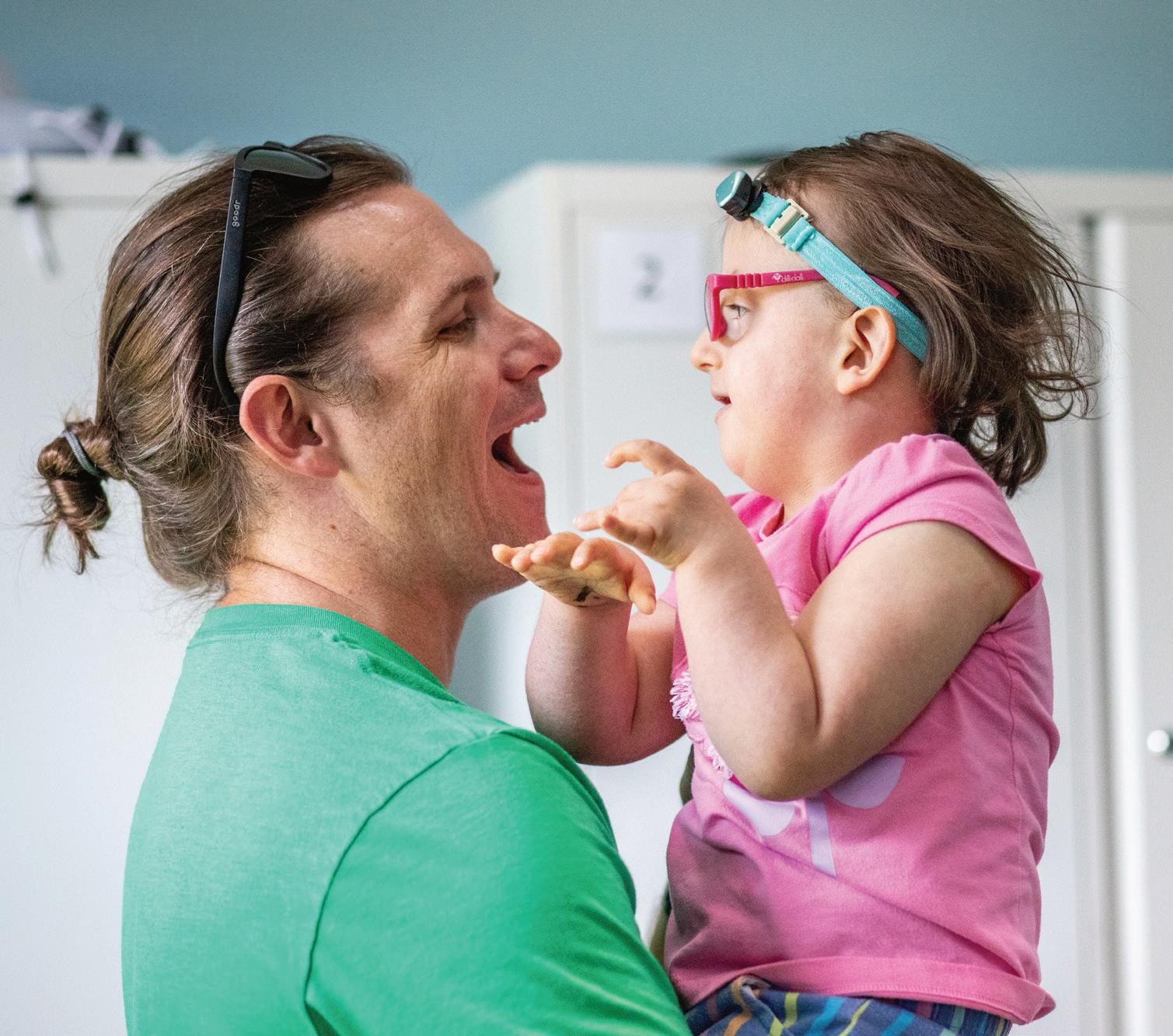
139). A flick of her eyebrow contains the words of a thousand sonnets. Her eyes are literal windows to her soul. They communicate fear and anger, delight and curiosity. She is aware of her surroundings—she knows her room, her people, her favorite toys. She receives endless pleasure from shaking her maraca in her face. Her peals of laughter, eyes scrunched tight, sucking in breaths between guffaws in a tickle fight say, “Do it again!” The way she settles into stillness, like dew at first light, when I pluck my guitar at her side says, “Do it again.” And how she glances over when you back away from covering her sweet, warm body in dozens of tiny kisses after a bath says, “Do it again?” She is immeasurable. She is boundless. Izzie would be content to just lay on her back in her bed and look up at her hands for hours at a time—in awe, just turning one over and back, then the other, over and back. A slow-moving ceiling fan can absolutely blow her mind. She loves to roll around her bedroom (and her bed!). She can give super slappy high fives. She loves to sing (squeal? screech?) and laugh at 3 a.m. Her hair is wild like a freshly zapped mad scientist. Her perfect tiny hands wrap around your finger as she holds you tight in a loving embrace.
She will also let you know when she finds you unamusing—by looking over her glasses at you like a disgruntled grannie. Izzie screams with delight when her mom crouches down in front of her. She is endlessly amused with poking herself in the eyes. Not to mention, Izzie is the only one in my entire all-girl family who will actually watch football with me! (And I can tell she enjoys it!)
If you are facing this diagnosis, in some ways your life is over, at least the life you knew. But in some ways, your life is just beginning. You are about to learn to see life through a whole new lens. You are about to experience joy and sorrow in the most unbelievable and sacred of ways. You will encounter something so profound and distinctly holy when you surrender your life— goals, plans, career—and choose to sacrificially love someone else (John 15:13) no matter the cost. You will encounter and experience God in new and powerful ways—His presence, His peace and His steadfast love will be refreshed for you. You will share in the sufferings of Jesus and be stronger for it. You will learn to depend and rely on the power of the Spirit as you live every day one sacred moment at a time.
I hope my words inspire courage and hope—not false hope, mind you! I am not going to lie to you and say it will all be sunshine and butterflies! This will undoubtedly be the hardest journey you will endeavor to walk. There will be fear, beauty, pain, laughter and anguish. There will be untold sleepless nights and mad scrambles to the hospital. There will be endless appointments and therapies and decisions. There will be milestones, accomplishments, setbacks and frustration. There will be obvious grief, and there will be grief that is hidden, that flattens you at the most unforeseen times. God will show up through the most unlikely of people. You will uncover a secret fervency in your prayers and in your worship. The story is yet to be written! As with any journey, there will be mountaintops and there will
be bitter valleys, but there is always the Good Shepherd. There are promises we will not be consumed (Lamentations 3:22), that He will be with us when we pass through the waters and walk through the fires (Isaiah 43:2). You see, our faith is literally built on the life narrative. Jesus did not stay dead. He conquered death! Isaiah 25 says He will swallow up death forever, He will wipe away tears from all faces and we will feast in the House of Zion! There will be abundant joy for all who set their hope on the firm foundation of Jesus! 2 Corinthians 4:16-18 says:
“So we do not lose heart. Though our outer self is wasting away, our inner self is being renewed day by day. For this light momentary affliction is preparing for us an eternal weight of glory beyond all comparison, as we look not to the things that are seen but to the things that are unseen. For the things that are seen are transient, but the things that are unseen are eternal” (ESV).
Endnotes
1 www.google.com
2 https://www.texastribune.org/2023/12/07/texas-emergencyabortion-lawsuit/
3 https://www.cbsnews.com/news/kate-cox-on-her-legal-fight-forabortion-trisomy-18/
4 https://med.stanford.edu/news/all-news/2017/10/newborns-withtrisomy-13-or-18-benefit-from-heart-surgery.html

David is a stay-at-home, caregiving, homeschooling #GirlDad of three, married to Katie. Their youngest daughter, Izzie, was born in 2021 with a rare chromosomal disorder called full trisomy 18. Since then, their lives have been completely upended. David left the classroom, and Katie stepped away from clinical dentistry. They live in Lexington, Kentucky, where they serve alongside other families in a house church network. David enjoys leading worship, reading good books, playing soccer and chess and finding great deals at Costco. To learn more or stay up to date on David’s book coming out in 2026, subscribe at davidscotmusser.com.

CMDA Coaching is specifically for Christians in healthcare whose life foundations and core values are rooted in the practice of healthcare from a distinctively Christian perspective, and it’s focused on helping individuals get from where they are to where they believe God would like them to be. Life is difficult for anyone in the healthcare vocation, and CMDA Coaching is here to help you navigate the mountains and valleys of your busy life. For more information, visit cmda.org/coaching

DavidCrippin,MD,FAAFP
As a lifelong follower of Christ and a physician since 1985, I have often struggled to see a clear direction to follow. Of course, being recently retired has imparted upon my now wrinkled brow a license to share wisdom garnered from my life as I finally have time to write, and I can even take a bathroom break undetected by my former corporate masters. Many of my generation followed the “patient first, no matter the cost,” that no doubt led to numerous bouts of exhaustion, isolation and fractured relationships. Looking back for me and ahead for several others, I have to ask the question of etiology and treatment for walking and practicing both life and healthcare while following God’s direction as a blind man.
Years ago, I heard CMDA CEO Emeritus Dr. David Stevens discuss how his heart was broken over a tribe in Africa with river blindness his medical team had encountered, and how he wished he had packed a dollar’s worth of Tetracycline to cure the whole population there. Discuss-
ing both the availability and price of Tetracycline dates both of us quite a bit, as now a combination of Doxycycline and Ivermectin is the pricier treatment of choice. A cure was available for these patients, plus people who knew the correct dose and treatment were on site, but their blindness would persist due to a disconnection between the knowledge and the application of this treatment.
It seems like numerous Christian healthcare professionals are facing increasing difficulty navigating even higher pressures from self and family to juggle a strong commitment to having less demanding work obligations and a better healthcare/family/God balance. Forces challenging this goal include: massive college and medical/dental school debt; few non-corporate or private equity run clinics or hospitals; expectations of self and family to be richly rewarded (often by worldly standards) for the years of delayed gratification and sacrifice to obtain a medical/dental education; living in a very much non-biblically grounded culture that has become pervasive even in our churches; and following a limited commitment to growing and serving God by way of sharing the gospel, participating in mission trips and engag-
ing with local church services, Sunday school, Bible study, small groups and church leadership. It seems the pursuit of leisure time sports, cable TV, club sports for kids and a lack of inner zeal for Christlikeness has become the norm.
We run the real risk of finding “the blind leading the blind” (Luke 6:39). The wake of damage for us is much greater as we are called to leadership and to be sources of healing and wisdom for the masses. Dissection of this issue must include a look at our vision and various components, our light needed for both illumination of knowledge as well as to lead others, forces that will intentionally impair our sight, spiritual presbyopia or focusing difficulty, as well as antidotes and cures for these maladies, understanding that some are terminally blinded and beyond repair by attraction to the light of Satan (2 Corinthians 11:1314). Like moths, we circle and fan the flames of temptation, until we get burned.
While our ability to see God’s handiwork in the human body and the complex world He has designed is often taken for granted, we often fail to even grasp the tools He has given us to accomplish this simple task. Most of us feel confident in our understanding of our spiritual vision and our relationship with our Great Attending, and we carry around in our long white coats a pristine copy of His protocols. Why are we surprised to find our paths covered in total darkness and confusion, not unlike being in a cave with the lights turned out? We remember vaguely the path we took to get there, and we assumed the map and our guide would always be available, even as we wandered from the guide and the group on our own spelunking expedition.
Our vision needs to be first understood that it is both a gift and a responsibility, as we will be held accountable to our talent’s uses. We need to first be awake, alert and have our eye lids opened wide. Lake of sleep, lack of energy and lack of planning for time and space to be fully seen, known and comforted by God is the start of this process. The Holy Spirit needs a rested, motivated, humble vessel to navigate and advise. While we were indeed first loved and offered rescue and salvation by God, we also need to be part of the process of sanctification, or becoming more like Jesus. Too often we fall back on our pattern of reading parts of a large tome once, and never re-reading to glean the pearls we missed in the past. Unlike painfully pondering a monthly reading of Harrison’s Textbook of Internal Medicine, we can approach the Bible as a never ending, always applicable source of true wisdom that is never out of date or lacking current relevance. Turn on your heavenly light and proceed (James 1:17).
In our extensive training, we had years of teaching, group interaction and experiences with our professors and attendings. Why do we assume that spiritual growth and vision will be any different, in terms of the process needed to become a skilled clinician of biblical truth? With the Holy Spirit guiding us as we study together and under more learned teachers, we can understand and filter out falsehood, half-truths and faulty reasoning as we find answers and solutions to life’s toughest questions (Hebrews 4:12-13, 2 Corinthians 10:5, Romans 12:2).
After spiritual caffeine and grand rounds with fellow pupils of
Jesus, we need to understand the nature of illumination. A study of a lumen or photon reveals energy directed to emit light waves or beams. Spiritual illumination is powered by God’s Word (Psalm 119:105) and ultimately by the glory of God Himself (Revelation 22:5). After our didactic session with others, we often fail to locate our pen lights, or surgical lamps, as we get too busy with our things and daily experience our version of “tyranny of the urgent.” Eventually we find our focus has shifted toward both the “…worries of this life, and the deceitfulness of wealth…” (Matthew 13:22). We forget to recharge ourselves and our tools by a disconnection with the source of true power: our vine Jesus (John 15). Like the church of Ephesians, we have lost our first love (Revelation 2).
External forces blocking out our light include sin, a rebellious spirit against God and His teachings and Satan; ultimately, even God will give us over to blindness (Romans 1:25-28, 2 Thessalonians 2:7-12). We get distracted by chasing self or world generated goals (1 Corinthians 9:24-27). Paul reminds us to never lose focus on the true prize and the finish line in heaven. In addition to conjunctivitis or other eye infections caused by sin, worldly foreign bodies and trauma, we need to also avoid tunnel vision. As we grow in Christ and wisdom, we need to allow the Holy Spirit access to help us reconsider our path and decisions. We must ask the question: “If reading the Bible does not change how we act, learn, worship and trust God for all things, are we spiritually blind?” Like disciples who had just seen Jesus feed 10,000 but now were quarrelling about food insecurity, and next observed the blind man, only partially healed by non-OSHA approved spittle (Mark 8), we have a cerebral understanding of Jesus, much like the demons or Satan (James 2:19). What we need is a deeper interactive faith connection with Jesus. This will take a reset of time, priorities and pursuit of pleasure to seek a lifelong pathway of light, truth and wisdom. As we bathe in His glory, only then can we be worthy servants to share the gospel and guide others.
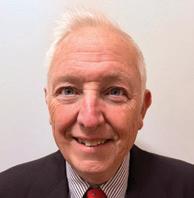
David Crippin MD, FAAFP, is a board-certified family physician, a fellow of American Academy of Family Physicians (AAFP) and a member of CMDA since 1981. He practiced the full scope of family medicine in northwest Iowa since 1988 and recently retired from active practice. He was the recipient of the Iowa Family Physician of the Year Award in 2002. He completed undergraduate education at Bethel University, St. Paul, Minnesota and residency in Sioux City, Iowa. In addition to his passion to teach patients, medical students and residents, he has been privileged to participate in a number of healthcare mission trips to Central and South America. He is married and has two sons (one of whom is a family physician) and four grandchildren. He is also co-founder of Ebenezer Stone Ministries, which is dedicated to be a place of healing, sharing and vision to fellow physicians suffering the emotional trauma and burnout inflicted by the impossible demands placed on them by both self and their corporate systems. For more information, visit ebenezerstoneministries.org.

RichardK.Zimmerman,MD,MPH,MA(Bioethics),FIDSA,FAAFP

The CMDA Advocacy team invites you to engage in open discussion on this topic, as well as others, on The Point of Medicine forum. To join the conversation, visit cmda.org/point.
In 2025, the United States is experiencing the largest measles outbreak in decades, with 1,309 cases, a 13 percent hospitalization rate and three preventable deaths.1 Only 4 percent of cases received the recommended two doses of measles, mumps and rubella vaccine (MMR). Several cases occur in communities of faith. The purpose of this article is to review the biblical and scientific justifications for MMR.
The speech of God, which is always truthful, results in Scripture, creation and providence. The cultural mandate in Genesis 1:2628 directs humans to have dominion, multiply and promote flourishing. The fields of science and healthcare directly flow from it. Cornelius Van Til wrote: “The God of Christian theism and the conception of his counsel as controlling all things in the universe is the only presupposition that can account for the uniformity of nature that the scientist needs.”2 Indeed, discoveries based on such regularities are true whether they were found by Christians or atheists. French theologian John Calvin wrote: “All truth is from God; and consequently, if wicked men have said anything true and just, we ought not to reject it; for it has come from God.”3
Measles virus is highly contagious, even without direct contact, because airborne respiratory droplets remain infectious for two hours.4,5 The period of communicability begins four days before the onset of rash, meaning infectious persons can spread the virus without knowing it.
Symptoms of measles include fever, cough, coryza, conjunctivitis and rash. Complications consist of diarrhea, dehydration, pneumonia, otitis media, encephalitis and subacute sclerosing panencephalitis, which eventually leads to progressive neurological decline and death. About 30 percent of cases have complications. Before vaccination, an estimated three to four million cases occurred annually in the U.S., resulting in 500 deaths.4
MMR is a live attenuated vaccine. After two doses of vaccine, 99 percent of children produce antibodies.4 As Figure 1 shows, the dramatic decrease is due to vaccination because general sanitation measures were already available. Indeed, measles vaccine has reduced deaths by 85,000, hospitalizations by 13,172,000 and cases by 104,984,000 in the U.S. from 1994 to 2023.6
The primary risks from MMR are rash (5 percent), fever (5 to 15 percent) and febrile seizures (one in every 3,000 to 4,000 doses) without sequelae;4 all of these are far less common than from wild measles disease. Injection site pain also occurs. Anaphylaxis occurs eight to 14.4 cases per million doses. Due to the rubella component of MMR, 25 percent of women recipi-
ents experience arthralgias, which last about two days.4 Rarely, MMR causes immune thrombocytopenic purpura at about one case per 40,000 vaccinated children, which is typically transient.7 Because immunocompromised persons experienced complications from live MMR, it is contraindicated in them.
The vaccine coverage required for herd immunity is 94 percent. If it falls below that, outbreaks will recur. Simulations showing the impact of high versus moderate coverage levels are in Figure 2.
Multiple reasons exist for vaccine hesitancy, including COVID-19 fatigue, false allegations about adverse effects, concern about moral complicity, anti-science presuppositions, confusion about God’s sovereignty and concerns about conflicts of interest. Fatigue due to COVID-19 is common due to the prolonged pandemic’s social distancing and multiple vaccine updates.
Allegations of vaccine side effects often rely on logical fallacies and previously debunked claims. For example, a false dilemma may present only two options (such as blaming a vaccine for a disability or denying the disability), which ignores other causes like genetics or accidents. Another common fallacy is post hoc ergo propter hoc, assuming because one event follows another, the first caused the second—like believing a team won because someone wore a “lucky” shirt. Allegations about autism were thoroughly refuted by multiple studies and reviews, including the Institute of Medicine.8,9,10 The primary article alleging this adverse effect was retracted,11,12 and the lead investigator received large payments for litigation against a MMR manufacturer and lost his medical license.13,14
Some vaccines are grown in nearly perpetual cell lines that were derived from a few abortions that occurred decades ago, raising concerns about moral complicity with evil, which is defined by CMDA as “culpable association with or participation in wrongful acts.”15 Rubella vaccine virus, a component of MMR, is grown in such a cell line. Bioethicist Dr. Robert Orr’s criteria for addressing moral complicity include: (1) timing, (2) proximity, (3) certitude, (4) knowledge and (5) intent.16 For fetal cell lines, the timing is remote—they were developed in the 1960s and 1970s. Can one drive a German-made car from World War II without being complicit in the Holocaust? I think so. Proximity is remote: the abortionist is separated from researchers, who are separated from manufacturers, who are further separated from clinicians and patients.17,18 No new abortions are needed to perpetuate these lines. A chemistry teacher isn’t culpable if a student later misuses their knowledge to make a bomb years later. Vaccine refusal now cannot change the past and will not affect the abortion debate. The intent of vaccine makers, clinicians and parents is to prevent disease and reduce suffering—clearly good motives. Nonetheless, according to CMDA Ethics Statement on Healthcare Right of Conscience, “Patients with decision-making capac-
ity have the right to refuse treatment, even when such refusal would bring them harm. When a patient’s refusal of treatment threatens the lives of others, the patient’s right to refuse treatment should be subordinate to the protection of others....”19
Some Christians hold anti-science presuppositions. However, scientists who correctly find truth are thinking God’s thoughts after Him. Indeed, several prominent scientists were believers, including Issac Newton, Lord Kelvin and Joseph Lister. Furthermore, common grace, that is “every undeserved providential act of God’s restraint, goodness and mercy toward the sinful inhabitants of this fallen world,”20 is based on passages such as Genesis 9:11 and Matthew 5:45. Calvin noted, “But if the Lord has been pleased to assist us by the work and ministry of the ungodly in physics, dialectics, mathematics and other similar sciences, let us avail ourselves of it, lest, by neglecting the gifts of God spontaneously offered to us, we be justly punished for our sloth.”3
Some persons confuse God’s sovereignty, human responsibility and determinism. I have been told by a patient the following: “God is sovereign; therefore, vaccination is unneeded because God will determine whether or not I am infected and the outcome if I am infected.” To resign all responsibility for contracting or transmitting measles suggests an underlying philosophy of determinism, leaving humans to dance on the strings of a grand puppet-master. It contrasts with a biblical conception of God’s sovereignty and human responsibility. Commandments would seem unnecessary if human actions are all predetermined rather than ordained. Consider David’s sinful census resulting in a choice of consequences in 1 Chronicles 21:11-12. The Westminster Confession of Faith handles this complexity well:
“From all eternity and by the completely wise and holy purpose of His own will, God has freely and unchangeably ordained whatever happens. This ordainment does not mean, however, that God is the author of sin (He is not), that He represses the will of His created beings, or that he takes away the freedom or contingency of secondary causes. Rather, the will of created beings and the freedom and contingency of secondary causes are established by Him.”21
As a counterexample, should parents allow their precious child to walk on a dangerous highway, claiming God is sovereign? I dare say not! This would be masquerading a deterministic or fatalistic worldview as sovereignty.
Concerns about conflict of interest are important. However, the Advisory Committee on Immunization Practices, which is chartered by the U.S. Congress to advise the government on civilian immunization policy, has strict rules on conflict of in-
terest.22 These rules restrict employment, royalties and other conflicts of interest with vaccine manufacturers; in addition, any allowable conflict of interest has to be declared publicly, and the holder is recused from voting.
The scriptural basis for prevention is based on (1) the cultural mandate, (2) scriptural passages promoting prevention, (3) promotion of justice and (4) admonitions to care for one another. “In view of this, the idea that Christians should not take aspirin or participate in any sort of medical research is wrong … In the anti-medicine view: ‘We should not try to improve the human condition in this way or that, the argument goes, because to do so would be to usurp God’s prerogative.’”23 “In the creation mandate, that is precisely what God tells Adam and Eve to do!”23
Prevention has a biblical basis, as shown by the need for railings when people stayed on a flat roof for the cool of night in an arid area: “When you build a new house, be sure to put a railing around the edge of the roof. Then you will not be responsible if someone falls off and is killed” (Deuteronomy 22:8, GNT). Furthermore, punishment was in order if preventive measures were not taken: “If, however, the bull has had the habit of goring and the owner has been warned but has not kept it penned up and it kills a man or woman, the bull is to be stoned and its owner also is to be put to death” (Exodus 21:29, NIV). Martin Luther affirms this for infectious diseases: “I shall ask God mercifully to protect us. Then I shall fumigate, help purify the air, administer medicine, and take it…so act toward others that no one becomes unnecessarily endangered on his account and so cause another’s death.”24 Indeed, during the polio outbreaks of the 1950s and 1960s, U.S. churches served as vaccination centers.
The promotion of justice is biblical. The Lord loves justice (Isaiah 61:8) and commands it (Micah 6:8). A distributive justice concern is “freeriding,” which depends on herd immunity by relying on other parents to vaccinate their children without joining the effort, from a communal ethical perspective. Furthermore, freeriding fails to protect those who, due to no fault of their own, cannot be vaccinated due to a medical contraindication or whose genetics preclude response to vaccination.
The “Love one another” passages in the New Testament support caring for another, with direct attention to caring for physical needs: “…our love should not be just words . . . shows itself in action” (1 John 3:18, GNT). Being vaccinated dramatically reduces the risk that one will transmit the measles virus to others. “He will reply, ‘Truly I tell you, whatever you did not do for one of the least of these, you did not do for me’” (Matthew 25:45, NIV).
I would like to encourage my colleagues in CMDA to share these ideas with their pastors and patients. As for me and my household, we have been vaccinated and are thankful for it.
1 Centers for Disease Control and Prevention. Measles Cases and Outbreaks. July 16, 2025 (https://www.cdc.gov/measles/data-research/ index.html).
2 Van Til C, Edgar W. Christian apologetics. 2nd ed. Phillipsburg, N.J.: P&R Pub., 2003.
3 Calvin J. Institutes of the Christian religion. Philadelphia,: Westminster Press, 1960.
4 Centers for Disease Control and Prevention. Measles. In: Hall E. WAP, Hamborsky J., et al., eds, ed. Epidemiology and Prevention of Vaccine-Preventable Diseases. 14th ed. Washington, D.C.: Public Health Foundation; 2021.
5 Bloch AB, Orenstein WA, Ewing WM, et al. Measles outbreak in a pediatric practice: airborne transmission in an office setting. Pediatrics 1985;75(4):676-83. (https://www.ncbi.nlm.nih.gov/pubmed/3982900).
6 Zhou F, Jatlaoui TC, Leidner AJ, et al. Health and Economic Benefits of Routine Childhood Immunizations in the Era of the Vaccines for Children Program - United States, 1994-2023. MMWR Morb Mortal Wkly Rep 2024;73(31):682-685. DOI: 10.15585/mmwr.mm7331a2.
7 Centers for Disease Control and Prevention. Measles, Mumps, Rubella (MMR) Vaccine Safety. July 31, 2024 (https://www.cdc.gov/vaccinesafety/vaccines/mmr.html).
8 Madsen KM, Hviid A, Vestergaard M, et al. A population-based study of measles, mumps, and rubella vaccination and autism. N Engl J Med 2002;347(19):1477-82. DOI: 10.1056/NEJMoa021134.
9 Institute of Medicine (US) Immunization Safety Review Committee. Immunization Safety Review: Vaccines and Autism. Washington (DC): National Academy Press, 2004.
10 DeStefano F, Shimabukuro TT. The MMR Vaccine and Autism. Annu Rev Virol 2019;6(1):585-600. DOI: 10.1146/annurev-virology-092818-015515.
11 Wakefield AJ, Murch SH, Anthony A, et al. Ileal-lymphoid-nodular hyperplasia, non-specific colitis, and pervasive developmental disorder in children. Lancet 1998;351(9103):637-41. DOI: 10.1016/s01406736(97)11096-0.
12 Retraction--Ileal-lymphoid-nodular hyperplasia, non-specific colitis, and pervasive developmental disorder in children. Lancet 2010;375(9713):445. DOI: 10.1016/S0140-6736(10)60175-4.
13 Deer B. How the case against the MMR vaccine was fixed. BMJ 2011;342:c5347. DOI: 10.1136/bmj.c5347.
14 Fitness to Practise Panel General Medical Council. Determination on Serious Professional Misconduct (SPM) and sanction for Dr Andrew Jeremy Wakefield. (https://www.circare.org/autism/Wakefield_SPM_ and_SANCTION_32595267.pdf).
15 Christian Medical & Dental Associations. Moral Complicity with Evil. (https://cmda.org/policy-issues-home/position-statements/).
16 Orr R. Addressing Issues of Moral Complicity: When? Where? Why? and Other Questions. Dignity 2003;9(2).
17 Zimmerman RK. Ethical analyses of vaccines grown in human cell strains derived from abortion: arguments and Internet search. Vaccine 2004;22(31-32):4238-44. DOI: 10.1016/j.vaccine.2004.04.034.
18Christian Medical & Dental Associations. Vaccines and Immunizations. (https://cmda.org/policy-issues-home/position-statements/).
19 Christian Medical & Dental Associations. Healthcare Right of Conscience Statement. (https://cmda.org/policy-issues-home/positionstatements/).
20 Ligonier Ministries. Common Grace. (https://learn.ligonier.org/guides/ common-grace).
21 Westminister Confession of Fatih in Modern English. Third ed. Orlando, FL: Evangelical Presbyterian Church, 2010.
22 Centers for Disease Control and Prevention. Advisory Committee on Immunization Practices Policies and Procedures. (https://www.cdc.
gov/acip/downloads/Policies-Procedures-508_1.pdf).
23 Watkin C. Thinking through creation : Genesis 1 and 2 as tools of cultural critique. Phillipsburg, New Jersey: P&R Publishing, 2017.
24 Luther M. Whether One May Flee from the Deadly Plague. In: J.J. Pelikan HCO, and H.T. Lehmann, ed. Luther’s Works, Devotional Writings II. Philadelphia, PA: Fortress Press; 1999:119-138.
Reported Measels Cases in the United States from 1962-2023*
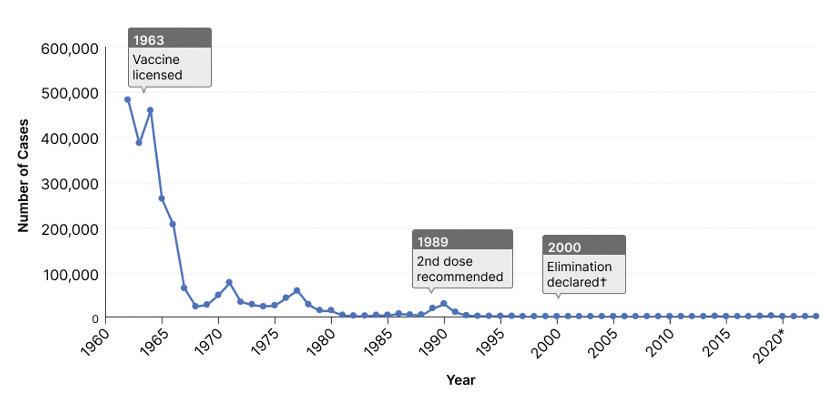
Figure 1
Source: Centers for Disease Control and Prevention. Measles Cases and Outbreaks. Updated July 16, 2025 (https://www.cdc.gov/measles/data-research/index.html).
Comparison in measles cases by 80 percent vs. 95 percent vaccine coverage in simulation in Harris County (Houston), Texas after 238 days with red showing infectious cases and blue recovered cases.
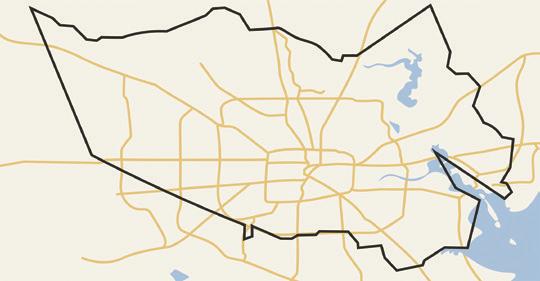
Figure 2

Source: Public Health Dynamics Laboratory, University of Pittsburgh. FRED U.S. Measles Simulator (Framework for Reconstructing Epidemiological Dynamics). (https://fred.publichealth.pitt.edu/measles). Conducted July 22, 2025
Richard K. Zimmerman, MD, MPH, MA (Bioethics) FAAFP, FIDSA, completed residencies in family medicine and in general preventive medicine and public. He completed a fellowship in academic medicine and clinical investigation. He is a tenured professor and Vice Chair for Research in the Department of Family Medicine and Clinical Epidemiology at the University of Pittburgh. His team’s motto is “Protecting people: vaccine policy to practice.” Dr. Zimmerman has practiced part-time in a faith-based federally qualified, inner-city health center since 1991 and has co-led short-term missions trips to Honduras and Guatemala. He has served as Board President of an international student ministry and served as an elder. Dr. Zimmerman served on the Centers for Disease Control and Prevention’s Advisory Committee on Immunization Practices as a voting member in 2002-04. He has published over 300 journal articles. Given his career accomplishments, he was presented with the Hames Career Research Award in 2016.
CMDA recognizes children to be gifts from God, both to their immediate and extended families and also to society. From the beginning, children have been born as the result of the sexual union of a man and a woman, ideally united in a covenant of marriage. Now, in technological societies, increasing numbers of children are born with the use of reproductive technologies including gestational surrogacy. CMDA recognizes that infertility often results in psychological, emotional, relational, and spiritual anguish. However, the means of addressing this suffering must be through ethically defensible strategies.
Adoption, either of children already born, or of embryos that otherwise are languishing in freezers, is a redemptive endeavor that is morally permissible. Outside of adoption, the procurement of children through means that separate the child from his/her birth mother or genetic parents is morally problematic. The payment of fees for a child born from a woman acting as a gestational or traditional surrogate, known as commercial surrogacy, is the focus of this statement.

1. Gestational Surrogacy: a woman carries a baby that has been conceived by the intended parents’ gametes or donor gametes with pregnancy resulting from in vitro fertilization (IVF) and embryo transfer. The woman (often referred to as a gestational carrier) then delivers the baby to the commissioning person(s) to rear.
2. Traditional (Genetic Surrogacy): the child-bearing woman is also the “egg donor” or genetic progenitor of the child. The surrogate carries the baby and then delivers the baby to the commissioning person(s) to rear.
3. Altruistic Surrogacy: no money is paid to the surrogate, although medical expenses may be covered. The surrogate could be a traditional or gestational surrogate.
4. Commercial Surrogacy: a fee is paid for a child born from a woman acting as a gestational or traditional surrogate.
1. God blessed human beings by creating them in His image, male and female, as well as ordaining the covenant of marriage. (Genesis 1:26-7; Matthew 19:4-6)
2. God’s blessing to humankind includes the ability to procreate, and the command to be fruitful and increase in number. (Genesis 1:27-8)
3. The Biblical mandate to have children found in Genesis 1:28 and 9:7 does not command using any means possible.
4. One of the purposes of marriage is the rearing of godly offspring (Malachi 2:13-15; I Timothy 3:1-13). Children are a gift from the Lord (Genesis 25:21; I Samuel 1:9-28; Psalms 127:3; Psalm 128)
5. Adoption of children, including the exceptional case of the adoptive rescue of embryos languishing in freezers, is a redemptive act mirroring God’s love for us (Deuteronomy 10:18 and 27:19; Psalms 68:5-6, 82:3 and 146:9; Proverbs 23:10-11 and 31:8; Isaiah 1:17; Zechariah 7:10; Matthew 25:40; Romans 8:15; Ephesians 1:4- 5; and James 1:27).
6. Regarding the story of Hagar, see footnote. (Genesis 16; Genesis 21:9-20)1
1. PERSONS AS GOD’S IMAGE BEARERS
a. Commercial surrogacy degrades the perception of the full humanity of both the child and the woman acting as a gestational surrogate by commodifying them. Women are more than wombs, and children more than objects of others’ desires.
b. Commercial surrogacy opens the woman acting as a commercial surrogate to psychological harm, particularly when handing the child over to the commissioning individuals.
c. Children conceived through commercial surrogacy, es-
pecially through but not limited to, international surrogacy arrangements, are at risk for harm, including the child’s need for identity, family relations, access to origins, and respect for their humanity.2
d. Surrogacy differs from adoption in that it subordinates concern for the welfare of the child to the desires of the commissioning individuals; whereas, in adoption the welfare of the child is the primary concern.
a. Surrogacy separates procreation from its intended context within marriage between one woman and one man.
b. Surrogacy severs the bond formed between the gestating woman and child during the pregnancy.
c. Custodial obligations of the woman acting as a surrogate toward the child she bears are interrupted.
d. A husband of a woman acting as a surrogate may not always be in agreement with her decision to act as a commercial surrogate.
e. When a woman acting as a surrogate delivers the baby to the commissioning persons, the woman’s other children may not comprehend the loss of this child.
f. Women acting as commercial surrogates may be housed in places far from their homes in order to protect them from public attention or shame, to control their lives, or to make the process more convenient to the commissioning individuals.
g. The child is treated not as a person but as a commodity. This is seen most clearly when contracts do not pay in full if the pregnancy does not result in the birth of a healthy baby, or results in a baby that the commissioning individuals do not desire, but also in other cases, the reality of “child as commodity” is always present. Some children born through commercial surrogacy arrangements have been reported to have been abandoned.3,4
h. In contested commercial surrogacy arrangements, there may be significant ambiguity regarding the legal custody of the child.5,6,7
a. Surrogacy exploits women through an imbalanced social class/gender power relationship.
b. When a woman acting as a commercial surrogate is housed away from her home, her family is deprived of her usual contributions.
c. By virtue of the contractual agreement with the commissioning individuals (or groups), the surrogate’s activities, including work and even food intake, may be dictated.
d. If the health of the woman acting as a commercial surrogate is harmed, she may face increased healthcare costs and/or decreased ability to earn income afterwards. Yet, most surrogacy contracts make no provision for providing for ongoing healthcare needs or disability that could result from complications of the pregnancy.
a. Pregnancy and childbirth pose risks to women, inherent to our embodied nature. Surrogacy increases risk of harm to
women, especially in contexts of widely varying medical and psychological care. In addition to the usual risks of pregnancy, the surrogate faces an exogenous endometrial preparation and embryo transfer, and any attendant risks these procedures confer. Hypertensive disorders, postpartum hemorrhage, and severe maternal morbidity rates are higher in surrogates than in unassisted conceptions or IVF pregnancies.8 The long-term psychological consequences of surrogacy are not fully known. Many surrogates have undergone counseling (sometimes called cognitive dissonance counseling) during the pregnancy.
b. Surrogacy increases risk of harm to children.
i. Embryos formed with IVF technology have additional environmental exposures compared to naturally conceived embryos.9 The multigenerational effects of this are unknown.
ii. As with other IVF births, there are increased risks of genetic defects,10 multiple births and prematurity.
iii. Long-term psychological effects are unknown.
a. Commercial surrogacy elevates the desires of adult individuals (or groups) over the interests and well-being of the child. Bringing children into being who are then intentionally separated from the gestating woman at birth is morally problematic.
b. Gestating children and giving them to others in exchange for money is ethically indistinguishable from selling children, which is not permitted with adoption of an already born child.
c. Surrogacy has the potential of denying the child the benefit of both a father and mother by bringing into the world children who are intentionally placed with a single individual or two individuals in a same-sex relationship.
1. Procreation is a gift of God who created us to be in relationship with Him; it is not a process to be commodified for our own purposes.
2. Commercial surrogacy, by definition, makes the gift of children and the gift of motherhood a fungible transaction. It also places persons in inequitable relationships and exploits women and children.
3. Children, whatever the circumstances of their birth, are gifts of God. They are to be carefully nurtured and loved, not treated as commodities.
4. The desire for children is found in God’s created order, but not all means of achieving parenthood are morally acceptable.
5. Commercial surrogacy is morally unacceptable. It carries inherent physical, psychological, and spiritual risks and potential harms to the child born by surrogacy, the woman acting as a surrogate, the commissioning parents, and the broader culture, and therefore should be rejected.
1 While there may be superficial resemblances, direct application of the Hagar
narrative to the ethical issue of modern surrogacy is anachronistic, problematic, and obscures the central biblical-historical-redemptive message of covenantal faithfulness the narrative is conveying (and as used by Paul in his letter to the Galatians). Using the Hagar narrative for the purpose of an ethical example either for or against modern reproductive technologies or practices, or concentrating on the problems Abraham, Sarah, and Hagar faced because of their decisions as a consequentialist moral argument, pulls the narrative out of its biblical-redemptivehistorical context, overshadows the real message, and reads modern concepts of surrogacy back into the biblical narrative in its Ancient Near East context. Therefore, CMDA does not recommend including this section of Scripture as an example of modern-day surrogacy or its use as a moral example for or against the ethics of modern reproductive technology.
2 Children’s Rights & Surrogacy - Briefing Note, February 2022, https://www.unicef. org/media/115331/file
3 Samantha Hawley, “‘Incurable’ Bridget Was Born via Surrogate in Ukraine and Abandoned by Her American Parents,” ABC News, August 21, 2019, https://www. abc.net.au/news/2019-08-20/ukraines-commercial-surrogacy- industry-leavesdisaster/11417388.
4 ABC News, “Family Cleared of Abandoning Baby Gammy,” ABC News, April 14, 2016, https://www.abc.net.au/news/2016-04-14/baby-gammy-twin-must-remain-withfamily-wa-court-rules/7326196.
5 Naomi Angell2020-06-11T11:06:00+01:00, “Surrogate Babies Left in Legal Limbo,” Law Gazette, June 11, 2020, https://www.lawgazette.co.uk/practice-points/surrogatebabies-left-in-legal-limbo/5104603.article
6 Susan L. Crockin, Meagan A. Edmonds, and Amy Altman, “Legal Principles and Essential Surrogacy Cases Every Practitioner Should Know,” Fertility and Sterility 113, no. 5 (May 2020): 908–15, https://doi.org/10.1016/j.fertnstert.2020.03.015.
7 Valeria Piersanti et al., “Surrogacy and ‘Procreative Tourism’. What Does the Future Hold from the Ethical and Legal Perspectives?,” Medicina 57, no. 1 (January 8, 2021): 47, https://doi.org/10.3390/medicina57010047
8 M Ivanova et al., “O-091 Severe Maternal and Neonatal Morbidity among Gestational Carriers: A Population- Based Cohort Study,” Human Reproduction 39, no. Supplement_1 (July 1, 2024), https://doi.org/10.1093/humrep/deae108.097.
9 M. Simopoulou et al., “Risks in Surrogacy Considering the Embryo: From the Preimplantation to the Gestational and Neonatal Period,” BioMed Research International 2018 (July 17, 2018): 1–9, https://doi.org/10.1155/2018/6287507.
10 Yue Lu et al., “Risk of Birth Defects in Children Conceived with Assisted Reproductive Technology: A Meta- Analysis,” Medicine 101, no. 52 (December 30, 2022), https://doi. org/10.1097/md.0000000000032405
SELECTED REFERENCES
ABC News. “Family Cleared of Abandoning Baby Gammy.” ABC News, April 14, 2016. https://www.abc.net.au/news/2016-04-14/baby-gammy-twin-must-remain-with-familywa-court-rules/7326196.
Achmad, C.I. Children’s rights in international commercial surrogacy: Exploring the challenges from a child rights, Public International Human Rights Law Perspective, June 26, 2018. https://scholarlypublications.universiteitleiden.nl/handle/1887/63088
Angell, Naomi. “Surrogate Babies Left in Legal Limbo.” Law Gazette, June 11, 2020. https://www.lawgazette.co.uk/practice-points/surrogate-babies-left-in-legallimbo/5104603.article. Armstrong, Sylvie. “Commercial Surrogacy: Building Families Outside of Family Law.” Hastings Journal on Gender and the Law 33, no. 1 (Winter 2022): 1–28. https:// repository.uchastings.edu/hwlj/vol33/iss1/3. Birenbaum-Carmeli, Daphna, and Piero Montebruno. “Incidence of Surrogacy in the USA and Israel and Implications on Women’s Health: A Quantitative Comparison.” Journal of Assisted Reproduction and Genetics 36, no. 12 (October 30, 2019): 2459–69. https://doi.org/10.1007/s10815-019-01612-9
“The Black Market for Chinese Surrogate Mothers.” The New York Times, 2014. https:// www.youtube.com/watch?v=GmCZ6dJhh_U. Children’s Rights & Surrogacy - Briefing Note, February 2022. https://www.unicef.org/ media/115331/file.
Crockin, Susan L., Meagan A. Edmonds, and Amy Altman. “Legal Principles and Essential Surrogacy Cases Every Practitioner Should Know.” Fertility and Sterility 113, no. 5 (May 2020): 908–15. https://doi.org/10.1016/j.fertnstert.2020.03.015
Frey, Adam E. “Reaffirming Human Dignity in Disputes over Children Born from Assisted Reproductive Technologies.” The Linacre Quarterly 90, no. 2 (November 15, 2022): 116–32. https://doi.org/10.1177/00243639221134474.
Hawley, Samantha. “‘Incurable’ Bridget Was Born via Surrogate in Ukraine and Abandoned by Her American Parents.” ABC News, August 21, 2019. https://www. abc.net.au/news/2019-08-20/ukraines-commercial-surrogacy-industry- leavesdisaster/11417388
Ivanova, M, J Ray, J Shellenberger, J Pudwell, and M P Velez. “Severe Maternal and Neonatal Morbidity among Gestational Carriers: A Population-Based Cohort Study.” Human Reproduction 39, no. Supplement_1 (July 1, 2024). https://doi.org/10.1093/ humrep/deae108.097.
Lahl, Jennifer. “Contract Pregnancies Exposed: Surrogacy Contracts Don’t Protect Surrogate Mothers and Their Children.” Public Discourse, July 27, 2018. https://www. thepublicdiscourse.com/2017/11/20390/.
Lu, Yue, Lele Liu, Pingping Zhang, Yanmei Sun, Cong Ma, and Yali Li. “Risk of Birth Defects in Children Conceived with Assisted Reproductive Technology: A MetaAnalysis.” Medicine 101, no. 52 (December 30, 2022). https://doi.org/10.1097/ md.0000000000032405
Mazur, Lynnette J., Mary Kay Kisthardt, Helen H. Kim, Laura M. Rosas, and John D. Lantos. “Surrogate Pregnancy after Prenatal Diagnosis of Spina Bifida.” Pediatrics 139, no. 2 (February 1, 2017). https://doi.org/10.1542/peds.2016-2619.
Moody-Adams, Michele M. “ Volume 5, Number 2, April 1991 On Surrogacy: Morality, Markets, And Motherhood.” Public Affairs Quarterly 5, no. 2 (April 1991): 175–90. Perkins, Kiran M., Sheree L. Boulet, Denise J. Jamieson, and Dmitry M. Kissin. “Trends and Outcomes of Gestational Surrogacy in the United States.” Fertility and Sterility 106, no. 2 (August 2016). https://doi.org/10.1016/j.fertnstert.2016.03.050
Peters, Henrike E., Roel Schats, Marieke O. Verhoeven, Velja Mijatovic, Christianne J.M. de Groot, Joanna L. Sandberg, Immelie. P. Peeters, and Cornelis B. Lambalk. “Gestational Surrogacy: Results of 10 Years of Experience in the Netherlands.” Reproductive BioMedicine Online 37, no. 6 (December 2018): 725–31. https://doi. org/10.1016/j.rbmo.2018.09.017.
Piersanti, Valeria, Francesca Consalvo, Fabrizio Signore, Alessandro Del Rio, and Simona Zaami. “Surrogacy and ‘Procreative Tourism’. What Does the Future Hold from the Ethical and Legal Perspectives?” Medicina 57, no. 1 (January 8, 2021): 47. https:// doi.org/10.3390/medicina57010047
Saravanan, Sheela. Transnational feminist view of surrogacy: Biomarkets in India. S.l.: SPRINGER, 2019.
Simopoulou, M., K. Sfakianoudis, P. Tsioulou, A. Rapani, G. Anifandis, A. Pantou, S. Bolaris, et al. “Risks in Surrogacy Considering the Embryo: From the Preimplantation to the Gestational and Neonatal Period.” BioMed Research International 2018 (July 17, 2018): 1– 9. https://doi.org/10.1155/2018/6287507.
Snyder, Steven H. “Reproductive Surrogacy in the United States of America: Trajectories and Trends.” Essay. In Handbook of Gestational Surrogacy, 276–86. Cambridge, England: Cambridge University Press, 2016.
“Surrogacy Laws by State.” Surrogacy Laws By State - Legal Professional Group. Accessed September 12, 2024. https://connect.asrm.org/lpg/resources/surrogacy-bystate?ssopc=1.
Söderström-Anttila, Viveca, Ulla-Britt Wennerholm, Anne Loft, Anja Pinborg, Kristiina Aittomäki, Liv Bente Romundstad, and Christina Bergh. “Surrogacy: Outcomes for Surrogate Mothers, Children and the Resulting Families—a Systematic Review.” Human Reproduction Update, October 9, 2015, dmv046. https://doi.org/10.1093/ humupd/dmv046
White, Pamela M. “‘One for Sorrow, Two for Joy?’: American Embryo Transfer Guideline Recommendations, Practices, and Outcomes for Gestational Surrogate Patients.” Journal of assisted reproduction and genetics v. 34, n. 4, p. 431–443., 2017. https:// research.ebsco.com/c/ifz7t6/viewer/pdf/45s52543gf. Approved by the House of Representatives Passed with 65 approvals, 0 opposed, 0 abstention May 1, 2025, St. Charles, Missouri


Firearm-related injury and death impacts thousands of Americans yearly, bringing suffering to survivors and to the loved-ones of victims. This is a complex issue with many causes and will not have a simple solution. Since those injured or killed via firearms are image- bearers of God, this is an issue for followers of Christ to address.
CMDA represents healthcare professionals who promote the physical, emotional, social, and spiritual well-being of our patients. Recognizing the sacredness of human life, CMDA advocates for reducing firearmrelated violence, acknowledging its deep human and societal impact.
While firearms are rarely aimed at people outside of a military setting, they inherently pose a risk of harm. It is because of the desire of CMDA, as well as all healthcare professionals, to mitigate this risk of harm that this statement has been drafted. CMDA laments all loss of human life and health due to firearm use – whether accidental, selfinflicted, criminal, or in the context of selfdefense. This lament does not imply that all shootings are either indefensible or morally unjustified, but it is an expression of sorrow over the human toll of such loss.

Firearm violence affects individuals, families, and communities, and so CMDA calls its members to reflect upon and to pray over this critical public health issue. As Christians we are called to be the presence of Christ in broken lives and to seek both healing and prevention wherever the Holy Spirit gives us opportunity.
Our society is drifting toward violence, yet we see many potential avenues to mitigate this trend, such as addressing mental health care, education, policy advocacy, and family and social support. Above all, Christian healthcare professionals point others to the hope and healing of Christ.
This Task Force was charged by CMDA to produce a public policy statement which addresses the issue of violence in the U.S., especially but not limited to firearm violence. This statement will be available to staff and members of CMDA, to churches and
1. RECOGNIZE firearm violence as a serious public health and safety calamity.
2. PRESENT a clear, biblically-informed position on violence of any kind – one that ties our consistent, life-affirming positions with the conviction that all men and women are created in the image of God and called by Jesus Christ to lament all forms of senseless violence, including that which is self-inflicted.
3. COMMUNICATE a Christian healthcare professional’s responsibility to be a visible agent of empathy and sorrow, to promote healing, and to be a catalyst for change.
4. PROPOSE actionable recommendations for healthcare professionals and the public at large, including issues of mental health.
5. FACILITATE a forum for open discussion.
Firearm-related injury and death afflicts thousands of imagebearers of God annually across our land. Death and injury from firearm-mediated suicide, street- and drug-related violence, road-rage, hunting or in-home accidents, as well as mass shootings bring unfathomable grief and suffering to survivors and to the loved ones of victims – and thus to the heart of Jesus.This national tragedy is complex, multifaceted, and is unavoidably related to many factors, such as psychiatric illness, crime, the glorification of violence in the entertainment and gaming industries, and firearm accessibility. Whereas mass shootings are perhaps the most visible and emotionally charged form of this tragedy, vastly more lives are lost or harmed due to other firearm-related causes.
CMDA seeks to have and to articulate a biblical response to all issues that impact health, since the Bible is the Word of God given to Christians as an infallible guide and rule.
Scripture provides us with principles to guide our understanding and behavior with respect to this issue (2 Tim 3:16-17).
1. As Christians, we are committed to human dignity because every human is a sacred image bearer of God (imago Dei).
a. Genesis 1:26 – 27
b. Genesis 5:1 – 2
c. Genesis 9:6
d. Colossians 3:10
e. James 3:9
2. As Christians we are to love and desire the flourishing of all image bearers of God.
a. Mark 12:30 – 31
b. Luke 10:36 – 37
c. 1 Corinthians 10:24
d. James 2:8
3. As Christians we are enjoined to give our lives away so that others may flourish.
a. Matthew 5:3 – 10, 43 – 45
b. John 13:34
c. John 15:12 – 13
d. Romans 12:9 – 21
4. When we engage in conflict we are admonished to do so without violence, but instead to focus on reconciliation.
a. Psalm 44:6 – 7
b. Proverbs 3:31 – 32
5. As Christians we strive to live at peace with others.
a. Matthew 5:9
b. Mark 9:50
c. Romans 12:17 – 21
d. Romans 14:17 - 19
c. Matthew 26: 52
e. Titus 3:1 – 2
f. Hebrews 12:14
g. James 3:17 – 18
6. As Christians we are to guard our minds and hearts in order to behave with love, peace, and forgiveness.
a. Psalm 37:1 - 16
b. Proverbs 4:23
c. Philippians 4:8 – 9
7. As Christians we battle both earthly and spiritual forces.
a. 2 Corinthians 2:10 – 11
b. 2 Corinthians 10:4 - 6
c. Ephesians 6:12
8. Scripture recognizes the role of those in rightful authority to bear arms to repress evil.
a. Genesis 9:5 – 6
b. Deuteronomy 19:15 – 19
c. Romans 13:4
9. We are not to make decisions based on fear. The most common command in the Bible is some form of “Do not fear.”
a. Genesis 15:1
b. Exodus 14:13 – 14
c. Isaiah 41:10
d. Luke 12:4, 7, 32
e. John 14:27
f. 2 Timothy 1:7
g. 1 Peter 3:14
h. Hebrews 13:6
10. Jesus’ teaching and example show that Christians should rather suffer the loss of their possessions, honor, and life than answer violence with violence.
a Matthew 5:38 – 42
b. Luke 9:23 – 25
c. Luke 22:35 – 38
d. 1 Peter 2:19 – 23
e. Hebrews 10:34 – 36
f. Revelation 12:10 – 11
CMDA represents healthcare professionals who are in Christ, and therefore shares in the mission of the larger church. We promote the physical, emotional, social, and spiritual well-being of our patients. We care about the societal and cultural trends of our nation because they directly and indirectly impact our patients’ health.
CMDA’s long-established advocacy for the sacredness of human life in other social issues is similarly manifest in advocacy for the reduction of firearm-associated violence. Physical violence has been part of human history since the second generation of humans (Cain and Abel), yet the development of firearms, as well as many other forms of advanced lethal force, has enabled a more rapid way to cause harm or death than was possible previously.
Although most firearms in a non-military setting are seldom or never aimed at a human, they are all, by design, able to cause injury or death. CMDA laments both the loss of life or health that occurs when a firearm is discharged at a fellow human, as well as the impact on the soul of the person wielding the firearm. A shooting is especially tragic when the firing is accidental, self-inflicted, or part of a crime, but CMDA also laments the loss of life or health that occurs when people are defending their own lives or property, because of the human impact. Human beings are made in the image of God, and when killed, regardless of the reason, and regardless of whether it was justified, they have lost their chance to repent. And, so, we lament.
By “lament,” therefore, we do not mean to imply that all
shootings are either indefensible or morally unjustified. We are also not discussing the use of firearms by the military. We lament because lives have been lost or people’s health impacted. Moreover, we lament the overall impact of firearm violence, for not only the people engaged are affected, but also their family, friends, and community, as well as larger society. This is a critical public health concern.
Therefore, we now call upon all CMDA members to reflect upon, and to pray over, the steadily increasing tragedy of firearm-related violence. Our summons is to prayer – interceding for the plight of the afflicted. We listen to the tender heart and voice of Christ who speaks into and through tragedy to bring healing. Thus, the Kingdom of God breaks into this dark space of sorrow. We are called to be the presence of Christ in broken lives and to seek both healing and prevention wherever the Holy Spirit gives us opportunity.
As our society drifts toward violence, and specifically firearm violence, we see many potential avenues to mitigate this trend. These may include addressing mental health issues, education, policy implementation, and family and social structures. In conclusion, as believers in Jesus Christ, Christian healthcare professionals point others to the hope and healing of Christ.
The illicit and unlawful use of firearms affects ALL aspects of society because it strikes at the heart of the imago Dei and the sacredness of human life. It cheapens and demeans God’s ultimate creation and what it entails being made in His image.
Firearm-related injury and death constitute a major public health crisis. As believers in Christ who are called to love our fellow humans, we are commanded to be engaged in the care of the suffering (e.g., the parable of the Good Samaritan). We, as a Christian healthcare organization, cannot be silent as thousands of human lives are destroyed through neglect and the illegitimate use of force. Whereas we might applaud certain position statements issued on the matter by secular medical organizations, and can partner as allies in this crisis, we boldly proclaim that the tenets of the Christian faith are, finally, the only ultimate rationale and irrevocable supreme and transcendent mandate for mitigating this crisis.
Healthcare professionals need to be educated and trained to help identify patients, families and communities who are at-risk of firearm-related injury and death, with special attention to behavioral-health-mediated risk, including but not limited to depression, suicide risk, intimate partner violence, and interpersonal violence. This needs to include the appropriate use of sensitive, evidence-based, and politically neutral tools for screening their patients for firearm access, security, and safety.1
Healthcare professionals need to counsel patients who volunteer or who screen positive for firearm access about firearm safety and secure firearm storage with appropriate culturally competent messaging. This needs to include providing print and/or online guidance for safely securing and using firearms.
Christian communities need to help provide necessary support to individuals and families at high risk of self-harm, harm to others, or are involved in situations that increase these risks, as well as to actively and compassionately come alongside those in the community who have been direct or indirect victims of firearm violence as they work towards individual and community healing and reconciliation. This includes healthcare professionals who are exposed to moral injury and moral harm in their work when they are impacted by firearm- related violence.
Healthcare professionals need to advocate for comprehensive public health and healthcare approaches required to reduce death and disability from firearm injury, including research to better understand the root causes of violence, identify people at risk, and determine the most effective strategies for firearm injury prevention. Hospitals, healthcare systems, and professional organizations need to come alongside local communities to address the social determinants of disease that contribute to violence, especially in underserved communities.
CMDA needs to encourage and facilitate continuing regular open forums, discussions, educational sessions, and other means as seen fit to continue to address these issues. These need to be presented with mutual respect and openness to differences of opinion among CMDA members with all Christian charity that befits fellow believers in Christ Jesus who are all humbly seeking after the mind and will of their Savior and to follow His teachings and example in this present age.
We recommend to CMDA the creation of a CMDA Violence Response Committee, whose specific task will be to devote time and resources to study the above raised issues, and that ministry resources be devoted to healing and restoration. This committee would be a resource for the larger CMDA community.
1 Guidelines exist for this that are relatively apolitical, non-judgmental, and free of bias such as is available in the NEJM 2024; 391(1): 926 – 940 (which includes guidelines from the American College of Surgeons and American Academy of Pediatrics).
The Dr. John Patrick Bioethics Column
The powers who rule the world cannot rule themselves, as their continuous stream of failed promises, relationships and policies demonstrate. The evidence is that our human problems are not primarily about knowing the difference between right and wrong but doing what is right and refusing the wrong. Paul’s lament: “For I do not understand my own actions. For I do not do what I want but I do the very thing I hate…For I have the desire to do what is right, but not the ability to carry it out” (Romans 7:15-18, ESV). This universal experience must be the intellectual starting point for any realistic institution, especially government. Our education system will not accept this and neither will many churches, often removing from communion service the line, “We have all failed to do what we ought to do and have done what we ought not to do and there is no health in us.” Again and again, we hear the refrain, “I am a good person; I haven’t hurt anyone.” This can only be relatively true compared to everyone else, but it doesn’t comfort us. We certainly do not want our engineers to be “relatively” competent with only the occasional building collapse because of shoddy procedures and materials.
way for individuals, families and communities to flourish. Nowadays, very few students could recite them and would insert, instead, tolerance and various nostrums drawn from current transient ideas, such as the now rapidly fading importance of diversity, inclusion and equity of outcomes.
In the medical arena, when I was a student, we had one lecture on how to behave professionally, and it was not about standards, just how the lawyers could be kept at bay. It was etiquette, not ethics. Students heard the Bible in school, church and home. For almost all those where the Bible was central in the home, it was the foundation for living well. The biblical narrative teaches, among several other things, moral consequence. “Be sure your sins will find you out” was common parlance, and it was the reason why we respected our teachers and were not brazen about our misdeeds. Playing the victim card was shameful.
We never thought about these behaviors, never asked where they came from. To those who knew the Bible, they came from God and were summarized in the Ten Commandments as a
In the last 75 years, individualistic and self-serving behaviors have been promoted. Despite the obvious contradictions, we are now required to celebrate, or at least keep quiet about, any untoward consequences of the impact of this way of thinking. One medical reality will serve as an example. When the contraceptive pill was invented, it was celebrated as freedom for women and good for everyone. At that time, the vast majority of women were virgins when they married. No effort was spent on thinking about the inevitable growth of casual sex, and thus, of an explosion of sexually transmitted infections. Moreover, the effect on marriage of the use of the contraceptive pill which, combined with fault-free divorce, has destabilized the family and damaged the innocence of children. The economic effect on healthcare costs has been catastrophic.
C.S. Lewis predicted all this and described it beautifully:
“For the wise men of old the cardinal problem of life was to conform the soul to objective reality [that was God’s Law; when he wrote Lewis could assume his readers knew that] and the solution was wisdom, self-discipline and virtue. For the modern man the cardinal problem is to conform reality to his desires and the solution is technology.”1
The modern university is highly unlikely to hear the word wisdom from their teachers. A “just do it” mindset has replaced self-discipline with the notable exception of exercise. Technology has replaced “the long obedience in the same direction.”2 Almost everyone has a shortened concentration span, myself included, because of what screens do to us. Anxiety, especially amongst girls, has roughly tripled since the advent of the iPhone. Boys are often addicted to gaming, as I would be, if I were unfortunate enough to be a student today. Reading books is the domain of very few if you exclude romantic pulp fiction. (By the way, 80 percent of publishers are women.) Looking back, I should have started thinking about these phenomena over 25 years ago. I remember sitting behind two girls on the university shuttle bus on my way to lunch with Professor Graeme Humter, my philosopher friend and merciless destroyer of nonsense and gracious mentor for me. I will never cease to be grateful for his friendship, especially for the way he guided my reading and sharpened my thinking. However, back to the two girls on the bus, one said, “I haven’t been to the library this semester. Didn’t need to.” The other agreed. I was amazed but passed them off as aberrations, only they weren’t. Similarly, on sabbatical at the University of Illinois in 1987, each morning I walked through the student union en route to the laboratory where students were playing the machine—the same students would be there when I went for coffee hours later.
Today we have students who demand the cancellation of professors who hold particular views that make the students feel uncomfortable. The students do not even listen to the rationale for the professor’s stance. They will march in favor of Hamas without even reading the Hamas website. If you ask them which country has had over 100,000 Christians killed since 2009, they do not know or care (the country is Nigeria). They just want to “virtue signal” to their peer group and feel good about their actions. They call themselves social justice warriors but cannot sustain a discussion of what justice is. This is not an easy discussion, but it is one to which we must continuously return. I hope at least some of my readers in this magazine have obtained a copy of Arthur Allan Leff’s Duke Law review paper from 1987, “Unnatural Law Unspeakable Justice.” For those who haven’t read it: as a secular professor of law, he had a problem with the foundations of law in a secular state. Where does the authority of the law come from? Did humans invent it, or did they discover it? He puts it like this (my paraphrase):
“I want and so do you, a law that is comprehensible by us but comes from God because only then is it undeniable. But we don’t want to be under God but to be autonomous because that
is how we understand freedom. However, if that is the case, then we make the law and we have no adjudicator when we quarrel over what the law is. Without God, we cannot be simultaneously perfectly ruled and perfectly free.”
The freedom from God is not “just do it” freedom but the freedom that comes with the power to do what we ought. All cultures have “oughts.” They differ slightly depending upon whether loyalty or truth is the top virtue in their culture.
Ethics courses in medical school have only a transient stay in memory. Undergraduate programs suffer from information overload and the only way to get through it is to cultivate a very good short-term memory. I call the whole exercise “the memorize and dump program.” The “Georgetown Mantra” is the only part of the ethics course remembered. It has four components which are logically connected and in a proper order. The students usually put autonomy first, with justice, beneficence and non-malfeasance randomly ordered. The Greeks were clear in the Hippocratic Oath: do no harm was foundational, i.e. something like the Ten Commandments which list what God will not tolerate. Most students will know only a few of the commandments even though obedience to them leads to flourishing. Extrapolation from the basis of what must not be done leads to beneficence. From that base, a system of justice can be discovered and finally the legitimate respect for autonomy can be firmly defined. Proper sentiment (to reference Jane Austen) must be cultivated. The disgraceful celebration of Charlie Kirk’s assassination shows how far we have fallen.
One can only sympathize with the modern justice warriors who must “feel” everything for it to be legitimate, whereas to live from the basis of God’s law of duty and responsibility shared with others leads to common virtues such as appropriate patriotism, honesty, truth and love.
1 Lewis, C.S. The Abolition of Man. Zondervan, 2001
2 Nietzsche, Friedrich. Beyond Good and Evil: Prelude to a Philosophy of the Future.
John Patrick, MD, studied medicine at Kings College, London and St. George’s Hospital, London in the United Kingdom. He has held appointments in Britain, the West Indies and Canada. At the University of Ottawa, Dr. Patrick was Associate Professor in Clinical Nutrition in the Department of Biochemistry and Pediatrics for 20 years. Today he is President and Professor at Augustine College and speaks to Christian and secular groups around the world, communicating effectively on medical ethics, culture, public policy and the integration of faith and science. Connect with Dr. Patrick at johnpatrick.ca. You can also learn more about his work with Augustine College at augustinecollege.org. To hear more from Dr. Patrick, visit johnpatrick.ca to listen to the Dr. John Patrick Podcast.
To place a classified advertisement, contact communications@cmda.org.
Assistants — Do you long to see God work through your physician assistant practice? We are the largest vasectomy reversal practice in the U.S. Our two-fold mission is to help all our patients multiply physically and help some multiply spiritually. Thus, we train spiritually and medically. If you proficiently enjoy simple skin suturing; if you want to make disciple-making disciples of Jesus among your patients; and if God is calling you to this work, we can train you in this medical ministry to fulfill the Great Commission. Come join us at our Warwick, Rhode Island or Fort Gibson, Oklahoma locations. Contact drdavid@thereversalclinic.com.
The Jackson Clinic is a physician owned and governed multispecialty group in Jackson, Tennessee with 100 physicians in 25 specialties and subspecialties. We are searching for physicians to join our path to partnership in many specialties including OB/Gyn, otolaryngology, gastroenterology, cardiology, pediatrics and more. Physicians enjoy autonomy, collaboration among 100 physician partners as well as clinical research and teaching opportunities. Jackson offers a low cost of living, and Tennessee has no state income tax! Reach out to learn more: Stephanie Stoltz at 731345-1237 or sstoltz@jacksonclinic.com. jacksonclinic.com
Orthopedic Surgeon — Position available for orthopedic surgeon with interest in total joint replacement. Three physician practice located in Venice, Florida. Family oriented community offering an exceptional lifestyle. Excellent educational opportunities. Call 941-468-1966 or email Docmehs@gmail.com. veniceorthopaedics.com
Care, a faith-based, non-profit medical practice in Dayton, Ohio, is seeking a compassionate and skilled prenatal care provider (OB/Gyn, CNM, MSN-WHNP or APRN-WHNP) to provide comprehensive, lifeaffirming care to women throughout pregnancy and postpartum. This parttime position oversees patient care, determines appropriate testing and procedures and coordinates referrals as needed. The provider will supervise the Nurse Manager, collaborate with
hospital partners to ensure continuity of care through delivery and maintain accurate documentation in Epic. Candidates must hold an active Ohio license, have experience in prenatal and obstetric care and share our commitment to holistic, dignified and compassionate care for every mother and child. For more information, call 937-418-6731 or email mcarnahan@ womenscenterohio.com.
Bringing together healthcare professionals to further God’s kingdom

“It’s a valuable source for
colleagues
who
recognize that their calling to medicine is a calling to ministry.”
— The Jackson Clinic
“Absolutely
amazing! I would not have found my job without CMDA Placement Services.”
— Rachel VanderWall, NP
We exist to glorify God by placing healthcare professionals and assisting them in finding God’s will for their careers. Our goal is to place healthcare professionals in an environment that will encourage ministry and also be pleasing to God.
We make connections across the U.S. for healthcare professionals and practices. We have an established network consisting of hundreds of opportunities in various specialties.
You will benefit from our experience and guidance. Every single placement carries its own set of challenges. We help find the perfect fit for you and your practice.
P.O. Box 7500 • Bristol, TN 37621 www.cmda.org • 888-230-2637
Are you passionate about your work... and the nations? Talk to us about how healthcare opens doors to make Christ known in places where there are few, if any, followers of Jesus.