THE CLOTHWORKER
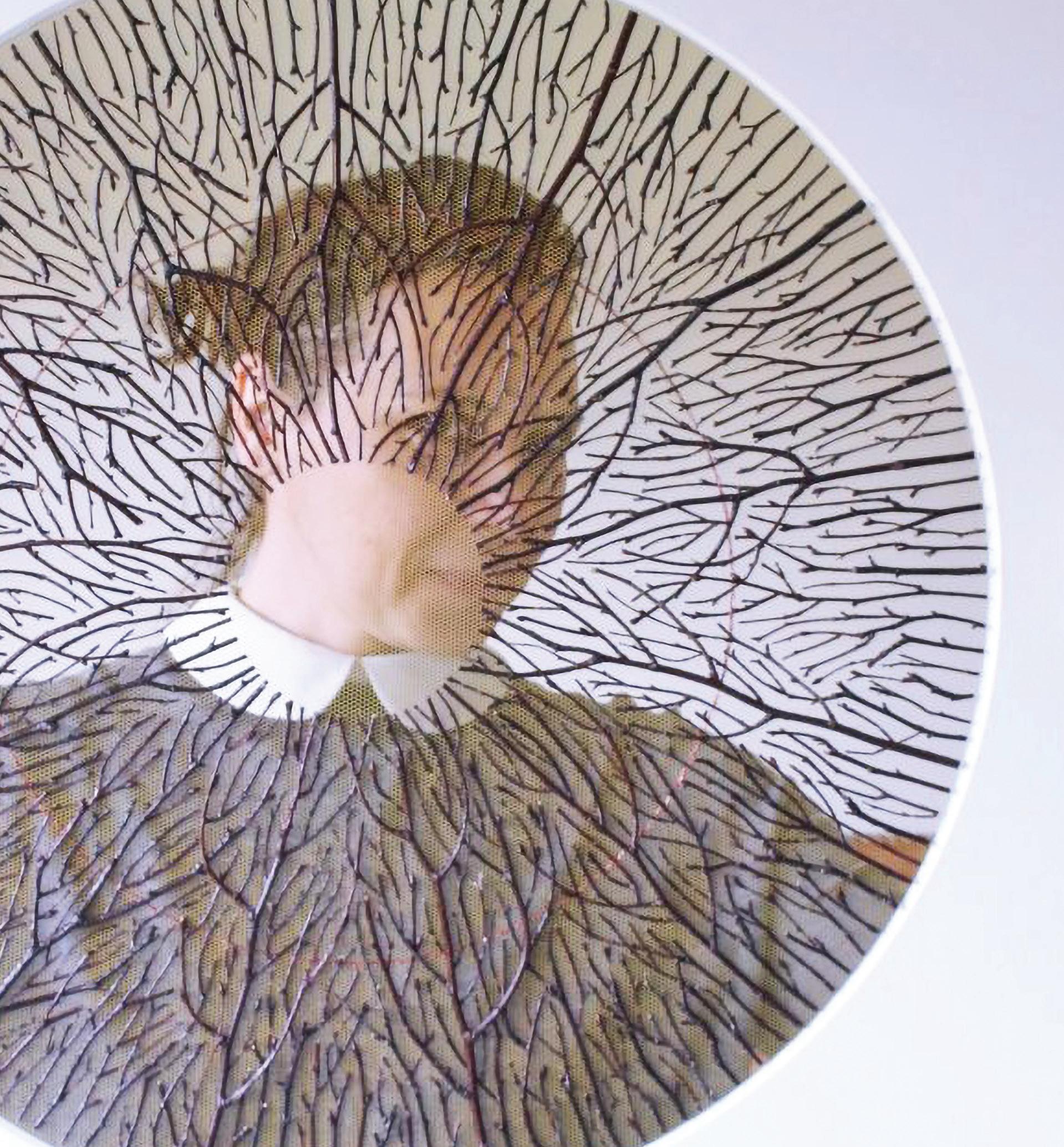
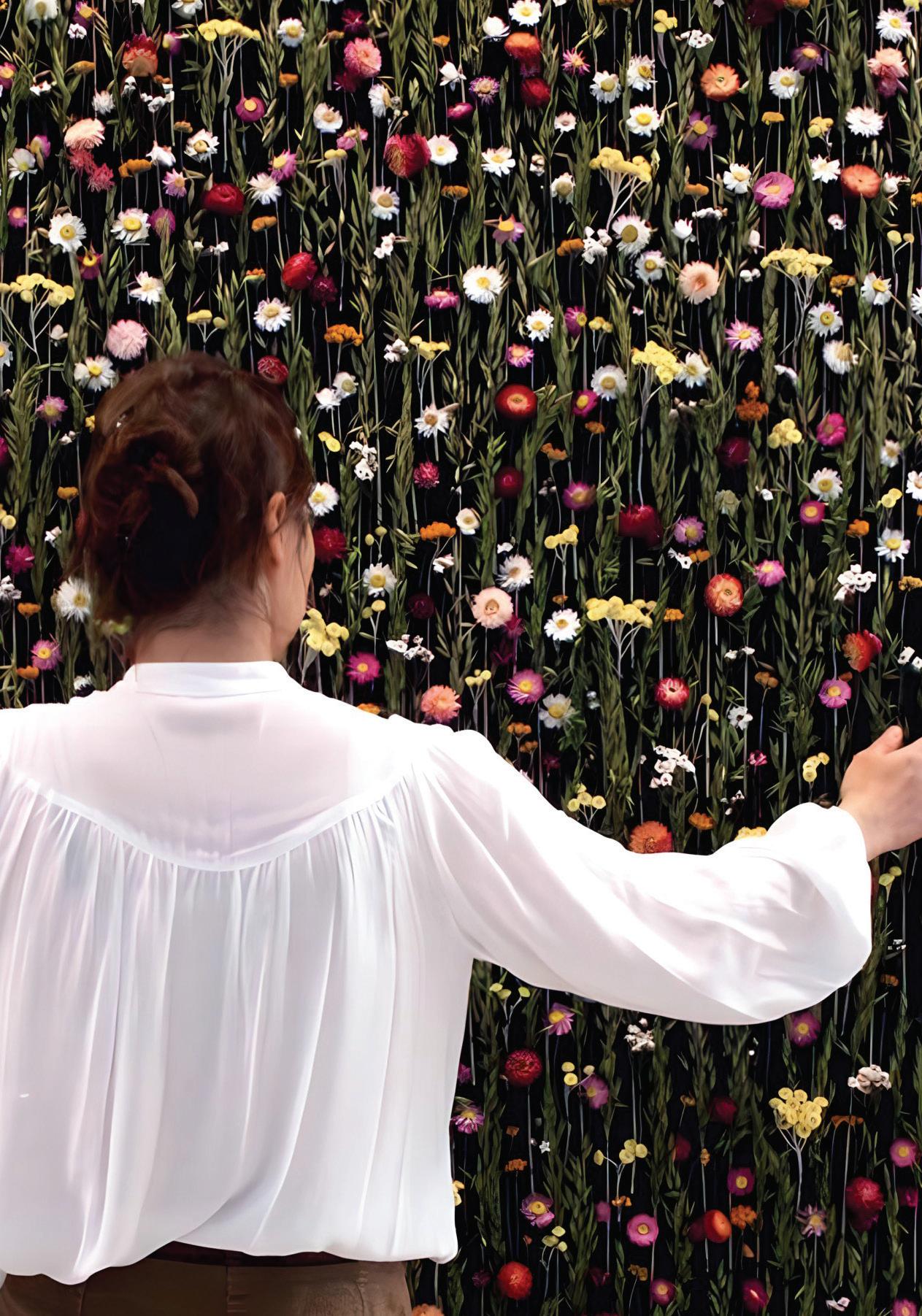
Cover: Sneak peek at the work of textile embroidery artist, Olga Prinku, one of our new QEST Clothworkers’ Company Scholars in Textiles. Read more on page 12.

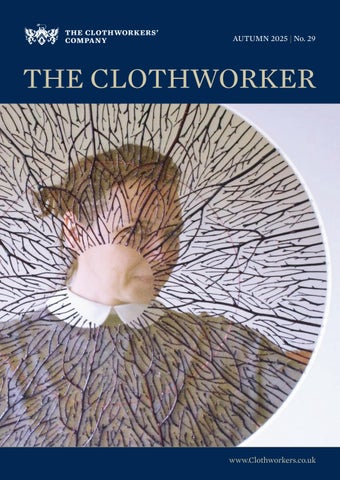
Cover: Sneak peek at the work of textile embroidery artist, Olga Prinku, one of our new QEST Clothworkers’ Company Scholars in Textiles. Read more on page 12.
By The Hon Mary Ann Slim
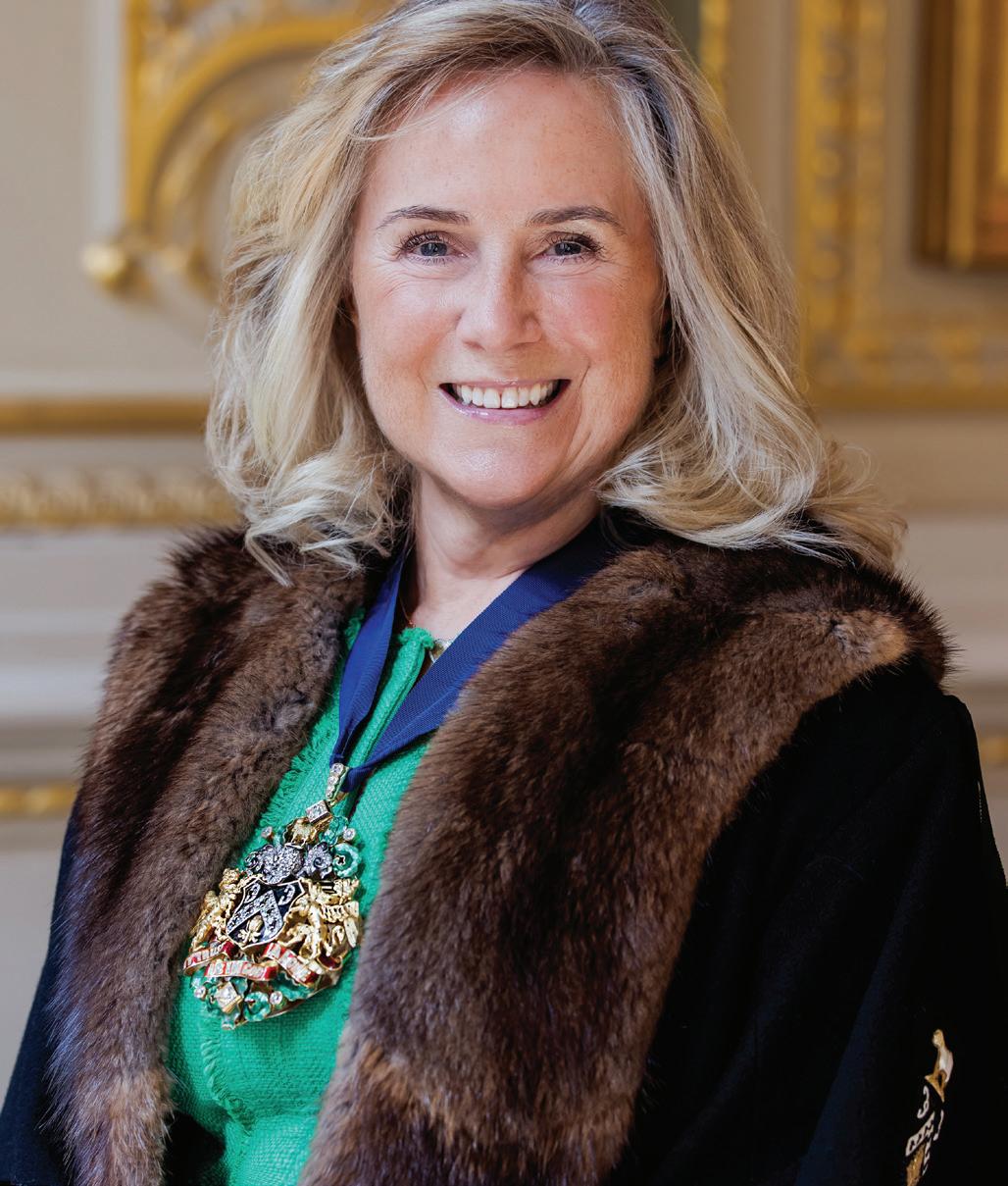
It is an honour to be elected as Master of our great Company. I am excited about the year ahead; I am sure it will go very quickly, as there is much to do! Being a third-generation Clothworker, ours is a relatively new family to The Company compared to many others that span hundreds of years. My grandfather, Bill Slim, was invited to become a Clothworker after World War II; he was elected Master in 1961-62. My father, John Slim, was elected Master in 1995-96 – exactly 30 years ago, which makes my election a full generation later. For me, this has meaning and connection as I now serve Clothworkers’ with fellow Court Assistants whose fathers served alongside mine.
During the forthcoming year, I look forward to hosting two ‘In Conversation with the Master’ virtual talks for all Members (Freedom and Livery). One will be about our connection with Leeds University and our support for the Leeds Institute of Textiles and Colour (LITAC), this is scheduled for 17 November (and invitations have been sent!). The other will be about The Clothworkers’ Foundation and its incredible work; this is scheduled for 9 March (and invitations will be sent closer to the date of the event). For me, becoming a Court Assistant has meant I have a fuller understanding and insight into the great work that both The Company and Foundation achieve. I want to open these two important areas up to the membership because there is so much to be proud of as Clothworkers, and we all need to understand what we do.
This will be a busy year for the Court as we continue to work hard on the construction of our new Hall and all that entails, which is fully encompassing. Additionally, the Court will be implementing our new strategic framework, which has been meticulously designed by the Strategy Sub-Committee (read more about this on p 4). Many thanks to Chair Hugo Robinson and all those who serve on the committee, who have worked so hard to put this in place. All this alongside what is already a full schedule of committees and workload.
I do hope to see as many as possible of my fellow Clothworkers during my year, enjoying wonderful social events together which the team (Renée, Heather, Emma, Sophia and Isabelle) so expertly create for us. A huge ‘thank you’ to all of them for their incredible hard work and consistently smiling faces.

Our annual St Thomas’ Eve Charity Appeal is influenced by our historic traditions. St Thomas’ Eve was once the day The Company distributed charity to Clothworkers in need. Today, all Members of the Freedom and Livery are invited to support a fundraising appeal for a charitable organisation chosen by the Master. This year, we are supporting the Carers Trust (registered charity no 1145181).
Master Mary Ann Slim said: ‘I have chosen Carers Trust as the St Thomas’ Eve Charity this year and very much hope you will be able to support this with whatever amount is possible to give. Like many of you, I have experienced the very real challenges of being a carer as I was a full time carer for my parents both of whom simultaneously had terminal cancer. Carers Trust do amazing work supporting carers who dedicate their lives to caring for a loved one which is an all encompassing role ... It is a privilege to care for someone you love but it comes at a high cost to the
carers so it is essential the carers are valued and supported. Thank you in advance for any amount you are able to give to this amazing charity.’
Carers Trust is dedicated to improving the lives of unpaid carers across the UK. An unpaid carer is anyone providing unpaid support to a family member or friend with an illness, disability, mental health issue, or addiction.
The Trust works with more than 130 local carer organisations across England, Wales and Scotland to provide funding, support, and innovative programmes while raising awareness and influencing policy.
An estimated seven million people in the UK are currently unpaid carers, and 3 in 5 of us will become one at some point. Caring can significantly impact health, finances, and life opportunities. Carers face growing financial insecurity – more than 40 per cent have had to give up paid work, one in four reports cutting back
on food, and nearly two-thirds are worried about affording energy bills.
The funds raised this St Thomas’ Eve will help the Trust deliver its critical mission and transform the lives of unpaid carers through its Carer Funds grant programme, which supports carers through the difficult financial situations they often find themselves in by providing urgent funds to carers aged 16+ for costs associated with household items, self-care breaks, courses, digital equipment, transport, and more.
Donations of any size will be gratefully received, and all contributions will be match-funded by The Clothworkers’ Company. Together, we are doubling the value of your gift and maximising the impact of Members’ donations.

Use the QR code to make an online donation via our easy and secure JustGiving page.
By Hugo Robinson, Court Assistant and Chair of the Strategy Sub-Committee

In her message, the Master announced to Members that the Court, with input from the senior management team, has spent the past 18 months completing a review of our Company strategy. We are pleased to introduce the outline of our new strategic framework, which will set the direction of The Clothworkers’ Company as we move towards the significant milestones of our 500th anniversary and the opening of our new Hall.
This framework, which is published in full in the Members’ Area of the website, is anchored around five pillars:
1. Promoting Charitable Activity and Philanthropy;
2. Our Support for Textiles;
3. Our Civic role as a City of London Livery Company;
4. Our Identity as a Perpetual Organisation; and
5. Our Membership.
Within each of these pillars, the framework sets out both the range and breadth of The Company’s activities, as well as a series of guidelines for those activities. Although we expect certain of those guidelines to evolve, we think they should be applicable for the medium- to long-term.
Following adoption of the framework, the Court of Assistants has also considered how our existing governance structures marry up against these pillars, and decided that those structures should evolve to the point where, ultimately, each pillar will have a dedicated committee member and Court Assistant as Pillar Lead. We expect that they, in conjunction with the senior management team and the committee members, will spend the next year developing a strategic plan for each pillar (to be approved by the Court).
It is expected that The Company’s Superintendence Committee, which has historically been responsible for all matters other than finance and property, will evolve into a ‘committee of chairs’, with a focus on coordinating across pillars and with more bandwidth to consider key strategic matters like: How should we operate our new Hall?
As well as aligning our structures more effectively with our strategy, we expect that over time these changes will allow us to operate more
efficiently and reduce the workload on our staff and Members. That said, we are very conscious that Members and staff have and will continue to expend considerable time and effort in defining and implementing this new strategic framework. I would like, on behalf of the Strategy SubCommittee, to thank all those who have contributed so far.
We are also conscious that we won’t get everything right the first time, and would like to encourage any Clothworkers to provide their feedback as we continue to evolve and improve into the second half of our first millennium.
A summary of the Company Strategy is in the ‘Membership Information’ section of the new Members’ Portal (find it under ‘Governance > Governing Documents’). You can speak to Court Assistants and members of the staff team at any Clothworkers’ event, asking questions and giving your feedback. Get to know members of the Court, and of all our committees, by exploring the ‘Committees’ section of the new Members’ Portal.

By The Clothworkers’ Company Chaplain and Rector of St Olave Hart Street
It is a great honour to serve as your new Chaplain. Thank you for the warm welcome and for everything you do as Clothworkers to support so many people. Past Master Samuel Pepys famously referred to St Olave Hart Street as ‘our own church.’ I hope you feel the same way – or that you will soon.
Most of my working life to date has been as a Director of a firm of architects. Projects ranged from hostels for the homeless to university buildings and the refit of many offices in EC3 over the years – so I am now retreading my own footsteps as well as those of our forebears! A key part of our work was to create spaces to bring people together. Not unlike the mission of The Clothworkers’ Company and our church.
My other half and I now own (and he runs) a built environment PR consultancy, supporting developers to engage with politicians and planners. We are celebrating our 22nd anniversary together this year, and the fact personal and business life run in parallel (and so smoothly!) is entirely down to Henry’s supreme patience. We moved into central London from the ’burbs some years ago to make the most of city life.
I served as board member of a housing association, various charities and
schools while also training as a priest. I assisted at St Stephen Walbrook near Mansion House, where we launched services for early morning commuters as well as Rush Hour Jazz to lift spirits on the way home. The church is a space for joyous celebration as well as serious reflection.
Since ordination, I have been based at St Giles-in-the-Fields in the West End, where ministry includes coordinating support to the homeless and leading history walks around the parish tailored to groups from different businesses. It is a privilege to help show how our lives are woven together with the story of a place – its past, present and future.
Betjeman called St Olave’s ‘a country church in the world of Seething Lane’, which appeals to my West Country roots.
During my formative years in Dorset, I met priests who made it their business to meet everyone in the community and to be available to all. I hope to do the same. I have fond memories of singing in Sherborne Abbey while at school. We have launched a new service of Choral Evensong at St Olave; please join us if you can.
Dedicated to a swashbuckling viking who brought London Bridge falling down (inspiring both the nursery rhyme and the building of our church), Olaf the warrior king became a saint associated with healing (an Icelandic bard records the first healing miracle at the church in the 12th century). St Olave’s is a space in which life in all its joyous complexity and diversity can find expression – and to which you and all those you love are always welcome. Thanks be to God.

Please contact me if you would like a tour of the church, have an idea for a special event or service, would appreciate a listening ear about work, family, faith or life in general – or if you or someone you know would like to be remembered in our prayers (Rector@ SaintOlave.com).
St Olave Hart Street holds Sunday worship at 11.00 am. Lunchtime concerts are held on Wednesdays and Thursdays (1.00 pm). Choral Evensong takes place on every second Tuesday of the month (5.30 pm), with refreshments served after the service.
Find out more at www.SaintOlave.com.
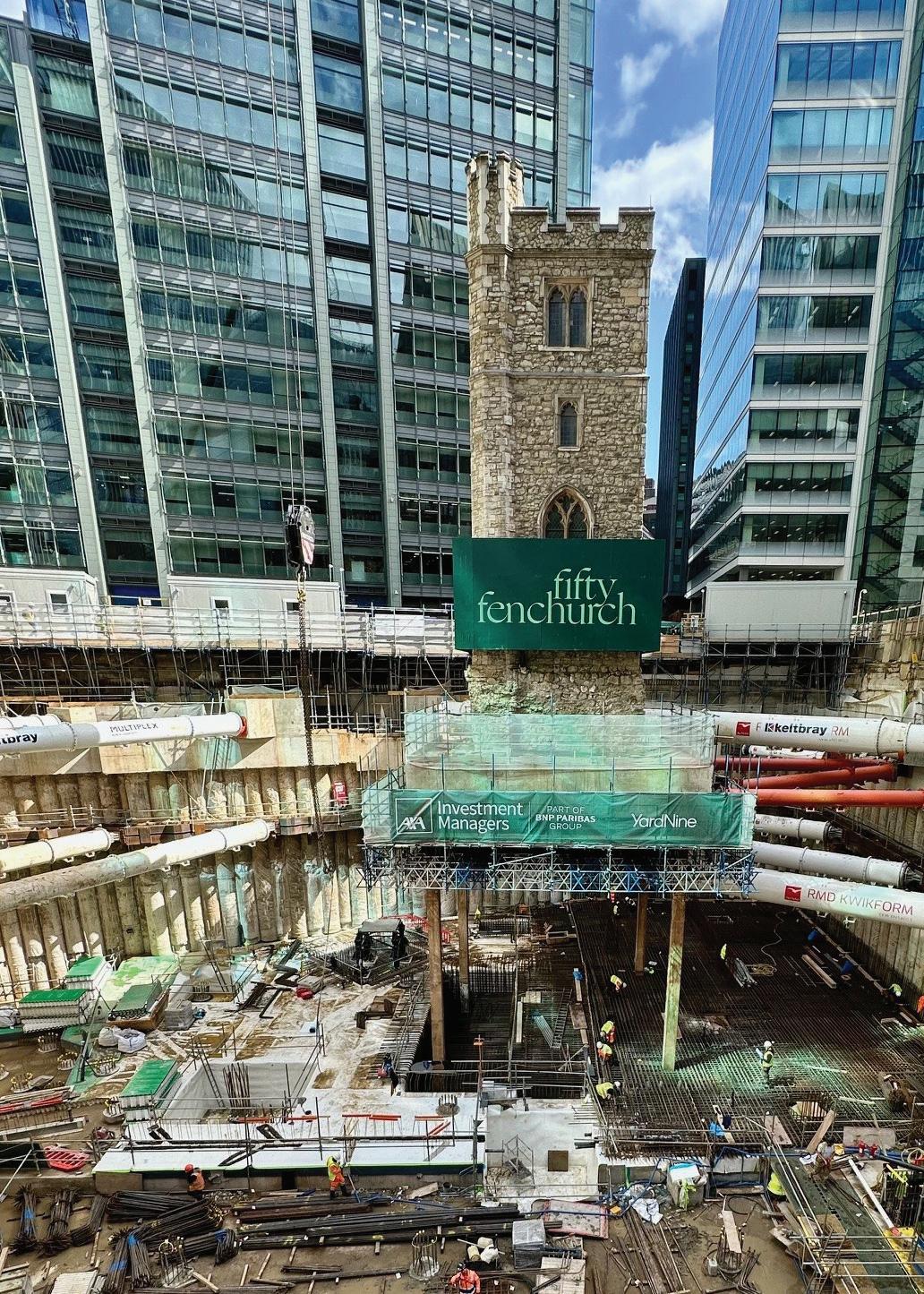


This past September, our 50 Fenchurch Street project was featured on BBC London. Reporter Wendy Hurrell donned a hard hat to visit the site, inspired by Construction Influencer Fred Mills, who covered the project in his YouTube series. Use the QR code below to watch the video!
The piece focused on the incredible feat of engineering that achieved the temporary suspension of the Grade1-listed, 700-year-old Tower of All Hallows Staining. Teams excavated approximately 60,000 sq ft, digging 12 metres below the historic tower to prepare the three-story basement and begin building the shell of the commercial tower and new Clothworkers’ Hall.
In addition to delivering a new home for The Clothworkers’ Company, 50 Fenchurch Street will include 78,000 sq m of premium office space, with sustainability and innovation at its core. The 36-storey tower will incorporate vertical urban greening on the facade, and achieve a BREEAM Outstanding rating. With the public
roof garden at level 10 and new public gardens, the project will also give the City 1,500 sq m of new public realm.
The restored medieval tower, which survived the Great Fire of London and the Blitz, will be at the heart of the new public realm – showcasing how architecture and engineering can be deployed to safeguard heritage while shaping a new landscape for our future Square Mile. As Fred Mills said, ‘It’s not just a city. You’re building in a museum. You’re building in an archeological site that dates back at least 2,000 years ... but you’re also building in one of the world’s biggest and most thriving financial hubs. For me, it’s what makes London so awesome, and so unique.’
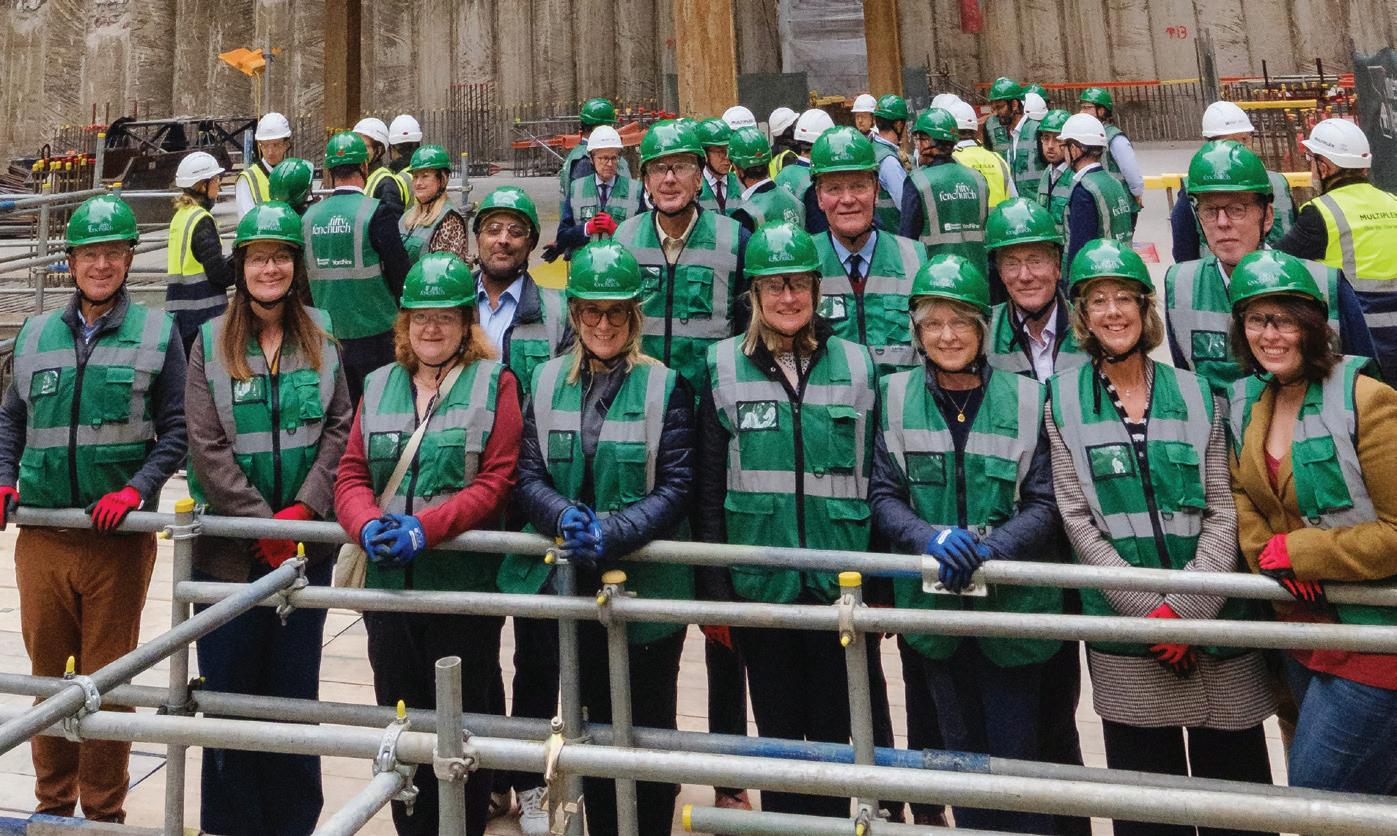
On 28 September, a group of Clothworkers, including members of the Court of Assistants and Hall Design Working Group, attended a ‘Bottoming Out’ ceremony at the site. In addition to marvelling at the tower suspended above them, they also walked across the first layer of concrete, symbolising the next stage of development: building the commercial tower and livery hall!
By Archivist Emma Bashforth
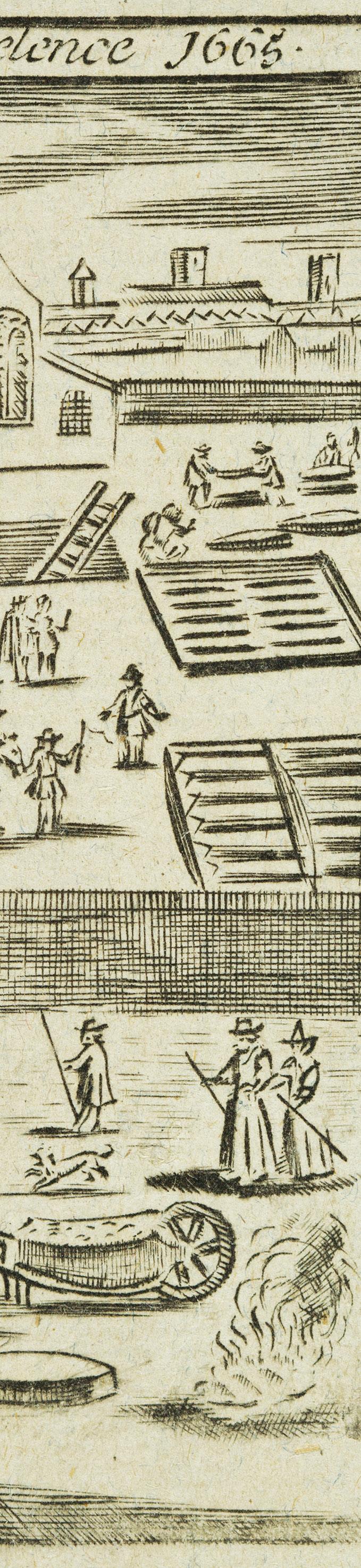
This year marks the 360th anniversary of the onset of the Great Plague of London, an outbreak of bubonic plague that reduced the population of the City by almost a quarter. In 1665 alone, the Bills of Mortality recorded 68,747 plague deaths, but by the end of the epidemic in 1666, death rates were estimated at 100,000.
Although the first casualty was recorded in December 1664, it was not until late spring 1665 that the epidemic took hold, with the highest death toll experienced in the summer months. Mortality rates increased from 590 deaths in June to 4,127 deaths in July. Those who were able to, fled the City, and contemporary calculations by John Graunt suggested that 200,000 residents (40 per cent of the population of London) sought refuge in the countryside. The epidemic peaked at the end of September, when 26,230 deaths were recorded for this month alone. By December,
the situation had greatly improved, prompting Samuel Pepys to write in his diary ‘that the plague is abated almost to nothing.’
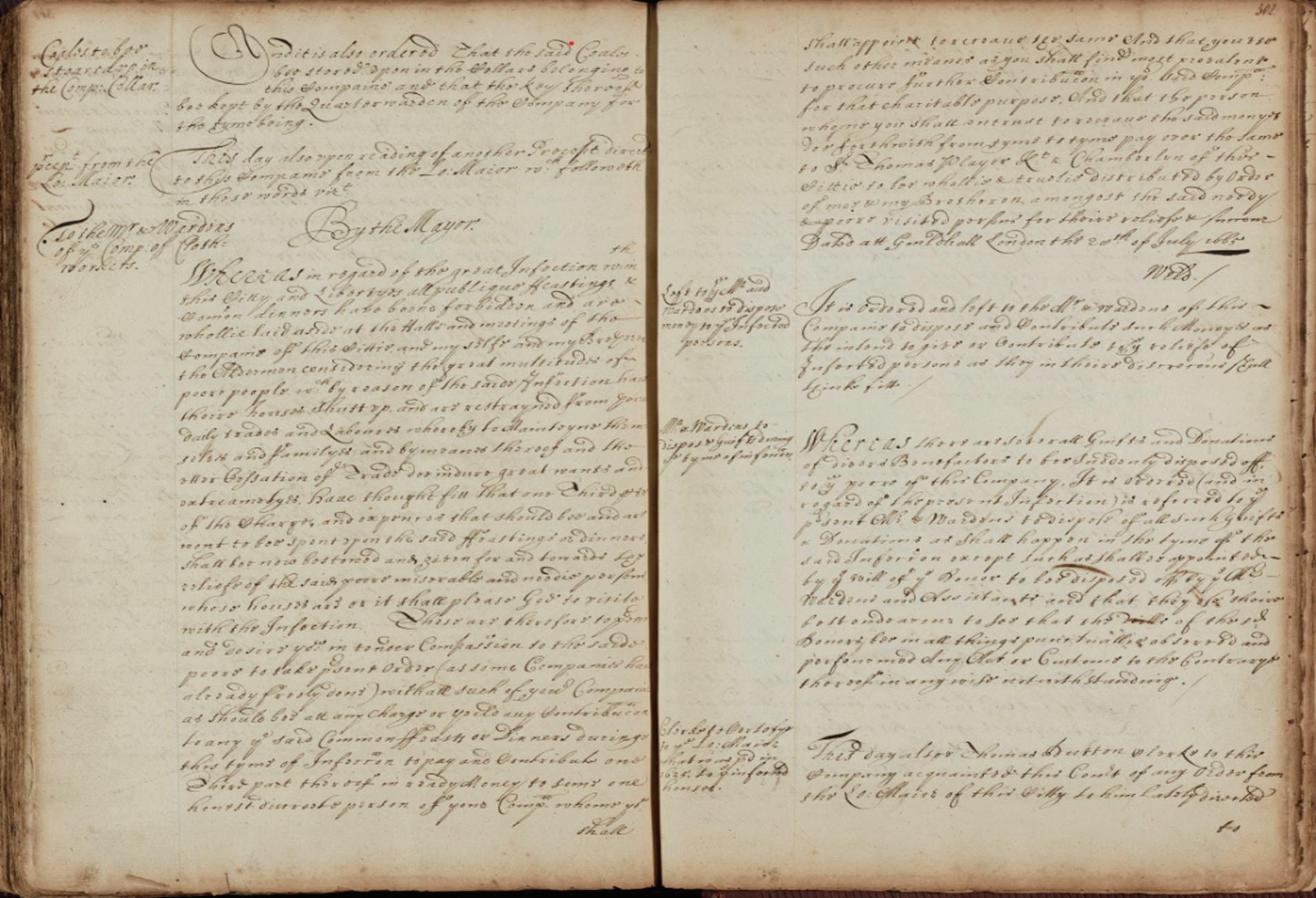
The disruption caused to daily life is evident within The Clothworkers’ Company archives. A precept from the Lord Mayor on 28 July 1665, copied into the pages of the Court Orders, describes measures to curb the epidemic and help the remaining residents. Firstly, ‘publique Feastings and Com’on dinners’ were forbidden, as were meetings ‘of the Companie of this Cittie ... ’ (see Figure 1, below).
It was ordered that one third of the expenses used for these festivities were redirected to the many poor who were shut up in their houses, unable to trade or make a living. The suffering was such that the livery companies were encouraged to make further efforts to increase and distribute charitable donations.
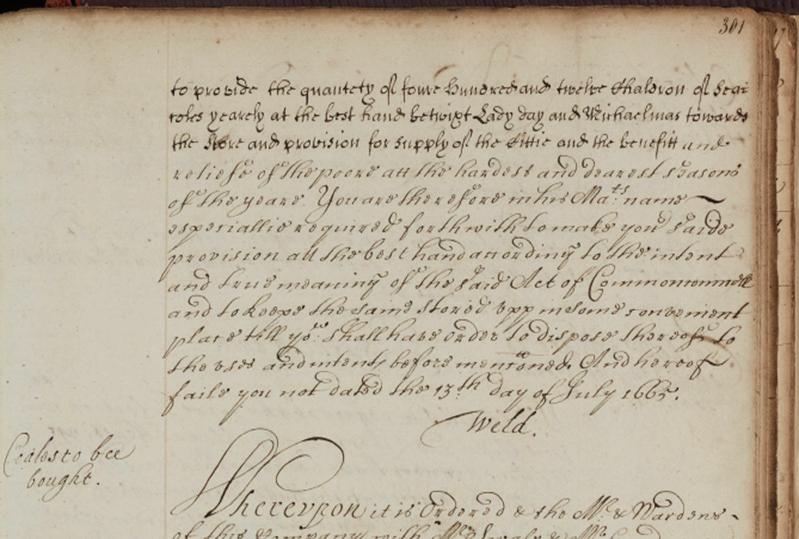
Despite the disruption caused by the epidemic, the Court Orders remained continuous throughout 1665 and 1666, mainly noting concern for the poor of the City. However, there is one intriguing interruption to the record keeping on 8 August that suggests the epidemic had infiltrated Company life. Half way through a sentence (after the top three lines of writing), the hand of the scribe stops (dead?) and is replaced by another (see Figure 2, above). It has been speculated that this individual might have become a casualty of the plague whilst working on the pages of this volume.
Under these conditions, it is difficult to imagine how many aspects of daily life could have continued. Certainly, when considering the binding of apprentices, there were none bound between August and October 1665. Yet, during July, nine youths became apprenctices at a time when many residents were fleeing the City.
In November and December, two apprentices were once again taking a risk and making their way to the City, which was still under the shadow of the plague. Records demonstrate that apprentices remained willing to travel long distances during this period. London’s migratory field remained as wide as in more prosperous times, stretching as far as Wales and Westmorland. Whether these individuals were unaware of the severity of the situation in London, or whether they were simply committed to their travel plans is unknown. Only two of the cohort originated from London, perhaps indicating that much of the local apprentice stock had fled.
The occupation of both the master and the apprentice’s father provides an indication of the status of these individuals or the necessity of their trade during these times. Apprenticeship entries did not record a significant representation
of wealthy merchants or gentry amongst the fathers or masters; individuals were more likely to be bakers, shoemakers, tallow chandlers or other vital trades. This conforms with the understanding that it was the poorer residents who could not afford to flee, or those who supplied essential goods who continued to pursue these opportunities at the time.
Despite starting their apprenticeships under the most challenging of circumstances, four of these 11 apprentices prospered in their training and eventually became Free of The Clothworkers’ Company.
Furthermore, the epidemic did not interrupt the length of these apprenticeships; the four apprentices who became Free were bound for seven years, and all completed within that time.
One reason that explains why the apprentices were enrolled at an unlikely time is that they were already resident with the master, and this helped establish the apprenticeship before the epidemic took hold. Two of the apprentices bound on 4 July 1665 were already with their masters: John Markham, from Bedfordshire, started his term on 26 June, and John Enniver, from Essex, had been with his master since 1 May 1665.
However, some apprentices braved the move into the City during more perilous times, and on 29 September, at the height of the epidemic, John Round from Kent did just this. It was not until 26 February 1666 that he was finally enrolled. Despite this unlikely start, his apprenticeship was successful, and Round became Free of The Clothworkers’ Company in 1673.
This examination of just a
small sample of documents, has reiterated and reinforced the well-researched devastation that the Great Plague caused. The Court Orders not only reveal the disruption within Company life, but through continuity during these months, they demonstrate that Company activities did not cease completely. However, it is only by delving further into the lives of a handful of apprentices and Freemen, that we catch a glimpse of how life within the community could sometimes carry on, even during the bleakest of times.
Emma Bashforth is an Archivist at The Clothworkers’ Company and a PhD student at the Institute of Historical Research, University of London. Her area of research is apprenticeship in early modern London during times of crisis.
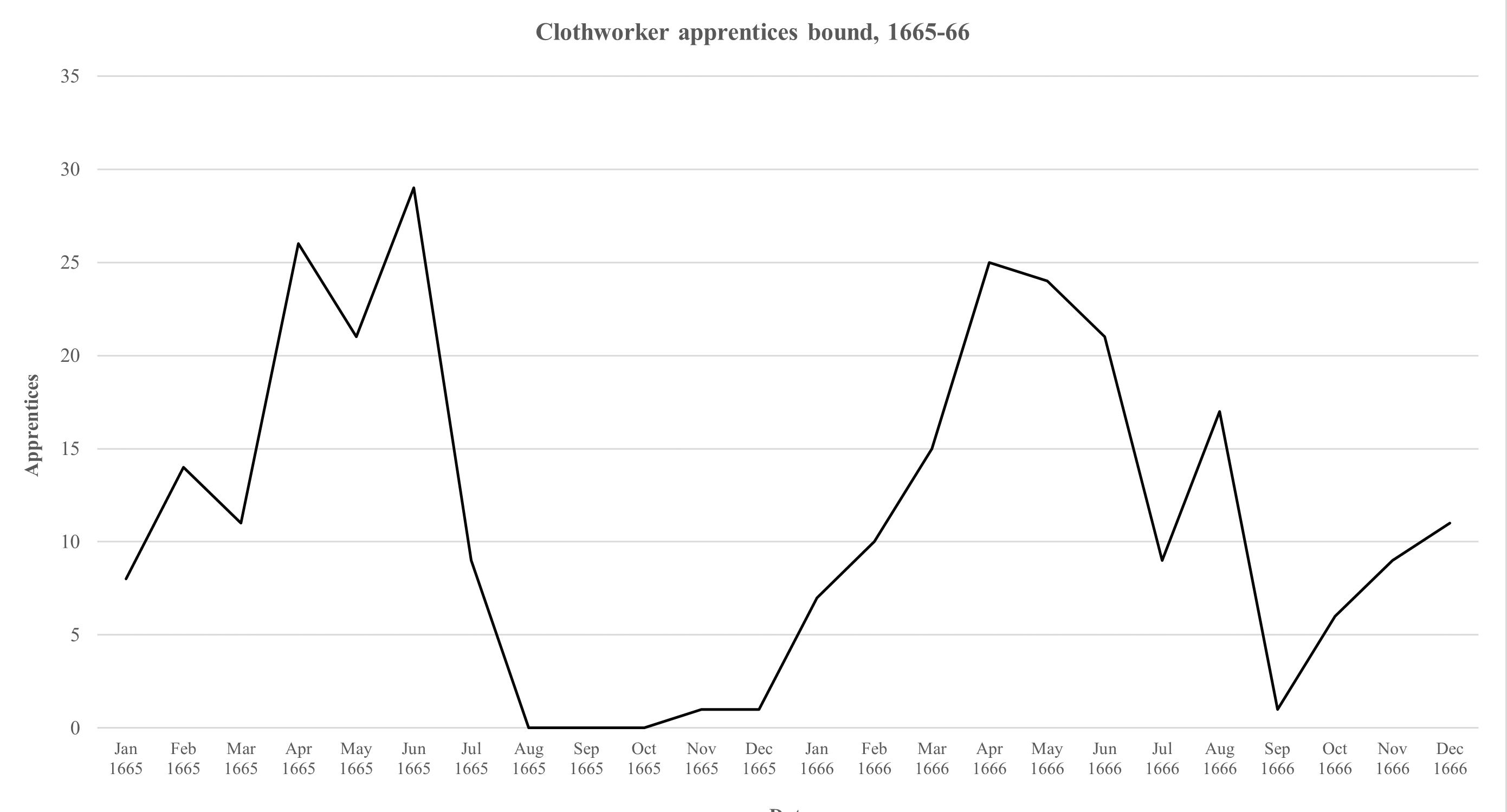
Above: Graph charting apprenticeships at The Clothworkers’ Company from January 1665 to December 1666. Source: ROLLCO (Records of London’s Livery Companies Online). Find out more at www.LondonRoll.org.
“How empty the streets are and melancholy ... ”
The plague emptied London’s streets. On 16 August 1665, Samuel Pepys wrote in his diary: “Two shops in three, if not more, [are] shut up.”
Later in the year, on 16 October, he laments the eerie desolation of the City: “But, Lord! How empty the streets are and melancholy, so many poor sick people in the streets full of sores; and so many sad stories overheard as I walk, everybody talking of this dead, and that man sick … And they tell me that, in Westminster, there is never a physician and but one apothecary left, all being dead.”
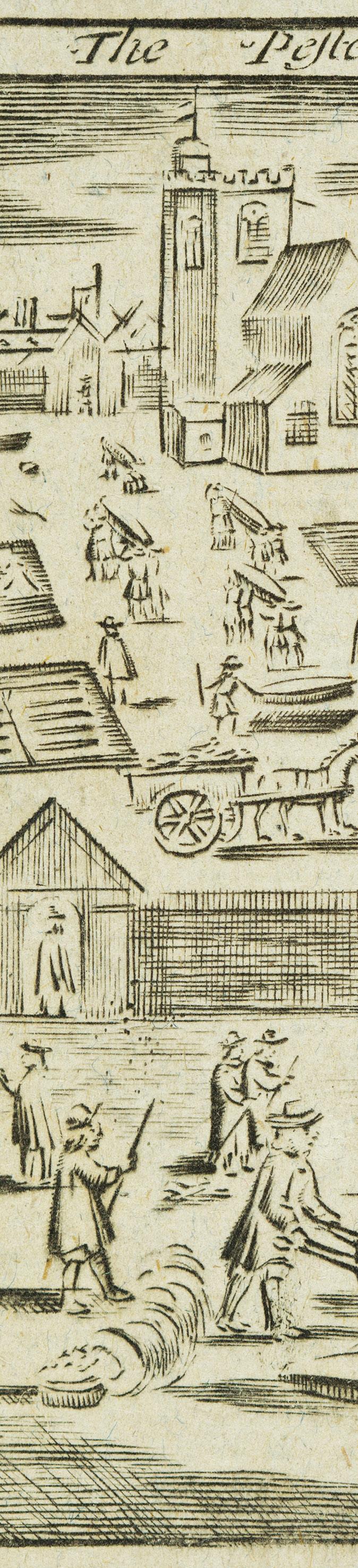
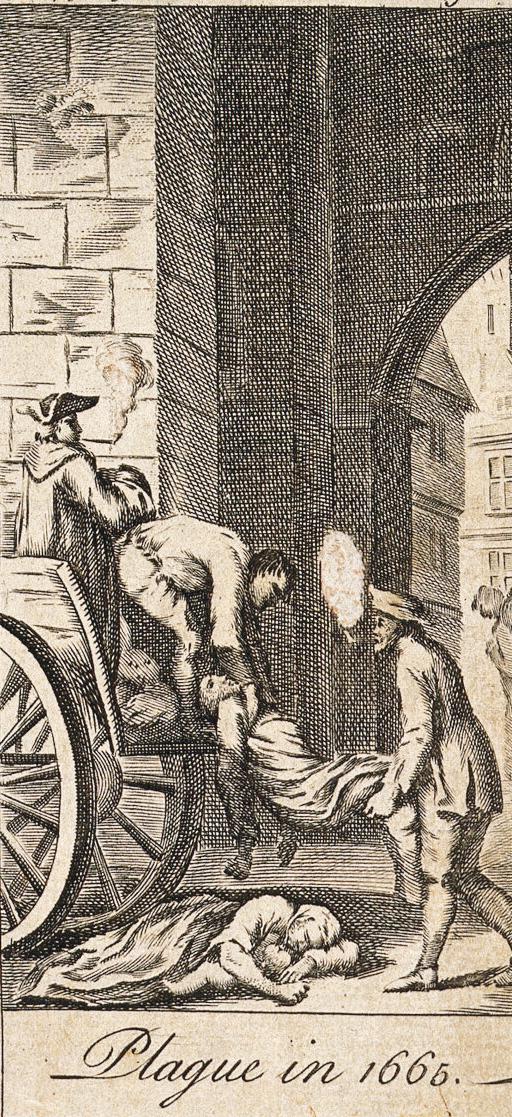
‘Victims of the plague in 1665 being lifted on to death carts.’ Engraving by N. Parr, 1747, after S. Wale. Image courtesy of the Wellcome Collection.
Embroidery
Artist Olga Prinku and Textile Conservator Ho-yin Man
For 35 years, (since 1990), the Queen Elizabeth Scholarship Trust, known as QEST, has awarded in excess of £7 million to nearly 900 craftspeople working within 130 different craft disciplines. At the end of last year, QEST announced 19 new grant recipients – including 11 Scholars, five Emerging Makers, and three Apprentices who will now be able to use the funding to further their education and training in craft and conservation skills. This new generation of talent includes Olga Prinku and Ho-yin Man, who have both received a QEST Clothworkers’ Company Scholar grant to further their work in textiles.
Olga is a Yorkshire-based embroidery artist working with organic materials. She is the originator of a unique craft: flowers-on-tulle embroidery. With QEST support, she will train in traditional gilding at West Dean College, couture tambour beading
with Hand & Lock, and embroidery techniques at the prestigious École Lesage in Paris. These techniques will support Olga’s ongoing experimentation with natural materials and expand the artistic language of her practice.
“I’m immensely grateful.”
“The [grant] will enable me to learn a range of new skills and explore some ideas I’ve been dreaming up to take my practice to the next level. I’m very excited to share what I learn as I go along ... I’m proud to be the QEST Clothworkers’ Company Scholar!”
~ Olga Prinku
Originally trained as a graphic designer, Olga began working with
botanical materials in 2016, evolving her distinctive method through extensive testing and creative curiosity. Her work incorporates dried flowers, preserved foliage, seedheads, grasses and berries that are carefully woven or stitched onto net fabric. This innovative technique blends the fragility of nature with the precision of embroidery, reimagining a centuriesold craft for modern use.
She describes her approach as ‘both homage and inquiry – honouring the beauty and strength of the natural world while reflecting on our relationship with it. Each piece is a meditation on growth, fragility and transformation, and the creative human capacity to shape meaning with the simplest of materials’.
She has exhibited internationally, published Dried Flower Embroidery (2021), and was a finalist for the QEST Sanderson Rising Star Award in 2024. Upon receiving the QEST Clothworkers’ Scholar grant, she said
Use the QR code to find out more about Olga on the QEST website.
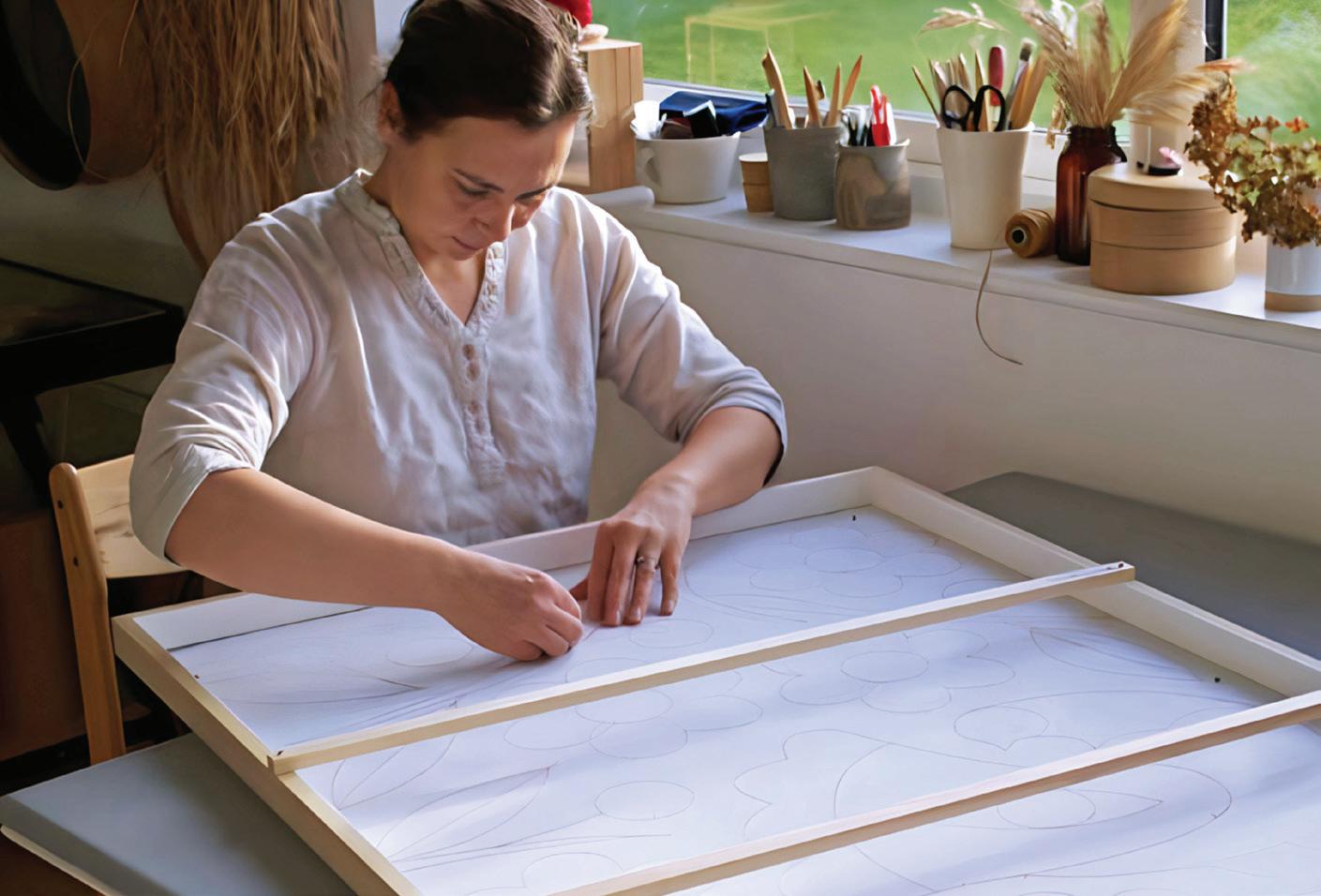

she was ‘immensely grateful’ for ‘the opportunity to train in techniques that will help [her] to develop new ideas and take [her] practice to the next level.’
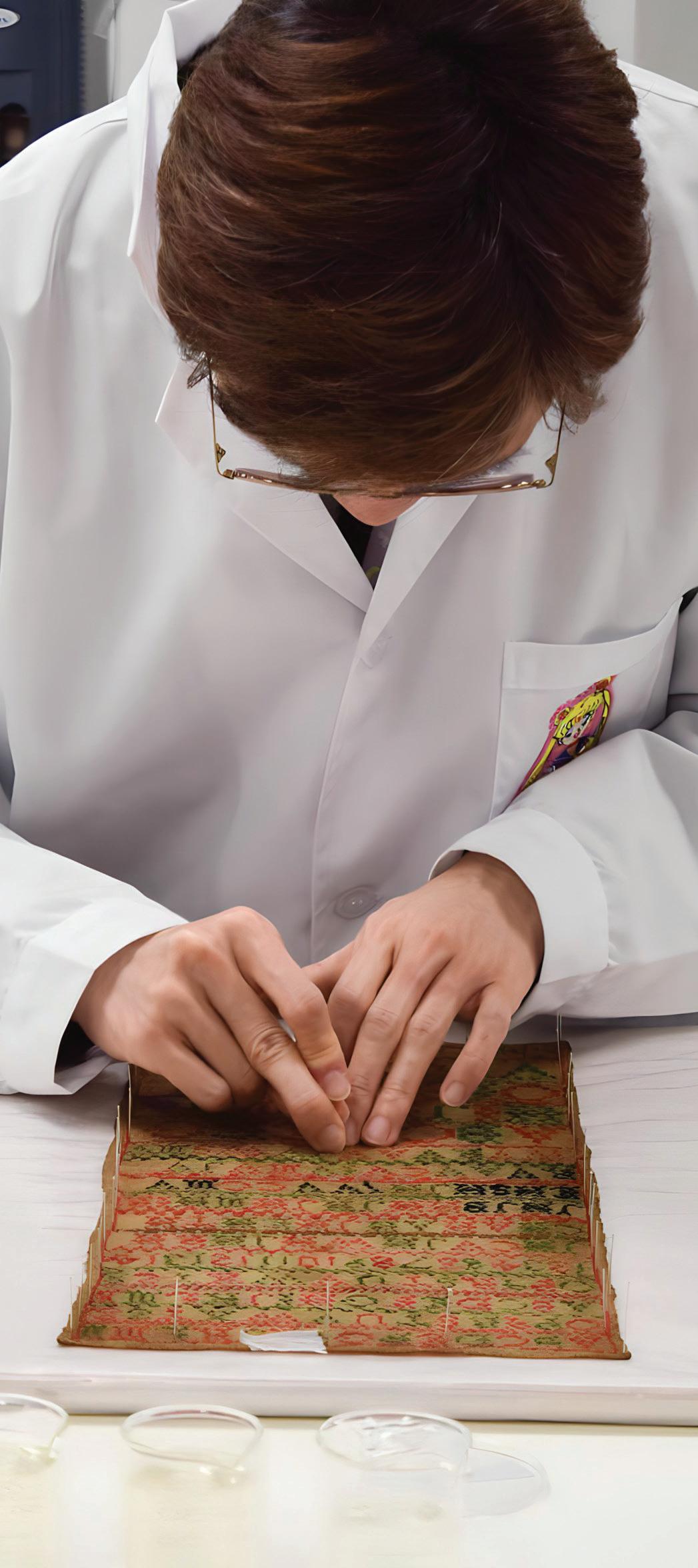
Ho-yin Man, who goes by ‘Hofi’, is a textile conservator, artist and designer. His work explores the emotional and historical value of clothing. With QEST’s support, Hofi is continuing his MPhil in Textile Conservation at the University of Glasgow, a highly specialised course combining science, craftsmanship and cultural research.
Originally trained in fashion and visual arts, he has worked across disciplines including design, costume, styling, editorial and teaching. Over time, his focus has shifted towards the care and study of historic dress, driven by a desire to protect the stories and knowledge embedded in textiles.
His artistic practice uses clothing to reflect memory and intimacy, while his academic writing considers how everyday objects hold meaning and shape human experience. Hofi’s work has been shown internationally, from Hong Kong and Japan to Germany and the US. Born and raised in Hong Kong, Man holds degrees from institutions in Hong Kong, the UK and the US. Now based in Glasgow, he is committed to the long-term future of textile conservation in the UK and to widening understanding of its cultural importance.
In an interview with QEST, Hofi explains how clothing — no matter how mundane — holds ‘an earnest beauty through the memories quietly embedded within them’. Hofi discusses his journey as a conservator, and what his work means to him. Including how he not only mends garments but also time, stitching together his
reminiscence of the past with the excitement of his evolving career.
In 2024, The Clothworkers’ Company renewed its support for QEST with a commitment of £132,000 (over three years) to help fund QEST Apprentices, Emerging Makers and Scholars focused on textile disciplines. The first Clothworkers’ Scholar to benefit from this round of funding was couture kiltmaker Andrea Chappell. Look back at Issue 28 of this magazine for more information on Andrea and her work. Watch this space for news of our first QEST Apprentice.
Previously, The Company provided support to QEST to fund programmes for bookbinding. Find out more about the Queen Elizabeth Scholarship Trust, and the amazing craftspeople it supports, at www.QEST.org.uk.

“Every dress tells a story.”
“They may be considered small and insignificant; however, these are the lives I wish to nurture and cherish with all my heart.”
~ Ho-yin Man
Use the QR code to read an interview with Hofi on his work and inspiration.

for display.
textiles sampler.
Images are courtesy of the Museum of Childhood and QEST.
Clothworkers’ Printed Textile Design Associate Prize
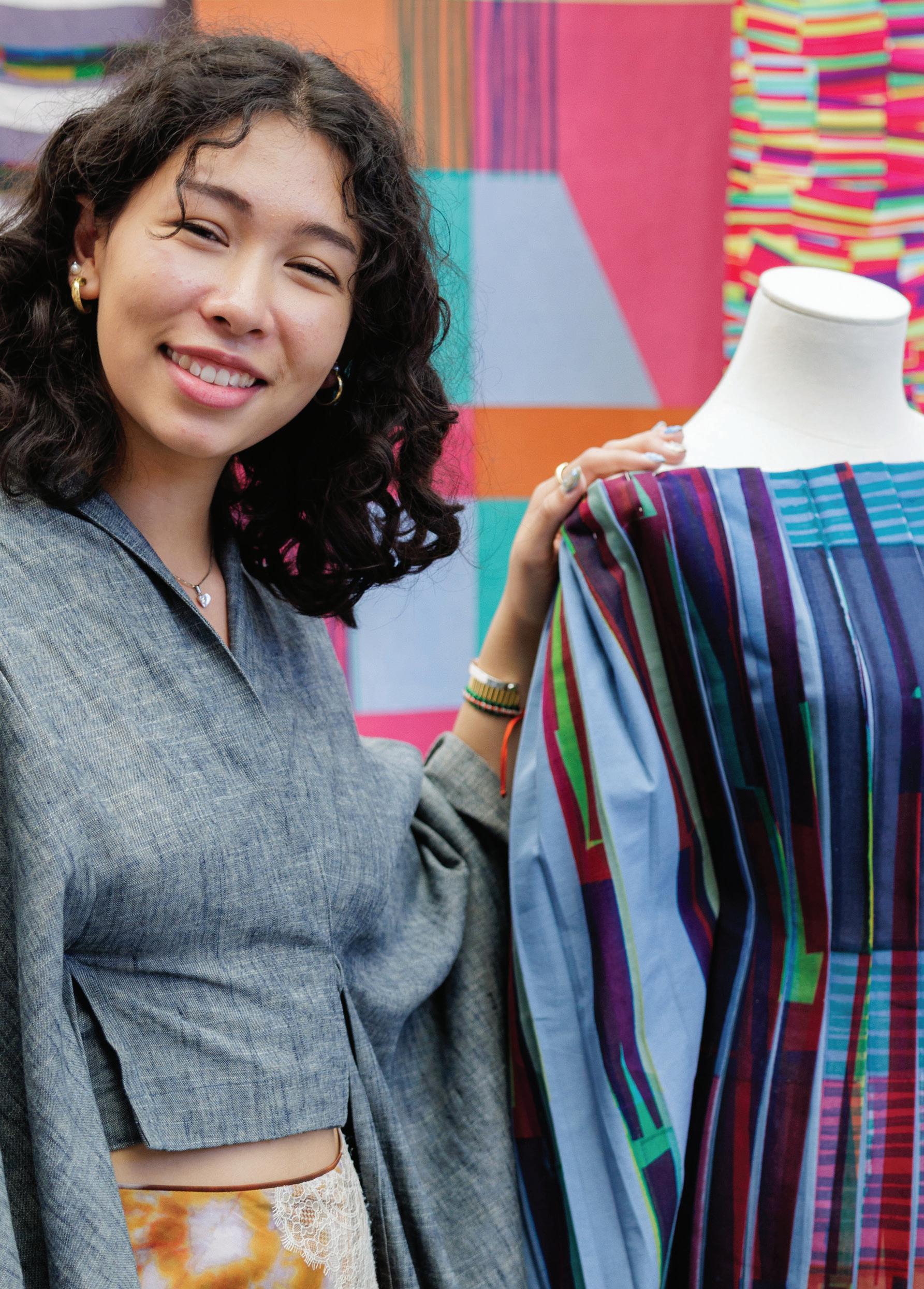
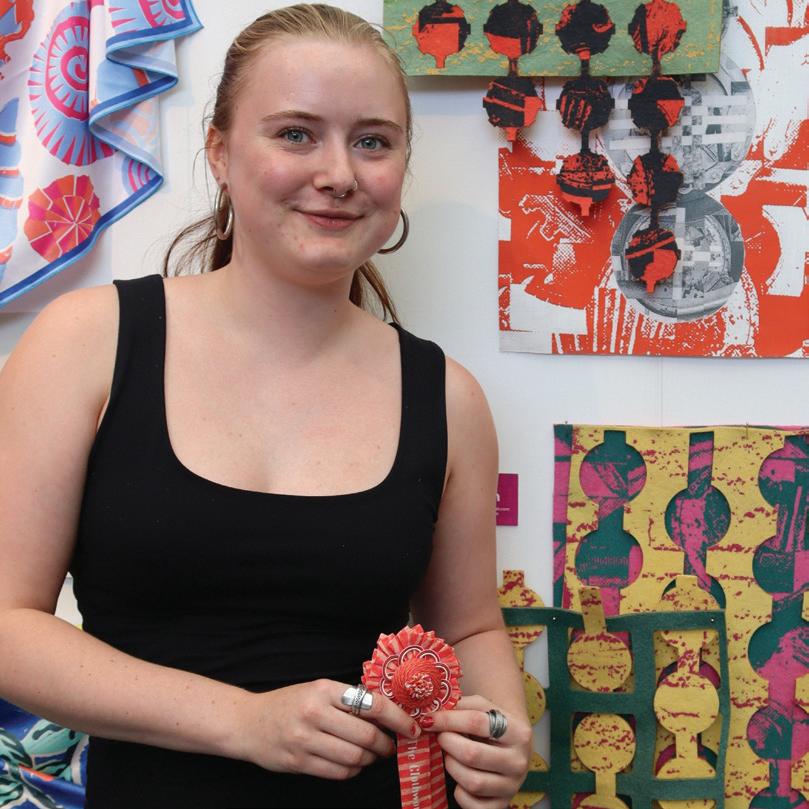
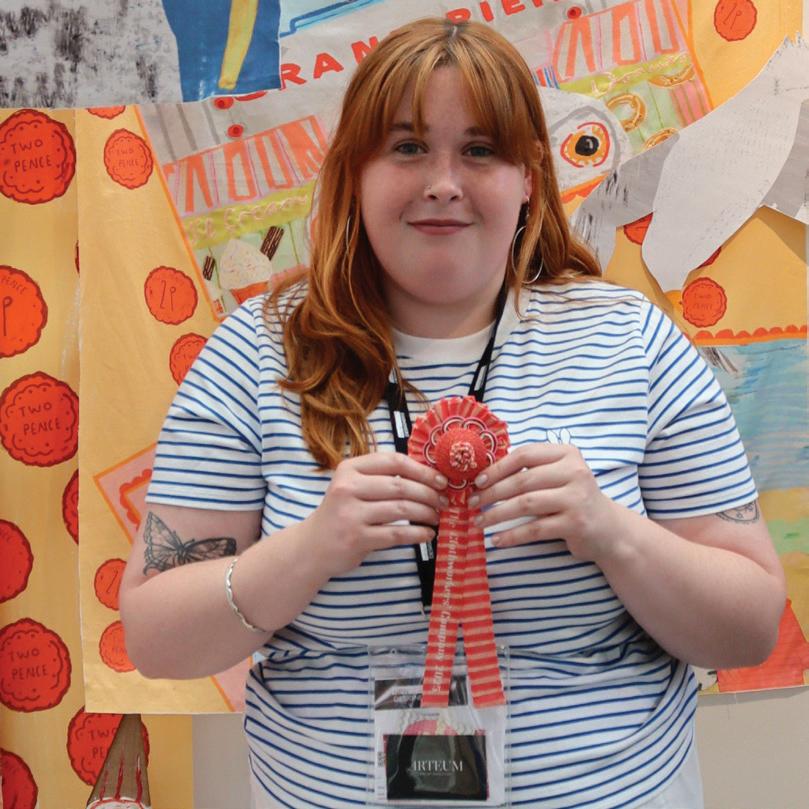
During the first week of the annual New Designers exhibition and award show in June, Clothworker judges Emily May and Claire Whelan awarded the Clothworkers’ Printed Textile Design Associate Prize to Innes GourlayNoor, a recent graduate from the BDes (Hons) Textile Design programme at Duncan of Jordanstone College of Art & Design (University of Dundee).
Innes reflected on her dual Scottish and Malaysian heritage with her screen-printed textile submission. ‘Create Something That Lasts’ is focused on the meeting of cultures, where east meets west, by highlighting the importance of cultural textiles and the history that has been handed down to us in cloth. Innes’ work interlaces personal history and cross-cultural storytelling, inviting dialogue around belonging and tradition.
Growing up in Scotland, the designer struggled to find other mixed children that had the same experience growing up in a mainly white country. It was only once she became a teenager that she got more exposure to content from people that had experienced the same feeling of never belonging.
Georgian architecture of Edinburgh and the compressed food and night markets of Kuala Lumpur. ‘Create Something That Lasts’ was designed with longevity in mind, which will outlive fast fashion trends. Interweaving identity into cloth through the use of plisse and hand screen printing, Innes combined elements of the Scottish kilt and South-east Asian sarong, modernising these garments for utility and ease of movement and layering.
Clothworker judges Emily May and Claire Whelan were impressed by the combination of Innes’ personality, use of colour and original outcome represented by her work. It clearly communicated her passion and ambition for textiles design.
The award included a £1,750 cash prize, and Innes will be invited to our annual Alumni and Student Networking Dinner next spring. You can follow her on Instagram, @SimplyInnes , and you can take a look at her work on the New Designers website.
In addition to presenting the main prize, our judges also recognised exceptional work by awarding ‘Love

themselves were unique works of art created by Clothworker Elizabeth
Clothworker and judge Emily May anniversary and Clothworkers’

“I believe any future success will be easily traced back to these early career experiences I have been given.”
“This internship has been a key developmental point in my career. The support, guidance, knowledge, and ability of my colleagues has been utterly priceless ... ”
~ Yubi Coates
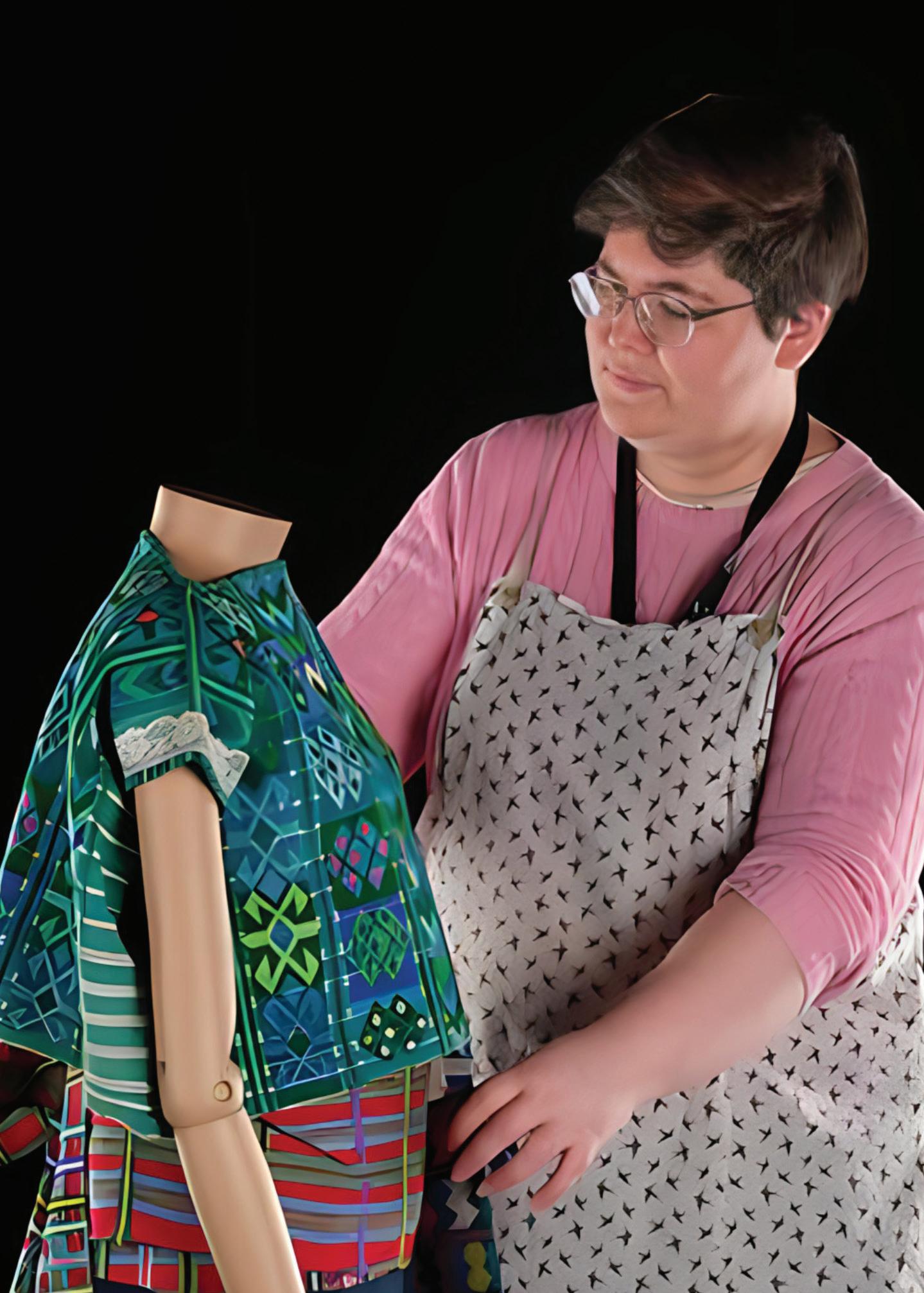
The National Museums Scotland (NMS) received a commitment from The Clothworkers’ Company to fund three one-year Textile Conservation Internships (2025-2027). Current intern on the programme, Yubi Coates, has so far contributed to key projects, including conservation of a Turkish Kilim for a V&A Dundee exhibition and surveying 17th-century embroideries.
Initially, Yubi concentrated on gaining more experience with wet cleaning and dyeing materials, taking advantage of every opportunity to develop their skills in these areas. For instance, they took on the complex cleaning of a 17th-century chalice cloth using ethanol, including an innovative modification of an aerosol fume hood to accommodate the object. Over the past year, Yubi has also developed skills across tapestry conservation and storage methods.
Upcoming work includes preparation for costume loans, cataloguing Guatemalan clothing, conserving Italian embroideries, attending conferences, and researching the sustainable, seaweed-based Japanese adhesive funori
Funori was the subject of Yubi’s dissertation, and they have been excited to continuing researching it. A recent talk on funori (delivered at the TCC@50: Building on 50 Years of Training, Practice and Research conference) was well received, leading to invitations to additional conferences and other speaking engagements –including an opportunity to present, in Japanese, to a group of delegates from Tokyo-based institutions.
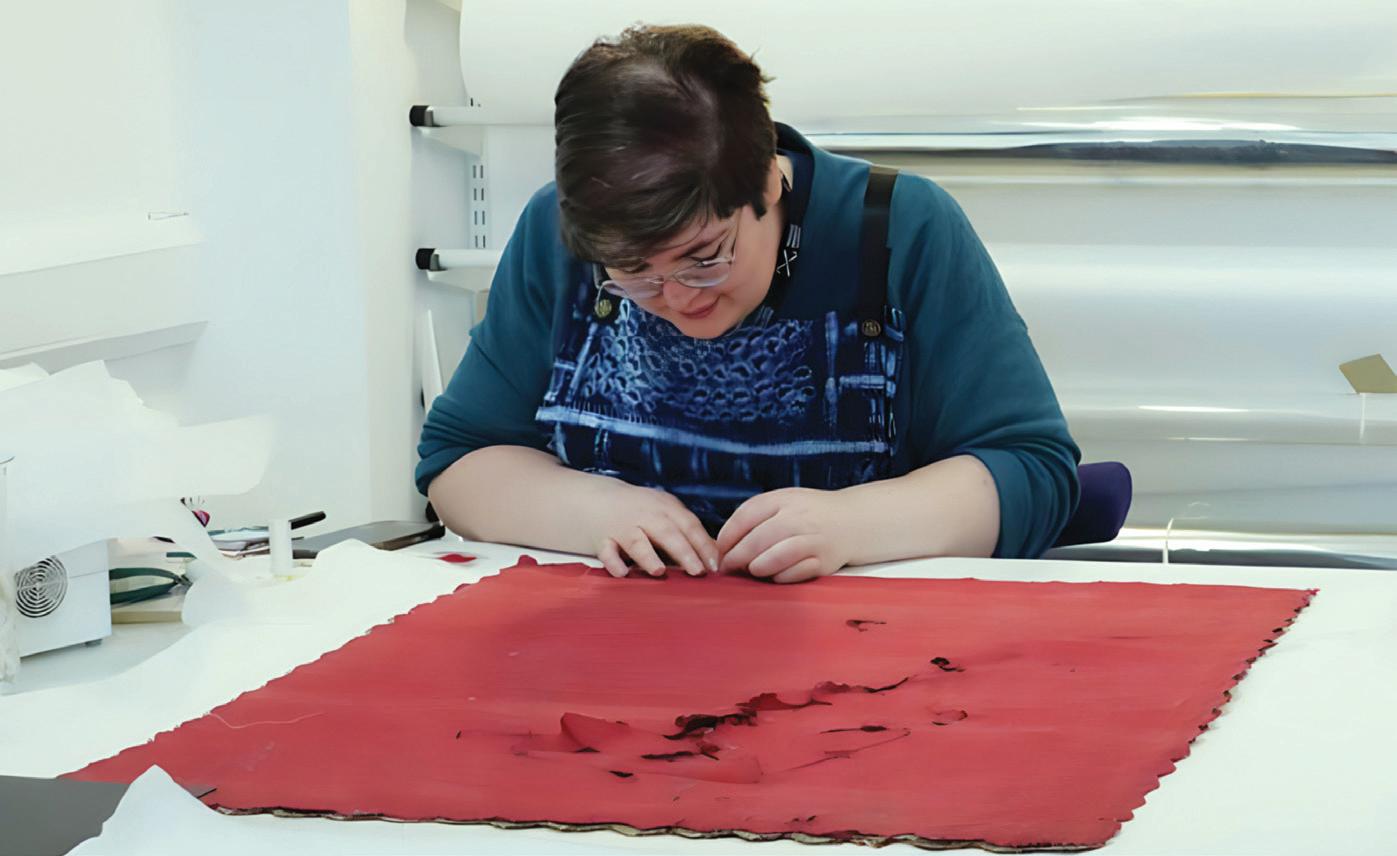
At the TCC@50 conference, Yubi was approached by the Head of Conservation Workshop at AbeggStiftung (Switzerland) with an invitation to visit the studio. Following the visit, Yubi was offered a post-MA internship (beginning in March 2026), where Yubi will utilise their experience at NMS to undertake complex treatments on very old, very fragile textiles.
Yubi has given as much as they have gained during their time at NMS. Yubi brought diverse experiences and skills, along with enthusiasm for trying new things, which has allowed NMS to gain a better understanding of the application of specific gels, develop new uses of the aerosol fume hood, and run experiments on Funori that have benefitted other departments.
Assistant Textile Conservator Stella Gardner, who has worked closely with Yubi during this period, summed up the experience, ‘It has been hugely valuable experience to have Yubi as part of the team, and I have witnessed their confidence
grow throughout the internship. Along with the beneficial research and testing undertaken on new approaches and materials, their enthusiasm and willingness to participate has been a great asset.’
Reflecting on their own experience, Yubi said, ‘This internship has been a key developmental point in my career. The support, guidance, knowledge, and ability of my colleagues has been utterly priceless, and I am beyond pleased with the work I’ve been able to do while at NMS. The development of skills in areas I was not confident in has been instrumental to my abilities as a conservator, and the vast wealth of opportunities I’ve been able to grasp during my internship has been incredible ... I believe any future success will be easily traced back to these early career experiences I have been given. I am so grateful to The Clothworkers’ Company, who also supported me through my education in Glasgow, for its continued support and dedication in training future generations of textile conservators.’
Paul’s Place is a disability-led organisation for physically disabled adults, and those with cognitive and sensory impairments. Every weekday in Bristol, the organisation provides activities and social events that improve health and wellbeing, build independence and skills, and reduce isolation. Evening trips to restaurants, cinemas and karaoke, and short breaks to attend events and play sports enable users to live life to the full.
This year, The Clothworkers’ Foundation granted £100,000 to Paul’s Place, enabling the charity to repurpose and renovate a community centre – turning it into the Paul’s Place Hub, a specialist centre for disabled adults. Every space is fully accessible, including the kitchen and community café. More space means the
organisation will be able to increase the number of people attending and accessing services by 66 per cent.
“A space where hope, support & community will grow stronger than ever.”
~ Paul’s Place
This project has allowed the organisation to leave behind the cramped, and poorly-connected shared space it had been using since 2007. Paul’s Place has a long lease on the building, and is paying significantly less rent. This will help to secure the organisation’s future and guarantee its services for years to come.
This project is a great example of the impact The Foundation’s Open Grants Programme can enable. As one representative of Paul’s Place said:
‘This new building represents more than just bricks and mortar – it’s a space where hope, support, and community will grow stronger than ever.’
At the grand opening, service users of the charity led tours for partner organisations, funders, local councillors and others while sharing their stories and explaining how the new facilities will change lives.

Use the QR code to visit The Foundation’s website, and learn more about the Open Grants programme.


The Clothworkers’ Foundation is not just the biggest Livery Foundation and the primary philanthropic vehicle of The Clothworkers’ Company; it’s also a nationally significant grantmaker. Our funding supports our mission to address disadvantage and marginalisation across the UK –from disability and racial inequality to homelessness, domestic violence, and opportunities for young people.
Trustees play a crucial part in meeting our mission, and we’re looking for four Clothworkers to join the Trustee Board in 2026. Applicants can be Members of the Freedom, Livery or Court of Assistants.
With your fellow Trustees, you will agree and oversee the strategy of The Clothworkers’ Foundation and support our staff team as they implement it. You’ll be joining at an exciting time: under our current strategy we’ve been distributing grants in excess of £10 million annually, and our endowment has grown, thanks to generous gifts from The Clothworkers’ Company. We will undertake a Strategic Review in 2027, while we celebrate The Foundation’s 50th anniversary. New
Trustees will have time to learn about our current work, before considering the next strategy.
Tom Stoddart-Scott, a Livery Member and Foundation Trustee, shares his experience on the Board:
‘It’s incredibly inspiring to see how our funding helps charities address some of the most urgent social challenges. Knowing that our support enables people to lead fuller, more secure, and more dignified lives, that’s what motivates me. One of the most valuable things I’ve learned in this role is the importance of good governance.
‘I’ve gained deep insight into the issues charities are grappling with, from mental health and poverty to social isolation. I’ve also learned a huge amount from my fellow trustees and the team at The Clothworkers’ Foundation, who bring such a wide range of experiences and perspectives. Those conversations have sharpened my thinking and my decision making, something that’s benefitted me far beyond the boardroom ...
‘To any Members considering
applying for the current Trustee [vacancies], I wholeheartedly encourage them to go for it. It’s a deeply rewarding role. You’ll gain new skills, work alongside inspiring colleagues, and contribute to decisions that truly change lives. The Board is at its strongest when it reflects a diversity of ages, backgrounds, and experiences.
‘Being a Trustee of The Clothworkers’ Foundation has been an honour and one of the best decisions I’ve ever made. I sincerely hope some of you will consider joining us.’
Apply before 14 November.

Use the QR code to read the full role description and instructions on how to apply.
You don’t have to have served on a board before or be based in London. If you would like an informal conversation with Susanna O’Leary (Foundation Chair) or Jenny North (Foundation Director), please email JennyNorth@Clothworkers.co.uk.
Candidates Admitted in July 2025
Membership of The Clothworkers’ Company is both a privilege and a responsibility, where fellowship and service weave together to create the enduring fabric of our existence. You can read more about the Clothworker Journey – Freedom admission, Livery promotion, and election to the Court –in the new Members’ Portal.
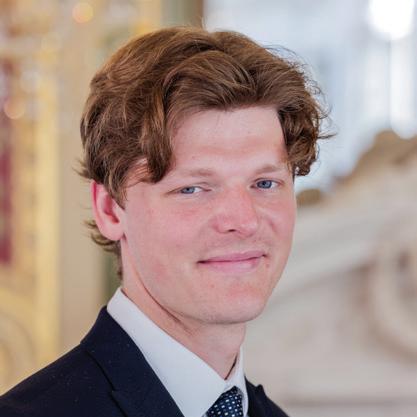
Toby George Asplin
Toby works for ENGAGE as an account executive; his time is split on account management and leading on marketing and sales activities. At University of East Anglia, he achieved a First Class Honours BSc in Business Management.
Toby was admitted to The Company by Patrimony in 2025. He is a descendant of the Asplin Clothworker lineage.
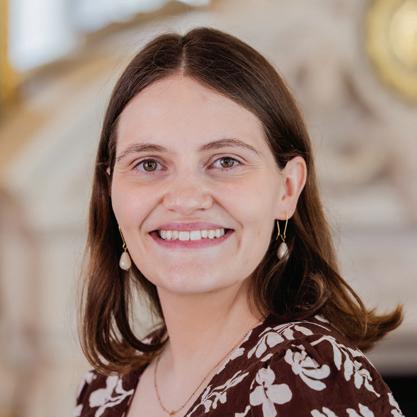
Tabitha Joelle Gibbs
Tabitha currently works as a Textile Conservator for Zenzie Tinker.
Admitted by Redemption, Tabitha was previously the recipient of a student bursary from The Clothworkers’ Company (through the Textile Conservation Foundation, where she completed a MPhil in Textile Conservation at the University of Glasgow).
Harvey Morgan
Harvey is a Strategy & Corporate Development Analyst at Johnson Matthey; he is currently studying to complete his Chartered Management Accountancy accreditation.
Admitted by Patrimonial Redemption, Harvey is a sixth-generation Clothworker and the great-greatgrandson of Cecil Turner Adams.
“I give you joy.”
The
Clerk of the Chamberlain’s Court says this during the City of London Freedom Admissions, and then offers the ‘right hand of fellowship’ to the ‘youngest’ citizens of the Square Mile.
Barnaby Brian O’Callaghan
Barnaby is currently a Parliamentary Researcher to an MP, with long-term career aspirations in the political, legal or financial sphere.
Barnaby became a Member of The Clothworkers’ Company by Patrimonial Redemption. Like his cousin Harvey, he is a sixthgeneration Clothworker, and the great-great-grandson of Cecil Turner Adams.
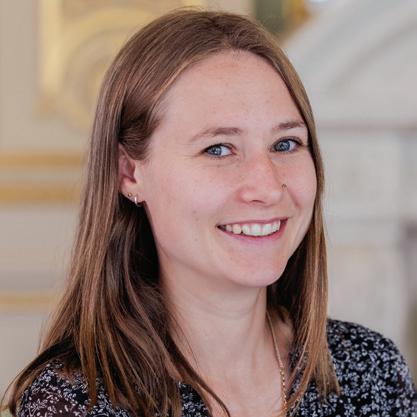
Philippa Mary Port
Philippa is a keen traveller and has so far visited 32 countries across the world. She has also lived in New Zealand (2018-2021). She currently works at AN4 Group, in Hampshire, as a Sales Support Specialist.
Philippa was admitted to The Company by Patrimony. She is a fourth-generation Clothworker and is the great-granddaughter of Sir Rupert Redvers Brickwood.
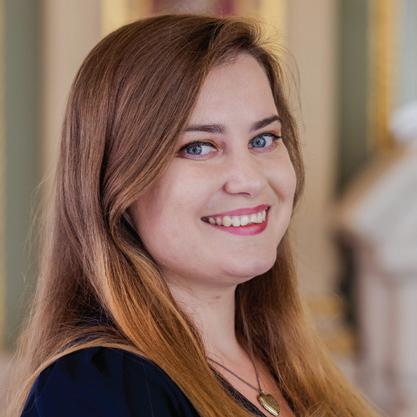
Alice Eleanor Clough Preato
Alice spent more than a decade working for the UN and NGOs in humanitarian and development settings across Asia, Europe, the Middle East, Latin America, focusing on researching food insecurity in humanitarian settings and displacement and migration. Her most recent posting was with the UN World Food Programme in Kenya. Alice has a BA in History and a Master’s in International Cooperation and Development. She has recently taken a career change to focus on the Heritage sector by studying for an MSc in Cultural Heritage Futures at the University of Edinburgh, specialising in pilgrimage studies. She now works for the Abraham Path Initiative which focuses on peacebuilding and community development through creating long-distance hiking trails in the Middle East.
Alice is passionate about long-distance hiking, yoga, reading and animals. She currently lives in Verona, Italy, with her husband and dog.
Admitted to The Company by Patrimony, Alice is a fourth-generation Clothworker and daughter of the Immediate Past Master, Denis Clough.

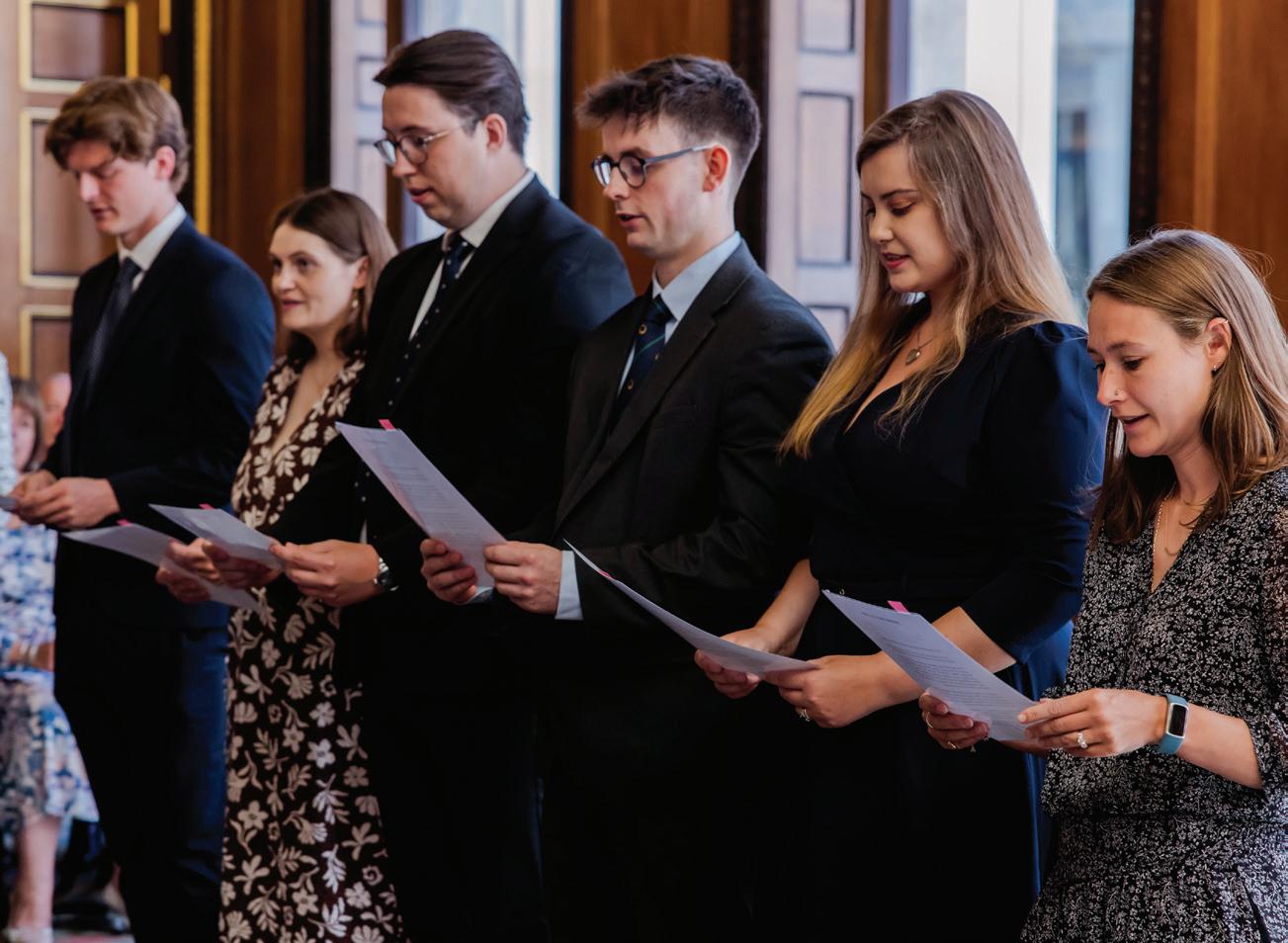
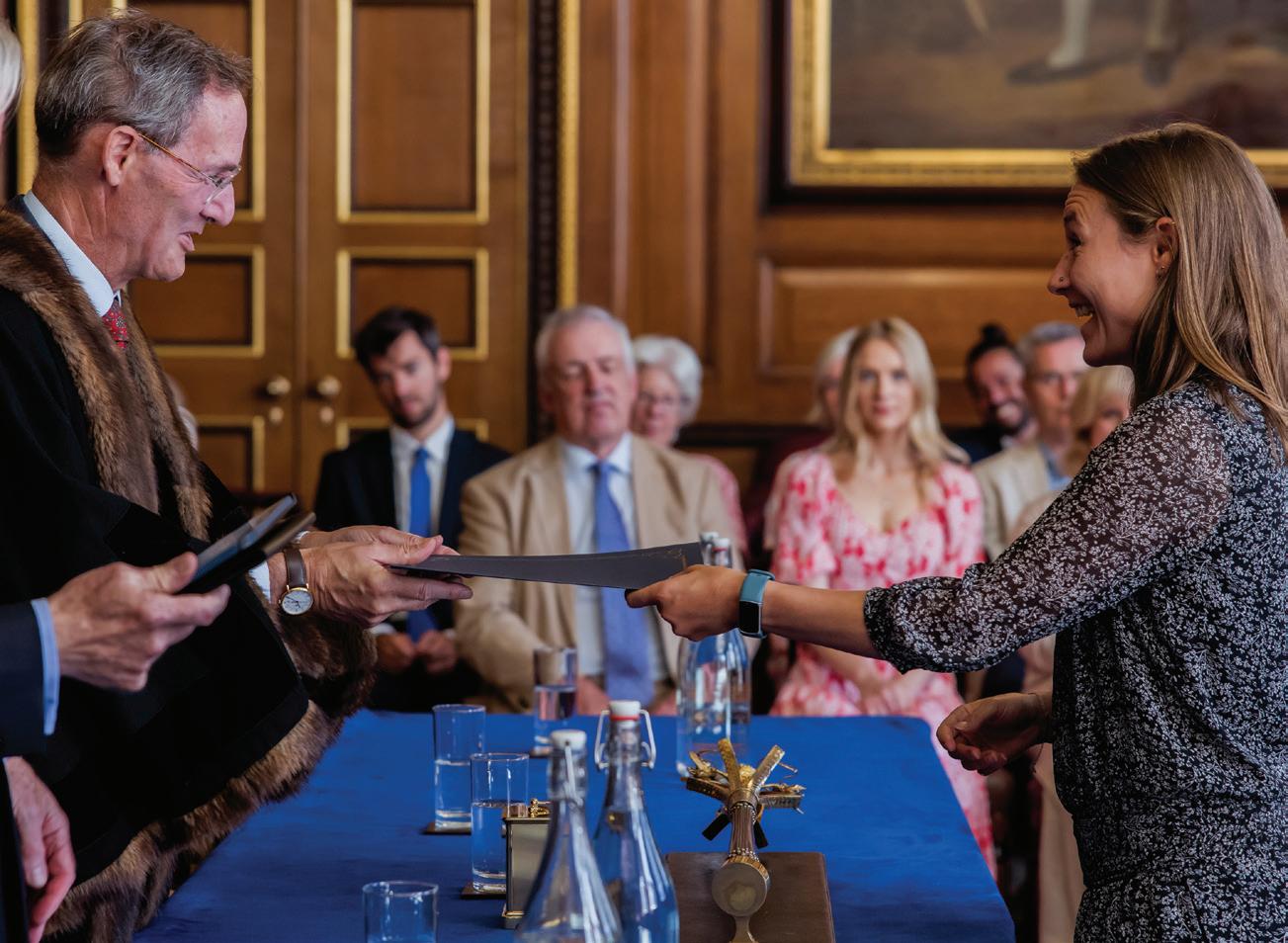
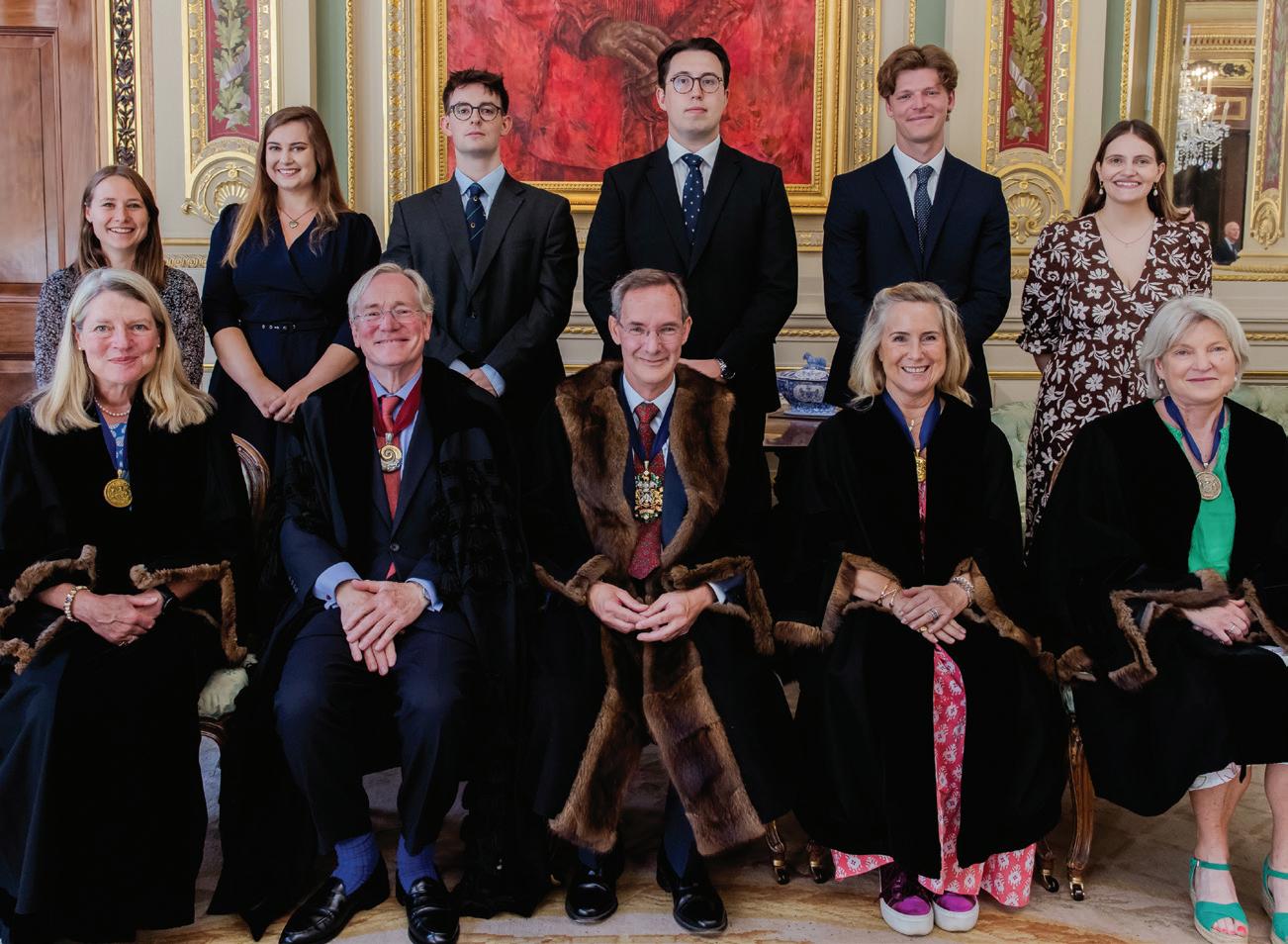
Right column (top to bottom): The six candidates read the Freedom Declaration together. Alice accepts her Freedom certificate from then Master (and her father) Denis Clough. Our newest Members pose for a photo with the Master, Wardens and Clerk.
Left column (top to bottom): Toby, Tabitha, Harvey, Barnaby, Philippa, and Alice.



Our mission is to inspire and empower individuals and communities through action, partnership and financial support. We are particularly focused on UK textiles, charity governance, and philanthropy –through The Clothworkers’ Foundation and beyond. We achieve this through:
We are a leading supporter of UK textiles, developing partnerships that enable us to invest in and support education, academic research and innovation, skills development, training, textiles design, heritage and conservation.
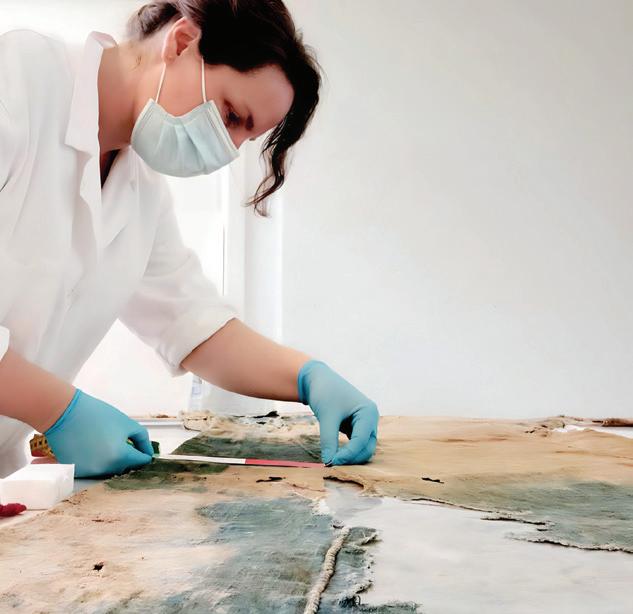
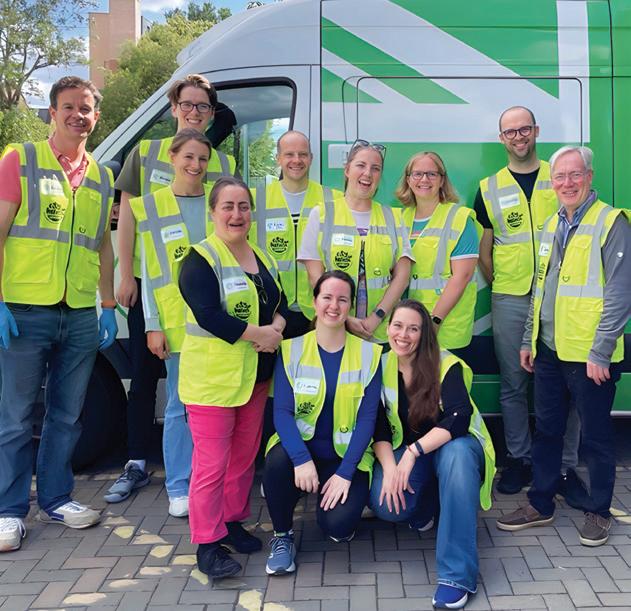
Our Members come together in friendship, giving their time and expertise to serve others and to make a positive and sustainable impact in the City of London and beyond – by serving on our Court, as trustees or school governors, and volunteering.
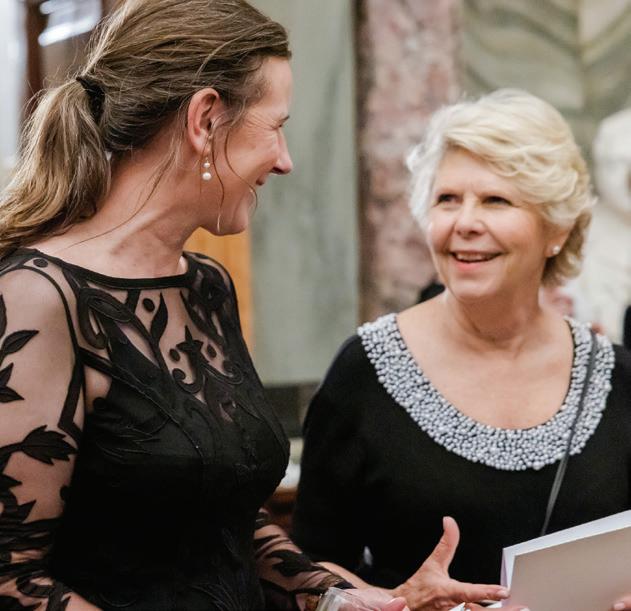

We direct our resources towards promoting opportunity and empowering people and communities. We are able to achieve this through our own initiatives and partnerships with appropriate organisations.
Connect with the wider Clothworkers’ Community on WhatsApp! We have set up a ‘Community Group’. In addition to Announcements and a General Chat group, the community includes separate groups for New and Young Livery Members, New and Young Freedom Members, the inter-livery golf team, sailing team and shooting team. Use the QR code to the left to become part of the community, and join whichever of the groups feel appropriate for you.



St Thomas’ Eve Freedom Luncheon
